Organic Chemistry A Tenth Edition 10Th Mcmurry Solutions Manual

Page 1


The Student Solutions Manual to accompany Organic Chemistry: A Tenth Edition, for the first time, is being published by OpenStax. I am pleased that OpenStax will make this resource freely available to you in honor of my late son, Peter McMurry.

Acknowledgments

Bryant Gilbert, Zane State College

Kjir Hendrickson, Arizona State University

Ekaterina Kadnikova, Hamline University

Ellen Moore, University of Missouri

Ike Shibley, Penn State Berks

Susan McMurry
Chapter 1 – Structure and Bonding

Solutions to Problems

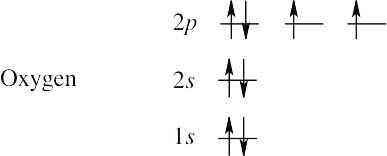
1.1 (a) To find the ground-state electron configuration of an element, first locate its atomic number. For oxygen, the atomic number is 8; oxygen thus has 8 protons and 8 electrons. Next, assign the electrons to the proper energy levels, starting with the lowest level. Fill each level completely before assigning electrons to a higher energy level.

Notice that the 2p electrons are in different orbitals. According to Hund’s rule, we must place one electron into each orbital of the same energy level until all orbitals are half-filled.

Remember that only two electrons can occupy the same orbital, and that they must be of opposite spin.

A different way to represent the ground-state electron configuration is to simply write down the occupied orbitals and to indicate the number of electrons in each orbital. For example, the electron configuration for oxygen is 1s2 2s2 2p4 .

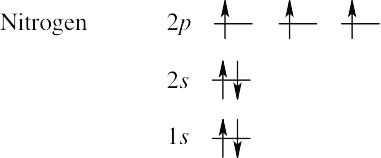
(b) Nitrogen, with an atomic number of 7, has 7 electrons. Assign these to energy levels.

The more concise way to represent ground-state electron configuration for nitrogen: 1s2 2s2 2p3

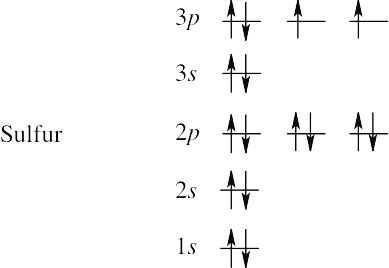
(c) Sulfur has 16 electrons.

Turn static files into dynamic content formats.

Create a flipbook
Organic Chemistry A Tenth Edition 10Th Mcmurry Solutions Manual by mmsharp - Issuu