Solutions Manual for Nutrition Basics
Zimmerman, Snow, Frediani
ISBN: 9781453340608
Chapter 1
Nutrition and You
Section 1.1 Learning Objective
o Explain the terms nutrition, health, health promotion, and disease prevention
Section Outline
We’ll learn which foods are healthy and which are not, and how to tell.
How food and nutrients function in our bodies will give us a better understanding to promote health and prevent disease.
The ability to use and understand scientific resources can take away the confusion many of us have about nutrition.
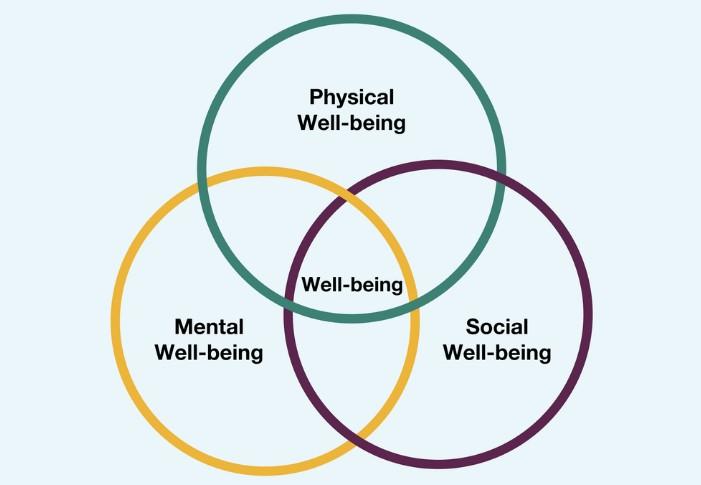
The World Health Organization defined health in 1946 “as a state of complete physical, mental, and social well-being, and not merely the absence of disease or infirmity.”
Public health has long been concerned about disease prevention. Decisions affecting public health have included fortified foods, providing nutritional guidelines, and even creating health goals for Americans.
Consider telling students your own background or backgrounds of those you know working in Nutrition. For example, how did you get started? Why were you interested in a career in nutrition? As you know, they always enjoy personal stories!
Key Takeaways
Health is defined as “a state of complete physical, mental, and social wellbeing, and not merely the absence of disease or infirmity.”
Disease is defined as any abnormal condition that affects the health of an organism, and it is characterized by specific signs and symptoms.
Disease affects all three aspects of health: physical, mental, and social well-being.
Good nutrition provides a mechanism to promote health and prevent disease.
Diet-related conditions and diseases include type 2 diabetes, cardiovascular disease, some cancers, and osteoporosis.
It took until the 1980s for the U.S. federal government to develop a dietrelated public policy designed to equip Americans with the tools to change to a healthier diet.
Discussion Starters
1. How might the way we nourish our bodies affect planetary health?
Answer: The health of our own bodies is reflected in the health of our planet. If our planet is not healthy, the food we produce from it will not be healthy, nor will we. If we over-fish the oceans, we will deplete fish supplies. If we require foods from the other side of the planet, we use a great deal of fossil fuels, which can impact the planet. We need to keep a balance so that both the earth and ourselves are nourished without harming either one.
2. Debate your classmates: Should the federal government be concerned with what Americans eat?
Answer: Pros: Yes, the government should be concerned with what we eat. After all, some of the food regulations came about because young men were not able to serve during wartime due to nutrient deficiencies. Our physical health affects our entire beings so if we aren’t healthy, we’re not going to be able to perform as well at our jobs, or we may affect the rest of the population negatively. Cons: We don’t need the government to create more rules and regulations. Who cares what we eat anyway? This is a capitalistic society; companies are in business to make money. So what if the food they produce isn’t that healthy? We can make our own choices about buying or not.
Key Terms
health
A state of complete physical, mental, and social well-being and not merely the absence of disease or infirmity. disease
Any abnormal condition that affects the health of an organism and is characterized by specific signs and symptoms. nutrition
The sum of all processes involved in how organisms obtain nutrients, metabolize them, and use them to support all of life’s processes. nutritional science
The investigation of how an organism is nourished, and how nourishment affects personal health, population health, and planetary health.
Section
1.2 Learning Objectives
o Define the word nutrient and identify the six classes of nutrients essential for health.
o List the three energy-yielding nutrients and how much energy they each provide.
Section Outline
The foods we eat contain nutrients, which lead to our overall well-being.
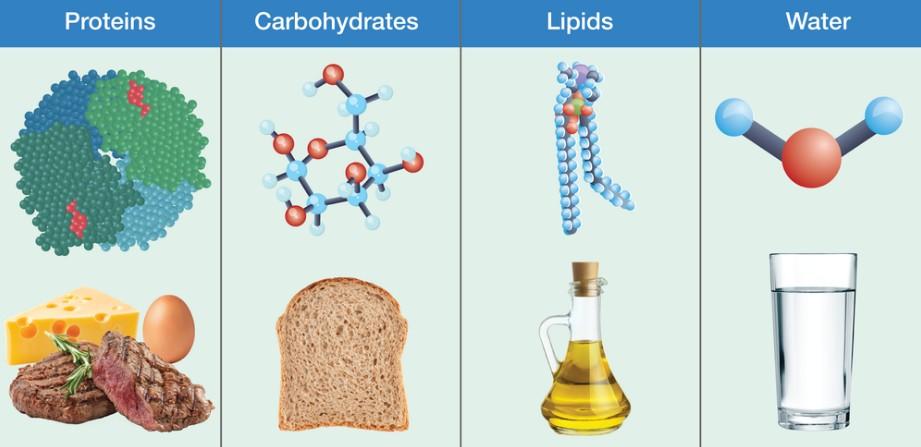
Macronutrients are those nutrients we need in large amounts. These three major nutrients, carbohydrates, protein, and lipids can provide the body with energy. A fourth macronutrient, water, is also needed in large amounts, but it does not provide energy.
Micronutrients are substances that are either organic, as in the case of vitamins, or inorganic, as in the case of minerals. They are needed in very small amounts in comparison to macronutrients and they do not provide energy, although they do assist in energy production.
One of the ways we determine food quality is the amount of nutrients it contains in relation to the amount of energy it provides. High quality foods contain a lot of nutrients in comparison to the energy they provide. Poor quality foods contain very little, if any, nutrients in comparison to the energy they provide.
It is better to consume food for nutrients than it is to take supplements. Food contains additional benefits, such as water, fiber, antioxidants, phytochemicals, and many more things we don’t yet know about. Supplements contain only what is on the label, which isn’t a replica of food.
Key Takeaways
Foods contain nutrients that are essential for our bodies to function.
Four of the classes of nutrients required for bodily function are needed in large amounts. They are carbohydrates, lipids, proteins, and water, and are referred to as macronutrients.
Two of the classes of nutrients are needed in lesser amounts, but are still essential for bodily function. They are vitamins and minerals.
One measurement of food quality is the amount of essential nutrients a food contains relative to the amount of energy it has (nutrient density).
Discussion Starters
1. Make a list of some of your favorite foods and visit “What’s in the Foods You Eat?” search tool provided on the USDA website (https://reedir.arsnet.usda.gov/codesearchwebapp/(S(2rblfecdr0g3yrleap2grg2u))/ CodeSearch.aspx). What are some of the nutrients found in your favorite foods?
Answer: Answers will vary.
2. Have a discussion in class on the “progression of science” and its significance for human health as depicted in the video on pellagra (see http://www.youtube.com/watch?v=QeloeutvsqM).
Answer: Science continues to build on more evidence. Science has eliminated some nutritional diseases, such as pellagra, although some diseases, such as rickets are returning, due to poor diet. In general, the progression of science has improved the lives of millions of people. Acceptance of cures for diseases like scurvy once took years and years, now, with more scientists, acceptance doesn’t have to take as long, for example with H. pylori. We know about water and cholera, and other diseases that used to kill thousands of people, thanks to science.
Key Terms
nutrients
Chemical compounds in food that are used by the body to perform its functions and maintain health.
macronutrients
Nutrients that are needed in large amounts. Includes carbohydrates, lipids, proteins, and water.
carbohydrates
Organic molecules composed of carbon, hydrogen, and oxygen. There are two basic forms: simple sugars and complex sugars.
lipids
A family of organic compounds composed of carbon, hydrogen, and oxygen. They are insoluble in water. The three main types of lipids are triglycerides, phospholipids, and sterols.
proteins
Macromolecules composed of chains of organic monomeric subunits, called amino acids. Amino acids are simple monomers composed of carbon, oxygen, hydrogen, and nitrogen.
micronutrients
Nutrients needed in smaller amounts. Includes vitamins and minerals.
Section 1.3 Learning Objective
o Provide an example of how the scientific method works to promote health and prevent disease.
Section Outline
A process of inquiry called the scientific method is used to investigate the health effects of food and its nutrients.
The scientific method is evidence-based. That means research is done to come up with factual conclusions regarding health and disease.
There are many types of scientific studies that can provide evidence for hypotheses. These studies include epidemiological studies, observational studies, and randomized clinical trials.
Science is always moving forward. One study is not enough to make concrete conclusions. Studies must be replicated in order to confirm or deny conclusions from previous studies.
Science itself is always evolving. The more technology we develop, the more we are able to discover, using high-quality scientific studies.
Technological advances can be used to create a healthy diet, optimize health, and prevent disease.
Key Takeaways
The scientific method is an organized process of inquiry used in nutritional science to determine if the food suspect fits the claim.
The scientific method is part of the overall evidence-based approach to designing nutritional guidelines that are based on facts.
There are different types of scientific studies–epidemiological studies, randomized clinical trial studies, and laboratory animal and cell studies —which all provide different, complementary lines of evidence.
It takes time to build scientific evidence that culminates as a commonly accepted conclusion.
Agreement of experts across multiple scientific disciplines is a necessity for recommending dietary changes to improve health and help to prevent disease.
Science is always evolving as more and more information is collected.
Discussion Starters
1. What are some of the ways in which you think like a scientist and use the scientific method in your everyday life? Any decision-making process uses at least pieces of the scientific method. Think about some of the major decisions you have made in your life and the research you conducted that supported your decision. For example, what computer brand do you own? What college do you attend?
Answer: Answers will vary. 5
2. Do you use technology, appliances, and/or apps that help you to optimize your health?
Answer: Answers will vary.
Key Terms
scientific method
The process of inquiry that involves making an observation, coming up with a hypothesis, conducting a test of that hypothesis, evaluating results, gathering more supporting evidence, and coming up with a conclusion.
epidemiological studies
Scientific investigations that define frequency, distribution, and patterns of health events in a population.
randomized clinical trial studies
Scientific investigations which incorporate a change in the variable being tested between groups of people and are therefore capable of determining a causal relationship.
Section 1,4 Learning Objectives
o Explain the role that genetics, life cycle, environment, and lifestyle play in health status.
o Describe economic, social, cultural, and emotional determinants that affect food choice.
Section Outline
Everyone starts life with the genes handed down to them by their parents. These are responsible for many of our traits as individuals.
We go through many stages during our life cycle, from birth, infancy, childhood, puberty, adolescence, young adult, mature adult, middle age, elderly, and death. Our nutritional requirements change with each stage.
The environment has a large influence on our health. It affects what types of foods are available, and whether or not there is clean air and water.
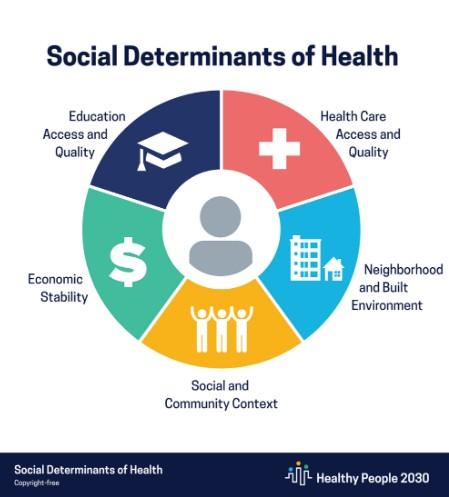
Socioeconomic status is one of the environmental factors. It is a measurement made up of income, occupation, and education. It is one of the best environmental predictors of a population's health.
Lifestyle covers many factors and is not limited to just dietary habits. Dietary habits include what one eats, how much one eats, how often one eats, and how often one eats away from home. Other lifestyle factors include physical activity, recreational drug use, and sleeping patterns.
There are many factors which influence food choices, such as culture, religion, personal taste, economics, geography, emotions, advertising, early food experiences, habits, social factors, food/sustainability choices, and health concerns.
Key Takeaways
The expression of genes determines your traits, including your risk for certain diseases. Nutrients can change the way genes are turned “on” and “off,” consequently affecting health.
Certain stages of life require changes in nutrition to maintain bodily functions, such as growing and pregnancy.
The traits that a person has are largely a product of their genes and environment. One aspect of a person’s environment is socioeconomic status. Socioeconomic status is one of the best environmental predictors of a population’s health.
Besides dietary habits, other components of lifestyle that affect health are physical activity level, recreational drug use, and sleeping patterns.
Cultural and religious tradition, along with social values, can influence food choices. The foods you choose to eat affect your appetite and feelings. Numerous factors other than nutrition drive food choices.
Extra Discussion Questions
1. What types of diseases and/or conditions are present in your family?
Answer: Answers will vary.
2. Discuss the different cultures and religions that are represented by the people in your classroom and learn the different food they choose to eat.
Answer: Answers will vary.
3. What are some actions you could take to strengthen your community through food choices?
Answer: Answers will vary.
Key Terms
genes
The sequences of DNA that code for all the proteins in your body.
genome
Entire genetic information contained in an individual thatis inherited from their parents.
nutrigenomics
An emerging scientific discipline that studies how nutrients affect gene expression and how genes affect our nutritional requirements.
epigenetics
A rapidly advancing scientific field, in which researchers study how nongene factors affect gene expression. life cycle
The stages of life one passes through until death.
socioeconomic status
A person or group’s social standing or class. It is often measured by a combination of three variables: income, occupation, and education.
lifestyle
Components of lifestyle are dietary habits, physical activity level, recreational drug use, and sleeping patterns, all of which play a role in health and impact nutrition.
Section 1.5 Learning Objectives
o Discuss ways of assessing your personal health status and your diet.
o Goal setting is an important tool to adopt, maintain, or improve a nutritionrelated practice.
o Formulate an effective, long-term, personal health and nutrition plan.
Section Outline
Assessing your personal health can help you take control of your health and give you the knowledge to manage, with your doctor, any health concerns you may have.
Keeping a food journal and recording all foods eaten and beverages drank can be a big surprise since we often underestimate how much we eat and/or drink.
Learning our family medical history can prepare us for any risk of genetic disease or any predisposition to any disease and/or condition.
Lifestyle assessments include evaluating your personal habits, fitness level, emotional health, sleep, and work-life balance.
Key Takeaways
Step 1: Take charge of tracking your personal health.
Step 2: Assess your diet and identify where it can be changed to promote health and prevent disease.
Step 3: Start finding out the medical history of your family and identify the diseases you may be more susceptible to getting.
Step 4: Assess your lifestyle by evaluating your personal habits, emotional health, sleep patterns, and work-life balance.
Step 5: Start living a healthier life.
Discussion Starters
1. What websites in “Interactive: Assessing Your Health” did you find to be the most helpful in the assessment of your health?
Answer: Answers will vary.
2. Share your comments on these tools with your classmates and get their opinions, too.
Answer: Answers will vary.
Section 1.6 Learning Objective
o Discuss some approaches to building a sustainable food system in your community.
Section Outline
The science of nutrition includes the study of how organisms obtain food for their environment.
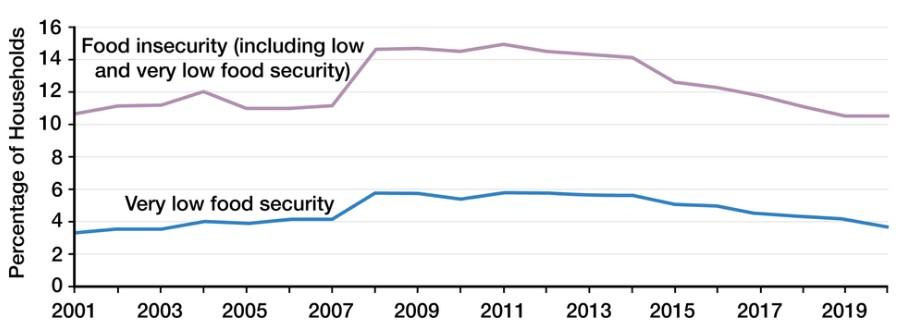
The biggest challenge to building a sustainable food system is to make food available and accessible to all.
There are daunting challenges to building a sustainable food system such as supplying high-quality and nutritious food, food security, food deserts, and how food is produced, processed, and distributed.
There are many potential solutions to the challenges facing sustainable food systems, such as locally grown food, improving access to healthy food, providing education, and using sustainable farming methods.
Key Takeaways
Sustainability promotes the development of conditions under which people and nature can interact harmoniously. It is based upon the principle that everything needed for human survival depends upon the natural environment. A sustainable food system includes not only the food and those who consume the food, but also those who produce, and process, package, distribute, and regulate food.
The challenges to building a sustainable food system are many, from providing affordable and accessible food, to supplying nutritious, highquality, low-cost food regardless of socioeconomic status, to changing the ways foods are produced, processed, and distributed.
There are many solutions to the challenges of building a sustainable food system. Some of the solutions are to: expand the infrastructure for locally grown food, improve access to healthy and local food for low-income households, provide education on food origin and production, build up the livelihoods of local farmers, and use sustainable farming methods.
You can take action individually and locally to help build a sustainable food system.
Discussion Starters
1. Share with each other in the classroom some of the things you might have already done to help build a sustainable food system in your community.
Answer: Answers will vary.
2. Form debate teams in the classroom and have a formal debate on the topic of the regulation of food. One side must present the reasons it is beneficial for the government to regulate food. The other side will argue the reasons it is better for people to grow their food locally.
Answer: Answers will vary.
Key Terms
ecosystem
The biological and physical environments and their interactions with the community of organisms that inhabit it, and also the interactions among the organisms.
sustainability
Avoiding the depletion of natural resources. It is based upon the principle that everything needed for human survival depends upon the natural environment. sustainable food system
A system that can meet the needs of the current generation while providing food for generations to come without negatively impacting the environment.
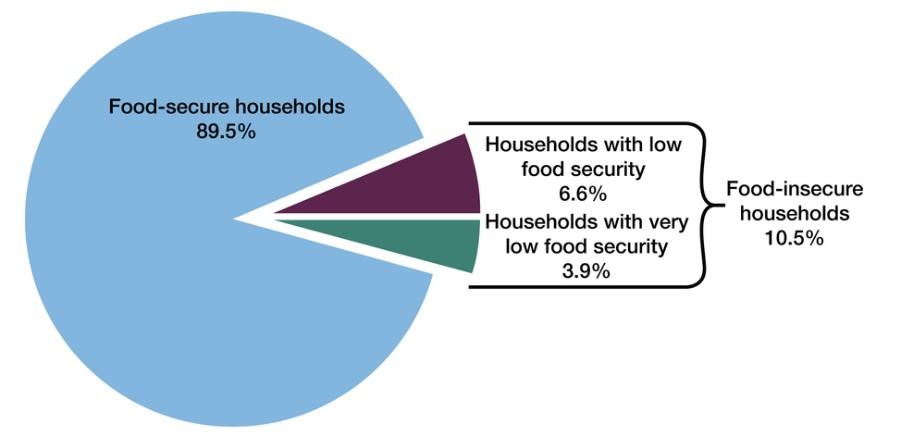
food security
A state in which all persons in a community’s population obtain a nutritionally adequate diet that is culturally acceptable throughout the year and is not dependent on emergency aid sources, but more so from local production.
food desert
A location that does not provide access to affordable nutritious food.
Section 1.7 End-of-Chapter Exercises
It’s Your Turn
1. You are writing a short article for the Daily News. Explain how health means much more than a mere absence of disease.
Answer: Health is more than just the absence of disease. It includes our physical well-being, our mental well-being, and social well-being. Health means that we are able to function normally and work to achieve our goals. To do all of the things we like to do and need to do, we have to have health. The World Health Organization defined health as “a state of complete physical, mental, and social well-being, and not merely the absence of disease or infirmity.” The food we eat can maintain, enhance, or detract from our health. The nutrients our bodies require enable us to think clearly, develop positive relationships with others, have hobbies, go to school, and do all sorts of other things that make our lives worth living.
2. Create a table that summarizes the six classes of nutrients and their major functions.
Answer: Nutrient
Carbohydrate s
Major Functions
Main source of energy for the human body, particularly the brain and nervous system.
Protein
Lipids
Water
Vitamins
Minerals
Major source of building materials for the body, as well as the immune system. Can be used for energy if necessary.
Stores energy, makes and repairs cell parts –for example, cell membranes.
Acts as a solvent for many substances and as lubricant for joints and other body parts. Transports nutrients to the cells via the blood and removes waste to the liver and kidneys for disposal. Regulates body temperature.
Operate as enzymes and/or co-enzymes for chemical reactions throughout the body.
Assist with chemical reactions, generate nerve impulses, major component of bone.
3. List five ideas on how to change the nutrition of Americans to protect their health and the health of the planet.
Answer: It is important to consider the health of our planet when considering our own health as the two are interconnected. If the planet’s health is poor, the food produced won’t provide enough nutrients and that will affect our own health. Five things we can do to protect our own health as well the planet are: 1) Eat a low-carbon diet. This includes foods that require less energy and less fuel to produce. 2) Grow our own food. Not all of us have large areas available to us in which to garden, but even container gardens can provide food. Many communities have community gardens where people can grow food. 3) Compost food waste. This puts organic material back into the soil and keeps it out of landfills. Compost nourishes the soil. 4) Buy locally. Knowing the people who produce what you eat connects you back to the planet. Food is no longer associated with grocery stores or packages. 5) Use tap water instead of bottled water. This reduces the amount of plastics that we are drowning in, and reduces the carbon foot print.
Apply It
1. Explore the nutritional and health information provided by the USDA and the Department of HSS. Make a pros and cons list on how helpful the information from each of these sources was to you.
Answer: Answers will vary.
2. Revisit the photographs of the inner contents of refrigerators by Mark Menjivar. Describe how factors associated with a person's environment, lifestyle, and culture may affect the personal food choices in at least six different refrigerators.
Answer: Answers will vary.
3. Write a paragraph on your opinion of the role of the federal government in promoting health and preventing disease in Americans.
Answer: Answers will vary.
Expand Your Knowledge
1. Conduct an informal survey of five of your friends and family members. Create a questionnaire with ten to fifteen questions pertaining to their perception of food, their favorite food shows, what restaurants they frequent, what they purchase from the grocery store each week, etc. Ask questions about their general eating habits and record the answers. Next, get a camera and take pictures of the insides of their refrigerators. What have you learned about their eating habits? What advice would you give them? Review all the material and put it together in a report. Be prepared to share your findings.
Answer: Answers will vary.
2. Define eight steps your community can take to build a more sustainable food system.
Answer: Answers will vary.