
ISBN: 9781319333553
Chapter 1
1. The basic structural and physiological unit of most living organisms is the
a. aggregate.
b. organelle.
c. genome.
d. membrane.
e. cell.
ANSWER: e
2. Unmanned space probes are searching for signs of life on Mars. Which of the following would provide the best evidence for the presence of living organisms on Mars?
a. Carbon dioxide in the atmosphere
b. Gravitational field
c. Fatty acid molecules
d. Complex molecules containing genetic information
e. Simple organic molecules
ANSWER: d
3. The seed of a desert plant may be dormant for many years without growing, but it is still considered to be alive because it
a. is always converting molecules.
b. contains a genome and is capable of growing into a fully functional organism.
c. is always regulating its internal environment.
d. is reproducing.
e. is extracting energy from its environment.
ANSWER: b
4. Bacterial cells and human cells share many similar features. Which feature can be used as support for the claim that humans and bacteria have a common origin?
a. Both extract energy from their environment.
b. Both undergo cell division.
c. Both use chemical reactions to maintain the living state.
d. They contain proteins with similar compositions.
e. They have similar percentages of water.
ANSWER: d
5. Suppose a space probe is successful in discovering a living organism on a distant planet. Which would be the best approach to collect data that would show whether this organism shares a common origin with Earth organisms?
a. Observe the organism’s reproduction rate.
b. Test the organism’s ability to adapt to an Earth environment.
c. Analyze the chemical makeup of the organism’s genome.
d. Determine whether the organism can use oxygen in its metabolism.
e. Investigate whether a population of that type of organism is able to undergo evolutionary change.
ANSWER: c
6. Which of the following is true of life on Earth?
a. Life does not exhibit great diversity.
b. Life is made up of living and dead organisms.
c. Living organisms are all descended from a common origin.
d. Life has multiple origins.
e. Life has little similarity across gene sequences.
ANSWER: c
7. Which statement about viruses is true?
a. They do not mutate or evolve.
b. They do not contain genetic information.
c. They carry out physiological functions on their own.
d. They depend on cellular organisms to reproduce.
e. They are composed of cells.
ANSWER: d
8. Which is not a characteristic of most living organisms?
a. Regulation of internal environment
b. One or more cells
c. Ability to produce biological molecules
d. Ability to extract energy from the environment
e. Ability to change traits according to need
ANSWER: e
9. Cells are the basic structural and physiological units of living organisms. Based on this, there is some controversy over whether we can call living organisms.
a. bacteria
b. viruses
c. archaea
d. fungi
e. seeds
ANSWER: b
10. In the course of evolution, fatty acids were the critical ingredient in the enclosure of biological molecules in membranous films because these molecules
a. are not soluble in water.
Chapter 1 Copyright Macmillan Learning. Powered by Cognero.
b. would have been readily available dissolved in the ancient seas.
Name: Class:
c. are more abundant on land than in water.
d. were the first biological molecules to have formed.
e. are acidic.
ANSWER: a
11. The two membrane-enclosed compartments within cells that are thought to have arisen from prokaryotes engulfing other prokaryotes are
a. Chlorella and chloroplasts.
b. mitochondria and bacteria.
c. Golgi and nuclei.
d. bacteria and archaea.
e. chloroplasts and mitochondria.
ANSWER: e
12. Single-celled organisms that lack discrete intracellular compartments belong to which groups?
a. Protists and Bacteria
b. Bacteria and Archaea
c. Fungi and Archaea
d. Microbial eukaryotes and Prokaryotes
e. Fungi and Protists
ANSWER: b
13. In contrast to eukaryotic cells, prokaryotes lack intracellular membrane-bound structures, such as a. RNA.
b. DNA.
c. nuclei.
d. amino acids.
e. proteins.
ANSWER: c
14. Earth is approximately years old.
a. 5.5 million
b. 40–50 million
c. 4.5 billion
d. 5 trillion
e. 40 trillion
ANSWER: c
15. There has been life on Earth for approximately years.
a. 10,000
b. 4 million
Chapter 1 Copyright Macmillan Learning. Powered by Cognero.
Chapter 1
c. 100 million
d. 1 billion
e. 4 billion
ANSWER: e
16. The oldest rocks on Earth are approximately years old.
a. 4,000‒5,000
b. 400,000‒500,000
c. 2–3 million
d. 4–4.5 billion
e. 8 billion
ANSWER: d
17. The critical step for the evolution of life was the
a. formation of fatty acids.
b. formation of simple molecules.
c. appearance of proteins that could replicate themselves.
d. appearance of nucleic acids that could replicate themselves.
e. synthesis of proteins.
ANSWER: d
18. Cells are characterized by
a. an aggregation of proteins.
b. the synthesis of proteins with stable shapes.
c. the enclosure of biological molecules by a membrane.
d. complex proteins being dissolved in water.
e. the formation of reactants and products.
ANSWER: c
19. Refer to the figure showing life’s “timeline.”
1

Based on the timeline, which statement is true?
a. The oldest fossils include photosynthesizers.
b. The first photosynthesizers were prokaryotic.
c. Multicellularity arose before the evolution of eukaryotic cells.
d. The oldest fossils include multicellular organisms.
e. The first photosynthesizers were multicellular.
ANSWER: b
20. The use of energy from sunlight to synthesize complex molecules is known as
a. anaerobic metabolism.
b. photosynthesis.
c. oxidation.
d. aerobic metabolism.
e. transcription.
ANSWER: b
21. An abundance of O2 led to the evolution of a. photosynthetic eukaryotes.
b. aerobic eukaryotes.
Name: Class:
Chapter 1
c. anaerobic prokaryotes.
d. photosynthetic prokaryotes.
e. anaerobic eukaryotes.
ANSWER: b
22. O2 is critical for terrestrial life on Earth because it
a. allows for anaerobic metabolism.
b. blocks UV radiation.
c. provides energy to some basic forms of life.
d. provided food for early prokaryotes.
e. led to production of ozone in the upper atmosphere.
ANSWER: e
23. The accumulation of allowed organisms to grow larger.
a. O2 in the atmosphere
b. CO2 in the atmosphere
c. CO2 in the water
d. O3 in the atmosphere
e. O3 in the water
ANSWER: a
24. Which statement about aerobic metabolism is true?
a. It is more efficient than anaerobic metabolism.
b. It occurs primarily in O2-poor environments.
c. It limits the growth of organisms.
d. It is used by a small percentage of organisms on Earth today.
e. It provides protection from UV radiation.
ANSWER: a
25. Which event was most directly responsible for increasing oxygen in Earth’s atmosphere?
a. The cooling of the planet
b. The emergence of eukaryotes
c. The development of multicellularity
d. The evolution of photosynthesis
e. The rise of prokaryotes
ANSWER: d
26. Photosynthesis was a major evolutionary milestone for several reasons. One reason is that
a. photosynthetic organisms contributed ozone to the environment, which led to the evolution of aerobic organisms.
Copyright Macmillan Learning. Powered by Cognero.
Chapter 1
b. photosynthesis led to conditions that allowed life to arise on land.
c. photosynthesis became the only metabolic process that consumed oxygen.
d. photosynthesis provided oxygen for anaerobic metabolism.
e. photosynthesis changed the levels of carbon dioxide in Earth’s atmosphere.
ANSWER: b
27. Refer to the figure showing Cnidaria. The Cnidaria are simple marine animals that have either of the two basic body plans shown in the figure. You may be familiar with sea anemones, which have the body plan shown on the left, and you are likely familiar with jellyfish, which have the body plan shown on the right.
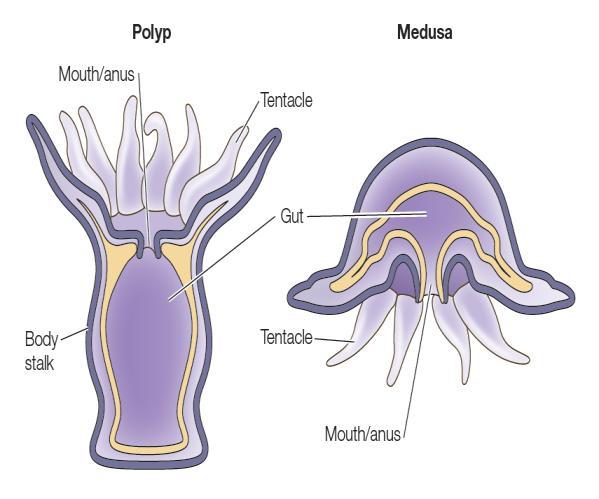
What feature shared by both of these cnidarians could have been important in providing the conditions that enabled the rise of multicellularity on Earth?
a. Marine habitat
b. Tentacles
c. Shared mouth and anus
d. Separate internal and external layers
e. Symmetrical body shape
ANSWER: d
28. Scientists hypothesize that multicellularity evolved when groups of cells exposed to an internal environment specialized to perform tasks needed by groups of cells exposed to the external environment, and vice versa. Which biological structures existing today could be used as examples to explain this concept?
a. The blood cells moving in a fish’s circulatory system and the fish’s lung tissue
b. The lining of a snake’s intestine and the snake’s skin
c. The bark on an oak tree and the waxy cuticle on an oak leaf
d. The trachea (airway) in a blackbird’s neck and the heart in the blackbird’s chest
Copyright Macmillan Learning. Powered by Cognero.
1
e. The whiskers on a cat’s face and the fur on the cat’s tail
ANSWER: b
29. Of the following, which is the smallest biological entity that maintains homeostasis?
a. Molecule
b. Cell
c. Tissue
d. Organ
e. Organism
ANSWER: b
30. Homeostasis is
a. the mechanism by which organisms acquire nutrients from the environment.
b. the maintenance of a narrow range of internal conditions.
c. the sensory system of an organism.
d. the mechanical movement of molecules from one cellular location to another.
e. the maintenance of extracellular fluids.
ANSWER: b
31. Which is an attribute of homeostasis in a single-celled organism?
a. Maintenance of a stable internal environment
b. Maintenance of the extracellular fluid within a range of physical conditions
c. Maintenance of a stable external environment
d. Physiological systems that can change responses of organs to regulatory signals
e. Physiological systems that allow tissues to work cooperatively
ANSWER: a
32. A group of cells that work together to carry out a similar function is known as a(n)
a. tissue.
b. organ system.
c. unicellular organism.
d. protein.
e. gene.
ANSWER: a
33. Which represents the correct order of the levels of complexity at which life is studied, from most inclusive to least inclusive?
a. Cell, tissue, organ, organism, population, community
b. Community, population, organ, organism, tissue, cell
c. Community, population, organism, organ, tissue, cell
d. Community, organism, population, organ, tissue, cell
Chapter 1
e. Community, organism, population, cell, organ, tissue
ANSWER: c
34. Which is the smallest (lowest) level of biological organization that is visible and easily distinguished?
a. Community
b. Organism
c. Molecule
d. Cell
e. Population
ANSWER: b
35. Refer to the figure comparing data from four different organisms. The data include the first 35 amino acids that make up the protein cytochrome c, which functions in cellular respiration. Each capital letter represents a different amino acid.
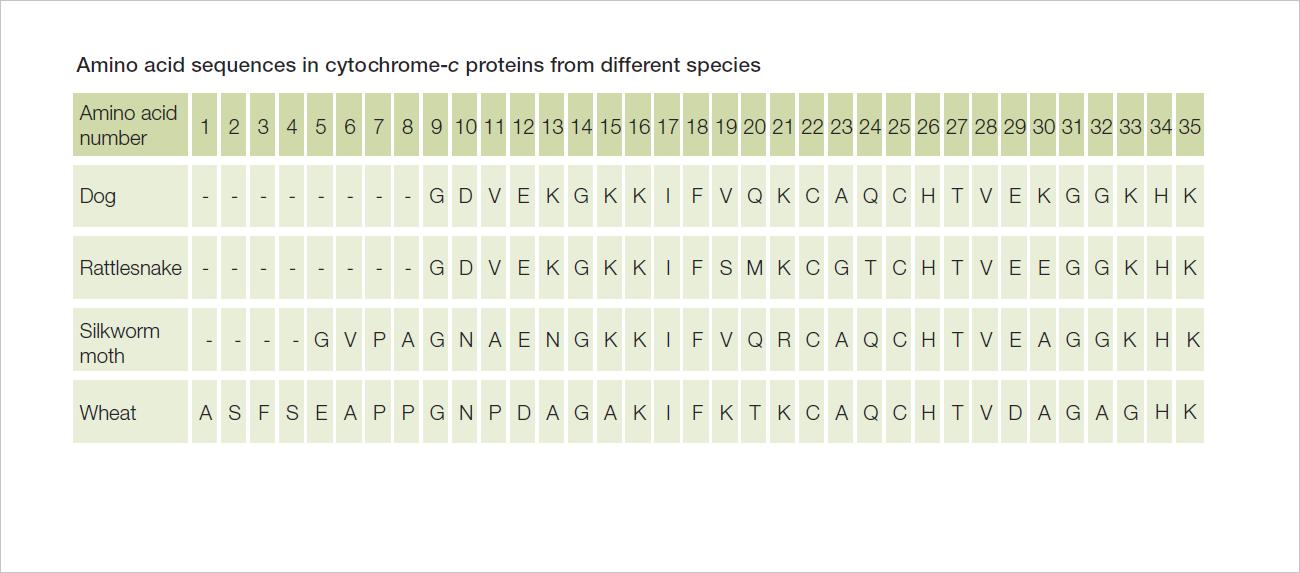
What do these data indicate about relationships among these four organisms?
a. The four organisms are unrelated because each has a unique sequence of amino acids that make up the cytochrome c protein.
b. All four organisms have a common origin because the same protein is found in all four with only small differences in structure among the four.
c. All four organisms have a common origin because cells in all four contain large and complex biomolecules that carry out metabolic reactions that sustain life.
d. Only rattlesnake and dog have a common origin because only their cytochrome c sequences are similar.
e. Only wheat is unrelated to the other three, as shown by differences in cytochrome c structures, because wheat is a plant and the others are animals.
ANSWER: b
1
36. Refer to the figure showing DNA as life’s “blueprint.”
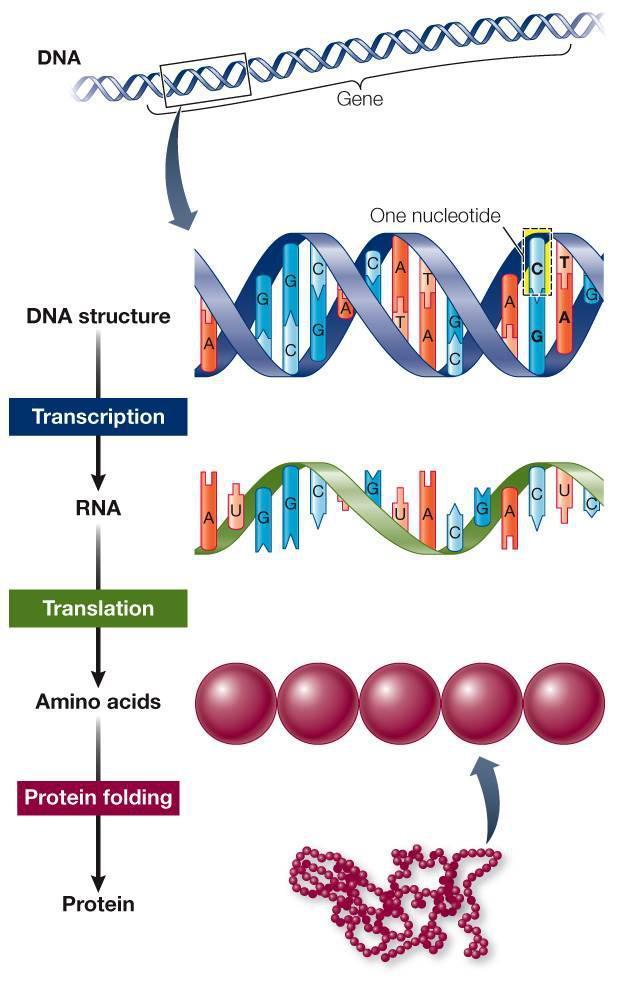
Which statement is supported by evidence presented in the figure?
a. Genes are composed of RNA.
b. Information in DNA is used to construct proteins.
c. A nucleotide is a gene.
d. Amino acids are composed of nucleotides.
e. Proteins are composed of genes.
ANSWER: b
37. The exposure of DNA to excessive levels of ultraviolet radiation produces dimers of thymine (a nucleotide); if unrepaired, these can lead to production of skin cancer. This mutation would
a. have no effect on genes.
b. have no effect on proteins.
Name: Class:
Chapter 1
c. affect both genes and proteins.
d. affect only proteins.
e. affect only genes.
ANSWER: c
38. The information needed to produce proteins is contained in a. nutrients.
b. tissues.
c. evolution.
d. organs.
e. genes.
ANSWER: e
39. Which feature is the same in muscle cells and gut cells?
a. Cell function
b. Local cell environment
c. Expressed genes
d. Genome
e. Proteins formed
ANSWER: d
40. The total of all the information encoded by an organism’s genes constitutes its a. genetic code.
b. genetics.
c. genome.
d. evolutionary history.
e. DNA structure.
ANSWER: c
41. Which evolutionary development paved the way for the tremendous diversity of life forms observed on Earth today?
a. Predation
b. Cellular differentiation
c. Flight
d. Cell division
e. Anaerobic metabolism
ANSWER: b
42. The change in genetic makeup of biological populations through time is called a. homeostasis.
b. evolution.
Copyright Macmillan Learning. Powered by Cognero.
Name: Class:
c. biodiversity.
d. sexual selection.
e. natural selection.
ANSWER: b
43. Charles Darwin called the differential survival and reproduction among individuals in a population
a. sexual selection.
b. genetic drift.
c. natural selection.
d. biodiversity.
e. fluctuation in gene frequencies.
ANSWER: c
44. The ultimate source of new genetic variation is
a. perfect replication of the genome.
b. mating.
c. artificial selection.
d. mutations in the genome.
e. structural adaptations.
ANSWER: d
45. Natural selection functions
a. by causing mutations in the genome.
b. by producing structural and functional changes within organisms.
c. through differential probabilities of survival and reproductive success.
d. through sexual selection and genetic drift.
e. by allowing unlimited growth of populations.
ANSWER: c
46. Change in the genetic makeup of populations over time is known as a. evolution.
b. speciation.
c. growth.
d. ecological change.
e. global change.
ANSWER: a
47. The thorns of cacti are modified leaves and represent an example of a. evolution.
b. a binomial.
c. an expressed gene.
Chapter 1 Copyright Macmillan Learning. Powered by Cognero.
1
d. genome expression.
e. an adaptation.
ANSWER: e
48. The toe pads of arboreal (tree) frogs and the webbed feet of aquatic frogs are examples of
a. genetic drift.
b. structural adaptations.
c. sexual selection.
d. artificial selection.
e. cooperation.
ANSWER: b
49. Which is the feature or component of organisms that allows for their success in such a wide variety of environments on Earth?
a. Prokaryotic cells
b. Eukaryotic cells
c. Homeostasis
d. Adaptation
e. Model systems
ANSWER: d
50. What method did Darwin use to produce pigeons with different colorations?
a. Artificial selection
b. Genetic drift
c. Natural selection
d. Sexual selection
e. Environmental conditions
ANSWER: a
51. Some plants have a vascular system composed of a type of tissue called vascular tissue. Plant vascular tissue functions to carry water, minerals, and nutrients to cells throughout the plant. In an analogous way, some animals have a vascular system, which is composed of several types of tissues that function collectively to move water, minerals, and nutrients to cells throughout the animal’s body. Which statement makes an accurate comparison of plant and animal vascular systems?
a. Because both systems have the same basic function, they are composed of cells that are structurally similar.
b. Both plant and animal vascular systems evolved from a common origin, because they share the same biological function.
c. Animals are more complex than plants, implying that the vascular systems in animals are more complex than the vascular systems in plants.
d. The vascular systems in plants are not true vascular systems like those in animals, because plants do not have hearts.
e. Both systems evolved as the result of cell differentiation that took different paths in plants and animals but resulted in similar functions.
ANSWER: e
52. Refer to the figure showing changes in the diversity of vertebrate life forms inhabiting Earth over its history.
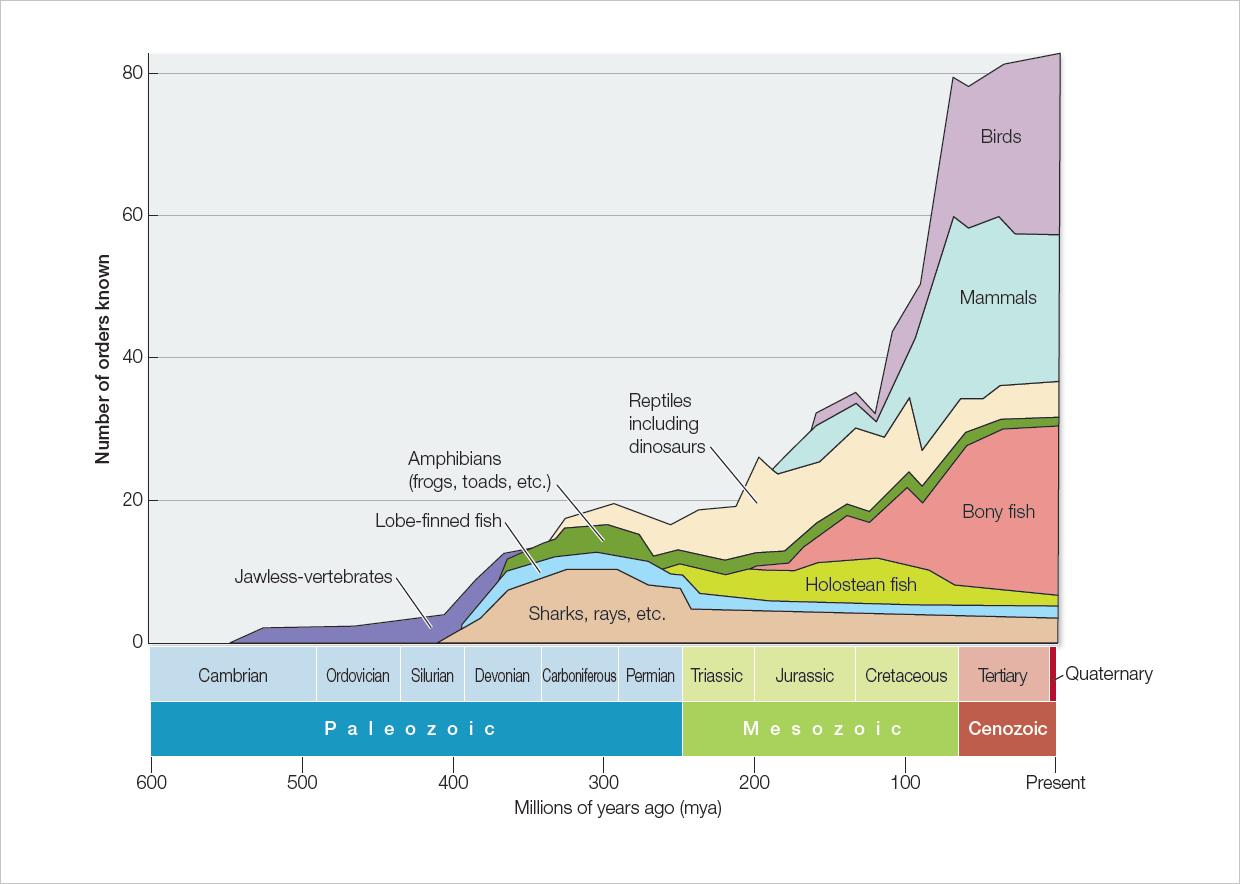
Which statement is accurate and also describes factors that most contributed to the trend depicted in the figure?
a. The range of animal body forms increased tremendously over the history of life on Earth because cell differentiation opened up new structural possibilities.
b. Over time, animals have experienced increasing survival rates because evolution moves in the direction of improving on past forms.
c. Simple vertebrates slowly evolved into more complex vertebrates, because the more complex forms are more highly evolved.
d. Biologists are less able to document the variety of life forms that inhabited Earth the farther back in time they search for clues.
e. The environment on Earth has changed: it was least hospitable to life in its earliest stages but has grown more and more hospitable to life over its long history.
ANSWER: a
53. Refer to the figure showing the evolutionary tree of life.
Chapter 1 Copyright Macmillan Learning. Powered by Cognero.
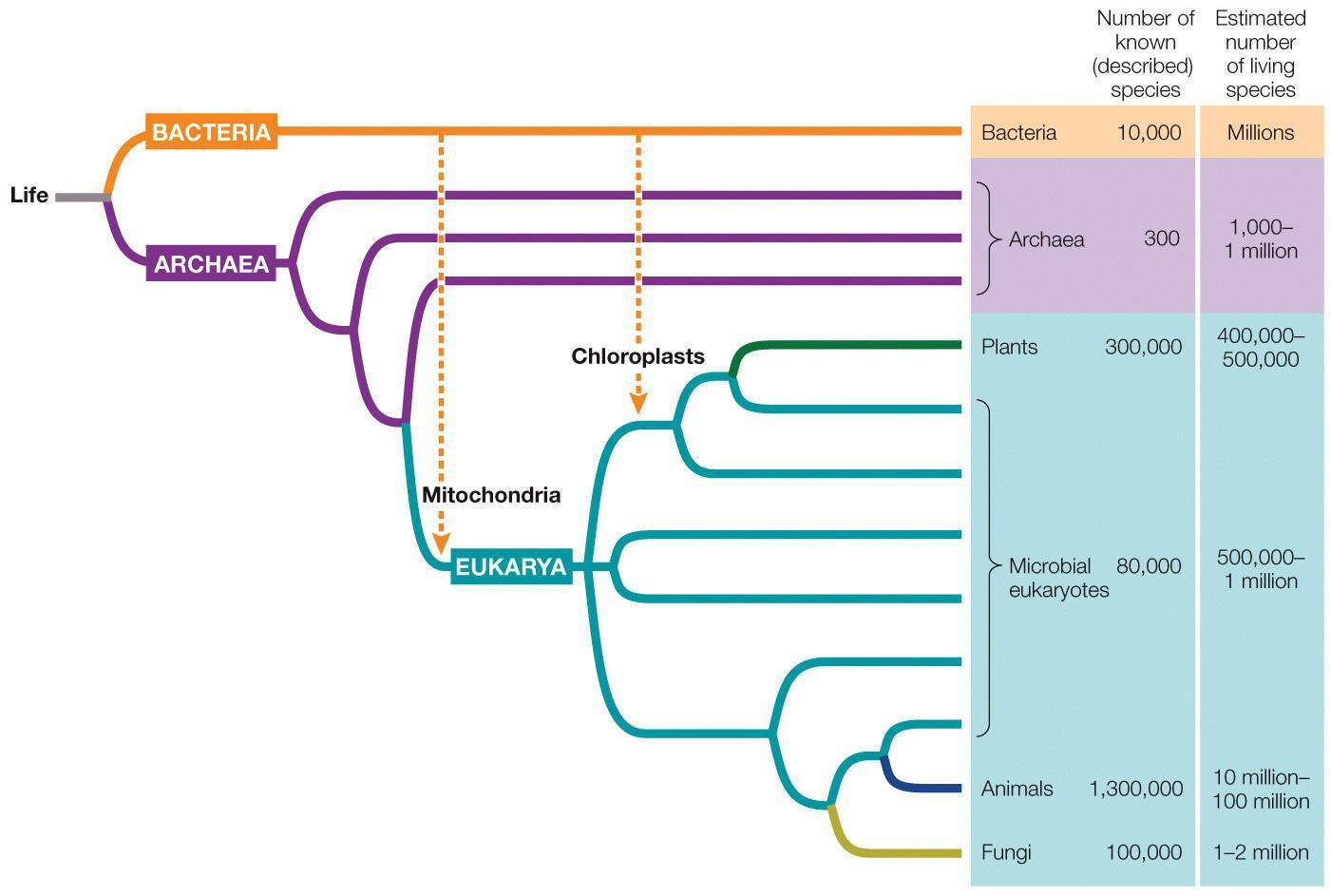
Based on the figure, the three major groups of multicellular eukaryotes
a. evolved prior to the appearance of mitochondria.
b. evolved prior to the appearance of chloroplasts.
c. all evolved from the same group of photosynthetic eukaryotes.
d. are the plants, animals, and fungi, and evolved from different groups of unicellular eukaryotes.
e. are the bacteria, archaea and microbial eukaryotes, and evolved from different groups of ancient archaea.
ANSWER: d
54. Genome sequencing and other molecular techniques have allowed biologists to study the evolution and classification of life’s diverse organisms. By examining the fossil record and by identifying similarities and differences among living species, they have been able to
a. reconstruct genomes of ancient organisms.
b. construct phylogenetic trees to illustrate evolutionary relationships.
c. determine that different genetic codes are used by today’s living organisms.
d. determine that different genetic codes were used by ancient living organisms.
e. identify the genus and species of the very first living organism on Earth.
ANSWER: b
55. A species consists of
a. all the populations of different organisms that live together in a particular area.
b. all the populations found in a community.
c. a group of individuals of the same type of organism that share a common genome.
d. all the populations found in an ecosystem.
e. a group of individual organisms in an area that do not interact.
ANSWER: c
56. The same DNA code is used by Archaea, Bacteria, and Eukarya. However, when the sequences of genes encoding proteins of similar function are compared, certain groups of genes in Eukarya are more similar to those in Archaea than to those in Bacteria, while other groups of genes in Eukarya are more similar to those in Bacteria than to those in Archaea. Which statement is consistent with these findings?
a. The origins of Archaea, Bacteria, and Eukarya are all different and unique from one another.
b. Archaea and Bacteria have the same common ancestor that differs from the one each shares with Eukarya.
c. Eukarya and Bacteria have the same common ancestor, and Eukarya and Archaea have the same common ancestor, but Archaea and Bacteria do not share a common ancestor.
d. Archaea, Bacteria, and Eukarya represent lineages that came from a single common ancestor.
e. Eukarya and Archaea have the same common ancestor that differs from the one each shares with Bacteria.
ANSWER: d
57. A node on a phylogenetic tree represents
a. an extinction event.
b. a hybridization event between two variants of a species.
c. a common ancestor of two lineages.
d. a die-off of a population.
e. a new generation.
ANSWER: c
58. Species are given a distinctive scientific name formed from two Latin names called a a. minimal.
b. biannual.
c. normal.
d. binomial.
e. polynomial.
ANSWER: d
59. Which scientific name is written correctly?
a. homo sapiens
b. Branta Canadensis
c. Acer saccharum
d. H. Neanderthalensis
e. Canis lupus
Chapter 1 Copyright Macmillan Learning. Powered by Cognero.
1
ANSWER: c
60. A phylogenetic tree
a. classifies all plant species based on their habitats.
b. diagrams the evolutionary history of a particular group of organisms.
c. is based on binomial nomenclature.
d. only catalogues fossil plants.
e. only uses genome sequencing data.
ANSWER: b
61. Once a phylogenetic tree has been constructed,
a. it cannot be changed.
b. it cannot be consolidated into any other phylogenetic tree.
c. it can be modified only using genetic data.
d. it can be modified only as organisms continue to evolve.
e. it can be modified or enlarged as new evidence warrants.
ANSWER: e
62. Scientists’ ability to reconstruct evolutionary history has been most enhanced in recent decades by
a. new fossil-hunting techniques.
b. advances in anatomical dissection.
c. improved microscopic technologies.
d. accurate genetic sequencing techniques.
e. an increase in research in animal developmental biology.
ANSWER: d
63. Evolutionary relationships among living organisms can be determined by comparing a. their genomes.
b. their physiological states.
c. their life stages.
d. their genders.
e. their ages.
ANSWER: a
64. You propose a set of experiments to test whether present-day chloroplasts originated from a single or multiple endosymbiotic events. Which experimental approach would provide the most detailed test of these hypotheses?
a. Testing whether different groups of photosynthetic organisms have similar pigments in their chloroplasts
b. Testing whether the chloroplasts of different groups of photosynthetic organisms have the same structure
c. Performing an instrumental test to determine whether the wavelengths of light absorption by chloroplast pigments are the same in different groups of photosynthetic organisms
d. Using structural chemistry to test whether the light-absorbing pigments in different groups of photosynthetic organisms are the same
e. Comparing the genomes of chloroplasts found in different groups of photosynthetic organisms to determine their evolutionary relationship to one another as well as to free-living species
ANSWER: e
65. Plants, fungi, and animals are most closely related to different groups of
a. microbial eukaryotes.
b. endosymbiotic bacteria.
c. Archaea.
d. cyanobacteria.
e. inorganic molecules.
ANSWER: a
66. Plants are
a. eukaryotic unicellular aerobes.
b. eukaryotic multicellular aerobes.
c. eukaryotic multicellular anaerobes.
d. prokaryotic unicellular anaerobes.
e. prokaryotic multicellular aerobes.
ANSWER: b
67. Which group is most distantly related to microbial eukaryotes?
a. Plants
b. Archaea
c. Birds
d. Fungi
e. Mammals
ANSWER: b
68. A scientist has isolated the same gene from ten different species. Once these ten pieces of DNA have been sequenced, the scientist will line up the sequences to compare them. She should be able to draw conclusions about the evolutionary relationships among these ten species by using the following as a guide: The the in gene sequences for two species, the the time span since these species diverged from a common ancestor during their evolution.
a. greater; similarities; shorter
b. fewer; similarities; shorter
c. greater; similarities; longer
d. fewer; differences; longer
e. greater; differences; shorter
Chapter 1 Copyright Macmillan Learning. Powered by Cognero.
Chapter 1
ANSWER: a
69. Refer to the figure showing the evolutionary tree of life.
According to the relationships indicated by the phylogeny, which statement is true?
a. Animals are equally related to plants and fungi.
b. Animals are more closely related to fungi than they are to plants or any microbial eukaryotes.
c. Fungi evolved more recently than did plants.
d. Most eukaryotes are microbial eukaryotes.
e. Plants evolved more recently than did archaea.
ANSWER: c
70. Refer to the figure showing the evolutionary tree of life.
Which statement is supported by the figure?
a. Plants contain chloroplasts but not mitochondria.
b. No members of Eukarya contain both mitochondria and chloroplasts.
c. Chloroplasts are found in bacteria.
d. Mitochondria evolved before chloroplasts.
e. Mitochondria are found in bacteria.
ANSWER: d
71. In the names of organisms, the is placed first and the is placed second.
a. species; genus
b. genus; domain
c. domain; genus
d. genus; species
e. domain; species
ANSWER: d
72. Which factors are taken into consideration in the biological classification of organisms?
a. Physical characteristics only
b. Molecular characteristics only
c. Physical characteristics and fossil records only
d. Physical characteristics and molecular characteristics only
e. Physical characteristics, fossil records, and molecular characteristics
Chapter
ANSWER: e
73. Which provides evidence of the ability of cells to become specialized?
a. Replacing the nucleus in a sheep’s cell with the nucleus from a mouse cell results in a cell with characteristics of a mouse cell.
b. Cells removed from a multicellular animal can undergo cell division in culture dishes when provided a continued source of nutrients.
c. Cells from a mouse embryo can be isolated and used to repair an injury in the central nervous system of an adult mouse.
d. A virus can infect a human cell and insert some of its DNA into a human chromosome, where it will be replicated and carried along during division of the human cell.
e. Mouse cells grown in culture dishes undergo cell division at a slower rate at temperatures colder than 37°C.
ANSWER: c
74. Which usually results from a scientific investigation?
a. Proof of the hypothesis
b. Refinement of the experimental design to produce qualitative data
c. Formulation of new questions that result in additional experimentation
d. Repetition of statistical tests to verify results
e. Development of additional technologies to meet the needs of scientists
ANSWER: c
75. Which is one of the major steps in the scientific approach that uses a hypothesis and then a prediction?
a. Stating an opinion
b. Rejecting a hypothesis based on intuition
c. Making an observation
d. Eliminating data that do not fit the hypothesis
e. Making an untestable prediction
ANSWER: c
76. After observing that fish live in clean water but not in polluted water, researchers state that “polluted water kills fish.” Scientifically, this statement is an example of a(n)
a. fact.
b. observation.
c. opinion.
d. result.
e. hypothesis.
ANSWER: e
77. A biologist listens to frogs singing at a local pond and hypothesizes that the sounds are mating calls. What would be the next step in the hypothesis-and-prediction method?
Chapter 1
a. Controlling an environment
b. Making an observation
c. Forming a hypothesis
d. Making a prediction
e. Testing a prediction
ANSWER: d
78. A biologist hypothesizes that the sounds made by lions at night in the Serengeti are territoriality calls and predicts that two lions inhabiting the same territory will roar even louder. She selects an area inhabited by one lion, records its calls, and plays them back in the same area. She records her observations and notes that the lion does indeed roar more often as a result of this experiment. What would be the next step in the hypothesis-andprediction method?
a. Asking new questions
b. Making an observation
c. Forming a hypothesis
d. Making a prediction
e. Testing a prediction
ANSWER: a
79. The main purpose of any single experiment is to
a. obtain accurate quantitative measurements.
b. prove unambiguously that a particular hypothesis is correct.
c. avoid a merely comparative analysis.
d. answer as many key questions as possible.
e. test a prediction that is based on a hypothesis.
ANSWER: e
80. A rapid decline of amphibian populations has been observed worldwide. Which could not be one of the proposed hypotheses related to this decline?
a. A fungal disease is the cause.
b. Increased exposure to ultraviolet radiation is the cause.
c. Exposure to agricultural chemicals is the cause.
d. Exposure to an oil spill is the cause.
e. Frogs die naturally.
ANSWER: e
81. Which question cannot be answered by means of the hypothesis-and-prediction approach?
a. Are eastern meadowlark populations declining faster than western meadowlark populations?
b. Is the song of the western meadowlark prettier than that of the eastern meadowlark?
c. Do eastern and western meadowlarks interbreed?
d. Do meadowlarks benefit from prairie habitat restoration?
Chapter 1
e. Have the migration paths of western meadowlarks been affected by climate change?
ANSWER: b
82. Refer to the figure showing the steps in the scientific method.
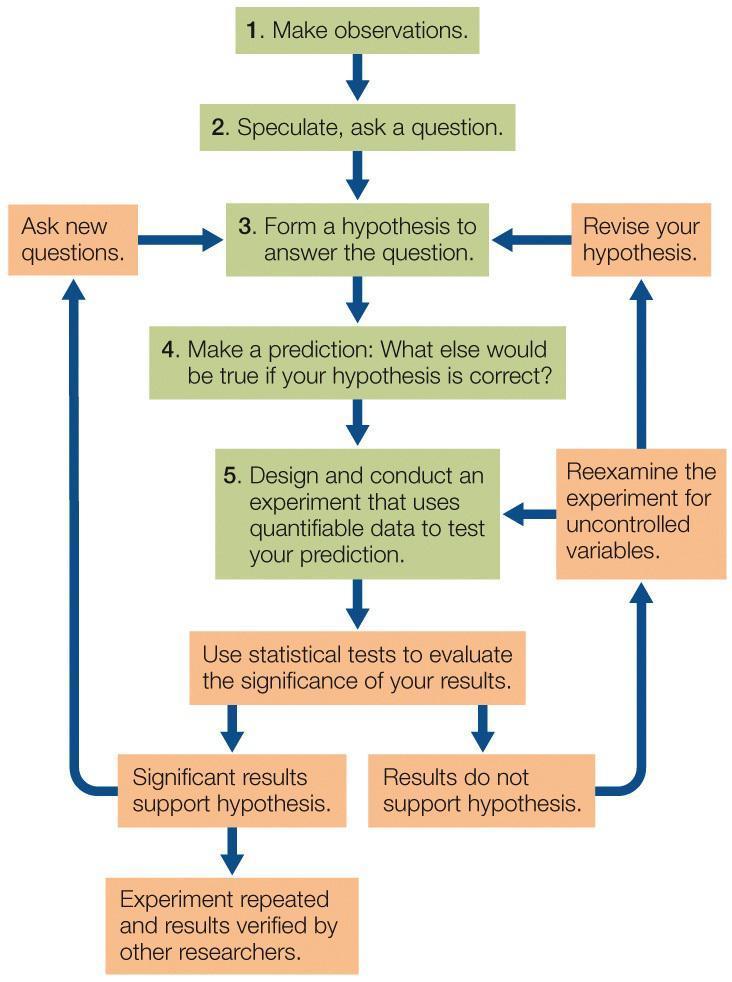
Step 4 illustrates
a. the formation of an opinion prior to observations.
b. an optional step that is required only if experiments are going to be based on a hypothesis.
c. an alternative to formulating a hypothesis.
d. the use of inductive logic.
e. the use of deductive logic.
ANSWER: e
83. Refer to the figure showing the steps in the scientific method.
Chapter 1
Which step in the figure best illustrates the use of inductive logic?
a. 1
b. 2
c. 3
d. 4
e. 5
ANSWER: c
84. Refer to the graph showing the results of a study that exposed male frogs to atrazine, a chemical used to kill weeds in agricultural areas. According to the data in the graph, higher atrazine concentrations do not result in a higher rate of gonadal abnormality.
Chapter 1
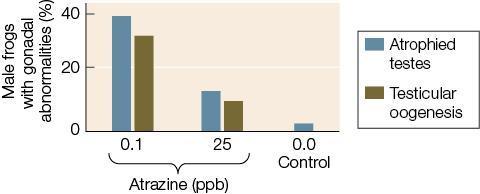
Which conclusion can be drawn from these results?
a. Low levels of atrazine are not as dangerous to amphibians as high levels of atrazine.
b. A dosage of 15 ppb would cause a rate of abnormality between the one caused by the 0.1 ppb dosage and the one caused by the 25 ppb dosage.
c. The effect of the atrazine exposure is not proportional to the level of exposure.
d. Atrazine is only hazardous in a natural ecosystem, where it is naturally diluted in the waterways.
e. Atrazine usage should be banned.
ANSWER: c
85. Which is a step in the scientific method?
a. Observation
b. Recording only the results that seem relevant
c. Discarding data that disprove a hypothesis
d. Formulating an opinion
e. Asking questions that cannot be tested
ANSWER: a
86. Scientific explanations for a natural phenomenon
a. can be tested only in the laboratory.
b. are always based on an ethical point of view.
c. are based on reproducible and quantifiable observations.
d. are based on untested hypotheses.
e. cannot be rejected.
ANSWER: c
87. The advantage of controlled scientific experiments is that
a. all variables except one are held constant.
b. the hypothesis can be proven correct.
c. patterns can be predicted.
d. investigations can be carried out in the field.
e. a massive amount of data can be synthesized.
ANSWER: a
Chapter 1
88. Which is a characteristic of a comparative experiment?
a. Only one variable is manipulated.
b. All variables are kept constant.
c. One variable is compared to all the other variables.
d. It starts with groups or samples that are as similar as possible.
e. It starts with the prediction that there will be a difference between groups or samples.
ANSWER: e
89. A researcher collected frog and water samples from eight widely separated sites across the United States and studied the incidence of abnormalities in frogs exposed to different levels of the herbicide atrazine. This was a(n) experiment.
a. comparative
b. controlled
c. inductive
d. logic
e. deductive
ANSWER: a
90. A statistical test starts with
a. a null hypothesis.
b. deductive logic.
c. inductive logic.
d. a hypothesis.
e. a model system.
ANSWER: a
91. Refer to the table. A biologist studied plant growth using two plant species grown over a 2-week period. For each species, 20 plants were used, randomly split into control and experimental groups. Except for CO2 exposure, conditions were identical for all plants. The table summarizes results as average height increase, along with a plus/minus value indicating the range of individual plant heights measured.
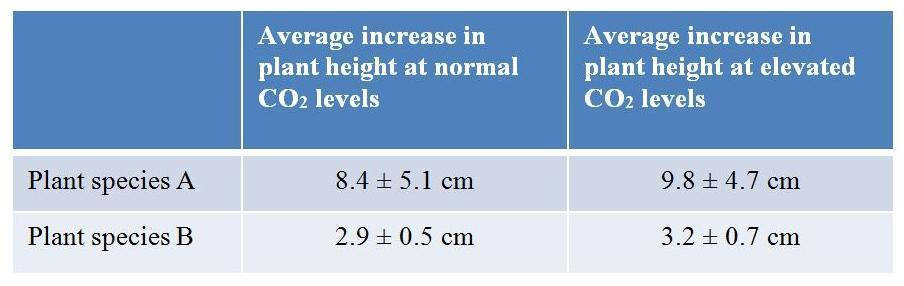
Which is the null hypothesis that would be developed when using statistics to analyze these results?
a. The growth rates of certain species of plants are more influenced by CO2 levels than others.
1
b. Differences in growth rate at the different CO2 levels could be due to random variations in the samples of both species.
c. All plants show variation in growth rate when environmental variables are changed.
d. Carbon dioxide is one of many variables that can influence plant growth rate.
e. The effect of CO2 on plant growth rate depends on the species of plant being investigated.
ANSWER: b
92. Fruit flies have been used as a model system to study the cellular mechanisms of myogenic cardiac pacemakers. The results in fruit flies can be related to similar processes in humans because fruit flies and humans
a. share a genetic code.
b. are both prokaryotes.
c. share the exact same genome.
d. have the same number of chromosomes.
e. share the same habitat.
ANSWER: a
93. Much of what we know about the biochemistry of photosynthesis was discovered in experiments with
a. Drosophila, a fruit fly.
b. Danio rario, the zebrafish.
c. C. elegans, a roundworm.
d. Arabidopsis, a relative of mustard.
e. Chlorella, a unicellular alga.
ANSWER: e
94. Biologists studying photosynthesis have experimented with the Chlorella alga, knowing that they could extend their findings to plants. In this case, Chlorella is used because
a. of its unique properties.
b. it is in the same genus as the first photosynthetic organism.
c. it is a photosynthetic prokaryote.
d. it can serve as a model system for studying photosynthesis.
e. it has photosynthetic pigments that are different from all other plants.
ANSWER: d
95. Which statement represents a scientific point of view?
a. Earth was created by a supernatural force.
b. The positions of the sun, moon, and stars provide guidance for making decisions.
c. Inner strength comes from the beauty in nature.
d. Humans should not use reproductive technologies to select the sex of their offspring.
e. Testing the effect of antibiotics on E. coli can help prevent deaths from food poisoning.
ANSWER: e
Chapter 1
96. Many possible applications of scientific knowledge raise ethical issues for some people. Which application, however, would be rejected by all responsible scientists?
a. Selecting the sex of one’s children
b. Using stem cells as part of medical treatments
c. Modifying the human genome
d. Using scientific knowledge to dictate how the world ought to be
e. Moving genes from one organism to another
ANSWER: d
97. In which organisms have modern agricultural practices been used to develop new breeds or strains?
a. Animals, only
b. Plants, only
c. Fungi and plants, only
d. Animals and plants, only
e. Animals, plants, and fungi
ANSWER: e
98. Which scientific field is providing us with knowledge that will help in the control of possible future tuberculosis epidemics?
a. Fungal bioinformatics
b. Agricultural biology
c. Plant genomics
d. Marine ecology
e. Molecular biology
ANSWER: e
99. New vaccines to protect against the influenza virus are developed every year because of the virus’s
a. high rate of infection.
b. high rate of evolution.
c. long generation time.
d. low mutation rate.
e. short life span.
ANSWER: b
100. A young child becomes very ill and is taken for medical evaluation. The analysis reveals a genetic disorder, and he is sent home with medication to alleviate his symptoms. Other members of the family are concerned about how the child’s illness can affect them. Which statement provides reasonable advice to these family members?
a. Isolate the sick child as much as possible to prevent any other family members from contracting the illness.
b. Have only adult family members come into contact with the sick child, and keep younger members
of the family away from the child and any of his things.
c. Allow family members to interact with the child as long as they avoid contact with his body fluids and wash their hands immediately after interactions with him.
d. Give everyone in the family the same medication as the child to prevent their contracting the illness from the child.
e. Assure all family members that the illness is not contagious and that the best course of action is to make the child as comfortable as possible and stick to the prescribed dosage and timing when administering his medication.
ANSWER: e
101. The recent dramatic changes in the global climate, leading to the extinctions of large numbers of species and the spread of new and old diseases, are caused largely by _______. This information can be used to
a. human activity; develop governmental policies to reduce the rate of climate change
b. volcanoes; control volcanic eruptions
c. sun spots; inform citizens of future environmental conditions
d. the shifting of Earth’s tectonic plates; make alterations in building codes
e. natural variations in weather patterns; make more accurate weather forecasts
ANSWER: a
102. Overfishing in the Atlantic bluefin tuna breeding ground has resulted in a serious decline in the tuna’s population. In response, an international commission drew a line down the middle of the Atlantic Ocean with the intent of allowing western populations of bluefin tuna to recover by restricting fishing quotas in that hemisphere. Why did this policy fail to achieve the desired result?
a. Tracking data showed that the tuna’s breeding ground is identical to its feeding ground.
b. Tracking data showed that western bluefin tuna feed all across the Atlantic Ocean.
c. Tracking data showed that eastern and western bluefin tuna populations are geographically isolated in terms of their feeding grounds.
d. No tuna caught on the eastern side of the line were from the western breeding population.
e. All tuna caught on the western side of the line were from the eastern breeding population.
ANSWER: b
103. Which problem is directly related to global climate change?
a. Development of antibiotic-resistant bacteria
b. Overfishing of bluefin tuna
c. Engineering of drought-resistant crops
d. Consumption of fossil fuels
e. Genetic diseases
ANSWER: d
104. Which topic is considered to be outside the realm of biology?
a. The origin of the universe
Chapter 1 Copyright Macmillan Learning. Powered by Cognero.
b. The extraction and consumption of fossil fuels
c. The rate of change in the world’s ecosystems
d. The increase in anthropogenic carbon dioxide in the atmosphere
e. The rapid rate of climate warming
ANSWER: a
105. The term “anthropogenic” refers to
a. human-caused fires.
b. the study of insects.
c. human-generated effects upon the environment.
d. the study of human biology.
e. the study of agriculture.
ANSWER: c
106. Several recent movies depict terrifying scenarios in which pathogenic bacteria or viruses kill most of the people they infect. Which statement best explains whether or not such a scenario such could actually occur and explains why?
a. It is not possible, because modern medicine has developed vaccines that protect us from harmful pathogens.
b. It is not possible, because the medical community has so much knowledge and capability that it can effectively suppress any pathogen in an infected individual.
c. It is not possible, because bacteria and viruses present on Earth today are not as virulent as they were in the past, when they caused so many human deaths.
d. It is possible, because the more pathogenic a microbe is, the more likely it is to infect someone.
e. It is possible, because bacteria and viruses have such short life spans and large populations that they can quickly evolve new and very harmful characteristics.
ANSWER: e
107. What hypothesis has been proposed to explain the emergence of eukaryotic cells?
ANSWER: Eukaryotic cells contain a number of membrane-bound organelles. It is hypothesized that organelles such as mitochondria and chloroplasts evolved from engulfed prokaryotic organisms that were not digested but instead began a mutual relationship with the host cell that engulfed them. See Key Concept 1.1
108. Cellular life is divided into three major lineages. What are these three lineages, and what are their key similarities and differences?
ANSWER: The three major lineages of life are Bacteria, Archaea, and Eukarya. Both Bacteria and Archaea are composed of prokaryotes unicellular organisms that have an outer membrane but lack membranebound organelles. Members of Eukarya are defined by having their DNA contained within a nuclear membrane and by containing other membrane-bound organelles, including mitochondria and, within some members, chloroplasts; the domain Eukarya includes microbial eukaryotes and all multicellular organisms (plants, animals, and fungi). See Key Concept 1.1
Chapter 1
109. What is the significance of the fact that mitochondria and chloroplasts contain the DNA that instructs their form and function?
ANSWER: The independent DNA found in mitochondria and chloroplasts is evidence of their ancient origins as bacteria that became incorporated into eukaryotic cells. Since the ancestors of these organelles once existed as independent organisms, they have their own genomes. See Key Concept 1.1
110. Refer to the figure. The figure shows early steps in the embryonic development of a sea urchin, a marine invertebrate. Each figure represents a cross-sectional view of the developing embryo. The blastula can be described as a hollow ball of cells. These cells formed from a fertilized egg that underwent a number of rounds of cell division. In the next stage of development, cells of the blastula move inward to form a gastrula. This creates a cell-lined structure on the inside of the embryo that later becomes the digestive tract. Most animals show a similar pattern of development in that cells that will form the gut and other internal organs move into the inside of the embryo during gastrulation.
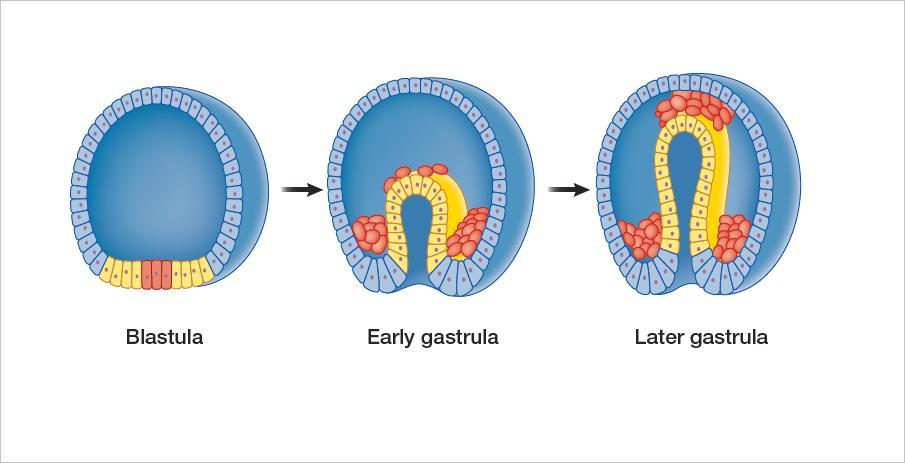
How might these stages in early development represent stages in the evolution of specialized cells in multicellular animals?
ANSWER: The first multicellular organisms may have been similar to the blastula stage, in which all cells are exposed to the exterior environment. Once gastrulation occurs in the embryo, cells that have moved into the interior experience a different environment than the exterior cells. In the evolution of multicellular organisms, such a condition could have allowed the exterior cells to become specialized in protection tasks and the interior cells to become specialized at digestion and transport of digested materials to the outer cells of the animal. See Key Concept 1.1
111. Multicellular organisms must regulate their internal environment by maintaining it within a narrow range of conditions, a process called homeostasis. Homeostasis requires regulation, and regulation requires information about an organism’s internal conditions, external conditions, and optimal conditions. What major systems are used by animals for obtaining this information?
ANSWER: The major information systems used by animals for homeostasis are their nervous, hormonal, and immune systems. See Key Concept 1.1
112. Refer to the figure depicting the life cycle of Dictyostelium, an organism known as a cellular slime mold,
Chapter 1
which can be found in temperate forest ecosystems. A cellular slime mold begins as a group of single cells that function independently when nutrients are readily available. However, when starved, these cells begin aggregating to form a multicellular slug and then a fruiting body. The fruiting body consists of a basal disc holding the fruiting body to the substrate, a stalk, and a spore mass. When the spores are released in a nutrientrich environment, they then develop into individual cells that can begin the process over again.
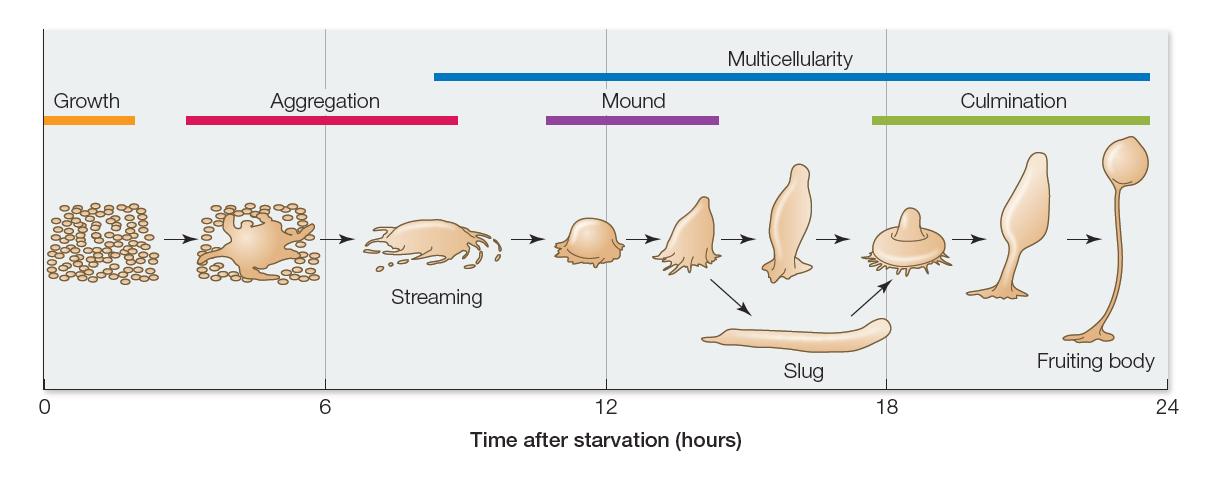
Using this information along with the figure, explain how cell specialization contributes to the biological success of cellular slime molds.
ANSWER: Cell specialization in the cellular slime mold is apparent when the multicellular slug forms the fruiting body. This structure has different parts with different functions. The bottom holds the structure to the ground, the stalk allows the top to be raised above the ground so that the spores produced by the top of the fruiting body can be disseminated. This gives the slime mold a greater chance at survival when its present location has run out of nutrients. See Key Concept 1.1
113. Refer to the figure showing a group of organisms.
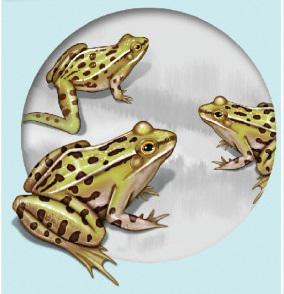
According to the hierarchy of biological systems, which level is represented by this group of organisms? Explain your reasoning.
ANSWER: The group of organisms represents a population because it is a group of individuals of the same species that interact. See Key Concept 1.1
Name: Class:
Chapter
114. Refer to the figure showing the hierarchy of biological organization in a series of levels, starting with a group of organisms of the same species.
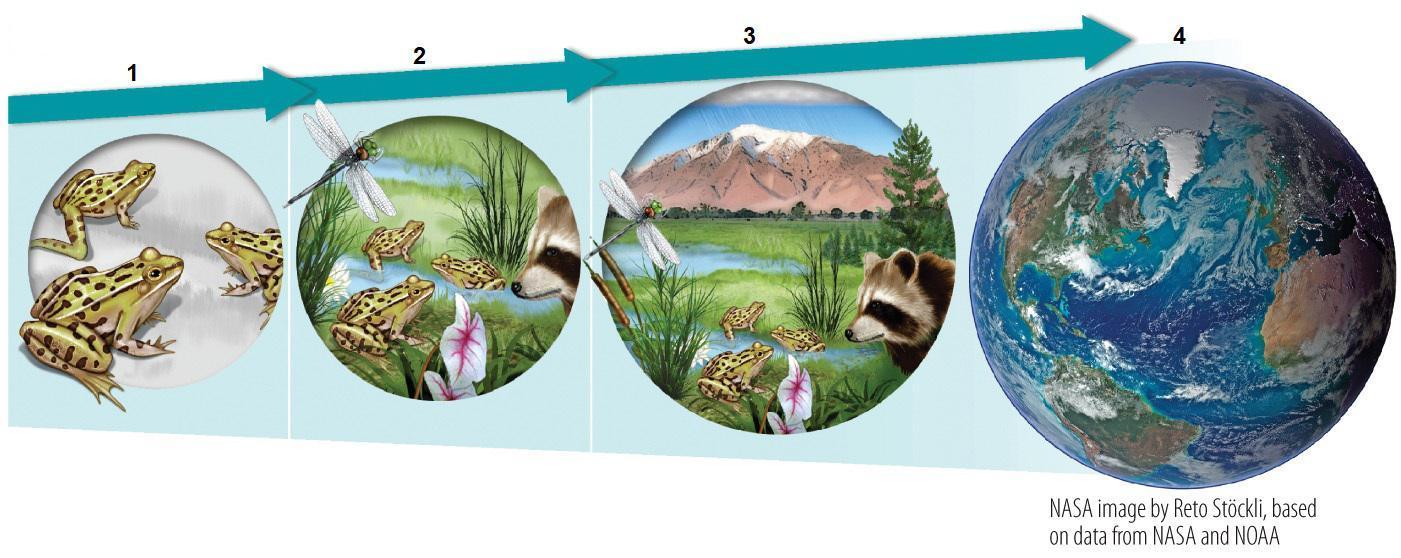
Name each level (labeled 1–4), and explain what constitutes each level.
ANSWER: 1
115. Refer to the figure showing a group of organisms.
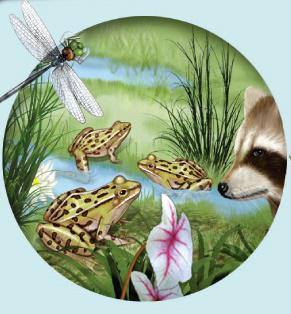
According to the hierarchy of biological systems, what level is represented by this group of organisms? Explain your reasoning. If nonliving components such as soil, oxygen, carbon dioxide, and water are included with these organisms, what level is represented? Explain.
ANSWER: The group of organisms represents a community because they are of different species all interacting with one another in the same location. When the nonliving components associated with this community are added, the system represents an ecosystem. An ecosystem is composed of both the living and nonliving elements that are interdependent and occupy the same location. A community is just the populations of living organisms in this same location. See Key Concept 1.1
116. Scientists have been able to show that organisms as different as fruit flies and dogs share a majority of their genes. What are the methods scientists use to determine this?
ANSWER: Scientists use molecular genetic tools to obtain the DNA sequences of these organisms. They then
Chapter 1
compare the DNA of two or more organisms by looking for similarities in their nucleotide sequences. See Key Concept 1.2
117. Biologists can now isolate genes from organisms and decode their DNA. In looking at the same gene in three different species within the same genus, biologists find that species A and B share the same variations in the nucleotide sequence of this gene, and this sequence differs from the nucleotide sequence of this gene in species C. How could you use these data to deduce the evolutionary relationships among these three species?
ANSWER: We would expect that species A and B are more closely related to each other than they are to species C. See Key Concept 1.2
118. Biologists have shown that humans share more changes in their genes with chimpanzees than with gorillas. What can we deduce from these data about the common ancestors of these three groups?
ANSWER: From these data, we can deduce that humans and chimpanzees share a more recent common ancestor than humans and gorillas do. See Key Concept 1.2
119. Refer to the figure. Gregor Mendel observed that some crosses between short and tall pea plants yielded the results shown in the figure.
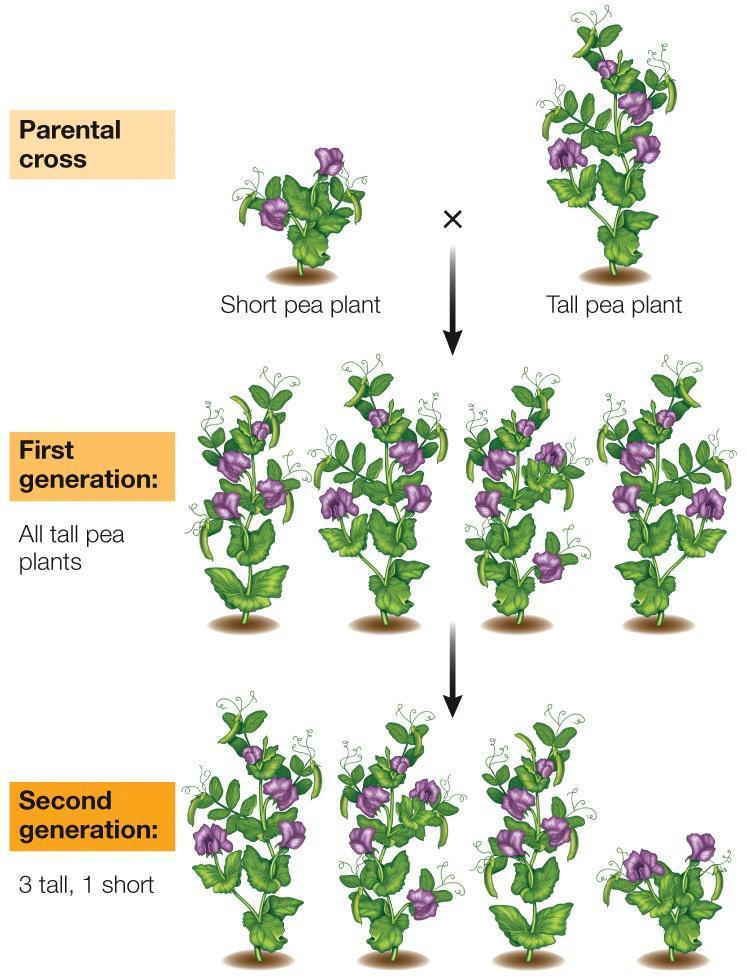
How did Mendel explain the results in the first generation of pea plants?
ANSWER: Because all of the progeny in the first generation had the characteristics of the tall parent, Mendel
Chapter 1
proposed that the tall characteristic was dominant over the short characteristic. See Key Concept 1.2
120. Refer to the figure showing a frog species.
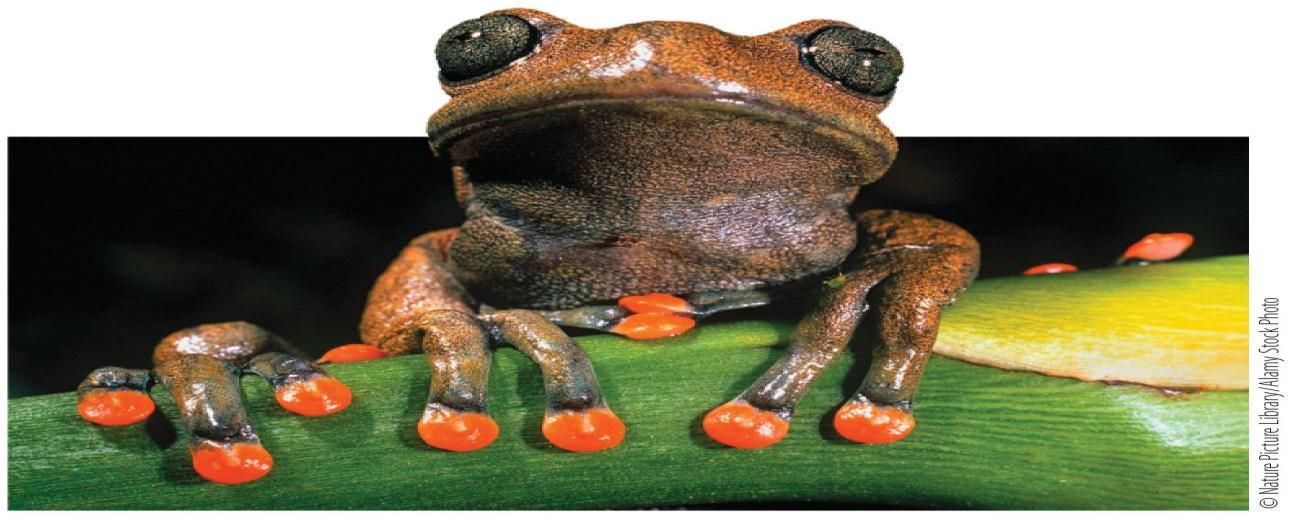
This frog shows an adaptation appropriate for its environment. Where would you predict this frog lives in the water, dry deserts, trees, or burrows in the ground? Which adaptation would you base your answer on?
ANSWER: This frog most likely lives in trees and uses its obvious enlarged toe pads for climbing. See Key Concept 1.2
121. Refer to the figure of the phylogenetic tree showing humans and their closest living relatives.
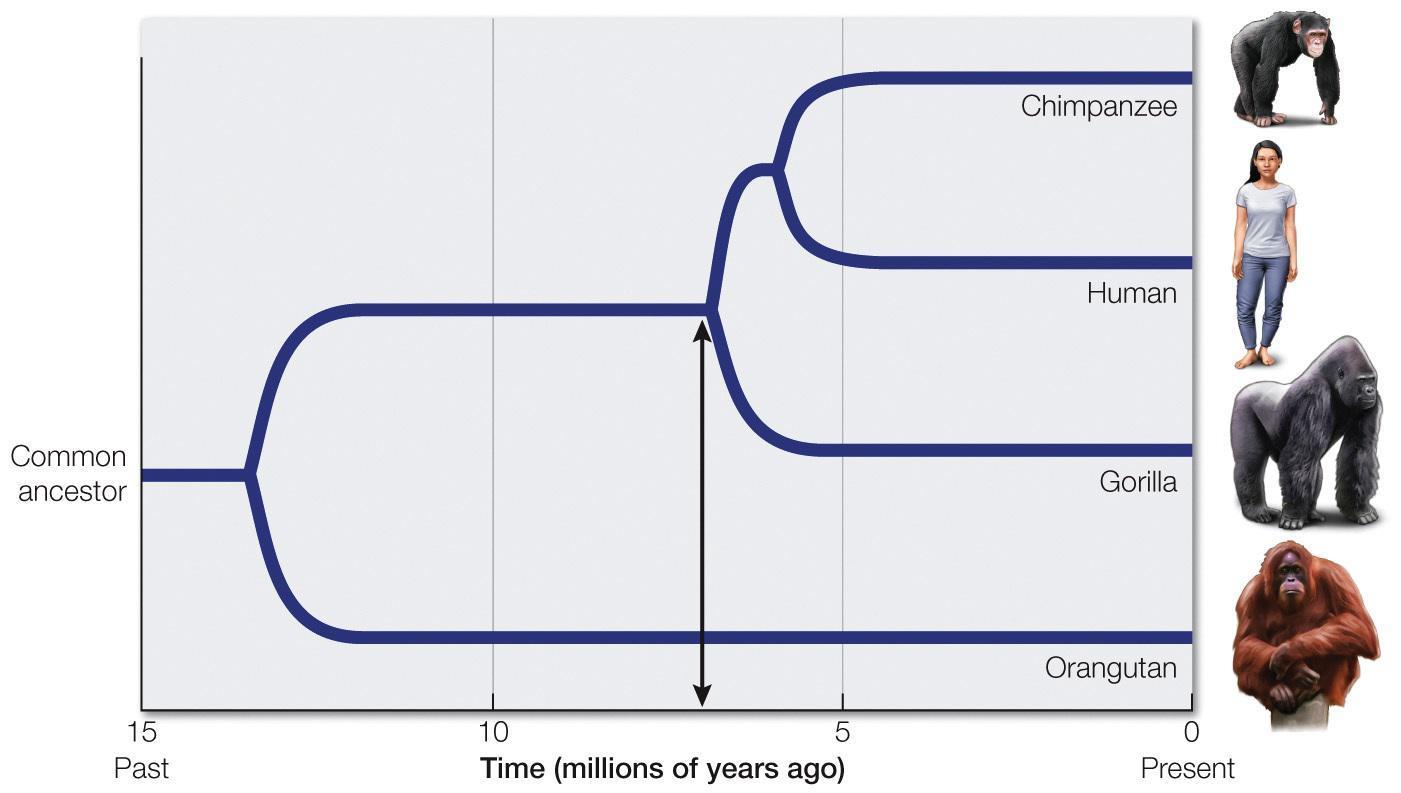
Based on the figure, humans are most closely related to which other group of primates? About how many years ago in the evolutionary past did the two branches leading to present day humans and their most closely related group diverge from one another?
ANSWER: The phylogenetic tree shows that humans are more closely related to chimpanzees than they are to
Chapter 1
gorillas or orangutans. According to this tree, the branches that led to humans and chimpanzees diverged from one another about 6 million years ago. See Key Concept 1.2
122. A claim has been made that populations of songbirds in a forest ecosystem near your home will decline as the result of proposed increases in human activity in a nearby area. What data could you collect that would allow you to test this claim?
ANSWER: You could test this claim by collecting quantifiable data on the bird populations before the human activity begins and at various times after. See Key Concept 1.3
123. Refer to the graph showing data collected between 1993 and 2003 on the clutch sizes in a population of birds. The x-axis shows the size of the clutches of eggs observed, and the y-axis shows the number of times each clutch size was observed.
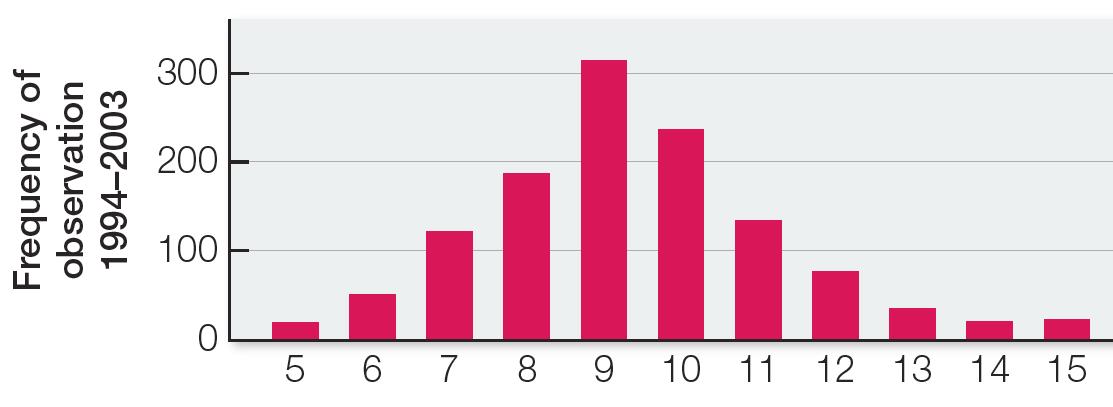
How many eggs were most frequently observed in a clutch? If immediately after this study there were a sudden decrease in the population of an insect that had been the major component of the diet of this bird species, what is a reasonable hypothesis that could be made concerning clutch sizes in this population of birds? How could the scientist test this hypothesis?
ANSWER: The clutch size most frequently observed contained 9 eggs. It is reasonable to suggest that a decrease in the bird’s food supply would mean the birds would have less energy for laying eggs, so one could hypothesize that clutch sizes would decrease. To test this, the scientist could make additional observations of clutch size in this population of birds for as long as the decrease in the insect food source persisted. These data could then be compared to the data collected in the earlier study to determine if clutch size differed between the two studies. Because this is not a controlled experiment, one must consider that there could be variables other than the depletion in the insect food source that could influence the results. See Key Concept 1.3
124. In scientific research, why is it important to design and perform experiments that are capable of falsifying a hypothesis?
ANSWER: The most informative experiments are those that have the ability to show that the prediction is wrong. If the prediction is shown to be wrong, the hypothesis is then modified or rejected. If an experiment produces the type of information that leads to rejection of a hypothesis, then the experiment is a good test of that hypothesis. See Key Concept 1.3
125. List the major steps in the hypothesis-and-prediction approach to scientific inquiry and explain how each step leads to the next step in the sequence.
ANSWER: The hypothesis-and-prediction approach begins with observations that lead to questions. From the questions, hypotheses are formed that are probable explanations for the observed phenomena.
Chapter
Predictions are formed from the hypotheses and tested. Conclusions are drawn from the test results. These conclusions may, in turn, lead to an acceptance, modification, or rejection of the original hypothesis, and to additional questions and hypotheses. See Key Concept 1.3
126. Refer to the graph showing the results of a study that exposed male frogs to atrazine, a chemical used to kill weeds in agricultural areas. A pond near your home is surrounded by farmland. The water in the pond is tested and shown to be contaminated with atrazine, but at a very low level, less than 0.2 ppb. Because the level of contamination is low, your town determines that the contamination is not a threat to frog species in the area.
Using the results of the study shown in the graph, what is your own conclusion about the threat of this contamination to frogs?
ANSWER: The results of this study show that exposure to a very low level (0.1 ppb) of atrazine causes much higher levels of testicular abnormalities in frogs than exposure to a much higher level (25 ppb) of atrazine. Therefore, the low level of atrazine contamination in the pond is a threat to frogs. See Key Concept 1.3
127. A scientist is designing an experiment to test a bacterium’s ability to use carbon sources other than glucose for nourishment. She inoculates four different flasks with samples of the bacterium and observes whether the bacteria grow. All of the flasks contain minimal media plus a carbon source. The carbon source is glucose in flask A, arabinose in flask B, galactose in flask C, and lactose in flask D. In this experiment, what does the culture in flask A represent?
ANSWER: The culture in flask A represents the control culture. See Key Concept 1.3
128. Frogs are amphibians, and most species of frogs spend time both on land and in water. Female frogs are vulnerable to predation by fish when they enter the water to lay eggs. A hypothesis has been proposed that frogs rely on chemical detection of predators in addition to visual detection. In other words, the hypothesis is that frogs detect the presence of predator fish by chemicals released by fish into the water. How might a scientist design an experiment to test this hypothesis, using two test ponds constructed to differ in only one variable?
ANSWER: In designing an experiment to test this hypothesis, a scientist could construct two test ponds such that one pond lacked the compounds released by fish this would be the control pond; the other would contain the compounds released by fish this would be the experimental pond. Female frogs that were ready to lay eggs would then be observed to determine if they used one pond more than the other. See Key Concept 1.3
129. Platelets are cell fragments that are critical for blood clotting, a process that involves the release of proteins from platelet storage granules. Platelet granules contain approximately 300 different proteins. One hypothesis about the packaging of proteins into these granules is that each protein is delivered in precisely measured
Chapter 1
amounts to each granule. If this hypothesis were to be tested experimentally, what would the null hypothesis be for this experiment?
ANSWER: The null hypothesis would be that each protein is delivered in random amounts to the individual storage granules. See Key Concept 1.3
130. Scientists interested in human biology typically perform experiments with other model systems. Why do scientists use model systems in this way?
ANSWER: Model systems are useful in the study of biology because all organisms have evolved from a common ancestor. Therefore, cellular pathways in, for example, bacteria and fruit flies are very similar to those found in humans. Model systems are valuable because in many cases they can be manipulated experimentally. See Key Concept 1.3
131. How has modern biological scientific research increased our effectiveness at fighting seasonal influenza (flu) epidemics?
ANSWER: Through biological research, scientists discovered that influenza is caused by flu viruses, that these viruses have high mutation rates, and that vaccines can be developed against these viruses. Each year, scientists predict which strain of flu virus will cause that year’s seasonal flu epidemic, and they develop a vaccine against that strain. When these predications are correct, the flu vaccine greatly diminishes the severity of that year’s flu outbreak. See Key Concept 1.4