Introduction To Psychology V5 1St Frantz Solutions Manual

Page 1


Solutions Manual for Introduction to Psychology v5 1st Edition by Frantz, Stangor

ISBN: 9798887943886

COPYRIGHT PAGE

Published by: FlatWorld © 2026 by FlatWorld. All rights reserved. Your use of this work is subject to the License Agreement available here http://www.flatworld.com/terms. No part of this work may be used, modified, or reproduced in any form or by any means except as expressly permitted under the License Agreement.

Chapter 1

Introducing Psychology

Note to Instructors

For most of your students, this will be their very first introduction to the field of psychology. Unlike many other sciences, students arrive in this course with preconceptions about what psychology is and what psychologists do. Student knowledge is often not so much wrong as it is incomplete. Asking your students what they know during the first week of the course can help you get a sense of the knowledge they are coming in with and how you can build on that.

The goal of this first chapter is for students to see that:

 there is more to psychology than therapy, although that is an important component of the field.

 psychology is a science, and that science is defined by its methods, not its topic.

 psychology has a long history, and that psychological research has changed our lives in important ways.

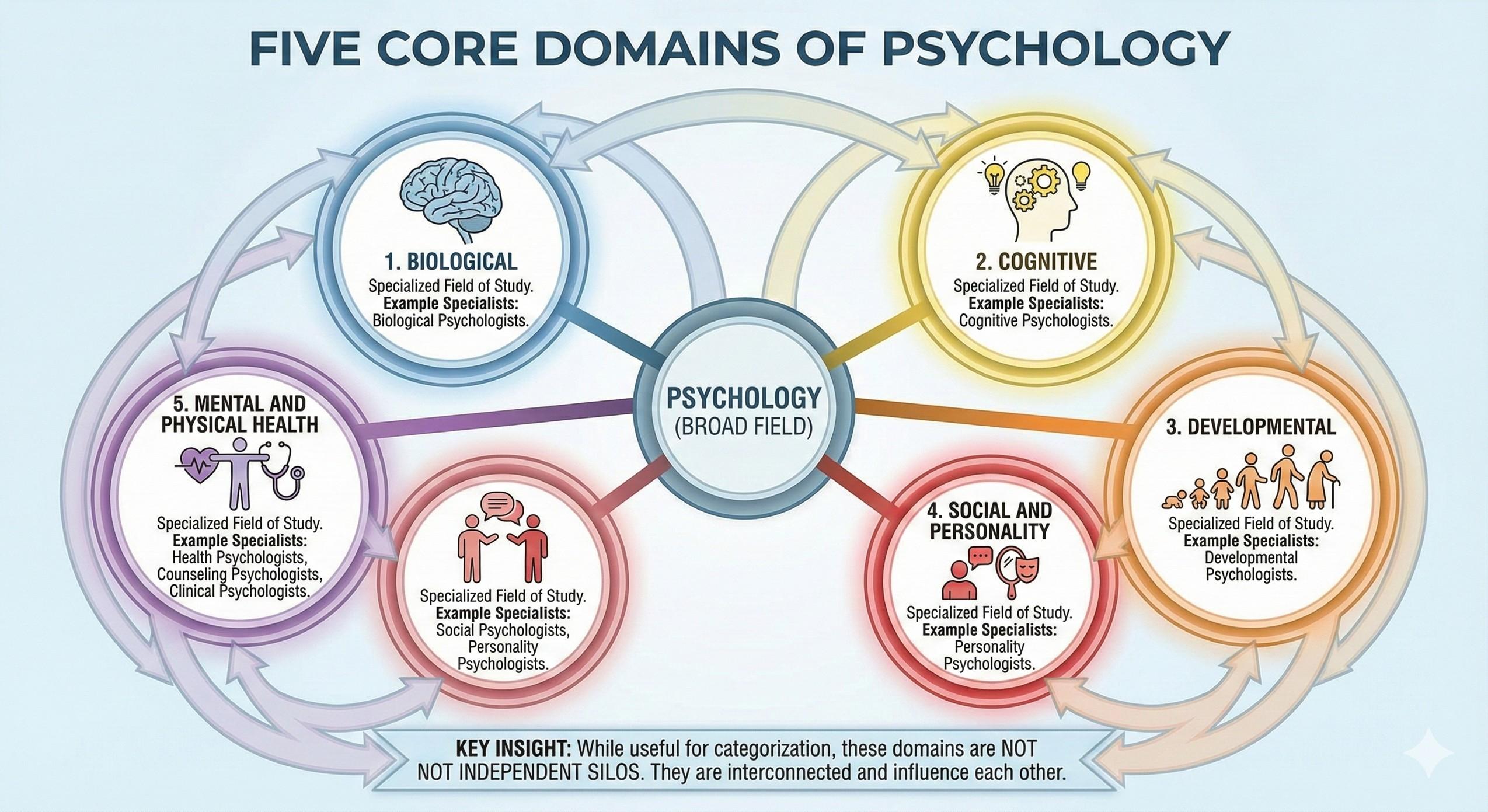
 psychology has seven overarching themes. These may help students understand what the field of psychology values. Psychology has five core domains, but researchers often work across domains.

Remind students that this first chapter is meant to be an overview. Ensure students that, as they move through the course, this chapter’s content will have more meaning.

I hope you and your students enjoy this chapter, Sue Frantz

Suggested Learning Activities

The seven integrative themes are unifying threads, woven throughout the textbook. They can be powerful for students when set up as the enduring understandings that they can take with them from this class. Throughout the introductory psychology course, students will likely adapt their prior understanding of what psychology is, what science can do, and how people think, feel, and behave. Although our science will continue to adapt and change with new evidence, the themes are likely to remain as overarching ideas in the field.

Instructors can set students up for this long-term learning by emphasizing the importance of the themes at the start of the course and then reinforcing them throughout the class. As you move through the content, ask students which themes they see, or provide one theme and ask them to identify an example in the chapter. When students learn to frame the content within the themes, they construct the knowledge that will endure.

In Chapter 1, the stories of the Clarks, Gilbreths, and Marstons are compelling exemplars of applied psychology and the integrative themes.

1. Introduce the seven key themes, then tell these stories in class – show some of the videos from the chapter.

2. Then, ask students to discuss in small groups which themes best fit the stories and why. Then, come back together as a class and share what they decided.

3. There is no correct answer here, but parsing out the explanations will help the entire class gain a stronger foundation for moving forward with the integrative themes as a framework.

4. For example:

o The Clarks doll studies helped to promote a more just society, it also changed our communities and organizations. Finally, the doll studies are an example of an imperfect personal lens—children developed their perspectives about self-worth early.

o The Gilbreth’s operating room observations let to safer surgical procedures, changing our lives – and was also an example of general principles of human behavior.

o Maston’s lie detector work could be matched with the bio-psycho-socialcultural theme or the individual differences theme. Wonder Woman is an example of valuing diversity, and could be related to the ethics theme.

1.1 What Psychologists Do

Learning Objectives

1. Describe how the Clarks, Gilbreth, and Marston changed our lives.

2. Explain what makes Wilhelm Wundt the father of psychological science.

3. Identify and give examples of psychology’s five core domains.

4. Give examples of how some psychologists work across psychology’s five core domains.

Section Outline

 About half of psychologists surveyed in 2017 reported that their primary work activity was professional service. The other half said that their primary work was teaching, research, or management

 Many psychologists who provide therapy as their primary work also teach or do research.

 Conversely, many psychologists who teach or do research as their primary work also provide therapy. There are plenty of psychologists who are not therapists at all who split their time between research and teaching.

 Broadly speaking, then, psychologists identify as researchers, practitioners, and educators.

 As we learn about the science of psychology throughout this book, we will have an opportunity to take what we are learning and use that knowledge to make our own lives better.

A Few Notable Events from the History of Psychological Science

Psychological Science Changed the Course of History

 Drs. Mamie Phipps Clark (1917–1983) and Kenneth Clark (1914–2005) changed the course of history.

 Doll Study: found that by the age of three, when Black children were asked which doll they liked better, they chose the white dolls over the black dolls

 Thurgood Marshall asked the Clarks to conduct their doll study again

 Indeed, “the majority of black children preferred the white dolls to the black dolls, the children saying the black dolls were ‘bad’ and that the white dolls looked most like them

 Supreme Court Chief Justice Earl Warren wrote in the unanimous opinion in Brown v. Board of Education that the segregation laws that kept white and Black children separate led Black children to have “a feeling of inferiority as to their status in the community that may affect their hearts and minds in a way unlikely to ever be undone.”

 First time social science research was used in a U.S. Supreme Court case

Psychological Science Changed our Homes

 Lillian Gilbreth (1878–1972) and husband Frank (1868–1924) conducted time and motion studies as part of the management consulting business they started in 1912.

 Recorded people as they worked.

 What were the elements of the task, and how could the task be completed more efficiently?

 Example: “studied operating rooms, and they found that surgeons spent more time searching for their instruments than they did actually performing surgery . . . [T]hey recommended using nurses to locate the tools and hand them to the surgeons and also having a standardized layout of all tools in operating rooms”

 After Frank’s death in 1924, Lillian continued her research and consulting for another 45 years, retiring at the age of 90.

 Dr. Lillian Gilbreth “invented the L-shaped kitchen, the foot-pedal trashcan,” and “shelves inside refrigerator doors, including the egg keeper and butter tray.”

 Gilbreth’s writings greatly influenced industrial engineering, management, human factors psychology, and industrial/organizational psychology.

Psychological Science Created a Superhero

 William Marston (1893–1947) developed early lie detector test

 Became famous for his lie detector work and research into personality traits.

 Consulting psychologist for Universal Pictures.

 Marston was hired to defend the comics industry against accusations of violence and reasoned that a female superhero would address those concerns.

Psychological Science Begins

 Beginning in the mid-1800s, physiologists who studied the human body began investigating in earnest how our sensory systems worked

 Wilhelm Wundt (1832–1920) was a physiologist who brought the scientific methods of the natural sciences, most notably experimentation, to the study of psychology

 Creation of the first psychology lab in 1879 at the University of Leipzig in Germany marks the beginning of modern psychology.

Today’s Psychology: Psychology’s Domains

 Each domain is a specialized field of study for psychologists.

 There are biological psychologists, cognitive psychologists, developmental psychologists, personality psychologists, and social psychologists.

o Within the mental and physical health domain, there are health psychologists, counseling psychologists, and clinical psychologists.

 Psychologists frequently work across two or more domains.

o Examples of psychologists working across multiple domains and their cross-disciplinary research

 There are many other types of psychologists beyond those who are associated with the core domains.

o Sports Psychologists

o Industrial/organizational psychologists

o Conservation psychologists

o Forensic psychologists

Key Takeaways

 Psychologists work as researchers, practitioners, and educators.

 Mamie and Kenneth Clark’s research played a pivotal role in ending segregation in the United States.

 Lillian Gilbreth’s research advanced the fields of industrial/organizational psychology, management, and engineering psychology.

 William Marston’s interest in lie detection led to his creation of Wonder Woman.

 The founding of Wilhelm Wundt’s psychology lab in 1879 marked the beginning of modern psychology.

 Psychology has five core domains: biological, cognitive, developmental, social and personality, and mental and physical health.

 Psychologists often work across more than one of the five core domains.

1.2 Psychology’s Integrative Themes

1. Identify and briefly summarize the seven integrative themes.

Section Outline

 Psychology has seven overarching themes:

o Psychological science relies on empirical evidence and adapts as new data develop.

o Psychology explains general principles that govern behavior while recognizing individual differences.

o Psychological, biological, social, and cultural factors influence behavior and mental processes.

o Psychology values diversity, promotes equity, and fosters inclusion in pursuit of a more just society.

o Our perceptions and biases filter our experiences of the world through an imperfect personal lens.

o Applying psychological principles can change our lives, organizations, and communities in positive ways.

o Ethical principles guide psychology research and practice.

1. “Psychological science relies on empirical evidence and adapts as new data develop.”

o The information generated in any science—psychology included—is constantly changing.

o Each new study tells us more about our world and our place in it.

o Example: marshmallow studies, follow-ups and replications developed knowledge about self-control, trust, and culture that is more complete than the results of the first study.

2. “Psychology explains general principles that govern behavior while recognizing individual differences.”

 Individual differences are the variations among people on physical or psychological dimensions.

o Individual differences such as extraversion, intelligence, self-esteem, anxiety, aggression, and conformity make it impossible to consistently predict individual behavior.

3. “Psychological, biological, social, and cultural factors influence behavior and mental processes.

 Psychological, biological, social, and cultural levels of explanation are the perspectives used to understand behavior.

o Psychological disorders can be understood in terms of the bio-psycho-sociocultural model of mental illness

o Example: Depression affects millions of people worldwide and can be caused by and studied through the four levels of explanation.

4. “Psychology values diversity, promotes equity, and fosters inclusion in pursuit of a more just society.”

 Psychological science studies the behavior of all people.

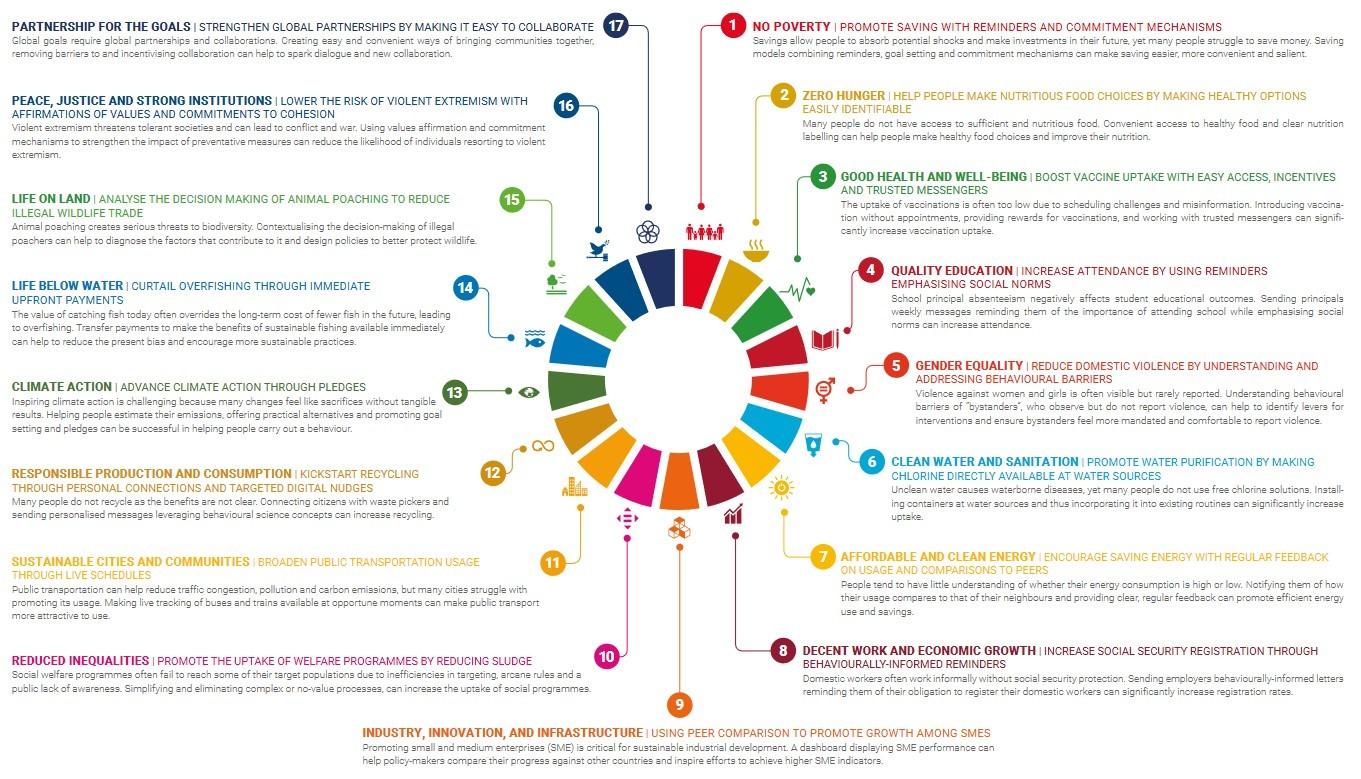
o United Nations Sustainable Development Goals

5. “Our perceptions and biases filter our experiences of the world through an imperfect personal lens.”

 We are cognitive misers—People who save scarce on-line processing capacity by taking shortcuts.

o anchoring bias The tendency to give greater weight to initial information and to not sufficiently adjust one's thinking after receiving additional information.

o aviation psychology- An area of “psychology that focuses on understanding human behavior, emotions, and mental states as they relate to the operation and control of aviation systems and influence the safety and efficiency of flight.”

6. “Applying psychological principles can change our lives, organizations, and communities in positive ways.”

 Each chapter will discuss ways to improve our lives and make the world a better place.

o Example: Psychological principles of learning and memory can be used to improve our ability to learn from our studies:

 Elaboration—explain and describe ideas with many details

 Retrieval practice—practice bringing information to mind

 Spaced practice—space out your studying over time

7. “Ethical principles guide psychology research and practice.”

 Research psychologists and practitioners must behave in an ethical manner.

o APA’s Ethical Principles of Psychologists and Code of Conduct guides research and practice.

o The five general principles of the code are the following:

 Beneficence and nonmaleficence: “benefit those with whom they work” and do no harm.

 Fidelity and responsibility: “establish relationships of trust” and be aware of “professional and scientific responsibilities.”

 Integrity: “promote accuracy, honesty, and truthfulness” in psychology.

 Justice: recognize fairness and justice to provide equal quality in research and benefits to all persons.

 Respect for people’s rights and dignity: “respect the dignity and worth of all people and the rights of individuals to privacy, confidentiality, and self-determination.”

Key Takeaways

 Psychology has seven overarching themes

 Psychological science relies on empirical evidence and adapts as new data develop

 Psychology explains general principles that govern behavior while recognizing individual differences.

 Psychological, biological, social, and cultural factors influence behavior and mental processes.

 Psychology values diversity, promotes equity, and fosters inclusion in pursuit of a more just society.

 Our perceptions and biases filter our experiences of the world through an imperfect personal lens.

 Applying psychological principles can change our lives, organizations, and communities in positive ways.

 Ethical principles guide psychology research and practice.

Exercises and Critical Thinking

1. For each theme, identify one word that summarizes it. Explain why you chose that word.

Sample answers: The words students choose do not matter as much as their explanations; it is the explanation that will show student understanding of each theme. Examples follow.

1. “Psychological science relies on empirical evidence and adapts as new data develop.” The word “research” covers where empirical evidence comes from.

2. “Psychology explains general principles that govern behavior while recognizing individual differences.” The word “diversity” acknowledges both our similarities and our differences.

3. “Psychological, biological, social, and cultural factors influence behavior and mental processes.” The word “holistic” captures the fact that so many things influence us.

4. “Psychology values diversity, promotes equity, and fosters inclusion in pursuit of a more just society.” The word “everyone” says that psychology really is about all people, not just some.

5. “Our perceptions and biases filter our experiences of the world through an imperfect personal lens.” The word “viewpoint” acknowledges that each of us sees the world through our own eyes.

6. “Applying psychological principles can change our lives, organizations, and communities in positive ways.” The word “hope” captures the fact that with the help of psychology, the world can be a better place.

7. “Ethical principles guide psychology research and practice.” The word “direction” means that researchers and practitioners have professional concepts to give them guidance.

2. Rank order the themes so that the theme you believe is most important is first and the least important is last. Explain why you ordered them as you did.

Sample answer: The ordering does not matter so much as the reasons students give for their order. Students may identify the most important theme as “Applying psychological principles can change our lives, organizations, and communities in positive ways” because of the hope that signals for our future, that things really can get better.

1.3 The Science of Psychology

1. Explain why using our intuition about everyday behavior is insufficient for a complete under-standing of the causes of it.

2. Describe the difference between values and facts, and explain how the scientific method is used to differentiate between the two.

Section Outline

 All humans have an interest in asking and answering questions about our world.

 Much research in psychology involves the scientific study of everyday behavior.

 Data is any information collected through formal observation and measurement.

The Problem of Intuition

 Relying on intuition, including self-serving bias and the false-consensus effect, may lead us to think that we know more than we actually do.

 Once we learn about the outcome of a given event, we frequently believe that we would have been able to predict the outcome ahead of time, exhibiting hindsight bias

Research Focus: Left-Digit Bias

 Since 9 is smaller than 10, we are more likely to reach for the product priced at $9.99 rather than the one priced at $10.00.We may not even be aware that we are taking this shortcut, but the cost is small.

 In some arenas, such as healthcare, the cost of using a shortcut like this is much higher. Physicians may use this same left-digit bias to make decisions about their patients’ medical care without even realizing it.

Why Psychologists Rely on Empirical Methods

 All scientists, including psychologists, use the empirical method and the scientific method to guide their research.

 Not all human behavior can be studied with scientific approaches.

 Statements that cannot be objectively measured are not within the domain of scientific inquiry.

 Values are personal statements; facts are objective statements based on data.

 Science cannot prove or disprove values.

 While scientific procedures do not guarantee that the answers to questions will be objective and unbiased, science is still the best method for drawing objective conclusions about the world around us.

The Challenges of Conducting Psychological Research

 It is challenging to study human behavior because almost all behavior is multiply determined; these multiple causes are often interrelated and occur at different levels of explanation.

 The fact that much human behavior is caused by factors outside our conscious awareness makes studying it difficult.

 Integrative Theme: Psychological, biological, social, and cultural factors influence behavior and mental processes.

Key Takeaways

 The problem with relying on intuition can be seen in concepts such as the selfserving bias, the false-consensus effect, the left-digit bias, and the hindsight bias.

 Psychologists rely on the empirical method and the scientific method.

 Facts can be revealed through empirical methods; values cannot.

 Challenges to conducting psychological research include the fact that our behaviors are multiply determined, causes of our behavior overlap with other causes, and many causes are outside of our conscious awareness.

Exercises and Critical Thinking

1. In thinking about the research discussed in “Research Focus: Left-Digit Bias,” in what other areas besides retail sales and medicine might the left-digit bias affect behavior?

Sample answer: When an employer sees that two job candidates have been incarcerated for a minor crime, one for 19 months and the other for 20 months. The employer may perceive 20 months as being much more time than 19 months because of their attention to the 2, and choose to hire the job candidate who served 19 months.

2. Give three examples of values and three examples of facts.

Sample answer: Values are statements of personal opinion: marijuana should be legal, McDonald’s has the best french fries, and Icelandic winters are too cold. Facts can include the following statements: a football field is 100 yards long, a FIFA soccer pitch is 110 to 120 yards long, and a yardstick is one yard long.

3. What does a psychological scientist mean when they answer a question about human behavior with “It depends”?

Sample answer: When a psychological scientist says “it depends,” they are acknowledging that human behavior is multiply determined, meaning it is produced by many different factors at once rather than a single cause.


Introduction to Psychology v5.0

© 2026 by FlatWorld. All rights reserved. Your use of this work is subject to the license agreement available on our website at www.flatworld.com/terms.

No part of this work may be used, modified, or reproduced in any form by any means except as expressly permitted under the licensing agreement.

Chapter 1 Welcome to Psychology

Welcome to Psychology

Psychology: the scientific study of the mind and behavior.

1.1 Learning Objectives

1. Describe how the Clarks, Gilbreth, and Marston changed our lives.

2. Explain what makes Wilhelm Wundt the father of psychological science.

3. Identify and give examples of psychology’s five core domains.

4. Give examples of how some psychologists work across psychology’s five core domains.

What Psychologists Do

When many people hear the word psychologist, they picture a therapist, a type of practitioner.

Half of psychologists surveyed in 2017 reported that their primary work activity was professional service, which includes providing therapy. Almost all of the other half of the surveyed psychologists said that their primary work was teaching, research, or management.

Broadly speaking, then, psychologists identify as researchers, practitioners, and educators.

Practitioners—such as clinical, counseling, industrial-organizational (IO), and school psychologists—use existing research to help make our lives better. Educators help students understand, apply, and value psychological science.

Psychological Science Changed the Course of History

Mamie Phipps Clark (1917–1983) and Kenneth Clark (1914–2005) met as students at Howard University. Kenneth was working on a graduate degree in psychology, and Mamie was working on an undergraduate degree in math with a physics minor.

Given Mamie’s interest in child development, Mamie, with Kenneth’s encouragement, switched her major to psychology.

“In her master’s thesis [completed in 1939], She investigated when black children became aware of themselves as having a distinct ‘self,’ and when they became aware of belonging to a particular racial group.”

In follow-up research, Drs. Mamie and Kenneth Clark found that by the age of three, when Black children were asked which doll they liked better, they chose the white dolls over the black dolls.

Psychological Science Changed the Course of History (continued)

In the early 1950s, Thurgood Marshall, as chief counsel for the National Association for the Advancement of Colored People (NAACP) was preparing a case to bring before the United States Supreme Court that would challenge segregation laws.

Marshall asked the Clarks to conduct their doll study again. If they saw the same results as they did in their study from the 1930s, Marshall thought that would be powerful evidence that separate was not equal. This was the first time social science research was used in a U.S. Supreme Court case. The court was persuaded by the evidence.

Psychological Science Changed Our Homes

Lillian Gilbreth (1878–1972) earned a Master’s degree in English literature at the University of California, Berkeley. Her soon-to-be husband Frank (1868–1924) encouraged her to go on to get a graduate degree in psychology.

Lillian and Frank continued their time and motion studies as part of the management consulting business they started in 1912. Using movie cameras, a new technology for the time, they recorded people as they worked. What were the elements of the task, and how could the task be completed more efficiently?

“The Gilbreths studied operating rooms, and they found that surgeons spent more time searching for their instruments than they did actually performing surgery . . . [T]hey recommended using nurses to locate the tools and hand them to the surgeons and also having a standardized layout of all tools in operating rooms.”

Psychological Science Changed Our Homes (continued)

After Frank’s death in 1924, Lillian continued her research and consulting for another 45 years, retiring at the age of 90.

“Within the year [of Frank’s death] her three biggest clients canceled contracts or refused to renew”. She turned her research mind toward the kitchen—very much a woman’s domain in the 1920s—where she thought people would be more accepting of her knowledge and research skills.

Dr. Lillian Gilbreth “invented the L-shaped kitchen, the foot-pedal trashcan,” and “shelves inside refrigerator doors, including the egg keeper and butter tray.”

Lilian Gilbreth Kitchen Design

Psychological Science Created a Superhero

In 1915, William Marston (1893–1947) was working on graduate degrees at Harvard in both psychology and law. His wife, Elizabeth Holloway Marston, commented that when she got angry or excited, her blood pressure went up. This prompted Marston to wonder if there might be a connection between blood pressure and lying. His research found that when at least some people lie, they show physiological signs of nervousness. With this knowledge in hand, Marston created an early version of the lie detector test that measured blood pressure as the interviewee was asked questions. Marston went on to become famous, largely for his lie detector work but also for his research into personality traits.

“He’d been a consulting psychologist for Universal Pictures. He’d written screenplays, a novel, and dozens of magazine articles.” In the late 1930s, the comic book industry came under attack for the violence depicted in their stories.

Psychological Science Created a Superhero (continued)

Maxwell Gaines, founder of All-American Comics, hired Marston to help defend the industry against its critics. Marston reasoned that if the critics were upset with the amount of “blood-curdling masculinity” in comic books, a female superhero was the answer. Gaines was fine with that idea, but Marston was going to have to create the superhero and write the stories himself. Marston did just that. Wonder Woman debuted in 1941.

Psychological Science Begins

Beginning in the mid-1800s, physiologists who studied the human body began investigating in earnest how our sensory systems worked.

Wilhelm Wundt (1832–1920) was a physiologist who brought the scientific methods of the natural sciences, most notably experimentation, to the study of psychology.

His creation of the first psychology lab in 1879 at the University of Leipzig in Germany marks the beginning of modern psychology. Wundt’s research topics and methodology proved to be so popular that students from around the world, including the United States, came to work with him in his lab.

While Wundt studied sensation and perception, he also, more broadly, wanted to understand the nature of consciousness, including judgment and decisionmaking.

Today’s Psychology: Psychology’s Domains

1.1 Key Takeaways

Psychologists work as researchers, practitioners, and educators.

Mamie and Kenneth Clark’s research played a pivotal role in ending segregation in the United States.

Lillian Gilbreth’s research advanced the fields of industrial/organizational psychology, management, and engineering psychology.

William Marston’s interest in lie detection led to his creation of Wonder Woman.

The founding of Wilhelm Wundt’s psychology lab in 1879 marked the beginning of modern psychology.

Psychology has five core domains: biological, cognitive, developmental, social and personality, and mental and physical health.

Psychologists often work across more than one of the five core domains.

1.2 Learning Objective

1. Identify and briefly summarize the seven integrative themes.

Psychology’s Integrative Themes

1. “Psychological science relies on empirical evidence and adapts as new data develop.”

The hallmark of any science is the use of empirical methods— experimentation and systematic observation. We collect data about the factors that influence our behavior and how we think.

From those data, we create theories to explain how the data fit together.

We make predictions based on our theories, and then we create tests to learn if our predictions were correct. If our predictions are correct, then we have more support for our theories. If our predictions are not correct, then we need to revise our theories to account for these new data.

From these revised theories, we will create new predictions to test.

The information generated in any science—psychology included—is constantly changing. Each study that is conducted tells us more about our world and our place in it.

2. “Psychology explains general principles that govern behavior while recognizing individual differences.”

A major goal of psychology is to predict behavior by understanding its causes. Making predictions is difficult in part because people vary and respond differently in different situations. individual differences: the variations among people on physical or psychological dimensions

Because of the many individual variables that influence behavior, we cannot always predict, for example, who will become aggressive or who will perform best in college or on the job. The predictions made by psychological scientists (and most other scientists) are only probabilistic.

3. “Psychological, biological, social, and cultural factors influence behavior and mental processes.”

To truly understand why we think and act as we do, we need to consider psychological factors, biological factors, our social environment, and our cultural influences.

bio-psycho-socio-cultural model of mental health: a model that says that mental health is influenced by a combination of biological factors (such as genetics and hormones), psychological factors (such as personality and coping strategies), social factors (such as family and friends), and cultural factors (such as expectations of how we should act)

4. “Psychology values diversity, promotes equity, and fosters inclusion in pursuit of a more just society.”

Psychology is the scientific study of the mind and behavior of all people.

Research that has helped us understand how people with depression experience the world, for example, has led to the development of treatments that reduce depression.

Psychological research has contributed to a greater understanding of autism, which has led to better care.

Research into how our understanding of the culture(s) we identify with affects how we think about our place in the world and may be used to assist employers help employees be more successful.

Research into the causes of prejudice can better help us spot this tendency in ourselves and gives us strategies to help us think and react differently.

4. “Psychology values diversity, promotes equity, and fosters inclusion in pursuit of a more just society.” (continued)

The UN was built on four interconnected pillars: peace and security, human rights, the rule of law, and development.

In a 2021 report, the UN encouraged its 193 member countries to use behavioral science, including psychology, to work toward the UN’s 17 sustainable development goals. While the goals primarily reside in the development pillar, it is easy to see how the goals connect to the other pillars.

Figure

5. “Our perceptions and biases filter our experiences of the world through an imperfect personal lens.”

Humans are cognitive misers; we save “scarce on-line processing capacity by taking shortcuts.”

We are not computers that carefully measure and evaluate each piece of data before rendering a decision. Instead, we take shortcuts. Most of the time, those shortcuts work; we perceive the world accurately, and we make a good decision. Sometimes, though, our perceptions are wrong, and our decisions are not as good as they could be.

One mental shortcut is the anchoring bias, our tendency to give greater weight to initial information and to not sufficiently adjust our thinking after receiving additional information.

aviation psychology: an area of “psychology that focuses on understanding human behavior, emotions, and mental states as they relate to the operation and control of aviation systems and influence the safety and efficiency of flight”

6. “Applying psychological principles can change our lives, organizations, and communities in positive ways.”

Psychological research has also provided a substantial amount of knowledge about the principles of learning and memory that can help us do better in our studies.

These principles can also help us better learn new concepts and techniques in other areas of our life. Honing learning and memory skills will help us throughout our lives as we start new jobs and take on other responsibilities.

To learn well, we need to be ready to learn.

Psychological scientists have studied the ways that best allow people to acquire new information, to retain it over time, and to retrieve information that has been stored in our memories.

One important finding is that learning is an active process.

To acquire information most effectively, we must actively manipulate it.

6. “Applying psychological principles can change our lives, organizations, and communities in positive ways.” (continued)

Our ability to adequately assess our own knowledge is known as metacognition. Research suggests that our metacognition may make us overconfident, leading us to believe that we have learned material even when we have not.

To counteract this problem, we should not just go over our notes again and again. Instead, we should connect the material to what we know (elaboration)

7. “Ethical principles guide psychology research and practice.”

Research psychologists, psychology instructors, and psychology’s practitioners must behave ethically. Psychologists who are members of the American Psychological Association (APA) are guided by the APA’s Ethical Principles of Psychologists and Code of Conduct.

This code identifies five general principles:

1. Beneficence and nonmaleficence

2. Fidelity and responsibility

3. Integrity

4. Justice

5. Respect for people’s rights and dignity

1.2 Key Takeaways

Psychology has seven overarching themes

1. “Psychological science relies on empirical evidence and adapts as new data develop.”

2. “Psychology explains general principles that govern behavior while recognizing individual differences.”

3. “Psychological, biological, social, and cultural factors influence behavior and mental processes.”

4. “Psychology values diversity, promotes equity, and fosters inclusion in pursuit of a more just society.”

5. “Our perceptions and biases filter our experiences of the world through an imperfect personal lens.”

6. “Applying psychological principles can change our lives, organizations, and communities in positive ways.”

7. “Ethical principles guide psychology research and practice.”

1.3 Learning Objectives

1. Explain why using our intuition about everyday behavior is insufficient for a complete understanding of the causes of it.

2. Describe the difference between values and facts, and explain how the scientific method is used to differentiate between the two.

The Science of Psychology

In a sense, all humans are scientists.

We all have an interest in asking and answering questions about our world. We want to know why things happen, when and if they are likely to happen again, and how to reproduce or change them. Such knowledge enables us to predict our own behavior and that of others. We may even collect data.

data: any information collected through formal observation or measurement

It has been argued that people are “everyday scientists” who conduct research projects to answer questions about behavior.

The Problem of Intuition

The results of our “everyday” research projects can teach us many principles of human behavior.

Much research in psychology involves the scientific study of everyday behavior.

The problem, however, with the way we collect and interpret data in our everyday lives is that we are not always particularly thorough.

self-serving bias: “the tendency to interpret events in a way that assigns credit for success to oneself but denies one’s responsibility for failure, which is blamed on external factors”

false-consensus effect: “the tendency to assume that one’s own opinions, beliefs, attributes, or behaviors are more widely shared than is actually the case”

Accepting data or explanations for events without critically evaluating them may lead us to think that we know more than we actually do. Through studying psychology, we will further develop the critical thinking skills that will help us evaluate evidence to draw valid conclusions from our observations.

The Problem of Intuition (continued)

hindsight bias: “the tendency, after an event has occurred, to overestimate the extent to which the outcome could have been foreseen”

The hindsight bias creates overconfidence, leading us to be more sure of the fact that we know things than we really do.

Why Psychologists Rely on Empirical Methods

All scientists, whether they are physicists, chemists, biologists, or psychologists, study the topics that interest them using the empirical method.

empirical method: “any procedure for conducting an investigation that relies upon experimentation and systematic observation“ scientific method: the set of assumptions, rules, and procedures that scientists use to conduct empirical research

Although scientific research is an important method of studying human behavior, not all questions can be answered using scientific approaches.

Statements that cannot be objectively measured or objectively determined to be true or false are not within the domain of scientific inquiry. Scientists therefore draw a distinction between values and facts.

Values are statements of opinion.

Facts are objective statements determined to be accurate through empirical study.

Why Psychologists Rely on Empirical Methods (continued)

While scientific procedures do not guarantee that the answers to questions will be objective and unbiased, science is still the best method for drawing objective conclusions about the world around us. When old facts are discarded, they are replaced with new facts based on newer and more correct data. Though science is not perfect, the requirements of empiricism and objectivity result in a much greater chance of producing an accurate understanding of human behavior than is available through other approaches.

The Challenges of Conducting Psychological Research

Probably the most common answer psychologists give to any question about human behavior is “it depends.”

One reason that it is difficult to predict behavior is that almost all behavior is multiply determined (produced by many factors).

Furthermore, these multiple causes are not independent of one another; they are associated such that when one cause is present other causes tend to be present as well. This overlap makes it difficult to pinpoint which cause or causes are operating.

Another difficulty in doing psychological research is that much human behavior is caused by factors that are outside our conscious awareness, making it impossible for us, as individuals, to really understand them.

Psychological scientists have, however, a number of research tools that help them sort out what our brains are doing, even when we ourselves are not aware of it.

1.3

Key Takeaways

The problem with relying on intuition can be seen in concepts such as the self-serving bias, the false-consensus effect, the left-digit bias, and the hindsight bias. Psychologists rely on the empirical method and the scientific method. Facts can be revealed through empirical methods; values cannot.

Challenges to conducting psychological research include the fact that our behaviors are multiply determined, causes of our behavior overlap with other causes, and many causes are outside of our conscious awareness.

Turn static files into dynamic content formats.

Create a flipbook