What Is Human Resource Management?
Author Chapter Notes
Hello and thank you for using this book! This instructor’s manual will be organized just as the book is organized—with learning objectives, section notes, key takeaways, exercises with solutions, and key terms—but in a more condensed version so you can see the chapter’s complete outline in just a few pages. In addition, I have also added extra discussion questions which you may find useful to pose to the students for either online discussion or group discussions in class. There are also additional resources, such as YouTube videos you might consider showing in class. You will also find a case study video for each of the case studies throughout the book, along with an additional case study you may want to use as an in-class activity.
The goal of this chapter is to provide an overview of the Role of Human Resources, in other words, how HR fits within our organizations. As you already know from reading the book, the focus of all chapters is readability for students (because if a book is hard to read, we know students will not read it!) but also how a manager may need to implement HRM strategies. Many of our students are HRM students, but some may not be. This focus ensures students can apply every chapter to their careers, whether they go into HR or not.
As you use these materials, any feedback you want to provide would be very helpful! I can be reached at Laura.portolese@cwu.edu. Thank you and have a great term!
1.2 What Are Human Resources and Human Capital?
1. Apply the concept of human capital in organizations.
2. Analyze the strategic role HRM plays in organizations.
3. Categorize some of the major HRM activities.
Section Outline
Capital is needed to make a business successful. Nothing is perhaps more important than human capital
Human resource management (HRM) is the process of employing, training, compensating, developing policies and development of strategies to retain employees.
In the past, HRM had more of an administrative role rather than the strategic role crucial to the success of the organization it has now.
“HR is important in good times, HR is defined in hard times.” —Jack Welch, former CEO of General Electric
Four major stages of HRM: industrial era, post-FLSA era, twenty-first century era, and the information age era.
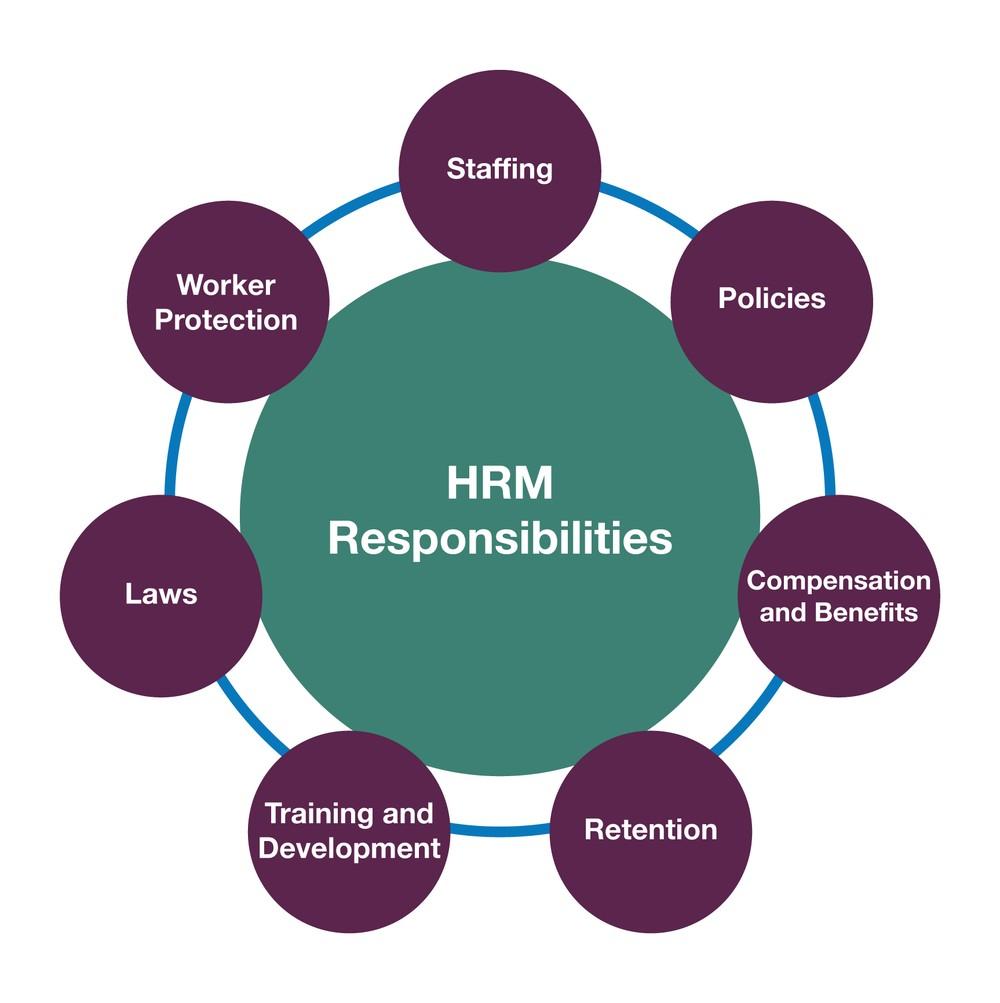
HR managers engage in staffing, developing policies, compensation, retention plans, training and development, employment law, and worker protection.
Good communication skills and excellent management skills are key to successful HRM as well as general management.
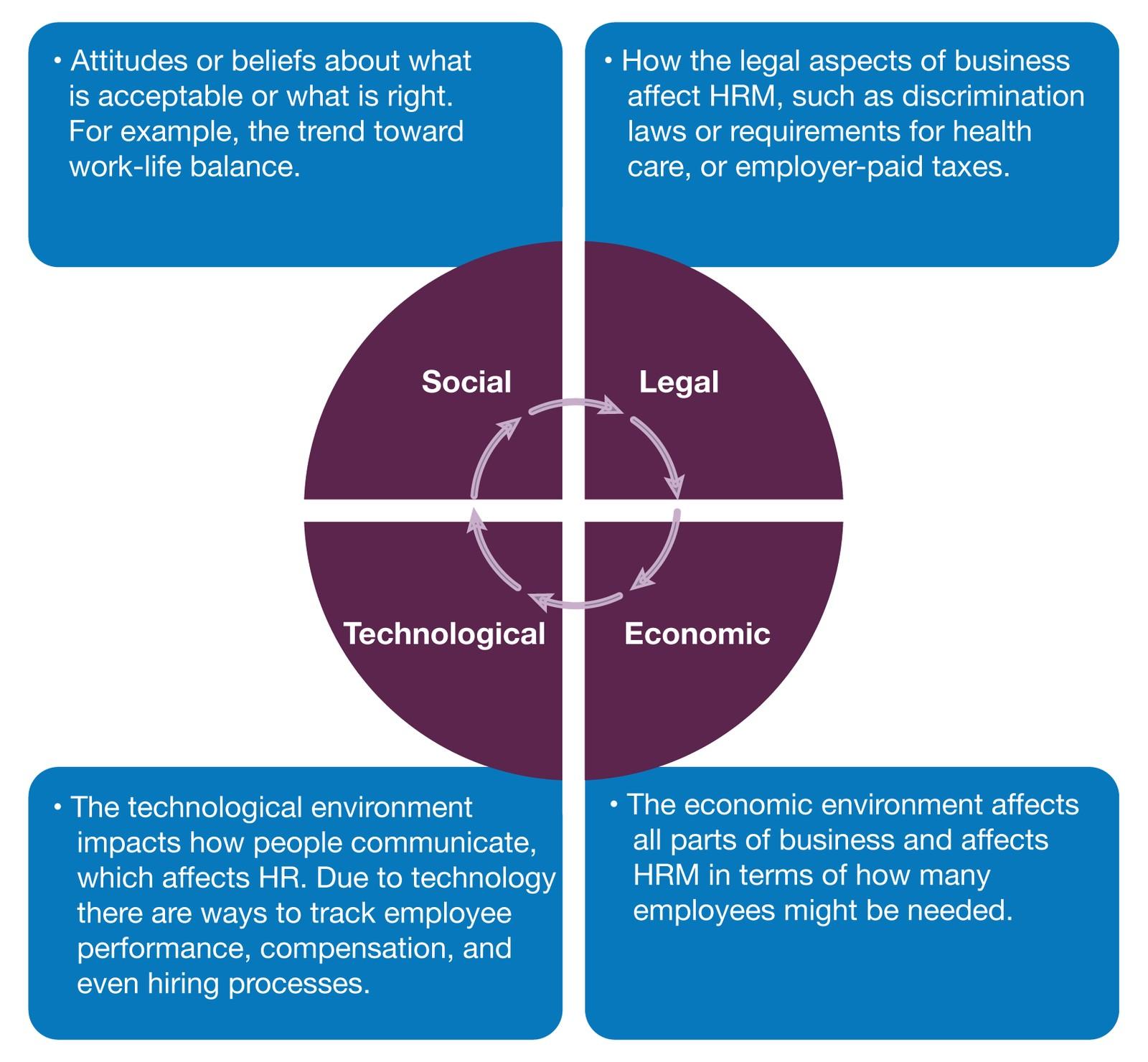
External factors affecting HRM can include globalization/offshoring, changes to employment law, health-care costs, employee expectations, diversity, changing demographics, a highly educated workforce, layoffs/downsizing, technology, and use of social networking.
The recent trend in flexible work schedules and telecommuting are also external factors that have affected HR.
The Society for Human Resources Management, the National Human Resources Association (NHRA), and the Academy of Human Resource Development are all resources for learning more about HRM.
Consider telling students your own background or backgrounds of those you know working in HRM. For example, how did you get started? Why were you interested in an HRM career? As you know, they always enjoy personal stories!
Key Takeaways
Capital includes all resources a company uses to generate revenue. Human resources or the people working in the organization are the most important resource.
Human resource management is the process of employing people, training them, compensating, developing policies relating to the workplace, and development of strategies to retain employees.
There are seven main responsibilities of HRM managers: staffing, setting of policies, compensation and benefits, retention, training, employment laws, and worker protection. In this book, each of these major areas will be included in a chapter or two.
In addition to being concerned with the seven internal aspects, HRM managers must keep up to date with changes in the external environment that may impact their employees. The trend toward flexible schedules and telecommuting are examples of external aspects.
To understand effectively how the external forces might affect human resources, it is important for the HR manager to read the HR literature, attend conferences, and utilize other ways to stay up to date with new laws, trends, and policies.
1. State arguments “for” and “against” the following statement: There are other things more valuable in an organization besides the people who work there.
This is an opinion question, but some possible answers might include: Depending on the type of business, other things may be more important, such as technology to Microsoft. However, the technology can’t run without the people to run it.
2. Of the seven tasks an HR manager does, which do you think is the most challenging? Why?
An opinion question, used to elicit discussion from students. Can vary from staffing being the most important since it is necessary to have the right people, while other students may say compensation is the most important, because if you don’t compensate people correctly, they may not be motivated to work.
Extra Discussion Questions
1. What types of policies, other than the ones listed in the chapter, do you think HR managers create? Why are these policies important?
Examples might include policies on work schedules, safety, communication standards and/or internal processes. Policies are important to ensure the health, safety, productivity of all employees. Policies are put into place for consistency and fairness.
2. Which of the external factors do you think has the most importance on HRM?
Answers will vary. Students may point out that based on the industry, some external factors may be more important than others. If not, consider posing this question as a second part of this discussion.
Key Terms
capital
Capital includes cash, valuables or goods used to generate income for a business.
human capital
The skills and abilities of employees, which ultimately make a business successful.
human resource management
The process of employing people, training them, compensating, developing policies relating to the workplace, and development of strategies to retain employees.
staffing
The entire hiring process from the first step of posting a job to the actual hiring an employee.
compensation
Anything employees receive for their work. It can include pay, benefits, vacation time, and sick leave.
retention
The process and strategies of keeping and motivating employees to stay with the organization.
external factor
Anything over which the company has no direct control; it could positively or negatively impact human resources.
flexible work schedules
A policy which allows employees to set their own schedules to work around family and personal needs.
telecommuting
Allows employees to work from home or a remote location for a specified period of time, such as one day per week.
1.3 Skills Needed for HRM
1. Explain the professional and personal skills needed to be successful in HRM.
2. Compare and contrast the possible human resource management and the certifications that can be achieved in this profession.
Section Outline
HR managers must have a variety of skills to be successful.
These skills can include organization, being able to multitask, communication, specific job competencies, strategic mindset, and ethics.
In addition to the skills above, SHRM addresses the need for the following behavioral competencies to be successful at HRM: business acumen, communication, consultation, critical evaluation, ethical practice, global and cultural effectiveness, leadership and navigation, and relationship management.
In addition to behavioral competencies, SHRM also has a technical competency called HR expertise, which is to possess knowledge of principles, practices, and the functions of HRM.
There are several certification exams that can be taken: the PHR, aPHR, PHRi, SPHR and GPHR. Certifications can make the HR professional more marketable.
Job titles might include: recruiter, compensation analyst, human resource assistant, employee relations manager, benefits manager, work/life coordinator, training and development manager, human resource manager, and vice president for human resources.
Consider bringing in sample job descriptions for students.
If you have access to a computer lab (or for online courses), ask students to take the following quiz to see if a career in HR is right for them: http://careerplanning.about.com/library/quiz/career_quizzes/blhrassistant_quiz.ht m
Key Takeaways
There are a number of skills are crucial to human resource management. First, being able to organize and multitask is necessary. In this job, files must be managed, and an HR manager is constantly working in different areas of the business.
Communication skills are necessary in HRM as well. The ability to present good and bad news, work with a variety of personalities, and coach employees is important in HRM.
Specific job skills, such as computer skills, knowledge of employment law, writing and development strategic plans, and general critical thinking skills are important in any type of management, but especially in human resource management.
A sense of fairness and strong ethics will make for the best HR manager. Because HR works with a variety of departments to manage conflict, negotiate union contracts and salary, the HR professional needs ethics skills and the ability to maintain confidentiality.
Because one of the major responsibilities of an HR department is to align the HR strategic plan with the business strategic plan, critical and creative thinking, as well as writing, are skills that will benefit the HR manager as well.
Many people find themselves in the role of HR manager, so we will use the term HR manager throughout this book. However, many other types of managers also perform the tasks of recruiting, selecting and compensating, making this book and the skills listed in this section applicable to all majors.
Certification exams can be taken to make you more marketable in the field of HRM. These certifications are offered by the HR Certification Institute (HRCI).
Exercise and Solution
1. What are your perceptions of what an HR manager does on a day-to-day basis? Research this job title and describe your findings. Is this the type of job you expected?
Give students example of resources to research job titles, such as Monster.com and CareerBuilder. You can also ask students to present their findings in class.
Extra Discussion Questions
1. Why would you be interested in getting a certification in HRM?
Answers will vary but will likely revolve around marketability in a job and furthering knowledge and/or skills.
2. Research five HR jobs and note whether they require certifications or not. Be prepared to share with the class.
Jobs may be at the higher or lower levels of management. Consider asking follow-up questions about levels of experience and what type of job should be expected right out of college.
Key Terms multitask
The ability to work on more than one task at a time.
ethics
A concept that examines the moral rights and wrongs of certain situations.
1.4 Current HRM Challenges
1. Identify and analyze some of the challenges associated with human resource management (HRM).
Section Outline
HR managers must provide value to their organizations by being strategic.
HR must align with business objectives.
Cost containment is a major factor of success to a business. Expenses that involve the people part of any business include health-care benefits, training costs, hiring process costs, and more.
HR has to figure out how much, how many, or how often benefits should be offered without sacrificing employee motivation and the ability to recruit talented human capital.
Containment of costs is a balancing act. HR has to offer as much as possible to attract and retain employees, but can’t offer too much, as that can put pressure on the company’s bottom line.
Health-care costs companies a lot. The expected health-care cost for companysponsored plans will likely continue to rise. Obviously, HR managers must be aware of these changes and plan for rising costs.
One possible strategy for containment for health-care plans is to implement a cafeteria plan, which offer employees flexibility while saving the company money.
Training is another way to contain costs because it can help companies to avoid lawsuits over things like sexual harassment or wrongful termination by reducing legal exposure.
The hiring process and the cost of turnover in an organization can be very expensive. Hiring smart the first time and reducing turnover can help HR to contain costs.
Understanding communication styles, personality styles, and channels of communication can improve effective communications, resulting in cost containment.
Some US businesses contain costs by offshoring, or moving jobs overseas.
Technology greatly impacts HR. For example, social media allows us to communicate easily and quickly with employees. It also creates a workforce that must be mobile. Virtual organizations and cyberloafing are concerns created by technology.
The state of the economy affects HRM, as an up or down economy impacts how many people need to be shifted, hired, and let go.
A diverse workforce is another consideration. Working with a multigenerational workforce (e.g., baby boomers and the Y Generation), ESL speakers, and other diversity issues should be addressed.
Diversity is the demographics of the workplace while inclusion creates the right conditions for everyone to be heard, valued, and meet their full potential, regardless of their background.
Use of ethics and sustainability are other HRM factors. Designing and implementing codes of ethics is sometimes the job of HRM, and they also taking on a larger role in sustainability.
You might consider mentioning the scandals of the early 2000s resulted in an increased awareness of ethics and movement toward social responsibility.
Key Takeaways
One of the most important aspects to productive HRM is to ensure the
department adds value to the rest of the organization, based on its strategic plan.
One of the major challenges is containment of costs in HRM. This can be done in several ways, for example in the way healthcare and benefits are offered. Many companies are developing cafeteria plans, which satisfy the employee and help contain costs.
HRM can also contain costs by the developing and managing training programs and ensuring employees are well trained to be productive in the job.
Hiring is a very expensive part of human resources, and therefore HRM should take steps to ensure they are hiring the right people for the job the first time. Turnover is a term used to describe the departure of an employee.
Poor communication results in wasting time and resources. We can communicate better by understanding communication channels, personalities and styles.
Technology is also a challenge to be met by human resources. For example, employees may request alternative work schedules because they can use technology at home to get their work done.
Because technology is part of our work life, cyberloafing or employees spending too much time on the Internet, creates new challenges for managers. Technology can also create challenges around workplace stress and lack of work-life balance.
The economy is a major factor in human resource management. HR managers, no matter what the state of the economy, must plan effectively to make sure they have the right number of workers at the right time. When we deal with a down economy, the legal and union implications of layoffs must be considered, and in an up economy, hiring of workers to meet the internal demand is necessary.
The retirement of baby boomers is creating a gap in the workplace, not only with the number of people available but also the skills people have. Multigenerational companies, or companies with workers of a variety of ages, must find ways to motivate employees, even though those employees may have different needs. HR must be aware of this and continually plan for the challenge of a changing workforce. Diversity in the workplace is an important challenge in human resource management. Diversity will be discussed in Chapter 3.
Ethics and monitoring of ethical behavior are also challenges in HRM. Setting ethical standards and monitoring ethical behavior, including developing a code of conduct, is a must for any successful business. In addition, adding to sustainability efforts is another challenge in HRM.
Exercises and Solutions
1. Research the various generations: baby Boomers, Generation X, and the Y
Generation (millennials). Compare and contrast five differences between the generations. How might these differences impact HRM?
Consider asking students to do additional research on this topic, since it is of great importance to our changing workplace. Some of the differences that may impact HRM include: need to use different ways to motivate people, compensation and benefits differences, the level of education and experience, abilities, use of management style and current lifecycle needs.
2. Review news articles on the current state of the economy. Which aspects of these articles do you think can relate to HRM?
The goal here is to get students to apply some of the concepts from this section to the “real world.” This can also be a great group activity and presentation. Answers will vary, depending on the types of articles found. The important thing to look for is the tie between real world and HRM.
Extra Discussion Questions
1. How can HRM costs be contained? How might these costs affect employee motivation?
They can be contained by reducing benefits (healthcare and other compensation) or simply by increasing output of employees without increasing those benefits.
2. Why do you think we want to reduce turnover in our organizations?
Bottom line, turnover is expensive. The more we can reduce turnover, the more we can engage in cost containment.
3. What do you think are some of the challenges that come up when working with a multigenerational workforce? How can we overcome these challenges?
Challenges are different needs, wants from the organization. For example, different interests in 401k plans and benefits can be a large difference. Someone starting in their career versus someone close to retirement has different goals within their current organization. All of these differences need to be managed and addressed to ensure we have the most motivated employees possible.
Key Terms
cafeteria plans
A type of benefits plan that gives all employees a minimum level of benefits, and a set amount the employee can spend on flexible benefits, such as additional healthcare or vacation time.
turnover
Replacement of employees who are fired or quit. The term is normally expressed as a
percentage: the ratio of the number of workers that had to be replaced in a given period to the average number of workers at the organization.
offshoring
Moving jobs overseas in order to contain costs.
virtual organization
An organization that does not have a physical office; rather, employees use technology and do their job from home or the location of their choice.
cyberloafing
Using a work computer for personal reasons, resulting in lost productivity.
code of ethics
An document that explains the expected ethical behavior of employees.
sustainability
Sustainability refers to the concept of implementing policies and procedures to help environmental protection, social responsibility, and implementing practices that contribute to the overall economic contribution of the organization.
Chapter Case
The Author discusses the case for Chapter 1: http://app.wistia.com/embed/medias/01fee65948
1. Point out which changes are occurring in the business that affect HRM and analyze potential solutions to the problems you’ve presented. Please address at least three changes.
Answers will vary. Remote work, the economy, virtual organizations, and the costs of health care are all possibilities.
2. What are some considerations the company and HR should be aware of when making changes related to this case study? What pitfalls should be avoided to avoid cost containment issues?
Answers will vary. They should consider cost reduction techniques, especially for health care, the number of employees needed, and how to hire for their growth.
3. What do you see as the steps you should take to begin implementation of these changes?
Understanding the role HR plays in all of these changes is a good first step. Knowing the role that human capital plays in the business is important too.
4. Address what your role would be in the charge as a strategic HR partner, and what Jennifers role would be.
As a strategic partner, your role in HRM would be to plan the changes as they relate to the HR function. This might include a plan for hiring people with the right skills and creating policies around virtual work environments and expectations. Jennifer would likely oversee these plans and policies.
Additional Case Study Exercise
In your new job as an HR assistant, you are aware that you must consider the external factors affecting a business to be effective. However, within the first three weeks in your job, you realize that the organization has not changed very much in the last seven years. Since the company’s focus is on software implementation for clients, you feel the company must constantly change to meet new technology demands and, in turn, client demands. For example, the organization has not updated policies relating to telecommuting or other flexible work schedules, a paper newsletter is sent on a monthly basis to employees, and the cost of health-care benefits has not been reviewed or negotiated with the provider in three years.
1. Prepare a PowerPoint presentation to present to the Director of Human Resources. Your presentation should include each of the external factors and discussion on how these factors have changed over the last seven years—and how they may affect the HRM department. In addition, provide suggestions for action plans in each of the external areas. Your presentation should consist of no more than 10 slides.
Useful Outside Resources
The Human Resource Certification Institute: http://www.hrci.org/
Society for Human Resource Management: http://www.shrm.org/Pages/default.aspx
YouTube videos:
David Owens speaks about careers in HR: http://www.youtube.com/watch? v=gV1_n4Ni6Fg
CityTown Info’s short video on a career in HRM: http://www.youtube.com/watch?v=RXULwgg41gc
How to get an HR job: https://www.youtube.com/watch?v=LN_oj-1kUiU
Society for Human Resources ad which provides a good overview of the importance of HR to organizations (consider showing on the first day of class): http://www.youtube.com/watch?v=Q2CXHT6G0UU&feature=related
Laura Portolese
© 2026 by FlatWorld. All rights reserved. Your use of this work is subject to the license agreement available on our website at www.flatworld.com.
No part of this work may be used, modified, or reproduced in any form by any means except as expressly permitted under the licensing agreement.
All images from © Shutterstock, Inc. unless otherwise stated.