Cognition: The Study of Information Processing
Chapter Outline
1.1 What Is Cognition?
Learning Objectives
o Define cognitive psychology.
o Identify the mental processes that comprise thinking.
o Describe the ways in which cognitive psychology is interdisciplinary.
The Omnipresence of Cognitive Processes
o This section emphasizes the significance of cognitive processes in everyday student life, especially in a classroom setting. It explores how perception helps organize sensory input, while attention allows selective focus, though it’s limited. Identification and classification processes help students quickly recognize people and objects without conscious effort. Immediate and longterm memory work together to process and retain information, though memory can sometimes distort or fail. Language skills enable seamless understanding and communication, and decision making and problem solving are crucial for managing academic responsibilities. Altogether, these processes form the foundation of how students think, learn, and function effectively.
Stop and Think! Thinking About Thought
o Consider the cognitive processes we just discussed (perception, attention, object recognition, immediate memory, long-term memory, memory distortion, autobiographical memory, language, decision making, and problem solving). You engage each of these processes in some manner almost every day. Pick two (or more) of these processes and come up with an example of each of these from your daily life.
Answer: Answers will vary, of course, but the hope is that students will come up with the processes of thought they use in everyday “tasks.” One interesting variation might be to have students reflect on how their thought processes occasionally misfire, and to reflect on which types of errors (i.e., attention, memory, etc.) seem to be most common.
An Interdisciplinary Perspective
o This section highlights the central role of cognitive psychology both in everyday life and within the broader field of psychology. Cognition is fundamental to various subfields, including social, clinical, developmental,
neuro-, and industrial/organizational psychology, all of which examine how mental processes influence behavior in different contexts. Cognitive psychology is also a core component of cognitive science, an interdisciplinary field that combines insights from psychology, philosophy, neuroscience, artificial intelligence, linguistics, and anthropology to study the mind. Each discipline contributes a unique perspective—for example, neuroscience links brain and mind, while anthropology explores cultural impacts on thinking. Though there’s debate about whether cognitive science remains a unified field, its influence is evident in cognitive psychology’s methods and questions.
Key Takeaways
o Cognitive psychology can be defined as the scientific study of mental processes.
o Cognitive psychologists study a wide range of abilities—perception, attention, immediate memory, object recognition, long-term memory, language, problem solving, and decision making.
o Cognitive psychology is crucial to understanding the other subdisciplines of psychology and is a key discipline in the interdisciplinary approach termed cognitive science.
Key Terms and Definitions
o cognitive psychology: The scientific study of mental processes.
o cognitive science: An interdisciplinary effort to understand the mind. It includes the disciplines of psychology, philosophy, neuroscience, artificial intelligence, linguistics, and anthropology.
1.2 Psychology B. C. (Before Cognitive Psychology)
Learning Objectives
o Describe the contributions of philosophy, physiology, and psychophysics to the study of the mind.
o Distinguish between structuralism and functionalism.
o Describe how behaviorism was different from structuralism and functionalism.
o Describe how the early approaches of Ebbinghaus and Bartlett differed from each other and challenged the behaviorist approach.
o Describe how the Gestalt approach was different from the behaviorist approach.
Cognitive psychology has roots in both philosophy and physiology—philosophy provided early theories about how the mind works, while physiology introduced scientific methods to study mental processes. The combination of these disciplines in the 1800s led to the development of psychology as a scientific study of the mind.
Stop and Think: Which Parent Does Cognitive Psychology More Resemble?
o Philosophy and physiology are generally recognized as the parent disciplines of psychology. Do you consider cognitive psychology to be more like philosophy or more like physiology? Why do you think so?
Answer: Given what’s been discussed in the chapter, responses are likely to focus on philosophy points that can be raised include the fact that the basic questions that underlie cognitive psychology are largely philosophical ones, while the method used by cognitive psychologists are more in the spirit of physiology.
Psychophysics
o The origins of cognitive psychology can be traced to early psychophysicists like Gustav Fechner, who studied the relationship between physical stimuli and subjective perception. Hermann von Helmholtz expanded this work by introducing the idea of unconscious inference, emphasizing that perception involves interpretation shaped by past experience and often occurs outside of conscious awareness. These early contributions highlighted that mental processes are not just passive responses but active, interpretive mechanisms. Psychophysicists focused on how physical stimuli are perceived, while cognitive psychologists build on this to explore deeper stages of information processing, decision making, and behavior.
Stop and Think! Cognitive Processes: Conscious or Unconscious?
o In proposing the concept of unconscious inference, Helmholtz helped make it clear that many cognitive processes occur outside conscious awareness. Think back to the cognitive processes we discussed at the beginning of the chapter (perception, attention, immediate memory, object recognition, long-term memory, memory distortion, autobiographical memory, language, decision making, and problem solving). Pick two from the list and rate each of them on a scale from 1 (mostly unconscious) to 5 (mostly conscious). Explain your rating.
Answer: This exercise will invite students to examine various cognitive processes and will highlight that many of them occur rapidly and completely outside of conscious awareness. You might discuss the difficulties associated with investigating these types of processes and the methods that are necessitated by these problems (e.g., RT studies).
Structuralism: The Contents of Mental Experience
o Psychology’s formal beginnings are often traced to 1879, when Wilhelm Wundt established the first psychological lab and introduced introspection to study conscious experience. His approach, later called structuralism, aimed to break down complex mental experiences into basic elements—sensations, feelings, and images—similar to how chemistry analyzes compounds into simpler elements.
Functionalism: The Functions of Mental Experience
o Functionalism emerged as a response to structuralism, with William James arguing that consciousness is a continuous, ever-changing “stream” that cannot be meaningfully broken into discrete elements. Instead of analyzing structure, functionalists focused on the purpose of mental processes in everyday life—an approach that significantly influenced the development of cognitive psychology.
Behaviorism: The Rejection of Mental Experience
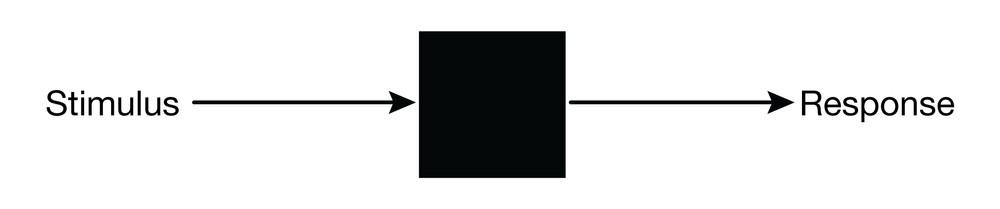
o John B. Watson launched behaviorism as a reaction against the introspective study of consciousness, arguing that only observable and measurable behavior should be the focus of psychology. This approach, which viewed consciousness as unscientific and irrelevant, dominated American psychology for decades and shifted the discipline toward stimulus–response (S–R) analysis.
Laying the Foundation for Cognitive Psychology
o Ebbinghaus: Pioneering Experiments on Memory
Hermann Ebbinghaus demonstrated that complex mental processes like memory could be studied experimentally by rigorously testing his own recall using nonsense syllables. His research introduced key concepts such as the savings method and the forgetting curve, laying a scientific foundation for modern memory research.
o Bartlett’s Memory Research
Sir Frederic Bartlett rejected rigid laboratory methods in favor of more naturalistic approaches to studying memory, using meaningful materials like stories to demonstrate that memory is a reconstructive process shaped by schemas—generalized knowledge structures based on past experiences. His work anticipated key concepts in modern cognitive psychology and emphasized the dynamic, socially grounded nature of remembering
o Gestalt Psychology
The Gestalt perspective, developed in Germany in the early twentieth century, emphasized the mind’s inherent tendency to organize sensory input into meaningful wholes, arguing that perception and experience cannot be fully understood by analyzing individual elements. This approach, captured by the phrase “the whole is different than the sum of its parts,” continues to influence modern cognitive psychology, particularly in the study of perception and problem solving.
Key Takeaways
o The scientific study of the mind has its roots in philosophy, which provided the basic questions that empirical research in cognition attempts to answer. The science of physiology showed that the scientific method was viable for
investigating the mind. Modern attempts to understand the mind can be traced to the psychophysicists, who studied the relationship between physical stimulation and psychological experience.
o Functionalism was concerned with specifying the functions of consciousness, which contrasted with structuralism, which was interested in its structure. Ultimately functionalism had a much larger impact on cognitive psychology given its applicability.
o Unlike structuralism and functionalism, behaviorists favored the elimination of consciousness as a topic of study, given its subjective nature. Behaviorists believed a science of psychology should focus on observables like behavior. Behaviorism is sometimes referred to as S–R psychology due to its emphasis on the analysis of observable stimuli and responses and their interrelation.
o Through his rigorous research on memory, Ebbinghaus demonstrated that consciousness could be studied experimentally. His research focused on memory for meaningless materials (i.e., nonsense syllables) whereas Bartlett investigated memory for more realistic and meaningful materials (i.e., stories). Bartlett’s work also proposed a causal role for mental representations.
o Gestalt psychologists were interested in the organizational tendencies of the mind, which cannot be investigated in isolation from the idea of consciousness.
Key Terms and Definitions
o behaviorism: An early approach to the study of psychology that eschewed the study of consciousness in favor of a scientific analysis of overt behavior.
o forgetting curve: After initial learning, there is a sharp drop off in memory followed by a more gradual decline.
o functionalism: An early approach to the study of psychology that emphasized the discovery of the basic uses of consciousness and how it helps us adapt in daily life.
o Gestalt approach: An early approach to the study of psychology that emphasized the inherent organizational tendencies of the mind.
o introspection: A rigorous and systematic self-report of the basic elements of an experience.
o psychophysics: The study of the relationship between the physical properties of a stimulus and the (psychological) properties of its subjective experience.
o S–R psychology: Another term for the behaviorist approach; it emphasizes the observation of relationships between observable stimuli and responses.
o savings: A measure of memory developed by Hermann Ebbinghaus that refers to the reduction in learning trials needed to learn some set of information due to previous learning trials.
o structuralism: An early approach to the study of psychology that emphasized identifying its basic components of consciousness.
1.3 The Emergence of Cognitive Psychology
Learning Objectives
o Describe the findings that challenged the S–R approach to explaining behavior.
o Describe behaviorism’s difficulty in explaining complex behaviors and language.
o Identify and describe two technological advances important in the emergence of cognitive psychology.
S–R Explanations: Seriously wRong?
o Challenges to behaviorism—arising from both empirical findings and theoretical dissatisfaction, along with advances in technology—led psychologists to seek richer explanations of human behavior, ultimately paving the way for the emergence of cognitive psychology.
o Learning Without Responding
The classic behaviorist view held that active responding (R) was essential for learning, predicting that rats passively pushed through a maze would not form associations. However, McNamara et al. (1956) found that even rats that were passively transported learned the maze, challenging the behaviorist model by demonstrating that learning can occur without an overt response.
o Learning Without Reinforcement
According to behaviorist theory, reinforcement is essential for learning, as it bonds the stimulus and response through repeated pairings. Tolman and Honzik (1930) challenged this idea by placing rats in a maze with different reinforcement schedules—some were always reinforced, some never, and others only after day 11. While rats that were always reinforced gradually improved and those never reinforced did not, the group that began receiving reinforcement on day 11 showed an immediate drop in errors, indicating they had learned the maze earlier without reinforcement. This phenomenon, called latent learning, supported a cognitive perspective, suggesting that rats developed a mental map of the maze and demonstrated their knowledge when given motivation.
o The Existence of Cognitive Maps
In Tolman’s 1948 study, rats navigated a maze with multiple paths and, when key routes were blocked, chose the correct alternative path based on an internal representation of the layout, rather than trial-anderror responses. This finding provided strong evidence for the existence of cognitive maps, challenging the behaviorist claim that learning depends solely on stimulus–response associations and reinforcement, and signaling a shift toward cognitive explanations in psychology.
o Complex Behavior: Lashley Lashes Out
Scientists like Karl Lashley argued that complex behaviors—such as those seen in Olympic gymnastics—could not be explained by simple stimulus–response chains. Lashley contended that such intricate actions required internal mental planning, reinforcing the growing view that excluding mental representations from psychology limited its ability to explain real-world behavior.
o Language: Chomsky’s Challenge
Chomsky’s 1959 critique of Skinner’s behaviorist explanation of language dealt a major blow to the S–R framework by arguing that language’s creativity and complexity could not be explained through reinforcement alone. Instead, he advocated for the role of mental representations—“rules in the head”—a view that helped spark the cognitive revolution and laid the foundation for modern cognitive science.
Technological Influences
o Communications Engineering
Shannon’s 1948 theory of communication systems, originally developed to explain information transmission in devices like radios and telephones, served as a metaphor for human information processing, highlighting key components like sources, channels, and noise, inspiring cognitive psychologists to conceptualize the mind as an information processor that transmits, receives, and interprets information.
o Computer Science
The development of computers capable of performing intelligent functions inspired a powerful analogy to human cognition, suggesting that, like machines, the mind processes information through input, processing, and output stages—a foundational idea in cognitive psychology.
Stop and Think! Compelling Cognitive Developments
o Reflect on the development that led to the decline of behaviorism and the ascendance of cognitive psychology and about their relative importance:
• learning without responding study
• learning without reinforcement study
• cognitive map study
• Lashley’s argument about complex behavior
• Chomsky’s argument about language
• advances in communications engineering
• advances in computer science
Provide a ranking for these developments, from most to least important, then explain your ranking.
© 2025 FlatWorld 8
Answer: Answers will vary, of course; the idea is just to get students to think critically about the various influences. Another way to compare them might be to group the first three as “empirical evidence,” the next two as “philosophical objections,” and the final two as “technological developments.”
Key Takeaways
o According to behaviorism, learning requires both a response and reinforcement. Contrary to this view, research indicated that rats were capable of learning in the absence of either of them, suggesting that behavior is guided by mental representations such as cognitive maps.
o Lashley pointed out the inadequacy of the behaviorist approach for explaining the rapid behavioral sequences that characterize complex behaviors, and Chomsky sharply criticized Skinner’s simplistic S–R view of learning language, citing its tremendous novelty and generativity.
o The development of new technologies such as computers and communication systems provided new models of how the mind might work and helped inspire the new science of cognition.
Key Terms and Definitions
o cognitive map: A mental representation of a spatial layout.
o latent learning: Learning that occurs in the absence of reinforcement.
1.4 Psychology A.D. (After the Decline of Behaviorism)
Learning Objectives
o Describe the current status of behaviorism and its ultimate influence on the field.
o Distinguish between the information-processing model and neural network models of cognition.
o Distinguish between applied and basic research.
o Describe dualism and the idea of a “Cartesian prejudice.”
Behaviorism Reconsidered
o Although cognitive psychology moved beyond strict behaviorist theory, behaviorism left a lasting legacy through its emphasis on objective, rigorous methodology—principles that still underpin modern psychological research. In fact, behaviorism remains influential today, as cognitive psychologists continue to rely on behavioral measures to uncover the principles of mental processes.
Information Processing: A Computer Metaphor for Cognition
o The information-processing model, inspired by the operation of computers, became the dominant framework in cognitive psychology, emphasizing that humans actively encode, store, and manipulate symbolic representations. This approach views cognition as a system of interrelated, time-sensitive processes
and contrasts with behaviorism by portraying humans as active information seekers rather than passive responders.
Neural Networks: A Brain Metaphor for Cognition
o While the information-processing model likened the mind to a computer running software, growing evidence of the brain’s parallel, distributed processing led to the rise of neural network models, which explain cognition through interconnected nodes resembling neural activity. These models, exemplified by systems like ChatGPT, simulate learning and processing in ways that offer powerful insights into cognitive functioning, though most cognitive psychology still emphasizes empirical research over large-scale modeling.
Ecological Considerations and Current Trends
o Cognitive psychology has expanded beyond basic lab research to embrace applied contexts, integrating insights from neuroscience, emotion, culture, and technology while challenging outdated assumptions like Cartesian dualism. Modern research now recognizes that cognition is embodied, influenced by emotion, shaped by cultural and individual perspectives, and deeply intertwined with current societal challenges such as mental health, political polarization, and digital media.
Key Takeaways
o Currently, behaviorism is no longer the dominant perspective in psychology, but it continues to have considerable influence, as reflected by an emphasis on methodological rigor in cognitive psychology research. In addition, in order to reach any conclusion about cognitive processing, it is necessary to measure behavior. Not all agree with the “rise and fall” narrative often applied to behaviorism.
o The information-processing model uses the serial processing of a computer as a descriptive model for cognition, while the neural network model uses the parallel and distributed processing of individual processing units. The neural network model (unlike the information-processing model) fits with what we know about brain structure and function.
Key Terms and Definitions
o information-processing model: A descriptive approach that likens the functioning of the mind to the operation of a computer.
o neural network model: A model that uses neurons and networks of neurons as the mechanism of cognition.
Additional Activities
Opening Day Quiz: What do you know about cognitive psychology?
This is a fun and informative way to kick off the course. It serves to highlight the range of material covered in the field, as well as how applied it is. In addition, it will serve to debunk some myths. All of the statements are false except for the one set in bold:
o Cognitive psychology is pretty much synonymous with cognitive neuroscience.
o We tend to notice the elements of something before we notice the entirety of it (i.e., analysis of the parts precedes analysis of the whole.)
o Information that is presented below our threshold—such that we’re not even aware of it, nor could we become aware of it—can have a profound impact on our thoughts and behaviors.
o The problems created by driving and chatting on a cell phone are largely taken care of by using a hands-free device.
o If we expect to see something, we’re more likely to see it.
o Memory works much like a video recorder; everything we experience is (theoretically) available; we just have to find the right spot on the recording.
o Memories of particularly emotional (i.e., traumatic) events are typically lost from consciousness, and are difficult to retrieve.
o Hypnosis has proven to be a reliable technique for retrieving hard-to-recover memories.
o The more confident an eyewitness is about their version of events, the more likely it is that their account is accurate.
o People’s first memories tend to be from around the ages of 1 or 2.
o Children learn language primarily through observation, imitation, and reinforcement.
o Exposure to classical music during the early years of life is associated with noticeable improvements in later cognitive performance.
o “Speed readers” comprehend what they read at levels comparable to more “traditional” modes of reading.
o An especially effective technique for arriving at solutions to problems is brainstorming, the uninhibited generation of all possible ideas.
Experiencing Reaction Time
PsyToolkit is an online resource that provides a wide variety of online demos that allow for participation in classic experimental psychology paradigms, the vast majority of them relating to cognitive psychology. For this introductory chapter (or for Chapter 2), a discussion of the method to accompany their participation gives students a feel for how cognition might be studied objectively. https://www.psytoolkit.org/lessons/experiment_simple_choice_rts.html
Class Discussion Topics/Ideas
Everyday Cognition
One useful way to introduce the field of cognitive psychology on the first day of class is to simply ask students about the cognitive processes in which they engage every day. Which processes are especially salient? Which processes are especially proficient? What processes
Robinson-Riegler, Cognitive Psychology: Applying the Science of Mind v5.0
seem to be particularly difficult and prone to error? How do the contexts of thinking (internal and external) impact thinking?
Introspecting
Having students engage in the task of introspection always serves as an entertaining and informative diversion. Bring something edible to class (e.g., a cookie, gum, candy, etc.) and ask for a volunteer, whose task it will be to introspect upon the experience of eating it.
AI and “Thinking”—A Comparison
The incredible power of AI begs the question that used to be quaintly posed as “can computers think?” AI indicates that they’re doing something unsettlingly close. But is it unsettling? Is it thinking? Many questions to address in class discussions. You can also utilize the Neuroscience, Psychology, and AI at Deepmind podcast (linked below) for this discussion
Additional Resources
Websites
APA Monitor Article: The little-known roots of the cognitive revolution: Nazism and academic infighting hampered Otto Selz’s early cognitive research: https://www.apa.org/monitor/2011/09/otto-selz
Podcasts
History of Psychology 10-minute podcasts
Wundt, the founder of psychology: https://open.spotify.com/show/4XwJZqknLlcbREG8w7K6RP
Fechner and psychophysics: https://open.spotify.com/episode/7Ej0yjIDbIQ6bSDHK6lKZF
William James: Father of American Psychology: https://open.spotify.com/episode/5gcamXN4rVnfNVMiOqghQU
Neuroscience, Psychology, and AI at DeepMind: https://www.youtube.com/watch?v=3t06ajvBtl0
Books
Gardner, H. (1985). The mind’s new science: A history of the cognitive revolution. Basic Books.
o A classic; Richly detailed and informative discussion of the development and emergence of cognitive psychology.