Solutions Manual for Basics of General Organic and Biological Chemistry v3
1
st Edition by Ball, Scott, Hill
ISBN: 9781453341148
Ball, Scott, and Hill’s
1
ISBN: 9781453341148
Ball, Scott, and Hill’s
Introduction
Teaching Tip
Students can be asked to define atoms, molecules, and elements as studied in section
1.2 of chapter 1. This will help students focus on the fundamental entities that define chemistry as a whole.
1.1 The Elements
1. Define a chemical element and give examples of the abundance of different elements.
2. Represent a chemical element with a chemical symbol.
Teaching Tip
A discussion can be initiated regarding oxygen and the percentage of oxygen in the composition of the human body and earth. This will help students understand the basic elements in daily life.
In the universe as a whole, the most common element is hydrogen (about 90% of atoms), followed by helium (most of the remaining 10%). All other elements are present in relatively minuscule amounts, as far as we can detect.
o Oxygen makes up 46.1% of the mass of Earth’s crust while silicon makes up 28.2%. Refer to Table 1.1.
Each element has a name. The names of the elements can be cumbersome to write in full, especially when combined to form the names of compounds. Therefore, each element name is abbreviated as a one- or two-letter chemical symbol.
© 2025 FlatWorld
Ball, Scott, and Hill’s The Basics of General, Organic, and Biological Chemistry v3.0
o By convention, the first letter of a chemical symbol is a capital letter, while the second letter (if there is one) is a lowercase letter.
o The first letter of the symbol is usually the first letter of the element’s name.
o Some element symbols come from the Latin name of the element (Na for sodium, for examples, comes from natrium).
Skill-Building Exercise 1.1
Write the chemical symbol for each element without consulting Table 1.3.
Skill-Building Exercise 1.2
Write the chemical name for each element without consulting Table 1.3.
U
Solution: uranium 4. O
Solution: oxygen
5. F
Solution: fluorine
In-Class Activity
Students can be asked to write the chemical symbols for gold and potassium.
Appropriate In-Class Use
Discussion Team Activity Class Time Assign Ahead
√ Not necessary 30 minutes Not necessary
Concept-Review Exercises
1. What is an element?
Solution: An element is the basic chemical building block of matter; it is the simplest chemical substance.
2. Give some examples of how the abundance of elements varies in the human body.
Solution: Refer to Table 1.2; element percentages range from over 60% for oxygen to less than 0.01% for elements like zinc.
3. Why are chemical symbols so useful? What is the source of the letter(s) for a chemical symbol?
Solution: Chemical symbols are useful to concisely represent the elements present in a substance. The letters usually come from the name of the element.
Key Takeaways
All matter is composed of elements.
Chemical elements are represented by a one- or two-letter symbol.
© 2025 FlatWorld
Scott, and Hill’s
Key Terms
element: A substance that cannot be broken down into simpler chemical substances.
chemical symbol: A one- or two-letter abbreviation for an element.
Exercises
1. Which of the following substances are elements?
a. sodium
Solution: element; refer to Table 1.3 in the text.
b. milk
Solution: not an element; refer to Table 1.3 in the text.
c. gold
Solution: element; refer to Table 1.3 in the text.
d. water
Solution: not an element; refer to Table 1.3 in the text.
e. air
Solution: not an element; refer to Table 1.3 in the text.
f. liquefied nitrogen
Solution: element; refer to Table 1.3 in the text.
2. Which of the following substances are elements?
a. paper
Solution: not an element; refer to Table 1.3 in the text.
b. electricity
Solution: not an element; refer to Table 1.3 in the text.
c. neon
Solution: element; refer to Table 1.3 in the text.
Ball, Scott, and Hill’s The Basics of General, Organic, and Biological Chemistry v3.0
d. carbon
Solution: element; refer to Table 1.3 in the text.
e. wood
Solution: not an element; refer to Table 1.3 in the text.
f. concrete
Solution: not an element; refer to Table 1.3 in the text.
3. Write the chemical symbol for each element.
a. silver Solution: Ag
b. sulfur Solution: S
c. nitrogen Solution: N
d. neon Solution: Ne
4. Write the chemical symbol for each element.
a. bromine
Solution: Br
b. oxygen Solution: O
c. lithium Solution: Li
d. boron
Solution: B
5. Explain why it is improper to write CO as the chemical symbol for cobalt.
Solution: By convention, the second letter in an element’s symbol is always lowercase.
6. Explain why it is improper to write NO as the chemical symbol for nobelium.
Solution: By convention, the second letter in an element’s symbol is always lowercase.
7. Complete the following table.
Element Symbol Element Name
Solution:
Element Symbol
Element Name F fluorine
iodine
chromium
carbon
phosphorus
8. Complete the following table.
Element Symbol Element Name
Solution: Element Symbol Element Name
Ball, Scott, and Hill’s The Basics of General, Organic, and Biological Chemistry v3.0
1. Explain how all matter is composed of atoms.
2. Describe the modern atomic theory.
Teaching Tip
Students can be asked to define atoms as studied in section 1.2 of chapter 1.
The modern atomic theory, proposed around 1803 by the English chemist John Dalton, is a fundamental concept that states that all elements are composed of atoms.
Most elements in their pure form exist as individual atoms. For example, a macroscopic chunk of iron metal is composed, microscopically, of individual atoms.
Several elements exist as two-atom combinations and are called diatomic molecules.
o In representing a diatomic molecule, we use the symbol of the element followed by the subscript 2 to indicate that two atoms of that element are joined together. For example, hydrogen (H2), oxygen (O2).
In-Class Activity
Students can be asked to define diatomic molecules.
Scott, and Hill’s
1. What is the modern atomic theory?
Solution: The modern atomic theory states that all matter is composed of atoms.
2. What are atoms?
Solution: Atoms are the smallest parts of an element that maintain the identity of that element.
Key Takeaways
Atoms are the ultimate building blocks of all matter.
The modern atomic theory establishes the concepts of atoms and how they compose matter.
Key Terms
modern atomic theory: A fundamental concept which states that all elements are composed of atoms.
atom: The smallest part of an element that maintains the identity of that element.
diatomic molecules: A two-atom grouping that behaves as a single chemical entity.
Exercises
1. Which of the following elements exist as diatomic molecules?
a. helium
Solution: no; the elements that exist as diatomic molecules are hydrogen (H2), oxygen (O2), nitrogen (N2), fluorine (F2), chlorine (Cl2), bromine (Br2), and iodine (I2).
b. hydrogen
Solution: yes; the elements that exist as diatomic molecules are hydrogen (H2), oxygen (O2), nitrogen (N2), fluorine (F2), chlorine (Cl2), bromine (Br2), and iodine (I2).
c. iodine
Solution: yes; the elements that exist as diatomic molecules are hydrogen (H2), oxygen (O2), nitrogen (N2), fluorine (F2), chlorine (Cl2), bromine (Br2), and iodine (I2).
d. gold
Ball, Scott, and Hill’s The Basics of General, Organic, and Biological
Solution: no; the elements that exist as diatomic molecules are hydrogen (H2), oxygen (O2), nitrogen (N2), fluorine (F2), chlorine (Cl2), bromine (Br2), and iodine (I2).
2. Which of the following elements exist as diatomic molecules?
a. chlorine
Solution: yes; the elements that exist as diatomic molecules are hydrogen (H2), oxygen (O2), nitrogen (N2), fluorine (F2), chlorine (Cl2), bromine (Br2), and iodine (I2).
b. potassium
Solution: no; the elements that exist as diatomic molecules are hydrogen (H2), oxygen (O2), nitrogen (N2), fluorine (F2), chlorine (Cl2), bromine (Br2), and iodine (I2).
c. silver
Solution: no; the elements that exist as diatomic molecules are hydrogen (H2), oxygen (O2), nitrogen (N2), fluorine (F2), chlorine (Cl2), bromine (Br2), and iodine (I2).
d. oxygen
Solution: yes; the elements that exist as diatomic molecules are hydrogen (H2), oxygen (O2), nitrogen (N2), fluorine (F2), chlorine (Cl2), bromine (Br2), and iodine (I2).
3. Why is it proper to represent the elemental form of helium as He but improper to represent the elemental form of hydrogen as H?
Solution: Hydrogen exists as a diatomic molecule in its elemental form; helium does not exist as a diatomic molecule.
4. Why is it proper to represent the elemental form of chlorine as Cl2 but improper to represent the elemental form of calcium as Ca2?
Solution: Chlorine exists as a diatomic molecule in its elemental form; calcium does not exist as a diatomic molecule.
1.3 The Structure of Atoms
1. Describe the three main subatomic particles.
2. State how the subatomic particles are arranged in atoms.
Scott,
Hill’s
The Marsden-Geiger experiment used to investigate the structure of atoms can be explained. This will help students understand the characteristics of the subatomic particles.
An electron is a subatomic particle with a negative electrical charge.
o It is an extremely tiny particle, with a mass of about 9.109 10−31 kg.
A proton is a subatomic particle with a positive electrical charge.
o A proton has the same amount of charge as an electron, but its charge is positive, not negative.
o The mass of a proton is 1.673 10−27 kg, which is almost 2,000 times greater than the mass of an electron.
A neutron is a subatomic particle with no electrical charge.
o A neutron has about the same mass as a proton.
Rutherford proposed the following model to explain the atomic structure:
o Protons and neutrons are concentrated in a central region called the nucleus of the atom.
o Electrons are outside the nucleus and orbit about it because they are attracted to the positive charge in the nucleus.
o Most of the mass of an atom is in the nucleus, while the orbiting electrons account for an atom’s size. As a result, an atom consists largely of empty space.
o Rutherford called this model the “planetary model” of the atom.
The planetary model suggests that electrons occupy certain specific, circular orbits about the nucleus. But this model is overly simplistic, and a better description is that electrons form fuzzy clouds around nuclei.
Students can be asked to explain why Rutherford used the term planetary model to describe his model of atomic structure.
Scott,
Hill’s
Appropriate
1. What are the charges and the relative masses of the three subatomic particles?
Solution: Proton: +1, large; neutron: 0, large; electron: −1, small
2. Describe the structure of an atom indicating locations of protons, neutrons, and electrons.
Solution: Protons and neutrons are located in a central nucleus, while electrons orbit about the nucleus.
Key Takeaways
Atoms are composed of three main subatomic particles: protons, neutrons, and electrons.
Protons and neutrons are grouped together in the nucleus of an atom, while electrons orbit about the nucleus.
Key Terms
electron: A subatomic particle with a negative electrical charge.
proton: A subatomic particle with a positive electrical charge.
neutron: A subatomic particle with no electrical charge.
nucleus: The central part of an atom that contains protons and neutrons.
Exercises
1. Which is smaller—an electron or a helium atom?
Solution: An electron is smaller.
2. Which is larger—a proton or an atom of lead?
Solution: An atom of lead is larger.
3. Which subatomic particle has a positive charge? Which subatomic particle has a negative charge?
Solution: proton; electron
4. Which subatomic particle is electrically neutral? Does it exist inside or outside the nucleus?
Solution: The neutron is electrically neutral; it exists inside the nucleus.
5. Protons are among the (most, least) massive subatomic particles, and they are found (inside, outside) the nucleus.
Solution: most; inside
6. Electrons are among the (most, least) massive subatomic particles, and they are found (inside, outside) the nucleus.
Solution: least; outside
7. Describe why Rutherford used the term planetary model to describe his model of atomic structure.
Solution: Electrons are in orbit about the nucleus.
8. Why is the planetary model not a precisely appropriate way to describe the structure of an atom?
Solution: Electrons do not orbit the nucleus like planets do the sun; their behavior is more complicated than that.
9. What happened to most of the alpha particles in Rutherford’s experiment? Explain why that happened.
Solution: Most of the alpha particles went through the metal sheet because atoms are mostly empty space.
10. Select two sets of words from each set of parentheses to make two different, but correct, statements: Electrons account for the (majority, minority) of the (mass, volume) of an atom.
Solution: One correct statement uses minority and mass. A second correct statement uses majority and volume.
1.4 Nuclei of Atoms
1. Define and differentiate between the atomic number and the mass number of an
Ball, Scott, and Hill’s The Basics of General, Organic, and Biological Chemistry v3.0 element.
2. Explain how isotopes differ from one another.
Students can be asked to describe the various subatomic particles that constitute an atom as studied in section 1.3 of chapter 1. This will help students understand the concept of atomic number and mass number.
Atomic number
o All atoms of the same element have the same number of protons and different elements have a different number of protons in their nuclei.
o The number of protons in the nucleus of an atom is called the atomic number
For example, hydrogen has the atomic number 1; all hydrogen atoms have 1 proton in their nuclei.
What is the number of protons in the nucleus of each element? (Use the table in Chapter C “Periodic Table of the Elements”.)
1. sodium
Solution: Sodium has an atomic number of 11. Therefore, every sodium atom has 11 protons in its nucleus.
2. oxygen
Solution: Oxygen has an atomic number of 8. Therefore, every oxygen atom has 8 protons in its nucleus.
3. chlorine
Solution: Chlorine has an atomic number of 17. Therefore, every chlorine atom has 17 protons in its nucleus.
Scott, and Hill’s
For an electrically neutral atom, the number of electrons equals the number of protons, so the total opposite charges cancel. Thus, the atomic number of an element also gives the number of electrons in an atom of that element.
How many electrons are present in the atoms of each element?
1. magnesium
Solution: The atomic number of magnesium is 12. Therefore, in a neutral atom of magnesium, there are 12 electrons.
2. uranium
Solution: The atomic number of uranium is 92. Therefore, in a neutral atom of uranium, there are 92 electrons.
3. iodine
Solution: The atomic number of iodine is 53. Therefore, in a neutral atom of iodine, there are 53 electrons.
Isotopes
o Atoms of the same element that have different numbers of neutrons are called isotopes.
For example, 99% of the carbon atoms on Earth have 6 neutrons and 6 protons in their nuclei; about 1% of the carbon atoms have 7 neutrons in their nuclei.
o Most elements exist as mixtures of isotopes.
The mass number of an atom is the sum of the numbers of protons and neutrons in the nucleus.
o Given the mass number for a nucleus (and knowing the atomic number of that particular atom), you can determine the number of neutrons by subtracting the atomic number from the mass number.
Ball, Scott, and Hill’s The Basics of General, Organic, and Biological Chemistry v3.0
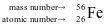
o A simple way of indicating the mass number of a particular isotope is to list it as a superscript on the left side of an element’s symbol. Atomic numbers are often listed as a subscript on the left side of an element’s symbol. For example,
How many protons and neutrons are in each atom?
1.

Solution: In there are 79 protons, and 197 − 79 = 118 neutrons in each nucleus.
2.

Solution: In there are 11 protons, and 23 − 11 = 12 neutrons in each nucleus.
In-Class Activity
Students can be asked to write down the differences between atomic number and mass number.
Appropriate In-Class Use
Concept-Review Exercises
1. Why is the atomic number so important to the identity of an atom?
Solution: The atomic number defines the identity of an element.
2. What is the relationship between the number of protons and the number of electrons in an atom?
Solution: In an electrically neutral atom, the number of protons equals the number of electrons.
3. How do isotopes of an element differ from each other?
Solution: Isotopes have different numbers of neutrons in their nuclei.
4. What is the mass number of an element?
Solution: The mass number is the sum of the numbers of protons and neutrons in the nucleus of an atom.
Key Takeaways
Elements can be identified by their atomic number and mass number.
Isotopes are atoms of the same element that have different masses.
Key Terms
atomic number: The number of protons in the nucleus of an atom.
isotopes: Atoms of the same element that have different numbers of neutrons.
mass number: The sum of the numbers of protons and neutrons in the nucleus.
Exercises
1. How many protons are in the nucleus of each element?
a. radon
Solution: Radon has an atomic number of 86. Therefore, every radon atom has 86 protons in its nucleus.
b. tungsten
Solution: Tungsten has an atomic number of 74. Therefore, every tungsten atom has 74 protons in its nucleus.
c. chromium
Solution: Chromium has an atomic number of 24. Therefore, every chromium atom has 24 protons in its nucleus.
d. germanium
Solution: Germanium has an atomic number of 32. Therefore, every germanium atom has 32 protons in its nucleus.
2. How many protons are in the nucleus of each element?
16 © 2025 FlatWorld
Scott, and Hill’s The
a. sulfur
Solution: Sulfur has an atomic number of 16. Therefore, every sulfur atom has 16 protons in its nucleus.
b. uranium
Solution: Uranium has an atomic number of 92. Therefore, every uranium atom has 92 protons in its nucleus.
c. tin
Solution: Tin has an atomic number of 50. Therefore, every tin atom has 50 protons in its nucleus.
d. lithium
Solution: Lithium has an atomic number of 3. Therefore, every lithium atom has 3 protons in its nucleus.
3. What are the atomic numbers of the elements in Exercise 1?
Solution: Radon has an atomic number of 86.
Tungsten has an atomic number of 74.
Chromium has an atomic number of 24.
Germanium has an atomic number of 32.
4. What are the atomic numbers of the elements in Exercise 2?
Solution: Sulfur has an atomic number of 16.
Uranium has an atomic number of 92.
Tin has an atomic number of 50.
Lithium has an atomic number of 3.
5. How many electrons are in neutral atoms of the elements in Exercise 1?
Solution: Radon has an atomic number of 86. Therefore, every radon neutral atom has 86 electrons.
Tungsten has an atomic number of 74. Therefore, every tungsten neutral atom has 74 electrons. Chromium has an atomic number of 24. Therefore, every chromium neutral atom has 24 electrons.
Germanium has an atomic number of 32. Therefore, every germanium neutral atom has 32 electrons.
6. How many electrons are in neutral atoms of the elements in Exercise 2?
Solution: Sulfur has an atomic number of 16. Therefore, every sulfur neutral atom has 16 electrons.
Uranium has an atomic number of 92. Therefore, every uranium neutral atom has 92 electrons. Tin has an atomic number of 50. Therefore, every tin neutral atom has 50 electrons.
Lithium has an atomic number of 3. Therefore, every lithium neutral atom has 3 electrons.
7. Complete the following table.


8. Complete the following table.


9. State the number of protons, neutrons, and electrons in neutral atoms of each isotope. a. 131I
Solution: 131I has an atomic number of 53. Therefore, the number of electrons is 53, number of protons is 53, and 131 − 53 = 78 neutrons in each isotope.
b. 40K
Solution: 40K has an atomic number of 19. Therefore, the number of electrons is 19, number of protons is 19, and 40 − 19 = 21 neutrons in each isotope.
c. 201Hg
Solution: 201Hg has an atomic number of 80. Therefore, the number of electrons is 80, number of protons is 80, and 201 − 80 = 121 neutrons in each isotope.
d. 19F
Solution: 19F has an atomic number of 9. Therefore, the number of electrons is 9, number of protons is 9, and 19 − 9 = 10 neutrons in each isotope.
10. State the number of protons, neutrons, and electrons in neutral atoms of each isotope.
a. 3H
Solution: 3H has an atomic number of 1. Therefore, the number of electrons is 1, number of protons is 1, and 3 − 1 = 2 neutrons in each isotope.
b. 133Cs
Solution: 133Cs has an atomic number of 55. Therefore, the number of electrons is 55, number of protons is 55, and 133 − 55 = 78 neutrons in each isotope.
c. 56Fe
Solution: 56Fe has an atomic number of 26. Therefore, the number of electrons is 26, number of protons is 26, and 56 − 26 = 30 neutrons in each isotope.
d. 207Pb
Solution: 207Pb has an atomic number of 82. Therefore, the number of electrons is 82, number of protons is 82, and 207 − 82 = 125 neutrons in each isotope.
11. What is the mass number of a gallium atom that has 38 neutrons in it?
Solution: Gallium has an atomic number of 31. Therefore, the number of protons is 31. Mass number = protons + neutrons = 31 + 38 = 69
12. What is the mass number of a uranium atom that has 143 neutrons in it?
Solution: Uranium has an atomic number of 92. Therefore, the number of protons is 92.
Ball, Scott, and Hill’s The
Mass number = protons + neutrons = 92 + 143 = 235
13. Complete each sentence.
a. 48Ti has _____ neutrons.
Solution: 48Ti has an atomic number of 22. Therefore, the number of protons is 22.
Neutrons = mass number – protons = 48 – 22 = 26 neutrons
b. 40Ar has _____ neutrons.
Solution: 40Ar has an atomic number of 18. Therefore, the number of protons is 18.
Neutrons = mass number – protons = 40 – 18 = 22 neutrons
c. 3H has _____ neutrons.
Solution: 3H has an atomic number of 1. Therefore, the number of protons is 1. Neutrons = mass number – protons = 3 – 1 = 2 neutrons
14. Complete each sentence.
a. 18O has _____ neutrons.
Solution: 18O has an atomic number of 8. Therefore, the number of protons is 8. Neutrons = mass number – protons = 18 – 8 = 10 neutrons
b. 60Ni has _____ neutrons.
Solution: 60Ni has an atomic number of 28. Therefore, the number of protons is 28. Neutrons = mass number – protons = 60 – 28 = 32 neutrons
c. 127I has _____ neutrons.
Solution: 127I has an atomic number of 53. Therefore, the number of protons is 53. Neutrons = mass number – protons = 127 – 53 = 74 neutrons
1.5 Atomic Masses
1. Define atomic mass and atomic mass unit.
Ball, Scott, and Hill’s The Basics of
Teaching Tip
Students can be asked to define isotopes as studied in section 1.4 of chapter 1. This will help students understand the concept of atomic mass of an element.
Even though atoms are very tiny pieces of matter, they have mass.
The atomic mass unit (abbreviated u, although amu is also used) is defined as 1/12 of the mass of a 12C atom. It is equal to 1.661 10−24 g. Masses of other atoms are expressed with respect to the atomic mass unit.
Most elements exist in nature as a mixture of isotopes. So, by calculating an average of an element’s atomic masses, weighted by the natural abundance of each isotope, we obtain a weighted average mass called the atomic mass (also commonly referred to as the atomic weight) of an element.
Skill-Building Exercise 1.6
What is the average mass of a tin atom in grams? The atomic mass of tin is 118.71 u.
Solution: We use the fact that 1 u = 1.661 10−24 g:

In-Class Activity
Students can be asked to define the atomic mass unit.
Concept-Review Exercises
1. Define atomic mass. Why is it considered a weighted average?
Solution: The atomic mass is an average of an element’s atomic masses, weighted by the natural abundance of each isotope of that element. It is a weighted average because different isotopes have different masses and abundances.
21 © 2025 FlatWorld
2. What is an atomic mass unit?
Solution: An atomic mass unit is 1/12th of the mass of a 12C atom.
Key Takeaway
Atoms have a mass that is based largely on the number of protons and neutrons in their nucleus.
Key Terms
atomic mass unit: One-twelfth the mass of a 12C atom.
atomic mass: A weighted average of the masses of all element’s naturally occurring isotopes.
Exercises
1. What is the atomic mass of zinc in atomic mass units?
Solution: The atomic mass of Zn is 65.38 u.
2. What is the atomic mass of arsenic in atomic mass units?
Solution: The atomic mass of As is 74.92 u.
3. What is the average mass of a single magnesium atom in grams?
Solution: The atomic mass of magnesium is 24.31 u. We use the fact that 1 u = 1.661 10−24 g:

4. What is the average mass of a single calcium atom in grams?
Solution: The atomic mass of calcium is 40.08 u.
We use the fact that 1 u = 1.661 10−24 g:

5. What is the mass of 1.00 1024 aluminum atoms in grams?
Solution: The atomic mass of aluminum is 26.98 u. We use the fact that 1 u = 1.661 10−24 g:
Scott, and Hill’s The
6. What is the mass of 5.00 1023 carbon atoms in grams?
Solution: The atomic mass of carbon is 12 u.
We use the fact that 1 u = 1.661 10−24 g:
7. Which has more mass—1 tungsten atom or 11 oxygen atoms?
Solution: Atomic mass of 1 oxygen atom: 16 u
Atomic mass of 11 oxygen atoms: 11 16 = 176 u
Atomic mass of 1 tungsten atom: 183.85 u
1 tungsten atom has more mass than 11 oxygen atoms.
8. Which has more mass—1 magnesium atom or 6 helium atoms?
Solution: Atomic mass of 1 magnesium atom: 24.31 u
Atomic mass of 1 He atom: 4 u
Atomic mass of 6 He atoms: 6 4 = 24 u
1 magnesium atom has more mass than 6 helium atoms.
1. Describe how electrons are grouped within atoms.
Teaching Tip
Students can be asked to revise Rutherford’s “planetary model” of the atom as studied in section 1.3 of chapter 1. This will help students understand quantum mechanics.
The modern theory of electron behavior is called quantum mechanics. It makes the following statements about electrons in atoms:
o Electrons in atoms can have only certain specific energies. We say that the energies of the electrons are quantized.
Ball, Scott, and Hill’s The Basics of General, Organic, and Biological Chemistry v3.0
o Electrons are organized according to their energies into sets called shells. Generally, the higher the energy of a shell, the farther it is (on average) from the nucleus.
o Shells are further divided into subsets of electrons called subshells The first shell has only one subshell, the second shell has two subshells and so on.
The subshells of each shell are designated, in order, with the letters s, p, d, and f.
o Different subshells hold a different maximum number of electrons. Any s subshell can hold up to 2 electrons; p, 6; d, 10; and f, 14.
Electron configurations are shorthand descriptions of the arrangements of electrons in atoms.
o We use numbers to indicate which shell an electron is in.
o We combine the shell and subshell labels when referring to the organization of electrons about a nucleus and use a superscript to indicate how many electrons are in a subshell.
o Thus, because a hydrogen atom has its single electron in the s subshell of the first shell, we use 1s1 to describe the electronic structure of hydrogen.
What is the electron configuration of a neutral chlorine atom?
Solution: A neutral chlorine atom has 17 electrons. 2 electrons can go into the 1s subshell, 2 can go into the 2s subshell, and 6 can go into the 2p subshell. That leaves 7 electrons. Of those 7 electrons, 2 can go into the 3s subshell, and the remaining 5 electrons can go into the 3p subshell. Thus, the electron configuration of neutral chlorine atoms is 1
Valence shell electrons (or, more simply, the valence electrons) are the electrons in the highest-numbered shell, or valence shell, while core electrons are the electrons in lowernumbered shells.
o The electron configuration of a carbon atom is 1s22s22p2. Thus, it has 4 valence electrons (2s22p2) and 2 core electrons (1s2).
Ball, Scott, and Hill’s The Basics of General, Organic, and Biological Chemistry v3.0
From the electron configuration of neutral chlorine atoms (refer to “Skill-Building Exercise 1.7”), how many valence electrons and how many core electrons does a neutral chlorine atom have?
Solution: The electron configuration of neutral chlorine atoms is 1s22s22p63s23p5.
The highest-numbered shell is the third shell, which has 2 electrons in the 3s subshell and 5 electrons in the 3p subshell. That gives a total of 7 electrons, so neutral chlorine atoms have 7 valence electrons. The 10 remaining electrons, from the first and second shells, are core electrons.
In-Class Activity
Students can be asked to write down the electron configuration of a neutral fluorine atom and distinguish between the core and valence electrons.
Discussion Team Activity Class Time Assign Ahead √ Not necessary 30 minutes Not necessary
Concept-Review Exercises
1. How are electrons organized in atoms?
Solution: Electrons are organized into shells and subshells around nuclei.
2. What information does an electron configuration convey?
Solution: The electron configuration states the arrangement of electrons in shells and subshells.
3. What is the difference between core electrons and valence electrons?
Solution: Valence electrons are in the highest-numbered shell; all other electrons are core electrons.
Key Takeaway
Electrons are organized into shells and subshells about the nucleus of an atom.
Scott,
Hill’s
quantum mechanics: The modern theory of electron behavior.
quantized: Having a fixed value.
shells: A grouping of electrons within an atom.
subshells: A grouping of electrons within a shell.
electron configuration: A shorthand description of the arrangement of electrons in an atom.
valence shell electrons: Electrons in the highest-numbered shell of an atom.
valence shell: The highest-numbered shell of an atom that contains electrons.
core electrons: Electrons in lower-numbered shells of an atom.
1. What is the maximum number of electrons that can fit in an s subshell? Does it matter what shell the s subshell is in?
Solution: 2; no
2. What is the maximum number of electrons that can fit in a p subshell? Does it matter what shell the p subshell is in?
Solution: 6; no
3. What is the maximum number of electrons that can fit in a d subshell? Does it matter what shell the d subshell is in?
Solution: 10; no
4. What is the maximum number of electrons that can fit in an f subshell? Does it matter what shell the f subshell is in?
Solution: 14; no
5. What is the electron configuration of a carbon atom?
Solution: A neutral carbon atom has 6 electrons. 2 electrons can go into the 1s subshell, 2 can go into the 2s subshell, and 2 can go into the 2p subshell. Thus, the electron configuration of neutral carbon atoms is 1s22s22p2.
6. What is the electron configuration of a sulfur atom?
Ball, Scott, and Hill’s The Basics of General, Organic, and Biological Chemistry v3.0
Solution: A neutral sulfur atom has 16 electrons. 2 electrons can go into the 1s subshell, 2 can go into the 2s subshell, and 6 can go into the 2p subshell. That leaves 6 electrons. Of those 6 electrons, 2 can go into the 3s subshell, and the remaining 4 electrons can go into the 3p subshell. Thus, the electron configuration of neutral sulfur atoms is 1
7. What is the valence shell electron configuration of a calcium atom?
Solution: The electron configuration of neutral calcium atoms is 1s22s22p63s23p64s2. The highest-numbered shell is the fourth shell, which has 2 electrons in the 4s subshell. Therefore, the valence electron configuration is 4s2 .
8. What is the valence shell electron configuration of a selenium atom?
Solution: The electron configuration of neutral selenium atoms is 1
The highest-numbered shell is the fourth shell, which has 2 electrons in the 4s subshell and 4 electrons in the 4p subshell. Therefore, the valence electron configuration is 4s24p4 .
9. What atom has the electron configuration 1s22s22p5?
Solution: Number of electrons on adding the superscripts: 2 + 2 + 5 = 9.
Atomic number of fluorine is 9. Therefore, fluorine atoms have the electron configuration 1s22s22p5 .
10. What atom has the electron configuration 1s22s22p63s23p3?
Solution: Number of electrons on adding the superscripts: 2 + 2 + 6 + 2 + 3 = 15.
Atomic number of phosphorus is 15. Therefore, phosphorus atoms have the electron configuration 1s22s22p63s23p3.
11. A potassium atom has ____ core electrons and ____ valence electrons.
Solution: 18; 1
The electron configuration of neutral potassium atoms is 1s22s22p63s23p64s1. The highestnumbered shell is the fourth shell, which has 1 electron in the 4s subshell. That gives a total of 1 electron, so neutral potassium atoms have 1 valence electron. The 18 remaining electrons, from the first, second, and third shells, are core electrons.
12. A silicon atom has ____ core electrons and ____ valence electrons.
Solution: 10; 4
The electron configuration of neutral silicon atoms is 1s22s22p63s23p2. The highest-numbered shell is the third shell, which has 2 electrons in the 3s subshell, and 2 electrons in the 3p subshell. That gives a total of 4 electrons, so neutral silicon atoms have 4 valence electrons. The 10 remaining electrons, from the first and second shells, are core electrons.
1. Explain how elements are organized into the periodic table. 2. Describe how some characteristics of elements relate to their positions on the periodic table.
Students can be asked to revisit section 1.6 of chapter 1, which illustrates quantum mechanics and the electron configuration. This will help students understand the structure of the periodic table.
A periodic table is a chart of elements that groups the elements by some of their properties. Refer to figure 1.7.
o Elements that have similar chemical properties are organized in columns called groups (or families)
o Each row of elements going across the periodic table is called a period. Periods have different lengths.
Every element can be classified as either a metal, a nonmetal, or a semimetal.
o A metal is a substance that is shiny, typically (but not always) silvery in color, and an excellent conductor of electricity and heat. Metals are also malleable (they can be beaten into thin sheets) and ductile (they can be drawn into thin wires).
o A nonmetal is typically dull and a poor conductor of electricity and heat. Solid nonmetals are also very brittle.
o Metals occupy the left three-fourths of the periodic table, while nonmetals (except for hydrogen) are clustered in the upper right-hand corner of the periodic table.
o The elements with properties intermediate between those of metals and nonmetals are called semimetals (or metalloids)
The elements of the periodic table can also be categorized in the following way:
o In the periodic table, the first two columns on the left and the last six columns on the right are called the main group elements.
2025 FlatWorld
Ball, Scott, and Hill’s The Basics of General, Organic, and Biological Chemistry v3.0
o The ten-column block between these columns contains the transition metals.
o The two rows beneath the main body of the periodic table contain the inner transition metals
The periodic table is organized on the basis of similarities in elemental properties.
o Starting with the first period and going from left to right, the table reproduces the order of filling of the electron subshells in atoms.
o Elements in the same column share the same valence shell electron configuration. For example, all elements in the first column have a single s electron in their valence shells.
Using the variable n to represent the number of the valence electron shell, write the valence shell electron configuration for each group.
the halogens
Solution: The halogens are in the 17th column of the periodic table. This column corresponds to the s subshell being filled with 2 electrons and the p subshell filled with 5 electrons. Therefore, the valence shell electron configuration is ns2np5
2. the column of elements headed by oxygen
Solution: The electron configuration of oxygen is 1s22s22p4. Its valence shell electron configuration is ns2np4. Every element in the same column should have a similar valence shell electron configuration, which we can represent as ns2np4 .
Atomic radius
o The higher the shell number, the farther from the nucleus the electrons in that shell are likely to be. Therefore, as we go down a column on the periodic table, the atomic radius increases.
o As we go across a period on the periodic table, however, electrons are being added to the same valence shell; meanwhile, more protons are being added to the nucleus, so the positive charge of the nucleus is increasing. So, as we go across a period, the atomic radius decreases.
Scott, and Hill’s
Skill-Building Exercise 1.10
Using the periodic table (rather than Figure 1.11), which atom is larger?
1. Li or F
Solution: Both Li and F are in period 2 of the periodic table, but F lies farther to the right. Therefore, we expect Li atoms to be larger than F atoms.
2. Na or K
Solution: Because K is below Na on the periodic table and has electrons in higher-numbered shells, we expect that K atoms are larger than Na atoms.
Students can be asked to explain why atomic radius increases as we go down a column on the periodic table.
Appropriate In-Class Use
Concept-Review Exercises
1. How are the elements organized into the periodic table?
Solution: Elements are ordered by atomic number.
2. Looking at the periodic table, where do the following elements appear?
a. the metals
Solution: the left three-quarters of the periodic table
b. the nonmetals
Solution: the right quarter of the periodic table
c. the halogens
Solution: the next to last column of the periodic table
Scott, and Hill’s
d. the transition metals
Solution: the middle section of the periodic table
3. Describe the trends in atomic radii as related to an element’s position on the periodic table.
Solution: As you go across the periodic table, atomic radii decrease; as you go down the periodic table, atomic radii increase.
The chemical elements are arranged in a chart called the periodic table.
Many characteristics of the elements are related to their position on the periodic table.
Key Terms
periodic table: A chart of elements that groups the elements by some of their properties.
groups (or families): A column of elements on the periodic table.
period: A row of elements on the periodic table.
metal: An element that is shiny, typically silvery in color, an excellent conductor of heat and electricity, malleable, and ductile.
nonmetal: An element that is typically dull, not a good conductor of heat and electricity, and brittle.
semimetals (or metalloids): An element whose properties are intermediate between metals and nonmetals.
main group elements: An element in the first two or the last six columns on the periodic table.
transition metals: An element between the main group elements on the periodic table.
inner transition metals: An element in the two rows beneath the main body on the periodic table. Such metals are also called the lanthanide and actinide metals.
lanthanide metals: The first row of the inner transition metal elements in the periodic table.
actinide metals: The second row of the inner transition metals in the periodic table.
atomic radius: The approximate size of an atom.
Scott, and Hill’s
1. Which elements have chemical properties similar to those of magnesium?
a. sodium
Solution: no; sodium is an element from the column 1 of the periodic table, whereas magnesium is an element from the column 2 of the periodic table.
b. fluorine
Solution: no; fluorine is an element from the column 17 of the periodic table, whereas magnesium is an element from the column 2 of the periodic table.
c. calcium
Solution: yes; calcium and magnesium are elements from the column 2 of the periodic table.
d. barium
Solution: yes; barium and magnesium are elements from the column 2 of the periodic table.
e. selenium
Solution: no; selenium is an element from the column 16 of the periodic table, whereas magnesium is an element from the column 2 of the periodic table.
2. Which elements have chemical properties similar to those of lithium?
a. sodium
Solution: yes; sodium and lithium are elements from the column 1 of the periodic table.
b. calcium
Solution: no; calcium is an element from the column 2 of the periodic table, whereas lithium is an element from the column 1 of the periodic table.
c. beryllium
Solution: no; beryllium is an element from the column 2 of the periodic table, whereas lithium is an element from the column 1 of the periodic table.
d. barium
Solution: no; barium is an element from the column 2 of the periodic table, whereas lithium is an element from the column 1 of the periodic table.
Ball, Scott, and Hill’s The Basics of General, Organic, and Biological Chemistry v3.0
e. potassium
Solution: yes; potassium and lithium are elements from the column 1 of the periodic table.
3. Which elements have chemical properties similar to those of chlorine?
a. sodium
Solution: no; sodium is an element from the column 1 of the periodic table, whereas chlorine is an element from the column 17 of the periodic table.
b. fluorine
Solution: yes; fluorine and chlorine are elements from the column 17 of the periodic table.
c. calcium
Solution: no; calcium is an element from the column 2 of the periodic table, whereas chlorine is an element from the column 17 of the periodic table.
d. iodine
Solution: yes; iodine and chlorine are elements from the column 17 of the periodic table.
e. sulfur
Solution: no; sulfur is an element from the column 16 of the periodic table, whereas chlorine is an element from the column 17 of the periodic table.
4. Which elements have chemical properties similar to those of carbon?
a. silicon
Solution: yes; silicon and carbon are elements from the column 14 of the periodic table.
b. oxygen
Solution: no; oxygen is an element from the column 16 of the periodic table, whereas silicon is an element from the column 14 of the periodic table.
c. germanium
Solution: yes; germanium and carbon are elements from the column 14 of the periodic table.
d. barium
Ball, Scott, and Hill’s The Basics of General, Organic, and Biological Chemistry v3.0
Solution: no; barium is an element from the column 2 of the periodic table, whereas silicon is an element from the column 14 of the periodic table.
e. argon
Solution: no; argon is an element from the last column of the periodic table, whereas silicon is an element from the column 14 of the periodic table.
5. Which elements are alkali metals?
a. sodium
Solution: yes; elements in the column 1 are alkali metals. Sodium lies in the column 1.
b. magnesium
Solution: no; elements in the column 1 are alkali metals. Magnesium lies in the column 2.
c. aluminum
Solution: no; elements in the column 1 are alkali metal. Aluminum lies in the column 13.
d. potassium
Solution: yes; elements in the column 1 are alkali metals. Potassium lies in the column 1.
e. calcium
Solution: no; elements in the column 1 are alkali metals. Calcium lies in the column 2.
6. Which elements are alkaline earth metals?
a. sodium
Solution: no; elements in the column 2 are alkaline earth metals. Sodium lies in the column 1.
b. magnesium
Solution: yes; elements in the column 2 are alkaline earth metals. Magnesium lies in the column 2.
c. aluminum
Solution: no; elements in the column 2 are alkaline earth metals. Aluminum lies in the column 13.
© 2025 FlatWorld
Scott, and Hill’s
d. potassium
Solution: no; elements in the column 2 are alkaline earth metals. Potassium lies in the column 1.
e. calcium
Solution: yes; elements in the column 2 are alkaline earth metals. Calcium lies in the column 2.
7. Which elements are halogens?
a. oxygen
Solution: no; elements in the column 17 are halogens. Oxygen lies in the column 16.
b. fluorine
Solution: yes; elements in the column 17 are halogens. Fluorine lies in the column 17.
c. chlorine
Solution: yes; elements in the column 17 are halogens. Chlorine lies in the column 17.
d. sulfur
Solution: no; elements in the column 17 are halogens. Sulfur lies in the column 16.
e. carbon
Solution: no; elements in the column 17 are halogens. Carbon lies in the column 14.
8. Which elements are noble gases?
a. helium
Solution: yes; elements in the last column are noble gases. Helium lies in the last column.
b. hydrogen
Solution: no; elements in the last column are noble gases. Hydrogen lies in the column 1.
c. oxygen
Solution: no; elements in the last column are noble gases. Oxygen lies in the column 16.
d. neon
Ball, Scott, and Hill’s The Basics of General, Organic, and Biological Chemistry v3.0
Solution: yes; elements in the last column are noble gases. Neon lies in the last column.
e. chlorine
Solution: no; elements in the last column are noble gases. Chlorine lies in the column 17.
9. Which pairs of elements are located in the same period?
a. H and Li
Solution: no; H is located in the 1st row of the periodic table, whereas Li is located in the 2nd row of the periodic table.
b. H and He
Solution: yes; both H and He are located in the 1st row of the periodic table.
c. Na and S
Solution: yes; both Na and S are located in the 3rd row of the periodic table.
d. Na and Rb
Solution: no; Na is located in the 3rd row of the periodic table, whereas Rb is located in the 5th row of the periodic table.
10. Which pairs of elements are located in the same period?
a. V and Nb
Solution: no; V is located in the 4th row of the periodic table, whereas Nb is located in the 5th row of the periodic table.
b. K and Br
Solution: yes; both K and Br are located in the 4th row of the periodic table.
c. Na and P
Solution: yes; both Na and P are located in the 3rd row of the periodic table.
d. Li and Mg
Solution: no; Li is located in the 2nd row of the periodic table, whereas Mg is located in the 3rd row of the periodic table.
11. In each pair of atoms, which atom has the greater atomic radius?
a. H and Li
Solution: As we go down a column on the periodic table, the atomic radius increases. Therefore, Li has the greater atomic radius.
b. N and P
Solution: As we go down a column on the periodic table, the atomic radius increases. Therefore, P has the greater atomic radius.
c. Cl and Ar
Solution: As we move across a row on the periodic table, the atomic radius decreases. Therefore, Cl has the greater atomic radius.
d. Al and Cl
Solution: As we move across a row on the periodic table, the atomic radius decreases. Therefore, Al has the greater atomic radius.
12. In each pair of atoms, which atom has the greater atomic radius?
a. H and He
Solution: As we move across a row on the periodic table, the atomic radius decreases. Therefore, H has the greater atomic radius.
b. N and F
Solution: As we move across a row on the periodic table, the atomic radius decreases. Therefore, N has the greater atomic radius.
c. Cl and Br
Solution: As we go down a column on the periodic table, the atomic radius increases. Therefore, Br has the greater atomic radius.
d. Al and B
Solution: As we go down a column on the periodic table, the atomic radius increases. Therefore, Al has the greater atomic radius.
13. Scandium is a (metal, nonmetal, semimetal) and is a member of the (main group elements, transition metals).
Solution: metal; transition metals
Scandium is an excellent conductor of electricity and heat. Therefore, it is a metal. It lies in the ten-column block between the columns. Therefore, it is a transition metal.
14. Silicon is a (metal, nonmetal, semimetal) and is a member of the (main group elements, transition metals).
Solution: semimetal; main group elements
Silicon has properties intermediate between those of metals and nonmetals. Therefore, silicon is a semimetal. Silicon lies in the last 4th to last column of the periodic table. Therefore, silicon is a main group element.
1. Define radioactivity and state its common types.
2. Balance nuclear reactions.
3. Identify major characteristics of radioactivity, including half-life and units of activity.
Students can be asked about their personal experiences with radioactivity before and after this section to determine if any misconceptions have been explained.
When the actual identity of an atom changes because of changes in the nucleus, this is called nuclear chemistry.
Up to now we’ve assumed that any isotope written is stable, but in reality, this is not the case.
o Some atoms have such large nuclei or have such an unusual mix of protons and neutrons, that the nucleus is unstable—such nuclei can spontaneously decompose by giving off small pieces of itself and in doing so, changes to an atom of a different element.
Ball, Scott, and Hill’s The Basics of General, Organic, and
o This reaction is a nuclear reaction, and it demonstrates a requirement of the law of conservation of matter: the total number of nuclear particles must be the same on both sides of the reaction.
Isotopes whose nuclei can spontaneously decompose by giving off smaller particles are called radioactive.
There are several types of radioactivity:
o Alpha particle emission—emission of a helium nucleus called an alpha particle.
o Beta particle emission— emission of a high-energy electron called a beta particle
o Gamma ray emission—the emission of very high-energy electromagnetic radiation called gamma rays.
o Fission—breakdown of large nuclei into smaller ones.
Skill-Building Exercise 1.11
Write the nuclear reaction for the alpha-particle decay of polonium-216, 216Po.
Solution:
Skill-Building Exercise 1.12
Carbon-14, 14C, decays radioactively by emitting a beta particle. Write the nuclear reaction for this process. Solution:
In-Class Activity
Students can be asked how nuclear reactions are consistent with the law of conservation of energy.
Scott, and Hill’s
When radioactive isotopes decay, energy is also given off: this is the source of nuclear energy.
o Some radioactive isotopes decay quickly, while others take a long time to decay.
o The half-life of a radioactive isotope, t1/2, is the amount of time it takes for a given amount of the isotope to decay to half of its initial value.
Half-lives of spontaneous radioactive isotopes are not affected by external environmental factors and so are constant.
o Some examples include tracing underground water and using radioactive isotopes in compounds to study chemical reactions.
Exposure to radiation is measured in a variety of ways:
o The most fundamental unit is defined as a becquerel
o Because the becquerel is such a tiny unit, a more useful unit is the curie
o Other units of radiation are based on the amount of energy remitted or absorbed, or the impact that energy has on bodily tissues.
The rad is defined as the absorption of 0.01 joules of energy per kilogram of body tissue.
The gray is equal to 100 rad.
o The unit rem is an acronym for “radiation equivalent, man” and is the dosage in rad times a numerical factor that takes into account the type of radiation and the body tissue exposed.
o Another unit of the biological impact of radioactivity is the sievert (SV).
1. Name three types of radioactivity.
Solution: There are more than three: alpha particle emission, beta particle emission, gamma ray emission, fission, positron emission.
2. What are some of the uses of radioactivity in society?
Solution: Radioactivity is used in smoke detectors, in medical imaging, and to trace the reaction pathway of atoms in chemical and physical processes. 40 © 2025 FlatWorld
3. What is the half-life of a radioactive nucleus?
Solution: A half-life is the length of time for a given amount of a radioactive sample to decay to half of its initial value.
Key Takeaways
Some atomic nuclei are unstable and will break apart; this process is called radioactivity.
Energy is given off when nuclei decay; this can serve as an energy source for society.
The length of time needed for a given amount of a radioactive sample to decay to half of its initial value, called the half-life, is a common way to express how radioactive an isotope is.
Key Terms
nuclear chemistry: Changes in an atom’s identity due to changes in its nucleus.
radioactive: A term that identifies an isotope whose nucleus spontaneously decomposes by giving off smaller particles.
alpha particle: A helium nucleus emitted by a radioactive nucleus.
beta particle: An electron emitted by a radioactive nucleus.
gamma rays: Very high-energy electromagnetic radiation given off by radioactive nuclei.
fission: The breakdown of large nuclei into smaller nuclei, usually two or three nuclei of unpredictable identities.
nuclear energy: Energy given off by a nucleus during radioactive decay.
half-life: The amount of time it takes for one-half of an initial amount of radioactive isotope to decay.
becquerel: A unit of radioactivity defined as the decay of one atom per second.
curie: A unit of radioactivity defined as 3.7 x 10¹⁰ decays per second.
rad: An amount of radioactivity exposure that is equivalent to 0.01 joules per kilogram of body tissue.
gray: A unit of radiation energy exposure equal to 100 rad.
rem: A unit of radiation exposure that is a combination of the rad value times a factor dependent on the type of body tissue exposed.
Ball, Scott, and Hill’s The
sievert (SV): A unit of radiation exposure equal to 100 rem but indicative of the impact on biological tissue.
Exercises
1. Write the balanced chemical equation for the emission of an alpha particle from 247Cm.
Solution: Cm
2. Write the balanced chemical equation for the emission of an alpha particle from 222Rn.
Solution: Rn →
3. Write the balanced chemical equation for the emission of a beta particle from 99Tc.
Solution: Tc → e+ ¿1 0 43 99 Ru 44 99 ¿
4. Write the balanced chemical equation for the emission of a beta particle from 19O.
Solution: O → e+ F 9
5. If 3H has a half-life of 12.3 years, and you start with 1.00 g of 3H, what mass of 3H will you have left in 24.6 years?
Solution: 24.6 years is two half-lives of 3H. In one half-life (12.3 y), the 1.00 g of 3H will decay to 0.50 g, and in a second half-life (a total of 24.6 y), the 0.50 g of 3H will decay to 0.25 g. Thus, after 24.6 y you will have 0.25 g of 3H left.
6. How many beta particles are needed to get the mass of one alpha particle? (Refer to Table 1.4 for the masses of the subatomic particles.)
Solution: An alpha particle is a helium nucleus containing 2 protons and 2 neutrons. Its mass is approximately 2(1.673 x 10⁻²⁷ kg) + 2(1.675 x 10⁻²⁷ kg) = 6.696 x 10⁻²⁷ kg. A beta particle is an electron, which has a mass of 9.109 x 10⁻³¹ kg. Hence there are 6.696 × 10 27 kg 9.109 × 10 31 kg =7,351 beta particles per alpha particle
7. An atom of californium-252 undergoes three consecutive alpha particle decays to form an isotope of a new nucleus. Identify the atomic number, mass number, and identity of the final nucleus.
Solution: Three alpha particles contain 12 total particles, 6 of which are protons. The new mass number is 252 – 12 = 240 and the new atomic number is 98 – 6 = 92. Thus, the new nucleus is at atom of 240U.
8. What is the difference between a rad and a rem?
Solution: A rad is the absorption of a specific amount of energy per kilogram of body mass, while a rem includes an additional factor that takes into account the type of radiation and the type of body tissue exposed.
9. What is the difference between a becquerel and a curie?
Solution: A becquerel is one decay per second; a curie is 3.7 1010 decays per second.
1. If the atomic radius of sodium atoms is 1.86 10−10 m, how many sodium atoms are needed to make a line that is 1.00 cm in length?
Solution: We can set the conversion as follows:
2. If the atomic radius of osmium atoms is 1.34 10−10 m, how many osmium atoms are needed to make a line that is 5.85 m in length?
Solution: We can set the conversion as follows:
3. What might be the electron configuration of K+, an atom that has lost an electron?
Solution: Positively charged potassium atoms have 18 electrons. 2 electrons can go into the 1s subshell, 2 can go into the 2s subshell, and 6 can go into the 2p subshell. That leaves 8 electrons. Of those 8 electrons, 2 can go into the 3s subshell, and the remaining 6 electrons can go into the 3p subshell. Thus, the electron configuration of positively charged potassium atoms is 1s22s22p63s23p6.
4. What might be the electron configuration of Cl , an atom that has gained an additional electron?
Solution: Negatively charged chlorine atoms have 18 electrons. 2 electrons can go into the 1s subshell, 2 can go into the 2s subshell, and 6 can go into the 2p subshell. That leaves 8 electrons. Of those 8 electrons, 2 can go into the 3s subshell, and the remaining 6 electrons can go into the 3p subshell. Thus, the electron configuration of negatively charged chlorine atoms is 1s22s22p63s23p6.
5. The electron configuration of the Ca atom is 1s22s22p63s23p64s2. What is the valence shell electron configuration of Ca?
Solution: The highest-numbered shell is the fourth shell, which has 2 electrons in the 4s subshell. Therefore, the valence shell electron configuration of Ca is 4s2.
6. The electron configuration of the Ge atom is 1s
. What is the valence shell electron configuration of Ge?
Solution: The highest-numbered shell is the fourth shell, which has 2 electrons in the 4s subshell and 2 electrons in the 4p subshell. Therefore, the valence shell electron configuration of Ge is 4s24p2.
7. Given that the mass of an electron is 9.11 x 10⁻²⁸ g, calculate this mass in atomic mass units.
Solution: We use the fact that 1 u = 1.661 10−24 g.
Mass of an electron = 9.11 × 10⁻²⁸ g
We can set the conversion as shown below:

8. In a footnote in this chapter, an alpha particle was defined as a particle with 2 protons and 2 neutrons. What is the mass, in grams, of an alpha particle? (Hint: What element does an alpha particle resemble?)
Solution: An alpha particle resembles helium. The atomic mass of He is 4 u.
We use the fact that 1 u = 1.661 10−24 g. We can set the conversion as shown below:
9. A sample of the nonexistent element mythium consists of 25.59% of an isotope with mass number 580, 32.74% of an isotope with mass number 582, and 41.67% of an isotope with mass number 581. What is the atomic mass of mythium? 44 © 2025 FlatWorld
Ball, Scott, and Hill’s The Basics of General, Organic, and Biological Chemistry v3.0
Solution:
Atomic mass of mythium = (0.2559 580) + (0.3274 582) + (0.4167 581) = 581.1 u
10. Because the distribution of isotopes is different on different planets in the solar system, the average atomic mass of any element differs from planet to planet. Assume that on Mercury, a rather hot planet, there is more deuterium left in the atmosphere than on Earth, so that 92.55% of the hydrogen on Mercury is 1H, while the remainder is 2H. What is the atomic mass of hydrogen on Mercury?
Solution:
Atomic mass of hydrogen on mercury = (0.9255 1) + (1 – 0.9255) (2) = 1.07 u
11. The compound that sodium makes with chlorine has sodium and chlorine atoms in a 1:1 ratio. Name two other elements that should make a compound having a 1:1 ratio of atoms with sodium.
Solution: potassium and bromine (answers will vary)
Sodium is located in the column 1, whereas chlorine is located in the column 17 in the same row. Choose any corresponding elements from the same positions.
12. The compound that magnesium makes with oxygen has magnesium to oxygen atoms in a 1:1 ratio. Name two other elements that should make a compound having a 1:1 ratio of atoms with magnesium.
Solution: calcium and sulfur (answers will vary)
Oxygen is located in the column 16 in the 2nd row, whereas magnesium is located in the column 2A in the 3rd row. Choose any corresponding elements from the same positions.
13. Scientists generally consider a time span of 10 half-lives to be a good cutoff for the effective decay of all radioactive atoms of a particular isotope. If you had a sample of each isotope in Table 1.5, how many of them would be effectively gone after (a) 10 years, (b) 1,000 years, (c) 1 million years, (d) 1 billion years, and (e) 10 billion years?
Solution:
a. After 10 years, the following elements in Table 1.5 will still be present: 3H, 14C, 40K, 90Sr, 235U, 238U, and 241Am.
b. After 1,000 years, the following elements in Table 1.5 will still be present: 14C, 40K, 235U, 238U, and 241Am.
c. After 1 million years, the following elements in Table 1.5 will still be present: 40K, 235U, and 238U.
d. After 1 billion years, the following elements in Table 1.5 will still be present: 40K, 235U, and 238U.
e. After 10 billion years, the following elements in Table 1.5 will still be present: 40K and 238U.
Scott, and Hill’s
14. Polonium-214 radioactively decays to a stable lead isotope in a series of four steps: alpha decay, beta decay, beta decay, and alpha decay, in that order. Write balanced nuclear equations for these four steps. (Hint: The final product is 206Pb.)
Solution: The steps are:
David W. Ball, Rhonda J. Scott, and John W. Hill

© 2025 by FlatWorld. All rights reserved. Your use of this work is subject to the license agreement available on our website at www.flatworld.com/terms.
No part of this work may be used, modified, or reproduced in any form by any means except as expressly permitted under the licensing agreement.

1. Define a chemical element and give examples of the abundance of different elements.
2. Represent a chemical element with a chemical symbol.
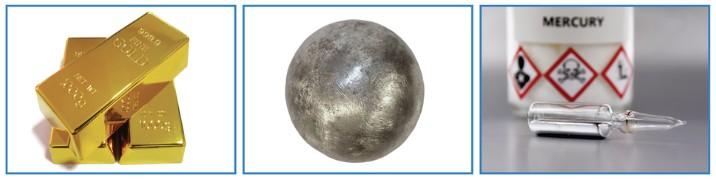
• Gold is a yellowish solid, iron is a silvery solid, while mercury is a silvery liquid at room temperature.
• Chemistry recognizes 118 elements.
• The most common elements in the universe as a whole:
• Hydrogen (about 90% of atoms)
• Helium (most of the remaining 10%)
*The symbol comes from the Latin name of element.
†The symbol for tungsten comes from its German name—wolfram.
*The symbol comes from the Latin name of element.
†The symbol for tungsten comes from its German name—wolfram.
• Write the chemical symbol for each element without consulting Table 1.3, and indicate which symbols likely come from their Latin names.
• titanium
• tin
• carbon
• lithium
• lead
• What element is represented by each chemical symbol? • S • Hg • P • K
I
• All matter is composed of elements.
• Chemical elements are represented by a one- or two-letter symbol.
1. Explain how all matter is composed of atoms.
2. Describe the modern atomic theory.
• modern atomic theory: the fundamental concept that all elements are composed of atoms
• Most elements in their pure form exist as individual atoms.
• diatomic molecule: a two-atom grouping that behaves as a single chemical entity
• The elements that exist as diatomic molecules are hydrogen (H2), oxygen (O2), nitrogen (N2), fluorine (F2), chlorine (Cl2), bromine (Br2), and iodine (I2).
• Atoms are the ultimate building blocks of all matter.
• The modern atomic theory establishes the concepts of atoms and how they compose matter.
1. Describe the three main subatomic particles.
2. State how the subatomic particles are arranged in atoms.
• Minor but important modifications to Dalton’s atomic theory, which considered atoms to be indivisible
• Atoms not only can be divided but are composed of three different kinds of particles with their own properties that are different from the chemical properties of atoms.
• electron: a subatomic particle with a negative electrical charge
• proton: a subatomic particle with a positive electrical charge
• neutron: a subatomic particle with no electrical charge
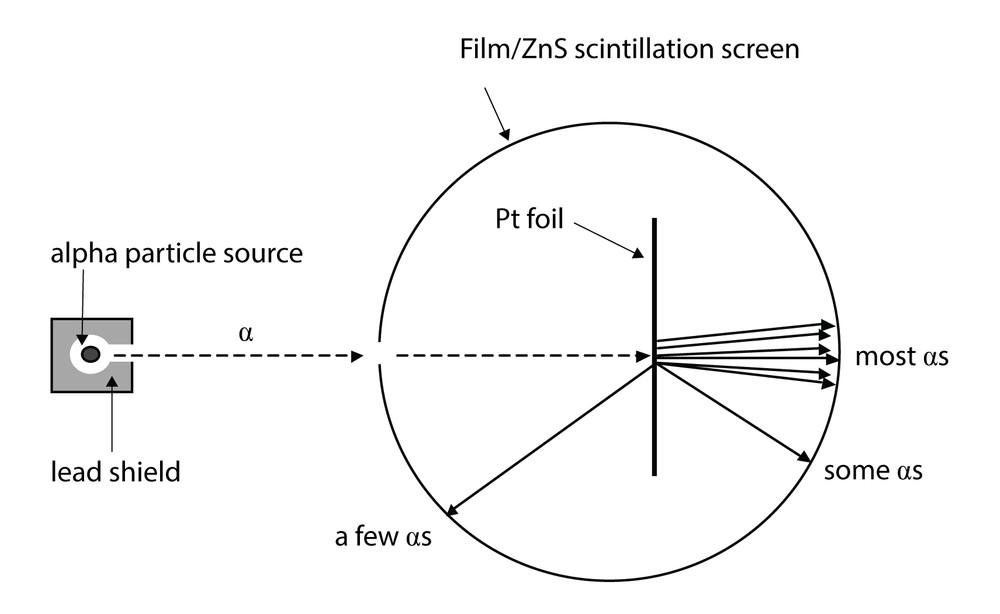
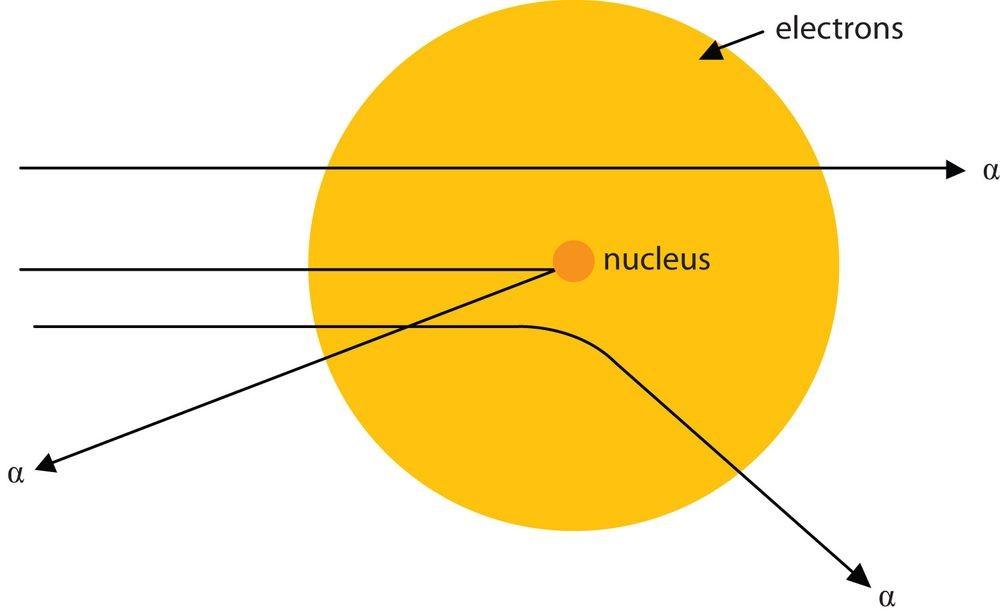
• Rutherford explained the results of the metal-foil experiments by proposing the following:
• Most of the mass and the positive charge of an atom are located in its nucleus
• Low-mass electrons orbit about the nucleus
• Most alpha particles go straight through the empty space, a few particles are deflected, and fewer still ricochet back toward the source.
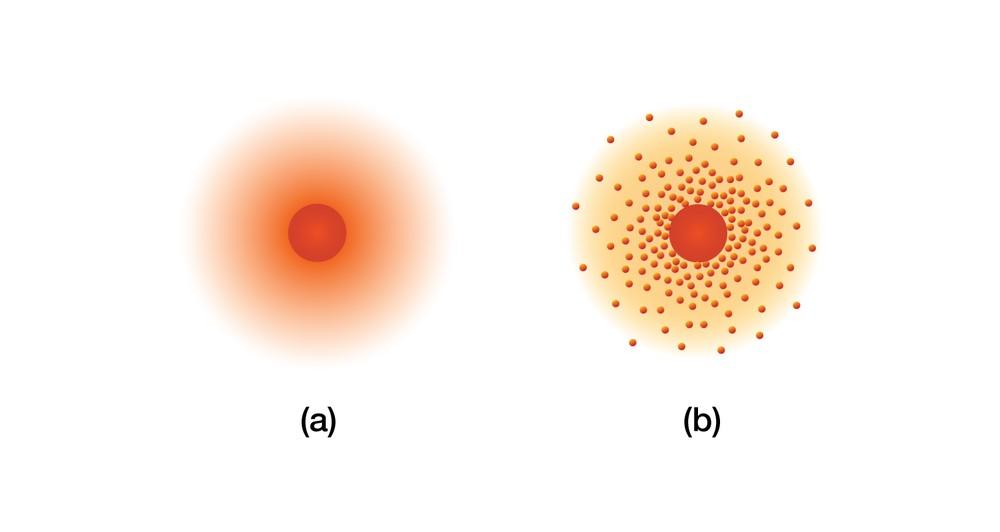
• A more modern understanding of atoms:
• Electrons occupy regions of space about the nucleus
• They are not in discrete orbits like planets around the sun
• In Figure 1.5 on the next slide:
• In (a), the darker the color, the higher the probability that an electron will be at that point.
• In (b), a two-dimensional cross section of the electron in a hydrogen atom, the more crowded the dots, the higher the probability that an electron will be at that point.
• In both (a) and (b), the nucleus is in the center of the diagram.
• Atoms are composed of three main subatomic particles: protons, neutrons, and electrons.
• Protons and neutrons are grouped together in the nucleus of an atom, while electrons orbit about the nucleus.
1. Define and differentiate between the atomic number and the mass number of an element.
2. Explain how isotopes differ from one another.
• If an atom is electrically neutral overall, then the number of protons equals the number of electrons.
• Because these particles have the same but opposite charges, equal numbers cancel out, producing a neutral atom.
• atomic number: the number of protons in the nucleus of an atom
• isotopes: atoms of the same element that have different numbers of neutrons
• What is the number of protons in the nucleus of each element? (Use the table in Appendix B “Periodic Table of the Elements”.) • aluminum • iron • carbon
• How many electrons are present in the atoms of each element?
• sulfur
• tungsten
• argon
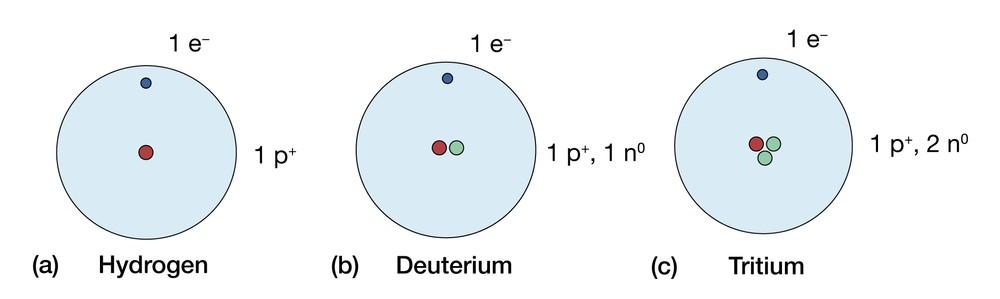
• An important series of isotopes is found with hydrogen atoms.
• Most hydrogen atoms have a nucleus with only a single proton.
• About 1 in 10,000 hydrogen nuclei also has a neutron—this isotope is called deuterium.
• An extremely rare hydrogen isotope, tritium, has 2 neutrons in its nucleus.
• mass number: the sum of the numbers of protons and neutrons in a nucleus of an atom
• Given the mass number for a nucleus, you can determine the number of neutrons by subtracting the atomic number from the mass number.
• A simple way of indicating the mass number of a particular isotope is to list it as a superscript on the left side of an element’s symbol.
• Atomic numbers are listed as a subscript on the left side of an element’s symbol.
• How many protons and neutrons are in each atom?

• • h

• Elements can be identified by their atomic number and mass number.
• Isotopes are atoms of the same element that have different masses.
1. Define atomic mass and atomic mass unit.
• Though atoms are very tiny pieces of matter, they have mass.
• Their masses are so small, that chemists use a unit other than grams to express them—the atomic mass unit.
• atomic mass unit: one-twelfth the mass of a 12C atom atom
• It is a number calculated by averaging an element’s atomic masses, weighted by the natural abundance of each isotope of the element.
• Example:
• Boron exists as a mixture that is 19.9% 10B and 80.1% 11B.
• The atomic mass of boron would be calculated as (0.199 10.0 u) + (0.801 11.0 u) = 10.8 u.
• Given that the weighted average mass of carbon is 12.01 u, calculate this mass in units of grams.
• What is the average mass of a carbon atom in grams?
• Atoms have a mass that is based largely on the number of protons and neutrons in their nucleus.
1. Describe how electrons are grouped within atoms.
• quantum mechanics: the modern theory of electron behavior
• It makes the following statements about electrons in atoms:
• Electrons in atoms can have only certain specific energies—we say that the energies of the electrons are quantized.
• quantized: having a fixed value
• Electrons are organized according to their energies into sets called shells.
• shell: a grouping of electrons within an atom
• Shells are divided into subsets of electrons called subshells.
• subshell: a grouping of electrons within a shell
• Different subshells hold a different maximum number of electrons.
• electron configuration: a shorthand description of the arrangement of electrons in an atom
• Chemistry results from interactions between the outermost shells of electrons on different atoms.
• valence shell electrons: electrons in the highest-numbered shell of an atom
• valence shell: the highest-numbered shell of an atom that contains electrons
• core electrons: electrons in a lower-numbered shell of an atom
• What is the electron configuration of a neutral phosphorus atom?
• From the electron configuration of neutral phosphorus atoms in “Example 1.7: Electron Configurations”, how many valence electrons and how many core electrons does a neutral phosphorus atom have?
• Electrons are organized into shells and subshells about the nucleus of an atom.
1. Explain how elements are organized into the periodic table.
2. Describe how some characteristics of elements relate to their positions on the periodic table.
• periodic table: a chart of elements that groups the elements by some of their properties
• The periodic table is one of the cornerstones of chemistry because it organizes all the known elements on the basis of their chemical properties.
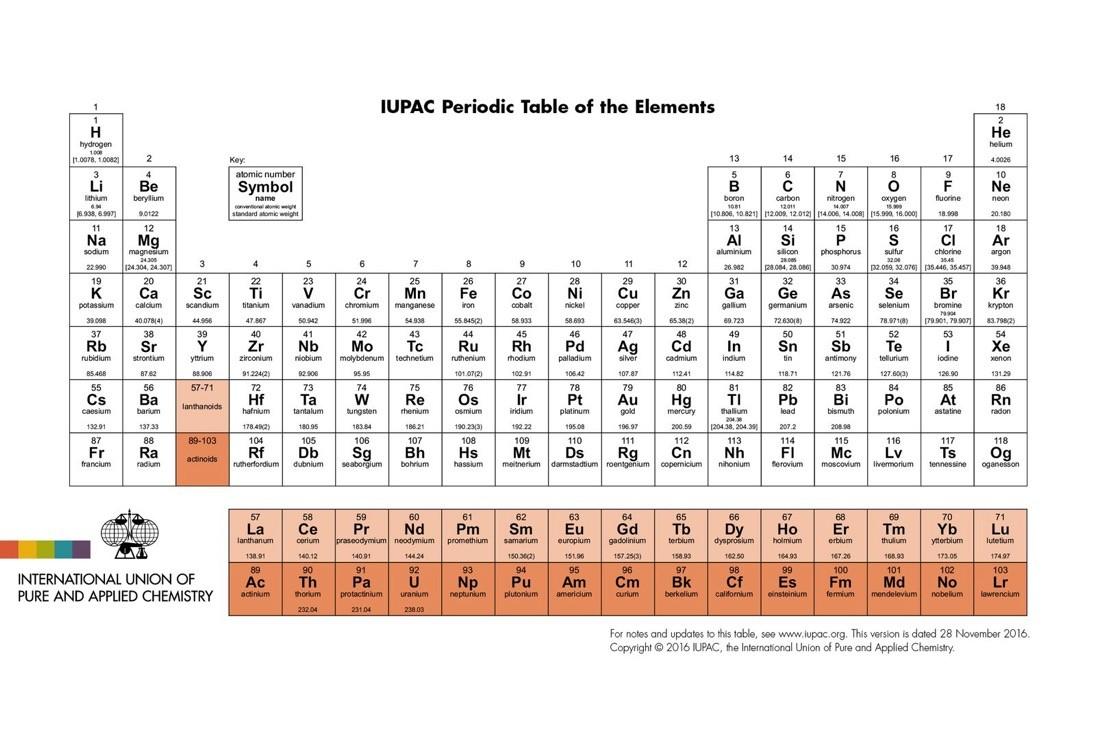
• Elements that have similar chemical properties are grouped in columns called groups (or families).
• group (or families): a column of elements on the periodic table
• Group names
• Alkali metals—first column of elements
• Alkaline earth metals—second column of elements
• Halogens—next-to-last column of elements
• Noble gases—last column of elements
• period: a row of elements on the periodic table
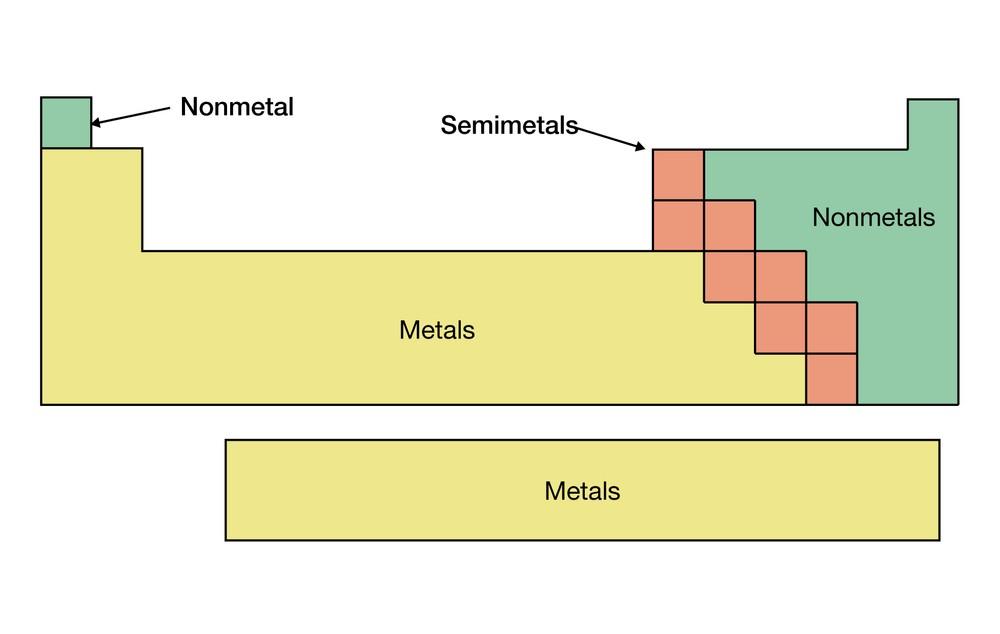
• Every element can be classified as either a metal, a nonmetal, or a semimetal.
• metal: an element that is shiny, typically silvery in color, an excellent conductor of heat and electricity, malleable, and ductile
• nonmetal: an element that is typically dull, not a good conductor of heat and electricity, and brittle
• semimetals (or metalloids): an element whose properties are intermediate between metals and nonmetals
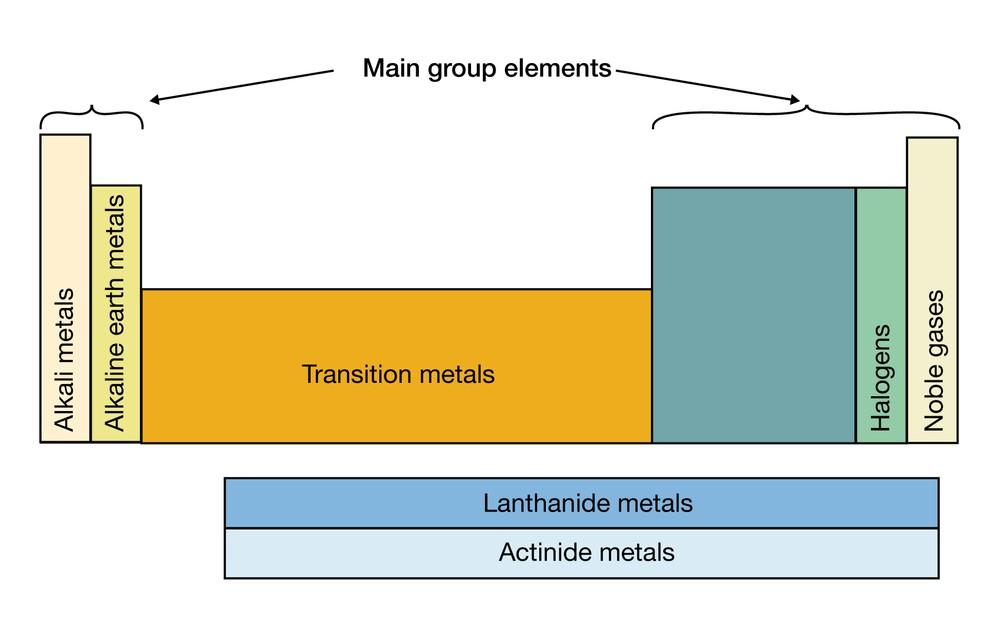
• Some sections of the periodic table have special names.
• main group elements: an element in the first two or the last six columns transition metals: an element between the main group elements
• inner transition metals: an element in the two rows beneath the main body on the periodic table—also called the lanthanide and actinide metals
• lanthanide metals: first row of the inner transition metal elements
• actinide metals: second row of the inner transition metal elements
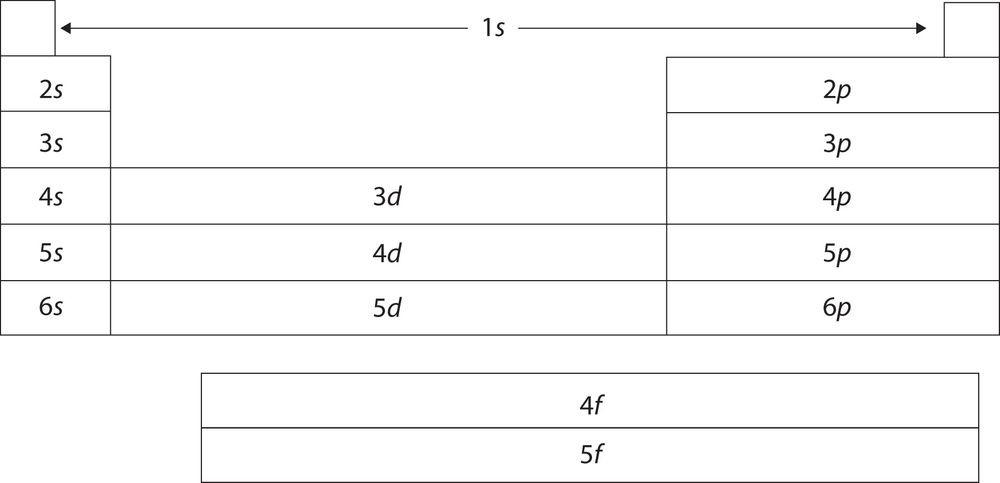
• Using the variable n to represent the number of the valence electron shell, write the valence shell electron configuration for each group.
• the alkaline earth metals
• the column of elements headed by carbon
• The periodic table is useful for understanding atomic properties that show periodic trends.
• atomic radius: the approximate size of an atom
• The size of an atom is generally determined by the number of the valence electron shell—as we go down a column on the periodic table, the atomic radius increases.
• As we go across a period, the atomic radius decreases.
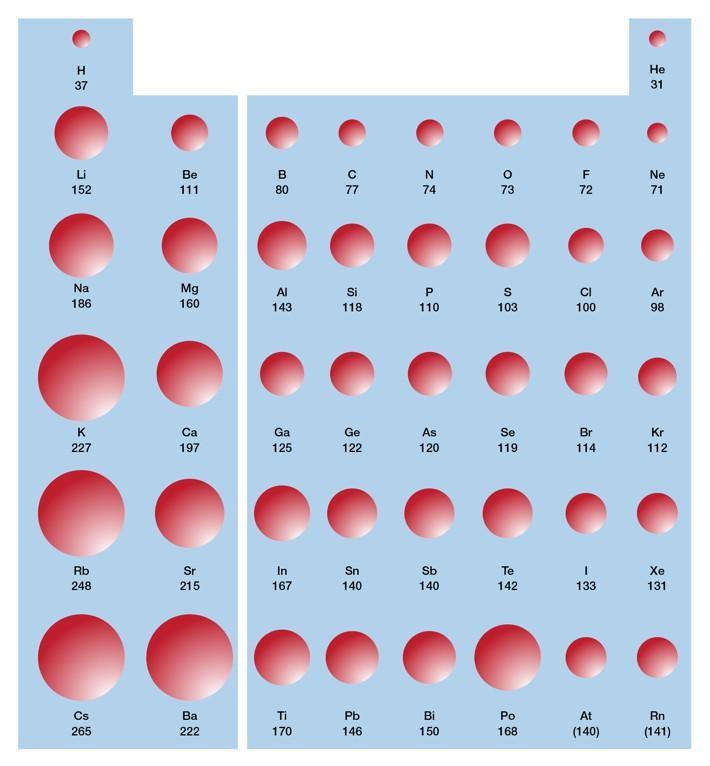
• Using the periodic table (rather than Figure 1.11), which atom is larger?
• N or Bi • Mg or Cl
• The chemical elements are arranged in a chart called the periodic table.
• Many characteristics of the elements are related to their position on the periodic table.
1. Define radioactivity and state its common types.
2. Balance nuclear reactions.
3. Identify major characteristics of radioactivity, including half-life and units of activity.
• nuclear chemistry: changes in an atom’s identity due to changes in its nucleus
• radioactive: a term that identifies an isotope whose nucleus spontaneously decomposes by giving off smaller particles

Most household smoke detectors contains a small amount of radioactive americium, 241Am, as part of its smoke detection circuit. It is only a small amount (0.3 micrograms) and is embedded in plastic, so it poses no danger.
• The primary types of radioactivity:
• alpha particle: a helium nucleus emitted by a radioactive nucleus
• beta particle: an electron emitted by a radioactive nucleus
• gamma ray: very high-energy electromagnetic radiation given off by radioactive nuclei
• fission: the breakdown of large nuclei into smaller ones, usually two or three nuclei of unpredictable identities
• Thorium-232 radioactively decays by emitting an alpha particle. What is the nuclear reaction for this process?
• An isotope pf hydrogen, 3H, decays by giving off a beta particle. What is the nuclear reaction for this process?
• nuclear energy: energy given off by a nucleus during radioactive decay
• half-life: the amount of time it takes for one-half of an initial amount of radioactive isotope to decay
• Half-lives of spontaneous radioactive isotopes are not affected by external environmental factors and so are constant.

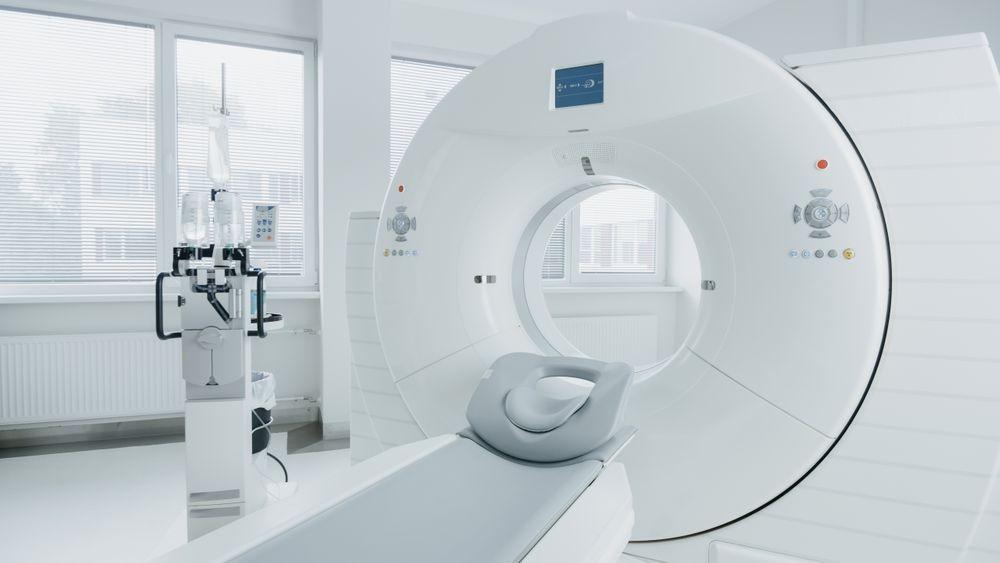
• Isotopes that emit positrons can be employed in a medical imaging technique called positron emission tomography (PET).
• PET is one of many diagnostic and treatment methods that physicians use to improve the quality of our lives.
• A PET scanner uses positron emission, a type of radioactivity, to take images for medical diagnoses.
• Exposure to radiation is measured in a variety of ways:
• becquerel (Bq): a unit of radioactivity defined as the decay of one atom per second
• curie (Ci): a unit of radioactivity defined as 3.7×10¹⁰ decays per second
• rad: an amount of radioactive exposure equal to 0.01 joules per kilogram of body tissue
• gray: a unit of radiation energy exposure equal to 100 rad
• rem: a unit of radiation exposure that is a combination of the rad values times a factor dependent on the type of body tissue exposed
• sievert (SV): a unit of radiation exposure equal to 100 rem but indicative of the impact on biological tissue
• Some atomic nuclei are unstable and will break apart; this process is called radioactivity.
• Energy is given off when nuclei decay; this can serve as an energy source for society.
• The length of time needed for a given amount of a radioactive sample to decay to half of its initial value, called the half-life, is a common way to express how radioactive an isotope is.