A school of education UN LIKE any other
A school of education UN LIKE any other
The Virginia Commonwealth University (VCU) School of Education (SOE) achieved UNimaginable new heights in the 2021-2022 academic year delivering excellence through inclusion and access, research excellence, and student-centeredness. We are proud to highlight our UNmatched academic rankings, proven impact in Diversity, Equity, and Inclusion, and UNrivaled excellence and growth in research.
With more than $400M in sponsored awards, VCU is an urban-serving public research university, Carnegie designated as R1 and Community Engaged. At the VCU School of Education, we delivered another tremendous year in research funding. In FY22, the SOE generated $37.4M in external awards supporting research – once again, the largest total research for a unit on VCU’s Monroe Park Campus and second only to the VCU School of Medicine.
The accomplishments of the VCU School of Education focus on serving our communities, schools, families, and children, especially in urban and high-needs environments. Further evidence of our success is that we doubled our enrollment in the past six years, surpassing 1,000 enrolled students in Fall 2022, and now rank as the 16th Best (public) School of Education in U.S. News & World Report.

The VCU School of Education’s endowment has increased by 166% from 2015 to 2022. As of December 2022, the total exceeds $5.6M. Another UNmatched testament to our success, the endowment funding supports more than 61 scholarships.
Our growth includes the expansion of our undergraduate programs to add a B.S.Ed. in Special Education with a concentration in Early Childhood and several new minors, including Instructional Design and Technology, Recreation and Wellness, Health Education, and Teaching English to Speakers of Other Languages. We also introduced a Certifcate in Culturally Responsive Leadership and two new M.Ed. in Educational Leadership concentrations – Culturally Responsive Leadership and Higher Education.
For the future, we are focused on fne-tuning our school’s identity as the leader in developing professionals who advance learning across the lifespan through our research, community engagement and impact. So, keep an eye on us throughout the year as we embrace the spirit of VCU’s incredibly popular and perfectly on-brand UNcommon campaign.
At VCU School of Education, we are UNSTOPPABLE! Go Rams!
Andrew P. Daire, Ph.D. Dean and Ruth Harris Professor, VCU School of Education
1 We see UNLIMITED potential in our students, faculty and staff.
16 th BEST Education School
U.S. News & World Report’s 2023
Ranking of America’s Best (public) Graduate Education Schools
Public Online Education Doctorate
2022 Fortune Magazine | Education
1,017 Enrollment Fall 2022
17,624 Alumni
9 Centers and Institutes
45 Programs of Study
4 Accreditations (Virginia Department of Education | Council for the Accreditation of Educator Preparation | Council for Accreditation of Counseling & Related Educational Programs | National Association for the Education of Young Children)
16 Degree Programs (with 28 distinct concentrations)
9 Certifcate Programs
7 Undergraduate Minors
$5.6 M Cumulative Endowment (from 1984 to December 2022)
166% Increase in Endowment (from October 2015 to December 2022)
27% Increase in Scholarships Awarded (from FY21 to FY22)
53% Increase in Scholarship Award Amounts (from FY21 to FY22)
S HANGHAI R ANKING 2022
Global Ranking of Academic Subjects
Master’s of Education
U.S. News & World Report’s 2023
Ranking of America’s Best (public) Graduate Education Schools
32% of Fall 2022 Enrolled VCU School of Education Students Identify as Under Represented Minorities*
95% of Diversity, Equity and Inclusion Student Ratings Exceed Benchmarks
Based on Fall 2021 and Spring 2022 course evaluation questions for curriculum and instruction.
49% Enrollment Growth
Student enrollment increased from 683 in Fall 2019 to 1,017 in Fall 2022.
*Under Represented Minorities: Individuals historically excluded or underrepresented within higher education by race/ ethnicity (African American/Black, Hispanic/Latinx, Native Hawaiian, Pacifc Islander, and two or more races, when one race is from a preceding group).
This year marked the achievement of $37.4M in annual grant awards. Cumulative current grant awards total $141M*. Research funding garnered by the VCU School of Education surged 51% from FY2016 ($24M) to FY2022 ($37M).
$37.4M
As our research grows, the UNmatched impact of our collective in grant funding efforts is accelerating our vision of transforming the lives of those we serve in our communities, especially those who have been awarded for FY22* historically marginalized. A research powerhouse, the VCU School of Education is relentlessly pursuing advances throughout the lifespan of human development and learning.
Our work encompasses highly-recognized research funded by key social sciences, education, and health funding partners such as the National Science Foundation, the National Institutes of Health, the
$141M U.S. Department of Education, the Virginia Department of Education, in cumulative the U.S. Department of Health and Human Services, and the Social Security Administration. grant awards**
As part of a Carnegie Classifed R1 research institution, the VCU School of Education contributes signifcantly to the university’s research mission. We enrich the human experience, advance a just and equitable society, and optimize health and wellness in our communities through the impactful work of dedicated faculty, students, and staff. Devoted to inclusion and driven by impact, the VCU School of Education is UNequaled in our tenacity, vision, and commitment.
* the sum of the total amount of research and projects sponsored, or funded, by an external organization, such as a federal, state, or private organization or agency at VCU School of Education in FY22.
**represents the total amount of all currently active awards
M
National Science Foundation
Building on diverse students’ funds of knowledge to promote scientifc discourse | Christine Lee Bae, Ph.D. (Principal Investigator)
$1,031,374 | Strengthen science learning in urban middle schools by focusing on the scientifc discourse that occurs in the classroom.
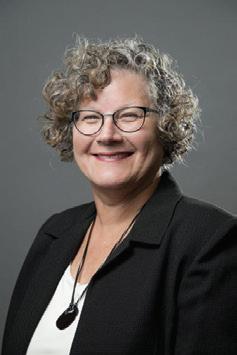

Pathways for Authentic Teaching of Health Sciences (PATHS) project
Elizabeth Edmondson, Ph.D. (Principal Investigator)
$1,263,946 | Support secondary school educators in historically underserved rural and urban Virginia communities with culturally responsive practices to engage and prepare students for careers in health professions.
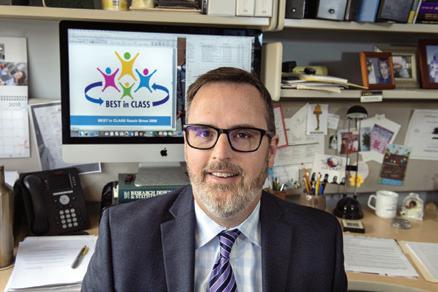
A Conceptual Replication of BEST in CLASS: An Effcacy Study of BEST in CLASS-Elementary | Kevin Sutherland, Ph.D. (Principal Investigator)
$3,296,798 | Address the needs of children who demonstrate persistent and intensive challenging behaviors in classroom settings, which place them at future risk for developing social-emotional learning diffculties.
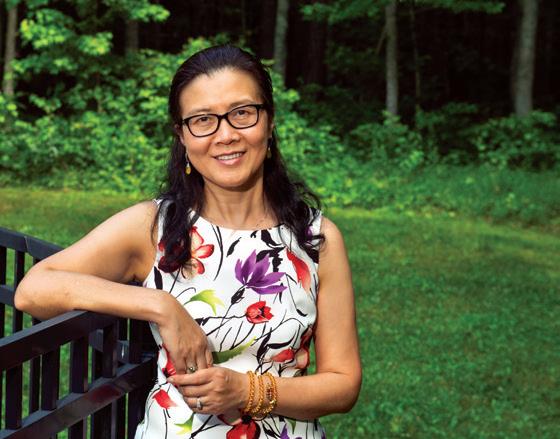
Project PIRR: Preparing Interdisciplinary, Responsive, and Refective EI/ECSE
Professionals and Social Workers | Yaoying Xu, Ph.D. (Principal Investigator)
$1,090,947 | Prepare early intervention personnel, early childhood special educators, and social workers to use evidence-based practices to improve family and early childhood mental health for children from high-need communities.
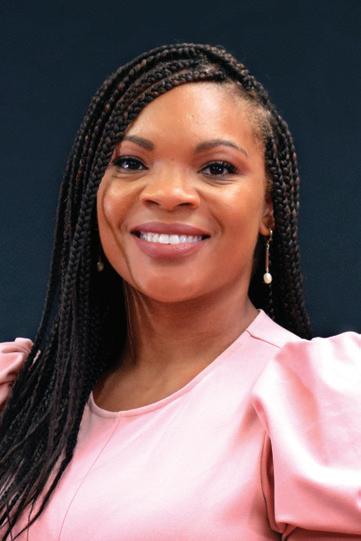
The VCU School of Education had strong representation on a core university team that is developing a toolkit to identify strategies and practices for examining and transforming harmful racial narratives, and building relationships that nurture diversity and equity across VCU.
The School of Education team representatives are Tomika Ferguson, Ph.D., assistant dean for student affairs and inclusive excellence and assistant professor in the Department of Educational Leadership, and Rachel Gómez, Ph.D., assistant professor in the Department of Teaching and Learning. Ferguson’s research centers on the intersection of race, gender, sport and educational equity, and Gomez studies the intersections of race, ethnicity and education in K-20 schools.
VCU was one of only 19 institutions selected by the American Association of Colleges and Universities (AAC&U) in a competitive process to participate in the development of this toolkit, known as the Truth, Racial Healing & Transformation (TRHT)-Focused Campus Climate Assessment Toolkit.
The toolkit will help institutions and practitioners interrogate systems, policies, programs, services, and practices that perpetuate disparities and inequities through a false belief in a hierarchy of human value. This includes assessing an institution’s historical and implicit racial narratives, opportunities for expanding relationship building, and racial healing among students, faculty, staff and other constituents.
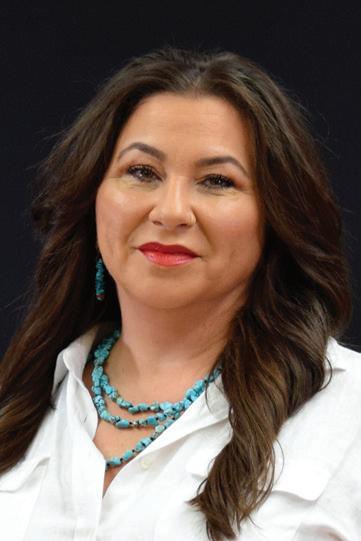
We are UNWAVERING in challenging inequity.
The Partnership for People with Disabilities in collaboration with the VCU School of Education launched the disability studies certifcate in 2020 as a unique interdisciplinary sequence of courses. Students enrolled in the certifcate courses explore topics such as social models of disability, social justice and discrimination to prepare them to have a better grasp on issues of diversity as they embark on their professional careers.
The sequence of courses is taught by Tosha Yingling, who is pursuing a Ph.D. in the School of Education and is teaching in the Department
“One of the main things that we try to teach folks
of Gender, Sexuality and Women’s Studies in the College of Humanities and Sciences. Yingling researches prison education, and views disability studies as a framework to discuss social justice. in disability studies is “Disability studies is as important for people that consider that disability is a social construction.” themselves able-bodied as people with disabilities, particularly when we talk about race or class, because we sometimes think of disability as a social ill that needs to be cured or treated in order
— Tosha Yingling, Ph.D.
to be changed,” Yingling said. “One of the main things that we try to teach folks in disability studies is that disability is a social construction. It’s not bodies that are disformed, lacking or unable to work in a certain way. It’s the fact that we have a society that makes things ableist. It makes it hard for certain people to move through society or for certain people to hear or learn in certain ways.”
“Disability criticism studies gives students that vocabulary and theoretical framework to evaluate and to examine these issues,” said Jack M. Brandt, who works as a project offcer at the Administration for Community Living in Washington. “The certifcate, which is open to any major, is really preparing students for their next experiences in their work or in their graduate studies. This is the frst certifcate of its kind in Virginia.”
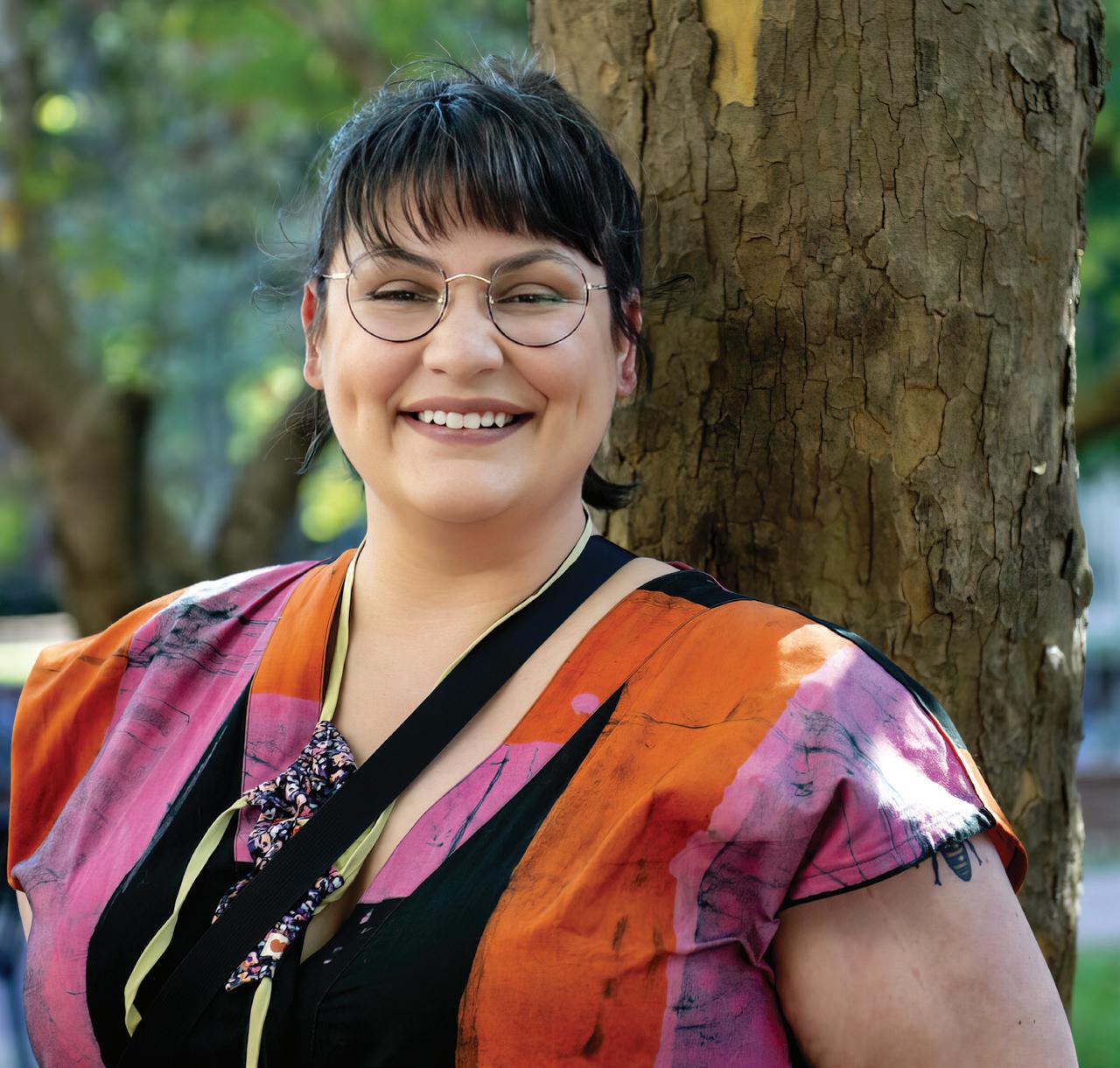
“Disability studies is as important for people that consider themselves able-bodied as people with disabilities, particularly when we talk about race or class.”
Tosha Yingling, Ph.D.
Finding the right ft: For future counselor Julie Nguyen, ‘everything just seemed to align’ in SOE’s counselor education program
First-generation graduate student, seeking greater representation in college counseling, fnds academic and cultural ft at the VCU School of Education.
Julie Nguyen’s parents emigrated from Vietnam following the fall of Saigon in 1975 and eventually settled in Northern Virginia. They didn’t speak English when they frst arrived. Her mom had been one of the thousands of refugees who fed their homeland by boat, enduring a dangerous journey on the open sea.
“I really like the diversity here. I feel that I’ve been getting a lot of exposure to different cultures and different experiences, which is really important to me as a future counselor.”
— Julie Nguyen, M.Ed. in Counseling
Nguyen and her three siblings went to school in Northern Virginia, where they learned English. When they were at home, they spoke Vietnamese, celebrated Vietnamese holidays and attended church with other Asian American immigrants. The four children were exposed to different cultures socially while developing a deeper appreciation of their own Vietnamese heritage.
Nguyen soon found that growing up in an Asian American household meant that mental health was often a taboo subject. “Mental health was never really acknowledged by older adults in my family,” she said. “There was always a big focus on physical health, even when it came to choosing a career.”
The more she felt a push to become a doctor, a surgeon or a dentist, the more Nguyen pursued the feld of mental health. In 2021, she earned her bachelor’s degree from the University of Virginia in psychology and cognitive science, with a concentration in linguistics.
When she began considering graduate schools, she knew that she wanted a different environment from the small-town feel of Charlottesville. She liked the more diverse, urban environment that

VCU and Richmond provided. Then she saw something that made it all click.
“The VCU School of Education had a concentration specifcally for college counseling and student affairs,” she said. “A lot of other schools didn’t have that specifc track, and it was the population that I was particularly interested in. Everything just seemed to align.”
Nguyen started VCU’s M.Ed. in Counselor Education program last fall and has been impressed.
“Many of the faculty are well known in the counseling feld, and I’m extremely lucky to be able to connect and network with them,” she said. “I especially like the interaction between doctoral students and master’s students. There’s no separation or hierarchy, which is really nice to see.”
She is also impressed with the cultural variety of VCU and Richmond.
“More broadly, I really like the diversity here. I feel that I’ve been getting a lot of exposure to different cultures and different experiences, which is really important to me as a future counselor,” she said.
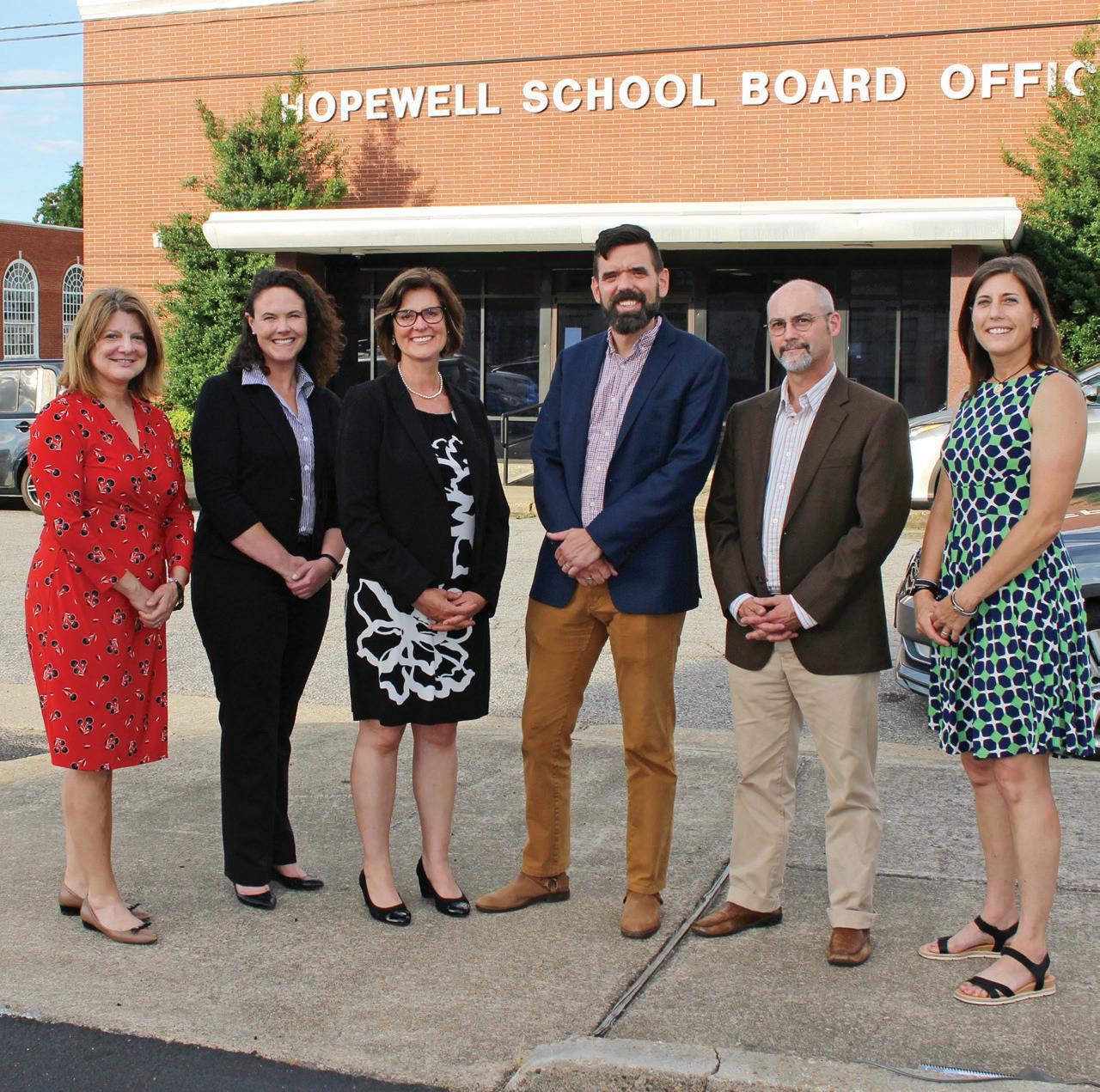
In July 2021, when Hopewell Public Schools became the frst district in Virginia to move to a 12-month school-year calendar, a group of VCU School of Education doctoral students were already hard at work preparing for how to measure the new calendar’s impact on the K-12 students.
For their capstone project in the school’s Ed.D. in Leadership program, a team of fve doctoral students developed a comprehensive evaluation plan for Hopewell Public Schools’ year-round “balanced calendar” initiative, which they presented to the Hopewell School Board at a work session in June, just a few weeks after graduating from VCU.
The team’s work for Hopewell is an excellent example of the real-world impact that the capstone projects can have, said Kimberly M. Bridges, Ed.L.D., an assistant professor in the Department of Educational Leadership and co-coordinator of the program.
“The work of these doctoral students was done in partnership with a school system that is on the front lines of a huge innovation in their division,” Bridges said. “While they’re busy implementing this fantastic initiative across their school system, these students had the ability to take a step back and look forward, and produce a plan with tools and resources that the division can use to take their work into the next phase.”
While working on the project, titled “Designing an Evaluation Plan for Hopewell City Public Schools’ Balanced Calendar,” the students also collaborated closely with Melody Hackney, Ed.D., Hopewell superintendent of schools, and Byron Davis, supervisor of balanced calendar implementation and director of communications.
“The capstone team’s research, and more importantly the tools that they gave us, will be instrumental as we move forward with the continual improvement and evaluation of our balanced calendar,” Hackney said.
The VCU School of Education has been awarded a Virginia Department of Education grant to develop teacher apprentice residency programs in partnership with the school systems in the Virginia counties of Prince William, Fairfax and Surry.
The grant is one of nine awarded to Virginia universities to allow school divisions to hire classroom aides, paraprofessionals, substitutes and other unlicensed school employees as teacher apprentices and provide a mentored pathway for them to complete the coursework required to become fully licensed teachers.
In November 2021, the U.S. Department of Labor approved K-12 teaching as an “apprenticeable” occupation, qualifying teacher apprentice programs for funding through several federal workforcedevelopment grants administered by the Virginia Department of Labor and Industry, according to the Virginia Department of Education.
At VCU, the project will be led by RTR Teacher Residency, a school-based teacher preparation program that integrates research with practice to equip residents with the knowledge, skills and experience to be effective in high-needs and hard-to-staff classrooms.
Kim McKnight, Ph.D., executive director of RTR Teacher Residency and director of the Center for Teacher Leadership, said the grant will enable the recruitment, support and retention of high-quality teachers and teacher leaders for the hardest-to-staff schools in the partner divisions.
“We believe that this new apprentice residency teacher model will transform the teaching profession and turn the tide on the educator shortage in Virginia,” said Shelby Elliott, administrative coordinator, certifcation and compliance, in the Department of Human Resources for Prince William County Public Schools. “We are actively designing a program that will offer potential candidates a paid apprenticeship/residency where they can ‘earn to learn.’ By removing the fnancial and teacher preparation barriers, we hope to expand the pipeline of potential applicants
We are
in our
impact on our communities.

and provide structured on-the-job training that will result in the recruitment and retention of highly qualifed and prepared educators.”
VCU’s RTR program is the longest-standing teacher residency program in Virginia and one of the most successful in the country, Elliott added. “With this new partnership, we hope to build upon [RTR’s] highly successful current residency model and offer a multitiered apprenticeship/ residency option that will allow candidates to either complete a bachelor’s degree, post-bachelor’s, master’s or post-master’s certifcate.”
We are UNRIVALED in our positive impact on our communities.
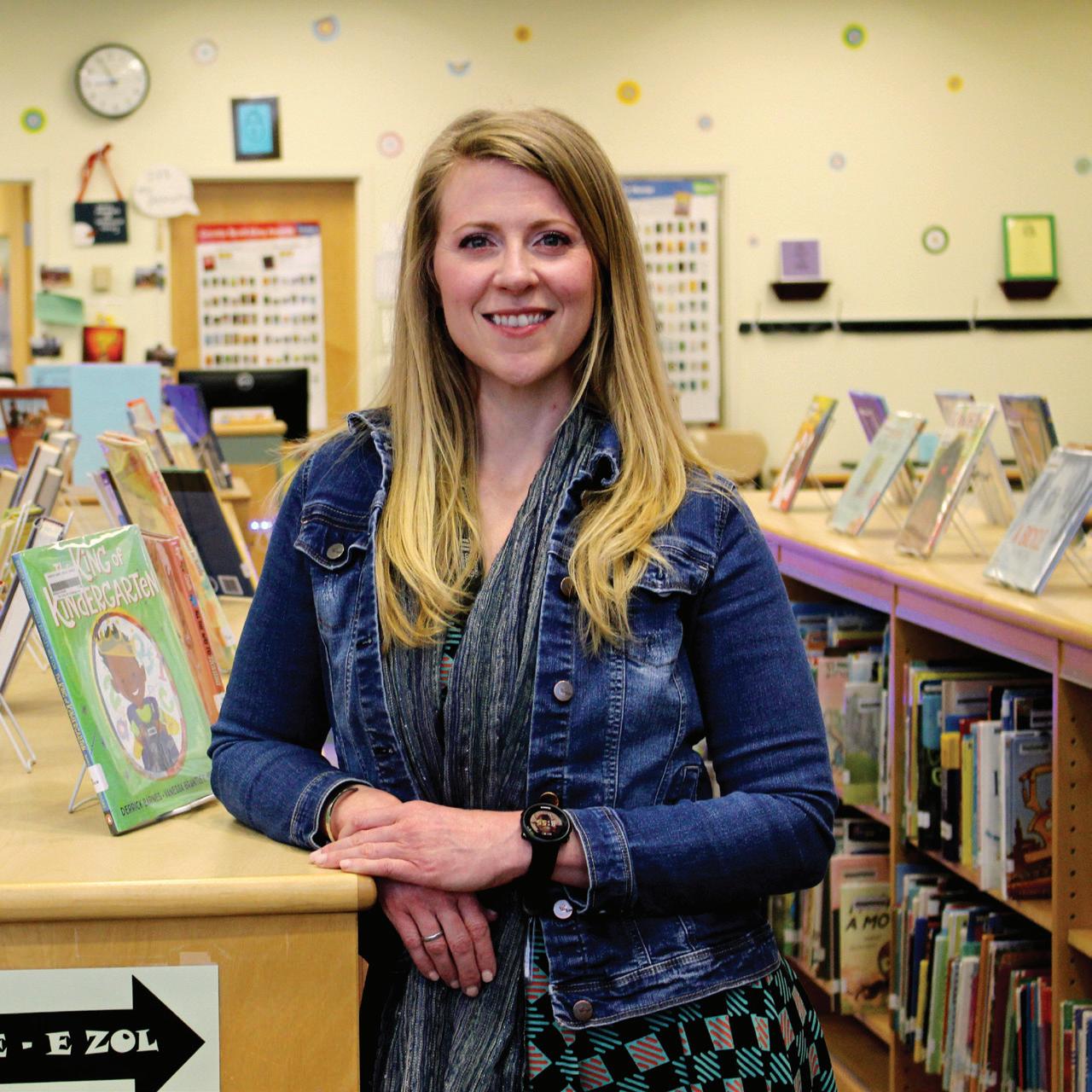
VCU School of Education alum and Virginia Elementary School Counselor of the Year found her dream job.
Holly Guelig has always loved teaching.
“When I was a little kid growing up in Fredericksburg, I would gather the other kids in our neighborhood and teach them music lessons,” said Guelig. “I didn’t know anything about music. I just loved teaching. I created worksheets for the other kids. I took it very seriously.”
In May, the Virginia School Counselor Association named Guelig, a counselor at Greenwood Elementary School in Henrico County, as its Virginia Elementary School Counselor of the Year.
Guelig majored in psychology in college, hoping to become a child psychologist or therapist. She attended Germanna Community College in Fredericksburg, Virginia, and thrived in her psychology courses, but the required math courses were another matter.
“Growing up, I had a learning disability in math. My brain works a little differently when it comes to numbers,” she said. “I love our school system, but I was in no way prepared for college math. I kept thinking, ‘If I can’t pass math, I can’t graduate.’”
She found a math instructor at Germanna who was willing to help her improve her math profciency. Guelig earned an A in her frst class with him, followed by another A, and then another. Her confdence built as her grade average improved. “My instructor completely disarmed my fears,” she said. “It’s such a beautiful thing when a teacher can reach that one person in such a meaningful way.”
“The VCU School of Education was one of the best in the country, and my advisor had great things to say about it,” she said. “I looked at the faculty and really liked what I saw. I couldn’t imagine going anywhere else.”
Holly Guelig, M.Ed. ‘12
We are UNSTOPPABLE innovators.
The honor cites the school for its leadership and commitment to continuously improving the feld by advancing equity and excellence in educator preparation.
VCU’s School of Education was one of only 32 institutions recognized by the Council for the Accreditation of Educator Preparation (CAEP) for its leadership and forward-looking approach in training future teachers and educators.
VCU and the other providers selected for 2022 Frank Murray Leadership Recognition for Continuous Improvement advance equity and excellence in educator preparation through self-study and evidence-based reporting that assure quality and support continuous improvement to strengthen pre-K through 12 learning.
“The award is reserved for those institutions that achieve the gold standard in teacher preparation accreditation with a clean review,” said Christopher A. Koch, president of CAEP. The council evaluates 600 institutions for accreditation and selected 32 institutions in the U.S., Puerto Rico and Jordan for this recognition. VCU was one of four Virginia universities to earn the recognition.
“The CAEP accreditation standards require schools of education to focus on how they recruit students and emphasize diversity in order to build a pool of teachers that refect the students they will be teaching. CAEP-accredited providers must have systems in place to monitor and support these prospective teachers as they progress through their educator preparation,” Koch said. “Virginia Commonwealth University does just that. They are producing new teachers based on evidence of what makes a difference in K-12 students’ lives.”
Students at VCU’s School of Education have completed more than 1.4 million feld hours over the past decade. VCU’s students learn in an environment where they are encouraged to redefne and reshape the educational landscape by pursuing initiatives
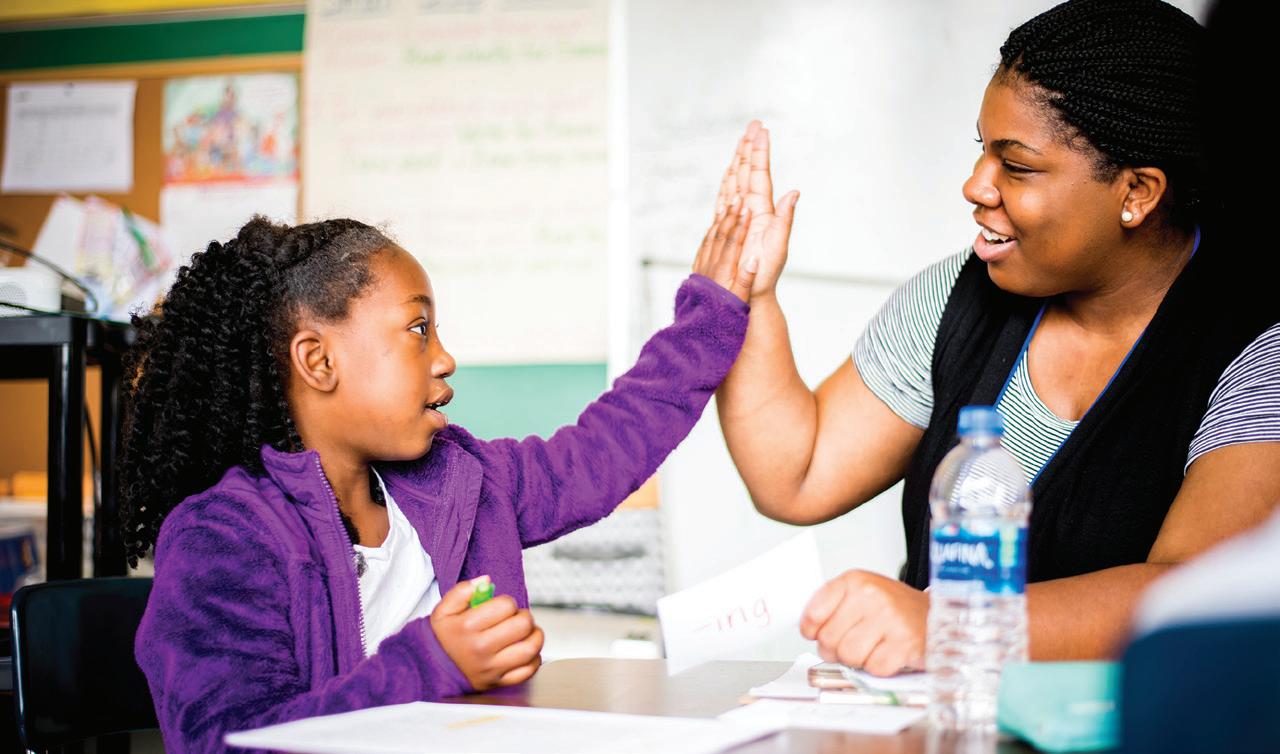
that prioritize social justice and promote equity as they navigate the challenges facing students and their communities, including systemic racism, poverty and disability.
“This recognition is a testament to the dedication of our faculty and staff as they prepare students for the realities of teaching and for how they can make an impact in their classrooms and in their communities,” said Andrew Daire, Ph.D., dean of the VCU School of Education.
“Improving the world for future generations is at the heart of everything we teach our students as future educators and leaders. Our faculty, staff, students and alumni are more than deserving of this recognition for leadership and continuous improvement as they advance opportunities for all through their education of our communities.”