Learning Elevated

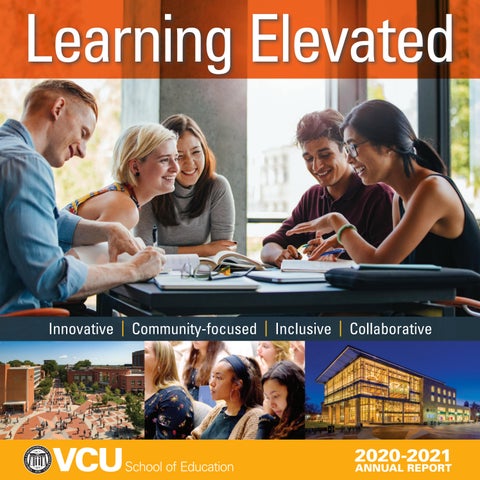
The VCU School of Education achieved new heights in the 2020-2021 academic year, thanks to our incredible faculty, staff and students and with the continuous support of our donors and friends. Our accomplishments demonstrate our strong focus on serving our communities, schools, families and children, especially in urban and high needs environments.
We introduced three new undergraduate programs: a B.A. in Human and Organizational Development, a Minor in Special Education, and a Minor in Early Intervention and Early Childhood Special Education. We also maintained our superior national rankings, including 10th best online graduate program in education, 15th best online program in special education, and 16th best public graduate school of education by U.S. News & World Report
We had another tremendous year in research funding, surpassing our previous record. In FY21, SOE generated over $35 million in external awards, which included a 24% increase in federal awards alone, and once again, the largest amount of the VCU Monroe Park Campus. Our expertise is opening up opportunities for research and study that students are looking for. Together, we are shaping the future of education.
We look forward to playing an important role in preparing educators and professionals who will work with citizens in our community from early childhood through adulthood. As part of that, in the past year our Office of Strategic Engagement and our Diversity, Equity and Inclusion Committee collaborated to offer our “Becoming an Anti-Racist Educator” learning opportunity to 300 participants, ensuring that our graduates are prepared for meaningful conversation and teachable moments on race and racism.

I’m extremely proud to be part of this institution, and I look forward as we continue our transformative and impactful work in the year ahead. Go Rams!
Andrew P. Daire, Ph.D.
Dean and Ruth Harris Professor, VCU School of Education
growth in SOE enrollment since FY17 44%

The VCU School of Education once again ranked among the top graduate schools of education in the country in 2021, according to U.S. News & World Report. The school came in at No. 26 overall — No. 16 among public graduate schools of education. It also ranked No. 10 among online graduate school programs and No. 15 among online special education graduate school programs.
“Our ranking in U.S. News & World Report continues to demonstrate the impact of our teaching, research and service to the surrounding communities, as well as the exceptional quality of our faculty, staff and students,” said Andrew Daire, Ph.D., dean and Ruth Harris Professor in the School of Education.
With 256 schools of education participating nationwide, only two Virginia schools of education ranked among this year’s top 50, and VCU is the No. 2 education school in Virginia.
“These rankings are an outstanding achievement and reflect the high quality and diversity of our graduate level offerings,” Daire said.
We are excited and proud that the VCU School of Education is the highest U.S. News & World Report ranked college or school at VCU.
Center meets needs of disability beneficiaries in pandemic year
In July 2020, the U.S. Social Security Administration awarded a new five-year $27.7 million contract to the VCU National Training and Data Center, part of the Rehabilitation Research and Training Center in the VCU School of Education. The award is the largest in the school’s 53-year history and the largest award currently on the Monroe Park Campus.
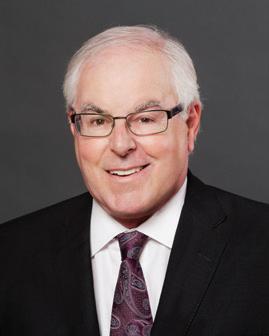
SOE’s John Kregel, Ed.D., is co-principal investigator of the contract with the Social Security Administration.
The center is part of the Social Security Administration’s efforts to ensure that beneficiaries with disabilities receive accurate information about their benefits, and can use that information to make a successful transition to work.
“Much of the center’s first-year efforts focused on a response to the COVID-19 crisis,” said Susan O’Mara, National Training and Data Center project director. “Employment of individuals with disabilities dropped by 20 percent in the initial stage of the pandemic. Lack of access to medical therapies and health care rationing led to declines in physical and mental health. The closure of local Social Security offices and lack of access to the internet made it difficult for beneficiaries to obtain and benefit from remote services.”
The center addressed the need for immediate and accurate information on changes in Social Security policies affecting beneficiaries with disabilities by developing and continuously updating web-based resources for benefits counselors. It developed a special course, Supporting Beneficiaries with a Job Loss, which 386 benefits counselors completed during the year. Center staff provided over 2,000 hours of technical assistance to benefits counselors working with beneficiaries with disabilities on employment and healthcare issues.
In the coming year, the center will be launching a new initiative to support the Social Security Administration’s efforts to implement President Joe Biden’s executive order on advancing racial equity and support for underserved communities through the federal government.
in grant funding was awarded to SOE for FY21 $ 35M+

increase in federal grant awards in FY21 24%
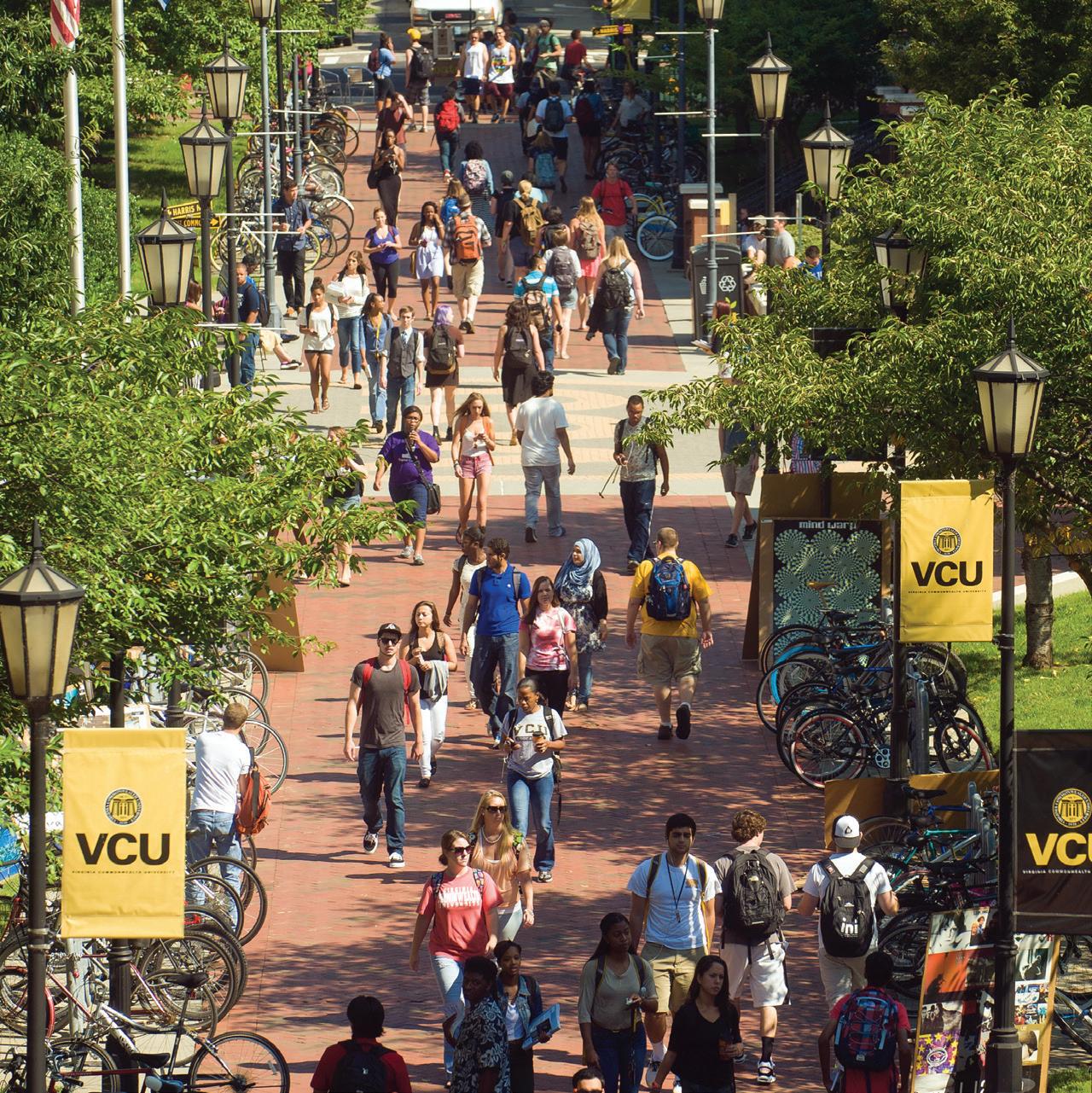
The VCU Educator Preparation Program (EPP) recently achieved a new seven-year term of accreditation from the Council for the Accreditation of Educator Preparation (CAEP), for promoting and maintaining excellence in preparing educators and school professionals.
Eighteen professional education programs at the initial and advanced licensure levels received full CAEP accreditation, including 14 in the School of Education, three in the School of the Arts, and one offered jointly by the College of Humanities and Sciences and the School of Education.
The school’s assessment and accreditation teams worked for several years preparing a self-study report to tell the story of educator preparation at VCU, followed by a three-day accreditation site visit in April, and culminating in a review and accreditation decision by the CAEP Accreditation Council in October.
“We are extremely honored and proud of this achievement,” said Andrew P. Daire, Ph.D., dean of the school. “The review was a very rigorous process, and one that we welcome given our commitment to continuous quality improvement.”
Members of the CAEP and Virginia Department of Education (VDOE) joint team interviewed nearly 260 people — from area principals and student teachers, to the university provost and our own dean — during this process.
“We accomplished this successful review thanks to the thoughtful engagement, and commitment to excellence, of many at VCU and in our P12 and alumni community.”
— Angela P. Wetzel, Ph.D., director of assessment
programs in the School of Education received
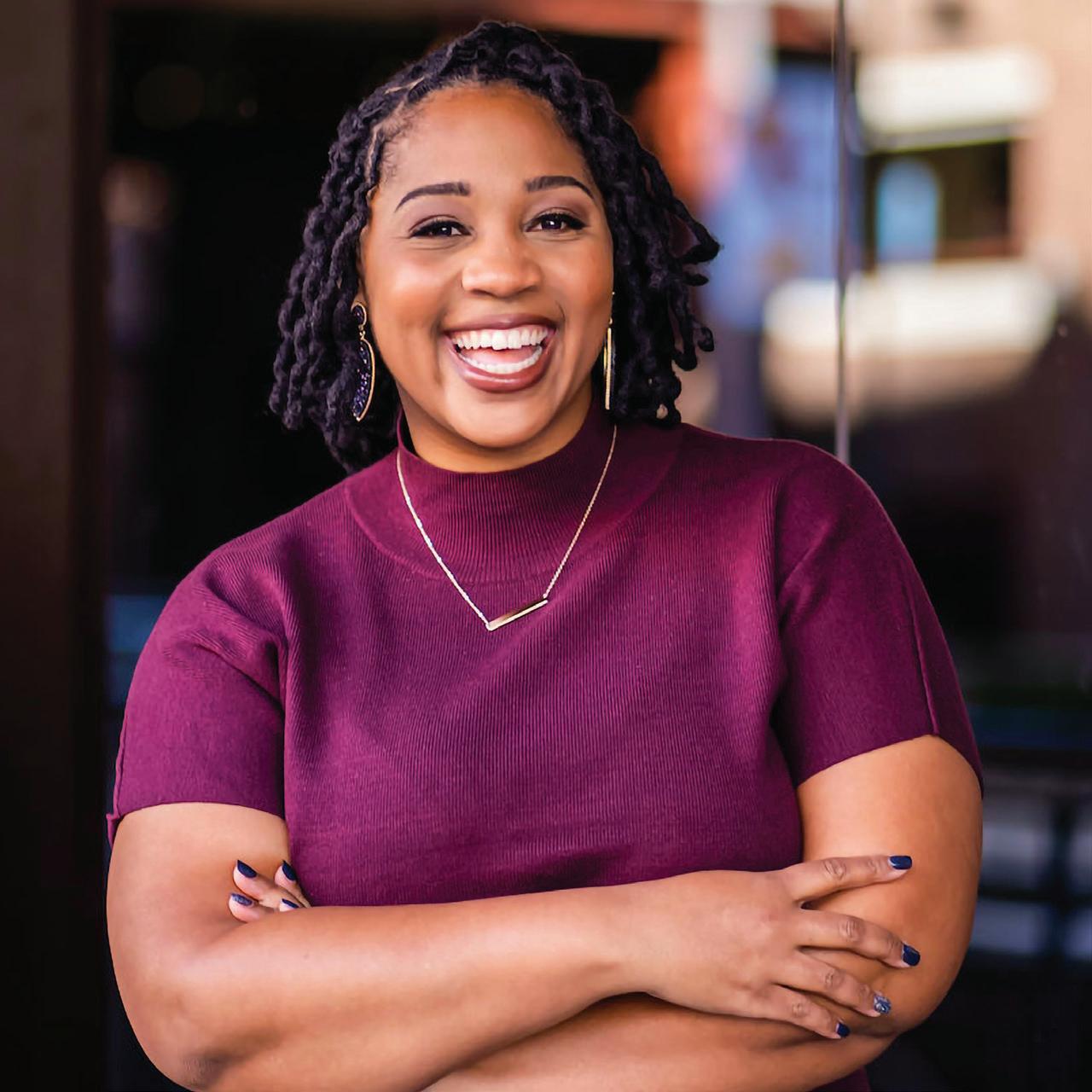
Newman started her Ph.D. program in the VCU School of Education in 2018. “VCU is a good place to study,” she said. “In my program we have people from so many different backgrounds.”
At VCU, Newman worked as a progress coach with the Altria Scholars program and as a program coordinator at the Graduate School, managing four professional development programs for graduate students. In addition, she worked in a research lab in the School of Education and served on the SOE Diversity, Equity & Inclusion Committee.
“They were important pieces in how I navigated this degree, how I put my experience together,” she said.
While at VCU, Newman also has built a community for Black female doctoral students.
“I sent out a random social media flyer in 2019, saying a Black girl Ph.D. will be at this coffee shop at this time. I had 20 people from VCU show up,” she said.
Newman completed her Ph.D. in Education, Concentration in Educational Leadership, Policy and Justice this past spring. She said she would enjoy a job that involves people and some type of social change.
“I’m keeping the future open because something cool might come up,” she said. “I don’t want to put restrictions on myself.”
“VCU is a good place to study. In my program we have people from so many different backgrounds.”
– Portia Newman, Ph.D.
increase in annual scholarship awards since FY17 21%
Bisola Duyile was born and raised in Ondo State, Nigeria. She earned her undergraduate degree from Obafemi Awolowo University in Ondo, and her master’s degree in rehabilitation and mental health counseling from the University of the District of Columbia. She is currently a doctoral candidate in the VCU School of Education’s Ph.D. in Education, Concentration in Counselor Education and Supervision program. She was recently accepted into the VCU Holmes Scholars Program.
We asked her why she chose the VCU School of Education: “I initially applied to SOE because of the diversity in the population that they serve. SOE’s research and community engagement opportunities were enticing, and the school was close to my family. Ultimately, I chose SOE because of the camaraderie that I felt when I interviewed. The whole interview process was very welcoming and open. I felt comfortable to ask a wide range of difficult questions, and I instantly wanted to be a part of the university.”

“I have been most impressed by the great level of compassion and support from faculty members and my fellow doctoral students, as well as the variety of research opportunities available to students.”
– Bisola Duyile
VCU School of Education two-time alum Christina A. Tillery (M.Ed. ‘16, Ph.D. ‘20) is a school counselor at Highland Springs High School in Henrico County. She was previously a high school social studies teacher in Charles City County Public Schools.
We asked her why she chose the VCU School of Education: “I was thoroughly impressed by the warm environment that the faculty created during our interviews. They were able to take a highly stressful and competitive experience and turn it into a genuine conversation about our passion for the counseling field. That is when I knew that SOE was the place for me. I wanted to be a part of a program that was dedicated to my transition into a school counselor and my growth as an educator.”
Any advice for prospective students? “Yes, continue to do your research on the program and reach out to our fantastic faculty. I would encourage you to reflect on your ‘why’ and how you will dismantle oppressive systems and barriers as a counselor.”
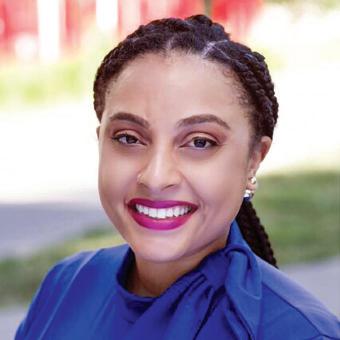
“VCU equipped me with the knowledge and skills to address mental health in a school environment and be a fierce advocate for my students.”
– Christina A. Tillery, Ph.D.
Our Ph.D. in Education, Concentration in Counselor Education and Supervision program was named Outstanding Counselor Education Doctoral Program by the Southern Association for Counselor Education and Supervision in 2019.
Ashley S. Bland, who was in the RTR Teacher Residency’s Cohort 5, earned her M.Ed. in Curriculum and Instruction from the VCU School of Education in 2016. She was recently named Richmond Public Schools 2021 Teacher of the Year and Virginia’s Region 1 Teacher of the Year
When she was an undergraduate student at VCU, one of Ashley Bland’s professors suggested that she consider the RTR Teacher Residency, a graduate program at the School of Education that recruits, trains and supports teachers for high-needs and hard-to-staff schools. She looked into the program and found that it was a “perfect fit.”
One of the things that impressed her most about RTR was that it took a different approach to the teaching profession.
“Everybody thinks they know what it means to be an educator because they’ve gone to school themselves,” she said. “It’s very different, and RTR exposes you to that difference. It respects the education profession and treats the experience like a professional residency.”
Bland today serves as an instructional technology resource teacher at three Richmond Public Schools locations: John B. Cary Elementary School, Mary Scott Preschool and Binford Middle School. For the past year, she’s been dedicated to showing her students that they could master technology during a pandemic. Bland still carries with her a lesson that her mentor taught her in RTR: “He taught me the ins and outs of what it means to be an educator who makes an impact,” she said. “Today, my students know that if I can accomplish something, they can, too.”
Any tips for other students considering a master’s in education at VCU? “Take advantage of every opportunity you have. Observe teachers, not just the ones you’re assigned to, but others as well. That was the most powerful thing I learned from my experience at VCU. I took bits and pieces of what others were doing and made them my own. It was an amazing experience!”
37%
of SOE graduates who teach in Virginia public schools work at a Title I school

“Everybody thinks they know what it means to be an educator because they’ve gone to school themselves. It’s very different, and RTR exposes you to that difference. It respects the education profession and treats the experience like a professional residency.”
— Ashley Bland, M.Ed. ‘16

The VCU Multilingual Ambassador Program aims to connect multilingual students at VCU with multilingual students in Region 1 K-12 schools in central Virginia goals of the program are to:
n support the confidence building, identity development, and community building of multilingual students in Region 1 public schools; and
n provide high-impact leadership opportunities for multilingual Spanishspeaking students at VCU.
Jenna Lenhardt, Ph.D., recruitment specialist in the School of Education’s Office of Enrollment Management, said that the program is key to helping Region 1 K-12 multilingual students learn more about college and career pathways that celebrate their multilingual skills.
“We want to provide additional information and support to students from their peers as they navigate and learn more about how to maximize their multilingual skill sets,” said Lenhardt. “There are multiple aspects of this program, from UndocuAlly training to a final K-12 student visit to VCU to meet faculty, staff and students. This includes having K-12 students interact with their peers from across Region 1.”

The ambassador program will place VCU students in K-12 schools to provide in-school ELL tutoring, mentoring, and career and college readiness presentations, which will support student success as well as future generations of potential VCU students. There are five individual schools participating across four districts: Dinwiddie Public Schools, Henrico Public Schools, Petersburg Public Schools and Richmond Public Schools, representing over 500 English Learners (ELs) from elementary through high school ages.
Coming-of-age narratives reflect resistance and resilience of “Strong Black Girls”
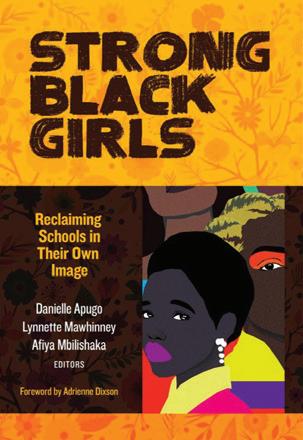
Even though Black women and girls are expected to overcome many barriers in order to achieve an education in America, their voices and experiences often go unheard.
A new book, Strong Black Girls: Reclaiming Schools in Their Own Image, co-edited by Danielle Apugo, Ph.D., assistant professor in the Department of Teaching and Learning in the VCU School of Education, aims to change that narrative by amplifying the voices of Black women and girls through their storytelling, essays, letters and poetry.
“As educators, scholars and stakeholders, we must concern ourselves with how Black girls are experiencing the K-12 schooling process in the United States,” said Apugo. “This book highlights the realities of Black women and girls on their educational journeys, while examining the impact of memories, resistance and resilience on K-12 schooling for Black females.”
Authors in the book include graduate students, professors, and an elementary school student. Each chapter concludes with discussion questions to extend the conversation around the everyday realities of navigating K-12 schools, such as sexuality, intergenerational influence, self-love, anger, leadership, aesthetic trauma, erasure, rejection and unfiltered Black girlhood.
of recent SOE graduates describe their preparation for teaching and working in schools and communities serving historically marginalized individuals as Excellent or Very Good. 86%
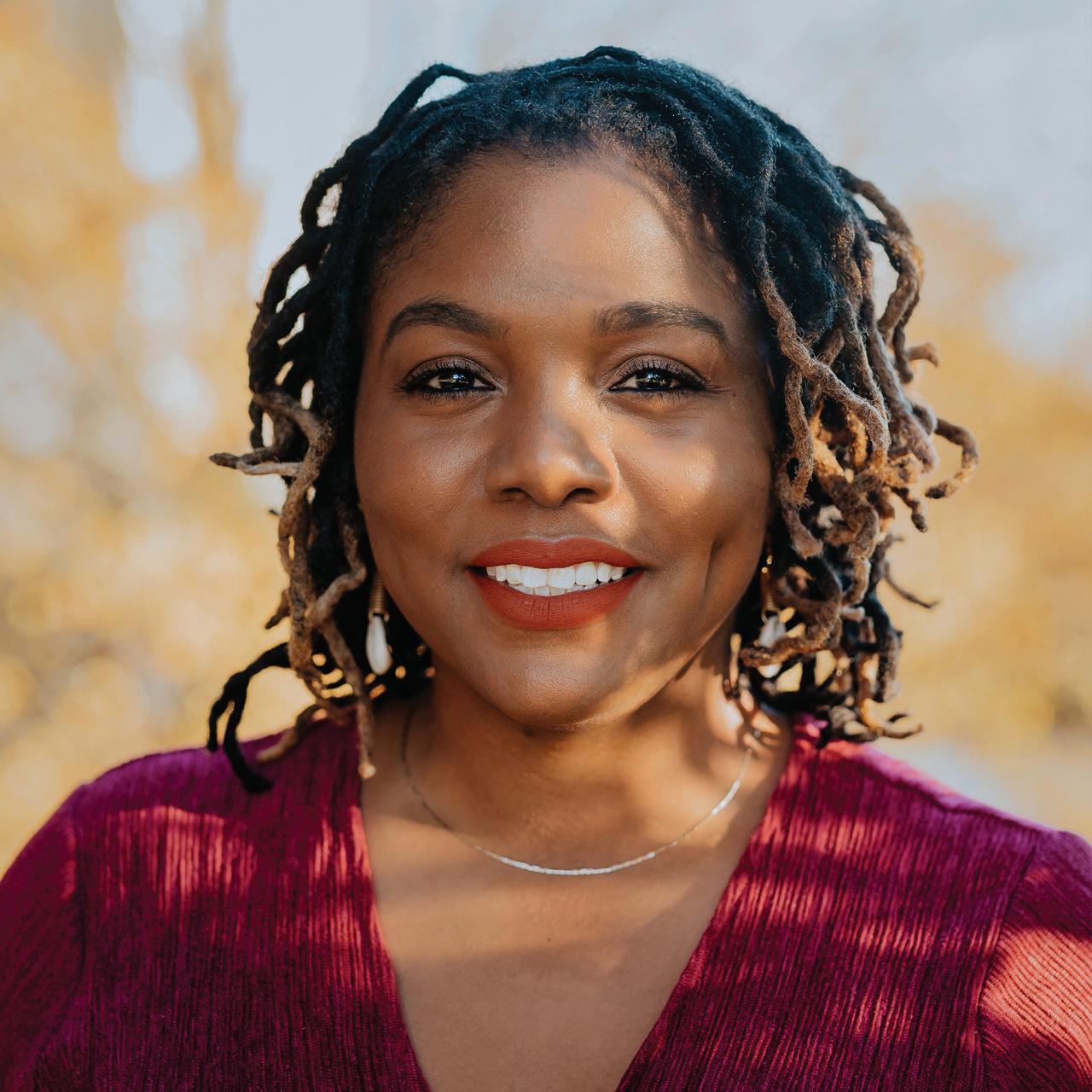
“We must concern ourselves with how Black girls are experiencing the K-12 schooling process in the U.S.”
– Danielle Apugo, Ph.D.
Annual awards recognize faculty for teaching, scholarship and service
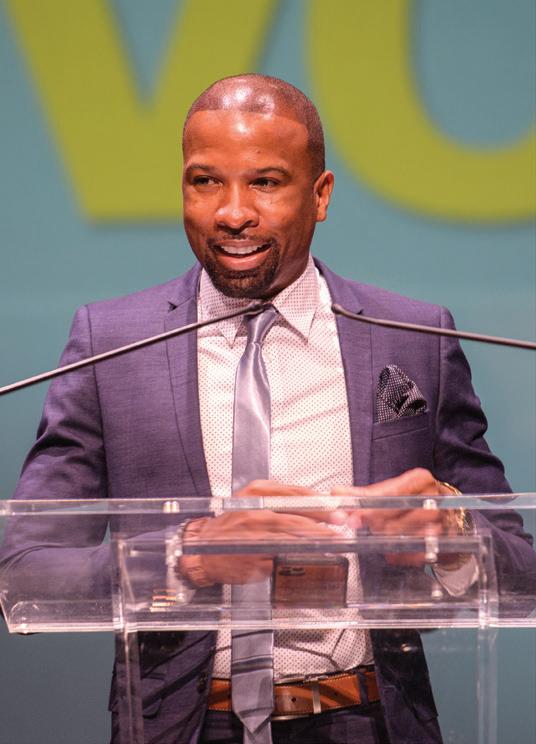
LaRon A. Scott, Ed.D., associate professor in the Department of Counseling and Special Education, was among six faculty members honored at the 39th annual Opening Faculty Address and Convocation at the Grace Street Theater. The event, which served as a kick off to VCU’s academic year, was held to recognize educators for outstanding teaching, scholarship and service.
Scott was presented the University Award of Excellence. His research focuses on postsecondary transition experiences for youth of color with an intellectual and developmental disability (IDD). His work has also been funded by more than $6 million in grants, and he has been published in over 40 peer-reviewed journals and has written two books and 14 chapters.
Scott is the developer and executive director of the Minority Educator Recruitment, Retention, and Equity Center at VCU. He is also the co-editor of Inclusion, a peerreviewed journal that focuses on evidencebased interventions and strategies that promote the full inclusion of people with IDD.
$600K grant supports “the best outcomes” for people with disabilities
The National Institute on Disability, Independent Living, and Rehabilitation Research (NIDILRR) awarded a new three-year $600,000 grant to the Partnership for People with Disabilities, a center within the VCU School of Education.
The grant, which will measure and track over time personal and health outcomes for people with intellectual and developmental disabilities (IDD) who use Medicaid home and community-based services (HCBS), is funded by the U.S. Department of Health and Human Services, through a field-initiated NIDILRR program.
Field-initiated programs develop methods, procedures and technology that integrate individuals with disabilities into society, including employment, independent living, and economic and social self-sufficiency.
Over 860,000 people in the United States use Medicaid IDD HBCS with estimated expenditures totaling $38.71 billion. “This grant is intended to serve as a national model for how to merge state-based administrative datasets and use advanced analytic methods to make more informed decisions about investments in IDD services and public policy that support the best outcomes,” said Parthy Dinora, Ph.D., interim executive director of the Partnership and associate professor in the Department of Counseling and Special Education.
“This grant is intended to serve as a national model for how to make more informed decisions about investments in IDD services and public policy that support the best outcomes.”
— Parthy Dinora, Ph.D.
This is the second NIDILRR field-initiated grant that the Partnership has received to explore relationships between support needs, costs, and outcomes for people with IDD who use Medicaid services.
More than 860,000 people in the U.S. use Medicaid home and community-based services for people with disabilities, with estimated expenditures of nearly $39 billion