The Art of Sustainability
CARPETS INTER ’S UNTOLD STORIE S
CARPETS INTER ’S UNTOLD STORIE S
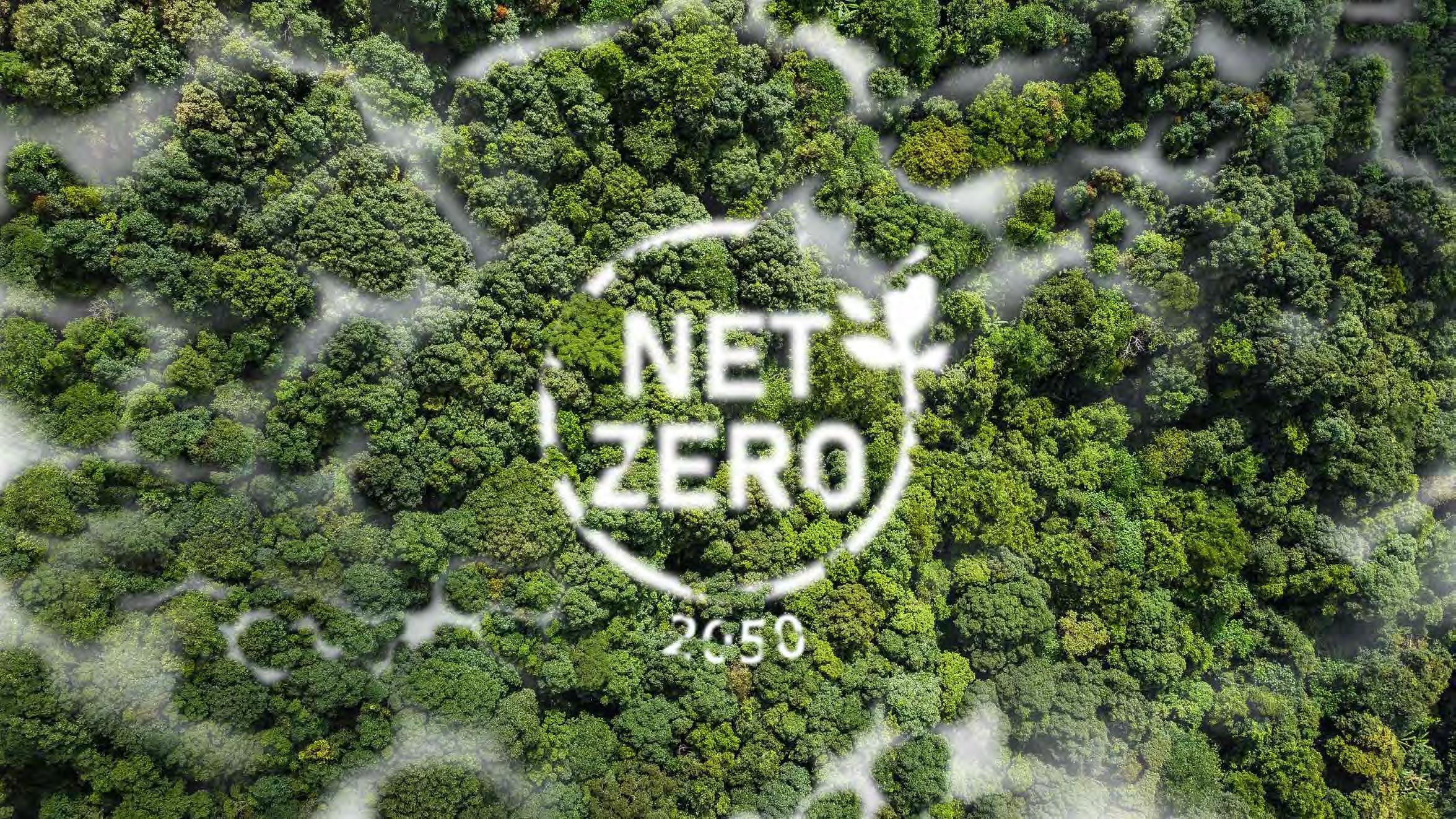
At Carpets Inter, our mission is clear: to achieve a net-zero carbon footprint by 2050.
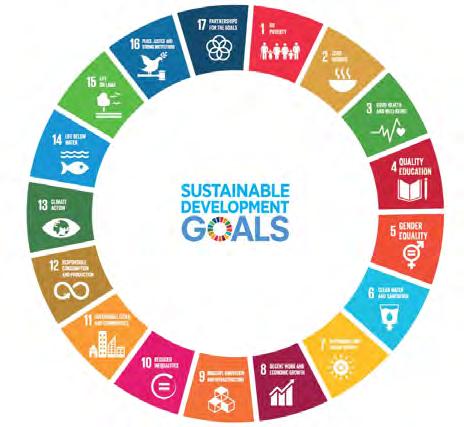
We are deeply committed to aligning our cultural values and daily operations with the United Nations' Sustainable Development Goals. Every day, we focus on implementing innovative strategies and leveraging advanced technologies that drive meaningful reductions in our environmental impact.
Our dedication extends beyond simply addressing climate change; we aim to improve the health and sustainability of the planet’s entire biosphere. Embracing the principles of a circular economy, we are determined to make a significant, positive contribution to creating a cleaner, greener, and more sustainable future—for the planet, its people, and all living systems.
A Sustainable cycle is reimagined
Carpets Inter has been operating a 100% water recycling system for its manufacturing water waste, since 2014. This initiative provides a valuable eco-friendly dyeing system where zero effluent is released into the environment and a safe and efficient water source for other manufacturing processes including our kitchens toilets and gardens.
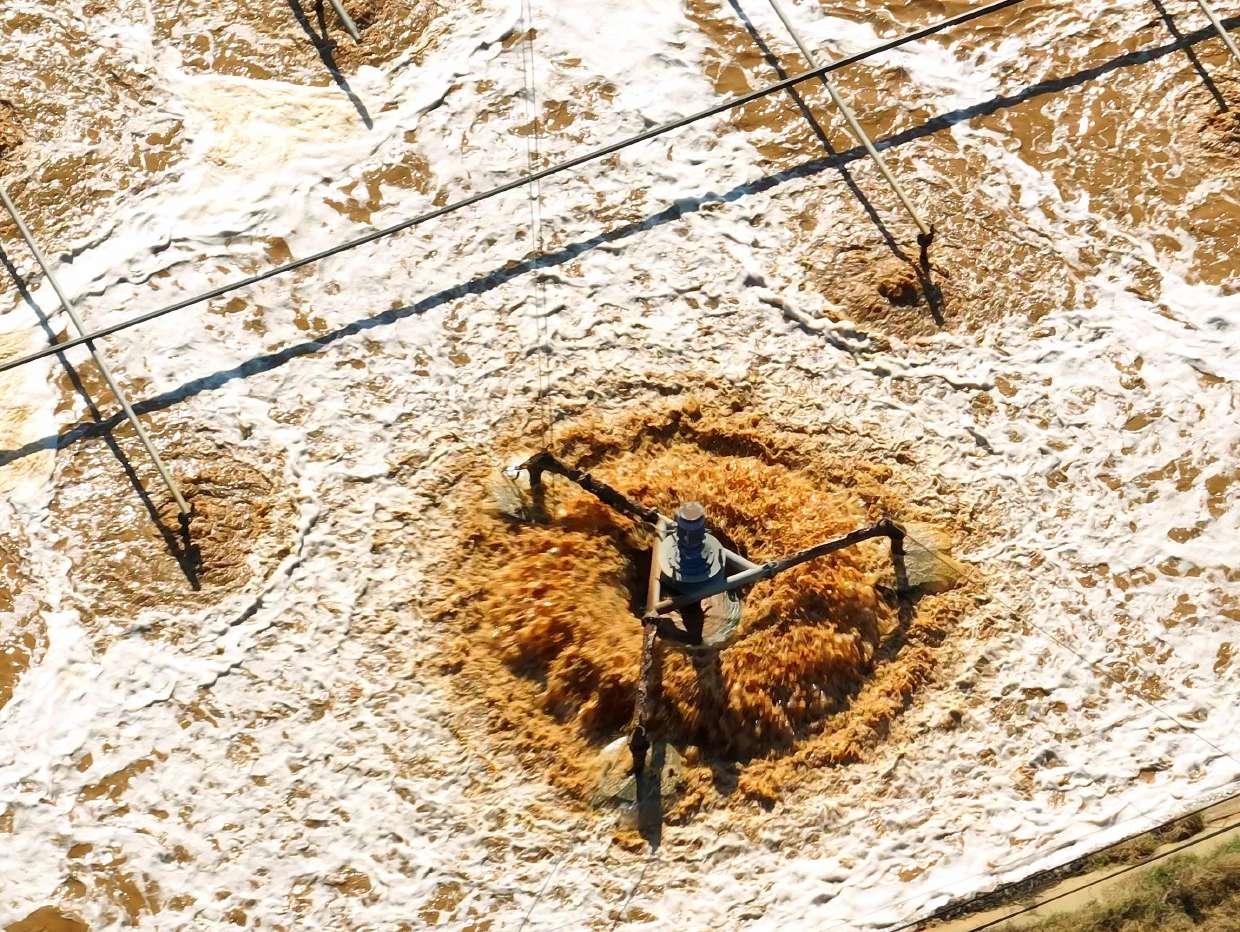
Through the recycling process, pure water is separated from contaminated water using a series of steps. During these processes, the water contamination is converted into solid waste known as "sludge." Normally, this waste sludge would be disposed of in a landfill. However, our manufacturing plant, situated in a rural farming area, maintains a close relationship with nature and strives to utilize waste responsibly to keep it out of landfills. By collaborating with a local fertilizer company, we discovered an eco-friendly solution for our waste sludge, which not only kept it out of landfills but also repurposed it, giving it a new life.
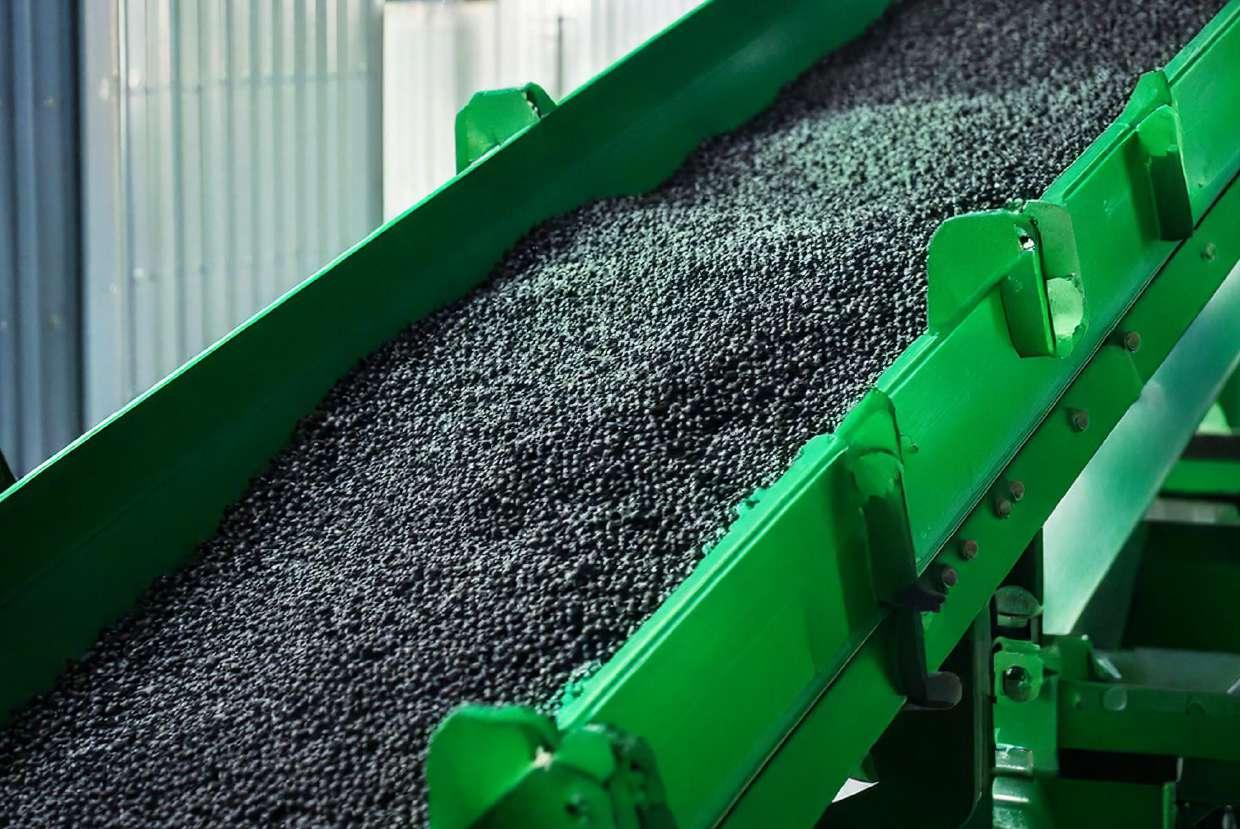
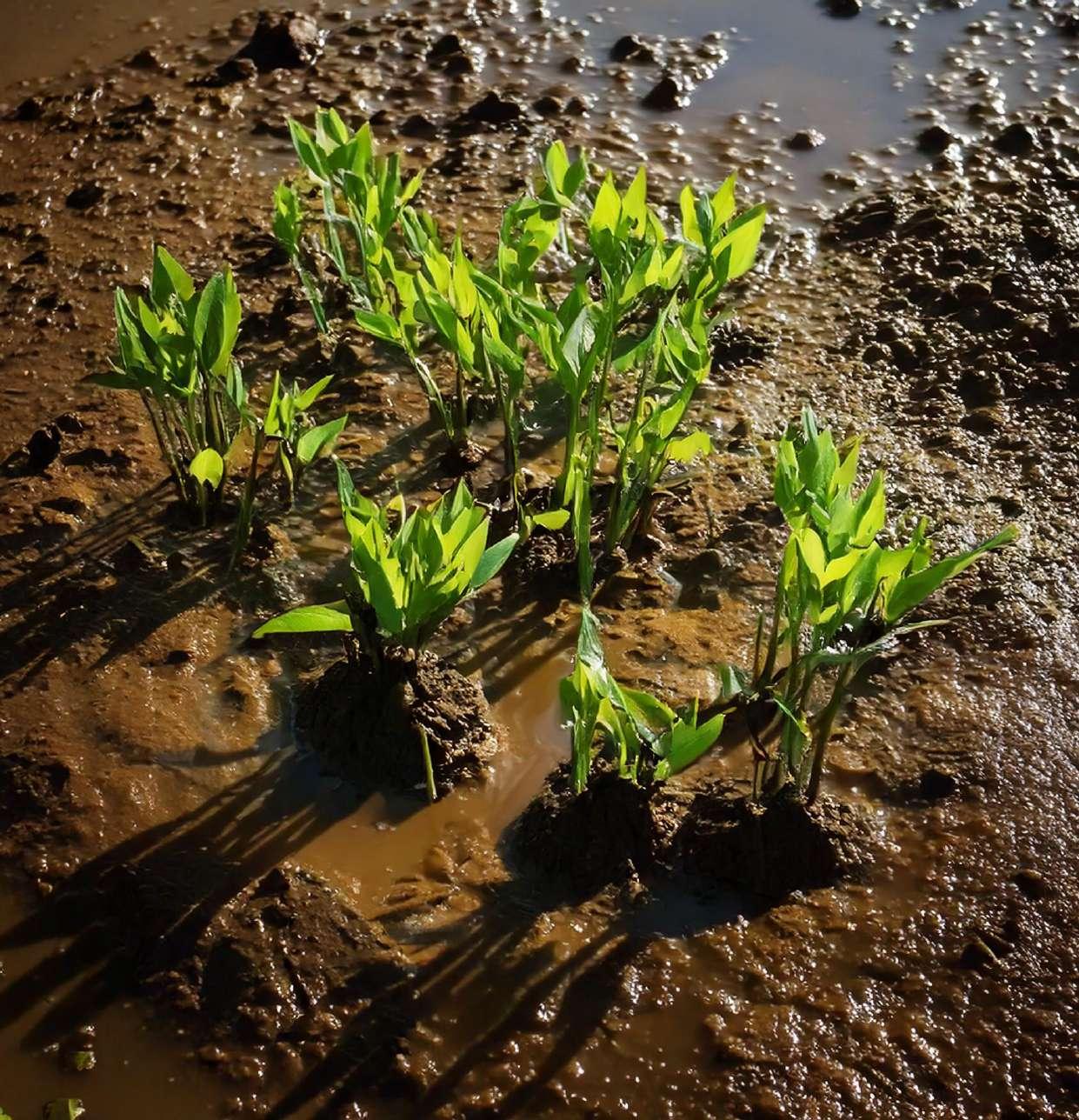
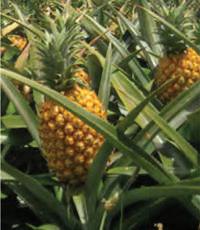
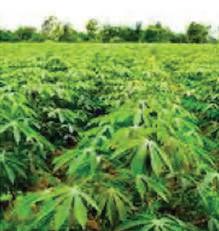
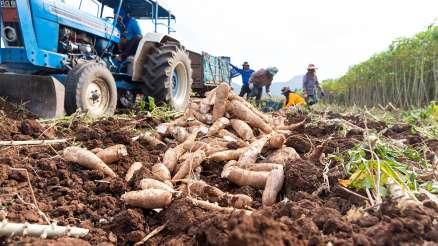
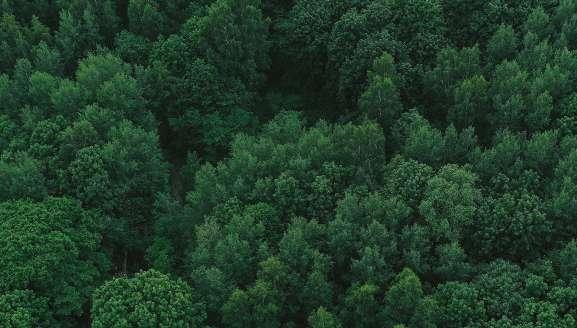
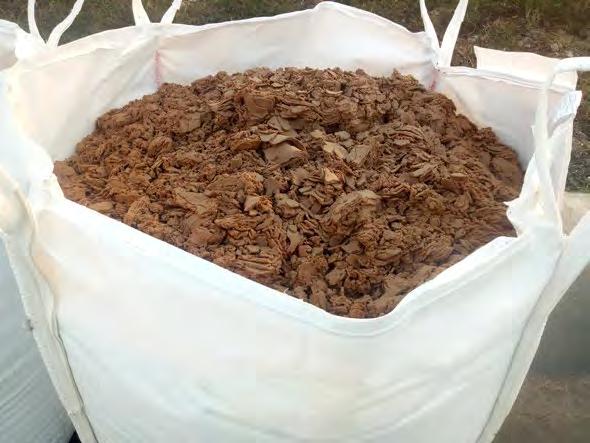
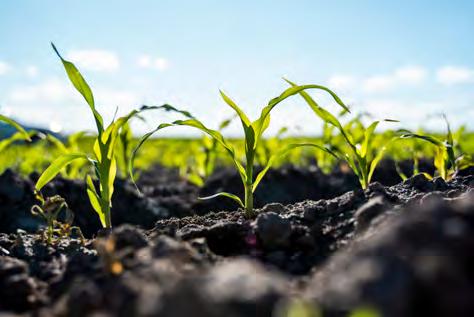
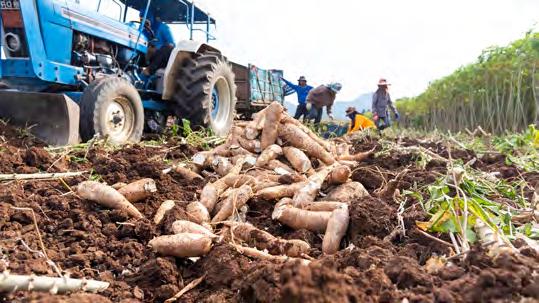
A partnership with a dynamic forward looking local fertilizer company allowed the transformation of the solid waste into an essential base material for producing high-grade organic fertilizer, benefiting the cultivation of crops like pineapple, cassava, sweetcorn, and rubber trees. The fertilizer can aid crop yield for the local growers by between 10% to 50%.
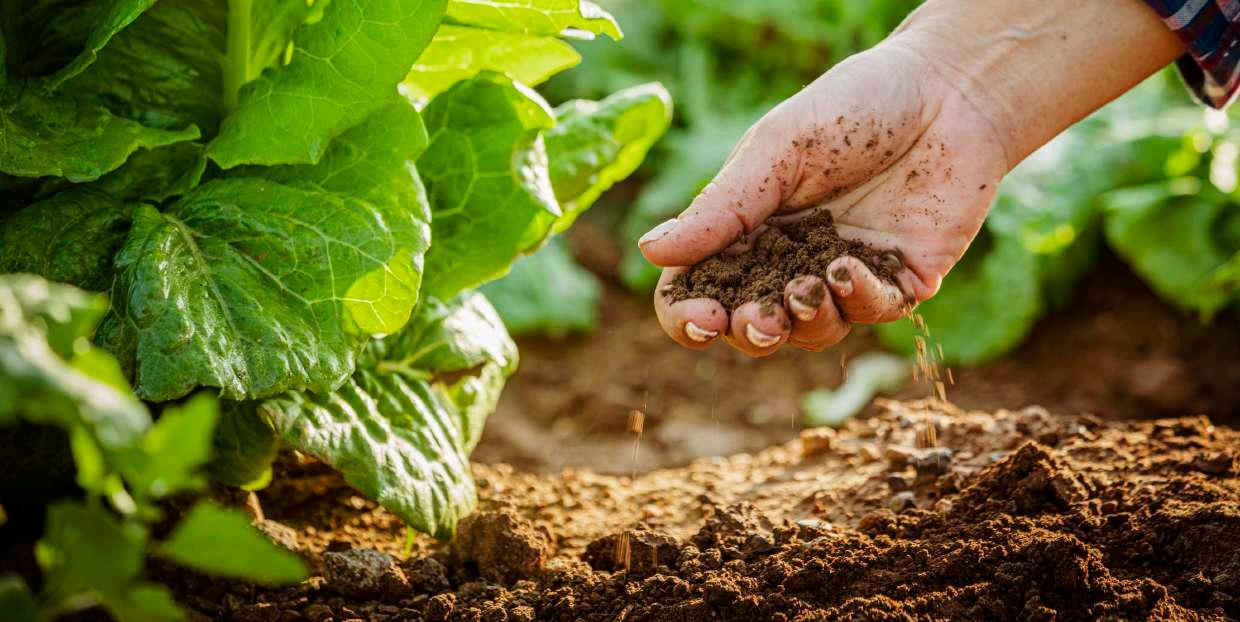
Organic fertilizers do a lot more than just provide nutrients for growing crops; they also contribute to the creation of humus which is the single most important determinant of success in high-production agriculture and a powerhouse stimulator for the soil to assist sequestering CO2 Humus is a dark, organic material that forms when plant and animal matter decay. It's like nature's own fertilizer that enriches the soil. In agriculture, humus plays a crucial role by improving soil structure, retaining moisture, and providing essential nutrients for plant growth. Farmers love humus because it helps plants grow strong and healthy.
Organic fertilizers, like compost and manure, are rich in organic matter that breaks down into humus over time. When farmers use organic fertilizers, they add more organic material to the soil, promoting the formation of humus.
As in nature, the concept of "waste equals food" embodies the idea that in a natural ecosystem, there is no true waste. Instead, every byproduct or waste material generated by one organism becomes a valuable resource or nutrient for another organism in the ecosystem. This efficient cycle continuously recycles and reuses resources, promoting sustainability, and minimizing waste accumulation. Essentially, nature operates in a closed-loop system where what may be considered waste for one organism serves as nourishment or raw material for another, showcasing the intricate balance and interconnectedness of natural systems.
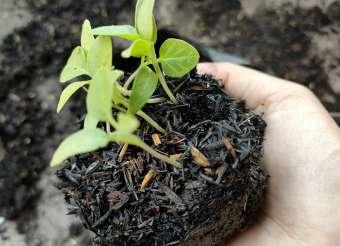

Organic farming methods, such as incorporating compost, cover cropping, and reduced tillage, help increase organic matter in the soil. This organic matter acts like a sponge, capturing carbon dioxide from the atmosphere during photosynthesis and storing it in the soil as stable carbon compounds. Studies indicate that organic farming systems can sequester approximately 2,100 kg of carbon per hectare annually, highlighting the significant role organic practices play in mitigating climate change
Since 2014, we have contributed to produce 3.15 million kg of organic fertilizer to farming 5,350 acres of Thailand’s Cropland each year.
Study: "Carbon Sequestration in Agricultural Soils: A Review of Management Practices" by Powlson et al. (2001)
The sludge donated has contributed to the fertilization of over 5,350 acres of Thailand’s agricultural cropland
The waste-to-fertilizer process contributes to the production of healthy soil and carbon capture through the production of Humus. However, there is no carbon credit or offset award for this process to the company.
However, there is no carbon credit or offset award for this process to the company. If we were to rebuild organic matter by just 1% in US agricultural soils –“4.5++ billion tonnes” of the CO2 gas would be sequestered from the atmosphere into agricultural farmland representing over 50% offset of their emissions.
Carbon in our soil acts like your carbon water-filter. It captures heavy metals and toxins that are unwanted in the water supply, eliminates the need in agriculture for toxic chemical fertilizers (pesticides) and as a result prevents the contamination of our water table and fresh water supply.
Cultivating a thriving microbial ecosystem is key for the decomposition of organic matter, a process that enriches the soil while also improving its texture and facilitating optimal air flow. The carbon present in soil serves as an effective natural filter, trapping heavy metals and toxins to prevent them from contaminating our drinking water.
Healthy soil promotes better root development, leading to increased nutrient absorption and water retention, resulting in up to 25 higher crop yields.
Soils rich in nutrients and plants that are properly fertilized tend to deter pests. These pests are usually attracted to plants that are stressed or lacking in nutrients, making them more vulnerable to infestations. By ensuring the fertility of the soil and the health of the plants, farmers can effectively reduce the need for pesticides, maintaining pest control through natural health and balance.
Transforming an Eco Headache into Sustainable Magic
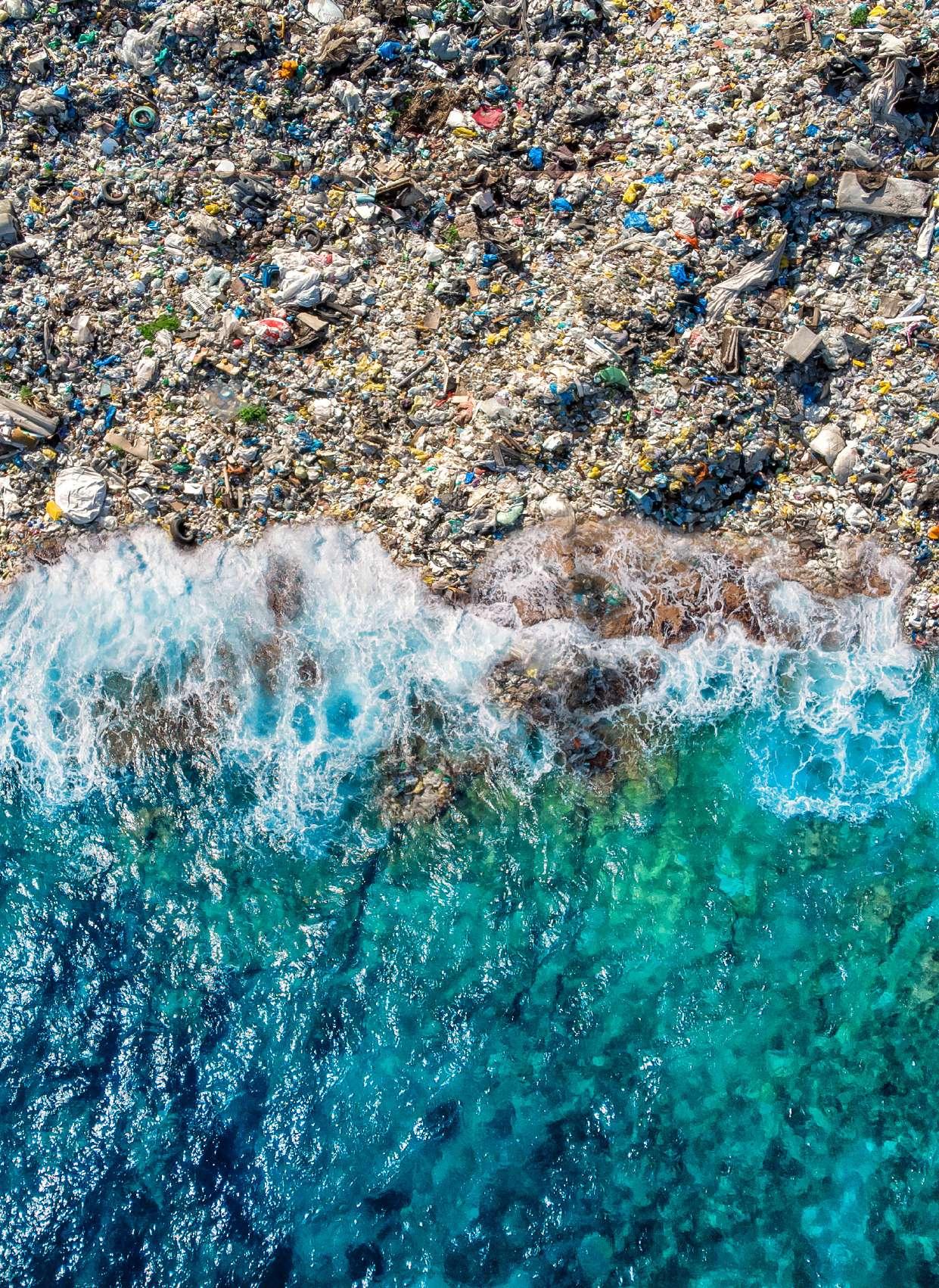
Plastic pollution has become one of the most pressing environmental challenges of our time, with single-use PET bottles emerging as a symbol of the pervasive issue. Every year, millions of bottles are discarded worldwide, finding their way into landfills, rivers, and oceans, where they persist for centuries, wreaking havoc on ecosystems and wildlife. But amidst the alarming tide of plastic waste; there shines a beacon of hope: the innovative use of recycled PET bottles in the production of interior surfaces.
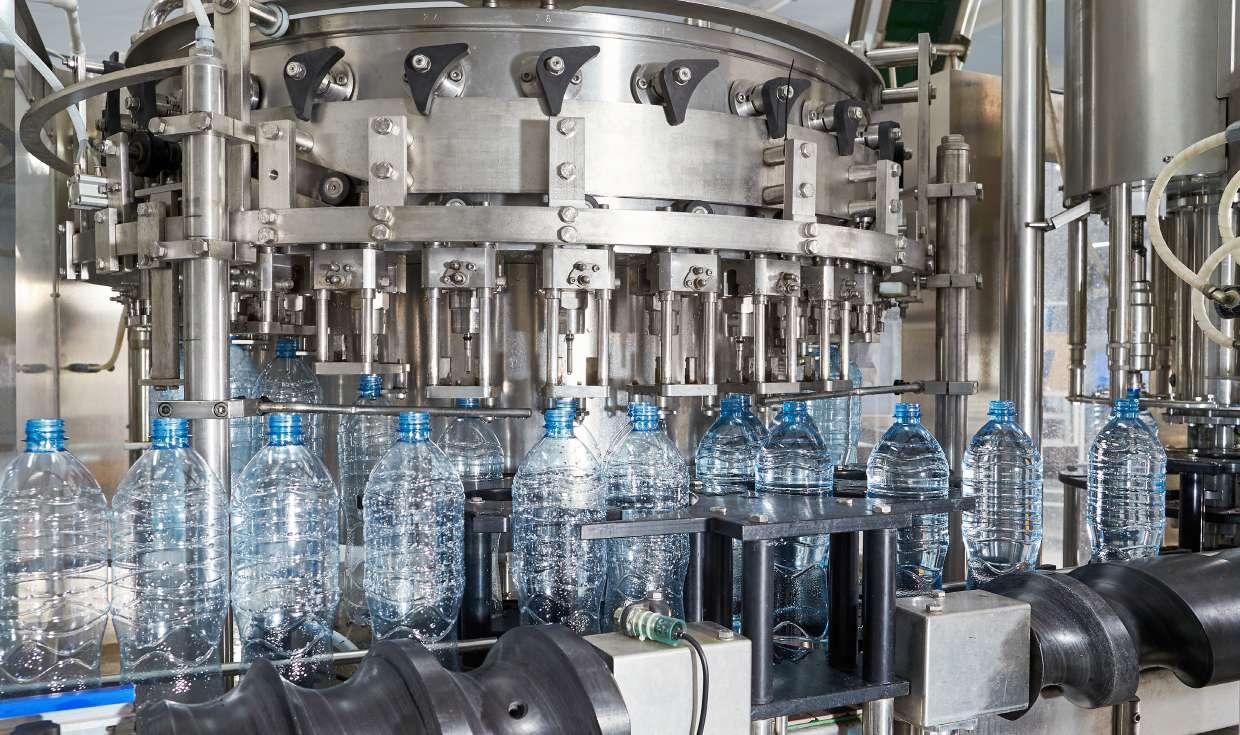
Globally, over 500,000 M PET bottles are produced annually, equivalent to roughly 1 million bottles per minute.That's enough to stretch around the Earth more than 20 times each day!
Shockingly, only a fraction of these bottles is recycled, with estimates suggesting that less than 10% are effectively collected and repurposed.
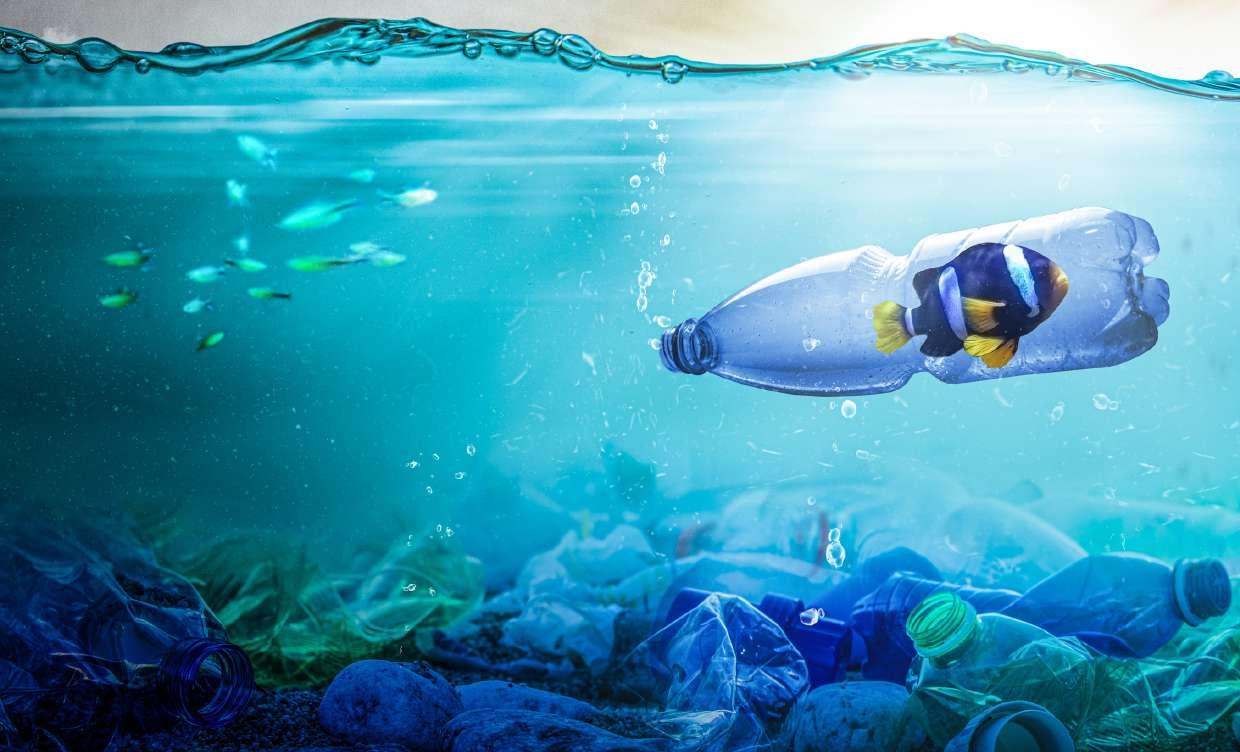
The environmental impact is staggering: PET bottles can take up to 450 years to decompose, releasing harmful chemicals into the soil and water during their slow decay.
Additionally, countless marine animals and birds suffer each year from ingesting or becoming entangled in plastic waste; it's estimated that over 100,000 marine mammals are dying annually from plastic pollution.
Amid this crisis, a growing movement is reshaping the narrative around plastic waste. Leveraging innovation and sustainability, forward-thinking companies are transforming discarded PET bottles into stylish, functional products, offering a glimmer of hope in the battle against plastic pollution.
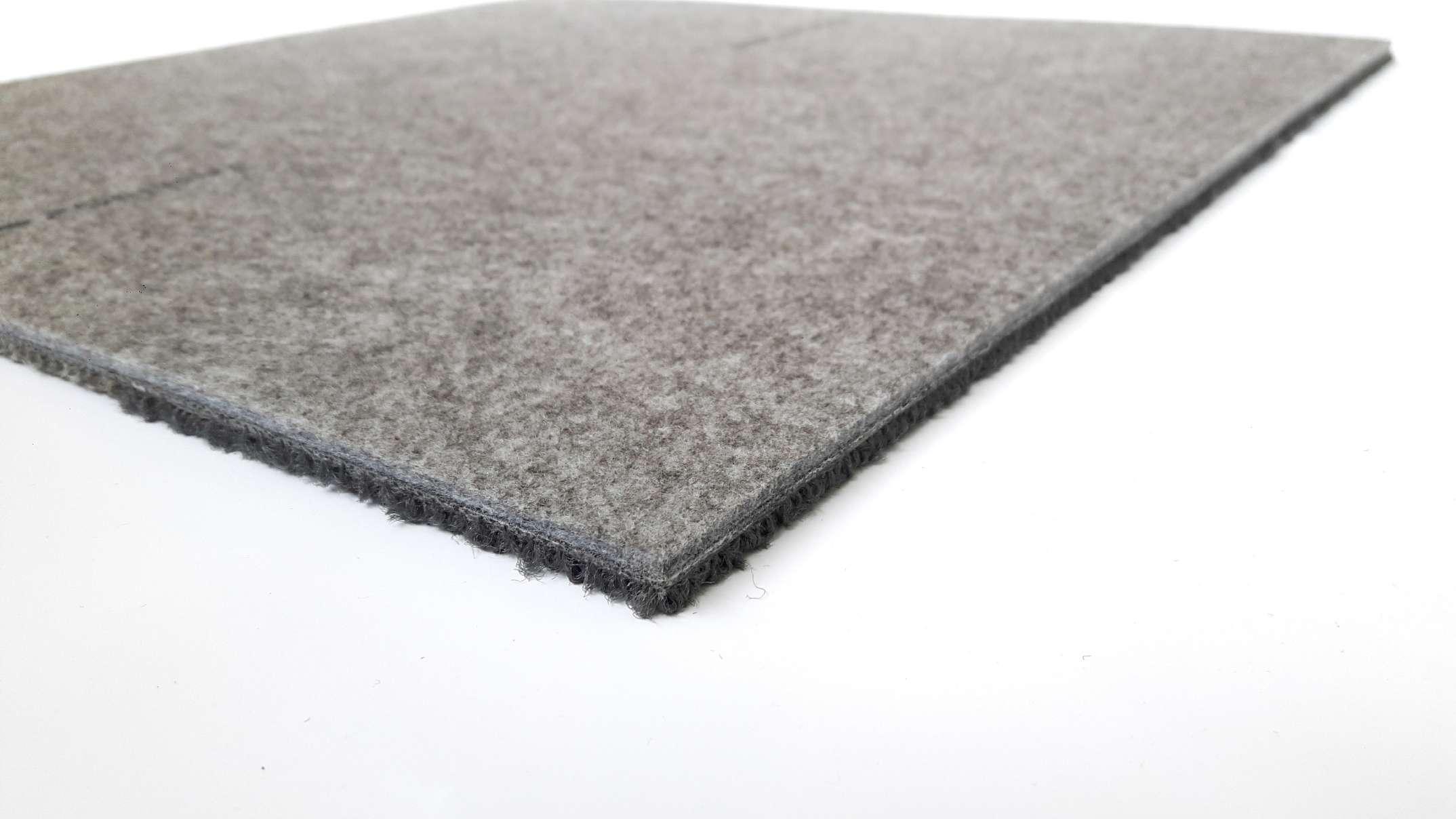
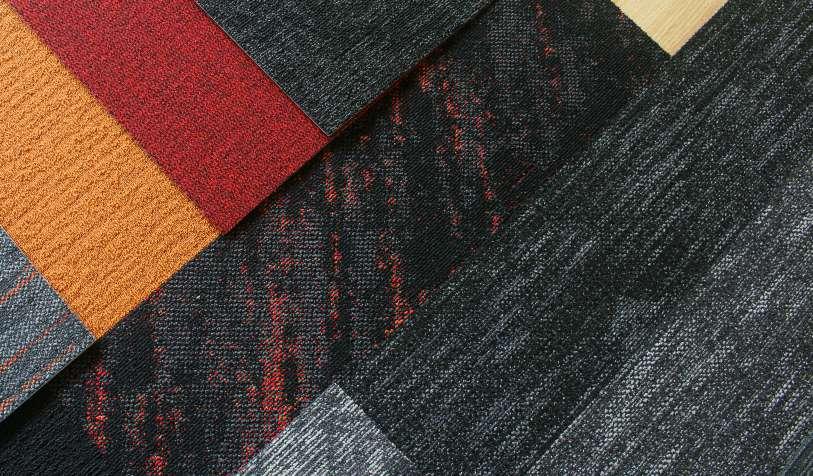
EcoSoft, a pioneering product by Carpets Inter since its 2005 launch, stands out for its innovation. Designed as an eco-friendly alternative to traditional PVC backings, EcoSoft is crafted from 85% recycled PET bottles, highlighting its commitment to sustainability. It has earned acclaim not only for its environmental benefits but also for its superior underfoot comfort and enhanced acoustic properties. Impressively, nearly 1 billion PET bottles have been recycled for use in EcoSoft's production process.
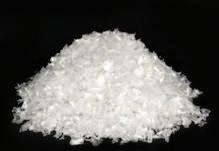
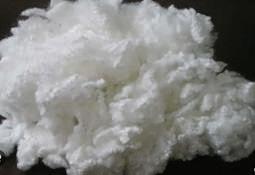
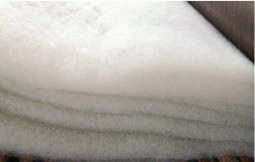
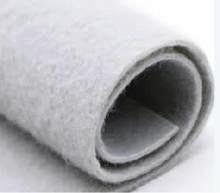
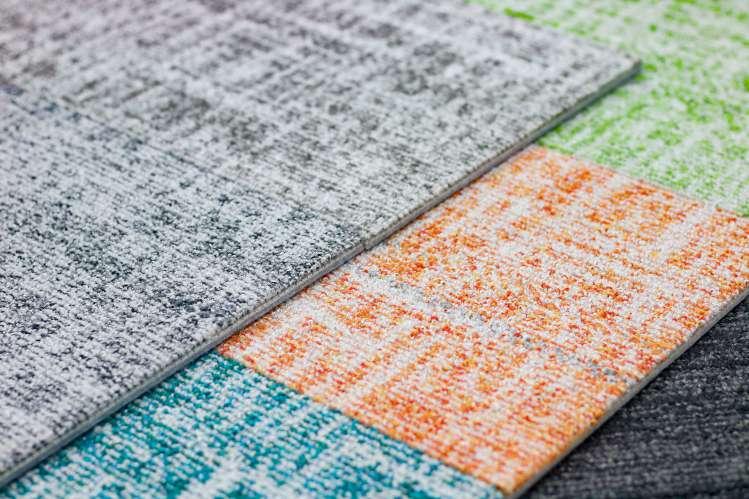
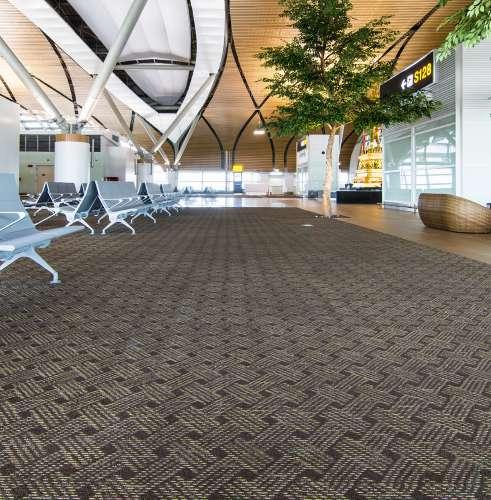
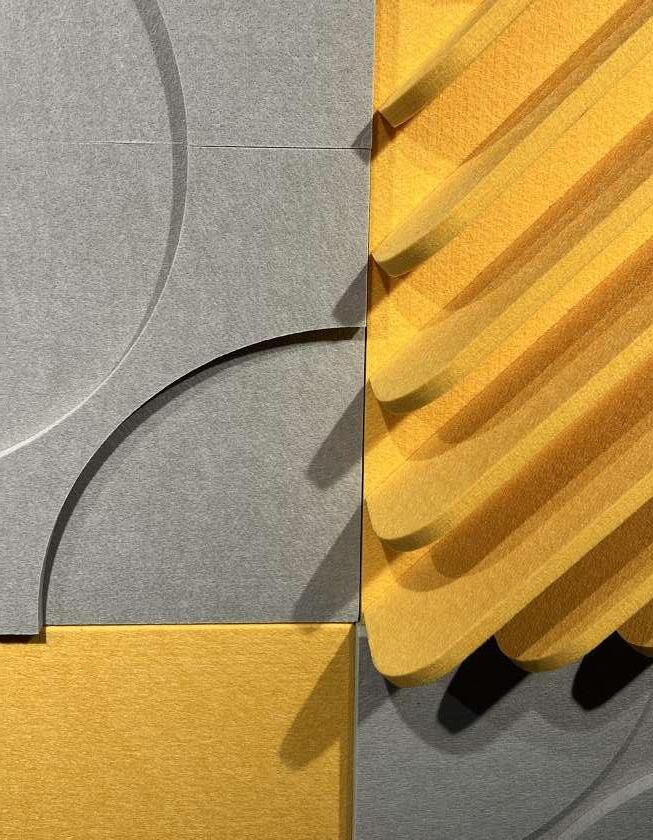
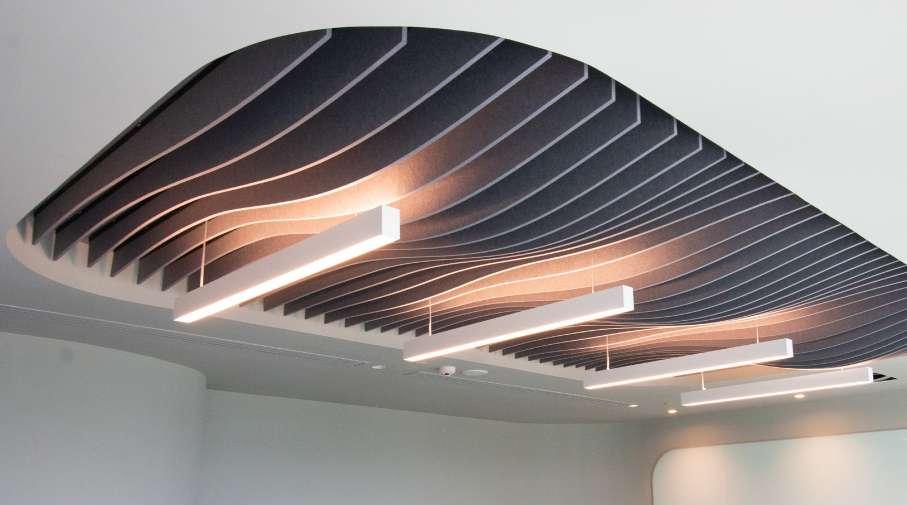
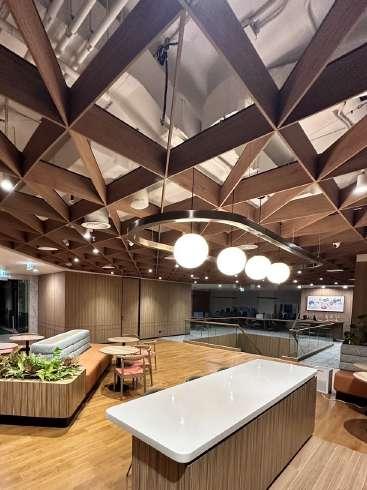
Beyond serving as a carpet tile backing, EcoSoft's excellent acoustic capabilities have led to the development of a highly flexible acoustic panel system, known as RT acoustics. With constructions like EcoSoft Solo and Duet, which contain 85% recycled content, and Duet featuring additional recycled wool, these innovations underscore sustainable development.
RECYCLED POLYESTER & UPCYCLED WOOL BLEND
Recycled polyester and upcycled wool blend up to 60%, enhance sound absorption.
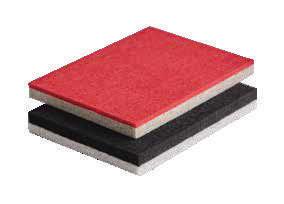
RECYCLED POLYESTER FIBER
Thermo-bonded polyester combine with recycled PET post consumer made from discarded water bottles up to 60%.

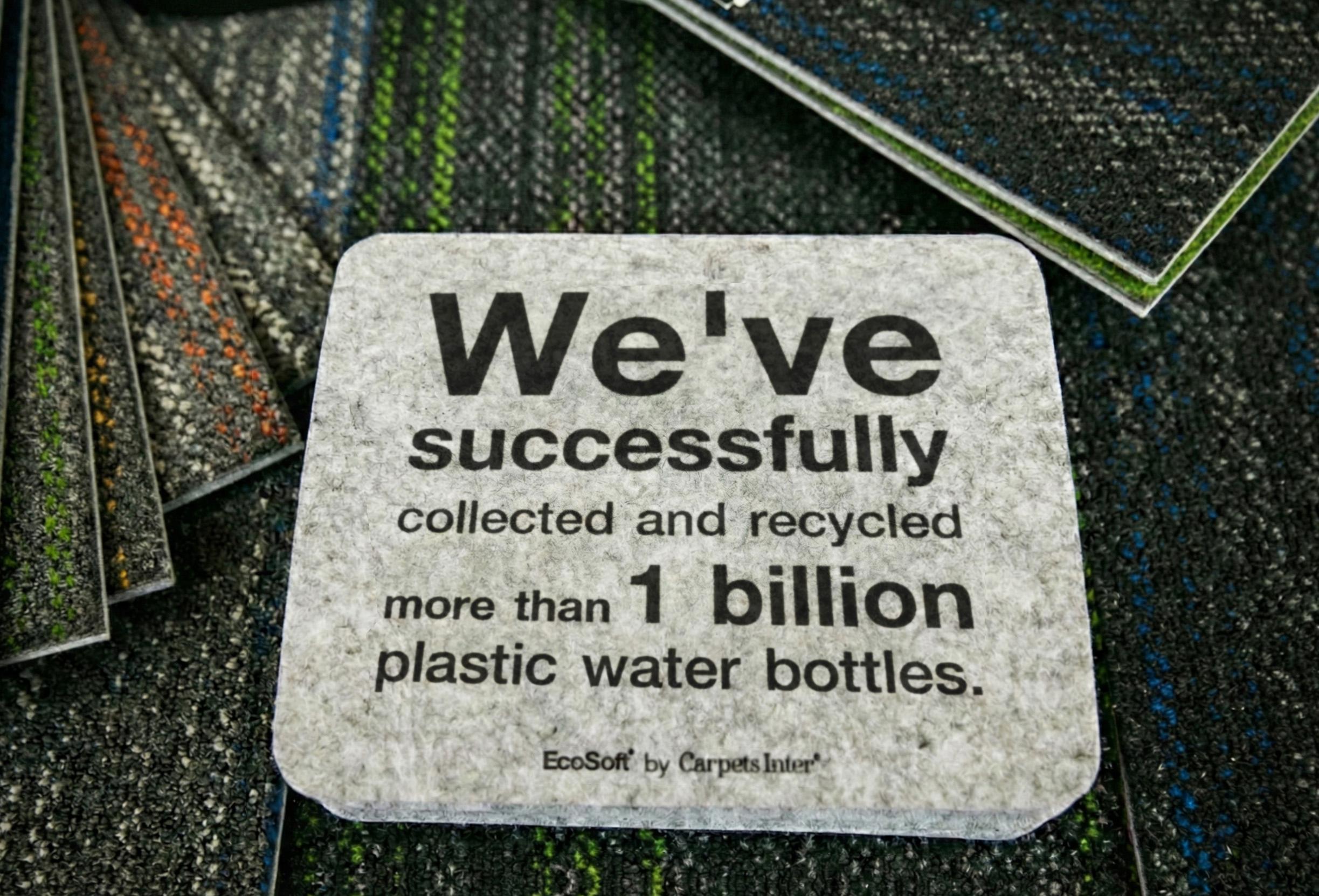
The demand for EcoSoft and RT acoustic panels is growing as customers become more aware of their sustainability and performance advantages. We are on the verge of surpassing our initial target of recycling 1 billion bottles and are setting our sights on the next billion, contributing to the planet's recovery from pollution with a touch of sustainability magic.

Ene rgy cons er va tion is a dual commitmen t fo r our comp any, blending fi scal responsibili ty wi th en vironmen t al s tewa rdship. By p r ioritizing efficienc y a nd sus t ain a bilit y, we h a ve e ffecti v ely lessen e d o ur reliance on conventional ene rgy sou rces The incorpora t ion of sola r powe r into our ma n ufacturing p ro cesses sets t he st a ge for a g reene r, mo re eco-conscious futu re. In t he last t w ent y y e ars, dedicated work in t echnology and ene rgy man a gemen t has led to a significant 40% d ecre ase in electrical ene rgy use. Building on this p rog ress, the implement a ti on of solar arrays is now rev olu tio nizing ou r ene rgy envi ronment
From su nl igh t to su cce ss :
Our c om mi tm en to S ol ar-Powered
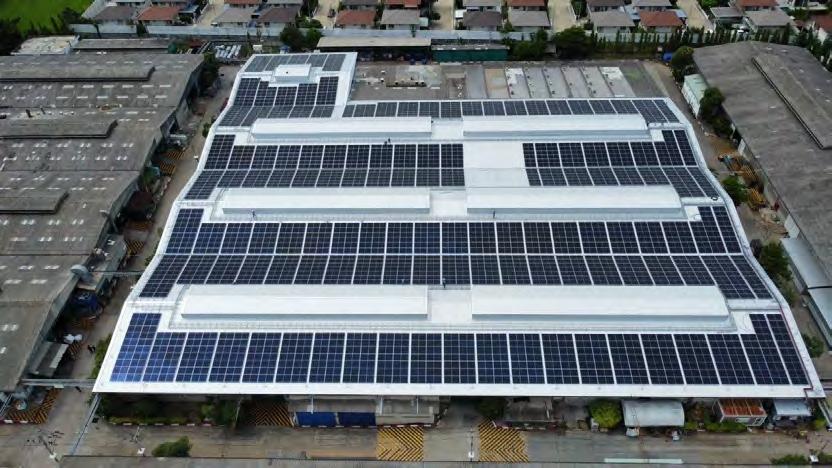
In 2021, t he implementation of our first so la r a rr a y marked a pivotal step in ha rnes s in g renewable ene rgy specific to manufactu r ing. The facility in Thailand recei v es a b undant sunlight thanks to its ge ogra p hical location, making it an optimal choice for this implementation
R ed uct io n in fos si l fu el u sage
fr om ener gy red uct ion ini tiat iv e s an d So lar p o we r p r og ram
Th e initial 1 MWp solar system installation d emonst rat ed immedia te bene fi ts a nd set t he stage for th e su bsequen t rollout of a second installa t ion of 1 MWp in 2024. Plans for a ddition a l ph a ses in 2026 an d 2028 will expand our solar power gener a tion ca pacity to 4 MWp, t he equiv a lent of nearly 70% of o u r cur ren t daytime electrical usage
Th is t ran si tion is i ntegra l to our b roader go al o f at taini ng ne t -ze ro gree nh ous e gas e mi
a commitment s et forth in 2023 that aligns wi t h our global vision fo r sustainable ope r
The a doption of solar power b r ings f o rth seve r al subst a nti a l benefi ts.
R educe d
Greenh o use G a s Emis s ion s
S olar p ow e r substantially cuts down on th e e missions associated with convention al e lectrici t y p rod u ction, contributing to a healthier plane t.



Reliance on sola r p o wer demonstrates a long-term sustainable app roa ch to ene rgy usa g e, one that is rene w able and less harmful to the ecosystem
S mal ler
Ca r bon Fo o tprin t
The use of sol ar panels t r ansla t es d irect ly t o reduced ca r bon emissions , reinfo rci ng ou r dedic a tion to en vironment a ll y conside rat e p ra ct ices
Lo ng term COS T Saving s (2023) 20%
The use of s olar powe r s yst ems can reduce elec t ricit y cos t s leading to long term fin a ncial bene fi ts and reduced p roduct cost.
The inclusion of solar powe r in o ur ene rgy por t folio is a cruci al step towa rds red ucing our en vironm e ntal impac t . By h a rn e ssing the sun ' s renewable ene rgy, w e showcase our d edicatio n to sust a in a bility a nd a g re ener futu re
T hi s t ransi t ion n ot on ly benefi t s the envir onm ent but a lso hig hl ig hts o ur co mm i tm en t to inn ovat ion in c lean ener gy solutions.
1 MWh of sol ar power gener a ted today equivalent to running 330 homes for 1 hour ( sou rce C le a n en ergy authority )
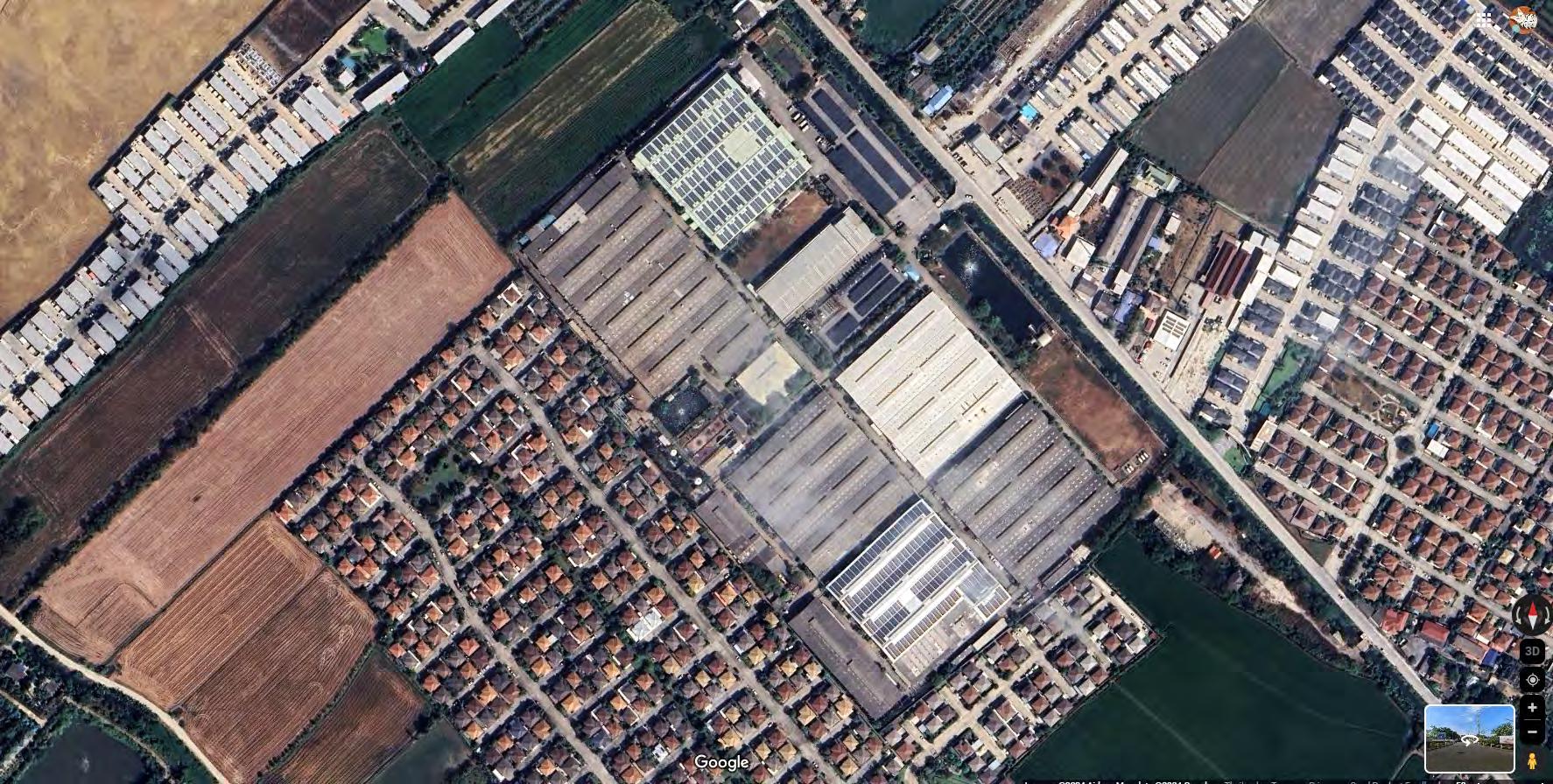
O ur C ur rent 2 M Wp Solar a rr ay uses 3650 panels and c overs a n area of 18000 m 2
O ur cur re nt 2 M Wp Solar a rray offsets over 40 % of da ytime ene rg y a nd will inc rease to ne a rly 70% in 202 8
1 MWh of solar ene rgy is enough to offset the e quivalent of 1,250 to n s of CO 2 per ye ar
The sol a r pow e r gener a ted by our 2 a rra ys from 202 4 is c a pable of running our 74 % of our Carpet tile production (Estimate based on 2023 power data).
Solar ene rgy is the most a bundant ene rgy resou rce on e a rth -- 173 , 000 terawatts of sol ar ene rgy strikes the Earth c ontinuousl y. That ' s mo re th a n 10,000 times the world's tot al ene rgy use .
Appl e's headq u arters in Cupertino, Ca lifo r ni a , USA, is noted as the la rgest sola r- powe red building with a n imp ressive 260 , 000 m 2 of solar panels on its roof , gener a ting a 17 meg awa tts of ene rgy.
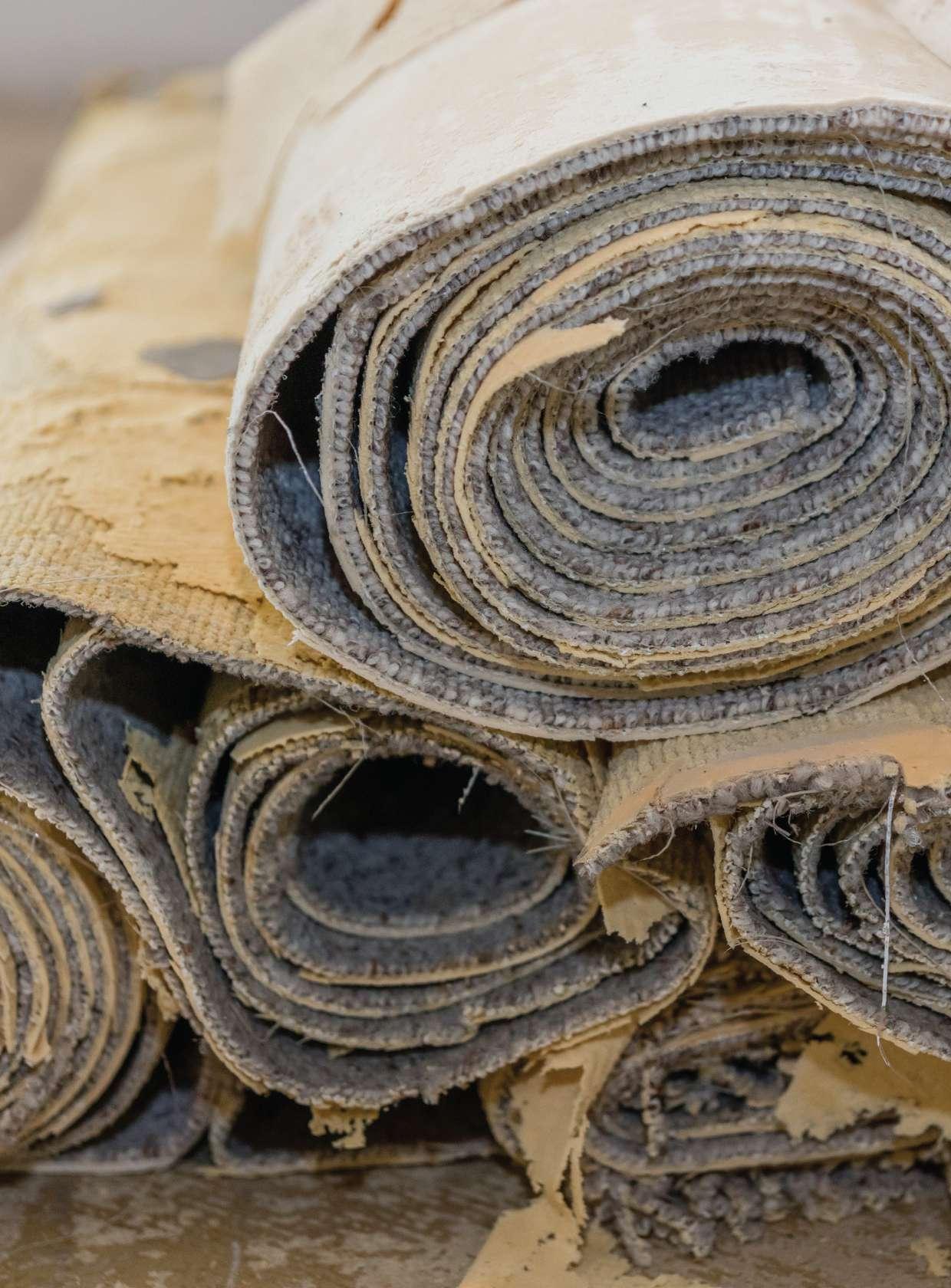
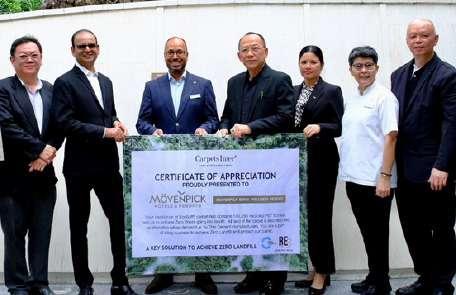
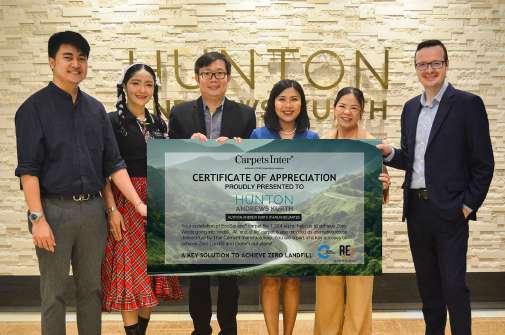
At Carpets Inter, we take pride in crafting high-quality carpets that are not only visually stunning but also exceptionally durable, standing the test of time However, when it's time to revamp your space with a new product and design, it's also crucial to consider the environmental impact. Ensure your old product doesn't end up in a landfill by taking advantage of the Carpets Inter Carpet Take Back Program.
Our zero waste-to-landfill commitment in manufacturing has been in action since 2005, and we're proud to extend that commitment to the carpets that currently grace your floors. When it's time for an upgrade, we will ensure your old carpet doesn't just end up as waste; it transitions into a useful second-life product or is disposed of in the most environmentally friendly way possible — without adding to a landfill.
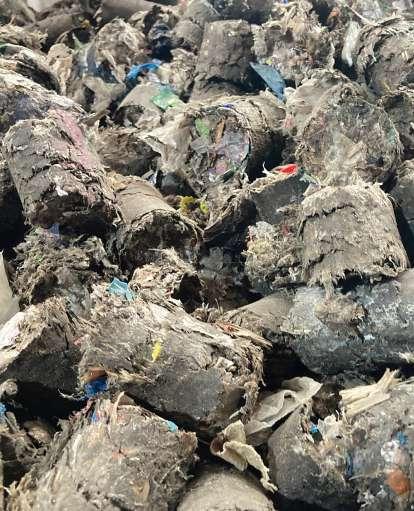
Recovering and recycling the waste we generate conserves our precious natural resources, reduces environmental impact, and supports the development of a more circular economy.
We strive to provide closed-loop recycling solutions whereby waste materials are separated and recovered as secondary
In Thailand, we're currently working in partnership with local facilities to convert old Carpet tile, Broadloom, and Axminster into refuse-derived fuel (RDF) pellets. These pellets are then utilized by industries such as cement manufacturing or power generation plants to produce clean energy. An impressive record speaks for itself, with over 1.3 million Kg of used carpet taken back and processed between 2020 and 2023 resources or used in the manufacture of new products. Where this is not possible, they are used as fuel in the production of clean energy.
Uplifting of old carpet 1
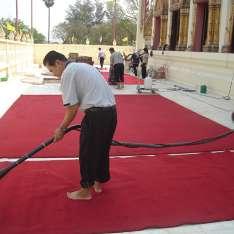
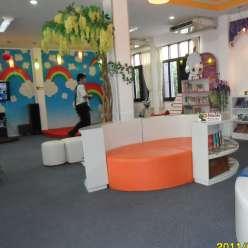
Our team will carefully remove your existing carpet during the new installation.
Ensuring responsible disposal, we'll transport your old carpet to specialized local partner facilities. Removal and recycling
When you opt for a new Carpets Inter carpet or Carpets Inter Carpet Tiles, our expert Installation team will handle it all. It's as Simple as That!
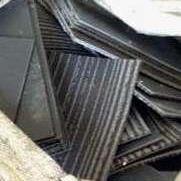
The used carpet will be sorted based on its condition, and ready for either recycling or reuse. Sorting and packing 2
At the end of the process, you'll receive a certificate confirming the ethical disposal of your old carpet. Receiving waste disposal certificate
No matter the brand of your old carpet, our Installation team is equipped to take it away for recycling while installing your beautiful new carpet.
1
All customers, contractors and recyclers are encouraged to dispose of waste carpets that cannot be reused in the most environmentally way to avoid sending waste to landfill.
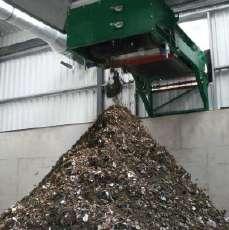
All waste to be converted to RDF (Refuse Derived Fuel) is analysed to ensure the physical and chemical properties will have no harmful emissions.
2
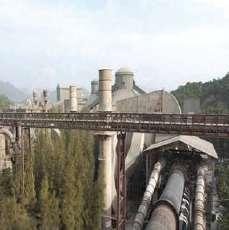
The high production capacity of cement kilns are capable of utilising large volumes of non-harmful industrial RDF (Refuse Derived Fuel) to power the cement kilns.
The Fly Ash from the incineration process is used in the production of cement ensuring that no waste goes to landfill.

3 5
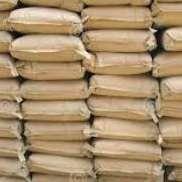
A key success factor from RDF in cement manufacture is that waste generated by one industry is a resource for another. We support Cement for Green Buildings and Sustainable Infrastructure projects across Thailand.
4
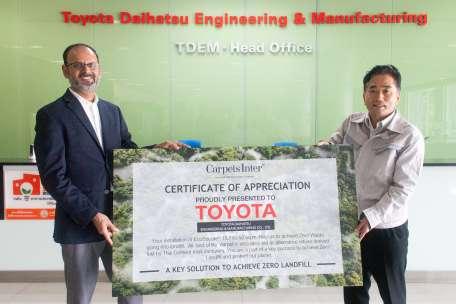
Participating in the Carpet Take Back Program isn't just about convenience; it's a step towards a greener world
Your old carpet will have a second life instead of contributing to landfill growth.
Say goodbye to harmful disposal methods.
Waste converted into RDF pellets supports clean energy generation.
We offer this service at a low cost, so it's good for the planet and your budget.
Together we can help pave the way toward a cleaner, sustainable future
Note: Although this service is currently exclusive to Thailand, clients in other countries can speak to their local account managers about alternative local carpet recycling options.
DID Y OU Kno w ?
C onven t ion a l N ylon is not biodegrad a ble a nd w ill stay in l a nd fi ll fo r dec a des It is estima t ed 89% of used carpet is sent t o land fi ll e very year.
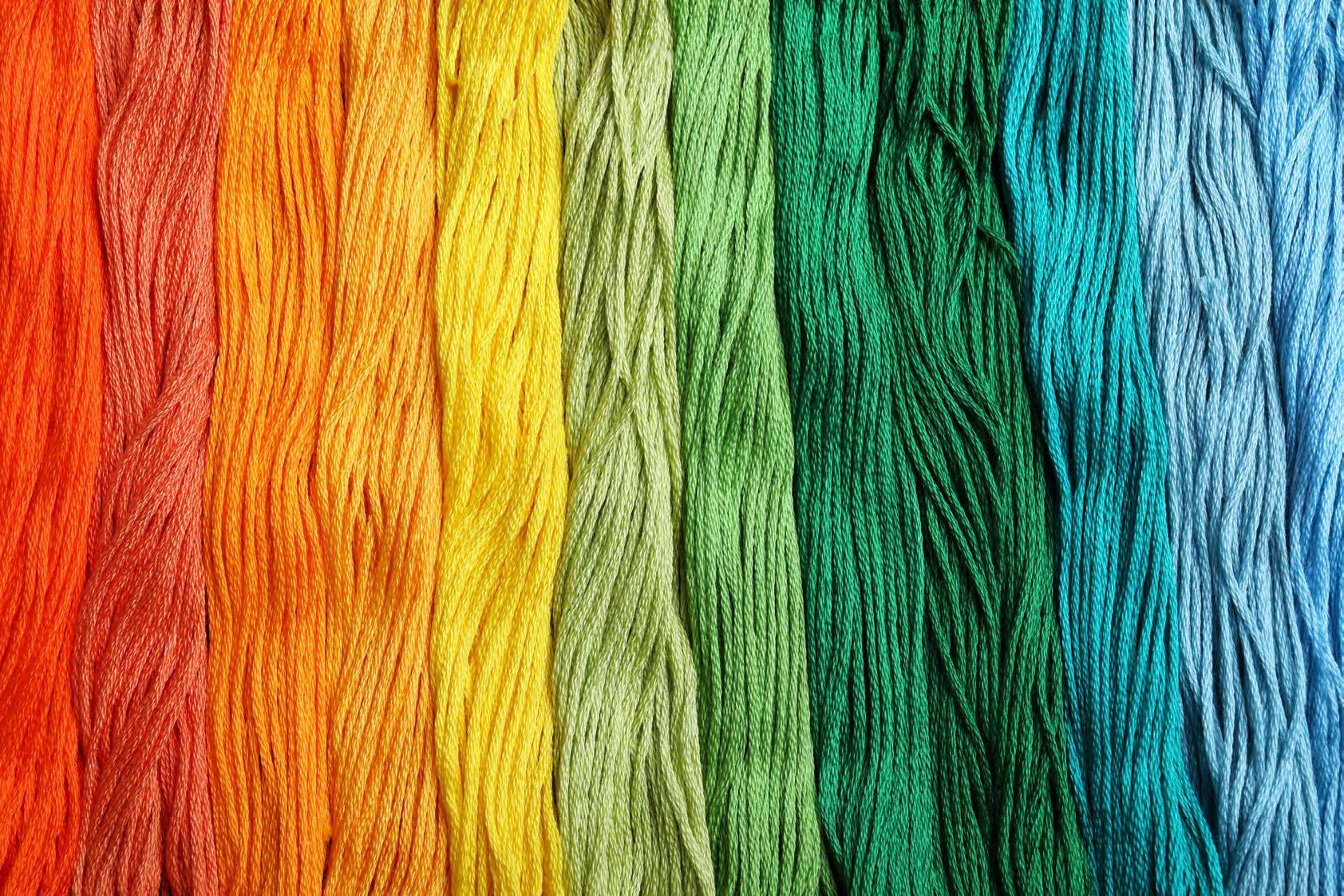
Wat er has played a vital ro le in carpet m a nufacturing fo r ye a rs, p a rticul a rl y in pro cesses like fi b er dyeing a n d backing. Howeve r, this he a vy reliance on w a ter ha s a do w nside - the rele a se of harmful e fflue n ts a s a signi fi can t side e ffect Du r ing fibe r dyeing processes , t he discha rge of harmful su b stances into w ate r bodies in troduces a mix of chemicals , including d y es , heavy metals, and other toxins, which can pose substantial environmental risks. These pollutants dis r up t aquatic ecosystems, endanger wildlife, a nd c o mp romise wa te r qualit y, making it unsuit a ble f or consumpti o n, i r rig a tion , and o t he r essenti a l pu r poses. Amid inc reasing global envi ronment al con s ci o usness, the industry is gradually tr ansitioning t owards a ci rcul a r wa ter reuse a pp roa ch, dri v en by the in t egration of new technologies and sust a inable manuf a ctu r ing pr act ices. Howe ver, this t ransforma t ion has been not a bl y gr a du al.
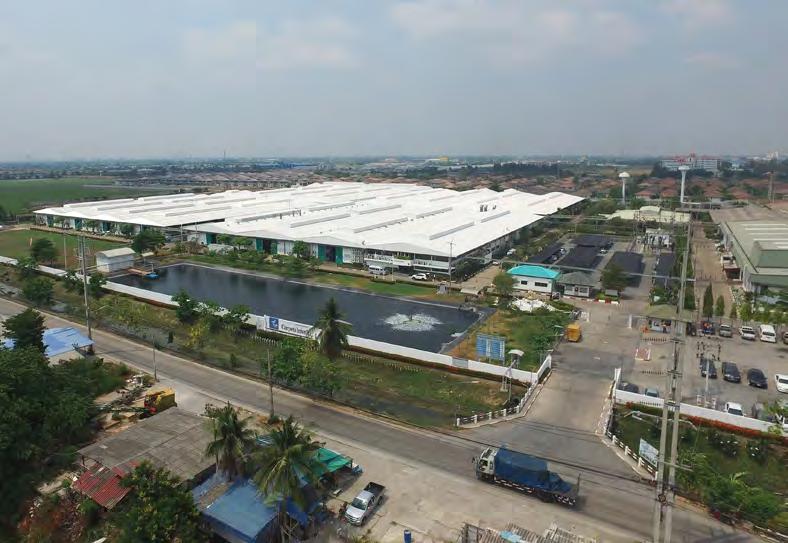
Carpets Inter identified the issue 25 years ago and decided to implement a more sustainable manufacturing process. This choice went beyond mere business strategy; it symbolized a dedication to the local environment, especially noteworthy given the factory's setting in a rice-growing region. The emphasis on maintaining high water quality reflects not only corporate principles but also a deep-seated commitment to serving the community.
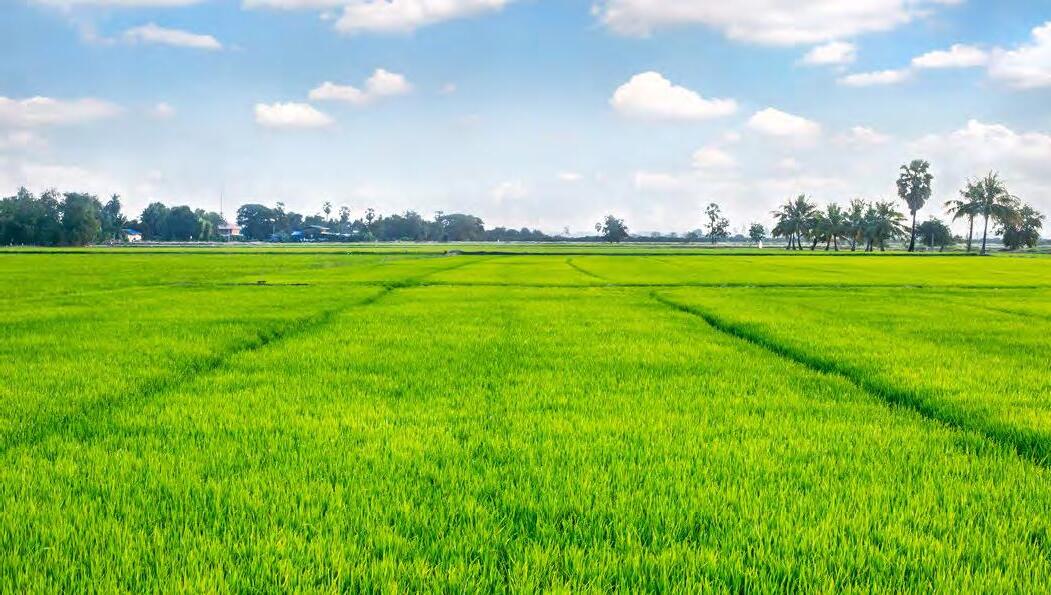
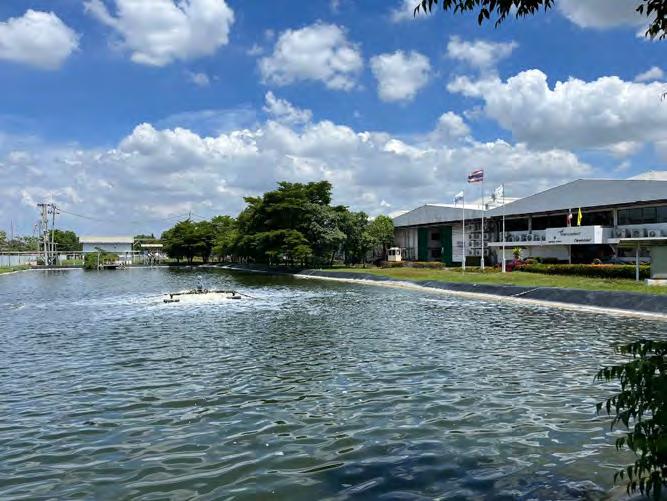
Our factory is located in an area of rural rice fields.
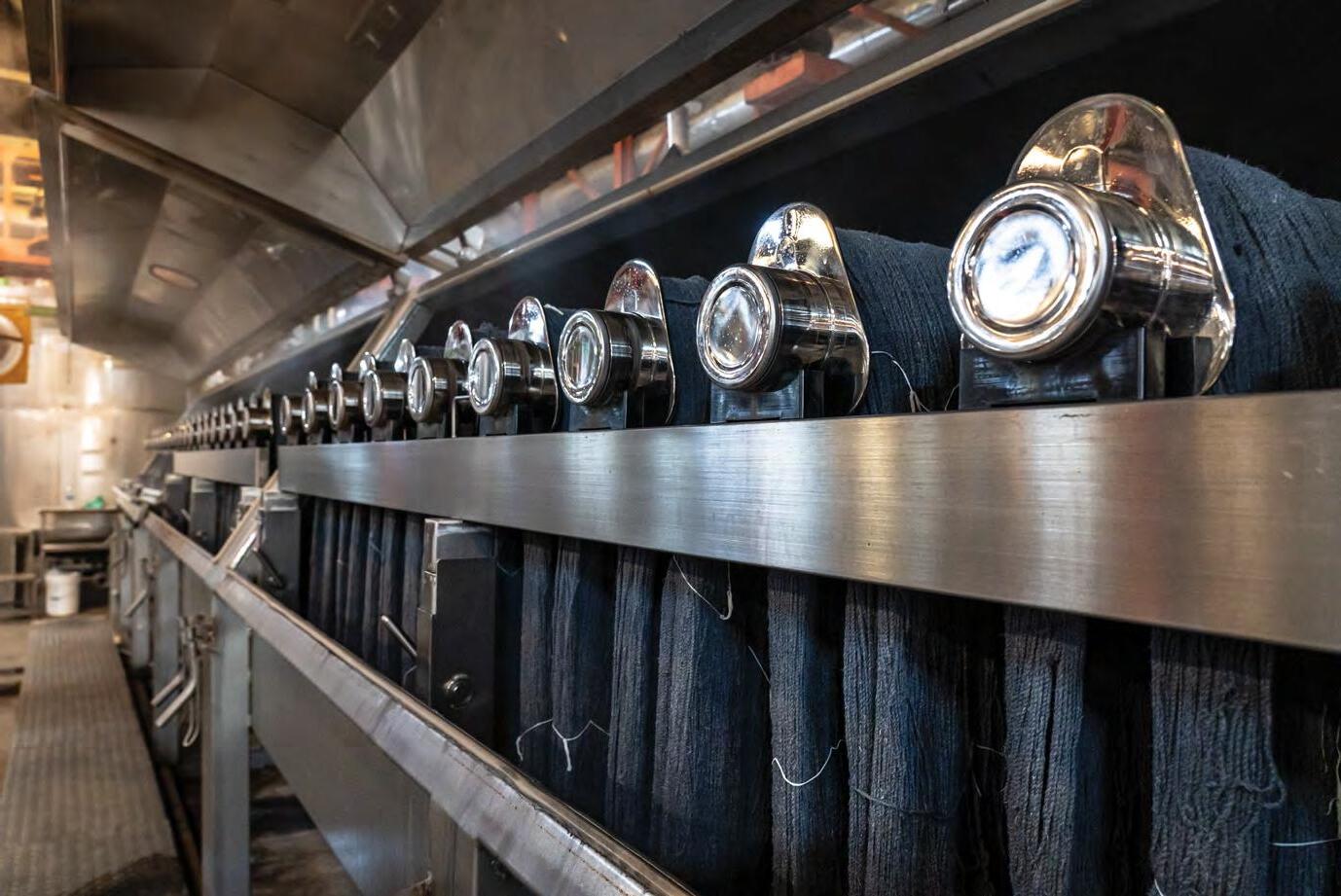
The journ e y t o wa rds a mo re sust a inable manu factu r ing process w as int r icate , ma rked by the integration of cutting - edge tech nologies like s p ray d ye ing, adv a nced compu te ri z ed wa te r m anage men t syst ems , and hi g hl y e ffici e nt recy cli ng syst em s.
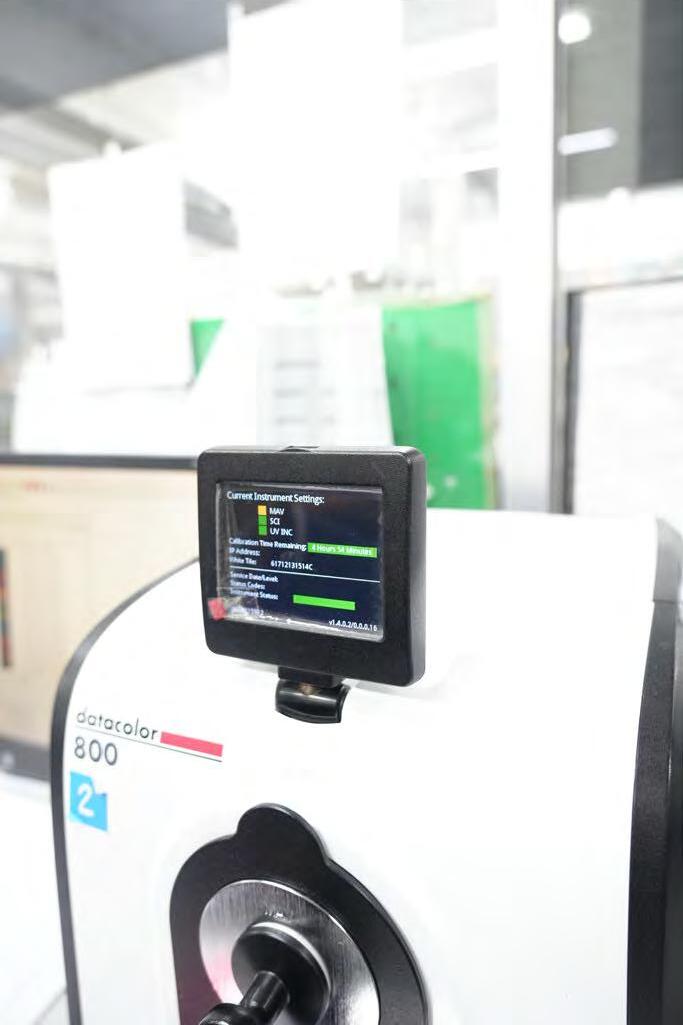
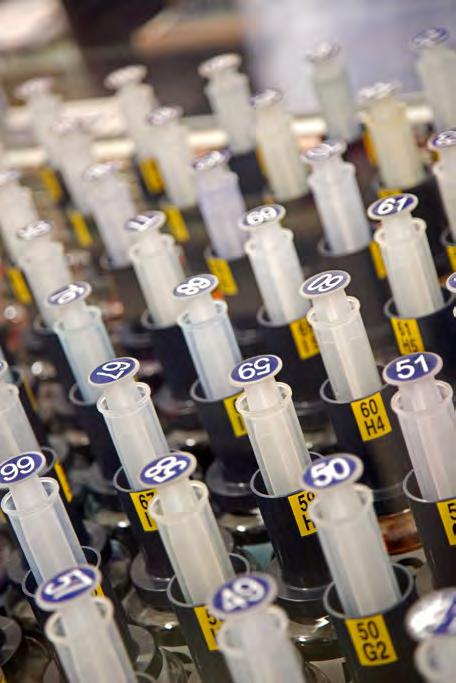
These innovative steps not only reduced water usage by 70% but also propelled the company to a significant accomplishment. By 2015, Carpets Inter achieved a major milestone with complete process water recycling, and Zero effluent output underscoring their dedication to environmental stewardship and resource efficiency
A
sus tainable cycl e reim a gine d
Carpets Inter saw an opportunity to go beyond water recycling. The industrial water recycling process mirrors consumer wastewater treatment, involving aeration, sedimentation, and filtration to eliminate solid waste. Typically, the outcome is solid waste sludge destined for landfills. However, Carpets Inter viewed this not as an issue, but as a chance for innovation
Working with a local fertilizer manufacturer, Carpets Inter began discussions on how to use the biological sludge from the wastewater processing in fertilizer production Together, the two partners modified the water processing system, which now takes the water through chemical, physical, and biological processes to output a waste sludge that meets stringent Department of Works standards for agricultural use
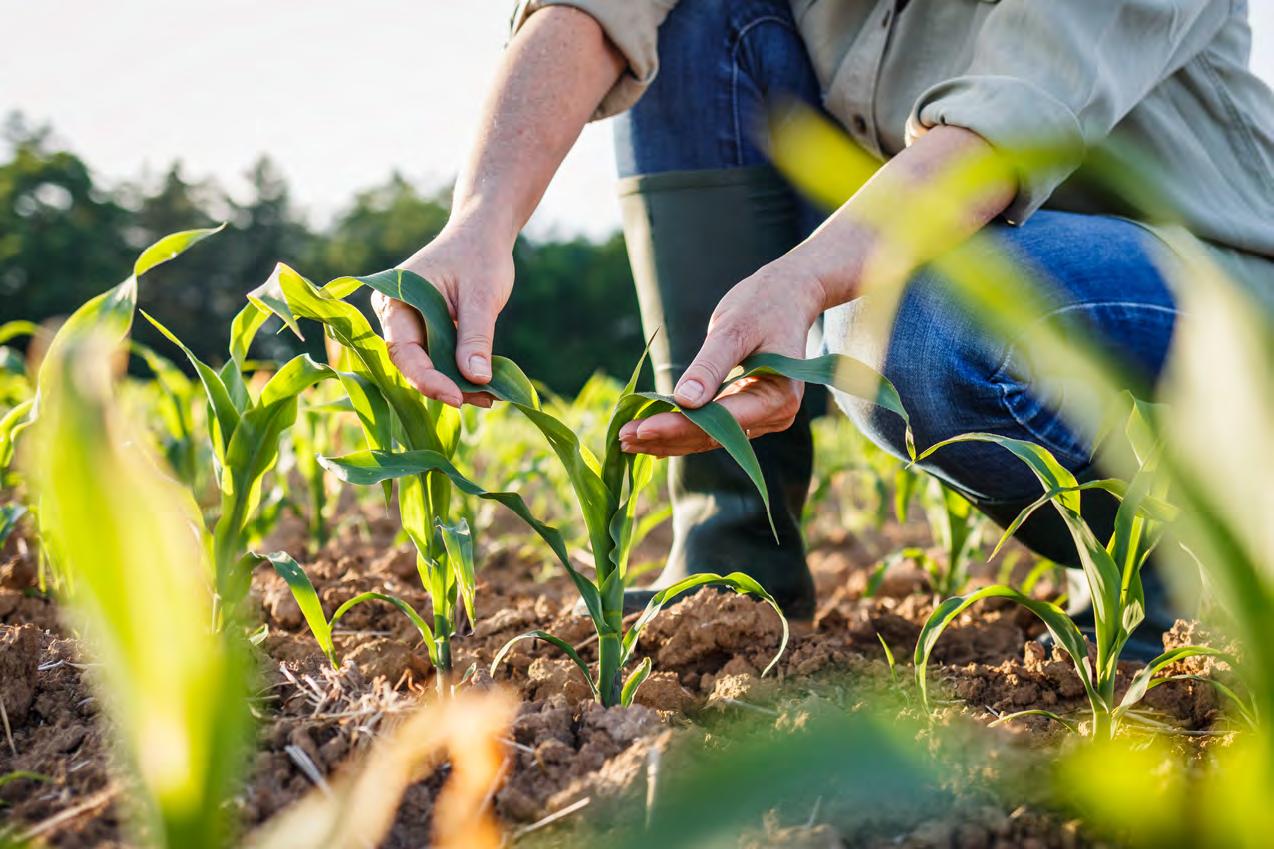
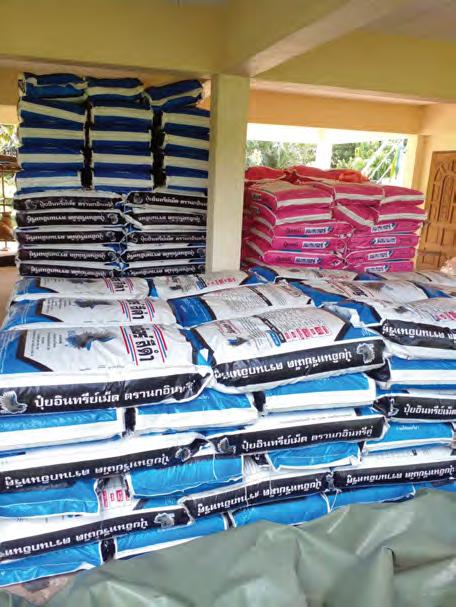
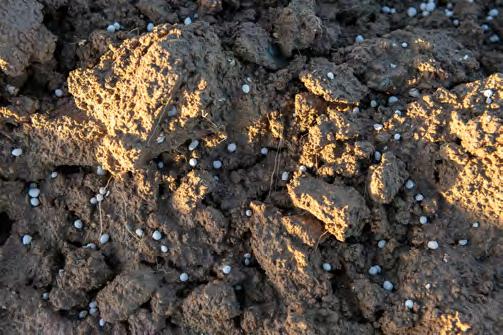
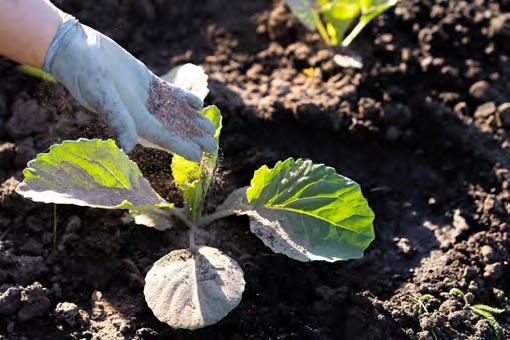
The result is a beautiful circle of life - the sludge is delivered to the fertilizer company, blended with growing nutrients like Dolomite, Marl, Nitrogen, Phosphate, and Potassium, and then converted into fertilizer pellets These pellets support the growth of local crops such as Pineapple, Cassava, Sweetcorn, and Rubber Trees
Since the initiative began in 2015, Carpets Inter has donated nearly 2000 tons of sludge, which has been turned into more than 400,000 bags of fertilizer. This achievement is a testament to how business can coexist harmoniously with the environment, creating an ecosystem where waste is not wasted, but put into service for new life.
A storage basin designed to collect wastewater and stabilize flow rates before further treatment. The pond helps manage fluctuations in inflow, allowing for more consistent treatment processes downstream.
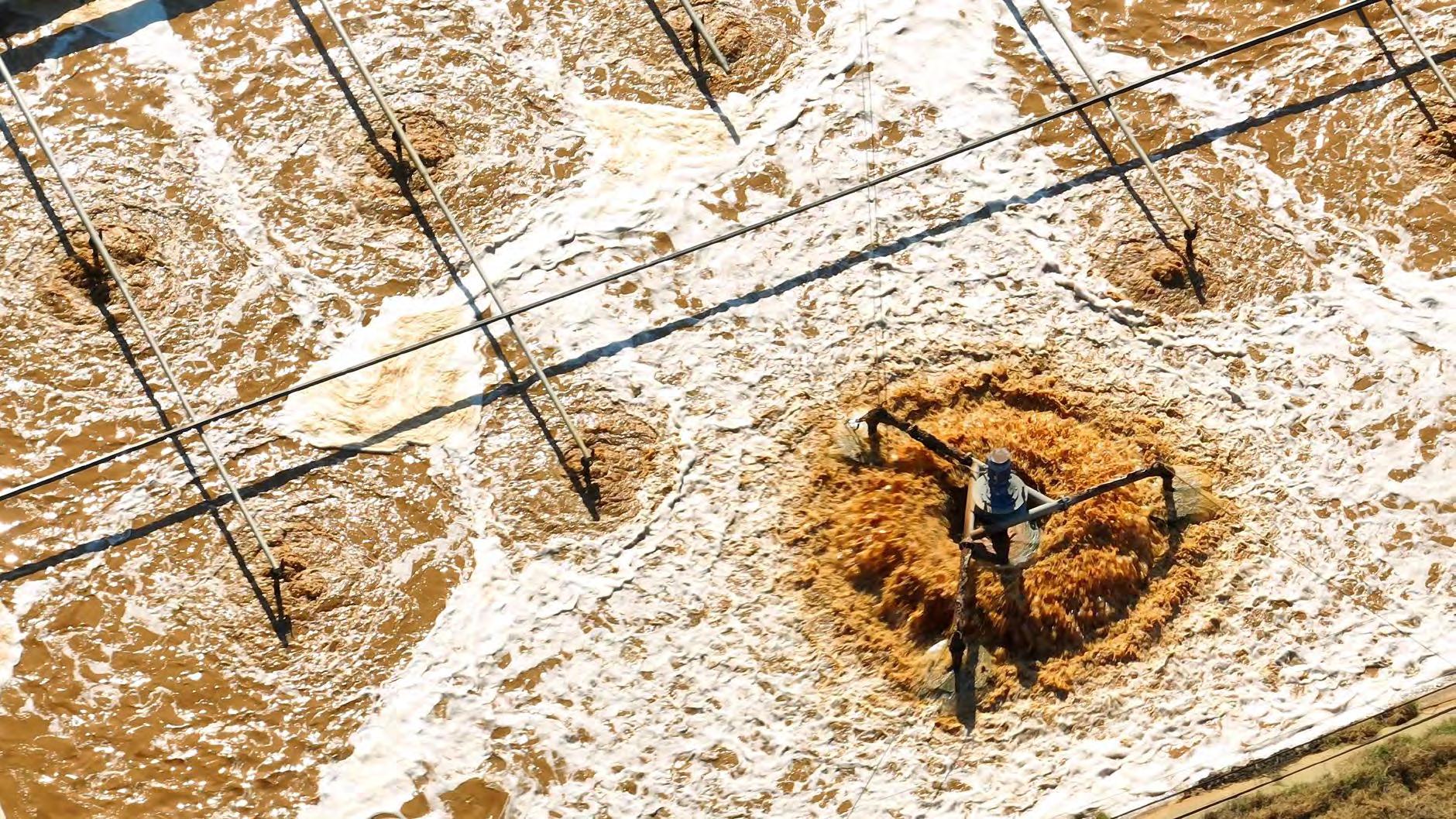
Aeration is the process of adding air into wastewater to allow aerobic bio-degradation of the pollutant components. It is an integral part of most biological wastewater treatment systems.

Reverse osmosis (RO) is a membrane-based filtration process that separates contaminants from water by applying pressure to push it through a semipermeable membrane. This method is highly effective at removing a wide range of contaminants, including salts, microorganisms, and organic compounds making it ready for re-use.
Waste water recycled and recycles back to aquifer.
A polishing pond is a shallow lagoon that provides additional treatment for wastewater after primary and secondary processes. It allows for natural processes such as further sedimentation, microbial activity, and nutrient uptake by plants, improving water quality before discharge.
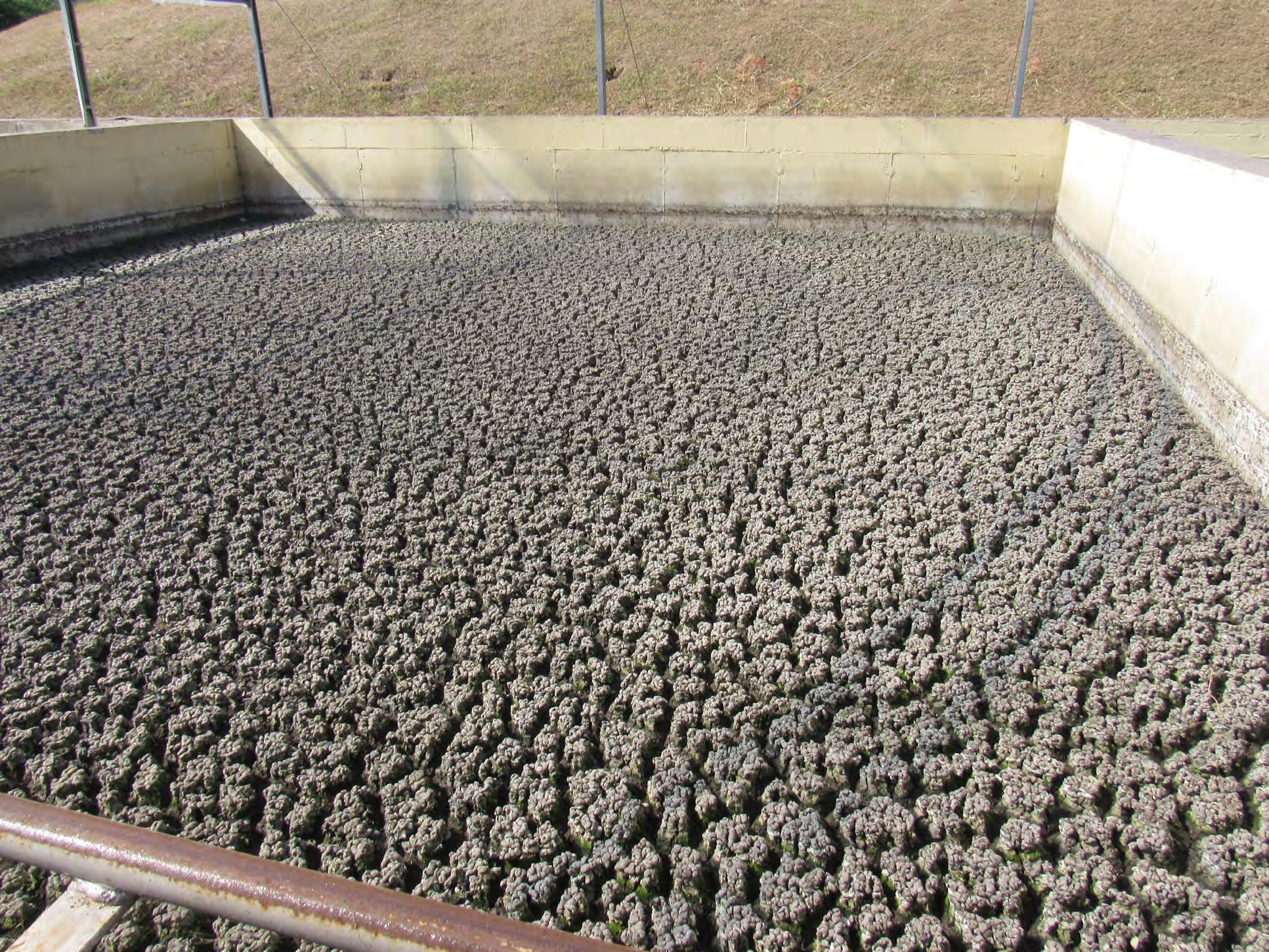
Sludge dewatering is the process of removing excess water from sludge generated during wastewater treatment. It is achieved by pressing the water out of the solids reducing the volume and weight of the sludge and making it easier to handle and transport to be made into fertilizer.
Sedimentation is a physical process where particles suspended in wastewater settle out of the liquid. This is accomplished in a sedimentation basin where gravity causes solids to settle at the bottom, allowing clearer water to be drawn off from the top.
The addition of microorganisms metabolizes organic matter in the wastewater breaking down the organic solids, leading to the formation of flocs (clumps or clusters of tiny particles, including microorganisms, organic matter, and other solids, that stick together in water) that can be easily separated from the water through sedimentation.
Mixing P r oc ess Fer m entin g
M ixing P r oc es s 2
Pe l letin g
Aiding crop growth and Soil Regener atio n
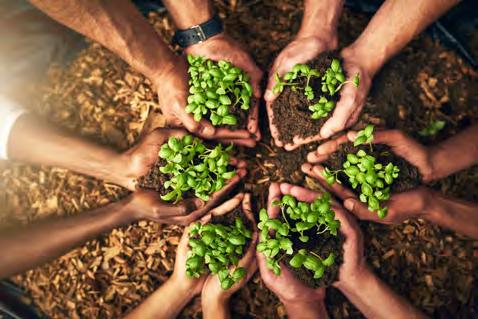
Textil e p rod ucti on is es t im a ted t o be responsible for a bou t 20% o f global clean wat e r pollution from dyeing and fi nishing p roducts
https://www.europarl.europa.eu/topics/en/article/20201208STO93327/ the-impact-of-textile-production-and-waste-on-the-environment-infographics
O ur waste sludge h as been used to manufactu re over 200,000 tons of fertilize r.
Organic farming naturally sequesters CO2 from the atmosphere. 1% of extra organic materials = 10 tons carbon draw down per year.
New Reverse Osmosis is a magic like process for water treatment, it which doesn’t just filter out contaminants, it removes dissolved salts, harmful chemicals and even difficult microbes often left by other treatments.
The biological treatment used for separating our waste water is a natural process (think bacteria eating up pollutants) It’s like having millions of cleaners working day and night without a break.
Fe r tilized crops can inc rease y ield by 2 – 3 t imes mo re th an unt rea t ed soil ( Ionique ).
Dive r ting wa ste f ro m l andfil l
In ou r ques t f o r en vironme nt al excellence , w e t ake pride in our dedica tion to was t e management. Main t aining Zero ma nufacturing wast e to la nd fi ll si nce 2009 stand s as a t est a men t to ou r commi t ment and ou r b a ttle aga inst wa s te Across our diverse range of c a rpet and acous t ic prod u cts in ou r 160, 000 m 2 Thai fac ili ty, w e h a ve ma de s ignifican t p r ogress in reducing our environmen ta l impact

Our commitme nt to elimin ati ng l andfill waste has been stro ngly back ed b y ef forts to minimiz e , r ecyc l e, a nd r ep ur po se wa ste when ever fea s ible Throug h i nn ov ativ e sy st em s a nd proce sses , we have ef fe c tiv e ly lowe r ed wast e ge n er a tion by mo re th an 20 % ov er time Th ese redu ctions h ave not only enhanced ou r op era tion al ef ficienc y but also positi ve ly imp ac t ed th e e nvi r onment
Im proving ma n ufac t uring proc e sse s 2 0% r educ t io n
ove r 15,00 0 m 2 donated t o Edu catio n instit utions a nd loca l community projec ts in last 2 years
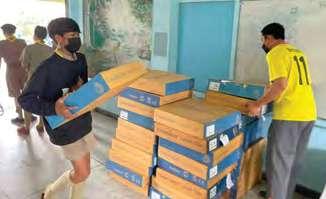
Ma te rial Recycling initia tives are in ope rat ion t hrough out t he manuf a ctu r ing proce ss ensuring that we keep as much w as t e ma t eri al as w e c an wit hi n the manuf actu ring lo op. O ur wo rk in reclaiming and re cycling wool re c ent ly a chieved the pr e stigi o us BC G award for cir cul ar ec onom y
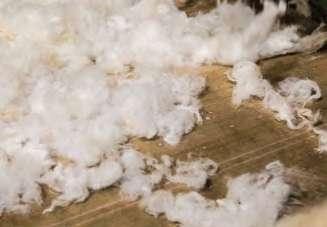
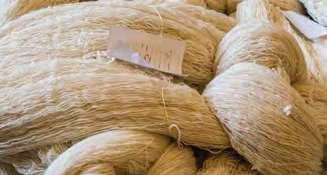
Aft er all t he e f fort s to rec ycle withi n the man u fa ctu ri n g pr oc ess a re exhaus t ed, any res id u al wast e that cannot fin d a n ew pu rpose is d on a ted to a loc al power pl an t to ke e p it out of l an dfill
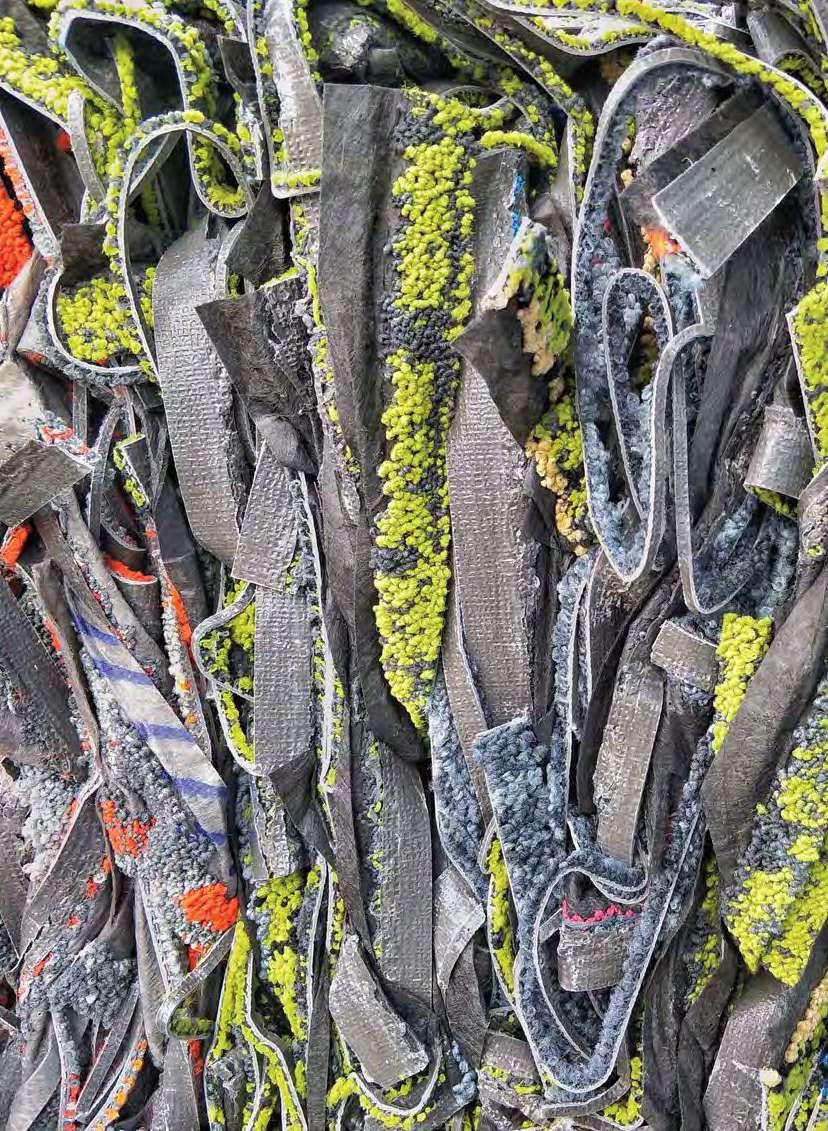
This non-r ecyc lable w a ste is converte d into Refuse - Derived Fuel ( RDF ) p e llets , u s ed for cle an e le c tri c ity ge n er a tio n.
Carp et ed ge wa ste f r om m a nufa ctu rin g
C ar p et installation waste (o ff cu t s)
Was te f r om l a tex bac k ing p ro du ction
Us ed and damaged carpet m a teri al
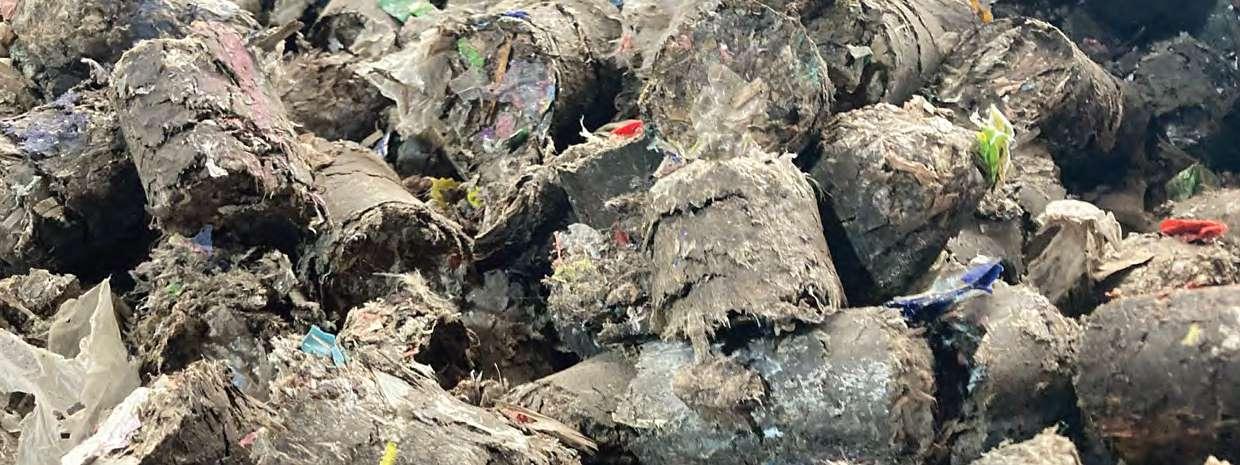
Our rel en tl es s purs uit of was t e elimination is a co re asp ect of o u r wi d er c o mmi t me n t t o sus tai nab ilit y. Throu gh initiati v es like our Bio-Ci rcula r-G reen (BCG) and N et - Ze ro Greenhouse G a s ( G HG ) p rogr a ms, ou r g oa l e xt ends be y on d me rely re ducing w as t e. We st r ive to inno v ate and refine our processes to prevent waste creat
on from the start. We
ead us t o a f utu re w he re the co
into all our production activities.
will
The tables below illustrate our achievements in waste management over the years by displaying the manufacturing waste (Kg '000) alongside the equivalent energy (KWh) generated from that waste.
2005 – 2009 Disposable waste diverted from landfill to incineration
From 2009 Carpet waste used for Cement manufacture
From 2014 Solid water waste (Sludge) used to make fertilizer
The Journey Beyond Zero Add a section to show what actions led to Zero to waste to landfill and what actions we took beyond Zero
From 2017 Manufacturing waste used for Electricity Generation
Utilizing RDF presents many advantages that align with our sustainability mission
RDF serves as an alternative to non-renewable resources, thereby conserving valuable natural reserves.
cr ease in L and f il l Waste By co nve r ting was te t o ene rgy,
we minimize the volume of solid waste that would otherwise occupy landfill space.
Through RDF, we endorse the generation of cleaner energy, which reduces greenhouse gas emissions compared to conventional fossil fuels.