Milwaukee Silk Screen Collective members (who came and went, participated for shorter or longer times) are listed in alphabetical order here:
Anne (M)
Bob (K)
Burt (W)
Cindi (O)
Eileen (P)
Emily (B)
Enaida (A)
Holly (S)
Jack (Z)
Jodi (S)
Ken (M)
Kurt (S)
Mark (F)
Marty (H)
Mike (L)
Richard (C)
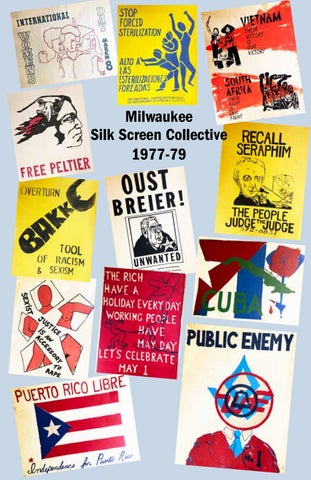
In 1977, we formed a silk screen collective in Milwaukee, WI, that produced art for about two years, ending in late 1978 or early 1979.
Posters created in France during the MayJune 1968 strikes influenced our thinking and planning. Silk screening is a very basic production method—easily reproducible and inexpensive. We wanted to create art that was accessible, inspirational and free—that is “Art for the People.”
We designed and printed posters of varying degrees of quality—improving over time—but all clear, visible, and uncompromising. Press runs were about 100 per design. Late at night, we wheat-pasted the posters across the city— hoping to fulfill the “agitate” part of agitate, educate and organize.
The skilled amongst us built the frames, screens and drying racks from scratch. Paper was the largest expense and we used a creatively-obtained roll of newsprint for the posters. We worked at various houses where one or the other of us lived—as long as there was space and roommates didn’t object.
The world of justice, peace, freedom and equality we hoped to see in our lifetimes still remains to be won. And, there will always be a place for art in the struggle.
August, 2024
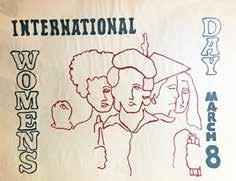
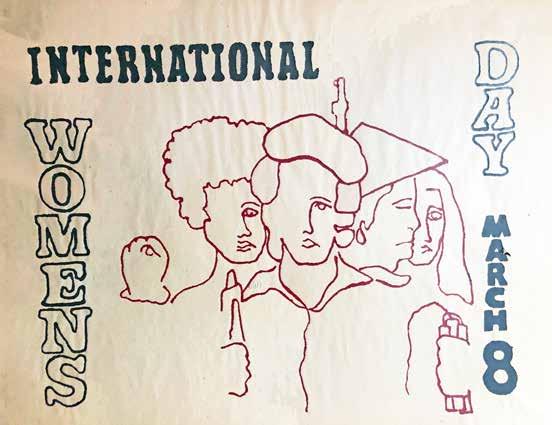
Thefirst of our designs—and a controversial one. There were a lot of objections to showing women with guns. We were acknowledging and celebrating the role of women in the liberation movements in southern Africa, Latin America, and Vietnam—as part of the Women’s Liberation Movement. Those who objected had, perhaps, a narrower view of the meaning of liberation.
For IWD; March 8, 1977
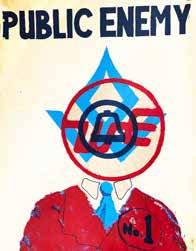
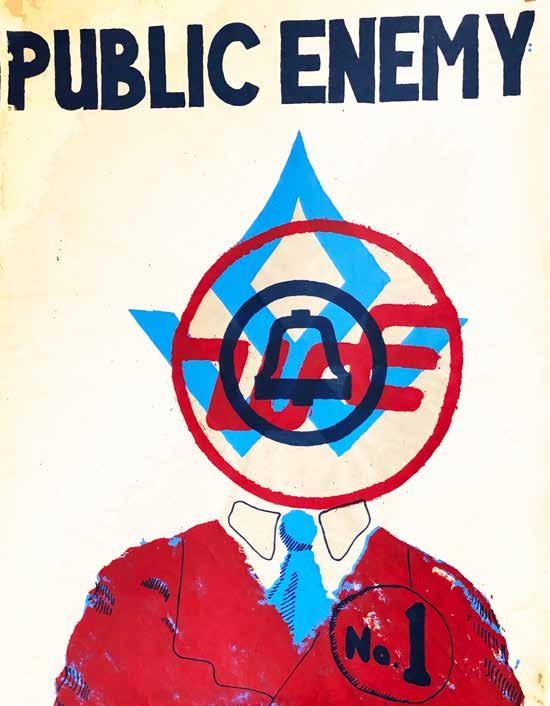
Thewinter is cold in Milwaukee and having your gas or hot water cut off is no joke. And, in the pre-cell phone age—having one’s phone service cut left people, especially seniors, isolated, preventing them getting help in that cold. Landlords used those shutoffs as an excuse for evictions.
ESHAC—East Side Housing Action Committee—was one of the groups we supported and we produced this print to give voice to their efforts to keep people in their homes.
As to Public Enemy Number One—it was hard to choose so we superimposed the symbol of the three candidates: the phone company, the gas company and the water company. After all, public services ought to be used for the public good.
April, 1977
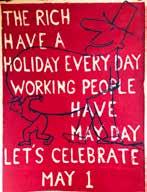
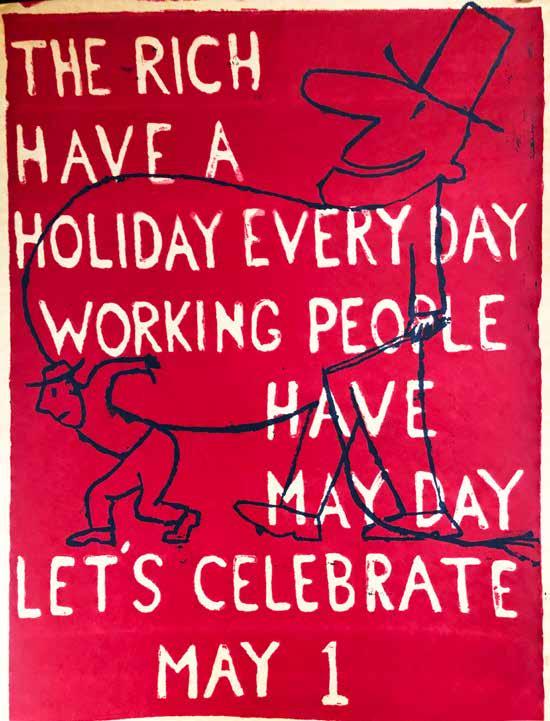
Unquestionably a May Day poster for the ages. The quality wasn’t great (we were learning) but the message was clear and resonated.
The Tamiment Library and Robert F. Wagner Labor Archives at New York University houses a hard copy of this poster, with no attribution. It can be viewed online here.
For May Day; May 1, 1977
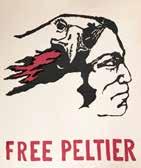
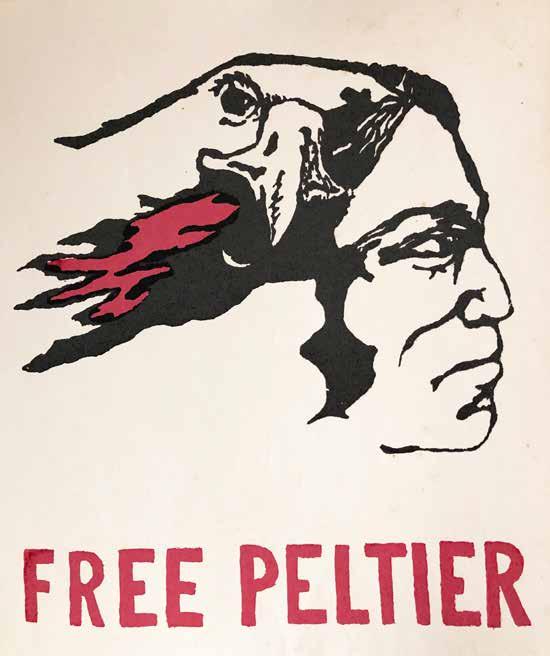
LeonardPeltier, a member of the American Indian Movement (AIM), was arrested in Canada for the murder of two FBI agents. He was deported to the United States and, after a show trial, was imprisoned. He remained in prison for 47 years.*
Was anyone imprisoned for the murder of AIM members? To ask is to answer. We were commissioned to create this poster as part of a solidarity campaign that, sadly, was relevant for years.
*As of Jan. 20, 2025, Peltier is free! Too long in prison, but persistence in struggle matters. Spring, 1977
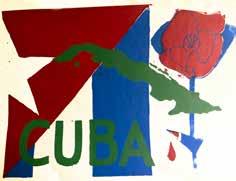
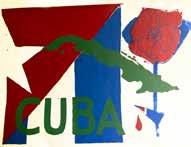
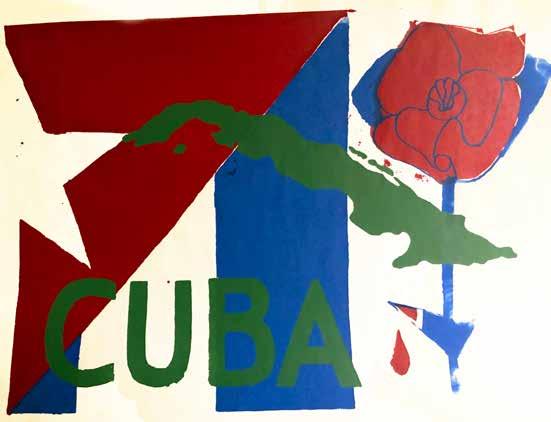
Wealways stood in solidarity with Cuba—several of our members joined the Venceremos Brigade to harvest crops and build houses as a sign of support. This poster was commissioned to promote a talk by historian Philip Foner on the history of Cuba and U.S. imperialism. After more than 60 years, the island remains an island of hope. Resistance against the empire is possible.
Spring, 1977
Dane
County (Madison, WI)
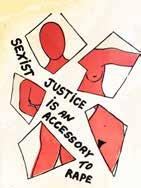
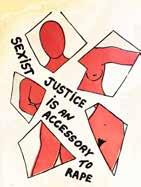
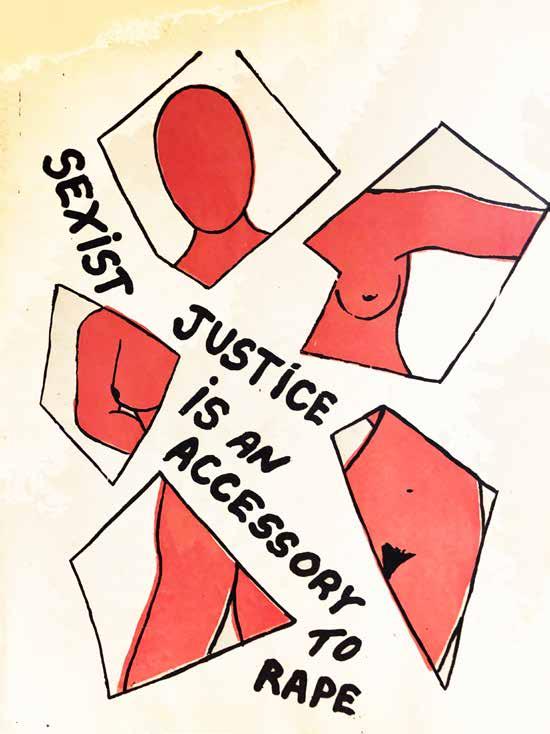
Judge Archie E. Simonson decided that a rapist should go free because the woman assaulted was dressed “provocatively.” That translates into “she was asking for it.” This wasn’t the only instance of “sexist justice,” but it hit the news and we felt we had to respond. The judge was recalled in early September, 1977.
Summer, 1977
Webegan the collective with the spirit of the late 60s and early 70s still in the air. Revolutionary sentiments if not ascendant, were strong and appeared to be growing.
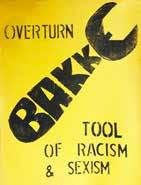
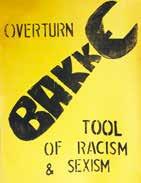
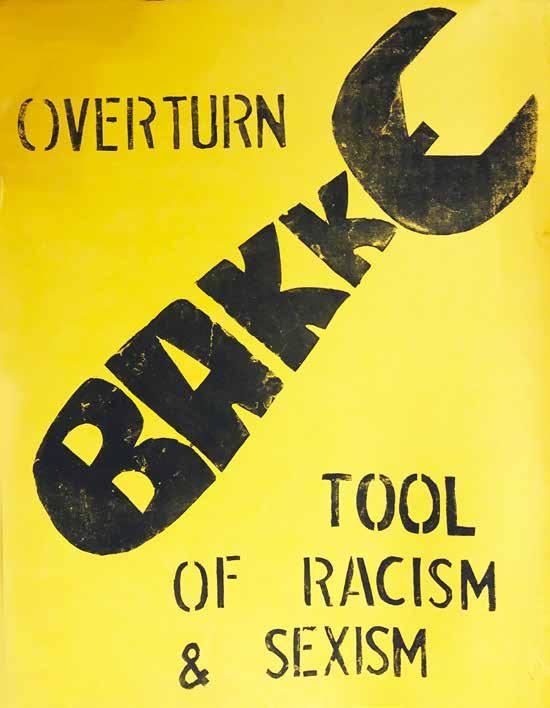
The Bakke case—a Supreme Court case threatening to overturn affirmative action at the University of California—was one of the growing number of signs that reaction was on the rise. And whenever reaction wants to split working-class unity, racism tends to be front and center. This was our contribution to the chorus of protest.
Fall, 1977
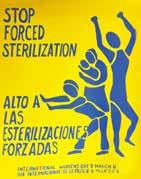
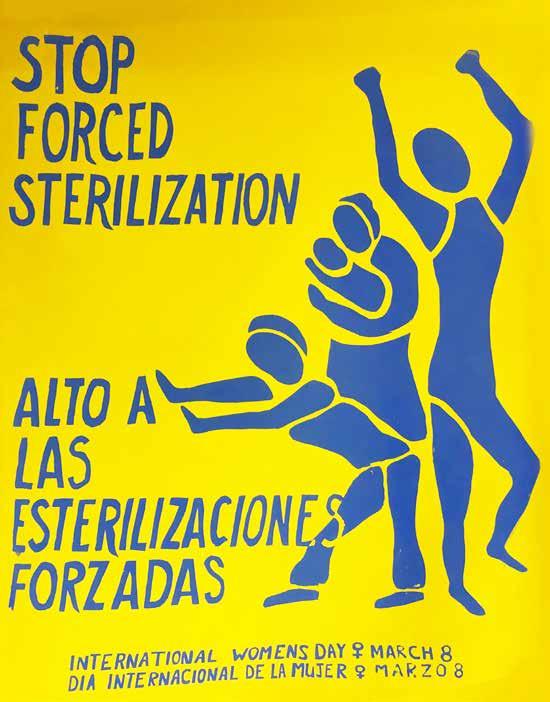
Theother side of struggle for legal abortion was, and is, the struggle against forced sterilization. That was a reality for African American women in the South, Puerto Rican and Native American women, and women of any race on public assistance.
During the 1970s, unauthorized sterilizations among Mexican women with minimal English rose at the Los Angeles County Medical Center.
In 1978, partly in response to a class action suit, the United States Department of Health, Education, and Welfare created the Federal Sterilization Regulations to prohibit practices that forced or coerced women into sterilization.
For IWD; March 8, 1978
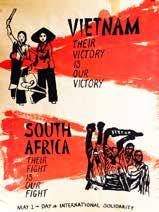
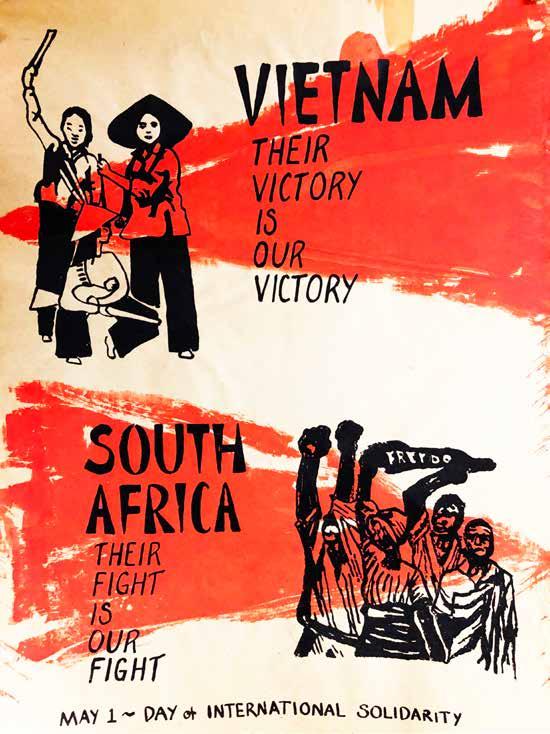
ASouthAfrican anti-apartheid activist spoke at the University of Wisconsin-Milwaukee campus in 1978, about the Soweto uprising, the Black Consciousness movement and the death of Steve Biko. We linked the growing movement against apartheid with the liberation struggle in Vietnam. If agitprop has a meaning, this worked as it agitated a lot of folks—both racists who had no problem with apartheid abroad and, especially, people who most definitely did not see Vietnam’s victory as ours. But it did make folks think!
For May Day; May 1, 1978
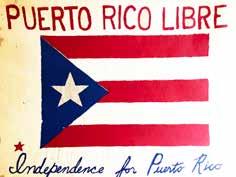
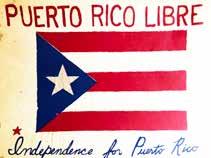
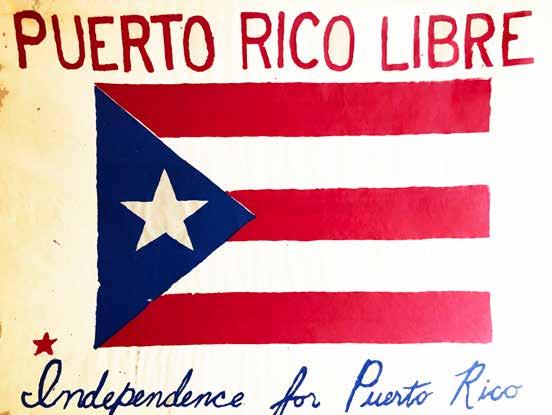
Therewas a small, but growing and vocal Puerto Rican community in Milwaukee, deeply involved in the movements of the day. We supported the call for Puerto Rican independence.
“A Bicentennial Without Colonies,” was a central demand of the mass demonstration several of us attended in Philadelphia in 1976. That thinking informed this poster.
Summer, 1978
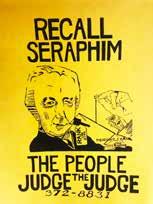
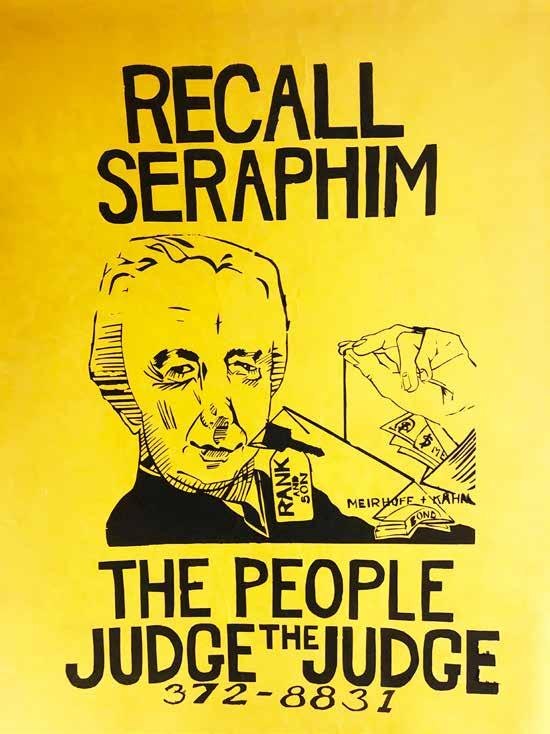
Thenature of our justice system was well revealed by Milwaukee County Circuit Court’s Judge Christ Seraphim in the 1970s. He openly insulted welfare recipients who came before him, was a proud member of a club that didn’t allow Black members, didn’t disguise his hatred for gays and lesbians, and basically viewed all criminal defendants in his court with contempt.
This poster was in support of a recall campaign to throw him out of office. The campaign failed but set the stage for his eventual removal from the bench in 1980.
1978–9
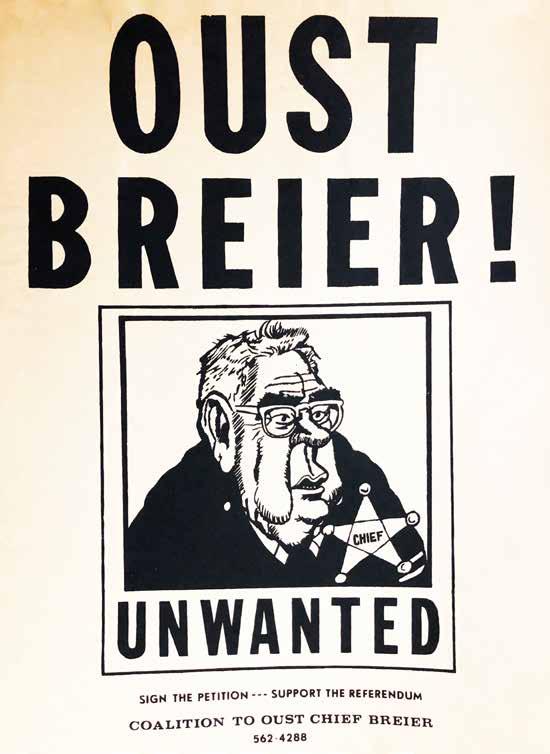
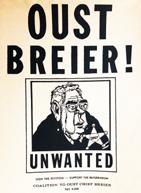
Milwaukee always tried to distinguish itself from Chicago. Because Chicago had a corrupt police department, Milwaukee opted to appoint a police chief for life to avoid corruption. It was a bad idea.
Under Chief Brier, the police acted like a street gang—too often killing someone— usually a Black man, but occasionally a motorcycle gang member or a “hippie,” just to show that they were the toughest gang around.
A law unto themselves, the police were notoriously racist and their Red Squad made no pretense that civil liberties applied to “subversives.” When the counter-cultural paper the Bugle publicized the name of undercover narcs, the police simply blew up the Bugle’s office and press.
The referendum to oust him failed but set the stage for legislation that curbed his authority, resulting in his resignation in 1984.
1978–9