Action Learning in a changing world | A year in review 2021-2022
action learning labs
Analytics Lab
China Lab
Digital Product Management Lab
EMBA Global Labs
• EMBA Israel Lab
• Global Organizations Lab
• IDEA Lab
Enterprise Management Lab
Entrepreneurship Lab
Finance Lab
Global Entrepreneurship Lab
Healthcare Lab
Israel Lab
Operations Lab
Organizations Lab
Proseminar in Capital Markets/ Investment Management
Proseminar in Corporate Finance/Investment Banking
Sustainable Business Lab
USA Lab
action learning by the numbers 2021 – 2022
1,018
TOTAL STUDENT ENROLLMENTS
309
ACTION LEARNING LAB PROJECTS
33 FACULTY
48
MENTORS
ACTION LEARNING COURSES OFFERED 18
COUNTRIES REPRESENTED BY PROJECT HOSTS 16
THE MANY SIDES OF sustainability
Sustainability isn’t just about the environment. Students in multiple labs took on projects ranging from product development, mobility, sustainable communities, workplace diversity, and clean energy. They worked alongside hosts at small startup businesses, multinational corporations, nonprofit community foundations, and major financial services firms.
FOSTERING EQUITABLE HEALTHCARE
The pandemic shone a bright light on a wide range of healthcare inequities around the world—one of the reasons a record number of students flocked to Healthcare Lab this past year. Our students were eager to help hosts—which include hospitals, biotech companies, and pharmaceutical businesses—address many of the toughest systemic problems, and offer real-world solutions that will contribute to a healthy future for all people.
DECREASING TIME TO DIAGNOSIS OF ALZHEIMER’S DISEASE IN UNDERREPRESENTED POPULATIONS
When global biotechnology giant, Biogen, set their sights on promoting health equity in underrepresented populations, they turned to a diverse team of Healthcare Lab (H-Lab) students to help them take action.
“The MIT Healthcare Lab project team broadened our thinking around health equity, as they each shared their perspectives on groups underrepresented in their home countries.”
CHERIÉ BUTTS
MEDICAL DIRECTOR IN RESEARCH & DEVELOPMENT, BIOGEN
When the students learned that, according to the National Institute on Aging, Black Americans are nearly twice as likely as whites to develop Alzheimer’s and related dementias, yet are less likely to be diagnosed with the disease, they zeroed in on Alzheimer’s. Further refining their scope, they focused on ways to ensure early diagnosis in underrepresented populations in Greater Boston.
With international work experience in medicine, pharmaceuticals, and design—in India, Russia, Spain, and the United States—the team brought unique insights and innovative solutions to the project.
ANALYZING DISTRIBUTION CHANNELS FOR PHARMACEUTICAL MANUFACTURING STARTUP
Continuus Pharmaceuticals employs end-toend integrated continuous manufacturing (ICM) using technology initially developed through a $65-million joint research project with Novartis and MIT. The ICM, which allows for on-demand manufacturing, is gaining ground as a cost-effective alternative to traditional batch manufacturing. When Continuus Pharmaceuticals needed an actionable distribution strategy for ICM-made pharmaceuticals, they knew Healthcare Lab (H-Lab) could help.
At the end of the project, Dr. Bayan Takizawa, co-founder and chief business officer at Continuus Pharmaceuticals, praised the students for providing the company with critical insights into the pharmaceutical supply chain. “The team members were able to integrate data and information from various sources and formulate a practical set of recommendations that we believe are spot-on.”
“Identifying key stakeholders, continuous regulatory changes with the evershifting incentive structures, and highlighting the current technology trends were among our team’s top priorities.”
DR. AHMED MADY, EMBA ‘22 H-LAB TEAM MEMBER
Pictured from left to right: Avery Fullerton, LGO ’23; Dr. Bayan Takizawa, co-founder and chief business officer at Continuus Pharmaceuticals; Michael Benedetto, lecturer and H-Lab mentor at MIT Sloan; and Dr. Ahmed Mady, EMBA ’22
HARNESSING THE POWER OF DATA AND TECHNOLOGY
MIT is known for data and technology. But to us, it’s not just about the numbers and the tools—it’s about improving people’s lives and making a positive impact in the world. Students in a variety of labs used their knowledge of analytics and technology to help hospitals, startups, intergovernmental organizations, and multinational firms improve and innovate for a changing world.
REDUCING
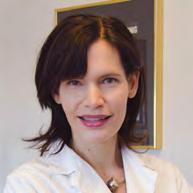
“This was one of the most impactful courses of my Executive MBA. The project has emphasized the need for developing systems that lead to reliable transfer of information without backand-forth and associated interruptions.”
DR. MIRIAM BREDELLA, EMBA ’22
Emergency department (ED) overcrowding is a major problem at many hospitals. Bottlenecks that develop as patients wait for CT scans are often the cause. In fact, each scan can add up to 150 minutes of wait time for patients. Beyond being inconvenient—and even dangerous—length of stay is a critical performance indicator in evaluating ED quality of care.
This is what motivated Dr. Miriam Bredella, EMBA ’22, to figure out how to reduce these turnaround times at a large urban hospital for her EMBA Organizations Lab (EMBA O-Lab) project.
Bredella, a radiologist, analyzed the problem and presented several streamlining recommendations, which were implemented by the hospital.
BUILDING BRAND AWARENESS FOR AUTONOMOUS VEHICLE TECHNOLOGY COMPANY
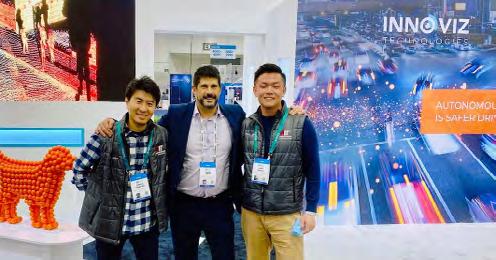
Innoviz Technologies is a leading manufacturer of LiDAR sensors and perception software— technology that enables highly automated vehicles to ‘see’ the road, and everything on or around it. Based in Tel Aviv, Innoviz held its initial public offering in 2021, joining the NASDAQ index. As the company sought to capitalize on the moment, and increase their brand awareness among wouldbe investors, they relied on a team of Israel Lab students to help them figure out how.
Impressed with the students’ research and competitive analysis findings, Innoviz has already implemented some of their recommendations, and looks forward to working with Israel Lab again.
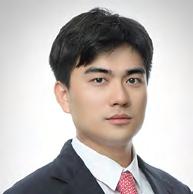
“This project allowed me to face the problems that a CEO of an actual listed company faces while I am still in school. It was all a very valuable experience for me.”
DAHAI LIU, MSMS ‘22
ISRAEL LAB TEAM MEMBER
Pictured from left to right: Shinya Shinoda, MBA ’22; Omer Keilaf, co-founder and CEO of Innoviz; Jizheng Luan, MSMS ’22
EMBA O-LAB STUDENT
SMART UNDERGARMENTS FOR WOMEN, BY WOMEN
Technologist, athlete, and mom Christy Fernandez Cull already had the concept for a new product when she enrolled in the Executive MBA (EMBA) program. When she joined IDEA Lab in London, with fellow EMBA student and obstetriciangynecologist Belen Fraile Ortiz, that’s when her idea really took off.
“IDEA Lab further motivated bringing DaVinci Wearables into focus,” says Cull, who’s company
is first-to-market with smart underwear that tracks menstrual cycles and hormonal fluctuations to optimize fitness health for female athletes.
“Having the opportunity to put dreams into action with support from friends, professors, and mentors was the greatest benefit.”
CHRISTY FERNANDEZ CULL, EMBA ’22
IDEA LAB TEAM MEMBER
SOURCING IMPACT INVESTORS FOR PRODUCT LAUNCH
Israel-based social technology company Intuition Robotics had a big idea—a voice-activated “care companion” like Alexa for elderly adults. Called ElliQ, the product could offer fitness reminders, wellness support, video calls, entertainment, photos, and even jokes. But would anyone invest in it?
The company tasked an EMBA Israel Lab team with identifying $15-million in impact investments for the ElliQ, which involved clearly communicating its benefits and drilling down on its niche in the marketplace. Working closely with CEO and co-
founder Dor Skuler, the student team identified 19 potential partners, and even got to see the product launched and featured on “The Today Show.”
“We learned a lot through the process. Dor [Skuler] is an incredible leader and truly inspiring individual.”
BLAIRE RYAN, EMBA ’22 ISRAEL LAB TEAM MEMBER
DEVELOPING A STRATEGY TO REDUCE AIRPORT WAIT TIMES
When United Airlines needed a strategy for leveraging real-time operations data to reduce wait times in their airport lobbies, they turned to a team of students in Enterprise Management Lab (EM-Lab).
After completing their analysis, the students made a presentation to senior leaders at United, recommending the company take certain steps to improve wait times. United said the students’ work gave them new insights into its customer base and industry, and ultimately, helped justify a business case to launch the new operational analytics approach.
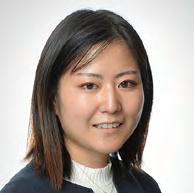
“This experience boosted my confidence. The project was a great opportunity for our team to test our professional experience and new learnings in the real business world.”
AYAKA FUJISAKI, MBA ’23 EM-LAB TEAM MEMBER
CRAFTING A MARKETING PLAN FOR NEW HEALTH-MONITORING DEVICE
When the Mitsubishi Electric Innovation Center needed a go-to-market strategy for a new hardwaresoftware AI camera, they relied on two IDEA Lab students to get the job done.
The pair of students devised a marketing plan for the fledgling device HealthCam, which monitors the body’s vital signs from a distance using photoplethysmography (PPG), an optical measurement method often used to capture heart rate. A working prototype of HealthCam enables people to stand in front of the camera scanner and see their current body temperature, respiration rate, blood oxygenation, and heart rate within 10 seconds. Ideally, this technology could be used in nursing homes and other settings where health surveillance is necessary.
“This was an exciting challenge in that it was a serious innovation that required the whole gamut of frameworks and tactics that we were learning in the Executive MBA program.”
MACHINE LEARNING PROJECT SUPPORTS UN MINE ACTION SERVICE
“Seeing the impact that our contribution could have toward the United Nations’ work on a global scale helped us stay motivated throughout the different challenges we faced.”
ULTAN O’ROURKE, MBAN ’22 A-LAB TEAM MEMBER
When the United Nations Mine Action Service (UNMAS) needed to know for sure that their efforts to eliminate undetonated mines and explosives in Afghanistan were leading to measurable economic development, they knew a team of Analytics Lab (A-Lab) students could help.
To help UNMAS detect the presence of buildings and roads—key indicators of development—in areas that had been cleared of unexploded devices, the students developed a machine learning model that would rely on satellite imagery. Ultimately, they produced a proof-of-concept model capable of attaining an accuracy rate greater than 96 percent in a test scenario.
ADIL BAHADOOR, EMBA ‘22 IDEA LAB TEAM MEMBER
CREATING AN EFFECTIVE SOURCING AND SUPPLY CHAIN DECISION TOOL
BY KARA BASKIN
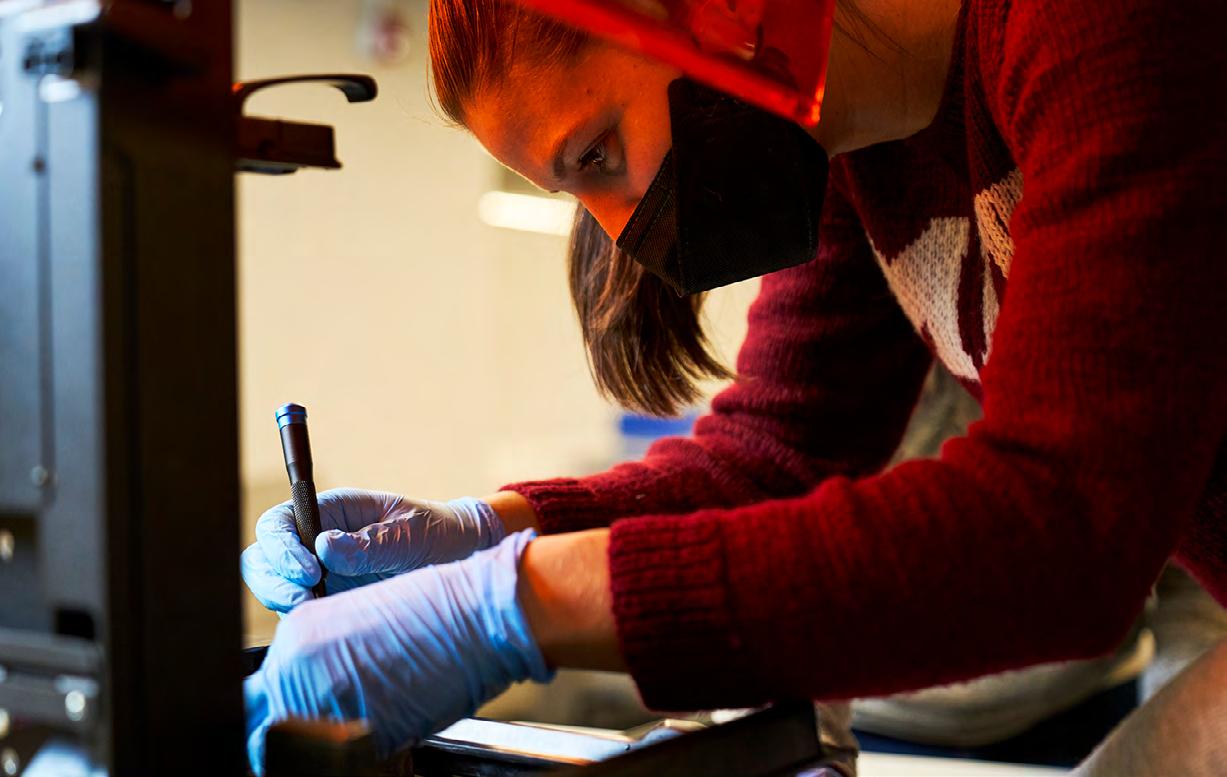
Formlabs democratizes the printing process: The Somerville company designs and produces high-quality, affordable 3D printers using ultra-precise stereolithography technology. They also create their own software, post-processing solutions, and consumables (such as printer resins) to enable customers to create high-quality 3D-printed parts. MIT Media Lab students David Cranor, Natan Linder, and Maxim Lobovsky founded the company in 2011.
PHOTOGRAPHY BY KELLY DAVIDSON
FROM MAXIMUM PRECISION TO CLEAR DECISIONS
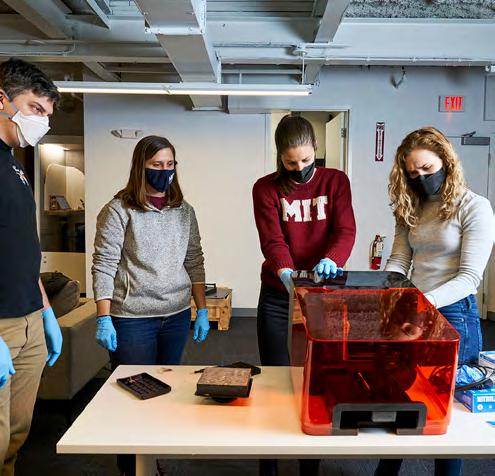
A decade into launch, the organization needed a structured process by which to evaluate supply chain and sourcing decisions — so it made perfect sense to bring in current MIT Leaders in Global Operations (LGO) students for help. As part of their Operations Lab (Ops-Lab) project, Zoe Hinton, Jennifer Pandolf, and Lisa Schleuter worked with the company to devise a decision-making method.
Hinton, a mechanical engineer, applied to the LGO program to sharpen her leadership skills. Schleuter, a structural engineer and production engineering manager, wanted to hone her technical and business skills to lead larger teams. Pandolf is a control systems engineer who worked on engineering design for Rolls Royce and appreciates efficiency in all its forms.
All three were drawn to the Formlabs project because of the nascent company’s flexibility, open-mindedness, and entrepreneurial mindset. Here, they could truly make an impact by devising a new process from scratch with a willing audience who trusted MIT’s guidance.
“There wasn’t yet a robust process in place for making the decisions in this part of the supply chain, and that was really intriguing to me — to apply the things we had learned in our classes, but also because I think setting up a process of any type is pretty challenging. Getting to see how that works at a company of this size, at this point in their growth trajectory, was really appealing,” Schleuter, LGO ‘23 says.
A MUTUALLY BENEFICIAL PAIRING
The pairing was perfect: Ops-Lab, one of MIT Sloan’s many Action Learning labs, is devoted to operations problem solving. This lab gives students the chance to tackle projects that leverage LGO engineering and management skills with a small team of peers and guidance from industry mentors.
In this case, mentor and engineering management executive Dawn Fitzgerald, chair of the advisory board for MIT Machine Intelligence for Manufacturing and
Operations and an LGO graduate, oversaw the project. Fitzgerald is moved by the symbiotic relationship between organization and student, so distinct to Action Learning.
“Action Learning labs have the opportunity to bring problems forward for a fresh set of eyes [and] brilliant minds … The discovery is very powerful for the organization that’s bringing the team in, and the discovery is very powerful for the students participating in it. I’ve used the things that are being taught in Ops-Lab on a daily basis. This is not stuff that you learn once and put on the shelf. I believe in its impact,” she says.
LGOs HELPING LGOs
“Working with LGO alums ended up giving us a lot of freedom and independence,” says Hinton, LGO ’23. “It was very exciting: Formlabs put a lot of trust in us to give our true opinions based on what we’ve learned through our coursework at MIT. They weren’t swayed by what they already believed they should be doing as a company.”
The team determined that criteria for deciding between a traditional “Contract Manufacturing Purchase” and a “Contract Manufacturer with Consigned Inventory” option was essential for
Formlabs to protect its product quality, delivery, and improve their supply chain cost structure moving forward. They eventually landed on criteria that included lead time, complexity of the part, risk of rework, and set-up time or production hardening with suppliers.
The team’s problem-solving approach was based on ‘DMAIC’ methodology (Define, Measure, Analyze, Improve, Control). As part of the project research phase, they conducted one-onone stakeholder interviews to understand the key considerations for sourcing decisions. They determined that sourcing decisions should be based on three pillars: strategy, economic factors, and risk. Happily, because the company is local and MIT-focused, the team was able to meet in person and develop a rapport, eventually conducting workshop sessions with stakeholders to test out the tool.
“Hosting the Ops-Lab team was an opportunity to achieve one of our strategic goals in a timely manner, allowing my team to focus on other priorities. Having taken the class before, I had high expectations of the students, and they delivered,” says Ammar Asfour, LGO ’15 and head of supply chain operations and fulfillment at Formlabs.
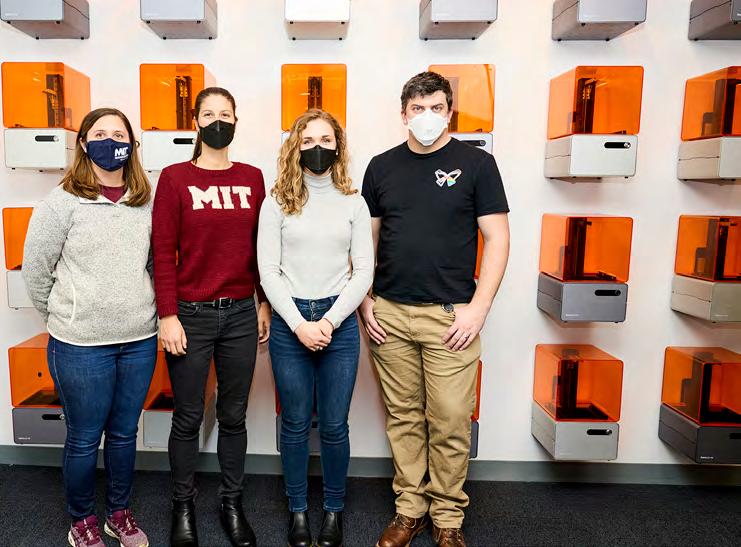
Pictured from left to right: LGO students Jennifer Pandolf, Lisa Schleuter, and Zoe Hinton, and Formlabs staff member Andrew Crane.
The LGO team was eager to help the company speed up and focus their decision-making discussions. But it was a slightly amorphous task, and so the group pressed Formlabs to tighten the focus and define the problem. This realization was a learning experience on its own.
“We were given a pretty broad explanation of what they wanted from us. Over the first few weeks, we realized as a team that maybe they weren’t asking the right question. And so it was really the skill to learn to ask what the company really wanted and be able to define the problem really well, that ultimately set us up for success. If you don’t have a good problem, it’s going to be hard to give a good solution,” Hinton says.
“We were able to help them think through their problems, rather than just giving them the answer,” says Pandolf, LGO ’23, linking work experience to classroom learning throughout.
For instance, “I was in an operation strategy class where we talked through supply chain’s strategic frameworks. This includes thinking through your suppliers’ motives, what type of environment like they’re in from an industry perspective, and how it relates to their goals and objectives as a company. I probably wouldn’t have thought that initially about the class until I’d actually taken an Action Learning lab,” she says.
A SIMPLE BUT ELEGANT SOLUTION
The Ops-Lab team ultimately presented Formlabs with a tool that provides a standard evaluation process for supply chain decisions, grounding communication between diverse stakeholders and decision makers. Using a step-by-step questionnaire, it creates a chart with sourcing solution recommendations.
“Sometimes, going too far into the weeds isn’t the right approach. You just need to take a step back and keep it simple, and that’s all that’s needed,” says Hinton. “I think we were all surprised by how simple our solution ended up being.”
Simple, but effective.
“We needed a tool that allows us to assess the best strategy of sourcing certain parts given their attributes. This was one of those ideas that seemed simple at face value, but we knew it would grow in complexity the more we worked on it,” Asfour says.
And, indeed, Formlabs is using it now as they expand internationally.
“Our team in China is revamping our sourcing strategy and locking in suppliers for new products. We were actually talking about some of the recommendations that came out of the tool today.”
REFLECTIONS: ACTION LEARNING IN A CHANGING WORLD
As a mentor for a variety of Action Learning labs, and alumnus of the program, lecturer Dr. Luis Barros, MBA ’98, has seen it grow and thrive—and even adapt during a pandemic. As our labs transitioned from remote to hybrid to in-person over the past year, unexpected lessons were learned. For many faculty members and mentors, like Barros, the experience altered their perception of what it means to learn and work effectively.
Over the past year, Barros worked with a few classes where students were 100 percent remote and/or located in different time zones, requiring them to participate late at night or super early in the morning. He was pleasantly surprised by how well they all adapted.
“In all cases, they remarkably adjusted to those situations and performed quite well. They also took extra steps to communicate and participate. In the end, I became a believer that one could indeed go through a rigorous curriculum with a hybrid online and offline model,” says Barros, who is also managing partner of the investment firm Leading Business Ventures. “It’s even inspired me to adopt such setups at work, where I’ve hired employees who work 100 percent remote.”
MAKING A DIFFERENCE IN HEALTHCARE
ANNE QUAADGRAS
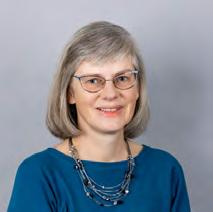
The highest number of students to date took Healthcare Lab in 2021—a total of 54. H-Lab faculty member Anne Quaadgras says it was the pandemic that boosted interest in the course. And for most students, she says, their reasons for enrolling were personal.
“They were affected by COVID-19 or knew someone who was, and were motivated to fix the issues the pandemic highlighted— everything from access to care to telemedicine to the disproportionately negative effects on underrepresented populations. And the question many of their projects addressed was, “The world has changed. Now what?”
Dealing with pivots and change and still finding a way to work as an effective team is more important than ever in all organizations, Quaadgras adds, but especially in healthcare.
H-Lab enrolls a diverse group of students in terms of their work experience—including Executive MBA students, who might be physicians with 30 years in the field;
Sloan Fellows MBA students, who have worked in industry for ten years or more; MBA students, who might have healthcare experience, or not; and doctoral students who could have backgrounds in management, engineering, or biology. The course even accepts undergraduates.
“We insist our students form diverse teams, with members from different backgrounds and from different programs because healthcare is inherently interdisciplinary,” Quaadgras says. “Working in these groups can be challenging—we know it, we named it, and we help students navigate it. And in the end, everyone learns a lot about complex teams, and themselves.”
At the conclusion of the course, H-Lab students are always transformed, and last year was no exception. Even though some might not know much about healthcare going into a project, by the end, they discover they can have an impact on the system and bring value to their host organization.
“H-Lab students discover that the healthcare system is complex, but not impossibly so. And most importantly, they learn what it takes to make a difference.”
ANNE QUAADGRAS
H-LAB FACULTY MEMBER; SENIOR LECTURER, OPERATIONS MANAGEMENT; DIRECTOR, MIT SLOAN HEALTH SYSTEMS INITIATIVE
ADAPTING UNDER CHANGING US-CHINA RELATIONS
JOHN GRANT
China Lab shut down completely in late January, 2020, even before COVID-19 was classified a pandemic. For the next two years, the course was delivered remotely—and remains so today.
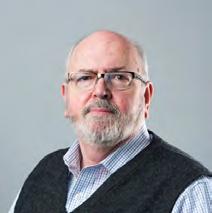
“Being entirely remote has put extra demands on mentors and student teams in China and Boston,” says China Lab faculty member John Grant. “We’ve had to learn how best to communicate, manage, teach, and make decisions in this new environment.”
China Lab is comprised of MBA, Master of Finance, and Master of Science in Management Studies students at MIT and international MBA students studying at Tsinghua University and Fudan University in China. Historically, the two groups would form joint teams to work on a project for a host organization in China. The international MBA students would visit MIT to meet their teammates, and the MIT students, in turn, would travel to China to work with their host organizations. But with China’s strict zero-COVID policies just recently lifted, travel remains uncertain.
Although China Lab has, for the most part, adapted to the remote format, technology and increased tensions between the United States and China continue to present challenges. “Some platforms are blocked by the Chinese government, so we have to adjust to communications and productivity
tools that can support a US-China working team,” says Grant. The issues of privacy in China are not going to get better or easier, and increased scrutiny in the United States also affects the course, he says. “We’re required to restrict our activity and interactions with Chinese organizations on the US Department of Commerce’s Entity List. Because of the policy, we’ve had to stop working with Chinese companies involved in big data, AI, and machine learning. Over the past year, we’ve had to adjust, and that adjustment continues.”
All of this has spurred a shift in topics students were interested in exploring, Grant says. “Historically, we focused on business and the economy in China, but now students want course content, lectures, cases, and speakers to include macro issues like geopolitics and US-China relations.” These complex topics influence business in both countries, which is why the teaching team decided to approach them head on.
“We decided not to skirt around some very tense issues, like the future of Taiwan and Hong Kong and doing business there, the heightened tensions around the tech wars, semiconductors, and the life sciences, and the global response to these concerns,” he says. “We chose to facilitate very open, candid discussions about the realities, discussing how we can compete and/or
cooperate, and how these tensions affect MBA managers, personally and professionally.”
Fortunately, because of Zoom, a greater number of experts from China, Taiwan, and Hong Kong could speak to the class and answer their questions directly. “Students want to know what it’s like to live and work as an expat and a local in China these days. Our speakers, executives in the region, share personal stories about the ongoing shut downs, the government tracking, and strict COVID-19 protocols.”
When will China Lab go back to being an in-person experience? That remains to be seen. “In early January, China dropped its quarantine restrictions, but it is unclear how COVID-19 will spread through the population, particularly with many of the elderly still not vaccinated. It will also take some time to start the processing of visas for entry, so our timing for reengagement onsite will have to consider health risks and infrastructure preparedness.”
Since the 1972 Shanghai Communiqué reset USChina relations, the current situation is one of the most concerning Grant has seen, which is why he believes it’s more critical than ever for China Lab to continue. “It’s too important to walk away from the relationship between the world’s two largest economies, and the knowledge and insights we can bring to our students. There’s too much at stake.”
JOHN GRANT
“The less we engage with each other, the riskier it is for everyone. And if there’s any institution in the world that should be engaged in this work, it’s MIT.”
CHINA LAB FACULTY MEMBER; SENIOR LECTURER, GLOBAL ECONOMICS AND MANAGEMENT
EXPANDING INTO THE ASEAN REGION
Action Learning is launching a new lab in spring 2023—ASEAN Lab. It will be the only one at MIT Sloan focused on business practices in Southeast Asia. Student teams will travel to Indonesia, Malaysia, Singapore, and Thailand, solving realworld problems with host organizations in person.
GLOBAL ENTREPRENEURSHIP LAB (G-LAB)
HELPING COMPANIES AROUND THE WORLD THRIVE
MICHELLANA JESTER
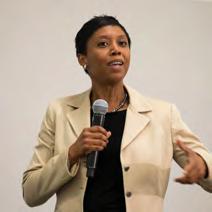
G-Lab was called ‘Back to Growth Lab’ this past year, says G-Lab faculty member Michellana Jester, reflecting its students’ drive to help startup businesses rebound from the pandemic. “The focus of our course content and projects shifted to how students could support companies in the COVID-19 era, and have a direct positive impact on their resilience. Students were excited and passionate about helping businesses survive—and thrive.”
One highlight project from last year involved a former G-Lab student and his startup, Enko Education. Eric Pignot, MBA ’13, created his company because he’s passionate about democratizing high-quality education in sub-Saharan Africa. He worked on a plan to develop a network of private schools in the region while still in G-Lab. About 10 years later, with 15 schools up and running in nine African countries, Pignot returned to G-Lab to build an online school and further expand his reach.
“It was a remarkable experience for students who could travel,” Jester says. “And special for Eric, too.” Over the next five years, Enko Education plans to open 30 more schools in at least 20 African countries.
As health concerns about travel lingered last year, G-Lab was delivered in three formats: in-person, remote, and hybrid. It also had
two tracks: one in which students visited their host companies and one in which they did not. “We didn’t know what to expect,” Jester admits. “Running dual tracks within one class session was risky, but in the end, it worked out.”
Although G-Lab has since returned to its original format, the teaching team has incorporated other practices put in place during the pandemic. “Class participation has always been part of a student’s grade in our course,” Jester says. “But because participation became difficult over Zoom and with people getting sick,
“What I love most about what I do is watching the transition from where students begin to where they end—that evolution when they encounter adversity. I’m always surprised by how they are able to step back, reset, and move forward.”
MICHELLANA JESTER G-LAB FACULTY MEMBER; LECTURER, GLOBAL ECONOMICS AND MANAGEMENT
we invited students to respond to an optional ‘Question-of-the-Week’ about something in the news relevant to the course. So, if someone had to miss a class or didn’t feel confident speaking up or competing with more verbal students, this gave them a chance to participate.” Another new COVID-era activity G-Lab is keeping in place is ‘Top-tier Connect’, a series of small group sessions, mostly on Zoom, where students can interact with senior entrepreneurs in different industries from around the world.
While some aspects of G-Lab have changed, one thing hasn’t—how much students are transformed by the experience.
G-LAB BY THE NUMBERS
G-Lab is one of the longestrunning Action Learning labs at MIT Sloan. Since 2000, it has provided insight and analysis to 515 startup and growing companies on 739 projects in 55 emerging and frontier markets globally.
ADDRESSING AMERICAN DIVIDES IN THE AGE OF COVID-19 USA LAB
“For two years, our students were not allowed to visit their hosts and host communities in person, but finally, this past spring, we returned to our field format. It would be nice to say that the American divides we set out to address with USA Lab had lessened during COVID-19; instead, the pandemic has added to the inequities and complexity we knew we must address when we first conceived the program. Still, as with so many major undertakings, multiple individual projects and individual student revelations may be the best—perhaps the only— way to achieve our ends. If we do it right, our talented students will generate a worthy legacy for our strategy of long-term, bigpicture thinking and practical, system-altering results.”
LEIGH HAFREY
USA
LAB FACULTY MEMBER; SENIOR LECTURER, COMMUNICATION AND ETHICS
THE FUTURE
If the past year has taught us anything, it is that our community is more than capable of adapting, growing, and thriving in a changing world. And as long as there are real-world problems to be solved, host organizations who seek our help, and students eager to learn by doing, we will continue to offer one of the best Action Learning programs in the world. With a new team in place, recordhigh demand for our courses, and exciting new projects on the horizon, we’re excited for what’s next.