ETHICAL QUESTIONS AND QUANDARIES FOR LIVING IN OUTER SPACE
ERIKA NESVOLD


© 2023 Massachusetts Institute of Technology
All rights reserved. No part of this book may be reproduced in any form by any electronic or mechanical means (including photocopying, recording, or information storage and retrieval) without permission in writing from the publisher.
The MIT Press would like to thank the anonymous peer reviewers who provided comments on drafts of this book. The generous work of academic experts is essential for establishing the authority and quality of our publications. We acknowledge with gratitude the contributions of these otherwise uncredited readers.
This book was set in Arnhem Pro and Frank New by New Best-set Typesetters Ltd. Printed and bound in the United States of America.
Library of Congress Cataloging-in-Publication Data
Names: Nesvold, Erika, author.
Title: Off-Earth : ethical questions and quandaries for living in outer space / Erika Nesvold.
Description: Cambridge, Massachusetts : The MIT Press, [2023] | Includes bibliographical references and index.
Identifiers: LCCN 2022006370 (print) | LCCN 2022006371 (ebook) | ISBN 9780262047548 (hardcover) | ISBN 9780262372527 (epub) | ISBN 9780262372534 (pdf)
Subjects: LCSH: Space colonies—Moral and ethical aspects. | Space colonies— Social aspects.
Classification: LCC TL795.7 .N47 2023 (print) | LCC TL795.7 (ebook) | DDC 629.44/2—dc23/eng/20221003
LC record available at https://lccn.loc.gov/2022006370
LC ebook record available at https://lccn.loc.gov/2022006371
PREFACE (vii)
INTRODUCTION (xi)
I HOW DO WE BEGIN?
1 SHOULD WE SETTLE SPACE? (3)
2 WHY ARE WE GOING? (21)
3 WHO GETS TO GO? (35)
II HOW WILL WE LIVE WITH THE LAND?
4 WHO OWNS SPACE? (53)
5 HOW WILL WE SHARE THE SPACE ENVIRONMENT? (73)
6 HOW CAN WE PROTECT THE SPACE ENVIRONMENT? (93)
III HOW WILL WE LIVE WITH EACH OTHER?
7 WHERE’S MY MONEY? (113)
8 WHAT IF SOMEONE STEALS MY STUFF? (127)
9 WHO’S IN CHARGE? (147)
IV HOW CAN WE LIVE WELL?
10 WHAT IF I WANT TO HAVE KIDS? (169)
11 WHAT IF I GET SICK? (187)
12 WHICH WAY IS MECCA? (203)
13 WHAT CAN WE DO TO PREPARE? (217)
ACKNOWLEDGMENTS (225) NOTES (227) BIBLIOGRAPHY (251) INDEX (273)
The year is 1211 CE, and you’re sitting on a great canoe somewhere in the Pacific Ocean. You are one of the strongest young men from your village, able to go without food or much water for many days while still keeping up with the other rowers. You were proud to be hand-picked by the chief to accompany him on this long voyage to explore the sea and find new islands. If the land you discover is already occupied, you may decide to live among those people and build a new home and family. Or perhaps you will return to your village with great stories to tell and directions to an uninhabited paradise.
The year is 1787 CE, and you’re sitting below decks on a ship just rounding the southern tip of Africa. You’ve been on this boat for five months and have another whole ocean to cross before you and your fellow transportees reach your new home, the first British penal colony in Australia. Your sentence is only seven years long, but you have no idea if you’ll ever see your family again. And you’re not sure how exactly you’re supposed to help establish this colony, given that your only career experience was as a pickpocket in the streets of London. But hey, nobody asked your opinion about any of this, did they?
The year is 2100 CE, and you’re sitting on a rocket. The recruitment posters have gone up everywhere: Be A Part of Our Bright Future! Help Write the Next Chapter of Human History! Mars Needs YOU! You were one of the first people in line to sign up. But what was the next step? Did you need to buy a ticket?
How did you qualify? Did you need experience? Did you have to pass a physical test? And now that you’ve made it onto the ship, who else is sitting next to you? What do they look like? Do you represent humanity’s best and brightest? Most courageous and adventurous? Or just the wealthiest?
Much of the effort and investment of the private spaceflight industry so far has focused on the hardware of space settlement: the rockets that will launch us from our home planet; the long-haul ships that will carry us to our destination; the habitats that will protect us from the harsh environment; and the various technologies that will extract resources, recycle our water, clean our air, and produce our food. But eventually, organizations hoping to build the first human space settlement will need to turn their attention to the wetware component of the mission: the humans who will populate the settlement. In the earliest, riskiest days of a settlement, the capabilities of the human settlers and crew will have just as much impact on the success or failure of the mission as the technology keeping them alive. It will be human ingenuity, creativity, and opposable thumbs that may well save the day when technology breaks down or natural disaster strikes. On the other hand, humans are just as skilled at ruining things as they are at saving the day: we can turn fertile environments into barren wastelands through overharvesting and thriving cities into mass graves through war. We can collapse vast empires with something as simple as an ambiguous line of succession. Moving to the barely inhabitable environment of a space settlement will only intensify the stresses on our hierarchies and social systems, and all the technology in the solar system won’t save a mission beset by interpersonal conflict, incompetence, or negligence.
In the longer term, the demographics of the population of a space settlement, especially the first generation, will have an outsized effect on the future of the society. The cultural makeup of the population will be passed down from one generation to the next, and while the settlement will evolve its own unique identity as time passes, the values and
traditions of its earliest members will act as the seeds for its future culture. The political ideology of the early settlers will be codified into the foundations of the settlement’s government. The settlers’ expertise and interests will shape their civilization’s economic path. While a space settlement will likely continue to receive immigrants from Earth long after it is established, its founding members will have a lasting impact on the identity of the community. We’ve seen this happen many times on Earth. Consider the influence of the early colonial Puritan values on today’s American culture, or the effects of Australia’s history of colonization by convicts and working- class English settlers on so much of their modern national identity.
Given the importance of this first generation of settlers, for both the short-term survival of the settlement and its long-term identity, it’s worth asking who will decide which Earthlings to send in our first wave of migration. At the moment, the unspoken rule seems to be that whoever owns the rockets gets to pick the astronauts. Space agencies like NASA have strict selection criteria for determining who they will send into space, even for the handful of space “tourists” who have paid their way. No private spaceflight company has yet released selection criteria for their future pilots and staff: Virgin Galactic currently only employs test pilots, who the company says may one day become “the world’s first commercial Spaceship Pilots,” and SpaceX capsules have, for the most part, been piloted by NASA astronauts, with the exception of the all- civilian Inspiration4 flight in September 2021, paid for by billionaire Jared Isaacman.1 Perhaps in the future, once space settlements have been established with stable populations and functioning governments, the settlements themselves will determine who they will allow in, via immigration laws; but at the outset it will be up to the governments, space agencies, and private space companies here on Earth.
It seems likely that the number of volunteers willing to join the first group of settlers on Mars or the Moon will outstrip the settlement’s capacity. In 2017, a record-breaking 18,300 people responded to NASA’s call for applications to join the astronaut corps (including myself). Only twelve of these applicants were chosen as astronaut candidates (not including myself).2 Assuming this level of enthusiasm for living in space doesn’t diminish in the next few decades, the first serious effort to form a permanent
off-Earth settlement will be met with an overwhelming number of volunteers. Imagine being part of the small group of people assigned the daunting task of whittling down a list of hundreds of thousands of hopeful applicants to just one hundred future space settlers. What should we base our decision on?
Let’s start at the idealist end of the spectrum. Suppose we have a magic wand that lets us ignore any and all practical considerations. In that case, what’s the fairest way to select our space settlers? In this fantasy scenario, I would argue that anyone who wants to travel to space should be allowed and encouraged to do so, but how does this ideal hold up in the real world?
Once we start to view space travel as migration instead of simply exploration, this question starts to look more like a matter of border control than a hiring program for a high-risk job. Is the frontier of space an open border, or should it be regulated? We could take some guidance from the United Nations, which considers freedom of movement to be a human right. Article 13 of the UN’s Universal Declaration of Human Rights, written in 1948, states that “everyone has the right to leave any country, including his own, and to return to his country.”3 This wording doesn’t concern itself with the direction of travel— given the time it was written, its authors probably assumed that the hypothetical human was leaving the country along the surface of the Earth, not directly up into space—but the Outer Space Treaty of 1967 does specifically address space travel. In Article I, it states that “outer space, including the moon and other celestial bodies, shall be free for exploration and use by all States without discrimination of any kind, on a basis of equality and in accordance with international law, and there shall be free access to all areas of celestial bodies.”4 So, these documents seem to support the ideal that anyone who wants to should be allowed to leave the Earth. In other words, there should be universal access to space.
Of course, there are practical limitations. There’s a difference between being allowed to travel to space and being able to. Having the right
to cross a border on Earth doesn’t give someone the right to board an airplane or a ship without purchasing a ticket. Backpackers hoping to travel on the cheap won’t be able to hike or hitchhike their way into space (despite Douglas Adams’s very detailed manuals on the subject5). It is— and will be for decades, if not centuries, to come— enormously expensive to travel to space, and it doesn’t get any cheaper away from the surface of the Earth. Resources like water, air, calories, and even living space will be unimaginably precious in early space settlements. Trying to cram too many people into such a resource-limited environment will lead directly to suffering and death, no matter what our ideals tell us about who has a right to access that environment. While I wish that we lived in a utopian, Star Trek-like future in which every person who wants to go to space is able to, this may never be achievable, and it certainly won’t be in the near future.
However, there are still fair selection methods that would let us provide equal, if not universal, access to space. For example, we could institute a lottery system. This idea is often suggested in the context of space-as-lifeboat, as discussed in the previous chapter. But let’s set the doomsday scenarios aside for the moment and stick to considering a future where Earth remains reasonably habitable and selection for the space settlement program is not required for survival. If it’s not a matter of life and death, do we really need to ensure equal access to space?
On the one hand, space exploration has always represented some of humanity’s most ambitious and idealistic values: peaceful cooperation between nations that are not otherwise allies, curiosity and ingenuity in the face of overwhelming technical challenges, and tenacity and courage in an unforgivingly dangerous environment. In this spirit, we might ask questions like: If space represents a better, brighter future, shouldn’t everyone have access to it? Or, at least, an equal chance at reaching it? If space represents the future of humanity, whether better or worse, shouldn’t everyone have an equal opportunity to influence and build that future?
On the other hand, the history of space exploration has also reflected the practical limitations and biases of the societies that have participated in it. Not everyone gets to be an astronaut. We don’t have a lottery system to select astronaut candidates from the pool of applicants; they’re
carefully chosen by the space agencies who are building and launching the rockets. The only exception to this, at least so far, is that someone with an extremely large amount of money might be able to convince one of those space agencies to let them hitch a ride. In 1990, the Tokyo Broadcasting System paid Russia at least $12 million to fly one of their reporters to the space station Mir for one week, and between 2001 and 2009, seven private citizens paid roughly $20–40 million each to be flown to space.6 More recently, American billionaire Jared Isaacman paid SpaceX an undisclosed amount of money for a three- day trip to orbit in the company’s Crew Dragon capsule, which seats four. Isaacman chose one of the other three crew members via a raffle, one via an entrepreneurship contest, and one because she was a patient and later employee at St. Jude’s Children’s Research Hospital, which Isaacman raised funds for via the raffle.7
Not only do space agencies have very rigorous and competitive astronaut selection programs but they also place limitations on who can even apply to be an astronaut. For example, applicants must typically be citizens of the country that funds the space agency and meet certain physical and educational qualifications. In their most recent round of astronaut candidate selection in 2020, NASA required applicants to have a minimum of a master’s degree in a STEM field, two years of related experience or 1,000 hours of jet pilot experience, and eyesight correctable to 20/20.8 In the early days of space travel, there were even more restrictions on who could hope to travel to space. Both the USA and the USSR selected their first astronauts from pilots in their respective militaries. As a result, the demographics of the population of people who have been to space are not representative of the Earth’s population, either now or in 1961 when Yuri Gagarin became the first human in space. As of early 2021, 569 people had traveled to space, representing 38 nationalities (plus the Soviet Union and West Germany). Only 65, just over 10 percent, have been women.9
If we wanted to cling to the concept of fairness, we could insist that every demographic on Earth is represented in space in numbers corresponding to their percentage of the human population. Only 10 percent of space travelers have been women? Let’s get that up to 49.59 percent.10
Out of 100 space settlers, 18 should be from China, 17 from India, and 4 from the United States.11 But what about the island nation of Tuvalu, which makes up about 0.00015 percent of the Earth’s population? Under
this system, they won’t get a Tuvaluan representative in space until the number of settlers reaches one million. And what if none of the 11,200 Tuvaluans on Earth want to live in space? It wouldn’t make any sense to force one of them to move to Mars just to satisfy our demographic goals. Both universal access to and equal representation in space might very well be impossible. But equal access to space, in which everyone with the desire to live in space has a fair shot at it, is a worthwhile goal.
BECAUSE ALL THE GOOD INTENTIONS IN THE WORLD WON’T MATTER IF THE SETTLEMENT FAILS
It’s easy to talk about idealist approaches to space settlement from the comfort of a living room on Earth, but, as is often the case, our best intentions and plans are unlikely to survive first contact with the enemy. (The enemy in this scenario being the cold, heartless, radiation-filled vacuum of space.) Space travel is hard; it’s expensive; and for someone who doesn’t know what they’re doing— or is just unlucky—it’s deadly. Fully embracing the concept of equal access to space and running a lottery to select such a small number of candidates could easily result in a group that’s not qualified to handle the challenges they will face. We’ll have to balance our ideals and values with a utilitarian approach in which we ask what’s best for the survival of the settlement. This means selecting candidate settlers based not only on their own desire to go to space but also on what they can contribute to the effort.
Early settlements, before they have had enough time to raise and train the next generation, will need certain occupations and areas of expertise: doctors, engineers, farmers, and so on. It would be poor planning to send an entire fleet of dentists but no plumbers, but it would also be a good idea to bring at least one person trained in dentistry. A crucial step in our selection process must be to determine what range of occupations and skills are necessary for a settlement’s survival. Some are obvious: the experts needed for maintaining the health of humans and technology in the settlement. But what about people trained in leadership? In the arts? In childcare or education?
Regardless of which fields we decide to prioritize, I would argue that the most important skills to screen for in a candidate settler are not emergency surgery or spacecraft engine repair, but rather the ability to both learn and teach effectively. Space settlers will need to be able to rapidly adapt to their new environment, absorb information quickly during formal training, and pick up new skills as they live in the settlement. They will also need to be excellent teachers, since they will need to train the next generation to replace them in the settlement. It will be crucial to teach certain skills to as many members of the settlement as possible to guard against the loss of vital knowledge in the event of a fatal accident. Consider, for example, a plague that wipes out all the settlement’s doctors early, leaving untrained personnel to treat the rest of the patients. Or an industrial accident that kills the only people qualified to repair the life support system.
For an example of the dangers of losing trained personnel early in a catastrophe, consider the 1967 fire aboard the USS Forrestal, a US Navy aircraft carrier operating in the Gulf of Tonkin during the Vietnam War. An electrical fault in one of the aircraft on deck caused a rocket to fire into another plane, igniting the jet fuel and starting a fire that ultimately killed more than 130 sailors on board. The Forrestal crew fought to extinguish the fire for hours and eventually managed to save the ship, but the initial explosions of fuel tanks and munitions on deck killed or injured nearly all the specially trained firefighting teams. The remaining crew members did their best, but their lack of training led them to make crucial tactical errors while fighting the fire. For example, one team managed to smother part of the fire by laying down a layer of protective firefighting foam over the burning fuel on the deck, only to have a second crew with a water hose enthusiastically wash the foam away, exposing the fuel to air and allowing it to reignite. Today, all sailors in the US Navy are extensively trained in damage control procedures and the use of firefighting and safety equipment, and a training video containing footage of the Forrestal fire is still shown to trainees in the Navy and in civilian fire departments.12 In a space settlement where an equipment failure could decimate the population in seconds, widespread training in areas like emergency medicine, life support maintenance, and safety procedures could mean the difference
between a tragic, but not catastrophic, loss of life and the complete destruction of the settlement.
BECAUSE WE STILL EXIST IN THE PHYSICAL WORLD Space agencies, which take a very utilitarian approach to crew selection, consider more than education and experience when reviewing astronaut applications. A major component of the astronaut selection process is the health screening. For example, the European Space Agency required a ten- day visit from its astronaut candidates in 2008 for a medical exam that included everything from physical fitness to dental health.13 A space agency doesn’t want to send astronauts into space who physically can’t perform their duties, or who have a higher chance of dying in the harsh conditions of spaceflight. This is both for practical purposes (a dead astronaut can’t get the job done) and moral ones.
Is this a model we want to carry on into space settlement? At first glance, it may seem like the most practical and ethical method to screen applicants. Potential settlers with certain preexisting health conditions might have a higher likelihood of death, the argument goes, and depending on the disability, they may not be able to operate the technology required for transportation and survival. For example, spacesuits, also known as extravehicular activity (EVA) suits, are designed for people who have four functional limbs, and who fall within a specific height range. In 2019, NASA had to postpone its highly advertised first all-female spacewalk in part because there were not enough medium-sized, operational EVA suits on board for both of the female crew members.14 A person with dwarfism, gigantism, or an amputated limb may not be able to operate or even fit into such a suit at all if the equipment available is limited to a small number of generic shapes and sizes.
Up to this point, these arguments have been popular in space programs, which have generally taken many of their procedures and values from the military mindset, and which are responsible for (relatively) short-term missions under limited budget constraints. But one of the
key objectives of space settlements is that they be multi-generational: eventually, settlements will not be able to filter the incoming settlers because they will be born into the settlements. We might imagine a science fictional future in which genetic screening and manipulation reach the point where hereditary disease and disability are eradicated, but there will always be the possibility of an injury causing disability later in life.
“Accidents happen,” astronomer and disabled rights activist Jesse Shanahan pointed out when I asked her about the challenges of screening potential space settlers for disabilities. “Disability is going to happen in space. It is a fact of human existence. And especially in a hostile, unfamiliar environment, there’s even more chance for people to become disabled, both mentally and physically, given the requirements and harshness of the job.”15 This means that no matter how rigorous the medical screenings are initially, eventually we will have disabled people living in space settlements. In fact, Shanahan argues that all humans are disabled in space: it is not an environment we evolved to survive in, and our bodies are not well-suited for low gravity, high radiation, or any of the other harsh conditions of space. Shanahan suggests that this requires a shift in our thinking from medical disqualification to accessibility: “Rather than thinking that we can circumvent the disability issue by just preventing previously disabled people from becoming settlers, instead we need to talk about what kinds of infrastructure we can put in place because disability is inevitable.” We will all need assistive technologies to help us live in space, so it just makes sense to plan and design our settlements with accessibility in mind. And if we’re doing that anyway, there’s no reason to exclude people from the initial settlement list due to disability.
Modern disability rights advocates like Shanahan who fight for more accessibility in public spaces often point out that accessibility benefits everyone, not just people with disabilities. The same will be true in space. A person born into a space settlement will need to be able to fit into a spacesuit at any time in their lives, from infancy through old age, in case of pressure loss in the habitat. This means that EVA suits will either need to be manufactured in a variety of sizes or will need to be designed in a manner that can be modified to change size to fit the wearer. Designing EVA suits with adaptable sizes will make space more accessible to
settlers whose body shapes differ from the average, and will also benefit any space settler whose body changes size or shape over the course of their life, which is to say, any space settler.
The European Space Agency has recently acknowledged the benefits of developing space technology for a larger variety of body shapes. In 2021, they opened applications for a “parastronaut feasibility project” to astronaut hopefuls with a “lower limb deficiency,” leg length difference, or height less than 130 centimeters. “Along the way,” states the ESA website about the program, “it will bring innovations and other benefits to the safety and efficiency of future crews.”16
As another example, suppose we were to design controls for our space habitat that could be used by people with vision impairments: voice controls, for example, or tactile controls with Braille labeling. Many astronauts today experience poorer vision after spaceflight due to the effects of microgravity. If this becomes a long-term problem in a space settlement, accessible controls for people with vision impairments will be crucial. But they will also be useful in an emergency in which people with otherwise adequate vision lose their sight.
In 2014, Italian astronaut Luca Parmitano experienced a leak in his EVA suit that caused water to trickle into his helmet during a spacewalk outside the International Space Station. The water clung to his eyes, making it very difficult to see. Parmitano had to blindly feel his way back to the airlock, grasping clumsily in thick gloves to find the handholds astronauts use to pull themselves along the outside of the station.17 A similar scenario in a space settlement would be much easier to deal with if the settlement were equipped with controls that do not solely depend on vision. Even in the absence of any vision impairment, voice controls add a measure of convenience to many activities, which is one reason why voice assistants like Siri and Alexa have become so popular.
There is another component of physical health that today’s space agencies don’t include in their screenings (at least not yet): reproductive fitness. A space settlement will only become truly self-sustaining when it can maintain and increase its population without the need for immigration. Setting aside, for now, the challenges of attempting human reproduction in space, we may need to consider the reproductive abilities of individual applicants and of the population of settlers as a whole. We will
have to find a way to balance the needs of the first generation of settlers with the requirements of future generations.
For example, suppose we narrow down our applicant pool to a group of ideal candidates. They have the perfect balance of skill sets, expertise, physical and psychological resilience, or whatever other parameters we have decided are important to us. Now suppose that this group is composed entirely of people who are unwilling or unable to reproduce naturally. This “perfect” crop of first- generation settlers could end up being the only generation! Does this mean that we should reject applicants who are infertile, elderly, or simply uninterested in having children?
My answer is a qualified “no.” We should consider the reproductive fitness of the group of candidate settlers during the selection process, and perhaps make adjustments if we see that the population of settlers as a whole is unlikely to be able to produce a second generation. But we should avoid including reproductive fitness in our criteria for individual candidates. This stance reflects my argument for equal access to space but also, more practically, it acknowledges the alternative reproduction methods available to modern humans. After all, not every member of the settlement will need to be able to reproduce, and the settlement may be able to take advantage of various artificial reproductive technologies we use on Earth today, such as in vitro fertilization or surrogacy.
Besides, restricting our candidate pool to applicants who are both fertile and willing to reproduce biologically will not, by itself, guarantee a stable population. For one thing, we need a large enough population to ensure the genetic diversity of future generations. Small, isolated populations are vulnerable to what’s known as the founder effect: certain traits will be overrepresented compared to the parent population, and over time the new population may come to look significantly different from the parent. If these overrepresented traits include recessive genetic disorders, interbreeding within the community will increase the incidence of these disorders in the new population.
The minimum viable human population is estimated to be around 10,000—smaller populations risk inbreeding due to the lack of genetic diversity.18 This can be decreased by bringing a supply of extra genetic material: frozen embryos, for example, or sperm samples. But we’ll also need to plan for accidents and disease decreasing the settlement’s population
size, and for the possibility that elements of the space environment like increased radiation or low gravity will affect the fertility rate of the settlement. The minimum viable population level of 10,000 also assumes that the population is already reasonably genetically diverse.
If we’re already considering examining the genetic makeup of our applicants in order to ensure diversity, it’s a short step toward thinking about which genetic traits might be desirable in a space settler. Maybe we should give extra weight to candidates whose descendants would be more physically suited to space. Smaller people, for example, require less rocket fuel to reach space, and they also require fewer calories and less water to survive. Of course, we could also rule out people whose genes produce a disadvantage in space: poor eyesight, for example, or a predisposition toward certain diseases. And then we find ourselves on the slippery slope to eugenics.
Any step in the direction of that slippery slope must be taken with great caution and forethought. For now, I will make the same argument that I did regarding reproductive fitness: we should consider the genetic diversity of our settler population during the selection process, but individual genetic profiling should otherwise be avoided as much as possible.
I’ve been pointing to today’s space agencies as examples of organizations that select their crew members based on what they can contribute to the mission. But there is an exception to this strict utilitarianism, and as is often the case, that exception involves large quantities of money. A handful of private citizens have circumvented the typical astronaut selection processes by paying a fee of tens of millions of dollars each. Someone feeling generous could argue that this process is still utilitarian, and that one of the things that space tourists contribute to the mission is extra funding. Indeed, many of these fee-paying space travelers reject the term “space tourist” and point out that they completed rigorous preflight training and performed scientific experiments while in space. But the fact remains that they would not have made it to space without the ability to pay. Much of
the discussion of passenger selection by today’s private spaceflight industry has also focused on financial criteria: selecting passengers based on who can afford to pay for a ticket.
Elon Musk of SpaceX has stated that one of the key steps on his roadmap for space settlement is to bring the cost of spaceflight down to the point where it is accessible to the average, middle- class American. As he said at a talk at the 67th International Astronautical Congress in 2017, “If we can get the cost of moving to Mars to be roughly equivalent to a median house price in the United States, which is around $200,000, then I think the probability of establishing a self-sustaining civilization is very high.”19 His argument, and the argument of many in the private spaceflight industry, is that space settlement must be economically sustainable at every point of its development if it is to eventually become self-sufficient. Given that the only people currently making concrete, near-term plans for offworld resource extraction and habitat construction are private companies rather than publicly funded governmental agencies, it’s starting to seem like a capitalist framework for space settlement might be a necessary evil on the path to a multi-planet human civilization. But should that framework include charging would-be settlers for their tickets to space?
In an attempt to answer this question, I’d like to point out some flaws in the SpaceX plan. For one thing, the median house price in the United States is more money than many people on Earth today will see in their lifetimes. The idea that a family will be able to sell their home and other earthly possessions to afford a ticket to space assumes that they have the financial resources of a middle- class family in a developed country. This leaves the rest of the world behind and introduces a lot of the demographic biases discussed earlier in this chapter.
More practically, there are examples from the history of colonization on Earth demonstrating that selecting colonists based simply on their ability to pay can be detrimental, and even disastrous, to the colony itself. One of the more prominent examples is Jamestown, an English settlement founded on an island in the James River in what is now the Commonwealth of Virginia but was at the time the territory of the Paspahegh subtribe of the larger Powhatan chiefdom. While eventually Jamestown became the first permanent English settlement in the Americas, it suffered multiple near collapses early in its history.
The winter of 1609–1610, referred to by some colonists as the “starving time,” was a particularly harsh period. At the beginning of this winter, nearly 500 settlers lived in Jamestown. By the following spring, only around 60 had survived the disease and starvation that took nearly all their fellow colonists.20 These last few stragglers abandoned the colony and set sail for England, although they met a relief ship carrying supplies and additional settlers on their way down the James River and were forced to return.
A number of factors likely contributed to the repeated failures at Jamestown, including natural disasters, conflict with the Powhatan (which later intensified after the colonists killed the Paspahegh chief’s wife and children), and bad luck. But the massive loss of life can be partially attributed to the lack of skill and planning among the colonists. Many of the original colonists were upper class, with only a small number of “laborers” accompanying them as servants. These aristocratic gentlemen not only lacked expertise in farming, woodworking, and other vital trades but their privileged upbringings had not prepared them for the physical labor and hardship waiting for them in the colony.21 The private investors of the Virginia Company, who financed the founding of Jamestown, were impatient to see some return on their investments, and encouraged the colonists to produce goods to be sold back in England or risk being cut off from further support. As a result, early colonists spent much of their time searching for gold or manufacturing lumber rather than farming or constructing homes.
It’s not hard to imagine a similar scenario playing out in space. The ingredients are the same: an inhospitable environment, settled by volunteers with more wealth than relevant skills, funded by private investors hoping to exploit new territory and resources for financial gain. It’s clear that if we let the financial resources of applicants dominate our candidate selection criteria, we risk repeating the tragedy of Jamestown. But I will go one step further and argue that the ability to pay should not be considered during selection at all. Should an applicant who is selected to move to a space settlement be allowed to liquidate everything they own and contribute those funds to the company or agency helping them get there? Sure, why not. But we should not judge our candidates based on their ability or willingness to do so. Limiting our settlers to only those who can afford
the trip violates both the ideal of equal access to space and the practical approach of prioritizing the most qualified candidates.
If one day I’m lucky enough to board the first spacecraft taking settlers to Mars, I don’t want to see the passenger compartment filled with only the rich and powerful. I want to look around at the people I will be spending the rest of my life with and see fellow passengers from all corners of the globe, people who will work with me to keep the settlement alive, and to teach our children the skills and values they will need to build a new society that I can be proud of. When I imagine myself making that first journey to humanity’s new home, it is in the company of Earthlings from six continents, doctors and engineers, plumbers and farmers, leaders and teachers, children and parents, and, if I’m very, very lucky, my dog.
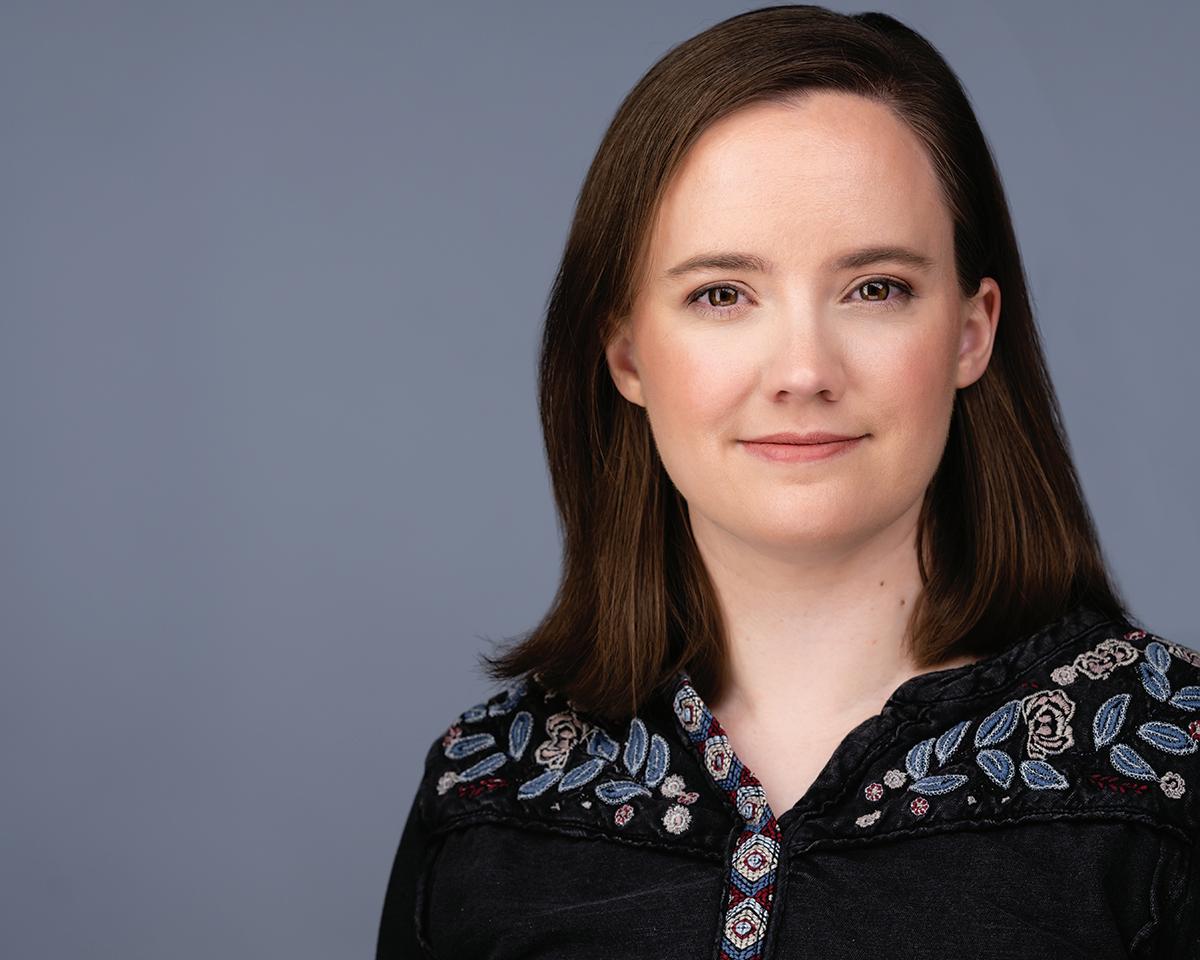
Erika Nesvold, an astrophysicist, has worked as a researcher at NASA Goddard and the Carnegie Institution for Science. She is a developer for Universe Sandbox, a physics-based space simulator; cofounder of the nonprofit organization the JustSpace Alliance; and the creator and host of the podcast Making New Worlds.
Praise for OFF- EARTH
“In Off-Earth, Nesvold engages the pivotal social, cultural, and ethical questions overlooked in most books on space settlement, demonstrating that expertise from humanities and social science is needed to sustain humans in space.”
—James Schwartz, Assistant Professor of Philosophy, Wichita State University; author of The Value of Science in Space Exploration
“Erika Nesvold’s Off-Earth is a thought-provoking starting place for anyone curious about space exploration—a gracious guidebook to the enmeshing of our past and present on Earth with possible futures in space.”
—Lucianne Walkowicz, cofounder of the JustSpace Alliance
We hope you have enjoyed this sneak peek at Off-Earth by Erika Nesvold, courtesy of the JustSpace Alliance.
The JustSpace Alliance is a nonprofit organization founded by astronomers Erika Nesvold and Lucianne Walkowicz in 2018. Our mission is to advocate for a more inclusive and ethical future in space, and to harness visions of tomorrow for a more just and equitable world today.

To learn more, subscribe to our newsletter, or become a member of the JustSpace Alliance, go to justspacealliance.org.
To learn more about this book, please visit the MIT Press website: mitpress.mit.edu/9780262047548/
The material in this file is provided for marketing purposes. This content is copyrighted and not intended for further distribution or sale.