




Editor Jill Muehrcke
Board Members
William Carnegie (Chair)
Managing Director, Carnegie Consulting Jacksonville, Florida
Faeda Elliott (Treasurer)
Communications Manager, Heroes on the Water Los Angeles, CA
Stuart Haniff
Executive Director, Hunger-Free Pennsylvania Pittsburgh, PA
Vineet Kumar
Strategy & Management Consultant , 501 Commons Seattle, WA
Tangie Newborn
President & CEO, Immense Business Solutions, LLC Gambrills, MD
Amira Turner
Development Operations Lead, N. Okakpu Consulting Chicago, IL
Director Emeritus
Katie Burnham Laverty Temecula, California
Editorial Advisory Board Members
Amy Good Dane County Humane Society Madison, Wisconsin
Tangie Newborn
President, Immense Business Solutions Washington, D.C.
Publisher Society for Nonprofits
Purpose: Society for Nonprofits is a 501 (c) (3) nonprofit organization. Through Nonprofit World and other communications with its members, the Society is dedicated to bringing together those who serve the nonprofit world in order to build a strong network of professionals throughout the country.
NONPROFIT WORLD is published quarterly and digitally at no charge to members of the Society for Nonprofits. To become a member of the Society, write: Society for Nonprofits
P.O. Box 105, Middleburg, FL 32050-0105
Telephone: 410.929.2891
Membership: $129.
No part of this publication may be reproduced without written permission. All rights reserved.
Copyright © Society for Nonprofits ISSN 8755-7614.
E-mail: info@NonprofitWorld.org
Web page: nonprofitworld.org
volume 44 • number 2 • 2026
2 editor’s page | That’s Outrageous!
By Jill Muehrcke
It’s easy to be unkind.
2 Five Things to Do Next Monday
3 ask the experts | Grievance Procedures for the Board
By Terrie Temkin
When one board member feels wronged by another, what should you do?
4 people & technology | Create Better Digital Engagement
By Lisa Apolinski
Put your audience at the center of your online content.
6 fundraising forum Are You Leaving Money on the Table?
By Joanne Oppelt
Learn 10 ways to raise more money.
10 the board room | The Seven Crucial Tenets of Board Engagement
By Jeb Banner
Are your board members enthusiastic, active, informed, and effective? Here’s how to be sure.
34 nonprofit briefs
Tap into the latest giving trends: Six actions to take now. Guide to unrestricted grants. Is it time to apologize? Plus other tips, research, and publications in the nonprofit sector.
41 beyond the briefs



For our 43rd anniversary, we at Nonprofit World are taking a deep dive into the nuances of communicating in these troubled times. One of today’s gravest problems is the lack of thoughtful dialogue. The most angry voices are being amplified, largely through such channels as social media. Many of this issue’s articles – and “briefs,” starting on page 34 – offer advice for keeping calm and reacting kindly even when our nerves are on edge and speaking up is hard. And we can’t address today’s communication challenges without tackling the many quandaries raised by AI. You’ll find a number of takes in these pages on how to live wisely with artificial intelligence. Begin on page 2 with an overview of all that’s in store for you.
14 How Negative Feedback Can Enhance Your Reputation By Melanie Lockwood Herman
Follow these steps to turn attacks into precious gifts.
17 Keys to Surviving Disruption By Jill J. Johnson
What should you do first when a crisis hits?
20 Build Trust & Expertise with After-Action Reviews By Jake Mazulewicz
It’s an easy, low-cost way to gain valuable insights.
22 Unlock the Hidden Power of Culture By David Dye
Does the power of culture propel – or punish – your team?
24 Change Happens: Here’s How to Lead Through It By Ed Krow
Avoid common pitfalls of leading change.
26 Cohort Models Can Strengthen Your Impact By Rose Barcklow
Sharing services is a great way to save money, enhance benefits, and boost your results.
28 Five Ways to Protect Yourself & Your Organization in the Age of AI By Joe Curcillo
Take these actions now to strengthen your leadership while using AI for your benefit..
30 Governance Blind Spots Are Putting Nonprofits at Risk
By Nelson Kefauver
Keep your organization safe from lawsuits, retaliation claims, and other dangers. These pointers will pave your way.

NONPROFIT WORLD is published by the Society for Nonprofits.


Unsolicited manuscripts and letters to the editor are welcomed. They should be addressed to: Jill Muehrcke, Editor Nonprofit World email: muehrcke@charter.net.

“Smooth the edges of outrage with moments of sharing.”
Here are a few concrete things you can do right now to begin transforming your organization.
1. Take the first step to creating a major-gifts strategy with the suggestions in “Are You Leaving Money on the Table?” (page 6).
2. Distribute “The Seven Crucial Tenets of Board Engagement” (page 10) to board members, and plan to discuss it at the next board meeting.
3. Think of a change you’re planning to make, and review it in light of the advice in “Change Happens: Here’s How to Lead Through It” on page 24.
4. Ask a trusted colleague for a frank appraisal of how well you handle feedback, using the guidance in “How Negative Feedback Can Enhance Your Reputation” (page 14).
5. Write down what you’d like your organization’s culture to be (see “Unlock the Hidden Power of Culture” on page 22).
When you hear the word “crisis,” you may think of a scandal, accident, death, or natural disaster. But in these days of social media, something as small as a careless word or action can go viral, spread like wildfire, and devastate your organization.
In today’s environment, outrage is a predictable response to a crisis. Social media gives people a chance to behave in a more extreme way than they would in person. They’ve learned that the best way to gain attention is to share stories that beget feelings of anger and outrage.
In Communicate in a Crisis, Kate Hartley explains how to smooth the edges of outrage and replace angry rhetoric with a healthy online community. Don’t confuse free speech with abusive posts, she advises. You needn’t tolerate abusive behavior. Differentiate between someone with a legitimate complaint and a troll – someone whose main purpose is to foment chaos and fury. Confront those who behave badly and tell them they can’t be part of the community unless they change their ways. Track the real feelings of people on social media, not those who vent habitual outrage. Create moments for people to share that bring them together, not drive them apart.
We feel outrage when something hits at our core beliefs or values, Hartley says. And it’s happening more and more often. Online tools make it simple to express anger. Online, it’s easy to be unkind, to challenge authority, to criticize, condemn, and harangue.
Not only are people now quick to lambaste others but they expect an instant response and complete transparency. “A leader’s instinct may be to cover up a critical mistake,” Hartley says. “But with today’s skeptical public, ready and eager to share bad news on social media, cover-ups are quickly revealed. And that leads to feelings of betrayal.”
Because people’s behavior has changed so dramatically, our response to crisis must change too. “Keys to Surviving Disruption” (page 17) and “How to Communicate in
a Crisis” (page 18) will help you soothe bumpy waters in your organization. Speaking up in a crisis is hard because your instinct will be to hunker down, say nothing, and hope the media will forget about you. But “It’s Risky to Say Nothing” (page 35) makes it plain that you can’t ignore the spotlight, and you need a response that will gain people’s trust. And, when you must say “I’m sorry,” use the pointers in “Is It Time to Apologize?” (page 38) to make sure your apology makes things better, not worse.
Maintaining trust is a crucial key to surviving a crisis. Even if you’ve developed trust before the catastrophe, you’ll need to renew it after the crisis is over. Trust is as fragile as it is essential. “Build Trust in Your Organization” (page 37) offers guidance.
Of course, it’s best to avoid calamity in the first place. That means having a great culture and a positive reputation in place beforehand. Check out “How Negative Feedback Can Enhance Your Reputation” on page 14 and “Unlock the Hidden Power of Culture” on page 22.
You don’t need a full-blown disaster to use the techniques of crisis management, because change is constantly occurring. If you ignore all the turnover around you, you’ll face a crisis of survival very soon. “Change Happens: Here’s How to Lead Through It” (page 24) describes mistakes leaders make when dealing with the chaos of change.
Disruption and changeover are inevitable. The skills you need in a crisis are those you should be using every day – listening closely to people, acting on their feedback, and communicating with all the empathy you can muster.
Jill Muehrcke, editor muehrcke@charter.net
What should you do when one board member feels wronged by another?
QDo you have any thoughts on a procedure that a board can adopt so that a board director can file a grievance against another board director?
AIt sounds like there’s a juicy backstory here! Some of the issues that might result in board directors’ grievances, along with the preferred responses, are often anticipated in an organization’s bylaws. One example might be excessive absences, whereby someone ultimately might be asked to step off the board. Other issues, such as sexual harassment, might be covered by an organization-wide policy. Still, many boards also create a standalone grievance procedure to handle issues that arise strictly between board directors. There’s no one way to approach this, but I’ll offer some thoughts for you to consider.
Generally, a grievance policy for the board is similar to that created for staff or clients. First, you want to give someone who feels wronged the opportunity to be heard in an impartial setting. Such an opportunity is often sufficient to prevent an escalation that could ultimately result in bad press or financial penalties for an organization. This means you need a method of reporting situations that will minimize any chances of retaliation.
As you create such a process, ask yourself questions such as these:
Who should hear the complaint?
Should it be one person or a group?
The issue is more apt to remain private if reported to a single individual. But it’s more likely that bias will balance out and alternative approaches will be raised if the grievance is reported to a group.
Should this person or group be within the organization or external to it?
If grievances are reported within the organization, the recipient of the complaint is typically the board chair or
the governance committee. But perhaps your board includes an experienced HR professional, or your organization is large enough to have an HR team that can work with the board as well as staff.
If you decide to look outside the organization to report incidents, you have a variety of options. For instance, you might set up an arrangement with the grievance committee of another nonprofit, the HR department of a large corporation, or a former board chair whose only continued relationship with your organization is to deal with grievances.
Do you have a contingency plan for reporting? After all, what will people do if they’re supposed to report a problem to the board chair and the board chair is the source of the problem? Likewise, what if the perpetrator works for the same organization that is lending its HR team to solve grievances?
How can the grievance best be handled? Should the issue be researched for veracity, potential damages, and so on before discussing possible resolutions? If so, by whom, within what timeframe? Who should hear both sides? Perhaps this might fall to a peer review committee, where both sides have an opportunity to seat a couple of people, or where names are drawn randomly. Who should make the decision? What recourse is available if someone isn’t happy with the decision? There are no easy answers to these questions. Don’t forget to look for guidance from your required whistle-blower policy. If you’re not sure that your whistle-blower policy is very good, there are many examples on the internet.
– Terrie Temkin,

Ph.D. (terriet@ nonprofitmanagementsolutions.com), editor of You and Your Nonprofit Board (charitychannel.com)

“Take a look at your bylaws.”
“Prospects need to hear the brand purpose.”
Put your audience at the center of your online content.
By Lisa Apolinski
According to Siteefy (siteefy.com), 1.5 quintillion bytes of content are added to the internet every day. In such an astounding sea of content, how can you possibly stand out?
The key to rising above this digital noise is to create content that’s relatable and engaging. Readers need to see your content as applying to them. Once they do, they’ll remember it, share it, and act on your message.
Here are key steps in creating content that’s relatable and will lead to better digital engagement.
To relate to content, people need to hear the brand purpose – why your organization exists and what you’re known for. Is the organization hoping to impact an underserved group? Are you hoping to share knowledge so customers

“Storytelling puts the focus on the end goal.”
can make the best possible decisions? Do you want to share tools that allow clients to have less stress and more success? How you present your why is key.
A good way to answer people’s “why?” is to complete this sentence: At XYZ organization, people will [add action phrase] by using [add tool or knowledge to achieve action phrase]. This sentence focuses the purpose for readers.
The next step is to identify how your organization can help people go from where they are now to where they want to go. This involves understanding what success would look like for prospects and explaining how you can help them get to that success point. This isn’t selling – this is solving. It’s helping your audience see how to move from roadblock to success.
Sharing the what comes into play by telling stories. Each story needs to paint a picture of what the new possibility for success looks like for your audience. Help people see themselves in the story. Answer questions such as: What will people gain by supporting your organization? What success can they achieve with your help? What knowledge and tools will you give them to reach their goals?
Storytelling puts the focus on the end goal of people’s journey. Your organization is in the background as mentor, providing the

guidance, tools, and knowledge to help people find success. In your stories, you can share information about each person’s prior experiences with your organization and tie them to an even brighter future. You can share those new possibilities in a parable with your prospect as the hero. Creating content that’s relevant, in its core, makes the reader’s experience the center of that communication. When you focus on your audience, great digital engagement will be the result.
Lisa Apolinski. CMC, is an international speaker, digital strategist, author, and founder of 3 Dog Write (3dogwrite.com). She works with organizations to develop and share their messages using digital assets and shares expert insight and tips in her books Persuade with a Digital Content Story and Grow Your Market Share in a Zombie Apocalypse

Would you like to discuss some of the issues addressed in Nonprofit World with other nonprofit professionals? Do you have questions to ask or expertise of your own to share? Society for Nonprofits is actively engaged on LinkedIn, Facebook and Twitter. Find us on your favorite social media platform by visiting social.snpo.org
Find more resources to help you connect with your audiences (NonprofitWorld.org):
Listen In to Boost Action (Vol. 43, No. 3)
Turn Numbers into Narratives: How to Use Financial Statements to Tell Your Story (Vol. 44, No. 1)
Anchors, Signposts, Echoes, & Loops: Four Essential Tools to Make Messages Stickier (Vol. 43, No. 2)
Avoid These Communication Blunders (Vol. 44, No. 1)
Icebreakers to Help You Connect More Deeply (Vol. 43, No. 3)
Train Board Members to Tell Your Organization’s Story (Vol. 43, No. 1)
All Video Is Video-Content Marketing: Five Rules For Greater Reach (Vol. 44, No. 1)
What You Need to Know about Branding (Vol. 43, No. 3)
The Best Leaders Are Servant Communicators (Vol. 43, No. 1)
Increase Support with the Six-Step Storytelling Formula (Vol. 42, No. 3)

We would love to hear your response to anything in Nonprofit World , your comments about any aspect of the nonprofit sector, and your concerns about your daily work. Please get in touch in any of the following ways:
Drop us a note at: Letters to the Editor, Nonprofit World, P.O. Box 44173, Madison, Wisconsin 53744-4173.
E-mail to: muehrcke@charter.net
Please include your name, organization, address, phone number, and e-mail address. If you’d like your comments to appear anonymously, please let us know. We look forward to hearing from you!
”Fundraising is not about the money.”
raise more money.
By Joanne Oppelt
If you’re among the two thirds of nonprofits that don’t have a major-gifts strategy, you may be leaving money on the table. With an average return of 900%, pursuing large personal gifts is one of the most cost-effective ways for you to raise money.
The good news is that there are simple things you can do to realize more income with the resources you already have. These techniques will help you increase your net revenues, even if you don’t have a major-gifts officer.
1. Assess your fundraising activities in light of your nonprofit’s mission. Fundraising is not about the money. Fundraising is about fulfilling your organization’s mission by garnering resources. It’s passionate conversations about meeting mission, not conversations about money, that inspire donors to give.
Choose fundraising activities that will not only raise money but also further your mission. Don’t chase the dollar; chase the mission.
2. Engage in strategic planning. Your nonprofit’s strategic plan is a blueprint for making sure your resources are all directed toward one thing – meeting your mission. It guides all organizational activities: services offered, priorities set, new programs implemented, and partnerships formed. The values stated in the strategic plan guide how you do what you do, and what you choose not to do. Your strategic plan also outlines who your best funding partners are. Your best funding partners – individual, foundation, or business – will align with your nonprofit’s values and goals.
Having a strategic plan tells donors that you’re thinking about the future, that your organization is investing in tomorrow. A strategic plan is often required for large grants and government contracts.
Research shows that having a strategic plan is strongly correlated to financial sustainability. It’s vital to develop a strategic plan and refer to it often to assure that you’re on track.


3. Set SMART goals. When you’re doing your planning, make your goals SMART (specific, measurable, achievable, realistic, and time-oriented).
The SMARTer your goals, the more successful you’ll be in meeting them. Set volume and participation goals for each type of fundraising you do.
Look at the number of new donors, repeat donors, and donors lost through attrition. The next time you conduct a fundraising activity, in addition to increasing the number of new donors, try increasing the average gift per donor and the donor retention rate. Evaluate your performance using the metrics you stated in your goals.
Once you meet your existing goals, set new, higher goals. And be SMART about them.
4. Account for total, not just direct, costs. This includes not only costs associated with a fundraising activity, like printing, postage, a venue, and a database, but also the value of the time you and your staff devote to the activity.
When you prepare a budget, include your (and your team’s) donor database expenses, training costs, subscription fees, and professional association dues. If you
want to get really accurate, also include a portion of your core organizational costs, like executive leadership, accounting, IT, human resources, rent, utilities, and office supplies.
And don’t forget opportunity costs. For example, having a staff person spend six months coordinating a special event that raises a few thousand dollars incurs the cost of what might have been done instead. Think about how much you might have raised if the person spent that time scheduling major-gift calls, seeking business donations, or working with board members to cultivate major donors.
5. Emphasize donor retention above donor recruitment. On average, it costs six times more to acquire a donor than it does to retain one. You need new donors, yes, but not at the expense of current donors.
Because it’s so much less expensive to retain donors than to recruit them, improving your donor retention rate is often the most cost-beneficial thing you can do to improve your fundraising results. The ideal donor retention rate is around 80%.
Continued on page 8
According to the Fundraising Effectiveness Project, average costs to raise a dollar are:
• $0.10 through major gifts and capital campaigns, including labor
• $0.20 through grant writing, including labor
• $0.25 through direct-mail renewal with a 50% or higher return rate, including labor
• $0.25 through planned giving, including labor
• $0.50 through fundraising events, not including labor
• $1.50 through direct-mail acquisition with a 1% or higher return rate, including labor
“The ideal donor retention rate is 80%.”
6. Target your audience. To get the highest return on the investment of your limited resources, don’t go after just anyone; focus on those who are most interested in your mission and likely to respond to you. Research your donors and choose channels that best fit your donor pool, not someone else’s. Know your potential donor audience and speak to them specifically.
7. Use consistent messaging. A strong organizational identity attracts supporters. To establish a powerful identity, your core messages must be clear and consistent. To maintain clarity and be heard above the clutter:
Communicate no more than five core concepts across channels.
Make sure your core messages are the same again and again throughout all communications: fundraising appeals, grants, promotional materials, press releases, website, e-mail campaigns, newsletters, annual reports, speeches, staff meetings, and social-media posts, to name a few.
Communicate the same core ideas but individualize them for each audience.

- Continued from page 7
8. Hone your soft fundraising skills. Here are the main things you need to be able to do as a fundraiser:
Build relationships. The number-one fundraising proficiency to develop is your relationship-building ability. If you can build relationships, you can successfully raise money. Workplace and personal inventories are helpful in understanding your best relationship-building style.
Create a good budget, and keep your eye on the bottom line. If you’ve never taken a financial management class, be sure to do so. Also, read books and articles on finance for non-financial managers. There are plenty available.
Communicate well. Hone your oral and written communication skills. There are a variety of classes, workshops, and trainings available to help you do so. Oral communication skills are important in face-to-face interactions. Writing skills are a must for preparing grants and fundraising materials.
Learn to negotiate. Sales courses help develop competency in this area.
Manage your time. Make lists, adding new tasks as they come up and deleting tasks as you complete them. Improve your time-management skills through training, books, and articles on the subject.
9. Collaborate with others. Leverage your resources by partnering. Both for-profits and nonprofits can make good partners. Collaboration greatly benefits your nonprofit, the partnering organization, and the community. Here are some types of partners to seek out: Organizations with similar missions: You often find these kinds of partnerships through industry-based membership groups, such as the Child Welfare League of America or Chamber of Commerce.
“Out of every 100 new donors, 77 won’t give again.”

Organizations with similar needs: For example, you can work with other nonprofits to create sharedspace arrangements and office-supply cooperatives.
Groups with complementary missions: Partnerships with organizations that have missions complementary to yours can help provide wrap-around services to clients, such as an agreement between a grocery store and community food bank or a hospital and counseling center.
Organizations with similar markets: Often-overlooked partnerships are those between organizations with similar markets. Corporate sponsorships are good examples of organizations with similar markets working together.
10. Build for the long term. Shortterm fundraising relationships tend to be transactional. To avoid such onceand-then-done relationships, be sure to do the following:
Engage your donors in ongoing interactions with your organization. Connect with them often and in a personal way. Help them feel they’re making a difference.
The average first-time donor retention rate is right around 23%. That is, out
of every 100 new donors this year, 77 won’t give again. In other words, most new donors see their giving as a onetime transaction. This results in high fundraising expenses and leads to costs exceeding revenues.
Make a point of letting donors know the relationship isn’t over once they’ve made a donation. Cultivate durable, deep-rooted, long-lasting bonds.
Thank your donors. Then engage them again and again. Treat them like people with their own dreams of making the world a better place. Make donating to your nonprofit part of a transformational relationship that builds over time, not a transaction about money. Build for the future, and your fundraising results will soar.
Joanne Oppelt, MHA ( joanneoppelt. com , joanne@joanneoppelt.com) provides nonprofits with consulting services, online courses with private coaching, person-to-person fundraising advice, annual summits, virtual gettogethers, and weekly newsletters. Joanne is the author of six books and coauthor of 14.
“Don’t forget opportunity costs.”
Use the guidance in these articles (NonprofitWorld.org) to generate more revenue, build strong relationships, and increase productivity:
More Money Together: Shared Fundraising Strategies (Vol. 43, No. 2) Spur Donors to Give Every Month (Vol. 43, No. 3)
The Number-One Fundraising Skill You Need (Vol. 44, No. 1
Is Your Budget Bulletproof? (Vol. 40, No. 3)
Gain More Gifts with a MatchingFunds Offer (Vol. 40, No. 2)
How to Get the Community to Support Your Nonprofit (Vol. 40, No. 4)
Secrets to Becoming More Productive (Vol. 43, No. 4)
What’s the Right Role for Board Members in Major-Gift Fundraising? (Vol. 42, No. 2)
The Critical Factor in Relationship Success (Vol. 45, No. 3)
Do You Have Strategic Pain Or a Strategic Plan? Answer These Questions to Find Out (Vol. 40, No. 1) Why you Need an App for Fundraising (Vol. 36, No. 3)
Can You Thank Your Donors Too Much? (Vol. 41, No. 2)
“Schedule meetings for the whole year if possible.”
Are your board members enthusiastic, informed, and effective?
Here’s how to be sure.
By Jeb Banner
What if most of your boardmember problems were, quite simply, a function of board engagement? Then the fix would be clear: to get board members more involved. Use this checklist to rate your own board’s level of engagement:
• poor meeting attendance
• lack of discussion during meetings
• insufficient fundraising and personal giving by board members
• incomplete tasks between meetings
• unwillingness to talk about the organization externally
• absence of rapport or trust between board members
• “rubber stamping” whatever the board chair or CEO suggests.

Use the following principles as a guide to powering up your board:
1. Preparation: Board members aren’t engaged unless they’re reading board documents and coming to meetings with talking points and ideas. According to a recent Boardable survey ( boardable.com), 41.6% of nonprofit board members wish other board members were more prepared for board meetings.
TIPS FOR NONPROFIT LEADERS
Sending out a 70+ page document three days before a meeting isn’t respectful of your board members’ time. Instead, send real-time updates to board members throughout the weeks between meetings. Then. in the days leading up to a meeting. send the top five critical topics for discussion.
TIPS FOR BOARD MEMBERS
You have a critical voice in the decisionmaking and strategic vision of the nonprofit. Keep constant tabs on both organizational and board conversations so that you’re not scrambling to figure out what’s been going on between meetings.
2. Attendance: Showing up – and being mentally present during board meetings – demonstrate that board members care about the organization’s mission. Attending a meeting shows that a board member has a strong, emotional attachment to the cause, and it ensures that critical decisions are made.
TIPS FOR NONPROFIT LEADERS
Schedule meetings well in advance (for the whole year if possible) to give board members enough time to prepare their schedules. If possible, send out a link to a virtual meeting space where board
members can attend remotely as a lastresort scenario.
TIPS FOR BOARD MEMBERS
If you’re not attending board meetings because you’re too busy, then it might be time to rethink your dedication to the cause and give your spot on the board to someone more dedicated. If you aren’t engaged at meetings, determine if there’s another board position available that might be more personally rewarding.
3. Follow-through: Healthy, engaged boards follow through on commitments. A robust board functions as a highoutput team. On these healthy teams, everyone can be trusted to do what they’re tasked to do, no matter how difficult and uncomfortable the conversation is.
TIPS FOR NONPROFIT LEADERS
Streamline the follow-through process by automating the board communication and engagement lifecycle. With a digital board management platform, you can give all board members access to the content they need in advance, organize it in a way that makes it easy to understand, and set action items to get things done.
TIPS FOR BOARD MEMBERS
Don’t be afraid to have difficult conversations with your other board members. Trust happens only if you’re sure of those around you, and this comes only with transparency. Don’t hesitate to bring up difficult topics that will help move the nonprofit forward.
4. Volunteering: Being on a board is about showing up to the gala, the food drive, and other community events. Volunteering at such events creates a deeper connection between a board member and a nonprofit. And remember, a connected board is an engaged board.
TIPS FOR NONPROFIT LEADERS
When you’re setting expectations for new board members, include volunteering as a tenet. Board members should be expected to attend volunteer events and get their hands dirty.
TIPS FOR BOARD MEMBERS
Volunteering helps connect you to the why behind the nonprofit’s mission.

5. Advocacy: By joining a board, board members are making a public statement that they believe in the mission and value of a nonprofit organization. Excluding “LinkedIn” board members (those who serve on boards just for appearance), it can be inferred that these people are passionate and invested in what the mission stands for. If board members fail to act as community advocates and vocal supporters of the nonprofit, it could be a sign that the excitement that once connected them to the nonprofit isn’t there anymore.
TIPS FOR NONPROFIT LEADERS
Keep track of advocacy campaigns and messages (social posts, e-mails, in-person support, etc.) from members. Then assign everyone an “advocacy score.”
TIPS FOR BOARD MEMBERS
According to Boardsource, advocacy is an essential responsibility of modern board members. Don’t shy away from sharing the value of your nonprofit with others in your network.
6. Fundraising: You don’t select your board members solely based on their
Continued on page 12
1. Create an online command center with critical documents, past meeting minutes, and any updates board members need to know.
2. Provide all board members (both new and tenured) with a clear list of expectations and guidelines that outline the requirements for attendance, volunteering, fundraising, and donating.
3. Give your board an online forum or communication channel where they can share ideas and vote on any upcoming decisions to facilitate engagement.
4. Keep your board members apprised of any upcoming fundraising campaigns, volunteer opportunities, or events that they can attend.
5. Build an on-the-go tool kit that board members can easily access from their smartphones or laptops to share key facts and figures with others about your nonprofit’s mission.
“Build an on-the-go tool kit for board members.”
Be sure you have a healthy, engaged, focused board, using the insights in these articles (NonprofitWorld.org):
Build the Board of Your Dreams (Vol 42, No. 1)
The Link Between Board Diversity & Better Fundraising (Vol. 41, No. 4)
Follow These Steps for Better Meetings (Vol. 42, No. 4)
How to Make the Best Decisions (Vol. 42, No. 1)
The Truth about Your Board’s Fundraising (Vol. 42, No. 4)
Get Energized! Create Energy in Your Virtual Meetings (Vol. 40, No. 2) Interviewing Board Prospects Is Essential, But Not Sufficient (Vol. 43, No. 1)
Do You Have the Right People on Your Board? (Vol. 41, No. 1)
Making Board Meetings Work (Vol. 43, No. 3)
Mission Accomplished – Really? (Vol. 43, No. 3)
Best Practices to Cure Board-Meeting Burnout (Vol. 44, No. 1)
Keeping Board Members Who Serve, Not Sit (Vol. 43, No. 2)
Do All Board Members Speak Up in Meetings? (Vol. 40, No. 3)
connections. But you should expect them to know how to work their networks. At the very least, board members should be comfortable working with nonprofit staff and community members to increase fundraising donations during campaigns.
Get to know the strengths and weaknesses of your board members. Coach your more introverted board members on how to convey your mission and value, while training your more conversational representatives on how to rein in the charm when necessary.
Nearly 50% of surveyed board members think that other board members can be more active in raising funds from their networks and peers. Have a plan in place when interviewing for your board position on how you’re planning to capitalize on your networks.
7. Donating: More than 68% of nonprofits surveyed by Emily Davis Consulting (emilydavisconsulting.com) have a giving policy in place for board members. While making financial contributions isn’t always required, engaged board members should want to help drive a nonprofit organization toward success. A sign of an unengaged board member is a lack of BOARD
donation activity. While nonprofits don’t have to force board members to donate, it should be noted who is not making regular donations, as these people could be falling behind in terms of engagement.
TIPS FOR NONPROFIT LEADERS
To motivate board members to donate more, show the difference they’re making. According to Forbes, making board members proud of what they’re bringing to the table financially motivates them to be more engaged in other ways.
TIPS FOR BOARD MEMBERS
Don’t play dumb when it comes to donating. As a board member, you should want to donate time, talent, and treasure to your nonprofit. If you’re not feeling personally motivated to donate, it’s your responsibility to work with your board peers to find someone who feels a personal connection to the mission.
As the CEO and a founder of Boardable ( boardable.com), Jeb Banner is passionate about community nonprofits, entrepreneurship, and more. He also founded SmallBox, a creative agency for mission-driven organizations, and is cofounder of The Speak Easy and founder of Musical Family Tree, both 501(c)(3) nonprofits.

•Custom nonprofit apparel & uniforms
•Volunteer and staff recognition gifts
• Fundraising event merchandise
•Conference and gala swag
•Employee appreciation kits
• Branded merchandise stores
Why Nonprofits Choose Us

•Mission-aligned product sourcing
•Professional design & branding support
•Flexible budgets and scalable programs
• •

By Melanie Lockwood Herman
“Rumors move at the speed of a digital virus.”
Rumors can move at the speed of a digital virus. One false allegation can ripple through social media in minutes, and a single misunderstood statement can become a Hydra head, turning faithful supporters into outraged opponents – not to mention trolls looking to capitalize on your misfortune with a proxy war of their own.
It’s no wonder nonprofit leaders are feeling a heightened sense of insecurity and anxiety about reputation issues. As rumor, innuendo, and falsely reported information spread, reputation risk has become the top risk concern for many nonprofit leaders.
Even leaders who feel prepared to respond to a false claim may be fearful of secondary effects such as frivolous lawsuits, donor decline, or the ricochet effect of attention long after an initial

event. Mapping out all the possible ways to prevent reputation harm can be overwhelming, leaving nonprofits wondering where to turn.
A good way to begin is one of the most frequently overlooked: the complaints (and comments) you receive. Revisiting your approach to complaints is a great way to reduce reputation risks without a big budget investment.
Complaints from inside and outside the organization are tremendous indicators of how your reputation is faring. The best part is: They’re delivered free of charge. How your organization responds to complaints is just as telling. Each complaint is a small case study in how your team members and organization as a whole deal creatively, constructively, and concisely with criticism.
Improving your feedback and complaintmanagement systems sets a solid foundation for any reputation battles you may face. Below are five actions you can take to get started:
When you’re under attack it’s natural to jump into defense mode, but seeing a complaint as a tool for betterment is essential if you’re to learn from it. Janelle Barlow and Claus Møller dive into this concept in their book A Complaint Is a Gift. The authors recommend that you receive a complaint as you would receive any other gift: Even if you don’t like it, put on a smile, appreciate the gesture, and give thanks.
Just like an ill-fitting or badly timed gift, a complaint may show how little the complainer understands about who
you are. Complainers may be completely misinformed about your mission, or perhaps they don’t care about 90% of what you do.
But, even if it’s not at all justified or welcome, it’s still a gift. A complaint is valuable information. If you can get past the sting and decode the meaning of what you’ve received, you may improve and even fortify your reputation.
How good are you at receiving complaints? Ask a friend or trusted colleague for an honest review of your personal complaintreceiving skills.
Do you truly receive complaints, comments, and suggestions as helpful hints? Perhaps you’re unsure because you rarely receive complaints or critical feedback. If your team never shares their complaints, it may be because you’re not quite as humble and welcoming as you think.
In their book Rethinking Reputation Risk, Anthony Fitzsimmons and Derek Atkins write, “Your reputation is the sum total of how your stakeholders perceive you.” They remind readers, “Without stakeholders you could have no reputation, only selfesteem.”
Handling complaints gracefully as an organization requires serious doses of humility and confidence, traits that trickle down from leadership. This is why it’s essential that you demonstrate your complaint-handling skills on a personal level first.
Prove to your team that you handle complaints well by showing them how it’s done on a daily basis. A humble attitude will spread quickly if it starts with you.
Stating “Complaints are welcome” will fall flat if there’s no easy way for complaints to be heard. Take a look at how you can build a reporting structure that ushers complaints into your systems and gives them an ear at appropriate levels of management. Ask yourself:

Are complaints from outside the organization dismissed quickly? Or are they documented, passed on, and included in strategic decisions?
Do you have a procedure for your team to give anonymous complaints or praise internally?
Are the collected complaints given time on the agenda for staff and board meetings?
Practical avenues for complaints could come in many forms. For example:
Add a notice in the footer of e-mails that feedback is welcome. Explain how to provide it.
Suggest scripts for those answering the phones to inform callers of how their complaints can be logged and heard internally.
Add a public-facing policy explaining how complaints are handled and why. Conduct a survey of your team to gauge how your organization and leaders perform when it comes to complaints. Update staff job descriptions to include complaint handling responsibilities. Include complaint policies in new-hire and new-volunteer training materials. Keep in mind, useful feedback isn’t always clearly labeled as a “complaint.” Watch out
Continued on page 16
“Reputation risk is a top concern for many nonprofit leaders.”
“You may not be as humble and welcoming as you think.”
You’ll find more articles on using people’s input to best advantage in these articles (NonprofitWorld.org):
What Can Your Angry Customers Teach You? (Vol. 40, No. 3)
Be a Better Leader by Being a Careful Listener (Vol. 37, No. 1)
Unleash the True Power of Conversation (Vol. 37, No. 2)
The Power of the Reverse “Thank You”: Influencing Others Made Easier (Vol. 40, No. 4)
Employee Feedback Is No Longer Optional: Satisfying a Demand for Dialogue (Vol. 39, No. 1)
Listen In to Boost Action (Vol. 43, No. 3)
Why Your Best People Are Leaving & Four Ways to Win Them Back (Vol. 43, No. 3)
Bring Yourself Fully to Your Nonprofit Role (Vol. 41, No. 1)
One-on-One Coaching: The Most Effective Way to Develop Your People (Vol. 41, No. 3)
Seven Kinds of Listeners & How to Approach Them (Vol. 39, No. 2)
The Best Leaders Are Servant Communicators (Vol. 43, No. 1)
for complaints or suggestions hidden in otherwise positive reviews, online forums, comments to your posts, and requests for help or better service.
Internally, complaints won’t always be written out formally either; listen for complaints in the form of an offhand comment in the hall, a statement in a staff meeting, or a sentiment in an e-mail. Encourage those with negative feedback to speak up, and then demonstrate ways to make their ideas and feelings heard. How complaints are documented and handled day-to-day will look different at every organization. Whatever steps you take, be sure that the way complaints are processed is manageable and helps strengthen your culture and mission.
Active listening – listening in a way that reassures people that you’re hearing and empathizing with what they’re saying – is a staple of good leadership. According to the Center for Creative Leadership, active listening incorporates six skills:
Paying attention: Make sure to really understand what’s being said.
Withholding judgment: Assume that the person speaking has legitimate points, and suspend the impulse to judge until you’ve heard everything.
Reflecting: Take time to reflect on what you hear. Your initial impressions may change.
Clarifying: Ask questions that show you understand what’s being said and that you’re interested in understanding fully.
Summarizing: Find ways to re-state what you’re hearing in your own words.
Sharing: Provide your own thoughts in a way that affirms you actively listened.
“Without stakeholders you could have no reputation.”
To welcome complaints as the assets they are, implement habitual check-ups. For example:
Include questions about complaints in regular employee surveys. Ask questions such as:
What do you do if you hear a complaint and want to pass it on?
Are complaints welcomed by your immediate manager?
How would you describe the organization’s culture when it comes to complaints and other feedback?
Solicit feedback from those who submitted formal complaints. Ask:
Was the issue resolved?
Do you feel you were treated fairly?
As you evaluate the results, keep in mind that fewer complaints don’t necessarily mean that your customer service is improving. It may be that patrons, volunteers, and staff don’t know how to air their complaints, or that reporting complaints has become inconvenient, or that no one believes feedback will be heard.
How you handle a complaint is often the best evidence of your character and the strength of your systems. The best defense is a confident humility, knowing that you’re ready to hear what is said and respond with the compassion that makes sense with your mission.
Taking on a listening ear and using complaints for good is a huge stride in this direction. Capitalizing on complaints by decoding and embracing the lessons of criticism is an inexpensive path to a better reputation.
Melanie Lockwood Herman (melanie@ nonprofitrisk.org) is executive director of the Nonprofit Risk Management Center. Melanie’s books include Ready . . . Or Not: A Risk Management Guide for Nonprofit Executives and Exposed: A Legal Field Guide for Nonprofit Executives.
By Jill J. Johnson
Despite the best of intentions and a solid strategic plan, you can find yourself in a crisis. Whether it’s because of a changing market, a self-inflicted incident, or an unexpected catastrophe, a crisis demands swift, decisive action. The problem is that you’re likely to feel overwhelmed and confused about what to do.
In a medical disaster, healthcare workers use triage to decide which patients need help first. You can use strategic triage the same way – to determine priorities so you know where to focus in a crisis. There are three critical steps:
1. Clarify the Key Decisions to Be Made
Once you recognize you’re in a crisis, focus on the decisions that will matter most in resolving it. To do so, you must
obtain candid information about your situation. Ask:
What led to this emergency?
How serious is it?
Do you have the proper facts to understand the crisis?
Do you have not only the data but insight from those facts so you can act quickly?
What are your options for addressing your situation?
This may be the time to bring in trusted advisors to provide you with insight about options to consider. Just make sure they have the depth of expertise to truly offer the choices you need to resolve your crisis. You don’t want to be part of their learning curve when the stakes are high.
Continued on page 18
“Facebook recommends responding to all queries within 15 minutes.”

“Don’t overpromise.”
Be clear about the outcome you desire. What’s most important – to save lives, save jobs, save money – or something else? This clarity will serve as your guide when you evaluate your choices.
Focus on the very heart of the decisions you’ll need to make. Everything else is extraneous and a distraction when you’re in the throes of a real strategic crisis.
The success of any triage effort depends on clarifying the greatest short-term priorities. Get everyone focused on the activities that will stabilize the situation.
All too often, without a clear focus, people will use their own judgment to concentrate on what they deem important.
By taking control of your communications, you’ll be able to manage your message and focus your talking points during an emergency. Communicate in a Crisis by Kate Hartley (koganpage.com) offers these ideas:
Respond quickly. In this age of instant gratification, people won’t wait for information. Within minutes of a crisis, you’ll be bombarded with questions, rumors, and abusive posts from trolls. Facebook recommends responding to all queries within 15 minutes.
Jonathan Hemus, a crisis-management expert, says your first statement should say:
• You’re aware of the situation.
• You’re investigating.
• You’ll provide more information as you have it.
Your initial statement should position you as being “on top of the situation, concerned, and acting on the information you have,” Hemus says.
Don’t provide any facts you’re not 100% sure of. Yes, speed is of the essence – but not at the cost of truth.
The more pressure you’re under, the more likely you are to make assumptions that will turn out to be wrong.
Don’t over-promise. If you say you’ll fix the problem and make sure it never happens again, then you must deliver on that promise. Honesty now is far better than a broken promise later.
Communicate beyond media outlets. Remember your employees, partners, suppliers, stakeholders, and public audiences. While your core message will be the same for all audiences, adapt it for different channels. The words you use on social media won’t be exactly what you say to the press or what you tell your board.
Brief your employees – face-to-face if you can. They should be among the first people you inform in a crisis, before you talk to the media. Listen to their feedback and insights. Remind them of the guidelines (which you should have prepared and discussed with them before the crisis) of what they can and can’t say, especially on social media. Provide regular updates, even if you don’t have much to say. It will reduce
If they lack good critical-thinking skills, however, they’re likely to focus on efforts with minimal impact.
Deploy all the resources and assets that are essential to addressing the issue. Ensure that all your team members and resources are in alignment.
In times of strategic crisis, candor is paramount. Talk honestly to your team members, and assess their resolve and commitment to turning the situation around. Are they willing to do what it will take to solve the crisis? Do they know their responsibilities?
the number of queries you get and quell the risk of rumors.
Don’t rely on third parties or hearsay. Find the facts yourself. Go to the source of the issue, and talk to the people affected. Make sense of what’s happened. Establish what went wrong and how you’ll keep it from happening again.
Face up to the issue, explaining what happened and tackling the root causes of the problem. Make amends. This includes a public, genuine, heartfelt apology. (See “Is It Time to Apologize?” on page 38 for details.) Admit your mistakes. All these things will help you restore trust. Get back to normal as quickly as you can. Social media can be a useful indicator of how people are responding to your crisis communication. Track the number of complaints (compared to precrisis) and conversations that indicate discontent.
Be sure you have clear lines of communication internally. Make certain that everyone plays an assigned role. It’s vital to know you can rely on your team when the stakes are high.
Identify what you need from each stakeholder to stabilize the situation. Pinpoint the most crucial skills you need to address the most pressing issues. Do you have the talent in-house or do you need outside resources?
Pinpoint ways to work around the gaps caused by the crisis. Use your clarified priorities to give people guidance. Be sure to engage with your key stakeholders both inside and outside your organization. They may have additional ideas and insight for how to address the situation and lessen disruption.
Remember that emotions – your own and others – will be running high. But if you’ve made a plan beforehand and know the key steps to take, you can manage your anxiety. If your reaction is calm, focused, and honest, others will follow your lead. There will be a lot of hyperbole, rumor, and assumptions. Strip all that away, and get to the facts. Remember your plan, and stick to it. Help others do the same.
Minimize any focus on irrelevant issues that won’t resolve the problem. Keep your pulse on people’s moods. Invest in good social listening tools, and ensure that everyone feels heard.
It may be the loss of your primary funder, the death of a key employee, or the zombie apocalypse. Whatever it is, a crisis is bound to happen.
These articles (at NonprofitWorld.org) will provide more tips on using strategic triage, creating a crisis-management plan, and coping with disruption: A Tool to Prioritize Opportunities (Vol. 43, No. 4)
Fostering Organizational Resilience (Vol. 39, No. 3)
When You’re Forced to Say “No Comment” (Vol. 22, No. 4)
Will You Be Ready when Disaster Strikes? (Vol. 18, No. 3)
When it does, it’s essential to expand your options, prioritize your efforts, and focus on the decisions you need to make. Doing so will help you weather the storm and optimize your future outcomes.
Jill J. Johnson is the president and founder of Johnson Consulting Services ( jcs-usa.com) and author of the bestselling book Compounding Your Confidence. Jill helps her people make critical decisions and develop marketbased strategic plans for turnarounds or growth. Her consulting work has impacted more than $4 billion worth of decisions. She has a proven track record of dealing with complex issues and getting results.

Planning for the Quiet Disasters: Technology Mishaps (Vol. 40, No. 3)
Are You Prepared for a Cybersecurity Incident? (Vol. 38, No. 4)
The Ben Franklin Program for Focusing on What’s Important (Vol. 29, No. 1)
Thriving through Turbulence (Vol. 44, No. 1)
Six Steps to Good-Reputation Insurance (Vol. 15, No. 1)
Ransomware Readiness & Recovery: Do’s and Don’ts to Safeguard Your Data (Vol. 42, No. 4)
Negative Publicity: Do Nonprofits Have a Plan? (Vol. 18, No. 6)
“Set up social listening to assess the mood of your audiences.”
It’s an easy, low-cost way to gain valuable insights.
By Jake Mazulewicz
“It’s one of the most successful learning methods yet devised.”
What do you do to help your team learn important lessons? Do you spend more time going over their failures or their successes? Do you focus more on what went wrong or on the actions that turned out right?
Most leaders realize that their team can learn a great deal from their mistakes, and they make a point of scrutinizing each failed project. But they rarely spend time discussing why a successful project went well. They just wrap up fast, then dive into the next project.
So, the unspoken insights and unwritten lessons learned from that project aren’t shared or discussed. They’re just forgotten in the frenzy of working project after project.
Would you hire an engineer to build you a bridge if all that engineer ever studied

was how bridges collapse? Would you hire a recruiter to find you a job if all that recruiter ever studied was how people get fired?
The best leaders help their teams learn regularly from their successes, not just occasionally from their failures. But learning from success happens automatically – doesn’t it? Well, no, not really. That’s why success-based afteraction reviews are so essential.
Soldiers perform complex, dynamic, often dangerous missions. And they want to learn as much as they can from each one. In the 1980s, leaders in the U.S. Army realized that they needed a practical way to help soldiers share what they’d learned from their missions. They realized that sharing tribal knowledge and applying tacit skill were key to winning wars. And since it was the Army, they developed a process – a non-punitive, semi-structured, post-job debrief called an after-action review (AAR).
These after-action reviews have proven so wildly effective that every branch of the military now uses them. Military leaders consider them “one of the most successful organizational learning methods yet devised.” And you can take advantage of this priceless tool to transform your own organization.
The process of leading an after-action review is simple. Soon after team members complete a project, gather them in a private space for about 30 minutes, and ask these four questions:
1. What did we set out to do?
2. What did we actually do?
3. How did it turn out the way it did?
4. What will we do differently next time?
Soldiers are fond of sayings like, “No mission plan ever survives contact with reality” or “The planning is more valuable than the plan.” And in reality, the percentage of complex missions that go exactly according to plan is nearly 0%. Soldiers and other experts in complex, dynamic systems know that in any given job, there’s always a gap between what we plan to do and what we actually do. Notice how question 1 asks about the plan. Some call this “Work as Imagined.” Question 2 asks about the actual job. Some call this “Work as Done.” When you lead your after-action reviews, use questions 1 and 2 to explore this critical gap but not eliminate it.
Here are two common questions that leaders mistakenly ask and that are best avoided:
“What’s your opinion?” Have you ever had a discussion degenerate into a fact-free “war of opinions”? That’s the fate you’ll suffer if you start a debrief by asking for opinions. True, questions 3 and 4 are subjective and do indeed ask for opinions. But notice that questions 1 and 2 are much more fact-based. It may seem silly to ask, “What did we intend to do in this job?” But different people have different goals for the same job. The accountant on your team may have intended to maximize revenue. The safety specialist may have intended to reduce the risk of injuries. The team leader may have wanted to finish the job ahead of schedule and under budget. So always start your after-action reviews by getting facts with questions 1 and 2 before getting opinions with questions 3 and 4.
“What went well, and what went badly?” This may seem like a great question for a debrief. After all, it cuts straight to the point, right? Here’s the problem. This question nudges us to discuss blame, not improvements. And blame stops learning in its tracks. Look at the four after-action review questions. There’s no hint of fault,
failure, or blame in any of them. That’s intentional. After-action reviews focus on learning, not blame. Make sure you keep that focus in every review you lead.
1. Successes vs. Failures. Some leaders do after-action reviews only for accidents or errors. If you do that, your team will quickly associate these reviews with failure. And they’ll give short, vague answers to get it over with as fast as possible. So, hold at least 80% of your after-action reviews for successful projects rather than failed ones. That way, your team will learn to trust the process and value the results.
2. Now vs. Later. Unspoken insights and lessons are the most valuable things a team can discuss in an after-action review. Those unspoken ideas have a half-life of hours or less. If you wait a day or more to lead your review, much of the priceless, unvoiced wisdom will already have been lost, perhaps forever. So, lead the review as soon as the project wraps.
3. Leader vs. Facilitator. Most leaders like to answer questions. Usually that’s a good thing. But not in an after-action review. If you give in to the temptation to answer the questions, you’ll shut your team down until the only person talking is you. So, in an after-action review, remember that the leader is the person who talks the least. Choose your afteraction review leaders accordingly.
If you want a low-cost, low-risk way to build trust and expertise on your team, you’ll likely never find a more practical method than leading after-action reviews. Considering how useful they’ve been for the U.S. military for so many years, just imagine what kind of value they could create for your team.
Jake Mazulewicz, Ph.D. (reliableorg. com) shows leaders why errors are signals, not failures, and how to address the deeper problem so that everyone can work more reliably and safely. He keynotes and advises globally.
“If you wait, much priceless wisdom will be lost forever.”

Delve into the nuances of team empowerment with articles such as these at NonprofitWorld.org:
Shape a Culture of Trust: The Foundation of a Successful Workplace (Vol. 40, No. 2)
End Excuses, Add Action (Vol. 38, No. 2)
The Perils of Problem-Solving – & How to Dodge Them (Vol. 40, No. 1)
Bring Yourself Fully to Your Nonprofit Role (Vol. 41, No. 1)
Making Better Mistakes (Vol. 38, No. 4)
Find the Glue that Binds Your Team (Vol. 40, No. 4)
The Most Neglected Act of Innovation (Vol. 44, No. 1) Use Design Thinking to Solve Worrisome Problems (Vol. 43, No. 4)
Why you Need Deeper Knowledge –& How to Get It (Vol. 42, No. 1)
Does the power of culture propel – or punish – your team?
By David Dye
“Have you been reinforcing a culture you don’t want? ”
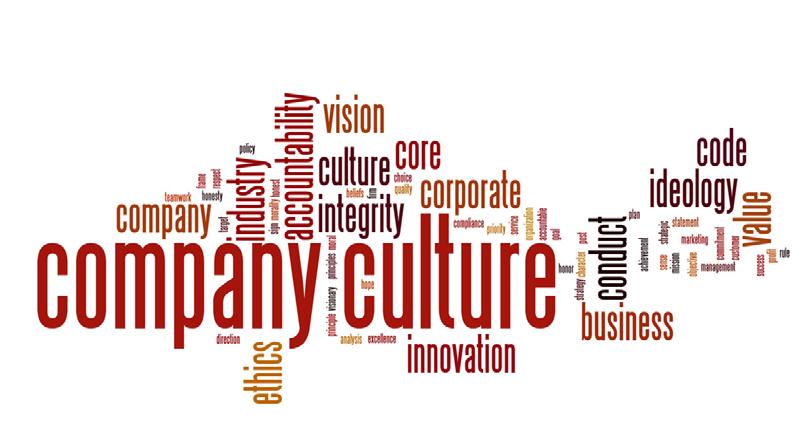
Your organization’s culture is both invisible and powerful. Seth Godin defines culture as: “People like us do things like this.” Culture is that unseen force of mutual understanding and awareness that drives human behavior. If you want to know what one human being is likely to do, look at what those around that person are doing. If you want to change what one person does, change the behavior of the people around that individual.
Consider this example:

Maxine was a CEO who often was frustrated that people in her organization didn’t take more initiative to solve problems. When you examined the culture, however, “people like us don’t take initiative and solve problems.”
Maxine and her leadership team had spent years emphasizing the need to follow procedure. The result was an organization of people who did what they were told. It was unreasonable to expect an individual employee to fight the culture that had been created. If heroic action is required for people to do what’s best for your organization, you have a culture problem.
Here’s another example:
Devon is vice president of a nonprofit healthcare provider. He and his leadership team prize their employees’ ideas and micro-innovations. “They’re the ones closest to the patients, and they see firsthand what’s working and what’s not. We’d be foolish not to listen.”
Working with his management team, Devon created a “find a way to try it” mentality for new ideas. When an employee suggests a process improvement,
the manager actively looks for ways that the employee can implement a small-scale experiment.
“Employees know they’re heard. They’re more engaged and have ownership of the idea because they’re involved in implementing it. You do this once or twice and then you’ve got a stack of good ideas.”
That’s the power of culture. Devon’s team doesn’t have to be heroic and swim upstream because “people like us” look at “how we can make things better for our patients” – and then do.
You have a culture. It may sweep your team along toward breakthrough results –or it could sweep them toward frustration and burnout. The good news is that as a leader, you can change your culture. It takes time and commitment, but you can do it.
If you don’t have the culture you want, take time to write down what success would look like.
What values do you hope to see in action?
What would “people like us” be doing? Get specific – how would everyone act in different situations? What would they say?
2. Look at your strategy and processes.
Have you unintentionally been reinforcing a culture you don’t want?
Who are you hiring?
How are you training, compensating, and rewarding?
Who do you hold accountable? Who do you not?
3. Enlist your most engaged team members.
Discuss what success would look like. Choose some key behaviors related to the most visible differences from the culture you want. Together, get very clear about these behaviors.
4. Model the culture you want.
Set the example. Make sure that the words match what people see from leaders.
Use a consistent communication plan to ensure everyone hears and understands what it means for them.
5. Practice accountability.
When you, the team, or an individual don’t live out the culture, talk about it. At first, these are low level conversations that reinforce your commitment. Some of them may escalate into conversations about team members who aren’t a good fit. They just don’t want to be a part of the new culture. It’s okay. Wish them well and release them to a better fit.
“What values do you hope to see in action? ”
Relentlessly encourage success. Tell the stories. You get more of what you encourage and celebrate. Have fun as you reinforce the power of culture. For example, if you’re focused on working together and breaking down silos, you might get a small hammer, spray paint it gold, and hand out a quarterly “Golden Silo Smasher” award to the person or team who demonstrated excellent collaboration.
And again. Intentional culture requires consistent modeling, accountability, and encouragement. You never outgrow the need for these behaviors at every level of leadership.
The power of culture is stronger than individual effort. Put great people in a poor culture and their lackluster achievement will frustrate you. Build the culture you want and give people the environment that propels them to greatness.
David Dye is a keynote speaker and trainer who helps leaders achieve breakthrough results. He and Karin Hurt are the authors of Winning Well: A Manager’s Guide to Getting Results Without Losing Your Soul, Courageous Cultures, and Powerful Phrases for Dealing with Workplace Conflict. They are partners in the leadership training and consulting firm Let’s Grow Leaders ( letsgrowleaders.com).
“Wish them well and release them.”
For more ideas on unleashing the power of culture, take a look at resources at NonprofitWorld.org, including:
Workplace Environments & How They Influence Productivity (Vol. 42, No. 2)
It’s Time to Build a Courageous Culture (Vol. 42, No. 3)
Grounded Visioning: A Quick Way to Create Shared Visions (Vol. 26, No. 4)
A Path to Stronger Programs, Greater Engagement, and Less Burnout? (Vol. 36, No. 1)
Harness the Why: Three Powerful Ways to Cultivate a Culture of Purpose (Volume 44, No. 1)
Nested at the Heart: A New Approach to Nonprofit Leadership (Vol. 29, No. 6)
Three Steps to Streamline Your Processes (Vol. 40, No. 3)
Strengths-Driven Leadership: Fueling High-Performance Nonprofits (Vol. 42, No. 4)
Shape a Culture of Trust: The Foundation of a Successful Workplace (Vol. 40, No. 2)
How to Build a Powerful Workforce (Vol. 43, No. 1)
By Ed Krow
“Most change fails due to the human dimension.”
As leaders, we’re often forced to change our bearings and choose a new direction for our organization. While we know it’s in the organization’s best interests, we forget that our employees might find the change disorienting and anxiety-inducing.
While you must do what’s best for the organization, it’s important to balance that with your employees’ needs. Their ability to embrace change is what will keep your organization moving forward.

Change can mean many different things: Maybe you’re a startup that’s rapidly growing, so change is a near constant. It could mean that you’re reengineering your organization to drive more efficiency. Or maybe you’re preparing for a partnership. Each situation requires a different type of change management because the impact on your people will be different.
There are four categories that people fall into when there’s a change. It’s vital that you understand your work teams and how they’re likely to respond to the change.
1. First, there are people who love change — and even thrive on it. These folks are results-oriented. They can shift direction easily because they see a new goal to go after. They often delight in looking for new ways to get over obstacles. It’s worth your time to note who these people are because you’ll need to get them on board. Then you can rely on them as change leaders. They’ll help you get others on board.
2. You’ll have some people who go with the flow and don’t seem especially
bothered about change. They’re not necessarily early adopters, but they tend to be optimistic and enthusiastic, no matter what’s thrown at them. You want to harness the energy of these people early in the change process because their enthusiasm is infectious. They’ll help less willing people keep plugging away through the change.
3. Some people, of course, resist change. These people aren’t necessarily stodgy or set in their ways. They just need a little more time to process what’s going on. They can be unfairly viewed as obstacles to the change, but they’re simply more cautious. It’s worth getting their opinion on things. Find out what their concerns are so you can put those worries to bed and get them on board with your plans.
4. You’ll also have people who don’t seem to care one way or the other. These folks tend to be very passive and self-motivated, so they’ll adjust to what’s going on because they like to maintain their own standards. These are the folks who are going to plug away for you unfazed. But they’ll need extra guidance in adapting to the new “normal” in your organization.
When you consider these four groups of people, there are six mistakes leaders often make when managing change.
1. The first is not understanding the importance of the people who will implement the change. Most change fails due to the human dimension – not because the plan was flawed, but because the execution was faulty.
2. The second big mistake is not appreciating that people have different reactions to change. No matter how you sell it, change is disruptive. People will adjust in different ways and on different time schedules. Your change management plan should incorporate those different timelines and schedules. When planning for change, offer a flexible, loose timeline instead of a tight, rigid one to give your team time to adapt.
3. The third mistake is viewing change as an event rather than a process. In one case, an organization went through a merger, which resulted in a new name. To merge the two different cultures, the leaders gave everyone merchandise with the new name and logo on it and paid no attention to the impact on the culture itself – a fatal error.
It’s vital to remember that everyone needs time to process change. That means communicating about the change not once, not 10 times, but over and over again, through weeks and months.
Keep listening to people’s worries; then address those concerns. Support your change leaders (those drawn from the first two types of people described above) in an unrelenting effort to make the change process easier.
4. Another mistake is being less than candid about what the change means. To be sure, you can’t always divulge everything. But it’s important to be as open as possible with your employees. They’ll respect you for being honest. And if they know they can trust you, they’ll be more relaxed about the changes you ask them to make.
5. Failing to set the stage for the change is another critical mistake. You must work beforehand to lay the groundwork of why you’re going through the change. Tell that story far in advance. Give people time to express their thoughts,

wrap their minds around the transition, and then get on board.
6. The final mistake leaders make circles back to the first one: underestimating the potential of your people to positively affect the change. If you don’t take a moment to identify the folks who are going to be advocates for change and embrace it, you’ll miss out on an opportunity to move along the change process more quickly. Your people will always rise to the level of performance you expect from them.
Change management is really about managing people. As leaders, we’re each tasked with influencing our team so that we’re on the same page moving our organization in the direction it needs to go. If we prepare, and keep in mind those who will be implementing the changes, we’ll successfully navigate the waters.
“Be sure to offer a flexible, loose timeline.”
Ed Krow (edkrow.com) has years of experience as an HR strategist. He works with executives who are struggling with people problems, such as adapting to changing conditions and expectations. He turns irrelevant and ineffective HR functions into strategic contributors by aligning HR with an organization’s objectives.
“It’s a mistake to view change as an event.”
Learn more change-management tips in these articles at NonprofitWorld.org: How to Lead When Your Team Resists Change (Vol. 42, No. 4)
The Key to Your Organization’s Success: Employee Fulfillment (Vol. 43, No. 2)
A Tool to Prioritize Opportunities (Vol. 43, No. 4)
Manage Change: These Are the Keys (Vol. 41, No. 1)
Be a Nonprofit-Sector Disrupter: Keys to Creating a Positive Future (Vol. 42, No. 4)
The Big How (Vol. 43, No. 2)
Dealing with Change in a VUCA World (Vol. 37, No. 4)
Practices to Build Your Resilience (Vol. 42, No. 2)
Are You Equipped to Lead in a World of Great Complexity? (Vol. 37, No. 1)
Thriving Through Turbulence (Vol. 43, No. 4)
Sharing services is a great way to save money, enhance benefits, and boost your results.
By Rose Barcklow
N“The real challenge is knowing where to start.”

onprofit leaders are operating in a time of transformation, navigating a shifting funding landscape and being asked to do more with less. Core systems like HR, finance, IT, and legal can be costly to maintain, yet they’re essential to delivering on mission.
That’s why more and more organizations are embracing shared-service models, unlocking new ways to build resilience, streamline operations, and focus resources where they matter most. Shared-service models bring together mission-aligned organizations to share enterprise-level services, reduce duplication, and free up internal capacity. When built with the right partners and structure, shared-service models can take operations currently managed in isolation and make them far more efficient and sustainable. Just as you might share a physical space to save on rent, utilities, and reception services, you can also share digital and operational infrastructure to reduce costs and increase efficiency. Most leaders don’t need to be convinced that something needs to change. The real challenge is knowing where to start. If you’re wondering whether a shared-service model could work for your organization, here’s how to think it through, and where to begin.
“Mission alignment matters.”
Take a hard look at your systems and ask: Which are outdated? Which are broad enough that they could be shared by multiple organizations? For many nonprofits, it’s the same set of issues:
• outdated systems
• limited budgets
• more urgent priorities
• a reliance on grants (which rarely cover general costs for things like technology updates and innovation).
Reach out to local or regional nonprofits. Ask what systems they’re working with, which systems they like (and don’t like), and where your challenges overlap. Find out how, if at all, they’re using AI in these systems. You’ll uncover patterns – shared pain points that can serve as the foundation for a shared-service opportunity.
Contact organizations that have received a grant from the same funder as your organization. There’s a good chance that they’re being asked to use the same systems for reporting.
Define what a shared model could look like. Be practical about what can actually be combined and intentional about who you choose as your partner.
Remember the importance of mission. Mission alignment matters. A strong shared-service model is built around organizations that serve overlapping populations or work toward similar goals. Shared purpose helps ensure that
operational decisions are grounded in the same values and long-term vision.
Determine what back-end systems might be good candidates for consolidation. Common areas include:
• human resources and benefits administration
• financial systems and accounting support
• IT infrastructure and cybersecurity
• legal and compliance resources
• shared tools like Zoom, CRMs, and cloud storage.
When shared across several organizations, the cost of these systems drops, and quality often improves.
AI-enabled systems can also boost the impact of shared services. For example, these systems can:
• analyze usage patterns
• predict demand across shared services
• identify service redundancies or opportunities for greater impact
• mine data for insights.
Set expectations early. Who owns the tools? Who makes decisions? How will changes be managed? Clear governance builds trust and prevents misalignment down the road.
A cohort of organizations doesn’t need to be big. Even two or three aligned organizations can make meaningful progress when they start with clarity and purpose.
Identify a funder or sponsor – financial or in-kind – who can help with the up-front investment. In today’s climate, traditional grants aren’t always reliable so you need to get creative. Start by tapping into your network. Foundations may support infrastructure efforts, and companies are also worth exploring, especially those offering tech tools, cloud services, or software licenses. Some large providers, like Microsoft, AWS, or Dell, have programs to support nonprofit access to their tools. If your organization generates earned revenue – for example, from a coffee shop or event – consider allocating a portion to support shared services.
“Shared pain points can serve as a good foundation.”
Make sure the financial model is designed to last. Too often, programs are funded for two years and then left unsupported. Be sure that doesn’t happen to you. Meet early with your partnering organizations to decide how you’ll share costs, secure multi-year backing, and adapt if sponsorship shifts.
Start small. Choose one system, like payroll or HR onboarding, and prototype a shared solution.
Roll it out to a limited group, gather feedback, and adjust based on what you learn. Over time, the cohort can either expand into more shared systems or invite additional nonprofits into the model.
Keep measuring your results. Growth should be based on learning and need, not speed. The focus should always remain on cost and time savings so staff can focus on the organizational mission.
Be willing to give up some control. You’ll need to trust your partners and become comfortable making joint decisions.

The challenges facing nonprofits aren’t going away, but how you respond makes all the difference. A shared-service model offers a way for you to reduce duplication, stretch your resources, and invest more fully in your mission. By starting small, choosing aligned partners, and building with intention, you can create more resilient operations and more focused services. Additional ideas for cutting costs and finding partners are on hand at NonprofitWorld. org:
Use a Merger or Acquisition to Further Your Mission (Vol. 41, No. 1)
More Money Together: Shared Fundraising Strategies (Vol. 43, No. 2) What’s Your Alliance IQ? (Vol. 27, No. 5)
A Collaboration Checklist: Ten
Questions for Success (Vol. 24, No. 1)
Exposing the Beast: Seven Deadly Wastes in Nonprofits (Vol. 36, No. 4)
Have realistic expectations about what technology can do. A new tool won’t solve a broken process. AI and automation can be powerful, but only when paired with thoughtful implementation, strong oversight, and the right safeguards.
Rose Barcklow is a consulting manager at Propeller (propeller.com), a management consultancy that helps organizations accelerate transformation and navigate complexity. Committed to continuous improvement, strategy, and innovation for social impact, she specializes in digital improvements that foster collaboration and solve complex challenges.
Pitfalls to Avoid when Seeking Corporate Support (Vol. 34, No. 4)
What Happens When Funders Truly Listen to Nonprofits (Vol. 43, No. 4)
Lightning & Thunder: Making Partnerships Work for You (Vol. 24, No. 6)
Are You Wasting Money Because of Multiple Databases? (Vol. 43, No. 2) Collaboration and Leadership: Secrets of Success (Vol. 24, No. 1)
Take these actions now to strengthen your leadership while using AI for your benefit.
A“No algorithm owns the outcome. You do.”
By Joe Curcillo
rtificial intelligence has moved from shiny headline to background noise.
It drafts reports, crunches numbers, and spits out answers before you finish your coffee. Impressive, sure. But here’s the truth: AI doesn’t carry consequences. It doesn’t look a donor or a client in the eye. And it doesn’t feel the ripple effects of a decision.
If the answer you get from AI alienates people or erodes trust, you’re the one left holding the ball. That’s why strategy – and the leadership behind it – matters more than ever. No algorithm owns the outcome. You do.
So let’s move past the hype. Here are five deliberate moves you can make right now

to protect your organization and lead beyond the prompt.
AI thrives on clarity. You ask, it answers. But authentic leadership lives in the fog – messy, high-stakes decisions where trade-offs collide.
Budgets. Hiring. Strategic shifts. These aren’t clean equations; they’re ambiguous, complicated, human. AI can draft a neat list of pros and cons. Your job is to pause and ask the tough questions. If you don’t do so, the hidden costs will show up later as disengagement, member churn, or bad investments.
Picture a board reviewing a new initiative. The AI-generated summary makes the case sound airtight. But the leader who slows down, who asks, “What does this mean for our youngest members? What will this signal to partners two years out?” is the one saving the organization from a disastrous mistake.
Do this now: At your next meeting, call a “fog check.” Ask: What’s missing? Who wins? Who loses? What happens next? Don’t let the quick answer become the wrong one.
2. Keep Ethics at the Center
AI doesn’t care if the answer is fair, inclusive, or aligned with your mission. That’s your job.
Nonprofit organizations don’t just move fast – they’re trusted to move right. Shortcuts that ignore ethics show up later as lawsuits, reputational hits, and
“Your job is to pause and ask: What’s missing? ”
fractured relationships. That’s not a side issue. That’s a direct strike on your organization’s standing and repute. We’ve all seen organizations save weeks of effort by letting AI automate outreach only to discover the model baked in a subtle bias that alienated the very people they most needed to reach. The “time savings” evaporated into months of damage control.
Do this now: Before green-lighting an AI-driven idea, ask: Does this align with our values? Would I defend this decision five years from now? If not, stop.
AI speeds up silos, automates campaigns, accelerates forecasts, and helps operations to run smoothly. It all looks good until those isolated wins collide.
Generalist leaders – the ones who see the whole map – know that a savings in accounting isn’t a win if it creates a problem in stakeholders’ experience. Your job isn’t to celebrate local brilliance. It’s to orchestrate the system. Otherwise, the hidden costs will eat your margin alive.
Think about your own teams: When IT rolls out a new platform without consulting HR, the disruption isn’t just technical – it’s cultural. AI multiplies the risk when every department starts adopting tools in isolation.
Do this now: Assign a “system scanner” to your next initiative. Their role: Flag downstream impacts before final sign-off.
Anyone can search. AI makes that trivial. But leadership isn’t about collecting inputs: It’s about creating meaning.
Think of a conductor: Every instrument makes noise on its own, but only with synthesis does it become music. Same with leadership: You’re the one who connects the dots between data, context, and lived experience.
That’s where margin lives. It is not in the draft that AI spits out, but in the connections only you can make.
When you notice that a single line in a market report echoes a member’s frustration last week, you’re doing more than analysis. You’re weaving lived reality into strategy.
Do this now: Before proceeding, demand at least one hidden link between data, feedback, and long-term strategy in your next planning session.
AI will keep getting faster. That’s not the threat. The danger is forgetting the work only humans can do.
Machines don’t build trust. They don’t mentor. They don’t sense when silence in a room means resistance. That’s the work that keeps members engaged, employees loyal, and revenue steady.
Don’t outsource it. Double down on it. Make time for mentoring, storytelling, and coaching. That’s not soft work; it’s bottom-line protection. When people feel seen and supported, they stay. Retention is the margin. Trust is currency.
Do this now: Block 30 minutes this week for a conversation that’s not about tasks – only trust. Meet with an employee, partner, or other stakeholder – your choice.
Joe Curcillo is an expert in leading across disciplines and decoding complexity. He’s the author of The Generalist’s Advantage ( joecurcillo. com/thegeneralistsadvantage or amazon.com) and a sought-after keynote speaker on leadership in the AI era. He lives in Hershey, Pennsylvania with his wife and an endless supply of caffeine.

You don’t need to outrun AI. You need to hold the horizon and lead beyond it. The leaders who thrive now aren’t the ones who chase speed or shiny tools. They’re the ones steady enough to sit in ambiguity, disciplined enough to keep ethics central, wide-eyed enough to think in systems, skilled enough to synthesize, and human enough to protect the work only people can do. That’s what holding the horizon means: keeping your eyes fixed on long-term direction while navigating the fog of daily complexity. AI can generate. But only leadership delivers. Find out more in articles at NonprofitWorld.org:
An Integrity Self-Test for Leaders (Vol. 42, No. 2)
The Big How (Vol. 43, No. 2) One-on-One Coaching: The Most Effective Way to Develop Your People (Vol. 41, No. 3)
Mastering the Mastermind: Making the Most of Cross-Mentoring Groups (Vol. 40, No. 4)
Powerful Phrases for Difficult Discussions (Vol. 42, No. 4)
Four Tips to Build Trust through Writing (Vol. 41, No. 1)
How to Encourage People through Disappointment (Vol. 42, No. 1)
Increase Support with the Six-Step Storytelling Formula (Vol. 42, No. 3)
Are You Offering People the Data They Want & Need? (Vol. 42, No. 4)
Keys to Finding (And Making the Most of) a Mentor (Vol. 41, No. 4)
Training Board Members in Storytelling (Vol. 43, No. 1)
Keep your organization safe from lawsuits, retaliation claims, and other dangers. These pointers will pave your way.
By Nelson Kefauver
N“Three risks are driving this shift.”
onprofit governance is being tested in new ways. Funding instability, political pressure, and expanding data responsibilities are exposing blind spots that many boards weren’t built to handle.
Three risks are driving this shift: Government funding cuts and political volatility are forcing rapid operational decisions that can trigger fiduciary-duty claims if boards lack clear documentation and oversight. Nonprofits are managing more sensitive donor, employee, and beneficiary data than ever, increasing exposure to privacy-related liability.
Heightened government scrutiny of ESG (environmental, social, and governance) initiatives is creating legal

and reputational risk, particularly for organizations perceived as going too far or acting without clear governance discipline.
These risks are reshaping how boards are evaluated, how decisions are challenged, and how nonprofits are held accountable. Here are actions you can take to meet these challenges and lessen your risks:
Financial pressure is no longer episodic for nonprofits. Government funding cuts and grant freezes are forcing boards to make fast decisions about staffing, programs, and reserves, often under public scrutiny. When those decisions are poorly documented or misaligned with mission, fiduciary exposure increases.
In this environment, governance is less about process and more about defensibility. Boards and executive leaders must be able to show how and why decisions were made.
The following governance practices provide a strong foundation for leadership continuity and accountability during these moments:
Clearly define roles and decision authority. This precaution reduces confusion during crisis moments and prevents gaps in accountability. Documented approval thresholds and emergency protocols support timely, defensible action.
Use financial dashboards that track liquidity, program costs, and funding trends. These scorecards provide a clear
view of organizational health and support timely adjustments.
Keep clear governance records, such as meeting minutes, approval logs, and retention policies. Such records have become more important as nonprofits face increased regulatory and legal scrutiny. Document board discussions to create a clear record of deliberations. Doing so will show that leaders have considered financial impact, mission alignment, and stakeholder obligations when making decisions.
Undertake scenario planning for “what if. . .?” events, such as sudden funding cuts or regulatory changes. Such planning will help you anticipate consequences before they become urgent.
Establish formal approvals and structured processes to ensure that leadership actions reflect organizational purpose and maintain consistency.
As financial and political pressures increase, insurance decisions are no longer administrative. They’re a visible test of board oversight and fiduciary diligence.
Boards play a central role in ensuring that coverage aligns with evolving risks. Insurance coverage areas to review include:
Directors and Officers (D&O) Liability: Confirm that the limits reflect your current board exposure. Review exclusions tied to governance failures and regulatory actions.
Fiduciary Liability: Ensure that your coverage addresses decisions impacting employee benefits, retirement plans, and mission-critical funds.
Cyber Insurance: Validate breach response protocols, vendor risk coverage, and notification requirements as you adopt new technologies and digital platforms.
Employment Practices Liability (EPLI): Guard against lawsuits and retaliation claims brought by your employees, former employees, or those who apply but aren’t hired by your
organization. Executive orders targeting DEI and equity have introduced new mandates, rescinding prior approaches and raising potential liability in employment decisions. Tight nonprofit budgets make defending even meritless claims potentially devastating; EPLI offers a financial safety net to protect your funds.
Beyond coverage selection, boards should embed risk oversight into routine governance practices to ensure decisions are documented and defensible. These governance-focused actions will strengthen your protection:
Schedule annual coverage reviews aligned to organizational change, including program scope, technology adoption, and funding mix.
Integrate insurance assessments into governance calendars and board agendas. Document the rationale for coverage decisions to demonstrate fiduciary diligence.
Adding coverage reviews to your board’s routines will help your organization adjust quickly when program scope changes, technologies are adopted, or funding models shift.
Board oversight has expanded beyond traditional financial stewardship. Today’s boards are increasingly accountable for
Continued on page 32
“Poorly documented decisions risk liability.”
“Can you defend how and why decisions were made? ”
Nonprofits face heightened risks today, from funding volatility and political scrutiny to cybersecurity threats and ESG backlash. Reduce exposure, maintain credibility, and avoid legal and financial hazards with articles at NonprofitWorld.org:
Do Your Board Members Know Their Fiduciary Responsibilities? (Vol. 33, No. 1)
Risks Get Riskier for Nonprofits: ERM Can Help (Vol. 38, No. 1)
Are You Risking Legal Action because of Discrimination? (Vol. 38, No. 4)
Is a Performance Audit in Your Future? (Vol. 41, No. 2)
Reduce Legal Risks with These Pointers (Vol. 43, No. 2)
Do You Need D&O/EPL Insurance? (Vol. 27, No. 3)
How to Write Effective Anti-Bias Policies (Vol. 30, No. 4)
Watch Out for These Legal Risks (Vol. 39, No. 3)
Are You Prepared for a Cybersecurity Incident? (Vol. 42, No. 3)
Where to Find Free Legal Assistance (Vol. 26, No. 2)
Big Data = Big Opportunities (Vol. 42, No. 3)
Do You Know the Two Types of ROI? Do You Have Both? (Vol. 41, No. 3)
Avoid Transition Trauma with a CEO Succession Plan (Vol. 40, No. 1)
Why & How to Manage Contracts with Your Vendors (Vol. 43, No. 1)
Do Your Board Members Understand Their IRS Obligations? (Vol. 36, No. 3)
how organizations manage cyber risk, data privacy, ESG commitments, and regulatory exposure – areas that can trigger personal liability if overlooked. Oversight of finances, executive leadership, and mission alignment remain foundational. What has changed is the expectation that boards understand how operational risks translate into governance risk. To keep pace, you need to combine education with structural practices that build resilience:
Provide annual governance training to keep directors current on fiduciary duties and emerging risks.
Perform TTXs (tabletop exercises) –meetings where board members rehearse responses to financial shocks, data breaches, regulatory scrutiny, and other crises.
Offer briefings from subject-matter experts on complex issues such as cybersecurity and ESG risk exposure.
To reinforce accountability and adaptability, boards should regularly assess their own effectiveness to identify oversight gaps and adjust practices as risks and expectations change. Using skills matrices helps ensure board composition matches organizational needs, while specialized committees, such as risk and technology committees, provide focused insight and support stronger full-board decisions.
ESG has become a governance flashpoint. ESG-related decisions can escalate quickly, leading to investigations, funding threats, and reputational damage. For nonprofits, the risk isn’t whether ESG matters but whether boards can clearly defend how and why decisions were made. Preparing for scrutiny starts with embedding ESG oversight into governance frameworks:
Clarify ESG objectives. Determine whether goals align with mission and stakeholder expectations, avoiding unclear or politically sensitive commitments.
Document board deliberations and approvals for ESG-related policies to demonstrate fiduciary diligence. Stress-test ESG strategies to assess how commitments could be misinterpreted or politicized.
Communicate transparently with stakeholders to reduce misalignment and speculation.
Data privacy failures increasingly lead to fiduciary claims, not just operational disruption. Nonprofits that handle donor, employee, and beneficiary data are expected to show board-level oversight of how that information is protected.
To reduce exposure, boards should ensure clear protocols are in place for classifying and handling sensitive data, supported by encryption standards across systems and communications. Regular security testing helps identify vulnerabilities before they lead to breaches, while vendor contracts should clearly define security responsibilities, breach notification timelines, and data retention requirements.
Just as important, boards need clearly defined escalation and reporting processes so they receive timely, consistent updates on cybersecurity posture and incidents. Strong data governance not only reduces legal exposure but also helps maintain trust with donors, employees, and beneficiaries.
of Risk
Boards and executive leaders must ask the right questions now to protect their organizations and ensure resilience. Helpful questions include:
Are board and management roles clearly defined to prevent decisionmaking gaps during crises?
How are major financial and strategic decisions documented to demonstrate accountability?
Do we have a crisis communication plan that addresses reputational and operational risks?
How often are governance policies reviewed and updated to reflect emerging risks?
What measures are in place to protect sensitive data and prevent breaches?
How are ESG commitments monitored and communicated to avoid regulatory or political exposure?
Do we have succession plans for key leadership roles to maintain continuity?
Are we benchmarking governance practices against peer organizations to identify gaps?
Asking these questions consistently helps boards identify risks before they become disasters.
Governance blind spots can quickly become liabilities. Funding volatility, data exposure, and ESG scrutiny are already shaping how nonprofits are judged by regulators, donors, and the public.
Boards that act by tightening documentation, strengthening data oversight, and stress-testing ESG decisions are better positioned to protect both their mission and their leadership. Today, governance isn’t a back-office function. It’s a visible signal of resilience.
Nelson Kefauver is head of Financial & Professional Lines, North America, at Intact Insurance Specialty Solutions (intactspecialty.com , intactspecialty.ca , intactfc.com). Based in Chicago, he helps clients navigate complex employment risks in today’s evolving workplace landscape.
Intact Insurance Specialty Solutions is the marketing brand for the insurance company subsidiaries of Intact Insurance Group USA LLC, a member of Intact Financial Corporation (TSX: IFC), the largest provider of property and casualty insurance in Canada, a leading provider of global specialty insurance, and, with RSA, a leader in the UK and Ireland. This article is provided for general informational purposes only and isn’t intended to take the place of legal or risk management advice. Readers should consult their own legal counsel or other representatives for any such advice. Any and all third-party websites or sources referred to herein are for informational purposes only and are not affiliated with or endorsed by Intact Insurance Group USA LLC (“Intact”). Intact hereby disclaims any and all liability arising out of the information contained herein.

“Identify vulnerabilities before they lead to
• One Huge Secret to Get the Innovative Ideas You Need
• Turn Employees into Emergency Responders in Three Easy Steps
• How to Deepen Strategic Thinking
• Six Questions to Answer in an AI World
• Can Your Board Become a Learning Organization?
• Do You Have a Marketer on Your Board?
• Use Failure to Help Your Organization Thrive
• How to Fight Energy Vampires with Firm Boundaries
Plus much more!
If you’ve written a book and would like to be featured in Nonprofit World’s “Author’s Spotlight” – our new feature –please e-mail the following to muehrcke@charter.net:
• your headshot*
• copy of the cover of your book*
• book title and a 125-word description of your book**
• brief bio**
* png or jpeg format
** Word format
Discrimination signifies a broken system. We need to reflect on what works better. That means working together to create a world in which people of color feel safe to work and play, in which we can benefit from their perspectives, and in which all can thrive.
What communities of color want are simply the basic rights that others enjoy – such fundamentals as livable wages, equitable healthcare, access to opportunity, and participation in decisionmaking, as Building a Pro-Black World (wiley.com) attests. The book regards nonprofit work as instrumental in a just society. By their aspirational nature and missions, nonprofits are situated at the brink of change.
Vestiges of colonialism and white supremacy that regard many people as second-class citizens linger today because dominant communities rarely even think about them. Traces of such attitudes can still be found in the nonprofit sector. However, given its focus on mission, our sector is in a position to play a key role in building an equitable society. It starts by stopping attempts to fit people into processes that benefit only a privileged few. It involves learning to listen to the concerns and solutions of the marginalized and including them in championing (not just tokenizing) their needs.
New trends are shaping how nonprofits need to approach fundraising. Gail Perry (gailperrygroup.com) explains:
Shift #1: Tax Policy Is Changing the Way Donors Give: The tax bill passed last summer shook things up. A 0.5% AGI floor on charitable deductions for itemizers, a 35% cap on deduction value for top brackets, and an above-the-line deduction for non-itemizers: “These are changes that affect how your donors think about giving,” Perry says. When her organization surveyed nonprofits recently and asked if they have varied giving options ready to present to donors within the context of the new tax law, 37% said no. “That’s a gap that needs closing. Fast.”
Your action step: Take an honest look at your giving vehicles. Do you have clear pathways for estate gifts, DAFs, QCDs, and non-cash assets? If not, this is your wake-up call. You need to be ready to meet donors with options that align with their financial goals, whether that’s a donor-advised fund, a qualified charitable distribution from a retirement account, or a bundled multi-year gift.
Shift #2: Fewer Donors Are Driving More Revenue: Between 88% and 90% of nonprofit philanthropic revenue comes from just 10-12% of donors. The fundraisers who are winning right now have made an intentional decision to go deep instead of wide, Perry says.
Your action step: Look at your top 20 prospects. Are you being exceptional with them? Or are you spreading yourself so thin across a giant portfolio that no one gets your best?
“You might be surprised by what you learn.”
from transactional stewardship – “thank you, here’s your receipt” – to a strategy that is deeply, intentionally focused on relationships.
Your action step: Think about your top five donors right now. What kind of experience could you create for them that they would genuinely miss if they couldn’t repeat it? Pilot one immersive experience. Even a simple behind-the-scenes tour or a short video call with program staff can make a lasting impression.
Shift #4: The Art of Co-Creation: Today’s high-net-worth donors aren’t just looking to write a check. They want frequent communication, input into strategy, and transparent outcome reporting.
Your action step: Before you meet with your next donor, prepare a set of openended questions about the donor’s vision. Ask: “What do you want to impact? What do you want to achieve?” Listen carefully to the answers.
Shift #5: Next-Gen Wealth Is Already Here: The “great wealth transfer” we’ve been hearing about for years? It’s here. Gen X and millennials, people between the ages of roughly 30 and 55, are already making major gifts. Their priorities are different from older, traditional donors: They give to causes, not organizations; they want details about where you’re spending their money; and they need fundraising messages tailored specifically for them.
Your action step: Schedule one or two “listening coffees” with donors under 50. Ask what matters to them, how they want to be engaged, and what would make them feel like a true partner in your mission. You might be surprised by what you learn.
Rejecting the deficit model that is pervasive in society will counter the mindset that pits people against people and divides us. First, we must acknowledge the important role of nonprofit organizations. Nonprofits have the resilience to shift how resources, participation, and leadership in the community are regarded so that we can work toward thriving for everyone.
–reviewed by Terrence Fernsler
Shift #3: Stewardship Is Your Competitive Advantage: Your best fundraising tactic is to focus on strengthening your bond with current donors. Too many organizations think that means a lovely thank-you note, a student calling to say thanks, and an annual report. Those things are great. But they’re only scratching the surface. You need to move
“That’s a gap that needs closing. Fast.”
Shift #6: Let Technology Amplify Your Strategy (Not Replace It): AI isn’t going to save us all, and it’s not going to replace us. It’s a tool. The question is whether you use it intentionally to free up more time for what matters most: being with your donors. Your action step: Conduct a small audit of your current workflows. Where are you spending time on repetitive, manual tasks that could be automated or streamlined? Start there. The goal isn’t to add AI to everything. It’s to find the small wins that give you back the time you need to build relationships.
Nonprofits are always seeking unrestricted grants, and they have a lot of questions about this type of funding. The website Instrumentl (instrumentl.com) has answers to the most common questions. In brief, here are a few:
Why are unrestricted grants offered, and what do they aim to achieve?
Unlike project-specific grants, these funds aren’t tied to a particular initiative, making them great for organizations that need flexibility to strengthen their operations, build capacity, and expand their reach. Unrestricted grants aim to give nonprofits the freedom to focus funding where it’s needed most. Whether it’s covering administrative costs, hiring staff, investing in technology, or expanding programs, these grants help nonprofits strengthen their organizations. Funders see unrestricted grants as a way to help nonprofits remain adaptable as new challenges come up while building longterm sustainability.
Who funds unrestricted grants? Unrestricted grants are typically funded by private or community foundations, corporate giving programs, and individual donors. Well-known funders like the MacArthur Foundation and the Ford Foundation offer unrestricted grants to nonprofits that align with their mission. Community foundations and corporate programs (Target Foundation, Toyota) also fund these types of grants. How much do these funders typically give? Funding for unrestricted grants varies widely, with award amounts ranging from a minimum of $25 to a maximum of $228,500,000. Based on Instrumentl’s data, the median grant amount for this category is $27,500, while the average grant awarded is $491,227. Understanding these funding trends can help nonprofits set realistic expectations when applying. How can you improve your chances of receiving unrestricted grants? These are the steps to take, according to Instrumentl: Show financial responsibility. Funders want to know their money will be managed effectively, so provide financial reports and budgeting strategies. Highlight past successes. Use data, stories, and testimonials to show how your organization has already made an impact. Explain how the funds will support your mission – Make it clear how unrestricted
funding will help your organization grow, expand reach, and have a greater impact. Build strong relationships with funders. Unrestricted grants often come from funders who already trust an organization, so networking and maintaining strong connections can increase your opportunities.
“Whoever tells the story first usually wins.“
When something bad happens, your first instinct may be to say nothing. It’s human nature to retreat, stay quiet, and let the bad thing pass.
But when you run an organization and something bad happens, staying quiet is the last thing you should do, explains PR expert Laurie Storey-Manseau (laurie@ storeymanseau.com). In the world of public opinion, establishing the narrative first is everything.
“Rarely, if ever, are you able to reset the narrative once it has started. Making a bad situation worse, bad news spreads like wildfire,” she says.
Opinions are formed every time you have an opportunity to interact with the public, your donors, your employees, and others. That means there are thousands if not millions of people who form opinions about your organization based on one person’s view, told through one person’s filter. That one view can leave an impression on countless existing and potential donors.
The best leaders know that planning for an array of scenarios gives them the best chance to get ahead of the bad news. Planning ahead means having internal communications, press, and social-media strategies ready to launch instantly. It also means training employees to identify problems before they can grow.
But the best way to avert an unkind narrative is to ensure that your organization has such a good reputation that people aren’t inclined to believe negative opinions. That means building and maintaining a trusted relationship with the public, your customers, employees, and the press.
Whoever tells the story first usually wins. So make sure you’ve created the narrative before it ever gets away from you.
When measured in the dollars they gave to donor-supported organizations over the past 12 months, American donors contributed an average of 1.22% of their household income. However, when asked to estimate what proportion of their income they gave to charitable organizations (excluding a local place of worship), donors inflate their giving by an average of 277%. They estimate an average of 4.6% of household income going to charity.
These figures come from The Average American Donor, a new study from Grey Matter Research (greymatterresearch. com). The research also discovered that donor generosity (giving as a percentage of donors’ household income) has dropped substantially since 2017. Average generosity was 1.95% of gross annual household income nine years ago; today it is 1.22%.
In addition, many donors have room to increase their generosity if they choose to do so. For one thing, 84% of donors say they have enough income for at least a few luxuries or extras beyond their basic household needs, including 39% who have enough for a number of luxuries and extras. Most telling is that 40% of all donors openly say they should be giving more to charity than they actually give. This includes 11% who feel they should be giving a lot more.
Donors who feel they should be giving more express a variety of reasons for not doing so, but they fall into three primary categories: financial limitations or uncertainty (58%), uncertainty about organizations or where they should be giving (54%), and simply admitting they need to be better at generosity (43%).
The study provides some important lessons for nonprofits. It shows that people would give more if they weren’t so overwhelmed with options, if they knew which organizations they could trust, and if they could see where their giving would have the greatest impact. Dealing with those issues would overcome most of their excuses about lack of finances because they clearly want to be more generous and have the ability to do so if they’re motivated.
Strong leadership starts with insight into behaviors and psychological principles, as Kate Pearlman-Shaw spells out in The Psychology of Effective Leadership (Routledge, taylorandfrancis.com). Her insights and suggestions include:
Use a structured framework when giving feedback:
1. Start with the purpose: Why are you here? What’s the feedback for?
2. Be clear about expectations: Be succinct and practical about what’s needed.
3. Ask questions to hear their side of the story, and empathize with their feelings.
4. Enhance a trusted relationship by showing respect, inviting suggestions, and providing recognition.
Have someone to talk with. Social support is essential for workplace resilience, Pearlman-Shaw makes plain. Mentoring and coaching are important tools to give you the space to reflect, decide, and learn new skills.
Replace the Golden Rule with the Platinum Rule. With the Golden Rule, you give the rewards you like, but with the Platinum Rule you give the rewards the other person needs most. Learn which of the seven “positive strokes” each person prefers. The seven reward types, according to Pearlman-Shaw, are:
1. validation, recognition, affirmation
2. control, agency, predictability
3. support, acknowledgment, being heard
4. having a good purpose
5. belonging
6. success, achievement, outcomes
7. equality.
People’s preferences vary greatly, and some rewards just won’t work for some people. If people come from a culture or environment that doesn’t recognize the value of a reward, it can cause confusion or embarrassment. Also, a reward can backfire if it feels inauthentic or manipulative. The best way to be sure you do it right is to have a conversation with each person and agree on ways you can each do a bit more of what the other needs: Just having such a chat is itself a positive reward.
Here’s the uncomfortable truth: A lot of what we called “work” was never valuable. It was theater. What we considered “work” in the past is being revealed – by AI – as largely performative. Decks, reports, and status updates have long been a way to signal productivity rather than deliver actual value. With AI now able to generate this work in minutes, it forces a longoverdue reckoning: Why did we spend so much time on tasks that added so little? And what should we actually value in the future of work? Consider these truths about the crucial changes that AI is making to our workplaces:
AI doesn’t just change tasks. It changes what leadership itself looks like. Most organizations don’t fail at AI because of technology. They fail because their culture wasn’t built to absorb it.
AI is redefining job descriptions: Hybrid, distributed, and AI-driven workflows mean that the way leaders set vision, measure performance, and create cohesion must evolve.
This conversation goes beyond automation. It’s about challenging the very definition of productivity and rethinking the cultural norms that have shaped workplace expectations for decades. AI is clearing the clutter. Now leaders have a choice: Step into humanity or get out of the way.
– contributed by Lina McDearmid, founder of Wryver (wryver.com), a leadership advisory practice
As the saying goes, acceptance is the first step. Thus, the key message from the authors of Memory Lane, by Ciara Greene and Gillian Murphy (press.princeton.edu) is this: Our memories haven’t evolved to be perfect recording devices. Rather than forcing your memory to be something it’s not, the authors advocate accepting it as it is – flaws and all. In this way, they explain, you can work with your memory instead of against it. For instance, you can use strategies like mnemonics (“memory places”) – using a rhyme, a song, or an acronym (the first letter of a group of words) to solidify something in your memory, along with such other strategies as keeping a calendar, a planner, a journal, and a notebook in your pocket to write

down people’s names so you won’t forget them. Other insights from this smart, compelling book: Some of the worst communication disasters come not from poor memory but from our mistaken belief that our memories are more reliable and accurate than they are. We’re all the “unreliable narrators” of our lives.
Memory relies heavily on recognizing patterns from the past. We can use this fact to our advantage by enlisting the power of habits. We’re less likely to forget a task if it’s something we do at the same time every day without thinking about it (though we might forget exactly when we performed the task on a given day or confuse similar events with each other).
We’re likely to misremember events over time and confuse details when a similar incident occurs many times. Our memories also change when we receive and evaluate new information.
The brain-enhancing programs that proclaim they’ll improve your memory aren’t worth pursuing. They can’t reduce memory distortion because the reconstructive nature of memory has evolved for good reason. “It’s a feature, not a bug,” as the authors put it.
You may forget details about past events, but you’ll recall how they made you feel. Tying an emotion to an experience is a good way to make sure that you – and others –remember it.
It’s important to have humility about our own memory and that of others, recognizing that our memories are flawed. And we need to celebrate the imperfections of our memories. Those who can’t forget the details of painful events remain stuck in the past, unable to move on and craft a satisfying life. Forgetting also keeps our brains from being “overrun with humdrum memories,” the authors say. It’s the flexible nature of our memories that allows us to organize our memories in the most efficient way.
Ultimately, the authors explain, our memories make us who we are. They’re the stories we tell ourselves about our lives.
Heraclitus once noted that we never step in the same river twice, for it’s not the same river, and we’re not the same people. “No two visits to Memory Lane,” the authors conclude, “are ever quite the same.”
One of the most common major-donor acquisition strategies: “Let’s get a meeting with that rich family in town. I’ve heard they donate a lot to local charities.” Sounds like a smart move. It probably isn’t.
Trying to make connections with random people that you know are wealthy and you hope care about your cause rarely works. It’s a waste of time you could be spending much more profitably.
How? Here’s a guide from the Veritus Group blog (veritusgroup.com):
The first thing to keep in mind: The large majority of all major donors you’ll ever have are already donating to you. They just haven’t (yet) risen to the high level they’re capable of giving.
Random strangers? Not a good bet for giving to you ever, no matter how much you try to cultivate them. So here’s how to build your major-donor group:
1. Start with Who You Already Have. Look at donors at the high end of your general donors. They’ve already shown you they care enough to donate. Also look for those who’ve been giving for a few years and at those who give monthly. Not all of them have the capacity to give major gifts. But some do. You just haven’t approached them about it yet.
2. Ask Around and Do Some Homework. Find out what you can about your list of potential major donors. Ask staff, board members, anyone who might know them. Research them on Google, LinkedIn, and public records. Learn everything you can about them so you can approach them with confidence and be relevant to them.
3. Then You Can Look Outside. You may find you never need to take this step because you’re doing well enough with people who are already giving. But the way to reach prospects who aren’t giving to you is to ask around: Ask your current major donors to introduce you to their friends or host a small event. Ask board members to open doors. Speak at local events where you can share your mission authentically. That’s how genuine relationships start.
4. The Often-Overlooked Secret: MidLevel Donors. People who are giving below your category of major donors, but above general donors are a very important prospect pool. They’re already connected. But maybe you can give them the kind of personal attention that could inspire them to give more.
–contributed by Jeff Brooks
In The Leader-Shift Playbook (fastcompanypress.com), Phillip B. Wilson (approachableleadership.com) focuses on four simple changes you can make to unleash your team’s potential:
1. Believe in your impact. You’re making a difference – but what kind? Wilson recommends that when you meet with people, you assume they’re self-motivated, doing a great job, and wanting to learn and grow. Rather than putting a lot of controls in place, be a supporter and facilitator, dealing with problems by collaborating, asking for suggestions, and helping people develop and flourish.
2. Believe in yourself. Tap into your true potential – and face up to your biases. Leadership, says Wilson, is a habit of thinking. To live up to your potential, you may need to change your habits. And that means changing your mantra – the things you repeat to yourself, either consciously or unconsciously. Recognize that we all have biases, and shine a light on them by questioning the assumptions behind your reactions and decisions.
3. Believe in others. Everyone wants to be great (they just need to believe). Like all people, you tell yourself stories about what you think is possible for yourself. Great leaders are those who believe you can be the hero of your story. To persevere on the hero’s journey, people need such a leader – someone who will cheer them on as they face doubts and dark times. You can be that leader: Whatever you believe will change the outcome for the people around you.
Is there a lack of trust in your organization? You can reverse that trend, according to David Weiman (weimanconsulting.com) if you focus on doing these things: Be consistent. Eliminate any disconnects between what you say and what you do. People will learn to count on you if your observed behavior matches the values you espouse.
Listen to the stories people tell about your organization, and notice whether they highlight the values you want to uphold. If there’s a gap between the two, find ways to bring the two into alignment.
Take a big-picture view of your organization, including mission, vision, processes, systems, communications, goals, and daily tasks. Make sure all are in harmony.
Admit mistakes. When you’ve made a mistake, others have probably noticed. Owning up to it increases people’s trust in you. Use your failures as opportunities to learn, share your lessons, and improve. Encourage others to do so, too.
Never punish others for their errors. Applaud them for coming clean. Help people see that mistakes lead to growth and wisdom if you share them and build on them.
Suspend judgment as you take in other people’s feelings and thoughts.
Use body language to show you’re listening. Maintain eye contact, nod, and lean toward the speaker. Don’t frown, lean away, or cross your arms as you listen.
“This is how genuine relationships start.”
4. Believe in your relationships. Move past the phoniness and really connect. Be vulnerable and share your failures to build trust and psychological safety. Model skills such as listening deeply, paying attention to people’s feelings, and creating an environment in which people are comfortable speaking up even when they disagree. Your success has everything to do with your relationships, and your organizational culture is only as strong as your connections.
Show empathy, and respond with understanding. Use phrases such as “I understand . . . .” and “What I hear you saying is . . . .” Block out distractions and random thoughts while others are speaking. Don’t focus on what you’ll say next or look for a chance to jump in with your own ideas. Don’t interrupt. Put your whole mind and heart into hearing what the speaker has to say and viewing things from the speaker’s point of view. Listen without judgment. The essence of good listening is humility. “It is the privilege of wisdom to listen,” Oliver Wendell Holmes once wrote. When you listen with care and an open mind, you encourage others to talk, which will provide you with valuable information. Also, you’ll model great listening so that others will be encouraged to listen carefully, too. The result will be a culture of openness and trust.
Resilience, as defined by Marie-Helene Pelletier in The Resilience Plan (pagetwo. com) is a mindset that helps us persist and move forward through adversity. Individual, team, and organizational resilience are all related, she says. Resilience protects us from burnout, fatigue, and distress, and it helps our organizations thrive.
Here are some simple actions we can take to increase resilience in ourselves, our teams, and our organizations:
Share your emotions, and encourage others to do the same.
End e-mails with invitations to share ideas and solutions.
Invite conversations about mental health, burnout, and stress.
Take 60 seconds to pause, detach from your thoughts, and take deep breaths. Encourage training on psychological health. Show workers you value them not just for what they do in their jobs but who they are as human beings.
Remind people of the resources available to them. Help them access these resources. Tell others the strategies you use to remain resilient, and ask them to share theirs.
Make a point of offering recognition, praise, and compassion at every opportunity.
Actively maintain your self-care and social supports.
Understand your biases, and make an effort to counteract them. Be conscious of your thinking, and question your assumptions.
Express compassion for a colleague.
Nurture curiosity, creativity, and a growth mindset in yourself and those around you.
Notice if you’re providing the ingredients that lead to a healthy work environment. These include: respect, clear expectations, psychological support, autonomy for workers, growth and development as a priority, and workload management.
Pick one of these actions and resolve to take it today, Pelletier urges. It can be something new or something you already do but not very often. Remember that this is an organizationwide project. You need everyone to contribute a little bit. Working together, you can build a resilient organization that will help everyone meet the challenges of the future.
As Gen Z reshapes the workplace with new expectations, one demand is becoming crystal clear: transparency. But while many leaders hear that and panic, what younger employees are really asking for isn’t full disclosure – it’s crystal-clear communication.
Jennifer Barnes, CEO of Optima Office (optimaoffice.com) and an expert in workforce strategy, compares transparency to a GPS: Gen Z workers want turn-by-turn directions. Even more, they want to see every pothole ahead. It’s not about oversharing. It’s about explaining the route, the roadblocks, and why their role matters.
“Never ruin an apology with an excuse.”
“We apologize to those who may have been impacted.” Don’t use passive voice, as in “Mistakes were made, and lessons have been learned.” Don’t use “a” or “an” rather than “the” when discussing what happened, as in “We are aware that an unfortunate incident occurred.” Vague language invites criticism and ridicule. Own the mistake without blaming others. Don’t blame the “system,” the “processes,” or the “situation.” Resist the temptation to mention your own virtues or mitigating factors that will water down your atonement. As Ben Franklin put it, “Never ruin an apology with an excuse.” Keep it simple and as short as possible. The most effective apologies are clear, brief, and in plain language. Use short sentences, no fancy words, no complicated grammar, and “absolutely no ifs, buts, or maybes,” as the authors of The Apology Impulse put it.
She advises organizations to adopt strategic transparency frameworks –ones that give employees a clear sense of direction while also building trust through direct, precise, straightforward communication. Balancing openness with operational prudence will reduce generational friction and increase retention. It’s all about designing communication policies that build trust without chaos – and such policies make the workplace better for everyone.
Saying “I’m sorry” isn’t easy, and saying it in public is even harder. If you apologize in the wrong way, however, you can make things worse, rather than better, as the authors of The Apology Impulse (koganpage.com) point out. They provide a number of tips to assure that you don’t ruin your public apology. Here are a few: Make your apology about the recipient, the one who was damaged, not about you.“We are sorry we didn’t live up to our high standards” isn’t going to make the recipient feel better. A better apology: “Privacy is very important to our donors. We’re sorry we let them down. Here’s what we’re doing to fix it.”
Don’t use evasive words such as “may” and “might,” as in
Remember the key parts of an apology: Express regret, give an explanation, accept responsibility, repent, make an offer of repair, and request forgiveness –in that order. And, then, be sure to keep your promise to make things right.
Take your time and plan your response. “Knee-jerk” apologies come off as insincere, the authors say. Apologies are most effective when people can tell you’ve taken time to reflect.
The book makes clear that there’s a time not to apologize – and that’s when you’ve done nothing wrong. Too many organizations apologize to smooth things over, the authors tell us, but saying “I’m sorry” when you have nothing to be sorry for can end up creating even worse publicity for you and, in fact, may cause long-term damage to your reputation. Above all, never say, “We did nothing wrong, but we apologize if anyone might have been offended.” The worst failures of communication occur when an organization isn’t at fault but acts as if it is.
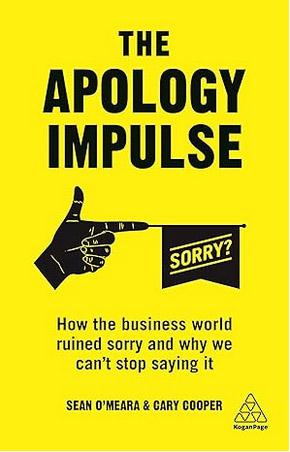
Support of nonprofits by government is waning in a wave of austerity, diminishing the welfare state. In addition, many smalldollar donors find it difficult to support socially conscious organizations with their limited finances. As very wealthy individuals and institutions move into this hollowed-out space, philanthropy as we have known it has become increasingly elitist.
Billionaire philanthropists – whether individuals or institutions – tend to have their own concepts of what social policies they should support, which may or may not coincide well with community needs. Still, there have long been those with financial means who feel obligated to aid people who have been exploited for the pursuit of private wealth, much of it amassed by these same billionaires.
The chapters in Handbook on Philanthropy and Social Policy, edited by Roosa Lambin, Jonathan Roberts, and Rebecca Surender (elgaronline.com), describe how financial elites fill those responsibilities today in such fields as education, health, equity, and climate. Some billionaire philanthropies (for example, the Rockefeller, Ford, and Carnegie Foundations) arising from the first “gilded age” – and more recently others such as the Tatas (India), Gates, and technologysector billionaires – recognize that extracting wealth from communities leads to unsustainability and that it’s more
“Philanthropy has become increasingly elitist.”

humane to share at least some of their wealth. As more billionaires are created worldwide, more are acknowledging the benefits of reforming philanthropy in the new context of their abundantly available resources.
Plutocratic philanthropy in many ways maintains the status quo because of funding preferences and the limited resources available even to billionaires. The titans of financial wealth tend to be paternalistic (as well as technocratic and bureaucratic), often selecting to support their favorite projects. Market solutions may not directly address root social-policy issues (such as wealth accumulation, gender and racial biases) but by bringing attention to their pet projects, billionaire philanthropists do offer opportunities to supplement social needs. Examples for furthering those opportunities and influencing social policy are explored in this comprehensive book. The authors’ suggestions are worth debating and exploring further as the role of philanthropist capitalism continues to gain influence.
–reviewed by Terrence Fernsler

Many organizations have moved from hybrid work to full-time office work for employees. But “full-time” doesn’t mean the workday ends when they leave. New data from Microsoft reveals that one in five meetings now takes place outside of standard office hours, during which the average employee sends or receives more than 50 messages.
Even more striking: 16% of meetings happen after 8 p.m., and 57% aren’t scheduled in advance. The researchers put it like this: “For many, the workday now feels like navigating chaos.”
Andres Lares, workplace communication expert and managing partner at Shapiro Negotiations Institute (shapironegotiations. com) offers the following thoughts about the “infinite workday”:
This trend of working outside traditional hours may feel productive in the short term, but it often erodes long-term performance. When employees operate in an always-on rhythm, jumping from meeting to meeting during the day and pushing real work into the late evening, we see a misalignment between how time is spent and how value is created.
Focus and influence suffer when the most productive hours are crammed with back-toback meetings. Strategic thinking gets pushed to the edges of the day, and with it, the ability to communicate, prepare thoughtfully, and show up with the kind of presence that drives outcomes.
Always on isn’t the solution. The way to fix the overload isn’t by adding more hours to people’s day. The solution is a smarter structure. Productivity and effectiveness rise when we design time with purpose.
Organizations need to shift from holding a plethora of meetings to having fewer meetings packed with more value. That means scheduling with intention, creating protected windows for deep work, and applying discipline to internal collaboration. Impact comes from focus. To elevate performance, we must protect the time and space that enables it.
“The workday feels like navigating chaos.”
People like to divide history into epochs, such as the “Age of Faith” and the “Age of Reason.” Building on that perspective, Robert George argues that we’re now living through the “Age of Feeling.” Everything seems to be about how people feel, and they derive their beliefs not from faith or reason but from emotion. Because feelings are subjective, the result is widespread subjectivism or relativism, George says. In his book Seeking Truth and Speaking Truth (encounterbooks.com), he insists on the need to go beyond emotions, assumptions, and beliefs and dig down to a bedrock of moral principles. His essays focus on unearthing the truth of those things that divide and vex us today. They delve into such issues as human dignity, the laws of nature and of people, and the relationship between body and soul.
While there’s no way to summarize such a wideranging, thought-provoking collection, these are a few of the points he raises:
The truth about even the most controversial matters can be objectively known – and not altered by subjective feelings or “lived experiences.” You can be a committed truth seeker and courageous truth speaker only if you acknowledge that an objective truth exists.
Progress isn’t inevitable. “Decline can happen,” George says. “Securely held truths can be abandoned or displaced.” But the way to respond to such decline isn’t to insulate ourselves or to ignore criticism. Open dialogue with those who see things differently provides the best shot at getting to the truth.
Right and wrong answers do exist. We must resist the temptation to talk about “my” truth and “your” truth and to act as if there’s no such thing as “the” truth. Moral subjectivity, George believes, is a direct impediment to earnest and honest truth-seeking.
We should listen to and strive to understand ideas we think are wrong. That’s because the free exchange of ideas is the best way to get at the truth, gain insight, and “achieve that rarest and most precious of all categories of truth, namely, wisdom.”
Truth-seeking is a collaborative enterprise. All of us are wrong sometimes. By challenging others, and letting others challenge us, we can correct errors, deepen our understanding, and get closer to what’s true.
Of course, all of this is an oversimplification of beautifully complex and deeply probed issues that lie at the heart of what makes us human and what makes life so interesting. Once you’ve burrowed into this remarkable book, you’ll want to use it as a basis for reflection, discussion, and enlightenment.
Viewing leadership through the lens of neuroscience is transforming the way we understand, interpret, and lead others. Neuroeffective Leadership (routledge.com), by Patricia Riddell and Ian McDermott, provides practical ways to use this science to become a better leader.
The authors describe research showing the toxic effects on our brains when we feel stressed. Good stress (or eustress) is involved when we rise to a challenge or take a risk that’s rewarding. Toxic stress is the response to events that feel out of our control. A vital role for leaders is to provide “psychological safety,” which means giving employees the space to express opinions, suggest new ideas, and take an active role in setting and meeting goals. To see how well you perform that role as a leader, respond to these questions:
Do you clearly set out the results you expect from each person on every project? Do you let people know what’s at stake in terms of outcomes and risks? Do you emphasize why this matters and to whom?
What’s the emotional culture in your workplace? Is it okay for people to express their feelings?
Do you review any mismatch between job demands and each employee’s interests, strengths, and workload capacity? By tailoring the role to the person, you can reduce the potential for mental-health issues.
Have you introduced a coaching approach throughout your organization – giving people the benefit of being coached and the ability to help others through coaching? Coaching entails asking questions to help people decide what to do for themselves rather than telling them what you think they should do.
Do you acknowledge good work and thank people for their efforts? Doing so is especially important when things go wrong.
Do you make it clear that failure is expected and that dealing with it promptly and productively is good practice?
Where and when do you create the opportunity for people to come together and share concerns?
Do you thank people for bringing you bad news?
Have you created an environment in which employees can discuss their feelings when they’re overwhelmed and need help? Do you role-model good mental-health strategies such as taking adequate breaks, leaving work at a reasonable time, and saying no when requests create unreasonable demands? Does everyone know who to contact if they need help dealing with severe stress or burnout?


One-third of U.S. nonprofits lost government funding during the past year, layoffs more than doubled across the sector, and donor participation declined. Yet some organizations maintained momentum while others froze. What made the difference?
According to research by We-Collab (wecollab.com), nonprofits responded to the funding crisis by doing one of four things. They: (1) doubled down and held firm in their mission and values, (2) made minor adjustments to messaging and continued quietly, hoping to avoid attention, (3) made major pivots to their strategies to align with new political realities, or (4) found themselves directly under attack, forced to defend their missions, their people, and their right to exist.
The findings offer practical management insights for nonprofit leaders. The following factors determined which organizations were able to remain resilient under the pressure:
1. Organizations with higher-capacity funders were better able to navigate external pressure without abandoning impact. Nonprofits that pivoted or went quiet weren’t always abandoning their commitments; many lacked the resources and backing to act boldly.
2. The absence of a coordinated longterm strategy led to reactive responses instead of sustained, collective action. Reliance on short-term remedies
Which organizations thrived and which didn’t? What made the difference?
fragmented coordination and constrained the pursuit of strategic goals. Leaders who took a long view made a point of examining how internal systems either supported or undermined a strategic plan.
3. Leaders who focused on local resources were able to gain ground despite national uncertainty. These leaders chose action over delay. They designed strategies that reduced reliance on federal funding and instead centered local power, flexibility, and resilience. Leaders in cities such as Atlanta, Omaha, and Cleveland advanced bold policy interventions despite – and in some cases because of – state and federal constraints. Local actors were able to move more nimbly, align policy with community needs, and pilot solutions that would be difficult to implement at a national scale. This local focus also opened more pragmatic and diversified funding options such as community foundations, local philanthropists, and municipal or county funding.
4. The organizations that were able to adapt quickly to a changing landscape had already invested in organizational health, internal readiness, and structural coherence. Building internal readiness allows capable people to implement proven solutions with clarity, courage, and integrity – especially when conditions are unstable. One leader described having a wish list of needed internal shifts, but those priorities consistently lost out to more urgent demands. The leader pointed out the strain this had on their ability to do transformative work. Across the sector, stalled progress reflected not a shortage of ideas but fragile internal conditions that limited the ability to implement them.
5. The nonprofits that proved to be most resilient were those that sought partners with complementary strengths, allowing them to pool resources and work collectively to deliver the level of community impact the moment required. Silos emerged not from poor communication but from leaders who saw collaboration as optional rather than routine, making sustained planning difficult even when priorities were clear.
To explore issues raised in these briefs in more detail, take a look at these articles (NonprofitWorld.org):
Practices to Build Your Resilience (Vol. 42, No. 2)
Follow These Steps for Better Meetings (Vol. 42, No. 4)
Strengths-Driven Leadership: Fueling High-Performance Nonprofits (Vol. 42, No. 4)
Don’t Overlook Gen-X Donors (Vol. 39, No. 4)
Icebreakers to Help You Connect More Deeply (Vol. 43, No. 3)
Find the Funding You Need: Grant Management Best Practices (Vol. 43, No. 4)
Strategies to Reboot & Refresh (Vol. 41, No. 3)
Bring Yourself Fully to Your Nonprofit Role (Vol. 41, No. 1)
The Perils of Problem-Solving – & How to Dodge Them (Vol. 40, No. 1)
Don’t Let These Threats Derail Your Project (Vol. 44, No. 1)
Mental Health Challenges in Nonprofits: The Hidden Dangers (Vol. 41, No. 2)
Why Microinequities Matter & How to Deal with Them (Vol. 41, No. 4)
The Critical Factor in Relationship Success (Vol. 45, No. 3)
One-on-One Coaching: The Most Effective Way to Develop Your People (Vol. 41, No. 3)
Moments Matter: A Three-Part Strategy to Leverage Your Time (Vol. 40, No. 1)
Powerful Phrases for Difficult Discussions (Vol. 42, No. 4)