Scaling circular supply chains From research to real-world impact:
An MIT CTL project in airline catering


Scaling circular supply chains From research to real-world impact:
An MIT CTL project in airline catering

In the airline catering industry, food waste generation is accelerating and waste management practices remain outdated. Airline catering companies generate millions in waste disposal costs while operating primarily through the traditional methods of landfill and incineration. Catering operations lack visibility
into where waste originates, why it's generated, and which solutions offer the best combination of cost efficiency and environmental benefit With air passenger traffic projected to double over the next two decades, this gap prevents the industry from scaling circular supply chain practices globally
700+ million
16+ metric tons of organic waste generated monthly at largest units* of all food used in airline catering operations is wasted† of food waste driven by overproduction and expired stock* passengers served annually across 200+ catering units in 60+ countries*
company data
MIT CTL’s Emerging Market Economies Logistics Lab, directed by Dr Chris Mejía Argueta, worked with a leading global airline catering company to bridge the gap between recognizing food waste as a problem and implementing scaled solutions The research applied system dynamics modeling combined with machine learning to map waste streams with precision, analyzing 72 catering units across multiple regions and identifying operational patterns that enable global scaling.
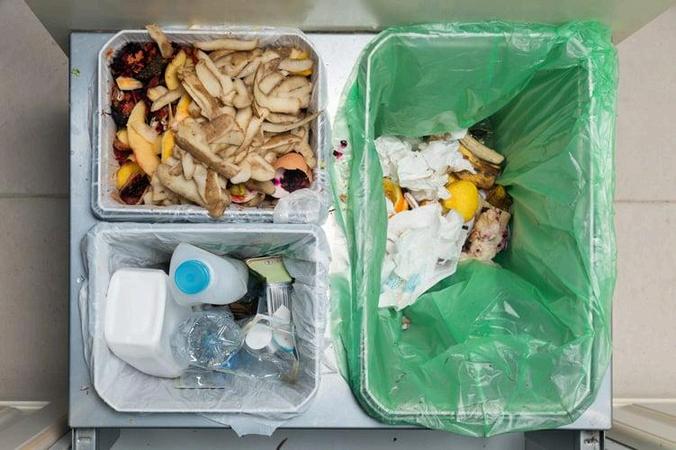
By clustering catering kitchen operations using machine learning, they identified that waste is not randomly distributed but follows systemic patterns driven by production volume, segregation practices, and disposal methods The analysis revealed that waste generation is highly responsive to targeted interventions on segregation rates and collection timing.
Using system dynamics simulation and machine learning, the framework enables airline catering operations to:
Model waste flows to capture production, segregation, and disposal across entire systems
Identify optimal waste segregation strategies that simultaneously minimize costs and environmental impact
Compare eight different waste management solutions with quantified financial and environmental outcomes
Scale recommendations globally across facility types using operational clustering aligned with local cost structures and capabilities
For supply chain companies, the implications are significant:
Achieve significant cost savings (potential $31,000–$50,000 annually per large facility) while reducing CO2 emissions by up to 99%
Select facility-specific waste solutions tailored to regional costs, regulations, and constraints: biogas, internal composting, food banks, or animal feed
Transition from linear disposal models to circular solutions validated through rigorous data analysis and system dynamics modeling
91.1%
accuracy in modeling waste generation and disposal across complete operational systems
reduction in emissions possible by shifting from landfill (1.70 tons CO2e/ton) to biogas processing (0010 tons CO2e/ton)
optimal waste segregation rate for minimum combined cost and environmental impact
“The data on waste is scattered across our operations. The challenge is connecting fragmented systems to see the full picture and act on it.”
— Dr. Chris Mejía Argueta, MIT Emerging Market Economies Logistics Lab
At the MIT Center for Transportation & Logistics, we deliberately work at the edges of what’s known tackling supply chain challenges that are too complex, too new or outside the reach of conventional solutions By combining rigorous research with real-world experimentation, we transform uncertainty into scalable, practical solutions.