State of Supply Chain in Omnichannel Fulfillment 2025
State of Supply Chain Omnichannel Report
2025: AI as a strategic enabler
By: Dr. Eva Ponce and Laura Allegue
Table of Contents
Executive Summary Survey Methodology
Key Findings
Section 1: Impact of eCommerce
Section 2: Omnichannel Strategy & Implementation
Section 3: Role of AI & Technology in Omnichannel
Conclusion
About the Study
Methodology: MIT CTL Annual Omnichannel Study
Now in its fifth year, this study explores how organizations evolve their omnichannel strategies and leverage emerging AI technologies to navigate operational complexity and solve critical challenges.
Fieldwork: October 2025 – February 2026.
A total of 647 respondents representing supply chain leaders from global enterprises
Enterprise scale representation: 72% of companies employ over 1,500 people
Strong leadership participation: 44% VPs and 22% Senior Directors
Key industries: 32% manufacturers, 25% retailers, 31% transportation and warehousing,
Executive Summary
Omnichannel supply chain: navigating the shift toward intelligent ecosystems
The Rising Complexity behind eCommerce Growth
As eCommerce matures, omnichannel supply chains are entering a new phase of operational complexity. In our fifth annual survey of 647 supply chain leaders, 81% report ongoing eCommerce growth, and nearly the same proportion are implementing omnichannel distribution strategies, a 10% increase over the previous year. What was once an optional channel strategy has now become a competitive necessity.
The Shift to Profitability
This year’s findings reveal a clear inflection point: companies are moving from building baseline capabilities to optimizing omnichannel profitability. Rising customer expectations for speed and personalization are intensifying cost-to-serve pressures, particularly in inventory positioning and returns management. To manage this, AIenabled technologies have transitioned from experimental tools to the foundational backbone of the enterprise.
The Operational Backbone
Unlike prior years focused on demand planning, 2025 reveals AI is now deeply embedded in core operations:
• Warehouse & Inventory Management: Optimizing allocation across fragmented networks.
• Transportation & Fulfillment: Enhancing end-to-end visibility and execution.
The Future State
Omnichannel supply chains are evolving from digitally enabled networks into intelligently orchestrated ecosystems. The next wave of competitive differentiation belongs to organizations that embed AI not as an isolated project, but as the primary engine to orchestrate the end-to-end supply chain.
PHASE 1: PAST
PHASE 2: PRESENT
Establishing omnichannel infrastructure, standards, and adding necessary channels.
Managing cost-to-serve pressures and refining inventory positioning for sustainable margins.
PHASE 3: FUTURE
AI is deeply embedded as a strategic enabler, orchestrating the end-to-end supply chain ecosystem.
The primary shift in 2025 is clear : the industry is moving from building capabilities to optimizing for profitability.
Key Findings: Impact of eCommerce
The Trend:
Growth in eCommerce remains the prevailing trend with 81% of respondents reported ongoing sales growth through this channel, driving increased focus on visibility and automation to manage its corresponding operational complexity.
The Profit Squeeze:
As eCommerce matures, with cost-to-serve and returns rising meaningfully, from 38% to 42% and from 33% to 40% year-over-year respectively, the goal moves from expansion to operational efficiency and profitability.
The Reach:
When observing eCommerce impact in the supply chain, distribution and logistics, inventory management, and order fulfillment all stand at 60%, while sustainability jumped from 27% to 48% in a year. Today, eCommerce pressure has reached every corner of the supply chain operations, including sustainability.
Current State of eCommerce
Sentiment rebounds as AI reshapes market performance
The MIT CTL annual omnichannel survey reveals how businesses have perceived their eCommerce performance over the years.
Between 2023 and 2024, while consistent growth in sales was perceived, the positive sentiment decreased slightly, aligned with post-pandemic normalization.
During 2025, however, growth perception increased sharply, with 81% of respondents reporting this.
Growth in eCommerce Sales: Year to Year Comparison
growth in eCommerce sales from 2024 to 2025
Growth in eCommerce sales No major changes in the last year
Decrease in eCommerce sales
Growth in eCommerce Sales by Industry
When broken down by industry, reported eCommerce sales growth is consistent with more than 70% of respondents reporting it.
Beauty & personal care, fashion, and toys lead the ranking, each at or above, 89%, closely followed by electronics and food & beverage. Healthcare and pharma had the lowest growth reported at 73%, and the highest share of ‘no change’ responses at 23%.
Current State of eCommerce
Driving operational convergence and high-performance execution
When observing the impact of the eCommerce growth within the supply chain, this year’s results show clear convergence around execution.
Distribution and logistics, inventory management, and order fulfillment all stand at 60%, with demand forecasting (56%) and network design (54%) close behind.
Unlike last year, where distribution and fulfillment were also top of mind but with a wider spread, the tighter clustering in 2025 suggests that companies are shifting their focus to high - performance execution.
Based on the 2025 survey respondents, the impact of eCommerce is no longer concentrated in isolated points of pressure, but it’s now embedded across the supply chain's operations.
Sustainability and returns management are also rising in importance (48% vs 27% and 46% vs. 38% respectively), reflecting growing attention to the complexity that eCommerce and seamless returns bring to supply chains.
Supply Chain Elements Ranked as Highly Impacted by eCommerce
Now in its fifth year, this study explores how organizations evolve their omnichannel strategies and leverage emerging AI technologies to navigate operational complexity and solve critical challenges. Fieldwork: November 2025
Current State of eCommerce
eCommerce growth driving structural changes across supply chains
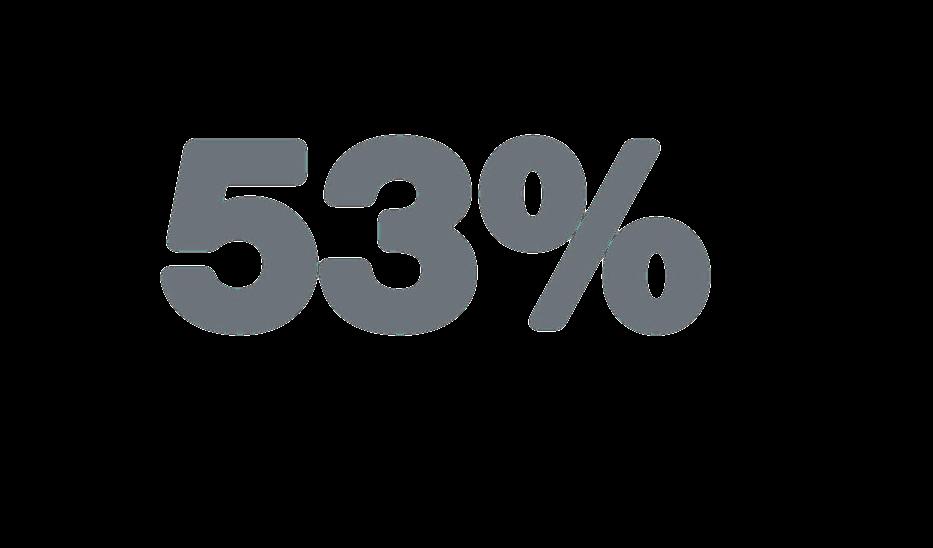
More than half of respondents report that its major impact is focused on end-to-end visibility (53%), higher overall sales (53%), greater automation (52%), and faster delivery expectations (51%).
Alongside these, cost-to-serve and returns have risen meaningfully compared to last year, increasing from 38% to 42% and from 33% to 40%, respectively.
The shift indicates that as eCommerce matures, operational complexity and profitability pressures are becoming more prominent.
That said, once we break it down by type of business, we observe both shared pressures and meaningful differences in how each segment experiences growth. End-to-end visibility is the clear differentiator.
While manufacturing and retail both report a strong eCommerce impact (53% of respondents), third-party logistics providers and wholesalers report a minor impact. On the other hand, total sales growth is the most evenly felt impact across all four segments. Retail leads on automation at 61%, reflecting the sector’s ongoing investment in improved efficiency and performance.
When compared with other eCommerce impacts, cost-to-serve and returns sit in the lower range across all types of businesses.
Key Findings: Omnichannel Strategy
&
Implementation
The Challenge:
Integration of online and offline remains the number one challenge. Among respondents, 51% cite channel integration as their top strategic challenge, up from 44% from last year, followed closely by fulfillment decisions at 50%.
Pain Points:
No single bottleneck. Pain points are spread across operations. Inventory positioning, demand planning, and logistics costs are all at 53%.
Orchestrating Channels:
Physical stores remain deeply embedded in fulfillment strategies. Click&Collect in-store, curbside, and traditional in-store options each sit at around 54-55%, showing that omnichannel continues to be about orchestrating channels, not replacing physical retail.
Omnichannel: From Strategy to Performance
Scaling execution across the end-to-end supply chain
The shift toward omnichannel is no longer aspirational; it has become an increasing operational reality for most companies, according to our survey.
This year’s results show a 10-percentage-point increase in respondents already implementing an omnichannel strategy (rising from 50% to 60% year-over-year), while those declining to implement it dropped from 33% to 22%.
Among those yet to implement a strategy, the leading barrier is a lack of information on omnichannel execution (27%), followed by financial constraints and product type considerations, both at 23%.
Company Implementing an Omnichannel Distribution Strategy
Company Implementing an Omnichannel Distribution Strategy by Business Type
When broken down by type of business, current and future adoption rates remain high across all segments, though with remarkable differences.
Retail leads with 84% of respondents already implementing an omnichannel strategy, reflecting the sector’s exposure to consumer expectations and competitive pressure to deliver seamless shopping experiences.
Wholesale (78%) and manufacturing (74%) follow closely behind, suggesting that the need for omnichannel is reaching beyond the retail end and into upstream supply chain operations.
Third - party logistics providers show the lowest current adoption at 70%, but also the highest response on planned future implementation (24%), showing that this segment is actively preparing to expand its omnichannel capabilities.
Notably, 6% or less of survey respondents across all business types lack a plan for omnichannel implementation, signaling that the approach is no longer a differentiator but a baseline customer expectation.
84% of retail companies are already implementing an omnichannel Strategy
Omnichannel: From Strategy to Performance
Technology driving efficiency in an integrated commerce landscape
As companies shift from expectation to action, three critical questions emerge: The top challenge, integrating online and offline channels (51%), is followed closely by fulfillment decisions (50%), both up from 44% last year. This suggests that the difficulties lie not in deciding whether to go omnichannel or not, but in making it work operationally.
• Where are the primary friction points in strategy and implementation?
• Which channels should be prioritized for maximum impact?
• How can operational foundations be built to ensure peak performance?
When asked about the key challenges shaping their omnichannel distribution strategies, respondents show that the problem lies more with execution than strategy.
Returns management (47%) continues to increase (from 38% last year), highlighting the growing operational impact of reverse logistics in the omnichannel landscape. Inventory allocation and strategy alignment also increased, while determining which distribution channels to offer moved up to 44%.
As omnichannel models scale, the operational pressure has become systemic. Integration, fulfillment, and returns are all rising simultaneously, indicating that end - to - end supply chain orchestration challenges are expanding.
51% say integrating online and offline channels is the top challenge
Rank Supply Chain Elements as Highly Impacted by eCommerce
Deciding how to integrate online and offline channels:
Aligning the omnichannel strategy to the company strategy:
Deciding where, how, and when to fulfill the order: Managing the commercial returns:
Now in its fifth year, this study explores how organizations evolve their omnichannel strategies and leverage emerging AI technologies to navigate operational complexity and solve critical challenges. Fieldwork: November 2025
Deciding the inventory allocation by channel:
Determining which distribution channels to offer:
Omnichannel: From Strategy to Performance
The path to maturity: stabilizing omnichannel challenges across the enterprise
The annual omnichannel survey also allowed for a longer-term analysis. A three-year observation reveals a consistent pattern of decrease and rebound.
The sharpest declines were in channel integration and strategy alignment between 2023 and 2024, indicating that there was meaningful progress and increased maturity in the implementation stages.
However, their partial recovery in 2025 suggests the need to revisit existing decisions to sustain growth and expected performance.
Returns management stands apart as the only challenge that remained essentially flat before climbing sharply over the three years, reinforcing its status as a growing challenge in omnichannel operations.
By 2025, all challenges fall within a narrow range, showing that as omnichannel matures, observed challenges are more evenly distributed rather than siloed.
Deciding how to integrate the online and offline channels (so both can use the same facilities)
Most Impactful Challenges When Shaping Omnichannel Distribution Strategy
Year to Year Comparison
Deciding where, how, and when to fulfill the order Managing the commerical returns
Deciding the inventory allocation by channel
2023 2024 2025
Aligning the omnichannel strategy to the company strategy
Determining which distribution channels to offer (home delivery, click&collect, etc.)
Omnichannel: From Strategy to Performance
Navigating operational friction and the push for profitability
Beyond the challenges of omnichannel implementation, companies are also feeling the weight of concrete operational pain points.
As channel integrations become stronger and at a larger scale, the impact becomes increasingly tangible - touching areas such as inventory positioning and cost structures, while the accelerating pace of technological change builds on the pressure. This year’s results reveal pain points concentrating around core operational dimensions.
Inventory positioning, demand planning, and higher logistics costs all cluster around 53%, indicating that operational precision, forecasting accuracy, and cost pressure are equally constraining omnichannel performance.
Visibility (51%) and cost allocation (50%) follow closely, suggesting that both data transparency and financial discipline have become central to managing complexity.
The most meaningful shift, compared to last year, is in demand planning, which despite remaining a top concern, has declined from 63% to 53%, aligning with the wider set of operational pressures.
Meanwhile, allocating operational costs to each channel increased significantly (31% to 50%), reflecting a growing emphasis on profitability and channel - level accountability as omnichannel models mature.
The evolution suggests that omnichannel operational pain points are moving from a forecasting - dominated scenario toward a broader focus on inventory allocation, cost control, and technology - enabled execution.
+61% increase in cost allocation concerns
Omnichannel: From Strategy to Performance
Managing the impact of multi-channel growth on inventory and allocation
Once there’s a common understanding of the sources of pressure in this landscape, the next step is to analyze how companies structure their distribution channels to respond to customers' increasing expectations and related complexities.
Operating at a larger scale and across additional channels necessarily impacts inventory needs and allocation, costing and pricing decisions, and even related data management.
The way companies distribute their fulfillment operations shows the way they choose to respond to these pressures in practice.
Based on this year's survey, home delivery remains the dominant omnichannel distribution channel, cited by 74% of respondents. However, store - based options continue to play a central role.
Click&Collect in - store (55%), traditional in - store purchasing (54%), and curbside pickup (54%) show nearly identical adoption levels, reinforcing the store’s ongoing importance as both a shopping and fulfillment node.
Locker - based pickup (39%) is growing but remains secondary, showing a more selective adoption pattern.
.
These results reinforce the omnichannel maturity, showing the simultaneous orchestration of different channels, instead of channel dominance. While digital penetration continues to grow, physical retail remains deeply integrated into omnichannel strategies
74% report home delivery as dominant channel
Key Findings:
Role of AI & Technology in
Omnichannel
AI Expansion:
AI is expanding from targeted tools to a systemic enabler across business operations. Its highest impact is seen in customer experience (64%), demand forecasting (63%), warehouse management (61%), and inventory management (60%). Each function relies on different tools: LLM chat and GenAI copilots lead for customer experience, while Random Forest and Deep Neural Networks lead demand forecasting.
Automation Acceleration:
Investment in automation is accelerating. AMR relevance rose from 50% to 63% within a year, and multi-shuttle relevance jumped from 14% to 56%, showing a shift toward automated, goods-to-person fulfillment models.
Personalization Explosion:
AI-driven personalization continues to expand. Marketing campaigns (69%), product recommendations (66%), and customer segmentation (66%) lead the adoption.
AI in Omnichannel
From emerging tools to operational foundation
Artificial intelligence and automation are rapidly evolving from siloed applications into system-level operating models, and omnichannel supply chains are no exception.
While many organizations reported using AI tools in our last year's survey, what has fundamentally changed is the degree of integration, scale, and coordination across multiple layers of the supply chain.
AI is now embedded across key areas, including customer experience, demand forecasting, warehouse, inventory, and transportation management, among others. It is no longer viewed as a tool to fix individual pain points, but as a broader enabler of core omnichannel operations.
The result is a technologically interconnected system capable of handling higher SKU complexity, faster replenishment, and real - time promises.
AI in Omnichannel
Adoption trends: high-volume interaction vs. deep operational logic
AI adoption varies by function. In customer experience, LLM-based chat tools lead adoption at 48%, exposing the natural fit of conversational AI tools in consumer-facing applications.
GenAI Copilots follow at 41%, suggesting that generative AI is expanding beyond direct consumer interaction into broader workflow support within the same function. Random Forest (35%) and Deep Neural Networks (32%) lead demand forecasting and transportation management.
Operational areas, such as warehouse management and order fulfillment, stand out for their balanced mix of AI methods, with no single approach dominating in the top three tools.
Similarly, SCM end-to-end orchestration shows the most even spread across all tool types, a reflection of its role in integrating complex functions and AI capabilities.
Custom GenAI Agents show the lowest adoption across all functions, ranging from 21% to 25%.
However, the fact that it’s being applied in all functions already suggests this tailored kind of AI solution is consistently being explored.
48% using LLM-based chat tools
Which types of AI tools are you currently using or planning to use?
AI in Omnichannel
Personalization 2.0: broader reach, deeper insights, and unified strategy
AI-powered personalization is expanding, led by marketing campaigns (69%), product recommendations (66%), and customer segmentation (66%).
Segmentation nearly doubled from last year (37%), indicating stronger data foundations and more targeted omnichannel engagements. Personalization is becoming broader, deeper, and more integrated across channels.
Overall, the results point to a shift from fragmented personalization tactics toward more data-driven, integrated customer strategies powered by AI.
Supply chain impact of customers' personalized experience powered by AI: Increasing the need of real time information of product availability:
AI-driven personalization is reshaping core supply chain requirements. The strongest impacts are the increased need for real-time product availability (65%) and higher inventory accuracy (63%). Personalization is placing direct pressure on inventory visibility and precision.
Operational complexity is also rising. Over half of respondents (51%) reported increased restocking frequency, while 45% observe a higher number of SKUs per order. As customer journeys become more tailored, supply chains must handle greater fragmentation in demand patterns and replenishment cycles.
At the same time, 35% indicate that AI-enabled personalization helps reduce returns, suggesting that more accurate recommendations and tools such as virtual try-on experiences are beginning to offset some downstream costs.
Restocking frequency and SKU complexity nearly doubled compared to last year.
AI in Omnichannel
Key technologies in fulfillment:
Technology relevance continues to rise as organizations continue to invest in automation to manage the growing complexity of omnichannel fulfillment and rising customer expectations.
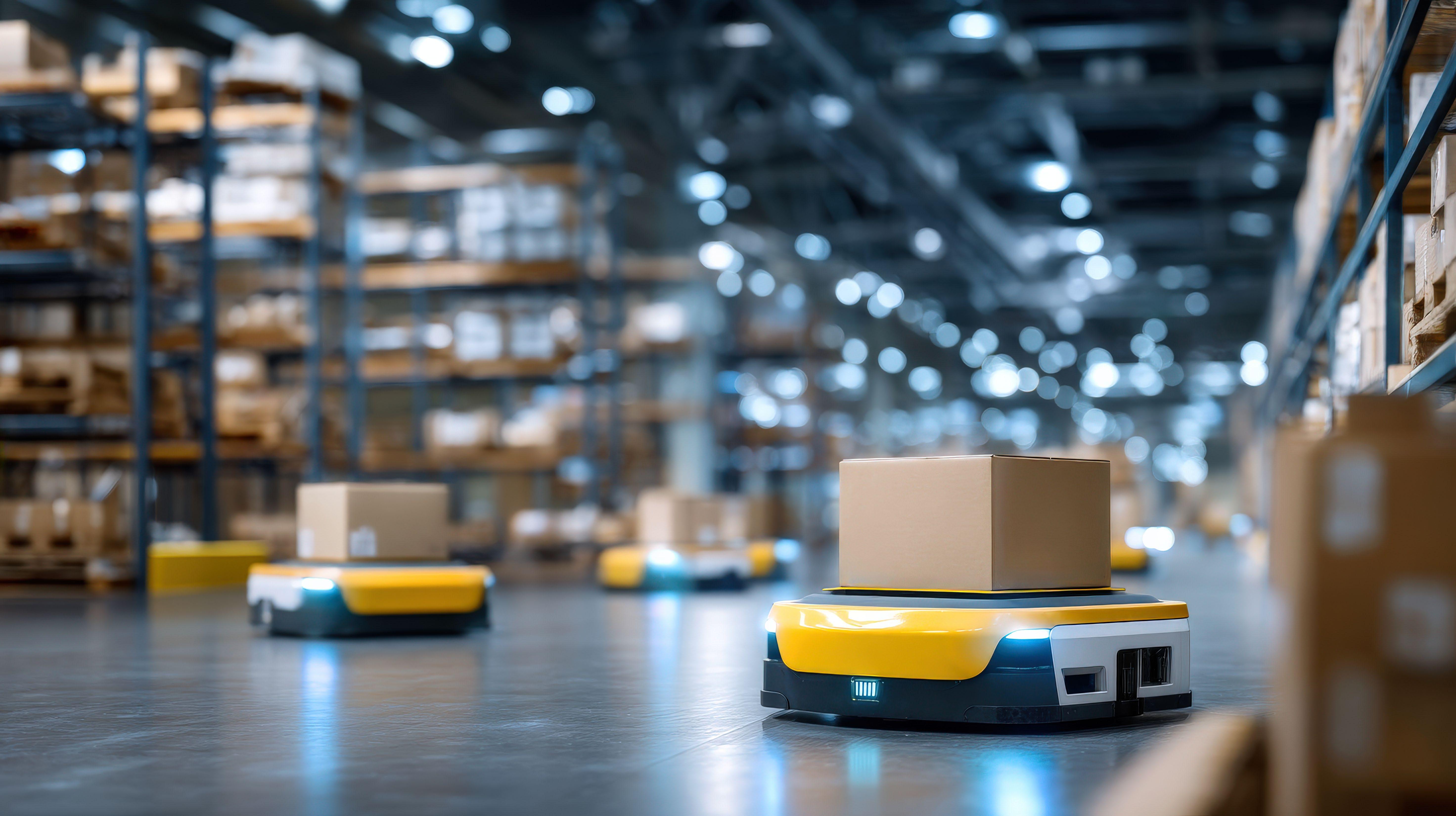
Autonomous Mobile Robots (AMRs) are now considered highly relevant by 63% of respondents, up from 50% last year, making them the most prominent technology supporting omnichannel fulfillment and warehouse operations.
63% consider autonomous mobile robots highly relevant
Multi - shuttles show the most dramatic increase in perceived relevance, rising from 14% to 56%. This change is signaling a significant acceleration adoption of goods - to - person and high - density automation strategies.
Cube storage (49%) reflects steady but more moderate penetration as companies explore dense storage solutions to support SKU proliferation.
By contrast, drones for inventory control (39%) remain more experimental, with a higher share of respondents indicating limited relevance (20%) suggesting that adoption is still in earlier stages.
300%
YOY surge in multi-shuttle relevance
AI in Omnichannel
The real-time mandate: synchronizing inventory across the omnichannel grid
Another key finding is the importance of real-time inventory management solutions, considered highly relevant for 59% of respondents. This aligns directly with one of the core challenges of omnichannel operations: maintain accurate, real-time inventory visibility across multiple channels and fulfillment nodes in order to deliver a seamless customer experience.
Mobile systems – flexible good-to-person solutions for the sorting/picking process
Real-time
Overall, the data points to a structural shift toward more automated, data - driven fulfillment models. Organizations are moving beyond standalone pilots and increasingly deploying scalable technologies designed to improve speed, accuracy, and inventory visibility - three capabilities that are fundamental for successful omnichannel execution.
Building the capabilities for the intelligent omnichannel supply chain:
Finally, the survey highlights how organizations are approaching the implementation of advanced technologies and AI solutions. Internal capability-building dominates, with 74% of respondents developing in-house tools to strengthen strategic digital competencies.
At the same time, partnerships with technology companies (64%) remain essential for accessing specialized expertise and accelerating deployment, while merger & acquisitions (52%) serve as a mechanism for acquiring scarce capabilities and scale innovation.
Together, these strategies suggest that companies are no longer viewing technology adoption as a purely external procurement decision. Instead, leading organizations are building hybrid capability models - combining internal expertise, external partners hips, and targeted acquisitions - to embed the digital capabilities and technical expertise required to integrate and unify supply cha in operations in omnichannel.
2025 Survey –Key Takeaways Conclusion:
AI Impact:
First, AI is evolving from isolated applications to a systemic enabler of end-to-end supply chain orchestration. While early use cases focused on optimizing narrow functions like demand forecasting, enterprises are now embedding AI across the entire value chain to synchronize the omnichannel experience from end to end.
Automation is Critical:
Second, eCommerce continues to introduce significant operational complexity and volatility. In this context, flexible automation technologies such as autonomous mobile robots (AMRs) are becoming critical to adapt to changing demand patterns, while AI provides the intelligence needed to optimize performance across omnichannel supply chains.
Human Intervention:
Finally, competitive advantage will increasingly depend on organizational capabilities. As AI becomes embedded across forecasting, inventory management, and fulfillment, companies must invest in upskilling their workforce to understand, manage and leverage these tools effectively. The ability to combine technology, data, and human expertise will define the next generation of high-performing omnichannel supply chains.
About the Study
References:
Ponce, E., Allegue, L. (2025). Infographic: Omnichannel fulfillment—The promise and hope of AI and technology, Supply ChainXchange.
Ponce, E., Allegue, L. (2025). How AI-enabled personalization is reshaping omnichannel supply chains, Supply ChainXchange.
Ponce, E., Allegue, L. (2024). The evolution of omnichannel fulfillment: What’s driving change?, DC Velocity.
Ponce, E. (2023). What’s shaping omnichannel fulfillment strategies?, DC Velocity.
Copyright information:
Copyright 2026 Massachusetts Institute of Technology - All rights reserved. This publication or parts thereof may not be reproduced or modified in any form, stored in any retrieval system, or transmitted in any form by any means- electronic, mechanical, photocopy, recording, or otherwisewithout prior written permission from the publisher, except as provided by United States of America copyright law.
For permission requests, write to the publisher at:
MIT Center for Transportation and Logistics
Building E40
1 Amherst St. Cambridge, MA 02142
Attn: Omnichannel Survey Or email: ctl_comm@mit.edu
Suggested citation:
Ponce, E., Allegue, L. (March, 2026). State of Supply Chain Omnichannel Report. 2025: AI as a strategic enabler. MIT Center for Transportation & Logistics. ctl.mit.edu/state-supply-chain-omnichannel-report
About MIT Omnichannel Supply Chain Lab
The MIT Omnichannel Supply Chain Lab at the Center for Transportation and Logistics, researches the evolution of retail, eCommerce, and logistics. We investigate the new realities of warehouse and workforce transformation to ensure businesses are prepared for a digital-first future.
Research Areas
Omnichannel supply chain trends
Surveying thousands since 2021, we track how AI, rising speed expectations, and online-first behavior are driving real-time, personalized supply chain strategies.
Upskilling the supply chain workforce
We develop training that blends hands-on learning and -learning to close the tech literacy gap as 44% of job skills face disruption.
The warehouse of the future
With warehouse robotics surpassing $20B globally, our research explores how adaptable, connected, and rapidly deployable technologies are reshaping fulfillment.
Technology adoption and risks
Our research identified 48 warehouse automation vulnerabilities, highlighting cybersecurity as a top concern in cloud-based, remotely managed systems.
omnichannel.mit.edu
About the MIT Center for Transportation and Logistics
MIT CTL is a global hub for supply chain innovation -where rigorous research, real-world challenges, and bold thinking come together.
Founded in 1973 and based in the top-ranked MIT School of Engineering, we bring researchers, students, and industry leaders into close collaboration to tackle the most complex problems facing supply chains today.
We also anchor the MIT Global Supply Chain and Logistics Excellence (SCALE) Network, extending our research, education, and industry partnerships across four continents. This global ecosystem allows us to pair MIT’s depth and rigor with international reach and on-the-ground relevance.