From research to real-world impact:
How MIT CTL and Mecalux are optimizing warehouse inventory with new AIbased tool GENESIS


From research to real-world impact:
How MIT CTL and Mecalux are optimizing warehouse inventory with new AIbased tool GENESIS
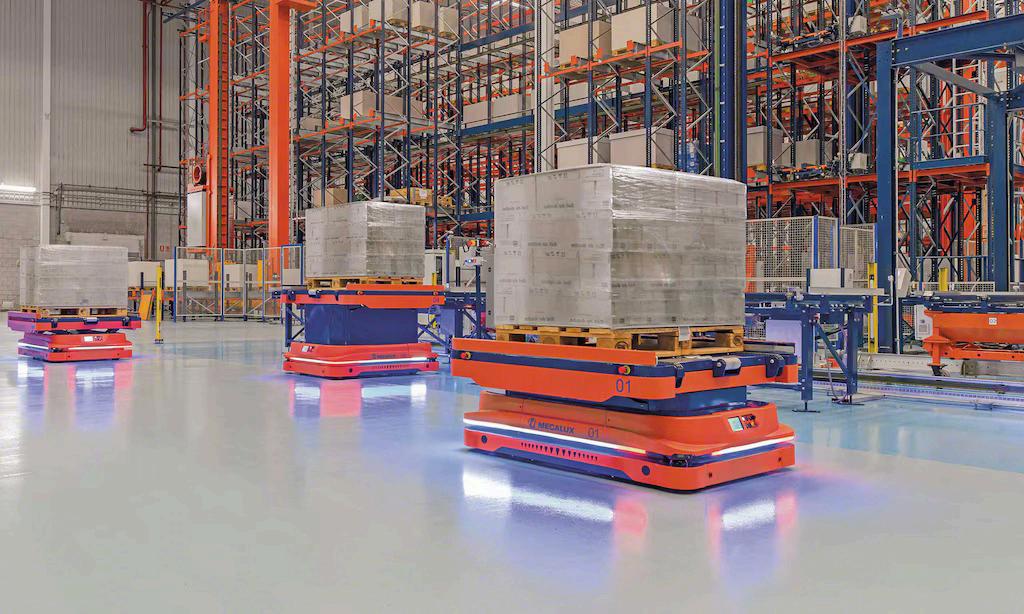
Customers expect faster and more reliable delivery, but warehouses are managing more products, smaller fragmented orders, and multiple locations Traditional inventory models are too slow to keep up, as they treat each warehouse independently or require weeks of manual analysis To meet demand, supply chain leaders need to compare dozens of
replenishment strategies, warehouse rebalancing options, and transportation approaches before committing resources, but conventional tools force them to choose between speed and accuracy The core challenge to solving this is enabling rapid, multi-scenario testing that reflects real operational constraints
48% of companies cite system integration as a main barrier to AI/ML adoption
have implemented inventory optimization, yet lack real-time scenario testing
measure ROI on inventory optimization, but rely on static models
2-3 years
typical payback period for AI/ML implementations
*From The State of AI in Warehousing report, prepared by Mecalux and MIT CTL based on a survey of 2,000+ supply chain and warehousing professionals in 21 countries
MIT CTL’s Intelligent Logistics Systems Lab, directed by Dr. Matthias Winkenbach, has spent years studying how AI can move beyond isolated optimization tasks to coordinate decisions across entire logistics networks The research identified a critical gap: Companies had adopted point solutions (demand forecasting, route optimization, picking automation) but lacked a unifying platform to test integrated strategies
Working with Mecalux, a global leader in warehouse automation, the team developed GENESIS (Genetic Evaluation & Simulation for Inventory Strategy) to bridge that gap The platform uses advanced machine learning models and genetic algorithms to analyze thousands of possible scenarios simultaneously, testing
different inventory levels, rebalancing rules, and transportation policies against real demand patterns, cost structures, and facility constraints.
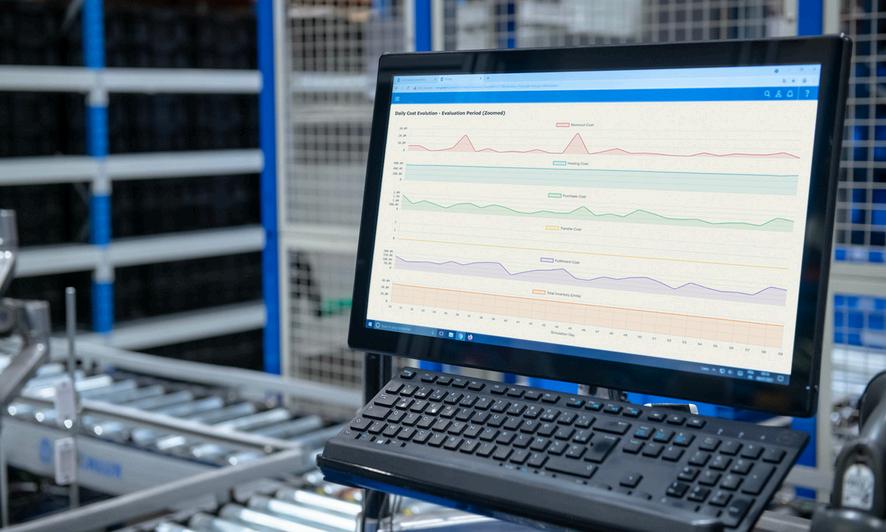
Unlike theoretical models, GENESIS operates on actual warehouse data: historical demand by region, current stock positions, transportation costs, warehouse capacities, and lead times It then generates advanced statistical dashboards showing consumption patterns, demand variability hotspots, SKUs at risk of stockout, and facilities with supply issues, enabling supply chain teams to understand why a strategy works
an AI simulator for inventory optimization
Built on genetic algorithms, cloud analytics, and real operational data, GENESIS allows supply chain planners to:
Test thousands of scenarios in minutes instead of days, comparing strategies without disrupting live operations
Receive dashboard-driven insights
Recommend inventory rebalancing before purchasing, analyzing whether it is more efficient to transfer products between facilities or to place new supplier orders
Optimize transportation orchestration to reduce delivery times and costs
Support all decision-makers, not just specialists
For supply chain companies, the implications are powerful:
Faster decision cycles: move from weeks of analysis to minutes
Reduced inventory carrying costs through better network rebalancing
Lower safety stock by identifying true demand variability vs planning conservatism
Improved service levels by optimizing allocation strategies before stockouts occur
More confident replenishment decisions backed by scenario testing and statistical confidence measures
Based on simulation results and a survey of 2,000+ supply chain and warehousing professionals across 21 countries:*
service level achieved with GENESIS (from 92% baseline)
fewer unfulfilled orders over a 90-day horizon with GENESIS of companies expect to increase their AI/ML budgets over the next 2–3 years, signaling strong investment momentum and readiness for tools that accelerate decision-making
“The real challenge wasn’t finding the right algorithm—it was making it
Rodrigo Hermosilla,
Research Engineer at the MIT Intelligent Logistics Systems Lab
State of AI in Warehousing Report
At the MIT Center for Transportation & Logistics, we deliberately work at the edges of what’s known tackling supply chain challenges that are too complex, too new or outside the reach of conventional solutions. By combining rigorous research with real-world experimentation, we transform uncertainty into scalable, practical solutions