Grier Torrence, a Guiding Presence in the Studio, Retires After 28 Years at Porter’s
Music drifts through the room. Layers of pigment settle into tabletops, traces of past work that remain. Flowers stretch toward the light filtering through tall windows. These details shape the experience of entering the art studio at Porter’s, a space that carries a sense of continuity and accumulated work. The person who has shaped this space is Grier Torrence. Torrence serves as the studio art teacher, Art Department chair, director of galleries, and Margaret How Wallace ’27 Teaching Chair. After 28 years at Miss Porter’s School, he is retiring this spring.
Torrence is among the longest serving faculty members at Porter’s. His influence has left a long-term impact on generations of student artists on campus, his own work even developing a close connection with Farmington.
In his teaching, Torrence has provided plentiful support to students, often extending beyond the structure of a class. Through critiques, individual conversations, and ongoing guidance, he encourages students to take their work seriously and develop their ideas over time.
Students say Torrence has made a memorable impact on them.
“One of the most important parts of his presence is the way he helps students see art in a wider way,” said Jihu Lee ’27. “It grows through interaction, conversation, empathy, and connection with the world around us.”
Lee points to the atmosphere of critiques in his studio art classes.
“He does not treat our ideas as small or unfinished,” she said. “He helps us notice the power in what we are trying to say, sometimes even finding meaning in our work that we had not fully realized ourselves. He has a way of making each student’s expression feel valued.”
For Sophie McCleary ’26, Torrence’s impact has been closely tied to the development of her artistic voice.
“I feel like he’s helped me grow into my true identity as an artist,” McCleary said. “When I first came to Porter’s, I didn’t really have a refined style. Through his guidance and the freedom to explore different mediums, I was able to find what I wanted to paint.”
McCleary said Torrence also created an unique studio environment.
“The natural light, seeing Grier painting there, all of the books with so much art history, and the small objects he collects,” she said. “It becomes a source of inspiration.”
Alongside his teaching, Torrence has maintained a constant painting practice as a respected artist.
By Claire Shen ’28 Layout Editor

He studied at Stanford University, the Rhode Island School of Design and Yale University, and has been a member of the Bowery Gallery for 11 years. He often paints outdoors in Farmington, returning to the same landscapes over the years, with the town and the Porter’s campus continuing to appear in his work.
When speaking about Farmington, Torrence said, “as a geographic place, it’s just beautiful.” He references Robert Brandegee, an art teacher during the time of Sarah Porter, who wrote that “Farmington was created from the dust in the cup of God.”
Reflecting on his life before coming to Porter’s, Torrence recalled the influence of his own high school art teacher.
“My boarding school art teacher was really important to me,” he said. “That’s a time when it’s important to have somebody who believes in you, understands where you are and supports you.”
Over the years, that same spirit has carried through Torrence’s teaching at Porter’s, leaving a lasting mark on his students and a legacy that extends across the Farmington community.
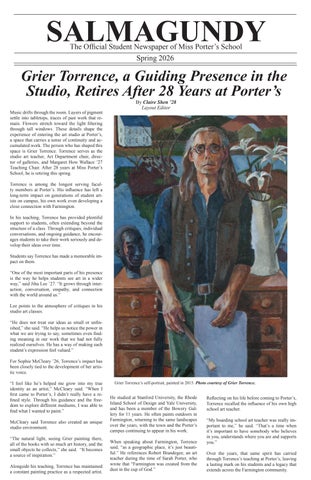
Grier Torrence’s self-portrait, painted in 2015. Photo courtesy of Grier Torrence.
ARTS, LIFESTYLE & HUMOUR
The Instagramification of Spring Traditions
Is the Pressure to Look Perfect Undermining the New Girl Experience?
By Pippa Daykin ’28 Staff Writer
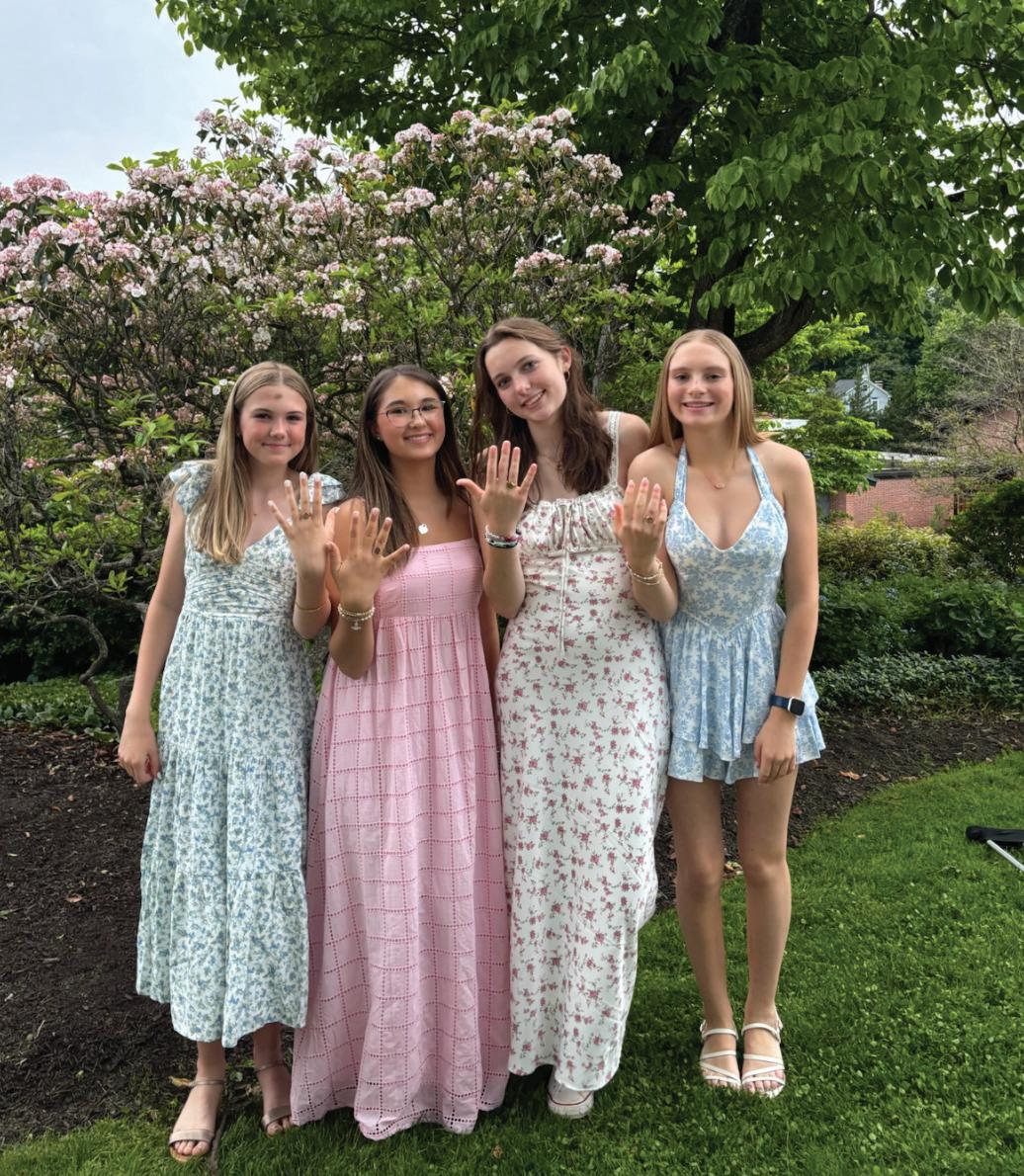
Clustered together in colorful sundresses and Tory Burch slides, four girls stand in front of a flowery bush with their arms stretched out towards a camera. Underneath the photos on a post is usually a caption – some variation of “not so new anymore” or “married to ftown” – in the caption. The epitome of the ring ceremony photoshoot and a New Girl’s first impression of Porter’s.
Spring traditions are some of the most anticipated of the traditions at Porter’s, especially for New Girls as they prepare to receive their rings.
In the spring, it is common to hear chatter about what people plan to wear to spring traditions, whether it be Singing in the Garden, Ring Ceremony or graduation. New Girls are a part of this too, as evidenced by Gardiner Leavy ’29 who reported purchasing five new outfits for spring traditions.
However, if Ring Ceremony is a surprise date, where does the pressure to have the perfect dress for the occasion come from? How do New Girls prepare for an event they’ve never attended?
“Seeing everyone’s posts online made me really excited for the traditions but got me stressed as well because I feel like I need to buy a bunch of new dresses just so I can get photos,” Katherine Dingus ’28 said.
Katherine reveals how when New Girls view posts of spring traditions online before coming to Porter’s, they feel pressured to fit into our community by having the perfect outfit or wearing something different to each event.
Poet Bumpus ’28 felt the pressure during her New Girl year.
“I saw the posts so I knew I had to look cute,” Bumpus said. She wasn’t alone.
“That’s how I knew you had to have a lot of dresses,” Louella Barillaro ’28 said.
Many concerns have arisen around posting culture causing a shift in the focus of spring traditions away from the event and more so on appearances and photos.
Dingus said that going into the next few weeks her “main focus is getting photos with everyone, not even the actual traditions.”
However, other traditions, such as German, Welcome and Little Meeting have the opposite effect on the community.
“I just think that part of what makes German and Little Meeting so special is that they’re so disconnected,” Sarah Glaspey ’28 said, “and it’s sort of a ‘what happens in the Hacker stays in the Hacker’ situation.”
Barillaro agreed. “Everyone feels comfortable doing whatever,” she said, “and it’s just a lot of fun.”
Some students said spring traditions at Porter’s have become pressure points that result in overcrowded Instagram feeds and overconsumption of expensive dresses preventing them from enjoying the unique and special moments.
Attending Porter’s at a time when almost every aspect of the students’ lives is recorded and captured on phones has in effect made students crave the moments they get to keep to themselves, ultimately encouraging students to follow phone
guidelines at secret traditions such as German. When students aren’t worried about how these moments will appear online, they notice how they have the chance to relax and create undocumented memories.
As the end of the year approaches, along with what seems like two weeks of non-stop traditions, many students say it’s important to take the time to be intentional about the events.
While taking photos and wearing nice dresses is expected of these traditions, they said, stress about buying the perfect dress and arranging an Instagram post should be replaced with the experience of becoming an Old Girl and getting married to ftown.
Testing Without Tests? Porter’s Grading System Raises Questions About Standardized Testing OPINION
As standardized testing regains prominence in college admissions, Porter’s students have no clue what to do. School assessments come to a close, and sophomores and juniors turn their focus to standardized testing. As they prepare for exams like the SAT and ACT, many face a format that feels unfamiliar.
At Porter’s, assessments rarely take the form of timed, multiple-choice exams. Students are often evaluated through essays, projects, corrections and discussions. These assignments emphasize depth and understanding, allowing time for reflection and revision.
Standardized tests work differently. They reward speed and accuracy as students must answer
By Jiayi (Jessica) Lin ’27 Editor-in-Chief
questions under strict time constraints without a chance for revision.
For many students, standardized testing represents a new kind of academic pressure. They are not used to sitting for long exams or managing strict time limits. The challenge is not just the material. It is learning how to take the test.
“I think Porter’s has given me a strong academic foundation,” said Qingqing Jing ’27 who is taking the SAT this year, “but standardized tests feel different because they’re more about pacing and quick decision making under time pressure.”
Stress around testing is presented differently at Porter’s, sometimes being nonexistent.
Jing appreciates the school’s growth mindset system. “In school, we usually have more space to revise and look back at our work,” she said. However, she added, “I think my testing would’ve benefited from doing more work under the mindset that I can’t go back and fix anything.”
In the classroom, students are encouraged to take their time. They can develop ideas and improve their work. Standardized tests do not allow that process. This shift can feel sudden. Soon-to-be SAT taker Claire Ewald ’28 said the Porter’s curriculum is unique, “but I don’t think that it prepares students for standardized testing whatsoever.” (See story on page 3)
Class of 2028 students Lena Miller, Indy Thavenius, Sarah Glaspey and Macy Rutledge pose after the ring ceremony last year. Photo courtesy of Sarah Glaspey ’28.
Testing continued.
As sophomores approach junior year, many report uncertainty about where they need to improve for testing.
Pacing is another challenge. Students who are used to open-ended work may struggle to move quickly through multiple-choice questions. Some run out of time. Others second-guess their answers.
“I often don’t make it to certain questions on a test, and they end up getting discarded by the teacher and not counted in the final grading of the test,” Ewald said. “In the SATs and future testing I will do in college, the lack of answers would be counted.”
Elizabeth Zhang ’28 said, “I think the Porter’s philosophy of not taking normal timed tests for most subjects makes it hard to take standardized testing where if you get something wrong it’s wrong forever.”
On standardized tests, there is no feedback or revision cycle.
“I think the lack of preparation the school gives for standardized testing causes a lot of extra pressure on students to do well in the tests,” Zhang said. “And objectively speaking, I don’t think I’m that bad at math, but I struggle with SAT maths because Porter’s math doesn’t help with comprehension of complex problems.”
Porter’s does not include standardized test prep in its curriculum. As a result, many students rely on tutors and prep courses, which adds more workload to an already busy school schedule. ACT taker Ella Brown ’27 has been working with a tutor for a while. “Our schedule is spread out and perfect for the school day, but then when I look for time to schedule tutoring, I’m so drained and busy,” Brown said. “I feel like I should’ve started sophomore year instead of junior year.”
Balancing test preparation with MPS’s schedule can be difficult. Students must find time on their own, and access to resources also varies between students.
“I get home at like 6:30, then I have dinner, and before I know it it’s 8 p.m., and I have tutoring,” Brown said. “Before I know it, it’s 9 p.m., and I’ve only finished tutoring, not having touched my homework at all.”
Porter’s academic model focuses on critical thinking and meaningful learning, skills that are valuable and lasting. However, standardized tests are returning as a crucial part of the college admissions process. They require a different set of skills.
As students prepare for test dates, they are not only reviewing content. They are learning a new system fundamentally different from MPS’s academic model.
Little Meeting Memories Should Not Disappear When the Performance Ends
Little Meeting has always been one of Porter’s most meaningful traditions. The intimate Hacker theater setting, the soft glow of the stage lights, and the quiet union of students and teachers set the mood before the performance even starts.
For many students, Little Meeting is a chance to laugh, take risks, and create memories with friends. But one rule often leaves students frustrated: the blanket ban on videos or photos during the performance. In an age when sharing is a deeply embedded part of students’ lives, depriving students from accessing one of their natural sources of connection to preserve one of the most memorable traditions of the year feels too strict, which is why Porter’s should reconsider the no-video and no-photo policy during Little Meeting.
Granted, this rule may come from a reasonable place. The school likely wants students to protect performers’ privacy and avoid distraction during the event, and those concerns matter. No performer should feel uncomfortable knowing that their performance could be recorded and shared without permission.
The problem is that the current policy, which enforces a total ban on photos and videos, does not leave much room for a thoughtful compromise. A more sensible policy, then, would see Porter’s create a system that respects both privacy and memory.
The school is not without alternatives. For example, one way to address the gap is to have one official person record the performances and share the videos only with performers or with the community through SmugMug. Another option would be to allow each performer to decide whether their performance can be recorded. If a student does not want to be filmed, that choice should be respected. But if a group wants to record their performance, they should have that opportunity.
By Ejin Chung ’28 Staff Writer

Eva Bernadel ’28 believes performers should have more say in the policy. “I understand why the school does not want everyone recording, but I think there should be a more organized way to save the performances,” she said. “If performers can choose whether they want to be recorded, it would feel much more respectful.”
The policy can feel especially disappointing for international students, for whom a short video represents a way to share a piece of their lives at Porter’s with family members abroad. Considering Porter’s standing as a boarding school with students whose families are from all over the world, one clear benefit would be to make the campus even more inclusive and welcoming to its students. Sharing performances in a controlled and respectful way would help families feel more connected to Porter’s traditions and to the students who participate in them.
Freya Wang ’28, one of the co-heads of the K-pop Club, believes being able to record the performance would bridge her school and family life. “For international students, Little Meeting is one of the moments we wish our families could see,” she said. “My family wants to see my performance, so even a short recording would help them feel more connected to my life at Porter’s.”
The Porter’s community extends far beyond the confines of the immediate campus and includes more than just the students. With a better system, Porter’s can protect performers while still allowing students to share their joy with the people who support them from near and far.
If Little Meeting is truly one of Porter’s beloved traditions, then the memories should not disappear the moment the performance ends.
Members of K-pop Club perform at a community showcase in the fall. Photo courtesy of Freya Wang.
OPINION SALMAGUNDY

Stop Ignoring the Arts
By Lisi DeLaO ’29 Staff Writer
In recent years, Miss Porter’s School has been extremely focused on its sports program. Although this has resulted in athletic success, other activities have been neglected. Competitions and wins do not always measure progress, especially for the arts. More opportunities, time and appreciation should be devoted to these creative fields in order to encourage student engagement and development.
As both an athlete and musician, Emma Yu ’29 faces the challenge of balancing activities.
“There are a lot of things like Athlete of the Week and opportunities for athletes,” she said, “but for musicians, there are barely any competitions and less recognition in terms of shoutouts and programs.”
The facilities have large gaps in their quality. While our campus has a relatively new pool building and perfectly pristine fields, the music building is out of date and unfit for the program’s needs. In fact, it was even downgraded. In 2022, the music building was turned into the Dr. Glenda Newell Harris Student Center. This was a beautiful tribute to an Ancient; however, the music facilities should have been upgraded in a new location instead of shunted off to an old building with thin walls on Mountain Road.
On days when there are theatre productions,
students often attend weekend activities instead of supporting their peers. Zora Howard ’27, a PMPT head, agrees. “There’s not a lot of people coming together,” she said.
However, when there is a big sports game supporting a cause such as Dig Pink or Morgan’s Message, all students are encouraged to attend and weekend activities are not offered at con-
flicting times. Howard said the difference in how our school treats these activities “makes students prioritize sports more.”
Artists work just as hard as athletes, yet at Miss Porter’s, the arts are not taken as seriously as athletics. Everyone deserves recognition for their achievements and progress. As a community, we need to make a change.
A Porter’s Evening by Addy McNear ‘26
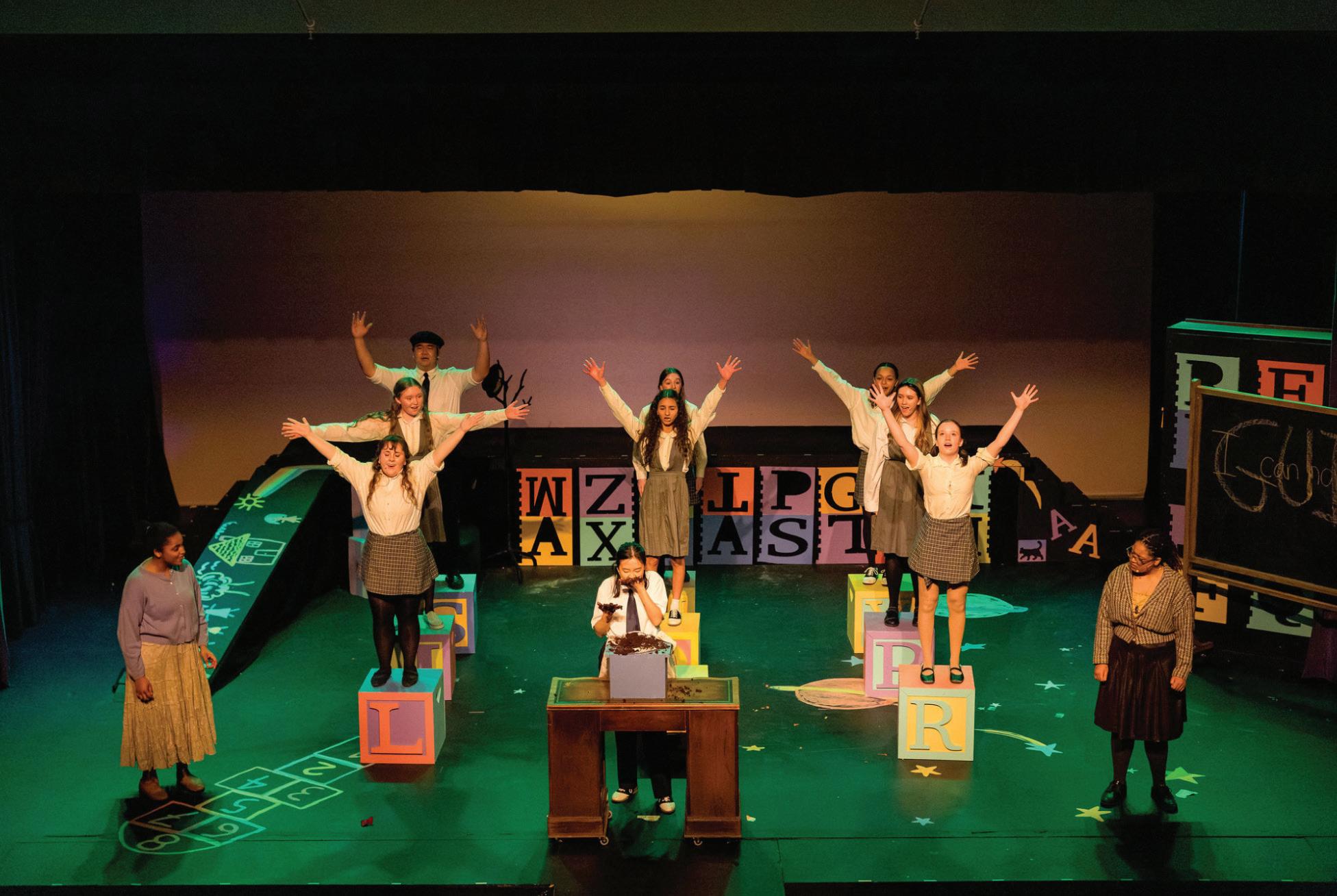
Students staged a production of “Matilda” during the winter trimester Photo courtesy of Miss Porter’s School.
The Teacher Behind What Many Say Is the Hardest Course at Porter’s
By Bella Wang ’27 Staff Writer
On the first day of high school chemistry, Christine Scanlon was not the student who immediately understood the periodic table.
In fact, she was the student who didn’t.
“Chemistry did not make sense to me,” she said. “It felt unfamiliar.”
Years later, Scanlon is better known in Olin 303 at Miss Porter’s School, often in her bucket hat, guiding students through the same subject she once struggled to understand. In Advanced Interdisciplinary Studies (AIS) Chemistry, one of the school’s most rigorous courses, she leads students step by step through complex ideas, slowing down where confusion builds rather than moving past it.
AIS Chemistry is known among many juniors and seniors for its intensity and accelerated pace, shaped in part by the UConn Early College Experience (ECE) program, which brings university-level material and grading into a high school classroom. At the center of that experience is Scanlon, whose teaching guides how students move through the course.
“She is organized, hardworking and reflective about how her curriculum fits together so she can get the most out of the 10-week course,” said Mary Jo Mouton, chair of the science department.
That organization shapes how students experience the class. Lessons are carefully sequenced so each concept builds on the previous one, and experiments are integrated to help students work through ideas rather than simply memorize them. Mouton said Scanlon is deliberate in how she presents complex material, breaking it into a structure students can follow.
But just as central is how she supports students
New Girls Reflect on First Year at Miss Porter’s
By Amelia Walsh ’29 Staff Writer
As the school year approaches its close, New Girls are reflecting on their first year in a new community defined by its traditions, academics and a welcoming atmosphere.
From navigating classes to learning the rhythms of dorm life, the transition required time and adjustment.
Boarder Martha Nastus ’29 described the start of the school year as “really frightening,” but said that planned school events such as required ice cream socials helped make it easier to meet people and build new friendships.
While experiences varied, students consistently pointed to the opening weeks as a period of adjustment.
beyond the lesson itself. “She makes herself available whenever students need help and will sit with them to work through concepts,” Mouton said. “From 8 a.m. to 3:20 p.m., and even after school for Science Olympiad, she is constantly supporting students, always in her office.”
For students, that consistency comes from Scanlon’s ability to see how they are learning as the class moves forward. She shifts instruction in the moment — slowing down when confusion comes up, re-explaining ideas or pulling students into smaller groups to work through specific problems. The pace isn’t fixed; it changes depending on how the class is doing.
“It’s the hardest class I’ve taken, but also the most interesting,” said Lil Coe, one of Scanlon’s AIS Chemistry students. For Coe, her teaching approach makes the pace manageable because instruction is efficient and adjusts to what students need in the moment.
That ability to adjust instruction also shapes how Scanlon describes the course itself, especially when students struggle to understand a concept at first, a challenge that often becomes most visible during major assessments and exams.
“It can be very stressful for students to sit for the UConn exams and then get them back and see a disappointing score,” she said. “Students are doing something genuinely challenging, and they cannot expect themselves to be perfect at a hard thing they have never done before on the first try.”
She encourages students to focus on what comes next, revisiting problems, adjusting study strategies and asking for help so progress becomes part of the process rather than tied to a single “Distinguished.”
That perspective is shaped by her own experi-
Academic life was a major shift for most as students described trouble adapting to new expectations and workloads while also learning how to manage their time.
“It was definitely a jump from middle school to freshman year, but I am proud of my growth and adjustment,” day student Philippa Hesse ’29 said.
Students also noted increased confidence in their approach to schoolwork and challenges. Hesse said she appreciated the opportunity to focus on learning without the pressure of grades.
Outside the classroom, dorm life played a central role in the transition. Students cited the shared spaces, routines, activities, joint meals and daily interactions as opportunities to build connections early in the year.
“I think they did a good job of doing activities to build a sense of community and give people the opportunity to get to know both new and older students,” Nastus said.

ence. After her struggles with chemistry in high school, she encountered it again in college, where organic chemistry changed how she understood the subject. She later double majored in chemistry and molecular and cell biology, followed by a master’s degree in materials science, before entering teaching.
Now in her 13th year in the classroom, including 10 years at Porter’s, she approaches AIS Chemistry as more than a course defined by its workload. The class is hard, she said, but it is also structured to help students keep moving forward, even when understanding does not come immediately.
“I hope they gain the skills needed to succeed in a college chemistry environment,” Scanlon said. “That includes knowing how to prepare for exams and how to show what you know under timed conditions.”
By the end of the course, Scanlon said she hopes students will say, “That was very hard, but I kept going. And now I know I’m capable of doing difficult things.”
For Audrey Perevertaylo ’28, dorm life enabled her to make new friends.
As the year progressed, many students said these connections continued to develop through shared experiences in dorms and across campus.

Support from advisors, teachers, and peers was another consistent part of students’ experiences. Lily Chou ’29 said that relationships with teach-
Science teacher Christine Scanlon.
New Girls Nellie Zurolo and Rosie Sass joined their Old Girl, Fiona Foulois for a cooking decorating event in December. Photo courtesy of Eileen DeLaO.
New Girls continued.
ers and coaches felt especially strong, adding that they were able to talk openly without fear of judgment and felt supported throughout the adjustment period. She said “the teachers here always want the best for you and are there when you need them.” These relationships helped students navigate both academic and residential life throughout the year.
Now, in the spring, many New Girls describe a noticeable shift from their first days on campus.
“Comparing myself now to the beginning of freshman year gives me the opportunity to reflect on how my approach to challenges has changed,” Hesse said. “I can see how much I’ve grown and how much more confident I’ve become here at Porter’s.”
Should Students Have More Freedom?
By Eva Bernadel ‘28 Staff Writer
At boarding schools across the country, students are expected to balance independence with responsibility. How much freedom should accompany that independence, however, remains an ongoing debate, one that students and faculty don’t always agree on.

After prom, junior boarder students have two options: their house or dorm, while seniors are
permitted to go elsewhere with a detailed Orah pass.
Nyla Van Dyke ‘27 found this difficult to accept.
“It makes me upset that the school can’t give us that freedom to let us stay with our friends or enjoy these moments after prom,” Van Dyke said, “and they only give that to seniors.”
The prom rule is one of several where students and administration struggle to see eye to eye.
The new phone restrictions for freshmen have
Porter’s Tradition Changes Receive Backlash from Students
By Cleo Enrique-Hubbard ‘28 Staff Writer
According to campus lore, Porter’s traditions once involved New Girls being brought into the Riverside Cemetery at night and wearing trash bags during German to protect themselves from thrown tomatoes.
Traditions like these have not withstood today’s campus culture, causing many students to grow discontent with recent administrative changes.
“I really like how it is inclusionary, but I am upset about how they’re changing (the traditions) a lot,” said Charlotte Turnure ’27, a prospective Keeper of Traditions. She said that watching the upperclassmen lead traditions gave New Girls something to look forward to, but recent changes have disappointed her as she enters her senior year.
“I want the freshmen that are coming to have fun and really enjoy the traditions the way they’re meant to be enjoyed,” said Reitu Matseke ’27, another Keeper applicant.
The popular tradition Little Meeting, known around campus for being an Office of Student Life nightmare, has seen a crackdown on performances in the last few years. Turnure’s freshman fall show was especially provocative. In the following spring, dances such as “Alejandro” and “Magic Mike” were taken out, before being brought back her sophomore year in a much more subdued manner.
“I’m upset about it because I really liked how fun they were,” Turnure said.
In anticipation of Little Meeting this spring, administrators have laid out strict guidelines with an emphasis on a family-friendly show.
“You’re just sucking the fun out of the whole situation,” Matseke said.
Other more daily tradition shifts include the new attitude towards all-black attire. In the beginning of this school year, students were informed that Old Girls could no longer call out New Girls for wearing all-black clothing.
“Who are we to stop students from wearing what makes them feel comfortable, when our dress statement is meant to be as inclusive as possible?” said Michelle Coster, associate dean of students. “They’re not hurting anyone, they’re not doing anything wrong.”
This decision followed reports of older students berating underclassmen for wearing all black.
“Traditions used to be way more intense,” said Alysa Auriemma, a class of ’03 Ancient and current humanities teacher. She remembered Welcome as a night of Old Girls yelling at New Girls and ordering them around.
“I remember thinking this is not good, I don’t
like this,” Auriemma said. She attended Porter’s during the school’s first major attempts at controlling traditions.
At the time, traditions were led by an unofficial student-led group called the Oprichniki, a name later changed to the Keepers. However, their roles were not centered around keeping traditions so much as scaring New Girls.
Amanda Kice, a class of ’93 Ancient and current Porter’s counselor, said, “It’s important to examine how people feel and not just say it’s always been done this way, because things have changed quite a bit over the years.”
Kice was unwillingly tapped as an Oprichniki in her senior year. She said that people who were already known as intimidating were usually the ones chosen, and she didn’t want to be perceived that way. Kice said she felt pressured into the group.
“I wish I had said, ‘I really don’t want to do this; this doesn’t go along with who I am,’” she said.
Eileen DeLaO ’93, a current humanities teacher and Kice’s roommate at the time, said that Kice was made to kneel in her dorm room and take an oath.
Other traditions from the time included New Girls being blindfolded and dressing up in embarrassing costumes, having whipped cream sprayed at them, or having tombstones made with their names on them. DeLaO said many students had good fun and she especially valued certain traditions.
“It was a kind of strange bonding experience,” DeLaO said. “For me, that worked. For other people it might not have.”

Ancients Eileen DeLaO and Lourina McQuilkin ’93 getting ready for the Old Girl-New Girl field hockey game, 1992. Face paint and black garb were traditional for seniors. Photo courtesy of Eileen DeLaO.
Porter’s students at Prom-chella. Photo courtesy of Ava Johnson ’27
Travel Team’s Competition Debut Earns Recognition For Miss Porter’s Dance Program
Miss Porter’s School Travel Team entered its first dance competition and left with more than a score. Earning sixth place overall in its division, the team’s accomplishment has brought new recognition to the school’s dance program.
For years, dance occupied a space between athletics and the arts, often without receiving equal emphasis in either.
“Within the context of the school, I think the dance program will be taken more seriously as a sport and art form,” Head of Dance Ivy Hannich ’26 said. “In the dance program itself, I think it will inspire an even greater sense of pride in the work we put out, since we’re being recognized for our hard work with an award.”
Travel Team’s performance marked an achievement not only for the dancers who competed, but for the broader MPS dance program. Competing in a formal setting gave students the opportunity to showcase their work beyond the school.
Travel Team members described this competition experience as both nerve-wracking and inspiring.
“It was incredibly immersive,” Claire Lee ’27 said. “It was incredible to be surrounded by so many dancers who share the same passion we do. Learning choreography and dancing alongside such talented people was truly inspiring.”
By Dora Zhu’28 Staff Writer
For many dancers on the team, working closely as a team and competing alongside established dance studios allowed students to learn from each other and grow as dancers.
Dancers hope that recognition from the competition will bring greater visibility and support to the dance program at Miss Porter’s School.
Looking ahead, dancers aim to continue building this momentum through future competitions and performances. Many believe this experience is the starting point for growth in the dance program in the future and for expanding presence within the community.
The BioAI Club Aims to Decode Student Wellness
By Eva Liu ’29 Staff Writer
As technology continues to shape the future of science and medicine, two students are bringing those innovations directly to campus
This spring, Ivy Kim ’27 and Olivia Cheon ’27 launched a new project through the BioAI Club that explores how artificial intelligence can help students better understand their wellness and daily performance.
Titled “Predicting Student Wellness Using Lifestyle Data,” the project combines biology, data science and machine learning to investigate how habits such as sleep, exercise and diet may affect focus and overall well-being. Using surveys and self-reported data collected from students, the team plans to analyze patterns with Python-based tools and build an AI-based predictive model.
The project asks questions including: Does getting more sleep sharpen one’s focus? Can exercise measurably affect academic performance? Which lifestyle factor has the greatest impact on how students feel throughout the day?
By turning everyday habits into measurable data, Kim and Cheon aim to identify patterns in students’ well-being that they can apply to their daily lives.
“Through the process, we learned a lot about collaboration, data science, and how AI can be applied to real-world health questions,” Kim said. “We hope the project encourages students to become more aware of their daily habits and recognize that even small lifestyle changes can have a real impact.”

Rather than focusing solely on theory, the project emphasizes practical applications that students can apply immediately, enhancing healthier daily habits.
The BioAI Club members divided the project into specialized team roles, including data collection, analysis, model development, research,
and presentation. Students working on the technical side will use tools such as Pandas and Matplotlib in Python for organization and generation of graphs. Another group will develop a basic machine learning model using linear regression to estimate a student’s daily condition based on factors like sleep and exercise.
Beyond the technical skills involved, the project highlights the growing connection between artificial intelligence and health research. By introducing students to real-world data science methods, the BioAI Club also provides an experience in collaboration, coding and scientific investigation.
The team is currently finalizing survey questions and preparing to distribute Google Forms to participants across campus. As responses come in, the BioAI members hope a larger sample size will improve the accuracy of their analysis and predictions.
“As juniors, we have experienced firsthand how things like sleep, stress, exercise, and diet can affect focus, energy, and overall wellness in a demanding school environment,” Kim said. “We hope the project encourages students to become more aware of their daily habits and recognize that even small lifestyle changes can have a real impact.”
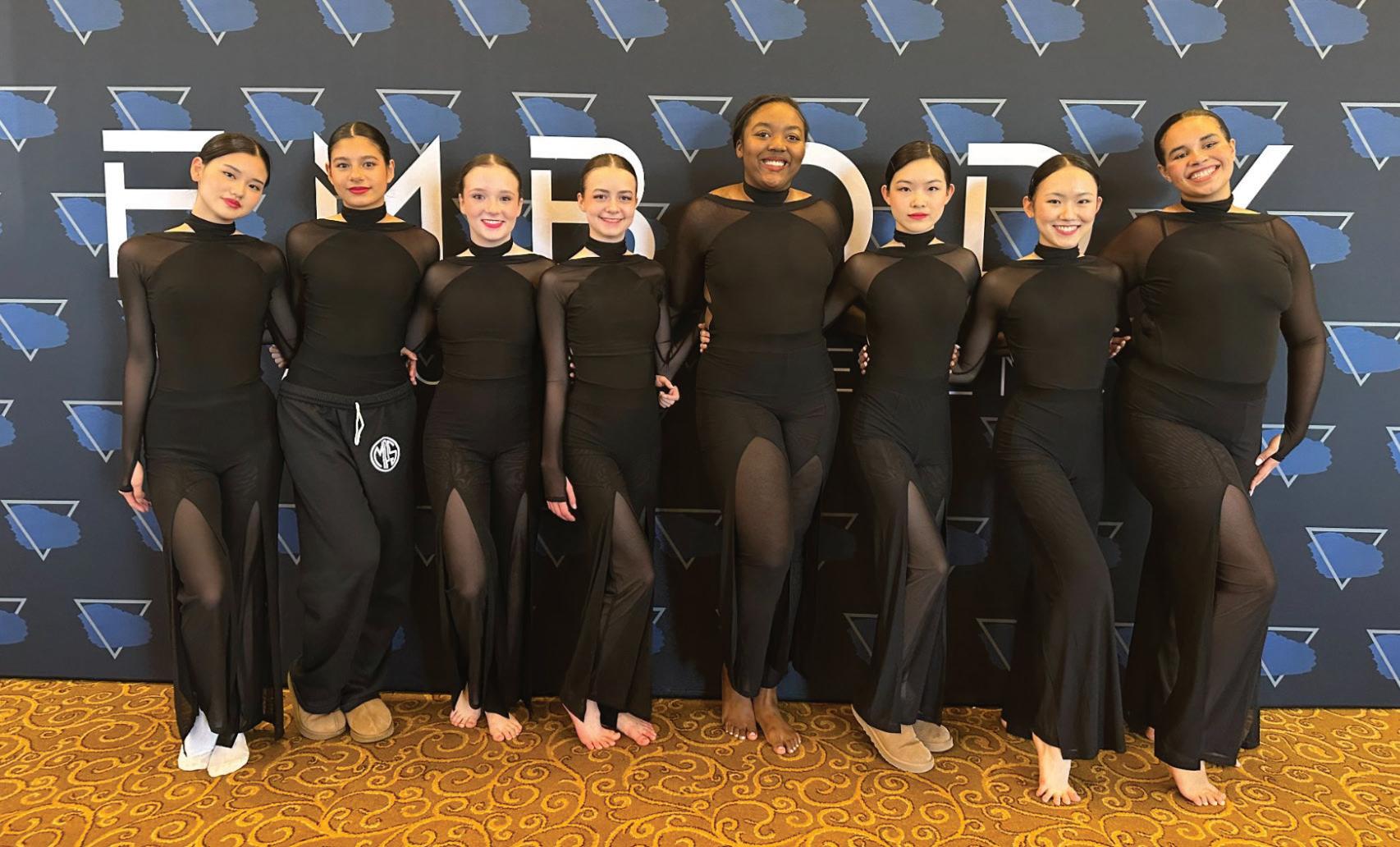
Travel Team dancers before they compete at the Embody Dance Conference. Photo courtesy of Tessa Hailu.
Club Hub Profile Image of BioAI Club. Photo courtesy of Ivy Kim.
Losing Season Doesn’t Faze Softball Coach
Bevivino Nurtures ‘Fierce Desire to Win’ Among Players
By Anya Webb ’27 Staff Writer
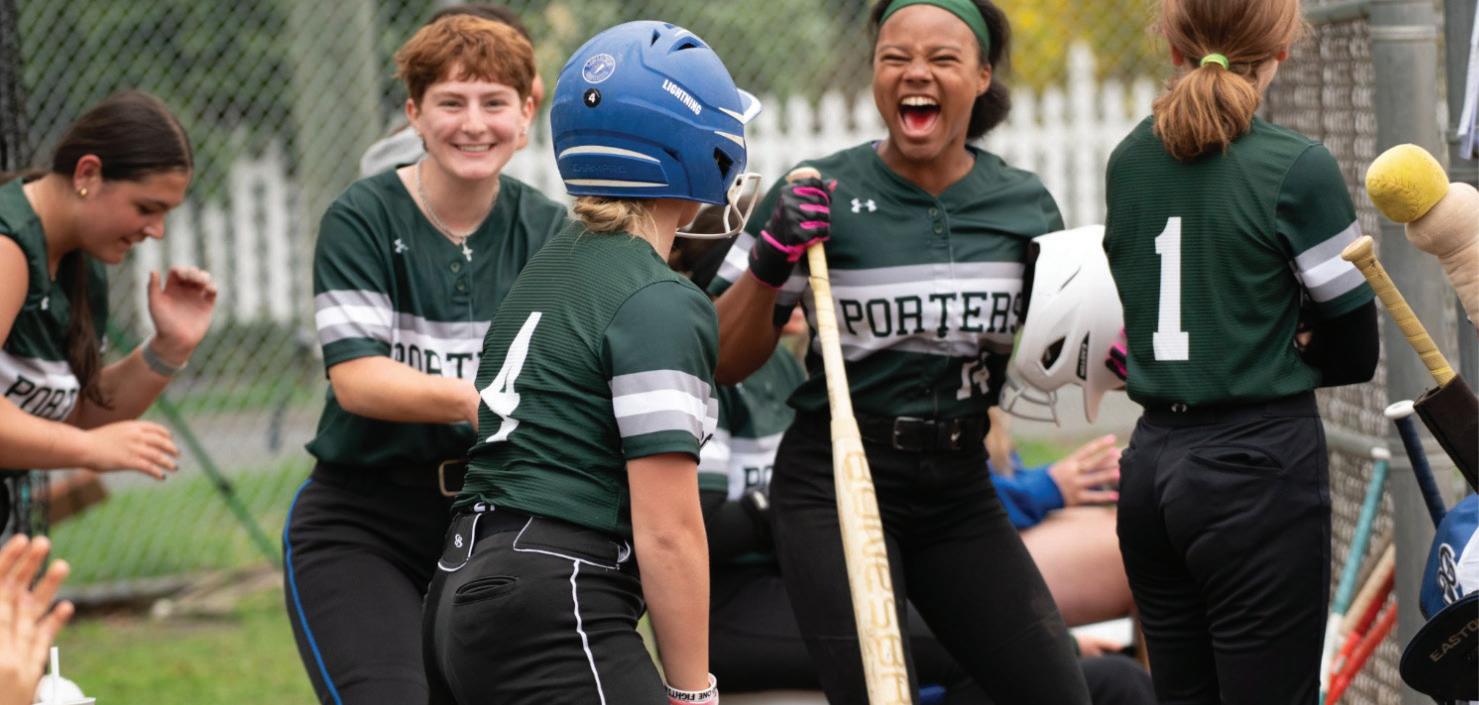
It was a warm and humid Friday evening at Cow Barn Field. The grass was freshly cut. Crisp white lines were painted on the dirt. The first pitch came at 4:45 p.m. and seven innings later, Peter Bevivino, Miss Porter’s School head varsity softball coach, had lived the most rewarding game of his life thus far.
As the sun was setting behind the backstop, Porter’s senior pitcher Gwen Religa’s MPS softball career was quickly fading with each out.
Bevivino had been with Religa throughout her Porter’s career. Recruiting, battling injury, then dominating and finally committing to Amherst College for softball – he was there for it all.
Religa’s final game last May ended with a 4-2 Porter’s win, but the score didn’t matter. The final out started a new – and what would prove frustrating – season for the program.
With five seniors graduating in 2025, the team is left with five upperclassmen, a coaching challenge Bevivino has not faced before. As of presstime, the softball team has managed only one win.
“We’ve got a lot of developing to do, and that’s okay,” Bevivino said. “It is part of the process, and we’re gonna get there.”
Bevivino, 47, began coaching at Porter’s in 2023 after his daughter Emily enrolled at Miss Porter’s as a new sophomore.
Every day in the spring after monotonous insurance work, Coach Bevivino rolls onto the grass next to the outfield fence of Cow Barn Field in his blue suburban.
The slow patter of feet hitting the ground starts as a path of footprints in the infield and outfield are created. Players stretch, getting loose to throw. Pairs line up on the foul line, starting close and getting further and further apart as time goes on.
The ball being snapped back and forth, then thrown.
Once warmed up, players start infield and outfield daily drills. The same routine everyday.
“When we go out on the field (in a game), you see a lot of the young players’ nerves,” Bevivino said, “and that’s kind of shifted my focus.”
His practice focus is now on repetition of the basics with the young players.
“It’s repetition in the cages or swings at the plate … repetition in the field,” he said. “Trying to coach to focus and effort more than anything.”
At practice, Bevivino also tries to simulate pressure on the young players.
As assistant coach Maya Silva-Thompson said, “that mental toughness aspect of the game is really, really hard to teach.”
Hence why she keeps a whistle in her pocket at all times.
A ball drops.
Tweet.
All the players drop. Some doing push-ups, others doing burpees (their choice). Every week the reps increase.
In games, there’s pressure. Basic errors lead to losing.
At practice, the consequence for a basic error is the whistle. The whistle adds pressure.
Even if the team can’t pull off a win, Bevivino at least wants to surprise opponents.
Returning player Chloe Jenkins ’27 said Bevivi-
no has always appreciated hearing from an opposing coach, “We didn’t expect you guys to actually put any fight up.”
Jenkins added, “I think this year, we’ve gone back to being a team that hasn’t really put up a fight.”
On paper, he works a 12-week job; however, Bevivino said he has never treated it that way.
Once the Porter’s season has officially wrapped up, Bevivino starts going to softball tournaments. The end of May and all of June is spent on the sidelines of public school softball fields. He watches potential Porter’s players. But Bevivino isn’t just there to see players succeed.
“I’m watching (for) when they screw up, or (when) their teammate screws up, what are they doing?” Bevivino knows the mistakes are inevitable. “How are they reacting? Are they coming in the dugout with their head down? Are they yelling at a teammate when a teammate makes a mistake, or are they the first one to pick a teammate up? We are not gonna be successful (by) just putting the best athletes out here. They have to be the best teammates, too.”
Through recruiting, Bevivino is working towards creating a winning roster.
“I would like us to compete for a championship, and I think that a Founders League (title) is within reach with the program that we’re building here.”
Creating a winning team is not easy, but Bevivino is focused on building players up during their time at Porter’s in order to achieve this goal.
“What I’m trying to do, and I’ve been trying to do the last couple years, is build a nucleus of strong players that are going to get to the point where they’re going to be outspoken leaders, with a fierce desire to win,” he said. “And hopefully, as the younger players come in, they’ll pull them under their wing, and tell them, this is the Porter’s way.”
The 2026 varsity softball team has struggled through a rebuilding season after losing several star players last year
Photo by Sam Tressy.
Porter’s Revamps Online Presence
By Bea Kibler ’26 Inside the Bubble News Editor
Strong colors, bold lettering, an emphasis on legacy and belonging: what you will find upon opening Miss Porter’s current website. Porter’s website has looked the same since before current seniors were prospective students. This year, administration decided it was time for change.
Chief Enrollment and Student Affairs Officer Liz Schmitt says it is typical for schools to update their marketing every three to five years. Porter’s last brand refresh was interrupted by the pandemic, so this one will be more expansive than usual.
Writers from 43,000 Feet visited campus on Tuesday, April 28, to gather student testimonials for the new marketing materials. 43,000 Feet is partnering with Porter’s to help with the rebrand, which is being spearheaded by Moth Design.
Included in the new paper goods Porter’s will distribute is a pamphlet with a small booklet on its cover. This booklet will contain testimonials from current student leaders. Most school brochures contain a message from leadership, typically the Head of School or President, on the opening page. Schmitt says the choice to spotlight student leadership is because “student voice is so central to the Porter’s experience and something that distinguishes us from other schools.”
Head of New Girls Addy McNear ’26 provided her thoughts on being interviewed, along with the rest of the Nova Nine, for the brochure.
McNear enjoyed being able to contribute to something lasting, “the specificity of the questions led us all to reflect back on specific moments that demonstrated our growth as students in this environment”.
McNear’s reflections are in line with what Schmitt says the new marketing, which will launch in September, is aiming to illustrate. Porter’s wants to convey how it feels to first step onto campus. They want prospective students and families to feel the experience that can be theirs if they say yes to MPS.
The new marketing will emphasize what is unique to Porter’s. 43,000 will take what they know to be true of our community and reflect that into our advertisement for the upcoming years.
Field Trips Extend Learning Beyond the Classroom
By Leanne Liang ’28 Staff Writer
For Porter’s students, the arrival of spring marks not only the final stretch of the academic year but also the start of the field trip season.
These excursions provide opportunities ranging from visiting the Metropolitan Museum of Art in New York to participating in a Latin trivia competition in Massachusetts, and they are intentionally designed to serve as extensions of the curriculum. Through such trips that go outside of the traditional “school bubble,” students connect their classroom learning to real-world contexts, enforcing knowledge through direct engagement.
Students frequently acknowledge how these experiences can be eye-opening. Rather than being treated as a mere break from the routine, they find the trips beneficial for deepening their understanding of learning materials.
A recent presentation panel featuring Hassan Kwame Jeffries, a professor specializing in the Civil Rights Movement, made a particularly strong impact.
“It is different when you hear him talk directly to you,” Oreoluwa Oyebode ’28 said. “Honestly, it made a more lasting impression than the TED talk we watched of him.”
Moments like this are where field trips truly shine, faculty members say. A conversation
with a seasoned scholar over lemonade cannot be replicated through a YouTube video in the classroom.
Maureen Lamb, chair of the Language Department and Latin teacher, recalls how her own field trip experiences in high school stayed with her.
“Students are often more willing to take risks and to be surprised by what they find,”Lamb said. “That sense of discovery is powerful, and it tends to stick.”
To ensure the quality of these enriching experiences, teachers put in significant behind-thescenes work. On top of balancing logistical details such as transportation and supervision, they must demonstrate that the field trip has a clear academic purpose, which connects to course material and aids student learning.
The proposals are then reviewed by Chief Academic Officer Tim Quinn. Quinn continuously emphasizes how learning outside of the classroom is compatible with Porter’s long-standing mission: aiding students in shaping a changing world.
”Our whole vision for education is about being connected to the world and solving real problems,” Quinn said. “We want a fluid and dynamic learning environment.”
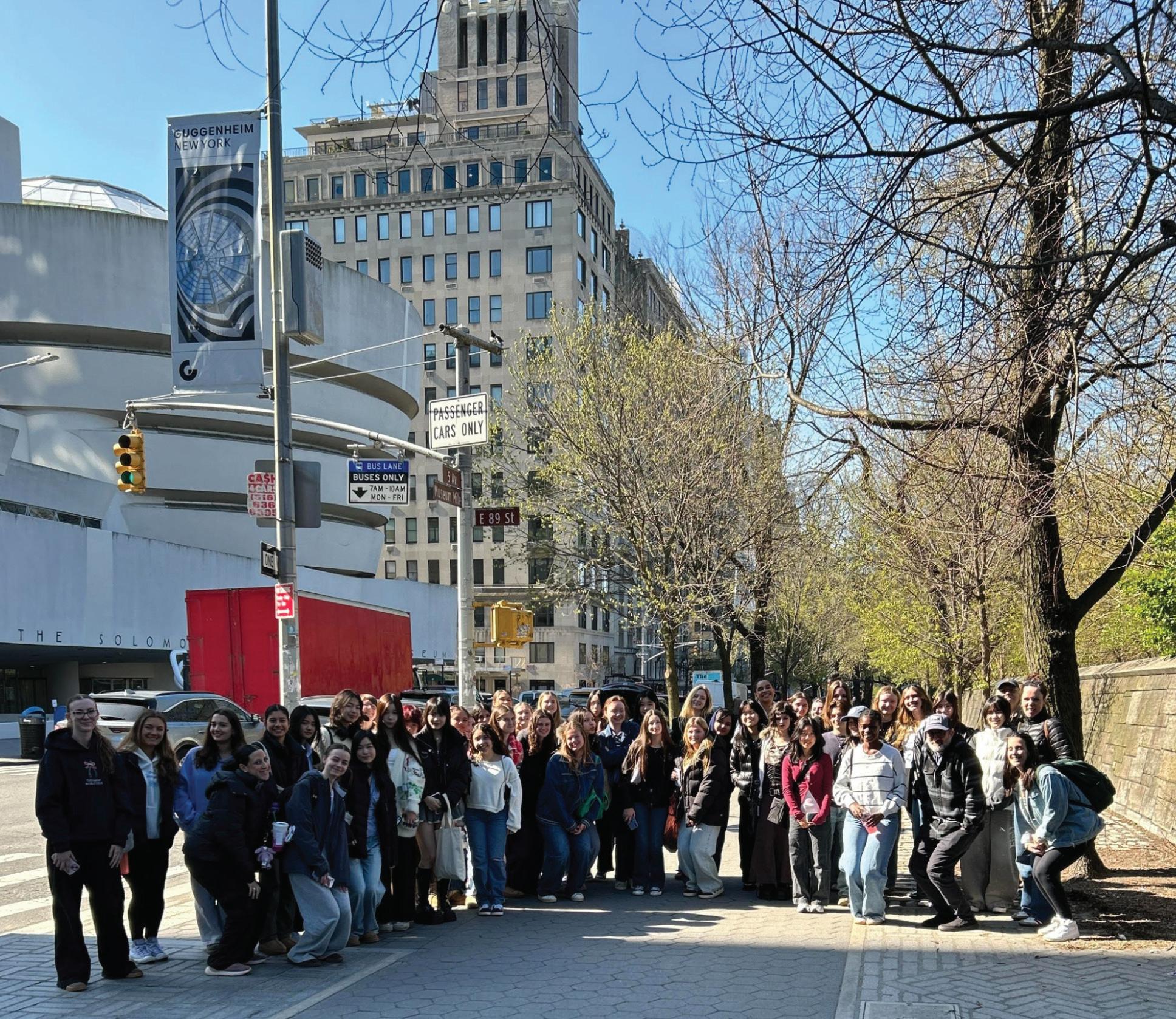
Photography, visual arts and ceramics students, along with the travel team of dance workshop on a trip in New York City. Photo courtesy of Grier Torrence.
A ‘Gossip Girl’ Endeavor Falls Flat
February 18. Classes have ended, afternoon activities wrapped up, and students scroll through their Instagram pages before dinner. Many pause on a stark image. A pair of daisies against black backdrop, the name perched on top reading “Farmington Daiseye.”
The anonymous, student-run page claiming to be Porter’s “eyes and ears” took on a weeklong crusade to become the school’s own Gossip Girl. After the first post, however, it was abundantly clear that the Porter’s community would not be treating this account with the awestruck intrigue the aspiring gossip writer may have been hoping to garner.
“I thought it was a prank account made up by a friend,” Shravya Sudarshan ’26 said.
But after the first post, Sudarshan found the Gossip Girl aspirant to be “entirely immature,” and this wasn’t a sentiment she alone shared.
By By Charlotte Hannich ’26 Staff Writer
It took under 24 hours for the news of Daiseye to circulate the Porter’s campus, and the comments weren’t exactly the flattering praise a fresh writer hopes for. Descriptors of the account “childish,” “harmful” and “cruel-minded behavior.”
As Sudarshan said, the account was “cringy and unoriginal.”
Not only was the gossip spread by the account hurtful, many students said, most of it was either embellished or entirely made up.
“I felt uncomfortable about it,” Ivy Hannich ’26 said. “You never know how different people are going to react to hearing gossip, and there’s always a risk of something seemingly innocent ultimately being harmful to someone.”
On top of making up gossip or not adequately checking facts, during several points in its lim-
ited run-time, the Daiseye account followed a different Porter’s student every couple of days, which led to speculation that those students were involved in the account.
Isa Kao ’26 said the account tried to follow her, a request she quickly refused.
“I didn’t want to be part of making an all-girls boarding school more of an echo chamber for everything bad,” Kao said.
Eventually, sometime after the first week of its creation, the Daiseye account left Instagram, though it is unclear whether it was shut down or the account owner left of their own accord.
“I feel like it’s good,” Alyssa Shi ’26 said. “We’re such a small school, and rumors spread so fast. So having an account for gossip will make it worse.”
Japanese Exchange Students Reflect on Porter’s Experience
By Emma Fu ’28 Section Editor
When Japanese exchange students Himari Okuda ’28 and Maho Kuramori ’28 stepped onto the Miss Porter’s School campus in September, they immediately noticed significant differences between their Japanese school life and American school life. There were cultural differences everywhere: In the classrooms, at dining hall tables, in the dorm common rooms. The two students found themselves navigating a new environment.
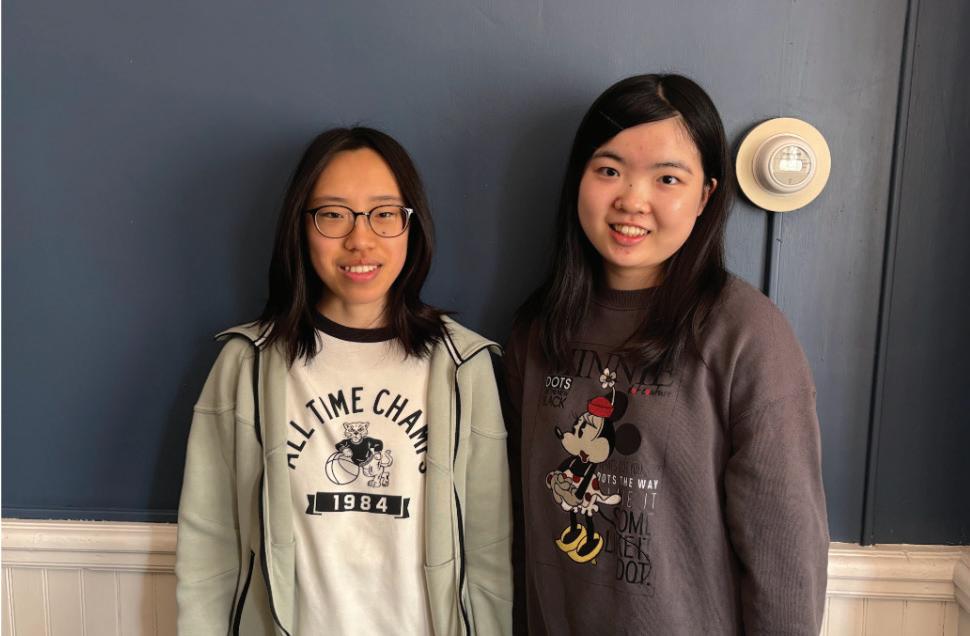
In separate interviews, Okuda and Kuramori shared their experiences and what they have learned from their one-year exchange at Porter’s. The conversations below are edited for clarity and length.
When was the first time you noticed a big cultural difference between Japan and the U.S.?
Himari: Japanese people often pick up the vibe and atmosphere, anticipate and take action. However, I realized that people in the U.S. do not always do so. I had to take initiative and ask for help by myself fairly soon after the school year started.
Maho: A big cultural difference I noticed was the way people interact with each other. Here, people have small talks when they see someone, such as asking, “How was your day?” In Japan, we don’t really do that. We just say “Hi” or go straight into a longer talk.
Did you notice any differences in your school life during your exchange experience at Porter’s?
Himari: Here at Porter’s, students participate in class more actively. There are more opportunities for students to speak up, such as class discussions. Also, when students have a question, they immediately ask their teachers instead of waiting for help.
How do student-teacher relationships compare between Japan and the U.S.?
Maho: In Japan, student-teacher relationships are not as tight compared to the U.S. because class sizes at Japanese schools are larger than U.S. schools. Also, most teachers in Japan don’t call students by their first name.
Tell me about a moment where you misunderstood something culturally.
Himari: In Japan, people give small responses, such as nodding, while someone is speaking. It shows you are actively listening to them. However, I was surprised because people in the U.S. don’t react very much when someone’s speaking.
Is there a difference in social life and friendships between Japan and the U.S.?
Himari: I think Japanese friendships are more fixed and the scale is smaller than friendships in the U.S. In Japan, people basically eat and hang out with the same group of people, and it’s rare for new people to join.
What do you think American culture values most? What about Japanese culture?
Maho: I think confidence and voluntary participation are really valued in the U.S. In Japan, people value cooperation more.
(See story on page 11)
Maho Kuramori and Himari Okuda spent the year studying at Porter ’s as part of a program with Kichijo Girls’ School in Tokyo, Japan. Photo courtesy of Emma Fu ’28.
ART & LIFESTYLE
Exchange continued.
What are some things that people in the U.S. might misunderstand about Japan?
Himari: Some people might think that Japanese people don’t express themselves. I think it can be true because as I mentioned, Japanese people expect others to understand what they want without being told, so people don’t make big arguments. However, even if the way is indirect or sometimes passive aggressive, people still express themselves.
Maho: I think that there is a stereotype that considers Japanese people as very meticulous. Some people are but others are not. It really depends on individuals.
What were your biggest takeaways from your exchange experience in the U.S.?
Himari: I found a new aspect of diversity. Diversity allows us to encounter new ideas and expand your perspective. In Japan, the people who live there are mostly Japanese and there are less variety of values, and I had never been exposed to such a diverse environment until I came here.
Maho: I didn’t expect specific things that much for this exchange program, but I thought that I might experience some racial discrimination. However, I haven’t experienced any so far, at least none in person. I feel like almost everyone is open-minded about different races and cultures. I truly enjoyed learning about other cultures through events like sit down dinners.
Wagner Produces First Porter’s Film Festival
By Lil Coe ’27 Staff Writer
Eliza Wagner ’27 produced the school’s first film festival in April with a two-night event featuring screenings and panels.
The first night of MPS Film Fest focused on the festival’s feature film, “Handle With Care,” which included a Q&A with the film’s director, Matthew James Thompson.
Wagner described her discovery of “Handle With Care” at the Hartford Film Showcase in February as a “miracle.” She approached Thompson at the festival, who was impressed by her idea to screen his film with a teen audience.
“Eliza is honestly what sold me,” Thompson said. “I thought (she) was so impressive and I just wanted to support her.”
Thompson’s film stars Justin H. Min, known for his role in “The Umbrella Academy,” as a young man selling his unused wedding gifts after a short-lived marriage.
Wagner also reached out to college professors who connected her with student filmmakers who were in the process of producing short films. The MPS Film Fest screened shorts made by students from Wesleyan, Trinity College, Sacred Heart University and the University of Connecticut.
During the second night’s panel discussion, filmmakers emphasized the importance of taking advantage of opportunities to get involved in film and using available resources – however minimal.
Wagner shared similar sentiments. “I’m just grateful (to) the school for letting me do this and supporting me,” she said. “We are in a unique environment where we can do this, and more people should take advantage of that.”
Wagner is already brainstorming for next year, when she hopes for a budget and help from the Head of Main.
Students’ Freedom continued.
also sparked heavy debate.
Sena Donkor ‘29 said she finds freshmen being required to turn in their technology on weeknights to be unnecessary and inconvenient.
“It feels more like a nuisance, like what if I need to text my parents about something or set my alarm, like there’s other stuff that I need to do,” Donkor said.
At Porter’s, faculty emphasize the importance of being responsible for students and keeping them safe. However, for many, this reasoning doesn’t feel quite clear, and doesn’t explain the rules they follow.
“It looks really different from a student perspective than it does from a faculty perspective,” Donkor said.
The lack of understanding and frustration surrounding certain school rules raises the question: Does a discussion need to be had about increasing student freedom and finding common ground?
Mina Palm ‘28 believes that the solution begins with conversation.
“Faculty and students should at least have a few conversations and work together to discuss the rules and see all sides,” Palm said.
“Faculty and students should at least have a few conversations and work together to discuss the rules and see all sides,” Palm said.
Elena Castro, a Spanish teacher, feels student input is necessary, but there are still limitations to the outcome of that conversation.
“A conversation is always beneficial, but it doesn’t mean they have to decide,” Castro said. “At the end of the day, you are minors, and somebody has to be responsible for you.”
Castro said she was open to more transparency surrounding the rules and believed the administration should clarify the reasoning behind the policies.
More student freedom may not require a complete reversal. Castro suggests a simpler approach: making some compromises and explaining the logic behind the rules.
However, Palm said, “Either loosen the rules or find a middle ground.”
For many students at Porter’s, either option would be a step in the right direction.
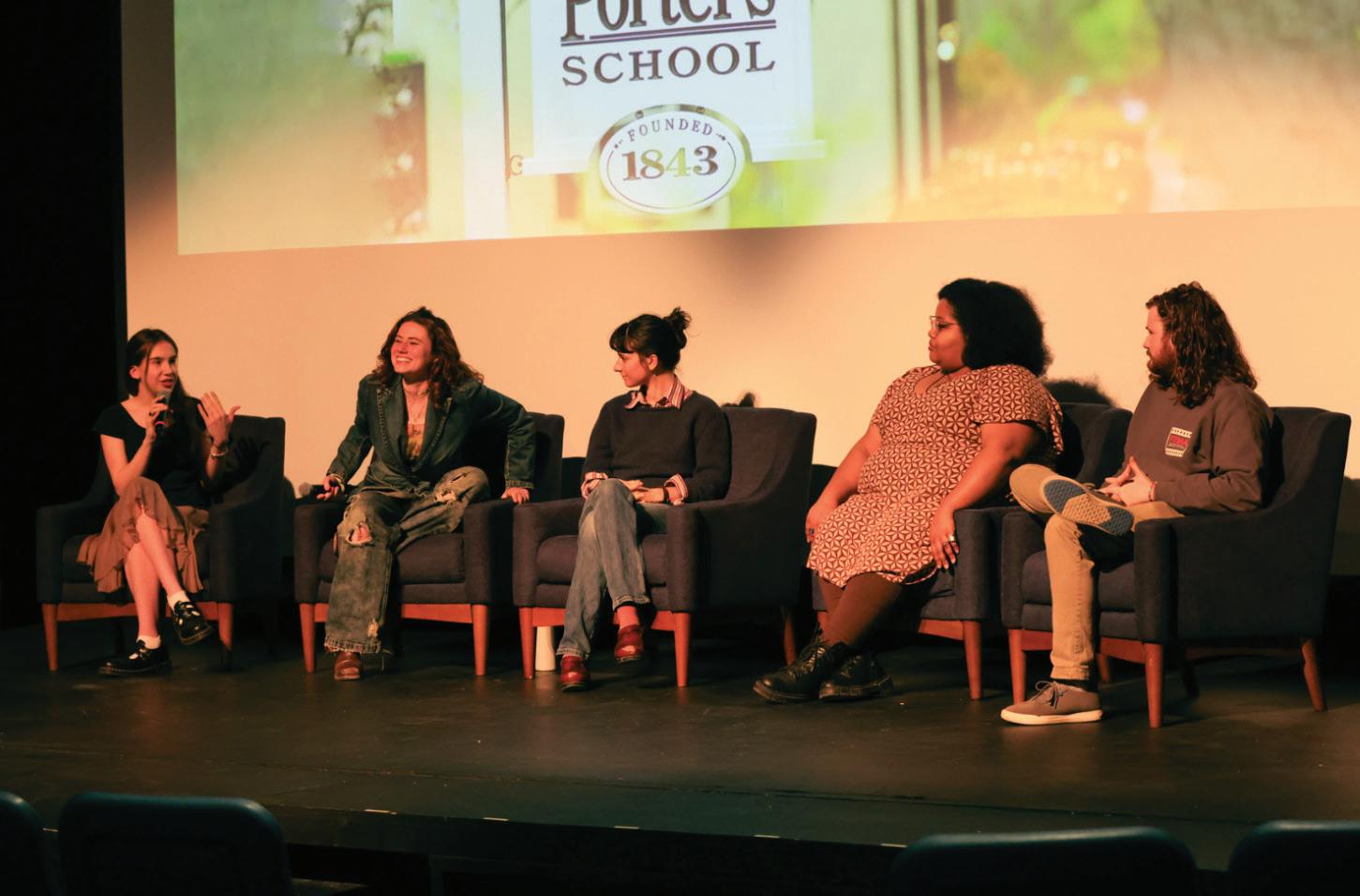
Eliza Wagner talks to filmmakers on the second night of MPS Film Fest, which Wagner produced. Photo courtesy of Elizabeth Zhang ’28.
Le Printemps en France







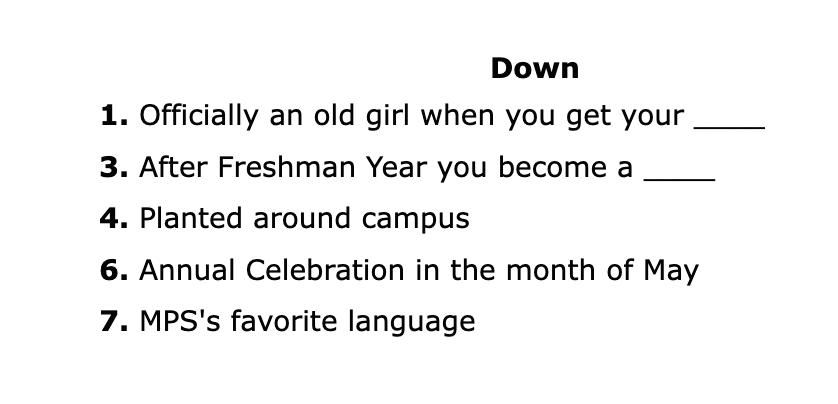
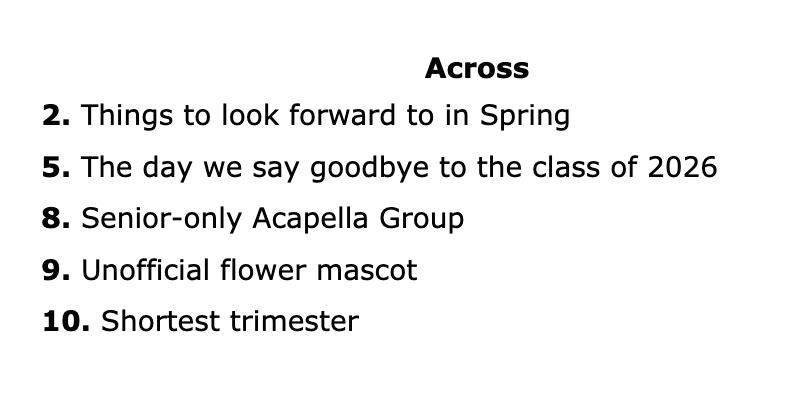
Crossword by Jiayi (Jess) Lin