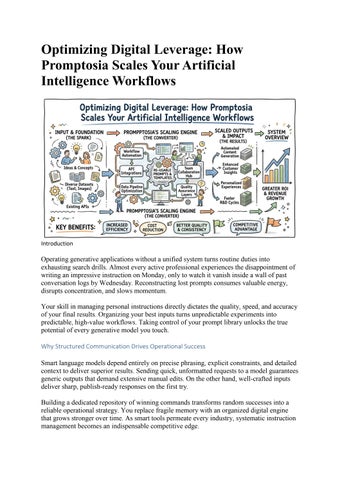
Optimizing Digital Leverage: How Promptosia Scales YourArtificial Intelligence Workflows
Introduction
Operating generative applications without a unified system turns routine duties into exhausting search drills. Almost every active professional experiences the disappointment of writing an impressive instruction on Monday, only to watch it vanish inside a wall of past conversation logs by Wednesday. Reconstructing lost prompts consumes valuable energy, disrupts concentration, and slows momentum.
Your skill in managing personal instructions directly dictates the quality, speed, and accuracy of your final results. Organizing your best inputs turns unpredictable experiments into predictable, high-value workflows. Taking control of your prompt library unlocks the true potential of every generative model you touch.
Why Structured Communication Drives Operational Success
Smart language models depend entirely on precise phrasing, explicit constraints, and detailed context to deliver superior results. Sending quick, unformatted requests to a model guarantees generic outputs that demand extensive manual edits. On the other hand, well-crafted inputs deliver sharp, publish-ready responses on the first try.
Building a dedicated repository of winning commands transforms random successes into a reliable operational strategy. You replace fragile memory with an organized digital engine that grows stronger over time. As smart tools permeate every industry, systematic instruction management becomes an indispensable competitive edge.
Uncovering the Pitfalls of Unorganized Workflows
Relying on scattered text files, random chat windows, or bookmarked notes creates severe operational bottlenecks:
Disappearing Strategies: Wasting hours trying to locate a specific, high-performing instruction buried deep inside past chat threads.
Unpredictable Output Quality: Re-typing commands from memory omits crucial parameters, leading to wildly inconsistent responses.
Accidental Overwrites: Modifying a working prompt without saving the original draft, destroying a previously successful process.
Isolated Team Efforts: Coworkers independently troubleshooting identical problems rather than sharing proven, ready-to-use frameworks.
Understanding the Core Value of Promptosia
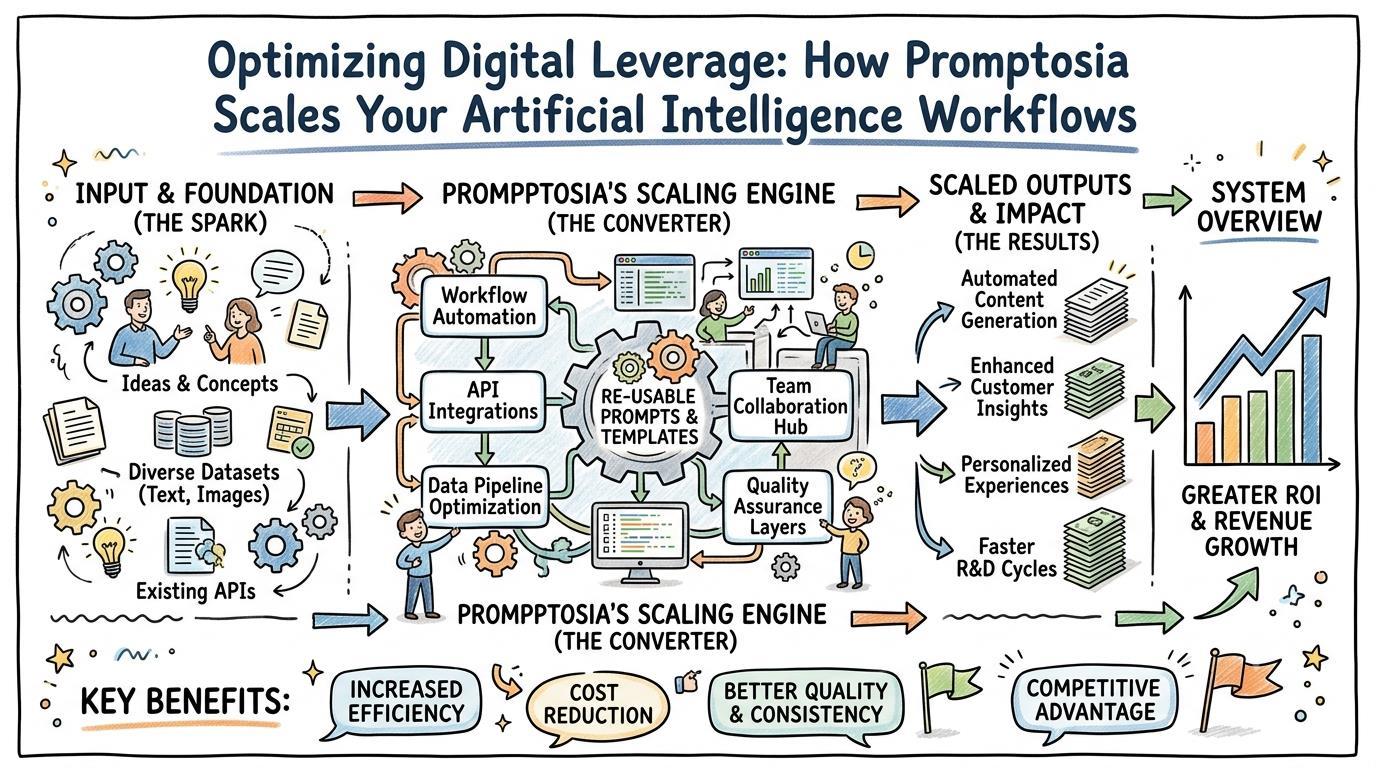
Promptosia functions as a comprehensive AI prompt management tool that converts raw text commands into organized, scalable digital assets. Rather than allowing your best ideas to fade away in archived chat logs, this platform maintains every asset in a clean, searchable workspace.
The workspace treats your inputs as living software tools rather than disposable notes. Users gain an intuitive environment designed specifically to build, test, and categorize their work. Whether you operate independently or lead an enterprise team, this system brings order to everyday artificial intelligence tasks.
Real-World Productivity Gains
Structuring your command collection eliminates manual retyping and takes the guesswork out of complex projects. Consider needing a multi-step code audit or an in-depth content analysis every week. Instead of drafting a new request from scratch, you retrieve your pretested framework instantly from your personal hub.
This organized approach maintains high standards across multi-phase assignments. Authors drafting books, developers auditing code bases, and marketers launching complex campaigns achieve consistent results while saving hours of trial-and-error testing.
Core Capabilities of Modern Management Hubs
A true asset management workspace goes far beyond simple note-taking apps or basic folder structures. Powerful systems integrate intelligent organization, automated analysis, continuous scoring, and historical tracking into one platform.
Centralized Hub: Rapid indexing that locates any saved instruction in seconds.
Dynamic Variables: Customizable placeholders that instantly adapt core templates to new projects.
Automated Audits: Immediate structural checks that reveal missing details prior to execution.
Historical Versioning: Complete edit logs that track performance tweaks across every revision.
Constructing a High-Performance Digital Hub
Establishing a centralized AI prompt library gives you absolute command over your growing digital framework. Storing all your instructions in a unified platform protects your operational knowledge while dramatically boosting daily productivity.
A centralized repository cleans up digital noise and eliminates search frustration. Intuitive tags, custom categories, and quick search filters help you pinpoint the exact template you need without interrupting your creative flow.
Developing Inputs on a Complete Prompt Engineering Platform
Serving as a full-featured prompt engineering platform, the workspace guides your commands through every stage of development. The platform nurtures a quick idea from a rough draft into a fully audited, version-tracked, and production-ready template.
By unifying drafting interfaces, quality checks, version tracking, and team sharing, the software systematically elevates your asset collection. This guided lifecycle ensures your repository grows more valuable every day.
Strategic Categorization and Organization
Maintaining long-term efficiency requires clean file structures. Functioning as a flexible AI prompt organizer, the platform lets you attach custom tags, project markers, and operational rules to every entry.
Users can organize their assets by industry, project phase, target audience, or desired output format. Embedded variable fields transform static commands into versatile frameworks capable of handling diverse assignments without cluttering your database.
Enhancing Structure with Automated Optimization
Converting an informal idea into an effective command demands structural clarity and explicit instructions. Acting as an intelligent AI prompt optimizer, the platform converts brief requests into rich, detailed, and highly effective instructions.
The system evaluates raw text, identifies missing constraints, and inserts necessary output rules. This automated optimization ensures your instructions supply proper context, tone guidelines, and structural parameters for optimal model comprehension.
Deep Inspection through Automated Analysis
Understanding why specific instruction styles yield superior performance requires deep structural inspection. Functioning as an advanced AI prompt analyzer, the system examines the core elements driving your outputs.
The built-in Prompt DNA feature breaks down text to evaluate primary goals, audience context, structural constraints, and safety guidelines. This deep evaluation exposes hidden weaknesses before you run a command.
Evaluating Input Quality Before Execution
Catching structural gaps early saves computing time and prevents frustrating revision loops. A built-in prompt quality checker automatically highlights weak phrasing, missing context, or vague directions before you generate a single response.
Real-time feedback empowers you to polish your requests prior to execution. Identifying structural flaws early conserves mental energy, optimizes resource usage, and keeps your projects moving forward smoothly.
Unlocking Value with Instant Quality Scores
Data-driven scoring metrics eliminate guesswork from prompt creation. The native prompt scoring tool evaluates vital dimensions like clarity, background context, output structure, reusability, and functional value.
Assessment
Focus Core Purpose
Immediate Advantage
Clarity
Direct, unambiguous phrasing
Context Depth Rich background information
Prevents model confusion and off-topic answers
Yields tailored, highly accurate outputs
Output Structure
Explicit formatting directives
Guarantees clean Markdown, JSON, or structured tables
Reusability
Embedded dynamic placeholders
Protecting Iterations through Version Tracking
Converts one-off commands into longterm templates
Your commands inevitably evolve as project requirements shift and generative models advance. Using a dedicated prompt version control tool keeps your edits organized without risking the loss of previously successful drafts.
Detailed version histories let you compare new iterations against original baselines, review exact line edits, and restore earlier revisions instantly if a new adjustment underperforms.
Crowd-Sourced Input Evaluation
Testing instructions in a vacuum rarely reveals their full capability across different scenarios. Functioning as an active AI prompt testing tool, the workspace enables side-by-side performance comparisons between different prompt structures.
Features like Prompt Duels allow community members to conduct blind evaluations, voting on outputs generated by competing prompt variations. This real-world voting highlights which specific phrasing delivers superior results.
Accelerating Output with Pre-Built Frameworks
Building every command from scratch wastes valuable time and creative energy. Tapping into a library of reusable AI prompt templates gives you an immediate head start on complex writing, coding, or data analysis tasks.
These pre-built frameworks come equipped with clear logic, pre-configured variables, and proven guardrails. Customizing a template takes seconds, delivering professional-grade results without trial-and-error delays.
Seamless Collaboration across Teams
Shared knowledge elevates output quality across entire organizations. Features like Prompt Passports let creators publish refined instructions, demonstrate successful workflows, and fork community templates directly into personal collections.
Distributing standardized templates unifies execution quality across departments. Team members gain instant access to field-tested instructions, preventing individual workers from struggling with poorly constructed prompts.
Tailored Value for Every Role
Structured asset management adapts seamlessly to the unique challenges of various professional roles, delivering distinct workflow advantages:
Content Creators & Marketers: Preserve brand voice, outline long articles rapidly, and generate high-converting copy variations without losing style.
Software Engineers: Store reliable code-review frameworks, bug-hunting commands, and automated documentation templates for rapid deployment.
Business Strategists: Standardize competitor research, market analysis frameworks, and executive summary structures.
Researchers & Students: Construct structured literature summaries, study guides, and complex technical breakdowns effortlessly.