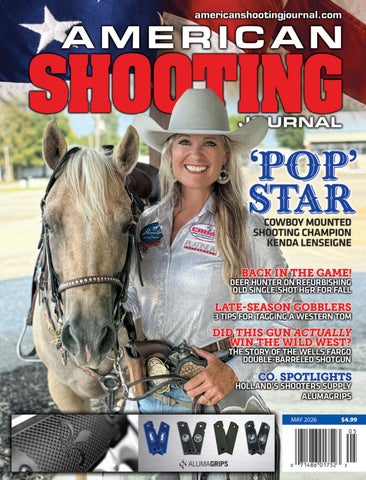
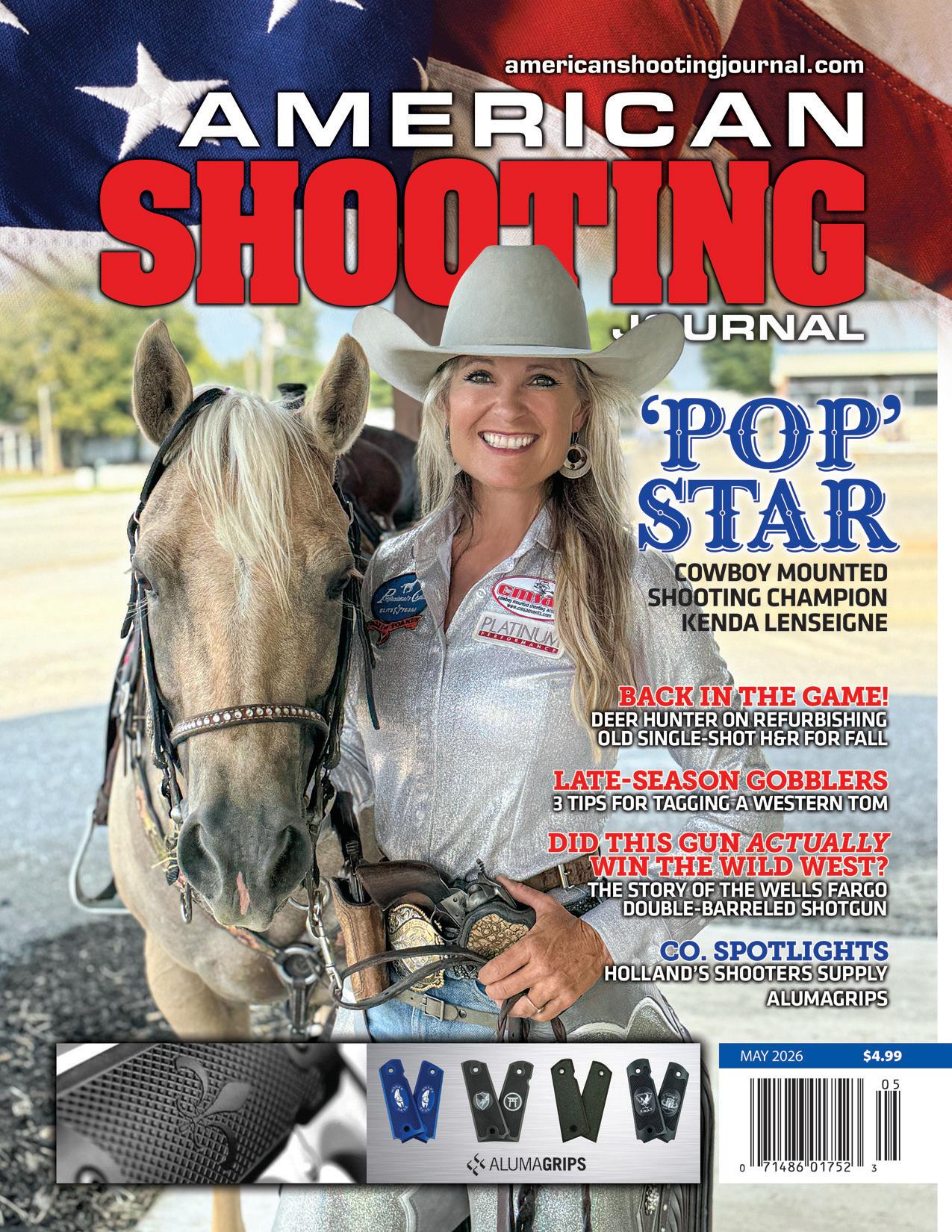
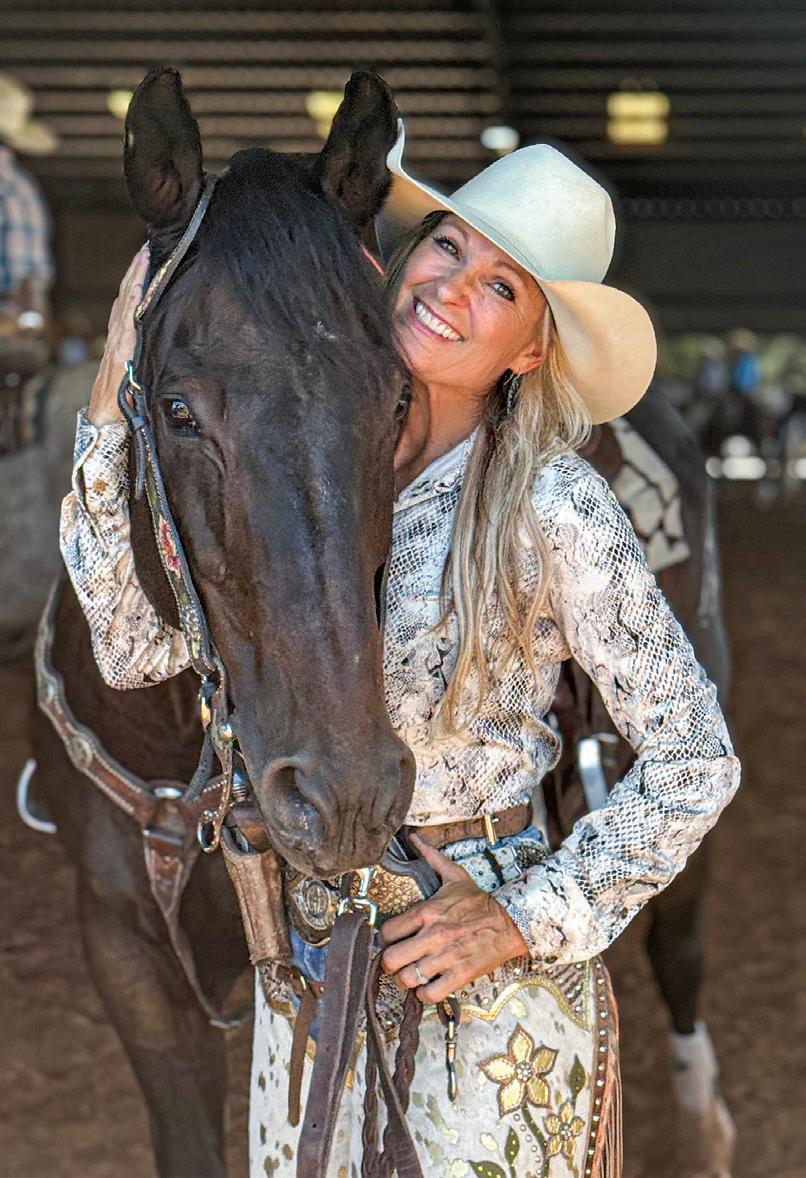
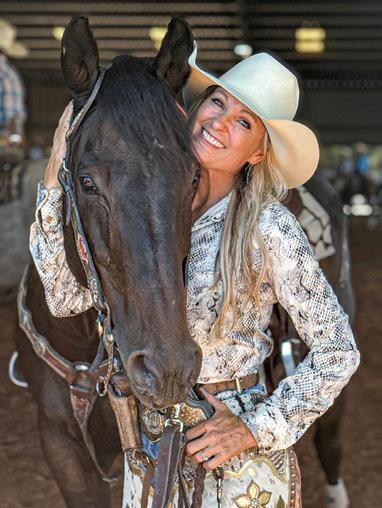
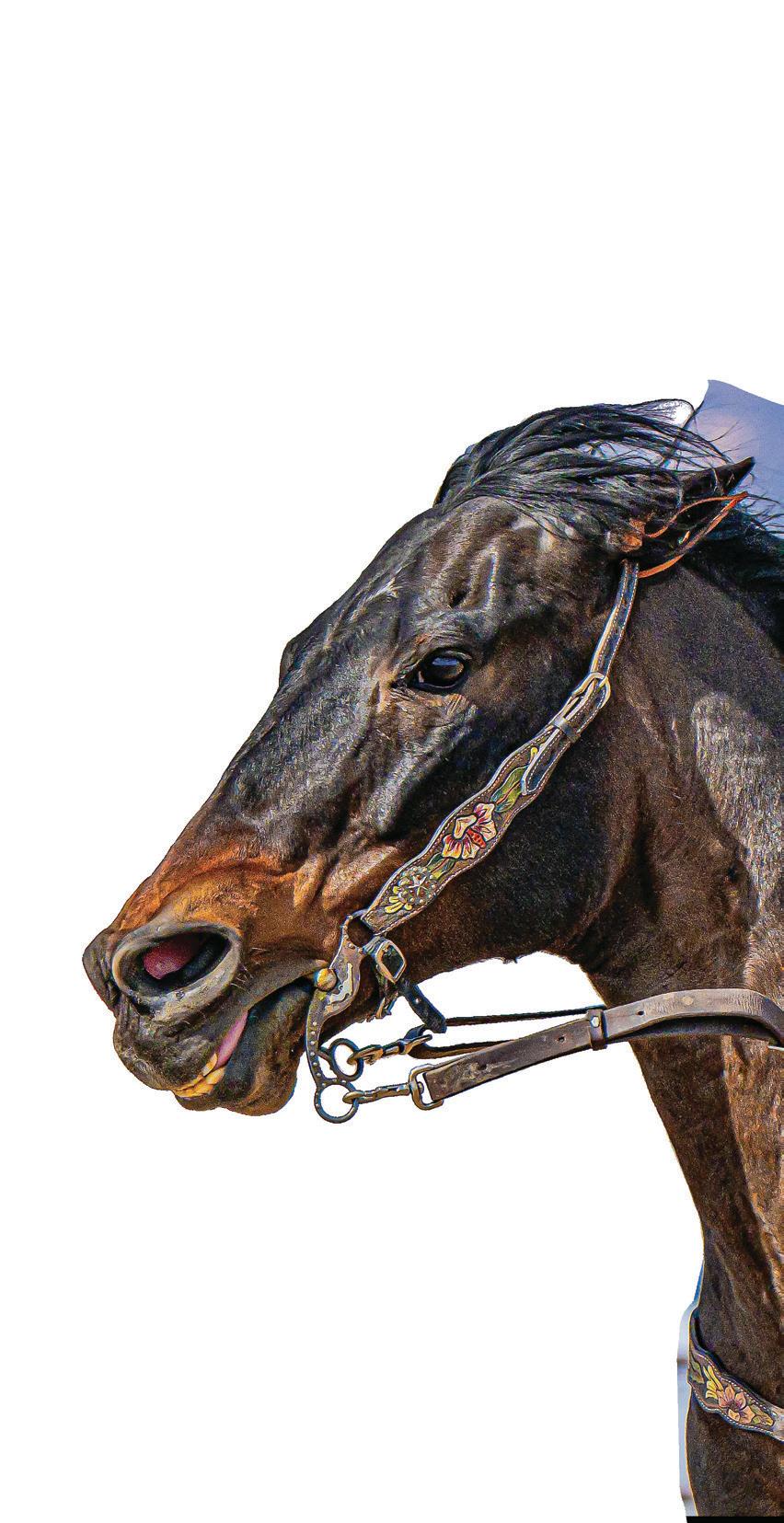
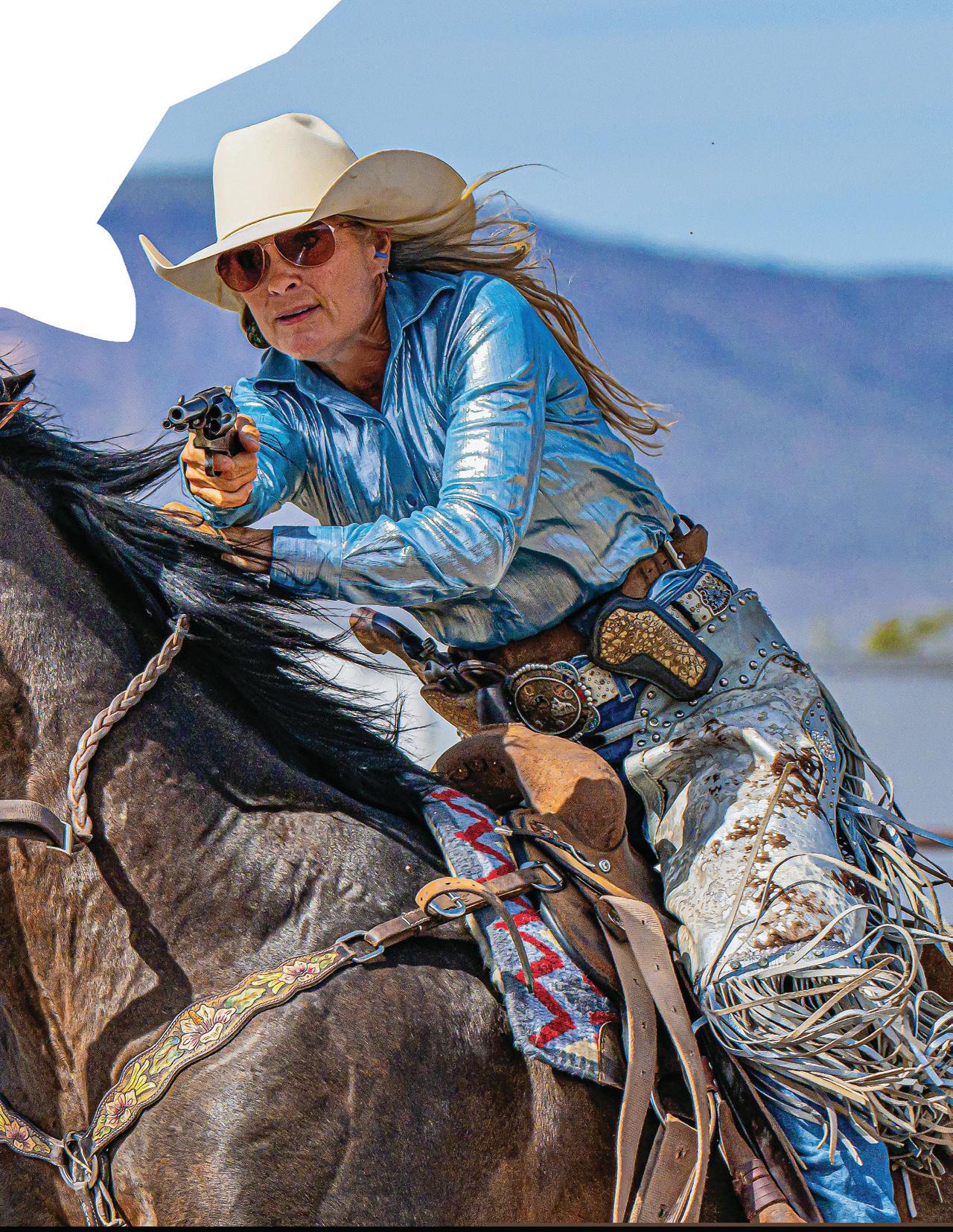
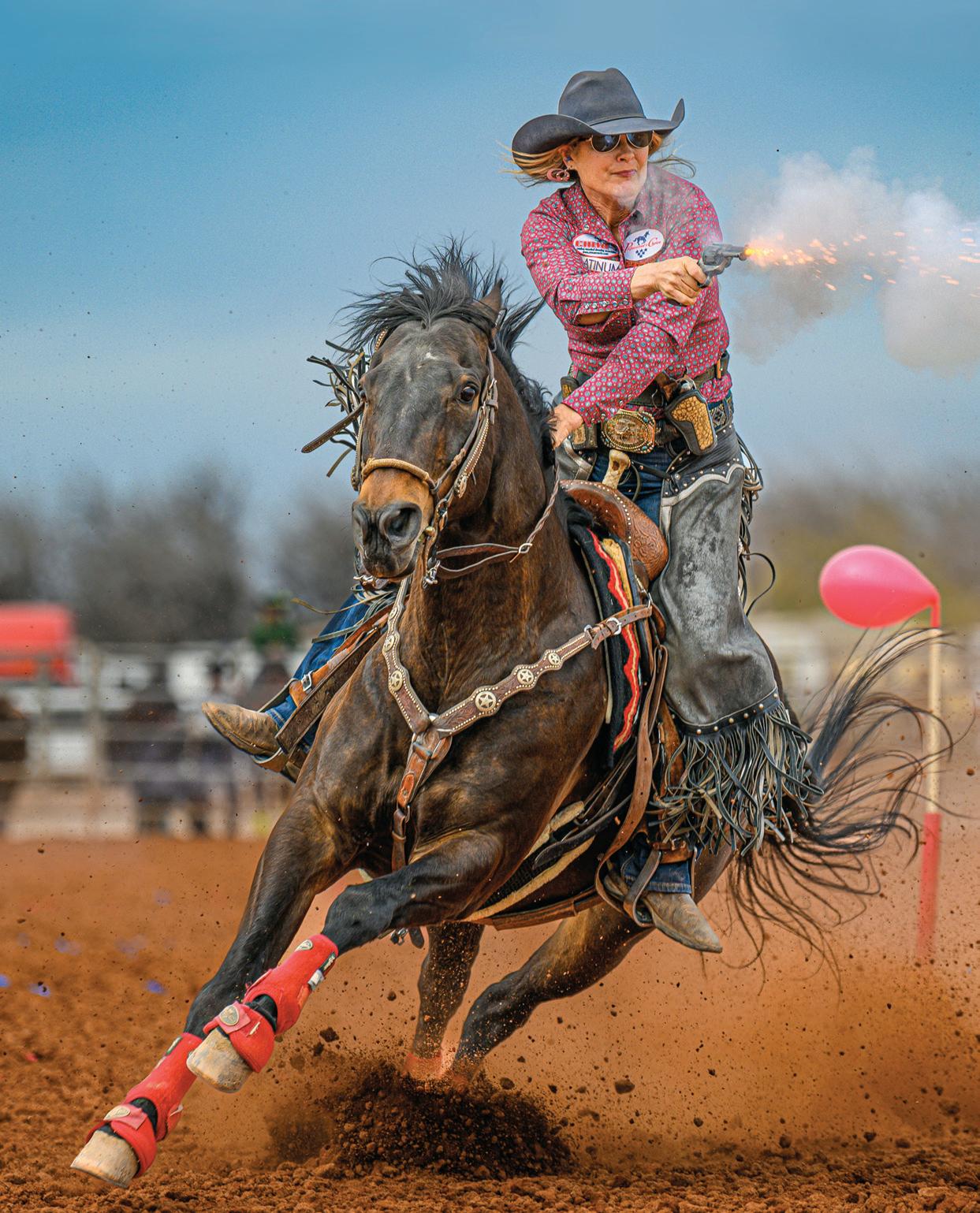
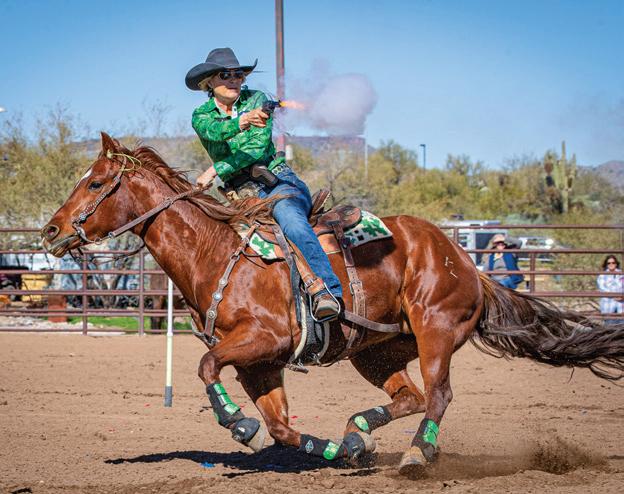
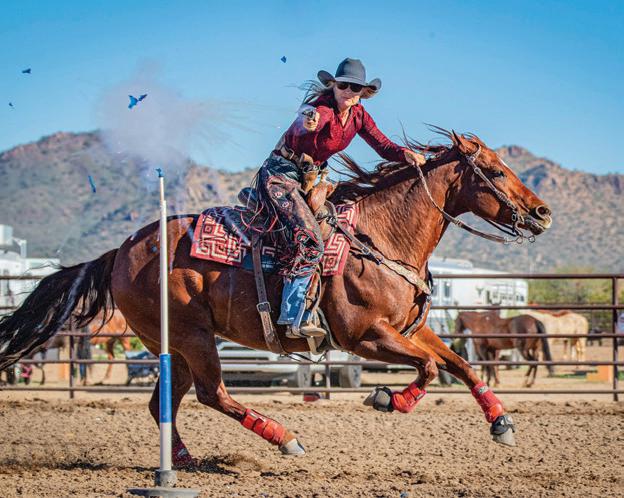
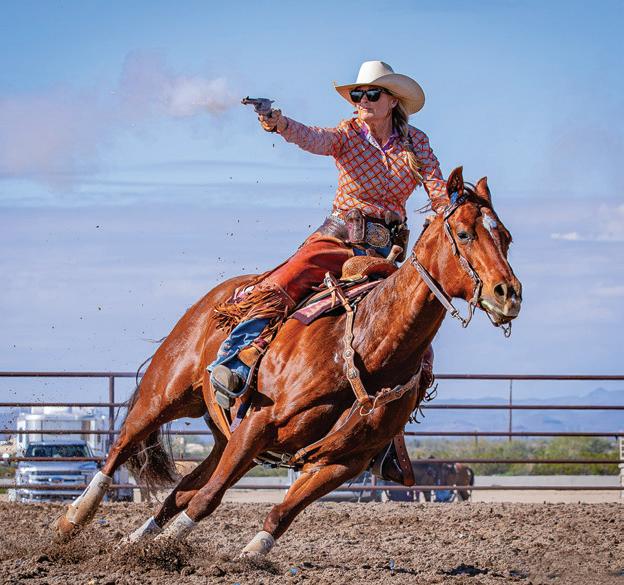
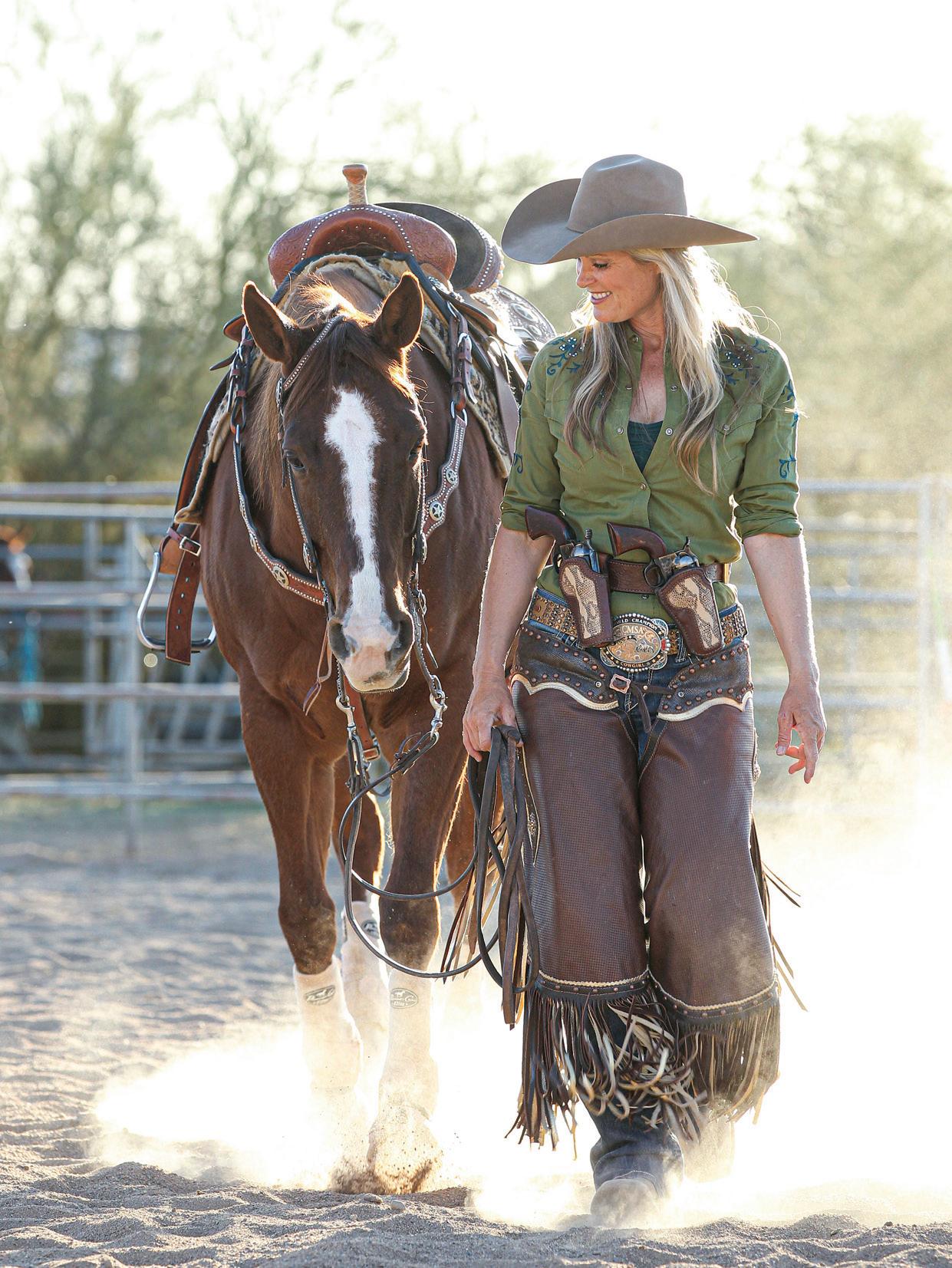
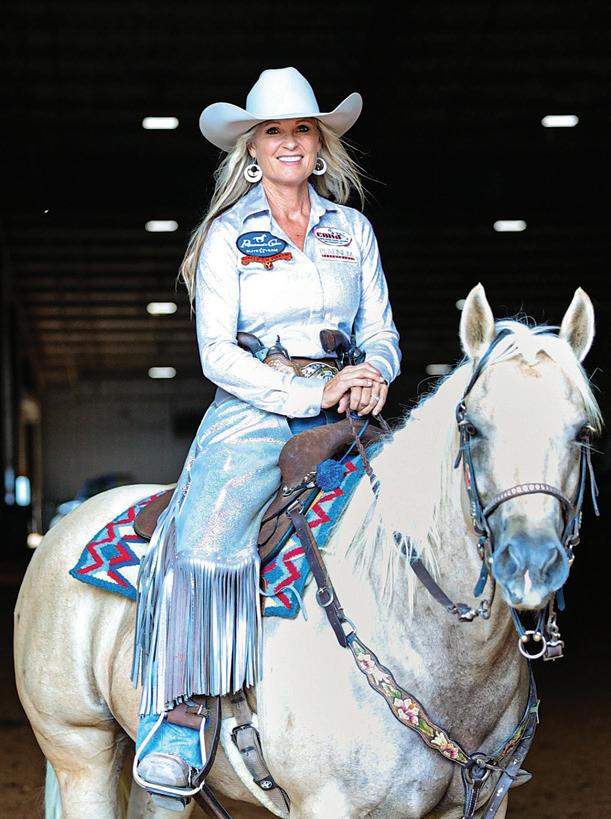
As a multi-time national and world Cowboy Mounted Shooting Association champion, Kenda Lenseigne is a true “pop” star, but she’s also so much more than that. Linda Pawela details Lenseigne’s consistency in the saddle on steeds such as Bam Bam, as well as her ambassadorship for the sport, collaborations with Triple K Mfg., among other companies, and mounted shooting training book she authored. (KENDA LENSEIGNE)
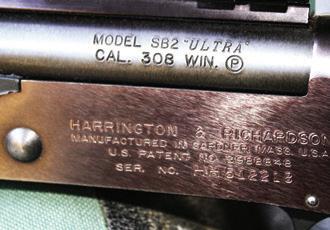
Dave Workman recently pulled his Harrington & Richardson breakaction single-shot in .308 Winchester out of mothballs for a little range time. He details the model’s interesting history and his plans to refurbish his own rifle for this fall’s deer hunt.
41 BULLE T BULLETIN: BULLET FAILURE – IT CERTAINLY ISN’T AN OPTION
When it comes to hunting, you want a projectile that achieves just the right balance between deep penetration, expansion and weight retention. Phil Massaro takes a look at pills that fill the bill when it comes to big and dangerous game.
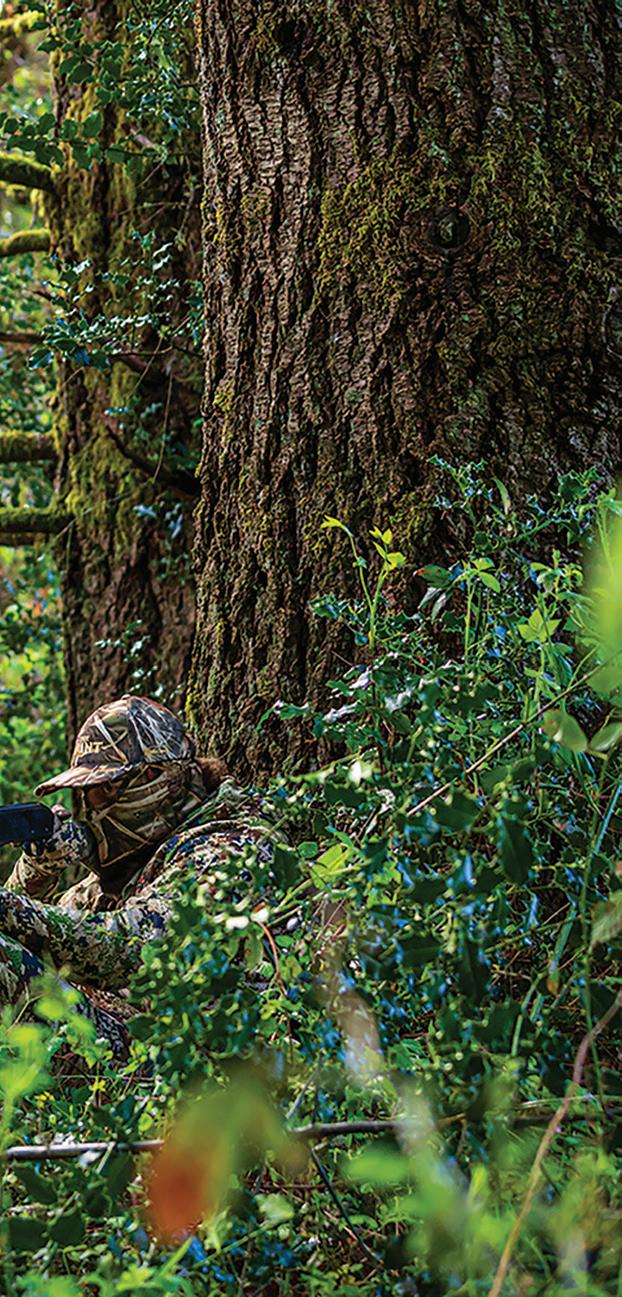
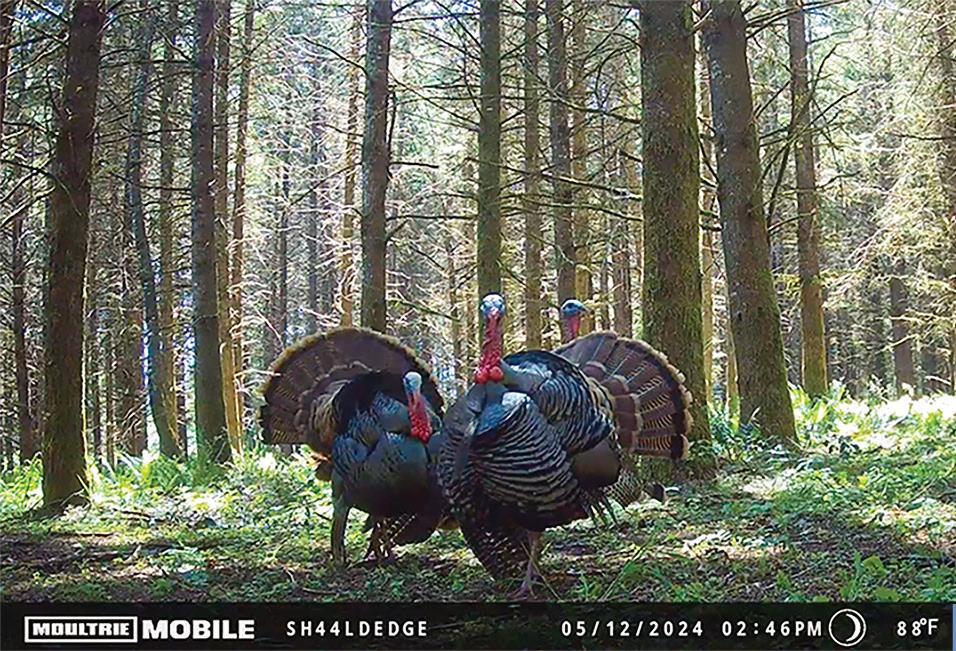
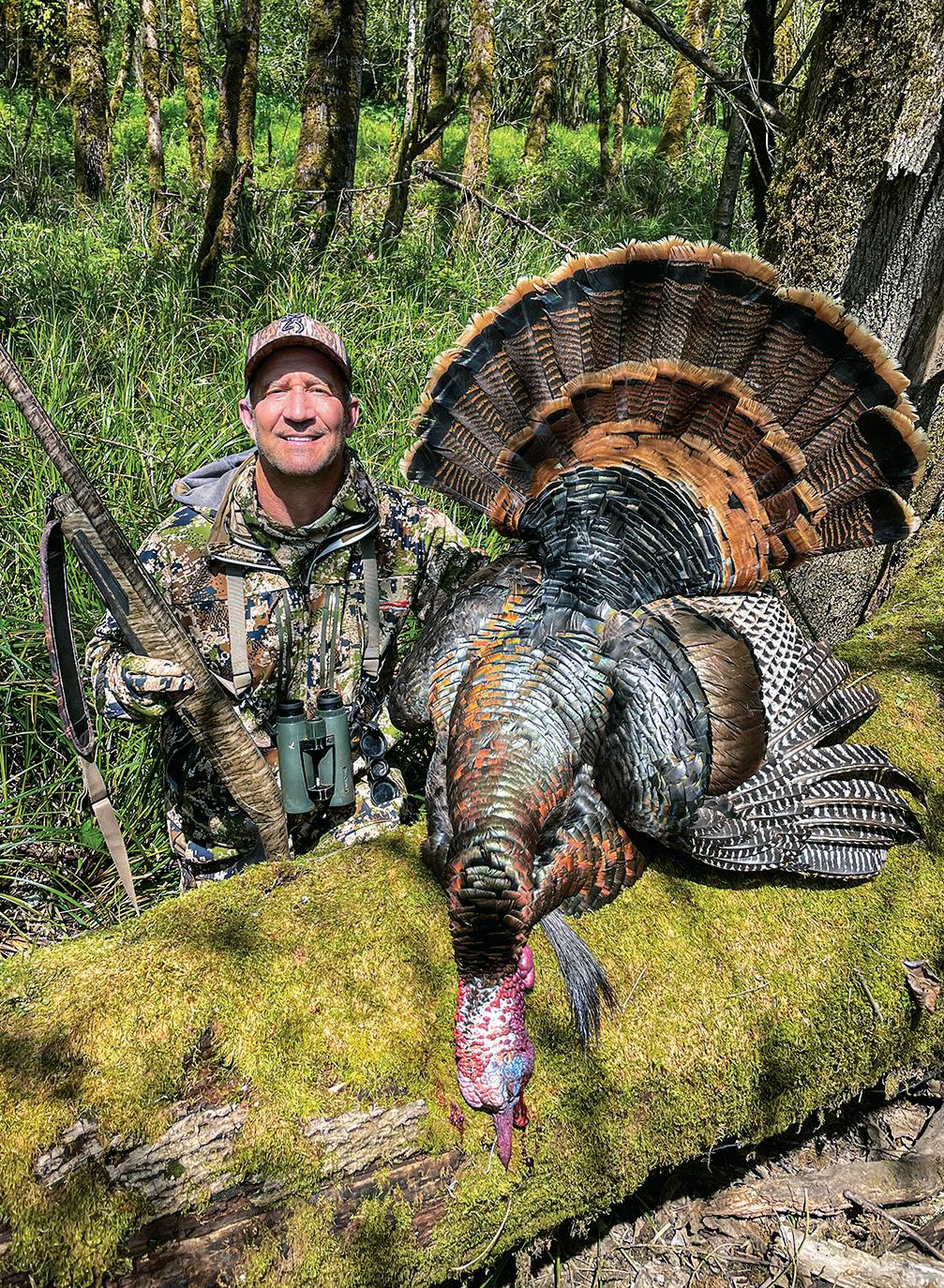
50 R OAD HUNTER: 3 TIPS FOR TAGGING A WESTERN TOM
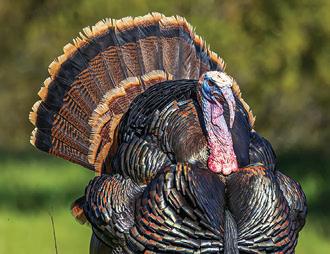
Get your gobbler yet? The clock is ticking down on spring turkey season, and if you haven’t filled your tag, Scott Haugen harnesses 40 years of woods wisdom to help ensure you end the hunt on a high note.
It’s said that cowboy mounted shooting is the most fun you can have while riding a horse, and Kenda Lenseigne has had a lot of it in her spectacular career! Linda Pawela profiles this national and world champion shooter and her collaboration with Triple K Mfg. on a line of holsters and belts.
(SCOTT HAUGEN)
(DAVE WORKMAN)
MORE FEATURES
59 L AW ENFORCEMENT SPOTLIGHT: TRACKING DOWN THE WORST OF THE WORST
What’s it like to be part of a street crimes detective team?
Nick Perna considers himself blessed to have spent “a good chunk” of his long career in law enforcement as a member or supervisor of these elite crews out hunting down hardened criminals. He shares insights and props for the critical units.
69 SELF-DEFENSE TRAINING: SMOKE, STEEL AND STAGECOACHES
Paul Pawela traces the story of the Wells Fargo double-barreled shotgun, from a practical weapon designed to protect stagecoaches carrying valuables, to a firearm involved in notable Wild West shootouts, to today’s cultural icon.
77 BL ACK POWDER: NEW BOOK ON SHARPS FIREARMS’ VARIED WARES DIVES DEEP
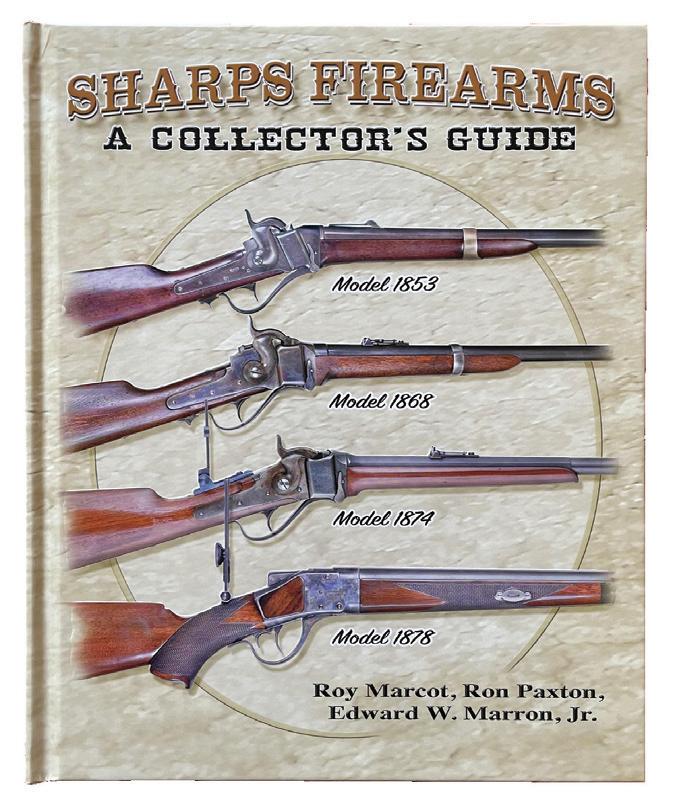
Mike Nesbitt is officially in heaven. A fan of buffalo guns and black powder rifles, he got ahold of Sharps Firearms, A Collector’s Guide. He reviews this “excellent reference” book for the beloved mid-1800s gun manufacturer’s many models.
company SpotlightS
32 THE QUEST FOR ACCURACY AND RECOIL REDUCTION – A GUNSMITH’S JOURNEY
Darrell Holland has always been fascinated by and driven to build the best accurate rifles, passions that have benefited fellow hunters and long-range shooters alike. Learn more about the operator of Holland’s Shooters Supply and his goods.
65 HANDSOME AND STURDY
AlumaGrips makes a vast array of aesthetically pleasing, highly durable firearm grips from aircraft-grade aluminum. Cofounder Chris Lynch shares how his company has gone from showing off its gear in a binder to selling it online and how that has helped spur product development.
DEPARTMENTS
(ALAMY)
GUN SHOW CALENDAR
COMPETITION CALENDAR
USA Shooting usashooting.org
May 16-20
Shotgun National Championships-Skeet Hillsdale, Mich.
May 23-27
Shotgun National Championships-Trap Hillsdale, Mich.
United States Practical Shooting Association uspsa.org
To have your event highlighted here, send an email to kaumann@media-inc.com.
May 29-31
Georgia State IDPA Championship Dawsonville, Ga.
Watch her pop
COWBOY MOUNTED SHOOTING IS THE MOST FUN YOU CAN HAVE AHORSE, AND KENDA LENSEIGNE HAS HAD A LOT IN HER CAREER.
STORY BY LINDA PAWELA
under arena lights, with dust hanging in the air and the crowd holding its breath, there’s a split second where everything goes quiet. A rider settles deep, a horse gathers itself and then the run detonates. For Kenda Lenseigne, that moment isn’t just adrenaline. It’s the culmination of a lifetime spent mastering
Kenda and her horse Charles. (WICKED WRANGLER PHOTOGRAPHY)
Kenda Lenseigne has won the Cowboy Mounted Shooting Association’s Overall World and National Championships multiple times, and Charles holds six world records and is a two-time world champion horse. (WICKED WRANGLER PHOTOGRAPHY)
CMSA competitors use late-1800s-style single-action revolvers loaded with
from
.45-caliber Long Colts. Powder in the blanks pops balloons
up to 15 feet away. Lenseigne and Charles compete at the CMSA Winter Championship in Queen Creek, Arizona. (SCOTT LINDQUIST)
horse ranch, sharpening instincts that would later define her competitive edge.
Lenseigne explains that she was one of those horsecrazy kids who rode every day after school until dark; you couldn’t keep her away from the barn. She was obsessed with all things horses and says she felt fortunate that barrel racing became her first proving ground. But it was mounted shooting that would turn skill into legend.
HER INTRODUCTION TO
mounted shooting marked a turning point. While at a Western Festival, there was a mounted shooting exhibition. The announcer called out Lenseigne to give it a try, even though she had never shot a gun before. After a few minutes of instruction, she gave it a try and hit two out of 10 targets. That was all it took. The hook was set. That moment sparked her love of mounted shooting.
Cowboy mounted shooting is one of the fastest-growing equestrian sports in the US. But what is mounted shooting exactly? It is a competitive equestrian sport that combines the speed of barrel racing with the challenge of target shooting. Riders, dressed in cowboy attire, race through various patterns on horseback while shooting at targets using specially loaded blank cartridges fired from two Old Weststyle single-action revolvers. The objective is to hit 10 balloon targets while navigating a challenging course. It is a highspeed, timed spectator sport in which the competitor with the fastest time and fewest missed targets wins.
It’s like stepping back into the Wild West. Combining horsemanship with speed and precision shooting, the discipline leaves no margin for hesitation. Lenseigne adapted quickly, qualifying for a world championship after just her fourth competition. It was a sign of things to come. What followed was dominance.
Over the years, Lenseigne has compiled a staggering list of titles, claiming the Cowboy Mounted Shooting Association’s Overall World and National Championships multiple times.
Her milestone victory in 2009, when she became the first – and still only – woman to win CMSA’s Overall World Championship in mounted shooting against both men and women, remains one of the sport’s defining moments. She didn’t just win; she shifted the narrative.
Lenseigne has long emphasized that her horses are also athletes. Her 10-year partnership with her American quarter horse, Justin, developed into a world championship-caliber team. After Justin’s retirement, her mare Sparky carried her through multiple world and national championship wins before injury sidelined the horse. Lenseigne is now riding Charles, an American paint horse, and made CMSA history once again in 2022 by winning the Overall World title for the second time. Every detail matters, including protective gear like equine hearing protection, because sustained exposure to gunfire is part of the job.
Lenseigne competes with a calm intensity that reflects years of experience and deliberate preparation. Visualization, resilience and the ability to learn from failure are as central to her process as time in the saddle.
“Watch ’em pop!” Lenseigne fires on balloons while riding Savvy, her 7-year-old mare and also a champion horse. (EQUINERY IMAGES)
HER MINDSET
RESONATES far beyond the arena. Whether in sports, business or creative pursuits, the principles she embodies – discipline, adaptability and focus under pressure – translate universally.
Lenseigne continues to shape the sport’s future. Through her training programs and clinics across the US and internationally, she’s building the next generation of riders and shooters. She also travels to France to host clinics and demonstrate mounted shooting. While the sport is not yet as popular there, it is gaining attention.
Lenseigne is also a published author. Her book, Train Like a Champion: Drills and Skills for Mounted Shooting, Vol. 1, distills years of experience into practical instruction, covering everything
from shooting mechanics to horse conditioning.
Her reach extends into product development as well. Through partnerships with leading brands, Lenseigne has helped design equipment tailored to the specific demands of mounted shooting and Western sports. She collaborated with Uberti Firearms to create the short-stroke KL CMS Pro Single Action .45 revolver, specifically designed for competitive cowboy mounted shooting.
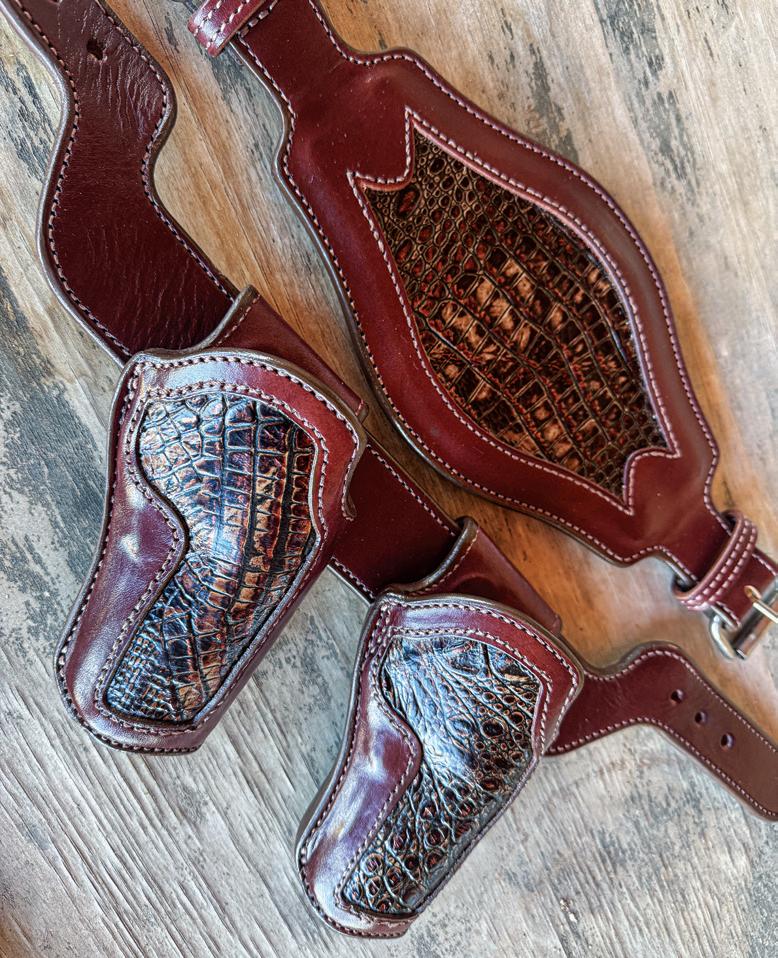
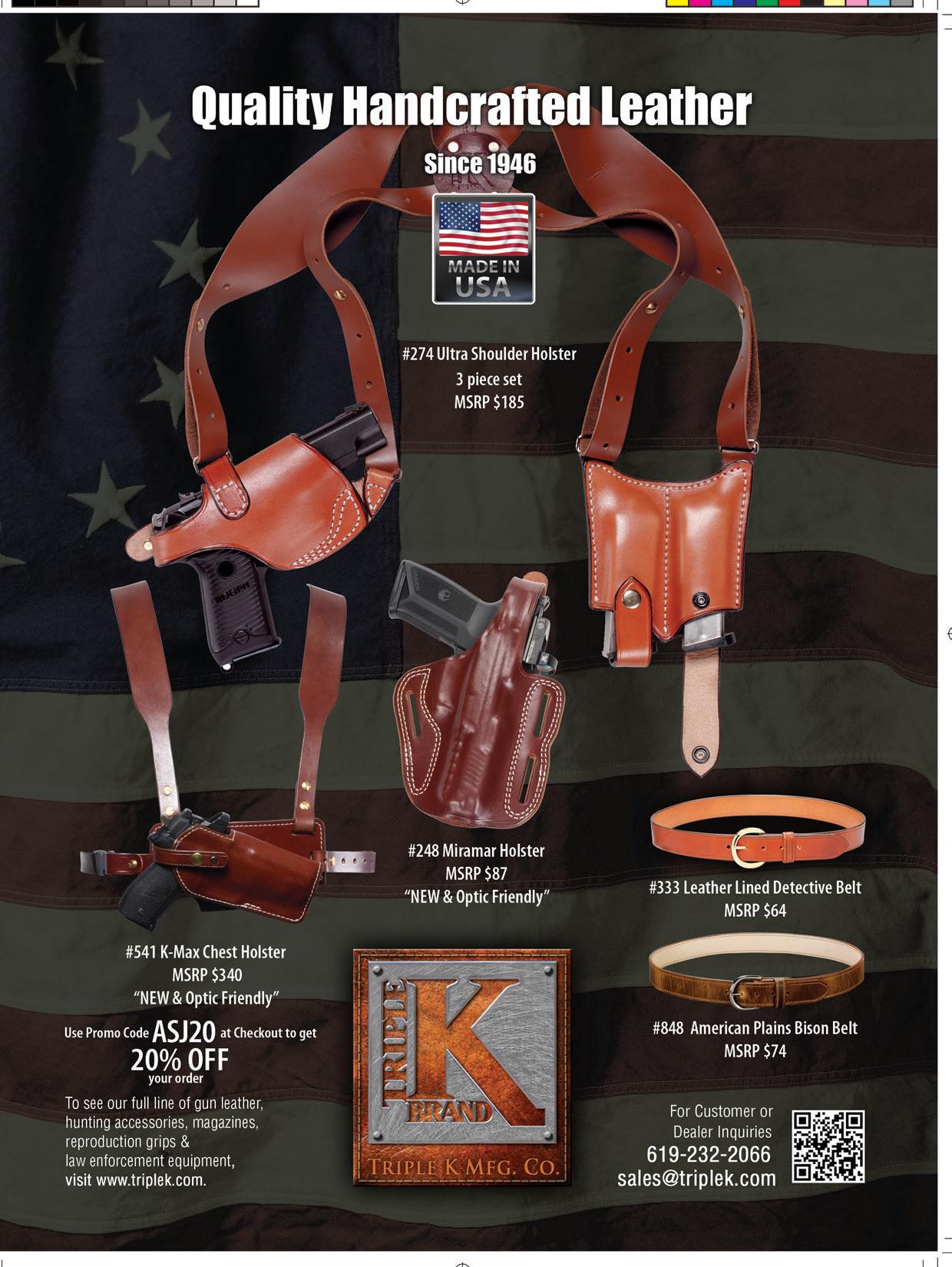
Also among her collaborations is her connection with Triple K Mfg., a brand known for its dedication to craftsmanship and durability. Triple K, created over 80 years ago, is a family-owned, made-in-the-USA company. The name “Triple K” comes from founder Jerry Krasne’s three children: Kim, Kurt and Karen.
Triple K carved out a niche by focusing on high-quality holsters, belts and accessories that reflect the spirit of the Old West. From law enforcement professionals to cowboy action shooters and collectors, its customers share an appreciation for gear that not only looks the part but performs under pressure.
In mounted shooting, equipment isn’t an accessory – it’s a critical component of performance. Lenseigne’s reliance on handcrafted leather holsters reflects the level of precision required in competition. Every draw and every movement must be seamless. There’s no room for equipment failure. That trust in well-made gear mirrors her broader philosophy: success is built on preparation, attention to detail and respect for the tools of the trade.
Triple K, much like Lenseigne herself, represents a commitment to tradition without stagnation. Their products are designed not for fleeting trends but for long-term use. Each piece reflects an understanding that quality isn’t accidental; it’s intentional. In a fast-paced world, that kind of craftsmanship stands out.
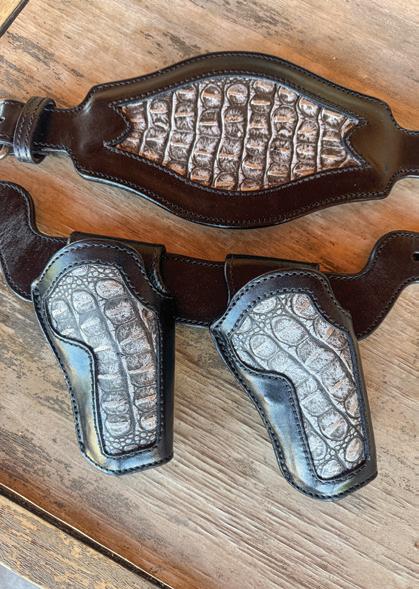
Lenseigne also designed her own line of holsters and belts, which are manufactured by Triple K and sold exclusively through her website.
These mounted shooting holsters, designed and proven by six-time world champion Lenseigne, were crafted by Triple K Mfg. and are available at kendalenseigne.com. (TRIPLE K MFG.)
Lenseigne leads Lola, who has since passed away. (HENRY DeKUYPER)
TODAY, LENSEIGNE’S LEGACY
is still being written. She stands as a role model for young riders, especially women who see in her career a roadmap for possibility. She has shown that versatility is an asset, reinvention is part of growth and tradition and progress can coexist. Lenseigne says it’s never too late to start. She encourages anyone interested in mounted shooting to work with a trainer, stay committed and keep going. It can be frustrating at times, but she insists it’s the most fun you can have on horseback.
What makes her story compelling isn’t just the championships or records – it’s the consistency. Year after year, arena after arena, she shows up prepared, focused and ready. In a sport where variables are endless, that reliability is a rare kind of mastery.
There’s also a humility to her presence. Despite accolades that place her among the sport’s elite, she operates with a grounded authenticity. She mentors quietly, leads by example and prioritizes substance over spotlight. It’s a leadership style that resonates deeply within the rodeo community.
And when the arena falls silent again, just before the next burst of chaos, you can be sure of one thing: Lenseigne will be there, centered and ready. After 28 years in the sport full-time, she says that as long as she is still having fun, she will keep competing. ★
Editor’s note: For more information about Kenda Lenseigne and her books, holsters and belts, visit kendalenseigne.com. For more on Triple K Mfg., visit triplek.com.
Bam Bam, a horse born and raised at Lenseigne’s ranch, is an up-and-comer in the sport of cowboy mounted shooting. (LAURIE HUGHES)
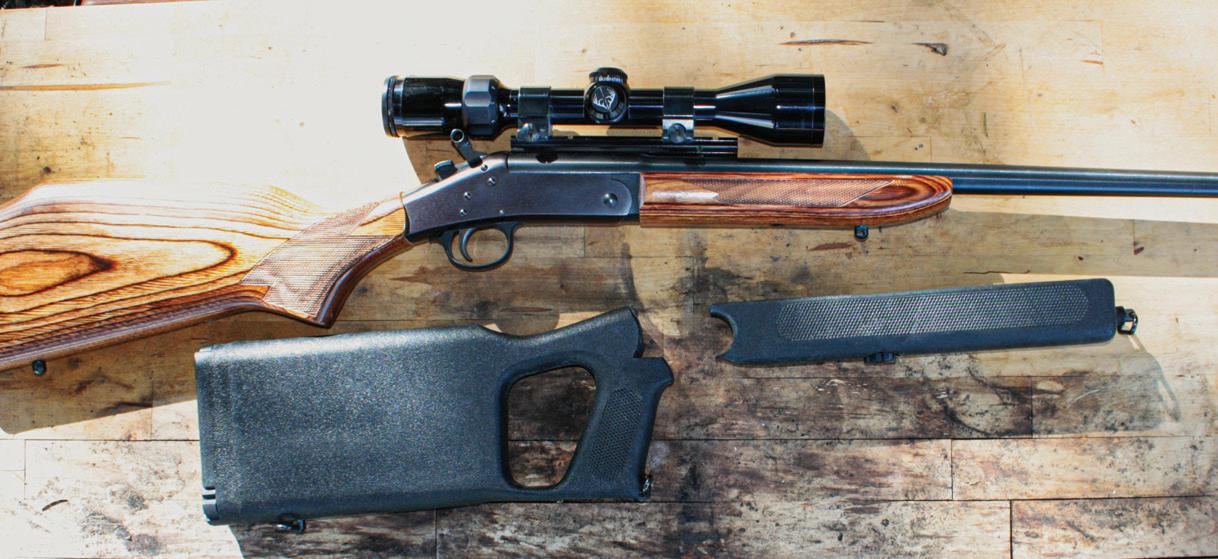
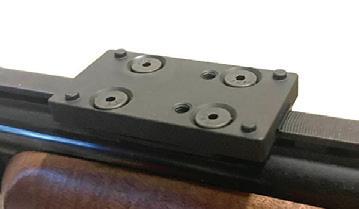
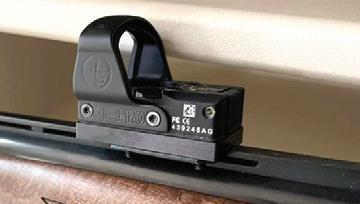
Author Dave Workman recently pulled his Harrington & Richardson break-action single-shot in .308 Winchester from mothballs and ran some lead downrange prior to refurbishing it and replacing the scope.
UNDERAPPRECIATED:
Resurrecting a single-shot classic from H&R
A hunter aims to take his accurate but overlooked old break-action out to the deer woods after a refurbishing project.
STORY AND PHOTOS BY DAVE WORKMAN
Maybe three decades have passed since I acquired a single-shot rifle that has kind of an interesting spot in outdoors history because a fair number of young hunters gravitated to it, possibly thanks to single-shot shotguns produced by the same company and which were used in many hunter education courses.
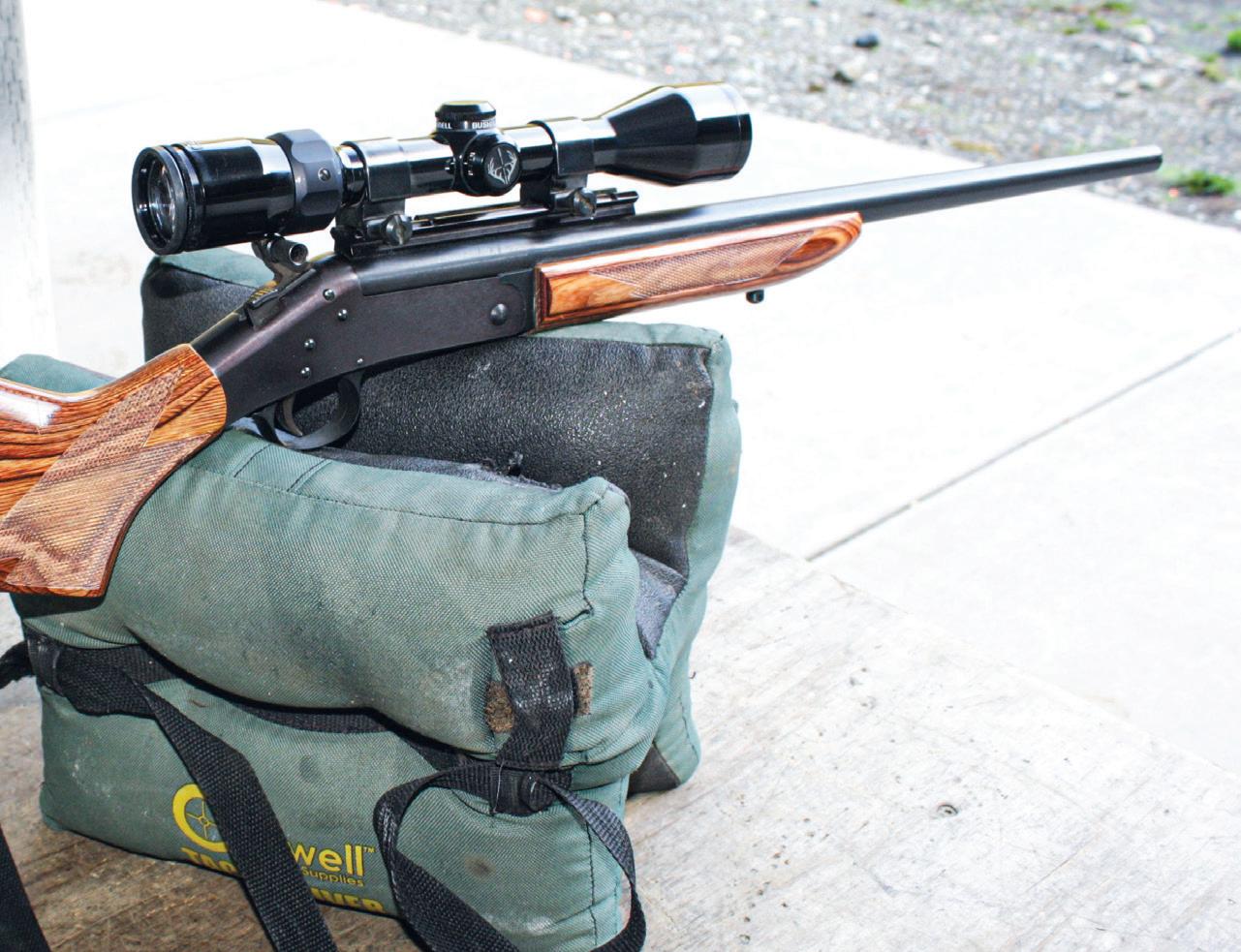
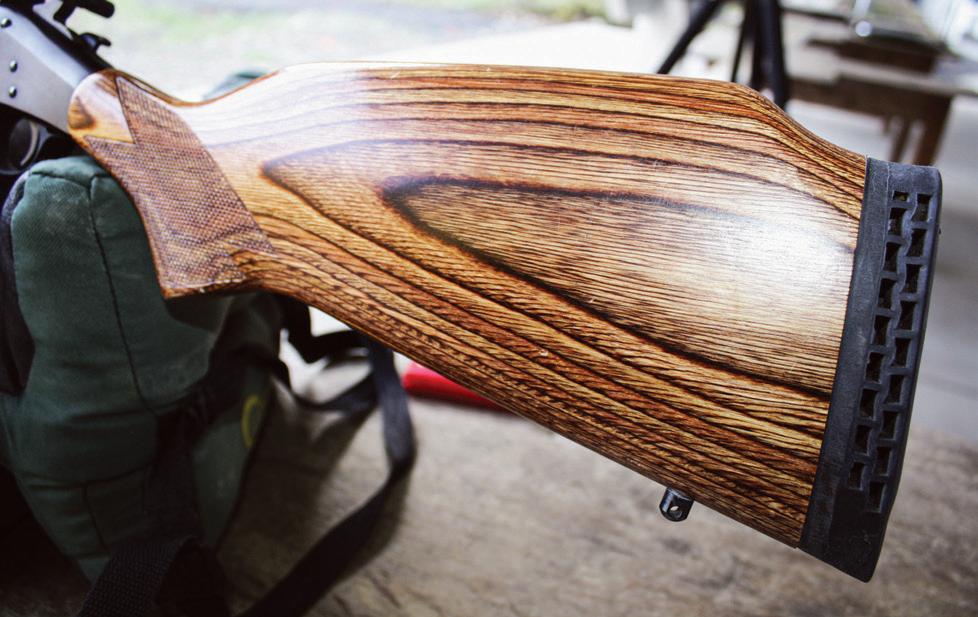
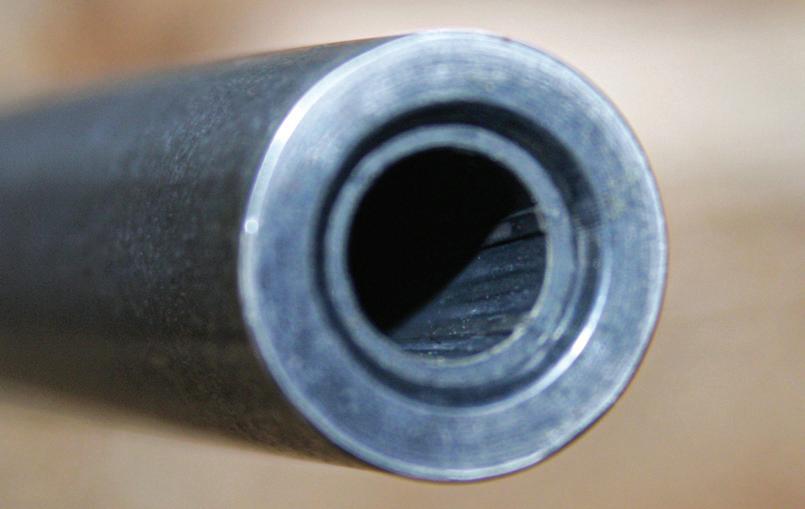
The break-action Harrington & Richardson – with its exposed hammer, laminated wood stock and bull barrel with the recessed crown – was, and remains, a pretty accurate rifle. While these rifles didn’t play a significant, if any, role in the actual hunter education process, my longtime pal Robin Sharpless, who was working at H&R/New England Firearms (NEF) at the time back in the mid-1990s, recently explained this interesting link.
“The hunter education part was actually shotguns,” he recalled.
“We had found that most hunter education programs throughout the country were using firearms that were basically recovered from crime scenes to be used in their hunter ed, so we came up with a program, allowing any state that asked, to receive 50 brandnew NEF single-barrel youth shotguns that were properly sized for the younger participants. This was done at absolutely no charge, off the top of my head. I’m trying to remember, but I think we did right around 30 states.”
Sharpless said the company did offer all instructors one shotgun and one rifle of their choice, at distributor cost, for use in their programs.
“Many folks took advantage of this,” he said.
And what happened? Apparently, several of those break-action singleshot rifles did make their way into classrooms, and were also bought as a first gun for young deer hunters.
Years ago, I hunted on some ranch property in eastern Washington where the landowner’s daughter had an H&R chambered in .243 Winchester, and she conked a nice mule deer buck with it.
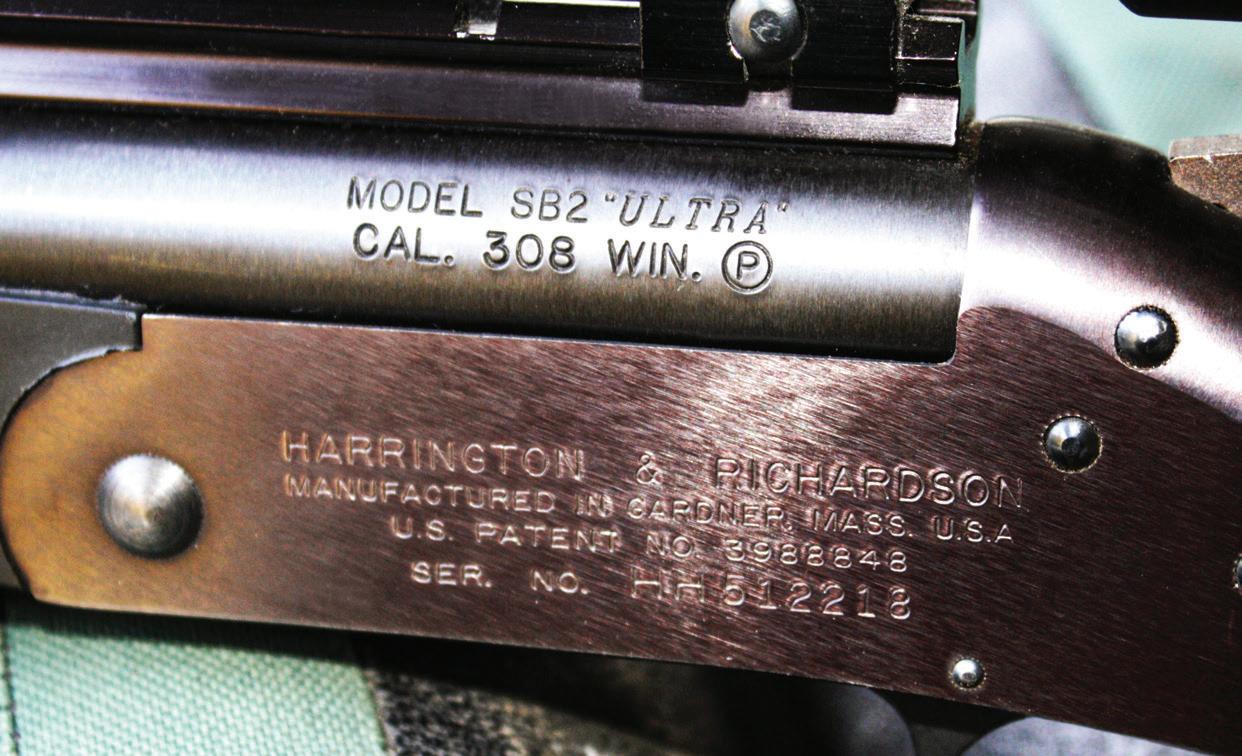
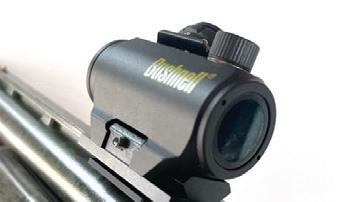
The particular specimen we’re discussing is chambered in .308 Winchester. Topped with a 3-9x Bushnell scope, I once shot prairie dogs and ground squirrels with it in eastern Oregon, hunted mule deer with it in Washington, and occasionally took it along as a backup rifle in the event something happened to my primary bolt-action rifle in the same caliber. On one occasion, I hiked back into Washington’s Alpine Lakes Wilderness with the H&R for the opening day of that year’s early High Buck Hunt in the Cascade Range.
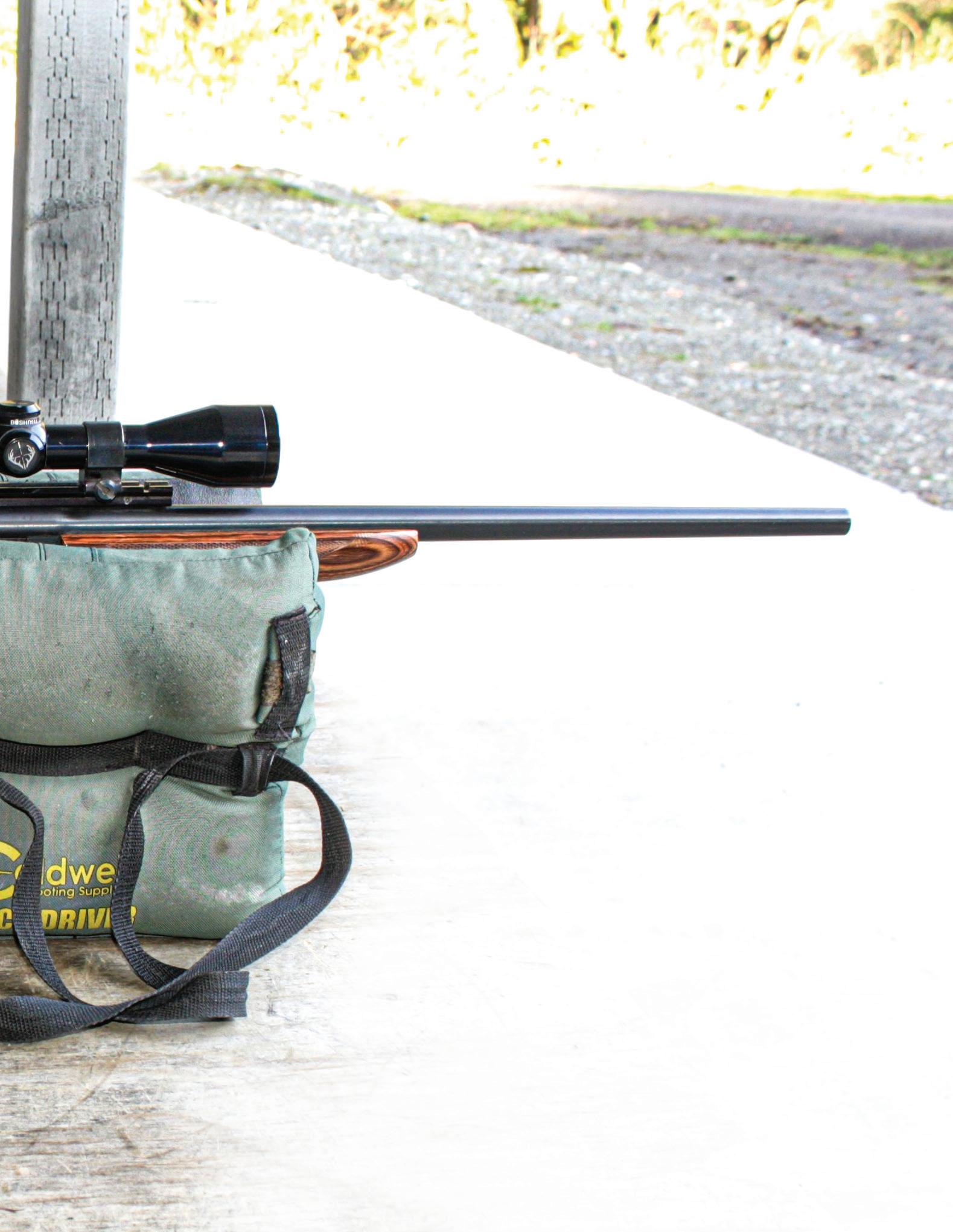
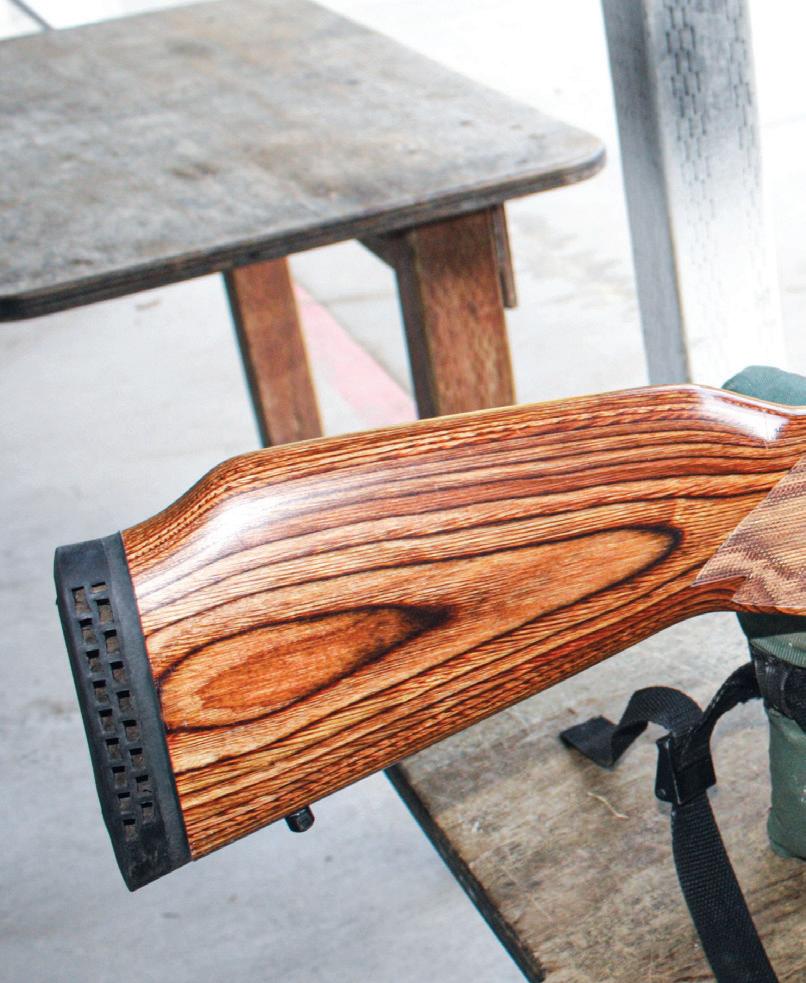
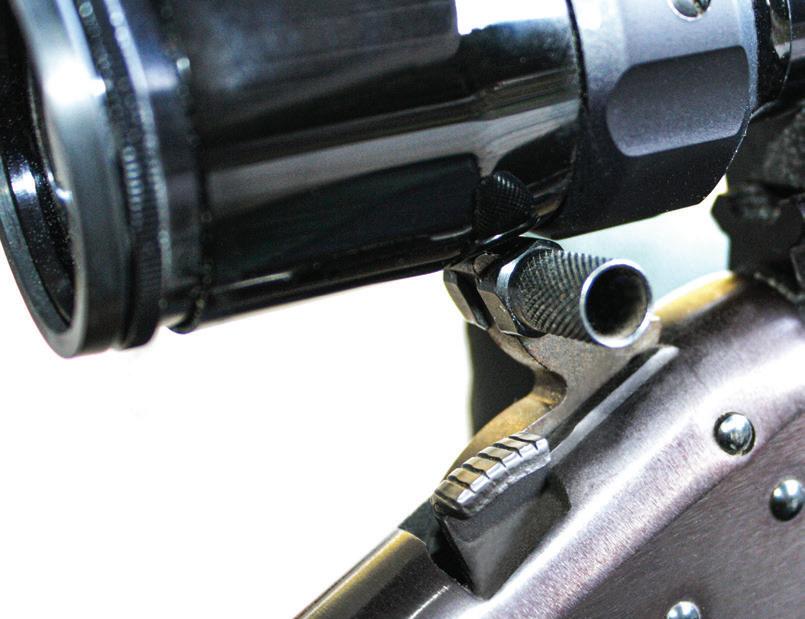
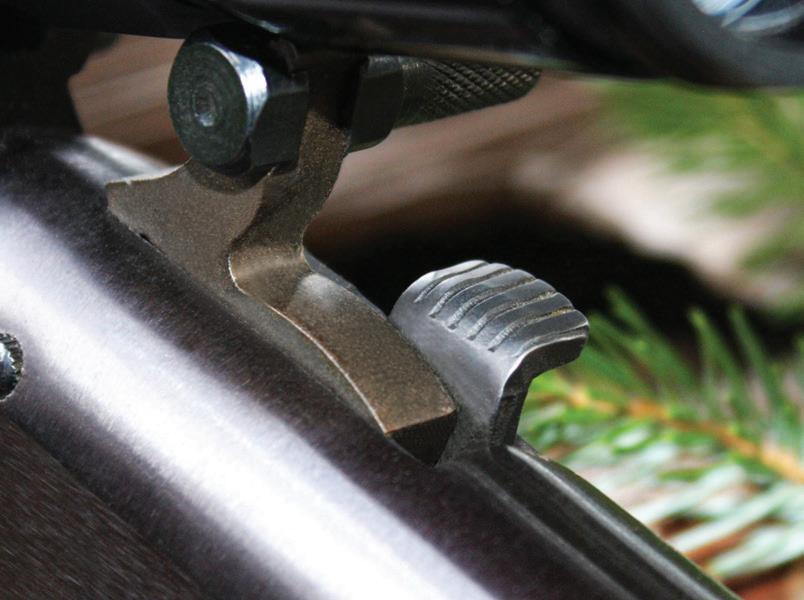
It’s a heavy gun for a single-shot, which can be attributed to the brown laminated wood stock and heavy 24inch bull barrel. As simple and budgetpriced as it was, this little rifle is capable of very good performance. The blue finish is what one would expect on such a rifle, but overall, this is a tough outdoors tool. Its exposed hammer is fitted with a reversible extension which allows cocking with either the right or left hand despite the low-mount scope, and honestly, the trigger isn’t too bad!
The laminated stock wears an older ventilated recoil pad, and the checkering is pretty good.
Harrington & Richardson built so many variations of its single-shot rifle – in calibers ranging from .204 Ruger and .223 Remington all the way up to popular .30-caliber big game cartridges, along with some chambered for .45-70 – that it’s impossible to remember them all.
The brand name has a storied past. It was originally headquartered in Worcester, Massachusetts, from 1871 to 1877, according to a history I found online, which may or may not be entirely accurate, and was originally known as the Wesson & Harrington Company.
In 1877, the company became known as Harrington & Richardson and over the course of several years, it changed addresses in Worcester at least five times, and official company names a couple of times. When it became H&R 1871, it moved headquarters to Gardner,
While they may have been inexpensive, H&R rifles had some eye appeal. That laminated hardwood stock is nicely done.
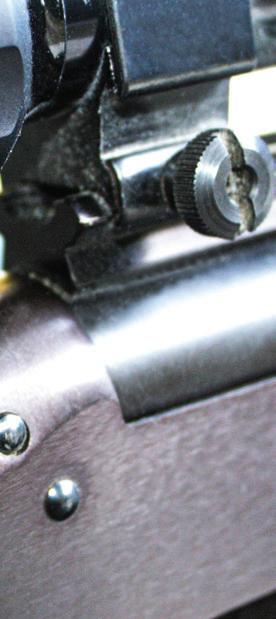
H&R designed this rifle with a reversible hammer extension, so it is ambidextrous.
The buttstock features decent checkering and a ventilated recoil pad. Workman’s rifle project will likely replace it.
Massachusetts. Headquarters was also moved to Madison, North Carolina, after the purchase by Marlin, which was subsequently acquired by Remington.
Yet, with all of this bouncing
around of company headquarters, the simple break-action platform really didn’t change significantly, although with its single-shot shotguns, the release shifted from a traditional
pivoting lever on the tang to the thumb switch of today.
By no small coincidence, my first shotgun was an old H&R from early in the 20th century, chambered for the 16-gauge shell. How many others learned shotgunning with an H&R smoothbore? It may sound corny, but shouldering this rifle felt like an old friend had reappeared.
WHY A ‘CLASSIC’?
What makes this simple little rifle a classic? Frankly, there are a number of factors, which Sharpless recently helped me sort through.
Many of these rifles had Green Mountain barrels, he said, before the company was acquired by Marlin, and actions were done by FN. He recalled how the company had very tight tolerances thanks to the chamber reamers used at the time, which contributed to accuracy. The company changed ownership a couple of times, becoming H&R 1871, Inc. in 1991, and then H&R 1871, LLC after it was purchased by Marlin a few years later.
Of course, there is a bit more to the story. The heavy-barrel models were a Sharpless brainchild, because, according
The author’s H&R SB2 Ultra has a heavy barrel and rugged receiver.
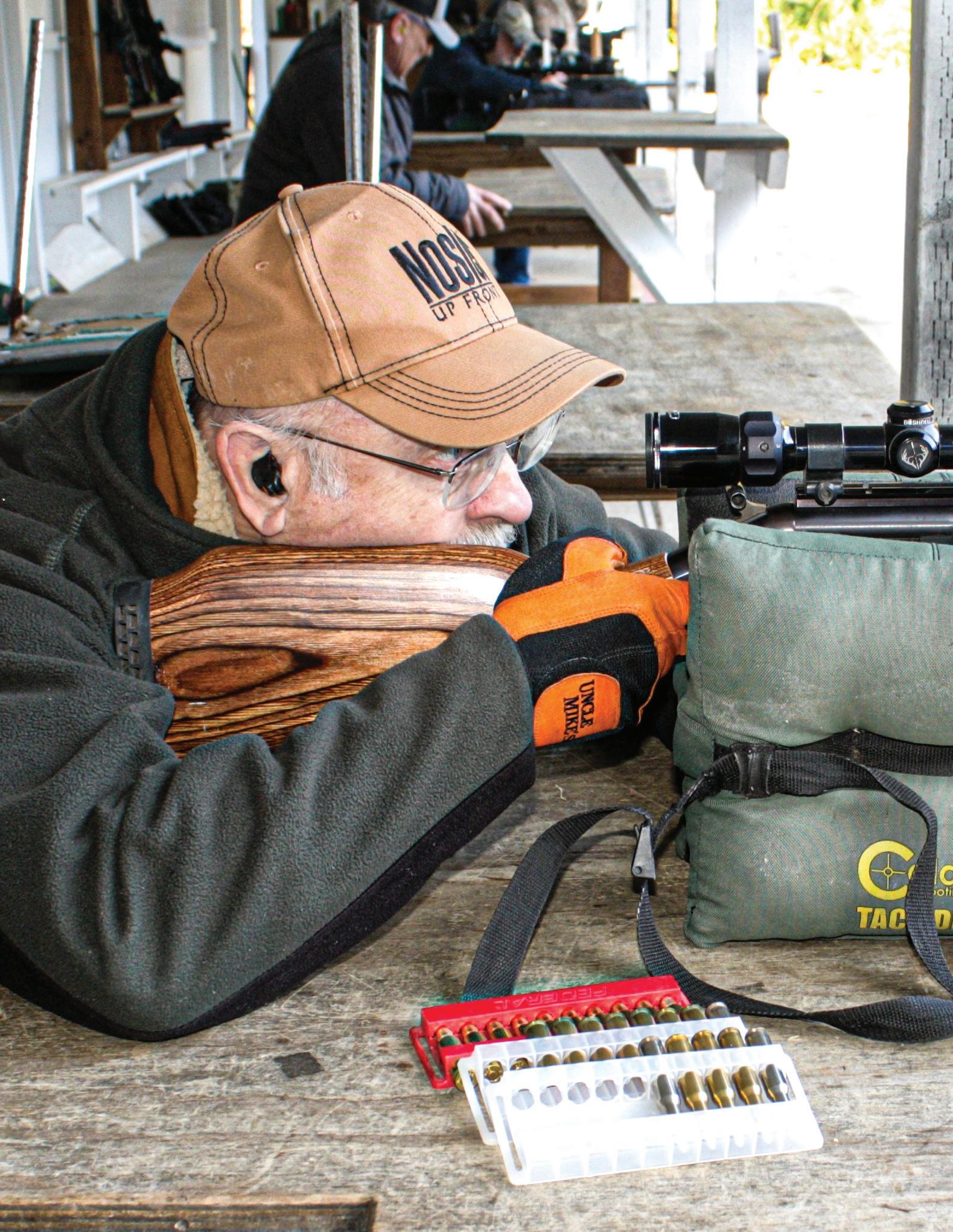
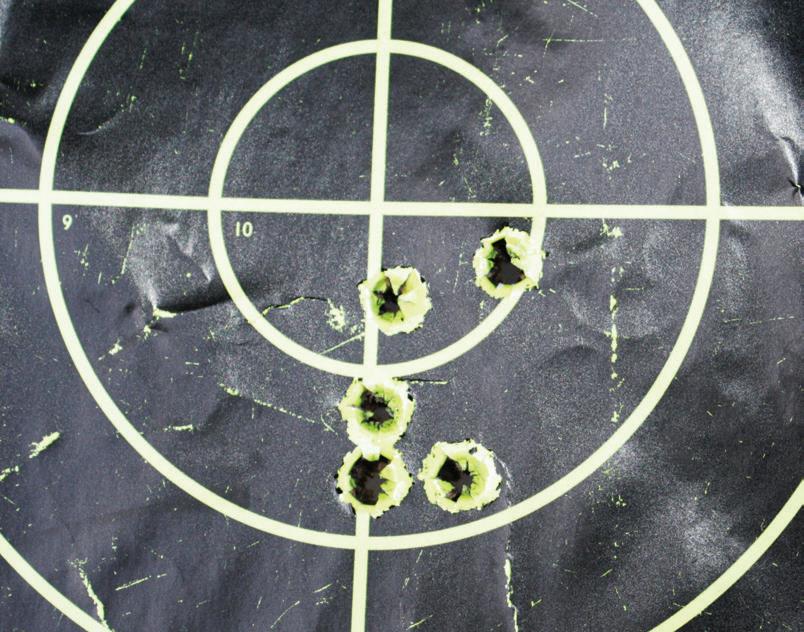
Lesson for today: Workman shows what to do when zeroing a rifle that hasn’t been fired in a while. Put three downrange, then click up gradually, and once the barrel cools, fire two for effect. He was shooting 165-grain Nosler Ballistic Tips over IMR 4895 off a sandbag rest.
to his recollection, the company used the same barrel blanks for shotguns, so they were just drilled and rifled instead of bored smooth for shotgun shells, thus giving rise to Varmint and Ultra Varmint rifle models.
“The barrel itself (started) as the diameter of a 12-gauge chamber,” he said. “That’s uniform across all the different shotguns and rifles except the 10-gauge and the 12-gauge Ultra Slug Hunter, so we had plenty of meat. It was just a matter of taking less (metal) off.”
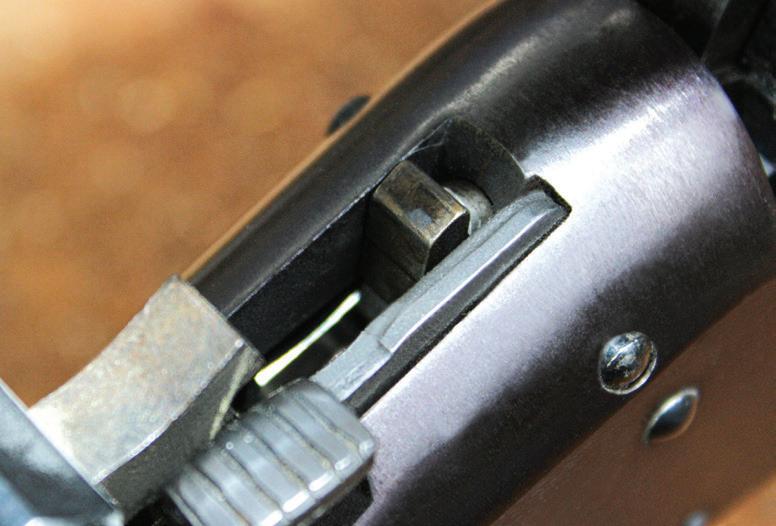
The rifles were designed with a transfer bar system, contributing to their safety. If the trigger isn’t fully depressed, the hammer will not strike the firing pin, which is mounted in the receiver.
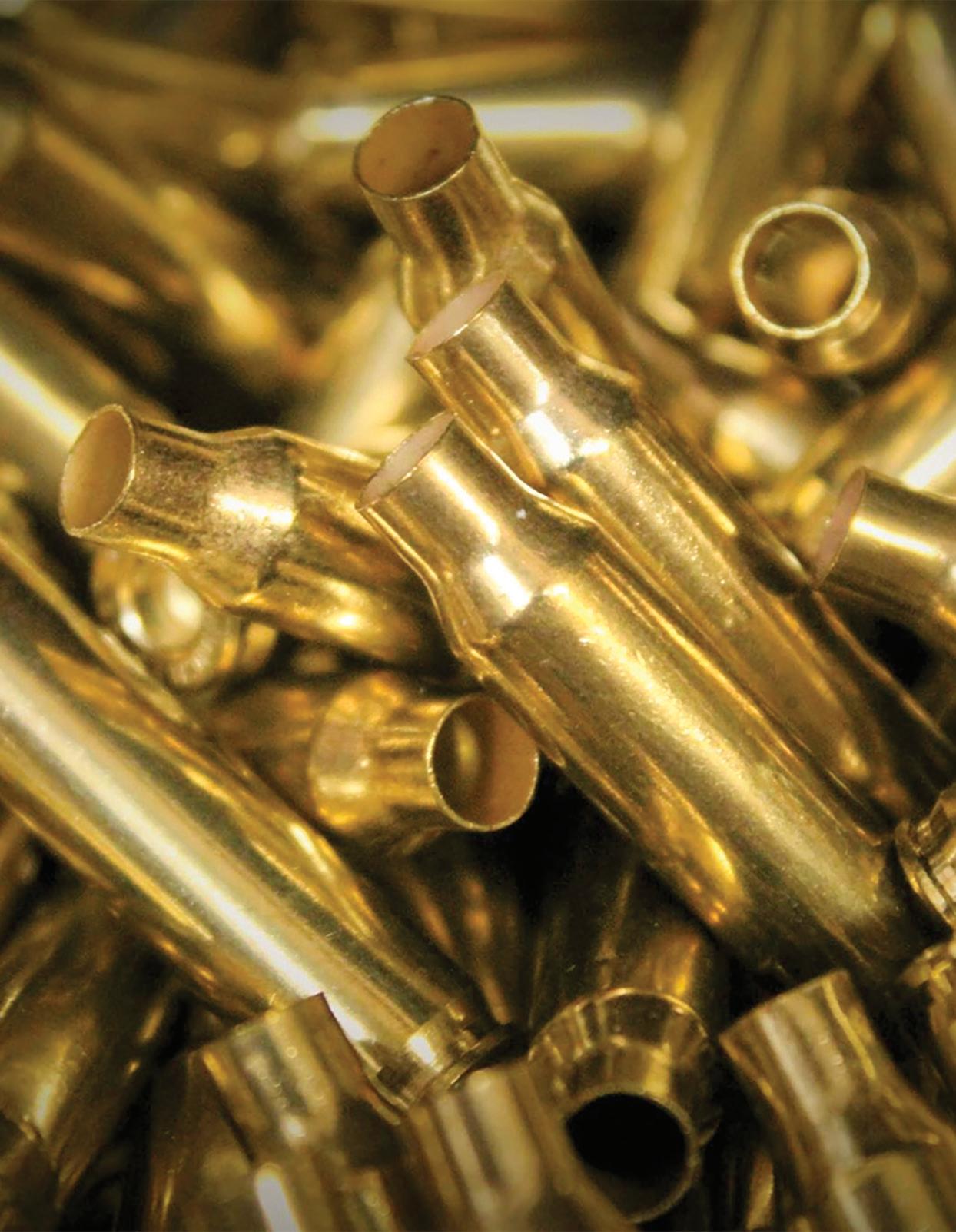
While the H&R single-shot was never intended as a target rifle, I’ve seen specimens that were capable of good long-range accuracy. The one in my safe can deliver the goods, and I’ve decided to work up some good handloads this summer using Nosler and Federal brass, trimmed to 2.005 inches and loaded with 165-grain Nosler Ballistic Tips propelled by a full charge of IMR 4895.
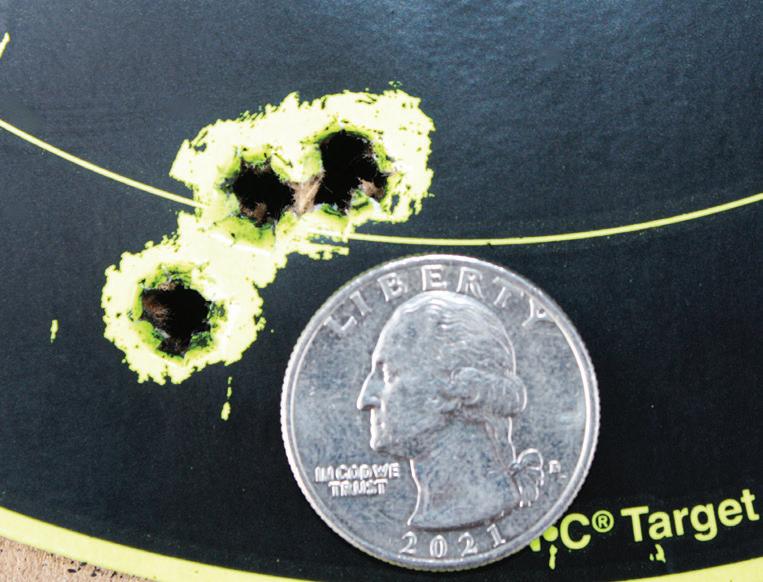
The targets pictured with this report were shot with a mix of handloads, topped with 165-grain bullets just to free up some brass. I prefer the 165-grain pill for the .308, and I’ve got a few notched tags to attest to that bullet’s capabilities.
Sadly, I discovered that, over the years, the zero had shifted, so I’ve got some work to do. Windage is OK but elevation needs some attention and I will bring it up to shoot about 2½ inches high at 100 yards, putting it pretty close to dead-on at 200 yards. I plan to swap out the scope, as I’ve discovered a 3-9x40mm Redfield on my bookshelf that needs to be dusted off.
Since I’m going to replace the scope, I may as well go whole-hog. As you read this, the rifle will likely be in pieces, getting a thorough goingover: cleaning the action, checking the mainspring, maybe refinishing the stock and touching up the bluing here and there as necessary. Call it a summer project. Other guys my age tinker with old cars. Go figure.
THE CHALLENGE
Many American hunters like to
A look down into the receiver shows H&R’s transfer bar firing pin setup.
One of H&R’s features was the recessed targettype muzzle.
The action opens by pressing the thumb release next to the hammer. Empties are ejected automatically.
challenge themselves with single-shot rifles. Ruger’s No. 1 single-shot and the long-discontinued Ruger No. 3, which hasn’t been made since 1986, are prime examples, along with modern Sharps rifles. Both Ruger models and the Sharps guns have falling-block actions, which presents a different dynamic than a break-action. Both types eject empties, but the H&R model essentially pivots to open the chamber and eject the spent casing up and rear, while the falling-block rifle remains straight and the empty is thrown out essentially straight to the rear.
While the other rifles are leveractions, the H&R opens by pressing a release on the right rear of the hammer. It works every time.
I once swapped out the laminated stock for a synthetic replacement offered by New England Firearms. NEF and H&R were essentially joined at the hip. The stock was designed with a grip combined with an oversized thumbhole, and it was hollow for carrying survival stuff. It wasn’t all that comfortable to shoot, but as a survival setup, it was clearly thought through. Guns chambered in .223 and .308 were factory-equipped with the synthetic stock.
As an aside, I did once confuse a non-gunner with the rifle wearing the black synthetic stock and that individual thought it was an “assault rifle.” You cannot make this stuff up.
I know this rifle is capable of very
good accuracy, and I’ll be working on that as my little project progresses.
Used H&R break-action rifles can be found at gun shops, gun shows, estate sales, GunBroker.com and maybe even in a dark closet corner in some friend’s house. Should you happen upon one, gently clean it, give it a rub with a soft cloth, round up some fresh ammunition and head for the range.
Never underestimate the breakaction H&R rifle. Although these guns were relatively inexpensive in their heyday, there was nothing “cheap” about
them. While preparing this article, I looked online at GunBroker and actually found some H&R single-shot rifles fetching prices of several hundred dollars, and one was being offered for the princely sum of $1,500!
Perhaps this fall, if the rifle project is completed, I’ll return to one of my favorite deer hunting spots, with the H&R cradled “just so” as I sit with my back against a tree trunk, waiting to see a movement somewhere between me and the opposite side of a canyon. It’ll be a trip worth taking. ★
New England Firearms produced a synthetic replacement stock that also appeared as a standard feature on some “survival” models.
How accurate could a breakaction H&R rifle be? Bet you a quarter you’ll never guess. A trio of Nosler AccuBond 165-grainers (with the white polymer tips) left their mark.
COMPANY SPOTLIGHT
THE QUEST FOR ACCURACY AND RECOIL REDUCTION: A GUNSMITH’S JOURNEY
Darrell Holland's passions have benefited hunters, long-range shooters alike.
STORY BY GENE KELLY PHOTOS BY HOLLAND’S SHOOTERS SUPPLY
In 1977 Darrell Holland attended Lassen College Gunsmithing School. There he studied under Master Gunsmith Bob Dunlap and learned the Design, Function and Repair, or DF&R, System of gunsmithing.
He then was hired by Jeff Cooper to be the first gunsmith at Gunsite Ranch, Cooper’s shooting school in Arizona. After a couple of years working for Jeff, gunsmithing and building custom pistols, Darrell’s passion for hunting made him strike out on his own, designing and manufacturing custom hunting rifles and later accessories.
As a hunter and long-range shooter who has instructed and hunted around the world, Darrell became fascinated and even driven to create practical enhancements in his pursuit of building the best accurate rifles, with a focus and emphasis on building hunting rifles that would perform every time anywhere in the world on that “hunt of a lifetime.”
DARRELL BUILT A strong following of hunters and long-range shooters who purchased his custom-built rifles. As time went on, many gunsmiths clamored for Darrell to produce the same components for them, so that they too could build accurate rifles for their customers.
Some of the products that Darrell has designed and
Darrell Holland has always been fascinated by and driven to build the best accurate rifles. He operates Holland’s Shooters Supply (hollandguns.com).
COMPANY SPOTLIGHT
manufactured through his Holland’s Shooters Supply brand include:
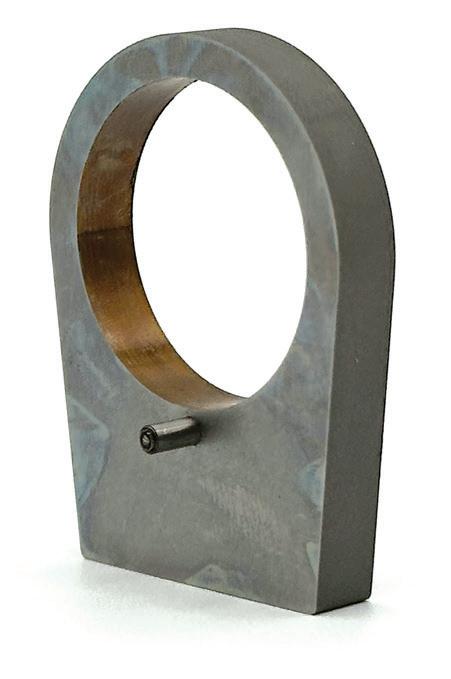
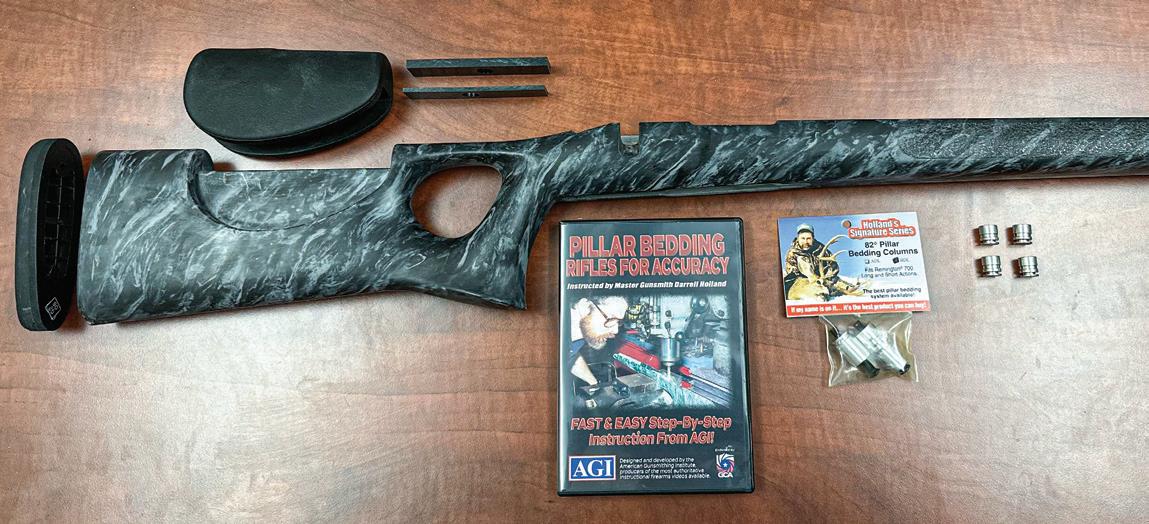
• Precision ground recoil lugs for the Remington 700 that replace the thin factory originals, and which create the basis for a well-bedded rifle;
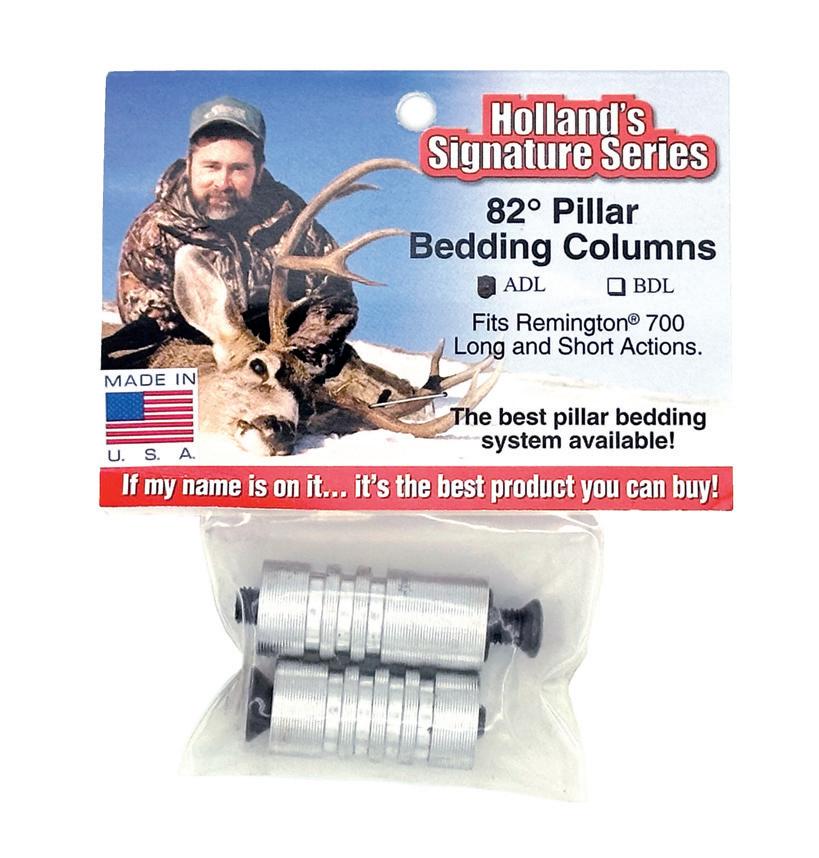
• Unique aluminum pillar bedding columns with special 82-degree angle screws that enable the action to be torqued securely to the stock, providing a solid bedding platform for maximum accuracy;
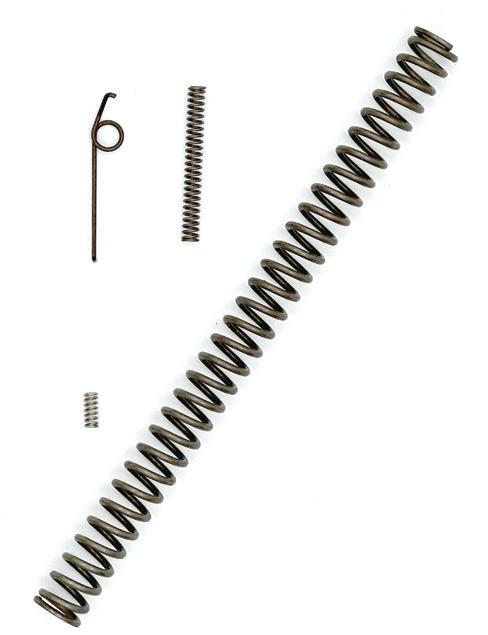
• Spring sets that improve “lock-time” further and reduce trigger pull, therefore increasing accuracy;
• Stocks he designed (and McMillan Stocks produced) with an adjustable cheek piece that will survive in all weather conditions and which have features that increase accuracy and the ability of the shooter;
Precision ground recoil lugs for the Remington 700.
Aluminum pillar bedding columns.
Besides designing and manufacturing rifle parts, Holland has instructed and hunted around the world.
COMPANY SPOTLIGHT
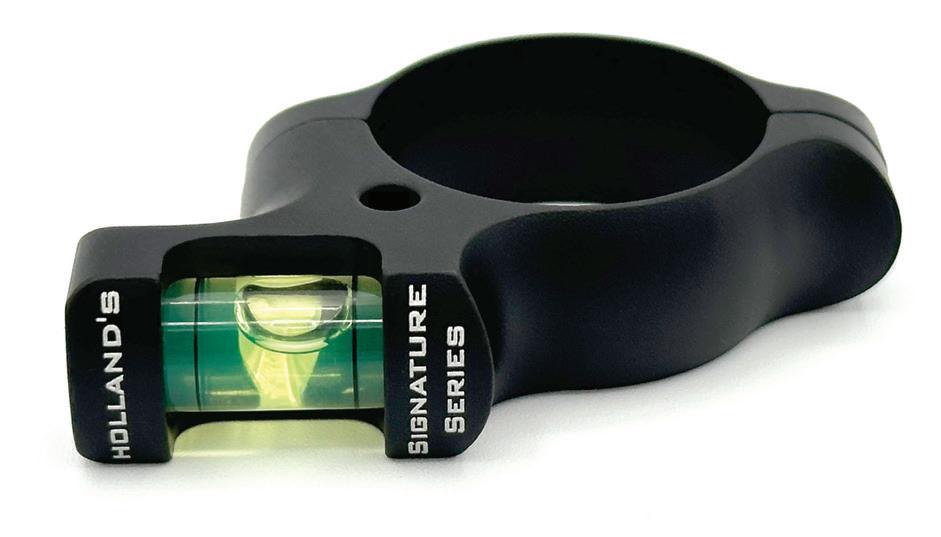
• And an external scope level, which mounts on the scope and assists in preventing cant, which at long distance could result in a miss. It is now the official level used by the US F-Class Long Range Rifle Team.
To reduce punishing recoil, Darrell also designed a very effective quick
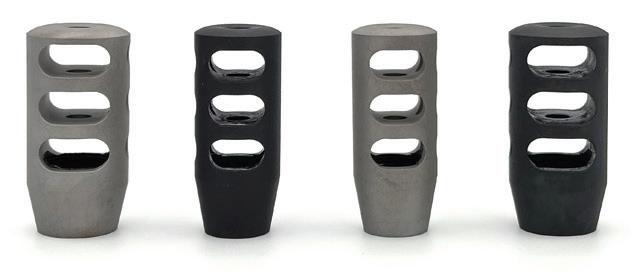
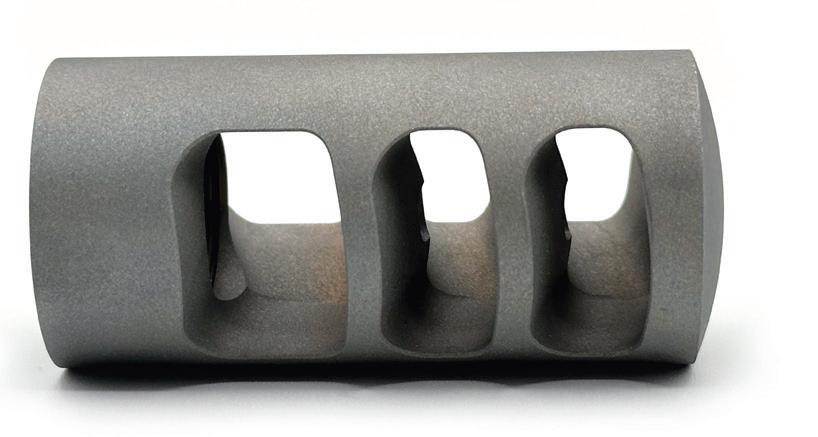
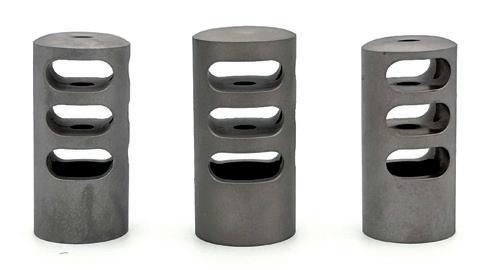
discharge muzzle brake over 20 years ago that reduces felt recoil and muzzle climb by over 50 percent. Over the years he has continued to be on the leading edge of muzzle brake design.
As a hunter and long-range shooter, he has designed a number of unique products to increase the
performance of handloads, including a bullet comparator, a precision primer seater and other reloading accessories.
Darrell has long been considered a “gunsmith’s gunsmith,” so after 40plus years of building custom rifles, many on the Remington 700-style action, he now sells all of his high-
Holland’s adjustable comb BDL stock short action package.
Remington 700 short action deluxe spring kit.
COMPANY SPOTLIGHT
performance designed parts, tools and accessories for gunsmiths and shooters on his website (see below).
In addition, Darrell also teaches the life skills of being a practical long-range shooter for hunters at his academy and range near Billings, Montana. So, build an accurate rifle and join him on the range before your next hunt for a world-class trophy! ★
Editor’s note: Visit hollandguns.com for more information. For a limited time, use code HSSASJ26 at checkout to get 20 percent off anything on the website.
On hunting projectiles achieving balance between deep penetration, expansion, weight retention.
STORY BY PHIL MASSARO • PHOTOS BY MASSARO MEDIA GROUP
will never use a (fill in the blank) bullet again; I lost the biggest deer of my life because they’re built wrong.” If you’ve hung around enough hunters, you have invariably heard that sentence. While it is human nature to blame equipment instead of taking personal responsibility, the bullet is often wrongly blamed for failures. I may or may not have been guilty
of this over the course of my career, especially while experimenting with more radical bullet/cartridge combinations. Long before I ever wrote a book or article, I enjoyed trying different combinations to best educate myself with real-world experiences. I clearly remember handloading a wide range of projectiles for my .308 Winchester and finding a particular load using the 125-grain Nosler Ballistic Tip that printed roughly ½-MOA; at that point in time, that was remarkable. I made the choice to take it deer
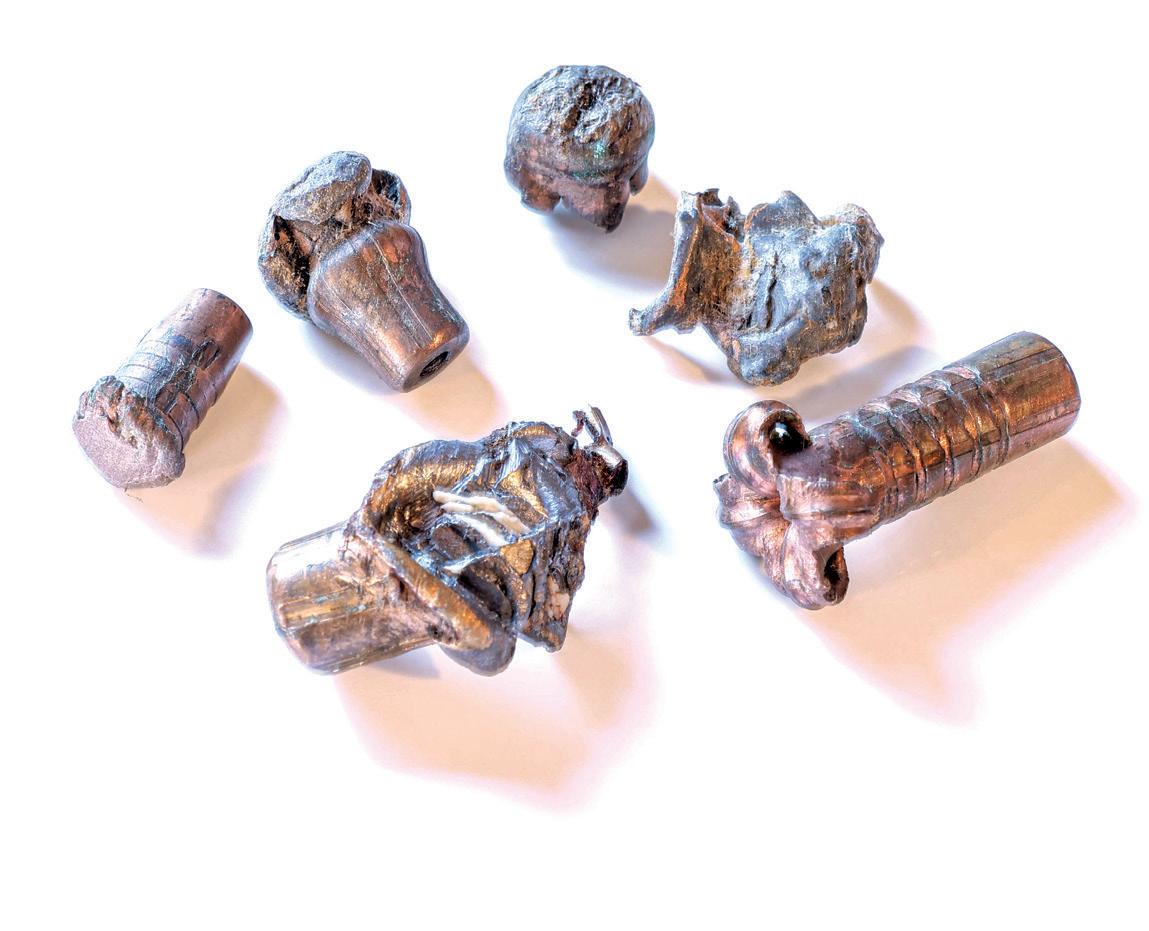
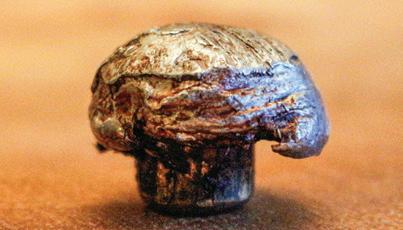
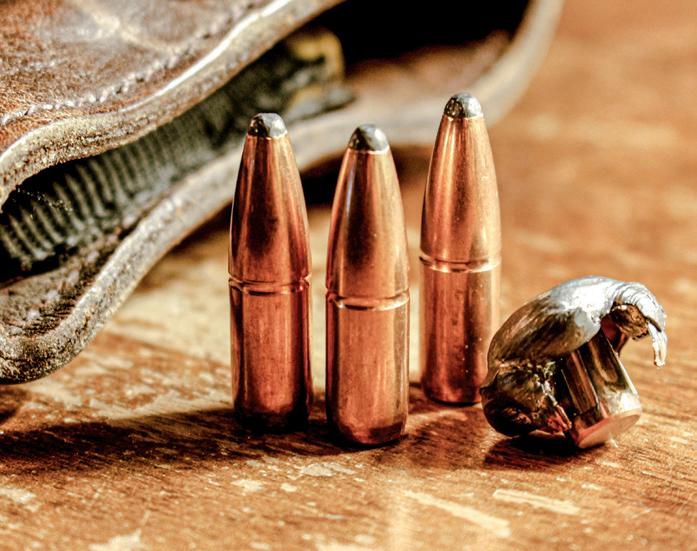
Just because your bullet doesn’t look the way you wanted doesn’t mean it failed.
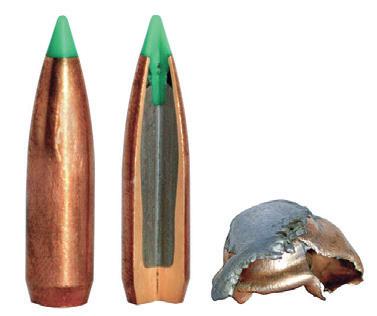
Nosler’s Ballistic Tip is a wonderfully accurate bullet, but if not of proper sectional density it will break up quickly. (NOSLER)
hunting that fall, and when a young buck offered a shot I couldn’t resist, I broke the trigger. Having gone down for good within 25 yards, I remember being disappointed when skinning him out, finding only the bright green polymer tip intact and the rest of the bullet having disintegrated into small fragments. My immediate thought was, “Well, that failed.” Then I paused,
and the realization that I removed the fragments of that failed bullet from a dead whitetail washed over me, and I rethought the entire process. What is the job of a bullet? What are we trying to accomplish as hunters? Quite obviously, hunters will enjoy accuracy as much as the target crowd, though the latter group does not take terminal performance into consideration
at all. Once the target bullet touches steel or paper, its job is over.
For hunters, the bullet’s job has only just begun. That bullet must strike a perilous balance of expanding to a nice, wide diameter so as to create the largest wound channel possible, as well as maintaining its structural integrity so as to take that wound channel as deeply as possible. Should one of those attributes dominate the situation, you can have trouble on your hands, as a bullet that doesn’t reliably expand will punch through like a pencil, giving penetration but a very narrow channel, destroying very little vital tissue. A bullet that expands too much (or too rapidly) gives the opposite effect: a very wide, but very shallow, wound channel, which, once again, destroys very little vital tissue. Maintaining that balance, across a wide spectrum of impact velocities and in a wide array of calibers, is no easy feat and perhaps we should be more grateful for what we have at our fingertips.
WHEN DOES A bullet fail? Let me make several points very clear. If you recovered an animal that was shot properly in the vital organs (no gut shots, leg shots, etc.), your bullet
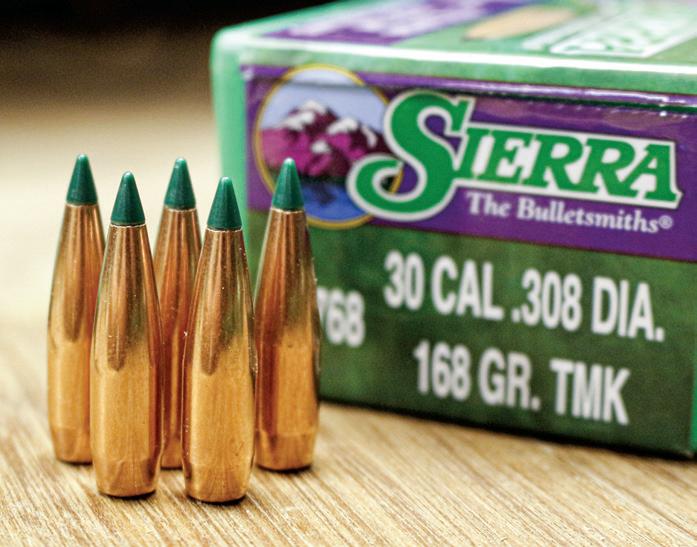
When a company constructs a projectile for target work – such as the Sierra Tipped MatchKing – terminal ballistics are usually not considered.
A Federal Fusion Tipped bullet as delivered for the 7mm Backcountry. High impact velocities warrant a bonded-core or monometal projectile. (FEDERAL PREMIUM)
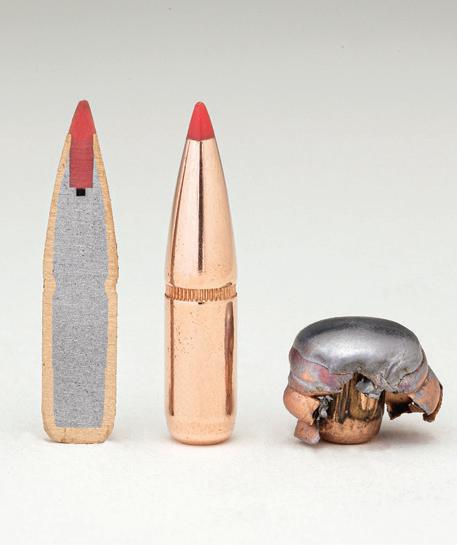
Hornady’s SST bullet (now loaded in the American Whitetail Tipped line) will give the rapid energy transfer deer hunters love, resulting in the expanded profile shown, but that is not indicative of failure. (HORNADY)
did not fail. If your bullet remained in the animal’s chest cavity, clearly “expending all its energy in the animal” without exiting, it did not fail. If your bullet passed cleanly through the animal, creating two exit wounds yet killing the animal quickly and humanely, it did not fail. If you recovered your bullet from a clearly dead animal and it only retained 50 percent of its original weight, it did not fail. I consider bullet failure to be a well-placed shot on your game animal – inarguable as it may have been witnessed by a hunting partner, guide or professional hunter – with the bullet either exhibiting premature breakup and failing to adequately penetrate, or failing to expand and damaging very little vital tissue.
I have seen very few actual instances of bullet failure. It’s usually
the result of a light-for-caliber bullet at high impact velocity, or simply choosing a cartridge too light for the job, or a terrible combination of both. One instance that comes to mind was my first media hunt, where we were invited to a prestigious low-fence operation in Texas. Hunting over corn feeders was completely foreign to me as a New Yorker, but I fit in quickly. While a good buck was the priority, once we had all tagged out, we were asked to take some does. A dear friend of mine was handed a .223 Remington and some ammunition, which turned
out to be frangible varmint stuff. The deer in this region were small, with some does tipping the scales at under 60 pounds. My pal placed a good shot on the shoulder and the doe ran off in that manner that indicates a fatal hit. We tracked her for a half-mile before the blood trail stopped completely, and never recovered her. Bottom line: wrong bullet choice, especially in a cartridge that light.
On the other end of the spectrum, I can still vividly recall the conversation around a campfire in the Selous Reserve of Tanzania, when my PH Terry Calavrais and I got into the topic of safari guns. Tanzania had (and still has) a .375-inch minimum caliber for dangerous game, and that includes the leopard. He had just had a client in camp, proudly armed with a .338 Weatherby Magnum, who brought along special loads featuring the 235-grain Speer HotCor bullets specifically for that job. Long story short, that bullet has proven to be very frangible (we also had disastrous results on deer here in the US), and Terry and his excellent team of trackers had a couple of miserable days following a wounded leopard after that bullet blew up on the shoulder.
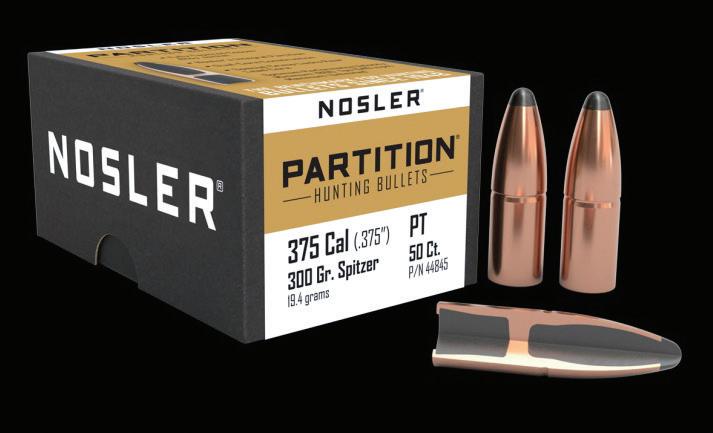
Premature bullet breakup (failure to penetrate) was the impetus of John Nosler’s famous Partition bullet; the front core expands and the rear core remains intact for excellent penetration. (NOSLER)
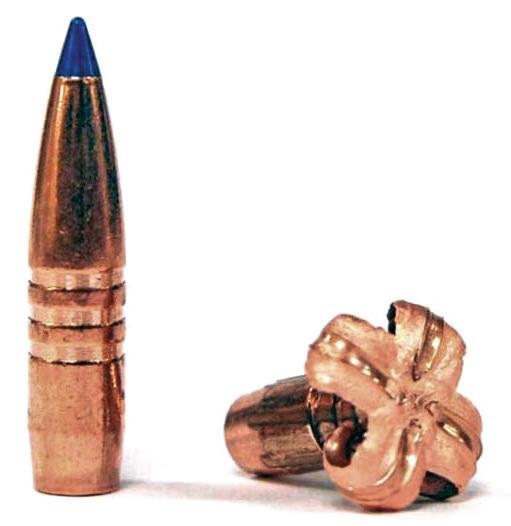
This Barnes LRX bullet shows the classic “X” pattern of the expanded monometal projectiles; the weight retention will be high as well. Some early models from Barnes failed to expand reliably. (BARNES BULLETS)
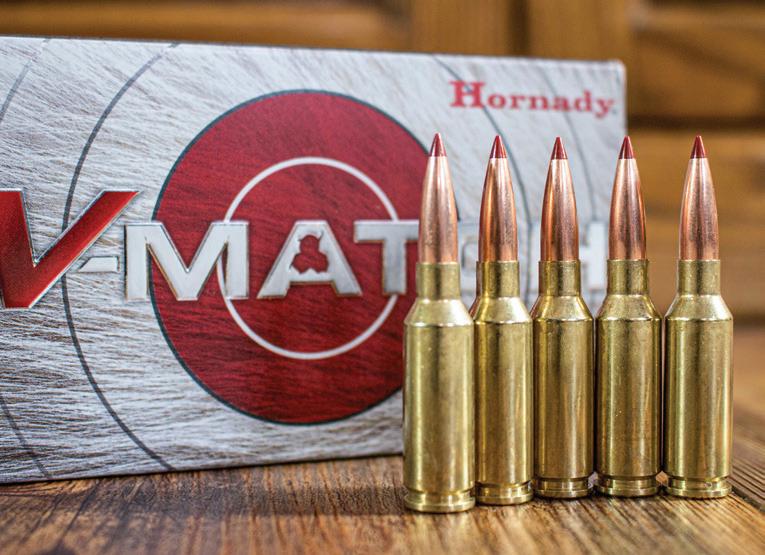
Hornady’s V-Match line features the ELD-V varmint bullets, purposely made to be more frangible for the smaller varmint species. Their use on big game is not recommended.
BULLET BULLETIN
In both of those instances, the bullet absolutely failed. I had a strange occurrence with my .308 Winchester with a Sierra 165-grain hollowpoint GameKing bullet – a tough cup-andcore perfectly suited for whitetails –when the bullet hit a small branch and blew up on the shoulder of the deer. I tracked that deer for nearly a half-mile before dispatching him; he’d have died, but if it weren’t for a diligent tracking job, I’d never have recovered him.
REGARDING WEIGHT RETENTION,
many premium bullets will retain over 90 percent of their original weight, if recovered. That is great, as it is an indication of structural integrity. But it is not a necessary ingredient of desired terminal ballistics. The Nosler Partition often sees disparaging remarks, as the front core of the bullet tends to “wipe off” during the terminal phase. But remember, the only reason we know this is because the bullet is recovered from the dead animal being hunted, and that means the Partition did its job.
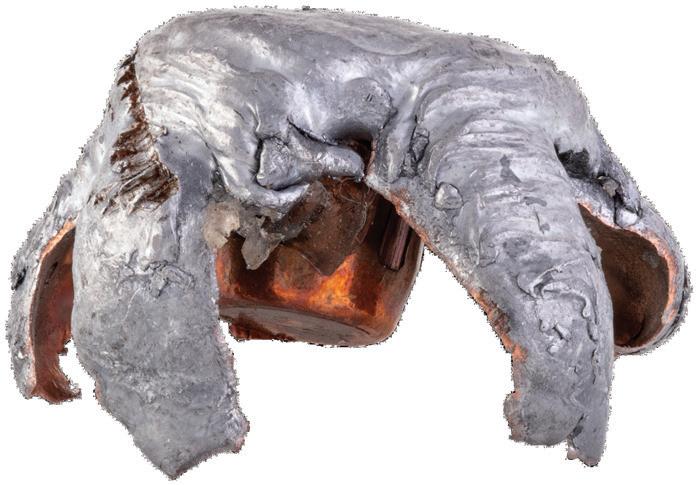
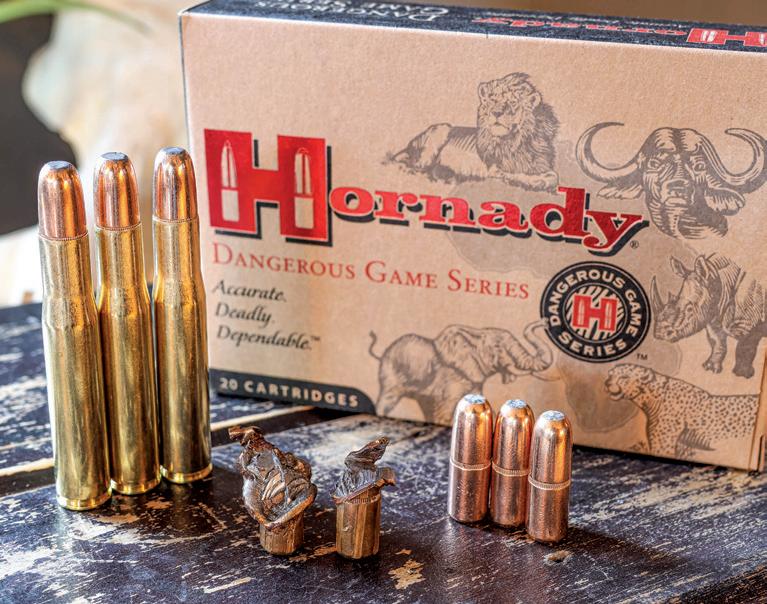
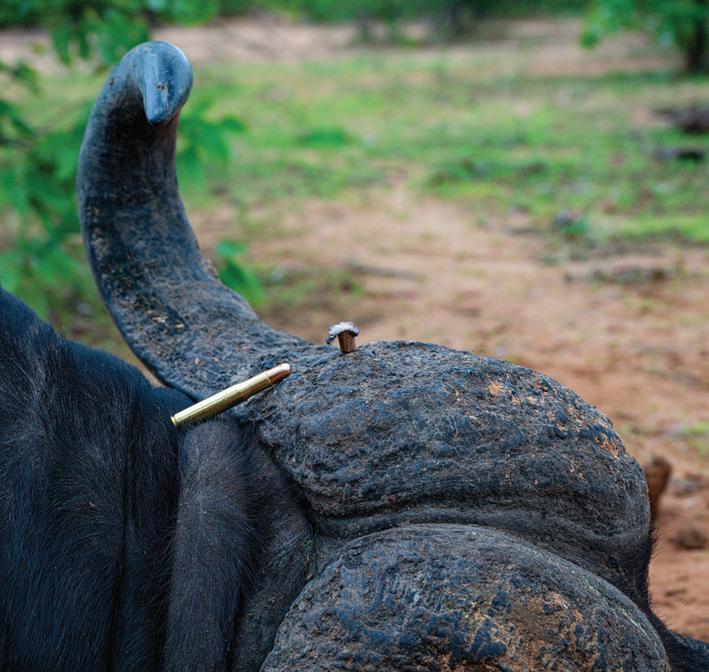
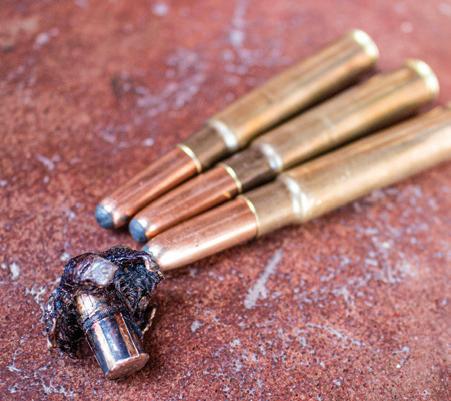
I was using the Hornady 400-grain DGX Bonded bullet, neatly taking a bull and cow buffalo, both at over 100 yards. Both animals received a second “insurance” shot (you don’t play around with Cape buffalo) and we recovered one bullet from each animal, so I cannot say which shot was recovered, but I’d wager it was the initial shots. The recovered projectiles weighed 273 and 285 grains, with expansion at .68 inch and .79 inch from the original diameter of .423 inch, found balled up against the offside
I recently took a Griffin & Howe Criterion rifle, chambered in .404 Jeffery, to Zimbabwe for Cape buffalo.
This Hornady DGX Bonded was recovered from the offside skin of this Cape buffalo bull. Retaining roughly 70 percent of its original weight, this performance is more than acceptable. (MIKE HEFFERMAN OF GRIFFIN & HOWE)
The Hornady DGX Bonded in loaded form, component bullets and a pair of recovered bullets from Cape buffalo. Hornady has this recipe dialed in right now, and this bullet is well respected by professional hunters.
This Woodleigh Weldcore penetrated the entire length of a kudu bull, entering just below the anus and stopping against the breast bone. This is perfect performance, and common to a bonded-core bullet.
BULLET BULLETIN
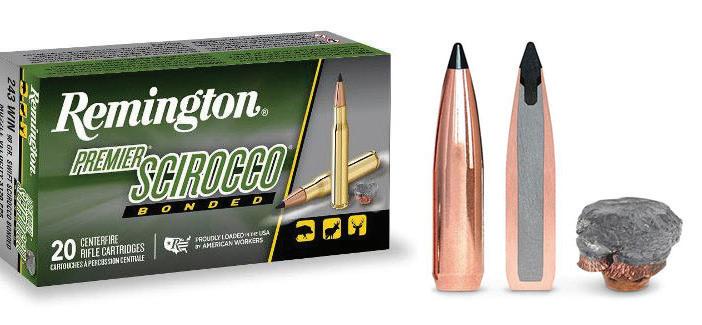
To combat the effects of high impact velocities, Swift’s Scirocco II sees the thick copper jacket chemically bonded to the lead core. It is one of the better big game bullets on the market. (REMINGTON)
hide. Now, I’ll be the first to admit that the original Hornady DGX softpoint was universally unliked – many PHs sent me reports of routine premature breakup – but by bonding the core, they have a great bullet.
Placing the bullet in the vitals is paramount. I’ve personally proven that a 400-grain .416-inch bullet in the wrong place is no more effective than a .243inch 100-grain bullet in the wrong place; you’ve got to place your shot properly, and there’s no arguing that point. But you can make bullet choices that will best help your cause. Looking at bullet weight, I like to keep the sectional density above .24 or .25 for most of the thin-skinned big game species and above .30 for dangerous game. If you are
using copper monometal bullets, you might be OK dipping a bit below those values, but I’ve had my best results with those numbers.
Regarding our cartridge choices, the established minimums of the first half of the 20th century truly need a revisit due to the vast improvements in bullet technology. There were folks who felt –sometimes rightfully so – that the .270 Winchester was a marginal cartridge for a bull elk, and had no problem putting that in writing. Load that .270 with a 130-grain Peters cup-and-core bullet, as it was in the 1930s and ’40s, and that point may be valid. Load it with a Federal Trophy Bonded Tip, Barnes TTSX or Swift Scirocco II and you’ve got a whole different scene; that
Here is a Woodleigh Weldcore – 500 grains, delivered from a .458 Lott – recovered from a Cape buffalo cow, against the offside skin. This is an example of textbook performance, with both good expansion and high weight retention. If only all shots on buffalo could look like this.
combination makes a good elk gun. A half-century ago, bringing the .375 H&H Magnum for Cape buffalo would probably see your PH asking you to use solid, nonexpanding 300-grain bullets to guarantee penetration, as the cup-and-core softpoints were marginal. Now, I’m usually asked to leave any solids in camp, or reserve them for elephant, as our premium expanding bullets – even as light as the 270-grain Barnes TSX – get the job done reliably. We have the best projectiles available to us in the history of shooting. Read the reviews, garner some real experience and judge it all with an honest eye. If you choose a proper projectile, and (most importantly) place it where it belongs, you’ll be a happy hunter. ★
This 300-grain .375-caliber bullet is a Norma Oryx, which sees the rear portion of the bullet bonded, allowing the front portion to give the desired expansion. This design works very well on a wide variety of game animals.
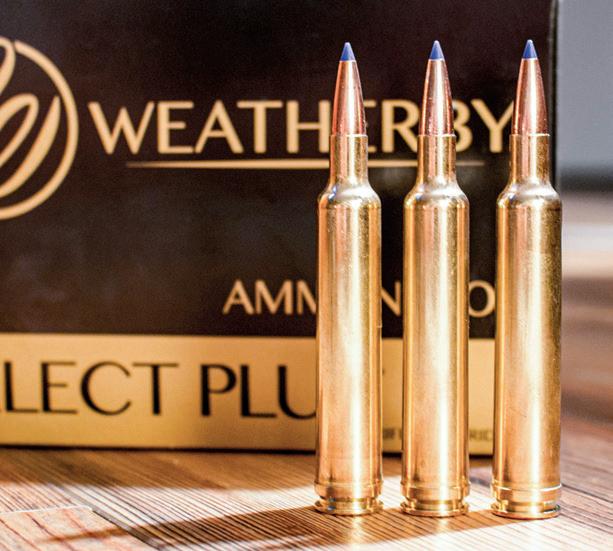
The truly big, fast cartridges – like the 6.5-300 Weatherby Magnum shown here – demand a premium projectile, or you’re asking for bullet failure.
ROAD HUNTER
3 TIPS FOR TAGGING A WESTERN TOM
Distilling decades of spring turkey hunting wisdom.
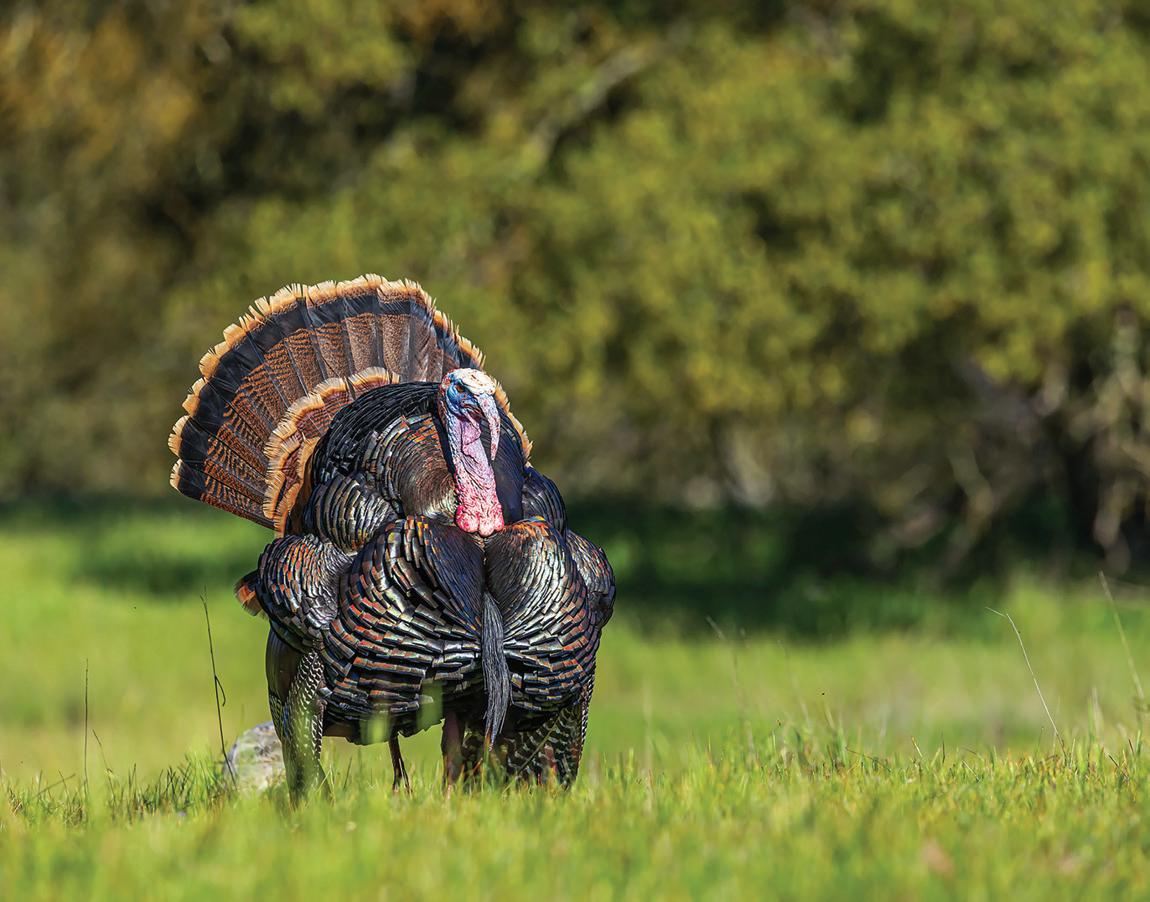
This spring marks my 40th season of turkey hunting across the West. The following three tips have played a big part in my continued success over the decades.
SCOUTING
If serious about taking your turkey hunting skills to the next level, it begins with scouting. I do it year-round for turkeys. Once you begin to understand the population dynamics of turkeys in your area, your eyes are opened to what impacts their daily lives.
Physically scouting twice a week is ideal, but that’s a big time commitment. This is where trail cameras come into play. In the weeks prior to turkey season I’ll have over 125 trail cameras set in three states, all targeting turkeys.
I use Moultrie cellular trail cameras where there’s coverage, and Stealth Cam DS4K Ultimate trail cameras where cell coverage is lacking. All are set on video mode to the longest play length option. Trail camera videos reveal sights and sounds still photos can’t capture. What I’ve learned through studying countless hours of trail camera videos over the decades has greatly opened my eyes to turkey behavior and how to hunt them more wisely.
As the season nears, increase the number of cellular trail cameras you run. This keeps you from having to regularly enter the woods and risk spooking turkeys.
Out West, open ground is a luxury. Scouting is done from afar with binoculars and a quality spotting scope. The goal isn’t to get close to turkeys, but to observe them from a distance. Come season, the more toms you have located, the more options you’ll have.
STORY AND PHOTOS BY SCOTT HAUGEN
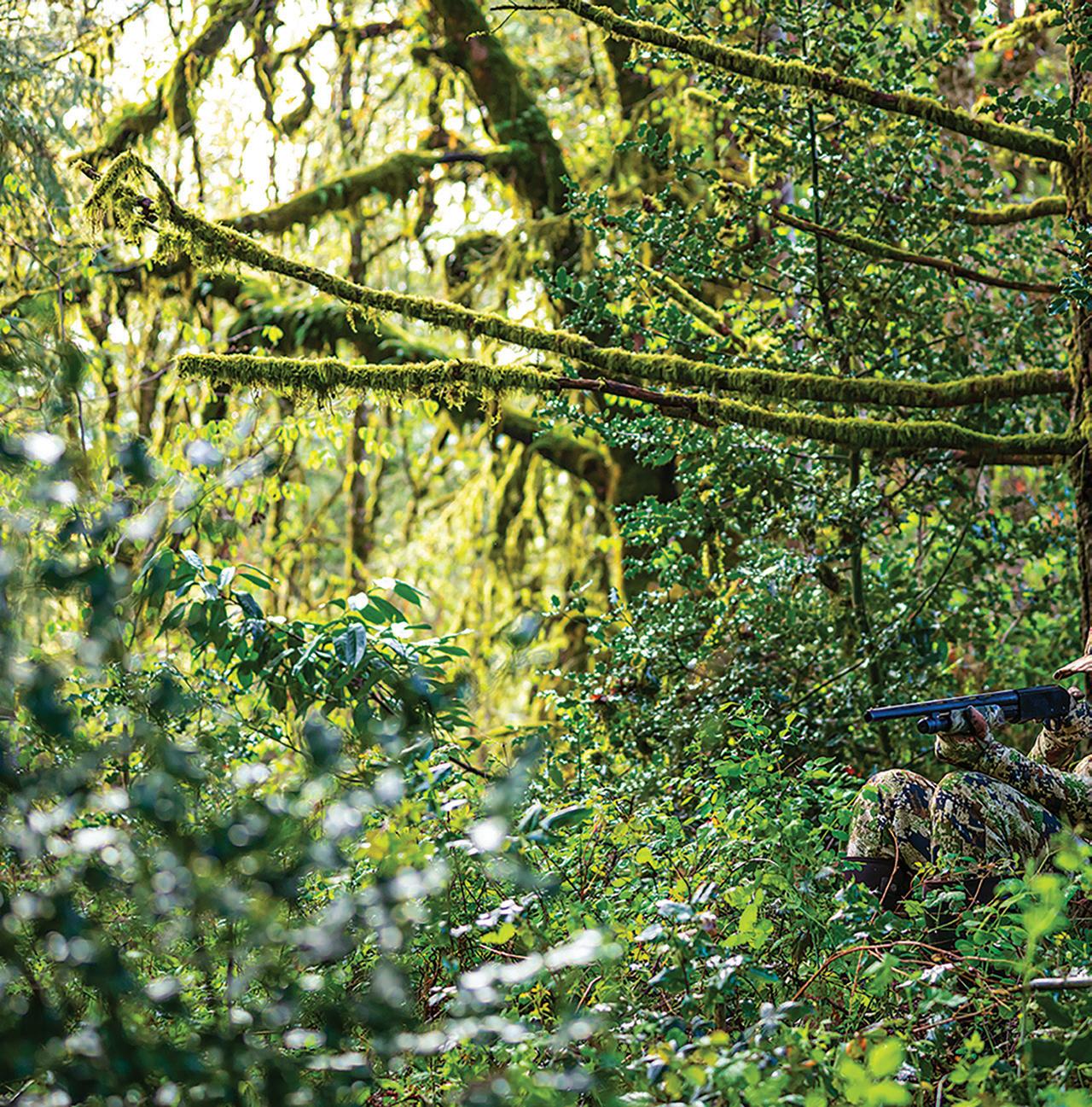
Not all of the West’s turkey habitat is wide open. Scouting reveals where turkeys are and how to best hunt them.
ROAD HUNTER
STAY AFIELD
If you don’t kill a tom first thing in the morning, keep hunting. Move slow and scout as you go. Look for tracks, turkey feathers and droppings of both toms and hens. A tom’s droppings are J-shaped; a hen’s are coiled up. The fringes of a tom’s breast feathers are black; a hen’s buff-colored. The track of a mature tom will measure up to 5 inches from the back toe to the tip of the longest, middle toe. A hen’s track will be about 4 inches and slender compared to a tom’s. Many turkeys utilize deer and elk trails and travel
May is prime time for turkey hunting the West. The better prepared you are, the greater the odds of success.
Moultrie cellular trail cameras are author Scott Haugen’s go-to transmitting cameras and have helped him learn a great deal about turkeys. He has them set in three states.
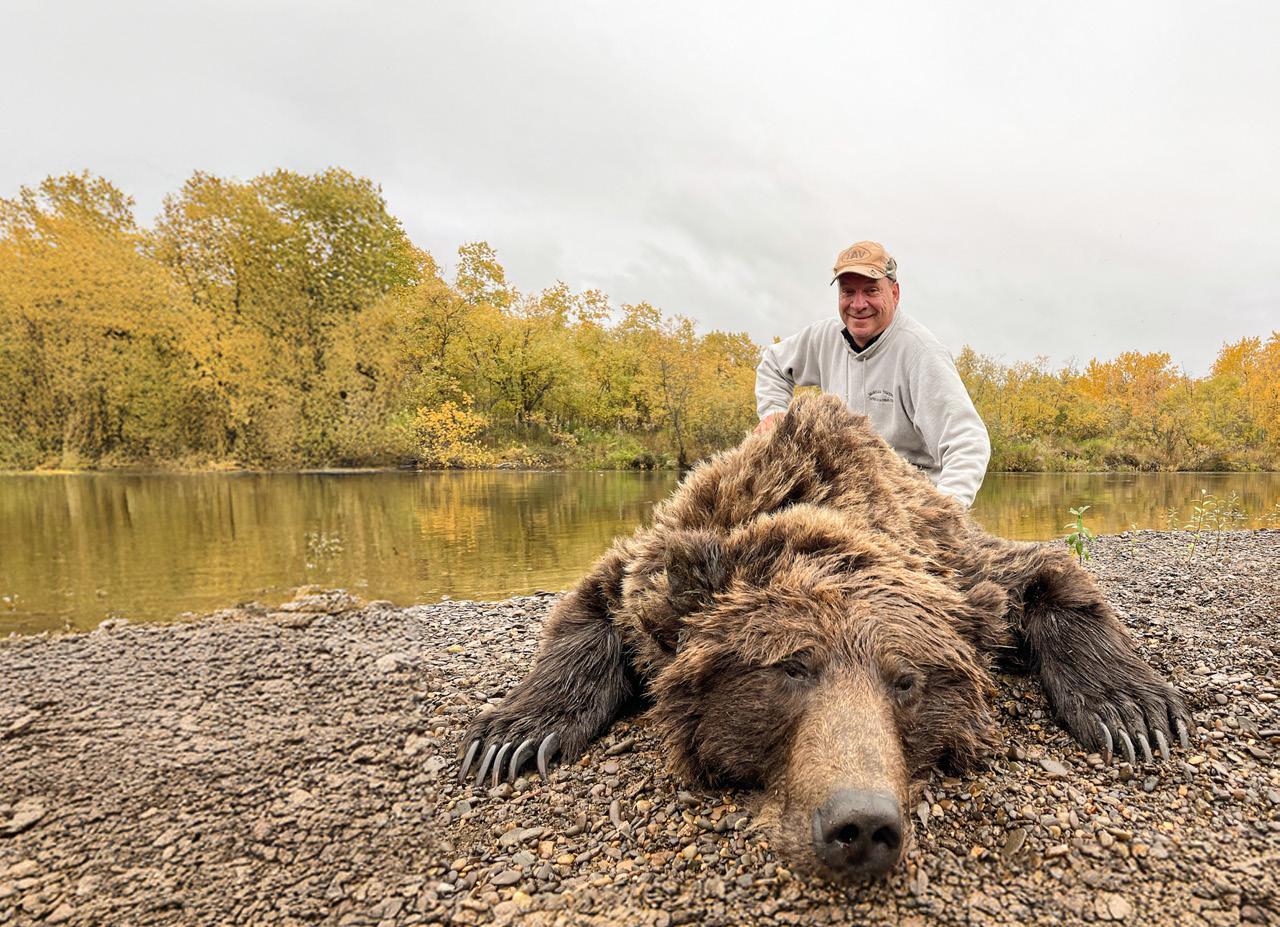
TROPHY MOOSE & BEAR HUNTING
River
MORE THAN A HUNT
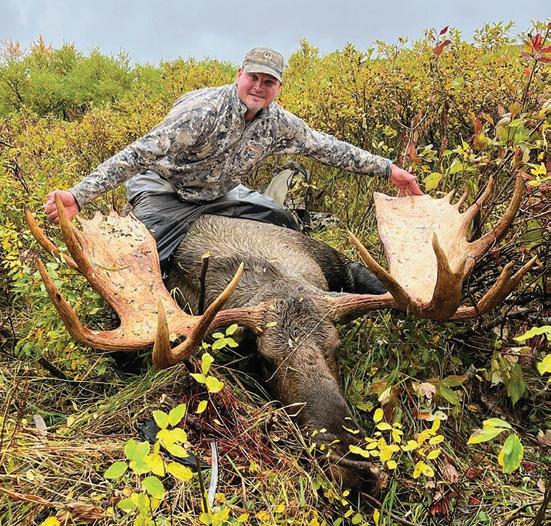
This is an unforgettable Alaskan adventure that blends raw wilderness, world-class game, and the thrill of pursuing some of North America’s most iconic animals in their natural environment. Long days on the river. Close encounters. The kind of moments you’ll talk about for the rest of your life.
WHY HUNT WITH US
• Trophy moose & bear hunts in prime river systems
• Regular 60”+ bull moose opportunities
• Near-100% opportunity rate on legal bulls
• High success on large Alaskan bears
• Fully guided & all-inclusive hunts
• Expert guides with deep local knowledge
• Carefully selected locations for consistent results
• 11–15 day hunts with 15-day combo moose & bear hunt available
Every hunt is carefully planned and professionally guided from start to finish. From scouting and calling to field care and logistics, your guide handles every detail so you can stay focused on the hunt.
Contact us today to secure your hunt and discuss available dates.
along creeks and logging roads. Search these areas for fresh sign. Bring binoculars for midday scouting sessions. Often you can glass across open canyons and down into sparsely wooded valleys. As with big game, the key to turkey hunting the West comes down to covering ground with your eyes, not your feet.
If the day is cold and cloudy, when the sun breaks out, try calling to fire up some toms. Even if the window is only a minute or two long, that’s all it takes to
elicit a gobble and plan your next move. If it’s cold, windy and raining, toms might not leave the roost until midmorning, not even to follow a hen. Two seasons ago I hunted on a very cold, rainy day. Toms remained in the trees until nearly 10 a.m. Don’t push birds like these; instead, just wait for the window when they become active. It will come, but it can take a while. Stay patient and focused.
If I bump a tom when hunting in the timber and it sees me, I’ll wait three
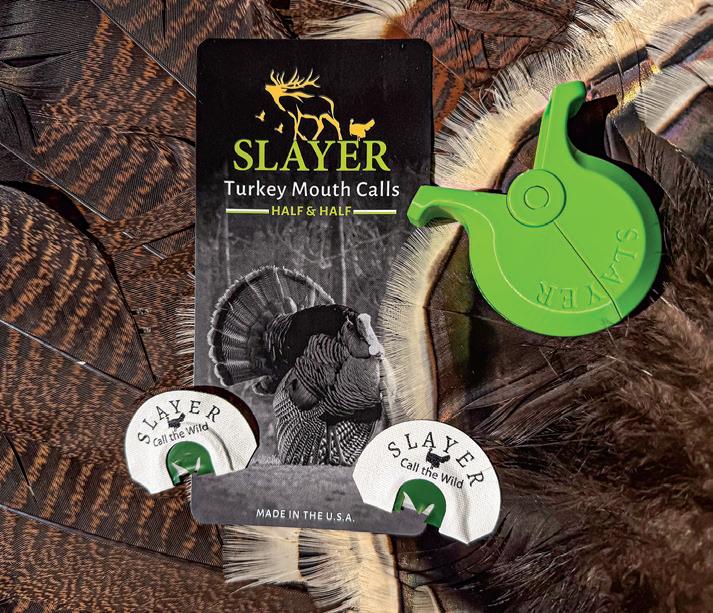
Slayer Calls’ new Half & Half dualfunction reed call allows turkey hunters to vary between softer and raspier sounds.
SLAYER HALF & HALF DIAPHRAGM CALL
I’ve been a fan of diaphragm calls for decades, and Slayer Calls’ new Half & Half is ingenious. It’s two diaphragm calls in one. Channel air to the right side of the reed and you get soft, sharp yelps, purrs and clucks. Channel air to the left side and you get exceptional raspy sounds that are great for bringing in toms as well as lead hens, which toms often follow.
For me, the best way to operate the dual-function diaphragm call is by curling my tongue and pressing the left edge against the left-center of the reeds to get air flowing along the right side, producing high, crisp, soft notes. To get the raspy, loud, rough sounds, put the right edge of your tongue against the right-center of the reed. Center the call and you’ll achieve even more uniquely raspy sounds. The right side requires very little air and reed pressure. The left side can really get to ripping if you press hard with the tongue and force the air, which is great for penetrating the woods and getting sounds to carry long distances. Visit slayercalls.com for more.
days before hunting it again. If a tom busts me in an open meadow or field, I’ll hunt that bird the next day if I have no other options. If a tom spooks and I’m certain I’m not the reason, I’ll try getting back on it within two to three hours. Remember, a turkey’s eyesight is equivalent to about 8x binoculars and they see in color. Hunt and move wisely.
During one early-season turkey hunt with my wife, we were out all day. It was cold, raining and gusting in excess of 25 miles per hour. We spooked two toms early in the morning. They never saw us, just the two decoys they didn’t like. At 5:30 p.m. we finally found those toms. That was the first time the rain let up and the dark skies cleared away. We set up on the edge of some timber with no decoys, called in both birds and doubled. It was a long day, but worth it.
As the season progresses, hens are sitting on nests or tending broods. Grasses have come to a head and insects prevail. The last two weeks of turkey hunting the West can be exceptional, as toms begin to slip into bachelor mode.
Because toms often fly from their late spring roost directly into tall, grassy meadows, hunting them can be hard in the morning. They have all the food, shade and moisture they need. However, late in the afternoon or early in the evening, toms get antsy. They’ll start working their way towards the roost, and sometimes it can take them two hours or more to reach it. This is the perfect chance to intercept toms on the move.
Scouting will reveal the number of toms, the trails they’re using and what time they’re moving. Setting up along these trails can be very effective.
If the habitat is open, a lone hen decoy can help bring in a late-season tom. If multiple toms are moving together – some toms are already forming fall bachelor flocks – setting up a jake and hen decoy, or even a strutting tom decoy, can bring toms in on the run.
If cover is thick and toms won’t see you until they pop into shooting range, go without a decoy. Call light and
ROAD HUNTER
sparingly. Often these toms heading to roost won’t answer a call, but they’ll slowly move toward it. Going without a decoy eliminates the element of surprise, which I’ve had spook wary toms. The absence of a decoy also keeps them looking for the calling hen, increasing shot opportunities.
EXPAND YOUR CALLING REPERTOIRE
Years ago I’d take a paper map when scouting and hunting turkeys and plot tom locations. Today, I rely on onX to help me mark bird locations and keep track of trail cameras. When hunting a
new place, even if you’ll only be there a few days, take some trail cameras along. The more you can learn about an area, and the more birds you can find, the more likely you are to return to hunt it in the following years.
Western terrain is vast and the distance between toms can be far. Sometimes you can only hunt one or two places a day. When this happens, go in prepared. Take a range of calls, plenty of water and food, as well as your binoculars, and hunt all day.
I can’t begin to count the number of toms I’ve played cat and mouse with
over the decades. It usually happens in places where tom numbers are low, or in new areas I’m unfamiliar with. I don’t want to leave a bird that’s talking but reluctant to come in, with the hopes of possibly finding another tom somewhere else. Staying with a tom and offering a range of calls can be the key to bringing it in, but this can take time.
When covering ground on any given day, you’ll find in my turkey vest two box calls, three slate calls and over a dozen strikers. There will also be more than 20 diaphragm calls.
One box call has a solid boat and allows delicate sounds to be made. The other is large, letting me all but shave splinters in an effort to call loudly and aggressively in order to get a distant gobble.
As for the slates, one is glass, one aluminum, the other pure Pennsylvania slate. With a dozen strikers, that equates to 36 unique sounds that can be made with these slates, because each striker on each surface creates a unique sound.
A complete call selection can result in a wide range of sounds, and full days afield can be all about sticking with a tom until you find a sound it likes. If you get a tom gobbling but it’s not coming in, you might go through a dozen sound options before finally getting it to commit. I’ve stuck with toms for two to three hours, and have shot a surprising number between 10 a.m. and 3 p.m. Don’t give up, for as long as you’re on a tom, there’s a chance of filling a tag.
This turkey season, let the birds and the vast Western habitat determine what approach you should take. Dedicate yourself to scouting, being afield all day and not being in a rush. Even after 40 years of hunting turkeys I have a lot to learn, and therein lies the addiction to these grand birds. ★
Editor’s note: For signed copies of Scott Haugen’s bestselling book, Western Turkey Hunting: Strategies For All Levels, visit scotthaugen.com. Follow his adventures on Instagram and Facebook.
This spring marks Haugen’s 40th season of turkey hunting. He’s seen a great deal but will be the first to tell you that there’s still a lot to learn.
TRACKING DOWN THE WORST OF THE WORST
What it’s like to be part of a street crimes detective team.
There are more types of cops than there are ice cream flavors at Baskin-Robbins. Most of us are familiar with the ones who roll around in “black and whites” (patrol cars), handling calls for service and keeping the public safe. If you have a lead foot and a tendency to drive a little too fast, you may have had an encounter with a
traffic officer or a state trooper. Every department has detectives to conduct follow-up and build cases. These are all parts of the elaborate tapestry that make up the personnel of most city police or county sheriff’s departments. But there is a lesser-known element that some organizations have. They go after the more experienced, more devious, more violent offenders. Their targets are gang members, drug dealers, pimps and other miscreants who are varsity-level crooks. Such
criminals are the worst of the worst, targeting victims with little or no regard for human life. They are selfish and impulsive, having been involved in criminal behavior – and in and out of custody – most of their lives. They are generally the most experienced lawbreakers on the streets today.
To combat this, some departments have small, specialized teams that go after them. Some units are “crimespecific” like gang units and narcotics teams. Unfortunately, due to economic
STORY AND PHOTOS BY NICK PERNA
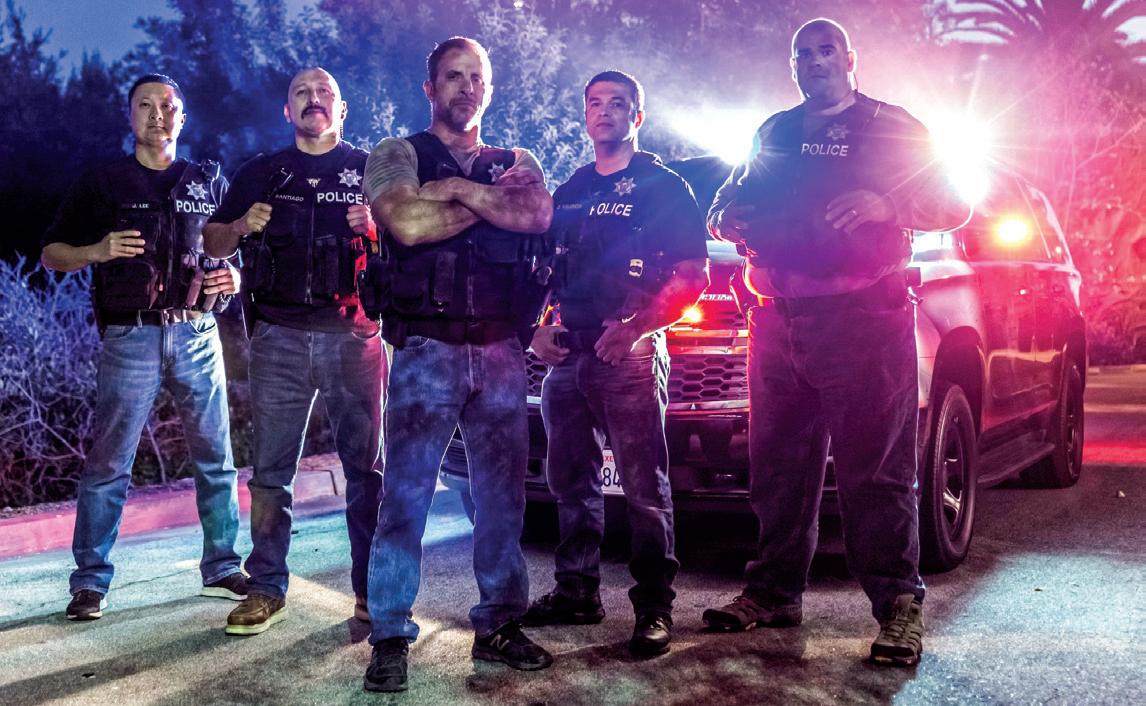
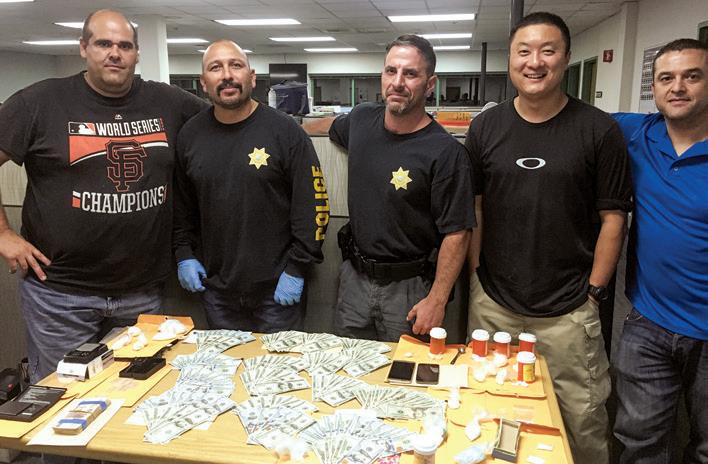
Author Nick Perna (center) was part of the Redwood City, California, Police Street Crimes Suppression Team, whose mission was hunting the apex predators of the underworld.
L.E. SPOTLIGHT
limitations and personnel shortages, these types of units are few and far between and there aren’t enough of them to meet the needs of the communities they serve.
THESE JACKS (AND jills) of all trades in the law enforcement community are known by various titles but they all generally fall into one category: street crimes detectives. Like their criminal counterparts, they are the varsity-level athletes of the organizations they work for. They are more experienced cops, having worked patrol, served as field
training officers and/or in tactical units like SWAT teams, and have “been there and done that.” In small departments, the “team” may be two cops rolling around in an unmarked car. In other organizations, they may have street crimes detectives working on different shifts and on different days of the week.
Regardless of the size of the unit, they have one thing in common: They are the hunters and their prey are the apex predators of the underworld.
You may have a team like that in your neighborhood, but you will probably
never know it. They don’t usually wear traditional police garb, and they don’t drive normal marked police cars or even the types of unmarked cars most folks are familiar with. They often work in the shadows, unknown to the criminal element, the general public and, in some cases, to the other officers who work the streets as well.
Their job is a difficult one, spending countless hours on the streets, contacting experienced criminals. They also spend an inordinate amount of time on surveillance in high crime areas. This type of work is hours and hours of tedium occasionally punctuated by adrenaline-pumping excitement and terror. But that’s only part of the story.
Street crimes detectives are subject matter experts in different types of organized crime. They spend as much time in the office as they do on the streets, authoring police reports and search warrants to go after criminal street gangs, narcotics traffickers and human trafficking violators.
The payoff for all of that work on the street and at their desks? Time in court, testifying as experts in their fields of endeavor. If you’ve had jury duty and seen what a headache that can be, multiply that feeling by 100 and you’ll get a feel for what it’s like to sit around waiting to testify, going up against criminal lawyers who are also experts in their fields, verbally attacking your investigation, expertise, training and so on. Invariably, your court dates land on your days off so you get to spend your free time getting verbally berated by ambulance chasers who try to make their criminal clients look like saints and, conversely, you appear like the bad guy.
I feel fortunate to say that I spent a good chunk of my law enforcement career as a member of a street crimes team, serving as a detective as well as supervisor of one. I can personally attest to how it feels to be a member of an elite unit designed to go after the most seasoned, experienced criminals. I can also testify to the effect it had on family life, constantly being on the streets or in court, getting phone calls at all hours of
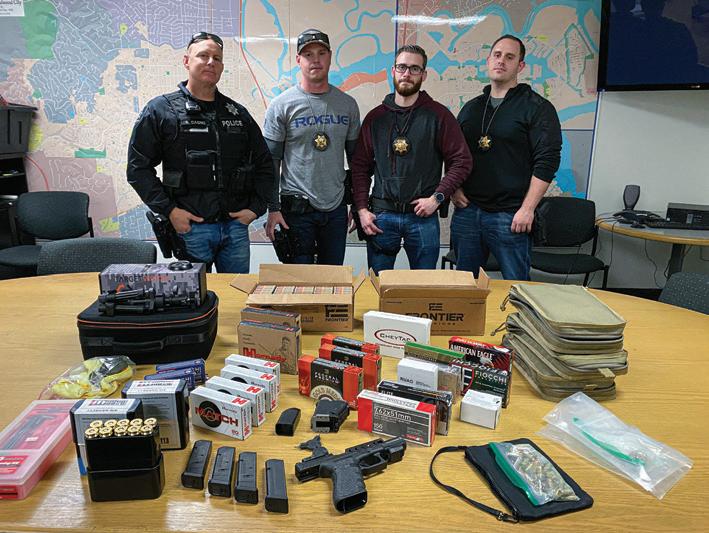
Street crimes detectives after drug and gun busts.
L.E. SPOTLIGHT
the night and routinely being called into work on your nights off to investigate a major violent crime. Along with that, the surreal experience of spending as much time interacting with criminals as your own family members, friends or other cops. All that time laying down with dogs, while trying not to get fleas.
So, to those shadowy undercover cops out there roaming the worst neighborhoods in your jurisdictions all hours of the night, my hat’s off to you.★
Editor’s note: Author Nick Perna served for more than 24 years with the Redwood City Police Department in Northern California before his 2025 retirement. He previously served as a paratrooper in the US Army and is a veteran of Operation Iraqi Freedom. He also has a master’s degree from the University of San Francisco. He is a frequent contributor to multiple print and online forums on topics related to law enforcement, firearms, tactics and veterans issues.
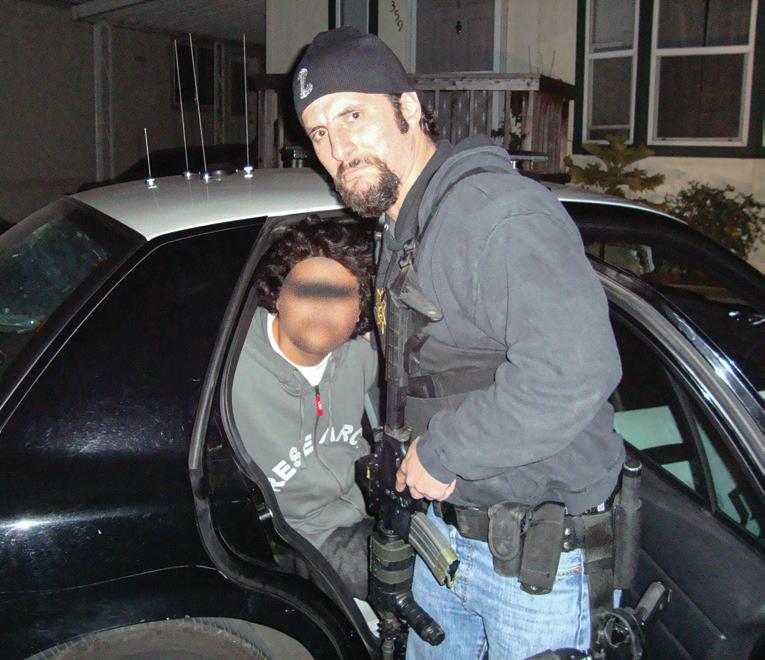
The author arresting an alleged gang member.
HANDSOME AND STURDY
AlumaGrips makes aesthetically pleasing, highly durable grips.
PHOTOS BY ALUMAGRIPS
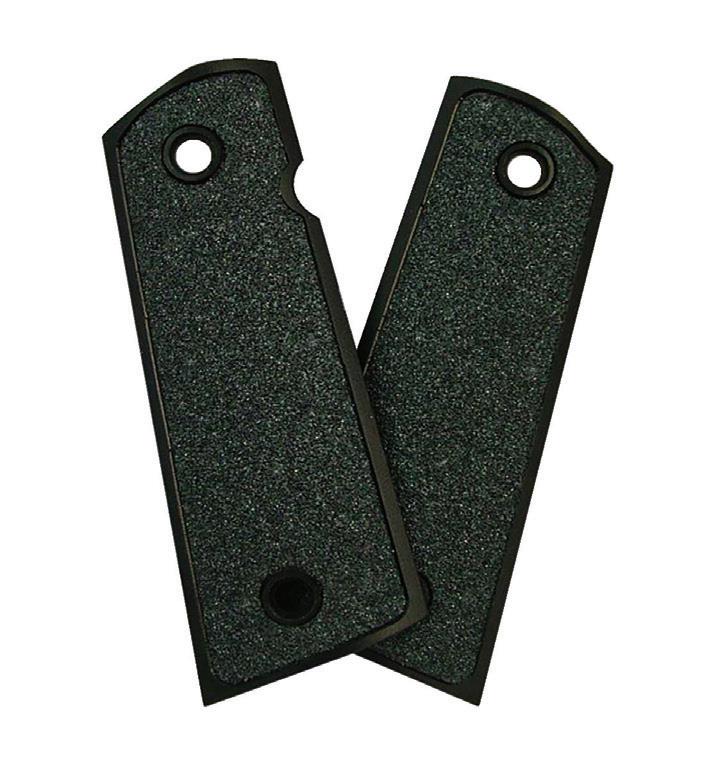
AlumaGrips started as an idea between Chris Lynch, owner of machine shop CJ Precision, and a few local Phoenix-area shooters to make 1911 grips out of aircraft-grade aluminum. More than two decades later, AlumaGrips’ product line consists of full-size, compact, bobtail and round butt grips, all in standard thickness and slim styles. But let’s go back to the early 2000s to see how the company grew from a “gripping” concept to a booming business.
“Our first attempt to introduce our product was at a local gun show,” recalls Lynch of the company’s early days. “Our display consisted of a three-ring binder with photos of the grips. Verbal reception was good so we rented a motorhome and headed south to attend a competition in Mississippi. Along the way we stopped at a local competition in southern Illinois where we actually met a very well known gentleman in the firearms industry, Richard Heinie. That meeting with Richard was our first custom order.”
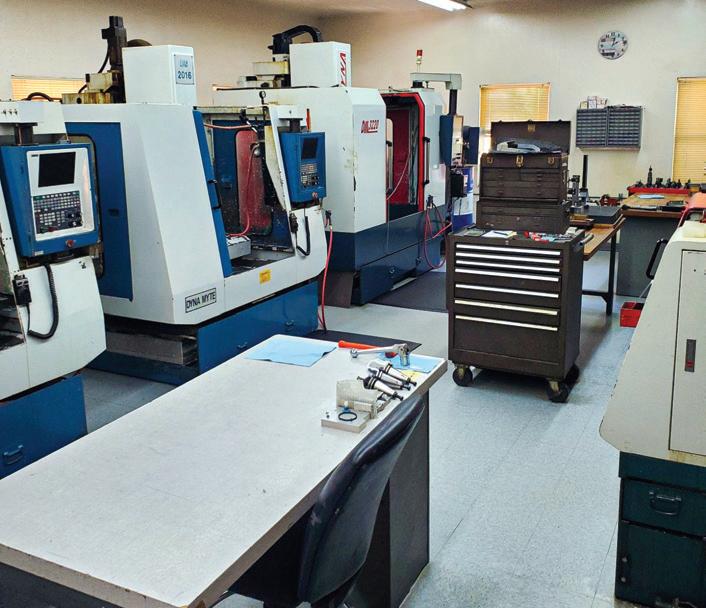
“After our return from the Midwest Three Gun in Mississippi, based on the reception we received we knew it was time to expand the idea of AlumaGrips,” continues Lynch. “Next was having a website developed and having our product sold on Amazon. All this while developing new programs for new styles of grips. At this point AlumaGrips was doing well enough to add two new CNC vertical machining centers. Over the past 20 years AlumaGrips has attended many gun shows, including seven years of displaying at the SHOT Show, to establish what AlumaGrips has become today.”
Displaying their products at gun shows around the country and bolstering their online presence has helped AlumaGrips reach as many potential customers as possible, says Lynch.
“Over the past 10 years or so, America has seen a major
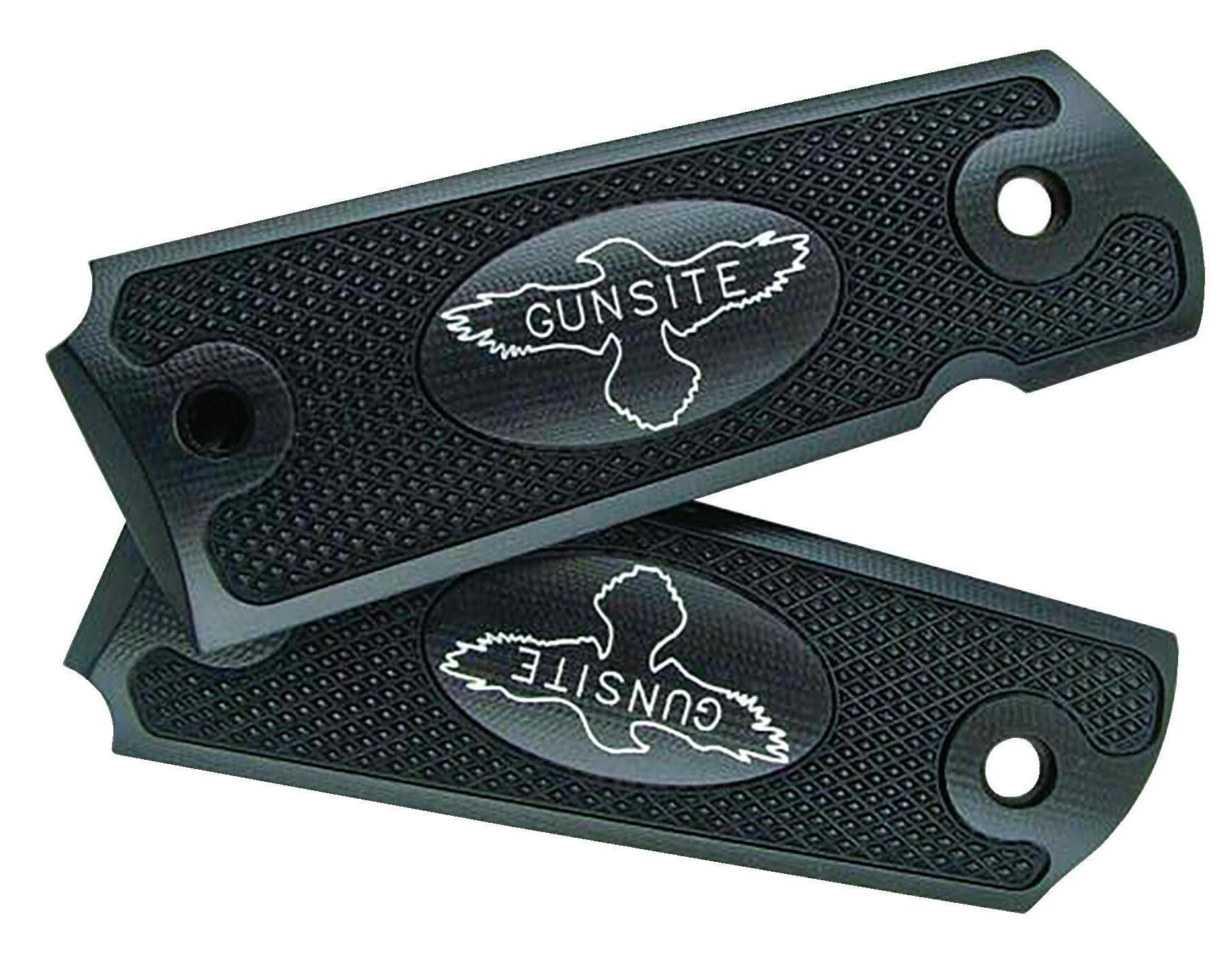
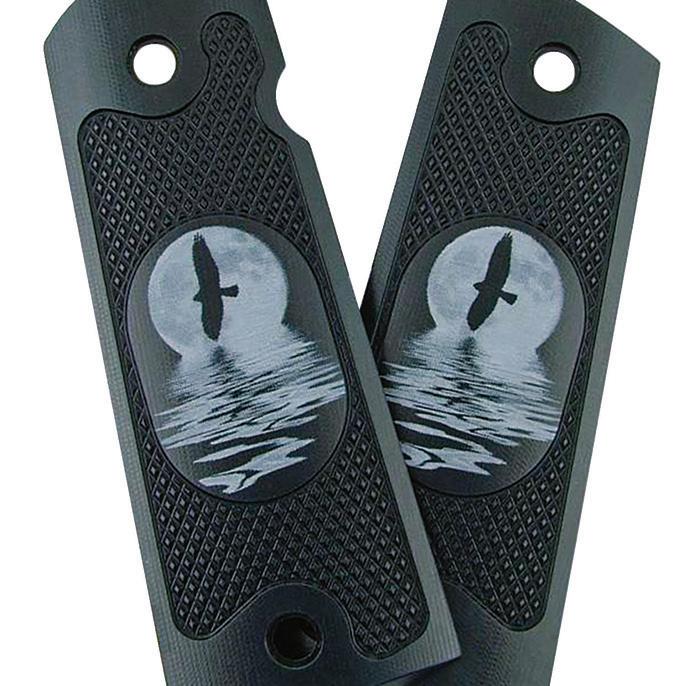
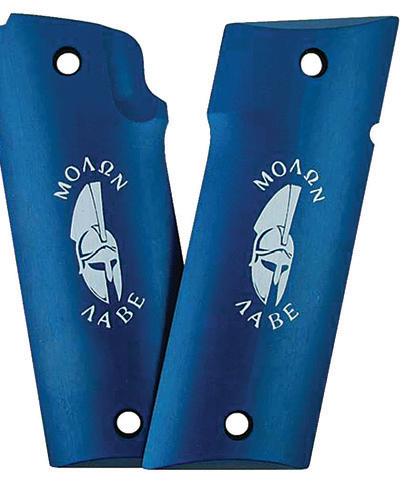
A few of AlumaGrips’ custom grips made from aircraft-grade aluminum.
COMPANY SPOTLIGHT
shift in people’s shopping habits,” he explains. “They have moved from a downtown or shopping mall trip, to a trip to their computer room or cell phone to complete their shopping. Big stores closing and shopping mall vacancies can attest to that, and if you want to succeed in today’s environment, one better embrace the internet and online selling.”
A broader reach has equaled
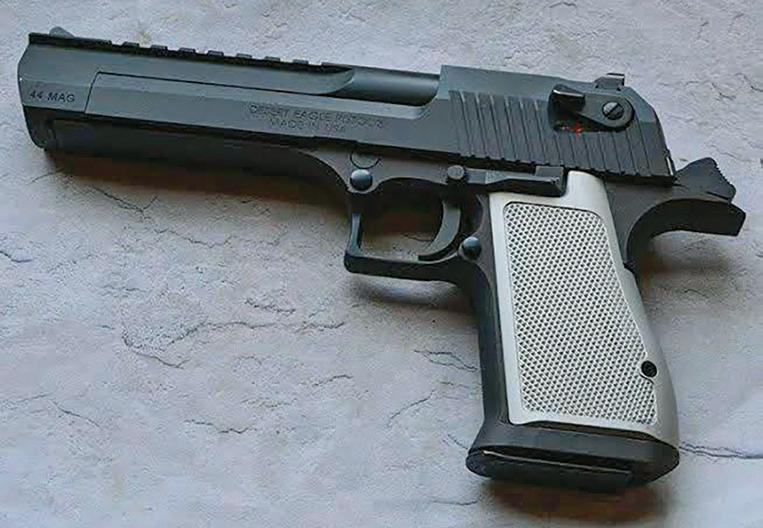
more customers for AlumaGrips, necessitating a diverse lineup of grips with options – such as checkering, custom colors, ambidextrous safety cuts and much more – to suit each and every shooter. Among the vast array of products are grips for the Ruger 22/45, Ruger SP101, EMP 3, Kimber Micro 9, Sig P238, Desert Eagle, Beretta 92 (full, compact and the full-size Vertec), Para Double Stack, Caspian High Cap and Coonan .357.
Each product is not only aesthetically pleasing but highly durable thanks to the high-grade aluminum they use – proof that the initial idea that Lynch thought up was indeed a successful one. Those 1911 enthusiasts interested in purchasing from AlumaGrips can simply visit alumagrips.com to view all the options available and make their dreams a reality. There is no minimum order in terms of dollar amount or quantity.
The company does offer dealer and distributor discounts, however. The minimum buy-in for dealers is 10 sets with a reorder of three sets to get a 30 percent discount from the retail price. The minimum buy-in for distributors is 25 sets with a reorder of 10 sets to get a 45 percent discount. Contact 602-2942390 for more information. ★
AlumaGrips’ CNC vertical machining center.
The company offers a diverse lineup of grips for a variety of firearms with options such as checkering, custom colors and ambidextrous safety cuts.
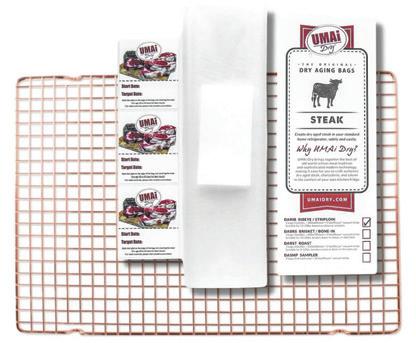
Start your dry age now and be ready for Father’s Day!
Learn
Father’s Day isn’t as far away as you think. The perfect dry-aged steak takes time. Time to deepen flavor, time to tenderize, and time to transform something great into something unforgettable. With UMAi Dry®, you can start today and serve something extraordinary when it matters most. Start aging now. Taste the difference later.
And while you’re planning ahead…
UMAi Dry® is the ultimate Father’s Day gift. For the dad who takes pride in doing it right—this is more than a gift. It’s an experience!
SMOKE, STEEL AND STAGECOACHES
The story of the Wells Fargo double-barreled shotgun, from practical weapon to cultural icon.
STORY BY PAUL PAWELA
While much fanfare has been given to the Winchester Model 1873 as the gun that won the Wild West, some would say the single-action Colt Peacemaker actually did. There are good arguments for both weapon systems.
However, in the Old West, the doublebarreled shotgun, with barrels often cut down to 18 to 20 inches, was the most relied-upon
weapon. The most famous of these was the coach gun, also known as the Wells Fargo shotgun.
The American frontier, and the silhouette of a stagecoach cresting a dusty ridge, meant more than travel; it meant risk. And seated beside the driver, cradling a short, heavy shotgun, was the man whose job it was to meet that risk head-on.
WHEN WELLS FARGO launched its overland stagecoach operations in 1858, it wasn’t just moving passengers; it was hauling
gold, silver, cash and documents across thousands of miles of dangerous territory. Bandits quickly took notice.
To counter that threat, the company armed its guards, known as shotgun messengers, with a specific weapon: the short, double-barreled shotgun.
Why double barrels? The choice of a double-barreled shotgun wasn’t accidental. It reflected the realities of frontier combat:
Immediate stopping power: At close range, buckshot could halt a charging horse or attacker instantly.
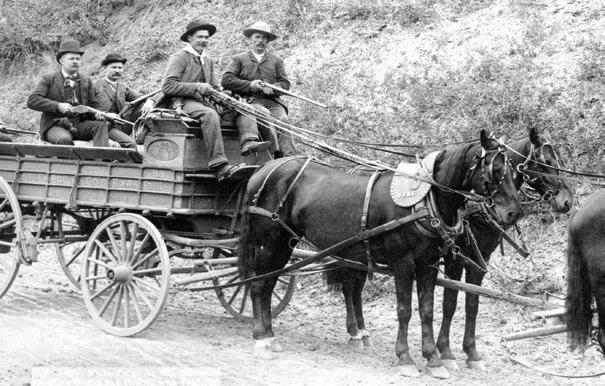
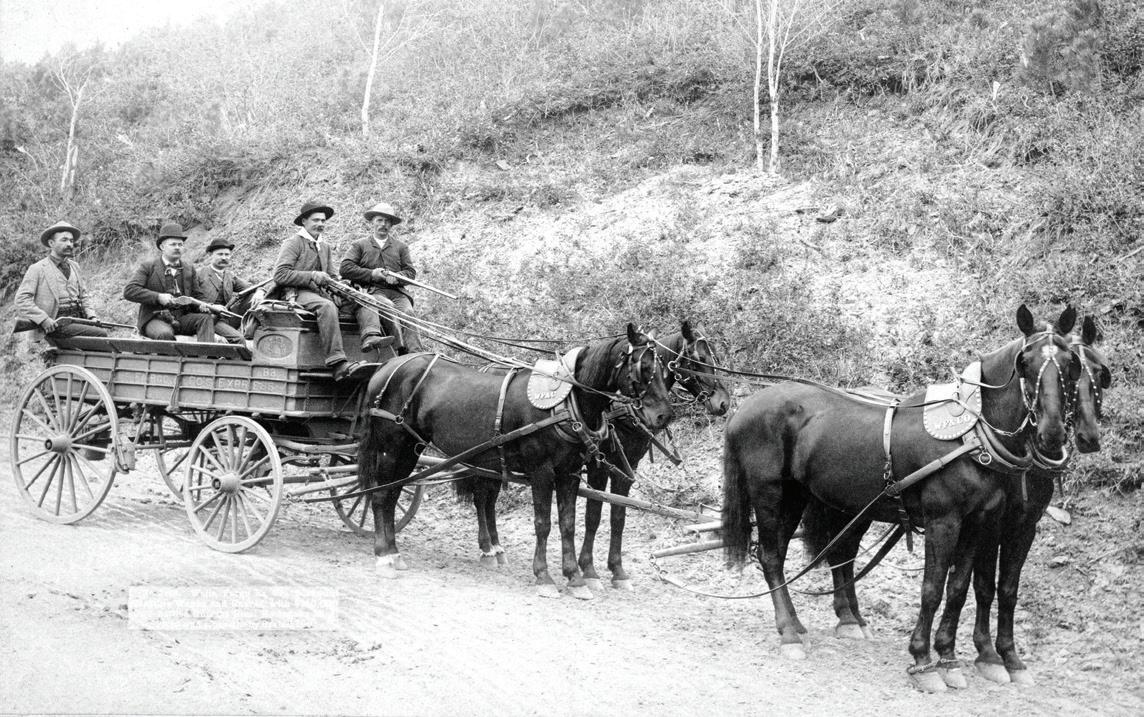
The Deadwood Treasure Wagon with four armed guards and carrying $250,000 in gold bullion from the Great Homestake Mine in Deadwood, South Dakota, in 1890. (ALAMY)
SELF-DEFENSE TRAINING
Simplicity: With two barrels and exposed hammers, the gun was reliable even in dust, rain or chaos.
Speed: Two quick shots without reloading could mean the difference between survival and disaster.
Unlike rifles, which required careful aim, and pistols, which lacked range and stopping power, the doublebarreled shotgun was ideal for use on a moving stagecoach under attack.
The enduring phrase “riding shotgun” comes directly from this practice. The armed guard sat beside the driver, weapon at the ready, scanning the horizon for ambushes. These men
weren’t symbolic figures; they were frontline security. Historical accounts describe them facing organized gangs, ambushes and deadly firefights. Their weapon, the double-barreled Wells Fargo shotgun, became synonymous with that role. One of the most persistent myths is that there was a single “official” Wells Fargo shotgun. Wells Fargo did not manufacture firearms. Guns were purchased from companies such as Remington, Colt, Ithaca and Parker. Many were customized or modified, often with shortened barrels for use in cramped coaches.
This means that “Wells Fargo
shotgun” is less a specific model and more a historical category, a working tool adapted to a dangerous job. Despite variations, most shared defining features: side-by-side double barrels, short barrel length (around 18 to 20 inches) for maneuverability, break-action loading system, exposed hammers requiring manual cocking and a wood stock, often stamped or marked (authentic or otherwise).
The shortened design made the weapon easy to handle in tight quarters, whether atop a stagecoach or in a sudden roadside ambush.
TODAY, AUTHENTIC WELLS Fargo shotguns are rare and often disputed. Because the company didn’t standardize its markings, many surviving guns stamped “W.F. & Co.” are difficult to verify. In fact, experts note that reproductions and altered antiques far outnumber confirmed originals.
This ambiguity has only added to their mystique. Each surviving example carries a question: Was this truly there, on the frontier, when it mattered?
Over time, the Wells Fargo doublebarreled shotgun evolved from a practical weapon into a cultural icon. It represents the lawlessness of the frontier and the rise of private security and logistics.
Hollywood cemented its legacy by frequently depicting stagecoach
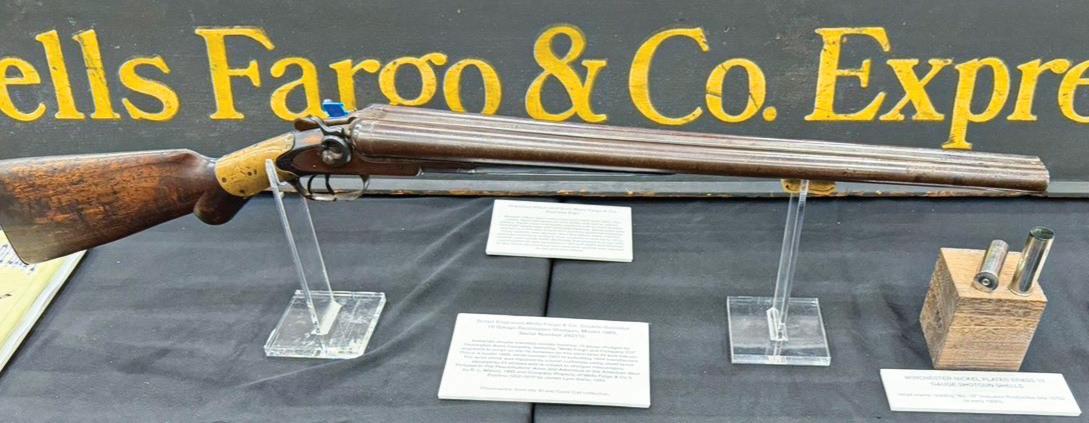
An authentic Wells Fargo shotgun on display at the NRA Convention. (PAUL PAWELA)
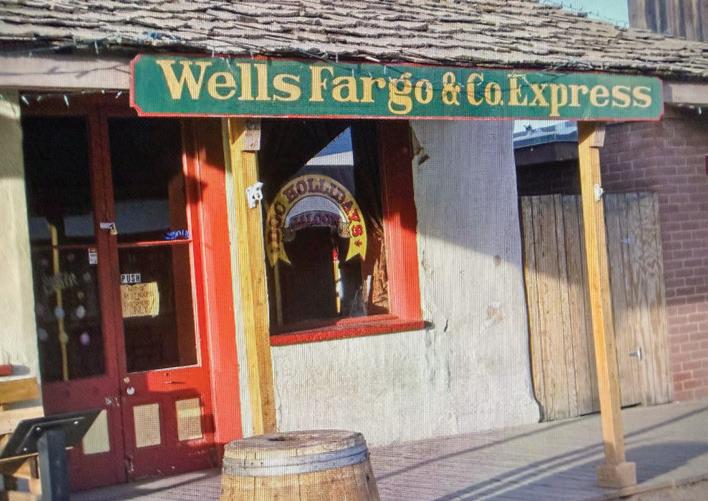
The Wells Fargo office where Virgil Earp got a 10-gauge shotgun before the famous Gunfight at the OK Corral. (PAUL PAWELA)
SELF-DEFENSE TRAINING
guards gripping short, double-barreled guns as dust clouds rose behind them.
Modern “coach guns” are still produced, largely unchanged in form, a testament to the design’s enduring practicality. But their meaning has shifted. What was once a tool for survival is now a symbol of a bygone era – an era of long roads, high stakes and the constant possibility of danger.
And at the center of that story sits the double-barreled Wells Fargo shotgun: simple, brutal and perfectly suited to the wild world it helped tame.
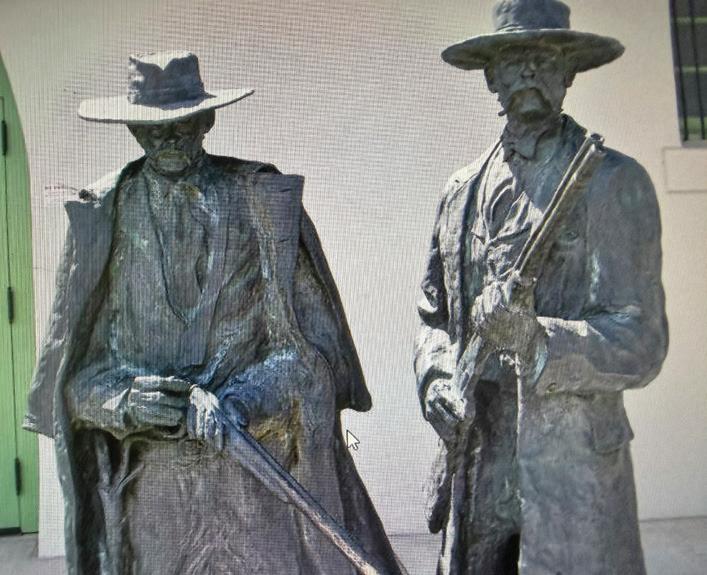
REFLECTING ON THE Old West’s most famous shootout, the Gunfight at the OK Corral, it is widely believed that it began with the click of a doublebarreled 10-gauge shotgun borrowed
from the local Wells Fargo office as it was made ready to fire by Doc Holliday.
As soon as the melee began between the lawmen – a group led by Wyatt Earp and which also included Holliday – and the outlaw gang known as the Cowboys, Holliday used his double-barreled shotgun on outlaw Tom McLaury. The shotgun blast caught him squarely under the right arm, and he died instantly. The
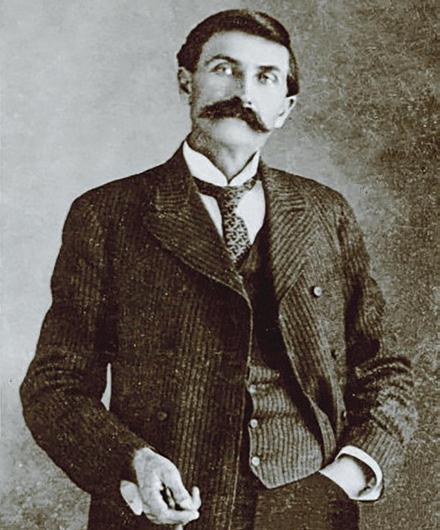
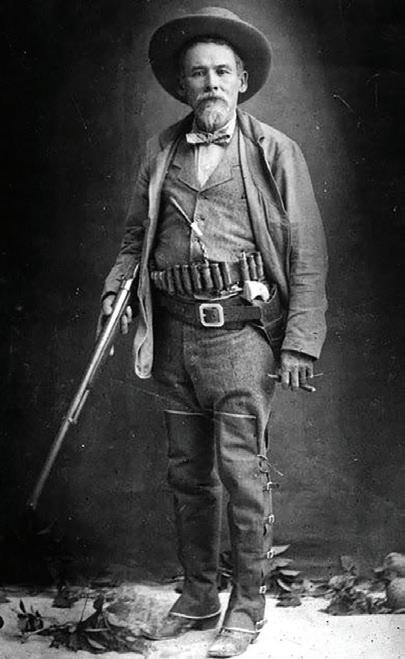
Sheriff Pat Garrett. (WIKIPEDIA)
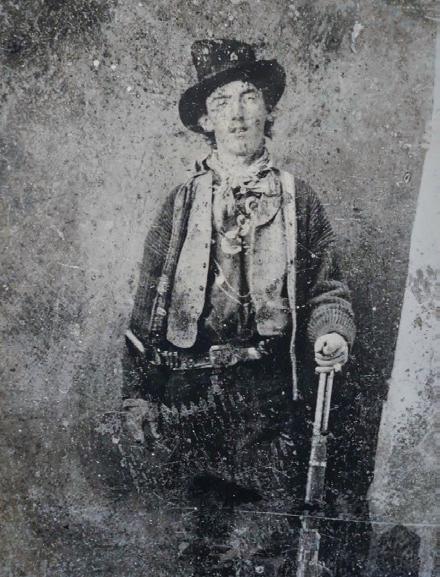
Billy the Kid. (WIKIPEDIA)
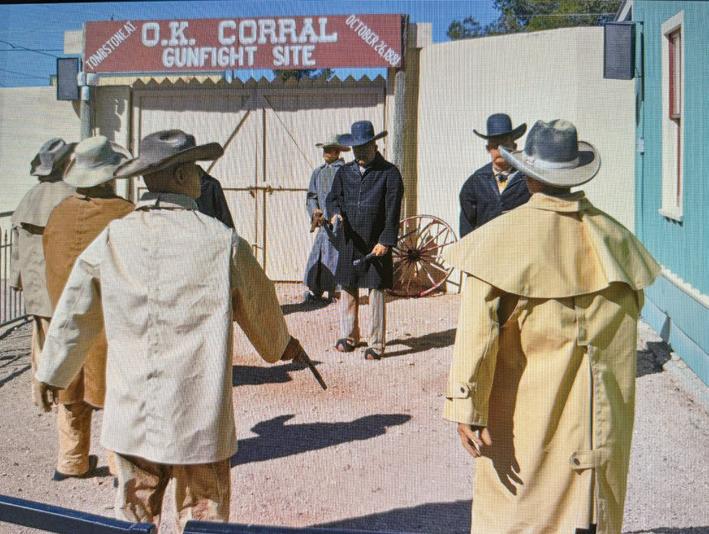
The actual spot where the most famous Western gunfight of all took place. It’s believed to have been started by the cocking of that borrowed shotgun. Note how close all the participants were. (PAUL PAWELA)
A memorial in Tucson, Arizona, marks where Wyatt Earp dispatched Frank Stilwell, who was suspected of assassinating his brother, Morgan Earp. (PAUL PAWELA)
SELF-DEFENSE TRAINING
10-gauge Wells Fargo shotgun was a force multiplier in that gunfight, for sure.
Perhaps the most famous use of the double-barreled shotgun came after Pat Garrett captured Billy the Kid and was ordered to hang him for some of the murders he had been charged with. Billy the Kid was held on the top floor of the Lincoln County Courthouse in New Mexico Territory. Deputy Sheriff Bob Olinger taunted Billy the Kid by constantly showing him his 10-gauge double-barreled shotgun, which held 18 buckshot in each barrel, saying, “The man who gets one of these loads will feel it.”
Billy the Kid’s response was, “I expect he will. Be careful, Bob, or you might shoot yourself accidentally.”
The rest of the story goes as follows: While Olinger was taking other prisoners to eat, Billy the Kid overpowered Deputy James Bell and shot and killed him. Olinger ran to the courthouse; upon seeing Bell’s body, he heard a voice say, “The Kid killed Bell.”
Looking up, he saw Billy the Kid, now in the possession of Bell’s own 10-gauge double-barreled shotgun. Billy the Kid said, “Hello, Bob.” Olinger’s last words were, “The Kid has killed me too.” And he did, letting Olinger have both barrels of 36 buckshot and killing him instantly.
Probably no one made the doublebarreled shotgun more famous in the Wild West than Sheriff John Horton Slaughter. Standing at 5 feet 6 inches tall, he was both feared and respected, often using a sawed-off shotgun he dubbed the “equalizer” to maintain law and order.
In the end, the legend isn’t just about the gun; it’s about the men who carried it, the roads they traveled, and the thin line they held between order and chaos.
And that’s my two cents! ★
Editor’s note: Author Paul Pawela is a nationally recognized firearms and self-defense expert. For his realistic self-defense training, see assaultcountertactics.com.
Texas Ranger Sheriff John Horton Slaughter. (SLAUGHTER RANCH MUSEUM)
BLACK POWDER
NEW BOOK ON SHARPS FIREARMS' VARIED WARES DIVES DEEP
Collector'sGuidean 'excellent
STORY BY MIKE NESBITT
harps Firearms, A Collector’s Guide is much more than just a follow-up to the previous books by Roy Marcot and his team about the famous Sharps firearms. This new book, prepared by members of the same team, isn’t a continuation because it treats the subject of Sharps firearms in a totally different way.
reference' for beloved mid-1800s gun manufacturer's many models.
sFrom the Sharps falling block rifles to the double-barreled shotguns and bolt-action rifles to the single-shot pistols and “pistol-rifles,” each model is covered very well. The Sharps & Hankins rifles and carbines are also included, as are the Robinson “Confederate Sharps Carbines.” Examples of each model are shown in a two-page rundown giving the variations, or general options, plus the calibers made, in addition to the approximate number of guns made.
One example is the Sharps New Model 1859 Sporting Rifle, which was made in .44 and . calibers, firing linen cartridges. Only 11 of those rifles are known.
There are 18 different versions of the Model 1874 identified in the book. Of those, my interest is mainly in the ’ “buffalo rifles.” Sharps never did identify any version of their ’
as a buffalo rifle, but two pages in this new book cover the possible buffalo rifles by indicating the features, such as barrel weight and the calibers, that the buffalo hunters preferred.
Staying with the Model 1874 for just a moment, excellent attention is given to the differences between the Hartford and Bridgeport versions, as well as how many of these rifles were made in each caliber. Another interesting list shows the estimated number of Model 1874 rifles made per year,
from 1871 through 1879.
Both the earlier and later Sharps rifles, military and civilian, are covered just as thoroughly, beginning with the Model of 1848, which was an 1841 Mississippi rifle converted into an under-lever breechloader, to the 12 versions of the Sharps Borchardt and the Lee bolt-actions. Within that wide spread, the Model of 1875 is shown as well, plus the varieties of the Model 1877. Sharps conversions are also mentioned, as are the linethrowing guns used from ships. Collector’s Guide covers the entire list of the Sharps breechloaders. Anyone, collector or just interested, will find this book to be an excellent reference to be visited with repetition to learn the ins and outs of Sharps firearms.
Hardcover, the retail price for this book is $60. Orders can be sent to Roy Marcot, 4680 W Placita Casa Sevilla, Marana, AZ 85658. Make checks out to Northwoods Heritage Press and please add $5 for shipping. If you have any questions regarding an order, contact roymarcot@msn .com. ★
The cover of Sharps Firearms, A Collector’s Guide by Roy Marcot, Ron Paxton and Edward W. Marron, Jr. (NORTHWOODS HERITAGE PRESS)
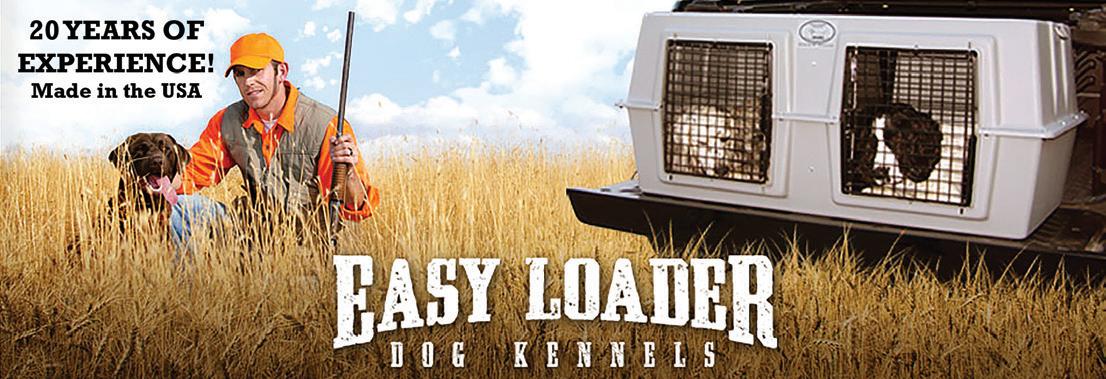
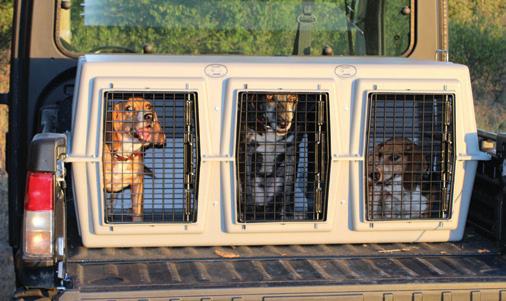
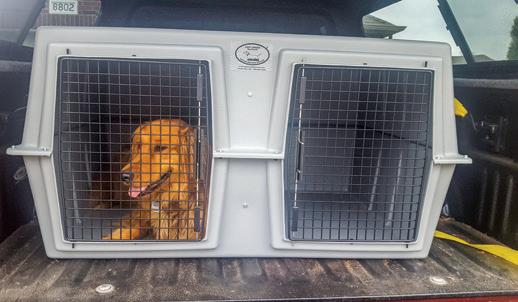
• EZ-XL accommodates 2 dogs over 65 lbs each
• Made from High Density Polyethylene with UV protection
• Easy Loader fits most full size pickups, SUVs & large UTVs
• Deuce fits smaller pickups, SUVs & UTVs
• EZ-XL is for larger breed dogs & full size vehicles
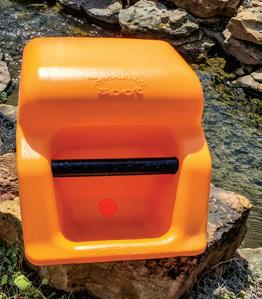
• Vents, cold weather door covers, insulated covers & custom kennel pads available