

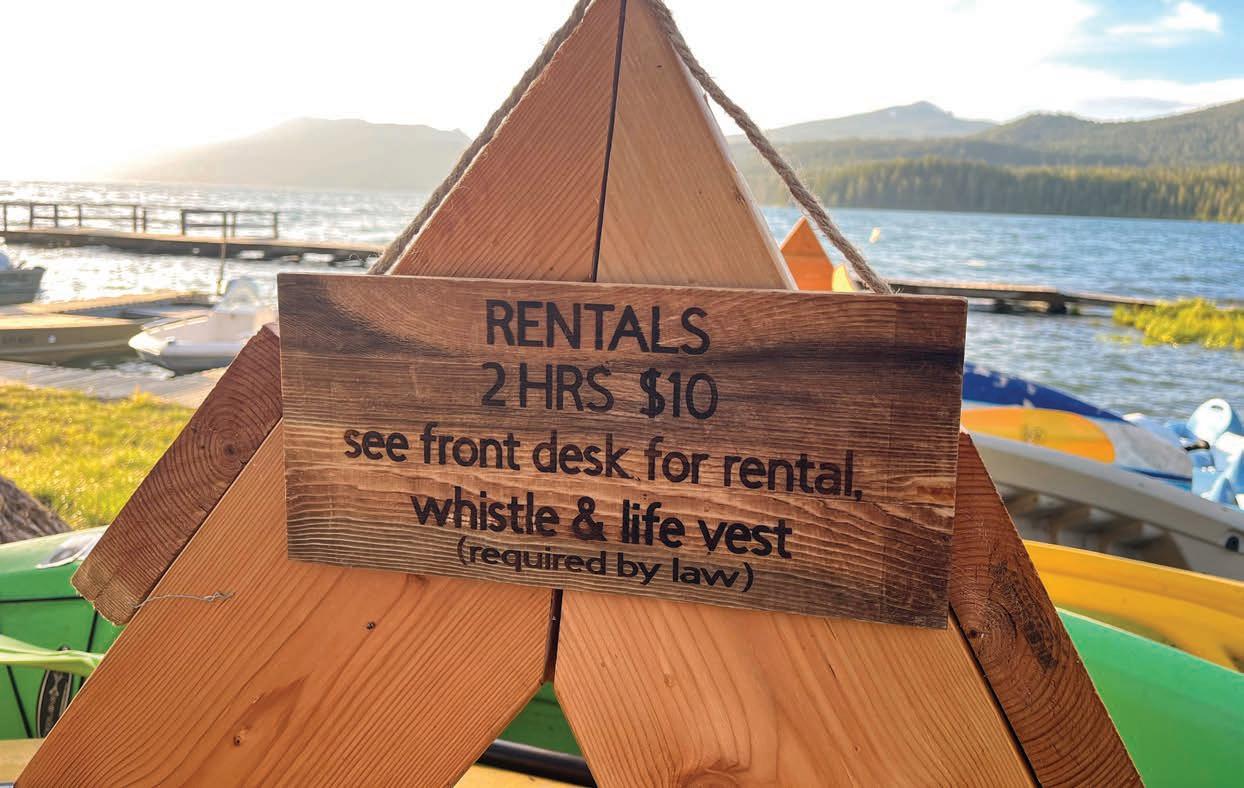
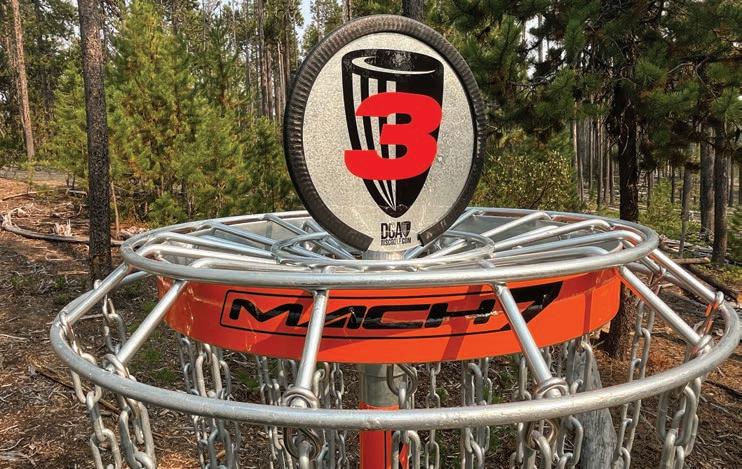

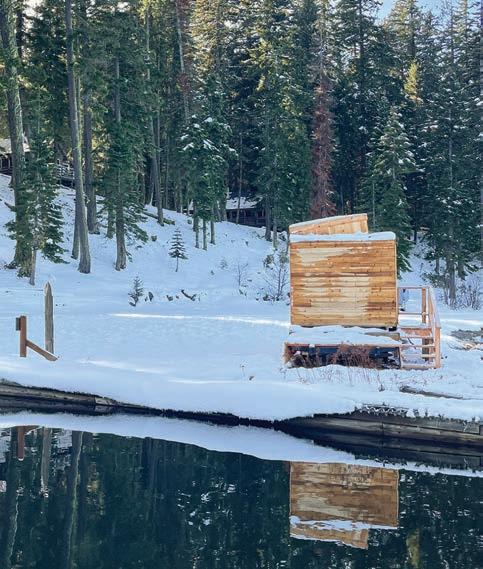
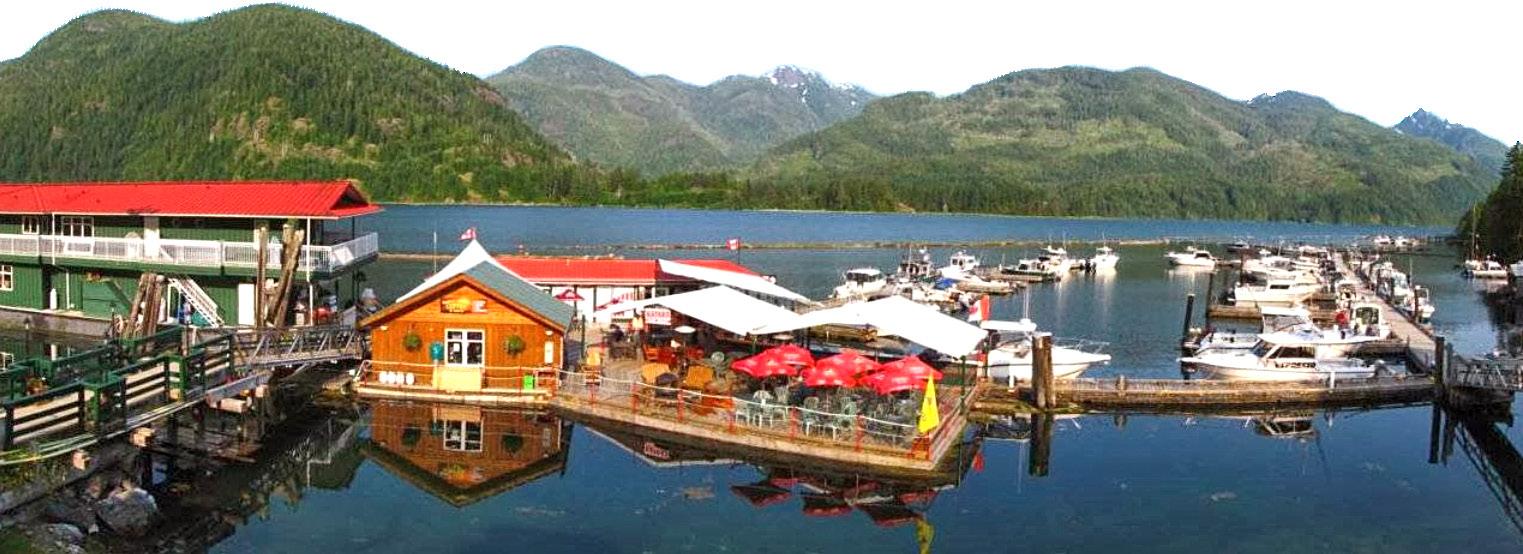
Whether you’re working the water, playing a round of disc golf, or basking in the perfect sunset, Odell Lake Resort is your place to unwind and explore.
• Lakeside Sauna - a private, relaxing extraordinary experience
• 18-hole Disc Golf Course - fun, challenging & rewarding
• Boat Rentals - an escape on the water
• Guided Fishing Trips - we offer the best
• Revitalized Outdoor Patio - a great time any day of the week
Come experience Odell Lake Lodge Life! Book your stay today!


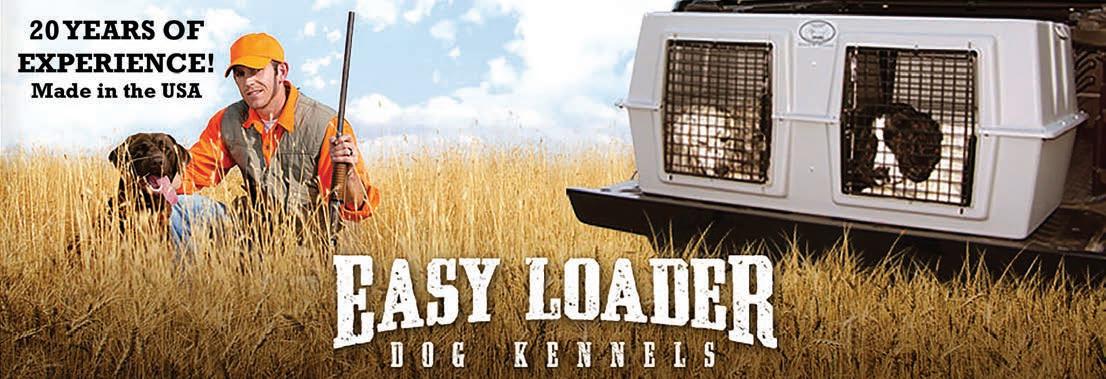
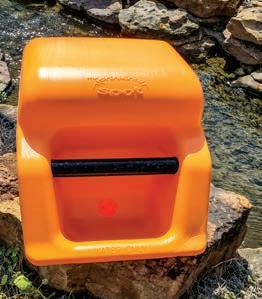
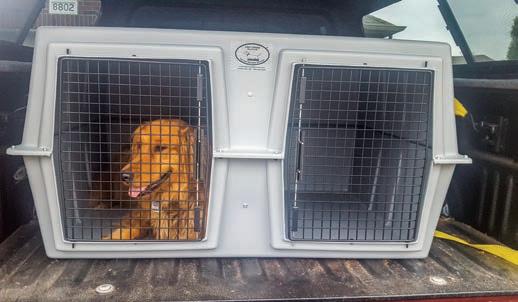
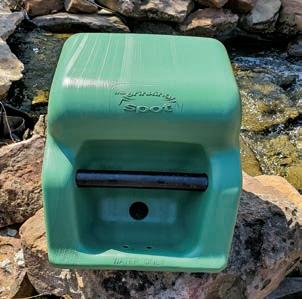
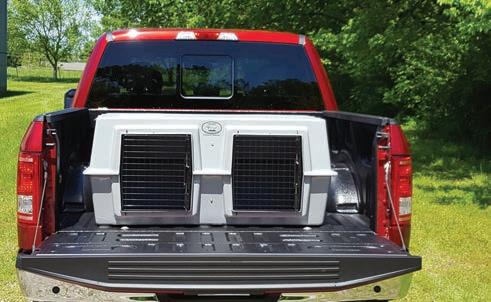
• Easy Loader & Deuce accommodate 2 dogs up to 65 lbs each
• EZ-XL accommodates 2 dogs over 65 lbs each
• Made from High Density Polyethylene with UV protection
• Easy Loader fits most full size pickups, SUVs & large UTVs
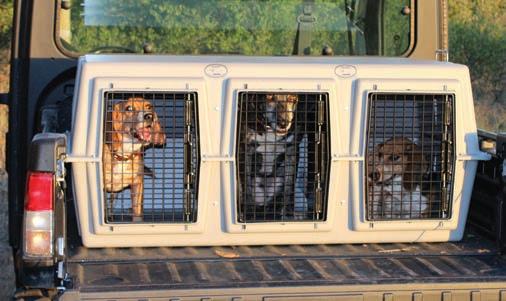
• Deuce fits smaller pickups, SUVs & UTVs
• EZ-XL is for larger breed dogs & full size vehicles
• Vents, cold weather door covers, insulated covers & custom kennel pads available
The lightest 200-hp four stroke on the market
2.8L displacement and Variable Camshaft
Timing give it the best power-to-weight ratio of any 200-hp four stroke
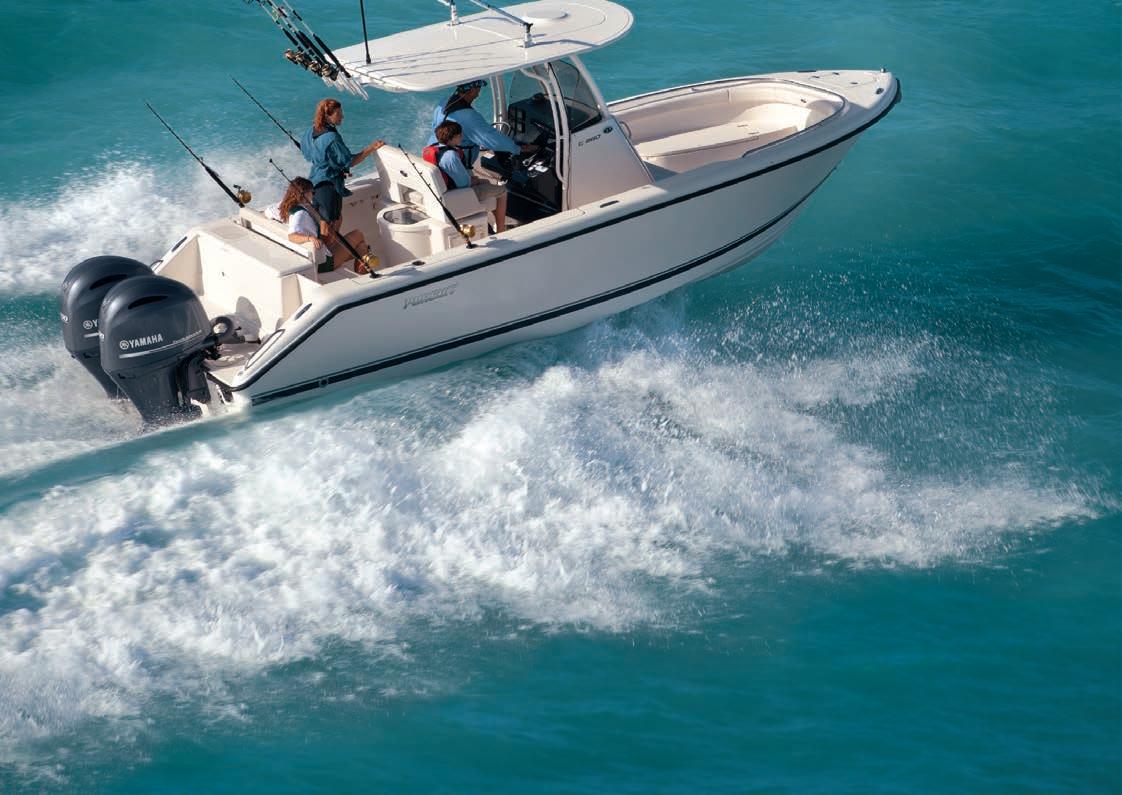
Nearly 120 pounds lighter than our four-stroke V6 F200

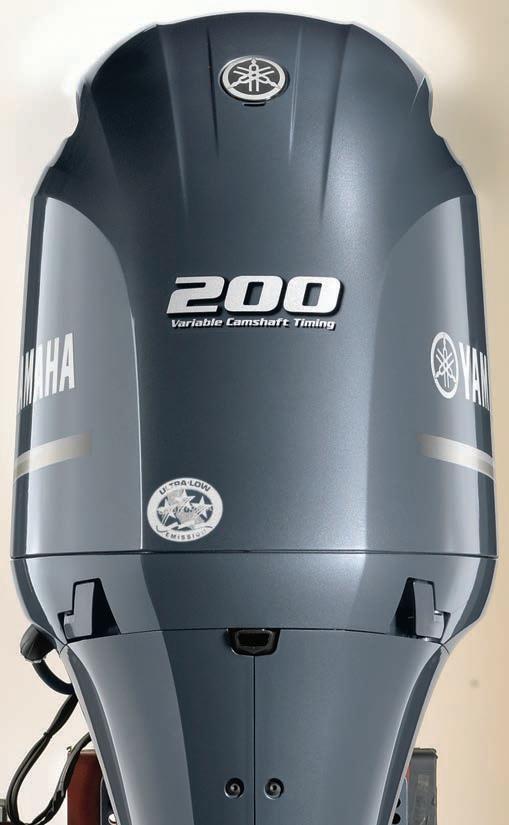

Show the water who’s boss with the F200 In-Line Four. Incredibly light, responsive and fuel efficient, it serves up plenty of muscle to handily propel a variety of boats. On top of that, its 50-amp alternator offers the power to add a range of electronics, and its 26-inch mounting centers and compatibility with either mechanical or digital controls give you the flexibility to easily upgrade your outboard or rigging. Experience legendary Yamaha reliability and the freedom of forward thinking, with the F200 In-Line Four. THE F200 IN-LINE FOUR.






Start your dry age now and be ready for Father’s Day!
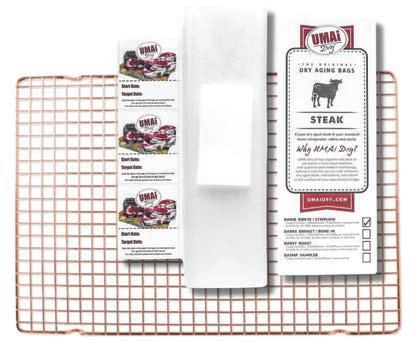
Father’s Day isn’t as far away as you think.
The perfect dry-aged steak takes time. Time to deepen flavor, time to tenderize, and time to transform something great into something unforgettable. With UMAi Dry®, you can start today and serve something extraordinary when it matters most. Start aging now. Taste the difference later.
And while you’re planning ahead…
UMAi Dry® is the ultimate Father’s Day gift. For the dad who takes pride in doing it right—this is more than a gift. It’s an experience!
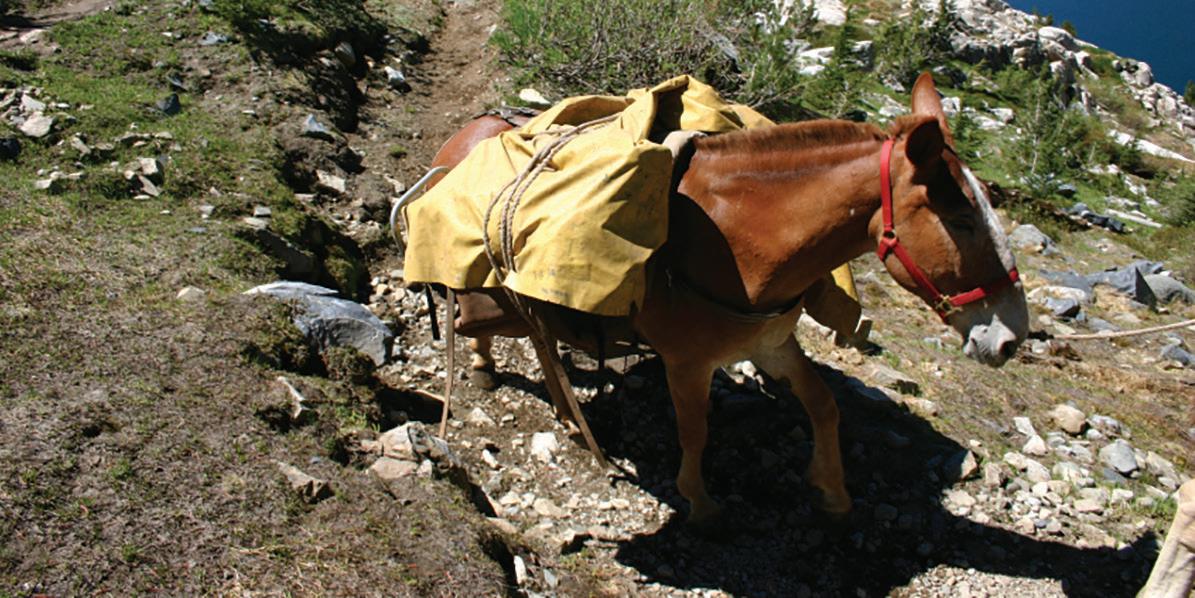

Cumberland’s Northwest Trappers Supply is your onestop trapping supply headquarters, featuring one of the largest inventories in the U.S. We are factory direct distributors on all brands of traps and equipment which allows us to offer competitive prices. Give us a try. Our fast, friendly service will keep you coming back.
We are the new home of “Trappers Hide Tanning Formula” in the bright orange bottle.
Retail & dealer inquiries are welcome.
If you are in the area, visit our store!
Place an order by phone, mail or on our website.
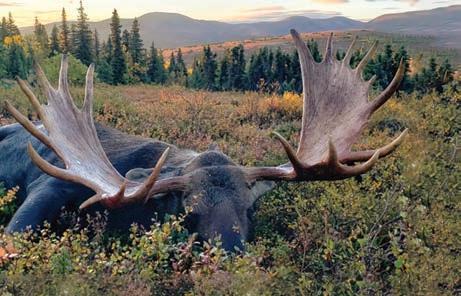
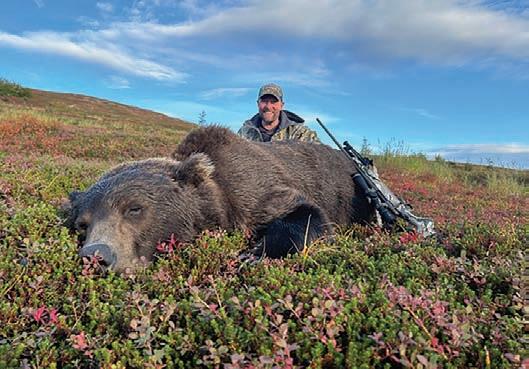
Experience the thrill of big game hunting in Alaska’s untamed wilderness with Deltana Outfitters—Alaska’s premier guide service. Whether you’re after Brown Bear, Grizzly, or Moose, our expert guides lead unforgettable Spring and Fall hunts in the remote, pristine Alaska Peninsula andWestern Alaska.
Adventure. Expertise. Results. That’s what we do—and Deltana does it best.
90% Success Rate!
Average Moose: 64”
Grizzlies: 7’6” - 8’6”
Black Bears: 6’ - 7’
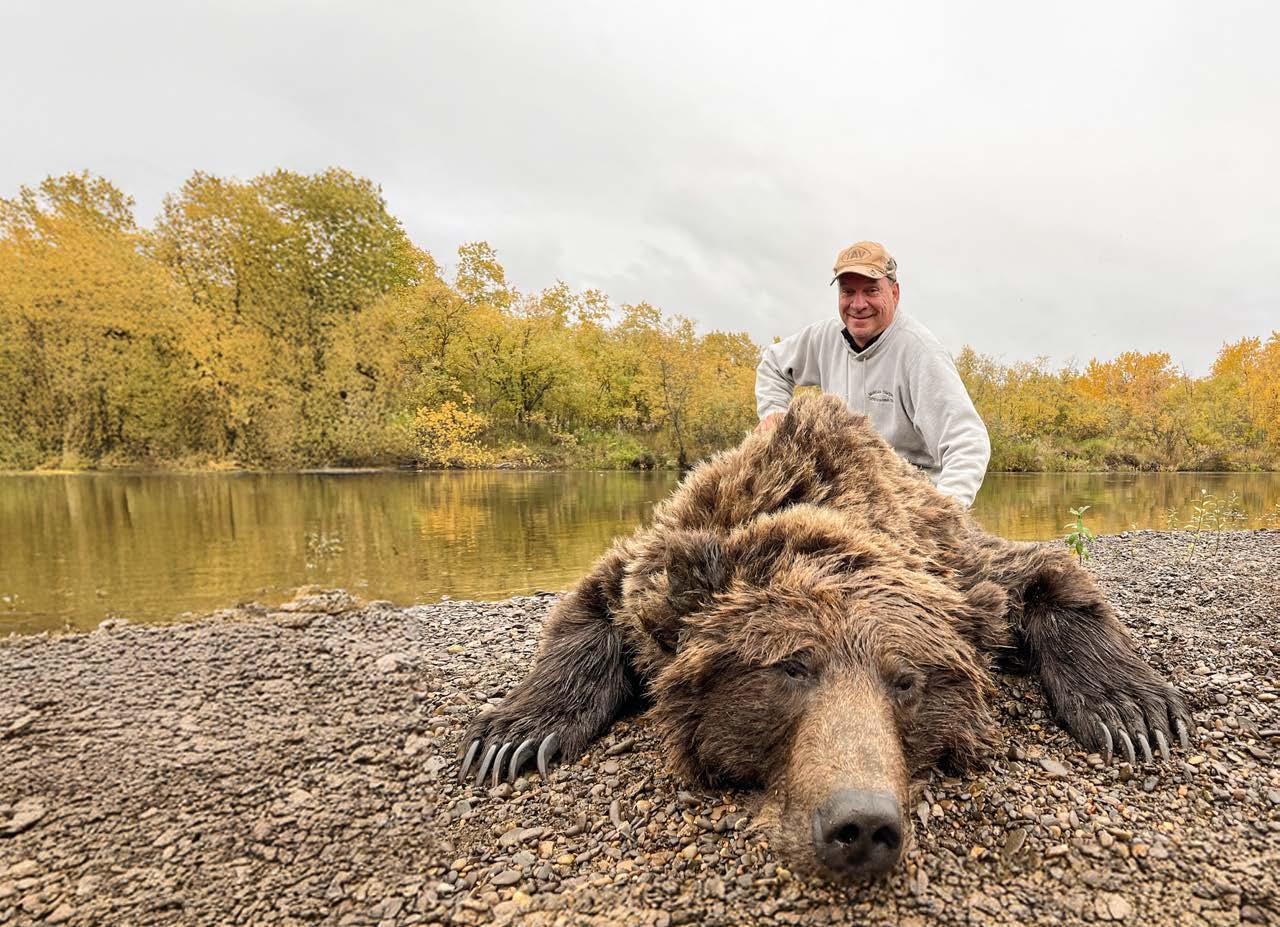
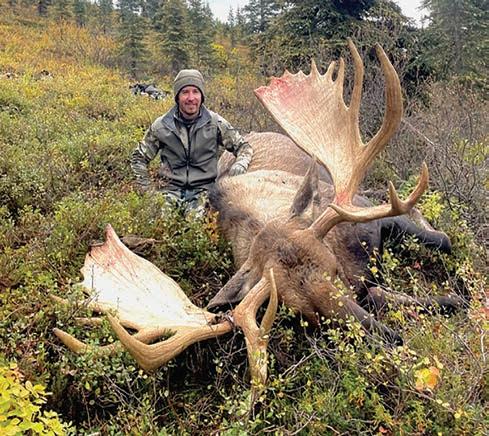
Brown Bears: 9’ - 10’ Start your ultimate hunting experience today! Visit: www.deltana.com | Email: hunts@deltana.com |
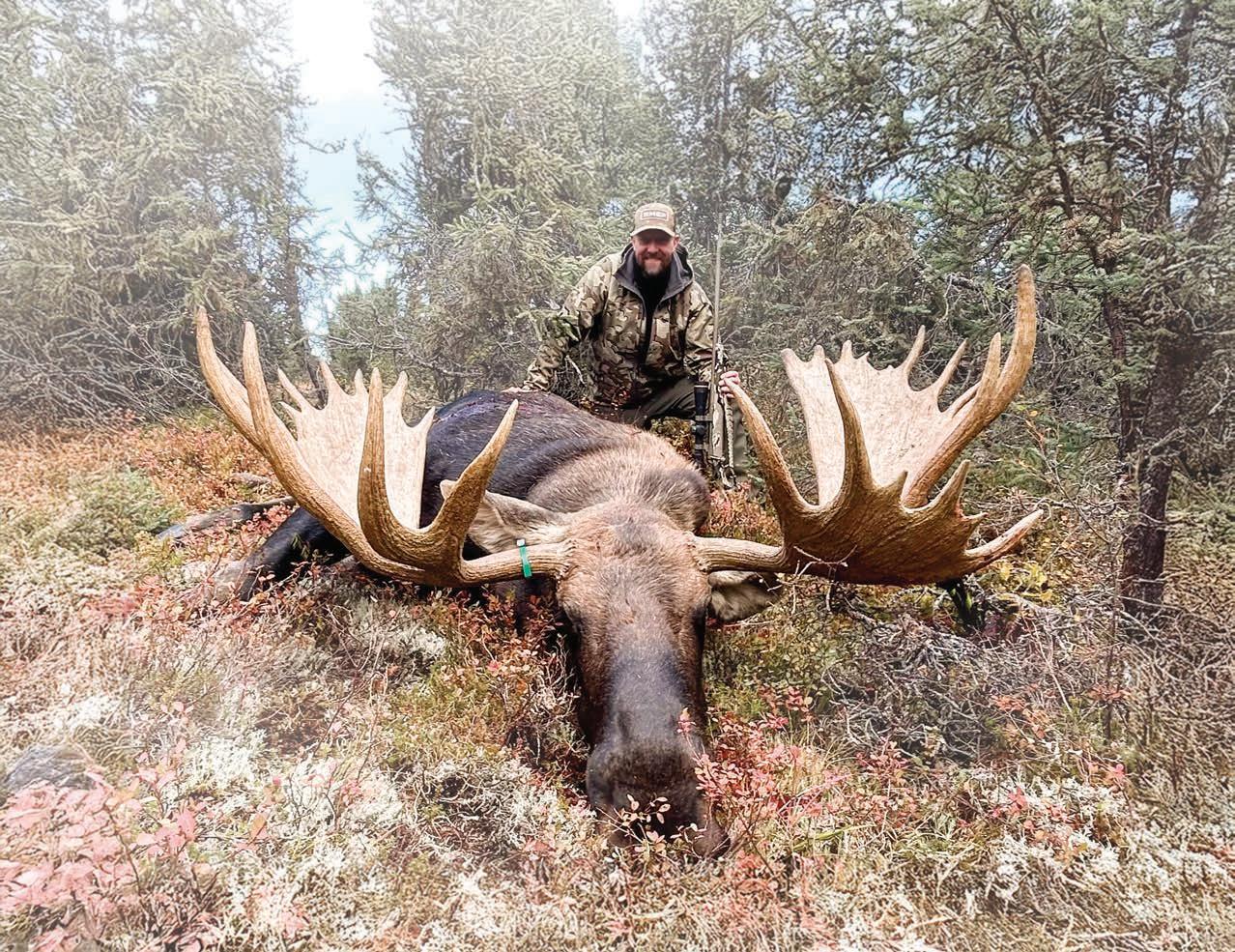
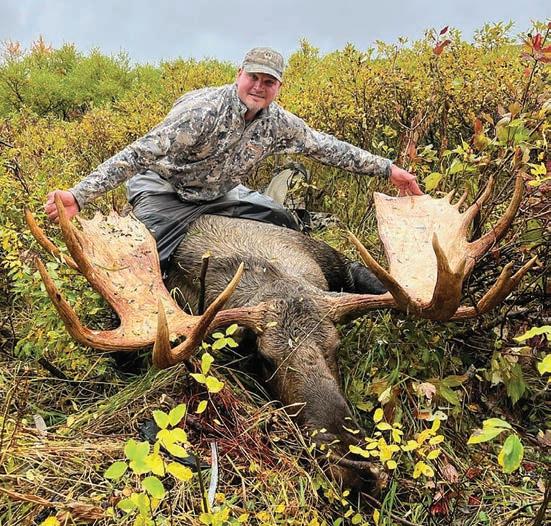
This is an unforgettable Alaskan adventure that blends raw wilderness, world-class game, and the thrill of pursuing some of North America’s most iconic animals in their natural environment. Long days on the river. Close encounters. The kind of moments you’ll talk about for the rest of your life.
• Trophy moose & bear hunts in prime river systems
• Regular 60”+ bull moose opportunities
• Near-100% opportunity rate on legal bulls
• High success on large Alaskan bears
• Fully guided & all-inclusive hunts
• Expert guides with deep local knowledge
• Carefully selected locations for consistent results
• 11–15 day hunts with 15-day combo moose & bear hunt available
Every hunt is carefully planned and professionally guided from start to finish. From scouting and calling to field care and logistics, your guide handles every detail so you can stay focused on the hunt.
Contact us today to secure your hunt and discuss available dates.
www.alaskaeliteoutfitters.com 218-434-0068 • 907-464-6165
mike@alaskaelieteoutfitters.com



PUBLISHER
James R. Baker
GENERAL MANAGER
John Rusnak
EXECUTIVE EDITOR
Andy Walgamott
EDITOR
Chris Cocoles
WRITERS
Scott Haugen, Tiffany Haugen, Tiffany Herrington, Brian Kelly
SALES MANAGER
Paul Yarnold
ACCOUNT EXECUTIVE
Janene Mukai
DESIGNER
Kha Miner
WEB DEVELOPMENT/INBOUND
MARKETING
Jon Hines
ADMINISTRATIVE ASSISTANT
Katie Aumann
INFORMATION SERVICES MANAGER
Lois Sanborn
ADVERTISING INQUIRIES media@media-inc.com
MEDIA INDEX
PUBLISHING GROUP
941 Powell Ave SW, Suite 120 Renton, WA 98057 (206) 382-9220 • Fax (206) 382-9437
media@media-inc.com www.media-inc.com
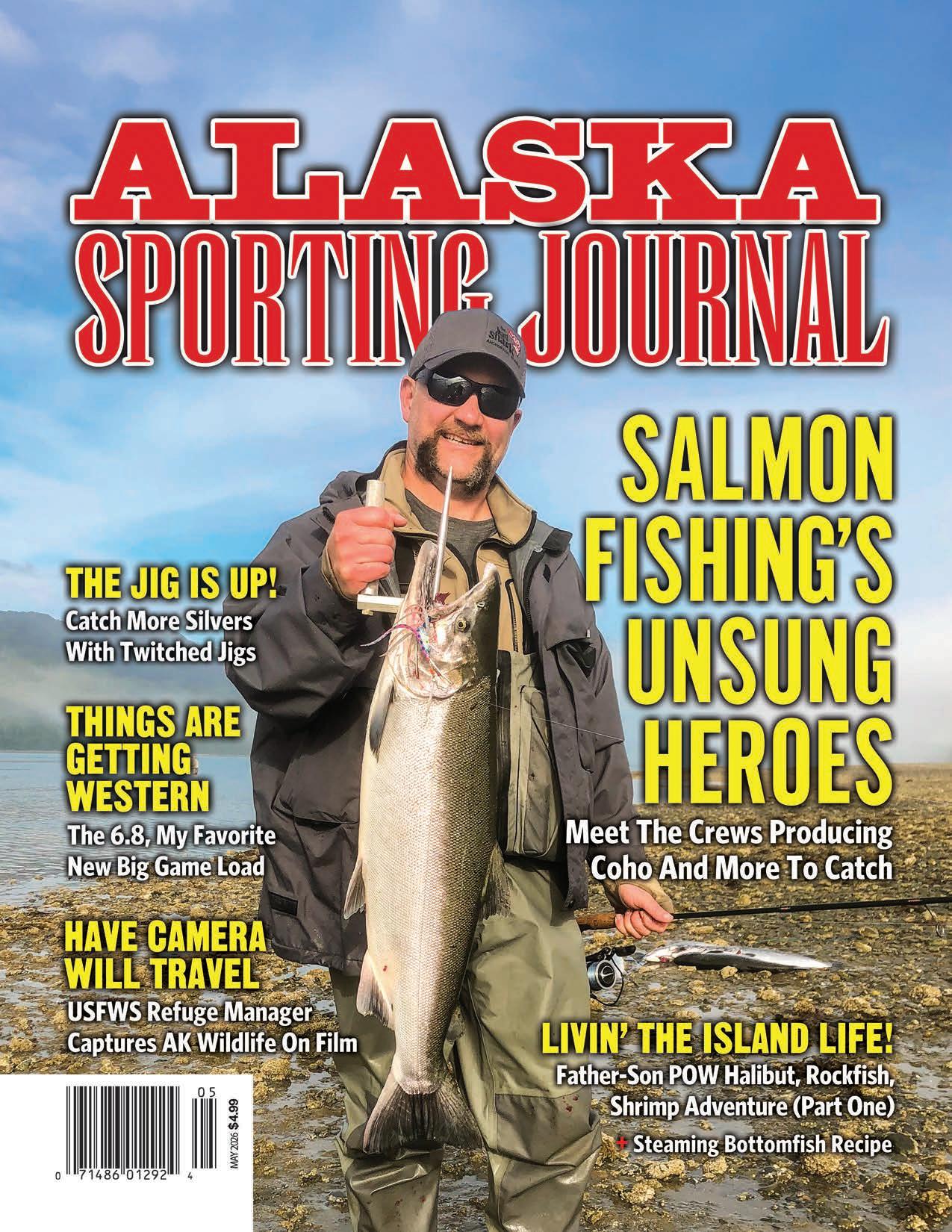
ON THE COVER
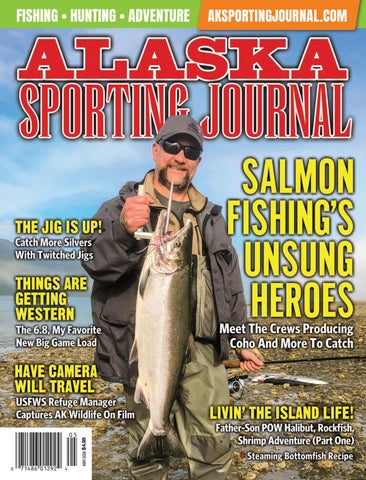
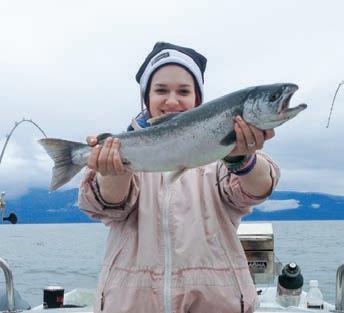
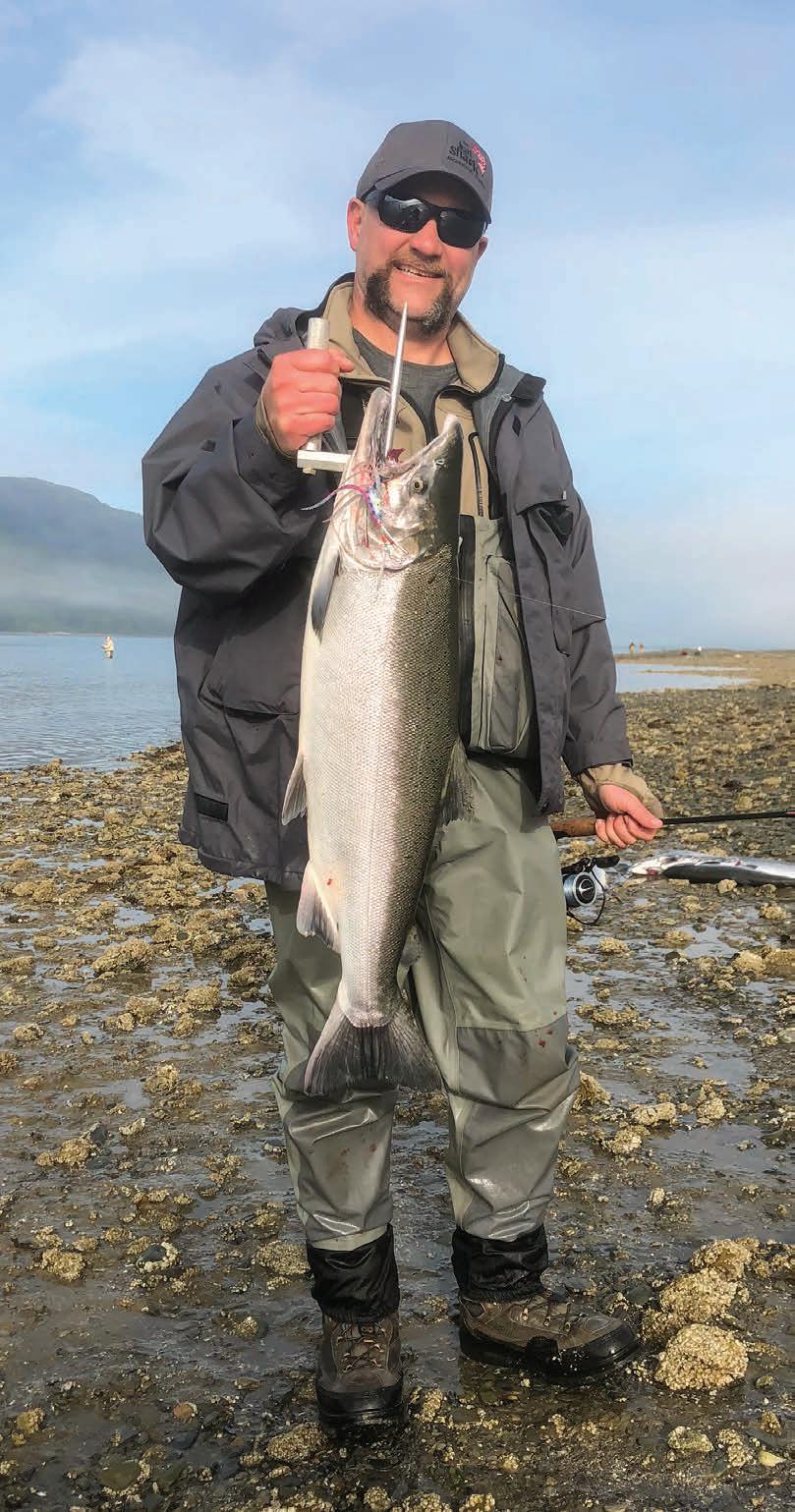
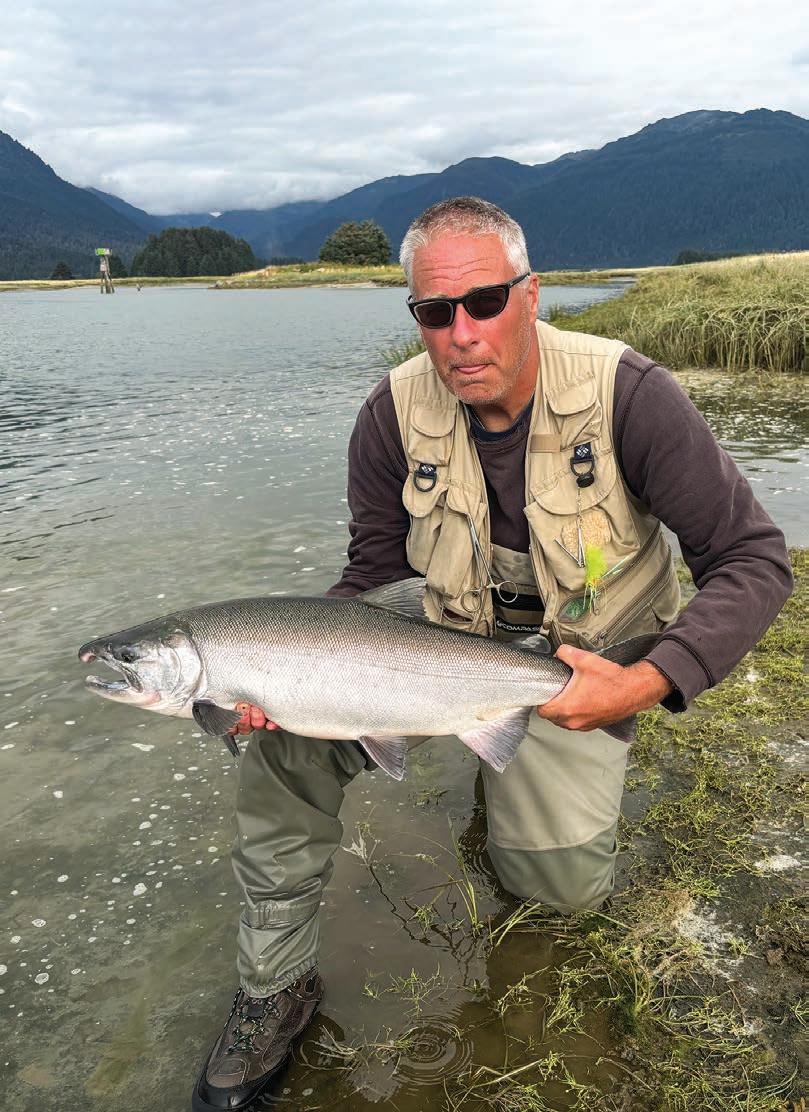
Brian Kelly shows off a nice Southeast Alaska coho salmon. This issue he shares (page 39) how he’s evolved as a jig angler after an early introduction by a fishing guide mentor for whom he was a deckhand in the Great Lakes region.
(BRIAN KELLY)
CORRESPONDENCE
X @AKSportJourn Facebook.com/alaskasportingjournal aksportingjournal.com Email ccocoles@media-inc.com



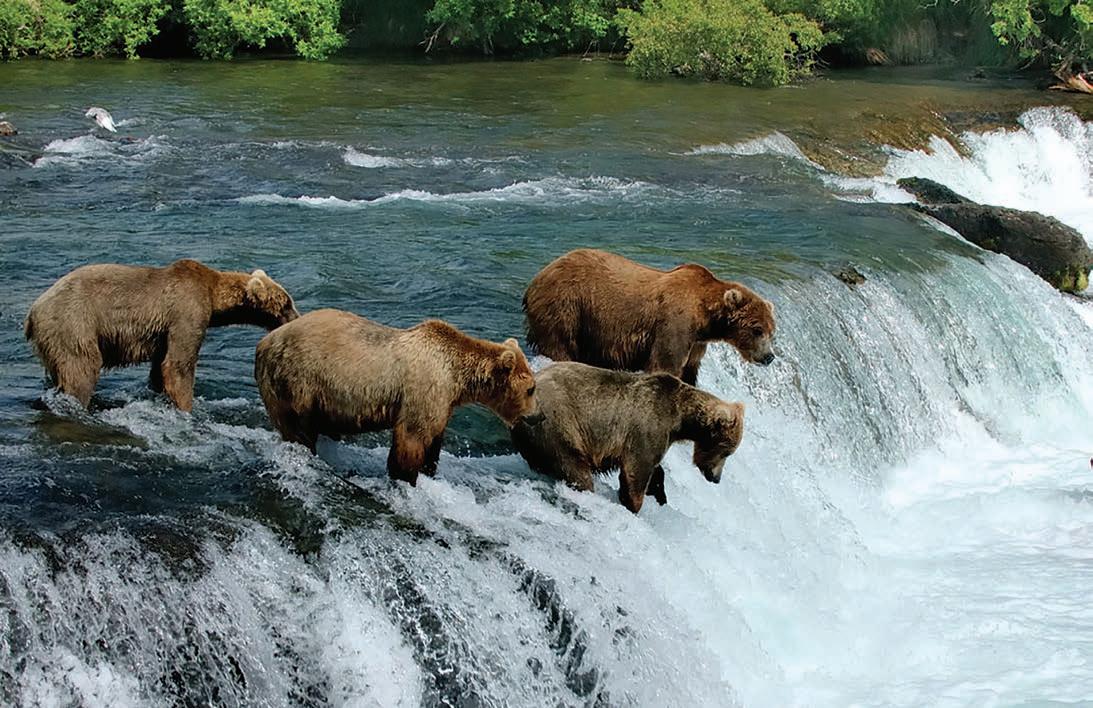
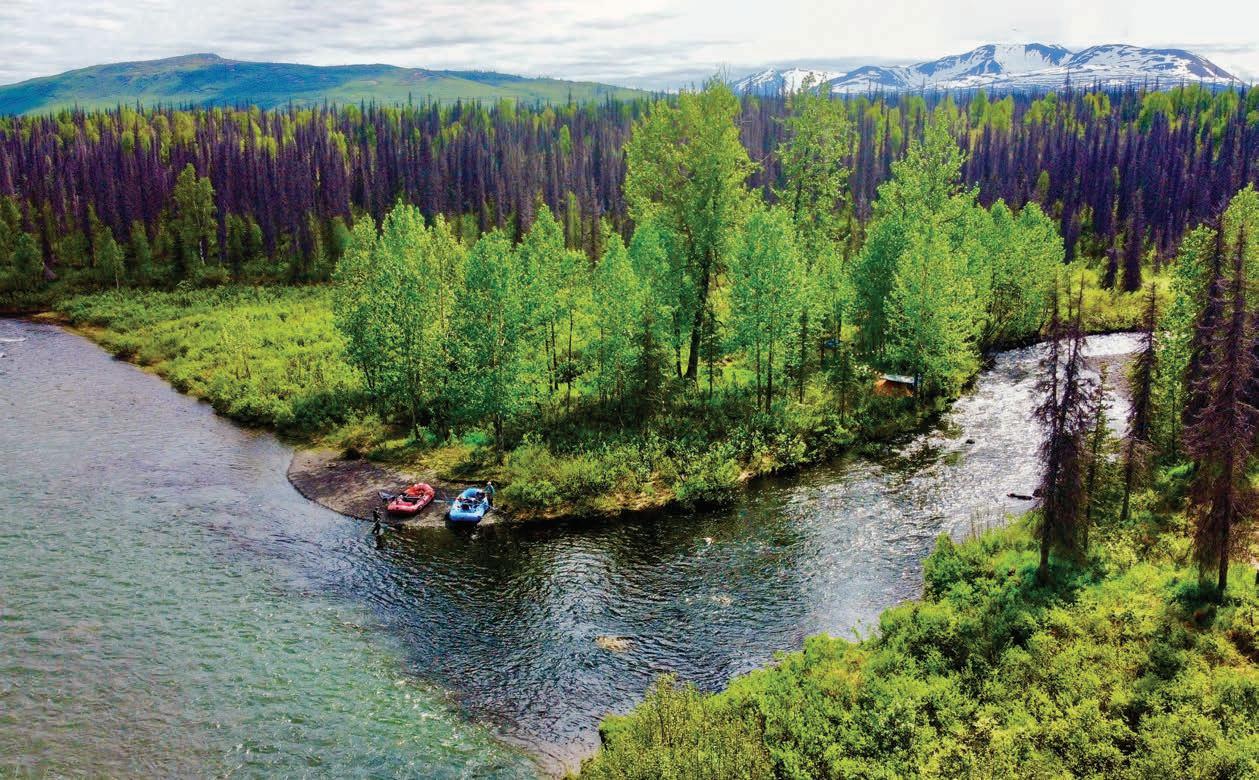
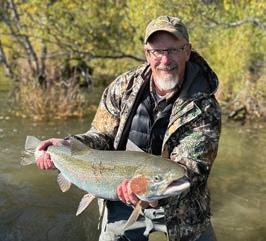


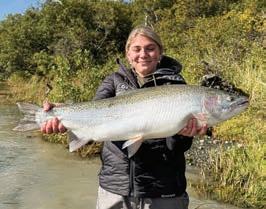
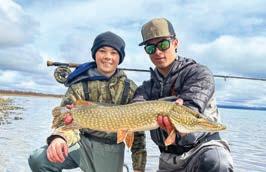
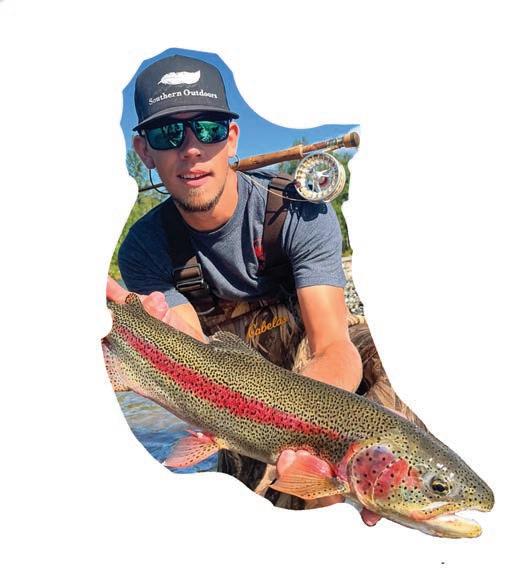
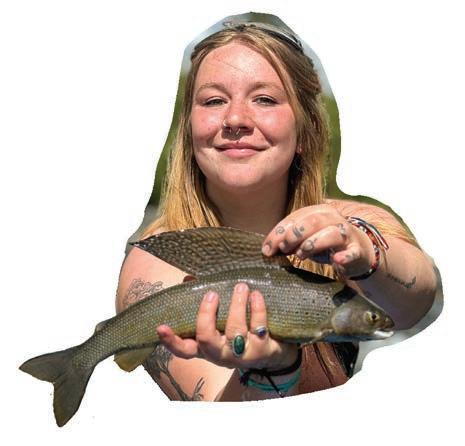
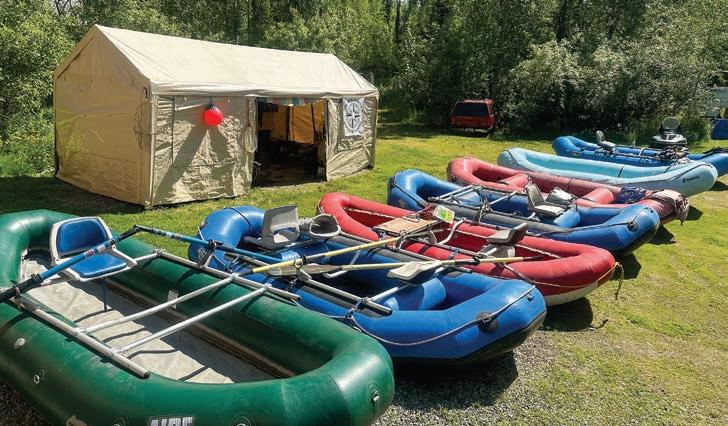
We are a rafting and fly fishing guide service based in Willow, Alaska, with more than 20 years of experience on the rivers of Southcentral Alaska. We offer road-accessible day trips as well as fly-out, multi-day adventures for those seeking a more remote fishing experience. Our team is made up of highly skilled, experienced guides who are passionate about Alaska’s rivers and dedicated to providing a safe, professional, and enjoyable trip on the water.



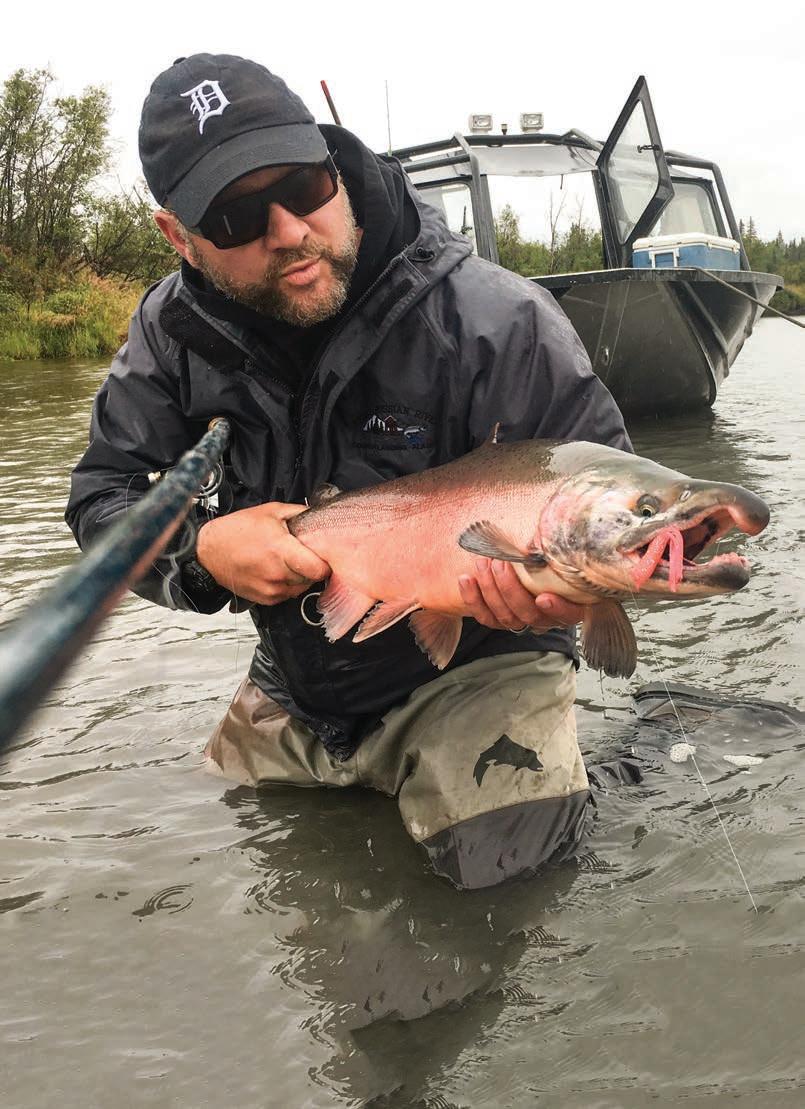
From the time he was testing his angling chops around the Great Lakes, Brian Kelly learned early on from his mentor “Captain Dan” about the importance of fishing with jigs. Now, after Kelly has made multiple trips to Alaska to slam salmon, he shares design and technique tips that will pay off for you with plenty of beautiful coho and other twitched catches. (BRIAN KELLY)
29 KEEPING HATCHERIES HUMMING
Tiffany Herrington takes a deep dive into Alaska’s hatcheries that are helping to complement and replenish salmon stocks all around the state. Tiffany tracked down staffers at three different operations to offer up a glimpse of the work they do to raise fish and send them on their remarkable journeys to sea and back.
47 LIVIN’ ON ISLAND TIME
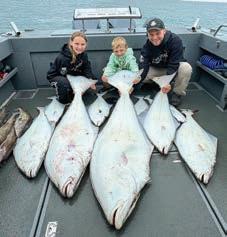
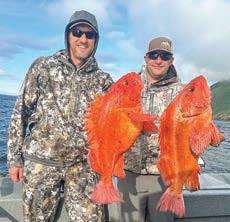
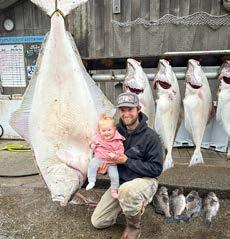
A father-son trip to Prince of Wales Island was a special experience for our Scott Haugen and his dad Jerry. Both have been teachers and coached high school basketball, and in this first of a two-part adventure, Jerry reunited with one of his former hoopsters from Oregon who now plies the waters off POW as part of a friends-and-family charter boat service. Scott recaps some of the tasty halibut, rockfish and shrimp they brought back to Klawock.
54
A double dip from Herrington this month as she continues her series on badass Alaska women with a profile of Lisa Hupp, a US Fish and Wildlife Service assistant refuge supervisor who spends plenty of time in some of the Last Frontier’s most remote and spectacular settings, including capturing the state’s wildlife with her camera. As Hupp tells Herrington,“Photography and storytelling help connect places, wildlife and people.”
21 Editor’s Note: Savoring urban fishery options
23 The Alaska Beat: News and notes from around the Last Frontier
27 Outdoor Calendar
63 From Field to Fire: Big game hunter’s favorite new caliber and load
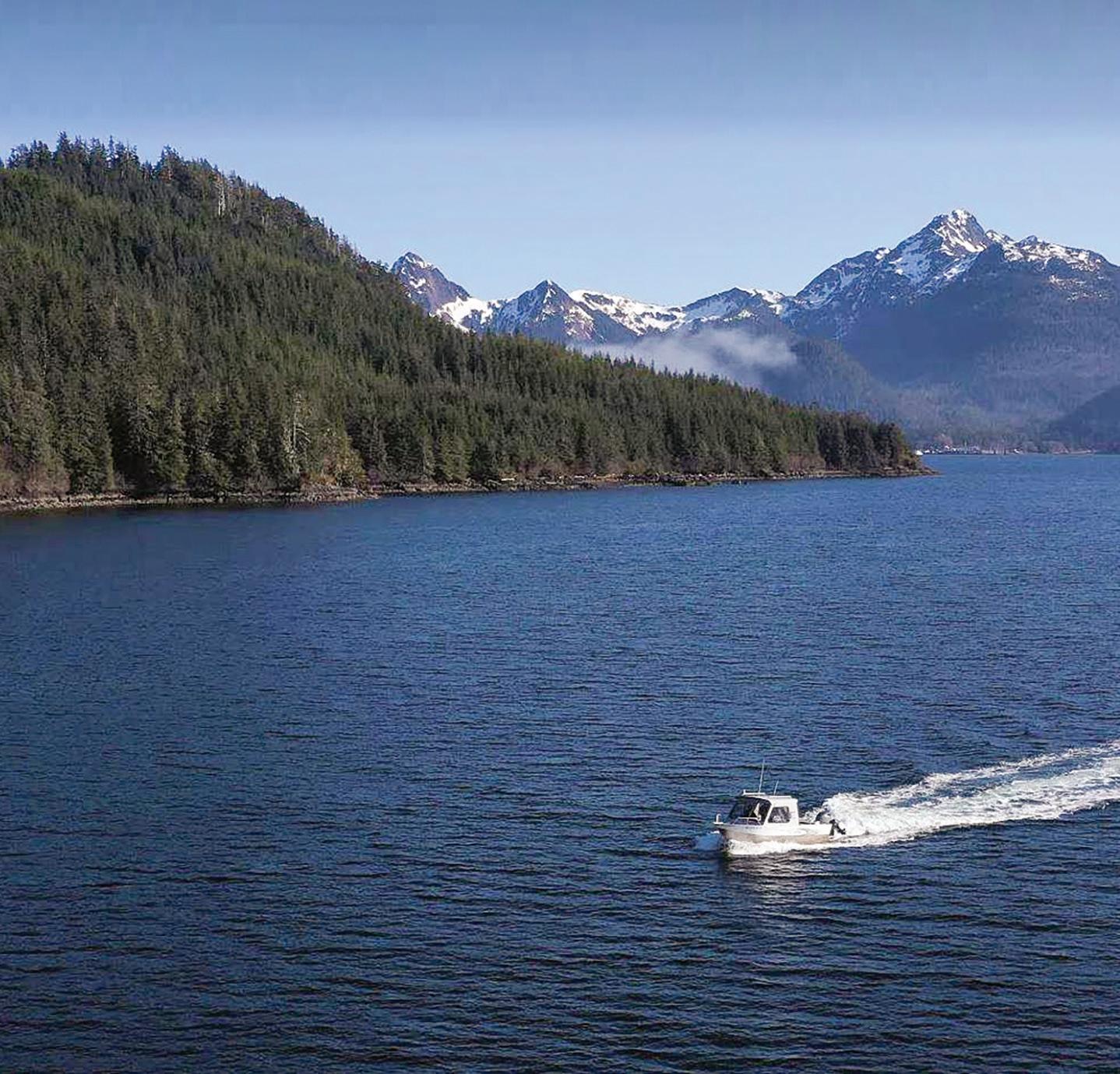
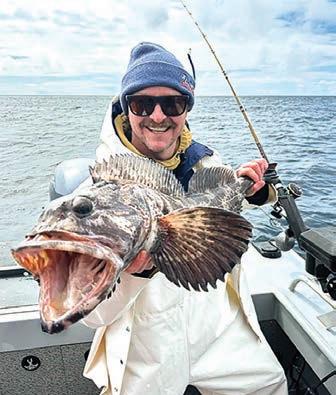
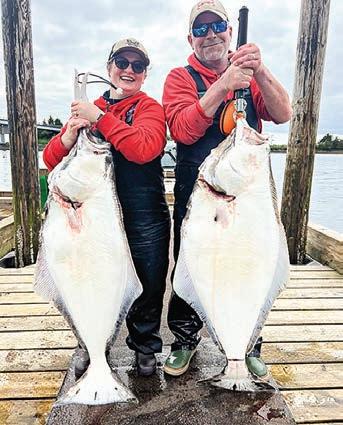
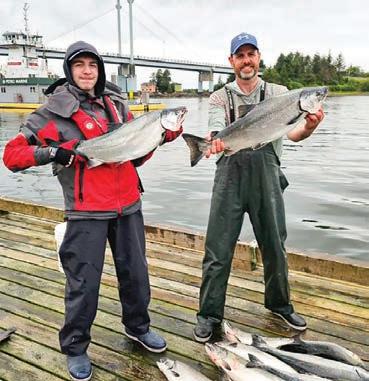
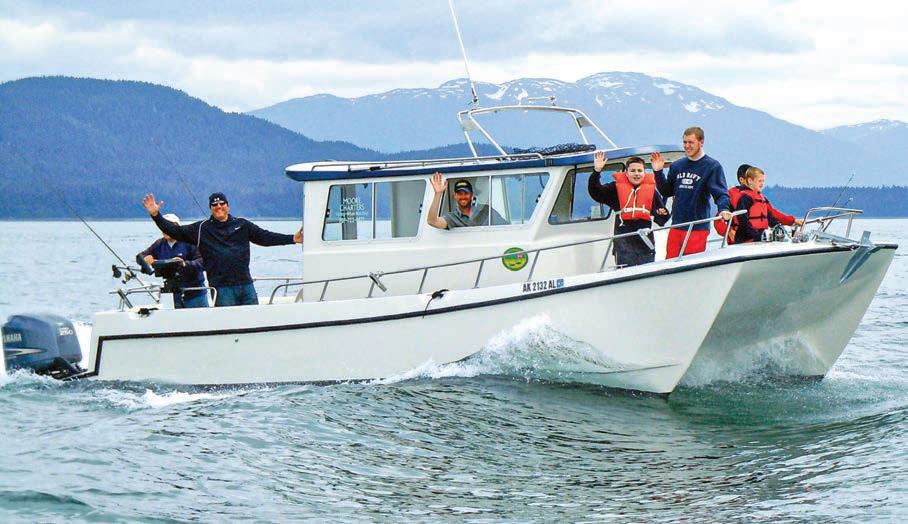
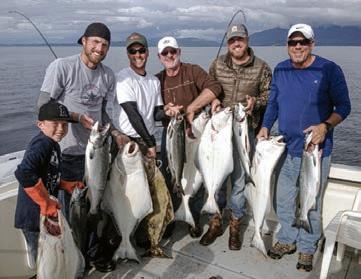
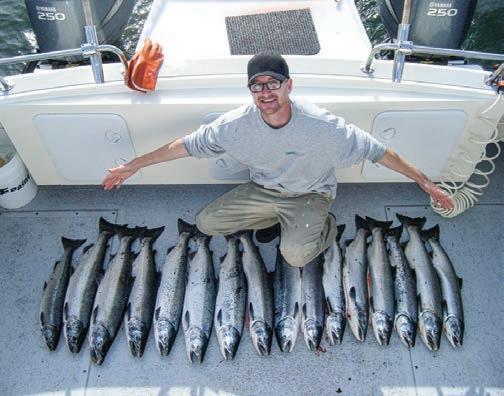
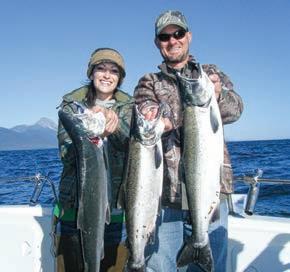
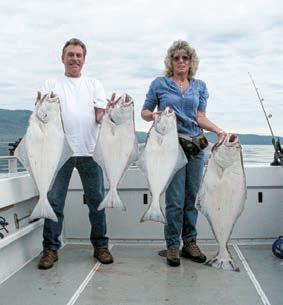
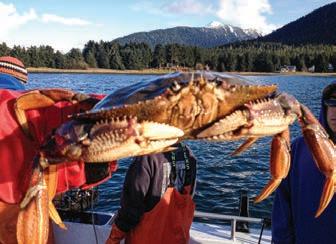
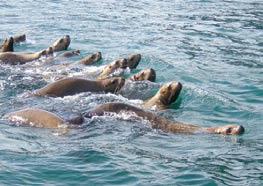
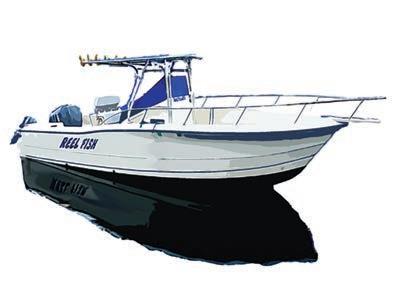
Your one-stop destination for self-guided saltwater fishing adventures in
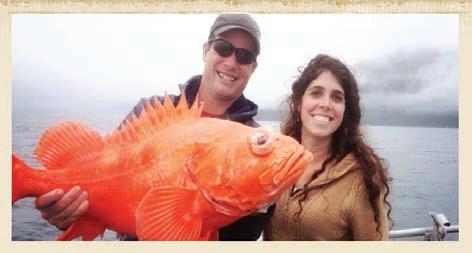
We offer comprehensive packages that include lodging, fully equipped rental boats, rods, reels, tackle, downriggers, depth finders, VHF radios, GPS, marine charts, safety gear, and more.

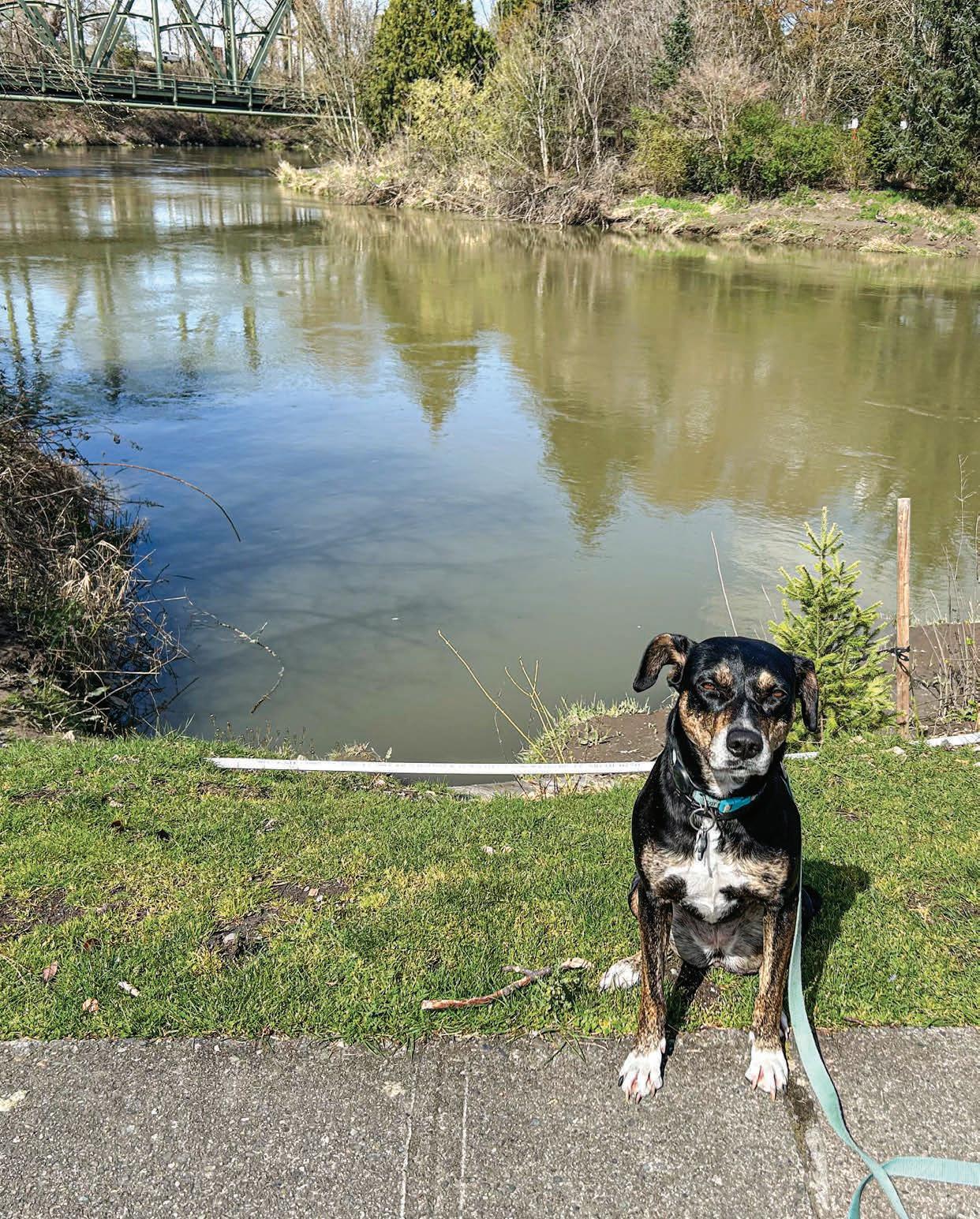
There’s a walking trail I’m fond of that’s a short drive from my home in Seattle, near where our company is based. In fact, part of that extended trail winds right behind our old office.
The path twists its way along the banks of first the Duwamish River and then its primary tributary, the Green River. The Duwamish, which feeds into Puget Sound, offers anglers some outstanding pink salmon fishing during humpies’ every-other-year runs. When the fish are in in fall and I have a chance to walk my dog Olive along the path, we see plenty of anglers casting hoochie jigs from sporadic patches of shoreline in hopes that a pink will be willing to play.
I do a lot more trout fishing than targeting salmon given the gear I have and the experience level of tempting rainbows, but Olive and I almost always will stop on our usual almost 4-mile walk and take in some of the action, hopeful that we can watch someone get lucky. It’s one of the joys of living in an urban setting like Seattle, where despite the chaos of living in a big city, you don’t have to get very far out of town to feel like it’s more of a rural setting. That’s not to say that Duwamish pink salmon fishing feels like the Alaska backcountry, considering all the planes taking off and landing at nearby Seattle-Tacoma International Airport and the buzzing of cars on Highway 599, which runs almost parallel to the trail and the river. But I know when I’m able to get out and fish within or near the limits of big cities, I still feel disconnected from the noise around myself.
Where I live now isn’t much different from where I grew up in the congested San Francisco Bay Area, which features several cherished fisheries that provide a little relief from traffic jams, suburban sprawl and crime that is the sad reality of life in major metropolitan areas.
But it also makes me appreciate the Alaskan lifestyle that our awesome stable of writers chronicles so beautifully in the pages of this magazine. Scott Haugen’s first of a two-part feature this month on his Prince of Wales Island outdoor adventure with his father (page 47) captures the wild spirit of the Last Frontier. Unless you live in Anchorage or Fairbanks, you can completely detach from civilization from your front porch, and that’s pretty epic.
See you on the trail, and maybe along a muddy bank of the river trying our luck. -Chris Cocoles
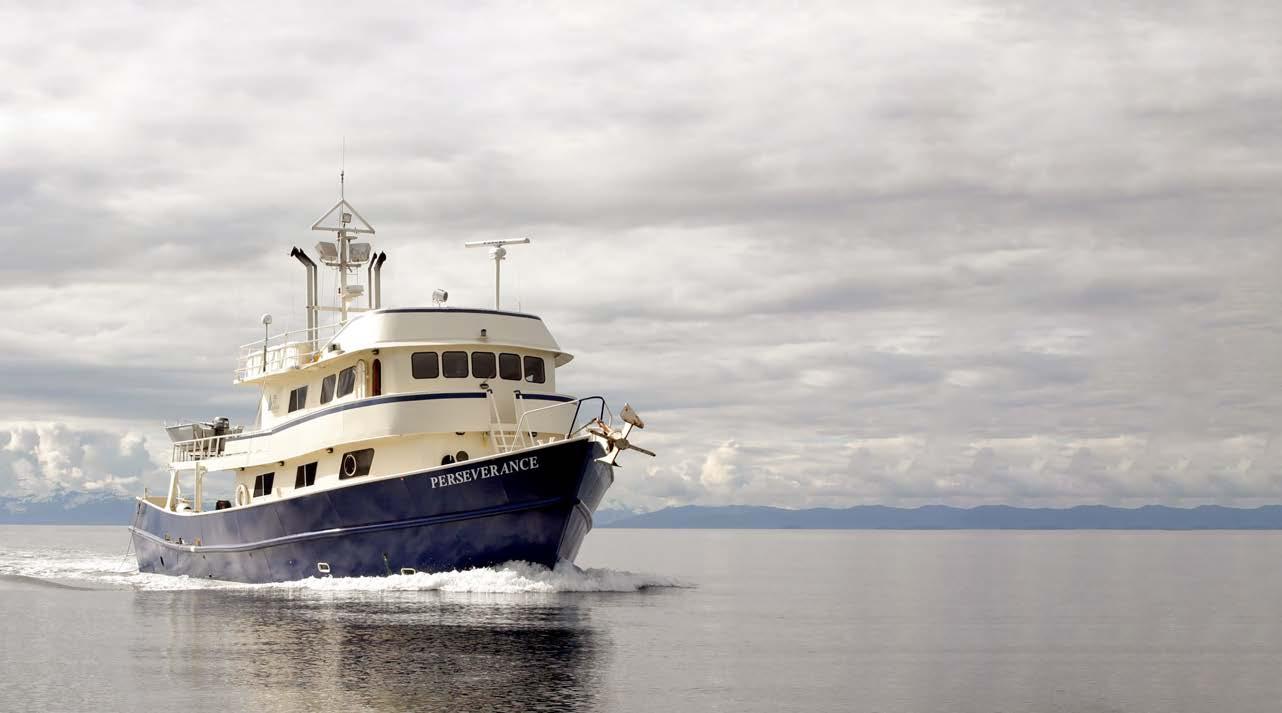
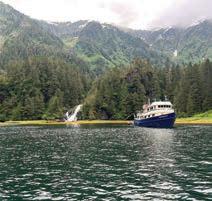
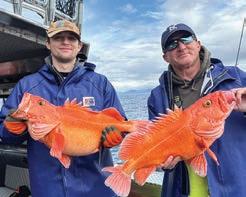
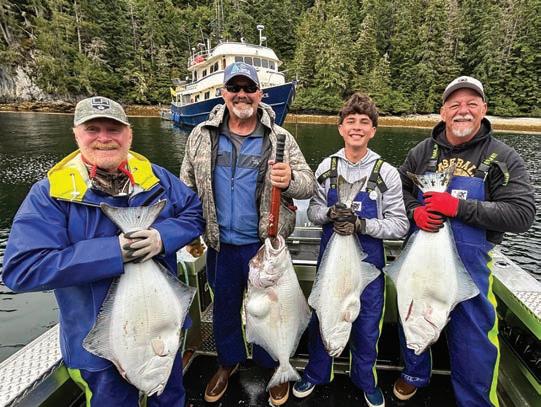
Wild Alaska offers an unmatched mothership sportfishing adventure in Southeast Alaska. With over 25 years of experience, we provide exclusive access to vast, untouched marine wilderness—far beyond the reach of traditional charter operations.
Immerse yourself completely in Southeast Alaska’s marine wilderness. Fish calm, sheltered waters of Frederick Sound, Stephens Passage, and Chatham Strait, surrounded by glaciers, wildlife, and breathtaking scenery. Our mobility ensures new waters and fresh opportunities every day—keeping you where the fish are.
LIFE ONBOARD
• Hot breakfast each morning
• Soup and sandwich lunch
• Fresh seafood dinners
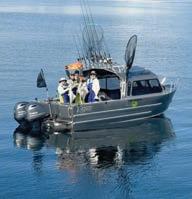
• Relaxed evenings—or continue fishing and exploring
• Comfortable cruising in 50–70° temperatures
WHAT YOU’LL ENJOY
• World-class sportfishing
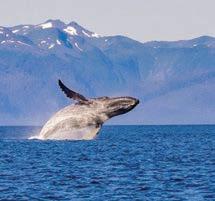
• Up-close wildlife viewing
• Photography opportunities found nowhere else
• Safe, warm, and welcoming onboard environment
• Exceptional crew and personalized service
Join Wild Alaska for the adventure of a lifetime! Pack a smile—and get ready for
As rough as it’s been throughout Alaska’s king salmon fishing cosmos of late – seasons have been restricted in some areas, canceled in others – Southeast sport and commercial fishers got some better news for 2026.
One year following a total all-gear catch target of just 133,500 fish, the lowest such allocation since 1985 and the signing of the US-Canada Pacific Salmon Treaty, the Alaska Department of Fish and Game’s 2026 all-gear catch limit was set at a more traditional 205,300 salmon, with roughly 23 percent of that amount available for sport anglers.
“Several stocks have shown signs of improvement in 2024 and 2025. However, recent production has been poor in the region,” ADFG explained in a press release. “Some (Southeast Alaska king) stocks have either been recently removed or adopted as Stocks of Management Concern, and management will continue consistent with the provisions of Board of Fisheries action plans.”
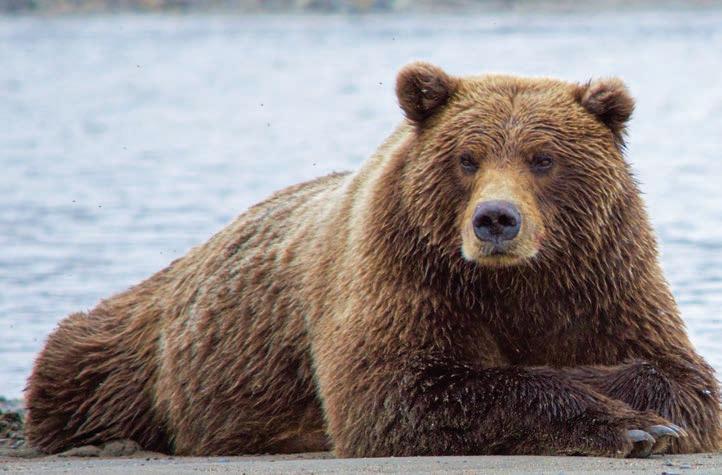
Alawsuit challenging the state’s plan to remove bears as part of an attempt to protect caribou herds took a new twist with an emergency motion filed in early April.
The Alaska Wildlife Alliance and the Center for Biological Diversity jointly filed a preliminary injunction “seeking to prevent the state from killing an un-
Environmental groups continue to challenge the Alaska Department of Fish and Game’s plans to remove Southwest Alaska bears to protect the Mulchatna Caribou Herd. (KARA LEWANDOWSKI/ NATIONAL PARK SERVICE)


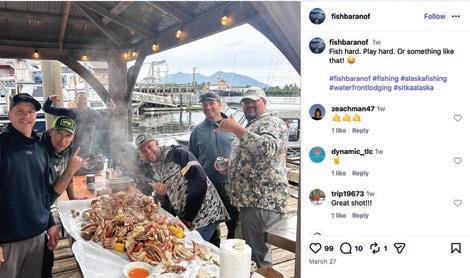
Our friends at Sitka-based guide service Fish Baranof (fishbaranof.com) know how to put together a crab feed!
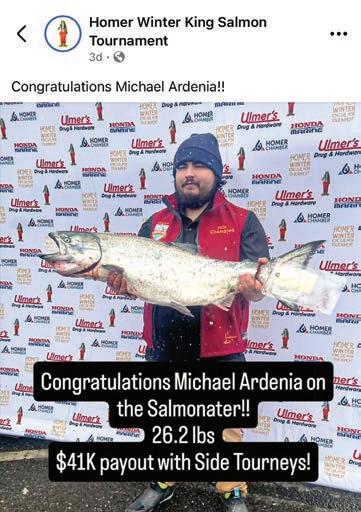
26.20
Weight in pounds of Michael Ardenia’s firstplace fish that won him over $41,000 in prize/ side pot money at early April’s postponed Homer Winter King Salmon Tournament.
limited number of brown and black bears across roughly 40,000 square miles in Southwest Alaska this summer,” per a press release.
Alaska Department of Fish and Game’s position has been to eliminate predators such as bears due to Mulchatna Herd caribou numbers dwindling until this past year, which did see an uptick in the count. The lawsuit, originally filed last November, has contended that the state’s plan lacks science-based justifications to remove the bears.
“I really want to see the Mulchatna Caribou Herd grow and thrive, but this unscientific and cruel approach of killing every bear in sight across Southwest Alaska can’t be the way forward,” said Cooper Freeman, Alaska director at the Center for Biological Diversity. “Alaska needs to stop wasting public resources and make wildlife management decisions firmly rooted in science and sustainability. That’s what the constitution requires, and it’s also what will be best in the long run for bears, caribou and the entire ecosystem.”
There’s no way not to feel lucky when you find yourself in the woods and on the water for three warm, dry, bluebird days in Southeast Alaska. As we blew up our packrafts and paddled into the sunshine on Davidson Lake that first morning, it almost felt like the island was welcoming us.
Pale green lichen hung down from the trees. A deer emerged from the brush and darted back into the forest. Sam immediately dug a piece of flagging from his pack and began imitating a deer call, trying to call it back.
We drank the muskeg “tea water” we’d gathered the day before and stopped for a delicious meal of crackers and coho salmon Beebuks’ uncle had caught in Yakutat and his family smoked and jarred in Angoon.
As we neared the end of the lake, a loon chortled across the water. Marsh grass waved in the breeze as we paddled through the lilypad-dotted slough leading from Davidson Lake to Lake Guerin. Big bull pines, their roots in muskegs, dotted the shore.
The interior of Admiralty Island is a ridge of mountains, and at Lake Guerin our surroundings began to grow higher.
We paddled past mountains with green alpine. Sam, Beebuks and Trevor, all of whom grew up hunting and had already gone out in search of deer to fill the freezer that year, speculated about where the deer might be.
At the end of Lake Guerin, we pulled up to a grassy, lilypad-lined bank and walked the 1½-mile portage, through patches of devil’s club. As we descended a small hill to the three-sided shelter at Hasselborg Lake, Sam was playing Ice Cube’s “It Was a Good Day.”
That night, Trevor, Beebuks and Sam made a fire by the side of the lake, then took out the cabin’s rowboat to fish at the mouth of the creek. Reaching the lake before it got dark and getting to go fishing for cutthroats would be one of the boys’ favorite points of the trip. -Mary Catharine Martin
Three wingsuit jumpers recently made an extraordinary evening jump in Palmer, in which they just happened to travel right through Alaska’s spectacular northern lights. That’s quite a ride!


Beebuks Kookesh, then a high school student from Angoon, was part of a group that enjoyed fishing, paddling and camaraderie while traversing the Cross-Admiralty Canoe Route in Southeast Alaska. (MARY CATHARINE MARTIN)
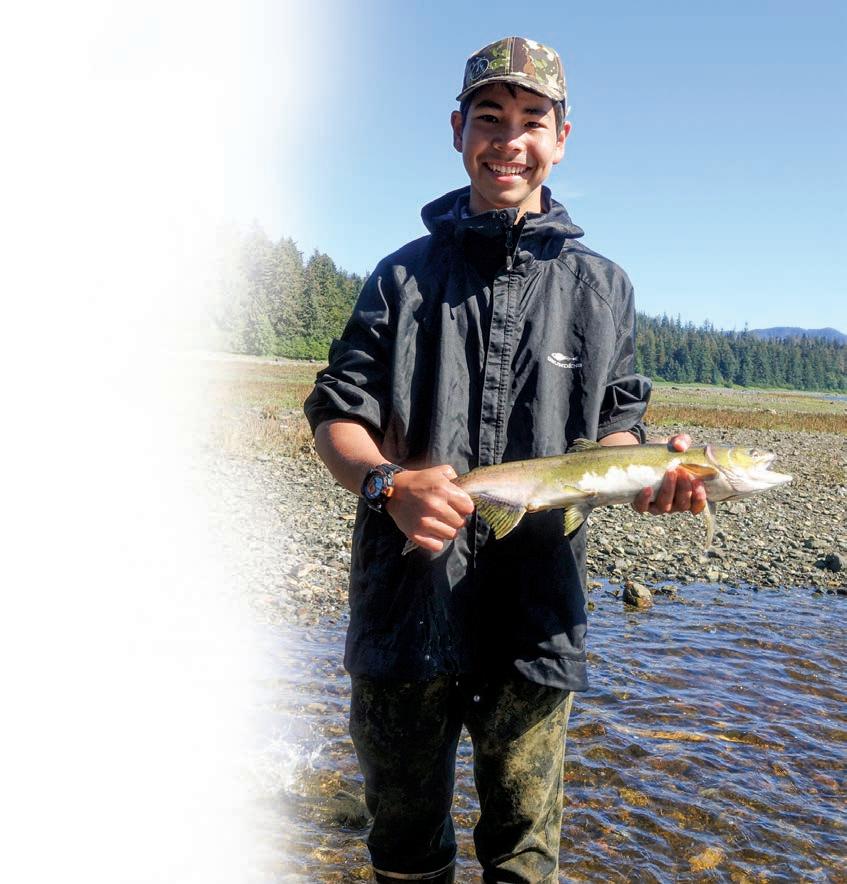
“Lingcod harvest has been increasing steadily in the relatively small and isolated area of northern Afognak and Shuyak Islands. It is unknown what a sustainable harvest level for lingcod is in this area and how much increased harvest can be accommodated. Therefore, it’s warranted to reduce the lingcod bag limit to attempt to curb harvest in the fishery given the lack of information. Lingcod and rockfish bag limits in this area will be similar to Cook Inlet bag limits so areas in close proximity have similar regulation sets.”
-Alaska Department of Fish and Game area management biologist Tyler Polum, after the state announced a one-fish lingcod limit this season in waters north of Afognak and Shuyak Islands.





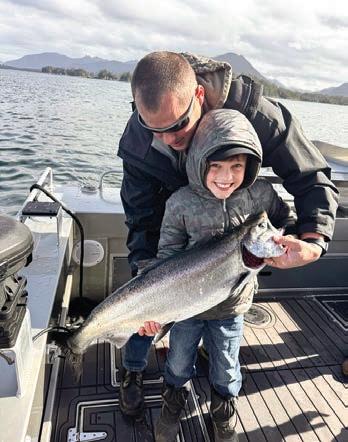
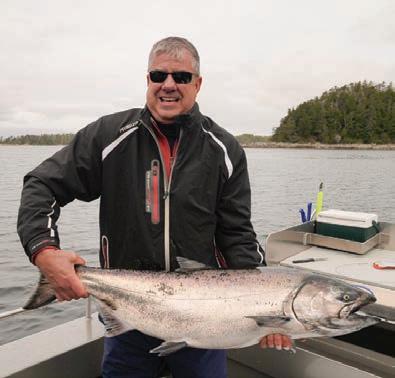

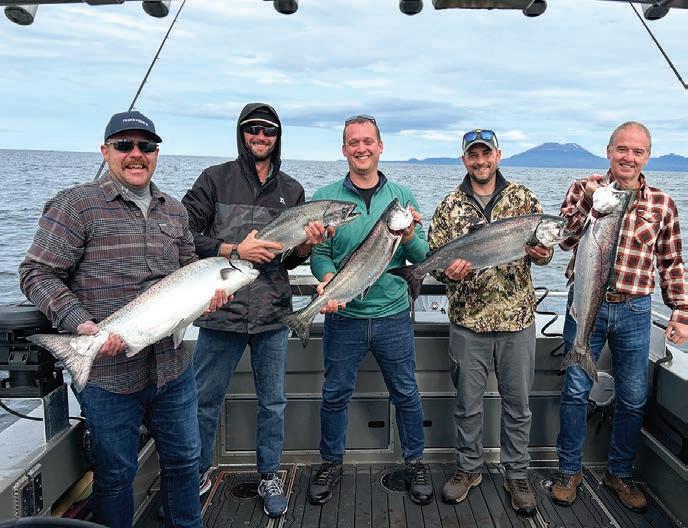
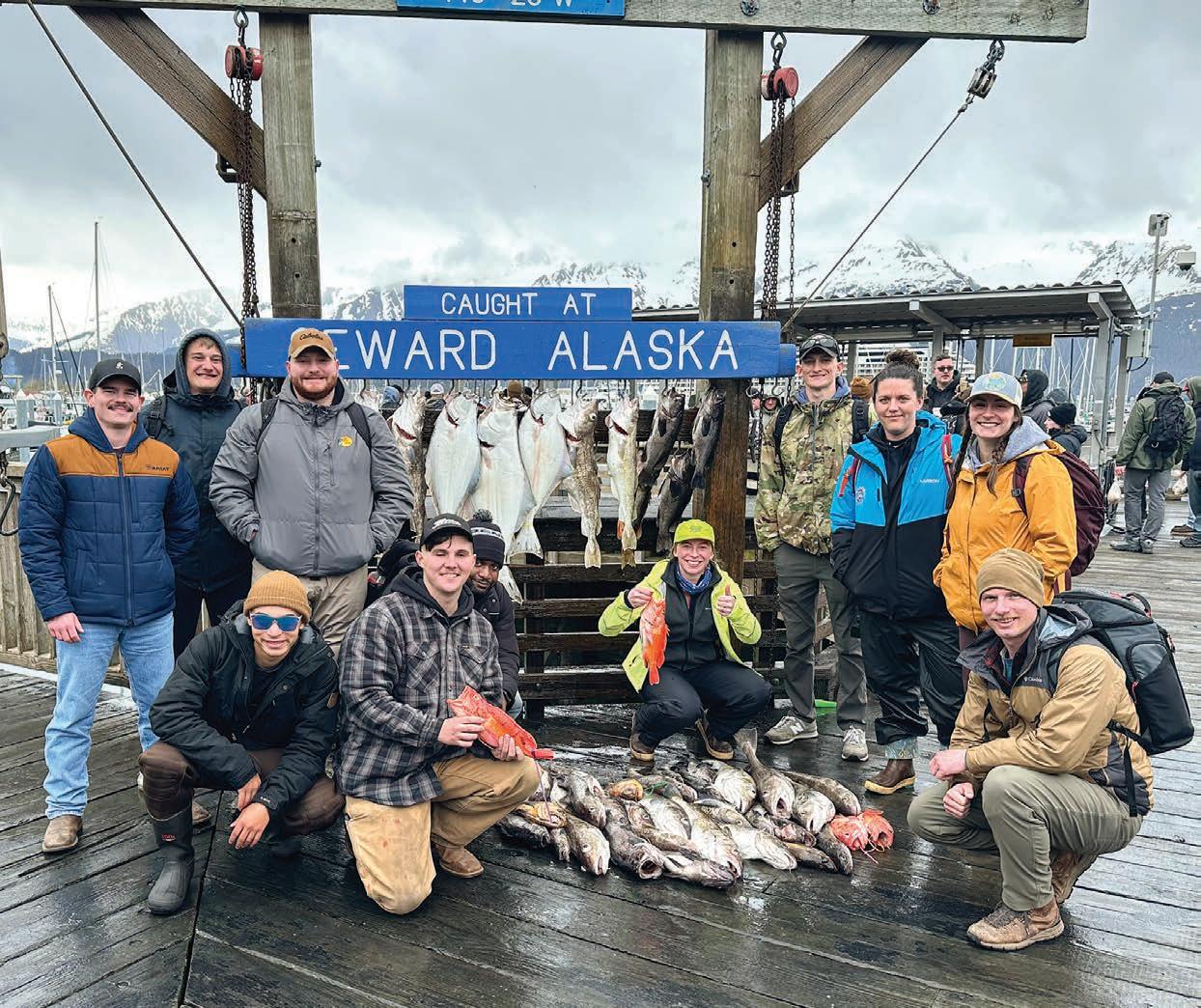
Alaska armed services members will gather in Seward on May 20 for the ASYMCA Combat Fishing Tournament. Go to alaska.asymca.org/combat-fishing-tournament for more information. (ARMED SERVICES YMCA OF ALASKA)
MAY 9 Ship Creek Spring Cleanup, Anchorage (thebaitshackak.com)
MAY 10 Spring brown bear season opens in Game Management Unit 10 (Unamik Island)
MAY 20 ASYMCA Alaska Combat Fishing Tournament, Seward (alaska.asymca.org/combat-fishing-tournament)
MAY 21-25 Kodiak Crab Fest (kodiakcrabfest.com)
MAY 23 Start of Valdez Halibut Derby (valdezfishderbies.com/halibut-derby)
MAY 25 Last day of brown bear season in GMU 6D (Montague Island)
MAY 31 Brown bear season ends in several GMUs
JUNE 5-20 Slam’n Salm’n Derby, Ship Creek, Anchorage (thebaitshackak.com)
JUNE 12-21 Valdez Halibut Hullabaloo (valdezfishderbies.com/halibut-derby/halibut-hullaballoo)
JUNE 20 Ship Creek Youth Fishing Day, Anchorage (thebaitshackak.com)
JUNE 30 Black bear season ends in several units
JULY 1 2026-27 hunting regulations take effect
JULY 25 Start of Valdez Silver Salmon Derby (valdezfishderbies.com/silver-derby)
JULY 31 Valdez Big Prize Friday (valdezfishderbies.com/silver-derby/big-prize-fridays)
For more information and season dates for Alaska hunts, go to adfg.alaska.gov/index.cfm?adfg=hunting.main.
Editor's note: Alaska’s fisheries are supported by a vast network of hatcheries, biologists, technicians and field crews working behind the scenes across the state. While anglers and commercial fishermen see the results on the water, much of the work that sustains those opportunities happens far from the spotlight, in remote hatcheries, field camps and research stations.
This series highlights some of these “unsung helpers of the wild,” the professionals responsible for that work. From Southeast Alaska to the Kenai Peninsula, these profiles explore the people who spend their careers raising salmon, monitoring wildlife populations and maintaining the systems that help keep Alaska’s fisheries strong.
BY TIFFANY HERRINGTON
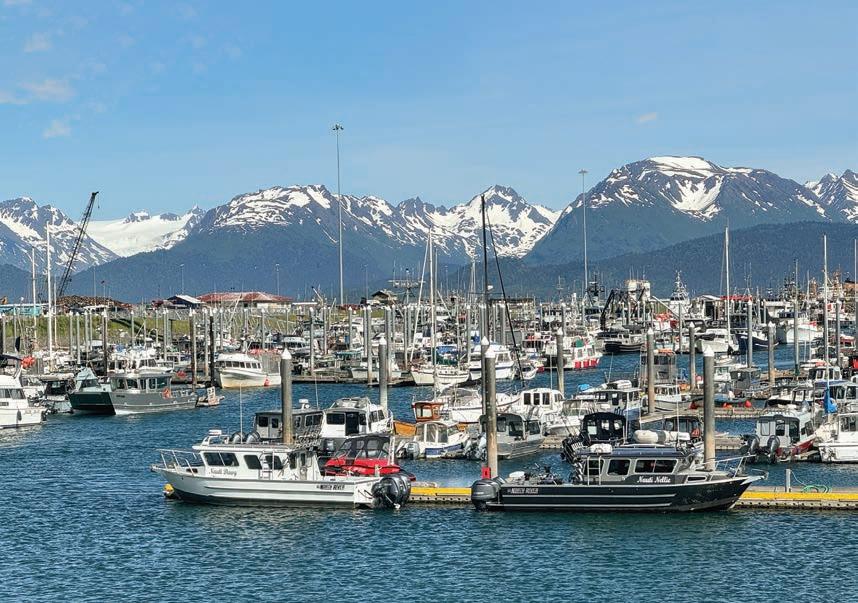
On summer mornings across Alaska, the signs of salmon season begin quietly. Harbor lights flicker on before dawn as skippers check gear and fuel lines. Nets are stacked, rods rigged and coffee cups balanced on gunwales while boats ease away from docks.
Beneath the surface, the first returning salmon move through cold coastal waters, beginning the final leg of a journey that may have started years earlier in a hatchery far from view.
For fishermen, those returning fish mark the start of another season on the water. For the hatchery crews that raised them, the moment represents the culmination of work that began long before the first nets were set.
Across Alaska, salmon enhancement programs guide fish through the most vulnerable stages of life. Eggs are incubated in carefully controlled systems, juvenile fish are monitored as they grow and releases are timed so young salmon enter the
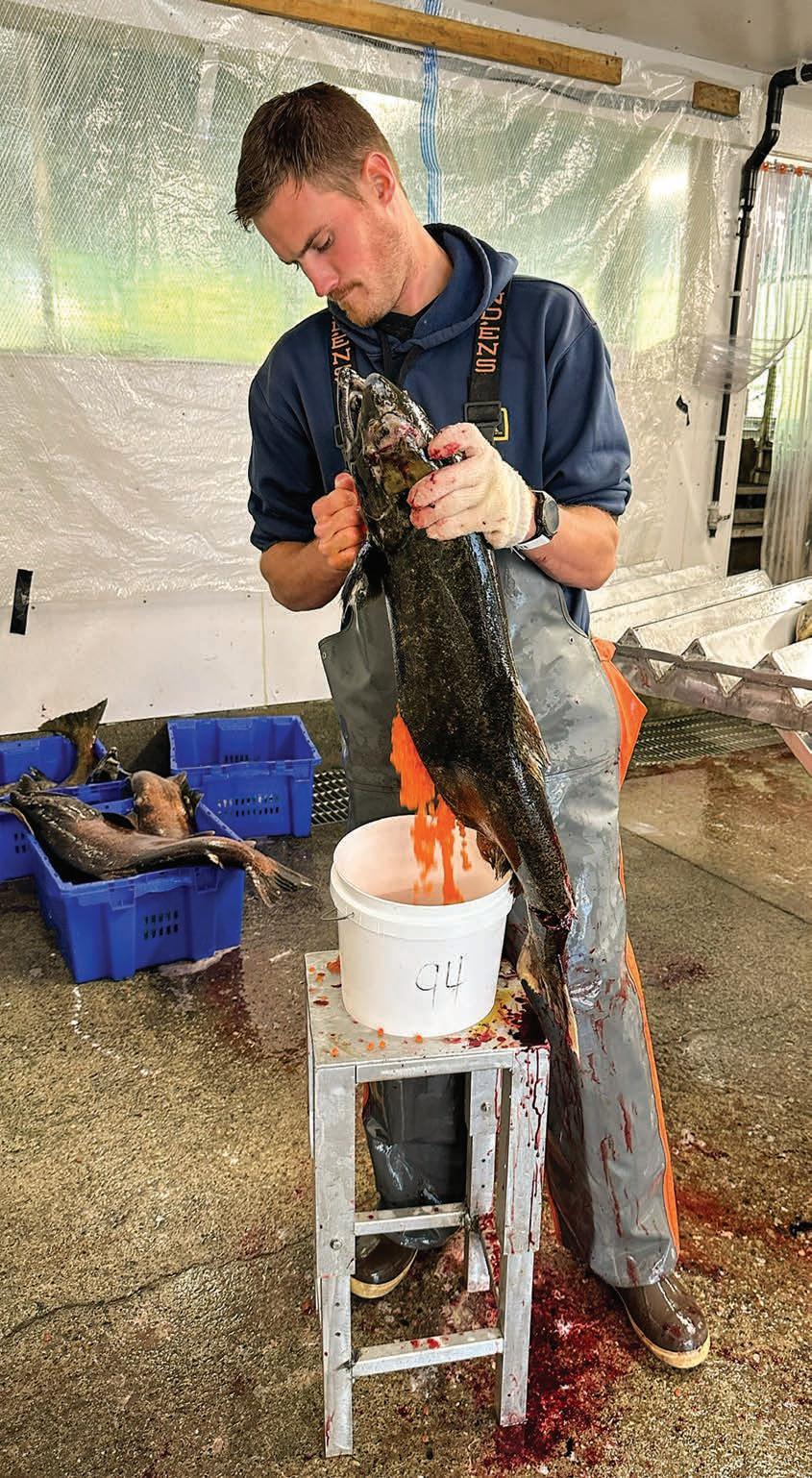
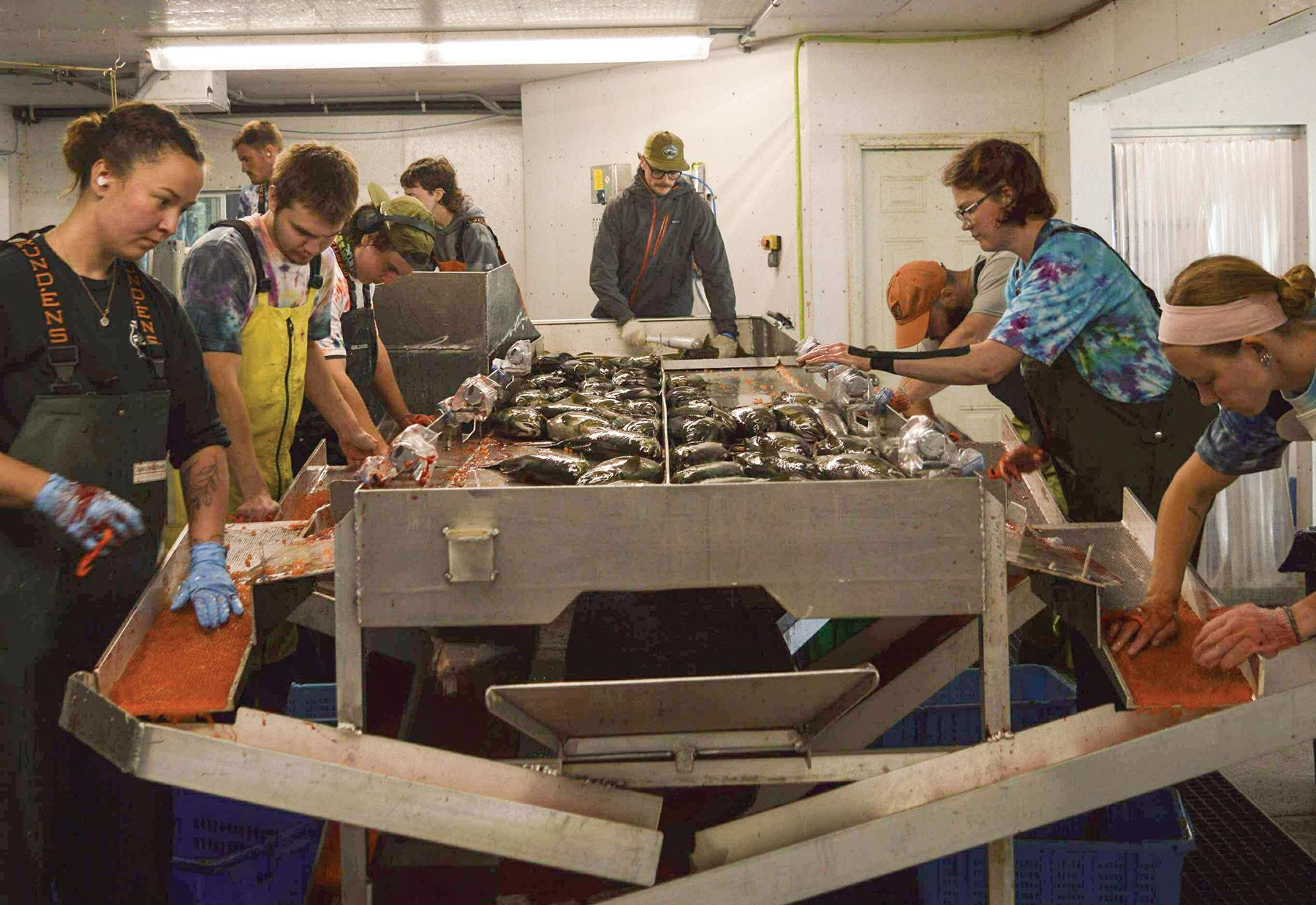
Staff members conduct a chum salmon spawn, stripping eggs at Hidden Falls Hatchery on Baranof Island.
culturist
fish tech
wild when their chances of survival are strongest. After that, the fish spend years feeding and migrating in the open ocean before returning as adults to Alaska’s rivers and coastal waters.
Behind those returning runs are the hatchery managers, technicians and field crewmembers who spend their careers supporting the earliest stages of the salmon lifecycle. Much of their work happens far from towns and road systems in facilities where fish culture, infrastructure maintenance and daily life are closely intertwined.
Hidden Falls Hatchery sits on the northeast corner of Baranof Island in Southeast Alaska, surrounded by steep mountains, dense forest and open saltwater. The facility lies far from the road system and can only be reached by boat or floatplane. Staff members live on site in housing provided by the hatchery, and electricity for the entire operation is generated through a hydroelectric system. For hatchery
manager Kevin Connell, that setting shapes nearly every aspect of the work.
Connell entered the fisheries world while in college, beginning as an intern working with trout in Mississippi. After graduating from Ohio’s Bowling Green State University in 2017, he moved to Alaska and accepted a fish technician position with Prince William Sound Aquaculture Corporation’s AFK Hatchery, where he worked with chum and pink salmon.
Within a year he advanced to a culturist position, supervising technicians and helping oversee daily operations. In 2020, he joined the Northern Southeast Regional Aquaculture Association at Hidden Falls as assistant manager and was promoted to manager in 2023.
Hidden Falls is one of the largest salmon enhancement facilities in Southeast Alaska. Each season the hatchery handles massive production numbers, taking approximately 190 million chum eggs along with nearly eight million coho eggs and about two
million Chinook eggs. Those fish are raised through early life stages before being released to support fisheries throughout the region.
Despite the scale of production, Connell says success still depends on careful attention at every stage of the process. Spawning, in particular, requires intense focus. During peak egg takes, hatchery crews may collect more than 10 million eggs and handle over 10,000 adult salmon in a single day. Timing, fish condition and handling techniques all influence survival rates years later when those fish return from the ocean.
Once fertilized, eggs are placed into incubators where cold, oxygenated water flows continuously across them. The staff monitors development closely and removes eggs that fail to mature properly to prevent disease from spreading to healthy fish. After the salmon hatch and absorb nutrients from their yolk sacs, they remain protected until they begin feeding. At that stage they are transferred into
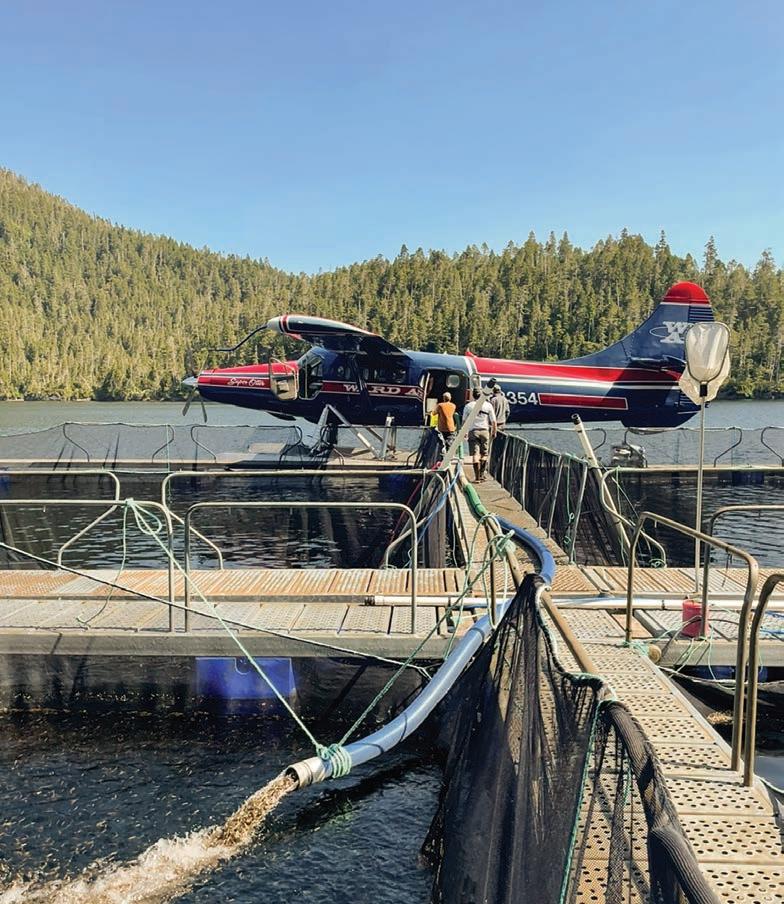
Coho fry are transferred via Ward Air Super Otter from Hidden Falls Hatchery into net pens at Deer Lake – also on Baranof Island – where they’ll be reared and released. “You’re watching months of work head out into the wild,” project lead Travis Russell says. “That’s when you really see what the project is accomplishing.” (GABE PEACHY)
raceways, where feeding schedules, oxygen levels and fish density must be carefully managed.
“When you’re dealing with tens of millions of fish, even small changes can have big biological impacts,” Connell said.
Operating a hatchery of this scale in a roadless location also requires extensive planning. Everything needed to keep the facility running, including fish feed, equipment, fuel, groceries and seasonal staff, must arrive by boat or floatplane. Weather delays are common, and shipments often need to be scheduled weeks in advance.
“You have to think ahead constantly,” Connell said. “You can’t just run to town if something breaks. You need backup systems and spare parts ready.”
Hidden Falls also serves as a hub within Southeast Alaska’s salmon enhancement network. Eggs and juvenile fish are transferred to other rearing locations, and release schedules
are coordinated with other hatcheries to help optimize survival in the ocean.
Because the staff lives on site, the culture of the crew becomes just as important as the infrastructure. Connell says strong communication and teamwork are essential when work and daily life overlap in a remote setting.
“When everyone depends on each other, both at work and outside of work, the team culture really matters,” he said. “When that culture is strong, everything else runs better too.”
Life at Hidden Falls also offers constant contact with the surrounding wilderness. Fishing, crabbing and wildlife viewing are common parts of daily life outside working hours. While earlier generations of hatchery staff often relied heavily on hunting and trapping for subsistence, the current crew tends to focus more on fishing and outdoor recreation. The shift reflects changing lifestyles among younger
staff, even in a place where nature still defines the rhythm of daily life.
For Connell, the most rewarding part of the job comes when the entire system works as intended.
“Hidden Falls is a complex operation,” he said. “When the team is working well together and the fish are thriving, you know the effort is paying off.”
Not far from Hidden Falls, another salmon program unfolds in an even more remote setting.
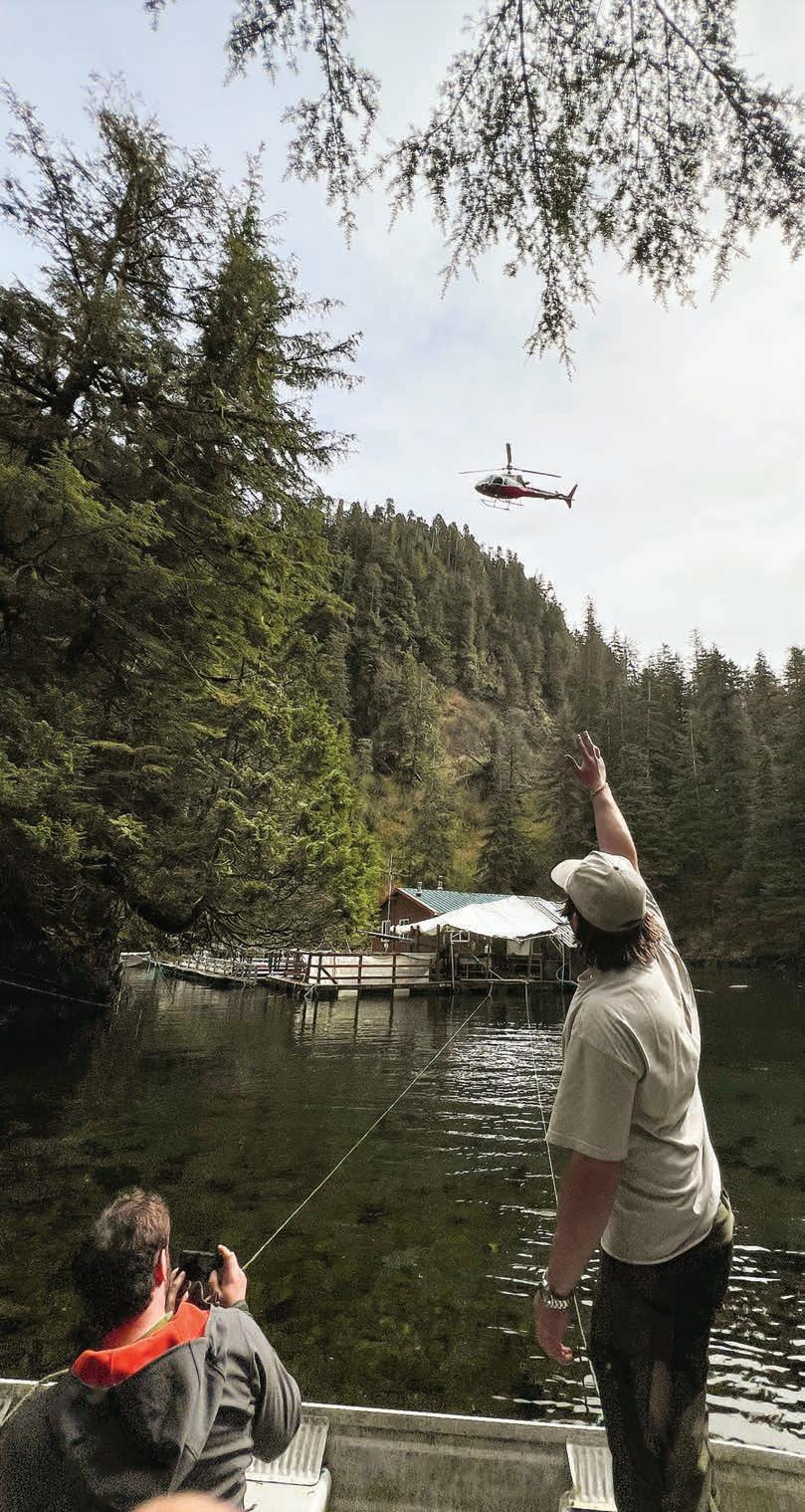
Deer Lake lies on the southeastern corner of Baranof Island and serves as a satellite project connected to the hatchery. Unlike Hidden Falls, the site functions more like a small field camp than a traditional hatchery facility.
Travis Russell leads the Deer Lake project, a position he reached after first discovering fisheries work during college. While studying wildlife and fisheries management at Northern Michigan University, Russell learned about the University of Alaska Southeast’s aquaculture semester program in Sitka. After enrolling in the program and completing an internship at Medvejie Hatchery, he developed a strong interest in hatchery operations.
During the program he attended a presentation about the Deer Lake project and immediately recognized the opportunity it offered. When a technician position opened, he applied and joined the project. He advanced to project leader within a few seasons.
The Deer Lake site reflects the selfsufficient nature of Southeast Alaska fisheries work. Staff members live in a cabin near the lake that is powered by a generator and battery system, heated by a wood stove and supplied with gravity-fed water from the lake. Boats, generators and equipment must all be maintained on site, and crews often work for weeks at a time without direct outside support.
Each year the project raises roughly three million coho salmon from fry to smolt before releasing them to the ocean. Unlike traditional hatcheries, Deer Lake does not incubate eggs. Instead, very young coho fry are
produced at Hidden Falls Hatchery and flown to the lake by floatplane, where they are stocked into net pens to grow throughout the season, which essentially makes it an acclimation, or rearing, pond.
The geography of the lake presents a unique challenge. Deer Lake drains through a steep gorge and over a waterfall too high for juvenile salmon to survive. To address that obstacle, crews install a smolt weir and pipeline that safely carries outmigrating fish past the falls and down to Mist Cove, where they enter saltwater.
During peak migration periods, a crew member remains stationed at the pipeline’s float house around the clock, monitoring fish movement and collecting biological data as smolts begin their journey to the ocean.
Daily life at Deer Lake blends fish culture with the responsibilities of maintaining a remote camp. Staff feed fish, monitor the lake environment and maintain the infrastructure that keeps the project running. Plankton surveys help track the lake’s productivity, nets must be cleaned regularly and engines, boats and trails require routine maintenance.
A small crew of four people typically runs the entire project. Many are drawn to the job because they enjoy remote living and outdoor recreation, including hiking, fishing and subsistence hunting.
Completing a season at Deer Lake has become something of a badge of honor within the organization.
“It takes people who can adapt and solve problems,” Russell said. “Out here you’re working with fish, but you’re also maintaining a camp and figuring things out as they come up.”
The project also includes costrecovery harvests in nearby Mist Cove. As adult coho return, a contracted purse seiner harvests a portion of the fish to help offset project costs. The program provides additional fishing opportunities for communities throughout southern Chatham Strait, particularly for the region’s troll fleet.
For Russell, the most rewarding moments come when thousands of smolts leave the lake and begin their
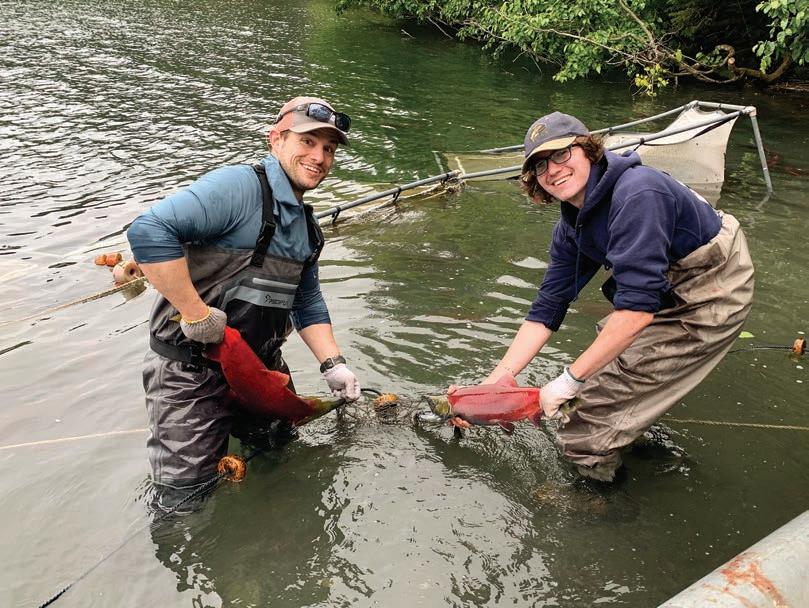
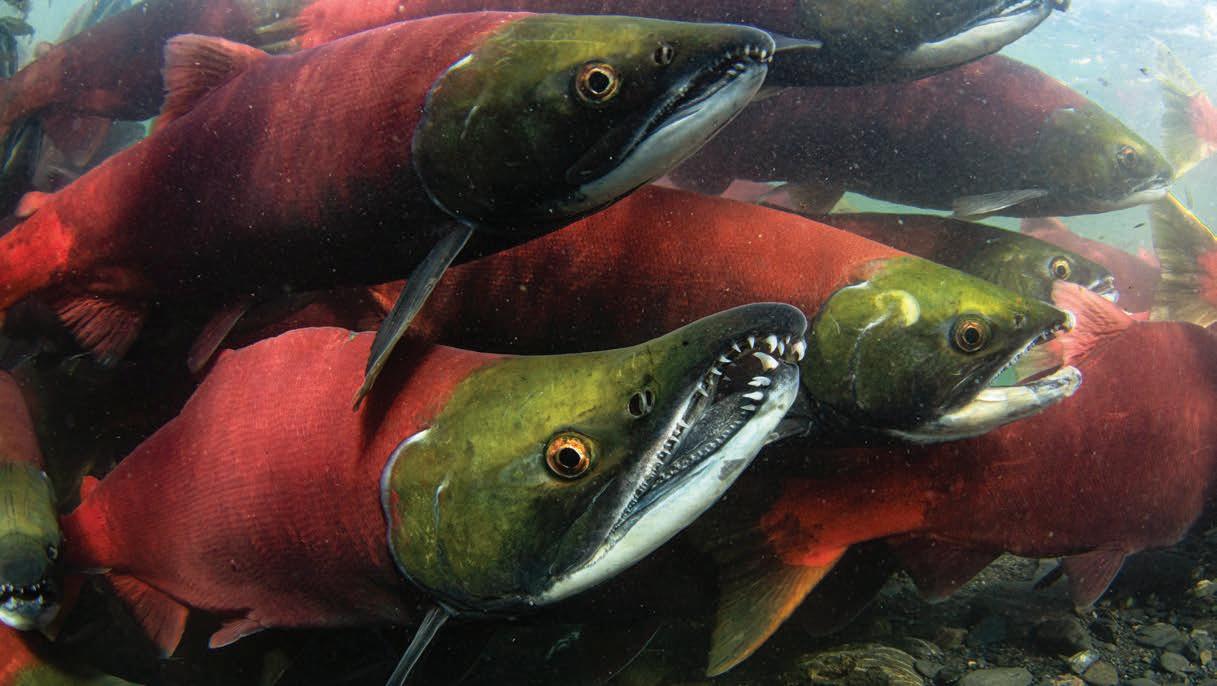
Sorting mature sockeye salmon in preparation for egg take at Bear Lake Hatchery, a Kenai Peninsula facility that supports Cook Inlet fisheries, is a job that hatchery lead Ryan Schuman (left) takes pride in. “The best part is watching people out enjoying the fish we raise,” he says. (LAUREN DEAL)
journey toward the ocean.
“You’re watching months of work head out into the wild,” he said. “That’s when you really see what the project is accomplishing.”
Hundreds of miles away on Alaska’s Kenai Peninsula, another hatchery program is preparing salmon that will eventually return to support fisheries in Cook Inlet.
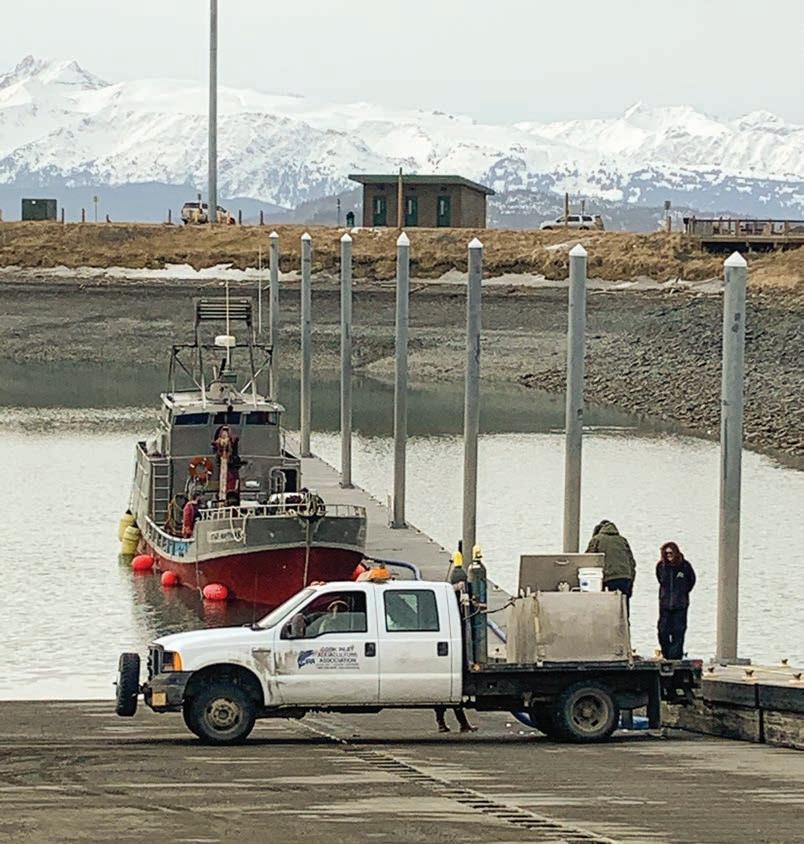
At Trail Lakes Hatchery near Seward, Ryan Schuman oversees operations for
the Cook Inlet Aquaculture Association. Schuman became manager of the facility in 2024 after previously managing Gunnuk Creek Hatchery in Southeast Alaska for several years.
Trail Lakes raises several groups of fish, including Bear Lake sockeye, Tutka Bay Lagoon sockeye and Bear Lake coho. The process begins with broodstock collection in streams feeding Bear Lake, where hatchery crews capture returning adults using beach seines. Males and females are separated before eggs and milt are extracted to fertilize the next
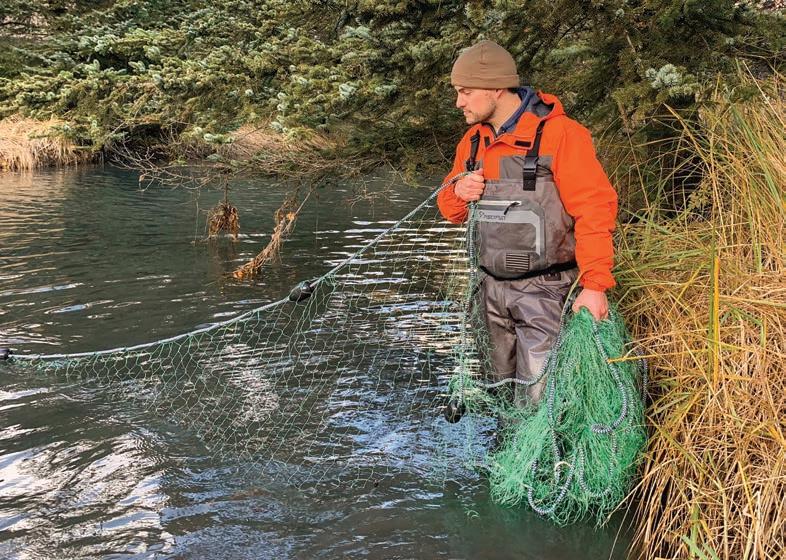
generation of salmon.
Fertilized eggs are transported back to the hatchery, disinfected and placed into incubators, where the staff carefully monitors their development. After several weeks, hatchery crews perform a process known as “shock and pick,” which removes eggs that failed to develop properly and prevents disease from spreading among healthy fish.
Once the eggs hatch, the young salmon remain hidden in gravel-like substrate while absorbing nutrients from their yolk sacs. When the yolk is nearly depleted, they emerge and begin feeding. At that stage, the fish are moved from the incubators into raceways through a drain hose.
“The fish essentially take a long waterslide out of the incubator to their future home,” Schuman said.
Over the following months, hatchery staff monitor growth, adjust feeding schedules and track fish health. Some fish are released early as fry weighing only fractions of a gram, allowing them to grow naturally in nearby lakes. Others remain longer and are released as smolts ready to transition to saltwater.
Release operations begin in April and continue into early summer. In some cases, the fish are transported by truck, plane or boat to remote lakes and waterways.
Another major part of the program takes place at the Bear Creek weir near Seward. During the height of the salmon run, the weir operates nearly nonstop as staff monitor returning sockeye and ensure enough fish continue upstream to spawn.
Seasonal technicians staff the site around the clock for eight to 10 weeks each summer, passing fish through the structure and collecting broodstock needed to continue the hatchery cycle. The work is demanding but provides valuable hands-on experience for students and recent graduates pursuing careers in fisheries science.
For Schuman, the most rewarding aspect of the job is seeing the results where they matter most.
“The best part is watching people out enjoying the fish we raise,” he said.
For Connell, Russell and Schuman, the work follows a cycle that never really stops. As one group of fish moves out into the ocean, planning and preparation for the next brood year are already underway.
There are eggs to collect, systems to maintain and young fish to monitor. Seasonal crews will arrive, projects will begin again and another generation of salmon will start its earliest stages of life in hatcheries and remote field sites across Alaska.
For the people doing this work, that rhythm is simply part of the job. Each season brings a new round of challenges, new crews and the important work of raising the next generation of Alaska’s salmon. ASJ
Editor’s note: Check out the following websites for the hatcheries featured in this feature: Hidden Falls (nsraa.org/?page_ id=391), Deer Mountain (ssraa.org/deermountain) and Trail Lakes (ciaanet.org/ trail-lakes-hatchery-ciaas-central-hub). Tiffany Herrington is a writer based in the Seattle area.

BY BRIAN KELLY
“
Learn to fish with a jig, Sonny, and you’ll catch fish no matter where you are!”
That pearl of wisdom came from one of my mentors, the late Captain Dan Chimelak. I worked as a mate for “Captain Dan” on his charter boat around the Great Lakes, and he loved to jig up anything that swam. He would often comment that “jigging” is a thinking man’s game – that you need to develop a feel and sense for the right action that you, the angler, impart; it’s all on you to figure it out. No truer words have been spoken!
While the mighty captain was focused on warmwater species when teaching his young first mate about
jigs, the same rules would apply when said mate ventured out on his own in search of those crazy silver-sided fish he had been hearing so much about.
When I started my salmonid journey back in the early 1990s in the Great Lakes region, jigs weren’t much of a tackle consideration for any members of the Oncorhynchus family. River fishing was still a bottom-bouncing game, as float fishing was still just a huge underground movement happening across the border in Canada.
But as the shift to float gear took hold south of the border, jigs started to show up underneath floats. Small jigs
carrying live bait were found to be super effective, as they kept the bait down in the strike zone while adding color to the presentation. Meanwhile, out West, a jig and float revolution was also taking place. Instead of a means to present bait, an unbaited marabou jig itself was the target, and it proved irresistible to ocean-bright steelhead.
I witnessed this on Vancouver Island in the late ’90s, when steelhead fresh from the ocean found this presentation irresistible. As we moved into the 2000s, crafty anglers in both the Great Lakes and Pacific Northwest were using this same approach on staging coho and kings that were making their spawning runs back to
their native streams. Eventually, the float was removed and anglers began to realize that a “twitched” jig was pretty darned effective as well, and a star was born.
Twitching jigs for salmon and steelhead that are migrating upstream has become all the rage. All the TV honks have been singing the praises of this technique for a few years now, although their ploy is to sell jigs for their sponsors rather than teach anglers how to properly fish a jig.
The most common mistakes I see novice anglers make when learning to twitch are not matching the proper jig to the water conditions and using too wild of a jigging motion or cadence.
First, let’s start with the right jig for the conditions you are facing, since matching the presentation is the first step on the road to success. Normal water conditions – think 2 to 3 feet of visibility – are great for your standard, off-the-shelf color combos like pink and white or pink and purple, or anything with pink in the color scheme. It is tough to beat a pink jig when the water is running that lovely greenish hue with the right amount of stain to keep the fish from being overly wary.
As far as jig size in these water conditions, that will depend on the size of the watershed you are fishing. A ¼-ounce jig will do the trick on most small- to medium-sized rivers, but bump up to a ⅜-ounce model for larger water and deeper holes.
Low- and clear-water conditions require some stealth tactics; neutral colors like black, purple or even olive will do the trick when the fish ignore the loud, gaudy colors. Smaller profiles with less hair on the jig are the way to go, as is stepping down a jig size to ⅛ ounce. It’s all about quiet entry and subtle presentations when the going gets tough. The same goes for the rest of your terminal tackle; go with lighter line or leaders when a lack of rain has your favorite stream low and clear.
The worst conditions of all, dreaded high and dirty water, isn’t the end of the world for a jig bite. Break out the big and bright color combos, which just happen to be what most commercially



tied twitching jigs seem to be on the store shelves these days.
Since the fish tend to hug the banks in these conditions, find an area with a nice current break – usually a log pinned into the bank – and get the jig down and in their face. Heavier is better in high water, and this is when the ½- or ¾-ounce models get the job done.
Work that piece of water over after you find a grabby fish. Even as salmon are compelled to move upstream in high water, they tend to pile up in areas with a nice current break out of the heavy flows rushing down the main river channel.
As I said earlier, a wild jigging motion is a big mistake newbie jig anglers often make. No need to snap the jig like you would fishing for halibut or rockfish. While there are times none of the salmon species will react to a big hopping motion, finding the proper cadence is key to long-term jigging success.
The beauty of the jig, no matter whether you’re targeting salmon in freshwater or the open ocean, is that the fish will follow the lure even if they don’t hit it. This means you have their interest but the action isn’t just right. This is why to always wear your
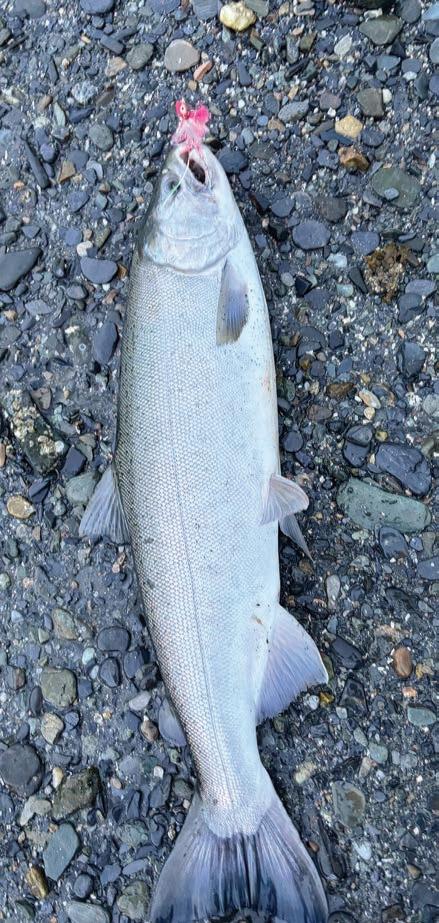
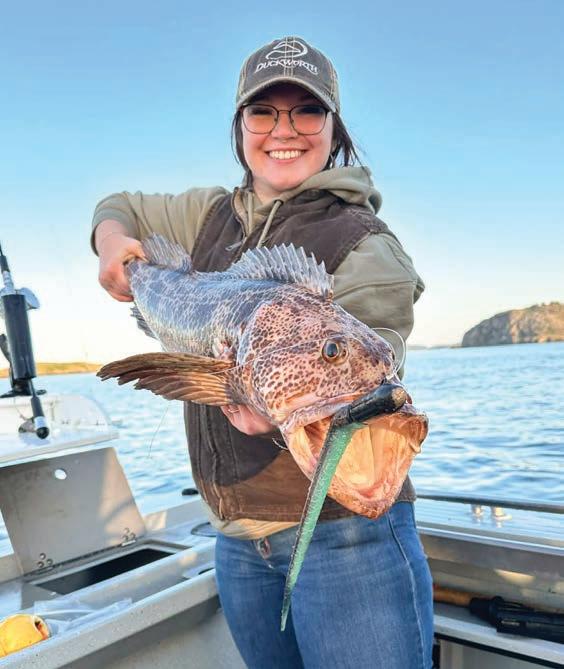
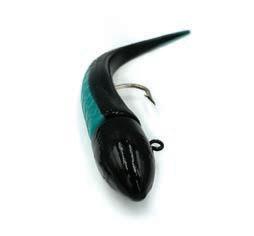
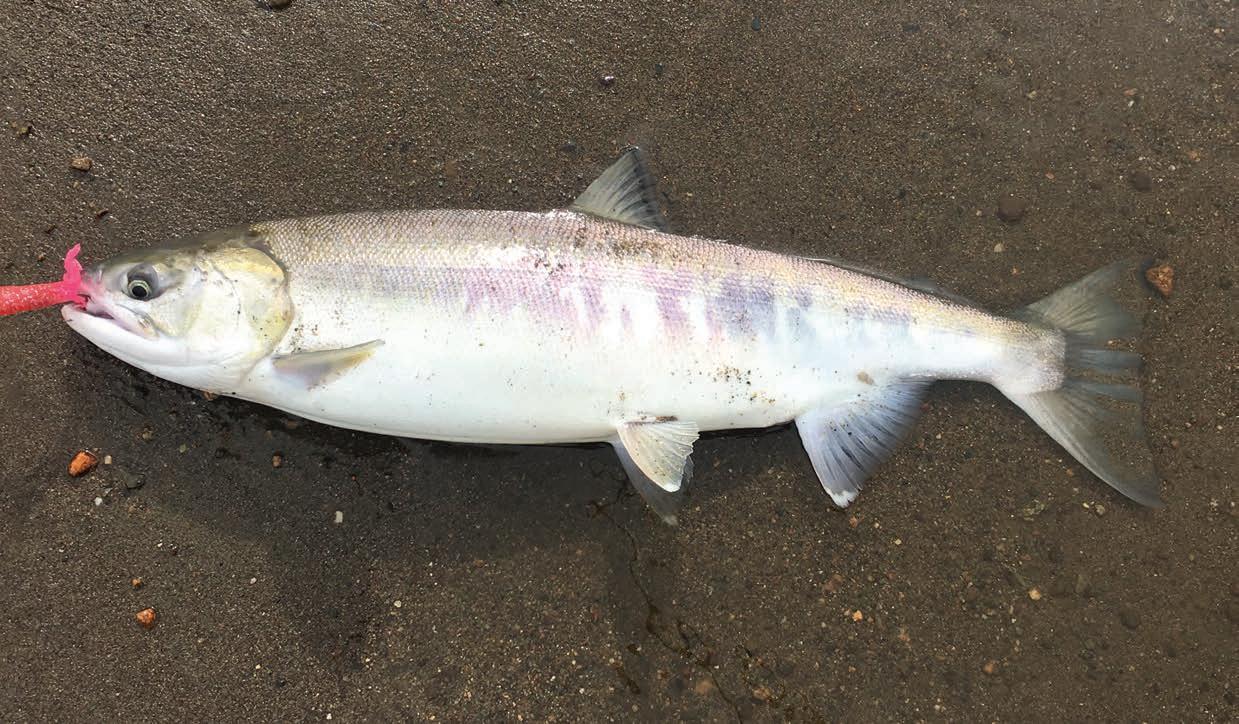
This pink jig was a result of layering different synthetic materials, and the silvers ate it without hesitation. “While there are plenty of commercially tied jig options available,” the author writes, “there is a feeling of great satisfaction that comes with catching fish on your own patterns, much like tying flies.” (BRIAN KELLY)
polarized sunglasses; as you fish that jig all the way back to shore or the boat, watch for the reaction of the fish.
My go-to cadence to start out is usually a faster retrieve with short twitches; I call this “the fish finder.” The most active fish in the school will react to this retrieve and either smash it or chase it. Once I know I have salmon around me, I will change up my retrieve cadence to match the mood of that particular group of fish, whether they want it slow or fast, or with long or short pauses. This is the biggest key to overall jig success: having the mental acuity to recognize that it’s time to

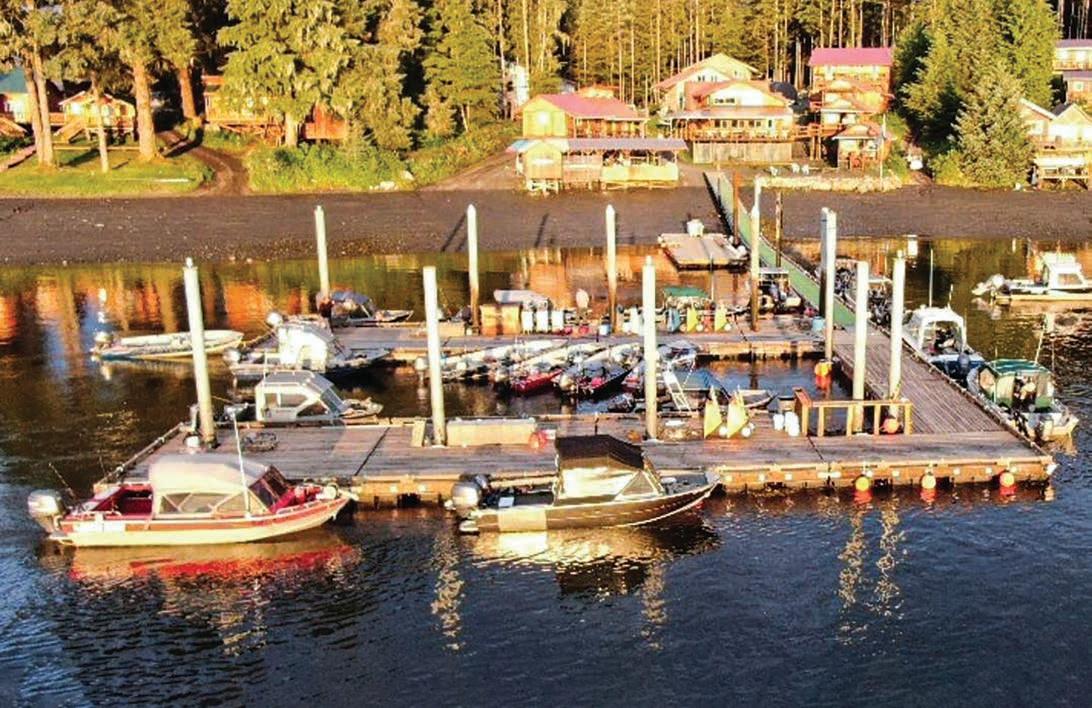
Island Point Lodge offers a 7-day, 6-night self-guided Alaska Salmon, Halibut, and Dungeness Crab trip for $2,699. The trip includes lodging, meals, fishing rods and reels, boat fuel, and fish cleaning/packaging. Add a self-guided Black Bear hunt at
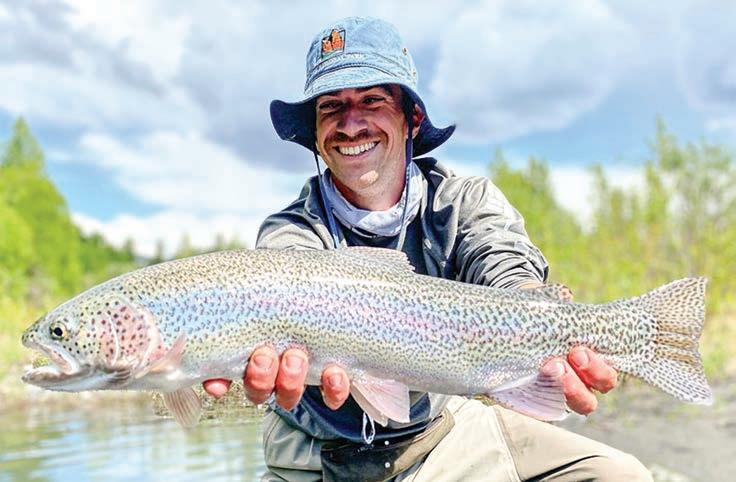
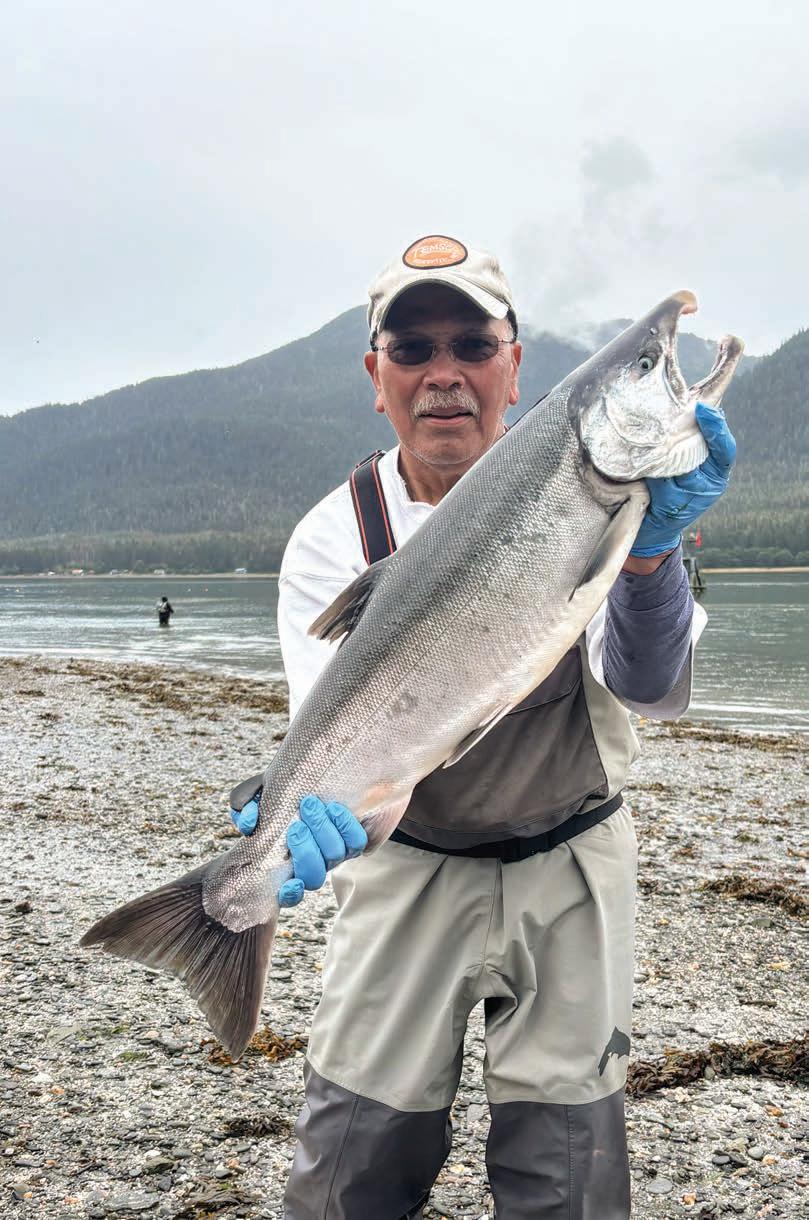
For successful salmon slayers like Juneau’s Euming Suewing, who took this hatchery silver on a chartreuse craft hair jig, the feeling of a salmon inhaling a twitching jig is exhilarating. As Kelly writes, the tactic “has become all the rage” in rivers. (BRIAN KELLY)
change up the speed and aggression of your retrieve. If your bite window dies, a simple change to your cadence is the key to continued success.
A prime example of this occurred while chasing Kenai Peninsula coho with my friend and mentor Jim Stepulkoski. We had plenty of fish around and were getting the bite dialed in pretty good … until we ran into a pod of fresh fish that was boiling and chasing our jigs but just not committing.
Jim decided to play with the retrieve, letting the jig sit on the bottom for what seemed like an eternity, then giving it a couple twitches. Weird, but that’s what got the coho to commit. We watched them flare their gill plates and suck in the jig, just like a bass with a rubber worm.
While there are plenty of commercially tied jig options available, there is a feeling of great satisfaction that comes with catching fish on your own patterns, much like tying flies. The assortment of materials available is immense, especially the synthetic varieties used by the spey folks.
Our group started off tying jig versions of the classic saltwater fly, the Dolly Llama, as a changeup from the monotony of casting spinners all day. This shift in thinking not only saved our aging and aching shoulders but allowed us to fine-tune patterns and colors to match the water conditions and the fishes’ ever-changing moods.
I swear I can hear old Captain Dan cackle when I land a feisty silver on a homemade jig.
“Nice work, Sonny. I told you!” ASJ
Jigs themselves have come a long way since I first started fishing in Alaska. Gone are the cheap, flimsy bronze hooks designed for panfish or walleye that would bend out on salmon applications. Look for jigs poured on a 2X-strong, black, nickel-finish hook, like the Gamakatsu 604 jig hook. Lure Parts Online sells these hooks or jigs poured on them and are highly recommended. Another good source for plain jigs to tie with are found on
eBay, as garage shop types offer a surprising amount of jig styles on stout saltwater hooks.
Lately, my go-to jig design has been to clip the hook above the bend and tie in a wire loop, which I can slide a heavy-duty octopus-style hook into. This allows me to change out hooks if necessary, and I find a much higher hook-to-land ratio versus a fixed-hook jig design. I highlighted this style in past issues, so give them a shot this season! BK



Editor’s note: Scott Haugen has lived in some unique parts of Alaska, and traveled to many others. But this trip with his father was one of the most memorable of his life!
BY SCOTT HAUGEN
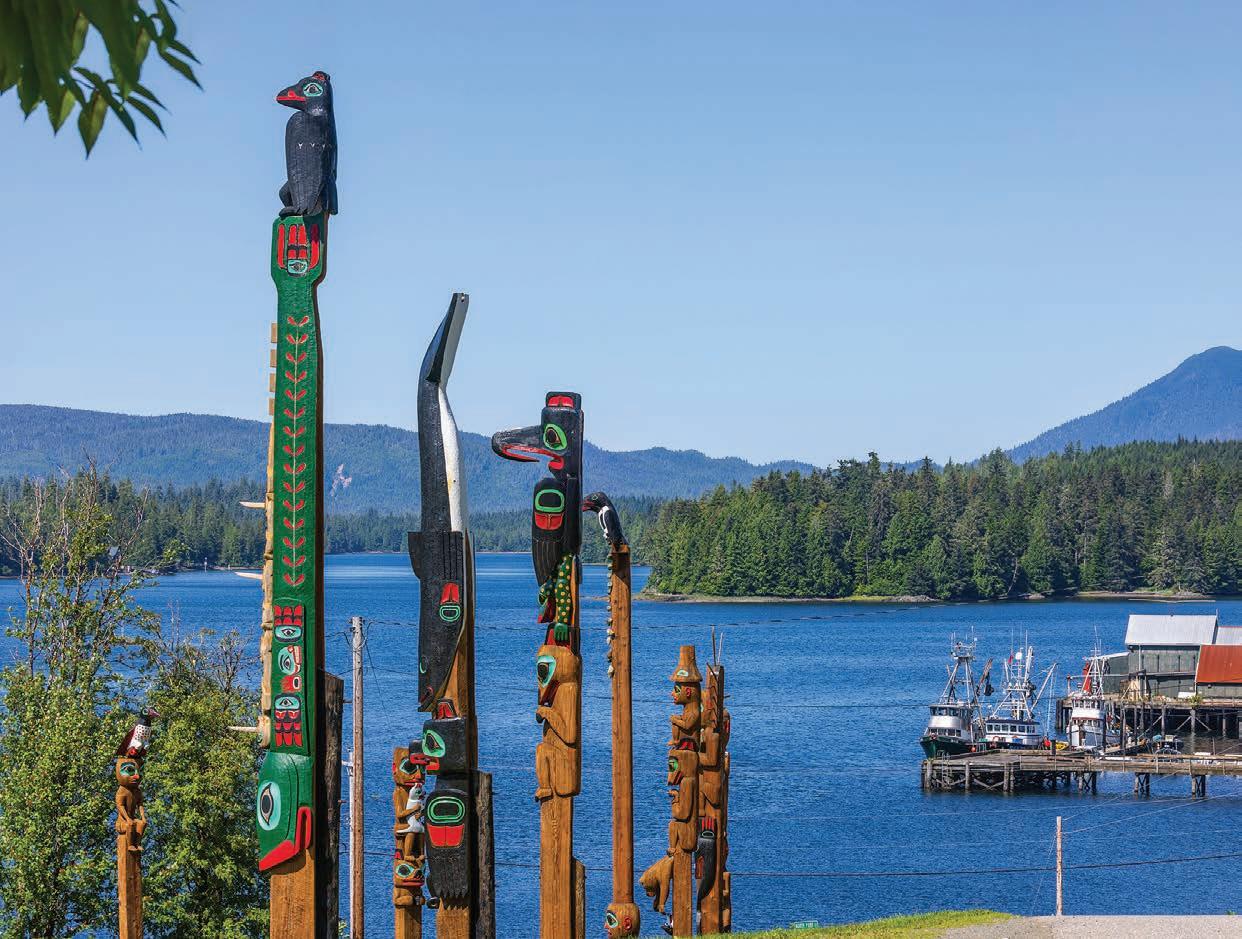
The lush, grassy knoll overlooking Klawock Harbor was soft beneath my feet. The midday sky shined cobalt blue. It was warm on this August day. My mind was sent adrift while admiring the many permanent fixtures in Totem Park. Then the silence was broken by a sound that’s very familiar to those who’ve spent any time in Alaska: basketballs bouncing on a hardwood floor. The sounds took my mind even further astray.
At the bottom of the hill sat Klawock School. The metal doors to the gym were open. Motioning my 84-year-old father, Jerry Haugen, to join me, we strolled down the
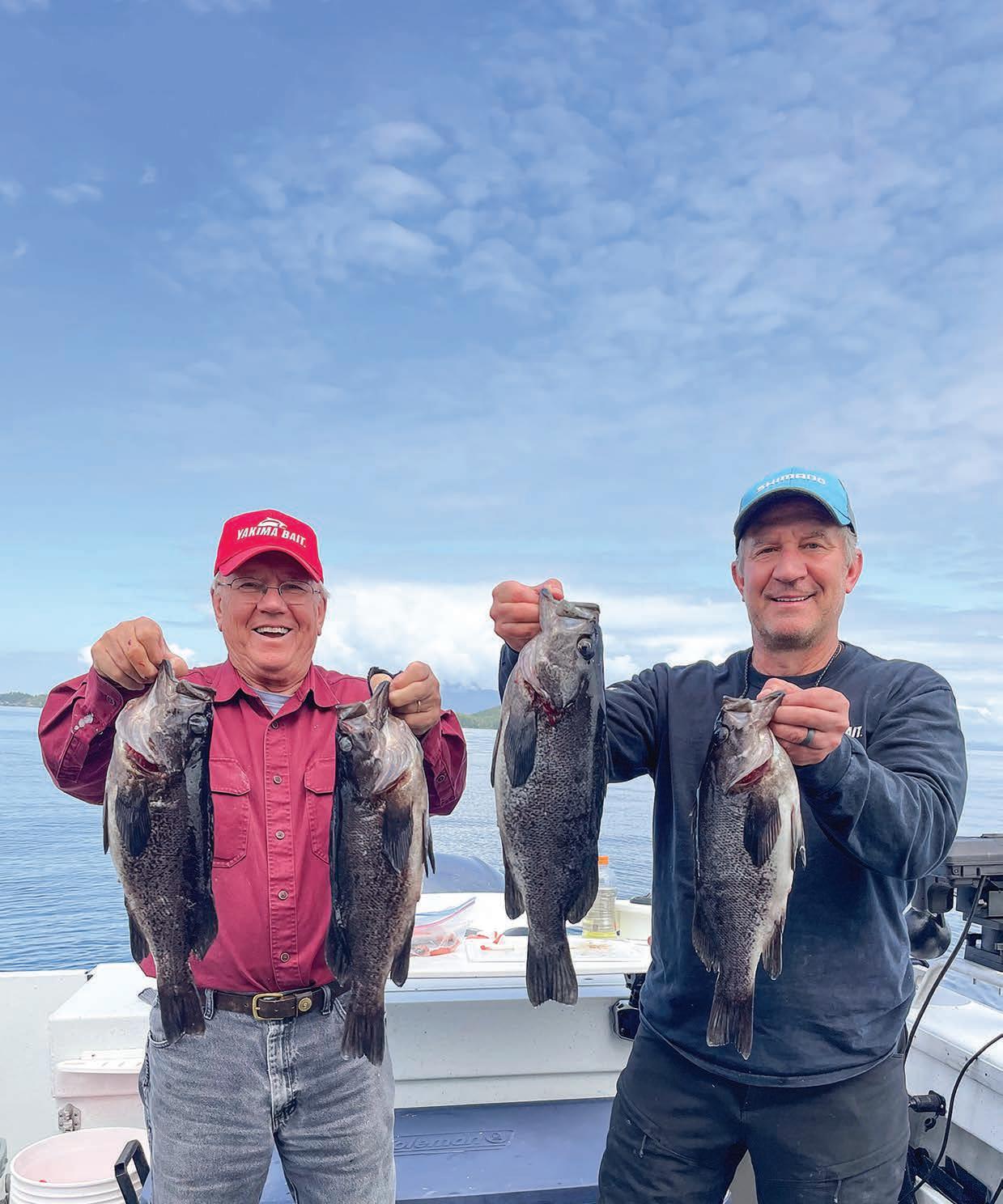
Author Scott Haugen and his father Jerry had a memorable outdoors adventure together on Prince of Wales Island. They were all smiles after hauling in a number of black bass, Jerry’s first time casting for these feisty and tasty rockfish in Southeast Alaska.
The culture, places and people are what often make visiting remote destinations in Alaska like POW Island so special. Klawock’s Totem Park is no exception. (SCOTT HAUGEN)
hill, admiring more totem poles along the way.
Hanging from the ceiling inside the gym were numerous regional and state championship banners, including the girls basketball state title from the 1995-96 season. That’s the year they beat Anaktuvuk Pass in a nationally televised game played in Anchorage. I was the coach of the second-place team. For four years I lived, taught school and coached basketball in Anaktuvuk Pass.
Two high school boys approached Dad and I as we stood at center court and gazed up at the banners. “Whatchya guys doing?” one kindly asked. Pointing to the banner that marked our runner-up finish, I asked the young man about it. “Yes, sir; my mom played on that team,” he smiled. I introduced myself. We talked
basketball, family, fishing and hunting. That’s the normal conversation in just about every village in Alaska, even the most remote ones, and in that order; basketball takes top billing.
The unexpected visit brought back many memories. For Dad, it ignited a spark. You see, he was a biology teacher for over 30 years at a big high school in Oregon, Thurston High in Springfield, which shared the same black and red colors as Klawock. Dad was the head basketball coach for many years at Thurston. He was my biology teacher and I played point guard for him. Dad was also my football and golf coach.
Since my formative years in Oregon, Dad and I have shared many wonderful times fishing and hunting in Alaska since the early 1990s. This was the perfect beginning to our weeklong adventure on Prince of Wales Island.
THIS WAS MY DAD’S first time on Prince of Wales Island. It was my third. I first set foot on the island in 2008 on a combination spring bear hunt and fishing trip. We filmed that adventure for a TV show I hosted at the time on the Outdoor Channel.
After hanging up my teaching hat with the North Slope Borough School District in the late 1990s, I landed a job as a TV host and full-time outdoors writer. Those jobs found me hunting and fishing around the world, including many places in Alaska I otherwise would have never seen. I’ve been blessed to see so much of this great state and meet some wonderful people along the way. I gave up my TV career in 2018. Freelance writing and wildlife photography are how I still make my living, and I wouldn’t change a thing. I was excited to be back on the island.


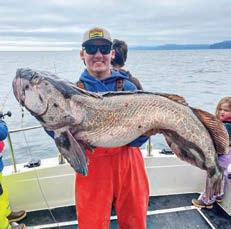
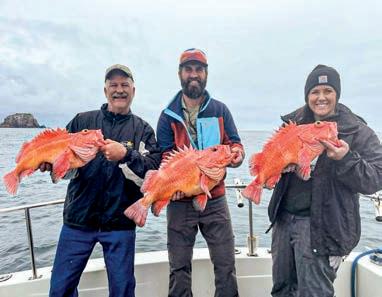
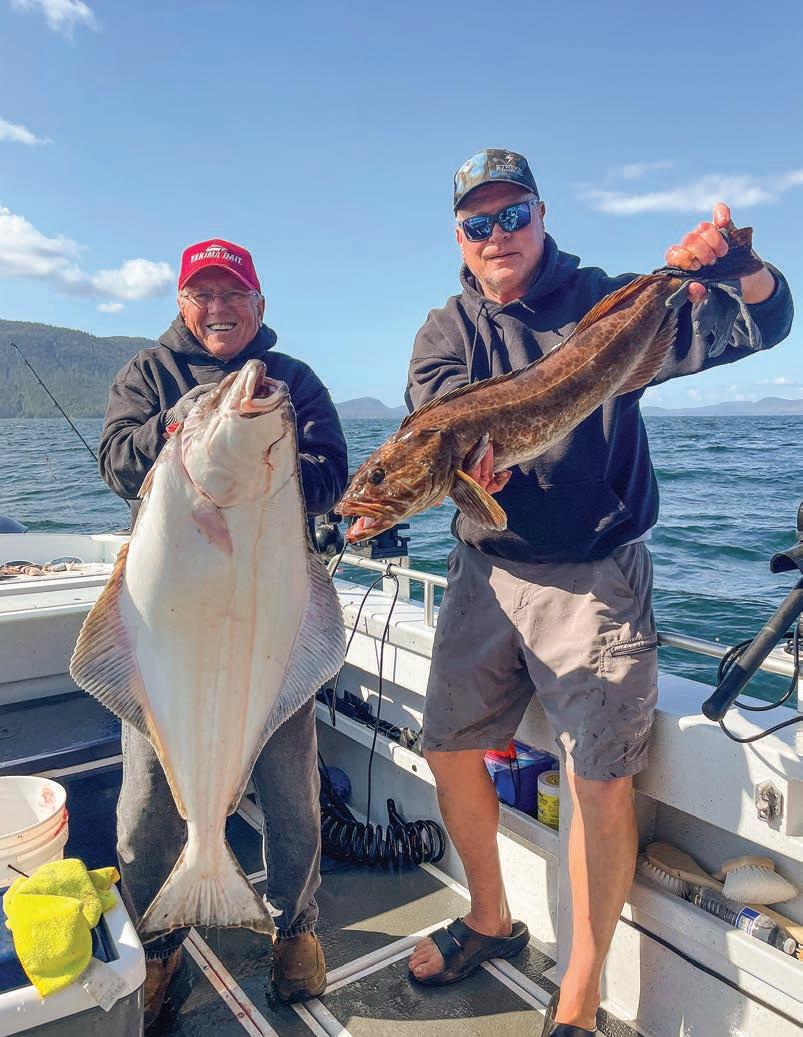
Dad and I were invited to spend a week fishing with a former student and athlete of his, Duane Leavitt. Leavitt graduated from Thurston High School in the late 1970s before I was a student there. But I knew Leavitt because I was the team’s ball boy then. Leavitt was a gifted, hard-working athlete – someone I looked up to. He also loved to hunt and fish. Following a successful business career, Leavitt sold his company and fulfilled a lifelong dream of moving to Alaska. Given the climate, the long fishing seasons and the endless waters to explore, he laid claim to Klawock as the place to be. Leavitt bought a chunk of ground with some cabins and a place to dock boats and dubbed it Stryker Bay Adventures. It’s a small operation
mostly catering to friends and family. He prefers it that way.
Leavitt doesn’t skimp on boats or gear. In fact, a while back he bought a rod company, changed the name to Stryker Rods, developed and redesigned several lines, and then sold that company. His boat is deluxe, a North River SL 29-footer with twin 300 Yamahas that get you places fast. We’d get to experience that ourselves.
THE FIRST MORNING FOUND us marking scores of salmon in the archipelago’s waters. Unfortunately, the footballfield-sized school of herring made it tough to compete with. We managed one coho on a plug-cut herring, then changed things up. While Leavitt tied
on a trolling spinner, Dad and I went with a Spin-N-Fish 3.0.
Before Dad could get his line out, a feisty coho hammered a glitter pink white belly Spin-N-Fish tipped with a pink skirt. Then my plug in mother of pearl glo belly went down. I lost the fish, but just as quickly, another salmon grabbed it. Dad landed another one and it looked like we were going to be catching limits right there. Then the bite came to a screeching halt. Three hours and four spots later, we finally put another coho in the boat.
“I’ve never seen so many baitfish,” Leavitt noted. “They’re everywhere this summer!”
Eager for a change of pace, we put the salmon rods away. Dad and I started cutting bait while Leavitt headed the boat into the middle of a nearby bay. “There’s a point out here where the lingcod hang out,” he shouted from the captain’s chair. “With the tide swing, we should be hitting it just about right.”
My father’s a river guy. He occasionally fished the ocean over the decades in Oregon, but only if there were no salmon in the rivers. Upper tributaries are Dad’s first love of fishing (mine too). But for him, trolling in the bays for salmon is a close second. During all the years he’s fished with me in Alaska, never had we targeted bottomfish. He was excited to try something new.
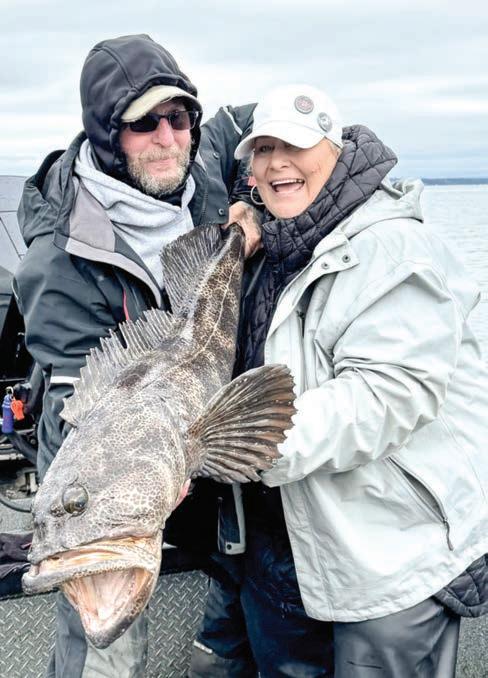
And in less than an hour, Dad landed six species of bottomfish, including a lingcod, a small halibut and a mix of rockfish. He loved the variety and not knowing what was on the other end of the line.
THE NEXT MORNING, WE headed to another bay. Dad and I were supposed to be baiting shrimp pots, but that responsibility didn’t last long. “Just enjoy the ride, Coach; we’re in no hurry,” said a smiling Leavitt.
The ocean was calm, the skies clear. Sea otters frolicked in kelp beds near rocky shores. The white heads of bald eagles shined against the backdrop of green trees in the morning light. Spouting whales could be seen across the horizon line. It was a beautiful morning for a boat ride.
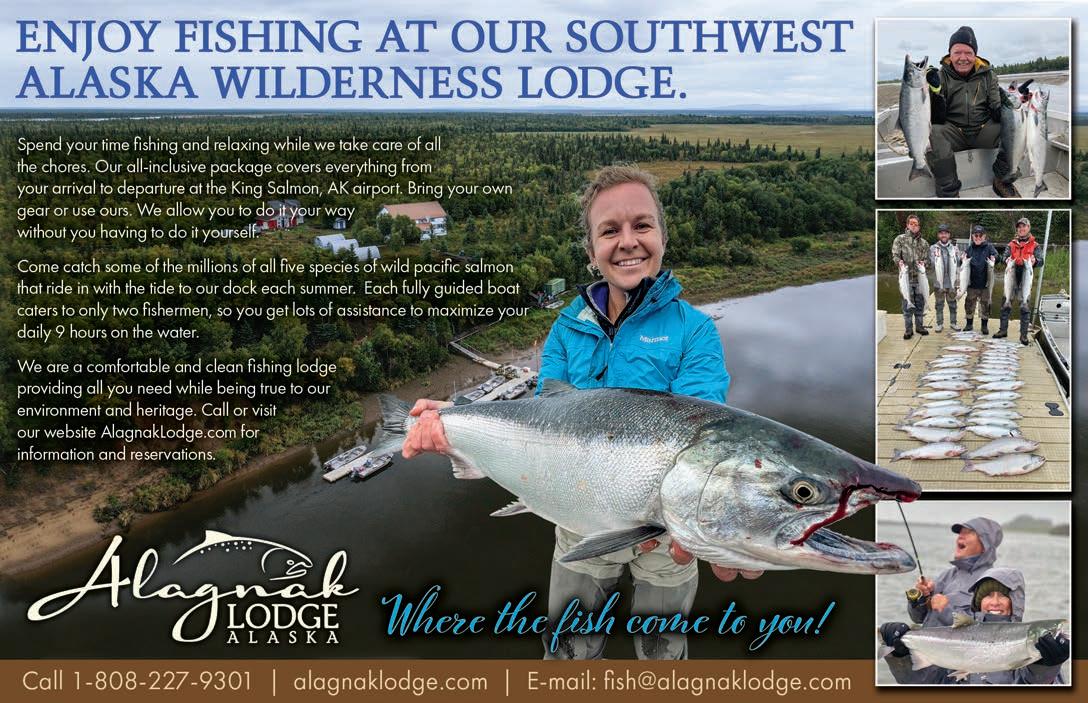
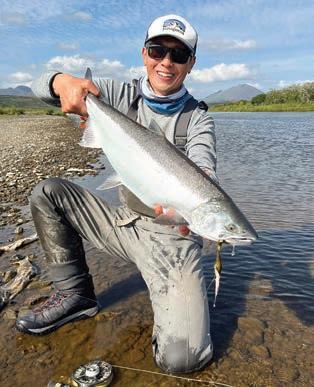
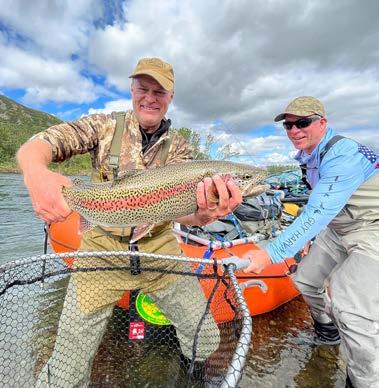
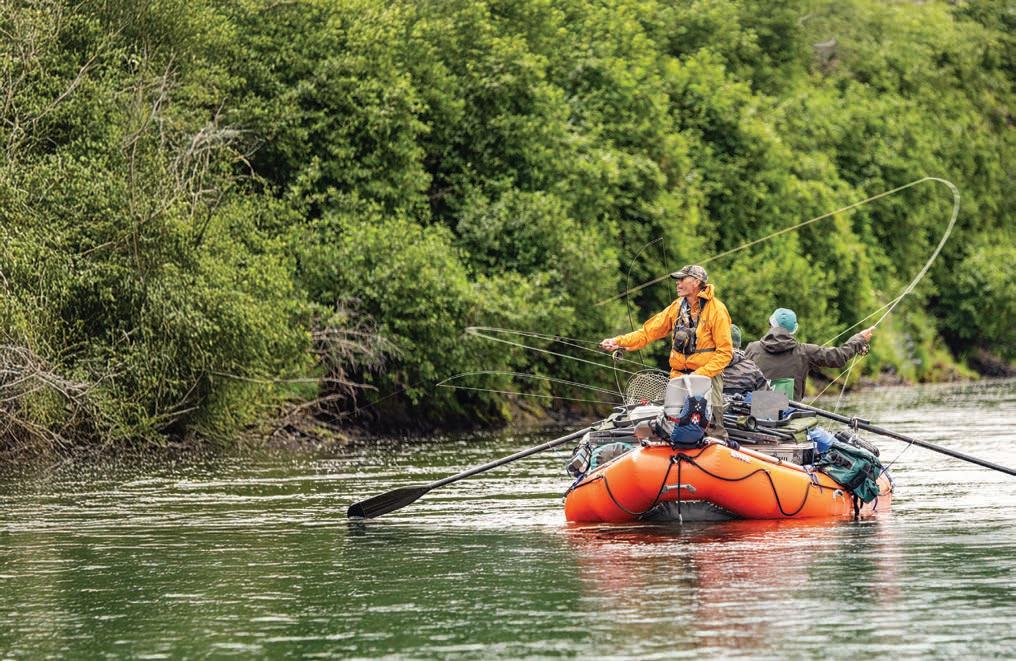
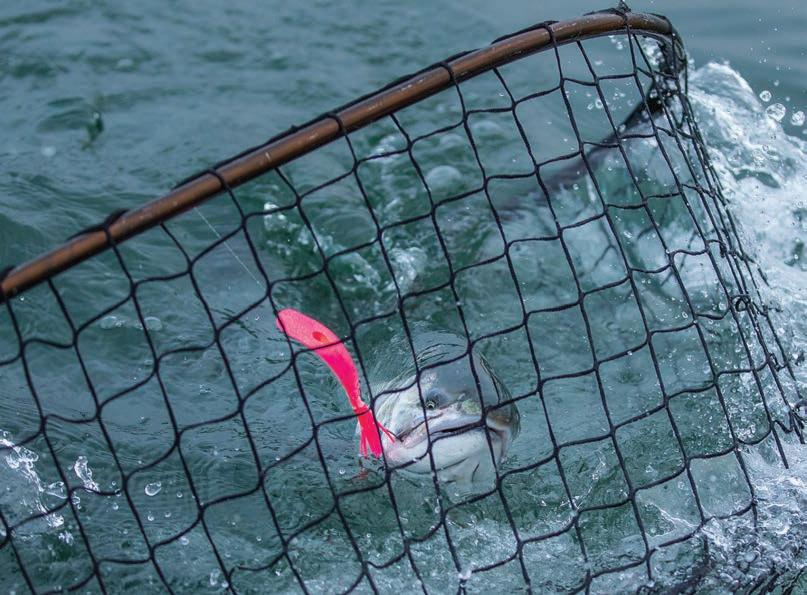
When cut-plug herring were slow to attract coho salmon, a Spin-N-Fish got the job done. (SCOTT HAUGEN)
“I wonder if there are any deer up there,” Dad said, pointing to a grassy peak high above the coniferous forest. “Oh yeah; they’re up there, Coach, but getting to them is another story,” Leavitt quipped.
Our captain then killed the motor over the shrimp hole. Together, we baited pots as the sounds of whistling eagles and squawking gulls resonated across the bay. There was no sense of urgency.
“Wanna head south, see if we can find some black bass?” Leavitt asked once the last pot was in position. Dad was quick to reply. Again, this was a new species for him to try for. The prospects got him excited all over again.
Dad loved flipping plastic baits on light gear into massive schools of hungry sea bass, as rockfish are also known. He got especially excited when the fish followed his bait to the surface, then attacked as he swam it in a figure-eight motion. I love eating bass, even over other prized bottomfish. We had plenty of clean, white fillets to take home.
We also trolled for salmon and jigged for halibut. It was a slow day, but it didn’t matter. “When are we going to check the shrimp pots?” Dad asked Duane. “Anytime you’re ready,” he winked. Dad started putting rods away, his sign he was ready.
MY FATHER LOVES CRABBING back home and can’t get enough of delicious Dungeness on the table. But this was his first shrimping experience, known as prawns to many folks.
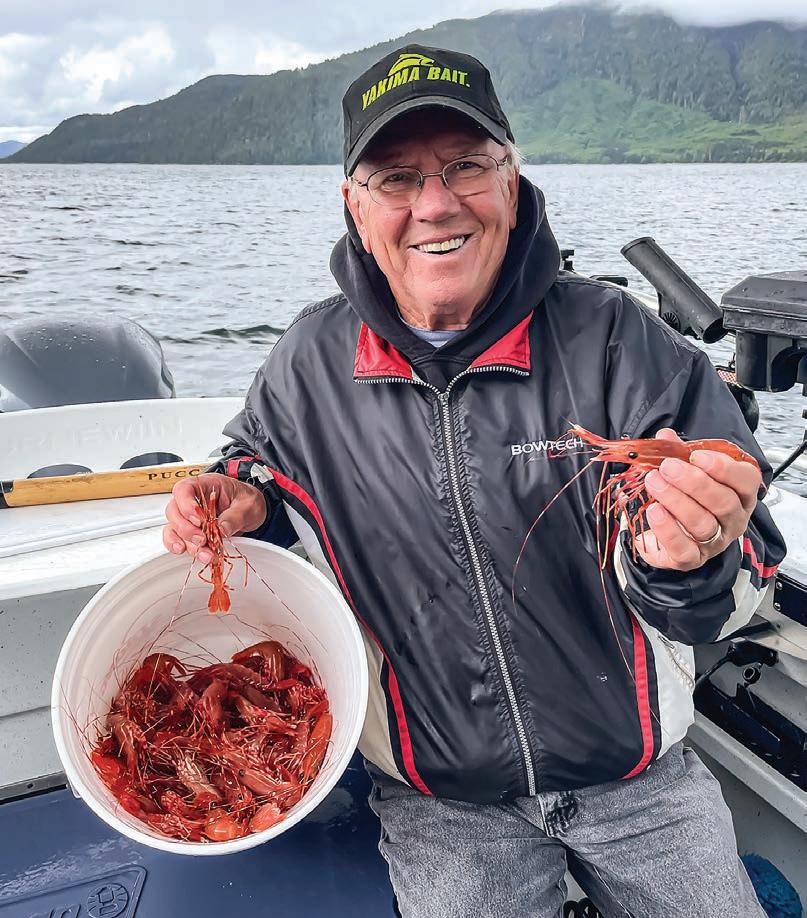
Dad quickly caught on to coiling the rope as it rolled off the davit’s wheel. When the retrieve slowed, we were like kids, hanging over the side of the boat, eager to see what the pots held. We enjoyed fresh spot prawns for dinner that night. Two more days of prawn action, two more nights of feasting like royalty. Dad was in heaven. And we were only part of the way through this magnificent journey. ASJ
Editor’s note: Look for part two of this adventure in the June issue. For signed copies of Scott Haugen’s best-selling book, Hunting The Alaskan High Arctic, visit scotthaugen.com.

BY TIFFANY HERRINGTON

Editor’s note: This feature continues Alaska Sporting Journal’s ongoing “Alaska Women and the Outdoors” series, highlighting women whose lives and work are rooted in Alaska’s wild places and the stewardship of the lands and waters that sustain them.
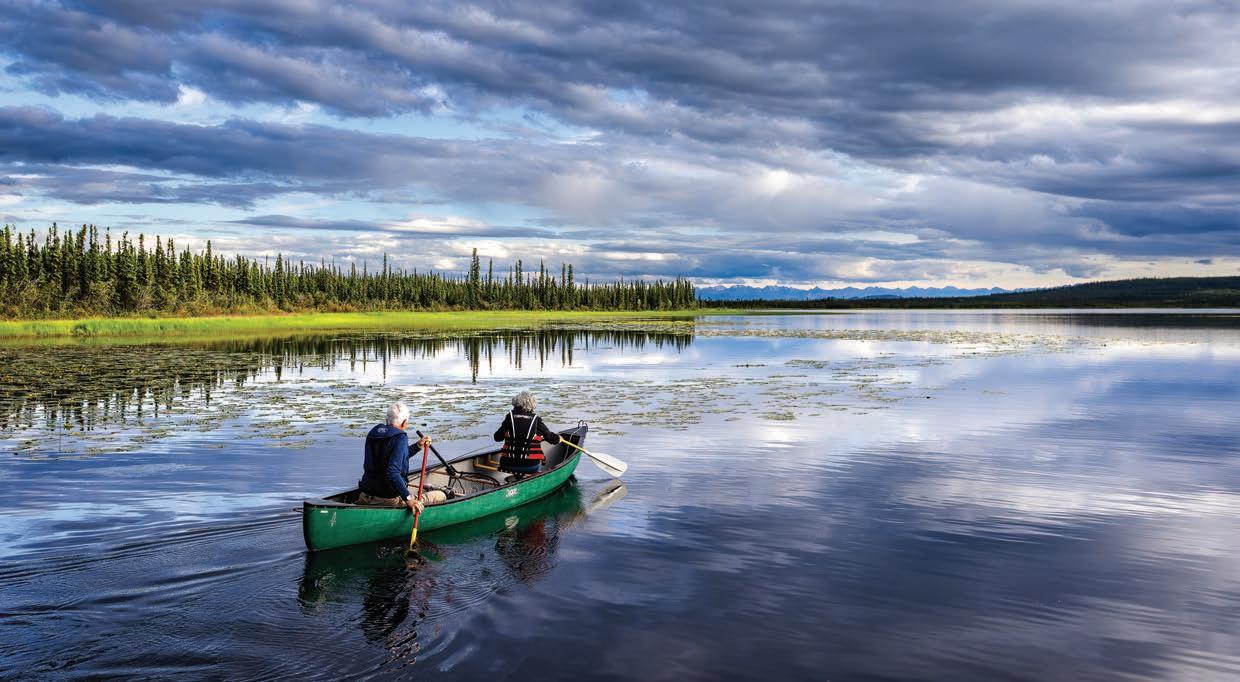
Across Alaska, millions of acres of tundra, wetlands, rivers, forests and coastline are protected within the National Wildlife Refuge System. Many of these places are remote enough that only a small number of people will ever set foot there, yet the work that sustains them unfolds year after year through field crews, refuge staff and partnerships with local communities.
For Lisa Hupp, that work has shaped the course of her career.
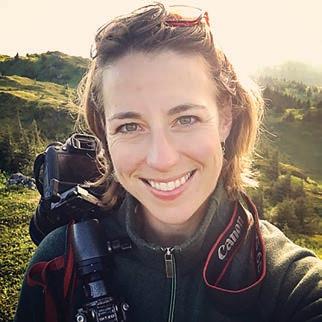
Hupp serves as acting assistant refuge supervisor for the Alaska Region of the US Fish and Wildlife Service’s National Wildlife Refuge System, based in Anchorage. In that role she helps support refuge operations across the state, working on a wide range of projects that sustain some of the most important wildlife habitat areas in North America.
Her path into that work began far from an office.
In 2004, Hupp arrived in Alaska for a seasonal job as a dock laborer with a seafood shipping logistics company in Unalaska. The work was physical and demanding, often unfolding outdoors along the waterfront in every kind of weather. Long shifts on the docks meant hours watching tides move through the harbor and wildlife move along the shoreline.
“I remember flying over Cook Inlet for the first time and seeing that low, pink winter light hitting the mountains,” she says. “It felt like a major shift in scale.”
Even after two decades in Alaska, the memory remains vivid. She can still picture snow reaching down to the rocky beaches in winter, wild iris blooming in summer and thick stands of beach grass and pushki climbing the hillsides above the harbor. Working outside also meant frequent encounters with wildlife, and those early days along the coast gave her plenty of time to observe the rhythms of the landscape.
“There were always eagles and fox along the coastline,” she says. “Being outside like that gave me a chance to really watch the seasonal changes in light and color.”
Those experiences eventually led her toward a career working on Alaska’s public lands, helping support the stewardship of wildlife refuges that stretch across some of the most remote and ecologically important landscapes in the country.
Hupp’s connection to the outdoors began long before she arrived in Alaska. She grew up in remote areas of the Pacific Northwest, where her father worked for
the US Forest Service, and much of her childhood unfolded in national forests and parks. Her father also loved photography and often documented the landscapes around them on Kodachrome slides, later sharing them in informal slide shows.
“He would give slide shows of the places we had been,” she says. “Those images are foundational childhood memories for me.”
More importantly, those experiences taught her how to look closely at the landscape itself. Her father used time outside as an opportunity to explain photo composition, pointing out repeating mountain ridges or the way a single tree might anchor a scene. Those lessons stayed with her when she began taking photographs herself in high school and college, where she followed the same instinct to focus on wild places and landscapes.
Wildlife photography came later, particularly after she began working in Alaska’s refuge system. One early turning point came in 2005 when she traveled from Unalaska to Kodiak and took a seasonal job as a park ranger with Alaska State Parks on remote Shuyak Island at the northern edge of the Kodiak Archipelago. Before flying to her duty station, she bought
her first digital SLR camera and spent the following months photographing the landscape, plants and visitors exploring the island by kayak and fishing boat during her free time.
She edited her favorite images at the end of the season and shared them with the park for outreach and educational materials. The experience reinforced something she had already begun to suspect: Carrying a camera encouraged her to look more carefully at the places she was working.
“It becomes a way to record what you’re seeing in a place,” she says, “and a way to experience the landscape more closely.”
Hupp later joined the staff at Kodiak National Wildlife Refuge, where she spent a decade working primarily at the visitor center in downtown Kodiak. Although much of her work was based in town, the opportunities to spend time on the refuge itself left a lasting impression.
“I was lucky enough to repeatedly visit some incredible parts of it,” she says.
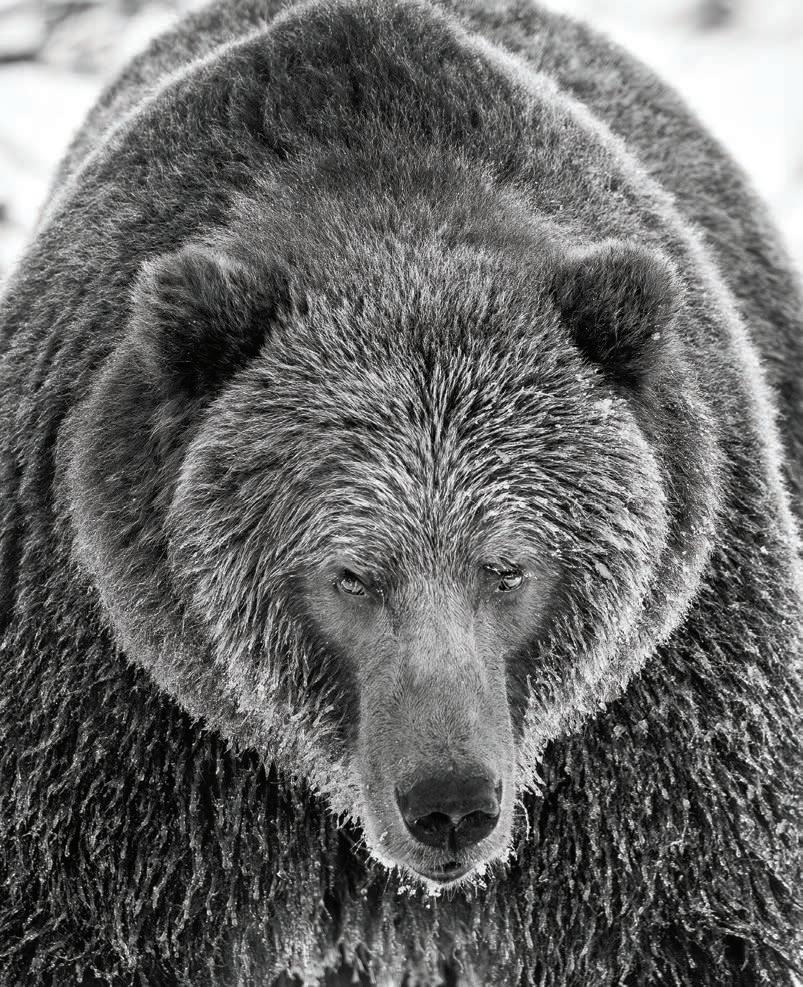
Kodiak’s famous brown bears quickly became one of her favorite wildlife subjects to observe. Spending
time alongside biologists studying the bears helped deepen her understanding of their behavior and their place within the broader ecosystem.
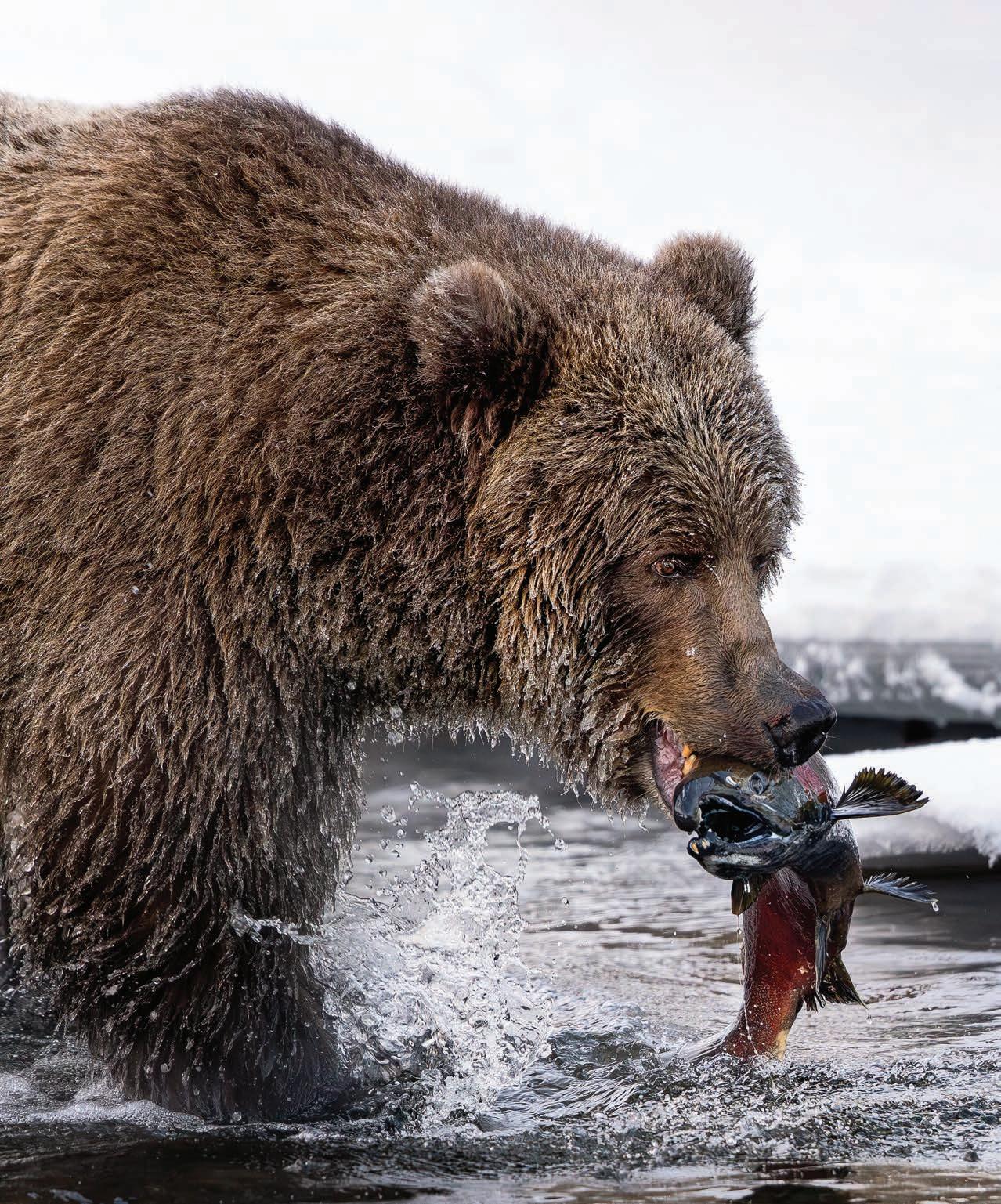
“The more time I spent watching them and following biologists who study their movements, behavior and diets, the more I appreciated their intelligence and individualism,” Hupp says. “The ways they interact with each other and the landscape are endlessly fascinating.”
When she photographs wildlife or field work, patience and observation matter more than technical perfection. She often recalls a piece of advice she once heard from another photographer: “just ‘f/8’ and be there,” meaning that while technical preparation matters, the most important thing is simply being present.
“In these places you may only get one chance to capture something,” she says. “You can’t count on cooperative weather or wildlife.”
For Hupp, photography becomes less about equipment and more about witnessing.
“It’s about watching and listening for those glimmers of connection,” she says. “What I hope to achieve is an interpretation that honors what I witnessed while offering viewers a way into that experience themselves.”

Hupp broke barriers when she was one of just two women to work for a seafood shipping logistics company in Unalaska. Eventually, she learned the ropes enough to operate the winches used to load frozen fish cargo onto large shipping vessels. “It’s something I’m still proud of,” she says. (LISA HUPP/USFWS)
When Hupp gets the opportunity to spend time photographing work on Alaska’s refuges, the days are long. One example she describes involves remote bird research camps on the Arctic’s Coastal Plain or within the Yukon Delta National Wildlife Refuge. These temporary camps often sit an hour or more from the nearest community and are reachable only by small bush plane.
Field crews begin early. Someone starts coffee in a large stovetop percolator while everyone prepares breakfast and packs enough food and water to spend 10 to 12 hours outside. Layers of clothing, chest waders and heavy packs are standard gear. While the biologists carry research equipment, Hupp’s pack typically holds camera bodies, lenses, tripods, spare batteries and memory cards, as well as rain protection for the gear.
The teams split into pairs and head out across trailless tundra, sometimes traveling 4 to 6 miles from camp as they check nests and survey wildlife. Hupp typically photographs while the group is moving or during brief stops, careful not to slow the research crew unnecessarily.
“I’m usually photographing while in motion or during short breaks,” she says. “I don’t like to slow down the crew.”
But the work doesn’t always end when the field teams return to camp. During Alaska’s long summer days, the best light often comes late at night.
Author Tiffany Herrington, whose Alaska Women in the Outdoors series spotlights strong Alaska females, writes of Hupp, “Kodiak’s famous brown bears quickly became one of her favorite wildlife subjects to observe. Spending time alongside biologists studying the bears helped deepen her understanding of their behavior and their place within the broader ecosystem.” (LISA HUPP/USFWS)
“Some of my favorite images happened at midnight,” she says.
Even after the fieldwork ends, the process continues. Reviewing images, organizing files, editing photographs and adding metadata can take far longer than the time spent capturing the images in the first place.
For Hupp, imagery and storytelling can play an important role in conservation work. Alaska’s refuges are vast and often difficult to access, meaning that many people who care about them may never see them firsthand. Images can help bridge that distance.
“Photography and storytelling help connect places, wildlife and people,” she says. “They can build awareness and appreciation that deepens into genuine connection and care.”
Sometimes those connections appear in unexpected ways. She has received emails from people who discovered her images and felt inspired by them. One person wrote to say a photograph of a Bohemian waxwing in falling snow inspired a fiber arts project. Another shared that a photo of a deer eating fireweed encouraged her to continue habitat restoration work behind her home.
“I love hearing from people who found something meaningful in the photographs,” Hupp says.
Within the refuge system, imagery also helps illustrate research, highlight partnerships with local communities and provide a window into the work happening across Alaska’s public lands.
Like many women working in outdoor professions, Hupp has seen change over the course of her career. When she first arrived in Alaska, she was one of only two women working at the seafood shipping company in Unalaska. Initially, she did not receive the same training opportunities on heavy equipment as some of the male recruits.
But several coworkers stepped in to support her.
“They believed I could do the work and supported me with their own training,” she says.
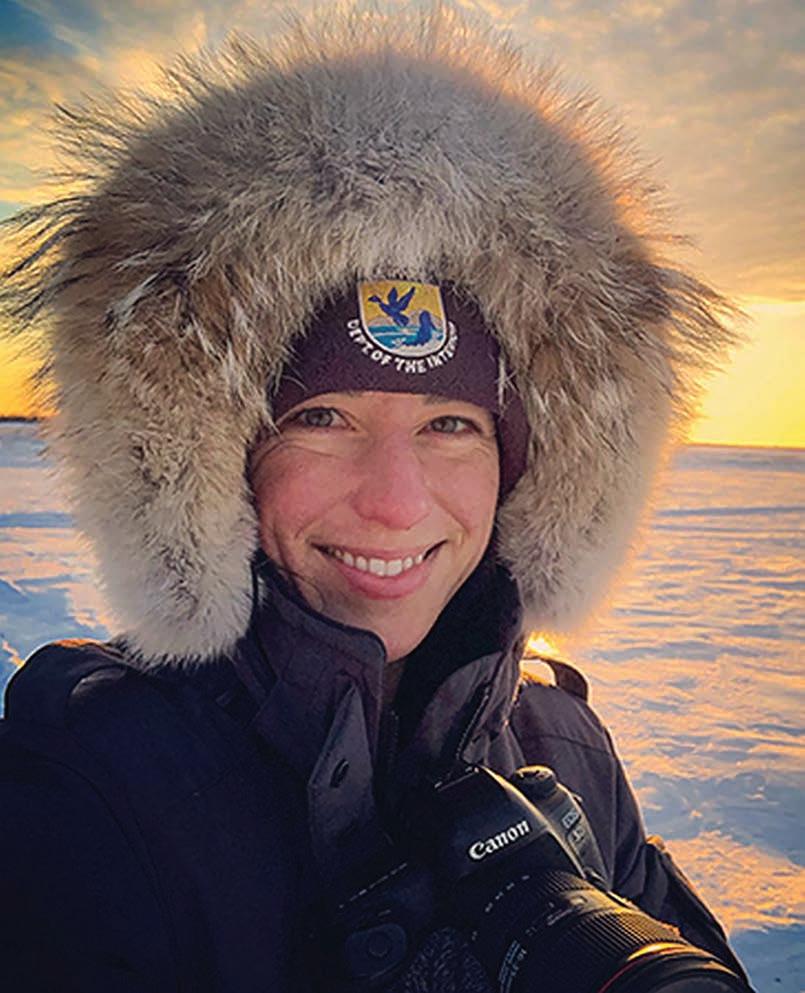
“These aren’t places at the edge of some mythic frontier,” Hupp says of the Alaska refuges that serve as her office and inspiration. “They are places that sustain Alaskans and attract visitors from around the world.” (USFWS)
Eventually, Hupp became one of only four people in the company certified to operate the massive winches used to load frozen fish cargo onto large shipping vessels.
“It’s something I’m still proud of,” she says.
Looking back, she believes that persistence and self-advocacy are key to building a career in the outdoors.
“It’s important to advocate for what you need to develop and be successful,” she says, “and to challenge limiting beliefs – especially when they’re your own.”
One thing Hupp hopes people come to understand about Alaska’s refuges is that they are not empty wilderness.
“These aren’t places at the edge of
some mythic frontier,” she says. “They are places that sustain Alaskans and attract visitors from around the world.”
They are also traditional homelands where Indigenous communities maintain deep cultural relationships with the land and wildlife. Those relationships remain an important part of conservation work today.
Wildlife itself often connects these landscapes to places far beyond Alaska. Shorebirds that nest on the Arctic National Wildlife Refuge, for example, arrive each summer from multiple migration routes that link Alaska to Midwestern farm fields and South American beaches.
“Even in migration, these places connect Alaska refuges to the rest of the world,” she says.
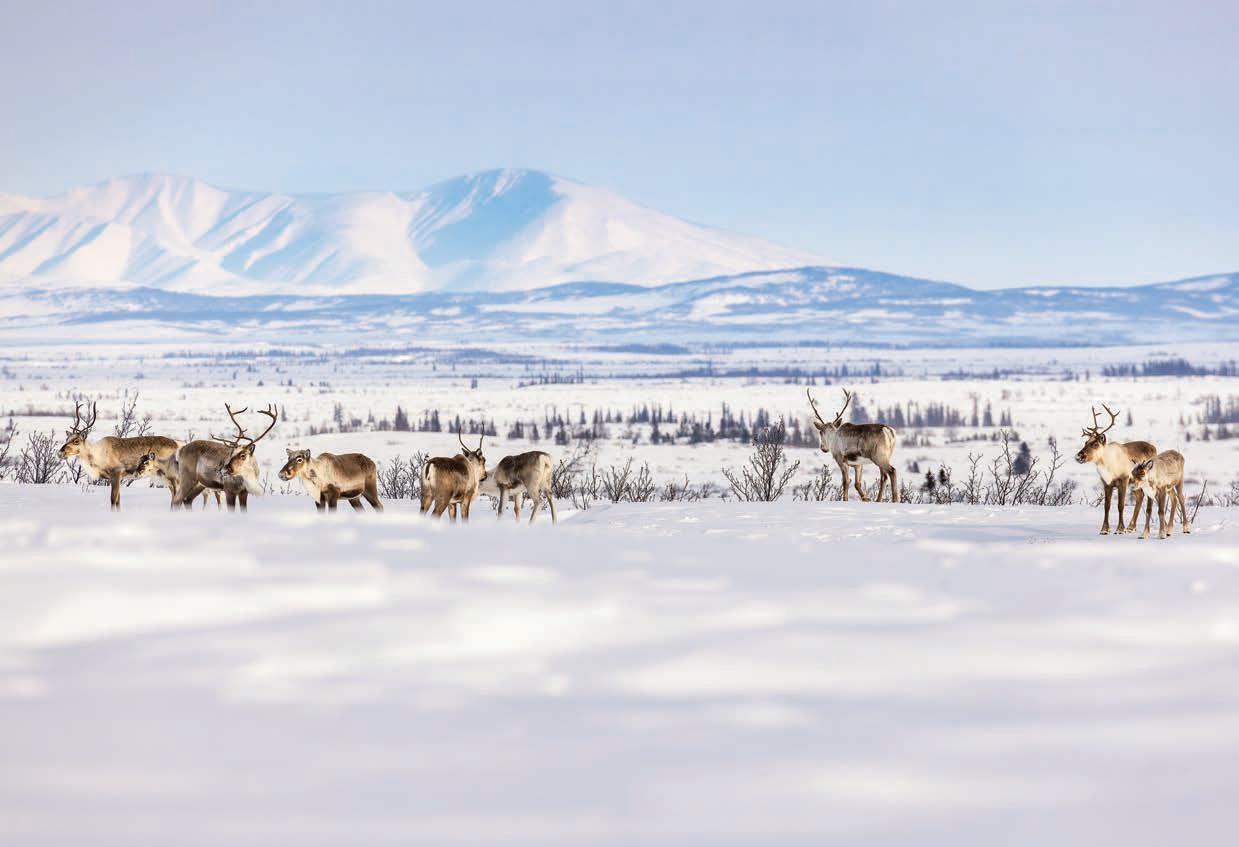
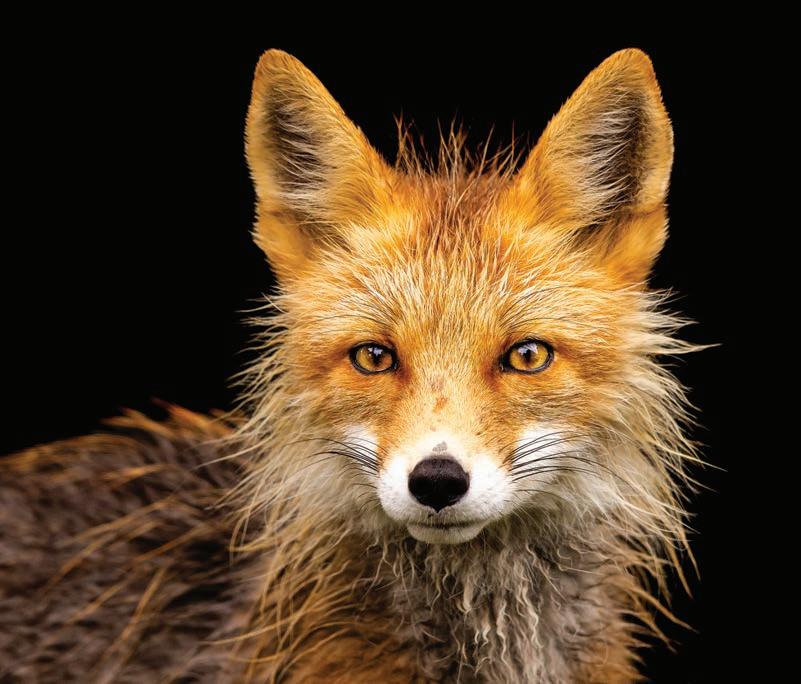
From Selawik National Wildlife Refuge caribou to red foxes, the wildlife that make Alaska so unique have defined Hupp’s work both behind the camera and in the field. “Photography and storytelling help connect places, wildlife and people,” she says. (LISA HUPP/USFWS)
Today much of Hupp’s work takes place behind a desk in Anchorage, coordinating projects and supporting refuge operations across the state. But opportunities to return to the field still matter deeply.
She hopes to spend some time this summer filling temporary assignments at refuge stations where additional support is needed.
“I’ll always treasure any chance to spend time on the land,” she says.
Kodiak, where she spent a decade working with the refuge, still calls her back whenever she has the opportunity to visit. And if that visit happens to include time watching Kodiak’s famous brown bears along a riverbank, she knows she’ll likely have a camera nearby.
“I’ll always be ready to grab my camera,” Hupp says. ASJ
Editor’s note: For more on the Alaska region of the US Fish and Wildlife Service, go to fws.gov/about/region /alaska.


BY SCOTT HAUGEN
For more than 25 years, I’ve made a living hunting big game around the world. Before that, I lived a subsistence life in Arctic Alaska, where either animals had to be killed with precision or we went without meat. I mount my own scopes, shoot paper as few times as possible, then go hunting.
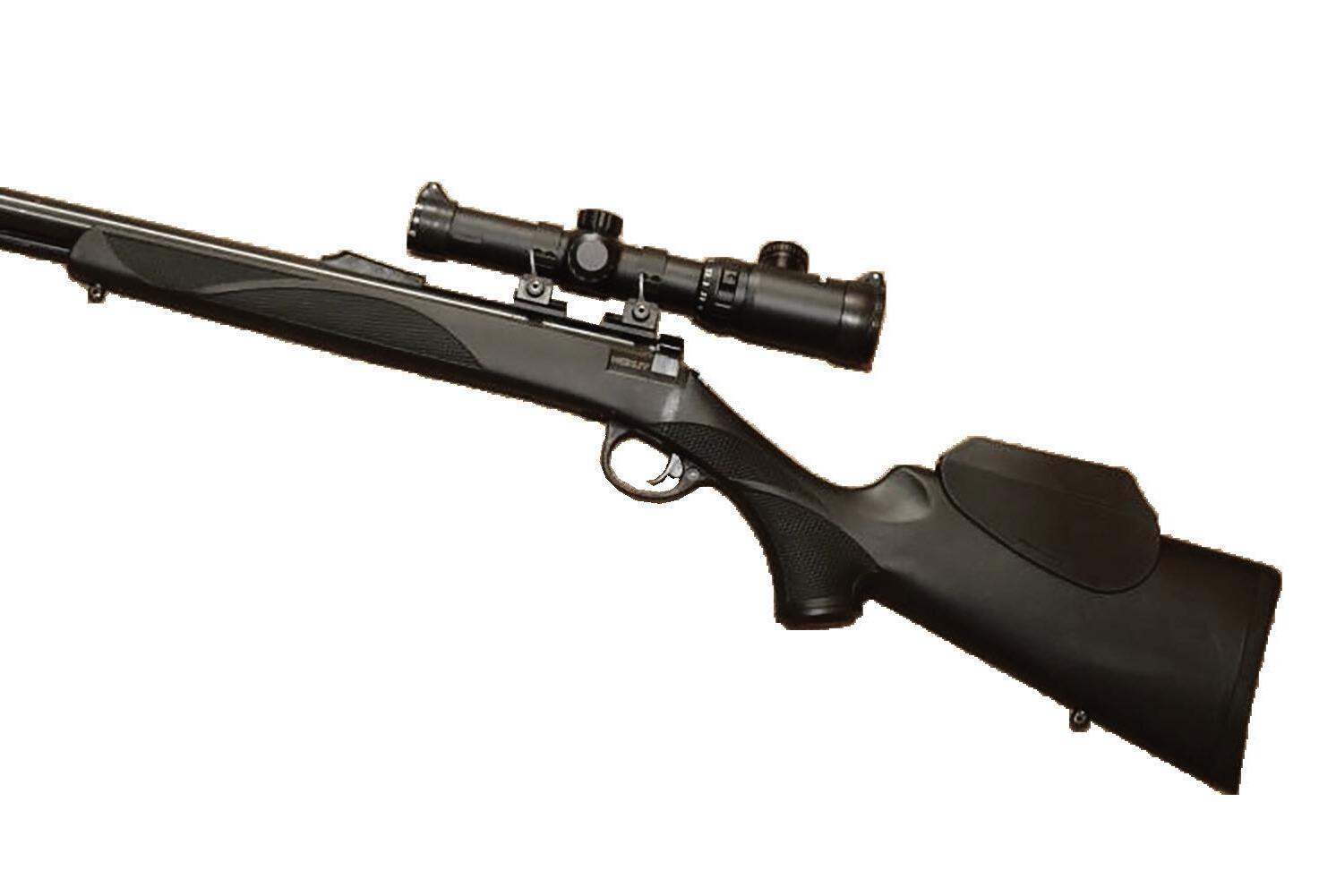
I used to reload, but I don’t with some of today’s precision factory loads. This is one of them.
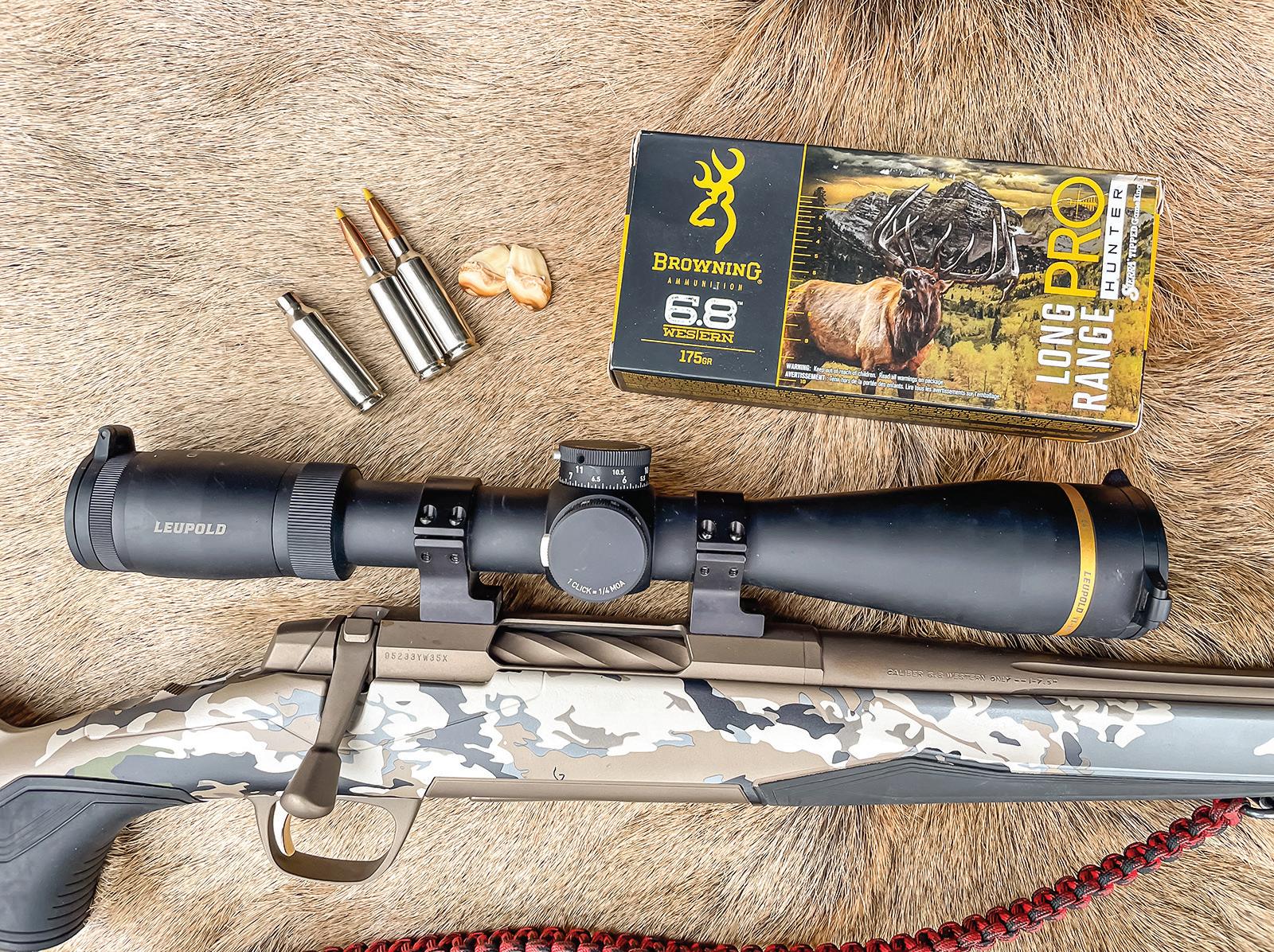
The first time I saw Browning’s Long Range Pro Hunter 175-grain Sierra Tipped Gameking bullet shot from a
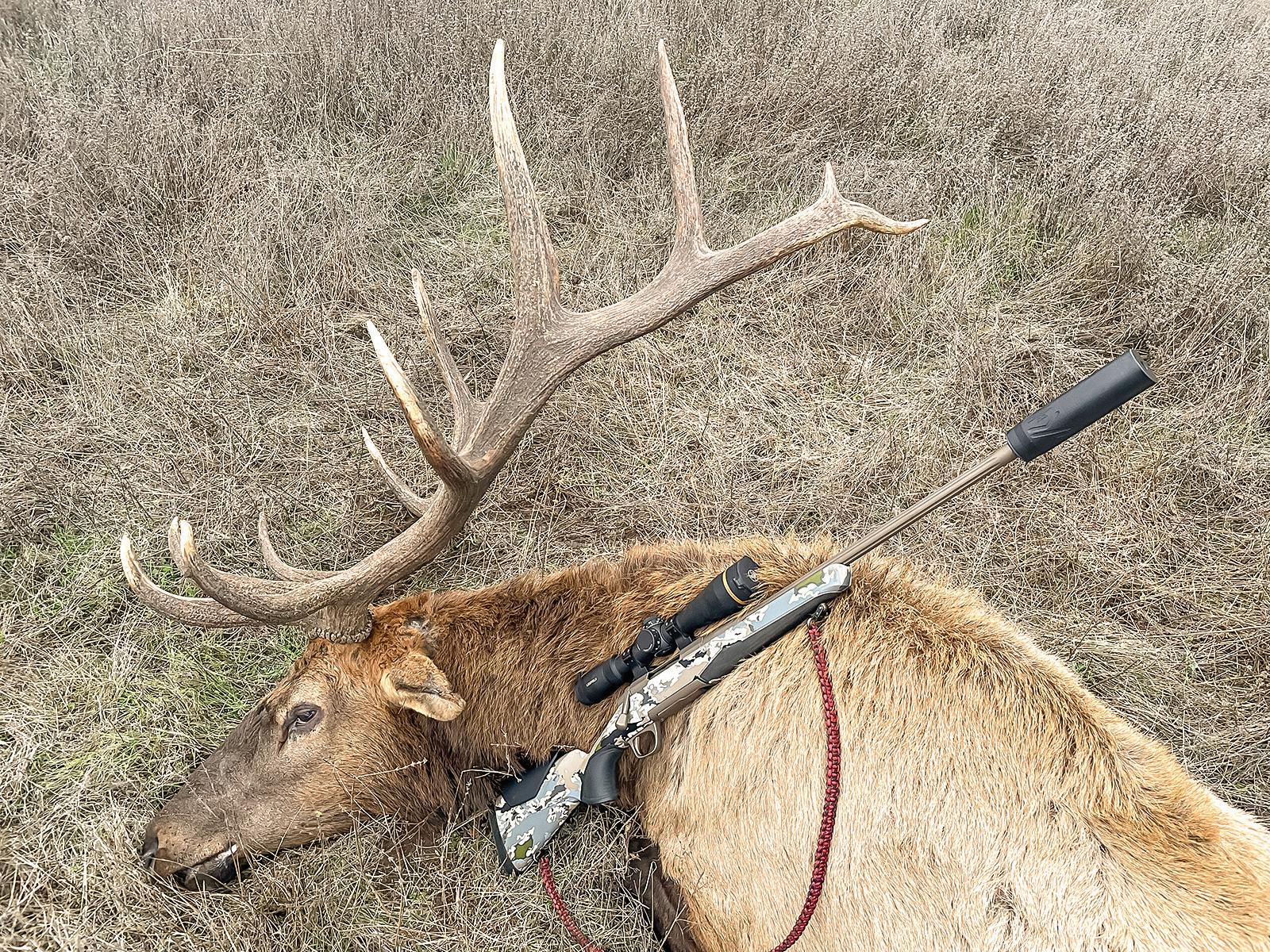
Browning X-Bolt 2 speed rifle in 6.8 Western, I was impressed. One wellplaced shot put down a big Roosevelt bull, our biggest-bodied elk. Three buddies killed bulls using the same bullet on that hunt.
The following spring I hunted with that rifle and load for the first time. I
with
of calibers
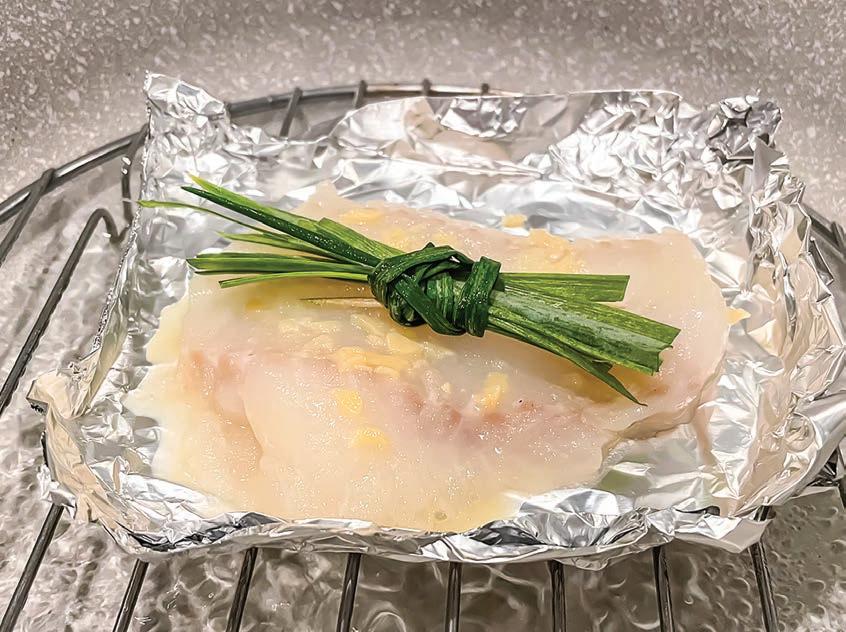
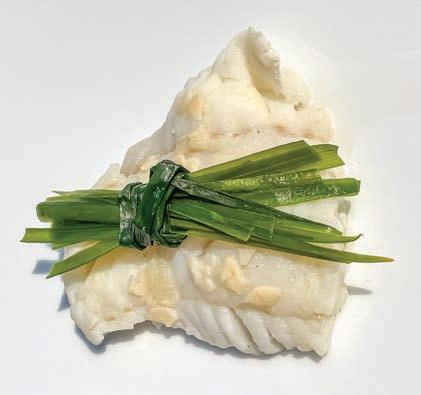
“One thing I love about bottomfish is their mild flavor and easy ability to take on the taste of what they’re cooked in,” writes Chef Tiffany Haugen, who likes to steam marinated filets. (TIFFANY HAUGEN)
BY TIFFANY HAUGEN
When Scott returned home from a fishing trip on Prince Of Wales, he brought home loads of great-eating bottomfish. We eat mostly salmon, so this was a special treat. One thing I love about bottomfish is their mild flavor and easy ability to take on the taste of what they’re cooked in. If looking for a recipe that’s not overpowering – one that allows you to enjoy the flavor of the fish – give this recipe a try. Marinated for a subtle flavor and steamed for a silky texture, this recipe complements almost any bottomfish. It’s quick, clean and easy and also
makes great leftovers to sprinkle onto a salad or make into a mayonnaise- or yogurt-based spread.
12 to 16 ounces bottomfish filet, skinless
1 tablespoon miso
1 tablespoon sake
1 tablespoon mirin
One to two green onions or chives
In a shallow bowl, mix miso, sake and mirin until thoroughly combined. Place fish in the marinade. Fish should marinate on each side for 10 minutes at room temperature. Prepare the fish

steamer and bring water to a boil. To steam in a pot with a rack, place a wire rack in the bottom of the pot and fill with water to the bottom of the rack.
Place marinated fish on a small piece of aluminum foil and cover with green onions or chives. Bring water to a boil and carefully lower the fish onto the rack. Cover and steam for seven to 10 minutes or until the fish reaches desired doneness.
Editor’s note: For signed copies of Tiffany Haugen’s popular cookbook, Cooking Seafood, visit scotthaugen.com.
Last season, Haugen took his biggest Roosevelt elk ever, with one shot from his 6.8 Western. The Browning Long Range Pro Hunter 175-grain Sierra Tipped Gameking bullet did impressive damage before exiting the animal, dropping it on the spot. (SCOTT HAUGEN)
shot a bear in the head as it was being tormented by hounds on the ground. Accurate, yes, but the shot didn’t speak to the overall performance of the bullet, other than it penetrated the skull at 75 yards.
Two years later I shot the same setup, this time in Africa. I went with the intent of firing two shots, one at a sable antelope and one at a roan. The sable was shot in the shoulder as it quartered to me. I thought I’d need a follow-up shot on the big-boned bull, but it ran a short distance and collapsed. The top of the heart and offside lung were thrashed. A broadside shot on the
big-bodied roan saw it go only a few paces before collapsing, with both lungs deflated.
I shot the biggest Roosevelt bull of my life last year. As it was running broadside at 104 yards, the 6.8 Western hit the mark and the 175-grain bullet pierced both lungs while clipping the lower spine. The bull dropped on the spot and quickly expired.
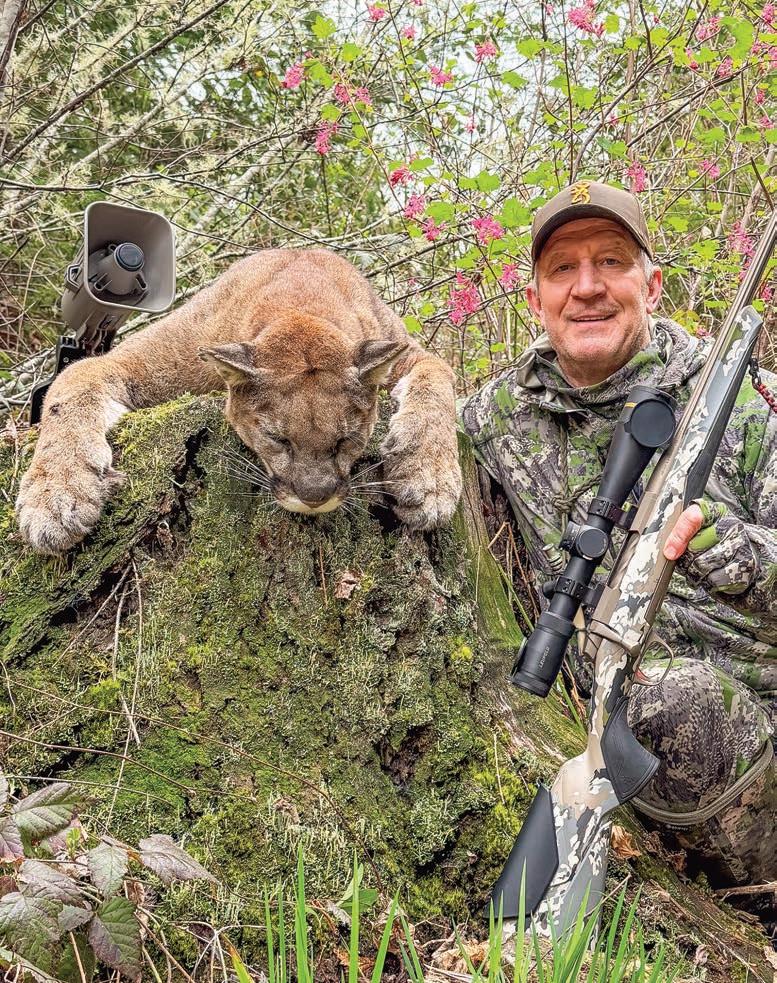
Most recently, I called in a mountain lion and shot it in the chest with the same 6.8 Western load. It was only 48 yards, but the bullet crushed the brisket, obliterated the heart, turned the entire length of the cat’s internal
organs to gel, and I found it perfectly mushroomed against the pelvis.
Last winter I was hunting ducks in Nebraska. In camp was Kyle Masinelli, senior director of product innovation and strategy for Winchester Ammunition. He designed the 6.8 Western bullet and has been doing this for 20 years. When Masinelli began sharing how the 6.8 bullet was developed, he had my full attention.
“Our mindset was to modernize the .270 WSM in order to achieve the flattest possible trajectory in a bullet,” Masinelli began. “By going with a heavier bullet with a longer ogive, we

had to take the barrel twist rate of the 6.8 Western down to a 1:8, versus a 1:10 in the .270 WSM.”
The 0.080-inch reduction of the casing from the shoulder point up allowed for a more streamlined, longer bullet to be shot, which then increased the ballistic coefficient by 1.
The .270 bullet weight range of 130 to 150 grains is lighter than the 6.8 Western’s range of 165 to 175 grains. The heavier, aerodynamic, missilelike bullet of the 6.8 overcomes air resistance in flight by actually not losing speed as fast as the lighter bullet. Powder is also key. Converting
smokeless powder to gas is what moves a projectile. The technicalities of this could be an article in itself. Suffice it to say that with the velocity and pressure, along with the ignition barrel time, the 6.8 Western registers 65,000 pounds of pressure per square inch under SAAMI standards.
This takes us to bullet design.
“We wanted to achieve maximum weight retention and penetration between 300 and 700 yards with this bullet,” Masinelli continued. “We know it will perform up to and beyond those distances, but these are the ranges many hunters are seeking for optimal bullet performance.”
The Browning Long Range Pro Hunter 175-grain Sierra Tipped GameKing bullet is a three-part bullet design. The construction design is based on the Nosler AccuBond, one of my favorite performing bullets of all time. It also combines Browning’s Long Range Pro Hunter technology along with the Sierra Tipped GameKing. It’s the combination of all three that led to the 175-grain bullet I shot.
From the first shot I fired with the 6.8 Western, there was notable reduction in recoil. I asked Masinelli why.
“Free recoil energy is a function of bullet weight, velocity, propellent weight and firearm weight,” he shares.
“The muzzle exit pressure of the 6.8 is lower, so the muzzle blast and shockwaves aren’t as high, which results in less recoil. It’s unlike so many wildcat rounds of today that feature high exit speeds, which create more shockwaves, noise and felt recoil. Think of what a suppressor does on a rifle; that’s what the 6.8 does based on its lower exit pressure.”
Generally, people don’t prefer noise and recoil when shooting a hunting rifle. I see a lot of hunters flinching with the high recoil of today’s wildcat calibers that are turning out 85,000 psi, a 30-percent higher psi than the 6.8 Western. I also know a number of guides who won’t allow the use of the lighter bullets on big animals like elk and moose. Only you know what you can shoot comfortably with confidence and pinpoint accuracy.
This is my 50th year of big game hunting. The 6.8 Western is one of the bestperforming calibers I’ve shot or seen shot. Ever. I’d hunt any big game in North America with it, except for coastal brown bears. This caliber is here to stay. ASJ
Editor’s note: For copies of Scott Haugen’s popular line of hunting and fishing books and wife Tiffany’s cookbooks, visit scotthaugen.com.