


Whether you’re working the water, playing a round of disc golf, or basking in the perfect sunset, Odell Lake Resort is your place to unwind and explore.
• Lakeside Sauna - a private, relaxing extraordinary experience
• 18-hole Disc Golf Course - fun, challenging & rewarding
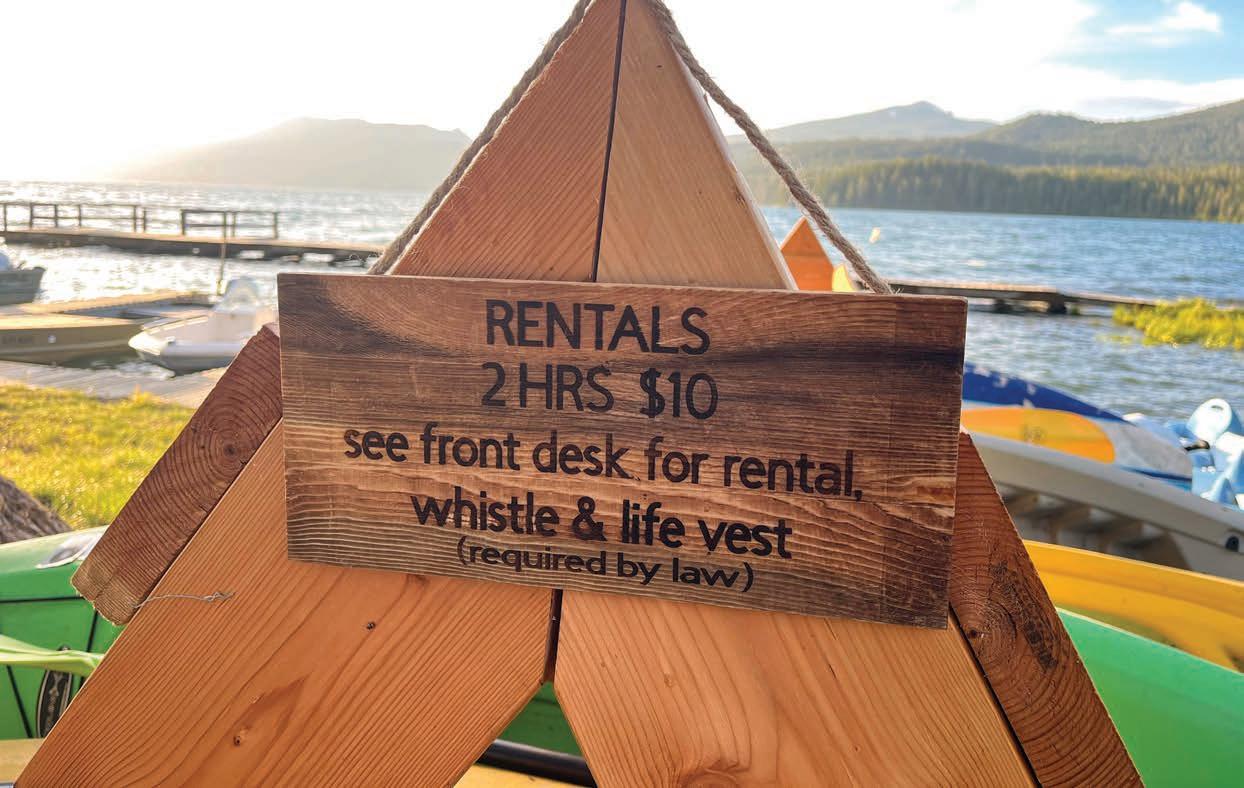
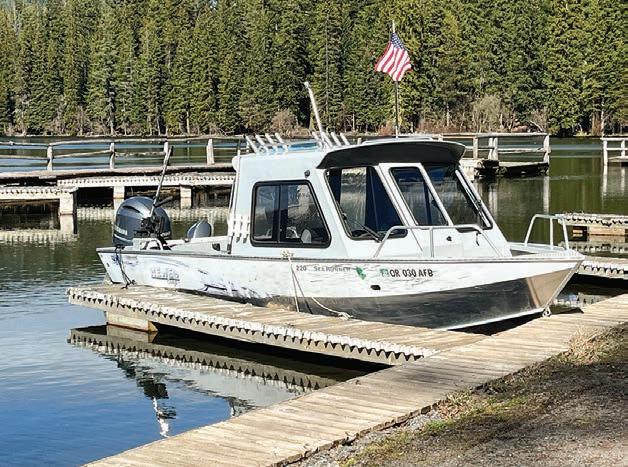
• Boat Rentals - an escape on the water
• Guided Fishing Trips - we offer the best
• Restaurant - a delicious and good time
Come experience Odell Lake Lodge Life! Book your stay today!


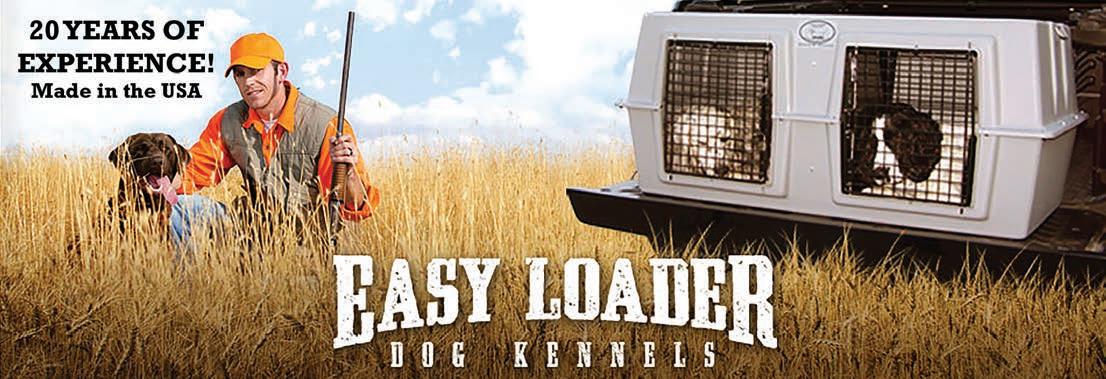
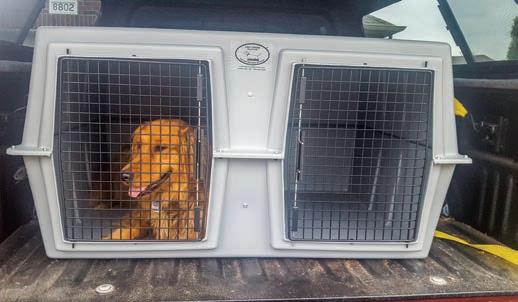
• Easy Loader & Deuce accommodate 2 dogs up to 65 lbs each
• EZ-XL accommodates 2 dogs over 65 lbs each
• Made from High Density Polyethylene with UV protection
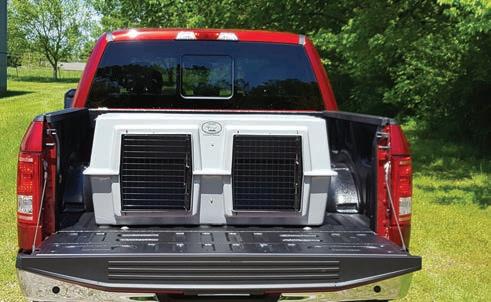
• Easy Loader fits most full size pickups, SUVs & large UTVs
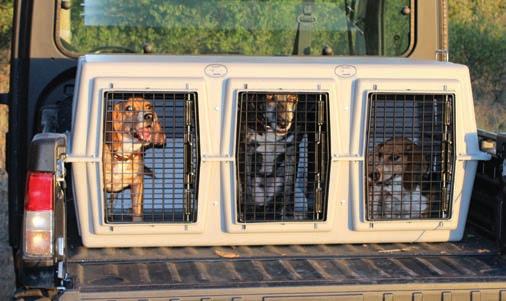
• Deuce fits smaller pickups, SUVs & UTVs
• EZ-XL is for larger breed dogs & full size vehicles
• Vents, cold weather door covers, insulated covers & custom kennel pads available







PUBLISHER
James R. Baker
GENERAL MANAGER
John Rusnak
EXECUTIVE EDITOR
Andy Walgamott
EDITOR
Chris Cocoles
WRITERS
Scott Haugen, Tiffany Haugen, Tiffany Herrington, Mary Catharine Martin
SALES MANAGER
Paul Yarnold
ACCOUNT EXECUTIVE
Janene Mukai
DESIGNER
Kha Miner
WEB DEVELOPMENT/INBOUND
MARKETING
Jon Hines
ADMINISTRATIVE ASSISTANT
Katie Aumann
INFORMATION SERVICES MANAGER
Lois Sanborn
ADVERTISING INQUIRIES media@media-inc.com
MEDIA INDEX
PUBLISHING GROUP
941 Powell Ave SW, Suite 120
Renton, WA 98057
(206) 382-9220 • Fax (206) 382-9437 media@media-inc.com www.media-inc.com
ON THE COVER
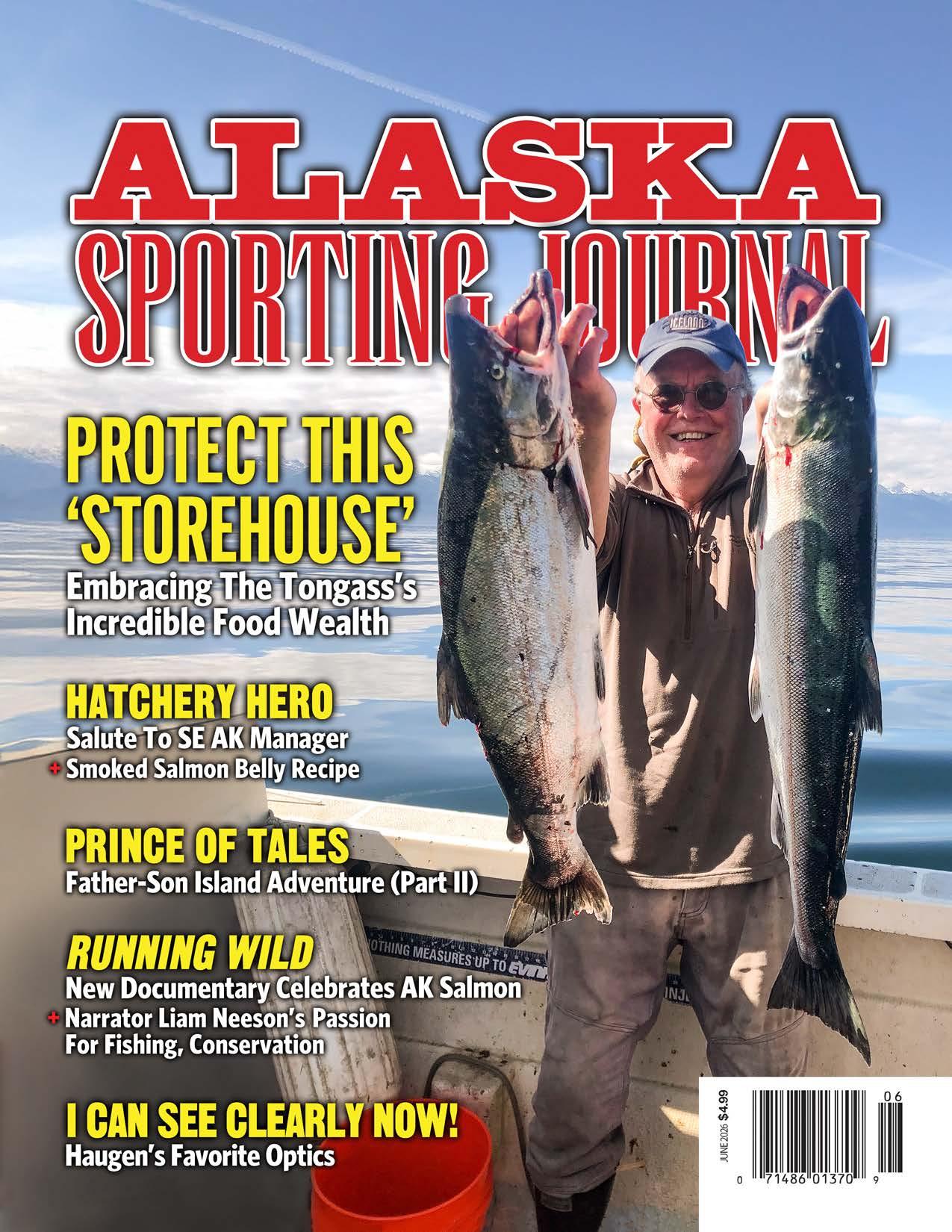
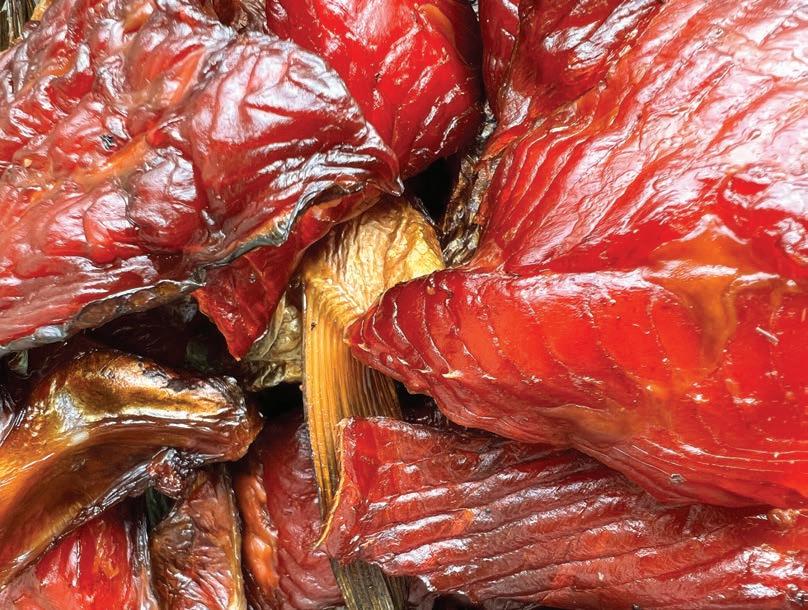
For Southeast Alaska residents like Nils Dihle, natural food sources such as coho salmon not only play a big part in the local culture but the ability to subsist where grocery stores and their high-priced staples aren’t around every corner. “Being able to have our freezers full of food that we’ve harvested from the land – it’s important,” says Raven Cunningham of the Native Village of Eyak. See page 35 for more on protecting these resources. (MARY CATHARINE MARTIN)
CORRESPONDENCE
X@AKSportJourn
Facebook.com/alaskasportingjournal aksportingjournal.com Email ccocoles@media-inc.com



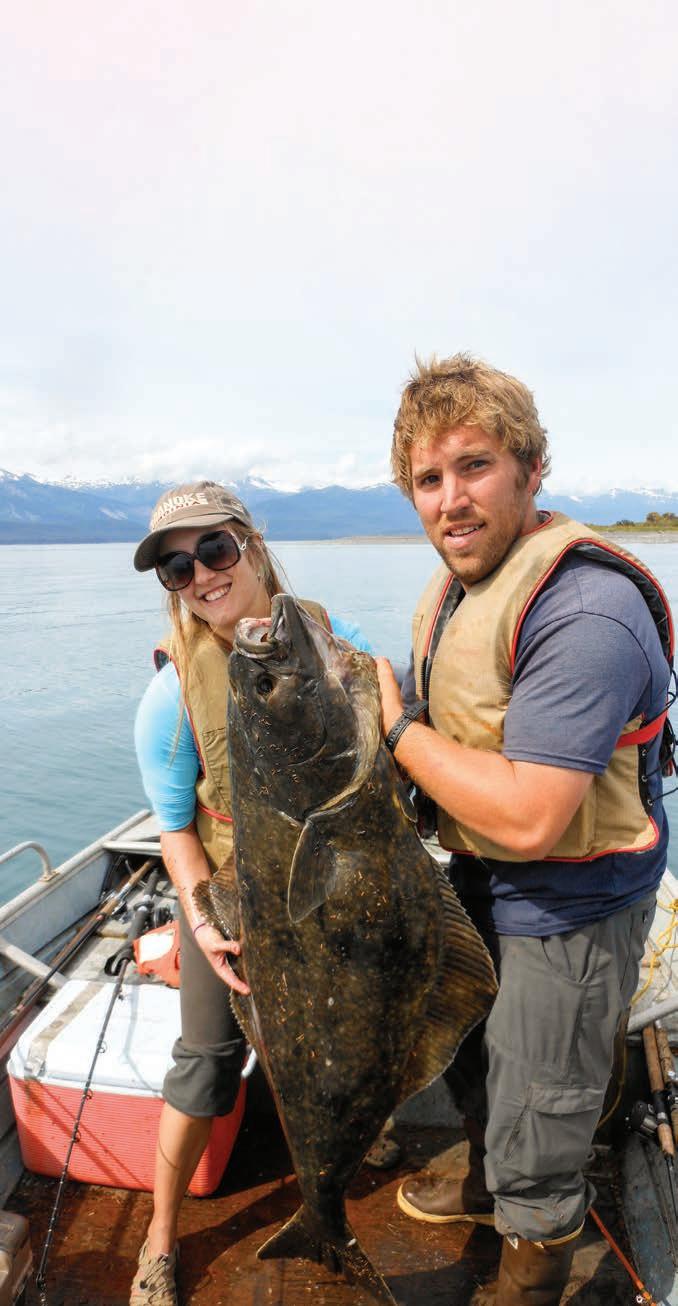
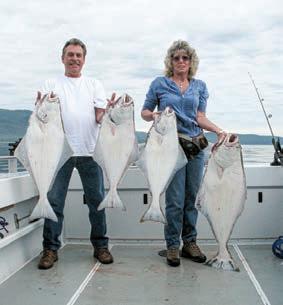
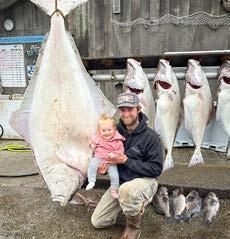
From halibut and salmon to big and small game, Alaskans are just as comfortable finding their food in the field as they are in the supermarket. Mary Catharine Martin, here with partner Bjorn Dihle and a halibut for their table, and her Salmon State column return with a peek at how Last Frontier residents benefit from the natural resources their state is blessed with. “Living in remote, rural Alaska, you need to be able to have access to good food … It’s like our grocery store,” says one local Martin speaks to.
23
In a new documentary showing in a spectacular 3D format on select IMAX screens on the West Coast, filmmaker Myles Connolly and the folks at the Wild Salmon Center collaborated to make Running Wild: Return to the River, which pays homage to the compelling life cycle of Pacific salmon, and the many species – humans and countless critters alike – that depend on them. We got a sneak peek at this powerful project.
53
Scott Haugen continues his two-part series on a memorable Prince of Wales Island adventure with his dad Jerry. It was the elder Haugen’s first trip to this storied Southeast Alaska playground, and on a drive around the island to old haunts, Scott regaled him with tales of earlier times – hunting black bears, catching trout and steelhead, teaching locally – before an epic last day of salmon and bottomfishing out of Klawock. Jump in for a touching trip.
More from Haugen as well as his wife Tiffany, whose From Field to Fire feature this issue includes gear tips and a fun twist on breakfast When it comes to glassing for black bears or waterfowl, Scott details how his favorite binoculars and spotting scope increase the chances of filling his tags and freezer. And following a foodie trip to Japan, Chef Tiffany has a recipe for starting off your day with a scrumptious poached fish dish!
15 Editor’s Note: A nostalgic salmon fishing memory
17 The Alaska Beat: News and notes from around the Last Frontier
21 Outdoor Calendar
43 Another unsung salmon hatchery hero of Alaska

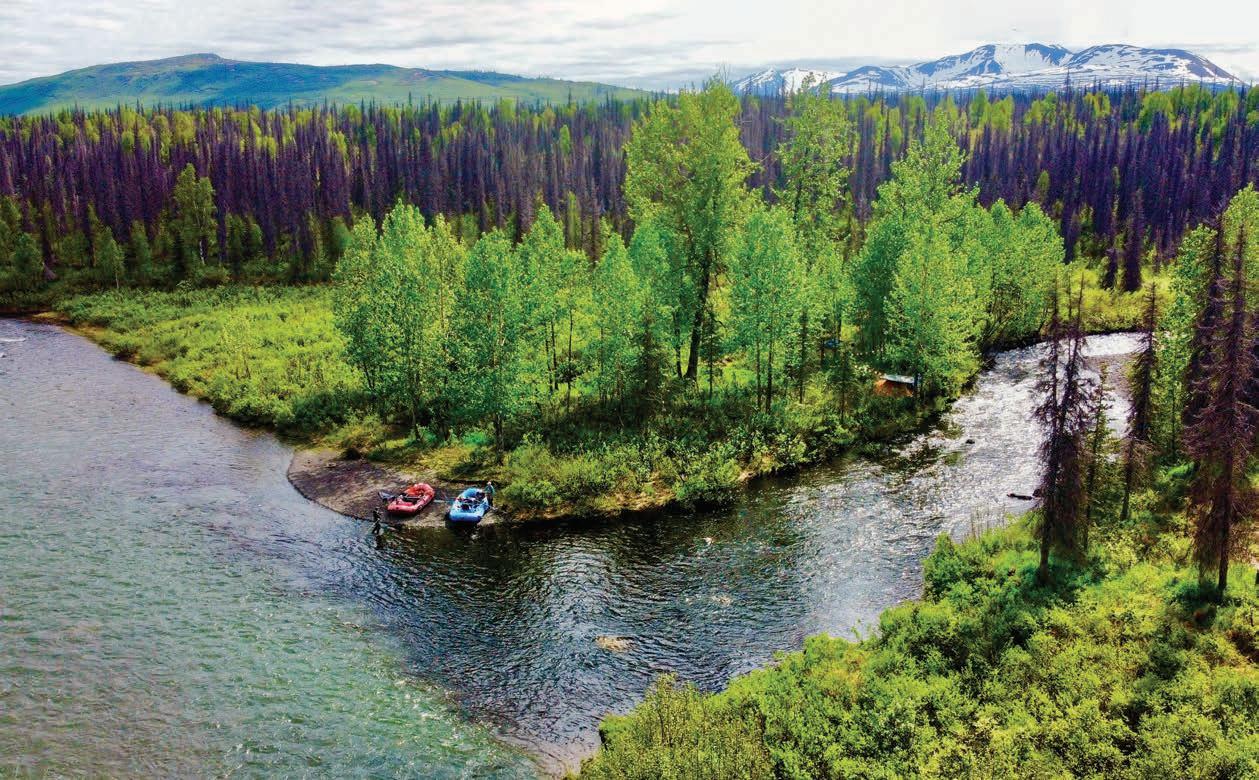
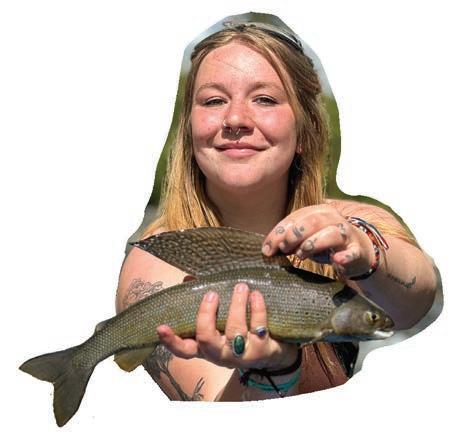
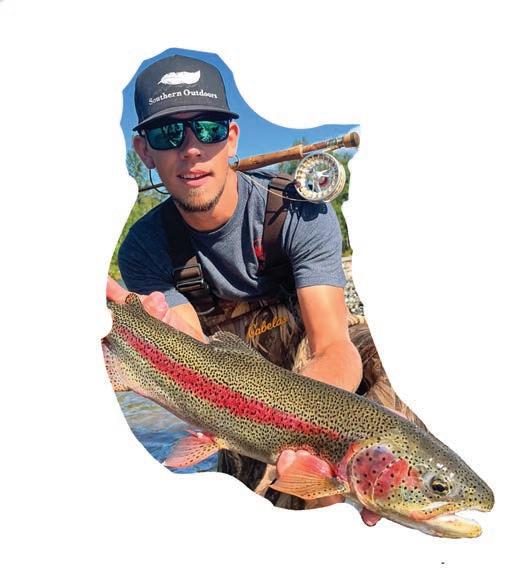
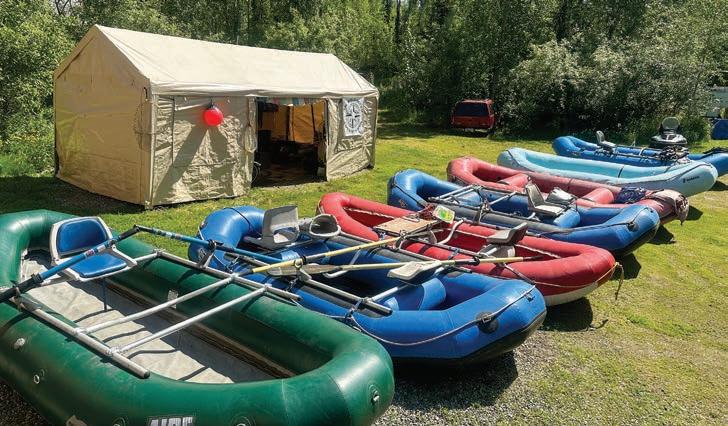
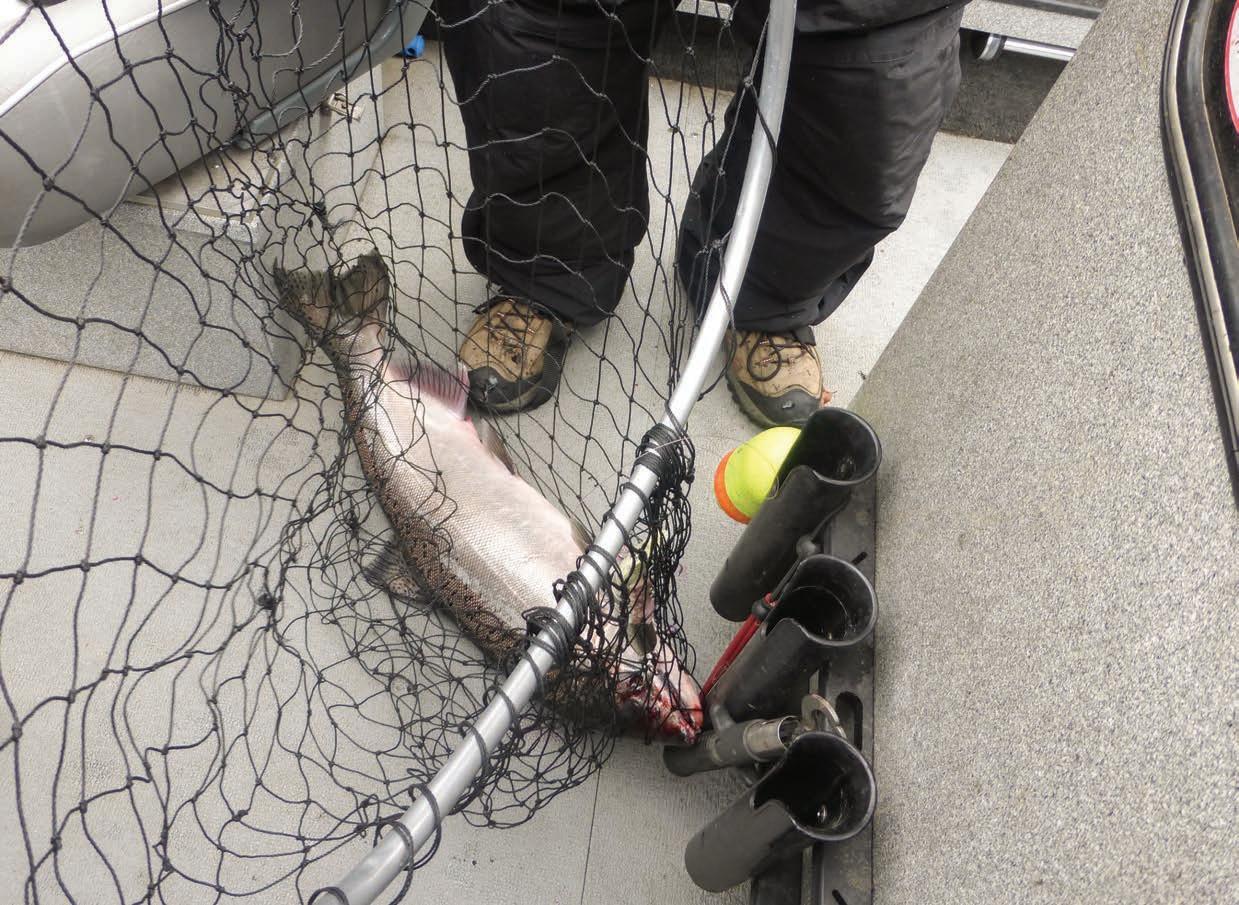
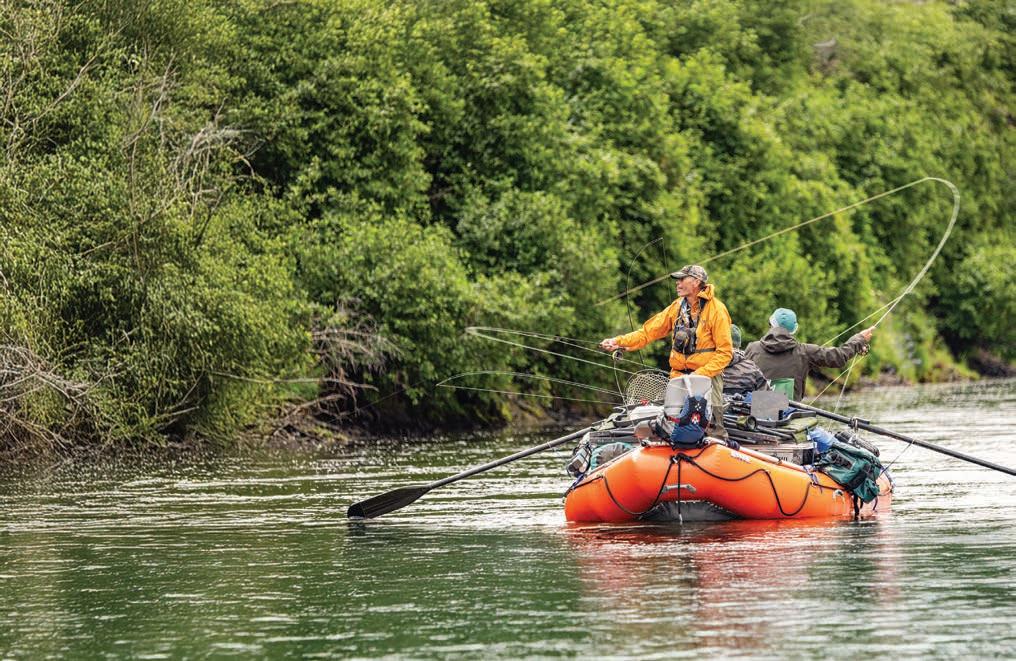
We are a rafting and fly fishing guide service based in Willow, Alaska, with more than 20 years of experience on the rivers of Southcentral Alaska. We offer road-accessible day trips as well as fly-out, multi-day adventures for those seeking a more remote fishing experience. Our team is made up of highly skilled, experienced guides who are passionate about Alaska’s rivers and dedicated to providing a safe, professional, and enjoyable trip on the water.



As we pay homage to Pacific salmon this month with a profile of the Wild Salmon Center’s fantastic documentary Running Wild: Return to the River (page 23), I can’t help but think about salmon fishing in my native state of California.
Admittedly, when I lived in the Golden State, my fishing passion was for trout and catfish – with a few saltwater charter boat trips mixed in – but I never got to experience the thrill of targeting inland fall-run Chinook until a couple of trips about a decade ago as editor of Alaska Sporting Journal’s sister publication, California Sportsman (calsportsmanmag.com).
I got to fish with one of that magazine’s correspondents and occasional ASJ contributor Mark Fong, and guide Manny Saldana Jr., on California’s Feather River, a tributary of the state’s mighty Sacramento. Both of those fisheries once had healthy runs of fall-run kings, but various factors have since all but decimated the stocks in those Central Valley systems.
The numbers of returning salmon got so dire in California’s river systems, all ocean and inland salmon fishing was shut down in both 2023 and 2024, much to the dismay of the recreational and commercial fishing communities there. In Running Wild, director Myles Connolly focused a lot of his attention on Alaska’s Katmai National Park and Preserve and Bristol Bay, but he also filmed at California’s Smith River, one
The editor’s fall-run king fishing trips in his native California have even more meaning now after watching the documentary film Running Wild: Return to the River, which celebrates the remarkable journeys of Pacific salmon from Alaska all the way down to the Golden State.
of the state’s last remaining strongholds for wild Chinook.
Further south and east, hatchery fish have kept the Sacramento and Feather Rivers from total disaster, and after closures and a very limited inland season in 2025, respectively, they will be open again for fall-run salmon fishing starting in July. When I asked Guido Rahr, Wild Salmon Center president and CEO, about California’s salmon situation, he talked of his organization’s work restoring wild spring-run Chinook on one of the Sacramento’s important smaller tributaries, Butte Creek.
“We put together a team to come up with a long-term conservation plan to restore Butte Creek and protect that run of fish,” Rahr told me.
As for my experiences fishing for those fall-run kings on the Feather River, those two trips I took with Saldana – he became not only a trusted source but also a good friend before he tragically passed away in 2019 – I was able to land my first California salmon on his boat. I probably didn’t appreciate the journey that fish went through back then, but now I have so much admiration for those salmon and what they endure.
Check out the fantastic 3D spectacle of Running Wild while it’s playing at Sitka’s Alaska Odyssey Dome big screen – or at other screenings up and down the West Coast – and you too will be inspired by what these amazing fish go through during their cycle of life. -Chris Cocoles
This is an unforgettable Alaskan adventure that blends raw wilderness, world-class game, and the thrill of pursuing some of North America’s most iconic animals in their natural environment. Long days on the river. Close encounters. The kind of moments you’ll talk about for the rest of your life.
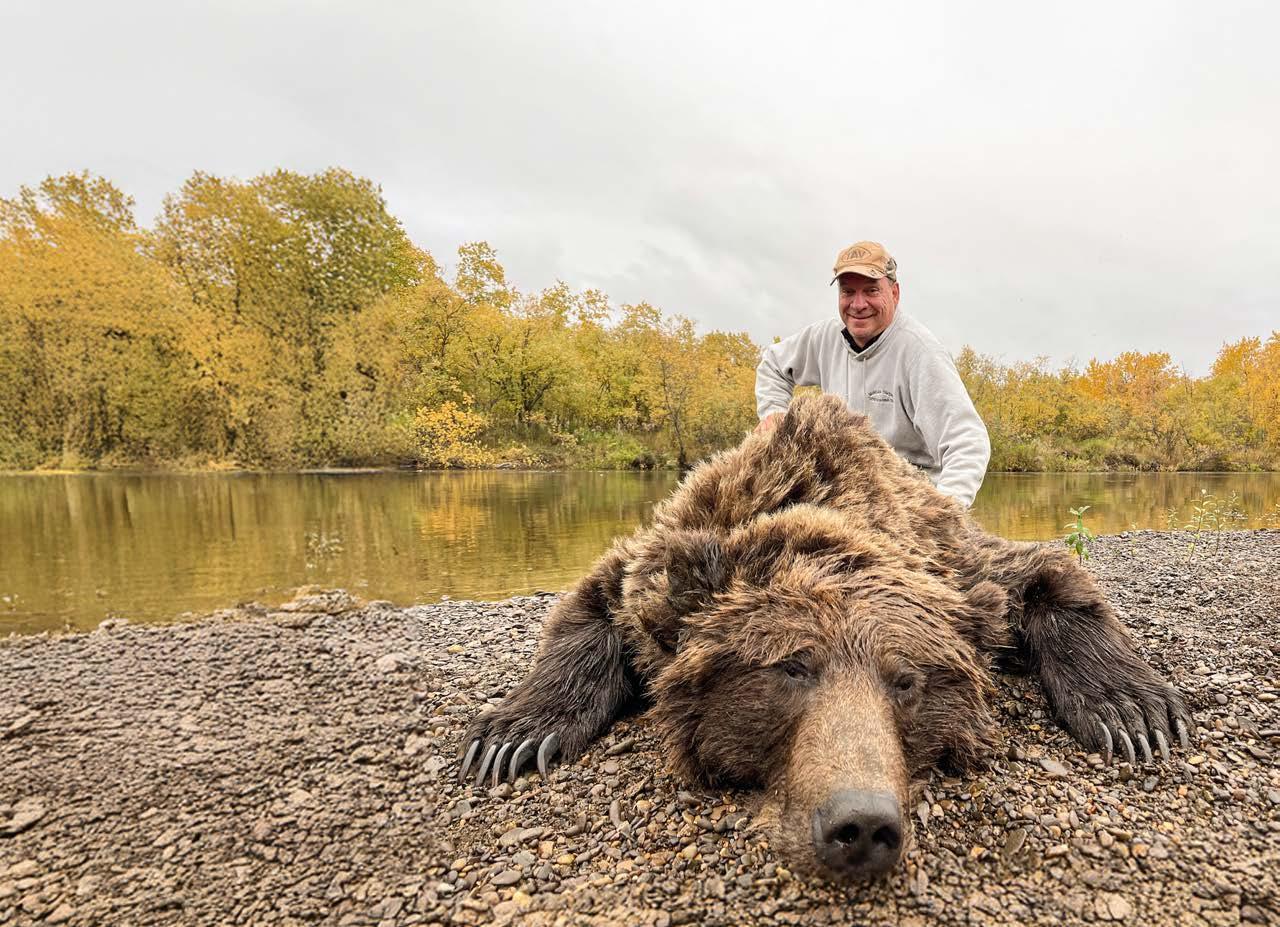
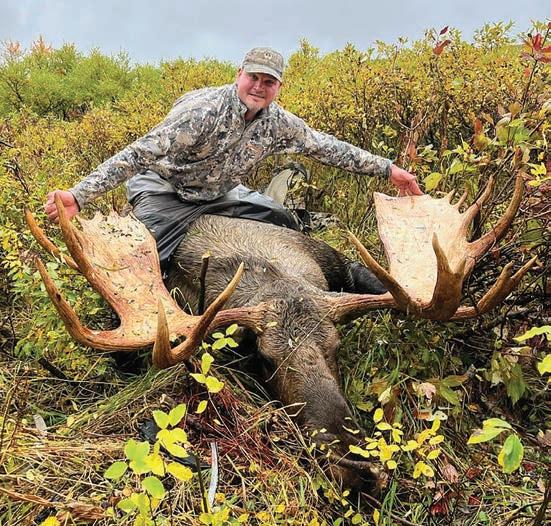
• Trophy moose & bear hunts in prime river systems
• Regular 60”+ bull moose opportunities
• Near-100% opportunity rate on legal bulls
• High success on large Alaskan bears
• Fully guided & all-inclusive hunts
• Expert guides with deep local knowledge
• Carefully selected locations for consistent results
• 11–15 day hunts with 15-day combo moose & bear hunt available
Every hunt is carefully planned and professionally guided from start to finish. From scouting and calling to field care and logistics, your guide handles every detail so you can stay focused on the hunt.
Contact us today to secure your hunt and discuss available dates.
www.alaskaeliteoutfitters.com 218-434-0068 • 907-464-6165
mike@alaskaelieteoutfitters.com


Marion
through part of 1.4 million acres of public land the federal Department of the Interior will transfer to the state of Alaska, opening the door for mining and energy projects to proceed despite pushback on natural resource protections.
(TYRA OLSTADT/BUREAU OF LAND MANAGEMENT)
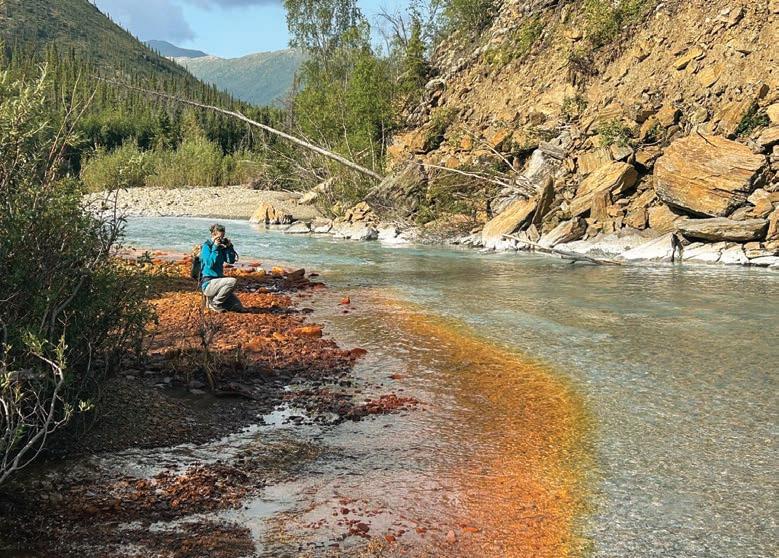
In early May, the United States Department of the Interior quietly posted a press release headlined “Interior Transfers 1.4 Million Acres in Dalton Utility Corridor to State of Alaska.”
At a time when hunters, anglers and other conservationists have fought to preserve the state’s public lands from mining, drilling and logging projects pitched by both Alaska and Washington, DC, politicians, it proved to be another blow.
Members of the Defend the Brooks Range Coalition have been adamant about the initial Interior decision to transfer these lands to Alaska for the purpose of “enhancing the state’s control of its own economic destiny,” as revoking Public Land Orders 5150 and 5180 could affect subsistence resources utilized by several Alaskan communities.
“PLO 5150 lands are some of the most accessible and fruitful caribou hunting areas for Alaskan residents and nonresident recreational hunters. These hunting opportunities are especially important when considering recent downturns in population and more limited hunting occurring in other parts of Alaska, like the Fortymile and Nelchina Herds. Additionally, these PLO 5150 lands offer world-class DIY fishing access for Dolly Varden, Arctic grayling and lake trout, drawing anglers from every economic background,” the coalition said in a statement back in February.
The Interior press release stated that the land transfer “marks significant progress on fulfilling Alaska’s statehood entitlements, a responsibility of the BLM Alaska Land Transfer Program.”
It makes it more likely the divisive Ambler Road project will indeed proceed, creating a gravel road between the Dalton Highway and the Ambler Mining District, potentially harming Brooks Range fish and wildlife habitat and angling and hunting opportunties.
“This milestone represents a leap forward in advancing Alaska’s ability to responsibly develop its resources and advance economic opportunity across Alaska,” Alaska Governor Mike Dunleavy said. “We appreciate our partnership and collaboration with President (Donald) Trump that made this transfer possible, and we look forward to putting this corridor to work for the benefit of all Alaskans. President Trump delivered when other presidents did not.”
The president’s insistence on developing Alaska lands off the Dalton Highway and opening portions of the once protected Tongass National Forest for mining and logging projects drew the ire of the Center for Biological Diversity. The state also plans to construct a new 807-mile natural gas pipeline, the Alaska Liquefied Natural Gas project.
“Handing this incredible stretch of federal public lands over to the state puts the communities, fish and wildlife who live there in danger,” said Rebecca Noblin, one of the organization’s Alaska senior attorneys. “Alaska officials envision bulldozing the area for a private industrial mining road and the LNG pipeline boondoggle. We’re fighting this transfer of our federal public lands in court and we’ll keep standing up for Alaska’s wild places.”


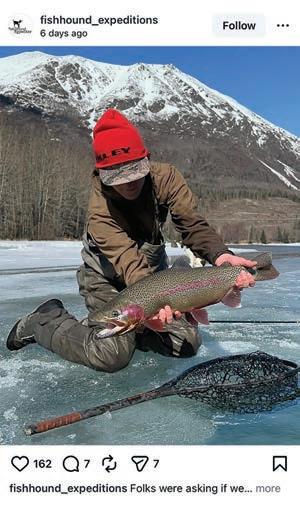
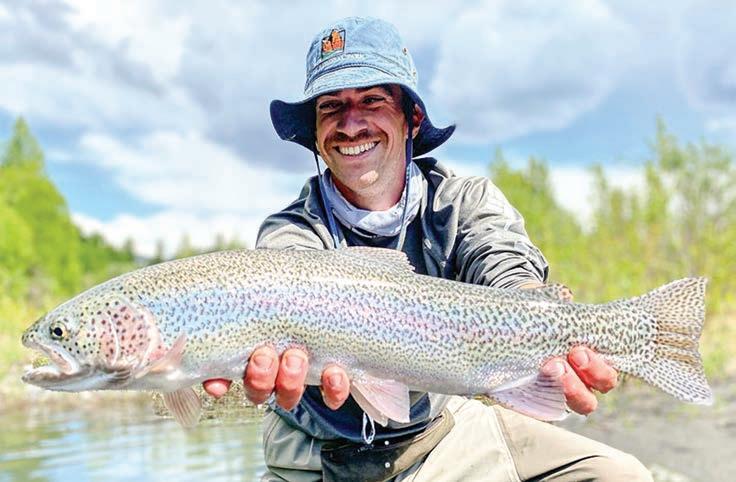
Summer is around the corner, but just over a month ago ice fishing was epic in the Last Frontier, as our friends at FishHound Expeditions (907-3821802/fishhoundexpeditions.com) in Talkeetna discovered. Farewell to winter; hello sunshine!
Expected number of salmon to be harvested by Alaska’s commercial fishing industry this season, roughly 90 million fish less than what was projected at this time in 2025.

A Kodiak commercial fisherman agreed to plead guilty to stealing 16 yellow cedars from the Tongass National Forest in a deal reached with federal prosecutors that kept him out of jail but on the hook for $85,634 in restitution. Reports say he used his 54-foot seine boat for cutting and transporting the logs after a herring season.
“This unlawful plan has irreversible consequences, and I’m concerned that state game agents could start killing bears before this case is resolved. We want to see the caribou herd thrive, but the state simply hasn’t shown that the unrestrained killing of bears is going to help us get there. We need to stop this disgraceful waste of the state’s limited resources and work based on science to protect all our wildlife.”
“ ”
–Cooper Freeman, Alaska director of the Center for Biological Diversity, after the Alaska Superior Court ruled the state can resume the culling of bears in Southwest Alaska during a lawsuit protesting the killing of the predators.
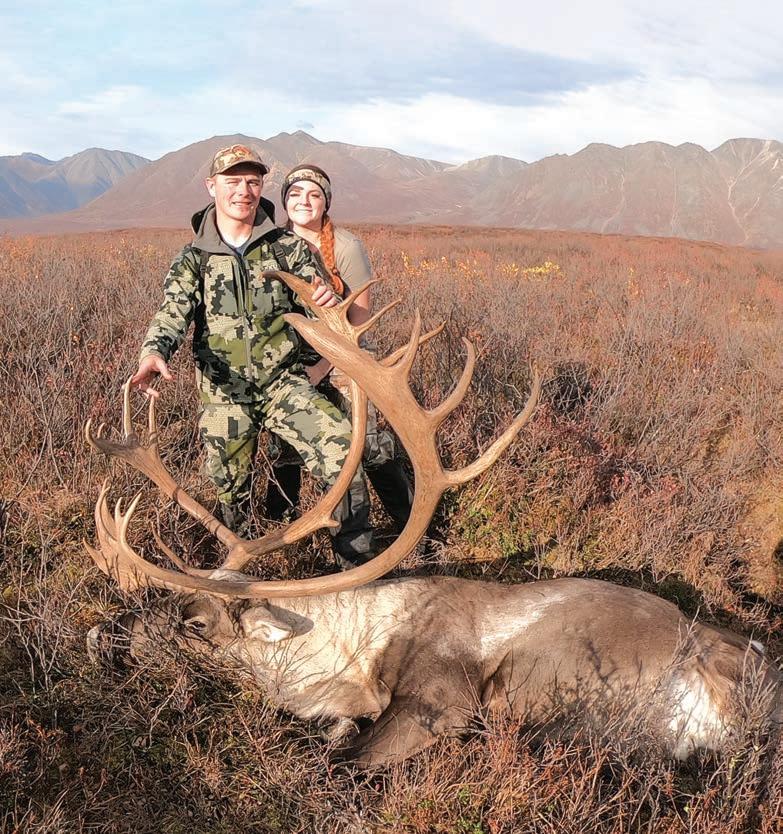
With the rifle at my shoulder like a SWAT leader moving towards a suspect, we snuck closer; now within 40 yards of the caribou, I waited for my chance. After a couple of minutes went by, finally the bull stepped into an opening. All I could see was his rack, head, neck and top one-third of his body.
My arms shook with fatigue from holding the rifle up for so long and the scope’s crosshairs bounced with my movement. I slowed my breathing and concentrated on a small patch of brown fur behind his shoulder. My thumb took the safety off – index finger coming to rest on the cold trigger – as the crosshairs moved in a uniform figure-eight motion.
I waited for them to hit the brown patch and squeezed. Boom! The rifle fired and the shot echoed through the valley. The bull immediately dropped dead before he hit the ground.
Wife Jen and I hugged and high-fived, filled with joy and disbelief that it had all come together. As we walked closer, we noticed a smaller bull 20 yards from where my bull had fallen. He bounded off, leaving me thankful that I had taken the more mature of the two.
I could not believe the size of my caribou – not only his horns but also his body. I’d seen reindeer at a farm in Palmer before and they were about the size of a mature mule deer. I’d figured that since caribou share the same genetics, they would be roughly the same size. This was a false assumption.
This caribou’s body was closer to that of a young cow elk with a big round gut. We took our grip-and-grin pictures – still ecstatic from the hunt – then set to work on processing the animal. The hindquarters and back of the bull were covered in a thick layer of fat. I could tell the bull had been preparing for the long winter ahead.
I trimmed off some of the fat to render oil from and cook the tenderloins the next day. It was a two-hour process to get the bull skinned and quartered, then loaded in our packs. It was 7:30 p.m. by the time we set out on the 4-mile journey back to camp.
The plan was to get there before it got too dark, but that proved more difficult than we’d expected. The brush, alder patches, creeks and bumpy terrain made for slow travel, and it was made even worse by the heavy, unbalanced packs. Six brutal hours later, we finally arrived at 1:30 a.m. Our bodies were sore but our spirits high! -Landon Albertson

JUNE 5-20
JUNE 12-21
JUNE 20
JUNE 30
JULY 1
JULY 4
JULY 17-18
JULY 25
JULY 25
JULY 31
AUGUST 7-9
AUGUST 8
AUGUST 8-16
AUGUST 19-21
AUGUST 28-SEPTEMBER 6
other
cruises the waters of Ship
both
and
Slam’n Salm’n Derby, Ship Creek, Anchorage (thebaitshackak.com)
Valdez Halibut Hullabaloo (valdezfishderbies.com/halibut-derby/halibut-hullaballoo)
Ship Creek Youth Fishing Day, Anchorage (thebaitshackak.com)
Black bear season ends in several units
2026-27 hunting regulations take effect
Mount Marathon Race, Seward (mountmarathon.com)
Copper River Salmon Jam, Cordova (salmonjam.org)
Start of Valdez Silver Salmon Derby (valdezfishderbies.com/silver-derby)
Valdez Kids’ Pink Salmon Derby (valdezfishderbies.com/kids-derby)
Valdez Big Prize Friday (valdezfishderbies.com/silver-derby/big-prize-fridays)
Golden North Salmon Derby, Juneau (goldennorthsalmonderby.com)
Valdez Women’s Silver Salmon Classic (valdezfishderbies.com/womens-derby)
Seward Silver Salmon Derby (seward.com/salmon-derby)
Ted Stevens Kenai River Classic (krsa.com/program/classic)
Valdez Salmon Slam Tournament (valdezfishderbies.com/tagged-fish-contest)
For more information and season dates for Alaska hunts, go to adfg.alaska.gov/index.cfm?adfg=hunting.main.
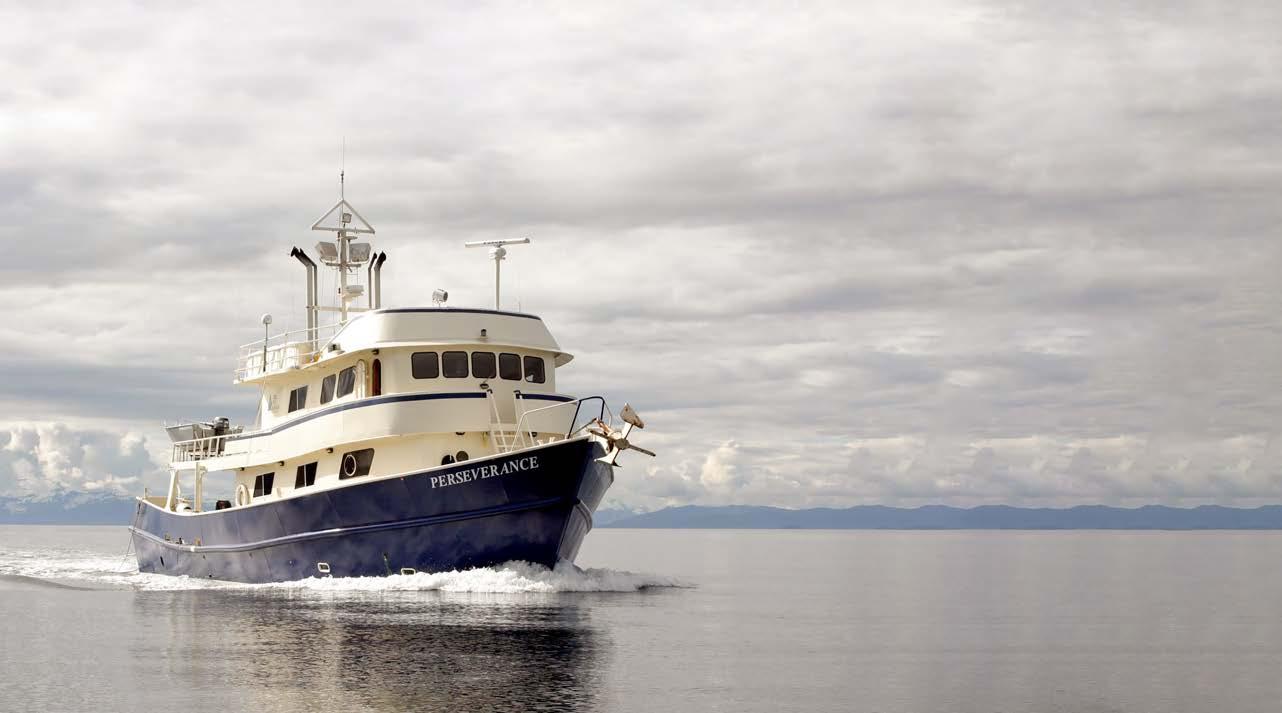
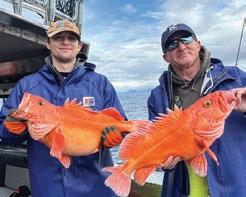
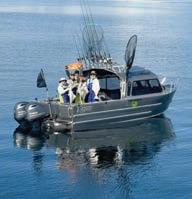
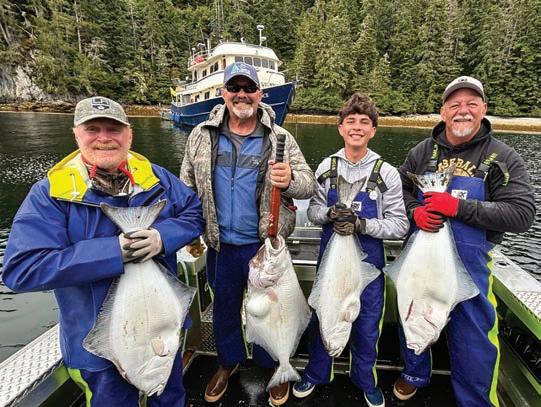
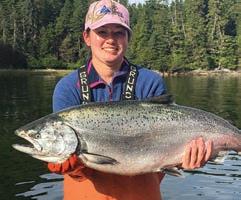
Wild Alaska offers an unmatched mothership sportfishing adventure in Southeast Alaska. With over 25 years of experience, we provide exclusive access to vast, untouched marine wilderness—far beyond the reach of traditional charter operations.
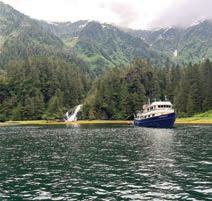
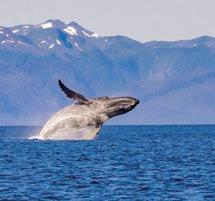
Immerse yourself completely in Southeast Alaska’s marine wilderness. Fish calm, sheltered waters of Frederick Sound, Stephens Passage, and Chatham Strait, surrounded by glaciers, wildlife, and breathtaking scenery. Our mobility ensures new waters and fresh opportunities every day—keeping you where the fish are.
LIFE ONBOARD
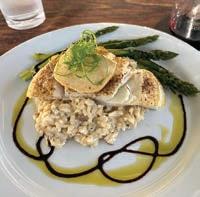
• Hot breakfast each morning
• Soup and sandwich lunch
• Fresh seafood dinners
• Relaxed evenings—or continue fishing and exploring
• Comfortable cruising in 50–70° temperatures
WHAT YOU’LL ENJOY
• World-class sportfishing
• Up-close wildlife viewing
• Photography opportunities found nowhere else
• Safe, warm, and welcoming onboard environment
• Exceptional crew and personalized service
Join Wild Alaska for the adventure of a lifetime! Pack a smile—and get ready for
BY CHRIS COCOLES
“
We are all salmon people.”
Filmmakers are always looking for that go-to line that can define a movie. From “I coulda been a contender” and “Toto, I’ve a feeling we’re not in Kansas anymore” to “I’m gonna make him an offer he can’t refuse,” they are the moments that make a script leap off the page.
When Myles Connolly, a veteran of documentary projects, was searching for the right ending to a new film that honors Pacific salmon as well as the species that rely on these iconic anadromous fish – including the humans who catch them, eat them and vow to protect them – he turned to Chief Na’Moks of British Columbia, Canada’s
Wet’suwet’en First Nation, which like many tribes has been harvesting salmon for countless generations.
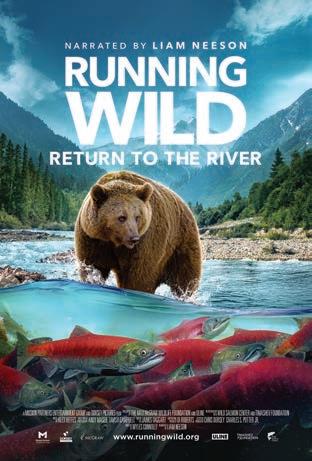
Produced in a collaboration with the Oregon-based conservation group Wild Salmon Center (wildsalmoncenter .org), Running Wild: Return to the River is being shown in 3D format on IMAX screens in a limited release (it’s currently playing at Sitka’s Alaska Odyssey Dome). Connolly, a longtime documentary cinematographer, producer and director whose credits include films about Alaska’s Arctic region, Mount Everest and blue whales, was moved by his interactions with Chief Na’Moks when he and his crew filmed salmon counting on BC’s rivers and visited the Wet’suwet’en lands
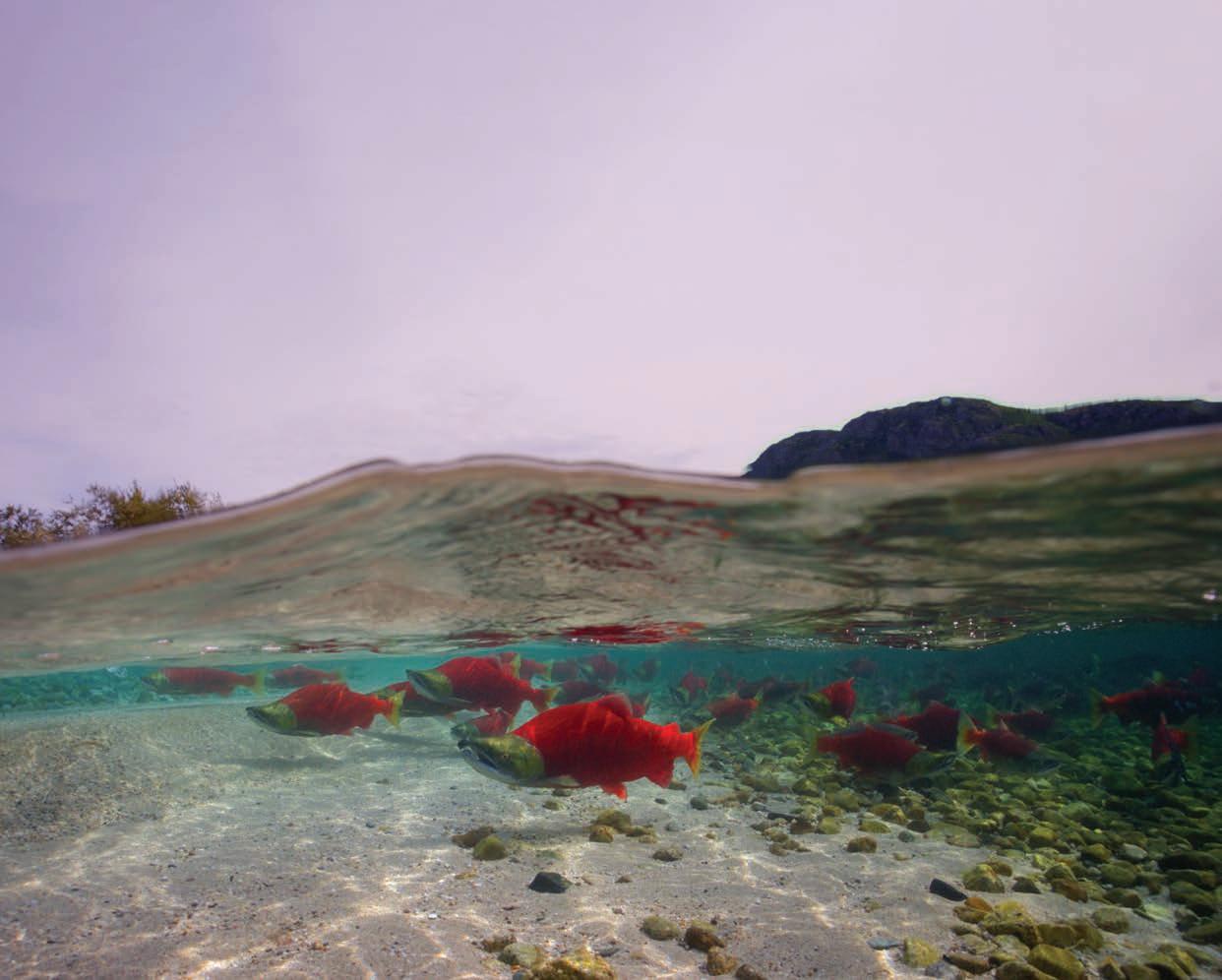
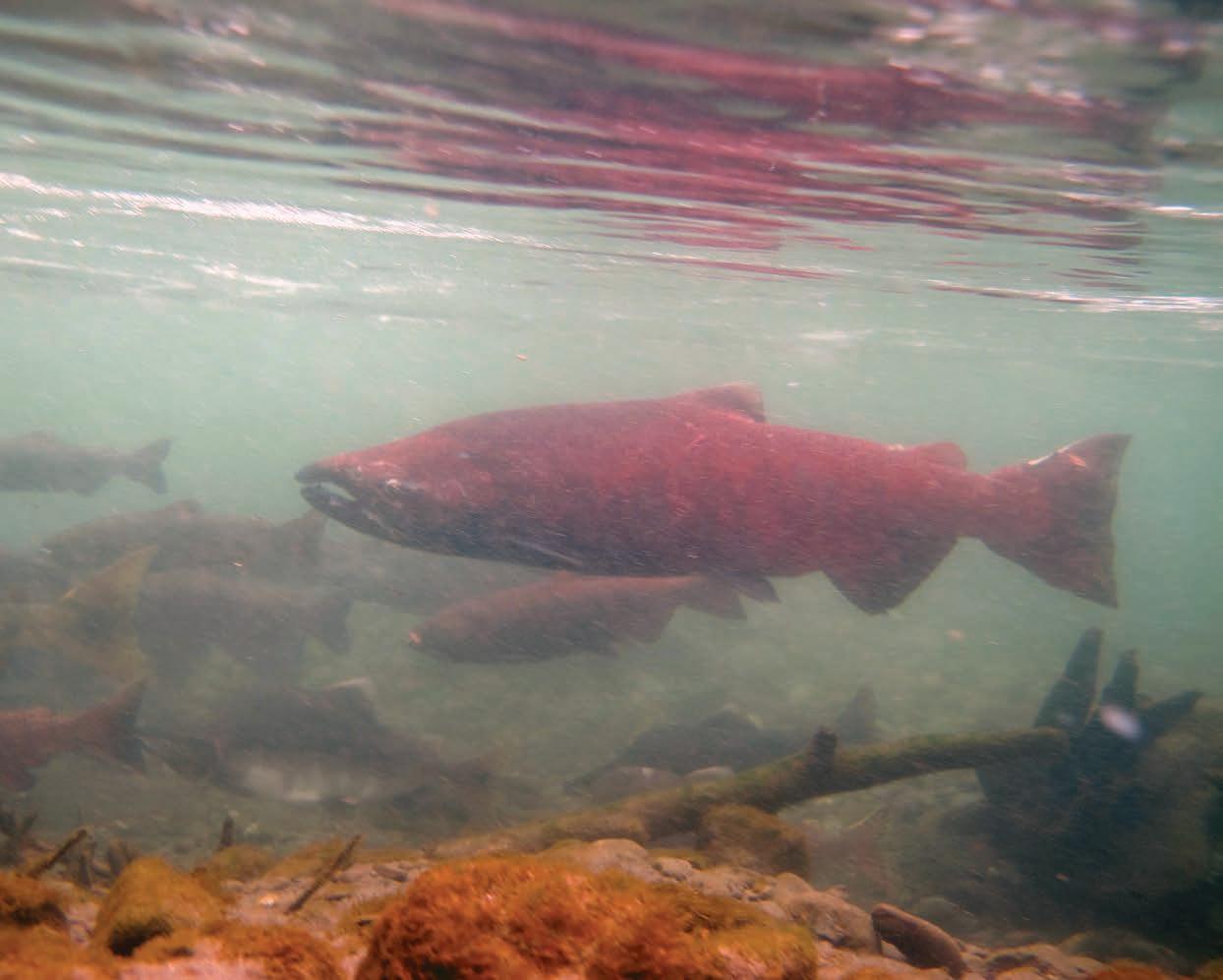
Sockeye return every year to the freshwater streams that feed from Bristol Bay’s Lake Iliamna. Alaska’s salmon play a key role in a new documentary film, Running Wild: Return to the River, which is showing in 3D format on IMAX screens, including Alaska Odyssey Dome in Sitka. (MISSION PARTNERS ENTERTAINMENT GROUP)
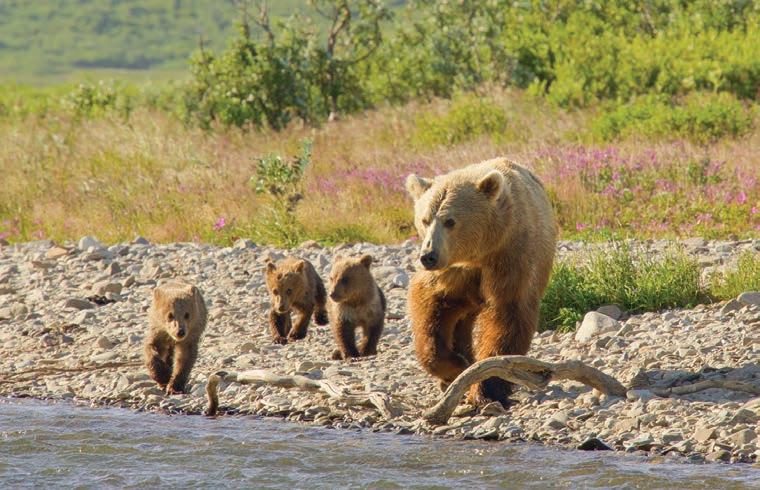
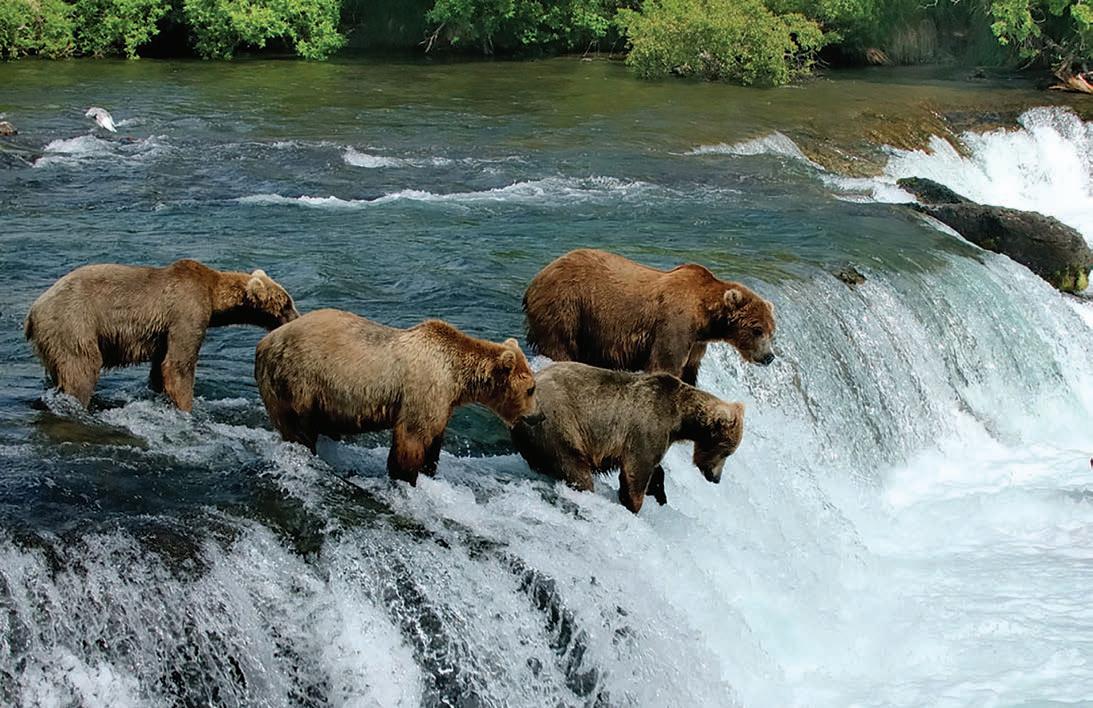
Katmai National Park’s Funnel Creek, a place where majestic bears fish for salmon, was one of the most scenic and wild filming locations for the movie. Director Myles Connolly credits bear expert Casey Anderson’s advice for shooting in that spot. (MISSION PARTNERS ENTERTAINMENT GROUP)
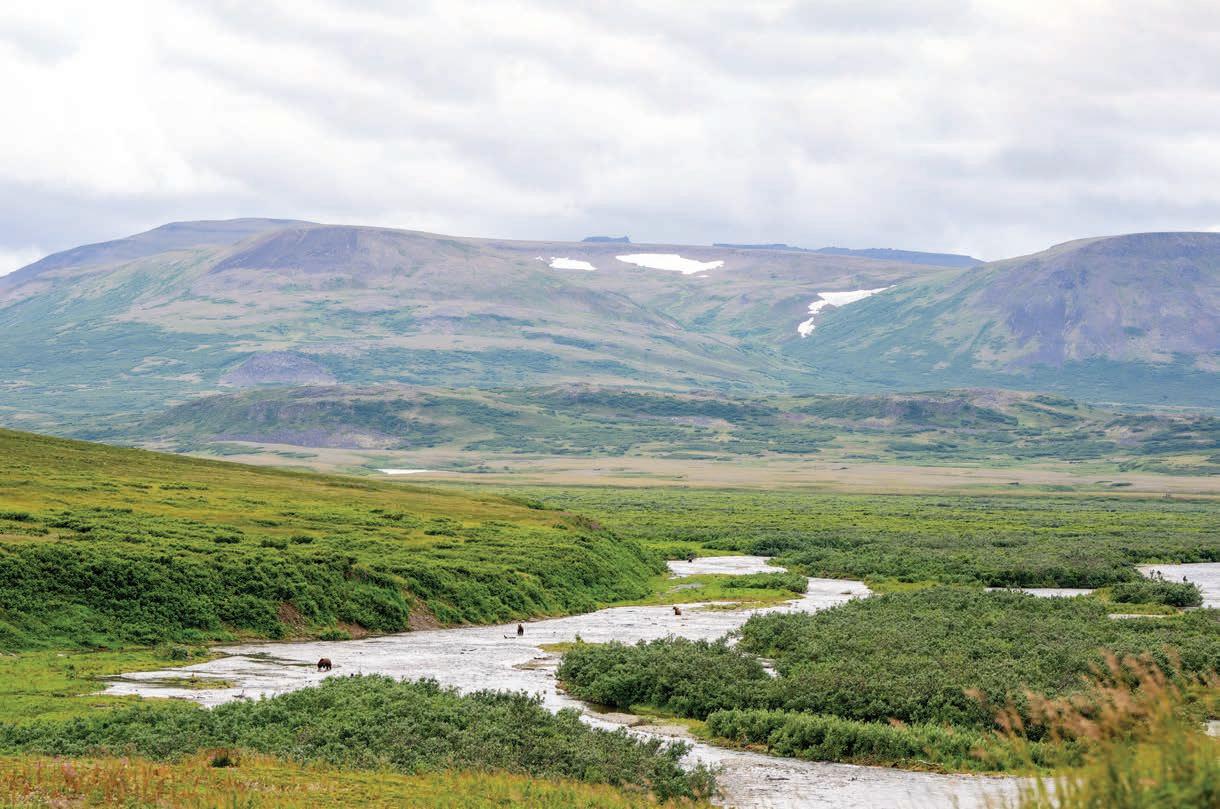
(filming also took place in Alaska, California and even Russia).
“I was looking for a strong way to connect back to Indigenous (people),” says Connolly, who got more than he bargained for in his interactions with the chief.
Before we get to that moment that put a bow on an impactful film, let’s take a look at how it all came together.
When Connolly was approached about directing the documentary, despite the Ojai, California, resident’s longtime admiration for fly fishing, he felt some trepidation about taking on the gig.
“‘Salmon, huh? Give me the weekend,’” he told the caller when pitched on the idea.
“Over the course of that weekend, I dug into it and I realized that this is like a Greek drama. There are so many stories and so much stuff going on in that world, so I called back on Monday and said, ‘Sign me up.’ And once I got into it and started to meet people … I started to realize that, to
be honest, salmon was just a food for me in the past, but I came to realize that it’s so much more than that. And it is in many places, not just here in the Pacific, but it is the keystone to life and a critical part of life.”
That was the perfect response for Guido Rahr, Wild Salmon Center’s
president and CEO, who would serve as the movie’s scientific advisor.
Connolly’s reputation for working on conservation and environmental films has become well known in the industry, so Rahr knew this would be a perfect fit for the director’s chair.
“He is the best of the best; he is
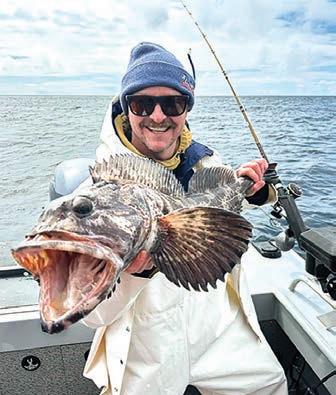
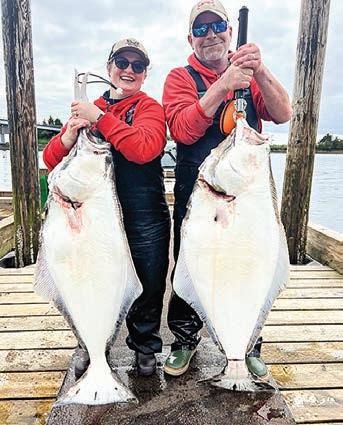
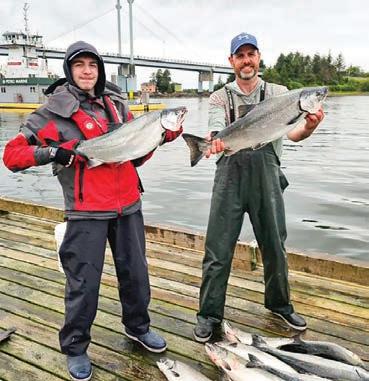
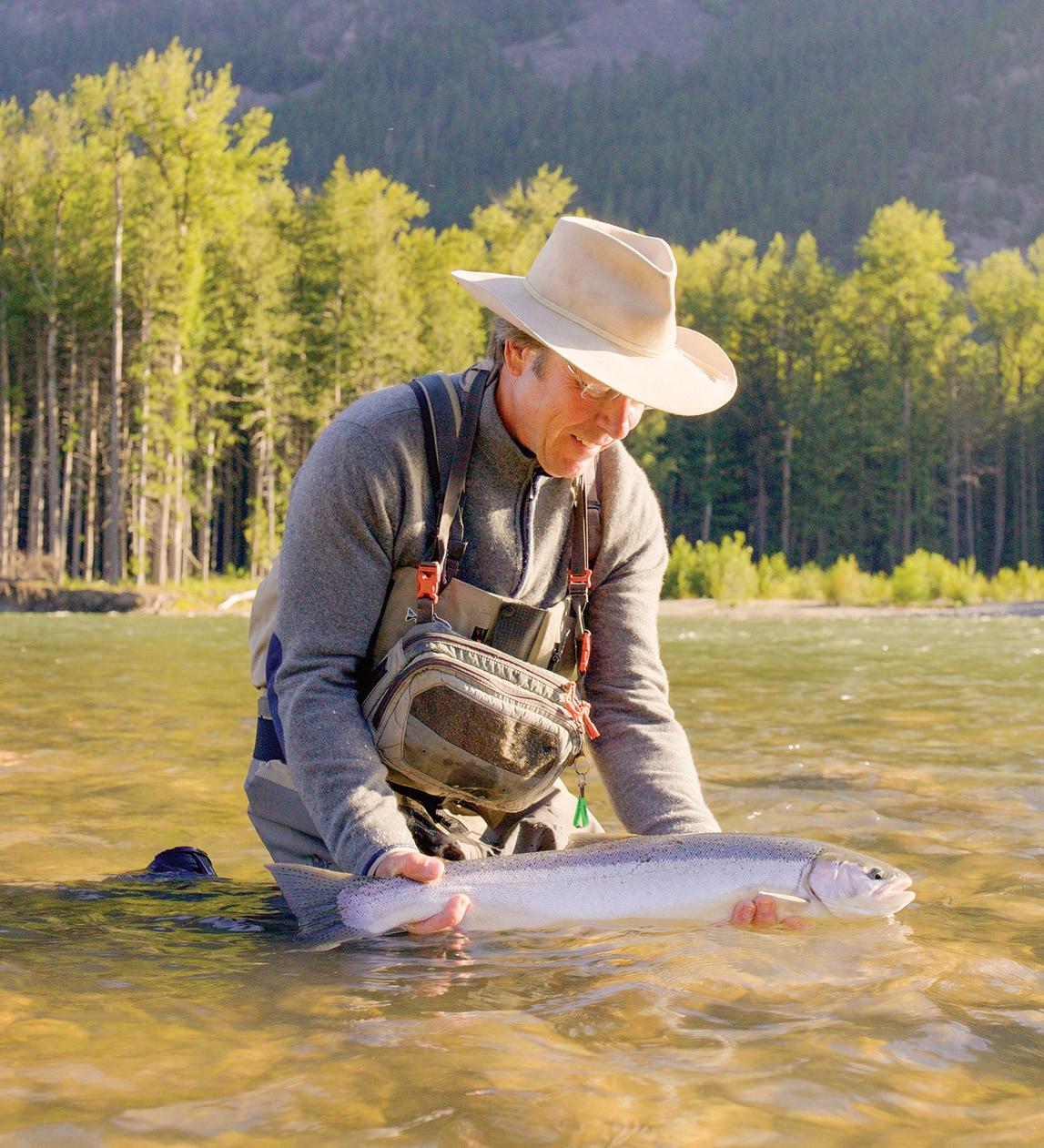
Your one-stop destination for self-guided saltwater fishing adventures in
We offer comprehensive packages that include lodging, fully equipped rental boats, rods, reels, tackle, downriggers, depth finders, VHF radios, GPS, marine charts, safety gear, and more.
Guido Rahr, president and CEO of the Wild Salmon Center, served as scientific advisor for the film. He says his organization’s first goal among many with Running Wild is “getting kids to believe in and love the places, the science and the conservation of the species – and to know that it’s not just about salmon. These are ecosystems.” (MISSION PARTNERS ENTERTAINMENT GROUP)
incredibly experienced and passionate and extremely good at what he does. That’s why the film looks like it does, because of Myles Connolly,” Rahr says.
When plotting how Running Wild would be presented, Rahr was willing to trade more initial reach via streaming services to present the film in a 3D format on massive IMAX theater screens for a magnificent cinematic experience.
Rahr recalled an IMAX movie he’d seen some time ago on British Columbia’s Great Bear Rainforest – the Oregon native has fished the province’s pristine rivers countless times – and knew this film had to be presented that way and in 3D, even if it sacrificed some initial screenings.
“I realized how powerful the IMAX medium is. It really is the next best thing to physically being there. You can do a documentary film, which
is great, but they can get lost after a while if you’re on television with all those channels (available),” Rahr says. “But an IMAX film has more durability and plays for a long time. It doesn’t get as many eyeballs, but it’s a more powerful impact when you get people in the room.”
Rahr and the Wild Salmon Center have worked tirelessly as salmon conservation champions. In Alaska, they have stood hand in hand with those who have – for now – blocked the Pebble Mine and its potential threat to Bristol Bay’s salmon-filled watersheds.
But while Running Wild doesn’t back down from reminding how these wild fish must be protected at all costs, it also doesn’t bury the lede on the star of this show: the fascinating life and (eventual) death of the salmon, which Connolly and his team captured so beautifully, from
hatch to spawn, in surreal underwater photography sequences.
“There are so many stories both good and bad around it,” Connolly says of the Pacific salmon news cycle, which includes stocks crashing due to various factors, along with the threat of mining, drilling and damming projects that have caused divisiveness and controversy in and out of Alaska.
“People kept asking me, ‘Why aren’t you talking about the Pebble Mine or the Klamath (River) dam removal (in California)?’ And those are all more than worthy stories for a documentary. The problem is it becomes very political and controversial. But what I’m trying to do is just get people to fall in love with the fish. Just look at this amazing animal and all the things that benefit from this animal. We should be loving this fish, and then, if they come away motivated and inspired, they can go learn about Pebble, and we make that available. We have an impact campaign and teachers – all these different things for those of you who are wanting to learn more.”
And while mostly leaving the political stuff out of the film – Connolly did want to subtly keep shots of the ubiquitous No Pebble signs that adorned many of the Bristol Bay commercial boats the crew interacted with – Running Wild’s main target audience is the younger generation that could make up the next wave of Wild Salmon Center warriors.
“The first goal is getting kids to believe in and love the places, the science and the conservation of the species – and to know that it’s not just about salmon. These are ecosystems,” Rahr says. “If you look at the Pacific Rim and these places – people in Kamchatka or Alaska or British Columbia or Oregon – they don’t really care what an ecosystem is; that’s just an abstract concept. But they tend to love wild salmon. Just by talking about salmon you can put together protections for an ecosystem. … We can prevent significantly degrading them like other rivers that have been destroyed.”
Connolly, who turns 63 in July,
From playing a sympathetic German businessman who defied Hitler’s Nazis to save World War II Jews from the Holocaust in Schindler’s List, a Jedi knight in the Star Wars franchise, to a badass avenging dad in the Taken films, Academy Award nominee Liam Neeson has pulled off just about every kind of role in his distinguished career.
And his distinct Northern Irish voice has made Neeson a go-to documentary narrator to hire, and given his passion for fishing and conservation, Running Wild: Return to the River director Myles Connolly had a natural fit for his film.
“It’s not just a job; you’re getting the very best that he brings to it, and he’s also investing his own time and his own personality,” says Connolly, who was part of the crew – as associate editor – for a previous Neeson-narrated documentary, a 1998 production about Mount Everest. “And you can hear it in the narration. It’s not just Liam reading someone else’s stuff; he owns it. He comes across really well.”
At one point in his voiceover work in the film, Neeson says, “Salmon need our help – now more than ever.” And he really means it, given his background as a longtime angler, particularly back in his native United Kingdom fishing spots, and rueing the crashing out of Atlantic salmon runs in European rivers. He’s well known as a conservation and environmental advocate.
“The story of the salmon’s return is one of nature’s greatest odysseys – and a powerful reminder of our responsibility to protect the wild places that sustain us all,” Neeson said in a press release announcing him as Running Wild’s narrator. “I was drawn to this film because it captures both the beauty and the urgency of conservation in a way that’s deeply moving and shows how everything in nature, including us, is connected.”
Guido Rahr, president and CEO of Wild Salmon Center, was thrilled to have such an advocate for fish and the conservation of species on board for a project that’s so meaningful for Rahr’s organization.
“We got so lucky,” Rahr says of Neeson’s attachment to the movie.
Over the course of Neeson’s work with Connolly on the documentary, the duo swapped stories about their shared love of fishing. (Neeson also had a starring role in a flick set in the Alaska wilderness, 2011’s The Grey, about plane crash victims stalked by a pack of vicious wolves.)
“We talked about his fishing experiences in Scotland. He said back when he was a kid he would go down and fish and catch two or three salmon in a day,” Connolly says. “He went out with some friends a few years ago and they fished for a week and they only caught one fish. So he said, ‘I worry that the Atlantic salmon population is too far gone to come back.’ So he was really proud to be a part of this film because he

active in conservation causes. The Northern Irishman lent his voice as narrator for Running Wild: Return to the River. (MISSION PARTNERS ENTERTAINMENT GROUP)
wants to get that message out there as well.”
And while Connolly says other A-list actors he’s worked with on documentary narrations have simply shown up and read the script, Neeson was refreshingly much more handson in the creative process.
Connolly loved that Neeson took notes and offered his own opinions on how to present the material.
“He was coaxing me to rewrite lines on the day. He would come up with something spontaneous. ‘What if I did it this way?’” Connolly recalls, adding that Neeson, who turns 74 on June 7, was proud to be a part of such an important project.
“He wants to get that message out there as well. It’s not too late; we can do something; we can help these fish and these places, and all of these species that rely on fish, including us,” he says. “I think he’s not as active in (fishing) as he used to be as a younger man. But he’s still passionate about the subject and his eyes lit up.” -CC
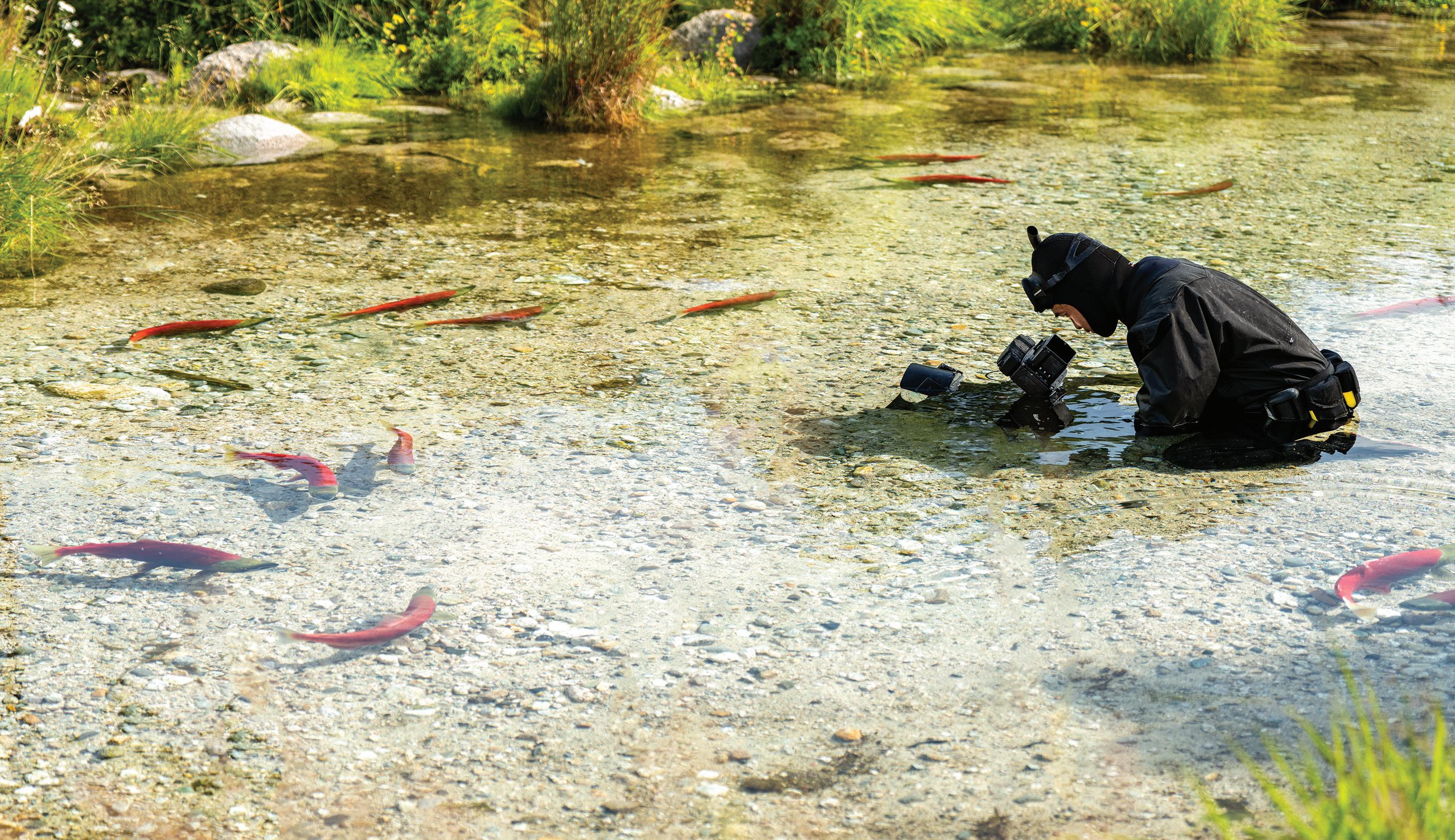
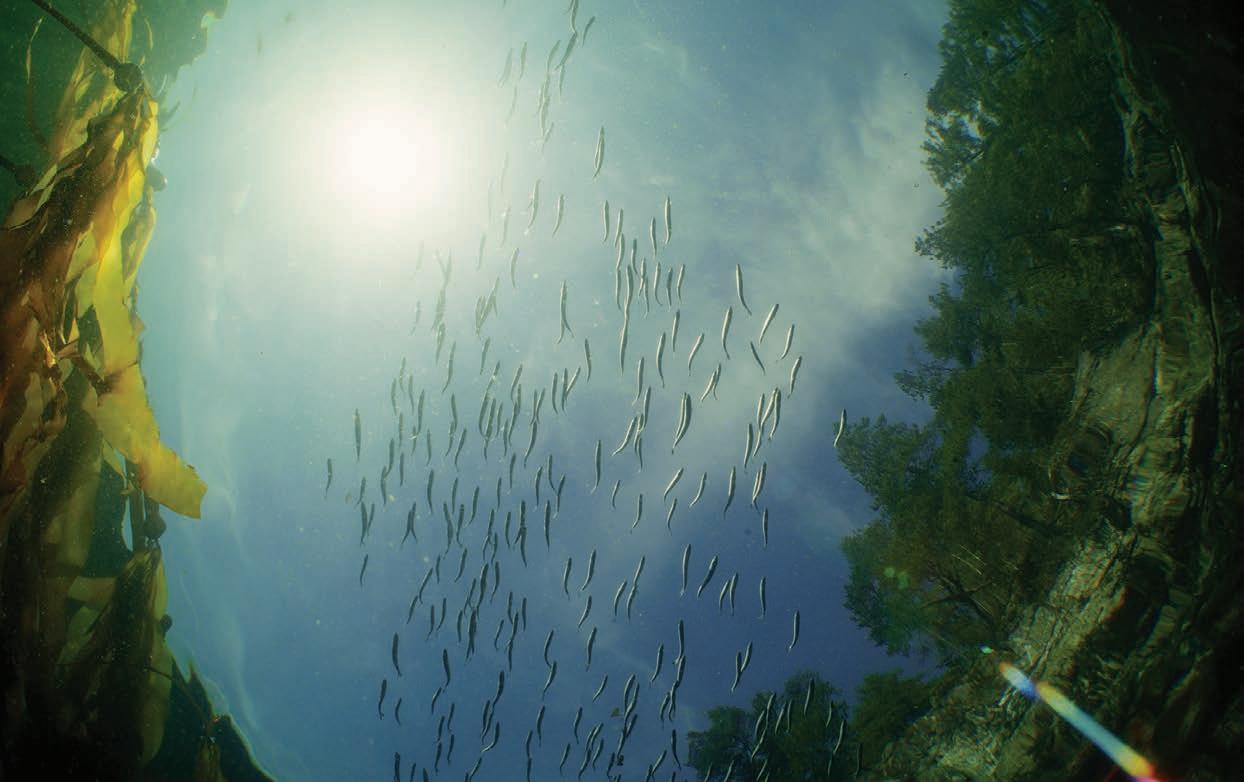
Underwater photography specialist Jason Ching teamed up with Tavish Campbell to film a salmon spawning scene at Lake Iliamna – except the fish weren't ready. It took a couple weeks and they were almost out of time and camera memory before Campbell finally got a memorable shot. (MISSION PARTNERS ENTERTAINMENT GROUP)
wants to see those kids who are 10 to 14 years old make the biggest impact going forward as he enters his golden years. They’re the ones, he concludes, who can change the world when it needs that most.
The editing process was calculated to consider how the youngsters feel when attending screenings with their families. A producer felt like a shot of dozens of dead salmon carcasses along riverbanks would be a powerful visual of the ultimate sacrifice these fish make as they return to the rivers that spawned them. Connolly pondered how to convey the idea that salmon return home to perish with Jason Ching, who provided some of the incredible underwater scenes in Alaska. And indeed, they did get footage of the mass die-off of sockeye.
“When we were editing, I remember putting it together with Jason and I said, ‘I don’t know. It’s kind of a shocking moment, and what I need is for people to understand what happens, not the visuals,’” recalls Connolly.
“And so we went back and (got a shot) of one dead fish. That kind of says it all. It won’t freak them out and no kids will leave the theater
crying, but it’s poignant and sad, and it needs to be. These fish have given everything, and you can give a little something back.”
The team behind Running Wild hopes their production will stick with the audience for years to come and that viewers join the crusade to protect wild salmon.
“I think that our goal is to say, ‘Here’s this amazing animal in the world that we all inhabit and it needs our help, and you’re the generation that can help,’” says Connolly, who after completing all these documentaries has expectations for audiences to take the films’ message and run with it.
“Someone will come to me years later and say, ‘I’m a marine biologist or a conservationist because of a film I saw when I was a kid.’ That’s the best feeling, because you realize that not only have you inspired them, you’ve created an eco-warrior who’s going to go out there and fight the good fight.”
Salmon and bears are joined at the hip along Alaska’s rivers and streams. The former are looking to get to sea and the
latter are among the many predators in search of an easy meal (the film showcases other salmon slayers along the way like orcas, the sea wolves of Vancouver Island and bald eagles).
Connolly considered shooting in two of the state’s most well-known locations where bruins and fish meet: McNeil State Game Sanctuary and Katmai National Park and Preserve’s Brooks Falls, and then decided to consult with his buddy, bear expert, filmmaker and naturalist Casey Anderson, who had another idea.
“I thought, ‘Do I really want to do the same thing that everyone has done?’ So I called Casey and asked, ‘If you could go anywhere, where would you go?’ And he said, ‘Funnel Creek,’” Connolly says of another Katmai National Park bear haunt. “He showed me a couple videos that he had and I thought, ‘We’re going there.’”
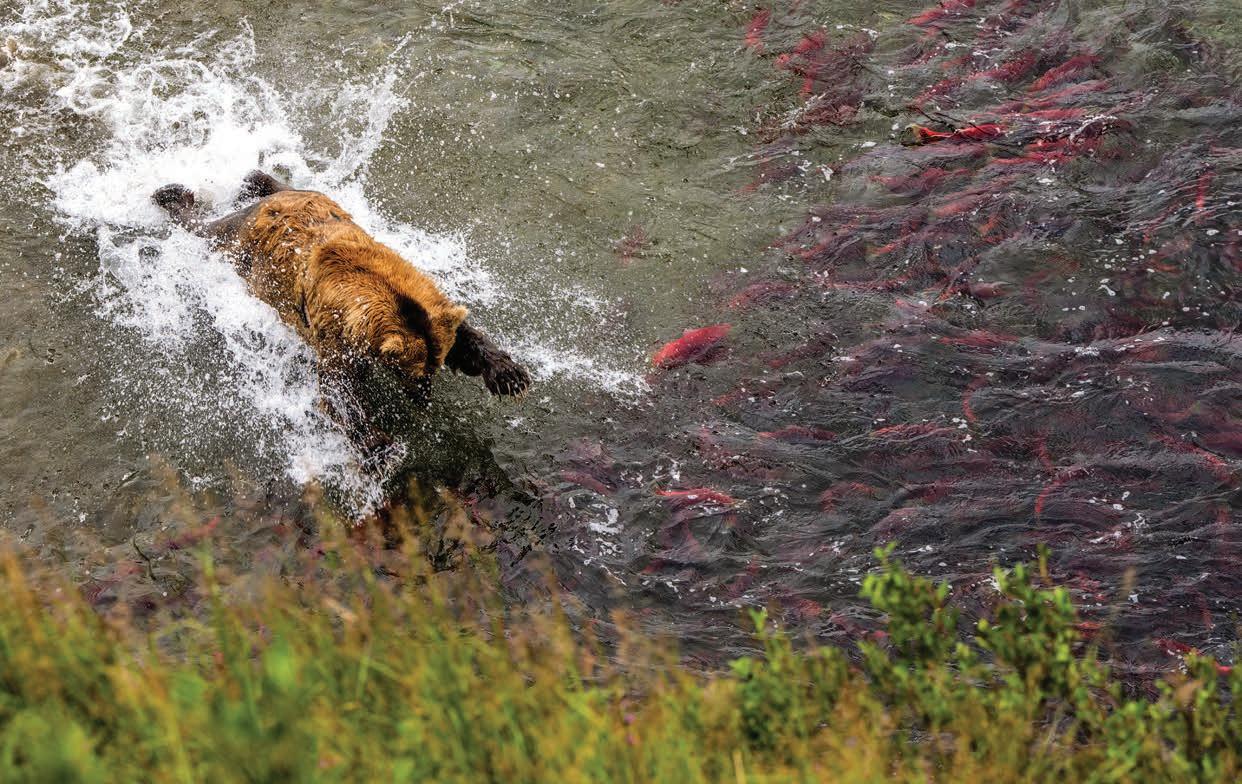
The film’s bear-salmon encounters are among its most breathtaking moments. Connolly says Funnel Creek was one of his favorite places to film in, despite some uncomfortable moments with the unpredictable brown bears as they hunted for fishy cuisine.
The brown bears at Funnel Creek use a peculiar but effective technique to catch fish: They wait patiently until a school gathers, then dive into it. “The cool thing about Funnel Creek is that you can literally walk down and the bears are right there, so the first day I was kinda spooked, man, because these are big animals,” Connolly recalls. “And they’re all around you; at one point, they’d pop out of the bushes behind you 10 feet away.” (MISSION
“The cool thing about Funnel Creek is that you can literally walk down and the bears are right there, so the first day I was kinda spooked, man, because these are big animals. And they’re all around you; at one point, they’d pop out of the bushes behind you 10 feet away. ‘Holy crap,’” Connolly says.
“They’re not there for you. They’re there for the fish. By the third or fourth day, you’re pretty comfortable, because you know which bears are which. But every once in a while a new bear would show up. The rule was, don’t turn your back to the bears. At one point, Casey walked up and he just tapped me on the shoulder and I freaked out, spun around and he said, ‘I could have been that bear right there.’ There was a bear 15 feet behind me, so you had to pay attention.”
Lake Iliamna is in the heart of the Bristol Bay region most at risk if the idea of the Pebble Mine project, which has been shut down by an Environmental Protection Agency veto and is dead for
now, ever surfaces again. For Rahr, the lake and its adjacent streams played a big part in the salmon life cycle portrayed so eloquently in the film.
“My feelings were that I think we’ve stopped the Pebble Mine – I’m hoping – but seeing those watersheds and bringing people up there that can help us has been absolutely key,” Rahr says of the Bristol Bay scenes.
He’s been fishing these waters for trout and salmon for years now, so it’s understandable how passionate he’s been in the fight to keep the massive copper and gold mine out of what’s known as one of the planet’s last major strongholds for Pacific salmon.
“You just can’t understand until you get up there in one of those Beavers and fly over,” Rahr says of Bristol Bay’s scenery and the importance of the watersheds.
Iliamna was also one of the more challenging spots to film, since the goal was to time shooting with the returning salmon in spawning mode. Ching and fellow underwater photog specialist
Tavish Campbell had their patience tested. The crew got to Iliamna when told it was the “prime spawning season,” and then they spent two weeks waiting and waiting for the big moment. Connolly says “they got all of the shots of the fish in that crystal clear water across the gravel beds. The fish were there, but they just weren’t spawning.”
“One week got into two weeks and at the end of those two weeks the fish weren’t spawning at all. So we talked to the local guys, who said it was a weird thing about the warming temperatures of the water and there was a lot of stuff they hadn’t seen before.”
Campbell and Ching spent another 10 days filming, hoping they’d get the money shot everyone so badly wanted.
“On the 10th day they filmed the entire day, and nothing. Jason said, ‘You know; I’m done,’ and he’d filled up his card and started packing up the gear. Tavish said he had a little bit of memory on the card and he’d see what he could get. They were pretty beaten up,” Connolly says.
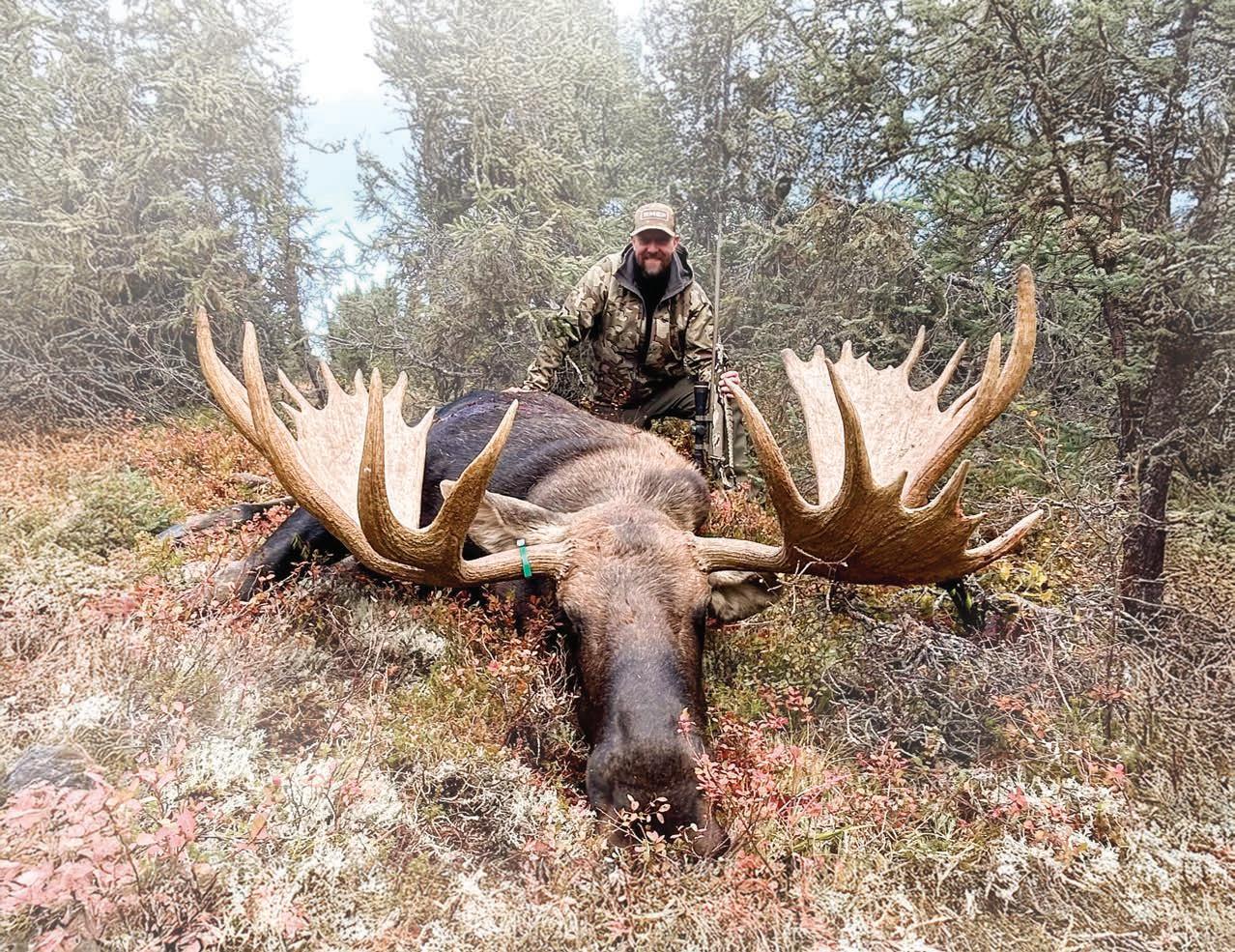
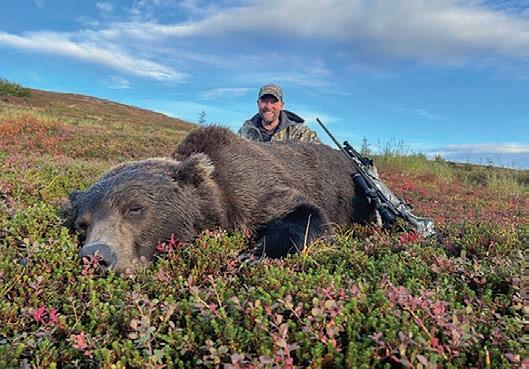
Experience the thrill of big game hunting in Alaska’s untamed wilderness with Deltana Outfitters—Alaska’s premier guide service. Whether you’re after Brown Bear, Grizzly, or Moose, our expert guides lead unforgettable Spring and Fall hunts in the remote, pristine Alaska Peninsula andWestern Alaska.
Adventure. Expertise. Results. That’s what we do—and Deltana does it best.
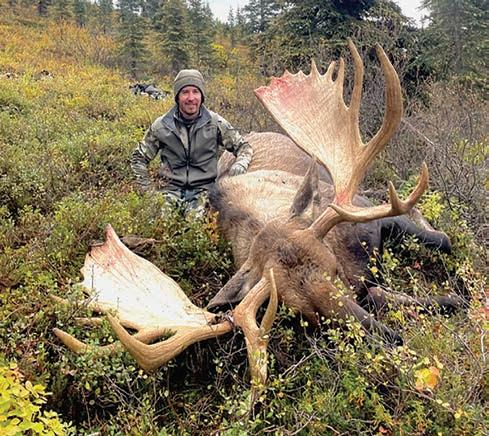
90% Success Rate!
Average Moose: 64”
Grizzlies: 7’6” - 8’6”
Black Bears: 6’ - 7’
Brown Bears: 9’ - 10’ Start your ultimate hunting experience today! Visit: www.deltana.com | Email: hunts@deltana.com |
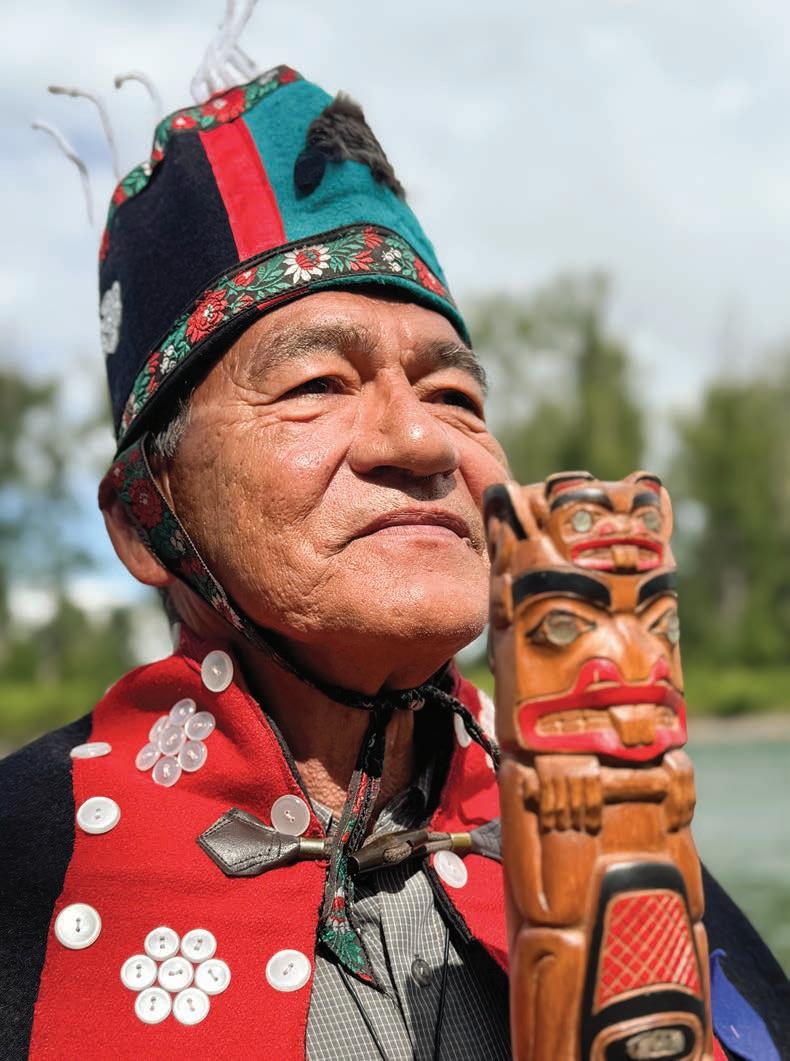
Chief Na’Moks is a hereditary clan chief of the Wet’suwet’en Nation in Canada’s British Columbia. His story inspired the film’s director Connolly, who in the process of editing chose Na’Moks’ words on the importance of the fish to his community as a tagline. “We are all salmon people,” he says. (MISSION PARTNERS ENTERTAINMENT GROUP)
“Tavish ducked his head underwater and waited a couple minutes and this pair came along. You could not choreograph it any better. The action, the behavior; it was perfect.”
Early in Running Wild, the film’s narrator, Academy Award-nominated actor, angler and conservationist Liam Neeson (see sidebar, page 28) makes a statement that defines the importance of Pacific salmon from California to the Kamchatka Peninsula and to Alaska and the Pacific Northwest. Neeson says, “137 species, including humans, depend on this majestic creature.”
That fact is a conduit for this film to stress the importance of salmon for multiple entities.
“This project came around at the right time. The subject, the style of it and what we’re trying to tell people, it should hit home with audiences all around the world,” Connolly says. “And to bring attention to this amazing fish, but also the plight of nature, we need to pay more attention, to be more engaged and active; whether it’s Pacific salmon, life on the Serengeti or the Great Barrier Reef, the planet needs our help. What we’re hoping for (is) audiences to be inspired and motivated when they leave.”
Rahr makes an appearance in the film as a lone angler on British Columbia’s Dean River. “Nature was my refuge when I was young,” he proclaims in a voiceover that includes him quietly reeling in and releasing one of the river’s most beautiful specimens.
When asked about what this documentary can accomplish, Rahr issued a warning about what could happen as the years go by.
“The world is changing really quickly, and there are threats to these rivers. We’re not pretending to be saving all the salmon or solving all the salmon runs,” he says of his organization. “There are a lot of organizations doing different pieces of this puzzle. And so just because it’s not a stronghold doesn’t mean it’s not a conservation goal; it just means that’s what we’re focused on. We are determined to deliver this network forward, and all the other work that’s happening is super, super important, and it’s complementary to what we’re doing.”
“The second thing I’ll say is that the threats are coming faster and faster. The threats are going to keep multiplying, so we don’t have time. And we’ve got to be really strategic and smart because it’s not going to get easier; it’s going to keep getting harder.”
That’s where we can all make some kind of impact.
“We’re looking to and hopefully providing a conduit so that more people who aren’t just the anglers (care). Maybe like soccer moms on Long Island who say, ‘Wow; this is not just about the salmon,” Rahr adds. “It’s about the northern Pacific Rim and these beautiful rivers, and it’s like the Amazon Rainforest or the Great Barrier Reef – one of these priceless things on the planet that we’ve got to understand and protect.”
During production in British Columbia on Wet’suwet’en First Nation land, some of the film’s crew ate dinner with tribal members, including the aforementioned Chief Na’Moks, who happened to sit next to director Connolly.
“He comes from a world that I typically would not connect to, the Indigenous life. Their world is far enough away from me that it’s hard for me at a dinner to insert myself into it and understand it,” Connolly says candidly. “But we started to talk and I realized that I was underestimating this guy. At one point he was talking about how he was addressing the United Nations and talking about health and habitat. I thought, ‘This guy is freaking amazing.’”
At the end of the night, Connolly went back to his hotel and, at a suggestion from the tribal chief, started watching a 2024 documentary film, Yintah, about the Wet’suwet’en people’s plight, which the movie’s website (yintahfilm.com) states is “about an anti-colonial resurgence – a fierce and ongoing fight for Indigenous and human rights in the face of a colonial government committed to seizing lands at gunpoint.”
Despite an early wakeup call for filming the next day, Connolly watched the entire two-hour production, solidifying his intuition to end the film through Chief Na’Moks’ point of view, and in his voice.
“It was the most amazing and shocking at times exposé on what those people are going through up there. But what was great about that was I suddenly had an understanding of not only the place but the people and the fight they’re going through,” Connolly says. “So later on, when I was going back to interview him for narration, I had some ideas for what I wanted him to talk about. He was super up for it. At one point I said, ‘How should we see ourselves; where do we connect with the Wet’suwet’en?’”
That’s when Chief Na’Moks delivered that critical line for this project, one that became a brilliant call to arms for a remarkable species. Connolly considered giving the
quote to his celebrity narrator, the acclaimed Northern Irish actor with the booming voice.
“If Liam had delivered it, it would have been fine. But hearing it from Na’Moks as the last line in the film, it gives it a resonance and a weight that I really wanted,” Connolly says.
During a sweeping shot of the sacred river holding the sacred fish, the chief says, “We know that every year they’re going to come back to us if we do our job to look after the water and the salmon itself. This has happened for thousands upon thousands of years. And if we have respect for the salmon, it will continue for thousands and thousands of years. … Everything is related to nature, because without nature we don’t survive.”
“We are all salmon people.” ASJ
Editor’s note: Find theaters and screenings for Running Wild: Return to the River at wildsalmoncenter.org/running-wild.
“... (We) need to pay more attention, to be more engaged and active – whether it’s Pacific salmon, life on the Serengeti or the Great Barrier Reef, the planet needs our help,” says Connolly. (MISSION PARTNERS ENTERTAINMENT GROUP)


BY MARY CATHARINE MARTIN
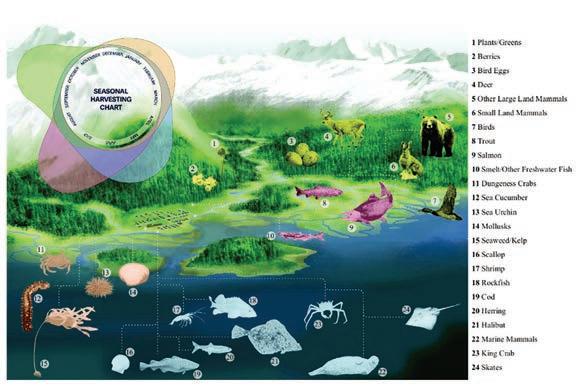
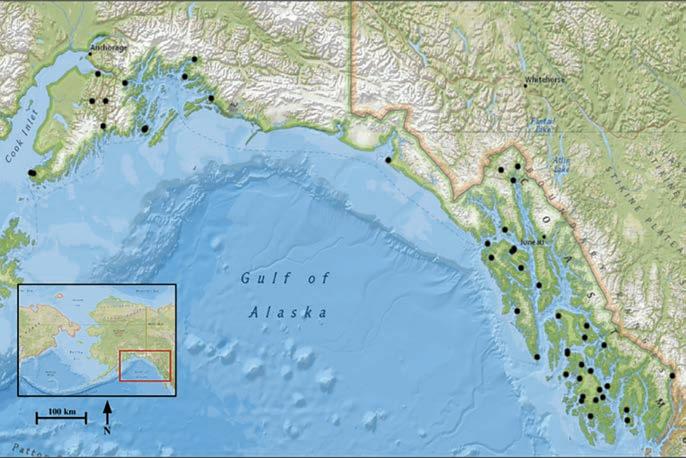
Ten years ago, fish research biologist Ryan Bellmore assessed how many salmon the Tongass National Forest contributes to commercial fisheries. The number turned out to be huge – 75 percent of 50 million salmon caught commercially in Southeast Alaska each year, and 25 percent of Alaska’s total salmon catch, comes from the Tongass.
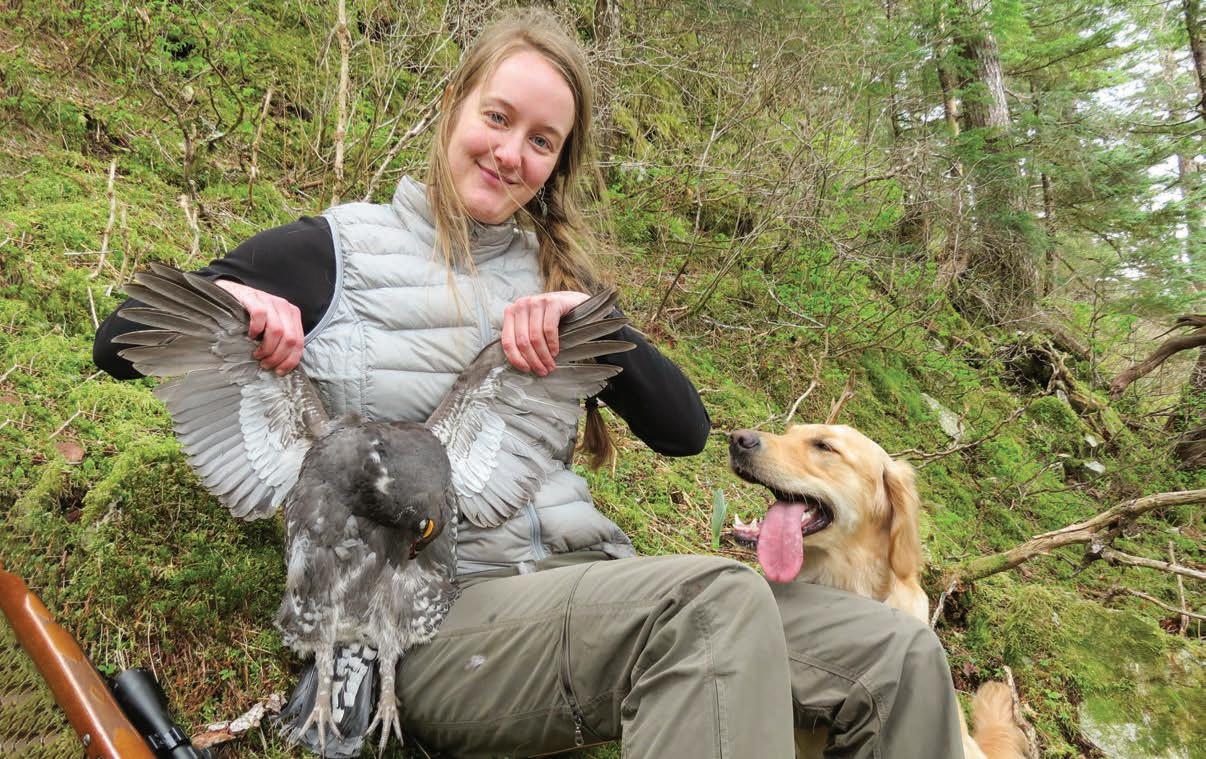
In Southeast Alaska, wild foods provide an on-average value of up to $1,691 per rural resident. Here, author Mary Catharine Martin and her dog Fen teamed up to take a sooty grouse, a valuable food source in the state’s Panhandle region. (BJORN
“I started thinking about the way the forest provides a diversity of services to people. Humans are a part of the food web. There are not many places that are more clear across the US than communities here in Alaska,” he said.
Until recently, however, there was no study quantifying just how much value wild foods provide to rural residents – or the importance of incorporating that value into land management. Two new studies shed light on those topics for southern coastal Alaska.
“There was a collective interest in acknowledging that national forests provide more than just timber,” said Marie Gutgesell, a food web ecologist and post-doctoral fellow with the US Forest Service’s Pacific Northwest Research Station, who was the primary author on one of the papers, “Wild food portfolios: Access to diverse foods stabilizes harvest in wild food systems.”
“Harvesting wild foods is an intrinsic part of the way of life of the people in
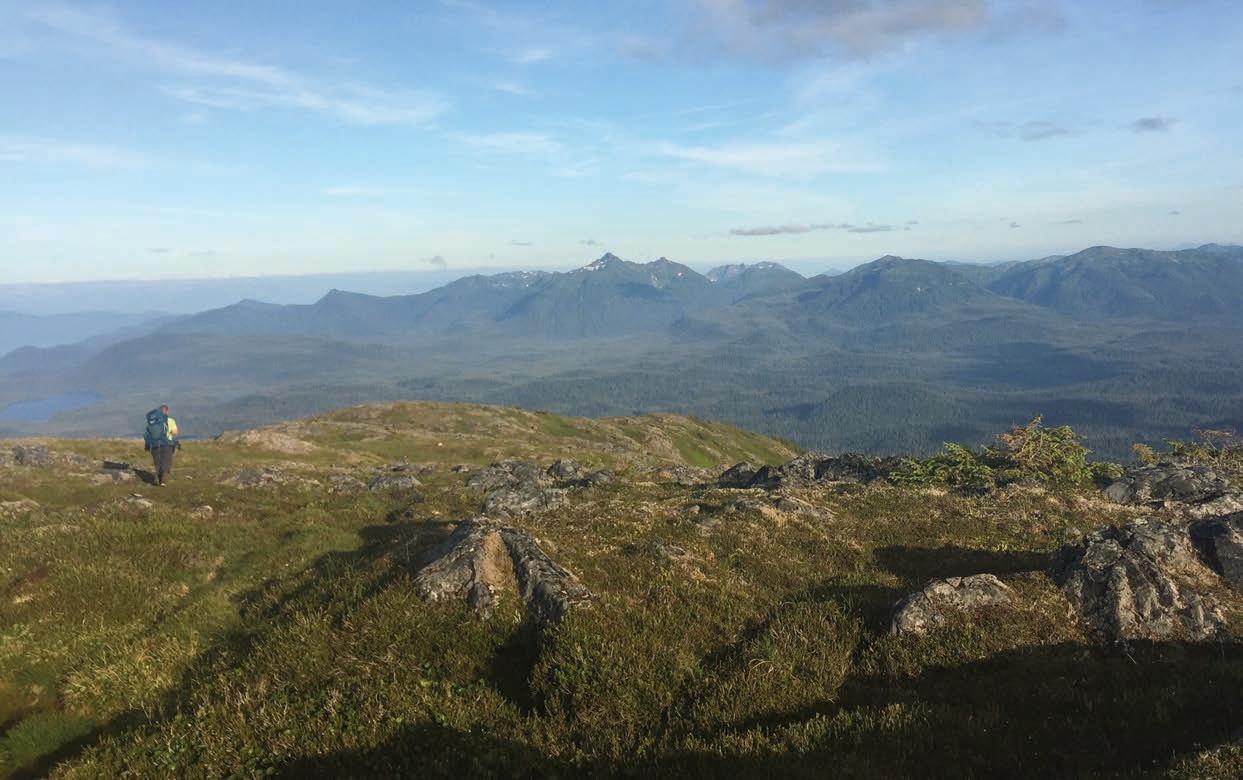
Southeast Alaska’s backcountry is critical hunting grounds for locals who use it to fill their freezers. They are concerned about national forest policy changes that could affect that. (MARY CATHARINE
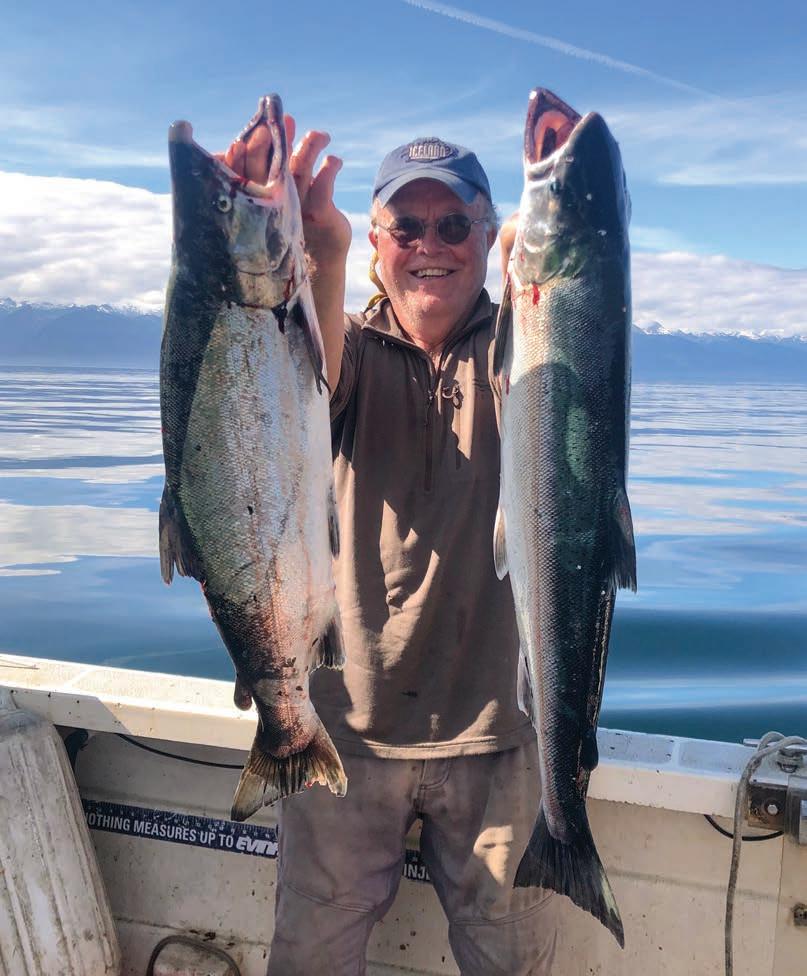
Alaska,” Gutgesell added.
THE STUDY TOOK ALASKA Department of Fish and Game surveys of subsistence resource consumption and analyzed them, finding that the more diverse the foods people harvest, the more stable people’s food supply.
They found 96 different foods are harvested across southern coastal Alaska, though, Bellmore added, the real number is likely twice that, since in the surveys, some foods – mussels, berries, rockfish – may be listed in groups instead of by individual species.
Raven Cunningham, director of the Office of Self-Governance & Tribal Programs at the Native Village of Eyak and a paper coauthor, was working for the Chugach Regional Resources Commission as tribal fish and wildlife director when she and Gutgesell first connected. The study idea “intrigued me as a subsistence user,” she said.
“The whole idea that there is a subsistence economy, and getting it acknowledged, was really fascinating,” Cunningham said. “If you think about it, there is a subsistence economy. It’s not monetary, but people share. They go out together. And there’s this whole community that’s embedded into this economy.”
One of the major takeaways from the study for Cunningham is that having local managers, including locally located Forest Service managers, is incredibly important.
“People who live in the community, and understand the nuances and the politics, and the uses of resources –nobody can do management better than the people with boots on the ground, who have this deep understanding of this subsistence economy,” she said.
Things are shifting right now, Bellmore said, “faster than they may have ever shifted” – from storms potentially limiting boat activity during particular harvest windows, to fluctuating salmon availability. Management that can keep up with these changing conditions may be important for maintaining food security in the future.
“It also means that when we do a
land management action – harvesting timber, putting in a mine, commissioning or decommissioning roads, putting in a boat ramp or a cabin – all of these things have the potential to affect wild food abundance and people’s access to those foods,” he said.
THE SECOND STUDY, “PROVISIONING food and medicine from public forests in the United States,” takes a more national approach, finding that, “Each year, (more than) 255 thousand metric tons (562,178,769 pounds) of forest foods and medicines are harvested
“I feel like a lot of people take the wild economy for granted,” Cunningham said. “Being able to have our freezers full of food that we’ve harvested from the land – it’s important. We wouldn’t be able to live here without it.” (MARY CATHARINE MARTIN)
across public lands of the United States.” That includes Forest Service, Bureau of Land Management and state-managed lands.
In Southeast Alaska in particular, the study said that, “Assuming a replacement value of USD $10 to $20 per kilogram of wild food, the simple ‘replacement value’ of forest foods in Southeast Alaska communities would be between USD $20.5 million and $41.1 million per year. Based on a (rural) population of approximately 24,312 in 2022, this is equivalent to about $845 to $1,691 per person.”
“Living in remote, rural Alaska, you need to be able to have access to good food. Our land and our ocean is that access. It’s like our grocery store,” said Cunningham.
THE STUDIES, WHICH HAVE long been in the works, concluded as the Forest Service pursues a revision of the Tongass Forest Management Plan to align with President Donald Trump’s January 20 and March 1, 2025 executive orders, “Unleashing Alaska’s Extraordinary Resource Potential” and “Immediate Expansion of American Timber Production.”
That’s something about which many Alaskans have expressed concern, given the Tongass’ role in food production.
“The Notice of Intent barely acknowledges or considers the importance of salmon to the commercial fishery industry, particularly salmon fisheries,” wrote the Southeast Alaska Fishermen’s Alliance, which represents more than 300 fishermen, in a comment to the Forest Service.
“I feel like a lot of people take the wild economy for granted,” Cunningham said. “Being able to have our freezers full of food that we’ve harvested from the land – it’s important.”
“We wouldn’t be able to live here without it,” she added. ASJ
Editor’s note: Mary Catharine Martin is the communications director for SalmonState, which works to keep Alaska a place where wild salmon and the people who depend on them continue to thrive. Check out salmonstate.org for more.

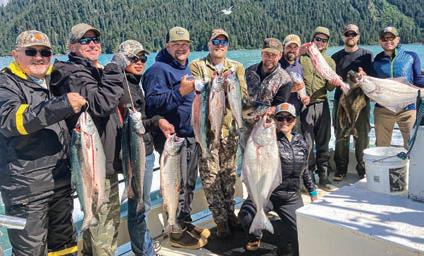
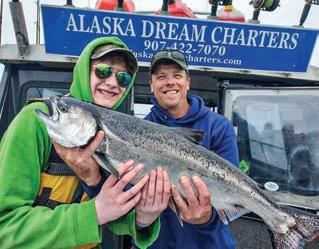
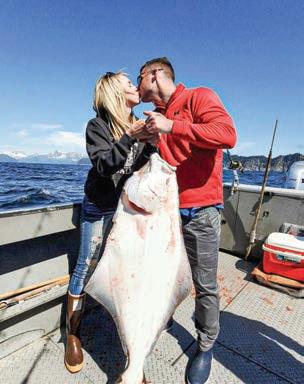

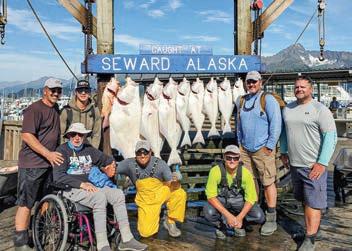
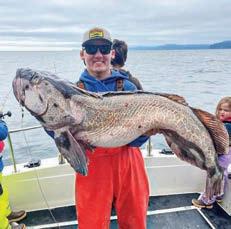
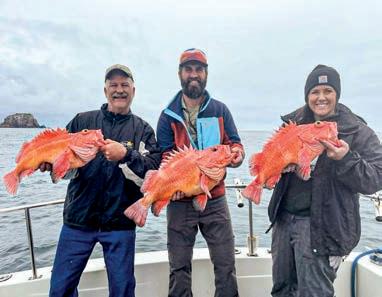

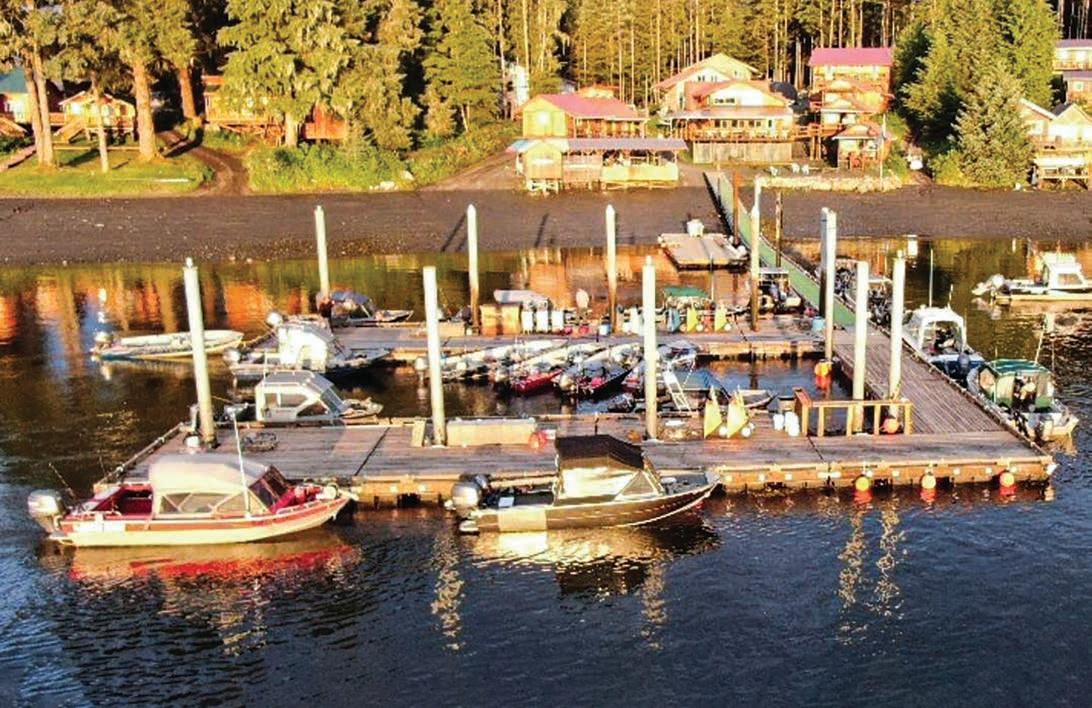

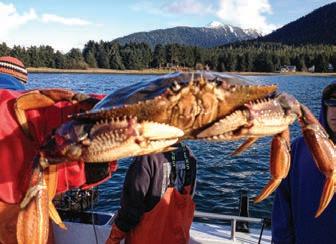
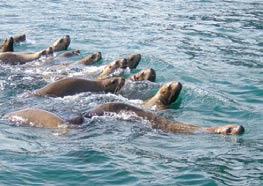
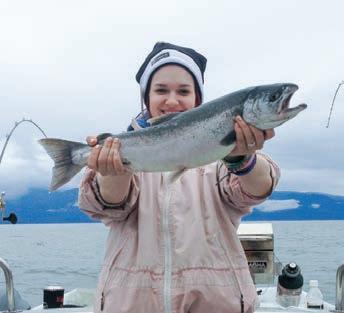
Island Point Lodge offers a 7-day, 6-night self-guided Alaska Salmon, Halibut, and Dungeness Crab trip for $2,699. The trip includes lodging, meals, fishing rods and reels, boat fuel, and fish cleaning/packaging. Add a self-guided Black Bear hunt at no extra charge, with over-the-counter bear tags available in town. The Black Bear hunt is self-guided, including cleaning and preparation.
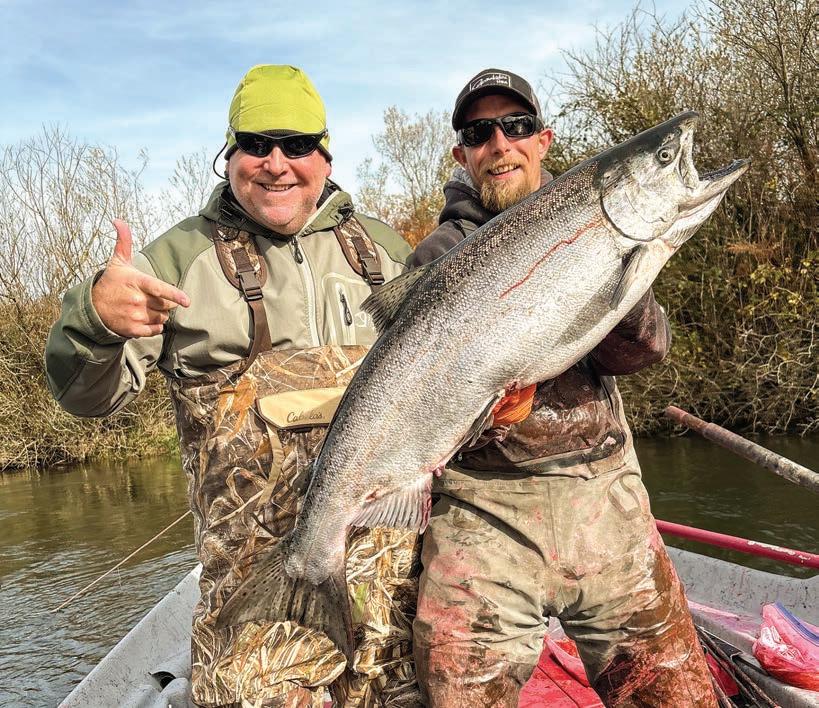
Editor’s note: Alaska’s fisheries are supported by a vast network of hatcheries, biologists, technicians and field crews working behind the scenes across the state. While anglers and commercial fishermen see the results on the water, much of the effort that sustains those opportunities happens far from the spotlight, in remote hatcheries, field camps and research stations.
This series highlights some of these “unsung helpers of the wild,” the professionals responsible for that work. From Southeast Alaska to the Kenai Peninsula, these profiles explore the people who spend their careers raising salmon, monitoring wildlife populations and maintaining the systems that help keep Alaska’s fisheries strong.
BY TIFFANY HERRINGTON
Every summer in Alaska, salmon arrive where they are needed most. They move into trolling grounds and commercial openings, appear in charter waters and subsistence sites, and help fill freezers, support paychecks and sustain a way of life woven deeply into coastal communities across the state.
What most people never see is how much goes on long before those fish come back. Years earlier, many of these salmon were raised, monitored, marked, released and tracked by hatchery professionals whose efforts remain largely out of public view. In Southeast Alaska, one of the people guiding that process is Tessa Frost.
Frost is the general manager of the Southern Southeast Regional Aquaculture Association, better
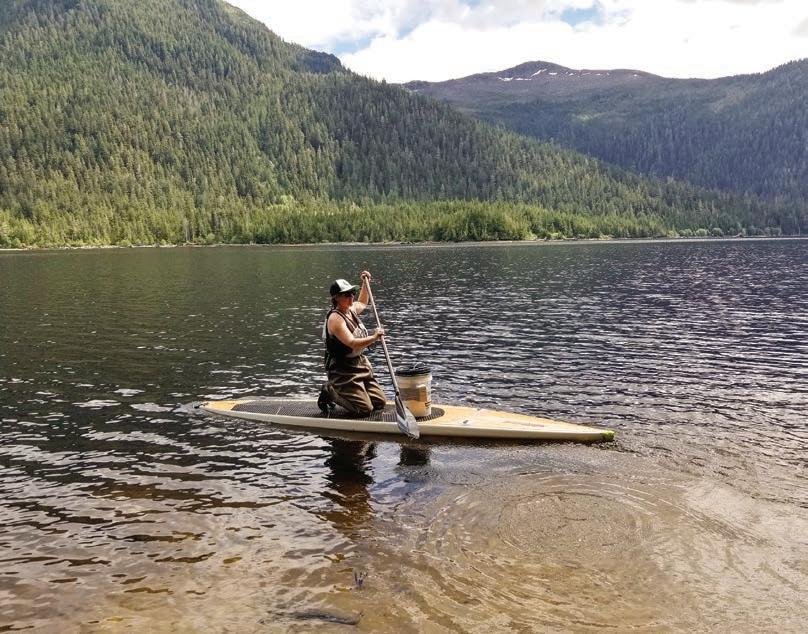
known as SSRAA, a nonprofit salmon enhancement organization whose programs support fisheries from the Alaska-British Columbia border near Ketchikan north to the middle of Southeast Alaska by Petersburg. Her job blends biology, logistics, research, economics and the challenge of
planning for results that may not be known for years. For the people who fish those waters, much of that effort becomes visible only when salmon show back up.
FOR FROST, THE CONNECTION to fisheries began early. She grew up in Ketchikan
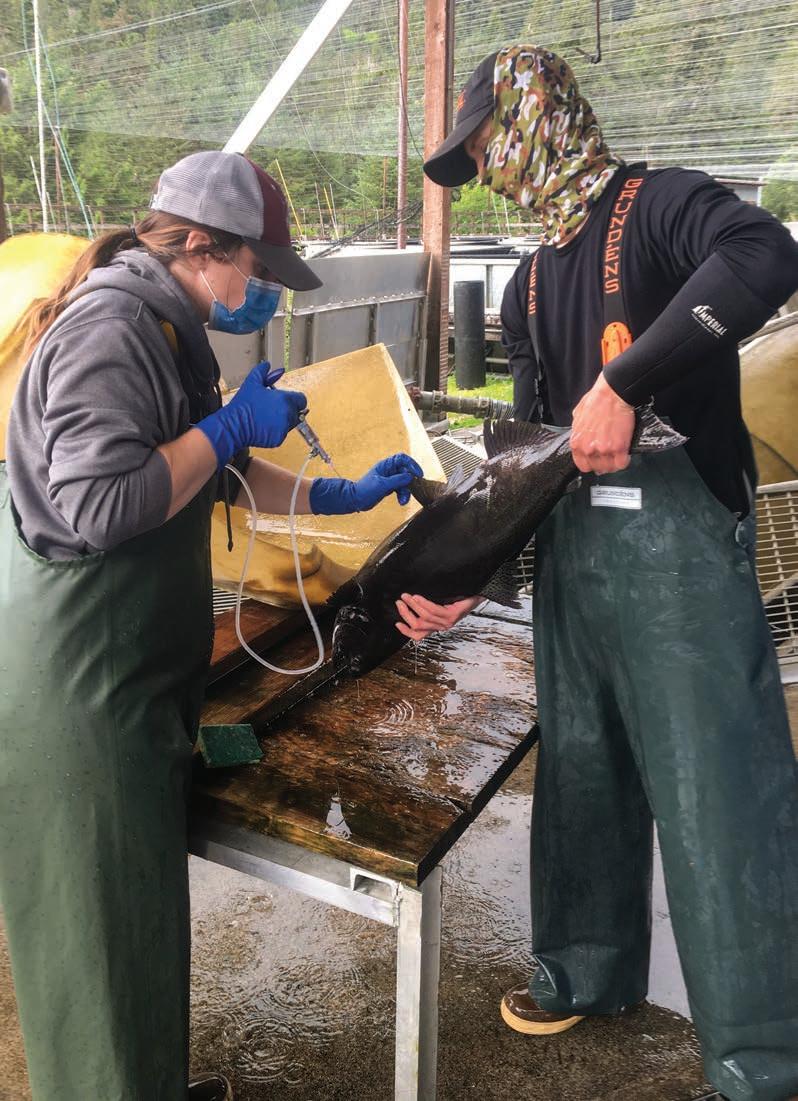
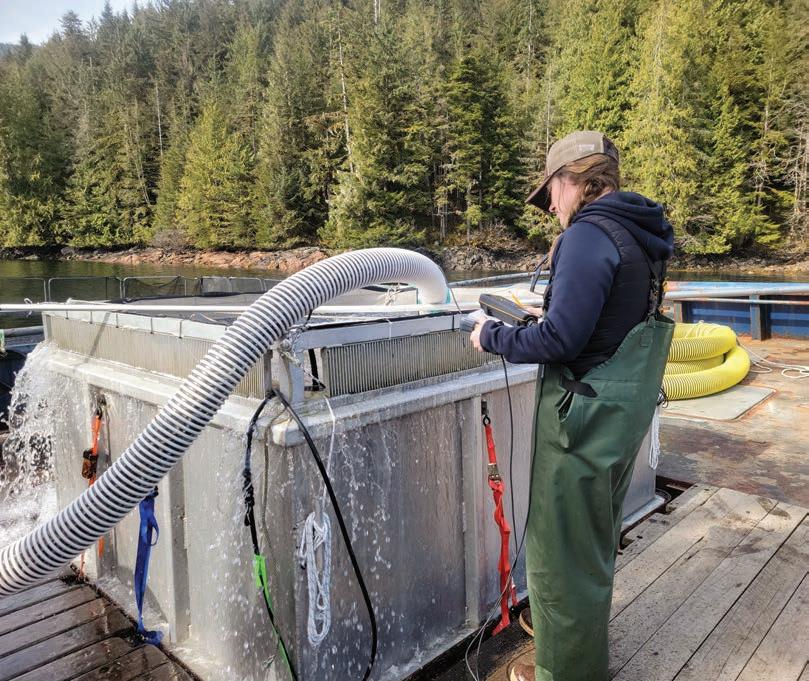
SSRAA releases approximately 3 million Chinook, 9 million coho and 200 million chum salmon in Southeast Alaska, says Frost, here taking dissolved oxygen measurements during a chum fry transport operation. (SOUTHERN SOUTHEAST REGIONAL AQUACULTURE ASSOCIATION)
in a family that spent significant time on the ocean fishing for salmon. Her father worked as a biologist with the Alaska Department of Fish and Game, and his version of the profession left an impression.
“He spent a lot of his ‘work’ time diving, flying in float planes and walking on the wild salmon streams of Southeast Alaska,” Frost said. “Even as a kid, I remember thinking to myself, ‘That seems like a pretty fun job to have.’”
For a child growing up in Southeast Alaska, it was an introduction to the idea that a career could be tied to fish, wild country and the waters that shape life in the region.
That early interest eventually became a profession. Frost attended Michigan State University, where she majored in zoology with a marine biology minor. During summers, she returned home and held seasonal jobs before eventually moving back to Alaska full time and taking fisheries technician positions. Those years in the field proved decisive. “The summers I spent living and working in some of the most beautiful and remote wild salmon rivers in the world solidified my love of Alaska salmon,” she said.
She later earned a master of science in fisheries from the University of Alaska Fairbanks, where her graduate research examined interactions in the Bering Sea between Western Alaska chum salmon and Asian pink and chum salmon, a reminder that forces shaping Alaska salmon often stretch far beyond the state itself.
FROST’S HISTORY WITH SSRAA also reaches back years. She first joined the organization as a seasonal fisheries technician while still in college, helping sample commercially caught salmon to determine whether they were hatcheryproduced fish or wild in origin. She later returned for another stint helping coded-wire tag SSRAA-produced coho and Chinook salmon, giving biologists another tool to evaluate fish after release and migration.
After graduate school, Frost came aboard full time as SSRAA’s research and evaluation manager, a role that


Analyzing water samples taken from the hatchery is required by the Alaska Department of Environmental Conservation. (SOUTHERN SOUTHEAST REGIONAL AQUACULTURE ASSOCIATION)
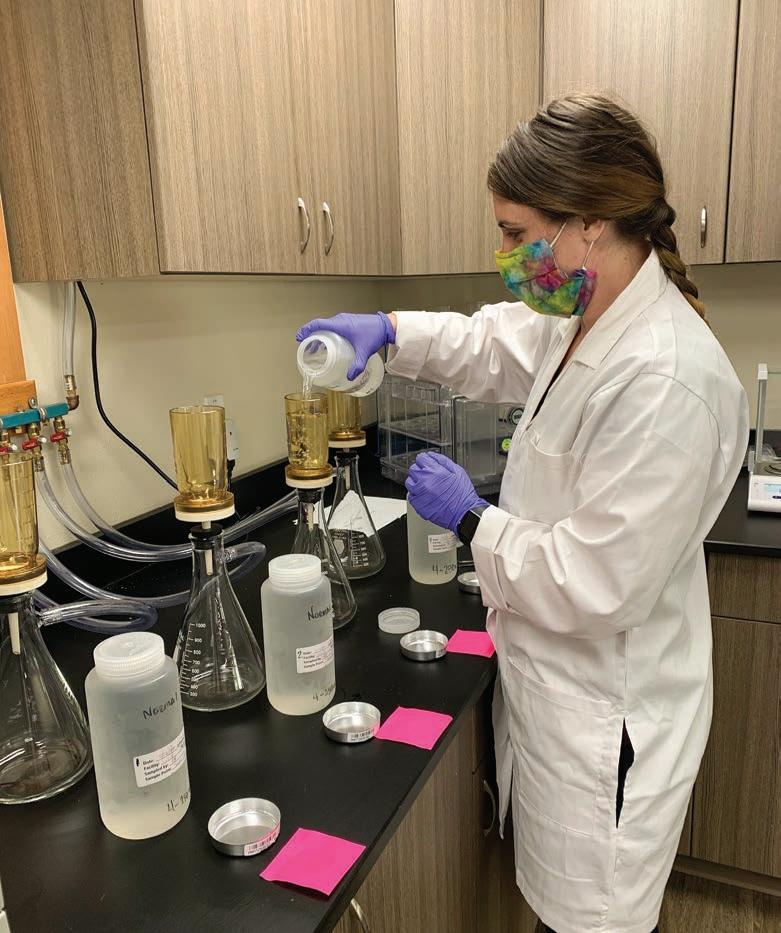
placed her at the center of many decisions most people never think about. She forecasted annual runs, tracked salmon through commercial fisheries, helped determine the value of SSRAA fish to industry groups, and represented the organization in fisheries meetings. When her predecessor retired in January 2026, Frost stepped into the role of general manager.
Founded in 1976, SSRAA is a private nonprofit organization created to enhance and rehabilitate salmon production in southern Southeast Alaska for the social and economic benefit of salmon users. It is governed by a 21-member board that includes commercial fishermen as well as sport, subsistence and Alaska Native user groups. Its mission is to supplement wild fisheries with consistent opportunity, especially in years when natural abundance is lower.
According to Frost, SSRAA releases approximately 3 million Chinook, 9 million coho and 200 million chums across the region. Since 1985, the organization has generated more than $360 million in ex-vessel value and has contributed an average of $15 million annually in salmon revenue to the commercial fishing industry over the past decade. Those fish are also harvested by sport and subsistence users and help support charter businesses throughout Southeast Alaska.
operations can sound simple: raise fish, release fish and wait for results. The reality is far less predictable. “I think the biggest challenge of being in this industry is working with live animals in an everchanging climate,” Frost said.
SSRAA releases chums into the ocean at roughly 2.5 grams. Those fish
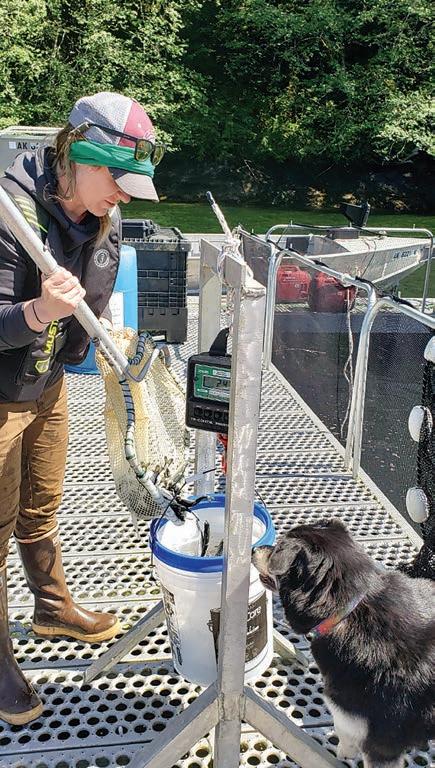
Frost (with her dog Tseta) weighs Chinook smolts at a net pen site prior to releasing the fish. “I think the biggest challenge of being in this industry is working with live animals in an everchanging climate,” she says. (SOUTHERN SOUTHEAST REGIONAL AQUACULTURE ASSOCIATION)
may return three to five years later weighing around 10 pounds. Chinook and coho are released at about 25 grams and may come back after one to four years, depending on species, weighing 12 to 20 pounds. That means hatchery staff influence only a brief portion of each salmon’s life. Once released, the fish must survive in an unforgiving ocean, locate food, avoid predators and eventually navigate back to the waters where they began. Recent warming temperatures and shifting marine food webs have made those outcomes increasingly difficult to predict, Frost said.
She also hopes more people understand what Alaska hatcheries are, and what they are not. “One common misconception that I hear quite often is people from outside Alaska, or outside the United States, confusing salmon hatcheries with fish farms,” she said.

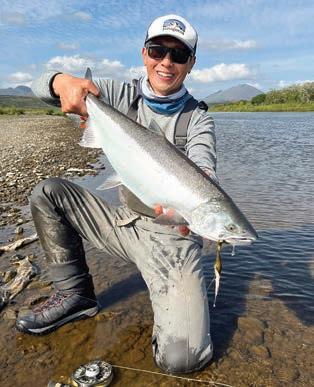
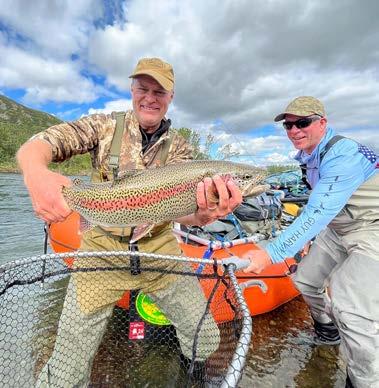

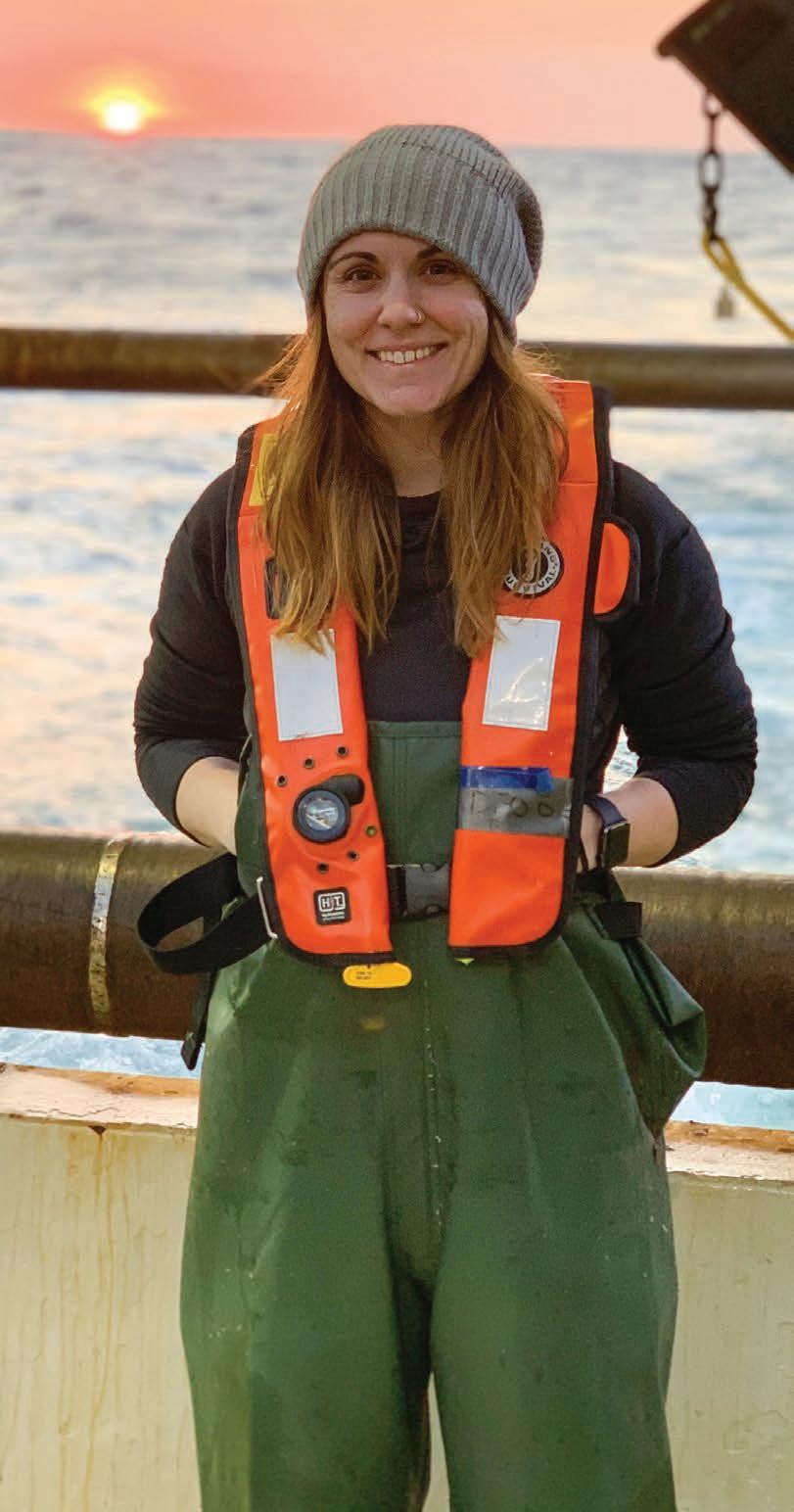
Fish farms raise salmon from egg to harvest in captivity. SSRAA does not. Chums are generally held only a few months, while coho and Chinook are reared for about a year before release into the open ocean. For a chum released at 2.5 grams and returning years later at 10 pounds, Frost notes that 99.9 percent of its body mass is gained at sea. Once SSRAA fish are released, they become property of the state of Alaska and belong to the people who catch them, not the hatchery.
For Frost, another rewarding part of the profession is that no two seasons – and often no two days – look exactly alike. “Something that I love about working at SSRAA is there is no typical day,” she said.
The yearly cycle begins with egg takes from August through October. Eggs are monitored through winter until hatching begins in February. Newly hatched fish are moved into fresh- or saltwater, fed and cared for until release. Chums are typically released in April. Coho and Chinook, which spend longer in freshwater, are generally released the following May. Then comes summer, when adult fish begin to reveal how earlier release groups performed. During that season, SSRAA samples commercial fisheries daily to determine how many harvested fish came from its programs, how old they are and where they were released. That information helps guide broodstock needs, cost-recovery harvests and future planning.
The job can also produce moments few office workers ever experience. “I love having the ability to leave my office at a moment’s notice,” Frost said, “hop into a float plane and hover over thousands of returning salmon.”
And like many fisheries professions, the role carries both reward and frustration. “Working in this industry can be very rewarding when things go right, and very frustrating when things go wrong,” Frost said.
Because hatchery teams care for the salmon during only a small part of their lives, staff focus intensely on raising healthy fish before release. But weather,

“Working in this industry can be very rewarding when things go right, and very frustrating when things go wrong,” Frost says. “At the end of the day, we do our best to raise a healthy fish and hope that it’s enough to help it survive to adulthood.” (SOUTHERN SOUTHEAST REGIONAL AQUACULTURE ASSOCIATION)
markets and marine survival remain outside anyone’s control. “At the end of the day, we do our best to raise a healthy fish and hope that it’s enough to help it survive to adulthood,” she said.
promise in transition. SSRAA has experienced significant staff turnover in recent years, as longtime employees retire and move into the next chapter of life. While experience leaves with them, a new generation of employees is stepping in with fresh ideas and renewed enthusiasm. “I am excited to see where they take us and what innovations come from it,” Frost said.
She also emphasizes that SSRAA remains committed to supplementing, not replacing, wild salmon runs. The organization maintains a dedicated research department that evaluates programs and their effects on wild counterparts. Since its inception, SSRAA has spent more than $1 million sampling commercial salmon fisheries in southern Southeast Alaska, and all of its salmon receive identifying otolith marks that allow biologists to determine age and release location.
For many Alaskans, the first sign of salmon season is a fish in the net, on the line or headed upriver. Long before that moment arrives, people like Tessa Frost have already spent years helping make it possible. ASJ
Editor’s note: For more on the Southern Southeast Regional Aquaculture Association, go to ssraa.org and follow on Facebook and Instagram (@ ssraaorg). Tiffany Herrington is a writer based in the Seattle area.

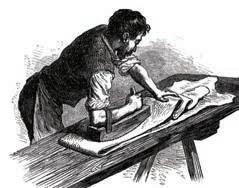
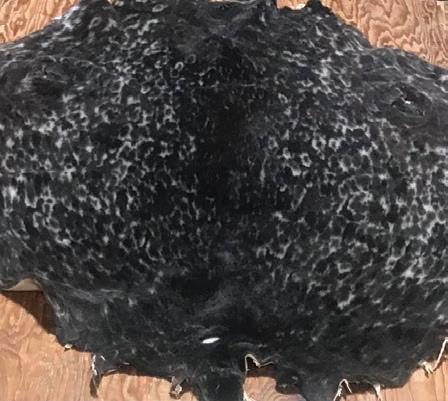
Cumberland’s Northwest Trappers Supply is your onestop trapping supply headquarters, featuring one of the largest inventories in the U.S. We are factory direct distributors on all brands of traps and equipment which allows us to offer competitive prices. Give us a try. Our fast, friendly service will keep you coming back.
We are the new home of “Trappers Hide Tanning Formula” in the bright orange bottle.
Retail & dealer inquiries are welcome.
If you are in the area, visit our store!
Place an order by phone, mail or on our website.
The lightest 200-hp four stroke on the market
2.8L displacement and Variable Camshaft
Timing give it the best power-to-weight ratio of any 200-hp four stroke
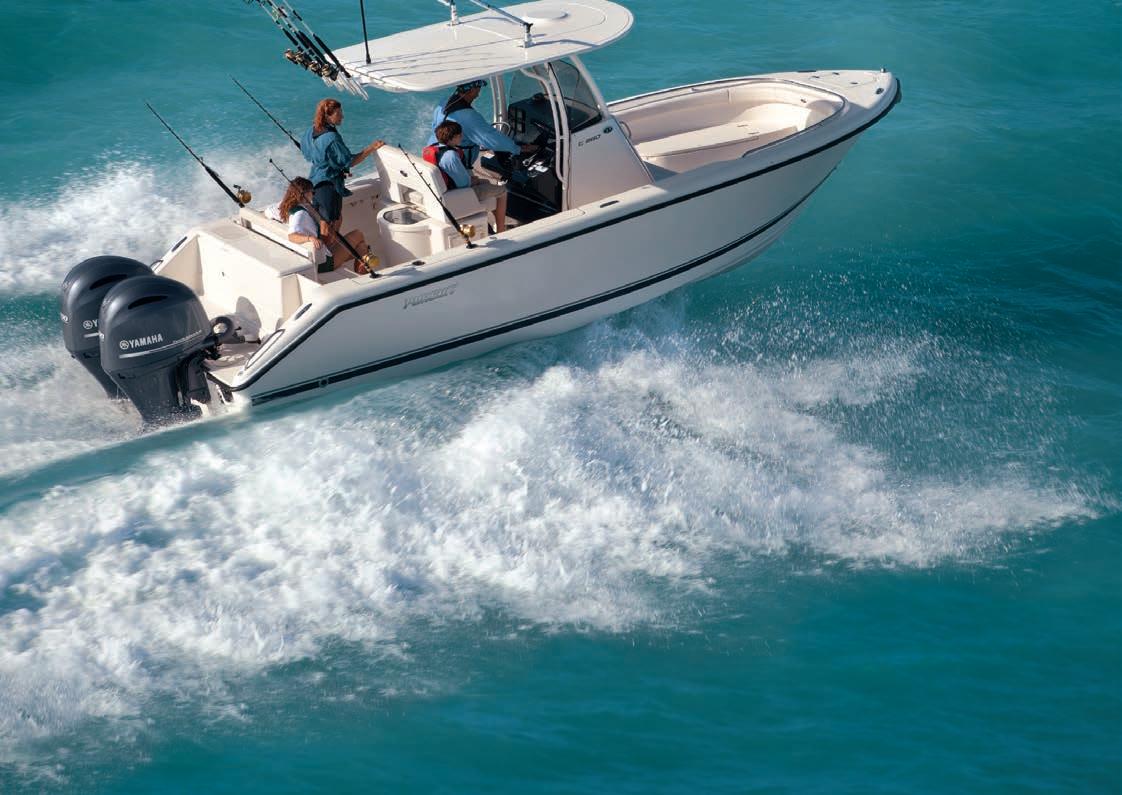
Nearly 120 pounds lighter than our four-stroke V6 F200

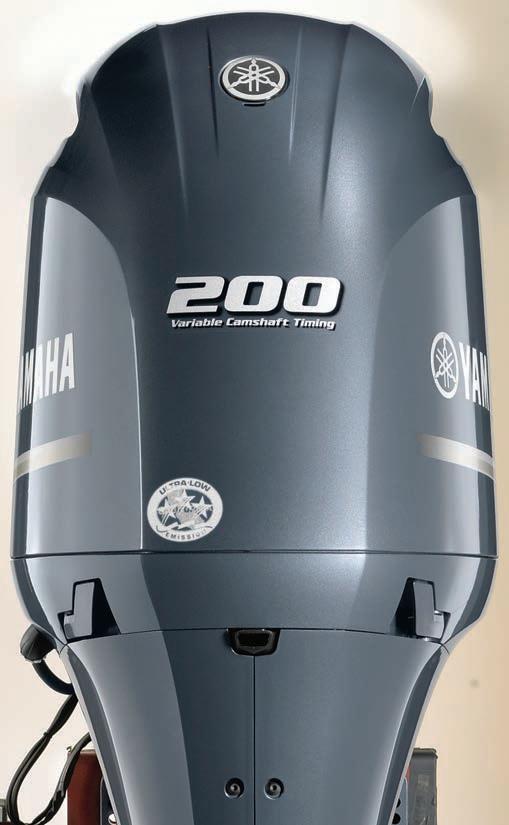

Show the water who’s boss with the F200 In-Line Four. Incredibly light, responsive and fuel efficient, it serves up plenty of muscle to handily propel a variety of boats. On top of that, its 50-amp alternator offers the power to add a range of electronics, and its 26-inch mounting centers and compatibility with either mechanical or digital controls give you the flexibility to easily upgrade your outboard or rigging. Experience legendary Yamaha reliability and the freedom of forward thinking, with the F200 In-Line Four. THE F200 IN-LINE FOUR.


SECOND OF TWO PARTS
Editor's note: Last month, Scott Haugen shared trips down memory lane while in Klawock and fun fishing times with his father and a longtime friend. Here’s the rest of the story, one that brings to life what makes Alaska so truly special, and in more ways than one.
BY SCOTT HAUGEN
On day four of our time on Prince of Wales Island with longtime friend Duane Leavitt, my dad and I were ready for a break from fishing in the ocean. We’d caught plenty of fish and were getting sea legs – that wobbly feeling you struggle to shake at night.
We hopped into Leavitt’s truck and headed out from Klawock. It was an exploratory trip for Dad. For me, it was yet another journey down memory lane. I laid eyes on steelhead streams I’d not seen for decades. I overlooked land where fond memories of bear hunting had taken place. Each sight made me smile. Dad reveled in hearing my stories and reliving moments as if they’d just happened.
We stopped on a bridge and I detailed how a bobber and jig had worked so well for steelhead when I fished there back in spring 2008. Dad wanted all the details.
Another pause found us gazing across a little stream, both banks covered in tall and flowing green grass. I shared with Dad how a little white Rooster Tail accounted for cutthroat after cutthroat there, and how a steelhead even attacked the spinner. That was a fun morning of catch-and-
release fishing.
We also stopped in a spot overlooking a bay and some islands.
“Right over there is where I called in a bear for a friend who shot it,” I told him. Dad wanted to know what sounds I used and what it was like when the bear came in. I told him. A proud look came over his face. It was fun sharing such memories.
We hit the road again, and Dad was now focused on looking for black bears. He also scoured the hills for Sitka blacktail deer and other wildlife on our drive across the island to Thorne Bay. I had ulterior motives wanting to see Thorne Bay.
IN 2019, MY WIFE Tiffany and I took jobs as schoolteachers in Hyder, Alaska, where our campus was literally a one-room schoolhouse. We shared a classroom with a dividing door. She taught kindergarten to eighth grade, and me ninth through 12. We had 11 students in the whole school, and one was our son, Kazden, the only senior in
the school.
Unfortunately, upon Kazden’s graduation in spring 2020, and with a family with three kids moving away, we had to close down Hyder School. It was a very sad time for Tiffany and I. We loved the place and the people.
Having grown up hearing our stories of teaching on the North Slope through most of the 1990s, Kazden wanted a change for his senior year of high school.
“I want to experience what you guys did in Alaska,” he said one night at dinner in our Oregon home. He left behind many friends and a class of nearly 400 students at Thurston High School. Today, after having earned his teaching degree from University of Alaska Anchorage and Oregon State University, Kazden is a third-grade teacher in Oregon. He’s the fifth generation of teachers in our family, and he has the experience in Hyder – be it only a year – to largely thank for that. Hyder School’s central office was located in Thorne Bay. Hyder was 100 miles from some schools in the district
and most schools were on the island; we were on the mainland. Some students took classes via satellite with other villages in the district. It was a fun, valuable way for the kids to interact with peers. But I never got to meet any of those kids in person; only through virtual classrooms. That’s common in rural Alaska.
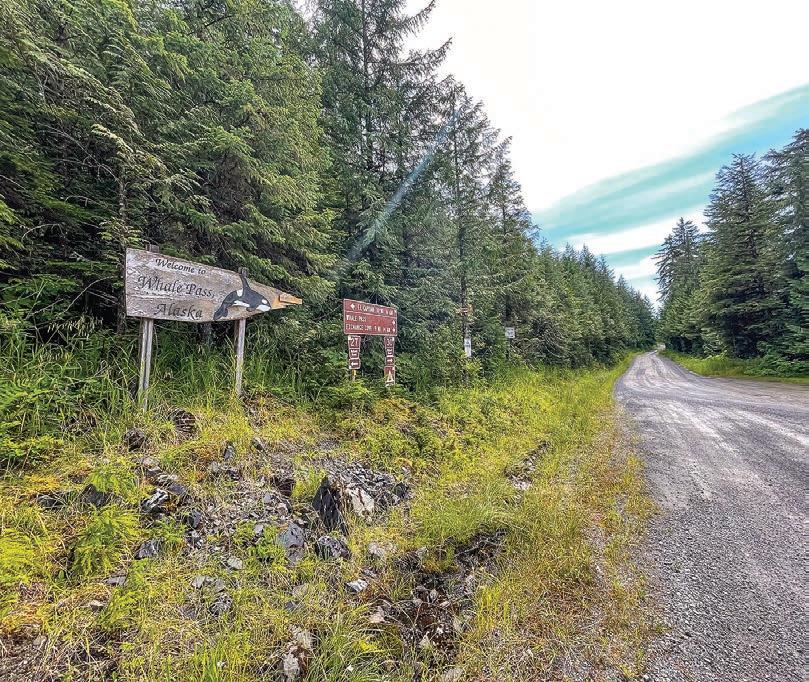
ON THE TOUR OF Prince of Wales Island with Dad, I wanted to see some of these villages, peek through the windows into the schools and get a feel for what life was like. Places like Naukati, Coffman Cove, Whale Pass and Kasaan brought back many fond memories. Dad, also being a teacher, enjoyed it as much as I did.
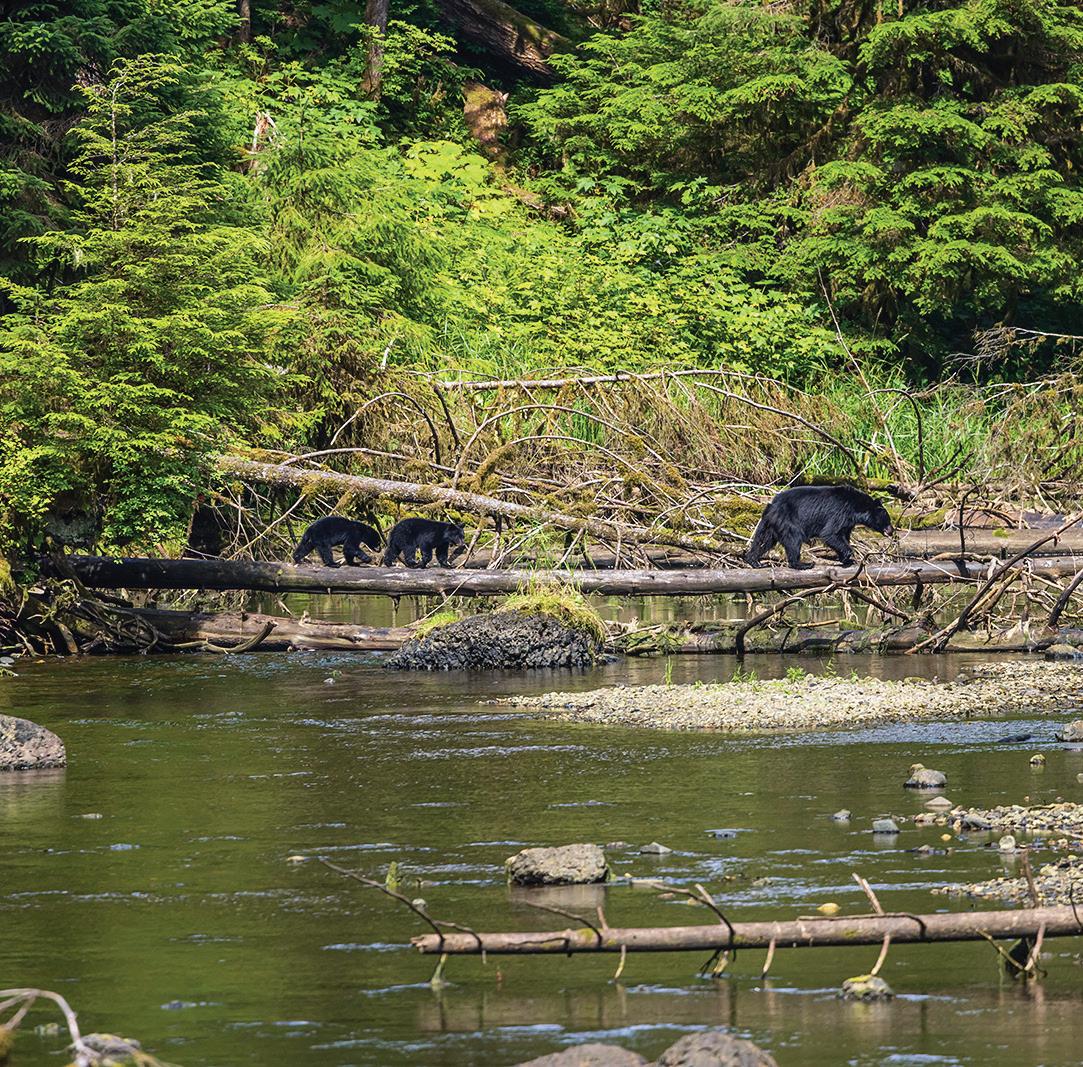
We saw plenty of black bears along the way, including a sow and two cubs fishing in a shallow stream. They put on a show for a long time. There was no shortage of blacktail deer also. That’s what Dad and I love hunting back home in Oregon, though for the Columbian subspecies. We even
saw people skinning deer that hung outside their homes, as the season was well underway in August.
We fished some small streams for Dollies and coho. We didn’t see any other anglers. It was refreshing. Dad loved the feeling of being alone in this special place.
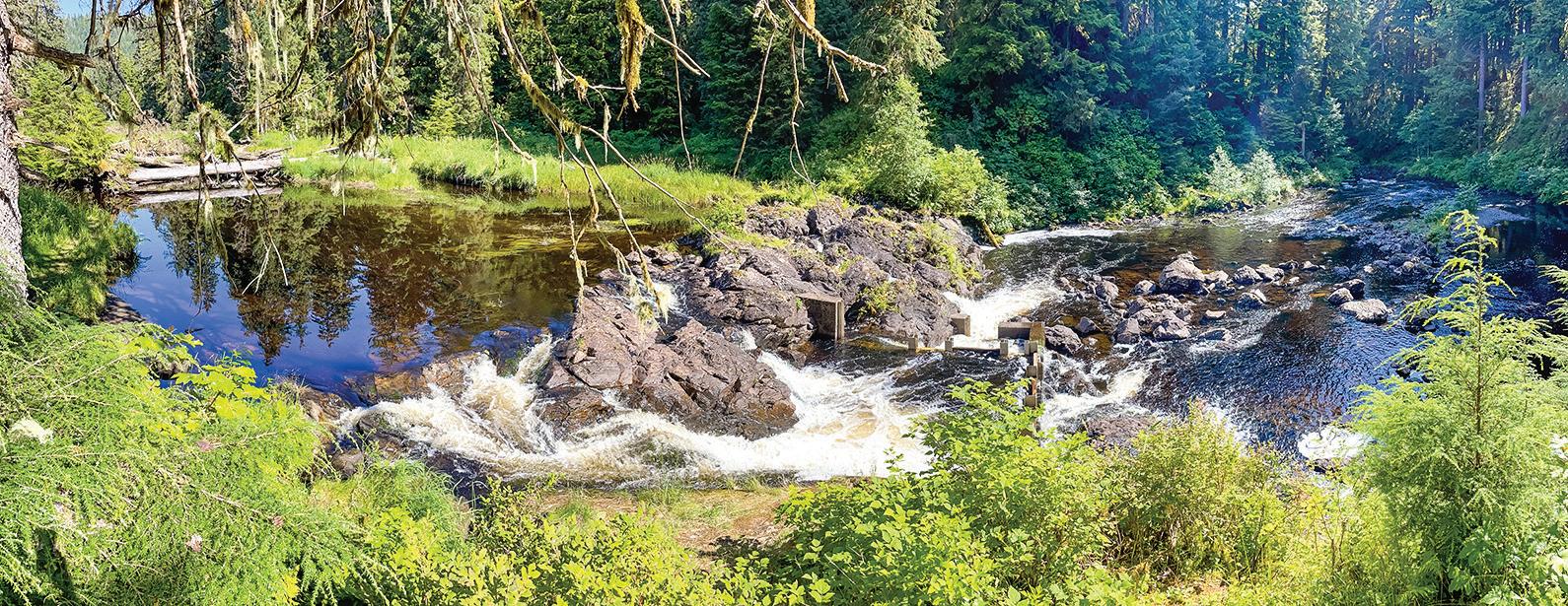
On the road to Coffman Cove, we hiked into Hatchery Creek. The boardwalk trail made for easy walking amid the captivating lush rainforest. We sat and watched for over an hour as newly arriving coho negotiated the
labyrinth of tiny, rushing waterfalls to reach their spawning grounds. Dad, who had run a state of Oregon Salmon Trout Enhancement Program project for many years while teaching high school biology, loved this part of our journey. He didn’t want to leave. He still talks about the wonders of it all, how any fish could survive, let alone perpetuate year after year, in such harsh conditions.
The drive back to Klawock was surreal as I relived so many fond times. But with just one day of fishing left, we wanted to
make a few more memories on the water.
IT WASN’T UNTIL THE last morning that the salmon fishing was what our guide friend Duane Leavitt considered good. It had been slow up and down the passage for everyone Leavitt talked with. We could have gone way out in the ocean, along with others who sought kings, but the long, rough boat ride didn’t appeal to us.
So, we found bait balls strung along rocky shorelines and trolled our way around them. The bite was good. We came away with what we’d hoped for: fresh salmon to take home.
“Man, those things hit hard and fight!” Dad said as Leavitt popped a gill rake on the last salmon of the morning. If Dad had one fish to target in the world, it would be salmon: king; coho; chum; it doesn’t matter. He thrives on the hit, that initial run and then the fight, in that order.
The water was calm, so we hit two spots for bottomfish, one specifically for black bass. Three hours later we headed across the bay and back to the cabins. Plenty of fish to clean would keep us busy until supper.
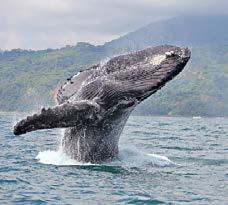
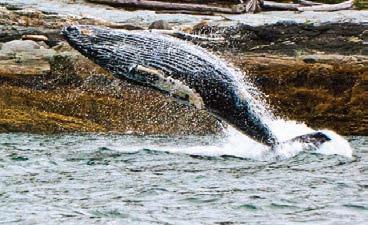
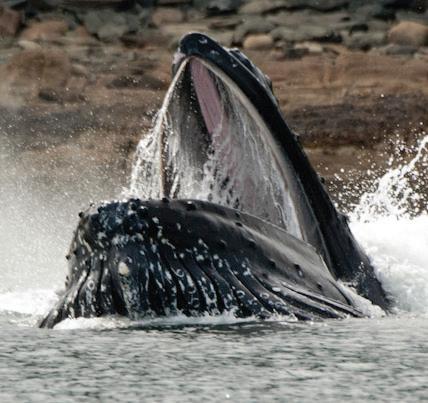
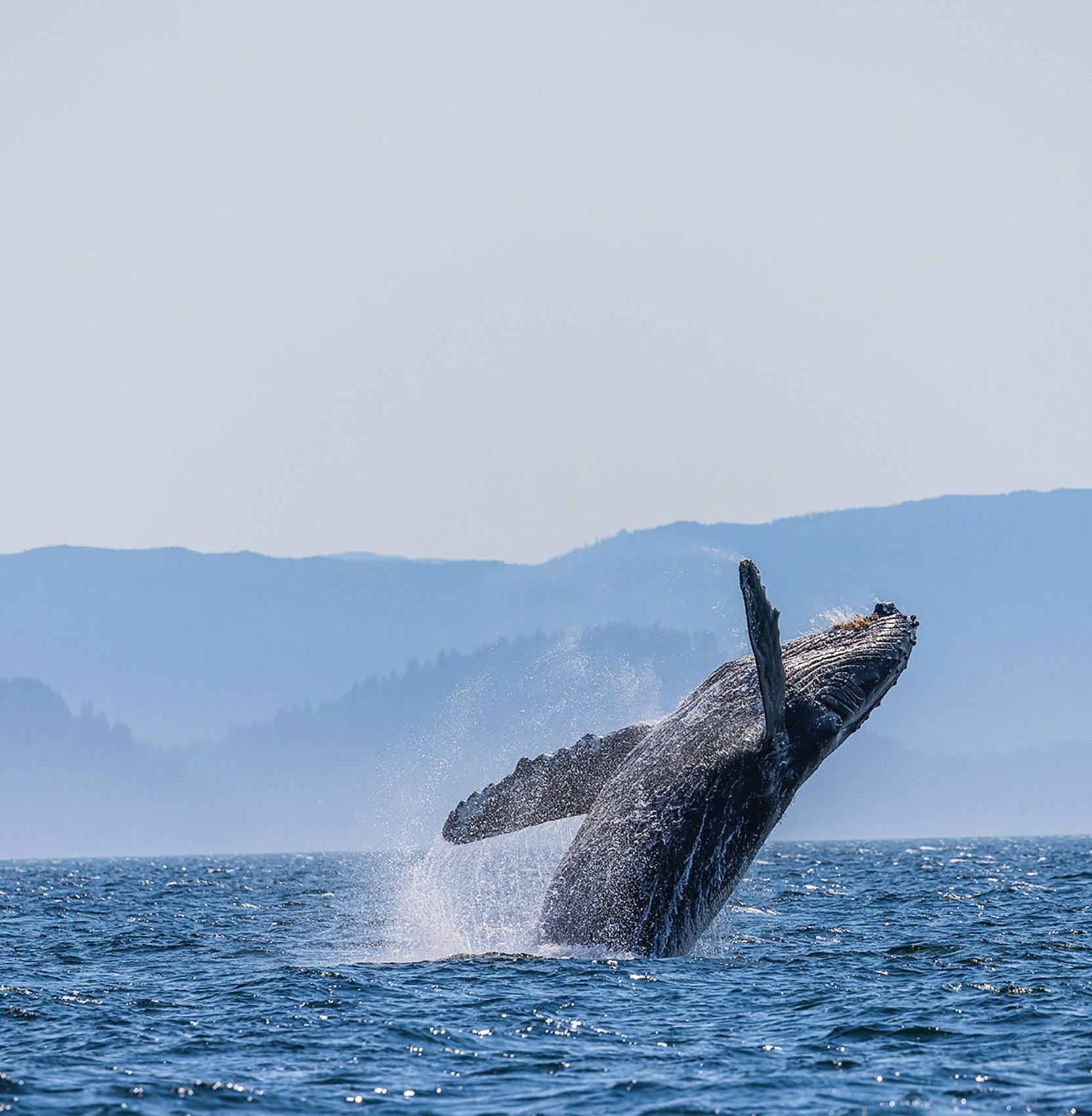
Ten minutes into the ride a whale breached in front of us. Leavitt killed the engines. The incoming tide carried us near the whale. The humpback slowly moved in our direction. Dozens of times the behemoth breached all the way to its tail – an awesome sight

in itself. The thunderous crashing of the massive beast reverberated across the bay. At times you could almost feel the power of the ancient creature slamming hard against the water.
For nearly 30 minutes the whale put on a show. Thanks to a telephoto lens, I came away with some stunning photos. That, along with so many mature bald eagles gracing the skies, proved a fitting end to a joyous adventure.
TODAY, NEARLY TWO YEARS later, my dad still talks about the wildlife we experienced on this trip with a lifelong friend. The places we saw and the people we met – that’s what’s etched deepest in my mind.
We had fishing to thank for bringing us here to experience one of the most memorable Alaskan adventures Dad and I have shared. ASJ
Editor’s note: For signed copies of Scott Haugen’s best-selling book, Hunting The Alaskan High Arctic, visit scotthaugen.com.


BY SCOTT HAUGEN
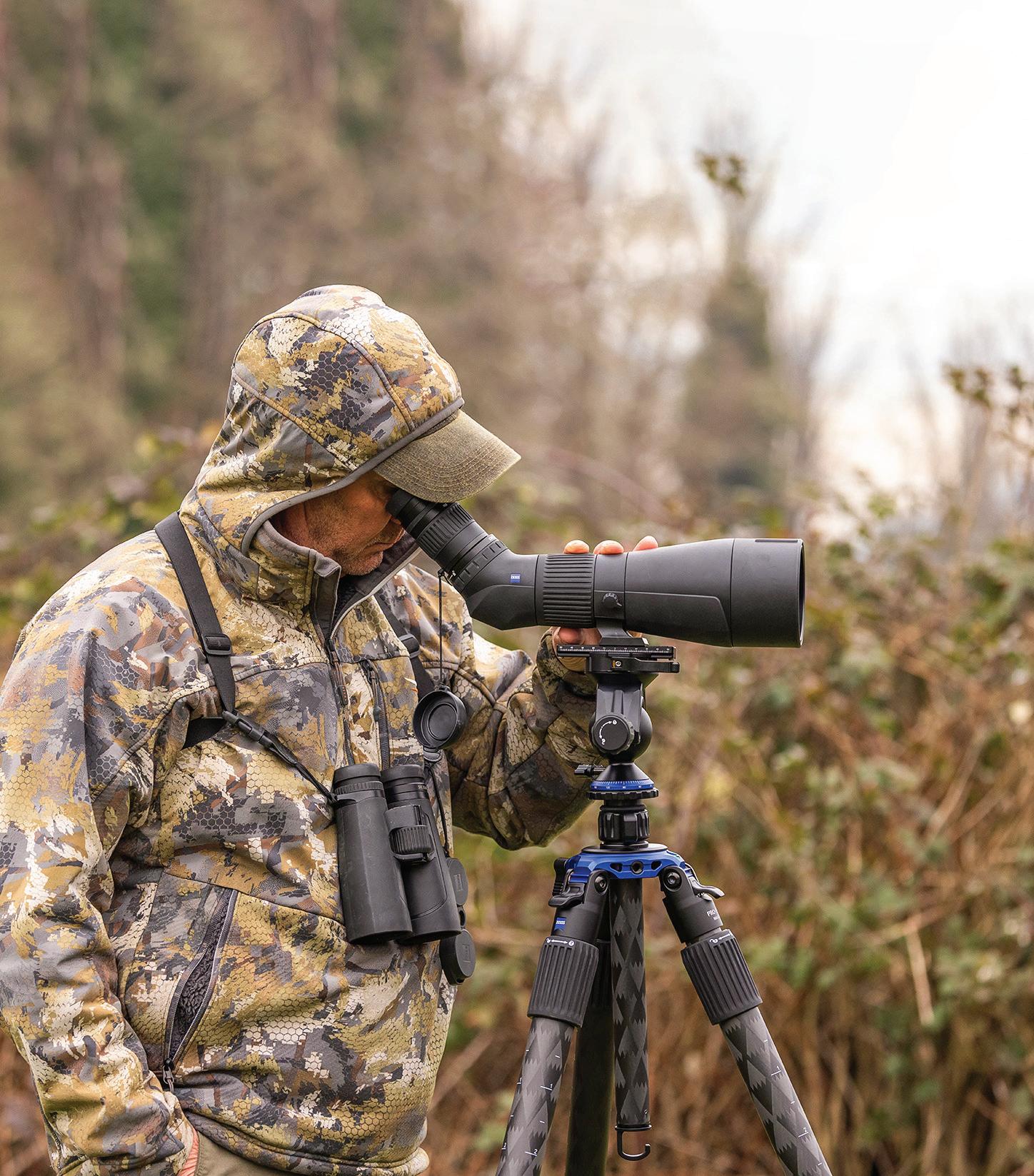
The first time I ever looked through Zeiss binoculars was in the early 1990s while bear hunting in Alaska. Even then, the optics company was synonymous with some of the best quality glass in the world. Today, their legacy has remained steadfast and their quality optics just keep getting better. This isn’t a gear review that regurgitates numbers and specifications you can pull off a website. This is about the range of applications quality optics can offer, and how I used three pieces of Zeiss gear on numerous hunts over the past several months.
Zeiss is synonymous with high-quality binoculars and spotting scopes, and their new lines are worth checking out. (SCOTT

BY TIFFANY HAUGEN
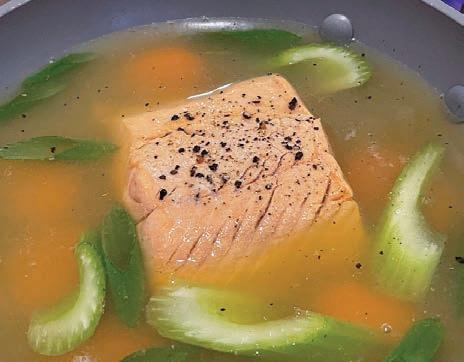
Whether you’re gearing up for salmon season or looking to make room in the freezer for the upcoming months, this is a recipe that works well with a range of salmon species, be they fresh or frozen. And it’s great for every meal, including breakfast.
Though not as common in North America, fish is a traditional breakfast food all over the globe. On a recent trip to Japan I got used to this healthy way to start my day. Usually mildly seasoned, the true flavor of the fish shines when gently poached.
Two 8-ounce salmon fillets
4 cups water
Three green tea bags
Three green onions, sliced
2 celery stalks, sliced
One carrot, sliced
One lemon
1 teaspoon salt
A trip to Japan served up a unique breakfast menu option for Tiffany Haugen, a poached salmon dish, which the outdoor chef now creates from the fish she and her family catch. (TIFFANY
Furikake or your favorite fish seasoning
In a medium pot, bring water to a boil. Add onions, celery, carrots and salt, then boil for five minutes. Add green tea bags and reduce to medium heat. Carefully submerge salmon filets into the pot and cook eight to 10 minutes or until the fish reaches desired doneness.
Squeeze half of the lemon into the pot. Drain off the green tea liquid and serve fish on the poached vegetables. Season with a squeeze of fresh lemon
your favorite fish seasoning.
Editor’s note: For signed copies of Tiffany Haugen’s popular cookbook, Cooking Seafood, visit scotthaugen.com.


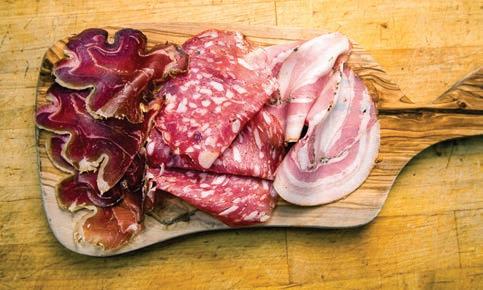

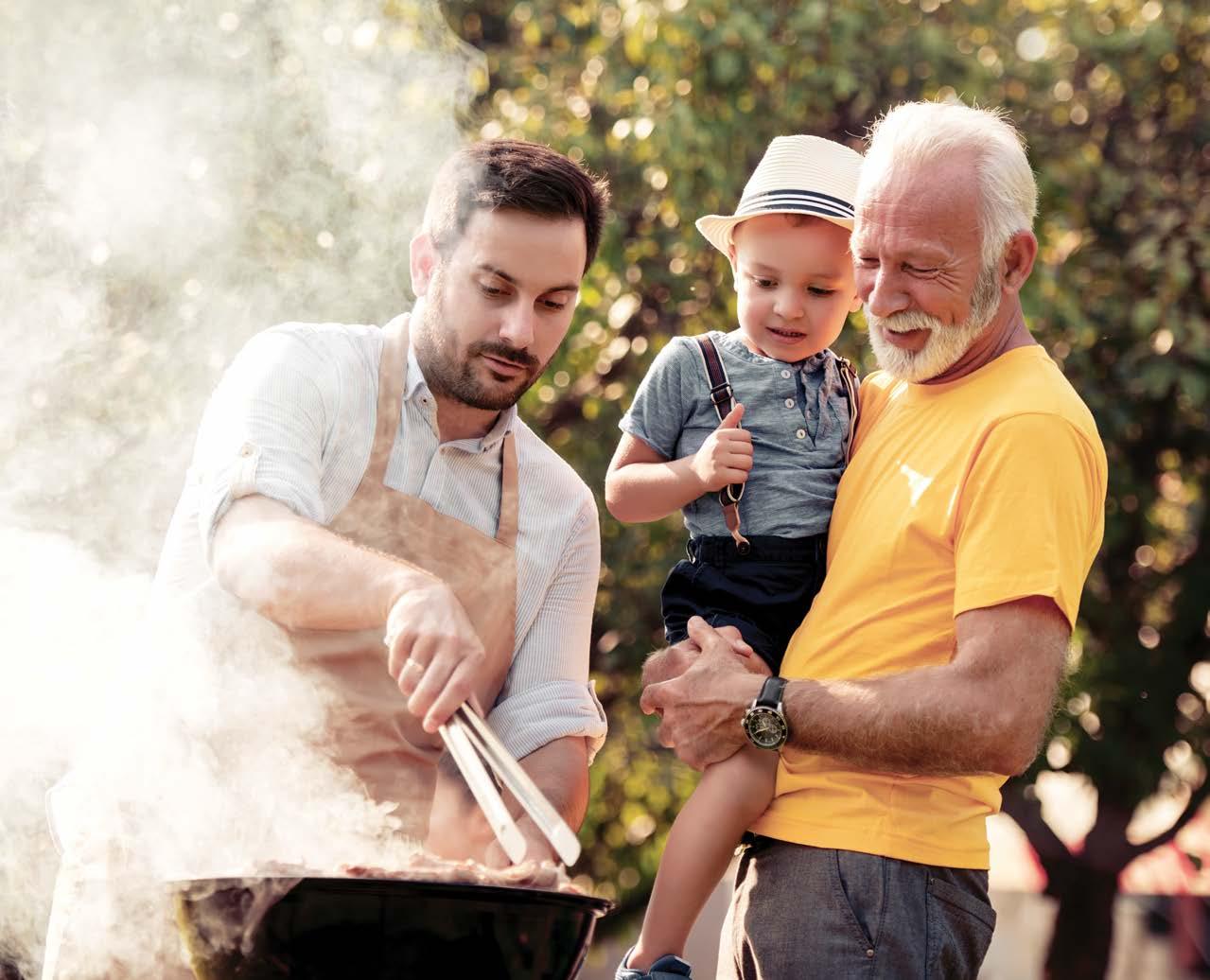
Give Dad something unforgettable this Father’s Day with gift cards and our favorite “Ultimate Dad Gift” bundles:
• Grill Master Gift Set
• Just Add Meat Gift Set
• Easy Capicola Bundle
Perfect for dads who love grilling, smoking, snacking, and sharing great food.
Learn how to get started in just minutes!

“When it comes to binoculars and a spotting scope, invest in the highestquality pieces that you can afford,” tips author Scott Haugen. “I know high-end optics aren’t cheap, but their quality and precision are at the top of their class.” (SCOTT HAUGEN)
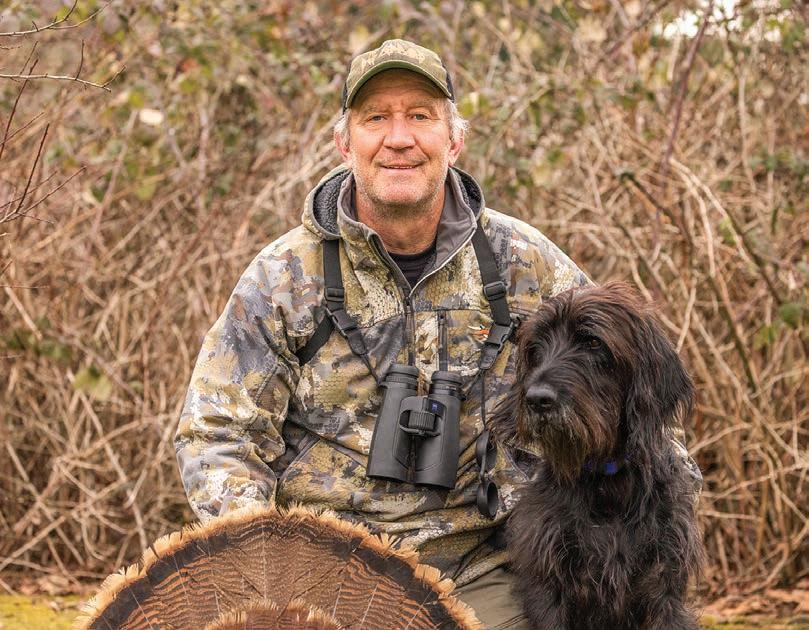
Glassing for black bears is tedious work. The habitat in which I hunt them is thick – what the locals describe as jungle-like. Take your eye off a prime location for even a second and you might miss an opportunity.
Searching with Zeiss SFL 12x50 binoculars and studying prime locations at a distance with their Conquest Gavia 85-millimeter spotting scope allows you to cover ground with your eyes, not your feet, a far more efficient way to seek out bears in their rugged domain. The Conquest Gavia spotting scope offers exceptional clarity and brightness. The technologically advanced roof prisms result in an all-around clear image from side to side and top to bottom. Even in wet weather, Zeiss’s LotuTec coating on both the spotting scope and binoculars result in a clear and unhindered view.
Not only does simply finding a bear require hours of glassing, but the animal has to be sized up once it’s located. Thanks to the clarity of this glass, field-judging bears is simple.
Zeiss optics feature another special coating, dubbed T*, that greatly accentuates their clarity in low light
conditions as well as in adverse lighting situations. The result is high-contrast images that pop.
The 30-60x Conquest Gavia spotting scope weighs only 60 ounces thanks to a magnesium body and a compact build. Fitted to a light carbon fiber tripod I already had, it performed perfectly on multiple deer and elk hunts last season too. For bears, I went with a bigger tripod because I knew I’d be sitting for hours in one spot, often amid high winds whipping off the nearby ocean.
Like most waterfowl hunters, I spend a lot of time scouting for birds. The SFL 12x50 binoculars were great for locating and patterning ducks, and the Conquest Gavia spotter was perfect for studying them up close.
Not only did the scope allow me to see exactly what ducks were eating, but the long-distance details unveiled made seeking unique birds addicting. I hunt a lot of wigeon and I’m always on the lookout for Eurasian wigeon or lightly colored American wigeon – what we hunters have dubbed storm wigeon. Even when backlit or lit from the side,
the Gavia allowed me to see minute details on every duck. Whether you’re a duck hunter or not, this speaks to the quality of glass.
When I broke out the SFL 12x50 binoculars from my blind bag one day, my buddy shot me a look. “You use these for ducks!” he barked with a sense of shock.
We were hunting a wide-open valley, where a recent ice storm had caused ducks to spread out.
“We’re going to be in this blind for nine more hours (and) glassing much of the time,” I replied. “You’ll thank me at the end of the day.”
Not only did we watch birds moving throughout much of the day, but we found a spot to hunt the following morning and had zero eye fatigue.
SFL stands for SmartFocus Lightweight, and the fact these 50mm binoculars fit into a 42mm frame size is nothing short of amazing to me. The larger exit pupil of the objective lens, combined with a 90-percent light transmission rate, results in a brighter image by allowing 42 percent more entry light. In other words, it’s perfect for Western hunters, no matter what animals you’re pursuing or the conditions you’re in. And thanks to Zeiss’s SmartFocus concept on these binos, the focus wheel is perfectly positioned for fast and precise focusing.
This marks my 50th year of big game hunting, and the technological advancements I’ve seen in gear are nothing short of spectacular. When it comes to binoculars and a spotting scope, invest in the highest-quality pieces that you can afford.
Even a superior tripod will be a game changer. I know high-end optics aren’t cheap, but their quality and precision are at the top of their class, and this includes the new lineup from Zeiss. Glass of this quality will last a lifetime. ASJ
Editor’s note: For copies of Scott Haugen’s popular line of hunting and fishing books and Tiffany Haugen’s fish and game cookbooks, visit scotthaugen.com.