FISHING • HUNTING • ADVENTURE
AKSPORTINGJOURNAL.COM
Volume 15 • Issue 2
www.aksportingjournal.com
PUBLISHER James R. Baker GENERAL MANAGER John Rusnak EXECUTIVE EDITOR Andy Walgamott EDITOR Chris Cocoles WRITERS Bjorn Dihle, Marian Giannulis, Scott Haugen, Tiffany Haugen, Tiffany Herrington SALES MANAGER Paul Yarnold ACCOUNT EXECUTIVE Janene Mukai DESIGNERS Kha Miner, Gabrielle Pangilinan WEB DEVELOPMENT/INBOUND MARKETING Jon Hines ADMINISTRATIVE ASSISTANT Katie Aumann INFORMATION SERVICES MANAGER Lois Sanborn ADVERTISING INQUIRIES media@media-inc.com
4
ALASKA SPORTING JOURNAL
AUGUST 2025 | aksportingjournal.com
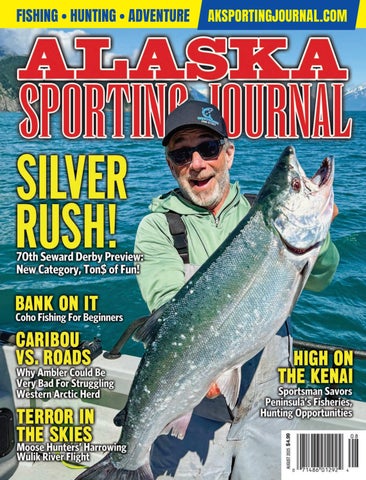
MEDIA INDEX PUBLISHING GROUP 941 Powell Ave SW, Suite 120 Renton, WA 98057 (206) 382-9220 • Fax (206) 382-9437 media@media-inc.com www.media-inc.com ON THE COVER Captain Andy Mezirow of Gray Light Sportfishing shows off one of Seward’s prized coho salmon (graylightalaska.com). As the 70th Annual Seward Silver Salmon Derby kicks off on August 9, a new category will allow local charter boat captains and their clients to participate in the tournament. (GRAY LIGHT SPORTFISHING)
CORRESPONDENCE X @AKSportJourn Facebook.com/alaskasportingjournal aksportingjournal.com Email ccocoles@media-inc.com
CONTENTS
VOLUME 15 • ISSUE 2
17
SEWARD’S SALMON SHOWCASE
Now 70 and getting better with age, the Seward Silver Salmon Derby continues to evolve. This year’s event, set for August 9-17, will continue to offer fun and plenty of prizes for anglers who purchase a ticket, along with a new category for local charter boat captains and clients to enter big coho. Tiffany Herrington previews 2025’s tournament.
(SEWARD SILVER SALMON DERBY)
FEATURES
ALSO IN THIS ISSUE
25
ALASKA SILVER FISHING FOR BEGINNERS
9
31
SON OF THE KENAI
46
CARIBOU AT RISK?
Coho salmon offer Alaska river anglers plenty of fish to target, especially in late summer. But as Scott Haugen, half of our From Field to Fire team, knows, there’s a lot more to it than just tossing out a line from the bank. Scott shares how new salmon slayers can catch ’em like old hands, and his wife Tiffany Haugen has a shallotinfused recipe to cook up those filets!
Editor’s Note: Experiencing the gorgeous Irish countryside 11 The Alaska Beat: News and notes from around the Last Frontier 15 Outdoor Calendar 39 Bush plane misadventures, part II
Growing up on the Kenai Peninsula was outdoor bliss for Drew Petrie. Now a fishing guide and a conservation contributor to Trout Unlimited’s Alaska Program, Petrie is blessed that both his office and playground include the Kenai River and the Kenai National Wildlife Refuge. TU’s communications director Marian Giannulis took a deep dive into Petrie’s adventures. While the previous presidential administration put a halt to it, the 211-mile Ambler Road project, which would connect the Dalton Highway to a mining district 211 miles away, remains a possibility in the southern Brooks Range, and it very well could impact the Western Arctic Caribou Herd. Bjorn Dihle picked the brain of a longtime biologist who details what could go wrong for the animals and caribou hunters if the road gets built.
Alaska Sporting Journal is published monthly. Call Media Inc. Publishing Group for a current rate card. Discounts for frequency advertising. All submitted materials become the property of Media Inc. Publishing Group and will not be returned. Annual subscriptions are $39.95 (12 issues) or $59.95 (24 issues). Send check or money order to Media Inc. Publishing Group, 941 Powell Ave SW, Suite 120, Renton, WA 98057 or call (206) 382-9220 with VISA or M/C. Back issues may be ordered at Media Inc. Publishing Group, subject to availability, at the cost of $5 plus shipping. Copyright © 2025 Media Inc. Publishing Group. All Rights Reserved. No part of this publication may be copied by any means, electronic or mechanical, including photocopying or recording by any information storage or retrieval system, without the express written permission of the publisher. Printed in U.S.A.
6
ALASKA SPORTING JOURNAL
AUGUST 2025 | aksportingjournal.com
EDITOR’S NOTE
A horse-drawn carriage took the editor and family members to Ireland’s tranquil Killarney National Park, which was a lovely alternative to his earlier visit to hectic London. (CHRIS COCOLES)
K
ILLARNEY NATIONAL PARK, Ireland–After spending a week in vibrant but hectic London, I was really looking forward to a more pastoral environment during a planned five-day side trip to the Emerald Isle to meet my three sisters. In jolly old England, I dodged selfie-seeking tourists on a stroll across the famed Tower Bridge; fought for viewing space in visits to the Tower of London, Prime Minister Winston Churchill’s underground World War II bunker maze and the main Imperial War Museum; packed into Underground subway cars; and endured a rainy morning with thousands of fellow tennis fans in Wimbledon’s celebrated “Queue” as we eventually all bought grounds pass tickets for the iconic Grand Slam tournament. But even in the most crowded villages on Ireland’s western and southern coasts, it was still a relief to be in more rural settings as a refreshing change of pace. And one of the first Irish activities I tried – well, after a couple pints of Guinness and some lunch at a pub – was the most outdoorsy thing I could think of at the time. After checking into my hotel in the charming town of Killarney and meeting my siblings, three of us walked down the street to where horsedrawn carriages explore adjacent Killarney National Park. We met our driver Danny, who looked and spoke like he came straight from central casting for the grizzled Irish gentleman. He introduced us to his steed Pelé (named for the famed Brazilian footballer/soccer player). Danny and Pelé took us off the main street along the path for one of Ireland’s six national parks (Killarney is also the country’s oldest, having been created in the early 1970s). As we passed waving hikers, dog walkers and other carriages, the Irish countryside was as green as I always imagined it would be. We spotted a solo stag, a red deer, between forested areas (bigger herds usually show up earlier and later in the day).
Always the outdoors editor, I asked Danny about fishing, and he mentioned the Atlantic salmon that migrate up from the coast into the streams that empty into three large freshwater lakes inside the national park. As he encouraged Pelé to keep trudging along on this warm summer day, our driver also told us about the invasive, carnivorous minks that wreak havoc on native small game, nearby farm critters and pets. Finally, we hit our end-point destination, Ross Castle, a 15th century tower hard on the shores of Lough Leane (Lower Lake), which Danny also told me has good brown and rainbow trout fishing in the spring and fall. We got off the carriage, explored the fort a bit and then petted our horse before taking the ride back to the town square. But it hit me about how important these national parks are to enjoy, whether you’re talking about Yellowstone and Denali or Alcatraz and Gettysburg, or the crystal-blue lakes, forests and castles in Ireland. Over the next five days of road trips, strolls in seaside villages and meeting friendly locals who I shared a few pints and Irish whiskey cocktails with, just like that my trip was over. I’ll never forget the chaos of London, but it’s the scenic spots on that other island that made me realize why those Irish eyes are smiling. May places as wildly different and similar as Ireland and Alaska always be green. -Chris Cocoles aksportingjournal.com | AUGUST 2025
ALASKA SPORTING JOURNAL
9
10
ALASKA SPORTING JOURNAL
AUGUST 2025 | aksportingjournal.com
TRUMP ADMINISTRATION MOVES TO MAINTAIN BLOCKING OF PEBBLE MINE
C
ould President Donald Trump become an unlikely ultimate savior of Bristol Bay in the fight to keep the Pebble Mine out? While the Trump Administration has made a priority of opening new mining and drilling opportunities throughout the country, the 45th and now 47th commander in chief has leaned away from supporting the massive copper and gold mine that critics fear could threaten Bristol Bay’s prolific salmon runs. His son, Donald Trump, Jr., a longtime hunter and angler, has railed against the mine as well. Now it appears that President Trump will for now keep the mine project from ever getting off the ground. “The Trump Administration’s Department of Justice announced that it will defend both a 2020 decision by the U.S. Army Corps of Engineers to reject a key Pebble Mine permit and the Environmental Protection Agency’s subsequent decision to protect Alaska’s Bristol Bay from future versions of Pebble Mine under the Clean Water Act,” stated a Wild Salmon Center press release. Several longtime Pebble opponents offered praise for Trump, who since he was inaugurated for his second term in January has also longed to create new opportunities to drill and mine in Alaska. “Bristol Bay’s world-class salmon runs generate upwards of $2.2 billion in economic activity, are a vital source of clean, nutritious food and represent one of the great hunting and angling destinations on the planet,” SalmonState executive director Tim Bristol said. “Simply put, Bristol Bay is the biggest and the best, and it’s clear the president knows this based on his wise decision today.” Two respected lodge owners in the region who have long been in the fight against Pebble, Brian Kraft (Alaska Sportsman’s Lodge) and Nanci Morris-Lyon (Bear Trail Lodge), showed signs of a relief. Morris-Lyon called this latest plot twist “another step forward in the 20-year struggle to prevent the proposed Pebble Mine from permanently destroying extensive salmon habitat in Bristol Bay.” Added Kraft, “As a business owner who depends on Bristol Bay’s incredible fishery for his livelihood, I want to give President Trump my heartfelt thanks for upholding protections for one of America’s most incredible and valuable natural landscapes. It’s clear President Trump recognizes that the Bristol Bay salmon runs are the envy of the world; the pinnacle of sportfishing for anglers; a massive job producer; and a key piece of our natural heritage that ‘Makes America Great.’ Today’s announcement took courage, leadership and vision. We are extremely grateful.” Northern Dynasty Minerals, the project’s parent company, also saw its stock prices plummet around the same time as this news broke. In a press release, Northern Dynasty announced it would file further litigation against the EPA, which previously vetoed Pebble Mine permitting requests. “While discussions with the EPA have taken place, we have not reached a settlement,” said Ron Thiessen, Northern Dynasty president and CEO. “As such, we asked the court to set a briefing schedule for summary judgment motions, as we now believe that will be the quickest, most direct avenue to get the veto removed.”
Bristol Bay’s salmon scored another win when the U.S. Department of Justice moved to uphold previous federal vetoes of the Pebble Mine.
ALASKA BEAT SOCIAL MEDIA POST OF THE MONTH
One-half of the country music duo Big & Rich, John Rich savored the Last Frontier’s epic fishing.
Only the toughest canines can handle Alaska-level problems. Karelian bear dogs from the Wind River Bear Institute near Fairbanks were called in to keep bruins at bay as firefighters battled blazes around Delta Junction.
(USFWS/TOGIAK NATIONAL WILDLIFE REFUGE)
aksportingjournal.com | AUGUST 2025
ALASKA SPORTING JOURNAL
11
NOTABLE NUMBER
Randall Bonner’s Alaska trips have included hammering coho salmon on spoons and spinners loaded with “add-ons,” in this case, fly fishing materials tied to the hook of a hammered half-and-half spoon.
7-0
(RANDALL BONNER)
In a unanimous vote, the Alaska Board of Game approved the state Department of Fish and Game’s controversial plan to eradicate brown and black bears and wolves to protect Mulchatna Herd caribou despite protests and judicial rulings that have prevented further elimination of predators.
“
THEY SAID IT
“The Ninilchik River king salmon run has a reasonable opportunity to meet the (sustainable escapement goals) with the later part of the run. Due to low water conditions, there is a buildup of king salmon in the lower section of the river. This restriction should help ensure that we get as many of the king salmon remaining in the lower river into the escapement while still allowing anglers to fish for Dolly Varden and other salmon.”
”
-Homer-area Alaska Department of Fish and Game biologist Mike Booz, after the state extended a Ninilchik River king salmon fishing closure for the entire season (through October 31). 12
ALASKA SPORTING JOURNAL
FROM THE ASJ ARCHIVES – AUGUST 2022
COHO ANGLER ENTERS THE SPINNER (AND SPOON) ZONE
W
hile I’ve fished jetty spinners with hoochies for Chinook, I never really dove too far into experimenting with soft plastics on hardware until I did a season of guiding for coho on the Situk. Back home, I had plenty of success targeting coho on spinners on coastal rivers, and adding anything else to them seemed like overkill. One day, a client was leaving Yakutat on a jet and asked me if I wanted a few packs of curly tailed crappie grubs from Bass Pro Shops he was planning to leave behind. “I’m not sure how I would use those, but it’s hard to resist free tackle, so sure; I’ll take em!” A few days later, I was fishing spinners during what seemed to me like a slow bite until I kept passing other guide boats that were roping in fish. I paid close attention to what they were using, and to my frustration, all of them were throwing spinners too. This made me question what they were doing differently that was working for them but not for me. I began to notice that I was the only guide without a hoochie on my client’s spinners, and I also realized I didn’t have any in my tackle box. What I did have were those crappie grubs given to me by a client a few days ago, and nothing to lose by giving them a try. I found myself in somewhat of a survival situation that made me recall a quote by Theodore Roosevelt: “Do what you can, with what you have, where you are.” I grabbed a crappie grub with a black body and chartreuse tail, which was the same color pattern as my most effective twitching jig that week, threaded the soft plastic on the hook of a chrome spinner and sent it into battle. That became my “ah-ha moment.” My so-called “luck” changed almost immediately and turned the second half of the day into an action-packed afternoon of catching coho. I never threw another naked spinner the rest of that season. -Randall Bonner
AUGUST 2025 | aksportingjournal.com
CALL THE LODGE FOR AVAILABLE DATES
OUTDOOR CALENDAR
Several mountain goat seasons start in August, including hunts in Southeast Alaska and Seward. (BJORN DIHLE)
Aug. 1 Aug. 1 Aug. 1 Aug. 1 Aug. 1 Aug. 1 Aug. 1 Aug. 1 Aug. 5-6 Aug. 8-10 Aug. 9 Aug. 9-17 Aug. 10 Aug. 10 Aug. 10 Aug. 10 Aug. 10 Aug. 10 Aug. 10 Aug. 20-22 Aug. 22-31 Aug. 29 Aug. 31 Sept. 9-14
Deer season opens in Game Management Unit 1 (Southeast Mainland) Goat season opens in GMU 1 Deer season opens in GMU 2 (Prince of Wales Island) Wolf season opens in GMU 3 (Petersburg/Wrangell) Goat season opens in GMU 4 (Baranof Island) Deer season opens in GMU 4 (Chichagof Island east of Port Frederick and north of Tenakee Inlet) Goat season opens in GMU 5 (Yakutat) Caribou season opens in GMU 9D (Alaska Peninsula) Kenai River Junior Classic (alaska.asymca.org/kenai-junior-classic) Golden North Salmon Derby, Juneau (goldennorthsalmonderby.com) Valdez Women’s Silver Salmon Derby (valdezfishderbies.com/womens-derby) Seward Silver Salmon Derby (seward.com/salmon-derby) Caribou season opens in GMU 7 (Seward, north of the Sterling Highway and west of the Seward Highway) Goat season opens in GMU 7 Brown bear season opens in GMU 7 Wolf season opens in GMU 10 (Aleutians) Brown bear season opens in GMU 14A and 14B (Mat-Su Valley) Goat season opens in GMU 14A and 14B Caribou season opens in GMU 15B and 15C (Kenai) Ted Stevens Kenai River Classic (krsa.com/program/classic) Valdez Salmon Slam Tournament (valdezfishderbies.com/tagged-fish-contest) Valdez Big Prize Friday (valdezfishderbies.com/silver-derby/big-prize-fridays) Final day of competition in Valdez Halibut, Silver Salmon Derbies (valdezfishderbies.com) Kenai Silver Salmon Derby (kenaisilversalmonderby.com)
For Alaska hunt dates, go to adfg.alaska.gov/index.cfm?adfg=hunting.main. aksportingjournal.com | AUGUST 2025
ALASKA SPORTING JOURNAL
15
16
ALASKA SPORTING JOURNAL
AUGUST 2025 | aksportingjournal.com
One of Alaska’s premier fishing contests, the Seward Silver Salmon Derby, turns 70 this year. Besides honoring the traditions it’s built up over the decades, the event’s organizers are adding new memories to make this year. (SEWARD SILVER SALMON DERBY)
CASTING A NEW LINE
AS IT TURNS 70, SEWARD SILVER SALMON DERBY ADDS NEW WRINKLES, CELEBRATES TRADITIONS
BY TIFFANY HERRINGTON
I
n Alaska, few fishing traditions run as deep as the Seward Silver Salmon Derby. Now celebrating its 70th year, this weeklong event has drawn anglers from all walks of life since 1956. What began as a community-led celebration of coho salmon and sport fishing has grown into one of the most cherished fishing derbies in the state, and certainly one of the most scenic. Each August, Resurrection Bay becomes a playground of possibility as boats scatter across the water, youth and adult anglers line the docks
and the local community buzzes with excitement. This year’s derby runs August 9-17. With cash jackpots, daily mystery weight prizes, youth divisions and even a buy-back program that supports local fish enhancement, the derby strikes a balance between fun and stewardship. And in 2025, organizers are casting a new line by launching a professional charter division, inviting local captains and their clients to enter a separate contest alongside the traditional derby. It’s a nod to Seward’s
thriving charter scene, and a way to make the event more accessible to visiting anglers who don’t have their own boat but want in on the action. As the Seward Silver Salmon Derby marks its 70th anniversary, it continues to celebrate not only the thrill of the catch but the strong sense of community, history and stewardship that defines this coastal town. Whether you’re a local veteran or a visiting angler trying your luck for the first time, this year’s derby offers more ways than ever to cast your line and be part
aksportingjournal.com | AUGUST 2025
ALASKA SPORTING JOURNAL
17
of a living Alaskan tradition. We caught up with Amanda Sweeting, executive director of the Seward Chamber of Commerce, to learn more about this year’s highlights and what makes the Silver Salmon Derby so special after seven decades. Tiffany Herrington This is the 70th year of the Seward Silver Salmon Derby! What makes this event such a longstanding tradition in the community? Amanda Sweeting Well, it really comes down to its deep-rooted ties to the Seward community and Alaskan fishing culture. Seward grew
into a sportfishing destination in the early 1950s once roads connected it to Anchorage, drawing visitors to Resurrection Bay. The community fully embraced salmon fishing – so much so that by 1956, locals launched the Silver Salmon Derby to celebrate the region’s coho abundance. TH For readers who may not be familiar, how would you describe the overall atmosphere of the derby – on the water, at the weigh-in station and around town during the week? AS The Seward Silver Salmon Derby has an electric, community-driven
Among the new wrinkles being introduced into the 2025 derby is a special division for Seward charter boat captains and their clients. (SEWARD SILVER SALMON DERBY)
18
ALASKA SPORTING JOURNAL
AUGUST 2025 | aksportingjournal.com
DO I T RIGHT !
with Cap. Jeff Sanford
WE’LL TARGET YOUR SPECIES
Kodiak,
Alaska
Halibut Lingcod Rockfish Salmon
BOOK T ODA Y!
salmoncrazyadventures.com | 907-942-2506 | salmoncrazy@yahoo.com
aksportingjournal.com | AUGUST 2025
ALASKA SPORTING JOURNAL
19
atmosphere that’s unlike anything else. Out on the water, there’s a mix of excitement and anticipation as anglers – everyone from seasoned pros to firsttimers – try to land that winning silver salmon. You’ll see boats scattered across Resurrection Bay, all sharing in the thrill of the chase. At the weigh-in station, the energy ramps up! Crowds gather to watch fish being measured and recorded, with people cheering and speculating who might take the top prize. There’s a sense of friendly competition but also camaraderie; it’s just as fun to watch as it is to participate. TH Tell us about the new professional charter division. What inspired the addition, and how does it work? AS We wanted to create a space for local captains to not only have a fun opportunity to compete with each other, but also market fishing charter trips to anglers who want to participate with the guidance and experience of a pro. Plus, clients who fish with a charter are still eligible for all derby prizes in addition to a $500 “heaviest silver” prize from a charter boat! It’s really a way to incentivize visitors to
This year’s derby is honoring the late Dorothy Urbach (center in photo), longtime local advocate for the event as well as its former publicity coordinator. She was also 1979’s winner. (SEWARD SILVER SALMON DERBY)
participate in the derby and bring in business for local captains. TH How has the charter community responded to the new contest? Do you
“The Seward Silver Salmon Derby has an electric, community-driven atmosphere that’s unlike anything else,” says Amanda Sweeting, executive director of the Seward Chamber of Commerce. “Crowds gather to watch fish being measured and recorded, with people cheering and speculating who might take the top prize. There’s a sense of friendly competition but also camaraderie; it’s just as fun to watch as it is to participate.” (SEWARD SILVER SALMON DERBY)
anticipate strong participation? AS We’re still getting the word out and are excited to see who signs up this year! We believe it will grow each year and eventually become an integral aspect of future Silver Salmon Derbies. TH What kind of experience does this offer to visiting anglers who book a charter and enter the derby for the first time? AS Booking with one of the competing charters is an excellent way to get an in-depth look at Alaskan salmon fishing culture and community. Many charter captains have insider knowledge of where to source cohos and will clean the fish for their clients, as well as package and mail out the catch. It makes the derby much more accessible for visitors or anyone without their own boat. TH Have you noticed any trends in participation – like more youth anglers, returning champions or first-time competitors? AS We’re seeing a healthy mix of competitors. Youth anglers are encouraged and rewarded with fun prizes, and at the same time, the derby
20
ALASKA SPORTING JOURNAL
AUGUST 2025 | aksportingjournal.com
HAPPY HOOKER CHARTERS
Kodiak, AK
DIVE INTO THE
ULTIMATE FISHING ADVENTURE!
Hooks Where ips! Kiss L
HOMER, ALASKA BOOK YOUR ADVENTURE NOW
HAPPYHOOKERCHARTERS.NET • (907) 539-5474
halibutcharters.com | 907-435-1600
aksportingjournal.com | AUGUST 2025
ALASKA SPORTING JOURNAL
21
still attracts dedicated repeat anglers; some have returned year after year and continue to perform strongly in adult and cumulative weight prizes. But the beauty of the event is that it’s accessible to newcomers too – with daily tickets, mystery weights, tagged fish jackpots and side-pot categories; even first-timers have a real shot at winning something. TH In addition to the fishing itself, what other derby traditions or events help make the week special? AS Local nonprofits come out each evening to grill hot dogs for anglers, their friends and families, and derby The local community and visitors to the Seward area make this tournament so special every year, with cash prizes and daily awards offered throughout the week-plus of fishing and fun. (SEWARD SILVER SALMON DERBY)
volunteers. This creates space for community gathering and supports meaningful causes. We also host an annual awards ceremony on the final afternoon of the derby. This year, it’ll be held at Tidewater Taphouse in their ocean-inspired harbor-area restaurant. With appetizers and beverages for purchase and a festive open-air patio, we’re looking forward to celebrating winners in a great atmosphere. Everyone is welcome to attend! TH Can you share a memorable story or moment from a past derby that captures the spirit of the event? AS This year, we’re dedicating the derby to local legend Dorothy Urbach, who passed away earlier this year. Dorothy was a passionate advocate for the derby and served as its publicity coordinator for 30 years. She also competed as an angler several times and won the 1979 derby with a 16.11-pound coho salmon! Dorothy was always happy to share her derby stories, and we’ll be honoring her legacy throughout the week. TH The buy-back program helps fund Resurrection Bay fish enhancement. How important is the conservation aspect to the derby’s mission? AS The buy-back program directly supports local fish enhancement efforts 22
ALASKA SPORTING JOURNAL
AUGUST 2025 | aksportingjournal.com
in Resurrection Bay. Participants understand that the event isn’t just a competition; it’s part of a long-term cycle that supports local fisheries and sustainability. That connection between fun and conservation is a big part of what makes the Seward Silver Salmon Derby so special. TH What prizes or features are you personally most excited about this year? AS A special prize is being sponsored by Royal Caribbean Cruises for the 70th-place finisher, in honor of the 70th anniversary. That winner receives two tickets on a Royal Caribbean cruise of their choice! We also have 10 tagged fish in Resurrection Bay, including one valued at $20,000! TH Is there anything new or different this year that you’d like to highlight for readers thinking about entering or visiting? AS The pro fishing category is an excellent opportunity for visitors to get out on a professional charter and have fun in the derby without needing their own boat … or even much experience. Through the guidance of an experienced captain, they can enjoy the derby to its fullest! Plus, they’re able to compete in the derby for free on the days they fish with a participating charter. ASJ Editor’s note: For registration details, rules and prize info, visit the official site at seward.com/salmon-derby. Writer Tiffany Herrington is based in the Seattle area.
aksportingjournal.com | AUGUST 2025
ALASKA SPORTING JOURNAL
23
SILVERS FOR STARTERS
FIELD
HERE’S HOW TO BEGIN CATCHING ALASKA COHO FROM THE BANK
BY SCOTT HAUGEN
A
ugust. One of my favorite months of the year in Alaska. I love fishing for coho salmon, wherever they may be. Sometimes I’m by myself; sometimes I’m with a buddy on a remote stream. But most of the time and for most of us, coho fishing takes place at popular spots where there are many fellow salmon anglers. I rate coho as a low-pressure fish, as there are usually plenty of them for everyone to catch. But they don’t always come easy and we don’t always
go home with limits. Recent years have seen dramatic coho run declines in places many of us never thought possible. This has made fishing more competitive, and challenging. If you’re new to bank fishing for coho, here are some tips to help you catch more fish and suffer fewer frustrations with fellow anglers along the way. GIVE EVERYONE THEIR SPACE Being aware of other fishermen is a big part of keeping the coho river fishing
experience fun and productive for everyone. This means not crowding where others are standing and not letting your gear drift downstream into where they are fishing. Indeed, it’s a little different than shoulderto-shoulder sockeye fishing, where millions of salmon funnel through a narrow section of river and everyone can catch them by fishing the same way – smack in front of their feet. Coho aren’t as prevalent and they occupy a wider range of water.
Coho are one of Alaska’s most enjoyable fish to catch, and the more new anglers know before hitting the river, the better their odds of routinely catching fish will be. (SCOTT HAUGEN) aksportingjournal.com | AUGUST 2025
ALASKA SPORTING JOURNAL
25
FIELD
Sprinkled with flavorful shallots, your summer salmon will offer a simply prepared but delicious meal after a day on the water. (TIFFANY HAUGEN)
SHALLOTS AND SALMON FOR SUPPER BY TIFFANY HAUGEN
S
ome of our most memorable times spent in Alaska happened in August. Daylight hours are still plentiful and temperatures comfortable, and towards the end of the month the first freeze claims some biting bugs. It’s also the time for coho. Whether it’s a few days’ fishing journey or you’re stepping out the back door to find these fun fish, the truth is coho are some of the most flavorful salmon out there. Their meat is firm, making for consistency when it comes to cooking. And their flavor is mild and not overpowering. Wherever you go, be sure to bleed the fish by popping a gill rake as soon as it’s landed. Then hang it in the shade or place in a cooler. Bleeding a fish and keeping it cool will result in a better end product. It’s often the mishandling of
26
ALASKA SPORTING JOURNAL
salmon that leads to off-putting flavors; not the work of the cook. This is a fun, easy recipe that gets gobbled up quickly in our house. I’ve made it with other salmon species, but you can’t lose with coho. One filet of salmon 2 tablespoon butter ½ cup shallots, thinly sliced 2 cloves garlic, puréed ⅓ cup Havarti or Monterey Jack cheese, grated 1 tablespoon fresh dill, chopped Fresh lemon wedge Salt and black pepper to taste In a small skillet, sauté shallots in butter on low heat until they begin to soften. Do not brown. Set aside to cool. Place salmon, skin-side down, on
AUGUST 2025 | aksportingjournal.com
a baking sheet or layer of foil. Carefully remove pin bones without damaging fish flesh. Squeeze fresh lemon over salmon and lightly salt and pepper. Spread grated cheese evenly over salmon. Next, spread the partially cooked shallots evenly over salmon and sprinkle with the dill. Bake in a preheated 350-degree oven for 15 minutes, or until fish reaches desired doneness or an internal temperature of 120 degrees. Editor’s note: For signed copies of Tiffany’s popular book, Cooking Seafood, and other best-selling titles, visit scotthaugen.com.
Fresh Meats, Smoked Products and Seafood
525 N. Graffiti Street, Post Falls, ID 83854
- Quality Meats & Service - Since 1992 - Locally Owned ALL SMOKED PRODUCTS MADE IN HOUSE
(208) 772-3327 STOCK UP YOUR FREEZER WITH ONE OF OUR FREEZER MEAT PACKAGES
TIMSSPECIALCUTMEATS.COM
aksportingjournal.com | AUGUST 2025
ALASKA SPORTING JOURNAL
27
FIELD
Having the right rod, reel, line and terminal tackle goes a long way in flattening the learning curve for beginning coho salmon anglers. This is author Scott Haugen’s setup of choice when traveling to remote waters. The coho couldn’t resist a casted 3.0 Mag Lip slowly reeled in. (SCOTT HAUGEN)
One section of river I fished last August had room for three anglers. If all stayed back and fished the narrow, deep slot 10 feet from the shoreline, everyone would catch fish. But inevitably, someone would wade deeper, so the next person felt compelled to get out even further. When two of the anglers broke off and were retying and the other one left, I made a cast right where one of them had been standing. He was shocked I caught a coho there. When he returned, I handed him my drift rod and had him cast and drift it through the hole. For the first time he felt what the bottom of the river was like, confirming the deepest holding spot was smack at his feet. He switched from casting a lure to drift fishing a soft bead and caught multiple coho just off his rod tip – without even wading. THE THINKING ANGLER’S GAME When fishing, pay attention. Fishing is fun and relaxing, but if you want to catch coho, you have to engage your mind. Read the water and systematically cast in the most efficient way possible to cover all of it. Confidence means you’re hitting the sweet spots without getting so much as a bite and then covering the same water again but with a different presentation.
DON’T GO IN OVER YOUR HEAD – OR FAR AT ALL When it comes to coho fishing, don’t feel like you have to get your money’s worth out of your waders by walking as far into a stream as possible, then casting as far as you can. The biggest mistake I see made by bank anglers is aggressively wading into the water and going beyond where most coho are holding. Coho often travel and hold close to shore, so wading too far out and in too deep of water will push them away and shut down the bite. MATCH PRESENTATION TO WATER TYPE Next, apply techniques that work in the water you’re fishing. If you’re fishing slow, shallow holding water for coho, drift fishing might not be the best choice. 28
ALASKA SPORTING JOURNAL
Instead, suspend bait or a jig beneath a float to keep the terminal gear off the bottom and achieve a subtle presentation that captures the attention of salmon. Or cast a lure. Maybe the stretch of water you’re on is made for drift fishing. Recently, I fished a river for 10 days in a row – watching over 20 anglers each day – and counted three anglers who were drift fishing. Drift fishing is still the number one way I know of to actually learn a hole. Bouncing a sinker off the bottom allows you to gauge the hole’s depth, learn the bottom type and mark the various speeds of water at different depths throughout the hole. All of this helps you determine how to best fish that spot.
AUGUST 2025 | aksportingjournal.com
HAVE THE RIGHT TOOLS Invest in proper gear that allows you to effectively fish. Get the right rod, reel, line and terminal tackle to make precise offerings with the style of fishing you want to apply. If you don’t have the right gear, the amount of water you’ll be able to cover is greatly limited. And you could go all day without getting a bite if you don’t have the right presentation. Having a selection of lures, jigs, beads and egg cures is important when learning to fish for coho. A good all-around rod is a G. Loomis 9-foot, 6-inch E6X 1145-2S STR in a medium to heavy weight. It’s a fastaction rod with a line rating of 8 to 17 pounds that fishes ⅜ to 1 ounce of weight. This rod allows you to use a range of different fishing techniques – from drifting eggs to bouncing beads, floating jigs to twitching jigs – even
casting spinners, spoons and plugs. A Shimano Stradic CI4 3000F spooled with Power Pro’s Maxcuatro 50-pound braid in moss green is very efficient for river-running coho. The 50-pound Maxcuatro is equivalent to a 10-pound diameter line, and it’s very strong. Simply tie it to a swivel and tie a monofilament leader to the other eye. Coho are not leader-shy, meaning you can even tie the braid directly to a lure and still catch fish. There’s a lot to learn when it comes to bank fishing for coho, but many mistakes are simple to remedy by having the right gear and paying attention. With the salmon run kicking off, grab your gear, hit the river and get ready to battle one of Alaska’s most underrated, best-eating gems. ASJ Editor’s note: For signed copies of Scott Haugen’s popular book, Bank Fishing For Salmon & Steelhead, email him at scotthaugen@yahoo.com. Follow Scott on Instagram and Facebook.
Author Scott Haugen took this limit of hefty coho by drift fishing a prototype BnR Tackle 40mm soft bead. “There’s a lot to learn when it comes to bank fishing for coho,” he writes, “but many mistakes are simple to remedy by having the right gear and paying attention.” (SCOTT HAUGEN)
aksportingjournal.com | AUGUST 2025
ALASKA SPORTING JOURNAL
29
For your next fishing adventure, join us on the 32’ Almar, featuring a full walkaround, heated cabin, and top of the line equipment for salmon and bottom fishing.
Package rates or Cutomize your own trip tailored to your needs.
KING · COHO SALMON · HALIBUT · LINGCOD BLACK COD · MULTIPLE ROCK FISH SPECIES
Si t ka , a alaskanendeavorcharters@gmail.com Al a sk www.alaskanendeavorcharters.com Captain Olan Moore · 907-738-2838
KODIAK PREDATOR ADVENTURES
KODIAK ISLAND, ALASKA
Adventures
custom-tailored to your dreams!
FULLY GUIDED HUNTS FOR ALL ALASKA BIG GAME SPECIES
BOOK NOW! 907-513-5131
kodiakpredatoradventures@gmail.com
www.hhalaskanoutfitters.com
BOOK 9 0 7 - 2 4 4 - 2 9 9 3 N OW ! hhalaskanoutfitters@gmail.com 30
ALASKA SPORTING JOURNAL
AUGUST 2025 | aksportingjournal.com
HOLDING COURT ON THE KENAI A HUNTER, ANGLER AND GUIDE RELISHES ALASKA’S LANDS, WATERS BY MARIAN GIANNULIS
I
Drew Petrie keeps himself busy most of the year, between owning and operating his own fishing guide service and enjoying the lands and waters around his Kenai Peninsula home – not to mention contributing conservation work for Trout Unlimited’s Alaska Program. (WONGI KIM)
n August, Drew Petrie can usually be found guiding clients on the Kenai River. As the owner and operator of Lost Boys Fishing (907-202-6422; kenaineverland.com), he works tire-lessly from early June to late October helping clients fill their freezers with sockeye salmon or helping them catch a trophy trout, sometimes both in the same day. This schedule doesn’t allow for many days off, but August 2023 was an exception. That year, Drew had the good fortune of drawing a permit to hunt caribou in the Kenai National Wildlife Refuge. He was able to carve out a few client-free days to chase these majestic creatures in the lands that surround the waters he fishes with clients every day. On the first day of his hunt, Drew watched wolf pups play across the valley from him. On the second day, he harvested a caribou, providing his family with hundreds of pounds of meat that fed them in the years that followed. This special experience, shared with his girlfriend Molly and her brother Ty, is seared in Drew’s memory and left him even more in awe of the refuge where he works and plays. “I think one of the coolest parts about the Kenai Refuge is not only is it a paradise for somebody to hunt, but it’s a paradise for somebody to fish as well,” says Drew. “I’ve spent many days where in the morning I’ve woken up really early and wandered around to hunt, and then as the day progresses on and I’m ready to change it up, I’ll jump back in the boat and go chase trout.” Drew’s experience is one example of the ample opportunities that exist on
aksportingjournal.com | AUGUST 2025
ALASKA SPORTING JOURNAL
31
w
Alaska’s public lands. One day you’re on the hunt of a lifetime, and the next you’re back running a successful business that is fueled by the clean water and intact habitat these public lands provide.
GROWING UP ON THE RIVER
Petrie always feels at home when he’s on the venerable Kenai River, arguably the Last Frontier’s most revered watershed. “Growing up here was a blessing,” he says. “I don’t think I would be where I am now without those childhood experiences and getting to spend time on the river with my family.” (DARCY BACHA/PETRIE FAMILY) 32
ALASKA SPORTING JOURNAL
AUGUST 2025 | aksportingjournal.com
Drew is a lifelong Alaskan who grew up splitting his time between his family’s home in Anchorage and their cabin on the Kenai Peninsula. Some of his earliest and most cherished memories include fishing for sockeye salmon with his family on the Kenai River. The Kenai is Alaska’s most popular sportfishing river; trophy rainbow trout and strong salmon runs draw visiting and resident anglers alike. The Kenai National Wildlife Refuge surrounds a good portion of the 82-mile-long river, and the Chugach National Forest encompasses its headwaters and largest spawning tributary. These public lands and productive
early bird outfitter _ @northwest earlybird
Steelhead +
book your trip this fall!
Salmon Fishing
253-363-5666
earlybird-fishing.com earlybirdfishing01@gmail.com aksportingjournal.com | AUGUST 2025
ALASKA SPORTING JOURNAL
33
waters shaped who Drew is today. “Growing up here was a blessing,” says Drew. “I don’t think I would be where I am now without those childhood experiences and getting to spend time on the river with my family. I think it’s the biggest influence on where I’ve ended up in life.” This influence led Drew down a career path that revolved around fish. He started guiding on the Kenai River when he was 18. After seven years of guiding, he decided to go back to school, but still spent his summers making a living from salmon and trout. He worked as a commercial fisherman in Bristol Bay for two of those summers, and that time working on a gillnetter gave him a new appreciation for the commercial fishing industry so important to Alaska’s economy. But he knew his heart was in sportfishing. The tourism boom that followed the Covid travel restrictions of 2www020 was motivation for him to start his own business. He founded Lost Boys Fishing in 2021. Petrie harvested this caribou in the resource-rich Kenai National Wildlife Refuge, an adventure he shared with his girlfriend Molly and her brother Tyler. “I think one of the coolest parts about the Kenai Refuge is not only is it a paradise for somebody to hunt, but it’s a paradise for somebody to fish as well,” Petrie says. (TYLER FENTON)
34
ALASKA SPORTING JOURNAL
AUGUST 2025 | aksportingjournal.com
aksportingjournal.com | AUGUST 2025
ALASKA SPORTING JOURNAL
35
CARING FOR YOUR HOME WATERS After Drew started his own guiding business, he began looking for ways to give back and help care for the Kenai and its fish, which he describes as his “business partners.” “Working with Trout Unlimited was an easy choice for me,” says Drew. “My goals and thoughts and beliefs about the river are very much aligned with TU.” The Kenai sees more than 400,000 angler days and more than 600,000 salmon are harvested each year on average. Drew loves that one of Alaska’s best fisheries is its most accessible and that he gets to share it with his clients, but he does have concerns about the heavy use the river receives. In 2023, TU launched the Kenai Guide Ambassador program, which empowers fishing guides to practice and promote sustainable angling and fish habitat conservation on the Kenai River. Drew was one of the first to sign up. “As a business owner who relies on the Kenai, I want to make sure that it’s managed and maintained well; that it gets to continue being amazing and is not destroyed in the process of us enjoying it.” Drew has also participated as a guide in TU’s annual Armed Forces Fishing Trip, which treats active duty or veteran
“I’ve spent many days where in the morning I’ve woken up really early and wandered around to hunt,” Petrie says of what a special place he lives in, “and then as the day progresses on and I’m ready to change it up, I’ll jump back in the boat and go chase trout.” (DARCY BACHA)
members of the Armed Forces to a complimentary day of fishing. He most recently volunteered as a casting instructor at TU Alaska’s Spring Fishing Fest, where he had the pleasure of teaching kids how to cast. “The opportunity to participate in any of those events is a blessing in itself,” says Drew. “Protecting the watershed Qreally makes my heart flourish and
Petrie prepares for a work day on the water for his guide service, Lost Boys Fishing. He considers the fish to be his “business partners.” (DARCY BACHA) 36
ALASKA SPORTING JOURNAL
AUGUST 2025 | aksportingjournal.com
guides my soul in the right direction. The more I can be a part of that, the better.” We couldn’t agree more, Drew. ASJ Editor’s note: This story originally appeared in the Trout Unlimited This Land is your Land blog on the TU Alaska website. Marian Giannulis is the communications and engagement director for TU’s Alaska Program. Go to tu.org/project/alaska for more.
LIGHTWEIGHT. The lightest 200-hp four stroke on the market
POWERFUL.
2.8L displacement and Variable Camshaft Timing give it the best power-to-weight ratio of any 200-hp four stroke
COMPACT.
Nearly 120 pounds lighter than our four-stroke V6 F200
THE F200 IN-LINE FOUR.
FORWARD THINKING.
Show the water who’s boss with the F200 In-Line Four. Incredibly light, responsive and fuel efficient, it serves up plenty of muscle to handily propel a variety of boats. On top of that, its 50-amp alternator offers the power to add a range of electronics, and its 26-inch mounting centers and compatibility with either mechanical or digital controls give you the flexibility to easily upgrade your outboard or rigging. Experience legendary Yamaha reliability and the freedom of forward thinking, with the F200 In-Line Four.
WASHINGTON
OLYMPIA Us Marine Sales & Service (800) 455-0818 www.usmarinesales.com
YamahaOutboards.com/F200InLine
Follow Yamaha on Facebook® and Twitter™
REMEMBER to always observe all applicable boating laws. Never drink and drive. Dress properly with a USCG-approved personal intended to be an endorsement. © 2013 Yamaha Motor Corporation, U.S.A. All rights reserved.
aksportingjournal.com | AUGUST 2025
ALASKA SPORTING JOURNAL
37
38
ALASKA SPORTING JOURNAL
AUGUST 2025 | aksportingjournal.com
BUCKLE UP FOR CHAOS
PART II: MORE BUSH PLANE TERROR OVER ALASKA
BY SCOTT HAUGEN
L
ive in or travel throughout Alaska long enough and you’ll log many hours in a bush plane. The bush plane is the most efficient way to navigate Alaska and is an essential part of daily life for many people and small communities. But these planes – be they on wheels or floats – aren’t without risk, especially when it comes to facing storms and all the other elements that nature can dish out. In this second of a two-part series, we pick up where we left off in last month’s issue.
BEATING THE STORM My buddies and I were in a rush to
leave moose camp early after being alerted via satellite phone that a major storm was fast approaching. When one of the two Cessnas sent to pick us up bucked extreme wind shears and slammed hard onto the gravel bar we stood on as we awaited pickup, we didn’t think much of it. Pat, Tim, the pilots and I quickly loaded the bush planes with all our gear so we could get airborne before it was too dark and the storm engulfed us. I climbed into the copilot seat of the 180 and Pat crammed into the back. Most of our gear and Tim were piled into the 206. With both planes loaded, it was time to take off. While our Cessna slowly taxied
to one end of the gravel bar, Tim and the 206 pilot finished tossing some big rocks out of the way on the far end of the crude runway all the way to the water’s edge. Right then I knew something wasn’t right. Those rocks should have been beyond the 180’s reach upon takeoff. Extending the end of a runway by mere feet is rarely a good sign. After punching the throttle, the Cessna struggled to gain power. It was so weak that the pilot aborted the takeoff attempt halfway through. My concern spiked. “Don’t worry,” Pat consoled when I turned back to check his reaction. “I’ve been flying with this guy for 15 years
A horrendous sight like this is a reminder that the skies aren’t always so friendly in Alaska. This plane crashed during a storm near author Scott Haugen’s camp the day after they left the area. (SCOTT HAUGEN) aksportingjournal.com | AUGUST 2025
ALASKA SPORTING JOURNAL
39
those alders at the end!” Speed was slow to build and the power was still weak. This time we were fully committed; either the plane was going to get airborne or we were going to end up in the river. Mere feet from the end of the gravel bar, the plane slowly caught air. The climb was painstakingly gradual and dangerously slow.
WRONG TURN? A tundra grizzly taken on day one of the hunt. For the next two nights the hunters enjoyed fresh, tasty backstraps. Moose eluded them before their hunt was cut short. (SCOTT HAUGEN)
and he’s the best of the best!” That’s all I needed to hear – or so I thought.
SPUTTERING ENGINE I’m not a pilot, but I’ve flown enough to recognize engine sounds. I know when gauges aren’t properly registering and, worse yet, when pilots are nervous. “I don’t know what’s wrong,” the pilot shouted to me as he turned the plane around, heading back up the gravel bar to attempt another takeoff. He revved
the engine. It got louder, but the power gain was insignificant. The pilot hopped out, inspected the engine along with the 206 pilot, then climbed back in. “Everything looks all right,” he shrugged. “Hang on; we’ll try it again.” The gauges worked and there was no smoke or off-putting smells. The pilot gunned it one more time, but it again lacked the usual power. “Hang on,” he ordered, “we might catch the tops of
We barely nipped the tops of the alders. The pilot didn’t say a word. Nor did I. The moment he banked left instead of right, I knew something was very wrong. We should have banked right, heading straight south toward town. Instead, we turned left, heading north, then followed the Wulik River to the southwest. Slowly we gained elevation, the pilot pushing and pulling levers, checking and double-checking gauges. Seven minutes into the flight we leveled out at 300 feet. “I’m not going any higher and we’re following the river as far as we can in case I have to put this thing down,” the pilot hollered. The river was winding, its level very low. It was a smart move, for should something go awry and he had
Alaska can be so peaceful, so relaxing. But the reality is that serious problems can materialize in minutes, compounding situations. The author’s pilot flew his sputtering plane low down the Wulik River in case an emergency landing was needed. (SCOTT HAUGEN) 40
ALASKA SPORTING JOURNAL
AUGUST 2025 | aksportingjournal.com
aksportingjournal.com | AUGUST 2025
ALASKA SPORTING JOURNAL
41
a chance to land the plane, there were enough exposed gravel bars to increase the odds of safely doing so. Just as things seemed manageable, the engine sputtered. The gauges shorted out, the readings popping up and down. Power suddenly waned. The pilot aggressively moved levers, flicked switches, punched buttons and pumped a handle between our seats. We were losing elevation, but the pilot was able to regain power and level out. While cruising at 100 feet, the pilot positioned the plane directly over the river, sticking to every twist and turn. It was nearly dark. The 206 was somewhere behind us, but we didn’t have radio contact with them.
SILENT FLIGHT The gauges on the dash were again working, and though the ride was smooth, there was clearly a lack of power. No words were exchanged; none were necessary. Pat and I had flown enough and knew the situation was out of our hands. All we could do was pray and allow the pilot to do his job. He was a grizzled man – just who you’d want in this situation. Having spent more than half his life doing what he loves, we had utmost confidence in him. We cruised smoothly. My hands sweating, my heart pounding, I attempted to take in the beauty from
above. But no matter how hard I tried to take my mind off the plane’s problems, it wasn’t happening. Thinking of my wife and two sons back home, I was glad they weren’t with me.
FIRE IN THE SKY All of a sudden there was a loud pop and a blaze of fire shot past my window as the engine cowling pulsed under pressure. We instantly lost power. The gauges on the dashboard flatlined and the lights went black. It was dark and silent inside the cabin. A peaceful, tranquil feeling washed over me. The calmness of the moment caught me off guard. My senses of sight and smell escalated to a level I’d rarely known. “Is this what it feels like to die?” I thought. Quickly, the pilot banked the plane into the wind, heading back upstream. We were quickly losing elevation. At the last moment the pilot regained enough sputtering power to keep the plane level. There was one little gravel bar in front of us and he was able to miraculously hit it. Upon touchdown we lost power and never regained it. The 206 passed overhead and saw we had been forced to make an emergency landing. The pilot was able to land nearby. We packed all the gear we could into the 180, putting the raft, tent and some bulky camping gear beneath it, hoping grizzlies didn’t find
This is where the problems began for Haugen, with high winds slamming the Cessna 180 down hard onto the gravel bar where he was camped, causing serious engine damage. (SCOTT HAUGEN) 42
ALASKA SPORTING JOURNAL
AUGUST 2025 | aksportingjournal.com
it. Then we piled into the 206 and headed for Kotzebue. The alternative would have been to pitch camp, but with one plane down, a storm approaching and the wind chills already taking the temperature well below zero on this late September day in 2013, there was really only one choice. Flying over the tundra, lights flickering from distant villages, things were finally good.
SOBERING SIGHT Fortunately, the storm swung to the north and the next morning a mechanic was sent to fix the broken-down plane and return our gear. What he discovered was a blown engine on the 1950s-era Cessna, bringing home the fact we were fortunate to walk away from what could have easily been a catastrophe. The plane would have to be airlifted back to town by helicopter to be fixed. The majority of our gear remained with the plane. We spent the next few days at Pat’s home in Kotzebue. Our moose season was over. Three days later the skies cleared. We heard a helicopter thundering into town and stepped out to see what we presumed would be our plane being towed. From a distance we could see it was towing a bush plane, but as it neared, we saw that it wasn’t ours. As the chopper got closer we could see it was hauling a totaled bush
aksportingjournal.com | AUGUST 2025
ALASKA SPORTING JOURNAL
43
Modern-day technology has saved the lives of many hunters in remote Alaska. A satellite phone helped the author and his buddies avoid a severe storm. “The success of a hunt is measured on whether or not you come out alive, not if you filled a tag,” he writes. (SCOTT HAUGEN)
plane. One wing was missing. The plane being hauled in by a search-andrescue team came from the same area we had hunted. It had crashed when the pilot attempted to land on a gravel bar in high winds. The last we heard, both the pilot and passenger of the plane had been airlifted to Anchorage and were in critical condition. I never got the final details. Later, our plane was hauled in by the same rescue helicopter. Reflecting on what could have been – especially after having seen the demolished plane up close – made me realize how fortunate we were to walk away, plus how valuable experienced bush plane pilots truly are. During my years of traveling and hunting throughout Alaska, I’ve always said this: The success of a hunt is measured on whether or not you come out alive, not if you filled a tag. ASJ Editor’s note: For personally signed copies of Scott Haugen’s best-selling book, Hunting The Alaskan High Arctic, visit scotthaugen.com.
HANDMADE CUSTOM GEAR FOR PATRIOTS BY PATRIOTS SHOP ONLINE www.gearfor patriots.com 864-903-4948 • info@gearfor patriots.com
FREE SHIPPING ON ALL PURCHASES 44
ALASKA SPORTING JOURNAL
AUGUST 2025 | aksportingjournal.com
aksportingjournal.com | AUGUST 2025
ALASKA SPORTING JOURNAL
45
CARIBOU AND ROADS: A COMPLICATED RELATIONSHIP HOW PROPOSED AMBLER ROAD MAY IMPACT WESTERN ARCTIC HERD
46
ALASKA SPORTING JOURNAL
AUGUST 2025 | aksportingjournal.com
Caribou cross a frozen river in the Brooks Range. These migratory animals are a critical resource for Alaskan subsistence hunters, and some suggest that the proposed Ambler Road in Northwest Alaska could threaten area herds. (BJORN DIHLE)
BY BJORN DIHLE
O
ne of the biggest concerns over the proposed Ambler Road is how it would likely impact the Western Arctic Caribou Herd. If built, the Alaska Industrial Department and Export Authority has insisted that the Ambler Road would be a 211-mile, private-industrial-access-only road through the southern flanks of the Brooks Range and used to facilitate development of an unknown number of foreign-owned mines. Caribou are incredibly important to locals and visiting hunters, other species of wildlife and the land. The Bureau of Land Management’s Supplemental Environmental Impact Statement for the road identifies 66 communities where subsistence activities could be
potentially impacted by its creation, finding that each of the proposed three routes may significantly restrict subsistence uses in nearly half of these communities. Some people question if the Ambler Road would really be that bad for caribou and people. They point to the James Dalton Highway, where it’s pretty common to see caribou peacefully grazing nearby. We asked Jim Dau, a retired caribou biologist for the Alaska Department of Fish and Game, to help explain the difference. Dau has lived in Kotzebue, in Northwest Alaska, since 1988. He was the ADFG area biologist for 15 years and then the Western Arctic Caribou Herd biologist for 10-plus years.
Dau began looking at the effects roads have on caribou during graduate school at the University of Alaska Fairbanks, with a study running from 1982 to 1985. He studied caribou from the Central Arctic Caribou Herd in the Kuparuk River Oil Fields north of the Brooks Range on the Arctic Coastal Plain. He found that during calving season, maternal females avoided roads, buildings and other industrial footprints. A month later, under extreme duress from mosquitoes, warble flies and bot flies, caribou would form large aggregations and negotiate roads – even standing in the shade of buildings – to seek relief from these insects in coastal insect relief habitat. Once cool temperatures or high
aksportingjournal.com | AUGUST 2025
ALASKA SPORTING JOURNAL
47
winds reduced insect harassment, roads, traffic and other industrial infrastructure again interfered with caribou movements as they attempted to travel from insect relief habitat to better feeding areas inland. A 2024 study shows that road traffic on the North Slope disrupts caribou more than previously believed. Heather Johnson, a U.S. Geological Survey biologist who coauthored the study, was quoted by Alaska Public Media. “Caribou are really sensitive,” Johnson said. “They’re really sensitive to human activity. And we’ve seen from past studies that they’re also sensitive to human infrastructure, and they really respond to it. The key takeaway from the paper is they’re more sensitive to road activity than we had previously recognized.”
END OF THE ROAD?
Dau points out that Alaska has decades of experience showing that caribou can survive roads. But herds that have
roads through their range tend to be significantly smaller than herds in roadless areas, such as the Western Arctic Caribou Herd. Most caribou herds near roads have been intensively managed, often allowing a hunter bag limit of only one caribou – usually a bull with a permit requirement – during a short open season each year. “Roads can be terrible barriers to caribou, especially when there’s hunting off them or if there’s lots of traffic and other human activities on or along them,” Dau says. Projected peak daily traffic for the proposed Ambler Road is 168 trips, though this may be a conservative estimate.
WIDE-RANGING HERD The Western Arctic Caribou Herd’s range encompasses around 140,000 square miles of Northwest Alaska. Caribou from this herd have wintered as far south as the southern extent of the Nulato Hills west of the lower
Yukon River. They calve in the early summer in the northern foothills of the Brooks Range. Dau points out that caribou from the Western Arctic herd have one of the longest migrations of any terrestrial mammal. Some people say caribou don’t know where they are going or travel by instinct, but Dau’s experience suggests otherwise. “I don’t buy that at all,” Dau says. “These animals know movement areas where they’ve gone in the past; plus, they follow deeply embedded trails throughout their range. One of the remarkable things about this caribou herd is the long-term stability it has exhibited in its overall decadal movement pattern combined with shorter-term annual and seasonal variability in movements and distribution. In some years, caribou begin moving toward specific portions of their winter range before the first snowflake ever falls.” There are different variables in how
Some people who question whether the Ambler Road would really be that bad for caribou point to the James Dalton Highway to say it’s pretty common to see caribou peacefully grazing nearby. But research has shown that “herds that have roads through their range tend to be significantly smaller than herds in roadless areas, such as the Western Arctic Caribou Herd.” (BJORN DIHLE) 48
ALASKA SPORTING JOURNAL
AUGUST 2025 | aksportingjournal.com
E T A M I T L U ! T N U H A A L A SK
Experience the thrill of big game hunting in Alaska’s untamed wilderness with Deltana Outfitters—Alaska’s premier guide service. Whether you’re after Brown Bear, Grizzly, or Moose, our expert guides lead unforgettable Spring and Fall hunts in the remote, pristine Alaska Peninsula and Western Alaska. Adventure. Expertise. Results. That’s what we do—and Deltana does it best.
90% Success Rate!
Average Moose: 64” Grizzlies: 7’6” - 8’6” Black Bears: 6’ - 7’ Brown Bears: 9’ - 10’
Start your ultimate hunting experience today!
Visit: www.deltana.com | Email: hunts@deltana.com | Call: 907- 347-7204
caribou use their range. Caribou show their most fidelity to calving areas, and their least fidelity to winter range. Every 10 to 15 years, Dau has seen shifts in the Western Arctic herd’s winter range. “Caribou need their entire range,” Dau says. “For caribou managers, one of the biggest challenges is giving caribou options for places to go. In any one year, caribou rarely use their entire range. But over the course of decades, they’re going to use – and need – every square inch of it.”
DALTON HIGHWAY VS. AMBLER ROAD One prominent difference between the two roads is that the Dalton is a north-south corridor. The Central Arctic Caribou Herd’s summer-winter migration pattern runs north-south as well. The proposed Ambler Road would run 211 miles in an east-west direction, which would bisect much of the Western Arctic herd’s winter range. If caribou from this herd successfully cross the proposed Ambler Road during the fall migration, they would have to cross it again to migrate north during the spring migration. This, Dau and many others believe, could have serious consequences – not just for caribou but also for the people who depend on them. BLM’s SEIS states that the Ambler Road would affect migrating caribou in “an expansive area beyond the specific project area. Changes in availability of caribou to subsistence users could be a high-magnitude impact for impacted communities. Population-level effects to caribou are less likely but could be
large-magnitude effects and impact all subsistence harvesters throughout the annual range of the herd.”
RED DOG MINE CONNECTION Dau believes we have a good model of how the Ambler Road would affect the Western Arctic herd and local and visiting hunters. It comes from looking at how caribou have responded to the Red Dog Mine road in Northwest Alaska. The Red Dog Mine has the world’s largest known zinc deposit and is located 80 miles north of Kotzebue, near the western extent of the Brooks Range. The mine’s road is used to haul ore 52 miles across the Western Arctic herd’s range to a port 10 miles southeast of the village of Kivalina. The Red Dog Mine road is much smaller than the Ambler Road would be and is currently the only industrial mining road in Northwest Alaska of a remotely similar scale. Dau looked at how the Red Dog Mine road affected caribou movements from the middle of August through November during a stretch from 1990 to 2015. In many years, a significant portion of the Western Arctic herd encountered the road during their fall migration to their wintering grounds. Before Dau plotted the data of satellite-collared caribou, he thought they weren’t having much difficulty crossing the road based on aerial reconnaissance flights of the road during fall. The data showed otherwise. “I was shocked. I couldn’t believe it,” Dau says. “The telemetry data clearly
Another nearby mining/road project, the Red Dog Mine, could be a cautionary tale for how caribou can be affected by industrial development. Western Arctic herd animals have had to alter their migration periods in that area and have been reluctant to cross the road in their journey. (BJORN DIHLE)
50
ALASKA SPORTING JOURNAL
AUGUST 2025 | aksportingjournal.com
showed that caribou approached the road but were usually delayed before crossing it. It often took multiple attempts for delayed caribou to finally cross it. During the fall 2011 migration, on average it took caribou 33 days before they crossed; however, some caribou were delayed up to two months before they crossed the road. Some caribou backtracked up to 100 straight-line miles while delayed by the road. Of course, caribou rarely travel via straight lines. Many caribou that were delayed by the road traveled several hundred miles during their attempts to cross it. Some caribou never crossed the road. Instead, they wintered north-northeast of it, or they went around it to the east.” Dau estimated that during the fall 2011 migration, roughly 80,000 caribou were delayed by the road. He found the Red Dog site affected caribou up to 30 miles away; animals were probably responding to other caribou that had already bounced off the road. After the caribou finally crossed the road, they put on extra speed to make up for lost time and get to their wintering grounds.
HUNTERS’ CONCERNS Dau notes that the Red Dog road has negatively impacted hunters. Many villages used to count on at least two months to obtain caribou meat during fall. During years when caribou were delayed by the road, some communities downstream of Red Dog had substantially less than that during the fall migration, and caribou weren’t
OVER 50 YEARS OF SERVICE TO THE TRAP & FUR INDUSTRY
Cumberland’s
Northwest Trappers Supply, Inc. Cumberland’s Northwest Trappers Supply is your onestop trapping supply headquarters, featuring one of the largest inventories in the U.S. We are factory direct distributors on all brands of traps and equipment which allows us to offer competitive prices. Give us a try. Our fast, friendly service will keep you coming back. We are the new home of “Trappers Hide Tanning Formula” in the bright orange bottle. Retail & dealer inquiries are welcome.
.If you are in the area,
visit our store!
Request a catalog or place an order by phone, mail or on our website.
P.O. Box 408, Owatonna, Minnesota 55060 • (507) 451-7607 trapper@nwtrappers.com • www.nwtrappers.com
available until after the onset of rut, causing subsistence hunters to shift from taking bulls to harvesting cows. The decline in caribou and hunting opportunities has led to controversial nonlocal caribou hunting closures on federal land. Western Arctic caribou numbers peaked at 490,000 around 2003. Since then, it has steadily declined and, in 2023, ADFG reported the herd numbered 152,000 caribou. Like all wildlife populations, caribou numbers naturally fluctuate up and down. No one fully understands what is driving this current decline, but Dau thinks that warming temperatures are likely a major contributing factor. “Winter icing events in Northwest Alaska have become more frequent
and severe since around 2000, and my observations during caribou surveys and while retrieving radio collars from hundreds of caribou carcasses suggested that these events were deadly,” Dau says. “There is never a good time to fragment caribou ranges, but this is a particularly bad time to do so given that climatologists predict that temperatures are going to continue to rise for decades to come, and considering the persistence and degree of this ongoing caribou decline.”
A VALID CONCERN Since it went into production, the 52-mile-long Red Dog Mine road has supported about 80 trips a day by large ore trucks, with additional smallvehicle traffic and road maintenance
Spring scenes like this in the Brooks Range could feature fewer caribou if the proposed 211-mile Ambler Road project ever comes to fruition. (BJORN DIHLE) 52
ALASKA SPORTING JOURNAL
AUGUST 2025 | aksportingjournal.com
equipment. Red Dog is the sole industrial mine that uses this road. In contrast, the Alaska Industrial Department and Export Authority has reported that the 211-mile-long Ambler Road will support multiple mines in the Ambler Mining District, and said that communities near the project will be able to connect to this road for commercial deliveries of goods and services. However, AIDEA has provided very little information regarding the maximum number of mines, their size or the type that the Ambler Road will facilitate. BLM’s SEIS report for the Ambler Road assumed that this road would support four mines – one for each major mineral deposit – in the Ambler Mining District. This
Retired longtime Alaska biologist Jim Dau has an ominous warning for how the Ambler Road might devastate a herd and a way of life in these parts. “There is never a good time to fragment caribou ranges,” he says, “but this is a particularly bad time to do so given that climatologists predict that temperatures are going to continue to rise for decades to come, and considering the persistence and degree of this ongoing caribou decline.” (BJORN DIHLE)
assumption is by no means a binding limitation on the maximum number of mines or level of mining activity in the Ambler Mining District, though. Thus, throughout the original EIS and subsequent SEIS processes, agencies and the public could only consider potential impacts of the proposed road on the land, wildlife and people; impacts of a large and possibly everexpanding industrial mining complex have been ignored. The only infrastructure along the Red Dog Road is a modest port site located at the coast. The proposed Ambler Road will have multiple buildings, several airports, numerous gravel sites, many large bridges, and other infrastructure located along its length. Given these 54
ALASKA SPORTING JOURNAL
differences, the Ambler Road will have significantly higher levels of vehicular traffic and other human activity than the Red Dog road. This will greatly increase the Ambler’s potential to delay and deflect caribou movements and magnify its impacts on other fish and wildlife in the project area. You don’t have to be a biologist to predict that, if built, the Ambler Road would negatively affect the Western Arctic Caribou Herd. Dau thinks the Ambler Road will have effects similar to the Red Dog Mine’s road – except at a much larger scale. The project would change the biological and social character of Northwest Alaska to the detriment of subsistence users and visiting hunters and anglers.
AUGUST 2025 | aksportingjournal.com
A CRITICAL RESOURCE Caribou, Dau points out, are incredibly important to Northwest Alaska. For visitors, a Western Arctic caribou hunt can be a trip of a lifetime. To local people, caribou provide their most important sources of terrestrial meat. “But it goes beyond that,” Dau says. “Caribou are part and parcel of indigenous subsistence cultures. I cannot overemphasize the importance of caribou to people.” ASJ Editor’s note: This article was originally published by Hunters & Anglers for the Brooks Range. Visit huntfishbrooksrange .com to learn more about the incredible Brooks Range and the proposed Ambler Road, and to get news updates on it.