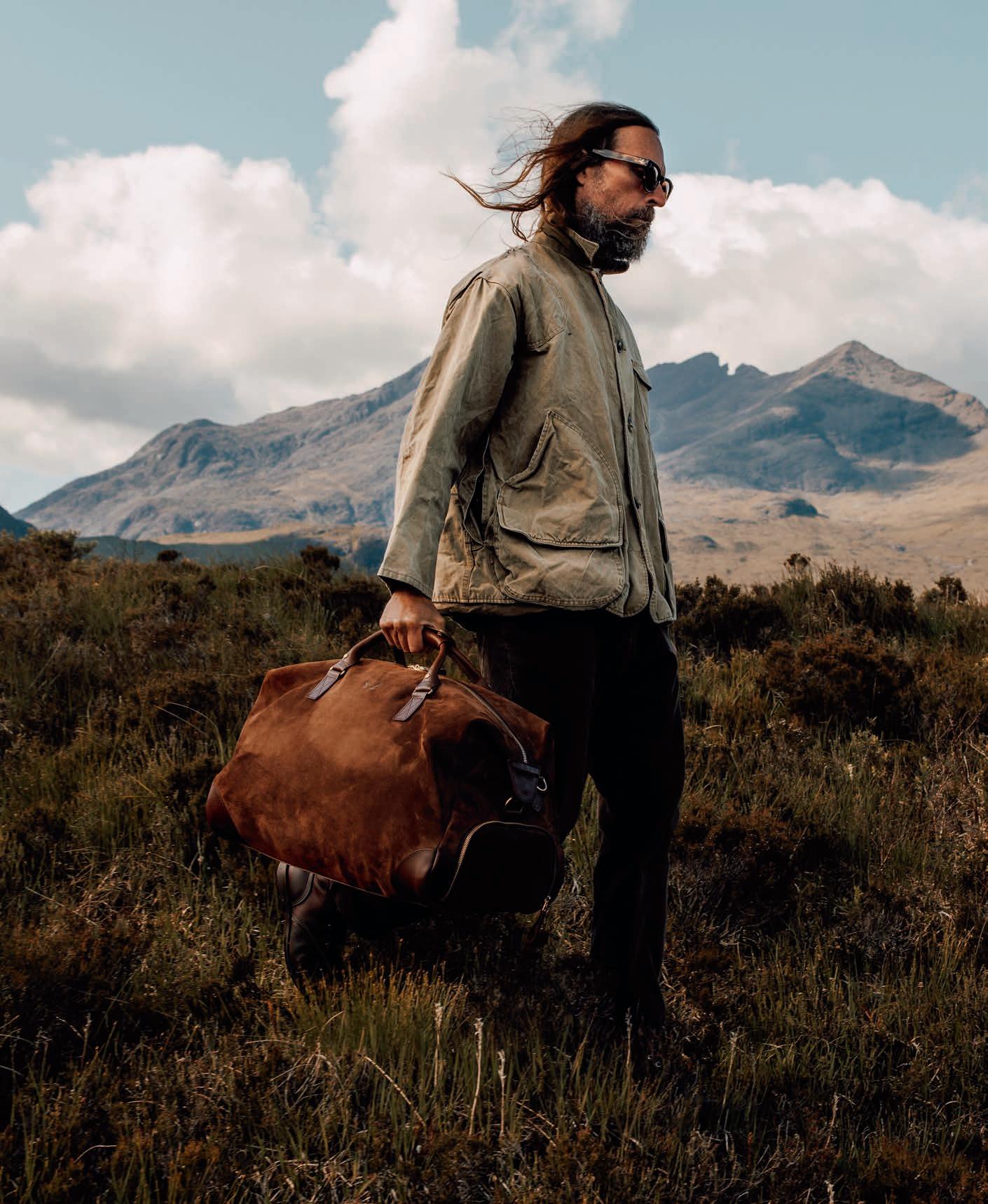
Every good adventure starts with a bag. A chance to shed all surplus and live with just the things you can carry, if only for a few days. The tools that make the cut are those that add seamless momentum to the trip. Objects of soul and purpose. Our mission is simple; to build the most enduring products we can from the finest materials in the world.
Every good adventure starts with a bag. A chance to shed all surplus and live with just the things you can carry, if only for a few days. The tools that make the cut are those that add seamless momentum to the trip. Objects of soul and purpose. Our mission is simple; to build the most enduring products we can from the finest materials in the world.
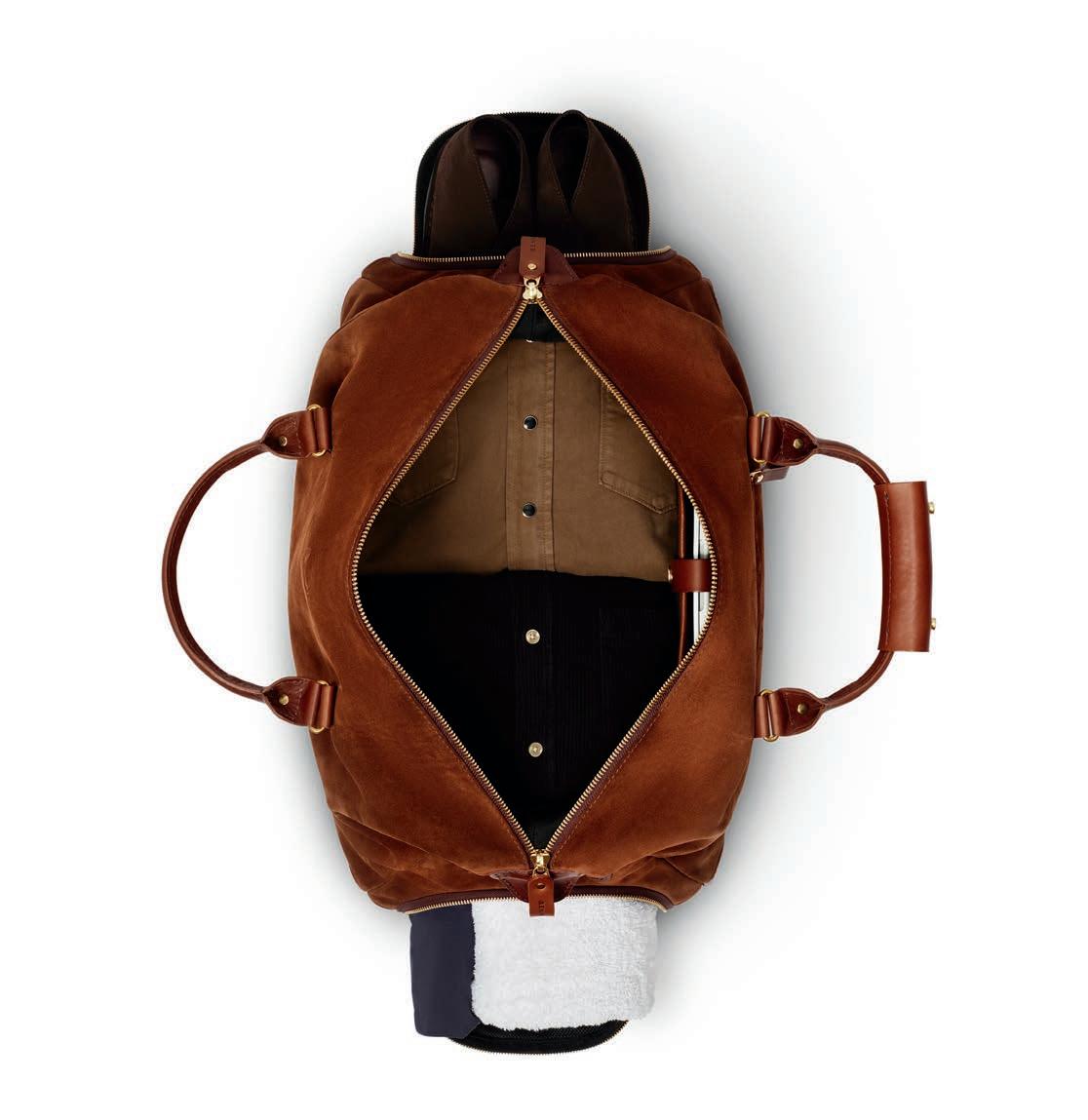
The Bennett Winch Suede Weekender is handmade in England from our uniquely waterproofed suede and designed for a lifetime of service in the hands of those who carry themselves well, whatever the adventure.
The Bennett Winch Suede Weekender is handmade in England from our uniquely waterproofed suede and designed for a lifetime of service in the hands of those who carry themselves well, whatever the adventure.
Waterproof compartment
Moss backed waterproof suede
Solid brass hardware
Waterproof compartment
Veg tan Tuscan leather
Protective laptop sleeve
DREAM. LAND.
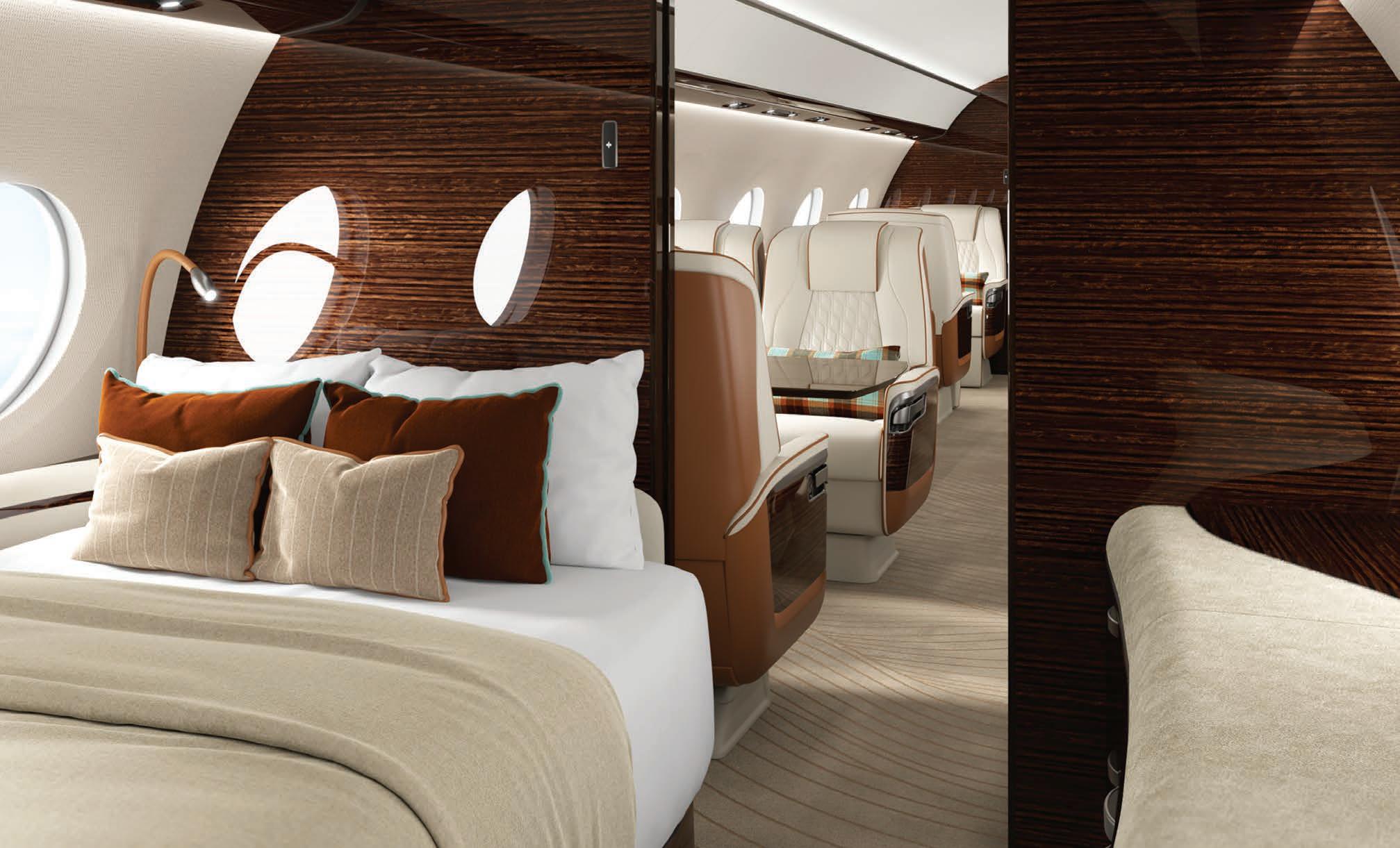
Arrive recharged and ready in the all-new Gulfstream G700™.
Request
A YEAR OF CELEBRATION
NEW HOTEL BRANDS, ANANTARA’S 25TH ANNIVERSARY, AN EXCLUSIVE FASHION COLLECTION, AND MORE
We have much to celebrate at Minor Hotels this year. I’m delighted to introduce two wonderful new additions to our portfolio of hotel brands – The Wolseley Hotels and Colbert Collection.
Inspired by the iconic restaurant in London’s Piccadilly, The Wolseley Hotels combines luxurious stays with European grand café-inspired cuisine and the convivial atmosphere that has made the original restaurant one of London’s most beloved dining establishments. The first hotel, The Wolseley Hotel New York, opens next year. Colbert Collection, meanwhile, brings together distinctive hotels and resorts in inspirational destinations worldwide, united by a passion for culinary excellence and genuine social connection. The first hotel in the collection – the beautiful
Porta Rossa Hotel Firenze in Italy – can be experienced now, with more to come in London, Thailand and beyond.
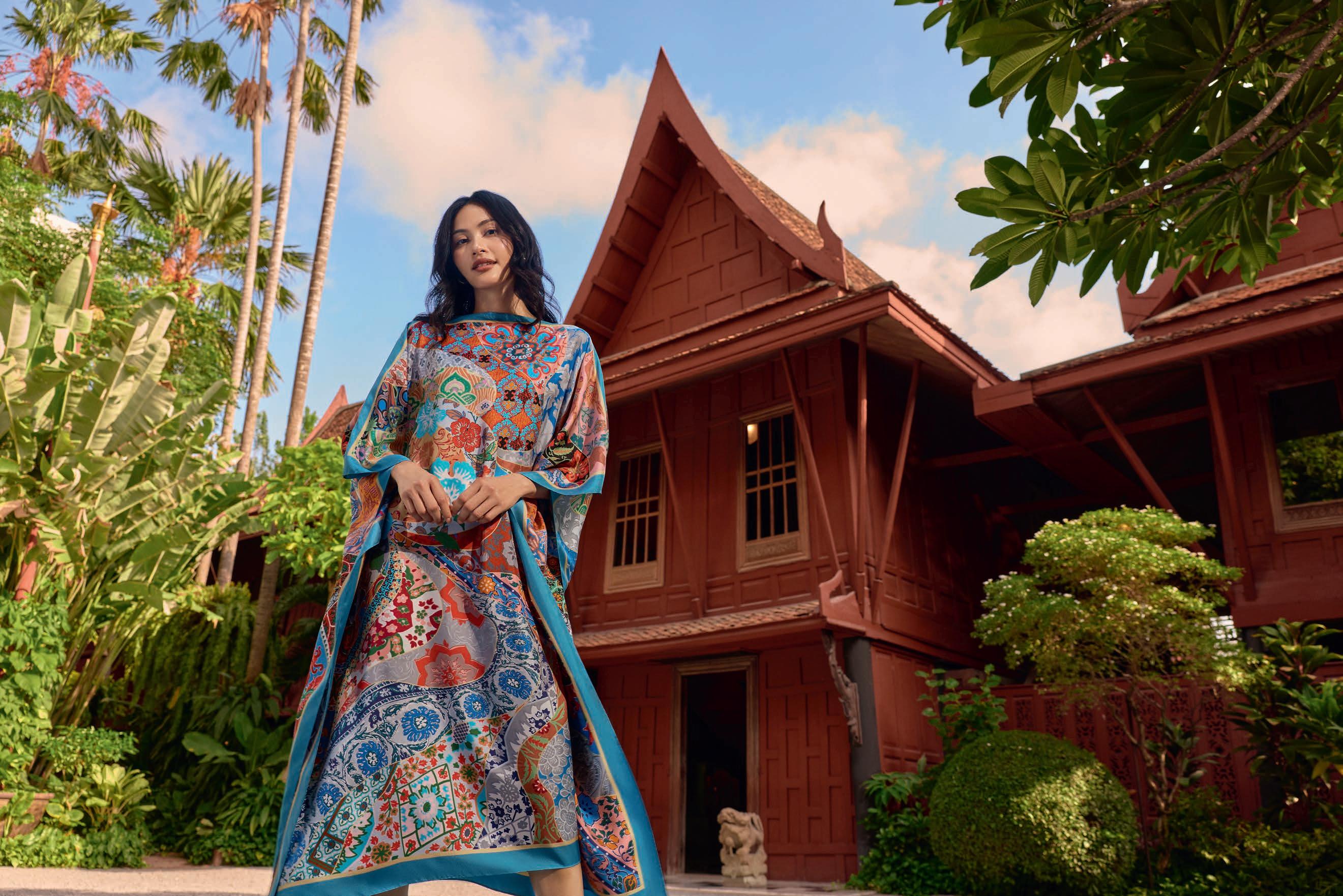
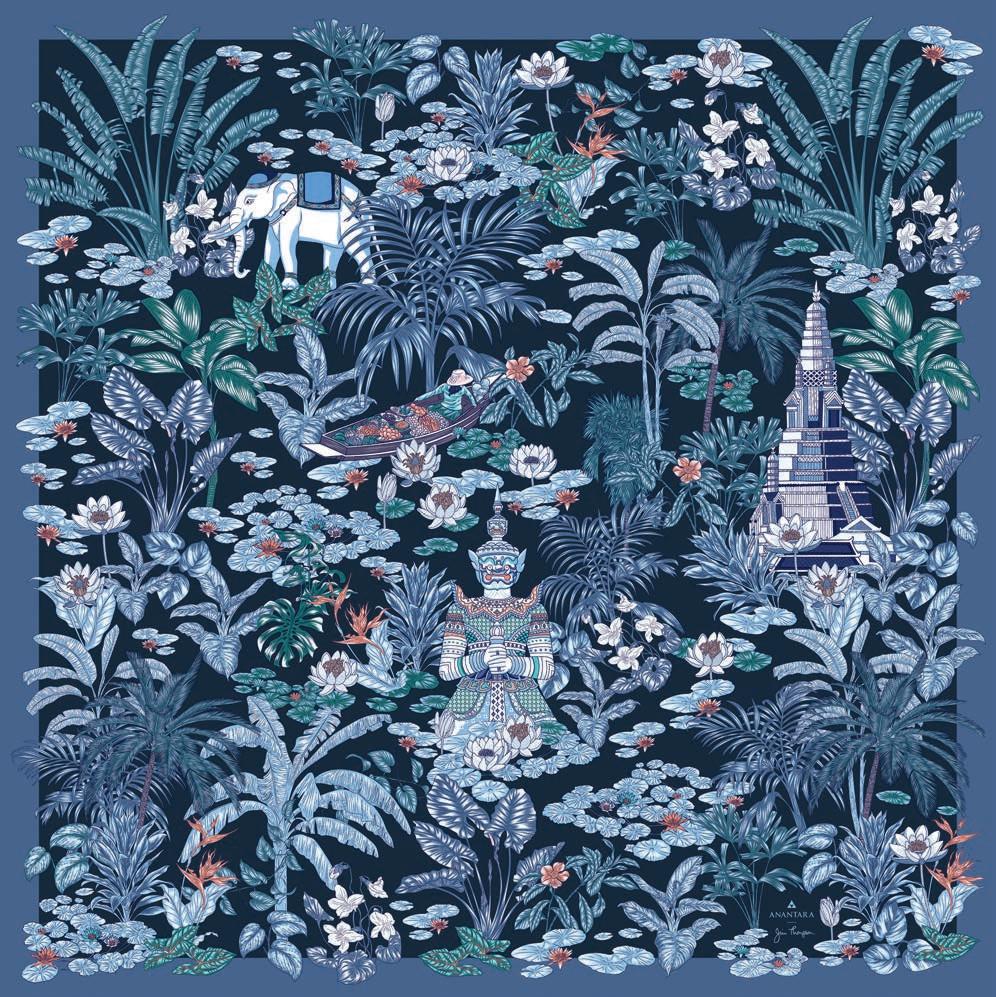
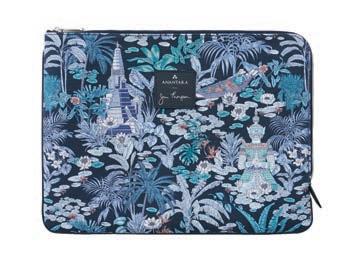
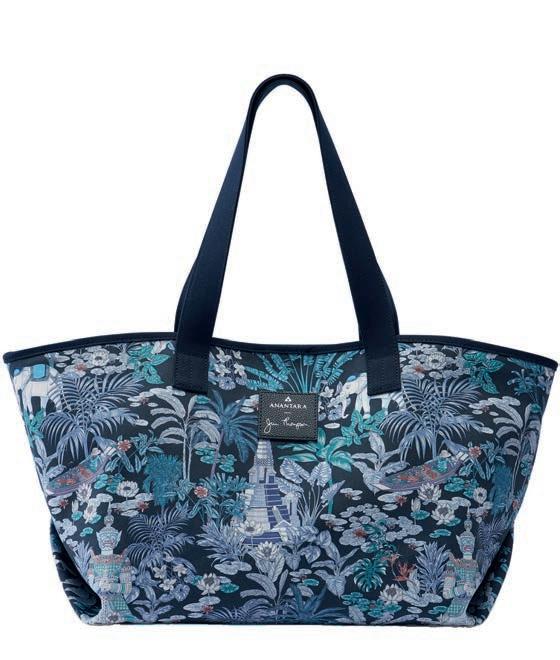
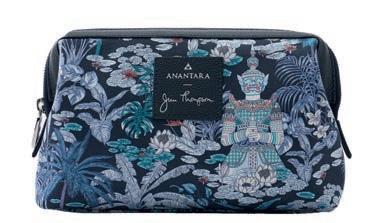
This year we celebrate the 25th anniversary of Anantara Hotels & Resorts, our first hotel brand which began its journey in Thailand in 2001, with bespoke experiences at our destinations around the world. We’re also delighted to launch the exclusive Anantara and Jim Thompson Soul of Siam fashion collection with a range of beautiful silk products available at Anantara hotels and resorts throughout Thailand from September.
Finally, I’d like to thank everyone who attended the Anantara Concorso Roma classic car celebration in April. It was a tremendous success, and I’m delighted to share we’ll be hosting it again in Rome next year. I hope you’ll be able to join us.
WILLIAM E. HEINECKE FOUNDER AND CHAIRMAN – MINOR INTERNATIONAL
CONTENTS
MOMENTS
10. A trio of stunning Minor Hotels resorts: Avani+ Barbarons Seychelles, Anantara Al Jabal Al Akhdar and Tivoli La Caleta.
EXPLORE
16. A day in Córdoba. 20. Exploring Bangkok’s magical canals.
22. The new must-stay Minor Hotels residences.
26. An insider’s guide to the wonders of Rome.
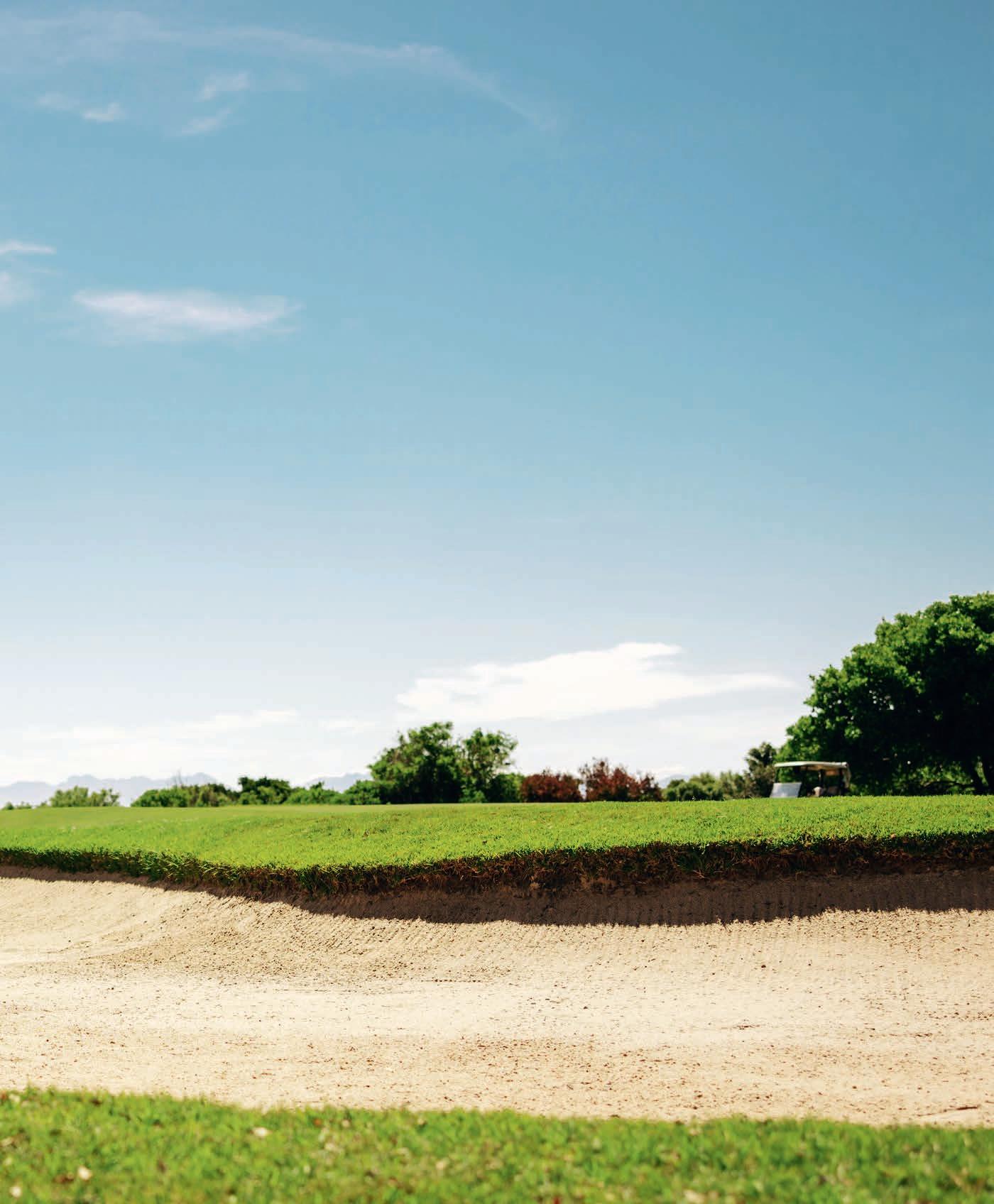
28. Find the perfect resort for your next golf trip.
32. A round-up of the best arts shows this year.
STYLE
35. Travel essentials to help declutter your next trip.
40. The cool sunglasses putting competitors in the shade.
43. The super-stylish nhow Lima.
FEATURES
Drive Time
Combining cars with cracking driving routes and the perfect hotel.
FEATURES
52. Life Through the Lens
Celebrated photographer Fraser Morton shares stories and tips.
60. Smooth Operator
The extraordinary life of Thailand’s ‘Silk King’ Jim Thompson.
68. Dinner is Served
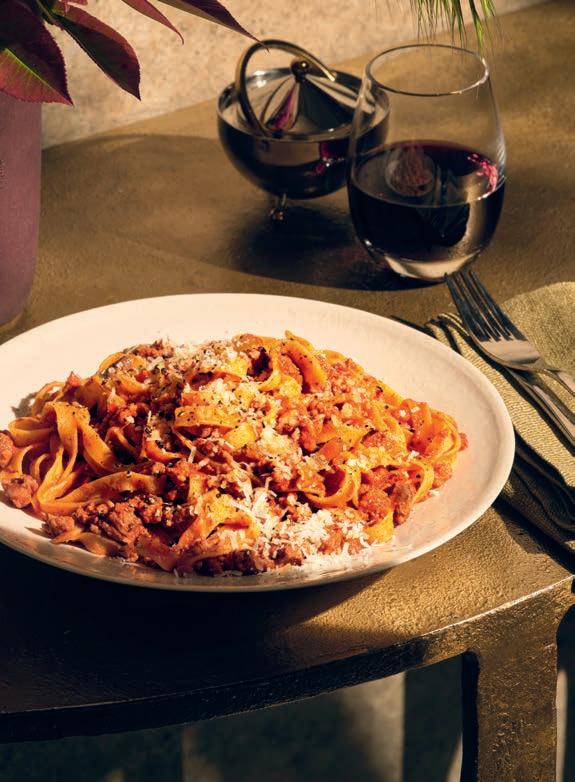
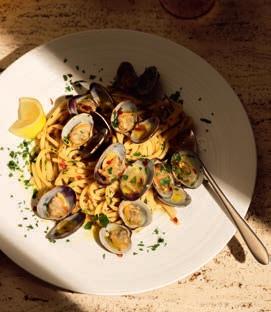
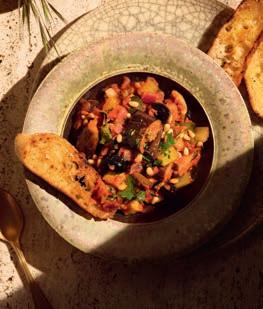
Tucking into delicious dishes from across the Italian regions.
SUNDOWNER
74. Raising a glass at Anantara Lawana Koh Samui Resort.
CONTRIBUTORS
Adam Hay-Nicholls Editorial
Adam is an automotive, F1, travel and luxury writer who regularly contributes to The Sunday Times, Country Life and GQ. His recent assignments include driving an ambulance to eastern Ukraine and posing as a butler at a London hotel.
Fraser Morton Photography
Fraser is a Scottish writer and photojournalist who has been featured by National Geographic, BBC Earth, CNN and Bloomberg. He was shortlisted for the Scottish Portrait Award while his environmental films have won numerous awards.
Isabella Fernandes Design
Isabella is an art director with over 15 years of experience creating exciting visual content across travel, food and lifestyle. Her work has included collaborating with Nigella Lawson to produce a series of unique recipes and food imagery.
Katie Scott Editorial
Katie Scott has been a writer for more then two decades covering everything from Kurdish female fighters in Iraq to family summers in Munich. After a stint in Hong Kong, she now lives in Sussex with a lot of children and pets.
ON THE COVER
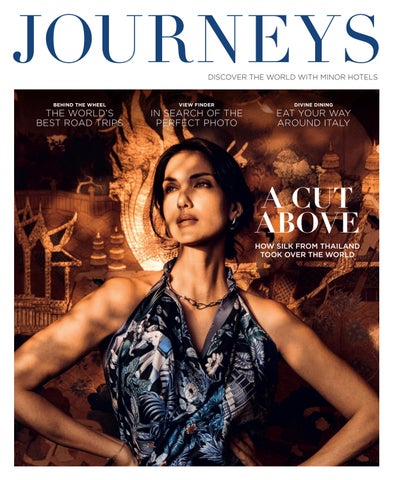
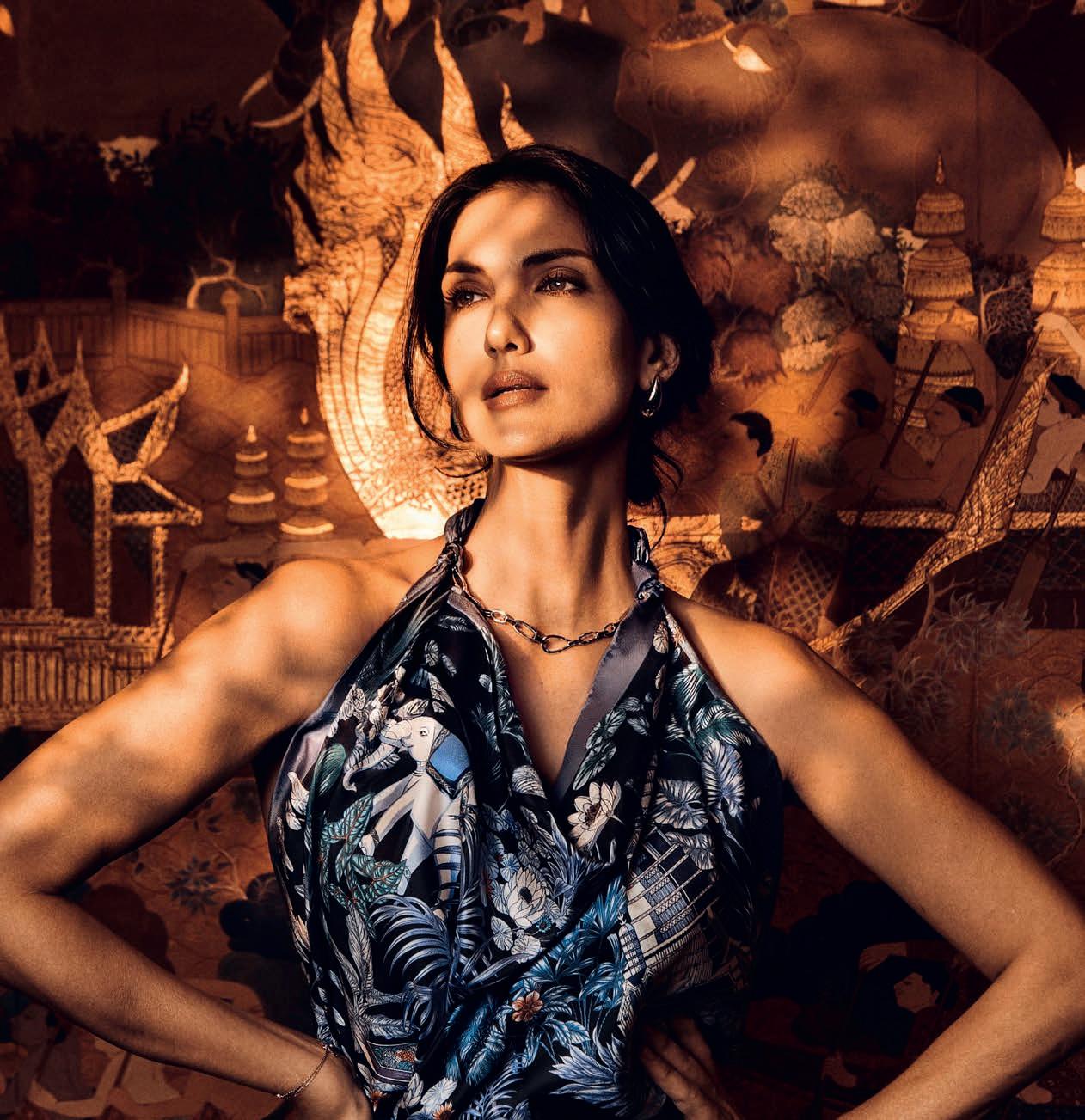
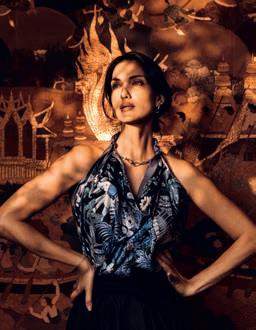
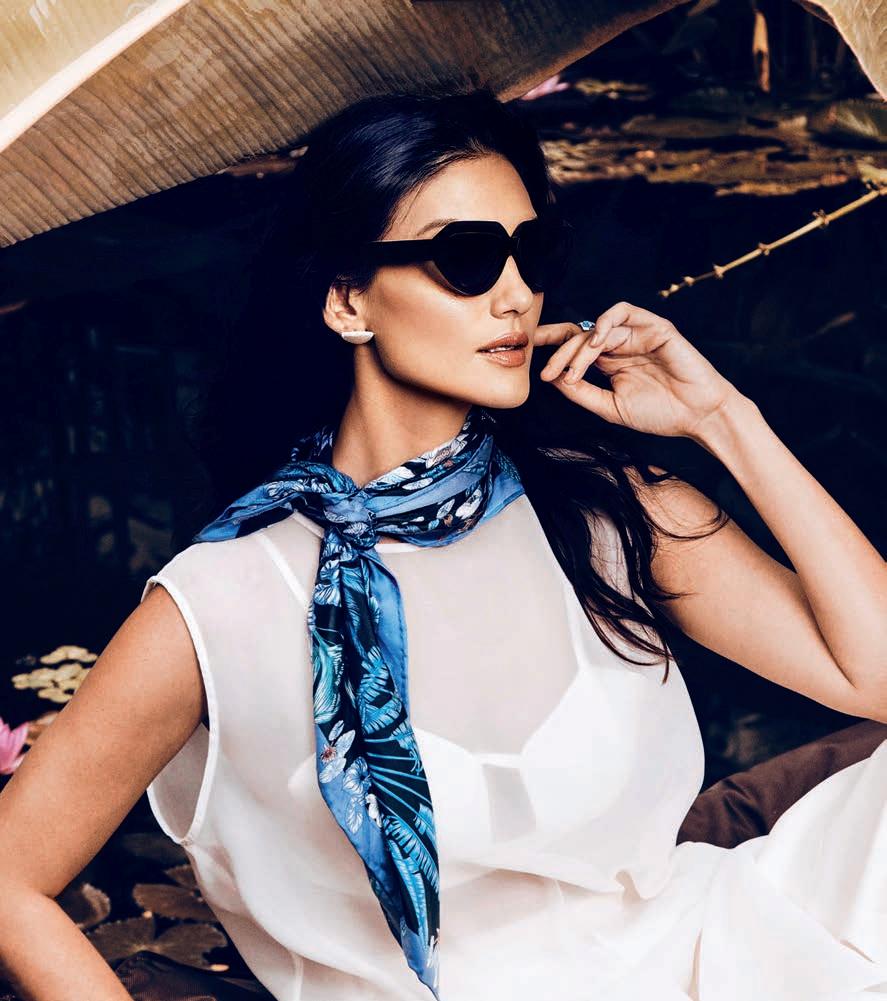
Why Jim Thompson silk is a cut above
MOMENTS
AMAZING VIEWS FROM THE WORLD OF MINOR HOTELS
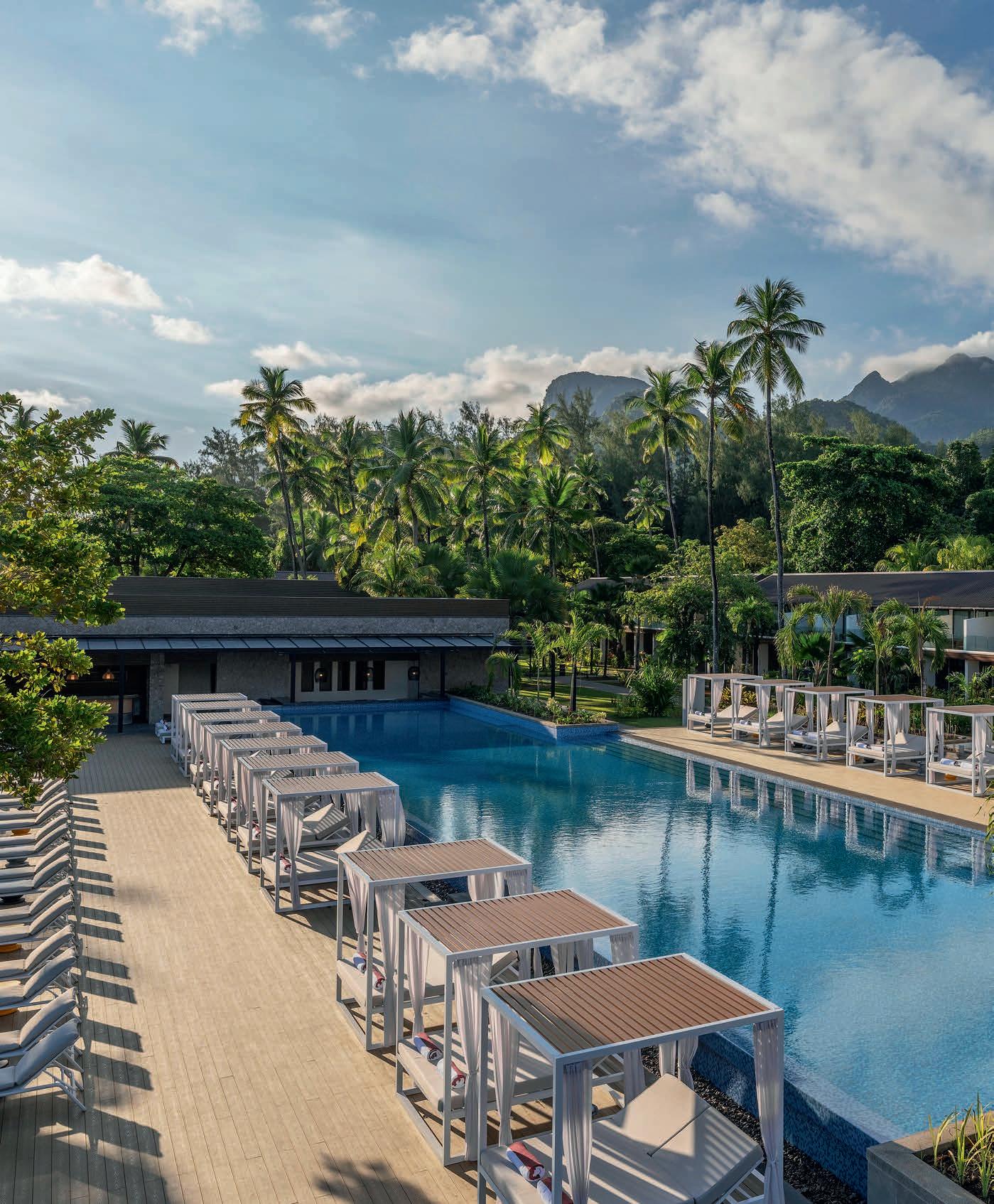
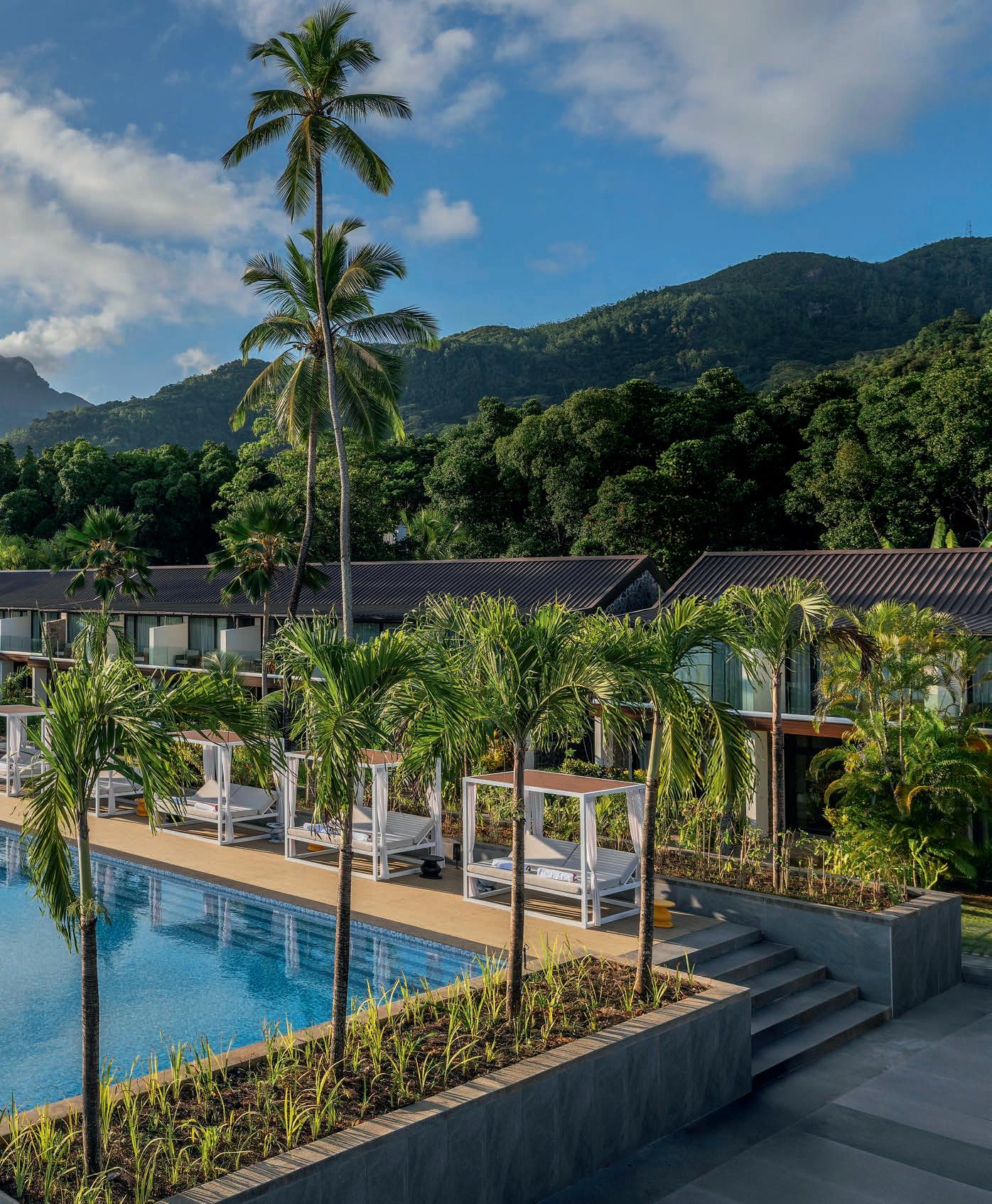
PARADISE FOUND AVANI+ BARBARONS SEYCHELLES
Sunset settings don’t get more scintillating than this. On Mahé’s west coast, with Barbarons Beach at its feet and the granite peaks of Morne Seychellois rising out of the forest interior, Avani+ Barbarons Seychelles offers island life at its most vividly picturesque. The beach is the headline – palm-fringed, bone white, the Indian Ocean modulating from jade to cerulean as the afternoon floats by. Drift from poolside cabanas to tropical gardens, from Lagoon Access Rooms to the cool glamour of AvaniSpa. Dine in breezy coastal style, from wood-fired grills and fresh-caught seafood at Somewhere, to Seychelles-accented sushi at Seyumai or globally inspired plates at Pti-Bazar. Sun, sea, sand and the right level of spice, brought to you in sublime island style.
DINING OUT ANANTARA AL JABAL AL AKHDAR RESORT
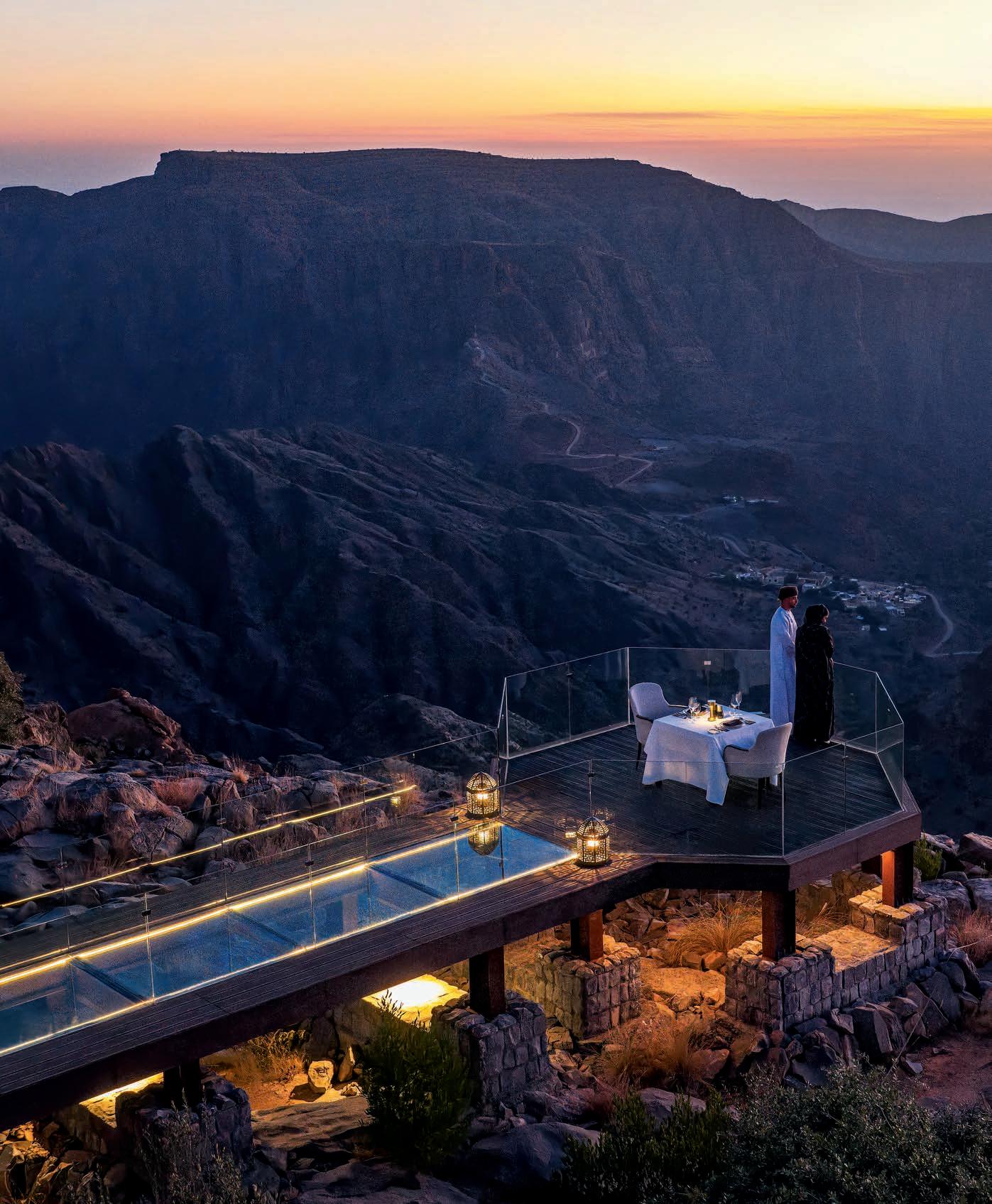
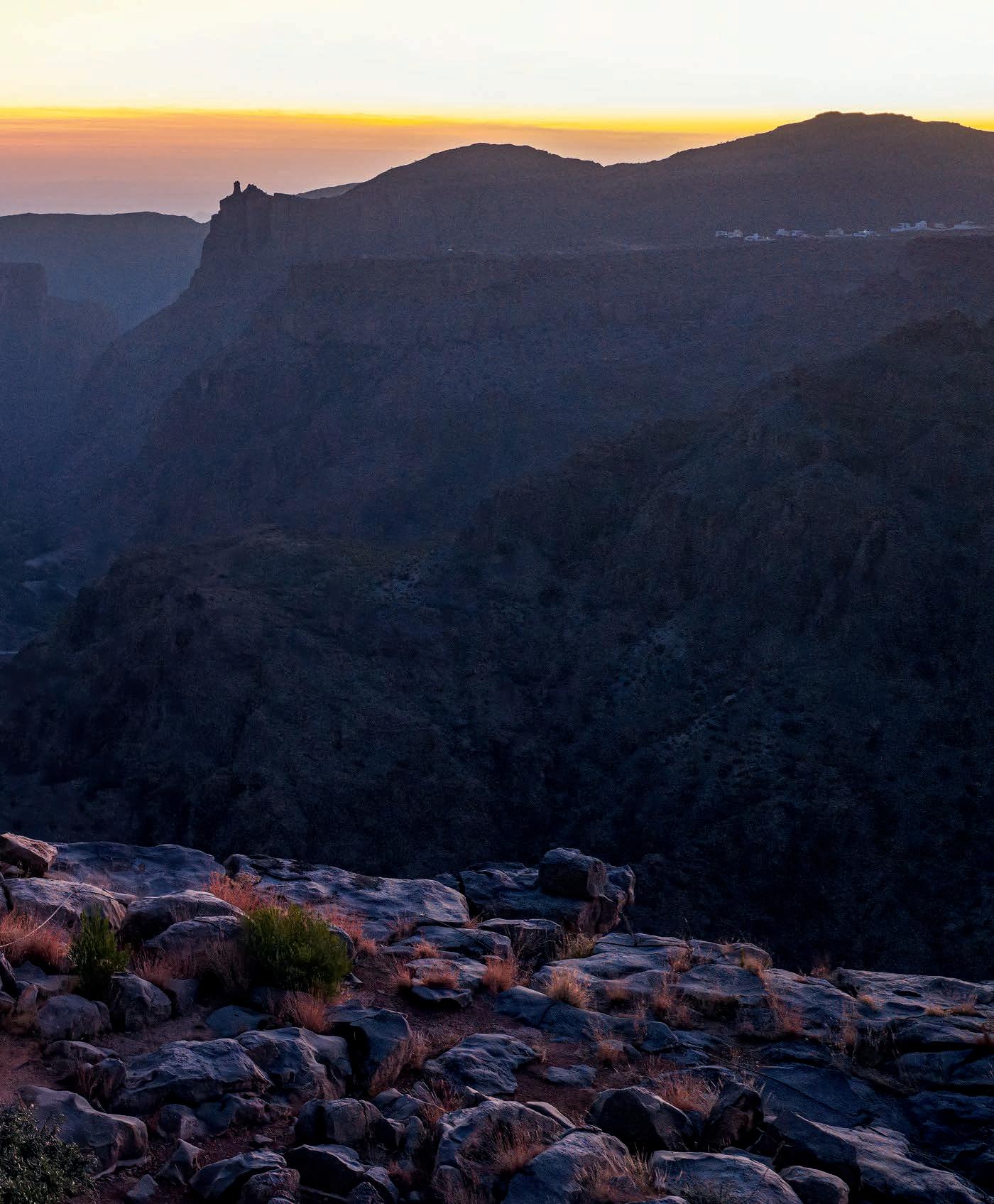
Talk about a top table. Perched on the rim of Oman’s Green Mountain, where the Hajar range falls away into a canyon of raw stone and shadow, Anantara Al Jabal Al Akhdar turns dizzying altitude into dinner theatre. With a private chef, butler service and a menu sculpted exclusively for the moment, this is fine dining at its most epic. As the cliffs cool at dusk, the flavours grow richer. Choose from a Mediterranean-inspired menu, an Arabic Mountain Experience, a tailored Omani feast or the lightness of a contemporary wellbeing menu. Add warm breads, fragrant spices, dates, grilled seafood and the company of that special someone beneath a star-studded sky. In a word – heavenly.
MOMENTS
RIPPLE EFFECT
TIVOLI LA CALETA TENERIFE RESORT
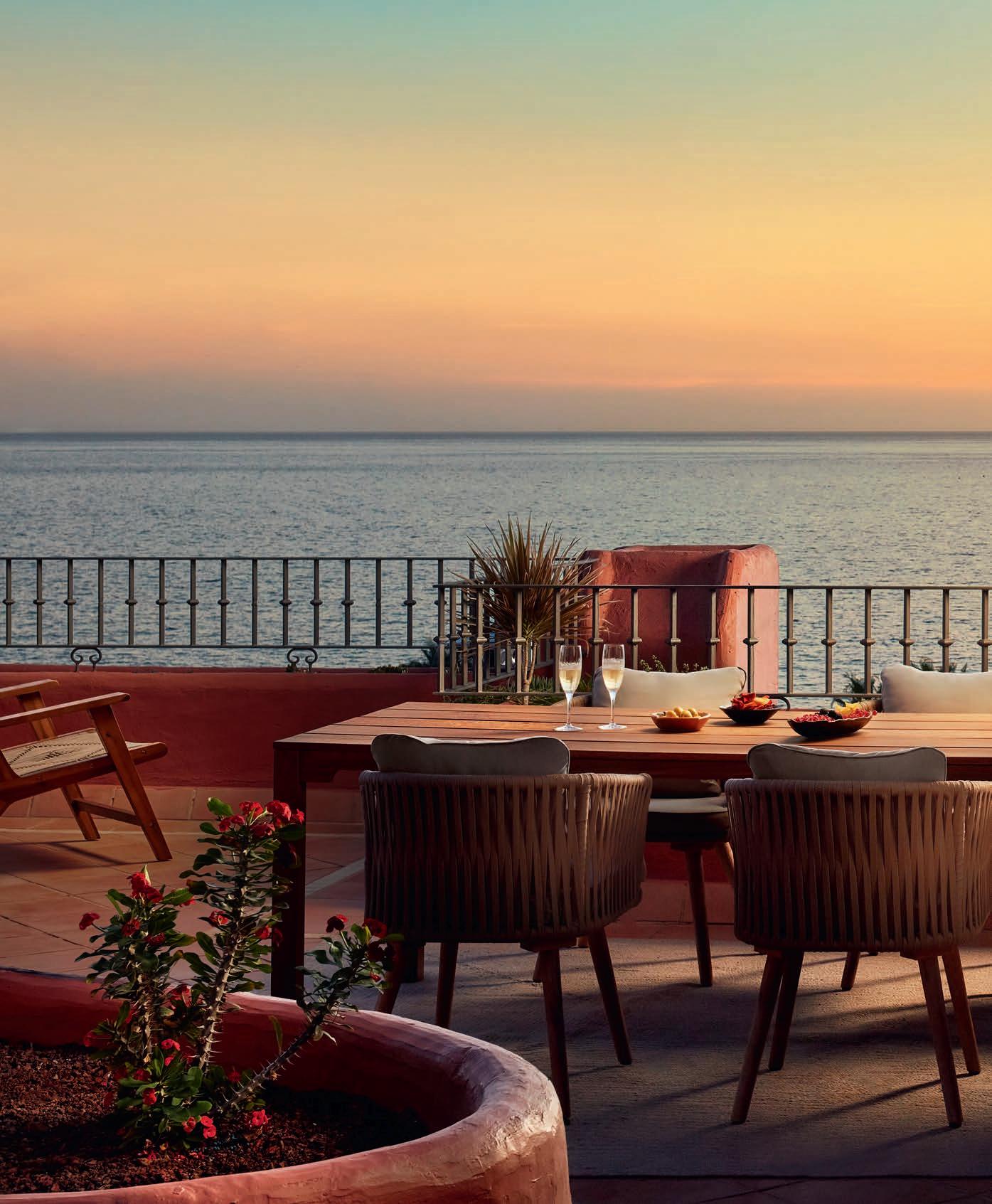
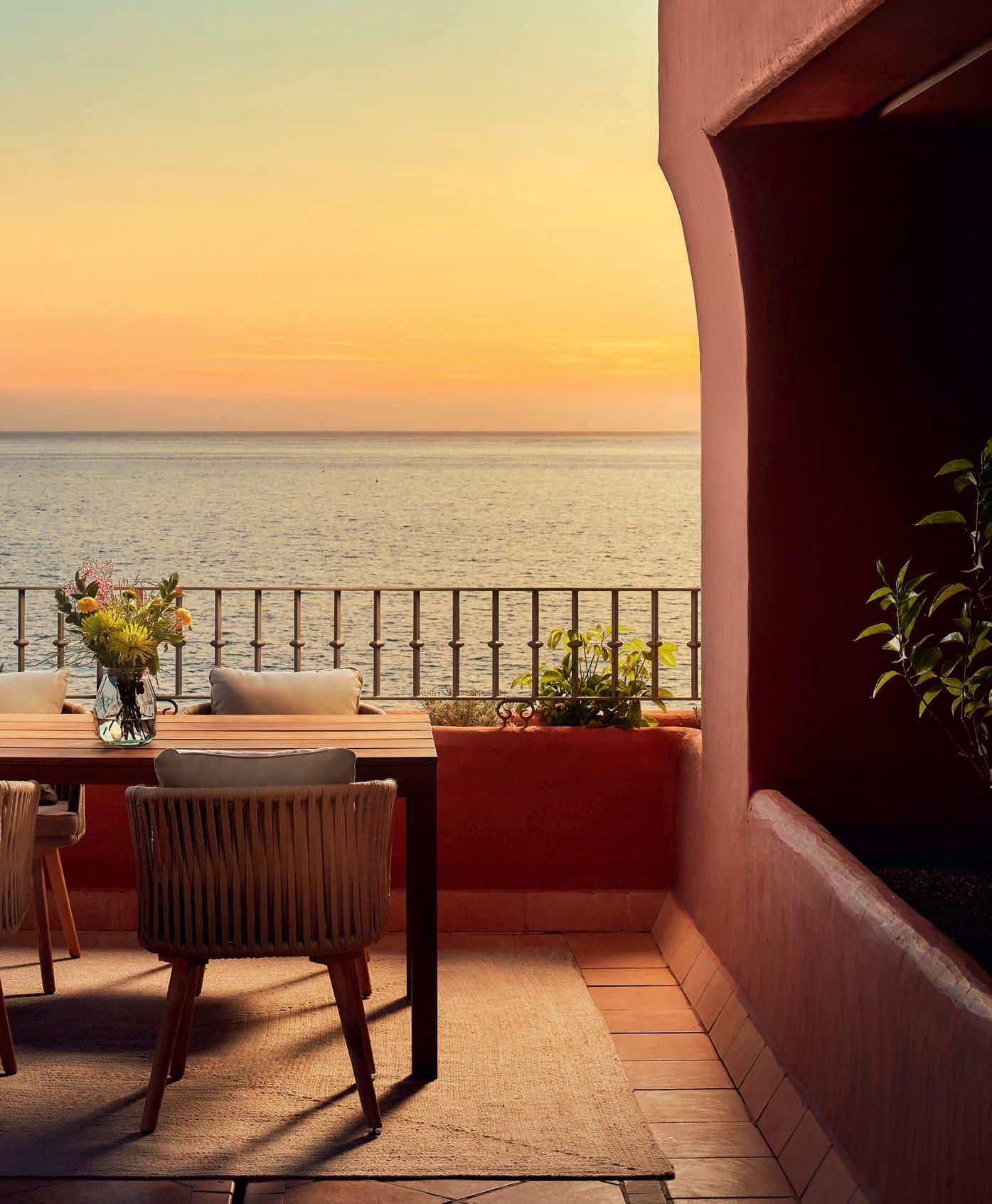
Seldom has golden hour seemed quite so precious. On Tenerife’s Costa Adeje, the La Caleta Suite at Tivoli La Caleta Tenerife Resort feels like the Atlantic is an extension of your bedroom. From one of two private terraces framed by terracotta architecture and designer furnishings, the sea stretches alluringly to a Champagne-coloured horizon. Inside, the vibe is every bit as exquisite – generously proportioned, elegant and discreetly glamorous, with the island’s volcanic interior on the other side just another world-class backdrop. Divide your days between tropical gardens, three pools and the first Anantara Spa in Tenerife, then retreat to your own slice of paradise for sunset, sea breeze and the satisfaction of knowing there’s simply nowhere better to be.
SOUTHERN SPAIN’S LITTLE GEM OVERFLOWS WITH ENTICING OPTIONS, ALMOST ALL WITHIN WALKING DISTANCE OF THE STUNNING MEZQUITA-CATEDRAL
WORDS BY MARK WILLIAMS
Córdoba might be smaller than its illustrious Andalusian neighbour Seville, but nowhere in southern Spain has more entertaining options for food, drink, sights and fun in such a joyfully compact setting. It’s a city that is all killer, no filler, and you’ll waste no time in travel as you can walk from one delight to the next. But you will need to make an early start . . .
Whether you’re staying at NH Collection Palacio de Córdoba or NH Córdoba Califa, don’t dawdle. The city’s big dog is without
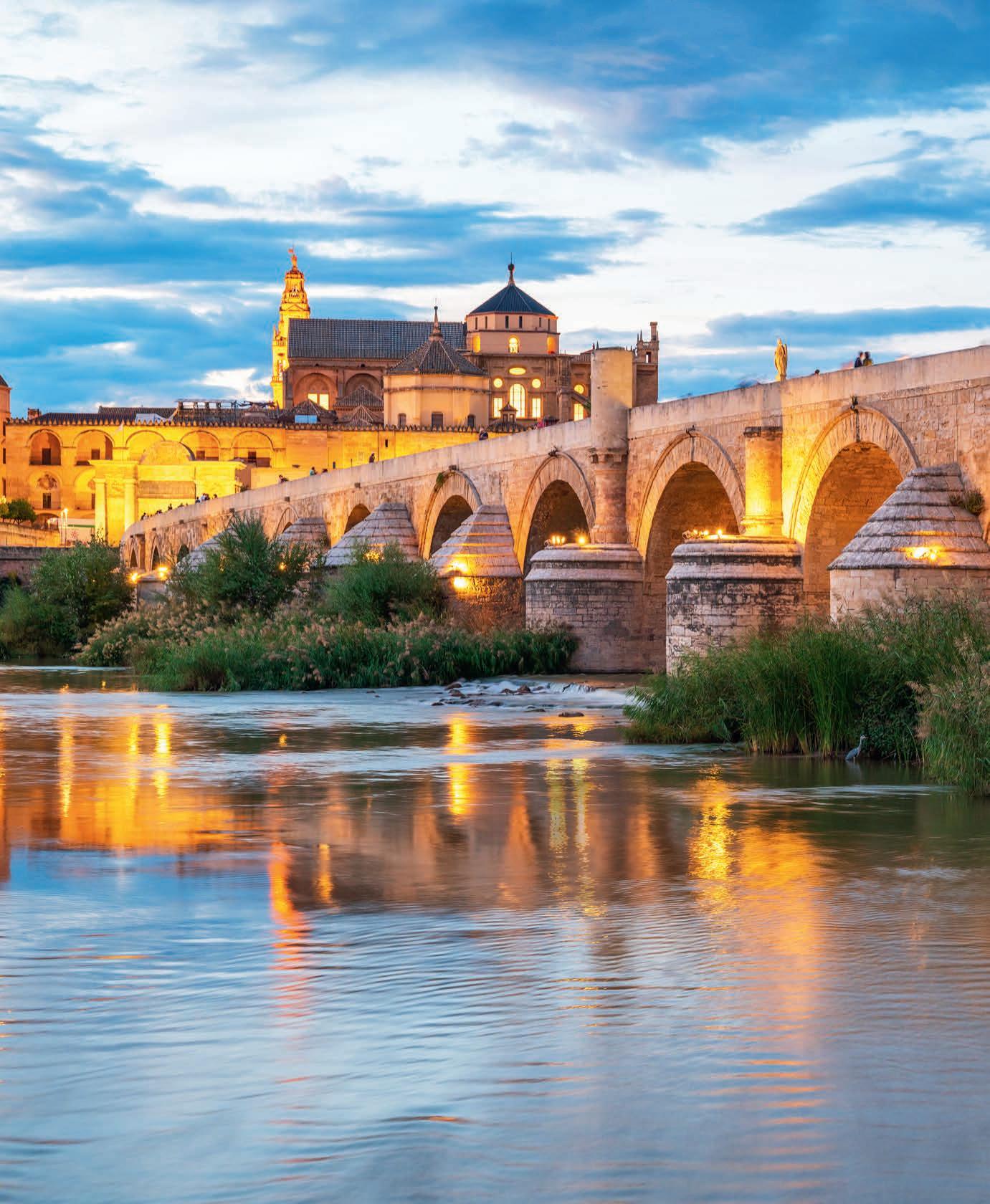
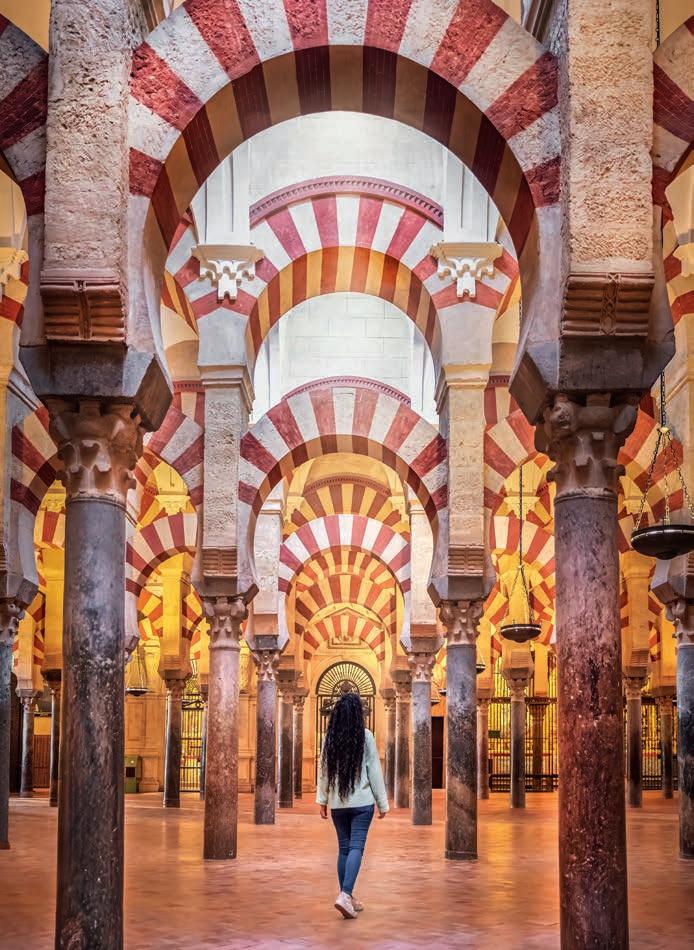
doubt the Mezquita-Catedral – a stunning fusion of Islamic and Christian architecture, best-known for its 856 iconic red and white striped arches – and you’re well advised to arrive early, both to avoid the crowds and because (Mon – Sat) at 8:30am, it’s free for 50 minutes. At 9:20am, head for the bell tower which opens in 10 minutes and gifts you the most beautiful panorama of the city. Now take a breath and get your morning coffee at Singular. Okay, it’s slightly in the wrong direction for where you’re going next, but the quality of the caffeine makes those extra yards worth it. There are also vegan, veggie and meat options aplenty on the breakfast menu.
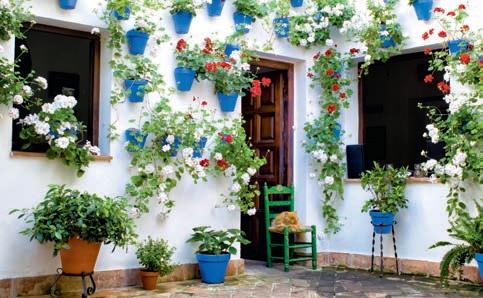
From left to right: Mezquita-Catedral; the building's iconic arches; patios in Córdoba are always filled with flowers
Refreshed, walk back along the banks of the Guadalquivir, taking in the Roman bridge. You’re heading for the 14th-century Córdoba Synagogue in the Jewish Quarter, but that is so small you could miss it, which would be a big mistake. The complex relationship between Judaism, Christianity and Islam in Spanish history is more obvious in the MezquitaCatedral (literally ‘Mosque-Cathedral’) but still evident here in the delicate beauty of the Mudéjar plasterwork crafted by Muslim artisans, alongside the Hebrew inscriptions.
It’s still early, which means it’s the perfect time to sample San Basilio’s patios – traditional courtyards, filled with flowers, nestled inside private homes and historic
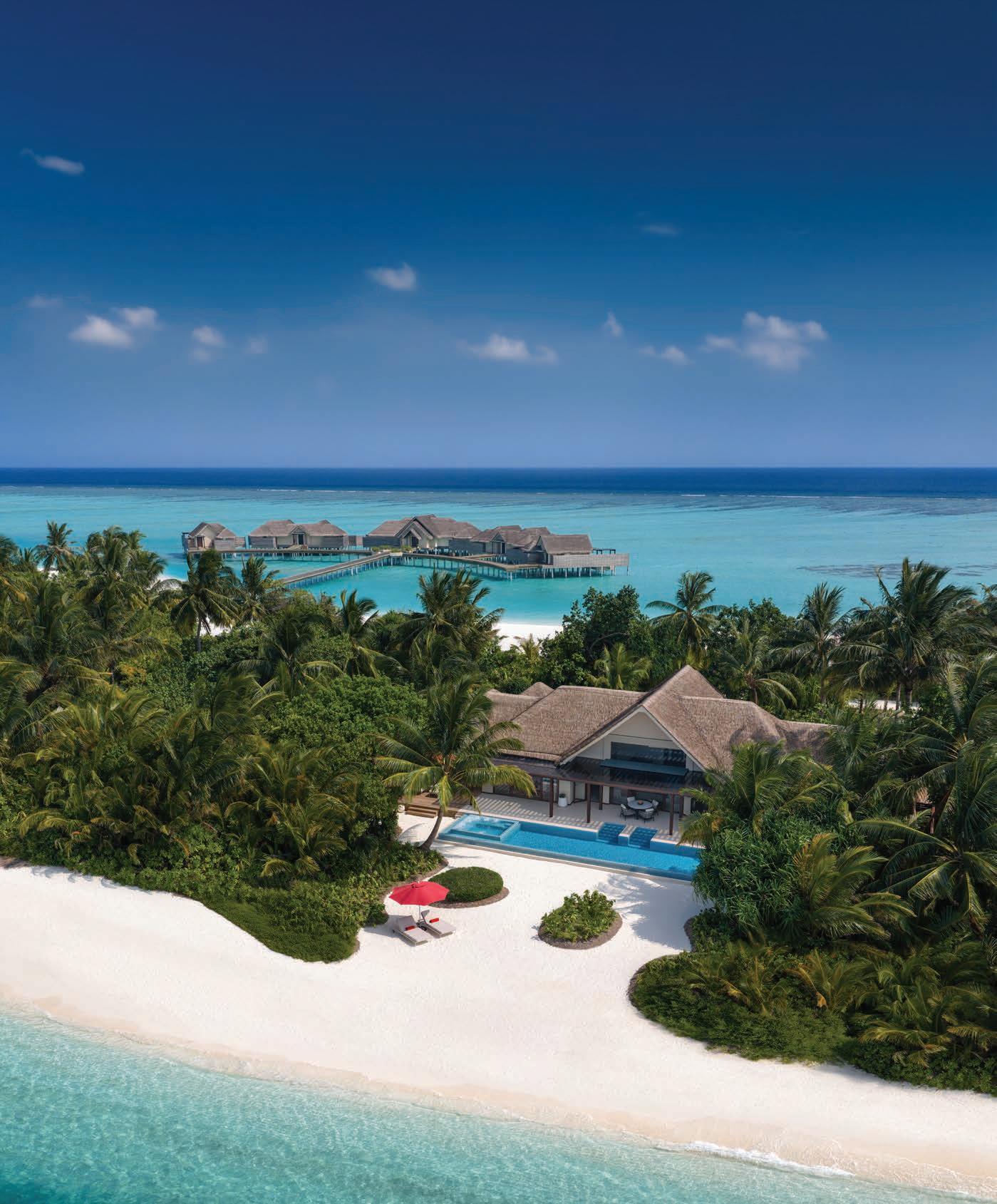
NIYAMA PRIVATE ISLANDS MALDIVES
A SLOW BOAT IN BANGKOK
SPOT BUDDHIST TEMPLES, FLOATING FRUIT MARKETS AND A DRAGON OR TWO AS YOU EXPLORE THE ‘VENICE OF THE EAST’
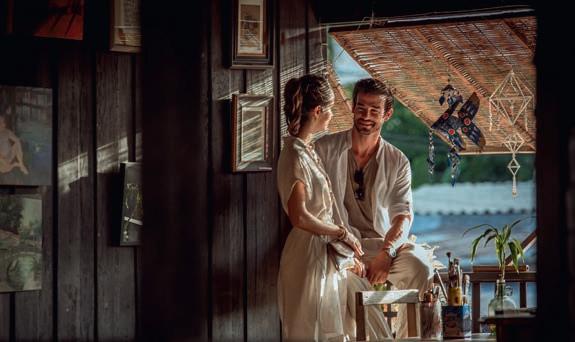
There’s a low hum of chatter from among the tables. One couple is quietly threading tiny beads onto elastic while another group, their flip-flops piled by the open door, sit with little easels in front of them, each absorbed by their own creation. There’s a poster for an upcoming traditional Thai puppet show gently flapping in the breeze. This is one of the quietest corners of Bangkok and has become a haven for students, artists and people wanting respite from the lights, noise and excitement of Asia’s most visited city.
The Artist House, or Baan Silapin, sits where the two ancient canals – or khlongs – meet in the Bangkok district of Thonburi – once the capital of Siam. These hand-dug canals are the remnants of a larger network. Many were filled in and built above as the city slowly became the metropolis it is today.
Along their banks, ruean Thai – traditional Thai wooden houses on stilts – sit under yellow elder trees. Many have been empty for years as families moved to modern apartments closer to amenities and with air con. But in recent years, our guide tells us, students have found these old houses and, attracted by their charm and cheaper rents, have brought this quiet neighbourhood back to life.
In clearings between houses and temples, shrubs and trees have sprouted. Under their boughs, Asian water monitor lizards – fondly known as Bangkok dragons – thrive. Reaching as long as 3m, they watch as the boats pass by, flicking their tongues as they taste the petrol motor fumes. The world’s second largest lizard, there are reported to be thousands living in the city, with the canals and the city’s Lumphini Park being favourite habitats. Unlike the larger Komodo dragon, they are languid and non-aggressive.
Under the surface, catfish glide. Our guide hands the children food to give out and, suddenly, what seems like hundreds of fish make the water foam as they slip and slide over each to reach the pellets. The majority are a muddy brown, but one majestic gold
fish catches the eye. We are told this is good luck. Pollution had historically kept fish populations low but they are rebounding.
As well as giving glimpses of the city’s wildlife, a two-hour pootle along the canals is also a journey into the Thai capital’s past. The 72km central canal, Khlong Saen Saep, was started in 1837, but the history of canal building dates back to the 16th century.
The canals have long been a part of life in Bangkok. People worshipped on their banks
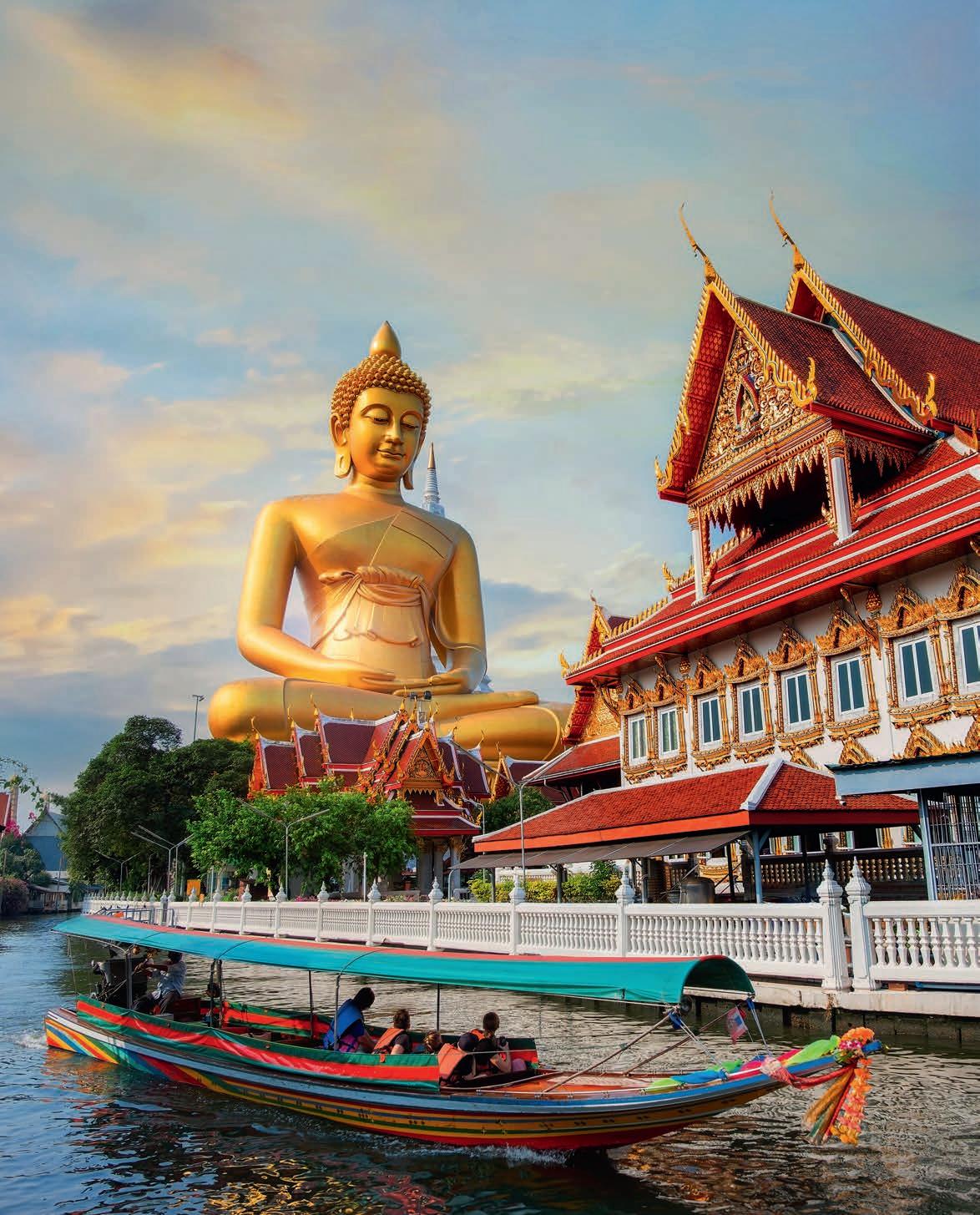
at some of the city’s smaller temples. Often empty apart from a handful of local Buddhists quietly praying, Wat Khun Chan was built between 1827–37 and has gradually been renovated over the past decade. Its Buddhas –both seated and reclining – may be dwarfed by those at Wat Arun and Wat Pho, but they are still breathtaking and you can get close to see the artistry without queues.
Back near the Artist House, a cluster of small canal-side restaurants serve wellknown Thai dishes and ice coffee, and are perfect spots for watching the sporadic canal traffic dipping under wooden bridges. A boat occasionally passes selling fresh fruit, grilled bananas and fruit drinks.
Trips tend to end at Tha Tien Pier, near the iconic reclining Buddha temple (Wat Pho), but you cross the city’s frenetic (and sometimes surprisingly choppy) Chao Phraya River to reach it. Midway, you can look up and down to see some of the city’s most renowned sites, including the Grand Palace or Wat Phra Kaew, as well as the gleaming towers of its luxury hotels. Being suddenly on the wide water – the city in front and around you – feels exciting after hours of slow travel but also, as you head back into the noise and crowds, leaves you with a sense that you have been somewhere that is a beautiful, unique and a privileged secret among the few. J
Opposite page: Wat Paknam Phasi Charoen
Left: The Artist House can be explored by canal tour from Anantara Riverside Bangkok Hotel
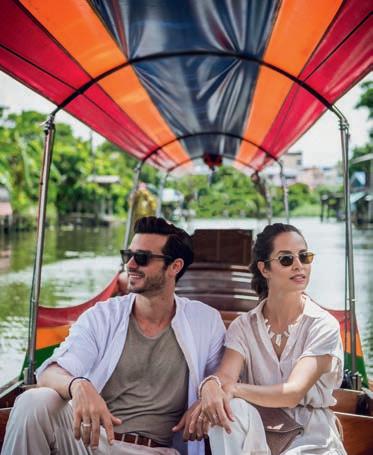
Below: A boat ride along a Bangkok khlong is a great way to see the city
SANCTUARIES OF HARMONY EXPLORE
FROM PHUKET’S LUSH COASTLINE TO MIAMI’S GLITZY NEIGHBOURHOODS, MINOR HOTELS IS OPENING SOME EXQUISITE NEW RESIDENCES AROUND THE WORLD
WORDS
BY PAUL WILSON
KIARA RESERVE RESIDENCES
IN LAYAN
BAY
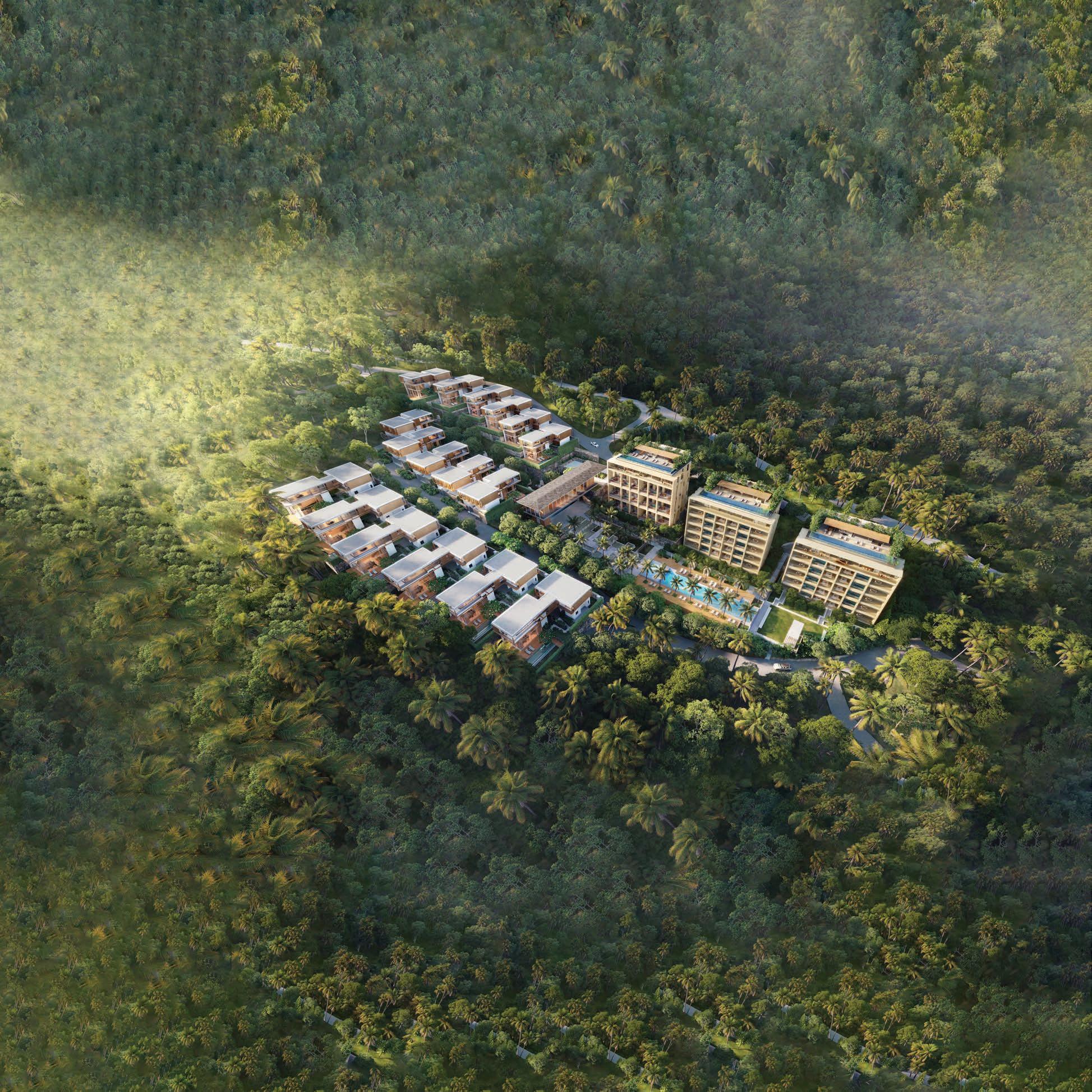
There are few places in the world where tropical seclusion, wellbeing and refined luxury coexist as effortlessly as they do on Phuket’s western coastline. At Kiara Reserve Residences in Layan Bay, owners are invited into a way of life shaped by balmy breezes, tropical luxury, holistic wellness and the quiet privilege of one of the island’s most exclusive addresses.
Developed by Minor International, the collection of 46 freehold residences forms part of a new generation of luxury branded living connected to the world of Anantara Hotels & Resorts. Here, private ownership is elevated through access to exceptional hospitality, personalised service and the
transformative wellness experiences of nearby Layan Life by Anantara.
In one of Thailand’s most sought-after beachfront locations, Kiara Reserve Residences balances architectural sophistication with a deep connection to nature. Due to be completed later this year, the development has been designed to blend contemporary tropical living with the serenity of its lush hillside surroundings. Developed in partnership with Japanese construction firm Kajima, the project comprises 17 villas and 29 condominiums, each designed to maximise light, space and views across the verdant hillside terrain. Floor-to-ceiling windows blur the boundary between indoor and outdoor living, while interiors combine understated sophistication with
Owners are invited into a way of life shaped by tropical luxury
design touches inspired by Thailand’s artisanal heritage. The residences have been conceived equally for peaceful retreat and elegant entertaining, with expansive living areas opening onto private outdoor spaces.
Condominiums are available as threebedroom single-storey residences (251m2), three-bedroom duplexes (382m2) and four-bedroom penthouses (829m2). Three penthouses are available, with exclusive use of the rooftop pool and decking area, while duplex and single-storey residences include Jacuzzi pools.
The villas each feature private pools and generous living spaces across both three-bedroom (501m2) and four-bedroom (655m2) layouts. All residences, apart from the single-storey condominiums, also include maid’s quarters, reinforcing the effortless practicality of long-term luxury living.
Kiara Reserve Residences forms part of an ultra-luxury community alongside the neighbouring Anantara Layan Phuket Resort, giving owners privileged access to the resort’s world-class amenities and services. This includes the transformative wellness experiences of Layan Life by Anantara, a pioneering longevity and wellbeing retreat that blends advanced diagnostics with holistic therapies rooted in Thai healing traditions.
Environmental sensitivity sits at the heart of the project. Greywater recycling systems allow water reuse for irrigation and landscaping while water features ensure residences blend harmoniously into the surrounding hillside terrain. The project also aligns with Minor International’s wider sustainability ambitions, including its commitment towards net-zero emissions by 2050.
Despite its sense of seclusion, Kiara Reserve Residences remains closely connected to everything Phuket has
to offer, from the cultural energy of Phuket Town to the island’s remote beaches and seascapes. Phuket International Airport is just 20 minutes away, though Layan Bay feels worlds apart from the pace of everyday life.
More than a residence, Kiara Reserve offers owners a rare sense of belonging within one of Phuket’s most exclusive coastal enclaves.
Ownership at Kiara Reserve starts at $1.4 million (฿44.5 million). Private viewings of the new show units can be arranged by contacting the sales team at +66 85 484 8752 or propertysales@ minor.com. For more information, visit kiara-reserve.com.
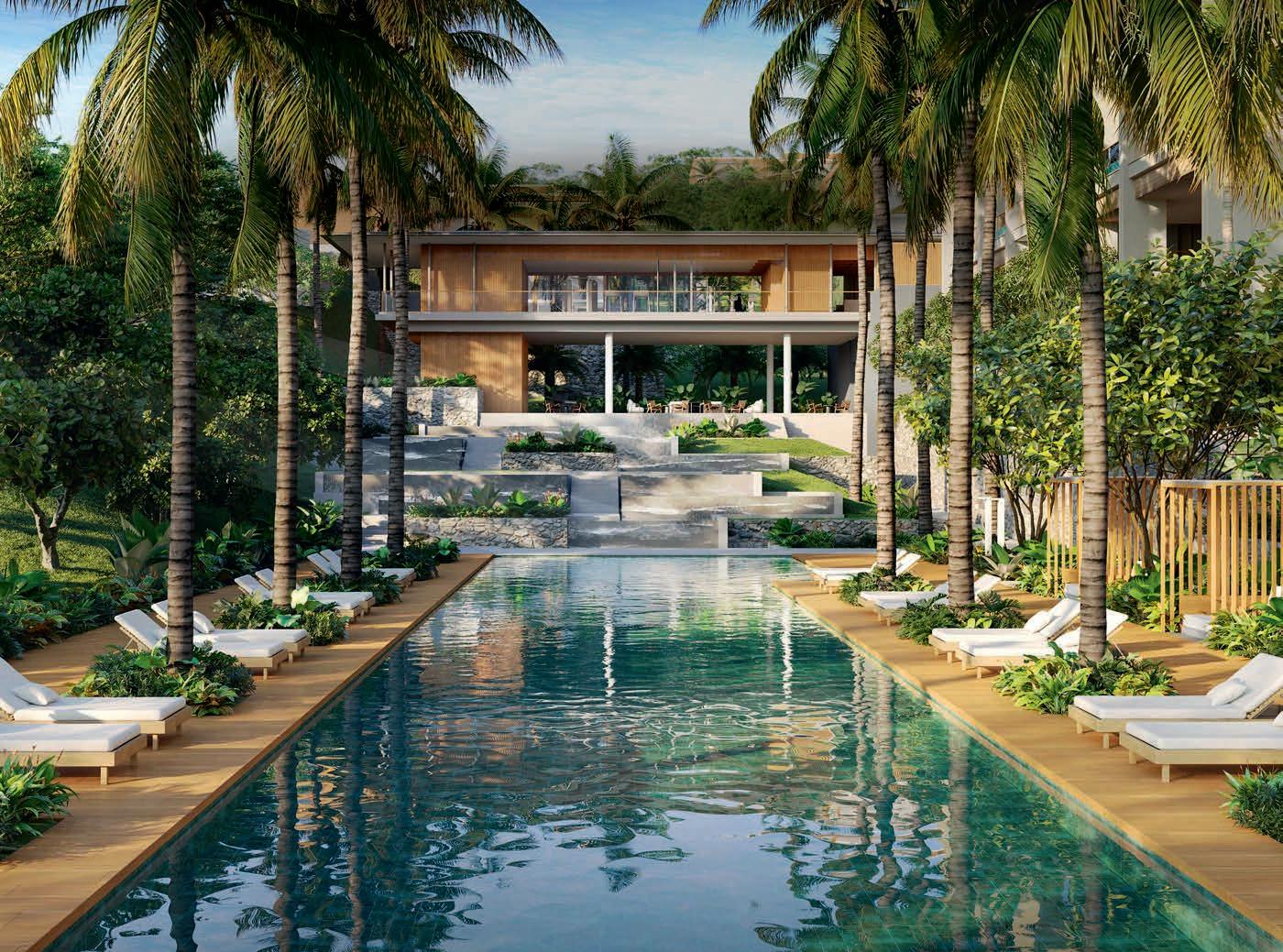
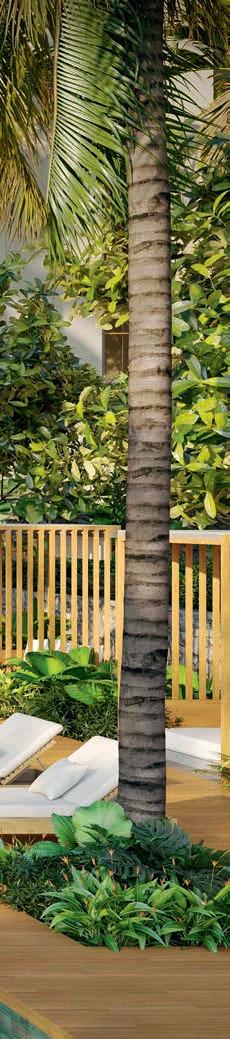
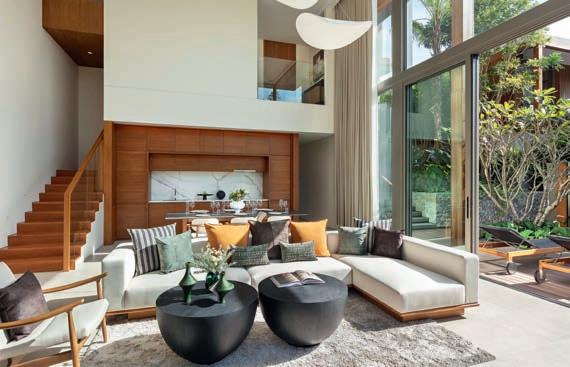
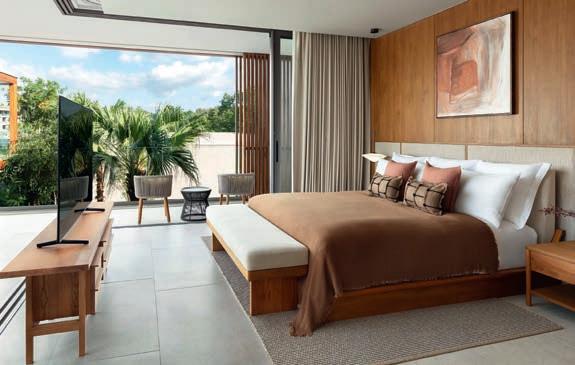
Clockwise from left: The pool area at Kiara Reserve Residences; a spacious living room at one of the villas; a villa bedroom with ceilingto-floor windows
From the Caribbean to Miami’s bayfront, Anantara is bringing its distinctive approach to luxury living to a new generation of branded residences across North America. Rooted in wellness, design and immersive hospitality, Anantara Turks and Caicos Resort & Residences and Anantara Miami Resort & Residences reflect a growing demand for residences that offer an entire lifestyle ecosystem shaped by place, service and wellbeing.
ANANTARA TURKS AND CAICOS RESORT & RESIDENCES
Anantara Turks and Caicos Resort & Residences is due to open in 2029 on North Caicos, the least-developed and most naturally preserved of the archipelago’s islands, 25 minutes by boat from Providenciales. Here, 78 residences, from ocean-view studios to four-bedroom beachfront villas, have been conceived for those seeking a slower, more elemental rhythm of life. Design is by respected architectural practice RAD, with interiors by the
Right:
Anantara Miami Resort & Residences
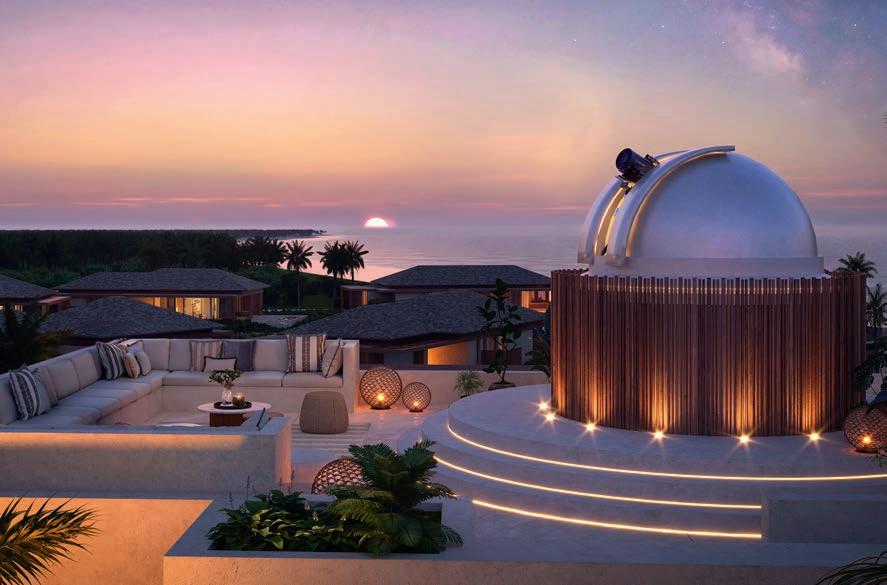
Below: The rooftop observatory bar at Anantara Turks and Caicos Resort & Residences
award-winning Meyer Davis. The experience at North Caicos is shaped by the surrounding limestone shoreline, Atlantic swells and mangrove-lined waterways teeming with wildlife.
Anantara’s holistic wellness philosophy finds natural expression here in movement studios, farm-totable dining and oceanfront pools. A private marina provides the starting point for reef exploration, fishing in the flats and kite surfing, while a rooftop observatory bar invites residents to marvel at the sky above the island.
ANANTARA MIAMI RESORT & RESIDENCES
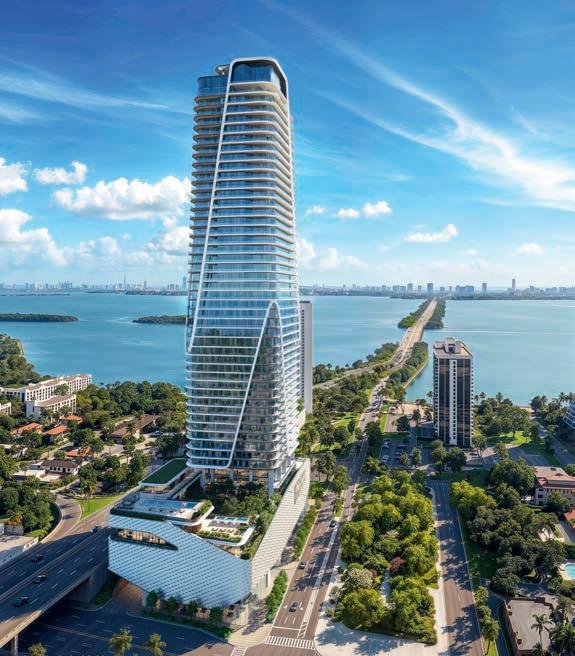
Anantara Miami Resort & Residences, due to open in 2030, will rise 198m above Biscayne Bay in a 50-storey tower at the intersection of Miami’s Midtown, Miami Beach, Edgewater, Design District and Wynwood neighbourhoods. Developed with One Thousand Group and designed by Kohn Pedersen Fox, it marks Anantara’s first address in the United States.
The tower will offer 100 private residences, 100 resort residences and 50 hotel suites, with interiors by Patricia Urquiola. Vitality and longevity amenities draw on centuries of Thai wellness tradition, transposed into a striking urban setting. A rooftop helipad extends residents’ reach across South Florida, from the Florida Keys to Palm Beach.
Like North Caicos, Miami represents Anantara’s conviction that luxury is not about where you live, but how you live. Whether shaped by the ocean or sky, each development reflects a vision of residential living centred on wellbeing, connection and exceptional hospitality. If you are interested in purchasing a residence, contact the sales team at +66 85 484 8752 or propertysales@ minor.com. J
WHEN IN ROME
MARTA PRESCIUTTI, WHO CATERS TO WEALTHY HOTEL GUESTS, EXPLAINS WHY YOU DON’T NEED A LOT OF MONEY TO EXPERIENCE THE BEST OF THE ETERNAL CITY
WORDS BY STEPHEN HOBBS
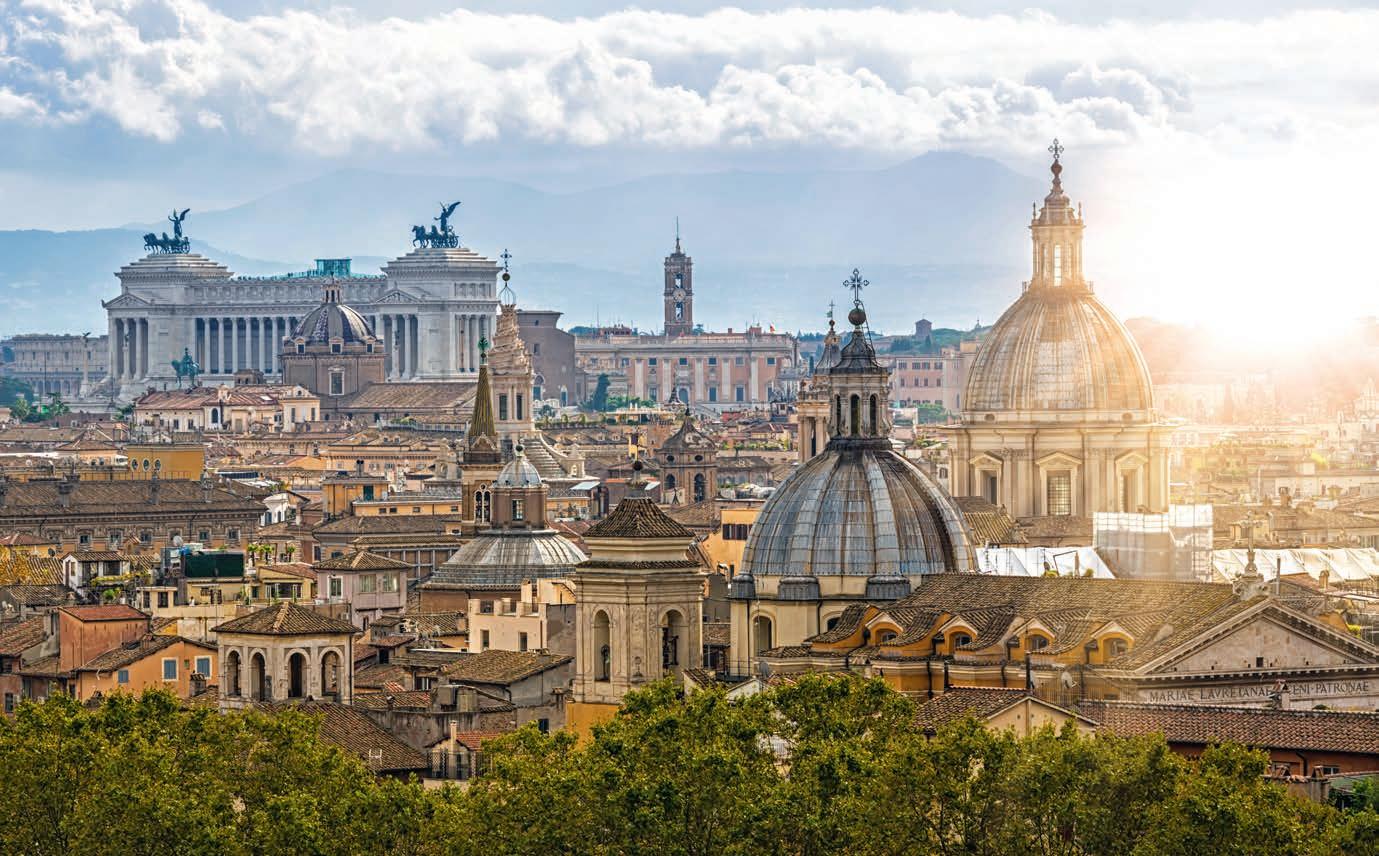
Marta Presciutti grew up in Rome, left for a career that took her from Gordon Ramsay’s kitchen to superyachts, and returned home as Quality & Development Manager at Anantara Palazzo Naiadi Rome Hotel. She spends her days orchestrating experiences for guests who can afford anything, by teaching them the best Rome has to offer doesn’t cost a thing.
You’ve worked in Michelin-starred restaurants, on superyachts across four continents and as a butler for powerful families. What did it teach you about what guests really want? That money is overrated. The guests I work with can afford a private room at the Vatican Museums, a helicopter trip or the best private guide in the city. What they can’t buy from a brochure are genuinely human experiences and
connections. Stories they’ll carry home with them. That’s what we provide.
How do you know what someone truly wants before they’ve asked for it?
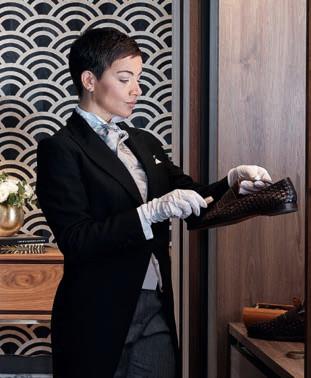
You watch. You listen with your eyes. I can tell a great deal from how someone carries themselves in the lobby, from the clothes they wear and the luggage they carry. You get to learn which
person is in charge and who you need to please for everyone to be happy. If a couple is celebrating their 50th anniversary, the last thing they need is a rooftop bar with a DJ set. But they will want an unforgettable experience that is all their own.
You have lived all over the world. What was it that made you want to come back to Rome?
The connection. People here want to talk to you. Not just in a restaurant or at the hotel but in the grocery shop, running small errands, passing on the street. I couldn’t find that anywhere else.
What would you say is the biggest mistake first-time visitors to Rome make?
Queuing! If you’ve only got a day in Rome, don’t spend three hours of it in line to see one church when there are so many others, equally extraordinary, but empty and free! Go where Romans actually go. There’s no-one speaking Italian at the Colosseum. Get out of the crowds and lost in a neighbourhood. Hear the Romans screaming at one another. You’ll definitely feel you’re in Rome.
Where can you eat like a Roman?
Testaccio. We call it La Cucina di Roma (the kitchen of Rome). It’s where Roman cuisine began. You won’t find chandeliers or linen napkins. What you’ll find is a host who’s been behind the same counter for 30 years, and if not him, then his son. They shout at each other, they shout at you, they treat you like one of their own and it feels wonderful.
What should we order?
If you want to eat like a Roman, go to Mercato di Testaccio and look for Mordi e Vai. It’s run by a retired butcher who makes legendary sandwiches. Try the Alesso di Scottona (super tender simmered beef) or, if you’re feeling brave, the Trippa alla Romana (tripe). Trust me, it’s the real deal!
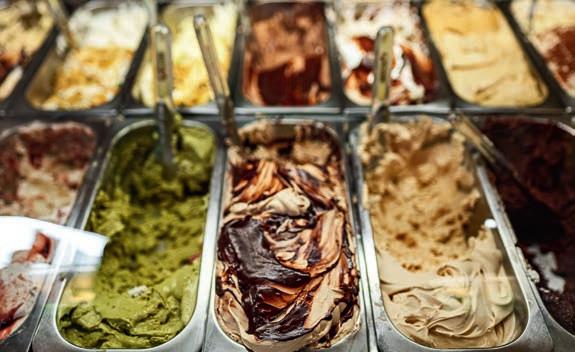
And for gelato?
Go to Monti, the oldest neighbourhood in Rome. It’s wonderfully bohemian, a little chaotic and full of independent shops. Just off Via Nazionale, there are two gelato makers you can’t miss. There’s always a queue, which tells you everything you need to know. When my mother comes in from the coast to visit, we always go there for ice cream.
Left: You can’t leave Rome without trying some of the city’s legendary ice cream
What’s Rome’s best kept secret?
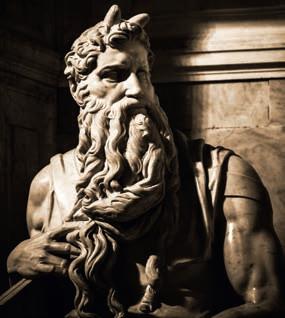
Rome is full of history and stories. I work in a place that has the ruins of ancient Roman baths in the basement! You can see them through a glass floor. But so many visitors believe they have to join the crowds to see anything, stand in line for the Vatican to see Michelangelo. There are at least five churches and basilicas that contain Michelangelos, just as significant, just as extraordinary. Go to San Pietro in Vincoli instead. It’s near the Colosseum and it’s free. Inside is the Moses, part of the tomb of Pope Julius II, which Michelangelo himself called his finest work. There is no queue. There is barely a crowd. And it is magnificent.
Where do you have Rome to yourself?
Il Giardino degli Aranci (the Garden of Oranges), on the Aventine Hill. It’s quite well-known, but if you go at sunrise or early evening, it’s almost entirely yours. Just a few grandmothers walking their dogs. And just beside the garden is a wrought-iron gate, the Keyhole of the Knights of Malta. You bend down, look through, and there is St Peter’s Basilica, perfectly framed, at the end of a long avenue of trees. It looks like a painting. I’ve been going since I was a teenager. Surprising, unexpected and magical. That’s the city I love. J
Right: Moses by Michelangelo at the Basilica of San Pietro in Vincoli
LUXURY TRAVEL TRENDS ARE EVOLVING AND LEISURE ACTIVITIES, FROM GOLF TO PADEL, ARE DRIVING THE CHANGE
SWING
WORDS BY JOHN NAUGHTON
o one is planning to give up their sun lounger just yet, but there’s a new feel to luxury travel in the second half of the 2020s. Increasingly, holidaymakers are looking for a range of leisure activities while on vacation rather than defaulting to the pool or beach. Relaxation is still key, but how we go about it is subtly shifting and becoming more active.
“The growing importance of leisure activities in luxury travel really comes down to a simple shift,” explains James Sutcliffe, General Manager of Anantara Hua Hin Resort in Thailand. “Guests today want more than just a beautiful place to stay; they want to feel something meaningful during their time away. Modern luxury travellers are looking for experiences that help them slow down, recharge and truly connect, whether that’s through wellness, local culture, or simply quality time with loved ones. Travel is no longer just about the destination, but about how it makes you feel.”
Golf certainly makes you feel – often elation and despair in the same round. And that’s
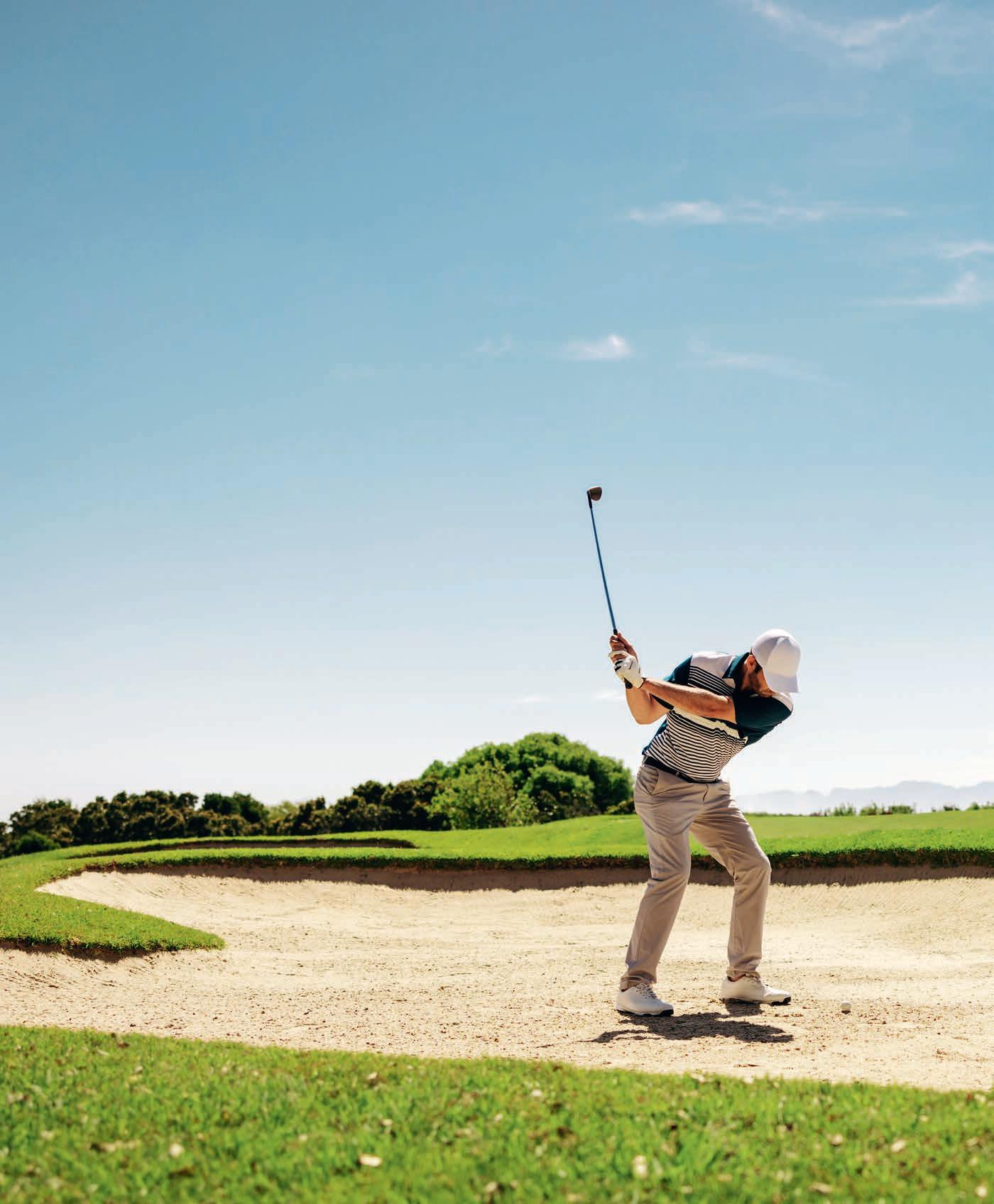
one of the reasons it’s one of the key leisure activities driving the direction of luxury travel. Once a pleasant add-on to a holiday, golf is often now the main event – and the luxury hotel market is catering to this change.
“Golfers are getting more adventurous in where they choose to play,” argues James Day, founder of indoor golf pioneer, Urban Golf. “They want more intrepid golf trips where they go to far-flung places and find the hidden gems. Golf is really booming thanks to a much younger demographic. Everything changed with Covid which, somewhat bizarrely, gave golf a huge boost. People were working from home and really valued the chance to get outdoors to a golf course.”
Golf spending in the luxury travel market has skyrocketed with over 13.6 million golf tourists travelling internationally in 2023 compared with 8 million in 2018. The US, Spain and Thailand are especially popular, and there has been a surge in popularity for bespoke packages, particularly those which combine wellness and luxury accommodation.
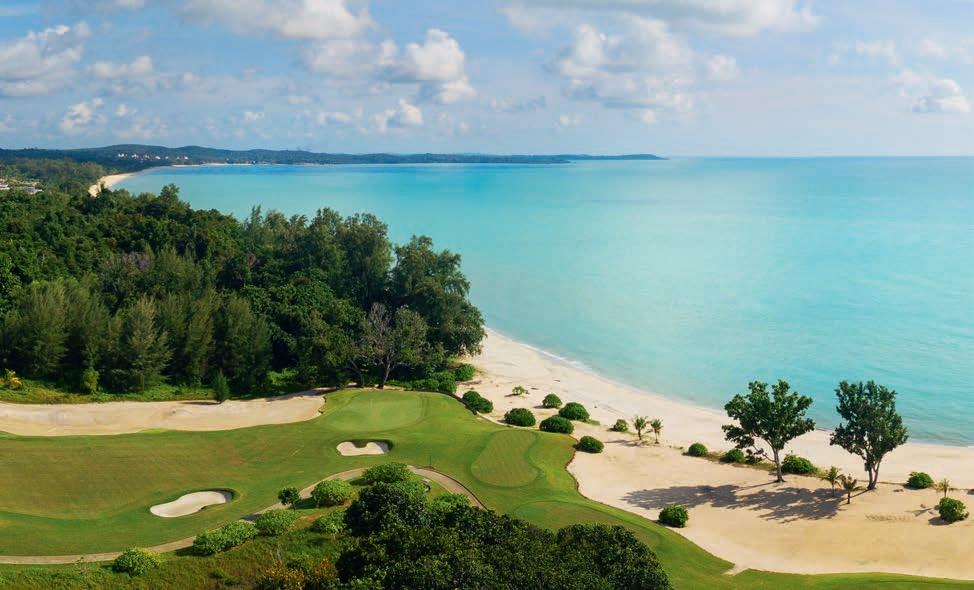
Previous pages: Golf has gone from a travel tag-on to the main reason to take a trip Below: The Els Club, designed by golf legend Ernie Els
Reflecting this trend, Anantara Hua Hin Resort is situated close to some of Asia’s finest courses while guests at Anantara Desaru Coast Resort & Villas in Malaysia have access to The Els Club, designed by South African golf legend Ernie Els and boasting two world-class courses. Then, of course, there’s Anantara Villa Padierna Palace Benahavís Marbella.
Located in Andalusia’s ‘Golf Valley’, the resort is within close range of many beautiful beaches, but for those who want to avoid the sand, it’s surrounded by three incredible courses (Flamingos, Alferini and Tramores), with many more within easy driving distance.
And for those golfers looking to improve their game, the resort boasts a Golf Academy that is second-to-none and headed by former US Open winner Michael Campbell.
Discerning golfers are increasingly looking for a wider range of leisure activities when they travel, and this is where resorts like Anantara Villa Padierna Palace Benahavís Marbella have the edge. It has a racquet club
“Golfers are getting more adventurous. They want more intrepid trips and go to far-flung places”
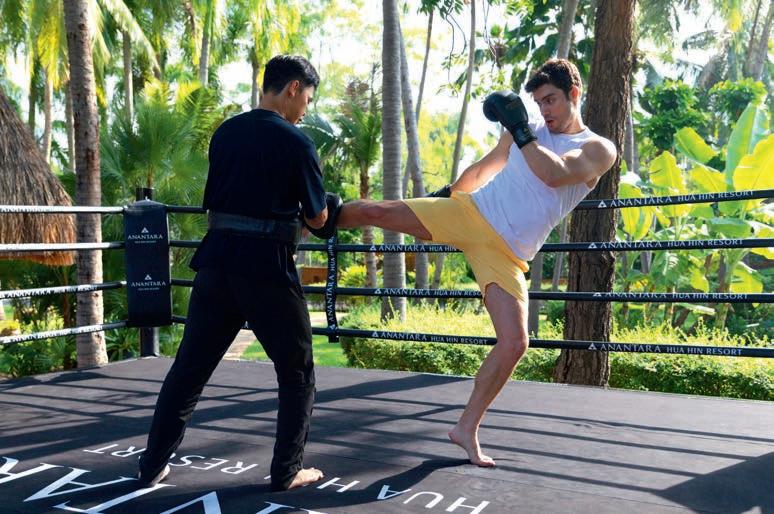
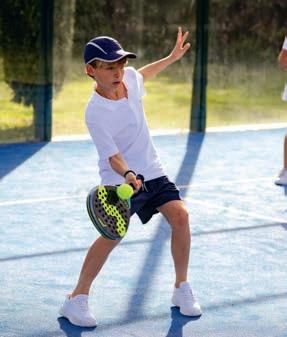
50m from the beach which comprises tennis courts, croquet lawns and 15 padel courts. Padel, as its fast-growing band of fans will testify, offers a fantastic workout as well as being competitive and fun. Indeed, the range of options being offered by luxury resorts is only expanding. At the recently renovated Anantara Hua Hin Resort, the Active Zone has been upgraded to include CrossFit equipment and a purpose-built ring for guests to try their hand at Muay Thai, a gruelling martial art.
“It is known for being intense,” admits James Sutcliffe. “But many guests are excited to try it as a unique and authentic Thai experience, and we make sure sessions are approachable for all levels. At the same time, activities like pickleball, tennis and rock climbing are also very popular. They’re fun, social and easy to enjoy, whether guests want to stay active or simply try something new.
"Pickleball, especially, has quickly become a guest favourite. Overall, we’re seeing more travellers looking for active, experience-led stays. They enjoy having a variety of options to shape their time with us at their own pace, and in a way that feels both fun and meaningful.”
Sutcliffe confirms that there’s still plenty of room for more traditional activities. “Yoga and wellness have become a big part of how guests choose to travel today,” he adds. “More and more, people are looking for ways to relax, recharge, and take care of both body and mind while they’re away. Because in today’s world, luxury isn’t just about where you stay, but how you experience it.”
Above from left: Getting a kick out of Muay Thai at Anantara Hua Hin Resort; playing padel at Anantara Villa Padierna Palace Benahavís Marbella
CITIES OF CULTURE
THIS AUTUMN’S BEST EXHIBITIONS MAKE THE CASE FOR PUTTING ART AT THE HEART OF YOUR TRIP
There was a time when a gallery visit was squeezed between lunch and the airport. Nowadays, the right exhibition can justify an overseas trip. This autumn, major retrospectives, citywide biennales and long-awaited cultural moments around the world are inspiring travellers to not just see a city, but to see what that city is thinking about through its art...
Venice is a great place to start. The 61st International Art Exhibition of La Biennale di Venezia, titled In Minor Keys, runs until 22 November across the Giardini, the Arsenale and other sites throughout the city. Its theme borrows from music, suggesting lower, stranger and more emotionally charged harmonics – apt for a Biennale designed to be experienced slowly, between national pavilions, old dockyards, church façades and palazzi. Venice has always revelled in the theatrical, and here it presents a sequence of scenes. Look out for Alfredo Jaar’s stacks of rare-earth materials, the violent extractive history of each written on the wall behind it, plus contemporary work from Marina Abramović and the tongue-in-cheek tourist portraits of Hernan Bas.
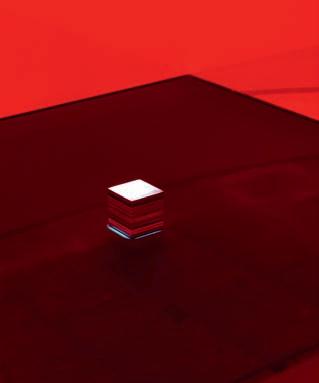
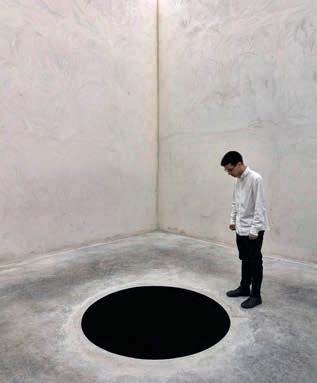
London brings Anish Kapoor back to the Hayward Gallery for a major exhibition running until 18 October. Few artists have such a feeling of scale. Kapoor, you’ll recall, changed the London skyline with the ArcelorMittal Orbit at the Olympic Park, but his gallery work often begins with more subtle perspective shifts. Colour seems to absorb you. Polished surfaces warp entire rooms. Dark
openings appear to go on forever. The Hayward provides just the right brutalist frame.
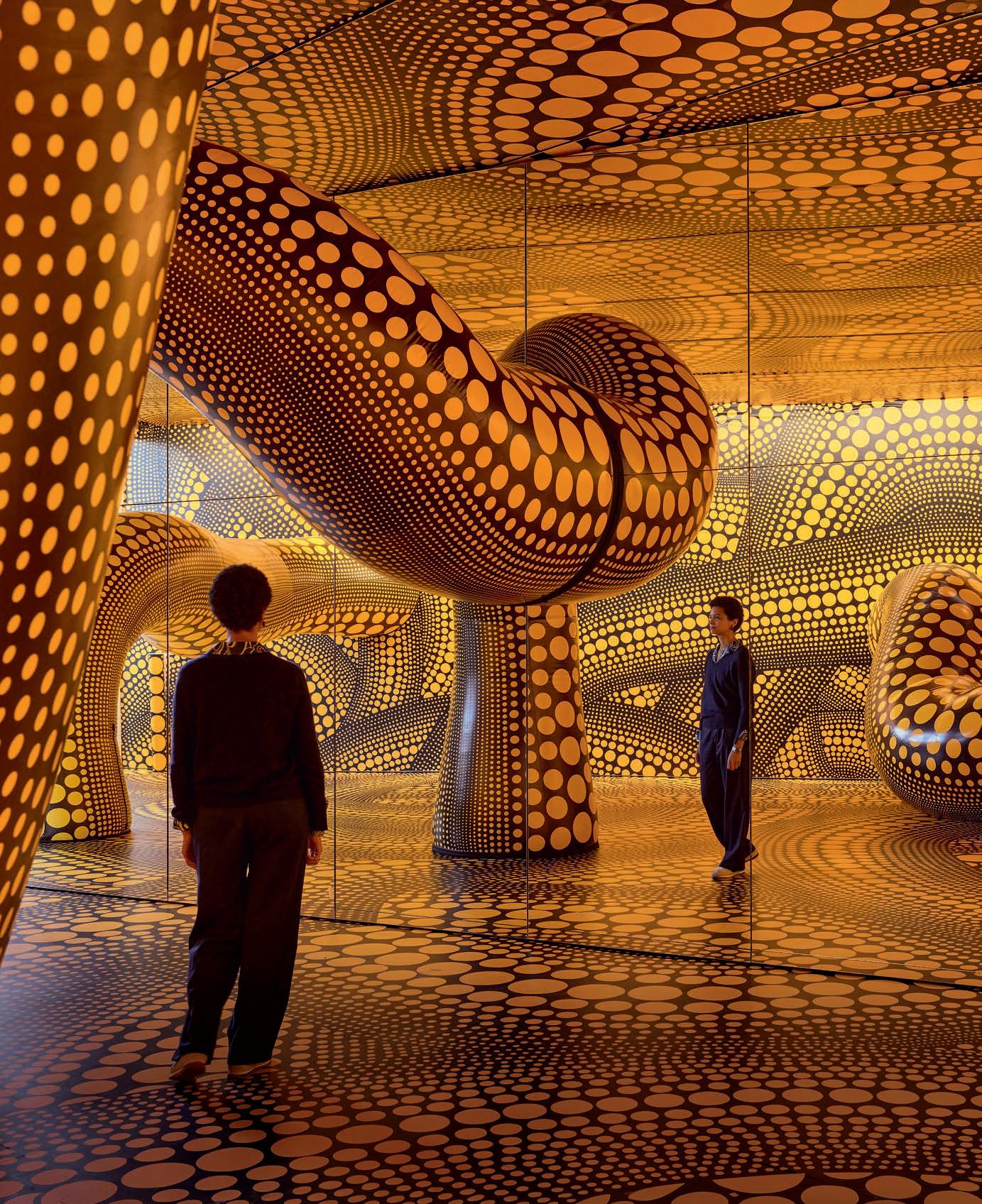
Yayoi Kusama at the Stedelijk Museum, Amsterdam, offers a very different vibe. Kusama’s dots, nets, pumpkins and mirrored rooms have become global visual icons, but like any good retrospective this one (11 September – 17 January 2027) exposes the strangeness lurking within the familiar. In the Museum Quarter, where old masters and grand architectural statements set the tone, the show gives the city a youthful autumn pull.
In Madrid, Felix Gonzalez-Torres: Sweet Revenge at Museo Reina Sofía (until 12 October) brings a mischievous and mouthwatering body of work to the party. The Cuban-born American crafted pieces from everyday materials: candy, paper stacks, clocks and strings of light. His 1991 work Untitled (Revenge) is made of blue candies, with an ideal weight of 325lb (147kg), to be replenished as they’re eaten by visitors.
Lyon's Biennale's title, To Pass from One Dream to Another, seems to nod to the city's traboules – hidden passageways threading through old silk-weaving districts. Drawing on notions of work, trade and value, this showcase (19 September – 13 December) speaks thoughtfully to the city and its perennial preoccupations.
Bangkok Art Biennale opens 29 October (and runs until 28 February 2027) under the title Angels and Mara, showing contemporary art across temples, public spaces and art venues, with announced artists ranging from Thai photographer Manit Sriwanichpoom to American conceptual artist Mel Chin, Japanese artist Yasumasa Morimura and Chinese duo Sun Yuan & Peng Yu.
In South Korea, the Gwangju Biennale returns from 5 September (until 15 November) with the title You Must Change Your Life. Led by Singaporean artist Ho Tzu Nyen, the Biennale will showcase brand new commissions from artists including Jacqueline Kiyomi Gork and Nam Hwayeon. Plus, with a title like that, they’re almost daring you to book a plane ticket. J
Clockwise from left: The Hope of the Polka Dots..., Yayoi Kusama; The End of the World, Alfredo Jaar; Descent into Limbo, Anish Kapoor; and Pink MARS, Manit Sriwanichpoom
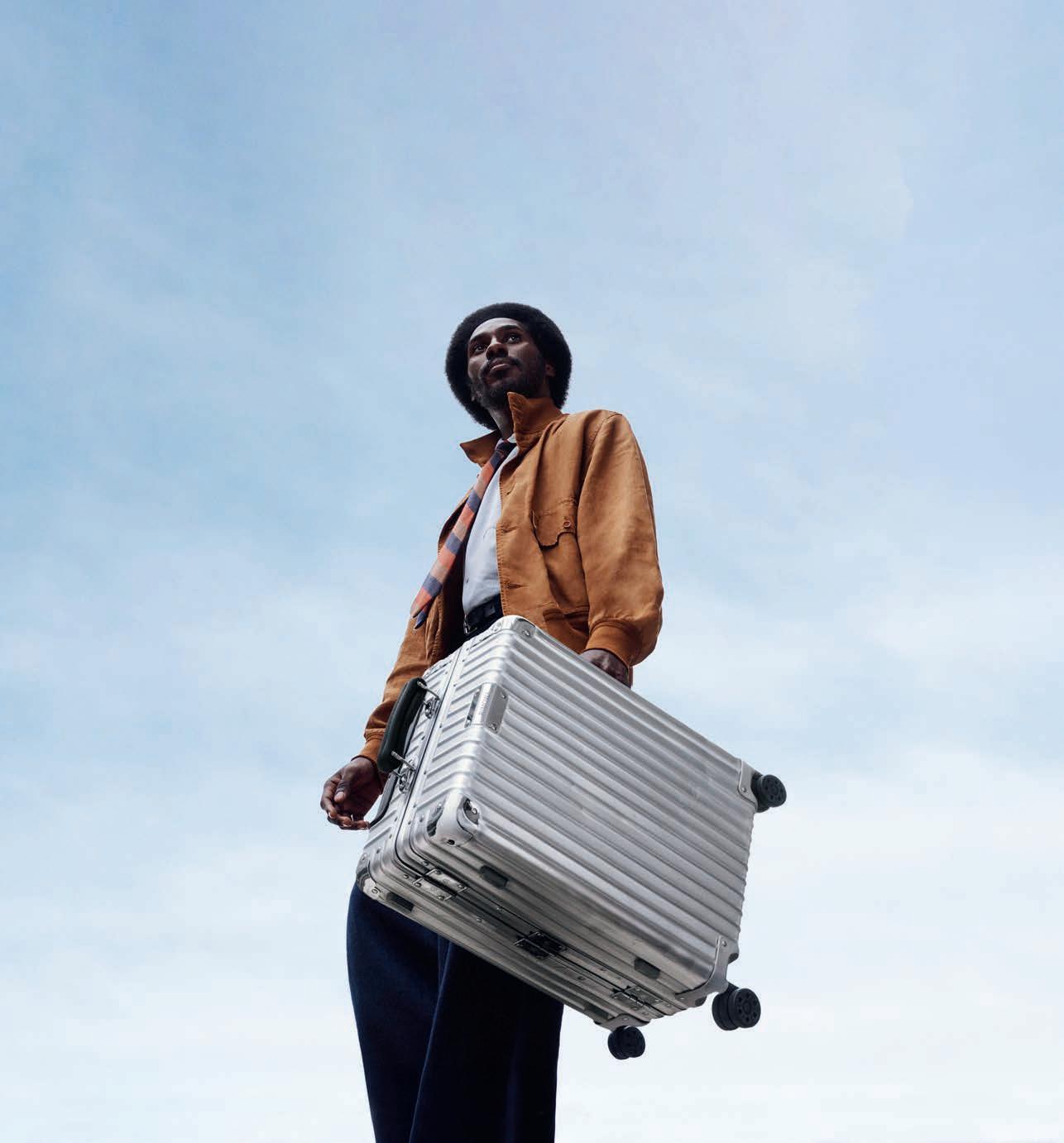
Rimowa Original Cabin
While Rimowa wasn’t the first to release aluminium luggage (Zero Halliburton lays claim to that title), the German company was the first to make the category sexy and coveted. The Original Cabin spinner is still the gold standard, boasting an iconic grooved anodised shell, Multiwheel® system and legendary durability, all wrapped up in headturning appeal. $1,525, rimowa.com
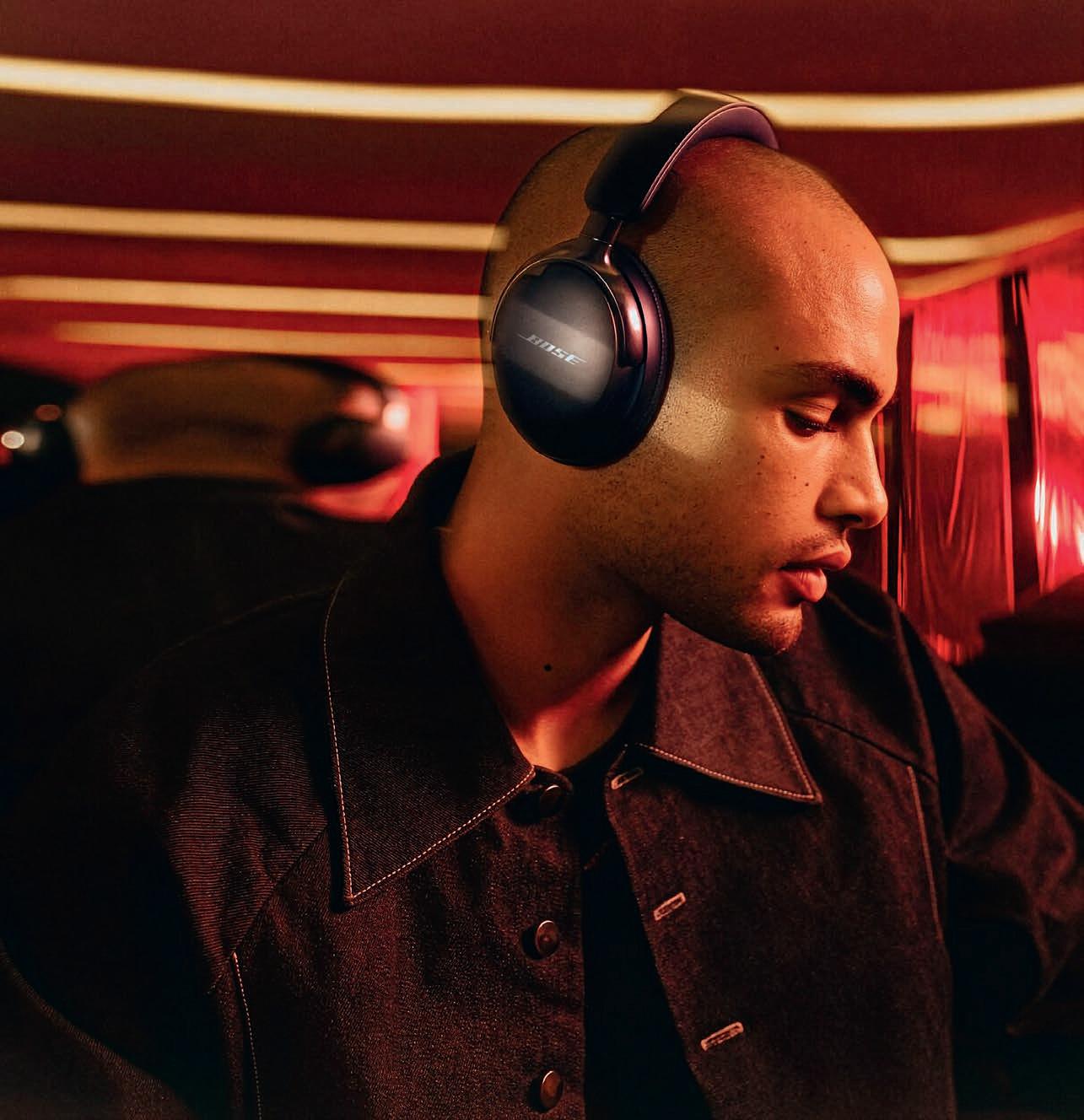
Bose QuietComfort Ultra Headphones
Whether silencing cabin noise en route to an NH Collection hotel or creating a personal sanctuary poolside at Avani, the Bose QuietComfort Ultra Headphones are the bestin-class. With superb build quality, and minimalist aesthetics, they are your fast ticket to an undisturbed haven in your head.
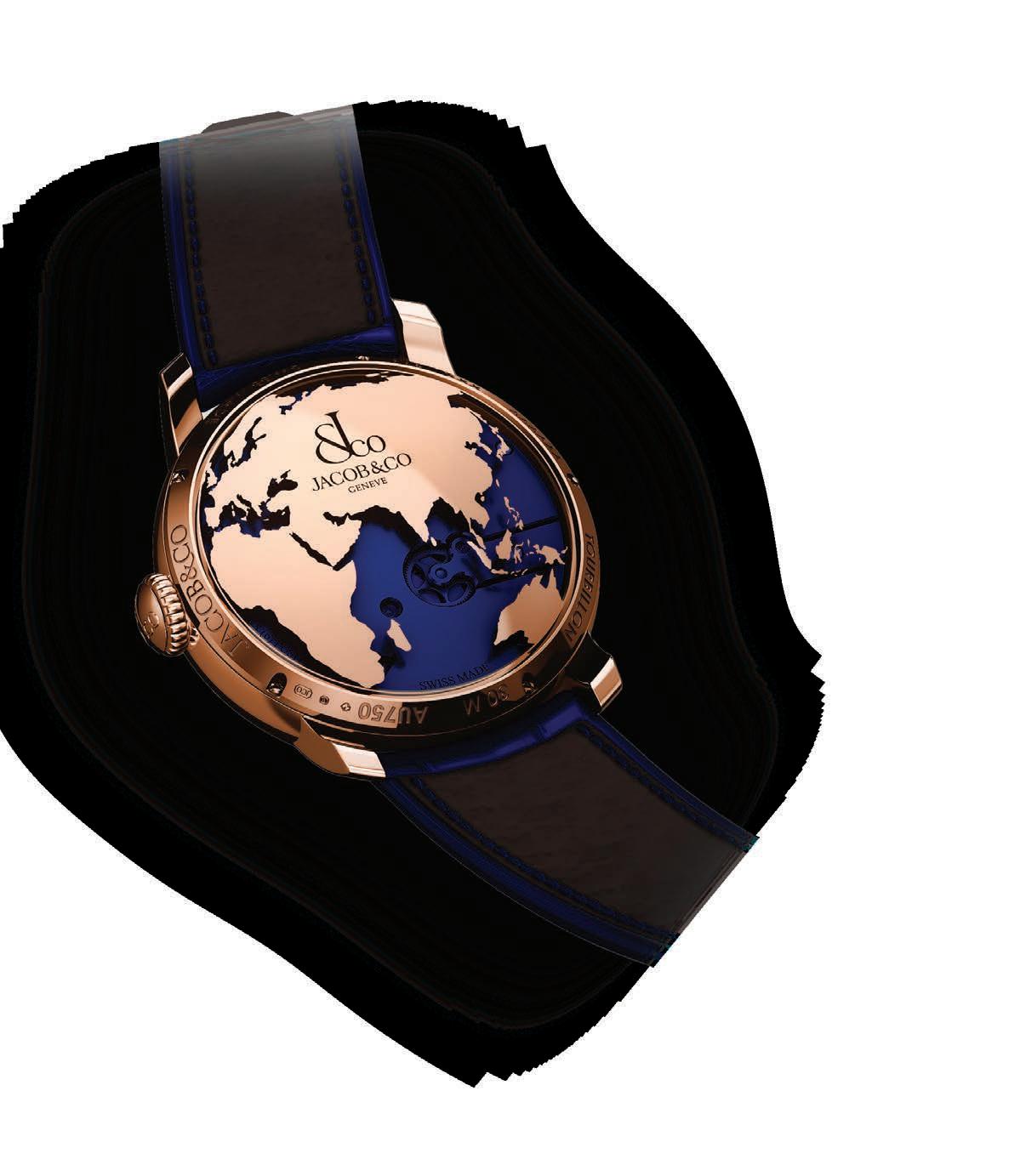
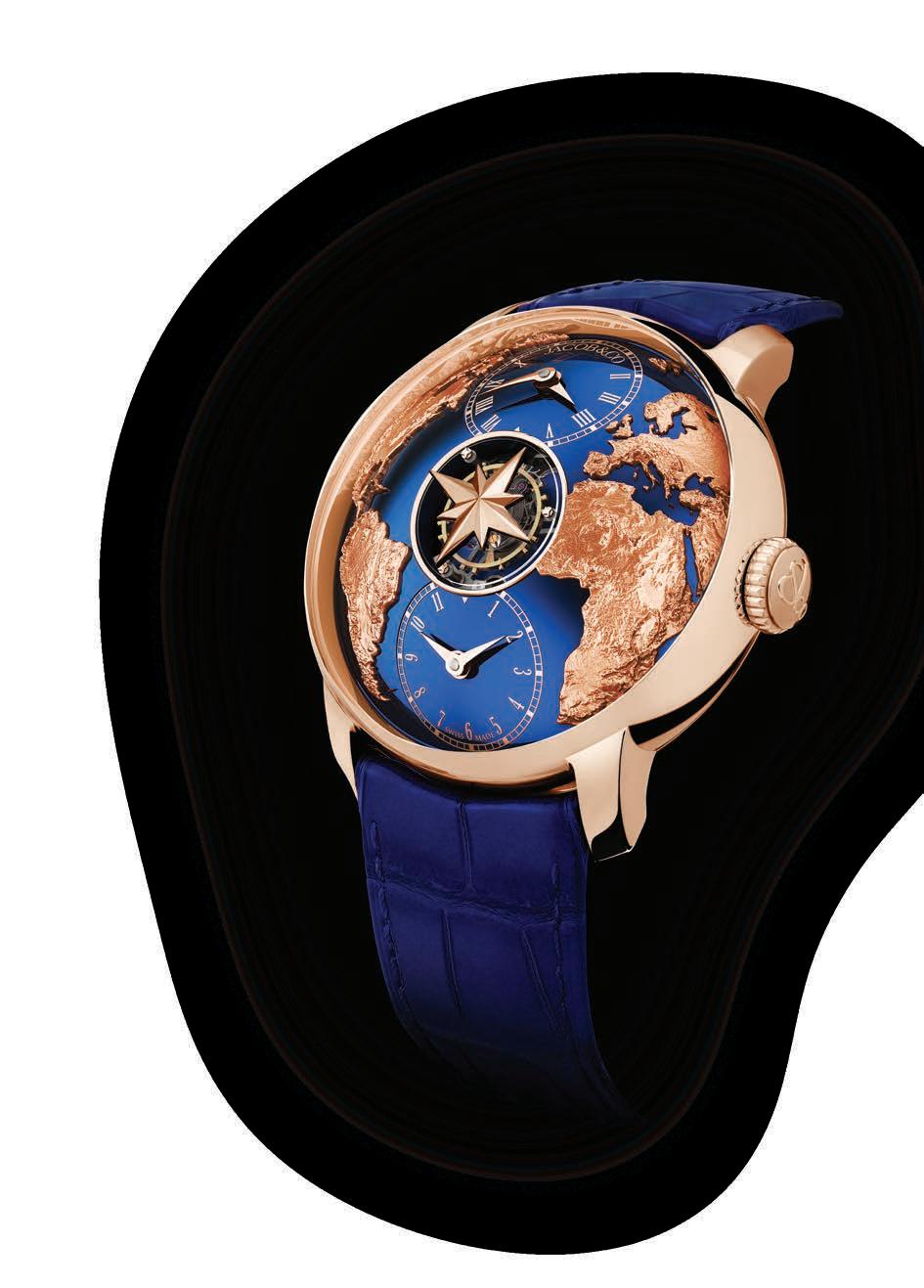
When you’re criss-crossing time zones and just can’t tear yourself away from what’s happening around the world, a world-time watch is worth its weight. German fine watchmaker NOMOS has produced
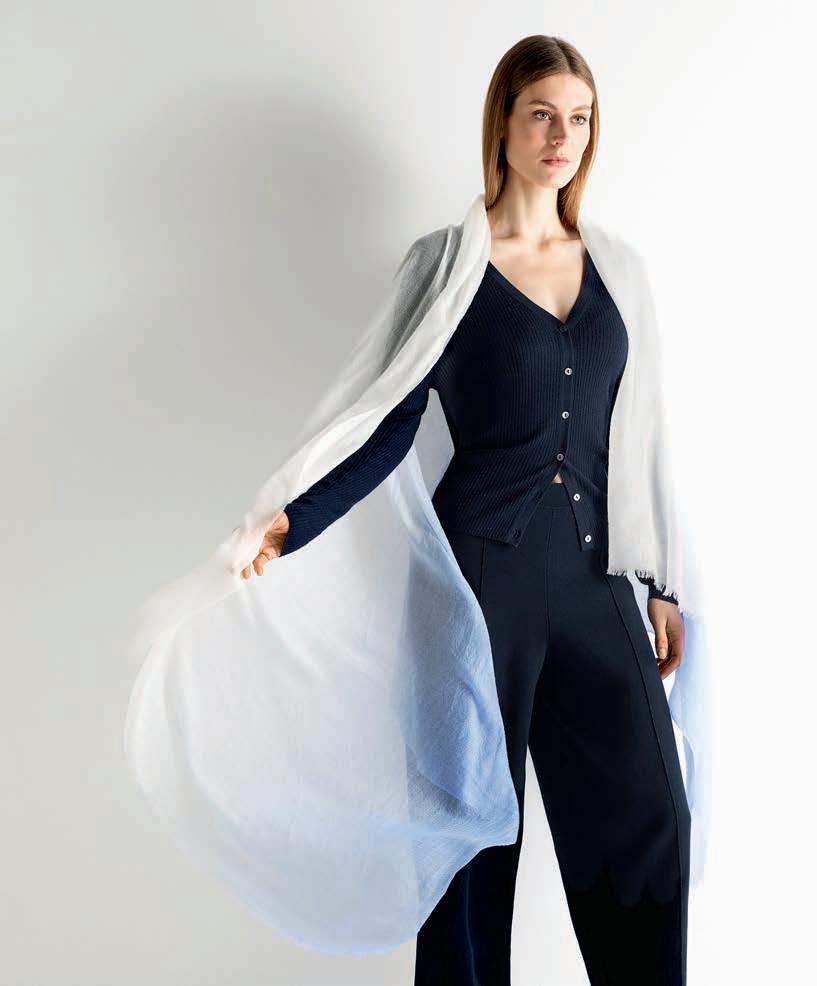
N.Peal Dip Dye
Cashmere Scarf
As with the crew neck sweater, the cashmere scarf is non-negotiable. This version by cashmere specialists N.Peal is woven in dark blue with a refined ombré gradient and is big enough to transition seamlessly from aircon-defeating scarf to breezy sunset sarong or elegant evening cover for both sexes.
$270, npeal.com
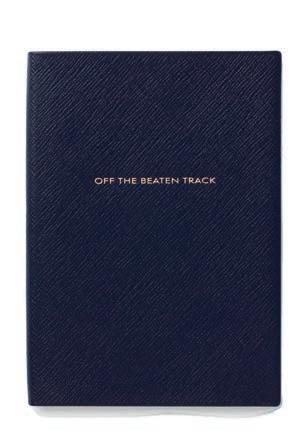
Smythson Off The Beaten Track Soho Travel Journal
From legendary explorer Sir Ranulph Fiennes to Hollywood royalty Vivian Leigh, Smythson’s Panama notebooks have long recorded the thoughts and observations of the well-heeled. It’s Off The Beaten Track Soho Travel Journal is
handcrafted in luxurious Panama leather (choose between Navy or the exoticsounding Nile Blue) with premium acidfree paper, inviting you to chronicle your global escapades.
$255, smythson.com
Panama notebooks have long recorded the thoughts of the well-heeled
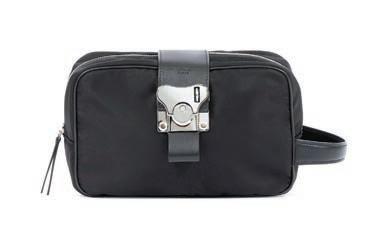
FPM Milano Butterfly Wash Case
The washbag to end all washbags, FPM Milano’s Butterfly Wash Case is the last such item you’ll ever buy, being crafted from durable ECONYL® nylon with an Italian leather trim and the brand’s iconic butterfly lock. It features an external hanging handle and an organised interior with the perfect amount of volume for all of your essential toiletries. $595, fpm.it
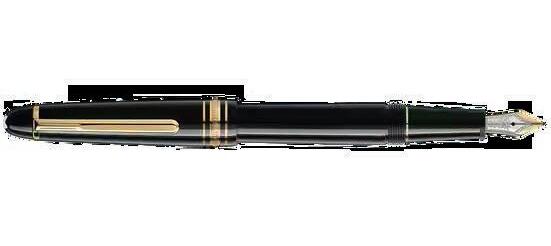
Montblanc Meisterstück Traveller
You don’t have to be Paul Theroux or Ernest Hemingway to understand the pleasure of recording your travels to paper. Montblanc’s limited edition Meisterstuck Traveller 1924 is a fountain pen engineered for journeys, featuring a leak-free, spill-proof filling mechanism and refined design in precious resin with gold-coated fittings. It will turn inflight thoughts or destination reflections into a tactile pleasure. $5,300, montblanc.com
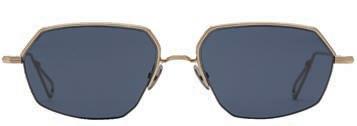
DARK
BAGNOLET AHLEM
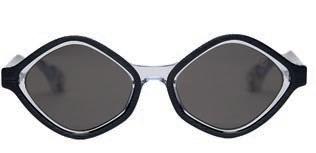
Bold geometric lines fuse with Parisian nonchalance in this architectural frame from LA-based designer Ahlem ManaiPlatt. With balanced proportions and a steel frame that has been electrodipped in palladium and 22k gold, the limited-edition Bagnolet delivers decadent Bauhaus-inspired styling.
$650, ahlemeyewear.com
BAYER
LINDA FARROW
Raise a glass to British avant-garde eyewear designer Linda Farrow’s striking matte Champagne titanium Bayer shades. With soft pink gradient lenses, these sculptural aviators are not for wallflowers, but if you like to be the centre of attention, this could be the quickest way to get there.
$1,075, lindafarrow.co.uk
OCAMPO SUN GARRETT LEIGHT
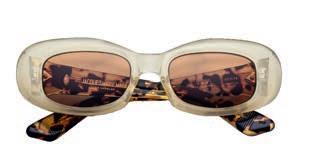
Dripping with sun-soaked Venice Beach energy, Garrett Leight’s Ocampo Sun shades give your looks a sculptural upgrade with a removable Art Deco side shield, enamel detailing and titanium accents. Handcrafted in California, they blend vintage aesthetics with a laid-back contemporary edge.
$455, garrettleight.com
MR006 MYKITA X RIMOWA
A masterful fusion of Berlin-based engineering and iconic travel luxury, this titanium aviator features RIMOWA’s signature grooved aluminum accents on an ultralightweight, screwless MYKITA frame. It's the collaboration chic travellers have been waiting for.
$790, mykita.com
BK1037
BLAKE KUWAHARA
Architectural boldness with refined Japanese precision is what defines Blake Kuwahara’s designs. The BK1037 exemplifies this with its unique angular frames in black crystal acetate, resulting in a truly unique way to frame the face. Daringly distinctive and always impactful.
$695, blakekuwahara.com
ANN
JACQUES MARIE MAGE
Sensual ’90s butterfly proportions, 7-barrel hinges, and intricate spur-shaped rivets are the hallmarks of this unisex frame by Jacques Marie Mage. Handmade in Japan through over 300 meticulous steps, the Ann is yet more proof that Jacques Marie Mage treats eyewear as a work of art.
$960, jacquesmariemage.com
FLYING HIGH
TIROLER GOLDSCHMIED INTRODUCES UNIQUE DESIGNS FOR GRACEFUL FALCONS
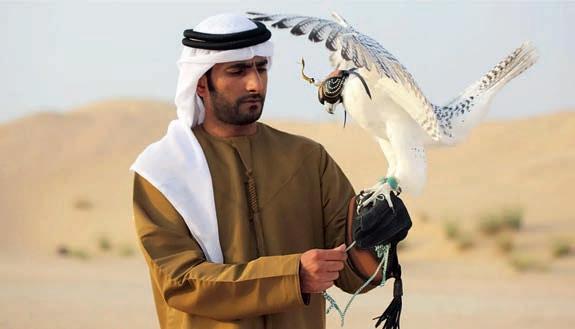
In September 2010, Tiroler Goldschmied captivated the United Arab Emirates with an innovative technique.
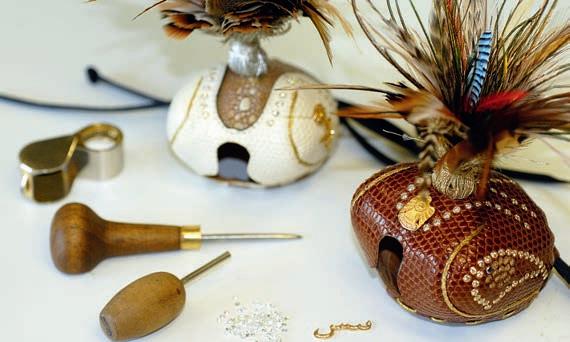
Using special tools, the brand developed falcon hoods for the Sheikh’s favourite birds, seamlessly setting precious gemstones directly into the leather and refining with an individual logo. These extraordinary hoods attracted great attention, quickly becoming a topic of conversation beyond the country’s borders.
Falcons hold a very high status in the UAE, and they even adorn the coat of arms of Abu Dhabi;
they’re regarded as part of the family. The majestic falcon is a symbol of freedom, pride and rank. These valuable animals are lovingly cared for and nurtured.
In photographs taken amidst the sand dunes of Dubai, the diamond-studded falcon hoods were breathtakingly staged by photographer Manuela Prossliner.
Each hood is an exclusive, one-of-a-kind creation, crafted according to the personal vision of the discerning client. It can be arranged in an individual pattern, incorporated into a coat of arms or designed with initials. tirolergoldschmied.it
DRESS TO IMPRESS
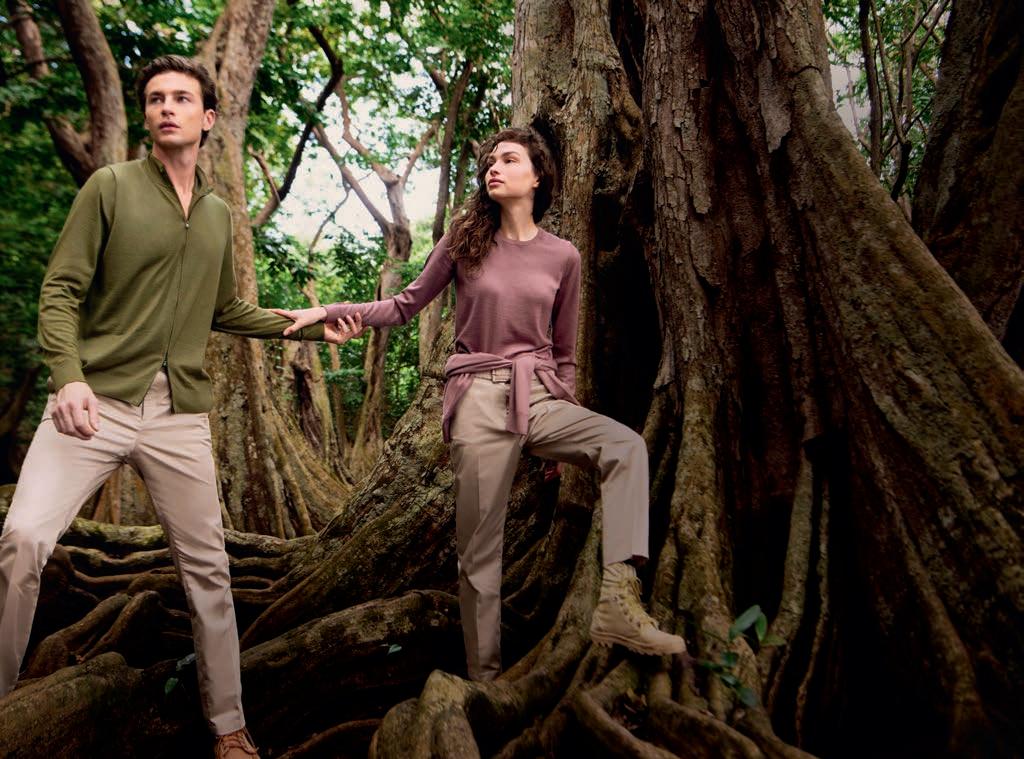
Falconeri’s Ultrafine Cashmere garments are the newest styles to slip into the brand’s rotation. Designed as a spring-summer staple, these lightweight knitted pieces are ideal for warm weather layering. Fine natural fibres allow for breathability, versatility and unrestricted comfort, so you don’t have to second-guess your styling throughout the day.
As part of the Ultrafine Cashmere 2.50 range, Falconeri presents airy crew-neck jumpers, V-neck tops, cardigans and dresses in soft, neutral shades. Blending comfort with minimalist
elegance, Falconeri offers a myriad designs across both women’s and men’s collections that are easily paired with a range of items.
To celebrate the release, the brand held a campaign shoot in Guadalupe. Capturing these premium pieces against the backdrop of breathtaking landscapes showcase the delicate, beautiful nature of their designs.
If your wardrobe is due an upgrade, discover Falconeri’s Ultrafine Cashmere.
Shop timeless essentials falconeri.com
PERFECT BLEND
CENTURIES OF SPANISH, AFRICAN, CHINESE AND JAPANESE INFLUENCE HAVE MADE LIMA A CITY IN CONSTANT CREATIVE FLUX – AND A PLACE WHERE NHOW LIMA HOTEL FITS IN SEAMLESSLY
WORDS BY CHRISTINE OCHEFU
LOCATION
ANCIENT MEETS MODERN
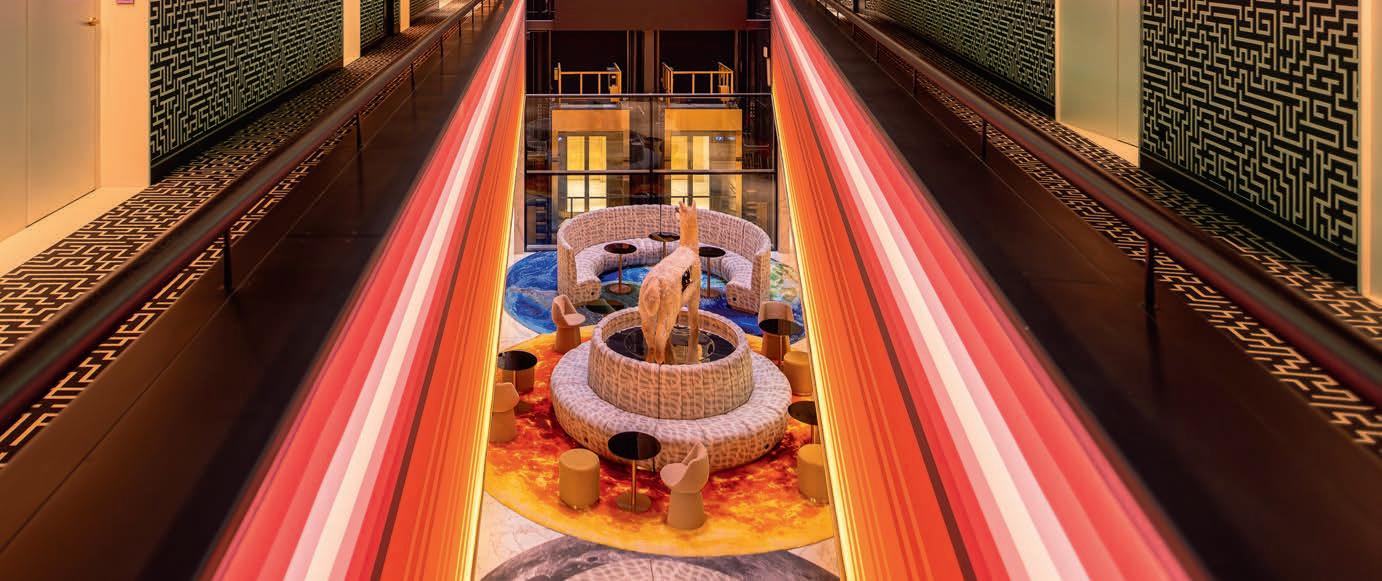
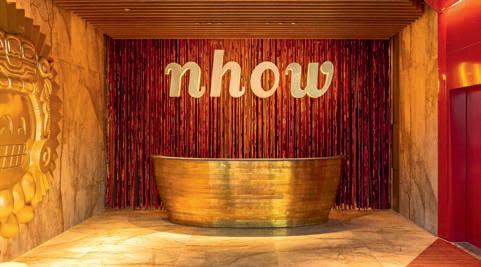
Miraflores may be one of Lima’s most polished districts. Upscale shops and restaurants sit above Pacific cliffs, while paragliders drift overhead. Here, you’ll find the street cats of Kennedy Park and Huaca Pucllana – the ancient adobe ceremonial pyramid that rises, matter-of-factly, from the middle of the modern city –as the ancient and modern live sideby-side in colourful neighbourhoods. It is into this environment that nhow Lima opened in August 2025. Occupying a corner of José Pardo and Atahualpa, its 243 rooms and contemporary art flair show the confidence of a hotel that knows exactly what city it’s in.
ART
INCA ICONS REIMAGINED
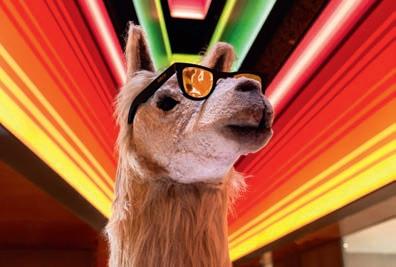
That the city happens to be one of Latin America’s most creatively vibrant is no coincidence. The Lima Museum of Contemporary Art sits nearby on the Miraflores-Barranco border and a short taxi ride south lands you in Barranco, where a bohemian scene distinguishes the barrio from its neighbours. nhow Lima runs all of this through its own irreverent filter: think Inca iconography reimagined through Minecraft. Ancient forms are reworked with contemporary colour and geometry. There are references to indigenous craft traditions but translated through neon colour. The hotel makes a natural base for Pinta Lima (Peru’s leading contemporary art fair) each spring.
FOOD
A CULTURAL MIXING POT
The cultural fusion of Lima’s heritage is most obvious on its dining tables. In June 2025, two months before nhow opened, nearby Maido was named the world's best restaurant. Chef Mitsuharu ‘Micha’ Tsumura’s Nikkei menu, which braids Japanese technique with Peruvian ingredients, is the gastronomic equivalent of what the hotel is doing on its corridor walls and headboards. At Zönico, the hotel’s restaurant, a tradition of mixing cultures is brought to life with regional ingredients and Amazonian flavours. Lima has always layered influences rather than replacing them. nhow Lima gives them new, colourful walls to live on. J
THE ROADS TO ADVENTURE
THE RIGHT CAR MAKES A JOURNEY FAR MORE ENJOYABLE AND IMMERSIVE. HERE ARE THREE STUNNING DRIVING ROUTES AND THE IDEAL SET OF WHEELS FOR EACH TRIP
When travelling, the destination often takes a backseat to the journey. A carefully curated road trip is a ticket to total freedom, a chance to move at your own pace and discover the unexpected. Across Europe and beyond, some of the most memorable landscapes reveal themselves best through a windscreen, making the car one of globetrotting’s great luxuries. Together, the machine and location create memories that linger long after the keys are handed back.
The road trip occupies a unique place in our cultural imagination. It’s inspired generations of artists, filmmakers and musicians, from Jack Kerouac to Led Zeppelin and Thelma & Louise. And it’s all about discovering something on the way. An invitation to follow curiosity rather than an itinerary.
Driving allows the traveller to experience the gradual unfolding of a landscape. The experience becomes richer because it’s unscripted. Driving encourages spontaneity in a way no other form of travel can.
And a great driving road deserves a great drivers’ car. The right machine turns travel into entertainment. At a time when we’re all obsessed with speed and efficiency to get from A to B, maybe the moment’s come to pump the brakes a little and get a feel for where we’re going. The road trip remains a celebration of taking the longer, more rewarding route.
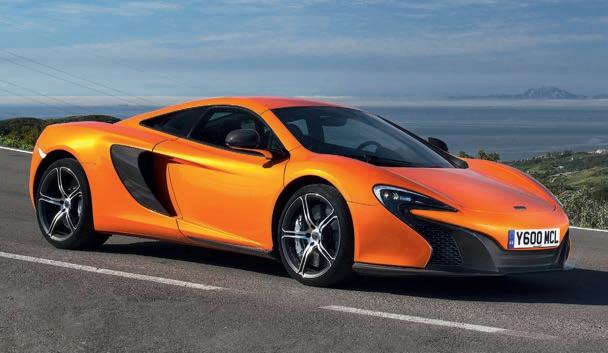
It’s time to pop the McLaren’s doors and toast your good fortune
NEW ZEALAND
ROUTE Auckland to Milford Sound, via Wellington, Christchurch and Aoraki/ Mount Cook National Park
DISTANCE 2,000km
CAR McLaren 650S, available from MotorShare (motorshare.co.nz)
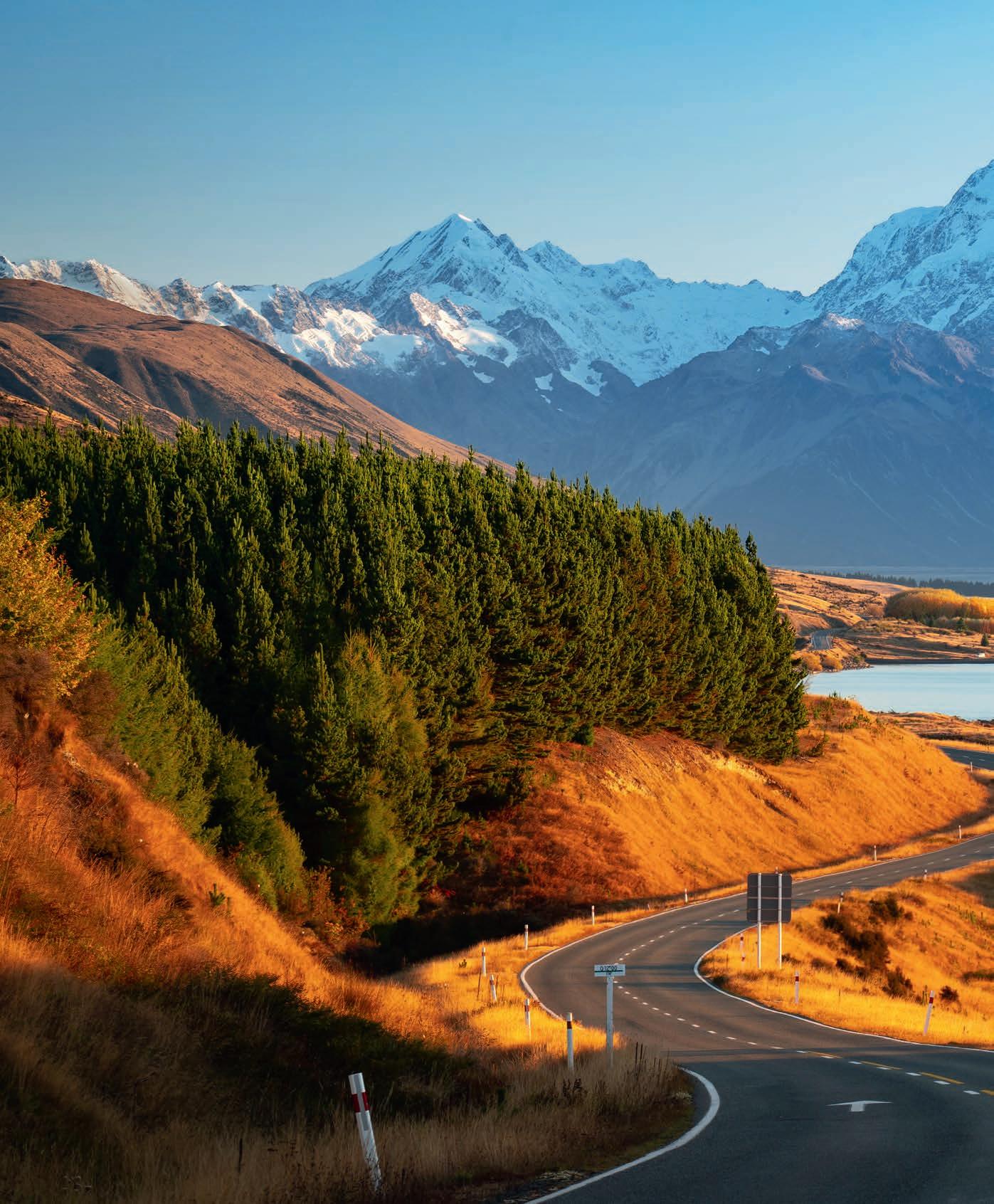
drive from New Zealand’s North Island to the South Island is a road trip as cinematic as they come, even though there weren’t any supercars in The Lord of the Rings or The Hobbit. Distances that appear modest on a map unfold into days of extraordinary contrasts: subtropical coastlines give way to volcanic plateaus and vineyards surrender to snow-capped mountains. The automobile we’ve selected for you is built in England, but it has Kiwi DNA.
McLaren has its roots in Formula One, of course, and is named after its founder, four-time Grand Prix winner Bruce McLaren, who died at the wheel of one of his racing cars at the age of 32. He was born in Auckland in 1937 and began his racing career at the city’s Ardmore Airfield in the mid-1950s, as well as Ohakea and, stretching along the South Island’s southern coast, Waimate and Teretonga Park. The 650S is a 21st century reimagining of what Bruce looked for in a sports car: lightweight (1,330kg), high-tech (it has a carbon-fibre monocoque inspired by F1 cars), powerful (641bhp), quick (0-100km/h in 3.0 seconds) and eye-catching thanks to its dihedral doors and alien shape.
The McLaren can be collected from Auckland, New Zealand’s biggest city and commercial heart, where Minor Hotels has three properties including Avani Auckland Metropolis Residences. Leaving the city behind, the motorway soon narrows and begins tracing the contours of the Coromandel Peninsula. The traffic thins, the air grows fresher and the scenery takes on a distinctly South Pacific character.
The first stop is Waihi Beach, a glorious sweep of golden sand where surfers ride rolling waves. Here, the Pacific Ocean seems impossibly blue and the atmosphere unhurried. The route south rewards drivers with flowing bends and long sight lines, perfect territory for the McLaren. Its twin-turbocharged V8 responds eagerly to every throttle input while the supple suspension absorbs imperfections that might
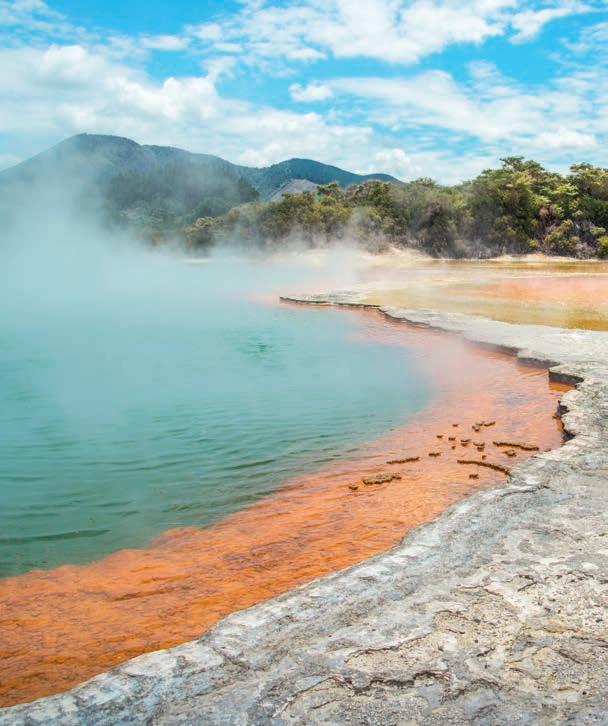
unsettle a less sophisticated supercar. From the coast, the road turns inland towards Rotorua, and the landscape undergoes a dramatic transformation. Rotorua sits atop one of the world’s most active volcanic regions and remains the cultural heartland of Maori New Zealand. Visitors can explore bubbling mud pools, erupting geysers and geothermal terraces. The nearby forests shelter the elusive kiwi, the flightless bird that has become the national symbol. South of Rotorua, the road climbs gently towards Lake Taupo. Snow-capped peaks shimmer on the horizon. The roads around the lake are broad and sweeping.
Continuing towards Hawke’s Bay, the scenery changes once again. Vineyards populate the hills and the climate becomes noticeably warmer. The journey then tackles the blacktop known as Gentle Annie. Charging through remote hill country between Hawke’s Bay and the central North Island, it offers a 130km sequence of climbs, descents and curves before we reach the capital city of Wellington and Oaks Wellington Hotel. From here, the adventure continues to the South Island by loading the McLaren onto the ferry across the Cook Strait, disembarking at Picton and on to New Zealand’s most famous wine region, Marlborough. Neat rows of Sauvignon Blanc vines stretch towards distant mountains.
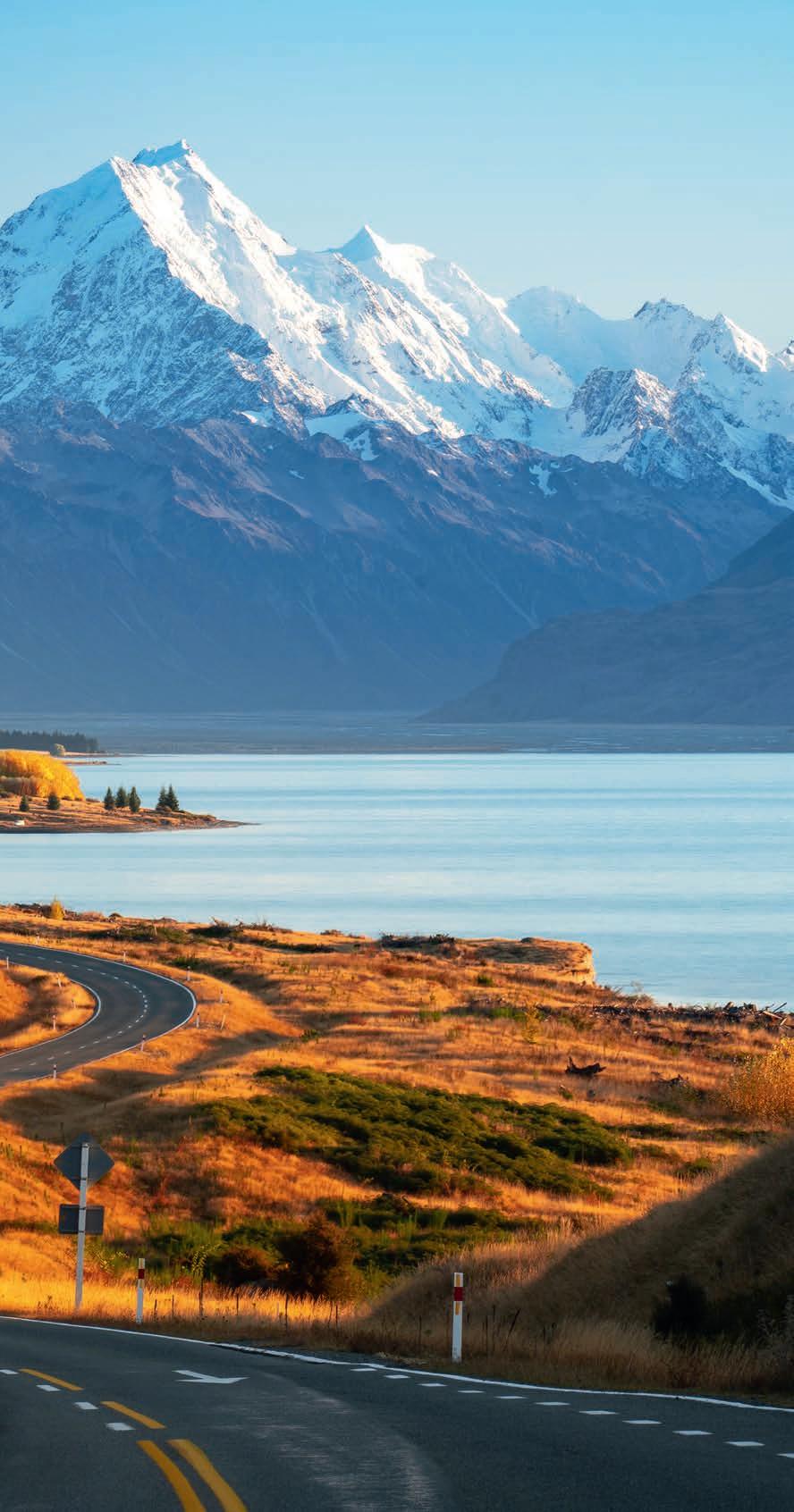
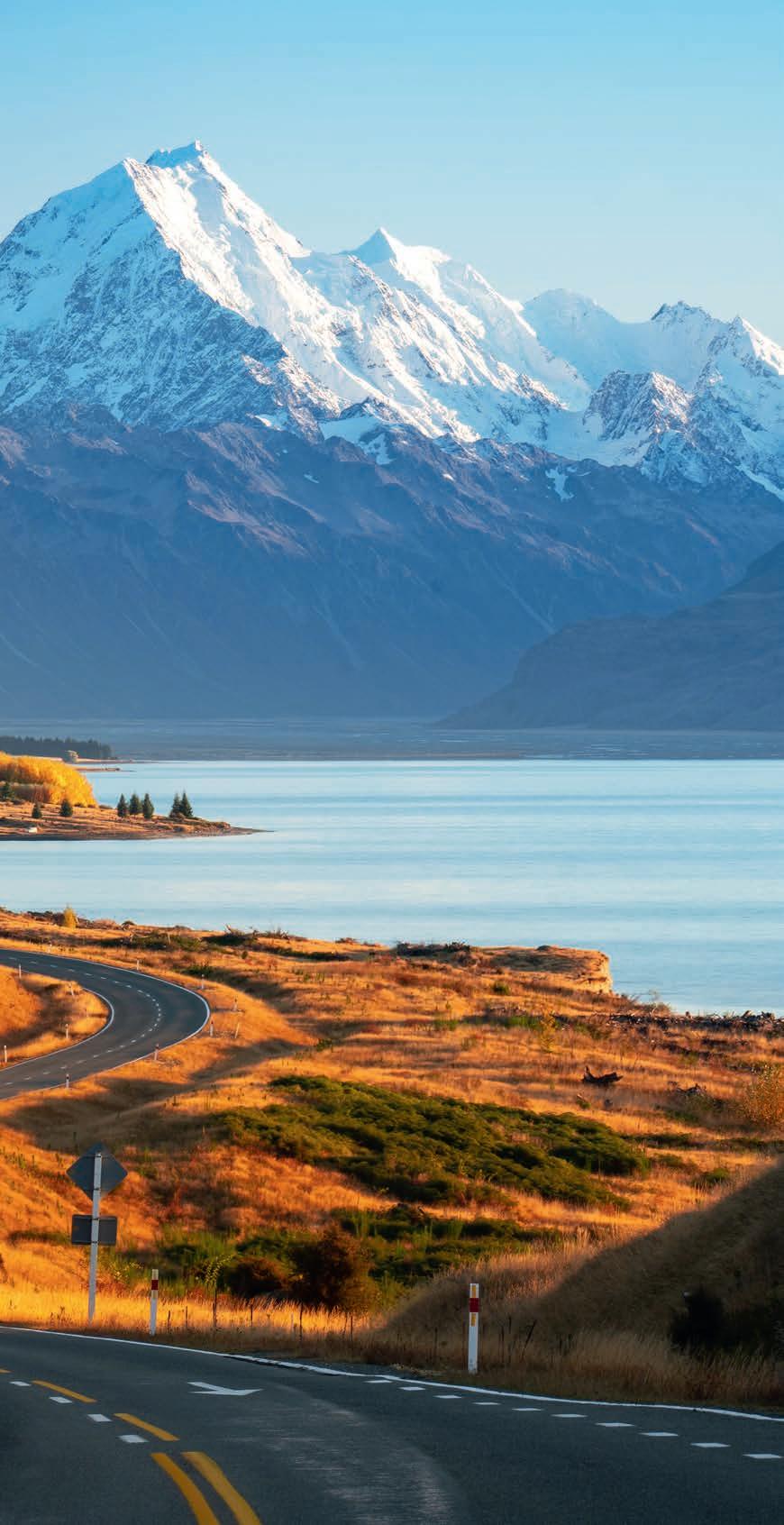
Beyond Christchurch, the drive through the Southern Alps is among the finest anywhere in the world. Vast braided rivers flow across gravel plains while distant peaks remain snow-covered during summer months. Lake Tekapo’s turquoise colour is created by finely ground glacial sediment suspended in the water. Further south, Lake Pukaki offers an even grander spectacle. On clear days, the country’s highest mountain, Aoraki/Mount Cook, rises dramatically at the far end of the lake. The approach to Aoraki/Mount Cook National Park is arrowstraight towards towering glaciers and jagged peaks.
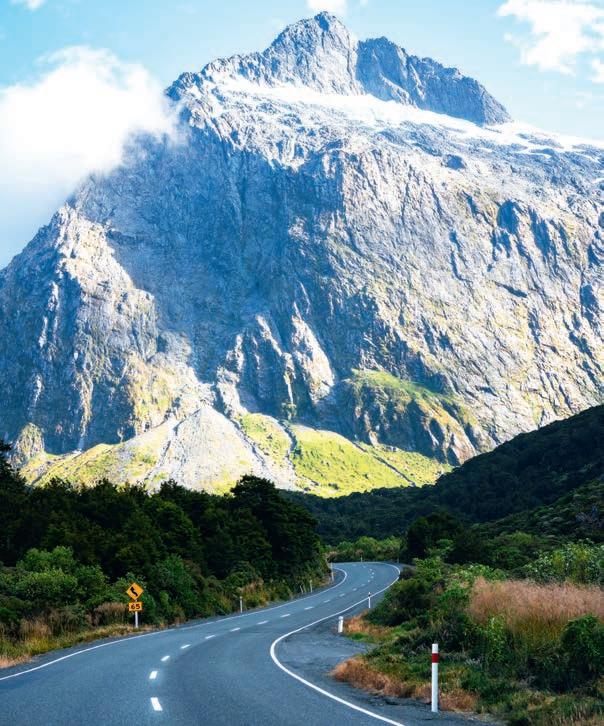
The final stages of the journey lead through Central Otago and over the Crown Range Road, the highest sealed road in New Zealand. The ascent is steep and exhilarating, revealing extraordinary views across mountains and valleys before descending towards Queenstown. Nestled beside Lake Wakatipu, Oaks Queenstown Shores Resort combines alpine scenery with sophisticated dining, welcoming lodgings and a sense of adventure. Our final destination lies ahead. The road to Milford Sound cuts through Fiordland National Park, where waterfalls tumble from great heights and mist drifts across ancient valleys. Then, finally, Milford Sound itself comes into view. Towering cliffs rise from dark waters while Mitre Peak pierces the sky. Rainbows appear after the slightest rainfall. Time to pop those dihedral McLaren doors and toast your good fortune after a mighty 2,000km of awe-inspiring motoring.
Clockwise from bottom left: Wai-OTapu; the McLaren 650S is perfect for tackling Fiordland National Park
ANDALUSIA, SPAIN
ROUTE Marbella to Seville via Ronda, and Seville to Marbella via El Robledal and Sotogrande
DISTANCE 455km
CAR Lamborghini Urus, available from Olymp Cars Marbella (olympcars.com)
ACCOMMODATION Anantara Villa Padierna Palace Benahavís Marbella Resort and NH Collection Sevilla
BEST TIME TO VISIT May-September
Take a drive through the heart of Andalusia in Southern Spain, starting in Marbella where a Lamborghini Urus looks particularly on point. Bullfighting serves as a profound symbol of Spanish identity, representing themes of bravery, art and the struggle between civilisation and nature. Ferruccio Lamborghini chose a logo depicting an aggressive bull to identify his eponymous supercar company, presumably because it represents the struggle between the road, fat Pirelli rubber and 650bhp. But while bravery was very much required to drive Lamborghini’s earlier efforts, such as the Miura, the Countach and the Diablo, the Urus is an altogether more civilised beast. For a start, it’s a super SUV with room for the whole family. Secondly, though it’s capable of 312km/h and 0-100 in 3.6 seconds, its four-wheel-drive system keeps it firmly planted to the tarmac – or dirt and rubble, should you wish to take it off-road.
Marbella is an appropriately glamorous starting point, as is Anantara Villa Padierna Palace Benahavís Marbella Resort where one will find impeccable golf courses, a spa and a beach club. Beyond Marbella’s Champagne lifestyle and the pleasures of its old town and marina, we turn to the mountain range that rises behind the coast, and specifically the A-397 to Ronda – among the finest driving roads in Europe. The route begins climbing through the Sierra de las Nieves. Hairpins, sweeping bends and fast open sections thread together, often with vertiginous drops to the left. It’s the sort of terrain for which the Urus was created. The commanding driving position allows uninterrupted views while its twin-turbo V8 delivers effortless acceleration out of every corner. Unlike some low-slung sports cars, the Lamborghini’s adaptive suspension shrugs off the road’s imperfections and challenging cambers while retaining agility and comfort.
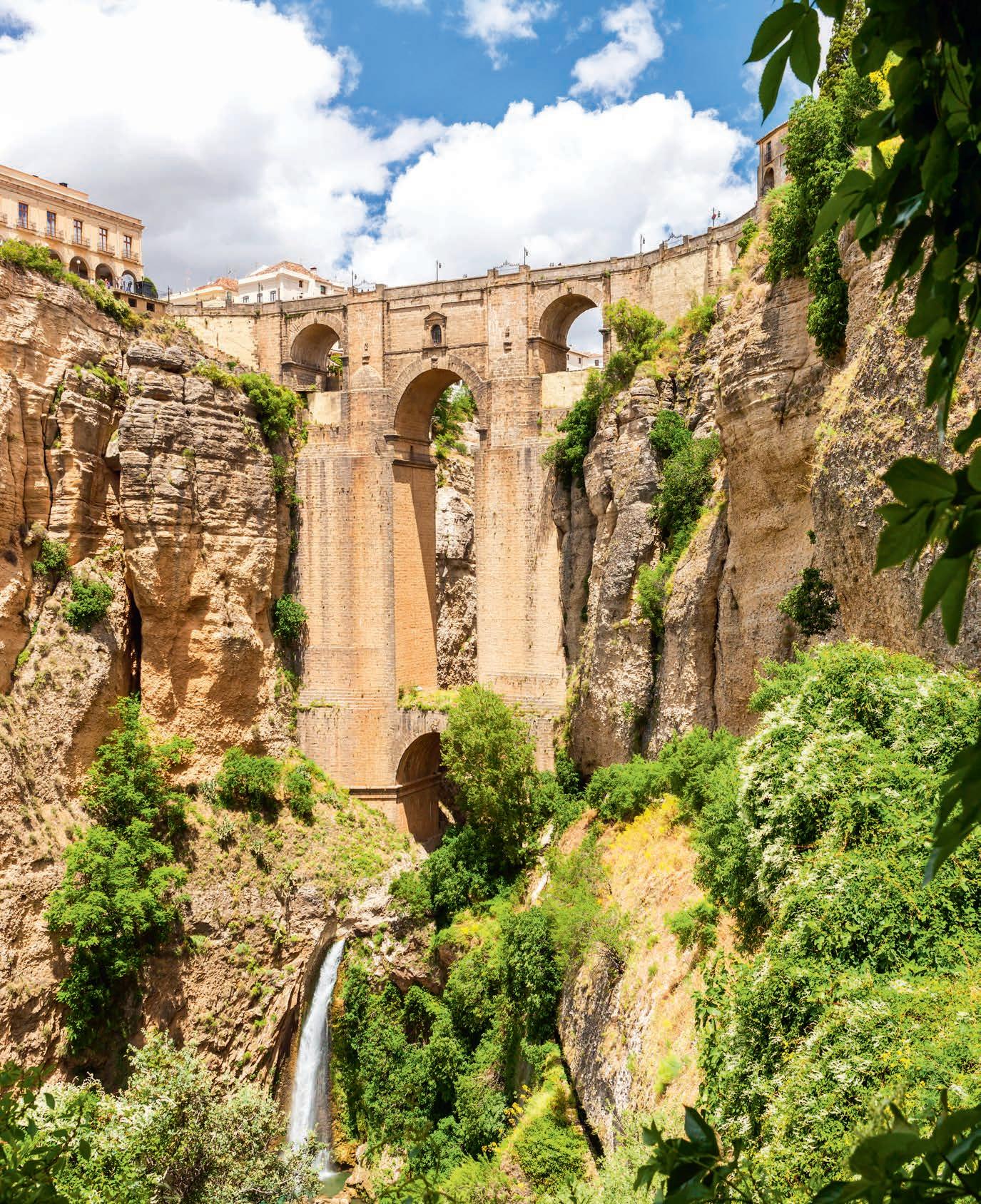
Then comes Ronda. Perched atop a rocky plateau and split by the spectacular El Tajo Gorge, it’s one of the region’s most romantic-looking
hamlets. The Puente Nuevo bridge spans the chasm between the old and new quarters. Beneath it, sheer cliffs plunge towards the river below. A short drive from the town finds one of the continent’s most intriguing motoring destinations, the Ascari Race Resort. Named after F1 champion Alberto Ascari, it’s essentially a members club for racing drivers and supercar devotees. The private circuit includes corners inspired by some of the world’s most infamous tracks.
From Ronda and Ascari, the route north-west towards Seville relaxes into a grand tour. The mountains soften into rolling farmland. Whitewashed villages shimmer beneath the heat, and church towers prick the horizon above olive groves. Seville arrives with a flourish; one of Spain’s great urban stages and home to the iconic Plaza de Toros de la Real Maestranza bullring. The Alcazar, the vast cathedral and the Giralda tower are essential sights, yet some of the city’s best discoveries can be found in wandering the narrow pathways of Santa Cruz, with cool little tapas bars and handsome hidden courtyards. Check into NH Collection Sevilla and make a night of it.
Returning to Marbella, we head south through El Robledal, where the landscape becomes wilder and more remote. The road snakes through forests and rugged hills, often with little traffic save the occasional tractor. Once again, the Urus comes into its own, transitioning from high-speed cruiser to veritable mountain goat. The route descends towards Sotogrande, which needs little introduction for those who enjoy the sport of kings. As well as polo fields, Sotogrande boasts championship golf courses and elegant villas. While Marbella is exuberant, this is where the Costa del Sol’s understated wealth lives.
The last stretch back to Marbella follows the Mediterranean, with the island of Gibraltar visible to the south west. What makes this journey special is not any single destination but the extraordinary variety packed into a relatively compact road trip. Marbella provides the glitz, Ronda the drama, Ascari some edge-of-the-seat tyre-squealing thrills, and Seville contributes culture, while Sotogrande has sport and sophistication in spades. Linking them together are Andalusia’s most rewarding roads. It’s the sort of adventure the Urus was built for.
Below: The remarkable Puente Nuevo bridge in Ronda
Bottom left: The Urus offers the smoothest of rides
Switzerland’s Grand Tour might be the finest road trip in Europe
SWITZERLAND
ROUTE Zurich to Appenzell, St Moritz, Bellinzona, Zermatt, Lausanne, Neuchâtel, Bern and back to Zurich
DISTANCE 1,643km
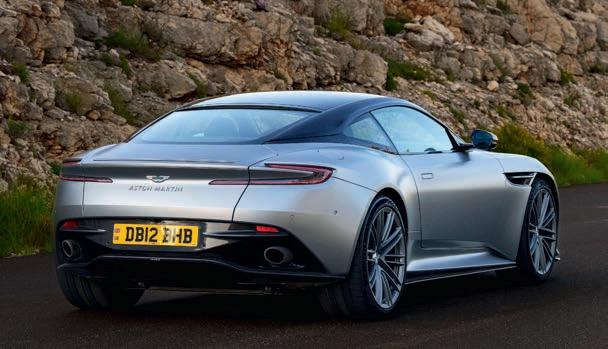
CAR Aston Martin DB12, available from Edel & Stark (edelstark.com)
ACCOMMODATION NH Bern The Bristol and NH Collection Alagna Mirtillo Rosso
BEST TIME TO VISIT June-September
Switzerland has really got it together, and we’re not just talking about its on-time trains and discreet banking policies. Recognising that this utterly beautiful country has wonderfully sinuous roads and jaw-dropping views best appreciated from a car or motorbike, the national tourist board has established The Grand Tour of Switzerland: a 1,643km circuit that encompasses all of the country’s highlights, mapped out either through an app or by looking out for the 650 road signs that point the way. There are eight different stages comprising 46 top attractions, 22 lakes, five alpine passes and 13 UNESCO World Heritage Sites.
The car we’re proposing is Aston Martin’s ever-so-handsome DB12. It is the spiritual successor to the DB5, which became the most famous movie car of them all in 1964 when it featured in the 007 film Goldfinger. Several of Sean Connery’s driving sequences were filmed in Switzerland; notably the legendary Furka Pass, above Andermatt. The DB12 feels almost purpose-built for Switzerland. Its 671bhp V8 has enough muscle to devour alpine passes, yet its grand touring credentials mean you can spend eight hours behind the wheel and emerge feeling fresher than when you got in.
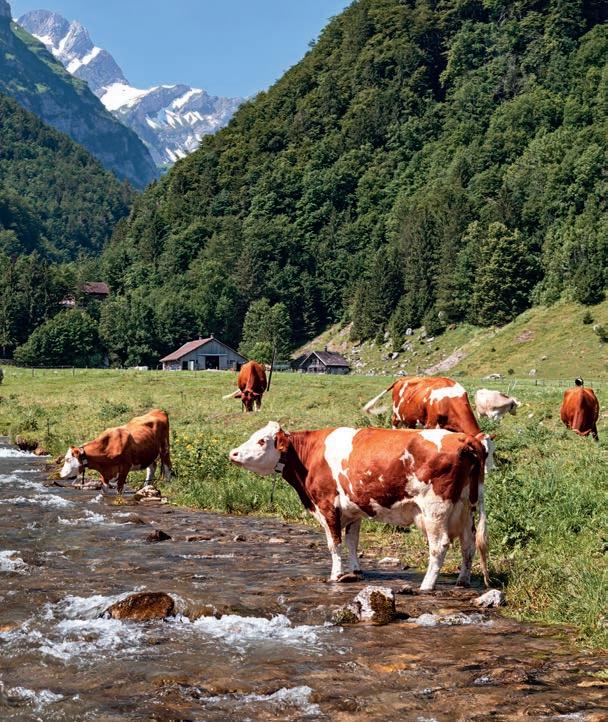
Leaving Zurich, the route quickly heads east towards Appenzell. The city falls away into a landscape of emerald meadows, cow-dotted hillsides and villages so immaculate they seem assembled by model makers. The roads here ripple gently through the countryside, while the jagged peaks of the Alpstein massif gradually dominate the horizon. In Appenzell, painted facades line the streets and local bakeries perfume the air with fresh bread. Nearby rises Säntis, whose summit offers views stretching across six countries on a clear day.
From here the scenery begins its transformation from pastoral idyll to full Alpine theatre. The drive south-east towards St Moritz takes you into the canton of Graubünden, where roads carve through deep valleys and climb steadily into the high mountains.
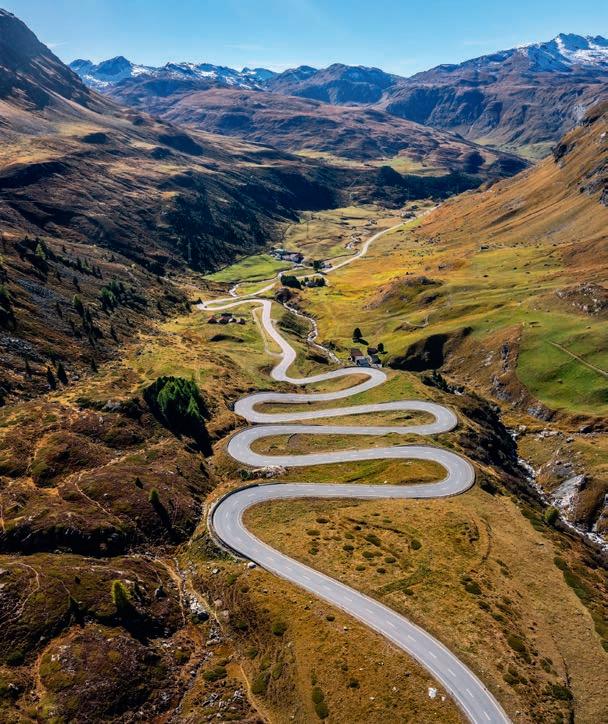
The Julier Pass unfolds a giant ribbon of tarmac laid across the Alps towards St Moritz. Hairpins stack upon hairpins. Snow often lingers on the surrounding peaks even during summer. The DB12’s steering feels perfectly weighted as it flows from bend to bend, its burbling soundtrack echoing off granite walls. St Moritz remains the grande dame of Alpine resorts, with aristocrats, movie stars and industrialists making it their winter playground. The route then heads south towards Bellinzona, crossing landscapes that feel almost Mediterranean. Palm trees begin to appear. The architecture softens. Italian becomes the dominant language. Bellinzona’s impressive trio of medieval castles guard the gateway between northern and southern Europe. Heading west towards Zermatt, roads twist through the Valais region, passing vineyards that cling to steep mountainsides. The Rhône Valley opens before narrowing again as the peaks become ever more imposing. Cars cannot enter Zermatt itself, which feels entirely appropriate. You leave the Aston behind and arrive by train into a village overshadowed by perhaps the world’s most recognisable mountain: the Matterhorn.
The route continues along Lake Geneva towards Lausanne, where Switzerland reveals another personality entirely. The city tumbles gracefully down hillsides towards the lake, with the French Alps rising beyond the water. Lausanne combines sophistication, culture and enviable scenery. Nearby lies Montreux, forever associated with Queen. Freddie Mercury recorded extensively here, and the famous lakeside statue remains a pilgrimage site for music fans. Following the northern shorelines and vineyard terraces, the road reaches Neuchâtel. This lesser-known corner of Switzerland rewards travellers with elegance rather than spectacle. Honey-coloured stone buildings, lakeside promenades and excellent restaurants create an atmosphere closer to provincial France. From Neuchâtel, the drive to Bern offers a journey through rolling countryside and traditional farming communities. It’s often overlooked, yet Bern’s UNESCO-listed old town is one of Europe’s finest. Check yourself into NH Bern The Bristol and enjoy sauntering around this beautiful city. Medieval arcades stretch for miles, sandstone buildings glow warmly in the evening light, and the turquoise River Aare loops around the historic centre.
The final leg back to Zurich feels almost reflective. By now you’ve experienced multiple Switzerlands: German-speaking, Italian-speaking and French-speaking; urban sophistication and remote mountain wilderness; lakes, glaciers, vineyards and medieval cities.
Behind the wheel of an Aston Martin DB12, every kilometre feels like a celebration of driving itself. The roads are immaculate and the scenery relentless. Switzerland’s Grand Tour is not merely the best way to see the Alps. It may be the finest road trip in Europe. J
Clockwise from bottom right: Cows graze in a pasture in Appenzell; the DB12 is made for winding alpine roads
AWARD-WINNING PHOTOGRAPHER AND FILMMAKER FRASER MORTON SHARES THE TECHNIQUES AND LESSONS IT TOOK HIM A LIFETIME TO LEARN
WORDS BY STEPHEN HOBBS
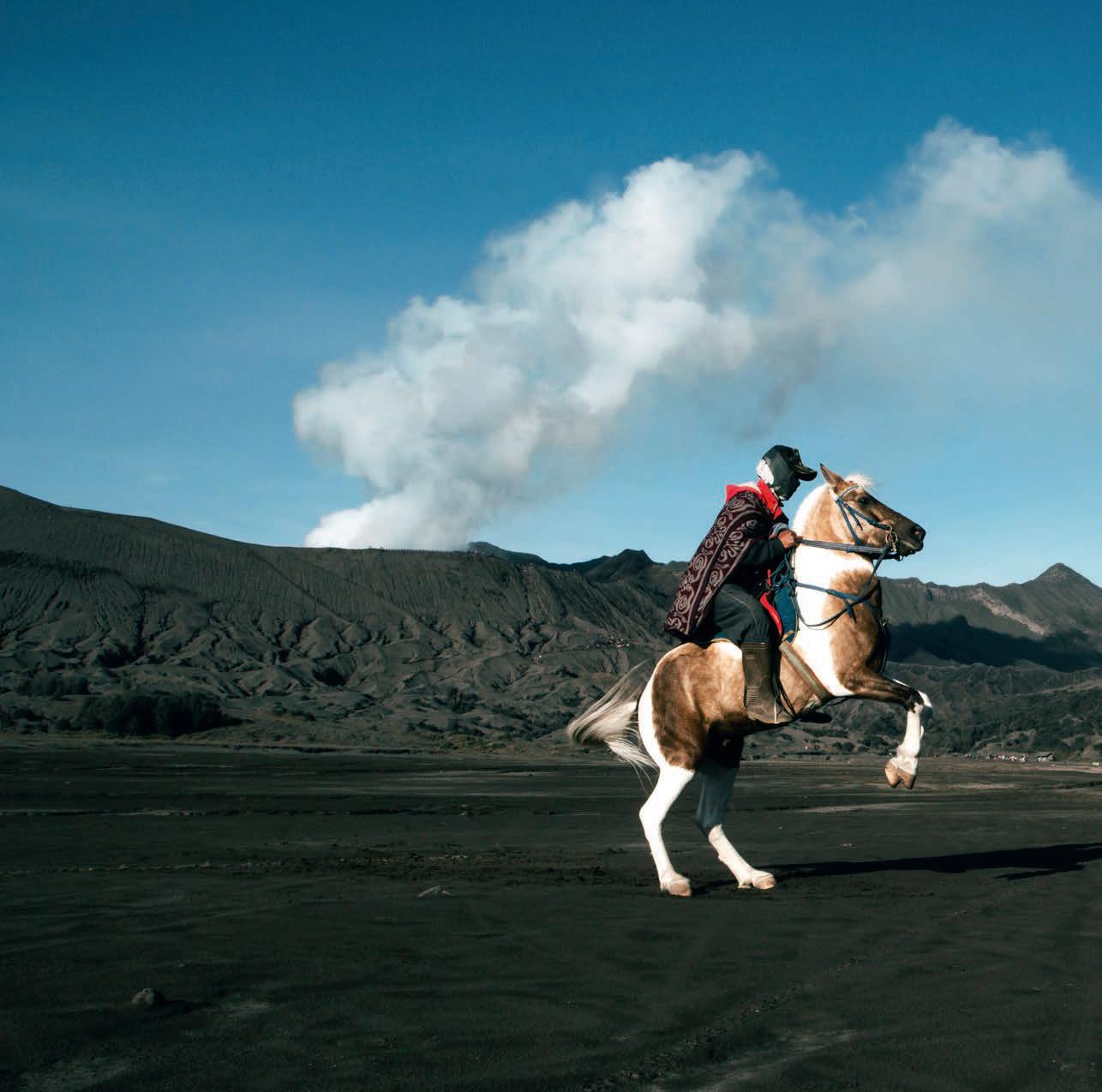
A Tenggerese horseman who lives in the shadow of the Mount Bromo volcano in East Java
FRAME OF MIND
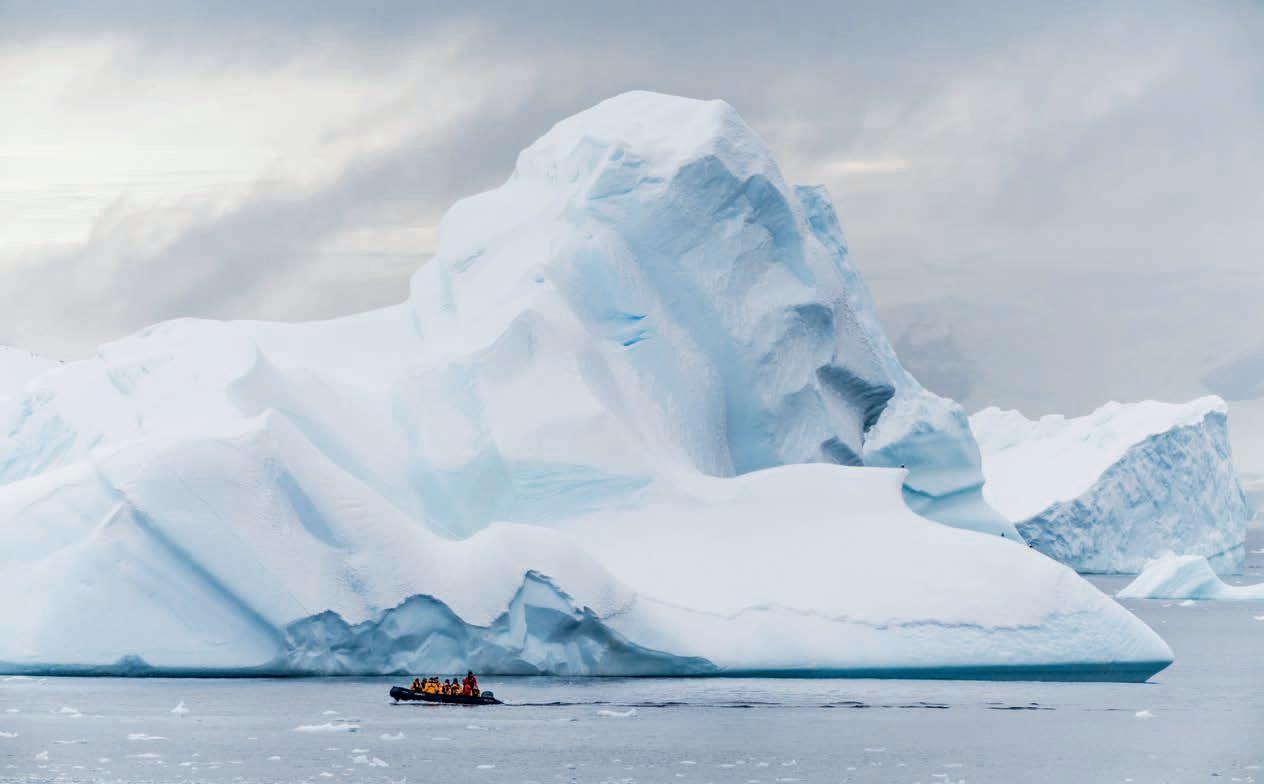
It wasn’t until he was back in his cabin that Fraser Morton saw it. He’d been out on deck for hours, camera rolling on a tripod, while he scanned the darkening Antarctic water for any sign of life. Nothing came. The rest of the crew had retreated from the cold long before he finally gave up and followed them in. He almost didn’t check the footage that night. When he did, there they were: 13 humpback whales, breaching in sequence, wild and enormous and utterly indifferent to the lens pointed at them. “One of the best shots I’ve ever got in my life,” he says. “And I completely missed it.”
Waiting is just what photographers do. For the perfect moment, the magical light, the shot that justifies the cold hours and early starts. There are no guarantees. You put yourself in the right place and hope the right time comes along. And sometimes, like that night, you don’t even know it happened. It’s a paradox that Morton knows well. Born into an Edinburgh-based clan of journalists, curiosity was the family trade. His first piece was published in the local paper aged 13. Stints at Fox and ESPN followed before a deepening love of nature began to shape his choices. Work for National Geographic and the BBC eventually led to the founding of Far Features, a multimedia production company specialising in environmental documentary and global health. Now, having filmed on all seven continents and won awards for his work, Morton has found his niche. “Documentary is where I found my calling,” he says. “It’s the human relationship with the natural world that I’m really interested in.” It’s a philosophy that shapes his whole approach to capturing images that move and impress in equal measure. For Morton, the perfect shot begins with a mindset. It’s not about months camped out on the forest floor (although that can happen), but creating a human connection with his subjects and his environment.
It’s not an entirely original thought. Morton acknowledges the influence of Henri Cartier-Bresson in his work. The father of modern photojournalism, and co-founder of Magnum Photos in 1947, Cartier-
“Documentary is where I found my calling”
Bresson pioneered the concept of the ‘decisive moment’. A combination of the head, the eye and the heart that reacts in an instant to capture something ‘true’. It’s this idea that runs through everything Morton does. So often, he is not hunting for the perfect shot but being present enough to trap it when it arrives.
“We don’t take an image. We make an image,” he explains. “You’re not extracting something. Artificial intelligence can create technically perfect images at extraordinary resolution now, so the difference has to be in the connection between the person creating the shot and the subject being documented. It has to feel personal.”
For Morton the story behind the image matters as much as the image itself. It’s a trend that is increasingly shaping his industry. More and more, sound, text and multimedia elements are folded around still photographs. The frame, it turns out, was never really the whole point.
In an age of polished, filtered and AI-enhanced scroll fodder, there is something instinctively compelling about a real photograph. Perhaps it’s the imperfections. Mostly, though, it’s the feeling.
“Photography is not going away,” he says. “People are craving these human forms of expression more than ever. There's a boom in writing
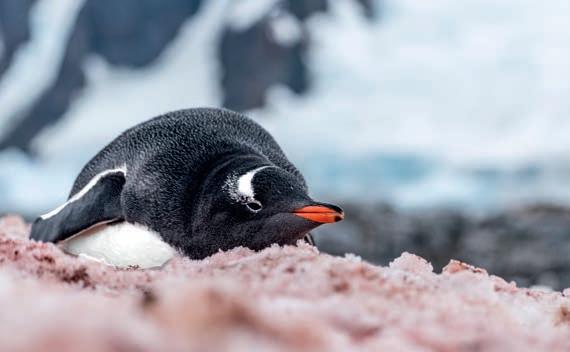
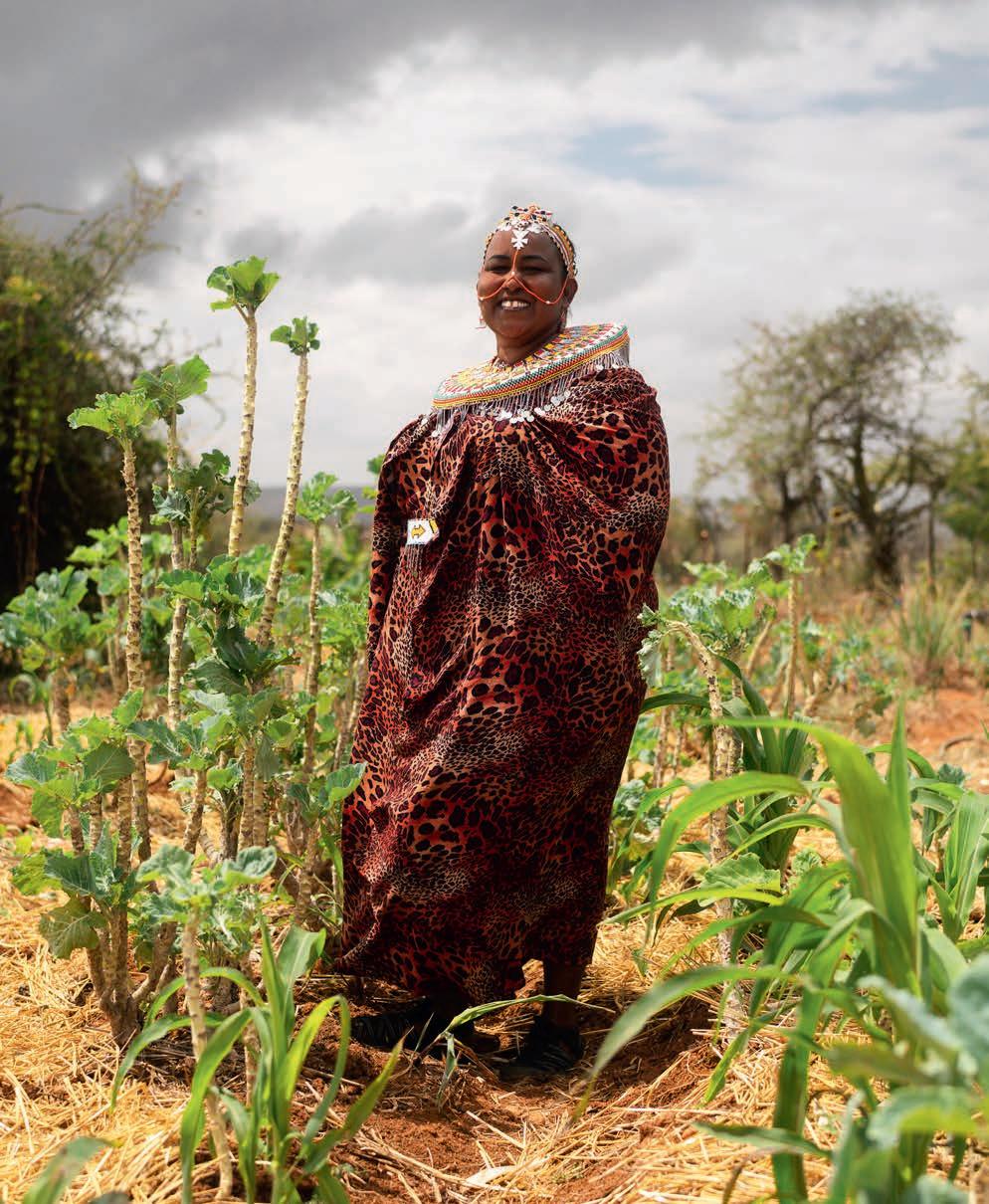
Above from left: A gentoo penguin in Antarctica; A champion for women’s empowerment in Kenya, Ellie Modesta
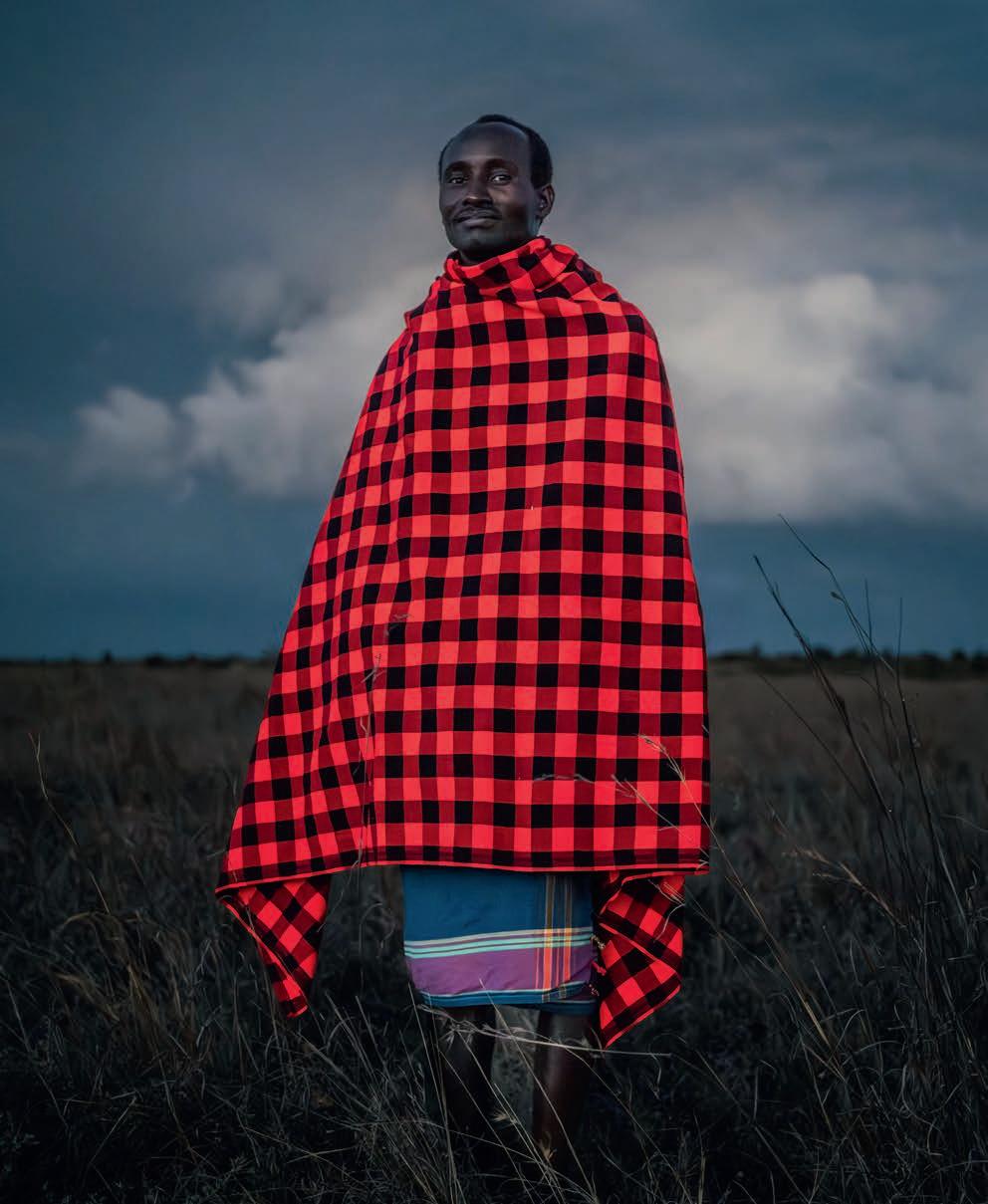
Above: Massai wildlife guide, Resin, just after sunset at the Loisaba Conservancy in Kenya
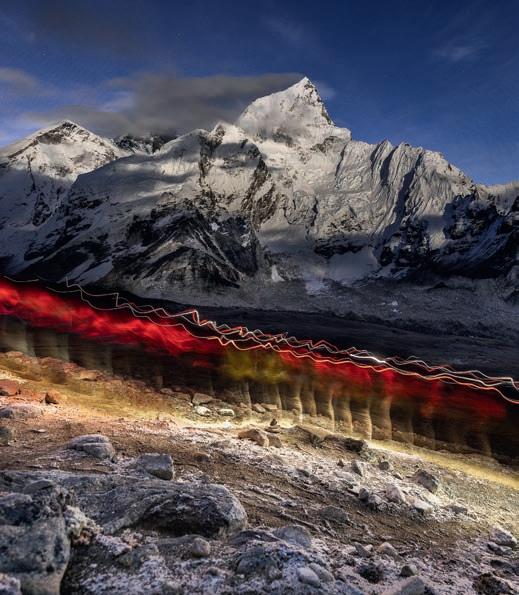
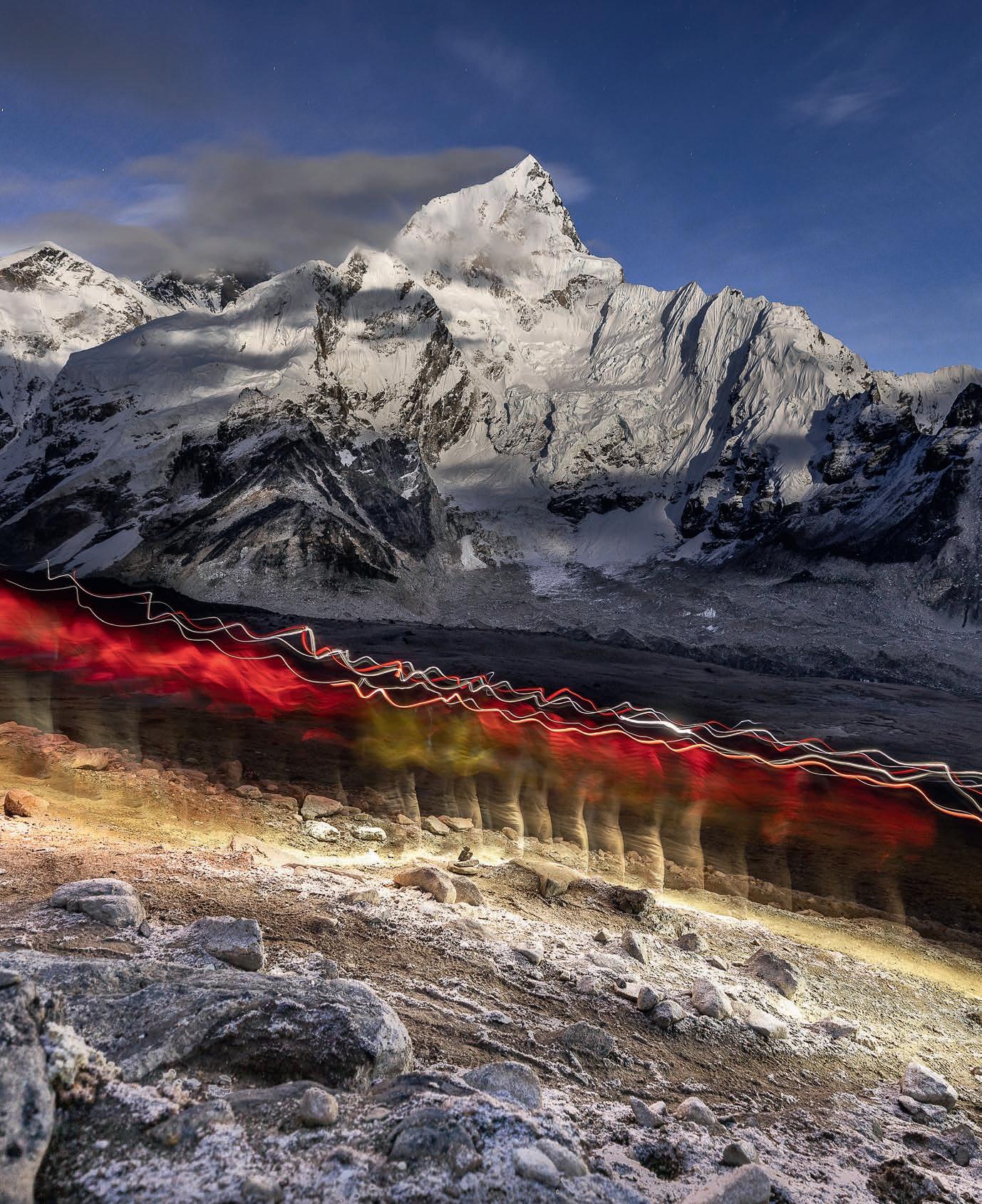
Below: Hikers wearing headlamps pass in front of Nuptse peak en route to the summit of Kala Patthar in Nepal
walking tours and drawing safaris and photography holidays right now, which I find really interesting. People want craft.”
And craft, Morton points out, is available to everyone. Not just professionals with long lenses and expedition budgets, but anyone with a phone and the willingness to think a little differently about what they're doing. “My technical skills have finally caught up to my taste,” he says, “I'm finally starting to really like my work.”
It’s a process of practise and muscle memory that’s taken him over two decades to perfect. The good news is it doesn’t have to take you so long. The single biggest shift, Morton says, is also the simplest. Stop thinking about what you’re pointing the camera at and start thinking about the light surrounding it. “Learning to paint with light may sound like a cliché,” he concedes, “but once you understand what’s happening with the light and where to position your subjects in relation to it, your photographs will immediately improve.”
In practical terms, that means two key things above all else: timing and direction. “The best time of day to shoot is blue hour and golden hour,” he says. “Blue hour is the hour just before the sun breaks the horizon and the hour after sunset. Golden hour is the last hour of daylight. If you want your images to look incredible, go out and shoot at those times.”
When it comes to direction, however, the answer may feel counterintuitive. While most people have their subjects face the light, Morton suggests doing the opposite. “Try putting your subject between yourself and the light source. You get these really interesting silhouettes and a moodiness that can completely alter the image.”
Once you have fixed your lighting, composition is the next thing to consider. This, Morton says, is where most amateur photographers lose the shot they almost had. “Have a quick look at the rule of thirds,” he says. “It makes photographs much more interesting immediately. And try to put some foreground in your shot. Don't make the image too flat. Think about changing your perspective, maybe get down lower or above the thing you want to capture.”
“It’s an intense feeling walking past trees with fresh tiger claw marks”
The most common mistake, though, is almost embarrassingly simple to fix. “The thing I see most often that makes photographs look bad is cutting people’s legs off halfway,” he says. "Either push in for a close shot, from the waist up, or take two steps back and get the full body. Just that one thing would immediately improve most people’s holiday photographs immeasurably.”
Then there is the question of restraint. In an age of infinite storage and one-tap deletion, the temptation is to shoot everything and edit later. “I think we sometimes need to ask ourselves, ‘Do I need this?’” he says. “The camera is never going to beat the human experience of watching the sun disappear over the horizon at the end of a perfect day. Sometimes it’s okay to just have the moment. Less is more. The images we’ll really cherish aren’t going to be photo 23 of 75 of the same shot. It’s going to be the one when your child was born. Or the people you met for an amazing evening. Go after the ones that are truly meaningful.”
Knowing the rules, of course, is one thing. Applying them when you’re on the trail of a story, out of your environment and a significant distance from your comfort zone, is quite another. “It can be a pretty intense feeling when you’re on foot, walking through thick bush, knowing a rhino could be anywhere. Or walking past trees with fresh tiger claw marks on the bark. You have this electric feeling running through you. But if you’re with people able to open these worlds to you, you’ll get the best shots of your life.”
Because, the final most important piece of the puzzle has nothing to do with cameras at all. It’s about meeting people and asking questions. Specifically, the local people who hold the keys to every environment worth photographing. “The best footage and stills I’ve ever got have come because someone told me about this thing I had to see,” he says. “When you connect with people, they’ll tell you where to go to see something incredible.”
The kit, he insists, matters far less than this mindset. Sure, there are advantages to a long lens over a mobile phone when it comes to shooting wildlife, but according to Morton: “The best camera is the one that’s ready when the moment arrives.”
Which brings us back to the Antarctic and the 13 whales he just didn’t see. Morton’s favourite image from that same trip shows the explorer and Antarctic ambassador, Sir Robert Swan, returning to the research vessel, the vast frozen landscape stretching out behind him. It wasn’t until later that Morton saw what the camera had caught. Emerging from an iceberg beyond Swan was something that resembled a face in the ice.
“I think it’s a magical photograph,” he says. “It just shows you that sometimes, even when you’re looking at something, you still don’t always see the whole picture.”
That, perhaps, is the real lesson. Not the rule of thirds nor the golden hour or the long lens versus the phone camera. But simply to slow down, look properly, and stay curious long enough for the world to show you something you weren’t expecting. J
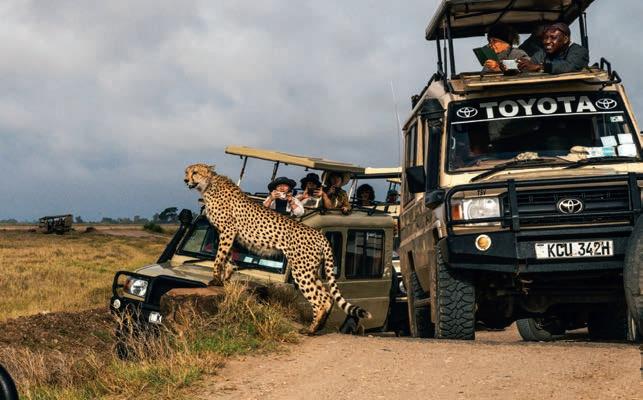
Below: A cheetah in Amboseli National Park, Kenya
SEE THINGS DIFFERENTLY
FRASER MORTON EXPLAINS THE RULE OF THIRDS
Once you know the rule of thirds you will never look at a photograph the same way again. Divide your image into nine equal rectangles using two horizontal lines and two vertical lines. The most visually compelling images place their subject at one of the four points where those lines intersect. This works because the human eye doesn’t naturally travel to the middle of an image first. It moves and explores. A subject placed dead centre can feel static, even confrontational. Shift that same subject to an intersection point and suddenly the image has a tension, depth or direction. The photograph becomes an experience rather than a record.
Most modern smartphones and cameras can overlay a grid directly onto the viewfinder or screen. Find it in your camera settings and switch it on. Then simply line up your horizon along one of the horizontal thirds rather than cutting the frame in half, or position your subject’s eyes along the upper horizontal line when shooting portraits. It takes about 30 seconds to learn and a lifetime to stop being grateful for.
Left: The glacier in Antarctica resembling the face of an old man
LOST THREADS
THE ENIGMA AND LEGACY OF JIM THOMPSON
HE ARRIVED IN BANGKOK AS A SPY AND BECAME THE MAN WHO REINTRODUCED THAI SILK TO THE WORLD. THEN JIM THOMPSON DISAPPEARED WITHOUT A TRACE
WORDS BY RYAN FOX THOMPSON
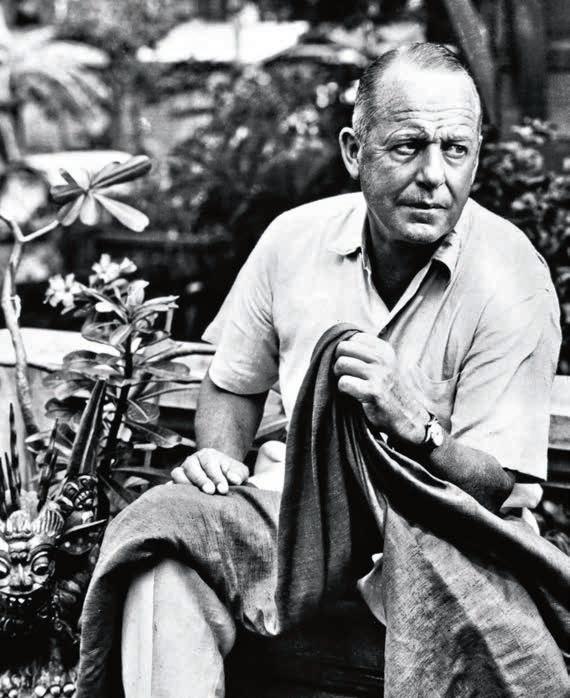
Left: The pioneering Jim Thompson
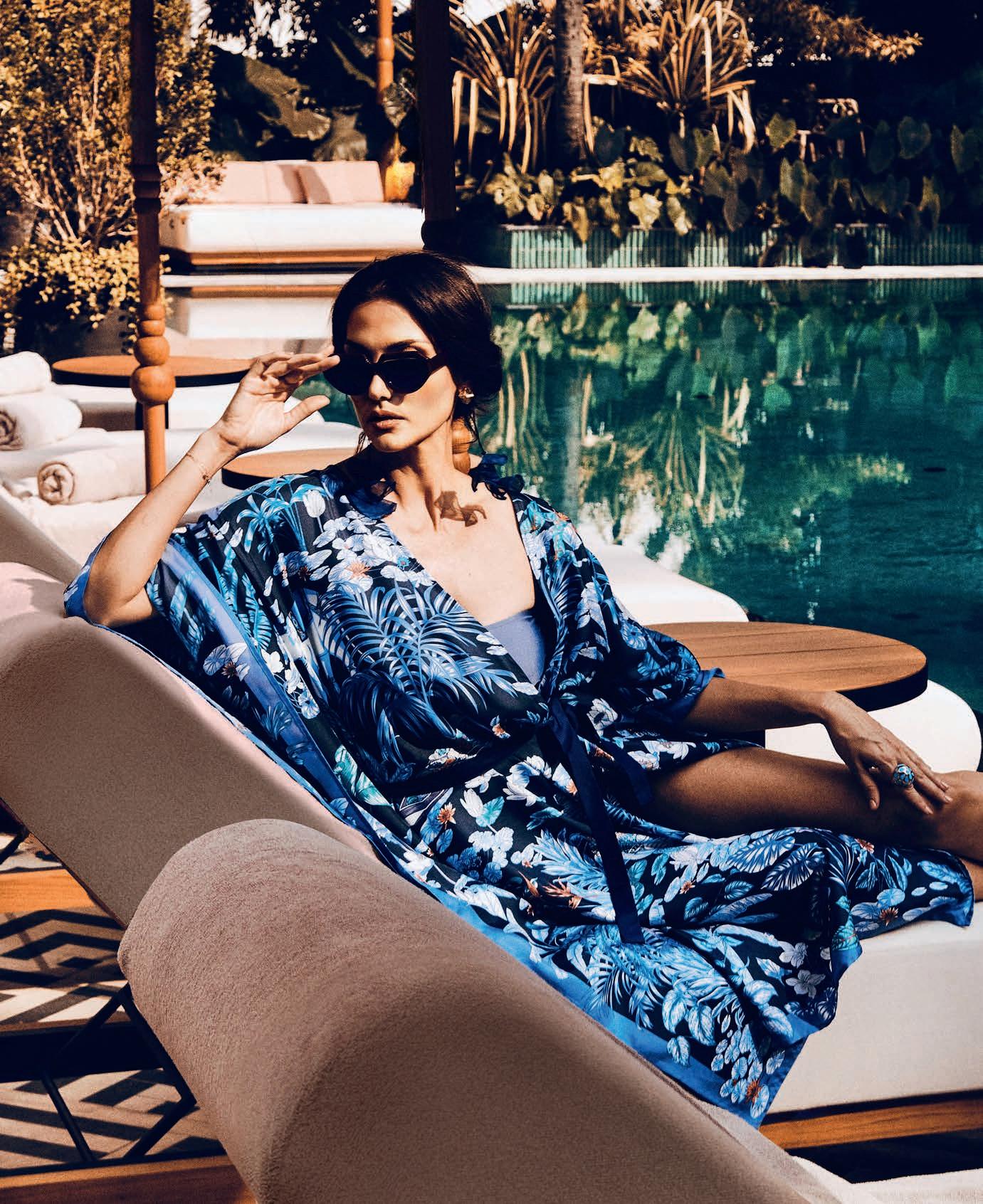
Right: A modern silk design by the Jim Thompson company
s anyone who has visited Bangkok in August can testify, the humidity is a monster – thick, oppressive and unrelenting. Yet for Jim Thompson, stepping off a military plane in August 1945, it felt like coming home. His initial plan for entry into Thailand was actually via parachute. He and a few others were to leave by plane from Calcutta with the intention to jump, but that plan was scuppered when the pilot discovered via the radio that the Japanese had surrendered. With the war over, Thompson instead found himself on the hot runway of Bangkok, met by an alien city teeming with the raw aftermath of war.
Everywhere was chaos and opportunity, punctuated by the shouts of street vendors and the chime of temple bells drifting up the Chao Phraya River that snakes through the city like a network of capillaries. Thompson, still only 39, had arrived as an officer of the Office of Strategic Services, the wartime precursor to the CIA. His mission was to front the Bangkok station and support the Free Thai Movement against Japanese occupation. He had no idea how Thailand would steal his heart.
Born James Harrison Wilson Thompson on 21 March 1906 in Greenville, Delaware, a life of inherited privilege awaited young Jim. His father was a successful textile manufacturer, a fact that would prove manifestly important even if Jim couldn’t see it at the time. In 1928, Thompson graduated from Princeton, where he was a keen rower and even represented the United States in sailing at the Amsterdam Olympics. He pursued architecture studies at the University of Pennsylvania, though he never finished the degree or passed his licensing exams. Nevertheless, that didn’t stop him designing elegant East Coast homes while in New York, and he became interested in stage and costume design while on the board
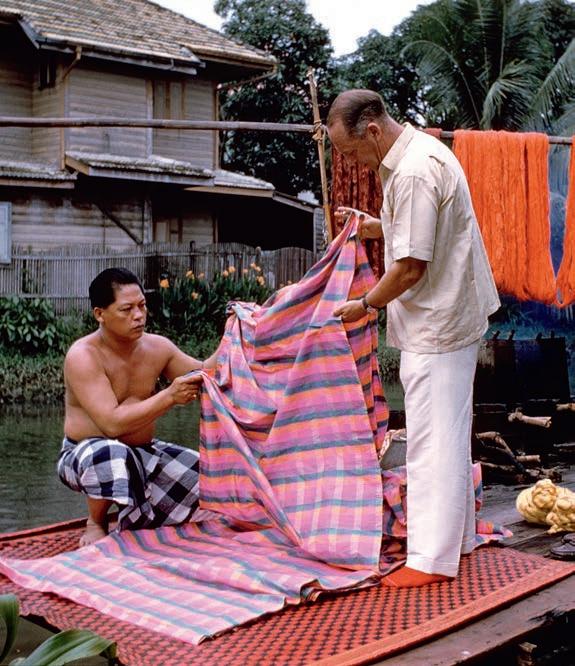
Below: Jim Thompson became known as ‘The Silk King’ Right: Jim Thompson silk remains hugely popular to this day
of the Ballet Russe de Monte Carlo. He was a ball of fearless energy and something of a wild card, but by his mid-thirties this scattergun approach to life had left him restless, a liberal among conservatives, and increasingly at odds with the buttoned-down expectations of the class he was born into.
War means a lot of different things to different people, most of them never good, but for the wide-eyed Thompson looking for direction in life, it gave him purpose. He served with distinction in North Africa and Europe, then found himself in Ceylon (now Sri Lanka) training for operations in Thailand. When Japan surrendered, Thompson was among the first Allied officers to reach Bangkok. When most soldiers returned home, Thompson felt drawn by the city’s multitude of opportunities, as well as a raucous community of expats who were making their own rules in this nascent world. He briefly tried restoring the Oriental
Hotel, but the partnerships with his associates soured. He learned during the restoration that the Thai silk industry was on its knees.
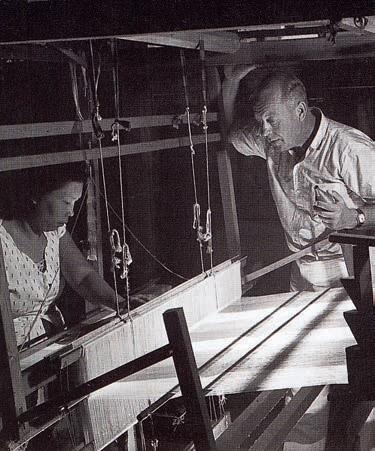
In the villages along the khlongs (canals) particularly Ban Khrua, home to Muslim Cham weavers, Thompson encountered a craft that had once been vibrant but was now fading. Traditional hand-loomed silk existed, yet production was small-scale, the colours muted, and the market almost entirely local. Imported fabrics dominated the industry and the amateurish Thai producers couldn’t compete with the economies of scale. With an architect’s eye and a textile heir’s instinct, Thompson saw an opportunity. In 1951, he founded the Thai Silk Company Limited with only $25,000 in capital, insisting the venture remain majority Thai-owned. He introduced brighter colours and bolder patterns while preserving the traditional weaving methods which made for a superior product. He paid weavers fair wages while keeping production cottage-based to ensure the highest quality of cloths. Behind the scenes, Thompson was using his connections to relentlessly market his silks to Western buyers.
It was a tough sell in the late 40s, but Thompson was like a dog with a bone. With a modicum of commercial improvements, the business was on a reasonable trajectory but, ‘reasonable’ was not a word that Thompson was satisfied with. In the end, serendipity proved the catalyst for the momentum Thompson was craving – designer Irene Sharaff chose Thompson’s silks for the costumes of Rodgers and Hammerstein’s 1951 musical The King and I, a hit on Broadway that turned Thai silk into a global fashion trend. By the mid-1950s, Thompson was shipping to couturiers and decorators worldwide, garnering the moniker ‘The Silk King’. If the silk industry was a small pond, it had just found itself a big fish that loved to make a splash. Thompson’s dinner parties in Bangkok were legendary, initially being candlelit gatherings at the Oriental Hotel where one might have a diplomat sat to the left and a Hollywood star to the right one night, with literary stars and Thai royalty on another. Thompson also collected Southeast
The industry found a big fish that loved to make a splash
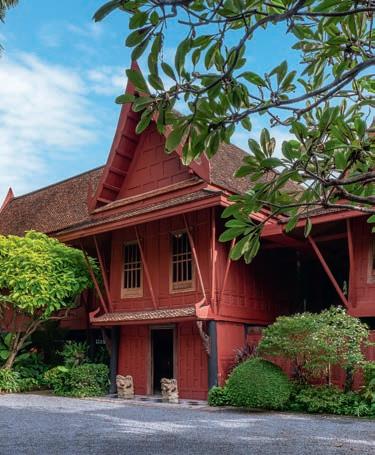
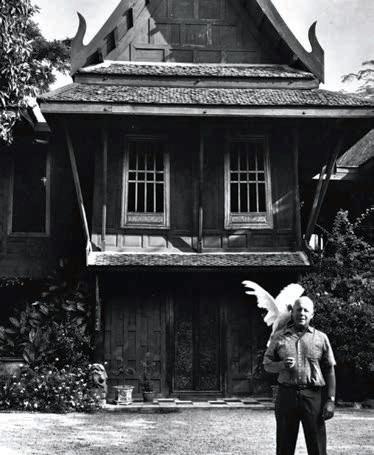
Asian art, from Ming porcelain and Khmer stone carvings to Thai Buddhist sculptures and Burmese lacquerware. In 1958, requiring a more substantial abode, Thompson’s architectural passion began to conceive a masterpiece. He acquired six traditional antique Thai teak houses, some of them more than a century old, from Ayutthaya, the second capital of the Siamese Kingdom, as well as from the weaving village of Ban Khrua itself. He had them dismantled, floated down the river, and carefully reassembled on a beautiful plot beside a canal in what is now the Pathum Wan district of central Bangkok.
Thompson raised the entire complex on stilts for flood protection and ventilation, reversed many of the weathered interior wall
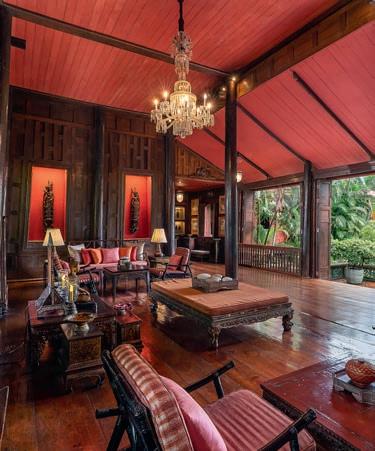
panels so their aged, carved beauty faced inward, and connected the separate houses into one flowing residence with a dramatic central indoor staircase, a bold Western touch in a culture where staircases traditionally remained outdoors. Buddhist monks blessed the completed house on 3 April 1959. Inside, the effect was nothing short of theatrical. The soaring living room, formed from the largest weaver’s house from Ban Khrua, opened directly onto the khlong with crystal chandeliers salvaged from old Bangkok
Thompson helped shape a modern Thai identity
palaces glittering above polished teak floors. Low Thai-style seating was draped in vibrant silks. The dining room featured two antique Chinese gaming tables pushed together to create a generous Western-style table.
Everywhere, Thompson’s extraordinary art collection brought even more drama to the space: Khmer stone heads gazed from niches, Ming porcelain glowed in cabinets, Burmese lacquerware and Thai Buddhist sculptures caught the light, while antique silk hangings told stories of Buddha’s life and Vessantara Jataka tales. The house felt both intimate and grand, a lived-in museum that remains one of Bangkok’s most evocative landmarks – a quiet, teak-scented rebuke to the glass-and-steel skyline that has grown up around it.
For all his business acumen and ebullient socialising, Thompson was an intensely private man which inevitably led to the grinding of the rumour mill. The notion that he maintained quiet ties to American intelligence agencies as he built his silk empire was a common one. After all, he was a powerful American ideally positioned during the tense years of the Cold War and the early stirrings of conflict in Vietnam. Some even said he had sympathies for the communists. On 24 March 1967, Thompson flew to the Cameron Highlands in Malaysia for an Easter weekend with old friends. The party included his close companion Constance ‘Connie’ Mangskau and their hosts, Singaporean chemist Ling Tien Gi and his American wife Helen. They stayed at a cozy Tudor-style cottage surrounded by luscious tea plantations and very dense jungle. Cool mountain air and hiking trails in all directions offered a welcome escape from Bangkok’s pressure cooker and gave Thompson the chance to unwind in an environment that made him feel alive.
The group attended morning service on Easter Sunday at All Souls’ Church. After enjoying a casual picnic lunch, Thompson announced that he was going for a walk, which was not out of the ordinary by any means. Despite being very social, Thompson was fond of his own company and an experienced hiker. Seeking an afternoon of solitude in the jungle did not raise any eyebrows as he set off down
the access road around 1:30pm. He was seen briefly about 2km away near Jalan Besar. A cook at a nearby mission bungalow spotted him around 4pm. Then nothing. When he had not returned by nightfall, concern turned to alarm. Over the following days and weeks, more than 500 people, including Malaysian police, army trackers, Orang Asli indigenous guides, Gurkha soldiers, British servicemen, and even mystics and psychics combed the rugged terrain. Bloodhounds were brought in. Helicopters hovered overhead. Rewards were offered. No trace of Thompson was ever found: no clothing, no footprints, no sign of struggle. He had left behind his cigarettes, lighter, pills for a gall-bladder condition, wallet and passport at the bungalow. It was as if the jungle had simply swallowed him up.
It wasn’t long before the rumour mill found some new gears. Communist insurgents from the Malayan Emergency must have kidnapped him. Sore business rivals in the cut-throat silk trade had surely taken him out. It was a CIA extraction gone wrong, or the intelligence agency had grown fearful of Thompson’s influence in the region and decided to nullify it. Some were more pragmatic – it must have been a tiger attack, a fall into an animal trap, or even a hit-and-run on one of the winding and notoriously dangerous mountain roads. Hopes were briefly raised in 1985 when a small collection of bone fragments were discovered in a shallow grave near the busy resort town of Brinchang, but they were never conclusively linked to Thompson, or even declared human remains for that matter. Further muddying the story is the fact that the fragments have since disappeared during an office move, preventing any DNA testing. In 1974 a Thai court declared Thompson legally dead some seven years after his final fateful hike. Six months after
He was a conduit between worlds during a time of seismic change
his disappearance, his sister Katharine was beaten to death in her Delaware home – a crime that was never solved. And four years after that, her son Harrison committed suicide. The conspiracies continued apace.
Jim Thompson was a real-life Le Carré character – a conduit between worlds in a time of seismic political and cultural change. In reviving the Thai silk industry he helped shape a modern Thai identity that celebrated its own craftsmanship on the global stage. Visitors to Bangkok can still feel that legacy. Stroll along the shaded paths near the Jim Thompson House or glide along the Chao Phraya aboard a river taxi, and you can sense the same palimpsest of a city that once captivated a restless American maverick. J
Left: A timeless Jim Thompson silk creation Clockwise from right:
The extraordinary Jim Thompson House in Bangkok is made up of six antique Thai teak homes
CAPTURING THE SOUL OF SIAM
AN EXCLUSIVE COLLABORATION BETWEEN ANANTARA HOTELS & RESORTS AND THE ICONIC THAI SILK HOUSE JIM THOMPSON EMBODIES THE SPIRIT, ENERGY AND HERITAGE OF THAILAND
WORDS BY RYAN FOX THOMPSON
When Jim Thompson first arrived in Thailand in 1945 he discovered beauty among the chaos: the extraordinary potential of Thai silk. The American entrepreneur recognised the talent and craftsmanship in the local weavers and artisans, while at the same time being prescient to a world rapidly opening up to international trade. Thompson revived a craft on its knees, and elevated the bold colours and intricate patterns of Thai design to a new global audience of fashion designers and tastemakers. Not only did he succeed commercially, he reinvented Thai silk by weaving together heritage, artistry and innovation in every cloth.
Today, that enduring legacy finds a new expression in Soul of Siam, an exclusive collaboration between Anantara Hotels & Resorts and Jim Thompson, created especially for Anantara’s properties in Thailand. Launching in September 2026, the collection perfectly captures the essence of the kingdom in a succinct edit of nine menswear and womenswear pieces, from silk scarves and pocket squares to kaftans, pouches, caps and a beach
bag. Moreover, each item has been designed with the modern traveller in mind, offering both form and function no matter where you find yourself in the world.
The collection is anchored by the bespoke Soul of Siam print, inspired by the rich textures and rhythms of Thai life. Its delicate illustrations draw on unique temple architecture, mythical guardians and the kingdom’s bountiful tropical flora, echoing scenery that once inspired Jim Thompson to lace up his boots and hike for days. Rendered in a deep, dark blue palette, the aesthetic is both timeless and contemporary, seamlessly blending into any wardrobe. The wrap kaftan, crafted from stunning 100% silk, is a key piece that emphasises this versatility, draping fluidly over the body with a relaxed silhouette designed for effortless transitions from day to night. The classic silk scarf and pocket square, also in pure silk, showcases the Soul of Siam motif in richly detailed compositions.
Complementing these are pieces crafted with the rhythm and realities of modern travel, like the cotton Capri Beach Bag and the Lotus and Cactus Pouches for cosmetics, technology and small essentials. Both pouches
An enduring legacy finds a new expression
are available in the signature print or in understated dark blue. They slip into carry‑ons and day bags, making them practical keepsakes long after the stay ends. The Origami Elephant Cap, finished in dark blue and with an embroidered elephant (one of Thailand’s most enduring cultural symbols) adds a nod to local heritage, symbolising strength, wisdom and good fortune.
The collaboration invites guests to step into Jim Thompson’s world, where silk became a bridge between Thailand and the wider world. With Soul of Siam, that story continues, this time, in the hands and wardrobes of Anantara’s most stylish guests. J
This
Opposite page: The Soul of Siam print
page, left to right: The new range includes cosmetic pouches, caps with an elephant logo and beach bags
A TASTE OF ITALY
FROM TUSCAN SOUP TO SICILIAN STEW, WE SELECT THE DISHES THAT CAPTURE THE ESSENCE OF ITALIAN GASTRONOMY
WORDS BY ANDY CLARKE
PHOTOGRAPHY BY JONATHAN GREGSON
There are few phrases more enticing, or misleading, than ‘Italian food’. It can suggest one table, one appetite, one singular sunlit notion of tomato, basil, pasta and olive oil. In truth, Italy eats in dialects. In Lombardy, butter, rice and saffron speak of northern discipline and old trade routes. In Venice, the lagoon brings fish sharpened with vinegar and softened by time. In Tuscany, stale bread
is transformed into an unlikely virtue. Further south, volcanic soil, citrus, seafood and the sweet-sour inheritance of Sicily modulate the language again. What follows is not a definitive map, but a journey through seven regions where geography, history and appetite meet on the plate. And a few pointers for how you can recreate the best of the country’s storied cuisine in your own kitchen at home.
RIBOLLITA TUSCANY
Tuscany wasn’t always as desirable as a modern visitor to Porta Rossa Hotel Firenze, Colbert Collection might expect. Though romanticised, most food here is based on peasant traditions – so-called cucina povera, or ‘food of the poor’. Do not be put off. The ingenuity required to make staples go a long way has created some of Italy’s most enduring and unforgettable dishes. Spells of poverty meant leftovers were repurposed into new meals. Law also shaped the cuisine – Tuscan bread is famously unsalted, it is often said, to avoid historic taxes. Ribollita, the dish, sums up this tradition neatly. Meaning ‘reboiled’, it incorporates beans, peppery cavolo nero leaves and olive oil from the abundant local crop.
Soften onion, carrot, celery and garlic in the oil, aiming for sweetness. Cannellini beans go in next, with cavolo nero, cabbage or chard, and perhaps potato. Some cooks mash part of the beans to give the soup body. A little tomato, then vegetable stock or bean cooking water, and simmer down until your windows steam up. Here, stale unsalted bread is a chunky, absorbent virtue. Serve alongside a generous glass of Chianti Classico, and keep enough aside for tomorrow – as the name implies, it works even better ‘reboiled’.
SARDE IN SAOR VENETO
The story of Venice – and by extension Venetian cuisine – is one of preservation, and deep ties to the sea. The lagoon is a larder, and long centuries of boats arriving brought spices, dried fruit and myriad foreign flavours into the city’s kitchens.
Cicchetti, the small snacks served in bacari, Venice’s traditional wine bars, will be familiar to anyone who has wandered the city at aperitivo hour. Here, evening meals can arrive as a succession of savoury bites enjoyed over sparkling conversation, with a glass in hand.
Sarde in saor captures this best: fried sardines, layered with soft onions, a good splash of vinegar, pine nuts and raisins. If you’re cooking it at home, good advice is to prepare sarde in saor well ahead of serving – a day before, even. Don’t skimp on the vinegar, give the onions time to slump into full sweetness before their liaison with the fish.
Serve at room temperature, with perhaps baccalà mantecato as an ideal partner dish – creamy salt cod, served on polenta. And a nice Soave to keep the conversation flowing. Next time you’re lucky enough to be in Venice, push the boat out and stay at NH Collection Grand Hotel Palazzo dei Dogi.
RISOTTO ALLA MILANESE LOMBARDY
Think of Milan and your mind turns to glamour underpinned by industry, tradition, technique and rugged discipline. This is a city that likes things executed properly: from cuffs to courtyards. Cooking here in the Lombardy region is not about the bright tomatoey zing, the sun-baked produce of the south. Lombardy’s signature dish – Risotto alla Milanese – is a product of butter, rice, marrow, cheese. And very slow, very intentional stirring.
Opposite page: Ribollita was born in the rolling green hills of Tuscany
This page, from top: A plate of sarde in saor; Avani Palazzo Moscova Milan Hotel; the saffron-coloured Risotto alla Milanese
Geographically and spiritually you’re closer here in temperament to Alpine and Mitteleuropean culinary traditions – think grazing cattle, chilly winters and the rice fields of the Po valley. However, Milan is also a historic trading city, hence the cosmopolitan inclusion of saffron, which brings a boujie glamour and gives the dish its golden hue.
Again, that elegance – the sort of elegance you encounter in town, at Avani Palazzo Moscova Milan Hotel – is arrived at through discipline. Warm stock is added gradually. The rice diligently stirred until it releases its starch. Then comes mantecatura, the finishing stage in which butter and cheese are folded through off the heat, creating the creamy emulsion that allows a proper risotto to move like a soft wave on the plate. Use Carnaroli rice, if you can get your hands on it, keep the stock hot, and take care not to drown it. Then finish off the heat with cold butter and Parmigiano Reggiano or Grana Padano. Pair with a chilled glass of Lugana from near Lake Garda, and a slice of Torta Paradiso, Lombardy’s delicate butter-rich sponge, which brings the meal to a suitably graceful close.
SPAGHETTI ALLE VONGOLE CAMPANIA
The Neapolitans are renowned for their intensity. As would anybody, perhaps, growing up in the vicinity of a famous volcano. Ironically, the death-dealing Vesuvius is also accountable for the fertile soils, and by extension the intensity of local produce, like the world-class zing of its tomatoes. Add that to a bay rich in clams, mussels, anchovies – plus Amalfi and Sorrento coasts giving rise to note-perfect lemon and citrus trees – and you can see why the region’s cooking is so direct and still feels abundant.
Sure, Naples is famous as the birthplace of pizza, but the city’s culinary genius hardly ends there. Spaghetti alle vongole reflects the best of Campania’s bounty. Gently heat garlic in olive oil, add the washed, intact clams, turn up the heat, cover and steam until they open with a flourish of oceanic aroma. Cook your pasta al dente, drain, then mix in with a splash of pasta water.
This is certainly not a reboiler – serve in all its steamy immediacy, with lemon zest or the smallest squeeze (don’t bully the clams, this is important) and a suitably citrussy glass or two of Falanghina to finish.
TAGLIATELLE AL RAGÙ EMILIA-ROMAGNA
From top to bottom:
It’s not for nothing that Emilia-Romagna is frequently referred to as ‘Italy’s pantry’. Even in a country with such profound culinary traditions, the region stands out as a peerless storehouse of countless world-class ingredients. Think Parmigiano Reggiano, prosciutto di Parma, mortadella, balsamic vinegar from Modena, handmade pasta – and, of course, the world-conquering sauces of Bologna.
Why such abundance? Emilia-Romagna stretches from the Adriatic coast and its access to prime Mediterranean seafood, to the Apennines in the south and up to the Po Valley in the north. That means fertile plains, dairy herds, pig farming, all manner of grains, and a plethora of techniques – ageing, curing, rolling, simmering. All the elements you need for tagliatelle al ragù
Ask 50 locals and you’ll get 50 subtle variations on the recipe. But the basics are this. Start with a soffrito – onion, carrot, celery, cooked slowly and patiently. Then add meat, commonly beef, with pork or pancetta for added richness. Watch it darken. Add a splash of wine and tomato, though with restraint – remember, tomato is the support act here, not the star.
Cook long, low and slow as the aromas fill the house. As for pasta, go with wide ribbons of tagliatelle, all the better to soak up the sauce. Serve with a good sprinkle of Parmigiano Reggiano and a glug of Sangiovese di Romagna if you like red, or a local dry Lambrusco. A little more distinctive, and more fun, its fizz and acidity are just the thing to cut through all that richness.
Orrecchiette con cime di rapa; Anantara Convento di Amalfi Grand Hotel is the perfect perch in Campania; a plate of tagliatelle al ragù with a side of red
ORECCHIETTE CON CIME DI RAPA PUGLIA
Puglia, the heel of Italy, is where things really go back to basics. A place of olive groves, durum wheat, dry-stone walls and a lengthy Adriatic coastline, its bitter greens, legumes, almonds and seafood make for a cuisine that may lean a bit towards the austere, but is nonetheless spectacular.
Orecchiette con cime di rapa expresses that spirit beautifully. Orecchiette means ‘little ears’ – pasta traditionally shaped by hand, thumbed into hollow bowls, all the better to catch oil, green flecks and tiny savoury morsels.
To prepare it home, boil the cime di rapa until tender, keeping the cooking water for the pasta. Warm olive oil with garlic, chilli and anchovy until everything softens and scents the pan. Cook the orecchiette until just firm, then toss together with a splash of pasta water until the greens cling to the little ears. Finish with more olive oil, and perhaps breadcrumbs for crunch. Pair with Verdeca or Fiano, or a crisp Primitivo Rosato if you want something sunnier. Green, salty, chewy, peppery and direct, it’s a concentrated expression of Puglia.
CAPONATA SICILY
As an island apart from mainland Italy, Sicily’s cuisine – like its culture – has a rich and multifaceted set of overlapping influences. There’s a dizzying array of Greek, Arab, Norman, Spanish and North African notes all tangled together in a unique blend that is often rustic, but always with a distinctly global outlook.
Take caponata. At heart, it’s akin to a vegetable stew. But the star ingredient is aubergine, with salty side notes of olive. Vinegar and sugar are not mere flavouring accents, but the central drama, pulling aubergine, celery, olives and capers into that unmistakably Sicilian balance of sweet, sharp and salty.
Fry or roast the aubergine until soft and golden, for a velvety texture that’s the key to a winning caponata. Soften the onion and celery, retaining some bite to the celery. Introduce sweet tomato, salty capers, briny olives.
Gradually add vinegar and sugar and taste until it’s sweet, sour and savoury at once. Fold in the cooked aubergine, with pine nuts for texture, and rest until the flavours merge into one glorious fusion. Winewise, Etna Bianco is a splendid nod to the island’s dark volcanic heart. For the best view of Sicily’s splendid contrasts, stay at NH Collection Taormina. J
Clockwise from above: Neapolitan classic spaghetti alle vongole; the sun-kissed shores of Sicily; caponata has the perfect balance of sweet and salty
SUNDOWNER KOH SAMUI
For a moment, all is calm. Palm trees nod in greeting as the Gulf of Thailand flicks highlights of amber and gold into an oil-painting sky. The infinity pool at Anantara Lawana Koh Samui Resort invites rest and reflection. On the peaceful northern end of Chaweng Beach, this is Koh Samui with a slower pulse: near enough to the island’s dining hot spots and after-dark buzz, far enough away to hear the whisper of the sea. This sublime beachfront retreat makes stillness an art form, with subtle Sino-Thai flourishes echoing Thai-Chinese traders, fishing boats and the old Nathon shop-houses that inspired its design. Later, dinner may mean seafood by the shore, Thai spice at CAY, or upscale plates at Tree Tops, where eight private salas sit in the canopy of a 120-year-old rain tree. For now, simply hold hands, take a beat and savour infinity.