CHARLOTTE MCCORQUODALE, PhD MINISTRY TRAINING SOURCE C A T H O L I C Y O U T H & Y O U N G A D U L T S 2 0 0 0 - 2 0 2 5




CHARLOTTE MCCORQUODALE, PhD MINISTRY TRAINING SOURCE C A T H O L I C Y O U T H & Y O U N G A D U L T S 2 0 0 0 - 2 0 2 5



Twenty-five years of research such as this is only possible with partners, collaborators, friends, and family who share a deep passion for faith, along with its transmission to young people. With heartfelt gratitude, I dedicate this final report—the culmination of all these years of work—to all of you whose steadfast support and love made it possible.
In concluding this longitudinal study on youth and young adult ministry leaders, I would like to dedicate this entire body of research to Mark D. Pacione, a dear friend and colleague who was taken far too soon.
For me, and for countless others, Mark illuminated the very heart of faith-filled leadership in and for the church by his example. He was a joy-filled, visionary, and faithful pastoral leader, serving youth and young adults with creativity and conviction—like the thousands of ministry leaders who have contributed to this study over the past twenty-five years. Thank you, Mark, and the many others in the Youth and Young Adult Ministry Communion of Saints.
Finally, I would like to thank the many ministry leaders who have participated in these studies over the years. You continue to inspire me through your tireless and faithfilled service on behalf of the young church, and I thank you for allowing me the privilege of helping tell your story.
Dr. Charlotte McCorquodale
©Ministry Training Source 2025
ISBN: 979-8-218-86266-4
Published by Ministry Training Source
Editor: Leigh Sterten
Graphic Design Consultant: Kim Madonia

Dr. Charlotte McCorquodale, Principal Researcher
This project began as my doctoral dissertation at Louisiana State University (LSU) I wanted to help others better understand the work of lay leaders who serve in Catholic youth ministry Over time, it grew into a twenty-five year commitment to research and a deep personal passion My hope has always been that these findings would offer dependable data for national and (arch)diocesan leaders as they make decisions about how to strengthen and sustain the pastoral leaders who share the Gospel with youth and young adults In this final report, I invite you to see a clear call to action Prioritize, invest in, and empower today’s pastoral leaders serving in this essential ministry, so that the next generation of leaders will be equipped to lead this vital mission of the church
In 2000, The Emergence of Lay Ecclesial Youth Ministry as a Profession in the Roman Catholic Church in the United States asked whether youth ministry leadership functioned as a profession Examining the classic markers of a profession (education, credentials, responsibilities, populations served, titles, benefits, salaries, and long-term intent), the research found both progress and gaps It called for fairer pay and benefits, consistent titles to support credentialing and compensation, increased diversity in leadership, and expanded formation pathways. Four studies followed the original study, including a large qualitative study in 2022-23, examining key aspects of how the leadership landscape had changed, along with the final 2024 study. All examined what these leaders believed about their role in leading the church’s ministry with youth and young adults, and every iteration has found joy-filled, resilient leaders, answering a vocational call marked by a passion for sharing faith with youth and young adults in varied contexts. They have to adapt ministry to cultural changes, serving as a bridge between the church and young people.
Now, a generational turn that began in 2016, has become more clearly defined in 2024. In 2016, Millennials became and remain (in 2024) the generation serving in the largest share of leadership roles in youth and young adult ministry. The differences of these leaders identified as we passed the baton to them in 2016, sparked the need for the qualitative study to understand the changes occurring. This turn continues in 2024, as Generation Z leaders joined the field and the sample. These younger generations of pastoral leaders are as passionate, called, and joy-filled as older generations, but they bring different perspectives impacting their views of ministry. Gen Z leaders, like their peers in other professions, come with clear expectations around salary, time, and worklife balance, which seem to be colliding with the demands of this ministry. The stakes could be high if these differences are ignored. Since 2000, the most common reason these leaders gave for why they would leave youth and young adult ministry was to transition into another ministry role (except for Boomers retiring in 2016). However, in 2024 not only did the reasons for leaving change substantially, but the intent to stay in ministry long-term drops significantly as well. In effect, youth and young adult ministry has been a partial feeder system for the Catholic Church’s wider ministerial workforce.
Other trends emerged in 2024. Formation is shifting toward approaches that are informal, relational, and self guided, rather than institutionally-led. (Arch)diocesan offices that support these ministries and ministers continue to decline. Leaders name people power as the top challenge, both finding volunteers and engaging youth and young adults. They also point to a strong need for innovation, especially as more ministries adopt small scale accompaniment. Consistent leadership that is well supported and well-formed is necessary for any ministry, especially one that is central to the church’s ministry with youth and young adults.

Thankyouforyourinterestinyouthandyoungadultministryandthosewholeadit.Hereareafew thingstohelpyounavigatethisreport.Eachofthereport’sfivepartsiscolorcoded.Youwillseethe samecolorbarbesidethemajorsectionsandsub-sectionswithinthatpart.
ThebestplacetostartisPartOnetounderstandthescopeoftheresearchandsample.Afterthat,if youneedtounderstandthebigpicture,youmaywanttoskiptoPartFivetoreviewtheconclusions. Thenworkyourwaybackthroughthefindings,focusingontheareasmostimportanttoyou, includingPartTwoonministerialidentityandformation,PartThreeonministeringwithyouthand youngadultstoday,andPartFourontherealitiesofbeingaministryleaderinthechurchtoday
Bishops,pastors,pastoralleaders,nationalministryleaders,formators,educators,andyouthand youngadultministrynetworksandorganizationsacrossthechurch,Ihopethisresearchprovidesyou aframeworktoreflectuponandexamineyour(localorbroader)contextbylisteningtoyourleaders andseeinghowthisalignswiththeirexperienceornot.Theirstories,alongwiththestorytoldinthe data,provideanopportunitytodiscerntogetherhowtomorefaithfullysupport,accompany,and strengthenthosewhocarrytheday-to-dayworkofministrywithyouthandyoungadults.
Currentpastoralleadersservingyouthandyoungadults,thankyouforyourfaithfulservice Iinvite youtoreflectonyourexperience,inlightofthisresearchandconsiderhowitcouldassistyouin illuminatingyourstoryforyouandothers.WhenIfinishedthefirstresearchstudyatLSUin2000,I oftensaidIwroteabooktoexplaintomydadwhatIdidforaliving.Ihopethishelpsyoudothe same,soothersbetterunderstandandsupportyourrole.Useittoadvocateforyourselfandothers inthefield,andmostimportantly,fortheyouthandyoungadultsweallserve.
The SFI is an index or score that has been scientifically developed to help organizations or companies understand the total diversity of a group rather than using only percentage changes when examining diversity. SFI considers the chance two people picked at random would come from different groups.
Standard deviation tells you how spread out a set of values is from the average. A small standard deviation means most values are close to the average (little variation in the group), and a large standard deviation means the values are more spread out from the average (a lot of variation in the group).
There are 3 typical ways to describe the average of data. The mean is what we usually call the mathematical average: you add up all the numbers and then divide by how many numbers there are. The median is the middle value or halfway (50%) point in a set of numbers after you line them up from smallest to largest The mode is the value that happens most often in a set of numbers or categories. It helps us understand the most common or popular value or what occurs most frequently (like the most common test score, shoe size, or survey answer).
A significance test is a reality check. It asks, “If there is really no difference, could I still see a result like this just by luck?”
Statistically significant means, “This results or findings are unlikely to be just luck or chance.” Basically, the claim is that a set of observed data are not the result of chance but can instead be attributed to a specific cause Many studies (including this one) use a value as a cutoff to test for the p value, typically at least .05, which is like saying, “There is less than a 5 percent chance we would see a result this strong if only random fluctuations were affecting the data.”
This report shares findings from a 25-year longitudinal research study on the population of pastoral ministers who lead ministry with youth and young adults in the Catholic Church in the United States. This is a longitudinal study of pastoral ministers, includes five national studies, beginning in 2000 and concluding in 2024. This report presents the final 2024 study, and, at key points, compares its findings with patterns across the twenty-five years of research, especially the 2022-23 qualitative study.
This research has always been rooted in the teaching of the United States Conference of Catholic Bishops (USCCB) on lay ecclesial ministry. As the framework and language of lay ecclesial ministry developed, the study incorporated that language and related categories. As Co-Workers in the Vineyard of the Lord emerged, those concepts also informed parts of the analysis, as reflected in the sections that follow, such as ministerial identity and call to ministry, formation, examining workplace issues, and ministerial leadership.
Generational perspectives also shape the analysis. The report includes revealing generational comparisons within the 2024 data and draws parallels across time, including comparisons between early 2000s Boomers+ and Gen X leaders with today’s Millennials and Gen Z leaders. These comparisons reveal patterns that would be missed in a single-year snapshot.
Part One provides an overview of the research methodology for the longitudinal study and the 2024 study. It explains sampling strategies and key considerations. It also includes infographics and information describing important populations within the 2024 sample, including generational cohorts, Hispanic and Latino leaders, and a breakdown of leaders serving young adults in the sample, those serving youth, and those serving both.

Since 2000, one finding that remains true is this ministry is not led only by people with roles, titled “youth minister” or “young adult minister” or with “youth” or “young adult” in their title. The 2022–23 qualitative research, A Study of Pastoral Leaders Serving Young Catholics: Examining Network Vulnerability Amidst a Web of Ministries, of 127 leaders confirmed that the network of leaders providing this ministry is wide and varied. The findings from that study shaped the 2024 study in both expansion of the sample and the focus of the questions. In 2024, the questions shifted from cataloging programs to examining the issues and realities that the 2022 to 2023 study identified, both for leaders and for those they serve. To strengthen the connection between the studies, quotations from the qualitative report are interwoven throughout this report. All quoted material is drawn from that report, used with permission, and therefore not individually referenced.
The 2024 sample was shaped in three primary ways both by the qualitative study and previous studies. First, the study more intentionally included leaders whose primary focus is ministry with young adults. Through collaboration with organizations such as the National Institute for Young Adult Ministry (NIYAM), Catholic Campus Ministry Association (CCMA), Young Catholic Professionals (YCP), and others there was a broad outreach to both paid and non-paid leaders. The 2022-23 interviews made clear that while their challenges often overlap with youth ministry leaders, they also face distinct realities. Young adult leaders have been included since 2000, since the merging of these ministries was already underway. For the 2024 study, these national organizations focused on young adult ministry promoted the research, which increased the number of young adult ministry leaders in the sample. As a result, most respondents in 2024 report serving young adults.
Second, the 2024 study more intentionally included faith formation leaders. Past studies included some leaders responsible for Confirmation preparation and broader faith formation. The 2022-2023 qualitative study suggested that faith formation leaders may be among the largest groups overseeing ministry with youth and young adults, especially in smaller parishes. Promotion of the survey through the National Community of Catechetical Leaders (NCCL) increased participation from faith formation leaders who also oversee youth ministry and or young adult ministry in their communities.
Third, the study more intentionally included Hispanic and Latino ministry leaders. Through collaboration with Instituto Fe y Vida, the research sought to increase participation to better reflect Hispanic and Latino leadership serving young Catholics. The final sample still does not fully reflect the reality of the young church in the United States, but this group has steadily increased across the years of the study. In 2024, Hispanic and Latino leaders represent 22 percent of respondents. Their findings are highlighted in dedicated sections and included in comparative analyses throughout the report.
INCREASE IN NONCAUCASIAN LEADERS WITH MORE BEING HISPANIC INCREASE IN NONCAUCASIAN LEADERS WITH MORE BEING HISPANIC 21% 21% 17% 17% 2 0 0 0 - 2 0 2 4
Culturally, the sample has increased in non-Caucasian leaders by 21%. However, the societal fractionalization index (SFI) showed a higher increase in diversity samples of 28% between 2000 to 2024
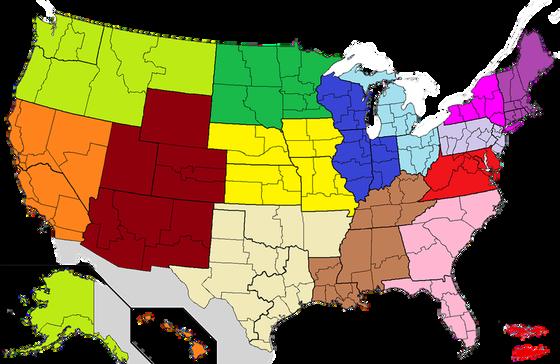
Geographically, the 2024 sample has the highest representation from the South (39%) and the lowest from the Northeast (15%), with Texas and California being the states with the highest responses. Respondents came from all U.S. Episcopal regions, representing at least 133 (arch)dioceses across the United States.
BECAUSE THE ITEM’S WORDING DIFFERED OVER TIME, WE AGGREGATED RESPONSES. 2025 EPISCOPAL
Full-time vs. Part-time Leader
Responsibilities
Full-time leaders (48%) were more than twice as likely to say that they had responsibility for ministry to the parents of the youth they serve than part-time leaders (22%).
Pastoral Juvenil Hispana
Hispanics are more likely to have responsibility for Pastoral Juvenil Hispana, young adult, liturgies, and communications, but less likely to be serving most other contexts, especially families, elementary children, or parents. These differences are reflected in their titles. Pastoral Juvenil Hispana, as a phrase in Spanish connotes Hispanic/Latino youth and young adult ministry, usually serving single young people between the ages of 16 and 30 in Spanish or in a bilingual setting. Young adult and adolescent members may be served together or separately with appropriate discernment and consideration of the opportunities and risks, with increasing numbers of parishes and dioceses opting to serve them mostly independently. The ministry may be hosted and organized by a parish or an ecclesial movement. From the Proceedings and Conclusions of the V National Encuentro of Hispanic/Latino Ministry, pp. 227-228




This part on ministry identity and formation explores two central aspects of these pastoral leaders. First ministerial identity, including why these leaders entered ministry, the people and experiences that most shaped them, and their current roles with youth and young adults. It also examines how long they have served, how long they plan to continue, and importantly why some have left ministry and when current leaders anticipate stepping away. Where relevant, the data is viewed through a generational lens. For example, one recurring pattern is the strong sense of a call to ministry as a vocation by all generations. By looking at ministerial identity across these dimensions, we can gain insight into how to inspire the next generation of leaders, how to sustain them in their roles, and how to foster long-term commitment to ministry.
Next, ministry formation is examined across several dimensions, including the types of formation received, areas of interest for future formation, and the perceived impact of insufficient formation on ministry effectiveness. Self-reported formation experiences are analyzed by generation, leadership status, and ministry role. The analysis also explores how leaders envision their future formation needs and compares these perspectives across groups.
“For me, it is a vocation. When I first got into youth ministry, I don’t think I ever saw current youth ministers who have been there for a year. The only thing I could think was, I want to be like them (youth ministers) when I grow up, I want to be like them. I think the reality is that God is calling me to do this right now, and I think I’ll do this until He calls me not to do it.”
For ministry why they entered ministry, leaders most often mention a personal call to ministry followed by invitation from a pastor, or other leader
For all ministry leaders, when asked why they first entered ministry, leaders most often mention a personal call to ministry (38%), followed by an invitation from a pastor, bishop, or other religious leader (23%).
CALL TO MINISTRY
Campus ministry leaders show strong Catholic formation roots, with many having attended Catholic elementary or high schools, and a large share also went to Catholic colleges. They were highly involved in youth ministry, leadership programs, and later in young adult ministry, the very group they now serve on campus. Among all leadership groups, Catholic school leaders are the most likely to have attended a Catholic elementary or high school.
Campus ministry strong formation roots, with many having attended Catholic elementary high schools, and share also went to Catholic They highly involved in youth ministry, leadership programs, and later in young adult the very group they now serve on campus. Among leadership groups, school leaders are the most to have elementary high
NEEDS OF YOUNG PEOPLE PARTICIPATION AS YOUTH EXAMPLE OF MENTOR BEING A PARENT

WHILE A CALL TO MINISTRY REMAINS THE TOP MOTIVATOR
WHILE A CALL TO MINISTRY REMAINS THE TOP MOTIVATOR
ACROSS GENERATIONS, GEN Z CITES THEIR OWN INVOLVEMENT AS YOUNG PEOPLE AS THE SECOND REASON, WHEREAS OTHER GENERATIONS NAME PERSONAL INVITATION.
ACROSS GENERATIONS, GEN Z OWN AS YOUNG PEOPLE AS THE SECOND WHEREAS OTHER GENERATIONS NAME PERSONAL INVITATION.


“It started when I got asked to go on a Life Teen night, I remember being so moved by watching young people pray in front of the Lord and the Blessed Sacrament. And hearing in my heart, I created you for this. From that moment on, every decision I made was getting the education I needed to be the best youth minister I could be, and I went on to do that.”
“It started when I got asked to on a Life Teen I people pray in front of Sacrament And hearing in my heart, I created you for this From that moment on, every decision I made getting I to I I that.”
In earlier phases of this research, ministry leaders were asked about the types of programs they implemented and how frequently these occurred. While such information was useful descriptively, it offered limited insight into how parish, school, or campus ministries might be shaped or guided. Findings from the qualitative phase, however, made clear that describing parish ministry through a standardized set of categories was not feasible given the wide diversity of approaches across contexts. Even when leaders use the same program names or models, they often adapt them significantly to meet local needs.
Recognizing this complexity, the focus of the survey questions shifted. Rather than cataloging programs led, it invited leaders to reflect on their lived experiences of ministry, particularly on how the lives and realities of youth and young adults are influencing their ministry practices. This analysis shows interesting insights into the degree their ministry is focused on accompaniment, which cultural realities impact ministry practice the most, and how leaders view their service with youth and young adults by examining their current beliefs and challenges.


“My goal is simply to accompany others toward God.”
Interviews from the 2022-2023 qualitative study show that accompaniment is no longer a novelty. It is central to how leaders describe their goals, joys, and even struggles to help others recognize and assess its ministry’s value. Leaders consistently frame accompaniment as discipling youth and young adults: assuring them they are loved by God through one-to-one relationships and small groups, with small-scale efforts prioritized over large programs. To gauge the broadness of this shift, leaders were asked:
Using a scale from 0 to 100, how much is your ministry focused on accompanying youth or young adults individually or in small groups, with less emphasis on age-specific large-group programming?
Relational accompaniment is gaining ground, but adoption varies widely. Responses cluster around the midpoint (mean 47, median 50, mode 50 on a 0–100 scale), indicating a moderate, not yet dominant, emphasis on individualized or small-group accompaniments. This may suggest many leaders are mid-transition from large-group models. Hispanic leaders have a slightly higher mean at 51 than all others.
However, the standard deviation (27) reveals a broad spread in responses with some leaders indicating very minimal engagement with this practice, while others are almost entirely focused on it. This wide distribution suggests that the church is still discerning about accompaniment as a ministry practice. Ultimately, this data reflects a ministry landscape in transition, one where accompaniment is gaining traction but not yet a universal focus.

“And so the biggest joy is accompanying those young people to encounter them to feel, to build relationships with them, and to see their journey, and to challenge them and just to really help them, first of all, to have a home, to make them feel at home. So, to help them feel that they belong, that they’re known, that they’re always welcome in our ministries, but also in general, the community or the parish ....”
Constant access to social and digital media and the instant gratification culture
overwhelmed, over-committed, over-scheduled, and over-driven culture
The most impactful grouping of issues identified reflects strong concern with external pressures—sports, digital distraction, and the broader culture—that compete with or erode faith prioritization in the lives of youth.

1 1

Competition with sports and other activities (mean=83)
3 3
Overwhelmed, over-scheduled culture (mean=75)
Digital media and instant gratification culture (mean=77)
4 4
Parents’ lack of faith or willingness to prioritize faith (mean=74)
“Hot button issues, including ministry with special needs youth, and especially young people dealing with gender identification issues, the LGBTQ+ young people.”
Faithrelevance,divorce,gender identity,LGBTQ+questions,and polarization,bothpoliticaland church,suggestmixedurgency acrossrespondents(mean scores=34to58).Theissuewith thelowestaverageisimmigrant familiesandlanguagebarriers (mean=30),thoughitshigh variability(SD=31)reflectsstrong relevanceinsomelocal communities.Forexample,the meanamongHispanic respondentswas48;31%ofthem rateditat70orhigher,and12% gaveitaratingof100.
Thenextsetofmoderately impactfulissuesincludesmental healthandwell-being(mean=61) andpost-pandemicrelationalskills (mean=54).Bothshowwide standarddeviations,indicatinga diversityofperspectives,possibly shapedbycontext,region,or ministrysetting.
“The real challenge is managing priorities. Youth are so busy and overwhelmed. The church would be lucky to be in the top five!”
This section of the report examines how supported ministry leaders feel in their roles by looking at four key areas of support and the ways other ministry responsibilities create challenges. It also presents an in-depth analysis of employment and leadership benefits especially compensation and salary by role—and offers recommendations for how to use these findings as a resource.

Direct support from pastors or supervisors is the strongest and most consistent support ministry leaders receive. Peer community and (arch)diocesan support follow, with nearly one-third experiencing them “almost or all of the time” and close to two-thirds when “often” is included, though some leaders still report partial or inconsistent engagement. Most concerning is how many leaders feel they must continually justify their role (33%), signaling a lack of institutional clarity, validation, and integration.
“No one understands the hours it takes. People must know and understand that it’s harder than they think. Second, others must understand that youth ministry is more demanding than one might think or than it looks. It is not just playing games with kids or taking them on trips. It is dealing with some real-life issues of things like depression and suicide, racism, gangs, and next-level bullying, while trying to help parents who are overwhelmed by all of it. That is before you get to the rest of your job, which is running programs and anything else the church might have you do to justify your salary.”
I FEEL SUPPORT FROM MY PASTOR OR SUPERVISOR
I HAVE A COMMUNITY OF MINISTERS FOR SUPPORT AND NETWORKING
I NEED TO JUSTIFY OR EXPLAIN MY ROLE TO OTHERS MY (ARCH)DIOCESE OFFERS ME EFFECTIVE SUPPORT AND RESOURCING
I HAVE EXPERIENCED MARGINALIZATION SERVING AS A LAY LEADER
ALMOST OR OF THE TIME
“I will say for us that I’ve been fortunate that the diocese has somebody that’s over the young adults and youth. And so, she has reached out, offered her support, and has tried to connect me with other youth ministers within our dioceses, to help with that support.”

This 25-year longitudinal study traces the population who leads the Catholic Church’s ministry with youth and young adults and how this largely lay, paid and volunteer workforce has been formed, resourced, compensated, and sustained over five studies (2000–2024).
Across the period, sustaining both the leaders and the ministry has grown more difficult. Ministry is shifting toward small-scale, accompaniment-based, discipleship-focused approaches, with growing agreement that impact should be judged by depth of transformation rather than head counts.
Formation is still seen as essential but has become less formal and less supported at the (arch)diocesan level. At the same time, “role creep” is a reality (youth, young adults, sacramental prep, and various parish-wide functions) without additional pay or training, squeezing out time for relational ministry. Recruiting adult mentors and engaging young people are top challenges. Pastor and minister partnership continues to be the decisive factor on the outcomes of ministry.
Tenure horizons are shortening, especially for younger leaders whose expectations around salary, time, and work–life balance differ from older generation, thus raising succession concerns. This ministry has long served as a formation ground and feeder system for the church’s wider ministerial workforce, so losing these leaders potentially affects more than youth and young adult ministry. A persistent concern is that leadership still does not reflect the racial and cultural diversity of the young church, particularly Hispanic and Latino Catholics.
The implication for bishops, pastors, (arch)dioceses, national organizations, and ministry leaders is clear: to sustain vibrant ministry and support the future lay leadership in the Church a response is needed. Research conclusions show the need for formalizing these roles, diversifying ministry leadership, correcting pay inequities, providing practical and affordable formation, being open to innovation in ministry, strengthening pastor and minister collaboration, and building shared infrastructure to research, track, and support the field, at all levels.


Throughout this multi-decade research, I’ve found metaphors helpful for naming that time period and reflecting it back to ministry leaders and the church. In 2000, I drew on William Rademacher’s work on lay ministry, invoking his image of a “great storm” blowing, the Holy Spirit, driving the church’s expanding ministries among lay people. In 2016, the metaphor shifted to “passing the baton” to the next generation, the Millennials who were then, and still are, the largest leadership cohort in this field. In 2022–23, we spoke of “a web of ministries amid network vulnerabilities,” recognizing that ministry with youth and young adults extends far beyond formal job titles, and that multiple pressures were straining both leaders and structures. After analyzing the 2024 data and integrating it with the longitudinal findings, I see while vulnerabilities persist, there is also greater strength, resilience, and clarity of direction emerging from these leaders’ reflections on the state of the ministry within these pages.
For this reason, stained glass seems a fitting final metaphor. Its joined pieces echo the interconnected web of ministries while each color and shape offers a distinct view. These panes often tell stories of both individuals and groups. In research, we do something similar: we listen to individual experiences and group patterns, and then we generalize, because that is how we learn. In ministry, we must particularize, because that is how we serve. Like light falling on a single pane, application is always local, always contextual.
Across every cohort in this study, these ministry leaders consistently negotiated realities of ministry identity, formation, support, and integration with the ministerial workforce. Despite distinct cultural challenges shaping ministry with youth and young adults over the years, their service remained faithful. In 2000, I concluded my dissertation with naming this paragraph, words that are, if anything, even truer twenty-five years later:
“The Next Generation of Lay Ecclesial Ministers. Regardless of what the twenty-first century holds for the Catholic Church’s ministry to youth, at least some of the young people currently engaged in Catholic youth ministry will become part of the Church’s ministerial leadership in the future. They may serve as clergy, religious sisters or brothers, or lay ecclesial ministers. One of the greatest gifts the Catholic Church can offer these young people who will form the next generation of lay ecclesial ministers is to deepen dialogue and understanding around this emerging ministerial role. The fruits of this gift will be experienced by today’s youth, whose path toward ministry will be more illuminated and defined than that of previous generations of lay ecclesial ministers, upon whose shoulders they will stand.(1)”
I hope that ministry leaders, pastors, bishops, and national organizations will reflect on these findings and consider how to build upon this research adapting it to diocesan and regional contexts so that twenty-five years from now, when a young scholar quotes this study in their own dissertation, they will find a church that has not stood still on these issues, but has moved forward with the same joy, passion, and resilience embodied by the ministry leaders described in these pages.
Dr. Charlotte McCorquodale
(1)The Emergence of Lay Ecclesial Youth Ministry as a Professionin the Roman Catholic Church in the United States p.108.
Good research is always rooted in collaboration, especially when studying a population as diverse and dynamic as those who oversee ministry for Catholic youth and young adults. These leaders reflect the wide range of people they serve. Their titles vary greatly. Their roles often include multiple responsibilities, from communications to building maintenance. Their ministry spans a wide spectrum of ages, from early adolescence to late young adulthood, and reaches across families and cultures.
Seeing this growing diversity with each study and being a small non-profit serving the church, over the past twenty-five years, I have found immense value in conducting this research collaboratively with national leaders and researchers. It has been our shared commitment to the growth and vitality of this ministry to young people and young adults that has sustained this work across the years. I am profoundly grateful for the collaboration of so many colleagues and organizations throughout this journey, especially the National Federation for Catholic Youth Ministry (NFCYM), which has been a part of every study and has published many earlier reports. Additionally, consultation and support from the United States Conference of Catholic Bishops (USCCB) Secretariat of Laity, Marriage, Family Life, and Youth, has been constant since the beginning.
I extend my heartfelt thanks to the 2024 Research Analysis Team for their generosity in reviewing data and contributing to the interpretation of findings and conclusions. I would especially like to acknowledge the insightful contributions of Ken Johnson-Mondragón both to the research analysis and report focusing on understanding the Hispanic and Latino respondents within the sample and within the broader context.
Ken Johnson-Mondragón
Researcher-Hispanic/Latino Sample
John Roberto
National Community of Cathechetical Leaders
Brigitte Burke
National Federation for Catholic Youth Ministry
Nicholas Stein
National Institute for Ministry with Young Adults
Paul Jarzembowski
USCCB: Secretariat of Laity, Marriage, Family Life, and Youth
Maria Parker
USCCB: Secretariat of Laity, Marriage, Family Life, and Youth
Kristin Ables Life Teen
Rosie Chinea Shawver Catholic Campus Ministry Association
Robert Feduccia EQSaints
Jamie Moloney National Association for Lay Ministry
Joe Weyers Ministry Training Source
Carol Wiget ProjectYM
Sr. Eileen McCann
Sisters of St Joseph of Carondelet, Albany Province
This report would not have come to fruition without the invaluable contributions of Cindy Heine, Kim Madonia, Leigh Sterten, Joe Weyers, Vikki Shepp, and Paul Dunn, to whom I extend my deepest gratitude.
WE WANT TO THANK AND ACKNOWLEDGE THE CONTRIBUTION OF THESE ORGANIZATIONS FOR PROMOTING THE RESEARCH TO MINISTRY LEADERS WITHIN THEIR MEMBERSHIPS OR COMMUNITIES OF PRACTICE.














ASSOCIATION OF GRADUATE PROGRAMS IN MINISTRY
IN CONJUNCTION WITH THE THE UNITED STATES CONFERENCE OF CATHOLIC BISHOPS’ SECRETARIAT OF LAITY, MARRIAGE, FAMILY LIFE, AND YOUTH
A SPECIAL THANK YOU TO THE MANY (ARCH)DIOCESAN LEADERS THROUGHOUT THE COUNTRY WHO SHARED THIS RESEARCH SURVEY WITH THEIR MINISTRY LEADERS. MORE RESPONDENTS LEARNED OUT ABOUT THIS RESEARCH THROUGH YOUR EFFORTS THAN THROUGH ANY OTHER OUTREACH METHOD.
A YOUTH MINISTRY LEADER REFLECTING ON THIS RESEARCH SAID, “THANK YOU FOR HEARING US, FOR TELLING OUR STORY.” A YOUTH MINISTRY LEADER REFLECTING ON THIS RESEARCH SAID, “THANK YOU FOR HEARING US, FOR TELLING OUR STORY.”
T h i s 2 5 - y e a r l o n g i t u d i n a l s t u d y t r a c e s t h e p o p u l a t i o n w h o
l e a d s t h e C a t h o l i c C h r c h ’s m i n i s t r y w i t h y o u t h a n d y o u n g
a d u l t s a n d h o w t h i s l a r g e l y l a y, p a i d a n d v o l u n t e e r w o r k f o r c e
h a s b e e n f o r m e d , r e s o u r c e d , c o m p e n s a t e d , a n d s u s t a i n e d o v e r
f i v e s t u d i e s ( 2 0 0 0 – 2 0 2 4 ) .
A c r o s s t h e p e r i o d , s u s t a i n i n g b o t h t h e l e a d e r s a n d t h e
a n d t h e
m i n i s t r y h a s g r o w n m o r e d i f f i c u l t . T e n u r e h o r i z o n s a r e
m i n i s t r y h a s g r o w n m o r e d i f f i c u l t . T e n u r e h o r i z o n s a r e
s h o r t e n i n g , e s p e c i a l l y f o r y o u n g e r l e a d e r s w h o s e e x p e c t a t i o n s a r o u n d s a l a r y, g r o w t h , a n d w o r k - l i f e b a l a n c e d i f f e r f r o m
s h o r t e n i n g , e s p e c i a l l y f o r y o u n g e r l e a d e r s w h o s e e x p e c t a t i o n s
a r o u n d s a l a r y, g r o w t h , a n d w o r k - l i f e b a l a n c e d i f f e r f r o m
e a r l i e r c o h o r t s , r a i s i n g s u c c e s s i o n c o n c e r n s . B e c a u s e t h i s
e a r l i e r c o h o r t s , r a i s i n g s u c c e s s i o n c o n c e r n s . B e c a u s e t h i s
m i n i s t r y h a s l o n g s e r v e d a s a f o r m a t i o n g r o u n d a n d f e e d e r
m i n i s t r y h a s l o n g s e r v e d a s a f o r m a t i o n g r o u n d a n d f e e d e r
s y s t e m f o r t h e c h u r c h ’s w i d e r m i n i s t e r i a l w o r k f o r c e , w e a k e n i n g
s y s t e m f o r t h e c h u r c h ’s w i d e r m i n i s t e r i a l w o r k f o r c e , w e a k e n i n g
t h i s p a t h w a y a f f e c t s m o r e t h a n y o u t h a n d y o u n g a d u l t m i n i s t r y.
t h i s p a t h w a y a f f e c t s m o r e t h a n y o u t h a n d y o u n g a d u l t m i n i s t r y.
A p e r s i s t e n t c o n c e r n i s t h a t l e a d e r s h i p s t i l l d o e s n o t r e f l e c t
A p e r s i s t e n t c o n c e r n i s t h a t l e a d e r s h i p s t i l l d o e s n o t r e f l e c t
t h e r a c i a l a n d c u l t u r a l d i v e r s i t y o f t h e y o u n g c h u r c h , p a r t i c u l a r l y H i s p a n i c a n d L a t i n o C a t h o l i c s .
t h e r a c i a l a n d c u l t u r a l d i v e r s i t y o f t h e y o u n g c h u r c h , p a r t i c u l a r l y H i s p a n i c a n d L a t i n o C a t h o l i c s .
T h e i m p l i c a t i o n f o r b i s h o p s , p a s t o r s , ( a r c h ) d i o c e s e s , n a t i o n a l
T h e i m p l i c a t i o n f o r b i s h o p s , p a s t o r s , ( a r c h ) d i o c e s e s , n a t i o n a l
o r g a n i z a t i o n s , a n d m i n i s t r y l e a d e r s i s c l e a r : t o s u s t a i n v i b r a n t
o r g a n i z a t i o n s , a n d m i n i s t r y l e a d e r s i s c l e a r : t o s u s t a i n v i b r a n t
m i n i s t r y f o r y o u n g C a t h o l i c s , t h o s e i n l e a d e r s h i p n e e d t o
m i n i s t r y f o r y o u n g C a t h o l i c s , t h o s e i n l e a d e r s h i p n e e d t o
c o n s i d e r f o r m a l i z i n g t h e s e r o l e s , d i v e r s i f y i n g m i n i s t r y
c o n s i d e r f o r m a l i z i n g t h e s e r o l e s , d i v e r s i f y i n g m i n i s t r y
l e a d e r s h i p , c o r r e c t i n g p a y i n e q u i t i e s , p r o v i d i n g p r a c t i c a l a n d
l e a d e r s h i p , c o r r e c t i n g p a y i n e q u i t i e s , p r o v i d i n g p r a c t i c a l a n d
a f f o r d a b l e f o r m a t i o n , b e i n g o p e n t o i n n o v a t i o n i n m i n i s t r y,
a f f o r d a b l e f o r m a t i o n , b e i n g o p e n t o i n n o v a t i o n i n m i n i s t r y,
s t r e n g t h e n i n g p a s t o r a n d m i n i s t e r c o l l a b o r a t i o n , a n d b u i l d i n g
s t r e n g t h e n i n g p a s t o r a n d m i n i s t e r c o l l a b o r a t i o n , a n d b u i l d i n g
s h a r e d i n f r a s t r u c t u r e t o r e s e a r c h , t r a c k a n d s u p p o r t t h e f i e l d .
s h a r e d i n f r a s t r u c t u r e t o r e s e a r c h , t r a c k a n d s u p p o r t t h e f i e l d .