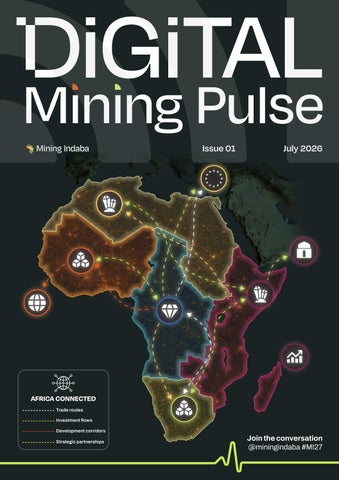
Capturing the Pulse of African Mining
Africa’s mining future will not be shaped by a single project, policy or discovery. It will be shaped by the conversations, decisions and partnerships that connect them.

CHANEL BURKE
Senior Communications Manager Mining Indaba
New investment, emerging technologies, evolving policies and stronger partnerships are reshaping how the continent unlocks its mineral wealth and creates long-term value.
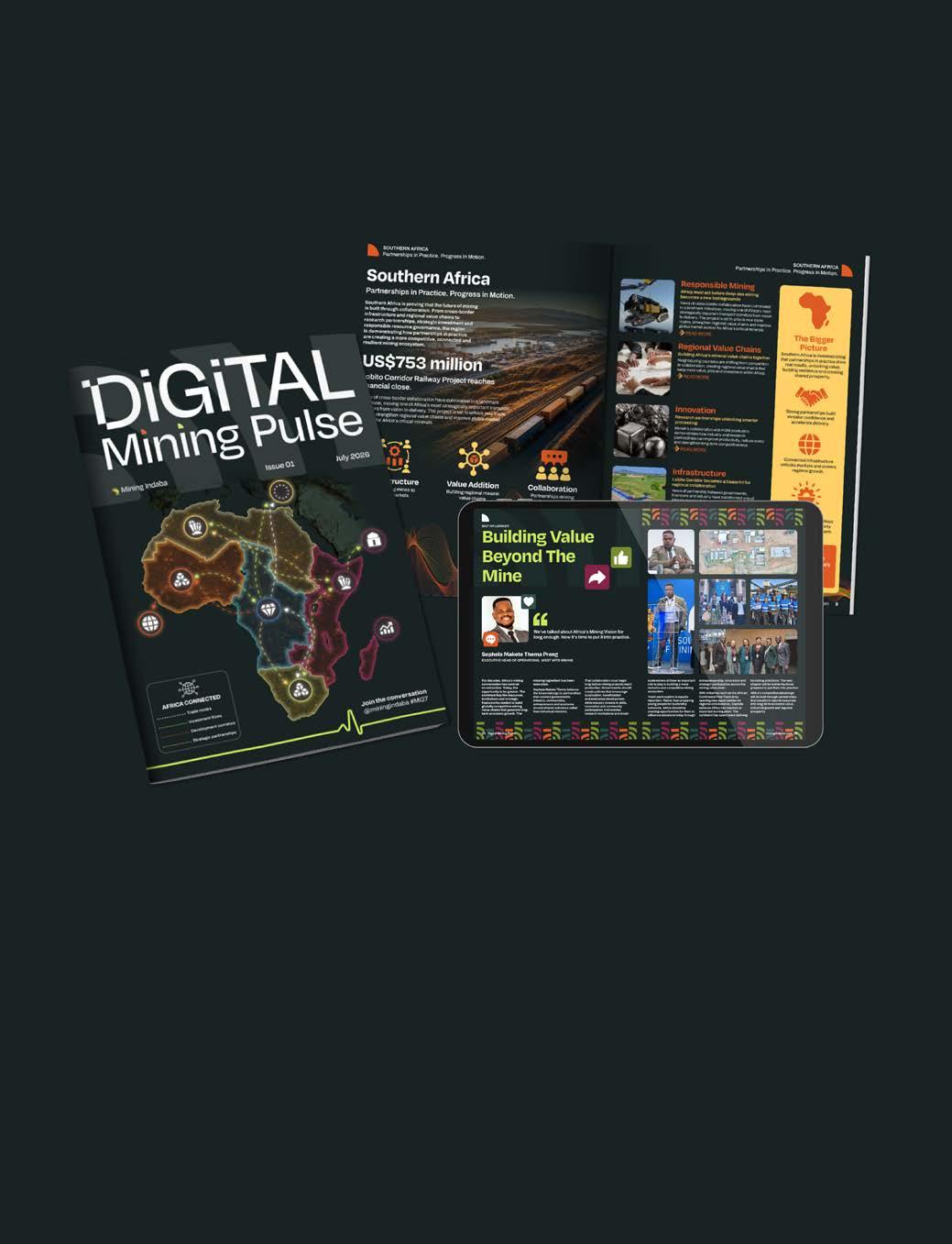
The Digital Mining Pulse was created to capture that momentum.
As the editorial voice of Mining Indaba, this publication brings together the people, ideas and developments shaping Africa’s mining ecosystem throughout the year. From investment and infrastructure to innovation, sustainability and regional collaboration, each edition explores the trends influencing the
industry and the practical actions driving meaningful progress.
This edition marks the beginning of that journey.
Across these pages, you will discover the partnerships strengthening regional value chains, the innovations creating new opportunities, and the leaders transforming ambition into action.
Together, these stories reflect a continent in motion, where collaboration is accelerating growth and shaping a more connected, competitive and resilient mining future.
The Digital Mining Pulse is a platform for shared learning, informed perspectives and conversations that carry Mining Indaba’s momentum throughout the year, keeping our community connected, engaged and inspired.
This is where new thinking takes hold, partnerships become progress, and opportunity is turned into lasting impact.
It is the pulse of an industry evolving, the pulse of a continent rich in opportunity, and the pulse of the partnerships shaping Africa’s next mining chapter.
Because Africa’s greatest resource is not only what lies beneath the ground, but what we build together above it.
Forging Africa’s mining future through Partnerships in Practice
LAURA NICHOLSON
Industry Director, Mining Indaba
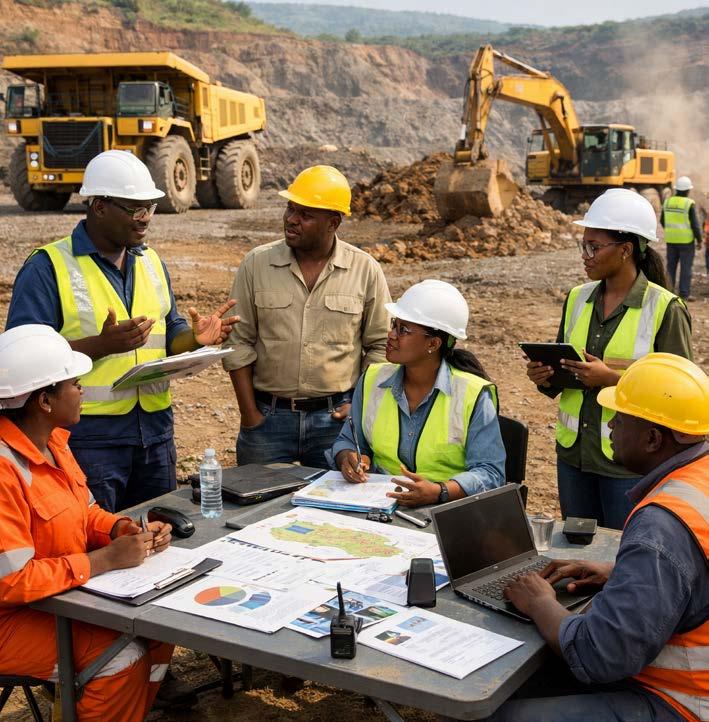
There is a growing sense across Africa’s mining sector that something important is shifting.
In conversations across boardrooms, ministries, communities, and project sites, one message is becoming clear: the future will not be defined by ambition, but by what we deliver together.
For decades, the world has recognised Africa’s mining potential, a continent rich in resources, talent, and opportunity. But recognising potential is not enough. The real opportunity lies in unlocking it. And Mining Indaba is committed to playing a role in helping the industry do exactly that.
What began as a moment in the calendar over 30 years ago, an annual gathering of leaders and decision-makers, has evolved into something far more dynamic. Mining Indaba is becoming a
Forging Africa’s mining future through Partnerships in Practice

space where ideas are not only exchanged, but carried forward; where connections made in Cape Town evolve into partnerships that shape projects, policies, and progress across the continent.
This journey truly began earlier this year, when we introduced the idea that partnerships are essential to moving the industry forward. In 2027, that journey continues with purpose and momentum, as we take the next step: putting partnerships into practice.
It is a natural progression. At MI26, the industry aligned around a shared commitment to build relationships, rebuild trust, and recognise that collaboration is critical. But alignment is only the beginning. The real test, and the real opportunity, lies in what comes next.
And across Africa, that next chapter is already being written.
Governments are reimagining how they partner with industry to unlock value for their economies and citizens. Investors are seeking environments where collaboration reduces risk and accelerates delivery. Mining companies are working more closely with communities to ensure development is inclusive and sustainable. And downstream industries are calling for stronger, more integrated supply chains to meet the demands of a rapidly changing world.
Individually, each of these efforts matters. Together, they have the power to transform the sector.
This is where Africa has a unique advantage.
With its diversity of markets, evolving regulatory landscape, and central role in supplying future-facing minerals, the continent has a powerful opportunity to lead in the
global mining industry. To set a benchmark for how partnerships can drive growth, build resilience, and deliver shared prosperity.
At Mining Indaba 2027, we will bring these stories to the forefront. We will spotlight partnerships in practice, real collaborations delivering real outcomes. From public-private alliances to crossborder and cross-industry initiatives, we will explore what is working, what is being learned, and what it will take to scale success across the continent.
As we launch the first edition of Digital Mining Pulse, this spirit will carry through every conversation, and across the content we share throughout the year. Because the future of mining in Africa is already taking shape. And it will not be built in isolation, but through the strength of partnerships that deliver together, and in practice.
QUOTES
Voices of Influence
Industry perspectives from the Mining Indaba Advisory Board.
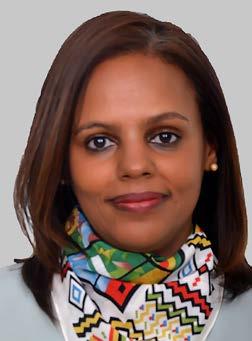
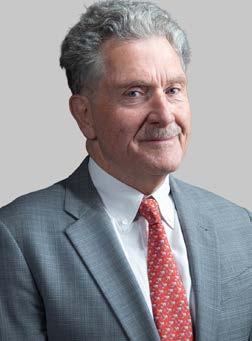
DR. MARIT KITAW
Economic Affairs Officer, United Nations Economic Commission for Africa
Africa has the minerals, the vision and the strategic frameworks to lead the future of global mining. What will define our success is our ability to turn ambition into implementation through partnerships in practice that connect governments, investors, communities and industry. MI27 is where collaboration becomes action and where Africa’s mineral wealth is transformed into industries, jobs and long term prosperity.
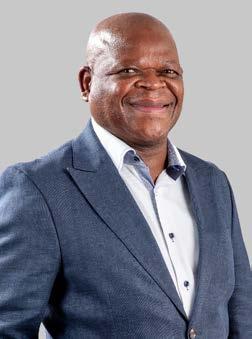
FRANS BALENI
Chairman of the Executive Advisory Board, Mining
Indaba
Mining Indaba has evolved into far more than an annual gathering of industry stakeholders. It is now a results driven platform where governments, investors, mining companies, communities and young leaders come together to drive real partnerships and measurable outcomes.
Stronger Together Partnerships in Practice reflects the industry’s collective responsibility to build a mining sector that delivers growth, infrastructure and inclusive opportunity.
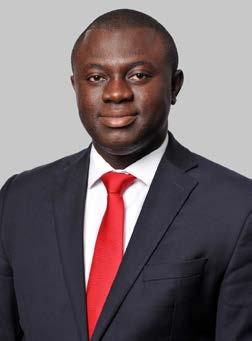
KWASI AMPOFO
Head of Metals and Mining, BloombergNEF
Mining Indaba 2027 will move the industry beyond conversations about partnership and into execution. ‘Stronger Together: Partnerships in Practice’ is about investors, mining companies, governments and communities working together to deliver real outcomes. The future of mining will be shaped by partnerships that create shared value through investment, skills, infrastructure, policy alignment and economic growth. Real progress happens when partnerships move into practice.
TONY CARROLL
Executive Advisory Board
Member, Mining Indaba
As the mining industry evolves, success will increasingly depend on partnerships that extend across the entire value chain, from exploration to mineral production. Long term growth, resilience, and investment will only be achieved through trusted collaboration and operational alignment across the sector.
One
week,
one
place,
the entire mining ecosystem under one roof.
Here’s why delegates come back year after year:
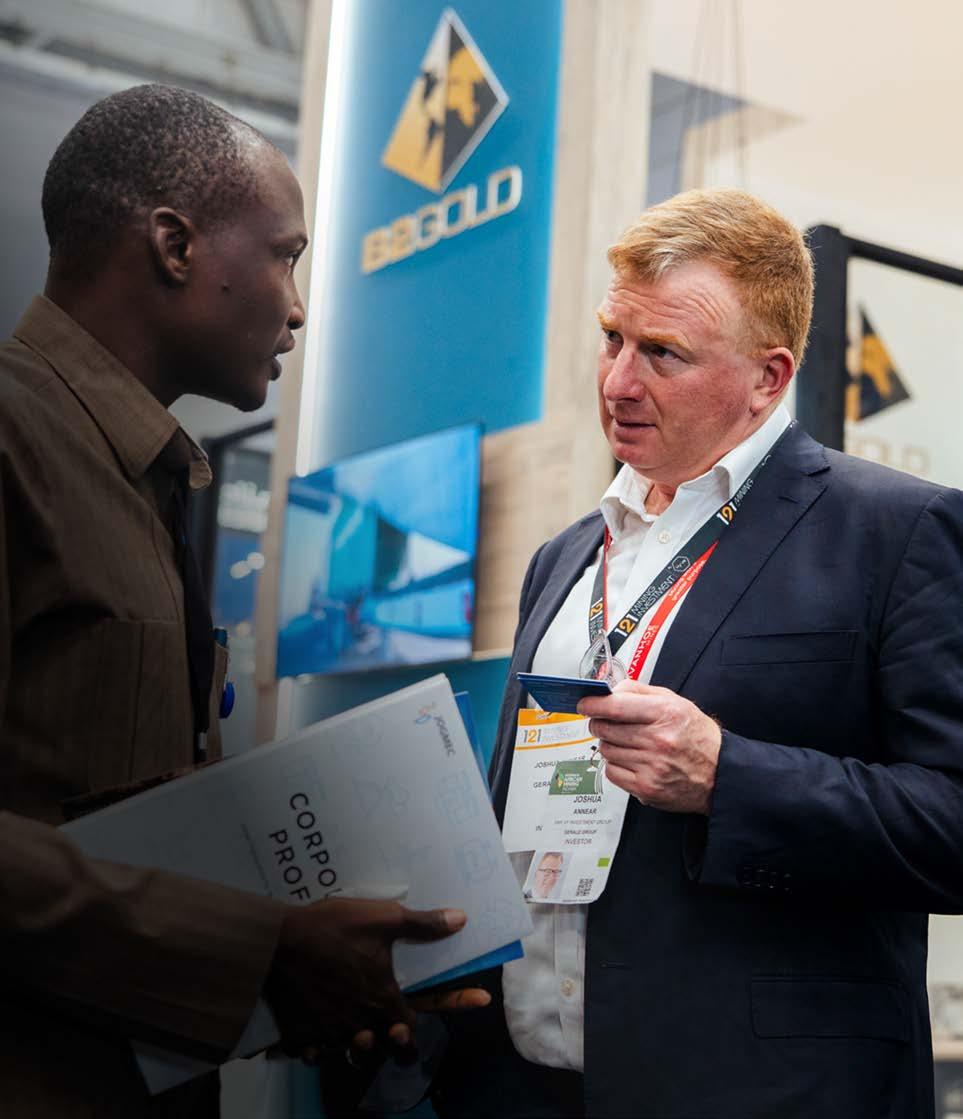
• The right people are in the room 12,000+ leaders - from ministers and mining companies to investors and innovators.
• Deals get done Billions in projects and partnerships start with a handshake at Mining Indaba
• Where Africa meets global capital No other platform connects the continent’s mining potential with the world’s investors like this.
• Get clarity, fast Hear directly from decision-makers on policy, market shifts, and what’s happening on the ground.
Scan to register your interest today

Partnerships in Practice.
Southern Africa
Partnerships in Practice. Progress in Motion.
Southern Africa is proving that the future of mining is built through collaboration. From cross-border infrastructure and regional value chains to research partnerships, strategic investment and responsible resource governance, the region is demonstrating how partnerships in practice are creating a more competitive, connected and resilient mining ecosystem.
US$753 million
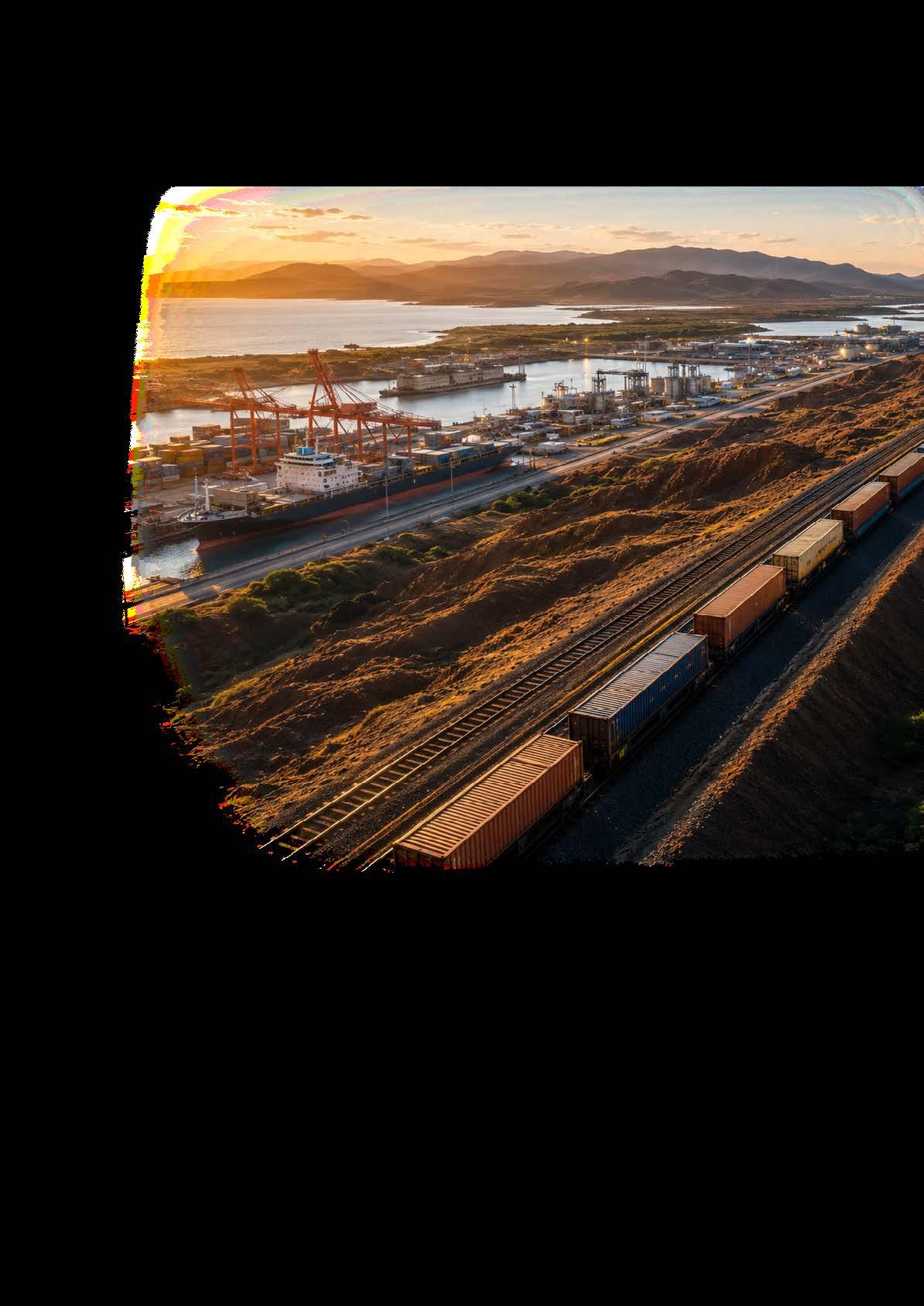
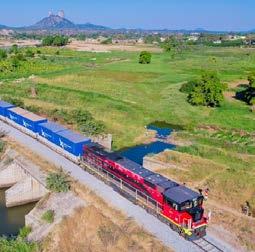
Lobito Corridor Railway Project reaches financial close.
Years of cross-border collaboration have culminated in a landmark milestone, moving one of Africa’s most strategically important transport corridors from vision to delivery. The project is set to unlock new trade routes, strengthen regional value chains and improve global market access for Africa’s critical minerals.


Infrastructure
Connecting mines to global markets
Value Addition
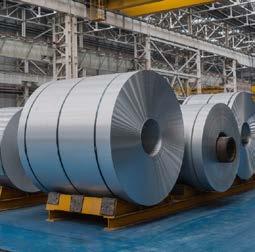
Building regional mineral value chains
Collaboration
Partnerships driving industrial growth
Partnerships in Practice.
Responsible Mining
Africa must act before deep-sea mining becomes a new battlegrounde
Years of cross-border collaboration have culminated in a landmark milestone, moving one of Africa’s most strategically important transport corridors from vision to delivery. The project is set to unlock new trade routes, strengthen regional value chains and improve global market access for Africa’s critical minerals.
READ MORE
Regional Value Chains
Building Africa’s mineral value chains together Neighbouring countries are shifting from competition to collaboration, creating regional value chains that keep more value, jobs and investment within Africa.
READ MORE
The Bigger Picture
Southern Africa is demonstrating that partnerships in practice drive real results, unlocking value, building resilience and creating shared prosperity.
Innovation
Research partnerships unlocking smarter processing
Mintek’s collaboration with PGM producers demonstrates how industry and research partnerships can improve productivity, reduce costs and strengthen long-term competitiveness.
READ MORE
Strong partnerships build investor confidence and accelerate delivery.
Connected infrastructure unlocks markets and powers regional growth.
Infrastructure
Lobito Corridor becomes a blueprint for regional collaboration
Years of partnership between governments, financiers and industry have transformed one of Africa’s most ambitious transport corridors into reality.
READ MORE
Shared innovation develops skills, boosts productivity and strengthens long term competitiveness.
Strategic Investment
South32 reshapes its portfolio for the future
Strategic partnerships and portfolio optimisation are positioning mining companies to respond to changing global demand and accelerate long-term growth.
READ MORE
Explore how partnerships are transforming Africa’s mining future
CLICK HERE
THOUGHT LEADERSHIP
Stop asking why Africa can’t just move faster
Stop asking why Africa can’t just move faster

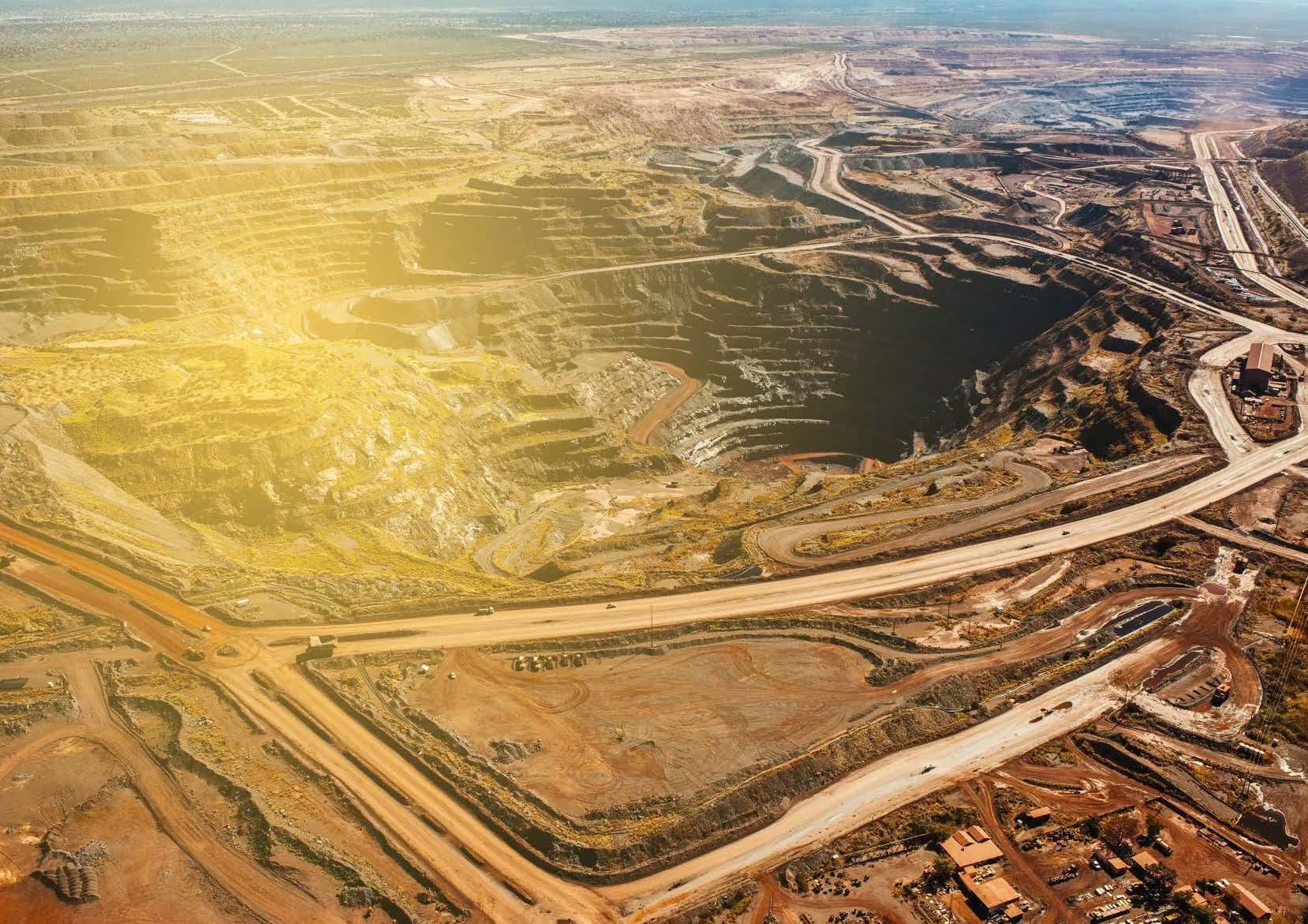
Projects succeed not because everything goes to plan, but because enough people stay committed to the same vision.
ZEINAB EL-SAYED Government & Institutional Partnerships Director, Mining Indaba
The future of African mining will not be defined by how quickly projects move, but by how effectively people, institutions and industries move together.
Government &
I spend a lot of time in rooms where people ask some version of the same question:
“Why can’t Africa move faster?”
It’s usually asked when a project is delayed, a railway isn’t built, a power constraint emerges, or an infrastructure project takes longer than expected.
I understand why people ask it.
I just don’t think it’s a particularly useful question.
The assumption behind it is that progress is mainly a function of speed. If governments moved faster, investors moved faster, regulators moved faster or
companies moved faster, we’d see different outcomes. I’ve seen projects move remarkably quickly when the conditions are right. I’ve also seen relatively straightforward initiatives spend years going nowhere. The difference is rarely effort.
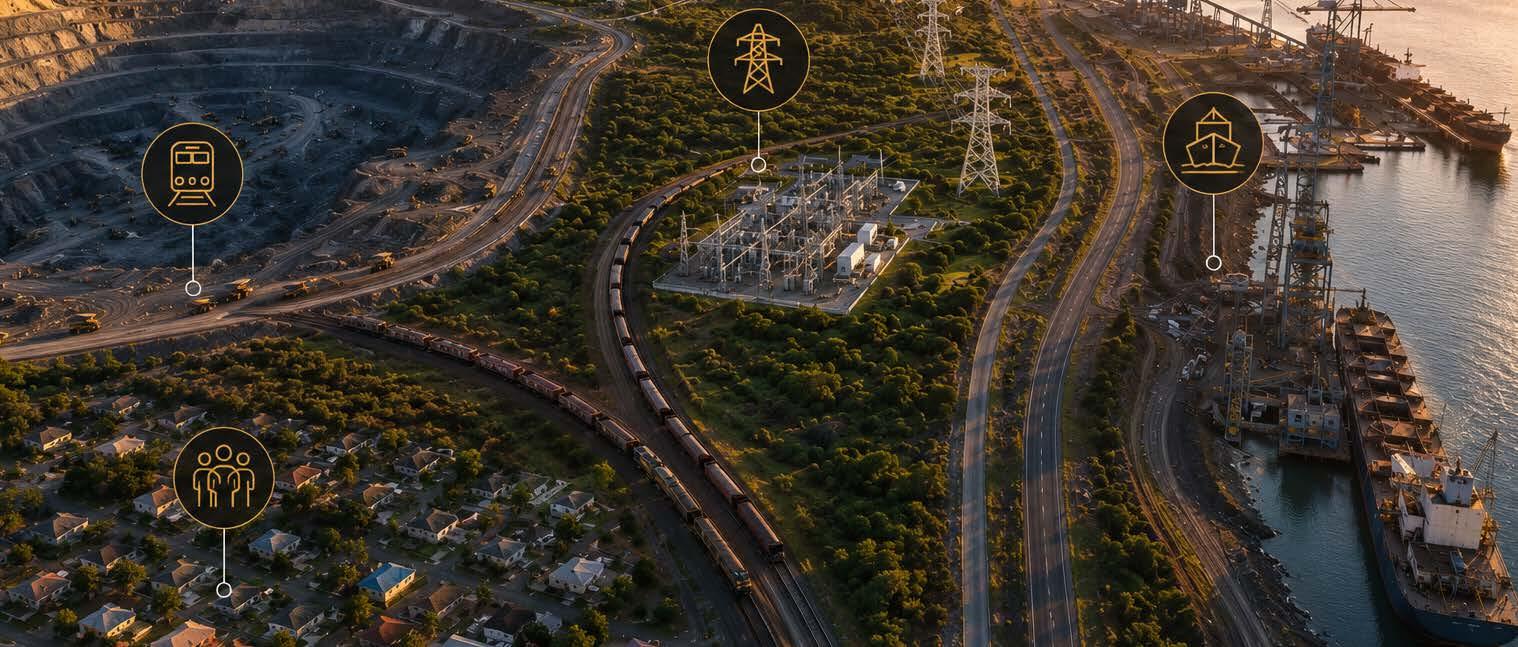
Take almost any major mining project and you’ll find a web of dependencies sitting behind it. The mine needs power. The power needs transmission infrastructure. The infrastructure needs financing. The financing depends on regulatory certainty.
The regulator is balancing political, economic and social priorities.
None of those things happen in isolation.
Infrastructure is often framed as an engineering challenge or a financing challenge. In reality, infrastructure is the visible result of dozens of decisions made by governments, investors, operators and institutions over a long period of time.
A railway is not just a railway.
A transmission corridor is not just a transmission corridor.
Behind every successful project sits a group of people and organisations that managed to stay aligned for long enough to
get something done. That is much harder than it sounds. No single organisation controls all of those decisions.
A mining company can move quickly and still be delayed.
A government can implement reforms and still struggle to attract investment.
An investor can be ready to deploy capital and still find that critical pieces of infrastructure aren’t in place.
Everybody can be doing the right thing within their own sphere and progress can still stall.
Partnership has become one of the mining industry’s favourite words. It’s everywhere. In speeches, on conference stages and in strategy documents.
It’s even in the Mining Indaba theme. But the reality of partnership is rarely found in the announcement. It’s found in the follow-up meetings, the difficult conversations, the compromises.
The moments where priorities shift, governments change, markets move and people have to decide whether they’re still committed to the same outcome.
Most people, if they had complete visibility of what it takes to deliver a major project, probably
wouldn’t start. If you laid out every delay, every negotiation, every disagreement, every funding challenge and every political hurdle on day one, the whole thing would look impossible. Yet projects do get delivered.
Not because everybody agreed. Not because everything moved quickly.
And rarely because anyone had complete certainty about the outcome. They get delivered because enough people remain committed to the same objective for long enough to keep moving.
ZEINAB EL-SAYED
Institutional Partnerships Director, Mining Indaba
Partnerships: African Mining’s New Edge
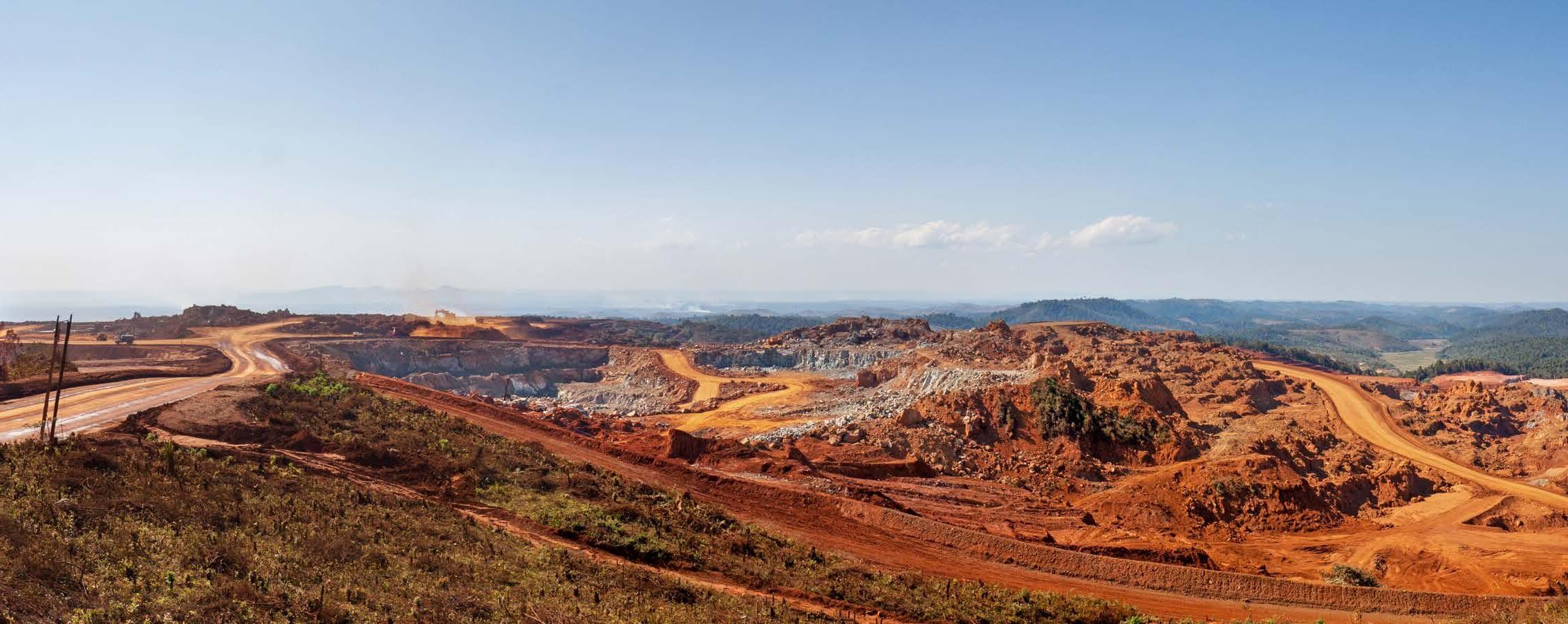
High gold prices and intense global competition for critical minerals have created a fierce tug-of-war that is redefining Africa’s mining sector.
Governments want a larger share of the wealth generated by their natural resources. Mining companies need predictable rules to justify their investments. As this new reality unfolds, the established rules of engagement are fracturing.
The tension is driven by a fundamental shift in perspective. State officials no longer view mineral deposits as simple commodities to tax and export. Instead, they are being treated as strategic assets, acting as essential levers to build central bank reserves, secure foreign exchange, and drive local
industrialisation. Investors call this ‘resource nationalism’, while host ministries call it ‘economic sovereignty’. Both sides are fighting for the same margins.
This dynamic changes the rules for mining executives. The era of passive extraction is over— the future belongs to those who treat national development as a core business strategy, not a peripheral risk. The companies that win future mining licenses will not be the ones running PR campaigns about corporate social responsibility. The winners will be the operators that build state and community ownership directly into their financial plans. Local refining and domestic supply chains are no longer concessions wrung out during disputes; they are fixed project costs.
How states are using their leverage
African states are testing their leverage harder than they have in decades. Their strategies generally fall into three categories along a broad spectrum:
• Rentier: Where resource revenues are used primarily to fund political stability and patronage.
• Developmental: Where the state intervenes directly to force local industrial growth.
• Market-based: Where states introduce small, incremental changes through existing legal and regulatory channels to capture more value.
Country strategies in the gold sector
Five sovereign value strategies demonstrate how these different approaches work in practice in the gold sector:
• Côte d’Ivoire follows a balanced path. The government recently raised gold royalties to increase revenue, but it maintains an efficient and stable administrative system to protect investor confidence. It is also formalising artisanal mining to bring informal gold into the legal, taxable economy.
• Ghana chose direct intervention. The state has tightened its control over gold trading by using state-backed bodies to
manage sales and stabilise the national currency.
• Guinea relies on strict enforcement and mandatory state partnerships. Recent joint venture agreements, such as the one between Resolute Mining and the state-owned Nimba Mining Company, show how the state now acts as a project co-owner rather than just a tax collector.
• Tanzania and Rwanda focus on local processing. Tanzania links its gold policy directly to domestic refining and building up state reserves. Similarly, Rwanda uses tight control over refining to ensure mineral wealth stays within its borders. Continued on page 16
MARCUS COURAGE CEO, Africa Practice
The future of African mining isn’t about choosing between profit and partnership. Sustainable success demands both.
MARCUS COURAGE CEO, Africa Practice

This same logic is shifting the market for critical minerals
African nations that control significant global shares of a commodity have significant potential to make the leap to domestic refining, but success is by no means guaranteed. While downstream beneficiation promises high levels of local value capture, it demands huge upfront investments in enabling environments—specifically reliable energy, efficient transport, and skilled human capital. These are precisely the areas where many African nations currently face structural deficits. For them, success hinges on genuine investor partnerships and robust infrastructure development. And for nations lacking the mineral volumes or domestic demand to justify independent refining, crossborder collaboration is the most viable path forward. By pooling resources with neighbours,
they can build shared regional processing hubs to enhance their global competitiveness.
A delicate balancing act
This industrial transition is a balancing act. If governments fail to maintain a stable regulatory climate, investment will flee. For mining companies, security of tenure now depends entirely on proving their projects serve the host nation’s strategic economic and industrial goals.
In this new mining environment cycle, value must be structurally shared between the state, the community, and the operator, or the project will fail. Success requires clear action from all parties:
• Governments must offer clear laws, reliable electricity, and working transport networks.
They cannot demand local manufacturing without providing the power and roads to run it.
• Mining companies must show how their projects help the host nation develop. This means buying parts and services from local suppliers and giving communities real financial stakes.
• Investors must treat local political and social support as a core financial metric, knowing that a project without local backing will likely fail.
The winners in Africa’s new mining environment cycle will be those who realise that sustainable value cannot be captured by one actor alone. It can only be built through real alignment, realised through effective partnerships between the state, industry, investors, and citizens.
Pre-arranged one-on-one meetings. Qualified investors. Real outcomes.
Our events
How it works
Step 1: Apply and qualify Step 2: Get matched to relevant investors or companies
Why attend
For mining companies:
• Meet investors actively deploying capital
• Raise profile in a focused environment
• Secure multiple meetings in two days
Global events
London
May 2027
November 2027
Miami
June 2027
New York
June 2027
Texas
September 2027
Be in the room where deals happen
Step 3: Meet and move deals forward
For investors:
• Access high-potential, vetted projects
• Meet CEOs directly
• Build pipeline efficiently
Apply as a mining company or register as an investor today 121mininginvestment.com
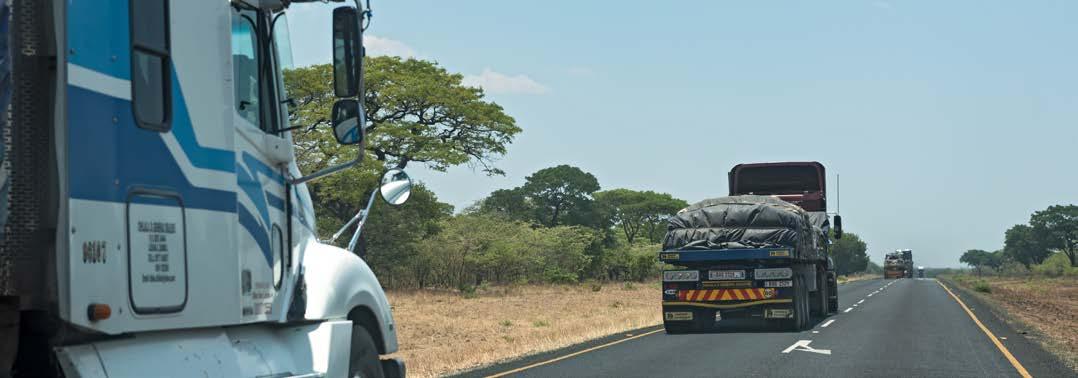
There are roads that simply take us from one place to another. And then there are roads that tell a larger story.
In May 2025, I drove 1,200 kilometres along the TransKalahari Highway, from Windhoek through the Kalahari Basin into Botswana, for the 4th Women in Mining Botswana Pitso in Gaborone. It was not a smooth, uneventful journey. You watch for animals like cattle, donkeys, kudu materialising at dusk with complete indifference to your schedule. These you learn to read and navigate. The potholes are a different matter. Sudden and unannounced, they are a reminder that infrastructure, however visionary at inception, requires sustained commitment to maintain its promise. You do not blame the road. You respect it, you stay alert and you begin thinking seriously about what it would take to make it better.
The Road That Thinks Regionally
Partnerships in Practice Along the TransKalahari Highway
ZENZI NATASHA AWASES
PRINCIPAL CONSULTANT, EMPOWERMINE | PRESIDENT, AWIMA | CHAIRPERSON, WIMAN
That, I believe, is the disposition that Mining Indaba 2027’s theme Stronger Together: Partnerships in Practice is asking of all of us.
A Corridor With a Story to Tell
The Trans-Kalahari Highway, linking the Port of Walvis Bay through Windhoek and across Botswana toward South Africa, is more than a transport route. It is a physical expression of what regional cooperation looks like when countries choose connection over isolation, shared progress over individual advantage. For Botswana, landlinked and mineral-rich, access to efficient trade routes is a strategic necessity. For Namibia, with its deep-water port and growing role in regional logistics, the corridor is an opportunity to serve as the gateway for Southern African trade. For both, it is proof that geography becomes strategy
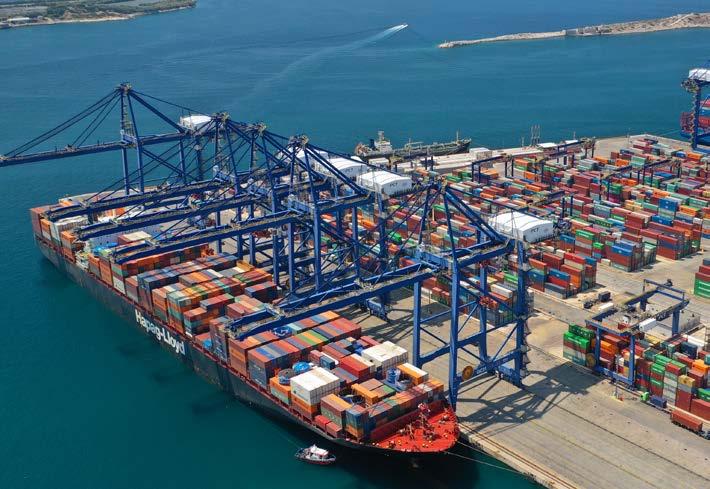
A mine may be world-class, but if its products cannot reach markets competitively, its full value remains constrained. A country may hold significant mineral wealth, but if logistics are expensive and unreliable, that wealth does not easily translate into broad-based prosperity.
The Entrepreneurial Case
Here is what development economics understands and mining conferences rarely celebrate loudly enough: corridors do not only move goods. They generate economies.
Partnership Requires Maintenance
As Africa negotiates its place in the global minerals economy, we must resist fragmenting what could be unified. Our countries do not have to stand alone at the negotiating table. We can build stronger regional positions by connecting our assets: Botswana’s mineral strength, Namibia’s port advantage, the wider SADC market.
But partnership is not selfsustaining. Roads must be maintained. Border systems modernised. Communities included. And the mining industry must recognise that logistics is not a back-end technical matter. It is central to competitiveness, resilience, and inclusive growth.
when supported by vision and sustained cooperation. Mining does not happen in isolation. Every mineral value chain is, by its nature, a partnership chain. The question is whether those partnerships are intentional, equitable, and futurefacing or whether they are simply assumed.
Infrastructure as Economic Diplomacy
The current global minerals conversation is asking Africa to do something historically unprecedented: to position itself not merely as a supplier of raw materials, but as a strategic participant in energy transition value chains, critical minerals supply, and regional beneficiation. None of those ambitions will be realised without infrastructure that allows minerals, people, skills, and capital to move efficiently across borders.
The Trans-Kalahari Highway, and the proposed Trans-Kalahari Railway, envisioned to link Botswana’s mineral-rich interior to Walvis Bay — represents exactly the corridor thinking Africa needs. With construction ambitions pointing to 2027, the railway conversation invites us to imagine not only movement of bulk commodities, but the development of industrial clusters, logistics hubs and new settlements along the route. That is what happens when reliable infrastructure meets latent economic potential.
Every truck moving along the route today tells a story of interdependence. Every improvement in road quality, border efficiency, and transport coordination strengthens the corridor. And every pothole, every fragmented customs process, is a reminder that partnership must be actively maintained and not merely announced.
The Trans-Kalahari Highway has already seeded a generation of enterprises along its route: fuel stations, guesthouses, catering operations serving the long-haul freight market. These are not incidental to the corridor. They are its economic metabolism.
For women entrepreneurs in mining, a constituency AWIMA works with across the continent , this is where corridor partnerships become genuinely transformative. Logistics subcontracting, camp services, equipment maintenance, safety supply: meaningful entry points into the mining value chain, accessible without the capitalisation that project ownership demands.
Communities along the TransKalahari should not experience mining logistics only as passing trucks. They should see enterprise development, local procurement, and economic participation. A corridor that carries mineral wealth must also create human wealth.
The Trans-Kalahari Highway is proof of concept. The animals, you navigate around. The potholes, you note and then you get to work. That is partnerships in practice. Zenzi Natasha //Awases is Principal Consultant at EmpowerMine. She also serves as President of the Association of Women in Mining in Africa (AWIMA) and Chairperson of the Women in Mining Association of Namibia (WiMAN).

The most valuable asset isn’t in the
The most valuable asset isn’t in the ground


Where trust grows, projects move. Where trust breaks down, progress stalls.
DAVID STURMES-VERBEEK
Founder of Ad Maiora and architect of the Community Voices programme at Mining Indaba
The most valuable asset isn’t in the
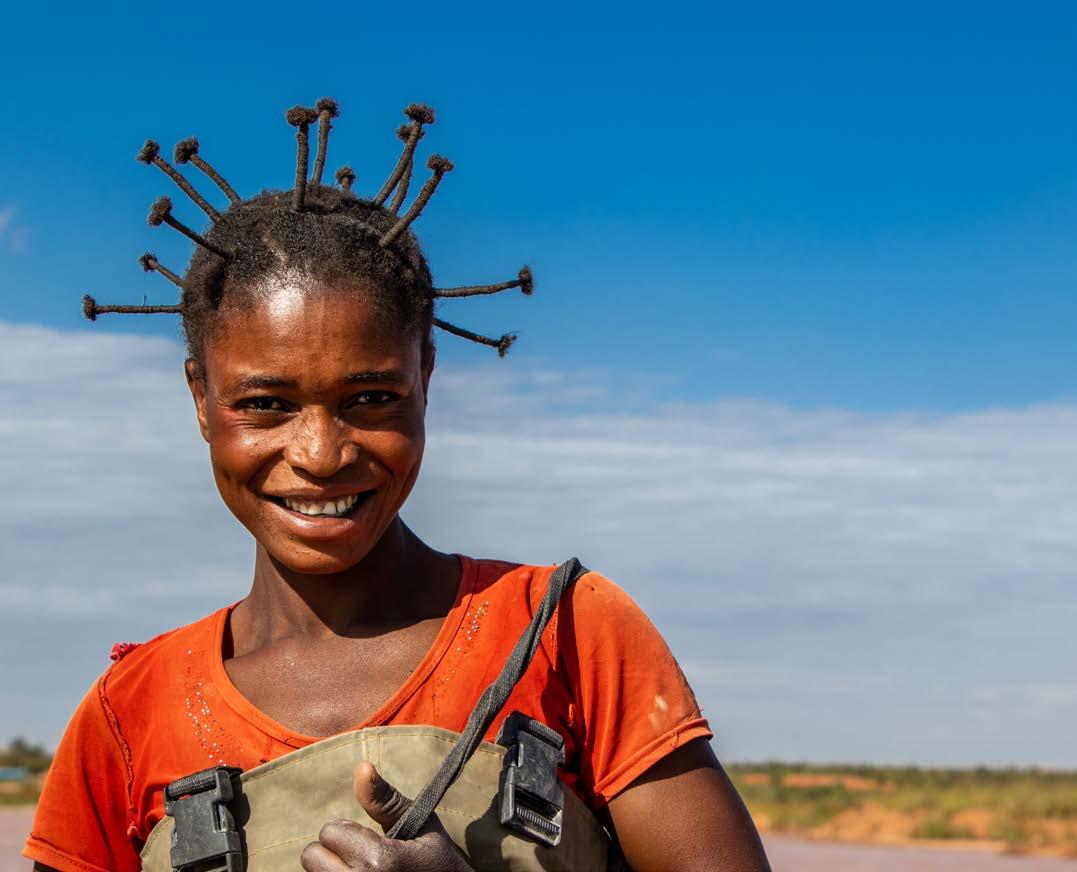
Progress in mining is not measured in tons extracted, but in roads repaired and services that reach the people living beside the pit. That argument was made last year by Prisca Bahati, Head of Communication and Advocacy at IFEDD - a local CSO from DRC - in a video filmed on her phone. Her reflections won her a place at Mining Indaba 2026. It is also a better yardstick for the industry’s success than most I have heard.
Mining Indaba 2027 convenes under the theme Stronger Together: Partnerships in Practice, and there is a solid business case behind the warm words. Strong community relations may be the most valuable asset a mining company can invest in. Where trust holds, projects move. Where it breaks down, companies pay for it through permitting delays, stalled expansions, security spending and reputational damage that outlasts any single operation. Like any asset, trust is
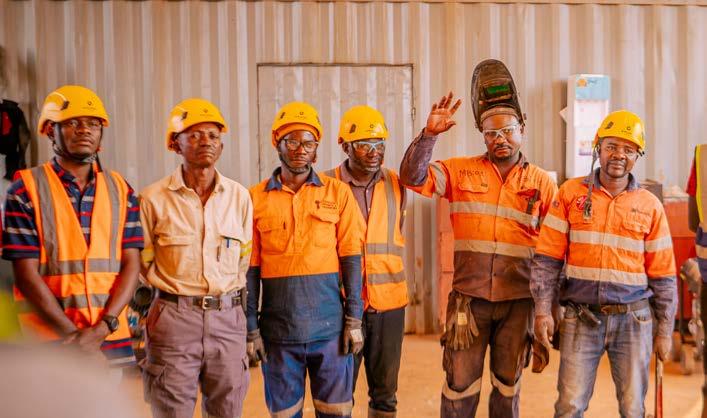
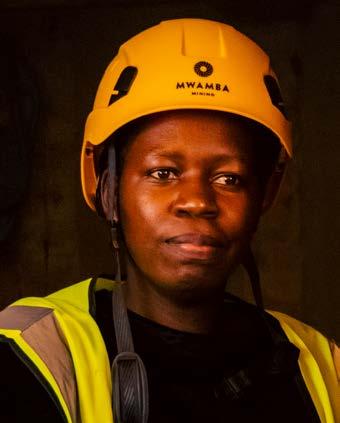
built slowly, through dialogue that continues between conferences.
The Community Voices competition began in 2025 as an experiment: five community advocates, selected from video entries, sponsored to attend. It could easily have stayed a one-off. Instead it doubled to ten winners in 2026, drawing 44 entries from nine countries, and now enters its third edition as an embedded part of how Mining Indaba engages communities. Its logic has spread through the conference itself: a dedicated free pass category,
introduced last year, brings community representatives and artisanal miners into the rooms where their futures are discussed.
Mining Indaba runs for four days a year. For the people who take part in Community Voices, the impact is felt year-round. Sonwabo Modimoeng won in 2025, and after one of his panels a fellow panellist offered him a job on the spot. He now works as Social Performance Manager at Mogale Tailings Retreatment, a Pan African Resources operation, and returned in 2026 to help select the next cohort. Alpha
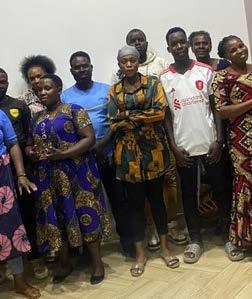
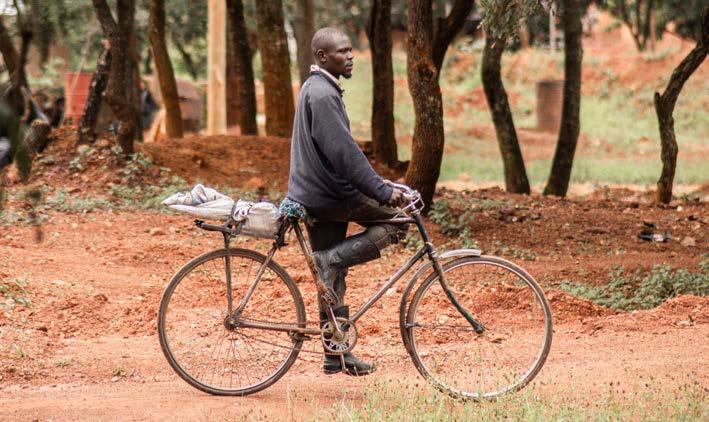
Ntayomba, a 2026 winner who directs Tanzania’s Population and Development Initiative, has joined forces with AfreWatch, whose executive director sat on that same jury, to launch a continental call for community stories: the Responsible Mining Africa Outlook 2027 - expected to launch early next week. These efforts grew out of relationships that kept working after the conference ended.
The third competition is open now, with submissions accepted until the end of August. Two to three minutes of video; a phone camera is enough. Entries are
judged on the message, not the production. Ten winners will be sponsored to attend MI27 next February, receive speaker training beforehand, and stand a chance to speak at the event and help shape workshops through their lived experiences. Outreach for this edition runs through alumni and community networks as much as social media.
If you live in or work with a mining community, this is an open invitation. Tell us, in your own words, what partnerships you want to see between communities and mine operators. Details at community-voices.com.
Creating pathways for women to lead, not just participate
Creating pathways for women to lead, not just participate
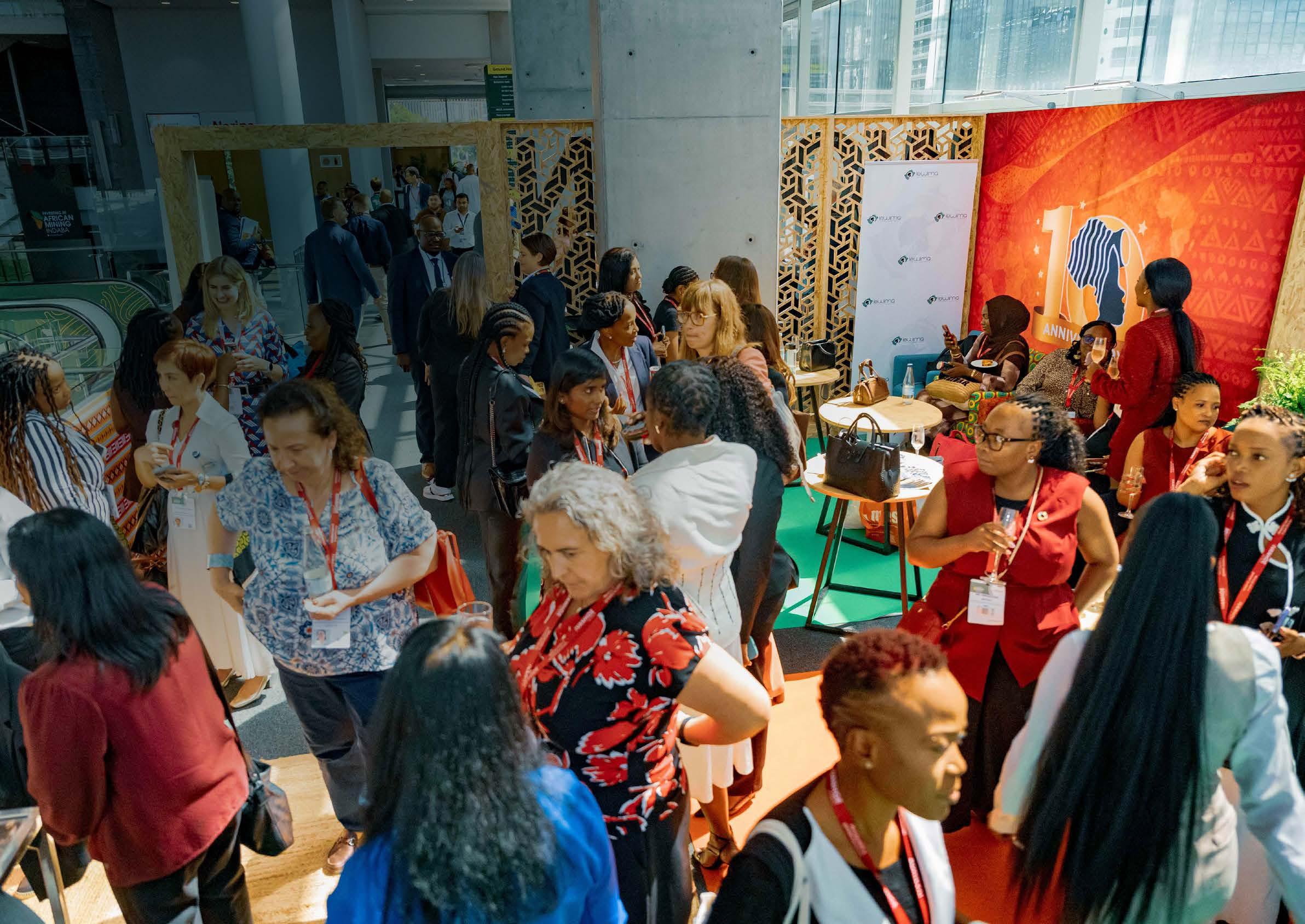
Mining’s future will be shaped not only by the commodities we produce or the technologies we adopt, but by the people we enable to lead it.
For women in mining, progress has been meaningful, but it has not yet been sufficient. More women are entering the sector, yet entry alone is not success. The real measure is whether women can build careers that are safe, sustainable, visible and capable of progressing into leadership.
That requires more than individual ambition. It requires partnership in practice.
Women in Mining South Africa (WiMSA) plays an important role as a connector, advocate and catalyst for change. It brings women, employers, industry bodies, professional associations, educators and allies together around a shared responsibility: to create a mining industry where women do not simply participate but thrive and lead.
WiMSA’s partnerships with the Minerals Council South Africa, the Southern African Institute of Mining and Metallurgy and the Geological Society of South Africa strengthen this work. Each brings a different capability: industry influence, technical depth, professional development, access to networks and a platform for sector-wide action. Together, these partnerships can create stronger pathways into mining, expand access to opportunity and drive more accountable conversations around retention, progression and leadership.
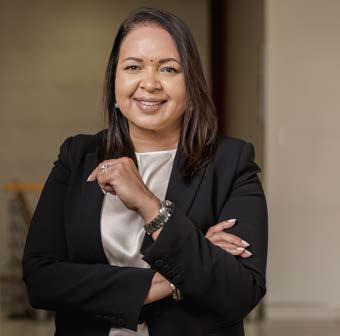
RAKSHA NAIDOO Board Director, Women in Mining South Africa
“Having served WiMSA as Chairperson and now as a Board Director, I have seen the power of women coming together, not simply to share experiences, but to create opportunity, challenge what is not working and support one another to lead. Real progress happens when industry listens, partners intentionally and turns commitment into action.” Raksha Naidoo, WiMSA Board Director
WiMSA puts this philosophy into practice through initiatives that support women at every stage of their careers. Its relaunched Mentorship Programme will connect experience with potential, helping women build confidence, capability and perspective at pivotal career moments. Yet mentorship must be matched by sponsorship: leaders who actively advocate for women, nominate them for stretch opportunities and create pathways into technical, operational and executive roles.
in August, builds the relationships that careers are often built on, and these events create a moment for reflection and renewed commitment. WiMSA remains committed to its ongoing genderbased violence campaign to reinforce a fundamental truth that women cannot build sustainable careers in workplaces where safety, dignity and belonging are not protected.
is launching
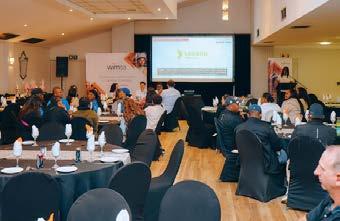
The WiMSA Symposium is a flagship forum for this collective action. More than a conference, it creates a space for women, leaders, students, technical professionals and employers to engage honestly on the realities of women’s careers in South African mining. It gives women visibility, access to role models and meaningful professional connection, while challenging organisations to translate discussion into measurable action.
The organisation’s STEM Career Fair helps build the future pipeline by making mining careers more visible to young women.
As technology, automation and innovation reshape the sector, mining needs engineers, geologists, metallurgists, scientists and digital specialists who can lead its next chapter.
WiMSA’s various networking events, including its First Thursday

The challenge for mining leaders is clear - stop measuring success by how many women enter the industry, and start measuring it by how many remain, advance and lead.
That means tracking representation and promotion at every level. It means holding leaders accountable for inclusive teams. It means investing in mentorship, sponsorship, development and safe workplaces with the same seriousness applied to production, safety and performance.
Doubling female leadership representation will not happen through a statement of intent or a once-a-year event. It will happen when companies make it a business priority, when leaders use their influence to open doors, and when industry partnerships convert shared ambition into sustained action.
That is what stronger together means: partnerships that do not end at intention but create real and lasting opportunity.

Powered by 121 Mining Investment
Where mining meets capital
For the people raising capital, allocating it and building the companies behind it.
The Assay Podcast brings you inside the conversations shaping mining and investment. Hear company updates, executive interviews, fireside chats and live panel discussions recorded at the sector’s leading events - often captured in the room, at the centre of the action. Subscribe now.
Stay close to the people, projects and capital moving the market - and hear not just what’s being said, but what the market is really thinking.

Scan to listen and subscribe
Wits University Makes Its Mark at Mining Indaba 2026
Driving the Future of Digital and Sustainable Mining in Africa

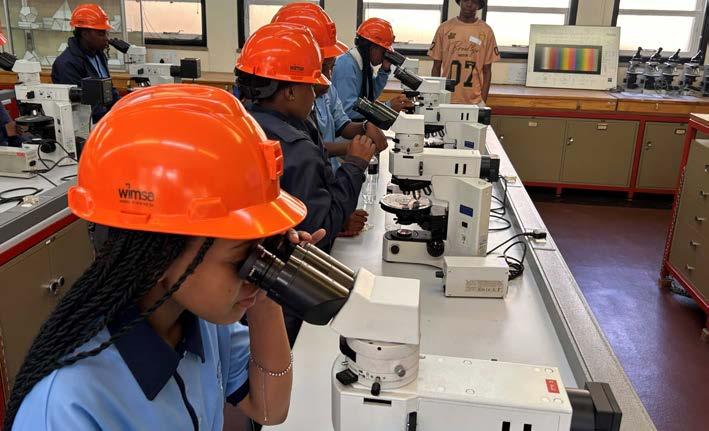
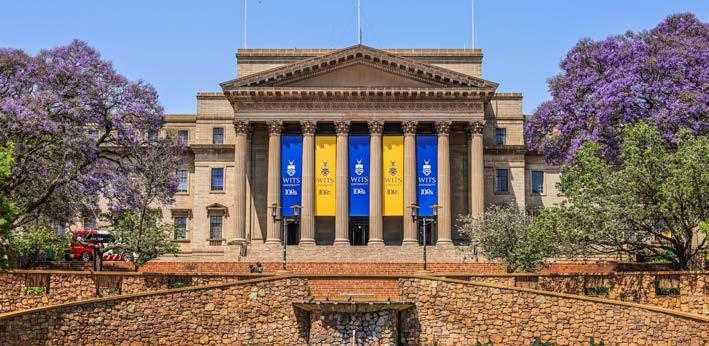
For the first time in our history, the University of the Witwatersrand (Wits) participated formally as an institution at the 2026 Mining Indaba, marking a significant milestone in the University’s engagement with Africa’s largest and most influential mining investment conference. Held from the 9th – 12th February 2026, Wits’ participation demonstrated the University’s commitment to shaping the future of mining through research excellence, innovation, education, and strategic partnerships.
The University’s participation was led by the Faculty of Engineering and the Built Environment (FEBE), through the Office of the Dean, in collaboration with the Faculty
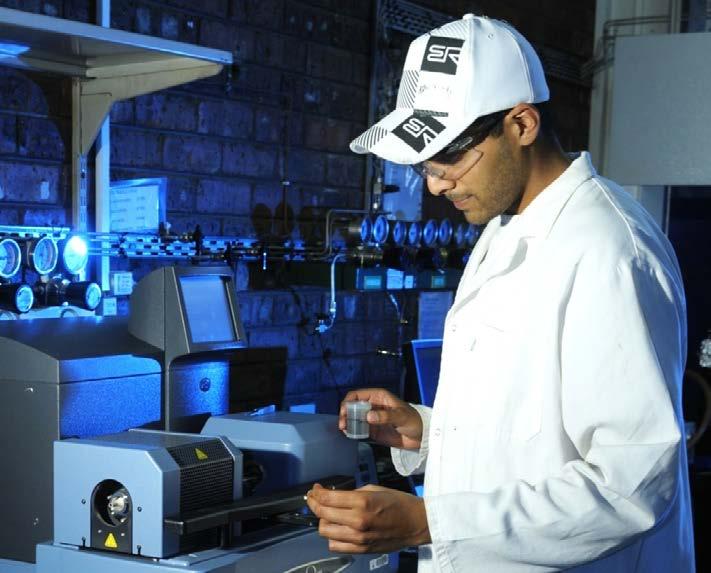
of Science, led by the African Research Centre for Ore Systems Science (CORES) in the School of Geosciences, the School of Mining Engineering, the Wits Mining Institute (WMI), and the Office of the Vice-Chancellor. This coordinated institutional approach showcased Wits’ multidisciplinary strengths and reinforced its position as a leading contributor to the future of mining on the African continent. Wits entered Mining Indaba 2026 with a clear vision: to position the University as Africa’s
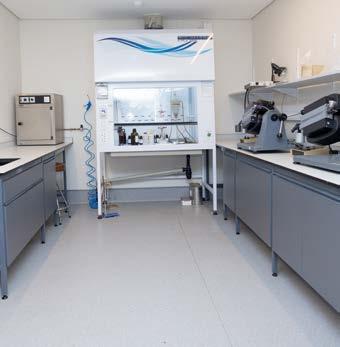
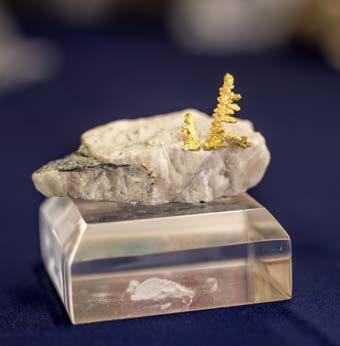
and research hub for mineral sector innovation, sustainability, digital transformation, future workforce development, mineral systems research, ore systems science, and responsible resource development. The University’s objectives centred on showcasing world-class research, strengthening partnerships with industry and government, contributing to policy discussions, and leading conversations on the competencies required for the next generation of mining professionals.
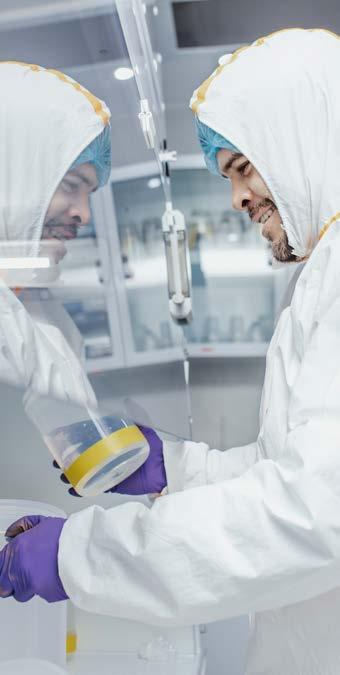
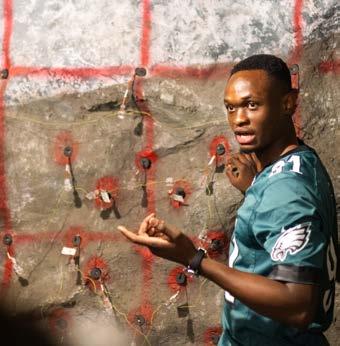
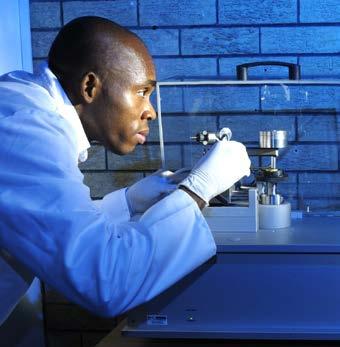
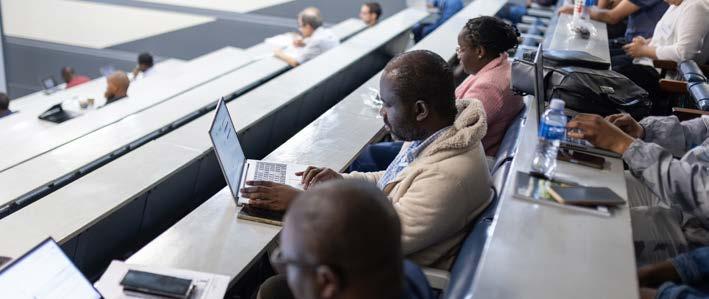
intellectual
PROFESSOR RODNEY GENGA
Assistant Dean: Strategic Projects and Director: Academic Development Unit, Wits University
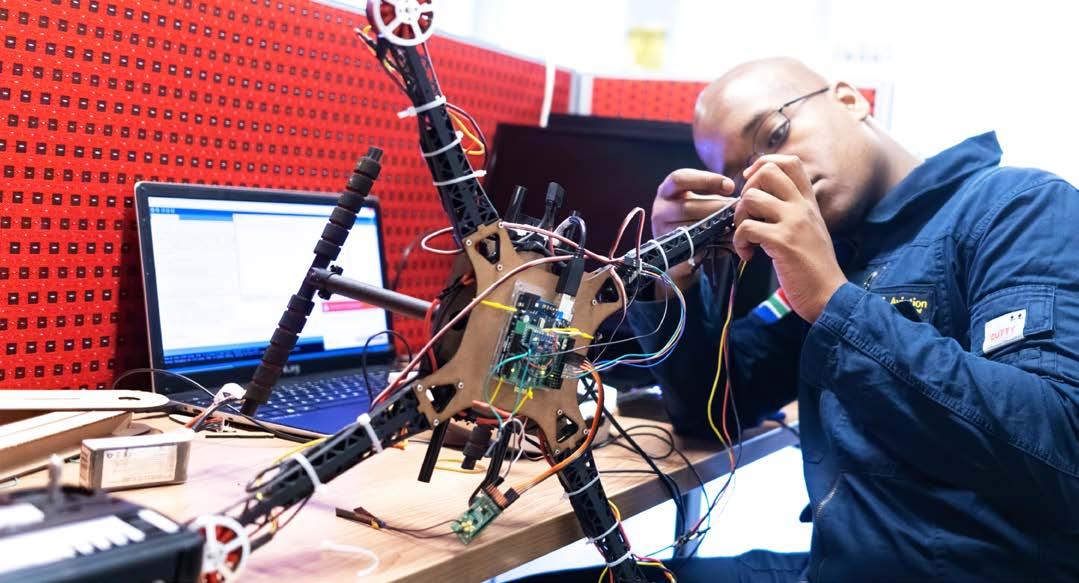
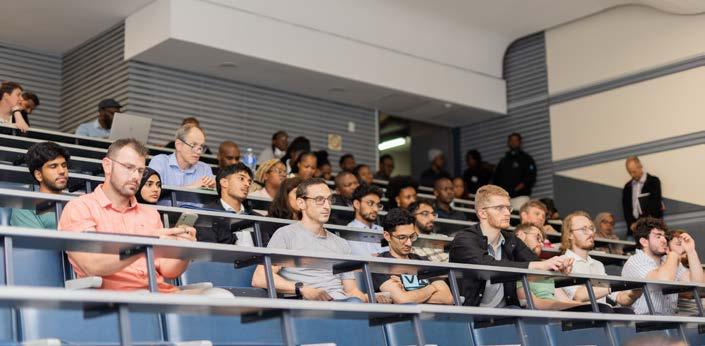
Throughout the conference, Wits’ academics and leaders contributed to several highprofile technical and strategic sessions covering the future of mining technologies, digital transformation, permitting, drilling, blasting, automation, and artificial intelligence. Equally important was Wits’ contribution to advancing discussions on ore systems science, mineral exploration, critical minerals, and integrated earth systems, recognising that digital mining begins with a robust understanding of the geological systems that underpin responsible resource discovery and development. Together, these perspectives demonstrated how engineering innovation and geoscience research are jointly enabling safer, more productive, and more sustainable mining across the value chain.
A defining feature of Wits’ participation was our leadership of the Young Professionals Program. The University championed discussions on the future
competencies required for mining professionals, encouraging young engineers, geoscientists, and mining practitioners to become architects of Africa’s mining transformation. Through keynote presentations and expert panel discussions, Wits explored how digital technologies, artificial intelligence, sustainability, and interdisciplinary collaboration are reshaping the skills required to lead the mines of tomorrow. These conversations reinforced the University’s commitment to developing graduates who are not only technically excellent but also innovative, adaptable, ethical, and equipped to address the complex challenges facing the mining sector.
As one of Africa’s most important economic sectors, mining’s future competitiveness will depend on its ability to attract, develop and retain the next generation of professionals who can drive the integration of digital technologies, responsible resource stewardship, and sustainable engineering.
Why Advertise in The Digital Mining Pulse?
Wits’ participation at Mining Indaba 2026 demonstrated the vital role universities play in driving this transformation through world-class research, future ready graduates, innovation, and strategic partnerships. Guided by thought leadership and a commitment to developing future competencies, Wits will continue contributing to a more competitive, inclusive, and sustainable African mining sector. This commitment reflects our university’s enduring purpose of Wits. for Good, using knowledge, innovation, and education to build a more prosperous, digitally enabled, and sustainable future for Africa. By empowering the next generation of mining.
The Missing Link
Why youth participation will determine the success of Africa’s mining partnerships.

The
skills shift
Mining is undergoing one of its most significant transformations. Growing demand for critical minerals is accelerating investment in renewable energy, automation, digital technologies and advanced manufacturing, reshaping the skills the industry requires.
Alongside engineers, geoscientists and environmental specialists, there remains an important role for artisanal and legacy mining skills that continue to support livelihoods and provide pathways into formal value chains.
development agencies to connect education, workplace learning, enterprise development and employment into one coordinated ecosystem.
While mining companies continue to report critical skills shortages, many graduates struggle to gain practical experience. Closing this gap requires education and workplace programmes that respond directly to industry needs and prepare young people for an evolving mining sector.
From employment to enterprise
Through entrepreneurship support, mentorship, funding and market access, the National Youth Development Agency is helping reduce barriers for youthowned enterprises while ensuring young people are embedded within mining investment and development strategies.
Partnerships that deliver
The true measure of partnership is not the agreements we sign, but the opportunities we create for the next generation.
BONGA MAKHANYA Executive Deputy Chairperson, National Youth Development Agency
Why youth participation will determine the success of Africa’s mining partnerships.
As Mining Indaba evolves from Progress Through Partnerships to Stronger Together: Partnerships in Practice, the focus shifts from recognising collaboration to demonstrating impact. One question now sits at the heart of Africa’s mining future.
How do partnerships translate into meaningful economic participation for young people?
Africa’s mineral wealth alone will not secure long-term prosperity. The industry’s future will be shaped by whether young people are fully integrated into the skills, innovation, entrepreneurship and leadership ecosystems driving modern mining.
The opportunity already exists. The challenge is ensuring young Africans are equipped to participate in today’s mining economy, not tomorrow’s.
Partnerships that open doors
No single organisation can solve this challenge alone.
Meaningful youth inclusion depends on stronger partnerships between government, industry, education institutions and
The opportunities created by mining extend well beyond the mine gate.
Renewable energy, logistics, engineering services, environmental management, mineral processing and digital technologies are opening new pathways for youth-led businesses and innovation. Entrepreneurship is no longer an alternative to employment. It is becoming an essential driver of value creation across the mining ecosystem.
The true measure of partnership is not the agreements we sign. It is the opportunities we create. Young people are not future beneficiaries of Africa’s mining industry. They are today’s innovators, entrepreneurs and future leaders. Expanding their participation strengthens local economies, accelerates industrialisation and builds a more competitive and resilient mining sector.
Ultimately, Partnerships in Practice will be measured by their ability to create lasting pathways for young Africans to participate, lead and thrive.
Building Value Beyond The Mine

We’ve talked about Africa’s Mining Vision for long enough. Now it’s time to put it into practice.
Sephela Makete Thema Preng EXECUTIVE HEAD OF OPERATIONS, WEST WITS MINING
For decades, Africa’s mining conversation has centred on extraction. Today, the opportunity is far greater. The continent has the resources, institutions and strategic frameworks needed to build globally competitive mining value chains that generate longterm economic growth. The missing ingredient has been execution.
Sephela Makete Thema believes the future belongs to partnerships that connect governments, industry, communities, entrepreneurs and academia around shared outcomes rather than individual interests.
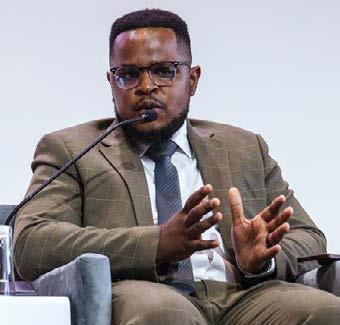
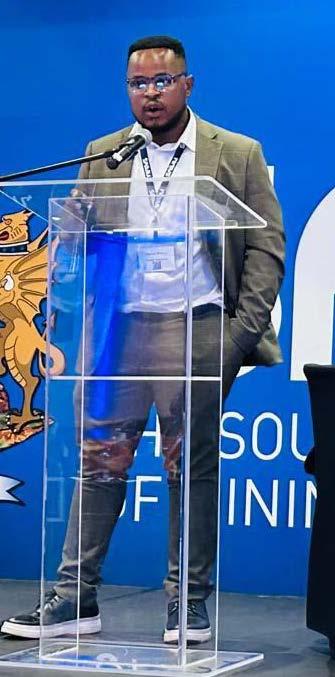
That collaboration must begin long before mining projects reach production. Governments should create policies that encourage localisation, beneficiation and enterprise development, while industry invests in skills, innovation and community participation. Universities, research institutions and small-
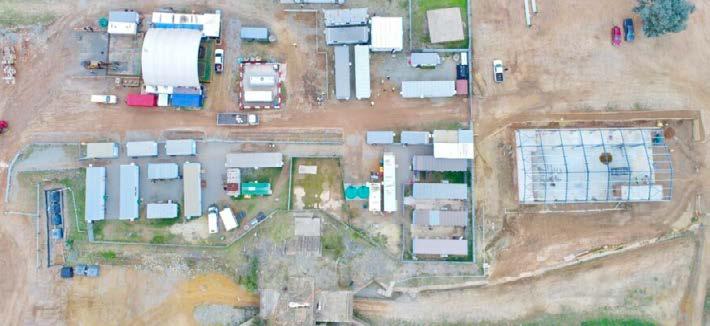
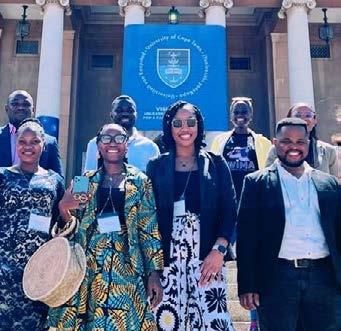
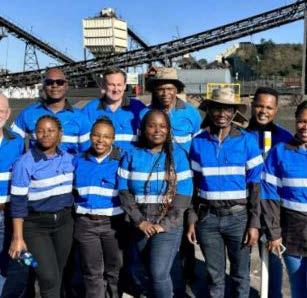
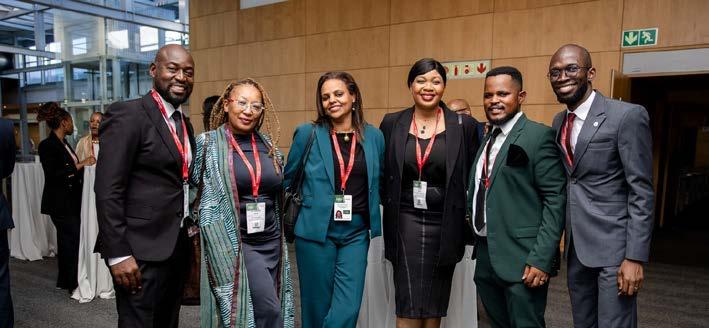
scale miners all have an important role to play in building a more inclusive and competitive mining ecosystem.
Youth participation is equally important. Rather than preparing young people for leadership tomorrow, Africa should be creating opportunities for them to influence decisions today through
entrepreneurship, innovation and strategic participation across the mining value chain.
With initiatives such as the African Continental Free Trade Area opening new opportunities for regional collaboration, Sephela believes Africa has reached an important turning point. The continent has spent years defining its mining ambitions. The next chapter will be written by those prepared to put them into practice. Africa’s competitive advantage will be built through partnerships that transform natural resources into long-term economic value, industrial growth and regional prosperity.
Trust Is The New Licence To Operate

Partnerships in practice are defined by measurable impact, not good intentions.
Olwethu Pityana-Matji NON-EXECUTIVE DIRECTOR, PHINDILE MERCHANT INVESTMENT
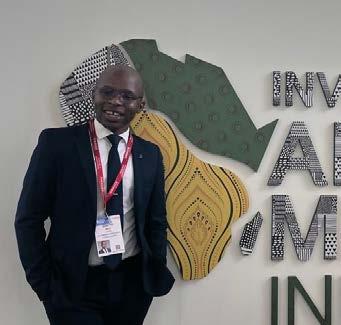
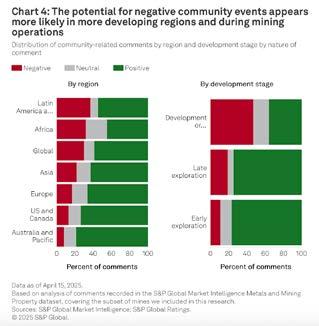
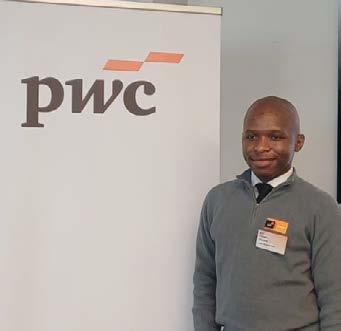
As mining enters an era of heightened expectations, trust has become one of the industry’s most valuable assets. Communities, investors and governments are no longer satisfied with ambitious commitments. They expect visible progress, measurable outcomes and meaningful accountability.
Olwethu Pityana-Matji believes that partnerships in practice begin where promises end.
Creating shared value requires mining companies to move beyond traditional stakeholder engagement and towards genuine collaboration. That starts with listening. Communities should help define development priorities
rather than simply receiving projects selected on their behalf. Whether the focus is education, infrastructure, enterprise development or environmental stewardship, long-term success depends on solutions designed with communities instead of for them.
Strong governance, transparency

and compliance provide the foundation for these relationships by ensuring commitments can be measured, monitored and delivered. Sustainability, she argues, should no longer be viewed as a collection of standalone initiatives. It should be reflected in tangible improvements that people can see and experience over time.
As demand for transition minerals continues to grow, mining companies that demonstrate measurable social and environmental impact will strengthen both their credibility and their resilience.
For Olwethu, the industry’s future belongs to organisations that replace transactional relationships
with partnerships built on trust, accountability and shared success.
Trust is earned through consistent delivery. Organisations that demonstrate measurable value will strengthen stakeholder confidence and secure their longterm social licence to operate.
Building The Leaders Who Will Transform Mining
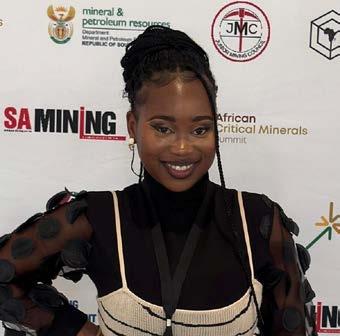
Inclusion becomes meaningful when women are trusted to influence decisions, not simply occupy positions.
Akhona Pretty Shongwe HEAD OF MARKETING & SPONSORSHIPS, WOMEN IN MINING PODCAST

The future of mining will depend as much on people as it does on resources. For Akhona Pretty Shongwe, creating a more inclusive industry begins with partnerships that intentionally develop talent, expand opportunity and prepare more women to lead.
She believes collaboration between mining companies, universities, professional organisations and industry networks can create stronger pathways into mining careers while accelerating leadership development across the sector.
Exposure to industry professionals, mentorship and practical experience all play a critical role in building confidence and helping emerging leaders navigate the challenges of the profession. But attracting women into mining is only the first step. Real transformation happens
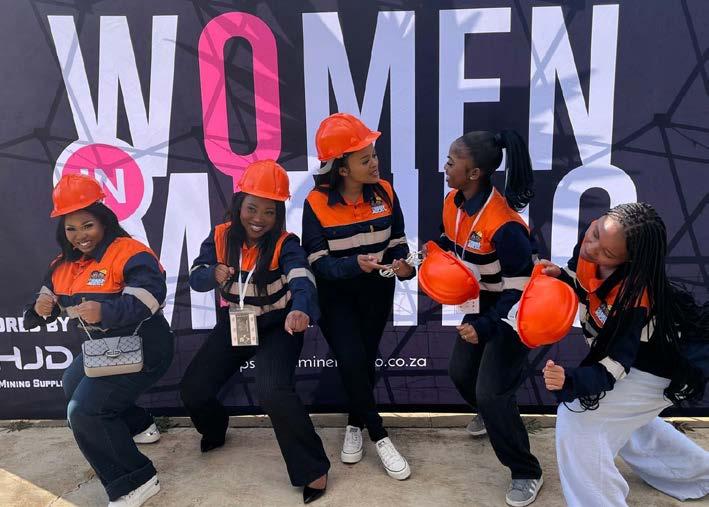
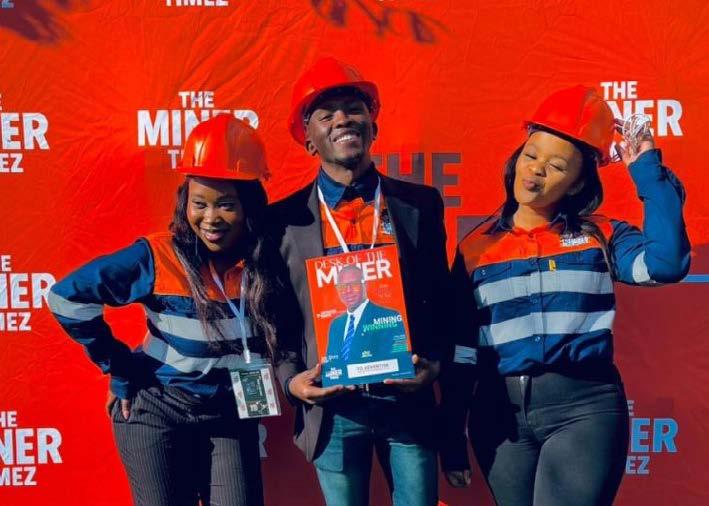
when organisations invest in their growth, create opportunities for leadership and ensure diverse perspectives influence strategic decision-making.
Through her work supporting women entering the industry, Akhona has seen how collaboration can unlock
opportunities that individual organisations cannot achieve alone. Partnerships built around mentorship, sponsorship and knowledge sharing strengthen careers while creating a more innovative, resilient and futureready workforce.
The companies that will lead
tomorrow’s mining industry are those investing in people today.
Investing in leadership development creates stronger organisations, more diverse thinking and a workforce equipped to navigate the future of mining.
Connecting Talent With Opportunity
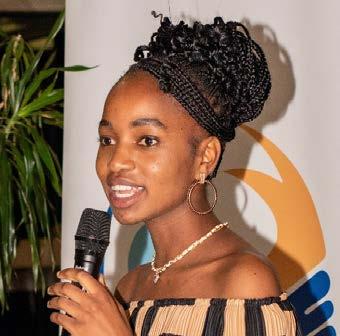
ASIPHE NHLEKO
Mining doesn’t have a talent shortage. It has a connection shortage.
MINING INTERN, LESEGO PLATINUM | MINING ENGINEERING STUDENT, UNIVERSITY OF THE WITWATERSRAND
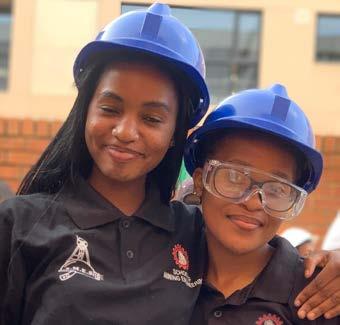

Mining has no shortage of ideas. It has no shortage of talent. What it lacks, according to Asiphe Nhleko, is stronger connections between innovators and the industry they are ready to transform.
Too often, students and young professionals encounter mining
companies only when applying for bursaries, internships or graduate programmes. By then, the relationship has already become transactional.
Asiphe believes mining companies should work far more closely with universities, researchers and entrepreneurs by
opening access to real operational challenges, testing new ideas in live environments and creating structured pathways for innovation to move beyond the classroom.
Innovation does not happen because better ideas exist. It happens because organisations are willing to test them.
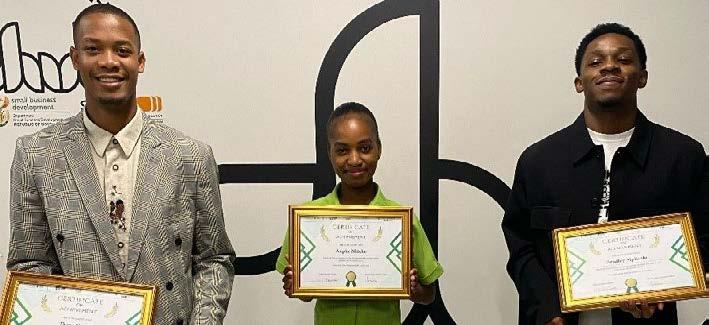

Young professionals should also be recognised as contributors rather than future leaders waiting on the sidelines. Their role is to challenge assumptions, introduce new thinking and work alongside experienced professionals to solve increasingly complex industry challenges.
For Asiphe, the sector’s greatest opportunity lies in creating workplaces where talented people feel connected, supported and empowered to contribute throughout their careers.
Technology may shape the future of mining, but people will determine how quickly that future arrives.
The next generation of mining innovation will come from partnerships that connect industry, academia and emerging talent to solve real-world challenges together.
Aligning Africa’s Mining Future


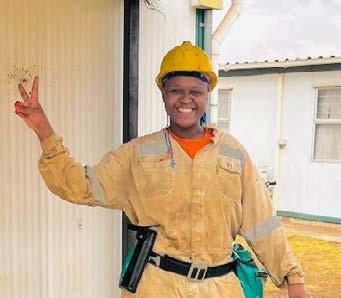
Ntombikayise Mlambo MINING ENGINEER, HARMONY GOLD
Mining’s greatest opportunity is not simply unlocking more resources. It is unlocking stronger collaboration. As the industry responds to the demands of the energy transition, digital transformation and sustainable development, long term success will depend on how effectively governments, industry, communities and future leaders align around a common purpose.
Mining cannot afford to operate in silos any longer. The industry’s greatest challenge is not a lack of resources. It is a lack of alignment. Real progress happens when companies, governments, communities and young innovators share ownership of both the opportunities and the outcomes.
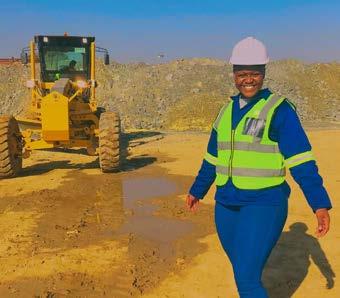
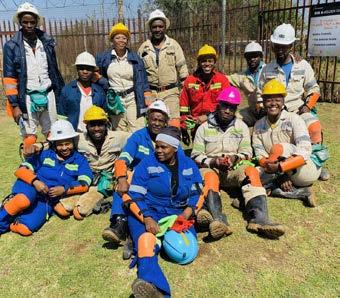
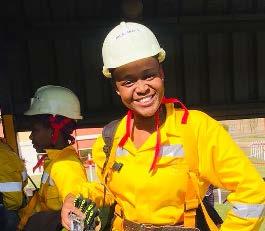
Ntombikayise Mlambo believes the sector can no longer afford to operate in silos. Africa has the resources, expertise and ambition to lead the next era of mining, yet real progress will only be achieved when organisations move beyond individual priorities and work together to create shared value. Collaboration must become a strategic mindset that shapes every stage of the mining value chain.
For Ntombikayise, meaningful partnerships are built on shared ownership, mutual accountability and a commitment to delivering lasting impact. This means involving communities as active partners in development, creating opportunities for young professionals to contribute fresh ideas, strengthening collaboration between industry and academia, and embracing technology to improve productivity, sustainability and safety. When people are
empowered to contribute, innovation becomes part of the culture rather than a standalone initiative.
She believes Africa has a unique opportunity to redefine mining as a catalyst for inclusive economic growth that delivers value far beyond extraction. Achieving this vision will require the same level of investment in people, skills, technology and communities as the industry invests in operational performance. Organisations
that recognise collaboration as a competitive advantage will be best positioned to build resilient businesses and stronger relationships across the mining ecosystem.
As mining enters a defining decade, Ntombikayise believes success will belong to those who understand that progress is built collectively. The future of African mining will not be shaped by organisations working independently, but by partners
united around a shared vision for sustainable growth and long term prosperity.
Africa’s mining future depends on alignment. When industry, government, communities, academia and future leaders work towards shared outcomes, partnerships become the foundation for innovation, resilience and sustainable economic growth.
What Gets a Second Meeting?
Investors Explain What Really Wins Capital

FELICITY HARRIS
Head of Content 121 Mining Investment
Every year, mining executives travel the world pitching investors, showcasing projects and telling their company’s story. Yet only a small fraction of those conversations ever result in funding.
So what separates the opportunities investors forget five minutes later from the ones that progress to serious due diligence?
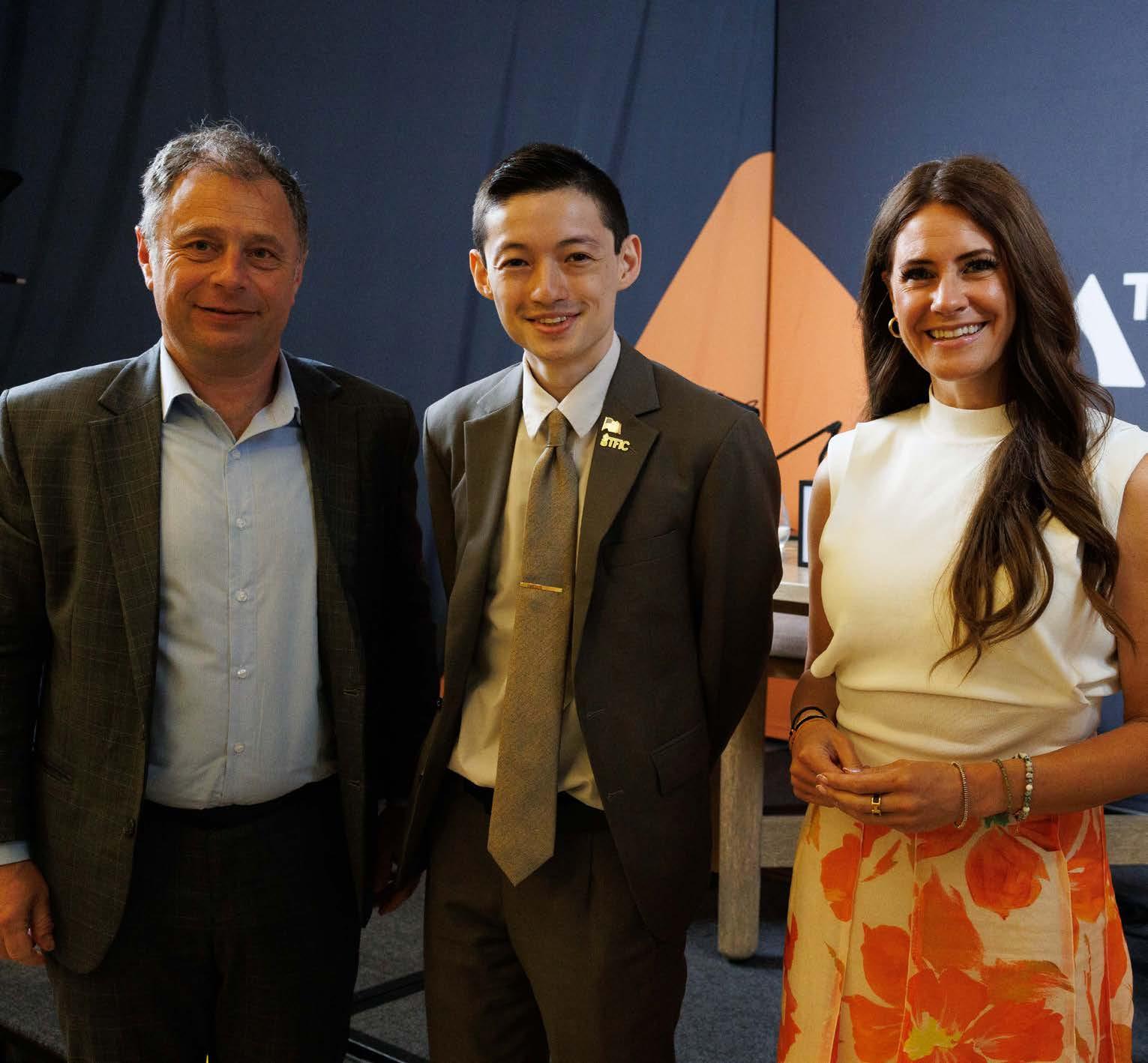
Recorded live from 121 Mining Investment New York, Lyndsay
Malchuk, Global Reporter at Apaton Media, sat down with seasoned resource investors Boris Shrayer, Managing Partner of Gator Partners, and Jimmy Lederer, Vice President at Trinity Financing Investments Corporation - to discuss exactly what catches their attention, the mistakes management teams continue to make and what really earns a second meeting.
Capital follows partnerships that demonstrate credibility, discipline and measurable progress.

Investors aren’t buying ounces, they’re buying returns.
One of the strongest themes throughout the discussion was the difference between what management teams often focus on and what investors actually care about.
As Boris Shrayer explains:
“We don’t get excited about the ounces. We get excited about returns.”
While many companies proudly highlight resource size or grade, experienced investors are looking for something much simpler – can management create value, and do they have a credible plan to deliver it?
For Jimmy Lederer, realism matters just as much.
Rather than ambitious ten-year
visions, investors increasingly want to understand exactly what management intends to achieve over the next six to twelve months.
Every company says it’s different
One recurring frustration for both investors was hearing the same story over and over again.
Every company claims to have:
• a world-class asset
• an undervalued share price
• enormous upside
What makes one opportunity stand out isn’t necessarily the asset - it’s the management team’s ability to execute.
“It’s all about finding great management teams.”
Execution, consistency and credibility repeatedly emerged as the characteristics investors value most.
The biggest mistake management teams make
Mining executives naturally become passionate about their projects.
Sometimes, too passionate.
Jimmy Lederer believes many companies underestimate just how competitive today’s capital markets have become.
“You have to understand the environment you’re in.”
With record commodity prices, AI-driven investment themes and a constant flow of new listings competing for attention, investors simply don’t have time to evaluate every opportunity equally.
Understanding what matters to the investor sitting across the table, and tailoring the conversation accordingly, can make all the difference.
Stop selling. Start building confidence.
Perhaps the most memorable part of the discussion came during the rapid-fire questions.
Asked what every CEO should stop doing immediately, Jimmy’s answer was refreshingly blunt: “Selling.”
The message wasn’t that companies shouldn’t promote themselves.
Rather, investors are increasingly sceptical of polished sales pitches. What builds confidence is authenticity, discipline and a management team that understands both the strengths and the limitations of its project.
Capital discipline wins
every time
When asked what quality consistently attracts investment,
both guests returned to one recurring theme: discipline.
For Boris, capital discipline means management deploying shareholder money responsibly and delivering on commitments.
For Jimmy, it means remaining realistic.
Companies that demonstrate clear priorities, measured growth plans and achievable milestones consistently inspire more confidence than those promising transformational outcomes years into the future.
The investor’s question every CEO should ask
As the discussion concluded, Lyndsay Malchuk left the audience with a challenge:
If you were sitting in the investor’s chair, would you invest in your own company?
It’s a simple question, but perhaps the most important one every management team should ask before entering the next investor meeting.
Listen to the full episode
What Gets a Second Meeting? Investors Explain What Really Wins Capital is available now on:
• Apple Podcasts
• Spotify
• YouTube
Explore this episode and more conversations from The Assay Podcast, where mining meets capital, featuring leading investors, CEOs and industry experts discussing the trends shaping the future of the global mining industry.

FELICITY HARRIS
Head of Content 121 Mining Investment
Collaboration in copper: how sulphur makes the difference

can then be converted to sulphuric acid via a sulphur burner.
The Persian Gulf is the source of about 45% of the world’s sulphur. Copper miners in Chile use sulphuric acid to leach copper to produce copper cathodes, with some 1.1Mt of red metal produced this way.
One tonne of sulphur, approximately, is needed to produce three tonnes of sulphuric acid.
Africa steps up
Importantly, in the DRC Ivanhoe is producing something close to 480,000tpa from its KamoaKakula smelter.
However, other copper producers locally to Kamoa Kakula are already consuming this acid, meaning that the supply is already, mostly, spoken for.
Ivanhoe flagged at the beginning of May it had realised an average price of $467/t during Q1 but had recently signed an offtake contract at $725/t for Q2.
Elsewhere, in Zambia, the government banned sulphuric acid exports in September last year, followed by a permit policy in March.
In May, the government authorised Chambishi Copper Smelter and Mopani Copper Mines to resume sulphuric acid shipments after local stocks recovered.
Imports into the DRC
Macquarie Bank said that the DRC imported 671,000t of elemental sulphur last year, which equates to just over 2Mt acid if fully converted in sulphur burners, totalling 2.5Mt of acid together with imports.
Will it get going again?
As we hear reports that Iran and the US have reached an agreement to extend the ceasefire and lift restrictions on shipping, the question is how long until sulphuric acid supply normalises?
The short answer as to whether this will disperse the backlog of sulphuric acid and sulphur shipments is: possibly, but with a lag.
As the note from Macquarie highlighted, “while the timing of the reopening of the Strait remains elusive, in the event of an agreement our colleagues think 2-4 weeks is a reasonable starting point for clearing the Gulf backlog and restoring shipping patterns, and flows could ramp back towards full levels after another 2-4 weeks.”
BMI said in a note that while the sulphur and sulphuric acid constraints have supported prices to reach near-record highs in May, the rise in energy prices, another by-product of the US-Israel/Iran aggression, will likely sustain these levels.
What does this mean for junior miners?
What this means is that investors will expect miners to be derisked as much as possible.
For Marimaca Copper, its decision to acquire a small sulphur burner in Chile near to their two projects, now looks very smart indeed.
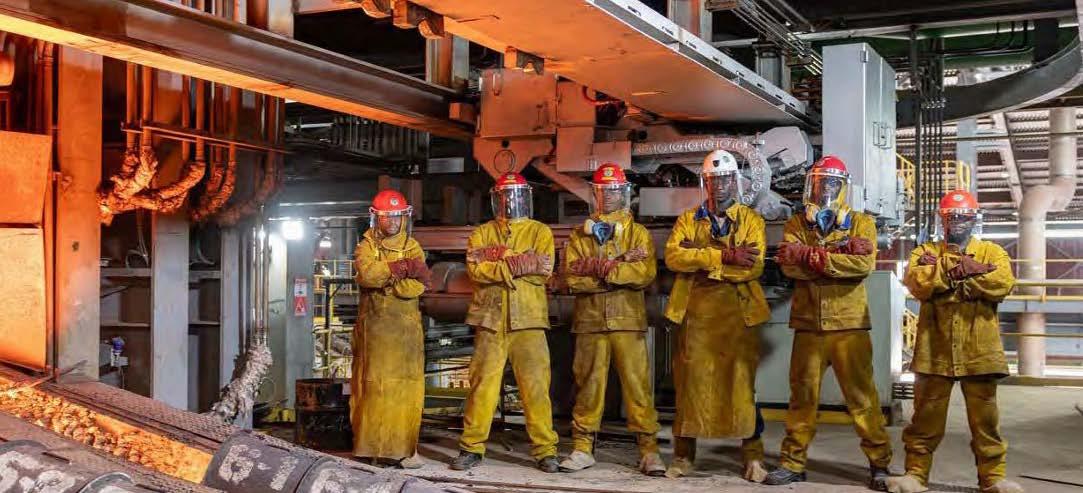
Constraints in the sulphur and sulphuric acid market since the start of the Iran-US/Israel conflict has led to a tightening in copper production.
The closure of the Strait of Hormuz immediately impacted shipments of sulphur, a byproduct of oil and gas production, which
Adding to this constraint is the fact that China restricted exports of sulphuric acid from January to April to ~50% of the prior year’s exports. This was followed by all exports being banned from 1 May to the end of year, removing ~3.9Mt sulphuric acid from global trade.
Sulphuric acid is a generic industrial chemical. In addition to helping produce copper and nickel, it is also used in fertiliser production, with China seeking to safeguard supplies for its domestic fertiliser industry amid quotas and a potential ban.
It has the ability to ramp up to 700,000tpa.
And it does not need to consume this sulphuric acid in its own processing of copper.
As co-chairman Robert Friedland said in the company’s Q2 results: “Kamoa-Kakula is ideally positioned as a producer and seller, and therefore not a consumer, of sulphuric acid”.
Kamoa-Kakula produced 117,871 tonnes of sulphuric acid in the first quarter of this year.
Domestic acid production at copper smelters is estimated at ~1.2Mt last year- with the rampup of Ivanhoe’s Kamoa smelter, this should increase to ~1.7Mt this year.
With fertiliser producers also needing sulphur and sulphuric acid, as Macquarie said in a note this morning:
“it becomes a case of whoever is prepared to pay the most for the available sulphur secures the supply. The fertiliser industry accounts for ~60% of global sulphur demand, and margins for fertiliser companies are generally lower than for copper miners, particularly at current prices”.
“Without government intervention, it may not be much of a contest.”
However, the analysts warned: “for sulphur in particular, this timetable is likely to be longer as oil and gas take priority, and this would likely take copper to the point of production cuts becoming a reality.”
And, shipments from China, the largest exporter to Chile, are still curtailed, separate from the Strait being closed.
What this likely means is that prices will be supported by the constraint.
Marimaca signed a non-binding memorandum of understanding (MOU) with a large-scale sulphuric acid plant operator and supplier in the Mejillones to explore a framework for a joint venture to supply the MOD with future sulphuric acid requirements. It acquired the 150,000tpa Dos Amigos Acid Plant (PADA plant) in August last year for $2.5 million. At the time, it estimated production costs at US$70/t, but these have increased as sulphur prices have crept up. At the current price level, it would mean Marimaca could be producing sulacid at a cost of $250/t.
Prices of sulphuric acid in Chile, delivered in Mejillones, are now above $400/t.
SIOBHAN LISMORE-SCOTT Managing Editor, EMEA and Americas Content, Mining Journal
Mining: Guinea sidesteps
arbitration with UAE’s aluminium group,
tightens grip on bauxite

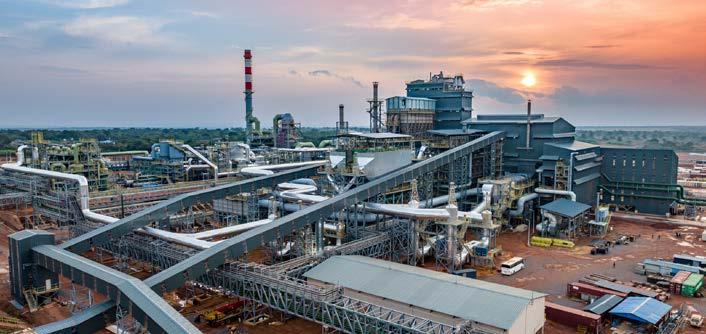
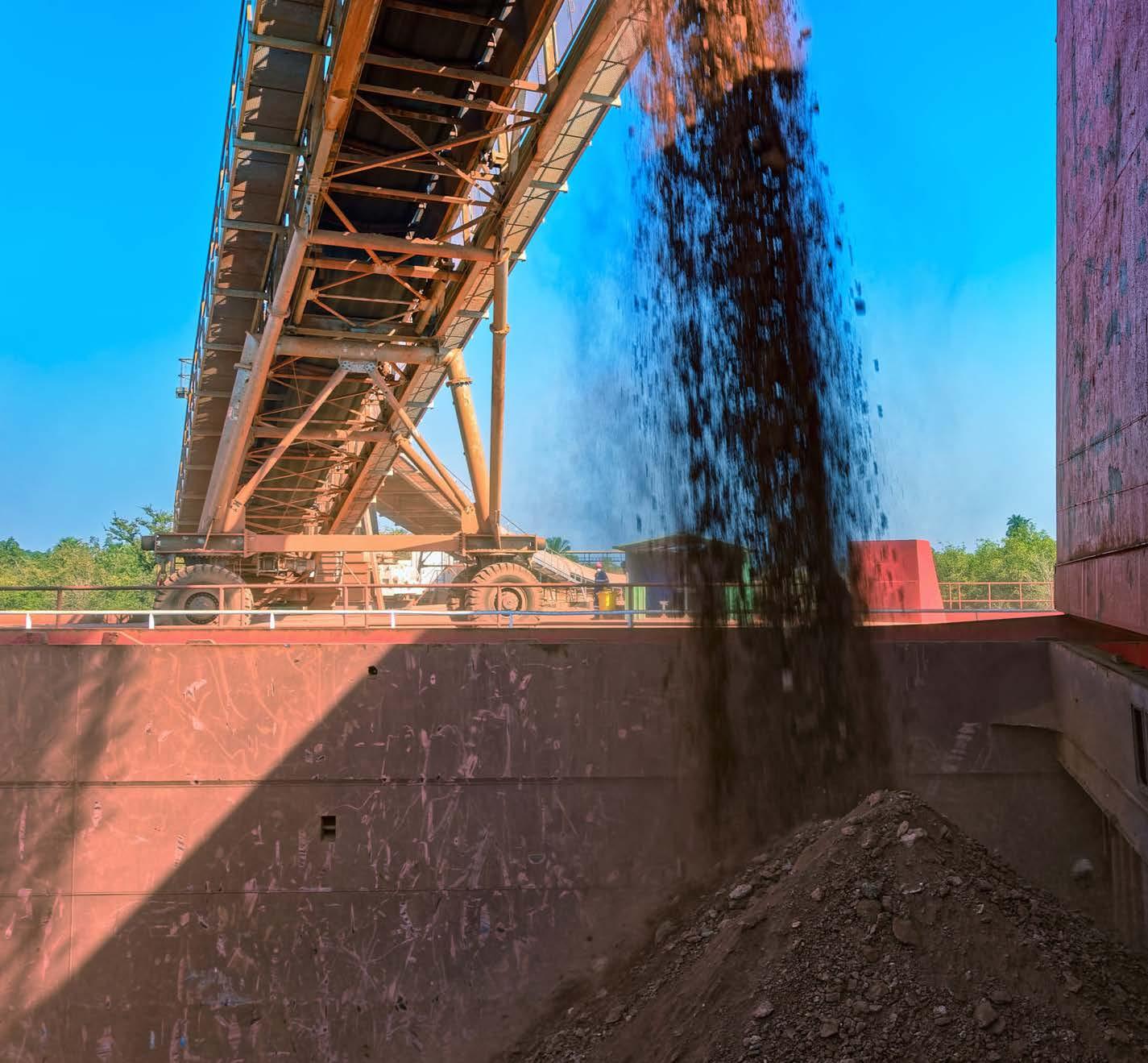
After months of negotiations, Conakry has reached an agreement with the United Arab Emirates’ Guinea Alumina Corporation to transfer GAC’s assets to Guinea’s Nimba Mining Company. At the site of a Guinea Alumina Corporation mine, the bauxite mining subsidiary of Emirates Global Aluminium. © GAC

FATOUMATA DIALLO
Journalist at Jeune Afrique / The Africa Report, Head of Investigations and Business
Conakry has defused a major dispute. After several months of negotiations, Guinea and the UAE’s Guinea Alumina Corporation (GAC), a subsidiary of the Emirati mining group Emirates Global Aluminium, announced on 6 May in a joint statement that they had reached an amicable settlement.
The most valuable asset isn’t in the ground
THOUGHT LEADERSHIP
The agreement definitively closes disputes linked to the transfer of GAC’s assets and the interruption of the group’s bauxite supply operations, including the contract binding it to the Compagnie de Bauxites de Guinée (CBG).
Under the terms of the deal, GAC has agreed to transfer its assets to Guinea‘s state-owned Nimba Mining Company (NMC) in exchange for “the payment by the Republic of Guinea of a lump sum to GAC”. The amount was not disclosed in the statement.
However, another solution remains under discussion: to settle the financial dispute with Emirates Global Aluminium, cashstrapped Guinea is reportedly prepared to pledge NMC’s future production from the Boké site to a trading company.
Reassuring investors
The deal, in any case, brings to an end a disagreement that threatened to escalate into arbitration proceedings before the
International Centre for Settlement of Investment Disputes (ICSID).
In August 2025, President Mamadi Doumbouya withdrew GAC’s mining licence. He accused the Emirati group of failing to honour its commitment to build an alumina refinery with a production capacity of 1.2 million tonnes in its first year and 2 million tonnes of alumina over the medium term.
At the time, the Boké deposit, in which $1.5bn had been invested, was producing 16 million tonnes of bauxite annually. The decision not only strained relations with the UAE, Guinea’s second-largest trading partner – more than 25% of Conakry’s exports are shipped to Abu Dhabi – but also fuelled investor concerns over the country’s regulatory stability.
“The withdrawal of arbitration proceedings is a positive signal for Conakry,” said a source close to the matter. “It will help improve the country’s image among international investors and could also have a calming effect on other
ongoing disputes between the state and mining companies.”
In November 2025, Singaporean group Nomad Bauxite Corporation, owned by Kazakh businessman Almas Mynbayev, initiated arbitration proceedings before the ICSID against the Guinean state following the revocation of its local subsidiary’s mining permit. A month later, the Emirati company Axis Minerals also brought Conakry before ICSID arbitration, claiming $30bn in damages over the cancellation of its bauxite permit in Boffa.
The latest arbitration case was initiated by Toronto-listed Falcon Energy, which accuses Guinea of having illegally “expropriated” it from its graphite project in Lola, in the N’Zérékoré region.
NMC ramps up operations
The agreement should accelerate NMC’s projects. Led by French executive Patrice L’Huillier, the state-owned company
established in August 2025 had already begun advanced discussions in September 2025 with shareholders in CBG, which is 49% state-owned and 51% controlled by Halco Mining – a consortium comprising AngloAustralian group Rio Tinto (45%), US company Alcoa (45%) and Guernsey-based Dadco Investments (10%). The consortium shared part of its infrastructure with GAC.
However, the discussions had been suspended because of the arbitration risks hanging over the state. “For listed mining majors, it was not prudent to collaborate with a company whose assets were the subject of legal disputes,” our source says. NMC, which exported a million tonnes of bauxite in 2025, is targeting exports of 10 million tonnes in 2026 and 12 million tonnes by 2027.
The company, which is finalising its strategic plan, signed an
agreement in March 2026 with Australian group Resolute Mining to launch gold exploration and development activities.
A 150 million-tonne quota
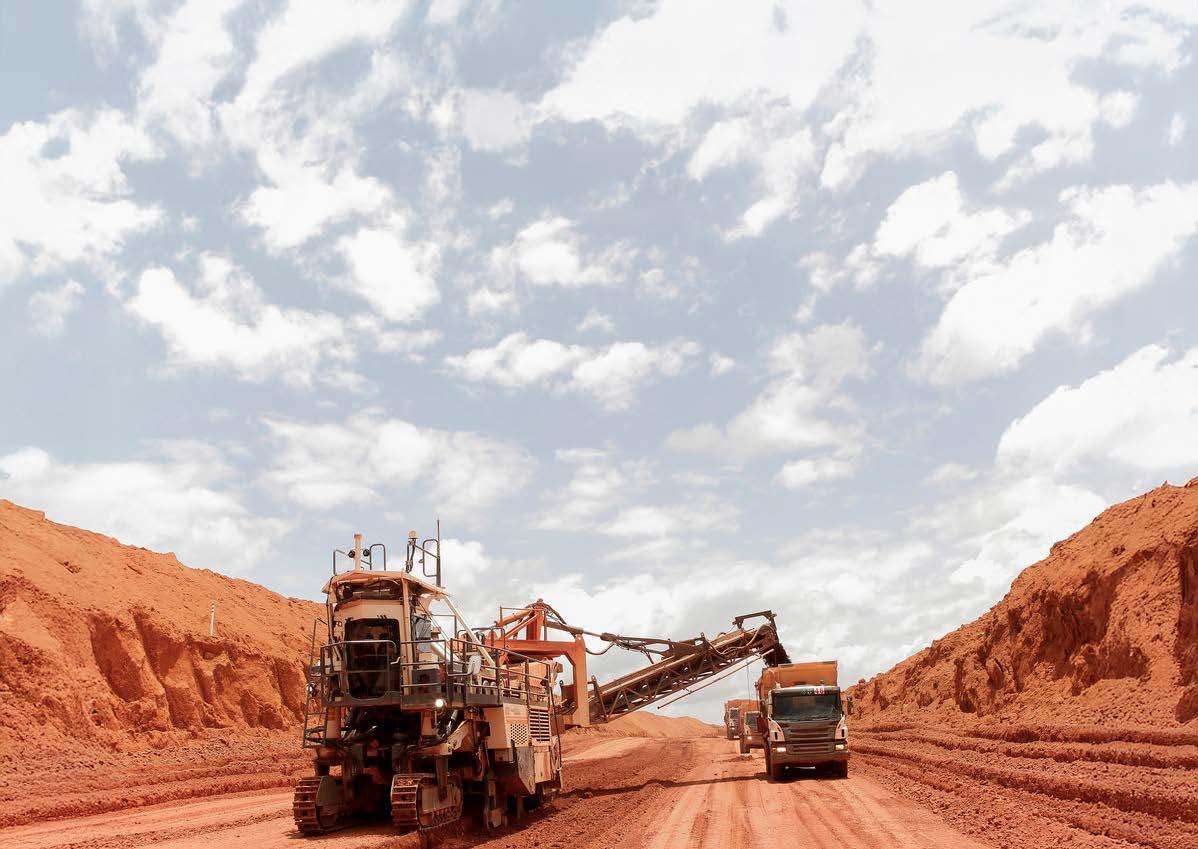
The agreement comes as Conakry, the world’s leading exporter of bauxite ahead of Australia, seeks to regain control over ore prices, which have fallen by 20% to 30% from their 2025 peak. The state plans to introduce an annual export quota at a time when 74% of Guinea’s bauxite exports are destined for the Chinese market.
Although some details still need to be finalised, the quota is expected to be set at 150 million tonnes per year. In the first quarter of 2026, Guinea’s mining ministry exported 60.9 million tonnes of bauxite, up 25.3% compared with the same period in 2025, when exports totalled 48.6 million tonnes.
The country’s largest producer, Société Minière de Boké (SMB), whose bauxite is destined for the Chinese market, exported 18 million tonnes in the first quarter of 2026, while the Aluminum Corporation of China (Chinalco) shipped around 8 million tonnes –an increase of 35% compared with the same period in 2025.
To remain competitive on the international market, Guinea will have to accelerate the development of its domestic processing capacity. At present, the country exports raw bauxite, sold at between $32 and $38 per tonne. By comparison, Australia, where the ore is processed into alumina or aluminium, generates greater added value and exports at $73 per tonne
With this in mind, L’Huillier said that NMC is conducting a feasibility study for the construction of an alumina refinery by 2030.
South African green hydrogen first-movers given major boost

MARTIN CREAMER Editor – Mining Weekly
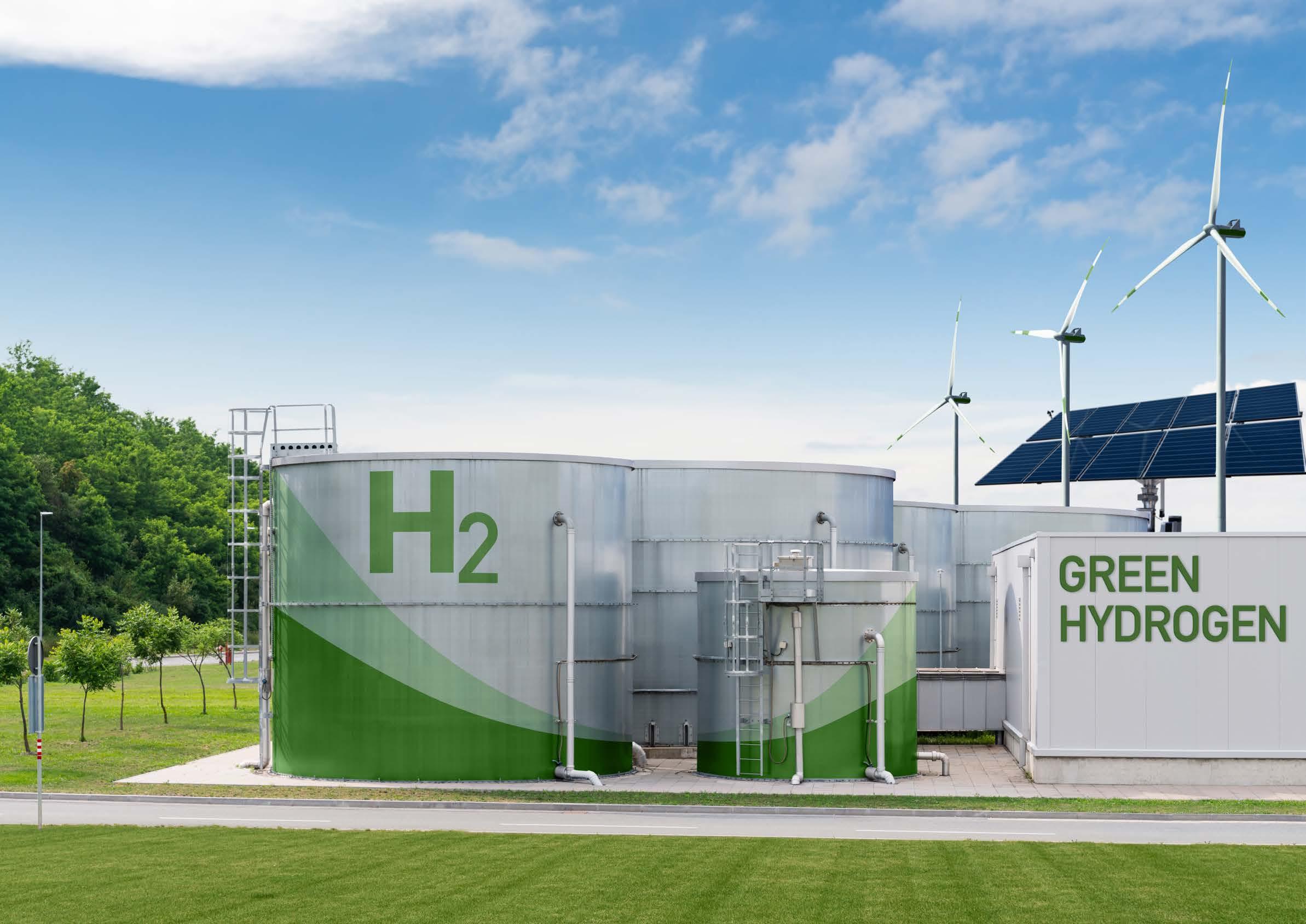
Enticing support for first movers into green hydrogen project development is on offer via a first-of-a-kind government-led framework designed to assess the readiness and bankability of green hydrogen and power-to-x (PtX) projects in South Africa.
This follows South Africa’s official launch of the PtX project development standard (PDS), which includes green hydrogen and PtX developers being invited to register their projects and complete the PtX PDS questionnaire, with the assurance that all information will be treated as confidential and shared only with authorised partner institutions.
“The questionnaire takes less than 60 minutes to complete, in less time than it would take to prepare and drink a cappuccino, offering project developers a practical and efficient route to position their projects within a recognised national framework for investment readiness and investor engagement,” Green Hydrogen (GH2) Just Energy Transition Implementation Plan (JET-IP) Programme Management Office (PMO) director Dr Rebecca Maserumule outlined in a media release to Engineering News & Mining Weekly.
Readers will recall that at the United Nations Industrial Development Organisation (UNIDO) conference in Vienna on April 8, Maserumule described South Africa as being at the same green hydrogen inflection point today that it was with renewable energy in 2009.
“We’ve done it with renewables successfully. We moved from strategy and policy to execution very well and I think today we’re standing here in 2026 because we had a great run of moving to renewables and getting projects on the ground.
“This is what makes the next stage of just adding an electrolyser, moving the molecules, either for domestic or export, really enabling for South Africa. This is why I know, without any doubt in my mind, we can do it,” Maserumule insisted, while emphasising the need to support first movers with funding to make things happen.
In welcoming the launch, South Africa’s Department of Electricity and Energy (DEE) hailed the PtX PDS as a key instrument to support a credible and investmentready pipeline of green hydrogen and PtX projects.
“Leveraging its mandate as an industrial development organisation, UNIDO – through its dedicated hydrogen expertise and platforms – stands ready to provide strategic and targeted technical assistance to accelerate project development toward investment readiness and operationalisation,” Schwager added.
Launched by the DEE and the Department of Trade, Industry and Competition, the PtX PDS is being implemented by the GH2 JET-IP PMO, which is hosted at the IDC.
The department described green hydrogen as a strategic, crosscutting sector linking electricity planning, industrial development, trade, infrastructure, permitting and finance.
PtX embraces technologies that use renewable electricity to produce green hydrogen, which is then converted into sustainable fuels, chemicals, and raw materials and enables the decarbonisation of hard-to-abate sectors such as aviation, shipping, and chemical manufacturing.
“UNIDO remains firmly committed to advancing the hydrogen agenda in South Africa, including continued technical and partnership support to the Industrial Development Corporation’s (IDC’s) GH2 JETIP PMO and key stakeholders of the hydrogen economy in South Africa,” UNIDO Climate and Technology Partnership Division chief Petra Schwager reported. The United Nations organisation has provided technical support to strengthen the scoring and weighting methodology of South Africa’s South Africa’s PtX PDS framework, convening international sectorial technical specialists and development partners.
provides emission-free mobility and stationary power for green steel, green cement, green chemicals, data centres, AI, offgrid communities, and you name it.
The PtX PDS initiative aims to strengthen South Africa’s pipeline of investment-ready projects, improve access to finance and technical assistance, and create a clearer pathway from early-stage project development to investment readiness.
A strong endorsement of the PtX project development standard template was made by the IDC, which described it as a catalytic instrument to accelerate globally competitive, investment-ready hydrogen projects.
“Standardisation is essential to unlocking scale, reducing risk, and positioning South Africa as a leading green hydrogen hub. We are proud to support this initiative as a decisive step toward mobilising capital and driving a coordinated global PtX,” the IDC stated.
South Africa’s competitive advantages for green hydrogen and PtX development are the provision of green electricity from superior sun and prime wind as well as strategic infrastructure, industrial capability, and a growing policy focus on decarbonisation and industrial development.
From a critical metals perspective, South Africa is the host of the overwhelmingly largest global volumes of platinum group metals, which can serve as catalysts in electrolysers that separate water into green hydrogen and oxygen and then play a second catalytic role by converting the hydrogen back into green electricity that
time, be adapted for application in other African markets seeking to strengthen project preparation and investment coordination within emerging green hydrogen sectors.
GIZ South Africa, Lesotho and eSwatini hailed the launch as an important step towards strengthening South Africa’s green hydrogen ecosystem through a coordinated and investment-oriented approach.
By establishing a common reference point for project screening, the PtX PDS is expected to reduce information asymmetries, strengthen coordination across the ecosystem, and help crowd in investment for South Africa’s emerging green hydrogen economy.
The standard introduces a structured and transparent process through which project developers can demonstrate technical, commercial, financial, and operational readiness through the standardised questionnaire and assessment platform aligned with investor and development finance institution (DFI) expectations.
The PtX PDS provides transparent assessment criteria that reduce duplication and streamline engagement between project developers, government institutions, DFIs, and privatesector stakeholders.
The launch is described as marking an important institutional milestone in strengthening South Africa’s national pipeline of credible and investment-ready green hydrogen ambitions.
The framework has been designed with future scalability and replication in mind and may, over
“We have continuously supported the development of the system as a technical partner and view the PtX PDS as a practical mechanism to improve project transparency, standardise project assessment, and support the identification of credible and investment-ready green hydrogen PtX projects in South Africa,” H2.SA/BVC II Programme Head Carolin Capone commented.
“The PtX project development standard is well-placed to meet the need to coordinate and align projects in this nascent industry. It offers great insights for funders such as KfW, enabling a seamless and transparent approach to funding accessibility to meet the needs of the projects. It is a welcomed tool for the market,” Kreditanstalt für Wiederaufbau stated in the release to Engineering News & Mining Weekly.
The conference in Vienna heard that Europe, as one of the main green hydrogen demand centres, was open to importing green hydrogen and it was noted that a commitment of $11.7-billion had been made to South Africa through the Just Energy Transition structure. While most of this was for renewable power, a portion was earmarked for green hydrogen as one of six JET-IP portfolios.
AI enhances sustainability in mining
The mining industry is investing in the use of technology to enhance safety and sustainability and deliver long-term value, including upskilling the workforce for digital, data and AI.
According to Liv Carroll of Accenture, safety, which is encompassed in sustainable mining, is the number one priority in the mining industry. There are many ways in which technology can enable safer working environments and derisk operations for workers. Sustainable mining reflects a fundamentally responsible approach to how we extract minerals and get them to market, which includes environmental stewardship, operational efficiency and worker safety.
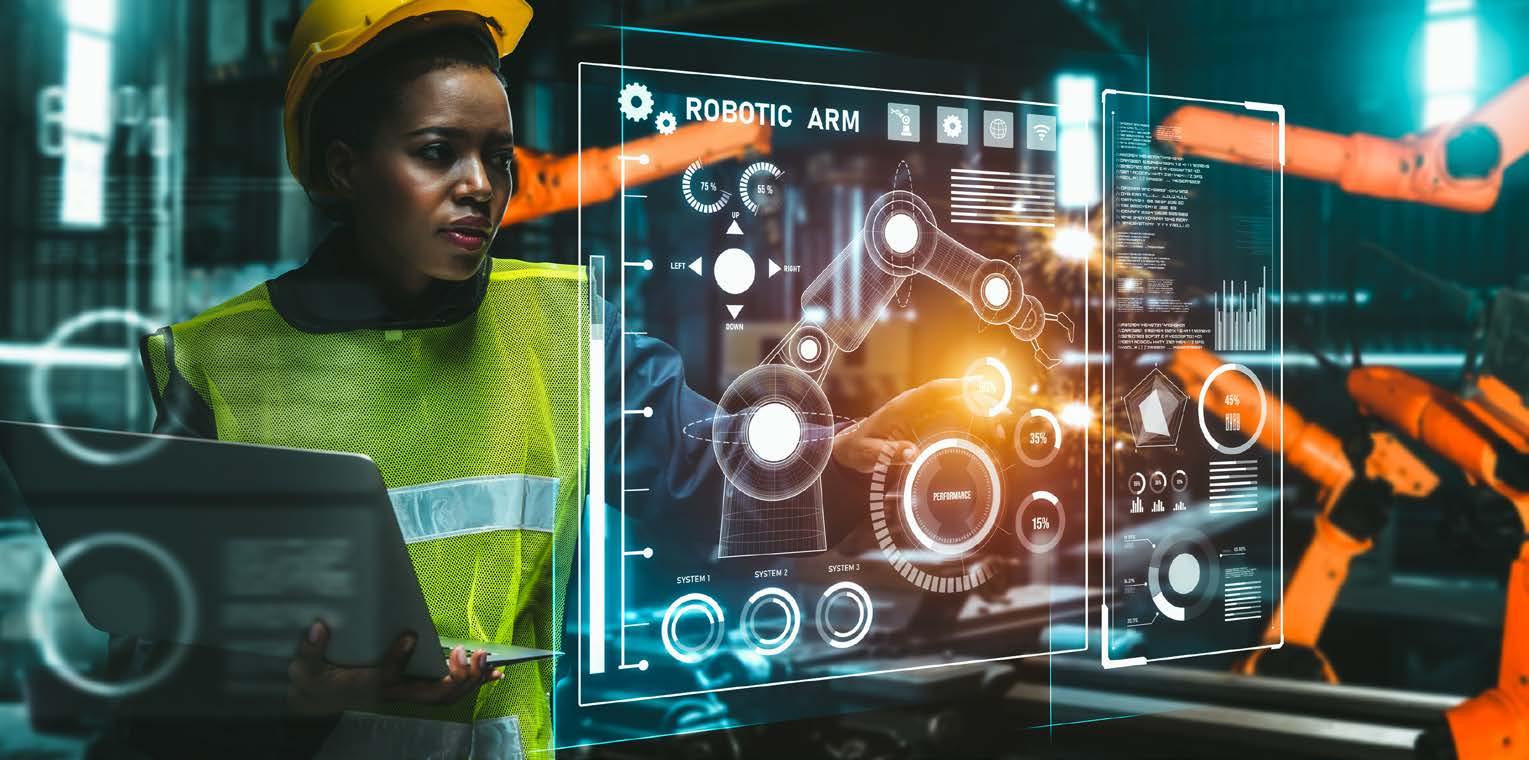
She says in the early days of digital transformation, which includes leveraging digital, data and AI technologies, she noticed that effort was directed towards implementing new technologies by “walking around operations with a digital hammer looking for a nail to hit, which did not prove successful”.
What has changed now is the industry looking at it from a business goals lens. Where is the business underperforming, which parts of operations or business processes need derisking and where is the potential for value uplift? The industry now understands that technology is the enabler and it is essential to upskill the workforce alongside implementing it, as well as rethink processes and support the
change in ways of working that digital and AI facilitate.
“We’ve seen a real shift. Companies are not just deploying technology but they are upskilling their workforce to work confidently with those tools. For example, when using drones for conducting surveys, companies retrain the original workforce to operate those drones, and also to do the AI-assisted processing and modelling of the survey data. AI becomes an enabler of new ways of working, and that’s where you see real value delivered,” she states.
Carroll says AI adoption by the mining industry is accelerating. Because of this, there was a lot of investment in data science to analyse the data and generate
insights. “It’s very valuable if you can access reliable data and AI-driven insights in time horizons that are relevant to the responsibilities of the person making a decision based on those insights. AI needs to be designed with these decisions in mind.”
From open pit to underground
Carroll notes that, while there is significant value to be realised in applying digital and AI technologies to open pit and underground operations, there are important differences in the working environments that need to be considered.
“In open pits, you have clearer lines of sight and much stronger connectivity. As well as sensors
and autonomous equipment, which can also be used in underground operations, drone and satellite technologies can be deployed, which makes data on ground conditions readily available for use with AI.”
Satellite data has become a valuable source of information to which AI models can be applied for situational awareness and predictive capabilities. Examples include geotechnics and pit wall monitoring in open pit, but also tailings storage facility management biodiversity and land use monitoring in the vicinity of the operation to ensure that you’re not impacting those who are also utilising the nearby land.
Underground, the challenges are different. You don’t have
access to satellite data or GPS, so connectivity is created through underground communications systems, such as mesh networks and leaky feeder systems. These systems support access to the data needed for AI applications. Ultimately, the goal is to make sure that everyone goes home alive and well at the end of the day. It’s encouraging to see mining companies increasingly using AI technologies, not only to predict hazards, but to operate in a way that protects the environment and strengthens long-term value for their workforce and communities.
BRUCE MONTIEA Journalist, Mining Review Africa