

·DATA DRIVEN PREDICTIVE MAINTENANCE
·THE VALUE OF SMART FUEL STORAGE
·SD-WAN REDEFINES DIGITAL CONNECTIVITY

Africa continues to rely heavily on external powers to extract, process and profit from its minerals. Collaboration with international partners remains necessary and important.
However, partnership should never come at the expense of sovereignty or long-term economic independence. Recent debates across the continent highlight this growing concern.
In Nigeria, for example, discussions around allowing foreign powers greater control over strategic sectors such as electricity raise important questions about dependency, selfsufficiency and national development.
Countries such as China possess the capital and technical expertise to deliver infrastructure at scale. However, African nations must also ask what role they are building for themselves in the process.
Clearly, development cannot mean permanently outsourcing control of critical sectors while local capacity remains underdeveloped.
Africa’s critical minerals present a once-in-a-generation opportunity to reshape the continent’s economic future. But if this moment is mishandled, Africa risks remaining a supplier of raw materials while others continue to dominate the value chain and reap the greatest rewards.
The urgent challenge before the continent is not only to extract wealth from the ground but also to build the industries, institutions and leadership capable of transforming that wealth into lasting prosperity for its people.
Nick Barnes | Editor editor@miningbusinessafrica.com

Editor Nick Barnnes
editor@miningbusinessafrica.co.za
+27 10 055 3356
Writers Jimmy Swira
jimmy@miningbusinessafrica.co.za
+27 10 055 3356
Thobile Mazibuko Thobile.mazibuko@miningbusinessafrica.co.za
Sales and Marketing Winnie Sentabire
winnie@miningbusinessafrica.co.za
+27 83 530 6832/+27 10 055 3356
Angeline Ntobeng
angien@miningbusinessafrica.co.za
+27 78 322 5938
+27 010 055 3356
Accounts Precious Chirunga accounts@miningbusinessafrica.co.za
+27 010 055 3356
Art Director/Layout Augustine Ombwa Arobia Creative Consultancy austin@arobia.co.ke
+254 772 187 334
Circulation/Sales info@miningbusinessafrica.co.za
+27 10 055 3356
Published By Media Icon Pty Ltd


Improving gold recovery while maintaining operational efficiency remains a key challenge for many mining operations, particularly when dealing with complex mineralization and variable ore characteristics. In this context, advanced sensor-based sorting technologies are opening new opportunities to unlock value earlier in the process.
At the core of TOMRA Mining’s approach is X-Ray Transmission (XRT) technology, which enables the precise separation of mineralized and non-valuable material based on atomic density. Building on this capability, TOMRA’s CONTAIN™ technology has been specifically developed to address one of the most challenging aspects of gold processing: the detection of inclusion-type mineralizations which act as proxy for gold.
Using advanced AI-based algorithms, CONTAIN™ can identify valuable mineralization embedded within host rock— material that is often difficult
to detect using conventional methods. This allows operations to recover additional value from particles that might otherwise be misclassified as material under the sorting cutoff garde. By removing non-valuable material early and improving classification accuracy, operations can enhance feed consistency, reduce processing loads in energy-intensive stages such as crushing and grinding, and optimize overall plant performance.
Test work on gold-bearing material has demonstrated not only a clear upgrade in feed quality, but also consistent and reliable results across varying particle sizes and operating conditions.
As the industry continues to focus on efficiency and resource optimization, technologies such as CONTAIN™ are helping redefine how gold projects can increase recovery and maximize value—without major changes to existing process flows.

Tanzania discovers two rare earth deposits
Two significant deposits of Neodymium (Nd) and Praseodymium (Pr) have been discovered in Mkiu Village, located in the Ludewa District of Tanzania’s Njombe Region. The deposits were uncovered through a joint exploration initiative between the Tanzanian government and Hongji Mining Co. Ltd, a Chinese company expanding its investments in Africa’s strategic minerals sector. Neodymium and Praseodymium are critical minerals used in the production of electric vehicles, wind turbines, smartphones, defence systems, and renewable energy technologies, making the discovery a potential economic breakthrough for Tanzania.
The Ghanaian government has announced that it will no longer automatically renew mining leases for foreign companies, particularly in the case of Gold Fields. The announcement was made by Isaac Andrews Tandoh, Chief Executive Officer of Ghana’s Minerals Commission, who stated that “it won’t be business as usual where we just automatically renew the lease.” Gold Fields’ mining lease for the Tarkwa Mine is expected to expire in 2027.
Nchanga B resumes operations after 18-year hiatus
Konkola Copper Mines (KCM), Zambia’s largest copper producer, has resumed mining operations at the Nchanga B Shaft after an 18-year hiatus. With the reopening of the shaft, Nchanga operations are expected to produce approximately 200 tonnes of copper per month. The development is also expected to boost local employment, with the company already hiring 80 workers and planning to recruit an additional 100 employees in the coming months.
















5th

1-2 JULY 2026, INDABA
























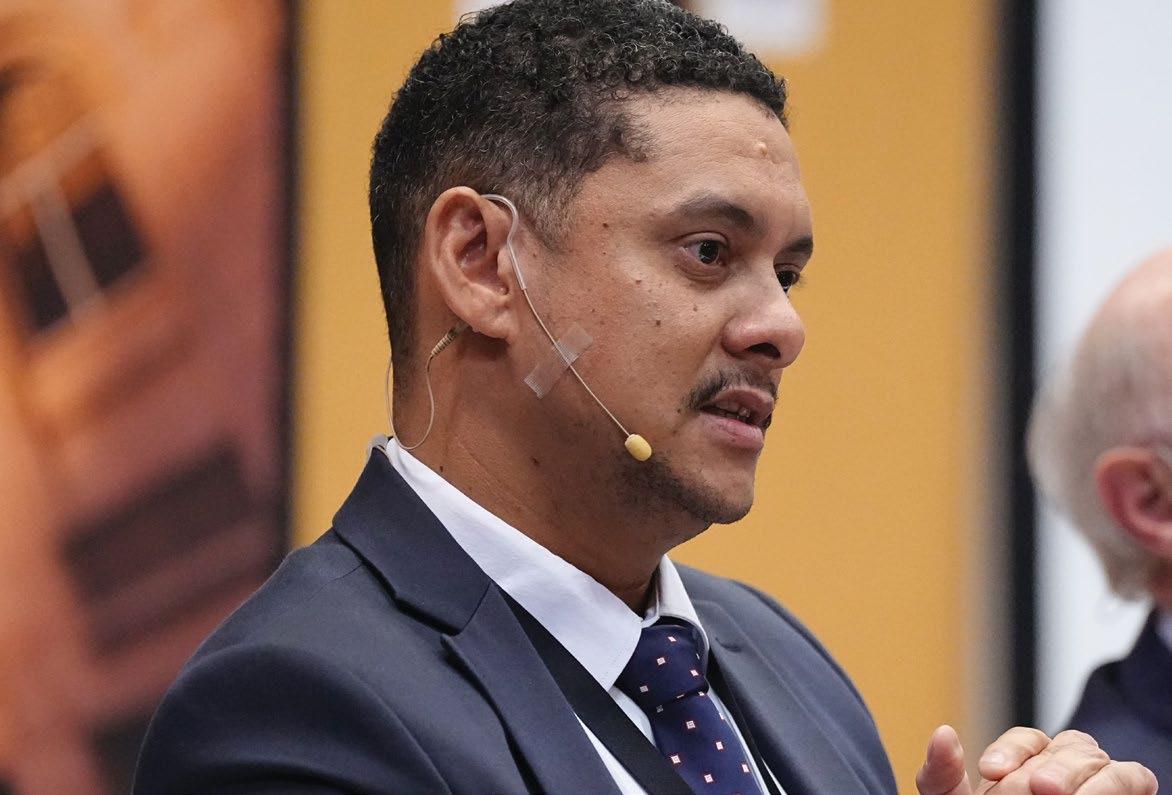
As global powers – mainly China and the USA - compete for critical minerals, Africa faces mounting pressure to secure value from its resources while avoiding being left behind in the energy transition. Experts posit that collaboration, beneficiation and policy certainty will determine the continent’s future. By Thobile Mazibuko
On May 5-7, the Arbitration Foundation of Southern Africa (AFSA) hosted Johannesburg Arbitration Week 2026 (JAW) at the Sandton Convention Centre. The event brought together legal experts, mining executives, policymakers, financiers and infrastructure specialists to discuss the future of
dispute resolution and investment across Africa.
Held under the theme “Arbitration in a fragmented global order: The future of trade, investment and sustainable development,” the threeday conference reflected the growing complexity of global trade relations, geopolitical fragmentation and the race for strategic resources required
for the energy transition.
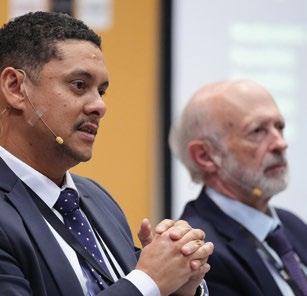
Among the standout discussions during the conference was the session titled “Critical Minerals, Energy Security & Strategic Supply Chains: Disputes in the New Geopolitical Battleground,” moderated by Denise Durand and featuring panellists Clive Rumsey, Jackwell Feris, Vivien Chaplin and Burton Meyer.
The conversation could not have come at a more critical time for Africa.
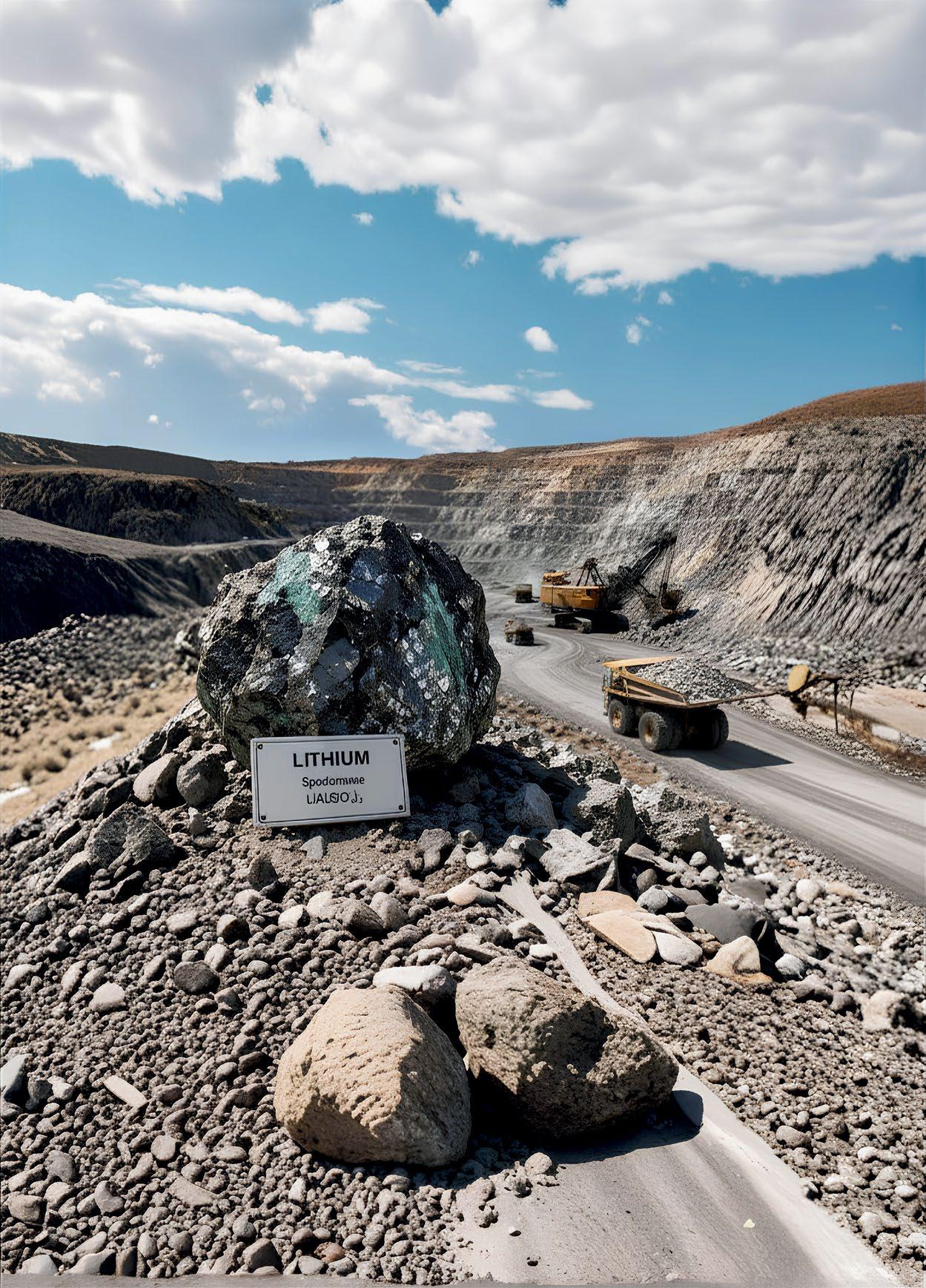
As the world accelerates its transition toward renewable energy, electric vehicles, battery storage systems and digital infrastructure, demand for minerals such as lithium, cobalt, copper, graphite, and rare earth elements has surged dramatically. Africa, home to some of the world’s richest reserves of these resources, has suddenly found itself at the centre of a fierce geopolitical contest involving global superpowers, multinational corporations and emerging industrial economies.

Yet beneath the optimism surrounding the continent’s mineral wealth lies a deeper question: will Africa finally use this moment to industrialise and create long-term economic value, or will it once again remain merely a supplier of raw materials to global markets?
For Feris, who is the Head of Industrials, Manufacturing & Trade Sector at Cliffe Dekker Hofmeyr, the stakes are clear. “Africa sits in the middle of this tug of war,” he said, describing the growing competition between Western economies and China over control of strategic mineral supply chains.
According to him, critical minerals are no longer simply mining commodities. They have become geopolitical assets tied directly to energy security, defence technologies, electric
It really starts with the tone at the top,” says Mammatt. “Leadership needs to understand that these issues are not separate from the business. They can have negative impacts, but they also create opportunities, whether that’s new products and services, cost savings, improved risk management or stronger long-term performance.
vehicle manufacturing and industrial competitiveness. Countries are now scrambling to secure reliable access to these minerals as they seek to reduce carbon emissions, strengthen domestic manufacturing and protect national security interests.
However, he argued that Africa’s role in this new economic order remains deeply contested.
On the one hand, institutions such as the G20 and the African Continental Free Trade Area (AfCFTA) are encouraging greater beneficiation and industrialisation within Africa.
Policymakers increasingly recognise that exporting raw minerals without local processing has historically deprived African economies of jobs, manufacturing capacity and broader developmental benefits.
On the other hand, Feris noted that global powers still largely expect Africa to remain an exporter of unprocessed minerals while value addition occurs elsewhere.
“You have a Western system that says, ‘You just sell us the stuff. You don’t have to worry about beneficiation,” he said.
At the same time, China currently dominates much of the global refining and processing capacity for critical minerals, particularly in sectors linked to battery production and renewable energy technologies. This has created what Feris described as a delicate
balancing act for African governments attempting to navigate competing geopolitical interests while pursuing their own industrial ambitions.
“There should be more value addition on the African continent,” he said. “We need to ensure that we are not left in the same position we were 20 years ago, where minerals are simply exported.”
“Africa must reach a point where it can export some minerals while also investing in the infrastructure, energy and industrial capacity needed to beneficiate resources locally, refine lithium and develop battery manufacturing facilities.”
Throughout the discussion, one theme repeatedly emerged: Africa cannot afford to approach the critical minerals opportunity through fragmented national strategies.
Consequently, Feris stressed that regional collaboration would be essential if African countries hope to build globally competitive value chains. He pointed to the natural synergies that already exist within Southern Africa, where countries such as Zimbabwe, Zambia and South Africa collectively possess significant reserves of lithium, cobalt and copper.
Rather than exporting these minerals independently, Feris believes the region should work together to establish downstream industries, including battery manufacturing facilities linked to Africa’s existing automotive sector.

“We need to create value on the continent. No one country can do it alone.”
He explained that Southern Africa already has an established automotive manufacturing base, with major vehicle producers operating in South Africa. By integrating mining, refining and manufacturing capabilities across the region, African countries could potentially position themselves as suppliers of electric vehicle components and battery technologies to both local and international markets.
The implications extend far beyond mining. According to Feris, the energy transition presents Africa with a once-in-a-generation opportunity to industrialise, strengthen intra-African trade and build long-term economic resilience. However, realising that opportunity will require significant investments in infrastructure, logistics,
electricity generation and industrial capacity.
“We have to invest in infrastructure, intra-African trade and local manufacturing,” he said.
Yet as governments attempt to capture greater value from their mineral resources, tensions between states and investors are becoming increasingly common.
One of the central themes explored during the session was the growing number of disputes linked to critical minerals, particularly around export restrictions, licence revocations and beneficiation requirements.
Feris referenced disputes in Guinea involving bauxite mining licences, where the government argued that certain projects were not delivering sufficient economic benefits to the country. Investors, meanwhile, claimed they had complied with their obligations and that licence terminations were unlawful.
Similarly, countries such as Namibia and Zimbabwe have introduced restrictions on the export of raw lithium as part of broader strategies to encourage local
beneficiation and processing.
“There are definitely several potential disputes that will happen as a consequence of this tug of war,” Feris warned.
Contractual obligations and investment agreements
However, he also cautioned governments against implementing abrupt policy changes without considering existing contractual obligations and investment agreements. According to him, poorly managed regulatory shifts could expose African states to costly international arbitration claims worth billions of dollars.
“If you decide to make changes, you need to do it within the framework that you’ve agreed to,” he said. “Otherwise, you are creating more exposure to yourself.”
He made examples about Tanzania, Zimbabwe and several South American countries where governments have faced substantial arbitration awards after disputes with mining investors escalated.
Chaplin, Head of Mining & Minerals Sector at CDH, echoed many of these concerns, arguing that while Africa’s push for greater resource sovereignty is understandable, some governments are reacting too quickly without establishing the practical conditions necessary to support beneficiation and industrialisation.
“In some instances, African governments are knee-jerking a little bit,” Chaplin said. “They are putting in beneficiation requirements and local ownership requirements that cannot actually be backed up by facts on the ground.”
According to Chaplin, the mining industry operates on extremely long investment cycles, with projects often taking decades to move from exploration to commercial production. As a result, regulatory certainty remains one of the most important factors influencing investment decisions.
“A mine can take 10, 15 or even 20 years from exploration to production,” she said. “Investors need certainty and the ability to plan long term.”
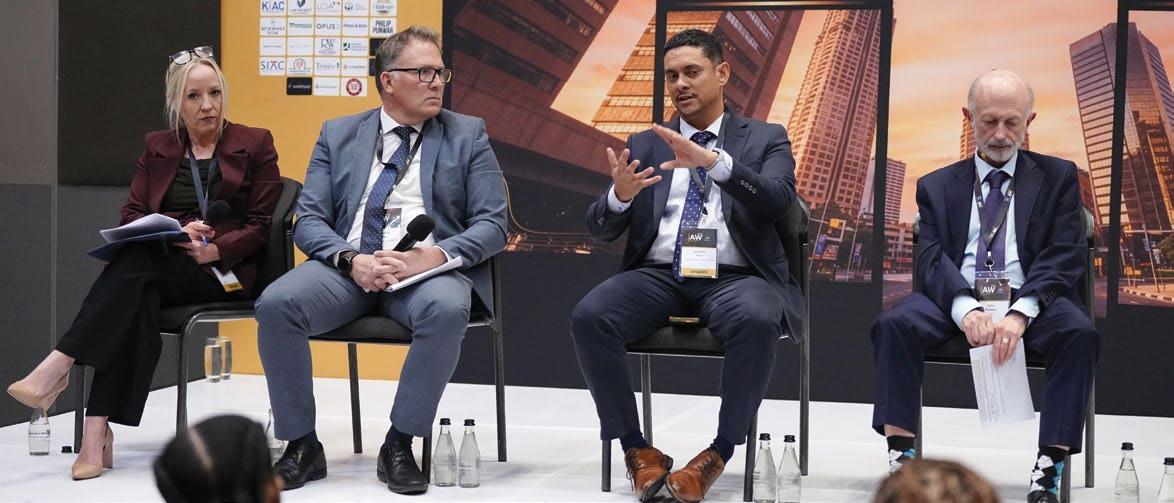
She argued that while export bans and restrictive policies may appear politically attractive, they can ultimately undermine investment if countries lack the infrastructure, electricity supply or technical capacity needed to support downstream processing industries.
“There have been export bans which are just silly because you can’t sell the raw material, but you also can’t beneficiate it,” she said.
Her comments highlighted one of the major contradictions facing African governments today. While there is broad agreement that the continent must move beyond raw mineral exports, building beneficiation industries requires massive investments in energy infrastructure, transport networks, water systems, skills development and industrial financing.
Without those foundations in place, ambitious beneficiation policies risk creating stranded assets and deterring investors.
At the same time, Chaplin emphasised that Africa’s bargaining position is improving. She pointed to examples in the Democratic Republic
of the Congo and Madagascar where governments have begun negotiating stronger local participation and more beneficial offtake arrangements linked to critical mineral projects.
“I think we are definitely getting better at it. We are starting to take advantage of those opportunities,” she said.
Another major issue discussed during the session was the growing importance of arbitration in resolving mining disputes.
As governments seek greater control over strategic resources and investors attempt to protect long-term investments, arbitration mechanisms are becoming increasingly significant within the mining sector.
According to Chaplin, arbitration provides investors with confidence that disputes will be resolved according to internationally recognised standards rather than through politically influenced or inefficient domestic court systems.
“The investment treaty arbitration mechanism gives a lot of comfort to investors. You are dealing with a uniform set of rules and an impartial arbitrator,” said Chaplin.
This becomes especially important in disputes involving governments, where investors may fear political interference or shifting policy positions.
The panel concluded with a broader reflection on Africa’s position within an increasingly fragmented global economy.
As geopolitical rivalries intensify between the United States, China and Europe, African countries are under growing pressure to choose sides while simultaneously protecting their own economic interests.
Chaplin expressed discomfort with the idea of African countries trading strategic mineral access in exchange for foreign aid packages, referencing recent discussions involving Zambia and the United States.
“It feels like holding a country over a barrel,” she said. “Once you start to trade aid for minerals, it becomes a very dangerous game.”
Ultimately, both Feris and Chaplin agreed that Africa’s future success will depend on whether the continent can move beyond fragmented national approaches and develop coordinated regional strategies capable of supporting industrialisation, beneficiation and sustainable development.
For Feris, the greatest danger is clear. “The biggest risk is being left behind. The energy transition creates a significant opportunity for Africa, but our leaders must stand up and say this is what we need to do.”
Access to business capital is contingent on the credibility of ESG reporting data. Third-party independent assurance has become pivotal to business operations, beyond a grudging tickbox compliance obligation. Globally, it is gaining traction through phased implementation. However, a specialist from Sustainability and Climate Lead at Deloitte Africa foresees independent ESG assurance becoming mandatory.
By Thobile Mazibuko
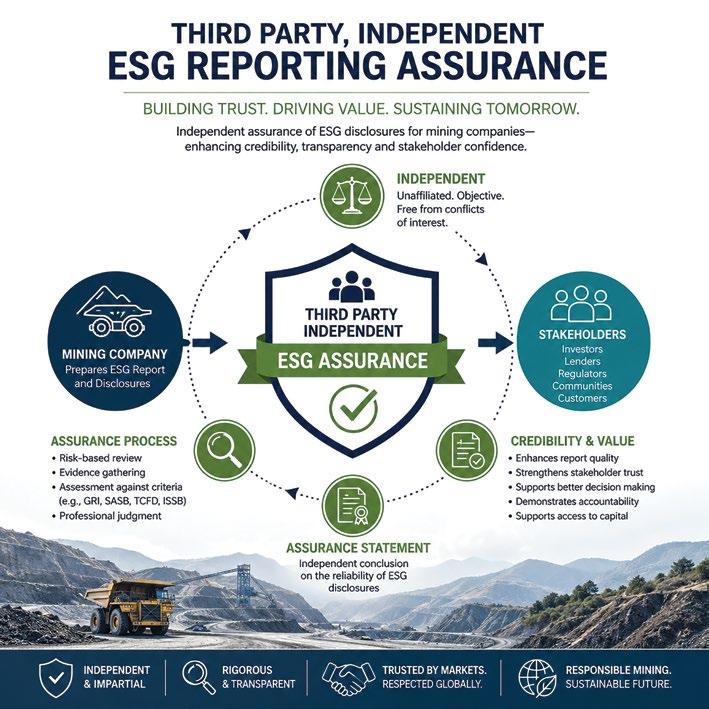
For years, the African mining sector has treated environmental, social and governance (ESG) reporting as a compliance tick-box exercise. Now the situation is changing: across South Africa and the broader African continent, companies are
beginning to recognise that the significance of ESG goes beyond disclosure.
According to Jayne Mammatt, Sustainability and Climate Lead at Deloitte Africa, instead of treating ESG as an annual reporting obligation, leading organisations are


embedding it into their core business strategy.
ESG data has become increasingly central to decision-making, and the need for credibility has never been greater. This is where independent assurance plays a pivotal role. Mammatt explains that assurance

It really starts with the tone at the top,” says Mammatt. “Leadership needs to understand that these issues are not separate from the business. They can have negative impacts, but they also create opportunities, whether that’s new products and services, cost savings, improved risk management or stronger long-term performance.
strengthens the integrity of ESG disclosures and builds confidence among both internal and external stakeholders.
“If this information is being used to manage the business regularly, then executives need to know that it is accurate and reliable,” she says.
“Assurance helps identify control weaknesses, improve processes and strengthen the overall quality of the data,“ she adds, underscoring the significance of credibility in a landscape where investors, customers and employees are relying on ESG data to guide their decisions.
Investors particularly value robust ESG reporting and assurance. Capital allocation decisions are being influenced by how well companies manage sustainability risks and opportunities.
“More and more investors are using the information to guide their decisions and determine where they allocate capital,” Mammatt notes.
“They want credible, comparable data that helps them assess longterm viability and understand how companies are managing both risks and opportunities.”
This investor shift is prompting companies to move towards transparent ESG reporting practices.
In response to this need, global sustainability standards have been designed to create a consistent

collect much of the required data.
These new standards are aimed at creating a global, comparable baseline, so that information is more consistent and easier to understand across companies and sectors.
baseline for ESG reporting.
This is a much-needed development: there have been so many different frameworks, standards and guidelines, creating confusion for companies and stakeholders, Mammatt explains. “These new standards are aimed at creating a global, comparable baseline, so that information is more consistent and easier to understand across companies and sectors.”
Mining companies are embracing these changes. However, the level of
readiness varies.
As you would expect, large mining companies are well-positioned due to the nature of their operations, which already require detailed monitoring of safety, environmental and operational metrics.
However, the same cannot be said about medium-sized firms, which may be slower to act. Often, these entities wait for regulation before investing in new systems and processes.
Despite the discrepancies in the level of readiness, Mammatt points out that many companies already
“In many cases, companies are already collecting and managing this information internally, even if they are not yet reporting it externally,” she says. “It’s often a matter of refining processes and aligning what they already have with the new requirements, rather than starting from scratch.”
As organisations build their ESG reporting capabilities, Mammatt advises companies to avoid two mistakes: prioritising systems over strategy and collecting data that is misaligned with business objectives.
“Some companies assume that implementing a system will solve the problem, but that’s not the case,” Mammatt cautions. “If you are not collecting the right data, or you don’t have the right controls and processes in place, then putting it into a system will not fix the underlying issue.”
Instead, businesses should focus on identifying material issues, defining the right metrics and establishing robust governance structures before implementing technology solutions.

Equally important is ensuring that ESG data is meaningful and aligned with business objectives, not collected for its own sake, Mammatt adds.
For companies concerned about the cost of ESG reporting and assurance, Mammatt offers a clear perspective: it depends on how the exercise is approached.
“If companies view ESG purely as a reporting requirement, then it will
always feel like a cost and a burden,” she says. “But if they understand how it supports strategy, improves risk management and helps them run the business more effectively, then it becomes something that creates real value.”
In the main, from improved operational efficiency to enhanced reputation and new revenue opportunities, ESG, when incorporated properly, can deliver measurable returns. Indeed, all told,
If companies view ESG purely as a reporting requirement, then it will always feel like a cost and a burden.
business advantage.
Globally, there are trends of phased implementation of independent ESG assurance, where companies are first required to report, and then assurance is introduced a few years later.
This gives organisations time to build the necessary systems, processes and controls before assurance becomes mandatory.
While South Africa has not yet mandated these standards, Mammatt observes that momentum is building.
“Regulatory developments suggest that mandatory adoption, and eventually mandatory assurance, may be on the horizon.
“We are expecting them to become mandatory in South Africa in the next couple of years, although we are still waiting for further guidance on how that will be implemented,” she says, underlining a clear position for companies: start preparing now.
SGS’s third-party ESG reporting assurance solutions have helped clients in mining and other sectors worldwide achieve compliance milestones. The Business Assurance team at SGS South Africa is keen to help replicate this success in mining projects in Africa, where ESG disclosure and sustainability reporting compliance are core obligations. By Jimmy Swira
SGS notes that mining companies globally, and in Africa in particular, regard ESG reporting compliance as core to their operations in the contemporary operating environment. While their commitment to meeting the requirements is commendable, there is a downside: some organisations become solely dependent on the ESG systems they have heavily invested in. These organisations believe that their inhouse systems will suffice and do not need third-party validation.
However, this is a narrow approach, advises Nicolò Cristoni, Global Sustainability Technical Manager – Business Assurance at SGS.
“While in-house ESG systems are essential for data collection and management, they do not replace reliability and independent credibility. Sophisticated software helps produce data.
On the other hand, third-party assurance validates that the data is accurate, complete, and decisionuseful - especially for external stakeholders such as investors, clients, regulators, and communities. This is particularly relevant in the mining sector, where ESG performance is closely scrutinised across the full value chain and lifecycle of operations,” she clarifies, spotlighting areas that third-party assurance enhances.
Third-party confidence and trust
Specifically, third-party assurance provides confidence and trust by helping mining companies in the following ways:
• Reducing risks of errors, inconsistencies, and greenwashing claims
• Demonstrating alignment with recognised standards and mining-specific frameworks (e.g. GRI, ISSB, SASB, TCFD, ICMM, Copper Mark)
• Strengthening investor confidence

and access to capital
• Preparing for increasing regulatory scrutiny and mandatory assurance requirements
• Improving internal controls and overall ESG governance maturity
Considering the benefits of thirdparty assurance, Cristoni tells African mining companies to be prudent when selecting an ESG partner organisation.
She recommends SGS as a capable
partner, underscoring strengths that make the multidisciplinary organisation stand out.
“We combine global credibility, technical depth, and proven mining expertise with proven credibility in four core areas.
First, strong involvement in the mining sector: active engagement across the industry, both through Natural Resources activities and services aligned with leading mining


frameworks such as ICMM, CMSI, and Copper Mark.
Second, end-to-end support for mining companies, from site-level testing, inspection, and verification to business assurance and boardlevel ESG audits.
• Higher confidence in ESG disclosures and sustainability reports
• Improved data quality, traceability, and internal control systemsfrom site to corporate level
• Successful alignment with evolving reporting frameworks and mining-specific expectations
• Stronger stakeholder trust and more mature, integrated ESG governance structures
The team at SGS South Africa is looking forward to replicating these milestones for potential and existing clients involved in greenfield and brownfield projects in Africa, where exploration and mining of critical minerals are taking place.
We combine global credibility, technical depth, and proven mining expertise with proven credibility in four core areas.
Third, decades of ESG experience: over 30 years of expertise covering governance, environmental, and social services, fully anchored in operational realities.
Last but not least, global presence and local proximity: on-the-ground support combined with consistent global methodologies through SGS’s extensive international network.”
Milestones of assurance
Feedback from clients indicates that involving SGS to provide independent, third-party ESG assurance helps create milestones, typically in the following areas:
New additions to solutions
To keep abreast of evolving needs in the mining sector, SGS continuously explores new ways of improving its ESG assurance solutions. Recently, the company expanded its offering by including the following areas:
• Assurance aligned with ISSB / IFRS S1 & S2
• Enhanced coverage of climate strategy, Scope 3 emissions, and transition plans
• Scalable approaches supporting both voluntary reporting and emerging regulatory requirements
• Clear pathways to expand traditional QHSE functions toward ESG, leveraging the strong alignment and seamless synergies highlighted by ISO 14001:2026 between environmental management, QHSE systems, and ESG performance.
As recent catastrophic accidents have illustrated, in deep-level underground mining environments, a seemingly minor act of negligence in winder maintenance can be catastrophic. It can tarnish the reputation of a major mining brand, lead to loss of revenue due to downtime, and result in huge sums of money, probably running into millions, in potential compensation.
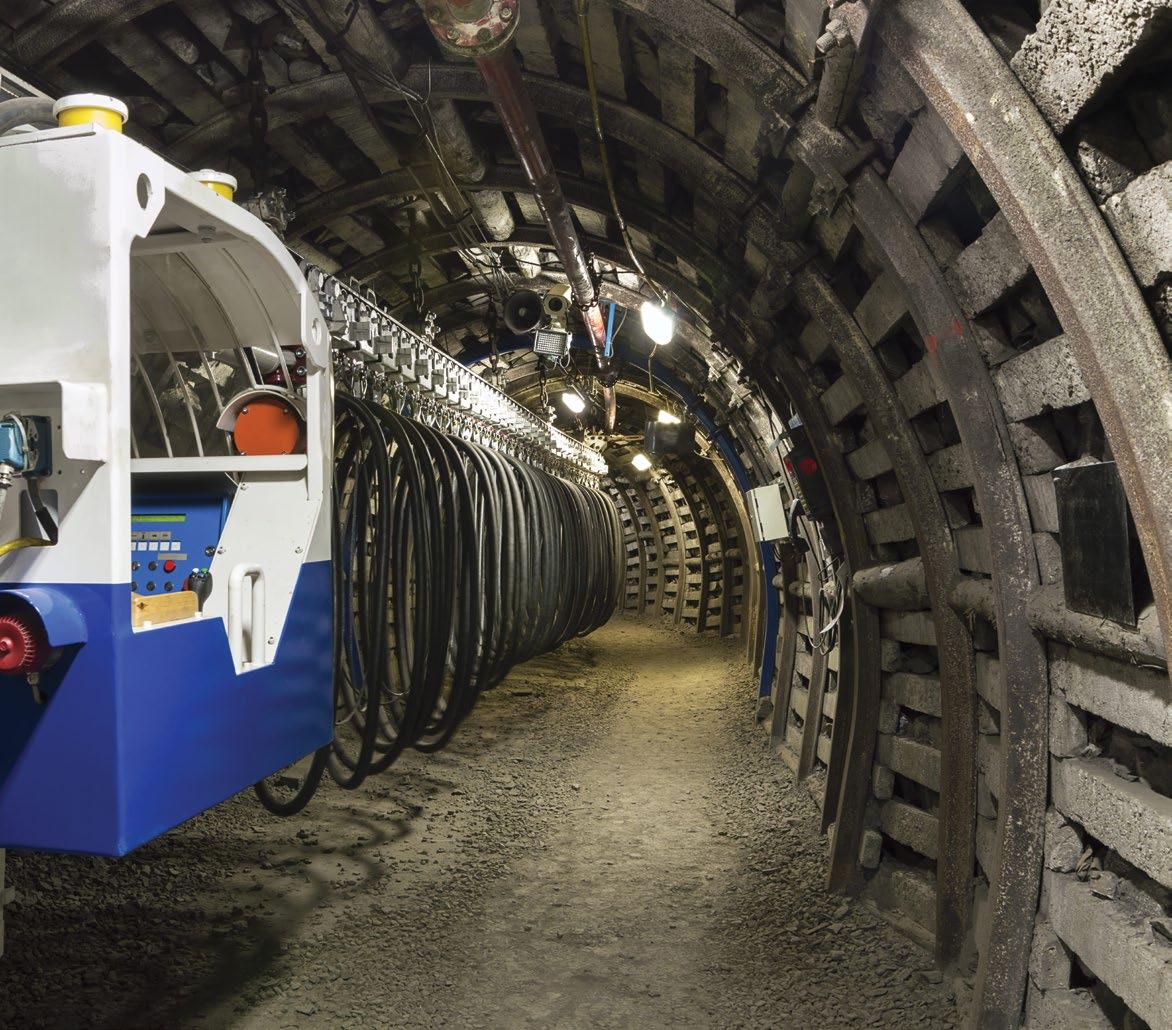
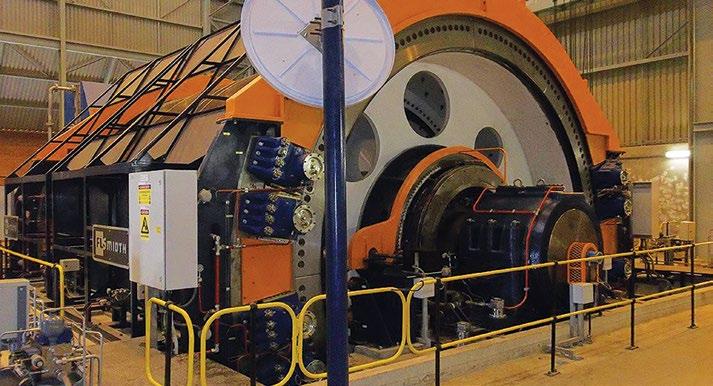
One of the most effective maintenance approaches is adding condition-based, predictive maintenance - such as real-time, continuous rope monitoring among other interventions - to interval-based preventive maintenance. This has been tried and tested in harsh underground environments, and delivered strong results. If you want to comprehend the significance of following sound predictive maintenance of winders for high-speed shaft conveyances in underground mining environments, consider what happens when winders fail – the worst-case scenario, that is.
In African mining jurisdictions, catastrophic accidents have occurred in South Africa’s deep-level mining environment. Curiously, investigations
by the country’s Department of Mineral Resources have cited winder failure as one of the root causes of the most critical of them. What’s more, they are the inevitable result of gaps in maintenance.
In chronological order, not by severity, the following are the most recent accidents from the past two decades, which have attracted significant spotlight:
• Gold Fields (2008) - A sub-cage winder accident occurred when the main rope snapped and eight contractors and one mine onsetter lost their lives.
• Impala Platinum (Rustenburg) Shaft No. 11 (2023) - An ascending personnel elevator (carrying 86 workers) suddenly changed direction and went into an uncontrolled rapid descent. Despite the winder rope being in good condition (it was intact), emergency
Curiously, investigations by the country’s Department of Mineral Resources have cited winder failure as one of the root causes of the most critical of them. What’s more, they are the inevitable result of gaps in maintenance.
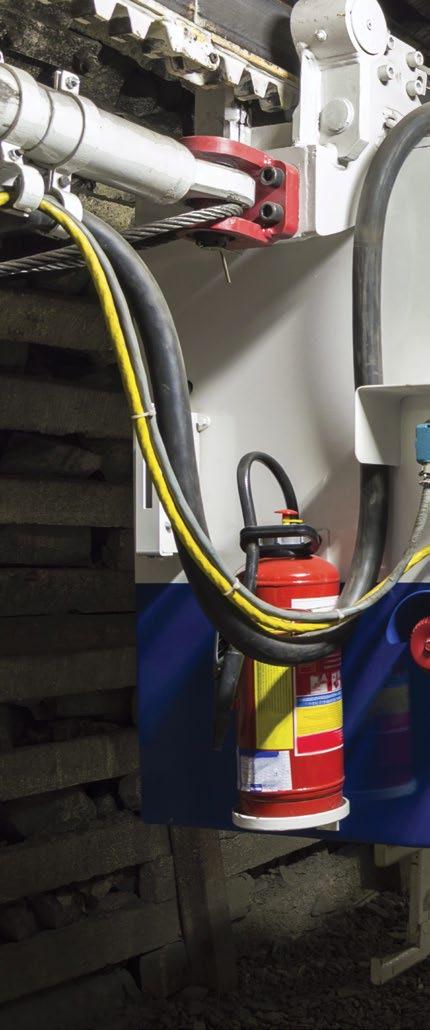
backup systems failed to stop the drop. This caused the death of 11 mineworkers and injured 75 others.
• Sibanye-Stillwater Kloof No. 8 Shaft (2026) - Failure of a mechanical attachment during preparations for routine inspection proved fatal. It caused an inspection platform to detach from the main winder conveyance and plummet down the shaft. This failure claimed the lives of two subcontractor employees.
In a word, while some cases of failure of winder ropes, braking mechanisms, or emergency protocols may be out
of the maintenance team’s control, for the most part, these events stem from gaps and oversights in winder maintenance.
Intriguingly, some accidents occur in situations where the team has done its best with the available resources and recommended preventive maintenance practices that employ time-based or usagebased fixed intervals (scheduled inspections, servicing and routine maintenance activities). Typically, under this technique, equipment is serviced at predetermined intervals irrespective of its current condition. The focus is on common issues

While preventive maintenance helps ensure the winder is in good condition, over-reliance on reactive maintenance, due to its limitations, may increase the risk of failure in the current mining environment.
like friction and wear of braking systems and ropes, load tolerances, electrical faults, among others.
While preventive maintenance helps ensure the winder is in good condition, over-reliance on reactive maintenance, due to its limitations, may increase the risk of failure in the current mining environment.
Currently, underground mining activity is getting deeper – in
some cases ultra-deep – beyond four kilometres, as one mining OEM told this publication. This means that conveyances have to move up and down shafts to transport people, equipment and rock over longer distances, safely and efficiently, consistently and reliably. In these environments they are exposed to dust, moisture, vibration, and heavy loads.
Consider that conveyances can travel at 15 metres per second (54 km/h) for 24 hours every week (according to GST Guduza System
Technologies in a past edition of Mining Business Africa – Slack and Rope Monitoring in Mine Shaft Conveyances). Under these conditions, winders and hoists are more heavily exerted, escalating the risk of winder failure and potential accidents.
So, using reactive maintenance strategies is bound to fall short.
Evidently, this situation makes a compelling business case for integrating proactive predictive winder maintenance measures into programmes, which use condition monitoring for targeted interventions. In its industry advisory, OEM ABB notes that a 90% focus on predictive methods improves availability.
Enhancing winder maintenance by integrating predictive techniques ensures that mining companies remain compliant.
The position of legislation is unequivocal when it comes to the compliance of shafts and winders in underground mining operations. For instance, the Mine Health
and Safety Act (MHSA) in South Africa mandates the carrying out of inspection, testing, and maintenance procedures. Furthermore, the Mine Health and Safety Act (MHSA as updated as of 2025) relates to shafts and winders. It mandates mining operations to carry out inspection, testing, and maintenance procedures. It recommends the following:
• Rope sampling and tensile testing (every 6 months for most winding ropes).
• Regular examinations of winding engines, brakes, ropes, attachments, and conveyances.
• Records of all maintenance, inspections, and repairs in the Winder Engine Logbook.
• Competent persons for daily/weekly/monthly checks and annual inspections.
A predictive maintenance strategy through remote condition-monitoring technologies – SCADA platforms, IoT sensors, realtime condition-monitoring systems and remote monitoring dashboards – and data analysis tools helps identify developing faults before equipment failure occurs. For instance, thermal monitoring equipment, such as infrared thermography cameras and thermal sensors, can identify overheating motors, electrical faults and frictionrelated heat buildup.
In deep-level mining environments, an integrated winder maintenance approach, combining preventive and predictive maintenance strategies, can offer a more reliable and cost-effective way of maintaining critical hoisting
systems. This ensures the safe and efficient transporting of personnel, ore and materials.
For mines, the expression “never err on the side of caution” has never been more relevant.
Weigh the costs of negligence – the reputational damage (records permanently documented for future posterity), the loss of production, and the cost of compensation (where fatalities and serious injuries are involved) – all of which have huge implications for business.
What could mines gain from integrated winder maintenance? Quite significant.
Concisely, the following are the benefits: reduced unplanned downtime, improved safety, extended equipment lifespan, lower maintenance costs, and regulatory compliance.
At a time when the rally in the world gold price is sustained, the least mining companies should bear is to let avoidable consequences of lapses in sound winder maintenance result in potential revenue loss.
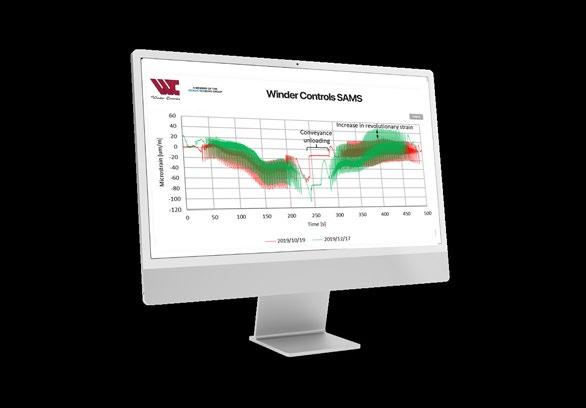
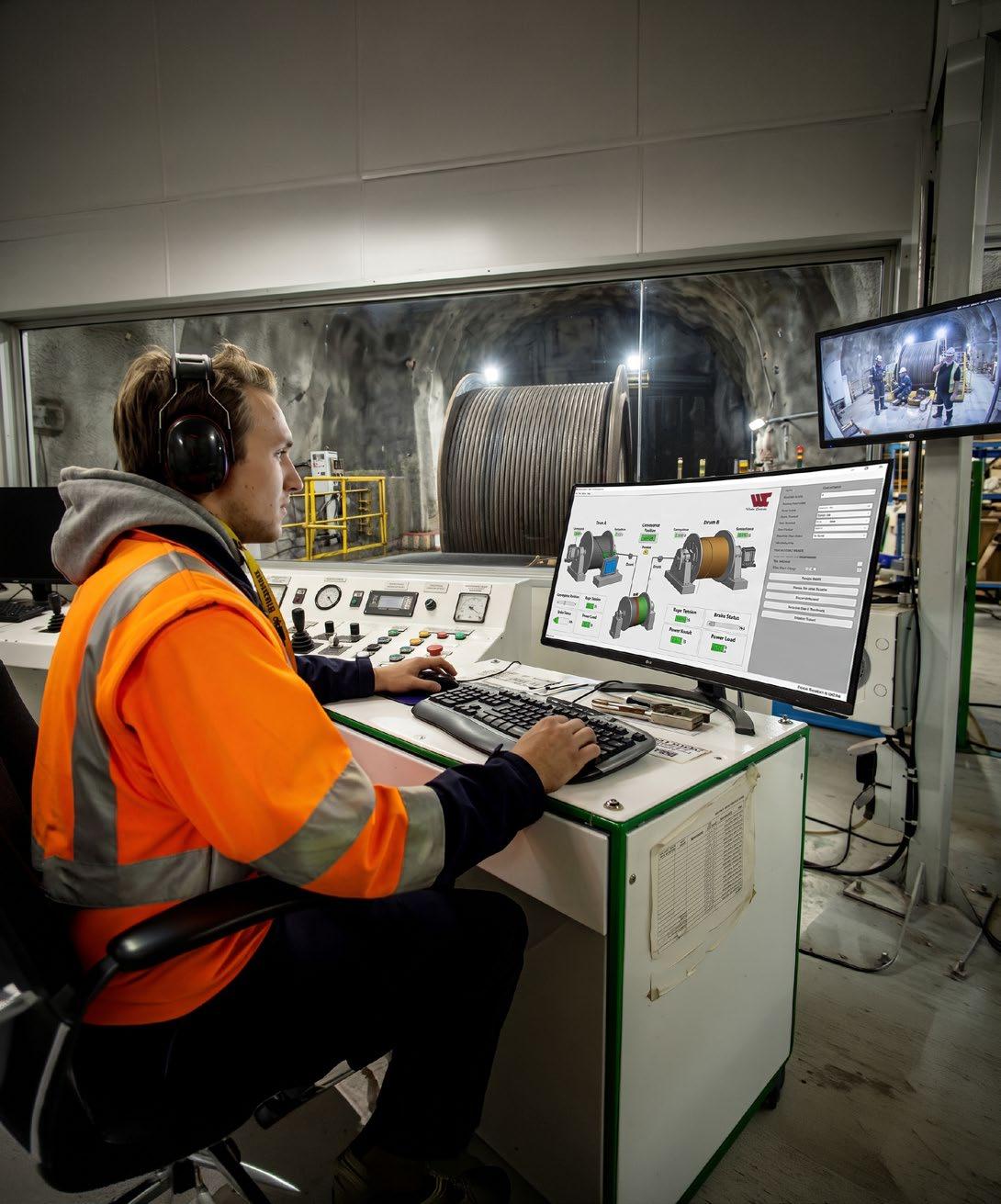
The Winder Controls SAMS is an advanced condition monitoring system that provides live tracking of strain distribution on winder drums, enabling early identification of structural changes, fatigue development and operating anomalies.
Detects changes in structural integrity and operating behaviour Wireless data logging and cloud-based analysis
Easy-to-interpret dashboard accessibl from any device
www.winder.co.za | info@winder.co.za
Fuel losses, theft, and contamination are draining millions from African mining operations. Now, a new generation of smart, modular storage solutions is stemming this tide, ensuring that mines get more value from fuel, remain environmentally compliant, and sustain productivity. By Thobile Mazibuko
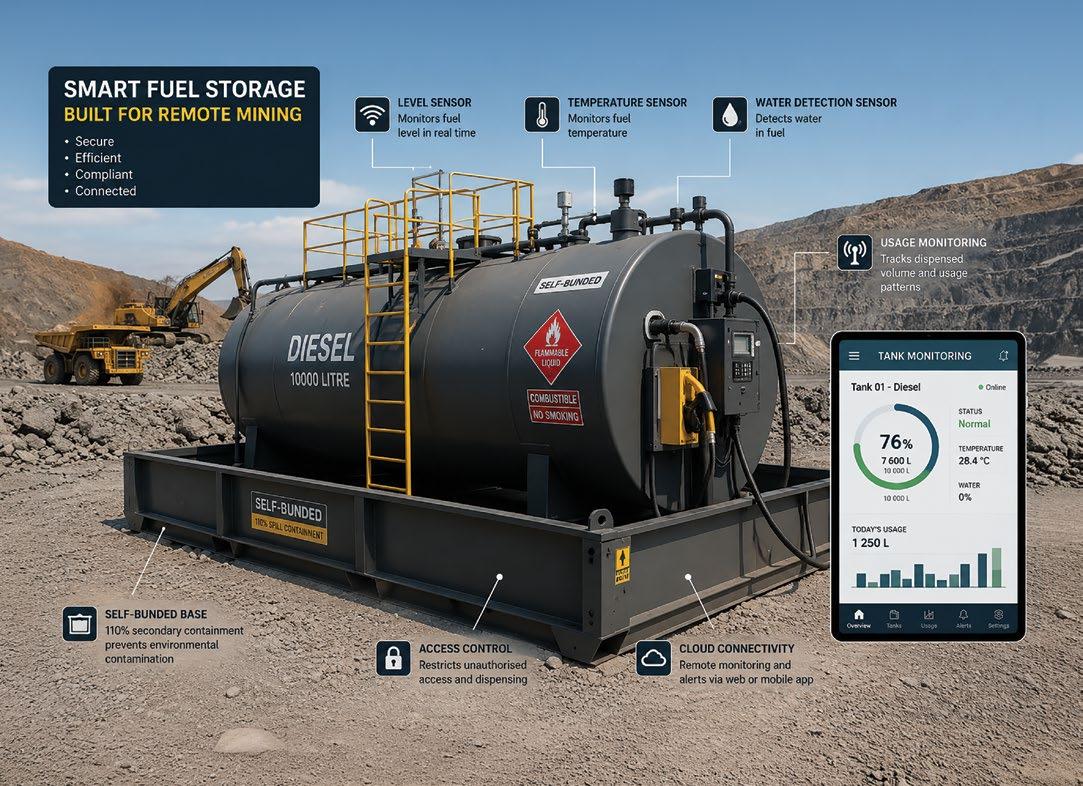
Currently, supply chains are fragile and global fuel prices are volatile due to geopolitical pressures. Under these conditions, mining companies – already buckling under cost pressures – cannot afford to bear the impact of poor diesel storage practices. Sound fuel storage should therefore be a core component of an organisation’s business strategy.
Poor diesel storage practices can have far-reaching consequences,
mainly in three areas.
First, contamination can degrade fuel quality, causing equipment failure and unplanned downtime, as well as losses due to evaporation.
Second, over time, the cumulative cost of “small” fuel losses due to theft can become significant, forcing companies to spend more to fill the void.
Third, spills and emissions can result in breaches of environmental regulations and an increased risk of fire or explosions. Regulatory requirements around fuel storage are also becoming increasingly stringent.
These three factors have made it imperative to adopt technologies that can improve how fuel is stored, tracked, and managed. In light of this, businesses must adopt safer, more robust systems.
New innovations in technology have made available a growing range of options at the disposal of mining companies. One of these is integrated control systems –including access management and modern smart, real-time tank monitoring systems – within selfbunded tanks. These have proved effective in reducing the risk of
unauthorised use.
Using Internet of Things (IoT) technology, smart monitoring systems provide real-time insights into fuel levels, quality, and environmental conditions. Through remote oversight, operators can identify anomalies early and respond before they develop into costly operational issues.
Beyond basic monitoring, many platforms now include automated dispensing controls, user authentication, and integrated analytics dashboards.
With this level of visibility, businesses can track consumption patterns and identify anomalies. This results in improved accountability and more informed decision-making.
Self-bunded modular tank storage systems are designed for flexibility.
They help scale storage capacity up or down, depending on operational needs.
This feature makes self-bunded tanks particularly valuable in industries with fluctuating demand or remote project sites. In addition, self-bunded tanks offer built-in spill containment, which reduces environmental contamination.
One reported example of the effectiveness of self-bunded storage tanks with integrated monitoring is Siyathembana, a provider of tanks delivered to a remote lodge in Tanzania. The 1,000-litre selfbunded fuel tank is equipped with a smart fuel management system. The unit allows operators to monitor fuel levels in real time, control dispensing, and track usage with precision.
Other tank providers have delivered similar solutions to mining and industrial clients in
other sectors.
In general, the use of self-bunded tanks integrated with real-time monitoring systems as fuel storage solutions has been demonstrated to offer significant value to remote mining operations. This is evident in several ways: preserving fuel quality, reducing maintenance costs by extending equipment lifespan, and improving overall productivity by reducing downtime. Moreover, it helps achieve environmental compliance by reducing spills and emissions.
Looking ahead, smart fuel storage is set to become increasingly digital, decentralised, and data-driven, with advances in sensor technology, artificial intelligence, and predictive analytics. This will offer greater value to operations in remote mining environments.

From workforce movements to critical cargo and executive travel — Air Charter Service delivers tailored aircraft charter solutions across Africa’s most remote and time-critical operations.


Charter
Flying Mining Teams to Remote Sites
Reliable crew rotations to keep your operations moving.

Charter Transporting Critical Mining Equipment Urgent spares, oversize loads, and project cargo delivered efficiently.
With 40+ offices worldwide, Air Charter Service operates in Africa from its office in Johannesburg

Travel for Mining
On-demand flights for executives and site visits in Africa and beyond.

www.aircharter.co.za
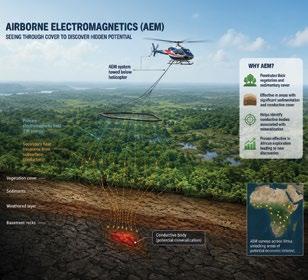
In the course of geological surveys for potential mineral-bearing geology in targeted subsurface areas, interference from huge sedimentation and extensive vegetation cover may prove to be a challenge. In African exploration projects, the use of Airborne Electromagnetics (AEM) is proving effective, leading to the discovery of areas of potential economic interest.
Africa is naturally endowed in abundance with so-called critical minerals (cobalt, lithium, copper) rare earths, and gold - pretty much what industry and the world at large needs. Various estimates suggest that Africa’s untapped mineral reserves are worth trillions of US dollars (African Finance Corporation estimates the value of this at 7.6 trillion dollars).
Understandably, with such huge potential, time, costs, safety, and environmental concerns are major
concerns for exploration teams in their quest to hit the discovery jackpot. Thus, the competency of the teams, the planning and execution of projects, and the effectiveness of the methods or tools utilised in surveys are key to success, stressed Spectrem Air in a past edition of Mining Business Africa.
That is why exploration and mining companies must adopt and apply proven (tried and tested) techniques to ensure the accurate identification
of potential mineralisation of economic interest during early-stage exploration. This is pivotal given that the data collected is utilised to establish project feasibility and, subsequently - depending on results - mine feasibility and infrastructure planning.
Typically, techniques such as geological mapping, ground-based geophysics, spaceborne remote sensing, and aeromagnetics are used to collect historical geophysical and geological data. However, depending on them alone may not provide a conclusive geophysical picture of the mineralisation. This leaves a certainty gap.
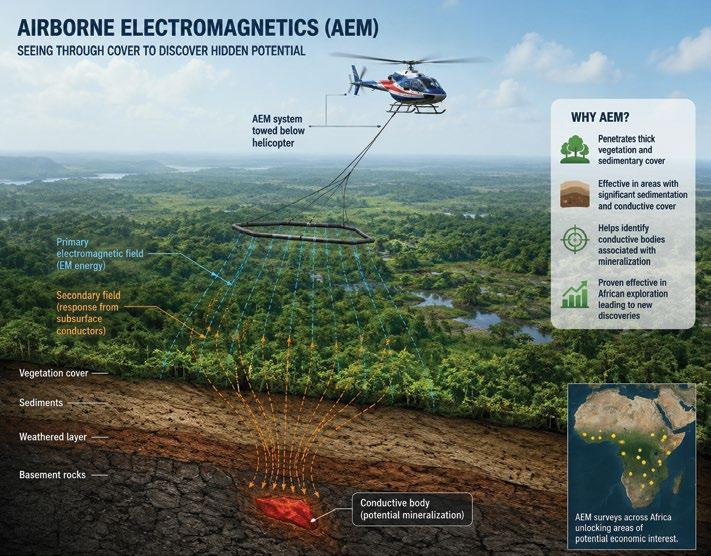
Alternatively, where it has been deployed to complement other techniques in early-stage exploration, advanced airborne time-domain AEM improves the capability of identifying mineralisation by collecting electromagnetic and magnetic data from strategically targeted areas. Usually, these are vast, inaccessible areas with sand and vegetation cover.
Under these conditions, AEM systems are handy.
Suspended from a helicopter or fixed-wing aircraft, the AEM system transmits electromagnetic pulses into the ground to depths ranging between several hundred metres, depending on geology and system configuration.
Typically, electrical conductivity depends on the composition and moisture content of the rocks, and the system measures the response from the ground. Data is collected continuously and, while right on site, the mobilisation team has access to it in near-real time. This feature enables three-dimensional (3D) highresolution mapping of the areas.
Data processing tools for 3D interpretation provide accurate and reliable solid-earth models showing the presence of zones containing minerals, groundwater, and lithology.


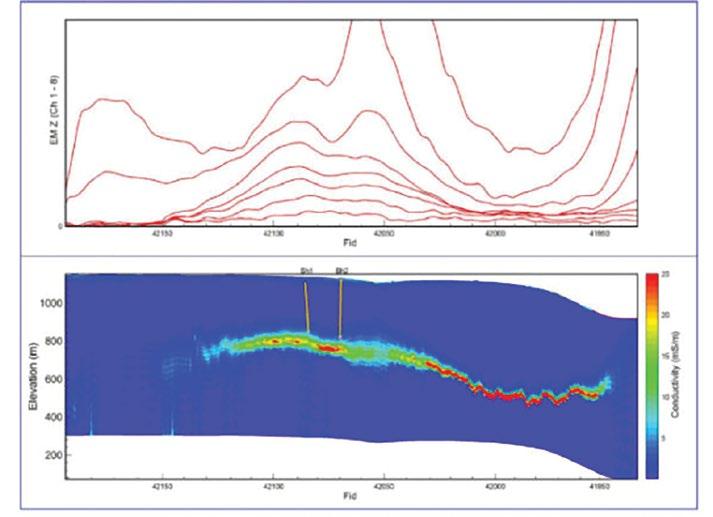
The conductivity depth image shows a mineralised conductive horizon being mapped to depths of over 600 m below the surface on a project in South Africa under favourable geological and survey conditions. Note: the borehole intersections indicate how accurately the target can be imaged (credits Sprectrem Air) .
Thus far, AEM has enabled teams to achieve discovery milestones in projects in concealed, inaccessible areas. The following are among some examples worth highlighting:
West Africa - Gold-bearing structures
Okavango Resources (Kavango Resources PLC – Airborne Surveys) has reported exploration targeting of structural zones in West Africa, including work relevant to gold exploration in selected regions.
South Africa - Mapping buried diamond alluvial channels
Spectrem Air’s AEM has been used in exploration programmes related to kimberlite and diamondiferous targets in South Africa, as well as for mapping buried alluvial channel systems, gold exploration in Africa, and geo-hydrology applications.
The ability to map deep features has been validated by the utilisation of other techniques. This data shows plate-like bodies from AEM are also observed in data collected with ground-based surveys.
If applied appropriately, AEM provides significant benefits during early-stage exploration:
The precision involved reduces mobilisation crew and helicopter spends in the field, freeing them up for other equally urgent tasks.
It must also be added that the non-invasive nature ensures that the process leaves a minimal environmental footprint. This is unlike ground-based geophysical work, which requires preliminary access clearing.
AEM systems remove exploration teams from potential safety risks that
could cause accidents.
It must be reiterated that no technique works in isolation, hence a broad range has to be utilised. Geophysical data alone is insufficient for definitive conclusions without geological validation and drilling. However, as Louis Polome, General Manager of Spectrem Air, remarked: “The ability to map deep features has been validated by the utilisation of other techniques. This data shows plate-like bodies from AEM are also observed in data collected with ground-based surveys.”
Zambia - Mapping shallow and deep targets simultaneously
Spectrem Air’s system has proven successful in exploration in the Copperbelt under Kalahari cover. For instance, shallow conductors (50 m) and deeper conductors (400 m) have been detected in suitable geological settings during airborne electromagnetic surveys.
Deep Detection of
Image caption - The conductivity depth image shows a mineralised conductive horizon being mapped to depths of over 600 m below the surface on a project in South Africa under favourable geological and survey conditions. Note: the borehole intersections indicate how accurately the target can be imaged (credits Sprectrem Air)
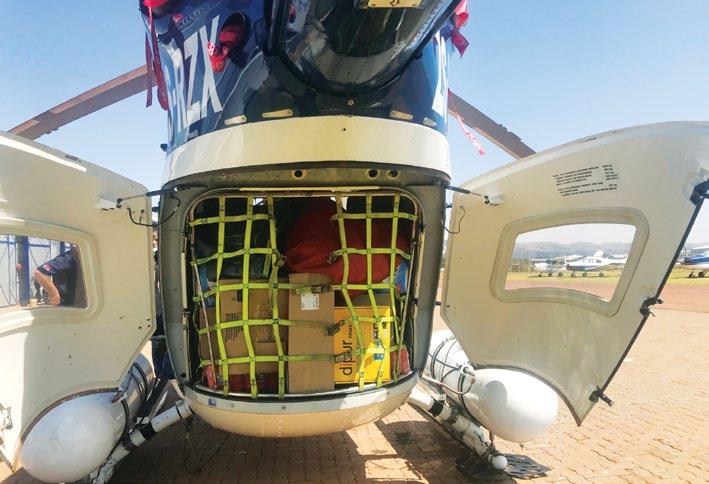
Our BK117 helicopter is built to perform where Africa demands the most—across remote landscapes, extreme climates, high altitudes, and challenging operational environments.
Renowned for its reliability, versatility, and proven performance, the BK117 is the trusted choice for operators who need capability without compromise.

From high-density passenger transportation to the safe carriage of security-sensitive cargo and dangerous goods, the BK117 delivers exceptional exibility across commercial, humanitarian, and specialist missions.
From high-density passenger transportation to the safe carriage of security-sensitive cargo and dangerous goods, the BK117 delivers exceptional exibility across commercial, humanitarian, and specialist missions.
It s spacious cabin and twin-engine performance make it ideal for:
It s spacious cabin and twin-engine performance make it ideal for:
•High-density passenger transport across remote regions
•High-density passenger transport across remote regions
•Secure movement of sensitive and high-value cargo
•Secure movement of sensitive and high-value cargo
•Fast deployment for evacuation, disaster relief, and humanitarian response
•Fast deployment for evacuation, disaster relief, and humanitarian response
•Fire ghting support in demanding terrain
•Fire ghting support in demanding terrain
•VIP charter with comfort, safety, and reliability
•VIP charter with comfort, safety, and reliability
•EMS and rapid patient evacuation
•EMS and rapid patient evacuation
•Dangerous goods transportation with con dence
•Dangerous goods transportation with con dence
When speed matters and conditions are unforgiving, the BK117 responds with precision.
When speed matters and conditions are unforgiving, the BK117 responds with precision.
Salus Aviation is available to support mining operations, o shore logistics, medical response teams, government missions, or disaster recovery e orts, and we continue to prove ourselves as one of Africa’s most dependable helicopter operators. Built for Africa. Ready for Anything.
Salus Aviation is available to support mining operations, o shore logistics, medical response teams, government missions, or disaster recovery e orts, and we continue to prove ourselves as one of Africa’s most dependable helicopter operators. Built for Africa. Ready for Anything.
Michiel Swanepoel, Executive General Manager of Salus Aviation Africa (formally Airwork Africa), guarantees the African mining sector that the organisation is a proven, scalable, and safety-led aviation partner, capable of delivering end-to-end helicopter solutions in the most demanding environments. The company is backed by global resources, local expertise built from operating on the continent, and a proven track record of operational success.
Across Africa, particularly in Central and West African regions, critical minerals and gold exploration and mining projects are ramping up. While there is huge opportunity, one of the challenges for the companies involved is that the sites are located in vast remote areas with little or no road access. This is where aviation services have emerged as a reliable alternative.
Up to the task
“Salus Aviation is up to the task, with the solutions, the resources and capability, the experience, and the commitment to best practice required to provide helicopter solutions to projects across Africa,” says Michiel Swanepoel, Executive General Manager of Salus Aviation Africa.
The solutions
Salus Aviation delivers fully integrated, mission-adaptable helicopter solutions tailored to modern mining and exploration needs, including:
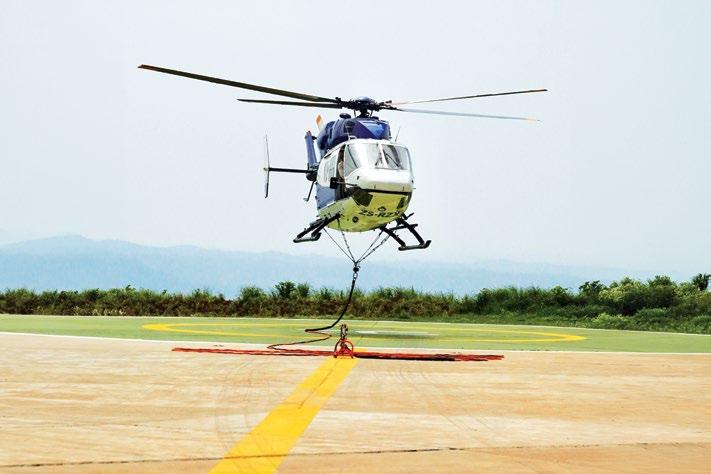
Drilling & Exploration Support entails precision external load (longline) operations for heli-drilling and equipment transport (up to 1,000 kg). Passenger Transport, which involves the safe movement of personnel (up to 8 passengers) in high-temperature and high-altitude environments.
Emergency Response covers firefighting (for instance, Bambi Bucket operations), medevac with rapid aircraft reconfiguration and 700 km operational reach, and multi-role flexibility, with aircraft (BK117-850D2) that can be quickly reconfigured between missions.
Turnkey Operations encompass end-to-end service delivery, including regulatory compliance, permitting,
logistics, and onsite support.
As part of Training & Integration, site-specific helicopter safety, firefighting, and medevac training are offered for client teams.
Fully adaptable, the Salus Aviation offering is engineered specifically for the realities of mining and exploration, Swanepoel details. “Generally, these solutions are specifically designed for remote, high-risk, and infrastructurelimited mining environments across Africa.”
Key to Salus Aviation’s success in African projects is that it is adequately resourced with modern equipment and assets, as well as employees with critical and relevant skills. This advantage enables the company to meet expected requirements across projects of any scale.
1. Modern Equipment & Assets
Salus Aviation’s equipment and assets portfolio includes the following:
• Fleet of twin-engine, BARS-compliant helicopters (including BK117 series)
• Ownership of 40+ helicopters and 100+ engines
• US$35 million parts inventory with dedicated African consignment stock
• Rapid reconfiguration capability for multi-mission use
2. Global Support Infrastructure
The aviation company has vital global support infrastructure through 24/7 Aircraft on Ground (AOG) support with <24-hour response; global MRO capability (airframe, engine, avionics, components); strong OEM relationships (Kawasaki, Honeywell/ ITS, etc.); and operations and support experience across the Americas, Asia-Pacific, and Africa.
3. Technology & Systems
In the area of technology, the company utilises an advanced Safety Management System (SMS) aligned
with ICAO Annex 19, supported by real-time operational monitoring across time zones.
4. The expertise
Beyond the three above, the company has personnel with the necessary know-how. Its extensively experienced pilots, engineers, and ground crew have considerable remote and developing-region experience. “Our specialists have proven capability in heli-drilling, medevac, firefighting, and complex terrain operations. In addition, they have cultural and language readiness (including French for West Africa),” says Swanepoel.
There are a number of companies offering aviation solutions, which is a good situation as it gives mining companies a wide range of options to utilise. Nonetheless, the competence of the service providers cannot always be verified.
On the other hand, in partnering with Salus Aviation, mines can rest assured that they are dealing with a credible entity, Swanepoel affirms, referring to Salus Aviation’s strong, evidence-based assurance of capability.
In terms of certifications, standards, and credentials, the company has
earned the following: BARS Gold Standard (highest aviation safety benchmark for remote operations)
• ICAO Annex 19-aligned Safety Management System
• Approved MRO provider with OEM certifications
• Part 138 certification (Helicopter Emergency Medical Services compliance)
In safety performance, Salus meets requirements, as the following records indicate: zero accidents recorded, 144 months of accident-free operations, and 100% implementation of safety recommendations. This is attributed to a strong reporting culture and proactive risk mitigation.
What is more, Salus has instituted systems and processes that are followed thoroughly to ensure consistency in competence across operations. Mainly, these are:
• Mature Standard Operating Procedures (SOPs) covering all operational aspects
• Structured training and competency assurance programmes
• Scenario-based crew training (external loads, medevac, firefighting, etc.)
• Comprehensive ground crew and subcontractor training systems
Swanepoel singles out operational
readiness as another area where Salus continues to prove itself, particularly highlighting immediate deployment capability across Africa, proven ability to sustain long-term, high-reliability operations, and a strong safety-first culture supported by measurable KPIs and continuous improvement.
Due to these attributes, Salus has excelled in delivering solutions to the expectations of clients in projects across the continent, illustrating its capability. Swanepoel presents some of the most notable project milestones:
“We have provided continuous support in West Africa, a highly challenging environment, since 2011. We have deployed multiple helicopters, as well as critical engineering and support staff, for mining operations. In addition, we have maintained uninterrupted service during the Ebola outbreak, political instability, civil disruptions, and Cyclone Idai relief efforts.”
The company has also deployed two helicopters and crew to support Medecins Sans Frontieres, and participates in the continuous delivery of humanitarian aid such as essential food and medical supplies.
These successes demonstrate the versatility of servicing needs of clientele operating in challenging and complex environments.
Well-positioned, the company is keen to replicate the success it has achieved across new critical minerals and gold mining projects throughout Africa.
Several factors give the organisation the edge to take helicopter services to new heights in a number of areas, Swanepoel says:
“We have an established African footprint with deployable assets and personnel.
Proven ability to operate in extreme, remote, and volatile conditions. Scalable model: rapid mobilisation of additional aircraft, crew, and parts.
Strong client integration and camp culture contribution.
Deep experience navigating local regulatory frameworks and logistics.”
SD-WAN has emerged as a reliable digital technology connectivity solution for mining companies that offer assurance about availability and consistency of digital connectivity for their remote mining projects. And it will only get better. By Jimmy
Swira
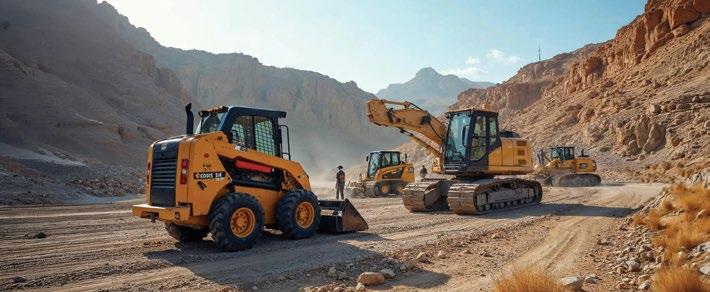
For years, MPLS has been the “go-to redundancy solution” due to its reliability, providing internet connectivity as and when needed to diverse industries. However, the evolving demands of the current environment have exposed limitations of MPLS, especially when deployed in remote mining environments.
Jeroen Dubbelman is the Managing Director of Bitrate, a specialist distributor of cybersecurity, network testing, and performance monitoring solutions to mining operations and other industries in South Africa and across Africa.
In the course of his work, Dubbelman has documented the most common barriers the company’s clients have encountered (or encounter) with MPLS.
The first barrier is rigidity and lead times, as provisioning a new MPLS link to a remote site can take months, or may not even be possible. In this area, the problem mining companies face is that their operations are dynamic and, in many cases, the requirement may have changed by the time the link is installed.
The second one is the “Cloud Gap”,
as MPLS is designed to backhaul traffic to a central data centre. This is out of kilter with modern operational reality, as modern mines use SaaS and cloud-based IoT telemetry. As a result, the MPLS process becomes convoluted. “Sending backhaul traffic back to a central hub before it goes to the cloud creates “concertina” latency that kills application performance and can result in data loss,” Dubbelman elaborates.
The third issue that arises with MPLS is cost versus capacity. Mining produces massive amounts of telemetry and sensor data. As a result, scaling MPLS bandwidth, or even standard “business links”, to handle this is cost-prohibitive compared to modern alternatives.
Then there is the snag of the single point of failure. While reliable, if one private MPLS circuit goes down due to cable theft or environmental damage, the whole site goes dark.
Through its capabilities and provisions, SD-WAN bridges the connectivity gaps encountered with MPLS circuits by acting as an intelligent overlay that treats connectivity as a “pool” rather than a single pipe, Dubbelman
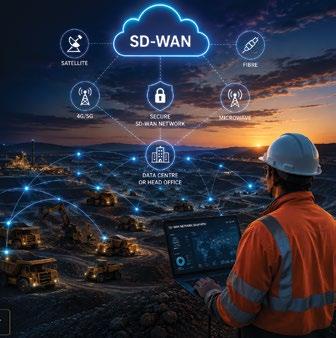
demonstrates, outlining four critical ways.
SD-WAN brings transport independence by using diverse links - satellite (Starlink, when it becomes available), LTE/5G, microwave, and fibre - within a single virtual path.
SD-WAN also features dynamic path selection. For instance, when a satellite link becomes jittery due to weather, SD-WAN instantly reroutes critical traffic, such as autonomous vehicle telemetry, to a more stable LTE link without dropping the session.
SD-WAN circumvents the Cloud Gap by allowing connectivity to the data centre while also enabling direct internet breakout. However, Dubbelman points out that this requires a next-generation firewall or a SASE (Secure Access Service Edge) solution in order to protect edge networks.
SD-WAN brings zero-touch provisioning (ZTP) by allowing a pre-configured edge next-generation firewall to be shipped to a site, where a “non-expert” person can plug it in and get the site live within minutes.
Dubbelman highlights the significant benefits that the capabilities of SD-WAN bring to
remote mining operations.
In terms of safety and automation, SD-WAN’s low-latency paths ensure that remote-controlled drills and autonomous haulage systems operate without the “lag” that causes safety shutdowns.
SD-WAN offers IoT at scale by providing the bandwidth and redundancy necessary to process “Digital Twin” data and real-time environmental monitoring - including gas levels, ventilation, and structural integrity - without choking the office network.
SD-WAN enables operational resilience, Dubbelman elaborates. “By using multiple disparate connections, you eliminate the risk of a single “backhaul fade” (cable cut) stopping production. An extra note of caution, though: ensure your upstream service providers are not duplicated in any way. There is no point in having three links if, further upstream, there is still a single point of failure, such as one service provider.”
SD-WAN helps in OPEX reduction through the ability to supplement or replace expensive MPLS with lowercost broadband or LTE. In addition, it allows for a cloud-first strategy through the shift from on-premises servers to Microsoft Azure, AWS, or specialised mining SaaS and IoT solutions.
Crucially, SD-WAN creates security convergence. The move toward ZTNA (Zero Trust Network Access) at the edge simplifies the security stack for IT teams.
Through the benefits it offers, it is not surprising that SD-WAN’s traction is exceeding expectations, specifically in remote mining operations, Dubbelman observes.
Unlike other technologies that mining companies do not enthusiastically embrace, Bitrate has noticed a clear level of development with SD-WAN that can be considered unprecedented: a tipping point in 2026.
“We’ve moved past the “early adopters”. Mid-tier miners are now actively replacing legacy VPNs and MPLS with SD-WAN to support their digital transformation initiatives. It’s no longer a ‘nice to have’. In fact, it’s the prerequisite for AI and IoT adoption,” says Dubbelman.
In the South African market context, he foresees the footprint of SD-WAN growing bigger. “With the surge in subsea cable capacity and local data centres, the infrastructure is finally there to support the shift towards SD-WAN,” he predicts, drawing attention to the critical role
There appears to be an increasing number of organisations offering SD-WAN solutions. For mining companies, this presents a wide pool of service providers to select from.
However, it also presents a dilemma, as the competency of some service providers cannot always be proven. For this reason, Dubbelman advises mining companies to take prudent steps before partnering with a service provider. Considering the importance of quality and cost efficiencies, he recommends the following steps:
• Demand “underlay” diversity: Ensure the provider is not simply selling two links on the same physical infrastructure or upstream ISP.
• Verify edge security: Do not buy “SD-WAN” without ensuring security at the edge, specifically when internet breakout is required. Look for integrated solutions, such as Hillstone Networks, that offer AI-powered threat protection within the same box.
• Test for “brownout” performance: Most providers handle total outages well. Ask how their solution handles degraded links, such as high jitter or packet loss, which are more common in remote areas.
• Local expertise: Partner with someone who understands South African regulatory requirements, such as POPIA, and the geographical challenges of the “last mile”.
• Total Cost of Ownership (TCO): It is easy to gravitate towards the big brand names, but with them comes the brand price. It is a good idea to examine what else is available at a more affordable TCO.
of new technological developments in entrenching the footprint of SDWAN.
New technological developments, better delivery Dubbelman predicts three groundbreaking technological developments that will reshape how SD-WAN solutions are delivered.
“With the penetration of 5G/6G private networks, we foresee SDWAN evolving to manage private 5G “bubbles” across entire mine sites, seamlessly handing off to public networks as vehicles move.
Through AI-native orchestration, there will be a move from “rulesbased” to “intent-based” networking, where the system predicts congestion and reroutes traffic before the user notices a slowdown.
XDR, or extended detection and response, is also a good consideration, especially if AI is incorporated to better process the amount of data produced by multiple data sources,” he says.
In the main, technological developments that are enhancing the efficiency of SD-WAN could not have come at a more opportune time. Mining companies need technology that is reliable – available at all times and redundant – in harsh remote mining conditions.
Hurdle Isn’t this a familiar problem in Africa?
“The biggest hurdle to further growth isn’t the technology, it’s the skills gap,” laments Dubbelman. “At Bitrate, we have found that the most successful SDWAN deployments are those that empower the existing onsite technical team with the required technical support until the skills transfer is completed, allowing the team to take over. Of course, we will see AI take a greater role in all SD-WAN deployments going forward!”
Mining requires a network that never compromises. Vodacom’s Mobile Private Network delivers dedicated bandwidth, enhanced security, and ultra-low latency to power tomorrow’s mining operations today.
Benefits

Improve Operational Efficiency
Connect machinery, sensors, and systems with reliable high-speed coverage across the mine.
Strengthen Safety & Compliance
Enable real-time tracking, monitoring, and emergency communications with hardened, secure connectivity.
Accelerate Digital Transformation
Support automation, AI, and IoT deployments with scalable, future-proof network architecture.
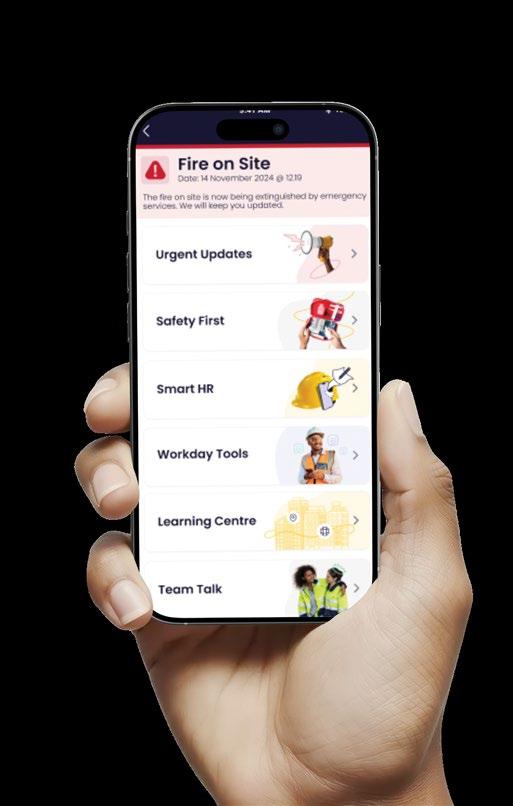
Your people are your greatest asset, especially in mining. With diverse teams spread across remote, hazardous, or off-network environments, staying connected is essential. Vodacom’s Employee Engagement Platform strengthens communication, boosts morale, and supports a culture of safety and accountability.
Key Benefits
Seamless Workforce
Communication
Deliver instant updates, safety alerts, and operational messages to every employee. Support ESG Commitments
Improve inclusivity, transparency, and access to information for the entire workforce.

Strengthen Safety Culture
Centralise emergency messaging, incident reporting, and safety content on one platform.
Scan to explore our Mining Solutions.
Critical mineral project sites are usually located in remote regions in Africa, with harsh conditions. For this reason, for operations to be successful, mines need critical decisions on the type of products to be made urgently, and this specifically applies to substations.
In current African mining conditions, there are four factors that are shaping the trajectory of critical mineral greenfield projects in remote areas: time constraints, environmental regulations (ESG reporting compliance), life cycle costs, and capital expenditure. These are particularly evident in the selection and deployment of power systems, specifically substations.
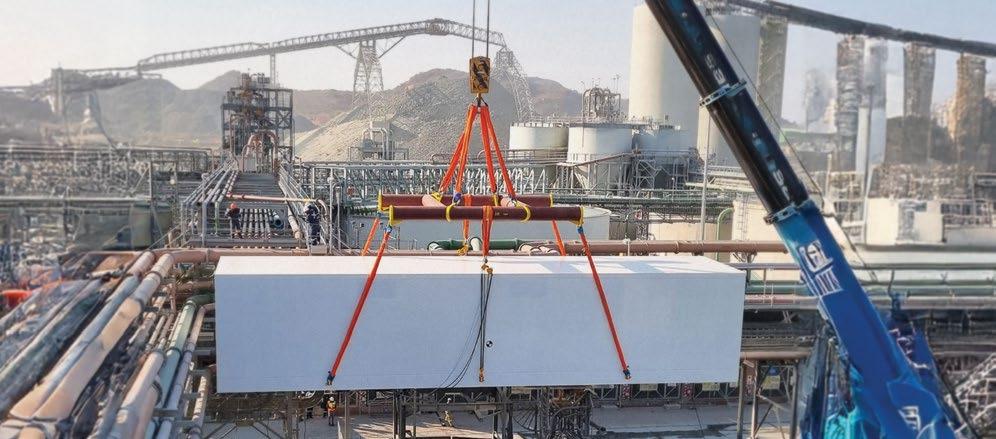
Increasingly, in the past decade, there has been adoption of prefabricated and modular power systems such as E-Houses (Electrical Houses), skids, kiosks, and containerised substations as alternatives to traditional highvoltage and medium-voltage brickand-mortar substations. Typically, these modular systems can be constructed, for the most part, in a fully equipped factory environment, which is considered more conducive to quality and speed.
Kobus Coetzer is the CEO of T-Good Africa, a provider of prefabricated E-House solutions to different industries worldwide. He posits that the trend indicates that traditional substation designs cannot adequately cope with the demands of modern operations.
“The significant growth in the footprint of modular and prefabricated substations is not surprising,” he stresses, outlining the limitations of traditional substations.
Limitations of traditional substations
When deployed in remote mining projects, the limitations of traditional brick-and-mortar substations can be summarised as follows:
1. Huge environmental footprint
Developing large pieces of land to accommodate traditional substations
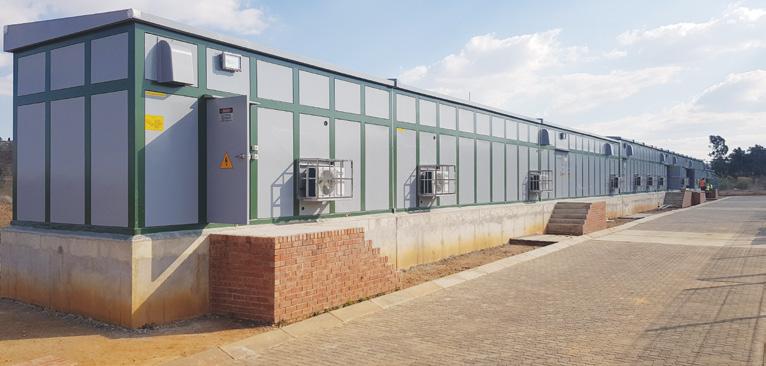
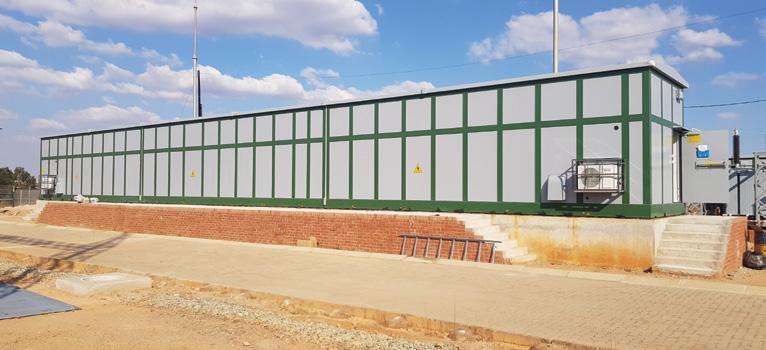
and related infrastructure leaves a huge environmental footprint. This becomes a barrier for companies obliged to reduce their carbon footprint and improve their ESG reporting scorecard (ESG reporting assurance credentials).
With traditional substations, mining companies have to contend with the cost of raw materials, skills, labour, logistics (transportation of electrical components), etc., which increases capital expenditure of a project, and further increases occur the longer completion takes. More to the point, in industries such as mining, where time is of the essence, the construction of substations is timeconsuming.
Do prefabricated substations perform better? Or is this a new-age hype?
In point of fact, they do.
Compared with traditional substations, the benefits of prefabri cated structures continue to be demonstrated in different aspects of remote mining
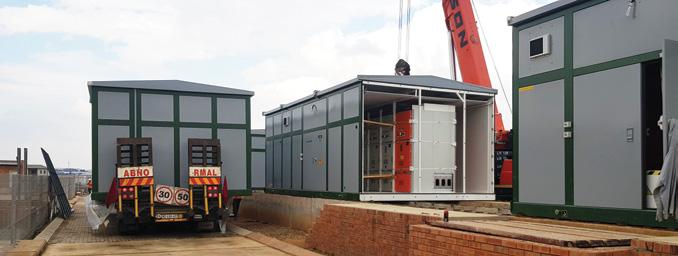
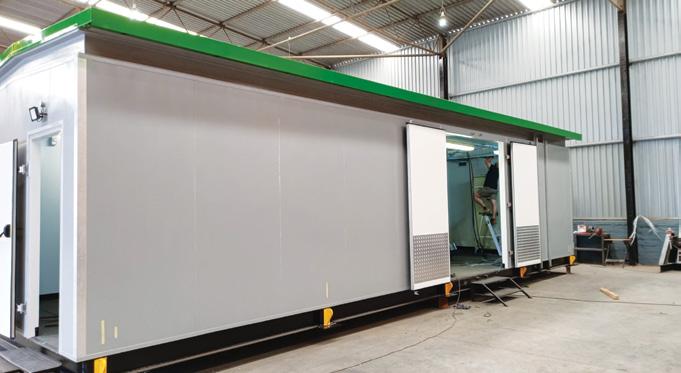
operations across the continent. This is based on data gathered from client feedback, according to Coetzer.
The following are the prominent areas:
i. Short lead times (quick deployment)
E-Houses come pre-engineered and prefabricated according to customer requirements and specifications, meeting the need to distribute power quickly and reliably. Unsurprisingly, many sectors are choosing this option over brick-and-mortar structures.
ii. Lower capital expenditure costs Generally, prefabricated substations can be installed and commissioned significantly faster than traditional substation designs. Once shipped to site, there is minimal work to be done before the modular substation can be commissioned and put to work.
Ultimately, this reduces the overhead costs associated with substation construction, such as engineering, design, and labour, thereby lowering capital expenditure.
There is an expression that goes: different strokes for different folks. This aptly sums up the choices of E-Houses for mining projects.
That is why the process of customising solutions for clients entails scrupulous planning. Fundamentally, the following factors are central and must be considered, Coetzer recommends:
1. Security: Ensure that the E-House is designed with adequate security features to prevent unauthorised access.
2. Cost: Consider the costs associated with the design and implementation of the E-House, as well as any ongoing maintenance costs.
3. Safety: Some, but not all, factors that relate to safety include:
• Proper installation of switchgear
• Adequate clearance from electrical components and other hazardous materials
iii. Easily reconfigured and updated
Modular components allow substations to be easily reconfigured and updated in line with changing operational needs. This feature provides increased safety for personnel and flexibility in system configuration.
iv. Lower environmental impact
E-Houses provide a much lower environmental impact due to their modular, transportable design that can be quickly delivered and installed with minimal disturbance to the environment. “This has been especially advantageous for remote mining operations, making the construction process much easier and more efficient,” explains Coetzer.
v. Compact size, ease of maintenance
Another aspect worth highlighting, which is important in mining projects, is that E-Houses have a compact footprint, yet provide plenty of room to house transformers, switchgear, meters, and other equipment. This access and view of all components makes maintenance and repairs much easier.
6. Durability
The design of welded structures complies with DIN EN ISO 3834-2 codes or customer-specific codes. This enhances durability.
With critical minerals and gold mining projects in progress and others set to be launched, there is certainly further growth in the use and deployment of prefabricated substations.
• Isolation of any live parts
• Proper grounding and earthing of equipment and E-House
• Use of fireproofing materials to achieve a two-hour fire rating
• Proper labelling of equipment
• Regular maintenance of switchgear
• Adequate ventilation to prevent heat and fume build-up
• Emergency trip switch in an accessible location
• Arc venting of switchgear installed in the E-House
4. Space: Ensure adequate space for equipment and accessibility for maintenance and repair.
5. Flexibility and scalability: Design the system so it can be easily upgraded and modified.
6. Reliability: Ensure components are durable and dependable to prevent system failure.
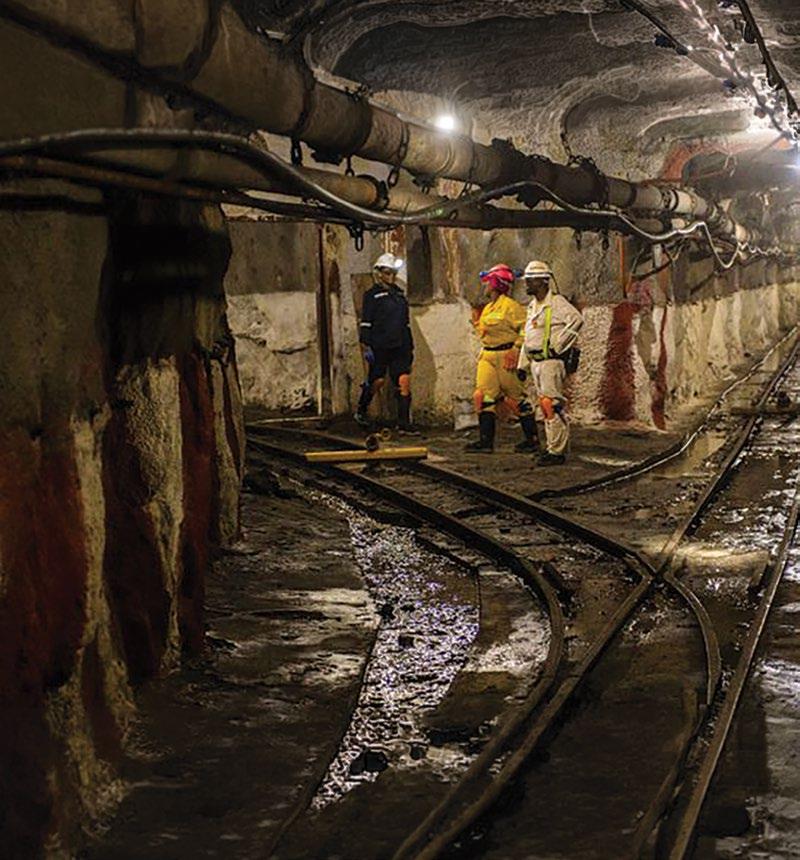
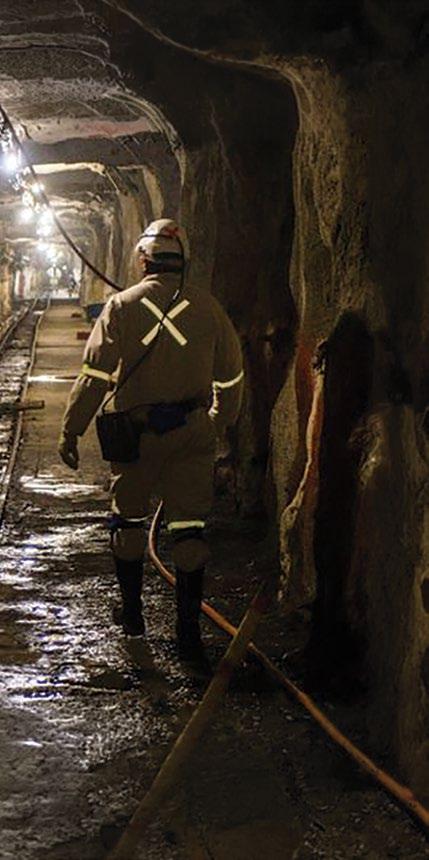
Ventilation and cooling systems among the biggest power consumers in deep-level environments (in South Africa’s gold and platinum mines rock face temperatures can exceed 50°C). Together with smart airflow control and demand-driven ventilation, mining operations are pursuing modular skidmounted systems as solutions that can help them reduce energy consumption, lower emissions, and support sustainable, cost-effective operations.
You can’t rgue with statistics, so they say.
T his is the reality of energy costs in the African underground mining sector, particularly in South Africa’s deeplevel gold and platinum mines, which are among the deepest in the world.
At those extreme depths, energy is said to constitute as much as 40% of OPEX. Even that could sometimes be considered a conservative estimate - it may be even higher when inflationary pressures are factored into some operations.
This is not surprising given the energy-intensive nature of various mining processes such as comminution, rock face drilling, pumping, just to cite a few. Among the major consumers of energy are
main fans and refrigeration systems used for ventilation and cooling respectively, as temperatures at the rock face can exceed 50°C.
For instance, at Anglo Platinum operations, ventilation and cooling have been estimated to consume between 15% and 35% of the power delivered to the shaft head, depending on the shaft design, mine depth, and refrigeration strategy. This is a similar experience across many other mining houses.
With tariff increases, rising energy costs have become a major concern for mining operations, whose primary source is the grid from the national utility, Eskom.
However, to ensure continuous operations during power outages, mining companies use industrialscale diesel-driven power generators for critical backup. In some areas with grid instability, out of necessity, some
operations rely on diesel.
In the current operating environment, the volatility of the global oil market is affecting diesel prices due to geopolitical tensions in the Middle East. This has increased pressure on mining companies to pursue energy-efficiency-driven operating models.
Considering this scenario, for mining companies investing in energyefficient ventilation solutions, where applicable, is not an option but a core business obligation to offset the impact of high energy prices. Surely, mining companies must embrace energy-efficient alternatives if they are to sustain operations while pursuing growth and expansion projects, such as smart ventilation control and
demand-driven airflow systems.
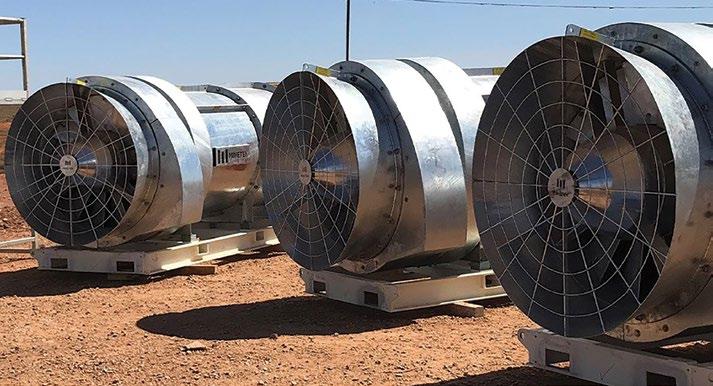
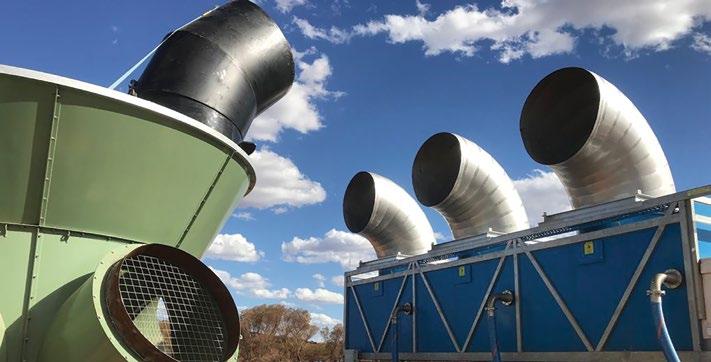
One available option is skid-mounted power systems to complement existing ventilation systems. Modular in design, these are quick to deploy (almost plug-and-play), and can support smart ventilation control and demanddriven airflow systems.
BIFFI, M. and STANTON, D. Meeting the reduced availability and rising costs of electrical power: Anglo Platinum ventilation and cooling strategies. The 4th International Platinum Conference, Platinum in transition ‘Boom or Bust’, The Southern African Institute of Mining and Metallurgy.
Worth mentioning, some mining operations long realised the significance of energy-efficiency-driven cost savings, and have been implementing various programmes to achieve that. Among them is Anglo American Platinum.
For instance, for more than a decade, as part of its sustainability and efficiency programmes, Anglo American Platinum has pursued a number of initiatives.
These include reducing power consumption in main fans during off-shift periods, minimising underground air leakage, introducing more efficient auxiliary ventilation systems, and exploring thermal storage and energy recovery technologies.
Encouragingly, following suit, mining companies, mainly in the junior space, have adopted energy-efficient solutions in their greenfield mining projects, such as Pan African Resources.
These developments indicate that mining companies have been proactive, not reactive, in pursuing energy-efficient alternatives, mainly driven by necessity.
When organisations include energyefficient systems in their ventilation requirements, they get more than significant cost savings. There are gains in other areas too.
Considering the environment and the obligation to cut down emissions, where assured ESG reporting is critical, energyefficient skids contribute to compliance with environmental regulations. By consuming lower energy, especially diesel, they ensure lower emissions, supporting compliance with Scope 1 and Scope 2 emissions regulations. ESG (a topic analysed in a featured article in this edition).
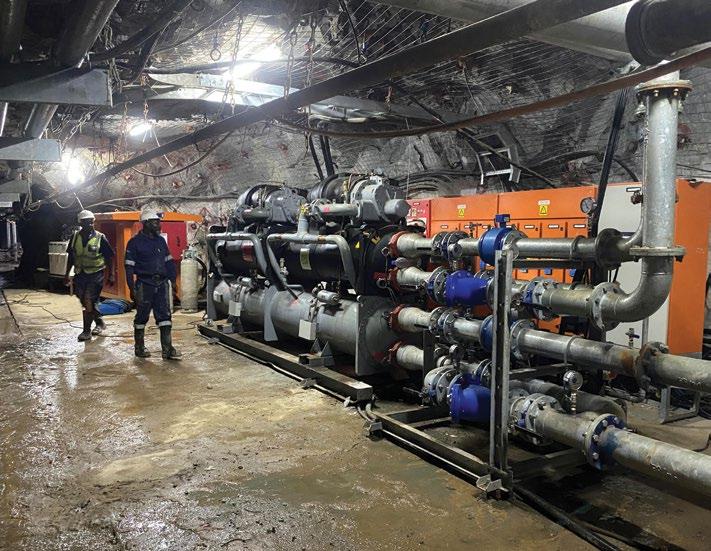
Skid-mounted and mobile air-cooling systems are not intended to replace conventional bulk air-cooling infrastructure but rather complement it, providing flexible, rapid, and localised cooling where it is needed most. By Andrew Branch
Deep mines operate under some of the most technically demanding environments in the world. Increasing heat loads, combined with declining ventilation air volumes, conspire to limit the ability of mines to operate safely and profitably. The challenge is not confined to depth alone. Mines are optimised to target a specific orebody given a fixed set of technical and economic assumptions. Shifting commodity cycles and a changing world have introduced a requirement for flexibility, one that many existing mines were not originally designed to accommodate.
In this new dynamic environment, underground cooling systems cannot remain static but must adapt to changing mining conditions and evolving production priorities.
Conventional bulk air-cooling systems have historically formed the backbone of mine ventilation strategies. While effective, these fixed installations are inherently rigid, capital-intensive systems with long project lead times, and are generally optimised for pre-defined production schedules and mine life. In reality, however, conditions change constantly, and conventional cooling systems cannot respond with the required agility, leading either to under-cooled hotspots or energy inefficiencies from overcooling already cool areas. The ideal mine cooling system must be flexible and must not be a constraint to mining.


A need has emerged for short-term underground cooling solutions that can adapt to changing conditions and provide more targeted temperature control than possible with conventional bulk air-cooling systems. This need has motivated BBE to develop modular, skid-mounted aircooling systems designed for rapid deployment and adaptable service in dynamic mines. The cooling system is designed to provide air cooling exactly where it is needed, while integrating with existing ventilation infrastructure.
Instead of relying solely on bulk air cooling from a central refrigeration plant to cool an entire mine, targeted area cooling of individual, hot mine
ventilation districts can be provided. This approach delivers high positional efficiency by delivering cooling capacity only to areas that require it. This technology is suited to new mine developments where a central cooling system is not yet in place, as well as in existing mines where central cooling plants can be less effective over long distances and additional air cooling is required.
Skid-mounted underground area air-cooling systems offer flexibility, as they can be rapidly deployed or relocated. As production priorities shift, air cooling capacity can be redeployed accordingly, without the need for permanent infrastructure modifications. This aligns with the dynamic nature of modern mining, where flexibility is essential to increase output during highcommodity-price cycles without committing capital that will not be required during a period of low commodity prices.
This type of underground air-cooling system also enhances positional efficiency by applying cooling only where it is needed. This avoids the inefficiencies associated with overcooling an entire mine to manage an isolated hotspot, thereby improving overall energy utilisation.
By delivering immediate, localised temperature reduction in high heat exposure areas, skid-mounted aircooling systems also allow workers to operate in safe, healthy, and productive environments. In doing so, they can facilitate mining at increased depths or distances from the existing central cooling system. As mines get deeper and bigger, cooling demands increase and conventional centralised bulk aircooling systems are often unable to meet the increased requirements efficiently or economically. For mining companies that are extending
existing mining operations due to rising commodity prices, flexibility is critical.
Skid-mounted and mobile aircooling systems are not intended to replace conventional bulk aircooling infrastructure but rather complement it, providing flexible, rapid, and localised cooling where it is needed most.
The underground air cooling strategies must keep pace with a modern dynamic mining environment, and skid-mounted air cooling systems represent a key evolution in mine thermal management, helping to create underground operations that are less constrained and faster to deploy.
Andrew Branch is Managing Director & Ross Wilson, Director and Specialist Engineer at BBE Group.
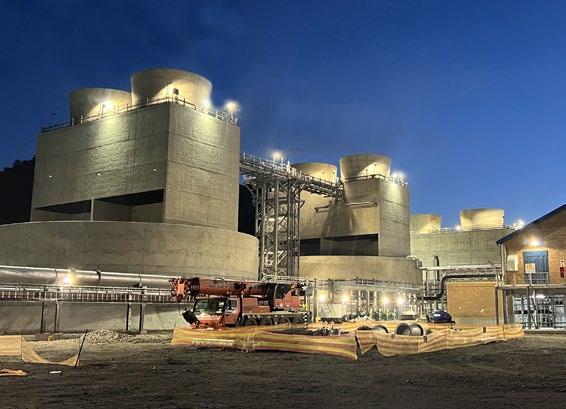
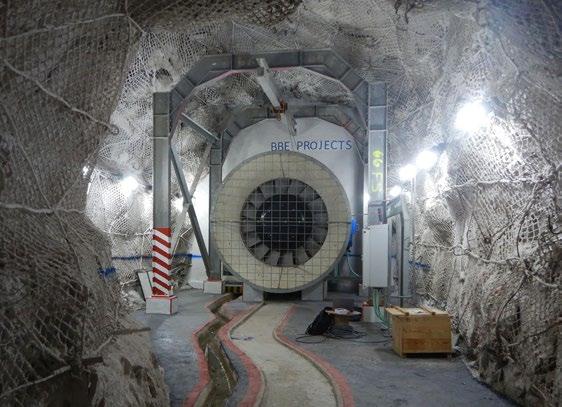
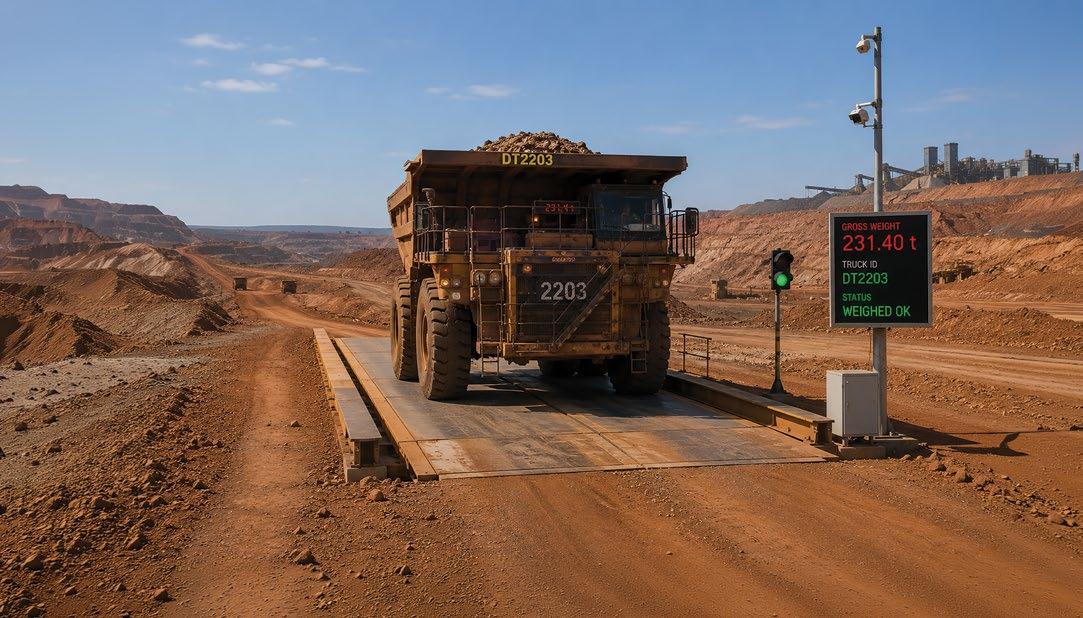
Systems such as in-motion weighbridges allow trucks to be weighed without stopping, maintaining a continuous and efficient flow of material while delivering.
Mining operations across Africa have identified intelligent technologies as one of the key conduits they can utilise to achieve efficient hauling through cost containment, environmental friendliness, and greater savings. By Thobile Mazibuko
Traditionally, mining is considered an industry that does not eagerly adopt new technologies. The general perception is that mining companies are content with utilising methods that serve the purpose, at whatever cost.
However, truth be told, in the past decade, there has been a palpable mindset shift from pit to port –technology is driving processes. In the area of haul truck weighing, intelligent systems are being embraced, replacing most functions of the traditional weighbridge. This is evident in mining projects in the region – with operations in Zambia’s Copperbelt, South Africa’s gold and platinum mining sectors, De Beers diamond mines, among others, taking the lead.
This development signals that mining operations have identified intelligent weighing as an avenue through which they can achieve greater efficiency, cost savings, compliance, and reduced environmental impact.
While it performs its duty, traditional weighing is fraught with limitations. The most cited ones are stoppages during weighing, traffic bottlenecks, delays in material movement, dependence on fixed infrastructure, limited real-time visibility of payload data, and increased operational costs.
As an alternative, through real-time payload data, intelligent haul truck
weighing systems provide critical applications such as real-time payload management, dynamic weighing, volumetric laser scanning, autonomous haulage integration, data analysis, predictive maintenance, and automation in underground mining. These are concise details on each application:
a. Real-Time Payload Management (Onboard Weighing)
Sensors integrated into the truck’s suspension or axles (such as load cells or strain gauges) provide immediate data to the operator. This ensures optimal payloads, which prevents both underloading (inefficient) and overloading (damaging).
b. Dynamic Weighing (In-Motion) Systems such as in-motion
weighbridges allow trucks to be weighed without stopping, maintaining a continuous and efficient flow of material while delivering high accuracy within seconds.
Laser scanners positioned above haul routes generate 3D load profiles to calculate precise material volumes. These can be combined with weight data for enhanced accuracy and can detect residual material left in the truck bed.
Intelligent sensors, such as CHCNAV’s CGI-610, are integrated with autonomous vehicles to enable precise loading, navigation, and dumping in automated mining environments.
Systems such as Sandvik’s Integrated Weighing System (IWS), built into underground trucks such as the TH551i, optimise each haul cycle by ensuring accurate loading and confirming complete unloading.
On-board weighing offers valuable insights into each hauler's load, enabling operators to optimise payloads, balance loads evenly, and minimise idle time. Consequently, this efficient payload management leads to increased productivity, reduced cycle times, and better resource allocation.
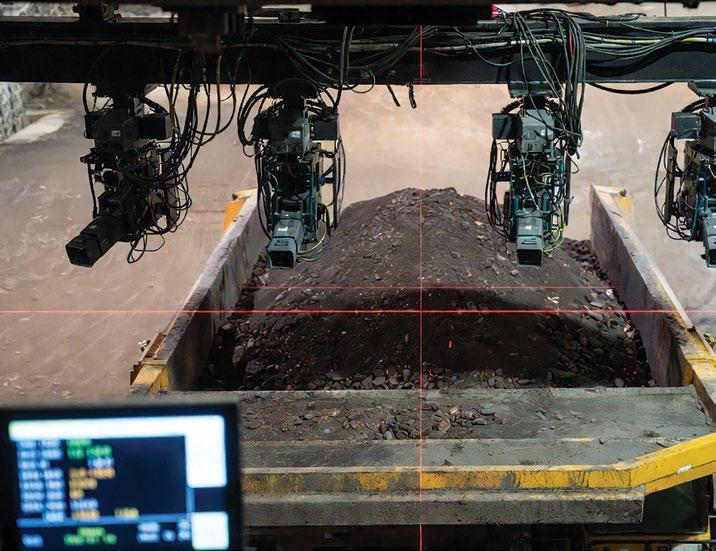
Intelligent systems collect data on payloads, cycle times, and truck performance. These observations help operators to identify inefficiencies, such as excessive haul times or repeated overloading, and implement proactive maintenance strategies.
Intelligent weighing technology offers several operational benefits. The most prominent benefits are:
• By optimising payloads, more material can be transported in fewer cycles. This improves productivity.
• Preventing overloads reduces stress on tyres, frames, and suspension systems, prolonging equipment life.
• Maintaining optimal loads enables trucks to operate more efficiently, particularly on challenging terrain. This improves fuel efficiency, ranging between 10 and 15 percent.
• Accurate weighing ensures trucks operate within safe limits. This reduces the risk of accidents associated with overloading.
• Better load management lowers wear and tear. This contributes to reduced fuel consumption and maintenance expenses.
With these benefits, it is a no-brainer that mining companies should utilise intelligent systems in their haul truck weighing requirements. There is no better practical alternative to addressing the limitations of traditional weighing methods and guaranteeing efficient hauling through smarter weighing.
In a review on Payload Optimisation & Life Cycle Costs published on its website, Volvo Construction Equipment Africa put it succinctly: "On-board weighing offers valuable insights into each hauler's load, enabling operators to optimise payloads, balance loads evenly, and minimise idle time. Consequently, this efficient payload management leads to increased productivity, reduced cycle times, and better resource allocation."
In mining operations, few assets are as critical as SAG mills and ball mills. These massive rotating machines are responsible for crushing ore into smaller particles, forming a crucial part of the mineral processing chain. Inside the mills, enormous steel grinding balls or rods continuously impact the ore with extreme force, creating one of the harshest mechanical environments found in industrial applications.
To protect the mill shell itself from this violent process, sacrificial wear plates — commonly known as mill liners — are installed on the inside of the mill. These liners absorb the impact and abrasion generated during operation and are secured using specialized mill liner bolts.
However, maintaining the integrity of these bolted connections has always been a major challenge for mining operators.
Mill liner wear is highly unpredictable. Some liners may last eighteen months, while others can fail
within six. The wear pattern depends on numerous operational factors including ore composition, throughput, moisture levels, grinding media movement, and process conditions.
The liners themselves are consumable parts, but the real problem often begins with the bolted connection.
During installation, mill liner bolts are frequently tightened using non-calibrated impact wrenches, inconsistent lubrication methods, or outdated torque procedures. While the bolts may appear correctly installed, the actual preload inside the bolted joint is often unknown.
This creates significant risks in an
Unplanned downtime can easily cost between $100,000 and $380,000 per hour, depending on the size of the mining operation and production value.
application already exposed to severe vibration, cyclic loading, and constant mechanical shock.
Studies and field measurements have shown that newly installed mill liner bolts can experience substantial preload loss shortly after commissioning. As bolt load decreases, the liners begin to move slightly during operation. This movement gradually increases until the liners start “clappering” against the mill shell under extreme impact forces.
Eventually, bolts can fatigue and fracture completely.
Once this happens, the consequences become severe. Loose liners can damage adjacent components, destroy surrounding liners, and even compromise the mill shell itself. In many cases, operators are forced into emergency shutdowns and intensive repair maintenance.
“Unplanned downtime can easily cost between $100,000 and $380,000 per hour, depending on the size of the mining operation and production value.”
To solve this problem, BoltSafe developed the CMS Fusion specifically for a mining customer
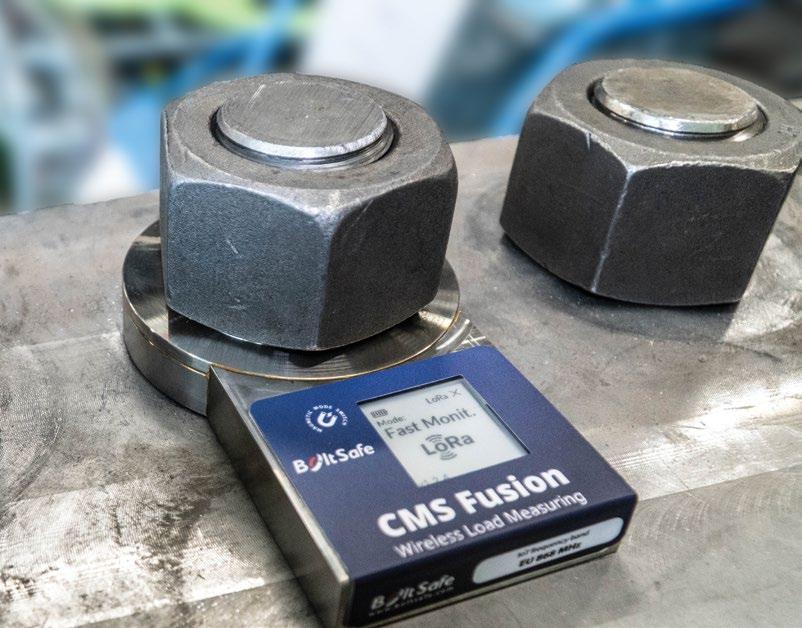
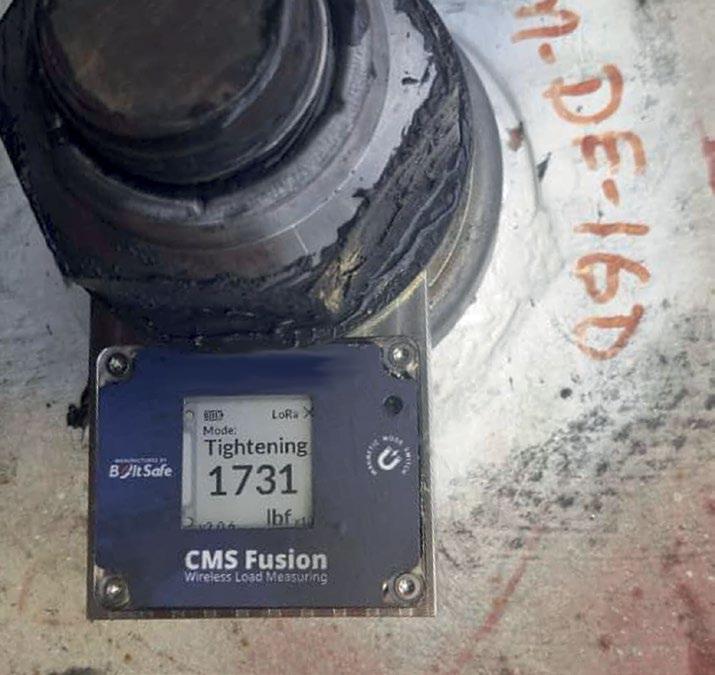
facing recurring mill liner bolt failures.
The objective was clear: provide operators with continuous, real-time insight into the actual bolt load inside critical mill liner connections.
The CMS Fusion combines direct bolt load measurement, integrated display functionality, and wireless LoRaWAN communication into a single compact
sensor solution.
Unlike traditional torque methods, the CMS Fusion measures the real tension inside the bolt itself. This allows maintenance teams to verify with certainty that each mill liner bolt has achieved the correct preload during installation.
This is particularly important in mining environments where installation conditions are rarely ideal and where torque alone is often an unreliable indicator of actual clamp force.
The advantages do not stop after installation.
Once mounted, the CMS Fusion continuously monitors bolt load throughout operation. Sensor data is transmitted wirelessly to the monitoring platform, enabling maintenance teams to remotely track the condition of critical bolted joints in real time.
If preload begins to decrease beyond acceptable thresholds, operators receive immediate visibility into the issue long before catastrophic failure occurs.
This changes the entire maintenance philosophy.
Instead of reacting to failures after damage has already occurred, mining companies can now implement true predictive maintenance strategies based on actual bolt condition data.
Even more importantly, maintenance can become highly targeted. Rather than stopping the entire mill for broad inspections, operators can identify exactly which liners or bolt locations require attention.
This significantly reduces maintenance time, minimizes unnecessary inspections, and helps avoid costly emergency shutdowns.
Mining applications demand equipment capable of surviving extreme operating conditions. Dust, moisture, vibration, impact loading, and temperature fluctuations quickly expose weaknesses in conventional monitoring technologies.
The CMS Fusion was engineered specifically for these environments.
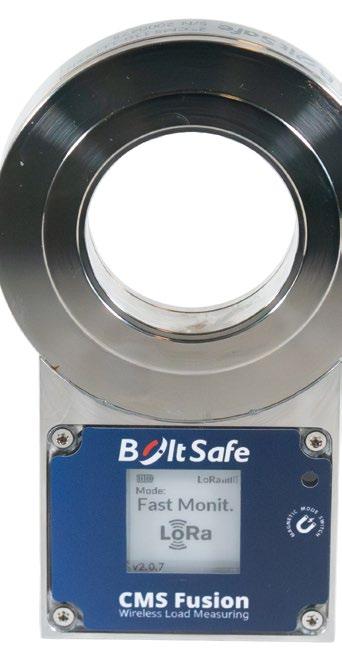
Its compact and rugged design integrates the electronics directly into the sensor body while maintaining the durability required for heavy industrial use. Combined with lowpower LoRaWAN communication technology, the system can operate for years with minimal maintenance requirements.
For remote mining sites, this is a major operational advantage.
The first mining customer deploying the CMS Fusion reported significant improvements almost immediately.
Unplanned downtime caused by loose mill liner bolts was drastically reduced, maintenance became more predictable, and critical bolted joints could finally be monitored based on real measured data instead of assumptions.
According to the customer, the savings achieved through avoided downtime alone were enormous.
Just as important, the system

proved itself to be highly reliable in one of the toughest industrial environments imaginable.
A robust and dependable solution that simply does what it promises.
As mining operations continue to focus on reliability, asset availability, and predictive maintenance, continuous bolt load monitoring is becoming increasingly valuable.
Critical bolted joints can no longer be treated as static components installed once and be forgotten. In high-impact applications such as SAG mills and ball mills, bolt preload is dynamic, constantly changing under operational stress.
The CMS Fusion gives mining operators visibility into this process for the first time.
And in an industry where every hour of uptime matters, that visibility can make all the difference.



Unplanned mill downtime can cost mining operations up to $380,000 per hour. The BoltSafe CMS Fusion was developed specifically for SAG mill and ball mill liner bolts operating under extreme vibration and impact loads. By measuring the real bolt load during installation and continuously monitoring preload in real time, the rechargeable and wireless CMS Fusion helps prevent loose liners, broken bolts and catastrophic failures. • Reduced unplanned downtime • Predictive instead of reactive maintenance • Safer and more reliable mill operation
• Targeted maintenance on critical liner locations Built for the harshest mining environments. Proven where it matters most.














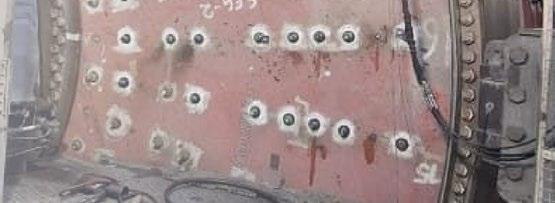







Traditionally, maintenance has mainly been preventive, reactive, and rigidly interval-based. Now, the integration of data-driven, conditionbased predictive maintenance is transforming the approach. And the results are tangible: improvements in availability, maintenancerelated cost savings, safety, and efficiency.
By Thobile Mazibuko
The increasing adoption of modern digital-driven semi-autonomous and autonomous equipment has improved (and continues to improve) productivity considerably in African mining, more so with operations located in remote and harsh environments. Nonetheless, there is a challenge: equipment failures remain a costly and disruptive reality.
This situation has made the adoption of predictive maintenance a necessity, not an option.
Based on IoT and data analytics, modern equipment is so sophisticated that using preventive maintenance methods that are interval-based and periodic can miss early signs of potential failure.
This can result in machine failure occurring at the worst possible time, with significant implications for safety and productivity. Most critical from a bottomline perspective is the loss of revenue and the cost of unscheduled repairs.
Conveniently, through the convergence of data and the Internet of Things (IoT), condition-based predictive maintenance is offering mine operators on the continent the ability to continuously monitor asset health, anticipate failure, and make necessary interventions. By connecting physical equipment to digital systems, IoT enables real-time data collection from interconnected assets across industrial environments.
This feature is a handy tool for maintenance teams.
With data gathered by sensors installed in equipment, parameters
such as vibration, temperature, oil condition, ultrasound, thermography, and motor current analysis can be monitored to identify early signs of wear, imbalance, misalignment, contamination, or impending failure. Data is transmitted to central platforms for analysis, which maintenance teams analyse and attend to potential issues before critical breakdowns occur.
A case in point of condition monitoring through oil analysis is a service offered by WearCheck. Through testing the composition of used oil samples, equipment health is determined. According to the company, the service has helped mining companies and heavy industries in general avert potentially costly machine breakdowns.
cost of reliability
Without a doubt, real-time data has transformed maintenance of critical assets in the areas of improved reliability, productivity, and safety. However, operations face challenges in the transition, such as implementation costs, skills shortages, and system integration. Oracle raises an interesting point on cost and necessity. In a report, the company notes that businesses tend to invest in advanced predictive maintenance where there is a high risk of failure. It mentions the example of downtime in an electrical substation that would leave thousands of people without power.
“In this case, the utility may choose to invest in finer-grained predictive maintenance, possibly leveraging AI tools. On the other hand, for lower-
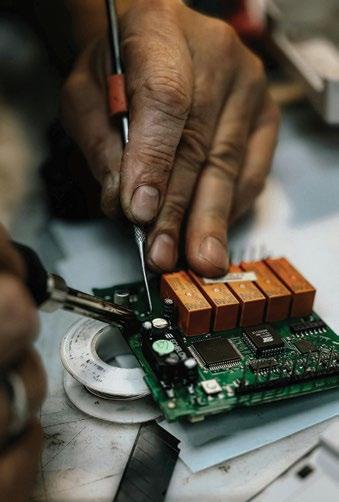
risk equipment not in critical paths, companies tend to stick with preventive maintenance,” states the report.
Looking ahead, the implementation of predictive maintenance will only get better with the integration of artificial intelligence (AI) and machine learning. This has boosted the capability to detect anomalies, predict failures, and automate maintenance decisions in near real time with greater precision.
Predictive maintenance delivers both qualitative and quantitative benefits. Qualitative benefits
• Improved safety, health and environmental (SHE) compliance
• Reduced time spent on manual data extraction and validation, allowing greater focus on data-driven decision-making
• Better utilisation of skilled maintenance technicians during labour shortages
• Improved parts management and forecasting
• Greater control over fleet and operations planning
• Enhanced customer service and adherence to service level agreements
Quantitative benefits
• 5–15% reduction in asset downtime
• 5–20% increase in labour productivity
• Up to 25% increase in asset uptime
• 5–10% reduction in material and maintenance costs
• 5–10% reduction in overall maintenance expenditure
• Industry estimates indicate AIdriven predictive maintenance can significantly improve maintenance planning and asset reliability
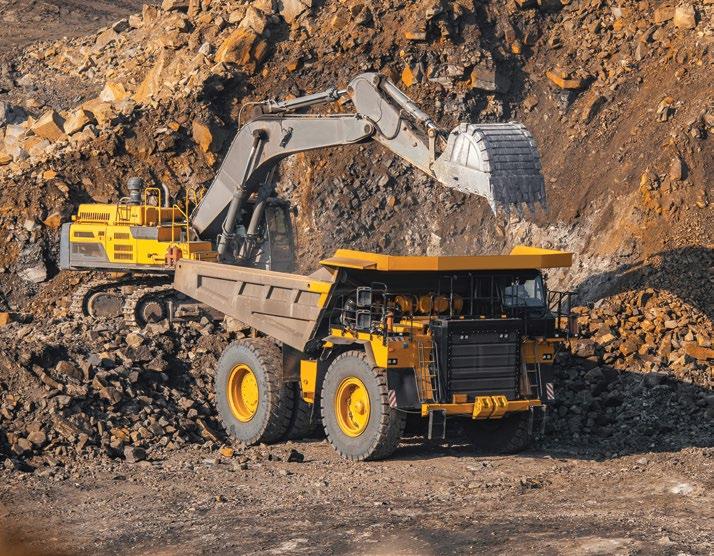
For over 80 years, Sanden has been at the forefront of mobile air conditioning compressor technology, building a reputation for durability, innovation, and performance in the most demanding environments. As
a trusted Tier 1 supplier to OEMs, Sanden compressors are the preferred choice for manufacturers of heavy-duty and off-highway machinery operating in some of the world’s toughest conditions.
Sanden’s commitment to quality
Sanden’s commitment to quality and engineering excellence is reflected in its comprehensive range of super heavy-duty air conditioning compressors, specifically designed for reliability in harsh mining and construction environments.
and engineering excellence is reflected in its comprehensive range of super heavy-duty air conditioning compressors, specifically designed for reliability in harsh mining and construction environments. The flagship SD7H15 compressor range can be equipped with enhanced features such as bearing and armature dust covers to protect against contamination. For the most extreme applications, fully sealed heavy-duty clutches are available, delivering up to one million miles of trouble-free operation.
Proven in the field with leading global manufacturers including Caterpillar, JCB, Volvo, and Liebherr, Sanden compressors are synonymous with endurance and consistent performance. The range supports both traditional R134a refrigerant and the newer R1234yf, increasingly adopted across heavy truck and offhighway sectors.
As the industry evolves, Sanden continues to innovate. A growing portfolio of electric compressors supports underground mining and other applications where the transition away from internal combustion engines is accelerating. This ensures distributors can meet the changing demands of their customers while staying ahead of regulatory and environmental trends.
With mechanical compressors ranging from 80cc to 675cc, delivering up to 30kW of cooling capacity, alongside electric solutions offering 3kW to 8kW, Sanden provides a complete, flexible solution for a wide variety of applications.
For distributors across the African market, Sanden represents a reliable, high-performance product backed by global OEM trust and proven field durability. Partner with Sanden to deliver dependable climate control solutions to your customers, no matter how demanding the environment.
Get in touch today to discuss sales opportunities, technical support, and how Sanden can help grow your business.
SANDEN have been at the forefront of mobile air conditioning compressors for 80 years. We are a principle Tier 1 supplier to the OEM and are the compressor of choice for machine producers of heavy duty vehicles to be used in the toughest conditions.
SANDEN supply Caterpillar, JCB, Volvo, Liebherr among others. Quality and endurance are unrivaled and our compressors work with traditional R134a gas and the new R1234yf gas starting to be seen in the heavy truck and off highway machine industry.

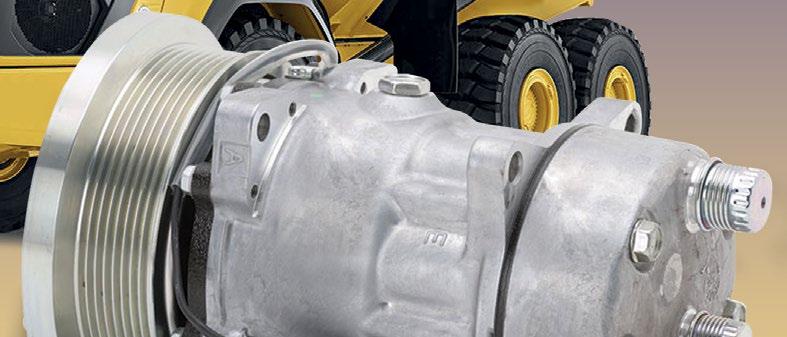



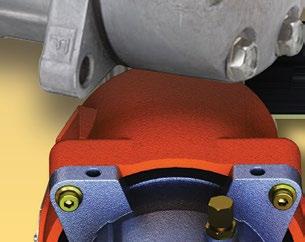
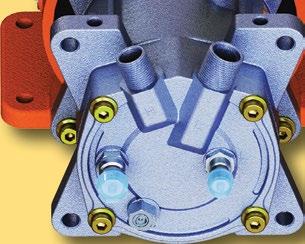

Container laboratories allow WearCheck to overcome infrastructure challenges and deliver high-quality analysis directly where it is needed most. One of the most significant benefits of on-site laboratories is the dramatic reduction in sample turnaround times. With testing performed at the point of use, results can typically be delivered within eight hours or less.
Mining operations across Africa are increasingly moving into remote and infrastructure-constrained regions, where the challenges of maintaining heavy equipment reliability are compounded by distance, logistics and limited access to technical support.
In response, condition monitoring specialist WearCheck has developed containerised laboratories that are transforming how these remote mining companies manage maintenance, reliability and asset performance in these demanding environments.
WearCheck operates 17 laboratories around Africa - 12 brick-and-mortar laboratories; and an additional five laboratories which are housed in remodelled shipping containers and fitted out with all the advanced scientific instruments required to perform the company’s signature, world-class condition monitoring services.
Designed and assembled at WearCheck’s South African facilities and transported to more remote mining hot spots in Africa, these laboratories are transforming how mines manage machinery maintenance in remote locations.
For mines that are far from established industrial hubs, the absence of laboratory facilities can result in significant delays in obtaining critical diagnostic information. Traditionally, oil and fluid samples
would need to be transported over long distances to centralised laboratories, sometimes across borders, adding days – or even weeks – to turnaround times.
WearCheck’s container laboratories eliminate this bottleneck by bringing the laboratory directly to the mine site. The containerised facilities are ideally designed for larger mines, where sample volumes can be significant. The first container laboratory, which is still operational today, was installed on a remote mine in Zambia in 2016. Construction is scheduled to begin imminently on the latest WearCheck container laboratory, which is destined for a diamond mine in Angola.
The labs empower maintenance crews to access world-class condition monitoring services in areas where such capabilities were previously unavailable.
Each unit is designed to operate independently of traditional infrastructure, incorporating features such as air conditioning, ventilation and extraction systems, fire prevention measures, uninterrupted power supply, security enhancements and even satellite connectivity if required. This enables deployment in regions with limited reliable electricity, connectivity or built infrastructure.
WearCheck continues to fully manage and support these installations as part of its integrated service offering. All analytical data is automatically and continuously transmitted to WearCheck’s centralised data infrastructure, where it is processed by highly experienced diagnostic
WearCheck container laboratory leaves from South Africa to go to DRC.
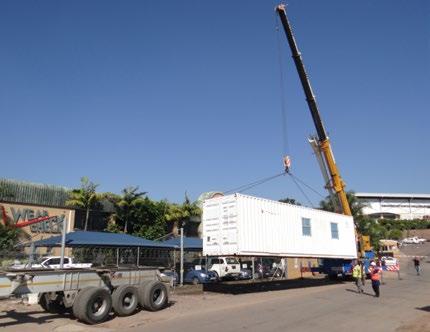
specialists using standardised methodologies and advanced condition monitoring protocols. This ensures that sample analysis and reporting are delivered with the same consistency, accuracy, and technical integrity as those produced in the company’s fully equipped laboratory network across South Africa.
This centralised and networked approach provides built-in operational resilience. In the event that a local laboratory becomes unavailable for any reason, sample processing can be seamlessly redirected to any other WearCheck facility. This guarantees uninterrupted service delivery, complete data continuity, and preservation of historical trends - ensuring that customers experience no disruption to their condition monitoring programmes.
For Neil Robinson, managing director of WearCheck, the containerised approach is central to the company’s strategy of improving access to diagnostic services across the continent. ‘Our mission is to enhance access to world-class condition monitoring services in Africa. Container laboratories allow us to overcome infrastructure challenges and deliver high-quality analysis directly where it is needed most.
‘One of the most significant benefits of on-site laboratories is the dramatic reduction in sample turnaround times. With testing performed at the point of use, results can typically be delivered within eight hours or less.’
This improved data availability enables mining operators to entrench a more proactive maintenance approach. Instead of reacting to failures or waiting for delayed laboratory reports, they can identify
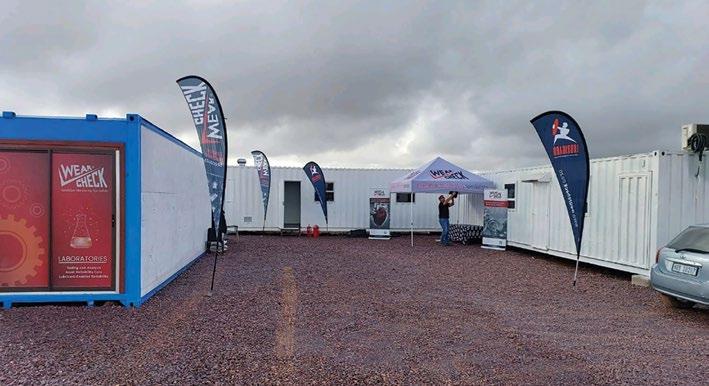
emerging issues and take corrective action before equipment performance is compromised.
Through oil analysis, the detection of contaminants, wear metals and lubricant degradation at an early stage enables operators to identify the root cause of potential failures. This predictive capability not only reduces maintenance costs but also extends equipment life and improves overall operational efficiency.
Container laboratories support a wide range of condition monitoring services, including oil analysis, coolant testing, diesel testing and other fluid diagnostics. These services provide critical insight into the health of engines, gearboxes and hydraulic systems – all of which are essential to mining operations.
WearCheck continues to invest in the latest laboratory technology and diagnostic capabilities to ensure that its container laboratories remain aligned with evolving industry requirements. The modular design of the laboratories allows for continuous upgrades, enabling the integration of new instruments and testing methods as they become available.
Equally important is the development of technical skills. Each container laboratory is supported by trained technicians and laboratory managers, often drawn from local communities and trained within WearCheck’s existing laboratory network. This approach not only ensures the quality and consistency
of testing but also contributes to skills development within the regions where the laboratories operate.
In some cases, mining companies manage the laboratories independently once the necessary training has been completed, further embedding technical capability within their operations.
Beyond speed and accessibility, container laboratories offer flexibility to deliver diagnostic capabilities wherever they are needed.
The ability to monitor equipment condition on-site also enhances accountability across the maintenance process. Having immediate access to diagnostic data empowers operators to verify the effectiveness of maintenance interventions, track equipment performance over time and make more informed decisions.
Furthermore, the integration of these remote laboratories with WearCheck’s Laboratory Information Management System (LIMS) ensures that all data is centrally managed and quality controlled. This connectivity allows for consistent reporting, trend analysis and benchmarking across multiple sites, wherever the laboratories are situated.
As mining operations become more complex and data driven, the role of condition monitoring is expanding beyond traditional oil analysis. WearCheck’s service offering has evolved to include a broader range of diagnostic and reliability solutions, including Advanced Field Services (rope condition assessment,
technical compliance and nondestructive testing), transformer oil analysis, water analysis and Lubrication-Enabled Reliability (LER) programmes. In addition, the company boasts an extensive Asset Reliability Care (ARC) offering, with monitoring techniques such as vibration analysis, thermography, online remote monitoring diagnostics, alignment and balancing, motion amplification, ODS (operational deflection shape) and resonance tests using transient and impact analysis.
The integration of these services with container laboratories creates a comprehensive on-site reliability hub, capable of supporting multiple aspects of asset health and performance. This holistic approach enables mining companies to move from reactive maintenance to fully integrated reliability strategies, where data from multiple sources is used to optimise operations.
Looking forward, continued advancements in sensor technology, remote monitoring and data analytics are expected to enhance the capabilities of container laboratories further. These developments will provide even greater visibility into equipment condition, enabling more precise and timely maintenance interventions.
In the mining sector, where equipment reliability is directly linked to productivity and profitability, the ability to access accurate and timely diagnostic information is critical. WearCheck’s is addressing this need by bringing world-class condition monitoring services to the heart of mining operations, regardless of location.
By reducing delays, improving data availability and supporting proactive maintenance strategies, these laboratories are helping mining companies across Africa to enhance reliability, reduce costs and extend the life of critical assets.
For 50 years, WearCheck has brought maintenance insight to the toughest environments – even right to the mine face. For more information, please visit www.wearcheck.co.za.
Alternatively, contact WearCheck on marketing@wearcheck.co.za or call +27 (31) 700-5460.
Air Charter Service
Page 19
Invincible Valves (Pty) Ltd Page 2
Wear Check Pty Ltd Page 48
Bolt Safe Page 42
SkyTEM Surveys Page 21
SGS South Africa (Pty) Ltd Page 13
Vodacom Group Limited Page 28-29
Solve Engineering Solutions (Pty) Ltd Page 32-33
BBE Engineering Page 37
Salus Aviation Page 23
Winder Controls Pty Ltd Page 17
Sanden International Page 45
Mine Security Conference and Tech Expo Page 3
Coal and Energy 2026 Event Inside Cover
Women in Leadership and Mining Event Inside Back Cover
Electra Mining 2026 Event Outside Back Cover

Place a digit from 1 to 0 into each of the empty cells so that each digit appears exactly once in each row, column, and 3x3 outlined box