DIFFERENTLY UNITED PARAMEDICAL TATTOING
Restoring Confidence a Drop of Ink at a Time


DIFFERENTLY UNITED PARAMEDICAL TATTOING
Restoring Confidence a Drop of Ink at a Time
We are a magazine born from necessity, fueled by purpose, and driven by people. At Mingo, we are rewriting the narrative one that for too long has overlooked the rich, diverse, and powerful experiences of individuals living with disabilities. Our platform exists to reflect a reality that is bold, multifaceted, and deeply human.
As creators, advocates, and change makers shaped by lived experience and a shared vision of inclusion. We have navigated barriers firsthand and witnessed the absence of authentic representation in media not only in the stories being told, but in who gets to tell them. That realization sparked the need to build the space we could not find.
What began as a spark of frustration has evolved into a movement for visibility, understanding, and celebration. At its heart, Mingo is about expression and empowerment. We are not here to speak for people with disabilities we are here to hand them the mic. Every edition showcases the beauty of difference and the strength of community.
Our vision is a bold world where disability is not only accepted but celebrated; where inclusivity is not an afterthought but a standard; and where every person, regardless of ability, sees themselves reflected in media that truly represents the human experience.
We are Mingo — a brand, a magazine, a community, and a catalyst for change. We are for the curious, the passionate, the trailblazing, and the unseen. We are for everyone who has ever felt left out of the conversation because here, your story is the headline.
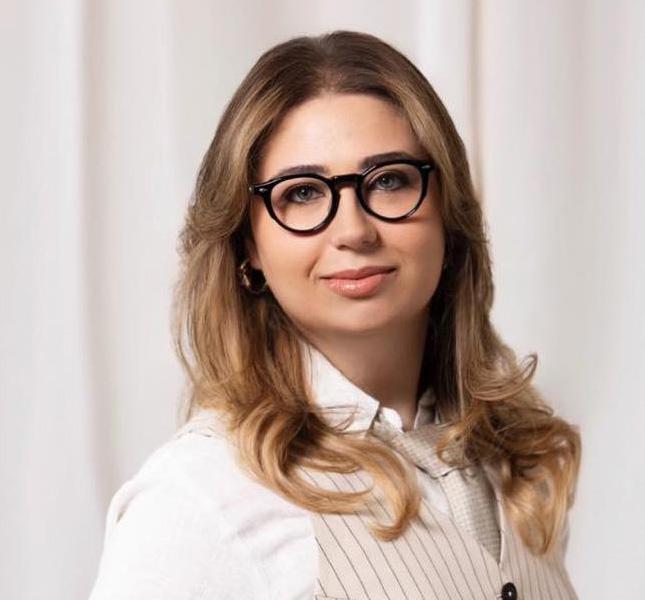
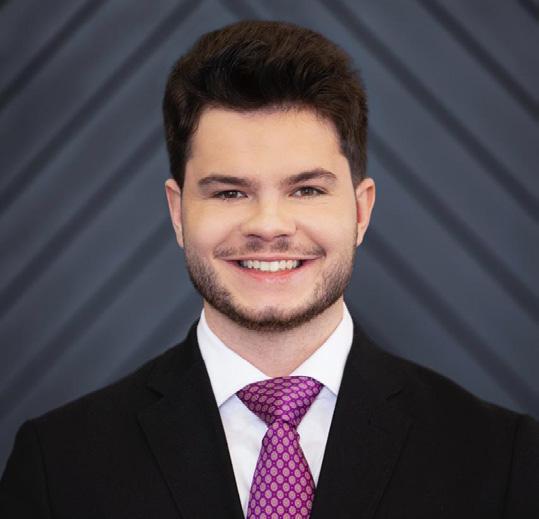
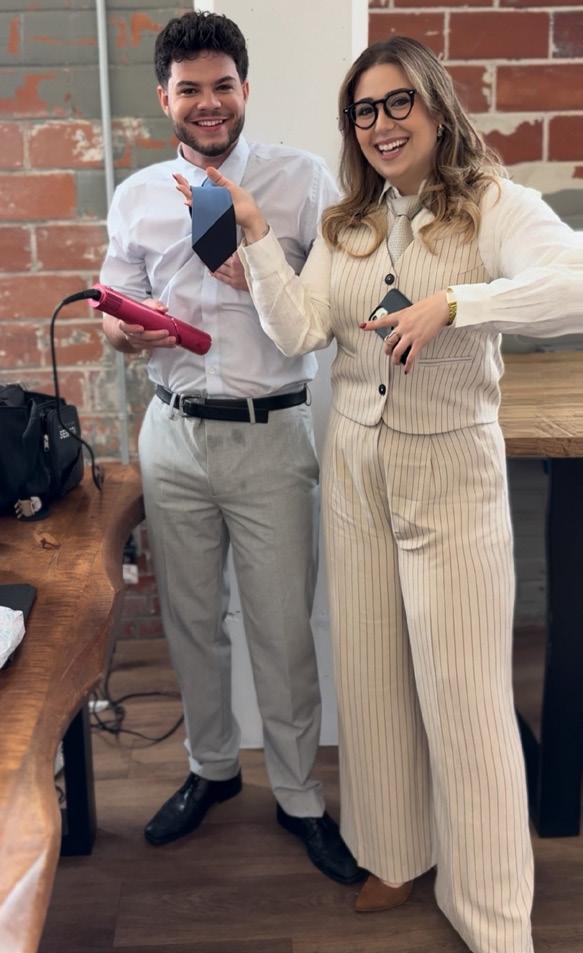
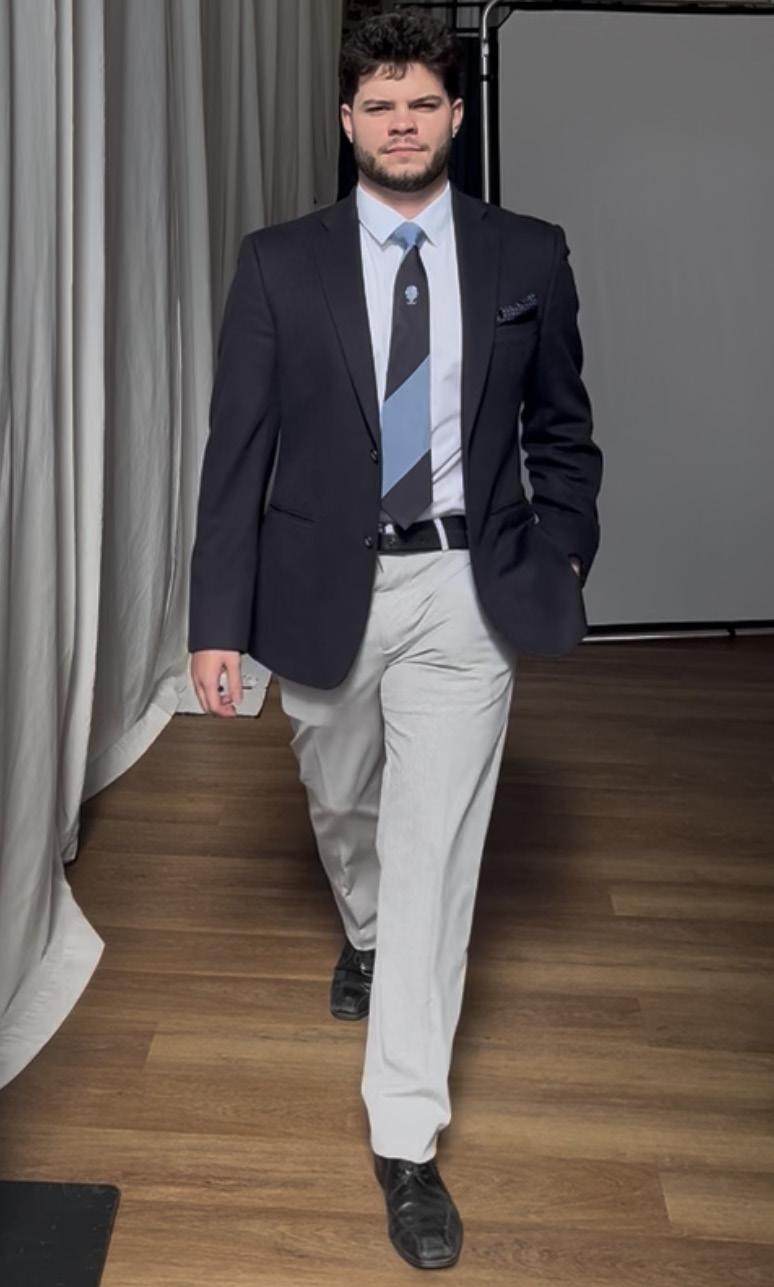
Alicia Costa Iannicelli
Nathan Otsisto:kwa Star Stacey
Proofreader Kathy Balogh
Director of Technology
Joey Magri
Director of Advertising Brandon Amaral; brandon@mymingo.com
Photographers
Front Cover: Mariano Magri
Differently United Photoshoot: Kathleen Girard (Cookie Studio)
Questions & Inquiries contact@mymingo.com
www.mymingo.com
Connect with us on social media

Photography Credits & Usage Notice:
Certain photographs and visual assets contained in this publication are licensed from Adobe Stock under royalty-free agreements. All licensed content is used in accordance with Adobe Stock terms of use. These images may not be copied, reproduced, or redistributed in any form without obtaining the appropriate license from Adobe Stock. All rights reserved.
Trademark Notice:
Mingo™ is the trademark of Mingo. Although not yet registered, it is protected under Canadian common law rights. Any unauthorized use, reproduction, or distribution of the Mingo name, logo, or related brand assets without the prior written consent of Mingo may constitute infringement of our rights. The mark is pending registration with the Canadian Intellectual Property Office (CIPO).
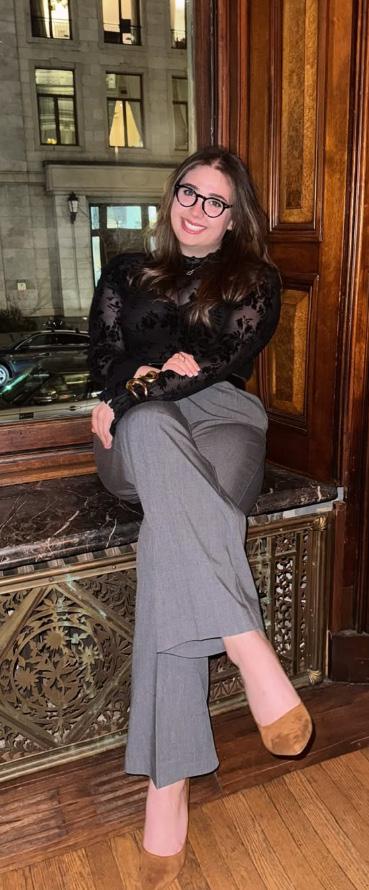
Julia ScalaEditor-in-Chief
It’s surreal and deeply meaningful to welcome you to the inaugural issue of Mingo. What you are holding (or scrolling through) is more than a magazine. It is the beginning of something long overdue a place where disability is not an afterthought but the heartbeat. A place where accessibility meets creativity, where lived experience drives innovation, and where real stories are told by the people who have lived them. Mingo was born from conversations that weren’t happening, from rooms that didn’t feel built for all of us, and from the quiet understanding that representation without authenticity just isn’t enough. Instead of waiting for permission, we created the platform ourselves. It features trailblazers across health, fashion, technology, art, and beyond, pushing boundaries and redefining what inclusion truly looks like. It’s filled with thoughtful commentary, practical resources, and stories that challenge, uplift, and connect. As your editor and as someone who has spent years navigating the worlds of healthcare, media, and advocacy, I wanted to build something that felt real. Not glossy perfection, but a living, breathing community. One that recognizes both the challenges and the brilliance within the disability experience. Whether you identify as disabled, are a caregiver, an ally, or someone just beginning to explore this space, Mingo is for you. My hope is that within these pages, you’ll find yourself reflected, respected, and inspired. Most of all, I hope you’ll keep coming back, not just to read, but to share, grow, and help us shape what comes next.

Tamara Balassanian
A respiratory therapist since 2014 and now an anesthesia assistant, she blends a fine arts background with medical expertise to offer advanced paramedical tattooing, specializing in scar camouflage, areola restoration, and gender-affirming work. Beyond medicine, she is a musician and visual artist who dreams of running a countryside animal rescue. To learn more visit
www.tamaraparamedical.com
Edisond Florial
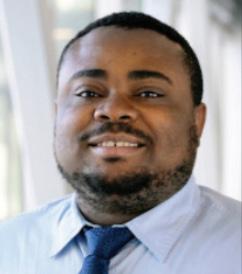
MD, graduated in medicine from Haiti and is pursuing a Master’s in Clinical Sciences at Université de Montréal. With interests in orthopaedics and neuroscience, he is active in research and publications while working toward Canadian medical licensure and residency.
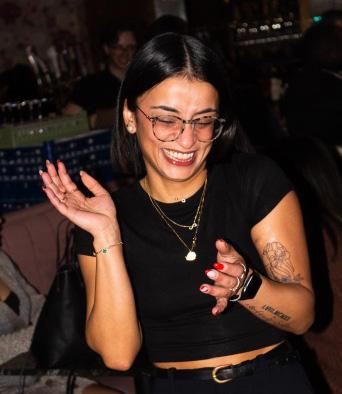
Mai Duong
Founder of Swab The World, turned her leukemia battle into a mission to diversify global stem cell donor registries. A skilled marketing professional, she leverages her expertise and network to amplify the foundation’s impact.
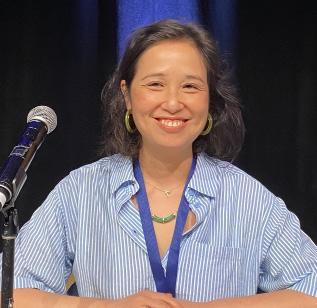
14
Clinical nurse for 12 years, Zahra splits her time between emergencies and psychiatry. Passionate about mental health, she uses her witty and sincere voice to break taboos and shed light on the invisible. Spoiler: She’s convinced empathy should be covered by RAMQ.
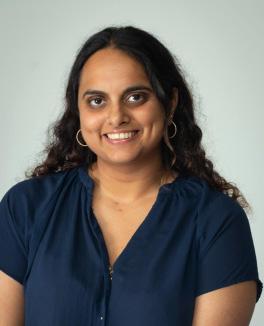
Saima Syed
A software developer with 4+ years of experience, combining technical expertise and creative problem solving to build impactful digital solutions. A Computer Science graduate (2021), she thrives on continuous learning and tackling new challenges.
42
Liliana Tomasino
She loves creating meaningful memories with friends and family, especially through travel and activities with her brother who has Down syndrome. For Liliana, the best experiences are shared ones, and travel should be inclusive, easy, and joyful for all.
40
44
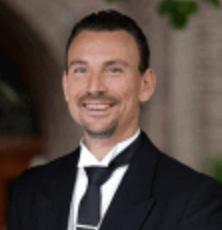
Niels Deijkers
He graduated at the top of his class from The International Butler Academy in the Netherlands and now oversees the well-being of its students. A true professional and gentleman, he leads with fairness and inspires future butlers by setting a strong example as both a trainer and a mentor.
Corey Butler
For 25 years, he has built a reputation as a trusted Wealth Advisor and partner of the firm, offering a family office experience rooted in strong relationships and values. He guides clients through retirement, wealth and legacy planning, business succession, and philanthropy, while cherishing his own roles as father, husband, and avid outdoorsman.

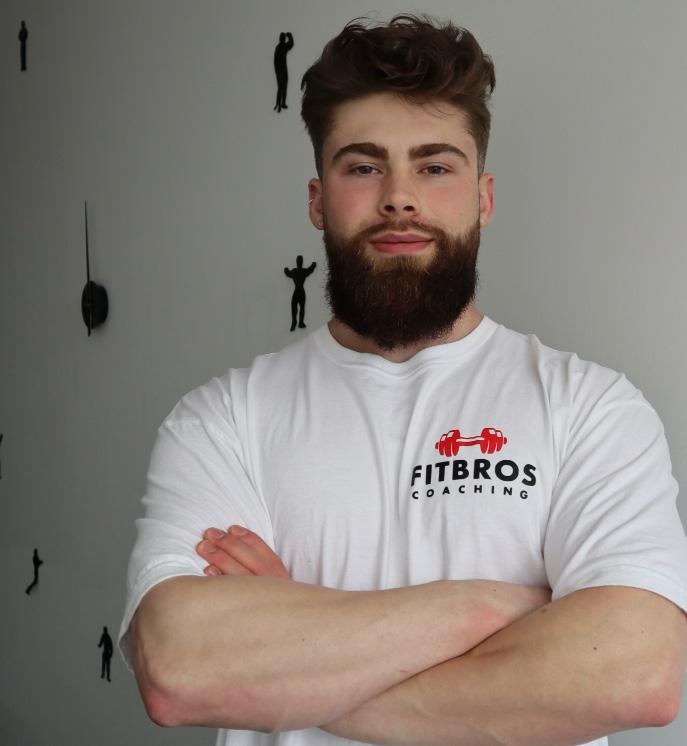
Kaelan Malaka
A Montreal based personal trainer and co-founder of FitBros Coaching, he helps clients build strength and confidence through personalized training.
Sandra Siciliano
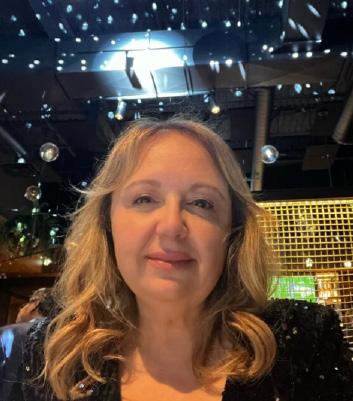
She wears many hats, but at her core, she’s a human resources specialist who values genuine connections and is deeply committed to supporting her hospital community. Outside of work, she loves writing and spending time with her Goldendoodle.
Valerie Bouzo
A registered dietitian with a background in nutrition and psychology, she is dedicated to sustainable, personalized health goals. With a Bachelor’s in Behavioral Neuroscience (Concordia) and a Master’s in Nutrition (McGill), she is a member of the ODNQ. Her expertise spans adult nutrition, eating disorders, intuitive eating, and women’s health, guided by a client-centered, HAES-informed approach. Connect with her on Instagram @mtlnutrition or at valeriebouzonutrition@gmail.com.
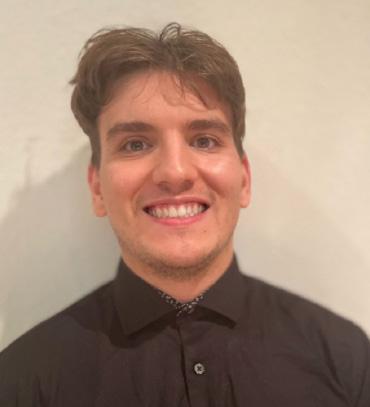
Robert Stacey

A Computer Engineering student at Concordia University with a strong focus on advanced hardware design, real-time systems, and intelligent flight control research. He combines handson technical expertise in electronics, programming, and 3D prototyping with a passion for innovation and problem solving in emerging technologies.
Dominic Siciliano
Senior Vice-President and Head of Fixed Income at Industrial Alliance, with 25 years of experience in financial markets. He leads iAGAM’s Fixed Income teams in developing innovative products and delivering strong returns. Previously, he held senior roles at Addenda Capital, Merrill Lynch, and the Montréal Exchange.
Pénélope Pelletier
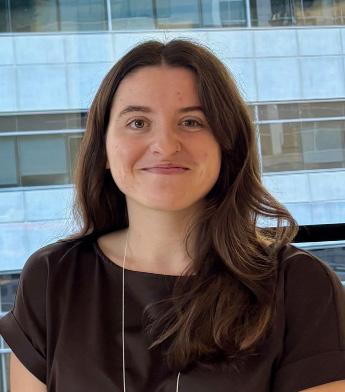
She holds a bachelor’s degree in psychology from the Université de Montréal and is a clinical research intern at the INTECOG Lab under Dr. Alexander Moreno. Her work includes projects on LGBTQIA+ social participation and supporting adults with intellectual disabilities and autism at Action Intégration en Déficience Intellectuelle.
Rim Ouzennou
An occupational therapy student passionate about medical science and helping others restore their well-being. Her love of sports, literature, art, and history shapes her holistic, humancentered approach to health and care.
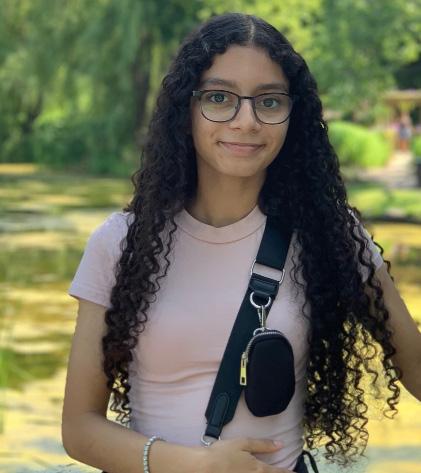
Alexander Moreno
Clinical Neuropsychologist and Adjunct Professor at Université de Montréal, directs the INTECOG Lab at CRIUGM. With training from the National University of Colombia, Université de Montréal, and McGill, he leads a funded project promoting inclusion of LGBTQIA+ people with disabilities.
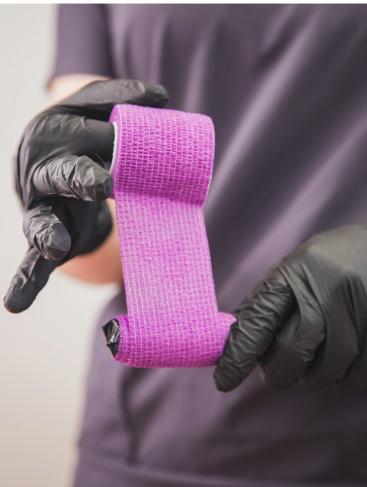
Paramedical Tattooing: Restoring Confidence a Drop of Ink at a Time
Phantom Pain: A Real Struggle from an Invisible Source What if Disability Isn’t Always Visible Your Ethnicity Could Save a Life
SPOTLIGHT
Sara Levitt Differently United
FITNESS & NUTRITION
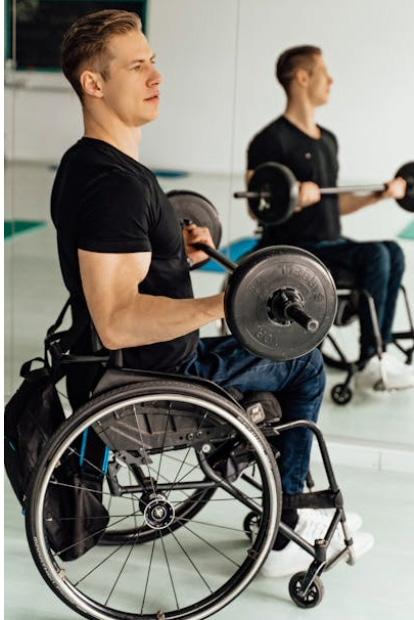
Redefining Fitness: Adapting Movements for All Abilities
Snack Smart - Not Perfect
A Nutrient-Rich Addition to Your Everyday Menu
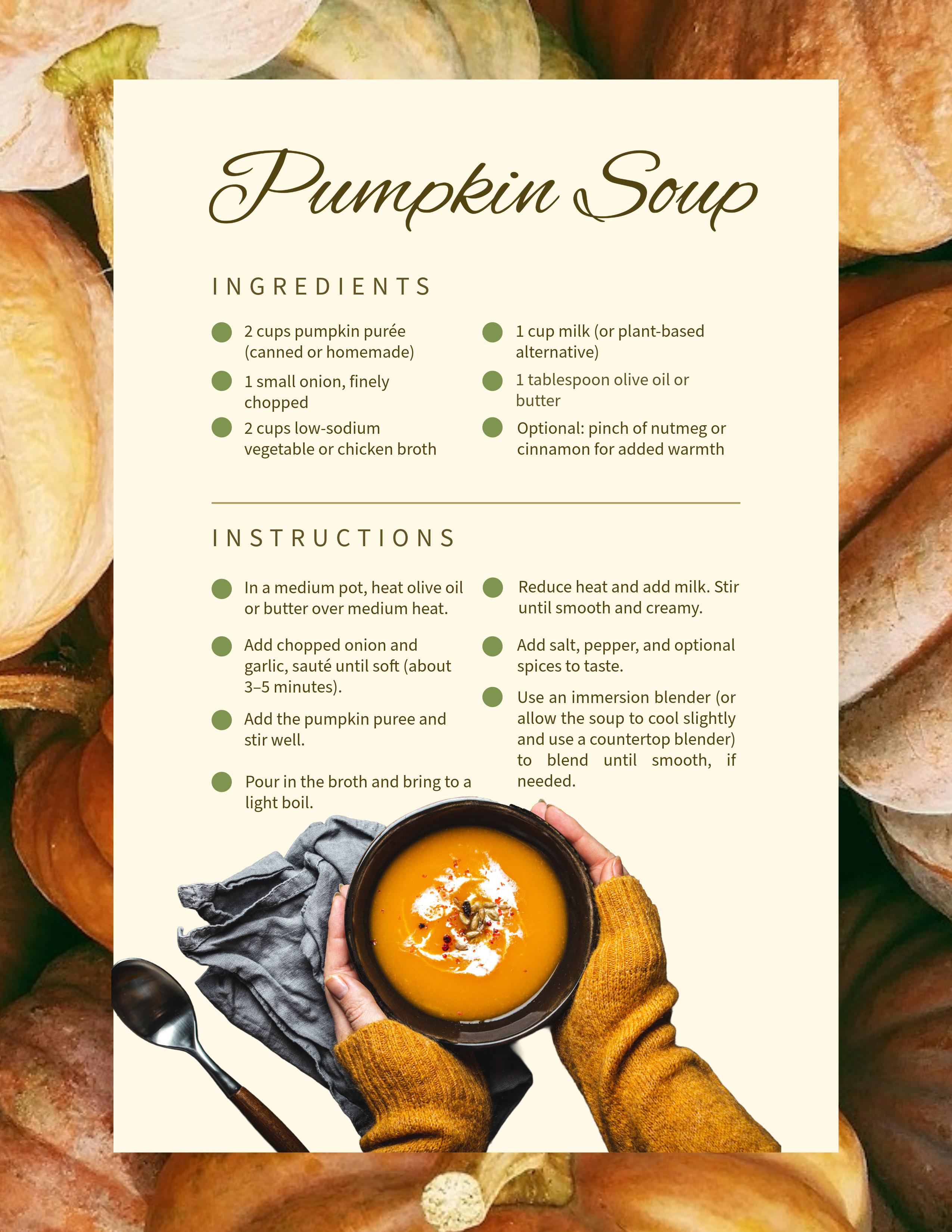
Pumpkin Soup
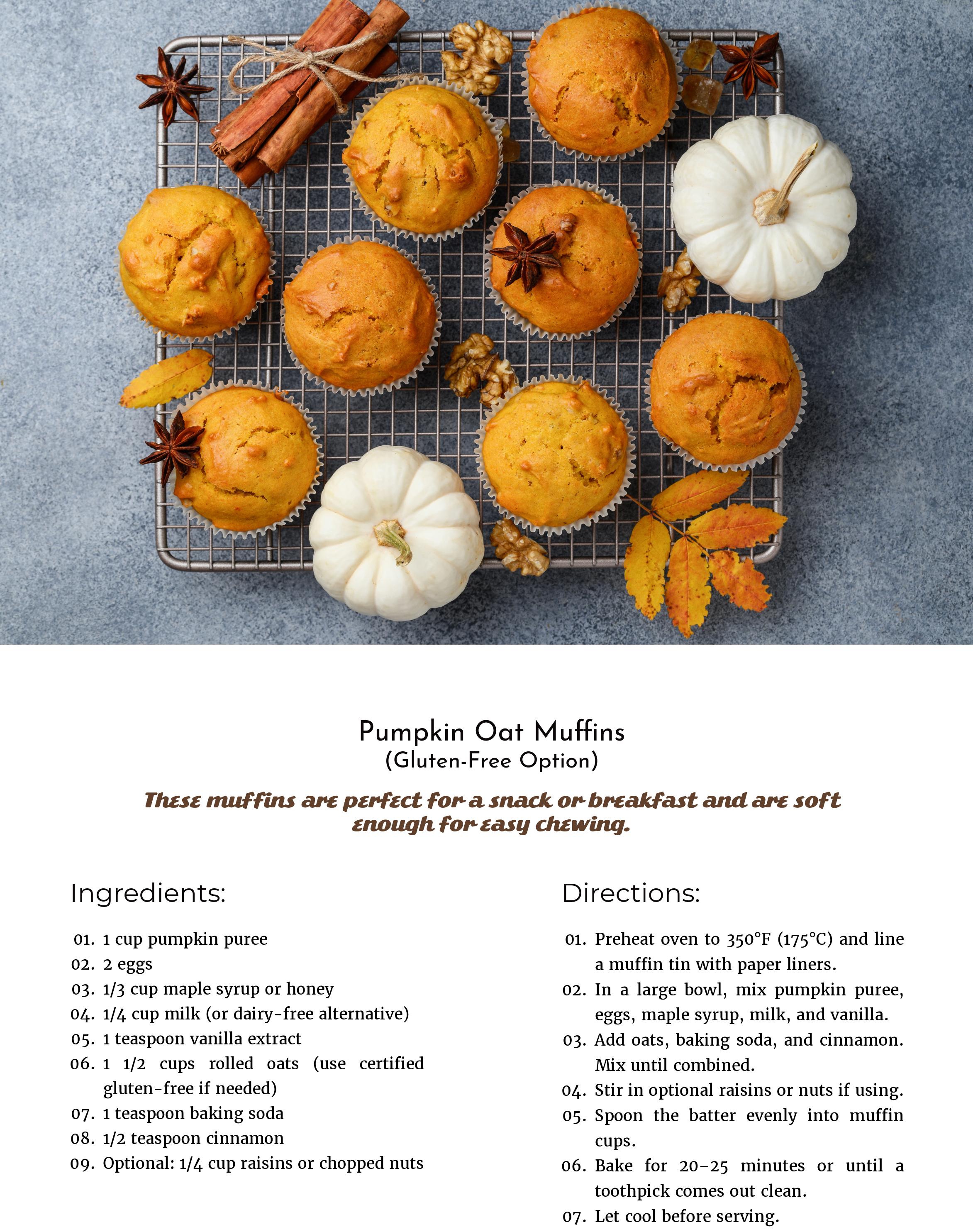
Pumpkin Oat Muffin (Gluten-Free Option) TECHNOLOGY & INNOVATION
How Smartwatches Are Revolutionizing Cardiac Arrest Detection How Everyday Technology is Empowering People with Disabilities
MODERN & TRENDY
Benny’s Barbershop: Montreal’s Grooming Trailblazer with Heart
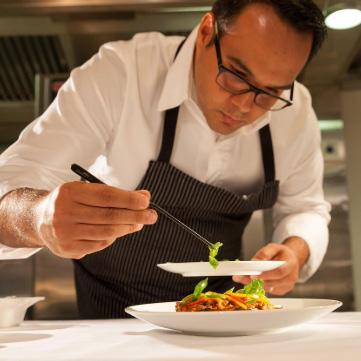
Dining at a Michelin Starred Restaurant for The First Time? Here’s Your Inside Guide
Accessible Halloween Costumes: Fun, Functional and Inclusive
MONEY & CAREERS
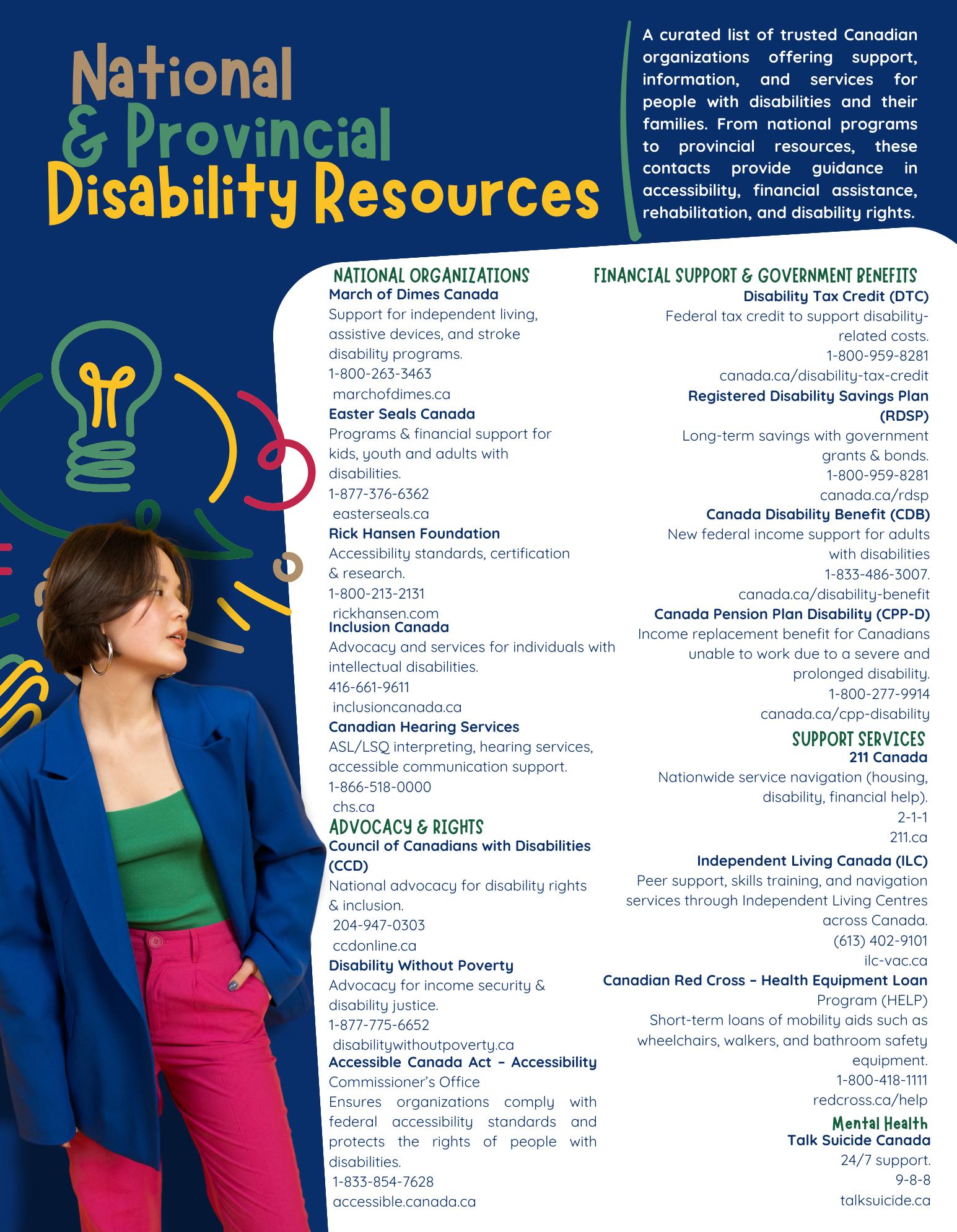
Unlocking the Power of RDSP: A Lifeline for the Future
Understanding Disability Insurance: A Guide to Financial Security
LIFE ON THE GO
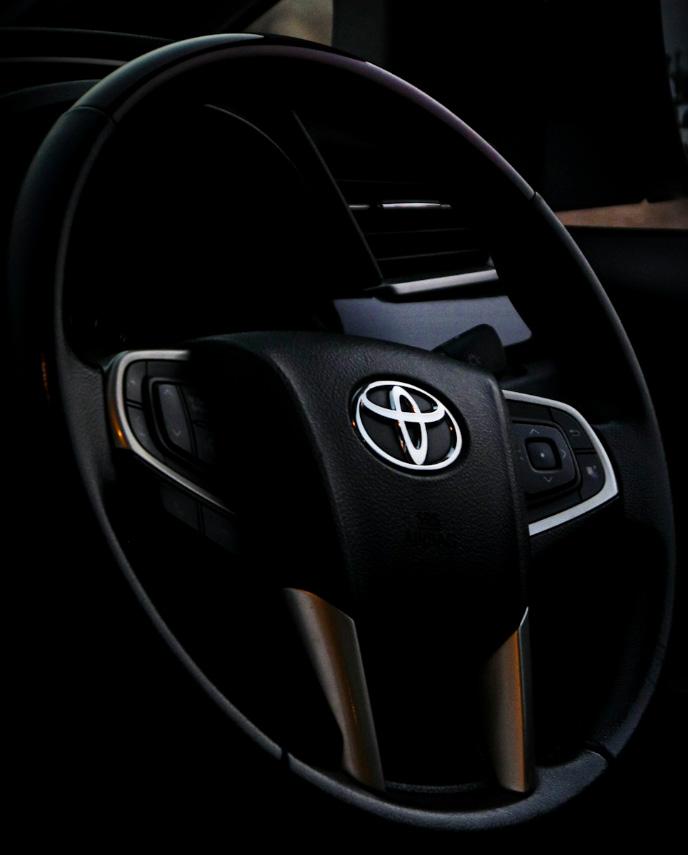
Driving Change: How Toyota’s Mobility Vehicles Are Redefining Accessibility
A Real Guide: Accessible Fall Activities Across Canada and the U.S.
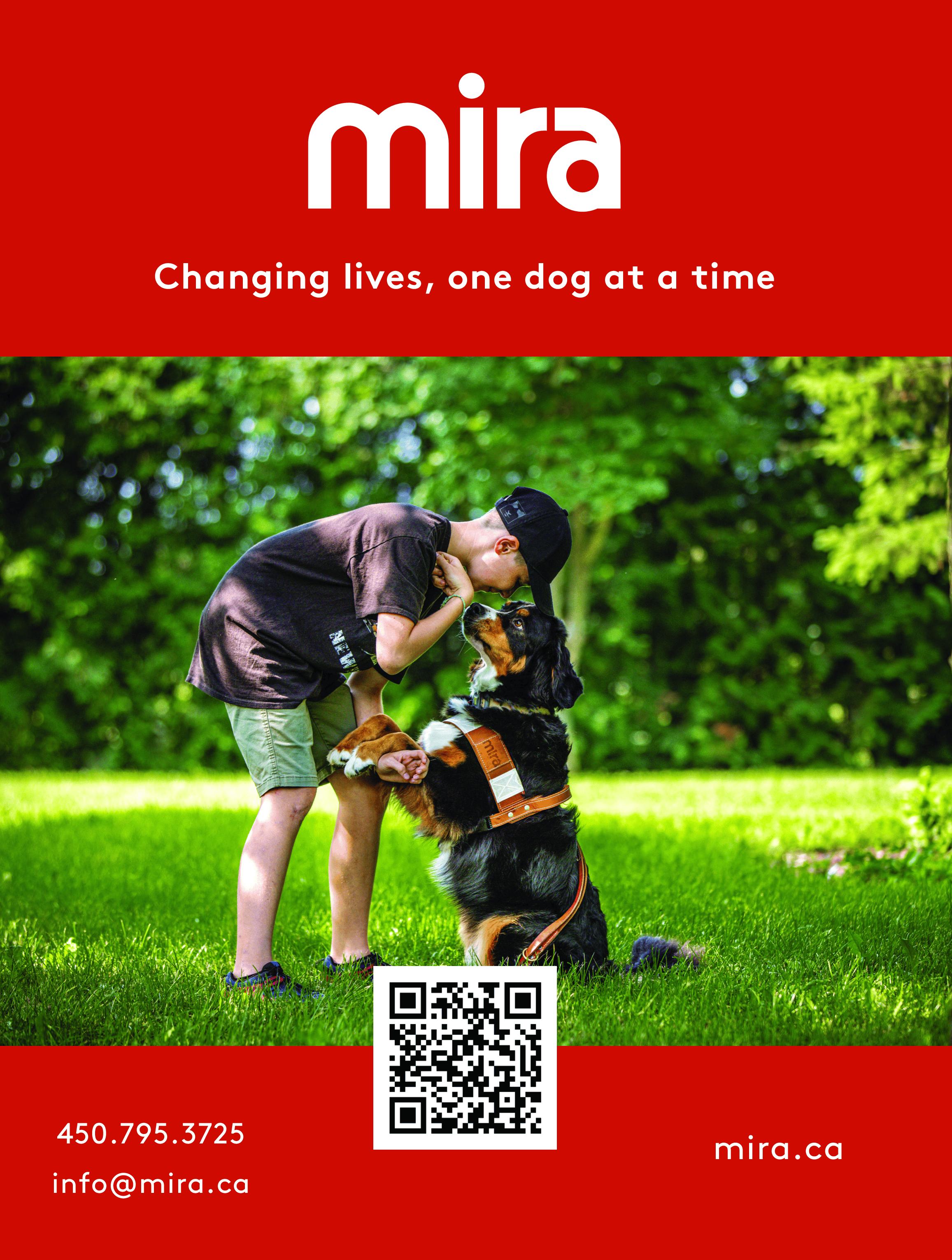
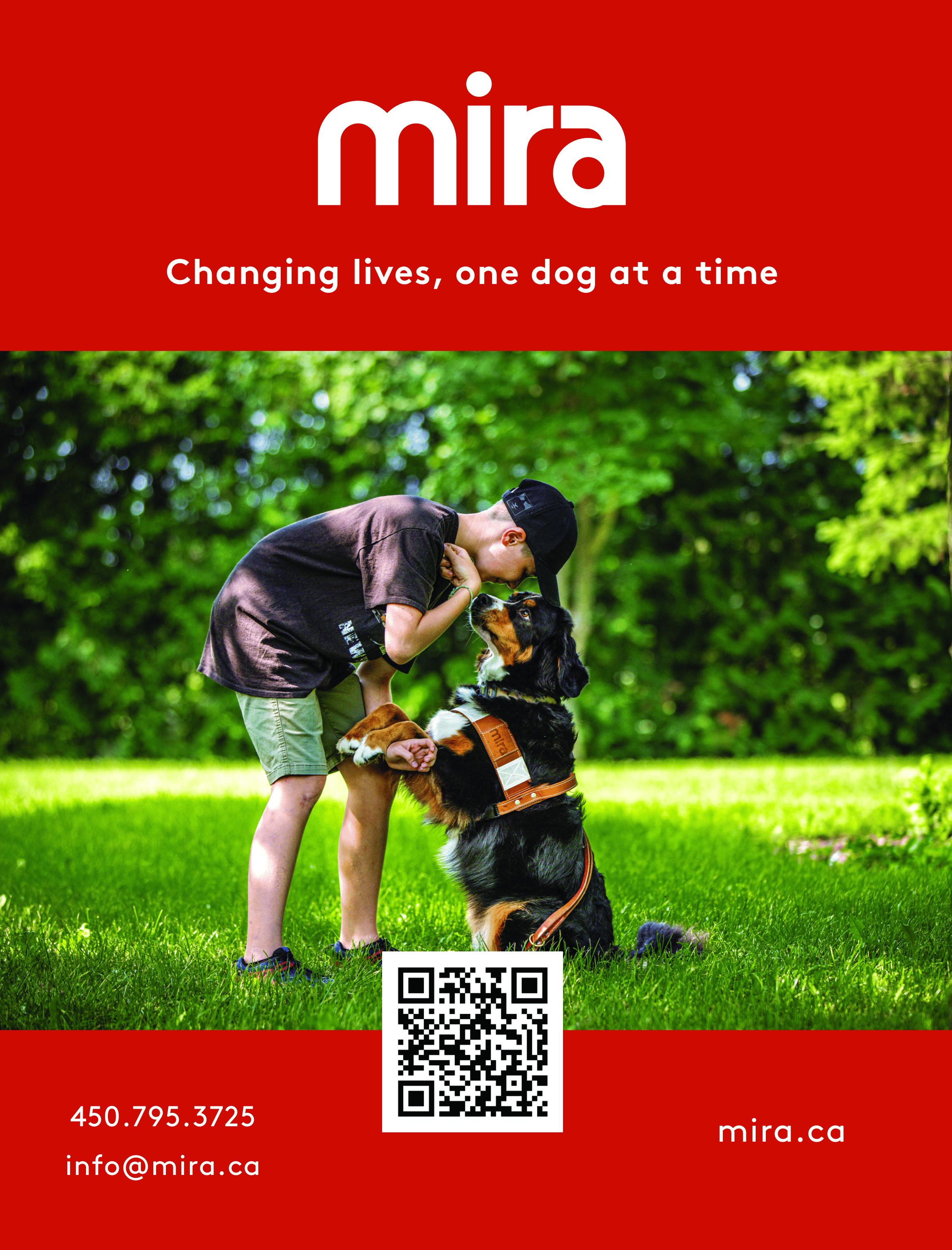
Service Dogs for Children with Autism: An Everyday Lifeline with The MIRA Fondation
CULTURE HUB
The Echoes of Beethoven
The Intersecting Realities of People With Disabilities Who Identify As LGBTQA+

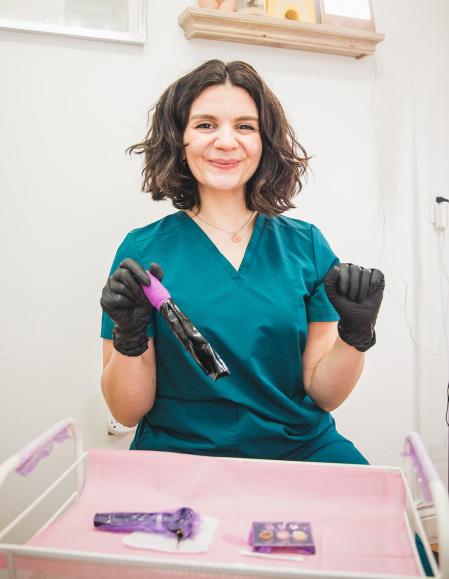
Paramedical tattooing is still fairly new to many, but it’s been quietly changing lives for well over a decade. Most people who’ve heard of it are either in the field or have personally needed it, but more and more are discovering that medical tattooing can offer deeply personal and meaningful solutions to things they thought they just had to live with.
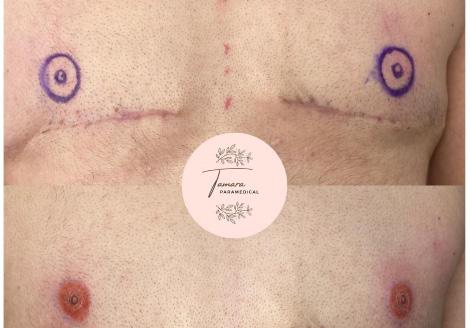
Paramedical tattooing can help with visible scarring, especially surgical scars that didn’t heal as expected, where pigments are custom blended to match your natural skin tone. It can help with stretch marks and missing nipples and areolas after procedures like breast lifts, reductions, or mastectomies. Whether these changes come from cosmetic surgery, genderaffirming care, or a breast cancer journey, this work can bring a powerful sense of peace and restoration.
Hi—I’m Tamara Balassanian, a paramedical tattoo artist in Montreal specializing in hyperrealistic 3D nipple and areola restoration, scar camouflage, and phalloplasty tattooing. Unlike traditional tattoos, which are often designed to stand out, paramedical tattoos are about blending in. They’re about feeling normal again, feeling whole and reconnecting with your body in a way that feels right.
For breast cancer survivors and previvors, nipple and areola tattooing is often the final step in a long and difficult journey. After mastectomy and reconstruction, some people opt for nipple reconstruction surgery under local anaesthesia. This creates a 3D nipple, but the area is usually left without pigment. Whether you’ve chosen reconstruction or have a flat surface, tattooing adds realistic color, shading, and depth, the illusion of hyperrealism, helping bring back what surgery took away.
For those who’ve undergone top surgery as part of genderaffirming care, the nipple–areola complex may have been removed or, in some cases, lost due to necrosis. I’m here to help complete your chest, whether by restoring pigment to a reconstructed nipple or creating an entirely new one that looks life-like and real.
It’s about being able to pass by a mirror and not feel startled or like something’s missing. That shift, when something that once felt unfamiliar becomes yours again, is a quiet but powerful part of healing.
I work slowly, carefully, and always with your comfort and consent at the center of it all. Each tattoo is unique, just like the body it belongs to. We move at your pace. We laugh sometimes. Sometimes we cry. But most of all, we heal.
I feel honoured to call this my job, but honestly, it’s more than that. This work is about trust, beauty, and vulnerability, not just from my clients but from me too. Behind closed doors in the treatment room, the magic that happens isn’t only about needles or the pigments alone. It lives in the connection, the conversation, and the quiet bravery of being seen.
Not a day goes by that I don’t feel grateful for my clients’ trust. It’s the best feeling to see someone smile after looking in the mirror, or to hear that they finally feel normal again. That they can confidently take off their shirt at the gym, at the beach… or simply at home where they can finally, in their bodies, also feel at home.
Learn more about her work: Tamara Paramedical
www.tamaraparamedical.com
By: Edisond Florial
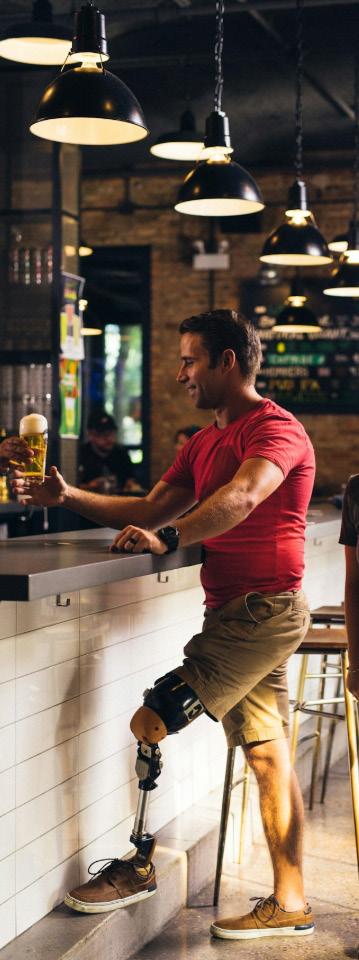
Phantom pain is one of medicine's most intriguing and misunderstood conditions. It's when people feel real, often intense pain in a limb or body part that's no longer there. For the millions of amputees around the world, this pain, which you can't see, can be a daily struggle, affecting not just the body but also the mind.
For decades, phantom pain was dismissed as something “all in the mind.” But science has shifted that narrative, revealing a far more complex story: one involving the nervous system, the brain’s maps of the body, and the powerful grip of emotional memory. Today, we know that this pain is very real, a signal from a body trying to make sense of it’s own loss, Here, we explore the science behind phantom pain, its impact on patients, and the emerging treatments giving new hope.
Phantom pain refers to the sensation of pain in a limb or body part that has been amputated. It is distinct from phantom limb sensations, feelings like itching, movement, or warmth in the missing limb that occur without discomfort. While phantom limb sensations can sometimes feel strange but harmless, phantom pain is different — it can be sharp, burning, or throbbing, and often appears suddenly or lingers for long periods of time. This kind of pain can interfere with sleep, mobility, and emotional well-being, reminding patients daily of a part of themselves that’s no longer there.
It's estimated that 60–80% of amputees experience phantom pain at some point. It usually starts soon after surgery, but it can stick around for months or even years, messing with your sleep, recovery, and overall well-being.
• Aching
• Burning
• Itching
• Numbness
• Pinching
• Tingling
• Stabbing
• Throbbing
• Twisting
• Sensations of temperature change
• Perception of still having the missing limb
Once seen as purely psychological, phantom pain is now recognized as a complex neurophysiological reality. After amputation, the brain’s “map” of the body, known as the somatosensory cortex, doesn’t simply erase the missing limb. Instead, nearby brain regions start to take over the nowunused area, a process called cortical reorganization.
Essentially, the brain tries to reshuffle its wiring, but this reorganization can become erratic, sending out misfired signals that it interprets as pain in the absent limb. In other words, the brain rewires itself, but the signals don’t always align correctly — leading to phantom pain. In addition, nerve endings at the site of amputation can develop tangled bundles called neuromas, which spontaneously fire pain signals to the spinal cord and brain. Emotional trauma, stress, and memory can further amplify this pain.
Phantom pain isn't something that exists on its own. It often carries a heavy psychological burden, contributing to depression, anxiety, or post-traumatic stress, especially when amputation follows trauma or serious illness. The pain can make prosthetic use harder and slow down rehabilitation. Many patients feel frustrated or doubted, as if their pain were imagined. But science is finally validating what they’ve always known: phantom pain is real, and it can be relentless.
There's no one-size-fits-all solution here. Managing phantom pain often requires a multimodal approach.
Drugs such as anticonvulsants, antidepressants, opioids, and NMDA receptor antagonists are often prescribed to help reduce nerve-related pain and improve overall comfort.
Not all treatments for phantom pain come from a prescription pad. Many patients find relief through techniques that retrain the brain and reduce the stress on the nervous system. Mirror therapy involves performing movements with the intact limb while watching its reflection in a mirror. This visual illusion helps the brain “see” the missing limb moving again, reducing confusion in the sensory system and, in many cases, easing pain. Transcutaneous electrical nerve stimulation (TENS) uses mild electrical impulses delivered through the skin to stimulate nearby nerves. These impulses can interrupt or “distract” pain signals before they reach the brain, offering temporary relief.
Other non-invasive approaches such as acupuncture, hypnosis, and cognitive behavioral therapy (CBT) have also shown promise. Acupuncture may help by promoting
relaxation and altering nerve activity, while hypnosis and CBT address the emotional side of pain — teaching patients to reframe distressing thoughts, manage stress, and regain a sense of control.
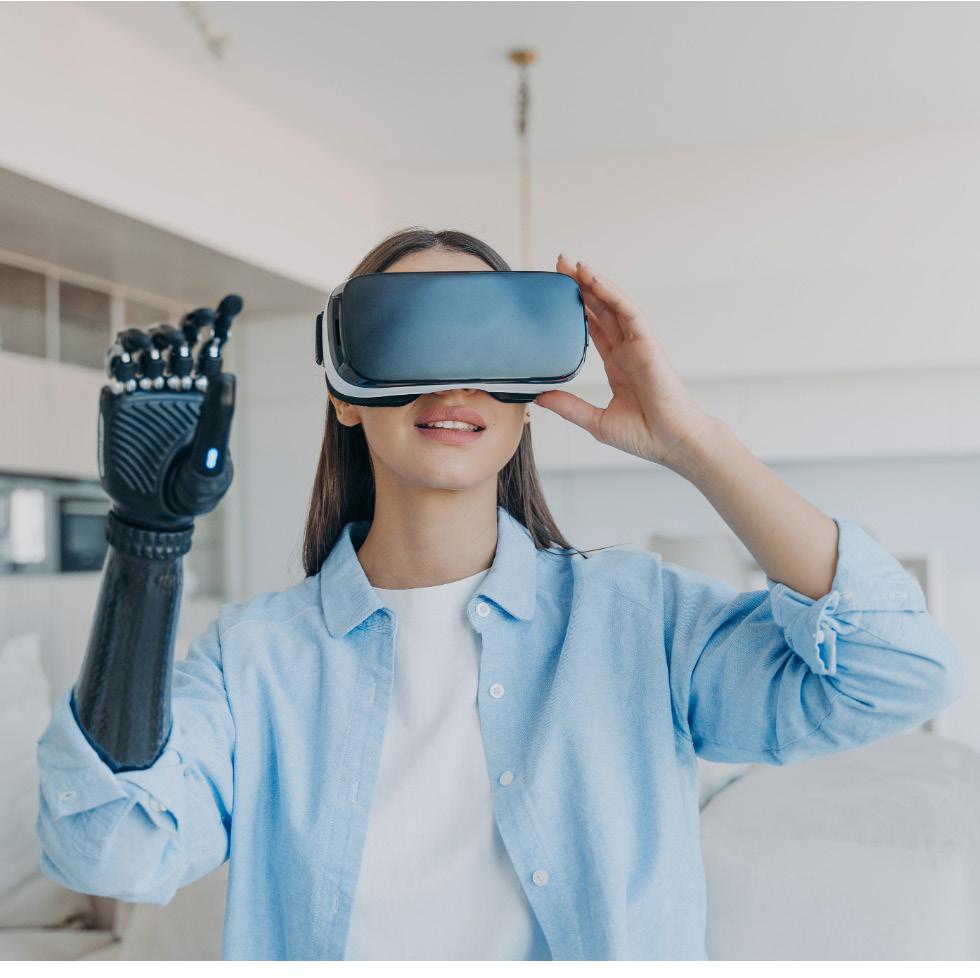
Virtual Reality (VR) simulations that replicate limb movement have shown potential in reorganizing neural pathways and reducing phantom sensations. For severe or treatmentresistant cases, spinal cord or brain stimulation may be employed to modulate pain transmission. Emerging technologies such as brain–computer interfaces (BCIs) are currently being evaluated in clinical research, offering promising new avenues for intervention.
Phantom pain research is moving beyond mirror therapy toward advanced technologies like virtual and augmented reality (VR/AR) and brain-computer interfaces (BCIs).
A 2025 trial showed VR-based BCIs could reduce pain scores by up to 36% within days. Mixed-reality systems such as Phantom AR allow amputees to interact with digital limbs, enhancing movement and engagement, while cognitive multisensory rehabilitation (CMR) helps patients reconnect with memories and sensations of the missing limb. This offers a relief even when other treatments have failed. As research advances, these promising therapies may soon become routine, supported by education and teamwork to improve care and quality of life. With continued understanding, phantom pain no longer has to remain a mystery.
By: Zahra Beldjilali
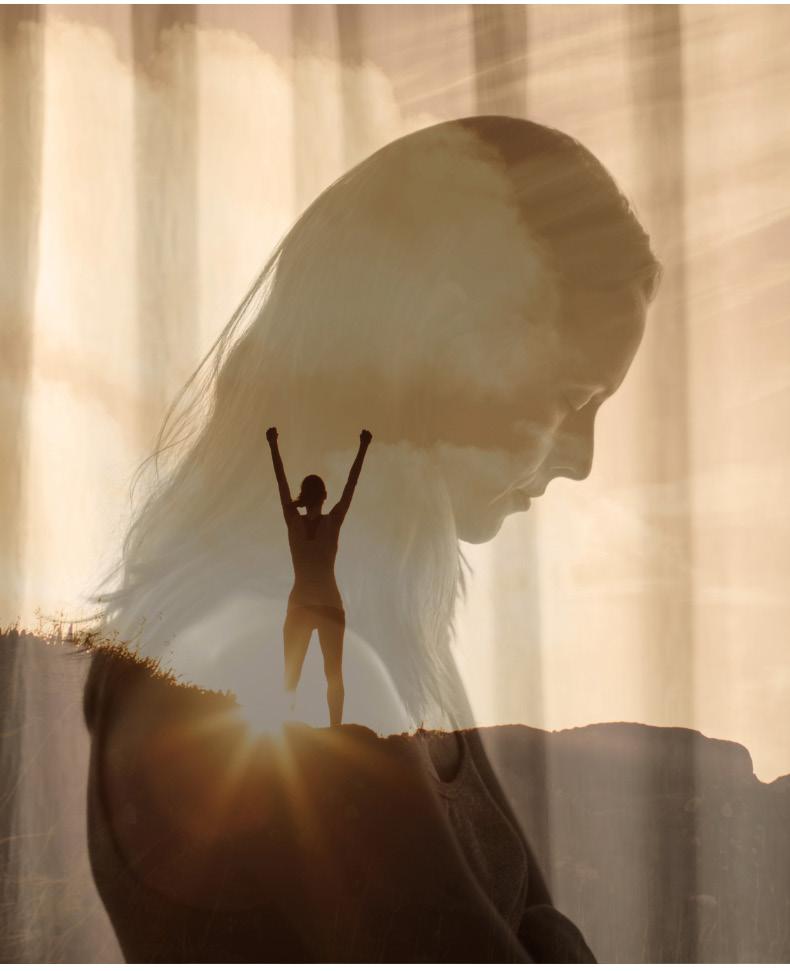
Disability isn’t always visible. It doesn’t necessarily come with a wheelchair, a white cane, or crutches. Sometimes, disability wears a smile, goes to work, joins a conversation, and appears completely “normal” — all while battling silently within. That is the reality we must face, with humanity, with curiosity and above all with kindness.
I have worked as a psychiatric nurse for the past 12 years. In those twelve years, I have supported countless people who live with profound struggles: severe anxiety, treatmentresistant depression, bipolar disorder, schizophrenia, ADHD, personality disorders, and post-traumatic stress. These are conditions that often leave no physical marks, yet they can disrupt every aspect of a person’s life, from relationships to work to daily routines.
Psychiatric disability is legally recognized, just like any other. It can affect memory, concentration, perception, social interactions, and emotional regulation. But because these impacts are not always visible, they are often minimized or, worse, denied. This gap between how someone appears and what they experience can become a double burden: not only do they live with their illness, but they must also defend its legitimacy to those around them.
I have heard it far too many times: “But you don’t look sick.” “Maybe try harder.” “We all get anxious, don’t we?” These statements are usually spoken without cruelty, yet they reveal
a deep misunderstanding of what these individuals face. Such comments widen the already painful divide between lived experience and social acceptance, making people feel even more alone.
Recognizing invisible disabilities is a vital step toward building a more inclusive society. It means believing people when they share their truth. It means not dismissing their suffering as mere weakness, and it means adapting schools, workplaces, and social spaces to their needs, even if those needs cannot be seen at first glance. It also means accepting that someone can look functional and still be fighting a tremendous battle inside. Some individuals spend every ounce of energy just getting out of bed, commuting to work, or sitting through a meeting. This is not about pity, nor about giving special treatment; it is about fairness, dignity, and restoring balance.
Every one of us has a role to play. Whether you are a parent, a coworker, a teacher, a manager, or simply a passerby, your perspective can make a powerful difference. Instead of judging, ask questions. Instead of pushing, listen. Instead of assuming, take time to learn. Most importantly, remember that mental health challenges do not have a single, recognizable face.
Every day, I see the courage of those who move forward despite invisible struggles. They are strong in ways that can be hard to imagine. I invite you to walk alongside them, without presuming, without labeling, but with an open hand. It is through that small gesture of humanity that we can help people feel seen, can help people feel seen, respected, and valued. Disability is not always visible. But an open mind and a compassionate heart certainly can be, and they change everything. By recognizing invisible disabilities,
adapting our environments, and showing empathy, we move closer to a society where everyone has a fair chance to thrive. No one should have to justify their pain or prove they are worthy of support. When we start listening with sincerity, we build trust, and with trust, we build community.
Those living with invisible disabilities deserve understanding and accommodations just as much as those whose conditions are easier to see. A truly inclusive society must look deeper than appearances.
After twelve years in psychiatric care, I know one truth for certain: everyone deserves to be treated with dignity and kindness, regardless of whether their disability is visible or hidden. Each story carries layers that are rarely seen, shaped by moments of quiet strength and unseen battles. Compassion begins when we take the time to understand rather than assume, to listen rather than label. Because an open mind, after all, is the most visible sign of all, and the one that truly makes a difference.


We are now






I n t e r e s t
t c i
p h i l d @ e l m r i d g e c c . c o m
O U N T R Y C L U B
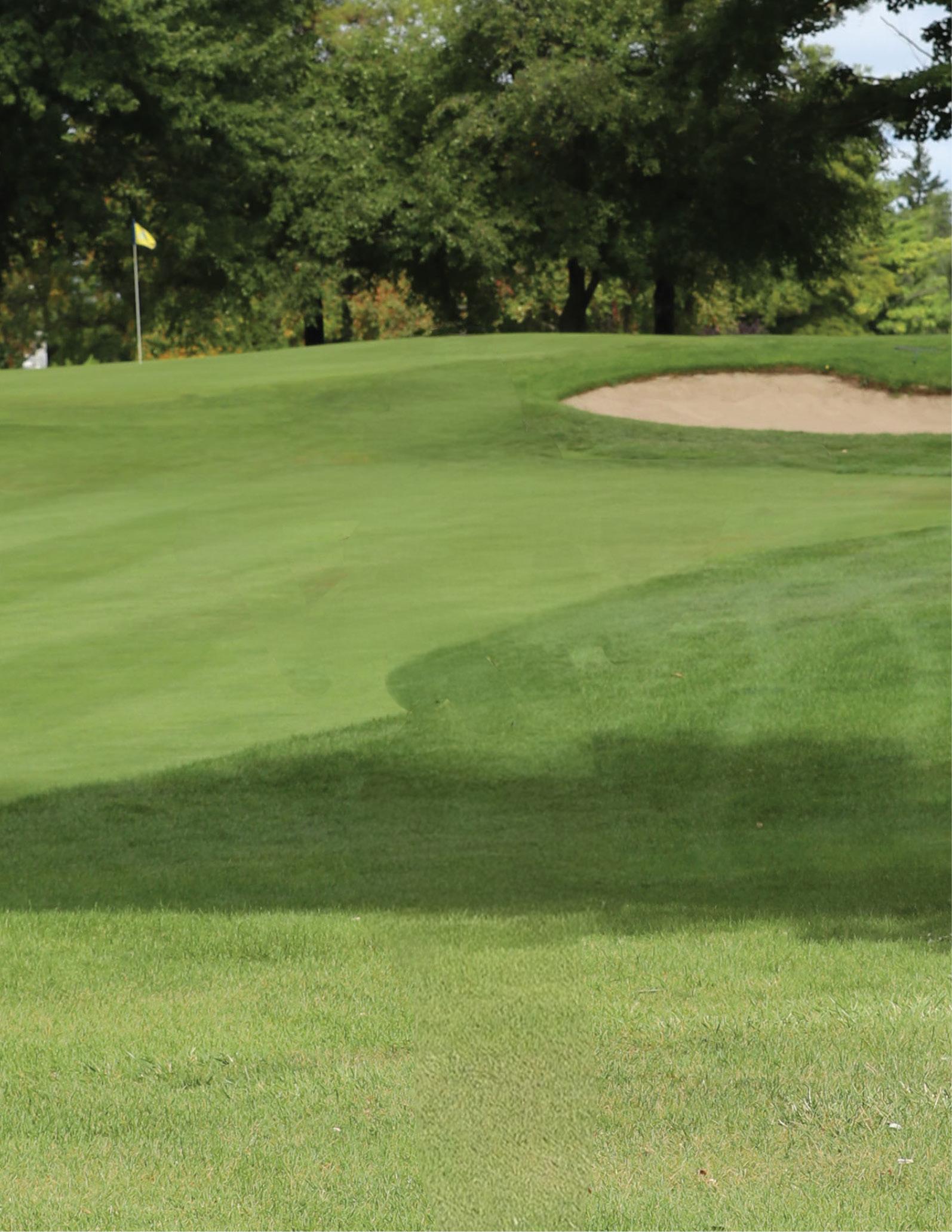
E l m R i d g e o f f e r s a n u n p a r a l l e l e d
g o l f i n g e x p e r i e n c e w i t h t w o
s t u n n i n g 1 8 - h o l e c o u r s e s t h a t
c h a l l e n g e a n d i n s p i r e p l a y e r s o f
a l l l e v e l s .
B e y o n d g o l f , e n j o y o u r w o r l d -
c l a s s a m e n i t i e s , i n c l u d i n g a
p r i s t i n e s w i m m i n g p o o l a n d
t e n n i s c o u r t s , a l l s e t i n a s e r e n e ,
b e a u t i f u l e n v i r o n m e n t .
W h e t h e r y o u ' r e l o o k i n g t o
i m p r o v e y o u r g a m e , s o c i a l i z e
w i t h l i k e - m i n d e d i n d i v i d u a l s , o r
s i m p l y r e l a x a n d u n w i n d , E l m R i d g e p r o v i d e s t h e p e r f e c t s e t t i n g .
B e c o m e a m e m b e r f o r a y e a r a n d
d i s c o v e r e v e r y t h i n g E l m R i d g e h a s
e accepting new members r on a trial basis for 1 year r e e y R i g h s o e r i . 4 2 - 9 e t . 0 1
5 1 4 - 6 2 6 - 3 9 9 2 e x t . 2 0 1

t o o f f e r .


By: Mai Duong
Anyone can develop blood cancer, but not everyone has the same chance of beating it. For many people, a stem cell transplant represents the only hope for survival. Finding a suitable donor depends on a precise tissue match, which most often occurs among individuals who share a similar ethnic background. The challenge is that today’s global donor pool is still not diverse enough to meet this urgent need. At present, about 70 percent of registered stem cell donors are white, while 85 percent of the world’s population is not. This means that patients from underrepresented backgrounds face a serious disadvantage when their survival depends on finding a match.
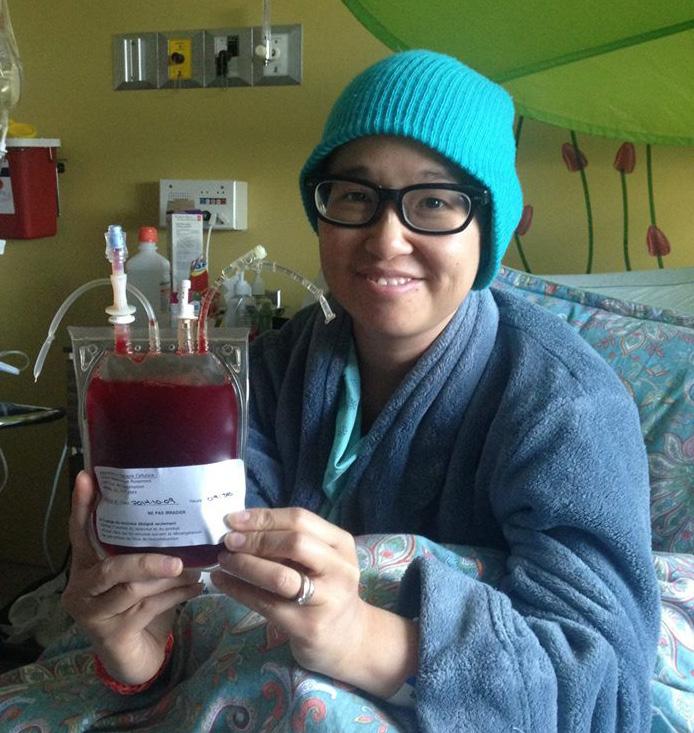
Mai Duong, founder of Swab The World, was diagnosed with leukemia in 2014. After an initial successful round of chemotherapy, she relapsed, making a stem cell transplant her only hope for survival. However, due to her Vietnamese heritage and the significant lack of ethnic diversity in the global stem cell registry, no compatible donor could be found.
Driven by her own urgent need and with the help of friends, family, and the advertising industry, Mai launched a nationwide campaign to find a donor. She eventually found a match and, in 2018, founded Swab The World. Her mission was clear: Every patient, no matter their ethnic background, deserves an equal fighting chance. Swab The World aims to increase awareness of stem cell donation and diversify the worldwide stem cell donor registry. Black, Indigenous, and People of Color (BIPOC) communities need more representation in our stem cell registries. More than just a platform to educate and register potential donors, Swab The World was born to empower patients by giving them the
tools and support they need to run a successful recruitment campaign, be it locally or internationally.
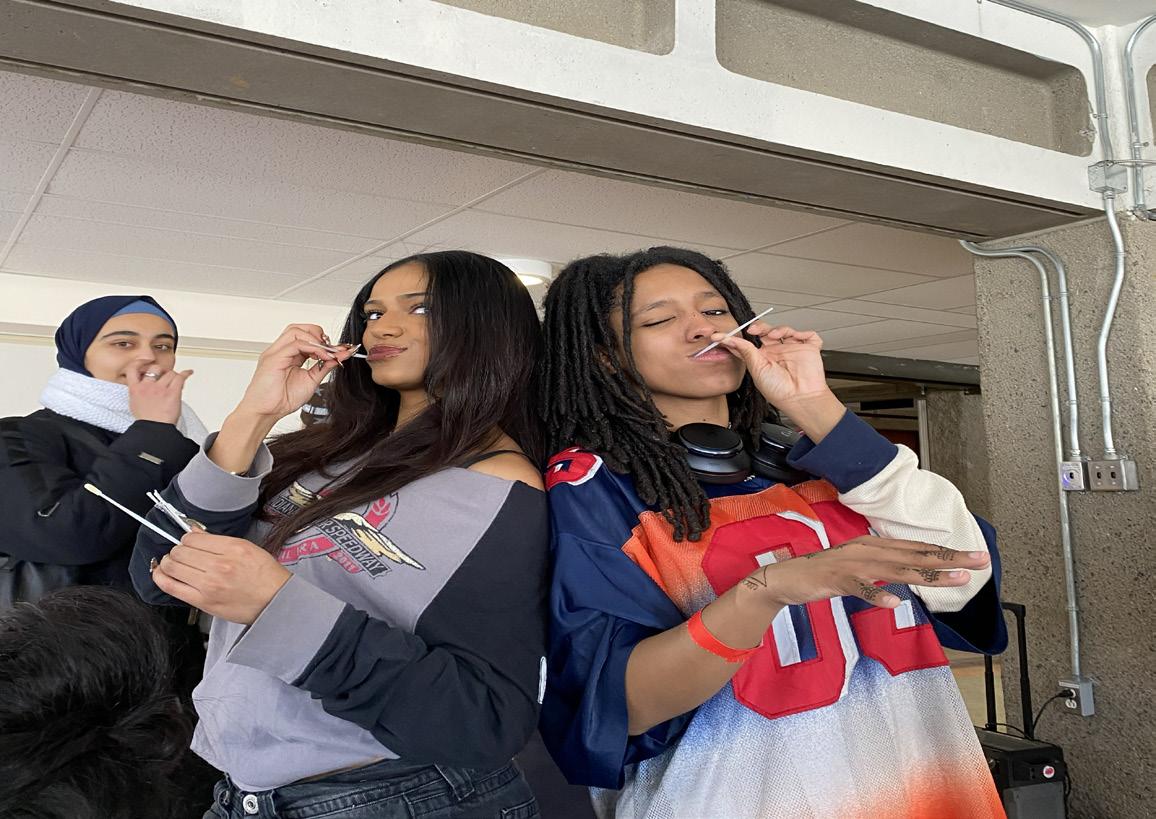
At the heart of Swab The World are its Swab Ambassadors. Passionate student volunteers who hit campuses, social media, and their communities to spread the message. Through swab drives and cultural events like Stand Up for Diversity, they reach thousands of young people, raising awareness about stem cell donation and encouraging them to step up as potential donors. Just this year, 17 student chapters across Quebec and Ontario recruited over 1,300 new stem cell donors — each one a possible lifesaver.
If you’re between 18 and 35, you can make a real difference. Come swab at one of these upcoming drives:
• October 17th, University of Alberta
• October 18th, Swab Drive with Maylee Keo X Leucan, Pointe-Saint-Charles, 12PM
• October 19th, Université de Sherbrooke campus Montérégie, 12PM-1PM
• November 1st, Swab Drive w Sayaspora, 2PM-4PM
• November 26th, University of Toronto - Rotman Mark
@swabtheworld on any social media platform! Or if you’re old school, contact us at info@swabtheworld.com.
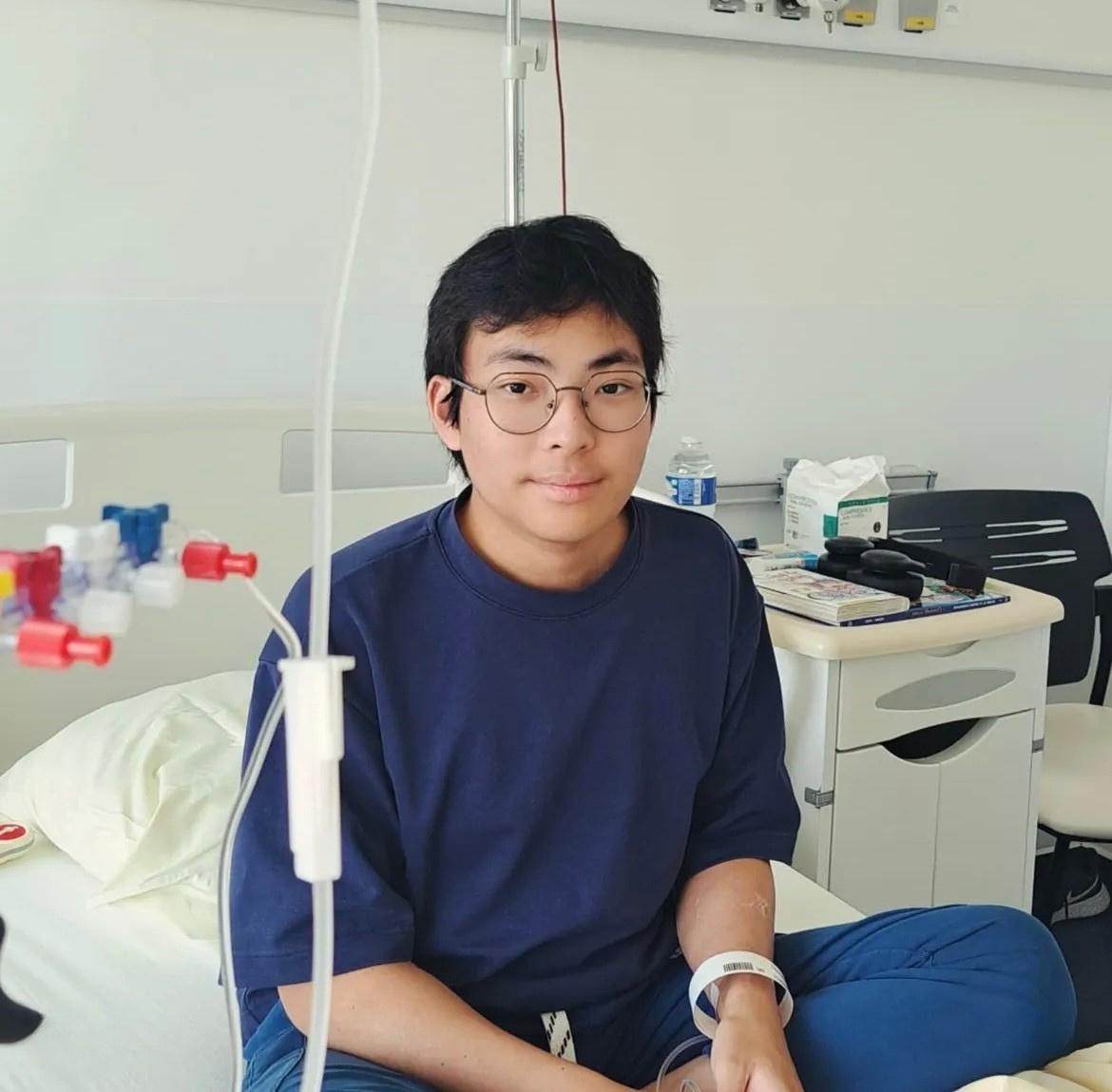

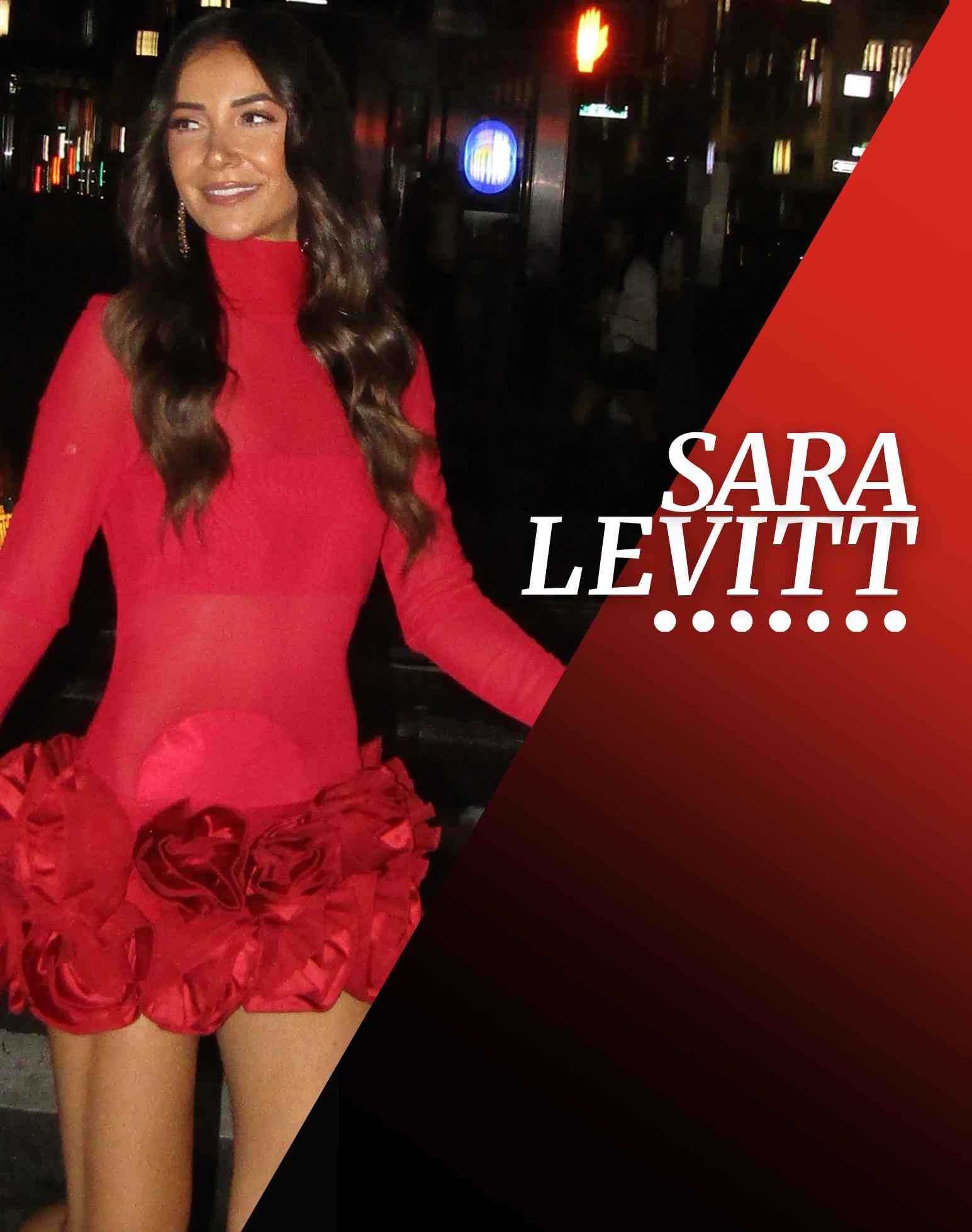
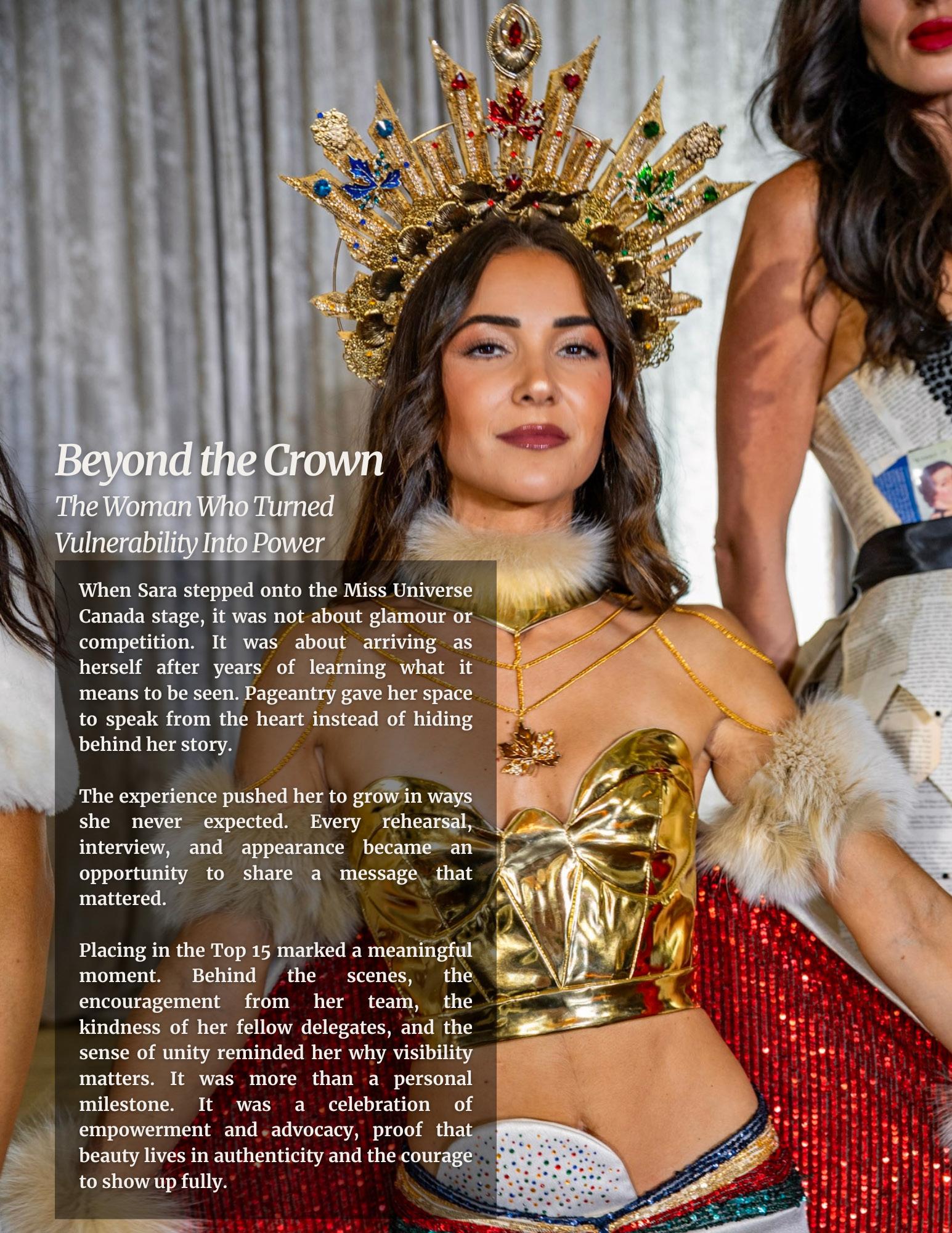
She is a creator, model, advocate, and former Miss Universe Canada finalist who’s redefining beauty through authenticity and strength. Living with Crohn’s disease since childhood and an ostomy since her teens, she’s turned vulnerability into visibility and silence into purpose. Today, Sara uses her platform to challenge stigma, amplify representation, and empower others to embrace their bodies without shame. Her story is one of resilience, courage, and advocacy — a reminder that confidence isn’t about perfection, but about showing up fully, scars and all.
Image credit: Francisco @anibalceronjr

Diagnosed with Crohn’s disease at three years old, Sara spent her childhood managing a condition few could understand, and for fifteen years, she kept her ostomy hidden. Today, she’s reshaping perceptions of beauty and illness through a story rooted in courage, joy, and acceptance. “Growing up with Crohn’s was isolating,” Sara shares. “There were moments I felt apart from everyone, trying to manage pain and uncertainty while still wanting a normal childhood.” Opening up about her experience changed everything. “It was both terrifying and liberating,” she says. “Being vulnerable in front of the world isn’t easy, but it became a turning point. Sharing my story helped me reclaim my voice and connect with others facing the same struggles and realize that my experiences could inspire and help others.”
For Sara, modeling became more than posing in front of a camera; it became a way to reclaim her body and her confidence. “Modeling has helped me embrace my body fully, ostomy included,” she shares. “It taught me that beauty isn’t only physical; it’s courage, authenticity, and confidence.” Stepping into spaces that once excluded people like her showed Sara just how powerful representation can be. “I want others, especially those living with chronic illnesses or visible differences, to see that their bodies tell stories worth celebrating,” she says. “Owning your story is one of the most powerful forms of beauty.” As the fashion industry begins to evolve, Sara stands proudly at the forefront of change, proof that inclusion isn’t a trend, it’s the future.

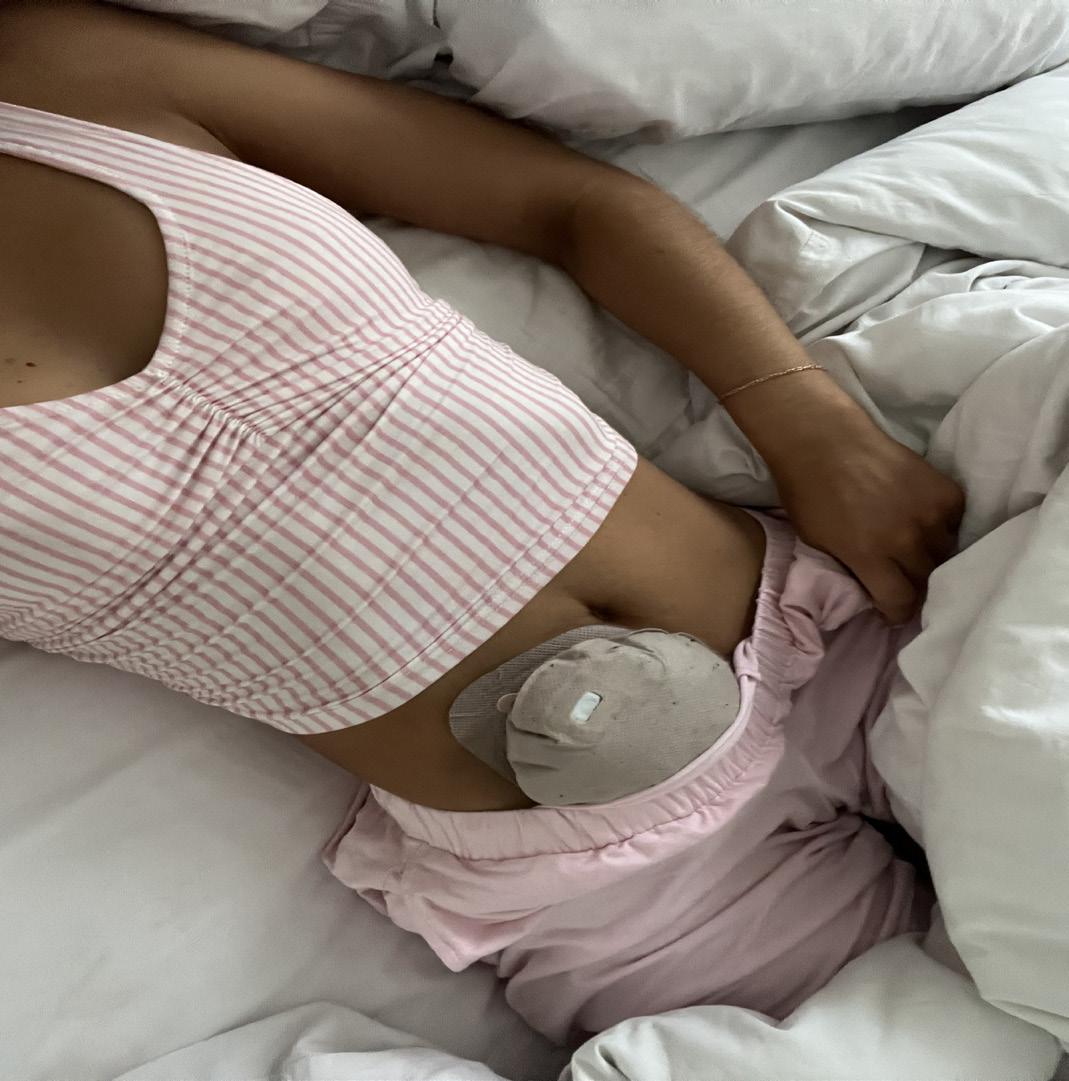
Sara’s story has sparked messages from around the world from people who found hope in her openness. “I want to show others, especially those with chronic illnesses or visible differences, that their bodies tell stories worth celebrating, and that owning your story is one of the most powerful forms of beauty” she shares.
Today, she is using her platform to push representation even further, from brand partnerships to film and publishing projects. “Advocacy will always be at the heart of what I do,” she says.
You can follow Sara’s journey and join her movement toward inclusion and representation on Instagram @saralevs and TikTok @saralevitt, where she shares everything she and LIV, her ostomy, are up to.
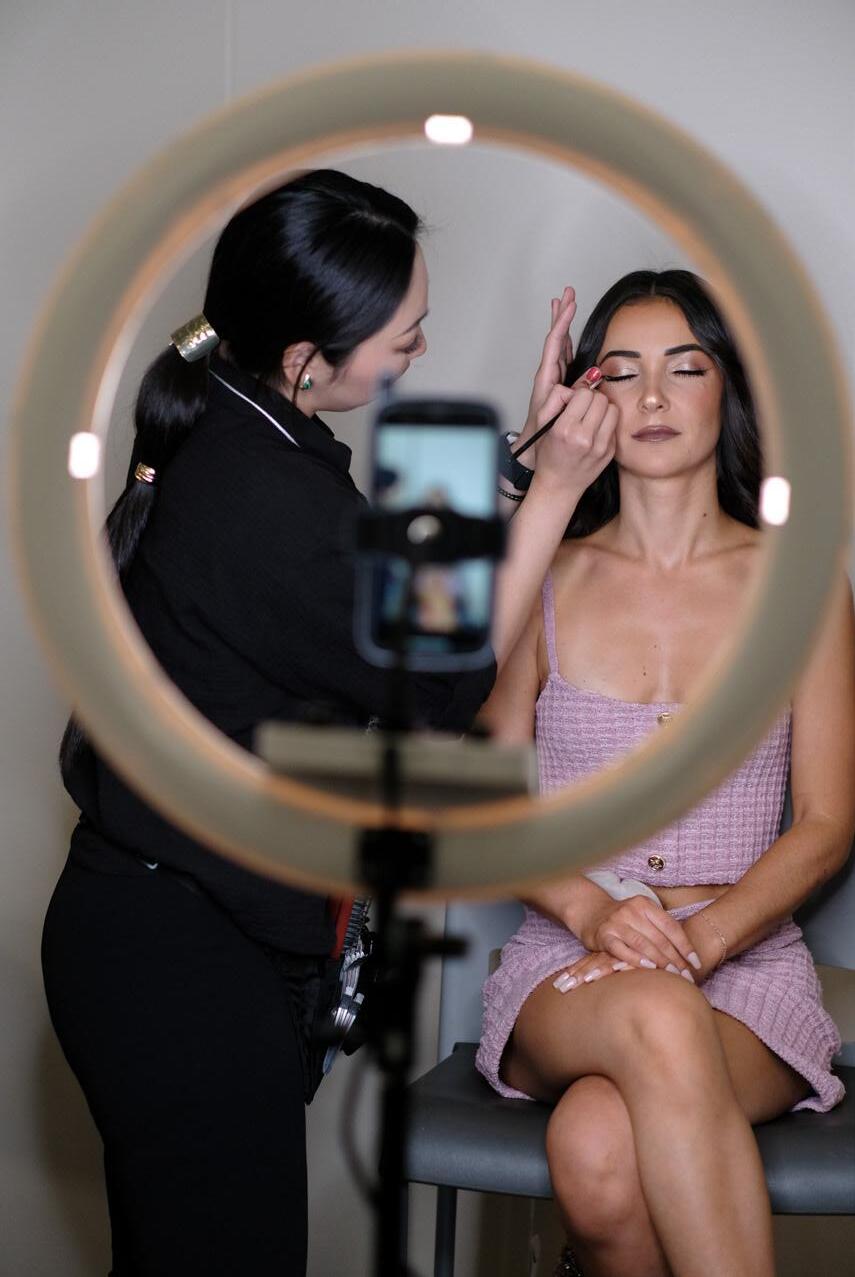
For Sara, connection without barriers means showing up authentically, vulnerably, and without judgment while allowing others to do the same. It’s about breaking isolation, building community, and celebrating spaces where every story feels valid and valued. “Connecting with people who truly understand your journey is one of the most freeing and transformative experiences,” she says.

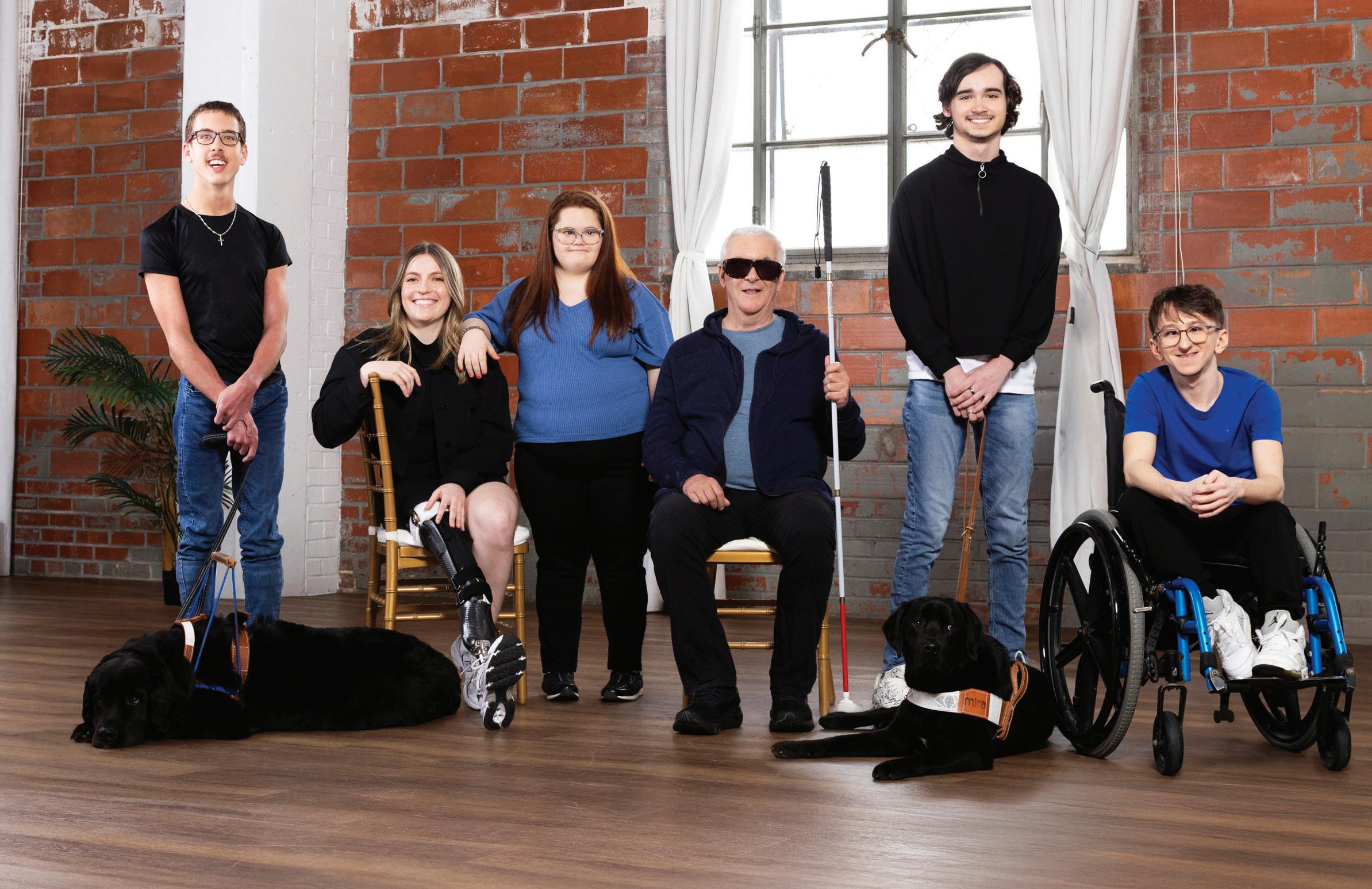
A 17-year-old who lives with cerebral palsy and an undiagnosed underlying muscle condition. A beneficiary of the Mira Foundation’s Mobility Assistance Dog program. Driven by a love for sports, physical training, and art, Xavier finds joy in pushing his limits and expressing himself in every aspect of his life. Known for his caring and empathetic nature, he is always attentive to the well-being of others, yet never loses his playful, mischievous spark that brings warmth and laughter to those around him. His guiding motto perfectly reflects his spirit: “Despite our difficulties, we must never give up.”
A Canadian para-alpine skier from Candiac, Quebec, Frédérique Turgeon has spent years redefining strength, resilience, and passion on the slopes. Born with Congenital Femoral Deficiency, she competed in the standing LW2 classification, representing Canada internationally and earning multiple medals, including gold at the 2019 World Para Alpine Championships. Recently, she announced her retirement from competitive skiing, a bittersweet decision made with gratitude as she chooses to honor her body’s limits while embracing new beginnings. Today, she is turning the page and embarking on new ventures, rediscovering life beyond sport, going back to school, exploring new passions, and finding joy in simple moments. Her journey continues to inspire others to face transitions with courage, authenticity, and hope.
An inspiring young woman with Down syndrome, Erica embraces life with contagious energy and joy. Famous for saying, “I was born ready,” she approaches every opportunity with enthusiasm and a deep appreciation for the world around her, even finding beauty in a simple dandelion. Family means everything to her, as does her love for drama and performance. Cast in the show 19-2, Erica fully immersed herself in her role, bringing the same dedication, spark, and authenticity that make her a true firecracker.
TOM BARRETTE
A passionate music enthusiast and beneficiary of the Mira Foundation’s Assistance Dog Program for Youth with Autism Spectrum Disorder (ASD). Since April 18, 2025, he has shared his days with Haddock, a gentle and devoted companion who helps him navigate social challenges and turn daily obstacles into opportunities for growth. Deeply creative and curious, Tom collects vinyl records, CDs, and cassettes. He is pursuing a certificate in sound engineering to combine his love for music with technical expertise. Guided by a positive outlook, he believes that when we’re inspired, there are no limits to how our dreams can become reality.
MICHEL ST-JEAN
He is an active and determined individual whose passion for sport and resilience have shaped his life’s journey. After losing his vision in his twenties following a water polo accident, he worked in various fields, including the fur industry. At 50, he discovered a new passion: alpine skiing, and has never looked back. The sport became a true source of freedom and confidence. Today, he remains deeply involved in the community as a member of the Association of Blind Persons of Quebec, offering guidance and encouragement to others living with vision loss.
MARIAN BARBU
He is a Canadian Paralympic swimmer of Romanian origin. Born with Osteogenesis Imperfecta, a rare condition that causes fragile bones, he has overcome countless fractures since childhood. Driven by an unwavering passion for swimming, he turns every obstacle into a source of strength and embodies a powerful message of resilience: “no matter the adversity, every dream remains possible.”
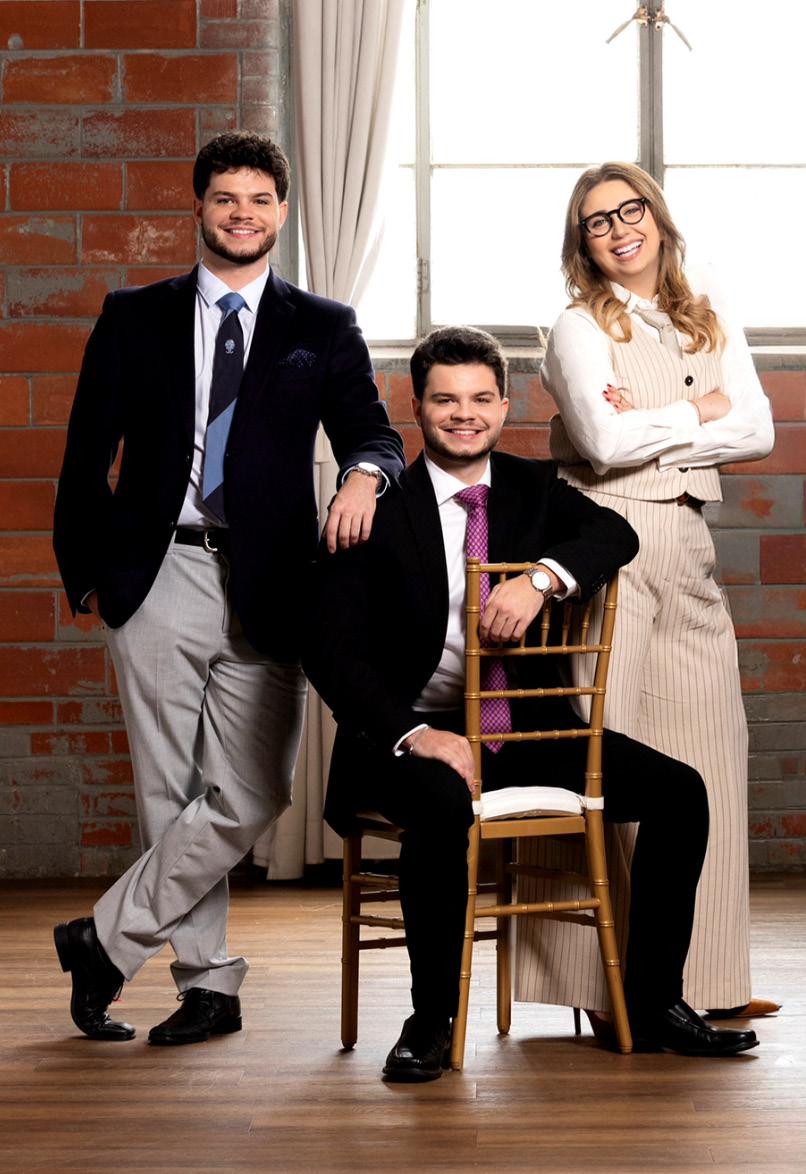
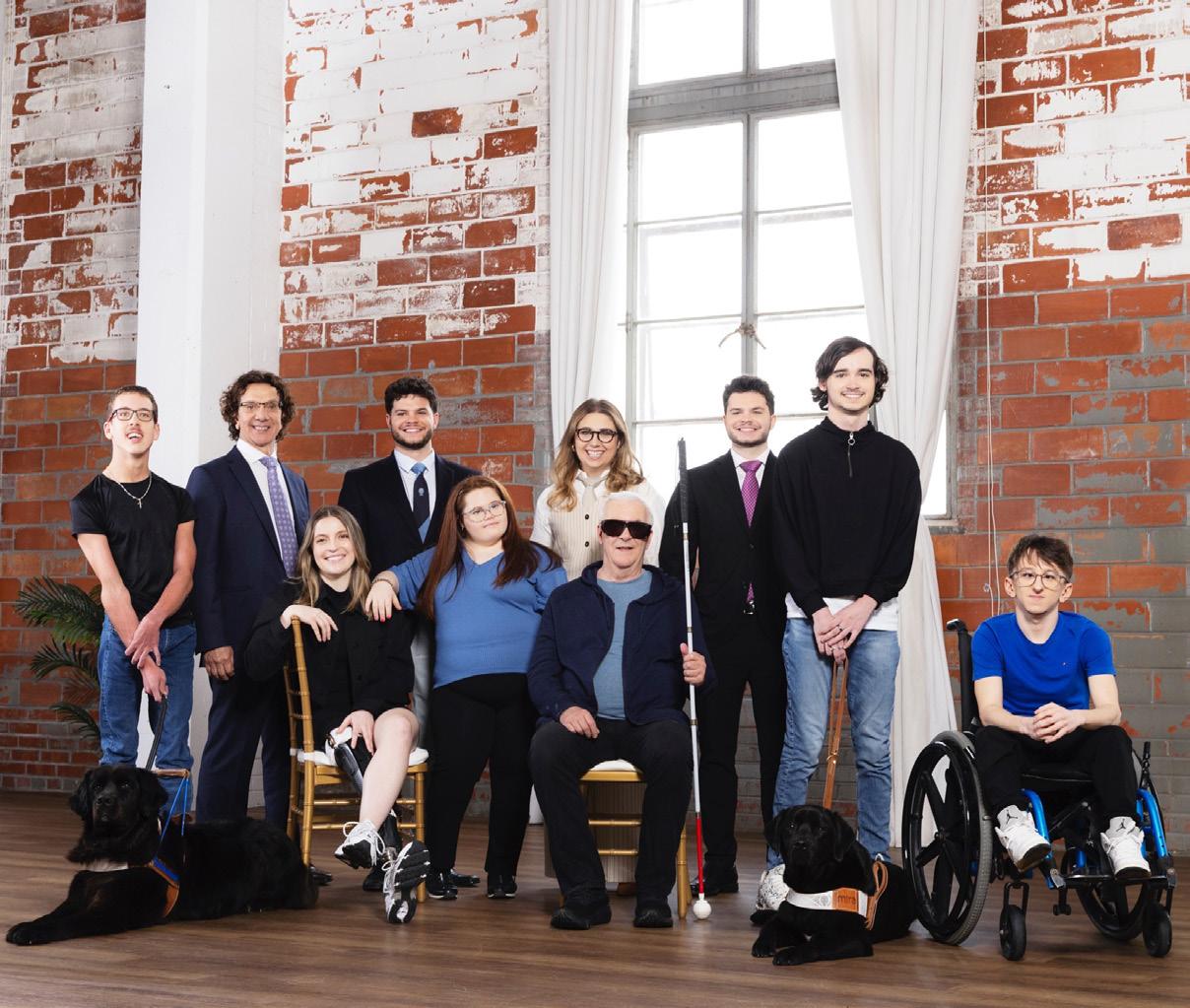
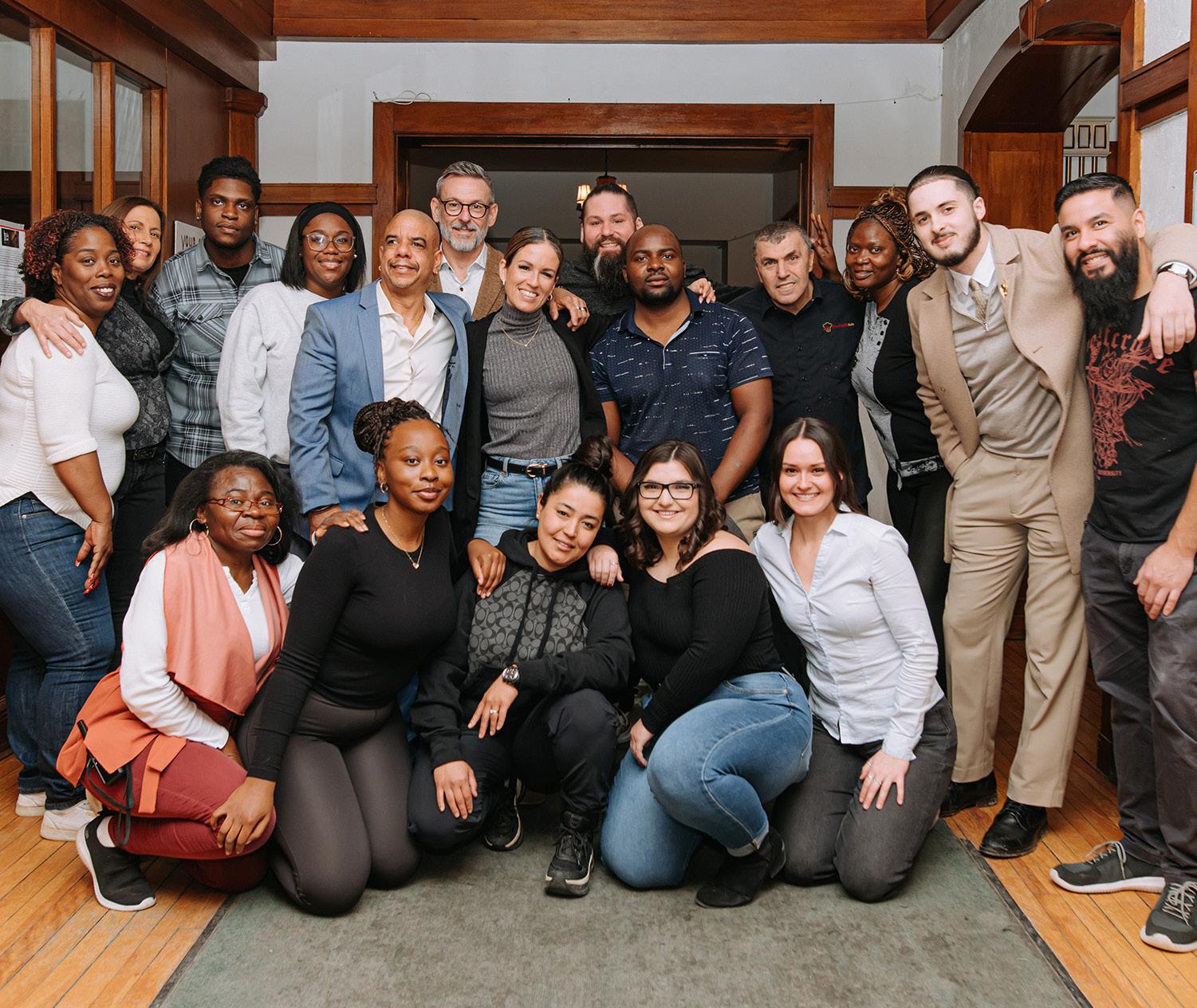
In a world that too often defines individuals by their limitations, Differently United stands as a vivid reminder that difference is not a deficit. It is a source of depth, connection, and collective strength.
This editorial brings together six extraordinary individuals, each with a story that speaks to courage, authenticity, and the power of perseverance. Captured through a lens of empathy and purpose, the photoshoot celebrates diversity in motion. Every posture, smile, and gaze tells a story of resilience, of lives built not around obstacles but around possibility.
These portraits do not seek to inspire pity or admiration; they invite recognition. They remind us that inclusion is not an act of charity but a reflection of truth. We are all part of the same narrative, contributing in our own unique ways.
Together, this group embodies what it means to be differently united. Their paths vary, some shaped by sport, others by art, advocacy, or lifelong learning, yet they share a common drive: to live fully, to break boundaries, and to redefine what it means to belong. Their stories merge determination and grace into a single portrait of humanity.
Differently United challenges the way we see representation. It replaces tokenism with truth and awareness with appreciation. It reminds us that disability does not define a person. It is simply one aspect of a much richer and more colorful identity.
Through this project, the message is clear: there is no single way to be strong, no uniform path to achievement, and no one version of beauty or success. What unites us is not sameness but shared humanity.
This feature is more than a photoshoot. It is a statement, a visual declaration that empowerment grows through visibility and that every person, regardless of ability, has a rightful place in the frame. In celebrating difference, Differently United reminds us that inclusion is not an ideal. It is the future we are already building together.
The energy in the studio that day was electric yet grounded, filled with laughter, quiet strength, and mutual respect. Each participant stepped into the spotlight not as a subject but as a storyteller. Each photograph reflects that authenticity: a celebration of who they are today and a glimpse into the limitless potential of what is to come.
By: Kaelan Malaka
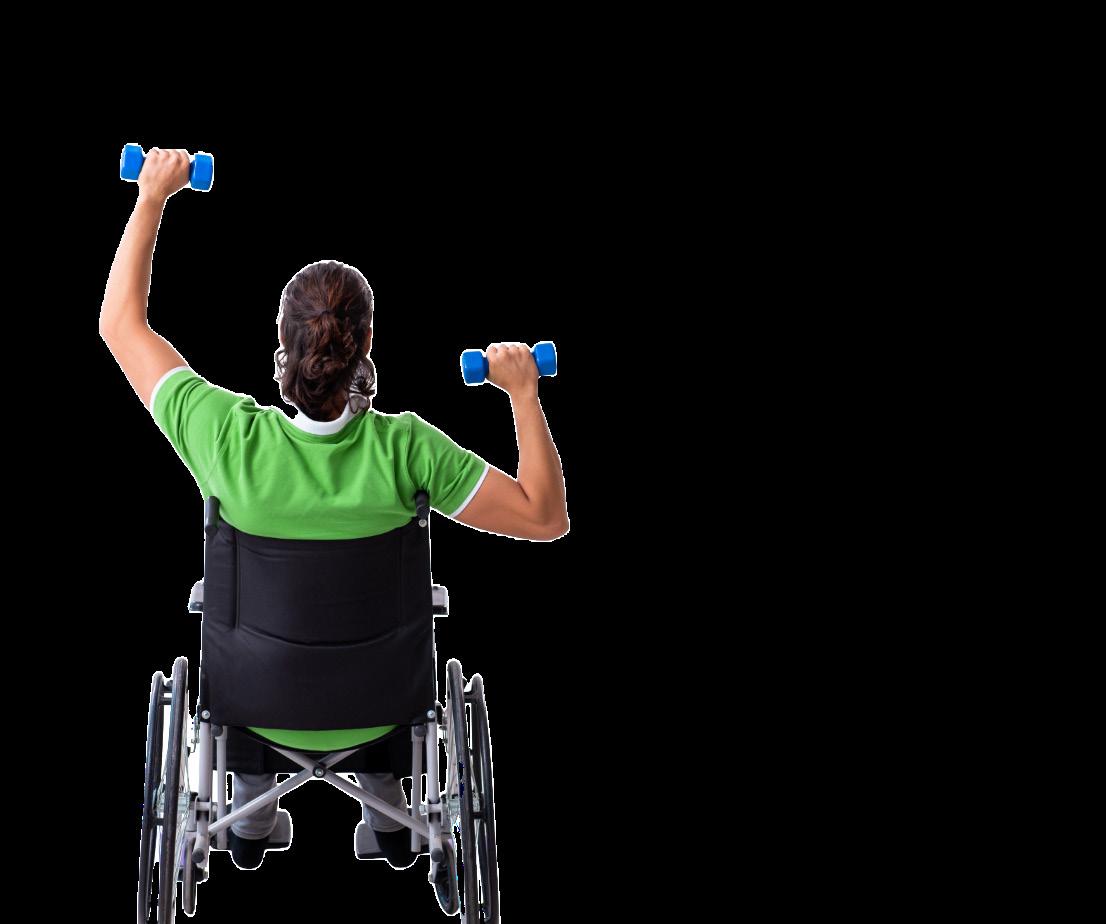
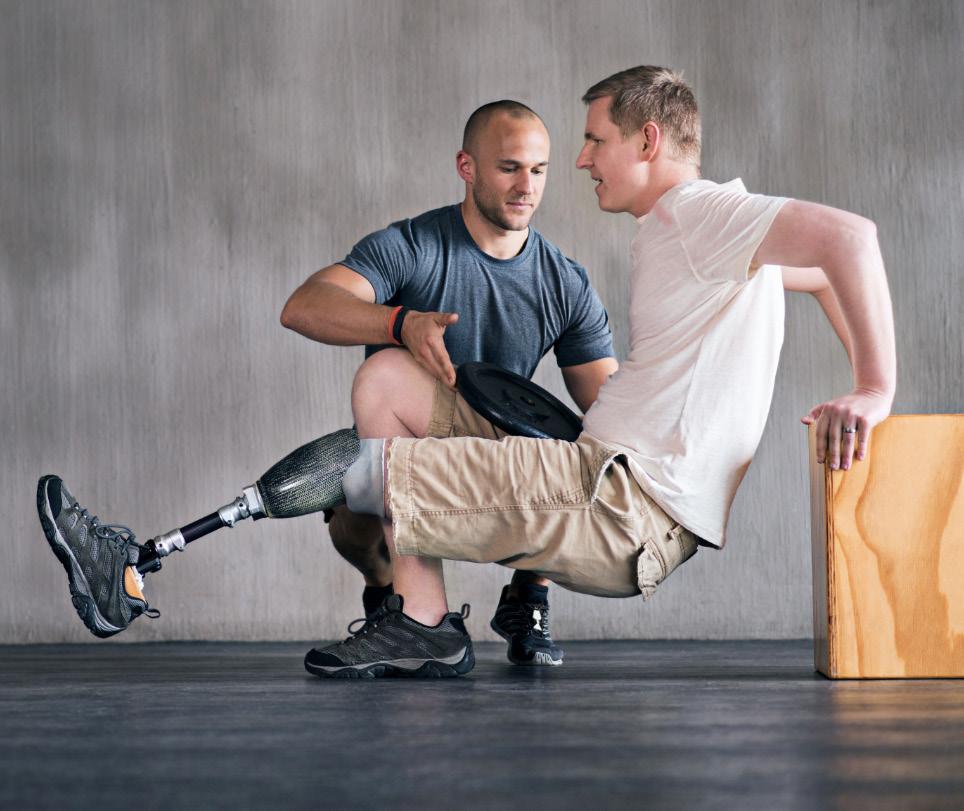
Not every exercise works the same way for every body, and that’s perfectly normal! As a personal trainer, I have seen firsthand how important it is to get creative when traditional movement patterns do not fit. Here are some strategies that can help you adapt exercises to work for your body.
In the gym, we have access to so many different types of equipment: free weights, cables, machines, resistance bands, benches, yoga mats and more. Finding tools that work for body is an important place to start.
• For those who can’t lift heavy loads, starting with resistance bands can help strengthen muscles in a lowrisk manner.
• For individuals who experience difficulties with balance or coordination, stability must come first. Selecting machines might be a better choice than free weights due to their lower stability demands, making them a potentially safer option.
• For people who use a wheelchair, cable machines can be an excellent option. They require minimal setup and can be performed seated in the wheelchair.
• For individuals with limited mobility, reduced muscular strength or difficulty with balance, yoga mats are great for floor-based exercises that are performed lying down or seated.
Everyone’s body is different, sometimes we have to make tweaks to exercises in order to make it work well. These modifications are often quite simple, but can go a long way for some people.
• Change your body position. If standing doesn’t feel as stable, seated or lying positions will likely work much better. For example, try performing seated shoulder presses instead of standing ones, or leg presses as opposed to squats.
• Start with an easier variation of the movement. One of my favourite examples is the incline push-up. Start by setting up a barbell on a squat rack at an appropriate height to make the exercise manageable yet still challenging. Gradually lowering the height of the bar increases the difficulty, and over time this can help you work towards a bodyweight push-up from the floor. Alternatively, you can do these with just about any stable, elevated surface you have against a wall, countertop, or the bottom steps of a staircase all work.
• Add external support. For example, if bodyweight lunges are far too difficult starting off, using TRX suspension straps or holding onto a sturdy object like a metal beam from a squat rack can reduce the need to balance as much on your own. I often have my clients work towards relying less on the support over time, which helps improve balance at a rate that they can handle.
How we approach fitness shouldn’t be seen in black and white. Every body is different, shaped by its own rhythm, limits, and story. What works for one person may not work for another, and that’s completely fine. Real progress begins when we listen to our bodies and respect where we are in the moment. Movement should make us feel strong, not pressured. It should leave us feeling energized, not drained. Some days, success means pushing further; other days, it simply means showing up and moving because it feels good. What truly matters is consistency, self-respect, and joy in the process. Fitness isn’t a contest or a single path to perfection—it’s a lifelong conversation between body and mind. When we find what feels right, move safely, and focus on our own growth, that’s where real strength begins.
By: Valerie Bouzo
For many neurodivergent individuals, food isn’t just about nutrients or meal plans. It’s deeply personal. It’s tied to comfort, energy, sensory preferences, and the routines that help us get through the day. But with all that comes a lot of pressure. The idea of eating “perfectly” can feel impossible, especially when you’re managing sensory overload, decision fatigue, or a brain that doesn’t always register hunger in the usual way.
Instead of chasing perfection, what if we reimagined snacking as a way to simply care for ourselves in a flexible, doable way?
Snacks not only fill a gap between meals, but they can also help with focus, mood, and energy, especially on those days when meals feel far apart. But here’s the thing: what works for one person might totally not work for another.
Some people need something crunchy and salty. Others need soft, plain, and familiar. You might love the texture of a smoothie through a straw, or prefer the quiet comfort of plain rice with a drizzle of olive oil. There’s no “perfect” snack. If it gives you a bit of energy and feels safe and accessible, it’s all that counts.
Truth is, when your day is already filled with choices, even figuring out a snack can feel overwhelming. When you’re deep in hyperfocus, running low on energy, or just overwhelmed, it’s easy to skip eating altogether because it doesn’t feel “worth doing” unless it’s done “right.” But snacks don’t have to be pretty or complicated. A granola bar. A banana. Leftover pasta straight from the container.
Try asking yourself:
• What gives me a little boost without much effort?
• What feels manageable when I’m mentally or physically drained?
• What can I keep in reach (in a bag, at my desk, in the car) so I’m not running on empty later?
These tiny adjustments can help build a routine that fits your life, not someone else’s idea of how it “should” look.
Now, when it comes to building a balanced snack, Ideally I would usually recommend pairing a carbohydrate (for quick energy) with a bit of protein or fat (to help it last), that combo can keep you feeling more steady.

Here are a couple of examples:
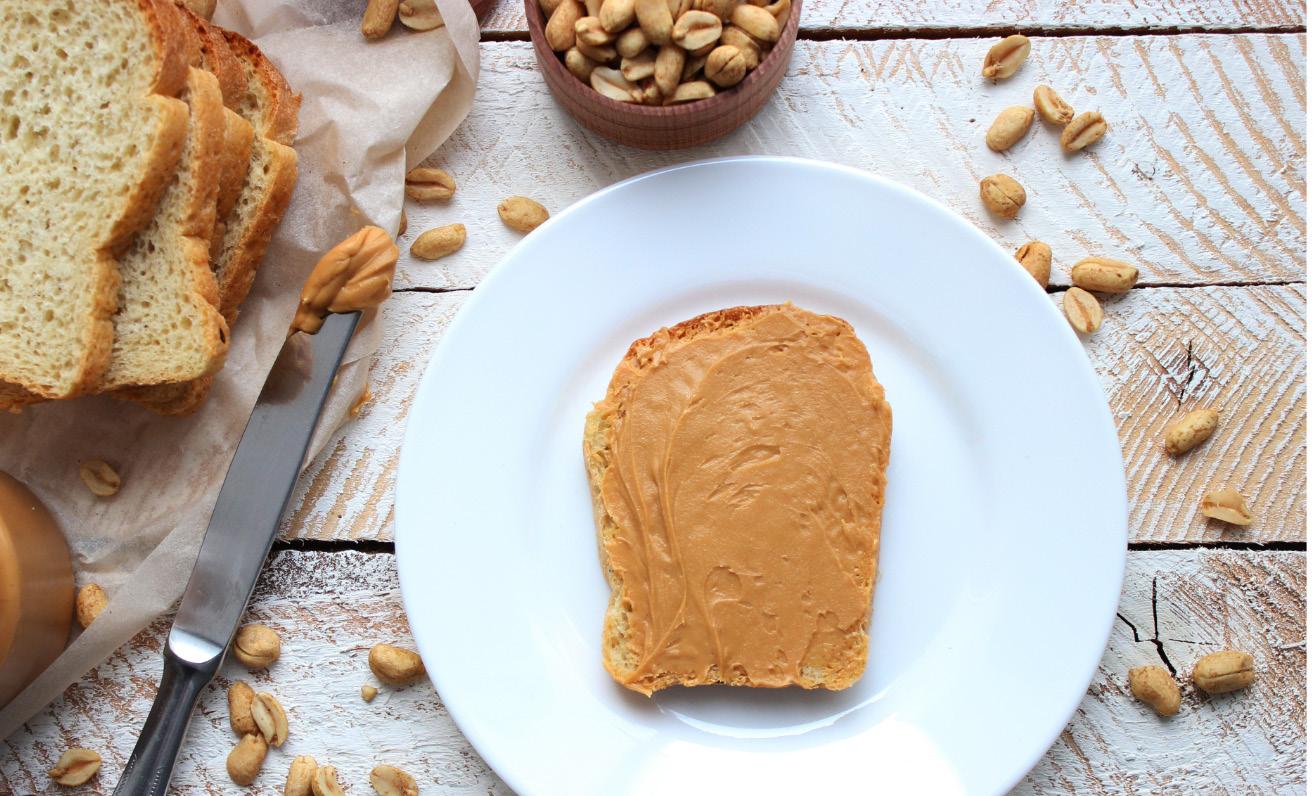
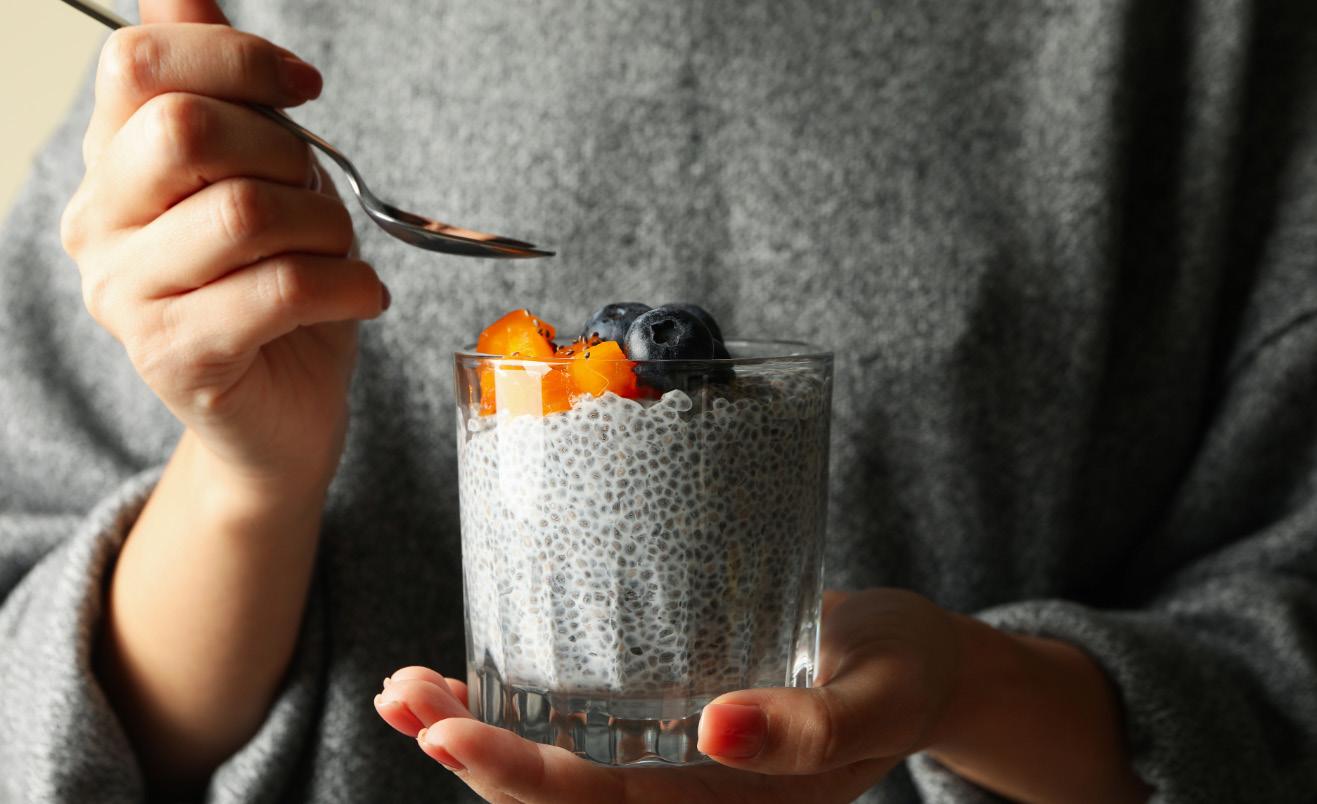


The goal isn’t to eat more or less. It’s to support your energy in a way that feels realistic. Let’s also normalize that meals don’t always have to fit into breakfast, lunch or dinner. Sometimes snacks are meals. Some days you forget to eat. Some days, you need a reminder. Texture aversions are real. There is no wrong way to nourish your body. Working with a dietitian can help you build routines that feel good for you, but even small, imperfect steps count.
When it comes to snacking, here are a few ways to set yourself up for success:
• Keep preferred snacks visible and easy to grab.
• Prep safe foods ahead if you’re able, and give yourself grace if not.
• Set reminders if your hunger cues are inconsistent or delayed.
• Pair carbs with protein or fat when possible.
• Most of all, be kind to yourself. Not every day will look the same.
Your body deserves care in ways that work for you. Snacking isn’t about getting it perfect. It’s about noticing your needs and meeting them where they are, with whatever energy you have. So snack smart, not perfect. You’re doing just fine.

You can find me @mtlnutrition on instagram and reach me at valeriebouzonutrition@gmail.com
By: Sandra Siciliano
Rich in Vitamins A & C:
These essential vitamins play a key role in keeping your body strong and balanced. Vitamin A supports vision, promotes healthy cell growth, and helps maintain smooth, glowing skin. Vitamin C strengthens the immune system, aids in collagen production, and helps the body heal from everyday wear and tear. Together, they act as powerful antioxidants, protecting your cells from damage and keeping your skin, eyes, and immune system in top shape, especially during the colder months when your body needs an extra boost.
High in Fiber:
Fiber plays an important role in keeping your digestive system healthy and your energy levels steady throughout the day. It supports regular digestion, helps balance blood sugar, and keeps you feeling full longer, which can make it easier to maintain healthy eating habits. Foods rich in fiber also feed the beneficial bacteria in your gut, promoting overall gut health and supporting your immune system. Including fiber from natural sources like pumpkin, fruits, vegetables, and whole grains adds both nourishment and lasting satisfaction to your meals.
Low in Calories:
Pumpkin is naturally low in calories, making it a smart choice for anyone focused on balanced nutrition and weight management. Despite its light calorie count, it remains hearty and satisfying because of its high water and fiber content. This combination helps you feel full and energized without overeating. Replacing heavier ingredients with pumpkin in soups, baked goods,
or side dishes can add volume and replacing heavier ingredients with pumpkin in soups, baked goods, or side dishes can add volume and flavor while keeping meals lighter. It is a gentle reminder that nourishing the body does not always mean eating more; sometimes it means choosing foods that support your well-being.
Antioxidants are powerful compounds that help protect your body’s cells from damage caused by everyday stress and environmental factors. By neutralizing free radicals, they reduce inflammation and support the body’s natural healing process. This is especially beneficial for people living with mobility challenges or chronic conditions, as lower inflammation can ease discomfort and improve overall energy levels. Pumpkin contains several key antioxidants, including beta carotene, which the body converts into vitamin A, as well as vitamins C and E. Together, these nutrients strengthen the immune system, promote healthy aging, and help maintain strong tissues and organs for long term wellness.
Easy to Digest: mpkin’s soft texture and gentle flavor make it soothing for the digestive system. It is easy to chew, swallow, and absorb, making itideal for children, older adults, or anyone with a sensitive stomach. Light yet nourishing, it provides comfort and essential nutrients without straining digestion. Its natural fiber content supports gut health and promotes regularity, while its high water content helps maintain hydration. Whether blended into soups or served as a simple purée, pumpkin offers both nourishment and ease for the body.
Pumpkin’s soft texture and gentle flavor make it soothing for the digestive system. It is easy to chew, swallow, and absorb, making it ideal for children, older adults, or anyone with a sensitive stomach. It provides comfort and essential nutrients without straining digestion. Its natural fiber content supports gut health and promotes regularity, while its high water content helps maintain hydration. Pumpkin, whether in soups or purée, offers gentle nourishment for the body.
A vibrant ingredient that blends nutrition, comfort, and versatility, pumpkin nourishes the body while supporting immune function, heart health, and digestive balance. Its natural sweetness and soft texture make it an adaptable addition to countless recipes, from hearty soups and wholesome breakfast bowls to muffins, curries, and smoothies. Beyond its physical health benefits, pumpkin offers a comforting taste of home and tradition. It carries the warmth of autumn and reminds us that true nourishment comes from whole, simple foods grown by nature. By adding it to your daily routine, you’re not just enhancing your meals but embracing a sustainable, nutrient rich lifestyle that celebrates the best of nature all year round.
By: Robert Stacey
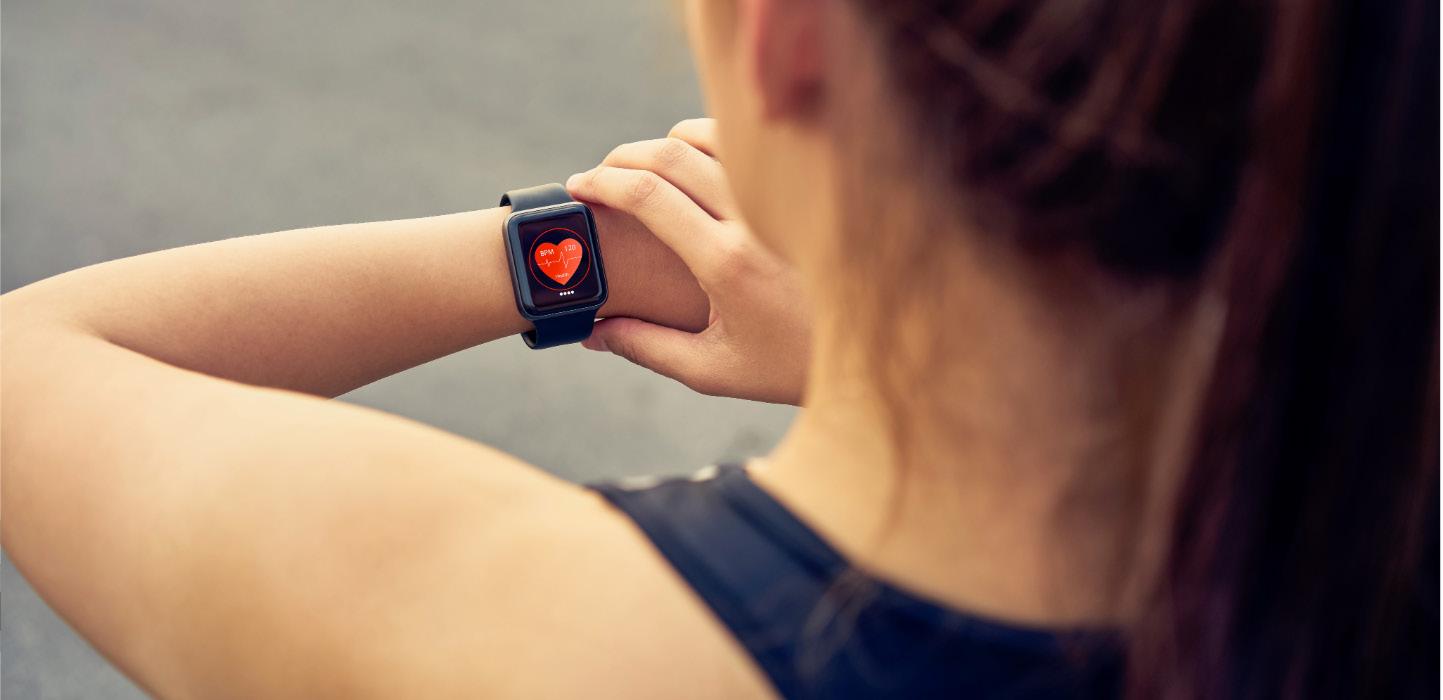
When most people think of wearable technology, they picture sleek fitness trackers, calorie counters, and sleep monitor gadgets designed for wellness, not emergencies. But the landscape of wearable health devices is evolving rapidly far beyond lifestyle enhancements. Today’s smartwatches are being engineered not just to measure steps or monitor heart rates, but to detect and even predict cardiac arrest before it strikes. This isn’t science fiction. It’s science saving lives sometimes in real time, and often when it matters most.
Heart disease remains the leading cause of death worldwide, responsible for an estimated 17.9 million lives annually, according to the World Health Organization. Among the most devastating events in this spectrum are sudden cardiac arrests (SCAs), which can occur without warning and without immediate access to medical assistance. In Canada alone, approximately 60,000 people experience an out-of-hospital cardiac arrest each year. Tragically, nearly three-quarters of those cases occur when no one else is around to provide critical intervention like CPR or call for help.
“Survival hinges on immediate action,” explains Dr. Brian Grunau, an emergency physician and Assistant Professor at the University of British Columbia. As the co-director of the BC Resuscitation Research Collaborative (BC RESURECT), Dr. Grunau has been at the forefront of developing early intervention strategies. His team’s research on prehospital treatment for SCA has already impacted resuscitation protocols across Canada and throughout the world. Now, with the integration of wearable technology, the timeline
for intervention could be pushed even earlier—at the exact time the collapse ever occurs, and potentially even before symptoms are recognized by the wearer.
At the heart of this innovation is machine learning, enabling smartwatches to detect patterns in real-time health data. Equipped with biosensors, these devices monitor cardiac signals that are used to calculate metrics such as heart rate, oxygen saturation, and heart rate variability. When abnormal signals—like erratic rhythms or sudden drops—appear, AI algorithms compare them against massive datasets to assess the risk of cardiac arrest.
The team is designing a system to recognize pattern matches that occur at, or just before, past cardiac arrests. When these patterns are detected, the watch will issue a warning to the wearer, and if the alert is not acknowledged, it will automatically contact emergency services on behalf of the user. This creates a bridge from passive health tracking to active, lifesaving intervention. The system is being trained to distinguish between harmless fluctuations and early signs of cardiac distress, making real time interpretation both possible and actionable. However, several challenges remain. Signal quality from watches can often be poor, as many users do not maintain a tight fit between the device and the skin. This makes it difficult for the system to determine whether it has lost the pulse due to poor contact or because of a true cardiac arrest. Such uncertainty can lead to false positive alerts, which in turn may cause anxiety or place unnecessary strain on emergency response networks. Another limiting factor is accessibility,
as smartwatches remain expensive for many people. Without broader affordability and equitable access, this promising technology risks widening existing health disparities instead of narrowing them.
At Dr. Grunau’s lab, a multidisciplinary team of engineers, data scientists, and emergency responders is helping to validate smartwatch algorithms in real-world conditions. By integrating clinical data, his team is working to improve accuracy, reduce false alarms, and bring these devices closer to becoming reliable tools in prehospital care. The vision is to create a future where wearable technology can detect early signs of cardiac distress, alert first responders in real time, and ultimately save lives before an ambulance even arrives.
However, innovation must be matched with access. As wearables take on a larger role in prevention, equity becomes essential. Programs such as public-private collaborations, subsidies, and insurance coverage can help ensure that lifesaving technology does not remain a privilege for the few. Education and public awareness are also critical—people must know how to use these tools effectively and trust the data they provide. The future of cardiac care depends not only on smarter devices but also on a more connected, informed, and inclusive healthcare system.
As wearable devices continue to evolve, they are not just getting closer to our bodies; they are becoming extensions of our healthcare systems. With biosensors and AI algorithms now capable of interpreting complex cardiac signals, the humble smartwatch may become the first responder in a silent emergency. The future of cardiac care may no longer reside solely in hospitals or ambulances. It may begin with something as subtle as a vibration on your wrist, an alert, a lifeline, a second chance. What once seemed futuristic is now within reach: real time detection of irregular rhythms, silent arrhythmias, or sudden cardiac distress. Each heartbeat becomes a data point, and each data point a potential warning that could change an outcome. Beyond individual health, this technology has the power to reshape entire emergency response systems. By connecting personal wearables to public networks and healthcare providers, early alerts could reduce response times, guide paramedics more effectively, and save countless lives. The path forward is not just about innovation but about integration, building a bridge between personal technology and public health to create a future where every second truly counts.
By: Saima Syed
In recent years, a quiet revolution has been unfolding, one not driven by protest or politics but by innovation. Everyday technology, once designed for the general public, is now breaking down barriers for people with disabilities in subtle but profound ways. It is very clear to us how these tools affect our daily lives, but we often don’t realize how big of an impact they have on individuals with disabilities.
Smartphones, smart home devices, smartwatches, and the list goes on, have become more than just conveniences. They’re tools of independence. Features developed in these devices, such as voice assistance, speech to text, and screen readers, are helping individuals navigate and interact with the world in ways that were not possible before. For someone who is visually impaired, a simple task like clicking a button to submit a form online can be incredibly challenging without the aid of an app that reads the screen and locates the button.
For people with voice impairments, voice recognition software plays a huge role in daily tasks. These tools allow users to adjust lighting, set timers, call friends, or even enter addresses into a map without touching a screen. What once was frustrating or time consuming has become accessible and hands free.
Integrating accessibility into websites and applications is no longer just a “nice to have”; it’s a necessity. We are seeing more features being added to digital platforms specifically to help people with disabilities. Small gestures, like adding alternative (alt) text to images, allow screen readers to describe visuals to users who cannot see them, helping them understand and engage with the content more fully.

Similarly, adding subtitles or captions to videos supports individuals with hearing impairments by making spoken content accessible. Another example of a very useful and widely adopted technology is the wearable smartwatch. Wearable watches help people with disabilities by offering health tracking, safety features, and helpful reminders. They can monitor heart rate, detect falls, send medication alerts, and track location. For people with hearing loss, they provide vibration alerts for calls or alarms. For those with vision loss, they offer voice feedback and GPS navigation to support mobility and independence.
It’s impossible to discuss technological advancements without highlighting the fascinating impact of virtual reality (VR). It offers numerous opportunities for people with disabilities, particularly in education, rehabilitation, and skill acquisition. This tool provides a safe and controlled environment where users can engage in social interactions, practice various skills, and experience simulations of real-life situations that might otherwise be inaccessible or very challenging for them to encounter in reality.
In short, technology is constantly evolving, and while it may sometimes have its downsides, we cannot overlook the tremendous benefits it brings to society. These are just a few examples of how technological advancements are making a meaningful difference in the lives of people with disabilities.
Now, returning to the title, what makes this movement truly revolutionary is its quiet integration into the mainstream. Unlike specialized medical devices, these technologies are affordable, widely available, and socially accepted. This means users don’t have to feel singled out for using something “different,” they are using the same devices as everyone else, just in different ways. That subtle shift is powerful. It fosters inclusion without stigma and allows people with disabilities to participate more fully in society on their own terms. At the end of the day, it is all about breaking down barriers and redefining what is possible for everyone, that is true progress.
By: Brandon Amaral
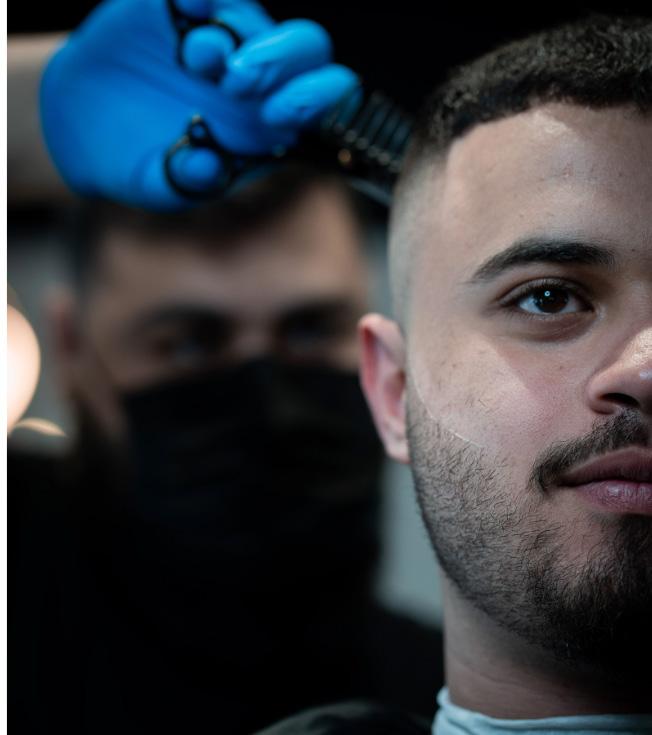
Nestled in the heart of Montreal, Benny’s Barbershop isn’t just defining the city’s grooming trends, it’s redefining what a barbershop can be. Equal parts style studio, community hub, and entrepreneurial launchpad, Benny’s is a standout space where sharp fades meet even sharper values. From the moment you walk through the doors, the energy is unmistakable: upbeat music, sleek decor, and a team of passionate barbers delivering precision cuts with artistry and care. Whether you’re after a low fade with a textured top, a razor detailed skin fade, or a classic taper, the crew at Benny’s knows how to deliver and elevate your look. But what makes Benny’s truly exceptional is the blend of modern grooming excellence with a deep rooted sense of purpose.
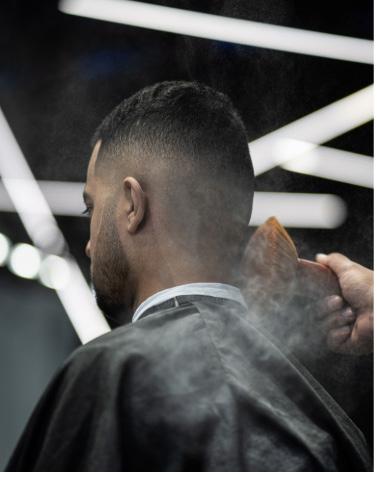
The shop’s trendsetting approach is no accident. Benny and his team are constantly on the move, attending major barber expos across North America, soaking up the latest tools, styles, and innovations. “It’s not just about staying relevant,” Benny explains. “It’s about staying ahead and bringing the best back to Montreal.” When asked about the top styles for Summer 2025, Benny highlights natural texture, clean tapers, and effortlessly cool mid fades. “People want something sharp, but low maintenance,” he says. “Think volume on top with soft movement, paired with a fresh neckline. It’s modern but wearable, and it grows out well.”
Beyond the scissors and the style, Benny’s Barbershop is grounded in community and compassion. That spirit shines brightest in events like Christmas for everyone, an annual celebration co-organized with Summit School for children with special needs. The event brought in hundreds of kids and families for free haircuts, food, cotton candy, and even a visit from Santa. “Growing up, I went to events like that, and they meant a lot,” Benny reflects. “Now I can create that same magic for others.” It’s that give-back mentality that keeps clients coming not just for the cut, but for the culture.

With a loyal following and a powerful ethos, Benny’s isn’t slowing down anytime soon. Plans are in motion to expand, not just physically but professionally, by offering pathways for other barbers to grow in business, education, and leadership. “This is more than a job,” Benny says. “It’s a movement.” Whether it’s mentorship or exposure to international trends, Benny’s aims to elevate the next generation of barbers, empowering them to become entrepreneurs, educators, and leaders.
This year also marks a bold new chapter: the launch of Benny’s own line of grooming products, created and tested entirely in house. The collection includes everything from beard oils to balms, all crafted to meet the real needs of real people. Each product is barbershop tested, customer approved, and performance driven. “We didn’t want fluff,” the team says. “We wanted products our clients could trust, clean, effective, and designed to help them maintain their look between visits.” It’s not just shelf candy, it’s a functional extension of the Benny’s experience.
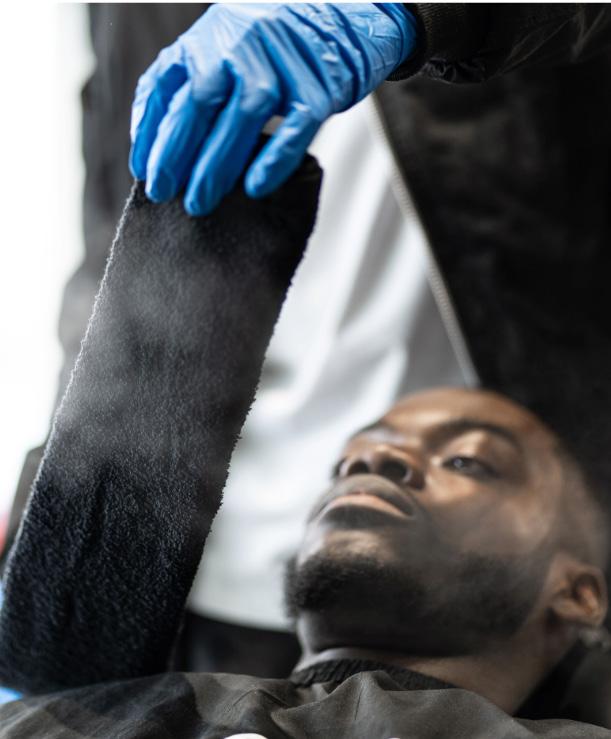
In a city full of barbershops, Benny’s stands out because it delivers the full package: expert level cuts, real community care, cutting edge style, and now, a grooming line born from experience. What’s more, Benny and his team are committed to creating an inclusive environment, ready to adapt their approach to meet the unique needs of every client, whether it’s related to mobility, sensory preferences, or anything else. Whether you’re chasing the latest trend or just need a trusted place to refresh your look, Benny’s Barbershop delivers not only style but substance.
By: Niels Deijkers
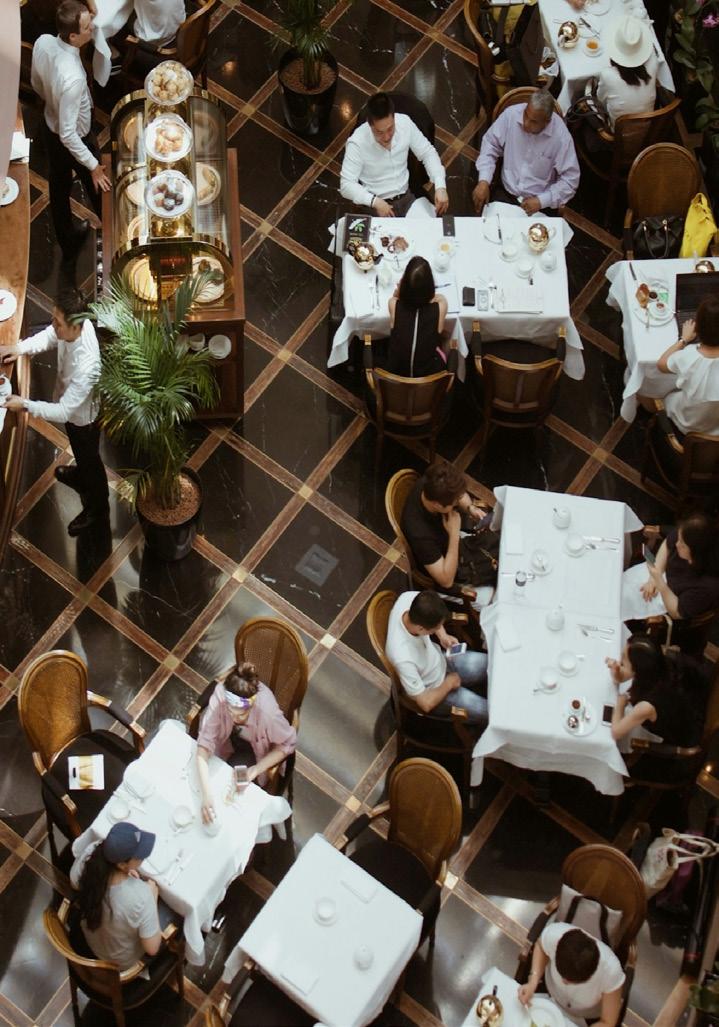
A Michelin-starred dining experience is more than a meal — it’s theatre, artistry, and a feast for all senses. Yet for those stepping into this world for the first time, the unfamiliar rituals and unspoken codes can feel daunting. At the International Butler Academy in the Netherlands, we believe confidence and grace go a long way, even if you’re a first-timer. Here’s everything you need to know before pulling out that starched napkin.
The moment you walk into a fine dining restaurant, everything about you makes an impression: how you stand, how you move, whether you confidently look around the room. And don’t worry if you feel a bit nervous, even seasoned staff can spot first timers. Relax, own the moment, and remember that respect and kindness are the best accessories.
You can never be overdressed at a Michelin restaurant. Coordinating with your group is a nice touch, but ultimately, dress in a way that makes you feel polished and confident. For some, fine dining is an extraordinary event; for others, it’s routine. In either case, dress well and you’ll thank yourself later.
Even in high end settings, some table manners slip through the cracks. The three most common faux pas?
• Improperly holding cutlery
• Talking with your mouth full
• Scrolling on your phone during the meal
Leave your phone off the table and focus on the conversation and cuisine in front of you. It’s the greatest compliment you can pay your hosts.
Facing a complex or unfamiliar menu? Don’t be shy. Your server is there to guide you. It’s perfectly acceptable to ask questions, even about pricing if you’re on a budget. Fine dining is about quality and experience, not just quantity, so explore and try something new.
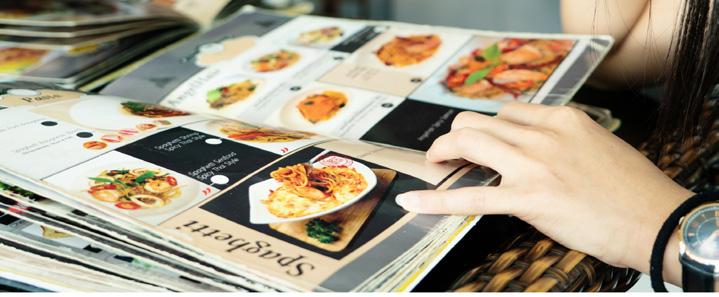
Confronted with a wine list as thick as a novel? Smile, laugh, and admit it! A simple “What would you recommend?” works wonders. If you know what you generally like, a Sauvignon Blanc or Chardonnay, for example, just say so. Don’t assume that the most expensive wine is automatically better. A good sommelier will help you find something delightful that suits your budget.

Those rows of forks, knives, and spoons can feel intimidating. The golden rule is simple: start from the outside and work your way in. For dessert, look straight above your plate for the right utensil. If you’re ever unsure, discreetly watch your fellow diners.
Multi-course tasting menus have their own rhythm. Start eating together, finish together. If you’re a guest, follow your host’s lead. If a menu comes with paired wines, give each a chance, even if it’s not your favorite. Most invitations allow you to share dietary preferences in advance, so speak up if needed.
While etiquette traditionally frowns upon phones at the table, modern dining does leave a little space for a discreet photo or two. Take your pictures quickly, then put your phone away. Never leave it on the table, and if you’re waiting for an urgent call, let your dining companions know.
If a dish isn’t to your taste, you can politely say it wasn’t your preference or call it “interesting,” a classic, subtle way to express that it didn’t quite win you over. However, if something is genuinely wrong with the dish, inform your server right away. They will appreciate your honesty.
Tipping traditions vary around the world. A sincere tip, paired with a kind compliment, is universally appreciated. Let your budget and local customs guide you.
So, what distinguishes a refined diner? It’s someone who makes others feel at ease. If you’re dining with someone confident and comfortable, their calm presence will help you enjoy the experience. Refinement is about graciousness, not perfection. Still nervous? Remember: you’re there to enjoy. If it’s your first time, say so! Many people in the Michelin world love sharing their passion for fine dining and will be more than happy to help you learn the ropes. After all, curiosity is the best companion you can bring to the table.
By: Liliana Tomasino

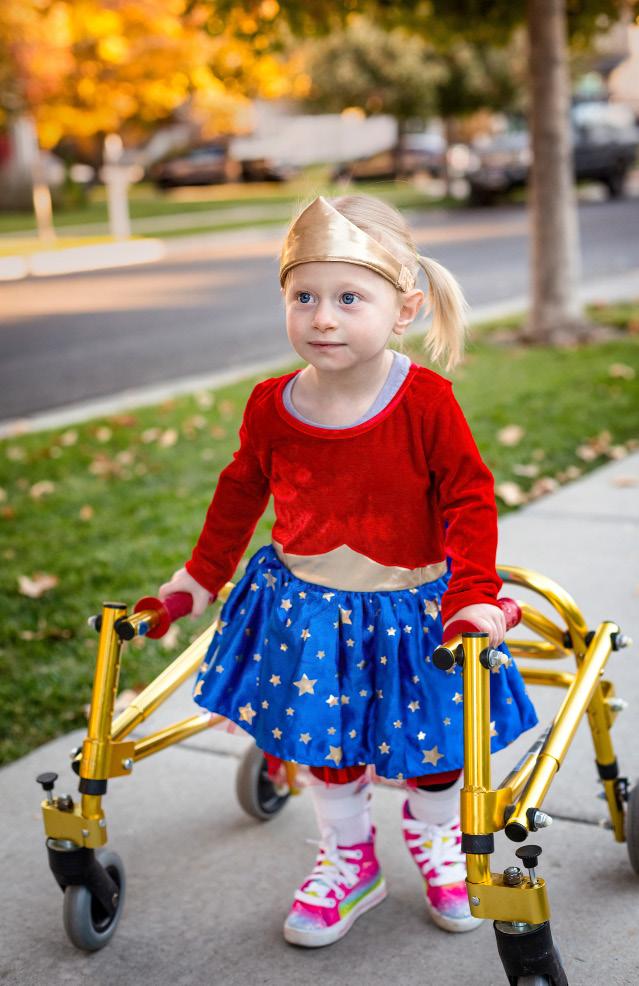
Halloween should be fun for everyone, but too many traditional costumes ignore real-world needs like mobility, sensory sensitivities, or medical equipment. Store-bought options are often stiff, itchy, or impossible to wear if you use a wheelchair, are limited in dexterity, or need clothing that goes on quickly. Accessibility doesn’t have to mean boring or restrictive. With a bit of creativity, it’s easy to make costumes that look great while staying comfortable and practical.
For wheelchair users, the best approach would be to make the chair part of the costume rather than something to work around. A wheelchair can easily be transformed into something imaginative using lightweight cardboard or foam board attached with velcro or zip ties. Some original ideas include turning the chair into a pirate ship or a rocket, creating a moving costume that’s as impressive as it is functional. A race car is another great option, especially for anyone who loves speed or sports themes. Even a Batmobile, or UFO can be built around the chair, giving the whole costume a futuristic edge while keeping everything comfortable and fully mobile.
Some costumes need to accommodate ports, tubing, wheelchairs, or other medical equipment. Comfort and accessibility should always come first, but that does not mean style or imagination have to be sacrificed. The best options are costumes with loose fits and easy access points that make dressing imple while keeping the experience fun and stress free. A doctor or nurse costume is a great example. Scrubs are soft, breathable, and practical, while perfectly fitting the Halloween theme. Superhero shirts with Velcro backs are another creative solution that allows easy dressing without tangling wires or medical lines. Capes, jackets, or ponchos can also work beautifully, offering full coverage without restricting movement or comfort.
Many costumes are uncomfortable and may feel like wearing a plastic tarp. There are too many scratchy seams, heavy layers, or tight elastics. For people who need low sensory options or simply prefer comfort, onepiece animal onesies are an ideal solution. Whether it’s a dinosaur, unicorn, or dragon, these costumes are soft, warm, and slip on easily without fuss. Another low-effort option is a costume built around a cape and hat. A witch’s hat with a flowing cape or a superhero cape and mask provides instant recognition without overwhelming the wearer. These costumes minimize contact points on the body, which is especially important for anyone sensitive to textures or fabrics.
Oversized costumes are a great choice for anyone wanting a simple, no-hassle Halloween option. A classic ghost poncho made from a white sheet with two eye holes offers maximum effect for minimal effort, slipping on in seconds. Similarly, a pumpkin hoodie, a bright orange hoodie with a jack-o’-lantern face printed or glued on, creates a festive look without needing accessories or multiple layers. Both options keep things simple, lightweight, and comfortable while still looking intentional.
Even the simplest costumes can be fun with the right accessories. A black outfit with glow in the dark skeleton bones taped or painted on instantly becomes a striking Halloween look with minimal work. Similarly, adding animal ears and a tail made from felt and elastic to regular clothes can quickly transform someone into a cat, bunny, or fox. These small touches require almost no time to preperate, but still deliver a recognizable costume.
Group costumes can turn accessibility devices into centerpieces. A Mario Kart theme works beautifully if each wheelchair or walker becomes a “kart,” while friends dress as the characters. A PAC-MAN and ghosts setup can use cardboard cutouts to create the iconic arcade look, letting everyone participate regardless of mobility. Halloween costumes don’t have to be complicated to be creative. By focusing on comfort, accessibility, and imagination, it’s easy to design outfits that are fun, inclusive, and practical for everyone.

By: Corey Butler
magine a savings plan so powerful that the government not only matches your contributions but, in some cases, adds money even if you do not contribute a single dollar. Welcome to the Registered Disability Savings Plan (RDSP), a valuable yet often overlooked financial program designed to support Canadians living with disabilities.
For individuals and families facing the added costs, challenges, and uncertainties that can come with disability, the RDSP represents far more than just another savings account. It is a long term investment in stability and independence. Through government grants and bonds, this plan allows participants to grow their savings over time, creating a financial cushion that can help with future care, education, housing, or everyday needs.
Most importantly, the RDSP provides peace of mind. It gives families the confidence that their loved one’s future is protected, even when circumstances change. Beyond the numbers, it offers something even more meaningful, a sense of dignity, security, and empowerment to plan for tomorrow while living fully today.
Launched in 2008, the Registered Disability Savings Plan (RDSP) is a federally registered savings program created to help people with disabilities build lasting financial security. Similar in structure to a retirement plan, the RDSP is designed specifically for individuals who qualify for the Disability Tax Credit (DTC), offering them a practical way to save for the future. What makes the RDSP truly remarkable is the level of government support it provides. Through a combination of grants and bonds, the federal government can contribute up to ninety thousand dollars over the lifetime of the plan, depending on family income and annual contributions.
These funds are invested and grow tax free until they are withdrawn, helping the savings accumulate faster and more efficiently. Beyond the numbers, the RDSP represents an important step toward economic inclusion.
It empowers individuals with disabilities to take control of their long term financial wellbeing, giving families confidence that future needs, whether related to housing, education, or care, can be met with dignity and independence. In essence, it is more than a savings plan; it is a tool for empowerment, stability, and hope.
To open an RDSP, a person must:
• Be under 60 years old
• Be a Canadian resident
• Have a Social Insurance Number (SIN)
• Be approved for the Disability Tax Credit (DTC)
Parents or guardians can open the account on behalf of a child, and contributions can be made by family or friends, anyone looking to invest in the future of someone they care about.
This is a government match program that can triple your contributions. For lower- and middle-income families, the government will contribute up to $3 for every $1 saved, depending on income and amount contributed. Over a lifetime, you can receive up to $70,000 in grants.
Even if you can’t afford to contribute, the government may still deposit up to $1,000 per year into the plan, no personal savings required. That’s up to $20,000 for those with lower incomes.

The RDSP allows savings to grow tax free, and withdrawals are designed to supplement not replace income and disability benefits. That means you can plan for the future without risking access to vital programs like the Guaranteed Income Supplement (GIS), Old Age Security (OAS), or provincial social assistance. In fact, in most provinces, money held in an RDSP is fully exempt from asset and income testing, making it a rare and powerful exception in the financial world.
Yes, but with important conditions. The Registered Disability Savings Plan is designed to encourage long term saving, meaning it is not intended for frequent or early withdrawals. Taking money out too soon can trigger what is known as a repayment, or clawback, where any government grants or bonds received in the ten years prior to the withdrawal may need to be partially or fully repaid. This rule ensures that the funds continue to grow and serve their intended purpose of providing financial stability later in life.
However, the plan is not completely restrictive. After the beneficiary reaches the age of sixty, regular withdrawals can begin without penalty, creating a dependable source of income during retirement or in later life stages. These payments can supplement other income supports, such as the Canada Pension Plan or Old Age Security, helping individuals maintain their independence and quality of life. Understanding these withdrawal rules is key to making the most of the RDSP and ensuring that the benefits last for decades to come.
1. Get approved for the Disability Tax Credit (DTC).
2. Visit a financial institution that offers RDSPs (most major banks do).
3. Open the account and apply for the grants and bonds.
4. Start contributing, if you can. Even small deposits can unlock thousands in support.

In a country with universal health care and strong social supports, the Registered Disability Savings Plan stands out as one of the most generous and empowering programs available to people with disabilities. And yet, it remains underused and often misunderstood. Too many families are unaware of the long term benefits or assume the process is complicated, when in reality, it can be life changing with the right guidance. If you, your child, or someone you know is eligible, do not wait. This is a rare opportunity to secure a future on your own terms, with meaningful help from a system that, for once, truly works in your favour. Every contribution, no matter how small, can grow into lasting security and independence. The sooner you start, the greater the impact. Because planning for the future is not just about saving money, it is about protecting potential, dignity, and peace of mind for years to come.
By: Dominic Siciliano
In an unpredictable world, protecting your financial future has never been more important, especially when illness or injury could one day prevent you from working. Disability insurance is one of the most effective tools available to safeguard your income and stability during uncertain times. It acts as a financial safety net, replacing a portion of your income if you become unable to work due to a health condition, accident, or long term recovery.
More than just a paycheck replacement, disability insurance provides peace of mind. It ensures that you can continue meeting your everyday needs such as rent, mortgage, groceries, and childcare while maintaining progress toward your long term goals like retirement savings or education funds. By offering financial continuity when you need it most, it prevents a temporary health challenge from turning into a lasting financial setback.
Whether you are self employed, working full time, or balancing multiple jobs, understanding how disability insurance fits into your financial plan is crucial. This guide breaks down the essentials from policy types and benefits to key features to help you make informed choices that protect not just your income but also your independence and quality of life.
Disability insurance provides income replacement when a disability, whether caused by illness or injury, keeps you from working. Its main purpose is to help you maintain your lifestyle and fulfill your financial responsibilities during a
time when you cannot draw a paycheck. For anyone who relies on their income to pay bills, support family members, or save for the future, disability insurance is crucial. Without it, even a short-term loss of income could put you at risk of debt, lost savings, or even foreclosure.
Eligibility for disability insurance depends on factors such as age, occupation, income, and health. Most people who are employed or self employed and meet the insurer’s requirements can qualify for coverage. Some policies are offered through employers, while others can be purchased individually for more flexibility. Pre existing medical conditions or high risk jobs may affect eligibility, premiums, or coverage terms. It is important to review policy details carefully and understand waiting periods before benefits begin. Speaking with a qualified insurance advisor can help you compare options and choose a plan that best fits your financial goals and lifestyle.
There are various types of disability insurance to consider, each offering different levels of protection and benefits depending on your needs. Short term disability insurance typically pays benefits for a period ranging from a few weeks to six months, covering temporary conditions such as recovery from surgery, injury, or complications following childbirth. It acts as a financial bridge, replacing a portion of your income while you recover and prepare to return to work. Long term disability insurance, in contrast, provides extended coverage that can last for several years or even up to retirement age if your condition prevents you from working indefinitely. This type of policy is designed to safeguard your financial stability against more serious or permanent health issues, ensuring that essential expenses like housing, food, and healthcare
remain manageable during long term recovery or permanent disability can help you build a policy that fits your needs. Benefit amounts are generally calculated as a percentage of your pre disability income, often ranging from 60% to 85%. The exact amount you receive depends on your policy terms and whether your plan is employer provided or individually purchased. Some disability insurance plans also come with added benefits, such as cost of living adjustments to protect against inflation, partial disability coverage for those gradually returning to work, and rehabilitation or vocational programs to help individuals rebuild skills and re enter the workforce. Understanding these features and comparing policy options carefully can help you choose a planw that not only replaces lost income but also supports your long term recovery and quality of life features
Applying for disability insurance usually involves several clear steps:
1. Assess Your Needs: Calculate how much coverage you would need to maintain your standard of living, considering monthly expenses, existing emergency savings, and any other insurance policies you have.
2. Consult with an Expert: Insurance advisors can help you navigate the wide variety of policies available and explain policy language and options that might otherwise seem confusing.
3. Submit Your Application: You’ll need to fill out an application truthfully, providing details about your health, occupation, and income. Sometimes, a medical exam or supporting documentation is required.
4. Underwriting: The insurance company will analyze your application, reviewing your medical background and job risks to determine eligibility and pricing.
5. Policy Issuance: If approved, you’ll receive a formal policy document. Take time to read it carefully and ask questions about anything unclear.
By taking the time to understand how disability insurance works, you can protect yourself from financial hardship if you ever become unable to work. Disability insurance is a cornerstone of a comprehensive financial plan, providing peace of mind and long-term stability for you and your loved ones. In a world full of uncertainties, this safety net can make all the difference, helping you focus on recovery rather than worrying about your next paycheck.
By: Damian
Amaral
When you hear “Toyota,” you probably think of reliable sedans, zippy hybrids, or maybe the classic Corolla that got you through university. But here’s something you might not expect: Toyota is impressively revolutionizing accessibility in the auto world with a mission that’s far more ambitious than horsepower and hybrid tech. It’s called the Toyota Mobility Program, and it’s not just about cars, it’s about freedom.
Toyota’s Mobility Program is built around one simple idea with powerful implications: Mobility is a right, not a privilege. Whether you use a wheelchair, have limited dexterity, or need assistance getting in and out of a vehicle, Toyota is designing and customizing vehicles to make the driving and riding experience easier, safer, and more inclusive.
But this isn’t a one-size-fits-all campaign. Toyota knows that disabilities come in many forms, and so should solutions. Through partnerships with industry leaders like BraunAbility and VMI, Toyota helps adapt vehicles like the Sienna, RAV4, Highlander, and even pickup trucks with a variety of features: hand controls, lifts, ramps, swivel seats, and more. It’s customization with a conscience.
Let’s talk about the MVP of mobility: the Toyota Sienna. Sure, it’s sleek, hybrid, and spacious; but in the hands of accessibility experts, it becomes a superhero van. With rear or side entry ramp systems, lowered floors, and wide open interiors, the Sienna transforms into a rolling welcome mat for wheelchair users. It kneels. It opens. It accommodates. It includes.
The Mobility Program ensures passengers, too, can travel with dignity and comfort, whether that means installing specialized seating or modifying doors and lifts for seamless access.
One of the most impressive things about the Mobility Program isn’t what you can see, it’s what you can feel. These aren’t clunky afterthoughts bolted onto a vehicle. The assistive technology is intuitive, integrated, and thoughtfully designed with input from real people who use it.
Features like:
• Steering devices tailored for specific hand strength or limb function.
• Left-foot accelerators or push/pull control systems.
• Mobility seating that swivels or lowers to make transfers easier.
• Relocated controls that accommodate people with limited upper-body movement.
It’s engineering with empathy. The kind of attention to detail that says, “We see you, and we’ve got your back.”
What sets Toyota apart is not just the vehicles, but the process behind them. The Mobility Program is built on collaboration, not competition, bringing together certified mobility equipment dealers, occupational therapists, and adaptive driving specialists who share one goal, to make mobility personal, practical, and empowering. It is a conversation, not a transaction, where every voice matters and every individual’s needs are heard.
The journey begins with Toyota dealers helping customers identify the most suitable base vehicle for their lifestyle. From there, a network of certified mobility experts steps in to assess each user’s physical abilities, comfort preferences, and long term goals. They then design a plan for customized adaptations such as hand controls, wheelchair lifts, swivel seating, or steering modifications that enhance both safety and ease of use.
The result is more than a modified car, it is a fully personalized driving experience that restores independence and confidence. Whether it is helping a parent regain the freedom to drive their children to school, or enabling someone to return to work after an injury, Toyota’s approach proves that true innovation happens when people and purpose come together.
Toyota is not just adapting existing vehicles; it is actively reimagining what transportation can be for everyone. The company’s vision for mobility extends far beyond traditional cars, embracing a future where accessibility, technology, and human centered design intersect.At major international showcases like the Paralympic Games, Toyota has introduced groundbreaking concept vehicles such as the e Palette, an autonomous electric shuttle designed from the start with inclusivity in mind. With wide sliding doors, low floors, and spacious interiors that accommodate multiple wheelchairs at once, the e Palette represents a new era of public transportation where independence and accessibility are standard, not special features.
Beyond vehicles, Toyota’s engineers are exploring a range of assistive technologies that blur the line between machine and movement. Wearable mobility robots are being developed to support individuals with reduced muscle strength, while stair climbing wheelchairs are designed to give users greater freedom in navigating urban environments. The company’s C plus walk, a compact standing mobility scooter, helps those who have difficulty walking but do not require a wheelchair move with confidence and ease in crowded or uneven spaces.
What truly distinguishes Toyota’s approach is its belief that mobility is about more than getting from one place to another, it is about connection, dignity, and opportunity. Each innovation is guided by a simple question: how can technology empower every person, regardless of ability, to move freely and live fully? Through this vision, Toyota is not just designing vehicles; it is shaping a world where mobility belongs to everyone.
In a world where mobility is often measured by how quickly you can move from point A to point B, Toyota is redefining what the word truly means. For them, mobility is not just about motion, it is about access, independence, and belonging. It is about creating vehicles and technologies that allow people to participate fully in life, no matter their physical circumstances.
The Toyota Mobility Program may not rely on flash or spectacle, but its impact is profound. Through thoughtful engineering, accessible design, and genuine collaboration with the disability community, Toyota is proving that innovation can be deeply human. Every ramp, lift, and adaptation tells a story of inclusion. Behind each one is a person reclaiming freedom, the ability to drive to work, visit family, or simply enjoy the open road on their own terms.
This quiet revolution challenges what progress looks like. It shifts the focus from performance to purpose, from horsepower to human empowerment. Because true innovation is not just about speed or technology, it is about empathy, understanding, and designing a world where everyone belongs.
So the next time you see a Toyota Sienna pull up to the curb and a ramp unfold gracefully like a red carpet, remember this: you are not just seeing convenience. You are witnessing what it looks like when engineering meets compassion, when design serves dignity, and when mobility finally means freedom for all.
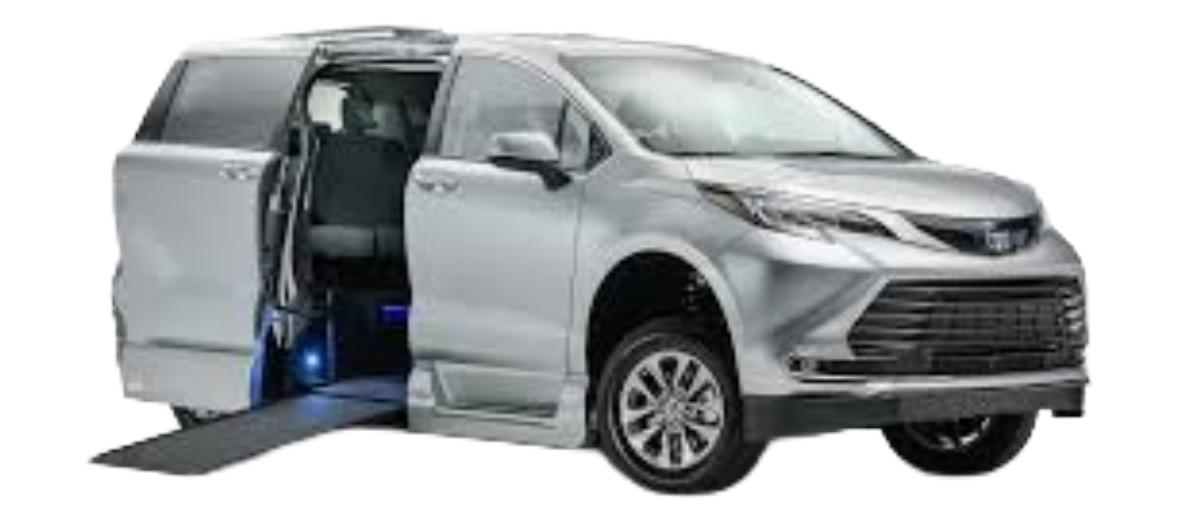

Autumn brings crisp air, vivid foliage, and a love it or hate it layer of pumpkin everything. But accessibility is finally catching up, meaning people with mobility or sensory limitations can participate too. Across both Canada and the U.S., destinations have upped their game, ramping trails, paving festival grounds, transforming rides, so let’s get into what’s worth planning.
Canada: Coast-to-Coast Inclusion for Fall Fun
Canada has put accessibility on the map in surprising ways. National parks operated by Parks Canada now offer paved scenic lookouts, barrier free trails, and even accessible campsites, so the season’s color doesn’t exclude anyone.
In Quebec, Canyon Sainte-Anne features wheelchair-friendly paths and shuttles that get you to the best views without hiking, and Cap-Tourmente Reserve offers accessible boardwalks through bird-rich wetlands.
Then there’s Niagara Falls, not just powerful but accessible. Take the Incline Railway down to the falls, explore behind them through accessible elevators and pathways at Journey Behind the Falls, or wander the Butterfly Conservatory’s wheelchair friendly walkways.
Festival-wise, Ontario Culture Days hops around public hubs with accessible venues; the Grape & Wine Festival in St. Catharines keeps its parades and vendor zones downtown; and the Sooke
By: Liliana Tomasino
Fall Fair on Vancouver Island combines arts, crafts, and community charm inside accessible facilities. Even rural traditions like the Drumbo Fall Fair are keeping things compact and flat, making pie contests, livestock displays, and family fun inclusive.
U.S.: From Scenic Drives to Festive Street Fairs
The U.S. is catching up on accessibility too. Scenic drives are a no-brainer: Shenandoah National Park’s Skyline Drive offers 105 miles of fall panoramas with paved overlooks and access to the fully accessible Limberlost Trail—all without stepping off the highway. Great Smoky Mountains has the Sugarlands Valley Nature Trail (paved, flat) and accessible campsites. In Colorado, the Georgetown Loop Railroad even runs accessible fall foliage excursions.
Expect similar visuals along Michigan’s Tunnel of Trees, a scenic roadway that wraps you in fiery fall hues.
Need inspiration beyond nature?
Try the Ohio Pawpaw Festival, Indiana Pawpaw Festival, or the West Virginia Pawpaw Festival, all celebrating North America’s native fruit with tastings, music, and accessible layouts. In Evansville, Indiana, the giant West Side Nut Club Fall Festival floods downtown with food booths, music, and a parade, all on city streets. Meanwhile, Brushy Mountain Apple Festival in North Carolina transforms a block of downtown into a harvest fair with crafts, food, and music (closed streets, plenty of seating).
In Wisconsin, Bayfield Applefest draws tens of thousands for orchard tours, crafts, and local food in a flat, walkable setting. If you’re chasing foliage without leaving your car, Asheville, North Carolina, is noted as one of the most affordable fall foliage destinations in the U.S., perfect for an accessible road trip backbone.
Accessible fall fun isn’t just a checkbox, it’s happening and growing. From coast to coast and north to south, there’s color, culture, and community that accept, include, and welcome everyone.

By: Julia Scala
Autism spectrum disorder (ASD) affects many families across Canada. For some young people, challenges related to anxiety, communication, or adapting to change can make daily life particularly demanding. In this context, specially trained assistance dogs for children and youth with ASD provide continuous, reassuring, and profoundly transformative support.
At the forefront of this mission is the Mira Foundation, a Quebecbased organization renowned for its commitment to people living with functional limitations. For more than 15 years, Mira has carefully developed a tailor-made program for autistic youth, focusing on safety, effectiveness,and comfort.
Mira donates an average of 100 dogs per year through its three programs, Autism Spectrum Disorder (ASD).
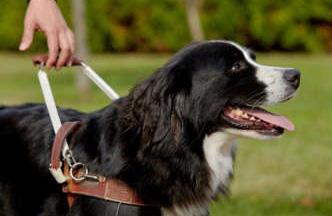
*Mira dogs wearing a red bandana are in socialization, while those wearing a harness are at work.
These rigorously selected and trained dogs play a role far beyond that of a simple companion, explains Aurélie Tremblay, Director of Programs at the Mira Foundation. Their presence can help ease anxiety, calm crises, support daily routines, assist with learning, encourage independence, and promote social interaction, while providing the vital sense of security that supports a child’s growth and well being.
The family environment, the child’s specific needs, and the dog’s personality are all considered to foster a harmonious and lasting relationship.
An assistance dog acts as an emotional regulator, helping to meet sensory needs and ease transitions, which are often challenging for children with ASD. The dog also serves as a social bridge, helping the child connect with the world around them.
Before being paired with their beneficiary, each dog follows a precise path. Mira breeds its own dogs—often Labernese, a cross between the Labrador Retriever and the Bernese Mountain Dog—chosen for their gentle, stable, and attentive temperament.
At nine weeks old, the puppy leaves the nursery to begin a socialization period with a foster family, where it learns the basic skills needed for everyday life. After a year, the dog returns to Mira for evaluation. If successful, it begins training in one of three programs: guide dogs for people who are blind, mobility assistance dogs, or assistance dogs for children with autism spectrum disorder. The matching process is carefully thought out.
Children and their parents take part in an “assignment class” held over several days at the Mira facility, where they are provided with free lodging and meals. This intensive training period allows the child to bond with their dog, learn the commands and handling techniques the dog has been taught, and ask any questions in a professional and supportive environment.
After this training, personalized follow up is provided through home visits, phone calls, and video conferences, ensuring Mira is always available to help the child and family adapt to daily life with the dog.
Autism is often considered an invisible disability. A person may appear to function well outwardly while struggling internally. In these moments, an assistance dog becomes a comforting ally and a grounding presence.
Through the Mira Foundation’s program, many young people each year regain emotional balance, self confidence, and an improved quality of life. Offering an assistance dog to a child with ASD is much more than practical help, it is opening the door to a world that is more accessible, calmer, and profoundly human.
By: Rim Ouzennou

Ludwig Van Beethoven was and still is one of the greatest musicians to have grazed the surface of the Earth. There is no need to be a fanatic of music to know that he revolutionized the world of composition with his well-known Symphonies like the n°9 "Chorale" (Op. 125).
However, few are aware that he turned deaf at 45, when his career was already established. Signs of deafness appeared around 1799 when he was just in his mid-twenties. The most plausible reason is the high level of lead in his body due to it being present in the plates they ate from at the time. Beethoven took the decision not to inform others of his condition because he firmly believed that it would ruin his career. It is to know that at the time young compositors needed to perform to get their work of art delivered to the public.
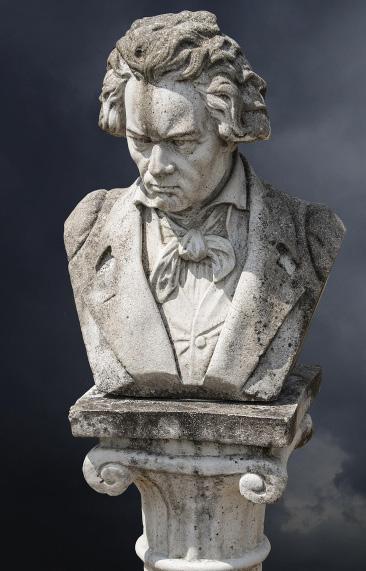
However, with time, his deafness got exposed by the mediocrity of his performances and by the age of 45, he stopped performing which killed his performing career. On top of that, he also became a very secluded person by not making public appearances anymore and only allowing some of his friends to visit him. He also only communicated with the outside world by written letters, which puts the emphasis on the fact that his physical social life was nonexistent. This story is a true tragedy: How much more could Beethoven have done for the music world industry if he never got deaf? What other accomplishments could he have realized? And on a more humane level, how much happier would he have been to interact with and truly experience the world around him? These will remain unanswerable questions. Nevertheless, one cannot deny how many there are a few recurrent themes with today’s society even almost 2 centuries ahead of. First, the fear of being different and therefore, judged inapt or incompetent by others. Beethoven already had proven his talent many times to the world before any signs of deafness appeared and the fear of other people’s judgements was still strong. For many people, it seems from the fear of being labelled and/or facing discrimination. By doing so, a barrier between the world and us forms which prevents us from creating and maintaining authentic and meaningful relationships. This grandly increases social exclusion and loneliness. On the long run, this phenomenon destroys completely people self-esteems because they base their value solely on their incapacity to provide to the world in the way it is expecting. This truly shows that mental health is omnipresent no matter what the condition is. This also demonstrates that 2 centuries after we are dealing with the same phenomenon in different contexts. It highlights the cruciality of speaking up to be able to remediate or palliate for the incapacities.
This shows that there are still many changes to make in how we perceive our own limitations and how we respond to them as a society. Too often, difference is seen as weakness, and incapacity is mistaken for inability. Beethoven’s journey stands as a timeless reminder of the human spirit’s ability to adapt, create, and transcend, even when the odds seem insurmountable. Despite the silence that surrounded him, Beethoven continued to compose works that changed the course of music forever. His determination reminds us that true potential is not measured by what we lose, but by what we choose to do with what remains. In his defiance of limitation, he gave the world proof that creativity and purpose are not defined by physical condition, but by inner strength. Today, his legacy calls us to look beyond labels and to see the value in every person’s contribution.
By: Alexander Moreno and Pénélope Pelletier
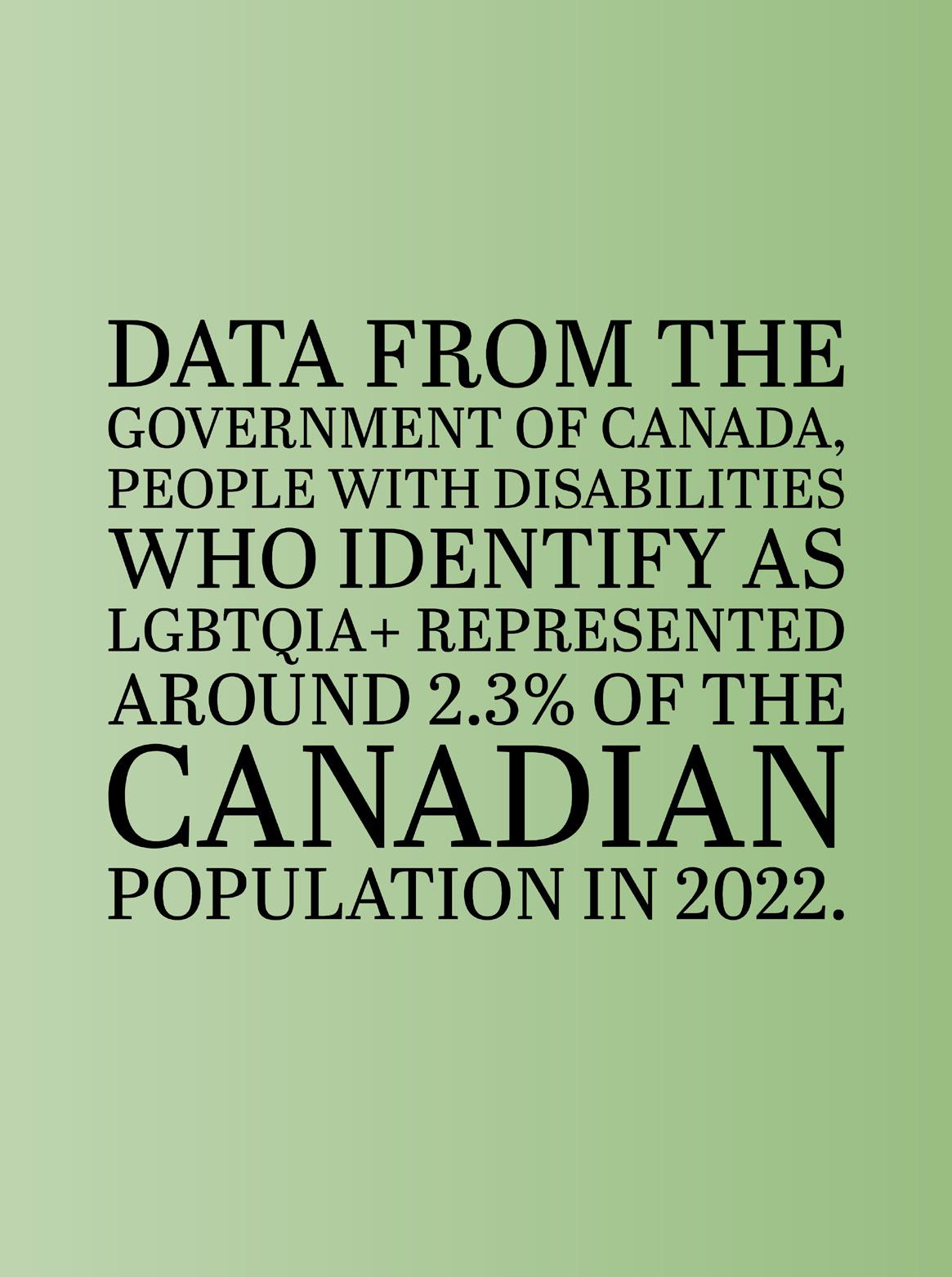
According to Statistics Canada, 27% of Canadians aged 15 years and older had one or more disabilities that limited them in their daily activities. Disability can affect anyone, including people who identify as lesbian, gay, bisexual, transgender, queer/questioning, intersex, asexual, and other sexual orientations and forms of gender expression (LGBTQIA+ people). However, members of the LGBTQIA+ community at the intersection of these two realities may see some challenges amplified, and new obstacles emerge with higher levels of stigmatization and exclusion.
Statistics have often shown higher rates of disability among LGBTQIA+ individuals. In the U.S., 36% of individuals identifying with diverse sexual orientations or gender identities and 52% of members of gender diversity specifically reported having a disability compared to 24% of non-LGBTQIA+ individuals. Various factors may contribute to this disparity, including minority stress, lack of trust in the healthcare system, lack of access to healthcare system, lack of access to inclusive care, and lack of specific prevention programs to reduce health risks in this population. It is important to bring awareness to the intersection of both realities as people with disabilities who identify as LGBTQIA+ face unique forms of stigmatization.
For people with disabilities who identify as LGBTQIA+, connecting with disability groups and LGBTQIA+ groups
independently is more difficult. Compared to non-disabled people in Canada, people with disabilities who identify as LGBTQIA+ often feel less included in queer spaces. The invisibility and lack of recognition regarding sexuality and sexual needs may lead to the misconception that people with disabilities who identify as LGBTQIA+ are asexual or that sexual and gender diversity and expression are not important. Consequently, not being able to express themselves authentically can hinder the development of significant social ties, suppress their identities, and limit their relationships.
Many people with disabilities face infantilization in their day-to-day lives. Countering the myth that people with disabilities, particularly those who identify as LGBTQIA+ are asexual can help us to focus on this important aspect of human health. Those who express sexual or gender diversity should not be seen as confused or unable to develop loving ties (e.g., equating friendship with romantic feelings). This kind of societal thinking can have many negative repercussions on people with disabilities who identify as LGBTQIA+. For instance, they can experience frustration because they are unable to express their identity and are dismissed. Because of the lack of awareness and understanding of human sexuality, people with disabilities who identify as LGBTQIA+ can lack access to inclusive, accessible sexual education such as information and resources on adapted sexual practices and safe and intimate spaces tailored to their needs. This can lead to risky sexual behaviors, negative emotional consequences, and diminished satisfaction with their sexual lives.
Inclusiveness and awareness should also be encouraged in healthcare and institutional environments. Lack of recognition of people with disabilities who identify as LGBTQIA+ and fear of non-inclusive care can lead them to disregard their health needs. Healthcare professionals often lack the training to work with this community and feel the impact of those training gaps when interacting with people with disabilities who identify as LGBTQIA+ for various reasons (e.g., basic knowledge of sexual and gender diversity, unawareness of intersectional realities, and personal barriers such as cultural or religious beliefs). The negative impact on people with disabilities who identify as LGBTQIA+ includes family caregivers and healthcare professionals’ exclusion of sexual education as they do not deem it necessary. Individuals’ needs may be disregarded, and their validity put in question due to their disability or sexual and gender diversity status. Real negative consequences may include the unwanted disclosure of identity or insensitive care, leading to mistrust and diminished quality of care. For that reason, individuals may choose not to disclose their sexual and gender identities to their health teams or care facilities.
This forced or voluntary non-disclosure perpetuates the invisibility of LGBTQIA+ people with disabilities.
It is crucial to raise awareness of the visibility of people with disabilities who identify as LGBTQIA+ to create more inclusive environments aiming to meet their needs, increase trust, and counter stigmatization.