




With decades of experience handling highly regulated materials across North America, we’ve cultivated a culture deeply rooted in safety, compliance, and operational precision.

» Full Truckload
Refrigerated, Produce, Dry Van, Plants and Perishables
» Specialized Services
Open Deck/Flatbed & Over-Dimensional, Store Fixtures and Relocation
» LTL & Partials
Standard, Volume, Expedite, Lift-Gate Service
Houston, Texas
» Expedited
Box Trucks, Sprinter Vans, Team Service
» Drop-Trailer
Dedicated Programs, Pop Up Fleets, Leased Trailers
» Expanded Services
White glove, Final Mile, Private Fleet Support/DSD, Power Only


Atlanta, Georgia
» Drayage
Most Major Domestic Ports
» Cross-Border
North America (US, Canada & Mexico) All modes including Truckload, Over-Dimensional, LTL
» Warehousing
Short & Long-Term Storage, Cross-Docking, Pick & Pack & More




Since
innovative, and cost-effective transportation and logistics solutions for the food and beverage industry.
Modern reefer fleet with advanced temperature monitoring & backup power
Door-to-door service across Canada & the U.S.
Cold chain integrity from pickup to final delivery
Ideal for fresh, frozen & sensitive food products
Full Truckload (FTL and LessThan-Truckload (LTL) options
Nationwide coverage with terminal locations across Canada
Cost-effective solutions for both large and partial shipments
Optimized supply chain management
Dedicated fleet & drivers for guaranteed capacity
Expedited solutions for time-sensitive shipments
Scalable capacity to support your growth
LOGISTICS & SUPPLY CHAIN SOLUTIONS
Route optimization & delivery planning
Supply chain design & technology integration (EDI, TMS, WMS)
Experienced team focused on efficiency & performance
On-time performance you can
EXPERIENCED
Trained professionals committed to food
TECHNOLOGY
Real-time visibility & proactive communication FLEXIBLE
Customized solutions that adapt to your needs PARTNERSHIP

EDITION 2 • 2026
Published three times a year for:
Food Shippers of America
1144 East State Street, Suite -288A Geneva, IL 60134
847-302-1496
executivedirector@foodshippers.org www.foodshippers.org
Published by:
MindShare Strategies, Inc.
Ponte Vedra Beach, FL 32004 USA
952-442-8850 www.MindShare.bz
Billing Address: MindShare Strategies, Inc. P.O. Box 843 Springfield, TN 37172 USA
Group Editorial Director and Publisher: Brian Everett, ABC 952-442-8850 x201 brian@mindshare.bz
Editorial Content This Edition:
Courtney Bloom, Brian Everett, Marcia Jedd
Advertising Sales: Cassidy Mullins 952-442-8850 ext. 215 cassidy@mindshare.bz
Alec Stifter
952-442-8850 x218 alec@mindshare.bz
Design/Production Manager: Todd Pernsteiner 952-841-1111 todd@pernsteiner.com
Accounting/Administration/Circulation: Melanie Haley 423-356-4154 accounting@mindshare.bz
Marketing/Communications: Brynn Aiello 952-442-8850 x220 brynn@mindshare.bz
©2026
Chairman
President Darica
Treasurer
Earnie Seibert,
Secretary Lori Lammers,
Secretary Rusi


Media Advisor
Mary Kearney, Kottke Trucking, Inc.
Media Committee
Diane Bermudez, Worldwide Logistics
Georoid Couglan, Kerry Stace Knabel, Promise Delivered
Crystal
John
Lee

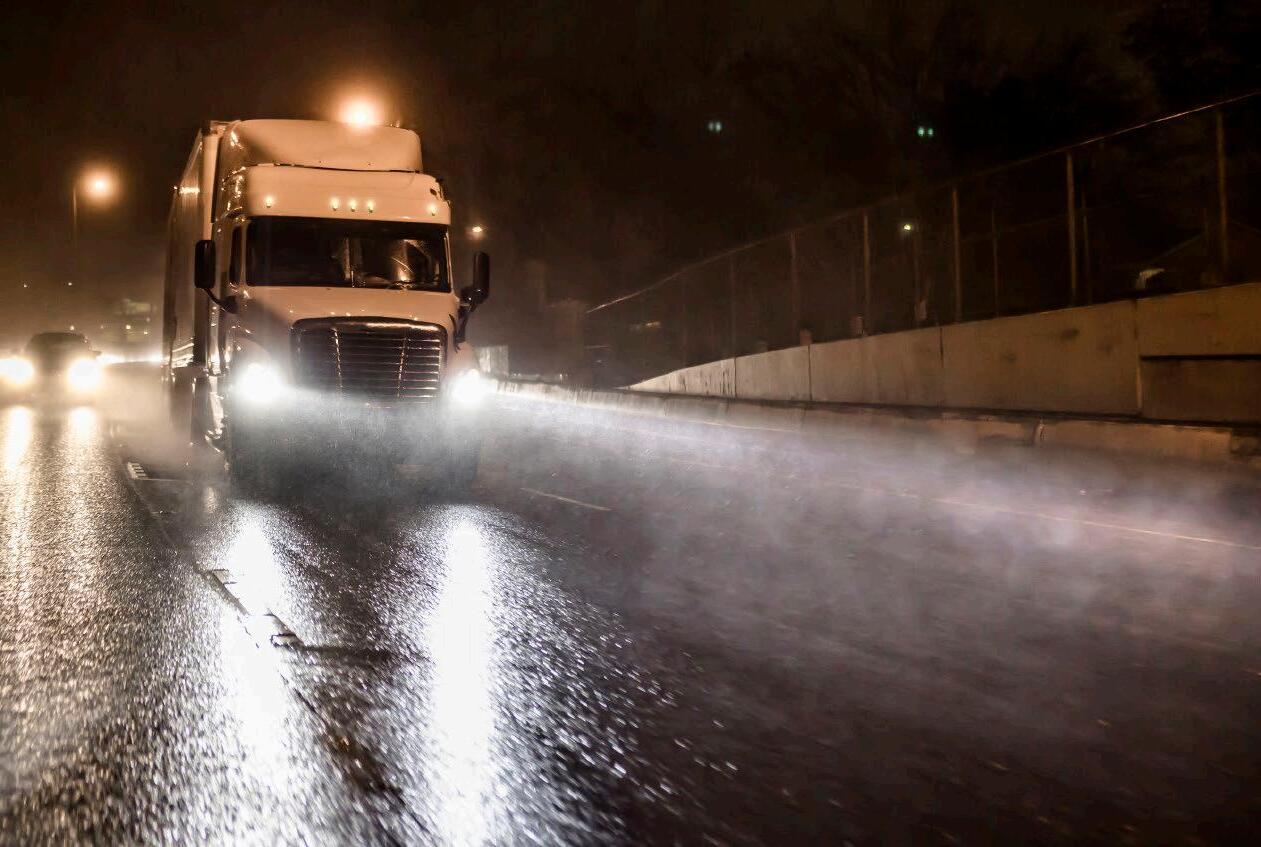
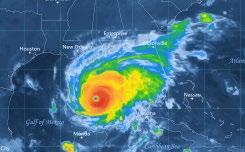
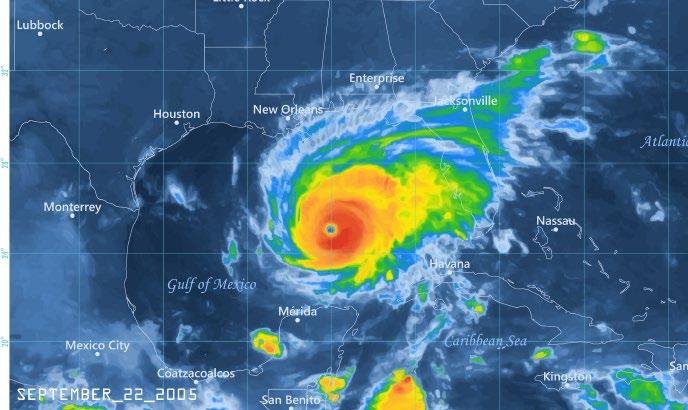
A powerful storm system sweeps across a major agricultural region overnight—flooding highways, delaying deliveries, and leaving grocery distributors scrambling to answer a simple question: Where are my shipments of food products?
Just a decade ago, many supply chains would have struggled to respond to such a situation, relying on disconnected systems, manual updates, and limited visibility beyond individual links in the chain. In recent years, smart food shippers have invested in advanced technologies and strategies that enable them to achieve unprecedented end-toend visibility, real-time monitoring, and full traceability—transforming how products move from sourcing to consumers while strengthening safety, compliance, operational efficiency, and trust.
Food companies are facing growing pressure to transform their supply chains as disruptions become more frequent and costlier. Extreme weather events, geopolitical instability, labor shortages, and transportation bottlenecks have exposed weaknesses in traditional supply chain models that relied heavily on manual processes and limited visibility.

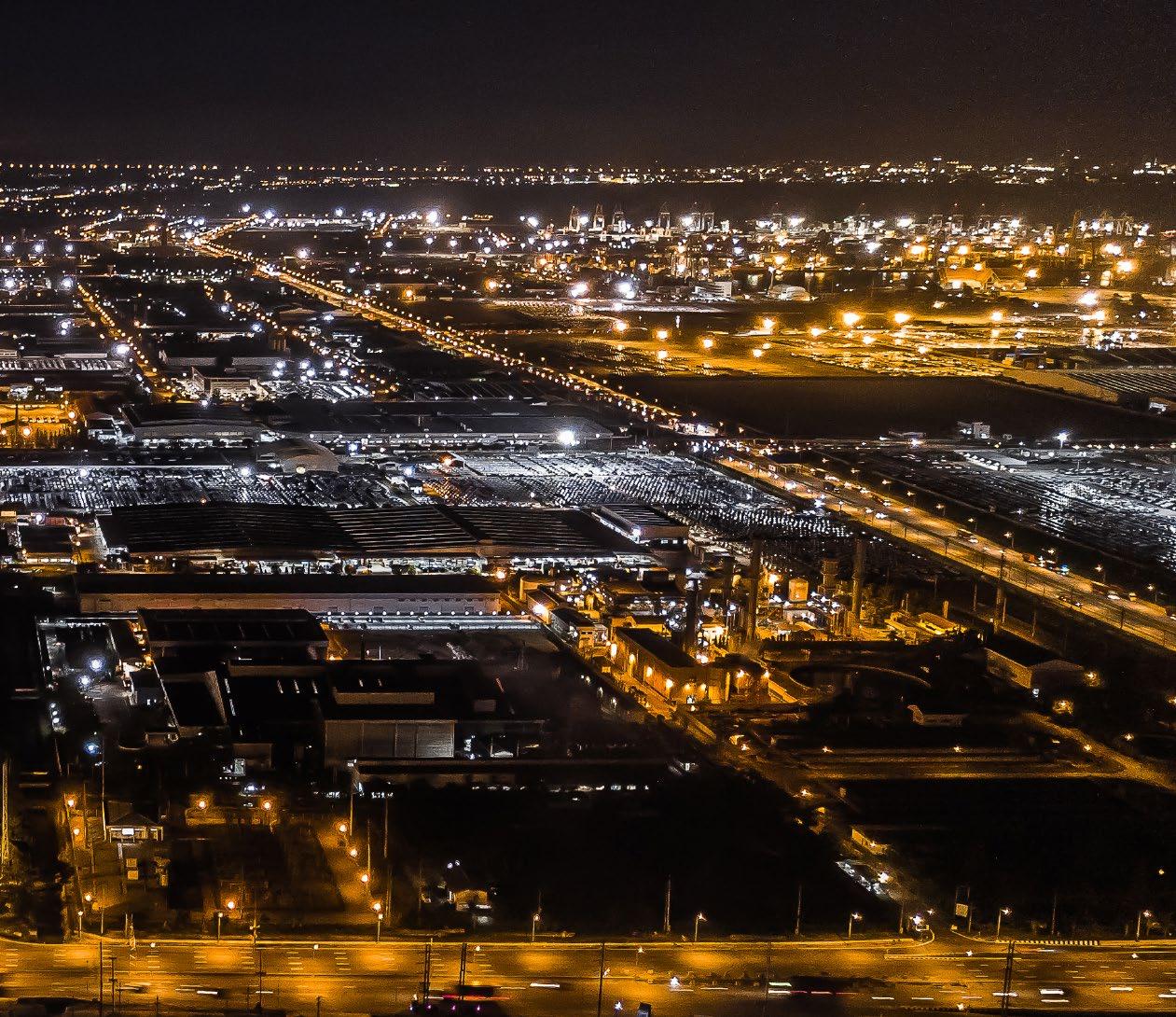
For food companies moving temperature-sensitive and perishable products, even minor delays can result in spoilage, waste, and lost revenue. As a result, shippers are investing in technologies that provide automation and real-time visibility into inventory, shipments, and transportation conditions so they can respond more quickly to disruptions and maintain continuity across the supply chain.
PepsiCo has made significant investments in business to adapt to the changing landscape and
Food shippers are increasingly tracking a wide range of real-time and predictive data points to improve supply chain visibility, protect product quality, reduce waste, and respond faster to disruptions. Key areas include:
Shipment Location & ETA: Real-time GPS tracking, route deviations, dwell times, and estimated arrival updates.
Temperature Monitoring: Temperature fluctuations, humidity, and reefer performance.
Inventory Visibility: Inventory levels across warehouses, distribution centers, and in-transit loads.
Order Status & Exceptions: Automated alerts for shipment delays, missed appointments, detention, rejected loads, and damaged product.
Supplier Performance: Track on-time performance, fill rates, lead times, and quality compliance.
Traceability Data: Lot codes, batch numbers, origin tracking, and chain-ofcustody documentation.
Capacity & Transportation Costs: Monitoring carrier availability, freight rates, fuel costs, and lane performance.
Shelf-Life and Freshness: Track remaining shelf life in transit.
Weather and Disruption Risk: Monitor weather events, port congestion, labor disruptions, and traffic conditions.
Sustainability Metrics: Carbon emissions, fuel consumption, route efficiency, and waste reduction.
disruptions, including right-sizing and modernizing its warehousing and distribution capacity. Says Ramon Laguarta, PepsiCo’s CEO, who has been focused on supply chain modernization and digital transformation: “We’re building smarter systems with technologies like AI to better serve our customers and consumers, so we can have the right products, at the right place, at the right price. Through our collaborations with cuttingedge technology providers, we’re using AI to reimagine our go-tomarket model, enhance customer support, and empower sales teams
to focus on strategic growth. This allows us to unify data, gain realtime inventory visibility, and provide faster, more responsive customer service.”
Consumer expectations also are driving supply chain transformation throughout the food industry. Today’s consumers want fresher products, faster delivery, and greater transparency into where their food comes from and how it was produced. In addition, visibility enhances collaboration with stakeholders across the supply chain ecosystem—ranging from growers,
From severe weather to port congestion and labor shortages, disruptions are constant. Viability helps shippers anticipate issues, adjust quickly and protect both products and customers.
producers and manufacturers to distributors, logistics providers and retailers. In fact, food shippers increasingly expect suppliers to provide accurate tracking, traceability, and sustainability data throughout the movement of goods, which ultimately brings about more accountability and value measurement of providers.
“Visibility in today’s supply chain goes beyond shipment location,” observes Paul Thomasson, Director of Business Development with logistics provider LST Group. “It’s about understanding and managing risk in real time, especially in the world of perishables where timing and product integrity are everything. At LST Group, we’ve built a multi-layered visibility model that combines advanced technology, AI-driven monitoring, and disciplined operational execution to protect freight from the moment it’s tendered. For produce, temperature-sensitive commodities, and high-value shipments, there’s zero margin for error, which is why our process starts with rigorous carrier vetting and experienced compliance oversight to ensure only trusted, food-grade partners are engaged.
We layer in fraud prevention protocols and continuous monitoring to safeguard against the growing risks in today’s transportation environment. From there, we leverage realtime tracking, direct driver communication, and predictive alerting system to identify and address potential disruptions before they impact service. Our structured loading and dispatch SOPs ensure every detail is validated upfront, from appointments to transit plans, creating consistency and accountability at every step. The result is a highly controlled, transparent process that keeps shipments secure, protects product integrity, and gives our customers confidence when it matters most.”
At the same time, regulations surrounding food safety and traceability continue to evolve, placing additional pressure on shippers to modernize operations. Digital tools such as IoT (Internet of Things) sensors, AI-powered analytics, and blockchain traceability platforms help food companies meet these demands while improving operational efficiency and reducing risk.
While legacy systems remain the backbone of food supply chain management, emerging technologies and realtime visibility platforms are transforming supply chains.
IoT Sensors & Smart Devices: Real-time monitoring of temperature, humidity, shock, location, and product condition.
AI & Predictive Analytics: Forecast delays, identify supply chain risks, optimize routing, and predict spoilage or inventory shortages.
Real-Time Visibility Platforms: Aggregate shipment data from carriers, telematics, GPS, weather, and traffic.
Blockchain Technology: Improves traceability and food recall response through immutable product tracking records.
Digital Twins: Virtual models of supply chains.
Computer Vision & Automation: Cameras and AI monitor warehouse operations, loading accuracy, and product quality.
Cloud-Based Collaboration Platforms: Data sharing among suppliers, carriers, distributors, and retailers.
Autonomous & Robotics Technologies: Improve speed and inventory accuracy.
Satellite & Advanced GPS Tracking: Deliver more precise shipment visibility, especially in remote regions.
Sustainability Analytics Tools: Track emissions, fuel usage, and waste across the supply chain.
“VISIBILITY IS NO LONGER OPTIONAL. IT’S THE FOUNDATION OF RESILIENT FOOD SUPPLY CHAINS.”
Food companies are navigating a business environment defined by uncertainty. Supply chain disruptions, fluctuating costs, labor shortages, evolving regulations, and increasing customer expectations have made it more difficult than ever to maintain efficiency and profitability.
As a result, food manufacturers, distributors, and shippers are looking for new ways to gain greater control over their operations.
According to Johannes Gudmundsson, CEO of inecta, one of the most effective ways to achieve that control is through a unified technology platform that connects every part of the business.
“When a food company runs purchasing, inventory, production, sales, finance, and compliance in a single system, the biggest benefit
is clarity,” says Gudmundsson.
“Everyone works from the same real-time data, so decisions are faster and more accurate.”
That level of visibility has become increasingly important as food companies face mounting operational complexity.
Disconnected systems often create data silos, forcing employees to rely on spreadsheets, manual processes, and time-consuming workarounds to piece together information from multiple sources.
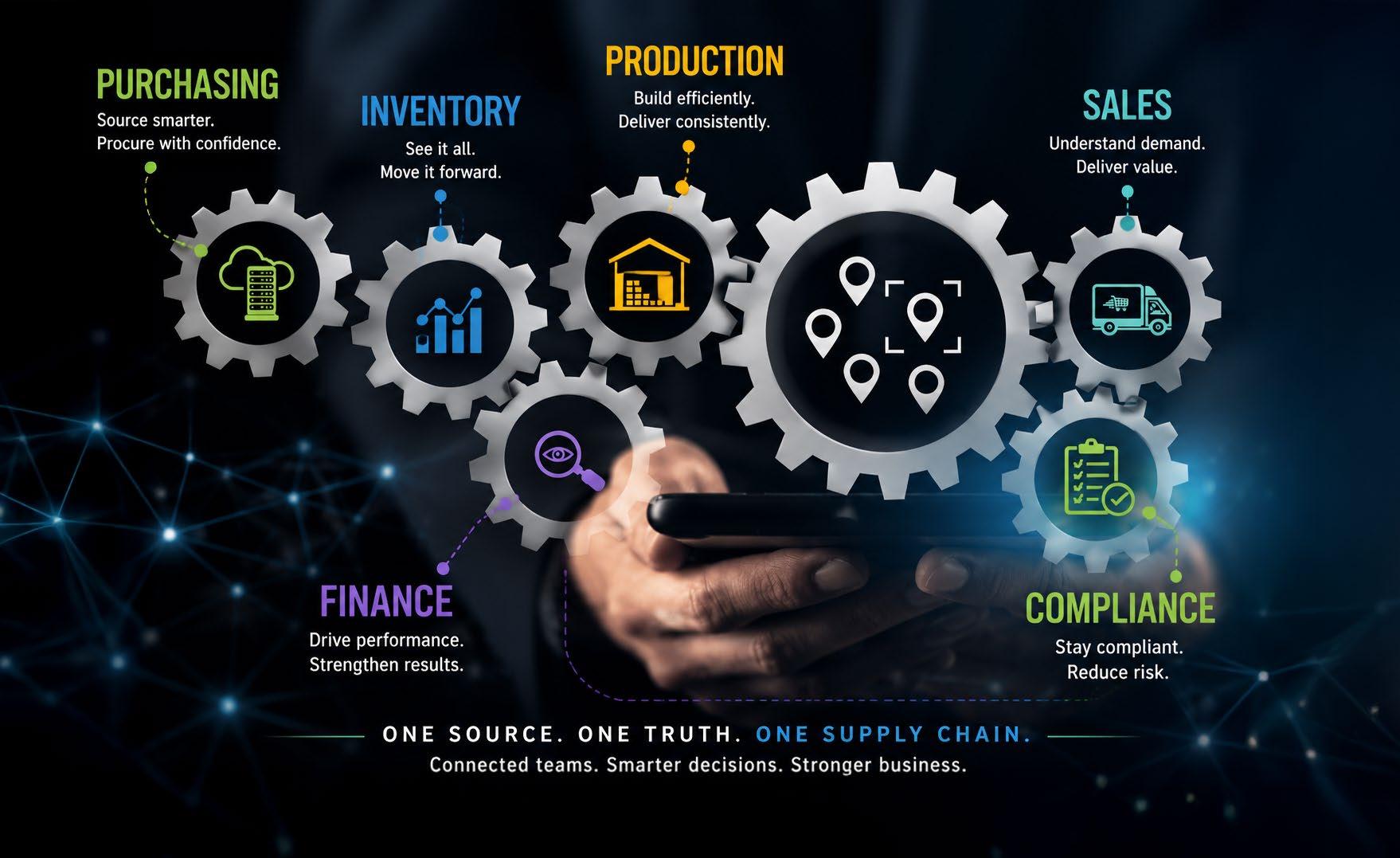
A unified enterprise resource planning (ERP) platform eliminates those barriers by providing a single source of truth across the organization.
“Manual work drops, discrepancies between departments disappear, and full traceability from supplier to customer becomes standard,”
Gudmundsson explains. “This reduces risk and makes recalls far easier to manage.”
For food shippers, visibility extends far beyond inventory counts and shipment tracking. The ability to understand performance at a granular level can have a significant impact on profitability and operational decision-making.
“This also unlocks deeper visibility into the business,” says Gudmundsson. “You can understand true margins by product, lot, and customer, not just at a high level.”
That level of insight is particularly valuable in an industry where transportation costs, ingredient prices, and customer requirements can change rapidly. Real-time access to accurate data allows companies to identify opportunities, address issues proactively, and make more informed decisions.
Connected systems also improve coordination between planning, production, and fulfillment teams.
“Operations move more efficiently because planning, production, and fulfillment are connected,” Gudmundsson says. “Most importantly, it creates a foundation that scales with growth without the need to constantly layer in new tools.”
The need for visibility is being driven by several industry trends that continue to reshape food supply chains.
“Food shippers are operating in constant uncertainty,” Gudmundsson notes. “Supply chains
are less predictable, costs shift quickly, and product quality can vary from shipment to shipment.”
At the same time, regulatory requirements continue to expand. Traceability initiatives, including those associated with the Food Safety Modernization Act (FSMA) Rule 204, require companies to maintain more detailed records and tighter control over supply chain data.
“Regulations, especially around traceability, are becoming more stringent and require tighter control over data and processes,” he says. Labor shortages and growing customer expectations further complicate operations. Customers increasingly expect faster service, greater transparency, and more accurate order fulfillment, while companies continue to struggle with workforce constraints.
As a result, Gudmundsson believes organizations must rethink the role of technology.
“Companies are being pushed to rethink how they operate,” he says. “ERP systems can no longer serve as passive record-keeping tools. They need to actively support decision-making, adapt in real time, and help teams execute efficiently without relying on manual workarounds.”
While many technology solutions promise visibility and efficiency, not all are designed to address the unique challenges of food production and distribution.
“Food production is not a standard manufacturing environment,” says Gudmundsson. “It involves perishability, variable yields, lot tracking, and strict compliance requirements all at once.”
When software providers lack food industry expertise, the result can be systems that appear effective on paper but fail to meet operational realities.
“Without a deep understanding of these realities, technology partners often design systems that work
in theory but fail in practice,” he says. “This leads to poor adoption and work happening outside the system.”
Gudmundsson argues that the most successful technology solutions incorporate industryspecific functionality from the start rather than relying on extensive customization after implementation.
“Closing that gap requires building industry knowledge directly into the product rather than relying on heavy customization,” he says.
Equally important is the experience of the teams supporting those solutions.
“It also means having teams with real food industry experience who can speak the same language as their clients,” Gudmundsson adds. “The strongest outcomes come from ongoing collaboration and a deep understanding of customer challenges over time.”
For food shippers, supply chain visibility has evolved from an operational goal to a strategic imperative. Companies that can connect data across purchasing, production, inventory, compliance, transportation, and finance are better positioned to manage risk, improve service, and respond quickly to changing market conditions.
As supply chains grow more complex and regulations become more demanding, visibility will increasingly separate industry leaders from the rest of the field. Organizations that invest in integrated, food-focused technology today will be better prepared to navigate tomorrow’s challenges while maintaining the agility needed to compete in a rapidly changing marketplace.

Becoming a “shipper of choice” has quickly shifted from a nice-to-have distinction to a competitive necessity in food supply chains.

In a market where capacity tightens, expectations rise, and disruptions are constant, the shippers that earn preferred status with motor carriers, truck brokers, 3PLs, railroads and maritime players are the ones that secure the best service and often the best rates.
“At its core, becoming a shipper of choice isn’t about perks alone,” says Mike Regan, Chief Relationship Officer and Co-Founder, TranzAct Technologies, Inc. “It’s about building trust through consistency, clarity, and transparency.”
“What is important is a different kind of AI, and that’s ‘Actionable Information,’” says Regan. That’s because transportation and logistics partners make decisions based on the information shippers provide. When that
data is incomplete, unreliable or inaccurate—whether it’s inaccurate weights, unclear pickup windows, or last-minute changes—it creates inefficiencies that ripple across operations. Companies become “shippers of choice” by prioritizing timely and accurate data, from the initial RFP that engages their partners through the life cycle of the partner relationship. They invest in systems and processes that ensure load details, facility requirements, and scheduling information are accurate from the outset. This reduces friction, minimizes costly surprises, and signals to partners that their time and assets are respected.
“As you go through the RFP process, make sure you’re providing accurate information around volumes,” advises Craig Paulsen, Vice President of Commercial Development - Intermodal with Schneider: “We’re putting together
solutions based on those volumes. If you elevate that forecast or go light, that can cause problems. As your provider, we understand that things happen over the course of the year but starting out with information that is most accurate gives us a chance to develop the best solution that works.”
Strong partnerships depend on alignment. That means clearly articulating expectations around service levels, appointment compliance, dwell times, and performance metrics. Just as important is how changes are handled. In the food industry, seasonality, promotions, and supply fluctuations are inevitable. Shippers that proactively communicate shifts in volume, routing, or timing give their partners the ability to plan and respond effectively. The earlier and
more clearly you communicate, the more likely your partners can deliver the consistency you need.
Some shippers go above and beyond to help their logistics partners understand their needs.
“For example, we changed a pretty big piece of business in southwest Missouri over the last 18 months,” says Peter Andrews, Director of
Transportation with Schreiber Foods. “Very complex and very just-in-time to support production distribution in that region. To help educate our carrier partners participating in this opportunity, we took them all around those facilities to make sure they saw how those facilities operate and to identify any unique needs and challenges.
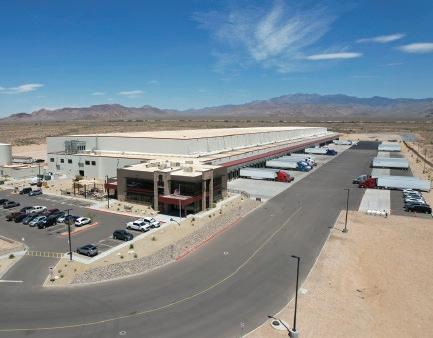
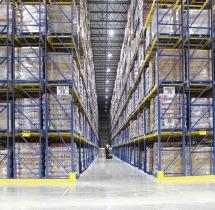

Had we not gone through that exercise, we would be having tough conversations about things they wouldn’t have accounted for - so getting to that level of intimacy is absolutely critical.”
Shippers also recommend to lead with honesty when challenges arise. No supply chain runs perfectly— delays, shortages, and disruptions happen. What separates a Shipper of Choice from other shippers is how those moments are handled. Being open and honest, rather than reactive or opaque, can build credibility. If a facility is backed up, say so. If volumes are dropping or surging unexpectedly, share that reality. Transparency during challenges allows carriers, brokers and 3PLs to adjust, collaborate on solutions, and maintain service levels. Over time, this kind of honesty strengthens relationships far more than trying to mask issues.
Ultimately, becoming a Shipper of Choice is about making it easier, and more attractive, for partners to do business with you. When carriers and logistics providers trust your information, understand your expectations, and feel included in problem-solving, they’re more likely to prioritize your business. In a competitive supply chain landscape, that preference can be the difference between scrambling for capacity and having reliable, highquality partners at the ready.
For food shippers, the path forward is clear: prioritize transparency, communicate proactively, and operate with honesty. Do that consistently, and “Shipper of Choice” becomes less of a label— and more of a lasting advantage. “General Mills has always been known as a very strategic shipper,” says Mark Purdy, Director of North American Transportation with General Mills. “And it is something that when you think about winning together, creating that win-win
culture, it’s a legacy that General Mills has created long before me. Once we sold to the C-suite the importance of being a strategic partner with our providers, it allows us all to be more successful because you get the right capacity, on the right freight, with the right type of partnership characteristics. And then we all win together.”
While becoming a shipper of choice is a critical strategy, other supply chain executives concede you need to strike a balance on difficult challenges shippers must navigate. A panel of shippers discussed the “elephants in the room,” ranging from replacing provider incumbents and changes in fuel surcharges to extended payment terms and how shippers assess rates in light of CSA alerts, equipment age, insurance, and trailer pools.

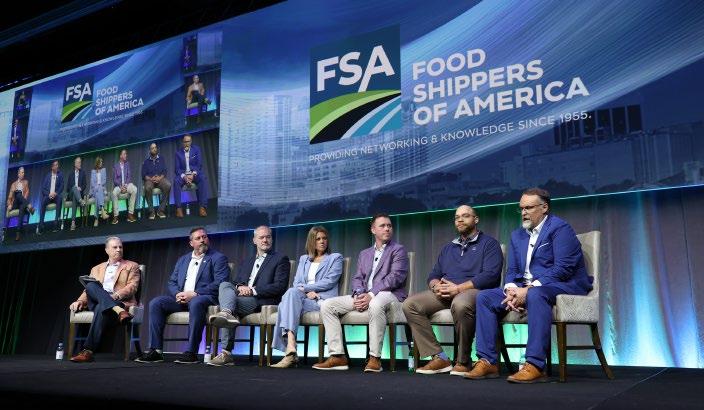
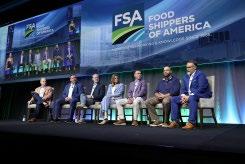
Participants on the “Know Your Shipper” panel at the 2026 Annual Food Shippers Conference included moderator Thom Albrecht, Chief Revenue Officer, Reliance Partners; Peter Callagy, Senior Manager of Transportation, Seaboard Foods; Jim Carver, Senior Director of Supply Chain, Michael Foods; Meghan Charboneau, Director of Transportation, Mars; Scott Haldeman, Director of Transportation, The Marzetti Company; Robert Morris, Senior Director Transportation, WK Kellogg Co.; and Mike Schwersenska, Vice President of Transportation, Brakebush Transportation.

Dan Egan, Agent for J.B. Hunt Transport Services, recently led a research study on the state of the temp-controlled LTL industry, which found there were five themes that emerged from respondents when it comes to the temperaturecontrolled market:
1. The Cold Chain Is Becoming More Demanding — and Less Forgiving. While customer expectations have accelerated faster than provider capabilities, they often collide with the realities of multi-stop LTL networks, increased regulatory pressure, and rising costs. The gap between expectations and operational feasibility continues to widen.
2. Cost Pressures Are Reshaping Capacity. Insurance, equipment, labor, and compliance costs are increasing significantly for many providers. At the same time, rate pressure from customers is intensifying. This imbalance is pushing some providers to scale back, consolidate, or exit certain lanes entirely.
3. Technology Is No Longer Optional. Providers are investing in telematics, real-time temperature monitoring, predictive maintenance systems, digital portals and scanning technology. But adoption is uneven, and cost remains a barrier. Shippers who expect modern visibility and automation must recognize that technology is a shared investment, not a cost carriers can shoulder alone.
4. The Provider/Customer Relationship. Partnerships should matter as much as price. Providers consistently described their best customers as those who communicate proactively, provide forecasting, maintain consistent shipping patterns, offer appointment flexibility, treat drivers with respect, and understand the realities of LTL operations.
5. The Next Five Years Will Redefine the Industry. Providers expect the market to be shaped by automation and AI, consolidation among both carriers and shippers, rising transparency expectations, labor scarcity, and sustainability pressures. These forces will reward networks that are agile, data-driven, and collaborative — and penalize those that cling to rigid, transactional models.

With the current state of the economy, the food industry is navigating a complex landscape of supply chain challenges that are impacting production, sourcing, logistics and distribution of food materials, ingredients and products.
The 70th Annual Food Shippers Conference took place March 1-3 at the Hilton Bonnet Creek Resort in Orlando, FL. More than 1,300 supply chain professionals and providers in the food industry attended with the goal to learn, collaborate, and network.
“This year’s conference brings together the food supply chain industry where meaningful collaboration, sharing of best practices, and peer-to-peer networking happens,” says FSA President Darica Schneider, Senior Director Transportation Operations for Univar Solutions.
If there’s one thing the Annual Food Shippers Conference does exceptionally well, it’s creating
meaningful opportunities for the people who move the food supply chain forward to connect.
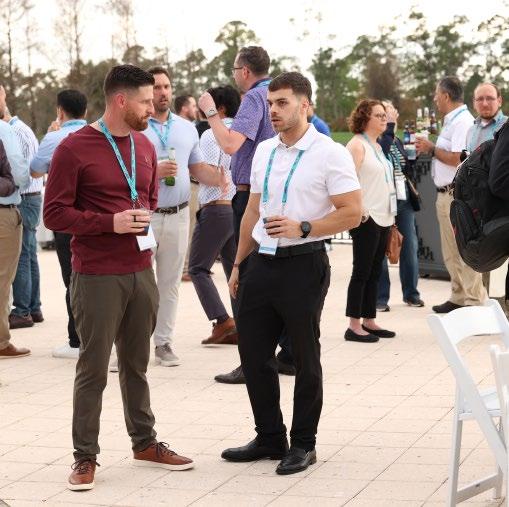
From fairways to receptions, networking spaces to casual hallway conversations, the conference buzzed with relationship-building among shippers, carriers, logistics providers, and key industry stakeholders.

Making connections began early Sunday when many attendees traded business shoes for golf spikes and headed to the beautiful Waldorf Astoria Golf Club for the annual FSA Golf Tournament. With both morning and afternoon shotgun starts, the event delivered a perfect mix of friendly competition and relaxed networking under the Florida sun. Meanwhile, back at the conference the energy continued to build. The Welcome Luncheon on Sunday brought attendees together for
their first round of conversations, while the Monday Attendee Buffet provided another opportunity to gather, share insights, and reconnect between sessions.
For those looking for more focused conversations, strategic networking sessions held in designated meeting areas created the perfect setting for one-on-one discussions throughout the event.
The official kickoff came with the Welcome Reception, followed by
a lively Welcome Buffet Dinner on the Waterside Event Lawn. As the evening wound down, attendees gathered for a laid-back Cigar Social, offering a chance to unwind and continue conversations under the night sky.
Networking continued each morning with breakfast gatherings on Monday and Tuesday—ensuring the day began with coffee, conversation, and collaboration.
Monday evening brought another round of memorable connections with a Cocktail Reception, followed by the Annual Banquet. The evening concluded with an After-Dinner Drink and Dessert Reception, where attendees lingered over sweet treats and lively discussion.
Through the leadership of Conference Co-Chairs Eric Kruse, Supply Chain Logistics Manager with Kwik Trip Inc. and Ada Brewster, Director of Sales with Butler Transport, the Annual Food Shippers Conference once again
highlighted relevant opportunities and challenges facing shippers. While content of this three-day conference focused heavily on the freight market and the overall economy, other topics included artificial intelligence (AI), the importance of close collaboration and understanding of needs between food shippers and their providers, fraud and cargo theft, and significant challenges in the trucking industry.
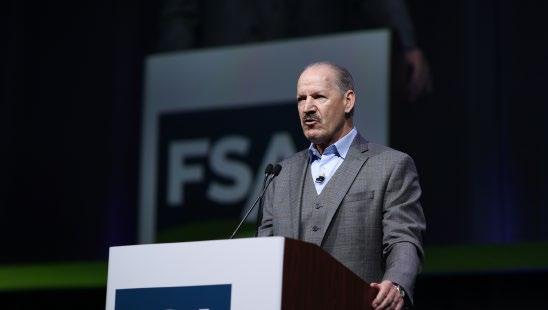
Along with sessions covering these topics, keynote speakers included Bill Cowher, Hall of Fame and head coach of the Pittsburgh Steelers and sports analyst for CBS, and actor John Ratzenberger of the well-known sitcom Cheers and voice talent for animated movie greats such as Toy Story, Monsters, Inc., Cars, The Incredibles, and Inside Out
Cowher explained that success starts with culture, not talent alone. During his tenure with the Pittsburgh Steelers, he emphasized accountability, preparation, and trust — principles that translate seamlessly to the boardroom.
He reminded leaders in the Food Shippers audience that adversity is inevitable, but resilience and steady leadership define longterm winners. Cowher stressed the importance of building a strong team where every individual understands their role, buys into a shared mission, and is willing to do the hard, often unglamorous work. Above all, he encouraged executives to lead with passion and authenticity, because when people believe in their leader and their purpose, performance follows.
Other session highlights included: The Economy and Transportation Outlook. Eric Starks, Chairman of FTR, is a leading authority in the freight transportation market intelligence and is widely recognized for his deep insights into the economic forces shaping the trucking, rail and intermodal sectors.
“There is so much risks ranging from China, Russia, Ukraine and Iran to tariffs, immigration, interest rates and cryptocurrency,” says Starks. “The risk probabilities are becoming more balanced, but the

downside risk remains higher than upside.”
Unleashing Productivity with Generative Artificial Intelligence.
Generative AI could boost productivity of up to 40% of U.S. workers, potentially increasing output by one-third. Dave Nelsen, President of Dialog Consulting Group, highlighted seven leading AI systems and their practical applications, including content creation, summarization, deep research, and tech support. These tools facilitate faster problemsolving and better insights by leveraging vast domain-specific knowledge.
“Successful integration requires leaders to understand where AI excels and where it falters,” he says. “Ultimately, organizations must proactively adopt AI to remain competitive and foster innovation.”
Fraud and Theft in the Supply Chain. With the ongoing challenges regarding theft and fraud, efficient use of technology can enable safer, more efficient, and transparent freight operations, according to Michael Caney, Chief Commercial
Officer of Highway (see page 14 for more details).
Trucking’s Top 10 Challenges. Rebecca Brewster, President and Chief Operating Officer of the American Trucking Research Institute (ATRI), discussed how the trucking industry continues to face significant challenges, including rising costs, depressed rates, workforce shortages, and the need for infrastructure investment. She presented research conducted by ATRI and provided insights on how shippers and providers can navigate these critical issues and make informed decisions (see page 16 for more details).
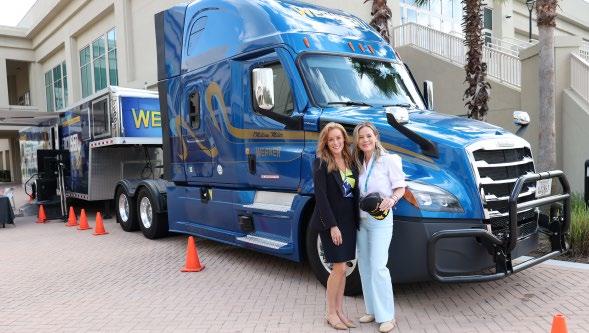
In today’s challenging freight market, success relies heavily on strong collaboration between food shippers and their logistics partners. During a panel discussion,
shippers and service providers explored how companies across the supply chain — shippers, carriers, brokers, and 3PLs — can balance data-driven decisionmaking with relationship-building. The conversation highlighted the value of quarterly business reviews (QBRs), aligning on shared initiatives, simplifying technology solutions, and establishing contractual accountability to strengthen strategic partnerships. Panelists also shared best practices for becoming a “shipper of choice” and fostering true winwin relationships. The discussion


featured leaders from food companies including Schreiber Foods and General Mills, alongside logistics providers such as J.B. Hunt Transport Services, Schneider National, Stokes Trucking, and TranzAct Technologies (see page 7 for more details).
Food supply chain stakeholders and decision-makers explored the value of “premium” versus “average” service, among other pressing issues such as changes in fuel surcharge pegs, extended payment terms, and how shippers assess rates in light of CSA alerts, equipment age,
insurance coverage, and trailer pools. Panelists featured food companies such as Michael Foods, The Marzetti Company, Seaboard Foods, Mars and WK Kellogg Co. Providers featured include Brakebush Transportation and Reliance Partners (see page 25 for more details).

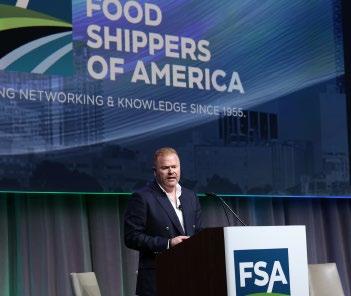
Cargo fraud is no longer a fringe issue in the food supply chain industry—it’s a fast-evolving, highly organized threat that’s impacting shippers, brokers, and carriers alike. What was once considered an occasional risk has become a persistent and costly challenge, fueled by digital tools, fragmented systems, and gaps in verification.
“Freight fraud isn’t new, but the scale and sophistication today are unprecedented,” says Michael Caney, Chief Commercial Officer at Highway. “What used to be opportunistic is now organized. These are coordinated networks, not just bad actors.”
As food supply chains grow more complex and time-sensitive, the stakes are even higher. Perishable goods, tight delivery windows, and high shipment volumes make food shippers particularly attractive targets. Understanding how fraud operates, and how to prevent it, has become essential.
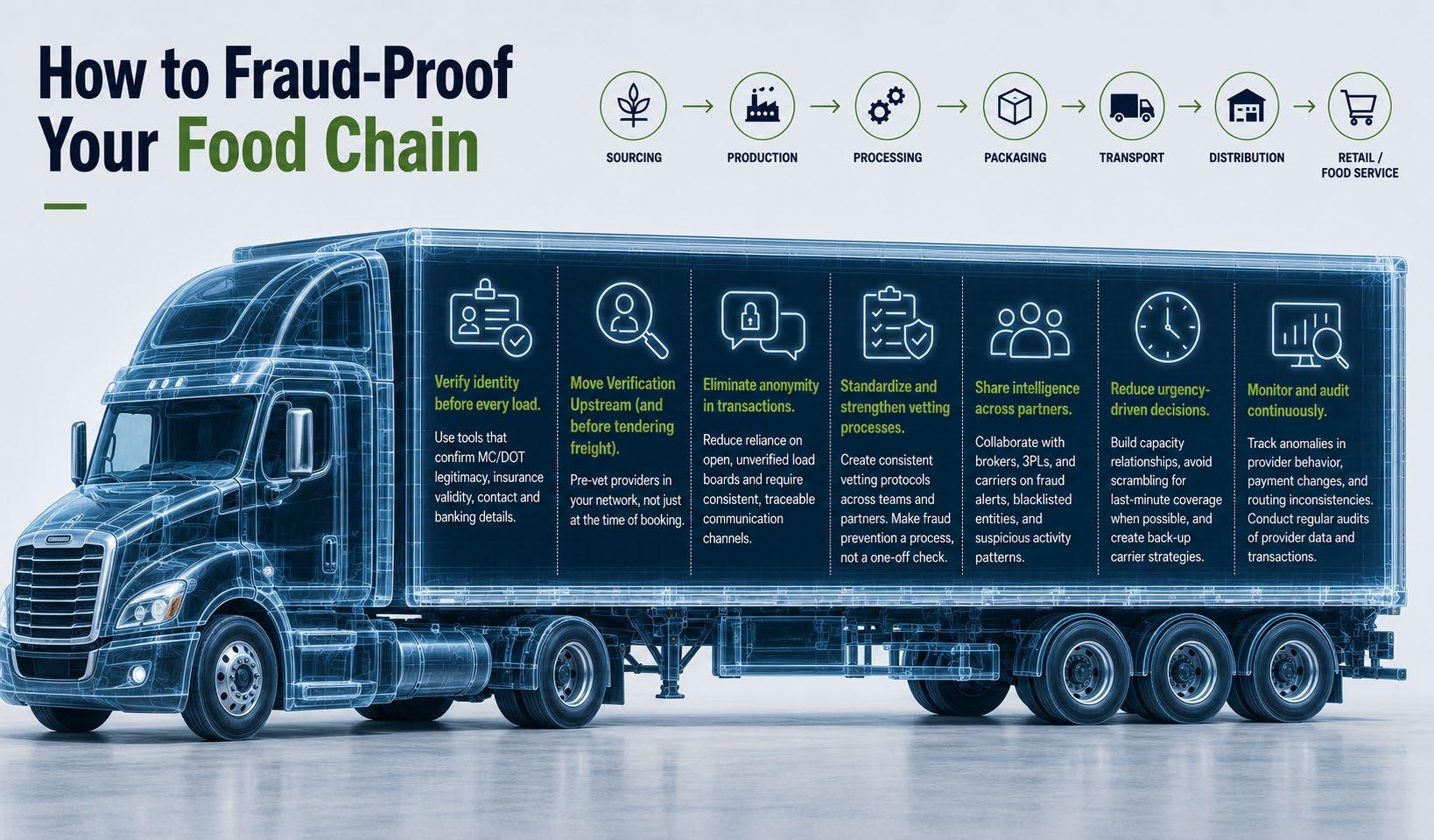
At its core, freight fraud exploits fundamental weaknesses in how business is conducted across the supply chain. According to Caney, the conditions are surprisingly simple: “Fraud thrives where there’s anonymity, urgency, and money.”
In today’s supply chain environment, all three are abundant. Digital load boards, email-based communications, and rapidly shifting capacity needs create opportunities for bad actors to impersonate legitimate carriers, intercept loads, or manipulate payment flows.
“If someone can pretend to be someone else, and get paid quickly, you’ve got the perfect conditions for fraud,” Caney explains. The result is a surge in schemes ranging from double brokering to identity spoofing and strategic cargo theft.
And as technology lowers the barrier to entry, the problem is accelerating.
“The barriers to entry for fraud have dropped dramatically,” says Caney. “Unfortunately, digital tools have made it easier to scale fraud faster than ever before. Criminals are adapting faster than the industry.”
If there’s a single root cause behind the rise in freight fraud, it’s identity— or the lack of reliable ways to verify it.
“The biggest vulnerability in freight today is identity,” Caney says. “We’ve built an industry on trust, but we haven’t built the infrastructure to verify that trust.”
For decades, relationships and reputation have been the backbone of logistics. But as transactions move online and networks expand, those informal safeguards are no longer enough. “If you don’t know who you’re doing business with, everything else breaks down,” he adds.
This challenge is especially acute for food shippers who rely on a mix of brokers, carriers, and 3PLs. Each
handoff introduces another point of risk—particularly when vetting processes are inconsistent or outdated.
Historically, carriers were the primary victims of fraud schemes. Today, that risk has spread. “Fraud used to target carriers. Now brokers and shippers are just as exposed, if not more,” says Caney.
For food shippers, the implications are significant. A single fraudulent load can mean lost product, missed delivery windows, damaged customer relationships, and reputational harm. In an industry where margins are tight and service expectations are high, the impact can be immediate and severe.
Despite the growing threat, many organizations still take a reactive approach, addressing fraud only after it occurs. That mindset is no longer sustainable. “You can’t solve a trust problem without identity,”
“FREIGHT FRAUD ISN’T NEW, BUT THE SCALE AND SOPHISTICATION TODAY ARE UNPRECEDENTED. WHAT USED TO BE OPPORTUNISTIC IS NOW ORGANIZED. THESE ARE COORDINATED NETWORKS, NOT JUST BAD ACTORS.”
— MICHAEL CANEY, CHIEF COMMERCIAL OFFICER AT HIGHWAY
Caney emphasizes. “Verification has to happen before the load is ever tendered.”
Becoming proactive means investing in stronger carrier vetting processes, leveraging technology for identity verification, and ensuring data accuracy across systems. It also requires internal alignment— making fraud prevention a priority across procurement, logistics, and operations teams. “The industry has to move from reactive to proactive,” he adds.
Ultimately, combating cargo fraud isn’t something any one company can solve alone. The interconnected
nature of supply chains means that vulnerabilities in one area can quickly affect others.
“Fraud isn’t a competitive issue, it’s an industry issue,” says Caney. “The more we share information, the harder it becomes for bad actors to operate.” That collaboration can take many forms—from better data sharing between partners to broader adoption of verification standards and technologies. For shippers, it also reinforces the importance of working with trusted, transparent partners who prioritize security.
“We’re in the third year of this extended freight recession and the pain is real,” says Andy Owens, A&M Transport President. “Operating costs in trucking climbed to their highest ever at the same time that freight pricing has bottomed out.”
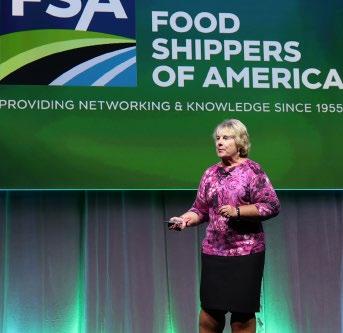
This can have significant ramifications because the food industry relies heavily on trucking to support its supply chains, according to Rebecca Brewster, President and Chief Operating Officer with American Transportation Research Institute (ATRI). Owens is Chairman of ATRI’s Research Advisory Committee.
At the recent annual Food Shippers Conference, Brewster identified trucking’s leading issues according to ATRI’s recently released 21st annual Top Industry Issues report. She says this year’s list includes the economy, lawsuit abuse reform, insurance cost and availability, and truck parking availability. She notes the list also debuts four first-time issues including English language proficiency for drivers and artificial intelligence (AI) use in trucking.
More than 4,200 trucking industry stakeholders participated in this recent survey, a 14% increase over the previous survey. Respondents included motor carriers, truck drivers, industry suppliers, driver trainers, and law enforcement.
Now three years into a historic freight recession, freight rates and tonnage have remained stagnant across the industry at the same time that per-mile costs increased considerably faster than inflation. This “perfect storm,” which has squeezed fleet operating margins and necessitated extensive costcutting measures, is of significant concern to food shippers that heavily rely on trucking for transport of their goods and materials and multi-temperature shipping capabilities.
Meanwhile, conditions in the broader U.S. economy became markedly more uncertain last
year, according to ATRI’s report. Manufacturing production surpassed 2024 levels but not 2022 levels, and housing starts continued to falter, primarily due to higher mortgage rates. The labor market cooled, with unemployment reaching 4.3% last August for the first time since 2021. Monthly inflation rates remained under 3% despite trending upward since last April, but disposable personal income
growth decelerated. Retail sales rose over the summer months, but in August retail sales growth surpassed that of disposable income—mostly driven by record-high consumer debt levels, with the consequence possibly being limited retail sales going forward.
In this adverse operating environment, the rising cost of risk looms large. Last year, insurance premiums rose by an additional 3% per mile in 2024, consolidating the previous year’s 12.5% increase, and additional data suggests that renewals in the first half of 2025 rose by nearly 10%. Despite preliminary data suggesting a fourth straight annual decrease in large truck crashes, insurers continued to experience unprofitability in the commercial auto segment due to rising loss severity, increasing claims costs, and social inflation’s impact on litigation. In response, litigation reformers notched victories in nine states thus far this year – including damages caps, eliminating phantom damages, and third-party litigation funding disclosures – but still face counter reform headwinds from the plaintiff bar.
Total trucking employment and driver employment specifically continued to fall year-over-year amid layoffs, market exits and bankruptcies, according to ATRI’s report. Unfortunately, the challenging economic conditions keep these freight capacity reductions from translating into improved rates.
Federal policy changes generated new uncertainties and opportunities for trucking. Tariffs and ambiguity over their implementation have the potential to contribute to inflation and influence consumer demand over the coming year. The Environmental Protection Agency (EPA) acted to rescind various vehicle emission rules pertaining to NOx, electric vehicle mandates, and the EPA’s authority to regulate emissions altogether.
Amid a flurry of its own regulatory activity, the U.S. Department of Transportation also has set new English language requirement guidelines for truck drivers that have already had a measurable enforcement impact.
“English language proficiency for drivers has obviously grabbed a lot of media headline attention,” says Brewster. “It’s been on the books for years, but it has not been enforced and is now once again being enforced under the Trump Administration executive orders.”
The trucking industry continues to face severe challenges and upheavals which will directly impact food supply chains. Responding to these challenges will require the collective efforts of motor carriers and food shippers, state and federal associations, governmental agencies, and industry suppliers.
To download a copy of ATRI’s 21st annual Top Industry Issues report, visit truckingresearch.org.

• Our locations: Chambersburg, PA Greensburg, PA Pittsburgh, PA Davenport, IA




• Dry, Refrigerated, and Frozen Temperature Zones

• Asset based with refer and Dry vans

• Rail/Truck Cross Dock Services
• Rework and Packaging Services
• Import/Export containers from Eastern Ports

• Licensed for Alcohol Storage
• USDA Room

• Customs Bonded
















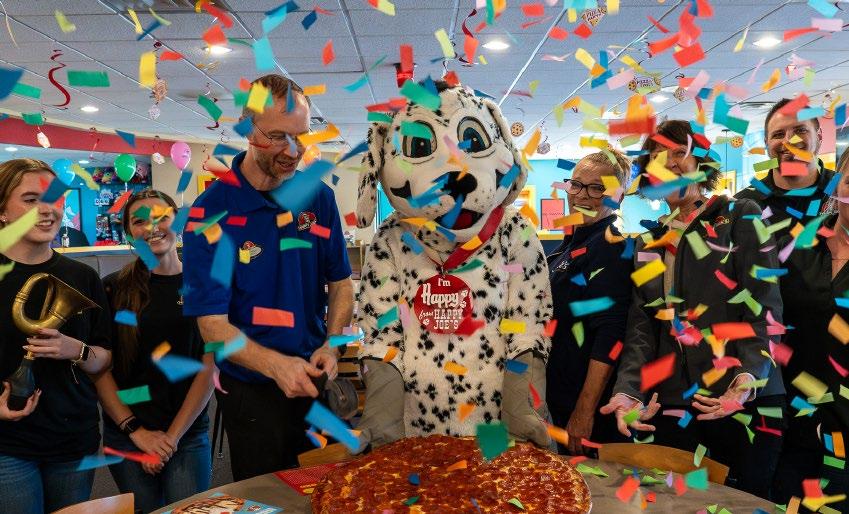
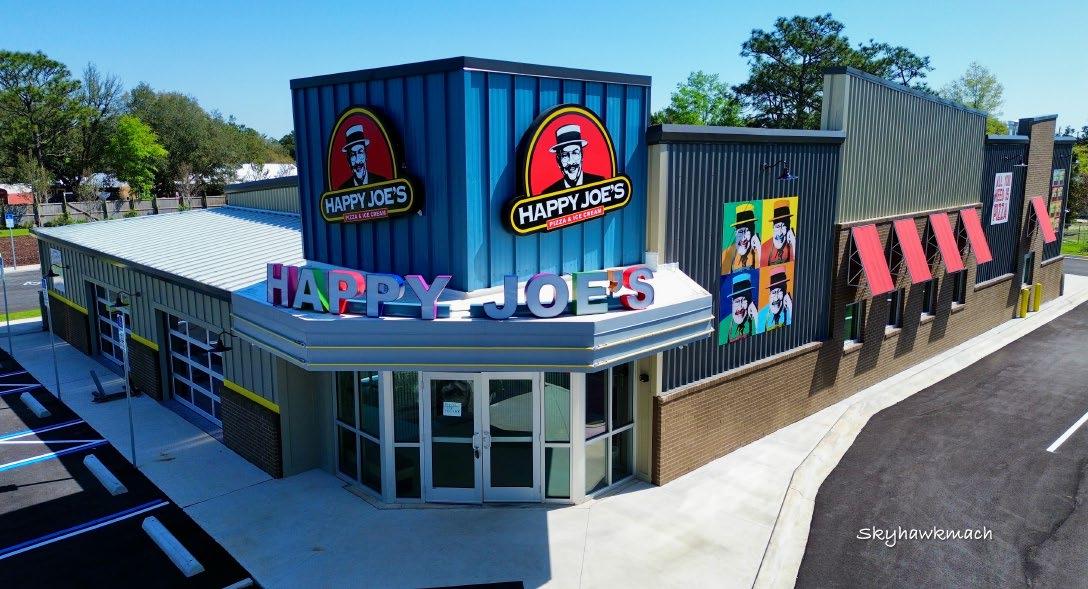
For more than five decades, Happy Joe’s has been serving more than pizza and ice cream. The beloved Midwest franchise chain has been serving memories.
Founded in 1972 by Joe Whitty in Davenport, Iowa, Happy Joe’s was built around a simple but powerful vision: create a place where families could gather around America’s two favorite foods in a fun, celebratory environment. Over the years, that vision evolved into something much bigger — a nostalgic family tradition woven into the fabric of communities across the Midwest.
Today, owned and operated by Dynamic Restaurant Holdings Inc., Happy Joe’s operates eight company-owned restaurants and 34 franchise locations, with continued expansion in the pipeline. Yet despite this impressive growth, the company remains deeply rooted in its small-town values and fiercely loyal fan base.
“We’re a legacy Midwest brand with a heart and passion for our communities,” says Jenny Culp, Vice President of Purchasing and Supply Chain for Happy Joe’s. “We’re
known for our oneof-a-kind pizzas — especially our world-famous Taco Pizza — but we’re also known for the sense of unique nostalgia and family experience that has been part of this brand for more than 50 years.”

That combination of tradition, consistency, and community doesn’t happen by accident. Behind every signature pizza, every birthday celebration, and every familiar flavor is a carefully managed supply chain working quietly in the background to protect the brand.
“My
Culp, who has been part of Happy Joe’s operations and supply chain team since 2007, understands better than most how much coordination it takes to preserve a legacy restaurant brand. Recently promoted from Director of Purchasing and Supply Chain to Vice President, she now oversees
sourcing, vendor partnerships, and distribution strategies that help franchisees succeed while ensuring guests receive the same quality experience at every location.
“When people ask what Purchasing does, I tell them my job is to protect the brand,” Culp says. That protection spans virtually every item that enters a Happy Joe’s restaurant — from cheese, proteins, sauces, and dough ingredients to packaging, chemicals, and equipment.
“If it goes into a Happy Joe’s restaurant, we touch it,” she explains. “We negotiate supplier contracts, manage relationships, work with distributors, solve problems, and make sure the brand stays consistent across every store.”
In many ways, purchasing serves as the connection between franchisees, suppliers, distributors, and corporate leadership. The department works daily behind the scenes to ensure restaurants can operate smoothly, whether that means troubleshooting an ingredient shortage, onboarding a new supplier, or verifying invoice pricing against negotiated contracts.
For Culp, consistency is everything.
Customers walking into a Happy Joe’s in Iowa should experience the same flavor, quality, and reliability as customers visiting a location hundreds of miles away.
“That’s what people expect from a legacy brand,” she says. “And it’s our responsibility to deliver it.”
At Happy Joe’s, the purchasing and supply chain management functions are inseparable.
“Purchasing focuses on what we buy and who we buy it from — the agreements, specifications, quality, and pricing,” says Culp. “Supply chain focuses on how products get to the restaurants: freight, logistics, fill rates, and distribution.”
The distinction may sound simple, but the relationship between the two functions is deeply interconnected.
“I might negotiate a supplier agreement on the purchasing side,” she explains, “but supply chain is making sure that product actually moves through the distribution
network, arrives on schedule, and stays in stock. One can’t function without the other.”
That synchronization has become even more critical in today’s foodservice environment, where disruptions can emerge suddenly from weather events, labor shortages, freight instability, or fluctuating commodity costs.
For a franchise system built on consistency, agility matters.
“The restaurants depend on us every single day,” Culp says. “Our franchisees need to know they can count on the products arriving when they need them, at the quality standards our guests expect.”
Like many growing restaurant brands, Happy Joe’s relies heavily on strategic partnerships throughout its supply chain network.
Culp believes selective outsourcing is not just practical — it’s essential.
“Nobody can do everything internally, and you shouldn’t try,” she says. “We rely on strong distribution partners, manufacturing partners, and packaging suppliers.”
But for Happy Joe’s, choosing suppliers goes far beyond price negotiations. The company evaluates partners through the lens of brand protection and long-term operational reliability.
“They need to match our quality and brand standards,” Culp says. “They need solid continuity plans. I want cost transparency — no surprises. They need to service our franchisees well. And most importantly, they have to be problem-solvers.”
That final point may matter most in an industry where unexpected disruptions have become routine.
“I need partners who pick up the phone when things get tough,” she says.
Those relationships became especially important during the supply chain volatility of recent years, when restaurant operators across the country faced shortages, delayed shipments, and unpredictable pricing swings. For Culp, the experience reinforced the importance of trust, communication, and contingency planning throughout the supply network.
As Happy Joe’s continues expanding beyond its traditional footprint, maintaining operational consistency becomes both more difficult and more important.
Growth creates complexity. Distribution networks widen. Vendor coordination increases. Product forecasting becomes more demanding. Yet the company’s mission remains remarkably unchanged from the day Joe Whitty first opened the doors in Davenport.
At its core, Happy Joe’s is still about family.
That means every operational decision — from supplier selection to logistics planning — ultimately supports something much larger than inventory management. It supports birthday parties, youth sports celebrations, family dinners, and generations of memories tied to a familiar Midwest restaurant.
For Culp, that responsibility is personal. “When you’ve been with a brand this long, you understand what it means to people,” she says. “Our guests trust us. Our franchisees trust us. Protecting that trust is what drives everything we do.”
And in the fast-moving world of foodservice logistics and restaurant supply chains, that commitment may be the ingredient that keeps Happy Joe’s thriving for generations to come.
Happy Joe’s relies on outsourcing transportation, distribution, and purchasing activities. Culp says that when she chooses a partner, she looks for the following:
• The ability to match the company’s quality and brand standards
• Provide reliability with a solid continuity plan
• Cost transparency which equals no surprises
• The ability to effectively service the company’s franchisees.
• Strong problem-solving capabilitiespartners who pick up the phone when things get tough.
Food Chain Digest recently interviewed Jenny Culp on the role of Purchasing and Supply Chain at Happy Joe’s. See the full interview on the Food Shippers blog at FoodShippers.org.

— MIKE C., ASSISTANT TRANSPORTATION DIRECTOR OF WHOLESOME FOODS INC.
We’re with you through every freight journey, solving food logistics challenges with real-world trucking expertise, a track record of success and relationships built on trust. Ship with Schulz Logistics.
SchulzLogistics.com/Food rnickeson@schulzlogistics.com 531-289-1951
Many FSA members ask about the namesake of the association’s scholarship program, John J. Murphy. For 14 years, he was FSA’s Executive Director and visionary, according to FSA Chairman of the Board David Domencic.
John Murphy was a longstanding member, spending 40-plus years in transportation— much with The Borden Food Co. He progressed the values of FSA to be an educational and networking resource that could be influential in driving change in the industry, says Domencic.
For years, FSA has sponsored a scholarship program in Murphy’s name. Eligible applicants are children or dependents (including spouses) of a supply chain or logistics employee who is a member of the association.
This year, FSA awarded scholarships to six applicants. FSA averages $24,000 of awards every year, which is funded by member company dues.
1st Place ($7,500): Andrew Nepstad, studying Supply Chain and Finance, Iowa State University
Parent: Matt Nepstad, Senior Manager, North American Warehousing, General Mills
2nd Place ($5,000): Celeste Urdal, studying Business and Supply Chain, University of South Carolina
Parent: Tom Urdal, Bush Brothers & Company
3rd Place, $4,000 Scholarship: Aubrey Pixler, studying Aerospace Engineering at University of Notre Dame, Parent: Holly Pixler, Senior Director Transportation with Arden Mills
4th Place ($3,000 Scholarship):
Sophie Hutchison, studying Psychology, Boise State University
Parent: Glenn Hutchison, J.R. Simplot Company
5th Place ($2,000 Scholarship):
Emma Bausch, studying Business and Marketing, Fairfield University
Parent: Jeff Bausch, Bozzutos
6th Place ($1,000 Scholarship): Nicholas Ferrel, studying Aerospace Engineering and Mechanics at The University of Alabama
Parent: Hector Ferrel, McLane Food Service/Vantix

“My interest in supply chain career began at home with my father spending his career at General Mills,” says Andrew Nepstad, as he reflects on how he decided to get involved in the supply chain industry. “Conversations about transportation and warehousing were a normal part of my childhood. Through my dad’s work, I came to understand just how complex it is and how much effort it takes to get through that improvement status. Today as a sophomore at Iowa State University, I’ve enjoyed my coursework so far and I’m excited to apply what I’ve learned in a real world setting through my internship this summer. This scholarship will make a real difference for me. It allows me to focus on my academics and leadership opportunities. I’m involved in campus while continuing to pursue my long-term goals in this field.”
Food Shippers of America (FSA) has been giving back to the community for years, with a focus on supporting charitable associations that provide disaster and hunger relief.
In fact, FSA has regularly donated tens of thousands of dollars each year to various organizations that can have a direct and positive impact on lives throughout North America and across the globe, according to FSA President Darica Schneider, who is Senior Director Transportation Operations for Univar Solutions in her day job.
Each year for the past several years, FSA has supported the American Logistics Aid Network (ALAN), which saves lives and reduces suffering for disaster survivors in the United States and internationally by engaging industry to supplement non-profit organizations’ logistics capabilities. ALAN serves by coordinating logistics, providing education, and building cross-sector relationships before, during, and after disasters. ALAN has mobilized resources and provided significant support to those impacted by a number of recent disasters, including winter storm Fern, the devastating wildfires in California last year, and recent disastrous hurricanes and tropical storms.
Approximately 47 million people face hunger in the United States each day—including nearly 14 million children. Hunger knows no boundaries; it touches every U.S. community, including yours.
With this challenge in mind, FSA donates significant amounts of money to two charities that fight hunger.
FSA has routinely donated each year to Feeding America, which is the largest charity working to end hunger in the United States. Feeding America
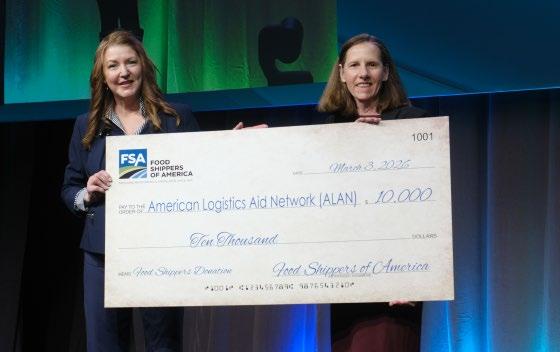

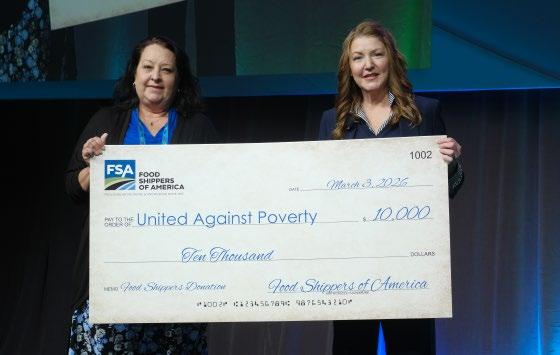
FSA HAS REGULARLY DONATED TENS OF THOUSANDS OF DOLLARS EACH YEAR TO VARIOUS ORGANIZATIONS THAT CAN HAVE A DIRECT AND POSITIVE IMPACT ON LIVES THROUGHOUT NORTH AMERICA AND ACROSS THE GLOBE
partners with food banks, food pantries, and local food programs to bring food to people facing hunger throughout the country.
FSA also donated a significant amount this year to United Against Poverty. UAP was incorporated in 2003 with the vision of helping communities where every family and individual has access to basic needs, nutritional food, crisis care, education, and employment training, and where everyone has
the opportunity to achieve a future filled with hope and possibilities.
The association’s mission is to serve families and individuals by providing crisis care, case management, transformative education, food and household subsidy, employment training and placement, personal empowerment training and active referrals to other collaborative social service providers.
“FSA is committed to our continued goal of giving back to
the community every year,” says Schneider. “We’re proud to support these organizations that are doing so much to make a difference.”








Welcome to the 2026 Food Chain Technology Innovators Buyer’s Guide! This resource is published by Food Chain Digest to help supply chain professionals find potential providers of valuable technologies and tech-supported services. All companies listed in this Resource Guide are paid advertisers and are not in any way officially endorsed by Food Shippers of America (FSA).
ALL POINTS
www.allpointshc.com
317-342-9420
admin@allpointshc.com

Operating across more than 50 countries and backed by our expansive network and dedicated logistics and shipping division, All Points is committed to providing thorough logistics, freight transportation, and services to elevate your market trade and supply chain operations. Venturing into international shipping may appear intimidating and uncertain, particularly for newcomers. Nevertheless, with our guidance, you can venture into global shipping with confidence and broaden your business globally. Enhancing efficiency while upholding cost-effectiveness remains crucial for a well-organized supply chain.
ariesfs.com
773-572-2052
kevin@ariesfs.com

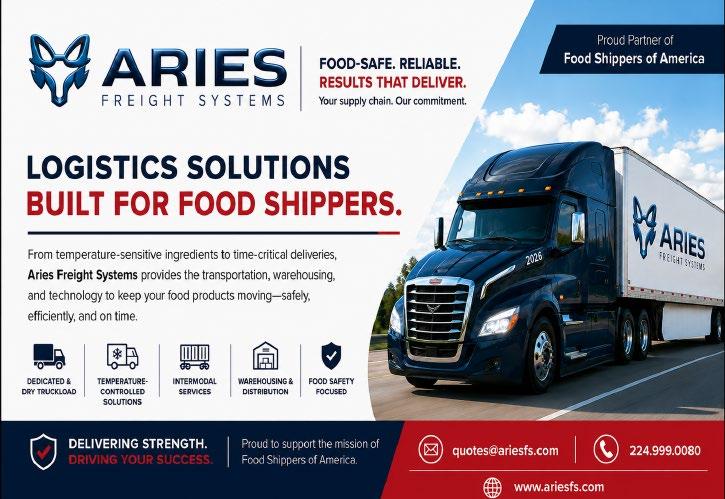
Aries is a full-service 3PL with more than two decades of experience managing complex transportation solutions across North America. Specializing in FTL, LTL, multi-stop, multi-temperature, and temperaturesensitive freight, Aries delivers customized logistics solutions for customers in the food, beverage, produce, and retail. The company leverages a nationwide carrier network to provide refrigerated, expedited, and cross-border transportation services while maintaining strict temperature compliance, real-time shipment visibility, and proactive operational support. Aries Freight Systems is recognized for its expertise in cold chain logistics, high-touch customer service, and its ability to execute time-critical freight movements with precision and reliability.
avectous.com
714-261-8793
ritak@avectous.com

Avectous provides warehouse management and fulfillment software solutions that streamline supply chain operations, optimize inventory management, and improve order accuracy. Specializing in scalable cloud-based WMS, OMS, CMS, and WES technologies, Avectous serves e-commerce, wholesale, retail, manufacturing, and 3PL operations. The platform integrates with marketplaces, ERPs, robotics, and automation systems to create efficient warehouse workflows. With more than 30 years of expertise, Avectous helps companies reduce costs, increase productivity, and scale efficiently with solutions tailored to their business needs.
www.bitfreighter.com
615-541-2588
sales@bitfreighter.com

Bitfreighter is the one platform for all your shipper connections. Built specifically for freight brokers and logistics companies, Bitfreighter eliminates manual work through modern EDI and API integrations powered by an extensive shipper integration library. The platform combines managed EDI, real-time quoting automation, and workflow orchestration to automate quoting, tendering, tracking, and invoicing. With deep TMS integrations, unlimited messaging, predictable pricing, and a dedicated solutions team, Bitfreighter helps companies onboard faster, scale easier, strengthen shipper relationships, and create more opportunities to win and move freight.
CAPITAL EXPRESS LINES, INC capitalexpresslines.com
916-305-5358
andy@capitalexpresslines.com

Capital Express Lines, Inc. is a trusted, asset-based transportation and warehousing provider supporting food manufacturers and distributors across the Western United States. Operating a fleet of 100+ power units and 350+ dry-van trailers, we deliver reliable full truckload and dedicated solutions with a strong focus on food-grade standards, equipment integrity, and on-time performance. Our Sacramento, California facility offers dry ambient warehousing and cross-dock services to support flexible supply chains. With over 25 years of operational experience, Capital Express Lines provides food shippers the consistency, communication, and accountability required to protect product quality and meet today’s demanding service expectations.
DYNAMIC LOGISTIX
dynamiclogistix.com
913-274-3800
sales@shipdlx.com

Logistics is chaotic. That’s why Dynamic Logistix builds tailored solutions that combine powerful technology, a dedicated team of experts, and a carefully curated carrier network to help food shippers bring clarity, consistency, and confidence to their supply chains. From managing day-today transportation challenges to improving visibility and efficiency, we help customers turn supply chain chaos into smarter, more reliable operations.
www.goodship.io
360-301-8039
team@goodship.io
GoodShip is the freight orchestration and procurement platform trusted by leading food shippers and distributors across North America. Transportation teams leverage GoodShip to unify fragmented data, quantify customer-level cost-to-serve, identify OTIF exposure before it escalates, and align carriers around lane-level KPIs and pricing. From real-time scorecarding and proactive carrier conversations to AI-assisted RFPs and mini-bids, teams move from reactive reporting to coordinated, data-driven execution. With Laney, the industry’s first AI Transportation Analyst, teams can ask questions about their operations and get clear, actionable answers in seconds through a conversational interface, making it easier than ever to understand what’s happening across the network.

HIGHWAY MOTOR FREIGHT LTD
www.highwaymotor.com
204-951-1004
Jassdhillon@highwaymotor.com
Based in Winnipeg, Manitoba, we are a trusted asset-based carrier with years of experience delivering reliable transportation solutions across Canada and the United States. With a fleet of 140 power units and 300+ trailers, we specialize in food-grade and temperature-controlled freight, ensuring product integrity from origin to destination. Our operations are HACCP-certified, reflecting our commitment to the highest food safety standards. Strategically positioned with a Calgary terminal and yards across key regions, we provide seamless coast-tocoast coverage. Backed by a dedicated team and professional drivers, we focus on consistency, safety, and long-term partnerships that keep our customers moving forward.
INECTA
www.inecta.com
786-516-0830
erik@inecta.com

inecta is a privately held software company founded in 2001 and headquartered in New York City, with offices across six continents. Its flagship platform, inecta Food, is a cloud-based ERP purpose-built for the food and beverage industry,
integrating purchasing, inventory, production, sales, finance, and compliance into one system. Specific to shippers, the platform delivers transportation management, warehouse management, B2B eCommerce, and real-time EDI integrations with carriers and retailers, alongside lot traceability, catch-weight, shelf-life controls, and recall support tied to shipment records. Verticals served include food manufacturing, food distribution, seafood, meat and poultry, dairy, beverage, produce, bakery, and wine and spirits.

What looks manageable on paper can become exhausting at the facility level.
PalletTrader helps procurement and operations teams reduce the frustration, time, and excessive fees behind rental pallet programs.
We worry about pallets so your team doesn’t have to.
Scan to take the monkey off your team’s back

OATH LOGISTICS
www.gowithoath.com
888-690-7753
sales@gowithoath.com
Your Freight. Our Oath.

At Oath, we move freight for modern shippers—full truckload, LTL, expedited, intermodal, ocean, air, drayage, and last-mile—powered by AI-driven analytics, predictive modeling, and automated workflows that cut costs and sharpen visibility at every stage. From single-lane shipments to complex multi-modal supply chains, we give shippers the control and confidence to scale. SOC 2, PCI, and HITRUST certified, we hold ourselves to the highest standards of accountability, transparency, and execution.
Our promise is simple: reliable delivery and measurable efficiency, every shipment, every time.”
PENSKE LOGISTICS
www.penskelogistics.com
800-529-6531
plsalesinfo@penske.com

Penske Logistics is headquartered in Reading, Pennsylvania. The company is a leading provider of innovative supply chain and logistics solutions. Penske offers solutions including dedicated transportation, distribution center management, 4PL and lead logistics, transportation management, freight brokerage, and a comprehensive array of technologies to keep the world moving forward.
SFL COMPANIES
www.sflcompanies.com
859-334-5100
alang@sflcompanies.com

Service First Logistics (SFL Companies) delivers Logistics Without Limits by combining innovation, expertise, and integrity to redefine how freight moves across America. As a full-service third-party logistics and supply chain management provider, we create customized solutions across truckload, LTL, drayage, cross-border, and temperature-controlled shipping. From growers and manufacturers to Fortune 500 companies, we manage mission-critical freight with the reliability, precision, and accountability shippers depend on. Our experienced supply chain strategists act as an extension of each client’s team, using modern freight technology and realtime visibility to anticipate challenges, simplify complexity, and build longterm, service-first partnerships.
SPARTAN LOGISTICS spartanlogistics.com
614-497-1777
nharmon@spartanlogistics.com

Spartan Logistics is a family-owned third-party logistics provider, specializing in food-grade warehousing and distribution. With over four million SF and two million SF AIB-certified across 22 warehouse locations, we provide safe, clean, and compliant storage solutions, with specific expertise in food, beverage, and paper products. Our services include warehousing, cross-docking, inventory management, order fulfillment, and much more. We own our facilities, trucks, and equipment, ensuring reliability, flexibility, and cost control for our customers. For 38 years, Spartan Logistics has delivered dependable supply chain solutions that help food shippers move products efficiently from production to consumption.
TRADECAFE LOGISTICS SOLUTIONS
tcx.tradecafe.com
416-363-7070
lyanez@tcx.tradecafe.com

TradeCafe Logistics Solutions (TCX) provides managed transportation for shippers moving raw proteins, dairy, fish, and agricultural commodities, especially high-value, temperature-sensitive freight. Built by shippers, not a broker-first 3PL, TCX brings 20+ years of commodity experience, 100,000+ loads, and $3B+ in product managed. We coordinate reefer containers, cross-border trucking, customs, regulatory filing, documentation, and real-time visibility through a platform used by 2,000+ processors and retailers, reducing handoffs, compliance risk, delays, claims, and margin loss.






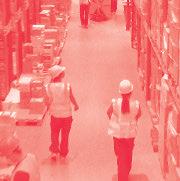
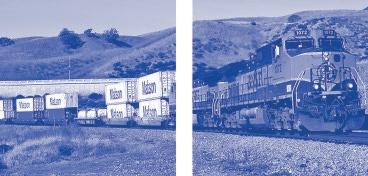
From ship to shore to store, Matson Logistics serves food and beverage manufacturers, distributors, and retailers with: Transportation
• Port Drayage
• FCL and LCL Highway
• Intermodal Rail Distribution
• Inventory Management
• Transload
• Crossdock
• Pick and Pack
Value-Added Services
• Tier 1 WMS
• Club Store and Custom Packs/ Pallet Displays
• Tray Cuts, Gift Boxes, and Packaging
• Kitting and Bundling
• Barcode Labels and Price Tickets
• End Cap and Power Alley Promotions
• DtC and E-Commerce Fulfillment

Oakland and Savannah Logistics Campuses Big
• 1.6 million sq. ft. of both Contract and Public Warehouse Operations
• Round-the-Clock Operations, including Receiving and Dispatch Safe
• Gated and Monitored Trailer Yard; 24/7 Guard Service
• ESFR Sprinkler System
• 100% RF Wireless Coverage Certified
• FDA Registered and Food-grade Compliant
• NSF Supplier Certified and Organic Farm Certified
• California ABC Type 14 License for beer, wine, and spirits
• Class 3 Bonded Services
• Exclusive Foreign Trade Zone operators
Intermodal & Highway Daniel Paulsen 630 203 3544
10:15 PM
Trailer temp begins to rise above threshold.
10:17 PM
XTMS triggers real-time alert.
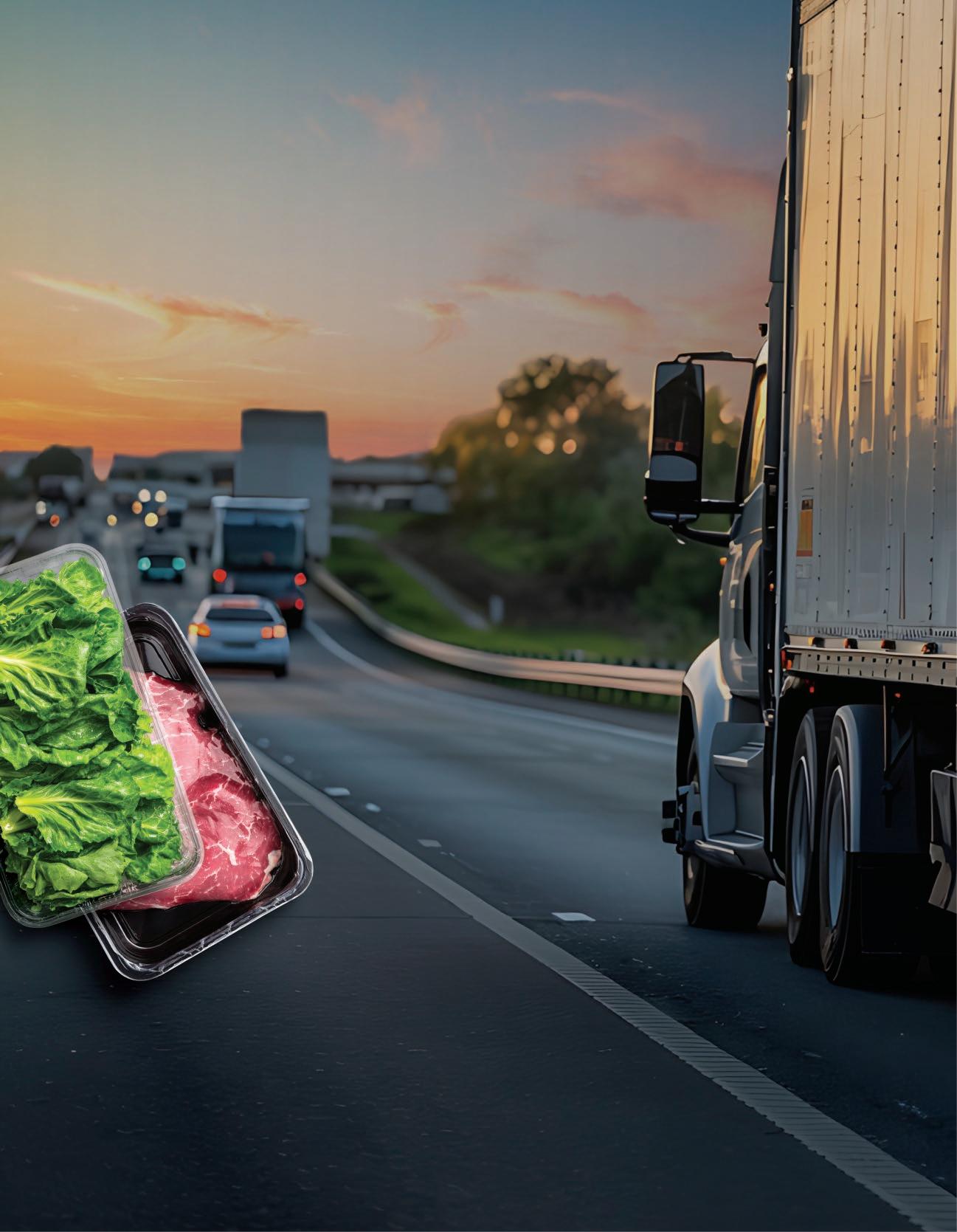
10:25 PM
DLX After-Hours Support contacts driver.
10:40 PM
Issue is corrected before risk of spoilage.
8:00 AM Your product arrives within spec, no rejection.