Program notes by David Jensen
WYNTON MARSALIS
Born 18 October 1961; New Orleans, Louisiana
Violin Concerto in D
Composed: 2015
First performance: 6 November 2015; James Gaffigan, conductor; Nicola Benedetti, violin; London Symphony Orchestra
Last MSO performance: MSO Premiere
Instrumentation: 3 flutes (2nd doubling on piccolo); 3 oboes (3rd doubling on English horn); 3 clarinets (2nd doubling on E-flat clarinet, 3rd doubling on bass clarinet); 3 bassoons (3rd doubling on contrabassoon); 4 horns; 3 trumpets; 2 trombones; bass trombone; tuba (doubling on sousaphone); timpani; percussion (2 African hand drums, large African drum, 2 bass drums, 2 cowbells, crotales, djembe, field drum, glockenspiel, high hat, marimba, police whistle, sandpaper blocks, sizzle cymbal, splash cymbal, 3 suspended cymbals, snare drum, tam-tam, tambourine, tom-tom, vibraphone, whip, 2 wood blocks, xylophone); harp; strings
Approximate duration: 43 minutes
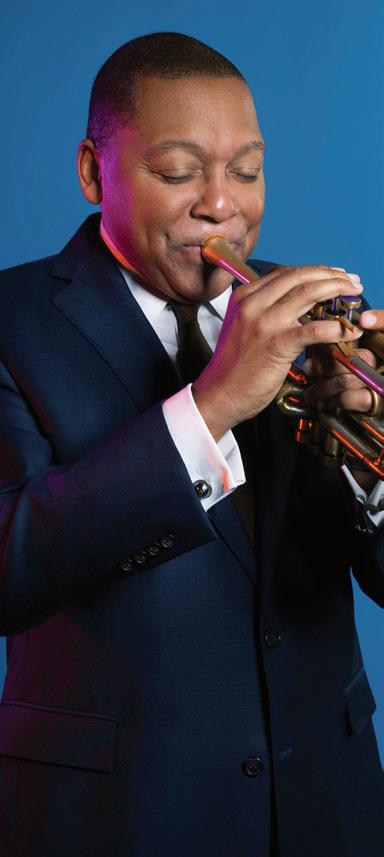
Wynton Marsalis is a living legend of contemporary music. Born in New Orleans to the jazz pianist Ellis Marsalis and gifted his first trumpet by the American bandleader Al Hirt when he was six years old, Marsalis was steeped in two distinct musical idioms from an early age. As a teenager, he performed in jazz, brass, and funk bands, appeared as soloist with the Louisiana Philharmonic Orchestra, attended the Tanglewood Music Center, and eventually pursued classical training at The Juilliard School — before setting aside his formal studies to strike out on his own, touring the world with Art Blakey, signing his first recording contract with Columbia Records, and launching his international career.
At 22 years old, Marsalis made history as the first musician to win two Grammy Awards in both the jazz and classical categories in the same year. Only a few years later, he broke new ground in founding Jazz at Lincoln Center, going on to serve as its artistic director and leading its orchestra for nearly 40 years. He has since sold millions of records, played thousands of concerts around the globe, garnered nine Grammy Awards, the National Medal of the Arts, and the Pulitzer Prize, and been inducted into Britain’s Royal Academy of Music, France’s Order of Arts and Literature, and the American Academy of Achievement. The man is, in a word, talented.
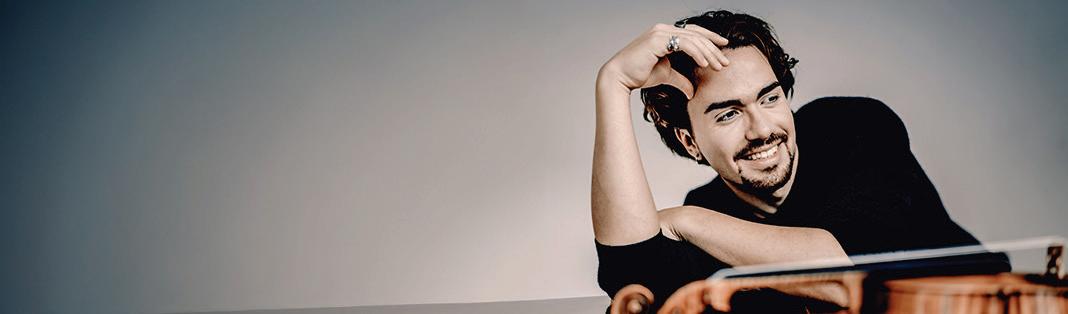
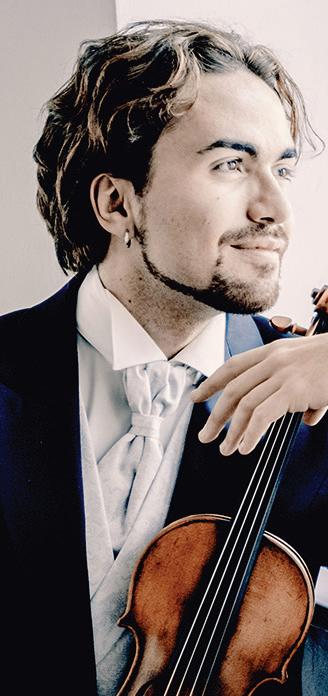
Like many landmarks of the concertante literature, Marsalis’s violin concerto was written with a specific performer in mind. Marsalis met the Scottish violinist Nicola Benedetti at an annual summit of the Academy of Achievement in New York, and over the course of time, he began consulting her technical expertise whenever he found himself writing for the instrument. More than a decade later, the two began collaborating on a violin concerto, taking Benedetti’s life as a traveling musician and educator as an inspirational point of departure and blending the harmonies and textures integral to jazz and blues music into the instrumental palette of the symphony orchestra — inviting, in the words of Benedetti, “a diverse world of people into the experience.”
Though written “from the perspective of a jazz musician and a New Orleans bluesman,” Marsalis taps into a broad range of styles. Beginning with a single hushed note, “Rhapsody” unfolds as a dreamy exploration of the instrument’s lyrical qualities, occasionally calling to mind
the bold modernist gestures favored by Shostakovich or Bernstein. Out of stillness, the “Rondo Burlesque” bursts forth, its hard-edged rhythms and brassy embellishments painting a distorted, mesmerizing view of a New Orleans Mardi Gras celebration. A lengthy cadenza, accompanied by snappy interjections in the percussion, takes on the folksy groove of bluegrass fiddling, eliding into to the sultry, swirling hues of the “Blues.” Heralded by stomps and claps from the orchestra, “Hootenanny” arrives as a “barnyard throw-down,” indulging in all manner of “virtuosic chicanery” before, Marsalis writes, “our journey ends with the jubilance and uplift of an optimistic conclusion.”
NIKOLAI RIMSKY-KORSAKOV
Born 18 March 1844; Tikhvin, Russia
Died 21 June 1908; Lubensk, Russia
Capriccio espagnol, Opus 34
Composed: Summer 1887
First performance: 31 October 1887; Nikolai Rimsky-Korsakov, conductor; Russian Imperial Opera Orchestra
Last MSO performance: 6 October 2019; Jun Märkl, conductor
Instrumentation: piccolo; 2 flutes; 2 oboes; English horn; 2 clarinets; 2 bassoons; 4 horns; 2 trumpets; 3 trombones; tuba; timpani; percussion (bass drum, castanets, cymbals, snare drum, tambourine, triangle); harp; strings
Approximate duration: 15 minutes
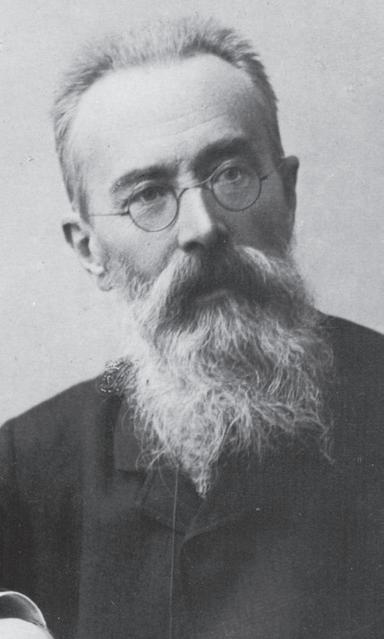
The 1880s had been shaping up as a rather unproductive decade for Nikolai Rimsky-Korsakov. With the death of Modest Mussorgsky in 1881, he had taken up the task of editing and publishing his late friend’s work, an act which modern scholarship would never forgive. In fairness, untangling the mess of Mussorgsky’s manuscripts took years, but Rimsky-Korsakov’s heavy-handed approach to “correcting” and “improving” his colleague’s adventurous musical experiments preserved Mussorgsky’s cultural image at the expense of his authentic voice. Alexander Borodin’s death six years later likewise moved Rimsky-Korsakov to collaborate with Alexander Glazunov on the completion of Borodin’s Prince Igor, dispensing with about a fifth of the opera’s original material as the two pieced together a working edition suitable for performance.
Though Rimsky-Korsakov composed comparatively little during the years he was busying himself with his editorial affairs, he found himself increasingly involved in the musical activities centered around Mitrofan Belyayev, a wealthy industrialist and amateur violist committed to patronizing Slavic cultural life. In his capacity as founder and financial backer of both his own publishing house and a series of Russian Symphony Concerts, Belyayev was aiming to better the international reputations of rising Russian composers, and he relied extensively on RimskyKorsakov’s expertise to do so. The ongoing engagements seem to have broken the intellectual dam that had impeded his creative processes, inspiring the last substantial symphonic music Rimsky-Korsakov would author.
At the end of 1886 (only a few months after premiering his heavily revised edition of Mussorgsky’s Night on Bald Mountain as part of Belyayev’s concerts), Rimsky-Korsakov took an interest in the violin, consulting with the violinist Piotr Krasnokutsky on matters of technique as he prepared a virtuoso fantasy on Russian folk tunes. Pleased with the result, he began to work out another concertante showpiece steeped in the Spanish aesthetic the following summer, which he soon refashioned into a “Spanish caprice” for orchestra, focusing specifically on the details of its instrumentation. Along with his symphonic suite Scheherazade and the Russian Easter Festival overture, both written just a year later, the three works constitute the principal achievements upon which his reputation as a composer of instrumental music rests.
Continued on page 36
Trust Your Health to One of Milwaukee’s Most Respected Medical Practices.
It’s important to choose a physician who will listen closely to your needs and respond genuinely to your concerns. Fortunately for you and your family, our physicians have been providing exceptional care in Milwaukee and Ozaukee for over 120 years.
Unchu Ko, MD David Lucke, MD Rachel Oosterbaan, MD John Sanidas, MD Abraham Varghese, MD James Volberding, MD
Kathleen Baugrud, MD Avi Bernstein, MD John Betz, MD Matthew Connolly, MD Kevin DiNapoli, MD
Deidre Faust, MD David Goldberg, MD Scott Jorgensen, MD
Carmen Balding, MD Camile Hexsel, MD MOHS SURGERY
Keely Browning, MD Abdullah Fayyad, MD Gene Kligman, MD Venelin Kounev, MD Srihari Ramanujam, MD Chad Stepke, MD
Amy DeGueme, MD Elaine Drobny, MD Antoni Gofron, MD
Usonwanne Ibekwe, MD Brent Jones, MD Kawaljeet Kaur, MD
Anne Lent, MD Kristin Schroederus, MD
Nicolette Deveneau, MD Erica Eggers, MD
Amanda Cooper, MD Tracy Donahue, MD
Michael Knabel, MD Valerie Lyon, MD Jack Maloney, MD
Jason Rosenberg, MD
Debra Scarlett, MD
Kevin Gee, MD Christopher Kearns, MD
Berkoff, MD Charles Chung, MD
Shireen Jayne, DO Jennifer Moralez, MD
Thorsteinn Skulason, MD Heather Wells, MD
Continued from page 33
Though he had been regarded for decades as a genius of instrumental color, the Capriccio espagnol represents the pinnacle of Rimsky-Korsakov’s orchestral writing. In his autobiography, My Musical Life, he was quick to distinguish a merely well-orchestrated piece of music from what he had achieved: “The Capriccio is a brilliant composition for the orchestra. The change of timbres, the felicitous choice of melodic designs and figuration patterns, exactly suiting each kind of instrument, brief virtuoso cadenzas for solo instruments, the rhythm of the percussion instruments, and so on, constitute here the very essence of the composition and not its garb or orchestration. ... All in all, the Capriccio is undoubtedly a purely external piece, but vividly brilliant for all that.”
IGOR STRAVINSKY
Born 17 June 1882; Oranienbaum, Russia
Died 6 April 1971; New York City, New York
Suite from The Firebird, K010 (1919 version)
Composed: November 1909 – May 1910; suite compiled in 1919 First performance: Ballet premiered 25 June 1910; Gabriel Pierné, conductor; Orchestre des Concerts Colonne; suite premiered 12 April 1919; Ernest Ansermet, conductor; Orchestre de la Suisse Romande Last MSO performance: 3 October 2021; Ken-David Masur, conductor
Instrumentation: 2 flutes (2nd doubling on piccolo); 2 oboes (2nd doubling on English horn); 2 clarinets; 2 bassoons; 4 horns; 2 trumpets; 3 trombones; tuba; timpani; percussion (bass drum, cymbals, suspended cymbal, tambourine, triangle, xylophone); harp; celesta; piano; strings
Approximate duration: 22 minutes
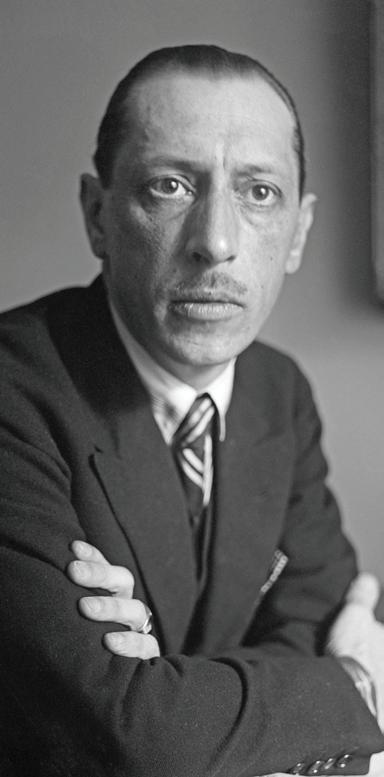
The turn of the 20th century was undoubtedly one of the most exciting and innovative golden ages of classical music. In the twilight days of the Romantic idiom that had cultivated increasingly liberal approaches to harmony, form, and instrumentation, Igor Stravinsky emerged as the poster child of musical modernism. Disinterested in his academic studies, he spent his childhood listening to his father Fyodor, a professional singer, rehearsing operatic roles, attending performances at the Mariinsky Theatre, and improvising at the piano. Shortly before his father’s death in 1902, Stravinsky befriended Nikolai Rimsky-Korsakov, the great authority on virtuoso orchestration, who took the fledgling composer under his wing and transmitted the technical expertise which would quite literally color Stravinsky’s fantastical scores.
After six years of private study under Rimsky-Korsakov, Stravinsky composed his orchestral fantasy Feu d’artifice (“Fireworks”) as a wedding present for Rimsky-Korsakov’s daughter Nadezhda. Its performance in Saint Petersburg made a lasting impression on Sergei Diaghilev, the champion of Russian art and impresario who was then in the process of getting his latest artistic venture off the ground. Eager to capitalize on the Western fascination with Russian cultural wares, Diaghilev had procured the talents of the choreographer Michel Folkine and the artists Léon Bakst and Alexandre Benois, but had found no composer — and so, taken by Stravinsky’s sparkling instrumental effects, he invited him to orchestrate music by Chopin for his ballet Les Sylphides, presented during the first season of his newly established company, the Ballet Russes.
But it was the first large-scale commission Stravinsky received from Diaghilev that would make his reputation practically overnight. Drawing upon a variety of literary sources, Diaghilev’s inner circle selected the Slavic legend of the Firebird as the scenario of their new ballet, and
Stravinsky was chosen to provide an original score. The undertaking presented him with the most stimulating challenge of his career thus far: clearly articulating, by strictly musical means, a fulllength dramatic narrative for the stage. In response, he delivered a work of arresting originality, persuasively rendering the supernatural dimensions of the story by assimilating Russian folk tunes with the coloristic and textural command he had inherited from Rimsky-Korsakov. Leveraging the ballet’s unmitigated success, Stravinsky compiled three separate suites of its music over the course of his life. The version he prepared in 1919 remains the most popular, stripping the tale down to its fundamentals while illuminating Stravinsky’s genius for gesture and characterization.
The low, slithering bass lines of the introduction raise the curtain on the wretched King Kashchei’s garden, where the Firebird, pursued by Prince Ivan, dances among the golden apple trees. Captured and begging for her freedom, the Firebird offers Ivan a single magical feather. Thirteen princesses, captives of Kashchei, appear and perform a simple khorovod, or circle dance, as Ivan falls instantly in love with Princess Tsarevna. Kaschei enters, and Ivan summons the Firebird with the feather, who bewitches the sorcerer and his coterie, forcing them to perform the roiling “Infernal Dance.” As they collapse from exhaustion, the Firebird sings its ghostly lullaby and commands Ivan to destroy the magic egg containing Kaschei’s soul. With the entrance of a lone horn, the magician’s spell is broken at last — as the dawn breaks, the music flowers triumphantly into a tremendous brass fanfare while Ivan and his love revel in their newfound freedom.
2025.26 SEASON
KEN-DAVID MASUR
Music Director
Polly and Bill Van Dyke Music Director Chair
EDO DE WAART
Music Director Laureate
BYRON STRIPLING
Principal Pops Conductor
Stein Family Foundation Principal Pops Conductor Chair
RYAN TANI
Associate Conductor
CHERYL FRAZES HILL
Chorus Director
Margaret Hawkins Chorus Director Chair
TIMOTHY J. BENSON
Assistant Chorus Director
FIRST VIOLINS
Jinwoo Lee, Concertmaster, Charles and Marie Caestecker Concertmaster Chair
Ilana Setapen, First Associate Concertmaster, Thora M. Vervoren First Associate Concertmaster Chair
Jeanyi Kim, Associate Concertmaster
Alexander Ayers
Autumn Chodorowski
Yuka Kadota
Elliot Lee
Dylana Leung
Kyung Ah Oh
Lijia Phang
Vinícius Sant’Ana**
Yuanhui Fiona Zheng
SECOND VIOLINS
Jennifer Startt, Principal, Andrea and Woodrow Leung Principal Second Violin Chair
Ji-Yeon Lee, Assistant Principal (2nd chair)
Hyewon Kim, Acting Assistant Principal (3rd chair)
Heejeon Ahn
Lisa Johnson Fuller
Clay Hancock
Paul Hauer
Sheena Lan**
Janis Sakai**
Yiran Yao
VIOLAS
Victor de Almeida, Principal, Richard O. and Judith A. Wagner Family Principal Viola Chair
Samantha Rodriguez, Acting Assistant Principal (2nd chair), Friends of Janet F. Ruggeri Assistant Principal Viola Chair
Alejandro Duque, Acting Assistant Principal (3rd chair)
Elizabeth Breslin
Georgi Dimitrov
Nathan Hackett
Michael Lieberman**
Erin H. Pipal
CELLOS
Susan Babini, Principal, Dorothea C. Mayer Principal Cello Chair
Shinae Ra, Assistant Principal (2nd chair)
Scott Tisdel, Associate Principal Emeritus
Madeleine Kabat
Peter Szczepanek
Peter J. Thomas
Adrien Zitoun
BASSES
Principal, Donald B. Abert Principal Bass Chair
Andrew Raciti, Acting Principal
Nash Tomey, Acting Assistant Principal (2nd chair)
Brittany Conrad
Broner McCoy
Paris Myers
HARP
Julia Coronelli, Principal, Walter Schroeder Principal Harp Chair
FLUTES
Sonora Slocum, Principal, Margaret and Roy Butter Principal Flute Chair
Heather Zinninger, Assistant Principal
Jennifer Bouton Schaub
PICCOLO
Jennifer Bouton Schaub
OBOES
Katherine Young Steele, Principal, Milwaukee Symphony Orchestra League Principal Oboe Chair
Kevin Pearl, Assistant Principal
Margaret Butler
ENGLISH HORN
Margaret Butler, Philip and Beatrice Blank English Horn Chair in memoriam to John Martin
CLARINETS
Todd Levy, Principal, Franklyn Esenberg Principal Clarinet Chair
Jay Shankar, Assistant Principal, Donald and Ruth P. Taylor Assistant Principal Clarinet Chair
Besnik Abrashi
E-FLAT CLARINET
Jay Shankar
BASS CLARINET
Besnik Abrashi
BASSOONS
Catherine Van Handel, Principal, Muriel C. and John D. Silbar Family Principal Bassoon Chair*
Rudi Heinrich, Acting Principal
Matthew Melillo
CONTRABASSOON
Matthew Melillo
HORNS
Matthew Annin, Principal, Krause Family Principal
French Horn Chair
Krystof Pipal, Associate Principal
Dietrich Hemann, Andy Nunemaker French Horn Chair
Darcy Hamlin
Dawson Hartman
TRUMPETS
Matthew Ernst, Principal, Walter L. Robb Family Principal Trumpet Chair
David Cohen, Associate Principal, Martin J. Krebs Associate Principal Trumpet Chair
Tim McCarthy, Fred Fuller Trumpet Chair
TROMBONES
Megumi Kanda, Principal, Marjorie Tiefenthaler Principal Trombone Chair
Kirk Ferguson, Assistant Principal
BASS TROMBONE
John Thevenet, Richard M. Kimball
Bass Trombone Chair
TUBA
Robyn Black, Principal, John and Judith Simonitsch Principal Tuba Chair
TIMPANI
Dean Borghesani, Principal
Chris Riggs, Assistant Principal
PERCUSSION
Robert Klieger, Principal
Chris Riggs
PIANO
Melitta S. Pick Endowed Piano Chair
PERSONNEL
Antonio Padilla Denis, Director of Orchestra Personnel
Paris Myers, Assistant Manager of Orchestra Personnel
LIBRARIANS
Paul Beck, Principal Librarian, James E. Van Ess Principal Librarian Chair
Matthew Geise, Assistant Librarian & Media Archivist
PRODUCTION
Tristan Wallace, Production Manager/Live Audio
Lisa Sottile, Production Stage Manager
* Leave of absence during the 2025.26 season
** Acting member of the MSO for the 2025.26 season