Guest Artist Biographies
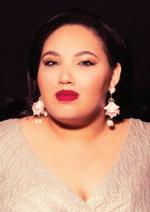
KATERINA BURTON
American soprano Katerina Burton, acclaimed for her “vocal fire and dramatic conviction” (Isthmus), is a 2024 winner of the George and Nora London Foundation Competition and a recipient of the Sara Tucker Study Grant from the Richard Tucker Foundation. She is a graduate of the Cafritz Young Artists Program at Washington National Opera, where she gained recognition for her thrilling mainstage debut as Micaëla in Francesca Zambello’s renowned production of Carmen
The 2025-26 season saw both a role and company debut for Burton as Serena in Porgy and Bess with the Lyric Opera of Kansas City, as well as a solo debut with the New Orchestra of Washington in Beethoven’s ninth symphony in collaboration with the Denyce Graves Foundation. She also made a return to the Cathedral Choral Society in Washington, D.C., where she appeared as soloist in Mozart’s Requiem, joined Cantori New York as the soprano soloist in Frank Ferko’s Stabat Mater, and made her Carnegie Hall debut singing Mendelssohn’s “Hear My Prayer” with MidAmerica Productions.
Burton has seen much success as an international competitor, having placed in the Dallas Opera’s 2024 National Vocal Competition and been chosen as a Grand Finalist in the Concours Tenor Viñas presented by the Gran Teatre del Liceu in Barcelona, Spain. Previously, Burton was a semifinalist for the prestigious Queen Sonja Singing Competition in Oslo, Norway, and was also a semifinalist for the Concours musical international de Montréal. A native of Ocean City, Maryland, Burton completed her graduate studies at The Juilliard School.
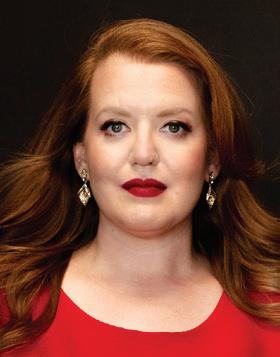
JENNIFER JOHNSON CANO
Jennifer Johnson Cano’s portrayal of Michele in the recent premiere of The Righteous at the Santa Fe Opera earned her accolades from The New York Times, which noted how she “voluptuously captured” the pain and strength of her character; Opera Today called Cano’s arias in The Righteous “flawless combinations of radiant, poised, attractive singing invested with heartfelt delivery.”
After creating the role of Michele in the world premiere of Gregory Spears’s The Righteous with the Santa Fe Opera in the summer of 2024, she was invited back to sing the role of Mrs. Grose in Britten’s The Turn of the Screw as well as Schwertleite in Wagner’s Die Walküre in the summer of 2025. Her 2025-26 season includes engagements with the Chicago, San Francisco, Colorado, and Seattle symphonies and The Apollo Orchestra. The Philadelphia Chamber Music Society presents Cano in recital with pianist Christopher Cano and violist Beth Guterman Chu. Tours include a project with Simone Dinnerstein and her ensemble, Baroklyn, as well as a week with the National Symphony Orchestra of Taiwan. Cano returns to the Metropolitan Opera in her role debut as Suzuki in Madama Butterfly and premieres a new song cycle by Gregory Spears at the Tucson Desert Song Festival.
Cano joined the Lindemann Young Artist Development Program at the Metropolitan Opera after winning the Metropolitan Opera National Council Auditions. Among her honors are the first prize from the Young Concert Artist International Auditions, a Sara Tucker Study Grant, a Richard Tucker Career Grant, and a George London Award.
Guest Artist Biographies
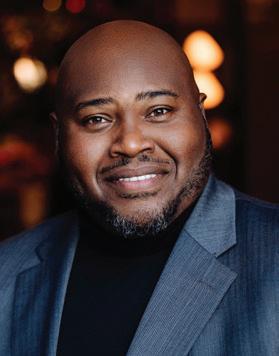
ISSACHAH SAVAGE
Dramatic tenor Issachah Savage has appeared with many of the world’s leading orchestras, including The Cleveland Orchestra, The Philadelphia Orchestra, the New York Philharmonic, Los Angeles Philharmonic, San Francisco Symphony, Houston Symphony, and the Chicago, Boston, Detroit, Dallas, Toronto, and St. Louis symphony orchestras.
Operatic highlights include performances with the Metropolitan Opera, Lyric Opera of Chicago, Houston Grand Opera, LA Opera, Seattle Opera, Canadian Opera Company, Opéra National de Bordeaux, Dutch National Opera, l’Opéra national du Capitole de Toulouse, and the Salzburg Festival. He has sung much of the great dramatic tenor repertoire, including the title roles in Tannhäuser, Otello, Peter Grimes, and Rienzi, Siegmund in Die Walküre, Radamès in Aïda, Bacchus in Ariadne auf Naxos, Der Kaiser in Die Frau ohne Schatten, Manrico in Il trovatore, and Narraboth in Salome.
This season, Savage makes debuts with the Milwaukee Symphony Orchestra in Beethoven’s Missa solemnis and with the North Carolina Symphony in Mozart’s “Great” Mass in C minor. He also returns to the Lyric Opera of Chicago for “Echoes of Excellence: Celebrating the Legacy of Chicago’s Black Voices,” and to the Orquestra Sinfônica do Estado de São Paulo for Puccini’s Messa di Gloria and Beethoven’s Symphony No. 9.
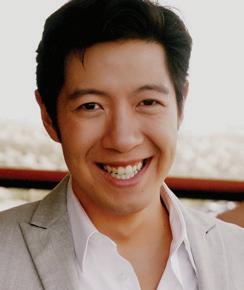
ADAM LAU
Chinese-American bass Adam Lau, praised for his “dauntingly low register” (Classical Voice North America) and “cellar-deep sound” (Post Alley), continues to garner acclaim on opera and concert stages worldwide. Lau has received top honors in several major competitions, including first prize at the George and Nora London Foundation for Singers Competition, Jensen Foundation Vocal Competition, Palm Springs Opera Guild Vocal Competition, and Young Patronesses of the Opera National Voice Competition.
In 2025-26, Lau made his house and role debut at Houston Grand Opera as Betto in Gianni Schicchi, his Calgary Opera debut as Don Basilio in Il barbiere di Siviglia, and returned to Florida Grand Opera as Timur in Turandot and Carnegie Hall with the Oratorio Society of New York as the bass soloist in Handel’s Messiah. He will be featured in the upcoming film adaptation of Gordon Getty’s opera Plump Jack in the role of the Lord Chief Justice. He can also be heard as Oroveso in the newly released EuroArts recording of Norma, which is available on all platforms.
In recent seasons, Lau has appeared with San Francisco Opera as Samuel in Un ballo in maschera, returned to Minnesota Opera as Frère Laurent in Roméo et Juliette, played Narbal in Les Troyens and Angelotti in Tosca with Seattle Opera, performed in concerts with the Metropolitan Opera at Carnegie Hall and on the company’s European tour, conducted by music director Yannick NézetSéguin, and appeared as Sarastro in The Magic Flute under the baton of Marin Alsop at the Ravinia Festival.
Program notes by David Jensen
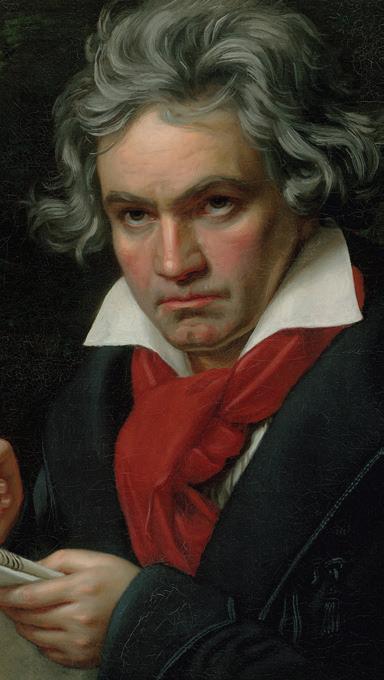
LUDWIG VAN BEETHOVEN
Born 17 December 1770; Bonn, Germany
Died 26 March 1827; Vienna, Austria
Missa solemnis in D major, Opus 123
Composed: 1819 – 1823
First performance: 7 April 1824; Saint Petersburg
Philharmonic Society
Last MSO performance: 20 May 2007; Andreas Delfs, conductor; Turid Karlsen, soprano; Gigi Mitchell-Velasco, mezzo-soprano; Anthony Dean Griffey, tenor; Stephen Morschek, bass
Instrumentation: 2 flutes; 2 oboes; 2 clarinets; 2 bassoons; contrabassoon; 4 horns; 2 trumpets; 3 trombones; timpani; organ; strings
Approximate duration: 81 minutes
In the autumn of 1802, Ludwig van Beethoven penned one of the most intensely personal documents of his life. At the direction of his doctor, Johann Adam Schmidt, Beethoven had spent the summer in Heiligenstadt, a rural outpost of Vienna, working out his second symphony while suffering the oppressive silence of his steadily deteriorating hearing. Written to his brothers Carl and Johann, the letter that came to be known as the Heiligenstadt Testament was primarily intended as his last will; more importantly, it marked definitively Beethoven’s acceptance that his condition was certain to become a permanent feature of his life. The letter not only grapples with his own distraught psychological state, articulating in painful detail his sense of isolation and withdrawal from civil society, but offers an intimate view of his own philosophical and religious convictions.
Wrestling with the question of whether his life was worth living, he ultimately rejected suicide, recognizing that the driving force of his destiny as an artist was far greater than his personal despair: “it was only my art that held me back. … it seemed to me impossible to leave the world until I had brought forth all that I felt was within me.” Typical of his unorthodox relationship to the sacred, his letter invokes an ambiguously defined but entirely personal God: “Divine One, thou seest my inmost soul, thou knowest that therein dwells the love of mankind and the desire to do good. … despite all the limitations of Nature [I] nevertheless did everything within [my] powers to become accepted among worthy artists and men.” Tellingly, the letter was left unsent and was not discovered until Beethoven’s death.
These are salient points worth making in that Beethoven’s life became, in the wake of his disability, something of a spiritual path. It was shortly after leaving Heiligenstadt for Vienna that he composed the oratorio Christ on the Mount of Olives, and by the time he began planning in earnest a “High Mass” befitting Archduke Rudolf of Austria’s new appointment as Archbishop of Olomouc in 1819, he had already produced his first setting of the Mass for Prince Nikolaus Esterházy II. Quite predictably, his final, and greatest, expression of religious thought quickly grew to tremendous proportions, rendering the intended premiere in the spring of 1820 an impossibility. Writing to the Archduke in 1823 after having finally finished the score, Beethoven modestly quoted the philosopher Gottfried Wilhelm Leibniz: “There is nothing higher than to approach more nearly to the Godhead than other mortals, and by that contact to spread the rays of the Godhead through the human race.”
We know that Beethoven, in preparation for his “solemn mass,” was fastidious not only in his survey of the doctrinal implications of the language of the Mass, but the historical precedent set by Bach, Handel, Palestrina, and their predecessors, studying liturgical plainchant, ecclesiastical modes, and Renaissance treatises on music theory. Like much of the music written during the final chapter of his life, it is expressive in the extreme. A plea for mercy, the grand instrumental overtures and silken vocal polyphony of the Kyrie immediately suggest the reverence with which Beethoven has approached his subject matter; underscoring their lofty expressions of faith, magnificent fugues crown the Gloria and the Credo; the concertmaster solo that threads its way through the Sanctus, entering just as the chorus intones “Blessed is he that cometh in the name of the Lord,” assumes celestial dimensions; and the Agnus Dei, as a final prayer for, in Beethoven’s words, “inner and outer peace,” transports us from the dark night of the soul to our final absolution.
Continuing a tradition that had been in practice for more than half a millennium, the Missa solemnis imposes staggering demands upon its performers in an attempt to communicate the ineffable, immanent, and sublime quality of the spiritual ground as Beethoven understood it. Perhaps it is within this very struggle to intimate the nature of the divine itself that we can most completely recognize Beethoven in the handwritten note he included at the top of the manuscript: “From the heart — may it once again — return to the heart!”
2025.26 SEASON
KEN-DAVID MASUR
Music Director
Polly and Bill Van Dyke Music Director Chair
EDO DE WAART
Music Director Laureate
BYRON STRIPLING
Principal Pops Conductor
Stein Family Foundation Principal Pops Conductor Chair
RYAN TANI
Associate Conductor
CHERYL FRAZES HILL
Chorus Director
Margaret Hawkins Chorus Director Chair
TIMOTHY J. BENSON
Assistant Chorus Director
FIRST VIOLINS
Jinwoo Lee, Concertmaster, Charles and Marie Caestecker Concertmaster Chair
Ilana Setapen, First Associate Concertmaster, Thora M. Vervoren
First Associate Concertmaster Chair
Jeanyi Kim, Associate Concertmaster
Alexander Ayers
Autumn Chodorowski
Yuka Kadota
Elliot Lee
Dylana Leung
Kyung Ah Oh
Lijia Phang
Vinícius Sant’Ana**
Yuanhui Fiona Zheng
SECOND VIOLINS
Jennifer Startt, Principal, Andrea and Woodrow Leung Principal Second Violin Chair
Ji-Yeon Lee, Assistant Principal (2nd chair)
Hyewon Kim, Acting Assistant Principal (3rd chair)
Heejeon Ahn
Lisa Johnson Fuller
Clay Hancock
Paul Hauer
Sheena Lan**
Janis Sakai**
Yiran Yao
VIOLAS
Victor de Almeida, Principal, Richard O. and Judith A. Wagner Family Principal Viola Chair
Samantha Rodriguez, Acting Assistant Principal (2nd chair), Friends of Janet F. Ruggeri Assistant Principal Viola Chair
Alejandro Duque, Acting Assistant Principal (3rd chair)
Elizabeth Breslin
Georgi Dimitrov
Nathan Hackett
Michael Lieberman**
Erin H. Pipal
CELLOS
Susan Babini, Principal, Dorothea C. Mayer Principal Cello Chair
Shinae Ra, Assistant Principal (2nd chair)
Scott Tisdel, Associate Principal Emeritus
Madeleine Kabat
Peter Szczepanek
Peter J. Thomas
Adrien Zitoun
BASSES
Principal, Donald B. Abert Principal Bass Chair
Andrew Raciti, Acting Principal
Nash Tomey, Acting Assistant Principal (2nd chair)
Brittany Conrad
Broner McCoy
Paris Myers
HARP
Julia Coronelli, Principal, Walter Schroeder Principal Harp Chair
FLUTES
Sonora Slocum, Principal, Margaret and Roy Butter Principal Flute Chair
Heather Zinninger, Assistant Principal
Jennifer Bouton Schaub
PICCOLO
Jennifer Bouton Schaub
OBOES
Katherine Young Steele, Principal, Milwaukee Symphony Orchestra League Principal Oboe Chair
Kevin Pearl, Assistant Principal
Margaret Butler
ENGLISH HORN
Margaret Butler, Philip and Beatrice Blank English Horn Chair in memoriam to John Martin
CLARINETS
Todd Levy, Principal, Franklyn Esenberg Principal Clarinet Chair
Jay Shankar, Assistant Principal, Donald and Ruth P. Taylor Assistant Principal Clarinet Chair
Besnik Abrashi
E-FLAT CLARINET
Jay Shankar
BASS CLARINET
Besnik Abrashi
BASSOONS
Catherine Van Handel, Principal, Muriel C. and John D. Silbar Family Principal Bassoon Chair*
Rudi Heinrich, Acting Principal
Matthew Melillo
CONTRABASSOON
Matthew Melillo
HORNS
Matthew Annin, Principal, Krause Family Principal
French Horn Chair
Krystof Pipal, Associate Principal
Dietrich Hemann, Andy Nunemaker French Horn Chair
Darcy Hamlin
Dawson Hartman
TRUMPETS
Matthew Ernst, Principal, Walter L. Robb Family Principal Trumpet Chair
David Cohen, Associate Principal, Martin J. Krebs Associate Principal Trumpet Chair
Tim McCarthy, Fred Fuller Trumpet Chair
TROMBONES
Megumi Kanda, Principal, Marjorie Tiefenthaler Principal Trombone Chair
Kirk Ferguson, Assistant Principal
BASS TROMBONE
John Thevenet, Richard M. Kimball Bass Trombone Chair
TUBA
Robyn Black, Principal, John and Judith Simonitsch Principal Tuba Chair
TIMPANI
Dean Borghesani, Principal
Chris Riggs, Assistant Principal
PERCUSSION
Robert Klieger, Principal
Chris Riggs
PIANO
Melitta S. Pick Endowed Piano Chair
PERSONNEL
Antonio Padilla Denis, Director of Orchestra Personnel
Paris Myers, Assistant Manager of Orchestra Personnel
LIBRARIANS
Paul Beck, Principal Librarian, James E. Van Ess Principal Librarian Chair
Matthew Geise, Assistant Librarian & Media Archivist
PRODUCTION
Tristan Wallace, Production Manager/Live Audio
Lisa Sottile, Production Stage Manager
* Leave of absence during the 2025.26 season
** Acting member of the MSO for the 2025.26 season