JOHN STAFFORD SMITH/arr. Walter Damrosch and John Philip Sousa
The Star-Spangled Banner
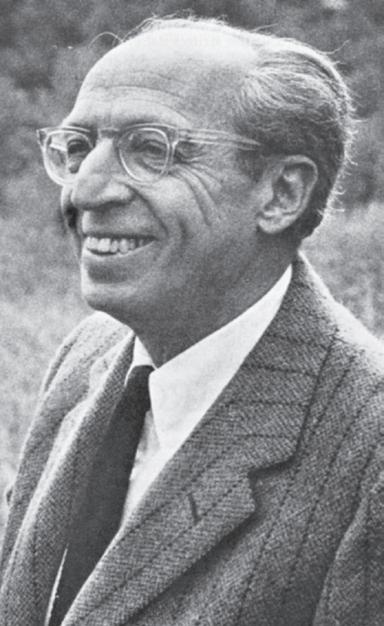
AARON COPLAND
Suite from The Tender Land
III. Finale: The Promise of Living
Production Credits
Arthur Oliver, costume designer
S. Katy Tucker, projection designer
Kylee Loera, video engineer
Nottingham Design, wig and hair styling
Rebecca Monroe, stage manager
The 2025.26 Classics Series is presented by the UNITED PERFORMING ARTS FUND and ROCKWELL AUTOMATION.
Copland & Twain: An America 250 Celebration is supported in part by the NATIONAL ENDOWMENT FOR THE ARTS
The length of this concert is approximately 2 hours.
The Milwaukee Symphony Orchestra can be heard on the Naxos, Telarc, Koss Classics, ProArte, AVIE, and Vox/Turnabout labels. MSO Classics recordings are available for digital streaming and download on Spotify, Apple Music, and more.
Guest Artist Biographies
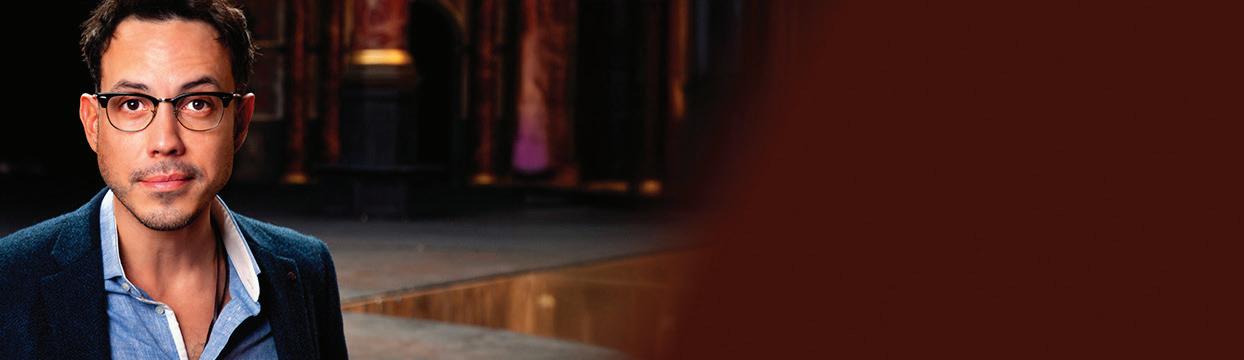
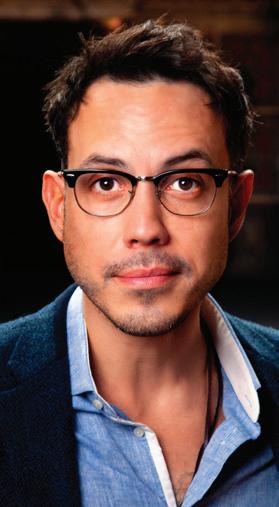
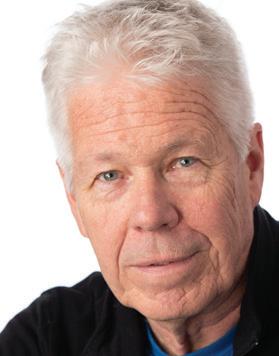
BILL BARCLAY
Writer, director, and composer Bill Barclay is best known for his 25+ productions of concert-theater, including Secret Byrd, Romeo and Juliet, Bach’s St. Mark Passion, and The Chevalier. He is artistic director of Concert Theatre Works, which tours his productions to 30 cities internationally each year. His most recent production with the Milwaukee Symphony Orchestra featured his largest theatrical concert, Peer Gynt.
As director of music at Shakespeare’s Globe Theatre, he produced live music for over 130 productions and 100 concerts, composing original music for over a dozen, which have toured to six continents. His Broadway and West End credits include Farinelli and the King, Twelfth Night, and Richard III, all starring Sir Mark Rylance. Barclay’s original works have been described as “witty and incisive” (The New York Times), “emotionally supercharged” (The London Times), “quietly transfixing” (The New Yorker), “effortless perfection” (The Observer), and “quite simply exquisite” (The Guardian).
Orchestral partners include the Los Angeles Philharmonic (at the Hollywood Bowl), National Symphony Orchestra (Kennedy Center), BBC Symphony Orchestra (Barbican Centre), London Philharmonic Orchestra, The Cleveland Orchestra, New World Symphony, Buffalo Philharmonic Orchestra, and the Cincinnati, Milwaukee, St. Louis, New Jersey, Virginia, Colorado, Indiana, Hartford, Harlem, Winston-Salem, and Chautauqua symphony orchestras. He has been commissioned five times by the Boston Symphony Orchestra, staging his own original adaptations over 12 seasons, including Romeo and Juliet, Peer Gynt, A Midsummer Night’s Dream, L’Histoire du soldat, The Chevalier, and The Magic Flute.
An early music specialist, his productions Death of Gesualdo, Secret Byrd, Bach’s St. Mark Passion and Art of Fugue, and others have variously featured The Gesualdo Six, Music of the Baroque, The English Concert, The Sixteen, Fretwork, Barokksolistene, the Handel & Haydn Society, Academy of Ancient Music, Dunedin Consort, Orchestra of the Age of Enlightenment, Academy of St Martinin-the-Fields, National Centre for Early Music, Oregon Bach Festival, Early Music Seattle, Portland Baroque, San Francisco Early Music Society, Abendmusik, and others at dozens of festivals around the world.
As a composer, his original music has been performed for President Obama, for the Olympic torch, at the United Nations, and three times for the British royal family. He was the composer for Hamlet Globe to Globe, which toured 197 countries, and Call of the Wild, which toured to 42 states. He directed Silkroad’s Heroes Take Their Stands and conducted the City of London Sinfonia on international tours. He has been commissioned by the Royal Albert Hall, Washington National Cathedral, and Hollywood Bowl.
A contributor to The Guardian and Songlines, Barclay is published on the music of Shakespeare by both Cambridge and Oxford University presses, and he lectures widely on Shakespeare and the music of the spheres. His newest work, What Music Is, is aimed at revealing music’s essential role on our planet. He is the recipient of a Fox Foundation Resident Actor Fellowship, the largest grant for actors in the U.S., and spent 12 years as a company member at both Shakespeare and Company and the Actors’ Shakespeare Project, where he collaborated on over 40 productions as an actor, director, composer, and educator. Barclay earned his Master of Fine Arts degree in playwriting at Boston University.
He can be followed @barclayarts and concerttheatreworks.com.
Guest Artist Biographies
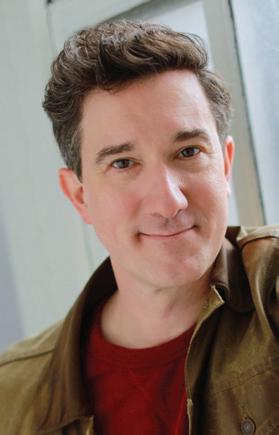
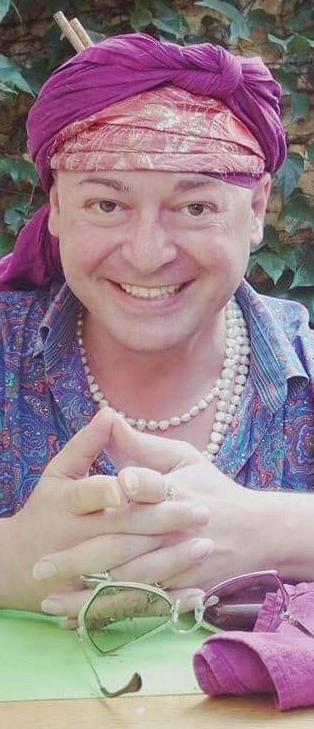
CARSON ELROD
Carson Elrod’s acting credits include A Midsummer Night’s Dream and L’Histoire du soldat with Concert Theatre Works and the Boston Symphony Orchestra, Peter and The Starcatcher, Reckless, and Noises Off on Broadway, and The Merry Widow with the Metropolitan Opera. Off-Broadway credits include A Midsummer Night’s Dream, Twelfth Night, and Seize the King with the Classical Theatre of Harlem, The Alchemist with Red Bull Theater, The Tempest, Measure for Measure, and All’s Well That Ends Well at the New York Shakespeare Festival, and The Liar and The Heir Apparent with Classic Stage Company. Appearances with the Manhattan Theatre Club have included Important Hats of the Twentieth Century, The Explorer’s Club, Based on a Totally True Story, House, Garden, and Comic Potential. Additional theatrical credits include Lives of the Saints and All in the Timing with Primary Stages, Cavedweller with the New York Theatre Workshop, and Pygmalion with Gingold Theatrical Group. Elrod’s television and film credits include Evil, The Good Fight, Law & Order: Criminal Intent, The Medium, 30 Rock, Wedding Crashers, and Kissing Jessica Stein. Elrod received his Master of Fine Arts degree from New York University and is executive director of Arts Workers United (artsworkersunited.com).
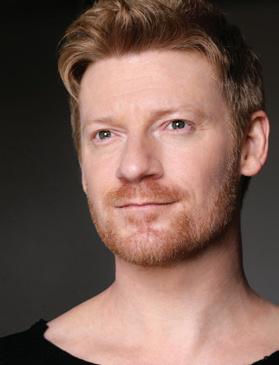
CALEB MAYO
Caleb Mayo is delighted to return to Milwaukee, where he performed the title role of Peer Gynt in 2022. A frequent collaborator with Concert Theatre Works, he originated Peer Gynt with the Boston Symphony Orchestra, later playing the role with the Milwaukee, Cincinnati, and St. Louis symphony orchestras and reprising it in Boston for the BSO’s 2023-24 season. He has also appeared with the BSO at Tanglewood in A Midsummer Night’s Dream and Romeo and Juliet and with the Boston Symphony Chamber Players in L’Histoire du soldat. Caleb began his classical training at age 11 and made his professional debut at 15 in the Huntington Theatre Company’s To Kill a Mockingbird. He holds a Bachelor of Arts degree in Drama from Vassar College and trained at the Royal Academy of Dramatic Art in London. He has worked in film (One-Eyed Monster), television (Criminal Minds), new media (What the UFO?), and regional theater across the U.S., including with the Shakespeare Theatre Company in Washington, D.C., the Knightsbridge Theatre in Los Angeles, and the Stonington Opera House in Maine.
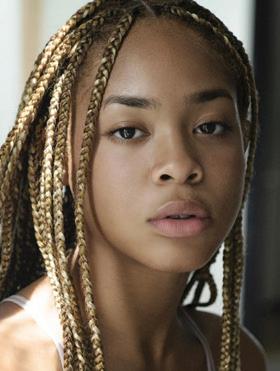
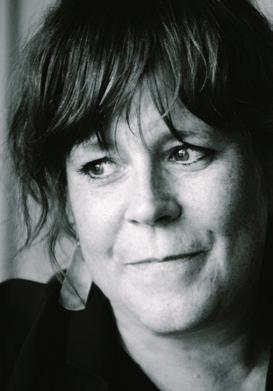
CHLOE MCFARLANE
Chloe McFarlane has appeared as Juliet in Romeo and Juliet and Amy in Little Women with the Actors’ Shakespeare Project, as well as Noel Calloway’s film Mr. Santa. McFarlane’s formal training includes the Boston University School of Theatre, the British American Drama Academy, and the Stella Adler Studio of Acting.
Guest Artist Biographies
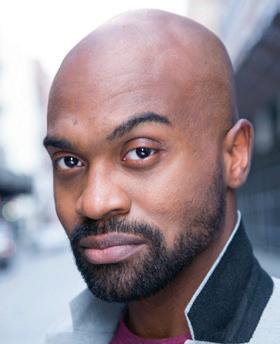
MAURICE EMMANUEL PARENT
Maurice Emmanuel Parent is an award-winning actor, director, and educator. With over 40 acting credits, he has performed on stages across the nation and abroad, working with some of Boston’s most esteemed theater companies, including the Huntington Theatre Company, Actors’ Shakespeare Project, Commonwealth Shakespeare Company, SpeakEasy Stage Company, Lyric Stage Company, New Repertory Theatre, and Central Square Theater, among others. His work as both an actor and director has earned him numerous accolades, including three Elliot Norton Awards from the Boston theater Critics Association, three Independent Reviewers of New England Awards, and an ArtsImpulse Award.
Beyond the stage, Parent has been a dedicated educator for over a decade. He has taught at Northeastern University, Massachusetts Institute of Technology, and the Boston Conservatory at Berklee in addition to spending six years as a performing arts specialist in the Boston public school system. He is currently a full-time professor at the Tufts University Department of Theatre, Dance, and Performance Studies. In 2016, driven by the lack of opportunities for artists of color and the urgent need to address racial inequities in Boston’s theater landscape, Parent co-founded Front Porch Arts Collective, where he now serves as producing artistic director. Under his leadership, The Porch has become a catalyst for change, creating space for dialogue, representation, and artistic excellence.
ROBERT WALSH
Robert Walsh’s off-Broadway credits include Gloucester Blue with Cherry Lane Theatre, Big Maggie with Douglas Fairbanks Theater, and Penelope with Perry Street Theatre. Walsh has been a company member with Open Eye Theatre, Riverside Shakespeare Company, and Circle Repertory Company. Appearances in Boston have included The Dybbuk and The Gaaga with Arlekin Players Theatre, Ah, Wilderness! and Hamlet with Huntington Theatre Company, Trouble in Mind with Lyric Stage, Our Town, Mass Appeal, and A Midsummer Night’s Dream with Merrimack Repertory Theatre, Sins of the Mother and The Subject Was Roses with Gloucester Stage Company, The Cocktail Hour with New Repertory Theatre, Next Fall with SpeakEasy Stage, The Winter’s Tale, Coriolanus, Macbeth, and Henry V with Commonwealth Shakespeare Company, and King Lear, Henry IV, Titus Andronicus, and Hamlet with the Actors’ Shakespeare Project, of which Walsh was a founding company member. Walsh’s television and film credits include Fourth of July, Black Mass, Dead Reckoning, The Spirit of Christmas, Evening, State and Main, Amistad, Eight Men Out, and Body of Proof. Walsh is former artistic director of Gloucester Stage Company and the American Stage Festival and currently serves on the faculty at Brandeis University. He directed the on-field ceremonies for the 1999 All-Star Game for Major League Baseball at Fenway Park in Boston.
Guest Artist Biographies
ARTHUR OLIVER
Arthur Oliver is a designer with 35 years of experience in the performing arts. His work has received praise from The London Times, The New York Times, The Wall Street Journal, The Huffington Post, The Boston Globe, and Variety Magazine. Oliver’s first design for Concert Theatre Works, Secret Byrd, premiered at the National Cathedral in Washington, D.C., and St Martin-inthe-Fields in 2023. It continues to tour the U.S. and the U.K.
In the summer of 2025, he designed costumes for Romeo and Juliet, conceived and directed by Bill Barclay of Concert Theatre Works. The production, commissioned by the Royal Albert Hall and the Boston Symphony Orchestra, premiered with Andris Nelsons conducting the Boston Symphony Orchestra at the Tanglewood Music Shed. Approximately 15,000 people were in attendance.
International design work includes the Mikhailovsky Theatre (St. Petersburg, Russia) and the National Opera and Ballet of Ukraine (Kyiv and Odesa). He continues to design in the U.S. for regional theaters, opera, ballet, and independent films.
S. KATY TUCKER
S. Katy Tucker designs video and projection for live performance, working frequently in opera and theater and collaborating with composers and musicians. Her work has been seen internationally, including Broadway, Carnegie Hall, the Metropolitan Opera, Teatro alla Scala, New York City Ballet, Park Avenue Armory, BAM, San Francisco Opera, Metropolitan Museum of Art, Dutch National Opera, Sydney Opera House, and Canadian Opera Company, among others. She began her career as a painter and video installation artist, exhibiting her work at a variety of galleries, such as the Corcoran Museum, Dupont Underground, and Artist’s Space in New York City, including a video installation titled Stone Memory, commissioned by the Kennedy Center. Tucker was nominated for a Lucille Lortel Award for Letters From Max.
Recent productions include Smash on Broadway with director Susan Stroman, Wagner’s “Ring” cycle with Sir David McVicar at Teatro alla Scala, Tannhäuser (Houston Grand Opera), Florencia en el Amazonas, Eurydice, Peter Grimes, Verdi’s Requiem, and Prince Igor (Metropolitan Opera), Florencia en el Amazonas (Lyric Opera of Chicago, Houston Grand Opera, and Washington National Opera), Rebecca (Vereinigte Bühnen Wien), Klangwolke 23 (Brucknerhaus), and Turandot, Macbeth, Fidelio, Elektra, Don Giovanni, and Samson and Delilah (Washington National Opera).
Director’s note by Bill
Barclay
This program began by imagining how to publicly go about celebrating America’s 250th anniversary. How could this event serve such a polarized time in our history? I have always been moved by some of the traditional American tunes and hymns, but the state of our country called for something else, something I couldn’t quite identify at first.
I now realize that for some reason or other, I wanted to laugh. I wanted to release energy, not summon it. I wanted the community of joy, not the burden of politics. And it seemed that avoiding politics entirely was ignoring the elephant in the room.
A symphony audience today may be one of the last public spaces of American life that is truly politically heterogeneous. Classical music plays to Republicans, Democrats, and Independents alike. This prompts a follow-up question: is there a way we can laugh about ourselves without excluding people?
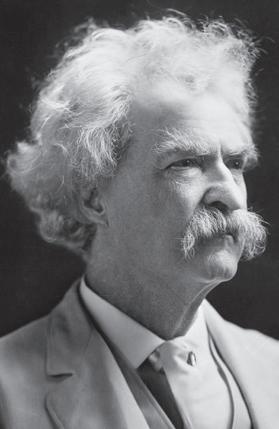
Today, Mark Twain seems as mainstream as apple pie, but during most of his life, he lived the life of a tramp. Both a free-wheeling populist and a cunning intellectual, his brand of satire made him the first true American celebrity. He also left behind a voluminous body of largely forgotten work, writing every week of his adult life. I took the opportunity of this anniversary to read some 2,000 pages of apocryphal speeches, articles, toasts, diary entries, and humorist essays that I had never even heard about before. I wanted to look beyond the author of Huckleberry Finn and summon his faith in America from beneath the quips. The richness of this corpus, and its resemblance to the ills that still plague us today, is simply uncanny.
Aaron Copland is often called The Dean of American Music, and it’s not hard to understand why. His long life (1900 – 1990) witnessed several profound changes in American identity. Yet however closely we associate him with the establishment in retrospect, his actual lived experience — like Twain’s — ran largely counter to that image. He was hauled before the House Un-American Activities Committee in 1953 as a suspected communist. He was blacklisted for his leftist associations and, in other chapters of his life, marginalized for his homosexuality. His musical pivots away from the tonality that made him famous and into the serialism of Arnold Schoenberg further cemented his outsider persona during his lifetime.
Today we present two distinctively American artists, mutually holding up core pillars of our identity, who need to be unpolished before authenticated. Their bodies of work cry out for a robust re-examination, and what else is an anniversary for? I take two of Copland’s lesser-known suites, Music for Movies and Music for the Theatre, and restore them to their incidental roots, while sharing with you some of the gems collected from dozens of Twain’s most colorful passages that history has forgotten. More surprises await after the intermission.
It is a theatrical concert that I deeply believe both men would have loved.
— Bill Barclay, writer and director of Copland & Twain
Program notes by David Jensen
AARON COPLAND
Born 14 November 1900; New York City, New York
Died 2 December 1990; North Tarrytown, New York
Music for Movies
Composed: 1939 – 1940; suite compiled in 1942
First performance: 17 February 1943; Daniel Saidenberg, conductor; Saidenberg Little Symphony
As the technological innovations that revolutionized life in the first decades of the 20th century transformed the world around him, Aaron Copland realized that it was imperative to connect with the public in a meaningful way. Turning to their radios, record players, and movie theaters for entertainment during the difficult years of the Depression, he recognized that to dismiss these new mediums of musical transmission ran the very real risk of alienating listeners. “It seemed to me that we composers were in danger of working in a vacuum. … It made no sense to ignore them and to continue writing as if they did not exist,” Copland wrote in Our New Music. “I felt that it was worth the effort to see if I couldn’t say what I had to say in the simplest possible terms.”
Shedding the avant-garde modernism then in vogue with the musical literati in favor of an “imposed simplicity” marked by a sparse, broadly accessible, and delicately colored musical language, Copland’s earliest filmic undertakings appealed directly to his humanist and leftist ethics. The documentary The City examined the problems endemic to rapid urbanization and the solutions offered by planned communities and public housing, while the dramatic rural and small-town portraits found in John Steinbeck’s Of Mice and Men and Thornton Wilder’s Our Town provided ample inspiration for the “clean and clear sounds” and “straight-forward harmonies and rhythms” that were coming to define Copland’s voice. Compiled in 1942, Copland dedicated this suite of excerpts to the French composer Darius Milhaud, a pioneer of film scoring from the medium’s first silent years.
Music for the Theatre
Composed: 1925
First performance: 20 November 1925; Serge Koussevitzky, conductor; Boston Symphony Orchestra
Last MSO performance: 20 June 2004; Andreas Delfs, conductor
Instrumentation: flute (doubling on piccolo); oboe (doubling on English horn); clarinet (doubling on E-flat clarinet); bassoon; 2 trumpets; trombone; percussion (bass drum, glockenspiel, snare drum, suspended cymbal, tenor drum, wood block, xylophone); piano; strings
Approximate duration: 21 minutes
Continued on page 22
Continued from page 21
Aaron Copland wasn’t born into a particularly musical family — of his parents, who had immigrated to the United States by way of Russia, only his mother, Sarah, expressed any interest in music. As an amateur pianist and singer, she ensured that her children received a musical education, though it was his older sister, Laurine, who gave him his first instruction at the piano. After progressing to private lessons under Victor Wittgenstein and learning the rudiments of harmony through a correspondence course, Copland began studying composition with Rubin Goldmark in 1917, whose loyalty to the German Romantic tradition gave him a robust foundational training. But his greatest transformation was to take place half a world away: in 1921, after saving up his summer wages, he departed for Paris, where he came under the influence of Nadia Boulanger.
As one of the most powerful and incisive musical minds of the century, Copland was only the first among dozens of American students to benefit from her intellectual rigor, spending the next three years studying under Boulanger while immersing himself completely in the contemporary artistic scene thriving in Europe’s urban centers. Returning to New York City with the aim of cultivating a distinctly American musical persona, he began incorporating the vigorous rhythmic mechanisms and riveting “blue” harmonies characteristic of the “Jazz Age” into his compositions. Written not for a specific production, but as music that “seemed to suggest a certain theatrical atmosphere,” Music for the Theatre encapsulates the stylistic and intellectual transitions Copland underwent as a young artist while foreshadowing the highly individualized style that emerged at the peak of his career.
MAY 28 - JUNE 4
Community concerts, competitive solo and duo recitals with MSO musicians at the Wisconsin Conservatory of Music, and Concerto Finale with the MSO at Bradley Symphony Center on June 4.
For more information or to sign up for updates on the 2024 competition, contact Info@PianoArts.org
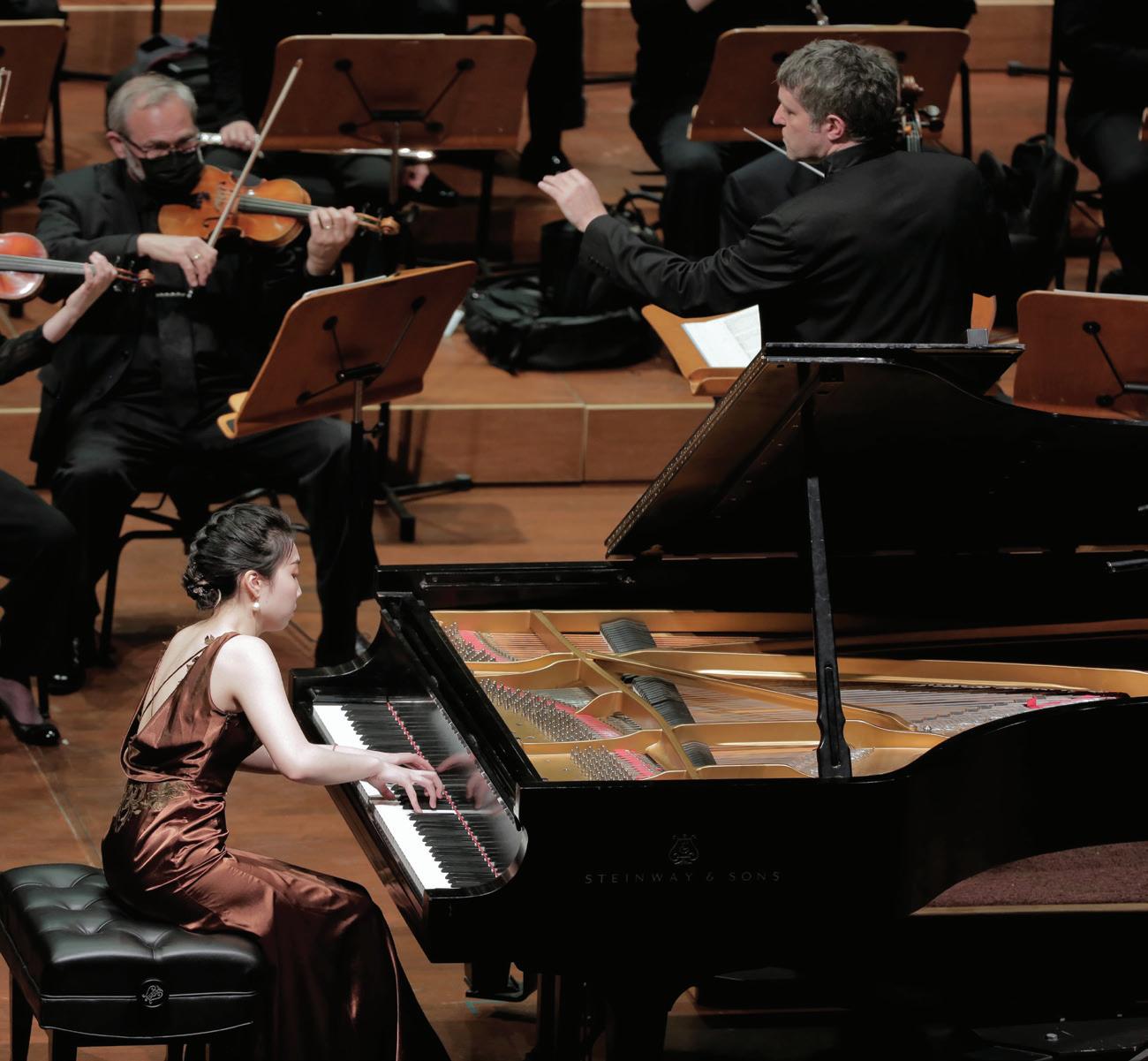
Ailun Zheng performing with the MSO in the 2022 North American Competition.
Photo by Pat Robinson
2025.26 SEASON
KEN-DAVID MASUR
Music Director
Polly and Bill Van Dyke Music Director Chair
EDO DE WAART
Music Director Laureate
BYRON STRIPLING
Principal Pops Conductor
Stein Family Foundation Principal Pops Conductor Chair
RYAN TANI
Associate Conductor
CHERYL FRAZES HILL
Chorus Director
Margaret Hawkins Chorus Director Chair
TIMOTHY J. BENSON
Assistant Chorus Director
FIRST VIOLINS
Jinwoo Lee, Concertmaster, Charles and Marie Caestecker Concertmaster Chair
Ilana Setapen, First Associate Concertmaster, Thora M. Vervoren First Associate Concertmaster Chair
Jeanyi Kim, Associate Concertmaster
Alexander Ayers
Autumn Chodorowski
Yuka Kadota
Elliot Lee
Dylana Leung
Kyung Ah Oh
Lijia Phang
Vinícius Sant’Ana**
Yuanhui Fiona Zheng
SECOND VIOLINS
Jennifer Startt, Principal, Andrea and Woodrow Leung Principal Second Violin Chair
Ji-Yeon Lee, Assistant Principal (2nd chair)
Hyewon Kim, Acting Assistant Principal (3rd chair)
Heejeon Ahn
Lisa Johnson Fuller
Clay Hancock
Paul Hauer
Sheena Lan**
Janis Sakai**
Yiran Yao
VIOLAS
Victor de Almeida, Principal, Richard O. and Judith A. Wagner Family Principal Viola Chair
Samantha Rodriguez, Acting Assistant Principal (2nd chair), Friends of Janet F. Ruggeri Assistant Principal Viola Chair
Alejandro Duque, Acting Assistant Principal (3rd chair)
Elizabeth Breslin
Georgi Dimitrov
Nathan Hackett
Michael Lieberman**
Erin H. Pipal
CELLOS
Susan Babini, Principal, Dorothea C. Mayer Principal Cello Chair
Shinae Ra, Assistant Principal (2nd chair)
Scott Tisdel, Associate Principal Emeritus
Madeleine Kabat
Peter Szczepanek
Peter J. Thomas
Adrien Zitoun
BASSES
Principal, Donald B. Abert Principal Bass Chair
Andrew Raciti, Acting Principal
Nash Tomey, Acting Assistant Principal (2nd chair)
Brittany Conrad
Broner McCoy
Paris Myers
HARP
Julia Coronelli, Principal, Walter Schroeder Principal Harp Chair
FLUTES
Sonora Slocum, Principal, Margaret and Roy Butter Principal Flute Chair
Heather Zinninger, Assistant Principal
Jennifer Bouton Schaub
PICCOLO
Jennifer Bouton Schaub
OBOES
Katherine Young Steele, Principal, Milwaukee Symphony Orchestra League Principal Oboe Chair
Kevin Pearl, Assistant Principal
Margaret Butler
ENGLISH HORN
Margaret Butler, Philip and Beatrice Blank English Horn Chair in memoriam to John Martin
CLARINETS
Todd Levy, Principal, Franklyn Esenberg Principal Clarinet Chair
Jay Shankar, Assistant Principal, Donald and Ruth P. Taylor Assistant Principal Clarinet Chair
Besnik Abrashi
E-FLAT CLARINET
Jay Shankar
BASS CLARINET
Besnik Abrashi
BASSOONS
Catherine Van Handel, Principal, Muriel C. and John D. Silbar Family Principal Bassoon Chair*
Rudi Heinrich, Acting Principal
Matthew Melillo
CONTRABASSOON
Matthew Melillo
HORNS
Matthew Annin, Principal, Krause Family Principal
French Horn Chair
Krystof Pipal, Associate Principal
Dietrich Hemann, Andy Nunemaker French Horn Chair
Darcy Hamlin
Dawson Hartman
TRUMPETS
Matthew Ernst, Principal, Walter L. Robb Family Principal Trumpet Chair
David Cohen, Associate Principal, Martin J. Krebs Associate Principal Trumpet Chair
Tim McCarthy, Fred Fuller Trumpet Chair
TROMBONES
Megumi Kanda, Principal, Marjorie Tiefenthaler Principal Trombone Chair
Kirk Ferguson, Assistant Principal
BASS TROMBONE
John Thevenet, Richard M. Kimball
Bass Trombone Chair
TUBA
Robyn Black, Principal, John and Judith Simonitsch Principal Tuba Chair
TIMPANI
Dean Borghesani, Principal
Chris Riggs, Assistant Principal
PERCUSSION
Robert Klieger, Principal
Chris Riggs
PIANO
Melitta S. Pick Endowed Piano Chair
PERSONNEL
Antonio Padilla Denis, Director of Orchestra Personnel
Paris Myers, Assistant Manager of Orchestra Personnel
LIBRARIANS
Paul Beck, Principal Librarian, James E. Van Ess Principal Librarian Chair
Matthew Geise, Assistant Librarian & Media Archivist
PRODUCTION
Tristan Wallace, Production Manager/Live Audio
Lisa Sottile, Production Stage Manager
* Leave of absence during the 2025.26 season
** Acting member of the MSO for the 2025.26 season