
Building Unshakeable Portfolios
Real estate investing isn't about waiting for the perfect market conditions it's about knowing how to create opportunity regardless of the cycle. Whether you're working toward your very first closing or managing a mature, multi-asset portfolio, success comes down to seeing value where others see friction, staying nimble with your marketing, and backing your decisions with hard data Our mission is to ensure you never have to navigate that journey alone. In this issue, we ’ re delivering actionable strategies to help you turn complex property challenges into equity, build resilient streams of passive income, and optimize every dollar in your deal-finding budget. You have the ambition; REIA is here to give you the tools, insights, and community to make it count
Why Smart Investors Chase “Messy” Title Deals (And Why You Should Too)
Most buyers see a title report full of red flags and run the other way which is exactly why clouded title properties can be some of the best-kept secrets in real estate investing. As Michael Lauer and Heidi Zimmer-Koschnick put it ahead of their upcoming MilwaukeeREIA presentation, "From Red Flags to the Closing Table," a messy title report isn't a dead end it's often a discount hiding behind paperwork.If you've ever walked away from a deal because the title came back "clouded," here's why it might be worth a second look
First, What Does "Clouded Title" ActuallyMean?
Before diving into the benefits, it helps to know the vocabulary:
Clouded Title (or "Cloud on Title") Any claim, lien, judgment, or discrepancy in the public record that raises doubt about a seller's legal right to transfer clear ownership of a property
Title Report A document produced by a title company that summarizes the ownership history and any recorded claims, liens, or defects tied to a property
Unreleased Mortgage A prior loan that was paid off but never had its lien officially removed from county records, leaving it looking "open" even though it isn't
Municipal Code Violations Outstanding citations or unresolved compliance issues (like unpermitted work or property maintenance violations) that a municipality has attached to a property
Tax Lien A legal claim by a government entity (often the IRS or a local taxing authority) against a property due to unpaid taxes
Heirship / Fractured Ownership A situation where a property passed to multiple heirs after an owner's death, often without a clear, unified path to sale, especially if some heirs are unreachable or uncooperative
Quiet Title Action A lawsuit filed to establish clear ownership and resolve competing claims, effectively "clearing" the cloud so the property can be sold with confidence
The Real Benefits of Buying Clouded Title Properties
1. Far Less Competition: Most retail buyers (and even many investors) won't touch a property once title issues surface That fear clears the field While others walk away, informed investors can negotiate calmly without a bidding war.
2. Built-In Discount: Sellers dealing with liens, code violations, or a tangled inheritance situation are often motivated to sell below market value simply to make the problem go away. The "messiness" itself becomes leverage for a better price
3. Solving a Real Problem for the Seller: Behind almost every cloud is a stressed seller: an heir who inherited a house they don't want, a homeowner buried in code violations, or a family untangling an old mortgage Investors who can navigate the fix aren't just buying real estate they're offering a genuine solution, which builds trust and can open the door to future deals and referrals.
4. Higher Margins for Those Who Know the Fix: Every type of cloud has a fairly standard resolution path: paying off or negotiating a lien, filing to release an old mortgage, working with a title company or attorney on a quiet title action, or coordinating among multiple heirs Once you've done it a few times, it becomes a repeatable system, and that expertise is worth real money in negotiated price.
5. Access to Off-Market and Overlooked Inventory: Clouded title properties rarely get multiple offers or fierce retail attention because most buyers filter them out before ever seeing the numbers That means access to inventory that never really enters the competitive market at all
The Catch: You Need to KnowWhat You're Looking At
The flip side, as the MilwaukeeREIA event description bluntly puts it, is that not knowing how to diagnose a title cloud can turn a good deal into a bureaucratic nightmare, burning weeks of marketing dollars, frustrating sellers, and ultimately killing deals that were entirely salvageable The difference between panicking and profiting comes down to knowing:
What each type of cloud actually means
Who needs to be involved to resolve it (title company, attorney, county office)
Roughly how long and how much it costs to fix
When a deal truly is too risky to pursue
Bottom Line
A clouded title isn't a warning sign to run from it's a signal that most of your competition already has For investors willing to learn the fixes, these deals often come with less competition, deeper discounts, and grateful sellers who couldn't find a way forward on their own. Want to learn how to read a title report, diagnose the exact issue, and know when\ a messy deal is worth pursuing? Join MilwaukeeREIA on Tuesday, August 11, at the DoubleTree Brookfield for "From Red Flags to the Closing Table," featuring Michael Lauer and Heidi Zimmer-Koschnick

Main Meeting: Using AI & Automation to Buy Back Your Time AUG25 Office Hours Volunteer Info & Training Night
Online Masterclass: How to Create (And Use) Your Own Land Trust!
Main Meeting: From Red Flags to the Closing Table


Dave Graf | 920-203-6087 | dave@gsifoundations com

Jodi Graf | 414-395-5478 | jgraf@premierpointrealty.com


Taylor Rens | 414-296-6225 | taylor rens@zrlaywers com John Newland | 414-852-0921 jnewland@terranova-realestate.com

Farsht | 262-208-4708 | info@reiahardmoney com 414-276-7378 | membership@aasew org



The Quiet Win: How Self-Storage Builds Durable Passive Income
BY: CARL FISCHER VIA REALESTATEINVESTINGTODAY.COM

g g gg g p g q y p consistency, resilience, and operational control.
In a recent educational webinar hosted by CamaPlan, commercial real estate investors Christy Brock and Margot Kennedy walked through why self-storage continues to attract long-term capital and how investors can evaluate opportunities in this space more effectively Their discussion highlighted three core reasons self-storage has remained durable across multiple economic cycles
1.Demand is driven by life events, not market conditions “Self-storage isn’t just a passing trend,” says Brock “It’s an asset class that thrives because life happens no matter the economic climate. The key reasons people need storage divorce, death, downsizing, dislocation, disaster, disease happen in any market ”
When people experience these transitions, they often need temporary space for their belongings. Downsizing from a larger home, relocating for work, managing an estate, or rebuilding after a loss frequently leads to storage use. Importantly, these needs are not discretionary and do not depend on consumer confidence.
Key demand characteristics discussed in the webinar include:
Approximately 11 to 12 percent of U.S. households currently use self-storage
Increasing adoption by businesses for inventory, records, and equipment
Expanded use following COVID as remote work reduced available space in homes and offices
This demand profile has helped self-storage maintain relatively stable occupancy even during periods of economic stress. When households downsize during downturns, belongings are often stored rather than sold. When conditions improve, those items often remain in storage longer than initially planned This behavior has historically supported consistent utilization across cycles
2.Operations are simpler and more controllable
One of the defining advantages of self-storage is operational simplicity compared to other real estate asset types. Unlike residential or multifamily properties, storage facilities do not house tenants and have minimal interior buildout
Operational characteristics highlighted in the webinar include:
No residents living onsite
Limited plumbing and utility exposure
Durable block and steel construction
Minimal wear and tear inside units
Fast and low-cost unit turnover
Unit turnover in self-storage is often completed in a short period of time and does not require extensive renovation. In many cases, a unit can be cleared and prepared for re-rental within an hour This contrasts with residential turnovers that may require weeks of downtime and significant capital.
Staffing and payroll are also more controllable. Many facilities now operate using hybrid or remote management models supported by call centers and automation. Customers can lease units, make payments, and receive assistance without requiring full-time onsite staff This reduces one of the largest operating expenses for most real estate assets.
Utilities tend to be lower as well Storage units typically do not require water or sewer services, and many facilities use motion-activated lighting to control electricity costs. These factors contribute to more predictable operating expenses and fewer unexpected maintenance issues
3 Value is created through net operating income
As with most commercial real estate, self-storage property values are driven by net operating income rather than comparable sales This allows investors to create value through operational improvements rather than relying solely on market appreciation.
During the webinar, Brock and Kennedy emphasized that even modest improvements in income or expense efficiency can materially impact long-term value.
Common value drivers include:
Bringing rents closer to market levels while maintaining occupancy
Reducing expenses through automation and operational efficiencies
Adding tenant protection programs
Introducing ancillary revenue such as unit monitoring or specialty parking
Improving marketing, signage, and online visibility
Because self-storage is often a fragmented market, many facilities are still owned by small, independent operators who have not optimized pricing, technology, or management practices Over 70 percent of facilities remain in this category. This fragmentation creates ongoing opportunities for professional operators to improve performance without relying on aggressive growth assumptions. In the case study discussed during the webinar, a facility acquired from long-term owners had below-market rents, limited marketing, and outdated operations. Through operational improvements and expense controls, the projected net operating income was expected to double over the hold period, significantly increasing the property’s value.
A steady asset class worth understanding
Says Kennedy, “Self-storage stands out as a durable, long-term investment offering consistent income and solid returns for those with a patient outlook ” Its performance is tied to life events, operational efficiency, and income fundamentals. That combination has allowed it to perform consistently through multiple economic cycles
For investors using self-directed retirement accounts, understanding how value is created in selfstorage can be particularly important Evaluating demand drivers, expense control, and net operating income provides a framework for assessing opportunities in this space. While self-storage may not be the most visible real estate asset class, its long-term fundamentals have made it a quiet but durable option for investors seeking consistency and risk-aware growth

Founded in 2003, Nations Lending has a long history of helping families achieve their dream of homeownership. Nations takes great pride in not just closing a loan but finding a customtailored financial solution for each client they interact with We look at each customer's needs objectively, and we recognize that the needs of each client may be different We believe that the relationship, and the trust we build with our clients sets us apart from the typical “ one size fits all loan factory”.
MILWAUKEE COUNTY
COUNTY
Tool of the Month
YELLOW LETTER HQ - FAST, AFFORDABLE DIRECT TO SELLER MARKETING

Yellow Letter HQ makes direct mail easy and efficient. With the ability to customize your marketing materials, from postcards to letters, they can get you what you need - fast!
Their pieces start at just $0 509 and the process is so quick and easy! It’s why we have used Yellow Letter in our business for the past 5 years!
Check out their pieces today and see how they can help you up your direct mail game!
SIGN UP TODAY!
National Benefit of the Month
LOCAL MARKET MONITOR - SAVE 25% ON ALL PURCHASES
Founded in 1990 by Ingo Winzer, Local Market Monitor began as a quarterly publication before making its way to the Internet. Ingo developed the National Review of Real Estate Markets, which analyzed conditions in 100 US Markets, using such economic data as home values, employment growth, and population growth He developed the concept of Equilibrium Home Prices, which has proved valuable in assessing real estate market risk during the last two economic cycles. www LocalMarketMonitor com
Local Market Monitor continues to evolve in response to the needs of their customers and advances in technology They’ve expanded their market coverage and refined their forecast models to enhance the value of their services
USE PROMO CODE REIA TO SAVE 25%
U.S. Homeownership & Rental Vacancy Rates for Q2 2026
BY:BRAD BECKETT VIA REALESTATEINVESTINGTODAY.COM
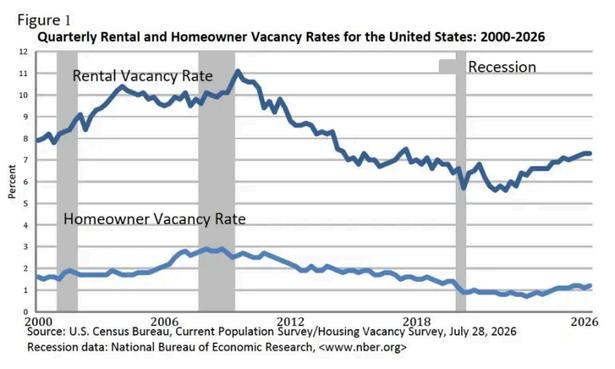
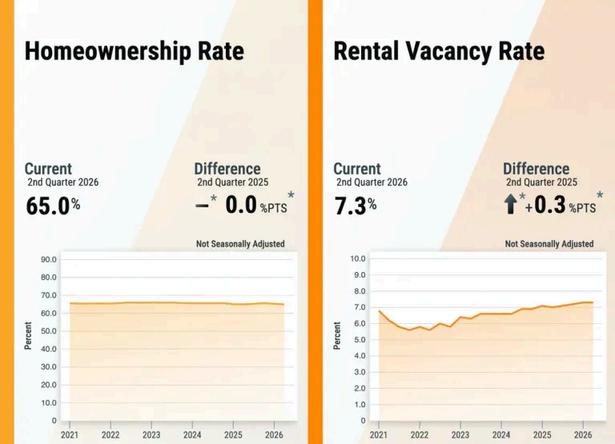
The U S government is reporting that the national vacancy rates for Q2 2026 were 73% for rental housing and 1.2% for homeowner housing. The national homeownership rate for Q2 2026 was 65%. In addition, approximately 89.5% of the housing units in the United States in Q2 were occupied and 10 5% were vacant Owner-occupied housing units made up 58 2% of total housing units, while renter-occupied units made up 31.3% of the inventory. Vacant year-round units comprised 8.2% of total housing units, while 2 3% were vacant for seasonal use All of these numbers were pretty close to previous quarters.