2026-31


2026-31
Our Vision for 2031 is where everyone in our community — colleagues, learners, and partners — feels visible, valued, included, and empowered to thrive.
This strategy is our commitment to reflect, represent, support, and celebrate the communities we serve — both in our workforce and our learner base. It sets out how MK College Group will actively advance equity, diversity and inclusion across all campuses, communities, and prisons between 2026 and 2031.
A generic EDI approach risks missing the structural inequalities and local realities that shape outcomes in Further Education. MK College Group requires a targeted strategy to deliver measurable progress in equity, diversity, and inclusion.
Milton Keynes faces notable challenges, as shown in the Vital Signs 2025 report:
• 30% of children live in poverty (UK average: 27%).
• 110% rise in demand for MK Food Bank post-pandemic.
• 12% of areas are among England’s most deprived.
• 28% of residents are from non-White minority groups.
These figures highlight the need for place-based EDI actions that:
• Address local attainment gaps and progression barriers.
• Respond to intersectional disadvantage (e.g. poverty + ethnicity/disability/gender).
• Create inclusive environments reflecting MK’s diversity.
• Support those facing hardship, food insecurity, and housing instability.
MK College Group also delivers education in 30 prisons under the PES contract (2023–2029), supporting learners facing multiple exclusions and reintegration barriers. Achievements include:
• 97% course completion across 33,559 learners.
Integrating prison education into the EDI strategy ensures:
• Offender learners are part of our inclusive community.
• EDI supports rehabilitation, reintegration, and mobility
This targeted approach enables us to:
• Design community-aligned interventions.
• Track progress using local data.
• Over 103,000 qualifications in vocational and personal development.
• We help reduce reoffending and promote fairer futures.
• Partner locally and nationally for greater impact.
• Make EDI actionable across campuses, communities, and prisons.
Aligned with Vital Signs and the UN SDGs, we commit to a fairer, more inclusive Milton Keynes—where all learners and colleagues can thrive.
Milton Keynes is growing fast, with 63,000 new homes planned by 2050. Positioned in the Oxford–Cambridge corridor, it is becoming a UK hub for AI and innovation, supported by infrastructure like East–West Rail.
Its £16.7bn economy makes it the Southeast’s largest settlement outside London. The Universal Studios theme park near Bedford will add 28,000 jobs and £50bn to the UK economy by 2055.
Milton Keynes College Group, with over 1,200 colleagues, is expanding in response. 16–18 learner numbers rose from 2,770 (2021/22) to 3,894 (2025/26), with over 4,000 expected by 2026. Apprenticeships grew from ~300 (2018/19) to 800+ (2024/25).
Nationally, the UK population is 69.55 million, with a near-even gender split. Employment is 75.2%, but lower among ethnic minorities (69%) and especially Pakistani and Bangladeshi communities (61%). The gender pay gap is 13.1%.
Locally, Milton Keynes has 292,180 residents, 64.2% of working age. It is more diverse (28% non-White), with higher full-time employment (41%) and better educational attainment (16% with no qualifications vs. 18% nationally).
These trends highlight the need for inclusive, agile workforce development. The College is responding to skills shortages and has transitioned from the Prison Education Framework (PEF) to the Prison Education Service (PES) contracts, with the new PES contracts starting on 01 October 2025.
With a focus on improving educational attainment for our learners and increasing ability to progress careers for our colleagues, in an equitable manner, the Group will play its part in improving the outcomes for the communities it serves.
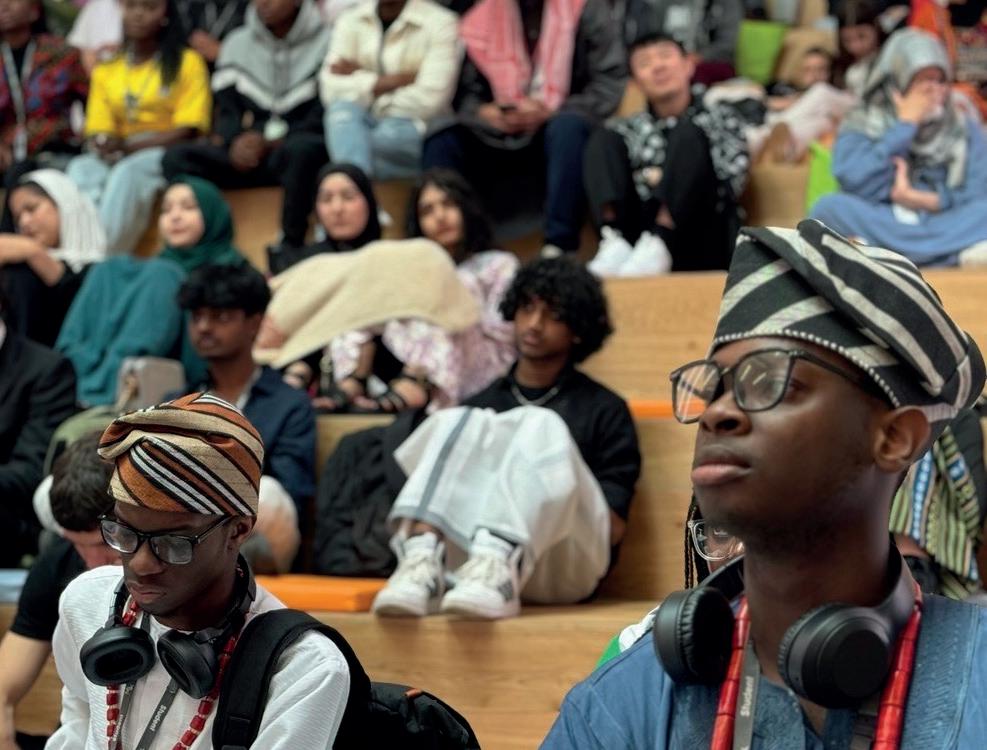
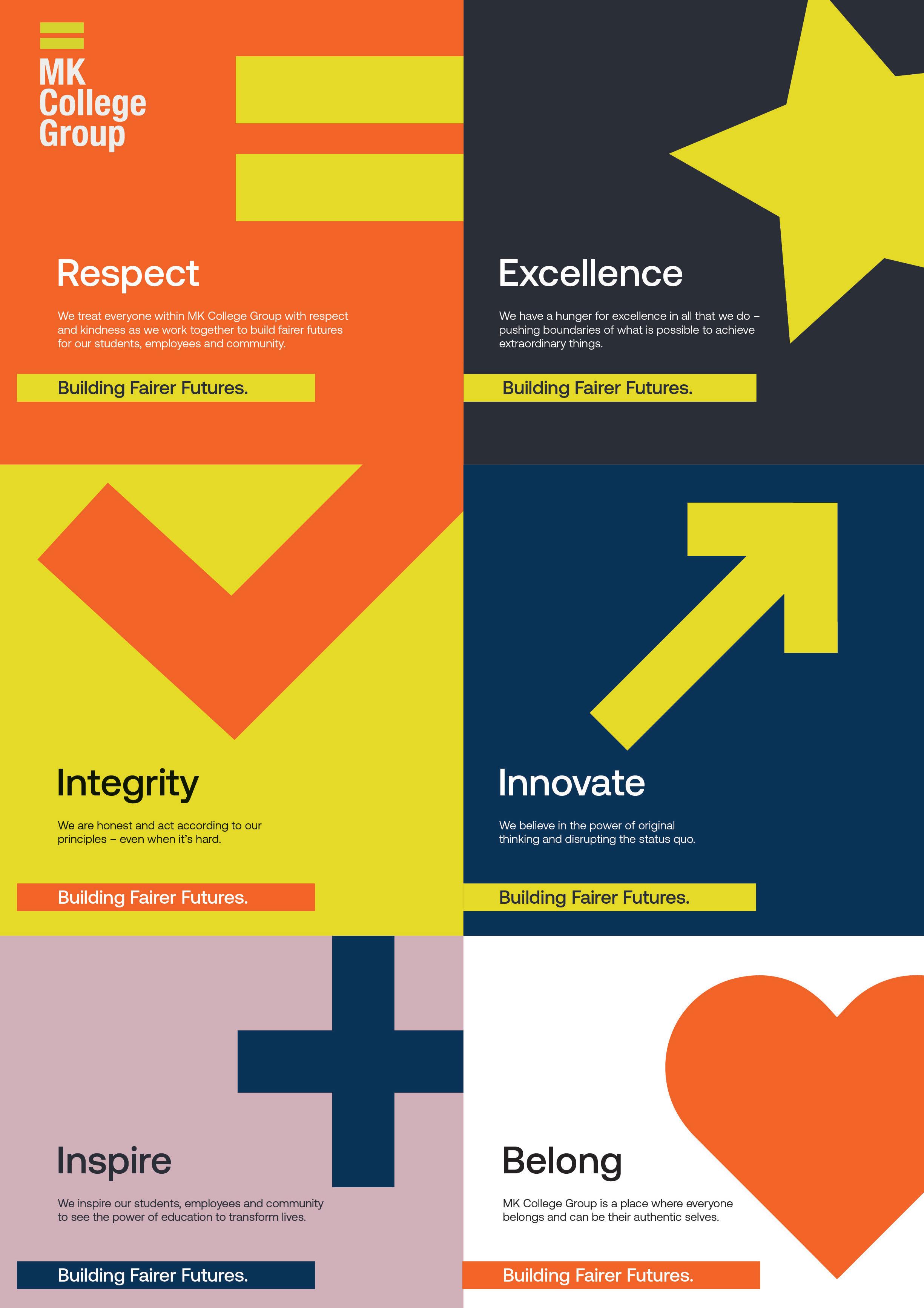
MK College Group fosters a culture where all learners and colleagues feel visible, valued, and included. We are recognised as a diverse and inclusive organisation, trusted by our communities.
We improve representation of minoritised ethnicities, disabled colleagues, and women—especially in leadership—through an intersectional approach. Confidence in challenging discrimination grows, supported by decisive action against bias and inappropriate behaviour.
We address structural barriers and enhance accessibility across environments and systems. Development opportunities remain fair and inclusive, with leaders acting with integrity and setting clear expectations.
Inclusive behaviours are modelled at all levels, with accountability embedded throughout. Everyone understands their role in fostering inclusion and feels safe to raise concerns.
Pay and attainment gaps reduce through targeted monitoring and action. MK College Group is a place where everyone thrives.
To realise our 2031 vision of a community where everyone feels visible, valued and included, this section outlines the core strategic aims that will drive MK College Group’s Equity, Diversity & Inclusion Strategy. Each aim is supported by targeted actions designed to embed inclusive practices across our campuses, communities, and prison education settings.
These actions are underpinned by measurable outcomes, with headline KPIs and SMART targets to ensure accountability and progress throughout the strategy’s lifecycle.
Action 1 – Improve experiences and mitigate biases throughout the employee lifecycle:
• An inclusive recruitment review to focus on Attraction, Recruitment, Induction, Development, Progression, and Exit.
• Identify evidence gaps and agree on mechanisms to improve evidence.
Action 2 – Development and progression of underrepresented groups, with a focus on minoritised ethnicities, gender, disability, and understanding the intersectional experiences:
• Introduce disability into pay gap reporting
• Talent profiles and mapping as part of workforce planning
• Diverse talent pipelines
• Accelerated development programme to help people reach their potential
Action 3 – Agree measurements and monitor progress for decreasing pay gaps with a focus on minoritised ethnicities, gender and disability. This includes:
• Reducing the headline pay gaps
• Increasing the number of senior posts being filled with employees from underrepresented groups
Success will be achieved when headline pay gaps for ethnicity, gender, and disability are reduced year on year from the 2025 baseline, with transparent measurement frameworks in place and regularly reported. Underrepresented groups will be better represented in senior roles, supported by inclusive recruitment practices and targeted development programmes. Disability will be fully integrated into pay gap reporting, and the organisation will be recognised externally through accreditations such as the Race at Work Charter and Disability Confident Level 3.
2. Ensure equitable achievement and attainment outcomes for all learners, eliminating disparities across all groups.
Action 4 – Continue to develop an inclusive curriculum across all areas of provision
• Continue to develop a self-assessment process with colleagues development and learner consultation to review and inform our inclusive curriculum strategy
• Work collaboratively with higher education partners to offer programmes aimed at promoting the social mobility of non-traditional higher education learners.
• Develop our English for speakers of other languages (ESOL) programmes to grow both our formal and informal provision to meet the needs of refugees, asylum seekers and other non-English speakers, to help them to contribute fully to the region’s economy.
Action 5 – Build and strengthen learner voice mechanisms
• Audit and review existing learner voice mechanisms and identify blind spots
• Develop Learner Networks to mirror Employee Networks
Action 6 - Agree on measurements and monitor emerging gaps in attainment and achievement rates with a focus on minoritised ethnicities, gender and disability. This includes:
• Identify where attainment and achievement rate gaps have historically existed within the different areas of provision, locally and nationally
• Increase progression rates for the identified groups
• Ensure inclusion of outcomes for identified groups is reported within existing reporting frameworks.
Success will be evident when attainment and achievement rates for minoritised ethnicities, disabled learners, and gender groups are maintained at the 2025 baseline. An inclusive curriculum will be embedded across all areas of provision, with individual action plans in place and reviewed annually. Learner voice mechanisms will be strengthened, with learner networks established and blind spots addressed. ESOL and social mobility programmes will be expanded to meet the needs of diverse learners, and progression rates for underrepresented groups will increase year on year.
Action 7 – Improve physical accessibility
• Accessibility and inclusiveness audits undertaken on legacy estates and off-site locations, with a focus on barrier-free design (including wheelchair access, mobility impairments), and gendered spaces
• Review the effectiveness of estate-relevant impact assessments
Action 8 – Strengthen the focus on digital accessibility and inclusiveness
• Creation of a dedicated group or sub-group
• Review and strengthen our approach to an accessibility maturity model
• Sustain and enhance accessibility of colleague and learner virtual environments
Action 9 – Strengthen our disability confidence and competence in delivering services to our colleagues, learners and the community
• Continue to strengthen support for managers in workplace adjustments
• Develop a shared understanding of disability
• Work towards a Disability Confident level 3 accreditation
Success will be realised when physical and digital environments across campuses, communities, and prison education settings are demonstrably more accessible and inclusive. Accessibility audits will be completed and acted upon, with improvements made to legacy estates and off-site locations. A digital accessibility group will be operational, with a maturity model guiding improvements to virtual environments. Disability confidence will be strengthened through workplace adjustments, awareness initiatives, and the achievement of Disability Confident Level 3 accreditation.

Action 10 – Equitable working for all.
• Support for onsite (campus based), offsite (prison education), part-time and term-time colleagues to access development and engagement opportunities
• Continue with and strengthen hybrid and flexible working
Action 11 – Focus on leadership and management.
• Developing and embedding consistent standards, knowledge and behaviours
• Tailored development to develop confidence and competence, including anti-racism
• Work towards individual equity, diversity and inclusion performance objectives
• Have a consistent, leadership led approach to community engagement and cultural competence
Action 12 – Embed inclusive behaviours
• Active communications on acceptable behaviours and values
• Strengthen complaints and grievance processes to ensure transparency and accountability.
• Continue to develop and empower employee networks across the group.
Success will be achieved when all learners and colleagues feel visible, valued, and included, as evidenced by positively increasing engagement in inclusive culture surveys, with increased engagement rates. Equitable access to development and engagement opportunities will be ensured for all working patterns and locations, including prison-based and part-time colleagues. Leadership standards and EDI objectives will be embedded across management roles, with tailored development programmes in place. Inclusive behaviours will be actively promoted, complaints processes will be transparent, and employee networks will be expanded and empowered to drive cultural change.
There are several strategies already in place to support and drive this strategy. Including:
• Group Strategy
• People Strategy
• Curriculum Strategy
• Safeguarding Strategy
• Estates Strategy
There are a variety of accreditations, charters and pledge commitments to external bodies that will continue to drive this strategy. These include:
• The Race at Work Charter
• Disability Confident Employer
• AoC Equity, Diversity & Inclusion Charter
• AoC Mental Health Charter
• Mindful Employer
• Investors in Diversity (Gold)
• Student Commission on Racial Justice
• Henpicked – Menopause Friendly Workplace
Delivering this strategy is a shared responsibility. Every colleague and learner plays a role in fostering an inclusive culture, supported by clear leadership and accountability.
Teams will align their own plans with this strategy, treating all services and initiatives as opportunities to advance EDI.
Everyone is responsible for their conduct, ensuring it does not cause discomfort to others. learners and Colleagues must reflect on their own biases, avoid discriminatory behaviour, challenge it in others, and take ownership of delivering the strategy.
Governors ensure MKCG complies with the Equality Act 2010. They set the strategic framework and monitor progress against the strategy.
CEO and Group Principal holds overall responsibility for delivering the strategy and implementing the Equality Strategy Action Plan (ESAP). They may delegate operational oversight to a Senior Leadership Group member.
• Chaired by the CEO and Group Principal
• Sets annual EDI actions
• Reviews progress
• Ensures compliance with public sector duties
• Receives reports on learner and colleagues data
• Assesses policies and projects for EDI impact
• Stays informed on legal and best practice changes
• Presents an annual EDI report to the Governing Body
Senior leaders provide and interpret learner and colleagues data for monitoring. They lead initiatives that promote EDI, including events and curriculum-based personal development.
Responsible for analysing employment data and overseeing colleagues development related to EDI.
These roles ensure:
• Completion of mandatory EDI training
• Colleagues awareness of EDI issues and reporting mechanisms
• Fair allocation of development opportunities
• Equitable treatment of part-time colleagues
• Prompt handling of discrimination complaints
• Active dialogue on EDI with external stakeholders
Partners must understand and support the strategy. Agreements will ensure they have appropriate EDI policies and procedures in place.
Must comply with MKCG’s EDI Policy and complete equality and accessibility impact assessments where applicable.
Our EDI Strategy will be taken forward by the Head of EDI & People Development, with key performance indicators and actions undertaken reported to our Board of Governors, through an Annual Report.
Operational plans will include both central and local measurements for impact and reviewed within the existing cycles. Progress to be monitored through Executive, Group Directors, Heads of functions and the Equality Strategy Review Group (ESRG).
A scorecard approach will be developed to monitor progress against the aims during the strategy cycle.
If our aims are achieved ahead of predicted timescales, we will increase our ambitions through ESRG over the cycle of the strategy.
This EDI strategy will help to inform the strategies of the MKCG Employee Networks.
We will undertake a review of our EDI Strategy in July 2026 to ensure full alignment with the new Milton Keynes College Group Strategic Plan 2026 to 2031.

Chaffron Way Campus
Woughton Campus West
Leadenhall
Milton Keynes
MK6 5LP
Tel: 01908 684444
Bletchley Campus
Sherwood Drive
Bletchley
Milton Keynes
MK3 6DR
Tel: 01908 684444
mkcollege.ac.uk
@MKCollege facebook.com/mkcollege
instagram.com/mkcollege info@mkcollege.ac.uk