
SPRING 2026

SPRING 2026
by Rebecca Bodenheimer
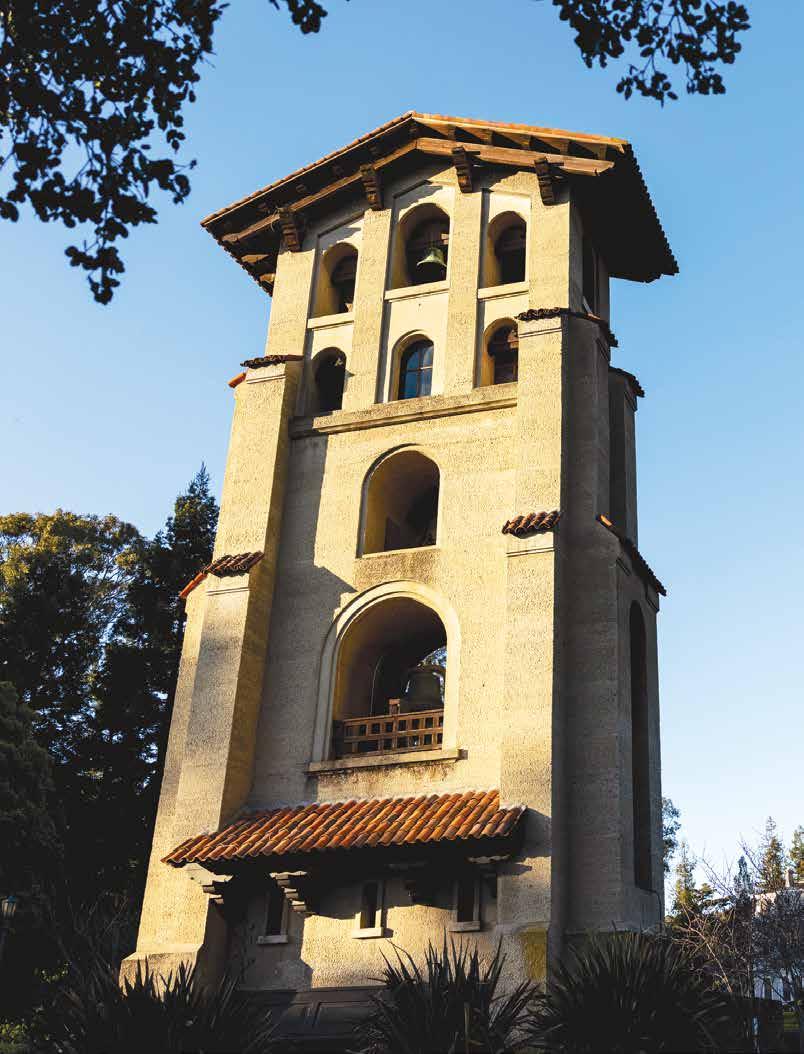
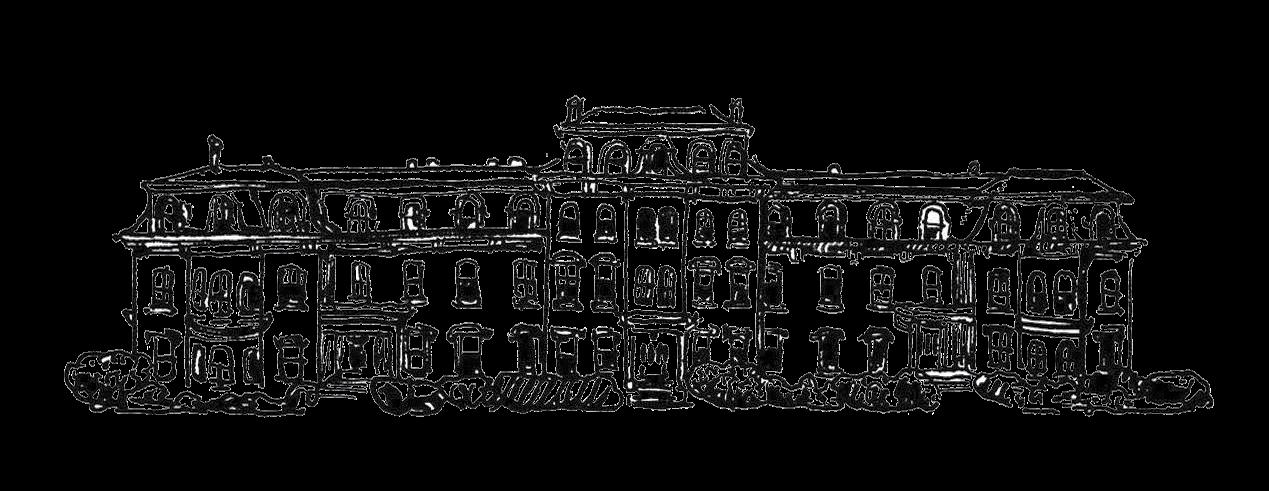
CAMPUS PHOTO: There may be no better set of school bells than El Campanil. Julia Morgan’s reinforced-concrete design survived the Great Earthquake of 1906 and jump-started her then-fledgling career. Photo opposite by Ruby Wallau for Northeastern University; photo on page 41 by Alyssa Stone for Northeastern University.
ON THE COVER: Bringing it back to the basics: This issue of the Quarterly focuses on the practice of education. Photo by Sensay.
“Held in High Esteem”: The History and Legacy of Education at Mills by Allison Rost
LETTERS TO THE EDITOR / 2
OPENING MESSAGE / 3 ON THE OVAL / 4
OVER THE WIRES / 8
A SLICE OF QUARTERLY HISTORY / 9 November 1949
AAMC NEWS & NOTES / 24
FROM THE ARCHIVES / 27
Old-school registration
CLASS NOTES / 28
MEDIA LAB / 31
THOWBACK / 32 1995 Faculty
IN MEMORIAM / 36
SALON / 40
Prose by Janet Goldberg, MFA ’89
After reading your recent Quarterly featuring entrepreneurship, I thought I would drop you an email regarding my mother, Georgette Floyd McClain ’49, who financed her education by working at the Capwell’s store in Oakland. She passed away peacefully in 2018.
Hardly a day goes by that I don’t think of her. She was an incredible person who was highly successful as a public works contractor in the State of California and a benefactor to various charities.
After raising three sons in Nevada County, she needed a new challenge. So, at the age of 56 in 1981, she decided to buy a small public works contracting company, AC Dike, that specialized in constructing asphalt water control dikes on the highways and freeways of California. Everyone thought she was crazy to invest her entire savings in this small company during the economic downturn of the early ’80s. She put $50,000 down and made payments on the balance. While she assumed a few small contracts, she decided to “hire” the family including myself and my two brothers. That was 45 years ago, and the family business is still thriving though good times and bad. For the first 10 years, she could be found working right along with the operating engineers and laborers on the crew. Through the next decades, she gradually transitioned the management of the company to my brothers and myself. I owe all my skill in running the company to her.
She had a very simple business plan on a 3-by-5 card that should be required reading for business students. It featured personal integrity and a commitment to perform the work, exceed expectations, and reward hard work and sacrifice of our employees with a share in the profits. To this day, we still have employees that have been with us for more than 30 years. She truly lived a life worth remembering and created a legacy of love and hard work. We still ask this question when a problem comes up: “What would Mom do?”
–Paul McClain, Lincoln, California
We missed two photo credits in the fall 2025 issue. On page 32, the photo of dancer Megan Nicely, MFA ’94, was taken by Michael Woolsey. And on page 40, the photo of a 1960s-era fashion show inside the Mills College Art Museum was taken by Don W. Jones.
Michelle Smith Johansen ’81 also wished to clarify her Media Lab item in the winter 2026 issue. The catalog of prose and poetry she wrote was titled Cautionary Tales: A Reflection on 2025 Through Words and Movement.
ASSOCIATE VICE PRESIDENT
Nikole Hilgeman Adams
MANAGING EDITOR
Allison Rost
DESIGN AND ART DIRECTION
Nancy Siller Wilson
CONTRIBUTORS
Rebecca Bodenheimer
Janet Goldberg, MFA ’89
Moya Stone, MFA ’03
Kieran Turan ’90
The Mills Quarterly (USPS 349-900) is published quarterly by Mills College at Northeastern University, 5000 MacArthur Blvd., Oakland, CA 94613. Periodicals postage paid at Oakland, California, and at additional mailing office(s).
Postmaster: Send address changes to: Oakland University Advancement, 5000 MacArthur Blvd., Oakland, CA 94613.
Copyright ©2026, Mills College at Northeastern University
Address correspondence to: Mills Quarterly 5000 MacArthur Blvd. Oakland, CA 94613
Email: mills.quarterly@northeastern.edu
Phone: 510.430.3312
A reminder from the winter issue: We’re now pulling our mailing list from our shared database with Northeastern, and there are undoubtedly mistakes out there that we haven’t been alerted to yet. If you’ve been affected, reach out to us!
mills.quarterly@northeastern.edu 510.430.3312
quarterly.mills.edu/feedback
As I write this letter, Mills College at Northeastern is commemorating the universitywide Sustainability Innovation Week with a series of events. This year, that includes an evening panel discussion and four lunchtime lectures about the broad applications of the term—social, economic, and environmental. The professors who spoke are historians, artists, writers, philosophers, and more; sustainability isn’t just about ecology and the natural environment, but anything that ensures a future for everyone in an equitable world.
Some of you heard me speaking about this at several local holiday teas this past festive season, that sustainability has become the cornerstone of the programming we’re building and shaping for Mills at Northeastern. We have a new sustainability studies minor debuting in the fall 2026 semester, along with a joint major that’s paired with economic development. The two Dialogues of Civilization (summer study-abroad) programs that Mills professors are leading include a repeat jaunt to Japan with Jared Young and Susan Ito, MFA ’94, that combines food science with writing; and another to Oaxaca run by Tomás Galguera that will concentrate on the cultural foundations of sustainable business.
We’re also boosting areas in which Mills has historically found strength. We launched a creative writing minor in 2025 that includes classes like Creative Writing and the Environmental Imagination, as well as Writing Popular Fiction. Creative Writing Now is a new semiannual speaker series, the first of which was headlined by the author Vauhini Vara, who spoke about Writing Creatively in the Age of AI—also the name of a new course you may have read about in the winter Quarterly.
Another exciting development is the Pauline Oliveros Working Residency, which gives humanities professors the chance to share their research and work with other academics (including students!) on campus. Recent events have
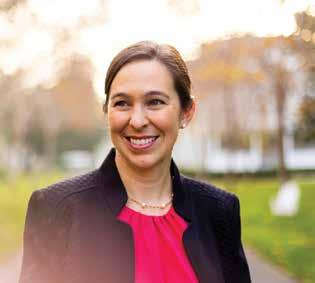
Beth Kochly
included a session with Germaine Thompson Professor Brinda Mehta on Indigenous women poets from northeastern India and their creative contributions to antiwar activism; and Aurelia Henry Reinhardt Endowed Professor in American Literature Patricia Powell speaking on the roles that literature and language play in Caribbean healing practices.
And, it’s only appropriate to mention in this education-themed issue of the Quarterly that the legacy of those storied programs lives on under Mills at Northeastern. Turn to page 16 to read more about their origins and the ways they’re moving forward.
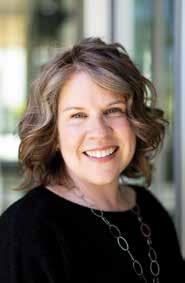
Lisa Arellano, the research director of the Mills Institute, has stepped into the role of interim executive director following Christie Chung’s departure to Palo Alto University.
Arellano attended Bryn Mawr College as an undergraduate, later earning her master’s degree in interdisciplinary humanities at San Francisco State and her PhD in modern thought and literature at Stanford. Before joining Mills as a visiting professor of women’s, gender, and sexuality studies in 2021, she was on the faculty at Colby College in Maine for nearly 16 years.
She joined the Mills Institute as a faculty research fellow in February 2024 and then became the associate director of research seven months later—Arellano is a historian who works on archiving the work of social justice groups. She is the co-editor of Queer Pasts, a database of projects and exhibits that bring together an expansive range of LGBTQIA+ primary sources.
Her interest in preservation extends to the Mills legacy. “When I walk around this campus, I feel the power of the legacy—I think this comes from my own experience as an undergraduate in a place like this,” Arellano says. “I always felt I belonged here. At the Mills Institute at Northeastern, I am able to bring the power of these histories into new forms.”
Oakland University Advancement thanks the following donors for their gifts of $50,000 and above that were received between July 1 and December 31, 2025:
The estate of Lorraine Belmont , for a generous gift to the Dean’s Fund for Mills’ Greatest Need, which covers the immediate expenses of Mills College at Northeastern.
The estate of Geraldine Clark ’52 , for its support of the Howard and Leta Clark Scholarship, which she established in 1986 and named in honor of her parents.
The Hellman Foundation , for a donation to the Mills Institute Summer Experiential Science Program.
The Mitchell Kapor Foundation , for its generosity in establishing the Oakland Social Innovation Lab, a partnership between the foundation, the City of Oakland, and Northeastern.
The PG&E Corporation Foundation , for continuing its long-standing underwriting of the Educational Talent Search Program and Upward Bound.
On December 4, 2025, the 11 Northeastern students who completed co-ops on the Oakland campus during the fall semester gathered with their supervisors to celebrate and share their work.
Their duties were wide-ranging; three students—including one junior who started in Oakland before transferring to Boston—worked with Lead by Learning to develop the center’s new website, create an interactive map showing off various partnerships, take photos and video at Lead by Learning workshops, and present to educators about tech advances.
Another served as a research assistant for Rhoda Goldman Professor of Environmental Science Kristina Faul and Gibbons-Young Professor for the Advancement of Science Jared Young in their respective labs, but she also attended several conferences and mentored first-year students. One graphic design student created flyers and other paraphernalia for the Mills College Art Museum, in addition to installing exhibits, pulling prints, and researching Japanese woodblock prints.
Sophia Allen, KCCS ’26, was a project management associate for Career Connections & Experiential Learning, and she echoed the sentiments of several in her cohort when offering her compliments to the local area. “This is my second co-op, but I wanted to get outside of the Boston area because I’m from [there], so I wanted the experience of living somewhere else for a few months,” she said. “I have really enjoyed being out in Oakland.”
One graduating senior enjoyed her time so much that she arranged to finish her time at Northeastern with an independent study in Oakland. Julia Galang, CAMD ’26, was a digital humanities archival assistant with the Mills Legacy Archival Project, working mostly with materials from the Center for Contemporary Music and the dance program, though she also mentioned what she learned about the Book Art program.
“This offered me such an interesting context historically around the Mills chapter here on this campus,” she said. “There have been a lot of changes, and this allowed me to understand what it means to preserve and protect information.”
Four co-op positions were available going into this spring semester.
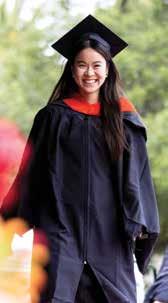
Commencement for the Class of 2026 will take place at 2:00 p.m. on Saturday, May 16, on Holmgren Meadow. This year’s ceremony will include master’s candidates from Northeastern’s Oakland and Silicon Valley campuses, as well as the last remaining several legacy Mills students. Join with other Mills alums for lunch beforehand at Reinhardt Alumnae House and to robe up for procession starting at 12:00 p.m. RSVPs are required; contact mills.alumnaerelations@ northeastern.edu if you did not receive an email invitation.
On December 11, 2025, the Aurora School—a K-8 independent school founded in 1988 in Oakland’s Upper Rockridge neighborhood—announced a partnership with the Mills College Children’s School, which last summer reported that it would close at the end of the 2025–26 academic year. The first step of this merger will involve the creation of a full-day transitional kindergarten program on Aurora’s campus, to be followed by a preschool.
This year’s Russell Women in Science Leadership Lecture took place on February 25, with Kimberly Budil, the first woman director of Lawrence Livermore National Laboratory, taking the stage in Lisser Hall for a conversation with Mills College Dean Beth Kochly. The duo discussed Budil’s pivot from pre-law to physics and the lab’s 2022 breakthrough in achieving fusion ignition after decades of work. Sponsor Cris Russell ’71 was in attendance, along with students, alums, and faculty members.
Darcelle Lahr, MA ’17, EDD ’18, the subject of “Beyond Profit” in the fall 2025 issue of the Quarterly, has officially retired from higher ed, with February 17 her last day on the Oakland campus. She now holds the title of professor emerita of the practice in business and social sciences, and she continues her work with her consulting group and her nonprofit, L.C. and Lillie Cox Haven of Hope.
The Mills College Art Museum now has a free digital guide available through Bloomberg Connect, which makes the collection available online anywhere in the world. The program also includes audio files furnished by student gallery assistants, artists, and curators, as well as extensive accessibility functionality. To access the guide, download the Bloomberg Connects app and search for “Mills College Art Museum.”
When it comes to power AI users, there may not be a bigger one on the Oakland campus than Tomás Galguera. The professor of education for Mills College at Northeastern has been conducting salons on the use of AI in academia for several years, and he recently took on the role of special advisor to the dean on AI. We chatted with him about the gig in early February; a condensed and edited version of that conversation appears below.
Mills Quarterly: How did you start working with AI?
Tomás Galguera: Three years ago, we had a tight turnaround for a state reauthorization review—we needed to restructure a one-semester syllabus into a two-semester format. I was traveling and the timeline was urgent, so I decided to try ChatGPT, which had just come onto the scene. I was blown away! Not just by the speed, but by what this implied for our work as educators. Since then, I’ve been an avid user. Now that Northeastern uses Claude [part of Anthropic], I have a project for each of the courses that I’m teaching, each of the articles that I’m writing, for my role as an advisor, everything. I don’t think I’d be able to do all I’m doing now without it.
For example: It helps me revise old syllabi, look at a syllabus from a student’s perspective. It offers suggestions for updated readings, it helps me turn a syllabus into a Canvas site—even writing the HTML code in seconds! I treat it like an assistant. And for people like me who are not native English speakers, it’s really useful for what I write.
Quarterly: How did this position come about, and what does it entail?
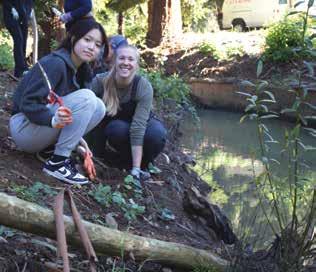
With the assistance of a crew of California Climate Action Corps fellows, the Oakland Sustainability team is putting together programming to welcome more volunteers and visitors to campus. This spring semester has included two workdays for beautification efforts around Leona Creek. The first, part of the Martin Luther King, Jr. Day of Service in January, brought together 24 volunteers—including students, alums, and members of the public—to remove invasive species and trim down overgrowth. The group also planted 21 specimens to support the watershed, including a Howard McMinn manzanita, a shrub named for the botanist who also taught at Mills from 1918 to 1956. The second “creek day” was scheduled for April 4.
Galguera: I was part of several groups initially playing around with how we could use this stuff for teaching. Then, at my meetings with Beth [Kochly], I was explaining the various things I use and providing suggestions, so one day, she just said, “Let’s make this official.” This position was created in which I function as advisor, support, and instigator—to use a word—for all things AI. I work with faculty individually upon their request. Quarterly: What has the reaction been?
Galguera: One thing that surprised me was a faculty survey last November; two-thirds of the respondents said that they hadn’t activated their Claude accounts yet. The survey revealed four profiles. The largest group is people who use AI regularly but feel it’s eroding their professional autonomy; they’re engaged but conflicted. Then there are early adopters like me. A third group is still deciding whether AI is worth their time. And a fourth group has principled objections—ecological costs, cultural exploitation, labor concerns—that they’ve thought about seriously.
To be fair, only about 40 percent of the faculty completed the survey, and this is also how they view themselves. And my PhD students, they’re all over the place too. Some are struggling with imposter syndrome. My question for them is not “Did you type every single one of those letters?” It’s “Do you stand behind what you’re giving me?”
I see AI as scaffolding: [Lev] Vygotsky came up with the notion of a Zone of Proximal Development, and [Jerome] Bruner did research showing that humans use scaffolds to get across the zone. It’s not support for the learner, but for the interaction between learner and teacher. AI can expand the scaffold.
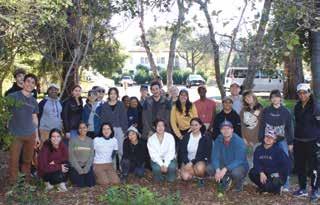
And on February 28, more than 25 people joined in for a tour of the various trees that comprise the “arboretum” on campus, many of which were originally planted by Cyrus Mills. The Climate Action Corps fellows who are working to catalog and tag the campus trees guided the walk and provided lots of information about the various species— and Mills history—along the way.
Mills College Art Museum
100 Years of Creative Visions Through April 26, 2026
The centennial of the Mills College Art Museum is commemorated with this expansive exhibition with selections from throughout the permanent collection—with an emphasis on works that exemplify the strength of creative communities and the bonds between artists themselves.
Centennial Exhibition Curator Tour April 19, 2:00 p.m.
Join MCAM Director Stephanie Hanor for a public tour of 100 Years of Creative Visions
MCAM is open Tuesday through Sunday from 11:00 a.m. to 4:00 p.m., with late hours on Wednesday until 7:30 p.m. Admission is free.
Mills College at Northeastern University
Pauline Oliveros Working Residency Program April 14, 1:00 p.m.
This new event series features research presentations from professors who hold endowed chairs in the arts and humanities. April’s installment takes place in the Faculty-Staff Lounge in the Rothwell Center.
Visit mills.northeastern.edu for more information.
Mills Music Now
A Lotta Sonatas May 14, 7:00 p.m.
The Center for Contemporary Music and Mills Performing Arts team up with Other Minds for a celebration of Lou Harrison’s 109th birthday, which brings pianists Dennis Russell Davies and Maki Namekawa to Littlefield Concert Hall.
Visit performingarts.oakland.northeastern.edu for tickets.
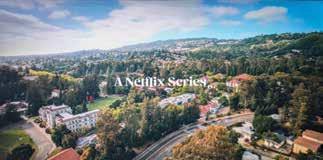
If you’ve been watching the streaming hit A Man on the Inside, starring Ted Danson, you may have seen well-known buildings such as Mills Hall and F.W. Olin Library (among others) from above!
The Netflix series takes place in the Bay Area, and in its second season, it moved the main setting from a memory care
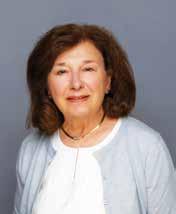
Marianne Sheldon Memorial
May 7, 3:00 p.m.
Join family, friends, and colleagues to celebrate Marianne Buroff Sheldon, professor emerita of history at Mills College from 1975 to 2025. A bench and tree by the Mills Hall fountain will be dedicated in her memory.
Please contact the Office of Alumnae Relations at 510.430.2123 or mills.alumnaerelations@northeastern.edu to RSVP.
facility in San Francisco to the fictional Wheeler College elsewhere in the Bay Area. Several of the establishing shots for Wheeler are, in fact, of the Oakland campus, filmed using drones in 2025.
In the show, Danson plays Charles Nieuwendyk, an engineering professor who takes a gig as a private investigator in retirement. The second season follows his adventures at Wheeler as he goes undercover while looking into the theft of the college president’s laptop and touches on themes affecting higher ed.
Despite the choice of such a beautiful Northern California setting, neither Danson nor any of his costars made any campus appearances; principal photography took place in the Los Angeles area.
“True Metal,” a poem by Professor of English Elmaz Abinader, was featured on the Academy of American Poets’ Poem-A-Day site on December 24, 2025. Read it at poets.org/poem/true-metal.
On January 16, The Boston Globe published a piece on dance legend Trisha Brown ’58 in anticipation of upcoming local performances by her company. Read the article at tinyurl.com/trisha-brown.
Former athletic director Helen Carroll and longtime partner Kelly Burnette married in late 2025, and their collective activism on behalf of LGBTQIA+ athletes and coaches prompted a celebratory article on the Edge Media Network. Read it at tinyurl.com/helen-carroll-2026.
Tamera Ferro ‘03, who just became the first chief marketing officer (CMO) at the skincare brand Dr. Idriss, was named to Fast Company’s annual list of the top 10 CMOs for her work at Sol de Janeiro. She departed that company in September after six years, during which time the brand nearly tripled its sales figures. Read about the honor at tinyurl.com/tamera-ferro.
Monica Gonzales Strickler ’12 has resumed her studies at Cal Poly Humboldt, working toward a degree in environmental science and management, after departing Mills early. The Humboldt County brand of the American Association of University Women awarded her one of its Re-Entry Scholarships at its 2025 holiday banquet.
The San Diego chapter of the Association of Fundraising Professionals named Sharyn Kaufman Goodson ’88 as its Outstanding Development Professional in 2025. The award was presented at an event on November 21. Sharyn is currently the senior vice president of philanthropy at the Jewish Community Foundation San Diego.
Robin Lysne, MFA ’12, has earned two International Impact Book Awards over the last two years: one in 2024 for her book The Mother of Us All, Divine Mother Speaks: A Way Forward, and one in 2025 for Two Worlds One Light: A Memoir of a Medium. She owns a private practice in Santa Cruz County.
dnj, the Santa Monica gallery founded by Pamela Mayers Schoenberg, MFA ’94, also features an “Art and Med” program that she started in 2024, which educates visitors about various illnesses through creative works and in-person events. She spoke to VoyageLA about the program; visit tinyurl.com/pamela-schoenberg to read the interview.
The Huntington News, Northeastern’s student newspaper, published a story about roommate relationships on December 6, 2025. Mandy Alexander, BHS ’27, spoke about how she met her girlfriend, Suyasha Athuluri, BHS ’27, during their first year in Oakland. “I wanted to state specifically the legacy of Mills College as being like a haven for a bunch of lesbians to meet up and be radical about it,” Mandy said.
Jeremy Sorgen, an assistant research professor for Mills College at Northeastern, has received National Endowment for the Humanities and California Humanities grants for his research. He also contributed findings as the lead researcher on a project investigating the intersection of the cannabis industry in California with Indigenous cultural resources; visit tinyurl.com/jeremy-sorgen to read about it.
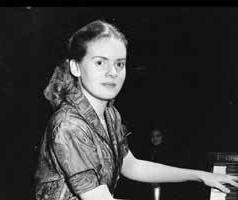
Telus Storyhive, which produces video content by independent creators in Western Canada, published an hour-long documentary about Roslyn Frantz Haug ’52 in late 2025. Roslyn, who lives in Kelowna, British Columbia, majored in music at Mills and has spent her life teaching and playing the piano. Watch the piece at tinyurl.com/roslyn-frantz.
The Los Angeles Sentinel/California Black Media spoke with Lenore Tate ’74 in December 2025 about her work as a licensed clinic psychologist, especially on how trauma impacts mental health. Check out her Q&A at tinyurl.com/ lenore-tate.
Each of us is a founder of this College
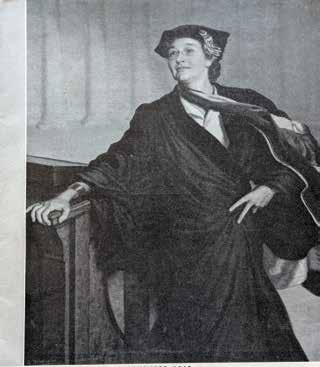
By Rosalind Cassidy, Class of 1918
THIS IS A VERY SIGNIFICANT DAY, and I am honored to have a part in it. I know in a very deep and sure way that I am one of the many founders of this College. I am part of it, and its influence is very surely and profoundly a part of me. I think I have known this for a long time. I knew it even when I was an undergraduate here, and that knowledge and pride—I am sure—made me work for the ends of student government, for student participation in curriculum planning, for a certain excellence in the representation of the College outside the campus gates.
Later on, as a teacher on this campus for a goodly number of years, I had a feeling of making the College.
This may have been due to the way in which Dr. Reinhardt, in the early days of her presidency, drew in to the planning for the College all of the faculty, old and young. It was partly due to the upsurge of newer patterns in college education in this country.
It was a time when the role of women and the patterns for their education were being sharply examined throughout the country. It was a time when our faculty together studied, discussed, and proposed newer and better ways of reaching the goals of this College. We worked with students and in our staff committees. We were making the present-day Mills College.
We were founders.
As an alumna of this College, active on many of its committees and at one time national [AAMC] president, I felt like a founder of the College when I started the student selection program, when I was part of the Flying Squadron that carried the alumnae council to the field, when I organized the Alumnae Service School. It was an exciting job of designing and building. I hope that each one in this room—student, staff, alumnae—feels a part of this present-day designing and building.

Last summer during a workshop session on the Los Angeles campus of the University of California, several Mills alumnae—Esther Dayman Strong, Hilda Clute Kozman, Margaret Duncan Greene, and I—met for lunch. Esther, the philosopher of the group, suddenly broke into our general conversation with, “Do you realize that we are here together because we all share a common understanding through our Mills experience, that Mills has made us sensitive and aware of certain values which are responsible for the directions we have taken ever since we left the campus? Mills is a part of us; we are a part of the College.” And it is this idea of relationship and interdependence that I want to stress on this Founders’ Day.
At the time she delivered this speech, Rosalind Cassidy—who graduated from Mills in 1918—was a professor of physical education at UCLA. Before departing for Westwood, she had been on the Mills faculty since just after she graduated, playing a huge role in the development of the education department and the Mills College Children’s School. Read the rest of her address at quarterly.mills.edu/legacy
It was six years ago when the world came to a screeching halt, sending everyone home to shelter in place and transforming work and school into remote operations overnight. In the education space, much ink has been spilled on the learning gap and other downsides of physical school closures.
But what did teachers, professors, and support staff learn about how they could improve their practices once they returned to the classroom? We spoke to four of them to find out.
One ongoing positive change educators spoke about was the broadening of accessibility stemming from the use of Zoom and other online platforms for instruction. Natalee Kēhaulani Bauer ’97, MA ’07, the May Treat Morrison Professor for Mills College at Northeastern and program head for the MA in educational leadership, says many educators learned how to make teaching more accessible for immunocompromised students and others without undermining its integrity: “There’s actually no reason why I can’t Zoom a kid into class if they’re home sick, or if they had to fly home—or if their kid was home sick, and they were a parent.”
Emily Nusbaum concurs. She was a professor in the School of Education at Mills before the Northeastern merger; she left the College in 2022. She currently teaches at UC Berkeley in the Disability Studies Program but also works as an advocate for students with IEPs (individualized education programs) and their families who need support in interactions with school districts. She says, wryly, that accessibility suddenly became a widely discussed issue during the pandemic: “Accessibility is something that really only gets taken up outside disability spaces when non-disabled people need it.” Nusbaum remarks that the pandemic really opened up options for all learners, noting that one recent Cal student told her that the she might have had to drop Nusbaum’s class without Zoom since she was a caregiver for her grandparents in San Francisco.
Bauer has also become more flexible about attendance since the pandemic. In the past, “It was like, ‘You get exactly these many absences, and then your grade drops. You have to be here, and you have to take this seriously,’” she says. But she says she realized only a few students were missing a lot of class, so she could lighten up with most of them.
In fact, greater flexibility was seen as another positive outcome. Lauren Ashton ’13, MA ’14, is currently a school support administrator in the Mt. Diablo Unified School District in Contra Costa County. In March 2020, she recalls being a “baby” vice principal at a San Francisco elementary school, who was quickly thrust into the role of principal right as the shutdown happened.
Education used to be more rigid, with a big focus on homework and tests, Ashton says. However, “during the pandemic, our teachers, systems, and leaders really had to be far more gracious in allowing students multiple ways to demonstrate their learning, whether that was asynchronous learning, recorded lessons, extended time, alternate assignments, because maybe they didn’t have a Chromebook or art supplies at home,” she adds.
Ashton says that flexibility “is not the opposite of rigor,” but rather “a pathway for [students] to access and demonstrate their learning.” Six years later, she sees teachers giving their students choices in their homework assignments: “You see more teachers saying, ‘OK, over the
Flexibility “is not the opposite of rigor.”
–Lauren Ashton
course of this year, I want you to do at least one essay, one speech, one whatever. You decide when you’re doing that assignment.’”
This type of flexibility used to be extended only to students with IEPs, Ashton says, but now it has become more broadly common within elementary education. One specific example she cites is allowing those students who find writing difficult to use technology such as speech-to-text tools. Ashton also sees that educators are more willing to give parents more grace, which helps build strong family partnerships.
She has always worked closely with special education (SPED) students, and she says greater inclusivity was extended to them during remote learning out of necessity. Before, SPED students were “outsourced” to different teachers in separate classrooms at certain times of the school day. That changed with remote learning, Ashton says: “The resource teacher was popping into those Zoom classrooms with the general education teacher. You saw more co-teaching— it was all together.” Multilingual teachers and SPED teachers would also join the main teacher’s Zoom—partly because parents weren’t able to juggle kids in different Zoom rooms with different teachers, she remembers. “It just had to
be more convenient for families, especially if they had multiple children,” she says. “And I think we really tried to replicate that coming out of the pandemic for our students.”
Mayra Arevalo is the associate director of student support services at Northeastern in Oakland, a job she started just after the merger in 2022. She works directly with students on any non-academic issues, whether that’s mental health, medical problems, or beyond. Before joining Northeastern, Arevalo worked at the College of Alameda, and the pandemic hit while she was on staff there. It had just received a large grant to start a program to help Latine students wanting to transition from community college to a four-year institution. “That’s exactly when we went remote,” she says. “We had to establish the whole thing just by joining Zoom meetings.”
Despite the obvious challenges related to meeting students remotely, Arevalo says, “The positive thing that just stuck in my mind was being able to meet families, because students had to be at home, and most of the time, their parents and little siblings were in the background.” Meeting prospective students’ families allowed them to be a part of the whole process, she says, which wouldn’t have been the case if the students were doing in-person interviews. One thing that arguably affected students as much as learning loss was mental health. Bauer says that more funding was needed for mental health support in K–12 schools after in-person instruction resumed, as the isolation of the pandemic and lost social-emotional learning needed
“I think the shame is that in most places, it became an all-or-nothing [issue]. There was no ability to think with nuance.”
–Emily Nusbaum
to be addressed before the recovery of academics. However, that didn’t happen, and there are likely looming budget cuts ready to hit BayArea school districts.
Nonetheless, some say they believe that certain students with mental health issues thrived during online instruction. “I know a lot of learners for whom it was actually really good… if they struggled a lot socially or with mental health, things like anxiety,” Nusbaum says. Some families chose not to send their kids back in person, she adds, because they thrived at home: “I think the shame is that in most places, it became an all-or-nothing [issue]. There was no ability to think with nuance.”
Bauer says she heard from Black families whose daughters saw an improvement in mental health during remote learning, as schooling systems had been detrimental for them in many ways. Online learning showed these parents what their kids were doing in school, she adds, and some didn’t like what they saw. This led to an increase in homeschooling by Black families, Bauer says, adding, “Usually, that choice in how your kid is educated is reserved for wealthy families. I think it made alternatives to traditional schooling not just this abstract concept. It actually empowered them to advocate for their kids.”
Bauer brings up the history of nontraditional education among marginalized communities, such as Black Panther schools and Indigenous survival schools. “There’s actually a big national movement of Black homeschooling, and it is really robust,” she says.
There were, of course, challenges associated with remote learning that have yet to find resolution—many of which had nothing to do with academics. Bauer comments that some students acted out once they returned to college campuses in person, which she attributes to missing out on doing “stupid stuff” in high school before moving on to higher ed.
Similarly, discipline and restorative justice were issues Ashton struggled with during Zoom school. As a principal at the time, she says, “I would be asked to have a conversation with a student who was being inappropriate in the chat box… they wouldn’t log in, or they would log in and they wouldn’t turn their camera on, and I would be like, ‘Are you even there?’”
Arevalo says most students she met after coming to the Oakland campus in 2022 were excited to be back in person and meet with her face-to-face, noting “everyone just needed to have that personal connection with someone.” But she says that remote learning increased some students’ antisociality and exacerbated mental health issues like anxiety and depression. Some students “would prefer being at home because they could just turn off their camera and not have to participate,” she says, adding that these students were more hesitant to resume in-person classes. Others had lost family members to Covid and were afraid to return.
For K–12 education, many were hopeful that the rupture caused by school closures would lead to a positive, more inclusive reimagining of the existing system. Bauer, in particular, says that this opportunity was squandered, because so many parents wanted an immediate return to rigorous academics. She remembers that so much of the conversation concerned the achievement gap and the fact that “kids who were behind are now even more behind.” While she admits there are long-term effects related to students missing
school for a year or more, particularly those learning how to read, she says the notion of an achievement gap is somewhat overblown. Some parents—mostly wealthy ones—were “obsessed with rigor and their child’s academic achievement,” Bauer says. “Their biggest fear was that their child wouldn’t be Ivy Leagueready, even if they were second graders.” Thus, they pushed for one-on-one face time with their kids’ teachers and regular homework so they wouldn’t fall behind. These parents, Bauer says, “really got in the way of us as a community of educators, who prevented us from being able to do things differently.”
Ironically, Bauer says there was more grace given to college students than K–12 students, who were expected to be on their best behavior, with cameras on all the time, not dressed in pajamas. “In the K–12 world, we were forcing kids to behave in developmentally inappropriate ways,” she says, asserting that these rules were more about exercising control than making sure kids were still learning. Bauer says that, historically, the education system “was invented to create sort of homogenized participants in U.S. capitalism.” Thus, when you transfer learning from the classroom to an online modality, “it’s no wonder that it became so much more about control,” she says.
Nusbaum also says there was a missed opportunity to make permanent the enhanced accessibility of remote learning. There has been “this massive shift back to super punitive, ableist assessment and teaching practices,” she says. “Like mandatory attendance, where people are penalized for not showing up, blue
book exams… people saying they’re only going to accept writing from students that they see completed in person.”
That’s particularly a growing issue around AI’s impact on education, where some instructors are going back to more inaccessible ways of teaching and assessment as a way to ensure that students submit their own work. In Nusbaum’s undergrad classes at UC Berkeley, “I don’t have any learning outcomes attached to undergraduate writing,” she says. “My courses don’t count as writing courses, so I do not require formal academic writing ever for any assignment.” Although Cal requires her to give a final exam, she adds, it doesn’t carry much weight for students’ final grades and is carried out online and asynchronously.
Despite her policies, Nusbaum is seeing a lot of teachers who are suspicious about the rise of accommodations in the past decade, which a recent article in The Atlantic shows is a hot topic even outside of education. She says that 99 percent of the IEP meetings she attends as a consultant are to support to parents trying to get accommodations, and there’s often disagreement between what a family wants and what the school district is offering.
It’s also worth noting, Nusbaum says, that the current administration’s rollback of diversity, equity, and inclusion policies is impacting accessibility. The federal government has become quite hostile to people with disabilities, Nusbaum says, noting that it “stripped all of
the ASL [American Sign Language] recordings off the White House website, and then they stopped having ASL interpreters at press briefings.” Certain student populations are also being left out, she adds, because of ICE raids making families afraid to send their kids to school. She says bringing back more flexibility in terms of how students attend school, such as hybrid modalities, would ensure that kids on the margins would not be excluded.
The effects of remote education during the pandemic are deeply complex and riddled with contradictions. Though most students and parents believe Zoom school to be a poor substitute for in-person learning, the continued use of the platform has made meetings and parent-teacher conferences easier and more accessible, for example.
It’s a debate that promises to continue well into the future, especially as technology continues to evolve and current events keep impacting traditional models of education. 6
Is it even possible to capture the magic of teaching education at Mills into one eight-page story? We’re certainly going to try.
We count at least 1,600 living graduates of graduate education programs at Mills, and nearly 450 holders of undergraduate degrees in education and related fields. They work in hundreds of public-school districts around the Bay Area, across California, and in at least 13 U.S. states (according to 2020 employment data), not to mention numerous private institutions, preschools, day cares, colleges and universities, and beyond.
That’s quite the legacy, and it’s one that’s continuing even now as the merger with Northeastern nears its fourth anniversary. The first programs that were resurrected for the new Mills College at Northeastern were in education; providing credentials to get Mills-educated teachers back out into local schools and districts.
But how did it even begin?
“Pedagogy”
The first hint of a curriculum for Mills students interested in becoming teachers is in the 1898 course catalog, which listed four classes under a seemingly new Pedagogy Department: History of Ancient and Medieval Education; History of Modern Education; School Supervision; and Comparative Study of Educational Systems. Altogether, they accounted for 10 credit hours in the junior and senior years.
This was a time with two tracks available to College enrollees: Classical, which earned students a bachelor of arts degree; and Literary, which resulted in a bachelor of letters. And even though a specialized program for aspiring teachers was new to Mills (and other institutions) in the late 19th century, alumnae were already leading classrooms well before that.
The 1891–92 Mills catalog stated the following: “Including the class of 1891, four hundred and five have graduated. […] The aggregate of their labor as teachers in the public and private schools is nearly three hundred years. Many who did not complete the course required for graduation have received their education here and […] are successful teachers.”
At the time, certifying and credentialing for teachers in California was a quickly evolving process. The catalog didn’t mention California “Special Teachers’ Certificates” and their requirements until the 1918–19 academic year. In 1921, the only colleges and universities in the state authorized to grant elementary and secondary teaching certificates were Leland Stanford Junior University, Pomona College, the University of California, the University of Southern California, and Mills.
In the meantime, Mills’ Department of Pedagogy continued evolving. In 1908–09, it was renamed the Department of Education under the supervision of Professor Kate Brousseau, and coursework grew to include Child Study and Educational Psychology. Offerings continued expanding over the next few years, covering the topics of social psychology, teaching home economics, teaching chemistry, practice teaching, and “normal methods in drawing.”
And then, in 1920, came the first mention of a separate School of Education (SOE), with its own bulletin separate from the College’s catalog that mentioned representatives from across the curriculum. Though some sources peg Rosalind Cassidy ’18 as the first SOE chair, the archives show that John Louis Horn, an education professor, wrote detailed annual reports to President Aurelia Henry Reinhardt every year, signing them as the chairman. In his first, he wrote:
“The five departments in Mills College which primarily concern themselves with the training of teachers have been
quite independent in organization, although naturally, they have co-operated toward a common end. Under our new form of organization which goes into effect next fall, I am looking forward to a good deal of interesting work hitherto not done which will result from this integration of the teacher-training departments into a genuine school.”
(Note: Though references to a School of Education were first made in 1920, the naming convention soon returned to a department.)
For a time, Horn included extensive statistics about education students in his yearly missives, later acknowledging that President Reinhardt requested he refrain from going into such detail. But through these reports, Horn reads as a fierce advocate for his students, referring to the precarious positions many higher-ed education departments held as a whole—viewed as lesser-than to more classical subjects—as well as to passing fads in public instruction. He noted in an early report that more than 50 percent of upper division students were part of the SOE.
“We have trained teachers reasonable in numbers when compared to the total enrollment. They have been placed in as good proportion as those of any other institution and they are held in high esteem in their communities,” he wrote to President Reinhardt in 1935.
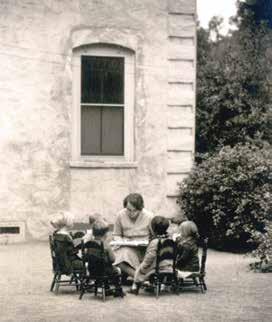
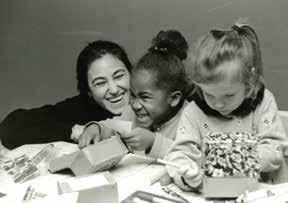
At the same time, training teachers wasn’t the only aim of education programs at Mills—and that resulted in the 1926 opening of the Pre-School Laboratory, or the Nursery School, on the Mills campus.
In her 2021 book Early Childhood Education Through the Ages: A Partial History of the Mills College Children’s School, Professor Emerita of Education Edna Mitchell wrote that President Reinhardt wanted to emulate what was happening at Vassar with its growth in the study of child development. “As a widow with two small boys when she first arrived on the Mills campus, and being aware of the importance of early education, President Reinhardt saw an opportunity to be part of the child study movement emerging on prominent eastern campuses,” Mitchell wrote.
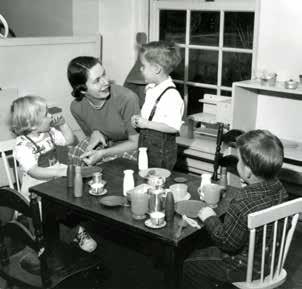
The Nursery School came first, with psychology professor Meredyth Anshutz its director for its first year. Students had to be between the ages of 18 months and four and a half years old, and toilet-trained. Enrollment was capped at 20 students, with no advantage for the children of faculty and staff members or alumnae. Mitchell reported that wait lists quickly grew.
An early brochure for applicant parents laid out the day’s schedule: arrival between 8:45 and 9:00 a.m.; an exam by the school physician, charting anything unusual in the child’s sleep patterns or behavior; using the toilet; a drink of water; outdoor play; a mid-morning refreshment; a nap; and lunch at noon.
For its first two years, the Nursery School was centered in the recreation room at Warren Olney, though within two years it moved to the now-defunct Toyon Hall on the meadow. “This was essentially Aurelia’s idea,” Mitchell wrote. “She didn’t care whether every student majored in child development. She was sure that she wanted the nursery school located right in the middle of campus, where students would walk past it every day.”
It was a laboratory school because it offered opportunities for observation of its young charges to Mills students in the psychology and home economics departments, which embodied a conflict that affected the College for some time. “When Aurelia became president in 1916 Mills College
1898: First mention of “Pedagogy” coursework in Mills College catalog
1908: Department renamed to “Education”
1918–19: First mention of California Special Teachers’ Certificates in Mills College catalog
already had departments of psychology, home economics, and education, which were obvious settings in which to include issues related to children, their learning and development, nutrition, and family life,” Mitchell wrote. “Prior to the 1926 establishment of the pre-school laboratory on campus, courses in child studies were offered in these departments, first in education, then psychology, and then nutrition from home economics.”
Mitchell added that President Reinhardt likely saw tension between the various departments, which prompted her to create a Department of Child Development in 1930. She recruited Vassar’s Louisa Wagoner to head it up and reorganized the Children’s School, as it had recently been renamed, under the new division. Mary Woods Bennett,
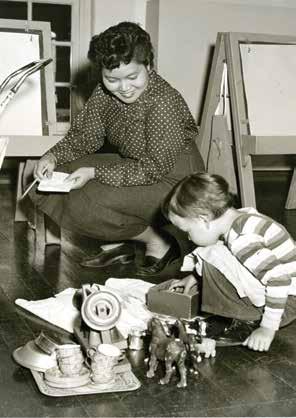
longtime professor in child development and psychology and later dean of faculty, said in a 1989 interview that Wagoner did not receive the warmest welcome, as this reworking of the various programs irked some faculty members. President Reinhardt reportedly had difficulties enticing professors to change departments. Bennett said in an earlier 1986 interview with UC Berkeley’s Malca Chall that the head of the psychology department did not like that Wagoner would teach the child psychology course.
This friction unfortunately continued for some years, with changes resetting the layout of education programs multiple times.
Bennett said in the 1986 interview that the period immediately after President Reinhardt’s retirement was particularly tumultuous, with the chairs of home economics, child development, and psychology all departing simultaneously in 1951. As a result, then-President White moved child development under home economics (“against everybody’s advice,” according to Bennett), which he then hired Hazel Kraemer, a nutritionist and scholar of child development, to oversee. Upon her departure in the early 1960s, home economics was dropped entirely and child development—along with the Children’s School—was reconfigured to what was then called the Department of Teacher Education. Bennett commented that Wagoner “would certainly have turned over in her grave had she known it.”
“The fear of many, including Louisa Wagoner and Miss [Frances Ruth] Armstrong, was that a more formal connection to teacher education would overwhelm the natural freedom of children’s learning,” Mitchell wrote.
It was also a tough time for the Children’s School, which had recently moved to Boulevard Cottage behind Alderwood Hall after Toyon Hall was torn down—a significant physical and psychological separation. Simultaneously, the need for education in children’s early years was growing: A 1946 edition of the Quarterly mentions that a shortfall of teachers in the lower school grades
1919–20: Creation of the School of Education, with faculty representatives from various other departments
1926: Nursery School established
1930: Name changed to Mills Children’s School; Department of Child Development formed
1942: Child development graduates create nursery school program for Japanese internment camps with guidance of Professor Louisa Wagoner
had developed over the course of World War II, and the brand-new generation of Baby Boomers was just starting to make itself known across American society.
These various conflicts came to a head with the passage of California’s Fisher Act in 1961. Though Mills had begun implementing its requirements before it became law, the changes in teacher credentialing were significant: Undergraduate students would no longer major in education and graduate ready to teach. Instead, they’d spend four years studying a particular subject and then take an extra fifth year for teaching certification in either elementary or secondary schools. One semester of that additional year was spent in the classroom as a learner with the second spent in the classroom as a student teacher—most of the time, in the Oakland Unified School District (OUSD).
At the same time, the legislation gave new life to child development at Mills, as the subject itself was recognized by the State of California for a credential of its own. In 1970, the Ryan Act continued codifying the new credential structure, including the development of the California Commission on Teacher Credentialing. Mitchell, who became head of the department starting in 1973, commented in her book that her first few years at Mills involved another reworking of the credential programs. She also renamed it to the Department of Education.
Young Japanese American children at several World War II internment camps were able to attend nursery school thanks to displaced Mills education students.
Grace Fujii Kikuchi ’42 and Kay Uchida Kakutani ’40 both studied child development under Louisa Wagoner, and when they were detained at the Tanforan Assembly Center in San Bruno in 1942, the duo teamed up to start a program for the youngest internees. They continued their work after both were transferred to the Topaz War Relocation Center in Utah several months later.
The Mills archives contain a great deal of documentation about their project: reports from the Education Section of the War Relocation Authority on the program’s evolution; correspondence between Kikuchi, Kakutani, and Wagoner; and schedules of daily activities, which closely resemble the day-to-day experience of the Children’s School—including creative play.
“Faced with such a responsibility, we were thrilled at this opportunity to put into practice our previous training in the field and at the same time felt a little at a loss as to our adequacies,” the two wrote in a 1943 report. “We were also challenged by the many needs we saw all around us and determined to do what little we might to help make this unusual life and community happier for all of us.”
Their efforts earned them the co-director titles within the Pre-School Department and accolades from government officials. In that same report, Superintendent of Education L.G. Noble wrote the following: “In view of the fact that at the beginning of this project, approximately eight months ago, there was no semblance of an organization and in most cases no buildings that were adequate in which to carry on the program, I consider the achievement in this department of education to be one of the finest that I have seen organized.”
1951: Child development becomes part of the home economics department
1960: Toyon Hall demolished; Children’s School moves to Boulevard Cottage
1961: Undergraduate education major begins phase out in response to state legislation
Between the crystallization of child development with teacher education at Mills and a 1968 move of the Children’s School to the original health center at the corner of Post and Pine Top roads (what’s now known as the Vera M. Long Building for the Social Sciences), a relatively stable period began for the various education programs at Mills, enabling them to expand in the ensuing years.
The move to make credentialing a post-grad program opened the possibilities for a variety of advanced degrees. Though a master’s in education had been available as early as the 1920s, more specific specializations developed.
Those included a new master of arts in teaching degree with a concentration in early childhood education, which debuted in 1974, as well as a certificate and master’s degree that formed out of a mid-1970s meeting with Mitchell, the then-retired Bennett, and Emma Plank Nuschi, MA ’47. Nuschi had founded a program at Cleveland’s Case Western Reserve Hospital concentrating on the life of children in hospitalized environments, which inspired Mitchell to try something similar. The Hospitalized Child curriculum, also called Child Life, brought instruction on children with special needs and disabilities to Mills and recruited local physicians to teach. In addition to the certification in Child Life, this development led to the approval of a master of arts in infant mental health that included a special education credential.
The Children’s School also expanded in several ways, both programmatically and physically. A new adventure playground similar to those in Europe went up between the Children’s School building and nearby residence halls,
1979: Kindergarten added to Children’s School offerings
1962: Major in child development dropped as program offering, Child Development and Home Economics departments are eliminated; oversight of Children’s School moves to Department of Teacher Education
which was soon populated by youngsters participating in expanded hours for childcare. Until then, the Children’s School had run on an academic schedule similar to the College’s, with extended breaks that complicated matters for some parents.
“Faculty mothers spoke to me privately, and articles of criticism were printed in the student paper,” Mitchell wrote in her book, saying that complaints also included program costs and lack of transparency in admissions. Starting with the 1975 spring semester, expanded afternoon hours opened to children already participating in morning sessions, and though Mitchell reported resistance and difficulty in pushing forward the plan, efforts did eventually result in a sustainable program. (Students also formed their own co-op for babies too young for the Children’s School. The Mills College Infant Toddler Center was known colloquially as Mills Crawlege.)
This move was a precursor to the first new cohort added to the Children’s School since its founding more than 50 years prior: kindergartners. Parents were requesting to keep their
1993: Leadership Institute for Teaching Elementary Science (LITES) begins, runs through 1999
1999: School of Education begins offering an EDD (Doctor of Education) program
1968: Children’s School moves to original health center, now known as Vera Long
1970: Ryan Act reworks California’s teaching credentials
1974: New MAT in early childhood degree offered; Department of Teacher Education becomes Department of Education
1975: Children’s School extends morning program for those students who need afternoon childcare
children enrolled longer, and the laboratory for aspiring teachers and other burgeoning professionals was limited.
“I thought how good it would be for our student teachers to see and work with primary grade children in classes where teachers shared a common philosophy and would be consistent mentors to novice teachers,” Mitchell said.
She initially envisioned using Wetmore Lodge for this expansion and put together a proposal for the president and Board of Trustees. However, College financial priorities centered on replacing the library—according to Mitchell—so the proposal stalled. But she was determined and eventually debuted an afternoon kindergarten in 1979, bringing on Joan Henry as the first grade-level teacher and, later, Children’s School director. “[She was] a person who beautifully bridged the gap between the free-flowing preschool and the more ‘school learning’ expected in the kindergarten, while retaining the principles of childcenteredness that were the hallmark of the Children’s School,” Mitchell wrote.
Later additions of grades up through fifth occurred through the 1990s.
2000: New education complex near Wetmore Gate opens
2002: Four women comprise the first cohort of Mills EDD graduates
As any teacher knows, keeping up with the latest research and findings in the field is essential—as well as required to retain credentials. Mills kept educating its educators post-graduation from the very beginning, with a 1928 conference for the teachers and caregivers of young children organized by Harriett O’Shea, which was one of the first in the field and led to the creation of the Pacific Coast Association for Nursery Education.
In more recent years, offerings for classroom teachers have included the Leadership Institute for Teaching Elementary Science (LITES), which ran from 1993 to 1999, and the Center for Urban Schools and Partnerships, which launched in 2011 and brought Mills education research and students to work with schools in underserved communities around the Bay Area.
Now, Lead by Learning continues the work. The organization, a center on the Northeastern Oakland campus, was first founded as Mills Teacher Scholars in 2008. It was initially a group of just 15 teachers who met monthly under the direction of Professor Emerita of Education Anna Richert, and it has since evolved into a program that convenes groups of teachers and education leaders online, on campus, and around the U.S. to learn and build the conditions and capacity for educators to build equitable schools. This year, that work reached more than 250,000 students, more than half of whom qualify for free and reduced lunch.
“If schools are going to become more equitable and effective, the investment has to go to the educators who work with students daily. So often, there’s an expectation that educators should do more, deliver better outcomes—without creating the systems that enable them to succeed,” says Jennifer Ahn, executive director of Lead by Learning. “The work isn’t about fixing educators. It’s about leveraging their gifts and nurturing their growth so that equitable outcomes and thriving communities become the expected result of how schools function.”
2008: Leadership in Early Childhood Program admits first MA and EDD students
2011: Mills begins offering a joint MBA/MA degree in educational leadership; the Center for Urban Schools and Partnerships opens
It’s impossible to name every Mills education graduate who could qualify for the above in the space we have. Here are just a few:
Susan Britson, MAT ’79, and Lisa Sondin, MAT ’80: co-founders of Berkeley’s play-based Step One School
Gail Boldt, TCRED ’90: distinguished professor at Penn State’s College of Education
Jennifer Pare ’91: director and principal of the Redwood City School District’s Child Development Center
Lois Cottrell ’93, MA ’96: founder of Duck Pond Preschool in Oakland
Cheryl Cotton, MA ’95: superintendent of West Contra Costa Unified School District
Celia Esposito-Noy, EDD ’99: recently retired president and superintendent of Solano Community College
Sheila Garvey, MA ’03: superintendent of Wilmar School District in Petaluma
Rachelle Rogers-Ard, EDD ’07: co-author of the 2020 book Black Educational Leadership: From Silencing to Authenticity
Sabrina Kwist, MA ’11, EDD ’17: associate vice provost for antiracism, diversity, equity, and inclusion at the University of San Francisco
Jaguanana Lathan, MA ’14, EDD ’17: president of the Antioch Unified School District Board of Education
Denise Richardson, MA ’17, EDD ’21: president of Berkeley City College
Meredith Bunyard, MA ’18: founder of Forest Play Preschool in San Francisco
Angela Barrett, MA ’19: principal of Alameda High School
Ruth Fernández, EDD ’19: executive director of First 5 Contra Costa
Allie Littlefox, MA ’20, EDD ’22: assistant vice chancellor for planning and innovation on Northeastern’s Oakland campus
2019: School of Education launches an online master of arts in educational leadership degree
2022: Education programs remain part of new Mills College at Northeastern
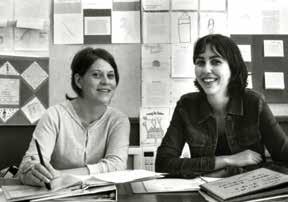
By this point, the reputation that education chair Horn had hinted at in the department’s early years was in full bloom. Outside organizations frequently partnered with Mills education programs, and grants were flooding in to support them. In the fall 1994 edition of the Quarterly, Jane Bowyer—who took over as department director after Mitchell—cited impressive numbers. “One evidence of our success in preparing teachers is that we defy the state and national statistics on the attrition of teachers,” she said. At that time, more than two-thirds of newly credentialed teachers throughout California left the field within three years, but 87 percent of Mills-educated teachers were still on the job after five.
The article cited the availability of the Children’s School to education students as a reason, as credential candidates were soon required to complete some of their student teaching there. But a tradition that started in the mid-1970s was also largely understood as a factor: trips to Dukski, the Mills-owned lodge in the Sierra Nevada. Groups of 15 credential students would decamp there together for several days every fall to get to know each other and teach the cohort a specific skill. “Our graduates make a point of finding other teachers with whom to interact when they first begin at a school,” Bowyer said in the Quarterly. “They find people they can talk to about ideas and problems.”
That sense of collegiality was felt in the Children’s School as well, particularly between administration and families. In her book, Mitchell quotes teacher Joan Henry as saying that she felt the need to expand the racial and socioeconomic diversity of the student body, which required several changes: an even-more year-round schedule and scholarship options, prompting the first specific fundraising campaigns for the Children’s School.
The growing number of classrooms needed to house students while maintaining small class sizes also became an issue as more grade levels were added to the curriculum
2024: Credentialing programs relaunch
2026: Mills College Children’s School to close on Northeastern’s Oakland campus and merge with the Aurora School
and the Infant Toddler Center was moved to the Children’s School. The primary grades were first going to move to Wetmore Lodge, and then to portable classrooms no longer needed by OUSD. A solution came in the form of a new education complex, though it would take a decade to complete.
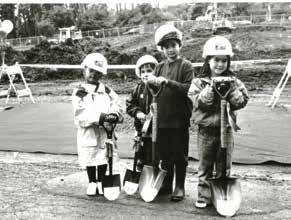
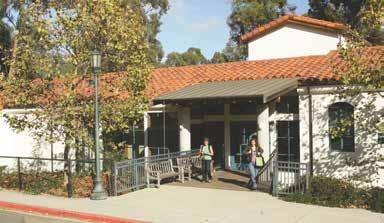
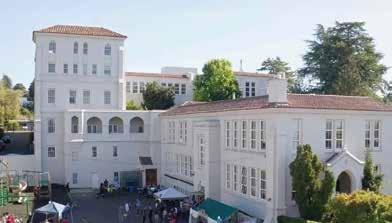
Opening in 2000, the Spanish-style buildings cost nearly $8 million to complete, with classrooms and play areas for the Children’s School on the lower side of a hill near the Wetmore Gate, and College classrooms and offices on the upper side—all around a central courtyard. Recreating the fireplace room from Vera Long was also a priority.
The past 30 years have included additions such as the doctor of education degree (prompting a permanent renaming to the School of Education), but tough times as well. Mitchell reported that in 2005, Suzanne di Lillo (in the new role of director of administration and admissions) was instructed by College finance officers to ensure that the Children’s School was a revenue stream.
When Mills merged with Northeastern in 2022, the changeover paused accreditation not just for degree programs but for teaching credentials, as Northeastern did not have a pre-existing relationship with the California Commission on Teacher Credentialing. The first legacy
Mills programs to receive renewed approvals from the state were the single-subject and multiple-subject credentials for new teachers, which went live in the fall 2024 semester. Education now operates as its own unit under the Dean’s Office for Mills College at Northeastern.
And recruitment for the master’s degree in educational leadership continues apace. That program began in 1997 and emphasizes real-world application of equitable practices. Among its many graduates is Miles Greene, TCRED ’20, MA ’20, who is now the principal of Holy Names High School. “What I valued most about my time in the Mills College Educational Leadership Program was learning from experienced school administrators with a deep commitment to social justice and consensus building,” he said. “Mills gave me the tools to foster inclusive school environments and the confidence to drive positive change.”
After the announcement in June 2025 that the Children’s School would wind down operations after this academic year, hope appeared in the form of Oakland’s Aurora School, which will bring many Children’s School students and educators to campus as it incorporates a transitional kindergarten starting in fall 2026 and develops a preschool. Jenny Bond, who is currently the interim head of the Children’s School and will take the position of assistant head of school at Aurora, said the following in the announcement: “This partnership ensures that the values, pedagogy, and joyful learning environment that [Children’s School] families cherish will continue to flourish at Aurora School.”
So, even if it’s in a different location, that legacy will also live on. 6
A MESSAGE FROM THE AAMC PRESIDENT
The Mills Legacy: Preparing Citizens for a Changing World
Mills College was built on a conviction: that education is a moral and civic duty, not a commercial transaction. Susan and Cyrus Mills came to California shaped by years of teaching in Sri Lanka and Hawaii—societies navigating colonialism, cultural collision, and rapid change. They believed that rigorous liberal arts education—and educating women in particular—was one of the most powerful ways to strengthen a society. They brought that belief to the chaotic, post–Gold Rush California of 1865.
That conviction shaped everything that followed. It set the stage for Aurelia Henry Reinhardt, a president who led Mills for nearly three decades and embodied its civic purpose. A philosopher by training, she became a nationally recognized voice for peace, social justice, and international cooperation, active in the League of Nations while championing the arts and civil discourse on campus. She didn’t just run a college. She modeled what a Mills education was meant to produce.
That model did real work. It shaped generations of Mills students who learned to think across disciplines and recognize that the hardest problems are civic, not technical. It taught us to grapple with conflicting perspectives and work with others toward a future none of us could build alone. These are the civic capacities democracy depends on.
They have never mattered more. AI (artificial intelligence) won’t just change how we work; it will automate the technical skills we once built careers on. The question won’t be how to futureproof a career. It will be: What do we build now, and who decides?
The real disruption isn’t AI itself; it’s the collapse of the link between labor and human worth. AI is only the accelerant. When economic systems rather than citizens define the future, democracy loses its footing. Reclaiming that ground requires discernment and vision—not just technical skill. A society shaped by narrow specialization and shortterm incentives will answer that future badly. A society trained to think ethically, historically, and across difference has a fighting chance.
This is why the AAMC exists. We are not preserving nostalgia for a college of the past. We are stewards of an educational model that remains essential—one that develops the whole person and prepares citizens to engage thoughtfully across divides. In the face of profound change, our duty is to ensure these values live on.
To sustain that mission, we are building an organization capable of carrying it. This year’s work is foundational: professionalizing operations, securing our financial footing, and clarifying our legal standing. It is unglamorous, hard— and essential.
We are now seeking board members with nonprofit, legal, or financial expertise. This is a time for builders. If you are ready to help us lead, we welcome a conversation.
Mills shaped how we think and how we engage with the world. Now it’s our turn to ensure that legacy continues to shape future generations. Together, we can build something worthy of the place that shaped us.
The Alumnae Association of Mills College is seeking governors who can guide an independent nonprofit through a period of real transition and growth. We are not maintaining a social club—we are building an organization that preserves Mills’ legacy and creates opportunities for future generations.
Current board work includes financial sustainability, legal agreements with Northeastern University, strategic planning, and organizational capacity building. This is governance with real stakes. Governors attend regular meetings, serve on committees, and take on projects between meetings.
We need people with:
• Nonprofit board or executive experience
• Expertise in governance, law, finance, fundraising, or program management
• Strategic thinking during organizational change
• A willingness to do the work, not just attend meetings
We also welcome skilled volunteers for merchandise development and program support.
AAMC is one of the few alumnae associations operating as a fully independent nonprofit after institutional merger. How we navigate this moment will determine whether Mills’ impact continues—or fades into nostalgia. Interested? Contact Nominating Committee Chair Glodean Champion at nomcomchair@aamc-mills.org, or apply at aamc-mills.org/gov2026
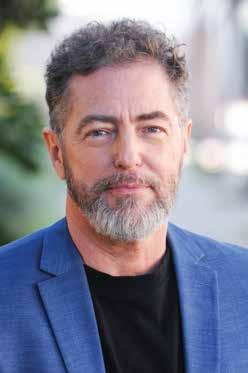
Talk about serendipity—I walked into Reinhardt Alumnae House to pick up my Mills College alumnae card and walked out on the path to becoming the new AAMC administrator. I happened to arrive while President Kieran Turan ’90 and Vice President Adrienne Jardetzky ’80 were in the office. What began as a conversation about volunteering shifted quickly once I mentioned my more than 25 years of administrative experience, including work as a legal assistant, law firm administrator, and nonprofit administrator. A few weeks later, I joined the team.
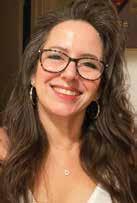
My Mills journey began in 1994 and—after many twists and turns—culminated in 2025 when I finally earned my BS in psychology. The graduation edition (summer 2025) of the Quarterly shared my story: my struggles with addiction and chronic illness, my long road back to Mills, and my determination to finish what I started. I had planned to continue straight into graduate school, but with recent federal changes affecting loan eligibility for therapy programs, I found myself needing part-time work while waiting for the landscape to shift. Serendipity, indeed.
I experienced Mills both before and after the merger, and like many of you, I found that period incredibly difficult.
It often felt as if everything that made Mills “Mills” was being erased. I came close to transferring, but a presentation for legacy students changed everything. A speaker reminded us that the Mills spirit lives in us—and that we have a responsibility to carry it forward. I stayed. I graduated as part of the final class of Mills College students, a historic milestone that went unacknowledged at Commencement but remains deeply meaningful to me.
Working at the AAMC allows me to honor that spirit every day. One of my favorite parts of the job is meeting alumnae—hearing your stories, your memories, your grit, your humor, your determination. Mills was not an ordinary college. For many of us, it was a place of self-discovery and transformation, and that experience continues to shape our lives long after graduation.
I’m grateful to be part of this organization and this community. Please feel free to call or stop by the AAMC office at Reinhardt Alumnae House. Pick up some Mills merchandise, share your ideas, reconnect with the community, and tell me your story. I’ll do my best to live up to the Mills spirit and to serve you with pride.
–Lyssa Jo King ’25
We’re clearing the shelves to make room for a new print-on-demand system—more designs, more sizes, and no more storage closets full of boxes. That means everything currently in stock needs to go.
THE DEALS:
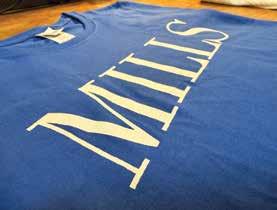
• T-shirts: $5 each (all designs, all colors)
• Mystery Bundle: $8 (three shirts in your size— perfect for gifting, gardening, or sleeping in Mills gear)
• Surprise Pack: $10 (shirt + lanyard + sticker + bonus item)
Shop now: aamcmerch.square.site. Quantities are limited, and once these designs are gone, they’re gone. Sale runs while supplies last. All sales final.
Your AAMC membership includes access to the Fitness Center—complete with cardio equipment, weight room, and free group classes such as Pilates, yoga, and strength training. To get your yellow membership card, email Lyssa at info@aamc-mills.org. Stay healthy, stay connected, and enjoy this member benefit.

Most group tours rush you through the highlights. With AAMC Travel, you explore alongside fellow alums who ask great questions, local scholars who answer them, and itineraries designed for people who want to understand a place, not just check it off a list.
Through our partnerships with AHI Travel and Gohagan & Company, you’ll join small groups (typically under 30) of alums from across the country. Trips combine expert lectures, thoughtfully curated excursions, and free time to wander on your own.
Visit aamc-mills.org/travel to learn more and book.
Apulia: Italy Without the Crowds (September 2–10, 2026: 8 days from $3,795)
Skip Tuscany. Apulia—Italy’s heel—offers cave churches carved by Byzantine monks, trulli houses built as tax dodges (now UNESCO sites), and baroque towns in honey colored stone. You’ll base in cliff-top Polignano a Mare and daytrip to medieval villages, family wineries, and olive groves older than the Renaissance. Economist Pietro Semeraro joins you to explain how this rocky peninsula feeds modern Italy.
Andalucía: Moorish Spain in a Parador (September 24–October 2, 2026: 8 days from $2,995) Eight centuries of Moorish rule left 856 striped arches in Córdoba’s mosque cathedral and poetry carved into the Alhambra. You’ll stay in a historic parador in Antequera and spend a week among UNESCO sites, gorge top villages, and olive country. Scholar Carmen López offers context on contemporary Spain and its layered past. Flamenco and a local wine tasting round out the experience.
Southern Africa: Safari, Rail, and Reckoning (October 4–19, 2026: 16 days from $9,295)
Travel across three countries in 16 days: three aboard Rovos Rail (1920s luxury, no WiFi) between Victoria Falls and Pretoria, and three tracking the Big Five at Kapama Reserve. Bookend the journey in Cape Town and Soweto, where Muhammed Khan—removed as a child under apartheid—leads conversations about South Africa’s transition and unfinished work. This itinerary is physically demanding and emotionally powerful.
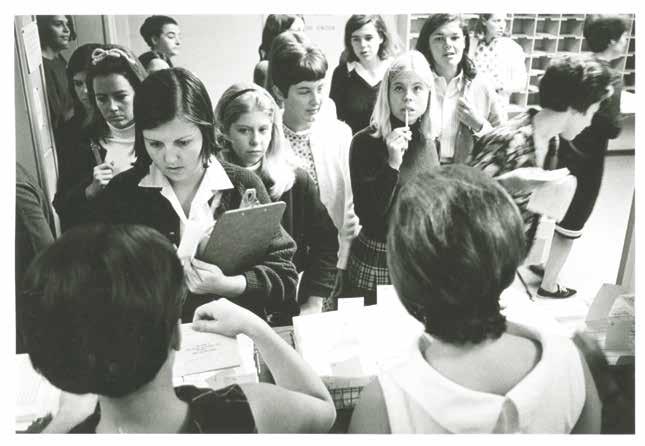
Before computers and the Internet made choosing classes a solitary affair, long lines defined the process as this undated photo shows. (We’d guess… early to mid-1960s?)
Other registration photos from the archives show students snaking through the Art Museum and across the Oval.

Sheryl J. Bizé-Boutté ’73 has published her first speculative fiction novella, The Burden Keeper’s Reports. She reports that she took the leap after the first chapter won an award at the San Francisco Writer’s Conference.
Sins of the Mother, the third and final title in the Lexi Fagan Mystery series, is the latest release from Autumn Doerr ’96. In this novel, the title character starts suspecting that her parents’ unexpected deaths two decades before were intentional. Autumn was December 2025’s featured writer for The Crime Writers’ Association.
More than a dozen paintings completed by the late Jay DeFeo, professor emerita of studio art, in the 1980s were on display at New York’s Paula Cooper Gallery in late 2025. Garnets on the Boulder ran from October 30 to December 13. Vogue published a related piece on “The Transcendent Late Paintings of Jay DeFeo” on November 10; visit tinyurl.com/jay-defeo.
The Eureka gallery 40° North exhibited sculptural works by Kit Davenport, MFA ’92 , to close out 2025.
Professor Emerita of Dance Molissa Fenley ’75 is one of the choreographers working with participants in the Biennale College 26 for Dance this summer in Venice, which will bring to life a new major commission.
A piece that Mary Rose Kaczorowski ’04 wrote for The Mendocino Voice about anti-ICE protests in Fort Bragg this past January got national attention through a mention in Time Read her article at tinyurl.com/mary-rose-kaczorowski.
Nights of Hunger: A Cocktail of Grief, Dreams and Dating for Old-Ass Women is the cathartic book written by Pamela Katims Steele ’68 following her husband’s traumatic passing. Platypus Publishing released the title in June 2025.
The Grafton Art Gallery just north of St. Louis was the site for Mutualism, a show of sculpture, painting, and porcelain luminaries by Sarah Knight ’13. The installation opened on December 5 and ran through February 5.
Lament for the Maker, the new album by former Darius Milhaud Chair of Composition Zeena Parkins, also includes contributions from former Assistant Professor of Music John Bischoff, MFA ’73; Luther Brusie Marchant Professor of Music James Fei, and Laetitia Sonami, MFA ’81
An exhibition of work by Associate Professor of Art Yulia Pinkusevich, Sacred Fires, was on view at Oakland’s The Orchard/Galleries on 25 during the month of January.
Truong Tran, the Carver Professor in Far Eastern Studies, had a solo show at Arc Gallery & Studios in San Francisco from January 17 to February 21.
The gallery 500 Capp Street in San Francisco featured Blue Reverie, an installation by Professor Emerita of Art Catherine Wagner, from October 4, 2025 until January 10. The show’s site-specific examination of the color blue received write-ups in 48hills.org, the San Francisco Chronicle, and The San Francisco Standard, among other outlets.
Share your recent release with the readers of Mills Quarterly ! Send a press kit, including high-resolution images, to mills.quarterly@northeastern.edu
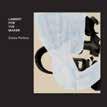
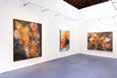
BY MOYA STONE, MFA ’03
6 6 6 6 6 6 6 6 6 6 6 6
In our 2023 reader survey, several responding alums named professors of theirs who they were curious to hear from again. When we compiled that list of names, they all seemed to intersect in the mid-1990s, so we did some digging to find out what they’ve been up to since leaving Mills.
Former Associate Professor Madeleine Kahn taught English literature at Mills starting in 1989. While teaching Ovid’s “Metamorphoses” in her Ancient Mythology class, her students began to ask why she was teaching “a handbook on rape.” This question stayed with her, and when she left Mills in 2003, she wrote and published a book, Why Are We Reading Ovid’s Handbook on Rape: Teaching and Learning at a Women’s College, to address the issue. When she left the College, she also departed teaching altogether and shifted to a career as a consultant for non-profits in healthcare. (Note: See the winter 2003 issue of the Quarterly for an excerpt from that book!)
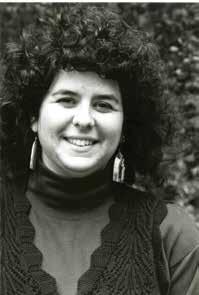
Professor Emerita Cynthia Scheinberg (left) arrived at Mills in 1992 and quickly settled into her position in the English Department, teaching such classes as Victorian Prose and Poetry and The Bible as Literature. Scheinberg eventually took on administrative positions, including dean of the English Department and associate provost. By 2018, she and her husband wanted to return to the East Coast, where they both grew up, and also Scheinberg accepted the inaugural position of dean of School of Humanities at Roger
Williams University in Bristol, Rhode Island. “This was a big leap for me,” Scheinberg says, “with many programs to oversee, while also working with senior leadership at the university to implement programs and protocols for my school.” In 2021, she stepped back from that work and returned to teaching full time in the English Department at Roger Williams. Since then, she has developed new courses, including Fiction from Africa and a first-year seminar called Why Read. Scheinberg says that she has fond memories of Mills and her students: “There was nothing like a Mills classroom—with eager, vocal and engaged students —so diverse, so passionate.” She extends a friendly hello to former Mills students and faculty.
In 2014, after teaching sociology and anthropology at Mills for 54 years, Professor Emeritus Robert Anderson (top right) decided to retire. But for years following, he remained a presence on campus. Still occupying his office and often at Mills, he could be spotted walking around the Oval or having lunch in the Tea Shop; nearly every day, he’d pop into F. W. Olin Library to read the newspapers. Former Reference Librarian Michael Beller remembers that Anderson made it a point to tell the library staff just how much he appreciated them. “He had a constantly positive personality,” Beller shared. Affectionately called Dr. Bob, Anderson was among the most popular professors at Mills, and in 2012 the educational services company The Princeton Review included him on its
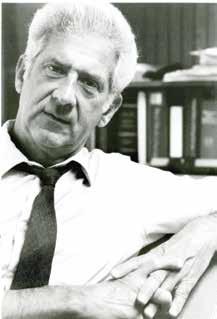
list of the 300 Best Professors of the Year. On December 27, 2025, he celebrated his 99th birthday. Though he now has Alzheimer’s and lives in a memory care facility, “he still amazes me with his insightful comments on occasion,” says his wife, Edna Mitchell, “and his gentle, sweet disposition.”
Yes, many alums will recall that Professor Emerita Edna Mitchell is married to Dr. Bob. They met in 1973 when she came to the Department of Education. During her tenure, Mitchell was also department head, the director of Graduate Studies, and founding director of the Women’s Leadership Program. After leaving the College in 2004, she went to Afghanistan to work as an advisor with the Ministry of Education there to establish teacher training colleges. She continued in Afghanistan to help develop an American liberal arts curriculum and standards for the American University of Afghanistan. This turned into a 10-year project during which Mitchell traveled back and forth every few months. “The American University of Afghanistan now exists only in name in Qatar,” Mitchell says, “but the beautiful buildings and campus built in Afghanistan are occupied as offices for the Taliban government.” She wrote about her experiences in the book Clueless in Kabul, Lessons Learned: Good Intentions, Unintended Consequences, which came out in 2022. She also wrote and self-published the book Early Childhood Education Through the Ages: A Partial History of the Mills College
Children’s School in 2021, and she continues to work on other various manuscripts. Now 94, she says her life is full, but “time is limited for each of us, and the world is spinning wildly—it needs Mills women to take a stand for peace and rationality as they have before and can do again.”
One of the names that came up in that reader survey was Professor Emerita Elisabeth Siekhaus (below). In our research for this story, we learned that she died on November 17, 2024—a passing of which we were previously unaware. She began teaching German at Mills in the 1977–78 academic year and steered the department through to its closure in 2003, eventually retiring in 2009. In the winter 2004 issue of the Quarterly, Mary Akatiff Cudahy ’93 wrote that Siekhaus inspired “several generations of students to study in Germany on Fulbrights, take up careers in German-related fields, and pursue advanced degrees in German literature at Yale, Princeton, and Berkeley, among other institutions.” Siekhaus was born in what was then known as Breslau, Germany (now Wrocław, Poland), which she and her family fled in 1947, relocating to the new West Germany. She married and emigrated to the United States in the early 1960s, earning her PhD at UC Berkeley.
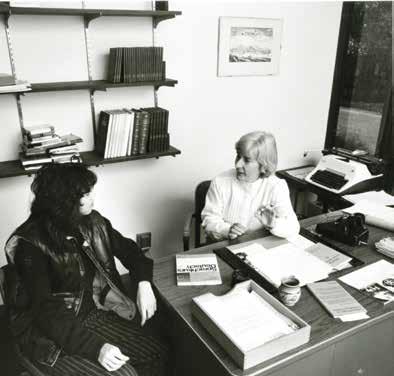
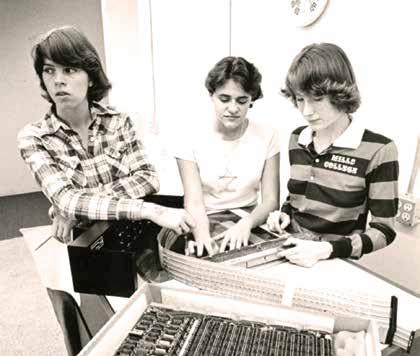
IN THE FALL 2025 ISSUE , we published this photo of three students in a 1977 computer science class, though we didn’t know their names. Thanks to the responses of six different alums—Patricia Campbell Fetterly ’70, Alice Carey ’81, Kristin Kramer ’79, Corin Scarpelli Lewis ’78, Cathy Wilson ’79, and Nina Zhito ’82—we do now. From left to right, they are Susanne Vierra Dern ’78, Noel Grossman Butler ’79, and Judy Houston Beylerian ’79. The request also unlocked some Mills memories, which we’re happy to share:
On the left is Susanne Vierra , the first computer science major at Mills. We both lived in Orchard Meadow Hall and graduated the same year.
I majored in French. At the time, we had a man as the president of the College, but I do not remember his name. [Note: It was Robert Wert. -Ed.] In December 1975, he allowed me and two other students to do transfer work the following semester in Paris. He was concerned about our safety but agreed to the transfer work and we were able to go, accompanied by a professor named M. Perla. It was a group from the College, but only three of us stayed on: me, Becky Voight ’78, and Martha Ericson ’79. Becky left after a couple of months, but Martha and I
stayed on and finished our work. We lived with Parisian families, studied at the Alliance Française. I also took art history tours at the Louvre and spent many days with masterpieces, while learning the language, literature, and culture/history of France. Later, I continued my studies in French and received my MA from UC Irvine in 1981. I became a community college French instructor.
Susanne was always very interested in what I was studying, and me likewise with her.
I came from Willow Glen in San Jose. Growing up in the ’60s and early ’70s, none of us could have imagined how the .com revolution would affect our world. I feel very grateful for
having been at Mills at this pivotal time, knowing Susanne, and my other fellow students.
As for Susanne, I know she was employed immediately after her graduation. I hope she is doing well.
–Corin Scarpelli
Lewis ’78, Lompoc, California
Several years ago, while working with a group of environmental activists in my local community of Tacoma, Washington, I met and formed a friendship with Judy Houston Beylerian ’79, who shares my interest in preserving and expanding our city’s tree canopy. As we became better acquainted, we learned that we were both graduates of Mills. I don’t think it was a coincidence that our shared experience led us to pursue actions to try to improve the quality of life in our community.
While reading the fall edition of the Quarterly I was surprised to locate an article in the Throwback section on the fashion shows held at the Mills College Art Museum when I was a student in the late 1960s. In addition to a short article on the transformative 1960s, the article contained a photograph of me participating in one of the fashion shows, an event I had long forgotten. I was standing next to my aunt, Elizabeth Einhaus Gamboni ’33, the fashion show chair that year.
I shared this find with my friend Judy, who had not seen the Quarterly. To add to the surprise, she recognized herself in the photograph of three Mills students in the computer lab examining a motherboard! Judy is the student on the right.
Thank you for bringing back these most interesting memories.
–Patricia Campbell Fetterly ’70, Tacoma, Washington

THANK YOU, MILLS ALUMS!
Over the course of 24 hours, Mills alums joined the entire university community to champion the Oakland-based students and programs relying on our support. Whether you celebrated the Mills College Art Museum, honored the Alumnae of Color Committee’s Alecia DeCoudreaux scholarship, or bolstered the transformative work of the Mills Institute, you made a fundamental impact on the lives of students and researchers, while emphasizing to the university the strength and influence of the Mills community.
DURING GIVING DAY IN 2025, MILLS...
DOUBLED our Giving Day donors!

Raised over $40,000 for campus programs
Received support FROM 160 MEMBERS of our community
YOU DID IT ON GIVING DAY! TUESDAY, APRIL 14 VIEW THIS YEAR’S RESULTS:
6 6 6 6 6 6 6 6 6 6 6 6
This section includes notices of death received before January 9. Submit a listing on behalf of a member of the Mills community at mills.quarterly@northeastern.edu or 510.430.3312.
Velma Sun Lowe Fletcher ’41, MA ’43 • May 15, 2024 • Laguna Beach, California She married the grandson of the first president of the Republic of China. Velma was a music enthusiast, creating the live orchestra portion of Laguna Beach’s famous Pageant of the Masters and coordinating the opera at the nearby Irvine Bowl concert venue. She is survived by a big family, including a daughter and a granddaughter.
Joyce Root Barnier ’46 • November 23, 2025 • Sonoma
She met her late husband, Jerome, at a St. Mary’s dance. They married in 1945, and Joyce taught school while Jerome completed veterinary school, then she managed the business side of his practice. Joyce also served as the principal for the primary school at St. James Parish in Davis for several years, and she oversaw the local Camp Fire Girls organization. In her personal life, she loved caring for animals, local performances, and angel food cake. She is survived by four children, including Jean Barnier ’75; eight grandchildren; and seven great-grandchildren.
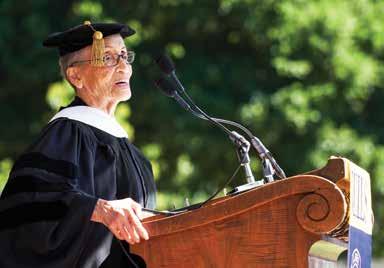
Doris Mulky Hood ’47 • October 21, 2022 • Kent, Washington
She majored in dramatic arts at Mills and operated an eponymous pottery studio. Doris’ sister was the late Kathie Mulky Warne ’45, and she is survived by niece Carolyn Warne ’83.
Sally Muther Lawton ’47 • October 12, 2025 • Northampton, Massachusetts Her Mills degree was in fine arts, befitting her love for all kinds of media. While attending post-graduate summer school at Harvard, Sally met and soon married
The 2017 recipient of an honorary doctor of arts and letters degree from Mills, Betty Reid Soskin died on December 21, 2025, at the age of 104. Betty retired in 2022 as the oldest park ranger for the National Park Service, spending many years at the Rosie the Riveter World War II Home Front National Historical Park in Richmond. During her address at Commencement 2017, she said the following: “To have lived into an age, to be affirmed in this way, by Mills College… you have no idea what that means.”
her late husband, Ed. Their family was a force, with deep roots in the local Unitarian Universalist Society and political activism. Her creative sensibility played out through the projects she oversaw for her children, her gardening and flower-arranging skills, and teaching everything from cooking to languages. She is survived by two children and a granddaughter.
Mary Crawford Anderson ’48 • April 26, 2021 • Conway, Washington
After Mills, she went on to San José State for her teaching credential and a master’s in library science. Mary spent six months in England before settling in the South Bay to teach and run a school library in Los Gatos. She later moved to the area north of Seattle with her late husband, Roy, where they raised cows and grew crops, and she earned her flight certificate. Mary was an intensely curious person, and she advocated for women’s advancement through P.E.O. International. She is survived by two children; a granddaughter; and many nieces and nephews.
Marilyn Wilson Newland ’48 • April 13, 2022 • Vashon, Washington
She later graduated from the University of Washington with a music degree, which she put to use as an organist at various churches around Seattle and across the state—and she enjoyed taking in musical performances as well. Marilyn was also a member of the American Guild of Organists, the Women’s University Club, and Kappa Kappa Gamma. She is survived by two children, five grandchildren, and six great-grandchildren.
Carolyn Adams Lindquist ‘51 • December 13, 2025 • Fountain Valley, California
Lynda Campfield ’00, TCRED ’01, MA ’02 by Lilly Sylvester Sahagun ’10, MA ’12
Former Assistant Professor of Fine Arts Jay DeFeo by Jane Bewley Smalley Green ’93
Eleanor Marshall Schaefer ’29 by Nicole Bartow
May Ohmura Watanabe ’44 by her child, Lori Saginaw
Professor Emerita of Economics Marion Ross ’44 by Jieyong Qian ’90
She departed Mills early to start her family but finished her degree in her 40s at USC. While Carolyn held various jobs, ceramics and painting were her true passions, and she used them to create unique gifts for Christmas gifts even as her family grew. She took great joy in choosing the silliest birthday cards she could for her loved ones, and she enjoyed cheering for the Trojans and volunteering at the local library. She is survived by five children; nine grandchildren, including Kelsey Lindquist ’10; and 11 great-grandchildren.
Alison Peer Haney ’53 • October 3, 2024 • Old Greenwich, Connecticut She majored in contemporary civilization at Mills, and she is survived by her husband, Raymond.
Sharon Bramkamp Hohmann ’56 • October 8, 2025 • Sunnyvale, California She and late husband Jack married while they were both still in college and started a family right away, with Sharon later earning credentials at San José State and teaching first grade and special education in the Santa Clara Unified School District. Her children’s activities kept her busy, though she also wrote and compiled a wildly popular family cookbook that eventually reached three editions, and she joined the barbershop chorus organization Sweet
Adelines International. She is survived by five children, 10 grandchildren, eight great-grandchildren, and niece Carol MacMillan Gagnon ’94.
Ethel Black Deffeyes ’58 • August 3, 2025 • Seattle
Diane Pitcher Hoffmann ’63 • August 29, 2024 • Annandale, Virginia She majored in government at Mills and spent her life working on behalf of the environment. Most recently, Diane served in the role of executive director of the Northern Virginia Soil and Water Conservation District, where she organized successful environmental roundtables and won awards for her stewardship. She also turned her talents to preserving her family’s ranch in Half Moon Bay, which was threatened by an eroding creek but now endures. She is survived by her husband, Carl; two children; and four grandchildren.
Marlene Allen Bates ’65 • November 23, 2025 • Riley, Michigan After Mills, she graduated from Pitzer College and earned a master’s degree and teaching credential from Michigan State and the University of Michigan, respectively. Marlene went on to become a legendary English teacher at Harbor Beach High School north of Detroit, where her Advanced Placement class was well-loved. Though she dealt with Lewy body dementia in
May Watanabe began her college career at Mills but eventually graduated with her degree in nursing from Syracuse University, and for one simple reason: She spent much of World War II in an internment camp for Japanese Americans.
Born in Chico, May enrolled at Mills in fall 1940, but midway through her sophomore year, the Japanese attack on Pearl Harbor changed her life’s path. She withdrew from Mills to ensure that she would be detained along with her family, which they were, at the Tule Lake War Relocation Camp. Through the efforts of groups such as the Quakers, May was able to continue her education away from her brother and parents by joining the Cadet Nursing Program at Syracuse in 1943, something that proved appealing after she worked as a nurse’s aide at Tule Lake. She later earned a master’s degree in public health at Case Western Reserve University, and Mills awarded her with an honorary bachelor of arts in 2011.
In her nursing career, she spent nearly 40 years at the University of Pittsburgh’s Student Health Services, taking the occasional sojourn to vaccinate children in Nicaragua and treat students on Semester at Sea. But in her life, she was indefatigable—her family recalls that while she was on a plane from Seattle to Detroit in 2016, the pilot announced that they’d fly right over the Standing Rock Sioux Reservation and the protests happening there against the Dakota Access Pipeline. May spoke as loudly as she could to the entire plane from the aisle, asking them to spare a thought for those below fighting for clean water in frigid temperatures.
May died in Ann Arbor, Michigan, on September 19, 2025. She is survived by two daughters, two grandsons, a great-great-granddaughter, and many nieces, nephews, and cousins from across generations.
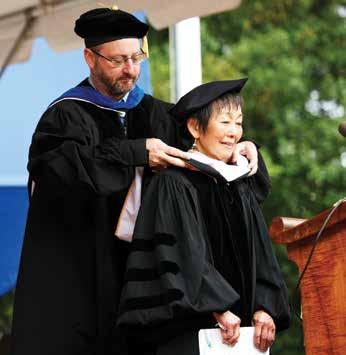
her later years, her family notes that she never backed down from a challenge. She is survived by her husband, Peter; two daughters; five grandchildren; and a sister.
Marion Locke-Paddon Carter ’65 • October 4, 2025 • Farmville, Virginia
She earned a master’s degree from Catholic University and served as a librarian at The George Washington University. After her marriage, Marion and husband Robert moved to the West Coast, eventually settling in Corralitos near Watsonville. There, she worked as a bookkeeper for the family business, and after they moved to Virginia, she kept medical records. Renovating an historic home in rural Virginia kept her later years busy, and she enjoyed singing in choirs. She is survived by her husband, Robert; a son; three granddaughters; and two brothers.
Mimi Nash MacNaughton ’67 • May 31, 2024 • Honolulu
She grew up in Hawaii and was thrilled to return after graduating from Mills. Mimi worked as the manager of the kitchen supply store The Compleat Kitchen and as an instructor of aerobic dance. Her family was her true passion, especially her grandchildren; she never missed a performance or sporting event, and she modeled the behavior necessary for them to reach their goals and dreams. She is survived by her husband, Edward; three children; four grandchildren; and four siblings.
Joan Ranger Combes ’67 • October 1, 2025 • Victoria, British Columbia After Mills, she completed her bachelor’s degree at Clemson University, earned a master’s degree at the University of South Carolina, and put in work toward a PhD in math at the University of Kansas. Joan initially helped install computerized patient record systems in Southern California, but it was on a summer archeological dig in the Pacific Northwest that
she met her husband, John, and they moved to Saturna Island in British Columbia. There, she went into real estate and enjoyed sculpting. She is survived by John; two stepsons, two grandchildren, and two siblings.
Libby Niederauer Sutton ’68 • December 10, 2025 • San Jose
She later earned a teaching credential from San Jose State, going on to teach in the Franklin-McKinley School District for 40 years as well as editing the newsletter for her union. With her husband, Tom, Libby often traveled to Nebraska to visit his family and their farms, and she found joy in creating elaborate, personalized greeting cards for all of her loved ones. She is survived by Tom, a brother, and two nephews.
Cheryl Travis-Johnson ’83 • Oct. 24, 2025 • Carrollton, Texas
She earned her Mills degree in administration and legal processes, following that up with an MBA and a doctorate in business administration, both from Walden University. Cheryl spent more than 30 years working in housing, first with Freddie Mac and most recently as the chief operating officer of VRM Mortgage Services. Expanding financial literacy among women was a passion project of hers, which she carried out by holding coaching sessions at her church. She is survived by her husband, a son, five grandchildren, and four siblings, including sister Carol Travis-Warren ’80.
Michelle Trueblood Tenney, TCRED ’95, MA ’97 • September 25, 2025 • Oakland
She was an eager student, graduating from high school at 16 and attending Sacramento
On November 7, 2025, Shelley Fernandez died in San Francisco.
In late 2024, Shelley mentioned to her good friend Isabel Wade ’70 that she was upset not to see any Class Notes from her 1955 classmates, so Isabel got in touch with Quarterly staff—and the resulting half-hour conversation was unforgettable. Shelley recounted a long life of activism, saying the following: “My whole life is one of causes.” Those causes were heavy on social justice; she debated Phyllis Schlafly on national television, sued the San Francisco Police Department to integrate women and people of color into the officer corps, and co-founded La Casa de las Madres, a trailblazing shelter for survivors of domestic violence in San Francisco.
Her long-standing friendship with the late Keiko Fukuda, a highly ranked judo practitioner who taught at Mills from 1971 to 1978, brought that martial art together with her activism. The duo created a women-only judo school in San Francisco, and upon Keiko’s death in 2013, the Keiko Fukuda and Shelley Fernandez Judo and Self Defense Foundation for Girls and Women was established to continue their work in empowerment through judo, especially to Indigenous communities across the United States and to young Dalit women in India.
Shelley came to Mills through the fundraising efforts of a former high-school teacher and graduated with a theater degree. She later earned her teaching credential and a master’s in teaching from San Francisco State and a doctorate in health administration from Walden University. In addition to her volunteer work, she also served as a school vice principal in Daly City and developed the Chicano studies program while on the Stanford faculty in the 1970s.
State before coming to Mills. Michelle spent several decades teaching English at Castro Valley High School starting in the ’90s. After a divorce, she kept their Craftsman house in Oakland, which became a sanctuary for her and her second husband, Todd, as well as a spot for hosting legendary gatherings. She loved all forms of nature, British history, vintage jewelry, and dressing in striking fabrics. She is survived by her husband and her sister.
Jan Berghout, spouse of Anna-Maria Sasso Berghout ’60 • February 5, 2025 • Richland, Washington
Marilyn Fly, parent of Cynthia Guevara ’04 • December 26, 2025 • Oakland
Barbara Roth Imrie • November 2, 2025 • Santa Rosa
Betty Russell, parent of Cris Russell ’71 • November 23, 2025 • Alamo, California
Delmaria Settles, sibling of Cynthia Guevara ’04 • December 14, 2025 • Pinole, California
Marion Wheeler, spouse of Amanda Green Wheeler ’72 • October 8, 2025 • Yorba Linda, California
Francine Schoen, former Mills fundraiser • December 8, 2025 • Ashburn, Virginia
PROSE BY JANET GOLDBERG, MFA ’89
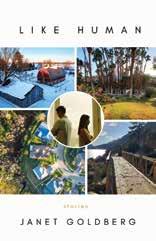
“Idon’t know,” Jen finally said, sighing, tired of her father’s questions. She really didn’t know who was sticking notes and roses under the windshield wiper of her car, and mostly she didn’t care—at least she pretended not to.
“Boys.” Her father dumped the pieces of his puzzle on the table and began sorting. “Any strange ones been looking at you?”
Jen shrugged. “How am I supposed to know? They’re all strange.” Leaning forward in her chair, she peered into the mirror, a large octagon mounted on the dining room wall opposite her. She touched her cheek, then her chin. Her fingers slipping down the side of her neck, she could feel her blood softly pulsing. At the hard bone of her clavicle she stopped, ran her finger along the length of it, then looked at her father; he was separating, tossing pieces into piles—a system she’d never understood. Pausing, he picked up an apple, his dessert, and rotated it like a globe, inspecting it for soft spots, dark holes, brown scabs. “Did you wash this off?”
“Anyway,” she sighed, “it’s not like this guy’s an ax murderer or something.” She looked at her father again, at his bushy eyebrows, his coarse gray hair growing like Brillo from his scalp. During the day, he wore a white lab coat and wrote formulas for shampoos and hair dyes and thought anything that wasn’t washed could kill you.
Her father, shaking his head, bit into the apple and chewed. “You don’t know what people will do.” He kept chewing, then took another bite.
“Like dye their hair green?” Her father still got calls from frantic women trying to go from black to blonde in one easy step and came out green. Nice & Easy—that’s what the dye was called.
“We’re not talking about hair dye.” This time he looked at her from the corner of his eyes. “Are we?” He sat back in his chair and dropped his hands on his lap and sighed. “Look, don’t go out alone. When you come home from school, lock the door.” He bit into his apple, looked at it as he chewed. “Understand?” He put the apple down.
Watching his mouth work the apple, she imagined his teeth and tongue mashing it up. It was like sitting in front of a dryer, dazed, watching the clothes go round. Finally, detaching herself, she picked up a puzzle piece and held it close to her eyes, as if she were pondering some artifact. But she was really thinking how she’d only run the water—hadn’t washed his apple at all, had been running water for the past year, and now some organism might be burrowing its way into her father’s mucus membrane.
This piece is adapted from Janet Goldberg’s story collection, Like Human, which was released in October 2025. Her debut novel,The Proprietor’s Song, was published in 2023, and a new collection, Much Happiness & Other Stories, is due out in 2027.
Salon features artwork and creative writing by Mills alums and professors. Submit your work for consideration by reaching out to mills.quarterly@northeastern.edu
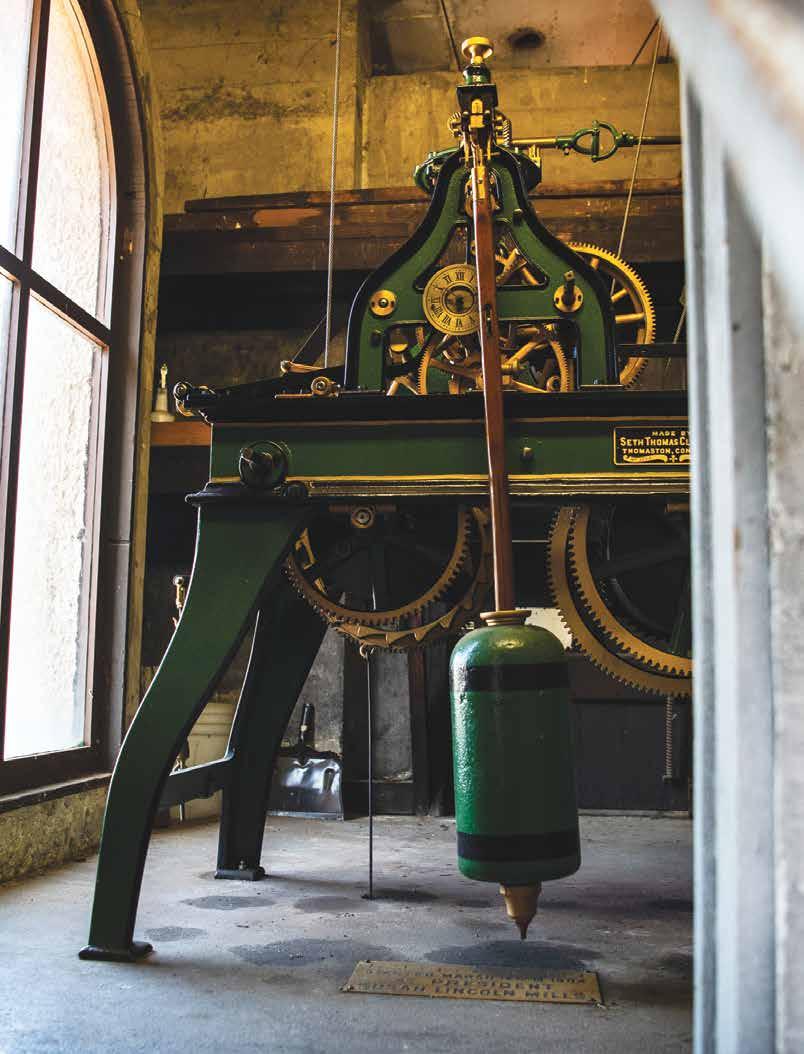
5000 MacArthur Blvd. Oakland, CA 94613-1301
510.430.3312
mills.quarterly@northeastern.edu quarterly.mills.edu
“Mills College is not interested in turning out crude specialists. Its educational program is, as indicated in the current catalogue, directed toward the cultivation of reason and sensibility as a basis of discriminating choice and considered action.”
–MARY WOODS BENNETT, PROFESSOR OF CHILD DEVELOPMENT AND PSYCHOLOGY, IN THE WINTER 1949 EDITION OF THE QUARTERLY
(READ MORE ON PAGE 16)