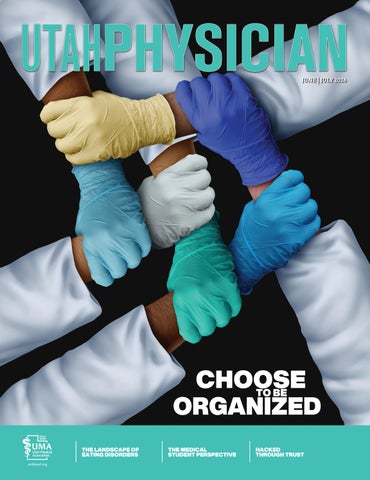
JUNE | JULY 2026
CHOOSE TO BE ORGANIZED THE LANDSCAPE OF EATING DISORDERS utahmed.org
THE MEDICAL STUDENT PERSPECTIVE
HACKED THROUGH TRUST
Financial screenings are best done early too. At Physician Wealth Advisors, we understand the unique circumstances of school loans, insurance needs, career changes, family and retirement goals. Take your financial needs to the specialists. Call us for a financial analysis today.
Investing in Your Physician Wealth Advisors Financial Health A Utah Medical Association Company
CA LL 8 01-747-0800 OR VISIT ONLINE AT PWA.ORG
Features 4
Choose to be Organized Dr. Lane Childs, MD, FACS
8 The Landscape of Eating Disorders: Prevalence, Divergent Manifestations, and Provider Interventions Dr. Mihalopoulos
12 The Medical Student Perspective: Utah’s Opportunity to Lead the Future of Physician Training
By Shahem W. Attallah, OMS-III, MBA
15
UMA Has a New Way to Communicate!
16 Hacked Through Trust: Why Today’s Most Dangerous Fraud Isn’t About Technology, It’s About You
18
Saving for Possibility
19
UMA House of Delegates | September 18–19, 2026
20
Modern Scams: Safeguarding Your Financial Life
23
Legacy Letters: Giving Your Clinical Wisdom a Permanent Home
By Ryan Bladen, CFP®, Financial Advisor, Physician Wealth Advisors
By Eric A. Halvorsen, MBA, CFP®, CIMA®
By Maren Dale
Departments 26 28
Utah Physician magazine is published 6 times per year for Utah Medical Association (UMA) members. All advertising, articles and editorials represent the views of the advertisers and authors and do not necessarily reflect the official policy of UMA. Copyright 2026. Editorial Board Shahem Attallah, OMS Bennion D. Buchanan, MD MBA Karen Radley, MD Dorothea Verbrugge, MD STAFF Chief Executive Officer Michelle S. McOmber, MBA, CAE Managing Editor Katie Matisohn Editorial Office Utah Medical Association 6820 South 900 East, Suite 300 Salt Lake City, UT 84047-1737 Phone (801) 747–3500 Fax (801) 747–3501 Email katie@utahmed.org Publisher Mills Publishing, Inc. President Dan Miller Office Administrator Cynthia Bell Snow Art Director Jackie Medina Graphic Design Ken Magleby, Patrick Witmer Sales Staff Paula Bell, Dan Miller
Fit.Doc Contributor and Interview facilitated by Bennion D. Buchanan, MD, MBA, FACEP
Event and CME Calendar
Utah Physician is published by Mills Publishing, Inc. 772 East 3300 South, Suite 200 Salt Lake City, Utah 84106 801–467–9419 info@millspub.com millspub.com Inquiries concerning advertising should be directed to Mills Publishing, Inc.
Cover photo credit: mediagraph.io/visitutah
UMA PRESIDENT’S MESSAGE
CHOOSE TO BE ORGANIZED
DR. LANE CHILDS, MD, FACS
W
elcome to summer. The cough, cold and flu season may be at a low, but the outdoor activity and injury rates rise, necessitating medical care and evaluation. Regardless of the time of year, your medical services are always in demand. And regardless of the season, policy and lawmakers continue to actively draft policies and propose new rules for evaluation at the next legislative session which can and will have a dramatic effect on how you will be able to practice medicine in the future. Do you care? Does this idea sound overly dramatic to you? I hope you will keep reading, for my purpose in writing is to convince you of how important your voice is, and how much more effective are voices are together in crafting patient and physician-friendly policy and defeating unfriendly policies. And how do we join together? That is the role of organized Medicine. That is the role of our local state and national medical societies and specialty organizations. Never before has this been more true. And I am sad to report that the classic factors we hear so much about which boil down to “working harder to make less” seem to be sowing the seeds for a general apathy of organized medicine. This is a call to arms! The need to be organized and unified has never been stronger. Perhaps a little review of where we have been and where we stand can help convince you. My first example is from October 1984, when an 18-yearold girl was admitted to a New York hospital with pain and distress. This was prior to the days of computers. Apple was just developing a pharmacy check program that would role out the next year. This girl was taking the MAO inhibitor Nardil. She was prescribed some Demerol for her pain, and this resulted in a fatal drug interaction and fever, causing her death. Young resident physicians were supervising her care, but in follow up investigation, even the senior physicians and attendings admitted at the time they were unaware of this drug interaction and had they been actually present they may have prescribed similarly and experienced the same outcome. Extensive investigations confirmed that this was a mistake due to lack of education. However Libby Zion‘s father, an attorney and New York Times columnist lobbied and turned
4
JUNE | JULY 2026
this into a case of inadequate supervision and fatigue as the root cause of this tragedy, factors which were later proven to not be correct. But this case changed our medical world, some say for better, some say for worse, but one chief resident at that hospital afterward said that “Medicine as we know it from that day forward forever changed.” And it has changed with restricting residency training hours with a host of new rules and guidelines limiting the daily and weekly hours that resident physicians may be on site training. Again, there are advantages and disadvantages of this, however, it came about not because of the recommendations of physicians, but from outsiders, especially attorneys and legislators. What that Chief Resident was really saying was that the days of medical giants was over because as physicians, we were no longer in control of our own professional destiny. From that point forward, medicine would be under the control of lawyers and politicians. His words have proven to be very prophetic. Secondly, at the time I was completing residency legislation was proposed to have a graduated pay scale for new physicians. I previously wrote about the proposal to only pay new physicians 80% of the Medicare fee schedule amount in year one, 85% in year two, etc. such that by year five you would finally receive the same full fee schedule amount as your peers. And of course, as you know, the fee schedule is declining anyhow. The AMA avidly fought and defeated that proposal. That one item itself was enough for me to appreciate the value of physicians linking arms and being united. The value of being a member of the AMA became obvious to me. Thirdly, my early experiences with contract negotiations for pay rates, insurance coverages, emergency room on-call pay and capital equipment purchases proved fairly unsuccessful when done alone or with a small group. Then years later when several groups merged and negotiated with a single stronger voice, the results completely changed resulting in much more satisfactory arrangements for physicians. And once we unite and circle the wagons, we must remember to shoot outward rather than inward.
UMA PRESIDENT’S MESSAGE
A current priority agenda concern for our physicians is the burden of prior authorization (PA). Most states have been battling this prior-auth monster including Utah which lobbied for and helped pass SB 319 this past legislative session. This bill requires a response to a prior authorization request within 72 hours, a final decision by 7 days, and clarity and transparency to the requirements process. Medicare Advantage programs have required prior authorization, while generally the traditional Medicare and secondary programs have not. Alarmingly, the Centers for Medicare & Medicaid Services (CMS) recently introduced prior authorization requirements to traditional Medicare for the first time ever with the launch of the Wasteful and Inappropriate Service Reduction—or WISeR—model. The program went into effect earlier this year in six states—Arizona, New Jersey, Ohio, Oklahoma, Texas, and Washington. I know the presidents of the state medical societies of two of these states, and they are not happy about this special treatment. Fortunately, Utah is not currently included and we will continue to fight from being included. At this time organized Medicine groups like the AMA and AUA are encouraging support for the SMARTER act (Streamlined Medical Approval for Timely Efficient Recovery) H.R. 5940 which prohibits CMS from implementing the WISeR model or any similar model in traditional Medicare, thereby preserving and protecting timely access to care for enrollees. While I am pleased to see these improvements in prior authorization, the UMA Board members and Staff know of my thorough and total disgust of the bureaucratic burden which PA places back on the shoulders of physicians. The best thing that could happen to PA is to eliminate it. Please answer the following question. If a medical record clinic note is complete, accurate and includes medical decision making rational, what additional information would an insurance company need to reach a decision about approval for coverage of proposed care and testing? I think you will agree the answer is “none.” Therein is the problem; in addition to try and restrict care to save money, the other huge reason PA blossomed was that physician documentation was not always so complete, rational, legible, or comprehensive. PA was developed as a way to obtain more information about a case not evident from the medical record needed to determine if further testing or treatment is warranted and appropriate per established guidelines. To spend the time and effort to create a complete note and then to essentially repeat the same information onto a separate PA form is a duplication of efforts which is anathema to the busy physician. The burden rests on the physician to document thoroughly and
utahmed.org
properly. In part because of our past deficiencies, we now have prior auth. In my ideal world we can achieve a point where our documentation is complete and accurate and can stand alone for determination of appropriate prior authorization of care. Insurance companies will have technology which can scrub out this information from our single record and eliminate the need for us to complete a redundant PA form. Physicians do not want to repeat their bureaucratic paper and computer work. They prefer to do things once, and correctly. The father of former University of Florida Football Coach Ron Zook told him “If you don’t have time to do something right when are you going to have time to do it over?” I think that applies to our records. That is how I would eliminate PA, by making it redundant Scope of practice issues are looming huge on the next Utah legislative radar. Manpower issues necessitate a collegial working interface with our physician assistant and nurse practitioner colleagues. Physicians complete 15,000–20,000 hours of rigorous, standardized, and supervised clinical training. In contrast, most NPs and PAs receive 500–2,000 hours of variable, often unsupervised clinical exposure. The difference matters. Data from the group Physicians for Patient Protection suggests the majority of NPs themselves do not support early independent practice without physician oversight—in a survey of nearly 400 NPs, 82% said new NP graduates are not competent for unsupervised practice. Yet we have legislators both locally and nationally who do not appreciate the differences in the level of care available from physicians compared to non-physicians. Both the UMA and the AMA are taking great efforts to highlight these differences as decisions are made about the scope of medical practice with different levels of training. That gap can mean the difference between an accurate diagnosis and a missed one — between a lifesaving intervention and a dangerous delay. When a patient comes into a medical office, emergency room, or hospital they tend to assume they are seeing a doctor, but in reality they may not know who is actually making the medical decisions about their care. As the legislature prepares to debate lowering the hours requirements for licensing of mid-levels and allowing surgical and prescribing privileges to non-physicians with abbreviated training, they need to hear from us with the unified voice of the House of Medicine. This is not a turf battle, this is a patient safety issue. Your patients need your unified voice to be joined in the house of organized medicine. Artificial intelligence (AI) is another factor which is touching all of us and its role in medicine will inevitably continue to
JUNE | JULY 2026
5
FEATURE
increase. Just like any other tool it can be very helpful or very harmful depending on its application. A recent estimate found that AI receives approximately 1 billion inquiries each month, with 24% of those related to health care. Just imagine nearly 250B monthly health care inquiries to AI and what impact that has for “DIY medical care.” For this and many other reasons the UMA is working with the State of Utah Dept. of Commerce office of AI Policy and other key stakeholders in crafting policies and guardrails for the medical applications of AI. And remember that you are the UMA, that your voice matters and needs to be heard in these discussions. Better and more effective policies are the result of multiple unified voices which can most efficiently be brought about through the mechanism of organized medicine. At our just-completed June 2026 AMA House of Delegate my friend and urology colleague Willie Underwood MD, MSc, MPH was inaugurated as the 181st President of the AMA, only the 3rd black AMA president. Willie describes himself as a politician who—like the elephant—must have a tough hide, an excellent memory, and be willing to stick his nose
into everything. Willie has the heart of a lion and cares about his patients and he cares about you as a physician. He has faced and overcome extraordinary life challenges to rise from humble beginnings. He has a vision for how the AMA can help improve the lives of patients and the lives of physicians. He also knows the dedication and sacrifice it took for you to become a physician. You went to medical school, not “provider school.” At the recent House of Delegates, a resolution was adopted encouraging the use of “physician” rather than the generic term “provider” when referring to physicians. While many health care professionals provide care, the term provider does not fully reflect the depth of physicians’ education, clinical training, expertise, and leadership. Words matter. Your years of medical education, residency, and experience make you more than a generic provider—they make you a physician. Do you know the difference between knowledge and wisdom? Knowledge is knowing that a tomato is a fruit; wisdom is knowing not to put it in a fruit salad.
Image licensed by Ingram Image
6
JUNE | JULY 2026
FAST FACTS
Claims Management
You’re not a policy number. You’re a human. We see you. And we understand your challenges. Our relationship doesn’t start when there’s a claim. From day one with Copic, we bring you insights designed to improve patient safety, help reduce risk, and let you focus on what you do best. We’re here for the humans of healthcare.
copic.com | 800.421.1834
FEATURE
THE LANDSCAPE OF EATING DISORDERS: PREVALENCE, DIVERGENT MANIFESTATIONS, AND PROVIDER INTERVENTIONS
DR. MIHALOPOULOS
E
ating disorders, including anorexia nervosa, bulimia nervosa, binge eating disorder, and avoidant restrictive food intake disorder, are the most common manifestations of eating pathology. While there is no singular etiology, the development of these disorders is highly correlated with increased social media usage and pervasive cultural pressures to achieve an idealized online aesthetic. IMPACT OF THE COVID-19 PANDEMIC During the COVID-19 pandemic, there was a dramatic and well-documented escalation in eating disorder cases. Electronic health record analyses tracking millions of patients revealed that the diagnostic incidence of eating disorders surged by over 15% during the first year of the pandemic, with relative risk exceeding 1.50 by late 2020 (Taquet et al., 2021). This phenomenon disproportionately impacted adolescent girls and manifested primarily as new-onset anorexia nervosa, accompanied by a staggering 69% increase in suicide attempts among this patient demographic (Taquet et al., 2021). Surveillance data from pediatric emergency departments corroborated these findings, reporting that weekly emergency visits for eating disorders among adolescent girls effectively doubled during the pandemic due to profound disruptions in daily structure, isolation-induced emotional distress, and delayed access to routine psychiatric care (Radhakrishnan et al., 2022). Continued on page 10…
8
JUNE | JULY 2026
Image licensed by Ingram Image
Wilkins & Associates Insurance
Specializes in the most essential insurance needs for Medical professionals.
Additional Types of Coverage: • Business Property • Workers’ Compensation • Employee Benefits
www.vecteezy.com/free-photos/doctor/Doctor Stock photos by Vecteezy
Knowledge. Relationships. Trust. Confidence.
With more than 40 years of experience, Utah physicians depend upon our expertise, knowledge and support
• Personal Home & Auto • Plus Other Professional Insurance
801.268.6834 wilkinsassoc.com
175 East 6100 South Murray, Utah 84107
FEATURE
DISMANTLING WEIGHT AND DIAGNOSTIC STEREOTYPES There are several fundamental clinical truths that must be disseminated within the medical community: • Diverse Symptomatology Across Body Shapes: Every body shape can be the host of severe eating disorder pathology, including restrictive phenotypes. Other Specified Feeding or Eating Disorder (OSFED)is a distinct diagnosis that includes atypical anorexia nervosa. Patients meet all criteria for anorexia nervosa—such as rapid and severe weight loss, an intense fear of weight gain, and persistent body image distortion—yet remain within or above a “normal” weight range(APA, 2022). • The Intersection of Weight Loss Medications: This clinical presentation closely mirrors the behavioral outcomes of individuals utilizing glucagon-like peptide-1 (GLP-1) receptor agonists to treat obesity. Clinical concern has mounted that the profound appetite suppression delivered by GLP1s can inadvertently mask, facilitate, or reinforce rigid restrictive eating behaviors and severe body image anxiety in individuals with underlying eating disorder psychopathology (Krug, 2023). • The Inadequacy of Weight Criteria: Historic weight-based criteria remain constructs largely utilized by insurance entities to gatekeep or justify reimbursement for acute hospitalization. Clinically, some of the most physiologically compromised patients may present with an overweight or obese body mass index (BMI). As physicians, we must be universally mindful of the risks of developing anorexia nervosa and bulimia nervosa across the entire body weight spectrum, exercising extreme caution when setting weight loss goals within the framework of obesity management. DEMOGRAPHIC DISPARITIES AND MINORITY POPULATIONS Eating disorders are highly prevalent across demographic cohorts traditionally ignored by stereotypical clinical models: • Gender and Sexual Minorities: Data demonstrates that sexual and gender minority adults suffer from significantly higher lifetime prevalence rates of anorexia nervosa, bulimia nervosa, and binge-eating disorder compared to their cisgender, heterosexual counterparts (Nagata et al., 2020). Transgender and gender-diverse individuals face unique vulnerabilities, exhibiting some of the highest collective rates of eating disorder symptomatology (Rasmussen et al.,
10
JUNE | JULY 2026
2023). Specifically, self-reported lifetime eating disorder diagnoses reach approximately 10.5% in transgender men and 8.1% in transgender women (Nagata et al., 2020). These elevated rates are deeply compounded by minority stress, structural discrimination, and the utilization of dietary restriction as a maladaptive mechanism to control physical presentation or suppress secondary sex characteristics in the face of restrictive legislation (Banasiak, 2022). Transgender boys, followed by lesbian, gay, and bisexual youth, experience exceptionally high rates of disordered eating behaviors. • Racial and Ethnic Minorities: Racial and ethnic populations exhibit rates of eating disorders that meet or exceed those historically recognized in white populations. Emerging epidemiological data suggests that while restrictive profiles like anorexia nervosa may exhibit a higher identified prevalence among white individuals, bulimia nervosa is more heavily represented among Asian, Black, and Latino populations (JAMA, 2022). Clinical Provider Tool: Screening and Treatment Recommendations To address the rising public health challenge of eating disorders, medical providers must move beyond passive observation and institute structured, proactive clinical protocols. 1. Routine Clinical Screening • Incorporate Universal Inquiries:** Routinely ask all patients— regardless of presentation or BMI—about their subjective relationship with food, exercising habits, and body image. • Implement Validated Screeners: Embed a rapid, 5-question validated screening tool (such as the SCOFF questionnaire or the Eating Disorder Screen for Primary Care [EDS-PC]) into intake workflows to identify sub-clinical disordered eating patterns before severe physiological decompensation occurs. • Refocus the Clinical Dialogue: Frame discussions strictly around metabolic health status, functional vitality, and overall well-being, rather than offering praise for weight loss or reductions in body mass. 2. Evidence-Based Treatment Recommendations • Assemble a Multidisciplinary Care Team: Effective outpatient management involves a dedicated care triad for the patient consisting of a medical provider (to monitor vitals, lab work, and cardiac stability), a licensed mental health therapist specializing in eating disorders, and a registered dietitian specializing in medical nutrition therapy and refeeding logistics. • Prompt Specialized and Higher-Level Referrals: If a patient displays acute medical or psychological instability—or
FEATURE
requires intensive medical stabilization—refer immediately to an eating disorder specialist or a higher level of care (Intensive Outpatient, Partial Hospitalization, or Residential Treatment). During acute illness, patients require frequent contact (at minimum, weekly medical and psychiatric monitoring) to mitigate medical risk and dramatically improve the long-term trajectory of clinical recovery. References American Psychiatric Association. (2022). Diagnostic and statistical manual of mental disorders (5th ed., text rev.). https://doi.org/10.1176/appi.books.9780890425787 Banasiak, E. (2022). The role of gender dysphoria in the development of an eating disorder. *American Journal of Psychiatry Residents’ Journal, 18(1), 6–8. https://doi.org/10.1176/appi.ajp-rj.2022.180104 Krug, I. (2023). Beyond weight loss: GLP-1 usage and appetite regulation in the context of eating disorders and psychosocial processes. Nutrients, 17(23), 3735. Nagata, J. M., Ganson, K. T., & Austin, S. B. (2020). Emerging trends in eating disorders among sexual and gender minorities. Current Opinion in Psychiatry, 33(6), 562–567. https://doi.org/10.1097/yco.0000000000000645
Radhakrishnan, L., Leeb, R. T., Bitsko, R. H., Carey, K., Gates, A., Holland, K. M., Hartnett, K. P., Kite-Powell, A., DeVies, J., Smith, A. R., van Santen, K. L., Crossen, S., Sheppard, M., Wotiz, S., Lane, R. I., Njai, R., Johnson, A. G., Winn, A., Kirking, H. L., ... Anderson, K. N. (2022). Pediatric emergency department visits associated with mental health conditions before and during the COVID-19 pandemic — United States, ]January 2019–January 2022. MMWR. Morbidity and Mortality Weekly Report, 71(8), 319–324. https://doi.org/10.15585/mmwr. mm7108e2 Rasmussen, S. M., Dalgaard, M. K., Roloff, M., Pinholt, M., Skrubbeltrang, C., Clausen, L., & Kjaersdam Telléus, G. (2023). Eating disorder symptomatology among transgender individuals: a systematic review and meta-analysis. Journal of Eating Disorders, 11(1). https://doi.org/10.1186/s40337-023-00806-y Taquet, M., Geddes, J. R., Luciano, S., & Harrison, P. J. (2021). Incidence and outcomes of eating disorders during the COVID-19 pandemic. The British Journal of Psychiatry, 220(5), 262–264. https://doi.org/10.1192/bjp.2021.105 US Preventive Services Task Force (USPSTF). (2022). Recommendation statement: Screening for Eating Disorders in Adolescents and Adults. 327;(11):1061-1067. doi:10.1001/jama.2022.1806
Image licensed by Ingram Image
utahmed.org
JUNE | JULY 2026
11
FEATURE
THE MEDICAL STUDENT PERSPECTIVE: UTAH’S OPPORTUNITY TO LEAD THE FUTURE OF PHYSICIAN TRAINING
BY SHAHEM W. ATTALLAH, OMS-III, MBA
landscape. Alongside medical school, he also completed an MBA at Utah Valley University, giving him a broader lens on how patient care, leadership, and systems-level decision-making connect. That perspective shapes how he sees the future of medicine in Utah. He is encouraged not only by the opportunity to care for patients, but also by the possibility of helping improve the larger system around them. As he put it, Utah “seems pretty open to change right now,” and that openness creates room for both innovation and progress. RESIDENCY TRAINING: Utah has built encouraging momentum around residency training. Students are seeing stronger engagement from legislators and growing recognition that training physicians in-state is one of the clearest ways to strengthen the long-term healthcare workforce.
T
revor Jurges, a graduating medical student from Noorda College of Osteopathic Medicine and incoming family medicine resident at the University of Utah, brings a perspective that is both grounded and deeply invested in Utah’s future. A Utah native and graduate of the University of Utah, Jurges is part of Noorda’s second inaugural class, a group that has trained during an important period of growth in the state’s medical education
12
JUNE | JULY 2026
That momentum matters because many policymakers are increasingly aware that Utah needs to continue growing its training capacity. Jurges noted that for some leaders, hearing directly from students about the number of available residency positions has been “eye-opening.” Those conversations are helping bring workforce needs into clearer focus. The gap is not commitment. It is capacity. Utah continues to train talented students who want to stay, serve, and build their careers here. In some cases, programs already have the structure, scheduling, and clinical environment needed to
FEATURE
That is a strength worth protecting. As Utah’s medical education landscape grows, it will become even more important to maintain that sense of shared purpose across institutions. The goal should remain broader than any one school. It should be about building the strongest possible physician pipeline for the state as a whole. The next step is continued coordination and intentional alignment among students, schools, and physician leadership organizations. Utah already has a collaborative culture. Preserving that culture as the system expands will be essential. CLINICAL TRAINING: Utah is fortunate to have many physicians who care deeply about teaching and mentoring the next generation. At their best, preceptors do far more than supervise. They actively involve students in patient care, clinical reasoning, and the day-to-day work of medicine. Jurges described the strongest preceptors as those who engage students directly, allow them to gather histories and perform exams, and then invite them to think through an assessment and plan. That kind of hands-on learning is where clinical training becomes most valuable. The opportunity in this area is consistency.
support modest expansion, but funding remains the limiting factor. The opportunity now is to build on what is already working. Continued collaboration between legislators, health systems, and academic institutions can help ensure that residency capacity grows alongside the talent already being developed in Utah. UNIFIED ADVOCACY: One of Utah’s strongest advantages is collaboration. Students across institutions have been able to bring a clear and consistent message to lawmakers around residency expansion, workforce needs, and physician retention. That kind of alignment gives student advocacy credibility and helps keep the focus on shared statewide priorities. Jurges described that current alignment simply: “The messaging seems pretty unified and clear.”
utahmed.org
Student experiences can vary, often based on the teaching style of individual preceptors. That is understandable in any clinical education system, especially one that depends on busy practicing physicians who are generously making room to teach. At the same time, more consistency in expectations could make already strong experiences even better. A constructive next step would be continued partnership between medical schools and preceptors around clear teaching goals, student roles, and practical ways to support meaningful engagement. Recognition and support for excellent preceptors also matter. So does student ownership. Prepared, engaged students make teaching more rewarding and help create better experiences on both sides. ARTIFICIAL INTELLIGENCE: ALREADY HERE, STILL EVOLVING Artificial intelligence is no longer a distant issue in medicine. It is already entering clinical workflows, and students are paying close attention to how it can be used well.
JUNE | JULY 2026
13
FEATURE
Jurges is optimistic, but careful. In his words, “AI can’t be the doctor. It needs to help the doctor.” That balance is important. Used appropriately, AI has clear potential to reduce documentation burden, support clinical organization, and improve efficiency. For trainees and physicians alike, that could mean more time directed toward patient care and less time lost to repetitive administrative work. The opportunity is to introduce these tools thoughtfully. Clinical reasoning must come first. Students and residents still need to learn the fundamentals for themselves. But with appropriate oversight and clear guardrails, AI can become a meaningful support rather than a shortcut. That balanced mindset fits Utah well. Open to innovation but grounded in responsibility. LEADERSHIP AND FEEDBACK One of the encouraging themes in speaking with Jurges was his sense that leadership in medical education can be receptive to feedback. That openness matters, especially in a field where even small improvements in training can have a lasting effect on students and, ultimately, on patient care. The opportunity is to keep building systems that turn feedback into visible improvement. Jurges emphasized that not every solution needs to be large or complex. In many cases, small and practical changes can make a meaningful difference in the student experience. What matters most is a willingness to listen, evaluate, and adapt. Students are not asking for perfection. They are asking for leadership that remains engaged, responsive, and committed to continuous improvement. LOOKING AHEAD What stands out most in speaking with Jurges is a grounded sense of optimism driven by what he has seen firsthand, not just what he hopes will happen. Utah has many of the ingredients needed to lead: engaged students, responsive legislators, committed educators, and a healthcare community that cares deeply about the future of the
14
JUNE | JULY 2026
state. The path forward is not about starting over. It is about building on momentum, staying aligned, and continuing to invest in the people who will care for Utah communities for decades to come. That may be the clearest summary of the medical student perspective in Utah today: hopeful, engaged, and ready to help build what comes next.
FEATURE
UMA HAS A NEW WAY TO COMMUNICATE!
U
MA now has the ability to send important updates directly to members via text message. Messages may include information about bills affecting Utah physicians, requests to take action on legislation, dues reminders, events, and more. Messages will be used sparingly, and you can opt out at any time.
Image licensed by Ingram Image
utahmed.org
JUNE | JULY 2026
15
FEATURE
HACKED THROUGH TRUST WHY TODAY’S MOST DANGEROUS FRAUD ISN’T ABOUT TECHNOLOGY, IT’S ABOUT YOU
intelligence or awareness, but because you are moving fast, making decisions quickly, and juggling patient care, staff, and operations all at once. Fraudsters understand that and they are counting on it. BUSINESS EMAIL COMPROMISE: ONE CLICK, ONE LOSS One of the most common and one of the most frustrating schemes is Business Email Compromise (BEC). Here’s how it usually plays out. You or someone in your office receives what looks like a normal email from a vendor, billing partner, or colleague. It might say something like, “We’ve updated our banking information please use this account moving forward.” Nothing feels unusual. It’s the kind of email you’ve seen a hundred times, but it’s not real.
Image licensed by Ingram Image
THE NEW REALITY FOR PHYSICIANS Fraud isn’t what it used to be. It’s no longer just obvious scams or suspicious phone calls that are easy to ignore. It’s sophisticated, intentional, and increasingly aimed at professionals who are busy, trusted, and managing a lot. People exactly like physicians. During a recent presentation from the FBI Cyber Task Force, one idea really stuck out: today’s fraud doesn’t just target systems it targets people. And that’s what makes it so effective. Emails look completely legitimate. Messages feel personal. Requests seem routine. Everything about it fits into your normal workflow until it doesn’t. And by the time something feels off, the damage is often already done. Physicians are especially vulnerable, not because of a lack of
16
JUNE | JULY 2026
Fraudsters are incredibly good at mimicking email addresses, sometimes changing just one letter or adding a tiny variation, that’s almost impossible to catch at a glance. And in a busy practice, no one has time to inspect every email that closely. So, the payment gets sent. And within hours, the money is gone, moved, transferred, and often impossible to recover. We’re not talking about small amounts either. These cases often involve tens or hundreds of thousands of dollars. For a medical practice, that kind of loss is not just inconvenient, it can be devastating. RELATIONSHIP-BASED FRAUD IS RISING One of the things people don’t recognize is that some of the most damaging frauds don’t happen quickly. It happens slowly. Very slowly. “Pig Butchering” Scams These scams often start with something completely
FEATURE
harmless—a wrong number text, a casual message, or a friendly introduction. And sometimes, someone responds and that’s all it takes, a relationship is built. Conversations become more frequent and trust develops and it feels natural. Eventually, the conversation shifts, usually toward investing in cryptocurrency. The opportunity sounds exciting and the returns sound impressive. And the person feels trustworthy because, at this point, you “know” them.
It can shut down operations, delay care, and damage patient trust. And unfortunately, many organizations feel like paying the ransom is the only option to get back to normal. WHY SMART PEOPLE STILL FALL FOR IT This is important to understand; these scams don’t work because people are careless. They work because they are designed to feel normal.
Victims are walked through the process step by step. They may even see early “returns,” which reinforces that this is real. So, they invest more. And more. And more. Until one day, they try to withdraw their money and realize it’s gone.
Typical tricks include—urgency to push quick decisions, familiarity to build trust, opportunity to create excitement, and emotion to override logic. And when you’re busy, tired, or trying to solve a problem quickly it’s easy to miss the small red flags. This isn’t about intelligence; it’s about timing and psychology.
What makes this especially difficult is that it doesn’t feel like fraud while it’s happening. It feels like a relationship. It feels like an opportunity. And that’s exactly the point.
HOW TO PROTECT YOURSELF AND YOUR PRACTICE The good news is that prevention doesn’t require anything complicated.
WHEN EMOTION BECOMES THE ENTRY POINT Not all fraud is financial at the start, some of it is emotional. Romance scams follow a similar pattern, connection, and then a request for help. Often, it’s framed as an emergency, a temporary need, or a situation that “only you can help with.” And people do help because they care.
It comes down to small, consistent habits:
Sextortion scams take it even further. They use vulnerability and embarrassment as leverage threatening to expose personal images or information unless payment is made. These are not just financial crimes. They are deeply personal and the emotional impact can be just as damaging as the financial loss, sometimes even more so. RANSOMWARE: A PRACTICE-LEVEL THREAT This is where a single click, one email, one link can give a bad actor access to your system. They can lock everything down including patient records, scheduling systems, and billing platforms. To get access, a message comes through, you must pay to get it back.
• Slow down when something feels urgent • Verify requests, especially anything involving money or sensitive information • Pick up the phone and confirm with a known contact • Be cautious with unexpected messages, even if they seem friendly • Question anything that feels too good to be true These are simple steps, but they are incredibly effective because most fraud only works when we move too fast. “Fraud today isn’t about breaking into systems; it’s about getting invited in.” Fraud is evolving. It’s getting smarter, more personal, and harder to detect. But awareness evolves too. For Utah physicians, protecting your practice now goes beyond clinical excellence. It means being intentional, slowing down when needed, and recognizing that not every request deserves an immediate response.
For healthcare organizations, this is more than an inconvenience.
utahmed.org
JUNE | JULY 2026
17
FEATURE
SAVING FOR POSSIBILITY
BY RYAN BLADEN, CFP®, FINANCIAL ADVISOR, PHYSICIAN WEALTH ADVISORS
T
he ancient Greek philosopher Heraclitus is often paraphrased in Western culture as saying, “the only certainty in life is change.” His point, that permanence is an illusion and that flux defines existence, is especially true in the world of finance. In an ideal world, financial plans unfold perfectly: savings remain consistent; markets cooperate, and goals are achieved right on schedule. In practice, life introduces obstacles such as market downturns, unexpected family needs, and potential health events. Life rarely follows a straight line, and good planning should acknowledge that reality. This is why creating concrete aspirations can be both motivating and challenging. On one hand, clear goals provide direction and a tangible destination. On the other hand, highly specific targets impose limitations. Quantifying future consumption is inherently difficult as these goals rely on assumptions rather than certainties about markets, earnings, spending, and time. Falling short of a number set years earlier can be discouraging, or upon reaching the point of financial readiness, the original objective may no longer resonate. Goals, therefore, should be viewed as your best intentions in the present moment, rather than rigid commitments your future self must honor. They don’t need to be static. When assumptions shift, goals should shift with them. Life is full of transitions, including relocations, growing families, personal reinventions, and unexpected opportunities. It is exceedingly rare to maintain the exact same objective from early adulthood through retirement. Rigidity limits us, while adaptability expands what’s possible. A flexible long-term goal recognizes that, while core values may remain consistent, the way those values are expressed will evolve. You might always value stability or independence, but what those principles look like at ages 25, 45, and 65 can differ dramatically. Someone planning a traditional retirement at 65, for example, might face a major health event at 55, prompting a fundamental reevaluation of what matters most.
18
JUNE | JULY 2026
Saving with the intention of creating future options, rather than achieving a single fixed endpoint, helps avoid the sense of falling short when priorities change. This mindset applies broadly: saving enough to choose whether to retire early or work longer, spend time abroad, support children or parents, or manage unforeseen medical needs. The true objective becomes preserving the freedom to decide when the time comes, which is the right path. This perspective can also reshape how you think about investing. Rather than constructing a portfolio around reaching a number on a specific date, you can focus on cultivating durable financial strength that carries you through multiple phases of life. A portfolio designed for resilience, adaptability, and long-term stability is far more valuable than one optimized only for a single scenario. Ultimately, goals built on flexibility honor a fundamental truth: we cannot fully predict who we will become. What seems clear today may look very different in ten or twenty years. People grow, circumstances shift, families evolve, and priorities change. Thoughtful planning, therefore, seeks to create the financial capacity to adapt to those evolving aspirations. While uncertainty can never be eliminated, we can build enough financial resilience to navigate it confidently. By prioritizing the ability to choose rather than committing to a single predetermined destination, you create a plan that remains relevant, supportive, and aligned with your evolving life, wherever it leads. Ryan Bladen is a Certified Financial Planner® and Vice President with Physician Wealth Advisors (a Utah Medical Association company). The salaried advisors at Physician Wealth Advisors have been working with physician members of the UMA for over 30 years. Their expertise in creating customized retirement plans as well as tailored investment strategies specifically to fit the needs of the medical community has led them to manage over $2 Billion of investment assets. If you would like to see what Physician Wealth Advisors can do for you, please contact PWA at questions@pwa.org or at 801-747-0800.
FEATURE
UMA HOUSE OF DELEGATES | SEPTEMBER 18–19, 2026
T
he UMA House of Delegates is where Utah physicians come together to shape the future of medicine. Representing communities and specialties from across the state, delegates gather to discuss important issues, develop policy, and advocate for the profession and the patients we serve. More than a meeting, the House of Delegates is an opportunity to connect with colleagues, share perspectives, and make a lasting impact on healthcare in Utah.
Location: 6820 South 900 East, First Floor Midvale, UT 84047 (801) 747-3500 UMA House of Delegates Meetings will be held on the Ground Level / 1st Floor. Parking is limited, so please carpool and be considerate of the surrounding residential streets to not block driveways.
The UMA House of Delegates is where real change starts. It’s your chance to bring forward ideas that shape policy—for your patients, your profession, and your peers. Writing a resolution and seeing it debated by smart, passionate colleagues is an energizing experience. HOD is also a reunion of colleagues, mentors, and friends — and a welcoming place for medical students, residents, and physicians new to Utah to build connections within the profession. Whether you have never attended, or have attended every year, this is the year to join us. It is never boring, and you will leave with new perspectives and new colleagues. To attend, you must become a UMA delegate. We can help you get there, contact Paige at paige@utahmed.org or call 801-747-3500 x228. Reserve your spot today! DELEGATES MAY SUBMIT A RESOLUTION FOR HOD Have an idea that could improve medicine, patient care, or the physician experience? Bring it to HOD. Submitting a resolution is the best way to put your idea before your colleagues and help shape UMA policy. Send your thoughts to michelle@utahmed.org (cc: paige@utahmed.org) and we’ll help you turn them into a strong resolution. Resolutions are due August 19th by 5:00 p.m.
utahmed.org
JUNE | JULY 2026
19
FEATURE
Image licensed by Ingram Image
MODERN SCAMS: SAFEGUARDING YOUR FINANCIAL LIFE
BY ERIC A. HALVORSEN, MBA, CFP®, CIMA®
F
inancial exploitation and fraud targeting older Americans is on the rise. In fact, the Federal Trade Commission (FTC) now estimates that nearly 10 million Americans have their identities stolen each year. The FBI reports that identity theft is now the fastest growing crime in America.
20
JUNE | JULY 2026
A RAPIDLY GROWING THREAT The data is sobering—and accelerating: • Americans reported $20.9 billion in fraud losses in 2025, a 26% increase year-over-year (AARP) • During 2025, adults age 60+ alone lost $7.7 billion, the
FEATURE
highest of any age group. • Losses among older Americans have quadrupled since 2020, rising to ~$2.4 billion annually in reported cases. (Federal Trade Commission) • High-dollar losses ($100k+) have surged dramatically, especially from impersonation and investment scams. • Some estimates suggest total elder fraud losses may exceed $80 billion annually when unreported cases are included (Fox Business)
This isn’t about intelligence—it’s about exposure and opportunity. There are common themes across all scams which can include:
Just as concerning, the complexity of scams is increasing, fueled by AI, deepfake voices, and highly personalized attacks.
PRACTICAL STEPS TO PROTECT YOURSELF The goal isn’t paranoia—it’s process and awareness.
COMMON (AND EVOLVING) SCAM TACTICS Today’s scams are more sophisticated than ever. A few we’re seeing most often:
1. Slow Down Financial Decisions • Any request involving urgency = red flag • Pause before sending money or sharing information
1. Investment & Crypto Scams • Fake investment platforms showing “gains” • Pressure to wire money or move funds into crypto • Often initiated via LinkedIn, email, or text
2. Verify Independently • Never trust incoming communication alone • Call a known number (not the one provided)
2. Government Impersonation • “IRS,” “Social Security,” “Secret Service.” or “Medicare” threats • Urgent demands for payment or verification
• • • •
Urgency (“act now”) Secrecy (“don’t tell anyone”) Authority or trust mimicry Emotional manipulation
All of these should cause pause, STOP IMMEDIATELY.
3. Use a “Second Set of Eyes” • Spouse, advisor, or trusted contact • Particularly for large transactions
3. Family Emergency / Deepfake Scams • AI-generated voices mimicking a child or grandchild • Urgent request for money (bail, accident, medical emergency)
4. Strengthen Digital Security • Enable multi-factor authentication (MFA) • Use password managers • Avoid public Wi-Fi for financial activity
4. Tech Support & Account Takeovers • Pop-ups or calls claiming your account is compromised • Leads to remote access or password theft
5. Limit Information Exposure • Be cautious with social media details • Scammers use personal info to build credibility
5. Romance & Relationship Scams • Long-term emotional manipulation • Requests for financial “help” after trust is built
6. Establish Trusted Contacts • Many custodians allow a “trusted contact” designation • Helpful if unusual activity is detected
WHY PHYSICIANS & RETIREES ARE TARGETED A common thread among all of these scams is urgency, emotional pressure, and secrecy. Fraudsters are strategic. They target individuals who:
WHAT TO DO IF YOU SUSPECT FRAUD Time matters. Acting quickly can reduce or even recover losses.
• • • •
Have accumulated assets Are busy or distracted Trust institutions or authority figures May be less familiar with evolving technology threats
utahmed.org
Immediate Steps 1. Contact your financial institution 2. Freeze or monitor accounts and credit 3. Change passwords across financial platforms Continued on the next page…
JUNE | JULY 2026
21
FEATURE
Report the Incident • Federal Trade Commission (ReportFraud.gov) • FBI Internet Crime Complaint Center (ic3.gov)
Lesson: AI voice cloning is real. Always verify emergencies by contacting family directly using known phone numbers.
FINAL THOUGHTS Financial fraud is no longer a fringe issue—it’s a systemic and growing threat. The good news is that most scams follow predictable patterns, and a few disciplined habits dramatically reduce risk.
Case Study #3: “Your Account Has Been Compromised” A physician received a pop-up warning on their computer indicating their brokerage account had been hacked. • They called the number provided • The “security team” walked them through steps to “protect assets” • Funds were transferred to a “secure holding account” • Access was lost shortly after
As always, our role is to help you not only build wealth—but protect it. If you ever receive something that doesn’t feel right, reach out. A quick second opinion can make all the difference.
Lesson: Financial institutions will never ask you to move money to a “safe account.” Always contact firms using official channels.
REAL-WORLD CASE STUDIES These are not hypothetical—they reflect patterns seen across the U.S. and increasingly among high-income professionals.
Case Study #4: Government Impersonation Scam A retiree received a call from someone claiming to be from the Social Security Administration.
Case Study #1: The “Too-Good” Investment Platform A recently retired physician was introduced (via LinkedIn) to a private investment opportunity promising consistent 12–15% returns tied to “institutional crypto arbitrage.”
• They were told their Social Security number had been linked to fraud • Immediate action was required to “protect assets” • Fraudsters asked for a wire • The scammer maintained daily contact until funds were exhausted
• • • •
The platform showed steady gains for months The investor added additional capital over time When attempting to withdraw funds, delays began Eventually, access was cut off entirely
Lesson: If returns appear smooth, consistent, and above market— especially in opaque investments—assume additional scrutiny is needed. Independent verification is critical. Case Study #2: AI-Generated Family Emergency An older couple received a phone call from someone who sounded exactly like their grandson. He claimed he had been in a car accident and needed immediate bail money. • • • •
22
The voice matched tone, speech patterns, and emotion A “lawyer” joined the call to add legitimacy They were instructed not to tell anyone Funds were wired within hours
JUNE | JULY 2026
Lesson: Government agencies do not threaten arrest or demand immediate payment. Urgency is a major red flag. Case Study #5: Romance & Trust-Based Fraud A widowed professional developed an online relationship over several months. • • • •
The individual claimed to be an overseas contractor Gradual trust-building led to financial requests Funds were sent for “emergencies” and “travel” The individual disappeared after repeated transfers
Lesson: Emotional connection is one of the most powerful tools scammers use. Any financial request from an online relationship warrants extreme caution.
FEATURE
LEGACY LETTERS: GIVING YOUR CLINICAL WISDOM A PERMANENT HOME
BY MAREN DALE
L
egacy Letters are usually associated with financial inheritance—providing the story and intention behind the resources that are being passed on to the next generation. But for physicians, they can be used to serve a different, but equally significant purpose: they can formally document the values, clinical philosophy and defining people and experiences behind a distinguished medical career, so that what was learned is preserved and intentionally passed forward. In this context, a Legacy Letter is a structured, reflective document—typically developed with the goal of becoming a printed booklet that is distributed to the next generation of physicians, an institution, a department, colleagues, family members or all of the above. Legacy Letters can be written at any time, but key moments of transition make them especially worth considering: retirement, departure from a long-held institution, a significant health event, or simply the recognition that the time is right to do so. A Legacy Letter can include whatever matters most to you, though the following offers a sense of what physicians often choose to address and what you might want to include: 1. Clinical Philosophy and Core Principles: The principles and values that guide your decision-making across a career. 2. Defining Moments: Cases, conversations or turning points that changed how you thought about care or yourself as a physician. 3. Patients and Their Families: Not necessarily the most dramatic cases, but the ones who made a mark or taught you something lasting. 4. Those Who Shaped the Work: Mentors, colleagues or others who influenced your thinking, your character and/or your career.
utahmed.org
5. Life Beyond the Practice: The volunteer work, teaching, advocacy, community involvement or personal pursuits that gave your life and career broader meaning. 6. Resources and Stewardship: If applicable, your thoughts on how accumulated financial resources were built through clinical work, and how you desire them to be used. 7. What the Career Demanded and Delivered: A look at the personal dimensions of a life in medicine: the sacrifices, the rewards and what you might do the same or differently. 8. Facing Uncertainty: Thoughts and advice on how you handled the inevitable moments when a diagnosis was unclear, a treatment failed or an error occurred. 9. The State of the Specialty: Your perspective on where your field has been and where it is going. 10. Counsel for the Next Generation: The hard-won wisdom you’d offer physicians at the beginning of their career. If the idea of writing a Legacy Letter resonates, a good place to start is with the 10 sections outlined here. Give each heading its own page, then spend time over the coming weeks jotting down what comes to mind—a name, a case, a moment, a belief you have held for years. Not every section will feel equally relevant, and you might choose to remove some. That’s okay, and the goal is simply to see what surfaces. From there, a clearer picture of your own Legacy Letter will begin to take shape. Maren Dale is a journalist with 30+ years of experience serving more than a dozen medical associations such as ACOG, ACC, ATS, AAOS and AAPM&R as well as healthcare organizations across the U.S. She encourages physicians to write their own Legacy Letters, but for those who lack the time or would prefer working with a partner, she can help. Learn more at LegacyWritingSupport.com.
JUNE | JULY 2026
23
FEATURE
UMA FOUNDATION AWARDS MEDICAL STUDENTS SCHOLARSHIPS
T
he Utah Medical Association Foundation (UMAF) is proud to recognize and support the next generation of physicians by awarding $1,500 scholarships to 18 outstanding medical students from the University of Utah, Noorda College of Osteopathic Medicine, and Rocky Vista University College of Osteopathic Medicine. Medical school is both rewarding and demanding, and these scholarships are intended to help ease the financial burden of pursuing a medical degree. Recipients may use the funds for tuition, books, supplies, or other educational expenses. Each year, the UMA Foundation offers a limited number of
scholarships to medical students attending Utah’s medical schools. Applicants must be members of the Utah Medical Association (UMA) and the UMA Medical Student Section and submit an essay reflecting on the importance of participating in organized medicine. The UMA Foundation Board of Directors carefully reviews each application and selects the scholarship recipients. Congratulations to this year’s scholarship recipients! Your commitment to your education, your patients, and the future of medicine is inspiring. We are honored to support you as you continue your journey to becoming Utah’s future physician leaders and wish you every success along the way.
UNIVERSITY OF UTAH
Sadie Johnson
24
JUNE | JULY 2026
Sarah Knight
Dillon Petty
Jordan Searle
FEATURE
NOORDA
Emily Awdish
Kyler Crosby
Yvannia Gray
Makenzie Homan
Ethan Powers
John Ramirez
Winnie Rao
Spencer Walker
Paul Young
Erick Zecena
ROCKY VISTA UNIVERSITY
Charlotte Cheng
utahmed.org
David Melanson
Payam Norouzi
JUNE | JULY 2026
25
FIT.DOC EXERCISE IS MEDICINE
FIT.DOC
CONTRIBUTOR AND INTERVIEW FACILITATED BY BENNION D. BUCHANAN, MD, MBA, FACEP
R
egular physical activity offers countless health benefits, yet finding time to exercise can be difficult amid the demands of a busy medical career. Fit.Doc aims to inspire physicians to make exercise and movement a priority by sharing the diverse fitness journeys of their colleagues. The series features stories from physicians who are just beginning to build an exercise routine to elite physician athletes, including stories of outdoor adventures, personal challenges, and the role fitness plays in their lives. This issue features Dr. Sean Slack, DO, FACEP, an emergency medicine physician. Dr. Slack grew up in the Midwest and migrated west for college in search of sunshine and mountains. After graduating, he worked for a urologist in Colorado and when the urologist headed to Salt Lake City, Slack accepted an offer to work with him. He worked as a critical care tech in the emergency department at the University of Utah and after completing medical school in Colorado, he returned to the University of Utah for his residency. Since graduating in 2018, he’s worked for Utah Emergency Physicians in Salt Lake City, Alta Medical Clinic, and Snowbird Medical Clinic in the winters.
26
JUNE | JULY 2026
After college, when his team sports career ended, he shifted his focus to cycling, which remained his primary form of exercise through his late 20s and 30s. Along with ski touring, his training evolved from strength-based workouts to endurance activities centered on spending long days outdoors. As life became busier and time for exercise decreased, he placed greater emphasis on nutrition. For the past five years, he has practiced intermittent fasting and found it to be highly effective. With a variable work schedule, it has helped him avoid unnecessary late-night eating, particularly after 8 p.m., even when working shifts, overnight, or returning home late. These days, his fitness routine centers on consistency, with a daily goal of 20 to 30 minutes of kettlebell training paired with a dedicated mobility routine. His winters are filled with alpine skiing and ski touring and in warmer weather rides his bike. In addition, he plays hockey once or twice a week, and whenever he has more time, you’ll probably find him whitewater rafting. When asked about the high and low points of his fitness journey, he said a recent highlight was completing the Wild Horse Gravel Race with his wife on their tandem bike. Despite having little
FIT.DOC EXERCISE IS MEDICINE
time for dedicated cycling training after ski season, he was grateful to discover that his baseline fitness allowed him to enjoy the ride and the experience together. His biggest challenge has been a knee injury that has taken running out of the equation. He misses the simplicity of lacing up a pair of running shoes, heading out the front door, and using a run to clear his mind and recharge. While a knee replacement isn’t necessary yet, he knows it will likely be part of his future. With ski season approaching, his focus is on building core strength and improving flexibility. As he has gotten older, injury prevention, particularly avoiding overuse injuries common in endurance sports, has become a higher priority. Skiing alongside ski patrollers from time to time provides extra motivation to stay in shape and keep pace with both the younger athletes and the seasoned veterans who still navigate the mountain with incredible ease. Looking ahead, his next goal is a first family bike tour. As his children grow into the family’s two tandem bikes, thanks in part to a hand-me-down from Dr. Stroud, he’s already scouting routes that will challenge each family member while creating an adventure they can experience together. One piece of fitness advice he’d share: Eat Less, Walk More— giving credit to Dr. Larry Gaul, his friend, mentor and cardiologist. When asked who inspires him most, his answer was his sisterin-law, Courtney. Living with cystic fibrosis, she has defied expectations through a steady commitment to an active lifestyle. Over the two decades he has known her, he has watched her triumph over endurance sports that previous generations of people with cystic fibrosis would never have imagined. This summer, Courtney summited Mount Rainier without supplemental oxygen, a milestone he describes as both remarkable and deeply motivating. Her dedication to her health and fitness serves as a constant reminder of what perseverance can accomplish, especially on days when his own motivation is lacking. He was proud to support her during a local cystic fibrosis charity ride this summer and, with the help of advances in treatment, looks forward to sharing many more outdoor adventures with her in the years ahead.
utahmed.org
To make time for fitness, he has learned to get more out of every workout with less free time. Raising young children while balancing a demanding and often unpredictable schedule has shifted his approach from daily, multi-hour adventures to a more consistent and sustainable routine. Rather than chasing the perfect workout, he focuses on staying active in ways that fit his life, an approach that has helped him maintain both his fitness and his enjoyment of the outdoors. Dr. Slack says exercise has enhanced his life in countless ways. Maintaining a strong baseline of fitness has allowed him to experience places around the world that many people only see in photographs, often alongside family and friends. Now, being able to share those adventures with his children has made them even more meaningful. Reconnecting with hockey also reminded him of the value of team sports. The lessons he learned on the ice like communication, trust, and working toward a common goal continue to influence his work in the emergency department. This is where successful teamwork across the hospital is vital to delivering the best possible patient care. When counseling patients about physical activity, Dr. Slack often emphasizes the simple but powerful benefits of walking. He mentions that modern lifestyles have moved many people away from this everyday form of exercise, despite its significant impact on overall health. He encourages patients to take a walk after meals whenever possible and to replace short car trips with walks around their neighborhood. Anyone interested in being profiled for Fit.Doc to share your fitness journey, or suggest a colleague who might be interested, please contact Ben Buchanan, 801-209-5935 or bdb3@comcast.net. Bennion D. Buchanan, MD MBA FACEP, is a retired Emergency Medicine physician and UMA member since 1979, a past president of the Utah Chapter of ACEP and board member since 1995. During the last seven years of his career, he was a medical director for the Medical Review Institute of America. He currently serves on UMA’s Editorial Board and CME Accreditation Committee, has held multiple leadership positions within several organizations, including UMA Treasurer from 2000 to 2004, an invited guest to the Board of Trustees representing Utah ACEP from 1996 to 2005, and creator and Chair of the UMA Fitness Committee from 1995 to 2005.
JUNE | JULY 2026
27
UMA Events 131st UMA House of Delegates & Annual Meeting Friday & Saturday, September 18–19, 2026 UMA Event Center in Midvale, Utah
CME Spotlight Title: Controlled Substances: Education for the Prescriber When: On-demand Webinar Where: Online at utahmed.inreachce.com Provider: UMA Foundation, cme.UtahMed.org CME: 4 AMA PRA Category 1 Credits™ This education is specifically designed to comply with the Utah State Law, Utah Code Section 58--37-6.5, which requires healthcare providers licensed to prescribe controlled substances to complete DOPL-approved continuing education on Schedule II and III controlled substances that are applicable to opioid narcotics, hypnotic depressants, or psychostimulants. Following this activity, learners should be able to: • Know existing laws and rules pertaining to prescribing controlled substances; • Provide patients the care they need to restore and maintain their health; • Mitigate the burdens of illness, injury and aging, including appropriate prescriptions for controlled substances when indicated; • Minimize adverse effects of controlled substance use and reduce risks to the public health. • Know Utah requirements and limitations in recommending medical cannabis.
28
JUNE | JULY 2026
CME Resources August 2026 27 CELMoDs in Multiple Myeloma: Douglas W. Sborov, MD, MS, 6:00 PM – 7:00 PM, via ZOOM, contact Jackie SmithGibbs, jackie@utahmed.org to register or with any questions. September 2026 11 Intermountain Breast Health Symposium, https://intermountain.cloud-cme.com/BreastHealth26, Specialties - Family Medicine, Internal Medicine, Obstetrics and Gynecology, Primary Care Professions- Advanced Practice Provider, Nurse, Nurse Practitioner, Other Medical Personnel, Physician, Physician Assistant, Social Worker 18 Orthopedic and Neuroscience Conference, https:// intermountain.cloud-cme.com/Orthopedic, Specialties – Family Medicine, Internal Medicine, Obstetrics and Gynecology, Primary Care, Professions- Advanced Practice Provider, Nurse, Nurse Practitioner, Other Medical Personnel, Physician, Physician Assistant, Social Worker. 25 Intermountain Women’s Health Conference, https://intermountain.cloud-cme.com/womenshealth2026, Specialties – Family Medicine, Obstetrics and Gynecology, Women & Newborn, Professions- Advanced Practice Provider, Midwife, Nurse, Physician, Other Medical. 9.29–10. 2 Utah Certificate of Palliative Education (UCoPE), https://intermountain.cloud-cme.com/UCOPEFALL26, In Person Only, Specialties – Adult & Pediatric Emergency Medicine, Adult & Pediatric Hospital Medicine, Adult & Pediatric Intensive Care, Hospice Services, Palliative Care Services, Professions- Advanced Practice Provider, Physicians, Nurse, Chaplin, Social Worker, Care Management, Child Life Specialist. October 2026 2 Intermountain Health Front Range Trauma Conference, https://intermountain.cloud-cme.com/frontrange26, Specialties – Emergency Medical Services, Trauma Services. Professions- Advanced Practice Provider, Clinical Social Worker, Emergency Medical Technician, Nurse, Occupational Therapist, Paramedic, Physician, Physical Therapist. 7 8th Annual Teen to Adult Healthcare Transition Summit, https://intermountain.cloud-cme.com/TTA26, Specialties – Pediatrics, Adolescent Medicine, Ambulatory Medicine, Preventive Care, Family Medicine, Adult/Pediatric Specialty Clinics, Professions- Advanced Practice Provider, Nurse, Physician, Medical Assistants, Dietitian, Clinical Social Worker, Case Management, Psychiatrist, Psychologist 30 Adult Congenital Heart Disease Symposium, https://intermountain.cloud-cme.com/ACHD26, Specialties – Cardiothoracic Surgery, Electrophysiology, Interventional Cardiology, Pediatric Cardiology, Pediatric Cardiovascular and Thoracic Surgery. Professions- Advanced Practice Provider, Clinical Social Worker, Medical Assistant, Nurse, Nurse Anesthetist, Nurse Practitioner, Nurse-Administrator, Nurse Clinical, Physician, Physician Assistant.
CME Global Marketplace for Online Training
CME Recurring Activities Recurring activities are scheduled at St. Mark’s Hospital, Intermountain Hospitals, Primary Children’s Medical Center, and the University of Utah School of Medicine. Contact the sponsor for specific information. For more information on the above listings, please call the provider at the phone number listed below. LIST OF UTAH AND REGIONAL SPONSORS American College of Obstetrics and Gynecology, UT Chapter, SLC, (801) 747-3500 American College of Physicians, UT Chapter, SLC, (801) 582-1565 x2441 American College of Surgeons, utahATLS@gmail.com Association for Utah Community Health, SLC, (801) 924-2848 Collegium Aesculapium, Orem, (801) 802-0449 Clark County Medical Society, Las Vegas NV, (702) 739-9989 HCA Continental Division, (303) 575-0055 ESI Management Group, SLC, (801) 501-9446 Intermountain Health CME, SLC, (801) 507-8470 Ogden Surgical-Medical Society, Ogden, (801) 564-5585 Primary Children’s Hospital, SLC, (800) 910-7262 Project ECHO, Salt Lake City, (801) 585-3090 Steward Health Care Utah, South Jordan, (801) 984-2384 Timpanogos Regional Hospital, Orem, (801) 714-6505 Utah Academy of Family Physicians, SLC, (801) 587-3285 Utah Dermatology Society, SLC, utahdermsociety@gmail.com Utah Medical Association Foundation, SLC, (801) 747-3500 Utah Ophthalmology Society, SLC, (801) 747-3500 University of Utah CME, SLC, (801) 581-6978, cme.office@hsc.utah.edu VA Center for Learning, SLC, (801) 584-2586
cme.utahmed.org ama-assn.org/ edhub.ama-assn.org medicine.utah.edu/cme physicians.utah.edu/echo BCM.edu cmelist.com emedevents.com freecme.com medscape.org nejm.org/ continuing-medical-education osteopathic.org pri-med.com/pmo/OnlineCME primarycarenetwork.org psnet.ahrq.gov/ continuing-education reachmd.com/cme thedoctorschannel.com/cme www.vlh.com
Search for National Medical Meetings ama-assn.org eMedEvents.com
Online Anytime Counseling on Access to Lethal Means (CALM) to Prevent Suicide, (1.0 AMA/PRA Category 1 Credits™). Conversations about suicide can be uncomfortable. When the stakes are high, effectively engaging with a patient to encourage safety can be difficult. Counseling on Access to Lethal Means (CALM) will teach how to ask a suicidal client or patient about their access to lethal means while working with the patient and families to reduce their access. CALM provides education on effectively communicating about means reduction in a supportive and engaging method. This allows the patient and family to engage in personal problem-solving and set acceptable goals to reduce access to lethal means while in a crisis. CALM gives the provider concrete tools and sample language to support this process and follow-up care. https://intermountainhealthcare.org/ ihcu/public/bh/CounselingOnAccessToLethalMeansCALMToPreventSuicide/Primary/story.html
utahmed.org
Utah.gov DHHS Provider Medical Education, Qualified medical providers must participate in at least 4 hours of medical cannabis-specific continuing education. As of January 2020, the Department of Health and Human Services (DHHS) has approved courses that meet the four-hour CE requirement. https://medicalcannabis.utah.gov/providers/ continuing-education/ The Virtual Curbside Podcast, Colorado Medical Society and Utah Chapter of AAP (Contact Organizer for AMA/PRA Category 1 Credits™) https://vcurb.com/
JUNE | JULY 2026
29
For all things Your Home. Your Way.
SHOP ONLINE
Furniture • Appliances • Mattresses • Electronics • Flooring
COMMAND THE STAGE. BMW X5
SOME VEHICLES ARRIVE. OTHERS TAKE THE LEAD. The BMW X5 is crafted for those who move with intention—balancing confident design, dynamic capability, and intelligent innovation. With available xDrive all-wheel drive and a driver-focused interior, it adapts seamlessly to every road and every moment. Because when presence meets performance, it doesn’t go unnoticed. Experience the performance worthy X5 at BMW of Murray or BMW of Pleasant Grove.
BMW of Murray 4735 S. State Street Murray, Utah 801-262-2479 bmwofmurray.com
BMW of Pleasant Grove 2111 West Grove Parkway Pleasant Grove, Utah 801-443-2000 bmwofpg.com
© 2026 BMW of North America, LLC. The BMW trademarks are registered trademarks.
UTAH PHYSICIAN 6820 S. 900 E., Suite 300 Midvale, UT 84047
PRSRT STD U.S. POSTAGE PAID PROVO, UT PERMIT NO. 313