




We’ve mastered “the art” of closing.
To us, closing a seamless transaction is an art form. From the initial steps to the final signature, we have the expertise to handle every detail, ensuring that the job gets done right, every time.







PRESIDENT
J. SCOTT COLEMERE Colemere Realty Assoc.
1ST VICE PRESIDENT
JANICE SMITH
CB Realty (Union Heights)
2ND VICE PRESIDENT
KIM FARBER Eleven11 Real Estate LLC
TREASURER
RUSS ORCHARD Century 21 Everest
PAST PRESIDENT
CLAIRE LARSON Woodside Homes of Utah LLC
MEMBERS
MORELZA BORATZUK RealtyPath (South Valley)
ERIC SANTISTEVAN Engel & Volkers (Holladay)
KRISTEL GOUGH
Summit Sotheby's (Draper)
LORI KHODADAD
CB Realty (Union Heights)
DONNA POZZUOLI BHHS UP (N. Salt Lake)
CARLYE WEBB
Summit Sotheby's INT (Draper)
BRYAN HURD Real Broker, LLC
TRISH NICHOLS
CB Realty (SL-Sugarhouse)
APPOINTED BOD
TONY KETTERLING Equity RE (Advantage)
LINDA MASCHER Realtypath LLC (Advisors)
PAST PAST PRESIDENT
DAWN STEVENS Real Broker, LLC
Advertising information may be obtained by calling (801) 467-9419 or by visiting www.millspub.com
Managing Editor Dave Anderton
Publisher Mills Publishing, Inc. www.millspub.com
President Dan Miller
Office Administrator Cynthia Bell Snow
Art Director Jackie Medina
Graphic Design
Salt Lake Board: (801) 542-8840 e-mail: dave@saltlakeboard.com Web Site: www.slrealtors.com
of REALTORS . Opinions expressed by
and
in
are
and
positions of the
of
Permission will be granted in most cases, upon written request, to reprint or reproduce articles and photographs in this issue, provided proper credit is given to The Salt Lake REALTOR as well as to any writers and photographers whose names appear with the articles and photographs. While unsolicited original manuscripts and photographs related to the real estate profession are welcome, no payment is made for their use in the publication.
Views and opinions expressed in the editorial and advertising content of the The Salt Lake REALTOR are not necessarily endorsed by the Salt Lake Board of REALTORS . However, advertisers do make publication of this magazine possible, so consideration of products and services listed is greatly appreciated.
OFFICIAL PUBLICATION OF THE SALT LAKE BOARD OF
I still remember writing my first dues check.
Like most new agents, I viewed it as just another business expense. I knew I needed access to the MLS, forms, and a lockbox, but beyond that I wasn’t entirely sure what I was paying for.
I even remember another Realtor®—who has long since left the business—joking that association dues were simply “paying for the lunch-of-themonth club.”
At the time, I laughed.
Today, I couldn’t disagree more.
After three decades in this profession, I’ve come to realize that annual dues have never been about buying lunch or maintaining a membership card. They’re an investment in something much bigger than my individual business.
They’re an investment in the profession itself.
Every day, we benefit from things that are easy to take for granted: professional standards, legal forms, advocacy, continuing education, ethics enforcement, and protection of private property rights. Individually, none of us could provide those things alone. Together, through our Association, we can.
Just as importantly, our Association reminds us that we’re part of something bigger than ourselves. We’re not simply independent contractors pursuing the next transaction. We are professionals committed to serving our clients with integrity, knowledge, and accountability.
That same spirit is reflected in the Salt Lake Parade of Homes. In partnership with the Salt Lake Home Builders Association, we’re reminded that while builders and Realtors® play different roles, we share a common purpose: helping families find not just a house, but a place to build their lives.
This month you’ll receive your annual dues billing. It’s easy to see it as another invoice.
I encourage you to see something more.
See an investment in professionalism.
See an investment in protecting homeownership.
See an investment in education, advocacy, and relationships that strengthen our industry long after this year’s transactions are complete.
The return on that investment won’t always appear on your next commission check.
Instead, it will be reflected in the credibility of our profession, the confidence of our clients, and the opportunities we create together.
Over the years, I’ve learned there’s a profound difference between belonging to an organization and belonging to a profession.
As Realtors®, we have the privilege—and the responsibility—of belonging to both.
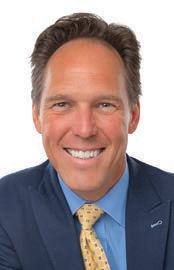
J. Scott Colemere President
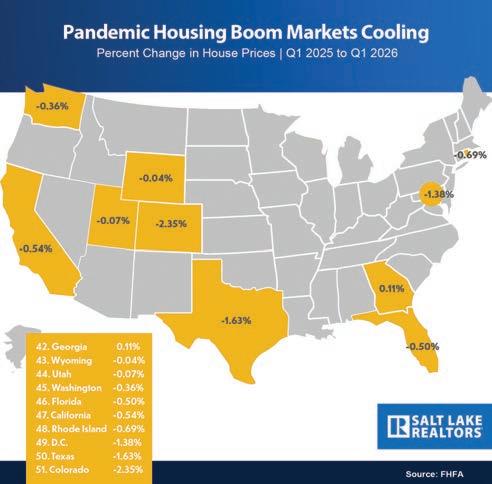
Utah ranked 44th nationally for home price appreciation in the Federal Housing Finance Agency’s (FHFA) House Price Index for the first quarter of 2026. Home prices were essentially unchanged from a year earlier, declining just 0.07%, as the state’s housing market continues to adjust after experiencing some of the nation’s strongest price growth during the pandemic. Despite the recent cooling, Utah home prices remain 32.58% higher than they were five years ago. Elevated mortgage rates, improving housing inventory, and ongoing affordability challenges have tempered demand and slowed appreciation, helping bring the market into better balance. Nationally, Illinois posted the strongest annual home price growth at 7.31%, while Colorado recorded the largest decline, with prices falling 2.35% year over year.
The Wall Street Journal reports that U.S. homebuyers returned to the market in greater numbers this spring, with pending home sales rising more than expected in May despite mortgage rates remaining above 6%. According to the National Association of Realtors®, contract signings increased 3.8% from April and 4.8% from a year earlier, suggesting significant pent-up demand. NAR Chief Economist Lawrence Yun described the activity as a “late spring buyer rush,” noting that many consumers appear to have accepted higher mortgage rates as the new normal rather than waiting for rates to fall before purchasing a home. This trend is particularly notable because buyer activity strengthened even as mortgage rates hovered around 6.4%–6.5% and inflation remained elevated.
As artificial intelligence reshapes the economy, its impact is extending well beyond technology companies, according to Realtor.com. A surge in AI-related data center construction is creating unprecedented demand for skilled trades workers, particularly electricians, plumbers, pipefitters, and HVAC technicians.
Major technology firms are investing billions of dollars to build the infrastructure needed to support AI systems. However, industry experts say a shortage of qualified workers is becoming one of the biggest obstacles to keeping those projects on schedule.
The demand for electricians has become especially acute, with the U.S. Bureau of Labor Statistics projecting roughly 81,000 electrician openings annually over the next decade. Meanwhile, many experienced tradespeople are nearing retirement, further tightening labor supply.
The labor crunch is beginning to affect other sectors of the economy, including residential construction. Builders in several states report that competition from large data center projects is drawing skilled workers away from housing developments, leading to project delays and rising labor costs. In Texas, some homebuilding projects have reportedly taken longer to complete as electricians are recruited to work on AI infrastructure projects.
Industry leaders warn that labor shortages could become a significant constraint on future growth. While technology companies can invest heavily in land, equipment, and computing power, they cannot quickly replace the skilled workforce required to build and maintain complex facilities. In response, companies such as Google have invested in apprenticeship and workforce training programs designed to expand the pipeline of qualified electricians and other trades professionals.


Refer two clients a month and one year is worth
you.
Referral fees we pay you, plus the future sale commissions you keep when they’re ready to list. The rental you’ve been holding yourself is costing you both.
When your client isn't ready to sell, you don't have to lose them to a national chain or hold the rental yourself and watch it eat your week. Refer it to us. We manage the property and hand the sale right back to you. In writing.
Why Salt Lake agents partner with Nestwell:
Your clients stay yours
We manage the rental and hand every future sale back to you — guaranteed in writing.


Your reputation stays safe 3,000 reviews. 4.8 stars. 45 years in Utah. Your client’s experience reflects on you — we make you look good. Don't be a parttime managers and risk your reputation to testy tenants who like "give zero stars if they could."
Your liability stays low Insurance, tenant law, compliance — let us carry the tricky stuff so you don’t have to.
You get paid to refer
Competitive referral fees the moment we sign a lease for your client. Every time.
By The Salt Lake Board of Realtors®
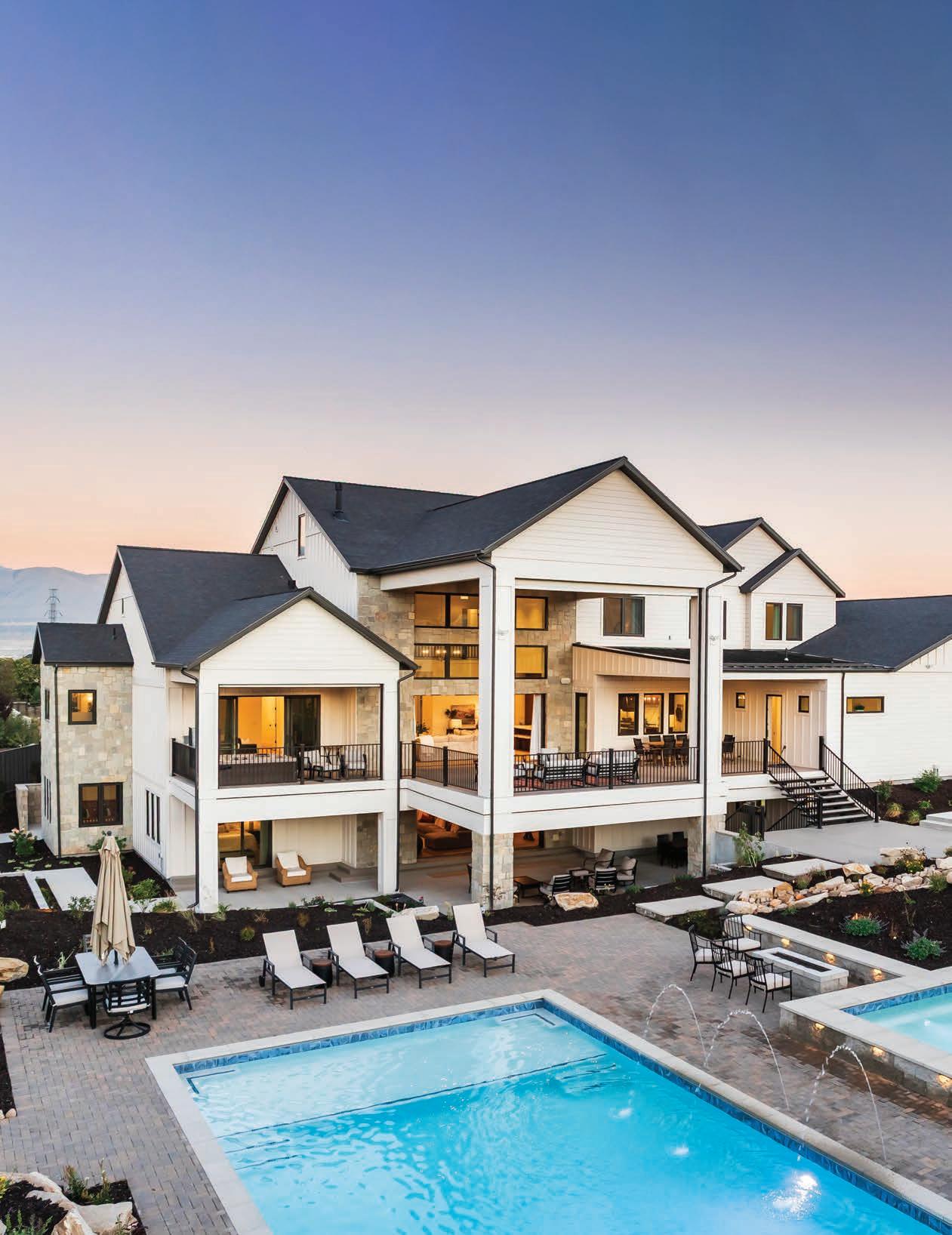
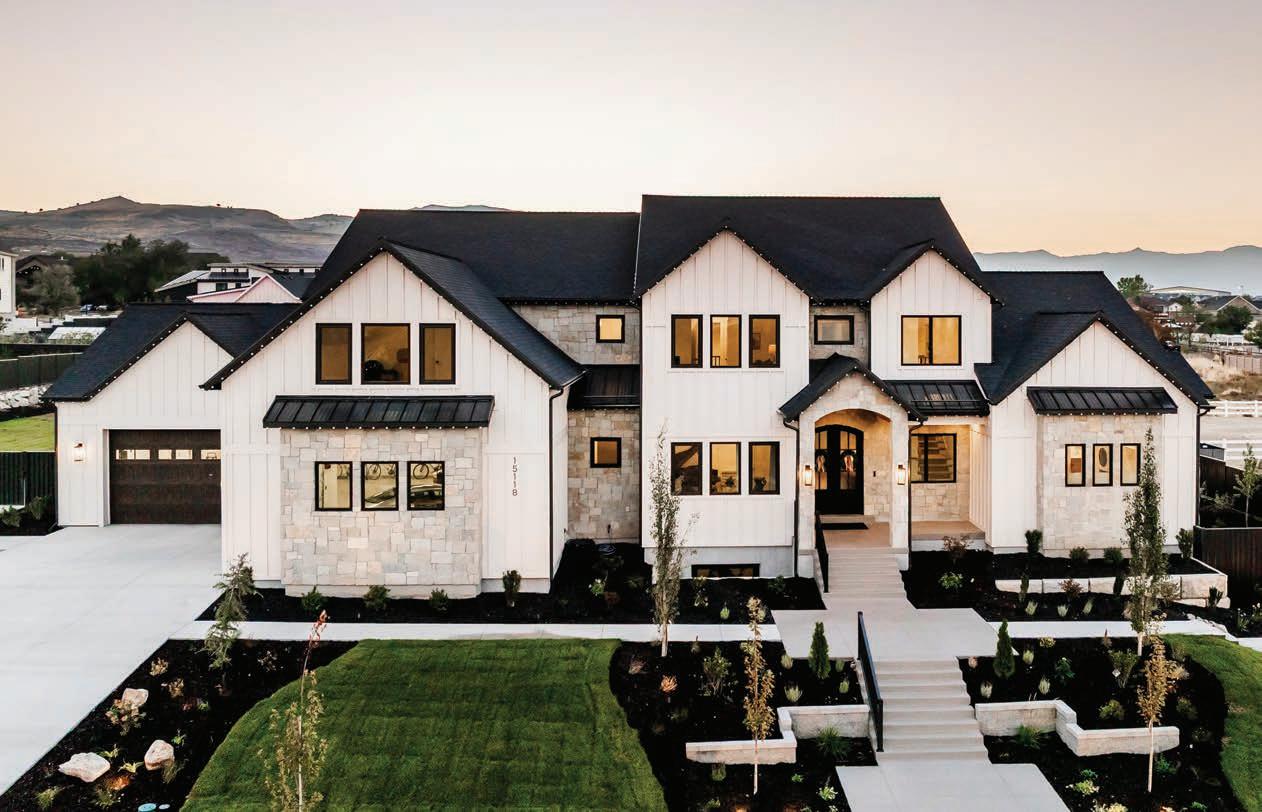
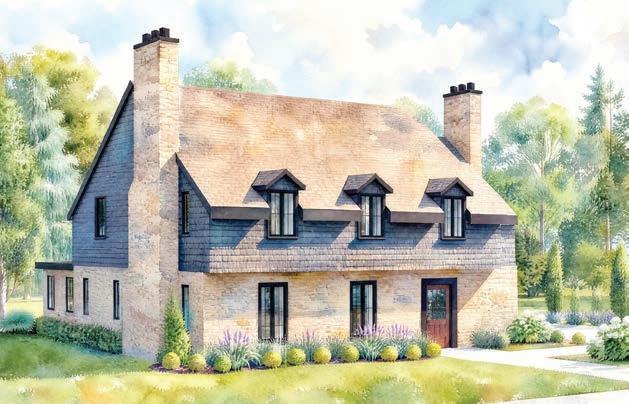
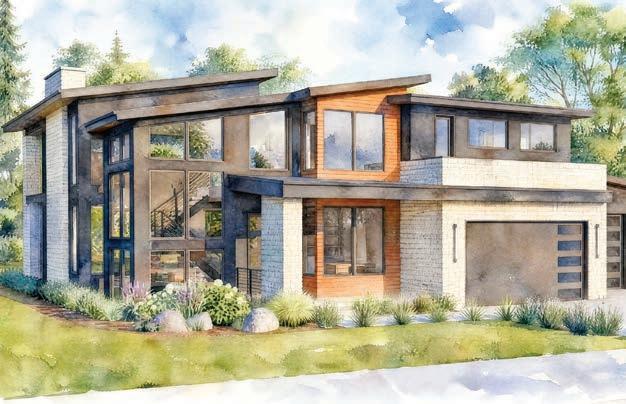
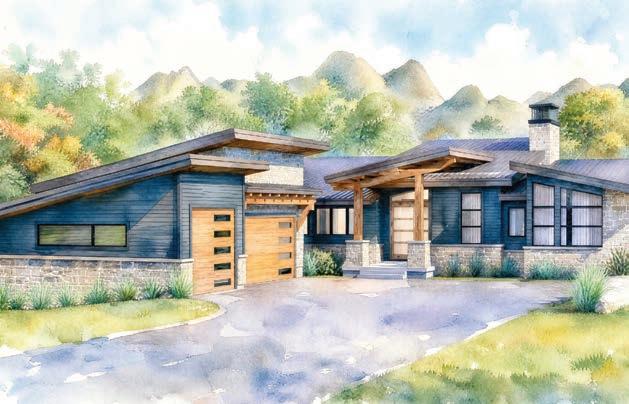
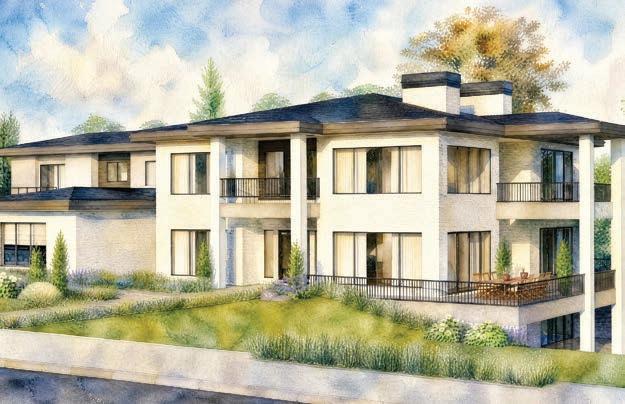
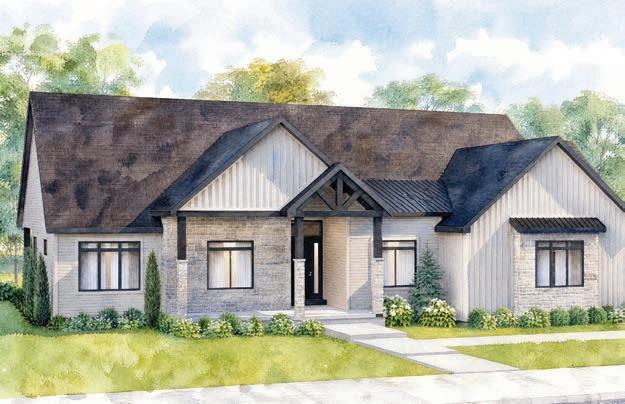
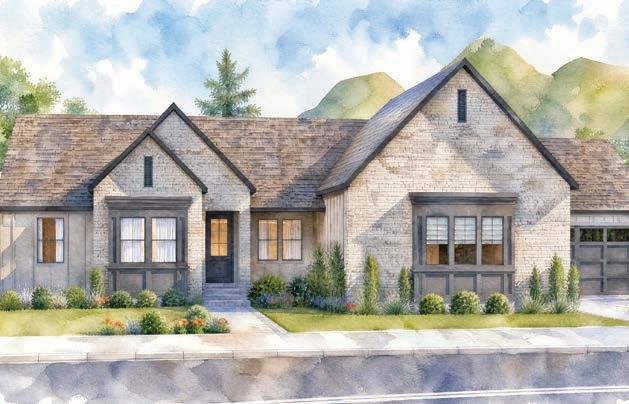
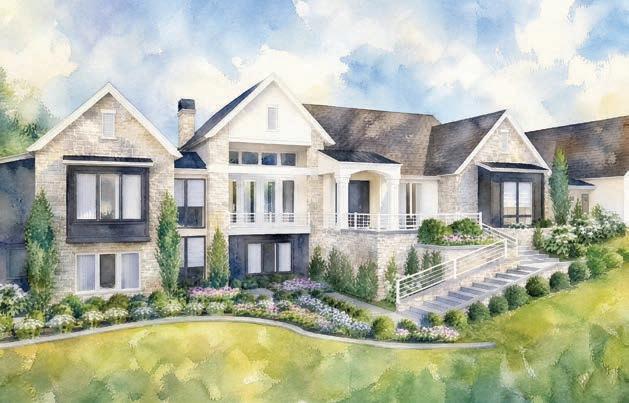
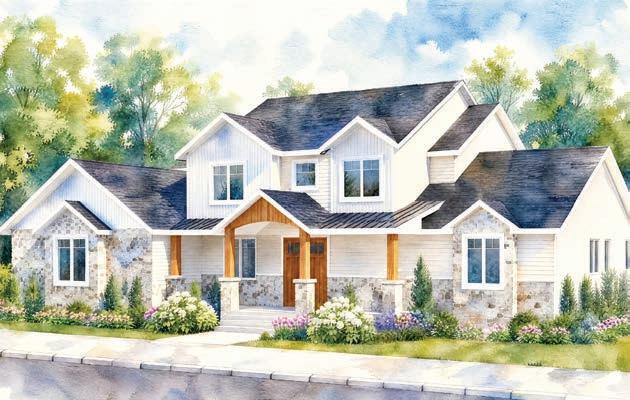
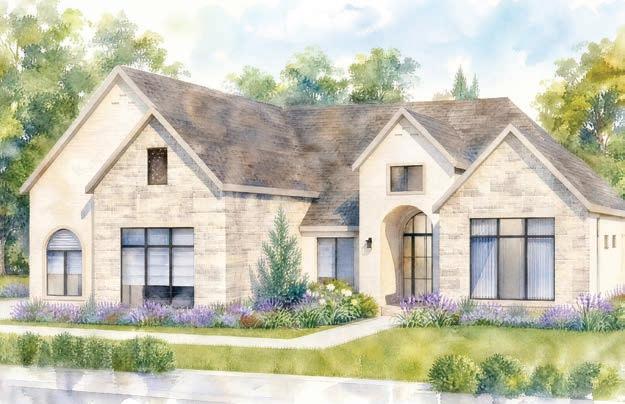
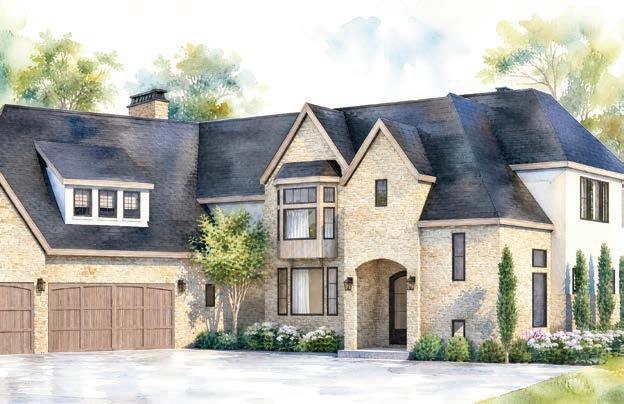
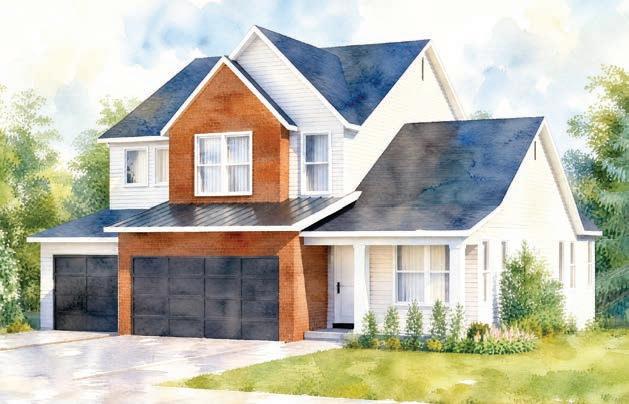
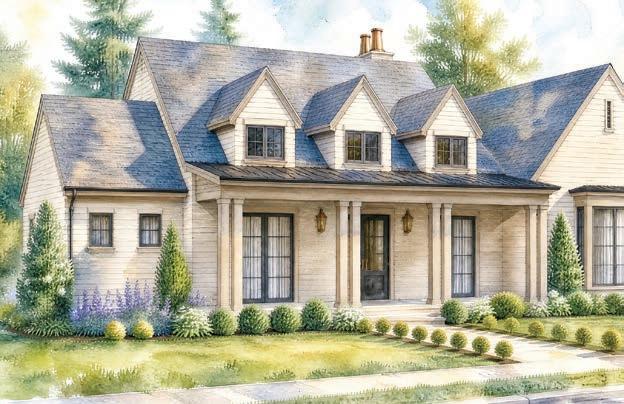
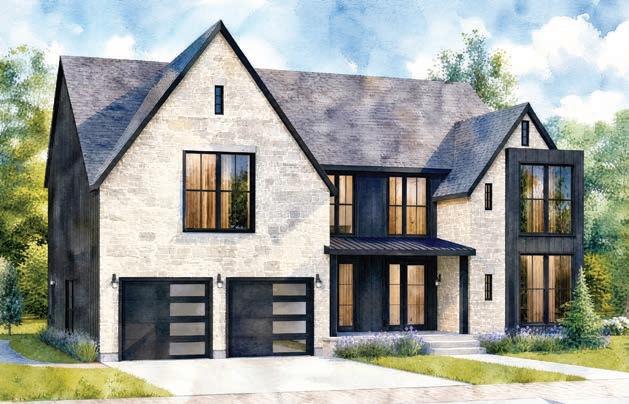
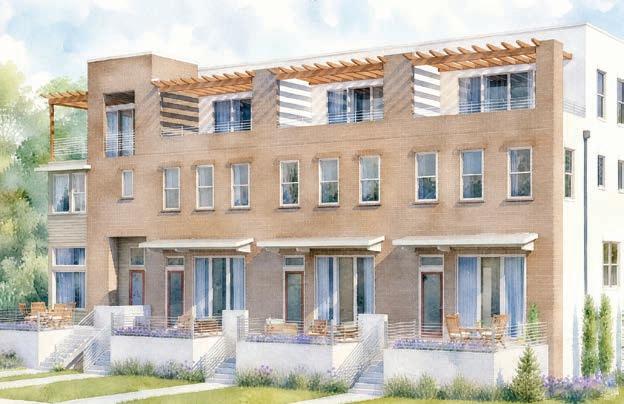
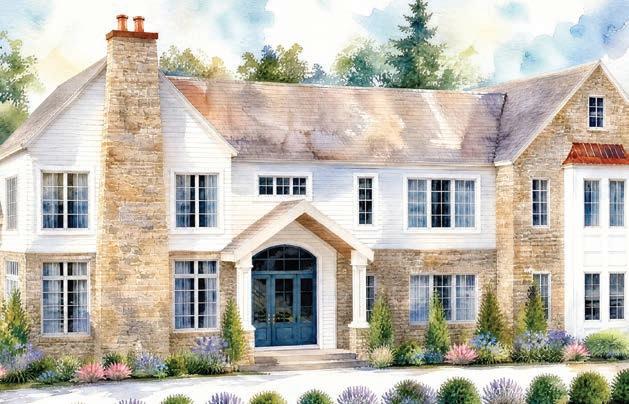
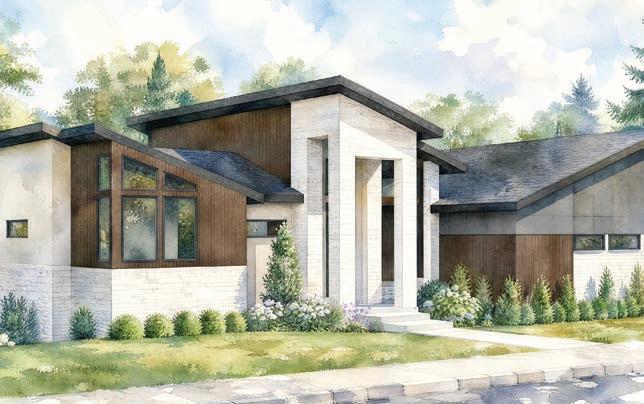
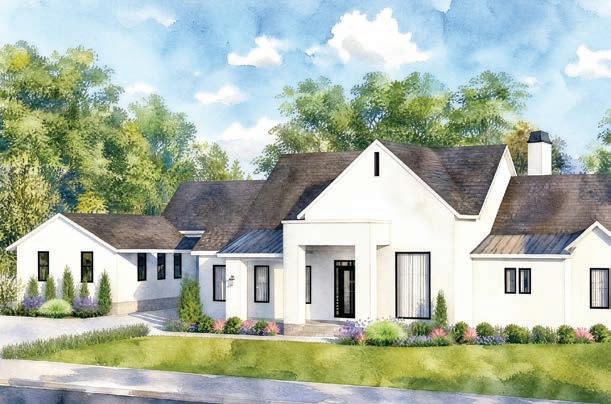
For 80 years, the Salt Lake Parade of Homes has given Utahns a glimpse into the future of home design. From architectural innovation to timeless craftsmanship, the nation’s first Parade of Homes continues to set the standard for residential excellence—and this year’s milestone celebration is no exception.

Running July 31 through Aug. 15, the 80th Annual Salt Lake Parade of Homes features 30 extraordinary homes across Salt Lake and Tooele counties. Visitors will experience everything from thoughtfully designed family homes to sprawling luxury estates, along with a featured whole-home remodel that proves exceptional design isn’t reserved for new construction.
Presented by the Salt Lake Home Builders Association, the Parade has inspired generations of homeowners, Realtors®, builders and designers since its founding in 1946. This anniversary edition showcases the
craftsmanship of Utah’s leading builders while highlighting the design trends, technologies and lifestyles shaping today’s housing market.
From luxury kitchens and seamless indoor-outdoor living to smart-home innovations, wellness spaces and walkable communities, this year’s homes offer fresh inspiration for buyers at every stage of homeownership.
The Salt Lake Board of Realtors® spoke with Caroline Merrill, executive officer of the Salt Lake Home Builders Association, about what makes this year’s Parade unique and the trends shaping Utah’s housing market.
What makes the 80th Anniversary Parade different from previous years?
Merrill: The 80th Anniversary is a meaningful milestone that celebrates eight decades of craftsmanship, innovation and community impact in Utah’s homebuilding industry. This year’s Parade honors that legacy while looking ahead, featuring homes that reflect today’s design, sustainability and lifestyle trends. It’s more than
a showcase of beautiful homes—it’s a snapshot of how our industry has evolved and where it’s headed.
What design and architectural trends are defining the 2026 homes?
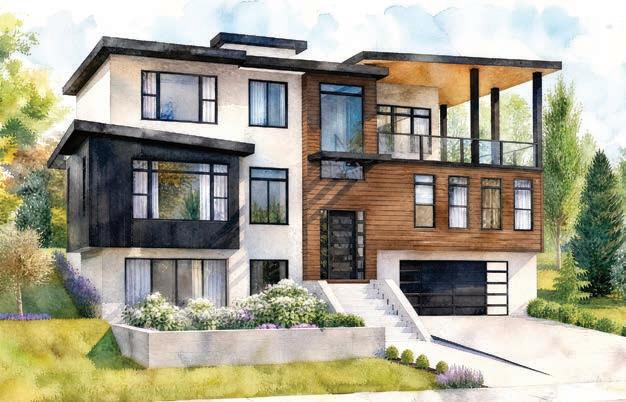
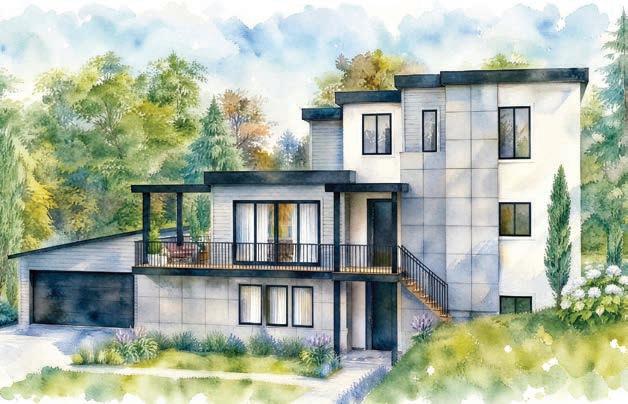
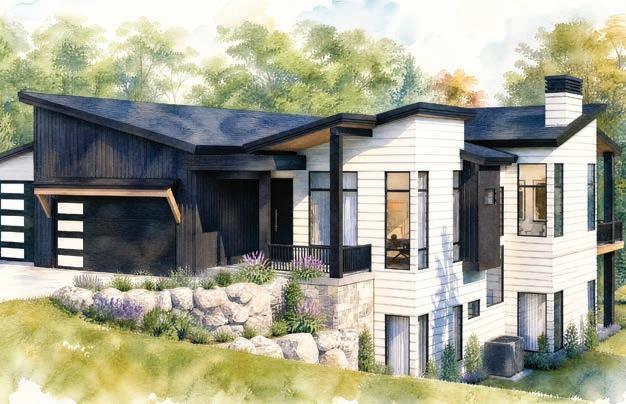
Merrill: This year’s homes represent a wide range of architectural styles, from clean contemporary designs to traditional and transitional homes. While modern lines and natural materials remain popular, we’re also seeing timeless details incorporated throughout. Buyers continue to favor open-concept floor plans, larger windows that maximize natural light and strong indooroutdoor connections. Above all, today’s homes are designed to balance beauty with everyday functionality, offering flexible spaces that adapt to work, family life and entertaining.
This year’s Parade includes a featured wholehome remodel. Why was it important to include a renovation project?
Merrill: More homeowners are choosing to invest in the homes they already own rather than build new. The featured remodel demonstrates how thoughtful design, updated systems and strategic improvements can completely transform an existing home. We hope it inspires homeowners who are considering remodeling to improve efficiency, functionality and overall livability.
Several Parade homes are in walkable neighborhoods. How is community design influencing today’s buyers?
Merrill: Buyers increasingly value the lifestyle that comes with a home as much as the home itself. Walkability, nearby amenities and thoughtfully designed neighborhoods are becoming major selling points. People want communities where they can easily connect with neighbors, enjoy outdoor spaces and access local businesses, and builders are responding to those preferences.
What are the biggest priorities Utah homebuyers are communicating to builders in 2026?
Merrill: Affordability, functionality and long-term value remain top priorities. Buyers want homes that are energy efficient, well built and designed to support their daily lives. They’re also looking for flexible spaces that can evolve as their needs change. Today’s buyers are well informed and place a premium on quality construction, comfort and features that promote healthy living.
How are builders incorporating smart-home technology, energy efficiency and wellness into new homes?
Merrill: Technology and efficiency are now integrated into nearly every aspect of homebuilding. Smart-home features such as lighting, climate control and security systems have become standard expectations. Builders are also using high-performance insulation, windows
and mechanical systems to improve energy efficiency, while emphasizing healthier living through better indoor air quality, abundant natural light and carefully selected building materials.
What advice would you give Realtors® touring the Parade with clients?
Merrill: Use the Parade as an opportunity to learn what truly resonates with your clients. Pay attention to the floor plans, finishes and features that generate excitement. Ask questions, take notes and connect with builders. The knowledge you gain will help you better understand today’s buyers and provide more informed guidance throughout the home-buying process.
After 80 years, what continues to make the Salt Lake Parade of Homes unique?
Merrill: It begins with the quality of our builders and the pride they take in their work. The Parade has always showcased outstanding craftsmanship while bringing together industry professionals and the public in a meaningful way. For 80 years it has reflected the innovation, creativity and strong sense of community that define Utah’s homebuilding industry, and that’s what continues to make it special today.




With
We





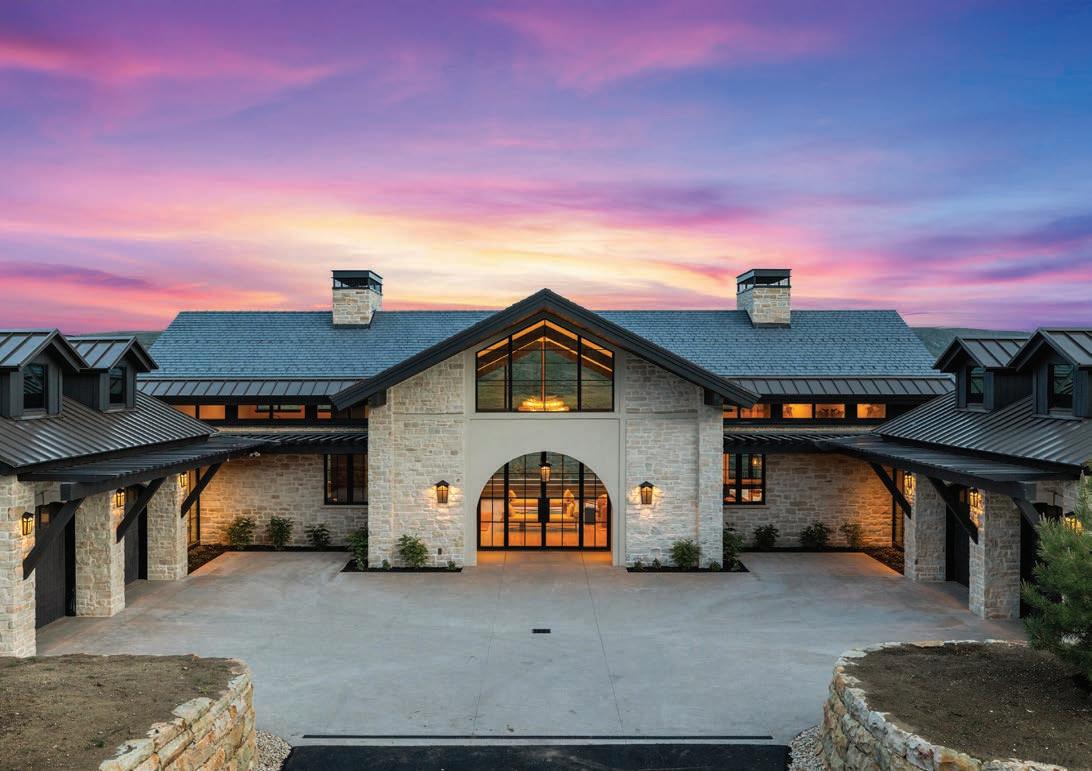
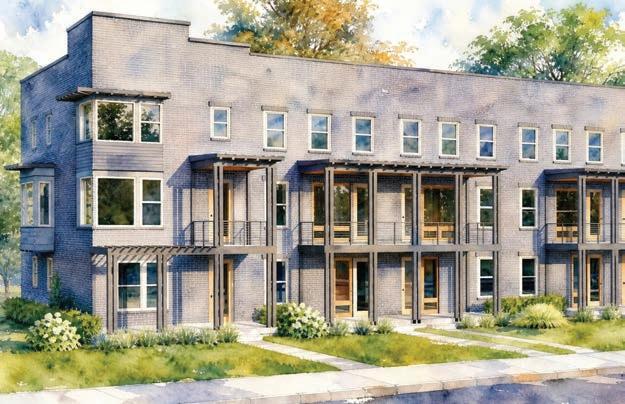


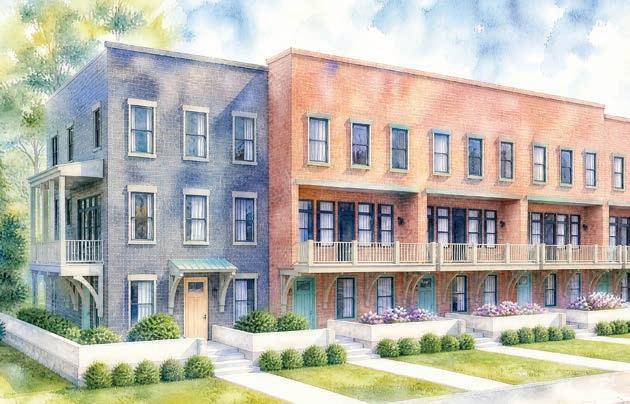
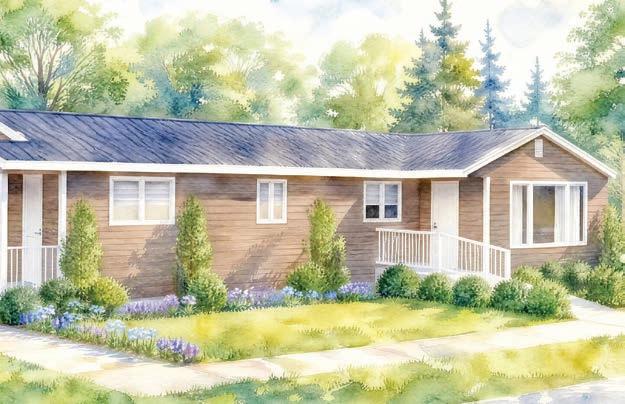
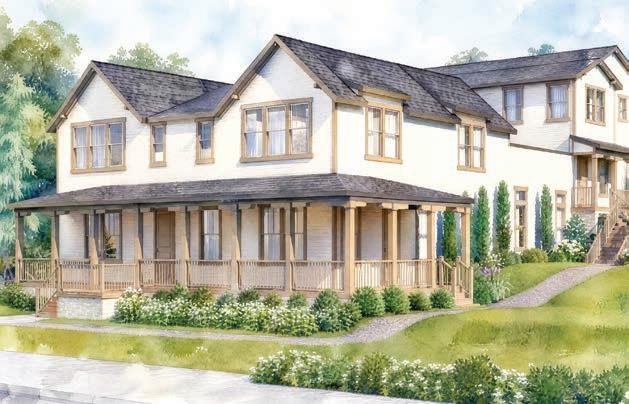
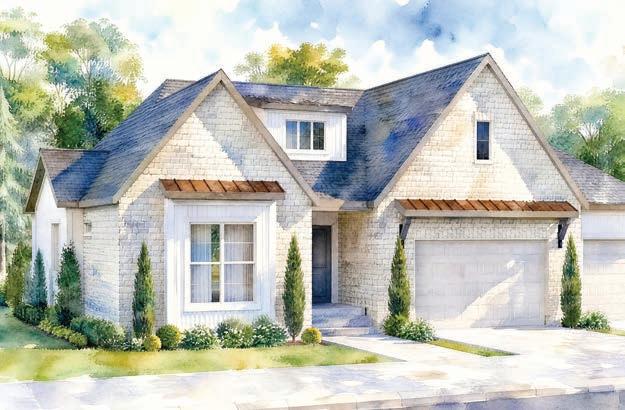
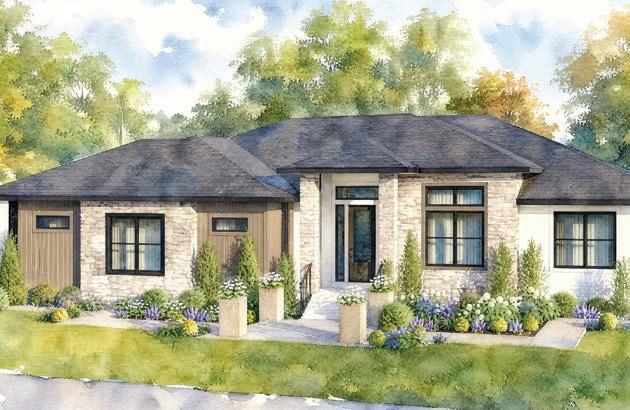

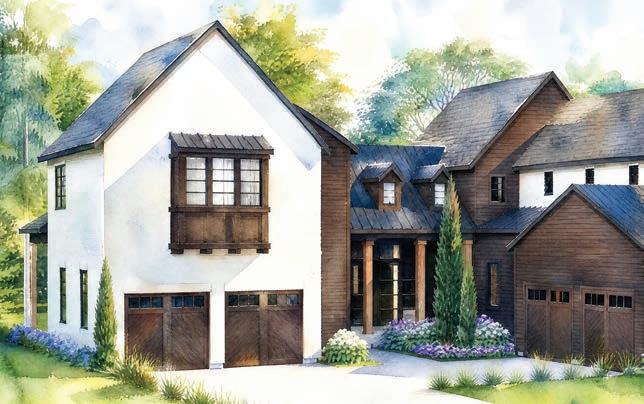
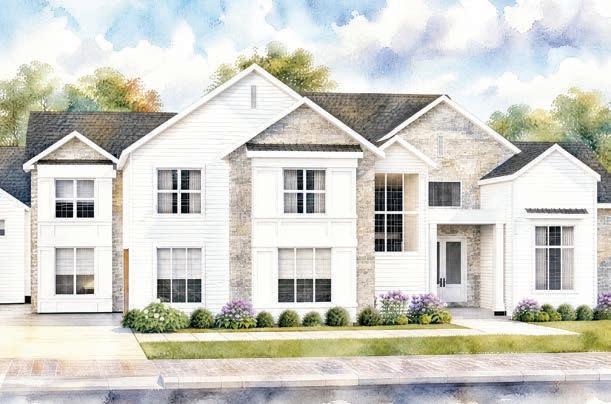
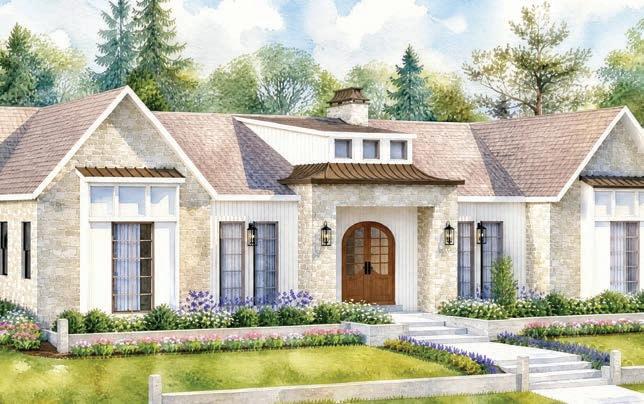
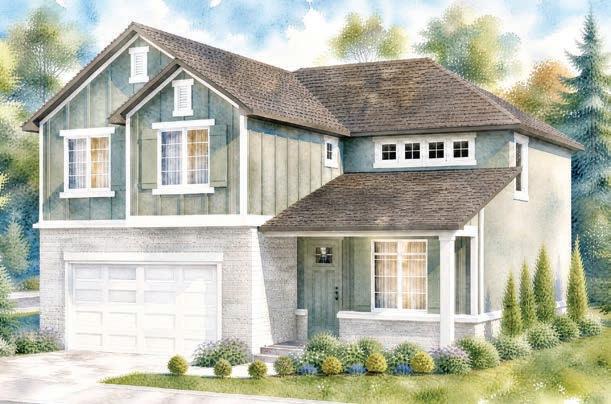

With 85% of neighborhoods dominated by single-family homes, housing choices remain scarce.
By Allaire Conte Realtor.com
By 2034, the U.S. population aged 65 and older will outnumber children under 18 for the first time in history. That demographic shift is straining systems like Social Security, healthcare—and yes, even housing.
Almost 1 in 3 older households is cost burdened by their home. At the same time, younger adults are spending longer in their parents’ homes as high prices delay their path into housing of their own.
Those trends are usually treated as disparate problems—an affordability crisis for young buyers and renters, and an aging-inplace challenge for older homeowners. But the two groups are often searching for the same thing, according to Rodney Harrell, vice president of family, home, and community at AARP’s Public Policy Institute.
“The big enemy here is a lack of the kind of housing supply that we need, the range of options, particularly in those locations that work for folks,” he told Realtor.com®
Harrell argues that baked into America’s housing shortage— currently estimated at 4.03 million units—is a life cycle problem.
People’s housing needs change as they age, form families, become caregivers, face health changes, lose income, or decide they no longer want to maintain a large home. Yet many neighborhoods offer only one kind of place to live.
As the country mobilizes to close its housing gap, it will need to build homes that can serve people across every stage of life, Harrell argued at the recent National Association of Realtors® Legislative Meetings.
In his words, “The idea is we look at this life cycle of housing, can we create communities that have all of those features that people need, that’s really what we’re trying to make happen, so that more people have more options, so they’re better able to meet those needs.”
A housing stock built for one stage of life
“We’re about to celebrate our 250th anniversary for this country, and for most of that time, many communities got by with the assumption that many people were younger, many families were younger,” Harrell explained. “But it’s become more and more the reality across the country that we’re people of all ages.”
In the last quarter-century alone, the median age of Americans rose from 35.6 in 2001 to 39.4 in 2025, census estimates show. And while other systems might be more adaptable to that kind of rapid change, housing has yet to catch up.
“Housing is one of those products, if we think about it as a product, that isn’t easily changeable,” Harrell said. “We might be able to change a device or something else quickly and easily, but changing our housing stock takes a long time.”
To his point, AARP’s research finds that 85% of neighborhoods contain only single-family homes. That can leave few nearby alternatives for a homeowner who wants less space, fewer stairs, less upkeep, or a lower monthly cost—the same constraint that leaves few attainable options for a younger household looking to move in.
“If we built a lot of our housing without some of the features that people need as they age, without options for people that might want to downsize, without affordable options, without options that are near the things that people want to be near, if they can’t drive, all of these are gaps that we can’t just fix overnight,” Harrell said.
The headline housing shortage, in other words, contains
a more specific shortage: homes that let people change their circumstances without having to leave their communities.
For older owners, the mismatch can become a physical and financial bind. Three-quarters of adults 50 and older want to remain in their homes and communities as they age, yet only 1% of U.S. homes have the full set of accessibility features identified in AARP’s research.
“I’ve had people talk about their dream home become that nightmare because they’re in here and they can’t leave their home, but they can’t get up the stairs and they can’t afford it somewhere else in their community,” Harrell said.
Younger adults face the other side of the same shortage: too few attainable homes near jobs, family, and the places where they want to build their lives.
“One of the things that’s most frustrating is when we pit different groups together, pitting young adults against older adults, for example,” Harrell said. “Well, the challenge is a younger adult that doesn’t have enough housing options that they can afford to move into near the things they want to be near has some of the same challenges that an older adult who wants to downsize into a home.”


“Both of those folks have the same challenge,” he said.
The missing middle as a bridge between life stages That’s where duplexes, townhomes, small apartment buildings, condominiums, and accessory dwelling units come in.
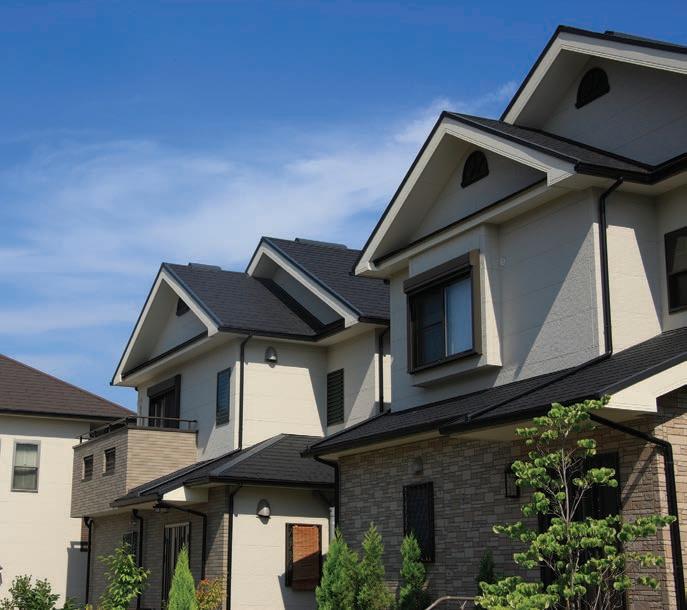
Often called missing-middle housing, these units can create a path between a detached family house and a large apartment building. For younger adults, that can mean a smaller, potentially less expensive entry point. For older owners, it can provide a way to downsize or live closer to relatives without leaving the community.
“I don’t like calling it missing anymore, because I’m hoping there’s more and more middle housing coming up,” Samar Jha, governmental affairs director at AARP, told Realtor.com.
“What this allows is that you will have an intergenerational housing, like in a development, you can have more, both older adults and younger generation living together in the same community,” Jha said.
Accessory dwelling units can play a particularly flexible role, creating a separate home on an existing property for an older parent, caregiver, adult child, or tenant. But Jha stresses that downsizing need not mean moving into a backyard unit.
“Downsizing does not only mean going to the ADU,” he added. “Downsizing can also mean, you know, living in a duplex or a triplex or a tiny home.”
Carol Marak, a financial educator who is aging on her own at 74, is a good example of the importance of the kind of optionality that both Jha and Harrell highlight.
Speaking with Realtor.com in March, Marak said she realized that much of her wealth was tied up in a house that offered little liquidity for the professional support she expected to need as a solo-ager. After saving aggressively for five years, she sold the home and moved into a downtown Dallas high-rise, closer to public transit, doctors, and community.
Her move illustrates a point often lost in conversations about aging in place: The goal is not always to stay in the same house, but to remain connected to the community.
That distinction is central to AARP’s Livability Index, which evaluates housing alongside transportation, access to grocery stores and parks, healthcare, neighborhood conditions, environmental quality, social engagement, and economic opportunity.
Dallas earns a 54 on the index, placing it in the top half of U.S. communities. Its housing score is bolstered by a broader mix of homes: Nearly half of available units are multifamily, compared with a U.S. city median of just under 9%. The city also has zero-step entrances in 75% of homes, compared with a median of 56% across U.S. cities.
While those features may not make Dallas a perfect fit for every resident, they gave Marak a broader set of choices when her needs changed.
Great Neck Plaza, NY, meanwhile, earns the index’s highest score, 73, even while scoring low on housing affordability and access. Despite those challenges, its high ranking is driven in large part by access to parks, libraries, stores, and other daily necessities.
Those pros and cons are the point of the index, according to Harrell.
“If this place has great parks and grocery stores that might be really expensive, and so those are always trade-offs,” he said. “One thing we want to do is to show people the trade-offs that they’re making.”
In Jha’s words, “Buying a house is one thing, and staying a homeowner is another thing. You can buy a house, but staying a homeowner requires a lot of other elements to it.”
It’s a concise summation of the opportunity beneath the broader housing shortage—and of the choices the Livability Index is designed to illuminate. Communities with a wider range of homes can give residents more ways to respond when their income, health, caregiving needs, or household size changes, without losing the relationships and routines that make a place feel like home.
Allaire Conte is a senior advice writer covering real estate and personal finance trends.

Exclusively for members of the Salt Lake Board of REALTORS®, be part of the Realtors Profiles, appearing in the official Salt Lake Parade of Homes magazine.

Jane Doe
REALTOR® • Salt Lake City (801) 802-0200 • art@nrvutah.com nrvutah.com @nrvutah.com

Since she was a young woman, Jane Doe has been fascinated with the world of real estate. Whether it was dreaming of owning a ranch or being inspired by her yearly visits to the Parade of Homes with her mother, Jane has loved “home” and all that means. For eight years, she’s been helping others in their dreams of home ownership. She wants to help you too!
SCAN or CLICK the QR Code to sign up for the profile section and submit your information.

Deadline July 1
John Stemmons 801-318-2199
johns@nrvutah.com
Stacy Beck 801-376-2497
stacyb@nrvutah.com

America Could Have Too Many Homes by 2035— Just Not Where Buyers Need Them
The nation could add between 10.6 million and 14.6 million net housing units in the next decade—just as household growth slows.
By Allaire Conte Realtor.com®
As early as 2035, housing supply may outpace demand, according to a new analysis—potentially cooling prices in fast-building markets even as shortages persist elsewhere.
The warning comes from the Mortgage Bankers Association’s “Implications of a Persistent Slowing in Housing Demand” report, which estimates the nation could add between 10.6 million and 14.6 million net housing units in the next decade—just as household growth slows, driven by an aging population, lower fertility, and falling immigration projections.
It’s an unexpected, if not ironic, twist in a housing market that has spent the better part of two decades facing a structural deficit.
Since the Great Recession, new construction has lagged woefully behind household formation, leaving the country short an estimated 4.03 million homes.
But the MBA report argues that the demand conditions that fueled that shortage are coming to an end. In markets that built aggressively during the COVID-19 pandemic-era boom—especially across the South and West—new homes and apartments could keep arriving as the number of households able or willing to absorb them falters.
“That simple arithmetic has profound implications for how we think about housing supply adequacy—and calls into question whether the supply shortage that defined the post-2010 housing narrative will remain
the right framework for the decade ahead,” the report suggested.
But that warning comes with a major asterisk, according to Joel Berner, senior economist at Realtor.com®.
Housing demand is far from fixed, he said. Builders can cut production when sales slow, households can form when housing gets cheaper, and a home built in a fastgrowing Sun Belt market does little to relieve scarcity in a high-cost metro hundreds of miles away.
At the core of the report are two competing projections: how many additional homes the country will need over the next decade, and how many homes builders could deliver.
MBA estimates that demand for additional housing will total about 11.34 million units between 2025 and 2035. That tally includes projected household growth, homes needed to replace units removed from the housing stock, additional vacancies needed in a growing market, and second-home demand.
On the supply side, the group models three construction paths based on historical completion levels. Under its low scenario, net housing supply would grow by about 10.57 million homes from 2026 through 2035. Under its middle scenario, supply would grow by 12.65 million homes; under its high scenario, it would rise by 14.56 million.
That leaves projected demand sitting between the report’s low- and middle-supply cases—a gap MBA says could allow supply growth to exceed demand by 2035 if construction remains elevated.
“These are reasonable assumptions to make, but they don’t give much opportunity for builders to adjust based on the demand that they’re facing,” said Berner.
But he cautioned that the projections give builders limited room to respond to a changing market.
“If demand for homes really fell off and ended up short of supply, builders wouldn’t keep producing at the same rate,” he explained.
There are already signs that builders are becoming more cautious. Just as the inventory of newly built homes for sale reached 10.3 months—solidly buyer’s market territory—new starts dropped.
Total housing starts fell 15.4% in May from April, to a seasonally adjusted annual rate of 1.17 million units, driven largely by a sharp decline in multifamily construction. Single-family starts slipped 1.9% from April and 6.7% from a year earlier, to an annualized pace of 882,000.
Builders can slow down, but household formation can speed up
There’s further evidence that household formation may be just as dynamic.
Central to MBA’s warning is the projection that the U.S. will add 8.6 million households between 2025 and 2035, down from 10.1 million in the prior decade.
But Berner suggested that household formation is at least in part shaped by whether people can afford to move out, rent a place of their own, buy a first home, get married, have children, or stop sharing housing with relatives and roommates.
“Part of how we quantify the supply gap nationally is to count households that would have formed if affordability conditions were better,” he said. “This piece just takes falling household formation as a given, while we see it as a variable result of conditions in the marketplace.”
There’s already evidence that a large share of potential household demand remains delayed rather than absent. A record 25.2 million adults under 35 lived with their parents in 2025, according to Realtor.com research— nearly 1 in 3 young adults.
On top of that, 7 in 10 adults aged 25 to 34 who lived at home were employed, suggesting that delayed independence cannot be explained by joblessness alone.
That’s not to suggest that there isn’t a borderline demographic slowdown.
Fertility fell to an all-time low of 1.64 births per woman in 2024, well below the roughly 2.1 births per woman needed for population replacement absent immigration, according to the latest Centers for Disease Control and Prevention data.
But high housing costs may also be playing a role in these trends.
One recent study found that rising housing costs accounted for 51% of the overall decline in U.S. fertility between the 2000s and 2010s. Had housing costs remained flat after 1990, the researchers estimated, the country would have had 13 million more births by 2020 and a fertility rate in the 2010s 77% closer to replacement level.
That’s why Berner argued that more housing can create some of the demand MBA’s model treats as missing.
“We argue that building more will create more demand by creating the conditions—lower home prices—for new households to form,” he said.
The risk: Building in places that can build—not the places that need housing most
But any real estate agent will tell you: National trends can obscure the question that matters most—what is happening in the local market?
Builders tend to add homes where land is available, permitting moves faster, and development costs are lower. But those aren’t always the metros where housing costs have climbed furthest beyond what local incomes can support.
“For home prices to fall significantly and uniformly, there would have to be delivery of new housing units to the markets that need them most,” Berner said. “In hot-
market pockets of the Northeast and Midwest, prices will continue to grow because inventory remains scarce.”
MBA’s report draws a similar divide.
It expects price growth to slow—and in some cases decline—in states where single-family construction has expanded significantly, including Arizona, Texas, and Florida. In New York, New Jersey, and Massachusetts, however, it expects relatively stronger price growth to persist as restrictive zoning, high permitting costs, and elevated labor expenses continue to limit new construction.
That pattern is reflected in the most recent Affordability and Homebuilding Report Cards from Realtor.com.
New York, New Jersey, and Massachusetts were among the worst-performing states, held back by high prices, constrained land, restrictive zoning, and construction costs that have moved far beyond what many middleincome buyers can afford. Arizona, Florida, and Texas, meanwhile, all ranked in the top 20.
That split is why a national supply surplus, even if it materializes, would not automatically mean broad affordability relief.
A renter in Austin, TX, may see more apartments, more concessions, or slower rent growth as new units come online. A buyer in Boston, meanwhile, may still find that the homes they can afford remain scarce, with little new competition arriving to pull prices down.
“Builders will have to overcome the cost and regulatory burdens of building in these markets to get anywhere near a scenario where supply exceeds demand,” Berner said. “This scarcity will keep prices rising in parts of the country that are not adequately supplied.”
Allaire Conte is a senior advice writer covering real estate and personal finance trends. This article is reprinted with permission from Realtor.com®.




The Salt Lake Board of Realtors® hosted its annual RPAC Golf Tournament in June at Thanksgiving Point. Members enjoyed 18 holes of golf, lunch and prize drawings while supporting the Realtors® Political Action Committee (RPAC). Tournament proceeds help support candidates for public office—regardless of political party—who champion policies that protect private property rights, promote homeownership, strengthen the real estate market and support the real estate profession. Thank you to everyone who participated and helped make the event a success!









Inventory Grows as Salt Lake County Home Prices Continue to Rise
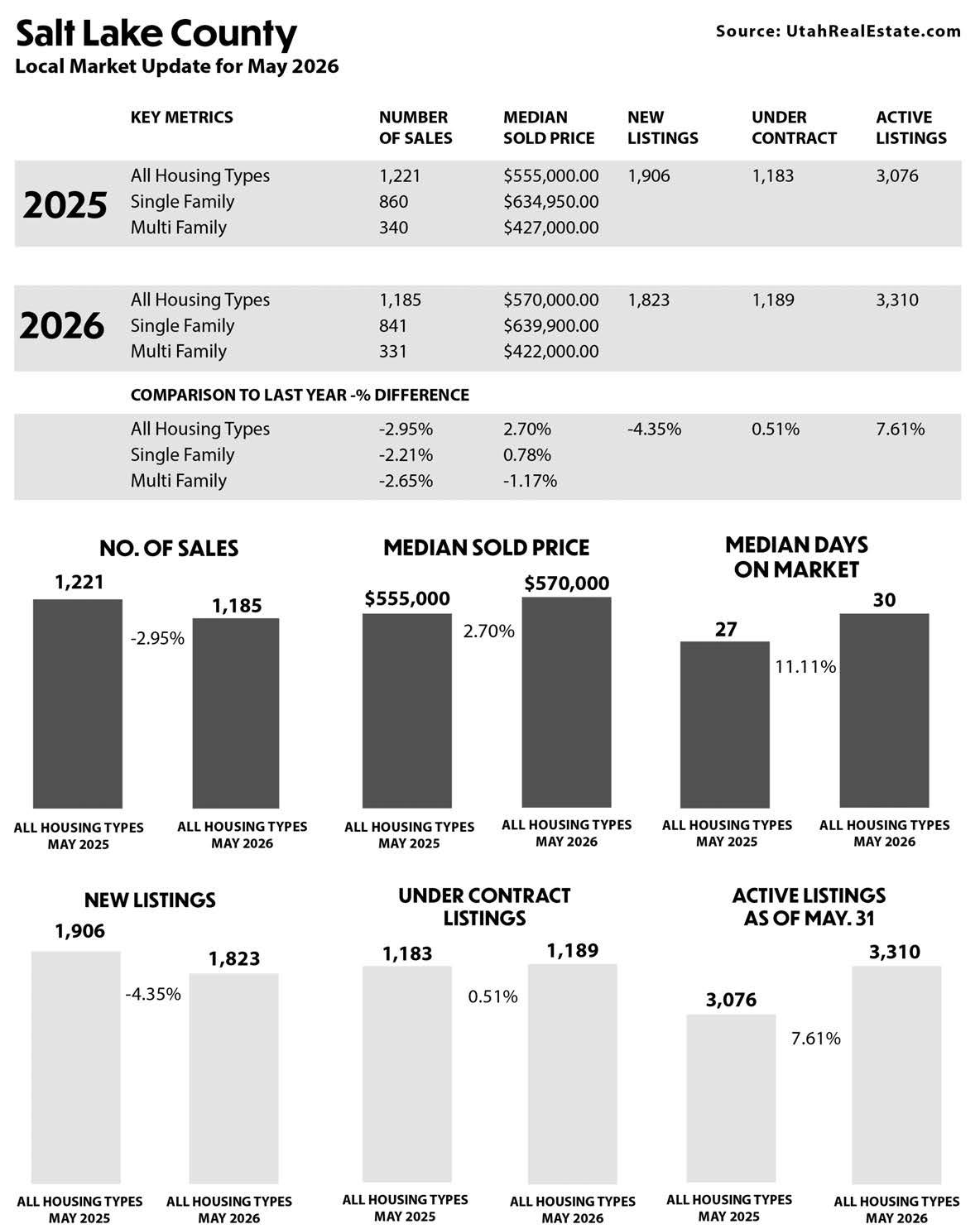
Salt Lake County’s housing market remained relatively steady in May, with home prices continuing to climb even as sales activity slowed slightly compared to a year ago.
A total of 1,185 homes changed hands in May, down 2.9% from 1,221 sales in May 2025. Despite the modest decline in transactions, the median sales price for all housing types increased to $570,000, up 2.7% from $555,000 a year earlier.
Single-family homes continued to command the strongest prices. The median sales price reached $639,900, a 0.8% increase from $634,950 in May 2025. Sales of single-family homes dipped 2.2%, from 860 to 841 transactions.
The condominium and townhome market also experienced fewer sales, declining 2.6% to 331 transactions. Unlike the single-family market, however, the median price for multifamily properties slipped 1.2% year over year to $422,000.
Homes spent slightly longer on the market than they did a year ago. The median cumulative days on market increased from 27 to 30 days across all housing types. Single-family homes averaged 25 days, while multifamily properties took 44 days to sell.
Inventory continued to improve, giving buyers more choices. Active listings at the end of May totaled 3,310 homes, a 7.6% increase over the 3,076 available one year earlier. Meanwhile, 1,189 homes were under contract at month’s end, virtually unchanged from the 1,183 pending sales recorded in May 2025.
New listings declined 4.4%, with 1,823 homes entering the market compared with 1,906 during the same month last year.
Nationally, the housing market posted stronger gains than Salt Lake County in May. Existing-home sales climbed 3.2% from a year earlier—the highest sales pace since December 2025. Sales increased in every region monthly except the West, which remained unchanged, while year-over-year gains were recorded in the Midwest, South and West.
The national median existing-home price reached a record $429,300 for the month of May, up 1.3% from one year earlier and marking the 35th consecutive month of annual price appreciation. Housing inventory also continued to improve, rising 3.3% from April to 1.55 million homes, representing a 4.5-month supply at the current sales pace.
Another encouraging sign was the growing presence of first-time buyers, who accounted for 35% of all home purchases in May, up from 30% a year earlier and the highest share since mid-2020. Meanwhile, investors and second-home buyers represented 14% of transactions, continuing a gradual decline as more owner-occupants reentered the market. Distressed sales remained exceptionally low at just 1% of all transactions.
“More Americans are on the move, with home sales rising to the highest level since December.”
Lawrence Yun Chief Economist National Association of Realtors®



SOME VEHICLES ARRIVE. OTHERS TAKE THE LEAD.
The BMW X5 is crafted for those who move with intention—balancing confident design, dynamic capability, and intelligent innovation. With available xDrive all-wheel drive and a driver-focused interior, it adapts seamlessly to every road and every moment.
Because when presence meets performance, it doesn’t go unnoticed.
Experience the performance worthy X5 at BMW of Murray or BMW of Pleasant Grove.
BMW of Murray
4735 S. State Street
Murray, Utah
801-262-2479
bmwofmurray.com
BMW of Pleasant Grove 2111 West Grove Parkway Pleasant Grove, Utah
801-443-2000 bmwofpg.com
© 2026 BMW of North America, LLC. The BMW trademarks are registered trademarks.
Windermere offices nationwide closed their doors to give back to the community. In Utah, we donated our time to Switchpoint Exchange, supporting youth facing homelessness.