Official Vehicle o f the 2026 Deer Valley® Music Festival
Deer Valley® Music Festival Season Sponsor
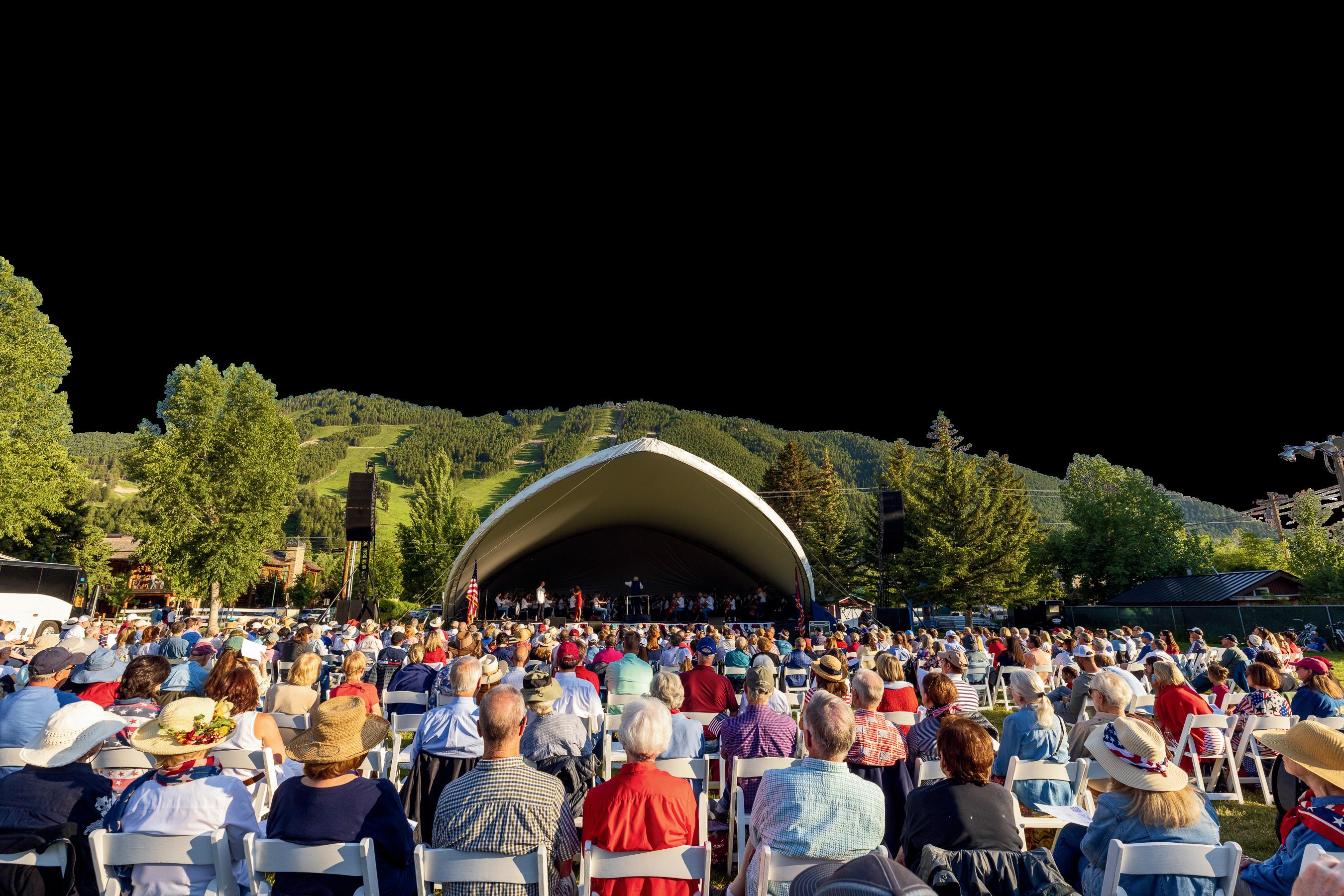
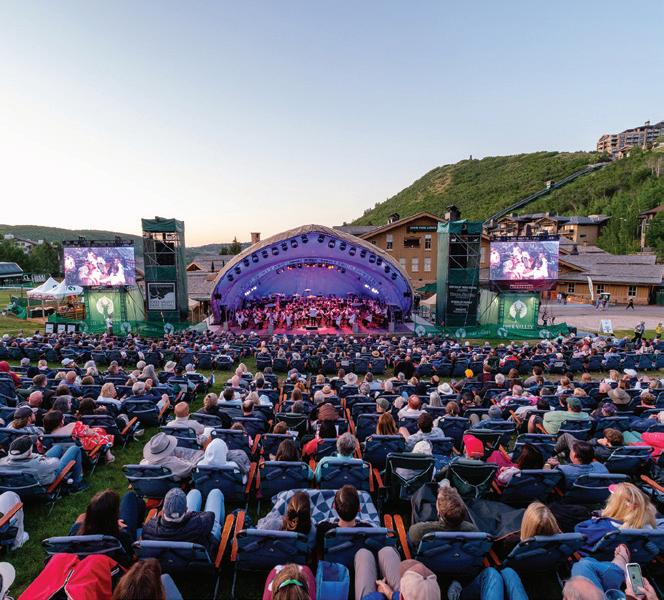
Thank you for joining us for the Deer Valley® Music Festival! This summer, we invite you to immerse yourself in a bold new era of great live music in the mountains with the exceptional musicians of YOUR Utah Symphony | Utah Opera.
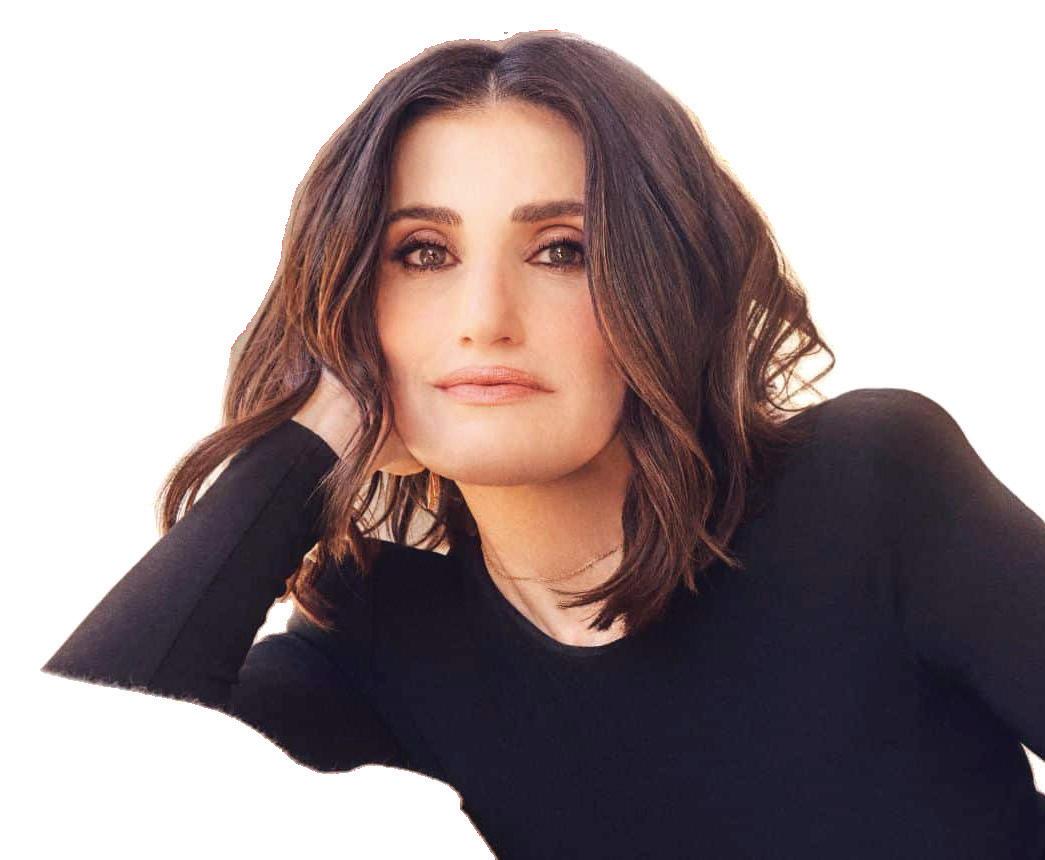
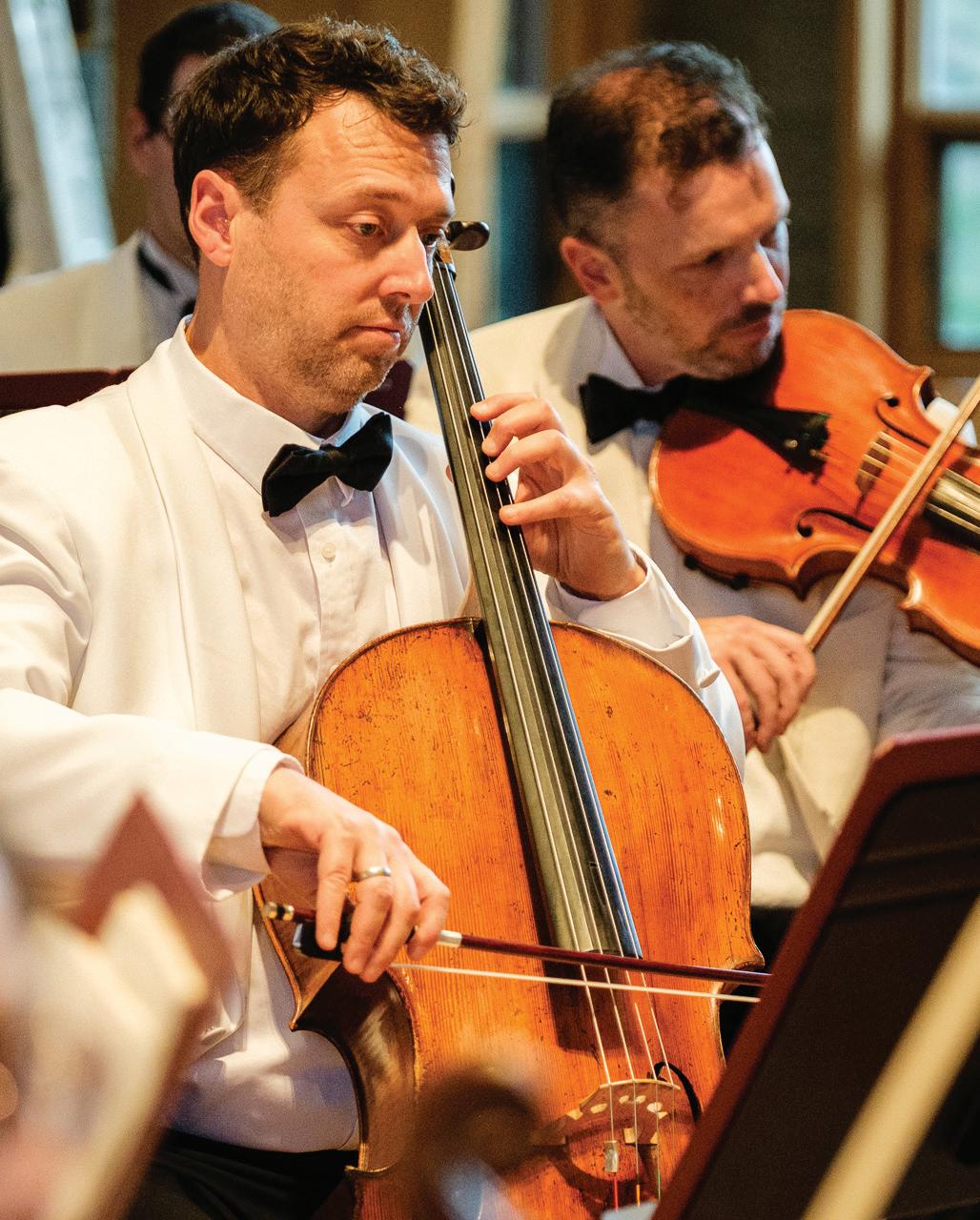
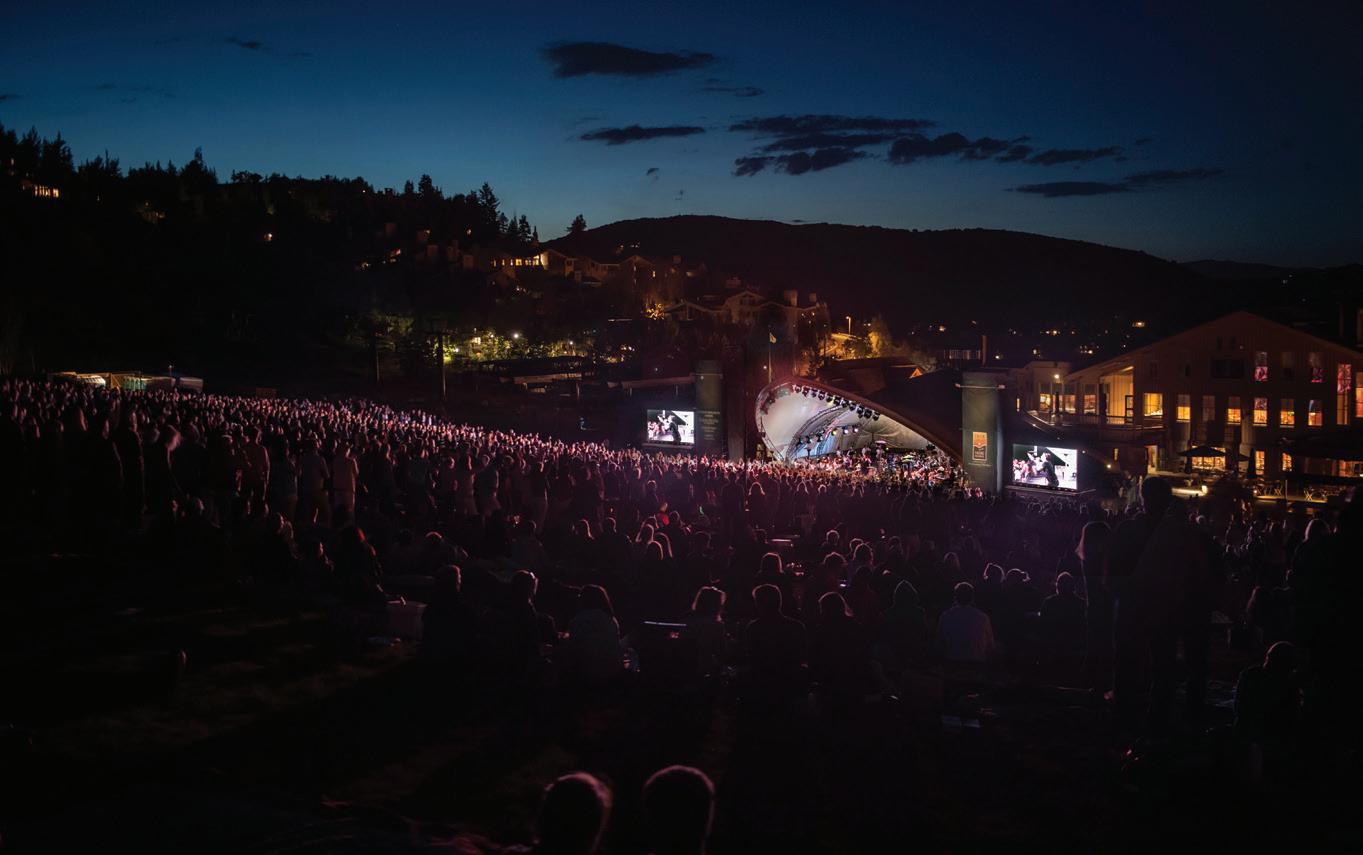
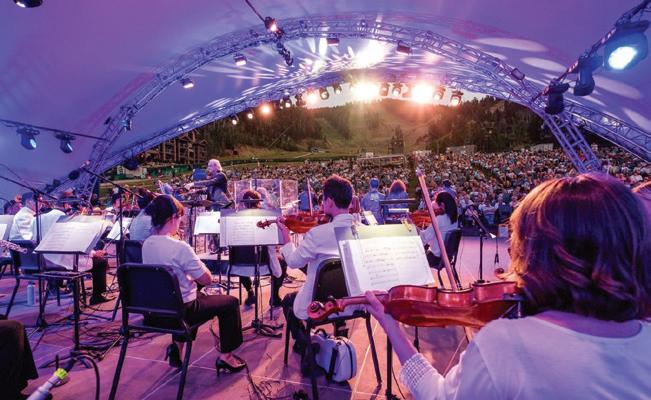
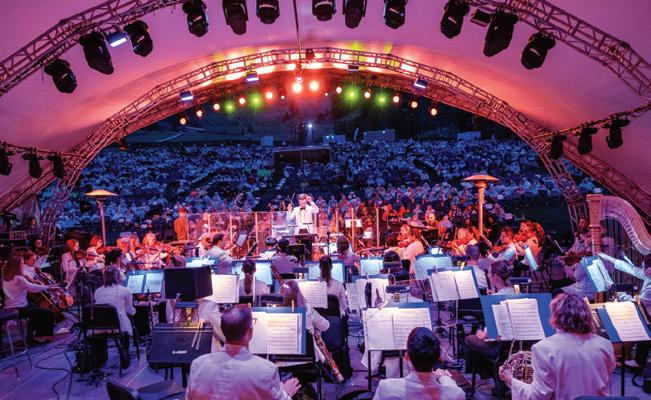
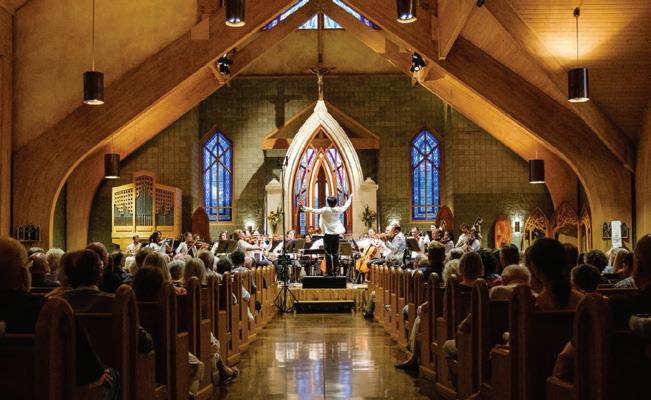
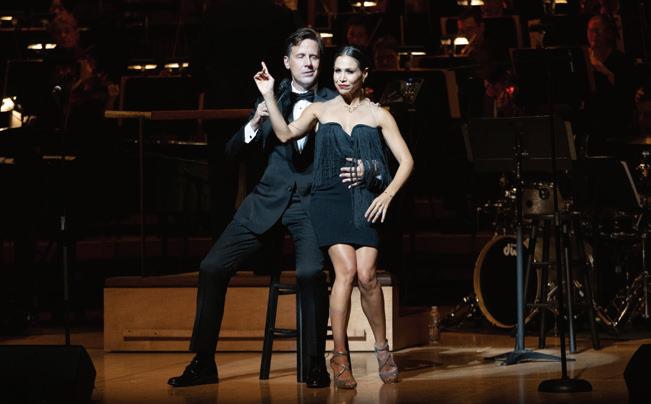
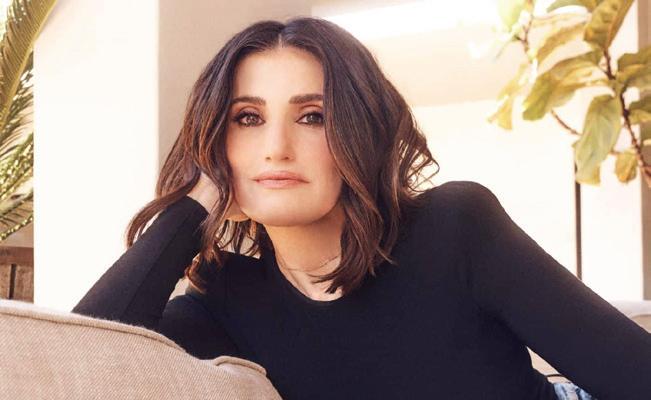
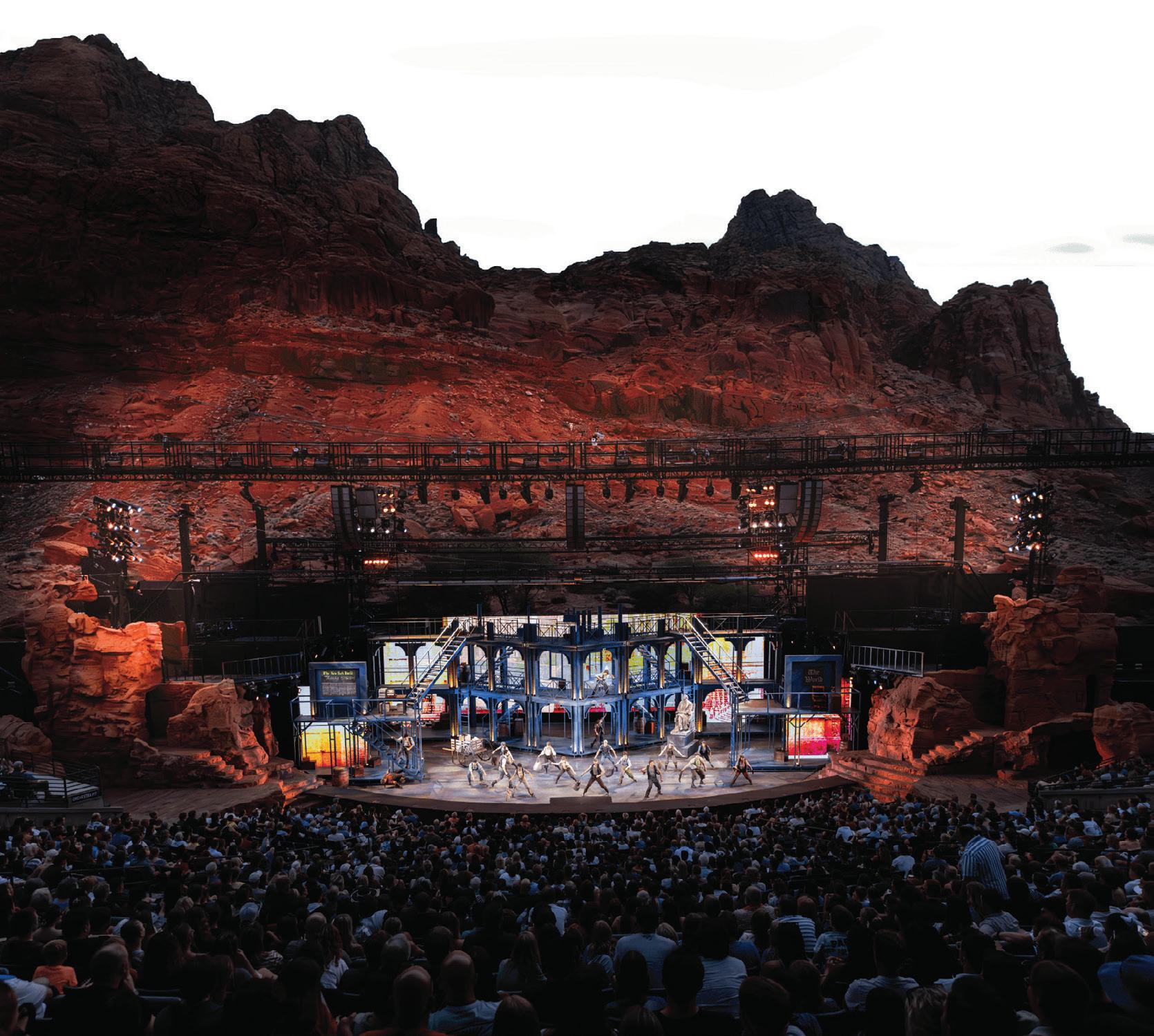
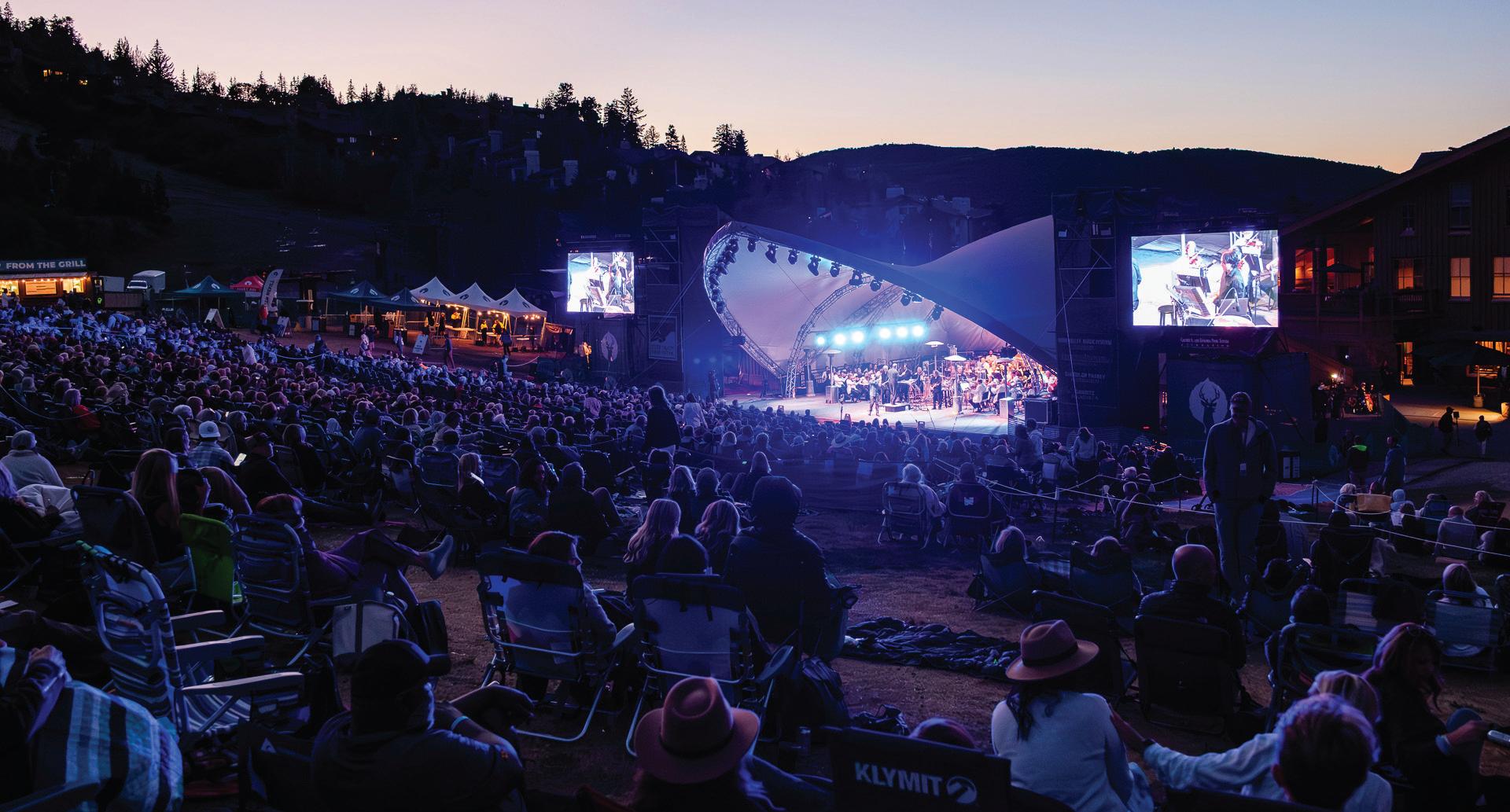
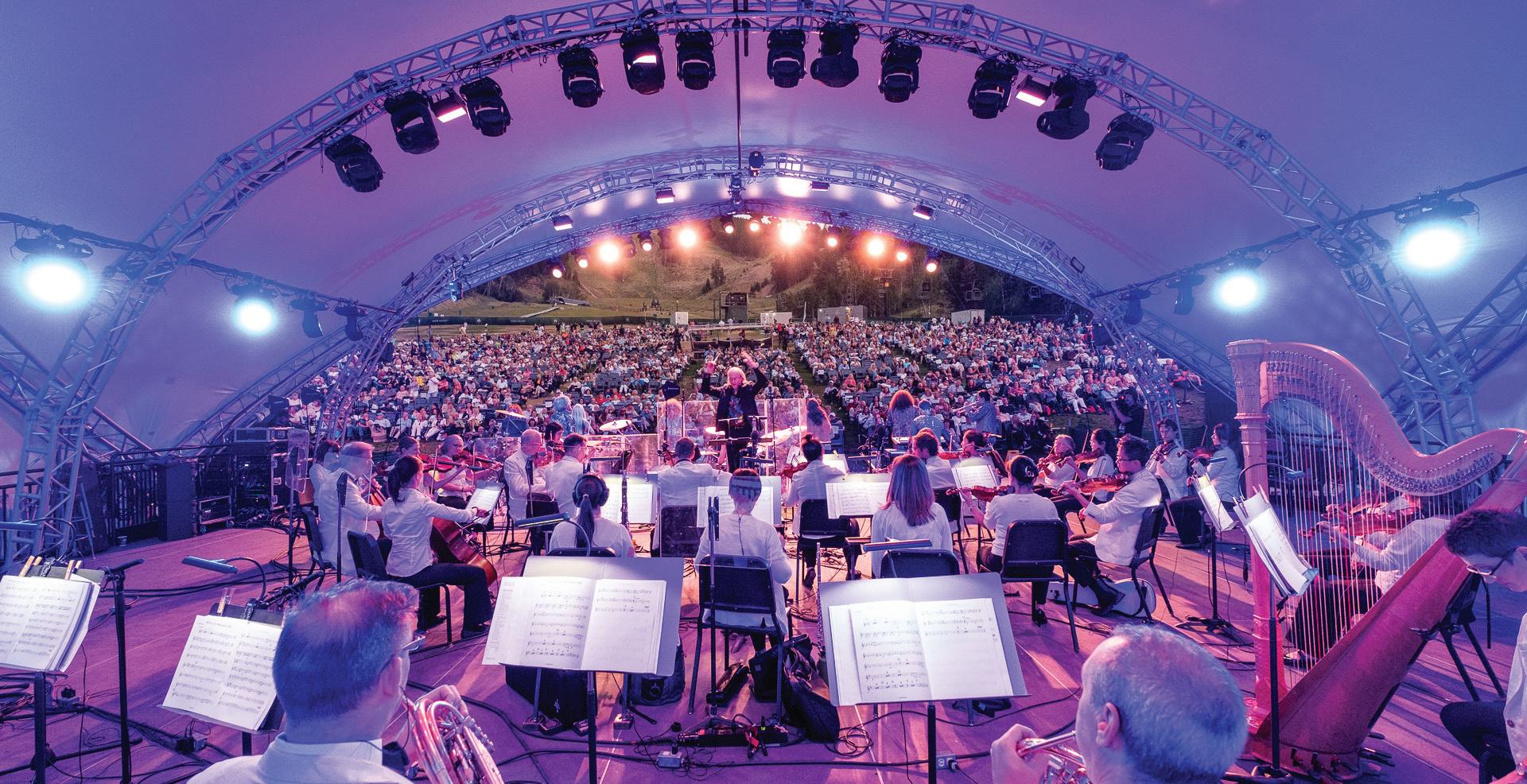
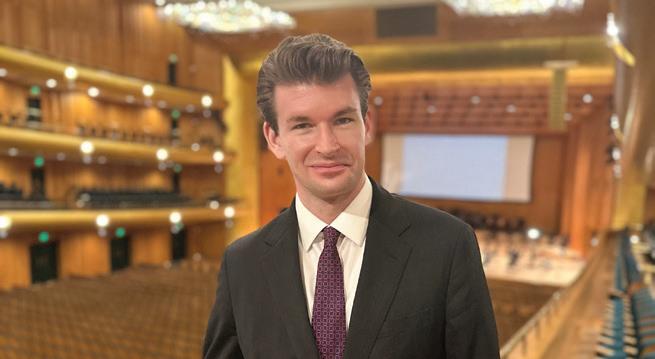
We are elated that Utah Symphony Music Director Designate Markus Poschner makes his DVMF debut by launching the festival with two weeks of engaging orchestral music truly showcasing the outstanding musicians of Utah Symphony at the Snow Park Outdoor Amphitheater in addition to the cherished chamber series at St. Mary’s Catholic Church. Superstar musicians Idina Menzel, Lyle Lovett, and Chris Botti headline concerts with the orchestra featuring hits that made them household names. And, in an innovative first for our festival, the orchestra is joined by Broadway singers for a concert performance of the musical Chicago. Our goal is to reinvigorate the artistic programming of DVMF while sustaining all that you have loved about enjoying live music with friends and family in the incomparable setting of Utah’s Wasatch Mountains!
As we look toward the horizon (and our 25th Anniversary Season in 2029), we recognize that growing this world-class artistic endeavor requires cultivation of the deep roots established by the Deer Valley® Music Festival Founders Trust, generously funded by the Prothro Family, the Shiebler Family, and Jim and Susan Swartz. That is why we are thrilled to highlight USUO’s Park City Enhancement Fund, an initiative dedicated to sustaining and expanding the organization’s long-term summer presence in Park City since 1985. The fund helps ensure the continued growth of the Deer Valley® Music Festival through supporting future artistic programming and community engagement. (See page 86 for more information.)
Thank you, again, for joining us. Whether you are lounging under the stars savoring great food and music with friends and family at Deer Valley Resort or enjoying a glorious evening of chamber orchestra music in the stunning acoustics of St. Mary’s Catholic Church, we know these are experiences you will remember and treasure for years to come.
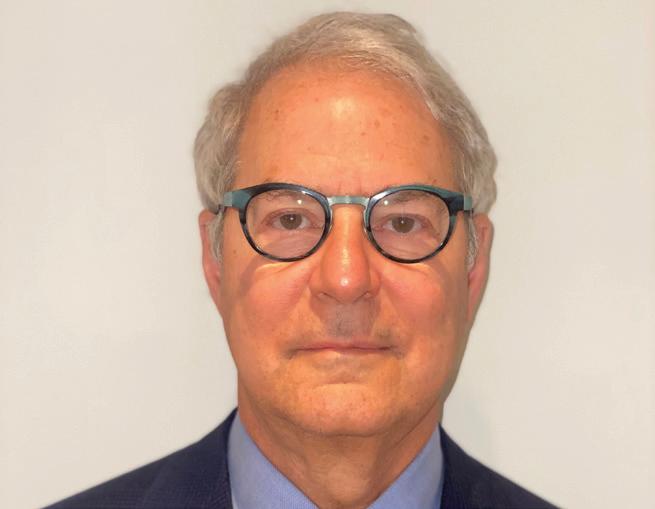
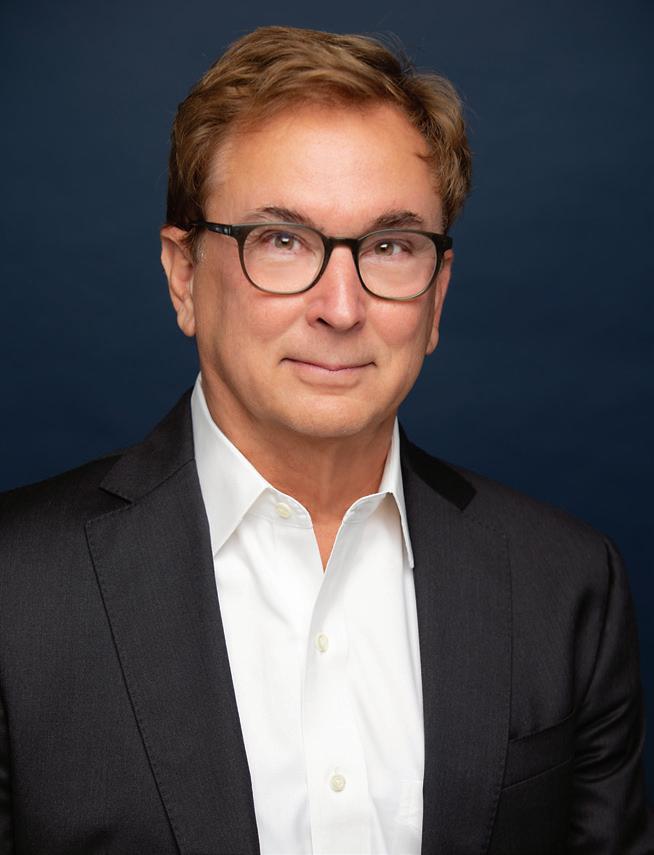
Steven Brosvik USUO President & CEO, The O.C. Tanner Chair
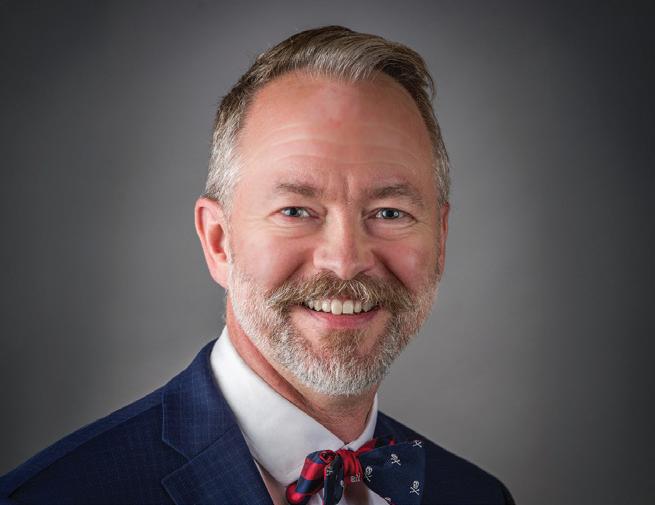
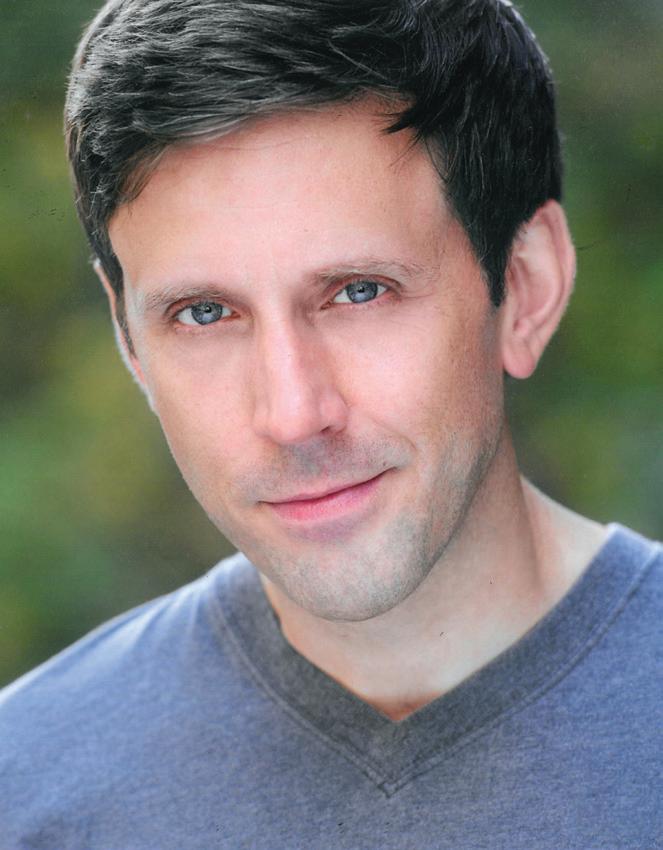
Jim Tozer Co-Chair, DVMF Council
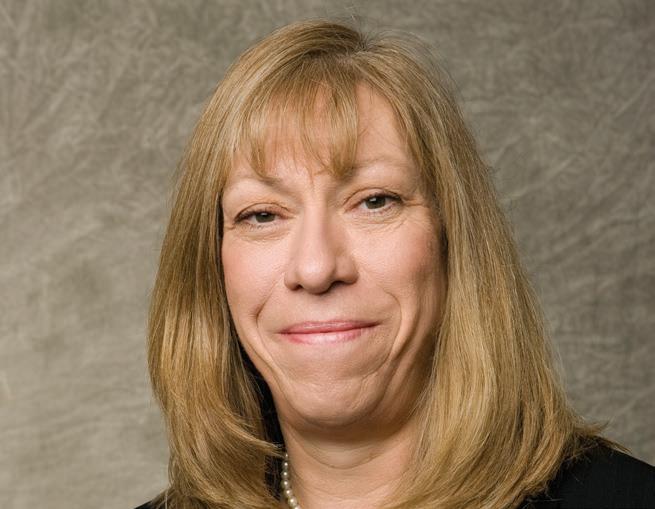
Annette W. Jarvis Chair, USUO Board of Trustees
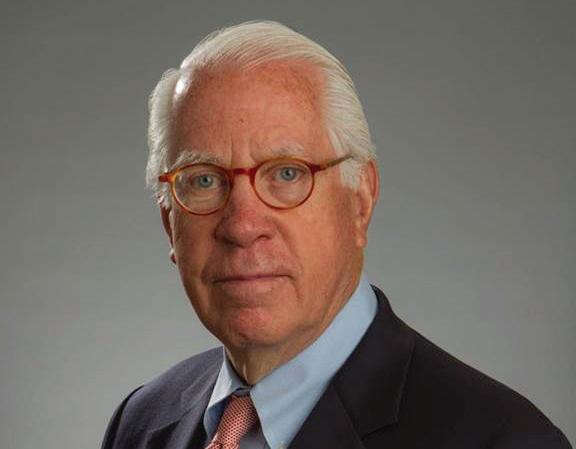
Larry Brownstein Co-Chair, DVMF Council
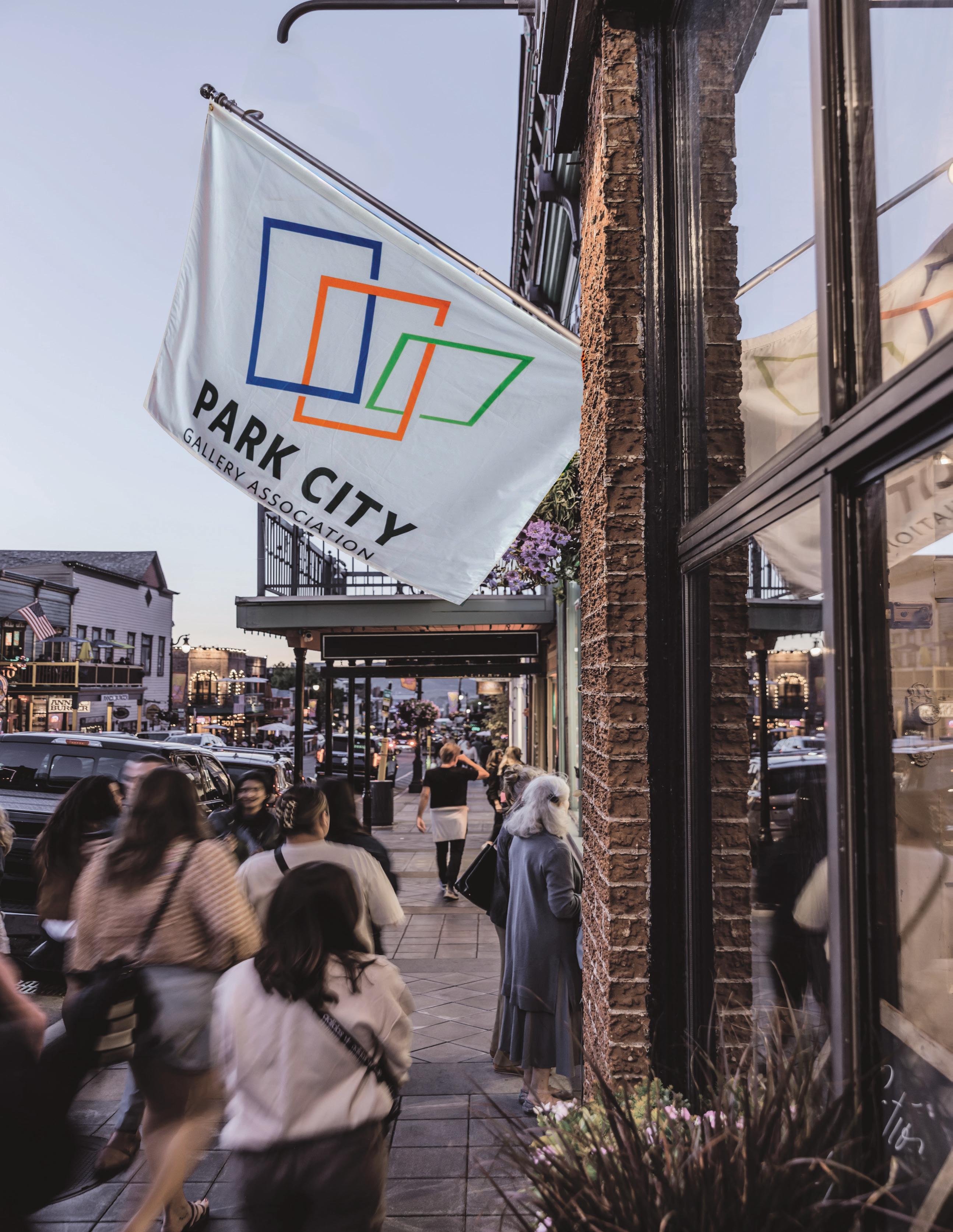
Park City Gallery Stroll
Look for our flags and join us from 6pm – 9pm on the last Friday of every month. The Park City Gallery Association invites you to our monthly Gallery Art Stroll along Historic Main Street and beyond. Held on the last Friday of each month, participating galleries extend a warm welcome, offering captivating exhibitions, refreshments, occasional live music, and the opportunity to connect with fellow art enthusiasts.
TICKETING & PATRON SERVICES
Tickets for Utah Symphony | Utah Opera events can be purchased online at usuo.org, by calling USUO Patron Services at 801-533-NOTE (6683), in-person at Abravanel Hall during regular business hours, and through authorized ArtTix sellers.
Discounts are available for subscribers, youth (age 18 and younger), groups of 10 or more, educators, and military (with valid ID). Contact Patron Services for assistance. Some exclusions apply.
BOX OFFICE HOURS
Maurice Abravanel Hall (Salt Lake City)
Monday–Friday (12–6 PM), Saturday* (2–6 PM)
* The Utah Symphony box office is only open on Saturdays with a scheduled performance.
Snow Park Outdoor Amphitheater (Park City)
Day of show from 5:30 PM through intermission
St. Mary’s Catholic Church (Park City)
Day of show from 6:30 PM through intermission
ACCESSIBILITY
Utah Symphony | Utah Opera is committed to making all of our programs accessible to people with disabilities. Some accommodations include:
• Website accessibility interface
• ASL-interpreted performances upon request
• Braille or large-print programs available by advance request
• Accessible seating accommodations available by request at point of purchase
• Earplugs available by request from volunteers
• ADA drop-off available
• Wheelchairs available for car-to-seat transfers
• Weighted lap pads and sensory kits available for checkout at the ticket office
• Service animals welcome
• If you don’t need a tall seat in the ADA section but would appreciate an easier path into the venue, please enter through the ADA entrance.
We understand that accessibility needs shift. If we should implement or change something, please let us know! Contact our Front of House Director and Accessibility Coordinator Melissa Robison at mrobison@usuo.org or 801-869-9067.
CHOOSE 3+ CONCERTS AND SAVE 20%
Build a Design-A-Series package today to receive exclusive Utah Symphony | Utah Opera subscriber benefits including:
• FREE ticket exchanges
• Waived service fees—save up to $3 per ticket
• Savings of 20% on most Utah Symphony | Utah Opera performances* including our recently announced 2026–27 season!
• Exclusive access to special pre-sales for newly announced performances
• Flexible payment options
* Signature performances are not eligible for discounts. Deer Valley® Music Festival subscriber benefits are effective through August 15, 2026.
GROUP TICKETS
Bring a group of 10 or more to any Utah Symphony | Utah Opera performance and save 20%! Benefits include:
• Personalized service from a dedicated Group Sales Representative
• Flexible payment options
• Waived service fees—save up to $3 per ticket
* Signature performances are not eligible for discounts.
PROTECT YOUR WALLET — Utah Symphony | Utah Opera and ArtTix are the only official ticket outlets.
Share your symphony or opera experience— tag us in your photos and memories! @utahsymphony #utahsymphony @utahopera #utahopera
The Maurice Abravanel Chair, endowed by the George S. and Dolores Doré Eccles Foundation
Thierry Fischer
Music Director Emeritus
David Robertson Creative Partner
Jessica Rivero Altarriba Assistant Conductor
Austin McWilliams
Chorus Director & Opera Assistant Conductor
VIOLIN*
Madeline Adkins
Concertmaster
The Jon M. & Karen Huntsman Chair, in honor of Wendell J. & Belva B. Ashton
Kathryn Eberle
Associate Concertmaster
The Richard K. & Shirley S. Hemingway Chair
Laura Ha 2nd Associate Concertmaster
Hugh Palmer Assistant Concertmaster
Claude Halter Principal Second
Evgenia Zharzhavskaya Acting Associate Principal Second
Karen Wyatt
Acting Assistant Principal Second
Sara Bauman~
Erin David
Emily Day-Shumway~
Joseph Evans
Wen Flatt
Lun Jiang
Rebekah Johnson
Tina Johnson~
Alison Kim
Amanda Kofoed~
Jennifer Kozbial Posadas~
David Langr
Hannah Linz
Yuki MacQueen
Alexander Martin
Rebecca Moench
Suni Norman~
David Porter
Lynn Maxine Rosen#
Elina Rubio
Barbara Ann Scowcroft
Ju Hyung Shin
Bonnie Terry
Julie Wunderle
VIOLA*
Brant Bayless
Principal
The John C. Kish Chair
Yuan Qi
Associate Principal
Julie Edwards
Joel Gibbs
Carl Johansen
Scott Lewis
John Posadas
Leslie Richards~ Whittney Sjogren
CELLO*
Matthew Johnson
Acting Principal
The J. Ryan Selberg Memorial Chair
Andrew Larson Acting Associate Principal
John Eckstein
Walter Haman
Anne Lee
Louis-Philippe Robillard
Kevin Shumway
Hannah Thomas-Hollands~ Pegsoon Whang
BASS*
David Yavornitzky Principal
Corbin Johnston** Associate Principal
Andrew Keller
Edward Merritt
Masaru Podgorny~
James Stroup~
Jens Tenbroek
Thomas Zera
HARP
Louise Vickerman** Principal
FLUTE
Mercedes Smith
Principal
The Val A. Browning Chair
Lisa Byrnes Associate Principal
Caitlyn Valovick Moore
PICCOLO
Caitlyn Valovick Moore
OBOE
Zachary Hammond
Principal
The Gerald B. & Barbara F. Stringfellow Chair
James Hall Associate Principal
Lissa Stolz
ENGLISH HORN
Lissa Stolz
CLARINET
Tad Calcara Principal
The Norman C. & Barbara Lindquist Tanner Chair, in memory of Jean Lindquist Pell
Erin Svoboda-Scott Associate Principal
The Shane & Stacey Stowell Chair
Lee Livengood
BASS CLARINET
Lee Livengood
E-FLAT CLARINET
Erin Svoboda-Scott
BASSOON
Lori Wike
Principal
The Edward & Barbara Moreton Chair
Leon Chodos# Associate Principal
Jennifer Rhodes Acting Associate Principal
Jaquain Sloan~
CONTRABASSOON
Leon Chodos# Jaquain Sloan~
HORN
Jessica Danz
Principal
The Marcia JS Richards Chair
Edmund Rollett** Associate Principal
Lauren Robinson~ Acting Associate Principal
Jonathan Chiou
Julia Pilant~ Stephen Proser
TRUMPET
Travis Peterson** Principal
Alex Mayon~ Acting Principal
Jeff Luke Associate Principal
Seretta Hart~
Paul Torrisi
TROMBONE
Mark Davidson Principal
The Nathan & Shannon Savage Chair, in memory of Neal Savage
Sam Elliot Associate Principal/Second Trombone
BASS TROMBONE
Graeme Mutchler
TUBA
Alexander Purdy Principal
TIMPANI
Micah Harrow~ Acting Principal
Eric Hopkins Associate Principal
The Theodore & Elizabeth Schmidt Family Foundation Chair
PERCUSSION
Keith Carrick Principal
Eric Hopkins
Michael Pape
KEYBOARD
Jason Hardink Principal
LIBRARIANS
Clovis Lark Principal
Anna Thompson~ Acting Associate Principal Librarian
ORCHESTRA PERSONNEL
Ebner Sobalvarro Director of Orchestra Personnel
Eric Reichelt Orchestra Personnel Manager
* String Seating Rotates
** On Leave
# Sabbatical
~ Substitute Member
UTAH SYMPHONY | UTAH OPERA STAFF
ADMINISTRATION
Steven Brosvik
President & CEO
The O.C. Tanner Chair
David Green
Senior Vice President & COO
Micah Luce
Director of Human Resources & Organizational Culture
Julie McBeth
Executive Assistant to the CEO
Natty Taylor
Human Resources Manager
Farrah Valdez
Executive Assistant to the Senior VP & COO
SYMPHONY ARTISTIC
Kerry Smith
Vice President of Artistic Planning
Ebner Sobalvarro
Director of Orchestra Personnel
Eric Reichelt
Orchestra Personnel Manager
Morgan Moulton
Artistic Planning Manager
Jessica Rivero Altarriba Assistant Conductor
Guillermo Sanchez
Artistic Planning Coordinator & Assistant to the Music Director
OPERA ARTISTIC
Christopher McBeth
Opera Artistic Director
Austin McWilliams
Chorus Director & Opera Assistant Conductor
Deborah Robertson
Principal Coach
Michelle Peterson Director of Production
Ashley Tingey
Production Coordinator
SYMPHONY OPERATIONS
Jen Shark
Director of Orchestra Operations
Melissa Robison
Front of House Director
Chip Dance
Director of Production
Fiona McGowan
Operations Manager
Sarah Madany
Stage Manager
Garrett Vargo
Assistant Stage Manager
OPERA TECHNICAL
Jason Barroncini
Technical Director
Kelly Nickle
Properties Master
Dusty Terrell
Scenic Charge Artist
JR Orr
Head Carpenter/Shop Foreman
COSTUMES
Carol Wood
Costume Director
Marcos Ambriz
Cutter/Draper & Costume Manager
Abby Gehring
First Hand
Mallory Goodman
Costume Rentals & Collection Manager
Spencer Smith
Costume Rentals & Collection Assistant Manager
Milivoj Poletan
Master Tailor
Kathryn Wieland
Assistant Tailor
Julie Porter
Crafts Artisan/Milliner
Amy Fernelius
Lee Sego
Stitchers
DEVELOPMENT
David Hodges
Director of Development Operations & Institutional Giving
Garrett Murphy Director of Development
Calli Forsyth
Assistant Director of Institutional Sponsorships & Engagement
Katie Swainston
Assistant Director of Individual Giving
Lisa Poppleton
Grants Manager
Ellesse Hargreaves
VIP & Sponsorship Benefits Manager
Chloe Toyn
Development Coordinator
MARKETING & COMMUNICATIONS
Meredith Kimball Laing
Vice President of Marketing & Communications
Amelia England
Director of Marketing
Nina Starling
Website Manager
Camila Baltazar
Communications Manager
Emmalee Chastain
Marketing Manager
Emma Price
Email Marketing Strategist
Billy Clouse
Graphic Designer
PATRON SERVICES
Caitlin Marshall
Director of Patron Services
Toby Simmons
Patron Services Manager
Bev Storrs
Sales & Patron Loyalty Manager
Michael Gibson
Patron Services Assistant Manager
Genevieve Gannon
Group Sales Associate
True Moore
Annabelle Daniels-Rosenberg
Patron Services Specialists
Ananda Spike
Val Tholen
Kjelbi Elassali
Tanush Saran
Thia Harris
Alex Porter
Cynthia Jensen
Patron Services Associates
ACCOUNTING & INFORMATION TECHNOLOGY
Jeffrey Andreasen
CFO
Mike Lund
Director of Information Technologies
Melanie Giles Controller
Dallin Mills
Database Manager
Paige LeFay
Accounts Payable Specialist
EDUCATION & COMMUNITY
ENGAGEMENT
Ben Kipp
Vice President of Education & Community Engagement
Kevin Nakatani
Opera Education Manager
James Wesson
Symphony Education Manager
Beth Foley
Education Coordinator
We would also like to recognize our interns and temporary and contracted staff for their work and dedication to the success of Utah Symphony | Utah Opera.
DEER VALLEY® MUSIC FESTIVAL SERIES SPONSORS
DEER VALLEY® MUSIC FESTIVAL SEASON SPONSOR
SUMMER SYMPHONY SPONSOR
SHIEBLER FAMILY FOUNDATION
SUMMER ENTERTAINMENT SPONSOR
OFFICIAL VEHICLE OF THE UTAH SYMPHONY SUMMER FESTIVAL
CHAMBER SERIES SPONSOR
KENT & MARTHA DIFIORE AND BEANO SOLOMON
MUSICAL MOMENTS AT UTAH SYMPHONY |
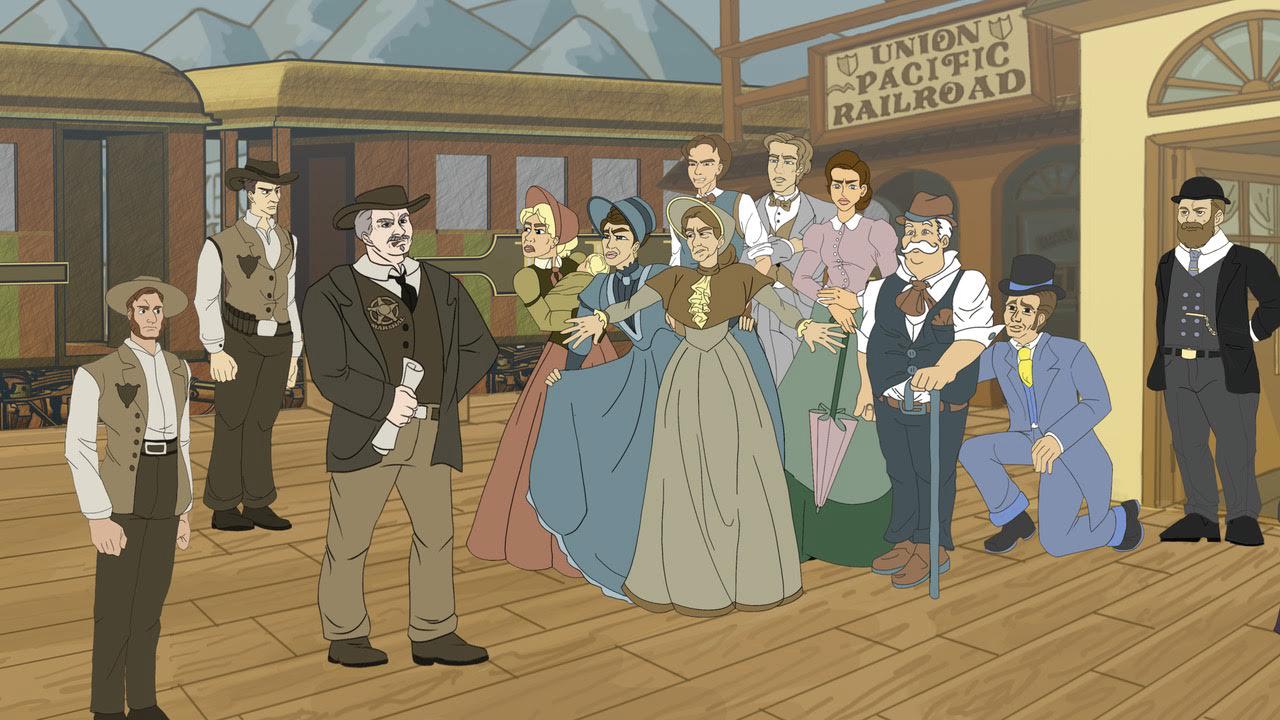
1. Blast off! During our Carmina Burana Innovation in Concert: Aerospace Night, guests step into the future with immersive VR astronaut training from Uplift Aerospace.
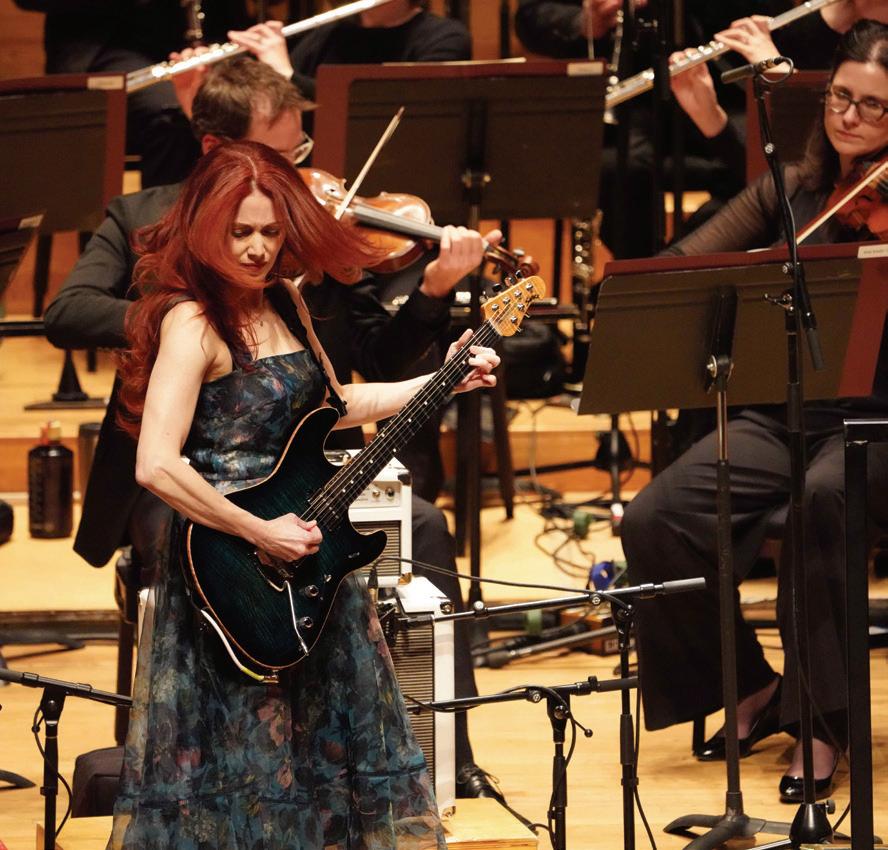
2. Gretchen Menn commands the stage during Steven Mackey’s guitar concerto, Aluminum Flowers, in a powerful performance with the Utah Symphony led by David Robertson.
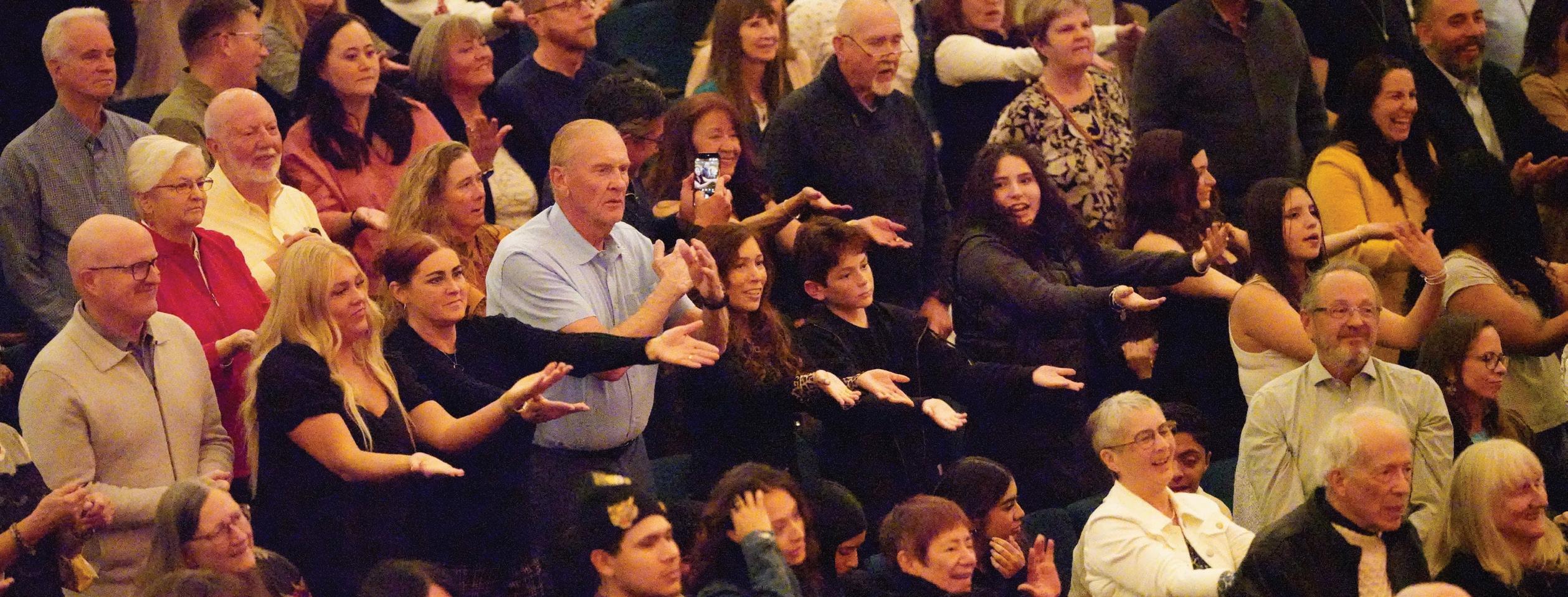
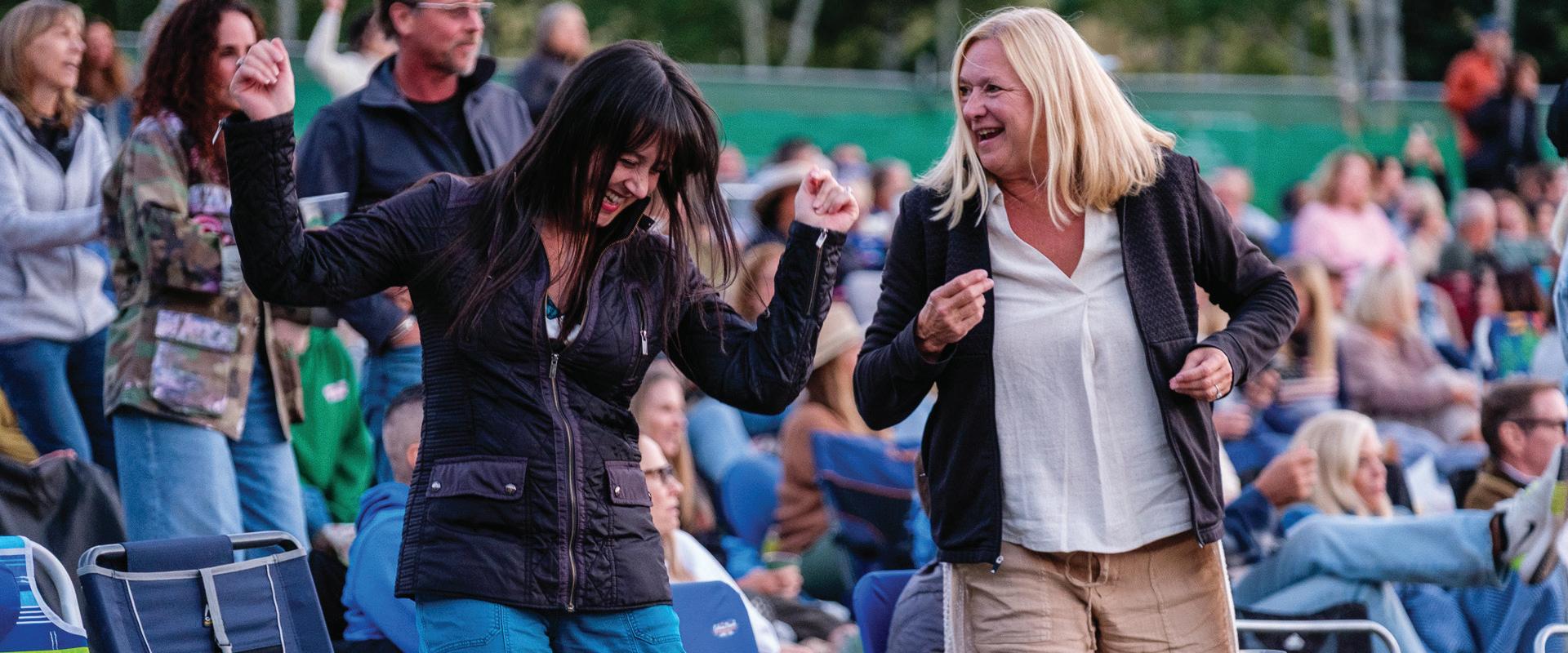
3. The audience brings the party to Maurice Abravanel Hall, filling the room with nonstop energy as they dance the Macarena during La Vida Loca: Latin Pop Hits.
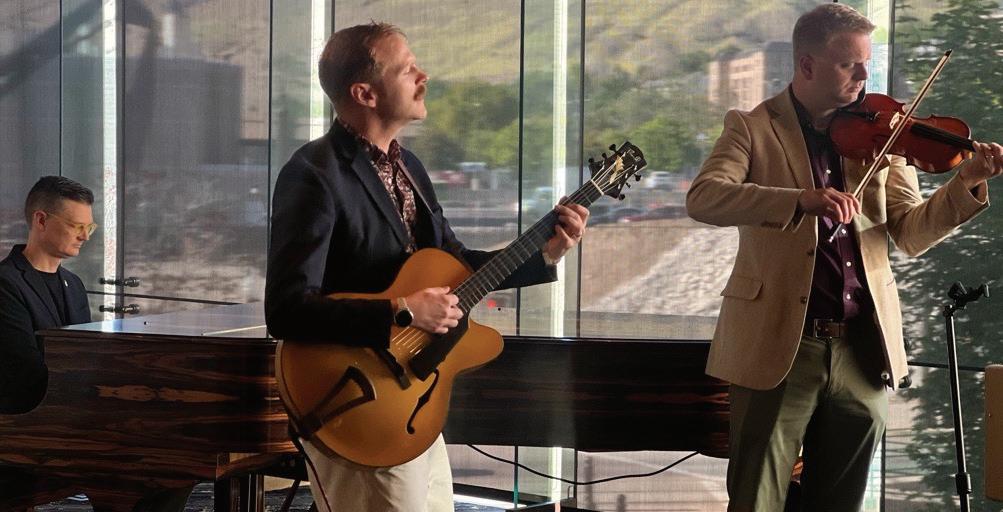
4. Andrew Maxfield (piano), Nathan Royal (guitar), and Curtis Woodbury (violin/USUO board of trustees) perform “I Don’t Want to Set the World on Fire” during our Engagement Series for Early to Mid-Career Professionals ahead of Ben Folds’ performance.
5. Oliver the dog takes his rehearsal duties seriously, keeping the fetch game going while his owner, David Robertson, conducts the orchestra nearby.
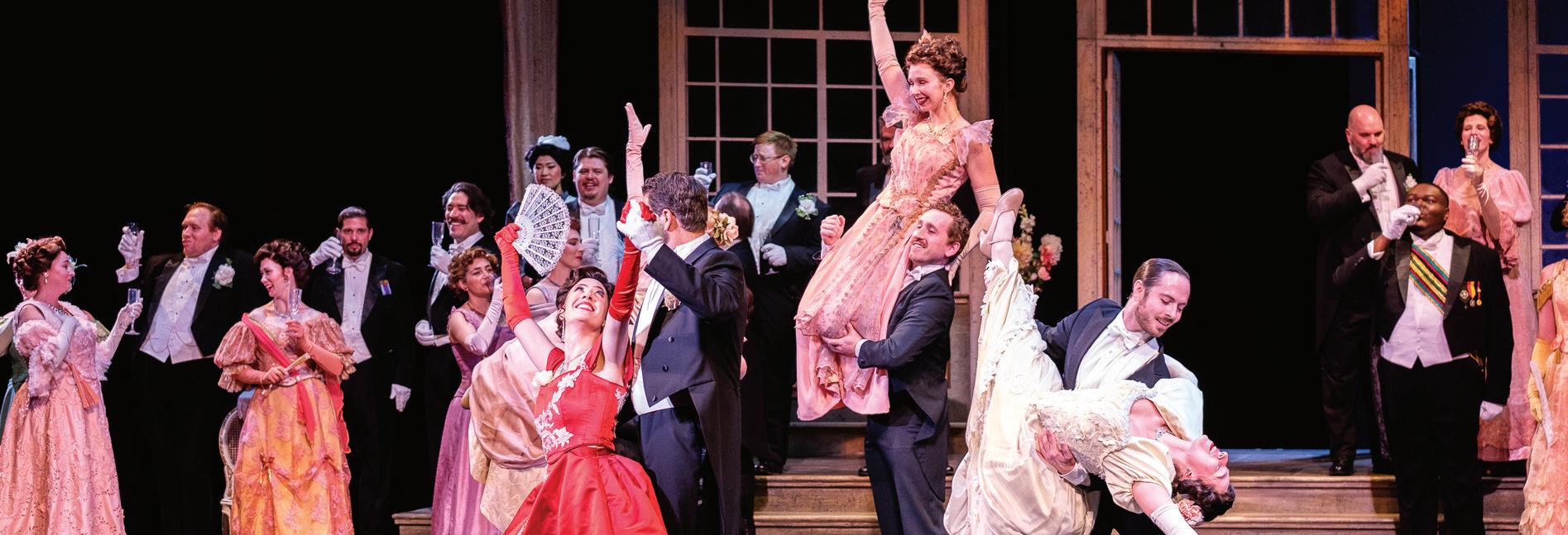
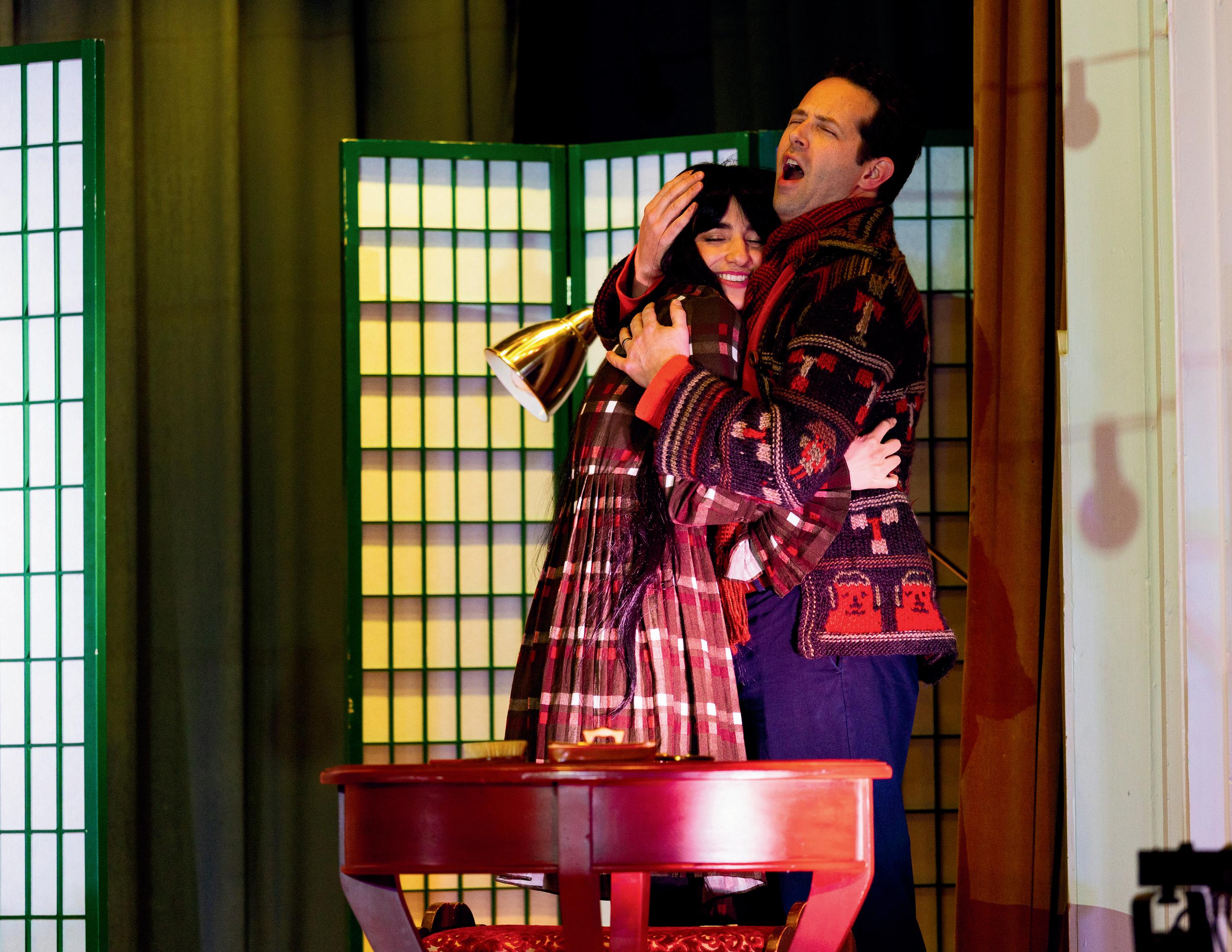
6. Striking movement and powerful storytelling collide in La traviata as six Utah-based dancers join the cast alongside lead soprano Lydia Katarina and the Utah Opera Chorus for Utah Opera’s visually stunning production.
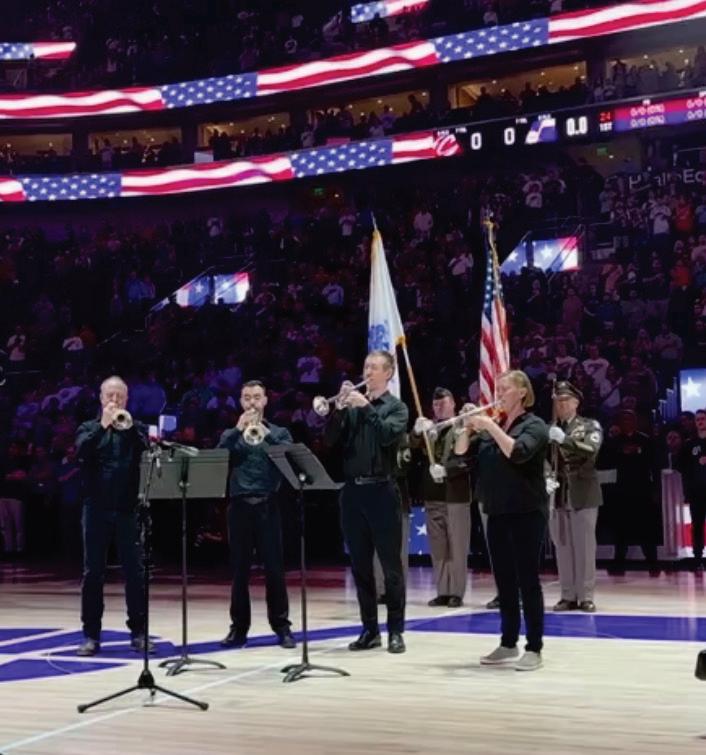
7. Seretta Hart, Alex Mayon, Paul Torrisi, and Jeff Luke take center court to perform the national anthem on their trumpets at a Utah Jazz game.
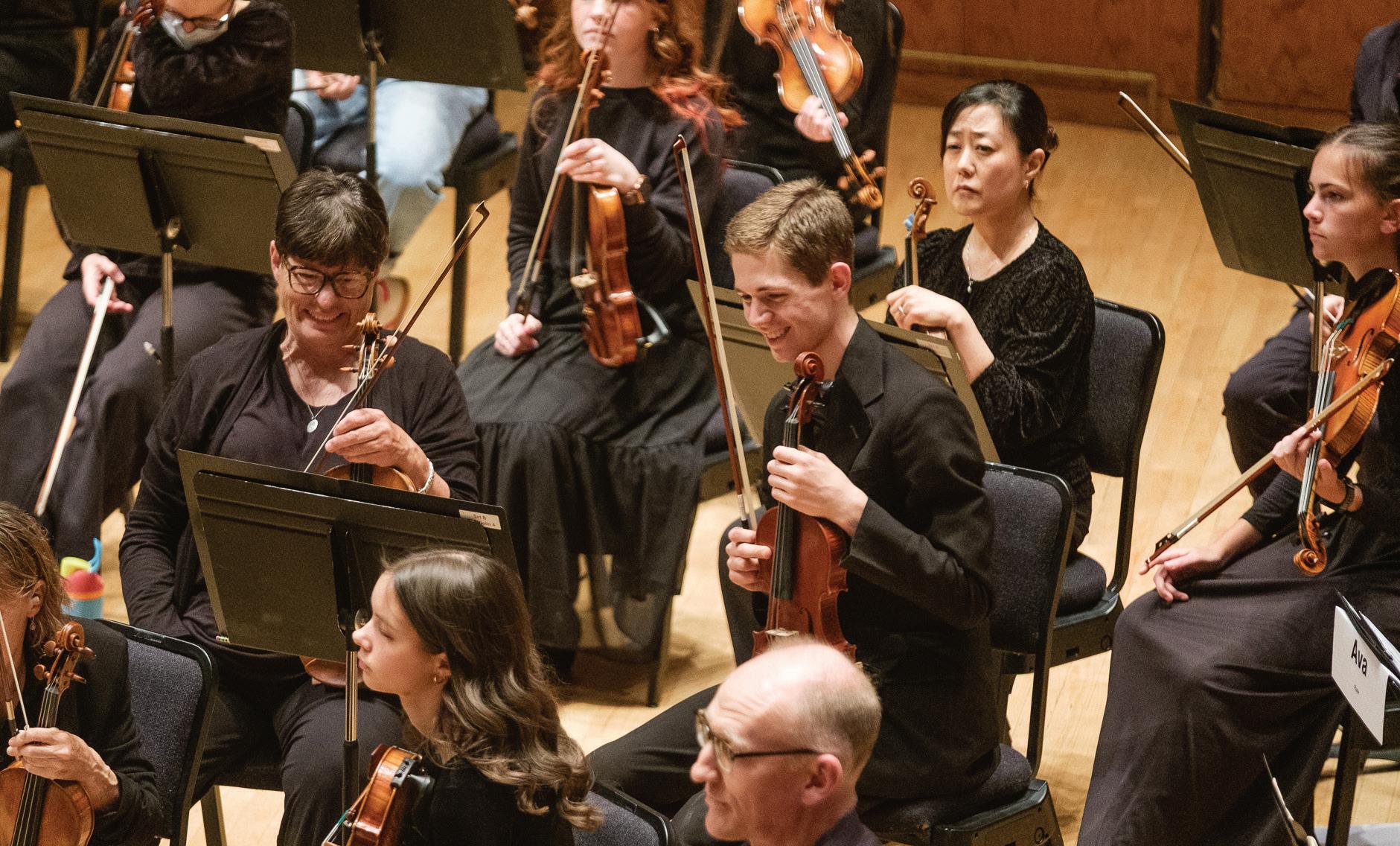
8. Utah Symphony musicians and talented high school students from across the state join forces for an unforgettable Side-by-Side performance led by Markus Poschner at Abravanel Hall. 6
MUSIC IN THE MOUNTAINS WITH MARKUS
By Julia Lyon
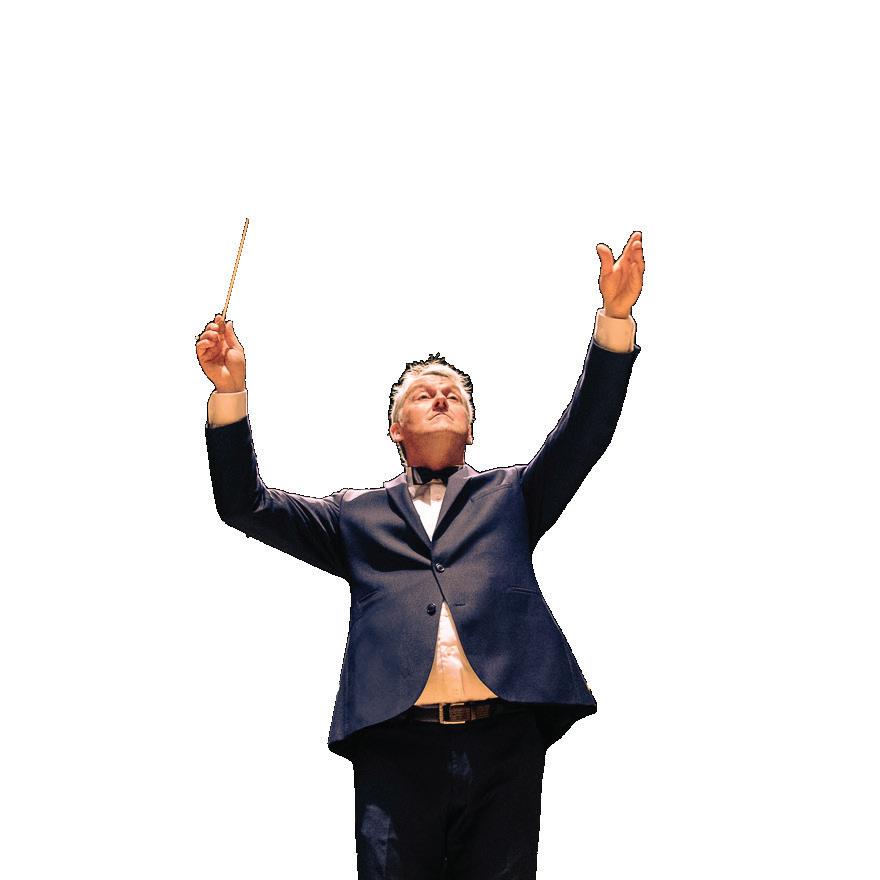
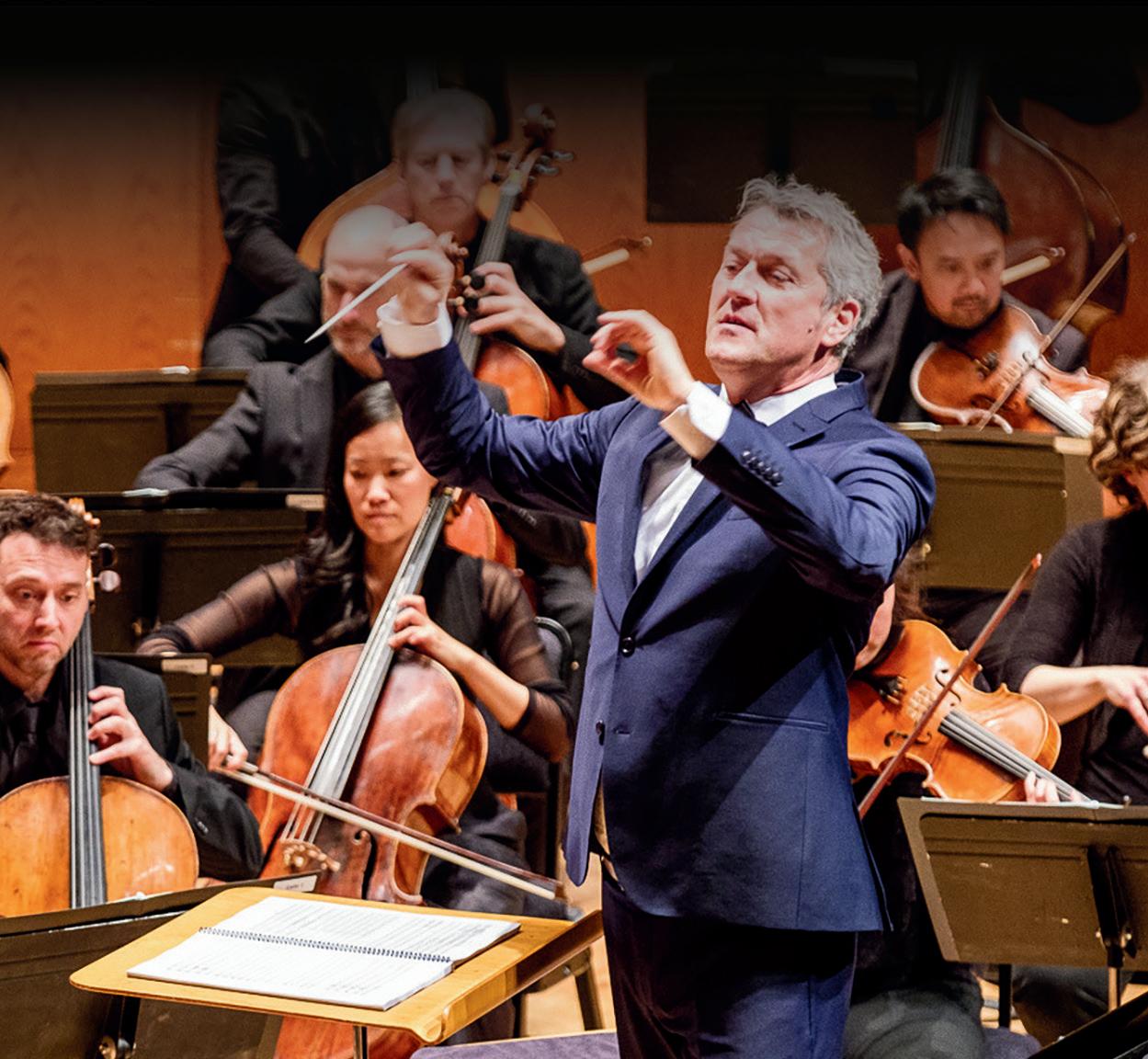
WHEN MARKUS POSCHNER RAISES HIS BATON ON THE STAGE of Snow Park Outdoor Amphitheater this July, he will be the first Utah Symphony music director in nearly 20 years to conduct at the Deer Valley® Music Festival.
Poschner, who will take over full duties as music director in the 2027–28 season, grew up in the Alps—spending time in both Austria and Germany. To him, leading the symphony in the mountains is ideal.
“It’s the perfect environment to perform the great masterworks—there’s so much inspiration,” said Poschner.
But it’s also the ideal setting for new audiences to discover him.
“The Deer Valley® Music Festival gives us a perfect opportunity to get in touch with new audiences, with young audiences, with every part of our society,” he explained. “This aligns with my personal philosophy of what a symphony orchestra should be.”
The European conductor will lead three Utah Symphony performances on the Deer Valley stage and one chamber concert at St. Mary’s Catholic Church this summer.
At St. Mary’s, light streams through the windows revealing the nature just beyond. Poschner calls it a “magic place.”
“You can feel it immediately, these open windows and the view to the mountains,” he said.
The excellent acoustics and intimate space provide a unique opportunity for audiences to hear members of the Utah Symphony up close. The audience will also see
Poschner’s close connection with the musicians as he conducts an evening of Mozart on July 22.
After July, Poschner will return to Europe and audiences will have to wait until 2027 to see him again. He returns to Utah to lead the orchestra and Utah Symphony Chorus in Brahms’ Requiem next spring.
WANT TO SEE MARKUS POSCHNER ON THE PODIUM THIS SUMMER? CATCH HIM AT ONE OF THESE FOUR PERFORMANCES:
BEETHOVEN’S NINTH
JULY 17 | 8 PM & JULY 18 | 7:30 PM
Snow Park Outdoor Amphitheater
MOZART’S “JUPITER” & VIOLIN CONCERTO NO. 2 WITH MADELINE ADKINS
JULY 22 | 8 PM
St. Mary’s Catholic Church
STRAVINSKY’S FIREBIRD SUITE & STRING TRIO “TIME FOR THREE”
JULY 25 | 7:30 PM
Snow Park Outdoor Amphitheater
DEER VALLEY® MUSIC FESTIVAL TRIVIA
• The last time a USUO music director conducted at Deer Valley was in 2008 when Keith Lockhart led the orchestra. Lockhart was music director from 1998 to 2009.
• He returned to conduct at the festival in 2011 and 2013 as music director emeritus.
MASTERWORKS
A NIGHT IN ANCIENT GREECE: RAVEL’S DAPHNIS AND CHLOÉ
SEPT. 25 & 26, 2026
ABRAVANEL HALL
STRAVINSKY’S FIREBIRD SUITE
NOV. 13 & 14, 2026
ABRAVANEL HALL
DVOŘÁK’S “NEW WORLD” SYMPHONY
FEB. 19 & 20, 2027
ABRAVANEL HALL
MARKUS POSCHNER CONDUCTS SYMPHONIC DANCES FROM WEST SIDE STORY
JUNE 4 & 5, 2027
ABRAVANEL HALL
BEETHOVEN’S NINTH
FRIDAY, JULY 17, 2026 / 8:00 PM / SNOW PARK OUTDOOR AMPHITHEATER
SATURDAY, JULY 18, 2026 / 7:30 PM / SNOW PARK OUTDOOR AMPHITHEATER
MARKUS POSCHNER, conductor
JACQUELYN WAGNER, soprano*
CAMILLE SHERMAN, mezzo-soprano*
ROBERT STAHLEY, tenor*
ZACHARY NELSON, baritone
UTAH SYMPHONY CHORUS
AUSTIN MCWILLIAMS, chorus director
UTAH SYMPHONY
BEETHOVEN
Symphony No. 9 in D minor, Op. 125 “Choral” (60′)
I. Allegro ma non troppo, un poco maestoso
II. Scherzo: Molto vivace
III. Adagio molto e cantabile
IV. Finale: Presto - Allegro assai
PRESENTING SPONSOR
CONCERT SPONSOR TOM BILLINGS IN LOVING MEMORY OF JUDY BILLINGS
JIM & SUSAN BLAIR
ORCHESTRA SPONSOR
RESTRUCTURE GROUP
*Utah Symphony debut
ABOUT THE ARTISTS — BEETHOVEN’S NINTH
Markus Poschner
Conductor
Markus Poschner is Music Director Designate of the Utah Symphony, assuming full duties in the 2027–28 season. In 2025–26, Poschner began his tenure as Chief Conductor of Sinfonieorchester Basel and, in 2026–27, he becomes Chief Conductor of the ORF Vienna Radio Symphony Orchestra.
He was previously Chief Conductor of the Orchestra della Svizzera italiana from 2015–2025. Poschner led the orchestra in two International Classical Music Award-winning recordings: the complete Brahms symphonies and a Hindemith/Schnittke recording. In 2024, Poschner received the Special Achievement Award from the ICMA jury for the complete recording of all Bruckner symphonies with the Bruckner Orchestra Linz, of which he has been Chief Conductor since 2017.
After receiving the German Conducting Award and German Record Critics’ Award 2021, Poschner has made regular guest appearances with top orchestras and opera houses around the world. Next season he will make his debut with the Berliner Philharmoniker.
Jacquelyn Wagner Soprano
AMERICAN SOPRANO JACQUELYN WAGNER STUDIED IN NEW YORK AND MICHIGAN. She began her career as a scholarship holder, then as a member of the ensemble at the Deutsche Oper Berlin. The artist now performs internationally at all major opera houses and concert venues. She has performed in roles such as Leonore in Fidelio, Elsa in Lohengrin, Contessa in Le nozze di Figaro, Marschallin in Der Rosenkavalier, Agathe in Der Freischütz, Donna Anna in Don Giovanni, Elettra in Idomeneo, and the title roles in Arabella, Salome, Norma and Jenůfa, working with conductors such as Myung-whun Chung, Daniele Gatti, Philippe Jordan, Josep Pons, Riccardo Muti, Fabio Luisi, Christian Thielemann and, in future, Tarmo Peltokoski and Kiril Petrenko in Zurich, at La Scala in Milan, the Semperoper in Dresden, the Hamburg State Opera, the Deutsche Oper Berlin, the Liceu in Barcelona, the Teatro Real in Madrid, in Bordeaux, Amsterdam, the Opéra de Paris Bastille, the Zurich Opera House and the Bavarian State Opera, as well as at the Salzburg Easter Festival, the Festival d’Aix en Provence, and the Festival Martina Franca.
GUEST ARTISTS SPONSOR
ABOUT THE ARTISTS — BEETHOVEN’S
Camille Sherman
Mezzo-Soprano
THIS SEASON, CAMILLE SHERMAN MAKES HER DEBUT with Opéra de Québec as Angelina in La Cenerentola and returns to Hessisches Staatstheater Wiesbaden for her second season as an Ensemble Artist, singing Dorabella in Così fan tutte, Hansel in Hänsel und Gretel, Flora in La traviata, and Mother Spring in The Snow Maiden. She also reprises the roles of Mercédès in Carmen and Rosina in Il barbiere di Siviglia. Next season will bring her debut with Utah Opera, as well as a return to Hessisches Staatstheater Wiesbaden.
In the 2024–25 season, she joined Hessisches Staatstheater Wiesbaden as an Ensemble Artist, where her assignments included the title role in Offenbach’s Fantasio, Rosina in Il barbiere di Siviglia, Mercédès in Carmen, Marcellina in Le nozze di Figaro, and their Salon Strozzi.
Robert Stahley
Tenor
RISING TENOR ROBERT STAHLEY, DESCRIBED AS “A PRODIGIOUSLY TALENTED PERFORMER” (ReviewSTL), continues to thrill audiences with “his impassioned, soaring tenor” (BroadwayWorld) and bring roles vividly to life on stage where “he tirelessly exudes gravitas and individuality” (parterre box). Highlights of the 2025-26 season include Stahley’s reprisal of the role of Erik in Der fliegende Holländer with the Buffalo Philharmonic, his debut in the role of Don José in Carmen with Dayton Opera, as the tenor soloist in Verdi’s Requiem with the Oakland Symphony, as Sam in Susannah with Opera Omaha, as Cavaradossi in Tosca with the Jacksonville Symphony, and will join the Glyndebourne Festival for the first time to cover the same role.
Stahley was awarded second place in the 2024 Pasadena Vocal Competition, first prize in the 2019 Wagner Society of New York Competition, third prize in the 2018 Gerda Lissner Vocal Competition, and first prize in the 2017 Piccolo Vocal Competition
ABOUT THE ARTISTS — BEETHOVEN’S NINTH
Zachary Nelson
Baritone
ZACHARY NELSON, A NATIVE OF ANNAPOLIS, MARYLAND, STUDIED VOCAL performance at The Catholic University of America, subsequently attending the prestigious Academy of Vocal Arts in Philadelphia.
The 2025–26 season featured an exciting mix of role debuts and favorites for Nelson. He continues his relationship with the Lyric Opera of Chicago, singing Sharpless in Madama Butterfly, and Pittsburgh Opera as Marcello in La bohème Nelson also made an anticipated role and house debut as Don Pizarro in Fidelio with Utah Opera. Next season will feature his house and role debut with The Dallas Opera as the Forester in The Cunning Little Vixen, and return to the Lyric Opera of Chicago.
Last season, Nelson returned to Lyric Opera of Chicago as Paul in The Listeners and made his debut as the titular Bluebeard in Bluebeard’s Castle with Opera San José.
Utah Symphony Chorus
Austin McWilliams Chorus Director
AUSTIN MCWILLIAMS IS A CONDUCTOR AND COUNTERTENOR WHO SPECIALIZES in contemporary vocal music. He strives to present compelling, intriguing art that is directly relevant to the communities in which it is performed. This season marks his second as Chorus Director & Opera Assistant Conductor at Utah Symphony | Utah Opera. Previously, McWilliams was Associate Conductor and Chorus Master at Opera Grand Rapids, Head of Music at West Michigan Opera Project, and Co-Artistic Director at Ad Astra Music Festival. In Grand Rapids, he was the choir director at Fountain Street Church, a non-denominational, noncreedal institution that serves as a venue for heterodox speakers and ideologies. A dedicated conductor and educator, McWilliams has served as Director of Choral Activities at Aquinas College and as adjunct faculty at Western Michigan University. He is also a faculty member at Missouri Scholars Academy, a governor’s school for gifted high school juniors in his native state.
THE UTAH SYMPHONY CHORUS IS COMPOSED OF VOLUNTEER SINGERS from the Salt Lake City area who come from all walks of life. The chorus typically performs three concerts each season with the Utah Symphony in Abravanel Hall, which may include choral masterworks, pops concerts, and the annual Messiah Sing-In. Singers have performed under the baton of Utah Symphony Music Director Designate Markus Poschner as well as former Music Directors Maurice Abravanel, Varujan Kojian, Joseph Silverstein, Keith Lockhart, and Thierry Fischer. The Utah Symphony Chorus rehearses Tuesday evenings for several weeks before each concert and most evenings the week of a performance. Visit usuo.org/choruses to learn more about joining the chorus.
Soprano
Cydnee Barnum Farmer
Christina Brandt
Caitie Bryner
A. Elizabeth Davis
Julie Fleming
Cassie Glazier
Kiera Gray
Andrea Hale
Kaily Jacobs
Macy Kelson
Rachel Kibler
Isabelle Knowles
Kate Olsen
Natalie Sandberg
Sarah Singer
Carolyn Talboys-Klassen
Hannah VonHatten
Jennifer Way Zemp
Alto
Caite Beck
Emma Chambers
Chelsea Cummins
Jennifer Dearinger
Sylvia Fisk
Kate Fitzgerald
Kate Garney Dickerman
Erika Gray
Jennifer Hancock
Annette Jarvis
Joan Jensen Bowles
Raenell Jones
Inhye Kang
Samantha Lange
Jessica Morgan
Claire Phillips
Belinda Purdum
Ruth Rogers
Anastasia Romanovskaya
Kim Smith
Jennifer Taylor
Maizie Toland
Sammie Tollestrup
Margaret Toney
Katrina VanTassell
Melissa Virgin
Kathy Wight
Tenor
Drake Bennion
Geordie Burdick
Holden Deitsch
Dyson Ford
Garv Gianchetta
Orion Gray
Samuel Hancock
Timothy Hanna
Hayden Höglund
Nathaniel Kemp
Jeanne Leigh-Goldstein
Layton Loucks
Daniel McDonnall
Ken McKell
Dale C. Nielsen
Zachary Payne
Alan Robertson
Scott Tarbet
Carl Wadsworth
John Woeste
Edgar Zúñiga
Bass
Aaron Asay
Olivier Bauer Simon
Bruce Boyes
Richard Butler
Jim Hardwick
Derek Hayashi
Michael Hurst
David O. Johnson
Thomas Klassen
Ben Lobrot
Tom McFarland
Trevor McFarland
Steven McGregor
Richard Olsen
Chris Patch
Michael Rasmussen
Bryce Robinson
Bryan Romney
Carlos Salazar
Kaden Smith
Jay Sweet
David Wells
Phil Wilson
Kevin Wolford
Bradley Woods
Mozart’s
“JUPITER” & VIOLIN CONCERTO NO. 2 WITH MADELINE ADKINS
WEDNESDAY, JULY 22, 2026 / 8:00 PM / ST. MARY’S CATHOLIC CHURCH
MARKUS POSCHNER, conductor
MADELINE ADKINS, violin
UTAH SYMPHONY
MOZART
Symphony No. 40 in G minor, K. 550 (30′)
I. Molto allegro
II. Andante
III. Menuetto: Allegretto - Trio
IV. Allegro assai
MOZART
Violin Concerto No. 2 in D Major, K. 211 (23′)
I. Allegro moderato
II. Andante
III. Rondeau: Allegro
INTERMISSION
MOZART
Symphony No. 41 in C Major, K. 551 “Jupiter” (33′)
I. Allegro vivace
II. Andante cantabile
III. Menuetto: Allegretto - Trio
IV. Molto allegro
CONCERT SPONSOR
PAT RICHARDS & BILL NICHOLS
Markus Poschner Conductor
PLEASE SEE MARKUS POSCHNER’S BIO ON PAGE 28
Madeline Adkins
Violin
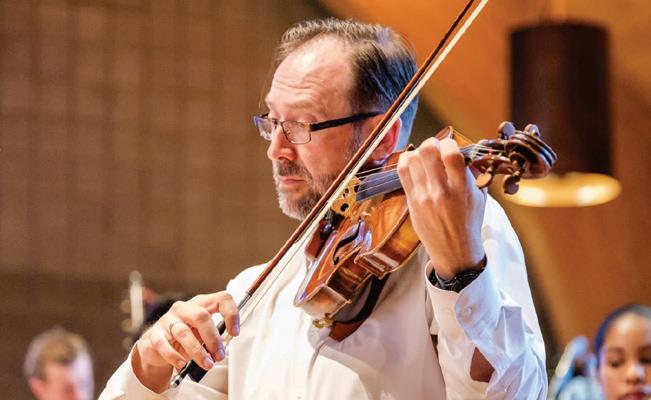
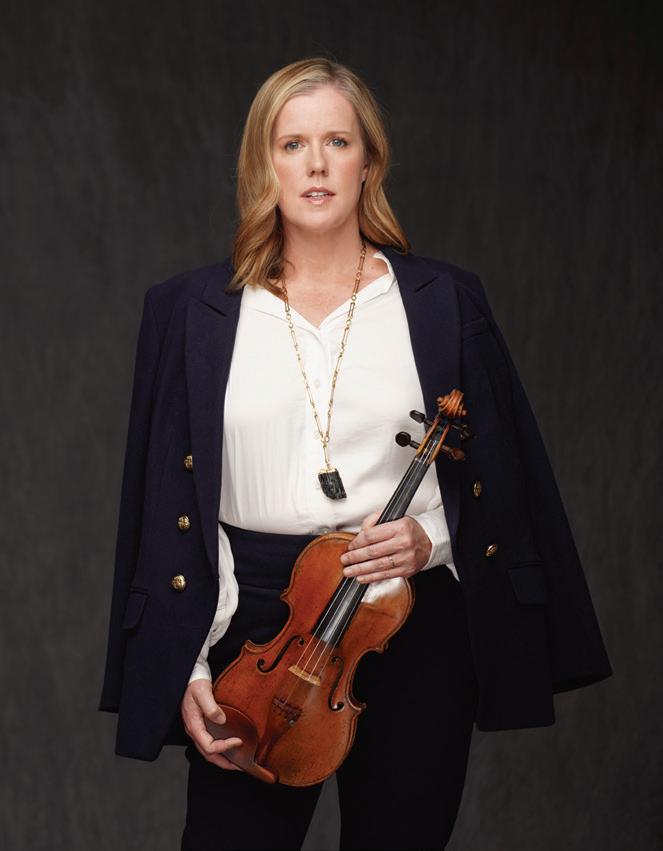
MADELINE ADKINS JOINED UTAH SYMPHONY | UTAH OPERA AS CONCERTMASTER in 2016. She served as Associate Concertmaster of the Baltimore Symphony Orchestra from 2005–2016. She performs on the “ex-Chardon” Guadagnini of 1782, graciously loaned by Gabrielle Israelievitch to perpetuate the legacy of her late husband, former Toronto Symphony Concertmaster Jacques Israelievitch.
Adkins is Concertmaster of the Grand Teton Music Festival and has served as Guest Concertmaster with the orchestras of Pittsburgh, Cincinnati, São Paulo, Houston, and Hong Kong, among many others. A sought-after soloist, she has appeared with orchestras throughout Europe, Asia, Africa, and 26 U.S. states. Her recording of the complete works for violin and piano by Felix Mendelssohn was released to critical acclaim in 2016. As an educator, Adkins has coached the
BY NOEL MORRIS
“[W]e can pore over him, dissect him, marvel or carp at him. But in the end, there remains something that will not be seized. That is why, each time a Mozart work begins… we composers listen with a certain awe and wonder, not unmixed with despair. The wonder we share with everyone; the despair comes from the realization that only this one man at this one moment in musical history could have created works that seem so effortless and so close to perfection.”
—Aaron Copland
Key Notes
Of his 41 canonical symphonies, Wolfgang Mozart wrote only two in a minor key. The same is true of his 27 piano concertos and his 18 piano sonatas. Symphony No. 40 is a rarity for its intensity and drama, leading early 19th-century listeners to call it “Romantic” music.
Mozart wrote all five of his violin concertos as a teenager.
The nickname “Jupiter” was not Mozart’s choice. Mozart’s son, Franz Xaver, credited the London promoter Peter Salomon with linking the symphony to the king of the gods.
WOLFGANG AMADEUS MOZART
born January 27, 1745, in Salzburg, Austria died December 5, 1791, in Vienna
Symphony No. 40 in G minor
composed in 1788
last performed in full by the Utah Symphony in July 2021 with conductor Conner Gray Covington
The Backstory
When Mozart’s father died on May 28, 1787, one of our links to the past fell silent. The letters between father and son—tortured as they were—provided precious insight into the movements, cares, and work of one of music’s greatest minds.
Mozart outlived his father by 4.5 years. During that time, he produced one masterpiece after another, including his last three symphonies (Nos. 39-41), the Clarinet Concerto, “Ave
verum corpus,” Don Giovanni, Così fan tutte, The Magic Flute, and his unfinished Requiem. However, historians fret over gaps in the story without the letters between father and son.
1788 was a trying year. Austria went to war with the Turks, which led to heavy taxes and soaring food prices. The Vienna premiere of Don Giovanni underwhelmed the audience. Mozart’s infant daughter died in June. His wife, Constanze, suffered complications from multiple pregnancies, and they had money problems.
“I am at the moment so destitute that I must beg you...to assist me with whatever you can spare,” Mozart wrote to a friend. More than 20 such letters paint a bleak picture, leading some scholars to conclude that the composer was in decline. But the facts tell a different story.
In December of 1787, the emperor appointed him Imperial Chamber Composer. In the coming years, Mozart sent Constanze to Baden for extended spa treatments. Their son attended boarding school, and the family kept domestic servants. In September of 1791—weeks before his death— Mozart premiered two operas. One honored the emperor’s coronation in Prague, and the other became an overnight sensation in Vienna (The Magic Flute). In truth, Mozart’s career was not in decline; he was a freelance musician who weathered ups and downs, spent lots of money, and died suddenly at 35.
The Music
Little is known about the symphonies Nos. 39-41. Written in just over two months, they’re dated June 26, July 25, and August 10, 1788. At age 32, Mozart had just three years to live. The early performance history of the last symphonies is uncertain. Because Symphony No. 40 exists in two versions, one with clarinets and one without, he likely added clarinets for a specific performance, possibly TonkünstlerSocietät concerts conducted by Salieri in April of 1791.
During his 1973 Norton Lecture Series, Leonard Bernstein described Mozart’s G minor Symphony as “a work of utmost passion, utterly controlled, and of free chromaticism elegantly contained.”
With our 21st-century ears, it’s hard to appreciate the radicalism of this music. Mozart is the paragon of classicism; keys and harmonies have specific, inviolable relationships to one another that trigger our perception of tension and resolution. In the G minor Symphony, Mozart pushed that
HISTORY OF THE MUSIC — “JUPITER”
construct to its outer limits without ever compromising its cohesion. In the finale, for example, there’s an eight-bar passage in which he uses every note of the chromatic scale except G, the tonic of the home key of G minor. It’s as though Mozart wanted to show he could do it without going off the rails. And, of course, he did it—marvelously.
WOLFGANG AMADEUS MOZART
Violin Concerto No. 2
composed in 1775 last performed in full by the Utah Symphony in March 2002 with conductor Pavel Kogan and violinist Vladimir Spivakov
The Backstory
At one time, Leopold Mozart was among the most respected violinists around. His book on violin technique became the bible for generations of players. He served as deputy Kapellmeister for the Prince-Archbishop of Salzburg and was the father of two famous prodigies including Wolfgang Amadeus Mozart. Serving as dad, teacher, and tour manager, Leopold started both children on keyboard instruments and also taught Wolfgang the violin. Leopold took them on the road, raking in the money, as the kids dazzled nobles and royals across Europe. Wolfgang wrote his first violin piece at age 6; it was published the following year.
As he matured, so did his violin writing. He wrote more violin sonatas, and at 13, became concertmaster of the PrinceArchbishop’s chapel orchestra. (The other Mozart prodigy, a daughter named Maria Anna or Nannerl, stepped back from performing, as it was considered improper for ladies.)
As the family coffers grew, Leopold guided his child-star’s development, introducing him to the finest composers in Europe. The Mozarts made three Italian tours, including a stay in Milan, so that the 16-year-old Wolfgang could produce his opera, Lucio Silla. When the family returned to Salzburg in 1773, a new Archbishop put an end to the touring, forcing Wolfgang to settle into the life of his hometown, where his friends ranged from high nobility to working class. He wrote his First Violin Concerto later that year.
The Music
In the summertime, Salzburg had a longstanding tradition of roaming bands that performed serenades at different outdoor stops around the city. Salzburg serenades typically consisted of seven or eight movements of light
entertainment. After his last trip to Milan, the teenage Mozart embedded three-movement violin concertos into his Serenades K. 185 and 203, a nod to the concerto’s ancestral home (Italy).
At 19, in 1775, Mozart wrote four violin concertos in short succession. Already, the Violin Concerto No. 2 shows a hallmark of Mozart’s mature instrumental writing. Notice the singing, almost operatic, style of the solo lines in the slow movement. For the violinist, the Concerto No. 2 isn’t technically difficult. But it is terribly tricky to play beautifully. The solo lines are exposed, and it is incumbent upon the player to capture the singing, carefree style in which it was written.
Mozart dated the Violin Concerto No. 2 June 14, 1775. Little is known about his motivation for writing his five violin concertos, but he may well have served as concertmaster in the orchestra that premiered them.
Symphony No. 41 in C Major “Jupiter”
composed in 1788 last performed by the Utah Symphony in April 2021 with conductor Domingo Hindoyan
What to Listen for
Mozart crafted the “Jupiter” Symphony’s finale out of five distinct themes that leap from section to section, until they all converge as a miraculous quintuple fugue at the end.
The Backstory
More than any other composer, Mozart’s music inspires thoughts of the divine. There are many quotes to this effect. Albert Einstein put it this way: “Mozart is the greatest composer of all. Beethoven created his music, but the music of Mozart is of such purity and beauty that one feels he merely found it—that it has always existed as part of the inner beauty of the universe waiting to be revealed.”
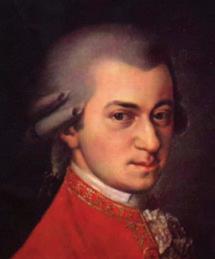
The “Jupiter” Symphony is a marvel: an expansive and majestic rock of perfection that seems to occupy a realm beyond the messy and tormented mass of humanity. Put this symphony side-by-side with portraits of Mozart wearing powdered wigs, “beautiful clothing, lace, and watch chains,” as George Nissen wrote, one wonders if his feet ever touched the ground.
WOLFGANG AMADEUS MOZART
In reality, Mozart had a potty mouth. He loved cards, billiards, wine, and women. He spent too much money yet remained devoted to God and family. And this is partly what makes the music so imponderable—this paragon of balance, beauty, and order came from a thoroughly disordered and earthly existence.
The Music
Mozart wrote his last three symphonies in the summer of 1788, but left little information about their genesis. The “Jupiter” Symphony has a curious connection to an earlier work. In the first movement, he inserted a jocular tune from his song “A kiss on her hand.” The text goes: “You are a little dull, my dear Pompeo. Go study the ways of the world.”
In this way, the first movement comes together like a scene in an opera. Mozart weaves together two different
characters. The first sounds regal, like a royal, perhaps. The second sounds coarse, like a commoner. The commoner’s music is simple, with a narrow melodic range that cleaves to repeated notes in a taunting fashion. Broadly speaking, the stylistic contrasts point to Mozart’s innate theatricality. The composer of Don Giovanni and The Marriage of Figaro wrote copious amounts of instrumental music that deftly expresses the human condition, much in the style of his operas.
With “Jupiter’s” finale, he threw down the gauntlet for all future composers—think of the popular Broadway trick of having two different characters singing simultaneously, each with his own melody. Mozart builds “Jupiter’s” finale using five different melodies, and at the end, piles them on top of one another in a wondrous, rotating heap of counterpoint.
UTAH OPERA
WHERE VOICES SOAR AND STORIES IGNITE
HÉCTOR ARMIENTA’S ZORRO
OCTOBER 10–18, 2026 CAPITOL THEATRE
ROSSINI’S CINDERELLA
JANUARY 16–24, 2027 CAPITOL THEATRE
MOZART’S DON GIOVANNI
MARCH 6–14, 2027
CAPITOL THEATRE
MASON BATES & MARK CAMPELL’S THE (R)EVOLUTION OF STEVE JOBS
MAY 8–16, 2027 CAPITOL THEATRE
Sponsor
Stravinsky’s
FIREBIRD SUITE & STRING TRIO “TIME FOR THREE”
SATURDAY, JULY 25, 2026 / 7:30 PM / SNOW PARK OUTDOOR AMPHITHEATER
MARKUS POSCHNER, conductor TIME FOR THREE, string trio UTAH SYMPHONY
STRAVINSKY
Contact (30′)
I. The Call
II. Codes (scherzo)
III. Contact
INTERMISSION
The Firebird Suite (1945 revision) (53′)
I. Introduction and Dance of the Firebird
Pantomime 1
Pas de deux
Pantomime 2
Pantomime 3
II. Dance of the Princesses
III. Infernal Dance of King Kastchei
IV. Berceuse (Lullaby)
V. Finale
PRESENTING SPONSOR
CONCERT SPONSOR
JOHN & JEAN YABLONSKI
KEVIN PUTS
ABOUT THE ARTISTS — FIREBIRD SUITE
Markus Poschner Conductor
PLEASE SEE MARKUS POSCHNER’S BIO ON PAGE 28
GUEST ARTIST SPONSOR
Time for Three String Trio
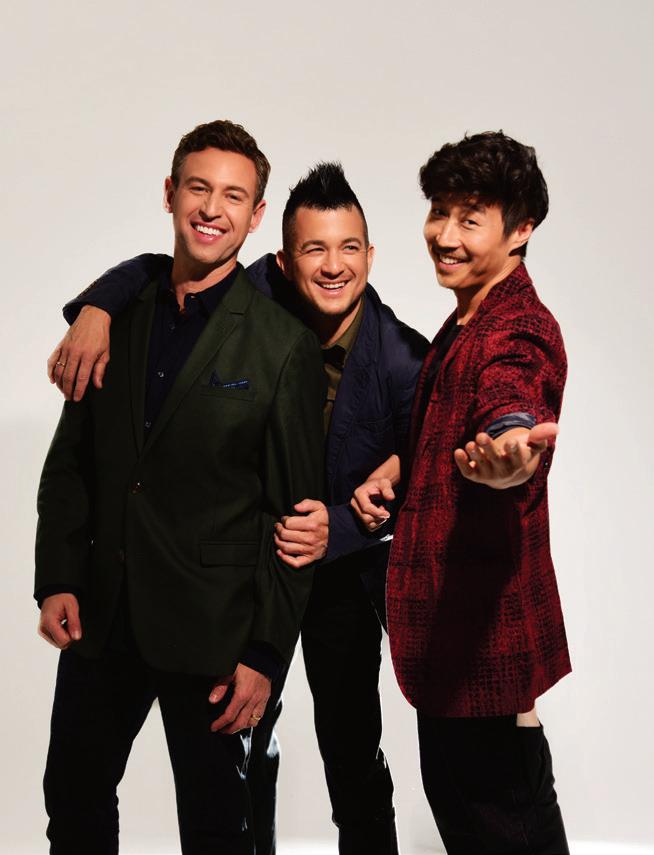
GRAMMY AND EMMY-WINNING ENSEMBLE TIME FOR THREE (TF3) DEFIES CONVENTION and boundaries, merging classical, Americana, and singer-songwriter traditions into a singular, remarkable sound. Consisting of Ranaan Meyer (double bass, vocals), Nicolas “Nick” Kendall (violin, vocals), and Charles Yang (violin, vocals), TF3 captivates audiences worldwide with their virtuosic playing and insatiable appetite for creativity that expands typical perceptions of a string trio.
TF3 appears this season with the Philadelphia Orchestra and Marin Alsop, Louisville Orchestra and Teddy Abrams, and St. Louis Symphony and Stéphane Denève. Their repertoire includes their newest commissioned concerto by composer Mason Bates, which received its premiere at Arizona Musicfest, with subsequent performances with San Francisco Symphony and Philadelphia Orchestra at SPAC (Saratoga Performing Arts Center). Time for Three also embarks with mezzo-soprano Joyce DiDonato on a project titled Emily–No Prisoner Be. Written by Kevin Puts and inspired by the vivid and introspective poetry of Emily Dickinson, the project received its world premiere at the Bregenzer Festspiele and will visit Carnegie Hall and other top venues across the U.S. this season.
TF3 won a Grammy Award for their album Letters for the Future, released by Deutsche Grammophon and featuring works by Kevin Puts and Jennifer Higdon, both recorded with the Philadelphia Orchestra. Time for Three has enjoyed additional collaborations with Ben Folds, Natasha Bedingfield, Branford Marsalis, Joshua Bell, Jennifer Higdon, Chris Brubeck, William Bolcom, and Arlo Guthrie.
Time for Three’s solo shows have been praised for their “joy, mastery, creativity and supreme artistry” (The Strad). Their concert special, Time for Three In Concert, was produced by PBS and earned the trio an Emmy Award.
Time for Three’s affinity for creative boundary pushing, commitment to encouraging the next generation of musicians, and relentless pursuit of musical excellence has solidified them as one of the most exceptional groups on the scene today.
Unmatched Academic Results
Come tour a campus and see for yourself!
Challenger School offers uniquely fun and academic classes for preschool to eighth-grade students. Our students learn to think for themselves and to value independence.
Farmington (PS–G8) (801) 451-6565 1089 Shepard Creek Parkway
Holladay (PS–K) (801) 278-4797 4555 South 2300 East
Lehi (PS–G8) (801) 407-8777
3920 North Traverse Mountain Boulevard
Salt Lake (PS–G8) (801) 487-4402 1325 South Main Street
Sandy (PS–G8) (801) 572-6686 10670 South 700 East
West Jordan (PS–G1) (801) 565-1058 2247 West 8660 South
MOZART, PROKOFIEV, & MORE
WEDNESDAY, JULY 29, 2026 / 8:00 PM / ST. MARY’S CATHOLIC CHURCH
MICAH GLEASON, conductor*
UTAH SYMPHONY
MOZART
PROKOFIEV
LOUISE FARRENC
Overture to Don Giovanni (7′)
Sinfonietta in A Major, Op. 5 (21′)
I. Allegro giocoso
II. Andante
III. Intermezzo: Vivace
IV. Scherzo: Allegro risoluto
V. Allegro giocoso
INTERMISSION
Symphony No. 3 in G minor, Op. 36 (32′)
I. Adagio – Allegro
II. Adagio cantabile
III. Scherzo: Vivace
IV. Finale: Allegro
*Utah Symphony debut
ABOUT THE ARTISTS — MOZART, PROKOFIEV, & MORE
Micah Gleason Conductor
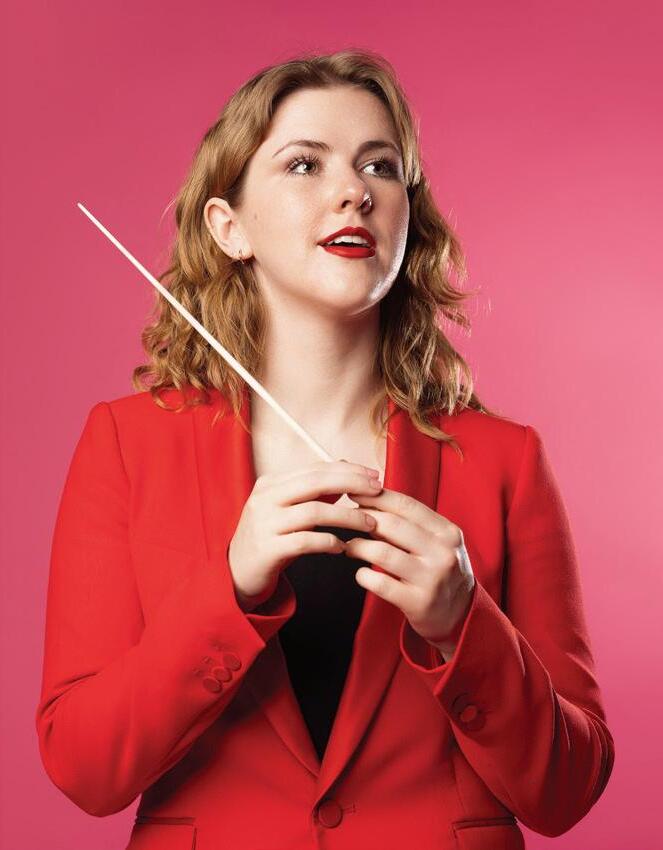
MICAH GLEASON, AN “EASYGOING YET FIERCELY SKILLED CONDUCTOR AND SINGER” (The New York Times), graduated from the Curtis Institute of Music as a mentee of Yannick Nézet-Séguin. Gleason was chosen by the Dallas Opera for its renowned Hart Institute for Women Conductors, is a recipient of the 2024 Taki Alsop Conducting Award, and winner of the 2025 American Prize in Conducting. Interdisciplinary collaboration and community building are at the core of Gleason’s music-making.
She is curious about the most effective ways to disrupt the stasis and comfort of the modern concert hall; and how artists across disciplines, activists, and researchers can most effectively collaborate. An active symphonic and opera conductor, Gleason has collaborated with notable ensembles including the Iceland Symphony, Symphony of the Americas, San Diego Symphony, Fort Worth Symphony, The Spoleto Festival Orchestra, The Orchestra Now, Carnegie Hall’s National Youth Orchestra, the Dallas Opera Orchestra, and the Curtis Symphony Orchestra; and served as cover conductor for opera productions with Washington National Opera, Opera Philadelphia, and The Glimmerglass Festival.
HISTORY OF THE MUSIC — MOZART, PROKOFIEV,
BY NOEL MORRIS
Key Notes
Sergei Prokofiev wrote his Sinfonietta during his summer vacation at age 18.
Louise Farrenc grew up among five generations of sculptors. Against social norms, they encouraged their gifted female relation to pursue a music career.
Farrenc’s private teacher, Anton Reicha, was a childhood friend of Beethoven’s, and also taught Hector Berlioz, Franz Liszt, and César Franck.
What to Listen for
Don Giovanni is a masterpiece dramedy telling the story of Don Juan’s last day. The Overture opens with Hellfire, foreshadowing the Don’s final descent.
WOLFGANG AMADEUS MOZART
born January 27, 1745, in Salzburg, Austria died December 5, 1791 in Vienna
Overture to Don Giovanni
composed in 1787
premiered in Vienna, in 1787
Last performed by the Utah Symphony in September 2023 with conductor Eduardo Strausser (the opera will be performed in full by the Utah Symphony in March 2027 as part of the Utah Opera season)
The Backstory
As a creature of the theater, Mozart knew how to hit the sweet spot between shock and charm—with the added benefit of knowing his audience. He and Constanze were “central figures in the Viennese beau monde,” according to Maynard Solomon. “Glittering all-night parties were held in their apartment; they were to be seen at the masked balls and carnival festivities.” No doubt, the idea of goosing sensibilities with the tale of a society sex fiend seemed a delicious topic for opera.
Mozart’s librettist, Lorenzo Da Ponte, was a notorious libertine. Banished from Venice for “public concubinage” and “abduction of a respectable woman,” the former priest settled in Vienna as imperial court poet. In December of 1786, he and Mozart scored a hit together in Prague with The Marriage of Figaro, which led to a commission for a new opera—Don Giovanni—in the fall.
Mozart’s father died in May of 1787, which must have stirred an avalanche of grief and unresolved feelings. Nevertheless, the composer worked on Don Giovanni throughout the summer and returned to Prague, where he connected with Da Ponte’s friend, Giacomo Casanova (yes, that Casanova), meaning Mozart had plenty of material to work with.
The Music
From the first scene, this “dramma giocoso” or “humorous drama,” as Da Ponte called it, offers an unlikely take on a familiar tale. (Mozart and Da Ponte must have laughed when they decided their Don Juan would have no luck with women over the course of this opera). While the paragon of carnality occupies himself with hopeless pursuits, other characters sing heartrending arias, giving testimony to the thousands of lives ruined. Against this backdrop, the audience enjoys a laugh a minute.
In the end, the Don meets an ominous stranger, who opens the gates of Hell—a moment Friedrich Nietzsche described as a “leap out of the wall…shak[ing] the listener to his very intestines.” The orchestra conjures tongues of fire and a yawning crevasse—the same music that kicks off the Overture.
Mozart wrote the Overture to Don Giovanni at the last minute, although it’s likely he’d been carrying it around in his head. According to biographer George Nissen (Constanze’s second husband), Mozart pulled an all-nighter. Constanze told him stories to keep him awake, and he finished it in time to hand it to the copyists on the day of the premiere. Mozart’s personal catalog disputes Nissen’s date, suggesting the composer completed the Overture the day before.
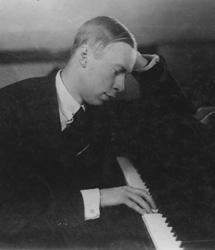
SERGEI PROKOFIEV
born April 23, 1891, in Sontsovka, Ukraine died March 5, 1953, in Moscow
Sinfonietta
composed in 1909, 1915, and 1929 premiered in Basel, Switzerland, in 1935 Utah Symphony premiere
The Backstory
On the northwestern shore of the Sea of Azov sits the Donetsk region of Ukraine, famous for its resorts, botanical gardens, and parks. Today, it’s a war zone, highly coveted by Vladimir Putin. It’s also the birthplace of Sergei Prokofiev.
HISTORY OF THE MUSIC — MOZART, PROKOFIEV, & MORE
“Seryozha” was 13 when he entered the St. Petersburg Conservatory, but continued to return to his hometown of Sontsovka (now Sontsivka). Emboldened by his exceptional gifts, young Prokofiev proved to be a difficult student; he was independent, irreverent, and determined to ignore rules he didn’t like. He wrote many works for his own instrument, the piano, as well as two symphonies and four operas. Later, he dismissed these works as juvenilia and published nothing written before 1909 (sort of).
“Only beginning with some works of late 1909 did he start awarding opus numbers,” wrote biographer Harlow Robinson. “But he did use a good deal of material from these early pieces later in reworked form.”
At 18, Prokofiev went home for the summer for the last time in 1909 and found himself at loose ends. Both his parents were away. His childhood friends had scattered, so he filled his time with practicing the piano, composing, and playing chess. According to Harlow, he had nearly 20 games running via correspondence. He also composed the first version of the Sinfonietta, Op. 5.
The Music
Russian music scholar Gerard McBurney described the Sinfonietta as having a “champagne-like lightness and sparkle, a neo-classical symphony from before the ‘Classical’ Symphony. The 1st, 3rd, and 5th movements all play with the same idea, a dancing tarantella theme that Prokofieff lures into ever more unexpected transformations.” (Traditionally, a tarantella is a frenzied dance from southern Italy, that is said to counteract the poison of a tarantula bite.)
Like his “Classical” Symphony, written between 1916 and 1917, the composer shows an affinity for balanced phrases and leaner textures in his Sinfonietta, setting aside the overgrown orchestra of, say, Richard Strauss or Gustav Mahler, in favor of an ensemble used by the 18th-century Austrian Franz Josef Haydn.
Later, Prokofiev was dissatisfied with this youthful work and revised it in 1914, 1915, and 1929. For this reason, the Sinfonietta carries two opus numbers: Op. 5/48. With its sunny spirit, Prokofiev came to love the final version and never understood why orchestras embraced the “Classical” Symphony so fully but not this work.
Postscript
Between October 2024 and February 2025, the Sergei Prokofiev Museum in Sontsivka, Donetsk Oblast, sustained
damage from Russian shells. Russian troops looted the museum last September.
LOUISE FARRENC
born May 31, 1804, in Paris, France died September 15, 1875, in Paris
Symphony No. 3
composed in 1847 premiered in Paris, in 1849 Utah Symphony premiere
The Backstory
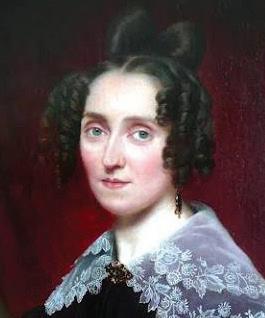
In 1840, Hector Berlioz heard a piece by Louise Farrenc and noted that it was “well written.” He went on to say that it was orchestrated “with a talent rare among women.”
Small wonder. The Paris Conservatory barred women from composition classes.
The 19th century was a difficult time for ambitious musicians of a certain gender. In affluent households, girls learned to play the piano and sing and were given ample time to develop musical skills, which were then hidden from public view by protective husbands. In those days, it was a way to enjoy music in the home (think of Pride and Prejudice or Emma). But there were few options for the exceptionally talented.
Into this closed society came Louise Farrenc (née Dumont), born in 1804 to a family of visual artists (her father, JacquesEdme Dumont, was a sculptor). She was a gifted child, so her father hired the best instructors available, including the prominent composer-pianist Johann Nepomuk Hummel.
At 15, Louise enrolled as a piano student at the Paris Conservatory and took private lessons with the composition professor Anton Reicha. With great determination, Louise Farrenc became a formidable musician. Meanwhile, she fell in love with another student, the flutist Aristide Farrenc, and married him at 17. As recital partners, they toured Europe and returned to Paris to start a music publishing house. Louise continued to perform and, in 1842, won a faculty position at the Conservatory—their only female professor of the entire 19th century.
For all her fortitude, Louise Farrenc was humble about her
own compositions, but Aristide pushed her to publish her works. In 1849, her Nonet earned broad acclaim after a premiere headed by the famous violinist Josef Joachim. With the wind in her sails, she presented the Conservatory management with an accounting of faculty compensation and demanded equal pay, which they granted.
Gender wasn’t her only uphill battle. During the 1840s, French composers focused on writing music for the theater and for intimate salon concerts. Parisians considered symphonies a German art form. And as such, the Conservatory orchestra devoted itself to Beethoven. When Farrenc produced her First Symphony in 1841, they wouldn’t play it. Persistence paid off when a friend conducted the premiere in Brussels, two years later. Initially skeptical about the piece, he later confessed, “after having
produced such a work, Madame Farrenc has won the right to be placed among the most distinguished composers of the present day.”
The Music
Farrenc wrote her Third Symphony in 1847. After two years, the conservatory orchestra put it on a program alongside Beethoven’s Fifth Symphony. Given the French taste for the German master, Farrenc’s piece follows suit. Her woodwind writing is especially striking. Opening with a plaintive solo oboe, the symphony alternates weighty orchestral textures with a wind ensemble, making for an appealing contrast.
Farrenc taught female pianists at the Paris Conservatory for 30 years. The hallowed institution continued to bar women from the composition class until 1870.
BEHIND THE SCENES AT DEER VALLEY® MUSIC FESTIVAL
By Julia Lyon
EVERY UTAH SYMPHONY CONCERT HAD A SPECIAL GUEST LAST SUMMER.
No matter who was headlining or what the weather, Thumper showed up. The speckled grey rabbit appeared around 7 PM to greet staff and volunteers working the Deer Valley shows.
“He always got backstage passes,” joked Front of House Director Melissa Robison.
Bringing the Deer Valley® Music Festival to life for more than two decades has meant more than a few surprises for the people behind the scenes. Robison has helped 10 people propose. She’s witnessed extraordinary kindness during medical emergencies. And she’s seen everything from mattresses to full-size tables show up on the hill.
Not to mention reptiles.
A few years ago, a man brought a nine-foot-long boa constrictor in a pillowcase.
“He looked at me and I looked at him and said, ‘You’ve got to take it home,’” Robison recalled.
Another patron came carrying a tarantula. Someone else brought two rabbits in a purse. The rabbits, snake, and spider left and the show went on.
But most people never realize who—and what—it takes to make music in the mountains happen without a hitch.
Helping Hands
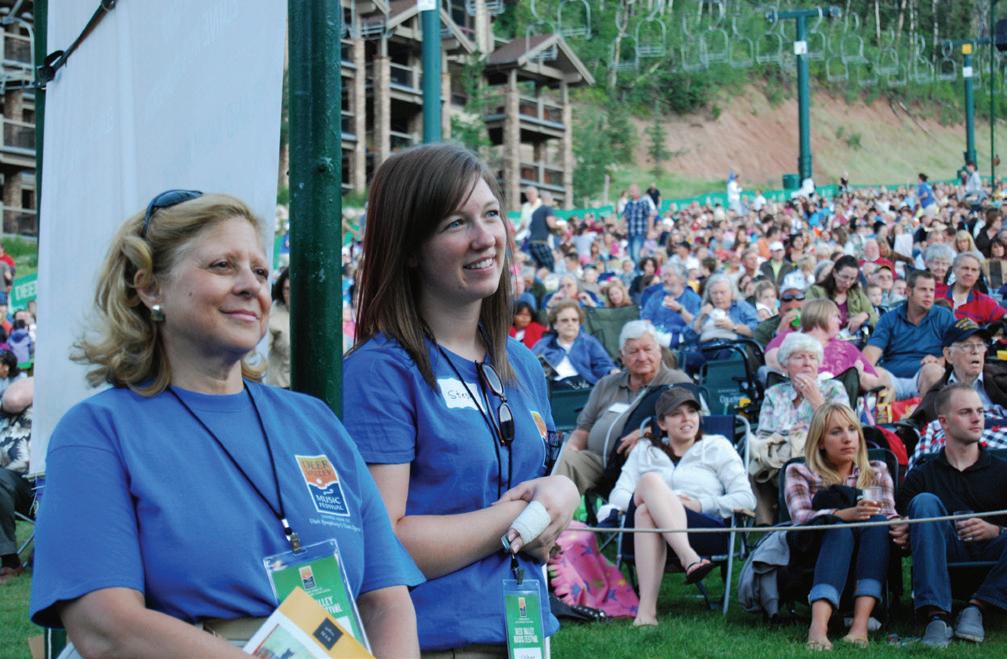
Each DVMF concert relies on 100 volunteers. It’s an extraordinary number, but perhaps not so surprising in Utah, which is known for its culture of volunteering.
Those volunteers hail from all over the nation. Some call Park City their summer home. Others live in Utah yearround. They may have discovered the festival as a patron and started to volunteer—only to find volunteering for a few concerts just wasn’t enough.
“Most do over 60 hours, because they’re coming to every single show,” Robison explained.
Strike Fongeallaz, a retired airline pilot, has been volunteering with DVMF since it began more than 20 years ago.
“When they first put out a call for volunteers, I had been a patron of Utah Symphony concerts they occasionally did at Snow Park,” she recalled. “I thought it was a wonderful idea.”
Now in her 60s, the Park City resident typically volunteers in the reserved section.
“I believe all the volunteers are significant,” she said. “The symphony specifically says, ‘We could not do this without volunteer help.’”
Depending on the night, volunteers may set up more than 800 chairs—or wipe them down before a concert begins. They may set up signs and answer patron questions. They help in the ticket office, at VIP receptions, with concessions at St. Mary’s Catholic Church, and more.
When a patron is in a wheelchair at Snow Park Amphitheater, volunteers are available to help push the individual up the hill.
It was, after all, designed for skiing. So Robison designed something for the patrons: a 3D printed wheelchair stop that digs into the ground.
“Wheelchair users can roll right into it,” she said. “We do everything we can to make all our performances accessible.”
Sunshine, Storms, and Oxygen
Another challenge is the weather. Because Deer Valley’s Snow Park is an outdoor venue, any reports of potential storms are taken extremely seriously.
“Our biggest concern: is there going to be lighting?” explained Jen Shark, director of orchestra operations. She frequently checks the weather and stays in touch with her Deer Valley colleagues throughout the day. “The weather is always changing quickly up there.”
For musicians and artists, a concert day begins in Salt Lake City with a rehearsal at Abravanel Hall. Then, a few hours later, it’s off to Park City where the temperature can fluctuate drastically between mid-day and evening. As the temperature cools, the heaters often go on. The air temperature on stage is checked regularly, but not just to keep musicians comfortable.
Some members of the symphony have instruments that are hundreds of years old.
“Our job in Operations is to make sure musicians can focus on their job—which is playing,” Shark said. “So they don’t have to worry about anything else.”
The team needs to be ready for any situation, so they carry a bit of everything: safety pins, duct tape, ear plugs, umbrellas, and more. They even have canned oxygen on hand.
“Most guest artists have to quickly acclimate to Park City’s 7,000-ft elevation—which definitely takes a toll when you are singing or even just walking around a stage,” Shark said.
Determined Fans
When the guest artist is a Utah celebrity like Marie Osmond, some patrons have surprising reasons why they should be able to go backstage. Symphony staff and volunteers have heard it all.
BEHIND THE SCENES AT DEER VALLEY® MUSIC FESTIVAL
“Went to school with her”
“Grew up with her”
“Knows her brothers”
“Went to church with her”
“Fed her dog for awhile”
“Was her old plastic surgeon”
“Knows her cousins”
“Saw her in the grocery store once and we chatted”
“Grew up with her neighbors”
“Listened to her music”
“Was their first crush”
“Just found out they’re related on Ancestry DNA”
The good news? Most fans just bring something for guest artists to sign whether it’s photos, instruments, or old videos. Volunteers and staff create those opportunities whenever they can.
After all, many patrons come back summer after summer. As do most of the volunteers, making the Deer Valley® Music Festival something of a reunion—with an incredible soundtrack.
“It’s like we’re all part of the symphony family,” Robison said.
▶ High-Value Audience: Your brand reaches an engaged, affluent, and culturally-minded audience, community leaders, professionals, and patrons of the arts.
▶ Extended Exposure: Programs are often kept as keepsakes, providing prolonged visibility for your message beyond the performance night. Your ad will run in every concert program season-long, helping reinforce this target market’s memory and influence.
▶ Targeted Local Impact: You connect directly with a loyal base of Utah residents who value supporting local businesses and organizations.
▶ Positive Brand Association: Enhances your brand’s reputation and demonstrates support for the arts, which resonates with both customers and employees.
▶ Exclusive Environment: Your message stands out in a curated, distraction-free setting—free from the noise of digital advertising.
Photo Lindsay Salazar
LYLE LOVETT
FRIDAY, JULY 31, 2026 / 7:30 PM / SNOW PARK OUTDOOR AMPHITHEATER
JASON SEBER , conductor*
LYLE LOVETT, vocalist*
UTAH SYMPHONY
SELECTIONS TO BE ANNOUNCED FROM THE STAGE.
PRESENTING SPONSOR
ABOUT THE ARTISTS — LYLE LOVETT
CONDUCTOR SPONSOR
GUEST ARTIST SPONSOR
MARK & DIANE PROTHRO
Jason Seber Conductor
JASON SEBER IS A CELEBRATED CONDUCTOR KNOWN FOR HIS VERSATILITY LEADING CLASSICAL, pops, film, and cross-genre programs. He is committed to making orchestral music accessible, relevant, and engaging for diverse audiences nationwide. Seber has conducted many leading American orchestras, including the National, St. Louis, Dallas, Detroit, Houston, San Diego, Baltimore, Kansas City, Colorado, Milwaukee, Nashville, Indianapolis, Oregon, North Carolina, Phoenix, and Fairfax Symphony; the Minnesota and Louisville Orchestra; the Buffalo Philharmonic; and the Cincinnati Pops; among others. He has conducted over 30 full feature films and has had the pleasure of performing with a wide range of artists including Boyz II Men, Melissa Etheridge, Leslie Odom Jr., Trisha Yearwood, Lyle Lovett, Stephen Schwartz, Indigo Girls, Ben Folds, Wynonna Judd, Lindsey Stirling, Violent Femmes, Pink Martini, Natalie Merchant, Renee Elise Goldsberry, Katharine McPhee, Brian Stokes Mitchell, My Morning Jacket, Andrew Bird, Ben Rector, Cody Fry, Patti Austin, Mason Bates, Doc Severinsen, Aoife O’Donovan, Ashley Brown, Susan Egan, and DeVotchKa, among many others. To learn more, please visit www.jasonseber.com.
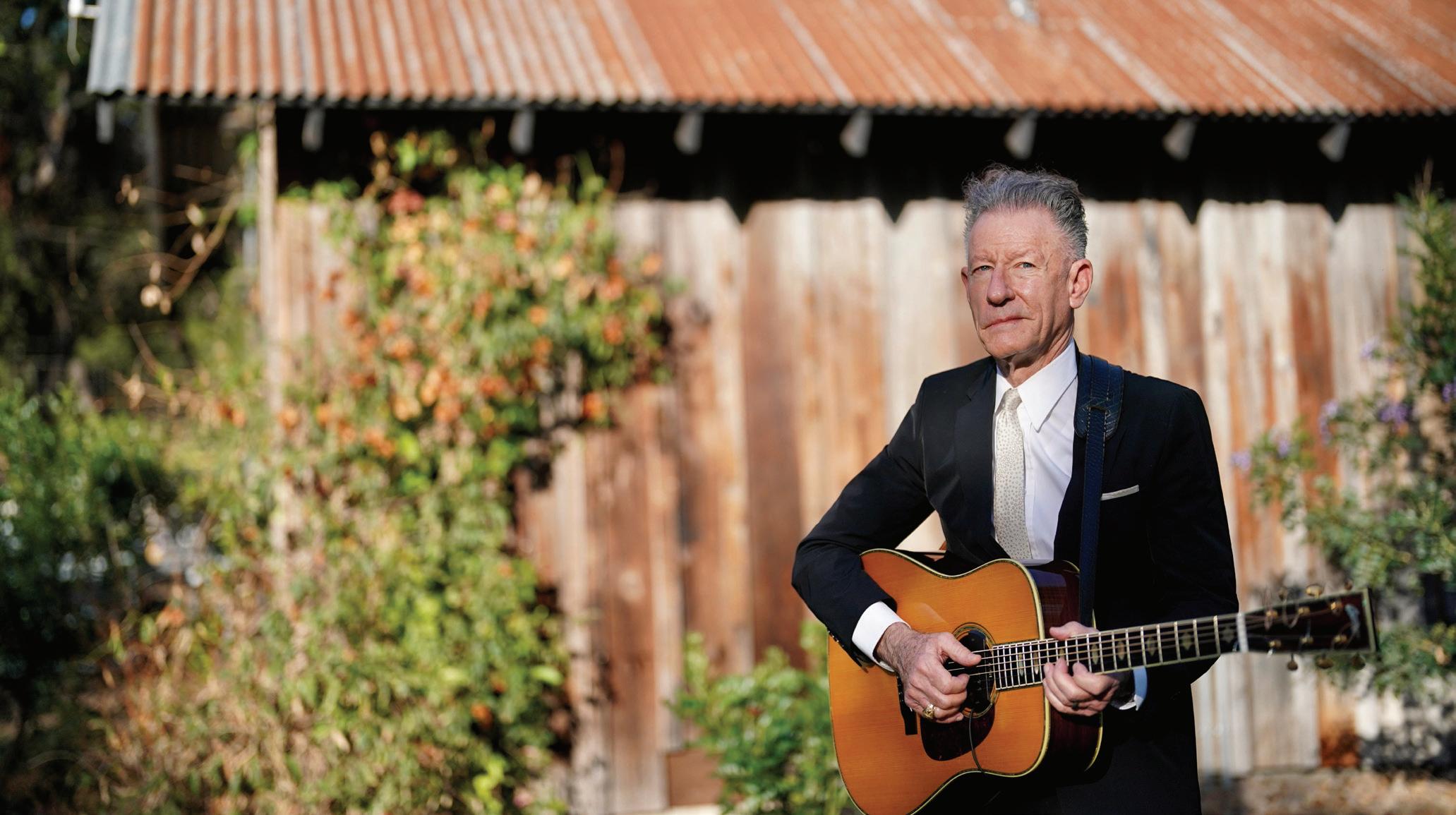
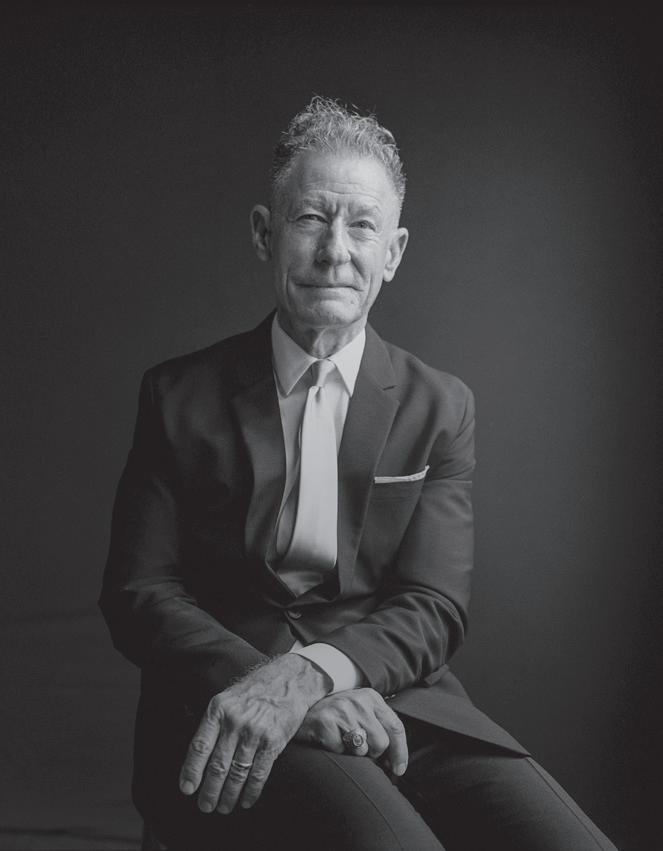
Lyle Lovett Guest Artist
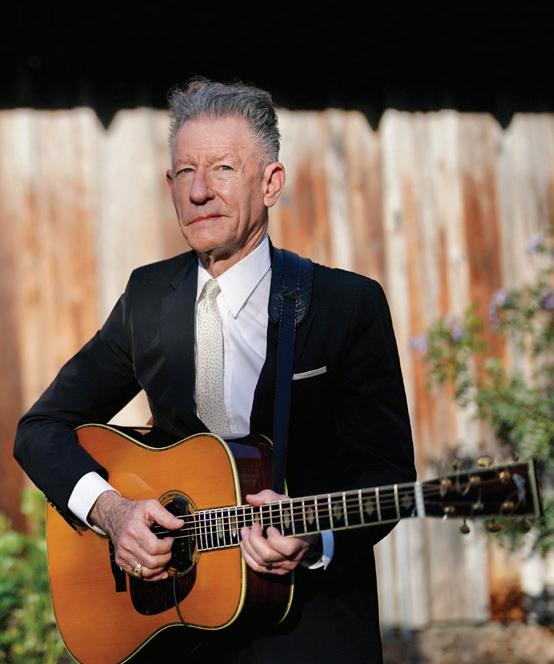
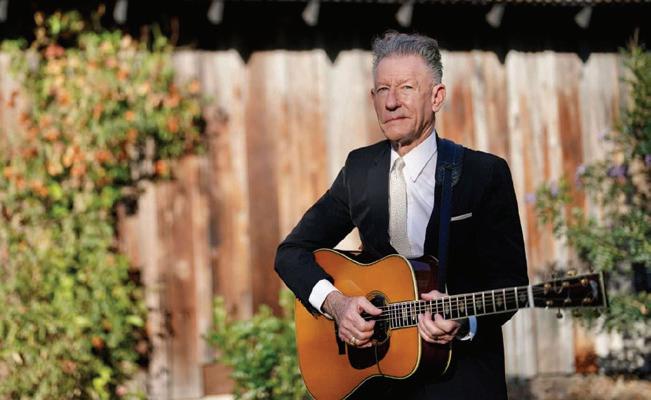
A SINGER, COMPOSER, AND ACTOR, LYLE LOVETT HAS BROADENED THE DEFINITION of American music in a career that spans 14 albums. Coupled with his gift for storytelling, the Texas-based musician fuses elements of country, swing, jazz, folk, gospel, and blues in a convention-defying manner that breaks down barriers.
Whether touring as a ‘Duo’ or with his ‘Acoustic Group’ or his ‘Large Band,’ Lovett’s live performances show not only the breadth of this Texas legend’s deep talents, but also the diversity of his influences, making him one of the most compelling and captivating musicians in popular music.
Since his self-titled debut in 1986, Lyle Lovett has evolved into one of music’s most vibrant and iconic performers. Among his many accolades, besides the four Grammy Awards, he was given the Americana Music Association’s inaugural Trailblazer Award and was named Texas State Musician.
His works, rich and eclectic, are some of the most beloved of any artist working today.
SOME VEHICLES ARRIVE. OTHERS TAKE THE LEAD.
The BMW X5 is crafted for those who move with intention—balancing confident design, dynamic capability, and intelligent innovation. With available xDrive all-wheel drive and a driver-focused interior, it adapts seamlessly to every road and every moment.
Because when presence meets performance, it doesn’t go unnoticed.
Experience the performance worthy X5 at BMW of Murray or BMW of Pleasant Grove.
BMW of Murray
4735 S. State Street
Murray, Utah
801-262-2479
bmwofmurray.com
BMW of Pleasant Grove 2111 West Grove Parkway Pleasant Grove, Utah
SATURDAY, AUGUST 1, 2026 / 7:30 PM / SNOW PARK OUTDOOR AMPHITHEATER
LAWRENCE LOH, conductor
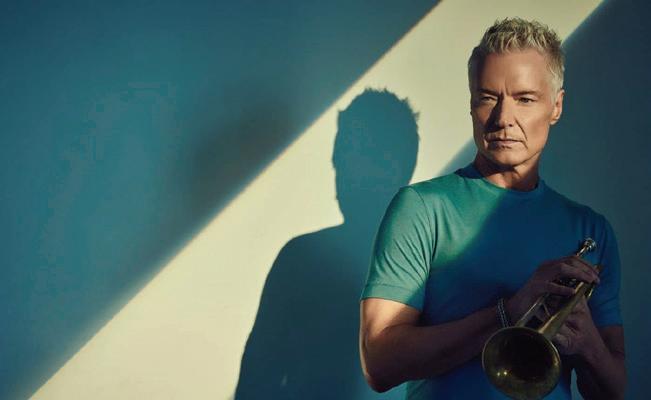
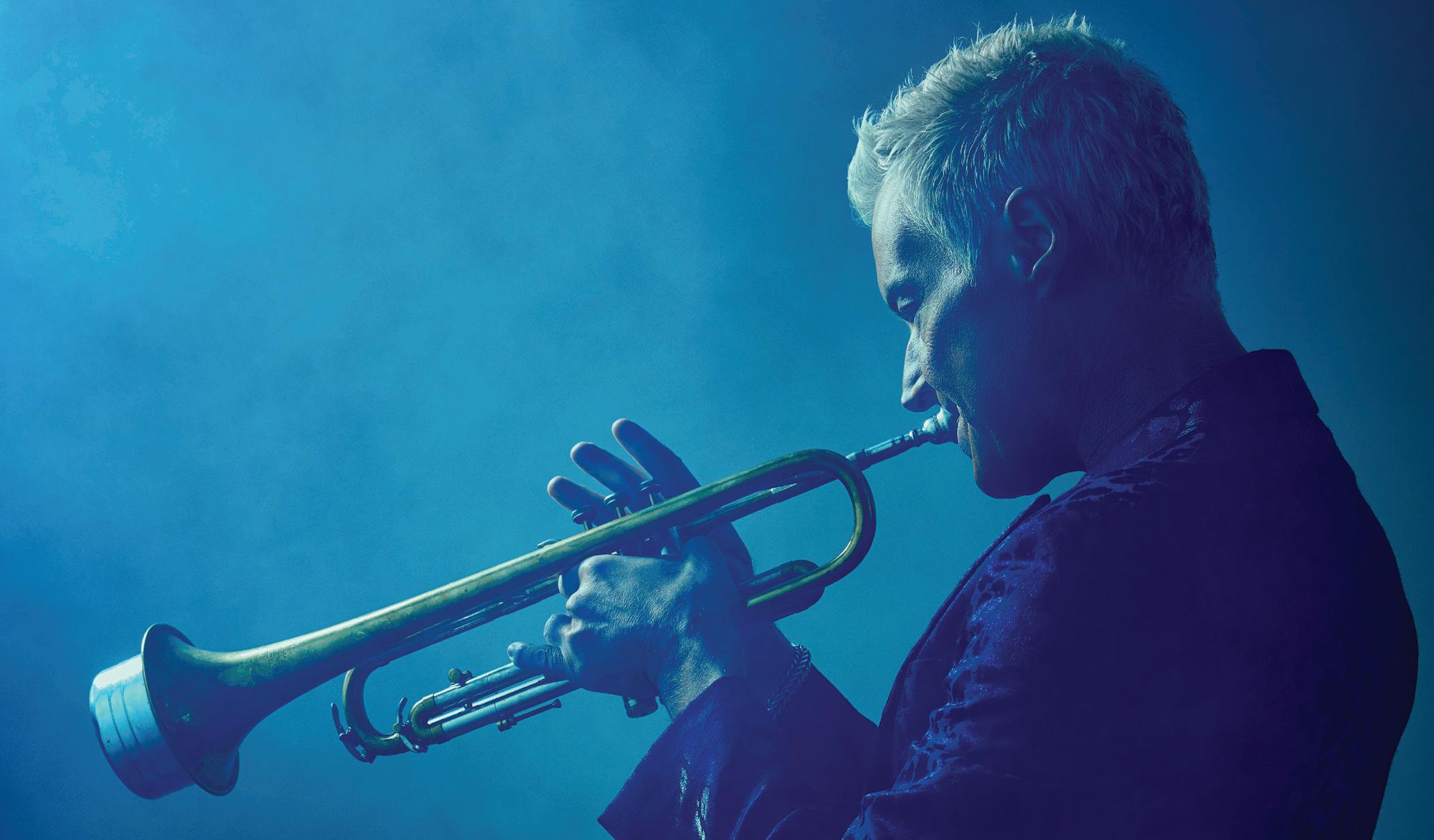
CHRIS BOTTI, trumpet
UTAH SYMPHONY
SELECTIONS TO BE ANNOUNCED FROM THE STAGE.
PRESENTING SPONSOR
TONY & RENEE MARLON
CONCERT SPONSOR
LARRY & JUDY BROWNSTEIN
STAGE SPONSOR
ABOUT THE ARTISTS — CHRIS BOTTI
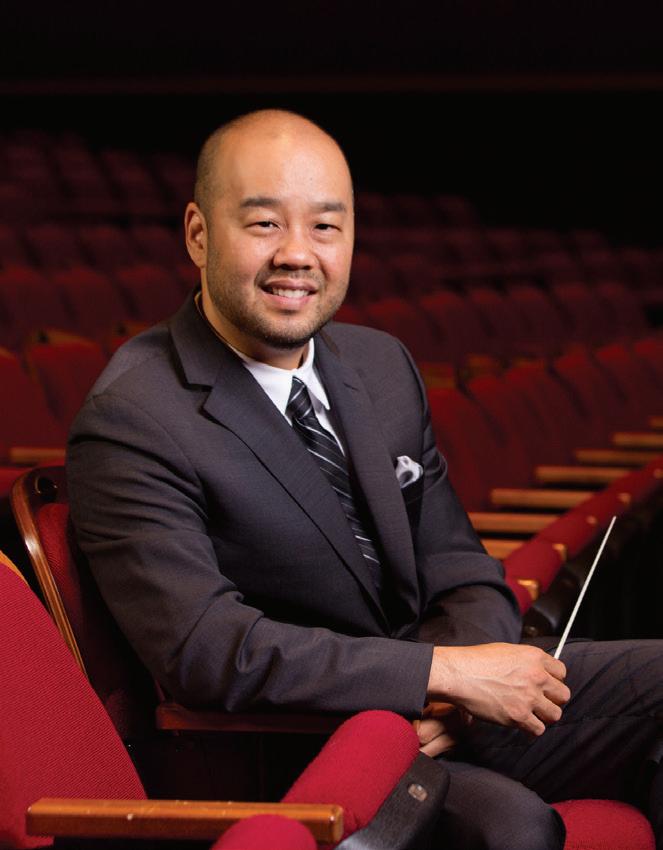
Lawrence Loh Conductor
CONDUCTOR LAWRENCE LOH HAS EARNED A STERLING REPUTATION FOR PERFORMANCES that engage and thrill audiences throughout the United States. Music Director of the Waco Symphony Orchestra and Conductor Laureate of The Syracuse Orchestra, following his decade-long tenure as its first Music Director (2015–2025), he has also served as Assistant, Associate, and Resident Conductor of the Pittsburgh Symphony Orchestra, where he remains a regular guest.
A passionate advocate for film music, Loh has collaborated frequently with composer John Williams and conducted performances with leading pops artists such as Chris Botti, Ann Hampton Callaway, Jason Alexander, and Idina Menzel. Recent highlights include appearances leading the Atlanta, Baltimore, Buffalo, Calgary, Detroit, Florida, National (D.C.), New Jersey, North Carolina, Rochester, San Francisco, Seattle, and Utah symphonies, as well as performances at Tanglewood, the Bravo! Vail Music Festival, Grant Park Music Festival, Chautauqua Institution, and elsewhere.
GUEST ARTIST SPONSOR
BEN & PEGGY SCHAPIRO
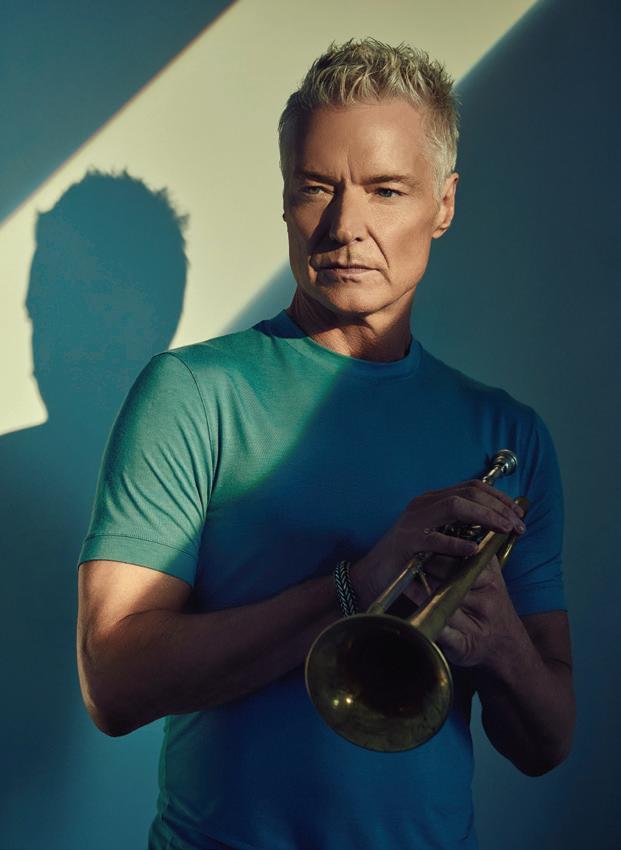
Chris Botti Guest Artist
GRAMMY-WINNING TRUMPETER CHRIS BOTTI HAS BEEN ONE OF THE MOST POPULAR instrumentalists in the world for nearly three decades; he’s collaborated with some of the biggest superstars on the planet, including Sting, Paul Simon, Barbra Streisand, Lady Gaga, Tony Bennett, Frank Sinatra, Aretha Franklin, Bette Midler, Joni Mitchell, Steven Tyler, Andrea Bocelli, Herbie Hancock, Yo-Yo Ma, and others; he’s topped the jazz charts with numerous albums, earned multiple Gold and Platinum records, performed with symphony orchestras and on prestigious stages from Carnegie Hall to the Hollywood Bowl to the Sydney Opera House.
HAYDN, MENDELSSOHN, & A VIOLA CONCERTO
WEDNESDAY, AUGUST 5, 2026 / 8:00 PM / ST. MARY’S CATHOLIC CHURCH
MAURICE COHN, conductor BRANT BAYLESS, viola UTAH SYMPHONY
MENDELSSOHN
DAI FUJIKURA
HAYDN
The Hebrides (11′)
Wayfinder (21′)
INTERMISSION
Symphony No. 104 in D Major “London” (30′)
I. Adagio – Allegro
II. Andante
III. Menuetto and Trio: Allegro
IV. Finale: Spiritoso
PRESENTING SPONSOR
THE ESTATE OF GORDON IRVING
ABOUT THE ARTISTS — HAYDN, MENDELSSOHN, & A VIOLA CONCERTO
Maurice Cohn Conductor
ACCLAIMED FOR HIS “DEPTH, MUSICALITY, AND EXPRESSIVE POWER” and for leading “sensational” performances with “exceptional colours,” Maurice Cohn stands at the forefront of a new generation of American conductors. A three-time recipient of the Solti Foundation U.S. Career Assistance Award, he is currently the 11th Music Director of the West Virginia Symphony Orchestra. Highlights of his 2025–26 season include debuts with the Colorado Symphony Orchestra, New Jersey Symphony Orchestra with TwoSet Violin, Würth Philharmonic with Hélène Grimaud, and Brussels Philharmonic with Alexandra Conunova. He also leads the Dallas Symphony Orchestra in a subscription week featuring Jan Vogler and Chad Hoopes. Recent seasons have seen Cohn in debut engagements with the Filharmonie Bohuslava Martinů, Omaha Symphony, Utah Symphony, and the Syracuse Orchestra. He continues an ongoing relationship with the Colorado Music Festival and maintains a strong presence in contemporary music through collaborations with ensembleNEWSRQ and the Aspen Contemporary Ensemble.
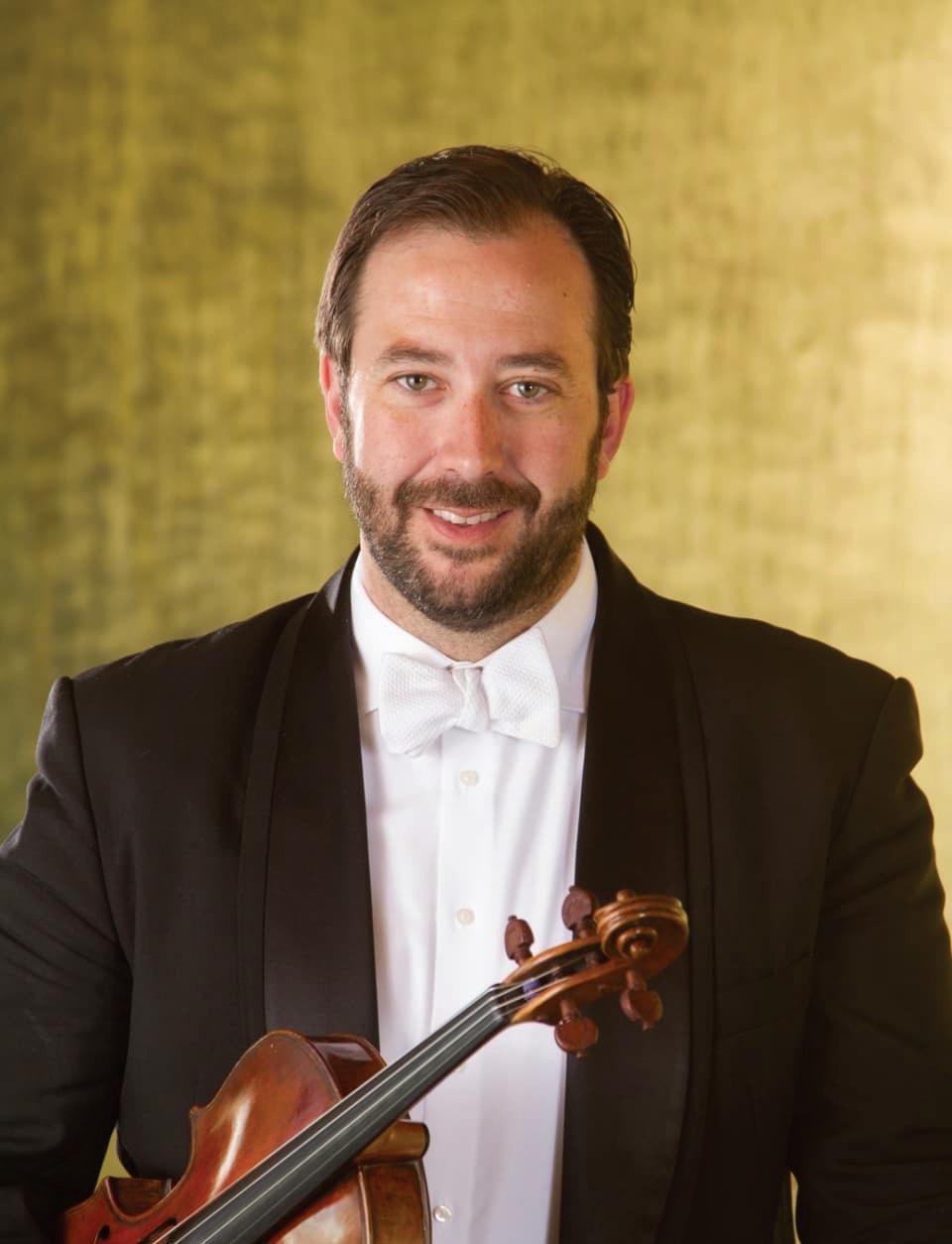
Brant Bayless Viola
BORN IN KANSAS AND RAISED IN PONCA CITY, OKLAHOMA, BRANT BAYLESS came to Utah after completing his studies in New York City. After early piano lessons and singing in his father’s various church choirs, Bayless started the viola at age 12. Winning the Governor’s Scholarship to Interlochen Arts Camp in 1992 gave him his first glimpse of the musical world outside Oklahoma. After two years at the University of Kansas studying with Michael Kimber, Bayless found his way to New York. Invited to study on scholarship with Pinchas Zukerman and Patinka Kopec at the Manhattan School of Music, Bayless finished his bachelor’s degree in 1997. Bayless joined the Utah Symphony in 2001. With the Utah Symphony he has made regular concerto and concertante appearances, including performances of Bach’s Sixth Brandenburg Concerto, Strauss’ Don Quixote, Takemitsu’s A String Around Autumn, Bruch’s Romance, von Weber’s Andante and Rondo Ungarese, and Mozart’s Sinfonia concertante.
HISTORY OF THE MUSIC — HAYDN, MENDELSSOHN, & A VIOLA CONCERTO
BY NOEL MORRIS
Key Notes
All the works on this concert are connected to the British Isles. Japanese composer Dai Fujikura lives in London, while Felix Mendelssohn and Franz Joseph Haydn were favorites of the British royal family. Haydn wrote 12 “London symphonies”; young Mendelssohn wrote The Hebrides after seeing a famous sea cave off the coast of Scotland.
London was the largest city in Europe in 1795. Haydn found the crowds shocking and was surprised to be a big fish in that pond, where people stopped him on the streets for his autograph.
Felix Mendelssohn was arguably classical music’s greatest prodigy, writing his first masterpieces as a teenager.
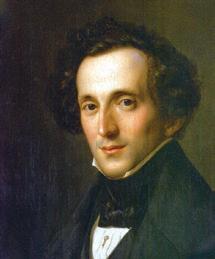
FELIX MENDELSSOHN
born February 3, 1809, in Hamburg, Germany died November 4, 1847, in Leipzig
The Hebrides
composed in 1830, 1832 premiered in London in 1833 last performed by the Utah Symphony in August 2024 with conductor David Alan Miller
The Backstory
Once upon a time, a Grand Tour signaled the coming of age for a young gentleman. Following a course through France, Italy, and Germany, the young traveler visited a list of mustsee sites, antiquities, and works of art. But young Felix Mendelssohn was not the typical young traveler.
“The boy was born on a lucky day,” said the poet Johann Wolfgang von Goethe. Mendelssohn was just 16 when he composed his first masterpiece. The son of a banker, Mendelssohn received the best instruction available and excelled in literature, languages, geography, math, and drawing. His parents cultivated a home life that was the envy of Europe, a gathering place for famous poets, scientists, writers, musicians, artists, and thinkers in Berlin. The family welcomed a host of celebrities who came and marveled at the two Mendelssohn prodigies (Felix and his
sister, Fanny). These musical siblings held their prestigious guests in rapt amazement. On quieter evenings, the family read aloud, sometimes acting out favorite adventures by Sir Walter Scott. When the 21-year-old Felix embarked upon his Grand Tour, he was already an authority on many of Europe’s treasures and customized his trip accordingly.
The Music
“Next August, I am going to Scotland, with a rake for folksongs, an ear for lovely fragrant countryside, and a heart for the bare legs of the natives,” he wrote to a friend in March 1829. “Klingemann, you must join me; we may lead a merry life!” And they did. On August 8, they boarded the steamer Ben Lomond to sail around the Hebrides (pron. HEH bri DEEZ), an island chain off the northwest coast known for its striking, cathedral-like rock formations, aquamarine waters, and verdant, wind-swept hills. The boys lucked into calm weather and went ashore at Fingal’s Cave.
“We were put out in boats and lifted by the hissing sea up the pillar stumps,” wrote Carl Klingemann. “A greener roar of waves never rushed into a stranger cavern—its many pillars making it look like the inside of an immense organ.”
The almost man-made-looking rock formations especially impressed young Mendelssohn, who wrote home to Berlin, “In order to make you understand how extraordinarily the Hebrides affected me, the following came into my mind there.” And he wrote 20 bars of music, the opening of The Hebrides.
He left further clues about the roiling, haunting atmosphere of the overture in his artwork, which depicts heavy cloud cover and dramatic landscapes rising from misty waters.
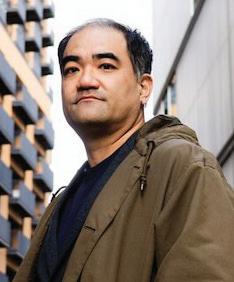
DAI FUJIKURA
born April 27, 1977, in Osaka, Japan
Wayfinder
composed in 2020
premiered in Nagoya, Japan, in 2024 Utah Symphony premiere
What to Listen for
Dai Fujikura creates colors with the viola that 18th- and 19th-century composers never imagined. In their aesthetic, such sounds were considered ugly. With Fujikura’s use
HISTORY OF THE MUSIC — HAYDN, MENDELSSOHN, & A VIOLA CONCERTO
of sul tasto (bowing over the fingerboard), the viola accomplishes an eerie, almost anguished effect.
The Backstory
The London-based composer Dai Fujikura is a native of Tokyo, Japan, and has earned a following for his works that use both Western and traditional Japanese instruments. He’s fresh off an acclaimed run of his new opera, The Great Wave, with Scottish Opera, and is the winner of a Silver Lion from the Venice Biennale. Fujikura is Artistic Director of the Born Creative Festival at Tokyo Metropolitan Theatre and the Music Director of the Izumi Sinfonietta Osaka.
The Music
According to the composer, “Wayfinder is a viola concerto inspired by Polynesian wayfinding/star navigation and other indigenous navigational concepts for orienting oneself: using sea swells, wind, the sun, cloud color and shape, and bird migration. It was written for violist Anne Leilehua Lanzilotti.
“Just before writing this concerto,” he wrote, “I asked Leilehua what book she was reading and what kind of things she was into. She told me she recently moved back to Hawaiʻi and mentioned a book about wayfinding. Leilehua is a native Hawaiian, and I was curious to find out more about Hawaiian culture and history.
“I immediately got inspired by the idea of wayfinding, and I managed to get the book Leilehua was reading in the UK, where I live, and started reading it.
“While I was still living in Japan as a small child, I remember going to Hawaiʻi for a family holiday. At the time, obviously, all I knew about Hawaiʻi was that it was a vacation destination. However, in researching this concerto, I approached this new way of observation and response inherent in wayfinding with joyful curiosity.
“In most of my concertos, the soloist initiates the musical idea, and the orchestra amplifies, expands, explores, and then returns to the soloist.
“For Wayfinder, I aimed to do the opposite. I imagined that all the sounds and notes played by the orchestra were the stars, sea swells, wind, and the sun. The soloist is the one on the boat, navigating her way, guided by the stars and other elements—wayfinding.
“The cadenza of this concerto is at the end of the piece.
The solo viola plays the lyrical passage with extreme sul tasto—bowing almost in the middle of the fingerboard—to create an unusual, unstable but haunting sound.”
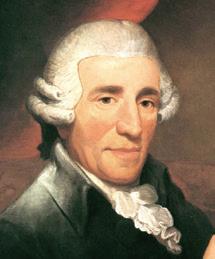
FRANZ JOSEPH HAYDN
born March 31, 1732, in Rohrau, Austria died May 31, 1809, in Vienna
Symphony No. 104 in D Major “London”
composed in 1795 premiered in London in 1795 last performed by the Utah Symphony in August 2014 with conductor Vladimir Kulenovic
The Backstory
Encyclopedias refer to Franz Joseph Haydn as the “father of the symphony,” which might elicit blank stares and yawns, but the real-life Haydn was a colorful guy. He clawed his way to the top of a harsh and unforgiving world and developed a new art form.
In November 1749, when 16-year-old Haydn aged out of the Vienna Boys’ Choir, he found himself on the street. In 1753, he took a job as valet and accompanist to Niccolò Porpora, a famous composer (and abusive boss). Haydn cleaned the man’s shoes in exchange for a place to sleep and some pointers on writing music.
Composers of Porpora’s generation wrote three-movement symphonies (sometimes called overtures) lasting ten or fifteen minutes. In Italy, these works summoned chatty opera audiences to their seats before the main event. They didn’t command much attention.
Haydn wrote his Symphony No. 1 in 1759 while working for a Bohemian count. The man was a music lover and kept a sixteen-piece orchestra on staff. When Haydn presented his new symphony, the Count’s friends found it enchanting—especially Prince Paul Anton Esterházy, who hired Haydn in 1761.
Haydn remained with the Esterházy family for 30 years. Though a servant, he enjoyed lavish facilities, excellent players, and a small but world-class audience. Year after
HISTORY OF THE MUSIC — HAYDN, MENDELSSOHN, & A VIOLA CONCERTO
year, the Esterházys drew Europe’s glitterati to a remote estate, and Haydn’s reputation spread by word of mouth. In time, his symphonies grew from light little trifles into the main event.
By 1790, Haydn had had enough country life. The isolation got to him, and he complained incessantly to his friends. As luck would have it, his prince died, sadly, leaving the estate to someone who didn’t like music. The new prince furloughed the musicians, and Haydn became a hot ticket.
The Music
On New Year’s Day, 1791, he crossed the English Channel to a hero’s welcome. Londoners treated him like a rock star and flocked to his concerts—the largest audiences he’d ever seen. Staying there for a year, Haydn received an honorary doctoral degree from Oxford University and produced a half-dozen landmark symphonies. He returned to London in the fall of 1795 and went to work on more compositions. This time, the royals pleaded with him to stay forever. Haydn declined their offers but gave Londoners six more watershed symphonies—each a musical wonder in its own right.
Symphony No. 104 is the culmination of his work in the genre, combining weight with gravitas. The so-called “London” Symphony requires nearly three times as many players as his First Symphony from 1759, pointing the way to his student, Beethoven. No. 104 has breadth and majesty, yet it lifts the spirit with infectious tunes, including a rollicking Croatian folk song, “Oj Jelena,” in the finale.
Haydn returned to Vienna in 1796, and a new, music-loving Esterházy prince summoned him into service. Haydn stepped back into his servant’s uniform, but with a lot of money in his pocket.
THE CROWN JEWEL OF UTAH
Hotel Park City—a Marriott Autograph Collection Destination Summer Package
STAY & DINE
RUTH’S CHRIS PACKAGE includes:
• OVERNIGHT ACCOMMODATIONS
Enjoy a one-night stay in our hotel’s luxury all-suite lodging.
DINNER AT RUTH’S CHRIS STEAK HOUSE
Enjoy a sumptuous three-course dinner from the special Classic Dining menu at Ruth’s Chris Steak House. (Four entrees to choose from. 5:00–6:00 p.m. daily.)
UNLIMITED USE OF HEALTH CLUB & SPA
Relax and unwind in our full-service luxury spa and health club.
• YOU’LL RECEIVE POINTS TOWARDS FREE NIGHTS AND FLIGHTS ACROSS THE GLOBE
888.999.0098 • www.hotelparkcity.com
Dedicated to the Communities We Call Home
At Summit Sotheby’s International Realty, supporting our communities goes beyond real estate. We’re proud to champion the events, organizations and experiences that enrich the places where we live, work and play.
Discover more ways to experience the best of Utah living in the latest edition of Collections Magazine. Proud supporter of the Deer Valley Music Festival for over 10 years.
CHICAGO THE MUSICAL IN CONCERT
FRIDAY, AUGUST 7, 2026 / 7:30 PM / SNOW PARK OUTDOOR AMPHITHEATER
ROB FISHER , conductor*
LEWIS CLEALE , vocalist*
DYLIS CROMAN , vocalist*
TARI KELLY, vocalist*
JOSEPH LONDON , vocalist*
EMILY SKINNER , vocalist*
MATT SMALLCOMB, percussion
JOSEPH THALKEN , piano
UTAH SYMPHONY
CONCERT SPONSOR
*Utah Symphony debut
ABOUT THE ARTISTS — CHICAGO THE MUSICAL IN CONCERT
Rob Fisher Conductor
ROB FISHER IS AN INTERNATIONALLY RECOGNIZED MUSIC DIRECTOR, CONDUCTOR, and pianist, and a leading figure in American music and musical theatre. He has been a guest of every major orchestra in the country as conductor or pianist, and has collaborated many times with the San Diego Symphony.
With the New York Philharmonic, he conducted the acclaimed concert versions of Carousel (Emmy nomination for Best Music Director) and My Fair Lady, both starring Kelli O’Hara, as well as Mr. Keillor at 70. At Carnegie Hall with the Orchestra of St. Luke’s, he led gala performances of Candide, Guys and Dolls, and The Sound of Music.
Fisher was recently represented on Broadway as the score supervisor and arranger for An American in Paris (Grammy nomination) and Anything Goes (Grammy nomination). Additionally, he remains the music supervisor and arranger for Chicago the musical.
Lewis Cleale
Vocalist
Lewis Cleale most recently spent 14 years delighting and offending audiences on Broadway as Joseph Smith/Mission President/Jesus (original cast) in The Book of Mormon. His other Broadway credits include Sondheim on Sondheim, Spamalot, Amour, Once Upon a Mattress, and Swinging on a Star, for which he received a Drama Desk nomination. He played opposite Tyne Daly in Call Me Madam for New York City Center Encores!, and his Off-Broadway credits include Time and Again at Manhattan Theatre Club, A New Brain at Lincoln Center, and The Fantasticks. He has toured nationally as Joe Gillis opposite Petula Clark in Sunset Boulevard and as Lt. Cable with Robert Goulet in South Pacific, and he was Sam in the Las Vegas production of Mamma Mia! His TV credits include Elementary and BrainDead, and he’s the voice of Cliff the troll in Disney’s Frozen. Lewis has appeared as a soloist with the LA Philharmonic, as well as the symphonies of Dallas, Kansas City, San Diego, Pittsburgh, Cincinnati, and North Carolina.
ABOUT THE ARTISTS — CHICAGO THE MUSICAL IN CONCERT
Dylis Croman
Vocalist
Dylis Croman started her professional career at the age of 17 in New York City dancing with The Feld Ballets/NY. She most recently starred as Roxie Hart in the Broadway musical Chicago. Other Broadway credits include A Chorus Line (standby Cassie/Sheila), Sweet Charity (u/s Charity), Thou Shalt Not (u/s Thérèse Raquin), Oklahoma!, Fosse (trumpet solo). National tour credits: Movin’ Out (Brenda), Thoroughly Modern Millie, Applause, Chicago
TV/film credits: Smash on NBC, Andrew Daniels on Guiding Light, Fosse (trumpet solo, filmed for PBS Great Performances), as well as many national commercials. Love and gratitude to family and friends. All of this is possible because of you, Mom and Dad. And Annie...I dedicate this journey to you.
Tari Kelly
Vocalist
TARI KELLY IS OVERJOYED TO ONCE AGAIN JOIN ROB FISHER AND COMPANY for Chicago
The Musical in Concert. Currently, she can be seen in the Broadway hit Just in Time (OBC) playing Nina Cassotto and others. She is honored to have been a part of eight Broadway shows in total—Mr. Saturday Night starring Billy Crystal (OBC), Groundhog Day (OBC), Something Rotten!, Anything Goes (OBC Roundabout Revival—Reno Sweeney u.s./replacement), The Boy from Oz starring Hugh Jackman (OBC), How the Grinch Stole Christmas (Mama Who), Show Boat (OBC Revival). National tours include: Clue (Mrs. White), Anastasia (Countess Lily), Little Shop of Horrors (Audrey), Show Boat (Ellie), and Beauty and the Beast (Silly Girl). Selected regional credits are: End of the Rainbow (Judy Garland - Henry Award), Thoroughly Modern Millie (Millie - Jeff Nomination), Anything Goes (Reno Sweeney - Carbonell Award). In addition, she can be heard on the original cast recordings of Groundhog Day, Anything Goes, The Boy from Oz, and How the Grinch Stole Christmas. Visit www.TariKelly.com to view her resume as well as links to her various performances!
ABOUT THE ARTISTS — CHICAGO THE MUSICAL IN CONCERT
Joseph London
Vocalist
JOSEPH LONDON IS ELATED TO JOIN ROB FISHER AND THE UTAH SYMPHONY for Chicago
The Musical in Concert. Joseph made his Broadway debut in 2018 as Mary Sunshine in Chicago. He made history a few months later as the first and only actor to play both Mary Sunshine and Amos Hart in the Broadway production, where he is currently the standby to both roles. London was a guest artist and trained at Juilliard Opera Center, with degrees in classical voice from Manhattan School of Music and Roosevelt University: CCPA. London has performed regionally and toured North America in Chicago, Cats, Avenue Q, and Sweeney Todd. His operatic credits include Oberon in A Midsummer Night’s Dream, La Mort in Stravinsky’s Le rossignol, and leading roles in L’incoronazione di Poppea, Agrippina, and Dido and Aeneas. London teaches voice and maintains a private studio in New York City and recently joined the faculty of The Bloomingdale School of Music. For Mom and Dad: you made everything possible and I love you forever.
Emily Skinner
Vocalist
BROADWAY: The Cher Show, Prince of Broadway (Outer Critics Circle Award nomination), Side Show (Tony nomination, Drama League Award), Jekyll & Hyde, The Full Monty, James Joyce’s The Dead, Dinner at Eight (Outer Critics Circle nomination), Billy Elliot (BroadwayWorld Award). NATIONAL TOURS: Ghost Brothers of Darkland County, Billy Elliot, Disney’s On The Record. OFFBROADWAY: Picnic (Transport Group, Drama Desk nomination), My Life With Albertine (Playwrights Horizons), Jerry Springer: The Opera (Carnegie Hall), Fiorello!, No Strings, Pardon My English, A Tree Grows in Brooklyn (all at City Center Encores!); also originated roles at Roundabout Theatre Company, York Theatre, WPA Theatre, Paramount Theatre at Madison Square Gardens. REGIONAL: multiple roles at The Kennedy Center, Signature Theatre, Alliance Theatre, Theatre Under The Stars, Ford’s Theatre, Virginia Rep, Lyric Theatre of Oklahoma, American Conservatory Theatre, Long Wharf, Old Globe, Goodspeed, Bucks County Playhouse, St. Louis MUNY, and many others. She has sung with symphonies internationally and her numerous CD recordings may be found at iTunes and amazon.com.
ABOUT THE ARTISTS — CHICAGO THE MUSICAL IN CONCERT
Matt Smallcomb Percussion
MATT SMALLCOMB IS CURRENTLY A DRUMMER AND PERCUSSIONIST WITH ALARM WILL SOUND, a collaborative ensemble at the forefront of contemporary music and “one of the most vital and original ensembles on the American music scene” (The New York Times). With a career spanning new music to theatre and orchestral, Smallcomb has held chairs on Broadway for Cabaret, West Side Story, The Cher Show, and Stephen Sondheim’s final musical, Here We Are, as well as performing in recent productions of Just in Time, Hell’s Kitchen, Sweeney Todd, The Music Man, Funny Girl, Moulin Rouge, Les Misérables, and Miss Saigon, among others.
Smallcomb has also performed with The Metropolitan Opera, Seattle Symphony, Phoenix Symphony, Malaysian Philharmonic, New World Symphony, American Composers Orchestra, Orchestra of St. Luke’s, as well as with leading artists such as Tyondai Braxton, Rashad Becker, The Knights Chamber Orchestra, Regina Carter, Madeski Martin and Wood, Tyshawn Sorey, Wordless Orchestra, King Britt, Novus NY, Betsy Wolf, and Mario Cantone.
Joseph Thalken Piano
JOSEPH THALKEN IS AN AWARD-WINNING COMPOSER, CONDUCTOR, AND PIANIST whose theatre and concert works have been performed internationally. His ballet, Chasing Home, was recently released by Albany Records, played by the Dallas Chamber Symphony and available on all streaming platforms. He is the composer of the musicals Was, Harold & Maude, Fall of ’94, Borrowed Dust, and Inventions for Piano; and his concert works encompass chamber, choral, orchestral, wind ensemble, and vocal music. He has served as music director and/or arranger for luminaries of Broadway and classical music, including Julie Andrews, Liza Minnelli, Patti LuPone, Bernadette Peters, Renée Fleming, Rebecca Luker, Marin Mazzie, Liz Callaway, Sierra Boggess, Catherine Malfitano, Elizabeth Futral, B. J. Ward, Kristin Chenoweth, Sally Wilfert, Polly Bergen, Faith Prince, Hugh Panaro, Michael Crawford, Howard McGillin, Jason Danieley, Nathan Gunn, Rodney Gilfry, Brian Stokes Mitchell, and many more. He has taught music theatre composition at Yale and is a proud graduate of Northwestern University.
Indulge in a $300 hotel credit — yours to spend on spa, dining, and the signature experiences that define The Grand America.
IDINA MENZEL
SATURDAY, AUGUST 8, 2026 / 7:30 PM / SNOW PARK OUTDOOR AMPHITHEATER
EDWIN OUTWATER , conductor
IDINA MENZEL , vocalist*
SELECTIONS TO BE ANNOUNCED FROM THE STAGE.
PRESENTING SPONSOR
CONCERT SPONSOR
*Utah Symphony debut
ORCHESTRA SPONSOR
ABOUT THE ARTISTS — IDINA MENZEL
CONDUCTOR SPONSOR
GUEST ARTIST SPONSOR
STEPHEN & MELINA NICOLATUS
Edwin Outwater Conductor
EDWIN OUTWATER IS REDEFINING THE CONCERT EXPERIENCE AS A GROUNDBREAKING conductor, curator, and producer, known for his dynamic approach and genreblending collaborations. Working with a wide range of artists from Metallica to Wynton Marsalis, Renée Fleming, and Yo-Yo Ma, Outwater’s creative vision and ability to seamlessly navigate between musical worlds has made him one of the most sought-after conductors, with the legendary Michael Tilson Thomas aptly describing him as “one of the most innovative conductors on the scene today.”
Outwater currently serves as Music Director of the San Francisco Conservatory of Music, where he leads their ensembles and oversees the institution’s bold artistic initiatives. In September 2024, he took on an additional role as Principal Guest Conductor and Curator of BBC Concert Orchestra, working closely with the orchestra’s director to deliver an exciting range of concerts, community, and education work over the next three seasons. His legacy as Music Director Laureate of the Kitchener-Waterloo Symphony, where he served from 2007–2017, remains influential, marked by global recognition through international tours, collaborations, and the critically-acclaimed recording From Here On Out.
Idina Menzel Vocalist
IDINA MENZEL IS A TONY AWARD-WINNING, POWERHOUSE MULTI-HYPHENATE: a singer, an actress in film and TV, a songwriter, a Broadway star, and a philanthropist. Menzel was among the recipients of the 2023 National Medal of Arts, the highest award given to artists and arts patrons by the federal government, which was presented by President Joe Biden.
She rose to fame for her role as Maureen in the popular Broadway musical Rent, and her career took off when she won a Tony Award for her role as Elphaba, the Wicked Witch of the West, in the smash musical Wicked. Her voice can be heard as Elsa in Disney’s Oscar-winning Frozen
In 2025, Menzel made her return to Broadway to star in Redwood, which she co-conceived with Tina Landau. In a true full circle moment, the show played the Nederlander Theatre, where Menzel made her Broadway debut in Rent She received a Distinguished Performance Award from the 2025 Drama League Awards for her performance.
Philanthropy is also important to Menzel, who co-founded the A BroaderWay Foundation in 2010. The organization is dedicated to offering girls from underserved communities an outlet for self-expression and creativity through arts-centered programs. In 2014, Menzel was recognized as one of Variety’s Power of Women honorees for her work with the organization.
Beethoven’s
SYMPHONY NO. 7
WEDNESDAY, AUGUST 12, 2026 / 8:00 PM / ST. MARY’S CATHOLIC CHURCH
LOUIS LOHRASEB, conductor*
ERICA PETROCELLI, soprano*
UTAH SYMPHONY
WAGNER
MOZART
MENDELSSOHN
BEETHOVEN
Siegfried Idyll, WWV 103 (18′)
“Come scoglio” from Così fan tutte (5′)
Infelice, Op. 94 (10′)
INTERMISSION
Symphony No. 7 in A Major, Op. 92 (40′)
I. Poco sostenuto - Vivace
II. Allegretto
III. Presto - Assai meno presto
IV. Allegro con brio
*Utah Symphony debut
ABOUT THE ARTISTS — SYMPHONY NO. 7
Louis Lohraseb Conductor
Since his professional debut at the Teatro dell’Opera di Roma in 2019, Louis Lohraseb has quickly established himself as an exciting young conductor on the international stage, with subsequent appearances at the Semperoper Dresden, Los Angeles Opera, Staatsoper Hamburg, and Komische Oper Berlin. Whether in Rossini “imbued with patter perfection” (SF Classical Voice, LA Opera), or in Mozart that “…sighs more clearly than elsewhere… showing pure emotions” (Klassik begeistert, Staatsoper Hamburg), Lohraseb is charting a career grounded in the joyful sharing of tradition and a sincere commitment to musical storytelling. On the heels of his fall 2024 debut (Alcina), Lohraseb returns to Rice University for Die Zauberflöte, and makes his debut with San Diego Opera in Carmen. In summer 2026, Lohraseb makes debuts with Wolf Trap Opera, leading a new production of La Cenerentola, and with Utah Symphony and North Carolina Symphony.
Erica Petrocelli Soprano
American soprano Erica Petrocelli, whom The New York Times recently exclaimed “the vocal standout” as Jitka in Smetana’s Dalibor with Bard SummerScape, returns to Los Angeles Opera in the 2025-26 season as Musetta in La bohème. Other appearances include Marguerite in Faust, a role debut, at Opera Western Reserve in Ohio; a concert with the Utah Symphony at the Deer Valley Music Festival; and the cover of Micaëla in Carmen at The Metropolitan Opera. Next season, she makes her Metropolitan Opera debut, as Karolka in Jenůfa, and returns to LA Opera as Contessa Almaviva in Le nozze di Figaro
Petrocelli’s recent opera credits include Fiordiligi in Così fan tutte and Donna Clara in Zemlinsky’s Der Zwerg, both at LA Opera with James Conlon; Micaëla in Carmen and Pamina in Die Zauberflöte with Opera Theatre of St. Louis; Pamina with the Boston Youth Symphony Orchestra; Donna Anna in Don Giovanni with Sarasota Opera; the title role in Madama Butterfly with the Colorado Springs Symphony; and the title role in Martinů’s Julietta with Bard SummerScape Festival.
BY NOEL MORRIS
Key Notes
Richard Wagner was a genius at using leitmotifs (themes) to advance the plot of a music drama. With the opera Siegfried on his writing desk, its themes found their way into Siegfried Idyll, including the music for the woodbird and the love duet.
Since its premiere in 1813, the Allegretto movement of Beethoven’s Seventh Symphony has engendered arrangements for a wide range of ensembles, including recorder ensemble, harp, piano, accordion duet, electric violin, 10-string guitar, electric guitar, brass choir, flute duet, harmonica, and MIDI bluegrass band.
Beethoven conducted the premiere of his Seventh Symphony in 1813 at a benefit concert for wounded soldiers who fought Napoleon’s army at the Battle of Hanau.
RICHARD WAGNER
born May 22, 1813, in Leipzig, Germany died February 13, 1883, in Venice
Siegfried Idyll
composed in 1870 premiered in Tribschen, Switzerland, in 1870 last performed by the Utah Symphony in April/May 2021 with conductor Thierry Fischer
The Backstory
On the morning of April 10, 1865, Cosima von Bülow, the wife of the famous conductor Hans von Bülow, gave birth to a baby girl. Two hours later, Hans conducted the first rehearsal of Wagner’s Tristan und Isolde. Hans was so thrilled about the new opera (Wagner was his best friend, after all) that he named the baby girl Isolde after the opera’s heroine.
It wasn’t Hans’ baby.
Over the course of her first marriage, Cosima had two children with her husband and three with Richard Wagner— all three named after principal characters in his operas.
In 1869, Wagner began work on Act III of his music drama Siegfried. Meanwhile, Cosima gave birth to a baby boy. She and Hans (and Richard) named the boy Siegfried or “Fidi.” In this way, the scandal smoldered for six years until 1870, when Cosima packed up her children and moved into Wagner’s villa in Tribschen, Switzerland. She and her husband dissolved their union, and Cosima and Richard married in August, no doubt to their immense relief.
The Music
On Christmas morning, the day after her birthday, Cosima dozed in their bedchamber overlooking Lake Lucerne when violins disturbed her sleep.
“I could no longer imagine myself in a dream, music was sounding, and what music!” Cosima wrote. “After it had died away, R. came in to me with the five children and put into my hands the score of his ‘Symphonic Birthday Greeting.’ I was in tears, but so, too, was the whole household; R. had set up his orchestra [of around 13 players] on the stairs and thus consecrated our Tribschen forever! The Tribschen Idyll—thus the work is called.”
For more than six years, the couple withheld their Tribschen Idyll from the public until they needed the cash. In 1877, Wagner published the piece under the name Siegfried Idyll, and beefed up the orchestra to around 25 players.
The dedication reads, “Tribschen Idyll with Fidi’s birdsong and the orange sunrise as symphonic birthday greeting. Presented to his Cosima by her Richard.”
Fun fact: the young philosopher Friedrich Nietzsche was a houseguest on that Christmas morning in Tribschen and witnessed the performance on the staircase.
WOLFGANG AMADEUS MOZART
born January 27, 1745, in Salzburg, Austria died December 5, 1791, in Vienna
“Come scoglio” from Così fan tutte
composed in 1789 premiered in Vienna, in 1790 last performed by the Utah Symphony in March 2015 with conductor Will Crutchfield
HISTORY OF THE MUSIC — SYMPHONY NO. 7
The Backstory
When people talk about great songwriting duos, the names John Lennon and Paul McCartney often rise to the top. In opera, many would point to Wolfgang Mozart and Lorenzo Da Ponte. Da Ponte was a poet and linguist who lived a life worthy of any opera character. He was born in the Venetian Jewish ghetto (thus the origin of the word “ghetto”). He was ordained as a priest, banished, left a trail of illegitimate children and gambling debts, and eventually taught at Columbia University. Da Ponte became a U.S. citizen at 79 and is buried in Queens, but reached his high-water mark with Mozart, as the librettist of three singular masterpieces: The Marriage of Figaro, Don Giovanni, and Così fan tutte
The Music
Così fan tutte befuddles English speakers, because that particular title is impossible to translate. It effectively means “women are like that.” No doubt, many 21st-century people would take issue with the premise of the story—but that’s what makes it great theater. In short, two guys swear that their brides-to-be would never cheat. Along comes Don Alfonso, who wagers against the ladies’ virtue. The two young men (quite despicably) disguise themselves and seduce one another’s girl. In this grand farce, a series of people say one thing and do another. That’s exactly where we meet Fiordiligi in “Come scoglio.” She declares herself fiercely and steadfastly faithful to her beloved Guglielmo.
But not so much.
Infelice
FELIX MENDELSSOHN
born February 3, 1809, in Hamburg, Germany died November 4, 1847, in Leipzig
composed in 1843 premiered in London, in 1843 Utah Symphony premiere
The Backstory
In November 1832, the Philharmonic Society in London paid Mendelssohn 100 guineas for premiere performances of an overture, a symphony, and a vocal piece. Infelice fulfilled the vocal portion of the deal. But Mendelssohn made it personal; he revealed a secret about the Spanish soprano Maria Malibran, who had been scheduled to sing
the work. With her in mind, Mendelssohn included a solo violin that caresses the vocal lines—a not-so-subtle allusion to her violinist-lover Charles August de Bériot.
As it happened, another singer premiered the piece. Malibran and de Bériot married, but tragically, Malibran died shortly after the wedding. Mendelssohn later wrote the violin part out of the aria. Toward the end of the 20th century, the original version resurfaced and is performed here.
The Music
Musically speaking, Infelice follows a common theme in concert arias: a person laments lost love, cycling through sadness and wistful memories.
Written in three parts, the work begins with a recitative that advances the plot in a more conversational style. Mendelssohn followed the recitative with a cavatine, in which the singer shares her feelings, followed by the virtuosic cabaletta.
LUDWIG VAN BEETHOVEN
born December 1770, in Bonn, Germany died March 26, 1827, in Vienna
Symphony No. 7 in A Major
composed in 1811–1812 premiered in Vienna, in 1813 last performed by the Utah Symphony in January 2024 with conductor David Danzmayr
The Backstory
Not one for understatement, Richard Wagner wrote, “All tumult, all yearning and storming of the heart, become here the blissful insolence of joy, which carries us away with bacchanalian power through the roomy space of nature, through all the streams and seas of life…” Wagner goes on like that—gushing about Beethoven’s Seventh Symphony.
He’s not alone. Beethoven is and has been a colossus among composers. His devotees include Franz Schubert, Hector Berlioz, Felix Mendelssohn, Robert and Clara Schumann, Johannes Brahms, Franz Liszt, Gustav Mahler, George Martin, John Adams, John Corigliano, Billy Joel, Alicia Keys, Jon Batiste, and so on.
HISTORY OF THE MUSIC — SYMPHONY
The Music
The Seventh Symphony, a piece Wagner called “the apotheosis of the dance,” is miraculous in its bundling of seemingly unlike things: It sounds rustic yet is filled with grandeur. It has an arresting yet insistent, propulsive quality. It spins a magnificent tapestry out of tiny musical fragments. And its “slow” movement (it’s actually marked “Allegretto,” so it’s not that slow) is a positively haunting piece nestled within an otherwise joyful symphony.
Beethoven had a raft of problems when he wrote the Seventh Symphony. The Napoleonic Wars spawned runaway inflation. He suffered from financial troubles, hearing loss, fevers, a foot infection, and gastrointestinal distress. He also fell into an affair of the heart, which led to heartbreak. But that isn’t the whole story.
A friend at the time wrote: “I made the acquaintance of Beethoven and found this reputedly savage and unsociable man to be the most magnificent artist with a heart of gold, a glorious spirit, and a friendly disposition. What he has refused to princes he granted to us at first sight: he played on the fortepiano.”
Beethoven worked on the Seventh Symphony between the fall of 1811 and the spring of 1812. Soon after, his inventorfriend Johann Nepomuk Maelzel commissioned music for a gadget called the panharmonicon (a mechanical orchestra/ organ) to celebrate the beginning of the end for Napoleon. The orchestral version of the resulting piece, Wellington’s Victory, premiered alongside the Seventh Symphony during the Congress of Vienna in 1813. The audience went wild. Wellington’s Victory kicked Beethoven to the height of fame, but the searing Allegretto movement of the Seventh Symphony served as runner-up. After what the newspaper described as “a general pleasure that rose to ecstasy,” the orchestra encored the Allegretto. Publishers quickly issued chamber versions of various instruments for home use.
During the 1820s, Beethoven’s popularity surged again with a revival of his opera Fidelio. And he remains a defining figure to this day.
hill-top-hospitality.com
same heart. different tables.
This summer, it's your turn to celebrate. Enjoy a $300 hotel credit toward the spa, dining, and signature touches that make The Grand America truly grand.
FAMOUS FILM MUSIC
THURSDAY, AUGUST 13, 2026 / 7:30 PM / SNOW PARK OUTDOOR AMPHITHEATER
JESSICA RIVERO ALTARRIBA , conductor UTAH SYMPHONY
KLAUS BADELT (ARR. RICKETTS)
SCHIFRIN
JOHN WILLIAMS
ALAN MENKEN (ARR. HEALEY)
VANGELIS
LEONARD BERNSTEIN (ARR. PERESS)
ELMER BERNSTEIN (ED. RUSS)
BRUCE BROUGHTON
JOE HISAISHI
ALAN MENKEN (ARR. TROOB)
PATRICK DOYLE
MICHAEL GIACCHINO
JOHN POWELL
Mission Impossible Theme (2′48″)
“Across the Stars” from Star Wars: Episode II - Attack of the Clones (5′40″)
Orchestral Suite from Hercules (10′)
“Chariots of Fire” (2′15″)
Overture to West Side Story (5′)
INTERMISSION
Suite from The Magnificent Seven (Symphonic Suite) (5′)
Themes from Silverado (5′)
“My Neighbor Totoro” (4′)
Beauty and the Beast Orchestral Suite (8′40″)
Harry Potter and the Goblet of Fire Concert Suite (8′30″)
Jyn Erso and Hope Suite from Rogue One: A Star Wars Story (5′40″)
“Test Drive” from How to Train Your Dragon (3′)
PRESENTING SPONSOR
CONCERT SPONSOR
Suite from Pirates of the Caribbean (6′)
ABOUT THE ARTISTS — FAMOUS FILM MUSIC
Jessica Rivero Altarriba Conductor
NUANCED INTERPRETATIONS, DYNAMIC ENERGY, AND A CHARISMATIC STAGE PRESENCE are hallmarks of Cuban conductor Jessica Altarriba. Praised for her communicative skills, impactful performances, and equally vested in both established and wellknown repertoire as well as contemporary compositions, Altarriba currently serves as Assistant Conductor for the Utah Symphony and is a Taki Alsop Fellowship Award Recipient (2024–26). Altarriba is concurrently pursuing her master’s degree in conducting at the Peabody Institute of Johns Hopkins University.
Last summer, she participated in the Youth Orchestra Los Angeles National Festival in California, collaborating with LA Philharmonic Artistic Director Gustavo Dudamel, YOLA Artistic Director Gaudy Sanchez, and the YOLA National Team in festival programming and conducting a final concert in collaboration with Dudamel.
THE MUSIC OF CELINE DION
SATURDAY, AUGUST 15, 2026 / 7:30 PM / SNOW PARK OUTDOOR AMPHITHEATER
BRENT HAVENS , conductor
OLIVIA VALLI , vocalist*
UTAH SYMPHONY
SELECTIONS TO BE ANNOUNCED FROM THE STAGE.
PRESENTING SPONSOR CONCERT SPONSOR
LODGING SPONSORS
*Utah Symphony debut
ABOUT THE ARTISTS — THE MUSIC OF CELINE DION
Brent Havens Conductor
Berklee-trained arranger/conductor Brent Havens has written music for orchestras, feature films, and virtually every kind of television. His TV work includes movies for networks such as ABC, CBS, and ABC Family Channel Network; commercials; sports music for networks such as ESPN; and even cartoons. Havens has also worked with the Doobie Brothers and the Milwaukee Symphony, arranging and conducting the combined group for Harley Davidson’s 100th Anniversary Birthday Party Finale attended by over 150,000 fans. He has worked with some of the world’s greatest orchestras including the Royal Philharmonic and the BBC Concert Orchestra in London; the CBSO in Birmingham, England; the Malaysian Philharmonic; the Cincinnati Symphony Orchestra; the Minnesota Orchestra; the Pittsburgh Symphony, the Indianapolis Symphony Orchestra; the Houston Symphony; the Atlanta Symphony; the Baltimore Symphony; the Dallas Symphony; the Fort Worth Symphony; the Nashville Symphony; Orchestra of Opera North in Leeds, England; and countless others.
Olivia Valli Vocalist
Olivia Valli grew up singing the songs of Frankie Valli and the Four Seasons. Not only because her family are fans of the chart-topping group, but because her family is Frankie Valli and the Four Seasons. She is honored to be singing songs by one of her biggest musical influences, Celine Dion. A born-and-raised Jersey Girl, Olivia has had the honor of playing Elphaba on the Wicked national tour and standing by for Elphaba on Broadway. Olivia opened the Pretty Woman first national tour alongside Tony Award nominee Adam Pascal, directed by Tony Award winner Jerry Mitchell. Olivia also played her grandmother, Mary Delgado, in Jersey Boys off-Broadway, making her one of the first actors in Broadway history to play a direct relative on stage. Olivia has had numerous sold-out solo concerts at 54 Below in New York City and often participates in concerts to raise money for schools that no longer have funding for the arts across the country.
GUEST ARTIST SPONSOR
JIM & ZIBBY TOZER
HOW DO WE SUMMER? WITH BEACHES, BERRIES, BABIES, AND MORE!
By Julia Lyon
WE ASKED USUO MUSICIANS AND STAFF TO SHARE some of their summer plans. Did you know they face off in an annual softball game? Last summer, musicians won!
Here are other fun plans they shared…
Something we do every summer is go to the Oregon Coast, where we gather with family from Hong Kong, Oregon, Utah, and Washington. It’s the same location that I’ve been going to since I was born. Kevin and I honeymooned there, as did my parents and grandparents! My greatgrandparents were the ones to purchase the original house. As you can imagine, it is rich with history and memories and traditions. It’s a special place.
Emily Shumway, Violin (substitute member) and Kevin Shumway, Cello Utah Symphony
I’ll be performing with the New Deal Swing Orchestra including a collaboration with the Utah Symphony at Thanksgiving Point June 23—a program of classic Big Band Swing music from the 1930s & 40s. Bring your bobby socks, bow ties, and saddle shoes! My band will also be at the Gallivan Center in downtown Salt Lake City July 28 and September 22, the Covey Center September 4, and the Viridian Center on June 5. I love playing music from this era and seeing everyone get up and dance!
Tad Calcara, Principal Clarinet Utah Symphony
I play with the Mountain West Flute Orchestra, which started in June 2025. We were selected to perform at the National Flute Convention, so this August we’re heading to Portland to represent our state and perform! Then, my husband Jack and I will continue driving down the Oregon Coast until we make it to the Redwoods.
Ashley Tingey
Production Coordinator Utah Opera
HOW DO WE SUMMER? WITH BEACHES, BERRIES, BABIES, AND MORE!
I love to go hiking and try different berries and review them. I do this every summer. These blueberries were on the Cumberland Plateau in southern Tennessee. What do I do with them? I usually just eat the berries by the handful!
Deborah Robertson Principal Coach Utah Opera
With rodeo season kicking off, I am looking forward to another summer working with horses. You would be surprised how much overlap there is between horsemanship and music theory!
Toby Simmons
Patron Services Manager
Utah Symphony | Utah Opera
I’m spending the summer with my newborn! He loves stroller walks, bath time, and Stravinsky. He’ll be an excellent DVMF volunteer one day.
Amelia England Director of Marketing Utah Symphony | Utah Opera
Every summer, I make a pilgrimage to the Southern California coast, where my biggest decision of the day is whether or not to stay for sunset (hint, it’s always yes!). There’s something about swimming in the ocean and laying out in the sun on the sandy shore afterwards that brings a fullness of joy that I can’t get anywhere else. Even though life took me elsewhere, coming back each year keeps a piece of my childhood alive, and I leave feeling restored. It is also rewarding watching my children discover the same magic I grew up with!
Farrah Valdez Executive Assistant to the Senior Vice President & COO
Utah Symphony | Utah Opera
SECURING THE FUTURE OF SUMMER MUSIC IN PARK CITY
For more than two decades, the Deer Valley® Music Festival has helped define summer in Park City. What began as a bold vision for a worldclass mountain music festival has become one of Utah’s signature cultural experiences: the Utah Symphony, extraordinary guest artists, and thousands of listeners gathered in one of the most remarkable settings in the American West.
That vision did not happen by accident. It was made possible by philanthropic leaders who understood that great cultural institutions are built not only for the present moment, but for generations to come. The Deer Valley® Music Festival Founders Trust, generously funded by the Prothro Family, the Shiebler Family, and Jim and Susan Swartz, established a foundation that has helped sustain the festival and shape its extraordinary growth.
Now, as Utah Symphony | Utah Opera looks toward the festival’s 25th Anniversary Season in 2029, we are again standing at a defining moment.
Park City is growing. Audiences are growing. The national landscape for summer festivals is more competitive than ever. Major artists and productions are secured years in advance, and expectations surrounding destination cultural experiences continue to rise. For the Deer Valley® Music Festival to remain distinctive, ambitious, and worthy of its extraordinary setting, it must have the permanent financial foundation to match its artistic promise.
The Park City Enhancement Fund is designed to meet that moment.
This long-term initiative will help sustain and expand USUO’s summer presence in Park City by strengthening support for artistic programming, community engagement, guest artists, production quality, and the overall festival experience. With a permanent endowment, USUO can plan further ahead, act more strategically, and pursue artistic opportunities with confidence.
This is more than a fundraising effort. It is an opportunity to ensure that one of Utah’s great cultural traditions becomes a permanent civic legacy.
The families who helped establish the festival understood the power of building something that would outlast any single season. The next chapter calls for that same kind of vision: leadership that honors what has been built, recognizes what Park City is becoming, and secures the Deer Valley® Music Festival for the generations who will gather here next.
As we look toward 2029, the question before us is not simply how to preserve a beloved summer tradition. It is how boldly we are willing to imagine its future.
Garrett Murphy USUO Director of Development
Utah Symphony | Utah Opera is grateful to our generous donors who, through annual cash gifts and multi-year commitments, help us to connect the community through great live music.
Contributions as of May 6, 2026
* In-kind Gift
** In-kind & Cash Gift
† Deceased
~ Designates DVMF sponsor and/ or VIP package supporter
Mark & Dianne Prothro Bellecorp Perkins - Prothro Foundation
Bill† & Joanne Shiebler Shiebler Family Foundation
Jim & Susan Swartz Swartz Foundation
Anonymous
The Church of Jesus Christ of Latter-day Saints Foundation
George S. & Dolores Doré Eccles Foundation
Kem & Carolyn Gardner
M Charitable Foundation~
Larry H. & Gail Miller Family Foundation
O.C. Tanner Company
Norman C. & Barbara L. Tanner Second Charitable Trust
Jacquelyn Wentz
DEER VALLEY ® MUSIC FESTIVAL FOUNDERS
MILLENNIUM ($250,000 AND ABOVE)
Anonymous
AHE/CI Trust
Estate of Dr. J.R. Baringer
Lawrence T. & Janet T. Dee Foundation
Marriner S. Eccles Foundation
Estate of Eva-Maria Adolphi
The Florence J. Gillmor Foundation
Dennis Hranitzky
Scott & Jennifer Huntsman
Emma Eccles Jones Foundation
Frederick Q. Lawson Foundation
LOVE Communications**
Anthony & Renee Marlon
John & Marcia Price Family Foundation
Marcia JS Richards
Shiebler Family Foundation~
Beano Solomon
Sorenson Legacy Foundation
Stowell Leadership Group, LLC*
Wheatley Family Charitable Fund
Zions Bank Foundation
Anonymous
47G Utah Aerospace & Defense**
Doyle Arnold & Anne Glarner
Billings Family Fund of Park City Community Foundation~
Judy Brady† & Drew W. Browning
Crocker Catalyst Foundation
Estate of Dorothy B. Cromer
Dr. Kent DiFiore & Dr. Martha Humphrey
Kristen Fletcher & Dan McPhun~
The Grand America Hotel & Little America Hotel*
Estate of Gordon Irving
The John C. Kish Foundation
Janet Q. Lawson Foundation
Moreton & Company
Frederick & Lucy Moreton
Charles Maxfield & Gloria F. Parrish Foundation
Mark & Dianne Prothro
Patricia A. Richards & William K. Nichols
Salt Lake Chamber of Commerce*
Harris H. & Amanda P. Simmons Foundation
George Speciale
Norman C. and Barbara L. Tanner
Charitable Trust
World Trade Center Utah**
Anonymous (2)
Frances Akita & Christine Akita Sulser
Scott & Kathie Amann
Arnold Machinery
Bar & Bar*
H. Brent & Bonnie Jean Beesley
Jim & Susan Blair~
Bloomfield Family Foundation~
BMW Utah
Mr. Charles Boynton
Judy & Larry Brownstein
Carol Franc Buck Foundation
Michael & Vickie Callen
Cultural Vision 30 Year Endowment
John & Flora D’Arcy
Deer Valley Resort*
David & Angela Glenn
Goldman Sachs & Co. LLC
Brian & Detgen Greeff
Ronald and Kaye Gunnell
Richard K. & Shirley S. Hemingway Foundation
Intermountain Health
Intuitive Funding
The Kahlert Foundation
McCarthey Family Foundation
Charles & Pat McEvoy
Moreton Family Foundation
Jennifer Price-Wallin
S.J. & Jessie E. Quinney Foundation
Mr.† and Mrs. Alvin Richer
Nathan & Shannon Savage
Peggy & Ben Schapiro
Theodore and Elizabeth Schmidt Foundation
Simmons Family Foundation
Diane & Sam Stewart Family Foundation
Shane & Stacey Stowell
Summit Sotheby’s International Realty
The Swartz Foundation~
Taft & Anne Symonds
Naoma Tate & the Family of Hal Tate
Zibby & Jim Tozer
Nora Eccles Treadwell Foundation
John & Jean Yablonski~
Contributions as of May 6, 2026
Anonymous
Altabank
HJ & BR Barlow Foundation
B.W. Bastian Foundation
Clisto and Suzanne Beaty
Beesley Family Foundation
Bertin Family Foundation
Steven & Cassandra Brosvik
Paul Burdiss
R. Harold Burton Foundation
The Capital Group
Mary Carpenter~
Howard & Betty Clark
Larry Clemmensen
Mr. & Mrs. Kenneth R. Cutler
Marian Davis & David Parker~
Estate of Jeff Drenker
Pat & Sherry Duncan
Barry L & Traci Eden
Sarah Ehrlich
Pam & Jonathan Eichner
Matthew B. Ellis Foundation
Enbridge Gas
Carolyn & Craig Enenstein
Midge & Tom Farkas
The Thomas H & Carolyn L Fey Family Foundation
Robert & Elisha Finney~
Brandon & Kristen Fugal
David & Karen Gall
Diana George
Goldman Sachs Philanthropy
Emma Hamilton & Brian Casper
Douglas & Connie Hayes
Susan & Tom Hodgson
Mary P.† & Jerald H. Jacobs Family
Stephen C.† and Lynda M. Jacobsen
Thomas Jacobson
Annette & Joseph Jarvis
Joseph & Kathleen Sorenson Legacy Foundation
G. Frank & Pamela Joklik
KKC Foundation
Irene Lee~
Bill Ligety & Cyndi Sharp
Matthew Prince & Tatiana Lingos-Webb
Prince
Millburn Philanthropy Trust
Jed Millburn
The Millerberg Family Giving Fund
Harold W. & Lois Milner
Minky Couture**
Mountain Living Magazine
James & Ann Neal
Park City Chamber of Commerce & Visitors Bureau
Dr. Dinesh & Kalpana Patel
Leslie Peterson & Kevin Higgins
Bronze ($8,000 - $9,999)
4Girls Foundation
Diane & Hal Brierley
Paula Bronson
David Brown
Charlotte & Hal Browning
Dominion Energy Arts Foundation
James Finch
Ray & Howard Grossman
Rick & Paulette Katzenbach
Daniel & Deena Lofgren
Alice & Frank Puleo
Richard & Carmen Rogers
Barbara & Paul Schwartz
St. Regis / Deer Crest Club**
Mark & Debbie Weinstein
Anonymous
Marcia Aaron
Pam & Paul Apel
Anne Daigle & Rich Heyman
Michael and Sheila Deputy
Susan Dube
Karey Dye
Carol & Greg Easton
Jack & Marianne Ferraro
Grandeur Peak Global Advisors
Patty Henderson
Holland & Hart
Sunny & Wes Howell
Brian & Nancy Kennedy
Jeanne Kimball
Allison Kitching
Frank R. Pignanelli & D’Arcy Dixon
Pignanelli
Walter J. & Peggy Plumb
Pura
Albert J. Roberts IV
James & Anna Romano
The Joseph & Evelyn Rosenblatt
Charitable Fund
Sandefur Schmidt
Allison Schuster
Jonathan & Marisa Schwartz
Gerald† & Sharon Seiner
Dewelynn & J. Ryan† Selberg
Pamela Slomski
Sheryl & James Snarr
Mr.† & Mrs. G. B. Stringfellow
Thomas & Marilyn Sutton
Swire Coca-Cola USA
University of Utah Health
Utah Valley Chamber of Commerce
Brad E. & Linda P. Walton~
WCF Insurance
Woodbury Corporation
Dr. and Mrs. Harry C. Wong
Curtis Woodbury
Caroline & Thomas Wright
Kathie Zumbro
Tom & Janet McDougal
Moeller Family Foundation
Michael Montgomery
Ashton Newhall
Promontory Foundation
Albert J. Roberts IV
Rhett M. Roberts
Karyn & Damon Shelly
Emily Stewart
Barry & Fran Wilson
Tina and John Barry
Sue Barsamian
Nancy Bartmess
Alice & Bill Bierer
Ann Binder
Continued on the next page…
THANK YOU
Diane Bok
Teresa Bolton
Mark & Marcy Casp
Blair Childs & Erin Shaffer
Dr. Sidney Cole
Tracy Collett
Sandra & David Cope
Cindy Corbin
James Cox
Rod Cullum
Ruth Davidson
Lawrence Dickerson & Marcela Donadio
Frank & Kathleen Dougherty
Karen & Earl Enzer
Judith Fader
Hans & Nanci Fastre
Blake & Linda Fisher
Karen Fletcher
Shawn & Karin Fojtik
Adele & James Forman
Dixie & Joseph F. Furlong III
Robert & Annie-Lewis Garda
Kenneth† & Amy Goodman
Sue & Gary Grant
Nancy Ann Heaps
Whitney & John Higgins
William & Michelle Holloway
Lisa Jordan
Allison D. Keenan
Howard & Merele Kosowsky
Les Kratter
Stan & Susan Levy
Robert & Shelly Light
Don List
Tom & Jamie Love
John & Kristine Maclay
Steve & Marion Mahas
Keith & Vicki Maio
Miriam Mason & Greg Glynnis
Karen & Mike McMenomy
Clayton McNeel
Ellen Mendell
MJZR Charitable Trust
Glenn & Dav Mosby
Thomas & Barbara O’Byrne
Arlene and Stephen Pettise
James S. & Dyan Pignatelli
Lesli Rice & Scott Rice
Mitch & Shannon Rice
Sandi & Reynold Rice
Steven K Richards
Lee Rippel
Kathryn Rommel
Rebecca Roof & Gary Smith
Marlin Sandlin Jr
Lisa and Joel Shine
Roberta Stanley
Ray and Ann Steben
Marcie & Avy Stein
Toni Stein
Craig Stuart
Gregory Taxin
Tim & Judy Terrell
Judith & Richard Valliere
Grant Lippincott & Donna Walsh
Gerard & Sheila Walsh
Renee & Dale Waters
Stephen & Elizabeth Watson
Charles & Ellen Wells
Kelly & James Whitcomb
Cindy Williams
PKW Donor Advised Fund at The Dallas Foundation
Peter and Marilyn Zutty
Grass Pass ($2,000 – $2,999)
Ryan Aller & Natasja Keys
Rebecca Marriott Champion
Dave Clark
Margarita Donnelly
Bruce Woollen
VIP for a Night ($1,000 – $1,999)
Alan, Carol, and Annie Agle
Julietta Bauman-Schreck
Charles & Jennifer Beckham
Karen Bennett
George & Katie Coleman
Elana Spitzberg Family Foundation
Rick & Patti Fersch
Sheila S. Gardner
Mauri Hansen
Caroline & David Hundley
Steven & Christine Knudson
Kulynych Family Foundation II, Inc.
Stacy Lederer
Daniel Loreto
Patricia & Mark Lucas
Kenny Mizel
Natalie & Eric Montague
Mountain America Credit Union
Nancy Rossman
SALTT
Daniel and Sari Schachtel
Mary & Doug Sinclair
Jennifer Stamp
Jeff Trocin
Vergara Miller Law
The Victory Foundation
Michael D. Weiner
Utah Symphony | Utah Opera expresses deep gratitude to donors who, since the Deer Valley® Music Festival’s founding, have made it a resounding success through extraordinary generosity. We appreciatively acknowledge cumulative giving in support of USUO and the festival.
$500,000 +
Diane & Hal Brierley
Church of Jesus Christ of Latter-day Saints Foundation
Deer Valley Resort**
Dominion Energy
George S. & Dolores Doré Eccles Foundation
Marriner S. Eccles Foundation
Kem & Carolyn Gardner
Marty & Jane† Greenberg
LOVE Communications**
The Tony & Renee Marlon Charitable Foundation
O.C. Tanner Company
Perkins-Prothro Foundation / Mark & Dianne Prothro
Patricia A. Richards & William K. Nichols
Shiebler Family Foundation / Joanne & Bill Shiebler
Sorenson Legacy Foundation
The Swartz Foundation / James R. & Susan Swartz
The State of Utah
Zions Bank Foundation
$250,000 – $499,999
Scott & Kathleen Amann
BMW Utah
Richard K. & Shirley S. Hemingway Foundation Holland & Hart
Thomas & Lorie Jacobson
John C Kish Foundation
Montage Deer Valley**
Jim† & Marilyn Parke
Alice & Frank Puleo
Summit Sotheby’s International Realty
Taft & Anne Symonds
WCF Mutual Insurance Company
Utah Symphony |
like to especially thank our major sources of public funding that help us to fulfill our mission and serve our community.
Salt Lake County Zoo, Arts & Parks
Utah State Board of Education
Utah Department of Cultural & Community Engagement
Utah Division of Arts & Museums
Utah Office of Tourism
Utah State Legislature
Summit County RAP Tax
Summit County Restaurant Tax
National Endowment for the Arts
Salt Lake City Arts Council
Orem City CARE Tax
Contributions as of May 6, 2026
Utah Opera would
MEMORIALS & TRIBUTES
Many donors have made gifts to Utah Symphony | Utah Opera in memory or to honor friends and loved ones. Thank you for your generous tributes.
In Memory Of
Jack Ashton
David Luker
Judy Billings
Billings Family Fund of Park City Community Foundation
Judy Watts Brady
Drew W. Browning
Gerald Rich (Skip) Daynes
James Barthemess
Ashby Snow Decker
David & Colleen Merrill
Dr. Gary F. Larsen
The G.F. Larsen Fund
Charles William Huebner
James & Elizabeth Cobb
Maxine, Frank & Joel McIntyre
Jerilyn McIntyre & W. David Smith
Ruzena (Rose) Novak
Eva Novak
Glade & Mardean Peterson
Leslie Peterson & Kevin Higgins
Wallace Ring, MD.
Dr. Harry Wong
Gladys Gladstone Rosenberg
David Luker
Willard & Evelyn Smith
Jerilyn McIntyre & W. David Smith
Carol Zimmerman
Patrick Zimmerman
In Honor Of
Camila Baltazar
Arthur J. Levy
Paige Lowe & Stephen Irish
Michelle Robin Stewart
Steve Hogan
Barry L. Eden
Warren K. (Sandy) McOmber
Virginia McOmber
ASSOCIATE BOARD
A dynamic group of young professionals, the Associate Board partners with Utah Symphony | Utah Opera to shape the future of live music. They bring fresh ideas, cultivate philanthropy, and strengthen connections between USUO and the community.
Contact Katie Swainston at kswainston@usuo.org for more information about becoming involved.
Curtis Woodbury, chair
Kylee Dickamore
Hillary Marquardson
Jeff Pickett
Rayanne Riepl
Stephen Tracy
Utah Symphony | Utah Opera is grateful to those donors who have made commitments to our Endowment Fund. The Endowment Fund is a vital resource that helps the long-term well-being and stability of USUO, and through its annual earnings, supports our Annual Fund. For further information, please contact us at 801-869-9001.
Anonymous
Edward R. Ashwood & Candice A. Johnson
Gael Benson
C. Comstock Clayton Foundation
Estate of Alexander Bodi
The Elizabeth Brown Dee Fund for Music in the Schools
Lawrence T. & Janet T. Dee Foundation
Thomas D. Dee III & Dr. Candace Dee
Hearst Foundation
Estate of John Henkels
Roger & Susan Horn
Carolyn T. Irish Revocable Trust
Estate of Marilyn Lindsay
The Right Reverend Carolyn Tanner Irish† and Mr. Frederick Quinn
Loretta M. Kearns†
Vicki McGregor
Edward Moreton
Estate of Pauline C. Pace
The Linda & Don Price Guest Artist Fund
Perkins-Prothro Foundation
Kenneth† & Jerrie Randall
The Joseph and Evelyn Rosenblatt Charitable Fund
Bill† & Joanne Shiebler
Steven P. Sondrop Family Trust
James R. & Susan Swartz
Clark L. Tanner Foundation
Norman C. & Barbara L. Tanner Charitable Trust
Norman C. & Barbara L. Tanner Second Charitable Trust
O.C. Tanner Company
Estate of Frederic & Marilyn Wagner
Jack & Mary Lois Wheatley Family Trust
Edward & Marelynn† Zipser
Contributions as of May 6, 2026 † deceased
Jim Tozer
Larry Brownstein
Co-Chairs
Scott Amann
Beth Armstrong
Tom Billings
Hal Brierley
Judy Brownstein
Carolyn Enenstein
Craig Enenstein
Lynn Fey
Kristen Fletcher
Tom Jacobson
Paulette Katzenbach
Duncan Lee
Irene Lee
Michael Liess
Bill Ligety
Renee Marlon
Tony Marlon
Robin Marrouche
Charles McEvoy
Pat McEvoy
Dan McPhun
Michal & Maureen Mekjian
Hal Milner
Lois Milner
Mark Prothro
Ben Schapiro
Joanne Shiebler
Jim Swartz
Susan Swartz
Zibby Tozer
Howard Wallack
From all of us at USUO, we thank our DVMF Council members for their generous support, insightful guidance, and unwavering dedication.
TANNER & CRESCENDO SOCIETIES
Utah Symphony | Utah Opera offers sincere thanks to our patrons who have included USUO in their financial and estate planning.
TANNER SOCIETY OF UTAH SYMPHONY
Beethoven Circle (gifts valued at more than $100,000)
Anonymous [3]
Doyle Arnold & Anne Glarner
Edward R. Ashwood & Candice A. Johnson
Dr. J.R. Baringer†
Dr. Melissa J. Bentley
Marcy & Mark Casp
Shelly Coburn
Mahler Circle
Anonymous [3]
Dr. Robert H.† & Marianne Harding
Burgoyne
Richard Clegg
Mr. & Mrs. Kenneth E. Coombs
Dorothy B. Cromer†
Robert & Carolee Harmon
Raymond & Diana Compton
John & Flora D’Arcy
Jeff Drenker†
Anne C. Ewers
Annette W. & Joseph Q. Jarvis
Flemming & Lana Jensen
James Read Lether
Daniel & Noemi P. Mattis
Anthony & Carol W. Middleton, Jr., M.D.
Robert & Diane Miner
Pieter and Janice Mensink
Glenn Prestwich
Kenneth A.† & Jeraldine S. Randall
Marcia JS Richards
Barbara Hartman†
Richard G. & Shauna† Horne
Virginia A. Hughes
Gordon Irving†
Herbert C.† & Wilma Livsey
Dianne May
Jerry & Marcia McClain
CRESCENDO SOCIETY OF UTAH OPERA
Anonymous
Judy Brady† & Drew W. Browning
Dr. Robert H.† & Marianne Harding
Burgoyne
Richard Clegg
Shelly Coburn
Travis & Jamie Donio
Anne C. Ewers
Joseph & Pat Gartman
Gordon Irving†
Annette W. & Joseph Q. Jarvis
Edward R. Ashwood & Candice A. Johnson
Herbert C.† & Wilma Livsey
Richard W. & Frances P. Muir
Marilyn H. Neilson
Carol & Ted Newlin
Dr. Louis & Deborah Moench
Jim & Andrea Naccarato
Stephen H. & Mary Nichols
Craig S. Ogan
Mr. & Mrs.† Scott Parker
Mr. & Mrs.† Michael A. Pazzi
Patricia A. Richards & William K. Nichols
Mr.† & Mrs. Alvin Richer
Laura Scholl
Jeffrey W. Shields
G.B.† & B.F. Stringfellow
Dr. Ralph & Judith Vander Heide
Edward J. & Marelynn† Zipser
The remaining 2/3 comes from generous supporters like
“When I was young, I dreamed about becoming a professional horn player. I attended Eastman School of Music, but realized there was little chance of a female brass player being hired by a major orchestra. Today, I can be part of the Utah Symphony horn section through financial support, adding my name to the principal horn chair. My childhood dream is now realized in a different way.”
-Marci Richards
Foster a unique connection with the individual behind the music while supporting the Symphony’s commitment to excellence.
LEARN MORE
by contacting
Development of Director Murphy, Garrett gmurphy@usuo.org
LEAVE A LEGACY PARTNER WITH A PLAYER
MAKE A PLANNED GIFT
Make a lasting impact while meeting your financial goals today. Including Utah Symphony | Utah Opera in your will is simple, often taxadvantageous, and helps ensure the power of music touches lives for generations to come. To learn more, please reach out to your financial advisor or contact us at: 801-869-9200 usuo.org/planned-giving
ACKNOWLEDGMENTS
UTAH SYMPHONY | UTAH OPERA
123 W. South Temple Salt Lake City, UT 84101 801-533-5626
EDITORS
Julia Lyon & Camila Baltazar
LIBERTY PRESS libertypress.com 1180 North Mountain Springs Parkway Springville, Utah 801-853-5353
AUDITING AND ACCOUNTING SERVICES PROVIDED BY Tanner, llc
ADVERTISING MEDIA & WEBSITE SERVICES PROVIDED BY Love Communications, Salt Lake City
The organization is committed to equal opportunity in employment practices and actions, i.e. recruitment, employment, compensation, training, development, transfer, reassignment, corrective action and promotion, without regard to one or more of the following protected class: race, color, religion, sex, national origin, age, disability, family status, veteran status, sexual orientation, gender identity and political affiliation or belief.
Maurice Abravanel Hall and and The Janet Quinney Lawson Capitol Theatre are owned and operated by the Salt Lake County Center for the Arts.
By participating in or attending any activity in connection with Utah Symphony | Utah Opera, whether on or off the performance premises, you consent to the use of any print or digital photographs, pictures, film, or videotape taken of you for publicity, promotion, television, websites, or any other use, and expressly waive any right of privacy, compensation, copyright, or ownership right connected to same.
Luxury at Red Ledges extends beyond breathtaking mountain views and exceptional amenities—it continues through the way your home is built. The Artisan Series by Red Ledges Construction pairs beautifully designed mountain residences with transparent, fixedprice construction, curated finishes, and a streamlined homebuilding experience, giving you greater confidence, clarity, and more time to enjoy mountain life. Scan the QR code to explore current Artisan home plans.