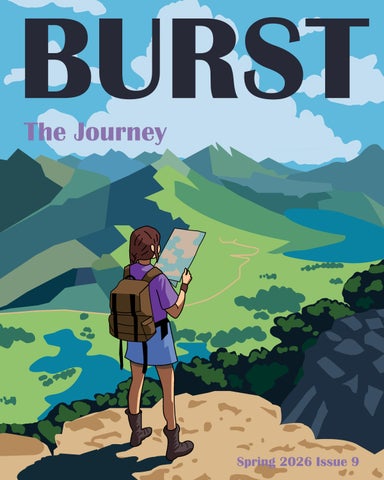
The Journey



STAFF
Editor-in-Chief
Anna Quick
Editors
Aubrey Diedrich
Chase Mason
Writers
Eli Bland
Isabella Blohm
Cassidy Culjat
Aubrey Diedrich
Rock Edwards
Nolan Evans
Kemper Koslofski
Elaine McLaughlin
Remi Mendenhall
Ella Michel
Anna Quick
Lorenz Miel Delos Reyes
Daniel Roman
Helana Swenson
Shaina Yumol
Sponsor
We would like to thank David Paddock for his generous donation to the magazine.
Assistant Editor
Helana Swenson
Creatives
Madelyn Beck
Becca Carter
Jodi Dingman
Wayne Fenderson
Ellie Fitzpatrick
Kayla Hanson
Maryn Kasza
Beth Portman
Morgan Potter
Anna Quick
Alanna Smith
Maud Valent
Gabriel Williams
Arcane Webb
Damyah Word
Faculty Design Advisor
Professor Jessa Wilcoxen
Faculty Editorial Advisor
Dr. Julie Bates
LETTER FROM THE EDITOR
Dear Readers,
In the past, BURST has been an outlet for students to explore aspects of their life they love, their identity and the communities they find themselves in. Everyone is on their own journey. Perhaps it’s a journey to self-acceptance, to a new location, to figure out what they love or to understand their identity. Each issue of BURST uncovers what Millikin students are passionate about, but what about their journey to that passion?
The theme of this issue, “The Journey,” seeks to remind readers about why people are passionate about various topics outside and inside of Millikin. We “burst” the Millibubble in many ways, and it is important to understand why we do it and the path there. All of us are unique and carry different experiences, and it is important that we share those so others know they are not alone. No matter what journey life may take you on or how bumpy it may be, it is important to reminisce and remind yourself of how you got where you are now.
While reading, I encourage you to think broadly about the term “journey.” This issue of BURST features articles about the journey that AI has taken in our society, a dancer’s experience with their body image and a student’s time in Kensington, Philadelphia, conducting an internship. Personal growth, learning, self-discovery, fostering connections, career discovery and identity are all forms of journeys people may find themselves on. All of these stories are important to understanding one another and the world around us. Even if you haven’t gone through what someone else may have, hearing the details of their journey can give you great insights into who they are as a person.
Allow this issue of BURST to be a breath of fresh air. Read the articles with an open mind and remember that everyone’s journey is different. While you read about others’ personal journeys, take time to remember your own. Remember your struggles, your successes and the lessons you’ve learned. Give yourself grace, and give others grace. Everyone’s journey is unique, but remember that you aren’t alone.
Take it easy,
Anna Quick Editor-in-Chief
Prioritizing ConvenienCe
By: Cassidy Culjat
Artificial Intelligence is becoming more and more prevalent in the age of convenience. How much are we willing to sacrifice to make our everyday lives a little easier?
Artificial Intelligence (AI) has seeped into every aspect of our daily lives. A student might use AI to write an essay, and their professor might use AI to check if the student used AI. You can scroll on TikTok and watch an AI-generated video of puppies followed by a clip discussing the environmental impacts of that very software.
Many use AI in their everyday lives to accomplish simple tasks and believe that it serves as a useful tool to remove small burdens from their lives. But AI cuts deeper into our lives than surface-level usage. It also eats away at important resources and creates potentially catastrophic environmental concerns.
Austin Haga is a senior commercial music major who shares concerns about
AI after seeing it used in his classes.
“All that data has to be physically housed somewhere,” Haga says.
“There’s a video where a news team was visiting someone’s house who lived a couple [of] hundred feet from a data center. They have no water pressure. They turned on the sink, and it was barely dripping. It’s indicative of the kind of resources that are needed to run this equipment.”
Martin Atkins, a professor in the School of Music and veteran of the music industry, shares a less concerned stance regarding the environmental impact of AI.
“I commute from Chicago, 180 miles, to teach,” he says. “The environmental impact of [using AI] is the equivalent of driving 10 feet.” Although this statistic is not backed up by recent studies, Atkins still believes that AI is not impacting
the environment as much as other everyday activities.
Many people are torn about the benefits and harms of AI usage. For some, it is an inevitable sign of advancement. “I’m taking a pragmatic view,” Atkins says. “I’d rather be ... understanding it and using it, than denying it and being outside of it.
As someone once said, ‘The only constant is change.’”
What happens when that change goes too far? Has our need for convenience finally crossed a line?
The attitude that people carry when it comes to AI is distressing to its opposers, who see the risks it poses to not only the environment but the human mind. What will become of our ability to process information, create art or communicate with one another when we begin to let computers do it all?
“It gives you nice, quick [and] easy answers...that’s what makes AI so compelling.”
The widespread usage of AI may be a deeper indicator of the current human condition and our refusal to look any farther than two feet in front of our faces. “Humans are predisposed to thinking that all the processing happens within our phones, but it’s happening off of the device,” Haga says. “That’s part of the reason that people don’t realize it has such an environmental impact. It gives you nice, quick [and] easy answers where there aren’t really any in real life … that’s what makes AI so compelling.”
Finding Safe Spaces
In a time where LGBTQIA+ individuals aren’t protected, it is important to remember where your safe spaces are.
Millikin Spectrum

Spectrum is a student organization at Millikin for LGBTQ+ individuals. Spectrum welcomes people of any sexuality and gender on campus. In the past, they have hosted drag shows, movie nights, parties and other events to try to foster a safe environment at Millikin.
PFLAG Decatur
PFLAG is a nationwide organization that was created to support, advocate for and educate LGBTQ+ individuals and allies. They are the largest nonprofit organization in America that has this mission. There are over 400 locations, and one is located in Decatur.
Clique
If the name didn’t give it away, Clique is an LGBTQ+ bar in Springfield. This bar is known for having delectable appetizers, drag shows, karaoke and an all-around vibrant energy every night. They are open every day from 2 p.m. to 2 a.m.
The Phoenix Center
Located in Springfield, the Phoenix Center is an LGBTQ+ center that offers housing, healthcare, education, counseling
By: Rock Edwards
and fun events for the public. The Phoenix Center provides care for those who are struggling with their identity and living situation The center is also open for those who want to learn about LGBTQ+ history or meet other queer individuals.
Acorn Equality Fund
Acorn Equality Fund is a grassroots, nonprofit organization in Peoria, Illinois. They work to provide funds for LGBTQ+ individuals and their education, alongside donating money to help promote LGBTQ+ civil rights funds and LGBTQ+ healthcare. For queer college students, the Acorn Equality Fund has six different categories of scholarships that you can apply for to support you in your college journey.
Uniting Pride
Uniting Pride is an LGBTQ+ support space located in Champaign. They offer methods of gender-affirming care, social support groups, educational systems, food pantries and events for the queer community or allies.
More Than Marketing
By: Remi Mendenhall
In Millikin’s first student-run marketing consulting venture, students don’t just learn about business. They lead it.
Millikin University is all about performance learning, and the abundance of opportunities to test out your skills could start with Millikin Tabor Consulting (MTC).
MTC became a student-run venture in the spring of 2022 and is the first and only marketing consulting student-run venture at Millikin. Students run the show in MTC and work with real businesses to gain hands-on experience across every part of a business. “We have the best students,” Jane Hua, MTC’s advisor, says. “Students in the venture self-select, and they are high-achieving, motivated and dedicated students.” The projects they work on allow MTC members
to step into the role of a consultant and use the skills they’ve learned in classes to present professional recommendations to clients.
In MTC, members don’t just gain experience; they build confidence, develop leadership skills and network with people they meet outside of school that may help them land jobs. “We offer handson opportunities for students to practice, and in the interviews with clients, the students take the lead instead of taking orders or following tasks their supervisor gave them,” Hua says.
MTC collaborates with businesses of all sizes to deliver solutions that enable growth and
a lasting impact in the community. “It’s a great place to start your own initiative,” Hua says. “If you are someone who doesn’t always hold a leadership position, this is a great opportunity for you. You get the opportunity to practice your leadership and grow in MTC.”
MTC isn’t just another organization. Being a part of the venture is a journey in itself. In MTC, members discover strengths, refine communication skills and learn how to work with a team outside the classroom.
Math Can Be Fun, Sometimes
By: Nolan Evans
For students who rarely get the chance to do comedy, Millikin’s improvisation troupe, Math Club, embraces goofiness and quick thinking. Math Club gives students a space to experiment and have fun.
People around campus might describe Millikin University’s improv troupe, Math Club, as goofy, crazy, funny and weird. You’ve probably heard about several of their shows around campus. Maybe you’ve seen their unconventional event posters on Instagram or a physical version. You might not have attended one of their shows, but just know that when you go to one, you are in for a strange yet delightful treat.
Math Club is an ever-changing group of 6-14 people that started in the early 2010s, and its goal is to introduce Millikin students to improv
and produce quality shows. “For me, I didn’t get the opportunity to do a lot of comedy-based stuff in high school,” Henry Ward, co-president of Math Club, says. “My theater program wasn’t well funded.” Ward and the other copresident, Ethan Rhoades, joined their freshman year and aspired to become Math Club presidents. Many Math Club members feel that Millikin’s School of Theatre and Dance does not put as much emphasis or focus into teaching comedy as a tool for actors, and that makes Math Club one of the
best places on campus to hone your comedy and on-the-fly thinking. Math Club is also a place for its members to have fun and play pretend. “We don’t feel like it’s rehearsal,” Rhoades says. “We feel like it’s just us getting to have fun.” Math Club is a key addition to a largely theater-based university. Although not every member will go on to be a star comedian, the troupe sure knows how to make Millikin laugh.
Millikin Tabor Consulting


at Millikin
Millikin’s faith groups are experiencing a revival.
By: Kemper Koslofski
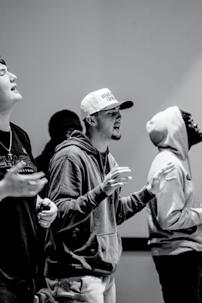
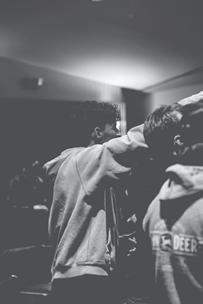
God actively shapes lives on Millikin’s campus through faith gatherings, prayer and weekly meetings that nurture students spiritually. When I first arrived at college, I was not sure that there would be any opportunities for me to express my faith. However, after scouring campus organizations, I realized there were several opportunities for me to take that next step and join others who believe in Jesus as I do.
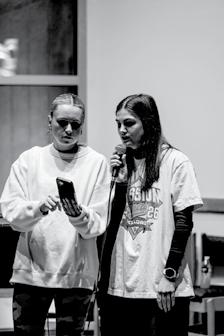
There are several ways for Millikin students to connect, depending on their interests and involvement on campus. This is also true for students who are looking for a way to stay in tune with their religion. For example, Fellowship of Christian Athletes (FCA) offers chances for athletes and nonathletes to come together and see how God works through sports. Kolby Koslofski, a senior FCA leader, has played a huge part in FCA on campus, and
he could not be more excited about what is to come. “Our focus is to bring athletes together, to talk about the Lord, to study the Bible and to represent Christ on campus,” he says. “It’s a goal of mine to see new
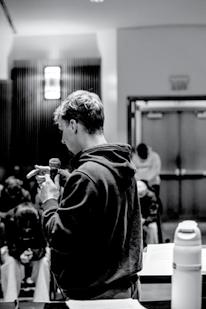
faces at FCA and to bring them light in the midst of a dark world. At FCA, we want to expose the darkness so that it can become light.”
Koslofski has enjoyed serving others through his leadership role.
Photo Credit: Kemper Koslofski
At FCA, we want to expose the darknessso that it can become light.
“The Lord’s command is to go to all nations, baptizing them in the name of the Father, Son and Holy Spirit, and carry the words of the Lord to them,” Koslofski says. “Having a campus like Millikin and an organization like FCA allows me to do that.”
In addition to FCA, Delight, a women’s ministry offered on campus, has had a considerable impact on Millikin’s campus, allowing women the opportunity to express their faith among other women. Alayna Schultz, a junior Delight and FCA leader, has played a massive part in this impact, and she encourages anyone to join. “Some of my closest friendships have been made through both of these organizations,” she says. “Whether you’re questioning where you stand with your faith or you’re a longtime Christian, you will always have
“
someone welcoming you and willing to talk to you in each and every one of these on-campus ministries.”
There are many other religious-based groups at Millikin. InterVarsity is an organization that offers large and small meetings for any Christian or non-Christian to express their faith or questions to leaders. Additionally, Newman Catholic offers a Catholic Mass in Pilling Chapel every Sunday to anyone interested in Catholicism. However, if your religion isn’t represented in any of these groups on campus, you can take charge and create one for yourself.
So if you ever feel lost in your collegiate journey or your religious journey, consider taking advantage of what Millikin offers or create a new group that can facilitate your and others’ growth.
Conforming as a Commuter
By: Helana Swenson
Commuters arrive at Millikin striving to live the picture-perfect “college dream” they see in the media, but oftentimes, they struggle to find where they belong.
When arriving at college, every student wants to meet new people, make new friends and get involved on campus. Compared to students who live on campus, commuters have to put in twice the effort to get involved and have a fun, fulfilling college experience.

Remi Mendenhall
Remi Mendenhall, a business administration and management major, has a 30-minute commute to campus, and she has had a hard time getting involved at Millikin. During Mendenhall’s freshman year, she joined the Women in Business club. “I think if I would have gone to the involvement fair my freshman year, I probably would have tried to get more involved,” Mendenhall says.
At first, Mendenhall struggled finding where her classes were, meeting people and feeling like
she belonged at Millikin. Fastforward to her senior year, and now Mendenhall is the president of Tabor Business Club, Millikin Tabor Consulting, Tabor Student Advisory Council and Millikin Future Farmers of America (FFA). She is also a member of Women in Business and Delta Mu Delta, an international honor society.
Despite the challenges that she faces as a commuter, Mendenhall works hard to be heavily involved on campus. Throughout her college experience, she has come a long way. “That’s one of my biggest pieces of advice: get out there and try,” Mendenhall says. “Get your name out there, try everything.”

Katie
Smith
Katie Smith, a biology pre-medical major, has a 35-minute commute to Millikin and also had a hard time getting involved on campus.
Commuters don’t live in the dorms or apartments with their friends throughout their college journey, so it is harder to feel included on campus. “It’s harder to get into all of these groups,” Smith says. “Depending [on] where you are [and] what your major is, you’ll be able to connect with a lot of people.”
Smith is the captain of the Sapphires, a dance team that performs at home football and basketball games. Smith is also employed, leaving her with a busy schedule. “I have [Sapphire’s] practice two times a week, and we have games on the weekends that we perform at,” Smith says. “Sometimes we get together outside of practice times to go over dances, and as the captain, I have to be at all of those.” On her busy days, it’s hard to balance all of her extracurriculars. “It’s just not as easy to be around whenever [people] need something immediately,” she says.
These students joined student organizations on campus, where they were able to build connections and gain a sense of belonging. Mendenhall and Smith are proof that commuters can have a positive college experience. It just takes effort.
First Generation2
By: Aubrey Diedrich
First-generation Americans often have to navigate higher-level education in America on their own. Through struggles and successes, their journey is unique.
Every journey through college is different. For first-generation Americans, it can be an especially unique experience. Junior art therapy major, Sage Bergonio, has had their fair share of challenges navigating their college experience as a firstgeneration student and American.
Upon entering college, Bergonio had little guidance. “My mom went to college in the Philippines, and my dad did not finish high school,” they say. “They didn’t know much about the American school system, most of choosing colleges and FAFSA was up to me.” Regardless of the challenges, there was still an expectation for Bergonio to attend college. “In Asian culture, it’s very important in regard
to success,” they say. “It was very important that I chose the right college that had everything that would set me up for a successful career and job.”
Selecting a school was the first step for Bergonio. They chose Millikin for its direct entry nursing program. “As a Filipino, I was born to be a nurse,” Bergonio says. “It’s very stereotypical, but [in] Asian culture, specifically Filipino [culture], [they] see job opportunities that have the most job security, and those are deemed as better. Nursing in my culture is a big thing. So, I came in with the idea that I was going [into] nursing because that was all I ever knew.” As they finished their first
year of schooling, Bergonio realized nursing was not the right fit. They ultimately decided to chase their passion for art therapy.
Switching majors was not easy for Bergonio. “It was difficult to convey to my parents,” they say. “I feel like for a lot of people whose parents went to school in America, it is easier for them to say, ‘This wasn’t a fit for me.’ Having that conversation was different [for me].” While there were initial concerns, Bergonio has since found their place within the art therapy program.
Schooling comes with a unique set of issues for first-generation Americans. Specifically, college can be extremely isolating. “It can get
very lonely,” Bergonio says. “I’d say I feel like I’m navigating kind of blindly. A lot of the education I am getting now could not compare to some of the things I would have gotten, or what my parents got, in the Philippines.”
There are many aspects of college that American students take for granted. For example, language. “I feel like it’s hard for me, specifically because I grew up with a language barrier,” Bergonio says. “I still feel like my English is subpar to people who grew up only knowing English. I have a hard time deciphering and processing what some people are saying in class when they have such elaborate, intellectual thoughts.”
Even though college throws extra challenges at Bergonio, they are grateful for the opportunity to pursue higher-level education in America. “My parents came over here to give me a better life,” Bergonio says. “The resources we have as students in higher education [in America] are probably unfathomable for some people in different places of the world.”




ThroughAMusicalJourney Millikin thatAsmycollegeyearscometoaclose,Irevisitedsomeofmyfavoritealbums soundtrackedthissignificanttimeinmylife.
I’ve changed a lot these past four years, yet my love of music has always been a constant. I came to Millikin in the fall of 2021, and it was possibly the biggest change in my life so far. I met new people and moved to a new place. Calling it a “change of pace” would be an understatement. Yet, I remained optimistic for the semester ahead, even if it was scary on the surface.
A few months before classes started, I became enamored with electronic producer, singer and songwriter Porter Robinson’s new album, “Nurture.” The textured, fantastical production mixed with Robinson’s earnest melodies about growth, love and letting go resonated with me and reignited that spark of discovery and wonder that had burned out the year prior.



Like many, I went through a tumultuous 2020. My head was filled with feelings of uncertainty and dread, especially in the later months. Once I hit play on “Nurture” the following spring, I just knew everything was going to work out. From then on, music would remain a constant comfort throughout my college journey.
My sophomore and junior years were when things started to shift again. After changing my
By:EliBland




major a handful of times, I finally felt confident in where my new love of multimedia and music journalism would take me. During this time, Djo’s album, “DECIDE came into my life. This album will always remind me of a time when I made new connections and formed relationships, with some only growing stronger to this day. Whether it be taking an impromptu trip to Chicago for my partner’s birthday or getting to know my new academic advisor and the WJMU studio, “DECIDE” was there to further cement my excitement. Rapper Denzel Curry’s “Melt My Eyez” was another staple for me during this time, further discussing themes of growth and perseverance. Going into my senior year, I had only further realized my strengths and where I might want them to take me after graduation. Sufjan









embrace yourself.
“Even if a new experience is scary on the surface, you’ll always find a way through it and, in turn, be forever grateful for the outsome and undiscovered path ahead.”





and, in turn, be forever grateful for the outcome and undiscovered path ahead. I thank Millikin, the music I discovered and the memories I made for helping me reach the end of this chapter, along with the beginning of the next.






The Price of Becoming “HIM”
Ambition demands sacrifice.
I want to be HIM. The one who inspires motion, gets the nod and whose name carries weight in every room. I want my name to carry the weight of the largest dumbbell. A lot of people want that kind of recognition, but are they willing to do the work that it takes to get it? There will be sacrifices. Are they willing to cut off grade school friends because they’re holding your potential back? What about family? Do they think they’re ready for this journey?
For the past 17 years and seven months, everything in my life has led to this moment. It has all led me to apply to Millikin and write this for you. I want you to think of your life and how everything has led up to this moment of you reading this article: every interaction, every meal and every small choice. I want to let you know that I have chosen this path along with you.
“I don’t believe anybody alive should ever feel ‘good’ or satisfied with everything.”
Before I can make a confession, I’d like you to promise me something, and then I will allow you to read the rest of this article. Greatness is lonely, but if it chooses you, take it. If you do, your energy, perseverance and resilience will
echo through history. It will transcend the time that connects you to people of the past, present and future. In that same breath, I don’t want you to think of distance
‘‘The crown’s heavy, but I’ve been training to wear it.”
as a problem. If you stay committed, everything you need will find its way to you. My life has been a test of my resourcefulness and resolve. I’ve had to overdose on boldness and overindulge in my hubris. It really started in middle school. I was 5’3” and 210 lbs. I used to get picked on until I decided to hit the ground running in high school. I lost weight, played football and wrestled.
Now it’s my freshman year of college, and the game is the same. I believe I am making an impact that no one at this school has in recent years. I am flipping the status quo on its head and digging into people’s chests. As of now, my badges include Millikin cheerleading, Pipe Dreams’ “Grain in the Blood,” 1901 Productions’
By: Nolan Evans
“Restitute,” Physical Graffiti’s “Apocalypse” and Math Club. People keep asking me why I’m doing so much. They tell me I should slow down. But I won’t. We all have something to prove. I don’t believe anybody alive should ever feel “good” or satisfied with everything. But let it be known, I’m not here to fit in. I’m here to shift the room every time I walk in. The grind doesn’t scare me. The crown’s heavy, but I’ve been training to wear it.
By: Aubrey Diedrich
Dancers are often told how they are “supposed” to look by their instructors and even their own minds. It’s about time for us to redefine what a “dancer’s body” is.
My body is a vessel that moves me through life. Despite our difficult relationship, I am forever grateful that my body can dance. Growing up a dancer, my body image was a constant struggle. I stared at myself in a leotard and tights, my reflection glaring in the mirror for years on end. I received direct comments about the way I looked from various teachers, all shaming me and
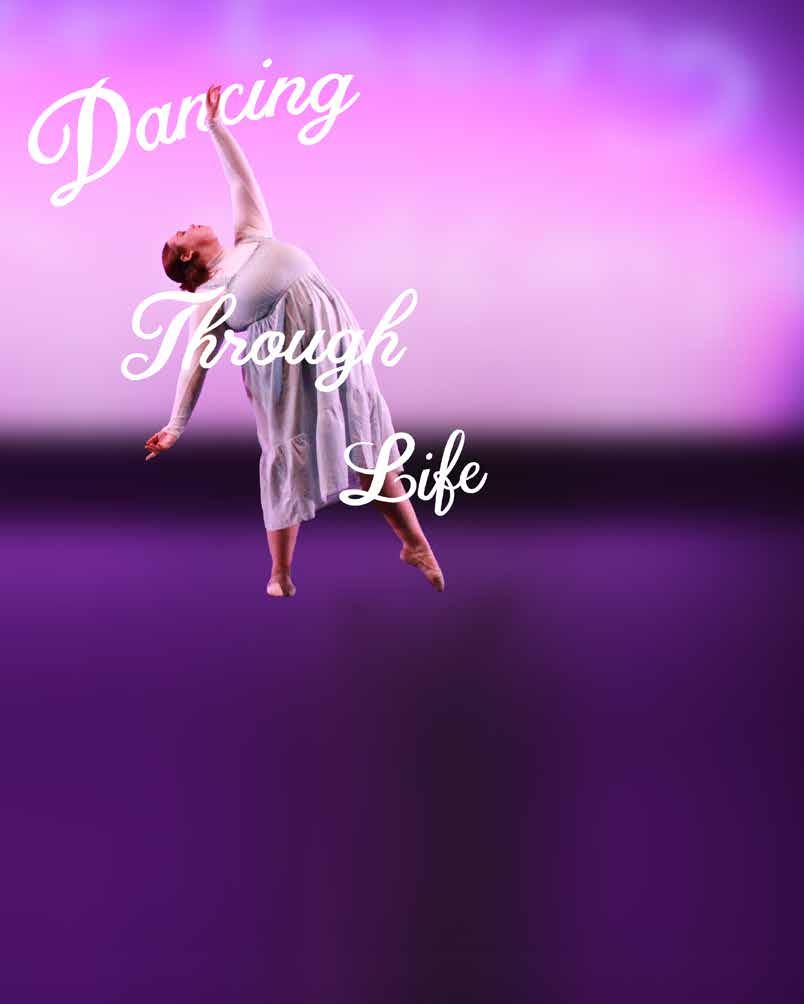
expecting me to be smaller. Those comments crushed my psyche and seeped into my life.
College was a breath of fresh air. I met teachers who could not care less about the way I looked. Millikin’s dance program treated students with respect in ways I had never seen in the dance studio. My freshman year, I was the strongest dancer I had ever been and happier
than ever. But the past comments echoed in my head, and soon I found myself getting stuck in old patterns. It got to the point where I needed to take a break from dance altogether. There were no teachers in my ear tearing me down. Instead, it was my own brain perceiving flaws that were not there.
The time away was helpful, but I craved dance more than ever. Making the decision to return seemed easy, but the work I had to put in was intense. My body changed during the time off, and I had to learn to dance in a completely different way. I struggled with my new body and was critical of the way it moved.
Over time, my dancing and my mental health started to align for positive growth. I spent extra time in the studio working to regain strength. I was trying to give myself grace for the first time in my life. No longer did I crave a smaller body: I wanted a stronger one. I wanted to dance for the right reasons. Neutral self-talk slowly changed to more positive self-talk. I was changing into a better me.
I am not perfect. I know I never will be. While I have always constantly sought after perfection, I am finally trying to rid myself of those expectations. My journey with body dysmorphia is not over, but I am proud to know that I am taking steps in the right direction.
Expectations from others about what our bodies should look like are unnecessary and not warranted. My body walks. My body talks. My body can jump and run. My body receives hugs. It is everything I need it to be. I’m grateful for my body and the journeys it takes me on.
Photo Credit: Britta Guthrie
New Perspectives
By: Ella Michel
Internships are important for every college student, but my internship in Kensington, Philadelphia, changed my life.
My first time walking through Kensington, Philadelphia, felt like walking into an entirely different world. No pictures, videos or stories could have prepared me for the things I witnessed and experienced in America’s largest open-air drug market and the regional epicenter for the opioid crisis.
My journey started when I began my once-in-a-lifetime internship, working with the Salvation Army and assisting in their New Day to Stop Trafficking’s Drop-In Center and Police Assisted Diversion programs in Kensington. The New Day Drop-In Center was open daily for women to have a warm meal, a shower or shelter. The Police Assisted Diversion Program is a community-based alternative to incarceration. If an individual was accused of prostitution or a minor drug offense, they could choose to get arrested or come to New Day and participate in programs to better themselves. As a criminal justice and sociology double major, I knew this job would give me the
knowledge and experience I could never receive from sitting in a classroom.
My experience was unforgettable, but the people I was helping are what really mattered. Their journeys are full of resilience, generosity and bravery, but also heartbreak, crisis and neglect. I met military veterans who slipped into addiction after coming home from combat, mothers who got hooked on the medication they were given after childbirth, sexual assault victims and people with other severe trauma. Most of them weren’t from Philadelphia, but they found themselves on Kensington Avenue. All of these people were here because they lacked the resources they needed to thrive. Something happened along their journey for them to end up in the situation they are in today. Poverty, food insecurity, lack of quality education or lack of opportunity could all be circumstances that lead them to their current situation. I saw firsthand how inequalities in laws
can negatively impact those with disadvantages. For example, the Philadelphia Police would come to Kensington and force people to leave Kensington Avenue. If they didn’t leave, they were arrested. A lot of these individuals were homeless and had nowhere to go. Instead of providing support, they provided displacement. I went into Kensington eager to learn, and I left motivated to get more involved politically and advocate more for alternatives to incarceration. I learned that it is important not to judge. We are all one mistake from a completely different life. People do not choose to suffer; they do the best they can and try to survive with the resources they have.
Everyone warned me how hard the work in Kensington would be, but nobody warned me how hard it would be to go home. The people I met made Philadelphia and New Day to Stop Trafficking feel like my second home. I was sad that my journey ended, but it has just begun.
A LONG, WINDING ROAD
By: Anna Quick
Grief is a long, continuous journey regardless of circumstances. So, how is the journey of grieving a parent who wasn’t present in your life?
I was grieving my father before he died. He went to prison when I was in my early teens, so I spent a lot of my conscious life without him. When he got cancer while incarcerated, I began grieving the memory of my father, the man I remembered from my childhood.
When he actually died, I thought I would be fine. I had already done the grieving I needed to do while he was alive, right?
I got the call that he had passed the week I had to move to Millikin. I spent my first year at Millikin commuting, so this was a big change. Now, I was not only having to acclimate to my new surroundings, but I also had to cope with the death of my father. Instead of taking time to understand my feelings, I started the semester as if nothing had happened. Every time I walked to class, ate, did my homework, spent time with friends or sat alone in my new room, the memory of my father would flood my mind. Every time he popped into my head, I would push him away. “He was barely in my life. I shouldn’t need to grieve like a normal daughter,” I told myself.
I finally hit a wall in the middle of the semester. It was a long time coming now that I look back at it. I spent the first half of the semester sleeping terribly and trying to keep my mind at bay by doing anything I could. Finally, it got to a point where I couldn’t even look at my homework because of how tired
my brain was from pushing the sadness away.


































I finally confided in one of my professors, and she validated all of my feelings. I am allowed to grieve, I am allowed to not understand how I feel and I can take time to process those feelings. After that conversation, I decided to take a couple of weeks off from classes. When I walked out of Shilling, I smiled, a real smile, for the first time in weeks. I was finally able to grieve without school looming over me. Even though my father wasn’t in my life, I still feel him in the music I listen to, my siblings, the cornfields I admire, the friends I love and so many other unsuspecting aspects of my life. I still grieve what could have been, what was and what I wanted to happen instead of reality. He wasn’t in my life, but I miss him more because of that. I always heard that everyone grieves differently, but I didn’t actually believe it until it happened to me. I continue to grieve my father, even years after his death, and I am finally content with that.














By: Rock Edwards
When going to college, people want to experience a place away from home; a journey into the world outside of the one they’re used to.
Millikin offers an opportunity to study abroad with a program for students who want to see the world and learn about their major in a unique way.
In the fall semester of 2025, juniors and seniors studied abroad in London with Jefferson Farber, a School of Theatre and Dance professor. This was Farber’s third year leading the trip, and his favorite part is getting to watch as it changes students’ lives. Farber finds the trip “transformative” for students. He says, “By the end of the semester, they’ve grown so much, both mentally and physically. They’re more confident and independent, more engaged and they actively seek out opportunities for growth.”
and vowed I would come back,” Elliott says.
The students who went abroad found they came back more “independent” and “open to trying new things.” Elliott says they have realized that “you have so much power within you to do, just do.”
“Anyone can get what they want out of it if only they’re able to look for it.”
Maggie Teaman says, “With no strong supervision, I was worried that it would be overwhelming, or that I wasn’t ready to be so independent, but it was actually exactly what I needed.”
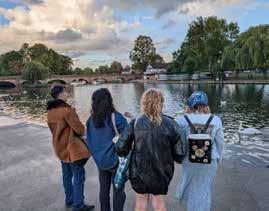
Junior BFA musical theater majors tend to take advantage of this program. For Gillian Elliott, this was the second time in their life they ventured to London. “I came to London about eight years ago, absolutely fell in love with the city
Studying abroad did not mean students got to skip the academic parts of college. Students had to take classes in London. Summer Fast says, “I think a lot of these classes will continue to push me out of my comfort zone and allow me to grow.”
They also had the luxury of four-day weekends. “Having four-day weekends and a loose schedule during the school week has allowed me time to schedule necessary living

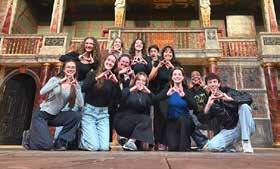
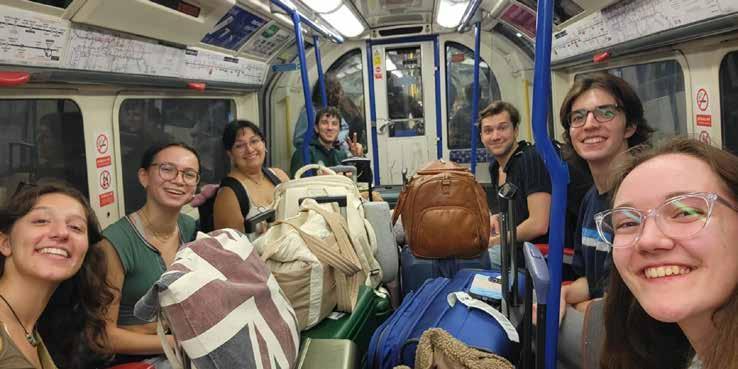
essentials as well as plan unique and rare opportunities,” Croix Baker says. These four-day weekends allowed the cohort to explore their new surroundings more. “There is ample time to explore on weekends as well, so day or two-day trips happen often,” Elliott says. Utilizing their downtime, Elliott went to Southampton, Bath and Derbyshire.
Of course, students of other majors may have the opportunity to travel abroad as well. English creative writing major Isabella Blohm loved getting to experience walkable cities. “We’ve seen so many different shows already in the short amount of time we’ve been here, we’ve visited many museums and learned

how to navigate the layout of a European city and we’ve learned about the narratives that all of these things tell, how they intertwine with each other and critically examining these different narratives,” Blohm says. “All in all, I’m just glad that I’m walking in streets that aren’t boring.” This particular trip is usually for theater students, so the program offers theatrical opportunities. “Theater is abundant [in] other places than the United States, and I would be doing myself a disservice if I didn’t learn about theater and art in other places as well,” Elliott says. “Classes happen at [a] theater, show or in a museum. We are required to meet with
industry professionals, connect [and] network, and it doesn’t feel like a requirement.”
Traveling abroad is a way for people to find themselves. “I am positive I will come back to Millikin more assured and confident in who I am as a person and what I want to be as a performer,” Baker says. “London is a huge, overwhelming city and gaining confidence through navigating it and the surrounding countries is very empowering.”
Even though the trip was theater-focused, several non-theater majors tagged along. “They’re engaging with the more theaterrelated aspects of the program, but they’re both actively seeking out opportunities in their own respective fields,” Farber says. Farber acknowledges how London has so many experiences to offer, as it is a “cosmopolitan world capital full of opportunities for students of any major.”
As an English student at Millikin, Blohm has “always been fascinated by writing,” and took this opportunity to meet those in the writing industry. “As a writer, I, of course, wanted to study abroad in London, because it’s practically the English writing capital of the world,” Blohm says.“I write from my own experiences,
and the more I immerse myself in the nature of Europe, the better I hope my writing will be.” At the end of the day, regardless of your major, studying abroad is what you make it. The trip can look different depending on what the student aspires to do. “Anyone can get what they want out of it if only they’re able to look for it,” Blohm says. Teaman feels similarly about the experience. “I would absolutely recommend this trip to all students who are interested,” Teaman says. Baker has loved this experience and believes it’s “crazy to not at least consider studying abroad after doing it myself.”
Studying abroad has changed the lives of many and is an amazing opportunity for those who are able go. “[Studying abroad] is a wonderful opportunity that puts your own life and area of the world into perspective,” Fast says. Regardless of your major, studying abroad has something for everyone. If you find yourself wanting a change of scenery, remember that there are opportunities to study abroad at Millikin. Who knows, if you go, you might find the place you want to move to after college or discover new things about yourself.
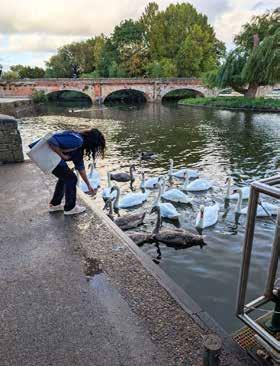
“Traveling abroad is a way for people to find themselves.”
Photo Credits: Morgan Potter and London trip students
Perils The of Navigating College Accessibility
By: Elaine McLaughlin
What struggles come with getting through college with disabilities?
“Because one wheelchair path that makes you go around the entire campus is not accessible, [it’s] egregious.”

Living with a disability can be challenging in many ways, and those challenges impact aspects of daily life that many people wouldn’t even consider. What may seem like a simple daily commute to class can actually be a major struggle.
For most students on campus, their days start at the on-campus apartment complex,The Woods. Upon stepping out of their front door, they may encounter the first hurdle students with disabilities have to face: stairs.
Isabella Blohm is a junior creative writing student. Blohm has insomnia, as well as the symptoms of a condition known as Ehlers-Danlos Syndrome (EDS). Doctors have told her this is likely what she is facing, but it is an extremely hard condition to formally diagnose. “I
feel like I need the paperwork and proper diagnoses to back me up, even while I’m still in pain and those diagnoses take so long,” she says. EDS can cause a lot of joint and muscle pain, which can make it hard to use stairs and get to class easily.
“There are stairs everywhere [at the Woods], and it’s meant [to be] student housing,” Blohm says. The Woods was designed with student housing in mind, and since students are forced to live on campus until their senior year, with some exceptions, their ability to house students with disabilities is essential.
For Blohm, The Woods is her only option for housing while she’s in school. The Woods isn’t the only issue; however, the apartment complex’s location is less than ideal. The most time-efficient route
to campus from The Woods has students crossing two busy streets and over train tracks. Having to navigate around the tracks while there is a train stopped there can be difficult.
Once on campus, the journey to class continues. Buildings like Shilling Hall and the University Commons aren’t very accessible, even with working elevators. “With regard to our campus, I don’t think it’s very accessible at all,” Blohm says. “The elevators are always overcrowded … [and there is an] absolute lack of wheelchair accessibility, because one wheelchair path that makes you go around the entire campus is not accessible, [it’s] egregious.”
Ronnie Coble is an art education major who deals with intense joint pain. “When I have flare-ups, it feels
like my joints are on fire, and they’re weak and heavy,” he says. To help manage these pain flare-ups, he often uses a cane to support his joints. Even on days when he feels well enough not to need his cane, taking the stairs to get to class can be difficult.
Coble has high hopes for the future of accessibility on campus, though. “Millikin is slowly working to make the campus more accessible to students with both mental and physical disabilities,” Coble says. “As someone who has worked closely with the ADA accommodations committee for the school, I can say we are moving [in] the right direction; however, very slowly.”
Concerns brought up with accessibility on campus are also issues disabled individuals find in public places all around the world. Many of the older buildings in Decatur don’t include working elevators, and the city’s infrastructure can make it hard to navigate without crossing busy streets and train tracks. However, with programs like Decatur Moves, the city is working on providing accessible ways to get from place to place.
Tips for Navigating College with Disabilities:
1. Advocate for your accommodations,but be patient with the resources providing them.Millikin won’t know what you’re dealing with if you don’t tell them,but they also have to help a lot of students,so it’s important to give them time to process your concerns.
2.Contact your professors about any concerns you may have.Many professors are willing to work with you if you communicate with them,even if you don’t have official accommodations in place.
3.Take care of yourself before you take care of your homework.It will be harder to complete assignments if you aren’t feeling well,so take a moment to rest,fuel and hydrate yourself and shower to ensure you can complete work you are proud of.
“Many of the older buildings in Decatur don’t include working elevators.”
As the city becomes more accessible, Millikin’s campus has been slowly improving as well. It is important that we continue to discuss how accessibility tools impact our community so that they can continue to improve and offer those who need those tools a chance to do what able-bodied individuals can.

W I P ork n rogress
An Amalgamation of Humanity Stemming From
By: Isabella Blohm
Fanfiction

The empathy displayed on fanfiction sites can be the start of someone’s writing journey. From a person figuring out how to manipulate language to a child figuring out how they belong in society, fanfiction can help them grow into writers. Through these journeys, I ask, how does fanfiction reflect back onto society, and how does that reflection allow people to become better?
Rating:
Archive Warning:
Category: Fandom:
Additional Tags: General audiences No Archive Warnings Apply
BURST Magazine
N/A
Millikin University, Fanfiction, Informational, Work in Progress, Growth, Self Discovery, Creativity, Identity, Human, Emotional Exploration, Safe Space, Fandom Culture, Community, Morality, Understanding Others
Language:
English
The term “Work In Progress” has a special place in my heart. To me, and to many other people, “Work in Progress” is a term meant to let us know it is okay to fail, because we learn from our failures and our struggles in order to grow. Not only is “Work in Progress” a common term to writers of all sorts, but it also invokes more present-focused thoughts.
In my journey, I figured I started to view myself, the world and my writing as a “Work in Progress” when I started writing fanfiction. During this chapter of my life, I started connecting writing to humanity. I have seen in various fanfiction communities I have sleuthed through that it is this connection to humanity I believe
“What does it mean to be human?”
many — if not every — writer has in them, a connection they have brought into question or used as comfort.
So, I’ve asked my fellow Millikin writers, fanfiction connoisseurs and the AO3 subreddit: What does fanfiction mean to you? And how has it made you think of humanity? I wanted to know the gritty details of writers’ own humanity and how that ties into society and the world at large — through fanfiction. Focusing on their journeys and testimonies, patchworked into my own, I figure out how the rest of the fanfiction community sees itself.
“Fanfiction is guilt-free” is a statement that many readers and writers seem to agree upon, which
likely lies in the fact that fanfiction is free to read, easily accessible and a foundational genre that can effectively improve a person’s writing. “[Fanfiction] was one of the first stepping stones towards discovering my love for creating characters and exploring the stories around them, [and it] taught me that it’s okay to share ‘works in progress,’ which is something that has applied to many aspects of my everyday life,” creative writing student Elaine McLaughlin says. McLaughlin’s idea that fanfiction has become a safe place to share “works in progress” because it allows writers to explore stories and characters already available to them — in ways they would like to see their own lives and selves reflected upon — is what makes fanfiction a reflection of humanity. Fanfiction is a growth tool because it allows for projection, escape and is easily accessible. It is a world beyond our own to journey through and take lessons from. “I put a lot of myself into the characters I would create for my fanfiction, mostly unintentionally, and I think that impacted who I am so heavily because in many ways my characters
“It is an escape from the overwhelm of life.”
were the versions of me that I looked up to,” McLaughlin says. Multiple people on Reddit responded overwhelmingly that “fanfiction is good for understanding other people” and “it is an escape from the overwhelm of life.”
“After reading and writing fanfics, I now look at people not on their surface values, but instead I ask myself questions to try and understand,” an anonymous Reddit user says. “I want to know the story of almost everyone I meet, their hardships [and] their victories. What made them the way they are now? This has slowly turned me into a more patient individual.” Like fiction, fanfiction allows its community to escape from life. However, because fanfiction is written by the fans of different works, it gives them the freedom to think more deeply about the characters, plot and world structure that, for one reason or another, were not explored enough in the canon work.
Fanfiction, in this way, allows people to think more deeply about what motivates people, what circumstances change their actions, what makes a person human and
therefore, how that humanity reflects back onto themselves. Consequently, another Redditor expressed how fanfiction allows them to enact justice that they otherwise wouldn’t see in the real world. “Fanfiction for me is escapism,” they say. “I can write a story where the characters have to face hardships, but unlike the real world, the bad guys do actually face justice and get beaten horribly, and people who are idealistic will actually come out on top. Fiction in general is what allows me to keep what’s left
of my sanity, given the state of the world.” For this person, fanfiction is about serving justice and allowing people to achieve their dreams, forcing bad people to be served justice for their heinous deeds, and most importantly, allowing the world-weary to dream of a reality not corroded by corruption and discrimination.
With fanfiction, writers have the power to change what they cannot in the real world through characters and worlds they don’t have to build from scratch. This is what differentiates fanfiction from published works. And it is this idea that fanfiction allows its community
to be unbound by the rules and funding of our real world. “Reading and writing fanfiction is a wonderful outlet for me to not only get my thoughts out, but [also to] (rarely, but better than never) get kudos and comments for my words,” another anonymous Redditor says. “That part is amazing and addicting. Fanfiction and fandom in general seem to embody the [idea that] ‘we’re all mad here’ and I love it for that.” Ultimately, fanfiction gives a voice to people who otherwise aren’t heard.
Beginning
Kudos
MILLIKIN A Long Journey With an End in Sight
By: Daniel Roman
Even when life feels out of control, there’s always a way forward. Millikin students share how they find belonging, growth and comfort on their own journeys.
The college journey is ultimately a gateway to finding yourself.
“


College can be a very scary experience. Students may occasionally experience a sense of isolation. Some feel as if they’re not in the right place at all. In Olivia Rodrigo’s song, “stranger,” she says, “Everybody told me it would happen in time. The fire would burn out, and all the storm clouds would subside. And I always believed that it was some comforting lie, but it feels nice.” Rodrigo believed improvement was impossible, and she was eventually proven wrong. Even though your time in college feels like it is impossible to improve, it will. The college journey is ultimately a gateway to finding yourself. You find what you like, what you don’t like and you eventually expand your bubble in the process.
Hannah Swan, a senior arts technology major, says her experience at Millikin has made her feel at home. “Going to class and, especially, 1901[Productions], has become very much a home for me,” Swan says. “It’s a comfortable space.” That may not be everyone’s experience, but Swan says that during her freshman year, she was struggling to find her place and a group of people she felt really connected to. “During the first two months of freshman year, I was really struggling to find my place,” Swan says. “Then I found Hannah Uebinger, and I found some other arts tech


students. Since we’re all doing very similar assignments and we all had class together, I found my place with them. They included me in things, and we started hanging out outside of class.”
When you get to college, it is easy to get sucked into the newfound freedom. Staying locked up in your dorm room and skipping classes is the reality for many confused freshmen. But something that could help students who may feel stuck is getting involved on campus. Everyone says it. It’s a cliché, but getting involved has helped many students, including Swan. “If you don’t want to get involved in clubs, just talking to people in your class is a good start,” Swan says. Attending college is a nervewracking experience, and for some first-year students, it is scary to start a new chapter of their lives. Many “what if?” statements plague students’ minds at the beginning of their collegiate journey. International student Karleen Hogt, a film and video production major, explains that, although being an international student attending college in a new geographical location away from her family, she doesn’t feel left out. “I still feel part of all the other students here,” she says. “I was scared to feel different from others because I am international.” Hogt says that coming here has boosted her confidence. At





l ge is a journey with a lo of hills and valle , but at the end


first, she was nervous and insecure, but then she saw how welcoming people can be and even felt at home during the first week at Millikin.
Freshman finance major Braxon Cochran-Walter says that coming to college has allowed him to become more confident and independent. “It’s just nice to be in that mindset of, ‘I’m away from home. I can do whatever,’”Cochran-Walter says. “The consequences are mine, but it’s just nice to not be in an environment where you feel obligated to be a certain way.”
Beyond feeling welcome and learning to adapt to the environment, Justin Mitchell, a junior art education major, says his return to Millikin for his junior year has really shaped who he is now. For Mitchell, becoming an upperclassman has been a drastic change. “It felt like it kind of hit me like a truck this year,” he says. At times, Millikin feels more like home than Mitchell’s home does. “Every time I go home for break, I feel like [Millikin] is my home, so I just want to come back every time.” Being around the environment for a few years has helped Mitchell create wonderful connections with people. One of the reasons he decided to come back to Millikin for his third year is the impact some of the teachers have had on him. “Some of the teachers here have been really good at

bringing that community,” he says. Not only have the teachers made an impact on him, but his good friends Minty, Cameron and JoJo have as well.
Although every college student goes on their own journey, there are many similarities. When college students feel alone or stuck, they seek a community. Swan, Hogt, Cochran-Walter, and Mitchell all sought out a community and ended up finding their place on campus. “College is a journey with a lot of hills and valleys, but at the end of the day, we’re striving to get our education and better ourselves, and that’s the majority of [what] everyone wants,” Mitchell says. Navigating college is an ongoing battle, and every year brings something new. It’s up to you to get involved and to make connections with students and professors you meet along the way.


the day, we’re striving to get ou educat n and better





Chasing Opportunity
By: Lorenz Miel Delos Reyes
In January of 2025, 53.3 million immigrants lived in the United States, which, according to the Pew Research Center, is the largest number ever recorded. From the first settlers who landed in Plymouth seeking religious freedom, to the first wave of immigrants processed through Ellis Island, the United States has been known as a nation founded by immigrants. Yet the debate over who gets to come, and how, remains one of the nation’s most polarizing political issues, which is rich, coming from a country nicknamed the “Land of Opportunity.”
I have lived my entire life as an immigrant. My family and I immigrated from the Philippines to the United Arab Emirates (U.A.E) when I was just five, which is common for families in the Philippines. My father’s salary wasn’t sufficient to raise a family of four, so he began working abroad shortly
after I was born in 2004, first in Saudi Arabia, and then in the U.A.E. in 2009. My mother, sister and I followed him that year. Having lived in the U.A.E. for practically all my life, I faced struggles with identity. Which country should I consider home? We traveled back to the Philippines every other year, but slowly, “every other year” turned into “we’ll see what we can do next year.”
Many families are driven to immigrate to other countries by opportunity. A friend and classmate of mine, Dhanika Taruc, had similar experiences with her family, having to move from the Philippines to the United States for work and financial reasons. Her family moved to the U.S. when she was 16. She was
excited and full of wonder at the prospect of living in a new country. But being in a new country is met with hardships, especially when you have to make a sudden change. For Dhanika, that change meant leaving her school, her friends and her language behind. Immigrants come to the U.S. having been accustomed to a culture completely unlike the “American culture,” and they would inevitably face the challenge of having to balance two cultures. “Balancing
when I felt like I had to work harder to fit in. “ ”
my family’s culture with American culture was also challenging, especially while I was still trying to understand what American culture really was,” Dhanika says.
Like Dhanika, my family and I moved to the U.S. when I was 16, in December of 2020. Everything was a shock, and I remember the very first thing that threw me off was the size of a large Coke from McDonald’s. My father has always dreamed of living in the U.S., and has been working to move here since before we lived in the U.A.E. When we finally got to America, the challenges my parents faced were the same
as Dhanika’s. For Dhanika and my parents, the challenges were more present in the workplace, specifically how their coworkers interacted with them, spoke to them or sometimes made assumptions about them because of where they were from. Whether these biases were conscious or not, they still posed a difficulty for them; that invisible barrier unconsciously put up by others because of our differences.
“Sometimes, it showed up in small things, like cultural references I didn’t share, or feeling hesitant to speak up because I was afraid of being judged for how I sounded
or what I didn’t know,” Dhanika says. While she never faced any direct discrimination, she would notice subtle acts of racism. “These moments weren’t always loud or intentional, but they were still felt, whether it was certain comments [or] assumptions people made about me,” Dhanika says. “Even if no one said anything outright, there were
times when I felt like I had to work harder to fit in.”
The U.S. has always been portrayed as the “Land of Opportunity.” When I asked Sophia Taruc, Dhanika’s younger sister, how she saw her future in the U.S., she described a “bright, successful future here in the United States as they provide so many opportunities, such as a variety of universities to enter after high school. They also offer so many more classes that will help me with my future career.” Dhanika described it as the start of a new chapter, being encouraged to explore, learn and continue growing as an individual. The U.S. provides
a particularly unique experience. Immigrants have the opportunity to become American citizens, gain the same rights, status and freedom of expression, and, according to Dhanika, “embrace different cultures and experiences while still finding a sense of belonging.”
Immigrants choose to leave their native country for their own betterment because they believe that wherever they go will offer them the opportunities they never got back home. The same is true for those who immigrate to the United States, a country long advertised as a place to go if you want a better life. So, I ask, why does immigration remain an issue?
“So, I ask, why does immigration remain an issue ?”
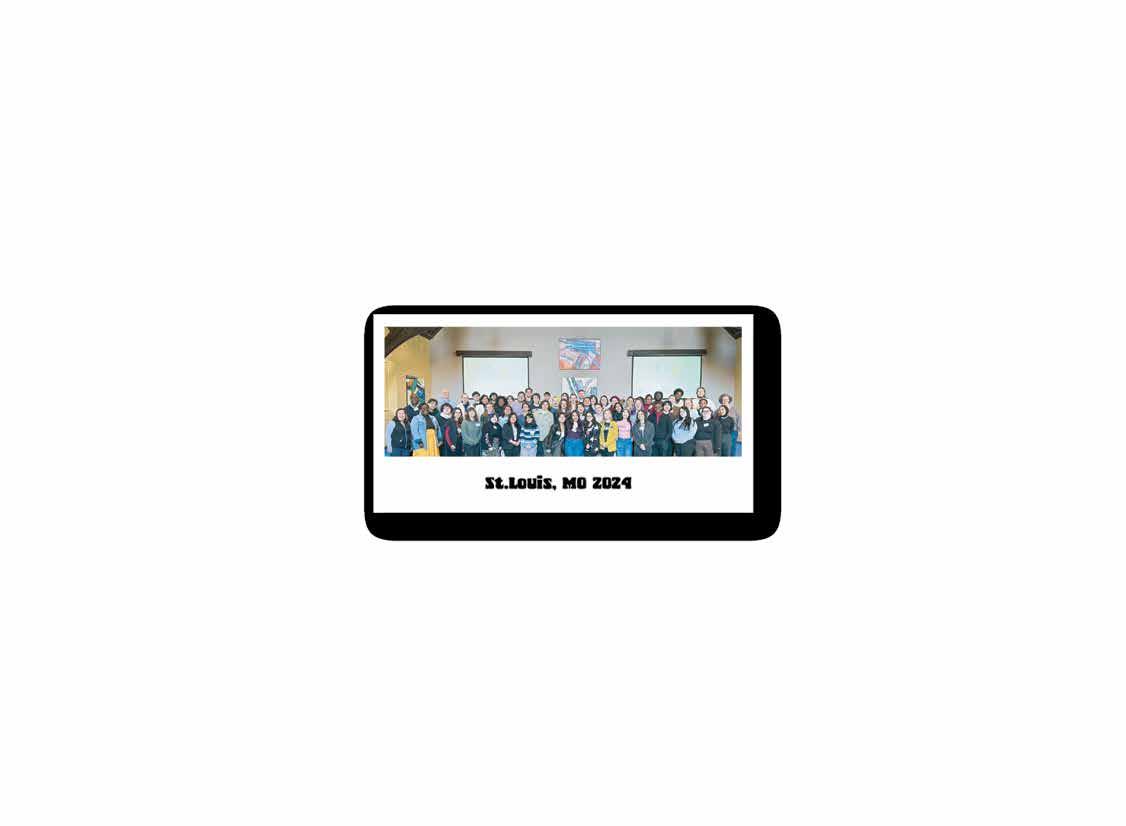
Learning Entrepreneurship (SCALE) Conference, art and business collide in an exciting initiative that’s reshaping how the Midwest’s next generation of creatives think about the art industry.
SCALE began in 2024, created by a group of faculty from three universities: St. Louis University, University of Missouri-Kansas City and Millikin University. The SelfEmployment in the Arts Conference (SEA) in Chicago was an inspiration for the SCALE Conference. When SEA faced delays due to COVID-19 and a lack of funding, universities in the lower Midwest launched SCALE

“Artists are by definition entrepreneurs.”
to continue its mission, expanding opportunities for student artists across the region and beyond.
The conference structure includes keynotes from artists who are entrepreneurs, marketing panels and presentations focused on art entrepreneurship and workshops on practical skills like pricing strategy and personal branding. One of the events is a pitch competition, designed to help students practice
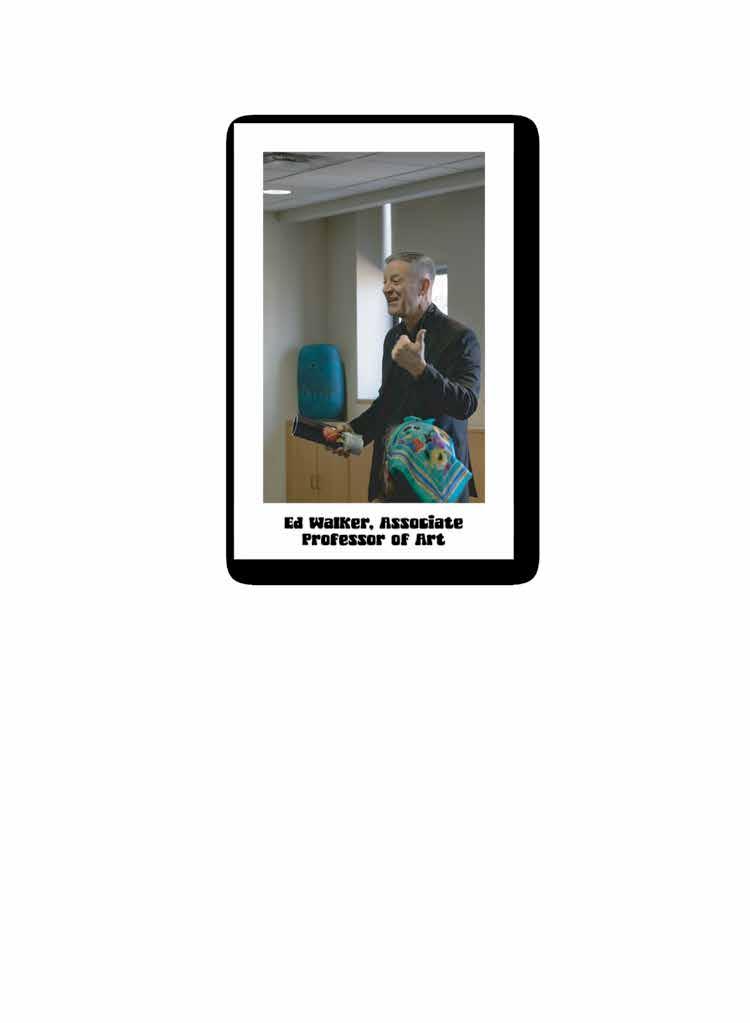
When you think about an entrepreneur, I bet you envision a businessperson who is gearing up to start their own business. But artists are entrepreneurs too. “Artists are by definition entrepreneurs,” Julienne Shields, director of the Center for Entrepreneurship, says. “The typical entrepreneur is somebody who’s doing their own thing, carving out a place for themselves in the world.”
The SCALE conference provides students with practical skills and real-world experiences that complement their academic learning. Jessa Wilcoxen, the director of the School of Art and Creative Media at Millikin University, emphasizes the
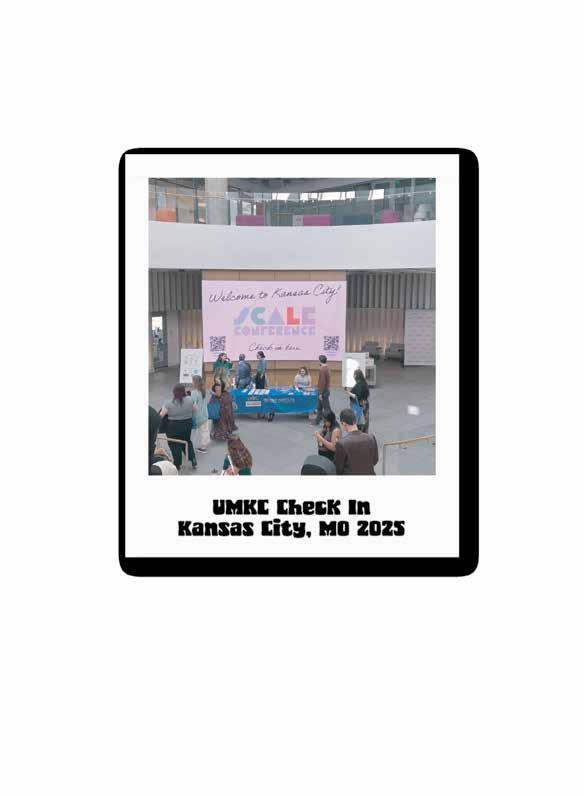
Grace Cleeton, a BFA studio art major, and Jodi Dingman, a BFA graphic design major, attended the 2024 and 2025 conferences and have retained unforgettable information. From the student perspective, they learned the value of networking and the realities of the art business, including the necessity of understanding taxes. Cleeton learned the importance of having
resources that are available to artists. “These resources are connecting with the next set of artists that won’t have to struggle as much, such as grants for residencies and communities,” Dingman says. For example, SCALE collaborated with the Mid-America Arts Alliance and Artists Thrive, which provides regional arts infrastructure and leadership and offers a national


reminded attendees that if they want to reach their goals, they have to take the steps necessary to get there. “Then, you turn around and put your hand down for the next person to help lift them up,” Dingman says, recalling the keynote speaker. “I feel like [the speaker] being there was the reason I was there. She talked about how her art form saved her. It taught me that it’s something to look forward to; these

“Entrepreneurship is one of those things that you never stop learning.”
LET THE MUSIC GUIDE YOU
BY: ANNA QUICK
The word “journey” has many different meanings, and music has the ability to address all of them. There are songs about love, loss, hate, spirituality and so much more, and all of them are a form of journey. The songs below are a diverse collection that you can listen to on whatever journey you might find yourself on.
1. “VIENNA” BY BILLY JOEL
Starting with a goosebump-worthy piano riff, “Vienna” urges listeners to slow down and smell the roses. In life, you’ll find yourself already wanting to be at the end, basking in success, but what about the journey there? Billy Joel addresses this and asks, “When will you realize, Vienna waits for you?” Our future, or Vienna in this context, patiently waits for us.
3. “TAKE IT EASY”
BY THE EAGLES
The Eagles take us to Winslow, Arizona, while also sharing their outlook on their journey. In life, the path you may take might be rocky and have undesirable outcomes, but “Take it Easy” preaches that “We may lose, and we may win / Though we will never be here again.” No matter the outcome of your situation, the experience is valuable.
5. “LANDSLIDE”
BY FLEETWOOD MAC
Growing older and years passing you by is a scary yet beautiful experience, and “Landslide” perfectly encapsulates the feelings that come with it. The song asks, “Can I handle the seasons of my life?” Stevie Nicks croons,“But time makes you bolder / Even children get older / And I’m getting older too,” reminding you that change is scary yet inevitable, but you’ll be okay.
2. “FOLLOW YOUR ARROW” BY KASEY MUSGRAVES
Judgment plagues society and hinders people’s journeys. Like Musgraves says, “If you save yourself for marriage, you’re a bore / You don’t save yourself for marriage, you’re a horrible person.” Someone will judge you for any decision you make, so take Musgraves’ advice, ignore them and “follow your arrow wherever it points.”
4. “YOU’RE GONNA GO FAR” BY NOAH KAHAN
One of the scariest moments in life is leaving the comfort of your own home. Noah Kahan sings about this experience, telling listeners to “Pack up your car, put a hand on your heart / Say whatever you feel, be wherever you are.” The world won’t stop spinning if you leave home. As Kahan says, “The birds will still sing, your folks will still fight.”
SCAN FOR THE PLAYLIST HERE:
Decaturian
is the Decaturian?
Why become a staff member?