MILK PRODUCER MAGAZINE CELEBRATING 100 YEARS 1925-2025
SEPTEMBER 2025 | THE VOICE OF ONTARIO DAIRY PRODUCERS
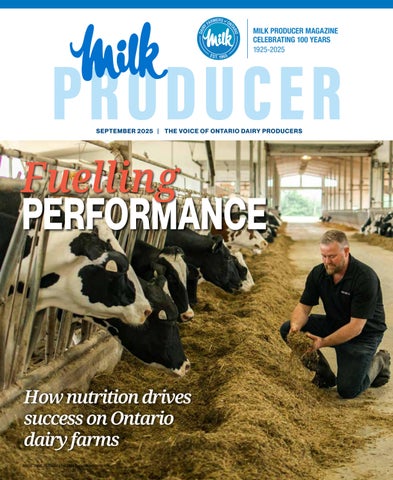
Fuelling PERFORMANCE
How nutrition drives success on Ontario dairy farms 40063866 .Publications Mail Sales Agreement No
You take the litres. The early bird can have the worms. When it comes to dairy farming, it’s essential to squeeze the most out of every day. Purina can help. We understand the challenges and we’ve got the tools and know-how to maximize your farm’s productivity and long-term profitability. Talk to us about our custom nutrition solutions, data synthesis and performance forecasting. We’re ready and waiting to move your farm forward. Contact your local Purina Dairy Advisor today. PURINA® and the Checkerboard design are licensed trademarks of Nestlé Purina PetCare Company
September 2025 | Vol. 101 No. 08
MILK PRODUCER MAGAZINE CELEBRATING 100 YEARS 1925-2025
PUBLISHED BY DAIRY FARMERS OF ONTARIO 6780 Campobello Road Mississauga, ON L5N 2L8 COMMUNICATIONS Sandra Da Silva sandra.da-silva@milk.org 905-817-2178 ADVERTISING Pat Logan pat.logan@milk.org 519-788-1559
CONTENTS www.milkproducer.ca
ON THE COVER
GRAPHIC DESIGN Katrina Teimo CONTRIBUTORS Essi Evans, Jeanine Moyer, Rajan Niraula, Sebastian Decap, Amanda Fischer-Tlustos, Tatum Schooley, Anthony Heebner, Youngji Rho, ACER Consulting, Veal Farmers of Ontario, Workplace Safety & Prevention Services.
17
Canada Post Publications Mail Sales Product Agreement No.40063866.
FUELLING PERFORMANCE How nutrition drives success on Ontario dairy farms.
Return postage guaranteed. Circulation: 8,000. ISSN 0030-3038. Printed in Canada. SUBSCRIPTIONS For subscription changes or to unsubscribe, contact:
Nutrition
Departments
MILK PRODUCER 6780 Campobello Road Mississauga, ON L5N 2L8
8
Phone: (905) 821-8970 Fax: (905) 821-3160 Email: milkproducer@milk.org
10 Nutritional factors affecting milk
4 Board Editorial 6 Ask an FSR 22 Consumer Marketing 26 Dairynomics 40 Industry Roundup
Opinions expressed herein are those of the author and/ or editor and do not necessarily reflect the opinion or policies of Dairy Farmers of Ontario. Publication of advertisements does not constitute endorsement or approval by Milk Producer or Dairy Farmers of Ontario of products or services advertised. Milk Producer welcomes letters to the editor about magazine content. *All marks owned by Dairy Farmers of Ontario. WEBSITES & SOCIAL MEDIA www.milkproducer.ca www.milk.org Facebook: /OntarioDairy X: @OntarioDairy Instagram: @OntarioDairy LinkedIn: dairy-farmers-of-ontario
Why B vitamins are important for dairy cows persistency in dairy
12 Precision nutrition
Sustainability 14 Healthy cows, sustainable farms
14
Research 34 Feeding the dry cow to optimize
colostrum production and calf health
36 A new whey forward?
Calf Care 44 Give extra attention to calves’ breathing
Ruminations 31 Understanding gypsum bedding in
cattle barns and hydrogen sulfide gas
38 Heat stress hangover
after a difficult birth
Health & Safety 46 A century of health and safety progress W W W. M I L K P R O D U C E R .C A • S E P T E M B E R 2 0 2 5 • 3
MILK PRODUCER MAGAZINE CELEBRATING 100 YEARS 1925-2025
BOA R D E DI TOR I A L
Nourishing herds to nourish Canadians By Pete Overdevest, Dairy Farmers of Ontario (DFO) Board Member, Region 8, Waterloo and Oxford. Pete serves on the DFO Governance, Quota and Transportations Committees. Nutrition lies at the heart of every thriving dairy operation and every healthy community. On our family dairy farm, the quest for a balanced approach — nurturing cow health while securing farm profitability — has shaped our practices for decades. Our journey included experimenting with crop choices, mastering harvest timings and refining feed formulations. The result is not only a robust holstein herd but also high-quality milk that supports the health of Canadians beyond the farm. At the centre of our feeding strategy are three forages: alfalfa, corn silage and triticale silage. Alfalfa delivers essential protein and structural fibre, critical for rumen function and immune resilience. Corn silage offers a concentrated source of energy, fuelling lactation and driving milk volume. Triticale, sown in autumn and harvested in early summer, contributes a balanced payload of digestible fibre and energy, smoothing seasonal fluctuations when temperatures soar. Together, these forages have enabled us to increase our milk butterfat to 4.3 per cent, even through the peak of summer heat. Embracing a high-forage diet has allowed us to limit added grains in our TMR, reserving supplemental energy for autonomous feeding stations.
Minimizing grain not only reduces feed costs but also promotes digestive health. Healthy rumen function translates into fewer metabolic disorders, more resilient cows and greater longevity. With older cows staying productive longer, we have the flexibility to market surplus heifers throughout the year, diversifying our income streams. Equally important is land stewardship. By rotating these three crops year-round, we maximize output from every acre, cutting the land footprint needed for a given volume of milk and butterfat. That efficiency bolsters farm sustainability and reduces pressure to convert natural habitats into cropland. It also lowers our environmental footprint, helping to protect water and soil quality and reduce greenhouse gas emissions. Scaling from 60 to 300 milking cows demanded investment in labor and machinery. Recruiting capable employees and integrating our universityage children into operations has expanded our capacity. While the cost of harvesters and precision manure spreaders is significant, the payoff is well-worth the investment. We plant and harvest at optimal maturity, manage nutrient cycles with precision and maintain forage quality that supports cow health and farm viability.
Pete Overdevest Our commitment to herd health and nutrition extends to collaboration with nutrition consultants who analyze forage tests, calibrate rations and guide adjustments seasons change. Their Vickyas Morrison expertise ensures our cows receive balanced diets that optimize health and production. And all these practices resonate beyond the barn. Milk rich in quality fats and proteins contributes to balanced human diets, supplying essential vitamins and nutrients. When cow nutrition and health is prioritized, Canadians reap the reward of highquality, nutritious milk. In celebrating the link between dairy cow nutrition and human wellbeing, we reaffirm that responsible farming enriches more than our bottom line. It nurtures animals, sustains communities and delivers wholesome nourishment to tables across the country. By continuing to innovate, we secure a resilient future for our farm, our herds and the families who rely on our high-quality milk.
Getting good business advice shouldn’t be a chore You deserve an advisor who really gets what’s on the line Coralee Foster, CPA, CA 519.348.5057 | coralee.foster@mnp.ca MNP.ca/onag
4 • S E P T E M B E R 2 0 2 5 • W W W. M I L K P R O D U C E R .C A
Smarter Dairy
Stronger Future When we fired up the robots 2 years ago DairyComp support made the transition so smooth. We reached out with a simple text and would have been lost without them.
Tyce Kootstra Stradow Farms, Ponoka, AB 160 cows milkingRobots
We’ve been using DairyComp for the past 3 years and it’s become an invaluable cow management tool that has contributed to our success. David Bekkers Bekkers Farm, Antigonish, NS 150 cows milkingParlour
Contact us to learn more about software options. 1 800 549 4373
I have been using DairyComp since the ‘90s. I find it easy, intuitive, and the insight it provides is useful to help us stay at the top of our game. John Schenkels Schenkels Farms, Whitney, NB 550 cows milkingParlour & Robots
MILK PRODUCER MAGAZINE CELEBRATING 100 YEARS 1925-2025
A SK A N FSR
Abnormal Freezing Point issues?
& QA
Don’t rule out nutrition.
Dairy Farmers of Ontario’s (DFO) Field Services Representatives (FSRs) are not only milk inspectors, they are also your support for everything from milk quality troubleshooting to quota questions and paperwork, questions about policies and regulation, and anything else related to DFO and how it applies to your farm. Our 13 FSRs have seen and heard a lot. This column was created to use their collective expertise to share answers to some of the most common questions received.
MILK MUST HAVE A FREEZING POINT THAT IS LESS THAN -0.506°C. Each bulk tank sample is scheduled to have a Freezing Point Estimate (FPE) calculated. Samples with an FPE greater than -0.507°C will be tested on the Cryoscope to determine the official Abnormal Freezing Point (AFP). Test Result Ranges Test Type
Normal
Elevated
Penalty
Abnormal Freezing Point (AFP)
Less than -0.515 (ie: -0.516, -0.517)
-0.507 to -0.515
Greater than -0.507 (ie: -0.506, -0.505)
The following can cause milk to have an Abnormal Freezing Point: 1. Added water Water can be added accidentally when the following occurs: • The safety switch is not functioning properly; •P roducer did not allow adequate time (1 hour) after the sanitize cycle for the system to drain completely prior to milking; • The bulk tank did not drain completely after each wash cycle; • Water is dripping into the tank through the wash unit; • The pipeline is not sloped correctly towards the receiver jar (1” per 10 ft); • The last milk is chased in the pipeline with water; and •A dust cap on the bulk tank outlet valve is not used, and the wash unit remains attached to the bulk tank when there is milk in the tank.
2. Ice in the bulk tank Milk freezing in the tank causes Abnormal Freezing Points when the following occurs: • An insufficient volume of milk on the first milking to properly cool and agitate the milk; • The bulk tank agitator isn’t working properly; and • Time Temperature Recorder (TTR) alarms for cooling or agitation are occurring. 3. Feed Let’s not forgot about feed and nutrition. These elements can impact the freezing point of milk due to their influence on the milk's composition. It’s important to consult your feed nutritionist about elements like: • Lactose and salts; • Mineral balance; • Dietary imbalances; • Water intake; and • Seasonal and lactation changes.
Consequences if standards for AFP are not met
A penalty is applied when the producer has one AFP test result greater than -0.507°C. Payment of the monetary value of the first AFP penalty in a rolling 12-month period is waived, and a warning notification is issued to the producer. A penalty is not applied if the sample was taken within 18 days of a previous sample for which an AFP penalty was applied. If an inhibitor is found in the milk sample, including cleaning and/or sanitizing chemicals, an inhibitor penalty will be applied.
Take home message
When it comes to feed and nutrition, work closely with your nutritionist to verify that a balanced ration is being fed. Work with your dealer to ensure all facets of your milking system are well-maintained and following regular service intervals.
6 • S E P T E M B E R 2 0 2 5 • W W W. M I L K P R O D U C E R .C A
ONE NAME. PICK YOUR FIGHT. A powerful line of cattle vaccines for scours, respiratory, clostridial and reproductive diseases—trusted, proven and now united under a bold look.
One name. Comprehensive portfolio. BOVILIS®. Producers, talk to your veterinarian about using Bovilis ® vaccines in your vaccination protocol. Veterinarians, contact your Merck Animal Health representative for more information, call 1-866-683-7838 or visit www.merck-animal-health.ca. Always read and follow the label instructions to ensure these products are suitable for the animals to be vaccinated. Vaccination may not protect every animal that gets vaccinated. BOVILIS ®, GUARDIAN ®, VISION ® and VISTA ® are registered trademarks of Intervet International B.V. Used under license. COVEXIN ®, NASALGEN ®, ONCE PMH ® and TASVAX® are registered trademarks of Intervet Inc. Used under license. MERCK® is a registered trademark of Merck Sharp & Dohme LLC. Used under license. © 2025 Merck & Co., Inc., Rahway, NJ, USA and its affiliates. All rights reserved. CA-NAL-240900002
N U T R I T ION
B
Why
MILK PRODUCER MAGAZINE CELEBRATING 100 YEARS 1925-2025
vitamins are important for dairy cows
By Essi Evans, Ph.D.
When B vitamins are supplemented in the diet, an important consideration is their fate in the rumen, where microbial activity can both synthesize and degrade these vitamins. Studies have demonstrated that a significant portion of exogenous B vitamins, such as thiamin, riboflavin and niacin, are destroyed before they can be absorbed and utilized by the cow, as shown in Table 1. This dual role of rumen microbes complicates effective supplementation strategies, making it necessary to explore protected forms of B vitamins or alternative delivery methods to ensure these nutrients reach the animal's tissues and support optimal health and production. As dairy cow productivity continues to rise, understanding and addressing these challenges becomes increasingly important for meeting the nutritional demands of modern herds.
RATIONS ARE COMMONLY BALANCED FOR VITAMINS A, D AND E, but requirements for the B complex vitamins continue to be debated. Dairy cows and other mature ruminants benefit from the microbes in the rumen that produce B vitamins. And, while these may have been ample in the past, these now need to be reevaluated for the modern dairy cow. There are studies showing improved health or performance with B vitamin supplementation. For example, biotin (vitamin B7) is commonly used to support hoof health, injections of folic acid (vitamin B9) and cobalamin (vitamin B12) have been shown to improve milk yield and support embryo development. Furthermore, needs must be examined in light of production. According to Statistics Canada, average milk production per cow/year has increased by over 30 per cent between 2003 and 2023. These higher production rates place greater stress on metabolism and increase the demand for nutrients, including B vitamins not only for metabolism, but also as components of milk. Thus, while not assumed to be required nutrients, there can be benefits to supplying B vitamins during lactation.
8 • S E P T E M B E R 2 0 2 5 • W W W. M I L K P R O D U C E R .C A
B Vitamin
Per cent destroyed
Thiamin (B1)
68%
Riboflavin (B2)
99%
Niacin (B3)
50%
Pantothenic acid (B5)
78%
Pyridoxine (B6)
63%
Biotin (B8)
60%
Folic acid (B9)
97%
Cobalamin (B12)
80%
Choline
99%
Table 1. Percentages of B vitamins that were found to be destroyed in the rumen.
When we think of an animal having a “deficiency” of a nutrient, we often expect to see a recognizable, symptomatic condition. For example, milk fever is immediately recognized as a problem related to calcium. However, because B vitamins can be synthesized to some extent in the rumen, we will never see clear clinical signs of deficiency. Instead, the effects are more subtle and less easily identifiable. In non-ruminant animals, a deficiency may cause them to become unthrifty, with productivity lower than expected.
These findings underscore the importance of precision nutrition strategies, especially with respect to B vitamin supplementation, which have been shown to enhance lactational performance and overall productivity. There are two ways to evaluate the effects of increasing the B vitamin supply to cows. The first is vitamin injection. Groundbreaking Research guided by Dr. Christiane Girard and, later, Dr. Melissa Duplessis at Agriculture and Agrifoods Canada showed that feed efficiency and energy balance can be improved with injections of folic acid and cobalamin. While this is a useful tool for research, it is not practical in real life situations.
These findings underscore the importance of precision nutrition strategies, especially with respect to B vitamin supplementation, which have been shown to enhance lactational performance and overall productivity. Continued research and meta-analyses, as seen in recent Canadian and international studies, provide valuable insights for optimizing dairy cow health and production through targeted nutritional interventions.
Rumen protection offers an additional option. A summary of 50 on-farm trials in which cows received a rumen protected blend consisting of biotin, folic acid, pantothenic acid, pyridoxine and cobalamin showed clear production performance (Table 2). Demonstrating that cows responded to the inclusion of these nutrients when protected.
References Girard, C.L. and Duplessis, M., 2022. The importance of B vitamins in enhanced precision nutrition of dairy cows: The case of folates and vitamin B12. Canadian Journal of Animal Science, 102(2), pp.201-210.
Measurement
Increased yield, kg/ day
Range, kg/day
Milk, kg
0.88
0.60-1.17
Fat, kg
0.043
0.02-0.05
Protein, kg
0.033
0.02-0.05
Evans, E., Leclerc, H., Al Zahal, O. and Santin, E., 2021. Assessment of Lactational Performance in Dairy Cows Receiving a Rumen Protected B Vitamin Blend during Lactation: Part 1: A Meta-Analysis of 50 Studies. Open Journal of Animal Sciences, 11(4), pp.580-590.
Table 2. Effects of a rumen protected B vitamin blend on milk production.
At Holstein Canada, three key services work together to support better herd health and long-term success. REGISTRATION
Monitor inbreeding, recessives and haplotypes to make informed mating decisions.
GENOMICS
Get more reliable trait evaluations to make accurate breeding and management decisions.
CLASSIFICATION
Evaluate key conformation traits linked to production and longevity.
Registration, Genomics and Classification are tools we use to make informed breeding decisions towards our goals. We believe that well balanced/functional cows that can produce lots of milk/kg fat, but also with longevity is the key to a productive dairy operation. As a bonus it brings more enjoyment to dairy farming to work with high genetics and to do Classification. – Rolf van Benthem, van Benthem Dairy Ltd., Red Deer County, AB
PUT YOUR HERD HEALTH FIRST
W W W. M I L K P R O D U C E R .C A • S E P T E M B E R 2 0 2 5 • 9
MILK PRODUCER MAGAZINE CELEBRATING 100 YEARS 1925-2025
N U T R I T ION
Nutritional factors affecting
milk persistency in dairy By Essi Evans, Ph.D.
MILK PERSISTENCY IS THE ABILITY OF DAIRY COWS TO MAINTAIN MILK PRODUCTION after reaching peak lactation. Nutrition plays a crucial role in influencing this persistency.
Key nutritional factors affecting milk persistency Five key nutritional factors affecting milk persistency include:
1. Energy intake Adequate energy, especially from carbohydrates and fats, is essential to support the high metabolic demands during lactation. Underfeeding energy can cause cows to mobilize body reserves, reducing persistency. In a study conducted in the UK, cows were given diets that met either 80 or 120 per cent of their estimated energy needs. Milk yield declined more rapidly with the low energy diet, as cows utilized ration protein to meet energy needs rather than supporting milk protein. 2. Protein supply Both quantity and quality of dietary protein influence milk persistency. If insufficient protein is provided, production will decline with time. Equally important is meeting the amino acid demands of the cow after peak lactation. In a recent Wisconsin feeding trial comparing soybean meal to canola meal, the difference in post-peak production widened over time, with a clear advantage for canola meal (see Figure 1). Although the amount of protein was the same with both diets, the amino acid profile was improved with the canola meal diet.
1 0 • S E P T E M B E R 2 0 2 5 • W W W. M I L K P R O D U C E R .C A
Figure 1: Comparison of persistency responses to diets formulated using canola meal or soybean meal. The rate of decline in milk yield was 0.35 L/week with canola meal and 0.68 L/week with soybean meal.
3. Fibre and forage quality Proper fibre levels promote rumen health and efficient digestion. Highquality forages encourage higher dry matter intake, which helps maintain consistent milk output. High-quality forages also promote superior rumen function and contribute to a flatter lactation curve. A feeding trial in Denmark found that reducing concentrate levels and increasing high-quality forage did not affect milk production or milk persistency, as long as the protein content of the ration remained unchanged (see Table 1). Diet Measurement
High Concentrate
High Forage
High Forage, Reduced Protein
Forage to concentrate ratio
60:40
70:30
70:30
Crude protein, %
16
16
14
Energy corrected milk (ECM), kg
31.8
31.2
29.3
Change in ECM, kg/week
-0.3
-0.1
-0.3
Change in body weight, kg/week
1.8
2.0
1.5
Table 1. Value of excellent quality forage in diets for Holstein cows past peak lactation.
4. Minerals and vitamins Essential nutrients such as calcium, phosphorus, magnesium and vitamins are necessary for metabolic functions related to milk production. Deficiencies can negatively impact persistency. 5. Water availability Sufficient water is necessary for milk production because milk consists of approximately 87 per cent water. Reduced water intake can lead to a decrease in milk output.
Nutrition is a key factor in maintaining milk persistency in dairy cows. Optimal feeding practices support metabolic health, promote sustained production and ensure overall wellbeing of the herd. Feeding strategies to enhance persistency
Feed management and nutrient balance can also impact milk yield and persistency by: • Providing balanced rations that meet the cow’s requirements for energy, protein, fibre, minerals and vitamins. • Ensuring consistent feed delivery and minimizing ration changes to avoid digestive upsets. • Offering high-quality forages and concentrates to maximize intake and nutrient absorption. • Monitoring body condition and adjusting feeding to prevent excessive weight loss. • Maintaining consistent access to clean, fresh water.
Milk in Minds
Conclusion
Nutrition is a key factor in maintaining milk persistency in dairy cows. Optimal feeding practices support metabolic health, promote sustained production and ensure overall wellbeing of the herd. Dairy managers should work closely with nutritionists to design effective feeding programs that support persistency throughout the lactation cycle. References Brun-Lafleur, L., Delaby, L., Husson, F. and Faverdin, P., 2010. Predicting the effect of energy× protein interaction on milk yield and composition in dairy cows. In Energy and protein metabolism and nutrition (pp. 307-308). Wageningen Academic. Kuehnl, J.M., 2022. Production and Physiological Effects of Including Soybean Meal or Canola Meal in Dairy Cow Diets from the Close-Up Dry Period to Mid-Lactation. The University of Wisconsin-Madison. Sorensen, A., Muir, D.D. and Knight, C.H., 2008. Extended lactation in dairy cows: effects of milking frequency, calving season and nutrition on lactation persistency and milk quality. Journal of dairy research, 75(1), pp.90-97.
W W W. M I L K P R O D U C E R .C A • S E P T E M B E R 2 0 2 5 • 1 1
MILK PRODUCER MAGAZINE CELEBRATING 100 YEARS 1925-2025
N U T R I T ION
Precision nutrition Understanding the four diets of the dairy cow By Sebastian Decap, Director of Strategic Marketing and Technology – Ruminants, Trouw Nutrition Canada
MAX PACK
Silage compaction roller The MAX PACK has been specially designed to increase forage compaction to pack silage tighter, increasing storage capacity and silage quality Silage Management
Adjust the weight of MAX PACK by filling the drum with water
Provides a raking action to help level the silage
Hwy 8, tight, Mitchell, The 4 in. high fins help 5259 press in silage whileON solid
(519) 393-8290
drum packs
Side shift models available
Product Visit guide our website for2022 a dealer near you
Hydraulically shift the MAX PACK 3 ft left or right for Silage Covers
better safety in drive over piles and when silage is high above bunker walls SIDEWALL TIRES
Bump wheels standard on outside of frame to prevent
Model
SUPPLYING ALL MP 250 SS YOUR SILAGE MP 300 SS S PLASTIC NEED MP 350 SS
Empty weight
YES
8 ft
3600 lbs
YES
10 ft
4250 lbs
YES
11.5 ft
4625 lbs
Extra Weights 56 lbs each
9250 lbs
Available in 8, 10, 11.5, 13ft widths
• Sidewall Plastic • Filled Pea Stone Bags • VH Megastretch Equipment
6750 lbs 8250 lbs
MAX SILAGE NO PACK 10 ft 4250 lbs 8250 lbs MP 350 NO 11.5 ft 4400 lbs 9025 lbs COMPACTION MP 400 NO 13 ft 4750 lbs 10000 lbs ROLLERS
Low OTR oxygen barrier
7-layer bale wrap
• VH Net Wrap 2,600, 3,000 & 3,600 m/roll 16
Filled weight
Silage accessories
Silage Covers • Mega Barrier
Width
MP 300
• Megaplast Power Widths from 20’ to 105’
Side Shift
Vapour Barrier
damage to walls and machine
Zuidervaart Agri-Import Ltd 519-393-8290
Twine & Netting
5% EARLY ORDER T DISCOUN UNTIL H 4T MARCH
www.zuidervaartagri.com Pack better along walls
nt
1 2 • S E P T E M B E R 2 0 2 5 • W W W. M I L K P R O D U C E R .C A
PRECISION NUTRITION IS OFTEN DESCRIBED AS THE ART AND SCIENCE OF FEEDING COWS exactly what they need, when they need it, to achieve an expected outcome. On the farm, however, precision is not just about what is calculated by a nutritionist’s software. It is about understanding the journey of a diet: from the computer to the preparation of the diet to the cow’s mouth, and ultimately to the rumen microbes and digestive tract that transform it into milk. In practice, every cow is not fed the diet we expect, but four diets: the one that is formulated, the one that is prepared in the mixer, the one that is delivered in the feed bunk and the one the cow actually eats. Identifying and accounting for these differences is key to closing the gap between what we plan on paper and what truly happens on the farm. 1. The formulated diet This is the nutritionist’s blueprint – balanced in software, based on lab analysis, ingredient and animal definitions, and production goals. At this stage, precision depends on the accuracy of the data. A forage dry matter estimate that is off by a couple of points, outdated ingredient profiles or other incorrect types of information can all distort the plan even before it leaves the computer. Dry matter changes is one of the most common hidden sources of variability. Silage dry matter can change from day to day with weather, storage conditions or the face of the bunker. If diets are not adjusted to these shifts, cows may receive too much or too little of key nutrients. That is why frequent dry matter checks are among the simplest and most effective tools to keep the formulated diet aligned with reality. 2. The prepared diet This is what actually goes into the mixer. Here, precision often slips through human and mechanical cracks. The reliability of this diet depends on scales, loading protocols and the discipline of the operator. Properly calibrated digital systems and consistent mixing procedures help ensure what is weighed matches what was formulated. But, as the Canadian study by Sova et al. (2014) revealed, the “offered” ration often deviates from the formulated one by more than five per cent across all nutrients. Common mistakes such as overloading corn silage or underfeeding protein sources, lead to differences that, over time, affect efficiency and profitability.
3. The delivered diet The next step is what comes out of the mixer and lands in the feed bunk. Here, equipment wear, loading sequence, mixing time and even auger speed influences the physical and chemical consistency of the ration. Cows respond to consistency, and delivered diets should look and perform the same every day. Nutritionists often talk about the coefficient of variation (CV) as a measure of consistency. A way to evaluate this variation is by doing a TMR audit where several samples of the same TMR are taken at different places from the feed bunk and evaluated. A lower CV means less variability and a more uniform ration. On farms where CV is kept low for key nutrients and/or particle size, cows tend to eat more steadily, ruminate better and produce more efficiently. When variability creeps in, milk yield and feed efficiency suffer.
(MUN) or fecal starch confirm whether nutrients are being captured in milk or lost as waste. Collectively, these metrics provide a picture of how close the consumed diet is to what was intended and remind us that precision nutrition ends not in the mixer wagon, but in the mouth of the cow, the digestive system and the milk tank.
The path forward
Achieving true precision requires more than technology. It demands a mindset shift:
4. The consumed diet Finally, the cow decides. Sorting behavior, refusals, competition at the bunk and feed access determine what she consumes. This “consumed diet” is the hardest of the four to measure directly. We rarely know exactly what each cow swallows. Instead, we rely on indirect indications.
• Measure frequently: Dry matter testing as often as possible. • Maintain equipment: Keep mixer calibrated, knives sharp and augers aligned. • Monitor consistency: Use tools like the shaker box and track CV in delivered diets. • Audit outcomes: Monitor refusals, rumination and nutrient efficiency markers as on-farm KPI’s. • Train people: Feeding is a combination of science and discipline. Protocols are effective only if consistently is followed.
Refusal audits help us see if cows are leaving behind long particles or certain ingredients, suggesting that the diet they eat is different from the diet delivered. Chewing and rumination behavior give further clues: if cows spend less time chewing their cud, it may point to a shortage of effective fibre or excessive sorting. Laboratory measures such as milk urea nitrogen
Precision nutrition is not only about balancing diets on paper. It is about evaluating the diet across the four stages, from formulation to consumption. By systematically monitoring and managing the formulated, prepared, delivered and consumed diets, farms can reduce nutritional and particle size variation, maximize efficiency and ultimately feed cows better.
“We believe in Udder Comfort.”
Shakira with Ysabel Jacobs and brother Jan.
1.888.773.7153
1.613.652.9086
uddercomfort.com
Call to locate a distributor near you. Our 27th Year! Her comfort is our passion! Helping reach their potential since 1998. For external application to the udder only, after milking, as an essential component of udder management. Always wash and dry teats thoroughly before milking.
“We believe in Udder Comfort™ and are using it 15 years for our show cows and fresh cows to bring quality and texture to the udder,” says Ysabel Jacobs, Ferme Jacobs, Cap-Santé, Québec, 10-times Premier Breeder at World Dairy Expo. They apply Udder Comfort daily at shows and to all fresh udders after each milking for 3 days after calving.
Two-time Royal & World Dairy Expo Supreme Champion Erbacres Snapple Shakira EX-97-2E, owned by Ferme Jacobs, Ty-D, Antelimark, Theraulaz, Attaboy W W W. M I L K P R O D U C E R .C A • S E P T E M B E R 2 0 2 5 • 1 3
MILK PRODUCER MAGAZINE CELEBRATING 100 YEARS 1925-2025
SUSTA I NA BI L I T Y
Sick cows still consume feed but yield less milk, increasing emissions intensity (the amount of CO2-equivalent released per unit of milk). Common issues like mastitis, lameness and ketosis not only hurt welfare and profitability but also drive up a farm’s carbon footprint. Recent research has shown: • Mastitis can increase emissions by up to 6.2 per cent per case. • Lameness may increase GHG emissions per kilogram of milk by 0.7 to 7.8 per cent. • Subclinical mastitis and ketosis also show clear links to increased emissions and reduced efficiency. Healthier cows, on the other hand, are more productive and require fewer treatments, meaning lower use of antibiotics, less veterinary intervention and less labour. That’s a win for both profitability and sustainability.
Longevity: Important, but not the whole story
Healthy cows, sustainable farms Why cow health is part of dairy’s green future By ACER Consulting IN TODAY’S DAIRY INDUSTRY, SUSTAINABILITY ISN’T JUST A BUZZWORD, IT’S A NECESSITY. While environmental concerns often lead the conversation, sustainability is supported by environmental, economic and social pillars. One of the most effective ways for dairy producers to strengthen all three is to invest in cow health. That’s why, in partnership with Lactalis Canada, ACER Consulting developed a Sustainability Factsheet and Technical Note to explore the links between animal health and sustainability in dairy. This article highlights some of the key insights. From early calf care to culling decisions, every aspect of animal health has ripple effects across productivity, efficiency and emissions. In other words: healthier cows mean a healthier planet, a stronger bottom line and a more socially responsible industry.
Animal health: The overlooked driver of sustainability Most producers understand the value of cow comfort and disease prevention, but fewer may realize how closely animal health is linked to environmental impact. Healthier cows convert feed into milk more efficiently, lowering greenhouse gas (GHG) emissions per litre.
1 4 • S E P T E M B E R 2 0 2 5 • W W W. M I L K P R O D U C E R .C A
Extending a cow’s productive life can reduce the need for replacement heifers, which is an important sustainability win, since raising replacements accounts for up to one-third of a herd’s methane emissions. Fewer replacements means less feed, water, housing and energy. But longevity alone doesn’t guarantee lower emissions. A long life isn’t necessarily a productive one. To reduce GHG emissions, cows must stay healthy and efficient throughout their lifespan. High-performing cows that calve easily, avoid disease and breed back on time deliver the greatest environmental return. That foundation starts early. Good colostrum management, proper calf nutrition and strong reproductive health set cows up for a productive, lower-emission future. Early investment pays off in stronger immunity, better growth and higher lifetime milk yields.
Why sustainability starts with health management
What’s the benefit of improving sustainability for an average dairy farm? It’s not just a lower carbon footprint, it’s: • Better disease prevention, which means fewer antibiotics and treatments. • Improved feed conversion, resulting in more milk with less input. • Reduced resource use across housing, water and energy. • Healthier cows that align with consumer expectations around animal welfare.
A sustainable dairy future is a healthy one
Sustainability is not separate from animal health; it depends on it. Healthier cows make better use of resources, stay productive for longer and produce fewer emissions per litre of milk. By investing in animal health at every life stage, from calf to cow, dairy producers can future-proof their farms and contribute meaningfully to environmental and economic goals. The next time you think about sustainability, don’t just look at the footprint, look at your herd. Because the future of dairy is built on healthy cows.
GEA DairyRotor T8900
GEA_Rotary-Parlour_MilkProd_2025_01
Pushing Performance at Every Turn
The T8900 is a robust rotary parlour featuring a low-profile stall engineered for fast, smooth cow flow on and off the platform. The low profile cabinet and smooth, rounded stall corners favour cow comfort and animal movement.
75° angle stall shown. Available also in 90° angle.
BRITISH COLUMBIA Mountain View Electric Ltd. Enderby — 250 838-6455 Pacific Dairy Centre Ltd. Chilliwack — 604 852-9020 ALBERTA Dairy Lane Systems Leduc: 780 986-5600 Blackfalds: 587 797-4521 Lethbridge: 587 787-4145
Lethbridge Dairy Mart Ltd.
Lethbridge — 888 329-6202 Red Deer — 403 406-7344
SASKATCHEWAN Dairy Lane Systems Warman — 306 242-5850 Emerald Park — 306 721-6844 Swift Current — 306 203-3066 MANITOBA Tytech Grande Pointe — 204 770-4898
ONTARIO Conestogo Agri Systems Inc. Drayton — 519 638.3022 1 800 461-3022 Dairy Lane Systems Komoka — 519 666-1404 Lawrence’s Dairy Supply Inc. Moose Creek — 613 538-2559 McCann Farm Automation Ltd. Seeley’s Bay — 613 382-7411 Brockville — 613 926-2220
GEA Farming - Canada
McLaren Works Cobden — 613 646-2062 Performance Dairy Centre Inc. Embro — 519 423-9119 Wood’s Dairy Source Keene — 705 295-3247 ATLANTIC PROVINCES Atlantic Dairy Tech. Charlottetown, PE — 902 368-1719 Sheehy Enterprises Ltd. Shubenacadie, NS — 902 758-2002 Lower Queensbury, NB — 506-478-4878
geafarming_ca
GEA Farming Canada GEA Agriculture Québec
MILK PRODUCER MAGAZINE CELEBRATING 100 YEARS 1925-2025
COV E R STORY
Fuelling performance How nutrition drives success on Ontario dairy farms By Jeanine Moyer
PROPER NUTRITION IS ESSENTIAL TO THE HEALTH, PRODUCTIVITY AND LONGEVITY OF DAIRY HERDS. A well-balanced diet supports optimal milk production, reproductive efficiency and disease resistance, directly impacting milk components, along with the profitability and sustainability of dairy operations.
What are the core principles of good nutrition for dairy cattle?
Just as important as an animal’s diet is the role of the nutritionist – serving as a trusted partner and advisor on Ontario dairy farms. Four dairy nutritionists share their insights on the role nutrition plays on the farm, how they build strong working relationships with their clients, align goals and define success, and the latest innovations and technologies they're keeping an eye on to advance herd health and performance.
Animal behaviour is a key indicator of health and wellbeing. As a nutrition consultant, I’m always looking for signals that the cows are showing us to determine what we need to do to provide the nutrition they need. I watch for signals like rumen fill, cud chews, body condition score, locomotion, dry matter intake, animal flow and more.
DANIELLE KIEZEBRINK strategic nutrition consultant, dairy with Cargill Animal Nutrition Danielle Kiezebrink supports central Ontario dairy farmers as a strategic nutrition consultant with Cargill Animal Nutrition. She also works alongside her husband, Roger Heath, parents Barb and Sandy, and brother, Ben, on their family dairy farm, Karjo Holsteins Inc. and manages nutrition for their herd of 48 Holsteins.
Animal health and wellbeing is at the heart of good nutrition. After all, if a cow isn’t healthy, a farmer won’t meet their production goals, no matter what they feed them.
I take a big picture approach to nutrition – starting at the top and narrowing down concerns or areas of improvement to fine tune production and help farmers reach their goals. – Danielle Kiezebrink
W W W. M I L K P R O D U C E R .C A • S E P T E M B E R 2 0 2 5 • 1 7
What do you define as success when you are working with your clients on their farms? Success means meeting our goals together. One of my core values is mutual success. I am not successful unless the producers I work with are successful. Understanding their needs, finding unique solutions that work best for their situation and ultimately, celebrating our achievements together. It gives me great pride to watch farms reach new heights and realize what they can be capable of. When I arrive on the farm, I like to ask three questions: 1. What is your current benchmark? Depending on the issue we are troubleshooting, I need to know where our starting point is. Whether that be production, milk components, reproduction status, locomotion, first lactation performance, transition diseases, etc., so we can work together to set goals to track our progress. 2. What is the biggest goal you want to achieve? In other words, what goals are we setting over a specific time frame to meet their expectations for success. 3. What resources do you have access to? I need to know what we have to work with to achieve the goals. For example, what kind of software do they have on farm to help track results and troubleshoot various bottlenecks? Another example would consist of what type of forages and on-farm grains are available in order to create a unique program tailored to their farm in the most effective and cost-efficient way.
How can diet influence milk composition (e.g. fat, protein, somatic cell count) and can you share examples of how nutritional adjustments improved milk yield or quality on a farm?
When it comes to influencing production – milk composition or quality – I feel there are two essential factors that work together: nutrition and management. Both are dependent on the other to achieve optimal results. When it comes to defining nutrition, that involves the actual nutrients making up the diet. Within that, there can be as many as three “diets” that we have to manage – the diet that is formulated, the diet that is made on the farm and the diet the cows eat. The goal is to align these three diets as closely as possible to achieve the desired results.
I want to support farmers to be the best they can be and help our Canadian dairy industry be the best in the world. – Danielle Kiezebrink
Milk composition and quality are easily affected by many factors. One example would be the impact toxins can have on milk quality. The toxins within a feed can quickly impact the immune system of the herd, negatively influencing somatic cell count. That’s why feed testing and monitoring is so important. Somatic cell count is also influenced by minerals and vitamins, their interactions with each other, as well as energy balance. All of these relate directly to animal health and wellbeing.
1 8 • S E P T E M B E R 2 0 2 5 • W W W. M I L K P R O D U C E R .C A
Optimizing the butterfat and the solids-not-fat (SNF) ratio is also important as it has a direct impact on the farmer’s profitability. Nutrients such as forage to concentrate ratio, fibre levels (both undigestible and digestible), fatty acid profile, amino acid balance, energy balance, digestible starch levels and additives all impact butterfat. On top of that, we have management dynamics that also play their role, like feed quality, moisture, chop length, sorting, TMR management, stocking density (at both the feed rail and the stalls), ventilation, animal comfort, etc. That’s why, when a client’s SNF ratio or butterfat is off target, I like to troubleshoot the entire picture on the farm to identify the main cause and adjust it in the most effective manner. Whether that’s adjusting a few forages and how they are incorporated into the TMR or changing the nutrition profile of the diet. Whatever will have the most impact and can be implemented quickly and easily gets done first.
How do you evaluate and adjust rations and troubleshoot on the farm?
I always start my farm visits by asking questions, especially when I’m troubleshooting. I start by asking the farmer what they are observing, how the cows are behaving and what their concerns are. In other words, identifying anything that falls outside the norm for their specific herd. Then I begin to narrow in on the problem by reviewing their on-farm data, (DHI, herd management software, DFO, etc.), along with determining if anything has changed in forages or the ration that is being delivered to the herd compared to what I may have originally balanced for. Finally, I will conduct various tasks such as pen states, manure screens and animal behaviour walk-throughs. Combining data with on-farm observations and evaluations helps me understand what’s going on and diagnose issues more effectively. This process can also help identify any trends that need to be brought to attention, which is why I often like to perform regular troubleshooting evaluations for my client’s farms as a proactive management approach – not just on an as-needed basis.
Have you had any success with different types of forages or concentrates that work in the ration?
Yes, I’ve had the opportunity to work with farming clients who use a variety of nutritional sources, including: Cereal silages – an effective option for double cropping and helping farmers make the most out of their existing land base. Cereal silages such as rye and triticale have been incorporated into many rations for improved forage digestibility and component yields and can help free up acres on higher risk crops like alfalfa. They are also an effective option for farmers who would otherwise have to purchase forages. Liquid lactose – a byproduct from processing that can be incorporated into dairy rations. I’ve used this with select clients as an energy source that provides sugar. I’ve seen liquid lactose help to increase milk production and butterfat, improve TMR feed consistency and enhance fibre digestion. This is a unique product that not only provides a positive impact on production but also allows dairy producers to repurpose what was otherwise a waste product, bringing the dairy production cycle full circle. Apples – another unique sugar and energy source, I’ve been incorporating apples into rations for a few of my clients that have access to a yearround supply from a local orchard. I’ve found the apples to be effective in supporting milk components and rumen health. Once again, they are also a great example of how we can recycle agricultural products on the farm.
Are there any recent advancements in the field of nutrition that you think dairy producers should be aware of?
I’ve been keeping my eye on high oleic soybeans and the opportunities they could provide for dairy farmers. This new soybean variety offers a more favourable fatty acid profile compared to traditional soybeans. Currently they are not being grown locally in Ontario, but I have been following results from the U.S., where testimonials are reporting improvements in milk production and butterfat component yield, allowing them to make more cost-effective use of their on-farm protein sources.
SHANNON MANLEY & CORALIE REYMOND dairy advisors with MacEwen Agricentre Inc.
– Coralie Reymond
What do you define as success when you are working with your clients on their farms? Each farm is unique and driven by its own objectives. To help our farm clients, we apply a tailored approach, breaking down each topic into five focus areas:
Shannon Manley 1. Healthy and productive animals 2. Income over feed costs and return on investments 3. Feed efficiency of the cow 4. Optimizing farm potential and business growth 5. Farmer confidence and resources available.
As dairy advisors with MacEwen Agricentre Inc., Shannon Manley and Coralie Reymond provide nutrition expertise and customized solutions to dairy farms across eastern Ontario.
How can diet influence milk composition (e.g. fat, protein, somatic cell count) and can you share examples of how nutritional adjustments improved milk yield or quality on a farm?
What are the core principles of good nutrition for dairy cattle?
Quality forages are the foundation of healthy nutrition. A forage with the proper dry matter and storage will have optimal fermentation and provide a digestible feed that can be utilized by the rumen microbes and the cow. Quality forages will also allow for a proper balance of amino acids and carbohydrates to influence milk production and composition.
The core principles of good nutrition can be broken down into six principles: 1. Dry matter intake 2. Rumen health 3. Carbohydrates 4. Amino acids 5. Minerals and vitamins 6. Water availability
The best results come from a tailored approach.
A milk fat test can be altered by digestible fibre, carbohydrates and other fat sources. Energy dense ingredients are also important and leave room for more effective fibre and utilization of more on-farm forages. Coralie Reymond
We work with farmers as a collaborative team, combining key influencers like nutrition, management practices and herd consistency to support the profitability of the herd. – Shannon Manley
Cow performance, and ultimately, a farm’s profitability can also be influenced by nutrition, forage quality and feed storage. Each of the six principles factor into these key influences. As mindful nutritionists, we also consider aspects like cow comfort and overall health, a cow’s time budget, lactation stage, transition stress and reproduction success.
The milk protein test can be influenced by amino acids provided. A variety of ingredients are important to ensure the amino acid requirements of both the rumen microbes and the cow are met. Somatic cell count is dependent on the animal’s immune system and its ability to respond to stressors. A healthy balance of vitamins and minerals, along with relatively low toxin level in forages will support immune function and udder health.
How do you evaluate and adjust rations and troubleshoot on the farm?
We recognize that nutrition goes beyond simply knowing how to balance a ration – it's a multidisciplinary approach. Ration formulation involves many factors, including economics and cost, facility design and environment, temperature and time of year, animal health and conditioning, and the time budget of the cow. Every farm operates differently, so a ration or set of values on paper doesn’t always reflect what’s happening in the barn. As nutritionists, our most valuable tools are our eyes, ears and noses – and our observations are at the centre of our recommendations to help us offer a practical approach.
W W W. M I L K P R O D U C E R .C A • S E P T E M B E R 2 0 2 5 • 1 9
We take the responsibility of our role seriously. Building trust with our clients is essential, and achieving their goals comes through ongoing communication, strong collaboration and effective problem-solving.
Have you had any success with different types of forages or concentrates that work in the ration?
The same type of forage or concentrate can yield different outcomes on different farms. That’s why we customize our approach to help each farmer achieve the best results. By utilizing available forages on the farm, we can match with the best suited concentrates for optimal return and production. Forage quality, environment, genetics and stage of lactation are just a few examples of influencing factors on milk production.
Are there any recent advancements in the field of nutrition that you think dairy producers should be aware of?
Adopting and working with new technologies like apps and artificial intelligence (AI) tools can elevate our experiences and communication with clients. For example, AI modelling could help us understand detailed intakes and outputs of a cow and monitor their rumination. The key is to always use our observation skills and knowledge first while being mindful of the drawbacks that can come with relying on technology and use AI as a helpful tool in certain situations. Recent research has also focused on the advancements in transition and close-up dry cows. We now have a greater understanding of mineral balancing for dry cows. For example, phosphorus has more of an impact on the success of a smooth transition than previously understood, and hydroxy trace minerals are now recognized as providing the cow with what they need more directly and without interactions compared to other forms of trace minerals.
MIKE RUTHERFORD dairy specialist with Grand Valley Fortifiers A dairy specialist with Grand Valley Fortifiers who offers on-farm support to farmers in southwestern Ontario, Rutherford also farms full-time with his wife Emma and inlaws, Alex and Janet McIntosh. Together, the family operate Calmac Holsteins Ltd., milking 100 Holsteins with two Lely A5 robots. The family also owns a broiler poultry operation.
Nutrition is essential, but cows also crave consistency and rely on constant management, nutrition and cow comfort to be successful. – Mike Rutherford
2 0 • S E P T E M B E R 2 0 2 5 • W W W. M I L K P R O D U C E R .C A
What are the core principles of good nutrition for dairy cattle? I’m a firm believer that great feed makes great rations. Much of that starts with quality forages with high digestibility. After all, great forages with high neutral detergent fibre (NDF) digestibility are the foundation of any solid nutrition program.
Great feed isn’t just about harvest timing – it extends to the management of forages from the field through to storage and feeding out. Each step is critical to success. Proper chop length is also essential because it not only improves packing and fermentation but also reduces cow sorting at the feed bunk.
What do you define as success when you are working with your clients on their farms?
I enjoy working alongside clients to help them achieve their own success. Being able to watch farmers meet and exceed their goals, and then set new, higher goals is fulfilling. I especially like working with farms that are constantly looking to push new boundaries year after year. At home on the farm, we set our own annual goals, selecting areas to improve on each year.
How can diet influence milk composition (e.g. fat, protein, somatic cell count) and can you share examples of how nutritional adjustments improved milk yield or quality on a farm?
Diet is the greatest influencer on milk composition. This is especially evident during the summer when heat stress affects cows, and when a rumen unsaturated fat level (RUFAL) summertime feeding strategy can be helpful. By developing and implementing a summer feeding strategy in May, before the heat starts, we’ve been able to reduce or eliminate milk fat suppression. By keeping unsaturated fat levels low, forage levels high and optimizing energy levels to promote denovo fat synthesis, we can keep yield and milk components high all summer long. TMR management plays a crucial role, as issues like slug feeding, often caused by ‘empty bunk syndrome’, can disrupt consistent feed intake. These intake fluctuations can cause shifts in rumen pH, negatively affecting the microbial population and leading to variations in both milk fat levels and milk urea nitrogen (MUN) concentrations. Poor quality forages will impact milk quality and components, and nutritional stress can be linked to a variety of issues too. It’s always harder for cows to eat their way out of problems, especially health problems, like low body
As nutrition teams, we can do a lot with nutrition, but we can’t underplay the role that great barn management and environment have in a farm’s overall success.
Farms have benefited from the adoption of technology and improved data collection in recent years. Access to real-time information at both the individual cow and group level allows for more precise monitoring and makes it easier to identify and address issues on the farm. While technology can do so much more for us these days, I still believe the koster tester might be the most under appreciated tool on the farm.
– Mike Rutherford
New or different types of forages are opening opportunities for dairy farmers, both as a feed source and as a way to expand their operations with their existing land base. I’ve had success with alternative crops like spring harvested triticale, summer-seeded oats and with oat and pea mixtures. These all offer great NDF digestibility when harvested early for lactating cow feed.
Have you had any success with different types of forages or concentrates that work in the ration?
condition, reproduction issues or immune system concerns, and cows with these types of concerns will struggle to excel on poor quality forages. A lack of trace minerals and vitamins can also lead to oxidative stress and weakened immune systems.
How do you evaluate and adjust rations and troubleshoot on the farm?
Regular visits are essential for effective troubleshooting and to ensure rations remain properly balanced and optimized, that’s why they include full barn walks, fecal scoring, body condition scoring and rumen fill. The first three questions I ask each time I arrive on farm are:
When it comes to concentrates, NovaMeal has been a popular product as a low fat, high-bypass protein source. This is a newer component that can help with RUFAL levels.
Are there any recent advancements in the field of nutrition that you think dairy producers should be aware of?
1. Numbers – what is the bulk tank milk per cow, fat percentage, protein percentage and MUN? 2. Intakes – are cows out-eating or under eating the current ration? 3. Differences – has the farmer noticed anything different, like a recent forage change, new load of commodities or certain cow groups that are ‘off’?
Ration software has come a long way recently and now has the ability to summarize RUFAL levels, NDF digestibility and take into account detailed TMR and barn condition information like corn silage processing score, shaker box info and stocking density.
TMR audits are also helpful to understand the degree of sorting and the resulting impact on milk and components. When visiting farms, I make a point of routinely checking feed storage bunks to make sure dry matters are correct and to pick up on any changes in the bunk face to stay ahead of possible issues.
Dairy Farm
My favourite forage is still a nice, early first cut of alfalfa grass haylage. My own cows always milk well and have great components on this. On our farm, we always aim for a 10 per cent meadow fescue when planting new haylage stands.
Milk fatty acid testing is also something that’s beneficial for farmers. This is something to watch, especially as more data becomes available. I expect we will be able to use this new technology to troubleshoot and optimize diets for milk fat production.
D 18537
5 Lely A5 robots 250 kgs dairy quota 1100 acres Located in SE Manitoba Full line of machinery & livestock included Stunning 2 storey home Sheldon Froese 204.371.5131 sheldonfroese@royallepage.ca
MANITOBA
Farms For Sale
To view more farms, visit: www.farmdivision.ca
W W W. M I L K P R O D U C E R .C A • S E P T E M B E R 2 0 2 5 • 2 1
CONSU M E R M A R K ET I NG
MILK PRODUCER MAGAZINE CELEBRATING 100 YEARS 1925-2025
Feeding minds, fuelling health NUTRITION IS MORE THAN A BUZZWORD — its a movement, and at Dairy Farmers of Ontario, we're proud to be part of it by sharing the science behind milk's goodness. From engaging healthcare professionals and educating students, to providing nutritious recipes and running campaigns that highlight the 15 essential nutrients in every glass of milk, we are dedicated to showcasing the benefits and nutritional power of milk. Empowering healthcare practitioners
DFO’s healthcare practitioner (HCP) program is a standout example of how targeted, evidence-based communication can make a real impact. Designed to meet Ontario’s busy health professionals where they are, the program delivers tailored resources that highlight milk’s role in disease prevention and healthy living. Through targeted tactics such as delivering information packets to busy clinics in Ontario, sharing research studies and other resources on LinkedIn, and strategic partnerships with groups like the Ontario Pharmacists Association and the Nurse Practitioner’s Association of Ontario, DFO ensures that HCPs have access to the latest research. The impact is real:
80%
of HCPs exposed to DFO’s content report increased awareness of milk’s role in preventing conditions like colorectal cancer, hypertension, obesity, type 2 diabetes and osteoporosis.
31% 90%
more Ontario HCPs visited milk.org last year to learn more about dairy’s nutritional value.
of Ontario patients are asking about nutrition in their health conversations, the need for reliable information has never been greater.
2 2 • S E P T E M B E R 2 0 2 5 • W W W. M I L K P R O D U C E R .C A
A unified message for ALL audiences What makes DFO’s approach so powerful is its integration. Whether speaking to healthcare professionals, students and teachers, home cooks or audiences through a mass-media campaign, the message is consistent: milk is a nutrient-rich, science-supported and delicious part of a healthy lifestyle.
Culinary inspiration with dairy DFO’s culinary program brings nutrition to life in the kitchen and at the dinner table. By partnering with beloved Ontario chefs and food personalities, DFO taps into authentic voices who showcase dairy’s versatility and flavour. From healthy breakfasts to comforting classics, these culinary experts inspire audiences with recipes that are made delicious with dairy.
Educating and nourishing the next generation DFO’s commitment to nutrition starts early. Through its Dairy Education Program, students across Ontario receive curriculum-rooted presentations that make nutrition engaging and age-appropriate. The popular “Dairy Goodness” topic covers everything from macro and micronutrients to the 15 essential nutrients found in milk. Validated by experts — including DFO’s Senior Advisor, Science and Sustainable Nutrition, and the University of Guelph — presentations like healthy versus “sometimes” foods, nutrient-dense choices and the role of dairy in Canada’s Food Guide help students build lifelong habits rooted in science and smart choices. In the 2024/25 school year alone, Dairy Educators delivered over 2,200 presentations.
Another beloved culinary program is the iconic Milk Calendar, which remains a household staple. The calendar appeals to all audiences with video content, digital downloads and retail partnerships to reach even more Ontarians showcasing the irreplaceability of dairy in delicious dishes.
By leveraging research, education and culinary creativity to share the nutrient density of milk, DFO continues to feed minds and fuel health — one clinic visit, one classroom lesson, one campaign and one delicious recipe at a time.
W W W. M I L K P R O D U C E R .C A • S E P T E M B E R 2 0 2 5 • 2 3
MILK PRODUCER MAGAZINE CELEBRATING 100 YEARS 1925-2025
CONSUMER MARKETING
CONSU M E R M A R K ET I NG
Ontario dairy farmers connect city and country at the CNE Dairy Farmers of Ontario’s booth at the 2025 Canadian National Exhibition (CNE) invited fairgoers to explore Ontario dairy farming in a fun and engaging way. Forty-nine producers – from a new-entrant participant and farm families showcasing the next generation to veterans returning since the early 2000s and retired farmers sharing their wisdom – staffed the Farm. With 1.4 million visitors at the CNE and roughly 730,000 passing through the Farm, these producers connected urban audiences to rural farm life. The debut of School of Moo wowed nearly 4,000 children who “graduated” after completing interactive lessons. A new science corner featured a biodigester demonstration that recycled manure into energy, fertilizer and bedding; a cafeteria-style challenge sorting dairy products into solids and liquids; and a digital trivia experience, featuring "Milkshaike" the cow. Following milking demonstrations, over 1,000 fairgoers – mostly families – tested their knowledge in a spirited Kahoot quiz. This dynamic debut sparked conversations about food, technology and sustainability that will resonate long after the exhibition. Mark your calendars: the School of Moo returns to the Royal Agricultural Fair from November 7–16, 2025.
WOOD SHAVINGS INC.
100% Natural Kiln Dried Softwood Shavings
Premium Quality Shavings
1-800-350-8046
Quality Supplier of Premium Bulk and Bagged Shavings Walking Floor Trailers & Blower Trailer Loads Available for Delivery
1-800-350-8046 | email: sales@gmcfeeters.ca | Fulton, ON L0R 2A0 Canada 2 4 • S E P T E M B E R 2 0 2 5 • W W W. M I L K P R O D U C E R .C A
YOUR GRAIN CART MIGHT NEED A HEAVIER AXLE. Pioneer® brand corn delivers unmatched yield and performance, along with better standability. It’s powered by advanced genetics, rigorous local testing, and support from local experts who know your field like it’s their own. Proof that 100 years of innovation is just the beginning—and a big reason we’re the #1 brand in Canada.
We set the bar. Pioneer.com/BestInCorn
™ ® Trademarks of Corteva Agriscience and its affiliated companies. © 2025 Corteva.
P L A N T T H E 1 00 T H S E AS O N O F P I O N E E R
SEPTEMBER 2025
Continued strong demand in 2025 Total requirements in June saw a small decrease compared to June last year; however, on a 12-month basis grow th continues to be strong at 2.7 per cent. The same trend was seen in quota requirements for June. Demand was below the forecasted demand for June but looking ahead to July, it is expected that demand will be back in line with the optimistic forecast. Overall, we’re trending towards the optimistic scenario for total quota grow th this year. P5 had been trending below forecast production and the additional incentives days were issued to increase production through the fall. P5 filled the July incentive day at 31 per cent, which was a good sign as production appears to be increasing and back in line with the 2025 forecast. The Western Milk Pool continues to monitor production which had been trending above their forecast for 2025. The reduction of one incentive day each month this fall is
anticipated to bring their production in line with the forecast. The P5 provincial boards’ primar y objective is to continuously monitor the milk market situation and meet demand in the most optimal way and will continue to adapt production signals to address market changes, as required. In July 2025, butter stocks reached 41,06 3 tonnes, down from June by 1,026 tonnes. Butter stock levels continue to be at the highest level seen in the last five years. Cheese stock levels for the month of July 2025 were at 108 ,038 tonnes, down 392 tonnes from June, higher than the last five year average, and are at a historically high level for July. For the 52 weeks ending August 2, 2025, sales for fluid milk , fluid cream, yogurt, ice cream, cheese and butter increased by 0. 2, 1. 2, 6. 5, 4.0, 3 .1 and 4.9 per cent, respectively.
A • S E P T E M B E R 2 0 2 5 • M O N T H LY R E TA I L M A R K E T S A N D P R O D U C T I O N R E P O R T
DAIRYNOMICS – UTILIZATION UPDATE
A monthly recap of markets and production trends in Canada and Ontario C A NA DI A N R EQU I R E M E N T S A N D PRODUC T ION Canadian butterfat requirements in kilograms and actual butterfat production across the P10.
1,350,000
Butterfat (Daily kgs)
1,300,000
12-month production (in millions of kilograms)
422.8
12-month requirements (in millions of kilograms)
446.6
1,250,000 1,200,000 1,150,000 1,100,000 1,050,000 1,000,000 950,000
July 2024
Aug 2024
Sept 2024
Oct 2024
Nov 2024
Dec 2024
Jan 2025
Requirements
Feb March April 2025 2025 2025
May 2025
June 2025
July 2025
Canadian production has increased by 2.9 per cent over the previous 12 months, and requirements have increased by 2.7 per cent over the previous 12 months.
Production
S OL I D S NON-FAT T O BU T T E R FAT (S N F-B F ) R AT IO This graph shows Ontario’s SNF-BF ratio for the last 12 months.
2.35
SNF:BF Ratio
2.30 2.25
July 2025: 2.211
2.20 2.15 2.10
Aug 2024
Sept 2024
Oct 2024
Nov 2024
Dec 2024
Jan 2025
Feb 2025
March 2025
April 2025
May 2025
June 2025
July 2025
Ontario SNF:BF ratio
NAT IONA L R E TA I L S A L E S Average increase in retail sales for dairy products sold in Ontario and the dairy product’s share of the total market sales, including at hotels, restaurants and institutions.
12 MONTHS ENDING AUGUST 2, 2025
RETAIL SHARE OF TOTAL MARKET
Fluid milk
0.20%
76.80%
Cream
1.20%
39.70%
Cheese
3.10%
55.80%
Butter
4.90%
58.20%
Ice cream
4.00%
70.70%
Yogurt
6.50%
95.10%
As of March 26 , 202 2
* Source: AC Nielsen & StatsCan NOTE: There is a two-month lag in the national retail sales data.
JULY HIGHLIGHTS •
Total requirements in June saw a small decrease compared to June last year; however, on a 12-month basis grow th continues to be strong at 2.7 per cent;
•
In July 2025, butter stocks reached 41,063 tonnes, down from June by 1,026 tonnes. Butter stock levels continue to be at the highest level seen in the last five years;
•
Cheese stock levels for the month of July 2025 were at 108,038 tonnes, down 392 tonnes from June, higher than the last five -year average, and are at a historically high level for July.
S E P T E M B E R 2 0 2 5 • M O N T H LY R E TA I L M A R K E T S A N D P R O D U C T I O N R E P O R T • B
DA I RY N O M I C S – P R I C E S U P DAT E
ON TA R IO U T I L I Z AT ION Percentage of the total milk produced in Ontario that was used to produce dairy products. 202507 Fluid Milk & Cream
JUNE 2025
JULY 2025
12-MONTH AVERAGE
Fluid milk & cream
29.4%
29.2%
30.1%
Yogurt & ice cream
8.5%
8.3%
7.9%
Cheese
31.2%
30.9%
30.4%
Butter & powders
30.5%
31.5%
31.0%
Skimming
0.5%
0.1%
0.7%
Yogurt and Ice Cream
Cheese
Butter & Powders
July 2025 Fluid milk & cream 29%
32%
Yogurt & ice cream Cheese
8%
Butter & powders Skimming
31%
P 10 U T I L I Z AT ION BY C L A S S For July 2025 (kg of butterfat/kg of solids non-fat) *There is a two-month lag reporting these figures
% Solids non-fat
-5%
% Butterfat
% Revenue
Class 1a1 (includes Classes 1a2, 1a3, 1c and 1d for confidentiality reasons) Fluid milk and beverages Class 1b Fluid creams Class 2a Yogurt, yogurt beverages, kefir and lassi
1a1
25.19%
1b
9.04%
2a
5.74%
2b4
3.27%
Class 2b5 Ice cream and frozen yogurt
2b5
1.81%
Class 3a1 Specialty cheese
3a1
1.03%
3a2
6.39%
Class 3b2 (includes Class 3b1 for confidentiality reasons) Cheddar cheese and aged cheddar
3b2
14.54%
Class 3c1 Feta
3c1
0.50%
Class 3c2 Asiago, Gouda, Havarti, Parmesan and Swiss
3c2
2.39%
3c4
8.30%
3c6
0.57%
3d
3.54%
4a
11.58%
4d
0.43%
5a
1.71%
Class 4d (includes Classes 4b1, 4b2, 4c and 4m for confidentiality reasons) Concentrated milk for retail, losses and animal feed
5b
3.36%
Class 5a Cheese for further processing
5c
0.61%
Class 5b Non-cheese products for further processing
0%
5%
10%
15%
20%
25%
C • S E P T E M B E R 2 0 2 5 • M O N T H LY R E TA I L M A R K E T S A N D P R O D U C T I O N R E P O R T
30%
Class 2b4 (includes Classes 2b1, 2b2 and 2b3 for confidentiality reasons) Fresh dairy desserts, sour cream, milkshakes and sports nutrition drinks
Class 3a2 Cheese curds and fresh cheeses
Class 3c4 (includes Classes 3c3 and 3c5 for confidentiality reasons) Brick, Colby, farmer’s, jack, Monterey jack, muenster, pizza cheese, pizza mozzarella and mozzarella other than what falls within 3d Class 3c6 Paneer Class 3d Mozzarella used strictly on fresh pizzas by establishments registered with the Canadian Dairy Commission Class 4a Butter and powders
Class 5c Confectionery products 35%
DAIRYNOMICS – UTILIZATION UPDATE
ONTARIO MONTHLY PRODUCER AVERAGE GROSS BLEND PRICE
ONTARIO DEDUCTIONS, PER HL
A total 3,151 producers sold milk to DFO in July compared with 3,178 a year earlier.
For July 2025
Within quota
$105 $100 $95 $90
July 2025: $ 94.20
$85 $80 $75 $70
Aug 2024
Sept 2024
Oct 2024
Nov 2024
Dec 2024
Jan 2025
Feb March April 2025 2025 2025
May 2025
June 2025
DFO administration DFO research CanWest DHI Transportation Market expansion Total deductions Average total net
Overquota
$0.675
$0.675
$0.050
$0.050
$0.060
$0.060
$3.770
$3.770
$1.500
$1.500
$6.055
$6.055
$87.02
-$6.055
* These figures are based on Ontario’s average composition for July 2025 of 4.1191 kg butterfat, 3.1632 kg protein and 5.9439 kg other solids, rounded to the nearest cent.
July 2025
P5 A N D W E S T E R N M I L K P O OL B L E N D PR IC E S *
U. S . C L A S S PR IC E S
The graph below shows the 12-month blend price for the P5 provinces and Western Milk Pool (WMP).
The August 2025 Class III Price, US$17.24 per hundredweight, is equivalent to C$53.98 per hectolitre. This equivalent is based on the exchange rate US $1 = C$1.37564 the exchange rate when the USDA announced the Class III Price.
Blend price in $/hL
*There is a two-month lag reporting these figures $96 $94 $92 $90 $88 $86 $84 $82 $80 $78 $76
WMP: $91.06 P5: $91.31
Aug 2024
Sept 2024
Oct 2024
Nov 2024
Dec 2024
Jan 2025
WMP blend price
Feb March April 2025 2025 2025
May 2025
June 2025
July 2025
The Class III Price is in US$ per hundredweight at 3.5 per cent butterfat. One hundredweight equals 0.44 hectolitres. Canadian Class 5a and Class 5b prices track U.S. prices set by the U.S. Department of Agriculture. Source: USDA
P5 blend price
MON T H LY QUO TA PR IC E S ($/ KG) PRICE/KG
AMOUNT WANTED/KG
Alberta
$53,725
414.61
194.92
79.42
Saskatchewan
$38,520
65.00
63.97
24.76
Manitoba
$43,000
218.25
72.90
12.00
British Columbia
$36,500
85.10
369.74
85.10
Ontario*
$24,000
24,466.15
145.17
Exchange cancelled
Quebec*
$24,000
24,887.95
899.08
898.13
New Brunswick*
$24,000
594.30
29.33
29.33
AUGUST PRICES
PROVINCE
PEI* Nova Scotia*
AMOUNT FOR AMOUNT SALE/KG PURCHASED/KG
No Clearing Price Established $24,000
0.00
0.00
Exchange cancelled
Newfoundland does not operate a monthly quota exchange. Quota is traded between producers. * Quota cap price of $24,000 in effect in Prince Edward Island, New Brunswick, Ontario, Nova Scotia and Quebec.
Co-ordinated by Dairy Farmers of Ontario’s communications and economics divisions. Questions? Please email questions@milk.org. STAY UP TO DATE! Weekly Update email newsletter every Friday for Ontario dairy producers. Milk Producer magazine is the voice of Ontario dairy producers. Subscribe for free or read online at www.milkproducer.ca. Dairy Farmer Update provides updates with the monthly milk cheque. Producer Dashboard, a secure platform behind your password on MMS that contains important news, updates and forms. www.milk.org Facebook: /OntarioDairy X: @OntarioDairy Instagram: @OntarioDairy LinkedIn: /company/Dairy-Farmers-of-Ontario
S E P T E M B E R 2 0 2 5 • M O N T H LY R E TA I L M A R K E T S A N D P R O D U C T I O N R E P O R T • D
How are you using the DairyTrace Mobile App? Report traceability events on-the-go with the DairyTrace app. No internet connection? No problem! Enter event reports and the app will automatically sync them when you have a connection. Reporting movements? The app even links to your address book in the DairyTrace Portal, making reporting easier when you save premises identification numbers (PID) for future movement reporting.
“
Gerrit Damsteegt, Boundary Lane Farms, Shubenacadie, Nova Scotia
“
The thing that works very well for us is reporting traceability events using the DairyTrace app...you can report anywhere, anytime you want.
e h t d a o downplp here a
DairyTrace Customer Services:
DairyTrace.ca • 1-866-558-7223 • info@DairyTrace.ca
MILK PRODUCER MAGAZINE CELEBRATING 100 YEARS 1925-2025
RU M I NAT ION
Understanding
gypsum bedding in cattle barns and hydrogen sulfide gas
By Rajan Niraula, P. Eng. Engineering Specialist, Livestock Housing & Equipment (Dairy, Beef and Goat), Ontario Ministry of Agriculture, Food and Agribusiness (OMAFA) GYPSUM-BASED BEDDING MAY SEEM HARMLESS, but it can lead to the dangerous release of hydrogen sulfide gas — a substance that, in high concentrations, can be deadly. This can occur where gypsum-based bedding is mixed in bedded pack manure or liquid dairy manure, where anaerobic conditions exist. Gypsum bedding is usually obtained from recycled construction wastes, such as drywall board. Bedding products range from a floury powder to granular material to drywall paper and to pellet-sized wall-board chunks. Affordability of the material is appealing, and all versions seem comfortable to the cows, offering increased moisture absorption and low bacterial growth in the pH-neutral material. How can a bedding material choice become a safety risk during manure handling months later? Gypsum is the common term for calcium sulfate (CaSO4-2H2O). When stored with manure under anaerobic (no oxygen) conditions in bedded pack barns or liquid manure storages, it is microbially converted to hydrogen sulfide gas. While all manure stored under anaerobic conditions will generate some hydrogen sulfide gas, the inclusion of gypsum bedding seems to increase the volume of the gas produced. Hydrogen sulfide gas is heavier than ambient air so is usually found near the surface of the manure storage. For solid manure storages such as bedded packs and compost bedded packs, gas is released during pack clean out and when tilling the compost bedded pack. The active composting layer of a properly aerated (tilled) compost bedded pack may release little
hydrogen sulfide, while the anaerobic layers below can produce much higher levels, if disturbed. The anaerobic condition exists when the pack becomes wet, and the moisture fills the air spaces pushing the oxygen out. For liquid manure storage, it is released in bursts during manure movement and agitation. These bursts are often accompanied by significant odour. Wearing a personal hydrogen sulfide gas detector is strongly recommended when working in areas where exposure to the gas is possible. While initially a person may detect a rotten egg smell from hydrogen sulfide, it quickly overcomes the sense of smell and no longer smells like rotten eggs at dangerous levels (20 to 100 ppm). At higher levels (>100 ppm or more), it quickly stops the ability to breathe properly, resulting in dizziness followed by passing out. At extremely high levels (approximately >500 ppm), breathing ceases quickly. A recent case in Ontario involved a compostbedded pack barn, where a farmer became dizzy while tilling the pack during colder weather. At the time, the sidewall curtains were partially closed, reducing ventilation in the barn. The suspected cause was the release of hydrogen sulfide gas, likely triggered by the use of gypsum bedding mixed with sawdust. Staff from the Ontario Ministry of Agriculture, Food and Agribusiness (OMAFA) measured gas levels before and after pack tillage. While hydrogen sulfide levels at standing height were low, dangerously high concentrations were detected at the pack surface — approaching 100 ppm — when the pack was tilled 6 to 8 inches deep. Even higher levels (exceeding 1,000 ppm) were recorded when holes were dug into the pack and gas was measured inside them.
Monitoring H2S gas with handheld H2S meter in a Compost bedded Pack Barn
A recent case in Ontario involved a compostbedded pack barn, where a farmer became dizzy while tilling the pack during colder weather. At the time, the sidewall curtains were partially closed, reducing ventilation in the barn.
W W W. M I L K P R O D U C E R .C A • S E P T E M B E R 2 0 2 5 • 3 1
These concentrations are classified as immediately dangerous to life and health. A similar situation was reported by several Ontario farmers approximately 15 years ago. These levels are consistent with reports from liquid manure storages in other jurisdictions. For example, in Pennsylvania, there have been severe worker issues identified when agitating liquid manure storage containing gypsum bedding.
Safety steps for removing materials containing gypsum from manure storage 1. Assess the situation for risk to human and animal health and seek the advice of a professional who have experience in dealing with hazardous gas.
The use of bedding materials that contain gypsum (such as drywall) have a high potential for producing hydrogen sulphide gas at levels that could pose immediate danger to people and livestock. 7. R estrict all other personnel from the area while the manure storage is being cleaned. 8. Provide maximum ventilation of the area.
2. Wear a self-contained breathing apparatus (SCBA), if necessary. 3. Wear a personal gas detection meter for hydrogen sulfide gas (H2S) during agitation/disturbance of manure.
9. Be in constant contact with another person who is outside of the area in a safe place.
4. Plan for the cleaning/removal process to be as short as possible.
10. Contact your local fire department to discuss services they may be able to provide to ensure your safety.
5. Store the removed materials outdoors while waiting to apply them to the land.
11. Should a safety incident occur, DO NOT ATTEMPT RESCUE. Call 911 and allow trained emergency personnel to respond.
6. Remove all livestock from the manure storage area during cleaning/ material removal.
The use of bedding materials that contain gypsum (such as drywall) have a high potential for producing hydrogen sulphide gas at levels that could pose immediate danger to people and livestock.
Jeni Mobile Wash Since 1986
We specialize in BARN WASHING
Operations currently using these materials are advised to take safety measures during manure storage clean out to protect life. Ensure staff and family members are aware of the potential danger and are trained to respond in case of an emergency. More information on hydrogen sulfide gas in livestock and agricultural operations can be found on the Ontario Ministry of Agriculture, Food and Agribusiness website, ontario.ca. Publications include Hydrogen Sulphide in Livestock Facilities and Hydrogen Sulphide in Agricultural Biogas Systems.
OxfOrd Cattle COmpany
wants yOur Beef / dairy CrOss Calves • Oxford Cattle Company is working with genetic companies to select sires for use in our guaranteed calf buy back program. • We are now pleased to announce that we are interested in buying your holstein bull calves and can include them in your regular pick up. We will take calves that are over 92 lbs and 10 days old. The price will be negotiated on a weekly basis.
www.jenimobile.com
• Presently serving southwestern Ontario region and Ottawa region.
MIKE RYAN
• For a Calf Pick Up Request text (519) 788-1399 by 1:00 pm Mondays.
Fergus, Ontario Monkton, Ontario
1-800-361-3637 1-877-325-8843
3 2 • S E P T E M B E R 2 0 2 5 • W W W. M I L K P R O D U C E R .C A
office@oxfordcattlecompany.com
Endovac-Dairy with Immune Plus
Superior Science. Smart Solutions. At Endovac, we take a proactive approach to protecting animal health. By offering gram-negative cross-protection in a single product– powered by our exclusive immunostimulant, Immune Plus–our vaccine line sets a new standard in disease prevention and immune support. That means better health for animals, and a better bottom line for you.
Learn more about whole herd protection with Endovac-Dairy at EndovacAnimalHealth.ca.
MILK PRODUCER MAGAZINE CELEBRATING 100 YEARS 1925-2025
R E SE A RCH
Feeding the dry cow
to optimize colostrum production and calf health By Amanda Fischer-Tlustos, Researcher, Department of Animal Biosciences, University of Guelph
THE IMPORTANCE OF COLOSTRUM FEEDING in optimizing calf health and development has been recognized for over a century. Current recommendations emphasize feeding ~3-4 L of colostrum containing more than 50 g of immunoglobulin G (IgG) per L (> 22 per cent Brix) within the first two hours of life to ensure transfer of passive immunity. When calves achieve successful transfer of passive immunity, they have a 3x lower risk of death and a 1.6x decreased incidence of illness, making it abundantly clear why most colostrum research focuses on maximizing IgG levels.
However, colostrum contains an abundance of additional compounds that have the potential to positively influence calf health and AGRI-TRAC Milled our dairy barn floors in August gives theelevated cows thelevels Traction they need development. For instance,AGRI-TRAC colostrum contains of fat, • Increase milk production of 2000. 22 Years later we just had AGRI-TRAC lled our dairy barn floors in August without being too aggressive on their feet. We also AGRI-TRAC gives the cows the Traction they need which are necessary to facilitate thermoregulation and provide energy • Increase heat detection to do them again. It lasted 22 Years! We chose later we just had AGRI-TRAC back like how the floor is easy to scrape and clean. without being too aggressive on their feet. We also to the newborn calf. Colostrum also contains high levels of bioactive Providing both times of grooving like how the floor is easy again. It lasted 22 Years! We chose • AGRI-TRAC Reduce hoof and leginstead injuries to scrape and clean. Permanent James Walker Walkerbrae Farms peptidesTraction and carbohydrates, such as insulin and oligosaccharides, Providing because it works and lasts. We have experience, th times instead of grooving • Reduce cull rates for farmers Guelph, ON Permanent Traction James Walker Walkerbrae Farmsthe development of the newborn gut. that may positively influence NOT work! Thank you AGRI-TRAC. and lasts. We have experience, grooving does that lasts decades! for farmers Guelph, ON OT work! Thank you AGRI-TRAC. Mario Vriens Friendly Farms that lasts decades! Over 25 Years Providing Permanent Traction 877-966-3546 Although there is potential for colostrum IgG and bioactives to improve Arthur, ON Mario Vriens Friendly Farms www.agritraction.com 877-966-3546 neonatal calf development and health, their levels in colostrum forON farmerswww.agritraction.com that lasts decades! Arthur, vary widely between cows and there remains to be a single, easily implemented on-farm strategy that improves colostrum production AGRI-TRAC gives the cows the AGRI-TRAC milled our dairy barn traction they need without being floors in August of 2000. 22 years and composition. As such, we sought to determine whether altering too aggressive on their feet. We later we just had AGRI-TRAC back the energy content of the closeup diet was a feasible strategy to also like how the floor is easy to to do them again. It lasted 22 Years! increase colostrum yield and levels of IgG and bioactive compounds. scrape and clean. We chose AGRI-TRAC both times The closeup diet can have a large influence on cow metabolism, James Walker, Walkerbrae Farms instead of grooving because it works which can impact udder function and colostrum synthesis. Therefore, Guelph, ON and lasts. Thank you AGRI-TRAC. we hypothesized that increasing the supply of closeup energy – as Mario Vriens, Friendly Farms, Arthur, ON opposed to restricting closeup energy – would have a positive impact on colostrum production.
Over 25 Years
www.agritraction.com 1-877-966-3546
3 4 • S E P T E M B E R 2 0 2 5 • W W W. M I L K P R O D U C E R .C A
Over 25 Years
The experiment utilized 20 Holstein heifers and 28 Holstein dry cows. Animals were fed either a low energy diet (93 per cent of energy requirements) or a high energy diet (122 per cent of energy requirements) during the last three weeks prior to calving. Upon calving, colostrum was collected, revealing that feeding the high energy diet did not increase colostrum yield or IgG levels. Yet, cows fed the high energy diet had greater concentrations of colostrum metabolizable energy, providing the newborn calf with greater levels of digestible compounds that could be utilized for energy or thermoregulation. Feeding the high energy diet also resulted in a 40 per cent increase in colostrum insulin, but a 14 per cent decrease in colostrum oligosaccharides, compared to the low energy diet. Thus, the bioactive fraction of colostrum appeared to be sensitive to alterations in closeup dietary energy density. The interesting findings generated from this study led to an additional study that aimed to look deeper at how colostrum is produced throughout the dry period and the specific factors that influence the final yield and composition of colostrum produced after calving. This follow-up study found that achieving complete dry-off during the far-off period was highly important in maximizing colostrum production. In addition, many of the bioactive compounds in colostrum, including IgG and oligosaccharides, began to accumulate in colostrum as early as three to six weeks prior to calving. The earlier and more gradually that the compounds were able to accumulate, the greater their final levels in colostrum after calving. In summary, cows that do not leak milk for long periods after dry-off allow the udder to enter a rest state that promotes the production and bioactivity of first-milking colostrum.
The interesting findings generated from this study led to an additional study that aimed to look deeper at how colostrum is produced throughout the dry period and the specific factors that influence the final yield and composition of colostrum produced after calving. In conclusion, there is significant potential for the cow’s closeup diet to alter the bioactivity and availability of energetic substrates in colostrum. However, management practices, such as adequate dry-off protocols, should also not be forgotten for their importance in promoting colostrum production. If we can begin feeding and managing the transition cow to meet the needs of both the cow and calf, a more profitable and efficient dairy industry may be on the horizon.
MEET OUR TEAM in Ontario Hannah Simpson
Henry Verhoog
Jeff Vandendool
Ruminant Nutrition Consultant
Dairy Specialist
Dairy Specialist
Experienced in nutrition and ration balancing.
Strong background in agricultural economics.
Extensive experience with automated milking systems.
Strong troubleshooting skills in on-farm situations and respond to producer goals effectively.
Supports smooth on-farm transitions through his passion for the dairy industry and its people.
Determined sales representative with strong on-farm application and recommendation skills.
Advanced Animal Nutrition for Improved Human Health
• Tank Manufacturing • Repairs
Call or visit to learn more!
1-877-625-4400 grandvalley.com
• General Welding
Scan to get in touch and learn more!
JEMBROOK WELDING INC. 6918 Middlebrook Rd., RR1 West Montrose, ON N0B 2V0 519-669-5772
W W W. M I L K P R O D U C E R .C A • S E P T E M B E R 2 0 2 5 • 3 5
R E SE A RCH
MILK PRODUCER MAGAZINE CELEBRATING 100 YEARS 1925-2025
A new whey forward? Investigating dewatering byproducts for dairy cow diets By Tatum Schooley, MSc. Candidate, Department of Animal Biosciences & Anthony Heebner, PhD Candidate, College of Engineering, University of Guelph SHIFTING MARKET DEMANDS HAVE CREATED A CHALLENGE FOR THE DAIRY INDUSTRY – surplus liquid byproducts like skim milk and whey far outweigh consumer demand, and processing and transportation are expensive, as is waste treatment and disposal. Amidst these concerns, researchers are finding ways for smaller producers to reduce waste and reclaim nutrients, while creating valuable products. Skim milk and whey byproducts present significant economic opportunities for producers because of their high nutritive value. Until now, smaller producers have been hindered by high equipment costs and the logistical barriers associated with transporting temperature-sensitive liquids with a low dry matter content. Innovative research at the University of Guelph is unlocking novel processing techniques aimed at providing viable on-site dewatering options for small and medium-sized producers. Combining the expertise of engineers, food scientists and animal nutritionists, this multidisciplinary team is working on solutions that overcome processing barriers to open new channels for liquid byproduct usage. One processing technique being investigated is pre-treatment with bentonite clay. Abundant and environmentally benign, bentonite is approved by the Canadian Food Inspection Agency (CFIA) as an anti-caking and antipelleting agent and has been evaluated as an adsorbent material to bind and separate milk proteins from cheese whey. Researchers are working on an innovative treatment mixing bentonite powder with liquid whey, then physically separating the bentonite-bound milk proteins through a settling process. The result yields a higher dry matter product consisting of protein combined with bentonite clay, along with a lactose-rich liquid solution. Once separated, the resulting products are easily fractionated for downstream uses of nutrients. Removing the protein enables direct concentration of lactose through nanofiltration, and the use of bentonite eliminates costly and energy-intensive ultrafiltration pre-filtration steps.
3 6 • S E P T E M B E R 2 0 2 5 • W W W. M I L K P R O D U C E R .C A
As concentrated milk processing byproducts are nutrient-dense, they hold great potential as an on-farm source of protein and energy in dairy cow diets.
Early results from the University of Guelph are compelling, driving further investigation into low cost, simple solutions that rival the effects of more complicated protein removal methods, such as membrane filtration. As concentrated milk processing byproducts are nutrient-dense, they hold great potential as an on-farm source of protein and energy in dairy cow diets. These byproducts contain milk proteins and minerals, as well as lactose sugar, which could be beneficial to rumen health. Research, including Oba et al. 2015, has found that partial replacement of starch with lactose can maintain ruminal pH and increase butyrate concentrations compared to high starch diets. This lactose rich solution could help prevent sub-acute ruminal acidosis (SARA) and help prevent diet-induced milk fat depression resulting from reduced intake and pH. Additionally, according to research by Amanzougarene and Fondevila 2022, bentonite buffers rumen pH to prevent sudden drops during fermentation, a further benefit to rumen health. The University of Guelph animal nutrition team is currently conducting an experiment to help validate these theories and determine whether milk processing byproducts could partially replace starch in lactating cow rations. While the low dry matter of these products has traditionally presented a feeding challenge, preliminary data demonstrates that nanofiltration can roughly double the dry matter of the lactose solution, allowing it to be included up to 15 per cent in a TMR without significant liquid seepage over a 24-hour period. Dewatered milk byproducts were found to have similar available energy to high moisture corn with a total
Dewatered dairy byproducts — like skim milk and cheese whey — are emerging as valuable additions to cattle feed, offering a smart solution for repurposing underutilized resources. digestible nutrients (TDN) of ~86.7 per cent, suggesting that dewatered ingredients can be successfully incorporated and retained in a TMR without significant nutrient loss due to seepage. Dewatered dairy byproducts — like skim milk and cheese whey — are emerging as valuable additions to cattle feed, offering a smart solution for repurposing underutilized resources. When paired with bentonite clay, which acts as a protein-binding agent, these byproducts not only support rumen health but also deliver meaningful cost savings for producers. At the Elora Dairy Research Station, researchers from the University of Guelph are exploring how these feed innovations impact rumen function and milk production. The goal is to develop practical, scalable methods that empower small and mid-sized dairy operations to transform their own processing waste into high-quality feed ingredients. This research is made possible through the support of Dairy Farmers of Ontario (DFO), the Ontario Ministry of Agriculture, Food and Agribusiness (OMAFA) and the Natural Sciences and Engineering Research Council of Canada (NSERC).
Florfenicol 400 mg/mL and Meloxicam 5 mg/mL Injection
100, 250, 500 mL Ask your veterinarian for more information.
Zeleris ad Milk Producer 8x4.85.indd 1
7/17/25 9:31 AM
W W W. M I L K P R O D U C E R .C A • S E P T E M B E R 2 0 2 5 • 3 7
MILK PRODUCER MAGAZINE CELEBRATING 100 YEARS 1925-2025
RU M I NAT ION
Heat stress
hangover Strategies for recovering your herd By Youngji Rho, Feed Ingredient and By-Products Specialist, Ontario Ministry of Agriculture, Food and Agribusiness (OMAFA) THE TEMPERATURE MAY BE DROPPING, SO WHY IS YOUR HERD’S MILK FAT PERCENTAGE STILL LOW? You're probably dealing with "heat stress hangover" and it requires more than just waiting for cooler weather. Heat stress can trigger cascading changes to rumen fermentation and metabolic pathways that can persist for weeks after environmental conditions improve, making milk production and fat percentage recovery a critical management priority.
When does heat stress start?
The result? Rumen pH drops while acetate levels decline, and lactate levels increase. The bacterial populations shift dramatically to having decreased acetate producing bacteria, while lactate producing bacteria increase under heat stress conditions. This bacterial shift is the key factor. Acetate serves as the primary building block for milk fat synthesis in the mammary gland. As fermentation shifts from acetate toward propionate and lactate, milk fat yield declines and can remain depressed even after environmental conditions improve.
Most producers know heat stress negatively affects production, but recent research reveals the timeline is more complex than previously understood. Milk fat production begins declining when the temperature-humidity index (THI) reaches just 48-55, which is much earlier than the commonly known threshold of 68-72. To put this in perspective, a THI of 50 equals about 21°C with 70% humidity.
Heat stress also disrupts ruminal metabolism of fatty acids. When this process is disrupted under low-pH conditions, it creates intermediate compounds like conjugated linoleic acid (CLA), mainly trans-10, cis-12 CLA, that inhibit milk fat synthesis in the mammary gland. These changes explain why low milk fat percentage in early fall typically reflects an ongoing recovery phase from summer heat stress rather than a current nutritional failure.
This early onset means cows may experience heat stress effects for months before producers recognize the problem. But here's the critical part: recovery doesn't happen overnight. While short term heat stress requires about five days for milk production recovery, chronic or repeated stress can require weeks for full rumen and microbial recovery.
Building your recovery strategy
A recent study by VanderZaag et al. (2024) has shown that many dairy regions in Canada are already experiencing significant increases in THI, and climate projections suggest 90 per cent of the national herd will face large increases in heat stress frequency, severity and duration under most future scenarios. This isn't a distant concern…it's happening now and accelerating. So, we need to take actions to adapt and manage the heat better.
Physically effective neutral detergent fibre (peNDF) stimulates chewing, saliva production and rumen pH stability, which are all essential for acetate generation in the rumen that supports milk fat synthesis. Work with your feed rep to assess particle size regularly, and more frequently when your herd is recovering from prolonged heat stress. If you're seeing excessive sorting at the bunk, your particles may be too long, but if cows aren't chewing enough, they may be too short.
So, what's really happening inside the cow?
When cows experience elevated temperatures, they instinctively reduce dry matter intake and, most critically, cut back on forage consumption. This leads to less chewing and lower saliva production, weakening the rumen's natural buffering capacity.
3 8 • S E P T E M B E R 2 0 2 5 • W W W. M I L K P R O D U C E R .C A
The good news? Understanding these mechanisms points toward specific management strategies that can accelerate recovery. Providing clean cool water is always a must.
Physically effective fibre
The goal isn't just fibre quantity but fibre that stimulates rumination. Adjust forage chop lengths for consistency and consider the moisture content of your TMR, aiming for 45 to 50 per cent to optimize intake and minimize sorting.
Canada's dairy regions are experiencing significant warming, and 84 per cent of dairy herds have already seen significant increases in heat stress conditions. Boost energy density strategically
When heat stress reduces dry matter intake, increasing dietary energy density becomes critical for sustaining production. Consider replacing a portion of corn grain with digestible fibre sources like beet pulp or soy hulls or incorporate long-chain fatty acids that bypass ruminal fermentation. The key is increasing energy density without adding more rapidly fermentable starch, which could further depress rumen pH. These strategies can supply energy without worsening the problems that caused the original milk fat depression.
Optimize protein for recovery
Shifting toward higher rumen undegradable protein (RUP) and balancing metabolizable protein can reduce heat increment, while improving efficiency during the recovery period. RUP is the protein that bypasses rumen fermentation and is digested in the small intestine. This strategy helps cows rebuild their energy reserves without adding unnecessary metabolic heat load from protein breakdown in the rumen.
Use of feed additives
Dietary buffers such as sodium bicarbonate can help manage acid accumulation and reduce the risk of sustained low rumen pH episodes that perpetuate milk fat depression. Research also supports certain feed additives during recovery. Live yeast strains and direct fed microbials can aid rumen stabilization and fibre digestion, with some studies showing improvements in milk components. References Rockett, K.J., et al. 2024. Temperature-humidity index thresholds for milk fat yield in first-lactation vs. older cows. J. Dairy Sci. 107:2156-2168. Becker, C.A., R.J. Collier, and A.E. Stone. 2020. Invited review: Physiological and behavioral effects of heat stress in dairy cows. J. Dairy Sci. 103:6751-6770. VanderZaag, A., E. Le Riche, B. Qian, W. Smith, H. Baldé, V. Ouellet, É. Charbonneau, T. Wright, and R. Gordon. 2024. Trends in the risk of heat stress to Canadian dairy cattle in a changing climate. Can. J. Anim. Sci. 104:11-25. Polsky, L., and M.A.G. von Keyserlingk. 2017. Invited review: Effects of heat stress on dairy cattle welfare. J. Dairy Sci. 100:8645-8657. DeVries, T.J., and M.A.G. von Keyserlingk. 2009. Feeding behavior of lactating dairy cows. Vet. Clinics of North America: Food Animal Practice 25:39-56.
However, outcomes vary significantly depending on strain, dosage and individual herd conditions. When considering using any feed additives, consult your nutritionist.
Feeding practices can help
Feed delivery practices become equally important during recovery. Maintain consistent TMR moisture levels and conduct frequent push-ups every 3 to 4 hours to minimize sorting and keep fermentation stable. Consider feeding frequency as well. Some herds benefit from more frequent feeding during recovery periods, as this can help maintain more consistent rumen conditions and reduce the peaks and valleys that stress the recovering microbial population. When applying these strategies, don't expect immediate results. Recovery from chronic heat stress can take up to three to six weeks under optimal management.
Take away message
Canada's dairy regions are experiencing significant warming, and 84 per cent of dairy herds have already seen significant increases in heat stress conditions. The most concerning part of this is the trend toward warmer nights, which eliminates the recovery period that allows cows to dissipate accumulated heat. This pattern will become our new baseline, requiring proactive adaptation strategies. Recovering from heat stress isn't a single step fix; it's a process involving multiple management factors working together to rebuild optimal rumen function. All strategies work best in combinations. Therefore, it’s important to look at nutrition, housing and management strategies. If you haven't already, now is the time to evaluate your heat abatement systems and plan improvements for next summer. Fall represents opportunity, the chance to rebuild what summer heat stress damaged and position your herd for success. With the right approach, combined with long-term adaptation planning, you can minimize the negative effects of the summer heat.
Adding Promix Dry Cow increases feed intake and rumen health in transition cows. Research by the University of Guelph shows adding Promix Dry Cow allows for: > Better rumen pH > Less sorting > Higher dry matter intake
Promix Dry Cow TMR SOLUTIONS
1.800.265.8335 WWW.LIQUIDFEEDS.COM Box #237, Innerkip, Ontario N0J 1M0
For complete research information see: liquidfeeds.com/research/dry-cow-trial-december-2019
W W W. M I L K P R O D U C E R .C A • S E P T E M B E R 2 0 2 5 • 3 9
I N DUST RY ROU N DU P
MILK PRODUCER MAGAZINE CELEBRATING 100 YEARS 1925-2025
Enhancing the effectiveness of agronomic advisors across the province
greenhouse gases and supporting increased carbon sequestration. The Farmland Health Check-Up provides farmers with a unique opportunity to work with a CCA or Professional Agrologist (P.Ag) free of charge to assess risks to on-farm soil health and water quality.
The Ontario Certified Crop Advisor (CCA) Association and the Ontario Soil and Crop Improvement Association (OSCIA) are proud to announce a new partnership aimed at enhancing the effectiveness of agronomic advisors across the province. Through a formal collaboration agreement, the two organizations will jointly develop and deliver targeted training that supports the On-Farm Climate Action Fund and promotes the Farmland Health Check-Up program.
“This partnership represents a significant step forward in delivering consistent, high-quality training and practical resources that help advisors and farmers embrace sustainable practices,” added Kerry Wright, Executive Director, OSCIA.
This forward-thinking initiative will equip agronomic advisors with the latest tools and knowledge in nitrogen management, cover cropping and rotational grazing – key practices for improving soil health and advancing climatesmart agriculture.
Funding for this project has been provided by Agriculture and Agri-Food Canada through the Agricultural Climate Solutions (ACS) – On-Farm Climate Action Fund (OFCAF).
Fifth edition Environmental Farm Plan
“The Ontario CCA Association is excited to work hand-in-hand with OSCIA to amplify our impact and better serve Ontario’s farm advisors and growers,” said Susan Fitzgerald, Executive Director, Ontario CCA Association. “Together, we’re building a stronger foundation for stewardship and sustainability.”
A new fifth edition Environmental Farm Plan (EFP) became available to Ontario farmers as of July 14, 2025. The updated edition reflects current regulatory requirements and latest science on best management practices, includes links to new tools and new areas of focus like biodiversity and farming in a changing climate.
The Ontario On-Farm Climate Action Fund (OFCAF) provides cost-share funding to farmers to support the implementation of best management practices (BMPs) to tackle climate change through reducing emissions of
The EFP is a confidential and voluntary environmental risk assessment tool that helps the owners of all types of farms — large or small — take a wholefarm view and identify incremental improvements that support long-term
Better Feeding. Healthier calves. Less Scours Faster Weight Gain Supports Rumen Development Milk Bar™ Revolution Snap-On Nipples are designed to mimic natural suckling and support healthy calf development. Controlled flow nipples allow calves to feed slower, digest better, and grow stronger – promoting long-term health and performance. Their performance starts with us.
Scan this QR Code to learn more about Milk Bar™ Revolution Snap On Nipples.
CALFHUTCH.COM 4 0 • S E P T E M B E R 2 0 2 5 • W W W. M I L K P R O D U C E R .C A
sustainability, profitability and productivity. There is no cost to farmers to participate. Since its first edition was published in 1993, the EFP program has helped farmers develop comprehensive plans for their lands to help them achieve their goals as good stewards of the land. The EFP consists of two parts: a confidential self-assessment of the farm operation and a farm-specific action plan. Through this process, farmers highlight their farm’s environmental strengths, identify areas of concern and develop realistic action plans with timelines to improve environmental conditions. Funding programs may be available to assist farmers in implementing improvements identified in their EFP action plan. Farmers can complete an EFP, using the new fifth edition workbook, in one of three ways: attend a two-day in-person workshop; participate in two two-hour online webinars; or renew a previously-verified fourth edition EFP independently online. EN1 of proAction requires that a valid provincial Environmental Farm Plan (EFP) be completed. The release of the fifth edition EFP does not affect the current proAction validity of a previous edition Ontario EFP, provided it was completed within the last 10 years. Producers are encouraged to review their previous EFP expiry to ensure they continue to meet the requirements of proAction. Producers are also encouraged to review cost-sharing funding opportunity criteria as some may require a more recent EFP version to meet eligibility. For more information on the fifth edition of the EFP, or to find available workshops and webinars, visit the EFP webpage.
Where the science of nutrition meets accurate feeding for a sustainable future
Optimized Rations
The Agricultural Excellence Conference November 18 - 19, 2025, Winnipeg, Manitoba The Agricultural Excellence Conference (AgEx) is Canada’s premier event dedicated to advancing farm business management. This year’s theme, Gaining Ground, reflects the drive to strengthen the foundations of farm businesses, embrace innovation and build resilience in an evolving agricultural landscape. Each year, AgEx brings together farmers, advisors, industry leaders and policymakers for thought-provoking discussions, expert-led sessions and networking opportunities. Delegates will explore cutting-edge management strategies and sustainable growth practices to ensure longterm success in Canadian agriculture. Join us as we cultivate new ideas, share experiences, and take actionable steps toward a more prosperous, resilient, adaptive and thriving agricultural sector. Together, we’re Gaining Ground! Plus, a special event for young farmers on November 17! Supercharge your farm management skills at the FCC National Young Farmer Summit. Join us for a free, full-day event for farmers under 40 to have fun and explore the business side of farming. Learn from industry experts, connect with peers and gain insights to take your operation to the next level. For more information and to reserve your spot, go to agexcellenceconference.ca.
trouwnutrition.ca
W W W. M I L K P R O D U C E R .C A • S E P T E M B E R 2 0 2 5 • 41
4-H Dairy Sen$e® 4-H is proud to offer unique conferences that aim to improve your life or career in inspiring and meaningful ways. Create meaningful friendships as you grow and learn together. Dairy Sen$e program will be held in January.
New Canadian Dairy Hub launches as premium source for on-farm innovation and best practices
Registration typically takes place between November to early January and it is for youth, ages 18-25.
Dairy Farmers of Canada (DFC), Lactanet and partners from across the dairy industry have come together to unveil the newly developed Canadian Dairy Hub website.
Through guest speakers, case studies, facility tours and networking with industry leaders, you’ll gain practical skills that will set you up to run a profitable dairy operation. • Gain management skills from Ontario’s top dairy farmers • Learn the key elements of a succession plan • Network with other young dairy farmers • Tour facilities and hear from knowledgeable guest speakers
Intended to turn the latest dairy research into accessible information, the Canadian Dairy Hub is a comprehensive, bilingual online platform that gives Canadian dairy farmers practical resources they can use. Building on a previous knowledge transfer initiative, the new website is a one-stop hub for tools, videos, factsheets and other resources, all backed by the latest in science-based information in an easy-to-navigate space for farmers and their advisors.
Official dates have not been released yet but the program will take place in January 2026 and the registration will open in November.
“The Canadian Dairy Hub builds on the dairy industry’s long-standing investment in research by serving as a central, one-stop resource for knowledge transfer. This ensures that the latest, science-based research reaches farmers directly,” said David Wiens, president of DFC. “This investment in knowledge sharing complements our ongoing research efforts, helping farmers make informed management decisions on their farms."
For details: Laura Goulding, Manager, Communications T: 1-877-410-6748 ext 201 , cell: 519-803-5026 4-hontario.ca
The Canadian Dairy Hub is a DFC initiative organized around four key themes: environmental sustainability, animal welfare, animal health and herd management. DFC worked closely with Lactanet, provincial producer organizations and industry experts to develop and deliver this platform.
Dairy Sen$e offers an invaluable, intensive opportunity to learn the business and operations of dairy and apply them to your farm.
HOOF TRIMMING AND CARE COURSE An integrated approach to
HOOF TRIMMING AND CARE
using the Recommended Code of Practice for the Care and Handling of Dairy Cattle \ Breed assessments \ with CQM and proAction.
LIKE NOTHING ELSE
SILO-KING
®
Forage & Grain Treatment REDUCE DRY MATTER LOSS
VIC DANIEL
www.vicshooftrimming.course.ca
519-274-0878 4 2 • S E P T E M B E R 2 0 2 5 • W W W. M I L K P R O D U C E R .C A
LESS HEATING SPEED FERMENTATION IMPROVE DIGESTIBILITY ENHANCE NUTRIENT RETENTION
FCC SUSTAINABILITY INCENTIVE PROGRAM RENEWED FOR 2025 Dairy farmers are integral to the success of a more sustainable Canadian agriculture industry. After all, caring for the environment has been foundational for generations working on the land. To help farmers move forward with their sustainability goals, DFC has once again partnered with Farm Credit Canada (FCC), Starbucks, and Lactanet on FCC’s Sustainability Incentive Program. The Sustainability Incentive Program rewards dairy farmers who meet a combination of herd sustainability metrics and proAction® Environment module results – and this year, FCC has doubled the incentive amount! Farmers who are FCC customers and successfully meet program requirements by adopting environmental and herd sustainability best management practices can receive annual incentives of up to $4,000. Starbucks Canada is also providing an additional incentive of $1,000 to eligible applicants in the categories of Top Achieving and Most Improved. Applicants are eligible to receive incentives in both categories and could receive up to $2,000. Farmers can visit www.fcc-fac.ca/en/financing/agriculture/ sustainability-incentive-program for more program details and to learn how to apply.
LISTEN TO THE CANADIAN PODCOW TALK ‘MANAGING PASTURE’ WITH FRANÇOIS LABELLE Are you getting everything you can out of your pasture? On The Canadian Podcow episode ‘Managing Pasture,’ hosts and dairy farmers Sarah Sache and Andrew Campbell dig into grazing and pasture management with Lactanet’s François Labelle, agr., an expert who’s seen it all—and knows exactly how to turn grass into profits. From practical tips and common pitfalls to smart strategies that boost both productivity and profitability, you’ll hear how letting the cows do what they do best can transform your farm. Whether you’re a seasoned grazer or just curious about getting started, ‘Managing Pasture’ will leave you inspired to make every blade count. Listen now at rss.com/podcasts/CanadianPodcow or search “Canadian Podcow” on Apple Podcasts, Spotify, or wherever you get your podcasts. You can also watch the conversation on The Canadian Podcow YouTube channel – go to YouTube.com/@CanadianPodcow.
DFC’S STUDENT PROGRAM: BRIDGING DAIRY RESEARCH AND PRACTICE TO EMPOWER FUTURE EXPERTS Supporting the next generation of dairy researchers and professionals is essential for the future of our industry. DFC’s Student Program is designed for dedicated students and postdoctoral researchers involved in DFC-funded research projects to connect them with the Canadian dairy sector. The voluntary Student Program offers many flexible and engaging opportunities, including interactive webinars, workshops, and virtual dairy farm tours. Through hands-on training, students will learn how to translate their work into useful, impactful tools and resources – ranging from articles and podcasts to factsheets and videos that bring their research to life for farmers, advisors, and health professionals. The program is designed to fit students’ individual academic paths and professional goals so participants can deepen their knowledge of the sector, access training and networking opportunities with peers, and participate in knowledge translation and transfer activities. The Student Program is one way DFC is working to cultivate a dynamic dairy community that drives innovation and progress across the sector. Bridging the gap between research and real-world application reaffirms our commitment to excellence, innovation, and collaboration. For full details about the program, please visit our website at dairyfarmersofcanada.ca/en/dairy-research/research-fundingprograms/student-program
MILK PRODUCER MAGAZINE CELEBRATING 100 YEARS 1925-2025
CA L F CA R E
DYSTOCIA REFERS TO ABNORMAL OR DIFFICULT CALVING, which causes pain and lowers reproductive rates and milk yield. Affected cows face increased risks of milk fever, retained placenta, infections (metritis, mastitis), future calving issues, culling and even death. Calves that experience a difficult birth are more likely to die within the first month, especially in the first 48 hours — often due to birth complications or oxygen deprivation. They’re also more prone to diarrhea and respiratory infections. Both cow and calf require attentive post-birth care to ensure healthy recovery and successful lactation and growth. Developing a targeted care protocol is essential.
Encourage breathing
If a calf is born non-responsive, you should never swing it, hang it over a gate or hold it upside down to encourage it to breathe. It is a myth that this practice removes fluid from the lungs since any fluid seen coming out of calves in this position is actually from the stomach. Holding a calf’s hind end above its lungs places the weight of the gut on the lungs, making it more challenging for it to breathe and fully inflate its lungs.
Give extra attention to calves’ breathing after a difficult birth By Veal Farmers of Ontario
If a calf needs assistance breathing, place it in the recovery position by rolling the calf into the sternal position where its chest and stomach are on the ground. The front and back legs should all be extended straight forward. This gives both lungs an equal opportunity to expand by reducing the amount of weight on them. Vigorous rubbing can also be used to stimulate a calf’s breathing. Finally, tickling the inside of a calf’s nose with straw or a small amount of cold water in the ear may stimulate the calf to gasp and take a breath.
Assess calf vigor
If you need to intervene during a calf’s birth or take steps to resuscitate it, be sure to keep an especially close eye on the calf in the first few hours of life since it may have reduced vitality. Vitality is considered as having the capacity to live and grow, which requires energy and strength. Inflammation, pain, injury, lack of oxygen, acidosis and other conditions resulting from dystocia may reduce calf vitality. Any of these conditions can prevent calves from having the strength to perform certain behaviours essential to survival, such as drinking colostrum. Calves unable to consume colostrum cannot develop their immune systems, which are essential to preventing and overcoming disease in the first few weeks of life. The Visual Appearance, Initiation of Movement, General Responsiveness, Oxygenation and Rates (VIGOR) scoring system can be used to assess calves at birth and determine their vitality. The system requires 10 measurements that can be taken on-farm, without special equipment, in less than two minutes per calf. The system scores the time it takes for the calf to stand or walk, response to straw in the nasal cavity, mucous membrane colour, heart rate and other simple measures. Calves with a high VIGOR score should be monitored more closely in the first few days of life. Consider making VIGOR scoring part of your routine newborn calf care. Producers often assess these measures in their calves without following a formal chart or recording the results. However, having a standardized scoring and recording system will help you communicate newborn calf health data to other caretakers and your herd veterinarian. Reviewing VIGOR scores along with other health or production data once the calf is older may help you determine why some calves thrive while others do not.
Have a protocol in place Calf Care Corner, brought to you by Veal Farmers of Ontario, delivers the latest information to help you improve the way calves are raised on your farm. Follow @CalfCareCorner on Facebook and sign-up for monthly e-newsletters on calfcare.ca.
4 4 • S E P T E M B E R 2 0 2 5 • W W W. M I L K P R O D U C E R .C A
Don’t underestimate the impact of a difficult birth on both the cow and calf; both need individualized attention to help them recover. Ask your herd veterinarian about creating a dystocia protocol for calves, which should include how to resuscitate calves and may include assessing calf VIGOR and pain management for less vigorous calves. By recognizing the impact of dystocia on calves, dairy producers can take steps to assist calves to get the best start possible, ensuring future health and productivity.
gea tuff built When nothing beats sand, GEA Tuff can. Increase the longevity of your electric pump in sand-intensive environments by choosing a GEA Tuff built pump. It will help reduce downtime and maintenance costs, thus enhancing overall operational efficiency and profitability.
BRITISH COLUMBIA
SASKATCHEWAN
ONTARIO
Mountain View Electric Ltd. Enderby — 250 838-6455
Claire Snoddon Farm Machinery Sunderland — 705 357-3579
Lawrence’s Dairy Supply Inc. Moose Creek — 613 538-2559
Atlantic Dairy Tech. Charlottetown, PE — 902 368-1719
Pacific Dairy Centre Ltd. Chilliwack — 604 852-9020
Dairy Lane Systems Warman — 306 242-5850 Emerald Park — 306 721-6844 Swift Current — 306 203-3066 MANITOBA / NW ONTARIO
McCann Farm Automation Ltd. Seeley’s Bay — 613 382-7411 Brockville — 613 926-2220
Mactaquac Farm Equip. Ltd. Mactaquac, NB — 506 363-2340
ALBERTA
Conestogo Agri Systems Inc. Drayton — 519 638-3022 1 800 461-3022 County Automation Ameliasburg — 613 962-7474
McLaren Works Cobden — 613 646-2062
Dairy Lane Systems Leduc: 780 986-5600 Blackfalds: 587 797-4521 Lethbridge: 587 787-4145 Lethbridge Dairy Mart Ltd. Lethbridge — 888 329-6202 Red Deer — 403 406-7344
Penner Farm Services Ltd. Blumenort — 204 326-3781 Thunder Bay ON – 800 461-9333 Tytech Grande Pointe — 204 770-4898
Dairy Lane Systems Komoka — 519 666-1404 Keith Siemon Farm Systems Ltd. Walton — 519 345-2734 Lamers Silos Ltd. Ingersoll — 519 485-4578
GEA Farming - Canada
ATLANTIC PROVINCES
Melbourne Farm Automation Melbourne — 519 289-5256 Watford — 519-876-2420
Sheehy Enterprises Ltd. Shubenacadie, NS — 902 758-2002 Sussex Farm Supplies Sussex, NB — 506 433-1699
Silver-Tech Systems Inc. Aylmer — 519 773-2740 Dunnville — 905 981-2350
geafarming_ca
GEA Farming Canada
H E A LT H A N D SA F ET Y
MILK PRODUCER MAGAZINE CELEBRATING 100 YEARS 1925-2025
The right equipment with the right attachments reduces risk
When moving material on your farm, reduce the risk by avoiding equipment with an open cab. “With several closed-cab options available, there is no reason to expose the operator to the possibility of that load falling and critically injuring them,” says Ryan. A closed cab with heat and air conditioning will also protect the operator from heat-related hazards in the summer and cold-related hazards in the winter. “Closed cabs also reduce sun exposure,” notes Ryan.
Prevent critical injuries by moving material safely Seven tips for farmers By Workplace Safety & Prevention Services “BEING STRUCK BY EQUIPMENT, MATERIAL OR LIVESTOCK CONTINUES TO BE ONE OF THE LEADING CAUSES OF INJURY FOR DAIRY FARMERS,” says Ryan Dick, health and safety consultant with Workplace Safety & Prevention Services (WSPS). “In my experience, using the wrong equipment is often a contributing factor in these incidents.” Struck-by injuries, when a worker is hit or crushed by equipment, heavy materials or livestock, can be life-altering or life-ending. When reviewing injury statistics from the Ministry of Labour, Immigration, Training and Skills Development (MLITSD), Ryan noted the repeated appearance of farmers being struck by hay bales and trees. “A hay bale can weigh anywhere between 1,100 and 2,200 pounds. If they get wet or baled with high moisture, they can be even heavier. And they are usually packed tightly, which makes them very dense,” describes Ryan. In the same way a large tree can crush a person, if a large hay bale falls on a farmer, it can be fatal. When heavy equipment, such as front-end loaders, skid steers or telehandlers, are used to move material like trees, hay and straw, they expose farm workers to serious risks, particularly because the loads are often not secured. “If you try to move multiple bales loaded on a front-end loader, usually only the bottom bale is secured, if any of them are,” explains Ryan. “If you hit uneven ground, or the load shifts as you move, there is nothing stopping that material from falling.” Not only does this become a serious hazard for others working in the area, but it is also a hazard for the equipment operator. “If the operator is in an open cab, the load can slide back onto them,” says Ryan. “To protect themselves and their workers, dairy farmers really have to consider whether they are using the best type of equipment for the job.” 4 6 • S E P T E M B E R 2 0 2 5 • W W W. M I L K P R O D U C E R .C A
When determining which type of equipment is best suited for the job, consider the size and weight of the load, where you are moving it and how you will secure it. “For example, a telehandler may be a more appropriate and safer option than a front-end loader for loading hay bales onto a tactor-trailer, particularly if you are loading to a height that is higher than the height the tractor can safely raise each bale on its own,” says Ryan. He also recommends considering a grapple attachment. “A grapple is a good choice because it can close tightly around the load and hold it in place. Whether you are moving trees, hay or straw, your load will not shift the way it could with other attachments,” he says.
Seven ways to protect farmers from struck-by injuries
1. S ecure the load. “Strap all your loads, especially bales and logs,” says Ryan. Unsecured loads can easily become unstable and fall. Use straps of adequate strength and thickness to hold the weight of your load. 2. K eep the load low. Do not elevate the load until you are ready to put it onto a truck or trailer. “Until you are about a foot away from the truck, there is no reason to raise the load,” notes Ryan. 3. U se a signaller or spotter when backing up. Whether it’s a tractor, skid steer or another type of vehicle, always have a signaller working with the equipment operator to ensure blind spots are clear, particularly when the implement is wider than the equipment. “Most farm equipment does not have a back-up alarm, so a spotter or signaller is an effective way to make sure no one is in the path of the equipment or implement,” explains Ryan. 4. S eparate pedestrian and equipment traffic. Avoid the hazard of workers colliding with a vehicle or equipment by establishing separate pathways and right-of-way procedures if they must intersect. Plan work so that there is no one working in the area where heavy equipment is operating. “This includes truck and delivery drivers,” says Ryan. “Prohibit drivers from walking near the truck while it is being loaded, have them wait until loading is complete before strapping is started.” 5. W ear high-visibility clothing. This will make it easier for equipment operators to see other workers in the field. 6. N ever place yourself between livestock and a wall or gate. Ensure that you always have a direct route to an exit when working with livestock — especially large animals. 7. Have a check-in plan for working alone. It is best to plan the work, so no one is working alone; however, we know there are some tasks that require farm workers to be out in the field on their own in areas that expose them to struck-by injuries. Make sure you have a regular check-in plan and know the exact location of the worker in case you need find them. “Farmers and workers should always have the civic address of their location in case they have to call 911 in an emergency situation,” recommends Ryan.
For the life of your dairy ™
Contact Your BouMatic Dealer Today! Dundas Agri-Systems Brinston 613-652-4844 Optimum Agri Belle Vallee 705-647-5040 Penner Farm Services Blumenort 800-461-9333 204-326-3781
Dortman Bros. Strathroy-Salford-Dunnville Wellesley 800-265-3435 Partner Ag Services Tara Mount Forest 519-934-2343 877-349-3276
BUILT AROUND COW COMFORT Better milking starts with cow comfort. The BouMatic Flo-Star Xtreme is designed with an innovative air inlet that decreases claw bouncing providing a gentler milking experience. This inlet also results in a stable, vacuum seal which means the milk can quickly exit the claw, eliminating flooding from even your highest producing cow. Use that saved time to enjoy your life on the dairy. Request a free demonstration at BouMatic.com/Xtreme
PROGENESIS
0200HO12123
MONTEVERDI ZAZZLE x POSITIVE x MAGNUS
Monteverdi delivers Maximize your milk cheque with Monteverdi who delivers high fat & protein. With proven success in robotic milking systems, his daughters deliver added profitability through high fertility, easy calving, low mastitis and trouble free feet & legs leading to longer living cows.
More on Monteverdi
Dau.: Westcoast Mntvrdi Abyss 14595 VG-85-2YR-CAN Westcoast Holsteins, Chilliwack, BC
Photo: Holly McFarlane
Daughter: Clear-Echo Montvrdi 5621 EX-90
Photo: Carl Saucier
Let’s achieve more together
GLPI
+3873
Milk
+927 kg
Fat
+104 kg (+.55%)
Protein
+62 kg (+.23%)
Conformation:
+8
Calving Ability:
+111
Milking Speed:
+106
Semen Fertility:
+64
1-888-821-2150
eastgen.ca