OCTOBER 2026
Every drop of quality Ontario milk begins with good nutrition.
THE VOICE OF ONTARIO DAIRY PRODUCERS
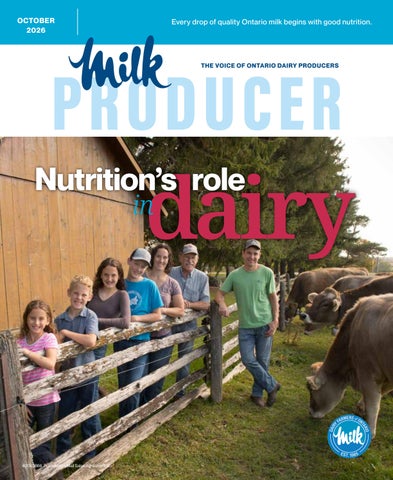
dairy
Nutrition’s role in
40063866 .Publications Mail Sales Agreement No
PUT YOUR HERD IN WINNING COLOURS. Pioneer® brand silage corn hybrids are bred to deliver consistent, high-energy feed with flexible harvest timing. Our hybrids offer a high-quality, high-quantity feed choice that outperforms other silage options.
We set the bar. Pioneer.com/BestInSilage
™ ® Trademarks of Pioneer Hi-Bred International, Inc., and its affiliated companies. © 2026 Pioneer Hi-Bred. 26PHBC5895
OCTOBER 2026 | Vol. 102 No. 10 PUBLISHED BY DAIRY FARMERS OF ONTARIO 6780 Campobello Road Mississauga, ON L5N 2L8 COMMUNICATIONS Sandra Da Silva sandra.da-silva@milk.org 905-817-2178 ADVERTISING Pat Logan pat.logan@milk.org 519-788-1559
CONTENTS www.milkproducer.ca
ON THE COVER
GRAPHIC DESIGN Katrina Teimo
14
PHOTOGRAPHY Martin Schwable CONTRIBUTORS Bita Farhang, Jeanine Moyer, Sophia Borys, Ralph Pearce, Sean Tarry, Kristen Kelderman, Kayleigh Klein, Amanda Fischer-Tlustos, Jean-Philippe Laroche, Annick Desjardins, Workplace Safety & Prevention Services, Veal Farmers of Ontario
For Simon and Kristina Signer, progress means questioning convention, trying new things and keeping what works.
Canada Post Publications Mail Sales Product Agreement No.40063866. Return postage guaranteed. Circulation: 6,900. ISSN 0030-3038. Printed in Canada. SUBSCRIPTIONS For subscription changes or to unsubscribe, contact: MILK PRODUCER 6780 Campobello Road Mississauga, ON L5N 2L8 Phone: (905) 821-8970 Email: milkproducer@milk.org Opinions expressed herein are those of the author and/ or editor and do not necessarily reflect the opinion or policies of Dairy Farmers of Ontario. Publication of advertisements does not constitute endorsement or approval by Milk Producer or Dairy Farmers of Ontario of products or services advertised. Milk Producer welcomes letters to the editor about magazine content. *All marks owned by Dairy Farmers of Ontario. WEBSITES & SOCIAL MEDIA www.milkproducer.ca www.milk.org Facebook: /OntarioDairy Instagram: @OntarioDairy LinkedIn: dairy-farmers-of-ontario
Features
Research & Ruminations
4 Board Editorial 6 Ask an FSR 12 Marketing 28 Dairynomics 42 Industry News
26 What's in the milk 32 Around the table 34 As your calf grows, the minerals in
Special Features
40 The art of high-forage diets
7
cow’s milk change too
36 A strong finish for a strong start:
Why dry-off matters for colostrum production
Dairy in a new nutrition era: Protein quality, nutrient density and the importance of every bite
10 Feeding the individual cow: Computer models aim to advance precision nutrition
20 How updated requirements guide preweaned calf nutrition
22 A primer on protein: What cows really need
24 Animal health: The options are many, but consistency is the single goal
34 Health & Safety 44 Working alone on the farm?
Calf Care
20
46 Colostrum cleanliness W W W. M I L K P R O D U C E R .C A • O C TO B E R 2 0 2 6 • 3
BOA R D E DI TOR I A L
The foundation of a healthy, productive herd and
quality Ontario milk By Steve Runnalls, Dairy Farmers of Ontario (DFO) Board Member, Region 12, the districts of Northern Ontario and Haliburton. Steve serves on the DFO Governance, Quality Assurance and Transportation Committees, as well as the Ontario Advisory Committee for Transportation and the P5 Raw Milk Quality, proAction®, Animal Care Technical and proAction® Advisory Committees. As dairy farmers, we know that proper nutrition is the foundation of a healthy and productive herd. It supports the wellbeing of our cows, contributes to efficient milk production and helps ensure consumers continue to have access to the Canadian dairy products they trust. From my perspective, it is one of the most important investments we make on our farms. A well-balanced ration is about much more than maximizing production. Proper nutrition helps support cow comfort, rumen health, reproduction and overall resilience throughout every stage of life. A newborn calf, a growing heifer, a transition cow and a lactating cow each have unique nutritional requirements. Providing the right balance of nutrients at the right time helps animals thrive and reach their full potential. Today's dairy rations are carefully developed to provide the right balance of energy, protein, fibre, vitamins and minerals. Working alongside nutritionists, veterinarians and feed advisors,
farmers continually evaluate feed quality, monitor herd performance and adjust rations as conditions change throughout the year. Healthy cows are more likely to maintain consistent production, while balanced diets can improve feed efficiency and support important milk components such as butterfat and protein. Careful feed management helps farmers maximize the value of every kilogram of feed while supporting the health, longevity and performance of their animals. Nutrition is also an important part of the industry's innovation story. Advances in technology and precision feeding strategies allow farmers to better match nutrient intake with animal requirements, reducing waste and making more efficient use of feed resources. Nutrition also connects directly to the products consumers enjoy every day. Quality milk starts with healthy cows receiving proper care and
WOOD SHAVINGS INC.
Steve Runnalls balanced diets. The result is a nutritious product that provides protein, calcium and other essential nutrients to families across Ontario and beyond.
Vicky Morrison As consumers become increasingly interested in how food is produced, nutrition offers an opportunity to share the care and attention that goes into dairy farming. Behind every glass of milk, container of yogurt or piece of cheese is a commitment to providing cows with the feed and care they need to perform at their best. At its core, dairy farming is about caring for our animals and producing food that families can feel confident serving at their tables. By prioritizing nutrition, dairy farmers are strengthening the future of our farms, while ensuring the dairy products we produce remain among the most nutritious and trusted foods available.
100% Natural Kiln Dried Softwood Shavings
Premium Quality Shavings
1-800-350-8046
Quality Supplier of Premium Bulk and Bagged Shavings Walking Floor Trailers & Blower Trailer Loads Available for Delivery
1-800-350-8046 | email: sales@gmcfeeters.ca | Fulton, ON L0R 2A0 Canada 4 • O C TO B E R 2 0 2 6 • W W W. M I L K P R O D U C E R .C A
12-inch discharge new GEA SuperPump 1200
STRONGER. FASTER. SMARTER.
Next Generation of GEA Lagoon PTO Pumps 1200 & 800 Series Built for today’s manure management challenges, the next generation of GEA Lagoon PTO pumps delivers the performance and durability operators expect. Faster loading, powerful agitation, rugged GEA Tuff wear components, and easier maintenance help increase productivity and reduce
A clear step forward.
downtime. Backed by 70 years expertise, these new pumps are engineered to keep you moving when every minute counts.
Ask your GEA dealer about the new SuperPump 800, AgiPump 800 and SuperPump 1200
Scan the QR code to watch the new SuperPump 1200 pumping in real-world conditions and hear firsthand feedback from a GEA dealer.
BRITISH COLUMBIA
SASKATCHEWAN
ONTARIO
Mountain View Electric Ltd. Enderby — 250 838-6455
Dairy Lane Systems Warman — 306 242-5850 Swift Current — 306 203-3066
Claire Snoddon Farm Machinery Sunderland — 705 357-3579
Lawrence’s Dairy Supply Inc. Moose Creek — 613 538-2559
Atlantic Dairy Tech. Charlottetown, PE — 902 368-1719
Conestogo Agri Systems Inc. Drayton — 519 638-3022 1 800 461-3022
McCann Farm Automation Ltd. Seeley’s Bay — 613 382-7411 Brockville — 613 926-2220
Mactaquac Farm Equip. Ltd. Mactaquac, NB — 506 363-2340
County Automation Ameliasburg — 613 962-7474
McLaren Works Cobden — 613 646-2062
Pacific Dairy Centre Ltd. Chilliwack — 604 852-9020 ALBERTA Dairy Lane Systems Leduc: 780 986-5600 Blackfalds: 587 797-4521 Lethbridge: 587 787-4145 Lethbridge Dairy Mart Ltd. Lethbridge — 888 329-6202 Red Deer — 403 406-7344
MANITOBA / NW ONTARIO Penner Farm Services Ltd. Blumenort — 204 326-3781 Thunder Bay ON – 800 461-9333 Tytech Grande Pointe — 204 770-4898
Dairy Lane Systems Komoka — 519 666-1404 Keith Siemon Farm Systems Ltd. Walton — 519 345-2734 Lamers Silos Ltd. Ingersoll — 519 485-4578
ATLANTIC PROVINCES
Melbourne Farm Automation Melbourne — 519 289-5256 Watford — 519-876-2420 Silver-Tech Systems Inc. Aylmer — 519 773-2740 Dunnville — 905 981-2350
Sheehy Enterprises Ltd. Shubenacadie, NS — 902 758-2002 Sussex Farm Supplies Sussex, NB — 506 433-1699
A SK A N FSR
& QA
Dairy Farmers of Ontario’s (DFO) Field Services Representatives (FSRs) are not only milk inspectors, they are also your support for everything from milk quality troubleshooting to quota questions and paperwork, questions about policies and regulation, and anything else related to DFO and how it applies to your farm. Our 13 FSRs have seen and heard a lot. This column was created to use their collective expertise to share answers to some of the most common questions received.
Why should I ensure my DFO licence information is up to date? FROM FEEDING AND MILKING TO THE MANY OTHER MANAGEMENT tasks involved in dairy production, producers must manage a wide range of responsibilities that require constant attention. While some tasks are always front and centre, others, such as maintaining an accurate and up-to-date DFO licence, can be overlooked.
For farms expanding, adding family members, transitioning ownership, preparing for succession or wanting to be proactive, the licence update process can serve as a valuable farm check-in. If your licence appears to need an update, a small investment of time today can prevent unnecessary complications tomorrow.
Over time, farms can change ownership structures, succession plans or even their signing authorities. Licence changes can also trigger updates to direct deposit information, or they may only be triggered when a producer plans to move or build a new facility. Timely licence updates are important, as they ensure DFO policies are respected and help avoid delays and challenges.
Have a question for an FSR? Contact your local Field Service Representative for more information about milk quality and producer services.
As producers' first point of contact, your field service representative can support you with the process. As every situation is different, the required forms and documentation for a licence update can vary, and FSRs can support you with your unique situation. A review with your FSR also provides an opportunity to ensure that DFO records accurately reflect the current operation and compliance with DFO policies and regulations.
For farms expanding, adding family members, transitioning ownership, preparing for succession or wanting to be proactive, the licence update process can serve as a valuable farm check-in.
It’s more than your livelihood, it’s your life. You deserve an advisor who really gets what’s on the line.
François Bourgeois, CPA | 343.523.0178 | francois.bourgeois@mnp.ca MNP.ca
6 • O C TO B E R 2 0 2 6 • W W W. M I L K P R O D U C E R .C A
N U T R I T ION
Dairy in a new nutrition era: Protein quality, nutrient density and the importance of every bite By Bita Farhang, Ph.D., Senior Advisor, Science and Sustainable Nutrition, Dairy Farmers of Ontario
Dairy protein is recognized as a high-quality protein because it contains all essential amino acids required by the body.
CONSUMER EATING PATTERNS ARE CHANGING. ACROSS CANADA and globally, there is growing interest in dietary approaches that support healthy weight management, metabolic health and healthy aging. More recently, the rapid adoption of GLP-1 medications for obesity and diabetes management has accelerated a broader shift toward reduced food intake and smaller meal sizes. These shifts have generated increased discussion among nutrition scientists and health-care professionals about an important challenge: how to maintain muscle mass and nutritional adequacy when people are eating less. This shift is changing the conversation from weight loss alone to nutrition quality. As food intake decreases, every bite matters more. Within this evolving landscape, dairy foods remain highly relevant because of their contribution to high-quality protein, nutrient density and overall dietary quality.
The emerging focus on muscle preservation Historically, weight management discussions focused primarily on reducing body weight. Today, the emphasis is increasingly on body composition – the balance between fat mass and lean body mass. Research suggests that during periods of rapid weight loss, a portion of the weight lost may come from lean tissue, including skeletal muscle. Maintaining muscle mass is important for physical function, metabolic health, mobility and healthy aging. Consequently, nutrition experts are increasingly emphasizing adequate protein intake as a key component of weight management strategies. Protein quality becomes particularly important when total food intake is reduced. Foods that deliver essential amino acids efficiently can help support protein requirements without requiring large food volumes. Dairy protein is recognized as a high-quality protein because it contains all essential amino acids required by the body. It is also naturally rich in leucine, an amino acid that plays an important role in stimulating muscle protein synthesis. The two primary dairy proteins, whey and casein, provide complementary physiological characteristics. Whey is rapidly digested and absorbed, resulting in a quick rise in circulating amino acids, while casein is digested more slowly, providing a sustained release of amino acids over time. Together, these characteristics contribute to the high biological quality of dairy protein.
W W W. M I L K P R O D U C E R .C A • O C TO B E R 2 0 2 6 • 7
Nutrient density matters Reduced food intake increases the risk of inadequate nutrient consumption. This is particularly relevant among older adults, individuals following energyrestricted diets and people using appetite-modifying therapies such as GLP-1 medications. As total energy intake declines, nutrient density becomes more relevant, as foods must provide a higher concentration of essential nutrients per unit of energy to maintain dietary adequacy. Milk, yogurt and cheese contribute a broad spectrum of nutrients within a relatively modest energy contribution. Dairy foods provide high-quality protein alongside key micronutrients such as calcium, vitamin B12, phosphorus, potassium and riboflavin, which support overall health.
Dairy foods provide highquality protein alongside key micronutrients such as calcium, vitamin B12, phosphorus, potassium and riboflavin, which support overall health.
In fact, just a glass of milk provides approximately 15 essential nutrients reflecting its contribution to overall dietary nutrient adequacy in typical Canadian dietary patterns. Within the context of reduced intake patterns and smaller meal sizes, nutrient-dense foods such as dairy can play an increasingly relevant role in supporting adequate intake of essential nutrients.
Understanding the dairy matrix Modern nutrition science has moved beyond evaluating foods solely on the basis of individual nutrients. Increasing attention is being given to the concept of the food matrix – the physical structure of a food and the interactions among its nutrients and bioactive compounds. The dairy matrix has emerged as an important area of research over the past decade. According to the International Dairy Federation (IDF), the dairy matrix refers to the unique structure of dairy foods and the complex interactions among proteins, fats, minerals and other components that may influence digestion, nutrient absorption and physiological responses. This concept helps explain why the health effects of dairy foods cannot always be predicted by examining individual nutrients in isolation. For example, dairy foods contain calcium in a highly bioavailable form, meaning it is efficiently absorbed and utilized by the body. Research also suggests that interactions among nutrients within the dairy matrix may influence metabolic responses and contribute to the health effects associated with dairy consumption. The growing recognition of the dairy matrix reflects a broader shift toward evaluating whole foods and dietary patterns rather than focusing exclusively on single nutrients.
Dairy fat, cardiometabolic health and the dairy matrix Traditional dietary guidance has emphasized reducing saturated fat intake based on its association with cardiovascular disease risk. For this reason, full-fat dairy has historically been replaced with low-fat options in many dietary recommendations. However, more recent evidence suggests that the relationship between dairy fat and health outcomes may be more complex when dairy is considered as a whole food rather than a source of isolated nutrients.
Healthy aging, metabolic health, muscle preservation and dietary quality are likely to remain important nutrition priorities for years to come.
8 • O C TO B E R 2 0 2 6 • W W W. M I L K P R O D U C E R .C A
A growing body of literature indicates that full-fat dairy may be metabolically neutral or, in some cases, comparable to low-fat dairy in terms of cardiometabolic outcomes. Supporting this, a recent 12-week randomized controlled trial in adults with overweight and obesity found that consuming three daily servings of full-fat dairy had no adverse effects on body weight, body composition, fasting glucose, blood lipids or metabolic rate. Nutrient intake improved, particularly for calcium and protein, and modest reductions in blood pressure were observed in one intervention group. Overall, the findings suggest short-term metabolic neutrality and improved nutrient adequacy when full-fat dairy is incorporated into the diet. These findings should be interpreted within the context of the dairy matrix, which may modify the metabolic effects of dairy fat compared with isolated saturated fats. This evidence supports a more nuanced, food-based interpretation of dairy fat within dietary patterns.
Dairy and overall diet quality Dairy foods continue to be recognized as important contributors to dietary quality across many populations. Evidence from systematic reviews and meta-analyses indicates that dairy consumption is not associated with increased all-cause mortality and may have neutral or beneficial associations with several cardiometabolic outcomes when consumed as part of balanced dietary patterns. Importantly, the scientific discussion surrounding dairy has increasingly shifted away from individual nutrients and toward the role of dairy foods within healthy eating patterns. This whole-food perspective aligns with current dietary guidance, which recognizes that people consume foods and meals rather than isolated nutrients.
Supporting health across the life course The nutritional relevance of dairy extends across all life stages. During childhood and adolescence, dairy contributes nutrients that support growth and development. In adulthood, dairy can contribute to protein intake, nutrient adequacy and overall dietary quality. In older adults, where maintaining muscle mass and bone health become increasingly important, nutrient-dense foods that provide high-quality protein and essential micronutrients may play a particularly valuable role. Population aging is becoming a defining demographic trend in Canada and around the world. As health-care systems increasingly focus on maintaining health span – the number of years lived in good health – nutrition strategies that support muscle function, mobility and nutritional adequacy are receiving greater attention. The combination of high-quality protein, bioavailable nutrients and broad consumer acceptance makes dairy a relevant food within these discussions.
Implications for Ontario dairy These emerging nutrition trends provide important context for understanding how consumer expectations are evolving. The conversation is no longer focused solely on calories or individual nutrients. Increasingly, consumers, health-care professionals and researchers are interested in nutrient density, protein quality, food functionality and the role of whole foods in supporting health.
As health-care systems increasingly focus on maintaining health span – the number of years lived in good health – nutrition strategies that support muscle function, mobility and nutritional adequacy are receiving greater attention. The rise of GLP-1 medications has accelerated these discussions, but the underlying trends extend beyond weight management alone. Healthy aging, metabolic health, muscle preservation and dietary quality are likely to remain important nutrition priorities for years to come. Within this changing nutrition landscape, dairy foods continue to offer a unique combination of complete protein, essential micronutrients and whole-food matrix characteristics that align with many of these emerging dietary priorities.
Looking ahead Nutrition science continues to evolve, but one principle remains consistent: when food intake decreases, nutrition quality becomes increasingly important. As consumers seek foods that deliver more nutrition in smaller portions, dairy's contribution to protein quality, nutrient density and overall dietary quality remains highly relevant. The growing scientific interest in the dairy matrix, alongside increasing attention to muscle preservation, nutritional adequacy and healthy aging reinforces the importance of viewing dairy not simply as a source of individual nutrients, but as a nutrient-rich whole food that can contribute to balanced dietary patterns across the life course.
References Milk Nutrition Facts. Milk.org https://new.milk.org/health-and-nutrition/health-care-professionals/milk-nutrition-facts/ The Dairy Matrix. Milk.org https://new.milk.org/health-and-nutrition/health-care-professionals/the-dairy-matrix/ International Dairy Federation (IDF). The Dairy Matrix: Understanding its impact on the health effects of dairy foods https://shop.fil-idf.org/products/factsheet-of-the-idf-n-27-2023-the-importance-of-thedairy-matrix-in-the-evaluation Mulet-Cabero, A.-I.; Torres-Gonzalez, M.; Geurts, J.; Rosales, A.; Farhang, B.; Marmonier, C.; Ulleberg, E.K.; Hocking, E.; Neiderer, I.; Gandolfi, I.; et al. The Dairy Matrix: Its Importance, Definition, and Current Application in the Context of Nutrition and Health. Nutrients 2024, 16, 2908. Lamarche B, Astrup A, Eckel RH, Feeney E, Givens I, Krauss RM, Legrand P, Micha R, Michalski MC, Soedamah-Muthu S, Sun Q, Kok FJ. Regular-fat and low-fat dairy foods and cardiovascular diseases: perspectives for future dietary recommendations. Am J Clin Nutr. 2025 May;121(5):956-964. Cannon EJ, Jacobs DR Jr, Steffen LM, Pletcher MJ, Shikany JM, Greenland P, Martignoni FV, Schreiner PJ, Miedema M. Dairy Intake and Coronary Artery Calcification: The Coronary Artery Risk Development in Young Adults (CARDIA) Prospective Cohort Study. J Nutr. 2025 Dec;155(12):4523-4529. Anderson GH, Chen Zhou CZ, Vien S, Soo M, Salamat S, Akbarifakhrabadi M, Chomka L, Kathirvel P, Siddiqi F, Fabek H, Luhovyy B. The Effect of Three Daily Servings of Full-Fat Dairy for 12 Weeks on Body Weight, Body Composition, Energy Metabolism, Blood Lipids, and Dietary Intake of Adults with Overweight and Obesity. J Nutr. 2026 Jan 22:101373. W W W. M I L K P R O D U C E R .C A • O C TO B E R 2 0 2 6 • 9
N U T R I T ION
Feeding the individual cow:
“We have data today that we never had before,” says Cant. After 30 years of modelling dairy diets, he believes the time is right to put that information to work and use it to advance nutritional modelling and bring precision nutrition closer to practical application on the farm.
Computer models aim to advance precision nutrition
From herd averages to individual needs Dairy rations are typically formulated to meet the nutritional requirements of a group of animals. While this approach works, Cant points out that it cannot account for every difference between individual cows. He notes that some cows use feed more efficiently than others, and their responses to dietary changes can also vary, along with their milk production and greenhouse gas emissions.
By Jeanine Moyer
EVERY COW IN THE HERD IS DIFFERENT. EVEN WHEN THEY RECEIVE the same ration, cows can vary in how efficiently they use nutrients, how much milk protein they produce and how much energy they expend. What if producers could account for those differences when making feeding decisions? That question is the foundation of one of several dairy nutrition research projects led by Dr. John Cant, professor at the University of Guelph. Cant is developing a computer modelling system designed to predict how individual cows respond to their diets, with the goal of making precision nutrition a practical tool for dairy farms.
“When a single ration is fed across the herd, some cows may receive more nutrients than they need, while others may not receive enough,” says Cant. “At the herd level, these differences can average out, but opportunities to improve individual performance may be missed.” Precision nutrition aims to close that gap by tailoring each cow’s diet to her individual needs, including body condition, stage of lactation and response to nutrients. To achieve this, Cant is developing computer models that can test different diets virtually, predict how individual cows will respond and help producers translate those findings into practical feeding decisions on the farm.
Putting data to work
The research focuses on milk synthesis, particularly how amino acids contribute to milk protein production. By modelling how a cow uses nutrients, Cant hopes to predict how changes in her diet will affect milk protein yield and other production outcomes.
The technology to support this approach to dairy nutrition is already becoming more common in dairy barns. Over the past decade, automated systems have collected increasingly detailed information about individual cows, from feed intake and body weight to milk composition and activity. Cant aims to use this growing pool of data to develop a modelling system that continuously analyzes each cow’s performance and adjusts her ration accordingly.
SILOKING DryScan® Real Time Dry Matter Control • Dry Matter Analysis During Loading • Automatic Fresh Matter Adjustment • Precise Feeding • Accurate Reporting Siloking Canada Inc. 3300 Putnam Rd Putnam, ON
1 0 • O C TO B E R 2 0 2 6 • W W W. M I L K P R O D U C E R .C A
Phone: (519) 269-3300 www.silokingcanada.com
I envision computers taking on the task of reformulating diets for cows. – Dr. John Cant At the University of Guelph’s Ontario Dairy Research Centre in Elora, Ont., Cant and his team of graduate students, including Braeden Fieguth, Patty Kedzierski and Chidi Unigwe, can draw on 15 different data streams. Feed intake is recorded minute by minute, body weights are measured twice daily, and researchers are even collecting information on milk components and emissions, including methane and carbon dioxide. Cameras throughout the barn also provide information about animal behaviour. “This information tells us everything, from the quality of milk being produced by each cow to the energy expenditure in the herd,” says Cant, noting that the modelling system could help Ontario producers maximize the same information they are also collecting from their own animals. Cant says the challenge is turning those separate streams of information into useful, timely decisions. That’s why he is working with herd data from the Ontario Dairy Research Centre to develop individual cow models that he describes as digital twins. These computer-based representations would simulate how a particular cow responds to different nutritional inputs and changing conditions. “The goal is to make predictions quickly enough to support diet reformulation as frequently as every two weeks,” he says. Producers and nutritionists already make adjustments to rations as conditions change, but Cant wants to take that process a step further by shifting the focus from simply changing the mix of dietary ingredients to accounting for variation among cows themselves. Instead of adjusting a ration primarily at the group level, the new modelling system would help determine how each cow’s changing requirements and response to feed should influence her diet.
A changing role for nutritionists Not only will the modelling system change how producers manage their herd nutrition, but it could also open new opportunities for how nutritionists work with producers themselves. Today, nutritionists gather information, make feeding recommendations, implement dietary changes and then evaluate the results using newly collected data. Cant sees the potential for computer models to automate that cycle of analysis and decision-making, allowing nutritionists to focus on interpreting results, overseeing decisions and addressing problems that require their expertise. “I envision computers taking on the task of reformulating diets for cows,” says Cant. “This would allow nutritionists to monitor the system and step in when their expertise is needed.” Cant points out the objective is not to add more technology to the barn. It is to make better use of information producers are already collecting, potentially improving feed efficiency, milk components and influencing animal health, and all while saving time. He estimates that his modelling approach could be fully implemented on Ontario dairy farms within the next 10 years. For now, developing the models and integrating data quickly enough to make individualized feeding decisions remain key challenges. Cant explains that moving the work forward will require more students who understand both animal biology and production, as well as computer science. He says the University of Guelph is responding to this shift in data and precision farm management with courses in areas such as digital agriculture and machine learning. “As farms continue to collect more data on their cows, we have an opportunity to move beyond feeding for the average animal and start meeting the unique nutritional needs of each cow,” says Cant, whose ongoing work continues to refine precision nutrition and advance the next generation of dairy diet formulation.
W W W. M I L K P R O D U C E R .C A • O C TO B E R 2 0 2 6 • 1 1
M A R K ET I NG
Connecting Ontarians to milk’s nutritional benefits Consumer campaigns and health-care partnerships are helping DFO connect consumers with credible, relevant nutrition information FROM EVERYDAY MEALS AND MAJOR sporting moments to conversations in doctors’ offices, Dairy Farmers of Ontario (DFO) is finding relevant and credible ways to remind Ontarians of the nutritional value of milk. Nutrition is an important part of how DFO connects with consumers, with a simple message at the centre of its marketing: every glass of milk offers 15 essential nutrients. DFO brings that message to life through a two-pronged approach, building awareness and connection with consumers, while strengthening credibility through health-care professionals (HCPs). The approach recognizes that nutritional information needs to do more than inform. For consumers, it needs to feel relevant to everyday life. For health-care professionals, it needs to be grounded in science and useful in conversations with patients. Together, these two streams move DFO’s nutrition communications beyond awareness and engagement to build credibility and drive consumption.
1 2 • O C TO B E R 2 0 2 6 • W W W. M I L K P R O D U C E R .C A
Keeping nutrition simple For consumers, DFO looks for cultural moments and everyday occasions where milk’s nutritional benefits naturally fit, using contemporary voices and channels to translate those benefits into something meaningful and relatable. During the Milano Cortina 2026 Olympic Winter Games, DFO refreshed its Milk Glass creative to The Pillow Pitcher campaign connect milk’s 15 essential nutrients with sportsrelated themes such as strength, training and returned to the familiar ritual recharging. Video advertising on CBC television of a glass of milk before bed, and CBC Gem was complemented by social content featuring Ontario Olympians, extending positioning milk as a simple the message across Facebook, Instagram, way to wind down. TikTok and Pinterest. This content carried an equally straightforward message: good nutrition does not have to be complicated. Milk is a simple fuel that helps our bodies perform at its best with 15 essential nutrients, including nine grams of protein. That same focus on simplicity has continued beyond sport. DFO responded to consumers’ interest in protein by reminding Ontarians that adding protein to any meal can be as uncomplicated as pouring a glass of milk. The six-week campaign, which ran in late summer and early fall, highlighted the nine grams of protein in every glass across every meal occasion. Online video and high-impact out-of-home advertising at Union Station were supported by social content, influencers and Toronto Raptor’s RJ Barrett as campaign spokesperson. DFO has also explored less conventional occasions. The Pillow Pitcher campaign transformed Ontario's iconic milk pitcher into a pillowcase, bringing a playful twist to the familiar ritual of enjoying a glass of milk before bed and positioning milk as a simple way to wind down, while highlighting its natural protein to help with overnight recovery. A social contest, influencer content and out-of-home advertising helped bring the idea to consumers.
Adding credibility through health care While consumer campaigns make milk’s nutritional benefits relevant to everyday life, DFO’s HCP program reinforces the nutrition conversation in settings where Ontarians look for credible health and nutrition guidance. Introduced in 2021, the program focuses on educating and engaging health-care professionals with science-based information about milk. DFO has established relationships with professional organizations including the Nurse Practitioners’ Association of Ontario (NPAO) and Ontario Pharmacists Association (OPA), whose members play an increasingly important role in direct patient care. The program has also used peer-to-peer communications, webinars, presentations and evidence-based resources to deepen engagement.
DFO research shows six per cent year-overyear growth in patients asking HCPs about the role of nutrition in addressing their health concerns. HCP visits to milk.org also increased as professionals sought information about milk’s role in supporting nutrition and preventing certain health problems.
It is an increasingly important audience. DFO research shows six per cent year-over-year growth in patients asking HCPs about the role of nutrition in addressing their health concerns. HCP visits to milk.org also increased as professionals sought information about milk’s role in supporting nutrition and longterm health. That work is becoming increasingly focused on preventative health and the moments when nutrition can form part of a patient conversation. In 2026, in-clinic programming has addressed cardiovascular disease and hypertension prevention, colorectal cancer awareness, osteoporosis and preventative care, and Type 2 diabetes prevention and management. The next evolution is about making information even more practical. DFO is continuing its partnerships with NPAO and OPA, prioritizing trusted professional-development environments and repeat engagement. Plans include webinars, a certificate program focused on dairy nutrition for disease prevention and a condensed counselling tool designed to support consultations. By pairing accessible consumer campaigns with credible, science-based HCP communications, DFO is sharing milk’s nutritional story in different but complementary ways. Whether the message appears during a major sporting event, alongside a family meal or in a health-care setting, the goal remains consistent: make the nutritional benefits of milk relevant, understandable and useful to Ontarians.
DFO is continuing its partnerships with NPAO and OPA, prioritizing trusted professional-development environments and repeat engagement rather than one-time exposure.
W W W. M I L K P R O D U C E R .C A • O C TO B E R 2 0 2 6 • 1 3
PROCE NG COV E RSSI STORY
Different
1 4 • O C TO B E R 2 0 2 6 • W W W. M I L K P R O D U C E R .C A
by design
For Simon and Kristina Signer, progress means questioning convention, trying new things and keeping what works By Jeanine Moyer
WHEN SIMON AND KRISTINA SIGNER DECIDED TO INCORPORATE A compost pack into their new barn design and transition their Brown Swiss herd to a robotic milking system, they encountered plenty of skepticism. Some questioned whether the breed would adapt to the robots. Others felt that a compost pack wasn't the right fit for the operation. And because the Signers planned to focus on feeding at the bunk rather than offering supplemental feed at the robot, some were concerned the cows wouldn't be motivated to use the system.
W W W. M I L K P R O D U C E R .C A • O C TO B E R 2 0 2 6 • 1 5
The Signers listened and considered every concern but moved forward with their plan anyway. Today, Sigview Farms Ltd., near Moorefield, Ont., is home to about 65 Brown Swiss cows milked by two Lely A5 robots. The cows live in a tunnel-ventilated compost pack barn, built in 2020, and move quietly between the feed bunk, pack and robots. It turns out the system works. In fact, one of the things that surprised the Signers most was just how well their Brown Swiss herd adapted to their new surroundings and milking system. “We probably shouldn’t have been surprised,” says Simon. “But there were plenty of people telling us it wouldn’t work.” That willingness to question conventional thinking is a common thread in how the young couple approaches their farm. For the Signers, progress means being willing to try something new, learn from it and, if necessary, change course again. “Progress means always improving and being willing to try new things,” says Simon, and for Kristina, progress also means growth – both for the farm and for the next generation.
A focus on healthy cows Although the Signers have embraced technology and a different approach to housing and milking, their farm management approach is straightforward: focus on healthy cows. “To us, a healthy cow is one you don’t have to deal with,” says Simon. “She’s easy to work with, she breeds back and she just does her job.” For the Signers, prevention is a major part of that strategy. That’s why the herd receives regular health checks with their veterinarian every two weeks, along with routine vaccinations and hoof trimming. The same preventative mindset extends to the farm’s equipment too. Regular maintenance of the robots, tractors, silo unloader and other equipment helps avoid breakdowns, while also supporting the Signers’ goal of streamlining and maximizing labour efficiency. It is a practical approach for a young couple managing the farm alongside four children. Kristina notes that while robotic milking has given them more flexibility, it hasn’t eliminated
1 6 • O C TO B E R 2 0 2 6 • W W W. M I L K P R O D U C E R .C A
the work. “You still have to manage the farm,” she says. “You just manage it differently.” While Simon looks after the field crops and hoof trimming, he and Kristina share the rest of the farm work. They also welcome help from Simon’s dad, Hans, and their four children, Sawyer, 14, Felicity, 12, Deacon, 10 and Celest, 9.
Building health from the ground up The same farm management focus on prevention carries through to the feed bunk at Sigview Farms. The Signers currently grow about 200 acres of their own forages, primarily alfalfa for haylage and corn for silage that are both stored in upright silos. For the couple, high-quality forage is the foundation of a healthy herd. “A healthy cow starts in the field,” says Simon, explaining that means paying attention to crop production, conducting regular feed tests and, perhaps most importantly, having a plan for feed storage. “You can’t just harvest the crop and hope to preserve quality,” he says. “You need a plan for storing it properly.” Rather than growing an alfalfa blend for haylage, the Signers grow straight alfalfa. They believe that approach gives them a more consistent forage source throughout the year and provides more flexibility at harvest, including a wider window for first cut. “We’re focused on producing consistent, high-quality feed that can support the herd,” notes Kristina who says they also work closely with their nutritionist to develop a heavy-forage-based ration that provides the right amount of protein and a balanced diet. Producing high-quality feed is only part of the nutrition equation. While the robots offer concentrate pellets as an incentive for cows to visit, the Signers intentionally keep the amount fed at the robot to a minimum. Instead, they want the bulk of the ration delivered at the bunk, where cows can consume a consistent, balanced diet.
The move to robotic milking was one of the biggest changes the Signers have made throughout their farming career. Before the new barn build and robots, the cows were milked in a tie-stall barn. When the couple made the decision to build and automate, they also integrated their prevention-focused management style in an effort to help the herd adjust.
“It’s about getting as much of the nutrition as possible into the ration at the bunk,” says Simon. “We don’t want to rely on the robot to make up for what’s missing in the feed.” He explains that this approach also helps reduce the risk of slug feeding – a cow consuming a large amount of concentrate at the robot, while potentially leaving some of the forage-based ration at the bunk. For the Signers, keeping more feed in the bunk supports rumen health, simplifies the ration and helps keep feed costs in check. The farm also uses an automated feed mixing system, which helps reduce labour and equipment wear, while improving the accuracy and consistency of the ration. For the Signers, combining precision and nutrition means they can deliver the same balanced ration day after day, giving the cows consistency in both what they eat and how they perform.
Taking the leap The move to robotic milking was one of the biggest changes the Signers have made throughout their farming career. Before the new barn build and robots, the cows were milked in a tie-stall barn. When the couple made the decision to build and automate, they also integrated their preventionfocused management style in an effort to help the herd adjust. That’s why, in September 2019, while still in the tie-stall barn, they increased milking frequency to three times a day. “It was a huge undertaking for the two of us,” says Simon, who admits the winter was a long one. But the strategy accomplished what they needed it to do: milk production increased, they were able to fill extra quota and the cows were better prepared to move to more frequent milkings with the robotic system. Simon says that, while the change in milking served a short-term purpose, the success of that strategy also made the transition to the new barn in May 2020 feel less dramatic. “It worked, but it also made the transition to the new barn and robots underwhelming because we didn’t see the increase in production that would typically happen when moving from milking twice a day to a robot set up,” he says. “We’d already seen that increase from milking more frequently.” The cows, meanwhile, adapted to the robots better than some people expected. In fact, Simon notes that the herd has had very low connection attempts and failures and believes this is a measure of success for the calm, comfortable cows and the barn environment they’ve created. The Signers also believe the Brown Swiss’ calm, docile nature is an advantage. That is one of the reasons Simon has always preferred the breed. “They’re calmer, more docile and a stronger cow,” says Kristina. “They have strong feet and legs, fewer health issues – and they’re pretty cute, too.”
Question the idea – then test it If there is one piece of advice the Signers would give other young farmers, it is to ask questions. But they also encourage young producers to be comfortable being questioned themselves. “It’s good to be challenged,” says Simon. “It makes you think differently and gives you a new perspective.”
W W W. M I L K P R O D U C E R .C A • O C TO B E R 2 0 2 6 • 1 7
Today, the Signers are still open to news ideas and are currently figuring out exactly what the next stage of growth will look like.
While the Signers welcome new ideas and challenges, they have also experienced questions and doubts about their own ideas and decisions. They note that can be difficult, particularly when a new idea involves significant investment or a major change in how a farm operates. But Simon believes young farmers have an important advantage: they are often more willing to change. “Don’t let people dissuade you from your ideas and your energy,” he says, noting that while it’s great to have enthusiasm and be open to new ideas, that does not mean every idea will work. “You need to be willing to try, evaluate the results and change again if necessary.” Today, the Signers are still open to news ideas and are currently figuring out exactly what the next stage of growth will look like. They want to increase their herd and milk production, and are interested in diversification, although they have not yet decided what that might look like. They also want to keep the next generation involved. For now, they are happy with what they’ve established – a new take on tradition and innovation. A Brown Swiss herd that works with robots, a forage-based ration that fits a modern robotic dairy system and a young couple that doesn’t hesitate to introduce new technology, while keeping the focus firmly on cow health. “It’s working for us, and we love sharing what we do and how we farm with others who are looking for new ideas too,” says Kristina.
1 8 • O C TO B E R 2 0 2 6 • W W W. M I L K P R O D U C E R .C A
For now, they are happy with what they’ve established – a new take on tradition and innovation. A Brown Swiss herd that works with robots, a forage-based ration that fits a modern robotic dairy system and a young couple that doesn’t hesitate to introduce new technology, while keeping the focus firmly on cow health.
WHAT’S NEXT for your farm? Step Explore the next steps 01: for your farm with the Canadian Dairy Hub.
your focus to find the Step Narrow information you need. 02: Environmental Sustainability
Animal Welfare
Animal Health
Herd Management
informed on-farm decisions with Step Make the latest Canadian dairy research, 03: science-backed resources, and practical tools.
Brought to you by Dairy Farmers of Canada.
Start here!
Scan or visit:
Dairyhub.ca
PROCE NG N U T R I SSI T ION
How nutrient requirements guide preweaned calf nutrition By Sophia Borys, Grober Nutrition
DURING THE PREWEANING PERIOD, CALVES DEPEND HEAVILY ON milk or milk replacer to provide the energy, protein, vitamins and minerals needed for maintenance, immune function, growth and development. Feed efficiency is very high during the preweaning period, although so are feed costs. Understanding how much of each nutrient a calf needs and its requirements in different environments and growth stages are important when developing a feeding program. Meeting these needs requires more than simply producing a product that resembles whole milk and that’s where the National Academies of Sciences, Engineering and Medicine (NASEM) play an important role.
HOW MUCH ARE YOU LEAVING ON THE TABLE? ...
YOU MIGHT BE SURPRISED HOW MUCH PROFIT IS HIDING IN PLAIN SITE. LET US HELP YOU FIND IT. Independent Nutrition. Built for Your Bottom Line. No Commissions. No Sales Quotas.
In 2021, NASEM released the Nutrient Requirements of Dairy Cattle: Eighth Revised Edition, replacing the previous 2001 recommendations. The updated publication incorporated advances in nutritional research and provides equations and recommendations for estimating nutrient requirements in dairy cattle, including young calves. One of the main nutrients to consider is energy. NASEM uses metabolizable energy (ME), which is the amount of feed energy available to the animal after accounting for a portion of losses. Energy requirements are not the same for every calf; they change with body weight and desired average daily gain. For example, NASEM estimates that a 50kg calf targeting 600g of gain per day requires approximately 3.98 Mcal of ME per day, while a calf targeting 900g of gain requires approximately 5.13 Mcal per day. Environmental conditions also impact energy needs. According to the NASEM model, maintenance energy requirements for young calves increase by about 38 per cent at 0°C and 56 per cent at −10°C compared with the reference temperature of 20°C.
Get In Touch Scan the QR code or visit
vantagefs.ca
to learn how we could help you earn more
2 0 • O C TO B E R 2 0 2 6 • W W W. M I L K P R O D U C E R .C A
One of the main nutrients to consider is energy. NASEM uses metabolizable energy (ME), which is the amount of feed energy available to the animal after accounting for a portion of losses.
Protein is another major consideration. Calves require adequate metabolizable protein and amino acids to support lean tissue growth, organ development and other essential functions. The type and digestibility of these fats are also important to consider, especially if feeding high volumes of milk is a limitation. While increasing the total volume of milk replacer fed per day is a common method to meet calf energy requirements, fat content can be used as a secondary strategy. The type and digestibility of these fats are also important to consider, especially if feeding higher volumes of milk is a limitation. The most common fat sources included in milk replacers in North America are lard, tallow, palm and coconut. While lard, tallow and palm are all high in long-chain fatty acids, it’s important to mix them with a medium chain fatty acid, such as coconut oil, to create a fatty acid profile that more closely resembles butterfat. With the right formulation, these fat blend can be greater than 92-95 per cent digestible by calves. Protein is another major consideration. Calves require adequate metabolizable protein and amino acids to support lean tissue growth, organ development and other essential functions. Protein requirements, like energy requirements, change with body size and growth rate and it is important to also consider the amino acid composition. Benefits of formulating with increased levels of specific amino acids levels have been documented in peer-reviewed scientific literature in young calves to support healthy growth and development. Therefore, some milk replacers contain added essential amino acids to be closer to the nutritional profile of whole milk. However, there are no established NASEM amino acid requirements for calves due to the changing dynamics of rumen development.
Where the science of nutrition meets accurate feeding for a sustainable future
Optimized Rations
In adult ruminants, amino acids reach the abomasum via microbial protein produced in the rumen, as well as from proteins that escape degradation. This situation is more complex for a milk-fed calf because rumen microbes are becoming established as the consumption of starter feed increases. Looking only at the crude protein percentage on a milk replacer label does not tell the whole story. Type, quality and digestibility also need to be considered. Ensuring the proper balance of vitamins and minerals is also key. Calcium and phosphorus support skeletal development, while trace minerals such as zinc, copper, manganese, selenium and iodine contribute to immune function, antioxidant protection, enzyme activity and tissue development. Vitamins, including A, D and E, also play important roles in growth, immune response and bone development. NASEM provides a scientific framework for evaluating these requirements as part of the complete calf diet, which can be used to make recommendations to producers. Ultimately, NASEM provides a scientific starting point for understanding what calves need and for building practical feeding programs across environmental conditions and management practices. When choosing milk replacer products, these requirements should be considered alongside ingredient quality, nutrient density, digestibility, mixing characteristics and expected feeding rates. Taking all factors into account can help create milk replacer products and feeding programs that better support healthy growth during this critical stage of a calf’s life.
trouwnutrition.ca
W W W. M I L K P R O D U C E R .C A • O C TO B E R 2 0 2 6 • 2 1
PROCE NG N U T R I SSI T ION
A primer on protein: What cows really need By Essi Evans, E+E Technical Advisory Services
A FEED TAG GIVES US A CRUDE-PROTEIN NUMBER. A COW EXPERIENCES SOMETHING FAR MORE DYNAMIC.
The second major source of amino acids is rumen-undegraded protein, often called bypass or escape protein. This fraction avoids degradation in the rumen and is available for intestinal digestion. Its value depends on how much escapes, how digestible that escaped protein is and which amino acids it contributes. Together, digestible microbial protein and rumen-undegraded protein make up the cow’s metabolizable protein supply. The final step is amino acid balance.
Amino acids: the working currency Once absorbed, amino acids support the synthesis of milk protein, enzymes, hormones, immune proteins and body tissues. They are needed in the correct amounts. If one essential amino acid is short relative to the cow’s requirement, other absorbed amino acids are largely unusable. More protein from the same sources may not resolve the deficit. Thus, a higher crude-protein ration is not necessarily a better ration. Excess nitrogen must be processed and excreted, which costs the cow energy and reduces nitrogen-use efficiency. The objective is to formulate with enough confidence in the amino acid supply to avoid using excess crude protein as a substitute for precision.
From amino acids to milk
As every dairy producer knows, ingredient selection is not easy: forage quality and consistency, dry matter intake, rumen function, starch fermentability, fibre effectiveness, ingredient price and the practical realities of mixing and feeding all enter in the selection. Within that is the decision on supplemental protein.
The mammary gland extracts circulating amino acids to synthesize milk protein, along with other required nutrients. With precision feeding, milk and milk protein yields can be optimized. On-farm results are strongest when the formulation, the ration on paper and what cows consume remain closely connected.
The cow does not have a requirement for crude protein. She requires absorbable amino acids, in the right proportions and at the right time, to support maintenance, health, reproduction, body reserves and milk production. Getting those amino acids to the cow is where the protein sources we choose become important. Precision protein feeding goes beyond the crude protein number to consider what the ration ultimately supplies, without paying for unnecessary excess.
Precision protein feeding
Crude protein is a starting point Crude protein is estimated from the nitrogen concentration of a feed. The calculation includes nitrogen in true protein, as well as non-protein nitrogen. True proteins are chains of amino acids. Non-protein nitrogen lacks amino acids, but under suitable rumen conditions, rumen microbes can use its nitrogen to produce microbial protein. Two ingredients can have similarly crude protein levels yet differ in how quickly their protein is degraded in the rumen, how much escapes rumen degradation, which amino acids ultimately reach the small intestine and what other nutrients accompany the protein. This is why equal crude protein values do not guarantee equal outcomes.
The rumen changes the story Rumen-degradable protein supplies peptides, amino acids and ammonia that rumen microbes can use. With fermentable energy and other nutrients available at the same time, microbes grow and flow out of the rumen. Once digested in the small intestine, microbial protein supplies the cow with a valuable and well-balanced source of amino acids.
2 2 • O C TO B E R 2 0 2 6 • W W W. M I L K P R O D U C E R .C A
Precision protein feeding means matching the supply of rumen-degradable protein, rumen-undegraded protein and individual amino acids to the cow’s requirements. It is not simply a program for feeding less protein. It is a disciplined way to supply enough of the right protein and amino acids without routinely relying on excess. The foundation remains good farm information: representative forage analyses, reliable ingredient values, realistic intake estimates, consistent mixing and feed delivery, and regular review of cow response. The ration model is useful, but its output is only as dependable as the information entered and the conditions in the barn. The best protein strategy is not necessarily the one with the lowest cost per tonne or the highest crude-protein concentration. It is the one that delivers the required nutrients reliably, fits the forage base and supports profitable milk production.
The cow does not have a requirement for crude protein. She requires absorbable amino acids, in the right proportions and at the right time, to support maintenance, health, reproduction, body reserves and milk production.
Looking at ingredients: canola meal as an example Canola meal is a familiar Canadian protein ingredient and can be a good fit in dairy rations. It provides both rumen-degradable protein, which supports microbial growth, and rumen-undegraded protein that contributes amino acids to the cow after the rumen. It also provides a useful amino acid profile. Like any ingredient, its value should be considered in the context of the complete ration and not simply by its crude protein content. The value of canola meal depends on the rest of the diet, ingredient analyses, local prices and availability. Comparing protein sources means looking beyond crude protein to consider metabolizable protein, amino acid supply, fibre, energy, inclusion rate and, most importantly, which nutrients are limiting the ration. The meaningful comparison is between complete feeding programs, not simply between individual ingredients.
Sometimes the basal ration supplies adequate metabolizable protein, but the predicted balance of a particular amino acid remains limiting. A wellcharacterized rumen-protected amino acid can then provide a targeted adjustment without adding a large amount of total protein.
The practical takeaway Precision feeding starts with understanding the feeds, supporting the rumen, predicting what reaches the intestine, identifying what may be limiting and then checking those predictions against the cow's response. Producers already manage this biological system every day. The goal of protein formulation is not to replace that experience with a number. It is to make the numbers more meaningful and more useful for the decisions made at the feed bunk.
Simpler feeding is here. Integrated herd insights Precision feeding guidance Real-time adjustments All you need is a smart phone, the FeedComp app, and a Bluetooth-enabled scale.
Contact us to learn more 1 800 549 4373
W W W. M I L K P R O D U C E R .C A • O C TO B E R 2 0 2 6 • 2 3
PROCE NG N U T R I SSI T ION
Animal health: The options are many, but consistency is the single goal
‘PROTEIN’ SEEMS TO BE EVERYWHERE: IN TELEVISION ADS, IN product marketing and manufacturing and on social media. And for some time now, it’s been the topic of conversation among many in the dairy sector. How that affects producers as they manage their herds and milk quality is becoming a more prominent feature. That’s shifting the focus to a wholefarm management system versus concentrating on one specific feed component.
By Ralph Pearce
The importance of forage quality for protein Matt Schotsman is a nutritionist with Dairy Vision Consulting and believes that forage quality is being scrutinized more closely as producers continue to respond to sector demands for protein, not that it’s a new focus. What’s changed is the discussion surrounding forage quality as opposed to breeding for higher protein levels in forages. “It’s more of a look at how we can optimize those parameters (like crude protein, ADF [Acid Detergent Fibre] and NDF [Neutral Detergent Fibre]) through feed quality,” says Schotsman. “A lot of the focus in the last number of years has been looking, not just at ADF and NDF as the standard for forage, we’re also looking more heavily at digestibility. That’s where you see harvest time or precipitation affecting those NDF numbers and we can use those to judge forage quality.”
MAX PACK
Silage compaction roller The MAX PACK has been specially designed to increase forage compaction to pack silage tighter, increasing storage capacity and silage quality Silage Management
Adjust the weight of MAX PACK by filling the drum with water
Provides a raking action to help level the silage
Hwy 8, tight, Mitchell, The 4 in. high fins help 5259 press in silage whileON solid
(519) 393-8290
drum packs
Side shift models available
www.zuidervaartagri.com Product Visit guide our website for2022 a dealer near you Pack better along walls
Hydraulically shift the MAX PACK 3 ft left or right for Silage Covers
better safety in drive over piles and when silage is high above bunker walls SIDEWALL TIRES
Bump wheels standard on outside of frame to prevent
Model
SUPPLYING ALL MP 250 SS YOUR SILAGE MP 300 SS S PLASTIC NEED MP 350 SS
Empty weight
YES
8 ft
3600 lbs
YES
10 ft
4250 lbs
YES
11.5 ft
4625 lbs
• Sidewall Plastic • Filled Pea Stone Bags • VH Megastretch Equipment
8250 lbs 9250 lbs
Available in 8, 10, 11.5, 13ft widths
Low OTR oxygen barrier
7-layer bale wrap
• VH Net Wrap 2,600, 3,000 & 3,600 m/roll 16
6750 lbs
MAX SILAGE NO PACK 10 ft 4250 lbs 8250 lbs MP 350 NO 11.5 ft 4400 lbs COMPACTION 9025 lbs MP 400 NO 13 ft 4750 lbs 10000 lbs ROLLERS
Extra Weights 56 lbs each
Zuidervaart Agri-Import Ltd 519-393-8290
2 4 • O C TO B E R 2 0 2 6 • W W W. M I L K P R O D U C E R .C A
“We need to take all of these things into account when we’re putting together a program for producers and be able to look at that ‘big picture’,” he adds. “Good rumen function is important for producing a healthy rumen environment that produces microbial protein that’s well-balanced for making milk protein. We’re trying to make sure the rumen is in good shape.” To do that, producers need quality forages.
Filled weight
Silage accessories
Silage Covers • Mega Barrier
Width
MP 300
• Megaplast Power Widths from 20’ to 105’
Side Shift
Vapour Barrier
damage to walls and machine
Twine & Netting
5% EARLY ORDER T DISCOUN UNTIL 4TH MARCH
It may not be a revolutionary turn in management, yet Schotsman maintains it’s part of a “whole unit” approach. Forage quality is a huge driver of success in dairy, but nutrition cannot operate in a silo. A producer has to consider the economics, the facility they’re working with; even down to the fertility program used in the cropping plans, whether they’re growing forages or silage – or relying on other sources.
Consistency is key A coworker of Schotsman once suggested hanging a sign on the door of a nutritionist’s office that states, “Your nutritionist is only as good as your forages”. Yet he stresses supplemental or alternative feed sources are options, while building protein and maintaining quality. To that end, producers are feeding canola or soybean meal, but also looking at beet pulp, distiller’s grain, brewer’s grains and waste potatoes. “Cows are fantastic at recycling materials that would normally go to the landfill,” says Schotsman. “These are all perfectly good feed sources for cattle. And it comes down to price and availability: they need to be consistently available, and they need to be a relatively inexpensive source of nutrients.” This is where the economics come into play. At the same time, the logistics of feed alternatives must be secure, both in terms of availability and in storage. Schotsman knows of one producer who fed waste potatoes, but he was able to source it from a nearby processing facility. Not everyone has that access.
“You want it to be consistent, because cows love it when things are boring,” adds Schotsman. It doesn’t help to have a load of brewer’s grains or beet pulp one week and then be without the next, then re-introduce it the following week. That affects not only the feed efficiency but the operational efficiency for the producer, forcing them to find a different source to continue that feed. It’s also possible to increase solids-non-fat (SNF) by boosting starch in the diet, thereby decreasing milk fat. But that approach can harm the health of an animal and is unsustainable.
Fertility a factor
“Look at the economics of the entire system,” he says, noting the importance of sulphur as an example, which builds true protein in plants, which can translate to higher milk protein. “You’re making an investment in plant health to get the yields and the forage quality, and you need to consider everything, your manure value, the value of the fertilizer and what the end product is going to look like in terms of the forage.” Farming today – particularly in dairy – requires a higher premium on management. It may seem like one more facet in an already-burdensome administration regimen, yet the results are hard to deny. They may read as separate line-items, but cropping (including fertility), nutrition, animal health and facility management are all part of sustainable production.
Global conflicts and trade tensions have affected fertilizer prices, and although there are concerns about pricing impacts on fertility programs, Schotsman says cutting back on fertilizer and accepting lower yields isn’t the answer.
W W W. M I L K P R O D U C E R .C A • O C TO B E R 2 0 2 6 • 2 5
PROCE NG R E SE A SSI RCH
What's in the milk?
The science behind nutrition, quality and consumer confidence By Sean Tarry
FOR ONTARIO DAIRY FARMERS, PRODUCING QUALITY MILK BEGINS long before the milking system starts operating. It begins with the feed ration, where carefully calculated combinations of forages, grains, proteins, vitamins and minerals support the health and productivity of cows. Yet much of that work remains invisible to consumers, who may have little understanding of the science behind modern dairy production or the safeguards protecting the milk they purchase. According to Dr. Stephen LeBlanc, a professor at the University of Guelph's Ontario Veterinary College and Director, Dairy at Guelph - The Centre for Dairy Research & Innovation, that knowledge gap presents an opportunity for the dairy industry to strengthen consumer confidence. “The amount of science, care, attention and detail that goes into dairy cow nutrition is comparable to that of elite athletes if there was a human comparison to it,” says LeBlanc. The comparison is appropriate, he explains, because dairy cows are effectively metabolic athletes, converting large quantities of fibrous plant material into nutritious milk, while maintaining their own health, reproductive performance and productivity.
Connecting feeding strategies and production outcomes
“There’s a very stringent system in place.” – Dr. Stephen LeBlanc
Recent research supports the connection between feeding strategies and production outcomes. A 2024 Journal of Dairy Science study, “Farm-level nutritional factors associated with milk production and milking behavior on Canadian farms with automated milking systems,” examined dietary practices on Canadian dairy farms, including operations in Ontario. Researchers investigated associations between ration composition, milk production and milking behaviour, reinforcing the importance of nutritional management in dairy performance. Meanwhile, changing consumer preferences continue to influence production priorities. LeBlanc points to the resurgence in demand for butterfat over the past decade and the more recent enthusiasm for protein. While dietary adjustments can modestly influence milk protein concentrations, the scope for change remains limited.
Although nutrition is fundamental to cow health and performance, LeBlanc cautions against overstating its influence on the nutritional composition of the finished product.
Protecting quality from farm to processor
“In terms of human nutrition qualities, whether that's truly nutrition or taste or physical properties, there's not a huge amount of variation based on the cow's diet,” he explains.
LeBlanc emphasizes that forages are routinely sampled and analyzed for nutrient composition and digestibility, while purchased feeds are subject to Canadian Food Inspection Agency regulations.
2 6 • O C TO B E R 2 0 2 6 • W W W. M I L K P R O D U C E R .C A
Beyond production efficiency, feeding management is part of a broader system designed to maintain animal health and milk quality.
And, despite everything a dairy farmer might do in order to help ensure an optimal product, milk quality also depends on careful management after milking. A 2026 Journal of Dairy Science study co-authored by LeBlanc examined time-temperature recorder data from 177 Ontario dairy farms. Researchers found that bulk-tank alarms indicating excessively cold milk were associated with elevated free fatty acid concentrations, which can negatively affect milk's sensory and processing characteristics. The findings demonstrate how monitoring systems can help producers identify conditions that may compromise milk quality. Food safety safeguards extend further. LeBlanc identifies pasteurization as a critical protection against harmful bacteria, while antibiotic-residue testing provides another important assurance. Every tanker load is tested for antibiotic residues before milk enters processing. When cows require medication, established withholding periods ensure their milk is excluded from the food supply until it is safe. “There’s a very stringent system in place,” says LeBlanc.
Building confidence through communication While dairy farmers understand these safeguards, communicating their importance to consumers remains a challenge.
While dairy farmers understand these safeguards, communicating their importance to consumers remains a challenge.
A 2026 Canadian study published in the Journal of Dairy Science, “Effect of farmer-guided farm tours on public knowledge of and attitudes toward dairy cattle welfare, dairy product quality, and environmental sustainability in Canada,” surveyed 286 visitors to Alberta dairy farms. Following their tours, 87.5 per cent reported improved perceptions of dairy product quality or maintained the highest positive rating. However, some positive perceptions weakened after two weeks, highlighting the challenge of sustaining consumer confidence. Ultimately, LeBlanc believes that greater transparency about nutritional management, animal care, milk-quality safeguards and the science that supports dairy production can help producers reinforce public trust. For Ontario dairy farmers, the opportunity lies in making that largely unseen science more visible, connecting the work performed every day in the barn with the quality and safety consumers expect from Canadian milk.
W W W. M I L K P R O D U C E R .C A • O C TO B E R 2 0 2 6 • 2 7
OCTOBER 2026
P5 production in line with forecast TOTAL REQUIREMENTS IN JULY WERE UP BY 2.2 PER CENT ON A 12-month basis and requirements were up by 3.2 per cent for July 2026 compared to July 2025. At the P5 level on a 12-month basis for July, quota growth was 2.4 per cent.
Special class has contributed to an increase in demand for butterfat, or the quota growth seen in the last few months. As a result of the higher sales and slightly lower production, butter stocks have come slightly below forecast coming into the fall.
P5 production has increased by one per cent above last year’s production on a butterfat basis. This is in line with the calendar year-to-date forecast up to August. Production had been higher than forecast in the spring and has been slightly below forecast on a butterfat basis in the last couple of months. On a volume basis, P5 production is slightly below production compared to last year. This is due to a continued increase in the butterfat test over last year’s level. For August, the butterfat test in P5 has been following normal seasonality but we will continue to monitor through the fall with the expectation that increases in butterfat test will stop or reverse. All P5 provinces have implemented the new payment policy, and the impact will continue to be reviewed and adjustments made as needed.
In August 2026, butter stocks reached 38,690 tonnes, down from July by 1,635 tonnes. Butter stocks are slightly lower than what was forecasted for August at 1,083 tonnes below forecast.
28 • O C TO B E R 2 0 2 6 • W W W. M I L K P R O D U C E R .C A
Cheese stock levels for the month of August 2026 were at 107,779 tonnes, up 1,012 tonnes from July, higher than the last five-year average but lower than they were in August 2025 by 1,602 tonnes. For the 52 weeks ending August 29, 2026, sales for fluid milk, fluid cream, yogurt, ice cream, cheese and butter increased/decreased by -0.7, 0.7, 4.5, 2.0, 1.7 and 3.3 per cent, respectively.
DAIRYNOMICS – UTILIZATION UPDATE
A monthly recap of markets and production trends in Canada and Ontario C A NA DI A N R EQU I R E M E N T S A N D PRODUC T ION Canadian butterfat requirements in kilograms and actual butterfat production across the P10.
Butterfat (Daily kgs)
1,400,000 1,350,000
12-month production (in millions of kilograms)
433.1
12-month requirements (in millions of kilograms)
459.5
1,300,000 1,250,000 1,200,000 1,150,000 1,100,000 1,050,000 1,000,000 Aug. 2025
Sep. 2025
Oct. 2025
Nov. 2025
Dec. 2025
Jan. 2026
Feb. 2026
Requirements
Mar. 2026
Apr. 2026
May 2026
Jun. 2026
Jul. 2026
Aug. 2026
Canadian production has increased by 1.5 per cent over the previous 12 months, and requirements have increased by 2.1 per cent over the previous 12 months.
Production
S OL I DS -NON-FAT T O BU T T E R FAT (S N F-B F ) R AT IO 2.35
This graph shows Ontario’s SNF-BF ratio for the last 12 months.
2.30
SNF:BF Ratio
2.25 2.20
August 2026: 2.1933
2.15 2.10 2.05 2.00 Sep. 2025
Oct. 2025
Nov. 2025
Dec. 2025
Jan. 2026
Feb. 2026
Mar. 2026
Apr. 2026
May 2026
Jun. 2026
Jul. 2026
Aug. 2026
Ontario SNF:BF ratio
NAT IONA L R ETA I L S A L E S Average increase in retail sales for dairy products sold in Ontario and the dairy product’s share of the total market sales, including at hotels, restaurants and institutions.
12 MONTHS ENDING AUGUST 29, 2026
RETAIL SHARE OF TOTAL MARKET
Fluid milk
-0.70%
76.80%
Cream
0.70%
39.70%
Cheese
1.70%
55.80%
Butter
3.30%
58.20%
Ice cream
2.00%
70.70%
Yogurt
4.50%
95.10%
HIGHLIGHTS •
Total requirements in July were up by 2.2 per cent on a 12-month basis and requirements were up by 3.2 per cent for July 2026 compared to July 2025;
•
In August 2026, butter stocks reached 38,690 tonnes, down from July by 1,635 tonnes. Butter stocks are slightly lower than what was forecasted for August at 1,083 tonnes below forecast;
•
Cheese stock levels for the month of August 2026 were at 107,779 tonnes, up 1,012 tonnes from July, higher than the last five-year average but lower than they were in August 2025 by 1,602 tonnes.
As of March 26 , 202 2
* Source: AC Nielsen & StatsCan NOTE: There is a two-month lag in the national retail sales data.
W W W. M I L K P R O D U C E R .C A • O C TO B E R 2 0 2 6 • 2 9
DA I RY NO M I C S – P R I C E S U P DAT E
ON TA R IO U T I L I Z AT ION Percentage of the total milk produced in Ontario that was used to produce dairy products.
202608 JULY 2026
AUGUST 2026
12-MONTHFluid Milk & Cream AVERAGE
Fluid milk & cream
28.7%
28.2%
29.2%
Yogurt & ice cream
9.5%
8.4%
8.6%
Cheese
31.1%
32.9%
30.9%
Butter & powders
30.6%
30.5%
30.3%
Skimming
0.0%
0.0%
1.0%
Yogurt and Ice Cream
Cheese
Butter & Powders
August 2026 Fluid milk & cream 28%
31%
Yogurt & ice cream Cheese
8%
Butter & powders
33%
P 10 U T I L I Z AT ION BY C L A S S For August 2026 (kg of butterfat/kg of solids-non-fat) *There is a two-month lag reporting these figures.
% Solids-non-fat
-5%
% Butterfat
Class 1a1 (includes Classes 1a2, 1a3, 1c and 1d for confidentiality reasons) Fluid milk and beverages
% Revenue
1a1
24.40%
1b
Class 1b Fluid creams Class 2a Yogurt, yogurt beverages, kefir and lassi
9.22%
2a
6.08%
Class 2b4 (includes Classes 2b1, 2b2 and 2b3 for confidentiality reasons) Fresh dairy desserts, sour cream, milkshakes and sports nutrition drinks
2b4
4.01%
2b5
1.99%
Class 3a2 Cheese curds and fresh cheeses
3a1
0.94%
Class 3b2 (includes Class 3b1 for confidentiality reasons) Cheddar cheese and aged cheddar
3a2
6.05%
Class 3c1 Feta
3b2
14.42%
Class 3c2 Asiago, Gouda, Havarti, Parmesan and Swiss
3c1
0.89%
3c2
2.78%
3c4
7.49%
3c6
0.57%
3d
3.69%
4a
12.45%
Class 4a Butter and powders
4d
0.60%
5a
1.16%
Class 4d (includes Classes 4b1, 4b2, 4c and 4m for confidentiality reasons) Concentrated milk for retail, losses and animal feed
5b
2.67%
5c
Class 5b Non-cheese products for further processing
0.59%
Class 5c Confectionery products
0%
5%
10%
15%
30 • O C TO B E R 2 0 2 6 • W W W. M I L K P R O D U C E R .C A
20%
25%
30% 0.00%
Class 2b5 Ice cream and frozen yogurt Class 3a1 Specialty cheese
Class 3c4 (includes Classes 3c3 and 3c5 for confidentiality reasons) Brick, Colby, farmer’s, jack, Monterey jack, muenster, pizza cheese, pizza mozzarella and mozzarella other than what falls within 3d Class 3c6 Paneer Class 3d Mozzarella used strictly on fresh pizzas by establishments registered with the Canadian Dairy Commission
Class 5a Cheese for further processing
35%
DAIRYNOMICS – UTILIZATION UPDATE
ONTARIO MONTHLY PRODUCER AVERAGE GROSS BLEND PRICE
ONTARIO DEDUCTIONS, PER HL
A total 3,128 producers sold milk to DFO in August compared with 3,149 a year earlier.
For August 2026
Within quota
$110 $105 $100 $95
August 2026: 98.50
$90 $85 $80 $75 Oct. 2025
Nov. 2025
Dec. 2025
Jan. 2026
Feb. 2026
Mar. 2026
Apr. 2026
May 2026
Jun. 2026
Jul. 2026
$0.725
$0.725
$0.050
$0.050
$0.060
$0.060
$4.170
$4.170
$1.500
$1.500
$ 6.505
$6.505
$91.55
-$6.505
* These figures are based on Ontario’s average composition for August 2026 of 4.2002 kg butterfat, 3.2473 kg protein and 5.9651 kg other solids, rounded to the nearest cent.
$70 Sep. 2025
DFO administration DFO research CanWest DHI Transportation Market expansion Total deductions Average total net
Overquota
Aug. 2026
P5 A N D W E S T E R N M I L K P O OL B L E N D PR IC E S *
U. S . C L A S S PR IC E S
The graph below shows the 12-month blend price for the P5 provinces and Western Milk Pool (WMP).
The September 2026 Class III Price, US $16.04 per hundredweight, is equivalent to C $51.66 per hectolitre. This equivalent is based on the exchange rate US $1 = C $1.41866 the exchange rate when the USDA announced the Class III Price.
Blend price in $/hL
*There is a two-month lag reporting these figures. $96 $94 $92 $90 $88 $86 $84 $82 $80 $78 $76
WMP: $93.59 P5: $94.50
Sep. 2025
Oct. 2025
Nov. 2025
Dec. 2025
Jan. 2026
Feb. 2026
WMP blend price
Mar. 2026
Apr. 2026
May 2026
Jun. 2026
Jul. 2026
Aug. 2026
Source: USDA
P5 blend price
MON T H LY QUO TA PR IC E S ($/ KG) PRICE/KG
Alberta
$66,000.50
200.17
84.46
32.25
STAY UP TO DATE!
Saskatchewan
$45,000.00
20.00
19.95
3.12
Weekly Update email newsletter every Friday for Ontario dairy producers.
Manitoba
$57,142.85
124.14
92.43
5.50
British Columbia
$41,000.00
468.90
207.40
207.40
Milk Producer magazine is the voice of Ontario dairy producers. Subscribe for free or read online at www.milkproducer.ca.
Ontario*
$24,000.00
25,596.34
511.38
511.49
Quebec*
$24,000.00
29,126.53
641.03
640.49
New Brunswick*
$24,000.00
794.70
2.60
2.60
PEI* Nova Scotia*
AMOUNT FOR AMOUNT SALE/KG PURCHASED/KG
Co-ordinated by Dairy Farmers of Ontario’s communications and economics departments. Questions? Please email questions@milk.org.
AMOUNT WANTED/KG
PROVINCE
SEPTEMBER PRICES
The Class III Price is in US$ per hundredweight at 3.5 per cent butterfat. One hundredweight equals 0.44 hectolitres. Canadian Class 5a and Class 5b prices track U.S. prices set by the U.S. Department of Agriculture.
No Clearing Price Established
$24,000.00
N/A
N/A
Exchange cancelled
Dairy Farmer Update provides updates with the monthly milk cheque. Producer Dashboard, a secure platform behind your password on MMS that contains important news, updates and forms. www.milk.org Facebook: /OntarioDairy Instagram: @OntarioDairy LinkedIn: /company/Dairy-Farmers-of-Ontario
Newfoundland does not operate a monthly quota exchange. Quota is traded between producers. *Quota cap price of $24,000 in effect in Prince Edward Island, New Brunswick, Ontario, Nova Scotia and Quebec. W W W. M I L K P R O D U C E R .C A • O C TO B E R 2 0 2 6 • 3 1
R E SE A RCH
Around the By Kristen Kelderman
table
NUTRITION IS OFTEN SPOKEN ABOUT IN terms of what the body needs. Protein, energy, minerals, balance. In agriculture, and especially in dairy, we understand the importance of feeding well. We know that what is offered, when it is offered and how consistently it is offered, matters. After travelling independently for six and a half weeks across Europe and the United Kingdom as part of my Nuffield research, I have been reminded that nutrition is not only about what is on the plate. Sometimes, what feeds us most deeply is what happens around the table. I have collected stories in farm kitchens, cafés, barns, trucks, restaurants and homes. I have had conversations over hot coffee, homemade meals, ice cream eaten between farm visits and food prepared with so much care, it felt like its own kind of welcome. These meals were filled with culture and flavour, but they were also filled with emotion. Repeatedly, I have seen how food creates a natural opening. A cup of coffee gives people a reason to sit down. A meal gives people permission to stay a little longer. Sharing food softens the edges of conversation. It gives us something familiar to hold onto, while we talk about the things that are harder to name. And in those moments, we are sharing more than fuel. We are sharing memory, loss, pride, pressure, resilience and sometimes grief.
Repeatedly, I have seen how food creates a natural opening. A cup of coffee gives people a reason to sit down. A meal gives people permission to stay a little longer.
3 2 • O C TO B E R 2 0 2 6 • W W W. M I L K P R O D U C E R .C A
Visiting regenerative farmer and Nuffield Scholar Ben Smith in Wales.
My Nuffield topic focuses on how farmers experience grief, loss, identity and resilience. One question I am asked often is, “Isn’t it hard to talk to farmers about grief and loss?” My answer is always the same. Not in the slightest. That does not mean the stories are easy. Many are not. Farmers have shared with me the weight of losing family members, livestock, land, certainty, confidence and at times, a version of themselves they used to recognize. They have spoken about the grief that follows disaster, succession stress, financial pressure, isolation and the quiet ache that can come with loving a way of life that also asks so much of you.
Touring Ireland pasture dairy farmers where they are share-farming.
These conversations matter deeply. But the act of having them is not as complicated as we sometimes make it. It is not about being perfect. It is not about having the right words. It is not about fixing someone’s pain or knowing exactly what to say next. Most of the time, it is about holding space. Listening. Being curious. Allowing silence to exist without rushing to fill it. Letting someone gather their thoughts, feel what they feel and know that they have not made you uncomfortable by telling the truth. At the core, it is about connecting as human beings.
Attending the Triennial Nuffield conference held in Ireland with 2026 scholars from around the world.
That is what I have seen around so many tables. When we share a meal, the roles we carry can soften for a while. We are not only farmers, parents, business owners, advocates or visitors. We are people, sitting across from one another, trying to make sense of what we have carried and what has shaped us. There is something powerful about that kind of connection. In agriculture, we often talk about resilience as though it is an individual trait. We admire people who keep going, who adapt, who push through, who find a way. And yes, there is strength in that. But I am becoming increasingly convinced that
Visiting Huckleberry children’s learning centre where their focus is to connect kids back to food and farming with a hands-on approach.
On farms, life and loss often exist side by side. Joy and grief can sit at the same table. Pride and exhaustion can be spoken in the same breath.
resilience is also relational. It is built in the spaces where people feel safe enough to be honest. It is built in the conversations that happen after the kettle boils, after the plates are passed, after someone asks one more thoughtful question and truly waits for the answer. This matters because stigma does not disappear through campaigns alone. It disappears in moments. It disappears when hard conversations become ordinary enough that people no longer feel ashamed for having them. It disappears when someone says, “that sounds heavy,” and stays present. It disappears when we stop treating grief, stress and emotional pain as things that must be hidden away from daily life on the farm. On farms, life and loss often exist side by side. Joy and grief can sit at the same table. Pride and exhaustion can be spoken in the same breath. The work carries meaning, but it can also carry tremendous weight. When we make room for the full truth of that experience, we give people something they may not even realize they need. We give them connection. And connection is nourishing. As I reflect on these weeks of travel, I keep coming back to the meals. Not because of what was served, but because of what was shared. The stories that came out slowly. The laughter that broke tension. The tears that did not need to be apologized for. The quiet moments where no one rushed to change the subject. These are the moments that remind me why this research matters. Nutrition keeps us going in the most practical sense. It fuels the body, supports health and sustains the work that agriculture asks of people every day. But there is another kind of nourishment that the agriculture community needs too. The nourishment of being heard. The nourishment of knowing that grief and resilience do not have to be carried alone.
IT STARTS WITH
Sometimes, that begins with something as simple as pulling out a chair, pouring a coffee and asking a question with genuine care. When we do that, when we listen without trying to fix, when we let silence be part of the conversation, when we meet one another first as human beings, something beautiful happens.
Mapleview milk replacer provides calves with quality, research-backed nutrition, helping producers set the foundation for growth, development and future performance.
The hard conversations become less hard; they become human. And around the table, that may be exactly where healing begins and resilience builds.
A Strong Start. A Stronger Future. www. m a p l ev i ewa g ri .c a
W W W. M I L K P R O D U C E R .C A • O C TO B E R 2 0 2 6 • 3 3
R E SE A RCH
As your calf grows, the minerals in cow’s milk change too By Kayleigh Klein, PhD Candidate, University of Guelph
THE FIRST MILK A CALF RECEIVES IS UNLIKE ANY MILK IT WILL consume again. Colostrum is uniquely enriched with nutrients and bioactive compounds that support the newborn calf. However, the cow does not switch from producing colostrum to mature milk overnight. Instead, milk composition gradually changes through transition milk and eventually into mature milk. These changes occur during a period of rapid growth and development in the newborn calf, raising an important question: Should the nutrients we provide calves also change as they grow and develop? Previous research from the Steele Lab has characterized how several milk components, including fat, immunoglobulins and oligosaccharides, change during the first days after calving. These studies highlight how dramatically the nutritional and bioactive composition of milk changes from colostrum through transition milk and into mature milk. Although the importance of the first colostrum meal is well-recognized, the milk produced over the following days also deserves attention. Transition milk generally defined as milkings two through six, bridges the gap between colostrum and mature milk, with previous research associating its feeding with improved calf growth and health. However, despite growing interest in the changing composition of milk during early lactation, one important nutritional component has received less attention: minerals. Minerals are an important part of early-life nutrition, supporting a wide range of functions in the developing calf. Calcium (Ca) and phosphorus (P) contribute to skeletal development; sodium (Na), potassium (K) and chloride (Cl) help regulate fluid and acid-base balance; and trace minerals such as zinc (Zn), copper (Cu), iron (Fe) and selenium (Se) support metabolic, immune and enzymatic functions.
3 4 • O C TO B E R 2 0 2 6 • W W W. M I L K P R O D U C E R .C A
Previous research from our lab has characterized how several milk components, including fat, immunoglobulins and oligosaccharides, change during the first days after calving. To better understand how minerals change during this transition, our research team at the University of Guelph, in collaboration with Trouw Nutrition and the University of Alberta, examined milk collected from 15 multiparous Holstein cows at the first six milkings after calving and again at milkings eight, 10, 12 and 14. We measured seven macrominerals (Ca, P, magnesium (Mg), Na, K, Cl and sulfur (S)) and seven trace minerals (Zn, Cu, manganese (Mn), Fe, cobalt (Co), Se and molybdenum (Mo)). The results showed a clear pattern – colostrum had the highest concentrations of every mineral we measured. As colostrum transitioned into transition milk and eventually mature milk, mineral concentrations generally declined. For some minerals, these declines were particularly substantial. For example, Zn concentrations declined by ~80 per cent from colostrum to mature milk, while Fe and Co declined by ~81 per cent. In addition to changes in mineral concentrations, we observed differences in osmolality, which measures the concentration of dissolved particles in milk. Osmolality was highest in colostrum (348 mOsm/kg) followed by transition milk (296 mOSm/kg) and mature milk (283 mOsm/kg). Osmolality is an important consideration in calf nutrition because it can influence how fluids move across the gastrointestinal tract. These substantial changes further highlight just how distinct the nutritional composition of colostrum is from milk produced only a few days later.
What could this mean for calf-feeding programs? In many livestock production systems, feeding programs are adjusted as animals grow to reflect their changing nutritional requirements, an approach commonly referred to as phase feeding. Yet, for dairy calves, we still have a lot to learn about whether nutrient supply should change throughout early development. If the cow naturally produces milk with changing nutritional composition, should calf-feeding programs better reflect these changes? This question becomes particularly interesting when comparing calves fed whole milk with those fed milk replacer. Commercial milk replacers often contain higher concentrations of certain minerals compared to what naturally occurs in bovine milk. For example, previous research comparing calves fed whole milk or milk replacer found that milk replacer contained approximately twice the Zn concentration, 26 times the Cu, 165 times the Mn and 49 times the Fe compared with whole milk. These differences in mineral supply were also reflected in the calves’ mineral balance. Before weaning, calves fed milk replacer generally had greater Cu, Mn and Fe balances than calves fed whole milk. However, these differences were not associated with changes in scours occurrence or therapeutic interventions. The results raise important questions about how much of each mineral calves require and how mineral inclusion in milk replacers should be evaluated.
These studies highlight how dramatically the nutritional and bioactive composition of milk changes from colostrum through transition milk and into mature milk.
Together, these findings highlight an important knowledge gap in calf mineral nutrition. We know that the mineral composition of milk naturally produced by the cow changes substantially after calving and can differ considerably from milk replacer. However, whether these differences influence gastrointestinal development, mineral utilization or longer-term calf health requires further investigation. Our research provides reference values for how mineral concentrations naturally change from colostrum through transition milk into mature milk. This information provides a foundation for future research aiming to better define the mineral requirements of newborn calves and evaluating feeding strategies that more closely reflect the changing nutritional composition of milk naturally provided by the cow during early life.
Unforgettable moments are years in the making, backed by early mornings, late nights, attention to detail, genetics, and cow care. At calving, it’s about comfort, starting lactations strong in quality and performance. That’s where Udder Comfort™ fits at home and at shows.
Generations trust it. Cows love it. Congratulations to 16-year-old Alyson Doiron of Cap-Santé, Quebec and her 5-year-old Arolene Dempsey Ella, grand champion Holstein and Supreme Cow of the World Dairy Expo International Junior Show.
Her Comfort Our Passion 1.888.773.7153
1.613.652.9086
uddercomfort.com
Call to locate a distributor near you.
Helping reach their potential since 1998! W W W. M I L K P R O D U C E R .C A • O C TO B E R 2 0 2 6 • 3 5
R E SE A RCH
A strong finish for a strong start: Why dry-off matters for colostrum production By Amanda Fischer-Tlustos, PhD, Postdoctoral Fellow, Department of Animal Biosciences, University of Guelph and Department of Animal Science, University of California-Davis
FOR DECADES, DAIRY RESEARCHERS, INDUSTRY REPRESENTATIVES and producers alike have all recognized the importance of good colostrum management in optimizing calf health and productivity. This is not only attributed to colostrum’s elevated immunoglobulin G (IgG) concentration to ensure transfer of passive immunity, but also due to its high levels of additional components, such as fat, insulin, oligosaccharides and immune compounds, that have the potential to positively influence calf development. In summary, it is understood that colostrum is the complete package – providing IgG, essential nutrients and bioactive compounds that work together to support calf development, promote long-term health and productivity and, ultimately, result in greater profitability for the dairy producer. Although the importance of good colostrum management is well-accepted, the dairy industry continues to struggle with low colostrum volumes and poor colostrum quality. It is estimated that 60 per cent of cows produce less than 6 L of colostrum – the volume required for the first two feedings after birth for a 40 kg calf – and that 25 per cent of cows produce poorquality colostrum containing less than 50 g of IgG per L (< 22 per cent Brix). Researchers have attempted to uncover strategies to improve colostrum production at the cow level, primarily by modification of close-up diet composition and dry cow management. However, as an industry, we have yet to identify a single, easily implemented strategy that consistently improves colostrum production on farm. For this reason, we decided to go back to the basics and improve our current understanding surrounding dry period mammary development and colostrum production, as well as to importantly determine cow- and mammary-level factors that impact these processes. This experiment at the Ontario Dairy Research Center enrolled 21 dry cows prior to entering either their second or third lactation. We first obtained previous lactation data to determine potential cow- and production-level variables that impact colostrum production. Then, throughout the eight-week dry period, we collected estimates of mammary energetic activity and samples of precolostrum secretions to determine mammary-level factors that impact the final colostrum volume and composition at calving.
At the cow level, we found that previous lactation peak milk yield was negatively associated with colostrum production. At first, this result was AGRI-TRAC Milled our dairy barn floors in August AGRI-TRAC gives the cows the Traction they need • Increase milk production puzzling – typically, cows that produce more milk have a greater mammary of 2000. 22 Years later we just had AGRI-TRAC Milled our dairy barn floors in August without being too aggressive on their feet. We also AGRI-TRAC gives the cows the Traction they need capacity to colostrum. Butfloor when we looked deeper at the • Increase heat detection to do them again. It lasted 22 Years! We chose s later we just had AGRI-TRAC back like how the is easy to scrape and clean. without being too aggressive onproduce their feet.more We also Providing mammary level, we found that these high-producing cows were having AGRI-TRAC both times instead of grooving m again. It lasted 22 Years! We chose • Reduce hoof and leg injuries like how the floor is easy to scrape and clean. Permanent Traction James Walker Providing because it works and lasts. We have experience, difficulty drying off. Specifically, high-producing cows that Walkerbrae had elevatedFarms oth times instead of grooving • Reduce cull rates for farmers ON Permanent James Walker Walkerbrae Farms NOT work! Traction Thank you AGRI-TRAC. s and lasts. We have experience, grooving does levels of mammary energetic activity during the far-off dry periodGuelph, produced that lasts decades! for farmers Guelph, ON NOT work! Thank you AGRI-TRAC. less colostrum at calving. Essentially, the high-producing cows that still had Mario Vriens Friendly Farms that lasts decades! Over 25 Years Providing Permanent Traction 877-966-3546 active, full and leaking udders for weeks after dry-off were unable to remodel Arthur, ON Mario Vriens Friendly Farms www.agritraction.com 877-966-3546 forON farmerswww.agritraction.com that lasts decades! their gland quickly enough to allow for sufficient time in the colostrumArthur, producing state. This finding emphasizes the idea of “preparation before AGRI-TRAC gives the cows the AGRI-TRAC milled our dairy barn production:” much like a factory switching production lines, the mammary traction they need without being floors in August of 2000. 22 years gland needs time to shut down and reorganize before it can begin producing too aggressive on their feet. We later we just had AGRI-TRAC back colostrum. also like how the floor is easy to to do them again. It lasted 22 Years! scrape and clean. We chose AGRI-TRAC both times James Walker, Walkerbrae Farms instead of grooving because it works Indeed, through collection of pre-colostrum secretions, we found that IgG Guelph, ON and lasts. Thank you AGRI-TRAC. transfer into colostrum started as early as six weeks prior to calving. And Mario Vriens, Friendly Farms, the earlier and more gradually that this IgG was able to accumulate, the Arthur, ON better the colostrum quality at calving. This meant that the dry cow only had essentially two weeks to achieve complete dry-off, and then it was time for www.agritraction.com colostrum production and IgG transfer to start.
Over 25 Years
1-877-966-3546
3 6 • O C TO B E R 2 0 2 6 • W W W. M I L K P R O D U C E R .C A
Over 25 Years
next generation farming ‘‘The GEA DairyFeed F4500 does save on feed cost because we are not over feeding or under feeding. It does help increase profitability since we get more kilos of milk out of our cows at a lower feed cost than before.’’ Devyn McFadden Cecilbay Farms, Navan, ON
BRITISH COLOMBIA Pacific Dairy Centre Ltd. Chilliwack — 604 852-9020 ALBERTA Dairy Lane Systems Alberta Leduc: 780 986-5600 Blackfalds: 587 797-4521 Lethbridge: 587 787-4145
SASKATCHEWAN Dairy Lane Systems Saskatchewan Warman — 306 242-5850 Swift Current — 306 203-3066
ONTARIO Conestogo Agri Systems Inc. Alma — 519 638-3022
MANITOBA
Dairy Lane Systems Komoka — 519 666-1404
Tytech Grand Pointe — 204 770-4898
Lawrence’s Dairy Supply Inc. Moose Creek — 613 538-2559
Lethbridge Dairy Mart Ltd. Lethbridge — 888 329-6202 Red Deer — 403 406-7344
Scan the QR code to watch the complete story of Cecilbay Farms of Navan, Ontario.
McCann Farm Automation Ltd. Seeley’s Bay — 613 382-7411
McLaren Works Cobden — 613 646-2062
Performance Dairy Centre Inc. Embro — 519 423-9119 ATLANTIC PROVINCES Atlantic Dairy Tech, Inc. AMS Sub-dealer for Sheehy Entreprises Ltd. Charlottetown, PE — 902 368-1719 Sheehy Entreprises Ltd. Shubenacadie, NS — 902 758-2002 Lower Queensbury, NB — 506 478-4878
Overall, these findings prompt us to re-think current dry-off management practices in Canada. A recent Quebec-based study conducted by Lactanet and University of Guelph researchers reported that more than 80 per cent of herds applied a one-size-fits-all dry-off protocol regardless of milk yield and that 35 to 45 per cent of producers are still utilizing an abrupt dry-off strategy. This practice is likely not only hurting colostrum production and calf health and development, but there’s evidence that these practices also negatively impact milk production. To accelerate the dry-off process to allow for a faster entry into the colostrum-producing state, gradual dry-off should be considered, especially in high-producing cows. This can be accomplished by reducing milking frequency over a period of six to 10 days, while simultaneously dropping energy intake, with a key target being a milk yield < 15 kg/d on the final day of the dry-off process. In conclusion, optimizing colostrum and milk production doesn’t begin when they are produced – it begins long before, specifically with the management decisions that set the stage for success. It is time that we recognize the process of dry-off as more than simply the end of lactation but instead as a critical management practice that can influence cow health, calf development, future milk production and ultimately operation profitability. Amanda Fischer-Tlustos is a Postdoctoral Fellow at the University of Guelph and the University of California-Davis. Her research focuses on the maternal, metabolic, and mammary-level factors that influence the processes of colostrum and milk production in dairy cattle.
LIKE NOTHING ELSE
SILO-KING
®
Forage & Grain Treatment
Researchers have attempted to uncover strategies to improve colostrum production at the cow level, primarily by modification of close-up diet composition and dry cow management.
MEET OUR NUTRITION TEAM IN ONTARIO Drive stronger better production with expert support focused on what matters most:
Advanced Service Improved Feed Efficiency Maximize Milk Production
Call or visit to learn more!
ELMIRA, ON
Neil Wideman (519) 577-6893 neilwideman@yahoo.ca
BEACHVILLE, ON
Peter Slager (519) 608-0391 peterhslager@gmail.com
3 8 • O C TO B E R 2 0 2 6 • W W W. M I L K P R O D U C E R .C A
WOODSTOCK, ON Walter Kropf (519) 301-5001 westavi60@gmail.com
1-800-567-4400
grandvalley.com
Advanced Animal Nutrition for Improved Human Health
ON-FARM SUSTAINABILITY EFFORTS MATTER TO THE WHOLE DAIRY SUPPLY CHAIN Sustainability matters to all members of the dairy supply chain. Most processors and retailers in the Canadian and international dairy sectors have sustainability targets focused on reducing greenhouse gas (GHG) emissions; many aim to reach net-zero by 2050, and others have reduction targets earlier than that. To reach these goals, they must address indirect emissions sources from all stages of their supply chain, including GHG emissions from dairy farms. “Sustainability is not just an environmental initiative or work that we talk about; it’s really a core of supply management and an economic reality,” said Dairy Farmers of Canada (DFC) CEO Annie AcMoody at the 2026 Annual General Meeting in July. “The sustainability efforts of farmers are becoming more visible and more valuable.” Fortunately, dairy farmers from coast to coast are taking such sustainability goals to heart, and they’re starting right on their farms. In Canada, all dairy farmers must meet provincial environmental regulations to safeguard natural resources. This is further supported by DFC’s proAction Environment module, which fosters environmental practices and promotes continuous improvement. Many voluntary best management practices (BMPs) that increase on-farm efficiencies also support sustainability. To help farmers choose the best ones for their operation, DFC offers the Net Zero by 2050 Best Management Practices Guide to Mitigate Emissions on Dairy Farms. The 30 BMPs in the guide offer. DFC works with provincial dairy associations to develop and test initiatives that expand what’s available to dairy farmers on their sustainability journeys. One that was just accomplished this summer was a second pilot project testing GHG calculators.
A GHG calculator is a tool farmers can use to estimate the emissions and carbon sequestration of their farming operations, measuring their overall footprint. Round one of the pilot project tested the Cool Farm Tool on 41 farms across the country. Round two involved 54 farms testing an updated version of the Cool Farm Tool called the Cool Farm Platform in English-speaking provinces, and a tool called Agriclimat in Quebec. GHG calculator results enable farmers to compare results against the national carbon footprint and create benchmarks that identify what works for reducing their overall GHG emissions. Another objective of the GHG Calculator Pilot Project is to find ways to strengthen annual, national carbon footprint reporting for the dairy industry and support DFC’s national life cycle assessment. This is essential because proof of progress and transparent reporting are needed by the value chain.
for sustainability across the entire Canadian dairy supply chain. This way, when a consumer sees the Blue Cow Logo on a product or through in-store advertising, they can feel confident that the product doesn’t just use 100% Canadian dairy — it aligns with their values, too. As Richard Sanchez, Vice-President of Institutional Affairs for Agropur, put it to the audience at DFC’s Annual General Meeting, “Thanks to supply management, we have already established a solid, national infrastructure. Programs like proAction provide us with recognized frameworks, standards, verification mechanisms, and a culture of continuous improvement across the country.” To learn more about DFC sustainability initiatives, go to Dairyfarmersofcanada.ca/ sustainability.
GHG calculators can give farmers a different perspective of their farms. They can turn data from everyday management decisions into measurable insights and actions that affect their bottom lines, offering opportunities to enhance business efficiency while also strengthening sustainability outcomes. “We wanted to be able to quantify all of our decisions, so we knew we were making the right decisions,” said one participating farmer. Proof points that dairy farmers have high sustainability standards and are working towards a shared net-zero goal let Canadian processors and retailers incorporate on-farm progress into their own sustainable journeys. As many Canadians want to know their food is sustainably produced, they also want to know the credible evidence behind the claims made by food producers and retailers. Areas like proAction requirements and voluntary science-based GHG calculator results provide proof points
Sign up for DFC’s proAction Update Webinars for on-farm advisors! Through ACER Consulting, DFC is hosting advisor-facing training webinars on the updates to proAction, which will be mandatory on-farm with validations starting April 1, 2027. Go to dairyfarmersofcanada.ca/ proaction to register and find out how to help the farmers you are regularly working with, implement the program updates!
RU M I NAT IONS
The art of high-forage diets
Many advantages When we examine our data, we see that there is considerable variability in forage dry matter intake. Unsurprisingly, producers who manage to feed more forage have better margins (Figure 1). This is true for rations with and without corn silage.
By Jean-Philippe Laroche, agr., M. Sc. & Annick Desjardins, agr., Lactanet DAIRY COWS POSSESS A SUPERPOWER: THEY CAN TRANSFORM forage into high-quality milk. Making the most of this natural advantage is one of the keys to building profitable and resilient dairy operations as dairy farmers look for ways to improve efficiency and maximize the value of homegrown feeds. To optimize this superpower, diets must include a large quantity of forage. But what is a high-forage diet? This question has been the subject of debate for many years, and there is no universally accepted definition. If the common objective is to get cows to consume as much forage as possible without affecting production levels, how do some farmers manage to get their cows to consume much more forage than others for the same production level?
Jeni Mobile Wash
Figure 1: Effect of forage intake on our clients’ feed margin, with and without corn silage included in the diet (2023 data and August 2023 milk prices).
So where does your farm stand? To find out, you need the dry matter content and the weight of the forage fed to your cows. The dry matter percentage can be measured using a Koster moisture tester. If round bales are used, the number of bales fed over several days should be recorded and, based on the characteristics of the bales (dimensions, rotocut, etc.), the weight (dry matter) can be estimated. Once the dry matter weight is known, it can be expressed in kilograms per cow per day. The benefits don’t just stop at the margin. New York State researchers1 looked at real-life cases of herds feeding high-forage diets. They asked the farmers what benefits they had observed as a result of feeding higher levels of forage in the ration. Their answers included the following: • • • • • • •
Improved feed margin Less concentrates purchased Improved milk components Lower incidence of acidosis and metabolic disorders Fewer issues with lameness Better longevity and lower culling rates Lower veterinary costs
How does the best succeed?
Since 1986
We specialize in BARN WASHING www.jenimobile.com Fergus, Monkton and eastern Ontario 1-800-361-3637
4 0 • O C TO B E R 2 0 2 6 • W W W. M I L K P R O D U C E R .C A
Farmers who succeed with this type of diet often have several things in common. Based on our observations, here is what enables them to master the art of high-forage diets: 1. A question of mindset To successfully feed high-forage diets, both the farmer and the nutritionist must be convinced that this strategy is valid and will work in the herd. If either is unconvinced, the strategy is doomed to fail from the beginning. 2. A rotation tailored to your objectives The crop rotation will determine the quantities and proportions of different forages in the ration. Make sure that the quantities harvested meet your objectives, and don’t forget that with high-forage rations, you will need much more forage. This means that the change in the ration must be reflected in the rotation. 3. Consistent forage quality The maximum amount of forage that can be fed to a cow without affecting production depends heavily on forage quality, with maturity being the most
crucial parameter. For optimum forage mixture maturity, aim for an Acid Detergent Fiber (ADF) of 30 per cent. Other important factors to consider are: Is the dry matter content optimal? Are your forages clean, with 10 per cent ash or less? Do you make large swaths to maximize sugar concentration? Is the protein content satisfactory? Is fermentation optimal? Because forages will make up a higher proportion of the total ration, the goal should be to strive for as much consistency in quality as possible. Cows need stable diets to achieve their full potential. 4. Tight inventory management It is normal for farms to have forages that are a little lower in energy and protein to feed the heifers and dry cows. For this reason, high-quality forage needs to be stored separately, so that it can be reserved for milking cows. Each forage batch must be analyzed and clearly identified.
NUTRITIONALLY BETTER
DAIRY
5. Regular forage analyses The dry matter content and nutritional value of forage vary, even within a batch. It is therefore essential to analyze forage regularly to ensure that rations are properly adjusted. For nutritional value, a minimum of one analysis per month is recommended. For large herds, analyses can be done even more frequently, as a small ration adjustment can quickly recoup the cost of the analysis. As for dry matter content in chopped silage, the best practice is to analyze it once a week, or when the level of cow refusal varies greatly. 6. Flawless feed bunk management If we want cows to eat a lot of forage, they must be provided with the right conditions to do so! Fresh feed must be available at all times, feed must be pushed up frequently, particle length must be adequate and lighting must be satisfactory. In conclusion, mastering the art of feeding a high-forage diet doesn’t happen overnight. Rather, it is the result of exemplary forage system management, from field to cow-side – but it is possible, and profitable, to work towards it. References 1 Chase, L. (2013, January). High Forage Rations for Dairy Cattle – How Far Can We Go? Ithica, NY; Cornell University Department of Animal Science. Available for reading by clicking here.
OxfOrd Cattle COmpany wants yOur Beef / dairy CrOss Calves
Powered by linPRO®. Feed ingredient technology that enriches milk by feeding the cows rumen-protected 0mega-3s.
• Oxford Cattle Company is working with genetic companies to select sires for use in our guaranteed calf buy back program. • We are now pleased to announce that we are interested in buying your holstein bull calves and can include them in your regular pick up. We will take calves that are over 92 lbs and 10 days old. The price will be negotiated on a weekly basis. • Presently serving southwestern Ontario region and Ottawa region. • For a Calf Pick Up Request text (519) 788-1399 by 1:00 pm Mondays.
(306) 543-4777 | otfarms.com
office@oxfordcattlecompany.com W W W. M I L K P R O D U C E R .C A • O C TO B E R 2 0 2 6 • 41
I N DUST RY N EWS
Investments to protect the agri-food industry
The governments of Canada and Ontario are investing nearly $22 million through the Market Diversification and Trade Resiliency Initiative to help more than 130 Ontario farmers and processors expand into new domestic and international markets. The funding is expected to support projects that strengthen production capacity, create 925 jobs and help build a more resilient and self-reliant agri-food sector.
Pictured (L-R): Pamela Nalewajek, Chief Marketing and Communications Officer, Dairy Farmers of Canada; Sandra Senez, Vice President, R&D, Lactalis North America; François Landry, Warden of the United Counties of Stormont, Dundas and Glengarry; Mark Taylor, President and CEO, Lactalis Canada; His Worship Brian McGillis, Mayor of South Stormont; Gilles Froment, SVP, Government & Industry Relations, Lactalis Canada; and Mark Hamel, Chair, Dairy Farmers of Ontario.
Lactalis Canada opens new R&D centre
Lactalis Canada opened their new Research & Development (R&D) Centre in Ingleside, Ont. marking another significant investment in Canada’s dairy and food manufacturing sectors. Located next to the company’s cheese processing facility, the centre features advanced pilot-scale capabilities and specialized testing spaces designed to support product innovation, process development and the commercialization of new dairy products. The opening builds on more than $900 million in investments Lactalis Canada has made across the country since 2018. Expected to become a global centre of expertise for cheddar cheese within the Lactalis Group, the facility was officially inaugurated on October 20 with a ribbon-cutting ceremony attended by company leaders and government and industry representatives.
Delivered through the Sustainable Canadian Agricultural Partnership, the initiative supports Ontario’s Grow Ontario Strategy by helping businesses remain competitive amid trade challenges and economic uncertainty. Combined with industry contributions, the funding is expected to leverage up to $134 million in total investments across the sector. The governments are also investing an additional $2 million through Ontario’s Food Safety and Growth Initiative to help small agri-food businesses expand operations, improve food safety and adopt new technologies. Eligible businesses can receive up to $75,000 per project for investments in areas such as food safety equipment, traceability systems and process improvements. Applications for the Food Safety and Growth Initiative are now open and remain open until March 1, 2027, or until available funding has been fully committed. Details and eligibility requirements are available on Ontario.ca.
Know an outstanding Ontario farmer?
Nominations are now open for the 2027 Ontario Outstanding Young Farmers Program, recognizing farmers between 18 and 39 who demonstrate excellence in agriculture.
January 12-14, 2027 Fairmont Royal York Hotel Toronto, ON More details to come! Questions? Please contact dfoagm@milk.org.
4 2 • O C TO B E R 2 0 2 6 • W W W. M I L K P R O D U C E R .C A
If you know someone who deserves recognition, nominate them. Visit https://oyfcanada.com/ to download the nomination form. Once completed, email it to ontariooyf@gmail.com before the nomination deadline, December 3, 2026.
The Agricultural Excellence Conference November 17-19, 2026 Calgary, Alta.
The Agricultural Excellence Conference (AgEx) is Canada’s premier event dedicated to advancing farm business management.
This year’s theme, Gaining Ground, reflects the drive to strengthen the foundations of farm businesses, embrace innovation and build resilience in an evolving agricultural landscape. Each year, AgEx brings together farmers, advisors, industry leaders and policymakers for thought-provoking discussions, expert-led sessions and networking opportunities. Delegates will explore cutting-edge management strategies and sustainable growth practices to ensure longterm success in Canadian agriculture. Details: https://fmc-gac.com/programs-services/agricultural-excellenceconference/
Huron-Perth Dairy Cares
November 26, 2026 Stratford Rotary Complex, Stratford, Ont.
Join Huron-Perth Dairy Cares in this opportunity to raise funds for three local causes and support our community. Huron-Perth Dairy Cares was inspired by other communities across Ontario that all shared the same goal of giving back to the areas they are proud to call home. Mental health challenges, physical illness and food insecurity are not distant issues — they affect families, friends and neighbours within our community. Proceeds from this formal event will help support Mental Health in Huron Perth Hospitals, Ronald McDonald House Charities Canada and the Huron-Perth Food Bank.
Advanced Agricultural Leadership Program
The Advanced Agricultural Leadership Program (AALP) is an experiential executive leadership program for those who want to shape the future of the agriculture and food industry and make a positive difference in rural communities across Ontario. Over two fall/winter periods, participants take part in seminars and study tours (North American/International) culminating in a spring graduation. Class 22 participants will begin their AALP leadership journey in September 2027. Details: https://www.ruralontarioinstitute.ca/aalp
Forage Focus webinar series December 1, 2 & 10, 2026
Forage Focus is a three-night webinar series that runs in early December each year, with the purpose of bringing fresh ideas and new research results to Ontario forage producers across the ruminant, livestock and commercial hay sectors. These webinars usually provide CEU credits for Certified Crop Advisors and KSE credits for farmers with On-Farm Climate Action Fund applications in the Rotational Grazing category. Details: https://onforagenetwork.ca/ontario-forage-council/forage-focus/
Details: https://dairycareshuronperth.ca/
Farm Food Care Ontario (FFCO) Harvest Gala November 26, 2026 Bingemans, Kitchener, Ont.
Join FFCO's 2026 Ontario Harvest Gala at the Embassy Room, Bingemans, in Kitchener, Ont. Celebrate the people, partnerships and achievements that continue to strengthen Ontario agriculture. This elegant event will bring together farmers, industry leaders and supporters from across the province to recognize excellence, while celebrating the collective efforts that grow public trust in food and farming. For more information and tickets, visit https://www.farmfoodcareon.org/ harvest-gala-2026/.
2026 Dairy Futures Summit December 4 & 5, 2026 Crownw Plaza, Kitchener, Ont.
Hosted by Holstein Ontario, the Dairy Futures Summit was developed for youth, aged 19-30, who are looking to make dairy farming their future. It is an opportunity to help young producers navigate the industry and give them tools and insight for decision-making and build their personal strengths. Details: https://www.ontarioholstein.ca/dairy-futures-summit
• General Welding • Tank Manufacturing • Repairs
JEMBROOK WELDING INC. 6918 Middlebrook Rd., RR1 West Montrose, ON N0B 2V0 519-669-5772
W W W. M I L K P R O D U C E R .C A • O C TO B E R 2 0 2 6 • 4 3
H E A LT H & SA F ET Y
Working alone on the farm? Here are six tips to do it safely By Workplace Safety & Prevention Services (WSPS)
FOR MOST FARMERS IN ONTARIO, WORKING ALONE IS JUST PART of the job. About 70 per cent of farms in the province are owner-operated without employees, making solo work a daily reality for many farm operators. We know that working alone can increase the risk of injury. It's also a significant source of stress in the agriculture industry. While working alone may not be something farmers can eliminate, there are ways to make it safer and more productive. For farms that do have workers, employers need to assess and understand the tasks employees are expected to perform on their own. Whether it's spending long hours in a tractor or repairing a fence in a remote area, supervisors have a responsibility to ensure workers remain connected and supported throughout the day. Regular check-ins help confirm that work is progressing safely and provide an opportunity to identify and address problems before they escalate. Communication is one of the most important controls when managing the risks of working alone.
Plan for breakdowns Test equipment before someone heads out to work alone to make sure it is in good working order. If a tractor, combine or vehicle breaks down far from others, having a contingency plan can help prevent a minor inconvenience from becoming a serious safety issue. Designate who will respond, how they will get there and how communication will be maintained until help arrives.
Create a check-in schedule Make sure someone knows where you are working and when you are expected to return. Establish a regular check-in schedule, such as a phone call or video chat every hour. These check-ins confirm everything is going well or alert others if assistance is needed. For employers and supervisors, a formal check-in process also demonstrates due diligence in protecting workers. Farmers who work alone should consider arranging check-ins with a spouse, family member, neighbour or friend.
Keep your phone charged and on you A phone won't be much help in an emergency if it's left in the tractor or another piece of equipment. Rather than storing it in a bag or setting it aside while working, keep it in a secure, easily accessible pocket. If an incident occurs and you need to call for help, having your phone within reach could make all the difference.
If you sustain an injury in an isolated location or succumb to a sudden illness with no one around to help, the situation could become critical quickly. Most of us understand the obvious physical risks. However, working long hours alone can also affect mental wellbeing. For those whose livelihoods depend on successful harvests and other factors beyond their control, extended periods of isolation can allow worries and concerns to grow. If working alone is unavoidable, follow these tips to do it safely.
Prepare for wildlife encounters
Complete a hazard assessment
You won't be productive if you burn out. Regular breaks help reduce the risk of musculoskeletal disorders by giving workers a chance to move, stretch and recover. They also help maintain mental focus and wellbeing. Take a walk, eat a meal or connect with someone during the day. Spending time with family and friends helps maintain important social connections and supports positive mental health.
A hazard assessment is a safety staple in every industry, including agriculture. Break down the tasks each worker will complete, assess the associated hazards and discuss how they will be controlled. Review safe operating procedures for equipment, even with experienced workers who have used that machinery for years.
4 4 • O C TO B E R 2 0 2 6 • W W W. M I L K P R O D U C E R .C A
Include the potential for wildlife encounters when completing a hazard assessment. Consider the types of animals commonly found in your region and develop a plan for responding safely if an encounter occurs. Ensure everyone understands the procedure and has access to any required tools or equipment.
Take breaks and socialize
Endovac-Dairy with Immune Plus
Superior Science. Smart Solutions. At Endovac, we take a proactive approach to protecting animal health. Endovac-Dairy with Immune Plus, our proprietary immunostimulant, supports immune readiness during periods of disease pressure. Learn more about whole herd protection with Endovac-Dairy at EndovacAnimalHealth.ca.
CA L F CA R E
Colostrum cleanliness By Veal Farmers of Ontario AS MUCH AS WE TRY TO KEEP MATERNITY PENS CLEAN, NO FARM ENVIRONMENT CAN BE considered ‘sterile’. It is important for producers to reduce the amount of bacteria present in the areas where calves are born because at birth, they do not have the capacity to fight them off. This is why good quality, clean colostrum is so important. If exposed to bacteria soon after birth, these microorganisms will be absorbed into the calf’s bloodstream. Provision of clean colostrum can help calves develop the immunity needed to protect them against pathogens they are exposed to soon after birth. In addition to having clean facilities for calves to be born and housed in, it is also imperative to feed colostrum that does not have bacterial contamination as it will interfere with the immunoglobulins’ ability to be absorbed. When immunoglobulins bind bacteria, fewer will be available for use by the calf for the development of its immune system. The way in which colostrum is collected, stored and fed can all increase the amount of bacteria found within. When colostrum is contaminated, bacteria is absorbed by the calf’s bloodstream.
In addition to having clean facilities for calves to be born and housed in, it is also imperative to feed colostrum that does not have bacterial contamination as it will interfere with the immunoglobulins’ ability to be absorbed.
There are several critical control points to prevent contamination of colostrum:
Udder preparation Proper udder preparation is key to minimizing contamination. The udder should be prepared in the same way it would be for milking (strip, dip, dry, apply).
Cleanliness of collection bucket The collection bucket is one of the greatest sources of contamination. Ensure that it is cleaned properly before and after each use, using a 10 per cent chlorine solution.
Colostrum storage Colostrum kept at room temperature allows for rapid bacterial growth. Collected colostrum should be fed right away or refrigerated within one hour. Refrigerated colostrum should be discarded after 48 hours.
Cleanliness of feeding equipment Bottles and esophageal feeders can introduce bacteria to colostrum. Using good sanitation protocols developed with your herd veterinarian will ensure that colostrum’s immunoglobulins are free for use by the calf and not binding to bacteria. Work with your herd veterinarian to ensure the colostrum you deliver to your calves is as clean as possible. They can help you troubleshoot and identify areas that may be cause for concern. Producers should make every effort to reduce the amount of bacteria that a calf might ingest. Clean bottles, buckets and nipples with hot water and disinfectant. Bleach is a common and easily accessible cleaning agent. After cleaning, let bottles, bags, buckets and nipples dry thoroughly before the next use.
4 6 • O C TO B E R 2 0 2 6 • W W W. M I L K P R O D U C E R .C A
For the life of your dairy ™
STREAMING MORE THAN MILK Contact Your BouMatic Dealer Today! Dundas Agri-Systems Brinston 613-652-4844 Optimum Agri Belle Vallee 705-647-5040 Penner Farm Services Blumenort 800-461-9333 204-326-3781
Dortman Bros. Strathroy-Salford-Dunnville Wellesley 800-265-3435 Partner Ag Services Tara Mount Forest 519-934-2343 877-349-3276
The MagStream™ milk meter is wirelessly streaming data as it provides a 100% free flow of the milk stream. For maximum efficiency, the meter accurately monitors the milk flow and milking process to smartly automate cluster take-off, adaptive pulsation, stimulation and more. And the meter ensures a continuous and completely free milk and air flow, making vacuum drops and fluctuation caused by milk meters a thing of the past. Cows are milked Gently, Quickly and Completely™, improving milk quality - and the life of your dairy. Leran more aobut this ICAR freelow meter at BouMatic.com/MagStream
EastGen delivers. Better Genetics Begin Here. Limited-Time Offer & Bonus!
Stock up on elite genetics from some of our most sought-after dairy and beef sires and earn an exclusive EastGen windbreaker while you do! Until December 31, 2026
1-888-821-2150
eastgen.ca