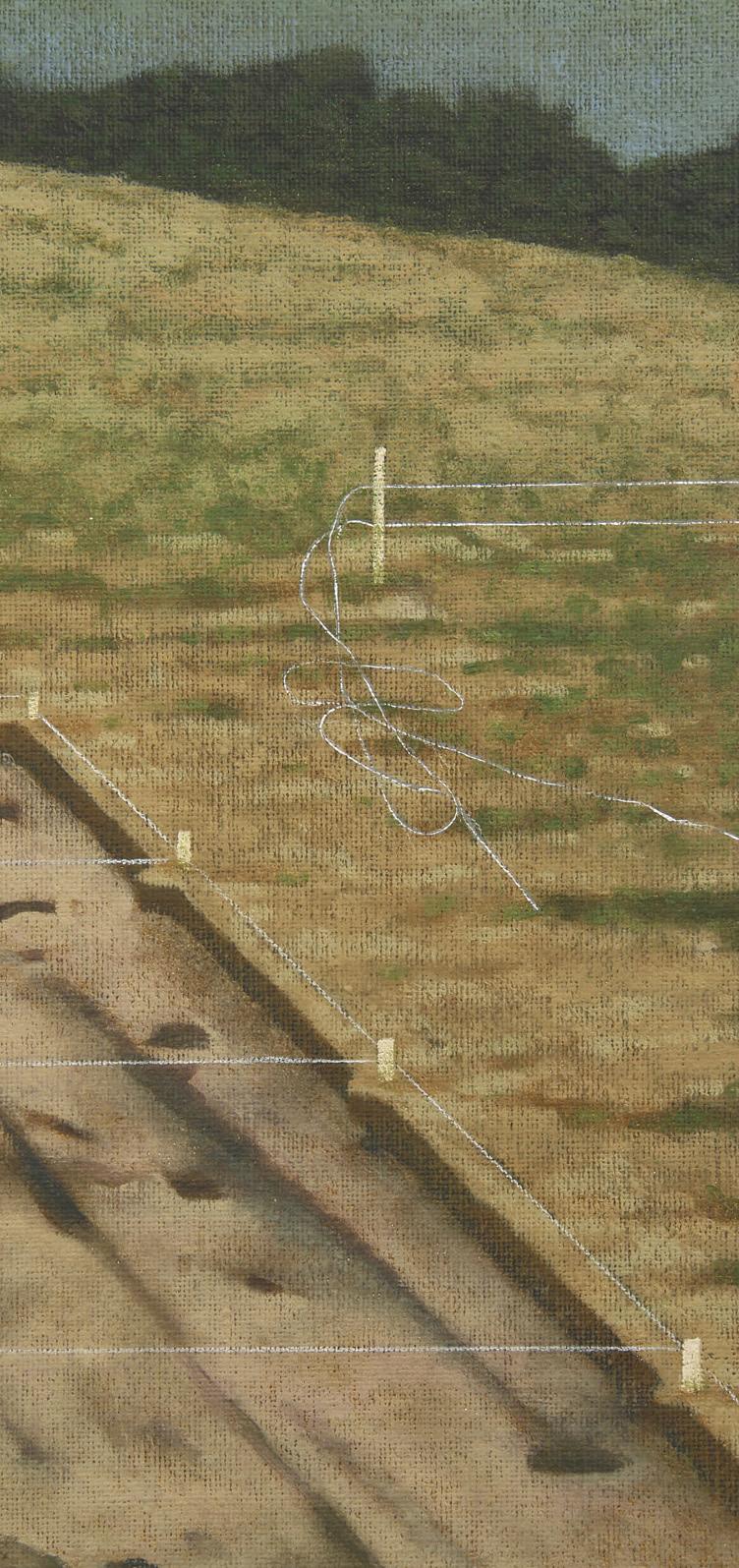
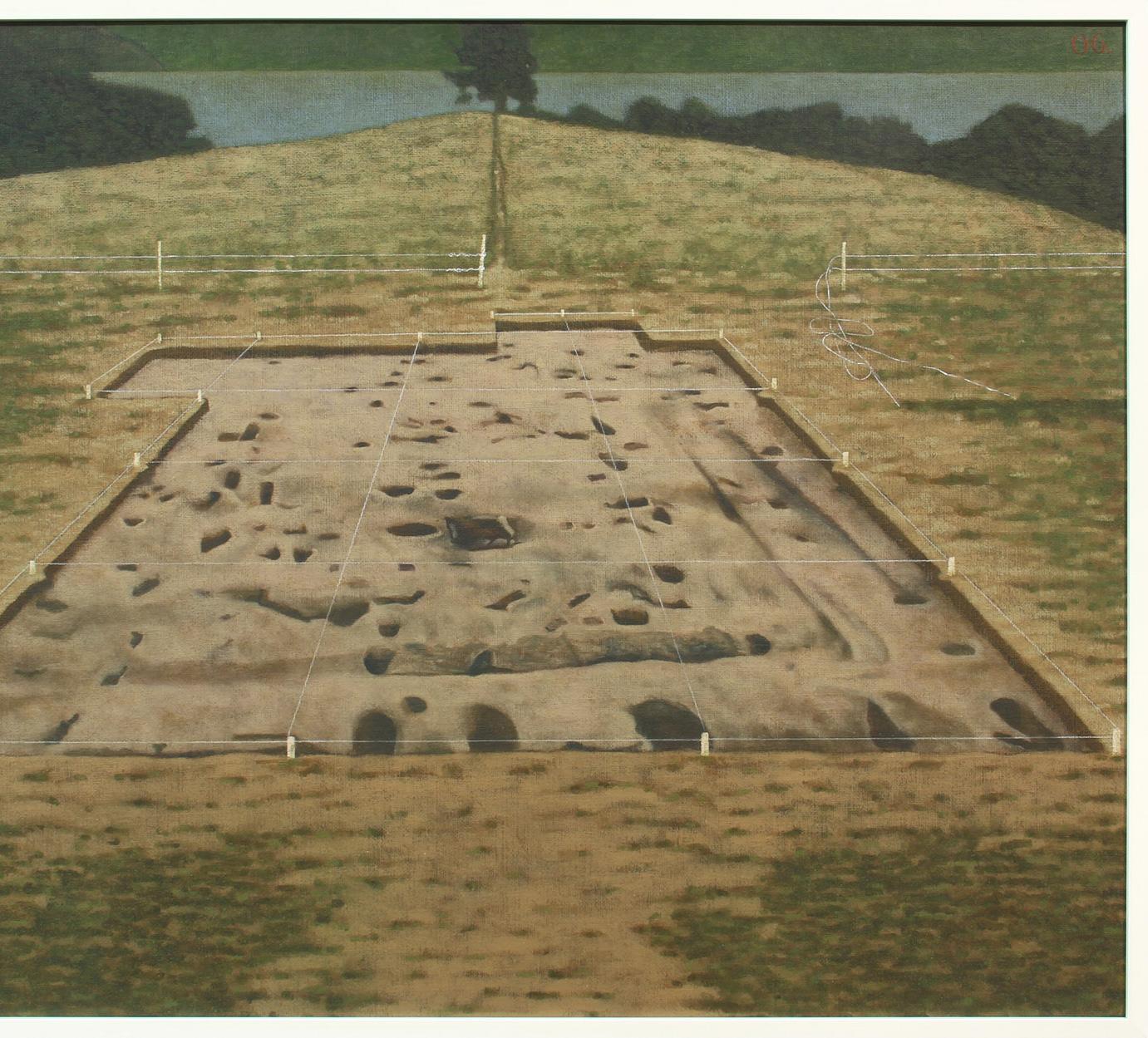
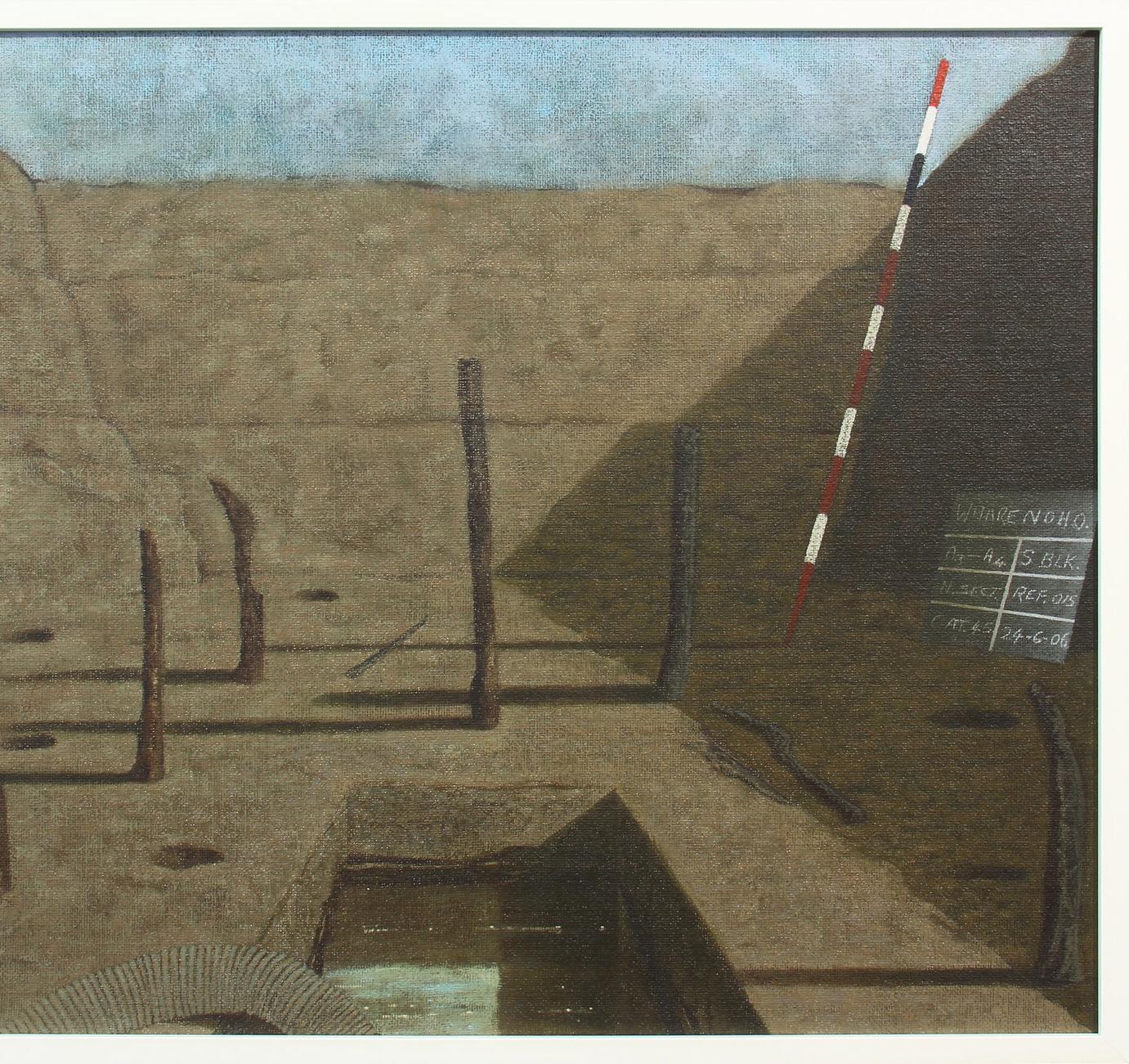
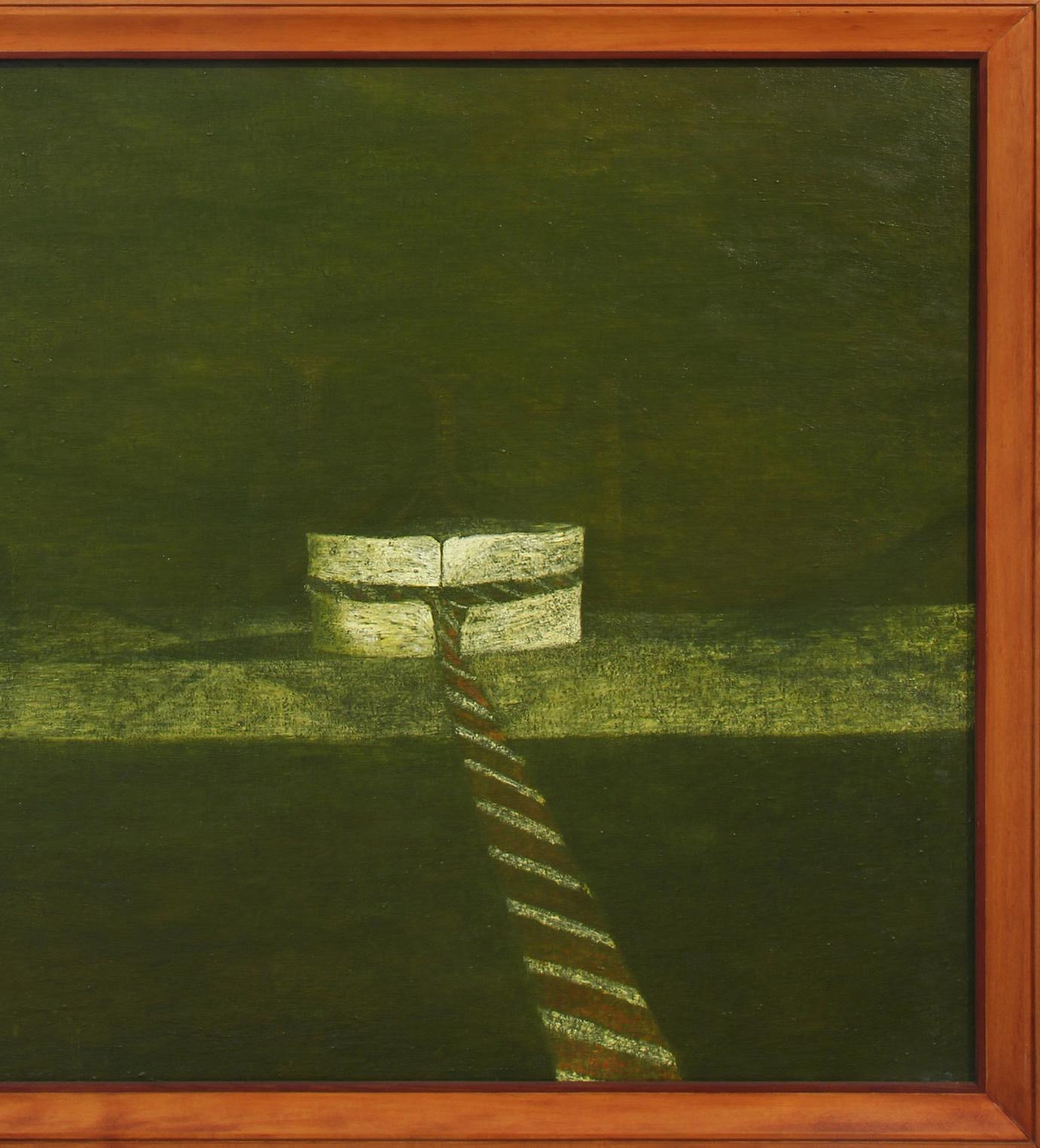
Via Apia (2006) oil on linen, frame: 984 x 1255 x 40 mm
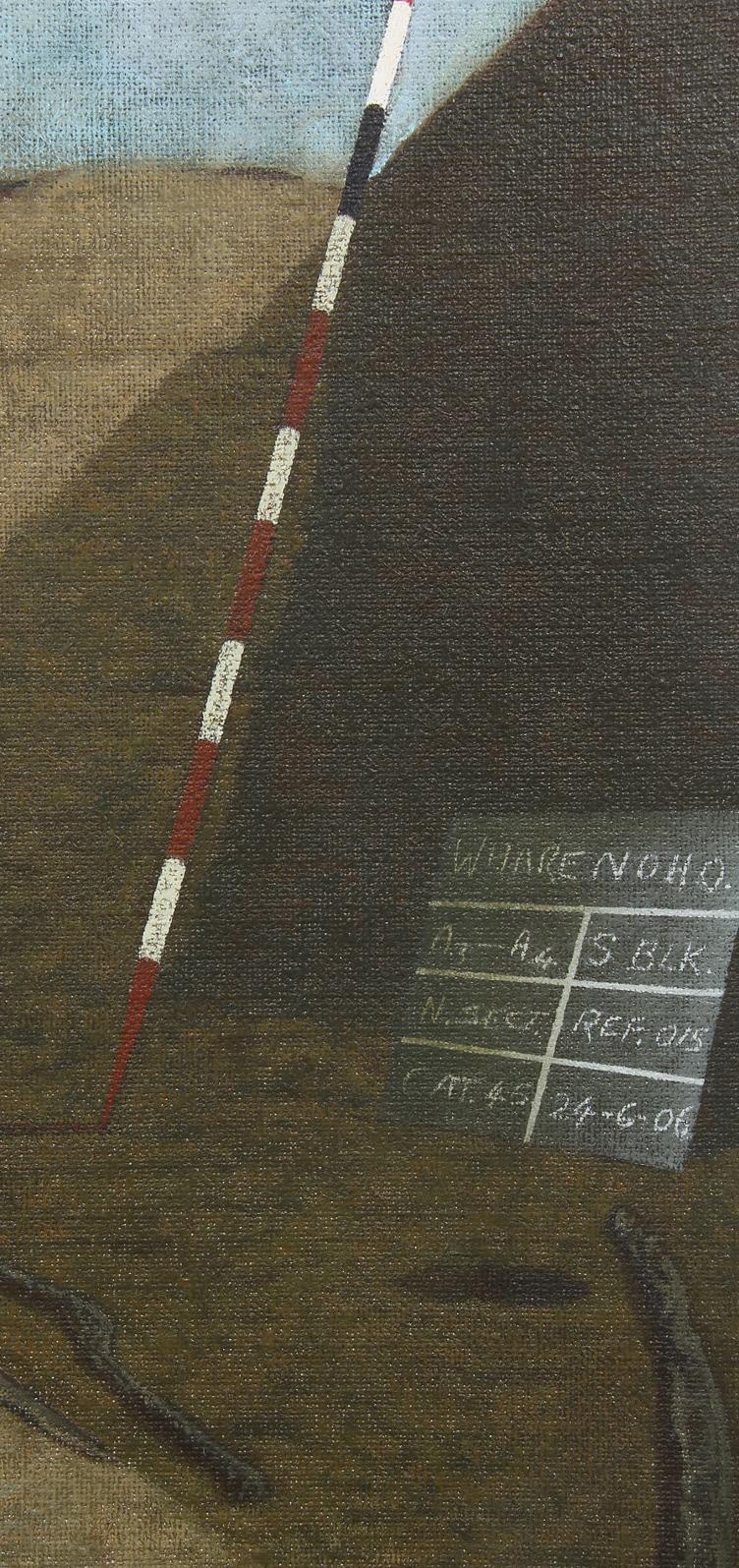
The House Beneath Te Rangi (2006) oil on linen, frame: 742 x 914 x 40 mm
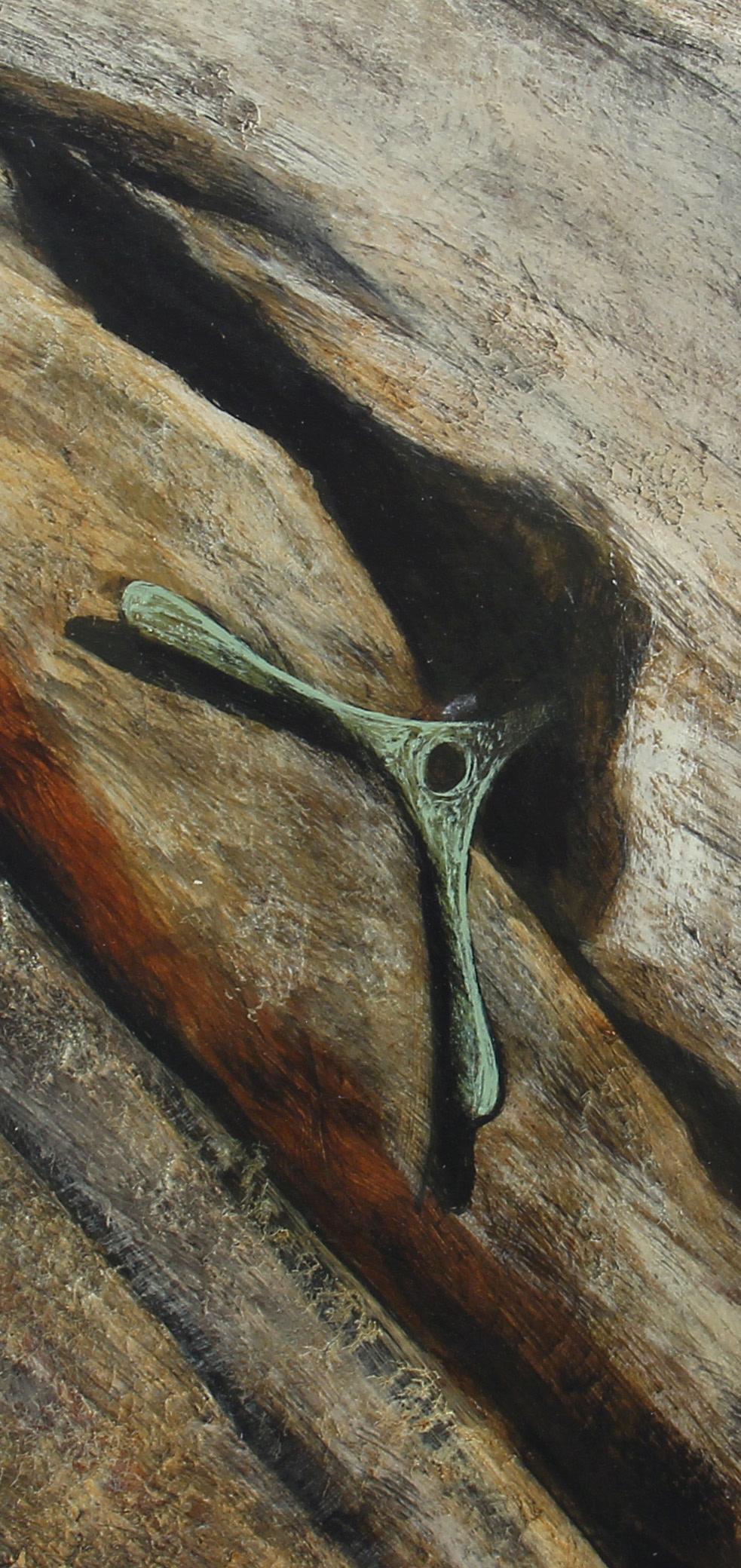
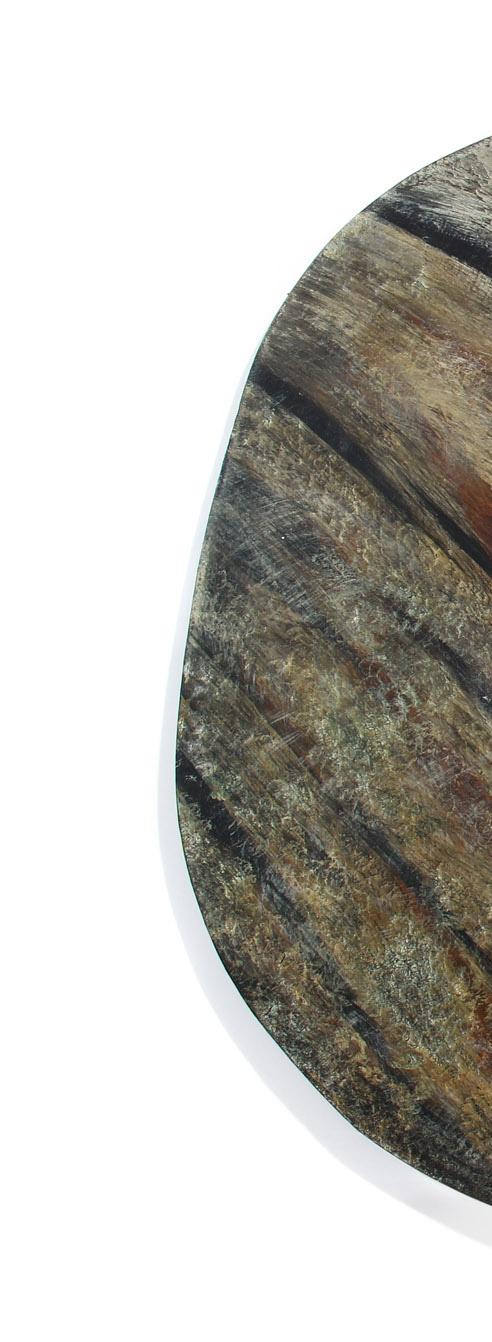
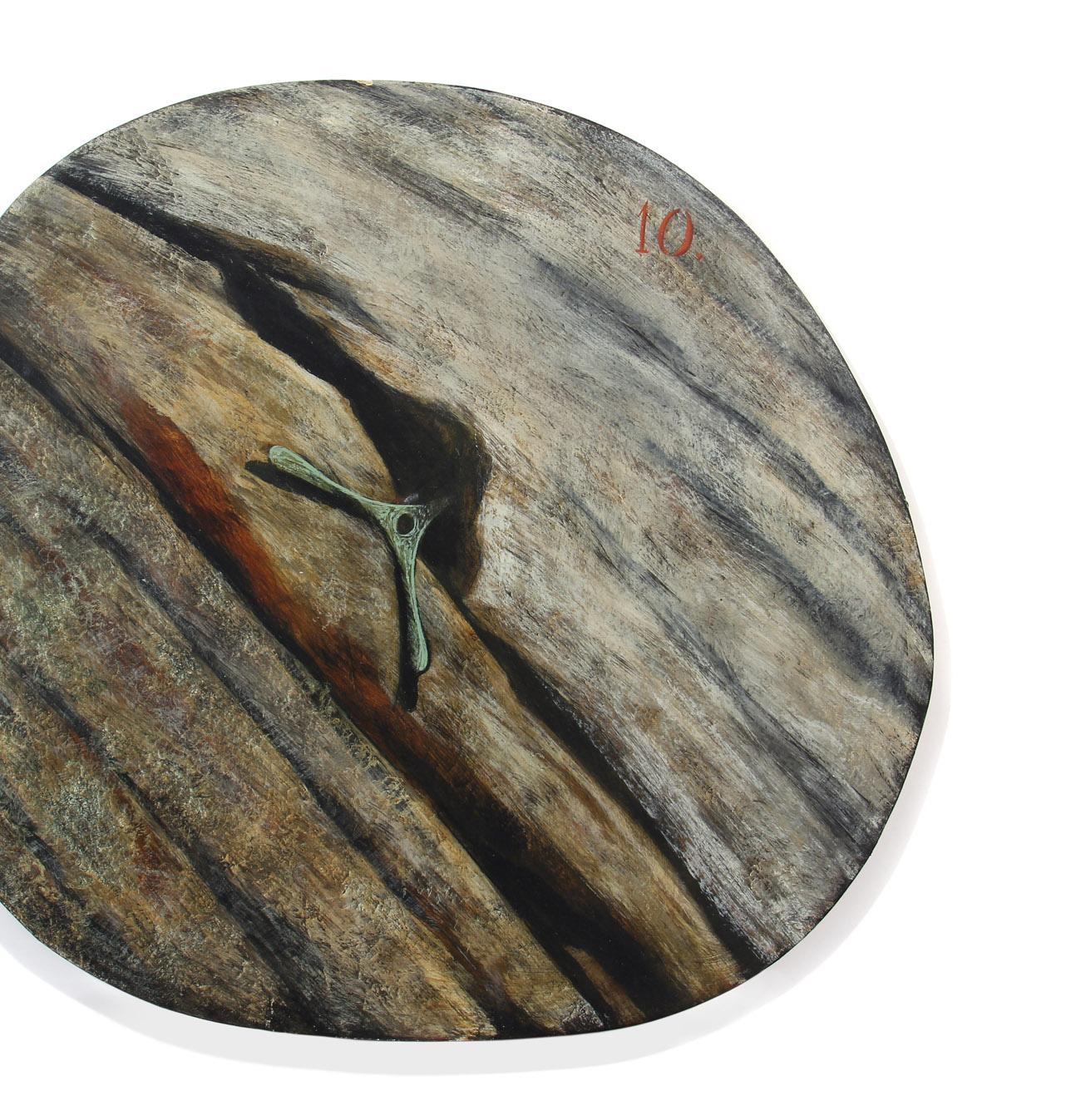
A Small Bronze Object is Found in the Coromandel (Study) (2010)
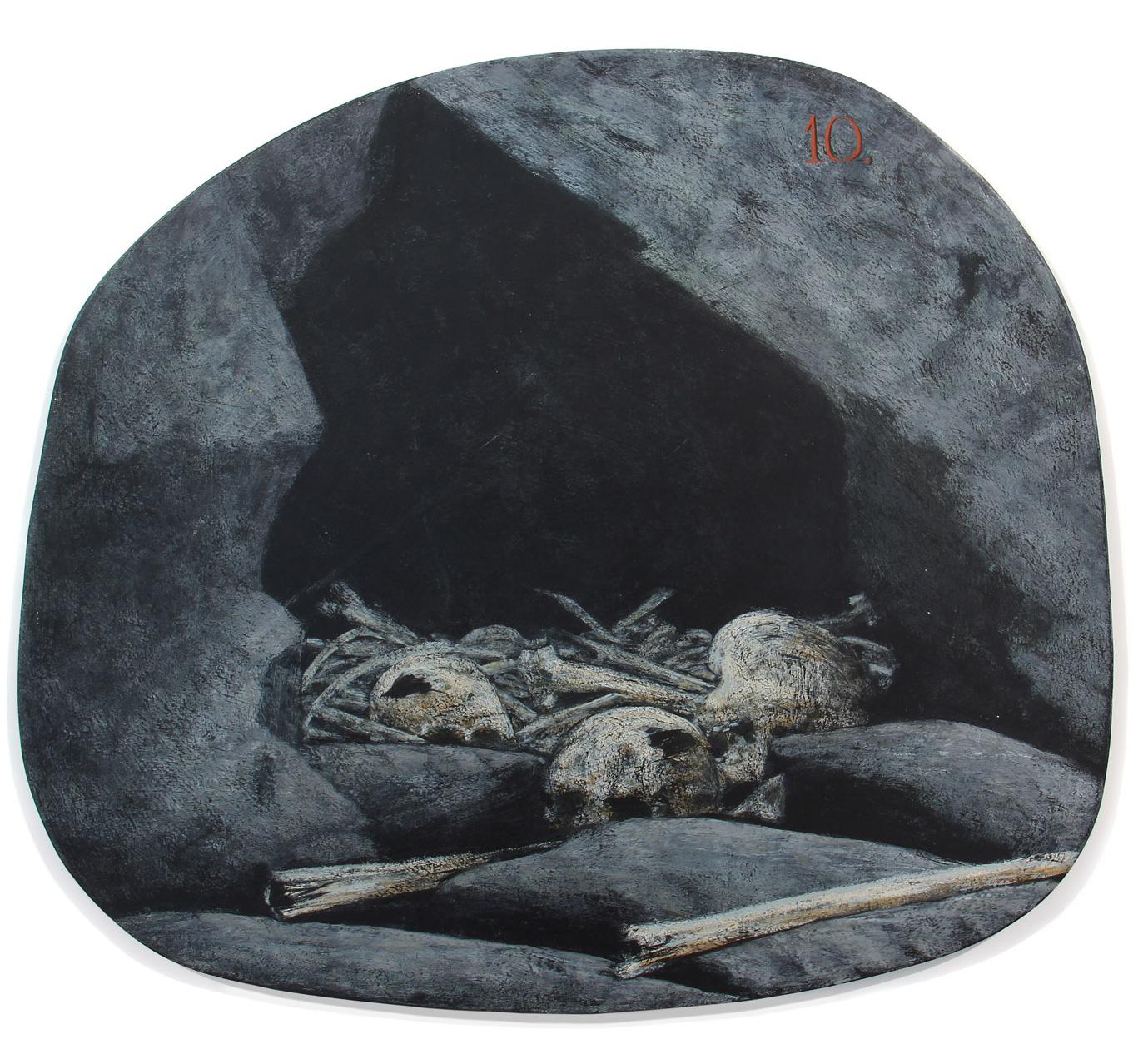
My Ancestors, They Were Eaten (Study) (2010)
acrylic on board, panel: 460 x 410 x 6 mm
acrylic on board, panel: 315 x 288 x 6 mm
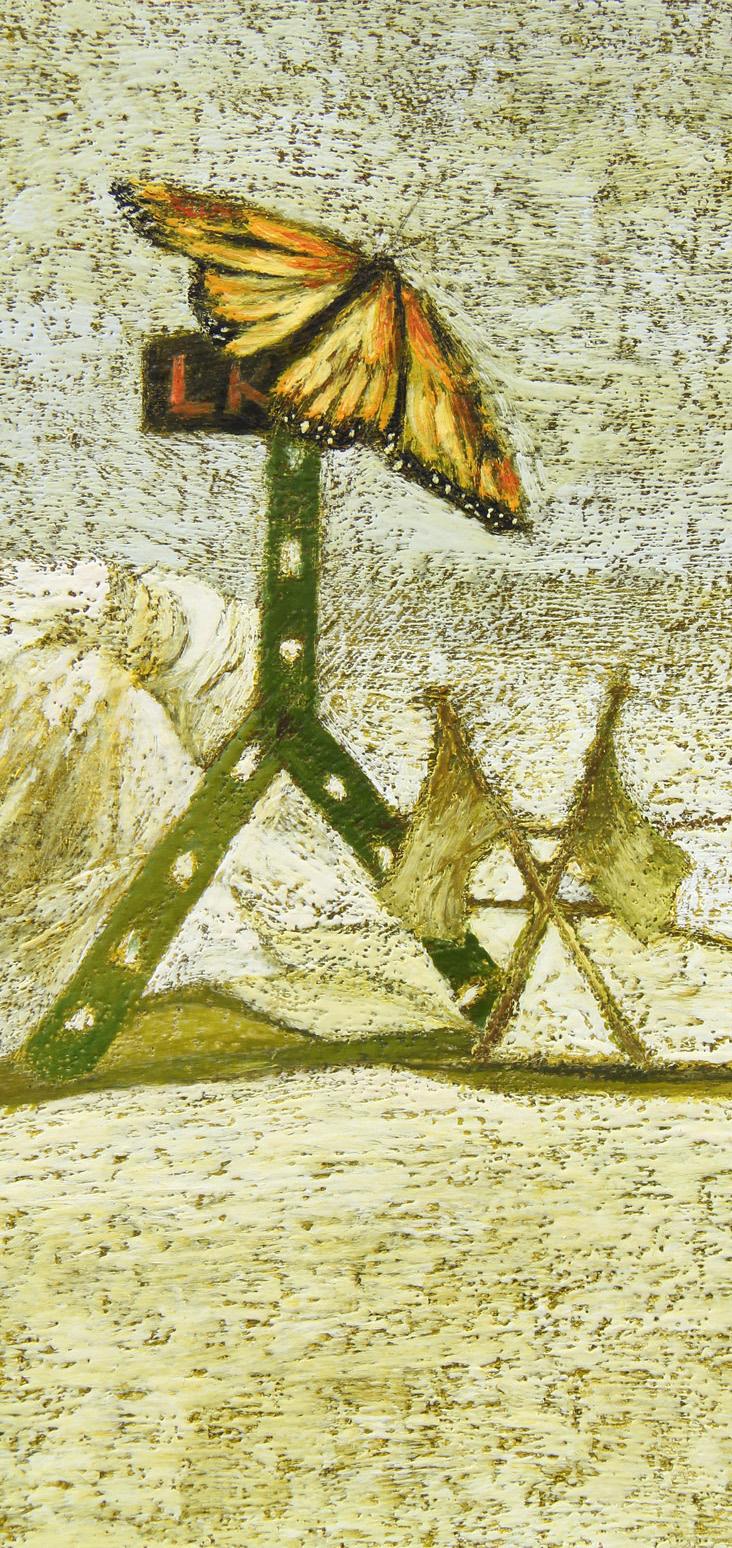
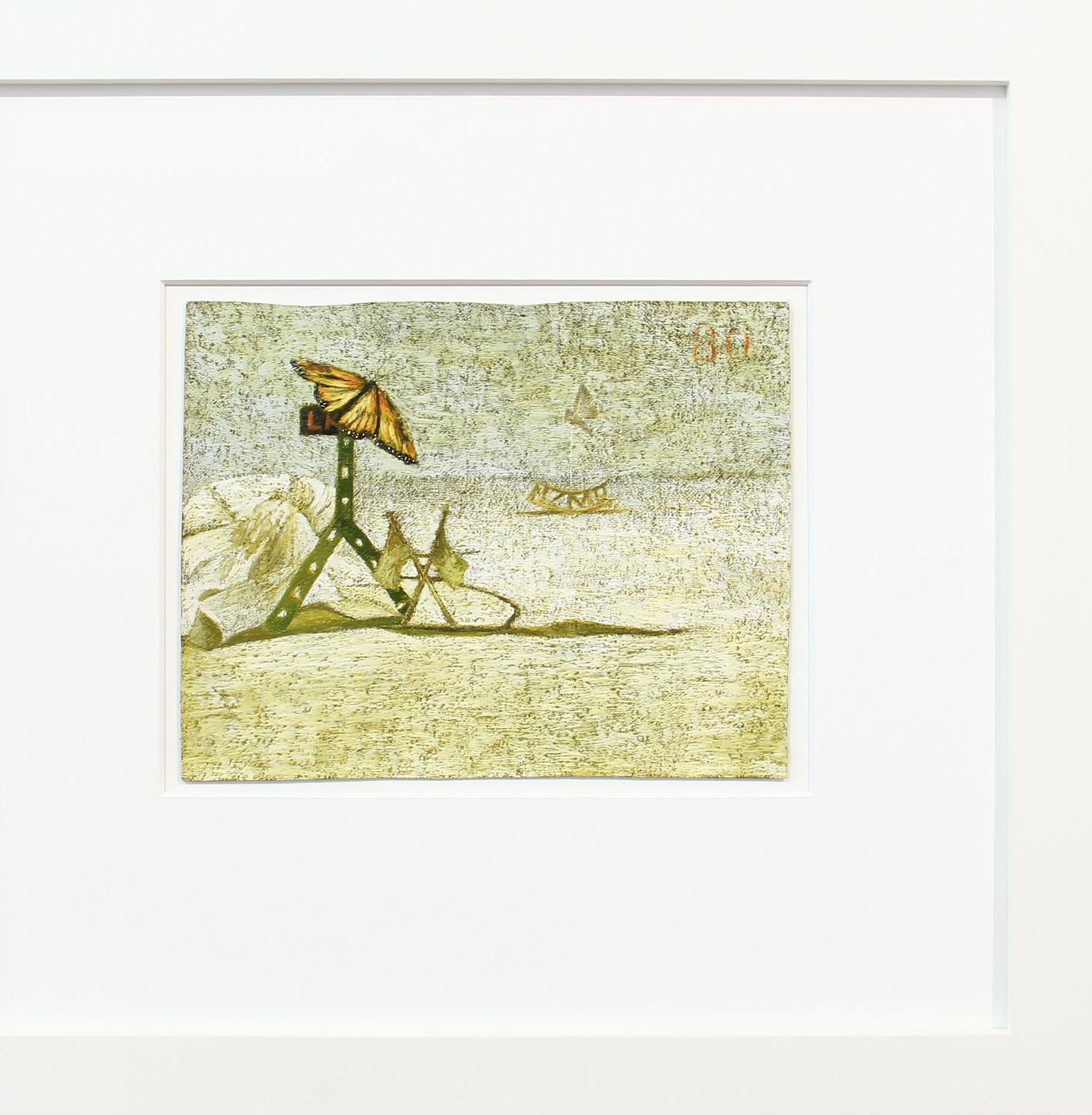
Military Moments (1980) oil on linen, frame: 536 x 580 x 34 mm, canvas: 230 x 294 mm
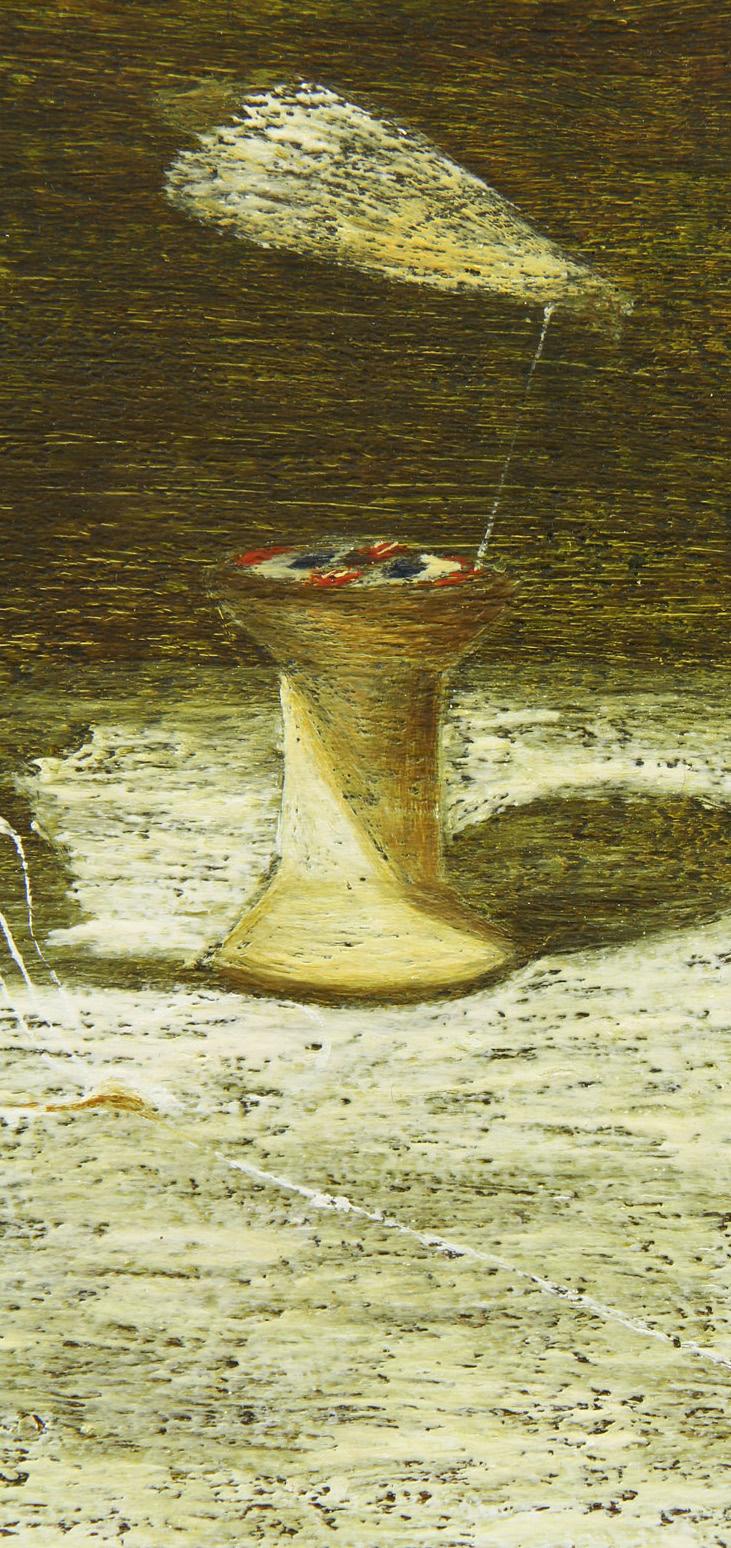
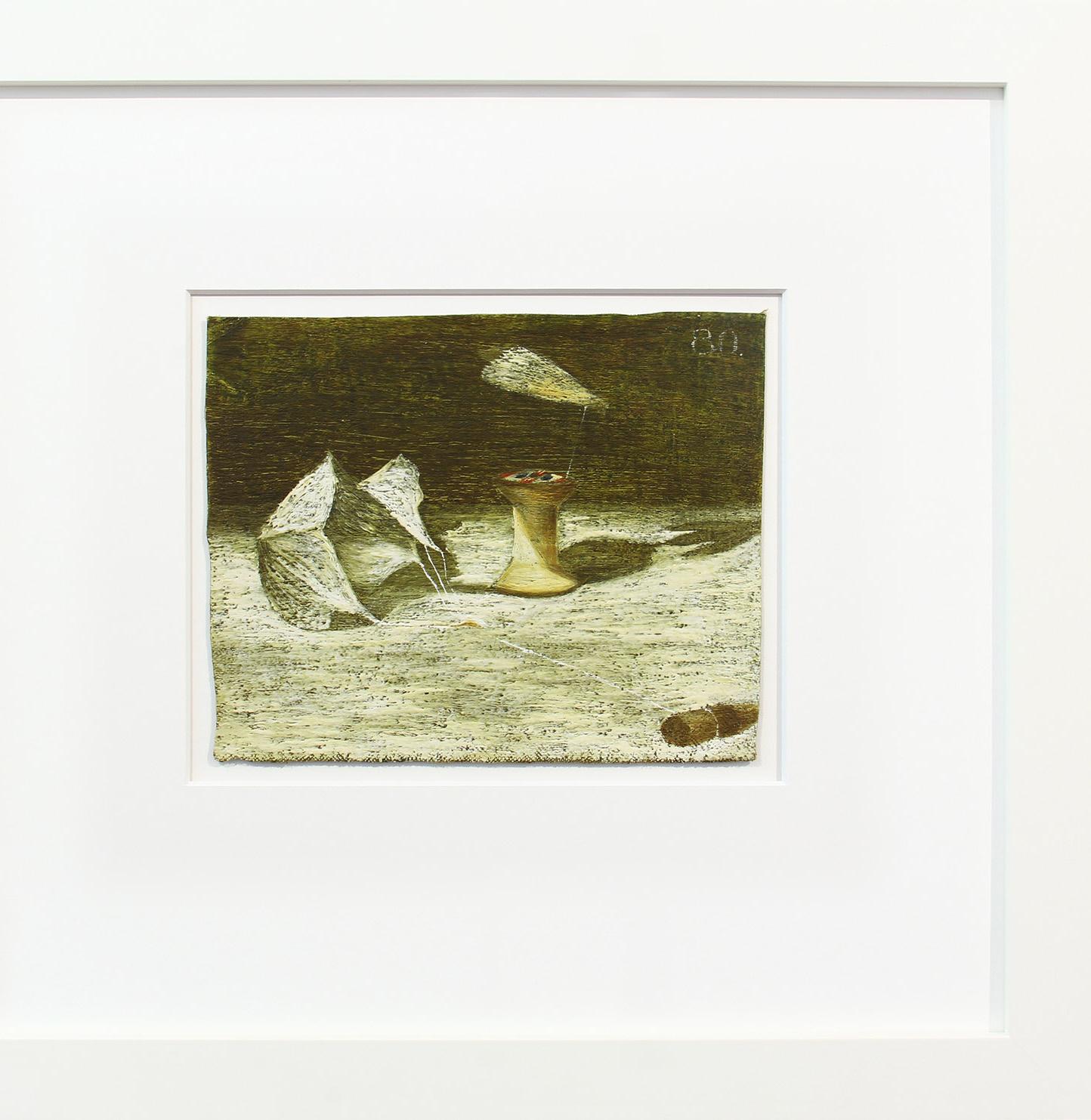
Still Life with Toy Parachute (1980) oil on linen, frame: 521 x 551 x 35 mm, canvas: 212 x 260 mm
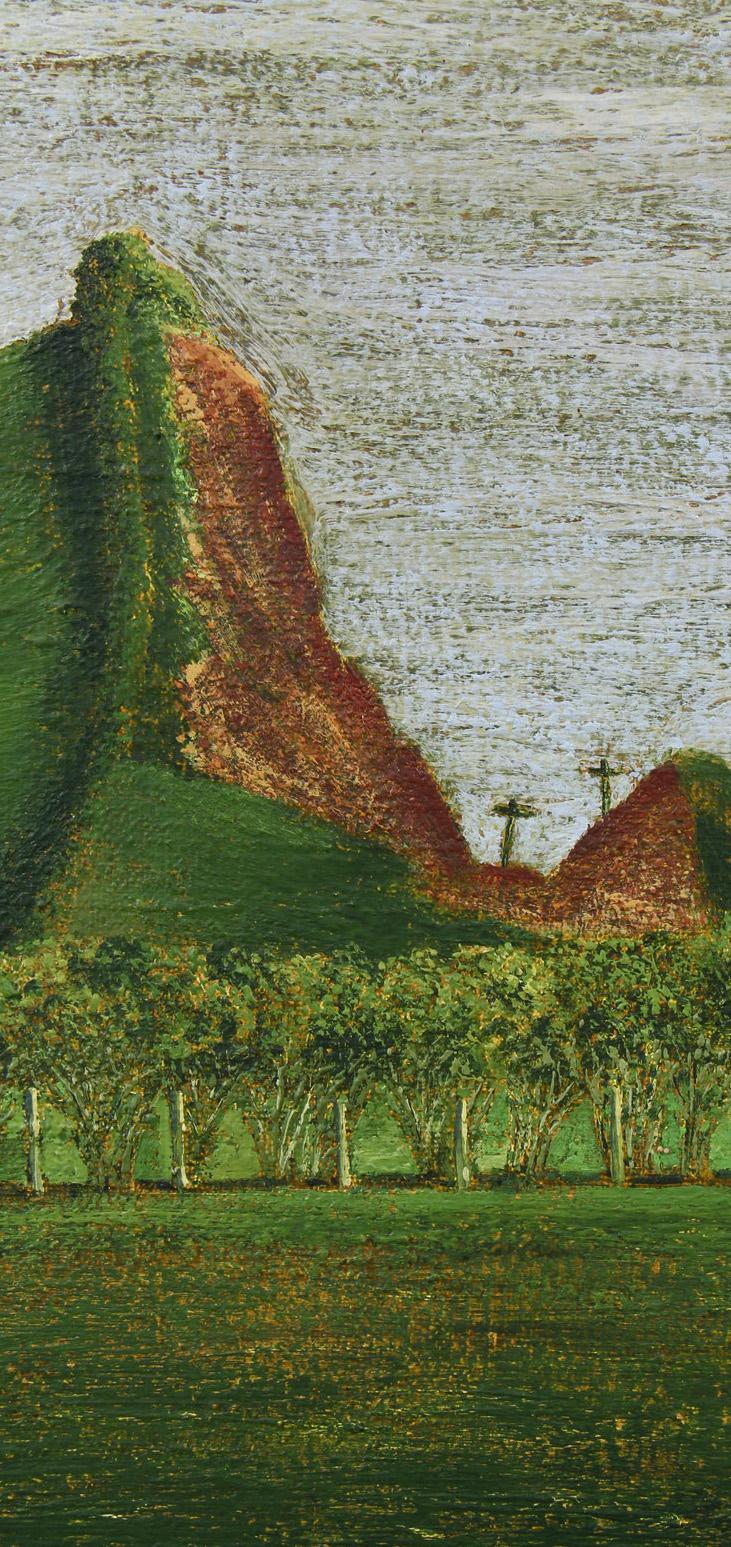
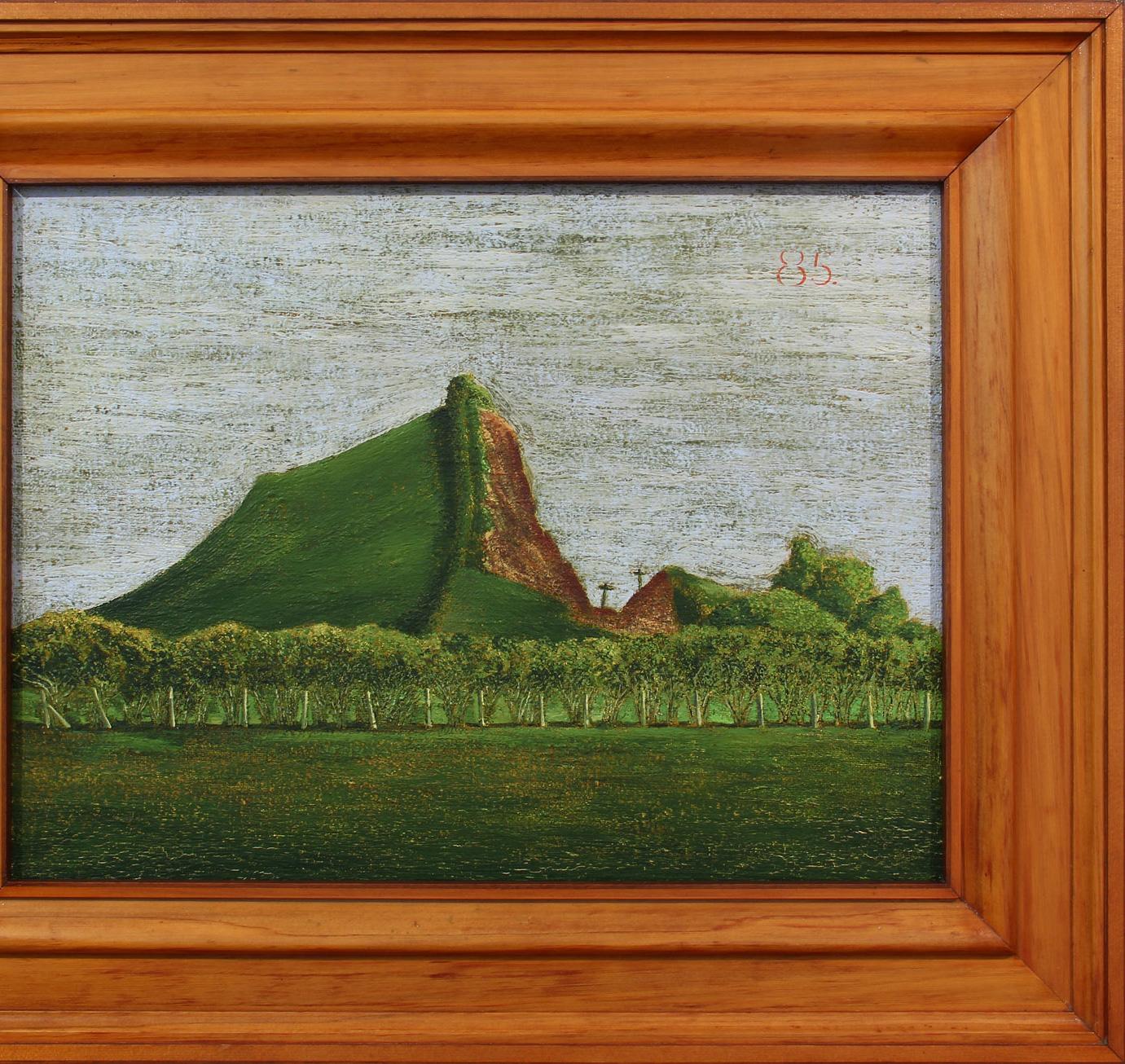
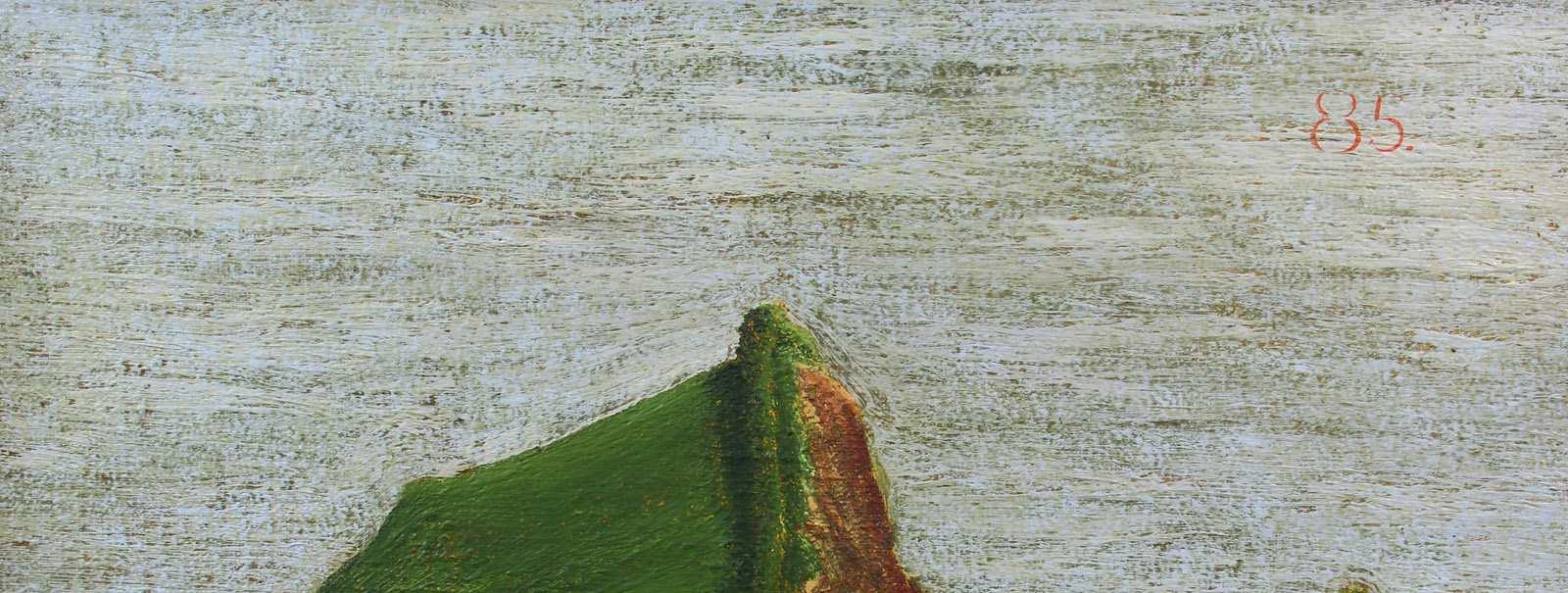
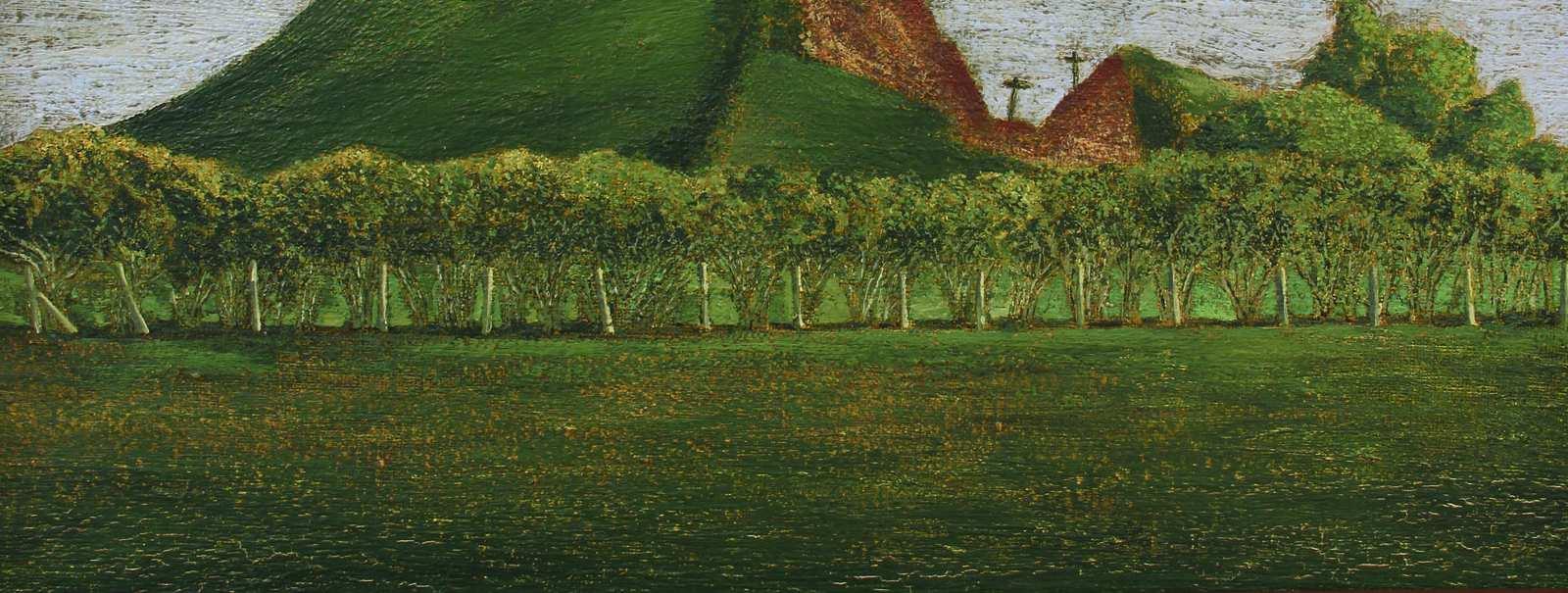
Ihumatao (1985)
oil on linen, frame: 567 x 695 x 58 mm, stretcher: 382 x 510 x 28 mm
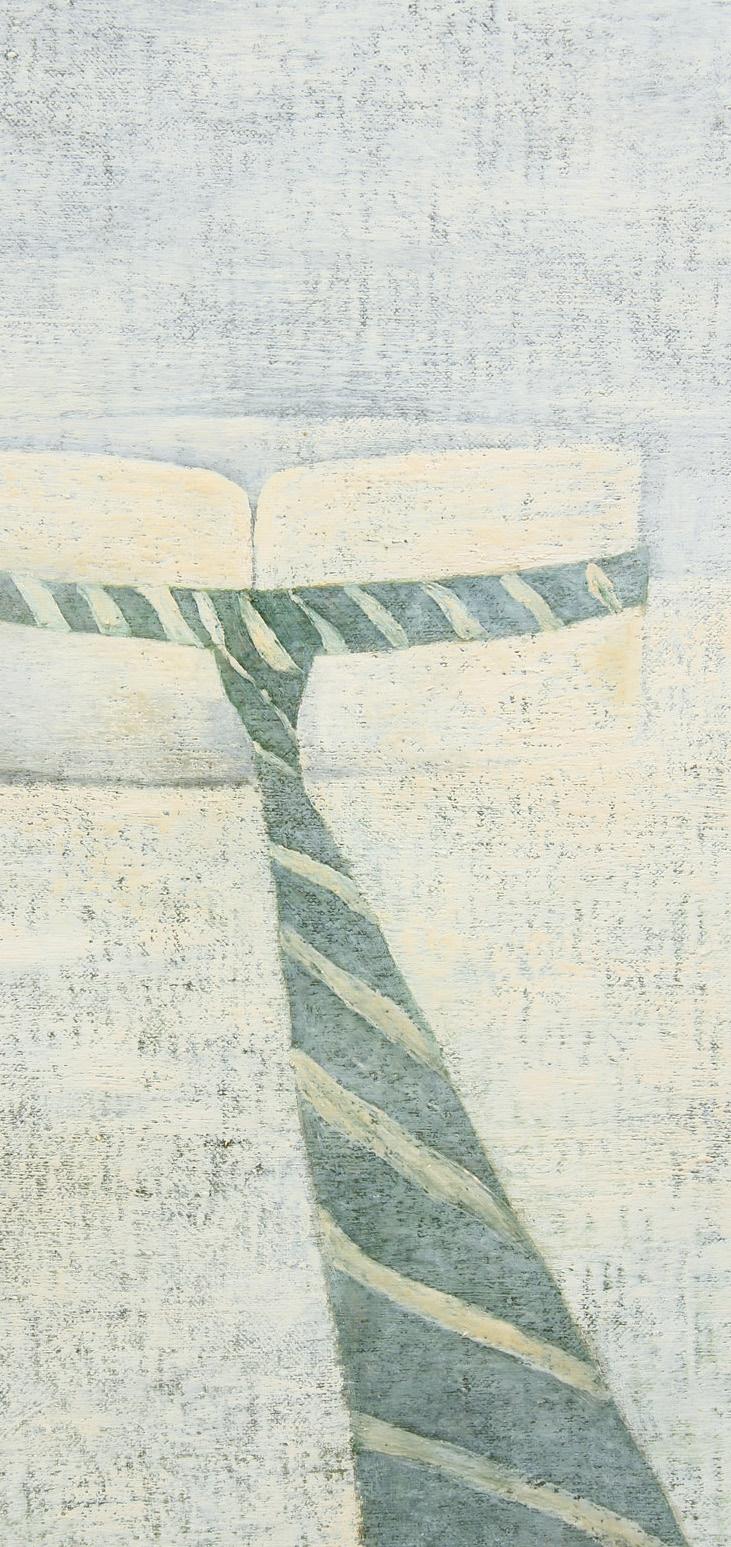
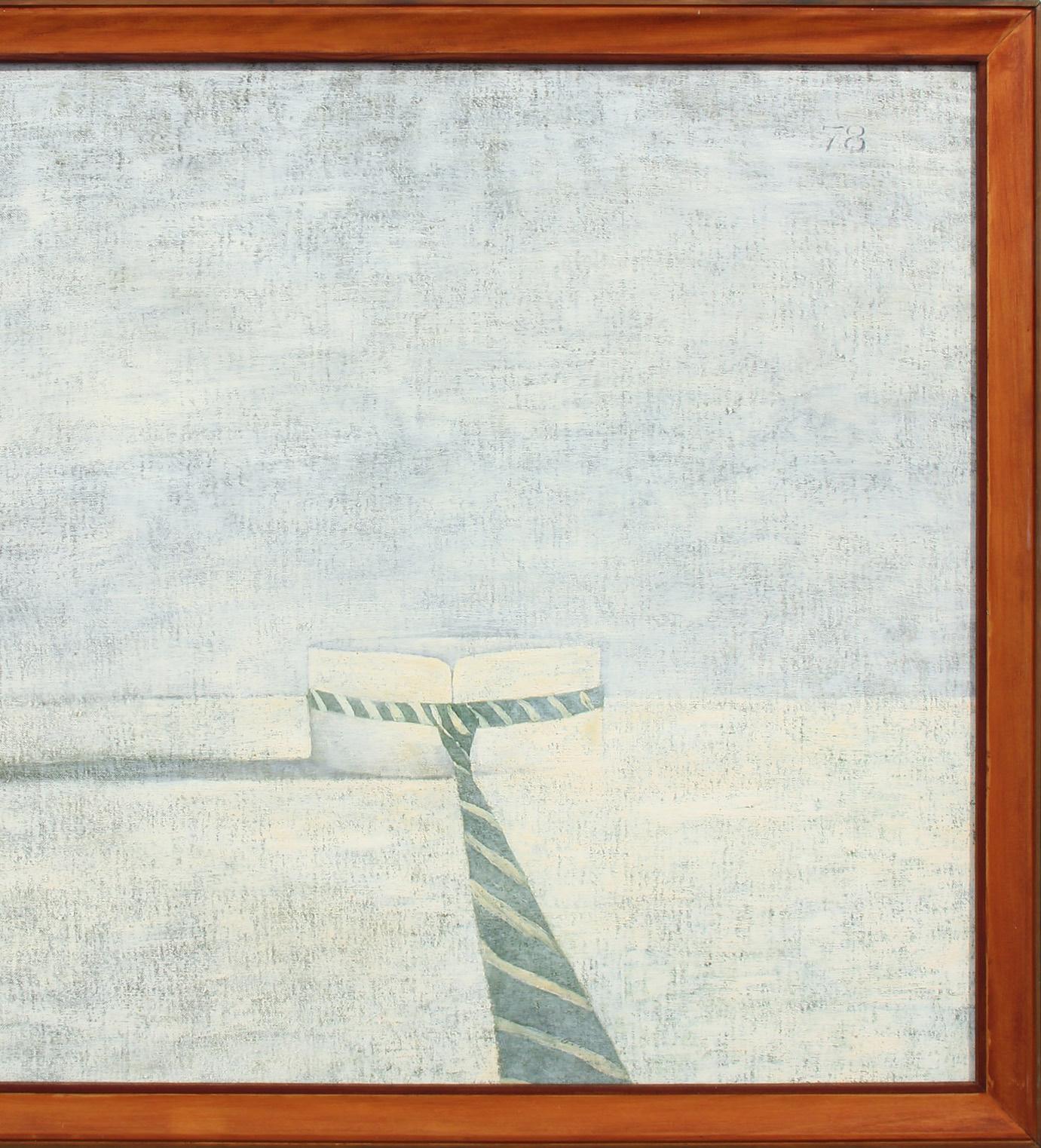
Large White Collar and Tie (1978) oil on linen, frame: 917 x 970 x 40 mm, stretcher: 854 x 900 x 23 mm
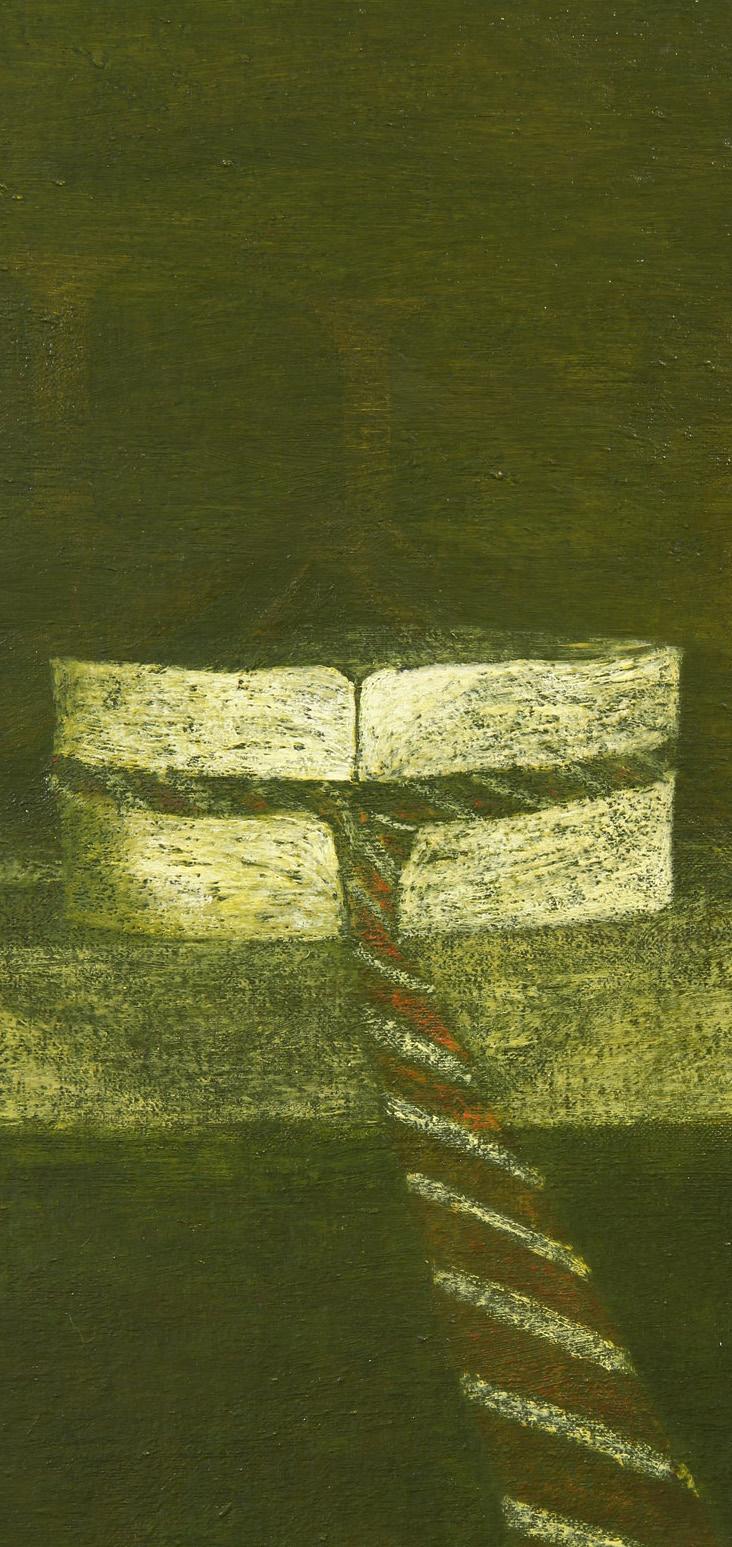
Large Dark Collar and Tie (1979) oil on linen, frame: 918 x 970 x 40 mm, stretcher: 853 x 900 x 23 mm
The Social Fabric illustrates the breadth and depth of Michael Shepherd’s art practice. Shepherd’s sustained intellectual theories about the social warp and weft of this country have, for over 40 years, been given form using an everdeveloping array of exquisite painting techniques. A self-described “metaphysical still-life painter”, Shepherd’s concerns run deeper than the outward appearance and utility of the things he depicts. He wishes to explore the fundamental nature of each object (or landscape or people) he paints and, through this, the underlying web that connects them all.
Comparing Shepherd’s still-lifes from the late 1970s and from 2010, it is possible to see the similarity of their foundations as well as the extension and development of initial concepts. Drawing on the tradition of 17th century Dutch still-lifes, Shepherd paints a carefully curated selection of objects, intimating the narrative that connects them. Attention is paid to the fall of light and the composition of the arrangement, and there are subtle pointers to the histories that form the context for each work. Shepherd’s brushwork possesses a restless energy; this is especially evident in the earlier works and is tempered somewhat in the more contemplative works from 2010.
Shepherd does not hesitate to bring together the unexpected and in Military Memories (1980) the incongruity of the monarch butterfly perched above the crossed flags of a signalman’s regimental badge gives the viewer pause. This moment invites contemplation: why did New Zealand men go to war “for king and country”? What now remains of the many fleeting lives other than memory and the gilded insignia they left behind?
The same curiosity about the past’s flotsam can be seen in the much more recent A Small Bronze Object Found in the Coromandel (Study) (2010). Shepherd provides few clues to its story and leaves the decoding of this ‘relic’ to the viewer. The irregular physical shape of the panel contributes to the feeling that it has been worn away over time and complements the softly textured stone or driftwood that forms the resting-place for the found object.
Shepherd’s landscapes expand his social commentaries from the personal to the public sphere and reveal a land in the process of being measured, excavated and reconfigured. The hidden narratives of history, and the way in which they are interpreted, are examined in Via Apia (2006) and The House Beneath Te Rangi (2006). As in the still-lifes, the landscapes record the fragments of lives once lived and Shepherd suggests the ineffable nature of their stories that can never be ‘known’ but only surmised as the archaeological grids and scientific method can only ever ‘scratch the surface’. Ihumatao (1985) tells a more brutal tale and documents the quarrying of the sacredmaunga of the oldest pa site in the country. The disfigured hill bleeds against a grey sky and Shepherd’s carefully situated power poles loom like crosses in the wounded land.
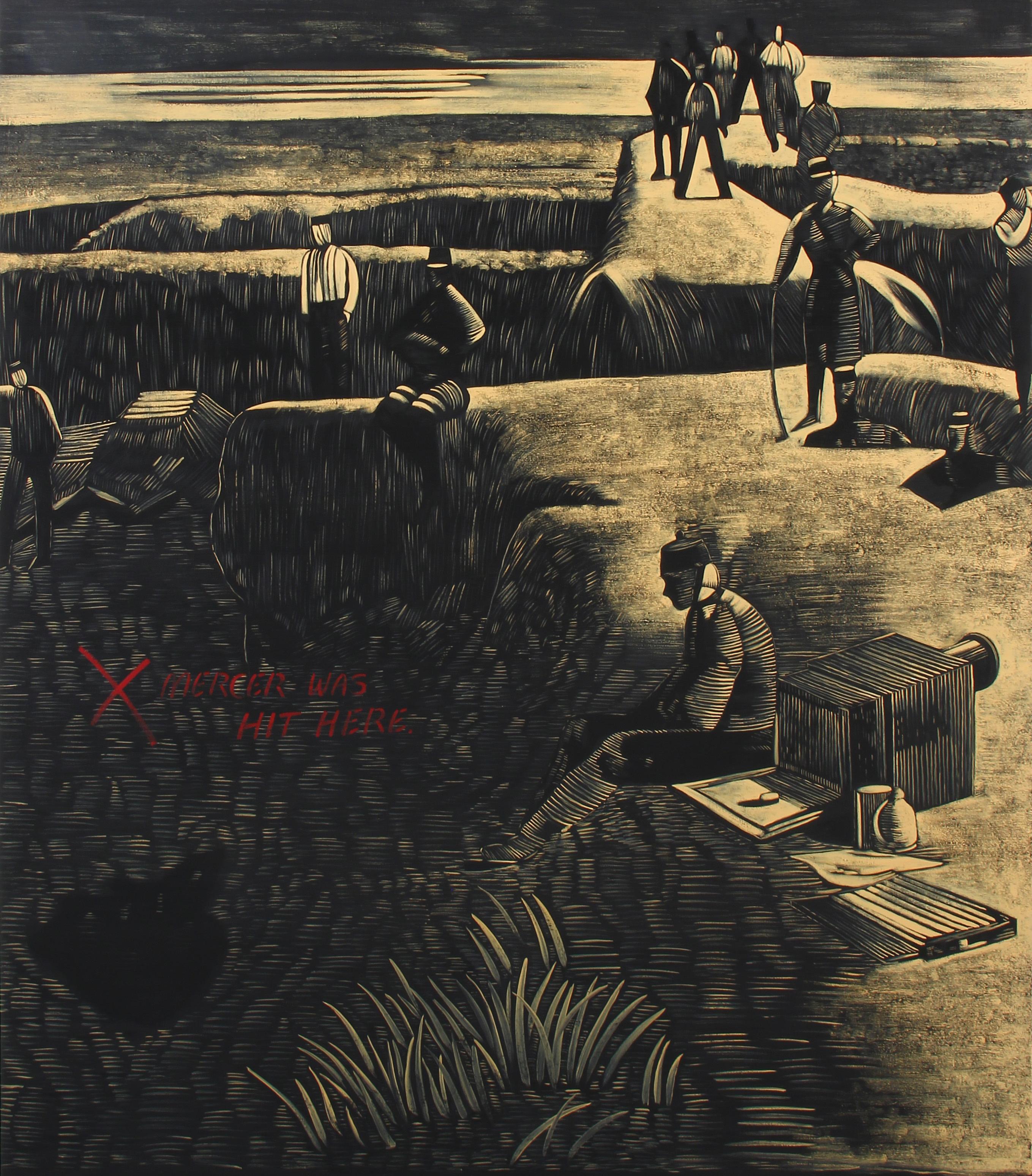
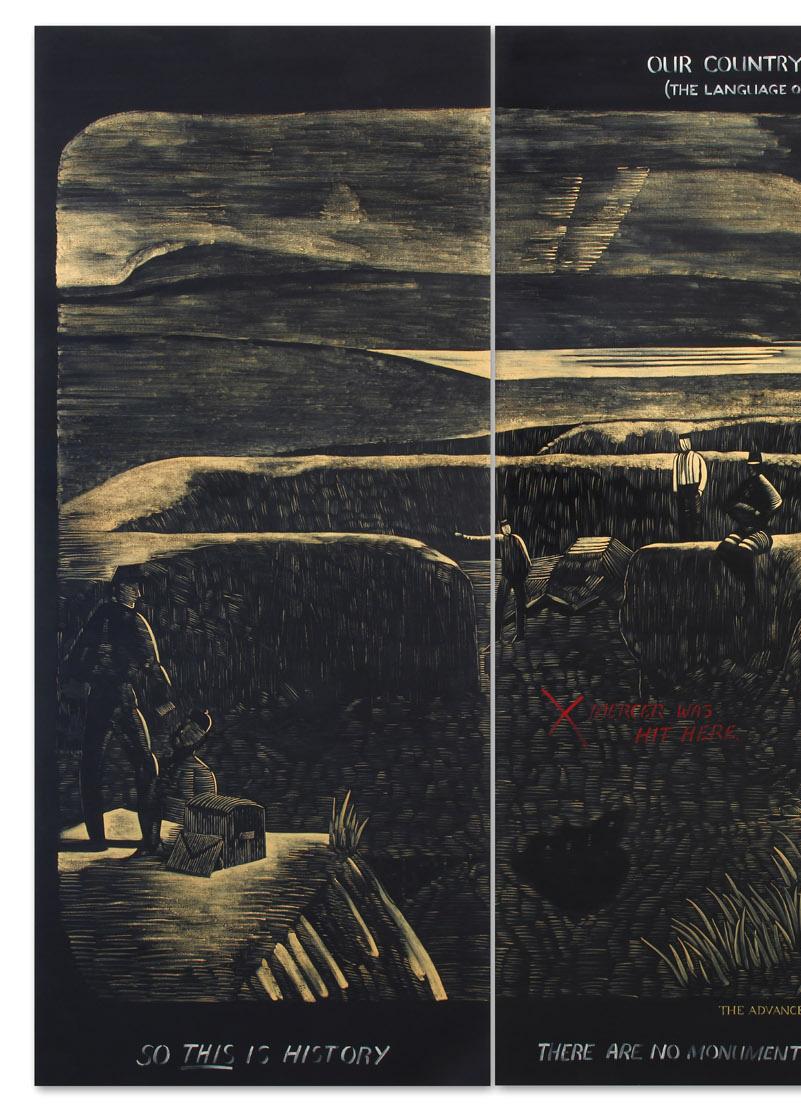
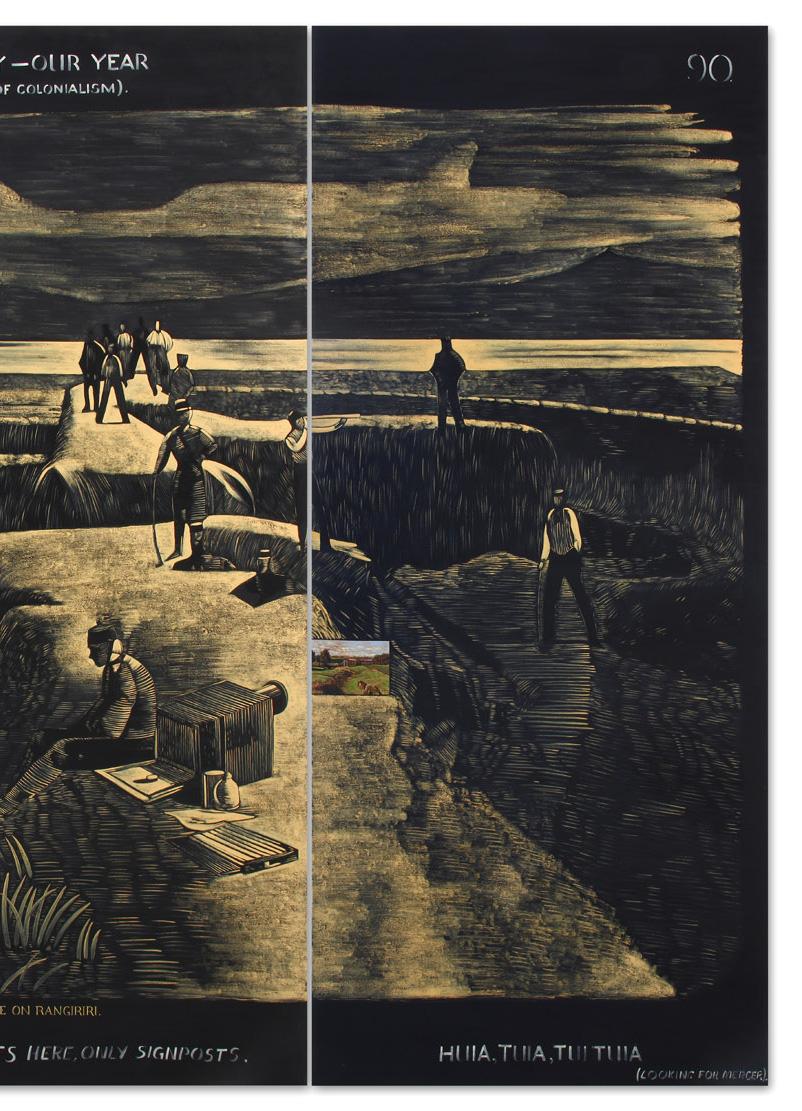
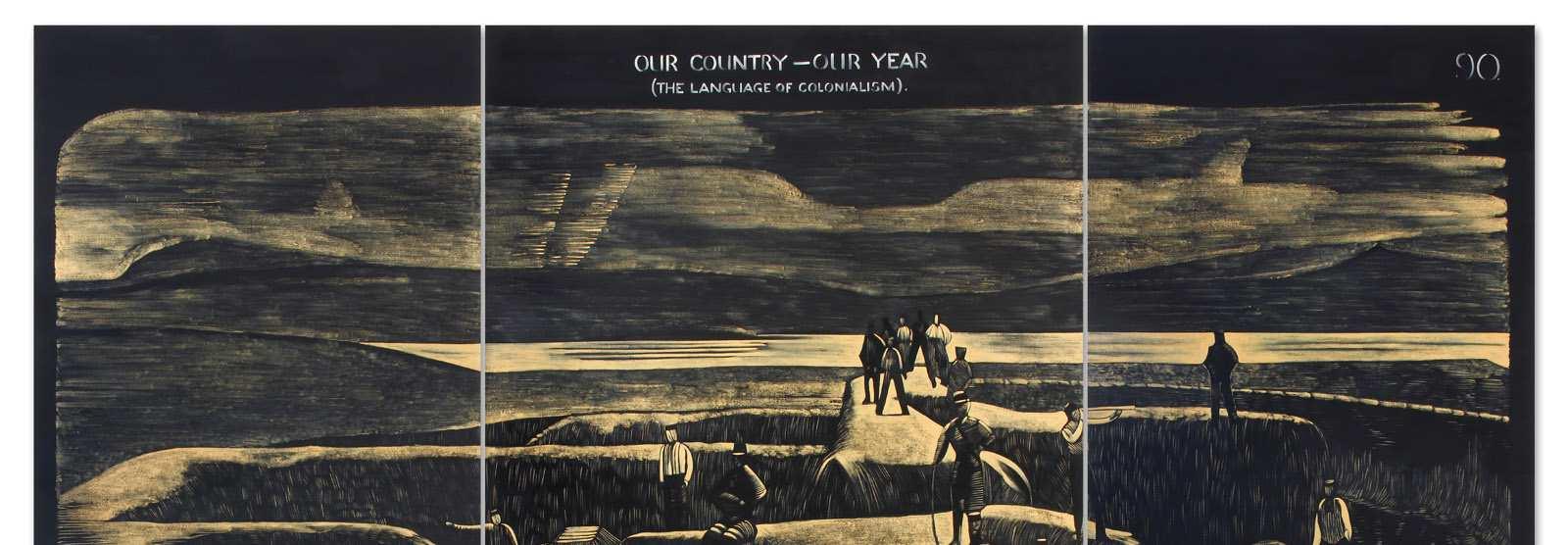
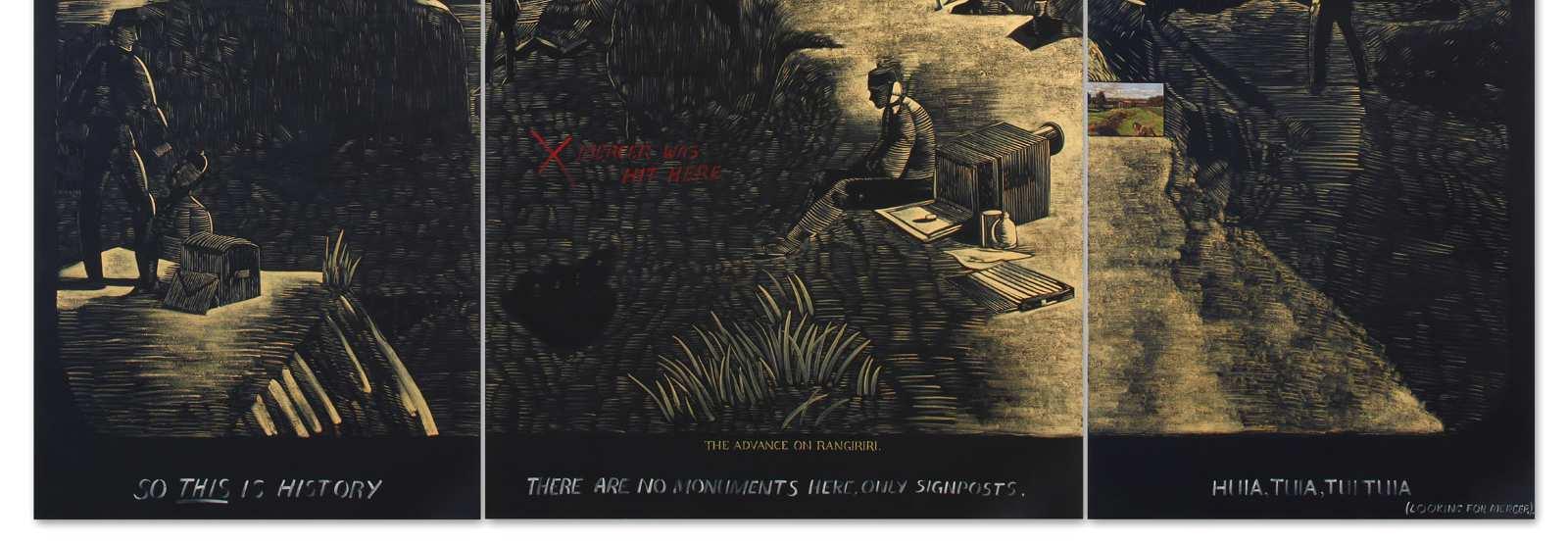
The dominant piece in The Social Fabric is the 1990 triptych The Advance on Rangiriri. It references the 1863 battle for Rangiriri Pa, led by Captain Henry Mercer and won by the British. A turning point in the New Zealand Land Wars, the battle and surrender of the Maori forces at Rangiriri is contentious, with historian James Belich suggesting the British took advantage of the raising of the white flag to force surrender rather than accede to parley. (1) Painted in the year New Zealand ‘celebrated’ 150 years since the signing of the Treaty of Waitangi, The Advance on Rangiriri draws together many of the threads that run through Shepherd’s practice including: the writing (and re-writing) of histories, social inequities and iniquities, the impact of colonialism on New Zealand.
The general composition of the work directly speaks to Charles Heaphy’s contemporaneous sketch of the battlements dug by the Maori in defense of their land. Shepherd’s bold use of two-tone hatching and strongly contrasting areas of light and dark immediately bring to mind a wood- or linocut. The artist disguises his oil paint medium to a certain extent, preferring the suggested immediacy of the printing process. The bleak angles of pits and mounds possess a physicality that Shepherd appears to have gouged out of the underlying material; the faceless individuals who clamber over and into the pits where the dead fell (the artist’s red ‘X’ marks the spot) seem more shadows than men. A small, realist landscape inserted into the right panel directly links the present and past.
Framing this barren landscape, Shepherd addresses the viewer directly, using the Sesquicentennial slogans “Our Country – Our Year”, “Huia, Tuia, Tui Tuia” to emphasise not only how short our historical memories are, but that history is – still –written by the victor.
1.JamesBelich, The New Zealand Wars and the Victorian Interpretation of Racial Conflict, AucklandUniversity Press,pp.142–157.
MICHAEL SHEPHERD
b. 1950, lives Auckland
Michael Shepherd’s paintings possess an uneasy familiarity. His subjects seem part of everyday life: a slice of land glimpsed from a car window, a curiosity stumbled upon when out walking, those bits and pieces found in a spare-room cupboard. The uncertainty engendered by his works is that these familiar, even common, objects are not necessarily tied to a particular temporal or spatial point. Shepherd blurs time and space on the canvas, suggesting that while a ‘thing’ may exist in and of itself, over time it accrues layers of history that change how it is viewed. A landscape might possess today the same outcrops and hummocks as a century ago, but the lives that have been lived on and around it colour those selfsame outcrops and hummocks with story.
Using techniques drawn from 17th century Dutch painters, the physical creation of Shepherd’s works mirror his conceptual vision. Layers of paint (often oils) and glazes are built up to reveal and simultaneously obscure what he lays down on the canvas. The translucency of the surfaces absorb and reflect light in an understated manner; New Zealand’s much-discussed, harsh clarity of light does not feature in Shepherd’s painting, they show more affinity for the muted tones of North European days.
Michael Shepherd was born in Hamilton in 1950 and graduated with a Diploma of Fine Arts (Honours) from Elam, the School of Fine Arts, University of Auckland in 1979. He has been a regular exhibitor since the 1980s and was awarded a M.N.Z.M (Member of the New Zealand Order of Merit) for services to the Arts in 2008. (1) Shepherd’s works are to be found in a number of significant public and private collections, including Te Papa Tongarewa, the Auckland Art Gallery, and the Christchurch Art Gallery. The latter hosted a solo exhibition of Shepherd’s work, Archived, in 2000.
1.www.artagent.co.nz/introshepherd.htm.Accessed6/3/15.
MichaelShepherd2015CV
MichaelShepherd:Ihumatao(1985)
EDUCATION
MICHAEL SHEPHERD
b. 1950, lives Auckland
1979 Diploma of Fine Arts with Honours, Elam School of Fine Arts, University of Auckland
SOLO EXHIBITIONS
2015 The Social Fabric, Milford Galleries Dunedin
2014 The Land of Cockayne, Two Rooms Gallery, Auckland
2013 Anathoth, Whitespace, Auckland
2011 Loose Leaf / Pharm, Mark Hutchins Gallery, Wellington
2010 Scrabble with Janet, Jane Sanders Art Agent, Auckland
2009 Score (Upon the electronic music of Douglas Lilburn), Jane Sanders Art Agent, Auckland
2007/08 Traveller to an Antique Land - An Aspect of War in North Africa, Army Museum, Waiouru
2007 Depth of Level, 40 George Street, Auckland
2006
2005/06
2003/04
Michael Shepherd – The Early Years – 1975-1931, Rotorua Museum of Art & History
Michael Shepherd – The Early Years – 1975-1931, Whangarei Art Museum
Michael Shepherd – The Early Years – 1975-1931, 40 George Street, Auckland
Michael Shepherd – The Early Years – 1975-1931, Sarjeant Gallery, Wanganui
2003 New Paintings, 40 George Street, Auckland
2000 Still Lies, Robert McDougall Contemporary Art Annex, Christchurch
1997 Michael Shepherd, University of Canterbury, Christchurch
1993 Still Lifes from the Edge of the Wasteland, Claybrook Gallery, Auckland
1992 Regional - History and the Landscape, Claybrook Gallery, Auckland
1991 Our Country - Our Year, Claybrook Gallery, Auckland
Our Country - Our Year, Janne Land Gallery, Wellington. Also exhibited in Te Mihaia HouMaungapohatu and the Prophet Rua Kenana, group exhibition at the Waikato Museum of Art and History, Hamilton.
Souvenirs of Time, Contemporary Centre for Art, Hamilton; Rotorua Museum of Art and History
1989 Souvenirs of Time, Janne Land Gallery, Wellington. The year's work travelled with the exhibition New Zealand Images of War, curated by Tony Martin of the Manawatu Art Gallery and toured to all the major centres from 1989-1993. Also included in the exhibition Whatu Aho Rua curated by Rangihiroa Panoho which was part of the 1992 Adelaide Festival, and shown at both the Canberra School of Art and the Ivan Dougherty Gallery, Sydney, Australia
1988 Gow Langsford Gallery, Auckland
1986 Gow Langsford Gallery, Auckland
1985 Landscapes, Denis Cohn Gallery, Auckland
1982 Large Still Life, Denis Cohn Gallery, Auckland
1981 Denis Cohn Gallery, Auckland
1980 Denis Cohn Gallery, Auckland
GROUP EXHIBITIONS
2013 An Excellent Vintage, Whitespace, Auckland
2011 Summer Catalogue Collection, Mark Hutchins Gallery, Wellington Wood for the Trees, Lopell House Gallery, Auckland
2010/11 Where Are We?, Lopdell House Gallery, Auckland Selection 010-011, Jane Sanders Art Agent, Auckland
2010 TE AHI KA ROA, TE AHI KATORO Taranaki War 1860–2010: Our Legacy — Our Challenge, Puke Ariki, New Plymouth
2008 Taranaki Whenua, Life-Blood-Legacy, Puke Ariki, New Plymouth
Land Wars Part 2: Build, Te Tuhi Centre for the Arts, Auckland
2007 Cultivating Nature, 40 George Street, Auckland
2005/06 Nature Culture, 40 George Street, Auckland
2003/04 Parihaka - The Struggle for Peace, Puke Ariki, New Plymouth
Symbols of Sovereignty – Flagworks, Pataka, Porirua
Main Trunk Lines – New Zealand Poetry, National Library Gallery, Wellington
Small World, Big Town: Contemporary Art from Te Papa, Recent Acquisition Exhibition, City Gallery, Wellington
2003 Waikato and Beyond - A Selection from Trust Waikato and other Collections, Waikato Museum of Art & History, Hamilton.
2002 Cultivating Paradise - Aspects of Napier's Botanical History, Hawke's Bay Museum, Napier
2001 Te Maunga Taranaki: Views of a Mountain, Govett-Brewster Art Gallery, New Plymouth Bright Paradise, The 1st Triennial, New Gallery, Auckland Art Gallery
European Painting/Simulation (Julian Dashper, Jean Baudrillard, Michael Shepherd, Jan van der Ploeg, Guiseppe Romeo), The New Zealand Census, Ramp Gallery, Department of Media Arts, The Waikato Polytechnic, Hamilton
2000/01 Parihaka, City Gallery, Wellington
2000 What's New: The Latest in Art at Te Papa, Te Papa Tongarewa, Wellington
The Waikato Landscape From Mercer To Waitomo, Waikato Museum of Art and History, Hamilton
1999 Shrinking Worlds - A Web Project, The Physics Room, Christchurch Still Life - Contemporary Still Life, Hawke's Bay Cultural Trust, Hastings
1998 Dream Collectors - One Hundred Years of New Zealand Art, Museum of New Zealand, Te Papa Tongarewa, Wellington; Dunedin Public Art Gallery; Robert McDougall Contemporary Art Annex, Christchurch; Auckland Art Gallery
Re-visioning The Real, Lopdell House Gallery, Auckland; Sarjeant Gallery, Wanganui Group Show (Stanley Palmer, Johanna Pegler, Seraphine Pick, Jude Rae, Michael Shepherd, Terry Stringer), Anna Bibby Gallery, Auckland
1997 Theodolites - Measuring and Mapping, Lopdell House Gallery, Auckland
1995 The Persuasion of the Real, Hawke's Bay Museum; Gisborne Museum and Arts Centre; Manawatu Art Gallery; Lopdell House Gallery
A Very Peculiar Practice, Wellington City Art Gallery.
The Nervous System, Govett-Brewster Art Gallery, New Plymouth; Wellington City Art Gallery
1994 The Nature of Things - Contemporary Still Life, Artis Gallery, Parnell, Auckland
1993 Real Vision - An exhibition of Historical and Contemporary Realist Painters, Robert McDougall Contemporary Art Annex, Christchurch
1989 Elam 1890-1990, University of Auckland, Auckland
1983 Acquisitions 1982-83, National Art Gallery, Wellington
Elam 1950-1983 an Auckland University Centenary Exhibition, Auckland City Art Gallery
AWARDS
2008
Awarded MNZM (Member of the New Zealand Order of Merit) for services to the Arts
1982 Awarded a major Queen Elizabeth Arts Council Travel Grant. Travelled in Europe to study 17th century Dutch painting materials and techniques at the Central Research Laboratory attached to the Rijksmuseum (Amsterdam)
1978 Winner, Painting Faculty Prize, Elam School of Fine Arts, University of Auckland
COLLECTIONS
Te Papa Tongarewa, Wellington
Auckland Art Gallery
Waikato Museum of Art and History, Hamilton
Chartwell Collection
The Sarjeant, Wanganui City Art Gallery
Fletcher Challenge Collection, Auckland
United Collection
The University of Canterbury, Christchurch
Robert McDougall Contemporary Art Annex, Christchurch
The University of Auckland
Prospect Collection
Pere Collection, Auckland
SELECTED BIBLIOGRAPHY
2013 Rankin, E, ‘Anathoth’ Exhibition Catalogue, Whitespace, Auckland
1995 Thomas, Nicholas, ‘Weeds and Monuments’, Art and Asia Pacific Quarterly Journal, Vol 2 No 3, pg 102-107
Brown, Warwick, ‘100 New Zealand Paintings by 100 New Zealand Artists’, Godwit, Auckland, 1995, pg 81
Smith, Allan, ‘A Very Peculiar Practice - Aspects of Recent New Zealand Paintings’, exhibition catalogue, City Gallery, Wellington
Pitts, Priscilla& Smith, Allan, ‘The Nervous System - Twelve Artists Explore Images and Identities in Crisis’, exhibition catalogue, Govett-Brewster Art Gallery, New Plymouth and City Gallery, Wellington
1993 Roberts, Neil, ‘Real Vision - An Exhibition of Historical and Contemporary Realist Painters’, exhibition catalogue, The Robert McDougall Art Gallery, Christchurch
1992 Smith, Allan, ‘Troubled Histories’, exhibition catalogue, Claybrook Gallery, Auckland
1991 Smither, Elizabeth, 'Paintings & Places - Signatures of Place at the Govett-Brewster’, Art New Zealand, No 61, Summer 1991/92, pg 46-49
Dunn, Michael, ‘A Concise History of New Zealand Painting’, David Bateman Ltd, Auckland & Craftsman House, Australia, pg 98-99
Tyler, Linda, ‘Te Mihaia Hou - Maungapohatu and the prophet Rua Kenana - contemporary art about the prophet Rua and the Maori millennium’, exhibition catalogue, Waikato Museum of Art and History, Hamilton Pound, Francis, ‘Signatures of Place - Paintings and Place Names’, exhibition catalogue, Govett-Brewster Art Gallery, New Plymouth
1990 Dunn, Michael & Docking, Gill, ‘Two Hundred Years of New Zealand Painting’, David Bateman Ltd, Auckland, pg 224
Daly-Peoples, John, ‘Elam 1890 – 1990’, Elam School of Fine Arts, University of Auckland
1989 Smith, Allan, ‘Two Cultures - One River - Towards a poetic place in the art of Michael Shepherd’, Landfall 171, Vol 43 No. 3, September 1989, pg 296-331
1988 Fraser, Ross, ‘Fragments from the Structure of Recollection - The Still-Life Paintings of Michael Shepherd’, Art New Zealand, No 48, Spring 1988. pg 52-57
1981 Pound, Francis, ‘Some New Realists - Michael Shepherd’, Art New Zealand, No 19, Autumn 1981, pg 18-21 cont. 61