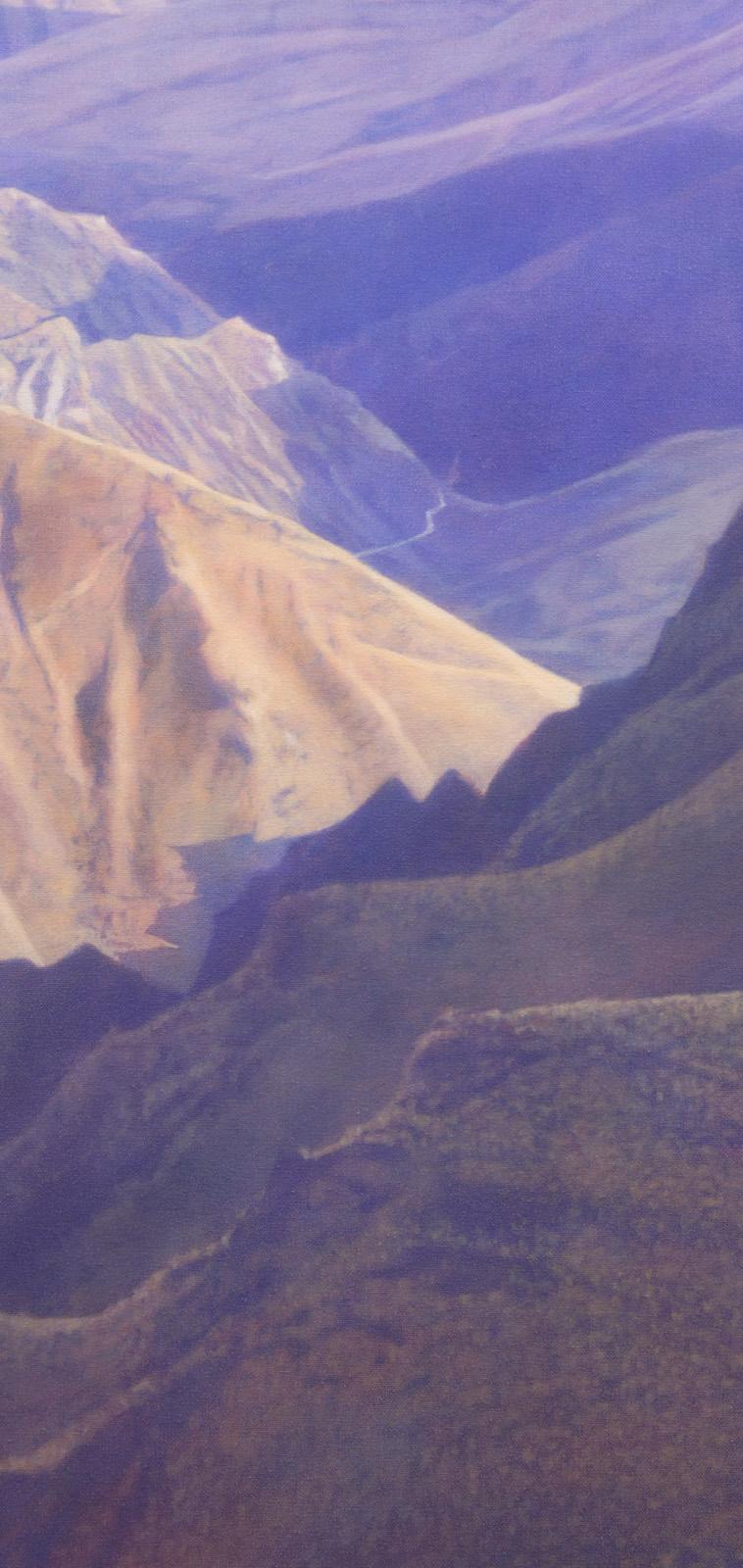
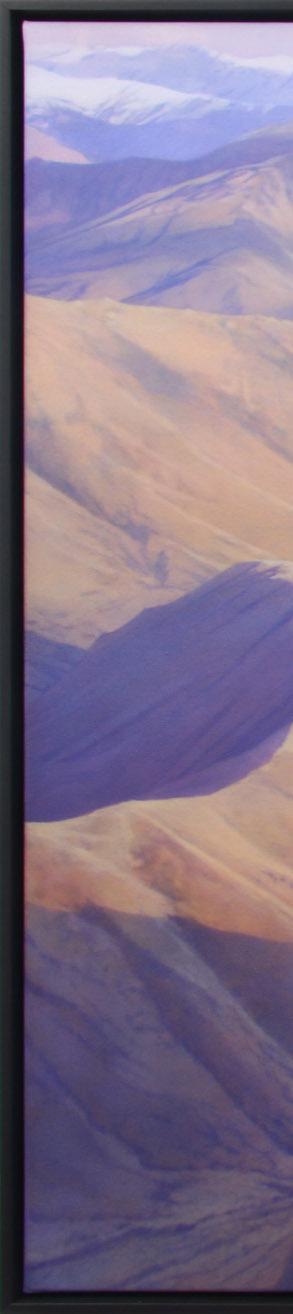
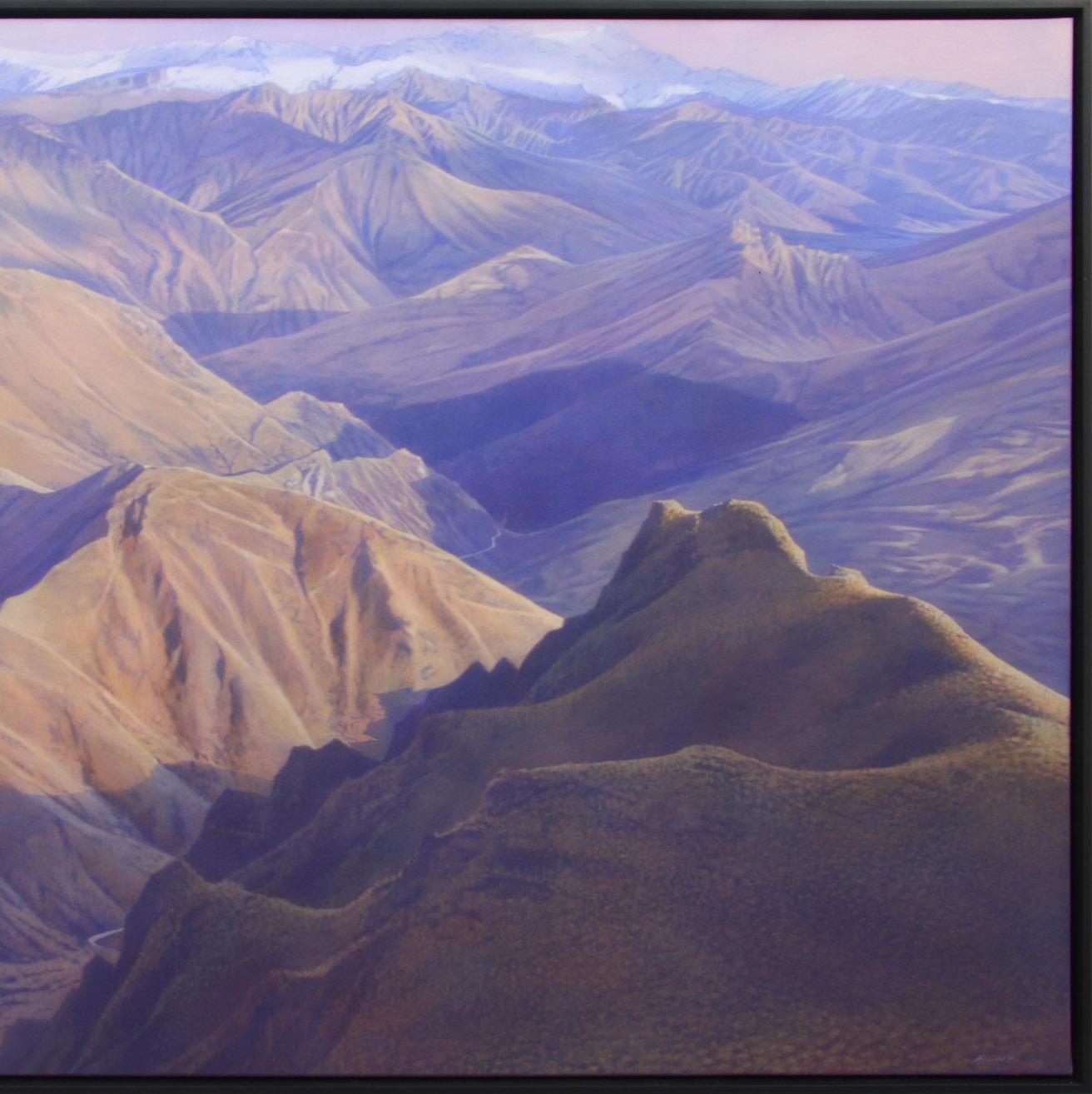
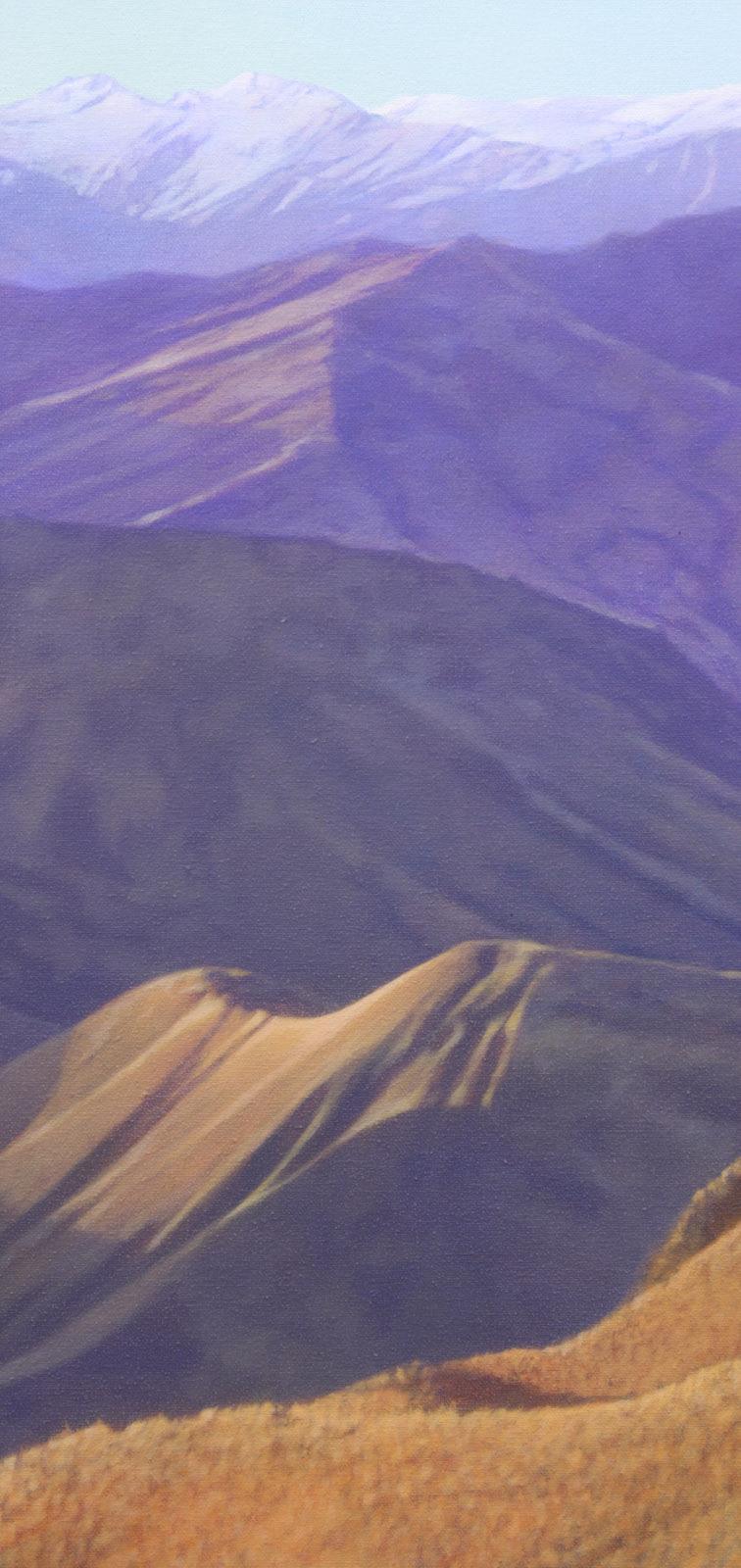
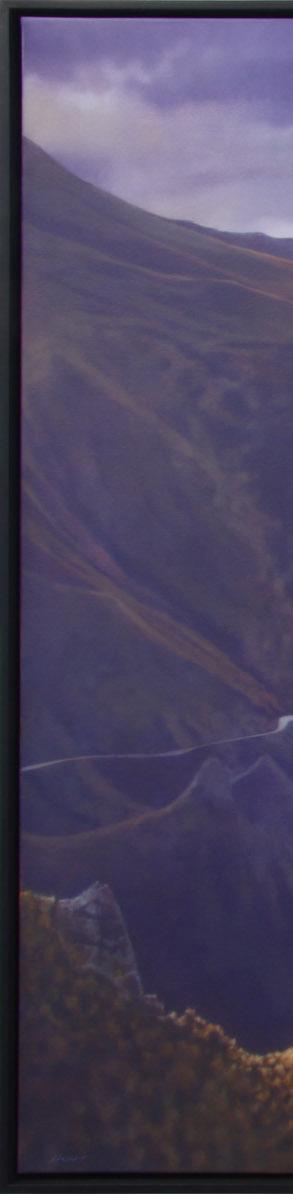
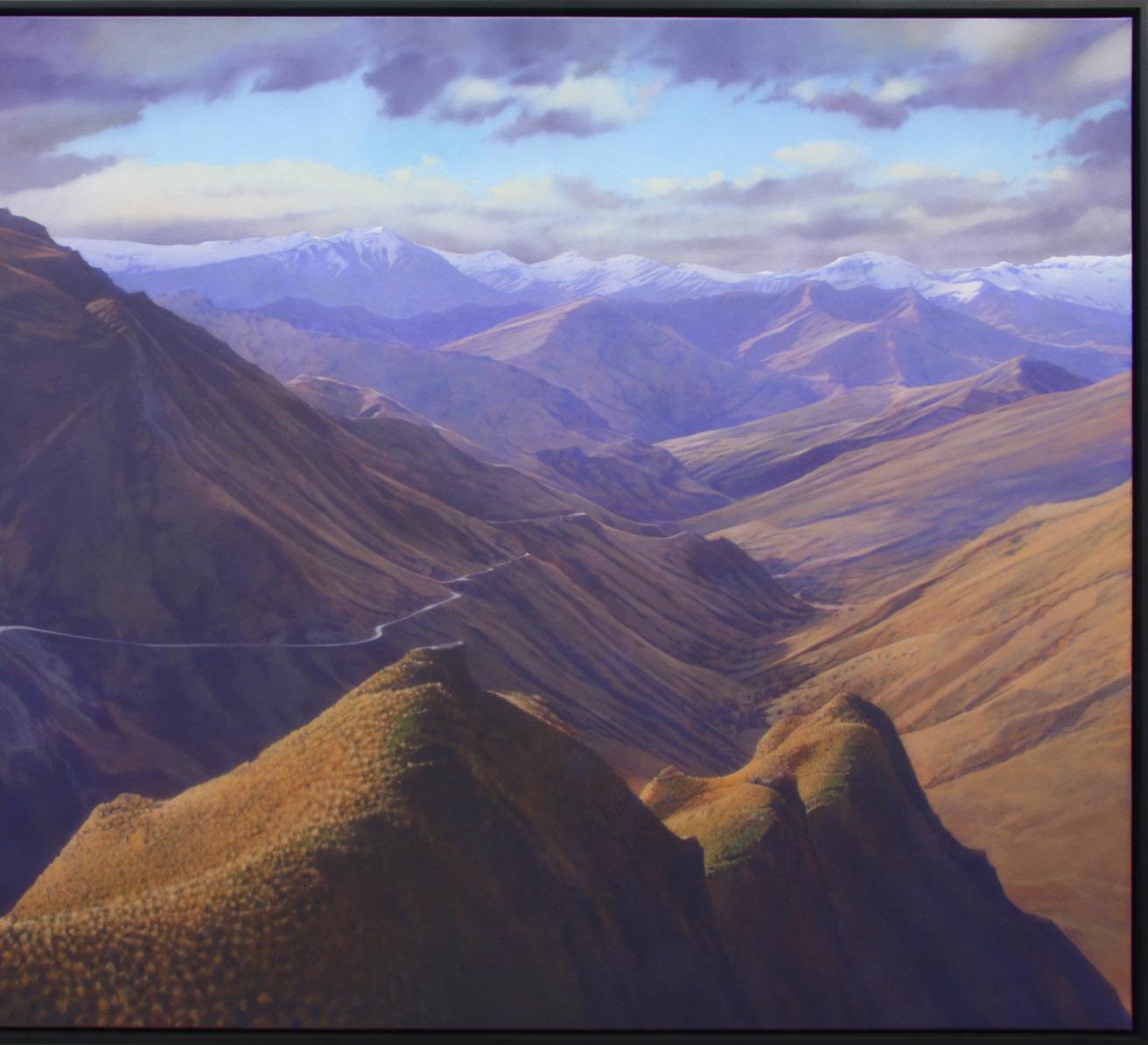
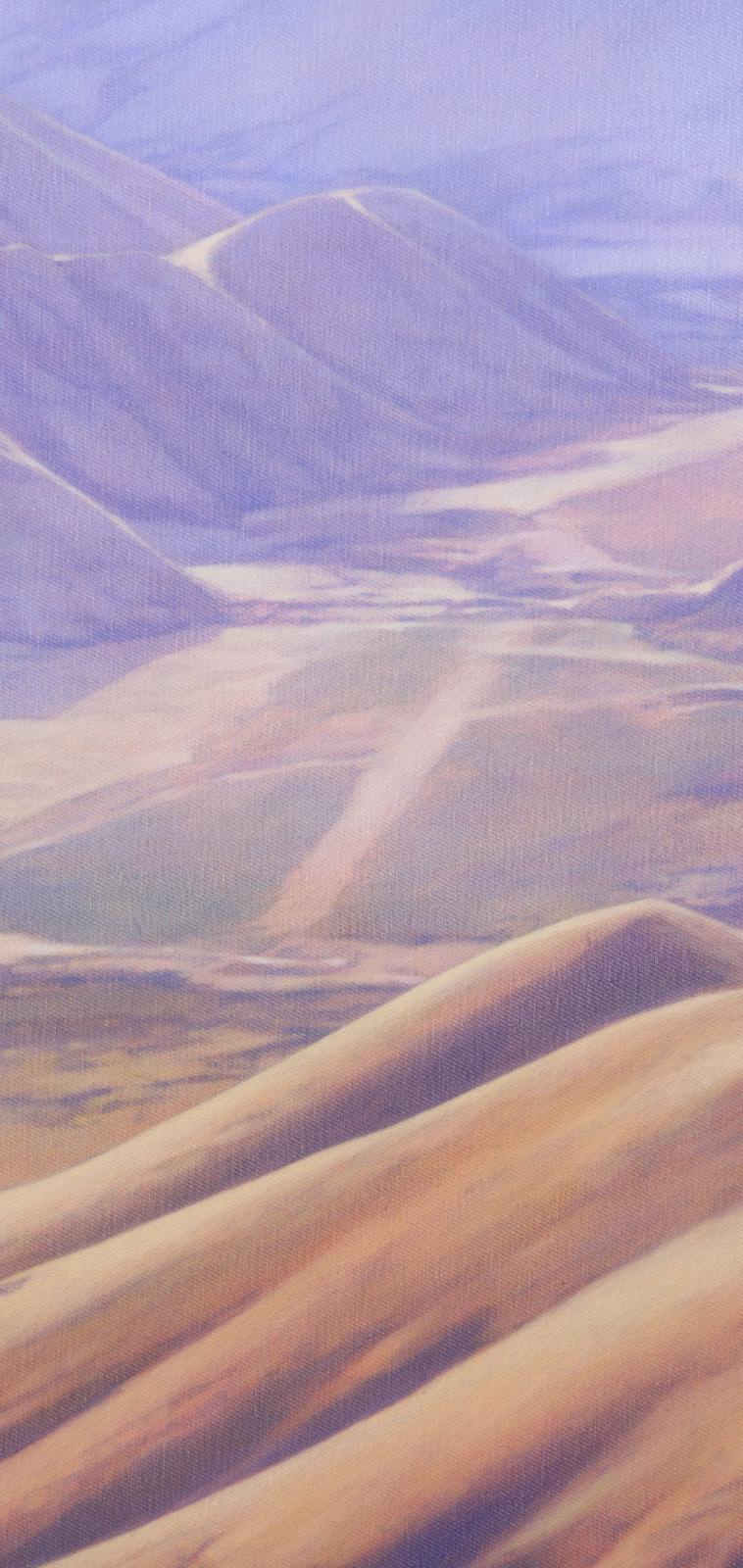
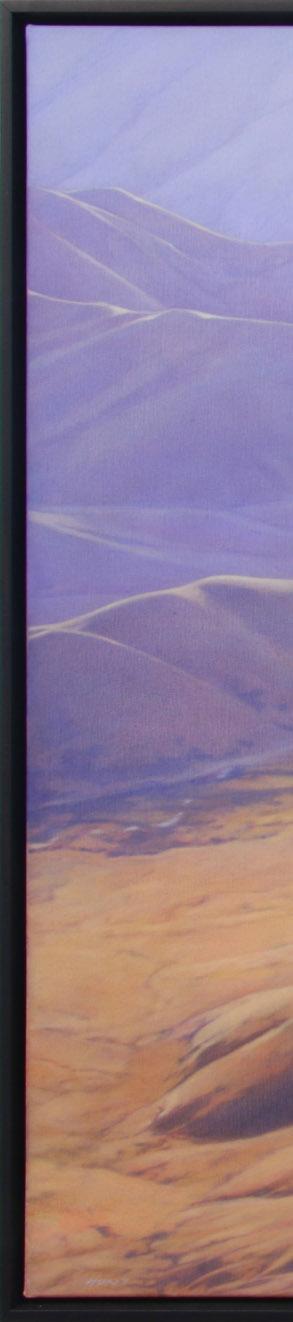
The Long Road acrylic on canvas,
Road (Road to the Goldfields II) (2012) canvas, frame: 1095 x 1550 x 54 mm
Big Bend (2012/13)
canvas, frame: 938 x 1148 x 54 mm
-
the Branches (2012)
canvas, frame: 1043 x 1399 x 54 mm
Magic Mountain acrylic on canvas, 4
Mountain and the Ahuriri (2013) canvas, frame: 866 x 1245 x 54 mm
to Raupo Lagoon (2012)
on canvas, frame: 1093 x 1550 x 54 mm
Road and the Saddle (Lindis Station Above Geordie Hills) (2009/10) canvas, frame: 1330 x 1638 x 54 mm
Cool West
- the Road to Skippers II (2012)
on canvas, frame: 1042 x 1398 x 54 mm
Airstrip II (2010/11) acrylic on canvas,
(2010/11)
canvas, frame: 866 x 1045 x 54 mm
Ohau
Swan Lagoon (2012/13)
oil on canvas, frame: 940 x 1245 x 54 mm
Into Shadowacrylic on canvas, 10
McPhies Ridge and the Dunstan Mountains (2012/13) canvas, frame: 1094 x 1550 x 54 mm
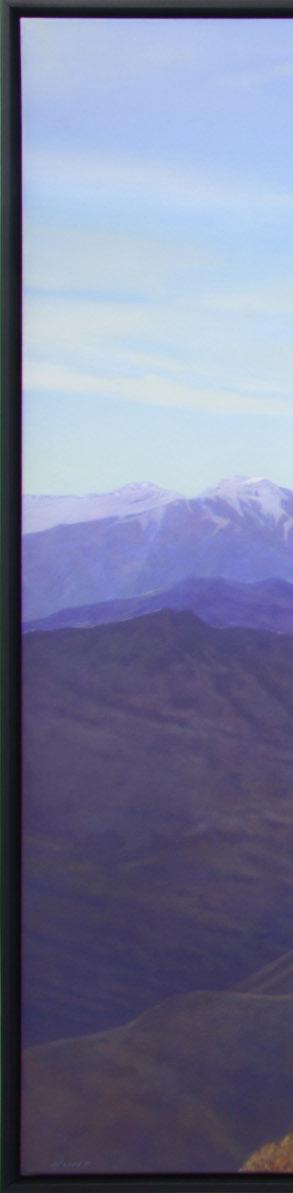
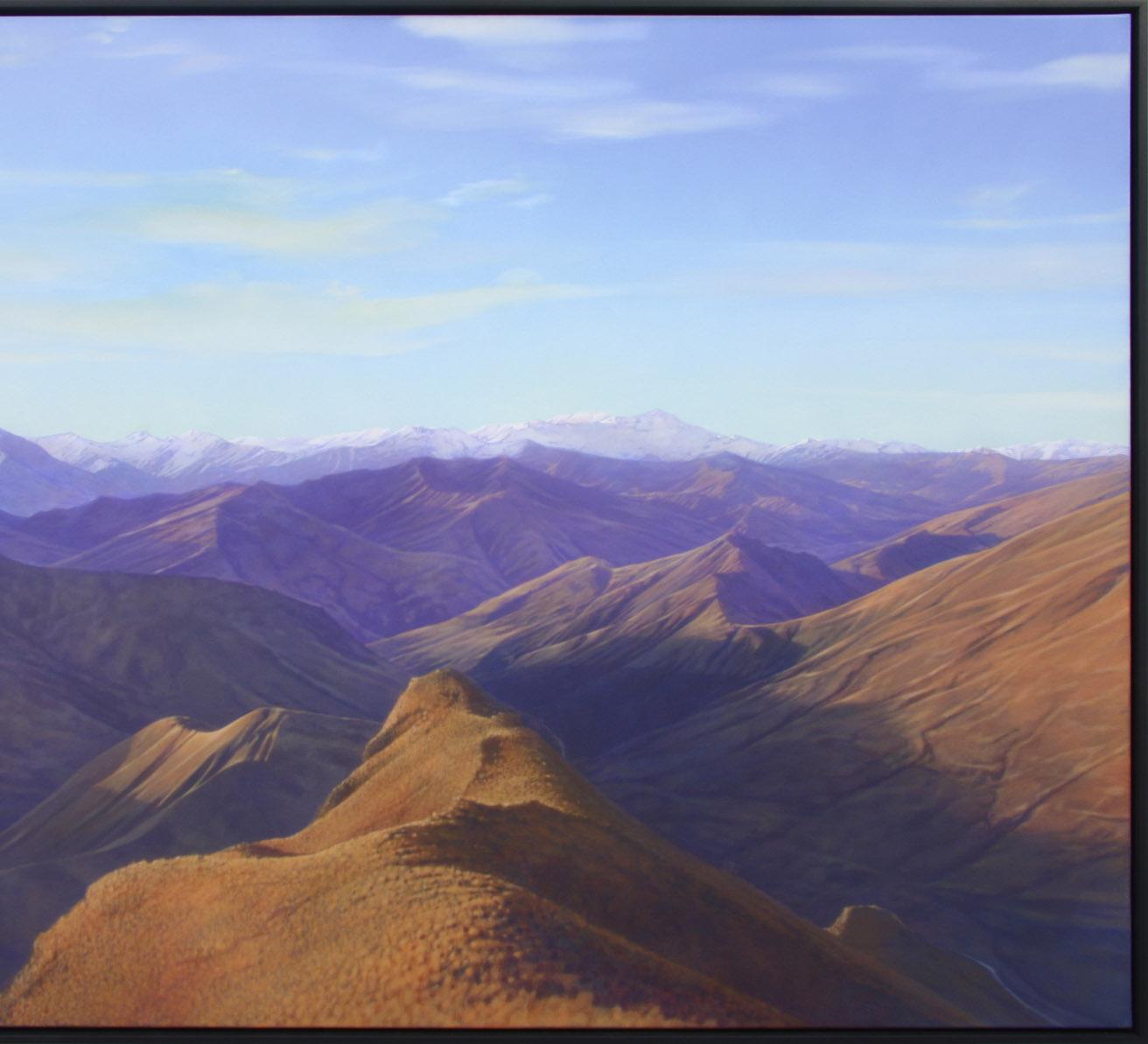
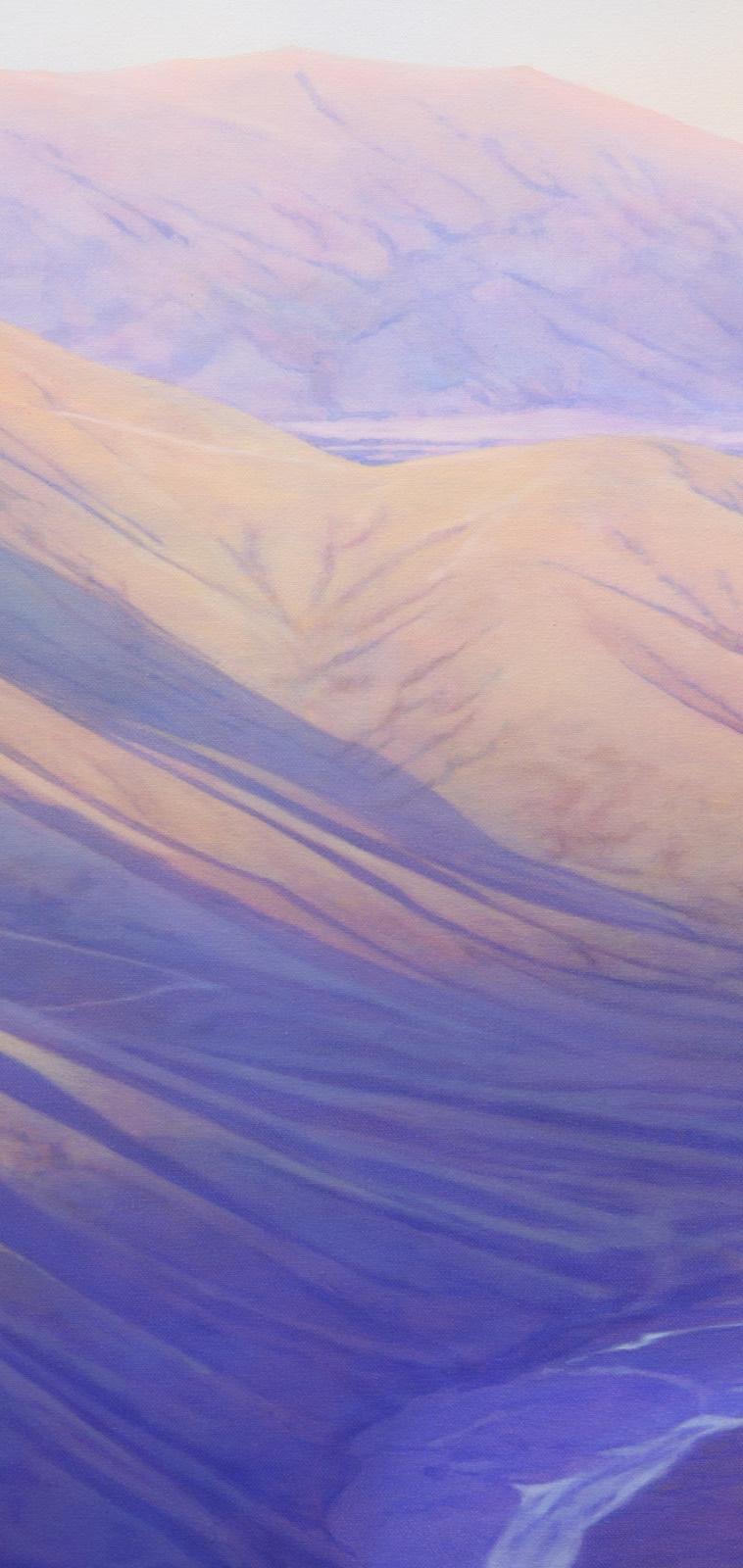
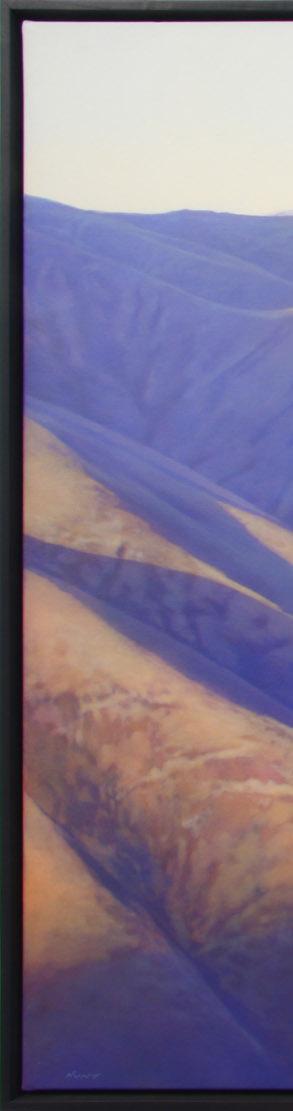
Bruce Hunt’s landscapes speak of distances travelled and forgotten places rediscovered. He combines an in-depth exploration of the bones of the earth with a soft-edged gaze that blurs any sense of time.
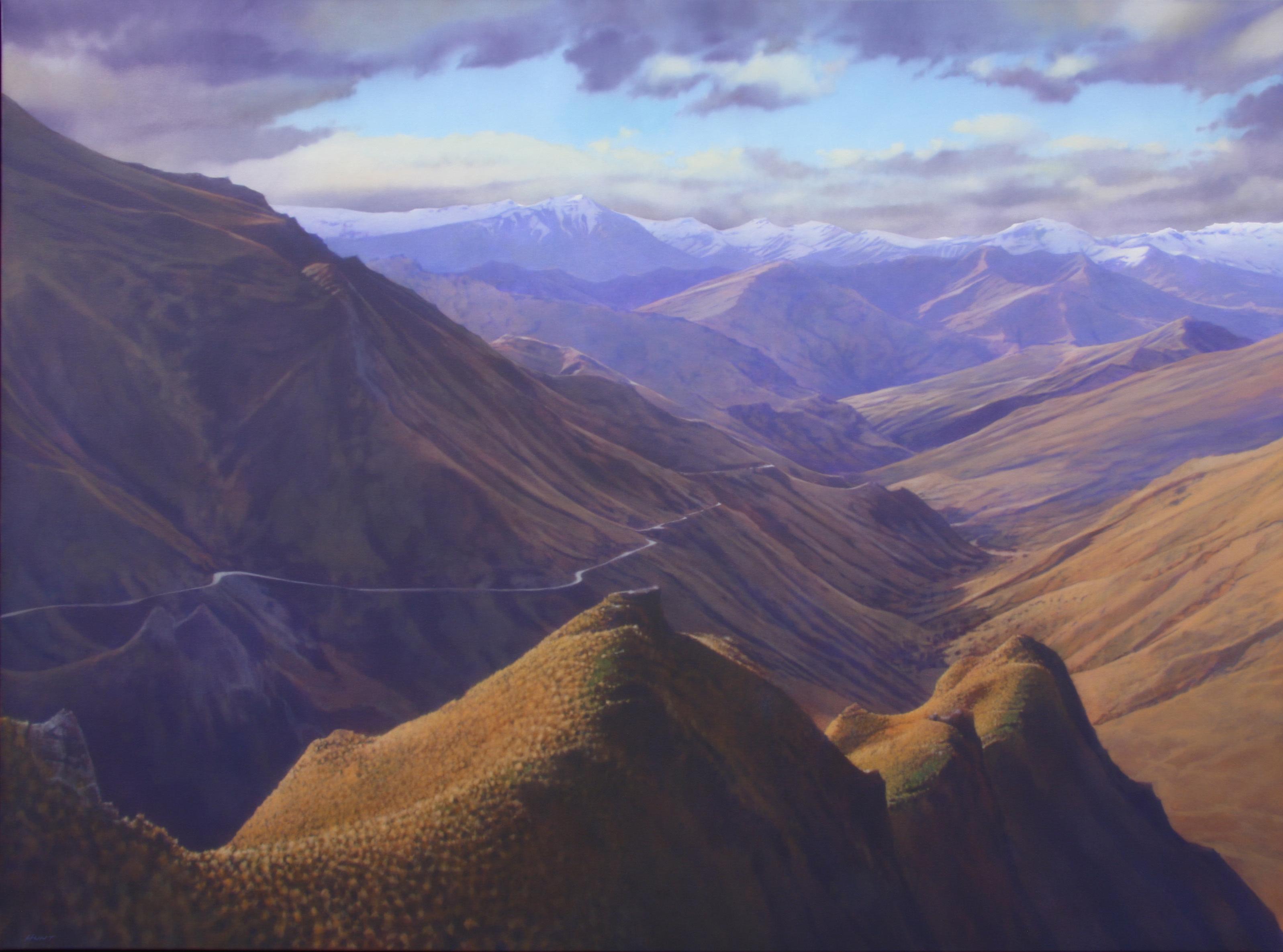
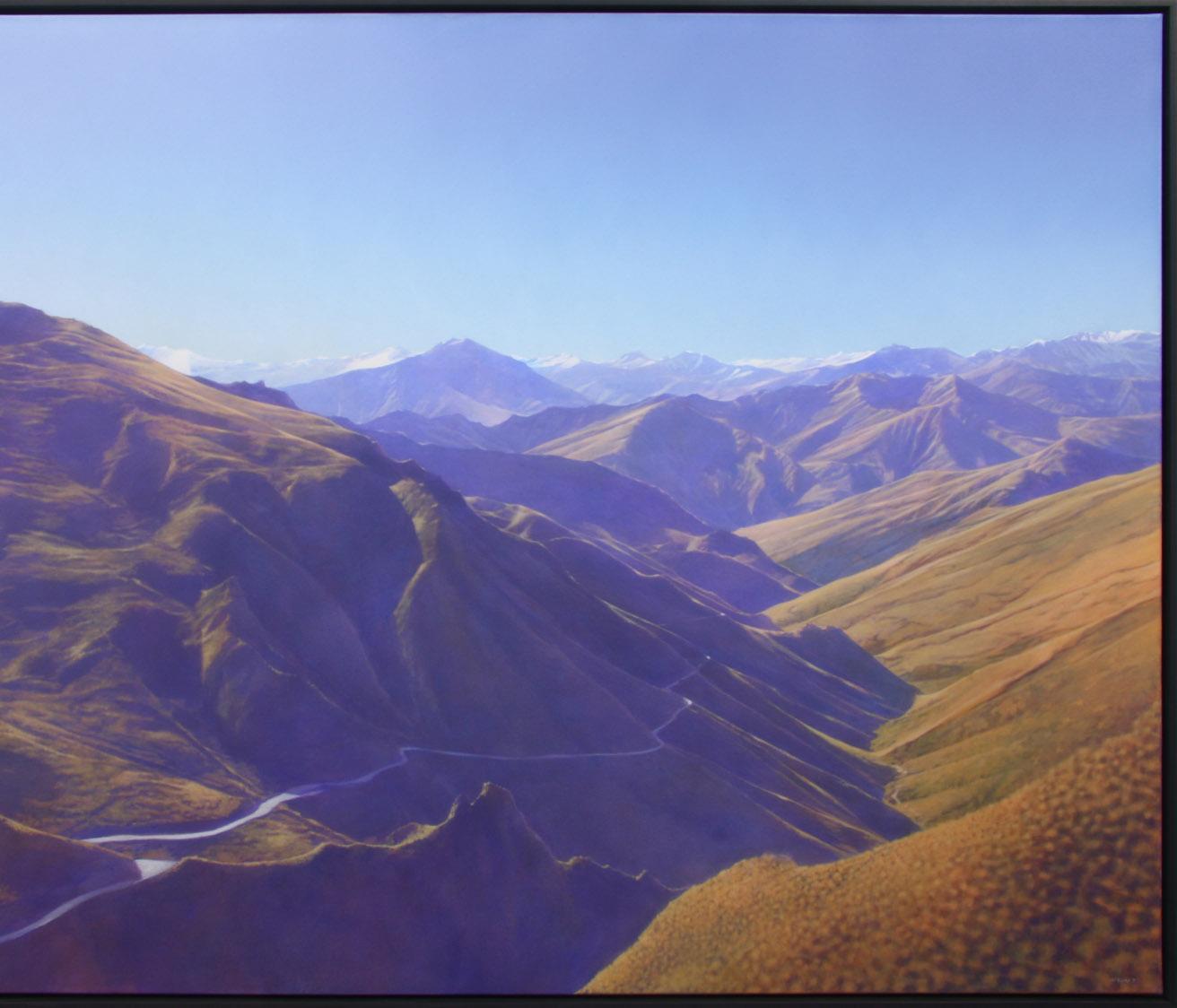
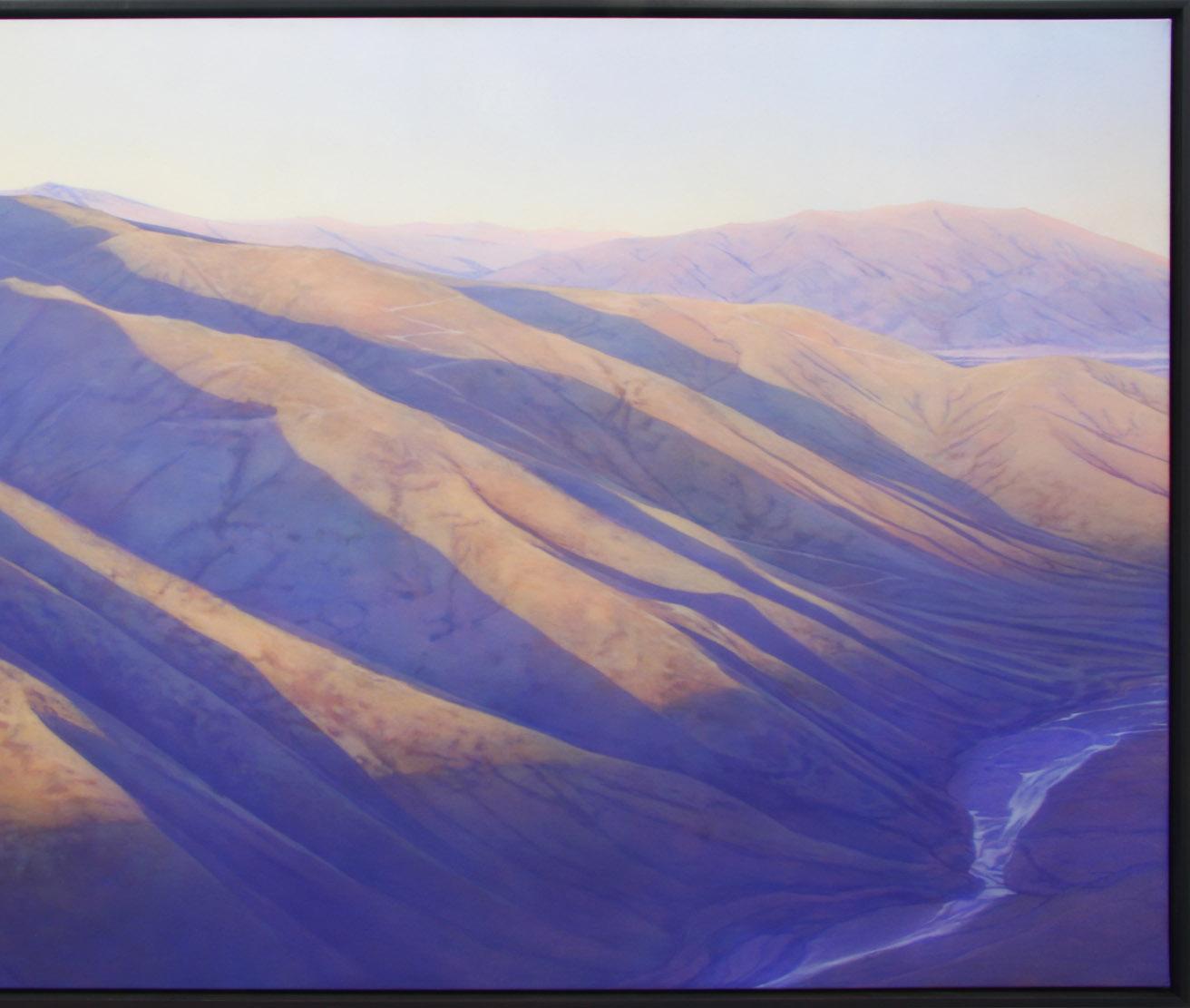
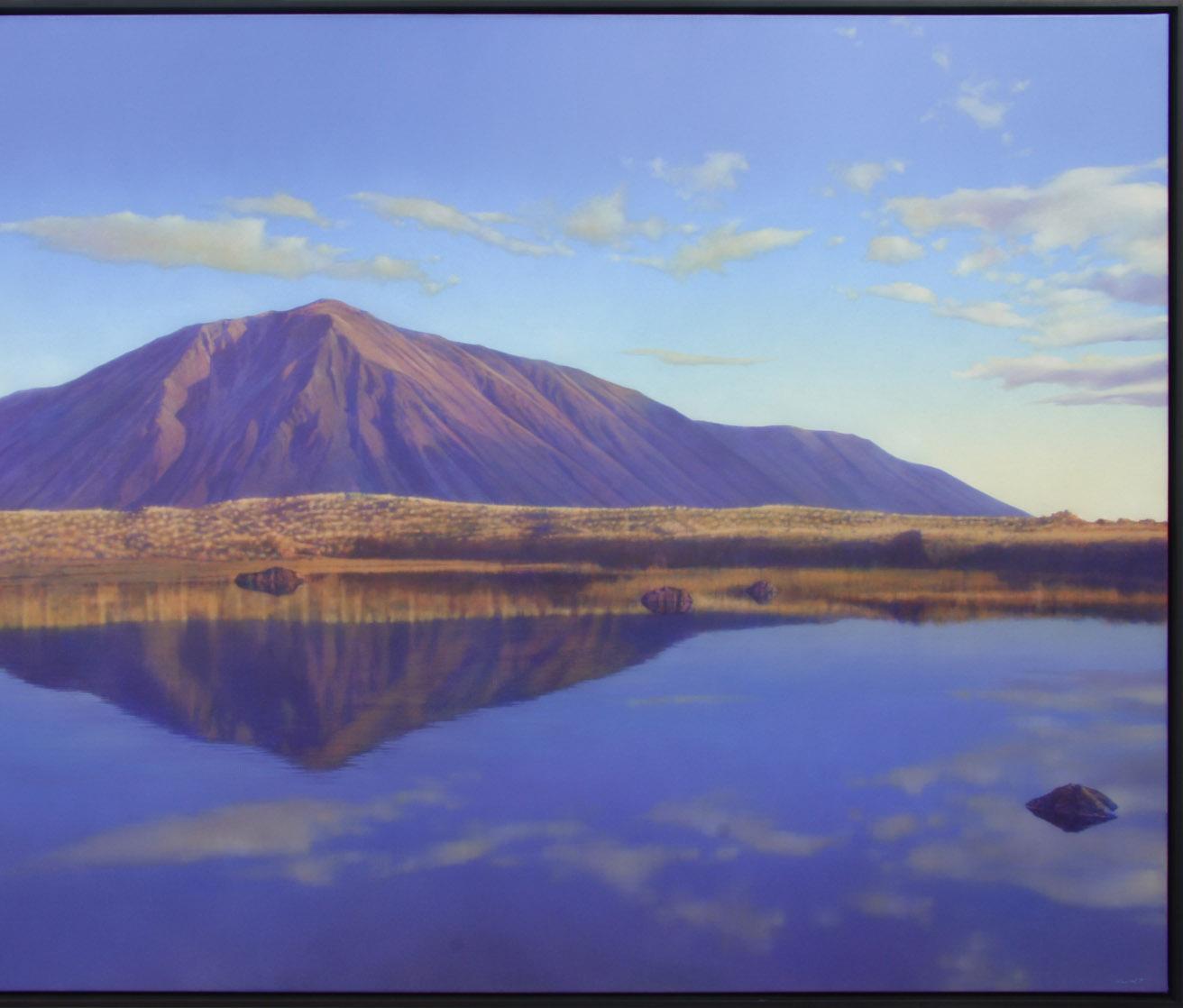
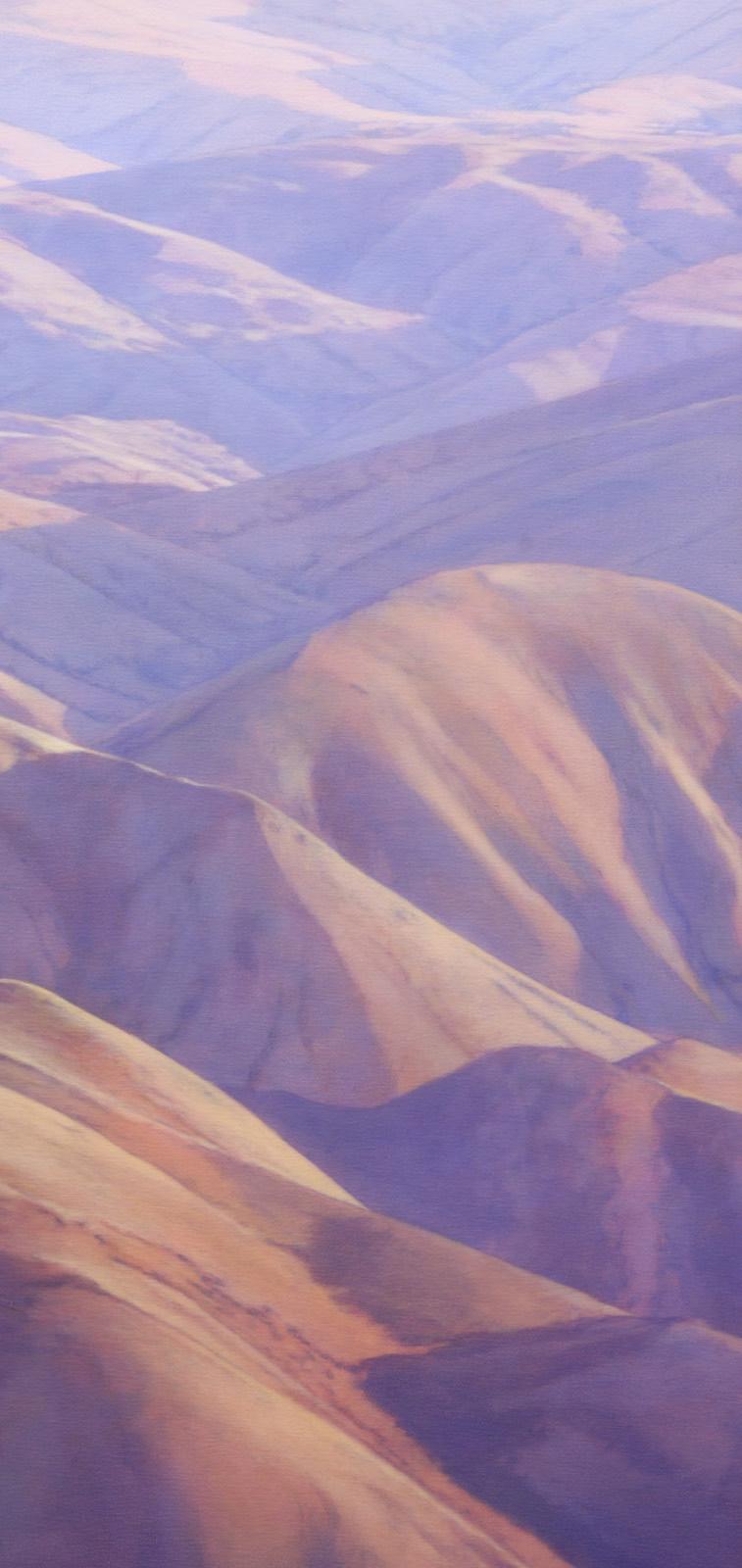
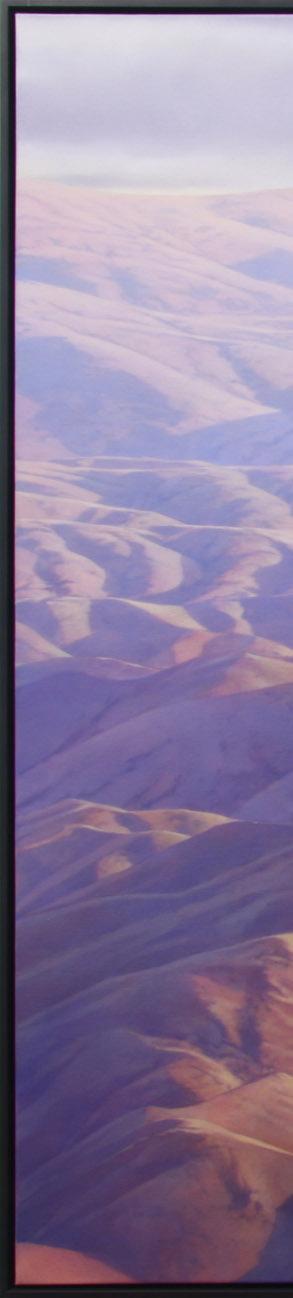
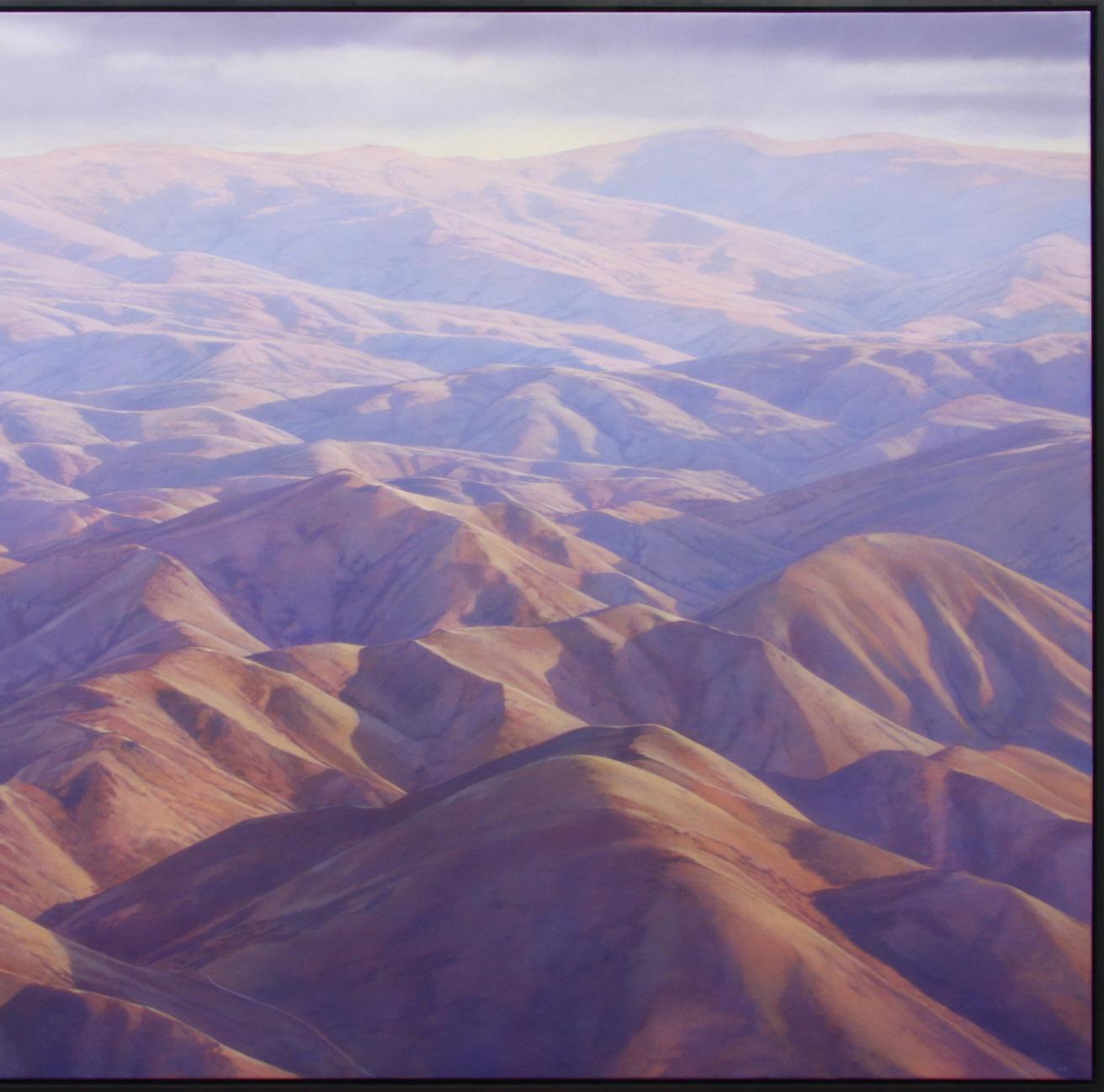
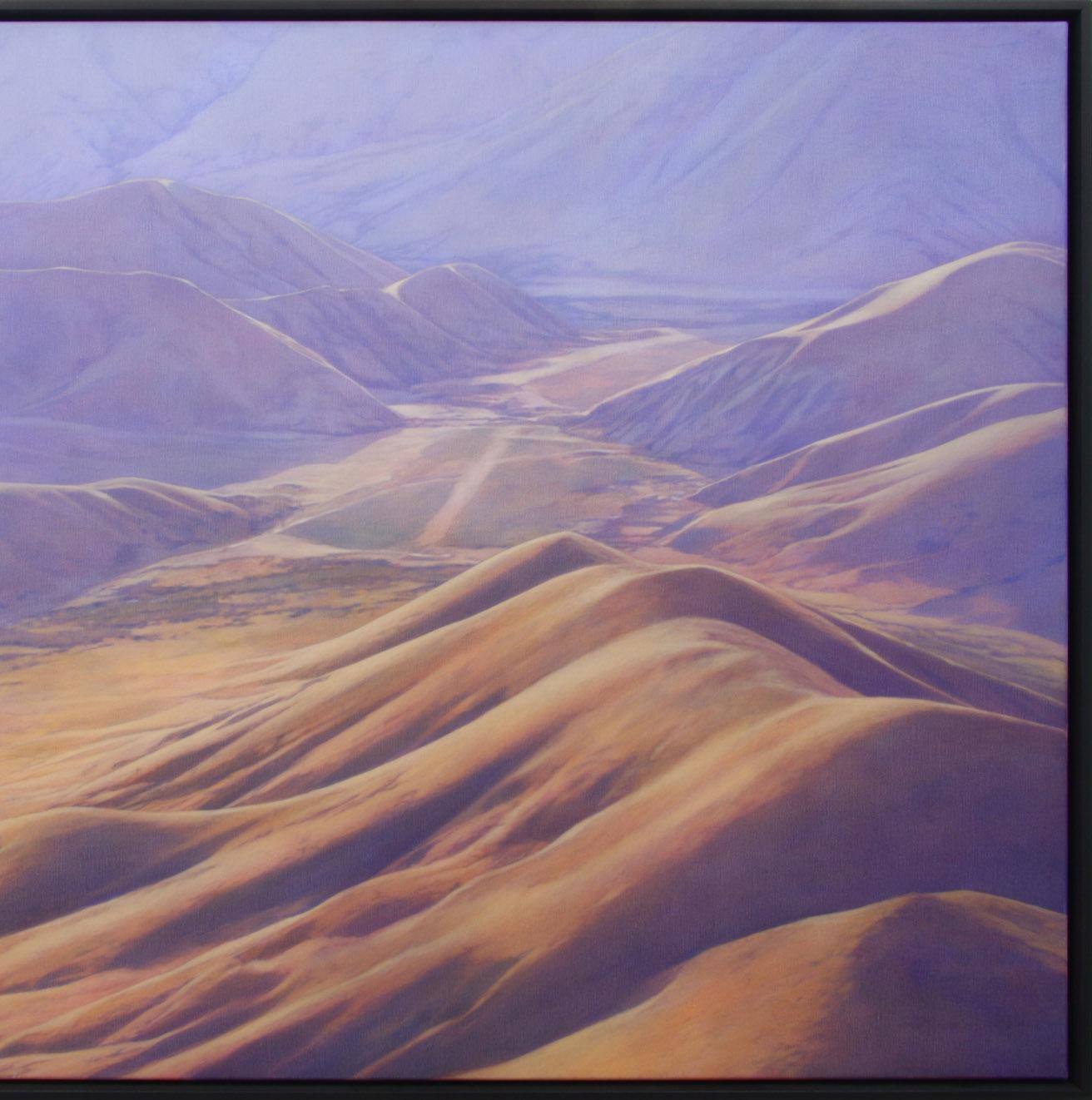
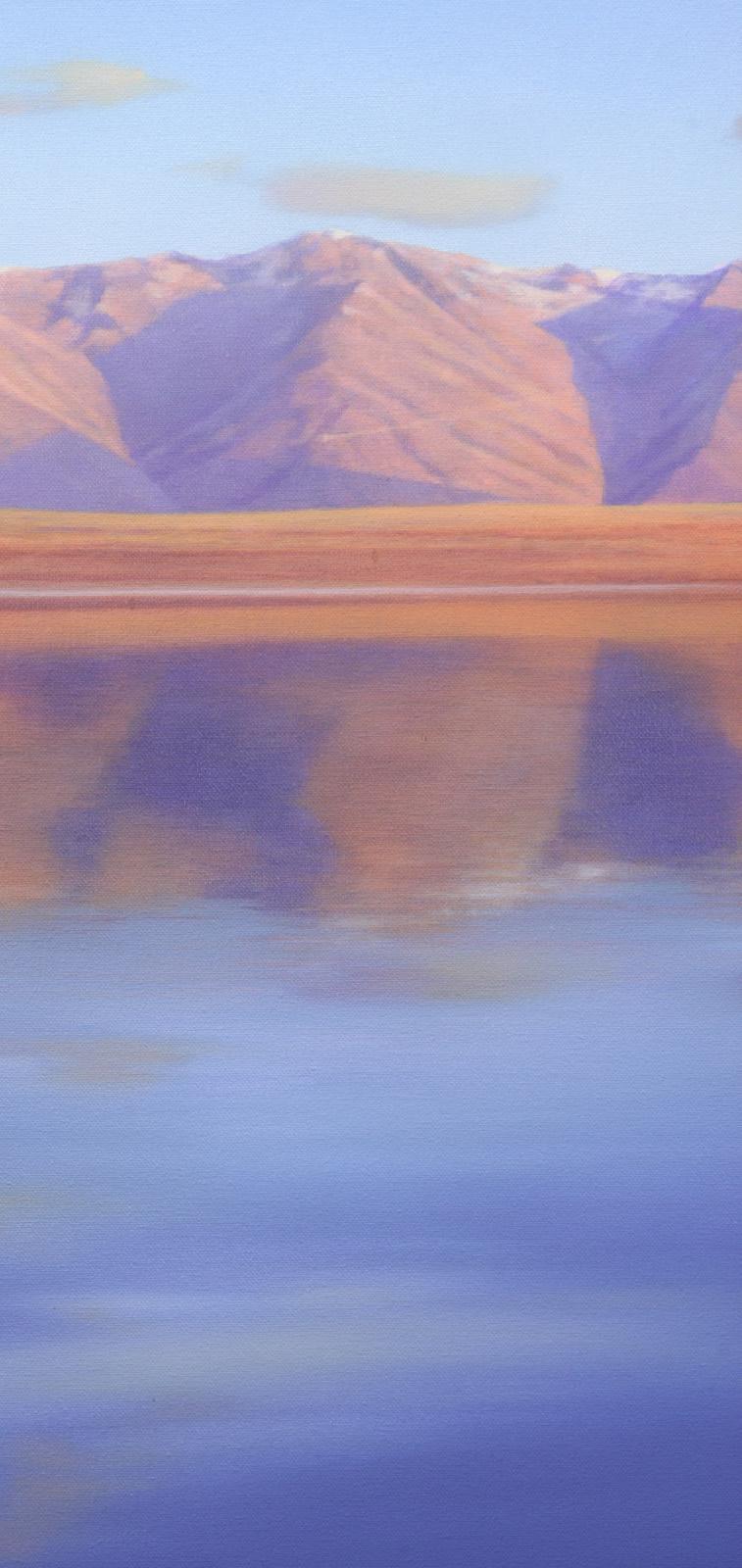
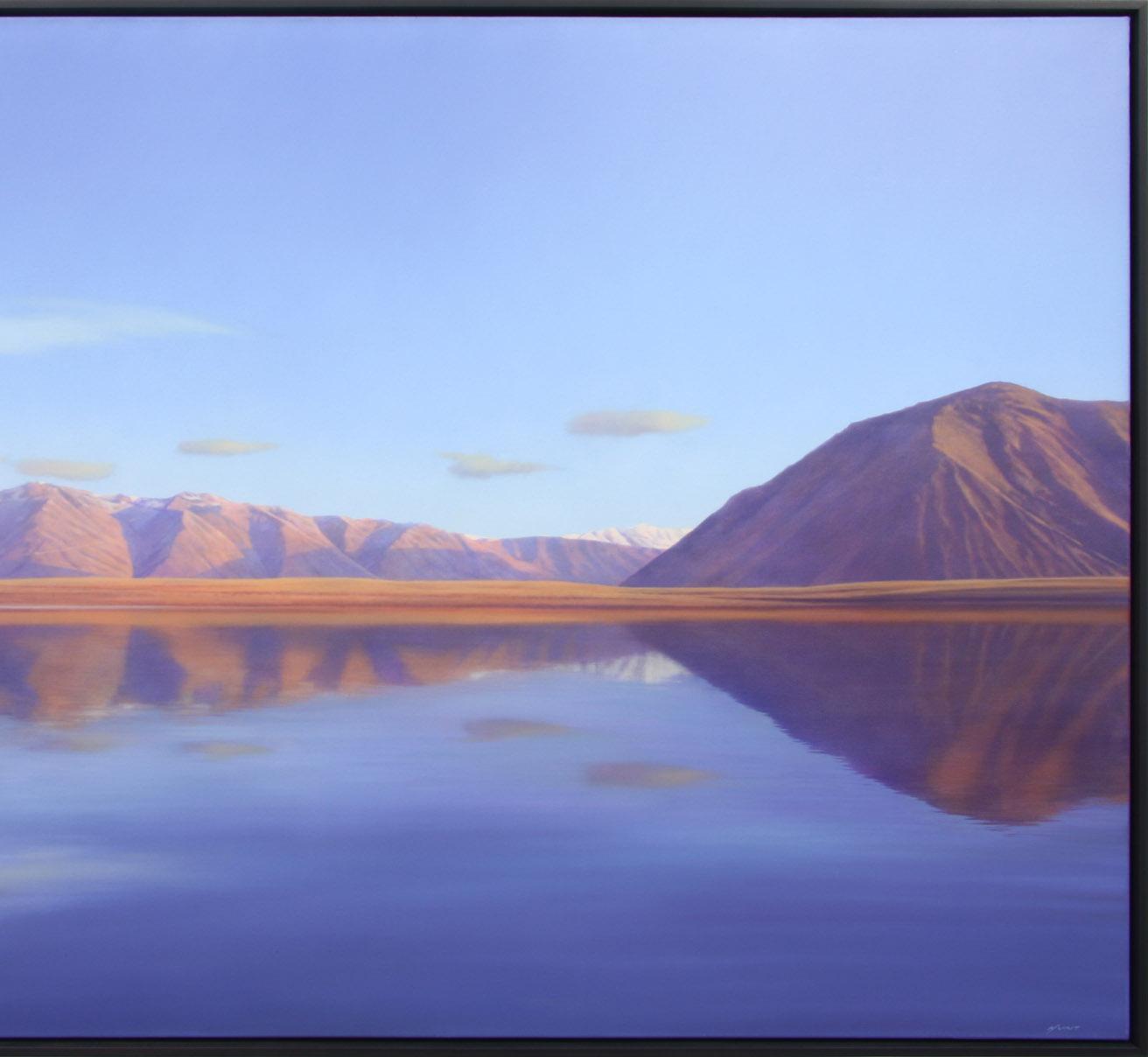
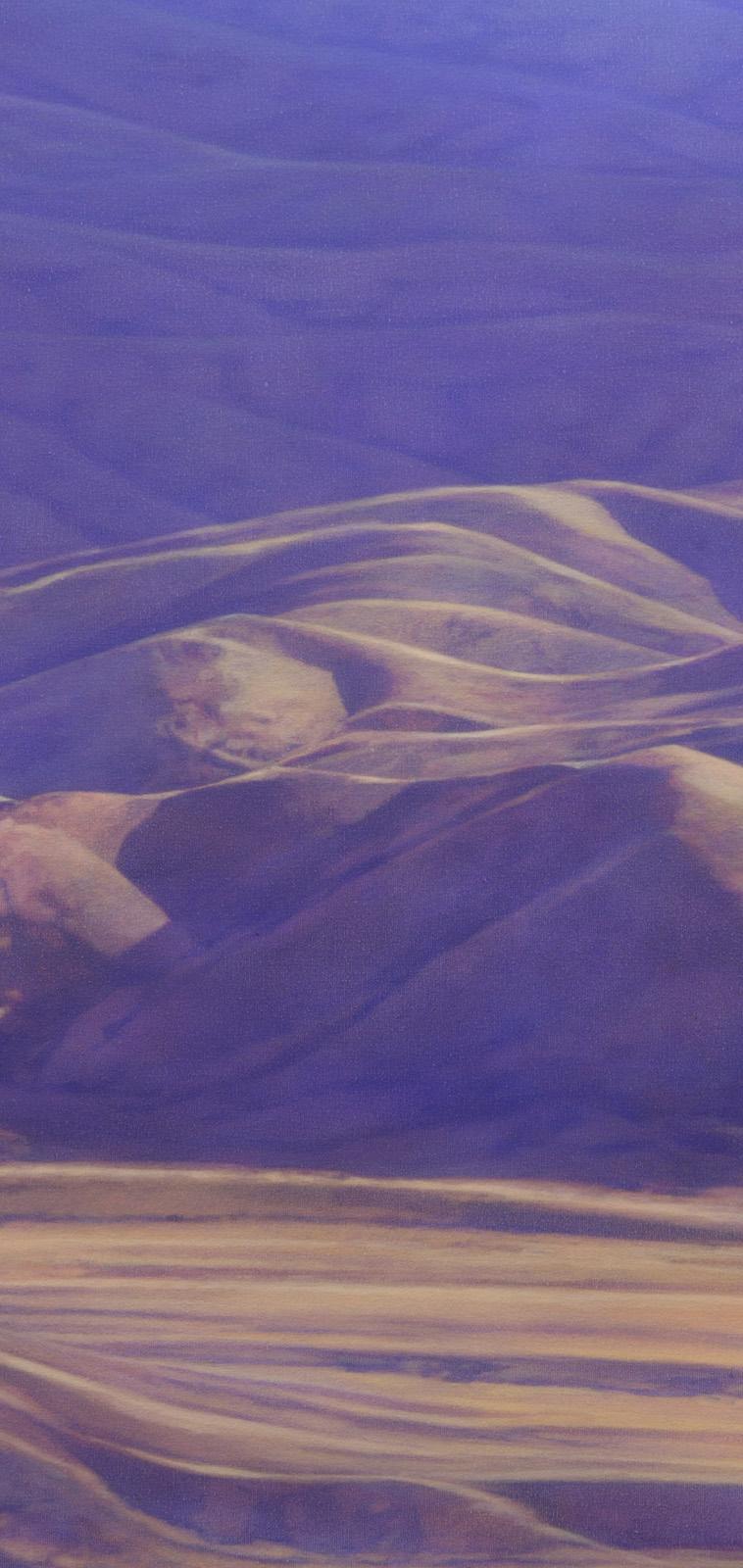
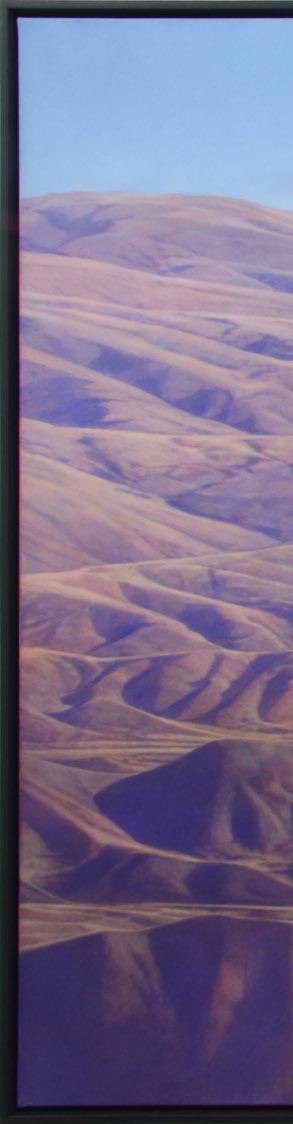
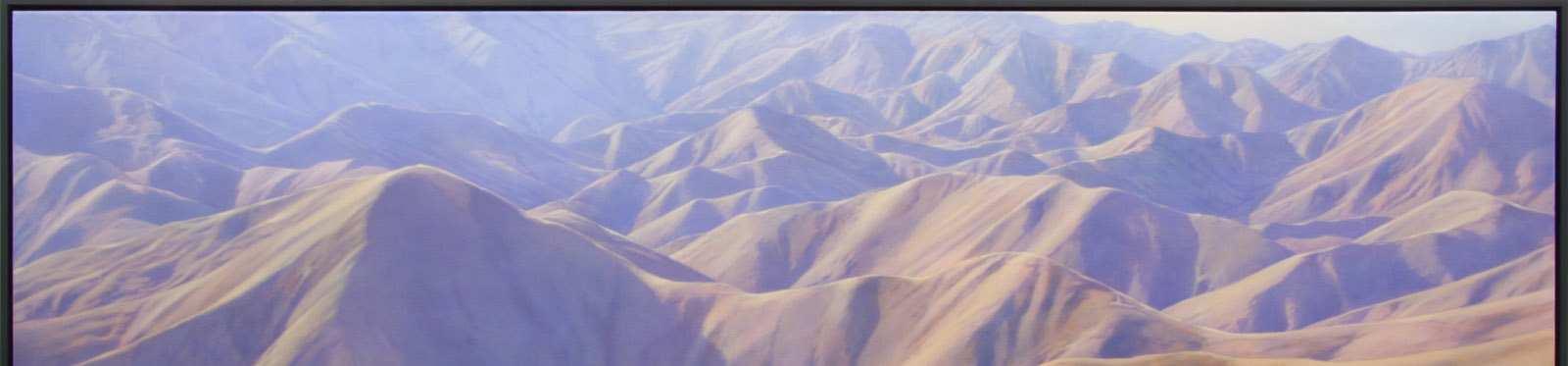
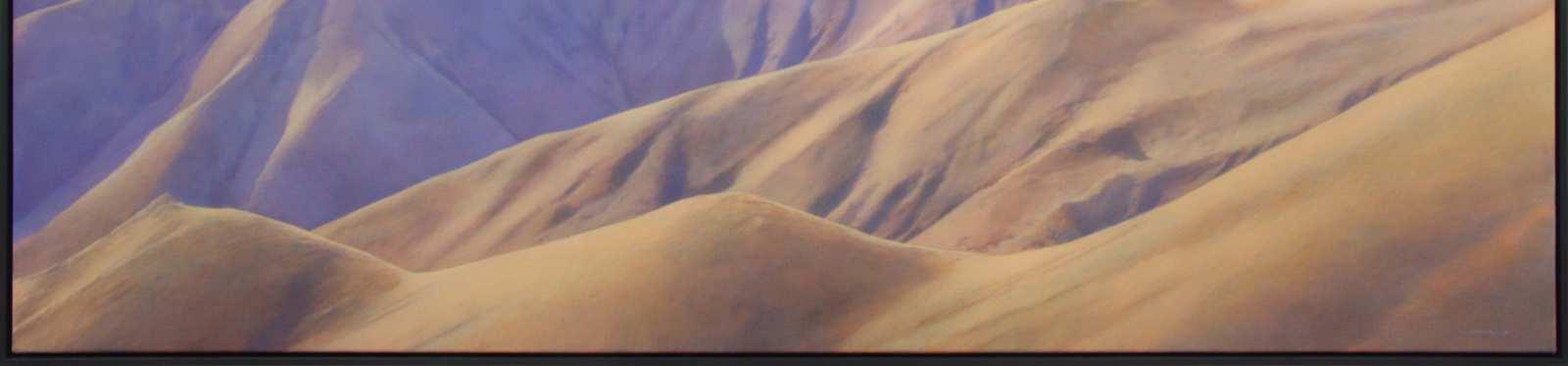
In previous bodies of work, Hunt has examined the specifics of place and The Longest Road continues this; he paints with exactitude, his vistas recognisable and true to life. What makes his canvases so much more than a recording of location is the sense of timelessness he brings to each work. Rather than a single, sharp snapshot of a particular moment, Hunt captures the enduring gravitas of the landscape. Hunt’s mountains and valleys appear as they have been, as they are and as they will continue to be. The reflections as seen in Ohau and the Swan Lagoon have existed longer than memory, and serve as a reminder of geological time, larger by far than the span of human generations.
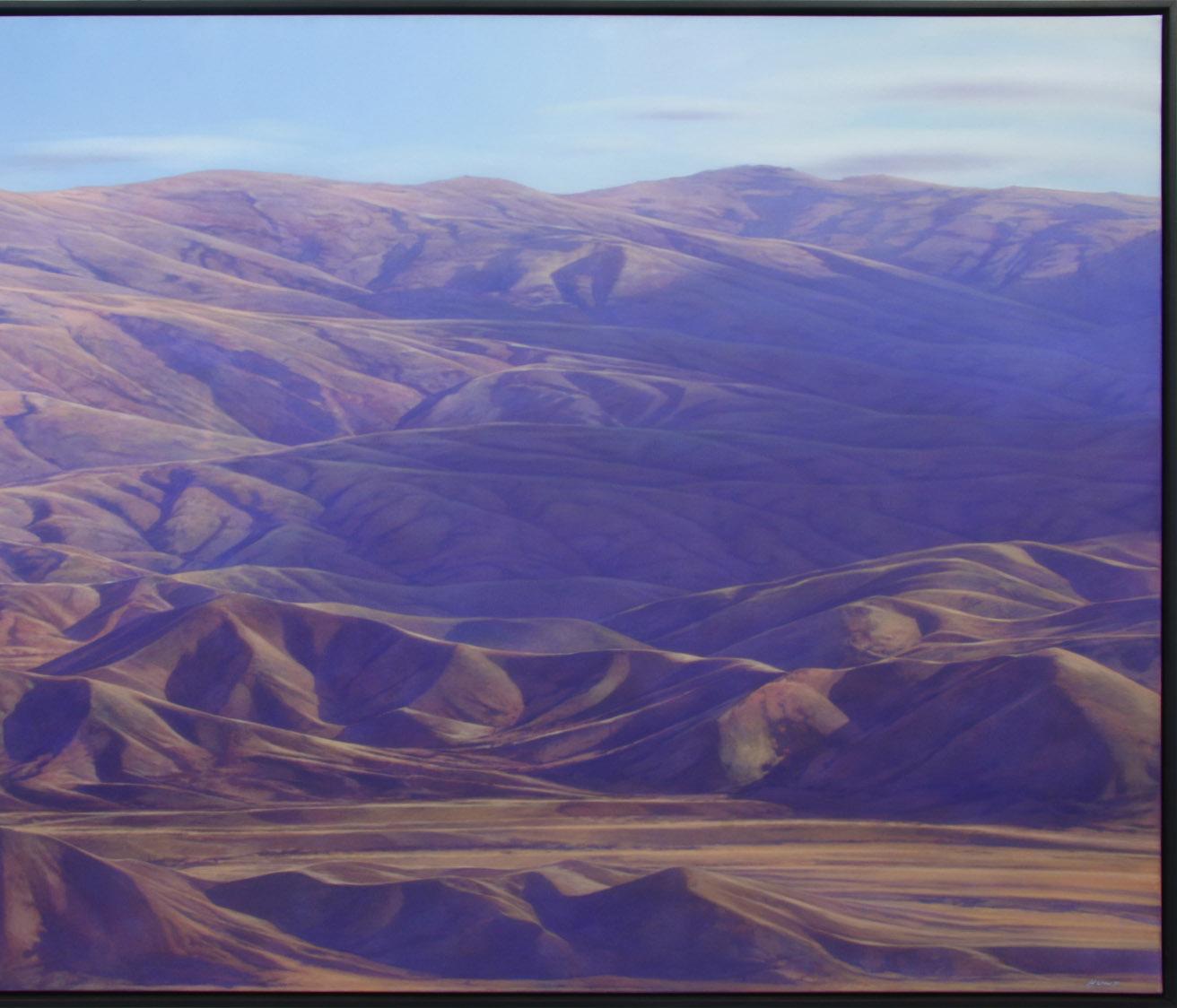
The soft texture that suffuses Hunt’s paintings comes from his careful layering of thin paint washes over and again, building up velvety tones of colour and light.In Goodger Road and the Saddle (Lindis Station Above Geordie Hills) the artist’s underpainting with bright blues and purples glows through the surface, giving depth and life to the angled shadows on the hills and a tinge of menace to the clouded horizon.
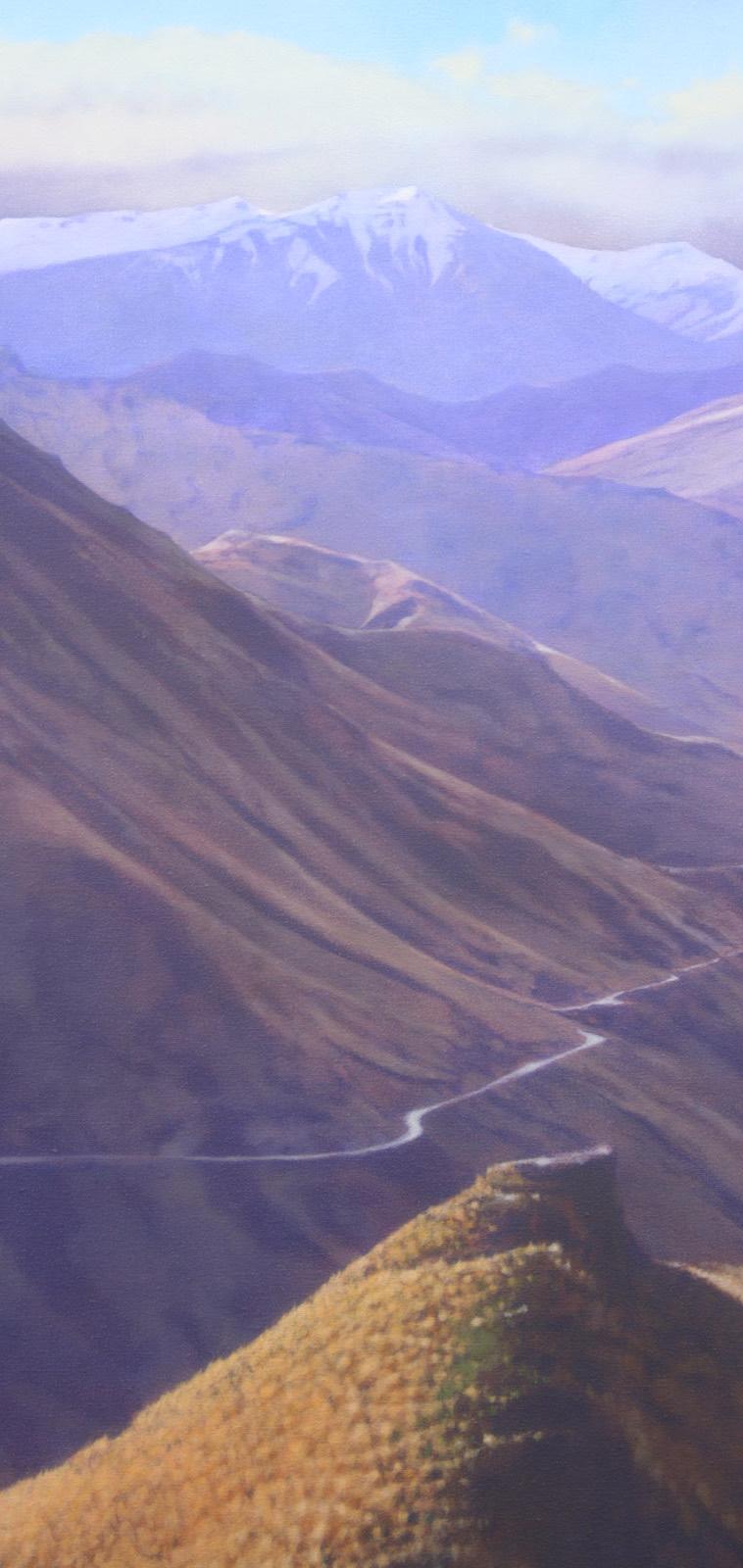
Where Hunt introduces man-made elements to his vistas, they are often dwarfed by the topography surrounding them. Roads wind precariously around the edges of mountains and gullies (Cool West Wind - the Road to Skippers II) and sometimes they are barely glimpsed, sitting lightly on an intransigent terrain. Hunt uses them as a device to draw the gaze, asking the viewer to travel the long road through his painted lands.
Bruce Hunt’s The Longest Road refers not only to the transitory journey through a landscape but to the slow mutability of the landscape itself. Bruce Hunt’s considered, quietly magnificent paintings invite contemplation of the timelines of the land as well as those of the viewer.
BRUCE HUNT
b. 1964, lives Dunedin
Backlands (2010)
Critically acclaimed artist Bruce Hunt conveys an authoritative sense of location and vernacular, his paintings capturing the enduring majesty of the Central Otago landscape.
"Hunt's epic depictions of the Otago and South Canterbury landscapes are powerfully emotional works which sweep the eye over what appear to be seemingly endless sinewy vistas." (1) Imbued with the romantic sublime, these panoramic vistas are more than mere documentation. Hunt’s works evoke an emotional and spiritual response to the land. He explores the history, geology and myth that envelop the vast empty tussock-clad hills and arid plains of the Lindis, Danseys and Dunstan Trail regions.
The landscape, often depicted in the glow of dawn or dusk, achieves remarkable depth, luminosity and atmosphere. Masterfully, Hunt captures the subtle play of light and consequent shadow. The muscular geology of the land seems clothed in folds of soft velvet as he layers translucent paint in warm shades over cool to produce an inner radiance.
Hunt spends much of his time traversing sheep trails or old gold mining paths. “As an artist my fuel is the anticipation of discovering new territories but also the seasoned familiarity of places returned to again and again.” (2) There is a sense that these paintings are inhabited both by the artist and the viewer. We are invited into the works, asked to stand atop a lonely ridgeline or evening valley, and consider the tension between the fleeting nature of humanity and the timeless land we occupy.
Remote trails forged through the isolated landscape, interspersed by the occasional water trough or distant fence line, are the only reference Hunt makes to humankind. Hunt has observed the advance of pylons through the Dunstan Pass, and the threat of the Project Hayes wind farm proposal makes him anxious for the future of this land. His affinity with the landscape has led Hunt to stress the “urgent need to keep these few remaining landscapes as pristine as possible.” (3)
Bruce Hunt was born in Wellington 1964 and currently lives in Dunedin. He attended Wellington College 1978-82 and Victoria University 1983-84. Hunt has been practicing as a full time artist since 1983 and exhibits regularly throughout New Zealand. His work is held in private and corporate collections throughout New Zealand, including the National Bank.
1. 'Top Ten', Christchurch Press, 2004.
2. Artist Statement, 2007
3. Ibid
EDUCATION
BRUCE HUNT
b. 1964, lives Dunedin
1983 – 84 Victoria University Wellington
1978 – 82 Wellington College studying Art under Phillip Markham
SELECTED SOLO EXHIBITIONS
2013 The Longest Road, milford galleries queenstown
2011 The Backlands, Milford Galleries Dunedin
2010 Central, milford galleries queenstown
2009 Flight, Milford Galleries Dunedin, Auckland
New Works, MG, Auckland
2008 Summit Fever, Milford Galleries Dunedin
2007 The Ochre Triangle II, milford galleries queenstown
The Ochre Triangle, Milford Galleries Dunedin
New Work, The Art House, Christchurch
2006 Trail of Dreams, Ferner Gallery, Auckland
Art House, Christchurch
2005 Beneath the Surface, Ferner Gallery, Wellington
2004 Brown Velvet, Ferner Gallery, Wellington
Lands End, Ferner Gallery, Auckland
2003 Into Shadow, Ferner Gallery, Wellington
A Reflection Of Time, Ferner Gallery, Auckland
2002 Valleys of the Lindis, Ferner Gallery, Wellington
New Work, Ferner Gallery, Auckland
2001 The Distant Landscape, Ferner Gallery, Wellington
2000 Face Of The Land, Ferner Gallery, Wellington
Road to Erewhon, Ferner Gallery, Auckland
1999 Suter Society Guest Artist, Suter Gallery, Nelson
Edge Of The World, Ferner Gallery, Auckland
1998 Ferner Gallery, Auckland
Ferner Gallery, Wellington
1997 45 Degrees South, Ferner Gallery, Wellington
1988 North, Molesworth Gallery, Wellington
1986 Molesworth Gallery, Wellington
1984 Moray Gallery, Dunedin
1983 Molesworth Gallery, Wellington
SELECTED GROUP EXHIBITIONS
2012 Hight / Frazer / Hunt, milford galleries queenstown
Naturally Urbane, Artis Gallery, Auckland
2010 The Earl Street Journal, milford galleries queenstown
2009 Southern Traverse, milford galleries queenstown
Southern Landscape, milford galleries queenstown
2008 Richard Dunlop, Bruce Hunt & Hannah Kidd, milford galleries auckland
2007 Masterworks 2007, milford galleries queenstown
Looking South, Milford Galleries Dunedin
2006 Location South, milford galleries queenstown
2005 Southern Landscape, Milford Galleries Dunedin
1996 Coutts Mercedes, Auckland
1985 NZ Academy of Fine Arts Group Show, Wellington
BIBLIOGRAPHY
2007 Moore, Christopher, ‘Unfolding the Mystery’, Christchurch Press. October 2007
Maynard, Anna, ‘Protect Our Inspirational Landscapes..’, Southland Times, June 2007
Benson, Nigel, ‘Central Otago Canvas for Artist’, Otago Daily Times, February 2007
2006 Museth, Tom ‘Great Southern Land’, Urbis Landscape Magazine, Autumn 2006
2004 ‘Top Ten Kiwi Artists’, The Christchurch Press, January 2004