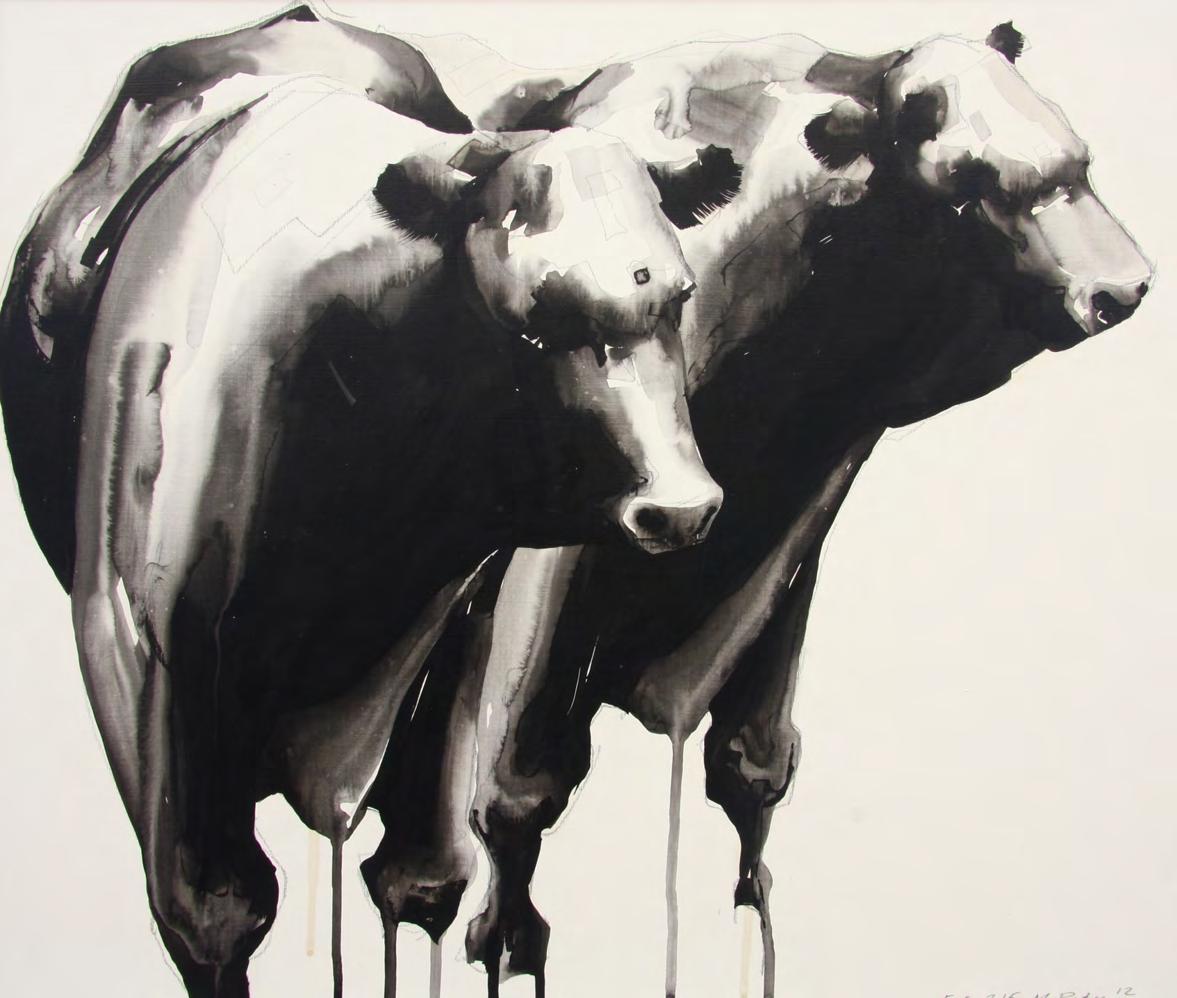
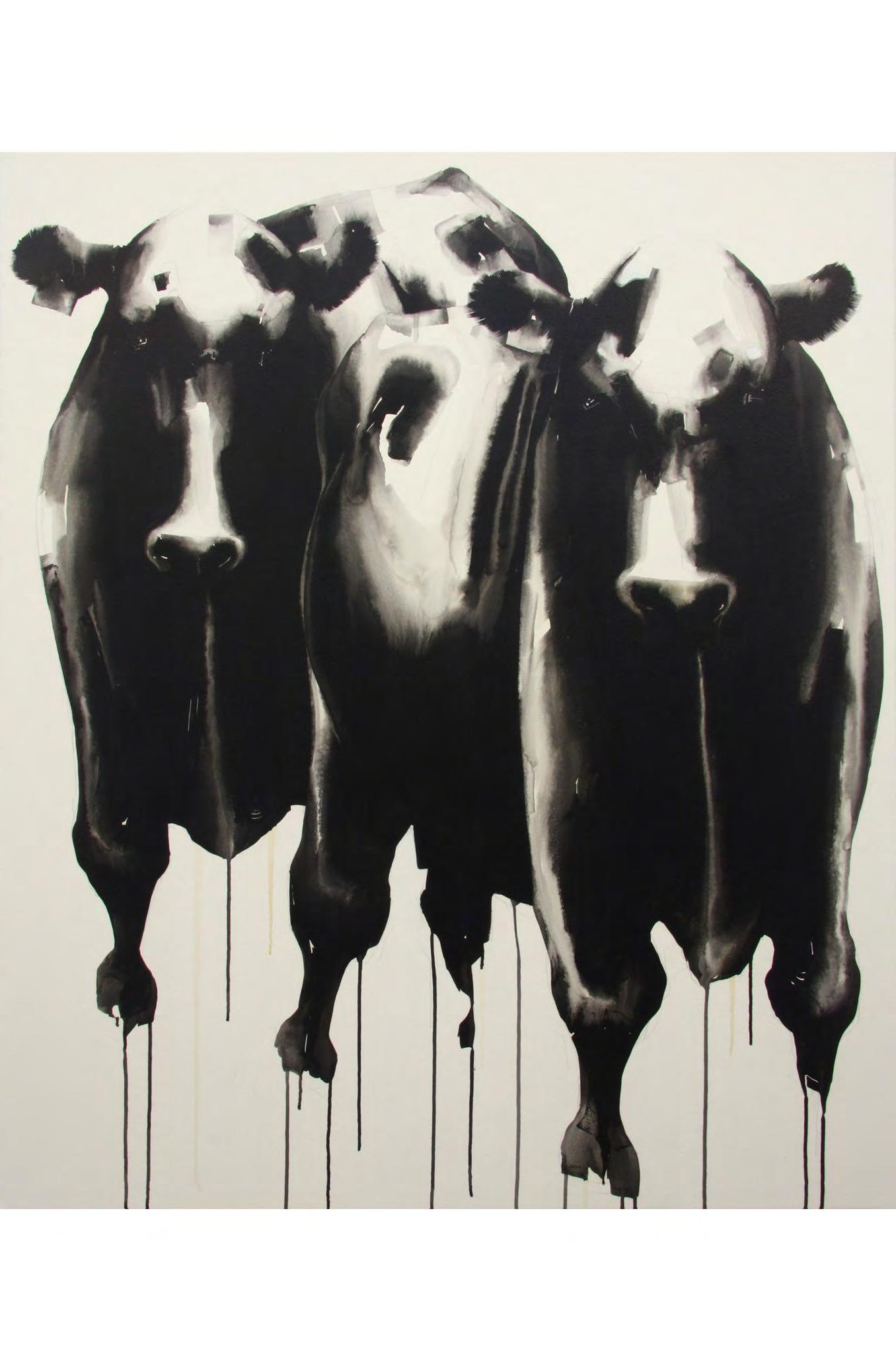
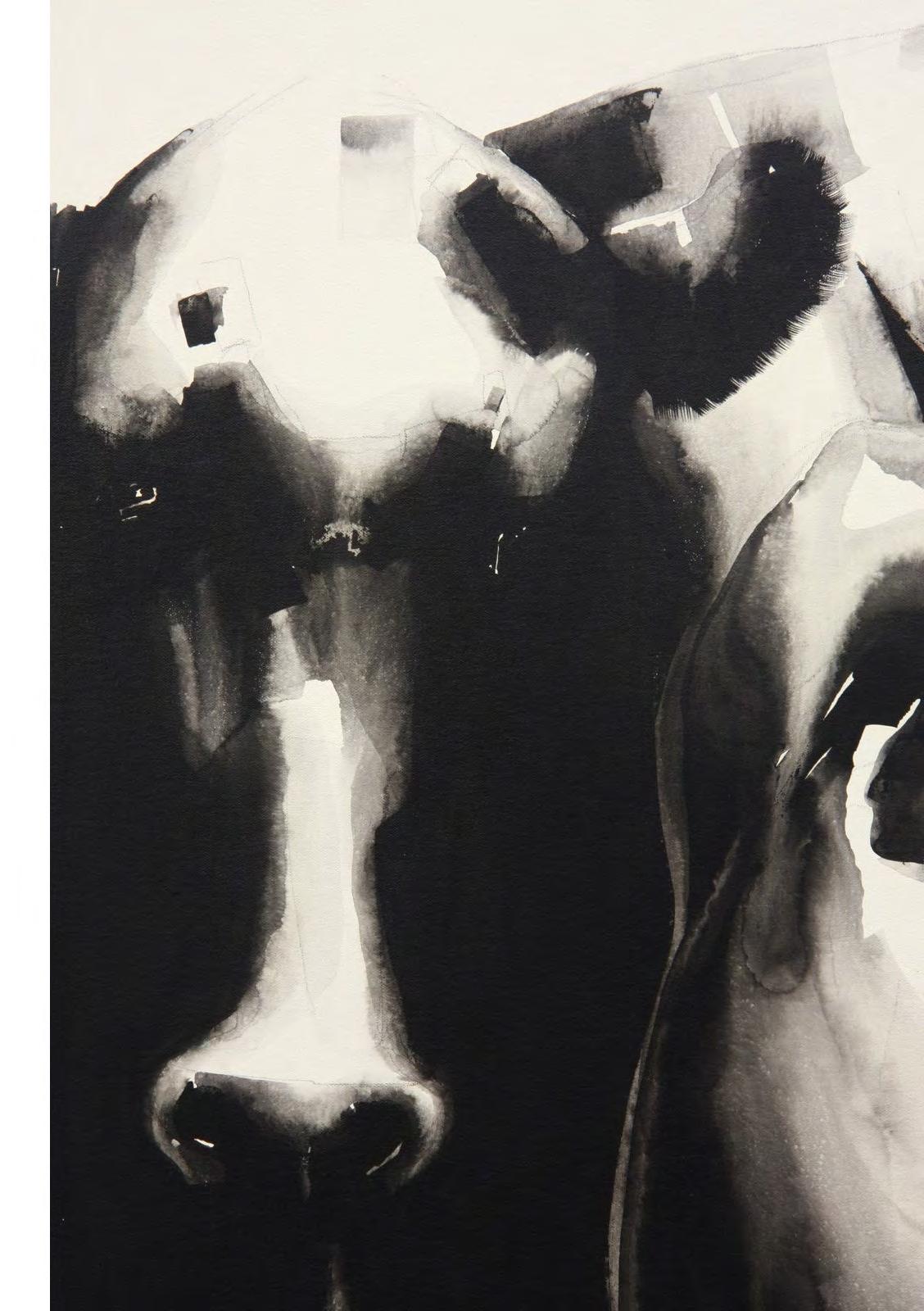
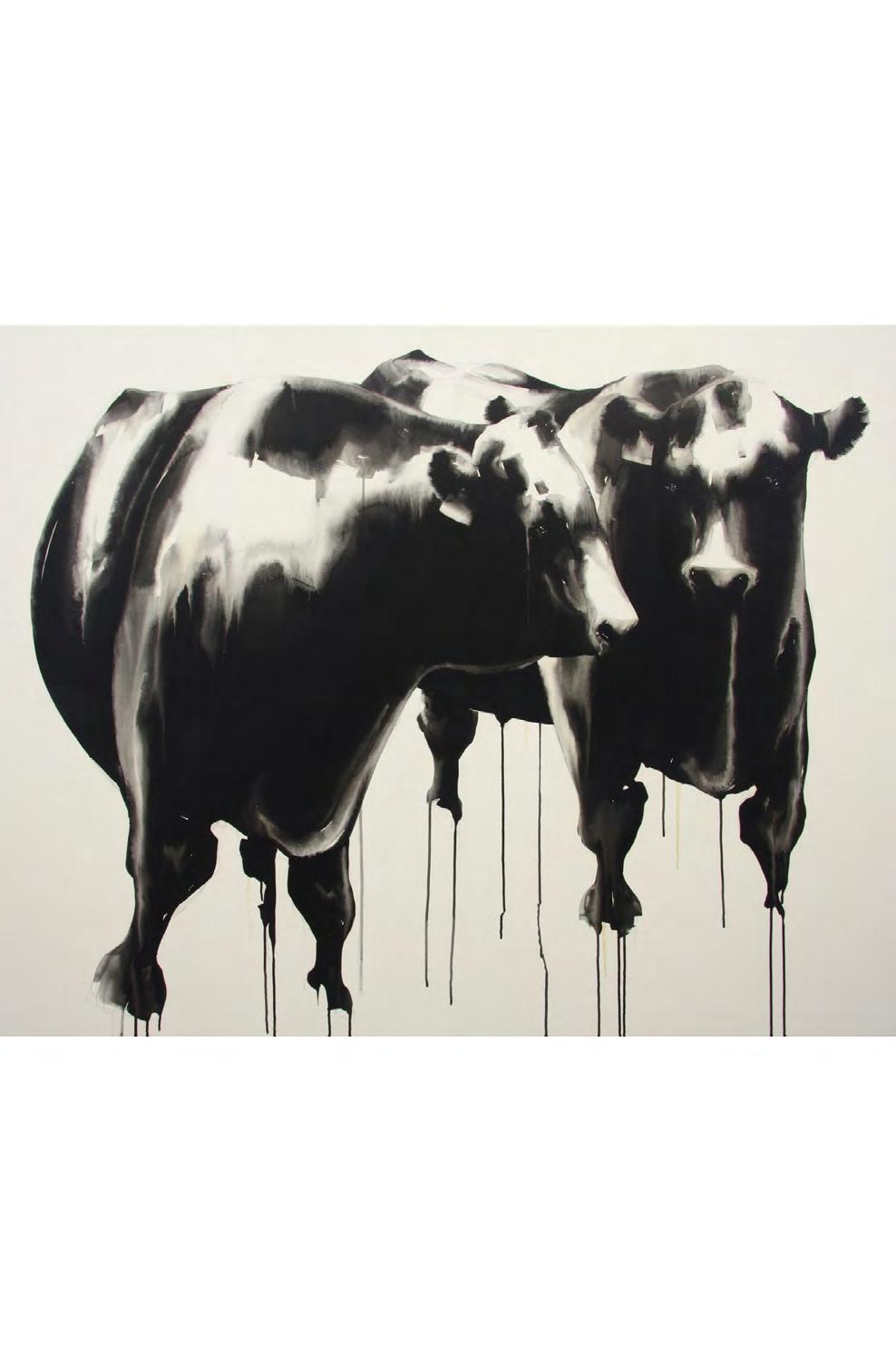
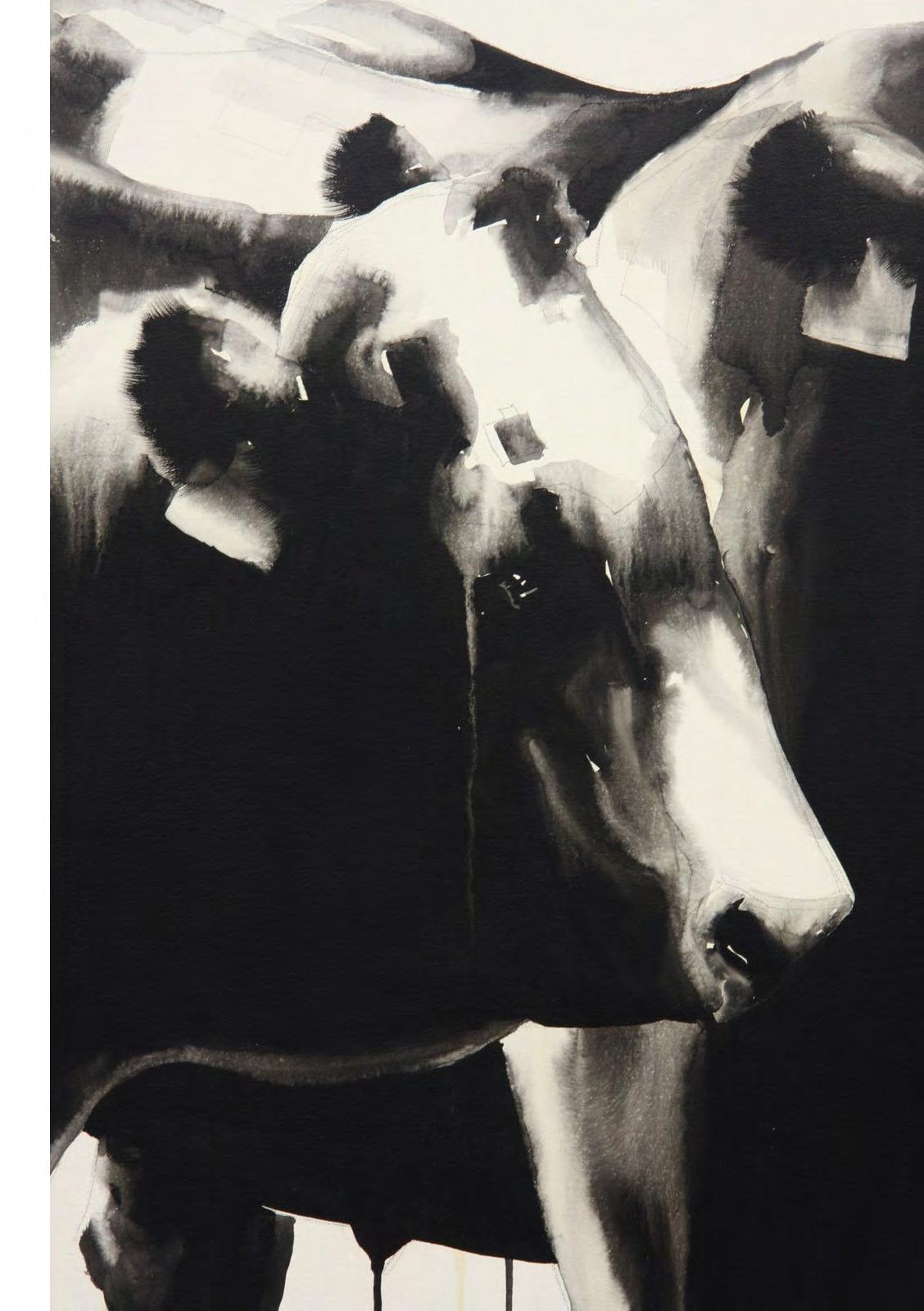
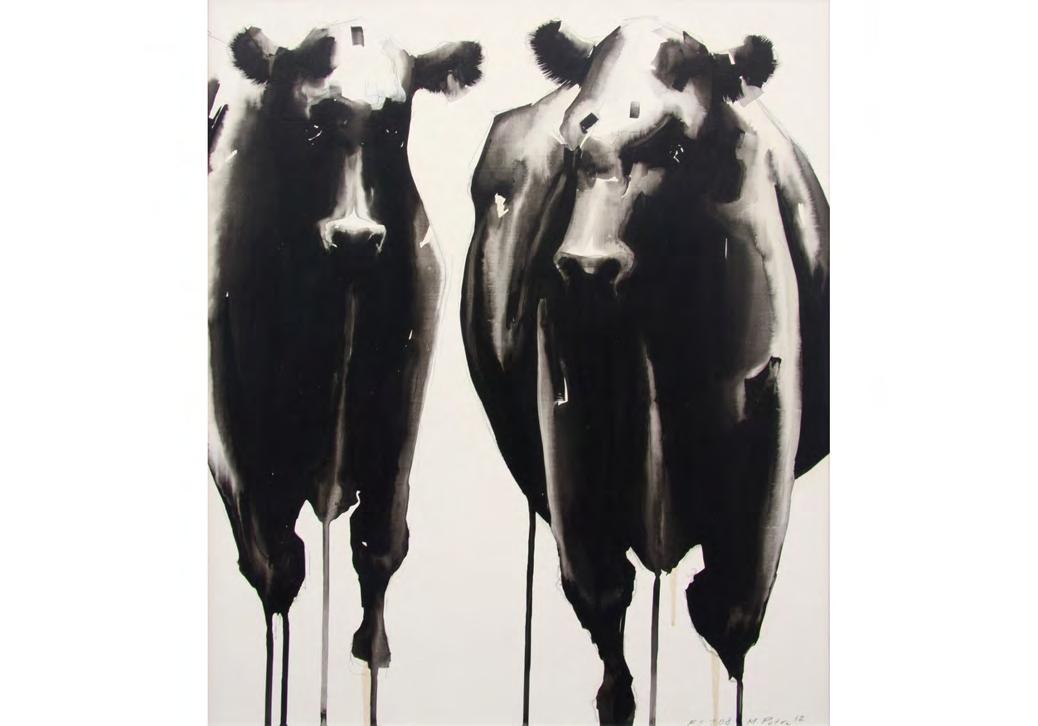
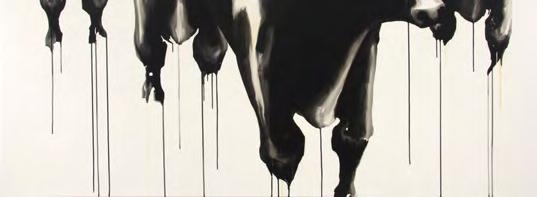
1. Field Study 230 (2012) ink, graphite, oil & acrylic on canvas, stretcher: 1302 x 1100 x 37 mm
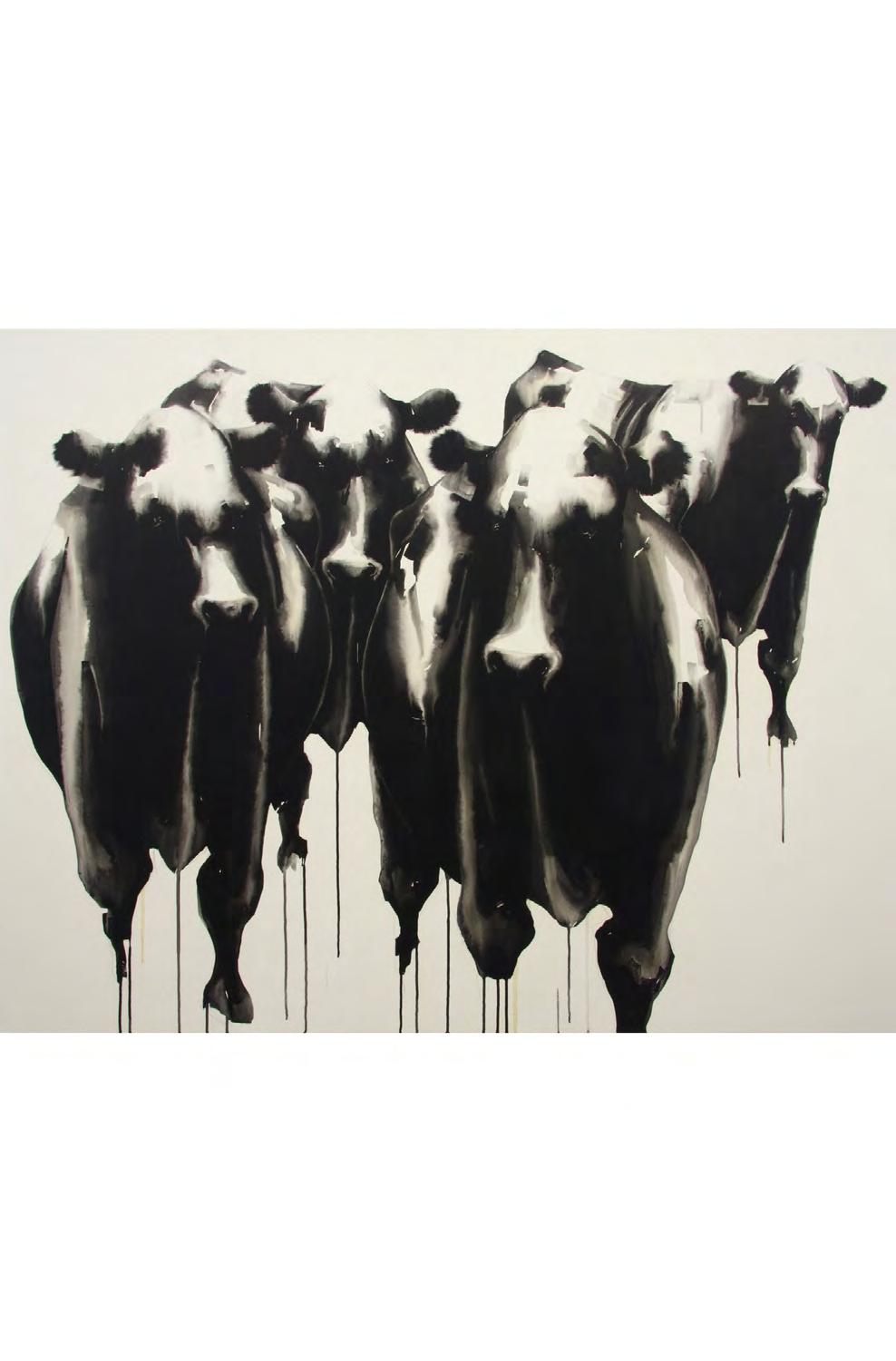
2. Field Study 232 (2012) ink, graphite, oil & acrylic on canvas, stretcher: 1115 x 1452 x 37 mm
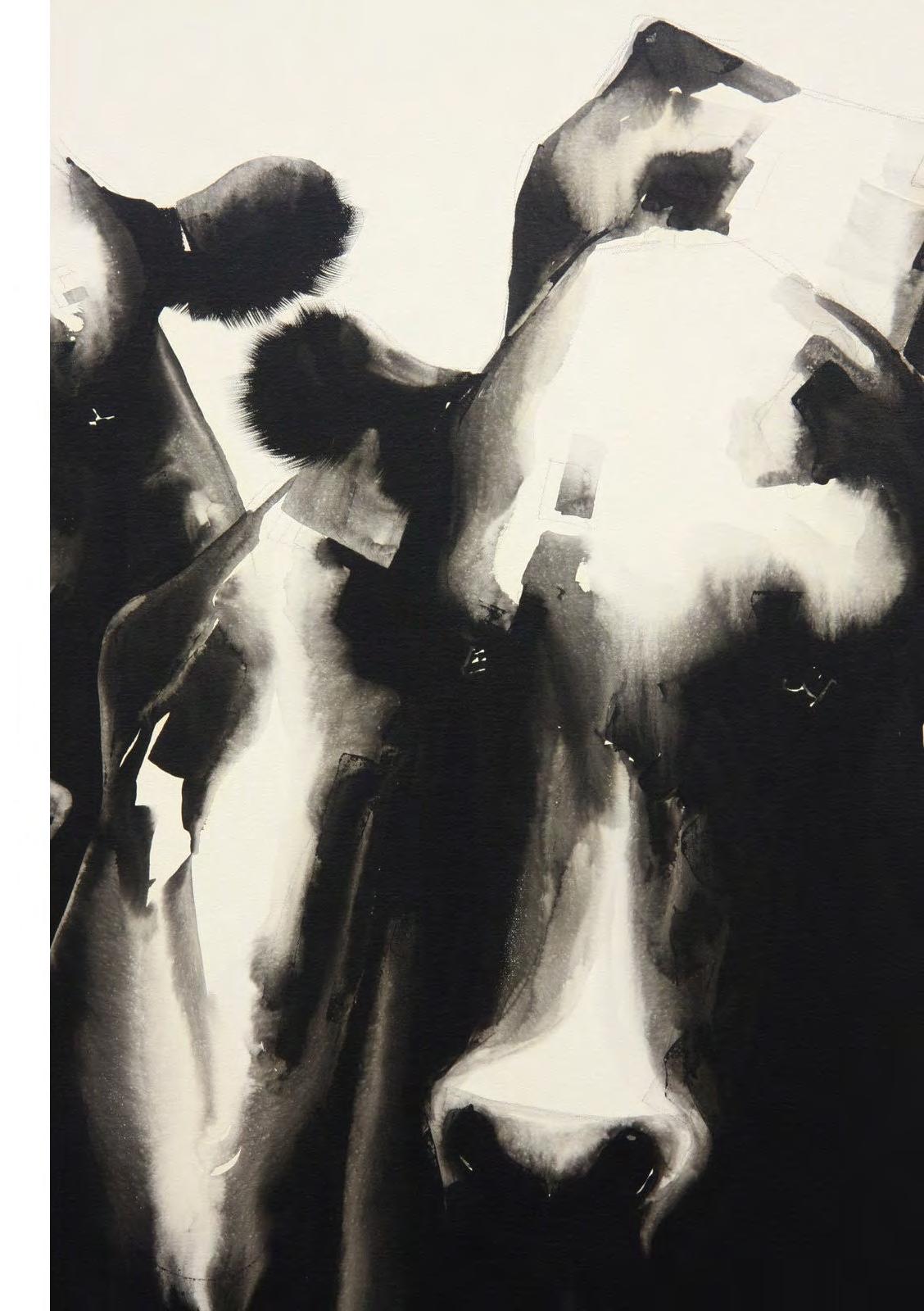
3. Field Study 231 (2012) ink, graphite, oil & acrylic on canvas, stretcher: 1115 x 1452 x 37 mm
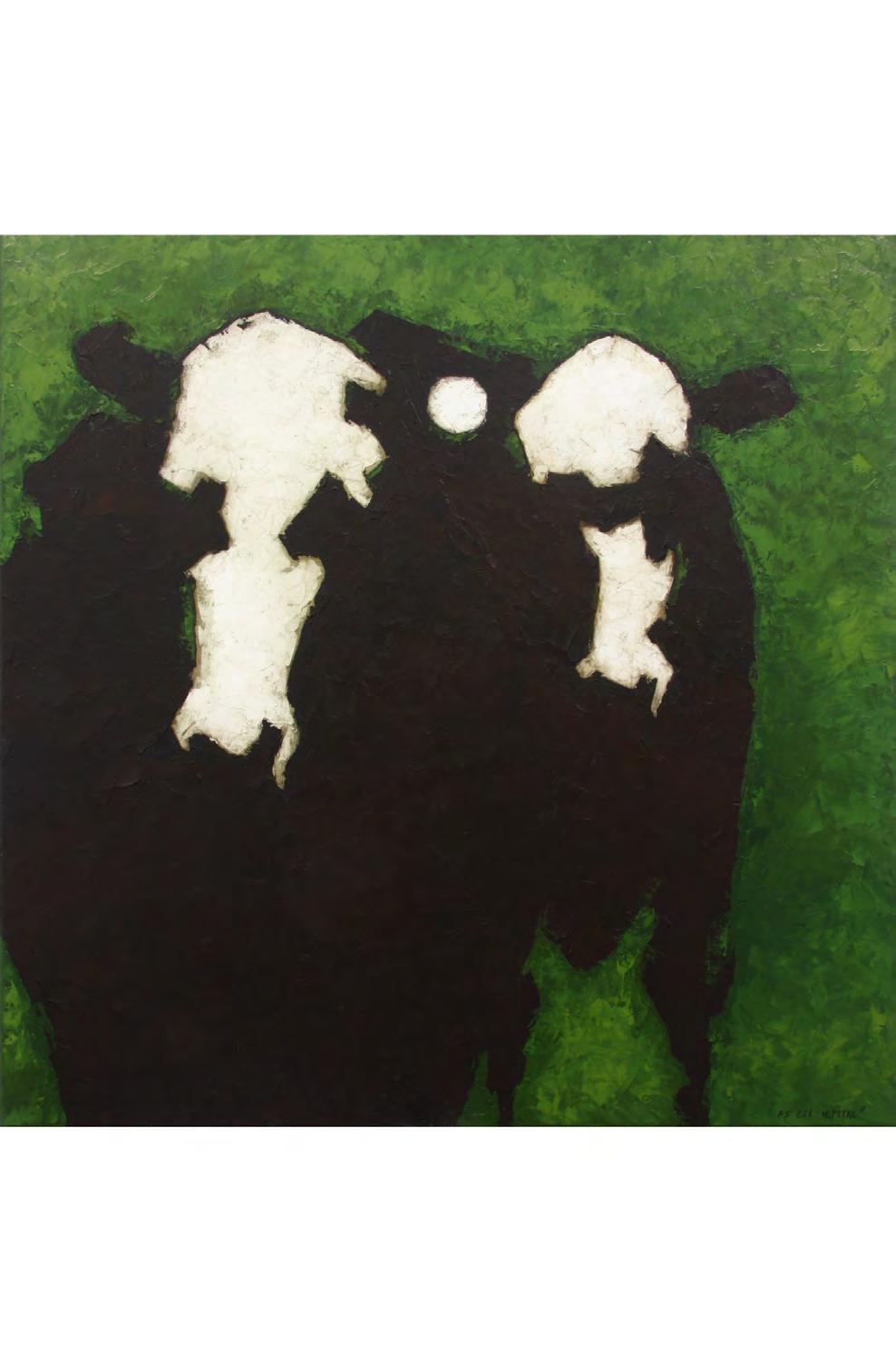
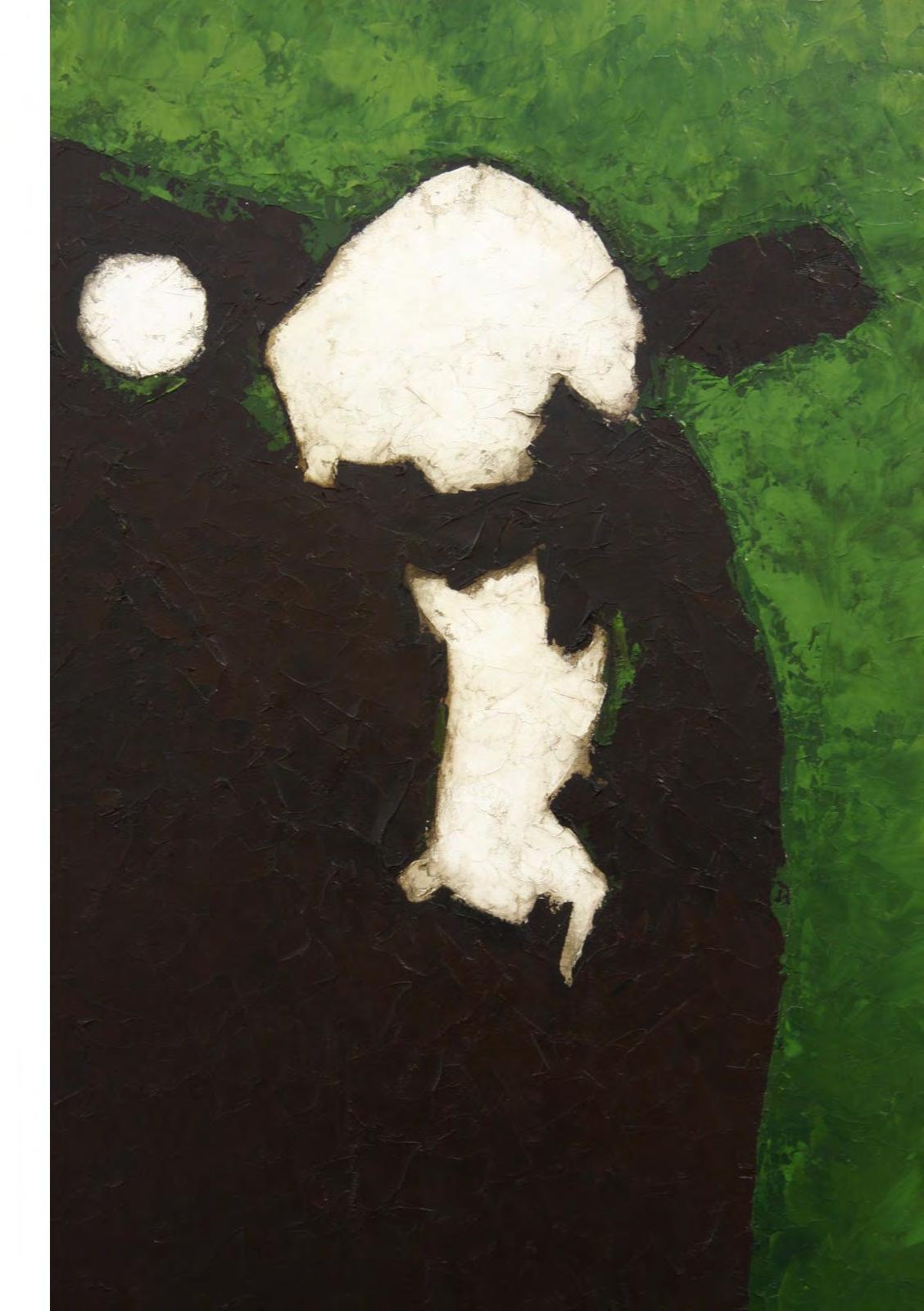
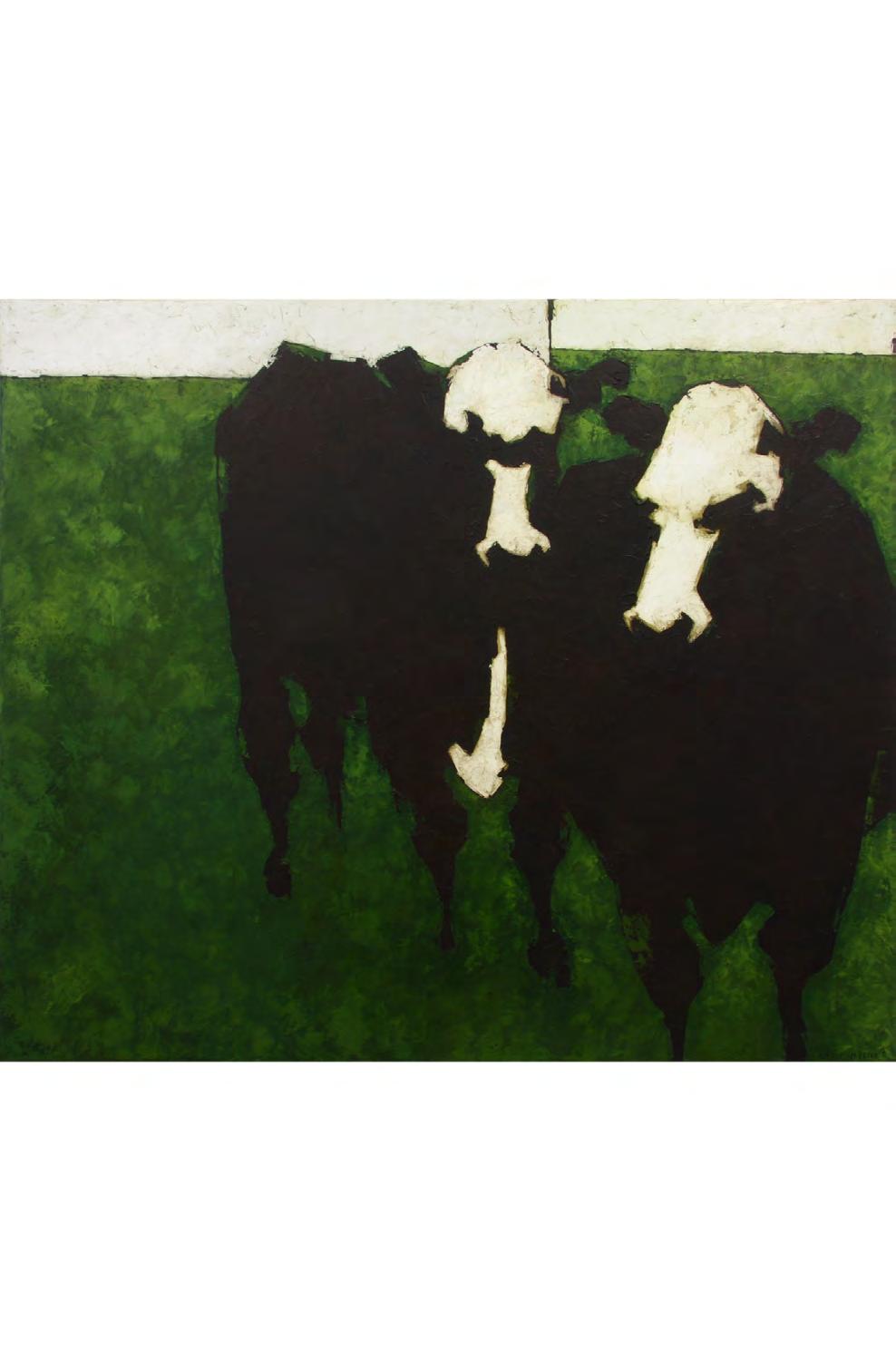
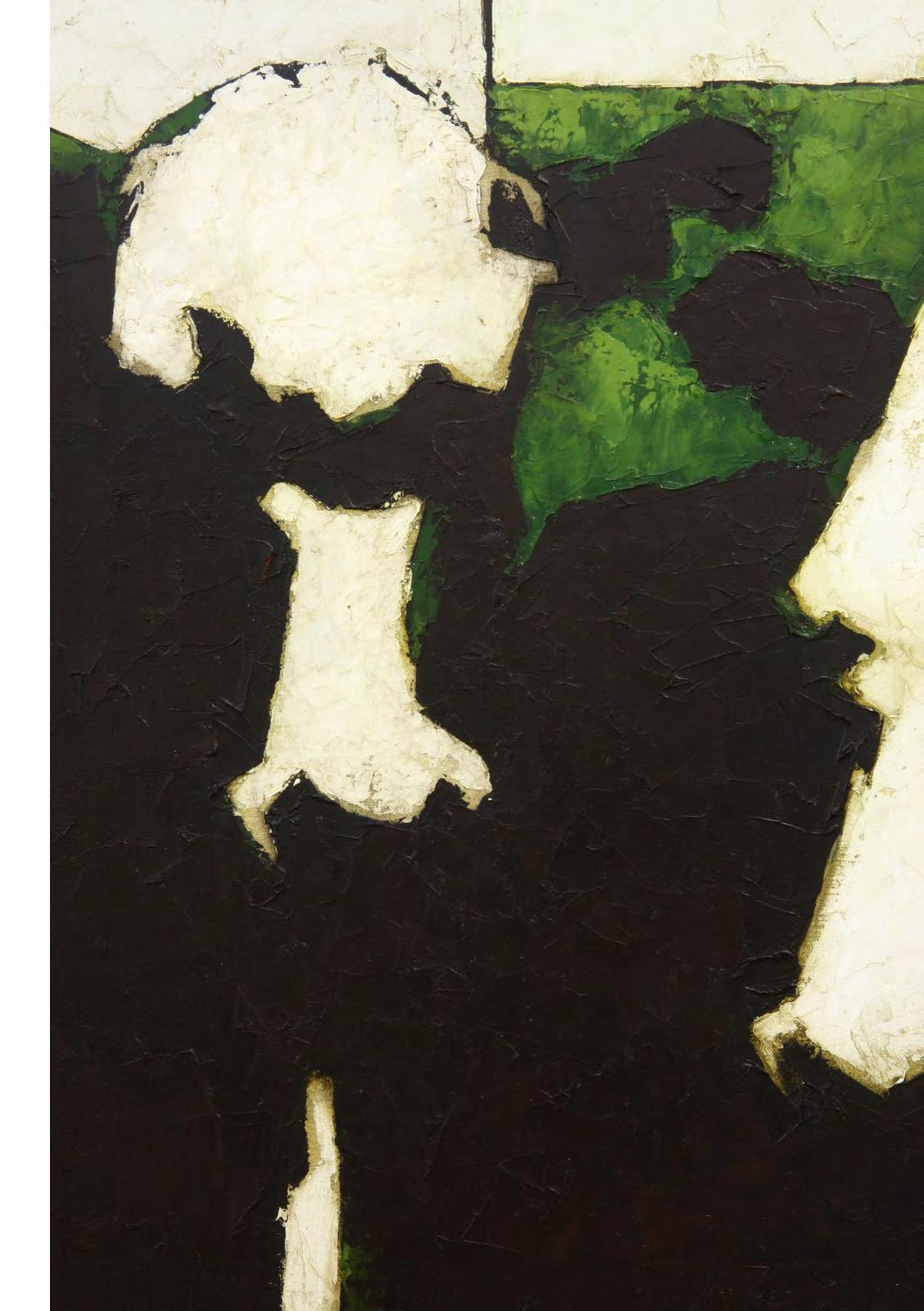
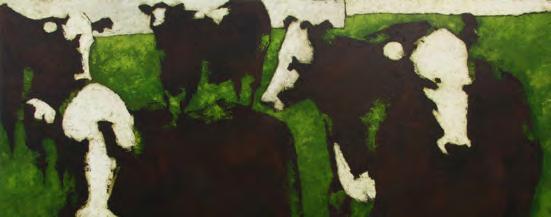
4. Field Study 228 (2012) oil on canvas, stretcher: 918 x 918 x 35 mm
5. Field Study 229 (2012) oil on canvas, stretcher: 1103 x 1300 x 37 mm
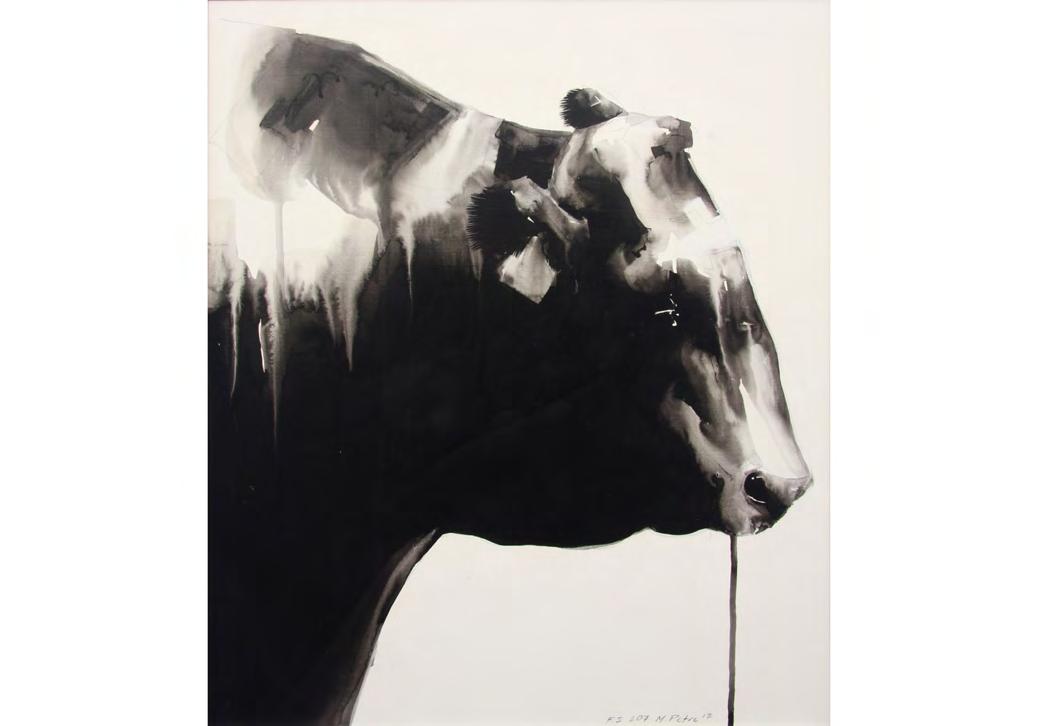
6. Field Study 207 (2012) ink, graphite, oil & acrylic on paper frame: 767 x 668 x 47 mm, image: 418 x 358 mm
7. Field Study 208 (2012) ink, graphite, oil & acrylic on paper frame: 767 x 668 x 47 mm, image: 418 x 358 mm
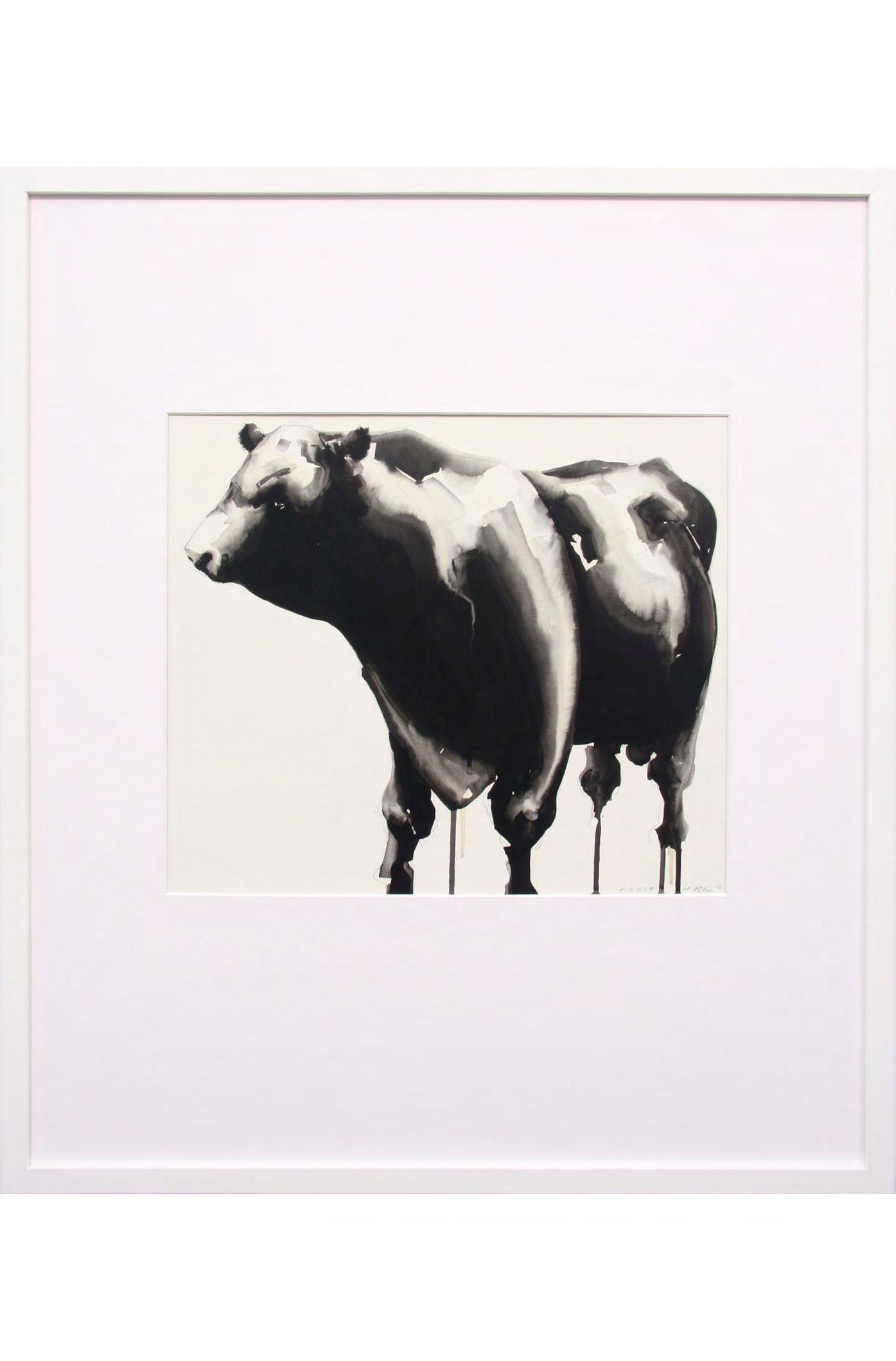
8. Field Study 209 (2012) ink, graphite, oil & acrylic on paper, frame: 767 x 668 x 47 mm, image: 358 x 418 mm
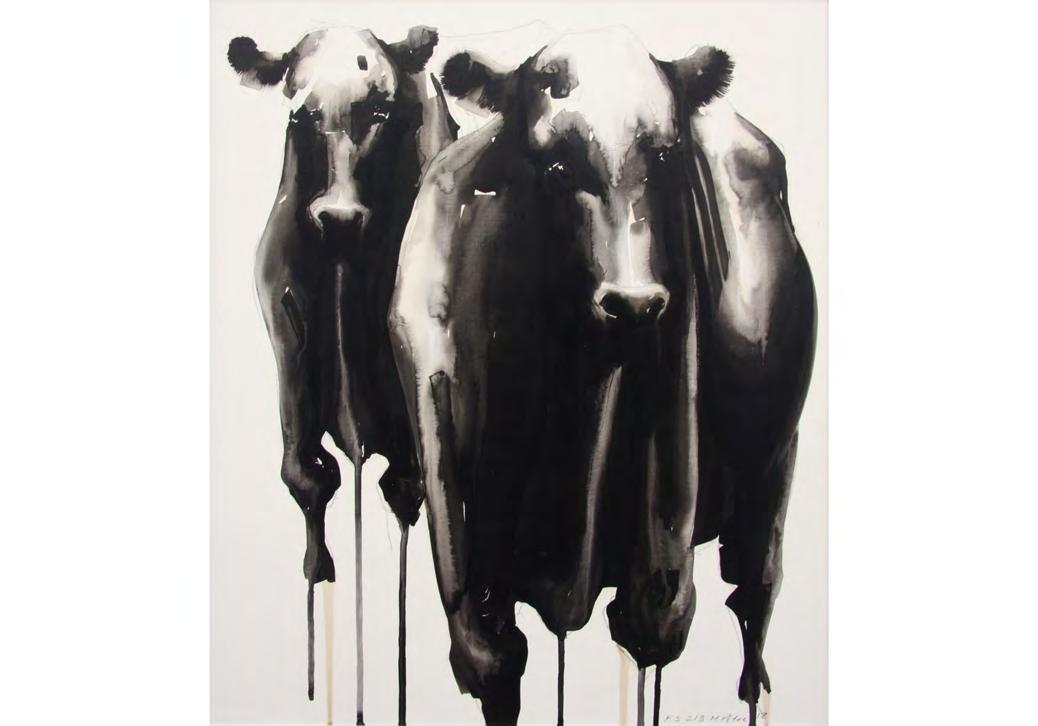
9. Field Study 213 (2012) ink, graphite, oil & acrylic on paper frame: 767 x 668 x 47 mm, image: 418 x 358 mm
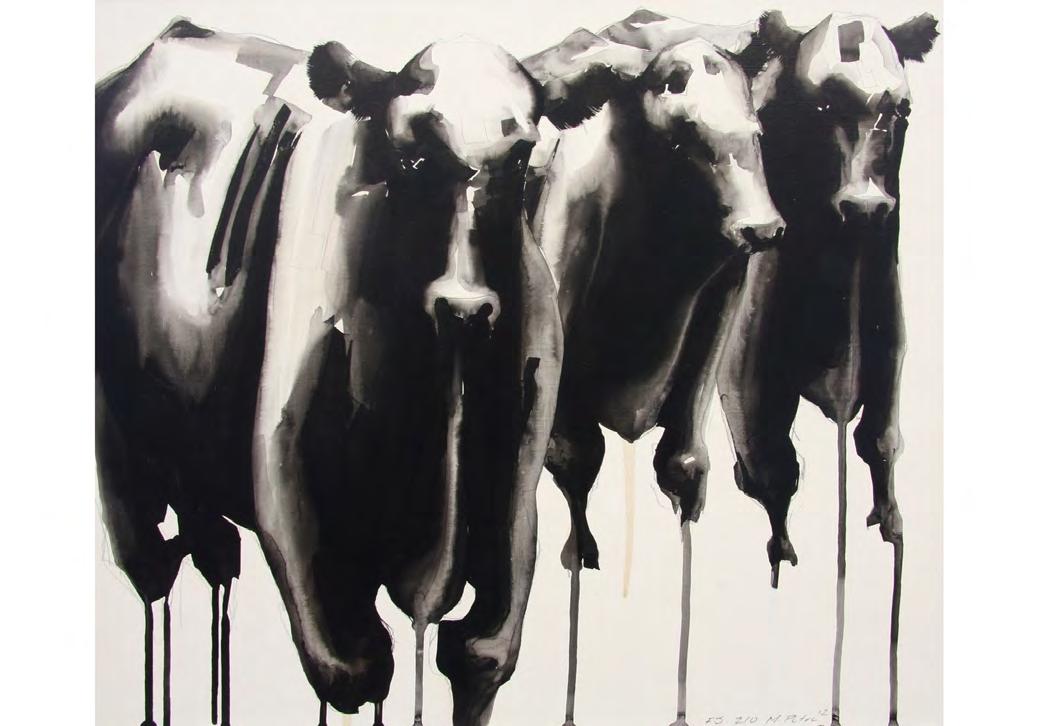
10. Field Study 210 (2012) ink, graphite, oil & acrylic on paper frame: 767 x 668 x 47 mm, image: 358 x 418 mm
11. Field Study 211 (2012)
ink, graphite, oil & acrylic on paper, frame: 767 x 668 x 47 mm, image: 358 x 418 mm
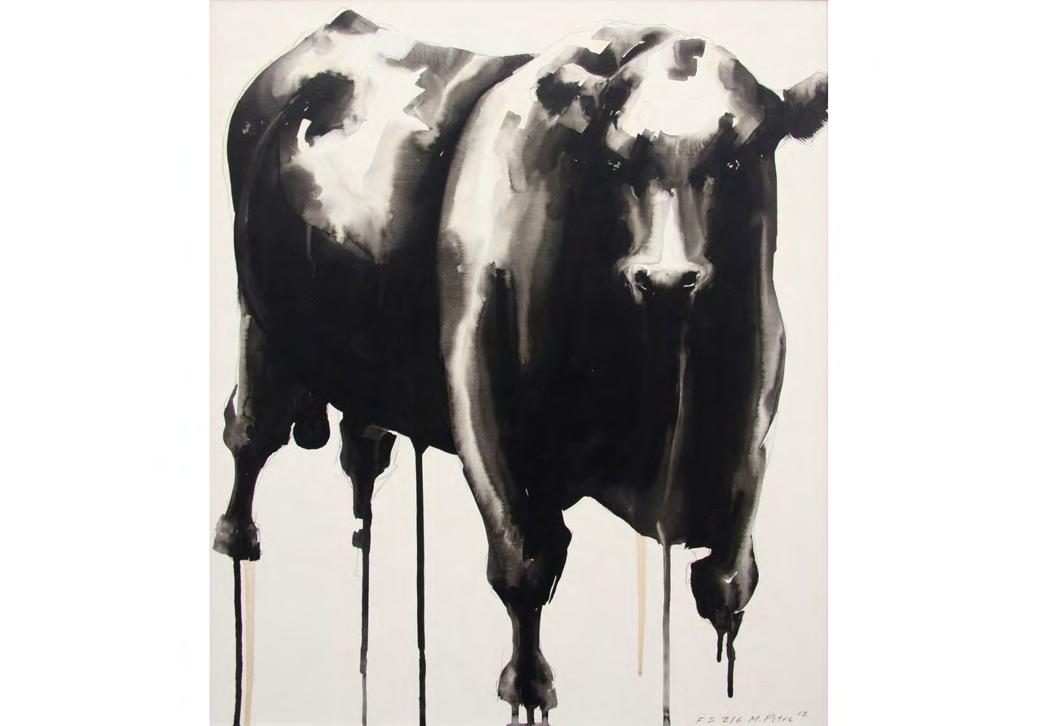
12. Field Study 216 (2012) ink, graphite, oil & acrylic on paper frame: 767 x 668 x 47 mm, image: 418 x 358 mm
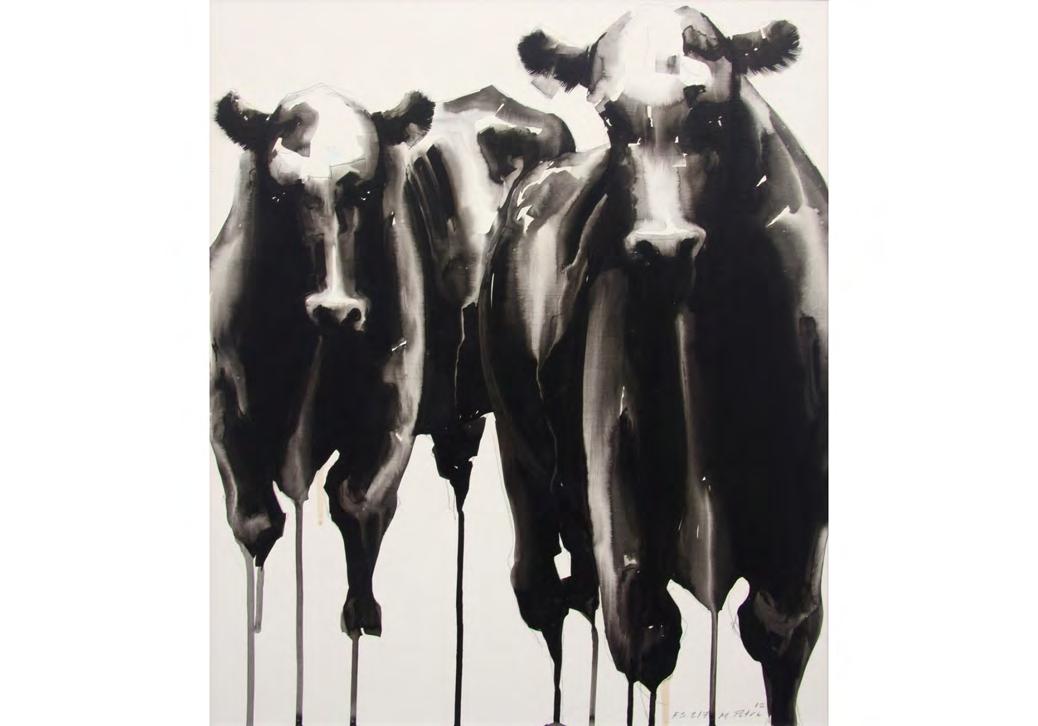
13. Field Study 217 (2012) ink, graphite, oil & acrylic on paper frame: 767 x 668 x 47 mm, image: 418 x 358 mm
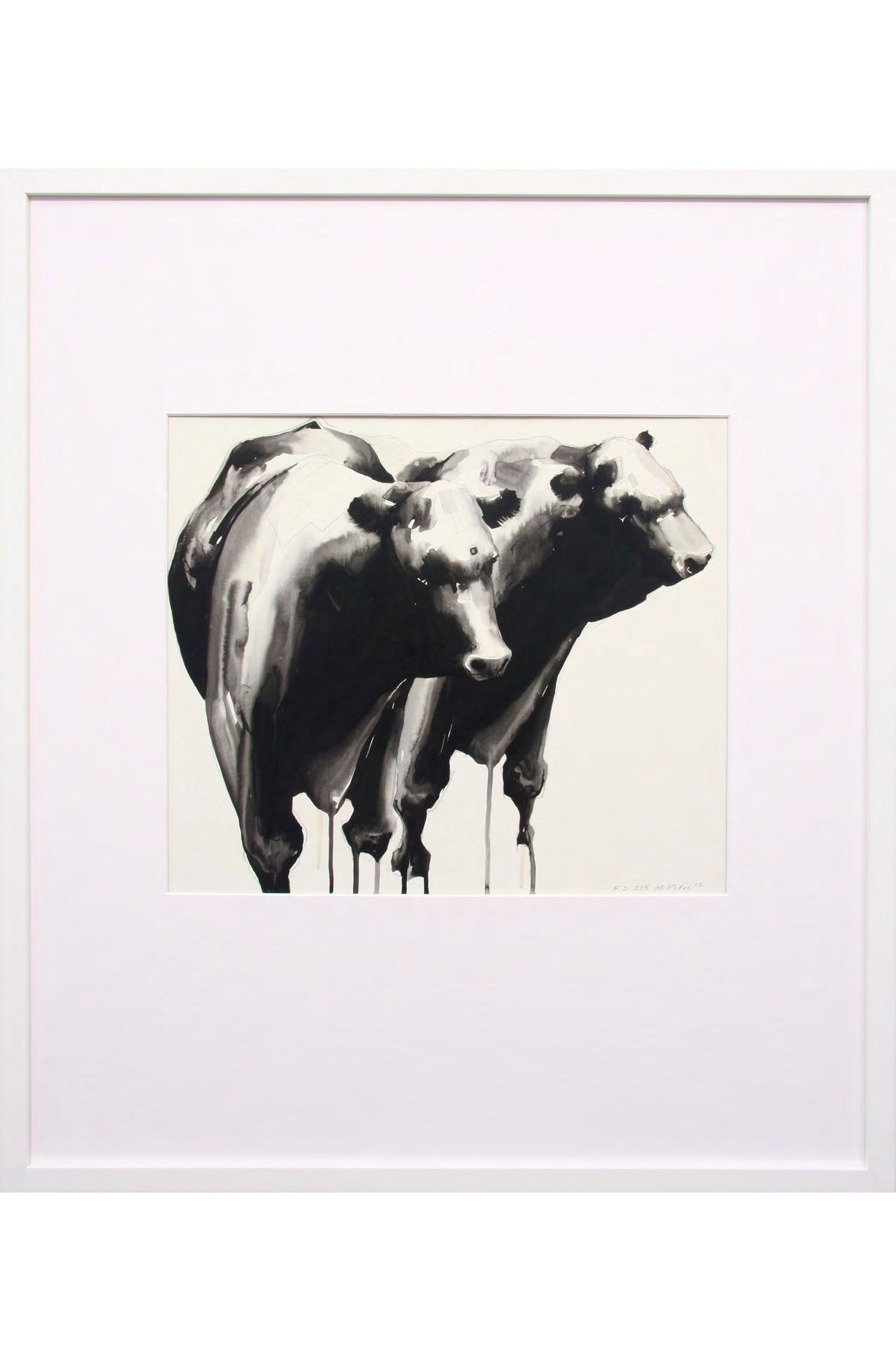
14. Field Study 215 (2012)
ink, graphite, oil & acrylic on paper, frame: 767 x 668 x 47 mm, image: 358 x 418 mm
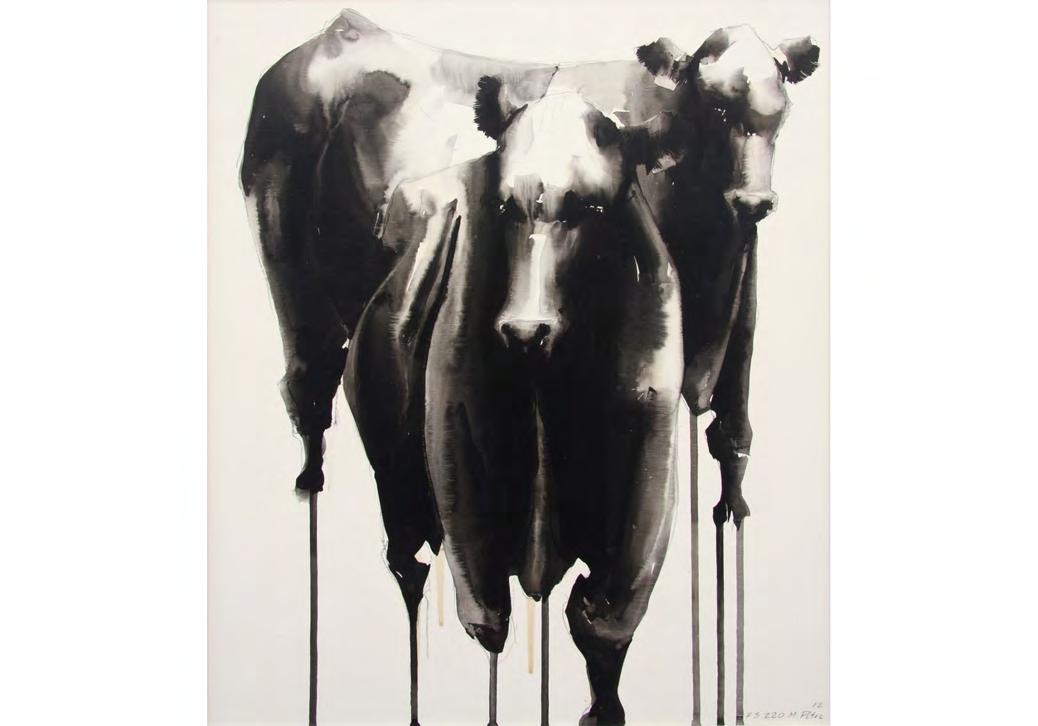
15. Field Study 220 (2012) ink, graphite, oil & acrylic on paper frame: 767 x 668 x 47 mm, image: 418 x 358 mm
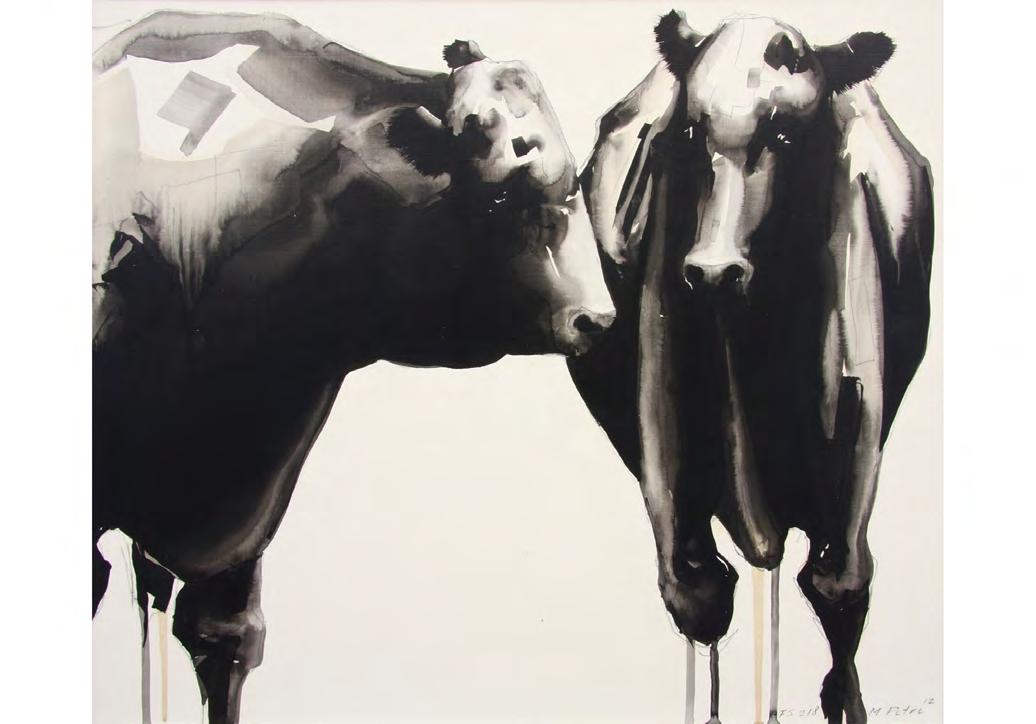
16. Field Study 218 (2012) ink, graphite, oil & acrylic on paper frame: 767 x 668 x 47 mm, image: 358 x 418 mm
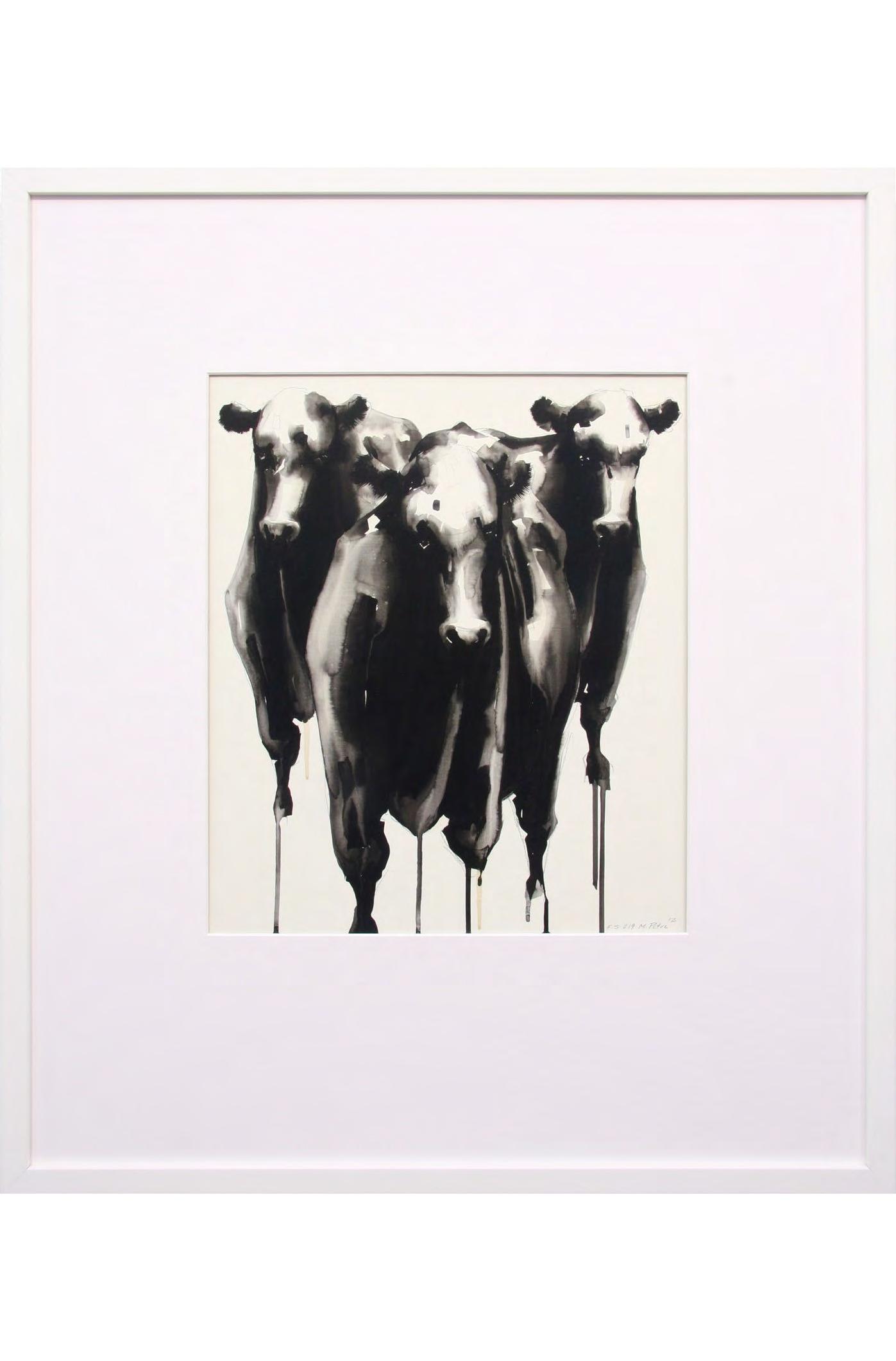
17. Field Study 219 (2012)
ink, graphite, oil & acrylic on paper, frame: 767 x 668 x 47 mm, image: 418 x 358 mm
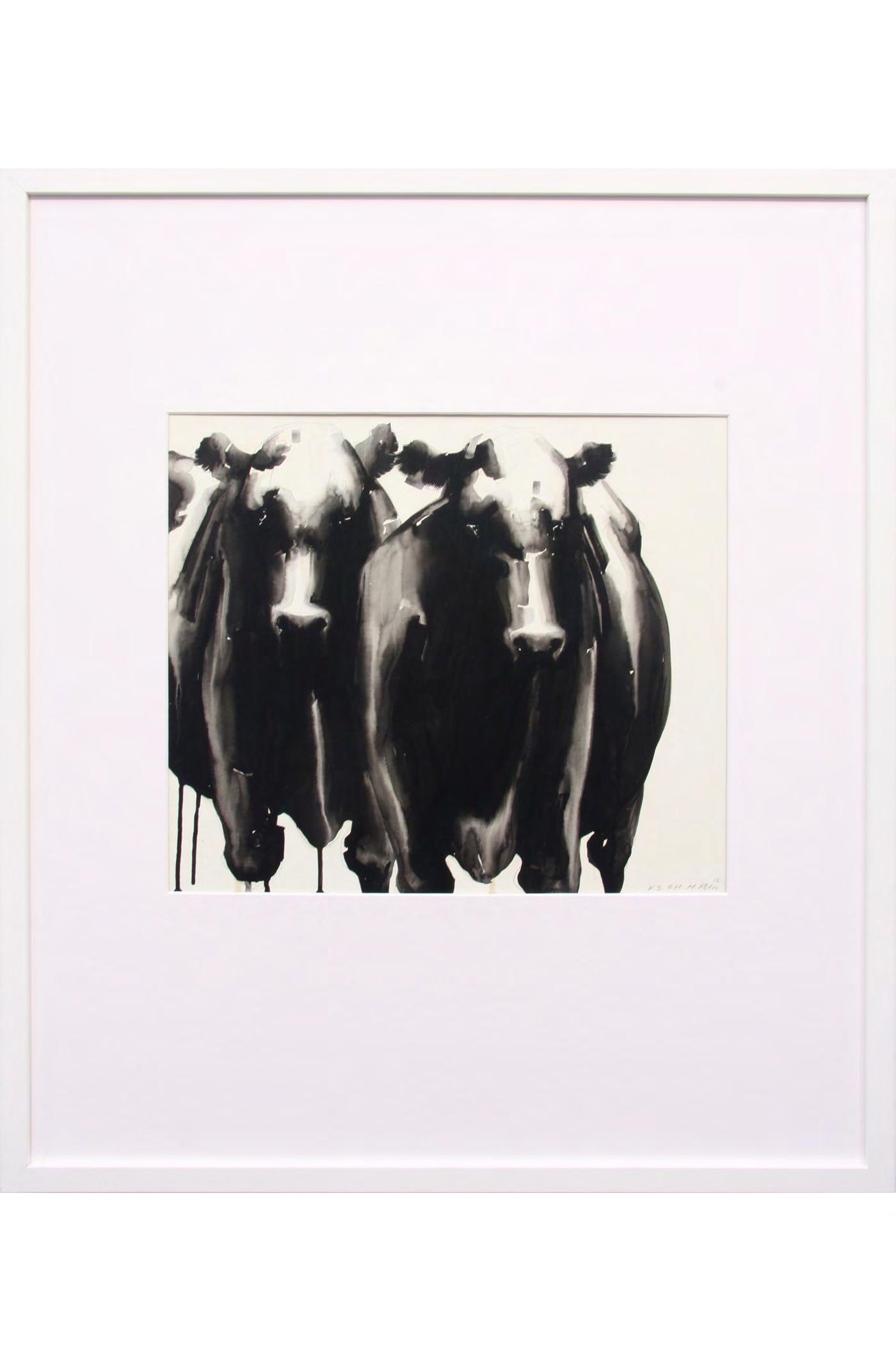
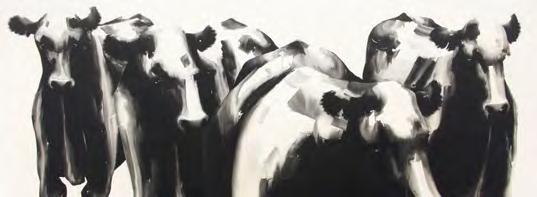
Mike Petre’s black and white paintings of cattle have achieved iconic status in NZ art. He uses implication, understatement and paraphrase as fundamental stylistic tools. In these works, the backgrounds have been removed and the cattle beasts come to float in unspecified space. He also achieves the rare and remarkable pictorial quality of the animals appearing both solid and liquid at the same time. He presents volume and body mass, the variable structure of the head and disposition with the authority of an insider; he knows these animals completely.
There is also more than an echo in these works of the (politicised) gaze of modern portraiture but the statements and hints of eye contact occur from deep within the shadowed eye sockets. This direct challenge to the viewer adds an unsettling aspect into the viewing relationship and significantly broadens the visceral experience. These are no ordinary images of cattle –these are beasts bred to die, a commodity farmed for our needs, and we know this.
Petre builds in numerous allusions to farming, such as with the dripping lines strongly suggesting carcasses hanging. He uses repetition as a device to present the animals as objects for scrutiny – we compare one to the other and appraise the differences.
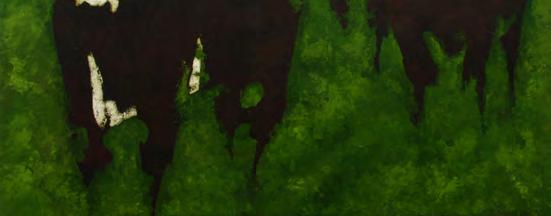
In every black and white work the landscape exists only in our minds. In Field Study 228 and Field Study 229 he alters the dynamic by adding a green background and using a palette knife. This completely different technique of building an impasto surface across the entire work unites the animals and the landscape, and in this way presents them as completely entwined, literally as one and the same.
MIKE PETRE
b. 1964, lives Matakana
Field Study 193 (2011)
“My work is a personal response to memory and experiences associated with spending a large part of my life immersed in rural environments. My paintings are not an attempt to elevate, idealise or romanticise the rural, but rather a means of exploring the notion of what it is, and what it means to be a ‘local’, and developing a visual language to convey this. New Zealand has a rich and varied history of landscape painting yet I feel little has been attempted within the visual arts to explore issues of localised rural experience and landscape. Historically New Zealand landscape painting depicts ‘visiting the landscape’ with all its implied transferral of ‘Urban Experience’, - a romanticising experience.” (1)
In the ‘field study’ series of works the animals have become the object of intense scrutiny. The background has been removed, “with the object becoming a landscape within themselves.” With gallery installation, the viewer is placed within the landscape and forced into “a degree of scrutiny many would be unfamiliar (if not uncomfortable) with… the reality of raising animals for slaughter and viewing the land for production necessitates objectification. My work is an attempt to capture this objectification, as well as negotiate ‘identity’ within the New Zealand landscape.” (2) The cattle paintings appear deceptively simple. “The images are actually built up through a sequence of processes.” In the ‘Field Study’ series the oil adds “to the dripped and drawn effect of the ink to give a sense of the wetness of living skin, a challenging immediacy. …The factual, unromantic approach to beef farming (the images in the ‘Steer’ series being marked with crayon as for meat-cuts or production lots) brings a confrontational edge to the vision of our landscape as picturesque or pastoral.” (3)
"When most of us look at cattle we interpret their returning gaze as gentle curiosity. Petre sees the eye contact as more of a challenge, an awareness of their fate and a "Bring it on" belligerent bravado by animals that inherently know they are born already defeated." (4)
Born Piopio, New Zealand 1964. Bachelor of Agriculture (Management), Massey University, Palmerston North, 1986. Bachelor of Design, Carrington Polytechnic, 1994. Raised on a sheep and beef farm in Piopio (King Country). Worked on farms in New Zealand before studying for an agriculture degree and in the UK and Israel afterwards.
Following his graduation from design studies, Petre was a founder member of Sturdee studios and in 1998 of Indicator studios. He began exhibiting via the studios in 1995 and since 1997 has exhibited in dealer galleries in Auckland, Wellington and Dunedin. He has been a finalist in the three Wallace Awards he has entered (1998, 1999 & 2001) and in 2001 was featured in episode 4 of TVNZ’s ‘The Big Art Trip’.
1. Artist’s Statement, 2002.
2. ibid.
3. Helen Watson White, ‘Field work’, Sunday Star Times, 16 June 2002.
4. BMW Magazine, Autumn 2008.
EDUCATION
1994
MIKE PETRE
b. 1964, lives Matakana
Bachelor of Design 3D, Carrington Polytechnic
1985 Bachelor of Agriculture (Management), Massey University
SELECTED SOLO EXHIBITIONS
2012 New Works, milford galleries queenstown
2010
New Works, milford galleries queenstown
2009 New Works, milford galleries auckland
2007
2006
New Works, McPherson Gallery, Auckland
New Works, Milford Galleries Dunedin
2005 McPherson Gallery, Auckland
2004
2003
Mahurangi Gallery, Mahurangi Estate
New Works, Milford Galleries Dunedin
New Works, McPherson Gallery, Auckland
2002 Field Study, Milford Galleries Dunedin
2001 McPherson Gallery, Auckland
2000 McPherson Gallery, Auckland
SELECTED GROUP EXHIBITIONS
2012 Significant Works, Milford Galleries Dunedin
Small Works, milford galleries queenstown
The Royal Queenstown Easter Show, milford galleries queenstown
2011
The Earl Street Journal, milford galleries queenstown
Spring Catalogue, milford galleries queenstown
The Review, milford galleries queenstown
The Royal Queenstown Easter Show, milford galleries queenstown
The Earl Street Journal, milford galleries queenstown
2010 The Review, milford galleries queenstown
Spring Catalogue, milford galleries queenstown
2010 The Mahurangi Group, Matakana
The Royal Queenstown Easter Show, milford galleries queenstown
2009 Dawson, Petre, Arnold – Recent Works, milford galleries queenstown
2008 The Taranaki Gate, Percy Thomson Gallery, Stratford, Taranaki
2007 The Mahurangi Group, Villa Tamahunga, Matakana
2006 The Mahurangi Group, Puhoi
A & P Show: Art Goes Country, Christchurch Art Gallery
2005 The Mahurangi Group, Mahurangi Estate, Warkworth
2004 George Perry Gallery, Tauranga
Menagerie, North Shore Community Art Centre, North Shore
From the River to the Sea, The Mahurangi Group, Puhoi
2003 Indicator Studio Group Show, Auckland
2002 McPherson Gallery Group Show, Auckland
2001 Bowen Gallery Group Show
Wallace Art Awards Finalist Touring Exhibition
Indicator Studio Group Show
2000 McPherson Gallery ‘100 x 100’ Group Show, Auckland
Indicator Studio Group Show, Auckland
1999 Wallace Art Awards Finalist
100 x 100 Group Show, Drawings Gallery, Auckland
Choice, McPherson Gallery, Auckland
1998 100 x 100 Group Show, Drawings Gallery, Auckland
Indicator, Studio Group Show
Wallace Art Awards Finalist
1997 100 x 100 Group Show, Drawings Gallery, Auckland
Sturdee Studio Group Show
1996 Sturdee Studio Group Show
1995 Sturdee Studio Group Show
AWARDS
2004
Finalist Art Waikato National Art Award
2003 Finalist Art Waikato National Art Award
2002
2001-2002
1998
1996
Finalist Art Waikato National Art Award
Finalist and Touring Show Wallace Art Awards
Finalist Wallace Art Awards
Finalist Wallace Art Awards
COLLECTIONS
Wallace Trust
Zealandia (Terry Stringer)
BIBLIOGRAPHY
2009 Sunday Star Times, Sunday Magazine, January 2009
2008 NZ Life and Leisure, Issue 19, 2008
BMW Magazine, Feature Article, Autumn 2008
2007 New Zealand Herald, November 2007
New Zealand Herald, September 2007
NZ Lawyer, March, 2006
2006 Otago Daily Times, March, 2006
Otago Daily Times, July 2006
2005 New Zealand Herald, August, 2005
2004 Bay of Plenty Times, November 2004
New Zealand Listener, June, 2004
Home Front, TVNZ, Channel One, July, 2004
Critic, August, 2004
2003 Canvas, July, 2003
2002 Art News NZ, Winter, 2002
The Big Art Trip, TV NZ, Episode 4, screened Sept 2001 TV1, repeated Jan 2002
Otago Daily Times, June, 2002
Sunday Star Times, June, 2002
2001 New Zealand Herald, September, 2001
2000 Sunday Star Times, October, 2000
New Zealand Herald, October, 2000
Metro, June, 2000, pp. 94-99
Field Study 120 (2009)