
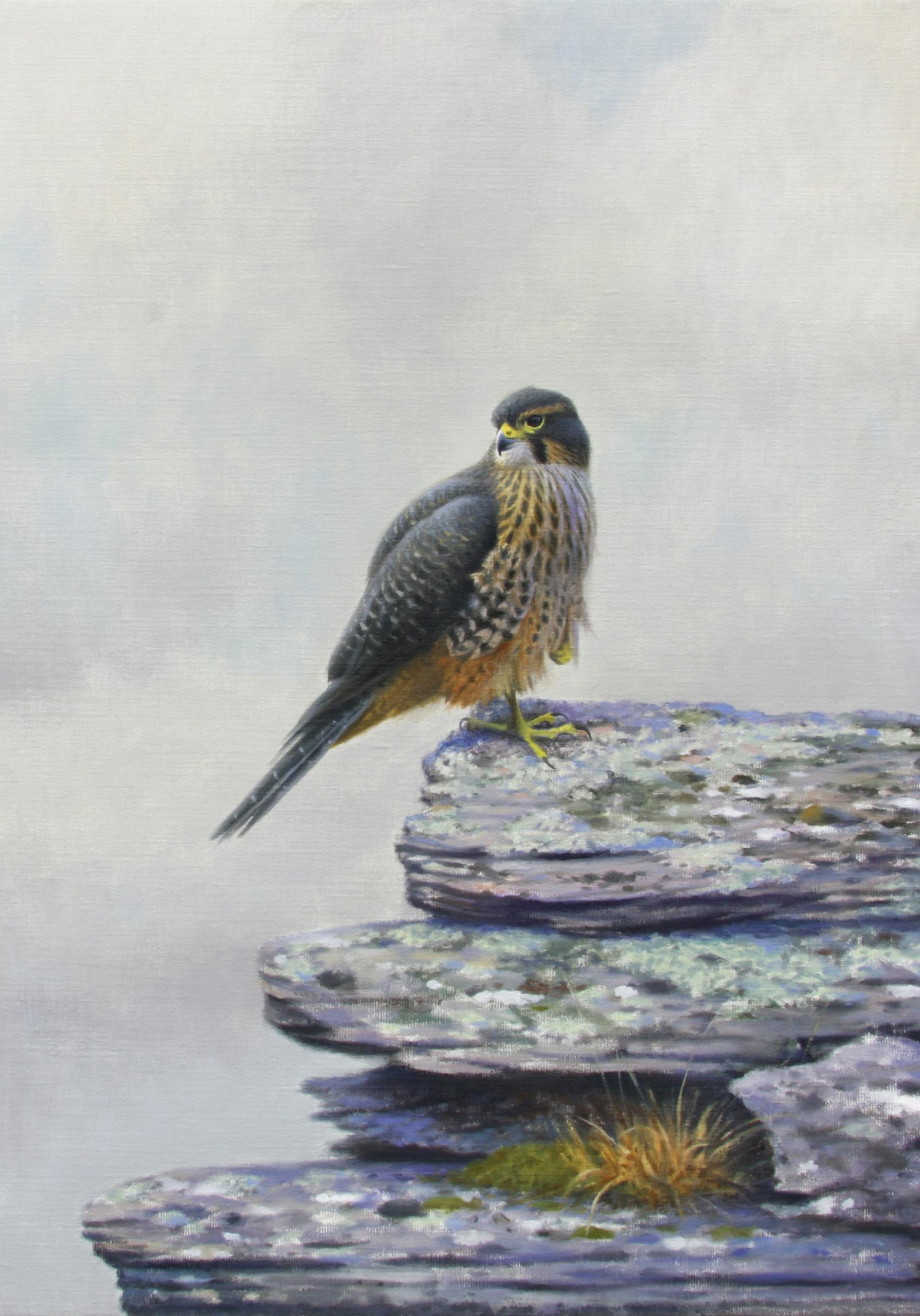
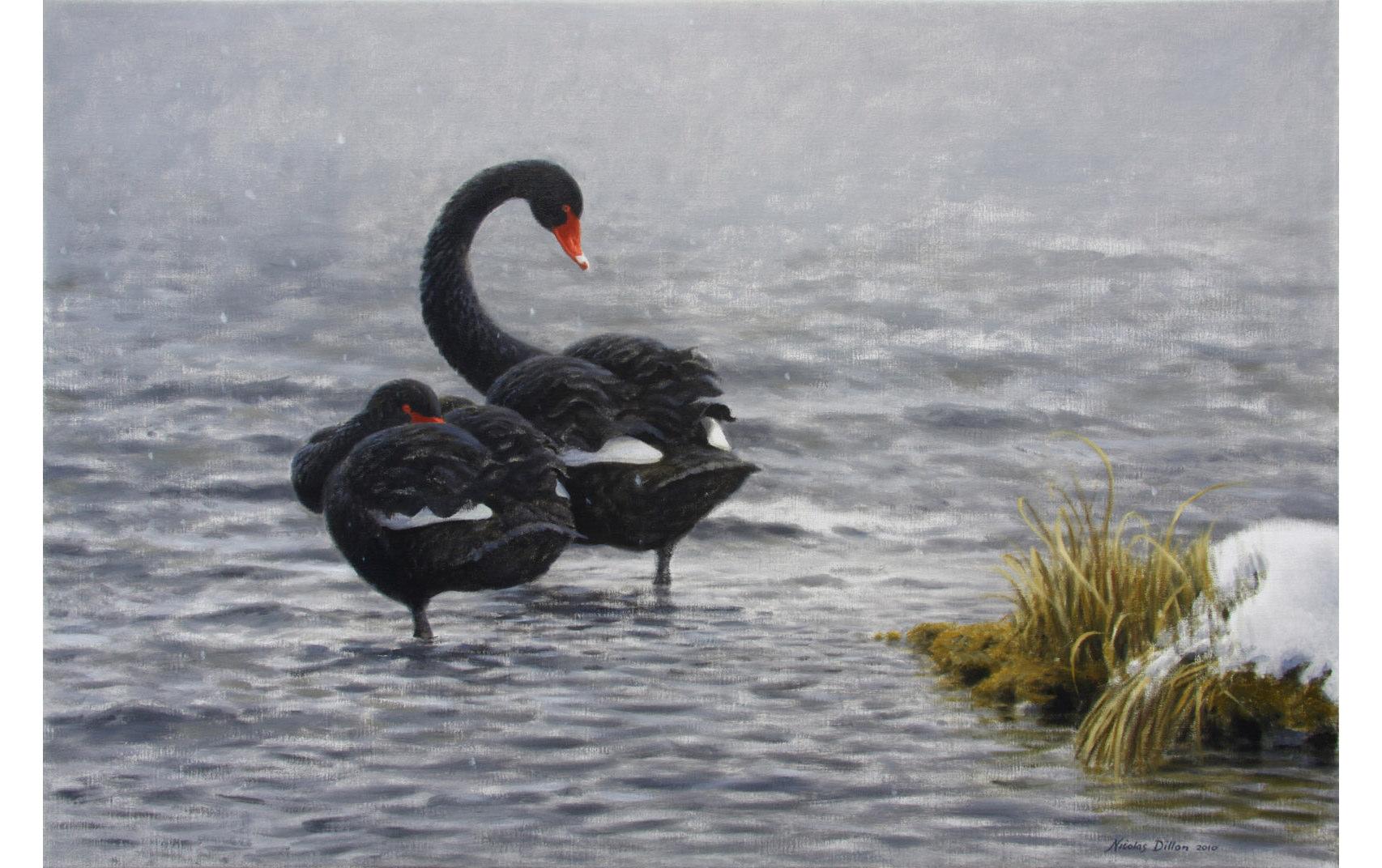
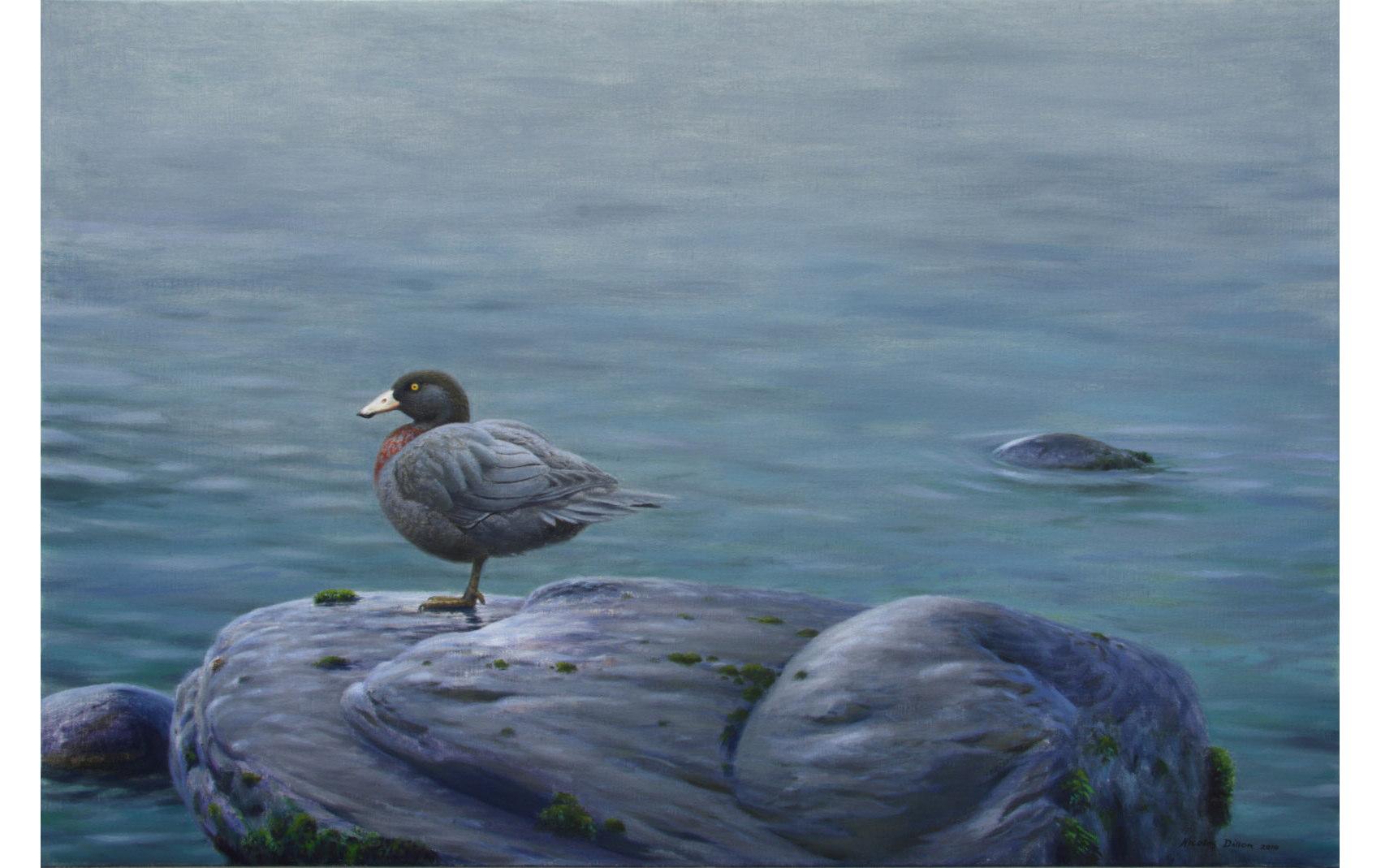
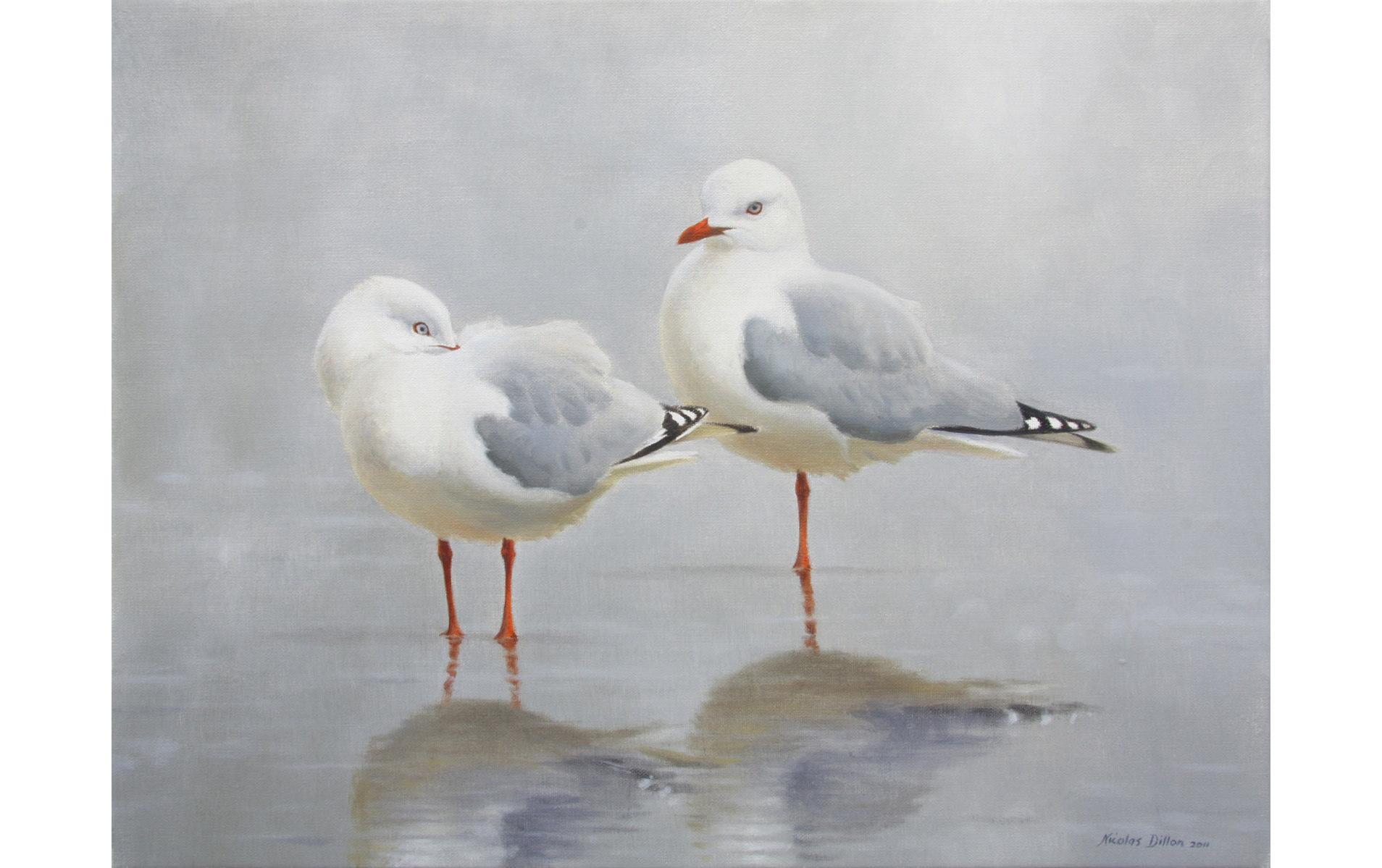
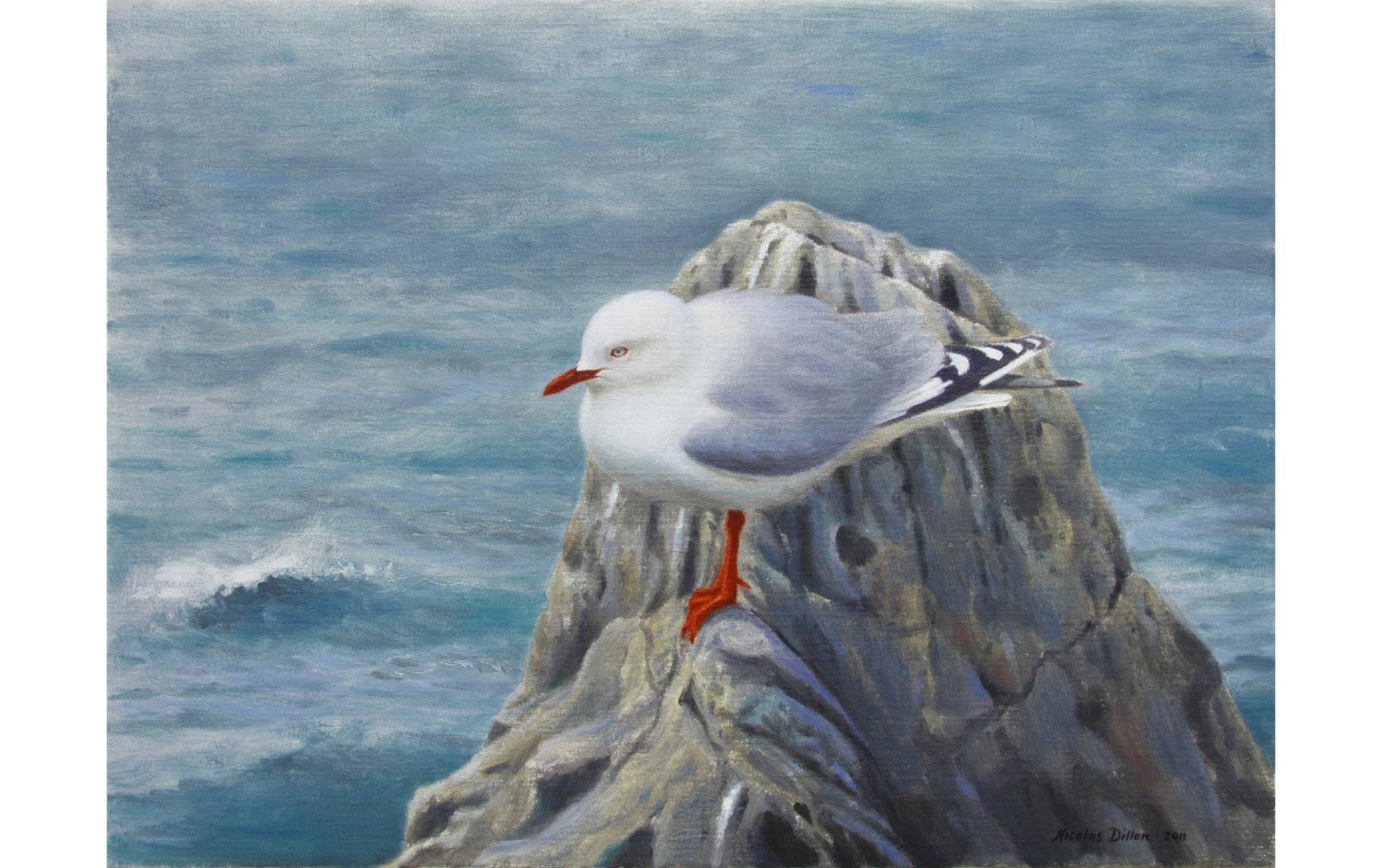
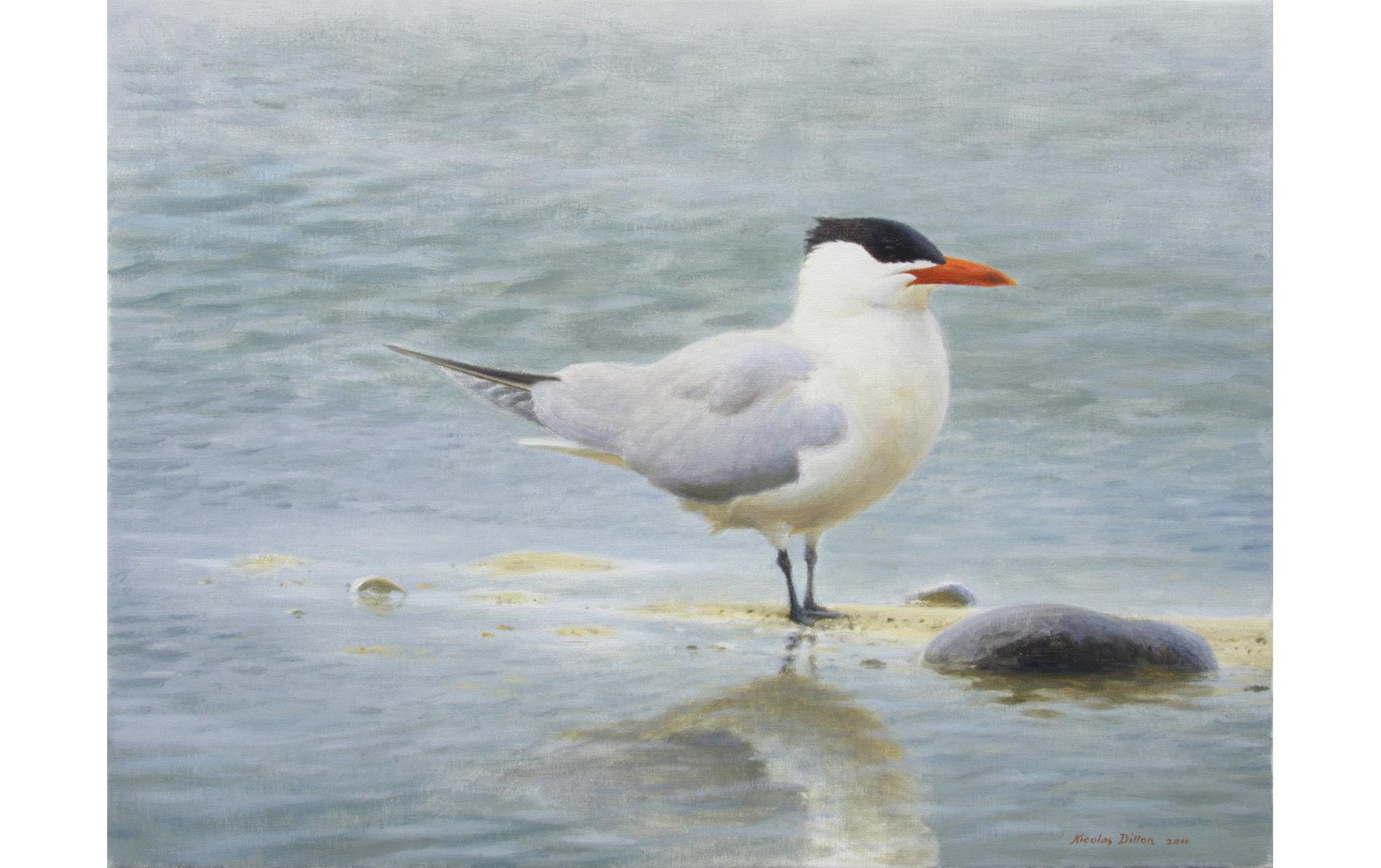
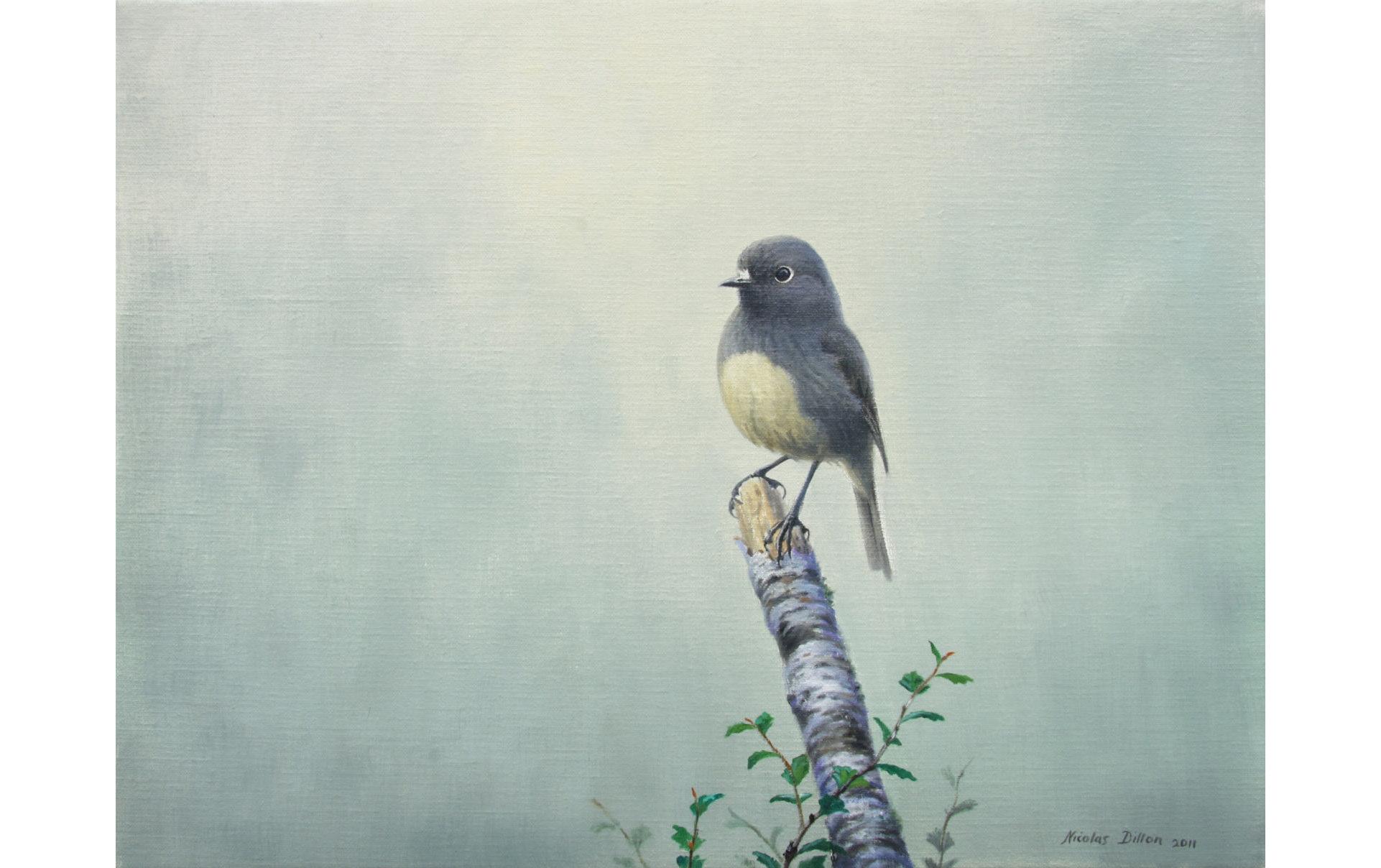
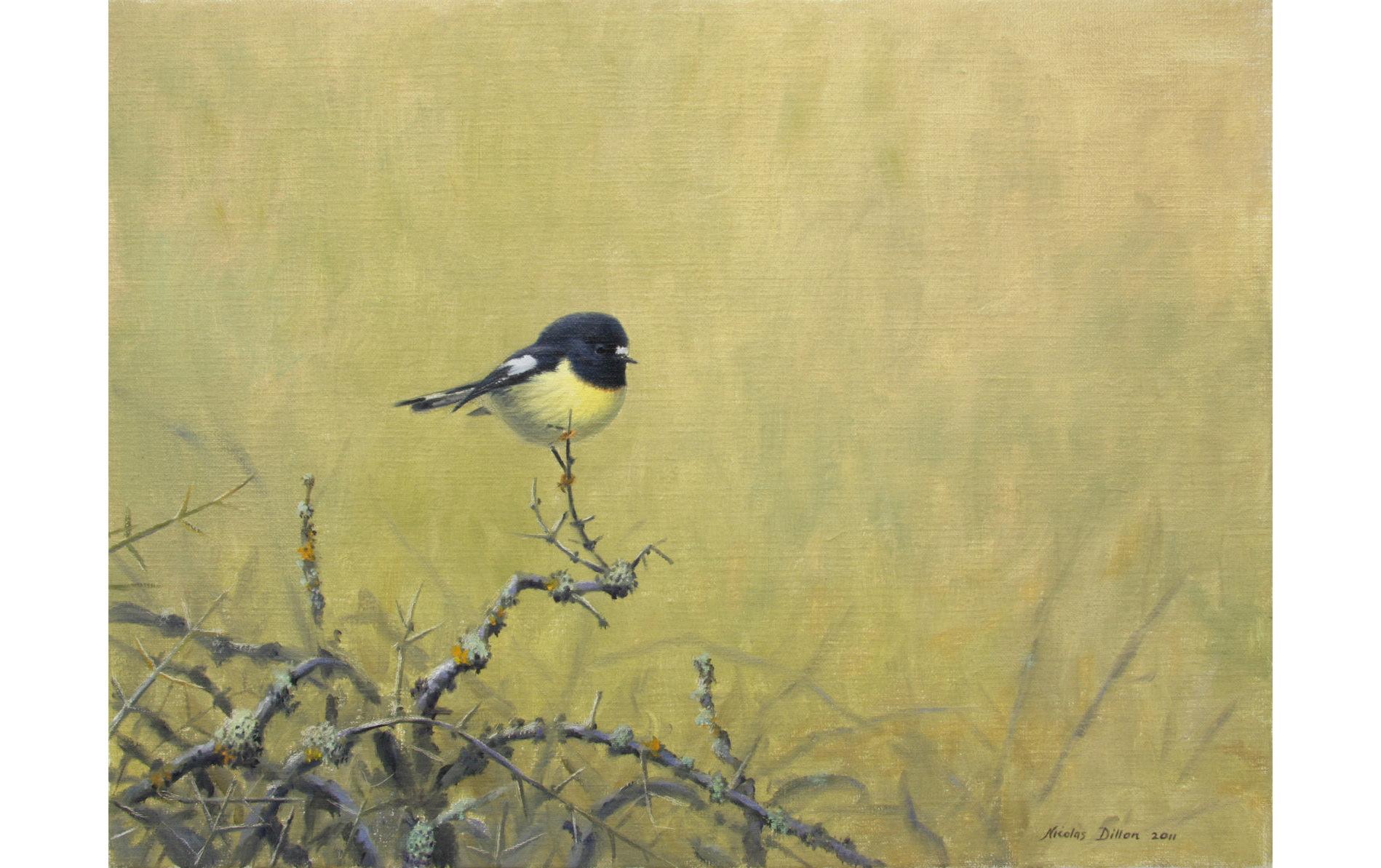



Nicolas Dillon is “one of New Zealand’s leading wildlife painters” demonstrating in his work an “extraordinary empathy with nature” and “a curious combination of arrested motion and intense energy” presenting his subjects in their broad natural environment. Dillon’s artistic goal (and success) is to combine place specific naturalism and narrative realism plus mood and atmosphere whilst capturing the life-force and animated character of the birds observed.
He works from life, drawing in the field, using a high powered spotting scope to view and build a “connection between artist and subject … so strong you can almost feel it vibrating.” (1)
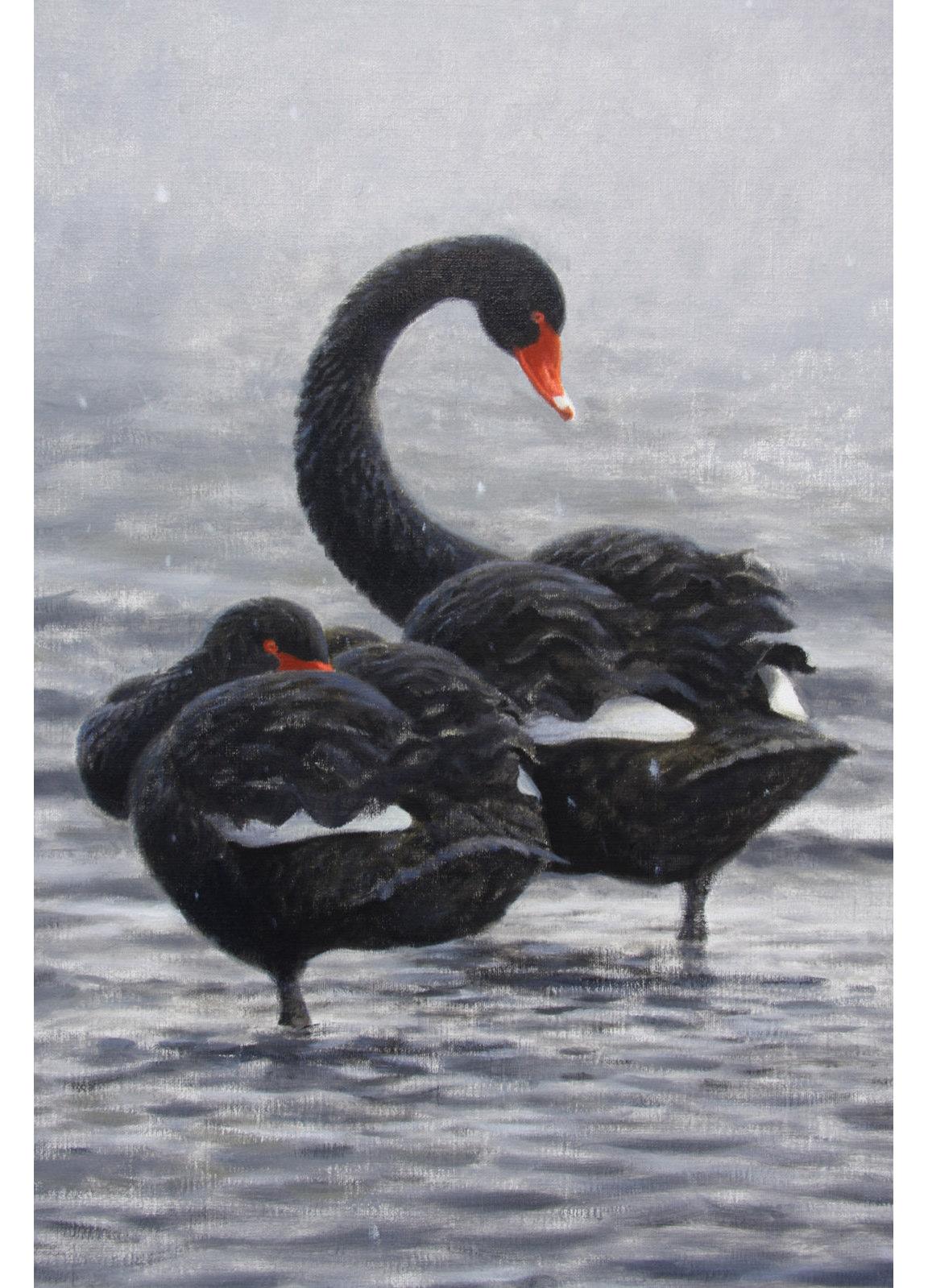
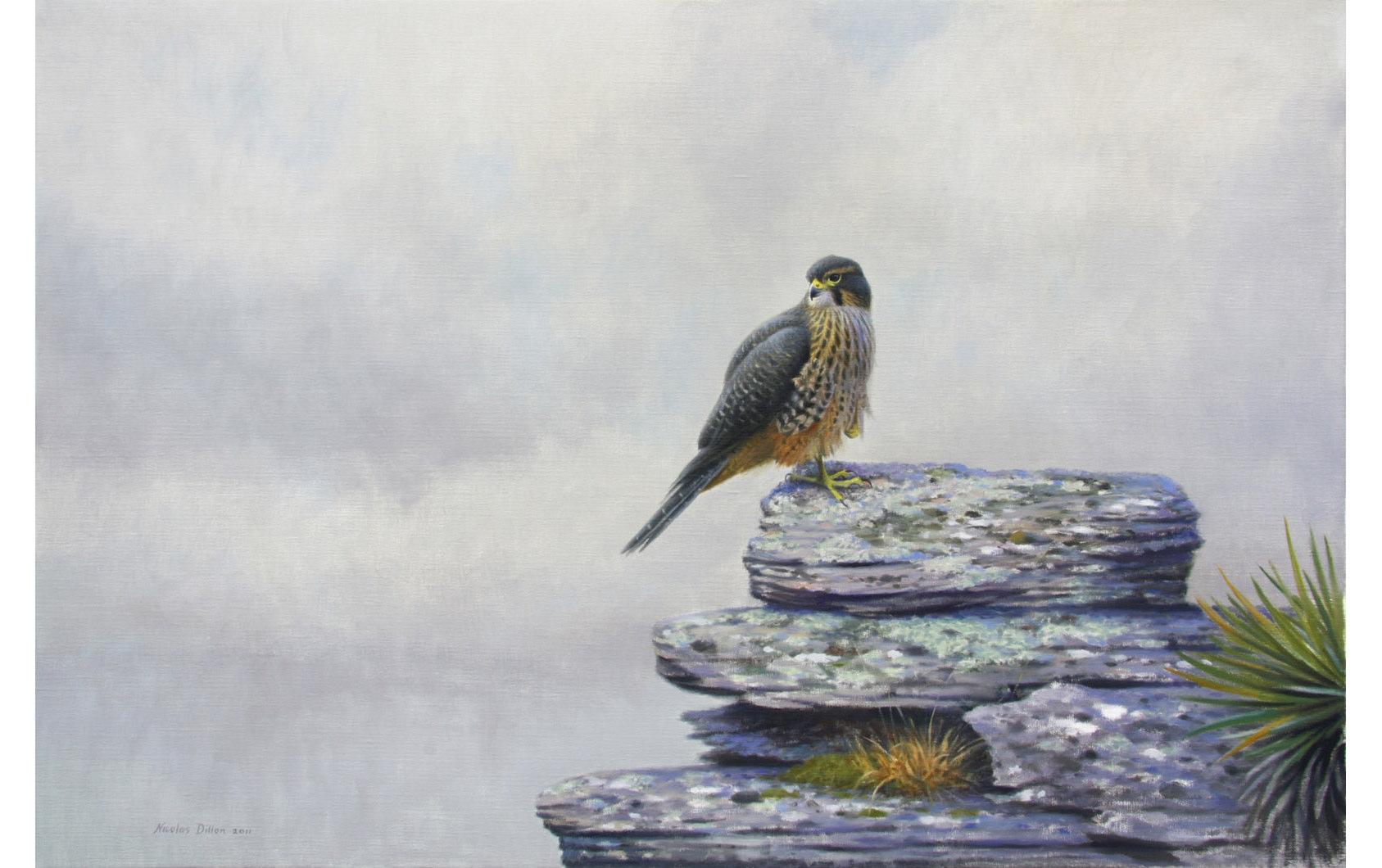
“Many of the paintings for this exhibition were made after a trip through the Mackenzie Country and Central Otago.” The Mackenzie was foggy where as at the Sutton Salt Lake near Middlemarch soft light played upon a NZ Falcon and the schist outcrops. In “The Wind in Winter” Dillon’s broad pictorial concerns reveal “as much about the wind and the patterns of winter” (2) as the place the Black Swans occupy in it.
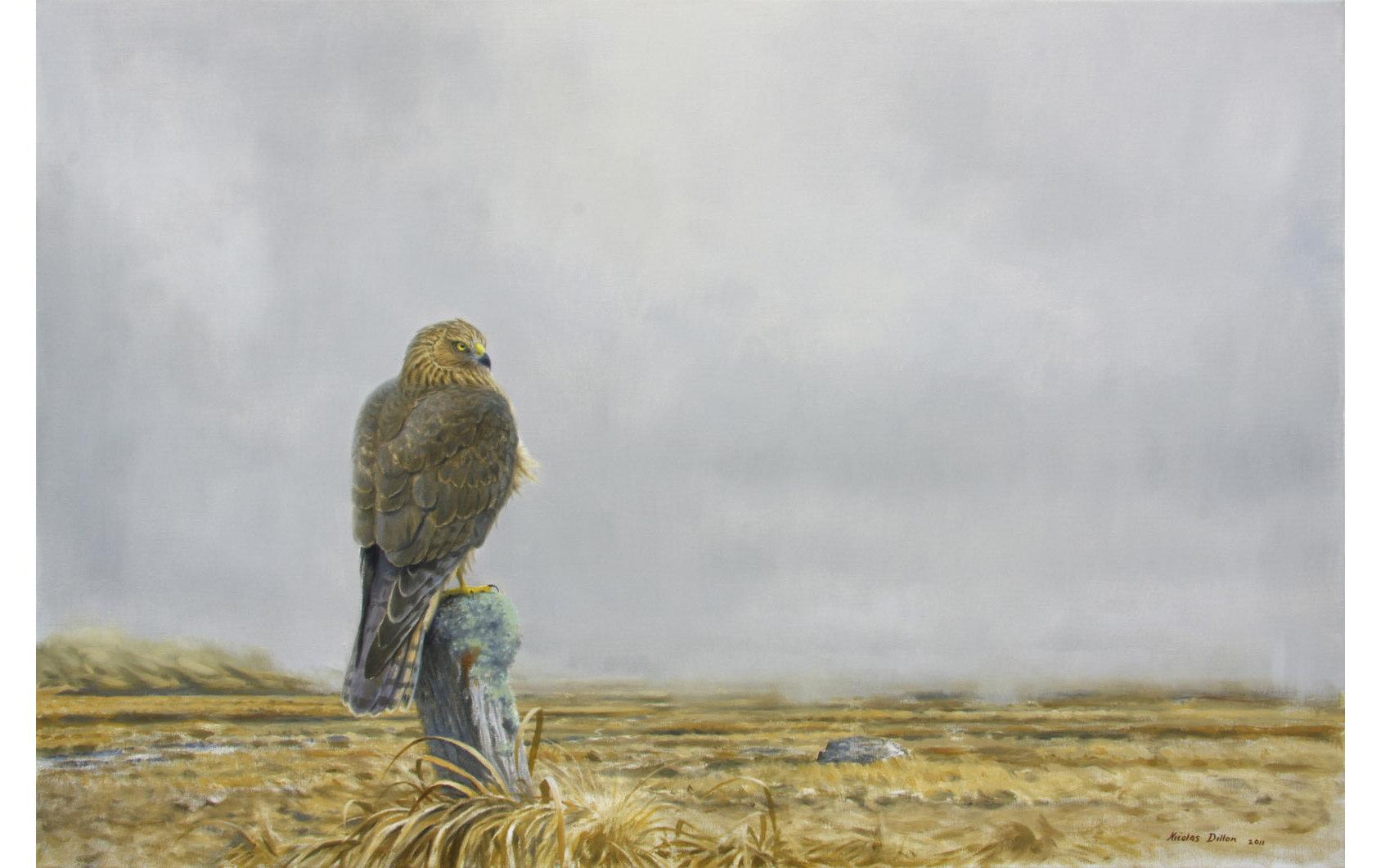
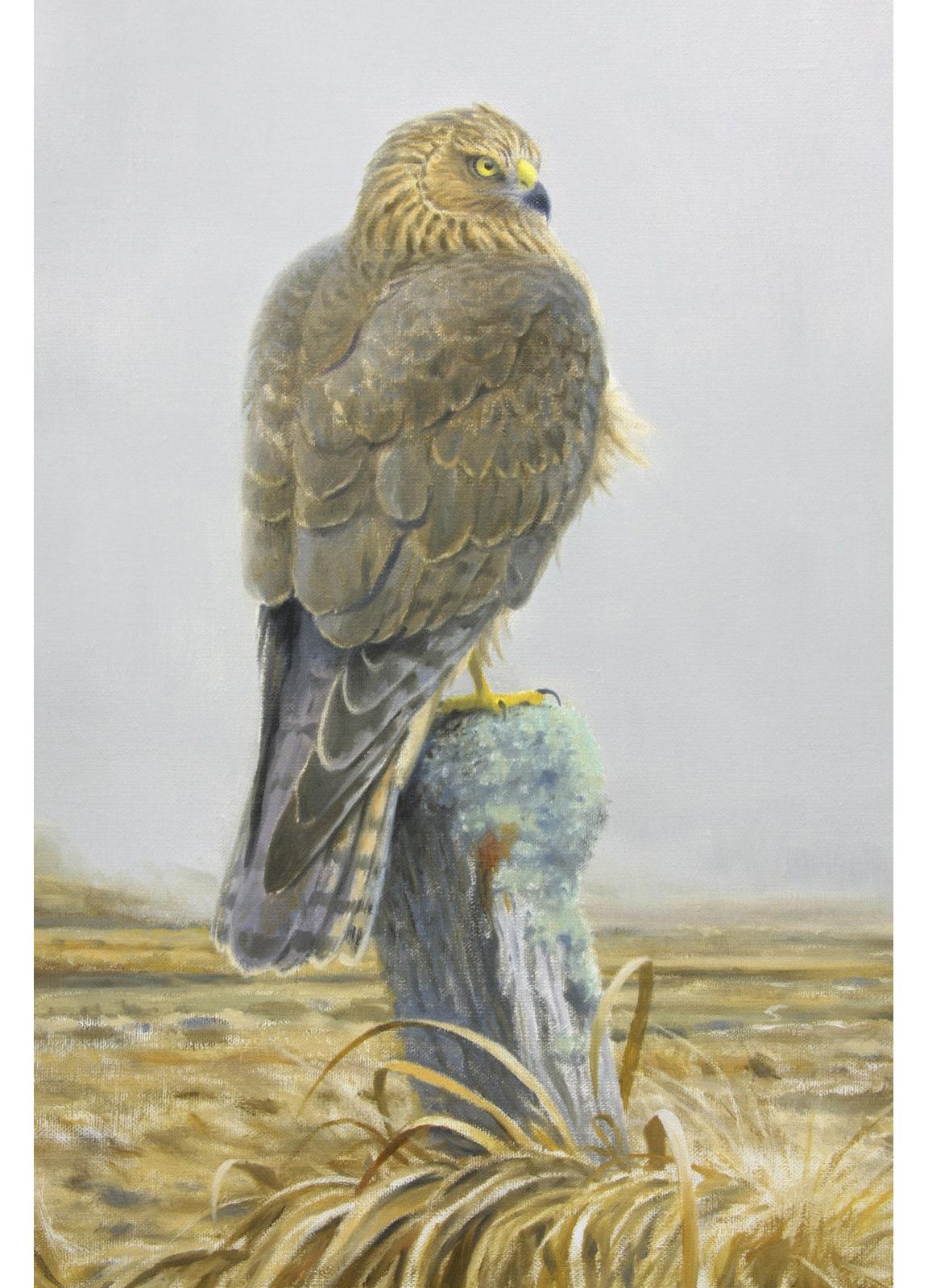
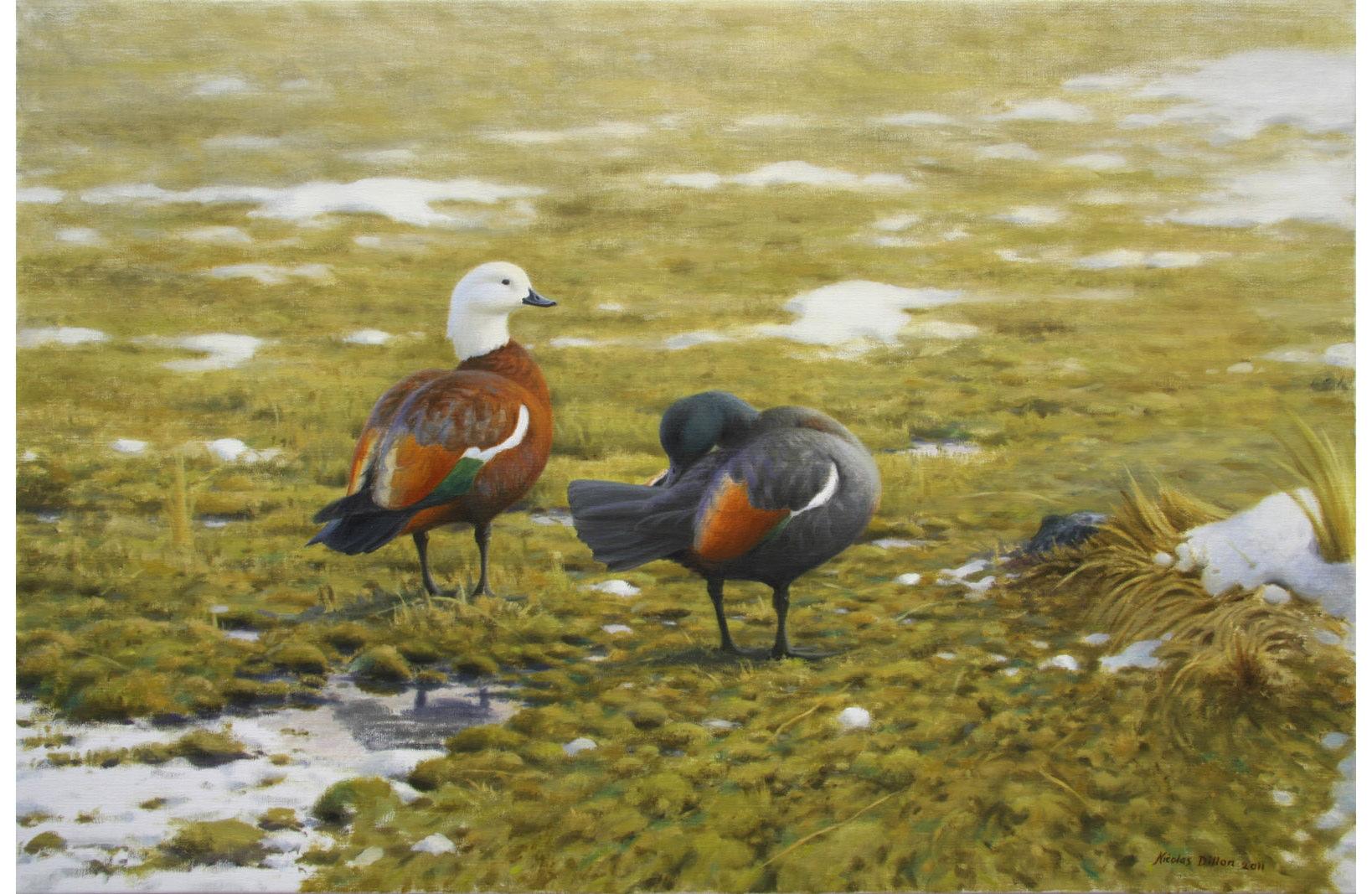
Dillon’s intention (like Bruno Liljefors, Swedish artist, considered the grandfather of wildlife art) is “first to combine the bird/animal and landscape as one.” (3) In (for example) “The Eye,” “Early Spring Snow” and “Alpine Rest” we see not simply the completeness of an arrested moment and the place but come to ask – given the significantly important role the gaze of the bird performs – what is being looked at by the bird, and why: what is it we can not see? We encounter the birds, and their active presence, in their environment.
Dillon’s approach to his subjects is delivered with soft focus. Light is rendered with subtlety and much more complexity than the normal unquestioning depictive use of NZ’s (almost clichéd) harsh (as in bright) light. Dillon is a masterful painter – not an illustrator – of birds (and their presence) in the landscape. He uses a restricted and restrained palette with real authority - see “In Matagouri”. Each painting has a distinguishing mood and atmosphere, and painterly flourishes which reveal his work as being deeply considered observations of nature and the environment.
(1) Sarah Quigley, “Being There,” North & South, November 2009
(2) Artist Notes on the paintings, 20 October 2011
(3) Nicolas Dillon, A Study Trip to Spain and Sweden (November 2010), 20 October 2011