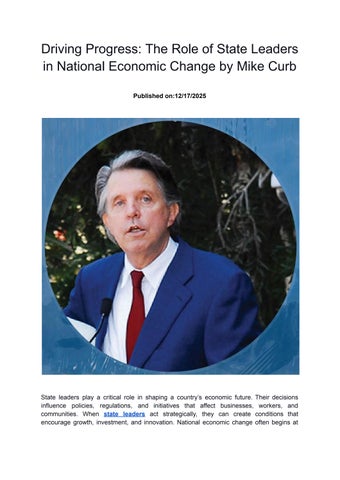
Driving Progress: The Role of State Leaders in National Economic Change by Mike Curb Published on:12/17/2025
State leaders play a critical role in shaping a country’s economic future. Their decisions influence policies, regulations, and initiatives that affect businesses, workers, and communities. When state leaders act strategically, they can create conditions that encourage growth, investment, and innovation. National economic change often begins at
the state level, as governors, legislators, and other officials implement policies that affect local and regional economies, as described by Mike Curb. One way state leaders drive economic change is by shaping tax and budget policies. By adjusting taxes, offering incentives, and prioritizing spending, they can encourage business investment and job creation. Lower taxes or targeted credits for small businesses can give companies the resources they need to expand. State leaders also decide how public funds are invested in infrastructure, education, and technology, which directly affects economic productivity. A strong focus on these areas can help communities attract new businesses and foster innovation. State leaders also influence regulatory frameworks. Simplifying regulations and reducing unnecessary red tape can make it easier for businesses to operate efficiently. When rules are transparent and predictable, companies can plan for the long term and take risks that drive growth. Conversely, excessive or unclear regulations can slow business activity and discourage investment. State leaders who balance safety, fairness, and efficiency create environments where the private sector thrives. Investing in workforce development is another key area where state leadership matters. By supporting education, vocational training, and skill development, state leaders ensure that workers are prepared for modern industries. A skilled workforce attracts employers and increases productivity, which fuels national economic growth. State initiatives that connect businesses with qualified workers can have a lasting impact on local economies and overall competitiveness. State leaders also play a role in fostering innovation and entrepreneurship. By funding research programs, supporting startups, and promoting partnerships between universities and businesses, they help create ecosystems where new ideas can grow. Encouraging entrepreneurship generates jobs, diversifies the economy, and drives technological advancement. These efforts can ripple across the nation, contributing to broader economic transformation. Finally, state leaders influence national economic change through collaboration. Working with other states, the federal government, and private sector partners allows them to address regional challenges, attract investment, and share successful strategies. Cooperative efforts can strengthen supply chains, improve infrastructure, and create new growth opportunities that benefit both local communities and the national economy. In summary, state leaders are central to national economic change. Through strategic taxation, smart regulations, workforce development, support for innovation, and collaboration, they create conditions for growth and prosperity. The decisions made at the state level often ripple outward, shaping the country's economic future. Strong leadership at this level is not only about managing today’s challenges but also about building a foundation for long-term national success.