Miguel Sardinas Castro is an aspiring designer at SCIArc, Having transferred over from Pasadena City College. At SCI-Arc he is involved in numerous clubs and organizations such as being involved in Freedom by Design as well as co-founding the mobility club. Born in Cuba but raised in Los Angles from a young age, his upbringing has instilled a deep appreciation for the intersection of culture and design. His passion for exploring the possibilities of design lead Miguel to study architecture. He recognizes that he is still learning and growing in his craft. His curiosity and eagerness to learn lead him to constantly seek out new techniques and ideas, always striving to improve his skills and push his boundaries. One of Miguel’s core values as a designer is creating spaces that encourage community, collaboration, and exchange of ideas. He believes that design can bring people together and foster a sense of shared purpose. He seeks to learn what architecture can do for spaces to promote meaningful human connections. He is currently seeking to expand his horizons while studying abroad in Vienna at Die Angewandte’s Institute of Architecture. It’s always been a goal to get many perspectives both on architecture and life and with this experience he seeks for further that goal. Miguel’s dedication and passion for design are evident in his work. He remains focused on continuously improving and refining his craft, striving to learn and create alluring designs.
The “Meet-Me”
2B Studio - Worlds II - Jeremy Hartley
2B Visual Studies - III - Jennifer Chen, Kordae Henry Future Ruins
Heterotopia
History of Architecture - III - Erik Ghenoiu
Vista Communes
3A Studio - Assemblies - Ramiro Diaz-Granados
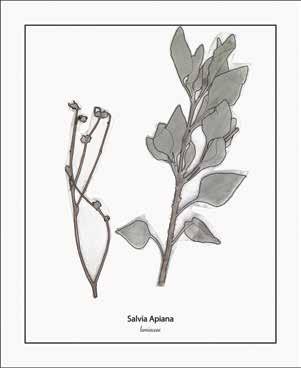
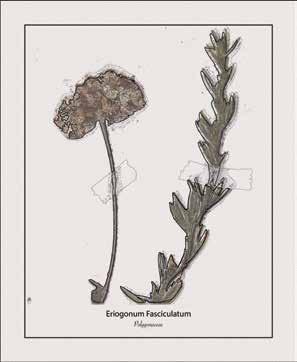
Drawing Nature
VS Drawing Nature - Florencia Pita
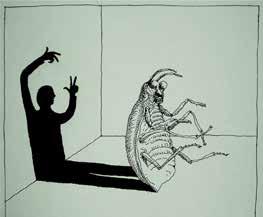
Road To Absurdity
Core Seminar II - 20th Century - Graham Harman
TARTU CENTRE
3B Studio - FIELDS FIGURES FLOWS - Dwayne Oyler
4A Studio - Positions - Karel Klein
The "After Mall"
Exchange Studio - Space Popular - Fredrik Hellberg, Lara Lesmes
The “Meet-Me”
DS 1021:Worlds: Landscapes and Context: Partnered with Abdullah AlQadhi and Andy Bautista.
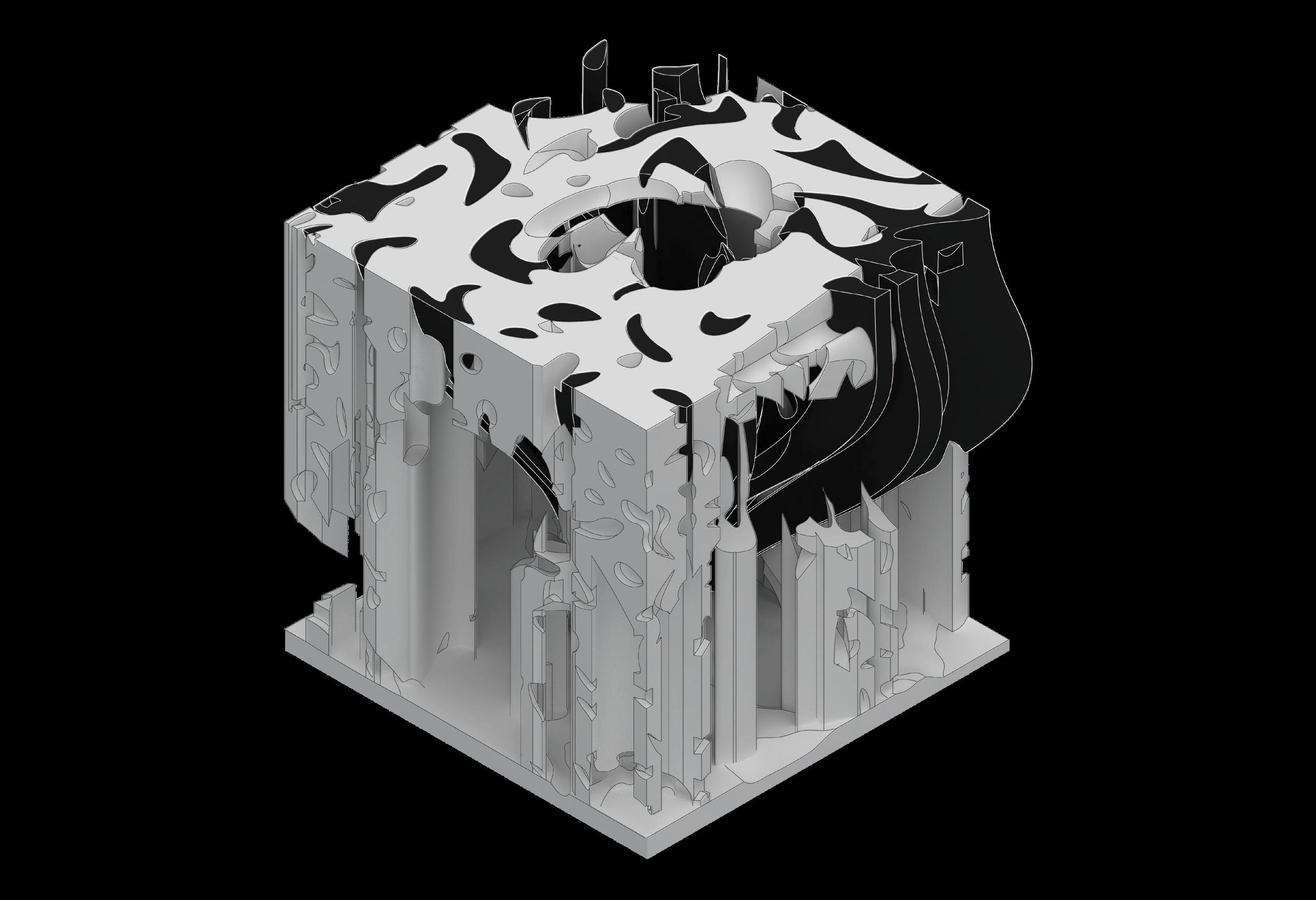
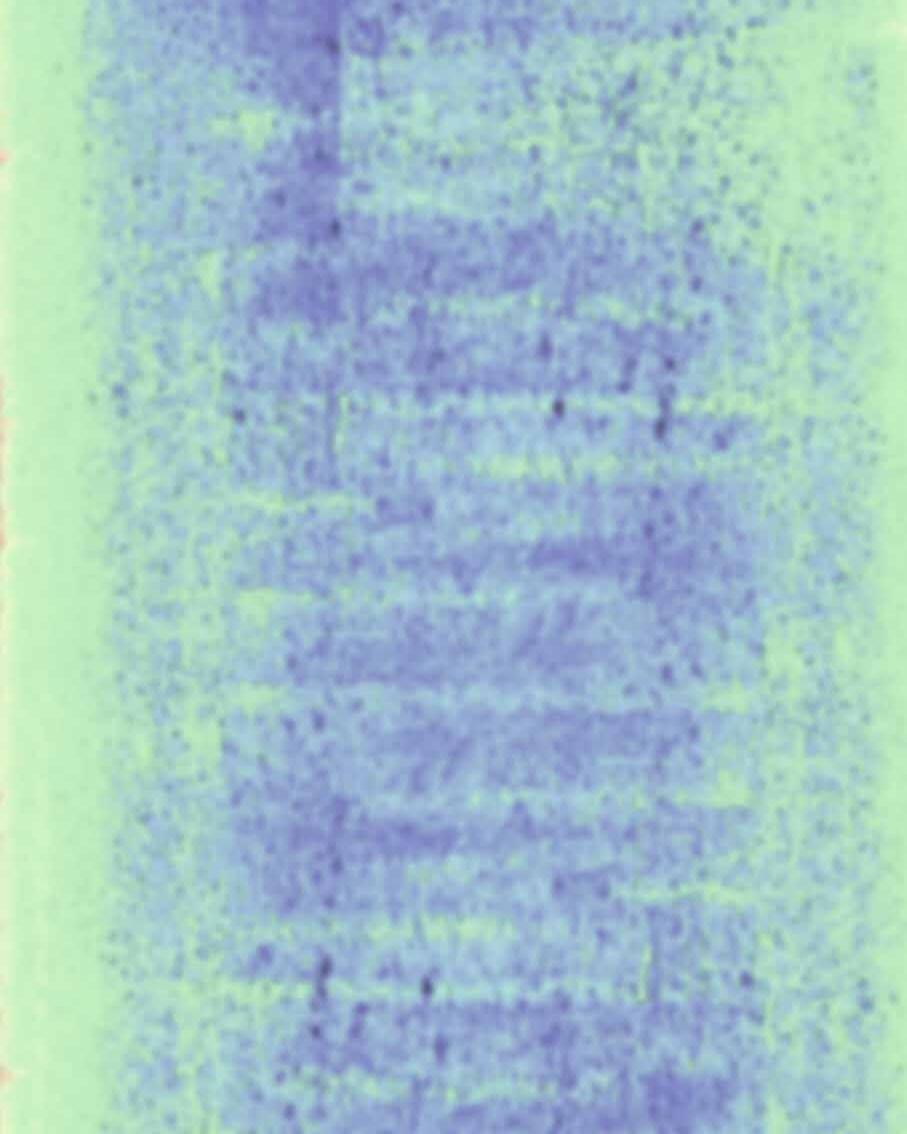
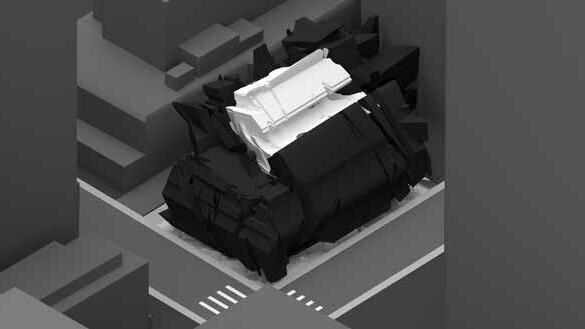
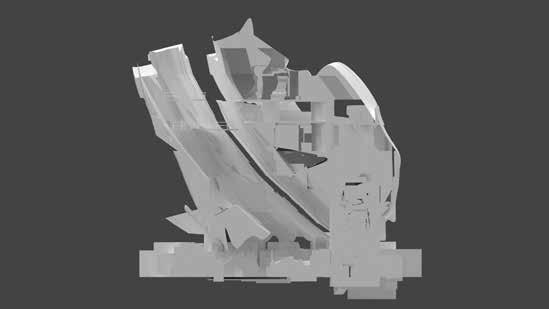
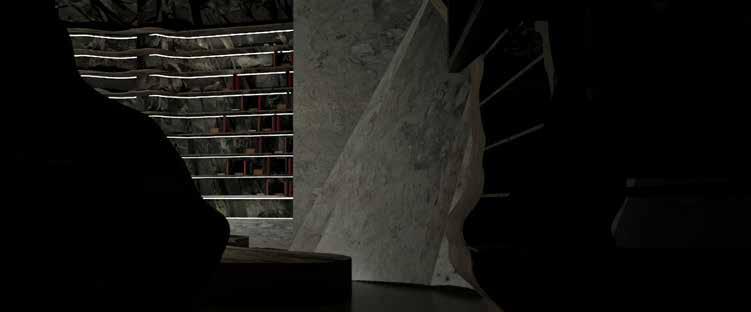
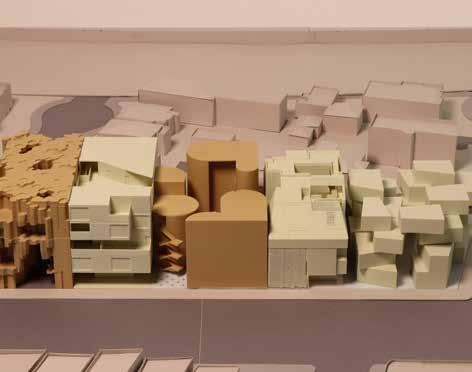
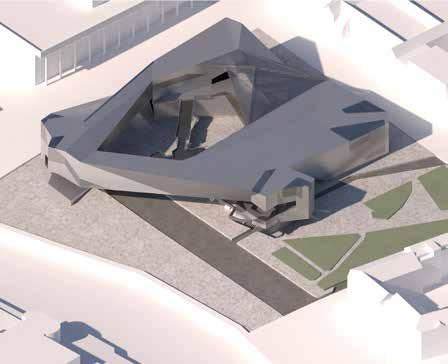
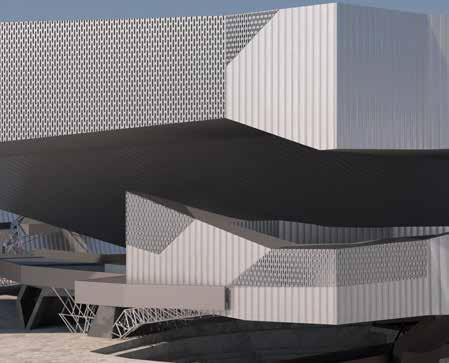
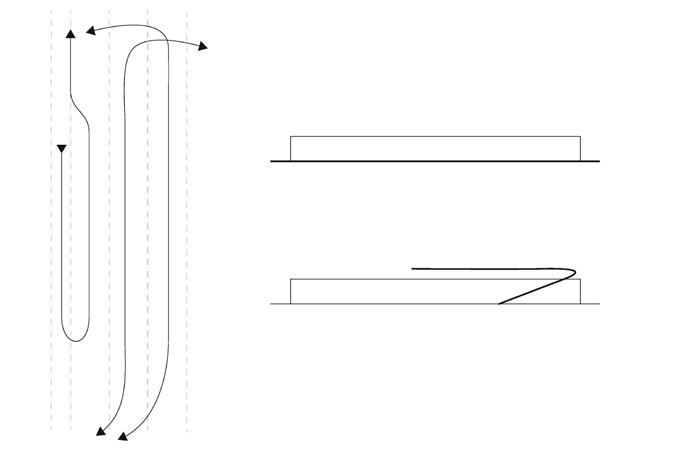
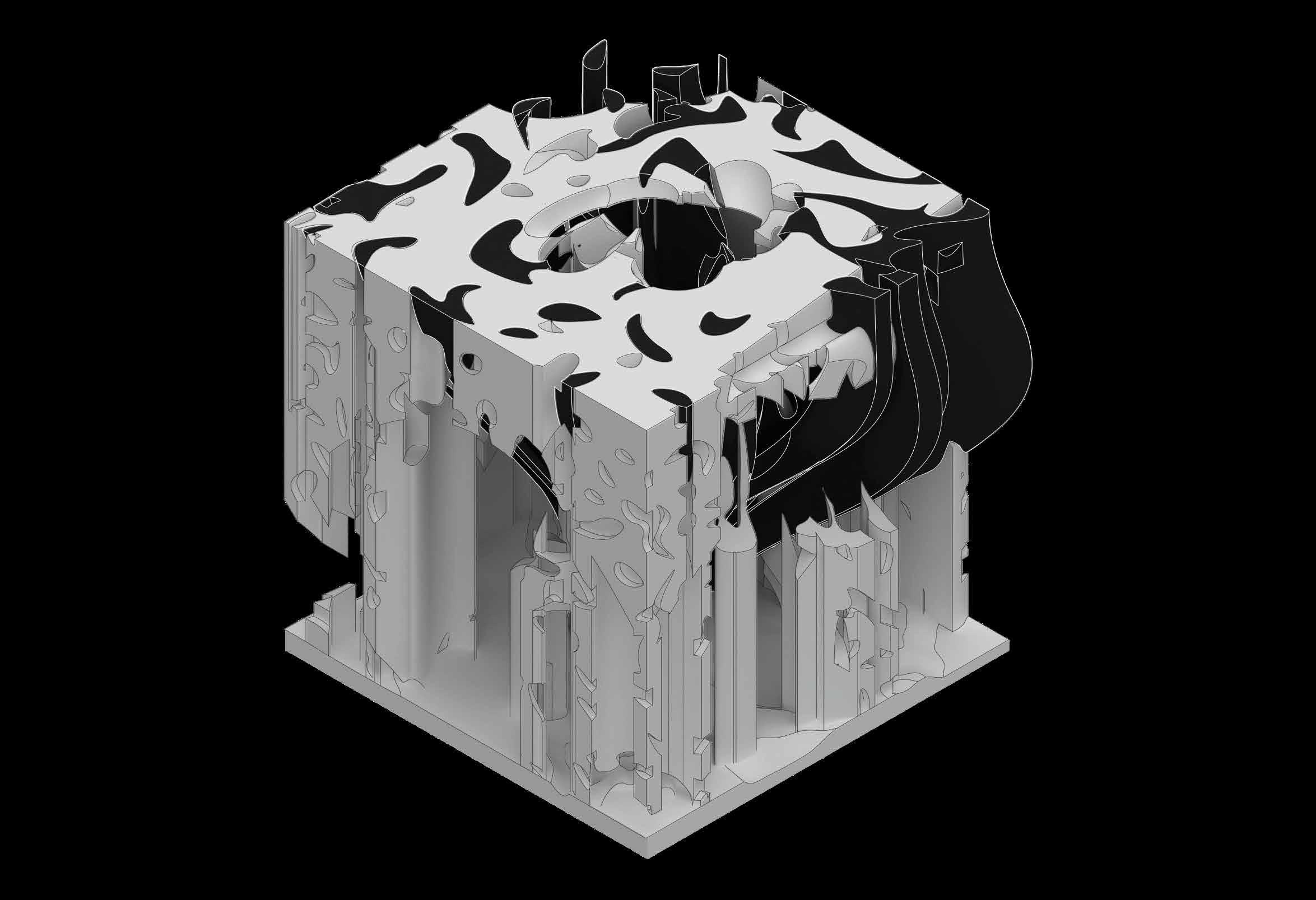
The studio focused on creating a new typology in the hybridization of two types, the library, and the data center. Although both serve a very similar function in the assessing and archiving of data, the needs of each space and who they serve are drastically different. With site needs and ecology in mind, the studio creates a narrative for possible systems that can emerge by forcing these two types together. Operation Niaca, the name of our building seeks to embrace abnormalities. The form was generated by the sounds of the vital components of the project; the site around, books, and computers, and with the sounds mapped components were picked out and pieced together to create our structure. Our intention in embracing the strange forms that emerged from our process was to culminate the pieces into a massing that would encourage exploration and wonder as if entering into an uncharted cave.
Using the advantages of working with a new building type we re-imagined what it means to use and service these spaces, fully aware that the knowledge stored inside is as precious as gems.
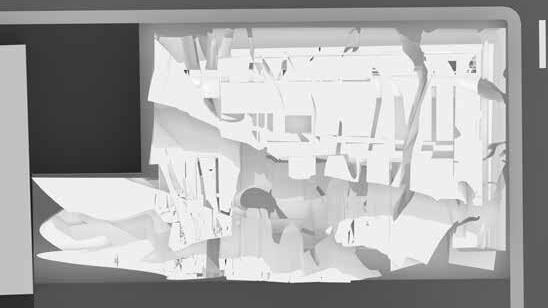
Our next process was to use the sounds we had collected to distort the Noli plans we had created for our persistence. The use of sound to distort the plans introduces an element of randomness and unpredictability. capitalizing on this we vectorized each shape and using it as a tool to extrude or subtract from lead us to generate unimaginable forms to case study what could take form if these same ideas and components are to be used in the creation of our building.
Future Ruins
2B Visual Studies - III
Jennifer Chen, Kordae Henry
VS4021: 2B Visual Studies III
Partnered with Abdullah AlQadhi and Andy Bautista.
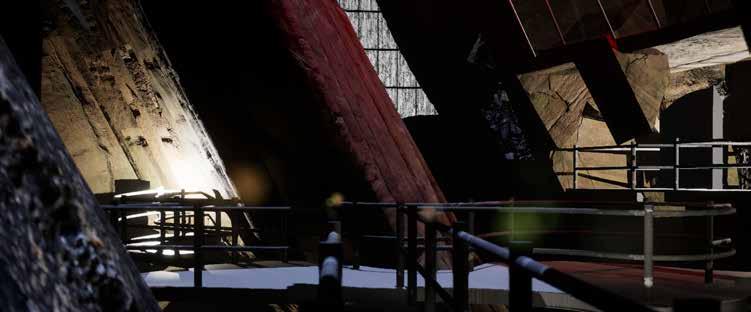
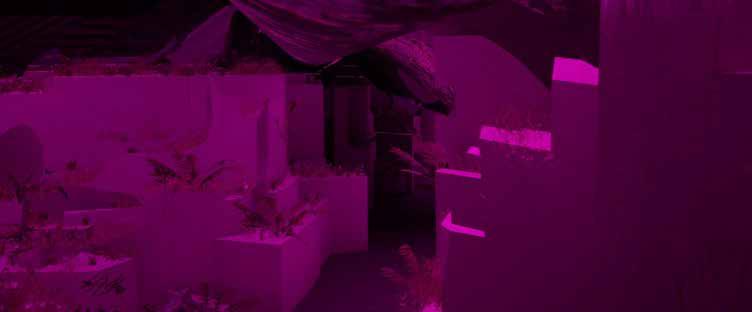
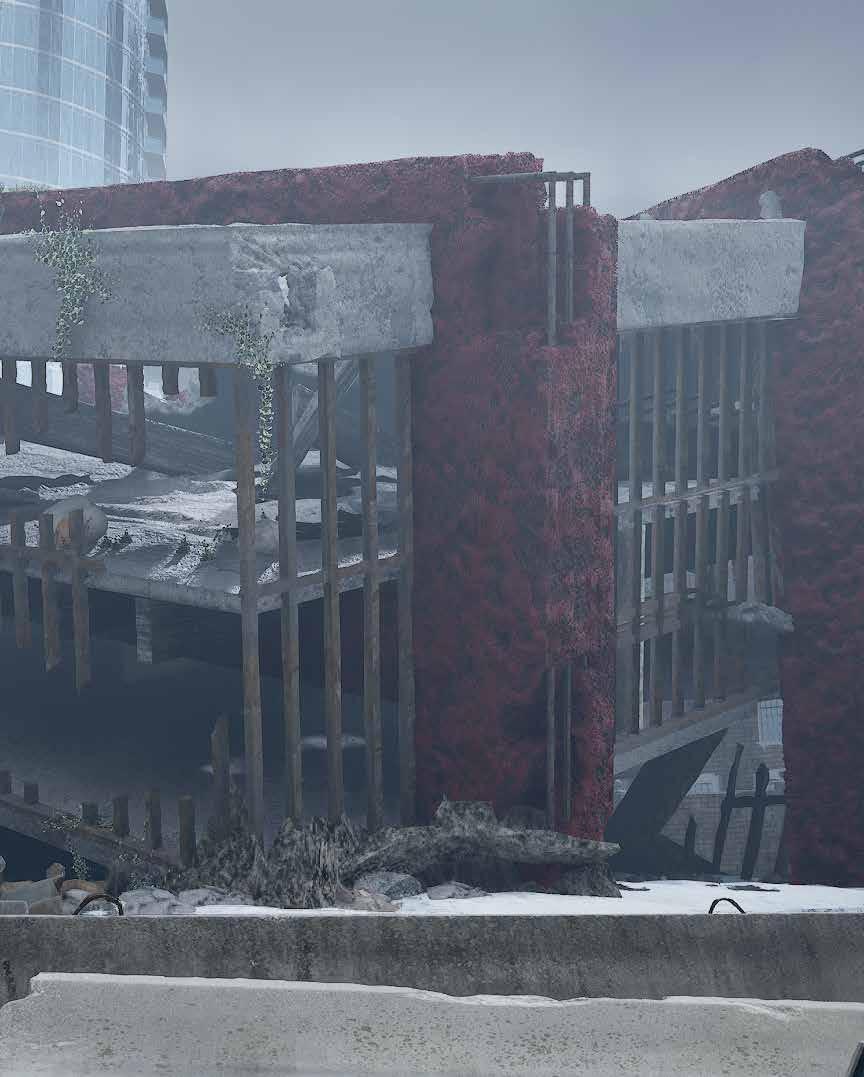
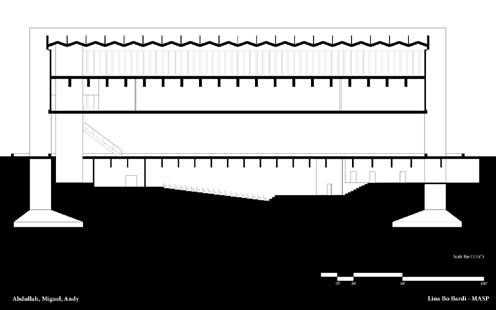
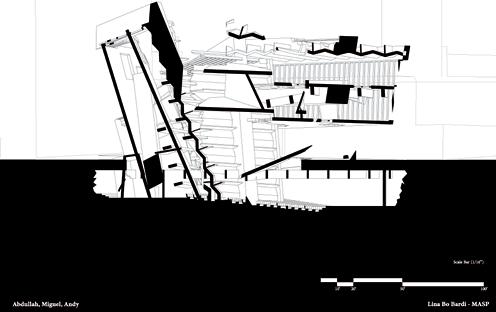
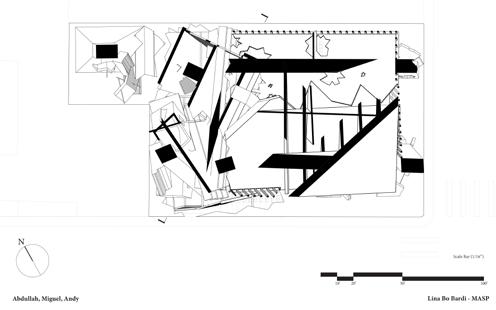
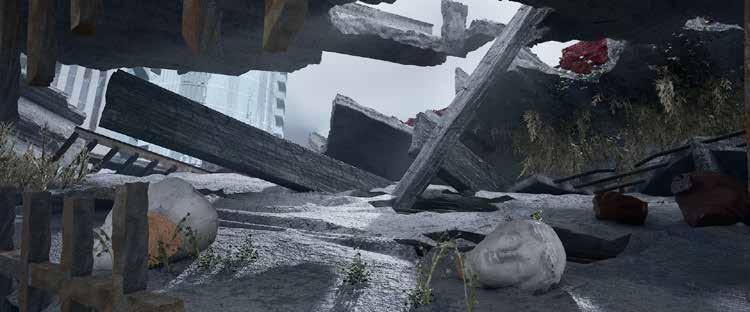
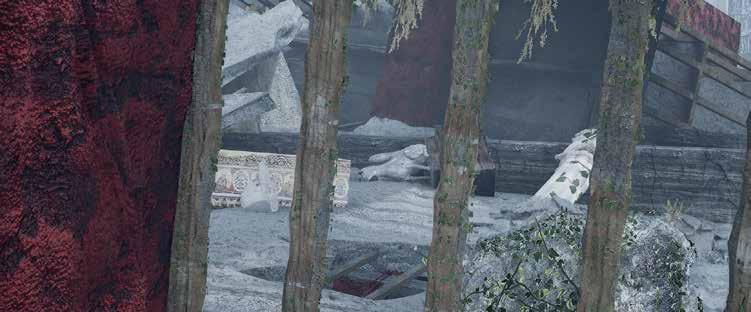
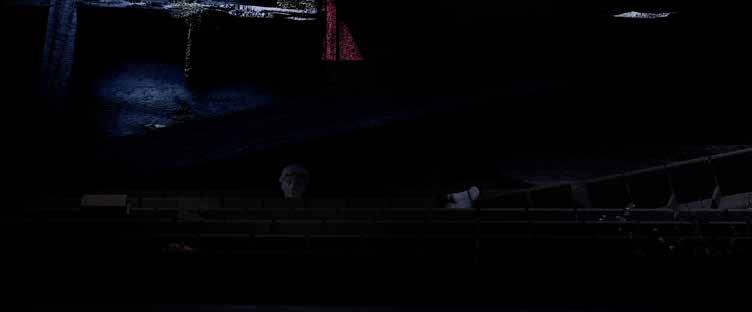
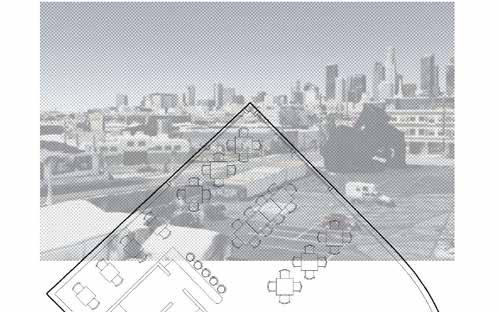
In this course, the connection between indoor and outdoor space is investigated through Lina Bo Bardi’s MASP. The landscape will be viewed not only as the context in which a building is situated but as an integral component of the architectural design itself. We explored the relationship between buildings and their surrounding environments by moving from 2D drawings to 4D experiences with only a limited set of drawings as information. the following rules were to relocate the building to DTLA and then “Ruinify” the building, all while keeping the building within the bounds of the site. This process involved the use of various tools, new to me was Unreal Engine, a popular game design software. By working with these tools, we will develop skills in visualization and gain a deeper understanding of the workflows involved in creating immersive scenes. The course encourages students to consider the new relationship between architecture and landscape change it and explore the possibilities of a future ruin.
Communities Through Heterotopias
History of Architecture - III
Erik Ghenoiu
Communities Through Heterotopias:
The Culmination of Subcultures in One Brand
In an era of homogenized consumption of surface-level designs, BrainDead, a clothing brand, stands out among the rest. As a longtime admirer, I have witnessed its transition from a streetwear brand to a greater community of creatives, a community that the brand had sought to create from its conception. Kyle Ng and Madison Woodward, the current owners, conceptualized BrainDead to be a space for those creative individuals to come together and share their passion for their works. Through its home store in Fairfax, the brand has been able to ascertain those very aspirations. BrainDead has then elevated its status from a communitycentered streetwear brand to a heterotopia made up of many ever-expanding niche groups. Deliberately designed, its home store converts customers from being mere shoppers to members of a community in the heterotopia of BrainDead, a world of weirdo creatives. By being calculated with the ways people engage with the brand—hosting events in its space, being meticulous with collaborations, and creating spaces for obscure communities—BrainDead Studio has become a home for these groups, further redefining its heterotopia.
HS 2025: Course abstract:
“This course provides a chronological overview of the evolution of architecture: major movements, styles, and developments in global architecture and urbanism from the 20thto the 21th century. Students will analyze major movements and key works in order to understand the cultural, religious, anthropological, and sociological factors involved in the design of buildings and cities throughout the world. Particular attention will be paid to the analysis of specific relationships between the organization, configuration, and articulation of buildings and cities as well as the historical, conceptual, and political contexts with which they are associated. Lectures and discussions will focus on issues of technology, nature, representation, and communication, and on understanding the diversity of needs, values, behavioral norms that shape architecture and the responsibility of architects.”
Kyle’s upbringing drives the brand. Being raised in the bay area in the early 2000’s, and having never really fit into any social groups, made him predominantly interested in alternative cultures. In a 2021 interview, Kyle states, “I was really into music, punk shit, and just all types of subcultures … I was still skateboarding, but no one else was doing that. So I was an outcast at my school”1. In his senior year of High School, he moved to LA for film school, but being new to the area furthered his sense of being a black sheep. But it wasn’t like he was trying to fit in; on the contrary, he was more interested in exploring and being his true self. Kyle wanted a space for individuals like him to feel like they could belong while being their authentic selves.
BrainDead Studios
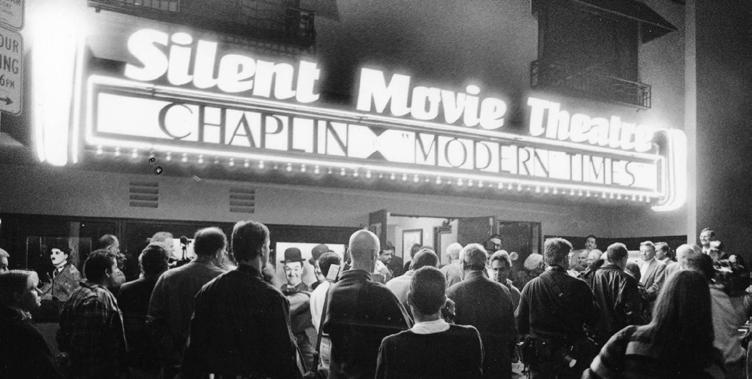
has a fascinating yet disturbing history. The theater first opened in 1942 as a silent film cinema in an era when theaters were transitioning to talkies, but the owners kept the place open, rescreening cinema classics held in their collection. In the 80s the theater closed, then sold, later to be reopened in ‘91, a year after the passing of the original owner. The buyers renovated the theater for its age, renaming it the Silent Movie Theater. Tragically, however, the projectionist murdered the new owner in the theater some years after opening. Once more, the cinema closed down and went back on the market.
A year later, the theater again reopened, but its owner struggled to make a profit. The cinema closed down for the third time until its reopening in 2007 under Cinefamily2. At this point, a young Kyle, who had been exploring LA while studying film, became a Cinefamily member, frequenting this Fairfax location to watch obscure movies and make friends with the cinephile community. However, the theater fell into controversy due to sexual harassment and a toxic workplace environment from the theater’s owners, marking its end on its tenth anniversary. This closure became more significant as it stood widely known what took place in the theater, driving the community of movie-goers to disavow the place. Due to the damaged reputation of the cinema, BrainDead studios had their work cut out for them to make the space appealing again. BrainDead the brand paired with BrainDead Studio distinguishes itself a great incubator of community since it transforms physical space into a heterotopia, a concept philosopher Michel Foucault describes to interpret the space between others as neither utopias nor dystopias but its own nowhere
1 Juliana Ukiomogbe, “Kyle Ng of Brain Dead Wants to Connect the World,” Interview Magazine, January 20, 2021, https://www.interviewmagazine.com/fashion/kyle-ng-of-brai dead-wants-to-connect-the-world, 2. 2 Bill Counter, ed., “LosAngelesTheatres.blogspot.com,” LosAngelesTheatres.blogspot.com (blog), November 8, 2022, https://losangelestheatres.blogspot.com/2017/03/silent-mov ie-theatre.html, 4
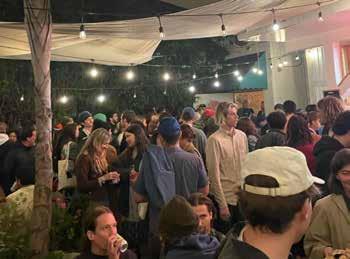
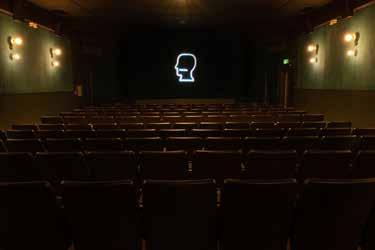
space defined by people. Foucault further expands that “These are in a sense counter-spaces. And these counter-spaces, these localized utopias, are something children know perfectly well … it’s on this double bed that they discover the ocean, as they swim between the covers” 3. This analogy to kids stands out the most in his descriptions. That the space you are in can be much more than what it seems. That these ideas could reflect back to us. A space nowhere in particular since it is built in our heads. Although its form comes through almost involuntarily, according to Foucault, the heterotopia remains heavenly aided, or at least guided by, the physical space that molds it. Such a physical space exemplary of creating one based on a community is BrainDead Studios. The architecture of the space, not in design but in its lour and program, renders itself susceptible to this effect. Not only is the space a store for the brand, one that always keeps a curated collection of objects and apparel with a feel similar to one of your coolest alt-kid friend’s room, but it also has its popular café, Slammers, featuring a quiet patio space full of plants and furniture that gives off a feel of hidden cafés you’d seen in San Francisco (maybe deliberately). Even still, the cinema endures to the be the most important space. Foucault’s examples of heterotopias include the cinema as a part of its fourth principle. He states, “By contrast, there are heterotopias that are tied to time, not but the bounds of eternity, but by the mode
of the festival- heterotopias that are not eternal but temporal. An obvious example is the theater...”3
This transportation into another world, shared by your fellow voyeurs in the cinema (especially one like BrainDead Studios where the curation is deliberate around a theme for the month) creates points of heterotopia, ones that call back to you with an experience not commonly found in mainstream cinemas. Pairing this with their conversational and artistic staff and the events that BrainDead hosts nearly every week, the brand expands itself from a cinema, or a heterotopia, to that idea of BrainDead, a
community of oddballs and nerds.
Part of what makes BrainDead Studio special has to do with its engagement. The creation of a community like the one BrainDead fosters becomes especially important today where it feels like everyone bandwagons onto the most popular thing without contribution to, or regard for, the culture. BrainDead leverages its growing popularity to introduce fans to other alternative cultures, further growing those communities while also creating engagement in them. Baudelaire writes, “[The artist] takes an interest in everything the world over, he wants to know, understand, and assess everything that happens on the surface of our spheroid. The artist moves little, or even not at all, in intellectual and political circles.”4
But I’m reframing it as if he were the BrainDead community. Its reaches go far and wide, seemingly never turning down an offer to collaborate or fully expand into a space that they find interesting.
Although this can also be a slippery slope: other street wear brands have been known to oversaturate their collections with a million tasteless collabs. The difference here remains the care that goes into each product, even if most of the time the product is a side-effect of the goal in mind or an artifact of a time and place. “It’s like reverse engineering the idea of a culture-vulture. It’s alright if someone is wearing a Black Flag T-shirt who doesn’t know about the band — as long as they get inspired to go and listen to it. Instead of being cynical about it, I think it’s cooler to use that to our advantage because it’s our job to give you the most authentic version of it and present it in different forms. Whether it’s Red Hot Chili Peppers, who are the biggest band in the world, or bands like the Locust, we put the exact same care and appreciation into it,”5 Kyle tells the Alternative Press. The care put into each design will always be at a high level when making products feel like a communication that you belong to a certain collective.
There is also the fact that they don't just sell tees. BrainDead is multifaceted and works with everything: hosting chefs and restaurants at Slammers; introducing people to sports by collaborating with sports gear brands; making products like skis, skates, surfboards; and even being a partner with All Rise, an organization empowering minorities to get into rock climbing. They host music events for bands in their cinema room, have DJs playing on the patio during other events with countless collaborators,
and all with the same level of care and dedication as the next. This willingness to adapt, collaborate, and introduce makes the communities involved stronger by bringing together like-minded individuals. As Baudelaire expresses, “The child sees everything as a novelty; the child is always 'drunk'. Nothing is more like what we call inspiration than the joy the child feels in drinking in shape and color. I will venture to go even further and declare that inspiration has some connection with congestion, that every sublime thought is accompanied by a more or less vigorous nervous impulse that reverberates in the cerebral cortex.”6 This feeling described by Baudelaire fits the effect that the community has and how it is in turn affected by the heterotopia of BrainDead Studio. The intoxicated feeling is as “the artist” being reinterpreted as this community, and this sense of inspiration can then can be used to influence the heterotopia, as well as other communities and spaces. Alejandro Morales talks about the ways communities and heterotopias meet. Sometimes these meetings aren't good, such as the case about migrants and the border. However, he makes a good case about what occurs within these communities: “Here the stranger is constantly asked to define, explain, and understand himself/herself. Life in
4
5
Vidler, Anthony, Michel Foucault, and Pamela Johnston. “Heterotopias.”
the chaos of heterotopia is a perpetual act of selfdefinition gradually deterritorializing the individual. The individual becomes an ambiguity … Nonetheless, Chicanos[/as] need a cultural foundation, a recognizable cultural place composed of memory, nostalgia, history, mythology, spirituality, tierra, family, the elders' world. They must build and fortify a cultural base where change, if preventing it is impossible, might at least decelerate.”7 Due to the nature of heterotopias, they can be a place where you lose yourself, and because of attitudes towards migrants, the heterotopia can be against their culture. Inversely, because it's defined by the people bringing in knowledge, one's personality can also change the space. Although the case for migrants is unfortunate, it is this same malleability that makes the BrainDead community so wonderful. The people that participate in the brand is interested in sharing a passion, and others exploring these communities ultimately leads to a more diverse heterotopia.
The past few years has shown a strong sense of isolation and division from one another due to our media consumption, the hard lines in the identities we form, and especially lingering habits from the pandemic. However, brands like BrainDead have allowed the redevelopment of a sense of community. This brand has been responsible for introducing me to new hobbies that I now regularly do and to new communities with similar interests. You may just be a consumer who buys some of their products because you saw them at Dover Street, but more likely than not, you’ve felt the calling of the heterotopia and the community this brand has established. Once you take part, you'll understand why the space is so special and why so many others value it. There's always something for everyone in this encouraging community—just dive in and see where you’ll end up.
Work Cited
Baudelaire, Charles, and Jonathan Mayne. “An Artist, Man Of The World, Man Of Crowds, And Child.” Story. In The Painter of Modern Life and Other Essays, 1–3. London etc., UK: Phaidon, 2010.
Counter, Bill, ed. “Silent Movie Theatre / Cinefamily / Fairfax Cinema / Brain Dead Studios.” Web log. LosAngelesTheatres.blogspot.com (blog), November 8, 2022. https://losangelestheatres.blogspot. com/2017/03/silent-movie-theatre.html.
DeCaro, Alessandro. “How Brain Dead Has Built Its Brand on a Deep Love for Punk and Hardcore.” Alternative Press Magazine, March 8, 2023. https://www.altpress.com/brain-dead-kyle-ng-madisonwoodward-interview/.
Maguire, Lucy. “Subcultures and Cinema: Why Brain Dead Isn't Just about the Clothes.” Vogue Business. Vogue, July 13, 2022. https://www.voguebusiness.com/companies/subcultures-and-cinema-why-brain-deadisnt-just-about-the-clothes.
McCall, Corey. “The Art of Life: Foucault’s Reading of Baudelaire’s ‘the Painter of Modern Life.’” The Journal of Speculative Philosophy 24, no. 2 (2010): 138–57. https://doi.org/10.5325/jspecphil.24.2.0138.
Morales, Alejandro. “DYNAMIC IDENTITIES IN HETEROTOPIA.” Bilingual Review / La Revista Bilingüe 20, no. 3 (1995): 14–27. http://www.jstor.org/stable/25745296.
Skippington, Peter. “Harnessing the Bohemian: Artists As Innovation Partners in Rural and Remote Communities,” December 12, 2016. https://doi.org/10.22459/hb.12.2016.
Takanashi, Lei. “Why Streetwear Brand Brain Dead Is Permanently Taking over an L.A. Movie Theater.” Complex. Complex, November 7, 2020. https://www.complex.com/style/brain-dead-studios-kyle-ng-movietheater-interview.
Ukiomogbe, Juliana. “Kyle Ng of Brain Dead Wants to Connect the World.” Interview Magazine, January 20, 2021. https://www.interviewmagazine.com/fashion/kyle-ng-of-brain-dead-wants-to-connect-the-world.
Vidler, Anthony, Michel Foucault, and Pamela Johnston. “Heterotopias.” AA Files, no. 69 (2014): 18–22. http://www.jstor.org/stable/43202545.
Vista Communes
DS 1030 03: ASSEMBLIES I:
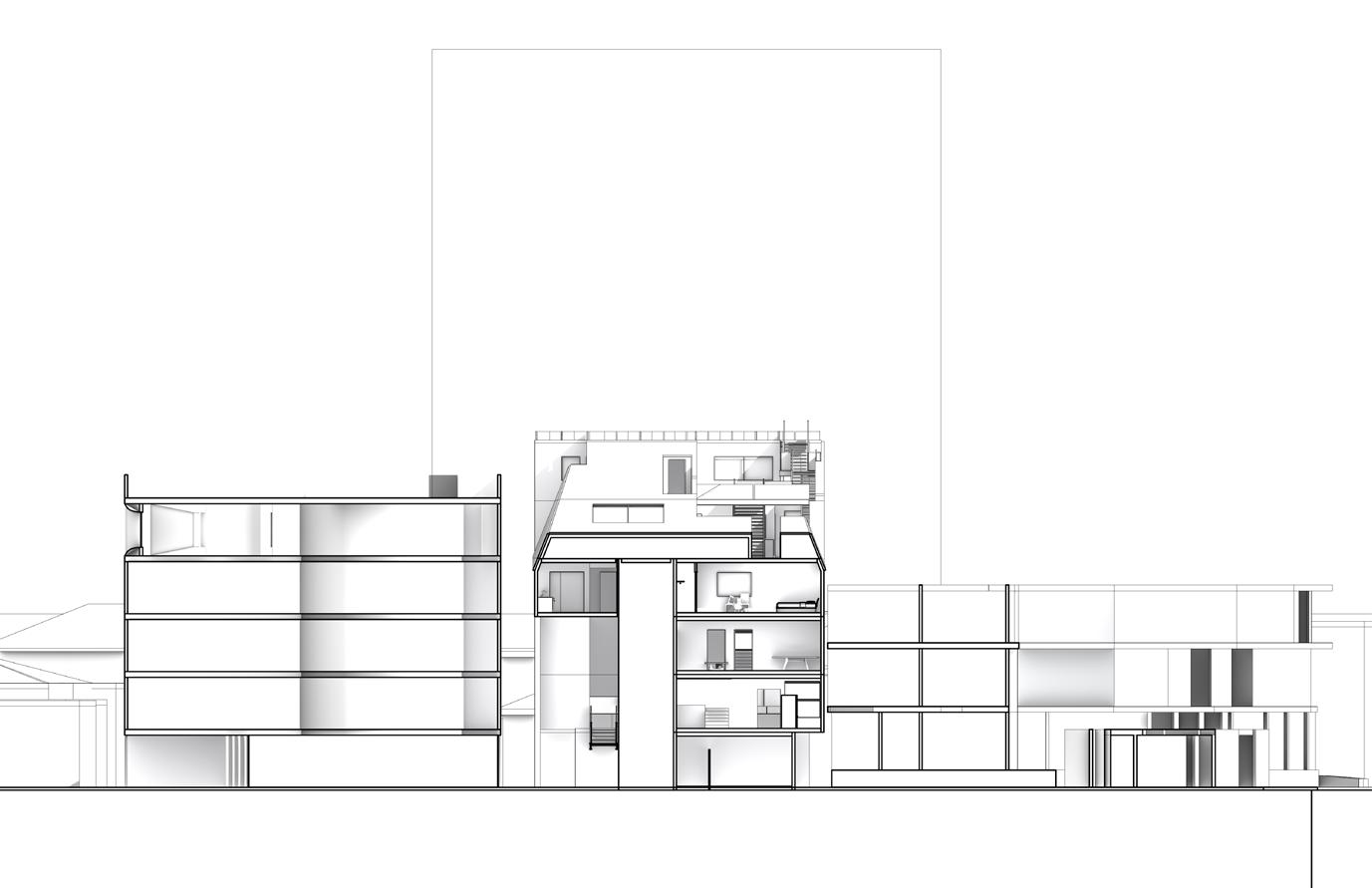
This studio focuses on designing small housing projects within urban settings. Students will explore ideas of repetition, layering, and scale while addressing real-world issues like access, privacy, shared space, and infrastructure. Case studies and site research will inform how housing connects to city life and its social impact.
As ideas of home shift—through remote work, changing family structures, and platforms like Airbnb—students will question traditional domestic layouts and explore new spatial models. The studio combines cultural and logistical challenges, asking how architecture can reflect today’s ways of living. Projects will respond to site conditions and examine two key strategies: subdivision and aggregation.
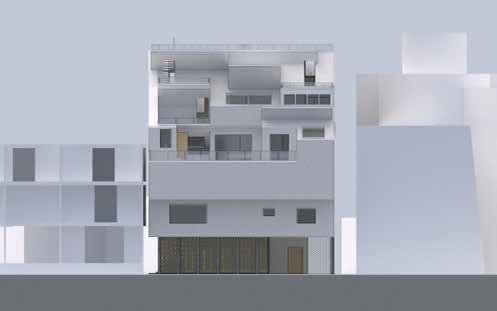
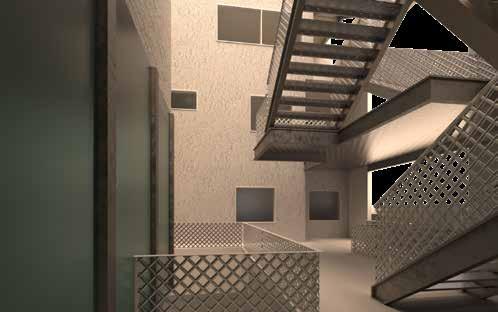
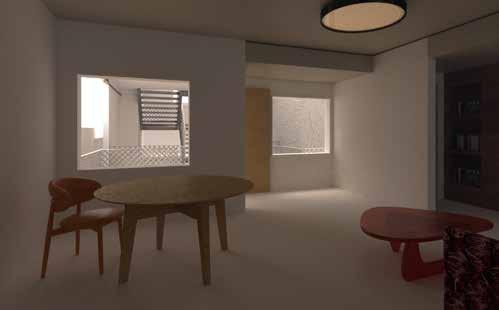
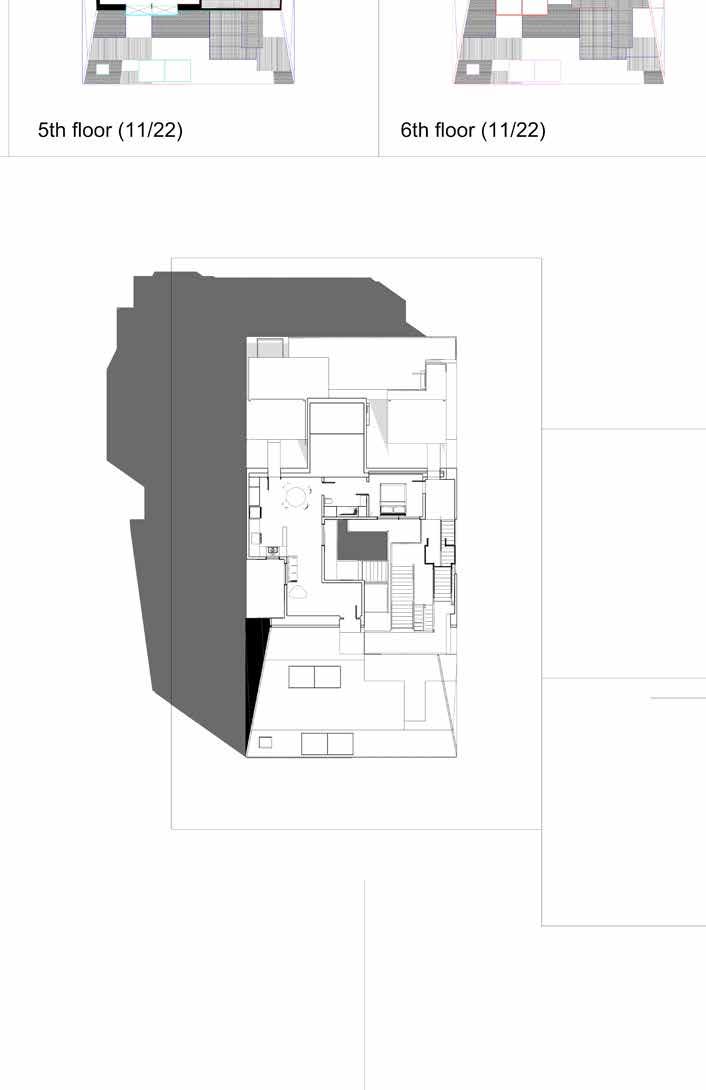
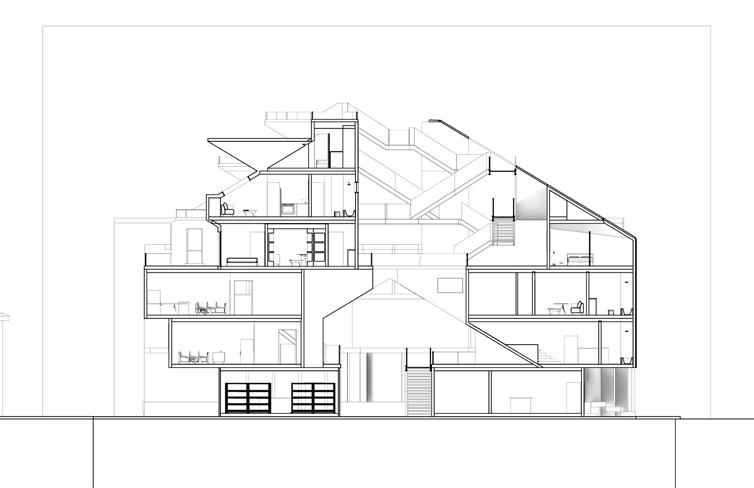
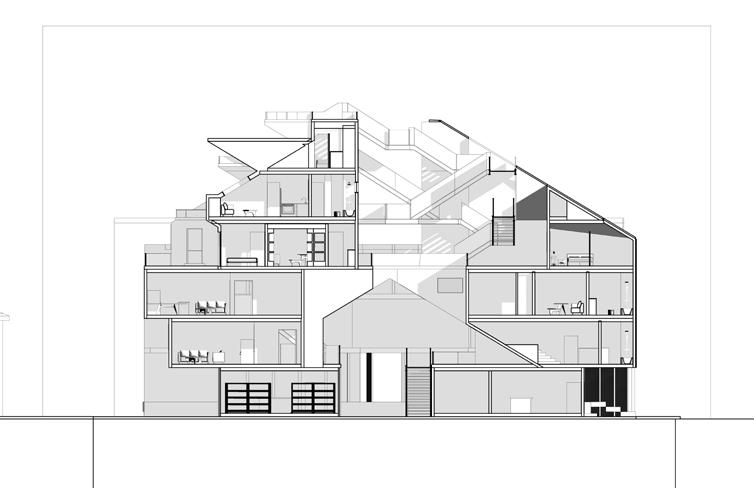
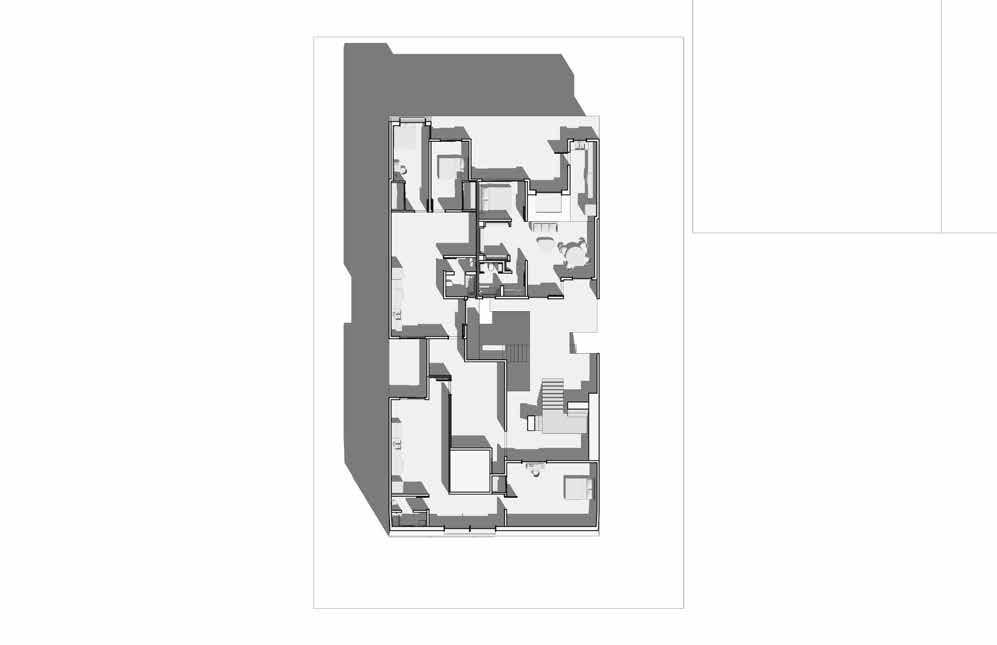
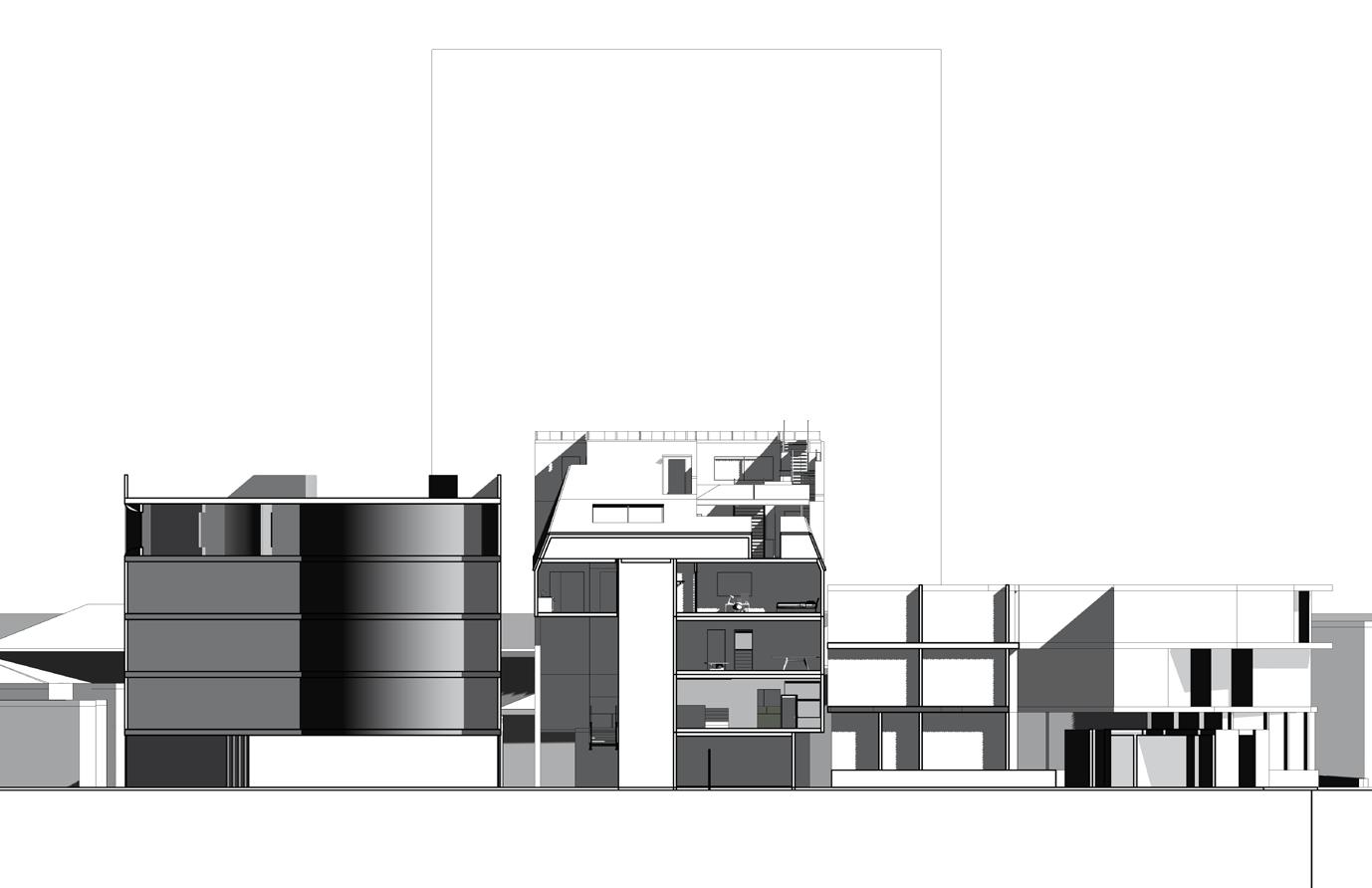
This project was informed by the idea of bringing the Hillside down to the Flats. Typically In Los Angles the hills have been a way for the wealthy of the city to escape and enjoy the views of the city with out fully immersing in it, this project, located in West Adams, seeks to bring a sense of equality to the idea. Each unit in the building is designed uniquely without any one unit more advantages than the other, with the idea of having communal gardens on its "hilltop".
Nature
VS Drawing Nature
VS 2743:
Course abstract:
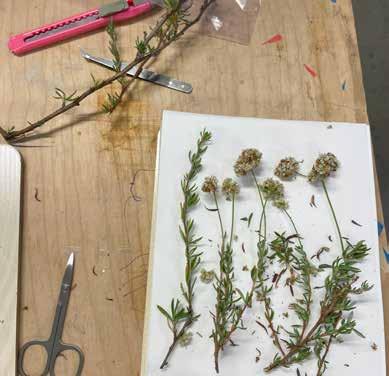
“This class will focus on representation and nature; we will look at and learn from our natural environment and elaborate drawing techniques that go beyond the image and expand into the material. As architects, we design with drawings that help us build buildings, but in this class, we will ‘build’ a drawing. The technique for building a drawing will come from painting and fabrication; by mixing paint brushes and CNC milling machines, we will create painterly surfaces that have been digitally manufactured but have the allure of a handmade craft as a kind of digital craft. To develop drawings and begin the design process, we will observe nature. The class will visit the Theodore Payne Foundation and learn about plant species native to the Los Angeles region. Students will create a “Herbarium” by selecting a collection of plants. Students will learn the technique and science of pressing and drying plants and develop drawings that trace nature, beginning by drawing the flatness of a leaf, its contour, and form and asking us to choose the materiality of the paper, the tint, and the tone. So we can learn to observe our environment.”
and Absurdity
Core Seminar II - 20th Century
Graham Harman
LA 8113: Course abstract:
“This Core Seminar is the second in a sequence of five, covering some of the great achievements of human civilization in reverse order: from today back through ancient times. All of the authors covered in this semester did their primary work in the 20th and late 19th centuries. Fields covered include literature, philosophy, politics, feminism, psychoanalysis, chemistry, physics, and biology.”
Using ChatGPT as a requirement I explored the understandings that I got from two readings as compared them with dialog that AI gave me. This analysis was a personal exploration of how similar lines of thoughts seemed to appear across many thinkers in history.
Part 1
ChatGPT prompt:
Write an essay about Kaftka's Metamorphosis and its relation to existentialism and absurdity, and reflect on the significance of the transformation specifically being into an insect as opposed to something else. How may have Kaftka come to realize the absurdity of life being comparable to being a bug and then what does it mean to find or make a purpose to live if we are all this metaphorical bug? Lastly, what is the reasoning for the second half of the Novella being written more from an objective perspective?
Response:
Franz Kafka's "The Metamorphosis" is a powerful exploration of existentialism and the concept of absurdity. The novella delves into the protagonist's transformation into an insect, a metamorphosis that is not only physical but also symbolic of the human condition. This transformation serves as a potent allegory for the existentialist experience, as it forces us to confront the absurdity of existence, question our purpose, and grapple with isolation.
The very premise of the story, the transformation into an insect, highlights the inherent absurdity of human life. It is a radical and inexplicable event that defies reason and logic. Existentialism often contends that life itself is absurd, with no inherent meaning, and this transformation underscores this idea. The choice of turning Gregor into an insect, rather than a more conventional transformation, emphasizes the fundamental irrationality of existence. It is not a logical or rational event; it simply happens, much like the existentialist view of the world as fundamentally irrational.
Kafka's realization of the absurdity of life as being compatible with being a bug likely stems from his own experiences and observations of the world. He lived during a time marked by political turmoil, social upheaval, and a sense of alienation and estrangement. Kafka's own feelings of isolation and frustration may have led him to view human existence as inherently absurd, a perspective shared by many existentialist thinkers.
The transformation into an insect represents the dehumanization and isolation experienced by Gregor. He is treated as a mere vermin by his family, much like the dehumanizing effects of modern society that existentialists often criticize. This metamorphosis captures the feeling of being an outsider and not fitting into the norm, a common existentialist theme.
Existentialism posits that life lacks inherent meaning or purpose, and individuals must confront this void and create their own meaning. Gregor's plight embodies this existential dilemma. He is confronted with the harsh reality that his previously structured life has lost its meaning after the transformation. His family, who once depended on him, now treats him as a burden. This situation reflects the existentialist notion that individuals must grapple with the challenge of finding or creating purpose in a world that seems indifferent or absurd. Gregor's struggle to find meaning in his existence parallels the broader human quest to ascribe significance to life's inherent absurdity.
The second half of the novella being written from a more objective perspective can be seen as a narrative choice that deepens the sense of alienation and absurdity. The shift in perspective emphasizes Gregor's isolation and dehumanization, as the narrative distances itself from his internal experience. This choice serves to intensify the reader's engagement with the story's themes by highlighting the detachment and estrangement that Gregor experiences, as well as the stark contrast between his subjective experience and the objective world's perspective. In conclusion, "The Metamorphosis" by Franz Kafka is a quintessential work of existential literature that confronts the absurdity of existence through the transformation of the protagonist into an insect. The choice of the insect transformation underscores the irrationality of life, and Gregor's struggles and isolation symbolize the human condition. The novella prompts readers to reflect on the need to find or create purpose in a seemingly absurd world. The shift to a more objective narrative perspective in the second half deepens the sense of alienation and detachment, further emphasizing the existential and absurdist themes of the work. Kafka's masterful exploration of these themes makes "The Metamorphosis" a timeless and thought-provoking literary classic.
My Response:
Franz Kafka's “The Metamorphosis” as plainly written and short of a story or Novella as it was, still left me struggling with various thoughts about its meaning and what takeaway is one supposed to have within real life. It is because of this head-scratching sense of confusion and wonder that the story brought about, that is the reasoning for further conversation of the existentialist and absurdist nature of life. Each moment in time from the story felt as if it was just a simple recounting of the Mondaine family who was just down on their luck, just completely underreacting to the reality that is the face center of the novel and yet this is the only way that a story like this can be told. It is the same perspective we all take daily to go on about our day without falling into a crisis. Through the act of reading the book and feeling this curiosity, disgust, and anger at the absurdity of the story, it is that we can then retrospectively look at our reality and come to the realization that we too, like the Samsa family, choose to accept life as it is as the fact and reality rather than questioning the
meaninglessness and why the world we perceive is the one we claim to be reality in the first place. This realization and questioning comes from the lack of understanding of the book I believe then becomes a tool, one that can be used for the acknowledgment of our own absurdity of life and the truly existential nature of our reality and our existence. While questioning the very idea of reality I wanted to compare my understanding of the Novella and its significance with that of A.I.’s, specifically concerning several aspects I found to be essential about the novel, as I was while confronting these ideas. At face value, the novella makes no mention of existentialism, the absurd (other than in the realization Gregor has about his sudden change), or any of these schools of thought. The book isn't meant to be a philosophy book or dictionary about the concept, for that, we may turn to works by Albert Camus, JeanPaul Sartre, or several other existentialist and nihilist thinkers. Rather the upfront reading of the story seems like a dark but honest recounting of someone's dream, but that's where the guinus of the novella comes into play. As the plot inherently is not actually about much, it allows us to reinterpret the surrealist qualities as a representation of something else. This I think is one aspect that ChatGPT assumed correctly, it mentions how the metamorphosis into an insect is an allegory for human existence and our absurd and frankly insignificant existence on the larger universal scale yet we still grapple with reality in defiance of our absurdity or maybe just in denial of it, like Gregor worrying about the worldly stresses like going to work and taking care of his family’s needs. The story once reflected makes us assume the position of this insignificant and disgusting insect as we want to relate to the main character, but because of its distance from our perceived common reality
it, as ChatGPT said, has us confront this sense of isolation that Gregor is feeling but not because it is from our family horrified by us but because “we are condemned to be free” and what purpose can we have if not one given by some divine being, that is the true underlining reasoning for loneliness. I also find that the representation of this absurd nature being reflected in the story through some unnamed insect to be especially important. As we discussed in class, what if the metamorphosis had been into something else? Then the plot would be entirely different and however surrealist as it may be it would most certainly lose the power as a tool that the writing has to make us the readers think introspectively and consider the existential nature of reality. Since the insect in the story is also unnamed it allows readers of all backgrounds to have a chance to relate to the work by associating the insect Gregor becomes with something they too would be disgusted by. There is also a relation to be made in terms of our cosmic value and that of an insect practically being the same, an upsetting realization for sure yet undeniable that within all space-time we are not much more than some pestering insect doing our damnedest to be something more. Yet, in some ways, I feel conflicted to even rationalize the meaning of Gregor becoming an insect specifically; as ChatGPT points out, there is no true reasoning for the transformation being an insect, it cannot have a reasoning as the story is a reflection of life itself. We may try to find a meaning but all we’d be doing is trying to ignore the absurdity of reality, there is no meaning and that’s fine, the story continues.
Part of what made me think of the story as being so masterful after all was learning about Kafka’s own real struggles living in the period that he did, and as we’d discussed, most of his writings were done on
late nights after coming home from his day job with the stresses of the day probably lingering in the mind. It is in a similar state of mind that I was able to realize the position of the existentialist and then truly appreciate the work of the metamorphosis. The latenight realization of the absurdity of the daily stresses and life itself, especially when isolated is powerful, and in writing the story of this seemingly silly occurrence, we really get to ride along with the thoughts of Kafka and realize a lot of the same ideas of the world. Asking this to ChatGPT was important to me to see if I was on the right in my thinking of how one can “unlock” the realizations of existentialism, and the A. I found the answer I was looking for in that I was able to relate to the mental state that Kofka was coming from in the writing. In the second half of the novella, the perspective seems to shift from one where we are right beside Gregor as he recounts his experience to the one where his sister, Grete, seems to take more of the center stage. I found this to be interesting for the tool of making the reader aware of the absurdity, Similar to Gregor in accepting their personal perception as truth, Grete is more frustrated with the annoyance of having to have her brother become that way and what it means for her daily experience than with coping with the fact he became an insect. Had the plot in it been the reasoning for the importance of the novella then the fact that the family doesn't try to do anything to fix his situation would've been a failure for the novella in not resolving, and perhaps it is for those who take the novella at face value that thinks it to
Part 2: Extra Reading.
ChatGPT prompt:
be underwhelming and pointless, but as I reiterate I think the deliberate ignoring of the subject in how Kofka writes and the transition to others prospecting truly give those who wonder why more of a reason to laugh along at the absurdity of the story and reflect on our own reality. ChatGPT also uses the translation to dive into the isolation and drive the dehumanization point further and I partially think that can be true but more importantly it makes us realize that the ignorance of the absurdity of the perceived reality isn't just from that of the protagonist but it is the world as we all perceive it. The lack of meaning in life can be too much to bear, so we ignore the truth, making ourselves ignorant of it so that we can be blissful in the existential dread we might feel if we confront the absurdity; that is why the family also chose to refuse to believe that their son has transformed. Gregor's death and how his family deals with it is them finally getting to not have to be faced with a daily reminder of existentialism, they take his death with blissful joy as they no longer have to come to the rude realization that we as the readers come to face.
I wonder in the future if or when True A.I. emerges what decision of what reality will it choose to believe and whether the tool of this novel will be useful for it or lose its meaning. For now, we have ChatGPT and although I know it doesn't truly realize the power of Kaftka’s novella, it can provide me with other popular points of view on it leading me to dive further into my own realizations.
What comparisons can be made between Emily Dickinson's "I felt a Funeral, in my Brain" and Franz Kafka's "the Metamorphosis"? what shared impact do these writings have and what makes the two of them so powerful?
Response:
While Emily Dickinson's "I felt a Funeral, in my Brain" and Franz Kafka's "The Metamorphosis" belong to different genres and styles—Dickinson's work being a poem and Kafka's a novella—there are some thematic and stylistic
elements that can be compared, and both pieces are powerful in their own right. 1. Themes of Isolation and Alienation: Both works explore themes of isolation and alienation. In Dickinson's poem, the speaker experiences a metaphorical funeral in their own mind, highlighting a sense of inner isolation. In Kafka's "The Metamorphosis," the protagonist, Gregor Samsa, undergoes a physical transformation into an insect, resulting in profound alienation from his family and society. 2. Exploration of the Mind and Existential Crisis: Dickinson's poem delves into the internal workings of the mind, portraying a mental breakdown or existential crisis. Kafka's "The Metamorphosis" explores the psychological and existential implications of Gregor's transformation and how it affects his sense of self and place in the world. 3. Symbolism and Metaphor: Both writers make extensive use of symbolism and metaphor to convey complex emotions and experiences. In Dickinson's poem, the funeral serves as a metaphor for the unraveling of the mind. In Kafka's work, the transformation of Gregor into an insect is a powerful metaphor for the dehumanizing effects of societal expectations. 4. Absurdity and the Unexplainable: Both works touch upon the theme of the absurd. Dickinson's portrayal of a funeral in the mind is an inexplicable and surreal experience, echoing the absurdity of life. Kafka's narrative, with its fantastical premise of a man turning into an insect, confronts the reader with the absurdity and unpredictability of existence. 5. Introspection and Subjectivity:
My Response:
Dickinson's poem is deeply introspective, focusing on the speaker's internal experience. Kafka's novella provides insight into Gregor's subjective experience and the impact of his transformation on his psyche. Both works emphasize the importance of understanding the inner lives of the characters. Shared Impact and Power: Both pieces are powerful in their ability to evoke a strong emotional response and provoke deep contemplation. They challenge conventional ideas about identity, societal expectations, and the human mind. The impact lies in their ability to resonate with universal themes of human experience, making readers reflect on their own lives and the nature of existence. What Makes Them Powerful: Rich Symbolism: Both Dickinson and Kafka use rich symbolism to convey complex emotions and ideas. The funeral, the insect transformation—these symbols carry layers of meaning that invite interpretation and reflection.
Exploration of the Human Psyche: Both works delve into the depths of the human psyche, exploring the complexities of consciousness, identity, and the impact of external and internal forces on an individual's mental state. Universality of Themes: The themes of isolation, existential crisis, and the absurdity of life are universal, transcending time and cultural boundaries. This universality contributes to the enduring power of these works.
In summary, while Dickinson's "I Felt a Funeral, in My Brain" and Kafka's "The Metamorphosis" differ in form and narrative style, they share themes of isolation, introspection, and the impact of the inexplicable on the human psyche. Their power lies in their ability to resonate with readers, prompting contemplation on the complexities of existence and the human experience.
Existentialism as the concept had not yet been labeled or directly written about until much after the death of Emily Dickinson, yet the anxieties and dreed one may feel from the realization of the absurd nature of the world has been a human constant and one that is very prominent in many of Dickinson’s poems. One such poem I felt a strong connection to about the feelings of existentialism is I Felt a Funeral, in my Brain, published after her death. Although the poem is quite short I believe Miss Dickinson manages to capture the mental journey that one can go through while reaching the realization. From reading The Metamorphosis we can come to the gates of awareness of the absurdity of life. I felt a Funeral, in my Brain takes the reader through the stages of mental anguish experience that nature could feel like. As ChatGPT points out both works don't seem to share much in common when just talking about their genera or types and styles of writing but what drove me to making the comparison is that both give the sense of the breaking point from reality. As redundant and simplified as some of the points that ChatGPT makes are, I believe them to be an accurate assessment of both readings but the strongest relation between the two for me, again doesn't come directly from the work but from the feeling that the two give the reader. The metaphor made by both is very potent which is what leads to the feeling of existential dread, in particular, I like the way that Emily Dickinson describes the increasing loudness as the funeral proceeds and then finally ending mid-sentence, the feeling of growing anxiety and then- just being.. the final realization that we are nothing on a cosmic level but finding silence and peace in
that. Emily Dickinson’s Funeral, in my brain, is not her only poem that reflects these feelings but I think that from rereading it a few times it had the strongest call to me, one that was reminiscent of what I had felt when I explored the train of thoughts I had after reading Kafka.
I felt a Funeral, in my Brain, And Mourners to and fro Kept treading—treading—till it seemed That Sense was breaking through—
And when they all were seated, A Service, like a Drum— Kept beating—beating—till I thought My Mind was going numb—
And then I heard them lift a Box And creak across my Soul With those same Boots of Lead, again, Then Space—began to toll,
As all the Heavens were a Bell, And Being, but an Ear, And I, and Silence, some strange Race Wrecked, solitary, here—
And then a Plank in Reason, broke, And I dropped down, and down— And hit a World, at every plunge, And Finished knowing—then—
Work
Cited
Kafka, Franz. The Metamorphosis, 1915.
Dickinson, Emily. “I Felt A Funeral in My Brain.” Nineteenth Century America Women Poets. Malden, Massachusetts: Blackwell Publishers Ltd, 1896
Emily Dickinson "I felt a Funeral, in my Brain"
FIGURES FLOWS
DS 1031:FIELDS FIGURES FLOWS: Partnered with Vipasha Thorat
This studio builds on 3A by exploring architectural design through the lens of diversity and complexity in urban contexts. Students will design a large cultural center composed of multiple event spaces, learning how architecture can integrate different systems—fields, figures, and flows—into a cohesive whole. Through case studies and precedent research, students will analyze how these elements interact spatially and socially, responding to forces like history, context, circulation, and performance.
Key references include Stan Allen’s concept of “field conditions” and FOA’s Yokohama Port Terminal, both of which explore how architecture can prioritize what a building does over what it looks like. Students will examine how different components—like open spaces, iconic forms, and movement paths—can coexist without hierarchy, enabling flexible and inclusive environments. The studio ultimately asks how architecture can create space for cultural diversity, with each section approaching the topic through a unique design methodology.
Amphitheater
Reading Spaces Structure
Structure + Guardrails
Cantilever Auditorium Structure
Chunk Exploded Axon
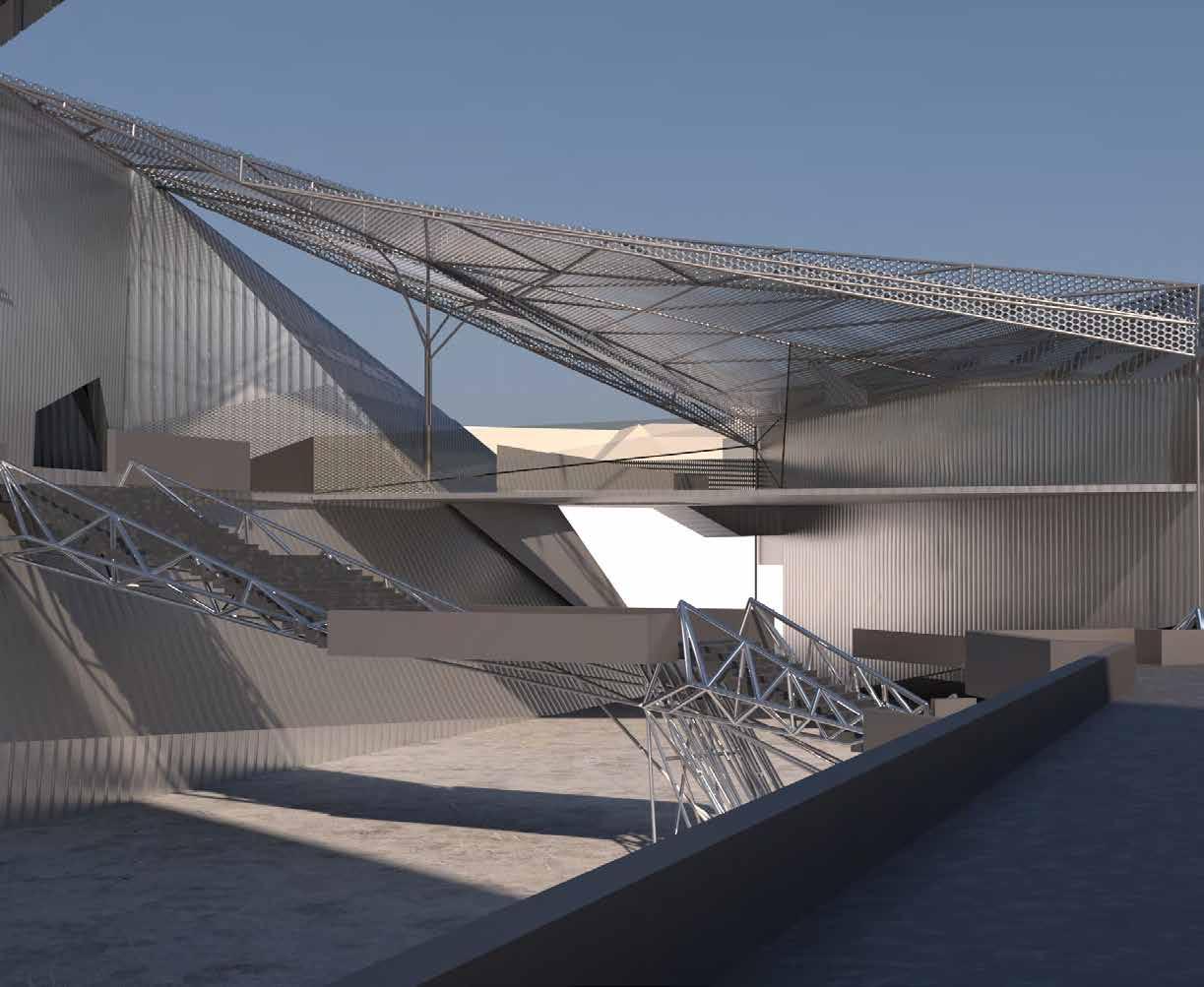
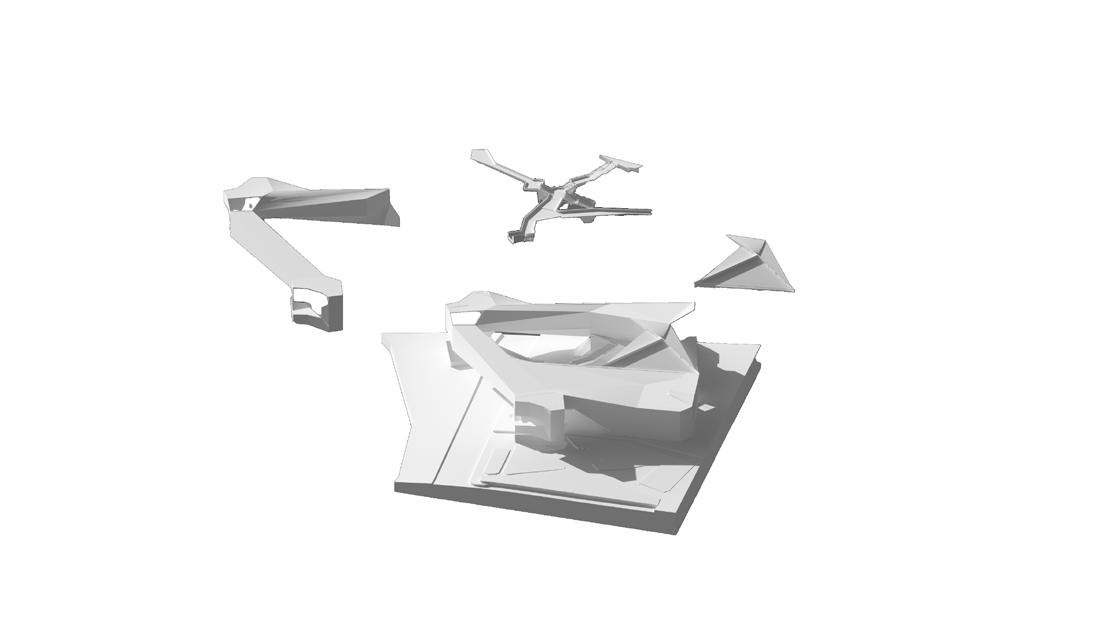
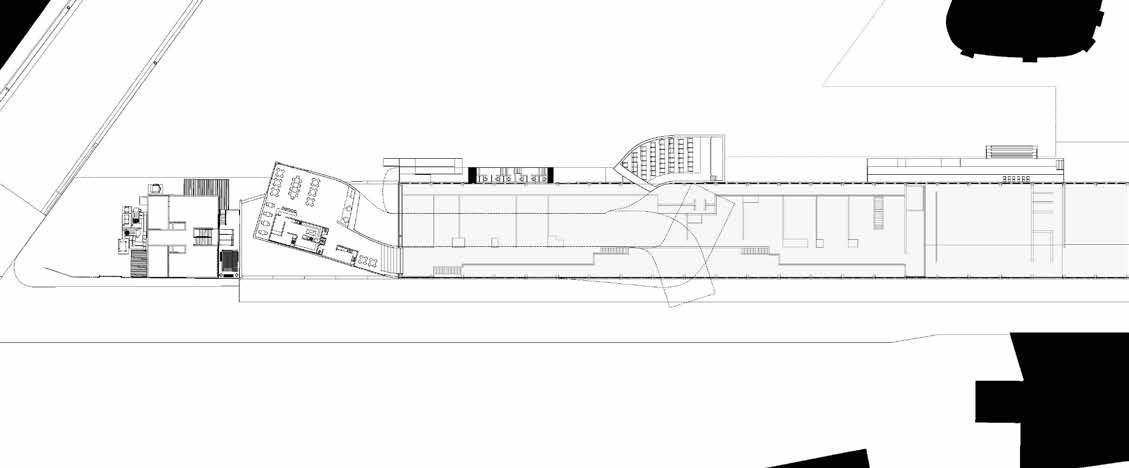
Our design is driven by the goal of connecting the surrounding community to the interior programs through thoughtful massing, circulation, and environmental strategies. The three primary structures are oriented to align with nearby commercial zones, bike paths, busy streets, and historic parks, creating visual and physical connections that invite movement through and around the site. A system of bridges links the individual massing, breaking their sense of isolation and extending the project’s reach across the river, promoting openness and accessibility from all directions. Elevated structures enhance airflow and introduce passive cooling strategies, with openings that allow cool air to filter in and rise naturally through the building, supported by HVAC and skylights. The structure itself becomes expressive— piercing and wrapping around the volumes—shaping interior geometries while doubling as an external shading system that supports environmental performance and spatial identity.
Canopy
Connections
Cantilever
SCI_Arc Haus
4A Studio - Positions
Karel
Klein
DS 4A Studio POSITIONS:
Expanding on the idea of the site closest to the heart, this studio operates as a near-thesis, encouraging students to take a clear position within contemporary architectural discourse. The focus is on designing an expansion to our own school, prompting critical reflection on how institutional architecture can evolve in response to shifting priorities, needs, and values. With program categories such as community outreach, student life, and academics, students are invited to re-imagine the future of the school as a dynamic, inclusive, and responsive environment shaped by diverse perspectives.
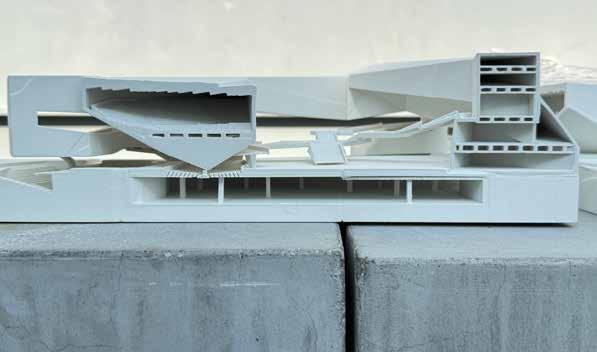
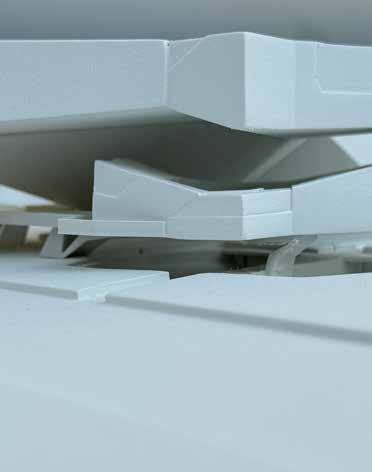
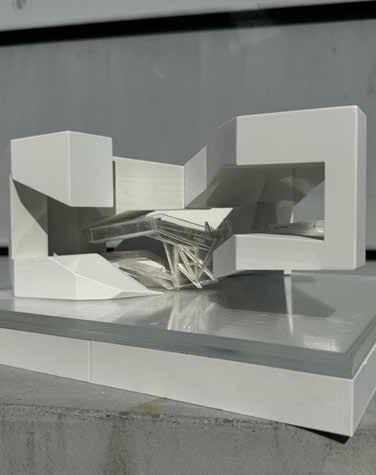
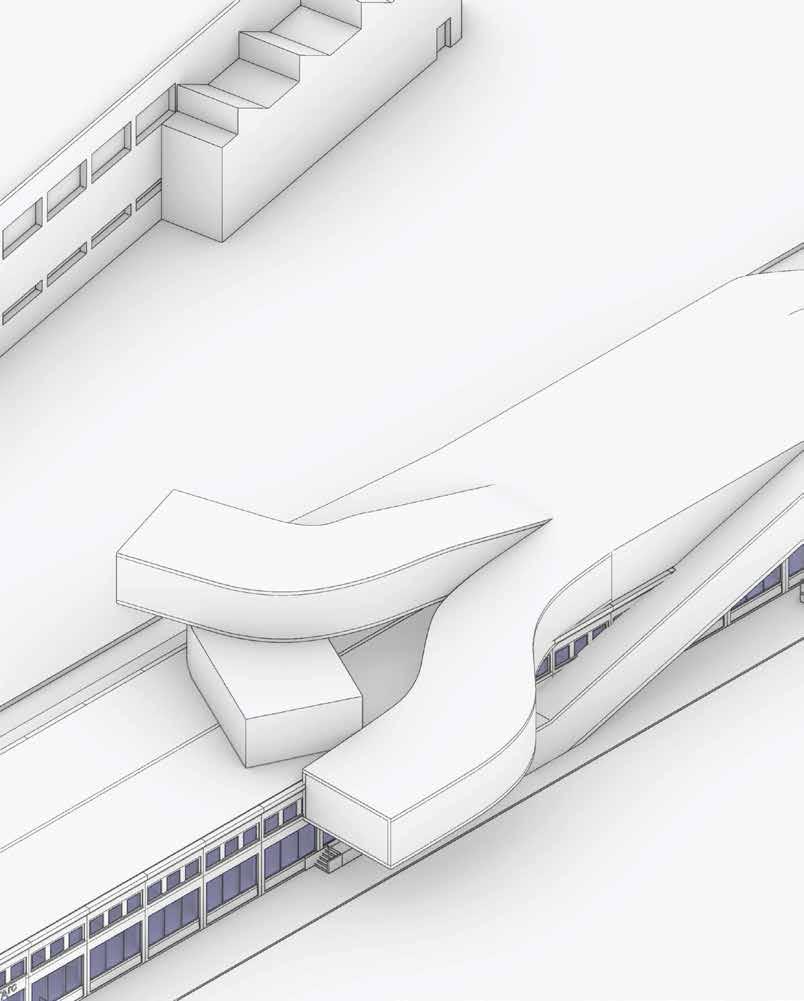
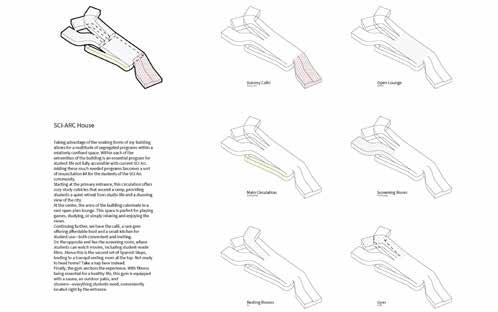
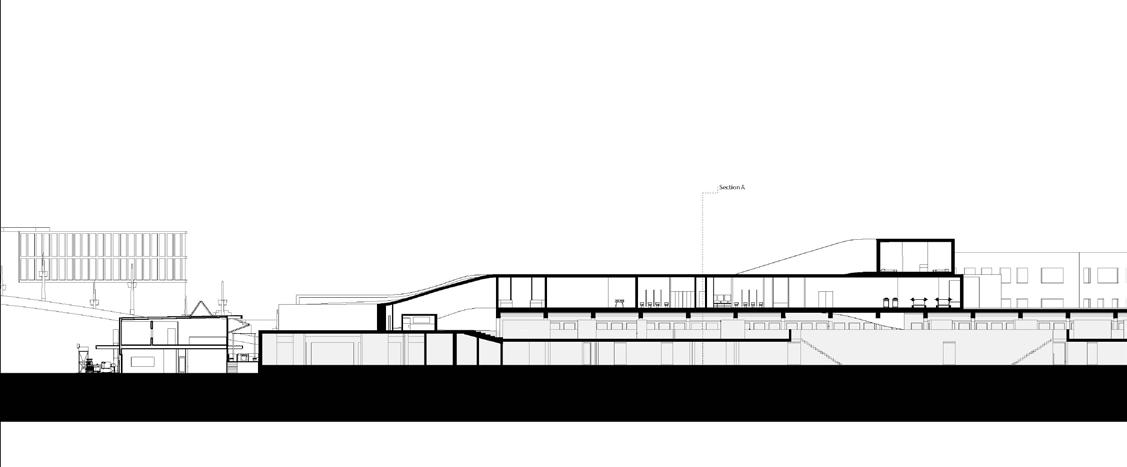
For my project, SCI-Arc Haus, I envisioned a much-needed space for rest and renewal—functions often overlooked in the academic environment. The project is conceived as a multi-armed structure, each "arm" dedicated to a different program, all unified and elevated above the existing SCIArc building. Rather than acting as a parasitic extension, the design functions as an “anti-parasite,” offering support and uplift to the school below. Students ascend into this space to recharge—mentally, physically, and socially— finding motivation and endurance to continue their work. At the heart of the structure is a communal core, a shared space where students can interact outside of academic pressures. This center becomes a crucible for new ideas, allowing for informal collaboration and exchange, which then flows back into the academic core below, enriching the work done within.
The "After Mall"
Exchange Studio - Space Popular
Fredrik Hellberg, Lara Lesmes
Institute of Architecture (IoA) - die Angewandte Studio 2 Partnered with Moritz Pfister, Ruslan Shigapov, Arthur Wostry
STILL IN PROGRESS
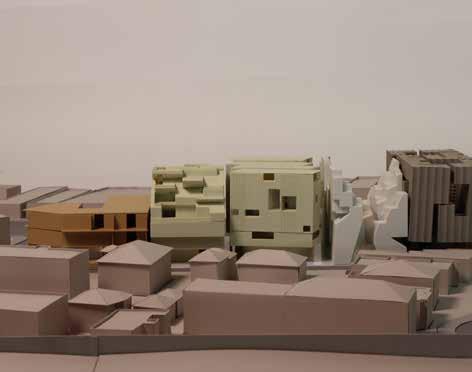
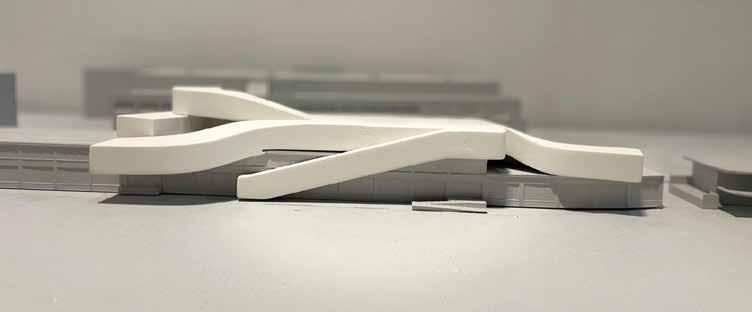
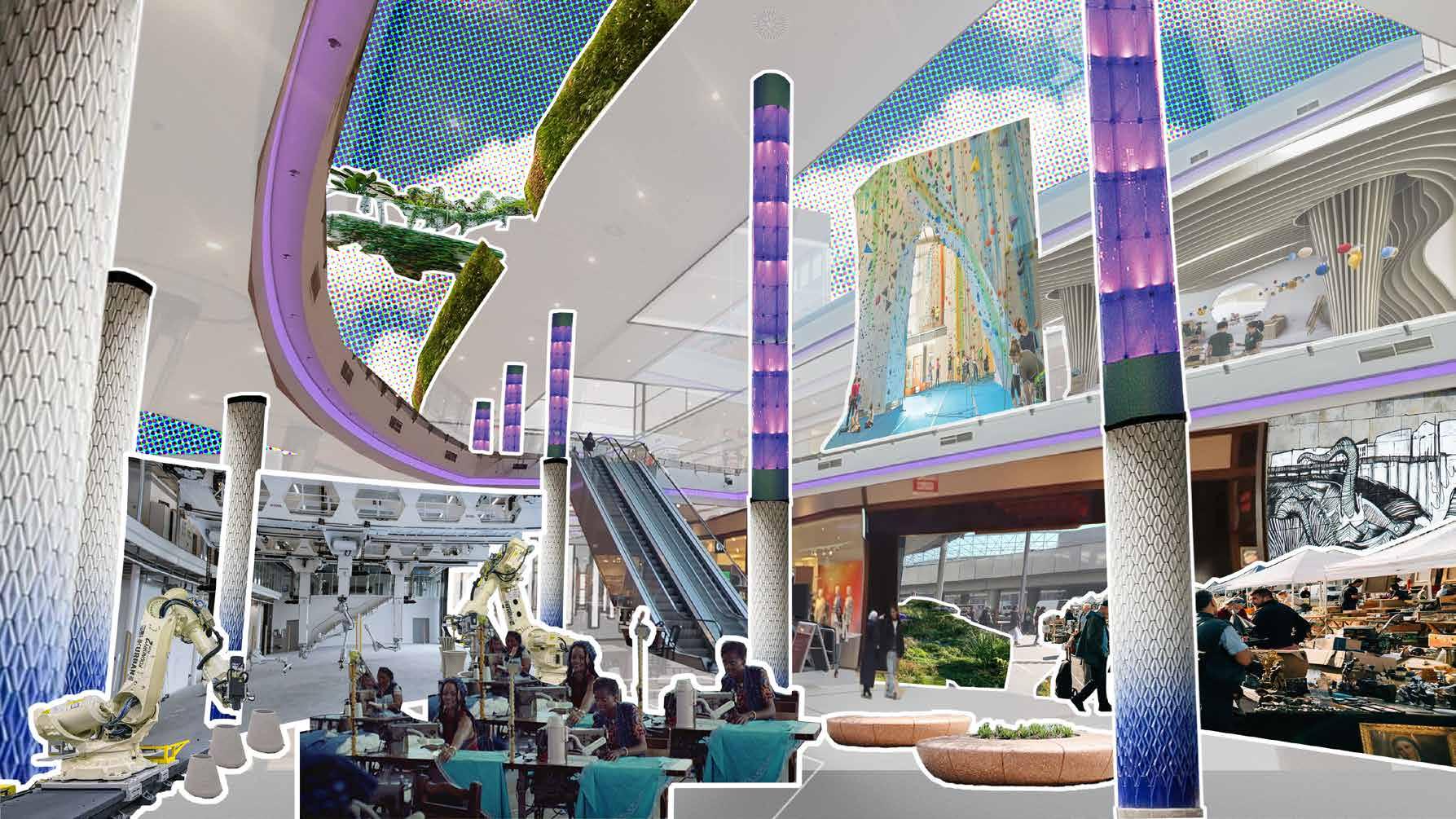
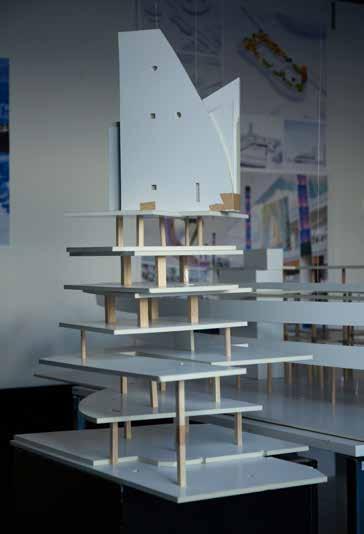
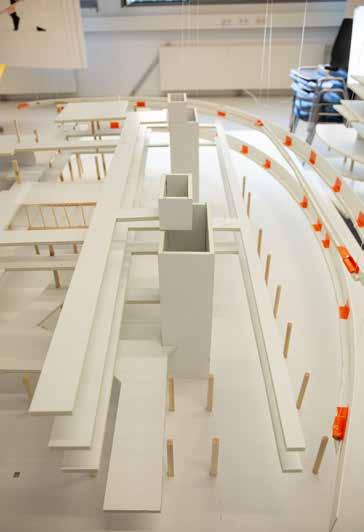
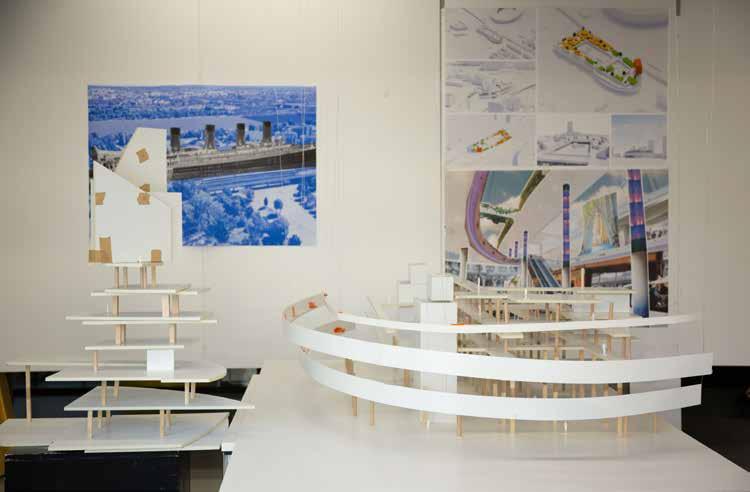
This studio is working with transforming the Retail Hubs in the city of Vienna considering the impact these buildings have and how they are changing with E-commerces. One can not just dismiss these buildings because we don't like them, they are a reality of the current world we live in and are largely some of the only "community" centers in Cities. The studio offers a critical reflection of the use, building, preserving, adapting of these malls with the awareness that only destroying and dismissing these structures is completely unsustainable and dismissive of any community that relies on them.
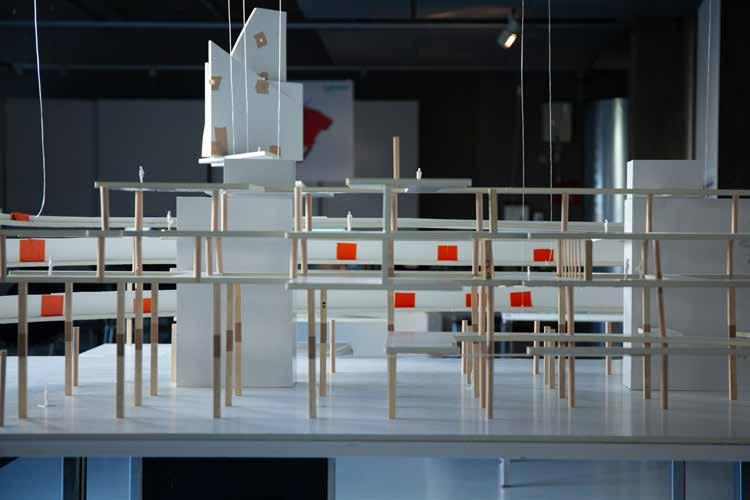
We begin the semester through doing virtual tours exploring malls across the world and how they function globally, what works, what doesn't, who uses them, etc. In the studio we are moving away from working narrowly in 3D softwares and are making a large scale "boll house" model to work out of. The constraints and difficulties of demolishing the malls is then reflected in the process of using the working model.