Why Midwich? Because we go beyond distribution.

Choosing Midwich means choosing more than products. It means unlocking a partner with facilities, services and expertise designed to make every project smoother, smarter and ultimately, more successful.
Experience it before you invest
Our state-of-the-art demo facilities, including Innovation House and our Letchworth showroom, let you and your customers explore solutions first-hand.
Financial flexibility
With tailored credit facilities, we make it easier to grow your business while managing cash flow.
More than a distributor
Through Plus+, we offer services from technical support and installation to training and extended warranties, ensuring added value at every step.
Strength in numbers
As part of the Midwich Group, we bring global scale and stability while delivering local expertise.
Specialist support
Our PSCo team provides pre-sales advice, project support and access to the most advanced LED configurator in the industry.
Knowledge that leads the industry
From expert insights to trend analysis, our thoughtleadership content like Connected Magazine keeps you ahead of the curve.
Seamless delivery
With dedicated logistics services, we get the right technology to the right place, on time, every time.
For more information about our Value
Services, please enquire today at:
WELCOME
to Connected
As we head into summer, retail enters one of its most valuable and visible seasons. Longer days, major sporting moments, increased footfall and more time spent in shared spaces all create new opportunities for retailers to connect with customers in the moments that matter (after all, the sun puts everyone in the mood to spend, doesn’t it?).
For the AV industry, that opportunity is becoming more sophisticated. Retail technology is no longer just about putting screens in stores or adding digital touchpoints to physical spaces. It is about creating environments that are connected, responsive, measurable and built to perform long after installation.
In this edition of Connected, we explore how retail AV is changing across every layer of the store. From in-store media networks and live event-driven content to personalisation, automation, audio, sustainability and intelligent store infrastructure, the articles in this issue reflect a more mature retail landscape. One where technology is expected to support customer experience, operational consistency, commercial return and long-term value.
We also look at how stores are becoming more dynamic. Retail spaces are behaving less like fixed environments and more like connected systems, able to respond to context, content, data and demand in real time. For resellers, integrators and technology partners, this creates a growing opportunity to support retailers not just with products, but with the expertise, services and strategic thinking needed to make those environments work at scale.
Looking ahead, Tech Xpo returns this October as Midwich’s biggest event of the year. It is a chance to experience the full Midwich ecosystem in one place, meet specialist teams and leading technology partners, and explore how our solutions, services and expertise can support your business.
Thank you for reading this edition of Connected.
If you would like to contribute to a future issue, please contact: emmanuelle.gammage@midwich.com.

midwich.com | 01379 649200
the team






The store no longer starts
THE JOURNEY
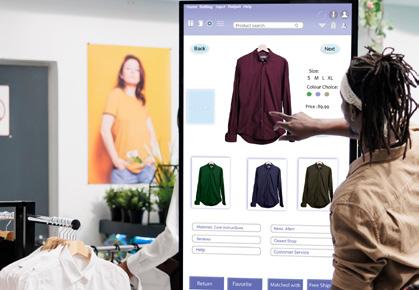
Customers do not recognise a divide between physical and digital domains. They expect a continuous relationship with a brand, making the idea of ‘blending’ the two less relevant.
A continuous customer journey
Rather than acting as the destination where shopping begins, the physical store operates as a live fulfilment node and service checkpoint within an active journey.
When a shopper walks into a store, they expect what they have seen or started online to carry through without interruption. A saved basket, real-time stock visibility or a planned collection should not need to be rediscovered. The expectation is simple: the experience continues, rather than resets.
AV as the continuity layer
In this unified landscape, AV technology takes on a different role. Its value lies not in adding digital to physical spaces, but in ensuring the customer journey does not break at the store threshold.
Screens, service points and staff devices function as visible checkpoints in a shared commercial system. They surface the same stock information, service updates and transaction context that exists elsewhere in the journey, allowing customers to move forward rather than start again.
The most effective retail AV deployments are built on the assumption that the divide has largely disappeared, ensuring the experience remains consistent, connected and uninterrupted from one moment to the next.
by operational consistency LIVES OR DIES
A bespoke, dramatic LED installation looks incredible on launch day. But over time, the practical reality of supporting these systems becomes clear: custom content is difficult to update, and specialised hardware requires technical support that is not always available on the shop floor.
In 2026, the industry is taking a more grounded approach. Retailers recognise that a highly immersive flagship experience loses its value if the technology cannot be easily scaled, maintained or relied upon across a 100-store estate. Experience depends as much on operational consistency as on initial spectacle.
Rethinking the ‘wow’ factor
While large-format LED and spatial environments still have an important role to play, the emphasis is now on balancing visual complexity with operational stability. Integrators and buyers are looking beyond day one, focusing on how a system performs on day 500.
Bespoke installations often require intensive, localised maintenance. When a complex interactive display goes offline in a regional branch, it disrupts the brand experience. Buyers now view AV less as a standalone marketing feature and more as critical infrastructure. The most effective deployments are built on robust, standardised hardware and software stacks.
The gap between flagship and rollout
The challenge becomes clear when moving from a concept location to a national rollout. Flagship stores benefit from larger budgets and dedicated technical resources. But attempting to replicate a highly customised experience across a sprawling retail estate quickly exposes the practical limitations of such a build.
Systems must be designed for scale from the very beginning.


What performs flawlessly in a fully supported location can become difficult to manage at scale. A wellstructured digital signage network, supported by a centralised Cloud CMS and proactive remote monitoring, offers a more dependable and manageable approach. For the retailer, the goal is to protect the overall brand experience while streamlining ongoing support. Consistency, rather than novelty, has become the benchmark of a successful rollout.
Designing for scale from the start
To support this shift, systems must be designed for scale from the very beginning. This means prioritising interoperability and defining clear hardware and software standards that can be deployed with confidence anywhere. Cloud-based platforms enable centralised control for marketing teams, while remote diagnostics allow integrators to resolve issues smoothly, often without requiring an on-site engineer.
Crucially, we are seeing the rise of “design systems” in AV. Just as software developers use clear guidelines to ensure an application functions consistently, integrators are standardising interaction patterns, layouts and content behaviours. Creativity still plays a vital role, but it now operates within a framework that ensures reliability across the entire network.
A more mature experience
Experience is no longer defined solely by an isolated moment of impact in a single store. It is defined by how reliably that digital touchpoint performs across an entire global portfolio.
For integrators, this brings a different kind of responsibility. The true value lies not just in creating the most striking one-off installation, but in architecting scalable networks that can be governed centrally and maintained effortlessly over time.
In today’s retail environments, the most effective AV experiences are not necessarily the ones that make customers stop and stare.
They are the ones that help them move through the space with ease.

RETAIL AV
must behave like IT
infrastructure
Flagship experimentation still has a place, but does not define the direction retail AV is taking. The priority for enterprise brands is now secure, repeatable deployment at scale (read more on page 6).
This positions AV as the core IT architecture. Across large deployments, this is already the standard approach, with systems designed to perform consistently across entire estates rather than individual locations.
Standardisation with purpose
Scaling introduces constraints that pilot projects avoid. Different store formats, varying network bandwidths and the realities of long-term support all shape what is viable.
The 80/20 rule now underpins most estate-wide rollouts. A strictly defined backbone of approved displays, media players and CMS platforms covers 80% of the estate. This standardisation simplifies global procurement, drastically reduces points of failure and allows firmware updates to be managed centrally without breaking local systems.
The remaining 20% allows for variation where it matters, adapting flagship locations or high-profile zones within a controlled, secure structure.
Built into operations, not layered on top
At scale, AV sits firmly within operations.
Digital signage now pulls via API directly from inventory databases to reflect pricing in real time. Media players sit securely on corporate IT networks, subject to the same penetration testing and endpoint compliance as a POS terminal. Proactive remote monitoring platforms continuously track performance, moving AV firmly out of the reactive “break-fix” model.
Repeatability as a measure of value
The challenge for the channel is to engineer systems that can be repeated seamlessly.
Standardised architectures ensure that a deployment behaves exactly as expected, regardless of geography. For integrators, value lies in delivering solutions that perform consistently over time.
When the hardware works, the real
CHALLENGE BEGINS
In modern retail, specifying what goes on the wall is no longer the hardest part of the job. The real complexity begins the moment it is switched on.
That reality tends to reveal itself during rollout. A pilot in one flagship store may run smoothly, but across hundreds of locations, a different set of pressures is introduced. Ownership becomes blurred. IT may control the infrastructure, but marketing wants speed and flexibility. Operations need consistency, with no reliance on store staff to fix issues during trading hours.
What happens when ownership is unclear?
Many retail AV projects stall at this stage. Not because the technology is wrong, but because the governance around it is missing. The most effective installations now depend on clearer structures from the outset, with responsibilities defined across IT, marketing and operations before deployment begins.
This is a familiar pattern: success depends on whether the retailer has a clear internal owner for day-two operations.
Content needs rules, not just creativity
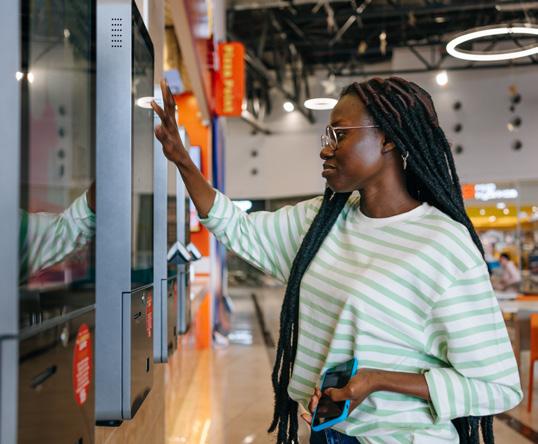
The same applies to content. Screens can go live in a day, but keeping them useful, compliant and current is a longer-term discipline. Without clear permissions and workflows, brand consistency slips and simple updates become bottlenecked. Role-based access, locked templates and controlled local inputs are becoming just as important as the hardware itself.
The value is in what happens next
There is also a financial reality behind this maturity. At the estate level, software licensing, integration failures and reactive support costs can quickly outweigh the simplicity promised at the quote stage. That is why the strongest retail AV strategies now focus less on boxes and more on outcomes: uptime, control, scalability and support.
What should retailers consider now?
As signage and retail media networks expand, attention turns beyond the install itself. Clear ownership is essential: who manages infrastructure, who controls content and who is responsible when something goes wrong? Governance matters just as much as creativity, especially when multiple regions, formats and approval layers are involved.
It is also worth pressure-testing the long-term operating model. Can content be updated quickly without losing brand control? Can local teams respond to store-level needs without creating inconsistency? And does the wider system still make sense financially once software, support and integrations are scaled across the full estate?
As the technology matures, the opportunity is to think differently about rollout. The next step is creating the framework to make them work harder for longer.
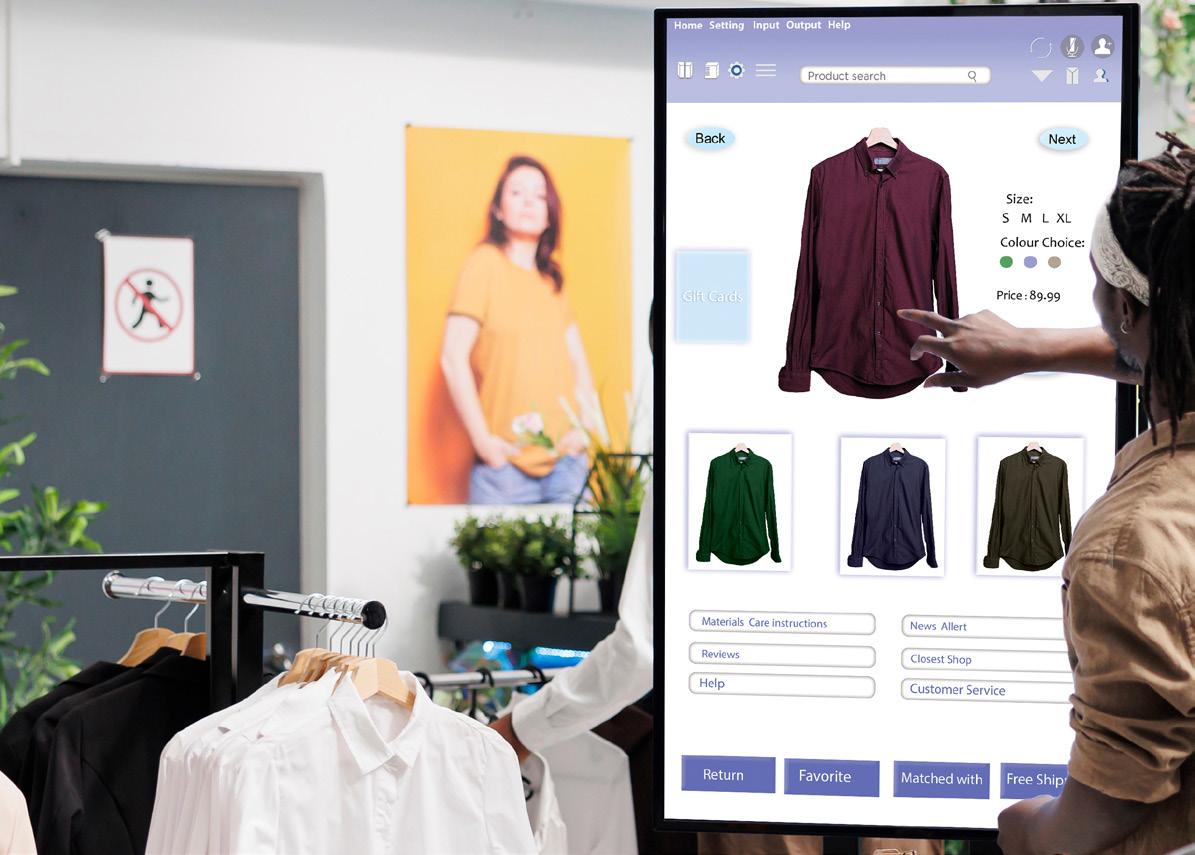
Screens are not just showing content. They are participating in the decision-making process.
Digital signage is rapidly transitioning from a store fit-out cost to a direct revenue generator, modernising the store environment and improving brand consistency. But in 2026, that view is already outdated.
What has changed is not just the technology, but the commercial model around it. As retail media networks continue to expand, in-store screens are being redefined. They are evolving beyond static fixtures into monetisable platforms, generating measurable revenue in their own right.
Turning space into media
The change is rooted in a simple idea: physical retail space can now function like digital real estate. Just as brands pay for placement on a homepage or within a search result, they can now invest in visibility at the point of purchase. Digital signage plays a central role in enabling that. Positioned across aisles, endcaps and store entrances, screens create a network of high-impact touchpoints where brand partners can reach customers at the exact moment decisions are made. For retailers, this transforms AV from a cost centre into a commercial channel.
The question is not what a retailer needs to spend on screens, but what those screens can return. With the right strategy in place, the value sits not just in the display itself, but in the inventory it creates.
Premium moments, not just placements
Within that network, not all screens are equal. As display technology advances, certain formats are emerging as premium inventory.
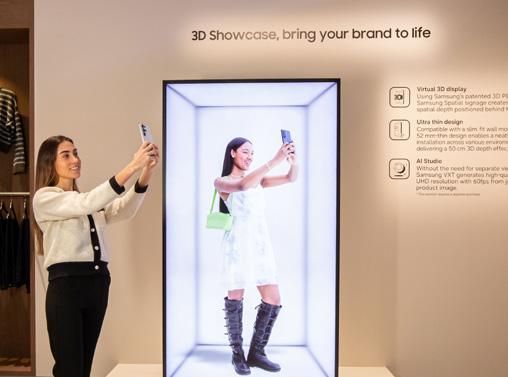
Spatial displays, including the latest glasses-free 3D solutions seen at ISE 2026, are a clear example. By adding depth, motion and realism without requiring headsets, they create a level of engagement that standard signage cannot match. Products appear more tangible, more detailed and more immediate.
For brand partners, that translates into attention. And attention, in a retail media context, carries value. These formats are increasingly being used for product launches, campaigns and high-margin categories where storytelling matters. As a result, they can command higher rates and deliver stronger engagement than traditional digital placements.
What began as a display is becoming a true destination within the store.

Screen to storefront: How retail AV is becoming A REVENUE ENGINE
From playback to real-time influence
What matters now, however, is how these screens behave. Using static playlists to drive digital signage has given way to dynamic, data-driven and responsive approaches.
Content changes based on real-time conditions within the store. That might look like surfacing a complementary product when a shopper engages with a nearby item, highlighting a promotion during peak traffic periods or triggering limited-time messaging to drive urgency at the end of the day.
This is where AV moves beyond communication into influence. Screens are not just showing content. They are participating in the decision-making process, shaping what customers see and when they see it.
For advertisers, that level of contextual relevance is difficult to replicate elsewhere. It brings media closer to the moment of purchase, where it has the greatest potential impact
Making performance visible
With that opportunity comes a new expectation. Brand partners want proof. Not just estimated footfall, but clear, measurable outcomes.
This is where modern AV infrastructure plays a critical role. Integrated analytics can track impressions, dwell time and engagement at the screen level. When combined with sales data, it becomes possible to understand exactly how a campaign has performed in-store.
That closed loop is what underpins the commercial model. It allows retailers to demonstrate value, justify premium placements and build longer-term partnerships with advertisers.
A different kind of business case
Taken together, these shifts redefine how AV is positioned in retail, placing it firmly within the revenue strategy.
For retailers, the opportunity is to treat in-store screens as a scalable media platform, while for integrators, it is to reframe the conversation around outcomes rather than equipment. Supplying across both traditional AV and IT channels, we see firsthand how this model requires integrators to speak the language of media metrics and real-time performance, not just hardware uptime.
As spatial displays and dynamic signage continue to evolve, the most important question is what they return.
Designing retail attention
WITH INTENT
Retail is not short of screens. Storefronts, endcaps, counters, service desks and fitting rooms are already full of visual moments, each competing for attention. The more useful question for retailers is no longer where another display could go. It is what each screen is being asked to do.
That is where Samsung’s retail display portfolio takes a more deliberate approach. Across Samsung Spatial Signage, Samsung Colour E-Paper and the 115” QHFX display, the focus shifts from adding more technology to designing a more intentional visual environment. Each format serves a different kind of customer moment, from stopping someone in their tracks to supporting a simple decision without adding noise.
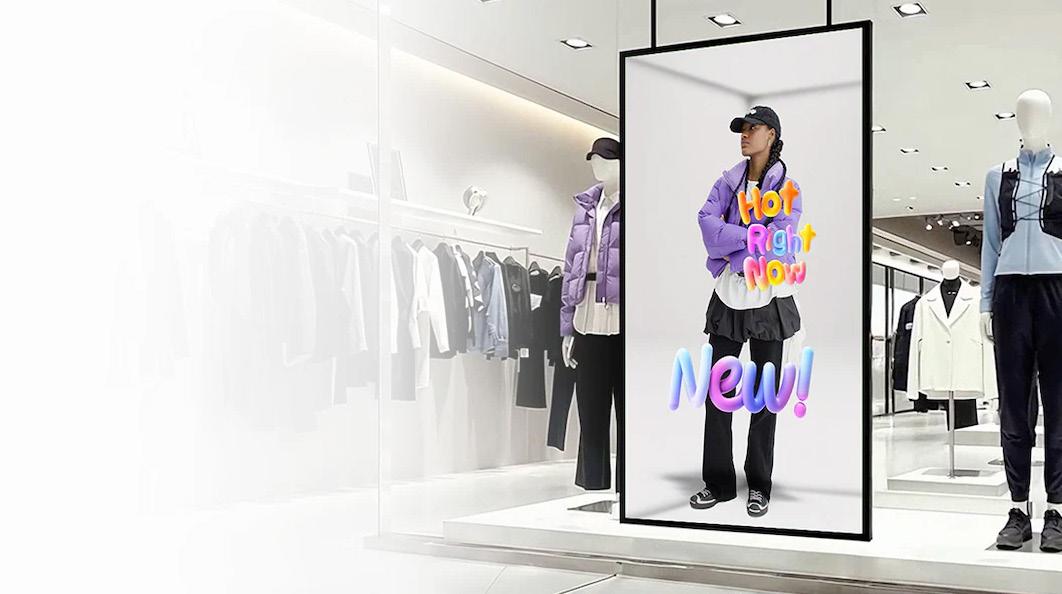
Samsung Spatial Signage addresses a familiar retail challenge: making products feel tangible before the customer has touched them.
Glasses-free 3D brings depth and dimension into the space, allowing products and seasonal stories to appear with a stronger sense of presence. It is not simply about spectacle. Used well, it gives retailers a way to create a focal point that feels premium, physical and memorable within the customer journey.

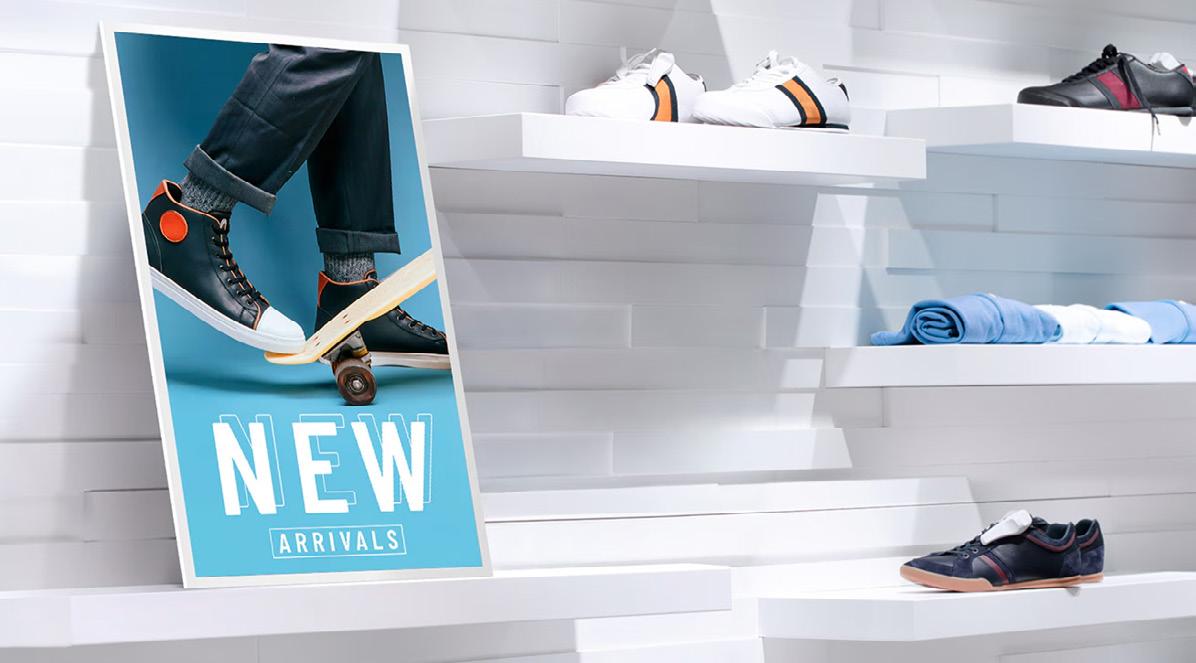
If Spatial Signage is designed to attract attention, Samsung Colour E-Paper addresses a different challenge entirely. Not every message benefits from motion, brightness or continuous playback. Pricing, product information, wayfinding, service messaging and counter promotions need to be clear, flexible and low-maintenance.
E-Paper brings the familiarity of print into a digital workflow, allowing retailers to update content without repeatedly producing, distributing and replacing printed materials. Its paper-like appearance makes it especially useful in areas where information needs to be visible without feeling intrusive (read more on page 10).

Between those two roles sits the 115” Samsung QHFX display. Designed for moments that demand scale, clarity and refinement, it combines the impact of a large-format installation with the simplicity of a single standalone display. Its expansive 115” screen enables retailers to create bold campaign moments, full-height product visuals and large-scale storytelling without the complexity of a video wall. The display’s distinctive matte finish further enhances its premium appeal, reducing distractions from reflections while delivering a sleek, sophisticated look that complements high-end retail environments.
For retail, that matters. Large-format impact is valuable, but it also needs to be practical. The QHFX supports 24/7 operation, landscape and portrait installation, high-brightness visuals, anti-glare performance and a slim design that works within more considered interiors. It can create presence at the entrance, anchor a campaign zone or support a premium product launch, while remaining easier to specify and integrate than many bespoke display features.
The strength of these technologies is in how they can work together across the store. Spatial Signage can create a pause. The 115” display can carry the campaign. E-Paper can support the decision with clear, timely information at the point of the product or service. Plus, all of these displays can be managed seamlessly via Samsung VXT.
That layered approach reflects where retail AV is heading. Screens are becoming less about filling space and more about shaping attention with purpose. Some need to draw people in. Some need to explain. Some need to operate almost invisibly.
Samsung’s portfolio gives retailers and integrators a way to build that mix with more intent. It supports the dramatic, the practical and the everyday, helping stores communicate with greater precision across every stage of the customer journey.
Not every screen needs
TO SHINE
Not all digital signage needs to be bright, dynamic, or always on - especially as energy costs rise and sustainability targets harden. (Read more on page 36)

Rethinking display for lower power
Ultra-low power technologies such as e-paper are becoming practical alternatives.
Unlike traditional LCD or LED displays, e-paper reflects ambient light and only consumes power when content changes. Once updated, it holds the image without drawing continuous energy. Solutions such as Sharp and Samsung e-paper are bringing this capability into retail environments, offering a strong fit for use cases where information is stable rather than constantly changing.
Shelf-edge pricing is a clear example. Instead of relying on printed labels or high-power screens, retailers can update pricing instantly across entire estates while significantly reducing energy consumption and manual effort.
The same logic applies to wayfinding and in-store messaging. High-contrast, glare-free displays provide clear direction without contributing to visual noise or unnecessary power usage, particularly in environments where simplicity improves the overall experience.
Balancing visibility with sustainability
For integrators and resellers, this changes how display is specified.
Instead of defaulting to high-brightness, always-on screens, there is a growing need to match the technology to the role it plays within the space. Some moments still demand scale and impact. Others benefit from restraint - where low-power displays present the information clearly without adding unnecessary energy use or visual noise.
That’s where e-paper fits. Not as a replacement for traditional signage, but as part of a broader, more considered mix.
Retail environments no longer need every screen to compete. The most effective deployments are those that balance performance with efficiency, using the right display in the right context to reduce energy demand while maintaining a clear, consistent experience.

INTELLIGENCE From surveillance to store
Retail is undergoing a significant shift. Data-driven decision-making is now essential for businesses looking to improve performance and customer experience. In this evolving landscape, DVS, in partnership with Hikvision, is enabling retailers to unlock the value of intelligent video. Their fully integrated, end-to-end retail analytics solution supports this transformation.
CCTV was once used purely for security. Today, it is a powerful business tool. Hikvision’s AI-enabled technology lets retailers transform surveillance systems into insight-generating platforms. Cameras positioned throughout the store can accurately track footfall, monitor customer flow, measure dwell time and identify queues in real time. This gives retailers a clear understanding of how customers interact with their environment.
Reliable data now replaces assumptions.
DVS delivers this capability through a seamless ecosystem of Hikvision products. At the edge, intelligent cameras such as the DeepinView and AcuSense ranges process analytics directly on the device, ensuring accurate data capture while reducing system complexity. These solutions are designed to distinguish genuine customer activity from irrelevant movement, providing dependable insights that retailers can trust.
Captured data is then managed through robust recording and processing solutions, including Hikvision NVRs, enabling centralised control across one or multiple sites. This ensures that retailers can securely store and review both video and analytics data while easily scaling their systems as their businesses grow.
The real value is realised through HikCentral Professional, which brings all data into a single, intuitive platform. Retailers gain access to dashboards that present key metrics such as footfall trends, peak trading times and customer movement patterns in a clear and actionable format. Integration with point-of-sale systems further enhances this insight, enabling businesses to understand conversion rates and directly link store traffic with sales performance.
These insights have a measurable impact. Retailers can optimise staffing levels to match customer demand, refine store layouts based on actual movement patterns and assess the effectiveness of marketing campaigns by tracking tangible changes in footfall. The result is improved operational efficiency, better customer experiences and increased revenue.
DVS differentiates itself by delivering not just products, but complete solutions tailored to each customer. From system design through to deployment and ongoing support, DVS ensures that retailers can adopt analytics with confidence. Whether for a single store or a nationwide chain, solutions are scalable and aligned to the specific needs of the business.
Importantly, DVS also supports customers in navigating data protection requirements. Hikvision systems can be deployed to collect anonymised data, ensuring that retailers benefit from insights while remaining compliant with GDPR and maintaining customer trust.
With extensive industry expertise and a strong support network, DVS provides retailers with more than technologyit offers a strategic advantage. As retail continues to evolve, the ability to understand and respond to customer behaviour in real time will be critical. Through its partnership with Hikvision, DVS is helping retailers turn data into meaningful action, ensuring they remain competitive in an increasingly data-driven world.

The new rules of retail PERSONALISATION
For years, retail personalisation promised a highly intelligent store but delivered interactive screens and QR codes that asked shoppers to stop and engage. Today, the most effective retail technology does the exact opposite: it works quietly in the background.
It does not ask shoppers to engage without a purpose. Instead, it helps the store respond in ways that feel timely, useful and natural. In this new model, AV has taken on a different role, increasingly becoming the physical delivery mechanism for the retailer’s backend intelligence.
From attraction to orchestration
Retail AV used to focus heavily on capturing attention: bigger screens, louder experiences and obvious interactivity (read more on page 10). Now, the priority is orchestration. Digital signage, shelf-edge displays, audio zones and wayfinding systems are being used less as isolated touchpoints and more as connected outputs for unified commerce data.
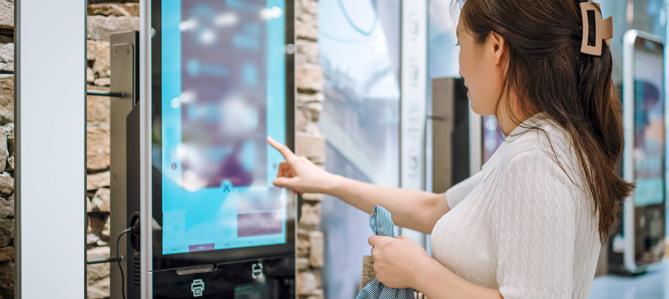
Previously, physical stores suffered because they were cut off from the rich data retailers enjoyed online. A customer could have a highly tailored experience on a mobile app, only to walk into a physical branch that treated them like a stranger. AV bridges that gap by making the environment itself more responsive. Screens can adjust messaging via API integrations with inventory systems. Audio can be zoned to adjust the mood based on real-time demographic analytics. In each case, the role of AV is not simply to display content, but to translate the retailer’s data into a physical reality.

As stores become more connected, the line between helpful and invasive can become very thin.
Context is replacing overt identity
Rather than relying on obvious, one-to-one targeting, which often raises privacy concerns, retail environments are moving toward system-led personalisation. Context has replaced identity.
Essentially, this means AV systems are responding to edge-computed signals like dwell time, footfall, queue build-up or weather patterns, rather than trying to explicitly identify the individual. A screen near an endcap might prioritise different content depending on the speed of traffic flow. A promotional zone might shift messaging according to time-sensitive stock priorities.
Here, AV becomes the layer that translates intelligence into an ambient experience. The AI may sit in the data model or the commerce platform, but it is the AV network that allows that intelligence to show up in the physical space with relevance and restraint.
The balance between intelligence and intrusion
That restraint matters. As stores become more connected, the line between helpful and invasive can become very thin. Retailers want joined-up, data-informed experiences, but customers are increasingly wary of anything that feels overly visible or poorly explained.
A more mature AV strategy makes the difference. When designed well, it responds to anonymised context and integrates seamlessly with consent-led app ecosystems, adapting messaging without turning the store into a surveillance theatre. In this model, privacy is not a barrier to personalisation; it is part of what makes the technology trusted.
Supporting people, not replacing them
In some of the strongest retail environments, particularly luxury, the best use of AV is not customer-facing at all. It is in how connected systems empower staff. Routing omnichannel data to tablets, mobile tools and discreet in-store interfaces helps sales associates act on customer preferences, purchase history or live store conditions with better timing and confidence.
It signals where the market is heading. Combined, AI and AV are helping retail environments become more intelligent in how they communicate, guide and adapt.
Today, personalised retail is not about adding more theatre. It is about using AV to make the physical store as intelligent, responsive and data-aware as the digital one.
Stores that think in REAL TIME
Making the store responsive increases capability and introduces a need to understand how these environments behave once they are live.
Data flows in. Systems react. Displays update, lighting shifts, audio adjusts. The environment responds to conditions in real time, rather than following a fixed sequence.
For retailers and integrators, this changes how environments need to be managed and maintained at scale.
More inputs, more variation
Every input creates a decision point. Footfall rises, dwell time drops, inventory shifts, weather changes. Each signal can trigger a response, and each response alters the environment.
The result is constant variation, which can lead to inconsistency, conflicting messaging and a loss of control across the estate. The more the system adapts, the more carefully its boundaries need to be defined.
The experience depends on coordination
A responsive store is made up of multiple systems working together. Displays, audio and lighting all react, often at the same time. Each can perform well independently. The experience depends on how well they are aligned.
Without coordination, the environment fragments. Messages compete, transitions clash and attention disperses. What should feel responsive starts to feel unpredictable.
Coordination becomes the difference between clarity and noise.
For integrators, this means thinking beyond individual systems and focusing on how environments behave as a whole. Design decisions need to account for how content, control and automation interact in real-world conditions, not just how each element performs in isolation.
Control starts to blur
Responsiveness shifts where decisions happen. Behaviour is no longer fixed at the point of install or locked into a schedule. It is shaped continuously by inputs and conditions.
That changes ownership. Infrastructure, content and in-store experience are managed by different teams, but the system cuts across all of them. Control is shared, but not always clearly defined.
Responsive environments extend what retail can do. They also raise the bar for how they are managed. Coordination, ownership and system design become critical to delivering a consistent retail experience at scale.
From control to orchestration: Unifying the store
ENVIRONMENT
Behind the scenes of almost every modern flagship store is a fragmented control experience. Store teams are expected to navigate multiple interfaces to manage signage, lighting and climate separately.
That complexity rarely holds up day-to-day.
Retail staff are not there to manage technology. When systems are difficult to operate, they are often left on the wrong settings or ignored entirely, creating inconsistency in the customer experience.
From control to orchestration
In response, system convergence is becoming a practical necessity rather than a future ambition.
Rather than treating each technology separately, integrators are increasingly designing stores as unified environments: AV, lighting and climate are managed through a single control layer. This redefines the focus from individual devices to how the space behaves as a whole.
In practice, that can be as simple as a one-touch scene. Opening a store no longer means adjusting screens, lighting and audio individually. At large-scale experiential spaces like the M&M’s World flagship in New York, multi-floor audio, paging and visual systems are united under a single interface. A single action can bring the entire environment into the correct state, aligning content, ambience and comfort from the moment the doors open.
More advanced systems extend this further, responding automatically to changes in the environment. If sunlight increases, sensors can lower window shades, dim indoor lighting and increase screen brightness without human intervention.
Designed to disappear
For the AV industry, this changes what success looks like.
The value of control systems is no longer in the number of features they offer, but in how effectively they remove complexity from the shop floor. This requires closer integration between technologies and a clearer understanding of how stores operate day-to-day.
Retailers are not looking to manage more systems, but for environments that run predictably, consistently and with minimal input.
The most effective solutions are those that feel invisible in use, so the space works, without demanding attention from the people running it.

AV ENVIRONMENTS
Commercial AV systems are already operating with a degree of autonomy. Across large retail estates, networks monitor conditions, adjust performance and flag issues without waiting for direct human intervention.
Displays adapt to changing light levels throughout the day. Audio zones rebalance automatically as occupancy and ambient noise shift. Remote monitoring platforms detect hardware drift before it becomes visible on the shop floor. Content updates react to inventory, scheduling and operational triggers in real time.
Connected retail estates place far greater demands on AV infrastructure. Modern networks are expected to maintain consistency across hundreds of locations, often with limited on-site technical resources. Stability depends not simply on deployment, but on how effectively systems maintain performance once live.

Support begins before failure
The growth of software-driven AV is also changing support models.
Historically, issues were identified after they disrupted the customer experience. A screen failed, audio levels drifted or content stopped updating correctly, triggering a support ticket and a reactive maintenance process. Across large estates, that approach becomes difficult to sustain.
Self-managing systems lessen reliance on manual intervention by identifying irregular behaviour, detecting failing components and triggering corrective actions before a visible failure occurs. Remote diagnostics, predictive monitoring and automated calibration are now integrated, maintaining consistency without requiring constant oversight from store teams.
This also changes the role of support. Retailers expect AV to behave more like a managed service layer than a collection of isolated hardware deployments. Monitoring, diagnostics and proactive service models are becoming embedded into the wider technology stack surrounding the customer experience.
For resellers and integrators, that creates a stronger emphasis on long-term support, whether through managed services, remote monitoring platforms or specialist frameworks such as Midwich Plus+.
Autonomy still needs boundaries
With more autonomous behaviour built into retail AV, focus moves higher up the stack.
Greater emphasis is placed on governance, behavioural logic and coordination across the wider estate. Retailers need to determine which behaviours should be adapted locally, which should remain centrally governed and when human intervention becomes necessary.
That becomes particularly important in responsive retail spaces, where displays, audio, lighting and content systems interact. A pricing update may trigger new promotional messaging. Simultaneously, environmental sensors may alter lighting and display brightness. Occupancy data may influence audio zoning and content pacing across multiple areas of the store.
Individually, these systems improve efficiency. Coordinated, they help stores remain aligned, responsive and operationally consistent at scale.
That coordination also places new expectations on the channel. Integrators are increasingly responsible not just for specifying hardware but also for designing behavioural frameworks, governance models and safeguards around autonomous systems. Retailers place growing value on partners that can support long-term system performance, continuity and operational resilience beyond the initial deployment. Ultimately, long-term value will depend on system resilience and consistent performance with minimal need for manual involvement.
Delivering the screen is only THE START

Retail environments have matured significantly, with large-scale screen deployments now more achievable through specialist AV partners. Designing, specifying and installing these systems remains a complex discipline.
But once screens go live, a different kind of challenge begins. Keeping what appears on those screens impactful, consistent and effective, day after day.
Content at scale
A single screen can be managed. A network of hundreds cannot be approached in the same way. As estates grow, the demand for content increases, but the ability to maintain relevance does not scale with it. Messaging becomes repetitive, updates slow and inconsistencies appear. At that point, content stops being a creative challenge and becomes an operational one.
The effectiveness of that content is also shaped earlier, through how the network itself is designed, from screen placement to connectivity and control. At scale, those decisions determine how easily content can be managed, updated and kept aligned.
Over time, even well-designed campaigns lose impact if they are not refreshed or adapted. Scale creates volume, but not necessarily value, without the systems, ownership and workflows to support it.
Automation vs authenticity
Automation is essential in managing that volume. Templates, rules and scheduling systems allow content to be deployed across entire networks with speed and efficiency. But what scales easily can also become uniform.
Messages risk losing context, flattening into the same output regardless of location, audience or moment. Relevance drops at the point it matters most: in-store decision-making. The more automated the system becomes, the more deliberate the content strategy needs to be to avoid that outcome.
The strain of always-on
Always-on environments introduce a different kind of pressure. Screens require constant input, but content teams are rarely structured to operate at that pace. In many retail environments, ownership sits awkwardly between marketing, operations and IT, with no clear model for how content is maintained day to day. As Greg Bennett, Services Director, explains, the real challenge often begins after delivery:
With
large-scale
LED
deployments, content ownership and day-to-day management can become unclear after handover. Without a defined model for maintaining and updating content, performance starts to drift.
You see promotions fall out of sync, or content becomes outdated and screens stop reflecting what’s actually happening in store, even when the LED itself is working exactly as it should.”

Without clear ownership and sustainable workflows, updates become reactive or delayed. Content lags behind store activity, promotions run longer than intended and local relevance begins to erode.
Most retail environments are built to support the technology. Far fewer are designed to sustain what appears on it, and that is increasingly where retail AV succeeds or fails.
Services Director, Midwich
Greg Bennett

GET FASTER, SMARTER LED CONFIGURATIONS WITH PIXEL IQ
The future of LED design is here.
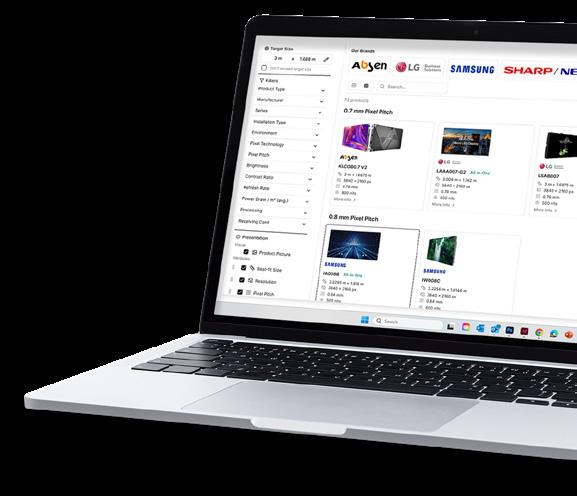
Pixel IQ is your go-to tool for creating LED display solutions in minutes. Built by PSCo’s LED experts, it connects you to the biggest brands on the market, so you can instantly compare products and design the perfect display for any project.
With engineering-grade detail and an intuitive interface, Pixel IQ lets you:
Configure, design and quote complete LED solutions in record time.
Access side-by-side comparisons of top LED brands for clear decision-making.
Generate accurate, professional proposals to accelerate customer conversations.

Whether you’re planning a meeting room videowall, a large-scale venue or exploring the latest LED trends like MicroLED, all-in-one LED or LED for virtual production, Pixel IQ gives you the clarity and confidence to deliver.
Smarter LED starts here.
Book your demo with a PSCo LED specialist today. pixeliq.com
When retail goes live:
BROADCAST THINKING
in physical space
Retail spaces are increasingly shaped by live events, shared moments and fluid customer behaviour. During major cultural and sporting moments, that dynamic becomes more visible. Movement changes, dwell time stretches and retail starts to behave differently.
Recognising the moment
In a traditional retail model, content continues as planned. Campaigns run to schedule, screens display pre-set messaging and consistency is measured by how closely execution matches the original plan.
That structure still has its place, but during national events or cultural moments, retail content becomes more responsive.
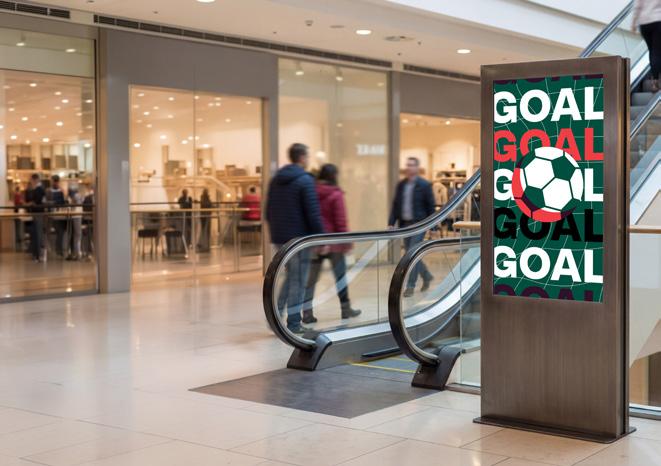
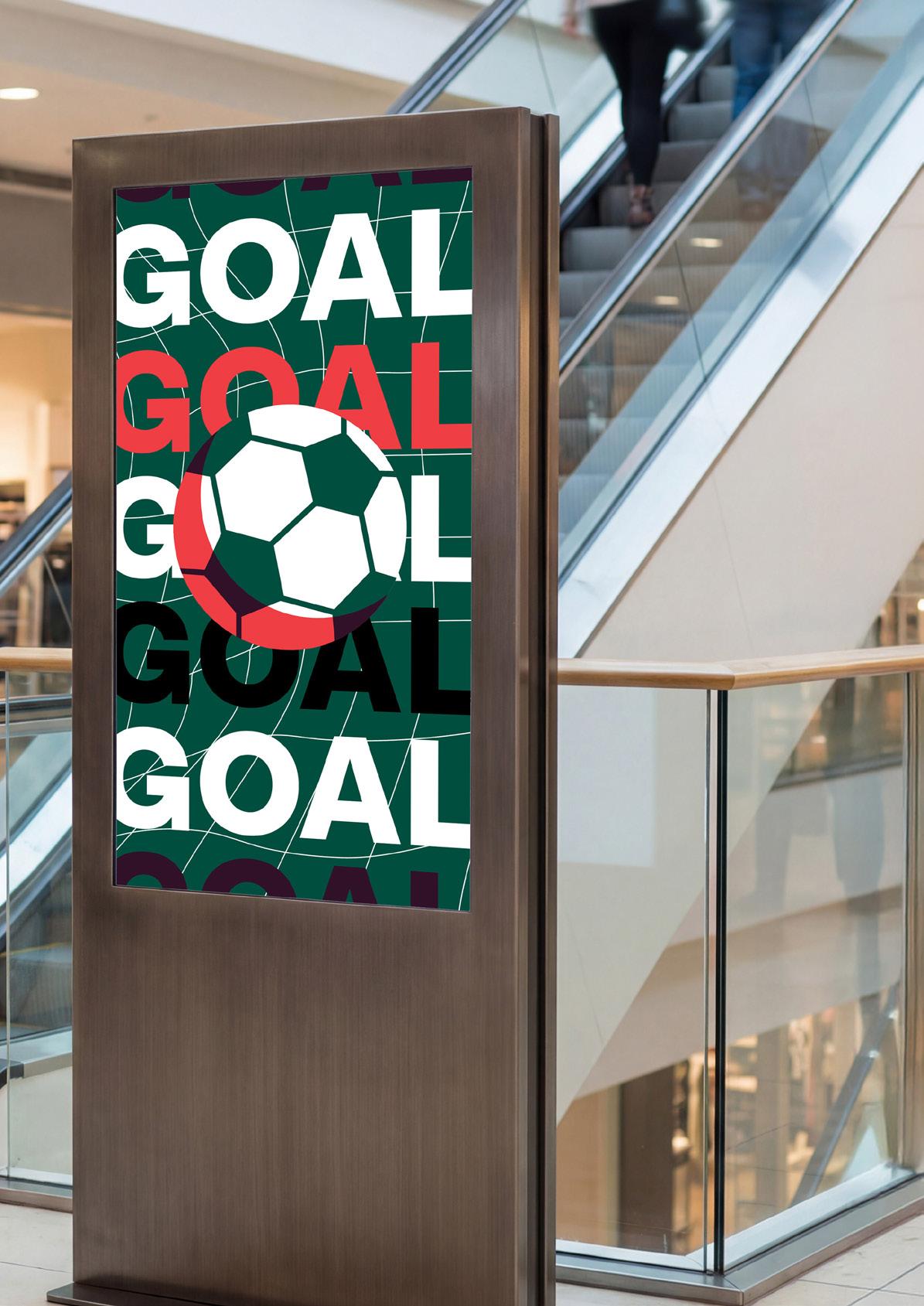
A moment happens, like a goal scored in a major tournament. Seconds later, nearby screens shift to something that acknowledges what has just taken place. A replay-style visual, a contextual message or a subtle prompt that connects the live moment to the product in front of the customer. It creates a sense of recognition, making the store feel connected to the moment.
Thinking like a broadcast network
Broadcast environments are built around structured timing and deliberate transitions. The value of a message is tied to when it appears, not just what it says.
The same logic is beginning to be applied to retail media networks, where timing, sequencing and responsiveness matter as much as the message itself.
Customers do not experience these moments in isolation. They move between locations, channels and physical and digital environments. The expectation is not just relevance, but continuity. Experiences begin to feel aligned across locations, creating a sense of togetherness, even as they adapt locally.
Coordinating at scale
The physical infrastructure may remain fixed when delivering across hundreds of locations, but the way it is used becomes far more dynamic. Content needs to be distributed, updated and aligned in near real time.
A home-country win recognised in one store has limited value. Recognised across the network, it becomes a campaign. It captures attention at scale, shapes buying behaviour and turns the moment into something customers actively engage with, talk about and want to experience in-store. It converts attention into immediate demand.
Control moves closer to the centre, while execution remains flexible at the edge.
Regional feeds adapt to different audiences while maintaining a consistent core. Decisions are made in response to changing conditions, but the overall experience remains coherent.
A live retail environment
Screens are no longer just placements. They become part of a coordinated system, capable of shifting with attention and reinforcing moments as they happen. The store itself becomes more responsive, not by changing its physical layout, but by adapting how it communicates.
Planned campaigns remain important, but they now sit alongside a more fluid, moment-led layer. At peak times, retail operates like a live environment, where value is shaped in real time and the experience depends on how well it keeps pace with the moment, not just how well it was planned.
Control moves closer to the centre, while execution remains flexible at the edge.
CATCH THE SPEND

During events such as the FIFA World Cup, value concentrates around specific points in time. Matchdays, key fixtures and short bursts of heightened attention carry more weight than broad, continuous visibility.
Retail environments offer something distinct in that window. They connect attention directly to action.
A customer following a live event is already engaged, often across multiple screens. In-store media allows that engagement to convert without delay, bridging the gap between awareness and purchase in a way that few other channels can replicate.
That creates a different kind of media opportunity. One shaped by timing, context and proximity to decision-making. That proximity becomes even more powerful in mixed environments such as shopping centres, where retail, hospitality and shared viewing spaces converge. Attention moves seamlessly into action.
Execution under pressure
Static playlists struggle in live conditions. High-attention periods expose the limits of pre-planned content. What matters is how quickly the system, and those operating it, can respond.
Inventory data, promotional priorities and campaign logic need to feed directly into the content layer. Screens need to reflect what is happening in real time, not what was originally scheduled.
AV infrastructure makes that possible. It connects the network to the wider commercial system, allowing content to adapt as conditions change.
Without that connection, the moment passes unnoticed.
Measuring impact while it counts
Brand partners want to understand performance while attention is still high, not after the fact. Visibility shifts from overall reach to what happens within specific engagement windows.
In-store media networks are increasingly expected to provide that level of detail. Impressions, dwell time and engagement can be tracked at screen level, while sales data reveals how those interactions translate into conversion.
Performance becomes easier to see and harder to ignore.
A network that moves with attention
These conditions define a more responsive model of retail media, shaped by how effectively it adapts when attention peaks. Content, context and commercial intent must move together.
For retailers, the opportunity is to treat in-store media as something that reacts in real time, rather than something that simply runs.
The networks that recognise spikes in attention, and act on it, are the ones that turn attention into measurable revenue.
One tournament. Every venue. All the technology.
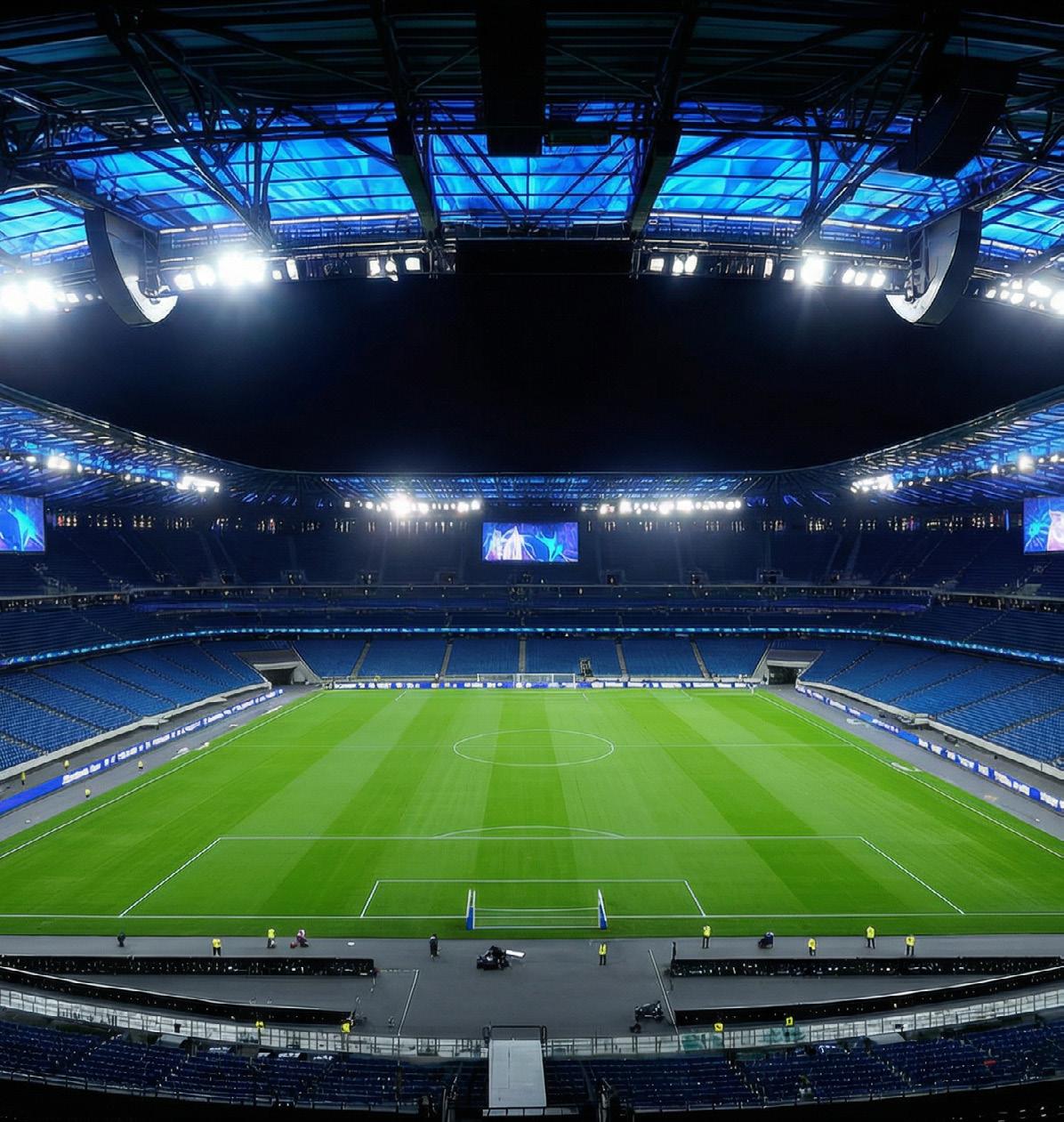
When the world comes together for football’s biggest tournament, the experience extends far beyond the stadium. From fan zones and hospitality venues to broadcast studios, home cinemas and retail spaces, every environment becomes part of the action.
This summer, the Midwich World Cup brings together the technologies that power unforgettable viewing experiences. One destination. Every environment. The solutions that bring the game to life.
Explore the technology behind every great venue and discover how Midwich helps partners deliver world-class experiences, wherever the fans are watching.
Explore more at midwich.com/venue/world-cup

Storefronts, without
INTERRUPTION
Integration beyond the display
In premium retail environments, digital surfaces are starting to disappear into the architecture around them.
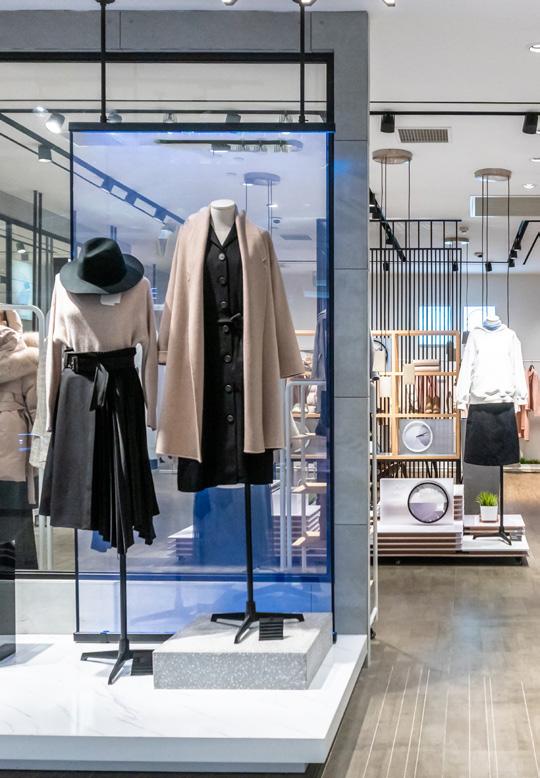
Rather than dominating storefronts, transparent MicroLED and flexible OLED displays are taking on a far quieter role. Digital content can now sit within glass, architectural surfaces and curved structures while still allowing visibility into the store, maintaining natural light and reducing visual interruption inside premium retail spaces.
For luxury retail in particular, that balance matters. Storefront displays are expected to support campaigns and attract attention without overwhelming carefully designed spaces or competing with the products themselves. It is less about spectacle and more about integration.
That changes how digital surfaces are approached within the wider retail design process. Transparent MicroLED and flexible OLED installations often require closer coordination between AV integrators, lighting designers and shopfitters far earlier in the project lifecycle. Structural support, glass mounting, sightlines, cable routing and environmental conditions all become part of the conversation long before content appears on screen.
The practical considerations are equally important. Brightness, ambient daylight, reflections and viewing angles all influence how transparent displays perform across different storefront environments. In highly visible retail locations, the technology must remain effective during changing daylight conditions while still preserving the premium appearance of the space itself.
Power, playback infrastructure and maintenance access also become more complex when displays are integrated directly into architectural elements. The less visible the technology becomes, the more carefully the surrounding infrastructure must be coordinated behind the scenes.
For integrators, that places greater emphasis on finish quality, precision and environmental awareness alongside technical performance itself. Today’s projects are judged not only on visual impact, but on how naturally digital surfaces integrate into the wider architectural environment.
Designing with less visual interruption
Flexible OLED is also creating new opportunities for retailers looking to move beyond traditional rectangular display formats. Curved surfaces, wrapped columns and integrated architectural features allow content to become part of the physical environment rather than sitting separately from it. In many cases, the focus shifts toward how digital content can sit more naturally within the wider storefront design. That creates a different type of installation challenge for integrators. These environments demand precision not only in deployment, but in how technology interacts with materials, lighting, sightlines and physical space across the storefront.
For retailers and their technology partners, the longer-term value lies in creating storefront environments that remain visually flexible without requiring constant physical redesign. As transparent and flexible display technologies continue to mature, the focus is shifting toward systems that support a more refined approach to digital communication that feels increasingly embedded within the retail environment rather than layered onto it.

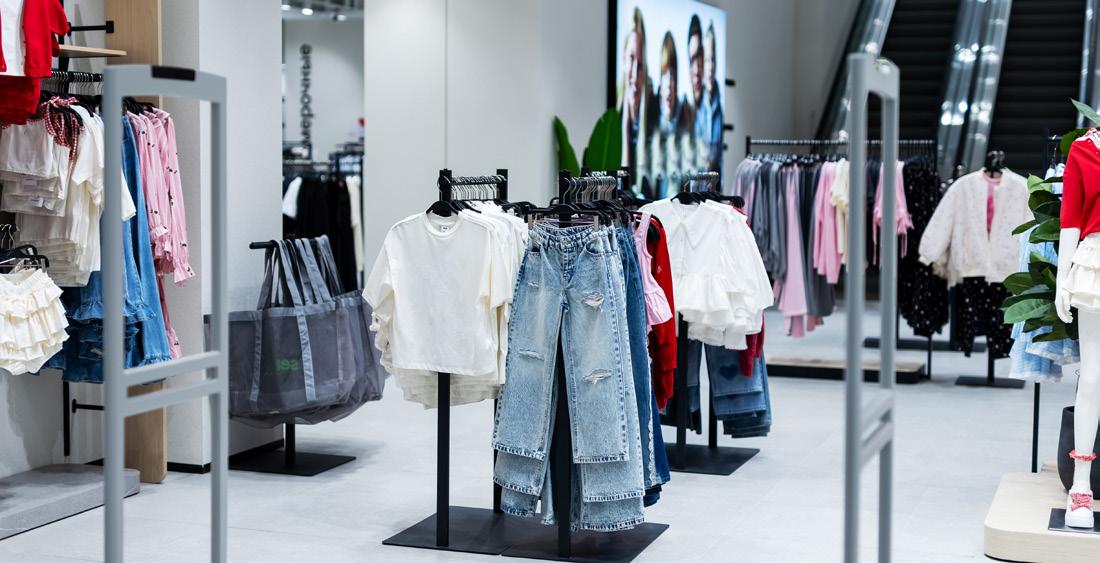
Transparent MicroLED
and flexible OLED displays are taking on a far quieter role.

Retail, BUILT TO MOVE
The retail footprint is fluid. Pop-ups, brand activations and short-term installations are now a core part of how brands launch products, test new markets and respond to changing demand. A presence that lasts weeks, not years, can still carry the weight of a flagship experience.
Built for speed
Delivering that level of experience in a short timeframe is changing how retail environments are designed.
Installations that once took months now need to be deployed in days. Vacant units, event spaces and high-footfall locations are being transformed quickly, often with minimal structural change. This has driven a move away from fixed, built-in systems towards modular, portable technologies that can be installed, configured and removed with minimal effort.
Large-format displays, modular LED, battery-powered signage and self-contained audio systems are now designed to be moved as easily as they are deployed. Cabling is simplified, infrastructure is reduced, and entire environments can be assembled without requiring permanent construction.
The result is a different kind of retail space.
One that is designed to appear, perform and disappear without friction.
way!
From ownership to access
We are increasingly seeing integrators leverage distributor rental fleets like this to service short-term activations, allowing them to deliver flagship-tier deployments without taking on the capital risk of owning the hardware.
This is more than a financial decision. It changes how AV is specified and deployed.
This is reflected in the role of specialist rental partners such as PSCo and its dedicated rental team, supporting brands with rapid deployment and reuse across multiple activations. Systems are selected not just for performance, but for how easily they can be transported, installed and reconfigured. Equipment is returned, refurbished and redeployed across multiple projects, extending its lifecycle and reducing waste. In practice, the same LED wall used for a seasonal activation can be reassembled for a different campaign later, in a completely new configuration. The experience changes, but the underlying technology does not.


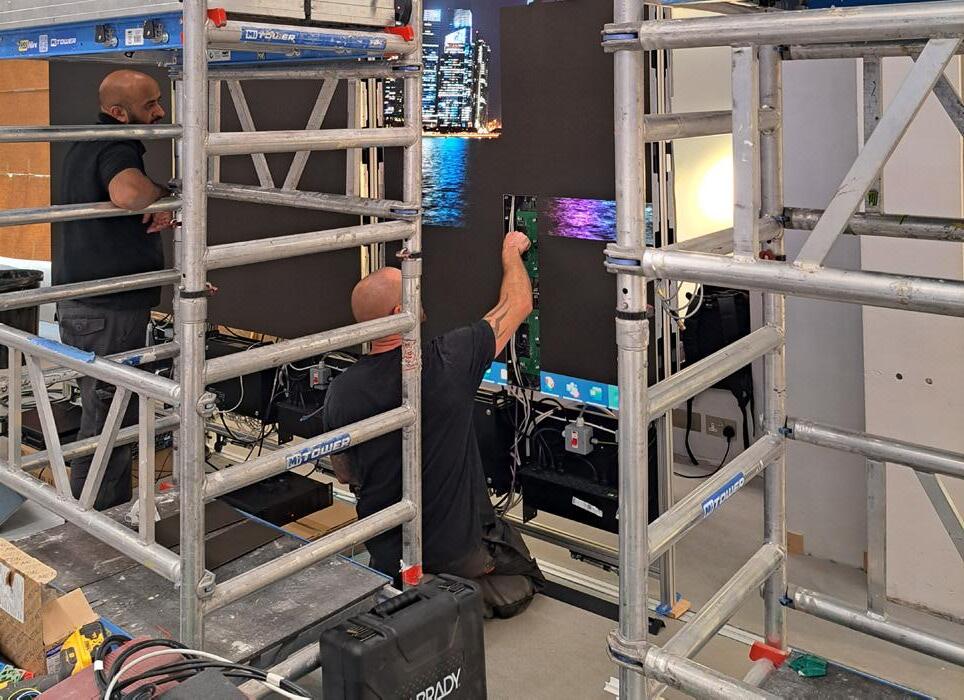
Designed to move
For the AV industry, this redefines integrator responsibility.
Delivering a successful retail environment is no longer just about the final installation. It is about how quickly that environment can be brought to life, how easily it can be adapted, and how effectively it can be reused.
This requires a different approach to design. Systems must be modular, robust and simple to deploy. They also need to support repeat use without compromising on quality and integrate seamlessly into spaces that were never designed to host them.

The result is a different kind of retail space. One that is designed to appear, perform and disappear without friction.
Testing, learning, repeating
Temporary retail also changes how brands approach risk and opportunity.
New concepts no longer need to be committed to long-term leases before they are proven. Pop-ups allow brands to test locations, formats and messaging in real-world conditions, gathering insight before scaling more permanent environments. If something works, it can be repeated. If it doesn’t, it can be refined or removed with minimal cost.
AV plays a central role in making that possible. The experience can be deployed quickly and reused, allowing brands to maintain a consistent level of quality across multiple activations without rebuilding from scratch each time.
Retailers are not just investing in experience. They are investing in the ability to create and recreate it, wherever and whenever it’s needed, without compromise.
Designing space through SOUND
Walking into a retail space, sound is already shaping how customers move, dwell and engage. It operates as a design layer, guiding behaviour without requiring attention.
Shopper attention settles or redirects. Time spent in each zone shifts, influencing how long customers stay and how they move towards decisions. The environment feels structured, even when nothing physical has moved.
That shifts the role of audio from background layer to something that is designed with intent.
Sound creates structure
Precision changes the role of audio. Zoning and directional control allow multiple soundscapes to exist within a single store, supporting different product areas, customer journeys and dwell behaviours.
One area can feel energetic, another calm, another focused. Sound guides behaviour without needing to be seen. The space becomes layered, shaped as much by what is heard as what is visible.
For integrators, this means designing audio as part of the environment, not layering it on afterwards.
Attention is guided, not demanded
Audio does not compete in the same way as visual media. It can influence focus without requiring direct engagement.
Pace and tone can draw attention, reinforce mood or soften a transition.
That allows environments to feel more controlled without becoming more cluttered. Complexity increases, but it is managed more subtly.
Audio becomes a way to shape how customers move through space, without adding visual noise. Guidance replaces interruption.

Part of a coordinated system
Audio becomes most effective when it is designed as part of a wider system. Displays, lighting and content shifts are reinforced through sound, creating a more consistent and controlled environment.
Each system plays a role, but the experience depends on how they work together.
For retailers and integrators, that requires thinking about how these elements interact in real time.
A more deliberate layer
Sound is becoming a way to organise space. Not through layout, but through behaviour.
As retail environments become more responsive, that role becomes more deliberate. Audio is no longer a passive layer. It is part of how the space performs, and how customers experience it.
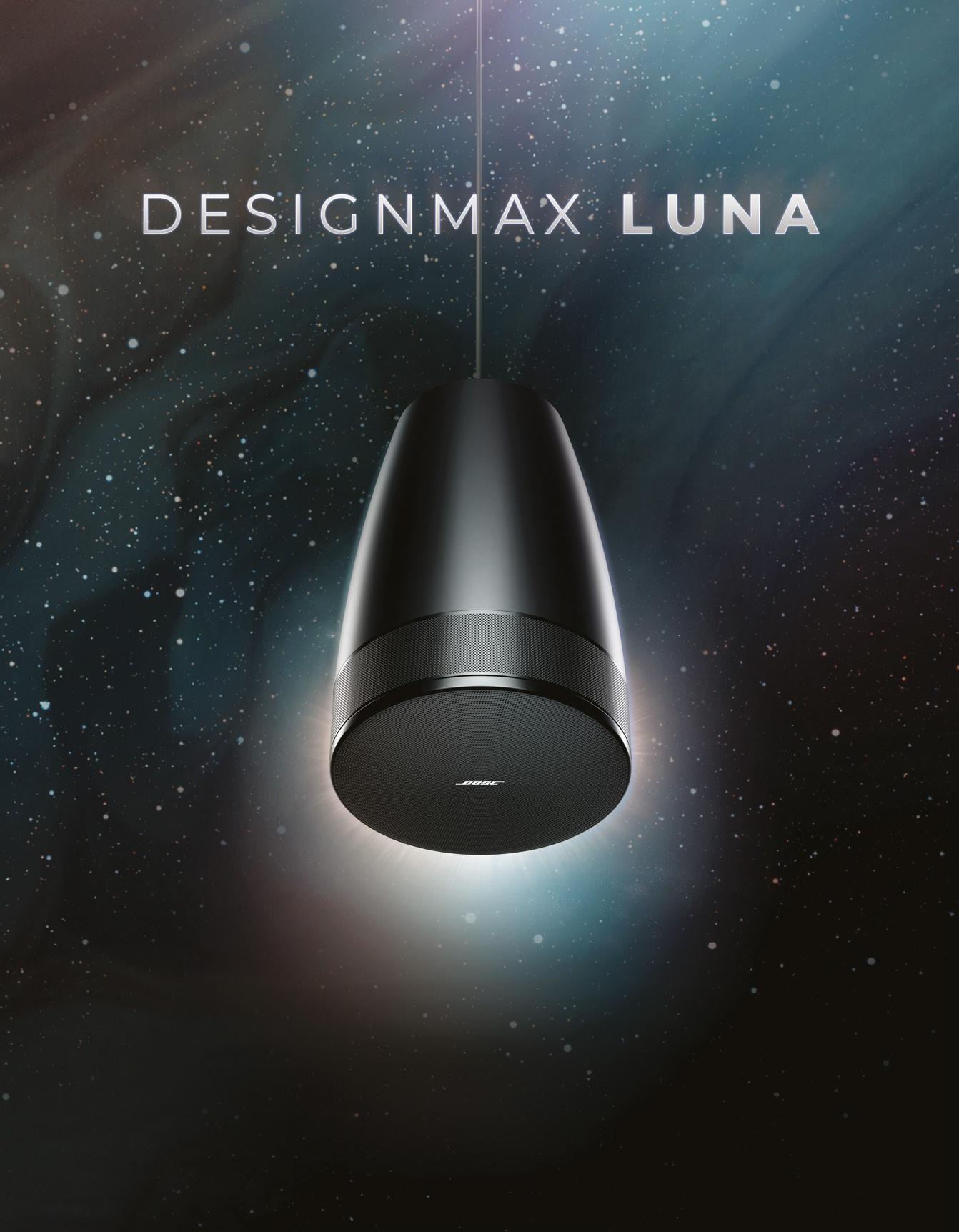
Citizens of Earth, meet Luna—the extended-range pendant loudspeaker system that makes it easy to get great sound in open-ceiling spaces. With wide-throw coverage and a groundbreaking internal Ring Array™ design, Luna drastically reduces system complexity and speaker count— without compromising on clarity or aesthetics. From retail stores and restaurants to fitness clubs and hospitality environments, Luna boldly goes where no pendant has gone before.
Proprietary Ring Array™ configuration delivers precise, balanced sound
Integrated 8” woofer extends down to 40 Hz—no subs needed
Wide-throw 140° coverage reduces speaker count and installation costs
Flexible mounting lets you use a single cable or two-point suspension
Streamlined design with concealed wiring and premium finish options
Learn more at BoseProfessional.com/Luna
The soundtrack of retail:
WHY AUDIO MATTERS
more than we think
As a self-confessed shopaholic and former retail manager (I spent 12 years managing high street fashion stores), I have always been fascinated by the science of retail. I’m a sucker for the shopping experience: the quick buying decisions made while waiting at the till, the ever changing store layouts telling new stories and even the fuss made of my frequent shopping companion – my Labrador – by friendly shop assistants around my hometown.
Since working in AV, one thing has become impossible to ignore: audio. Particularly in retail and hospitality environments, audio is everywhere - and when it’s done well, it genuinely changes how it feels to be in a space. Clear, well-balanced audio at an appropriate volume absolutely enhances my feel good shopathon. Poor audio, the wrong volume or an odd song choice? That’s a quick way to cut a browsing session short. Whether we notice it consciously or not, music and sound influence us all.
At Christmas time, I was genuinely horrified to see a very 1990s portable CD player wedged into a clothes rail at my local M&S, churning out the same festive tracks on repeat. Festive spirit: instantly gone. Audio fatigue is very real, especially for the shopworkers who hear the same playlist day in, day out.


While curating the perfect mixtape might be a dying art, modern technology gives retailers far better tools. Commercial streaming platforms now allow retailers to create tailored soundtracks with fewer repeats, better scheduling and a consistent brand feel across multiple locations. Solutions like Bluesound Professional’s range of networked music streamers and speakers make it possible to deliver reliable, high quality audio without complicated installations or stacks of consumer kit hidden behind the scenes.
Done right, audio becomes part of the store’s brand story: subtle, intentional and effective. It shouldn’t distract, but it should make customers linger just a little longer. And in retail, that quiet influence can make all the difference.
For anyone looking for guidance or support with audio solutions for retail environments, including Bluesound Pro, Sonos, Cloud Electronics, Bose Professional, Biamp and JBL Professional, the Midwich Audio team is on hand to help.
Building modern retail experiences takes more than one technology
Across the Midwich UK&I, specialist teams help retailers, resellers and integrators design, deploy and support retail experiences at every stage of the customer journey.
Midwich
Your retail technology partner
Connecting specialist expertise, value-added services, leading brands and group businesses to support every stage of the retail technology journey.
Live Technology
Making retail experiences memorable
Specialist support for activations, launches and live retail events.
Plus+
Keeping projects performing for longer
Services and support designed to maximise value long after installation.
PSCo
LED specialists, sales and rental
Supporting everything from permanent installations to temporary retail experiences.
Nimans Home
Technology that consumers actually want
Bringing innovative lifestyle technology brands to retailers across the UK.
DVS
Protecting people, property and operations
Security, surveillance and fire safety solutions designed for today’s connected spaces.


Holdan
Turning ideas into content
Professional production and broadcast technologies for modern retail storytelling.
THE SPEC Sustainability has entered
Sustainability in retail AV is moving beyond the marketing brochure and into the procurement conversation.
From positioning to procurement
Stricter reporting and accountability are driving this change. As large organisations are mandated to report on their Scope 3 supply chain emissions, every technology purchaseis coming under forensic scrutiny. For buyers, this means asking different questions. Not just how a product performs, but how it was made, how long it will last and what happens at the end of its life.For integrators, it means being able to answer them with clarity.
Decisions are now being influenced earlier in the process. Products that cannot demonstrate credible lifecycle data, repairability or end-of-life pathways are becoming harder to justify, even if they meet performance requirements. The conversation has moved from features to evidence.
Innovation vs longevity
An inherent tension sits at the heart of the AV industry: our business model relies on a constant cycle of hardware innovation (higher resolutions, brighter screens), yet environmental responsibility demands we keep products in use for longer.
That approach is becoming harder to sustain. Extending product lifespan is now part of the sustainability equation, challenging the idea of replacing technology simply because something newer is available.
One response to this is a greater emphasis on softwaredefined capability. Updating functionality through firmware and Cloud-based platforms allows systems to evolve without requiring full hardware replacement. It is not a complete solution, but it signals a new phase of innovation.
The hidden cost of embedded carbon
At the same time, the way sustainability is measured is becoming more complete. Historically, much of the focus has been on energy consumption during use. While still important, it only tells part of the story.
Consumers are waking up to the fact that the vast majority of a display’s environmental impact occurs before it is even unboxed, during the mining of rare earth metals, manufacturing and global shipping. This ‘embedded carbon’ is where lifecycle thinking becomes critical.
Buyers are increasingly looking for a more holistic view, supported by lifecycle assessments and clearer documentation. A product that is efficient in operation but difficult to repair or recycle may no longer meet expectations.
In this context, sustainability becomes closely linked to the total cost of ownership. Longer lifespans, easier maintenance and clearer end-of-life strategies all contribute to both environmental and financial outcomes.

The emphasis is on extending what already exists.

Discover NNAV
The rise of circular AV models
Perhaps the most visible development is the growing adoption of circular approaches to AV.
Rather than treating technology as disposable, organisations are starting to consider how equipment can be reused, refurbished or redeployed. Decommissioning is no longer the end of the process, but part of a wider lifecycle.
Refurbished and “second life” equipment is gaining traction across multiple sectors. For some, it offers a more accessible route to high-performance technology. For others, it provides a way to reduce waste and demonstrate measurable progress against sustainability targets.
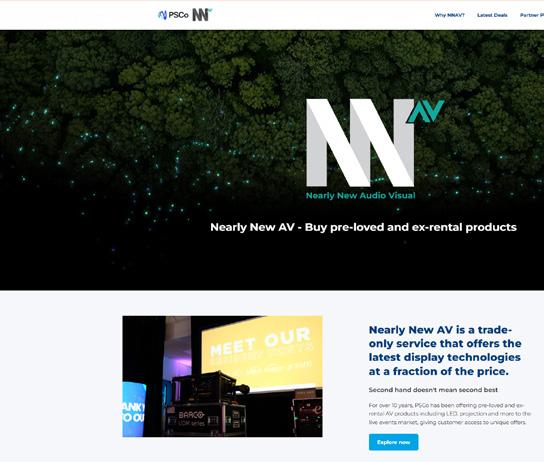
Initiatives such as PSCo’s Nearly New AV are already formalising this approach, where pre-owned and ex-rental equipment is professionally serviced and reintroduced to the market. Models like this show how circularity can be built into the supply chain in a structured, commercially viable way.
This is also changing the role of the integrator. Supporting clients now extends beyond installation to include recovery, refurbishment and reintegration. The lifecycle becomes a service, not just a one-off transaction.
A more accountable future
Collectively, these point to a more mature approach to sustainability in AV.
The emphasis is on measurable impact - from short-term decisions towards longer-term responsibility and from isolated products towards more connected lifecycles
For both buyers and providers, the implication is clear. Sustainability is no longer a layer of messaging that can be added or removed. It is part of how technology is evaluated,

Why retailers need more than just
DISTRIBUTION
The retail technology sector continues to create significant opportunities for both brands and retailers, but success today requires far more than simply getting products onto shelves.
Retailers are increasingly looking for partners that can offer insight, expertise, support and access to differentiated products that genuinely add value to their ranges. In a crowded marketplace, having the right product mix, backed by strong relationships and specialist knowledge, has become more important than ever.
That specialist approach sits at the heart of Nimans Home. As the consumer technology division of Nimans, Nimans Home has built a strong reputation as a trusted lifestyle technology partner to the UK retail sector. Working with more than 400 retailers and over 200 technology brands, the business supports some of the UK’s leading retail and retail organisations across categories including Home Entertainment, Smart Home & Security, Smart Health & Wellbeing, Home Office, Outdoor Living and Home Appliances.
What makes the business different is its carefully curated approach to distribution. Rather than filling categories with “me too” products, Nimans Home focuses on innovation, differentiation and long-term opportunity, helping retailers bring exciting technologies and emerging brands to market with confidence.
With more than 35 years of trading experience, Nimans Home combines specialist market knowledge with a highly collaborative approach, offering retailers and vendor partners dedicated account management, ecommerce expertise, logistics support and strong category insight across the lifestyle technology sector.
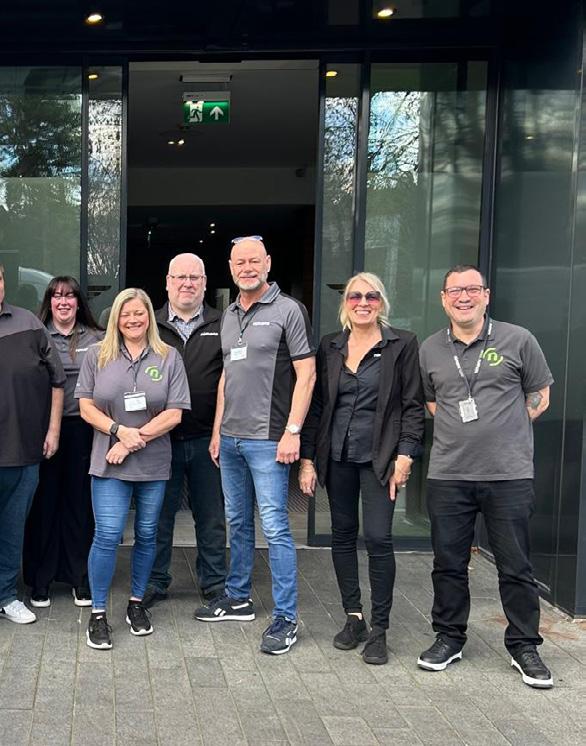
That approach continues to drive growth across the retail business and was reflected in the success of the recent Nimans Home Vendor Showcase, held in March at the Aviator Hotel in Hampshire.
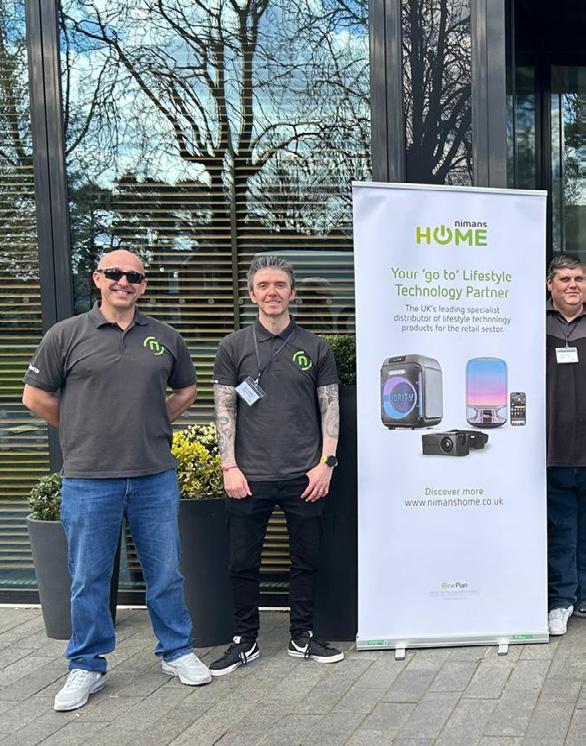
Now in its third year, the event welcomed a record number of retailers and exhibitors across two days, bringing together a diverse mix of established and emerging brands from across the lifestyle technology market. Brands spanning audio visual, smart security, wellness technology, smart lighting, creator technology and home appliances showcased products alongside strategic partners specialising in retail marketing, logistics and digital engagement.
More importantly, the event demonstrated the continued value of strong retail partnerships.
While technology continues to transform the retail experience, face-to-face engagement remains hugely important. The Vendor Showcase created an opportunity for retailers to experience products first-hand, strengthen relationships with brands and gain insight into the categories and innovations shaping future growth.
For Nimans Home, the success of the event also reinforced the importance of taking a specialist approach to retail distribution. Understanding the market, identifying emerging opportunities and working collaboratively with both brands and retailers remains central to the business.
As retailers continue to look for ways to differentiate their offering and respond to changing consumer demand, partnership will play an increasingly important role.
At Nimans Home, the focus remains simple - bringing innovative brands to market, supporting retail growth and acting as a trusted extension of both vendor and retailer teams.
Why retailers partner with Nimans Home
• Partner to more than 400 UK retailers and 200+ technology brands
• Specialists in lifestyle technology across Home Entertainment, Smart Home & Security, Wellness, Outdoor Living and Home Appliances
• Proven experience launching innovative and emerging brands into UK retail
• Exclusive distribution rights for selected market-leading technology brands
• Dedicated, relationship-led account management and ecommerce support
• Carefully curated product portfolio focused on innovation rather than “me too” products
• Trusted by leading retailers including Amazon, Argos, Tesco, Boots, Currys and Aldi
• Collaborative approach connecting retailers, brands and distribution expertise

Head of Nimans Home Rebecca Fuchs

Back for another year?
What to expect
Tech Xpo evolves alongside the industry. Returning visitors can expect new brands, new technologies and new conversations.
Bring your customers with you
Use Tech Xpo to showcase technology confidently with your customers. Introduce end users to vendors, explore solutions together and have practical conversations with Midwich specialists across every technology area.
New to Tech Xpo?
For smaller businesses and customers newer to Midwich, Tech Xpo offers the opportunity to explore multiple technology areas, brands and conversations in a single day.
Instead of arranging separate meetings and demos throughout the year, visitors can discover multiple technologies all under one roof - while building relationships with the teams behind them.
As a value-add partner, Midwich works across multiple technologies and supports customers at every stage of a project.
At Tech Xpo, you can discover new opportunities, speak directly with specialists and explore more of the AV market in a way that feels practical, accessible and commercially useful.