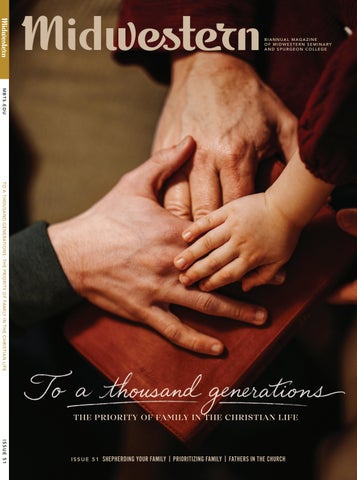
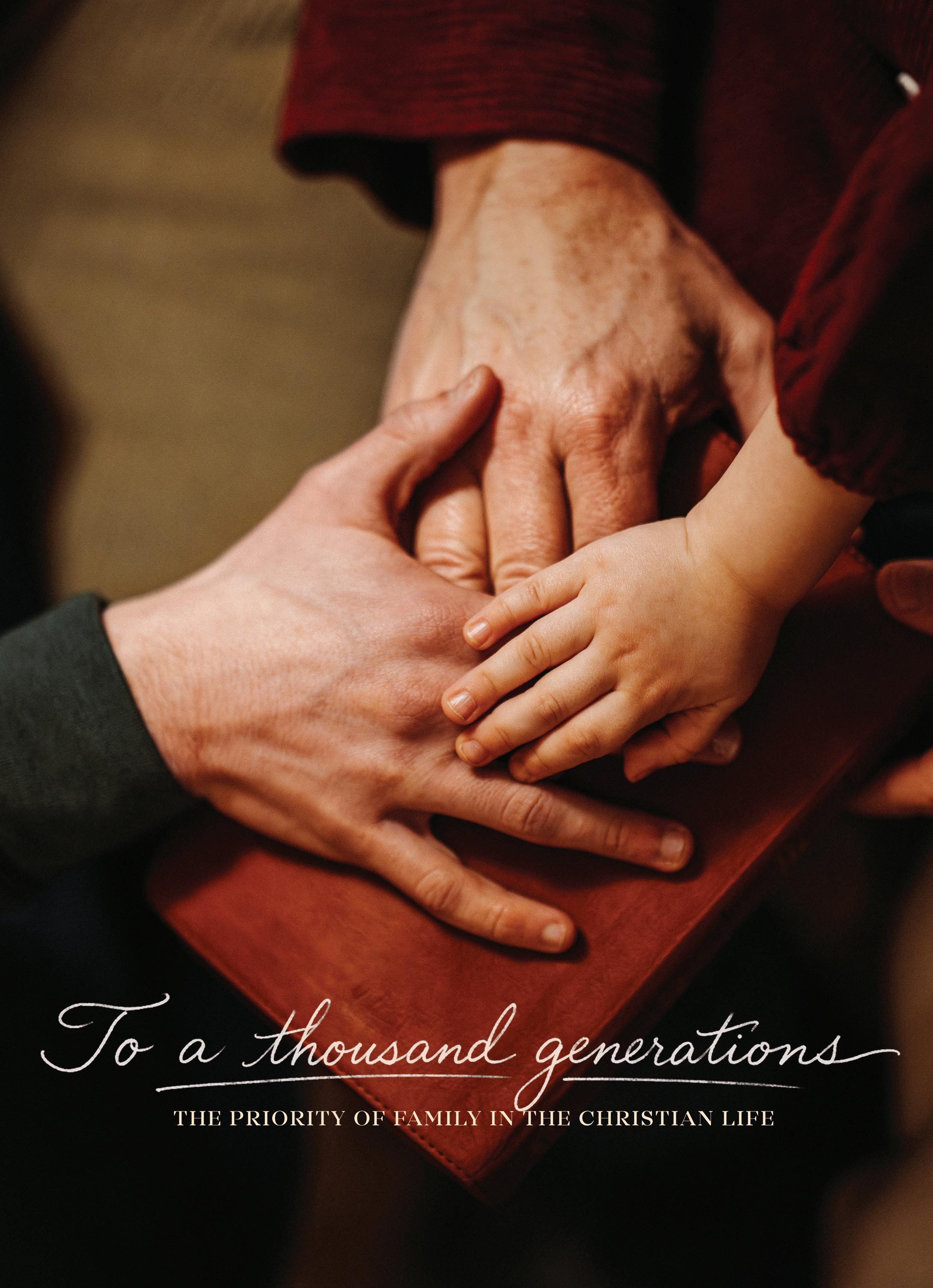
To A Thousand Generations: The Priority of Family in the Christian Life
He established a testimony in Jacob and appointed a law in Israel, which he commanded our fathers to teach to their children, that the next generation might know them, the children yet unborn, and arise and tell them to their children, so that they should set their hope in God and not forget the works of God, but keep his commandments.
PSALM 78: 5–7
BY CAMDEN B. PULLIAM
HAYLEE WILLIAMS
ARTICLE BY JIMMY SCROGGINS
Attending seminary should be an exhilarating experience. It certainly was for me. In early August of 2001, my wife and I loaded up all our earthly possessions in a 26-foot U-Haul and drove 630 miles north on Interstate 65 from Mobile, Alabama, to Louisville, Kentucky.
I well recall the swirling emotions I felt as I pressed northward in the cab of that U-Haul truck. My wife, Karen, and I chatted the whole way. Together, we sensed the joy of following God’s will. We anticipated the thrill of making new friends, finding a new church, and learning a new city.
Most of all, my expectations were piqued as I contemplated my course of study. The Master of Divinity degree stood before me, and as I reviewed the curriculum, every class looked similarly appealing. I was eager to take full advantage of the academic offerings: hermeneutics, homiletics, theology, church and Baptist history, and the biblical languages. I wanted to devour it all. No institution had ever welcomed a more eager student.
However, the most important lesson I learned in seminary did not come during a formal lecture in one of those classes. It came during New Student Orientation. The speaker was Danny Akin, then the senior vice president of Academic Administration at Southern Seminary.
As Akin challenged us men on the importance of our marriages and families, he said it’s better
to get a C in the classroom and an A at home than an A in the classroom and a C at home. Akin then recounted all that our wives were giving up for us to attend seminary, and how our response should be one of appreciation and love. Then, driving home the point, he said, “You can have your marriage without a ministry, but you can’t have a ministry without your marriage.”
The health of a minister’s family is one of the foundational pieces for any meaningful ministry. It is therefore my delight to present this edition of the Midwestern Magazine, entitled “To a Thousand Generations: The Priority of Family in the Christian Life.”
In this edition, you’ll find select articles from Midwestern Seminary faculty members, Dr. Camden Pulliam and me, along with Midwestern Seminary friends, Dr. Jimmy Scroggins and Haylee Williams. It is my prayer that this edition will both spiritually enrich and challenge you as you minister for the glory of Christ and for the Church.
JASON K. ALLEN, PH.D. President, Professor of Preaching & Pastoral Ministry
Midwestern
Baptist Theological Seminary Spurgeon College
ADMINISTRATION
Jason K. Allen
PRESIDENT
Jason G. Duesing
PROVOST
James J. Kragenbring
SENIOR VICE PRESIDENT FOR INSTITUTIONAL ADMINISTRATION
5001 N. Oak Trafficway Kansas City, MO 64118 (816) 414-3700
Midwestern Seminary maintains professional and academic accreditation with three accrediting associations: The Commission on Accrediting of the Association of Theological Schools (ATS) in the United States and Canada, The Higher Learning Commission of the North Central Association of Colleges and Schools (HLC), and The Association for Biblical Higher Education (ABHE).
EDITOR’S NOTE
The liturgy of the home shapes the trajectory of the heart. The daily rhythms, habits, and practices of family life—what is sung, spoken, and lived—quietly form the foundation of faith. In this issue of the Midwestern Magazine, we reflect on the priority of family in the Christian life and the lasting influence of discipleship that begins closest to us.
God’s heart is for families. Parents are called to raise their children in the instruction of the Lord—nurturing their minds, hearts, and habits in the ways of God, teaching them to love, obey, and delight in Him. The home is the first classroom of discipleship, where faith is formed through daily instruction, example, and care, equipping children to walk faithfully before the Lord.
The articles that follow explore how pastors, parents, and churches can pursue fruitful ministry because of their families, not despite them. Our hope is that this issue encourages a vision of ministry rooted in the liturgy of home life, where grace is lived, discipleship is formed, and faithfulness bears fruit for generations to come.
Thank you to each of our featured writers in this issue: Dr. Jason K. Allen, Dr. Jimmy Scroggins, Dr. Camden Pulliam, and Haylee Williams. You set us an example in speech and conduct in your own families. As a special feature of this issue, the pictures attached to each article are of Midwestern Seminary alumni. The convictions expressed in this issue are not merely aspirational, but lived out in the lives of so many students who are husbands, wives, and parents.
To the Midwestern Magazine team, it’s a joy in my life to call such gifted creatives not only my colleagues, but my friends. Once again, thank you for how you magnify Christ through your work in this issue. To the reader, we pray you enjoy this edition of the Midwestern Magazine.
SUBSCRIBE to Midwestern’s weekly e-mail newsletter, The Midwestern Weekly, at mbts.edu/subscribe.
Shepherding Your Family: A Biblical Qualification
BY JASON K. ALLEN
In every vocation, there are unique expectations for the character of the individual. Lawyers are expected to have an enduring example of integrity and honesty. Doctors are expected to be non-maleficent with their patients, and financial advisors are expected to act in their clients’ best interests. For the pastor, one of the often-overlooked expectations is that he must shepherd his family well.
In 1 Timothy 3:1–7, Paul sets forth the biblical qualifications for the office of elder. In addition to the requisite character expectations and the ability to teach the Word of God, Scripture also indicates one’s family is crucial when considering one’s fitness for ministry. The Apostle Paul writes:
He must be one who manages his own household well, keeping his children under control with all dignity (but if a man does not know how to manage his own household, how will he take care of the church of God?) (1 Tim. 3:4–5, emphasis added).
Note with me the specific wording. First, “He must be.” This isn’t a recommendation, it’s a requirement. Second, the elder must “manage his own household well.” This carries the idea of spiritual oversight and organizational stability. The elder’s home is to be marked by neither carnality nor chaos, neither sinfulness nor disorder. What is more, the children are to be “under control” and marked by “dignity.” The most straightforward understanding is that the children are not living lives of rebellion against either biblical or parental authority. Though, ultimately, we cannot know the hearts of our children, we can know behavioral patterns. The behavior patterns (not moments) of our kids ought to reflect order, dignity, and spiritual health in our homes.
Furthermore, note how Paul links an elder’s ability to lead his family with his ability to lead the church. In fact, he asks a probing question, “If a man doesn’t know how to manage his own household, how will he take care of the church of God?” (v. 5).
The logic is straightforward: Your family is more closely under your watch, dearer to your heart, and smaller in size than a church. Humanly speaking, your family is your first love. Thus, they get the first fruits of your affection and effort. You’re trying your best for them—or at least you should be. If your leadership is faulty with those of utmost significance, it will likely be faulty with those of lesser significance: your church.
“Humanly speaking, your family is your first love. Thus, they get the first fruits of your affection and effort.”
Or it could be that your priorities are misplaced—or prone to be misplaced—elevating your ministry above your family’s spiritual well-being. Here too is an embedded caution. Your family must be your prior commitment, your first commitment, your most paramount commitment.
Finally, note Paul’s logic of moving from the lesser to the greater in size. Your family is smaller than your church, thus, your family is more manageable than your church. If your family is in a bad place, your church will likely wind up in a worse place.
In summary, your family is a microcosm of your spiritual leadership. It needs to be healthy—it must be healthy. Your family is your primary ministry and your most enduring legacy.
To this end, consider with me three crucial aspects of shepherding your family.
Prioritize Your Family.
Paul is clear: Your relationship with your family is vital for your ministry. You lose your family, you lose
your ministry. When our kids were younger, nothing proved more spiritually formative for them than family worship. For the unaware, family worship can sound daunting and too time-consuming in preparation and practice to carry out. It doesn’t have to be that way.
For us over the years, it has consisted of Scripture reading and prayer. When the kids were younger, it often included singing and broader reading as well as memorization. As they’ve aged, it’s included sermon reviews, Bible reading and reflection, and contemplation of life and plans. It’s been an essential part of our family and one that, looking back on, I simply can’t conceptualize my family without. For you, it’s never too late to start. Why not grab the Bible tonight, read from it, reflect on it for a few minutes, and then pray together? It’s that easy, but it’s also that essential.
Furthermore, while God can use such disciplines to grow our kids in the knowledge of Christ, we aim to cultivate delights over enforcing duties. Help your children behold the beauty of Christ, the joy in serving Him, the lavish generosity of His grace, and the surpassing peace of being in a right relationship with Him. To do this, be
intentional with the “whys” of life, pointing them beyond the practices to their incentives and outcomes.
Along these lines, also prioritize principles and priorities over rules and regulations. We want our children to strive for the right outcomes out of devotion to God and respect for us, not be pushed into rules and regulations out of fear. The latter might give you the desired outcome in the short term, but it likely will not result in lasting spiritual fruit into their adulthood. Prioritize your family; it’s your calling, and it’s for their benefit.
Set Expectations.
One of the surest causes of marital and church strife is unclear and unmet expectations. In your church and in your marriage, you must set clear expectations. Every church makes assumptions and has expectations that differ from the formal, communicated expectations. Clarifying expectations may include what events or activities the pastor’s wife and children will attend, and to what events or ministries the pastor’s wife will oversee. The key is to ferret out assumptions and expectations on one end and to rightly convey your convictions and anticipated practices.
Churches should expect to see the minister’s family faithfully involved in the life of the church and the pastor’s wife as an exemplary woman of God. Likewise, our families will bring their own expectations for our relationship with them. From in-laws’ holiday vacation expectations to you and your wife’s bedtime routine with your children, it’s your responsibility as the husband to set the expectations for your wife and children’s benefit.
Be Disciplined.
The best path for fulfilling your responsibility as a pastor, husband, and father is to be disciplined. Over the years, I’ve aimed for the Allen household to be a place of joy. I’ve wanted the high point of my children’s day to be when I arrived home from the office. I want my kids to anticipate my appearance, not dread it. Sure, if misbehavior marked their day, their evening included consequences. But sans a disciplinary case, work for your days to build toward the evenings, culminating in family worship before bed.
For us over the years, this began with me being home at a predictable time and then us eating dinner together as a family. We’ve toggled dinner time over the years based upon other family commitments, but have always prioritized togetherness. The conversation bounces between the serious and the funny to the spiritual and the earthy, but the most common sound coming from our table is laughter, as it should be. And, if there is no cause for correction, there’s every cause for joy. On those occasions when my discipline has been needed, it’s usually best to do that first, then pursue restoration, and then move forward together into the evening and all the delights it contains.
Your temptation will be to retreat into your phone or some other form of media consumption. After all, you’re tired. But successfully transitioning from work to family in a healthy way is key to having a healthy family.
In conclusion, though shepherding his family is an often-overlooked ministerial qualification, it is vital to the health of any pastor and, by extension, his local church. The married pastor with kids must shepherd his children well, full stop. To quote the Apostle Paul, “If a man does not know how to manage his own household, how will he take care of the church of God?”
Editor’s Note: Adapted with permission from Letters to My Students, Volume 3: On Life and Doctrine by Jason K. Allen. Copyright 2025, B&H Publishing.
Jason K. Allen | President, Professor of Preaching and Pastoral Ministry
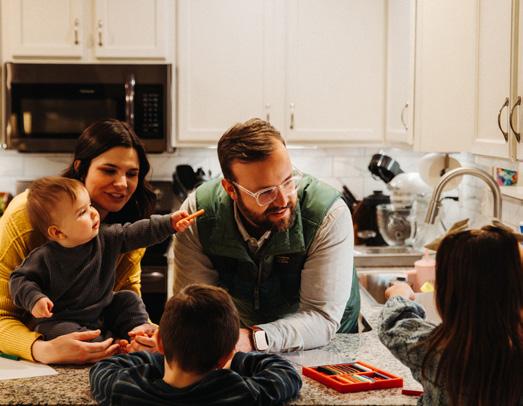
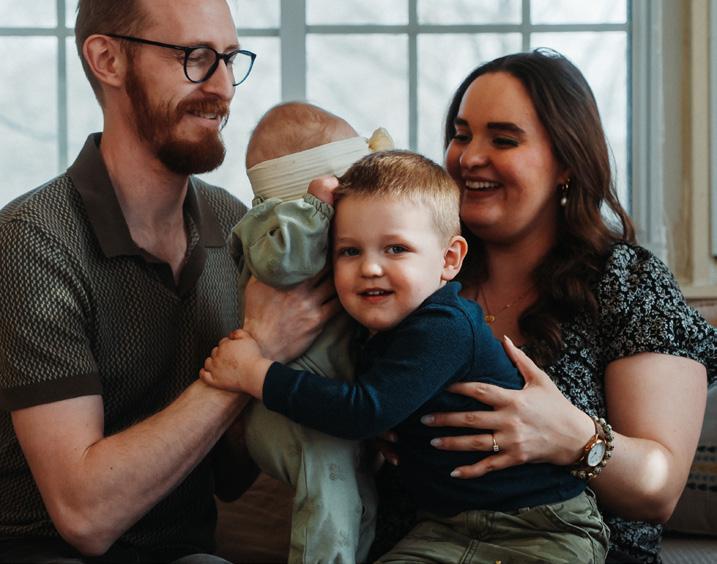
Pictured: Matt Marrs, M.Div., 2000, and his family
PRIORITIZING FAMILY AT HOME AND AT CHURCH
BY JIMMY SCROGGINS
In a culture that can be hostile to Christian values, pastors and ministry leaders face the urgent challenge of leading God’s people to stand firm and pass our faith on to the next generation. Yet one of the most vital and often overlooked arenas of faithfulness is the home. True ministry faithfulness does not begin in the pulpit, the planning meeting, or the boardroom. It begins at the dinner table—with our spouse, our children, and our grandchildren. Faithful leaders lead faithful families.
When pastors prioritize their families, they model to the church body that ministry is about faithfulness and love expressed first within their own walls. It is not about performance or production. Our homes are the first proving ground of discipleship, and our families the first flock entrusted to our care.
The Family as the First Ministry
When the Apostle Paul outlined the qualifications for pastors in 1 Timothy 3, he made one truth inescapably clear: Spiritual leadership in the church begins with spiritual leadership at home. Paul writes, “If someone does not know how to manage his own household, how will he care for God’s church?” (v. 5).
Paul’s point is not that pastors must be perfect, but that they must manage their household well. The word “manage” implies that there is something to be managed. As a husband and a father, there are going to be things that happen which may not be your fault, but they are your responsibility. We must address those issues and manage them toward the gospel of Jesus as best we can.
Our marriages and our parenting are the anvil on which our pastoring skills are forged and the proving ground where they are verified. We must prove that we can care for the little family in the little house so people can trust us to care for God’s family in the big house. A pastor is supposed to show people what it looks like when the beauty of God’s design is properly implemented. With God’s help, we love unconditionally, forgive quickly, and pursue God’s design relentlessly.
Leading Families in a Broken World
We no longer live in a place where culture reinforces Christian values. Often, the culture at large actively rejects God’s design for truth, gender, sexuality, and family structure. In such a world, Christian parents—especially fathers—are on the front lines of a spiritual battle for the hearts of their children.
Parents see a world lined up against their children’s faith. They feel the pressure of schools, media, and social systems all pushing against biblical conviction, and they are looking to the church for help.
Churches that call up fathers to fight for their marriages and their children will have a future. Those that fail to equip families for this fight will fade.
As pastors, we must not only preach truth, we must model it in our homes and lead our people to apply it in their homes. The local church should be a spiritual boot camp for Christian families, equipping them to resist cultural lies and live out gospel truth with courage and joy.
Three Ways Pastors Can Equip Families to Stand Firm
So how can ministry leaders practically help families thrive in today’s world? Here are three key commitments every pastor should make.
Go All In on Marriage
Few ministries have a greater longterm impact than those that strengthen marriages. Preach about marriage often. Encourage young adults to pursue marriage— not because it is easy but because it is good and glorifying to God. Encourage them to think more about building a marriage to last a lifetime rather than throwing the party of the century. Offer mentorship for engaged and newly married couples. Provide counseling and community for those in crisis.
The church must be the one place where people still believe in marriage—not as a fairy tale, but as a gospel covenant. Equip husbands and wives to see their marriage as their first ministry. When the gospel transforms marriages, it transforms children, and when it transforms children, it transforms communities.
Go All In on Children
Our churches must reassert that children are a blessing, not a burden. Encourage young couples to have children earlier rather than later and to have more children rather than fewer. Of course, we want to be sensitive to people who are single or struggling with infertility as we do this, but we can’t let the exceptions nullify the rule.
Teach parents that they are the primary disciplers of their children. It is not the church’s job to lead their child to know and love Jesus. We tell parents that church is a spiritual Home Depot: “They can do it and we can help.” Equip families to bring God’s Word, prayer, and worship into the rhythms of daily life.
Invest deeply in children’s ministries that are both biblically rich and relationally engaging. Equip your teams not just to entertain but to disciple. Every child raised to love Jesus is a victory for the Kingdom—and every parent equipped to lead at home multiplies your church’s gospel impact.
Go All In on Church-Based Schools
Education shapes worldview—and worldview shapes eternity. While we should support Christian teachers serving in public schools, we must also recognize that many school systems have abandoned biblical morality. Churches can step into this gap by forming new models of Christian education: homeschool cooperatives, affordable academies, or hybrid programs that align with the mission of the gospel.
“The church must be the one place where people still believe in marriage—not as a fairy tale, but as a gospel covenant.”
Pastors cannot do this alone, but they can cast vision, rally resources, and empower educators. If every gospel-centered church offered a gospelcentered education pathway, we could reshape generations to come. If we truly want to fight for our families, we must reclaim how our children are formed.
Cultivating a Family Culture in the Church
Beyond programs and policies, pastors must cultivate a church culture that honors family faithfulness. Celebrate anniversaries. Pray over new parents. Host family nights, father-daughter events, and marriage workshops. Speak often about the beauty of parenthood and the sacredness of the home. When your people see that you value families, they will begin to value theirs more deeply too.
Encourage seasoned parents to mentor younger ones. Create spaces where fathers can meet to challenge one another and where mothers can find encouragement. A church that loves families well will always have a place for the lonely, the broken, and the searching—because strong families create strong gospel witness.
The Gospel Opportunity Before Us
Our culture may be unraveling, but that means people are searching for something solid. Parents who once ignored faith are now desperate for direction. They know the world feels wrong—they just don’t know why. This is a gospel moment. As pastors, we have the answer: the beauty of God’s design and the hope of Jesus Christ.
When pastors lead with conviction and compassion, when we prioritize our families and teach our people to do the same, the church becomes a refuge for weary parents and a lighthouse for the next generation.
Let’s be the pastors who stay in the game with our own families and with our church families. Let’s raise up parents who fight to pass on their faith to the next generation. And let’s begin where ministry begins—at home.
JIMMY
SCROGGINS | Lead Pastor, Family Church
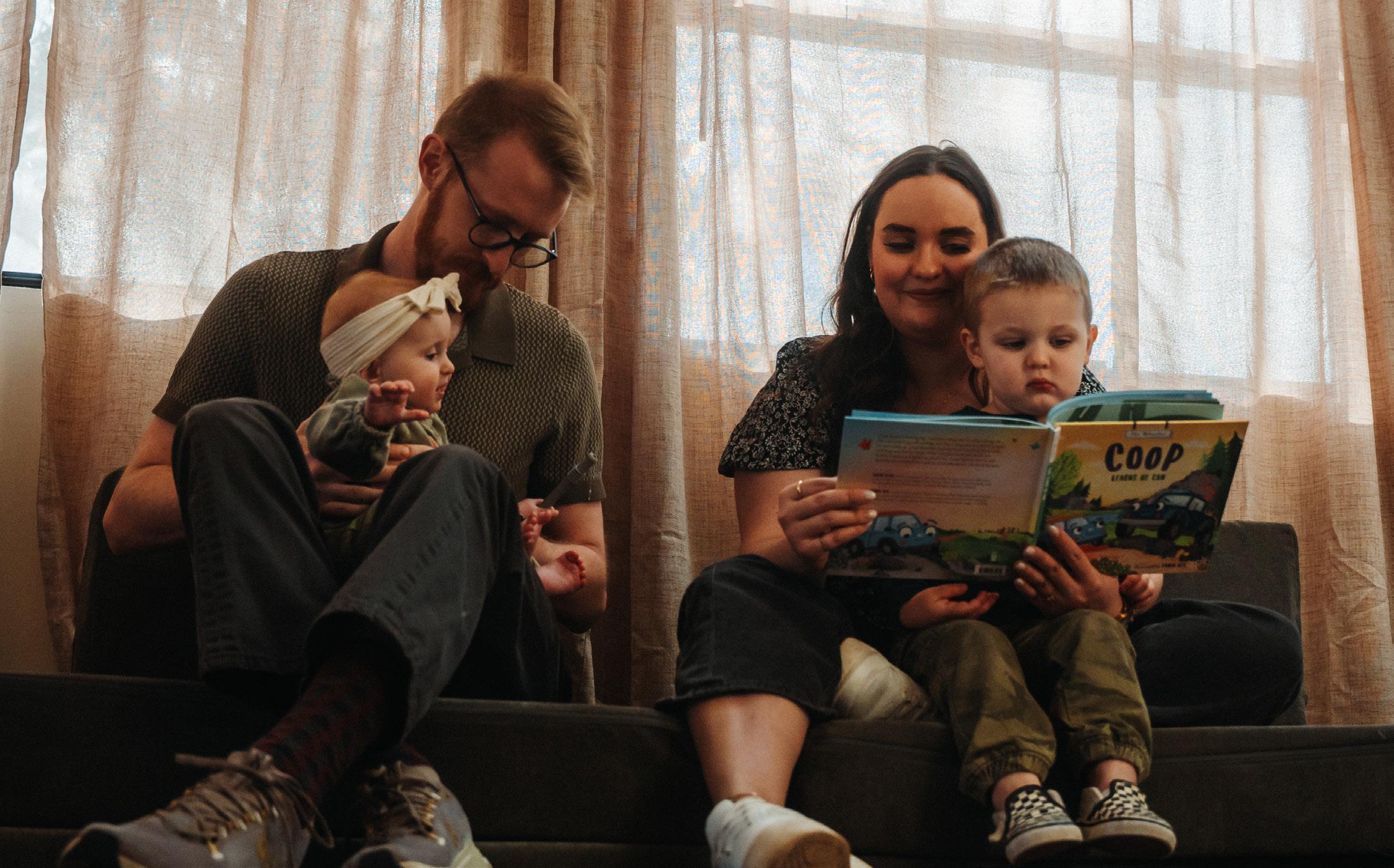
Pictured: Collin Coffee, M.Div., 2019, and his family
THE UNIQUE ROLE OF FATHERS IN THE CHURCH
BY CAMDEN B. PULLIAM
Nuclear energy can power the world or melt it down. The same can be said of fathers.
The truth is, fatherhood is packed with power. Ephesians 3:14–15 tells us such power derives from God Himself: “For this reason I bow my knees before the Father, from whom every fatherhood in heaven and on earth is named.” Every family is left with His imprint, and every father’s authority comes from the Father above. He has woven it into the fabric of our societal systems.
At a basic theological level, fathers impart an identity to their children. Unfortunately, we read in Scripture that every father imparts an identity that comes from Adam. Every father, without fail, passes on the DNA of sin, and thus every child is an heir of Adam, receiving death himself and passing it on down the line.
At a more personal level, fathers impart a compositional identity to their children. Physically, emotionally, spiritually, and relationally, children become like their fathers. To be sure, this applies to mothers, too, but it is no coincidence that in Exodus 20:5 God “visits the iniquity of the fathers on the children, to the third and fourth generations.” This is what headship means—a fundamental and final responsibility before God for the state of the household.
So then, which family can stand before the Lord? Not Adam’s. Not Abraham’s. Not David’s. The thrust of the New Testament demonstrates that every person needs a new father. We all need to be reborn and remade in the image of our heavenly Father.
Praise be to God for those in Christ! We have not received the spirit of slavery but the spirit of adoption as sons (Rom. 8:15). When we call God “Father,” we accept a new identity, a new family, and a new way of life.
So then, are natural fathers left impotent, redundant, or unnecessary? By no means! The Scriptures consistently call on natural fathers to be spiritual leaders. Here are four ways that fathers play a unique role in leading the home.
LOVE
1In Ephesians 5, we often misread it as if it says, “Wives submit to your husbands; husbands, lead your wives.” But “lead” is not the main action for husbands. “Love” is. Sacrificial love is leadership. This is the preeminent way Christ led His bride—by dying for her. Thus, the husband’s headship centers on his sacrificial love.
This central concern should change the attitude of every household. “Love” gets primacy of place and should be the first goal for all relationships in the home. If love is relegated to a lesser position, or even
“The head of the home must lead in love.”
relinquished altogether, there will be a nuclear explosion. But if love—evidenced in words, attitude, and sacrificial service—permeates the home, spiritual light bulbs turn on. This starts with the dad. When the family hears a father’s love spoken, sees it in his actions, and feels his affectionate attitude daily, the home becomes a powerful force for good.
The head of the home must lead in love. The rest is details.
INSTRUCTION
2
One of the recurring expectations for fathers in the Bible is to teach their children. Words should come from Dad’s mouth about God. In my experience, this is one of the hardest commands for dads to follow. Such difficulty may be exactly why the Bible keeps commanding it. Deuteronomy 6, Colossians 3, and Ephesians 6 call fathers to instruct, encourage, and exhort their children in the fear and admonition of the Lord. Men should talk about God’s attributes, declare His salvation, share their own testimony, detail His providence in everyday life, and more. If a man does not know what to say to his wife or kids about God, he should just open the Bible, read it, close it, and pray out loud for wisdom to apply it. God’s power is made perfect even in our weakest attempts.
DISCIPLINE
3
All children need structure, guidance, boundaries, and yes, discipline. A twenty-first century trend is “gentle parenting,” known for a parent’s focus on empathy, kindness, and developmental nuance with respect to parenting methods. The writer of Hebrews would like to have a word. When a child is out of control and acting the fool, someone must step in. That someone should be Dad. Just like our heavenly Father’s discipline, Dad’s discipline brings a little pain in the moment but a peaceful fruit of righteousness later (Heb. 12:11).
The peaceful fruit comes when Dad leads the who, why, and how of discipline. Who: Dad should
step in (when available) with assertiveness and not passivity. His voice and his actions should be respected in the home. Why: Dad should lead the family in connecting each moment of discipline to a greater purpose. Demonstrating God's character, expressing love for others, showing respect for proper authority, developing peace and justice in our surroundings, instilling healthy habits—all of these, and more, are biblical reasons for the behaviors we desire as parents. Every moment of discipline is an opportunity to explain why our little house-world is ordered as it is. How: Dad should demonstrate the kind of love that guides the discipline process. While all discipline is painful in the moment, a parent’s love should cushion the pain for long-term fruit and harmony.
PROVISION AND PROTECTION
One of my good friends regularly asks his little boys, “What is your strength for?”
The response: “To protect our girls.” This is how young boys should be trained to think. The natural shape of a man’s body is suited for tilling the ground and protecting the tribe. In our modern digitized workforce, this design is more difficult to grasp than previous generations, but look at our counterpart. A woman’s body has a unique ability to bear and care for children. When actualized, someone else must provide and protect because she has more significant things to worry about (like sustaining human life!). And lest we think a man’s job is merely physical, we know that humans thrive when they are
protected in every way. A man’s job involves all the home’s needs—basic protection, emotional safety, relational belonging, and future flourishing. While a man’s ground is thorny, the work of tilling is worth it.
When men fulfill these distinct responsibilities, the home burns with incredible spiritual power. But this is where we need to be reminded that nuclear energy is a multiplicative power. It only kindles when a nucleus splits into multiple nuclei, which then continue in a chain reaction of further fissions. The same is true of fatherhood. Fathers pass on their ways in a multiplying effect. Fatherhood is not created anew with each generation. It is always received.
The men in the church must commit to being good dads for our sons and daughters, and we must let young singles, dating couples, engaged couples, married couples, and new parents watch our way of life. When we do, a powerful chain reaction will occur, and biblical fatherhood will pass from one generation to another—to the glory of our true Father.
CAMDEN B. PULLIAM | Senior Vice President of Institutional Relations, Assistant Professor of Christian Studies
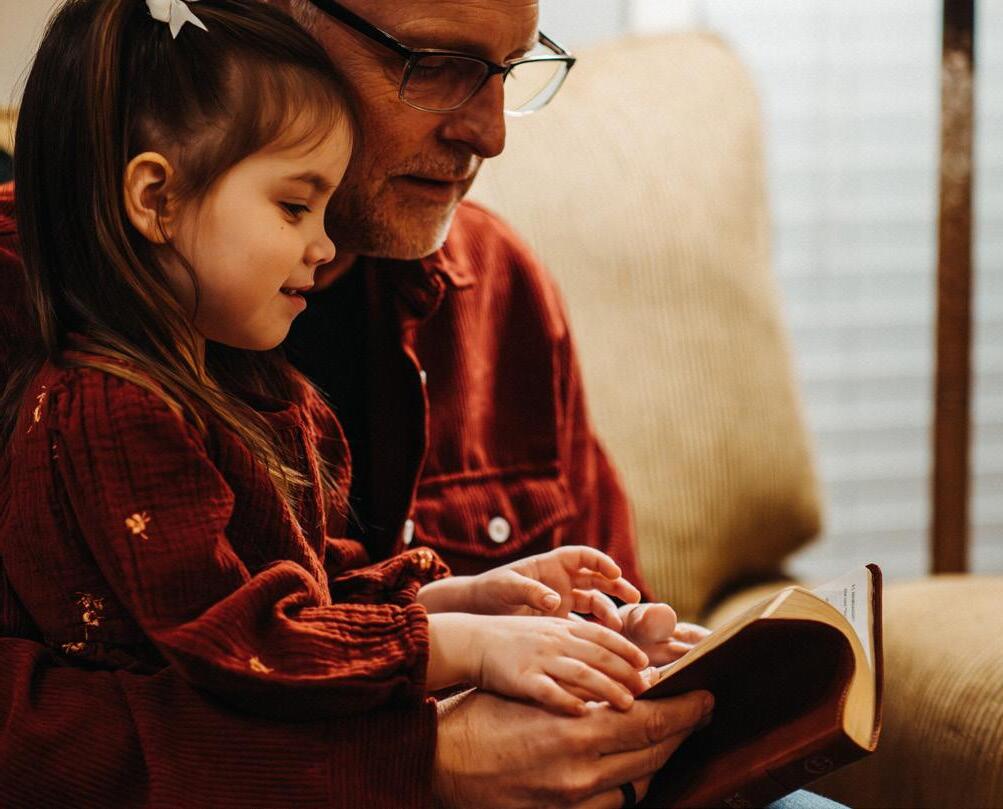
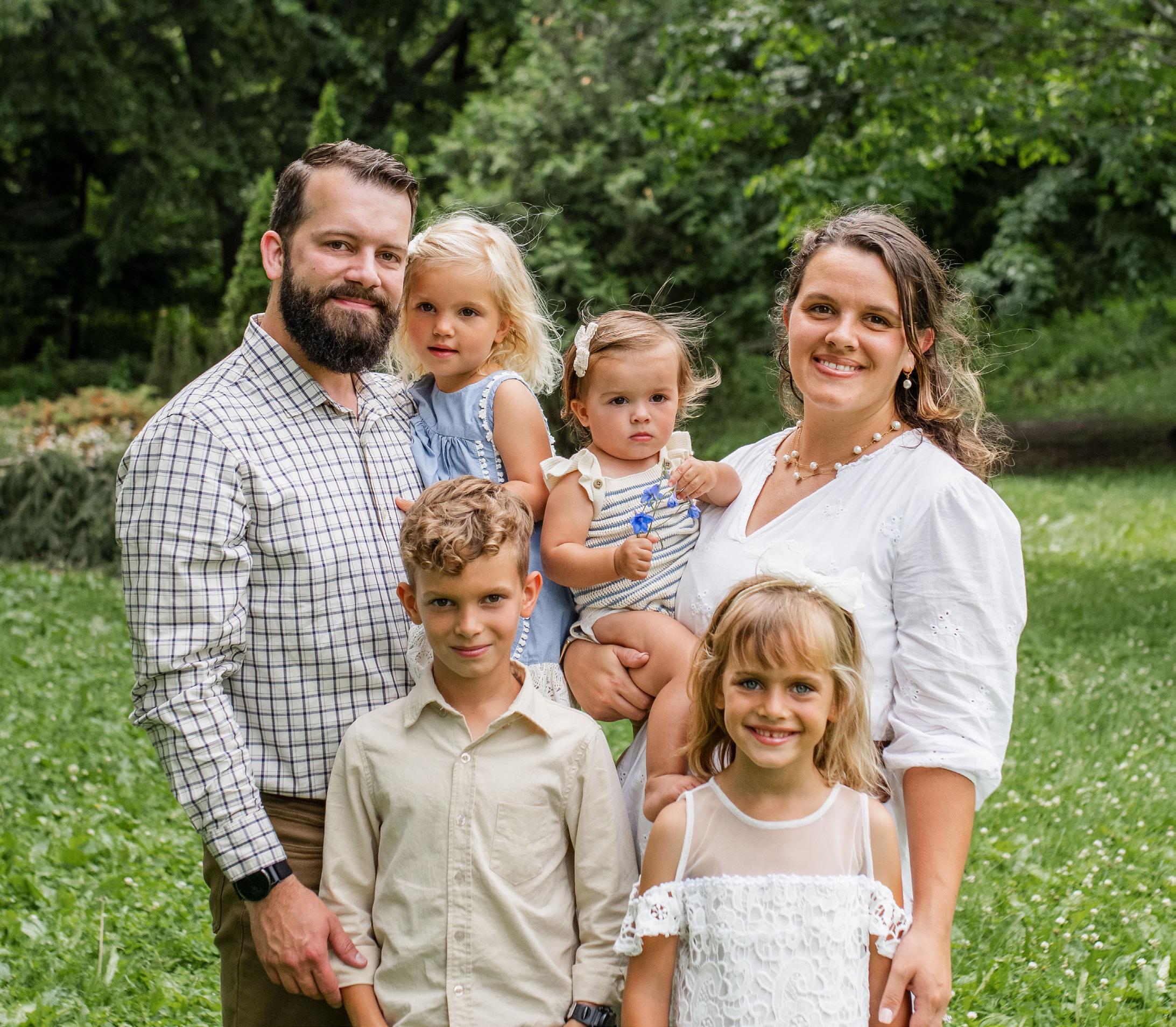
Pictured: Kirk Metzger, M.Div. in Biblical Languages, 2022, and his family
The “Heirloom Lives” of Godly Mothers
BY HAYLEE WILLIAMS
Irecently learned of the concept of Swedish Death Cleaning. If you have never heard of it, it is a practice in Sweden where a person prepares for their own death by downsizing possessions and considering what items are and are not worth keeping. It is intended to be a blessing to the loved ones they will leave behind when they die. Essentially, it is the opposite of hoarding.
This careful process examines each item a person owns, considering its long-term value. Some items are kept because of their sentimental value—photos and wedding china. Some items are kept because of their monetary worth—jewelry, coins, and crystal. What is kept is considered to be a family heirloom— something of value beyond the current moment, beyond today.
This concept seems intuitive. As we near death, we prepare for it—yet death is both certain and unpredictable. We should be Swedish Death Cleaning regularly—long before we think we are nearing death. Yet in a culture that constantly demands more, we would do well to have much, much less. What struck me most about this concept, however, was not just the physical possessions—it was the legacy we leave behind when we die.
As I considered Swedish Death Cleaning, I began to think about how it could shape my life if I did more than simply assess physical possessions for value. What if I used the lens of death to evaluate how I live today? By God’s grace, His Word gives an answer to this question in the book of Ecclesiastes.
Living an Heirloom Life
One of the main points the Preacher expresses throughout Ecclesiastes is that death is certain (Ecc. 9:1–3). Life is meant to be enjoyed, and no matter what happens—whether good or bad—the ending is the same for everyone. He encourages us to live with death in mind. He pushes us to ask, “If I were to die tomorrow, would this really matter?” With this question in mind, I want to reflect on how mothers can live what I will call “heirloom lives.”
Motherhood is one of those things that seems like it should feel deeply fulfilling and meaningful. We know it is meaningful— in the sense that it is the raising of souls—and many enter motherhood expecting it to feel as important as it is spiritually. But it does not take long before the mundane, seemingly meaningless moments start to pile up. Dishes pile up, car seats are full of snacks, new winter clothes cost a fortune, spills
“In the small, mundane, and seemingly meaningless aspects of life, I am leaving behind the heirloom of Christian faith for my children—and that makes every boring and mundane task worth it.”
must be cleaned, babies must be rocked and toddlers must be tucked in, shoes must be tied—and then you wake up and do it all over again. What once felt like the most important job in the world quickly becomes monotonous and unfulfilling. We start to wonder: Does this really matter? In these types of moments, I think the pursuit of an heirloom life becomes a lifeline.
When we look at our lives through the lens of death— asking, “Will this matter when I die?”—we begin to see that what we are producing within our homes is not boring or unfulfilling; it is eternally meaningful. If I died tomorrow after a day spent joyfully cleaning my home, caring for my children, forgiving and apologizing, and trusting Christ with my life and my children’s lives, what I would leave behind is not just a clean home. In fact, the clean house would not last five minutes—but my legacy of faith in Christ could last for millennia.
If I died tomorrow, my children’s teeth would be brushed and their laundry would be done. Those things are necessary, but I hope they are not all my children will know about their mother. When I carry
out these tasks with a heart to please Jesus and tell them of the goodness of our Savior, my death does not leave behind things that will gather dust or burn up in flames. My life—and my death—will leave behind an heirloom of faith in Christ that, Lord willing, will be passed down long after my descendants no longer remember my name. My descendants in 200 years may never know “Haylee,” but by God’s grace, may they know Christ deeply.
Leaving a Lasting Legacy of Faith
Living an heirloom life helps us consider what to prioritize in our day-to-day lives. If we ask, “Will this matter when I die?” we can more easily decide how to spend our time and talents—and what is worth pursuing. It helps us weigh whether spilled milk is worth crying over, if we should scrub the bathtub, or if we should read a bedtime story. If something does not line up with leaving behind a legacy of faith in Christ, it should rank low on the priority scale.
Hard work, hospitality, and sacrificial service—including wiping bums or sitting in carpool lines—are acts of beauty that decorate an heirloom life. Sharing the gospel with
our children and seeing them come to faith are shining moments, but three meals a day, hugs, cuddles, and endless question-answering all lead upstream to those shining moments. This is where we find purpose in what feels pointless.
The lens of death changes how I live today. Its certainty and unpredictable timing cause me to Swedish Death Clean my heart all day, every day. In selfless service to my children and my church, I am building a legacy that will outlast the cups of milk I poured this morning. In the small, mundane, and seemingly meaningless aspects of life, I am leaving behind the heirloom of Christian faith for my children—and that makes every boring and mundane task worth it. Like a beautiful gold ring passed down through generations, I want my life’s heirloom of faith to be passed on long after my name is spoken by my family.
WILLIAMS | Author of God of Forever
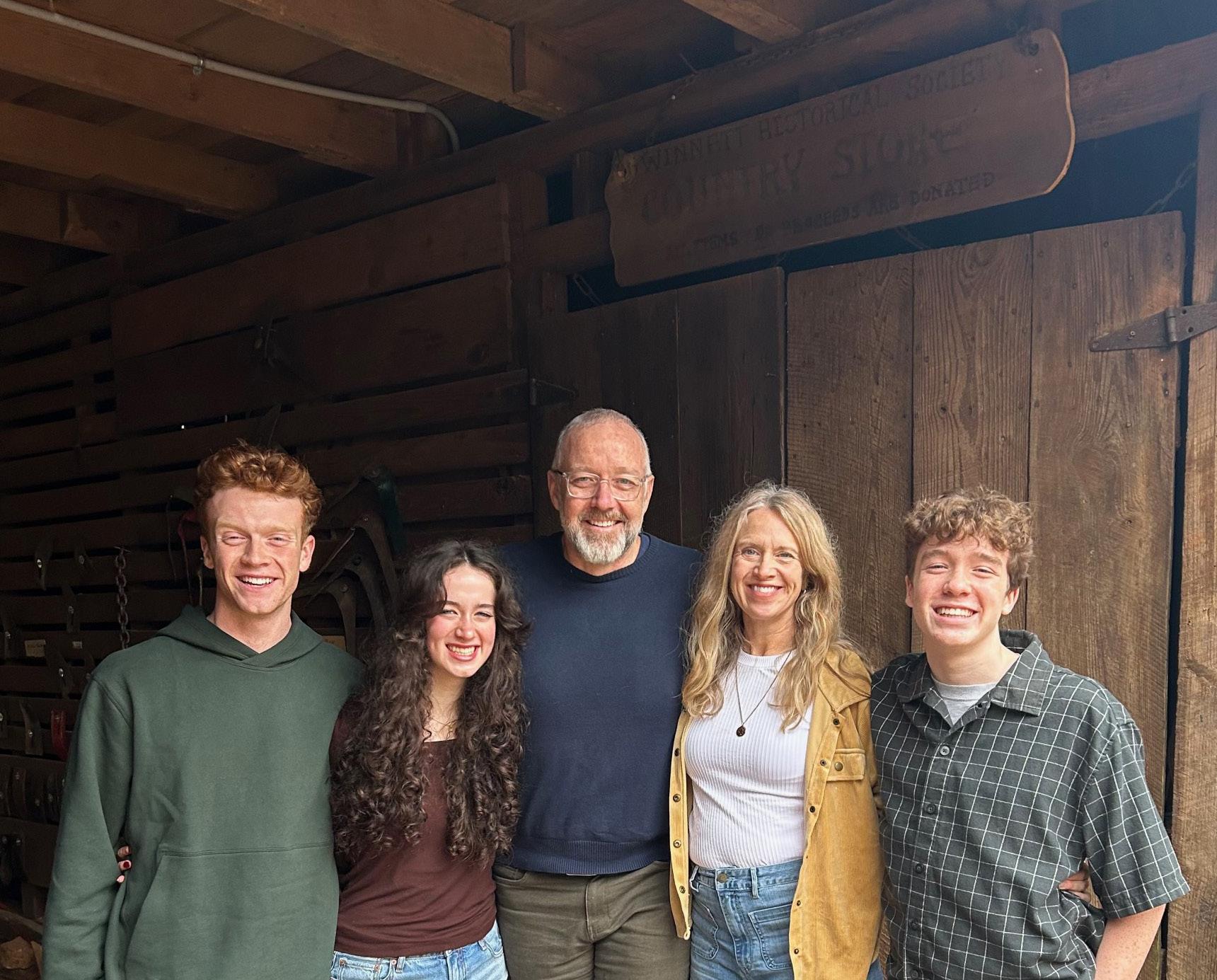
Pictured: Daniel Sylvester, M A in Biblical Counseling, 2023, and Clara Sylvester, M.Div., 2022, and their family
HAYLEE
Raising Godly Men and Women
BY MIDWESTERN SEMINARY EDITORIAL STAFF
RAISING CHILDREN in today’s cultural moment requires more than good intentions—it calls for clear conviction, careful discipleship, and deep confidence in God’s design. Scripture teaches not only that God created humanity as male and female, but that this distinction is purposeful and good. Parents are therefore called not merely to acknowledge the reality of two genders, but to raise sons and daughters in ways that align with God’s wise design for boys and girls, forming them into godly men and women.
The principles that follow are offered to further equip parents for this task, helping them cultivate Christlike character, ordered loves, and faithful responsibility in their children. Our aim is not to produce cultural stereotypes or self-made individuals, but sons and daughters who live for the glory of God and the good of others—faithfully embodying their God-given identity in the world God has placed them.
Five Principles for Raising Godly Women
Anchor Her Identity in Christ, Not in Being Desired
Teach her that God knows and loves her before she is admired by others. Her worth is rooted in belonging to Christ, not in perceived beauty or approval.
Form Wisdom and Discernment Along with Gentleness and Submission
Train her to speak truth with grace and courage. Godliness means glorifying God through speech and action that flows from biblical wisdom, a caring and gentle disposition, and gospel-centered submission.
Teach Her the Beauty of Fruitful Faithfulness
Help her value faithfulness over self-expression. Ordinary obedience to whatever God calls her to bears lasting fruit.
Cultivate Strength of Character Before Independence
Aim for maturity, not autonomy. Form endurance, self-control, hospitality, and sacrificial love through real responsibility.
Model the Gospel So She Learns How Authority Repents
Let her see parents confess sin without excuse and receive forgiveness with joy. A gospelshaped home teaches her that strength and leadership are not proven by perfection, but by humble repentance, faith, and forgiveness in Christ.
Five Principles for Raising Godly Men
Teach Him That Strength Is for Service, Not Self
Show him that God-given strength exists to protect, provide, and love—not to dominate or indulge. Help him see that true strength is proven not by power over others, but by faithfulness in serving those God entrusts to his care.
Train Him to Rule Himself
Before Leading Others
Self-control in speech, desire, and work prepares him for faithful leadership. A man who learns to submit his heart to Christ is being prepared to lead with wisdom, humility, and restraint.
Form Courage to Take Responsibility When It Is Costly
Teach him to act when obedience is hard and responsibility is heavy. Courage is cultivated as he learns to trust God and obey even when faithfulness means sacrifice.
Call Him to Joyful Responsibility and Productive Work
Give him meaningful work that forms diligence, faithfulness, and gratitude. Through this, he will learn that work is a gift from God and a way to love others.
Frame Manhood by the Cross, Not Cultural Caricatures
Point him to Christ as the measure of true strength—humble, obedient, and sacrificial. The cross teaches him that manhood is marked by laying down one’s life in obedience to the Father and love for others.
Explaining Theology to Kids
Children don’t need less theology—they need more theology, clearly taught. This section offers examples of simple, faithful explanations of core doctrines that you can share with your kids, equipping you to pass on the truths of Scripture in ways that shape young hearts for a lifetime. Strive to know theology deeply so you can share the truth faithfully with the next generation.
Atonement
When Jesus died on the cross, He was punished by God the Father so that we don’t have to be. Can you imagine if you did something bad and one of your friends said he would step in to take your punishment for you? That would show that your friend loves you a lot! Well, that’s exactly what Jesus did for us. By turning from our sin and trusting in Him, we are forgiven and free from the punishment we deserve, and we can live with God forever and ever!
Biblical Theology
Though the Bible has so many names in it, it’s all about one name: the name of Jesus. God is perfectly wise, so everything in the Bible is connected in God’s big plan of rescue and glory through His Son by His Spirit.
All the authors, words, and names in the Bible are like one big choir, all singing a song of praise to God the Father, God the Son, and God the Holy Spirit: one God in three persons speaking one message in 66 books.
Adoption
Can you imagine not having a mom or a dad? As sad as it is to think about, some children grow up without parents. When each one of us was born, we were spiritual orphans without God as our Father because of our sin. But the Father sent His own Son to save us, so that we could be brought into His family forever. When we believe in Jesus the Son, we become united to Him and adopted by God the Father, receive the Holy Spirit, and get lots of new brothers and sisters, too!
The Soul
The soul is part of who you are—the part of you that you can’t see. Just like it is necessary for your heart to beat, your soul is also necessary for you to live. Though our bodies get hurt and will eventually die (and need to be raised to new life), our souls live on forever. Every part of us, even our souls, is sinful, so we need Jesus to make our souls new. He lived without sin, died for sinners, and rose again, so that if we trust in Him, our souls will be made new (and one day our bodies too), and we will live with God forever!
Eschatology
Kids, do you love stories? Of course you do! Everyone does. That’s because God made us to love stories. Do you know why? Well, there are a lot of reasons, but the main reason is that God also loves stories, and He made us to be like Him in that way. Though there's a lot we don't know about what will happen in God's story (which you're in!), there are several things we do know about what will happen at the very end. Most importantly, we know that we will be with Jesus and will enjoy being with Him forever and ever and ever!
Union with Christ
When God created the world, He created it good. But when Adam and Eve sinned in the garden, God’s good world was broken and all of a sudden everybody was caught up in a storm. But guess what? God invited people to step out of the storm, by stepping into a relationship with God. He invites us to make our home with Him by placing our trust in Christ Jesus, who is the home where God invites us to live with Him, safe from the storm, free from the penalty of sin.
From the Faculty
For the Family
Meet
LYDIA SWARTZ
Born in Ethiopia, Lydia Swartz was adopted at a young age and grew up in Bellevue, Nebraska, before coming to Spurgeon College in 2024. She was recruited to play on the Spurgeon College volleyball team and works in the athletics office as an assistant to the coaches. Lydia also assists with student recruiting and is pursuing a Bachelor of Arts in Interdisciplinary Studies.
MBTS What led you to choose Spurgeon College for your studies?
LYDIA SWARTZ The main reason I chose Spurgeon was because of the community. My first time visiting campus was when we moved my brother in at Spurgeon. I remember the joy of the student leaders and the kindness of everyone on campus. I’ve played volleyball since eighth grade and I’ve always loved it, but I wasn’t sure if playing in college was something I could realistically pursue. When I was looking at Spurgeon and the head volleyball coach reached out to me, I was so excited. I thought, “What could be better?” I get to play the position I love for a good Christian team, and I get to study Scripture. I couldn’t imagine a better option for me. I wasn’t sure what career path I wanted, but I love ministry, and I trusted that the Lord would show me the path He wants me to take as I faithfully walk beside Him.
MBTS Who have been key people who have encouraged you during your time at Spurgeon College, and how have they shaped your experience at college?
LYDIA I have loved my Old Testament and New Testament classes taught by Dr. King and Dr. Chipman. They are knowledgeable and passionate, caring well for their students and demonstrating their love for the Lord in the way they teach. Mrs. Beverly White is a woman I look up to greatly. She is my academic advisor and also my mentor, full of wisdom and unafraid to tell me what I need to hear rather than what I want to hear. Her advice has shaped my life in many ways.
My coaches have been amazing, pouring into my life in so many ways. I have had two coaches during my time on the volleyball team, and they both have been so kind. This year, Elizabeth Deaton was the coach, and I learned so much from her just by observing her character. She is one of the kindest women you will ever meet—selfless, encouraging, and committed to others—and I am so thankful for the Lord’s work in my life through her. My friend Victoria Weiss was my very first roommate and teammate. She is kind, creative, and passionate about volleyball. She is always encouraging, and I have been blessed to have her in my life as a friend and teammate. I have learned
so much from each of these people. Through their lessons, guidance, and daily presence, I can clearly see God’s provision in my life.
MBTS How do you balance the demands of your major and collegiate volleyball?
LYDIA Balancing the demands of my major while playing volleyball really comes down to discipline. During the season, the volleyball team practices very early in the morning, and then the rest of the day is full from there. I have had to be intentional about going to bed on time so I get enough rest, and I try to finish most of my homework in the first half of the week since we travel on weekends. Staying disciplined and efficient has helped me maintain a good balance!
MBTS In what ways has your time at Spurgeon College shaped the kind of teammate, friend, and Christian you hope to become?
LYDIA Being on the volleyball team has taught me patience and selflessness. I have the most fun playing when I’m serving the team and helping them succeed, rather than focusing on myself. I’ve learned that good leadership isn’t about attention or constantly talking, but it’s about actions and quiet support of the team. Living together and doing life with one another in college is such a unique experience, and I am deeply grateful for it. Friendships reveal both strengths and weaknesses. I’ve seen many areas where I need growth, and though I sometimes feel like I’m not a good friend, I have sweet, patient friends who hold me accountable and love me despite my failures.
Spurgeon has truly been the place God has used to reveal areas where I need growth and to guide my character development as I mature. I am so thankful for the influences around me—the amazing women on campus who amplify the Lord and model what it looks like to be submitted to Him and His church, the men and professors who share wisdom with discernment, and, ultimately, the way God’s work is evident in the lives of both students and professors. It is truly such a blessing to witness His hand at work on campus.
Meet
SERGEY PIKULIK
Sergey Pikulik, originally from Kharkiv, Ukraine, moved to the United States with his family at age six. He came to faith at 13-years-old and was baptized soon after. Sergey and his wife, Alina, have four children. In 2024, they relocated from Charlotte, North Carolina, to Kansas City so Sergey could pursue an M.Div. at Midwestern Seminary, where he is active in Student Life and the Biblical Studies Cohort.
MBTS You have a family, which means you’re busy. Why come to seminary if your life is so full already?
SERGEY PIKULIK For someone like me who is married and has a relatively young family, seminary is a challenge. I’ve been married for 13 years, and we have four children, ranging from eight to just one year old. Between feeding, bedtime routines, church and ministry commitments, children’s events, and full-time work, you can imagine how full our days are. Adding seminary—with its homework, reading, writing, and tuition—might seem overwhelming, especially when considering moving across the country instead of pursuing closer or online programs. Why go through this? The simple answer is for the Church, for God’s glory. I believe God planted this desire in my wife and me and has provided all the confirmation, support, and resources to guide us along the path He has for us. Attending Midwestern Seminary allows me to be locally trained and equipped, to build relationships with others in ministry, and to have a support network not just for myself, but for my family and church that we serve in. We also benefit from a great faculty with decades of pastoral experience who can share wisdom that strengthens both our ministry and our home.
MBTS Are there particular experiences or values from your family that have influenced your preparation for ministry?
SERGEY One important value is that, as a father and husband, I must be active and present in our home. Being in seminary as a father and husband is not an easy task. Making sure that I do well in classes, providing for my family, and being present both as a father and a husband is a sacrificial balancing act. I do not want to place the burden of my seminary education on my family. Yes, we have to adjust schedules and sacrifice some outings, social events, or travel. But ultimately, I don’t want my family to feel the burden of me being away 10 or more hours a day, every day of the week for my schooling. I desire to be a good steward of my time and manage my household well, as Paul commands in 1 Timothy 3 and Titus 1. Every married man’s primary ministry is his home and family. I was already convinced of that going into seminary, but being shepherded by my local pastors, taught by godly professors, and
hearing the testimonies of others has shown me that conviction alone is not enough—I must live it out.
MBTS What practices or rhythms have helped you pursue a Christ-centered home while also managing the demands of seminary?
SERGEY Time is one of those things we can never get back. I quickly realized that I was not stewarding my time wisely, especially when it came to family worship. Dr. Don Whitney’s class on spiritual disciplines really helped me see the importance of prioritizing my family and their discipleship above everything else. We only have so many years with our children before they leave home and start forming their own convictions. Scripture is clear in Ephesians 6:4: “Fathers, do not provoke your children to anger, but bring them up in the discipline and instruction of the Lord ” (emphasis added). The responsibility ultimately falls on the father. While your wife is there to help, the father is called to disciple his household, including both his kids and wife. My wife and I adjusted several of our routines to prioritize the discipleship of our family. This included ensuring that our mealtime conversations are meaningful, asking about everyone’s day, and looking for opportunities to weave the gospel into their lives. We also dedicate time to read Scripture together, sing, pray, and engage in other family activities, such as going on father-daughter or mother-son dates. We want to create opportunities to bond with our children while having meaningful, gospel-centered conversations.
MBTS As you’ve grown theologically, which aspects of family life have taken on new significance for you?
SERGEY I cannot overstate how important my family is to me. Growing up, I witnessed men getting ordained for pastoral or deacon ministry, and one thing often said to them and their wives is, “This man is a minister first, then a husband and a father.” It is no surprise that with that kind of mindset and theology, those wives and children feel neglected, lonely, or spiritually hindered; disciplines and routines become disrupted, and sadly, some families fall apart completely. I have made it my personal goal to prioritize my family. They are my primary ministry, given by God for His glory.
Todd Chipman
Dr. Todd R. Chipman is Dean of Graduate Studies and Associate Professor of Biblical Studies at Midwestern Baptist Theological Seminary. He holds a B.S. from the University of Nebraska-Lincoln, and MABL, M.Div., and Ph.D. degrees from Midwestern Seminary.
Chipman’s research interests include Second Temple Judaism, biblical theology, and Greek grammar. He is the author of Scripture Storyline, has published in the Midwestern Journal of Theology and Expository Times, and has presented papers for the Evangelical Theological Society and the Society of Biblical Literature.
Since 2000, Chipman has served as teaching pastor at The Master’s Community Church in Kansas City, Kansas, and has served on the executive board of the Kansas City Kansas Baptist Association. He and his wife, Julie, have seven children and advocate for foster and adoption ministry.
MBTS How has orphan care—through both foster care and adoption—shaped your family’s life and ministry?
TODD CHIPMAN If not for Jesus Christ, I have no idea how anyone could do foster care or adoption. I have seen the relational complexities of these ministries challenge even the most theologically mature believers. Foster care and adoption have brought my family into deeper intimacy and dependence on the Lord. We have learned to walk with those who weep in trauma and loss. We have experienced the Lord’s morning mercies anew each day. We have seen the power of the local church, present and praying. In Christ and with the church, foster care and adoption are glorious.
MBTS As a husband, father, pastor, and scholar, what key practices have helped your family cultivate a distinctly Christian home?
TODD The Christian life is a life of integrity. From G.K. Chesterton’s Orthodoxy and C.S. Lewis’ Abolition of Man to Jason Allen’s Being a Christian: How Jesus Redeems All of Life , Christian thinkers consistently identify the life of the believer as one characterized by wholeness. As a Christian myself, Christ centers me as a husband, father, church member, friend, and professor.
Two noteworthy practices radiate from Christ as center. These have helped my family cultivate a Christian home. First, my family and I prioritize the intake of God’s Word. Each day begins early in the Word and prayer. Our living room has two couches. My wife sits on one and I sit on the other, with coffee between us. Breakfast is brief before we head out the door for the day’s opportunities, but Psalm reading and prayer are a part of the meal. Most evenings, I lead my family in systematic reading of Scripture, prayer, and singing. Second, we prioritize hospitality, and that connects my family leadership with leadership in the church and academy. Multiple evenings each week, church family and/or students gather around our table for a meal and worship.
MBTS As you reflect on 25 years of ministry, what practices or convictions have most sustained your faithfulness through both fruitful and difficult seasons?
TODD November 2025 was one of the most joyful months of my life. The Master’s Community Church surprised my wife and me by recognizing my 25th anniversary of pastoral leadership. Later that month, Julie and I catered lunch for the church, and I shared my appreciation for them for their faithfulness over the last two and a half decades.
But a lot has happened in the world and in our church since November 2000. The attacks of September 11, 2001 and the ensuing war on terror, the housing crisis of 2008–2011, COVID, and the shifting sands of evangelicalism and politics—not to mention that our church endured disease, cancer, death, wayward children, and job losses. But the Lord has shone His
face upon us in each season. We have seen couples get married, have children, get baptized, and grow in the Lord. We have sent and supported missionaries, heard nearly all of the Bible preached, participated in home groups, trained and sent pastors, written music, and sang the Lord’s praise.
Whether we have witnessed the smile or frown of providence, two practices have sustained me. First, I have prioritized personal intake of God’s Word apart from study for sermons or teaching. I have individual time with God each morning and then try to take a few minutes in the afternoon for the same—always beginning with Scripture in the original languages. I fill myself so I can fill others. Second, I use the church directory as a prayer guide. As I pray through the names of individuals and families in the church, I am reminded of the life circumstances of the flock and their needs. I know where to apply God’s Word on Sundays in light of what the Lord has for them in the week to come.
MBTS As dean of graduate studies, why do you believe residential theological education remains vital, and what unique opportunity for formation does it offer students?
TODD As a dean of Midwestern Seminary, my job is to help our faculty biblically educate God-called men and women to be and make disciples for the Church. Contrary to popular opinion, seminary is not a data dump. Yes, we transmit content to students, but more than that, we inculcate values and train instincts. Seminary training is thus distinctly relational. Whether students are enrolled in residential or Global Campus courses, we are doing life-on-life as we train heads, hearts, and hands. First-year residential students have the added opportunity to enroll in cohorts and participate in weekly cohort meetings with faculty for additional mentoring in a particular field of study.
Meet CHAMP THORNTON
Champ Thornton and his wife, Robben, live in Newark, Delaware, and have three children: Micah, Kenzie, and Jack. Champ is director of Children and Family Resources at Crossway, working on children’s books, acquisitions, and content development. He earned a Ph.D. in Theology from Midwestern Seminary in 2021 and is the author of several books, including The Radical Book for Kids. Learn more at www.champthornton.com.
MBTS How do you involve your wife and kids in your ministry?
CHAMP THORNTON As much as I’m grateful when my wife and kids are involved in ministry, I care even more about their desire to serve. If my children grow up helping in church but secretly resent it, I have not served them well. I don’t just want my children involved in ministry now; I want them joyfully serving Christ decades from now.
That means one of the best ways I can involve them is actually by protecting them: guarding our family from seasons when my ministry becomes too all-consuming or too important in my heart. Whenever ministry becomes an idol, our children often pay the price. Somehow as humans we always end up sacrificing our children to our idols, and when I don’t know how to balance the priorities of life, ministry, and family, my wife is a wise and needed help from the Lord.
Practically, one of our favorite ways to involve the whole family is simple hospitality. We’ll invite people into our home for meals and conversation. And everyone has a part—setting the table, welcoming guests, talking with them, or helping their kids feel at home. That sets the tone: Ministry isn’t just what Mom or Dad does “out there.” It’s something we all do together because Jesus calls us to love God and love people.
MBTS What role do good, theological children’s books play in strengthening families?
CHAMP The best books, of any kind, help us make up for our limitations. If we can’t travel to a certain country, we can still “go there” through a book. If we don’t recall all the biblical data about a certain doctrine, we can refresh our mind by reading. If we don’t have time to do a deep study on a certain topic, a good book can provide the fruit of someone else’s work.
The same is true with children’s books. Good, theologically rich children’s books give parents language, stories, and illustrations they might not have the time or ability to create on their own. Like divers sometimes use weights to offset their buoyancy and help them go deeper, good Christian books can serve even the youngest readers and busiest families.
MBTS How has writing for children shaped the way you think about discipling the next generation within the home?
CHAMP Writing for children has forced me to think about what kids can actually understand. Most of us feel stuck when trying to explain theological truths to children. It is easy to assume that they are just too young, but the discipline of putting those truths into simple, written words has shown me that the challenge is not usually the child’s age, but the adult’s clarity.
When I struggle to explain something to a child, it’s often because I haven’t fully grasped it yet. But once the concept finally clicks for me, it becomes much easier to put it in terms a child can understand. This realization has helped shape how I view discipleship in the home: One of the best ways we can serve
our kids is by doing the hard work of understanding truth ourselves.
MBTS How do observations from your home— whether through conversations or seeing a need—shape the kinds of children’s books you choose to write?
CHAMP Discipling my own children regularly shapes what I write for other children. I write books either that I want my own kids to read or that I think would serve them well.
One of the biggest lessons I have learned at home is the power of low-demand habits. When our kids were very young (three or four years old), we encouraged them to have a simple “Bible time” each morning. Usually, this took about a minute or so: open a Bible storybook, look at pictures, turn pages, and say a short prayer. As they got older, it looked different and went a bit deeper, but it still often took only a few minutes.
Over time, that small routine has become normal for them. By the time they reach upper elementary, middle school, and high school, a habit has been formed. Our hope is that as we coach, encourage, and model this practice, they will come to view this daily time in God’s Word as necessary and vital. It’s the daily bread all of us desperately need. That’s one of the dynamics I’ve tried to build into some of my books. I want them to be easy to use and friendly enough for children or families to incorporate into everyday life.
Arrow Heights Baptist Church
LOCATION: BROKEN ARROW, OK
For more than 70 years, Arrow Heights Baptist Church has been a part of the community in Broken Arrow, Oklahoma. As a multi-generational church, Arrow Heights is comprised of people in all stages of life who are seeking to trust and follow Jesus together. Under the leadership of Ryan Smith, a Midwestern Seminary alumnus, the church pursues a simple, Word-centered ministry.
MBTS Tell us about the history of Arrow Heights and how the Lord called you to serve there.
RYAN SMITH Arrow Heights has been a staple in our community for decades. God has blessed our church with many families who are now in their third and fourth generations. After serving for 18 years at a younger church in a college town, God led us to Arrow Heights—a loving, older community that welcomed us with open arms and reminds me very much of the church in which I grew up. Today,
the church is also growing with young adults and young families who are putting down new roots in gospel-centered soil.
MBTS How have you seen Arrow Heights support and care for families in your congregation?
RYAN In a world marked by increasing relational fracture, family is of ever-growing importance. As brothers and sisters in Christ, we recognize that we are called not only to see one another as family, but to care for one another as such. One of the most significant ways Arrow Heights supports families is by intentionally fostering crossgenerational connections. We have established new multigenerational small groups and invested in service and ministry opportunities that bring generations together. We also seek to celebrate the gospel stories of longtime members—empty nesters who have faithfully served the church for decades—as well as those who are newer to the church and just beginning seasons of marriage or parenting.
Additionally, our church has been active in helping families as they move to our city, taking the initiative to cultivate new gospel-centered relationships. We seek to glorify Christ through His church not by uniformity, but by unity. It has been a tremendous blessing to see senior adults and longtime members graciously extend themselves to welcome and accommodate new families, both within and beyond our regular church activities.
MBTS As a pastor, what are some ways you guide and encourage families to grow in their faith together?
RYAN One of the first encouragements we give to families regarding service in the church is to make their own home a front line for the gospel. While a church can offer programs, activities, and events that create engagement within the building, we recognize that if discipleship is not happening in the home, we have missed the mark. As pastors, we provide books and other resources to equip families, but we also encourage individuals to identify others who are ahead or behind them in the faith and pursue organic, intentional relationships with them. To support this conviction, we emphasize
multigenerational ministry among both men and women as natural on-ramps for these relationships. We also strive for simplicity in our ministry approach by resisting an overloaded church calendar, creating margin for families to gather meaningfully together and with others.
MBTS What advice or encouragement would you give to singles in your church about engaging families in the congregation?
RYAN To single adults in the church, my first word of encouragement is this: You are a vital part of the church family. Married couples, children, and senior adults all deeply need the gifts, abilities, and relational capacities that single adults uniquely bring. I would encourage singles to take initiative in building relationships both within and beyond their immediate circles. Volunteering with children, encouraging young families, or sharing time and conversation with a senior adult are all meaningful ways to weave together a united church tapestry. Ephesians 4:15–16 has become an especially important passage for us: “Speaking the truth in love, we are to grow up in every way into him who is the head, into Christ, from whom the whole body, joined and held together by every joint with which it is equipped, when each part is working properly, makes the body grow so that it builds itself up in love.” Single adults are uniquely equipped and called to use their gifts so that the entire body may grow in love for the glory of God in Christ. A healthy church family needs every member.
Faithful to the End
How God Called Rich and Judy Hastings to Impact Future Generations
Rich and Judy Hastings have been devoted supporters of Midwestern Seminary for over a decade. Rich has served on the seminary’s board of trustees, contributing to key initiatives such as the Prayer Wall, the Spurgeon Library, and the Mathena Student Center. In 2024, the Hastings funded the Endowed Chair of Old Testament Studies, ensuring that generations of students will engage deeply with Scripture. Judy passed away in late 2025, leaving a legacy that continues to serve the church. She devoted over 26 years to writing and directing the Heart of America Christmas Pageant at First Baptist Church of Raytown (now Connection Point Church), reaching hundreds of thousands locally and abroad, including Israel, Belarus, Venezuela, and Guatemala, and leading many to faith in Christ. Through their faithful service, prayer, and generosity, the Hastings have impacted students, churches, and communities worldwide.
Formed in Faith
In a small town in Oklahoma, the course of Rich Hastings’ life shifted before he could even recall it. When he was just one year old, his mother passed away—an event that would shape the course of his life in unexpected ways.
“My mom died when I was one,” Rich recalled, “so I lived with my grandparents while my dad finished college.”
Rich moved to his grandparents’ farm, where the rhythms of life were marked by hard work, faith, and Scripture. Though the loss of his mother was profound, it placed him in a home where God’s Word was central—not simply taught, but lived. Faith was not confined to Sundays; it shaped how the family worked, rested, and related to one another.
“My grandparents were both strong believers, and other than going to the library once a week to take out as many books as I could, I learned how to read by reading the Bible,” Rich explained.
The Bible was woven into everyday life. Even after long days working on the farm, family devotions came before meals—even if that meant the food grew cold. Scripture was not optional or peripheral; it was the foundation of their home. These daily habits quietly formed his understanding of God, faithfulness, and obedience long before he could articulate them.
Over time, his love for Scripture deepened, particularly for the Old Testament. “I fell in love with the Hebrew Scriptures early on. I love every word of Scripture, and sometimes that meant that I would spend hours on one word,” Rich said.
Alongside this growing love for Scripture, generosity was instilled just as early. “Even when I was a kid and I had an allowance of
a dime while working on the farm, I gave a penny every Sunday. I do not recall ever not giving a tithe,” he said.
Those early lessons—faithful exposure to Scripture and faithful giving—shaped the trajectory of Rich’s life for decades to come.
A Defining Moment
As Rich grew older, his faith continued to deepen, and his desire to live purposefully became more pronounced. He met his wife, Judy, when she was 15 and he was 16. They married young—at ages 20 and 21—just as Rich entered military service.
Originally expected to deploy to Vietnam, Rich was redirected to Germany, where he and Judy would spend the next four years. Their departure came shortly after a brief honeymoon, which was followed by four months of separation before Judy could join him overseas.
While in Germany, a single experience would leave a lasting mark on their lives. During a later trip to the Alps, the couple visited Dachau, the Nazi concentration camp near Munich. Surrounded by the remnants of unimaginable suffering, Rich recalls a passage of Scripture pressing itself upon his heart—one that would shape their passion and calling for years to come.
“Immediately, Romans 1:16 came to mind,” he said. “‘I am not ashamed of the gospel, for it is the power of God for salvation to everyone who believes, to the Jew first and also to the Greek.’ And that became our passion.”
That moment proved formative—not only for how they understood the gospel, but for how they would live, give, and serve. It reshaped their priorities and clarified a sense of calling that would guide them for the rest of their lives.
Over the years, that passion led the Hastings to Israel more than 30 times, leading trips with students and church groups and engaging deeply with the Jewish community. Their growing love for Scripture, especially the Hebrew Scriptures, was matched by a growing desire to see others encounter the Bible clearly and faithfully.
“When you give with prayer and purpose, you see His hand in ways that matter.”
For Generations to Come
That desire for deep biblical understanding eventually connected the Hastings with Midwestern Seminary. Rich’s involvement began through relationships with pastor friends who encouraged him to serve at the seminary, first on an advisory board and later on the full board.
When asked to give financially, Rich responded in character—sending a playful $1.00 check to the school. He even mailed a copy of the check to explain that he had technically done what was asked.
Though it began lightheartedly, that gesture marked the beginning of a long-term partnership. Over the years, Rich and Judy supported several key projects including the Prayer Wall, the Spurgeon Library, and the Mathena Student Center.
Eventually, the opportunity arose to fund the Endowed Chair of Old Testament Studies.
“When President Allen offered us to be the donor supporter for the Endowed Chair of Old Testament Studies,” Rich recalled, “our only question was, ‘How do we do it?’”
For Rich, the opportunity felt deeply personal. Supporting an endowed chair was not simply about an institution or a building, but about ensuring that students would continue to encounter Scripture—especially the Hebrew Scriptures—with depth, care, and faithfulness for generations to come.
Faith at Work
The Hastings’ generosity was never driven by excess or ease. Rich recalls seasons of scarcity, particularly when he and Judy first moved to Kansas City.
“There were times when we gave very little because we had very little. But even then, we gave,” he said. “Even when we had nothing, we would still give—even if all we had left in our bank account was our tithe.”
Those seasons reinforced a conviction that giving was not dependent on circumstances, but on obedience. As their resources increased, so did their commitment to give intentionally and faithfully.
“We resolve to give as much as we can from what we have. It’s not about boasting—it’s about obedience and trusting that God will provide for our needs,” Rich said.
Prayer has always guided their generosity. “God doesn’t send a neon sign in the sky saying, ‘Do this.’ You need to know your purpose to give with a purpose, and God must provide that purpose to you. So you need to pray.”
A Life of Faithfulness
Through years of prayerful and purposeful giving, Rich said he has seen the fruit of that faithfulness. “When you give with prayer and purpose, you see His hand in ways that matter. Our gifts have supported students, widows, orphans, and biblical education, and we’ve seen lives transformed as a result,” he said.
That generosity has extended beyond the United States as well. The Hastings have sponsored orphans and widows, supported a medical clinic in Guatemala, and participated in international ministry efforts.
Looking back, Rich acknowledged how God used even the hardest moments of his life to prepare him for faithful stewardship.
“I used to have a hard time with the fact that my mom died when I was 14 months and that I had to grow up on a farm. Yet, in retrospect, I see that God was preparing us,” he said.
From a small farm in Oklahoma to the classrooms of Midwestern Seminary and ministry efforts around the world, Rich and Judy Hastings have lived lives shaped by Scripture, trust, and intentional generosity. Their story is not one of sudden wealth or dramatic turning points, but of steady obedience formed over a lifetime.
“Giving is not always easy,” Rich reflected, “but it’s always worth it.”
Through every season—whether abundance or lack—the Hastings’ lives testify to a simple truth: When Scripture forms the heart and trust guides the hands, generosity becomes not a burden, but a joy. And through that faithfulness, God continues to work in ways that extend far beyond what can be seen—impacting students, churches, and lives for years to come.
JONATHAN LUMLEY | Associate Editor, For the Church;
Content Strategy Manager, Midwestern Seminary
Tel Aviv-Yafo, Israel
Recent News
The latest news and events from Midwestern Seminary and Spurgeon College
Endowed Chairs
October 22, 2025
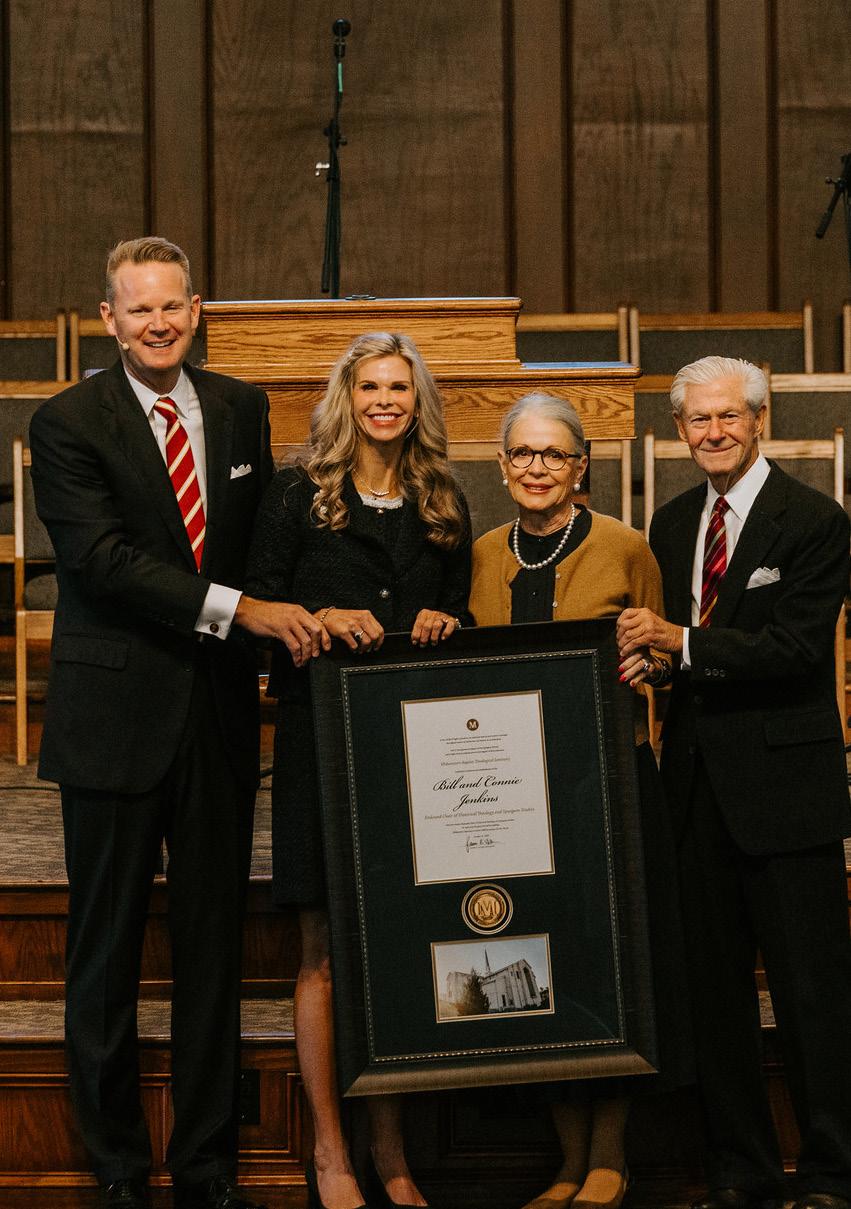
Matthew Swain was installed in the Wayne and Berna Dean Lee Endowed Chair of Church Music and Worship Ministries, Michael McMullen was installed in the Lee and Tammy Roberson Endowed Chair of Church History, and a new chair was announced: the Bill and Connie Jenkins Endowed Chair of Historical Theology and Spurgeon Studies.
Jeff Medders Joins Faculty
December 16, 2025
Midwestern Seminary welcomed Jeff Medders to its faculty. Medders will serve as the general editor and fellow of the Spurgeon Library as well as instructional faculty. He will help steward and expand the seminary’s growing Spurgeon collection for the benefit of students, scholars, and the broader church. In this role, he will work alongside the Spurgeon Library curator to advance research, publishing, and access to Spurgeon’s works.
Sam Parkison Joins Faculty
February 10, 2026
Sam Parkison joined the seminary’s faculty as assistant professor of systematic theology, church history, and philosophy, beginning in fall 2026. He brings experience in pastoral ministry and international theological education, helping equip students for rigorous scholarship in service of the local church.
“Why We Are Southern Baptist” Panel
September 5, 2025
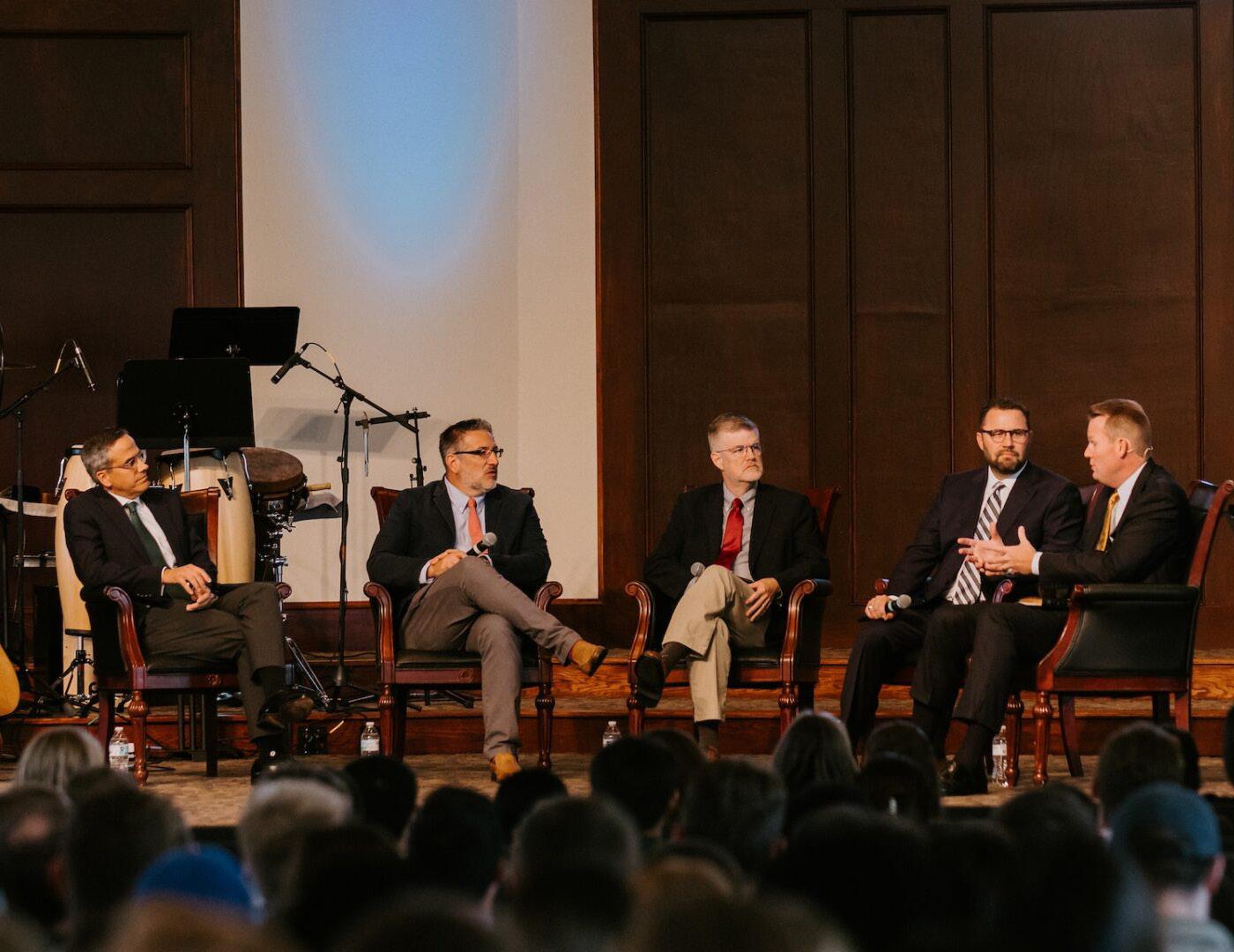
Jamie Dew joined Midwestern Seminary faculty for a chapel panel exploring “Why We Are Southern Baptist.” This panel discussed the denomination’s distinctives, heritage, and theological commitments.
The Evangelical Theological Society
November 19–20, 2025
Midwestern Seminary was represented in 28 presentations at the 77th annual meeting of the Evangelical Theological Society in Boston, Massachusetts, through various faculty members, graduates, and current Ph.D. students.
Robert Smith, Jr. Delivers Spurgeon Lectures
November 6, 2025
Robert Smith, Jr., distinguished professor of divinity at Beeson Divinity School, delivered two lectures on pursuing faithful, Spirit-dependent preaching rooted in Christ and Scripture.
TGC Book Award
December 19, 2025
Jared C. Wilson’s book, Lest We Drift, received a 2025 TGC Book Award. Paul Gilbert, Jared Kennedy, Julie Lowe, Ronnie Martin, and Jeremy Writebol said of Lest We Drift, “Some books on ministry provide the timeless encouragement church leaders need to persevere; others issue warnings against complacency or illuminate cultural blind spots. Lest We Drift does both.”
The 2025–26 Spurgeon College athletics seasons have been marked by historic achievements and significant leadership additions.
Logan Stutz joined as the new athletic director, guiding programs that continue to grow in excellence and cultivate student-athletes who thrive both on and off the field.
The men's and women's cross-country teams placed in the top ten at the NCCAA National Championships.
After a historic 2024–25 season that included a regional championship and a national runner-up finish, the 2025–26 men's basketball team looks to make history again, already having been ranked No. 1 in the NCCAA DII Coaches Poll for the first time.
Jojo Wilkes joined the Knights as head volleyball coach, bringing a wealth of coaching experience and a commitment to Christ-centered discipleship.
The men’s soccer team concluded a strong season by advancing to the Central Region Final.
Koehn-Myers Hall Rededication
October 22, 2025
Midwestern Seminary celebrated the rededication of Koehn-Myers Hall following the completion of its transformation from the former Library Annex into a purpose-built Fusion Program dormitory, finished ahead of schedule and under budget. The project honors the lasting legacy of alumni and missionaries Bill Koehn and Martha Myers, who gave their lives while serving Christ overseas.
Pastor Appreciation Month
October 2025
Midwestern Seminary honored Pastor Zachary Evans of New Life Baptist Church in Oklahoma as the winner of its $10,000 Pastor Appreciation Month giveaway, celebrating his faithful service and ministry impact in his church and community.
Fall Trustee Meeting
October 20–21, 2025
The Fall Trustee Meeting emphasized God’s faithfulness and the urgent need to pray for and equip laborers for the harvest, highlighting how the seminary is preparing students to serve the church both locally and globally.
Fall Commencement
December 5, 2025
Over 400 college and seminary graduates received degrees at Midwestern Seminary and Spurgeon College’s 78th commencement exercises. President Jason Allen encouraged the graduates to serve Christ in every sphere of life, reflecting His light wherever they are called.
Wes Huff Partnership
December 23, 2025
Midwestern Seminary announced a new partnership with apologist Wes Huff to bring thoughtful, academically rich conversations to a wider audience. The collaboration will feature interviews with seminary faculty on theology, biblical studies, church history, and more, released on Huff’s YouTube channel.
New Books
By Our Faculty
READY 2026
FALL COMMENCEMENT
CHRISTMAS CONCERT
MIDWESTERN WOMEN’S INSTITUTE
MIDWESTERN INSTITUTE FOR PREACHING AND PREACHERS
PREVIEW DAY
CROSS CON FLAG GIVEAWAYS
SALT CONFERENCE KNIGHTS NIGHT
CROSS CONFERENCE
COHORT DODGEBALL
CHRISTMAS PARTY
LONG NIGHT AGAINST PROCRASTINATION
FALL FESTIVAL
WINTER WEEK
Whether you serve as a missionary, business owner, historian, or pastor, your aim in life will be to live for the Kingdom. “ ”
RAUL | BIBLICAL STUDIES
The Spurgeon faculty cares about the person you are becoming more than your academic performance. “
WHEREVE R CALLED, WE’L L FOR TH E
In my studies at Spurgeon College, I have come to a greater understanding of how the gospel matters for every part of my life, not just my work in ministry.
MARY | INTERCULTURAL STUDIES
ELIM | WORSHIP MINISTRIES
This is a school for people who are willing to work hard for the calling the Lord has placed upon them. “ ”
MAGGIE | BIBLICAL COUNSELING
THEY’RE EQUIP THEM KINGDOM
The graphic design program shows me how God intended creation to imitate Him by creating art.
Contemporary journalism is in dire need of Christian voices. Spurgeon has helped me develop a heart for the truth and equipped me to proclaim it to a broken world. “ ”
TIMOTHY | COMMUNICATIONS
HAILEY | GRAPHIC DESIGN
The Secret Lives of Teenagers
BY DAVE HINTZ
Your teenager has a secret life.
It’s not all bad. Secret crushes, prayers, wishes, hopes, and ambitions are all normal for young people as they learn to become their own person.
But some secrets should be revealed, not concealed. They may have secret insecurities, doubts about Scripture, negative influences from social media, relationships you wouldn’t approve of, or sins like pornography.
It’s easy to see why Satan wants your teenager to keep these struggles a secret. He schemes to separate the immature from godly authority, encouraging them to seek wisdom from TikTok or Quora rather than their parents or youth pastor. But these secrets come with a cost: “Whoever conceals his transgressions will not prosper, but he who confesses and forsakes them will obtain mercy” (Prov. 28:13).
So how do you help your teenager move from concealment to confession? Ultimately, it must be a work of the Lord, but here are a few strategies my wife and I have found effective:
1. Encourage Confession. Starting around age 11, I took each of my boys out for weekly “Bible Time.” Over breakfast, we would go through a book, and I would ask some accountability questions. Here was the key: Anything they confessed received amnesty. Common-sense changes to help them with their struggles might follow, but there was no punishment for anything they voluntarily confessed. The message was clear: Confession is met with grace.
2. Establish Barriers. Pornography will find your children. We layered device filters and wish we had done so as soon as they had internet access. Filters aren’t a cure and must be monitored, and some teens may try to outsmart them. Such is the nature of the sinful heart. But barriers buy time for meaningful guidance.
3. Partner with Your Church. Children keep secrets for two reasons: They love you and crave your approval, and they fear consequences. This is why I am so thankful for our church. Youth staff often see a side of your child you don’t. Celebrate when you hear of spiritual growth, but take seriously reports of sinful behavior. Resist defending your child against the staff; instead, stand with the staff against your child’s sin. Encourage your teen to receive life-giving reproof (Prov. 15:31), and if you disagree with the staff, handle it privately.
4. Have the Courage to Confront. You may notice signs that something is “off” with your child—tiredness, anger, withdrawal. Investigation then confirms it. What do you do? Addressing the secret life can be uncomfortable, but confrontation is an act of love. You need to love your child more than you love your own peace and comfort. Paul confronted the Corinthians “not to cause you pain but to let you know the abundant love that I have for you” (2 Cor. 2:4). Even if your teen reacts poorly, bringing hidden struggles into the light is essential for their soul.
5. Rejoice in Repentance. When your child confesses, it may be painful or shocking. You may feel betrayed by
their deception or fear you’ve failed as a parent, but there is rejoicing in heaven over every repentant sinner. Your role is to mirror that joy. Recognize that it takes courage to reveal secrets and bring dark deeds to light. When your child is exposed before you, you have an opportunity to demonstrate your Father’s love by hugging your child, putting your own robe on slumped shoulders, and slaying the fatted calf to celebrate that what was lost has now been found! Your joyful, gracious response can be the most powerful demonstration of the gospel your child has ever experienced.
Ultimately, it is always the kindness of God that leads us to repentance. By encouraging confession, establishing barriers, partnering with your church, confronting with love, and rejoicing in repentance, you offer your child a glimpse of God’s grace and guidance in their lives.
Seeds of Eternity: The Weight of Kids Ministry
BY RANDI SINGLETON
A Calling You Can Blink Past
I’m not sure I’ll ever stop asking where I’m meant to go or what purpose I’m called to serve. Over the years, I’ve learned it’s best to view a calling as content-specific rather than location-specific. For me, it’s never been about the age group I teach, the city I live in, or the role I hold—it’s about serving others with Christlike compassion. Whether I’m working with children, adults, or immigrants, the core of my purpose remains the same: helping people feel welcomed, valued, and heard. This perspective has guided my choices in both life and work.
Today, I serve in kids ministry at my church. Cue the chaotic scene of energetic children—freeze frame: “Yep, that’s me. You’re probably wondering how I ended up here.” Though I had worked with children before, I never imagined stepping into this role. When I was first approached, I paused, unsure. Yet a gentle push inside me encouraged me to step in—and I was shaken when I realized the gravity of kids ministry and the misconceptions surrounding it.
By nature, I thrive with a clear, mission-oriented direction. Without it, I feel adrift. Stepping into this role
granted me a deeper understanding of kids ministry and how calling relates to it: It is not merely childcare or programming—it is the future of the Church. It’s where discipleship begins, where seeds of faith are planted and nurtured. The work may seem small or unseen, but it carries eternal significance. It’s not just cute; it’s critical.
In reassessing kids ministry, it became clear that my mission is to further God’s Kingdom. That calling isn’t confined by location or age group, but kids ministry is one of the most potent places to live it out. In the quiet corners of the church, amid glue sticks and goldfish, eternal things are being formed. Yet if we fail to grasp the weight of this work, we may blink and miss it altogether.
Misconceptions About Kids Ministry
One major misconception is that kids ministry is “practice church.” These are real, eternal souls. Every moment is an opportunity to lead someone toward Christ. We equip them to withstand struggle, lean into hardship, and dig deep into God rather than the world. These aren’t just “kid problems.” They are life problems that start young and carry into adulthood. kids ministry is
beautiful and weighty, playful and powerful. It’s not just preparing kids for the church of tomorrow; it’s building the church of today.
Another misconception is that you must start with a deep passion for kids. You need a passion for God’s Kingdom. Caring about its future naturally grows love for the children who embody it. Contrary to popular belief, not everyone is immediately “good with kids.” Skills develop through showing up, being present, and doing the work. Scripture is full of examples—Moses, Joseph, Peter, Paul—ordinary people called into extraordinary roles. We all have a head start: We were kids once! Skills and passions grow, and God meets us in that growth.
Our broader aim should be the Kingdom and its future. Too often we only see cuteness and miss the seriousness. Kids ministry is a battleground for souls, where eternal seeds are planted.
The beauty of kids ministry is that it ministers back to us. Breaking things down to a child’s level, answering questions, and watching understanding grow are glimpses of God’s transforming power. Even the mundane carries purpose. As the well-known proverb says,
“A society becomes great when old men plant trees in whose shade they know they will never sit.” That’s kids ministry. We may never see the full fruit, but that’s not the point. It’s about Jesus.
Don’t let fear or discomfort hold you back. Step into His Kingdom and trust He will use it for His greater purpose. When you care for God’s Kingdom, you care for its future. And these kids are part of that future. Love for them flows naturally from love for Christ’s mission. The bigger picture has always been His Kingdom, and He invites us to help build it, one child at a time. Let’s not blink and miss it.
Passing on a Heart for God’s Global Glory
BY HEATHER PACE
Over twenty years ago, I read Let the Nations Be Glad, and something awakened in me. The beauty of God’s glory going forth among the nations captured my heart. I was gripped by the wonder of the gospel advancing to every tribe and tongue.
Over time, that passion faded quietly into the background—buried beneath the good work of life: serving in the church, raising six children, doing the next faithful thing.
Recently, I reread that missions classic, and it stirred something I hadn’t realized had faded: a joyful, wideeyed awe at God’s redemptive plan unfolding across the globe. It reawakened a part of me that had once burned brightly but had grown quiet.
As I reflected on how far I’d drifted, I began praying— that God would reignite my passion and shape my children’s desires too. I want them to be thrilled that God is saving souls all over the world—and even be eager to join His global mission, however He leads.
With this renewed excitement, here are four simple ways we’re seeking to pass on a heart for God’s global glory.
Four Ways to Pass on a Heart for Missions
1. Wow Your Kids with the Vision
Our God is worthy of worship from every tribe, tongue, and nation. Missions begins not with strategies, but with wonder: “All the nations you have made shall come and worship before you, O Lord, and shall glorify your name” (Ps. 86:9).
Help your kids see the big picture. Trace the storyline. Let them feel the weight and wonder of what God is doing—and where history is headed. Explore missions together in practical ways: Learn about churches around the world, find out where unreached people groups live, talk about places where Christianity is illegal, and read stories of faithful missionaries and martyrs. Leave inspiring resources around your home for them to encounter.
2. Make Missions Personal Missions becomes most real when it has a name and a face. Get to know the missionaries your church supports. Read their updates, watch their videos, and share their stories over dinner.
When your kids see that missions matters to you, it begins to matter to them. Help them understand that missions isn’t only for a select few—every Christian is called to join what God is doing.
3. Pray with a Global Focus
Make space in your family’s prayer life for the world. Pray for missionaries by name. Intercede for unreached people groups. Remember the persecuted church.
You might set aside one night a week for focused prayer or weave these requests into your regular rhythms. A prayer guide or missionary update sheet can give children something tangible to use in their own time with the Lord.
And don’t forget to pray for your own family. Let your kids hear you asking God to make your home more captivated by Christ than by the world, and to help you be ready to serve anywhere for the sake of the gospel.
4. Give Joyfully and Generously
We spend money on what we value. If missions matters, and you want your kids to see that it matters, show it through the way you give.
Bring your kids into the process. Talk about who you support and why. Let them hear you say no to certain purchases because you chose to give instead.
Share your joy in seeing God’s Kingdom advance—even when it requires sacrifice.
A Family That Longs for His Glory
Few things matter more than helping ourselves—and our children—rise above the noise of daily life to see
God’s eternal work unfolding across the world. And few things are more exciting.
Praise God that it’s never too late to be more wrapped up in His global cause. But let’s do more than admire the vision; let’s be shaped by it. May our hearts, homes, and habits center on the greatness of God and His global glory.
Let’s pass on not just awareness, but awe. Not just information, but worship. Let’s raise kids who rejoice that the good news is reaching the nations and who long to be part of this great work.
SEPTEMBER 28–29
REGISTRATION OPENING SPRING 2026
Give us the first seven years of a child, with God’s grace, and we may defy the world, the flesh, and the devil.