Celebrating the 5 Towns of Western Wake
Celebrating the 5 Towns of Western Wake
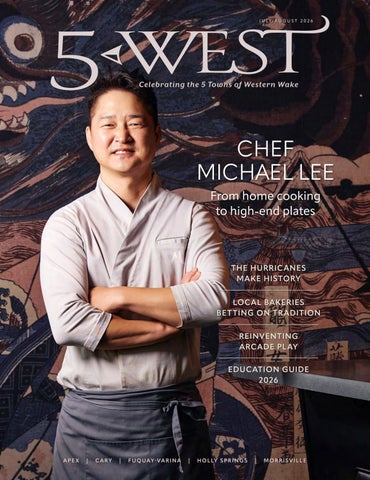
From home cooking to high-end plates
THE HURRICANES MAKE HISTORY
LOCAL BAKERIES BETTING ON TRADITION
EDUCATION GUIDE 2026 REINVENTING ARCADE PLAY

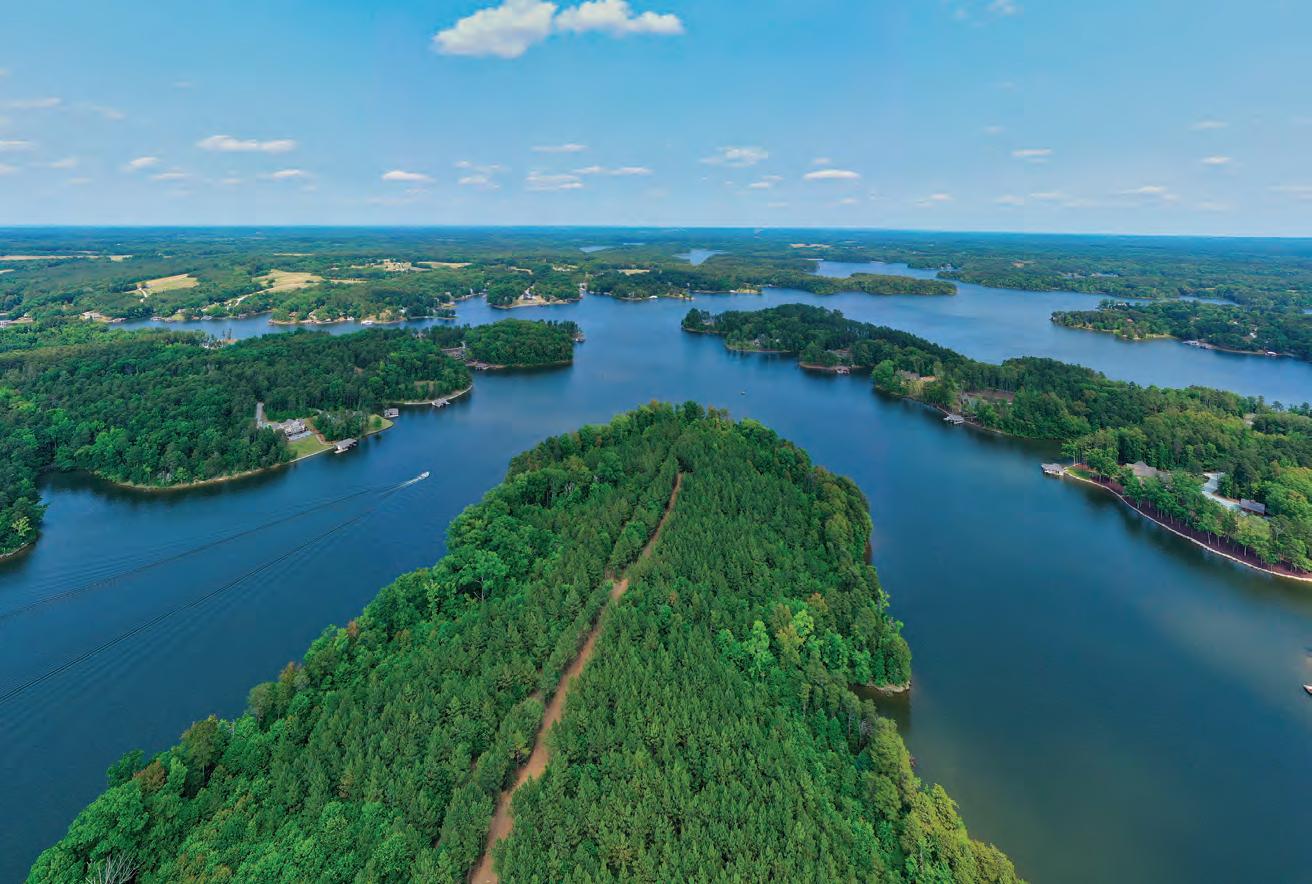
• Spectacular 430-Acre Waterfront Peninsula –3.5 Miles of Shoreline!
• New Private Gated Community
• Less than 65 Miles from GSO & RDU Airports
• Gated with Paved Roads & Street Lights
• Live at the Lake and Work from Home!
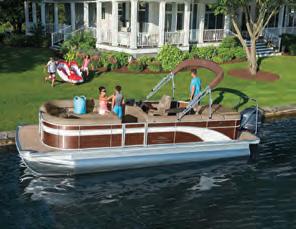
• Fully Recreational Lake for Boating, Fishing, Waterskiing, Wakeboarding & More
• World-Class Bass Fishing
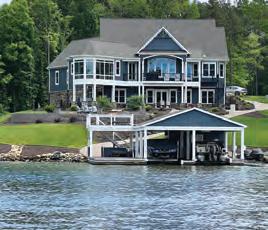
• Planned Community Docks* & Boat Launch*
• Community Waterfront Park with Pool, Pavilion & Fireplace
• Community Boat & RV Storage for Property Owners
• Estate-Sized Waterfront Homesites from .5 – 2.5 Acres
• Our Final Lakefront and Lake Access Homesites Being Released
• Buy Now, Build Later
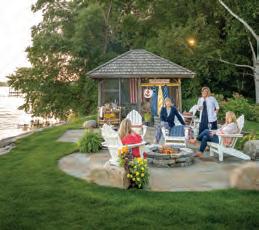

• Choose from Several of the Area’s Finest Custom Home Builders
• Excellent Financing Available
• Ask How to Buy Property With Your IRA
• Properties Sold on a First Come, First Served Basis


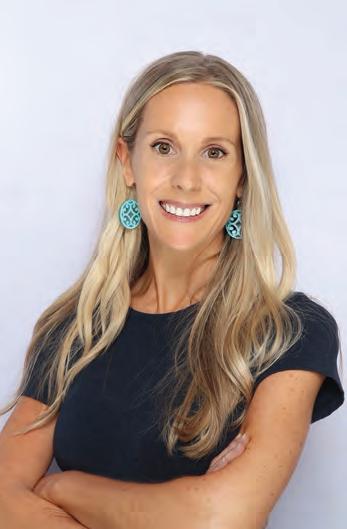
This is a special issue for me. I’m honored to step in as the new editor of 5 West at a moment when print still feels not only relevant, but essential. After more than two decades in this industry, and witnessing the rise of digital media, I’ve developed a real appreciation for the slower, more intentional pace of magazines. The kind you can hold, dog-ear, set down on a coffee table, and return to days later. There’s still nothing quite like the tactile magic of ink on paper.
It feels especially fitting that this is our Food Issue. Few things reveal the character of a region more vividly than the way it gathers, celebrates, and connects around the table.
In these pages, Dathan Kazsuk takes us inside the world of Chef Michael Lee and his ever-evolving Durham institution, M Sushi, where precision and creativity meet in every bite. Deanna Martinez explores the local bakeshops that are honoring nostalgic flavors as culinary trends shift. And wine expert and educator Doreen Colondres joins us for a thoughtful Q&A on the art, accessibility, and pleasure of wine.
Beyond food, you’ll find our Education Guide, a resource for families navigating schools across the region, as well as Kurt Dusterberg’s recap of the Carolina Hurricanes’ historic Stanley Cup win.
I’m also excited to introduce award-winning journalist, author, and podcast host Amanda Lamb as our new back-page columnist. Her debut series, The Space Between, reflects on something increasingly urgent: the ways digital communication has reshaped our relationships, often replacing in-person connection to the point that many people feel more isolated than ever before. Her writing invites us to pause and reconsider how we show up for one another.
As always, my hope is that this issue leaves you feeling a little more connected to the people, places, and stories shaping our area in real time. Thank you for reading, for supporting print, and for letting us continue to do this work.

Taylor Bowler Editor

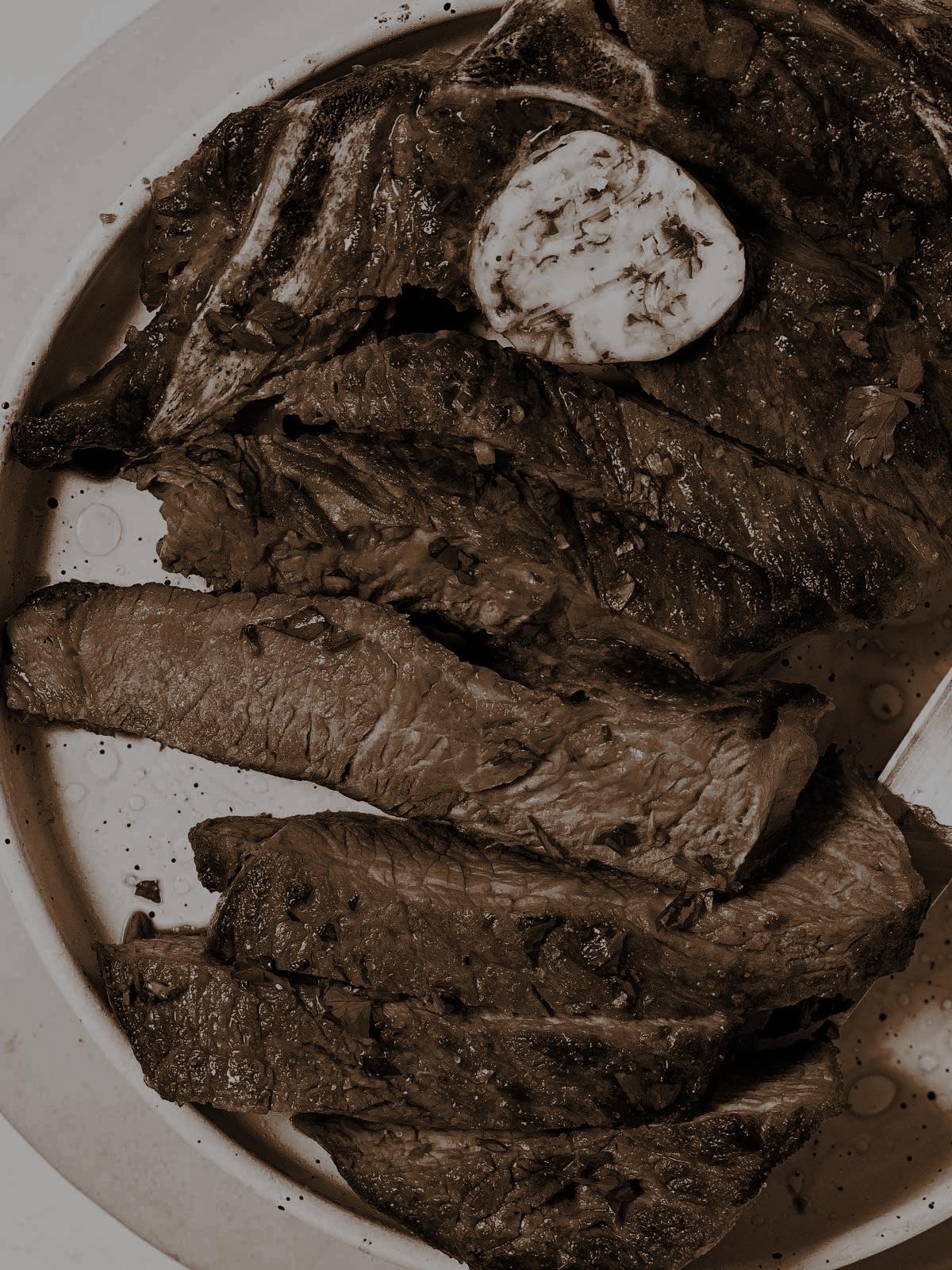

Discoveranenchantingsteakhouse wherethespiritoftheFrenchQuarterin NewOrleanscomesaliveineverybite. Experienceaculinarymasterpieceasour skilledchefscrafttender,perfectly cookedsteaksthatredefineexcellence. Immerseyourselfintheambianceofour courtyard,wherecelebrationpermeates
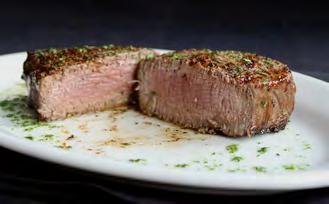
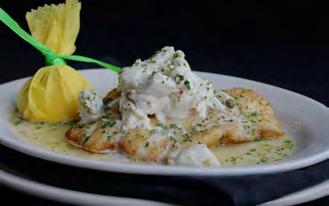
Ourmenupayshomagetothetimeless traditionsoftheFrenchQuarter,featuring arenothingshortofextraordinary.Each cutismeticulouslyselectedand preparedtoyourexactingspeci cations, ourhandcraftedseafooddishesthatadd
Lookingtostopinforadrink?Stepinto ourVoodooLoungebarareawherethe vibrantspiritofNewOrleansmeetsthe innovationofmodernmixology.Ourbar isacaptivatingfusionoftheBigEasy's richcultureandcontemporarycocktail artistrywhichpromisesanunforgettable experiencewheretraditionand innovationcollideineveryglass.
Discover an enchanting steakhouse where the spirit of the French Quarter in New Orleans comes alive in every bite. Experience a culinary masterpiece as our skilled chefs craft tender, perfectly cooked steaks that redefine excellence. Immerse yourself in the ambiance of our classic French Quarter-style covered courtyard, where celebration permeates every corner.
AtRey’sRestaurant,weblendtheallure oftheFrenchQuarterwiththeartistryof steakandseafoodpreparationtodeliver adiningexperiencethatisbothtimeless andinnovative.Comeindulgeinthe magicoftheFrenchQuarterwithevery delectablebite.
At Rey’s, we blend the allure of the French Quarter with the artistry of steak and seafood to deliver a dining experience. Come indulge in the magic.
1130BuckJonesRd.Raleigh,NC 919.380.0122 reysrestaurant.com

FOUNDER
Ronny Stephens
PUBLISHER
Joe Sanger
EDITOR
Taylor Bowler
ART DIRECTOR
Sean Byrne
LIFESTYLE EDITOR & SENIOR GRAPHIC DESIGNER
Da than Kazsuk
GRAPHIC DESIGNER
James Jarnot
COPY EDITOR
Cindy Huntley
SOCIAL MEDIA MANAGER
Jordan Daniels
AD PRODUCTION MANAGER
Dante Lorenzo
DIRECTOR OF SALES
Collin Pruitt
ACCOUNT EXECUTIVE
Mackenzie Steiner
STAFF PHOTOGRAPHER
Jessica Bratton
FASHION STYLIST
Sofia Lujan
DISTRIBUTION
Liam Fulkerson, Manager DistribuTech.net
CONTRIBUTING WRITERS
Kurt Dusterberg
Richard Gantt
Amanda Lamb
Sofia Lujan
Deanna Martinez
Jennifer Primrose




When the Carolina Hurricanes defeated the Vegas Golden Knights 3-0 to win the Stanley Cup on June 14, players and fans finally could exhale. After winning at least one round in the postseason for eight straight years—including four trips to the Eastern Conference Final— hockey’s silver chalice finally made it back to the Triangle.
The Hurricanes’ run was historic. They finished the regular season with a conference-best 53-22-7 record, then raced through four best-of-7 series with a 16-3 record—the second-best playoff mark since the format began in 1987.
Beyond the on-ice performance, however, there were endless storylines that made the spring special. After the Hurricanes lost two elite players who were unwilling to re-sign in recent years, they made trades for former Hart Memorial Trophy (NHL MVP) winner Taylor Hall and 22-year-old spark plug Logan Stankoven. Together, they teamed with budding second-year star Jackson Blake to form the most dominant line in the Stanley Cup Playoffs.
Veteran goaltender Frederik Andersen carried the Canes to the final, but when his game faltered, Carolina turned to Brandon Bussi, who authored one of the greatest stories of the NHL’s regular season.


Bussi, a career minor leaguer, was claimed off waivers by Carolina and fashioned a 31-6-2 record before jumping in to finish off Vegas with three straight wins.
The most remarkable stories, however, came from two people with the deepest ties to the team. Captain Jordan Staal, who has played the most games in Carolina history, won the Conn Smythe Trophy as the playoff MVP. At 37, he is the oldest player ever to win the award.
But if you ask Hurricanes fans, most will point to coach Rod Brind’Amour as the biggest factor in bringing the Cup back to Carolina. After all, he did it once before. In 2006, he put the Hurricanes on the NHL map, serving as the

team captain for an improbable run to the Stanley Cup in the team’s ninth season in Carolina. With this second championship exactly 20 seasons later, Brind’Amour has secured his legacy as the face of the franchise.
BELOW LEFT: Members of the Carolina Hurricanes organization, including players, coaches, and staff, gather on the ice at T-Mobile Arena in Las Vegas following the team’s Game 6 victory over the Vegas Golden Knights to capture a championship photo.
Photo courtesy of Josh Lavallee/Carolina Hurricanes.
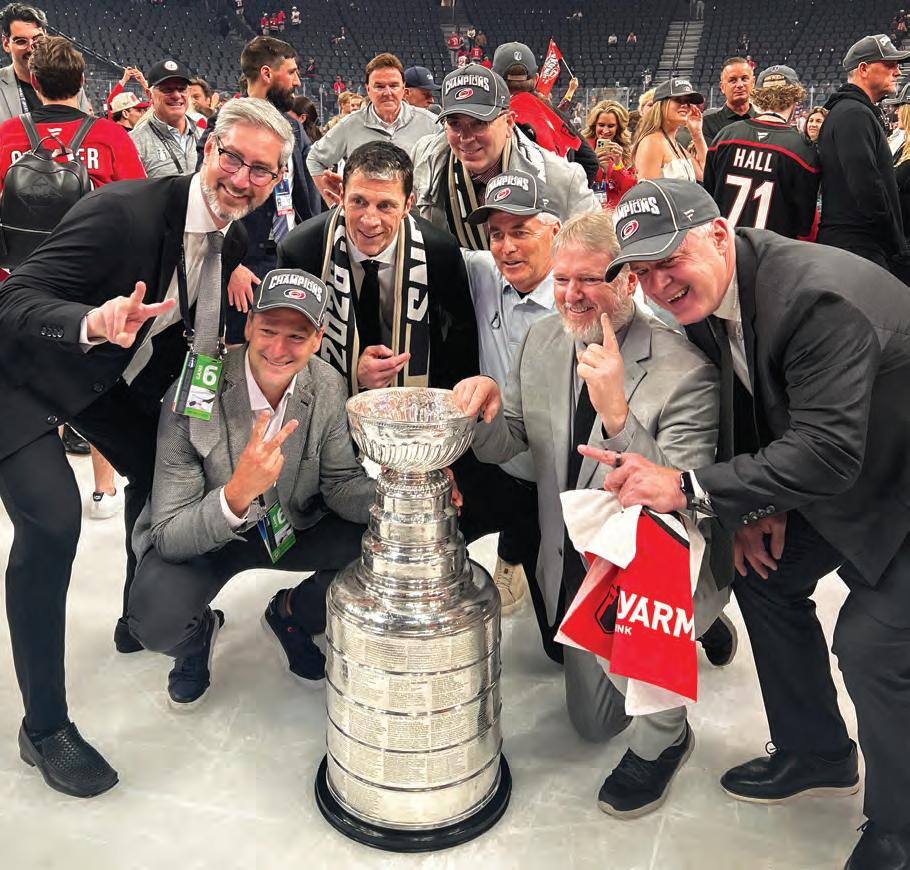
BELOW RIGHT: Members of the Carolina Hurricanes’ front office and coaching staff pose with the Stanley Cup after the team defeated the Vegas Golden Knights 3–0 in Game 6 on June 14, 2026, securing the franchise’s second Stanley Cup championship and first since 2006.
Photo courtesy of Jordan Daniels.
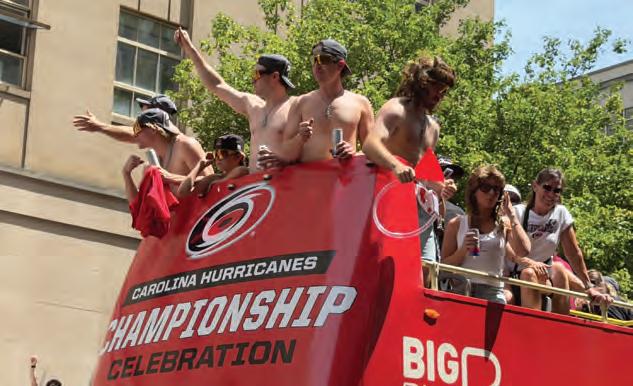
It had only been six days since the Canes hoisted the Stanley Cup in Las Vegas, but by the time downtown Raleigh turned into one giant red-and-black block party, it felt like the celebration had been building for 20 years.
Roughly 180,000 Caniacs poured into downtown for the parade and City Plaza celebration, coming from across North Carolina and even as far away as New York and Florida. And with 5 West being longtime advocates of our local team, you know we had to be there to soak it all in—literally, as it turned out.
We arrived hours before the parade began, and the crowd kept growing along Fayetteville and Hillsborough streets. A sea of red and black lined the route like fire ants waiting for their queen—only this time, we were waiting for our king: Rod Brind’Amour. In Rod We Trust. RBA. And lately, once again, Rod the Bod, leading his partying colony of Stanley Cup work ants.
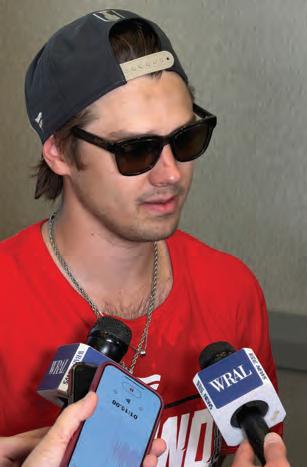
We took in the parade before heading inside the Chancellor Room at the Raleigh Marriott City Center, where the Hurricanes’ star-powered lineup of players and coaches spent time with local media, us included. We even caught Taylor Hall walking into the interview room with a hot dog in hand. “Let me finish my hot dog,” he said, cramming it down before answering questions.
From there, it was off with the team, their families, and staff through the hotel and into “the pit,” where we were so close to the stage that players and their kids kept absolutely super soaking us. Governor Josh Stein kicked off the celebration, which included introductions of each player and coach, all wielding the mighty Stanley Cup in their mitts, before select members of the organization addressed the crowd.
Owner Tom Dundon, General Manager Eric Tulsky and head coach Rod Brind’Amour all spoke, along with several players, including Jordan Staal and Frederik Andersen, who spent most of his time on stage celebrating with a cigar in hand.
The adoration this state has for the Hurricanes is returned right back by the team. It is a symbiotic relationship. They need us as much as we need them— and honestly, we all love the way this works.
They will be ready to make another run later this year, returning as champions and chasing the repeat. Step aside, Florida. We’ll be your next back-to-back champs.
Until training camp … LET’S GO CANES!
— Dathan Kazsuk

Follow us for all of the don’t-miss events in Raleigh.


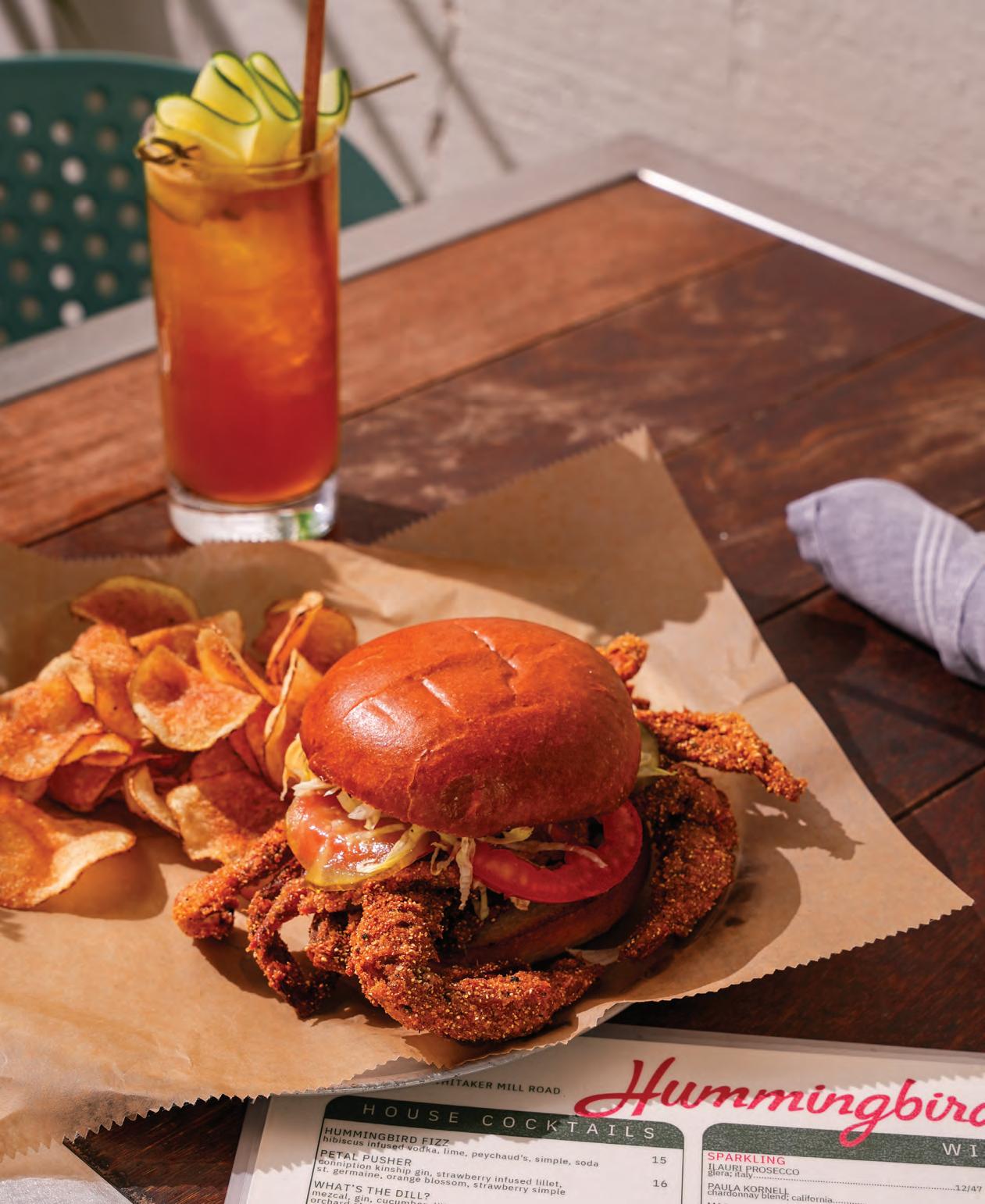
There are sandwiches you eat, and then there are sandwiches you’re still thinking about three days later. The fried soft-shell crab sandwich at Hummingbird, created by Chef Coleen Speaks, is firmly in the second category.
“It’s a Southern coastal classic with a cult following,” Speaks says. “A real, if-you-know-you-know kind of item that perfectly sums up the season.”
It arrives on a metal plate lined with brown deli paper. No frills and no theatrics. Just a brioche bun stacked with iceberg lettuce, tomato, pickle, house-made remoulade, and a perfectly fried softshell crab. The crust is light but intentional, seasoned just right, with a delicate crunch that gives way to something briny, sweet, and unmistakably fresh.
Speaks sources the crab from Hyde County, where she owns property. “I’ve learned just how intense the soft-shell shedding process is,” she says. “Hyde County is a beautiful place with incredible food resources that I think deserves more attention than it gets.”
There’s a kind of confidence in the way she approaches it. Nothing is overdone or competing for attention. Just a sandwich that trusts itself.
—Taylor Bowler
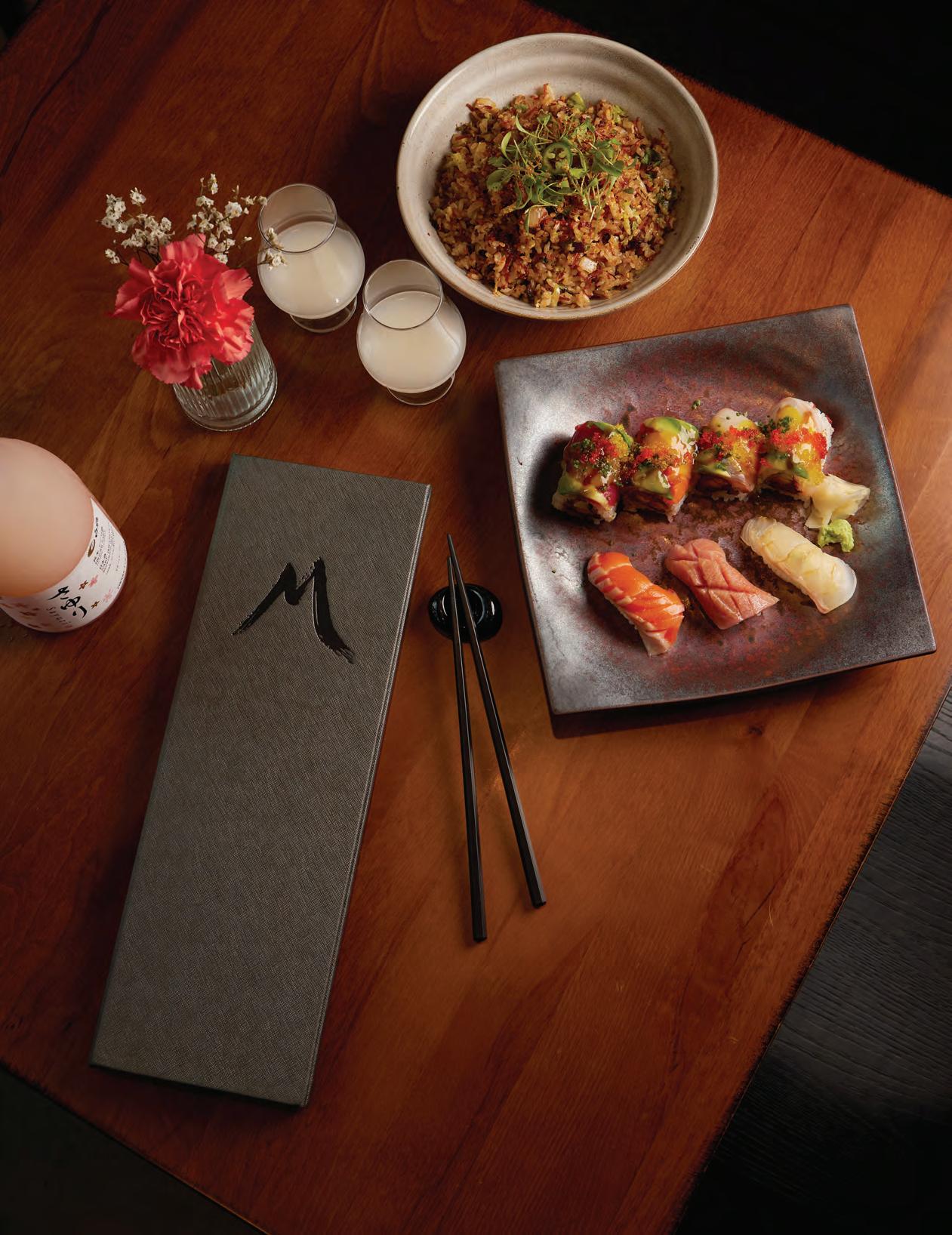
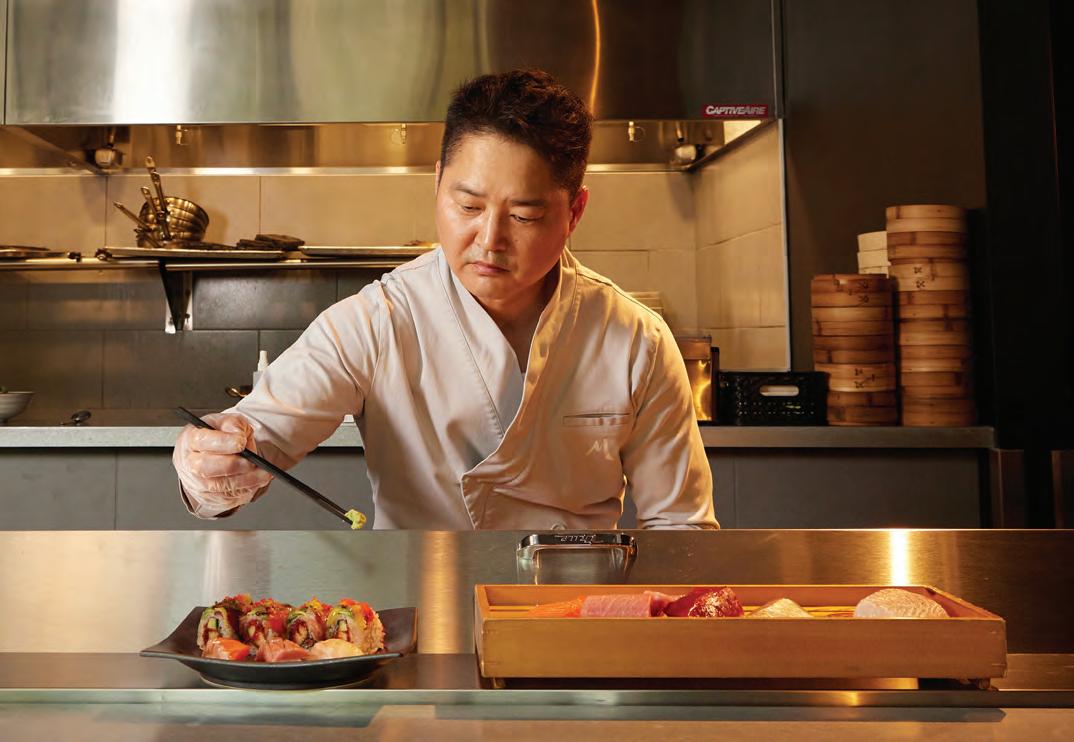
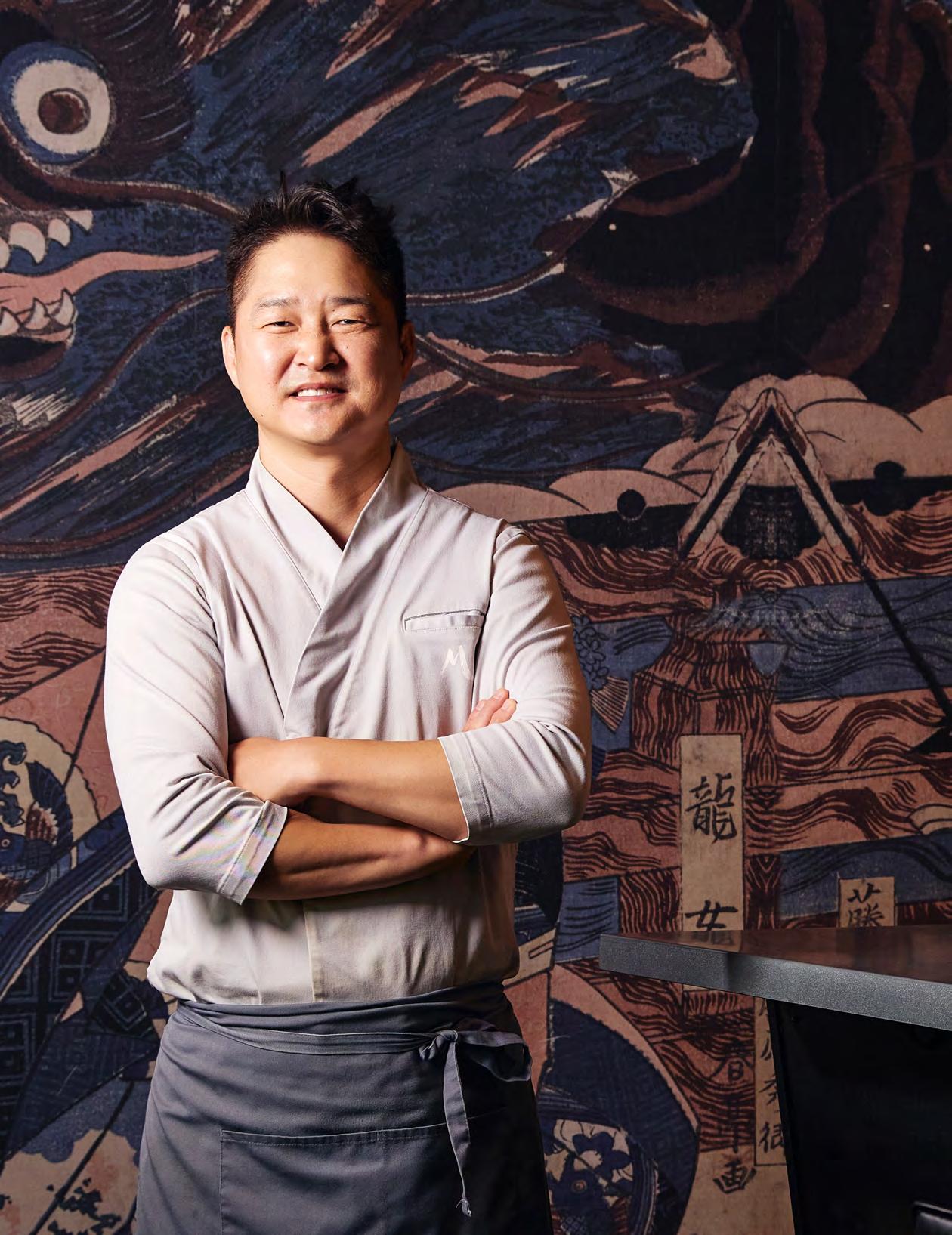
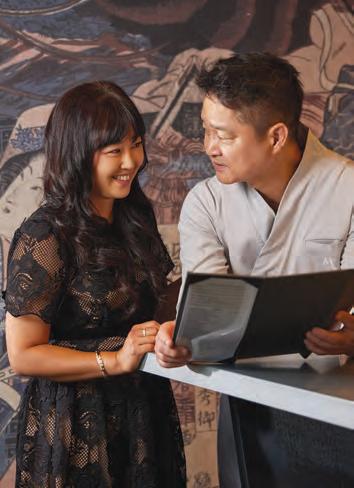
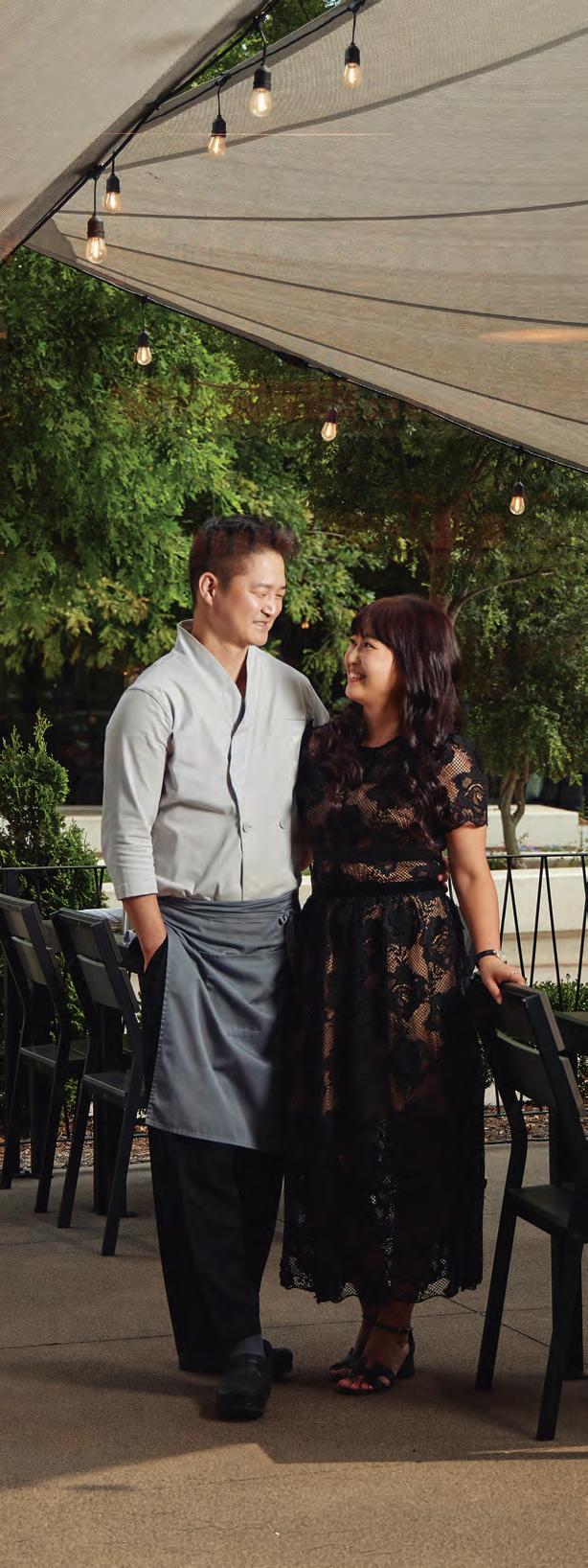
I'd barely gotten settled inside M Izakaya with a Wasabi Martini before Chef Michael Lee was talking about childhood, obligation, and food— not as romance, trend, or some polished chef-origin myth, but as survival.
L ong before M Sushi became one of the Triangle’s most talked-about restaurants, and before Durham became the center of his growing M Restaurants world, Lee was a 10-year-old kid who came to the United States from Korea with his family in the mid-1980s. His parents brought him
and his older brother here for “better education” and “more opportunity,” but that opportunity came with long factory hours and parents who were out the door before the boys woke up and not home again until evening.
“ We were essentially responsible for feeding ourselves since we were 10 and 12,” Lee says. “We didn’t see our parents when we woke up in the morning. We walked to school, and then when we got back home, we didn’t have our parents back yet. So you had to eat some way, somewhere.”
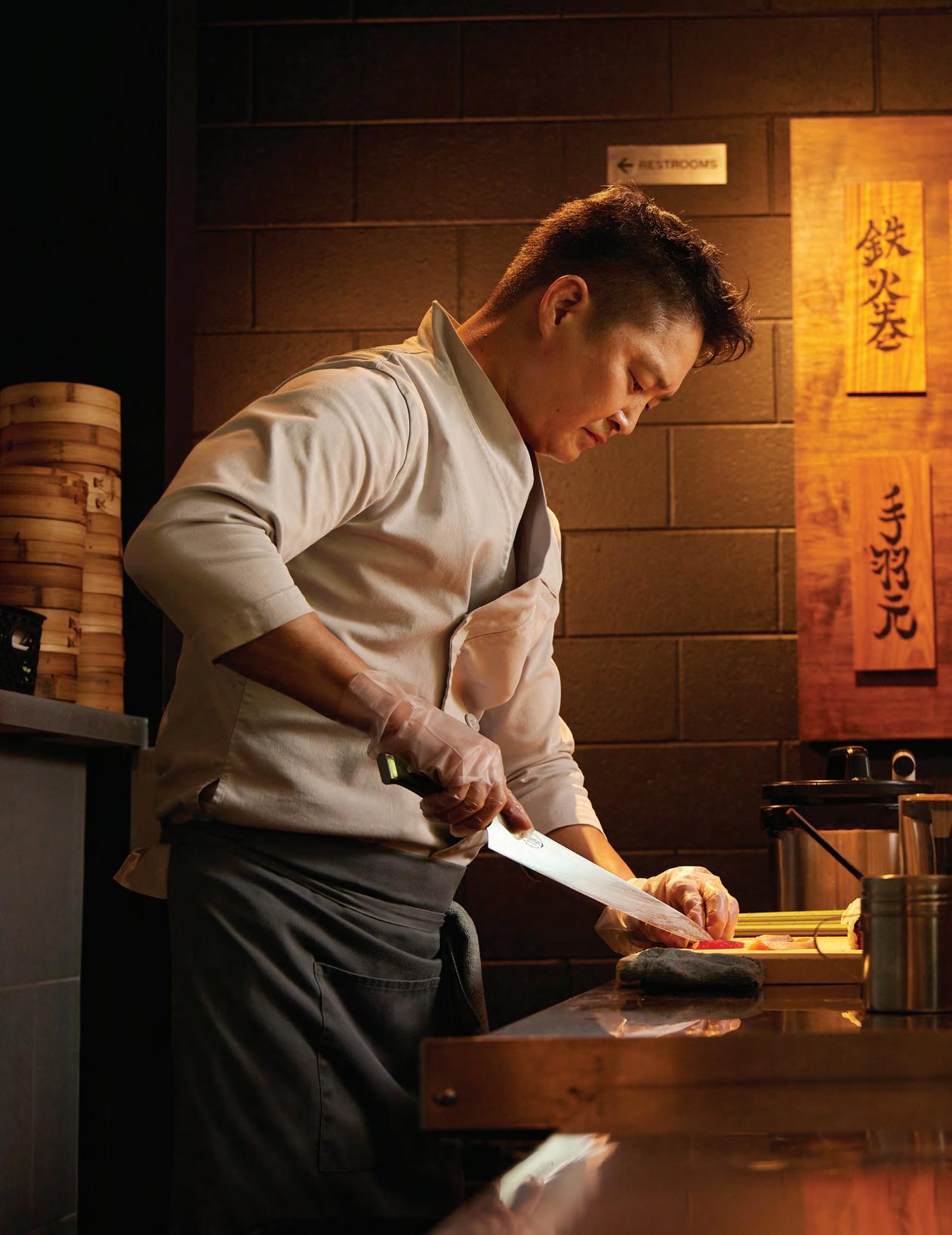
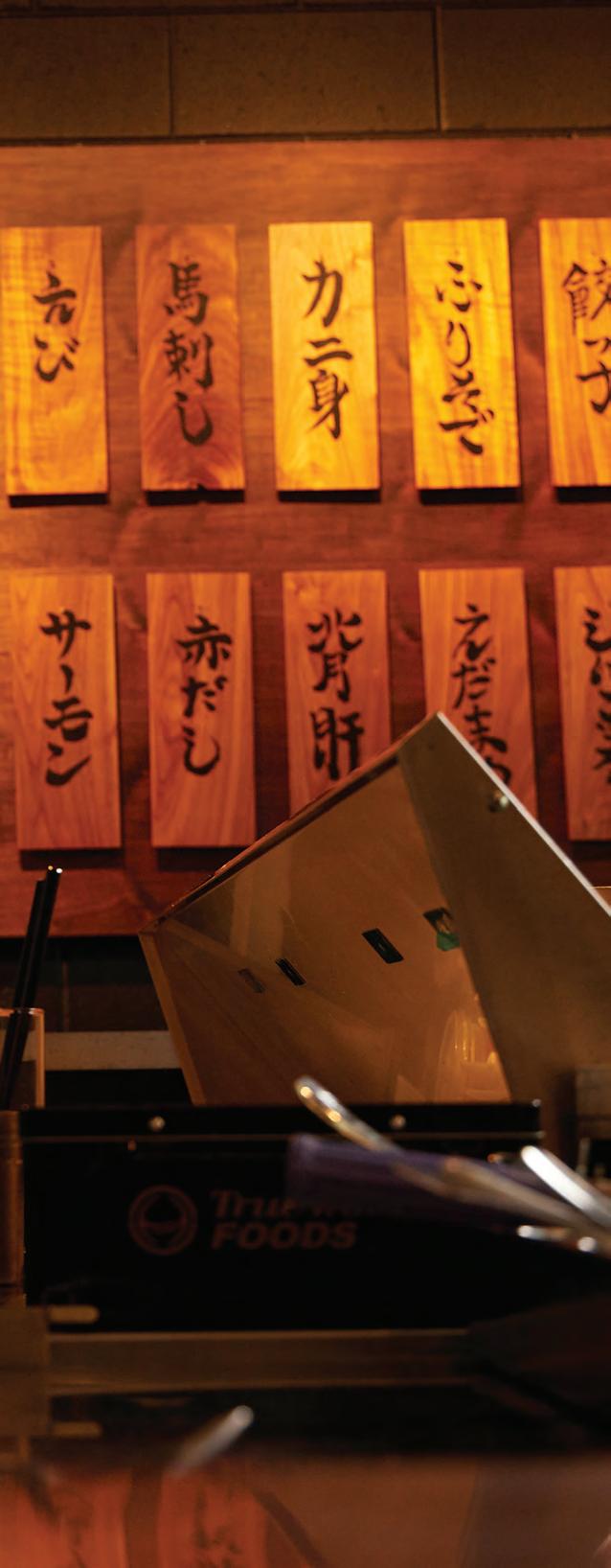
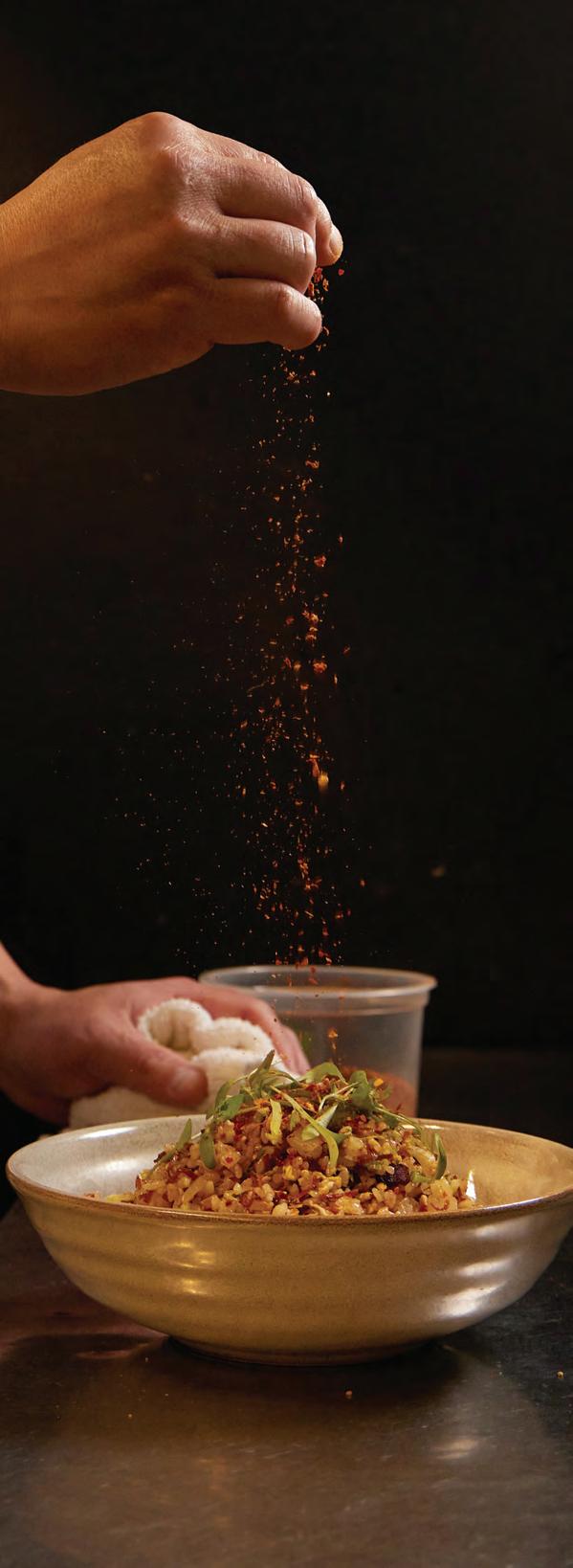
T hat’s where the story really starts. Not in a gleaming sushi bar. Not in a chef’s coat. Not with a dramatic first bite of pristine fish under flattering low light. It starts with two boys opening cupboards, digging through the refrigerator, tossing whatever looks promising into a wok or a frying pan, hoping whatever emerges can be eaten over rice.
L ee laughs as he tells me about nearly blowing up a microwave—a device that felt foreign to him after g rowing up in Korea. “There were a lot of learning experiences,” he says.
But one memory has stayed with him all these years, and it sounds almost too perfect for a chef whose career would later be built on instinct, repetition, and experimentation. “I was trying to create a chicken stock, but I accidentally made a chicken noodle soup,” he says. “I ended up throwing in vegetables and then noodles at the end, just to be able to make it a meal.”
L ater, when he saw Campbell’s chicken noodle soup, he had a moment of culinary validation. “I didn’t know that was a thing until I was in junior high,” he says. “I was like, hey, this tastes exactly like this.”
T hat memory matters, because Lee is stubbornly resistant to the kind of mythology people like to attach to chefs once they become successful. He doesn’t present himself as someone born with a magical palate or supernatural relationship to ingredients.
“I never really had, like, a special gift in cooking,” he says. “It was just more like a necessity when we were young.” Even now, he’s still learning from the people around him. That humility may be one reason the M empire has grown the way it has.
L ee’s portfolio now spans four Durham restaurants— M Sushi, M Kokko, M Tempura, and M Pocha—along w ith M Sushi and M Izakaya in Cary, and a new Korean concept coming soon to Durham. But his story is less about ambition for ambition’s sake and more about curiosity, restlessness, and an ongoing desire to build the kinds of places he feels are missing.
H is Durham success, for one, was never some neat, polished master plan.
A fter selling his first restaurant, Sono Sushi, Lee and his wife, Kim, spent about a year and a half looking for the right place to start over.
“ We looked at Chapel Hill quite a bit,” he says. “Durham, I didn’t know too much about. But I did have an immense respect for Durham.” What happened next came down to timing, people, and chance.
T he space that became the original M Sushi didn’t exactly inspire confidence at first. The building was an old bicycle shop, dusty and run-down—the kind of place where it takes a particular type of imagination to see what might be possible.
Lee couldn’t see the potential. But his wife did. So did the landlord and design team. His role, at least in his telling, was simpler. “I was just like, if you guys say so, I’ll make the food.”
T hat leap of faith set things in motion. When M Sushi opened in 2016, he and Kim were all in.
“ We literally maxed out every single credit card we had, and then all the cash we had,” Lee says. There was no safety net, no quiet backup strategy waiting in the wings. “If it doesn’t [work out] for any reason,” he remembers telling his wife, “I’ll work at two restaurants and support whatever it takes.”
I n the beginning, Lee drove to RDU at 6 a.m. to pick up shipments of specialty fish, because the kind of seafood he wanted wasn’t available here. At the time, he says, too many sushi restaurants in the area were relying on the same generic product.
He began sourcing from a New Jersey vendor and paying freight on fish that many New York restaurants were buying for less than he was paying in North Carolina. It wasn’t a sustainable model—at least not on paper—but it helped establish the standard he wanted.
A nd yet, for all the attention his restaurants receive for fish, Lee keeps circling back to something more humble: rice.
One of the most meaningful lessons of his career came not from some grand, glamorous kitchen, but from a small family-run sushi restaurant in Tucson, Arizona. The ingredients were humble, but the sushi was excellent, and the thing that stayed with him wasn’t some rare cut of fish. It was the rice.
T hat attention to detail has been hard-earned. Lee dropped out of college in 1998 and spent years moving around the country, working in restaurants and learning what he could.
“In the span of like 10 years, I was working at almost like 18 restaurants,” he says. “I was living out of my car, for most of the time, and then I would get a 24-hour gym membership and sleep in the car, take a shower, sleep in the car.” He saved almost everything he made. He skipped nights out. Instead, he played video games—“World of Warcraft, Warcraft, StarCraft”—because they kept him occupied and away from spending money.
A nd then there is Kim.
T he more Lee speaks, the clearer it becomes that she is more than a background figure in the story. She is fundamental to it. In the early years, he says, they were at the restaurant every day, where their children learned the business alongside them. Their daughter, he tells me, was tiny then, growing up in the office and dry storage while the restaurant was taking shape around them.
L ee does not hedge when I ask how much of his success is tied to Kim. “I can comfortably 100% say that I would not have made it this far and where I am without her,” he says. “People underestimate so many individuals, or chefs, or restaurateurs, or businessmen— the people that you don’t see maybe in the background, what such an important role they play.”
T hat’s even more true now, as he turns toward Korean food and the flavors he grew up on.
The goal is respect first, interpretation second. He’s more careful here than anywhere else. No watered-down versions. No sanding off the edges that make it real.
“ When you eat it and see it, you know it’s Korean,” he says. “But how it is prepared and how it is presented is g oing to be a little more unique.” He also knows whose opinion matters most when he is working through those dishes. “As long as my wife sincerely likes it,” he says, “that’s good enough.”
T hat was the thought I kept returning to before dinner in Cary. Not the expansion. Not the accolades. Not even the discipline it takes to keep so many restaurants moving at once. It was the image of a kid and his brother trying to feed themselves because they had to. The accidental soup. The near–microwave explosion. The guy who still insists he is learning. The husband who keeps returning, again and again, to the woman who saw possibility in a dusty old bicycle shop when he could not yet see it himself.
Many chefs can tell you where they trained. Many restaurateurs can tell you when they expanded. Michael Lee can tell you that, too. But the deeper story is about family, risk, trust, and the people who help build something before anyone else can picture it.
S ometimes the beginning of a restaurant empire isn’t a grand opening. Sometimes it’s two boys in a kitchen, trying to make dinner work

The local bakeshops that are skipping the hype and sticking to what works
STORY BY DEANNA MARTINEZ
In a world filled with towering milkshakes, glitter-drenched cupcakes, and desserts designed more for Instagram feeds than plates, some bakers are sticking to the classics, proving that simple desserts still have plenty of magic.
A well-m ade cake, a soft cookie, or a familiar cupcake flavor can carry more comfort than the flashiest trend ever could
W hile the cottage bakers behind these treats stay rooted in timeless recipes and flavors, they know when to dial up the sparkle and personality. Think elegant designs, thoughtful details, rich fillings, and beautiful finishes.
T heir kitchens may be smaller than commercial bakeries, but the heart behind the work is anything but small. They focus on getting the basics right: fluffy cakes, rich buttercream, chewy brownies, and pies that taste like family gatherings are the stars of the show.
For these bakers, desserts are tied to memories, traditions, and the simple joy of sharing something homemade. Their customers aren’t just buying sweets. They’re buying comfort, celebration, and flavors that taste like home.
Blooms Bakery
A t Blooms Bakery, classic baking is more than a trend. It’s a way to slow down and create food that feels comforting, familiar, and deeply personal. Owner and baker Allison Batts built her small-batch artisan bakery around breads and pastries that focus on quality ingredients, careful technique, and flavors people never seem to outgrow.
Interestingly, bread wasn’t Batts’ original plan. She first found joy in baking cakes and cupcakes before receiving a sourdough starter as a gift. That changed everything. Once she stepped into the world of bread baking, she discovered a process that felt calming and meditative.
The sourdough loaf now represents Blooms Bakery’s entire philosophy: patience, simplicity, and trust in good ingredients guide every batch. Nothing is rushed, and that slower approach carries into every pastry and loaf leaving the kitchen.
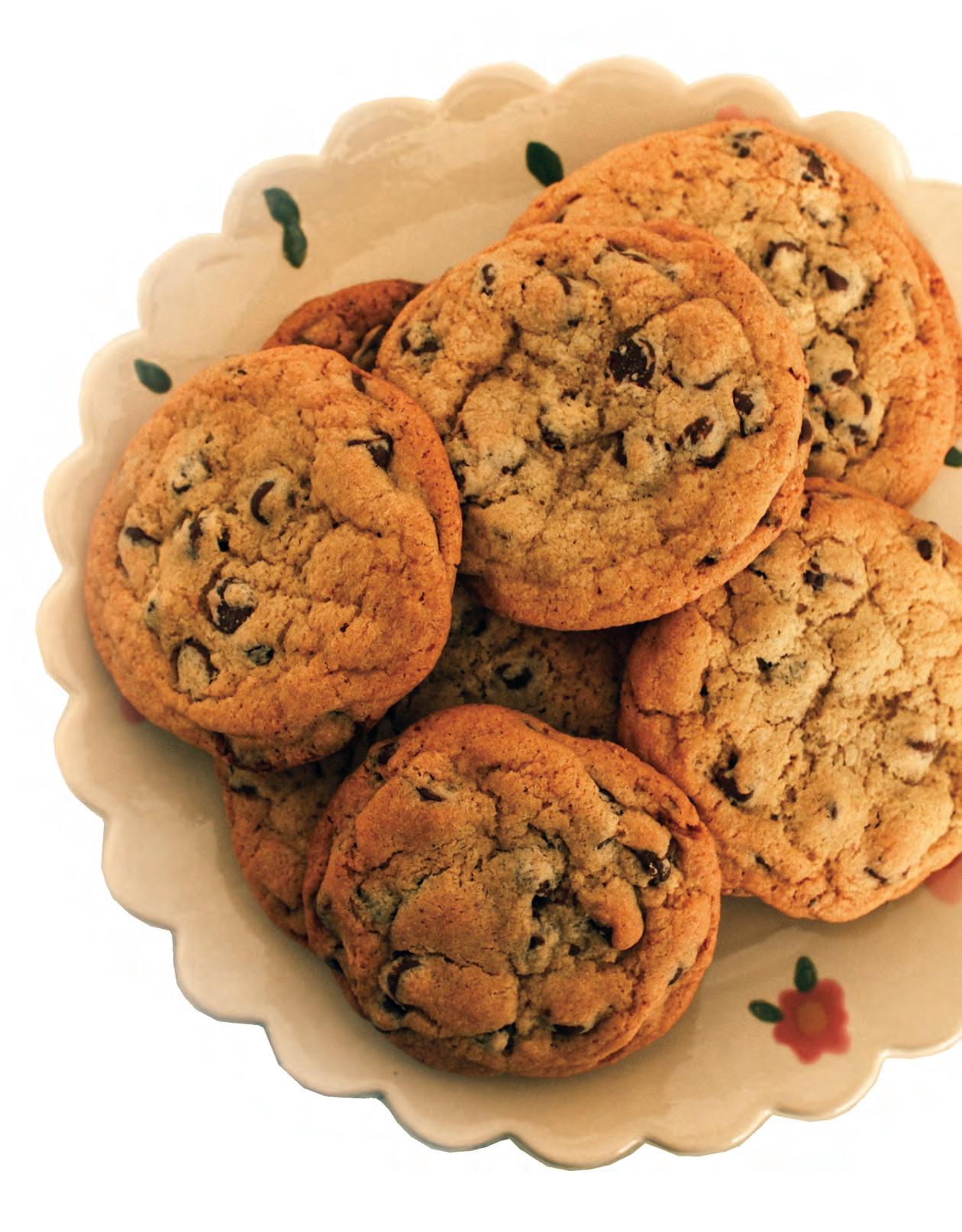
While social media trends come and go like frosting in a whirlwind mixer, Batts believes the classics continue to thrive because they create emotional connections. Warm chocolate chip muffins, soft sourdough knots, and homemade breads often remind customers of childhood kitchens and family gatherings.
For Batts, customers return for more than just baked goods. They return for the feeling they evoke. She makes every loaf and pastry in small batches with attention to detail and respect for


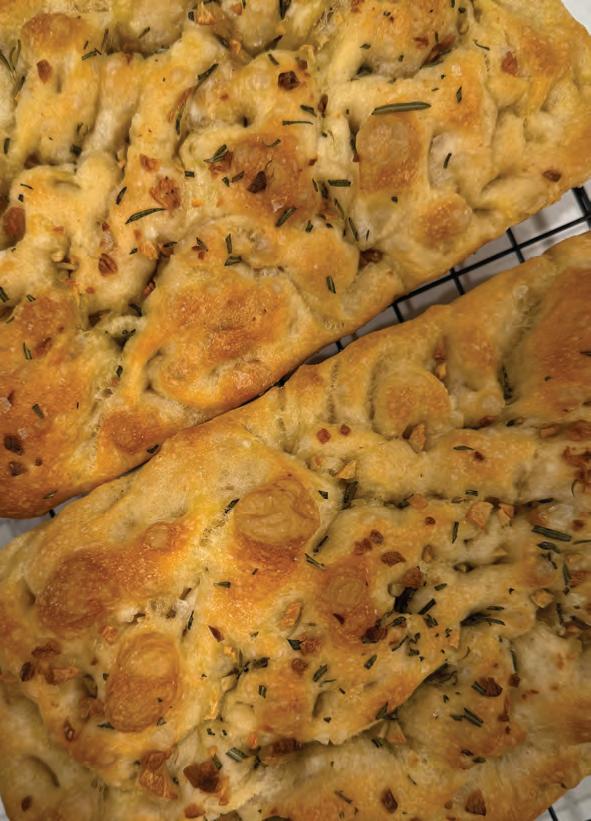
the process. Instead of operating like an assembly line, Blooms Bakery focuses on making each customer feel like something special was baked just for them.
For more information, visit bloomsbakery.co
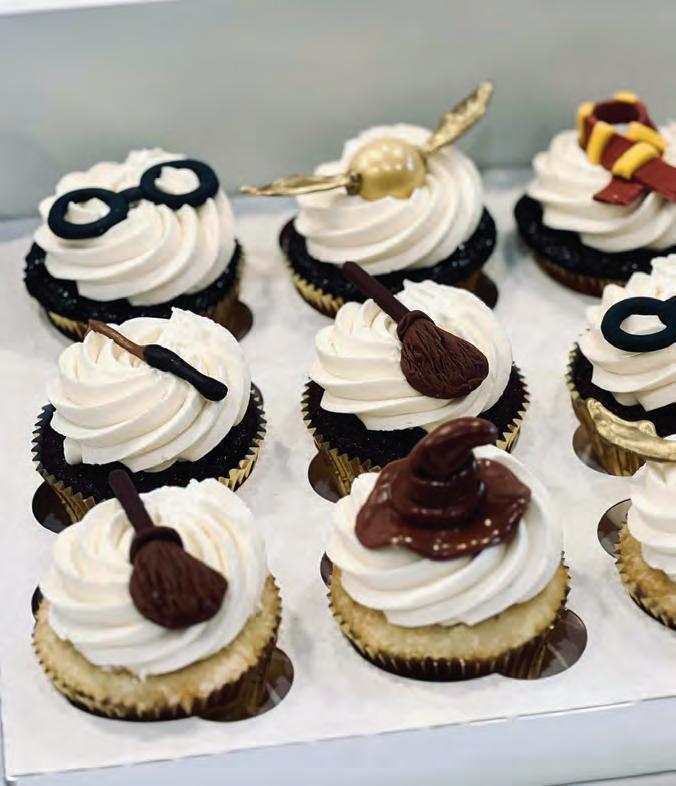
A t SweetCheeks Baked Treats, owner and baker Shauna Wisniewski, lovingly known as “The Cake Lady,” has built a menu of cakes, cupcakes, cookies, brownies, and bar cookies. For her, the classics never go out of style. A bite of red velvet cake can instantly bring someone back to family gatherings, holiday dinners, or afternoons spent in a grandmother’s kitchen. In Shauna’s family, red velvet cupcakes were tied to Thanksgiving traditions and her Aunt Lou’s recipe, which she still uses today.
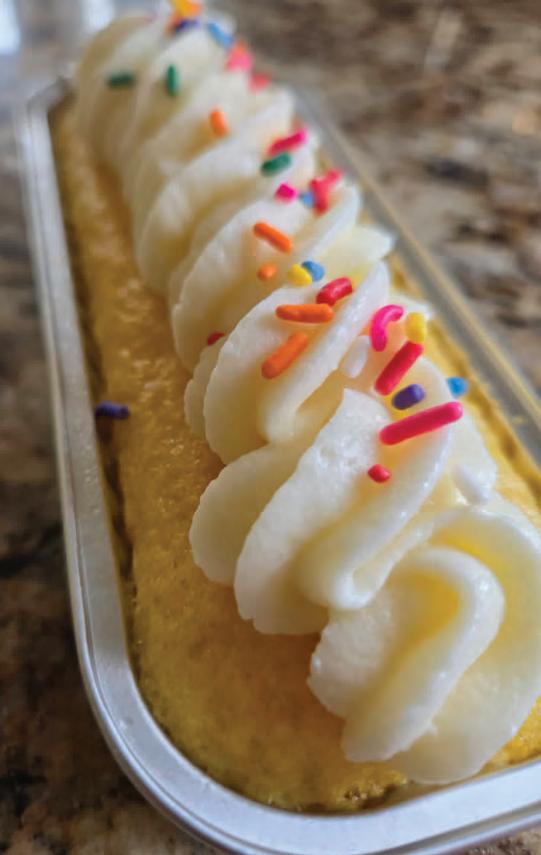
Her custom cakes and cupcakes reflect her baking philosophy: beautiful presentation, rich flavor, and careful attention to detail. Customers rave about her carrot cake, which Shauna finds especially funny because carrot cake isn’t even one of her personal favorites. Still, the reviews keep rolling in like sprinkles across fresh buttercream.
B ehind the scenes, Shauna relies on production schedules, trusted ingredients, and regular recipe testing to make sure every dessert meets her standards. The result is a bakery built on consistency, nostalgia, and the kind of timeless desserts people never stop craving.
For more information, visit sweetcheeksbakedtreats.com
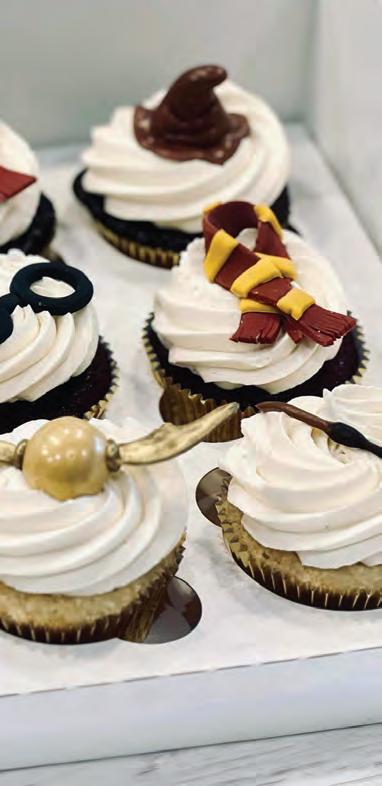
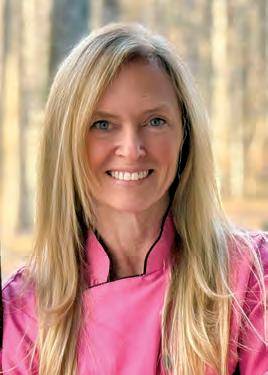
LEFT AND BELOW: Cupcakes and chocolate drip cake from SweetCheeks Baked Treats; SweetCheeks owner Shauna Wisniewski. Photos courtesy of Sweet Cheeks Baked Treats.
OPPOSITE PAGE, BOTTOM: Blooms Bakery owner Allison Batts; Bread from Blooms Bakery. Photos courtesy of Blooms Bakery.
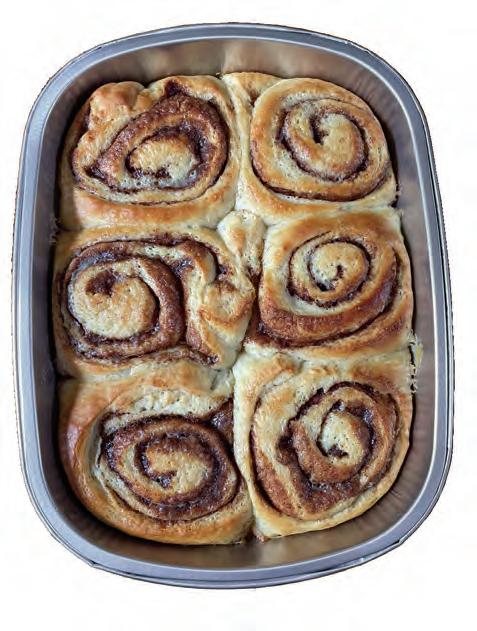
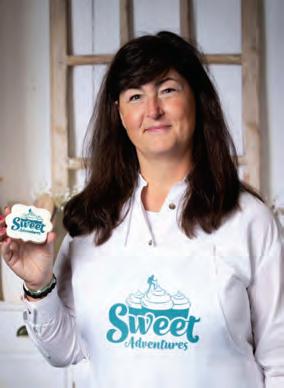
S weet Adventures bakes classic treats with equal parts precision and heart. Owner and COO Monique Lavallee specializes in custom-decorated sugar cookies, cookiemaking classes, and sweet moments that feel personal long after the last crumb disappears.
A lthough the bakery is known today for its beautifully decorated cookies, the journey started with themed cookie kits tied to holidays and seasonal celebrations. Matching icing colors, playful designs, and paint-your-own cookies helped build excitement, but the heart of the business always stayed rooted in timeless flavors and familiar traditions.
For Lavallee, classic baked goods carry something that trends can’t replace. Holiday danishes, pumpkin rolls, cinnamon rolls, and traditional cookies remind customers of childhood kitchens, family gatherings, and slower moments from years past. Those emotional connections are part of what makes classic baking so meaningful. People aren’t just buying dessert. They’re buying memories wrapped in butter, cinnamon, and sugar.
L avallee has loved baking since childhood, and still finds peace in the process. She enjoys the precision of baking just as much as the joy of watching someone smile after eating one of her treats.
For more information, visit facebook.com/ sweetadventuresraleigh
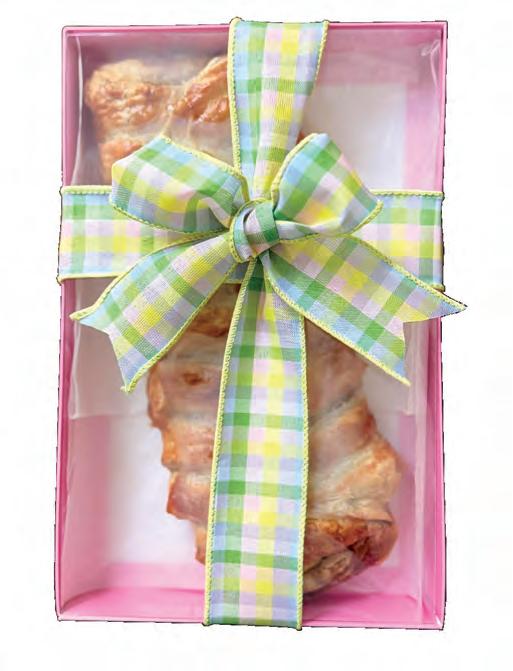
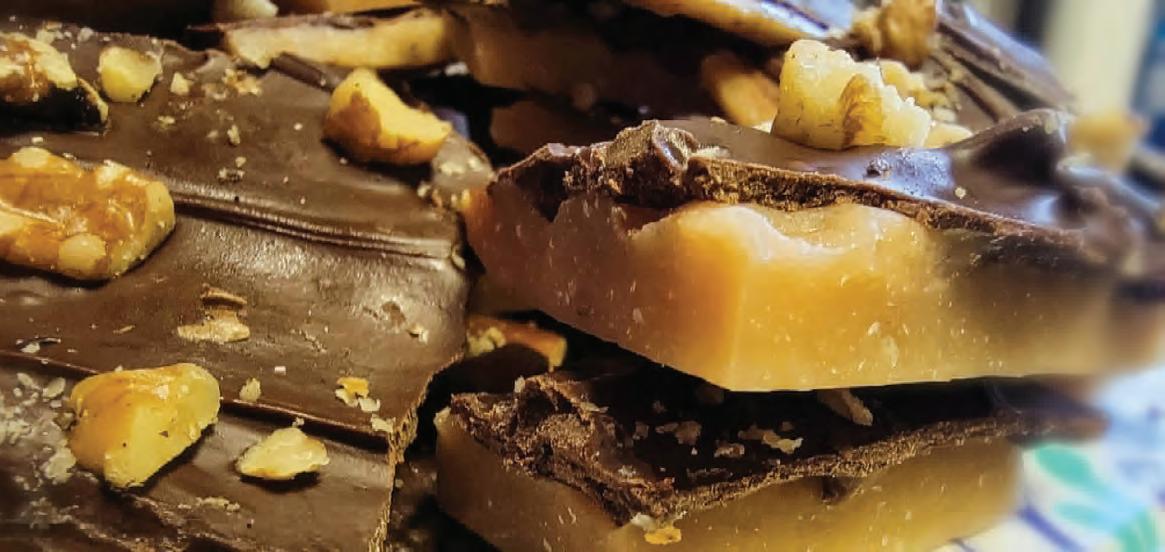
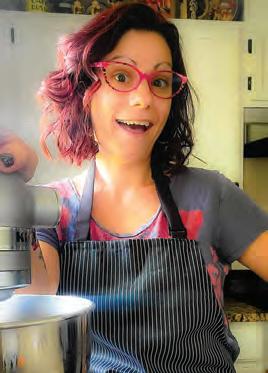
A t The Fiery Whisk Bakery, pastry chef and baker Deanna Martinez has built her bakery around familiar favorites like sweet breads, cookies, and dessert bars. One standout is the bakery’s banana coffee chocolate chip bread. Rich, comforting, and packed with flavor, it captures the bakery’s entire philosophy in one slice: fresh ingredients, local products whenever possible, and baking made with genuine care.
For Martinez, classic desserts were always the plan. She believes many families are looking for something different these days: comforting baked goods made with recognizable ingredients instead of heavily processed shortcuts. Simple recipes, done well, continue to win people over.
T hat feeling of nostalgia often appears in customer reactions, especially for the bakery’s banana breads and blueberry lemon bread. Those flavors remind people of childhood kitchens, holiday gatherings, and homemade desserts cooling on the counter after school.
B aking has been part of Martinez’s life since childhood, as she learned recipes alongside her mother during holiday baking sessions. One of those early lessons eventually helped lead to an awardwinning mascarpone cheesecake recognized by Taste of Home
To day, consistency remains one of the bakery’s top priorities. Recipes are perfected and followed closely batch after batch, creating baked goods customers can count on every time.
For more information, visit tfwhisk.wixsite.com/ thefierywhiskbakery
Built on family, flavor, and a mother-daughter
STORY BY DATHAN KAZSUK | PHOTOS COURTESY OF ASALI DESSERTS & CAFÉ
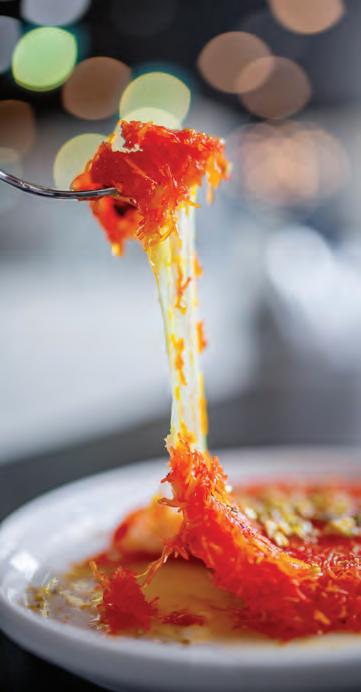
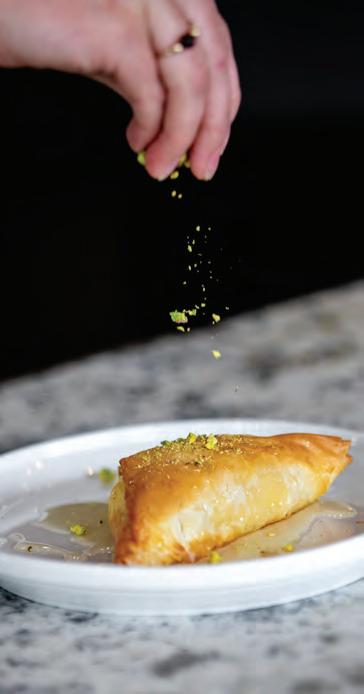
At Asali Desserts & Café in Cary, the pastries are eye-catching, but the story behind them is even sweeter.
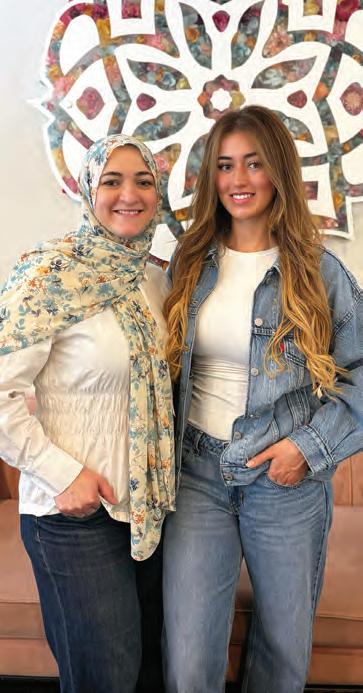
Founder Hanadi Asad and her daughter, Raiyan, are helping to shape one of Cary’s most beloved dessert cafés. What began in 2001 as a business rooted in hospitality, heritage, and family recipes has grown into something more layered: a place where generations meet, memories are baked into the menu, and a daughter is now helping carry forward what her mother built.
B orn in Kuwait, Asad envisioned Asali as the kind of place where guests feel welcomed rather than served. Many of the café's recipes are rooted in the Middle Eastern and Mediterranean flavors of her childhood, from fresh breads and savory pies to sweets that trace back to the family kitchens of mothers and grandmothers. Those early memories—the smell of something just out of the oven, the first bites taken before anything made it to the table—continue to influence the café today.
T hat sense of care shows up in the food and in the space itself. Asali was designed to feel personal, intentional, and welcoming, whether guests are stopping in for coffee, dessert, or a slower moment in the middle of the day.
Now, with Raiyan taking on a larger role, the café has also become a story about growth within a family business. Working side-by-side has given the mother and daughter a new way to understand each other—not only as family, but as collaborators making decisions, solving problems, and imagining what comes next.
For Asad, watching her daughter step into that role has been emotional and meaningful. Raiyan brings creativity, confidence, and a younger perspective to Asali, while also honoring the traditions that made the café special from the beginning.
T hat balance may be what gives Asali its charm. It is polished, yes. Beautiful, absolutely. But underneath t he desserts and coffee is something more lasting: a family legacy still being built, one tray, one recipe, a nd one shared day of work at a time.

STORY BY SOFIA LUJAN | PHOTOS BY JESSICA BRATTON
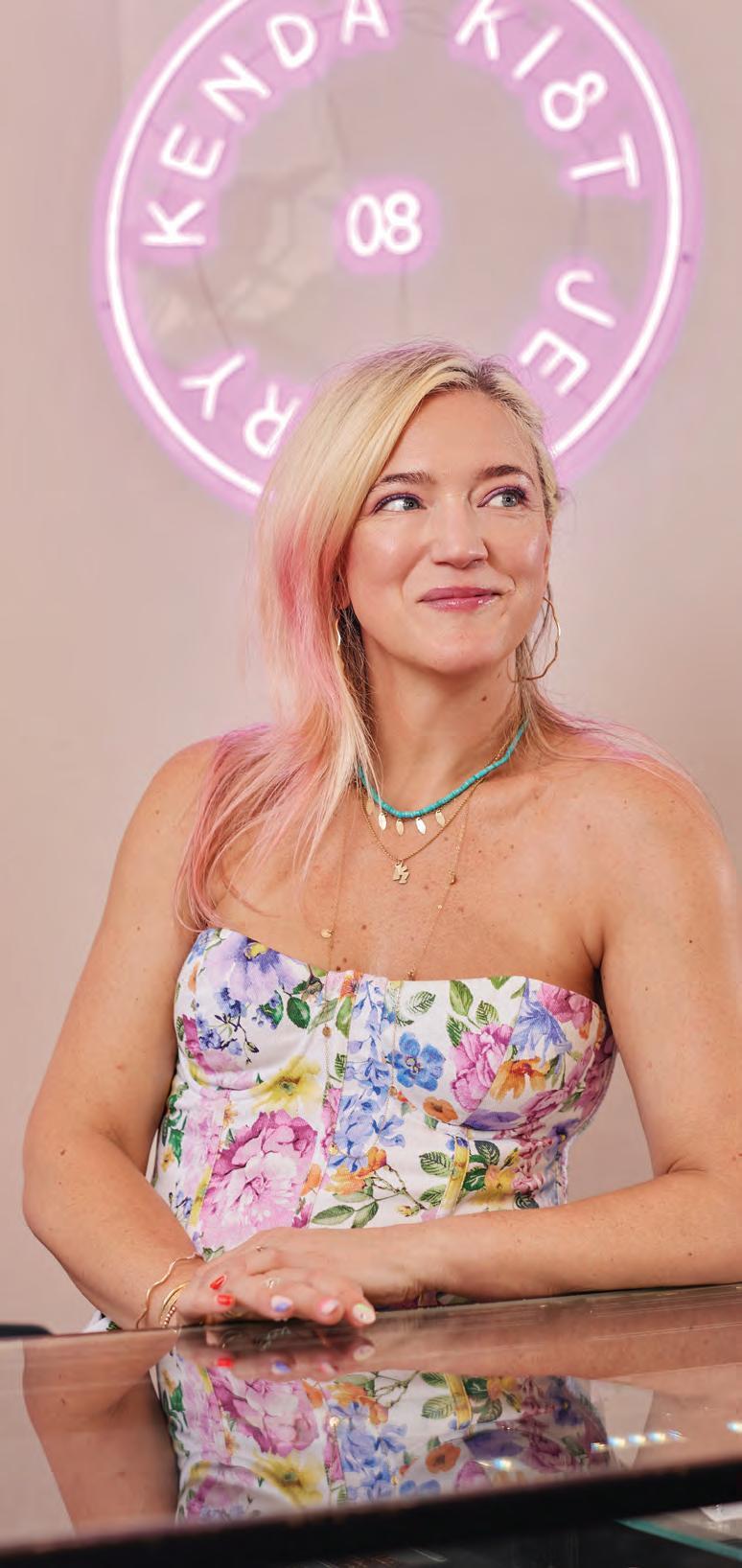
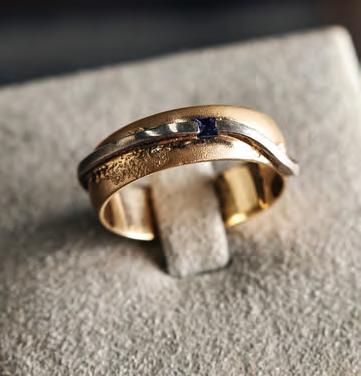
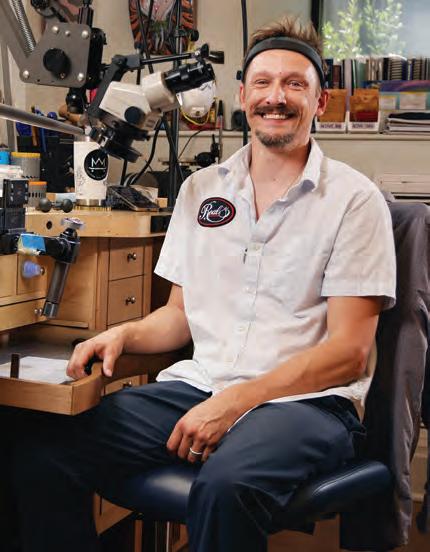
Kenda Kistenmacher is the founder and designer behind the Raleigh-based jewelry brand Kenda Kist—a collection of hand-forged, everyday fine jewelry rooted in metal design and craftsmanship. Her creative journey began in Iowa and was shaped by formal training in the metal design program at East Carolina University, where she developed a love for sculptural, wearable pieces with a “classic with a twist” aesthetic.
Today, she leads a woman-owned, family-run studio and storefront on West Johnson Street in Raleigh that emphasizes storytelling, sustainability, and locally made jewelry crafted by a close-knit team of artisans.
We caught up with Kistenmacher to learn more about the story behind her brand.
W hat inspired you to launch your jewelry brand?
I’ve always been drawn to making things with my hands. Kenda Kist Jewelry started in 2002 out of a genuine love for the craft. I wanted to create pieces that felt personal and meaningful, not mass-produced. It grew organically from there, rooted in community and connection more than anything else.
H ow would you describe your jewelry to someone unfamiliar?
Unpretentious. Wearable. Made with intention. My pieces are hand-forged, and each one carries a little difference with the hand that makes it. The aesthetic is understated but personal—the kind of jewelry you reach for every day without thinking about it.
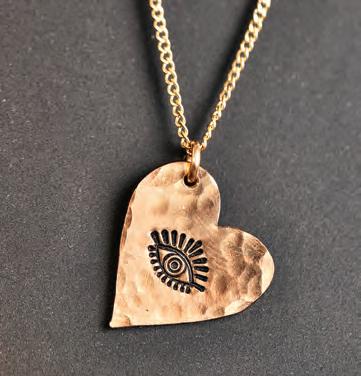
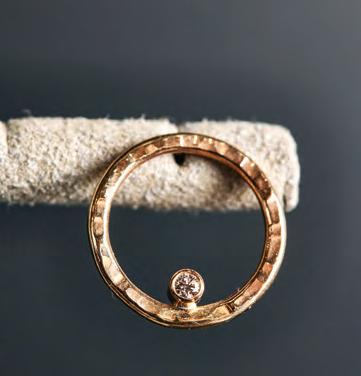
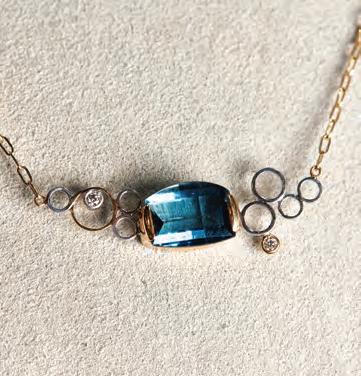
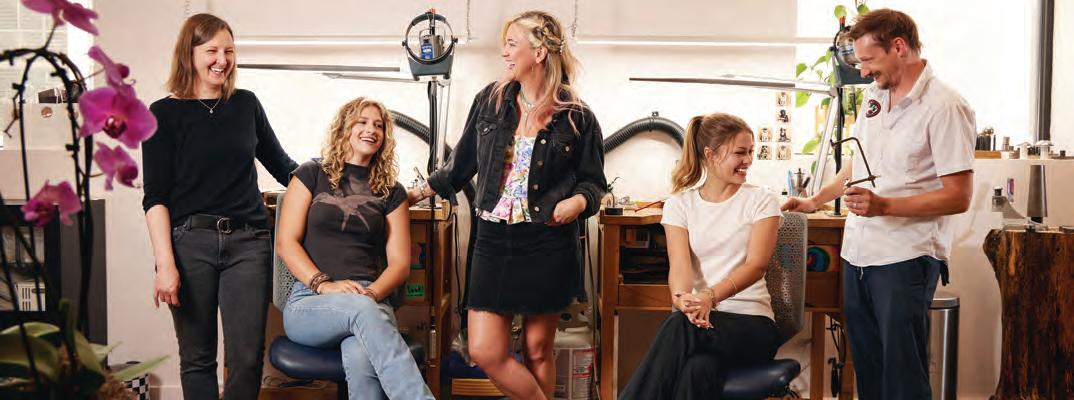
OPPOSITE PAGE: Kenda Kistenmacher works out of a studio in Raleigh's Glenwood South district. LEFT AND ABOVE: Kistenmacher's pieces pair fine gemstones with precious metals for an elegant everyday look.
W hat sets your designs apart in today’s fine jewelry market?
E verything is made by hand in our studio. There’s no factory, no algorithm deciding what gets made. It’s us, the tools, and the metal. In a market flooded with fast fashion jewelry, I think people are hungry for something real. Something that has a story and a maker behind it.
W hat materials, gemstones, or metals do you love working with most?
I love working with sterling silver and gold-filled metals. They hold up, they age beautifully, and they’re accessible without feeling cheap. They’re also sustainable and recyclable, which matters to me. We work with Swarovski crystals for that reliable, consistent sparkle, and semiprecious stones, which I especially love for their individuality. No two stones are exactly alike, which mirrors how I think about the people who wear them.
H ow important is craftsmanship and attention to detail when creating your jewelry?
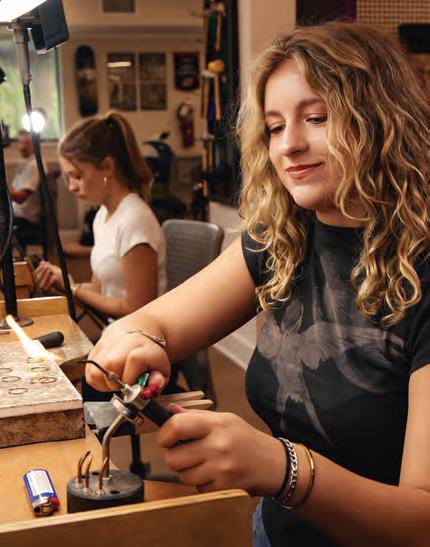
It’s everything. When someone buys a piece from us, I want them to still be wearing it in 20 years. My partner Marty is a goldsmith who handles our custom and heirloom work, and that level of care runs through
everything we make. Details matter, because the piece matters.
W hat current jewelry trends are you loving, and which styles do you believe will always remain timeless?
I love that personalization is having such a moment … meaningful layering, initials, pieces that tell your story. That’s honestly been at the core of what we do from the beginning. Timeless? Anything that connects to who you actually are. That never goes out of style.
W hat role does jewelry play in telling someone’s style story?
Jewelry is often the most personal thing someone puts on their body. I’ve watched people light up when they find a piece that just gets them. It’s not decoration; it’s a quiet declaration of who you are.
W hat’s been one of the biggest challenges of building an independent jewelry brand?
Wearing every hat while still protecting your creative energy. But honestly, the drive has always been there. I’ve always loved shopping small, and being in boutiques meant something to me from a very young age. Now I’m a small business selling to other small business owners who are curating their spaces with my
jewelry. That full circle feeling is what keeps me going even on the hard days.
W hat’s a typical day like for you? Honestly, no two days look the same. There’s always some mix of designing, connecting with my team, thinking through marketing, and being in the studio. We have a really special setup now at 741 West Johnson Street. It’s not just a jewelry studio, it’s a whole creative community. I just walk around our new space and feel really lucky.
I s there a particular piece or collection that feels especially personal to you?
Our signature line is the through line of everything we’ve built—it’s where the heart of the brand lives. But the custom and heirloom work always carries the most weight. When someone brings in a grandmother’s ring and asks us to make something new from it, you’re holding someone’s story in your hands. That’s a responsibility I don’t take lightly.
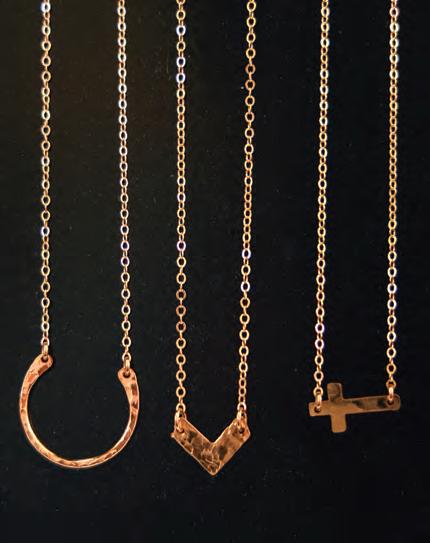
ABOVE: Kistenmacher calls her studio more than a workspace—it's a creative community. OPPOSITE PAGE: Kistenmacher's collection includes a range of everyday pieces including necklaces, earrings, bracelets, and rings, with a focus on wearable, hand-forged designs.
FAR RIGHT: Kistenmacher's signature sterling silver and gold-filed pieces shine on Midtown stylist Sofia Lujan.



W hat do you hope customers feel when they wear your jewelry?
C onfident. Beautiful. Connected to something meaningful. But most of all, seen. Like someone made something just for them, even if we’ve never met.
H ow do you balance creativity with running the business?
C ommunity is my fuel. I’m surrounded by incredibly inspiring people, creatives here in Raleigh, and the women who own the small businesses I sell to. They keep me grounded and excited about what we’re building. I’m also a mentor at heart, and watching younger makers find their voice fills my creative soul.
W hat’s next for your brand?
We’re growing in ways that feel really intentional right now. The KK Collective space is something I’m deeply proud of. It’s becoming a hub for local makers and creatives. On the jewelry side, we’re continuing to expand our bridal and custom work, and I’m always thinking about ways to bring our community together in the studio. More events, more collaboration, more of what makes this place feel like home.
F avorite gemstone at the moment?
L abradorite and moonstone—I can’t choose. That flash gets me every time.
G old, silver, or mixed metals?
M ixed. Rules are boring.
B iggest jewelry trend prediction for next season?
Personalization isn’t going anywhere—if anything, it’s getting deeper. People want pieces that are theirs.
O ne piece every woman should own?
A great hoop. It can change your whole mood.
D ream celebrity or stylist you’d love to see wearing your designs?
Gwen Stefani has always been my muse. I’ve actually gifted her several pieces over the years—and the one I got to see her wear was my original initial necklace. That moment never gets old.
F ashion city that inspires you most?
Paris—and I just went for the first time last year. Parisian women are just so effortless. I came home inspired in a way I wasn’t expecting.
C urrent mood board in three words?
Textured. Eclectic. Colorful.
BY TAYLOR BOWLER

If you’re new to Western Wake and navigating schools for your child, you’re not alone—and you’ve landed in one of the state’s most dynamic educational communities. With more than 160,000 students across roughly 200 schools, Wake County Public School System (WCPSS) is the largest in North Carolina, serving a region rich in resources and innovation. But all those choices can be overwhelming. That’s where this guide comes in.
Public School Options
Families in Western Wake are zoned for WCPSS and assigned to a “base school” based on their address. If you’re happy with that assignment—great. If not, you may have options.
Some schools follow a traditional calendar, while others are on year-round or modified calendars. Depending on your child’s base assignment, you may be eligible to switch calendars by applying for a calendar option school.
There are also magnet schools to consider, which offer specialized programs ranging from International Baccalaureate and language immersion to gifted and talented curriculums
and STEM. Magnet seats are filled through a lottery system based on several factors, including your address and the school’s capacity.
WCPSS also offers several early college options that allow high school students to earn college credit tuitionfree while still enrolled in high school. These schools partner with Wake Technical Community College or North Carolina State University.
Calendars in Wake County
Wake County public schools run on three main calendars:
• Traditional: Features the traditional long summer break with shorter seasonal breaks
• Modified: Offers a shorter summer break with more frequent breaks throughout the year
• Year-Round: Operates on four rotating tracks with three-week breaks between sessions
Wake County’s award-winning magnet programs offer themed curriculums that give students access to unique learning experiences—whether that’s learning in a second language, creating
digital media projects, or diving into environmental science.
Magnet school themes include:
• Arts Plus
• Gifted and Talented
• International Baccalaureate (IB)
• Language Immersion / Global Studies
• STEM (science, technology, engineering, and math)
• Leadership / Innovation
Each theme is offered at different schools and grade levels. Students do not need to be labeled “gifted” to apply for these programs.
Charter and Private Schools
Wake County is home to nearly 40 charter schools and more than 100 private schools. Charter schools are public, tuition-free, and independently run. Admission is lottery-based and open to all North Carolina residents.
Private schools vary widely in size, philosophy, and tuition. Some are faith-based, while others are Montessori or arts-focused. While they don’t follow the state curriculum, they do meet attendance and academic benchmarks to satisfy state requirements.

Wake County has a robust homeschooling community supported by co-ops, local events, and extracurricular opportunities. The North Carolina Division of Non-Public Education oversees registration and reporting requirements.
Want to graduate high school with two years of college already done? Early college programs partner with Wake Tech or NC State to allow students to earn dual credit toward both a high school diploma and an associate’s degree. These programs are free, competitive, and a great fit for motivated students. Early college schools follow their college partner’s calendar instead of a WCPSS calendar.
Finding the right school takes time. Tour campuses, ask questions, and speak to other parents. Start with the Wake County Public School System’s Assignment & Enrollment portal at wcpss.net/enroll. And remember— every family’s journey looks different.

The case for dirt, risk, and a little more freedom
For many schools, outdoor learning is a field trip. For Lucy Chartier, Ph.D., administrative director at Raleigh Day School, it’s a philosophy. We sat down with Chartier to talk about how outdoor experiences can help children develop confidence, resilience, curiosity, and a deeper connection to the world around them.
Tell us about your approach at Raleigh Day School.
We spend a lot of time outdoors and value nature. We have outdoor free play and structured games where they might throw a javelin or a discus. Teachers go outside with chalkboards and a lesson book and sit on a stump or on the ground. The early childhood program is four hours per day, and they spend half that time outside. They might have a watercolor painting day, or color with beeswax crayons. They have a naturebased circle that reflects what’s going on at the time, so kids are hearing and learning about the seasons.
What’s something children learn outdoors that can’t be taught in a classroom?
At a very deep level, they’re learning that they are beings on this planet along with all of the other creatures and plant life. Spending time in nature can help regulate the nervous system. Feeling the forest around us and the sky above us, watching the seasons and noticing what happens around us … it’s all learning through observation. Have we become too protective of kids?
One hundred percent yes. One protection kids aren’t getting is in the wiring of the central nervous system while they’re sitting in front of screens. It’s antithetical to learning in nature
from the ground up. And it’s no fault of the parents—they have no choice. Technology is a part of life. Many parents now aren’t clear about what this level of engagement with digital media means, what the danger is, and what it’s not helping to facilitate. If childhood had a “missing ingredient” right now, what would it be?
Creative problem-solving. These kids need it more than anybody, because AI is going to be doing everything for them. They’re going to need to be able to think outside the box their parents live in. The idea of creative problemsolving is an anchor.
What’s the healthiest kind of failure a child can experience outdoors?
There’s a term teachers use: calculated risk. We let them climb trees, but the branch has to be at least as big around as your arm. If you get up but can’t get down, we’ll help you down, but this tells us you’re not ready.
What’s a moment from the program that perfectly captures why this work matters?
What I see is children who have a very strong “I-can-do-that” attitude. Routinely, they rise to new challenges with this enthusiasm. What we do is fun, and when we learn a new concept like division or percentages, we’re not just looking at a textbook and writing it down. We’re bringing in food and slicing a cake in multiple pieces, or doing rhythmic clapping. We’re using as many sensory experiences as we can. Everybody gets a fuller and richer picture, so they love the process of learning.

Town of Apex Youth Athletics
Apex’s main parks and recreation sports program offering seasonal recreational leagues with volunteer coaches and balanced play-focused structure.
• Ages: ~5–17
• Sports: Baseball, softball, soccer, basketball, flag football, volleyball, tennis, lacrosse
• Cost: ~$45–$100 per season
• Contact: apexnc.org/423/ youth-athletics
Town of Cary Youth Sports
Large municipal program with structured recreational leagues and clinics.
• Ages: ~5–18
• Sports: Baseball, softball, basketball, volleyball, camps, clinics
• Cost: ~$50–$120 per season
• Contact: carync.gov/recreationenjoyment/sports/youth-sports
City of Raleigh Youth Athletics
One of the largest recreational sports systems in North Carolina, offering broad seasonal leagues across multiple parks.
• Ages: ~5–17
• Sports: Soccer (Just Kick It), baseball, softball, flag football, basketball, cheer
• Cost: ~$65–$80+ per season; varies based on residency
• Contact: raleighnc.gov/athletics
Durham Parks & Recreation
Municipal recreation leagues serving Durham families with seasonal sports programs and camps.
• Ages: ~5–17
• Sports: Baseball, basketball, soccer, football
• Cost: Typically ~$50–$100
• Contact: dprplaymore.org
Triangle United Soccer
Major club soccer organization with both recreational and competitive pathways.
• Ages: ~4–18
• Sports: Recreational soccer, classic/ travel soccer, academy programs
• Cost: ~$100–$160 recreational; $1,000–$3,000+ competitive
• Contact: triangleunited.org
N Zone Sports Wake County
Community-focused youth league provider emphasizing character development and flexible sports formats.
• Ages: ~4–15
• Sports: Soccer, flag football, basketball, baseball
• Cost: Typically ~$100–$200 per season
• Contact: nzonesports.com/wake
Soccer Shots
Introductory soccer program for young children using a structured curriculum and coaching.
• Ages: ~2–8
• Sports: Soccer
• Cost: ~$100–$200 per session
• Contact: soccershots.com/rdu
NBN Sports
Basketball-focused training and league organization with AAU and skill development pathways.
• Ages: ~7–17
• Sports: Basketball leagues, AAU teams, camps
• Cost: Clinics ~$100–$300+; travel leagues are higher
• Contact: nbn-sports.com
The Miracle League of the Triangle Inclusive adaptive baseball program for children and adults with disabilities.
• Ages: 5+
• Sports: Adaptive baseball
• Cost: Low-cost, scholarshipsupported
• Contact: mltriangle.com
Girls on the Run Triangle
Youth development program combining running and a life-skills curriculum.
• Ages: Grades 3–8
• Sports: Running
• Cost: ~$150–$200; scholarships available
• Contact: gotrtriangle.org



LEGO creator Dan Winger brings arcade play back to the table
STORY BY DATHAN KAZSUK | PHOTOS BY UNPLUGGED ARCADE
There are interviews that happen in conference rooms, over speakerphone, or through the tiny window of a Zoom call, where everyone pretends the lighting is fine.
And then there are interviews like this.
I met Dan Winger one afternoon at Salty Turtle Beer Co. in north Raleigh, where we sat down over a couple of hazy IPAs and talked about creativity, career pivots, and what happens when a former LEGO Master Designer decides the world needs a barroom game that requires neither electricity nor a screen.
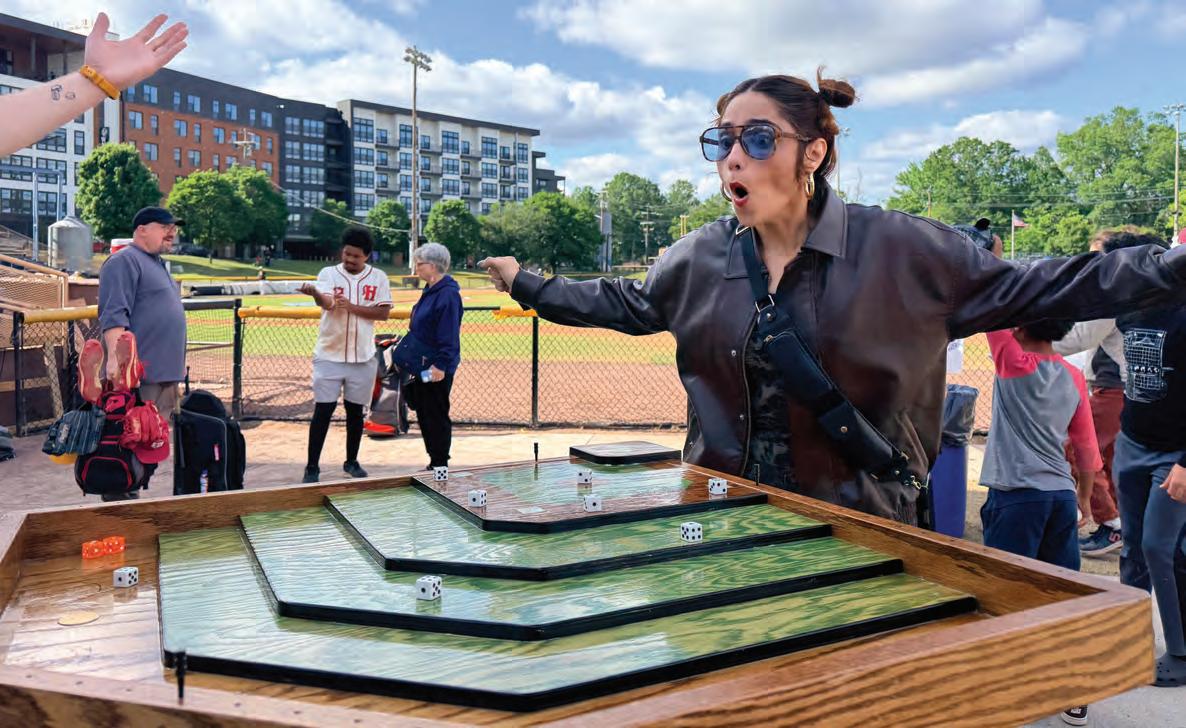
Winger is the creator of Unplugged Arcade, a Raleigh-based gaming concept built around physical, social, and analog
play. His first game, Baseball Shuffle, lands somewhere between board game, bar game, and that dangerous category of “just one more round.”
Before moving to North Carolina, Winger spent 18 years with LEGO, where he worked as a Master Designer on the company’s product innovation team. Much of that work focused on new product lines and digital integration— augmented reality, emerging technology, and ways to blend digital play with LEGO bricks.
“ We were responsible for launching new product lines,” Winger says. “Most of that had digital integration, so a lot of that time was looking at augmented reality and how you fuse digital play with LEGO bricks.”
The job began in Los Angeles with a small team that expanded and grew closer to LEGO’s European operations. During Covid, Winger went remote and eventually moved to Raleigh with his family. “We were researching familyfriendly cities,” he says. “Raleigh was the only one left. It was schools, parks, safety, cost of living—and we fell in love with the nature out here.”
But when company policy required employees to return to an office, Winger found himself at a crossroads. He started testing new ideas, including a political satire card game, but that project didn’t stick. Then he returned to an idea that had been sitting in the back of his mind—a large-scale, physical game inspired partly by Tumblin’ Dice.
That experiment opened the door.
“Once you get the bigger game, you have what video games refer to as game feel,” Winger says. “It just feels good.”
That concept—game feel—became central to Baseball Shuffle. Winger wanted something tactile, satisfying, and easy to approach.
“I started looking into it, and there’s nothing in the space,” he says. “Where pool tables and shuffleboards are, nobody’s doing product elevation in there.”
That realization helped shape Unplugged Arcade. Winger describes the company as occupying “the entire space between board games and barroom games,” with a footprint smaller than a pool table or shuffleboard, but more substantial than a typical tabletop game.
Baseball Shuffle is baseball-inspired, but Winger says he came at it less as a sports obsessive and more as a designer.
“I was a fan growing up,” he says, noting his childhood Chicago Cubs fandom and later connection to the Minnesota Twins. “But I came at this from a game design and product innovation perspective.”
The game supports 2 16 players and has already been tested with groups of up to 10. That flexibility is part of the point.
Traditional bar games often work best with two or four players. Baseball Shuffle is meant to open the door wider, letting bigger groups play together without one expert demolishing the poor soul who just wandered over with a beer in hand.
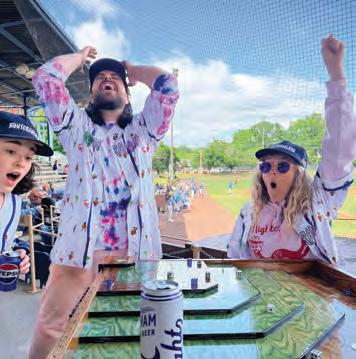
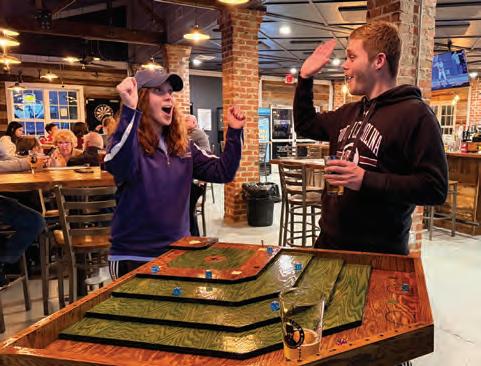
PAGE 38: Winger has taken his Baseball Shuffle on the road, building strong engagement not only in Raleigh, but also in Cary, Zebulon, and Durham as more players discover the tabletop game’s easygoing, competitive spirit.
PAGE 39: Baseball Shuffle is designed for all ages, and as Winger explains, you don’t have to be a baseball geek to understand the rules or enjoy an exciting nine innings of competition with friends or family.
PAGE 40: Winger's Baseball Shuffle can be found in bottle shops and breweries around the Triangle—with more currently being produced.
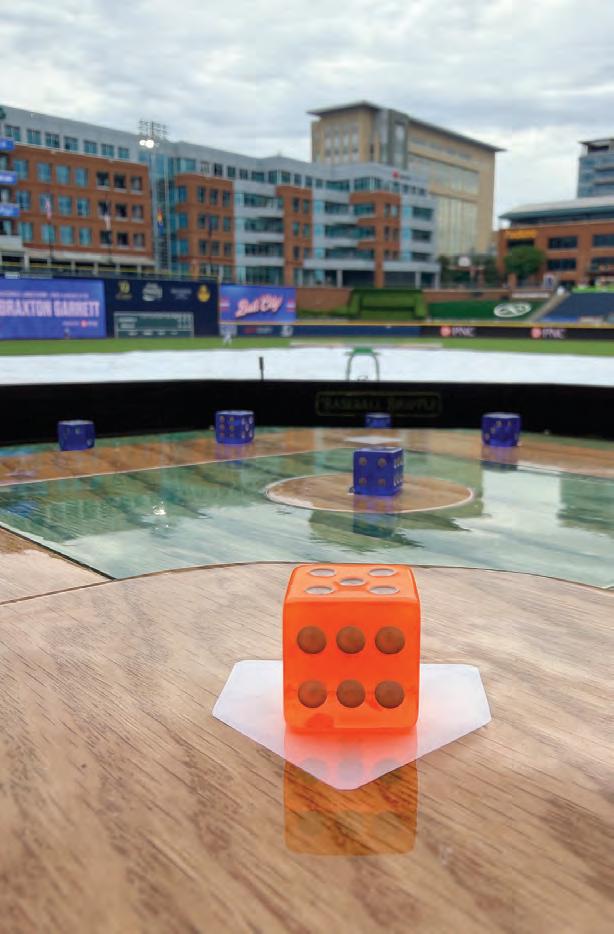
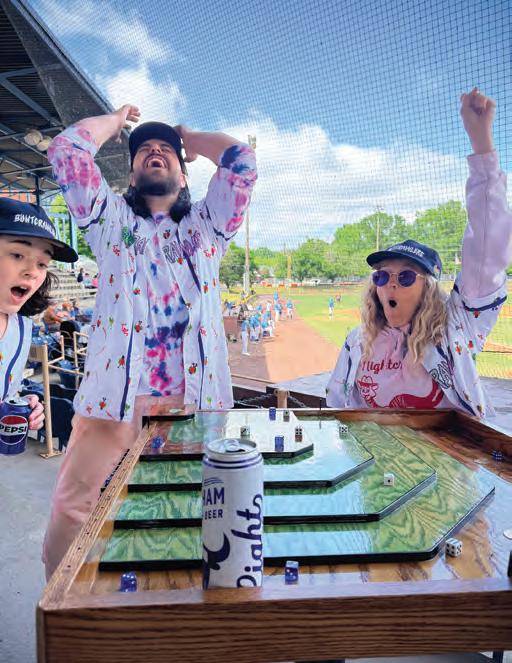
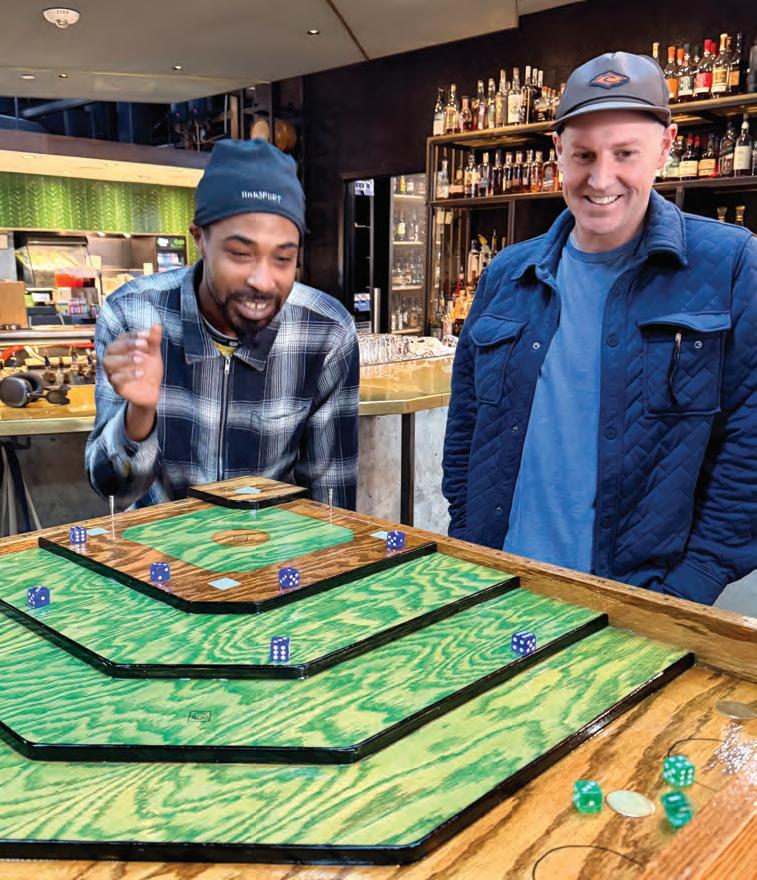
“My goal was to address a lot of these opportunities,” Winger says. “Make a game that has a more flexible player count and introduces skill with luck. The luck brings bigger moments, and it also bridges the skill gaps.”
Winger designed the game with breweries and bars in mind. The board includes drink-friendly features, with beverage placement integrated into the strategy. Drinks can act as bumpers for the game pieces, giving players a small sense of control over the chaos.
Baseball Shuffle is already showing up at Triangle breweries and bottle shops, including Salty Turtle, Crank Arm Brewing, Trophy Brewing Co., Komana, Hoppy Tales, and The Corner Biergarten. “My goal is to build a player base and build a community of people engaging in the game,” he says. “That will drive interest for venues to buy the game.”
He’s also connected with local baseball groups like Carolina Sandlot Collective and MLB Raleigh, and is exploring larger tournament-style events with brewery-sponsored teams.
T he first boards were handmade by Winger himself— roughly 20 to 25, each taking an estimated 12 to 15 hours
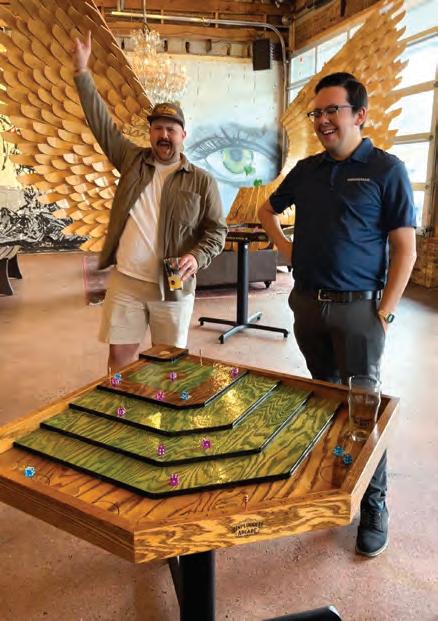
in batch production. Now that demand is growing, he’s working with a shop in Chapel Hill to produce the games.
And yes, after we talked, Winger showed me how to play.
I’d like to say I immediately displayed natural talent and the strategic instincts of a man who once watched an alarming amount of baseball. That would be a lie.
B ut the game was fun. The kind of fun where you start adjusting your approach after each turn, quietly building theories in your head like a mad scientist with a pint glass.
B y the end, I was already thinking about angles, placement, and how I would play differently next time— which is probably exactly how Winger knows the game is working. He actually showed me a new way to play the game, which I think will make it much more strategic. Unplugged Arcade isn’t trying to replace the arcade. It’s trying to bring people back to the table.
No screen. No plug. No app.



A stay at The Ann reveals a more lived-in take on the historic Southern city
STORY BY JENNIFER PRIMROSE | PHOTOS BY THE ANN SAVANNAH
Few American cities are as recognizable as Savannah, with its historic squares, moss-covered oaks, and hidden courtyards. It’s the kind of place where history feels present almost everywhere you turn. But where you stay changes how Savannah unfolds around you.
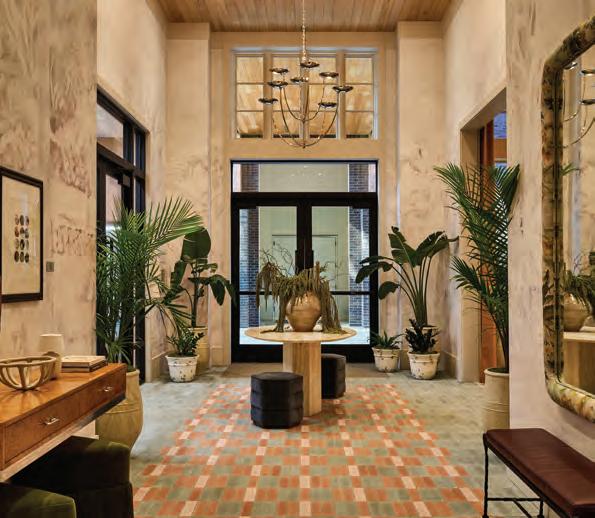
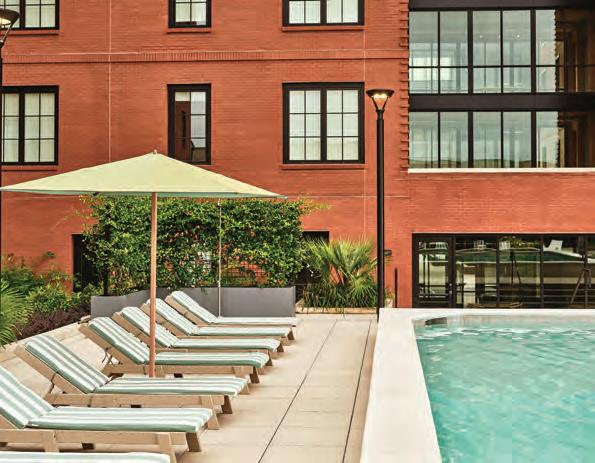
L ocated on the western edge of Savannah’s Historic District, The Ann Savannah is within walking distance of many of the city’s attractions, with everything else just a five-minute drive away. The property occupies the site of a former City of Savannah municipal building, reimagined through a multiyear adaptive reuse project that transformed the once-utilitarian structure into a design-forward, apartment-style hotel.
After roughly three years of planning and renovations, the building reopened in February 2025 as The Ann Savannah, becoming the first mainland U.S. location for Apartments by Marriott Bonvoy. The redevelopment preserves the neighborhood’s historic aesthetic while introducing a more contemporary residential feel.
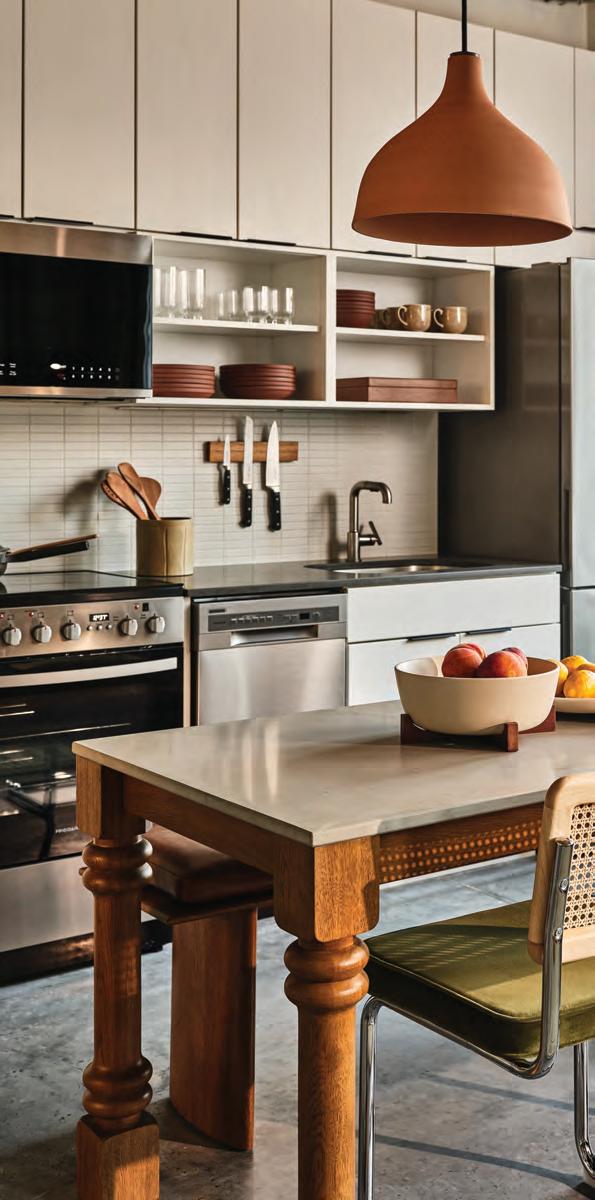
Studios, lofts, and multi-bedroom suites come equipped with full kitchens, washers and dryers, and layouts designed for longer stays, larger groups, or visitors who simply want more space than a typical hotel room. “A lot of our guests like the privacy,” says general manager Leigh Ann Staden. “You can come and go without ever really going through a traditional hotel lobby.”
I nstead of the hectic pace that often comes with larger hotels, the 157-room property feels calmer and more flexible. Guests move between the courtyard and café with an ease that mirrors the neighborhood surrounding it.
Once outside, you will find Savannah College of Art and Design’s (SCAD) influence is everywhere —not just through one centralized campus. The school is folded into the city itself through restored historic buildings, galleries, studios, and cafés scattered throughout downtown. That creative energy exists alongside a growing mix of restaurants, cocktail bars, and retail spaces that are helping shape Savannah’s next chapter without losing the character that made the city so beloved in the first place.
T he Historic District can feel crowded quickly, especially near River Street and City Market, where music spills from open doors and crowds linger long after dark. Returning to The Ann after a full day feels less like stepping away from Savannah and more like slipping into another version of it.
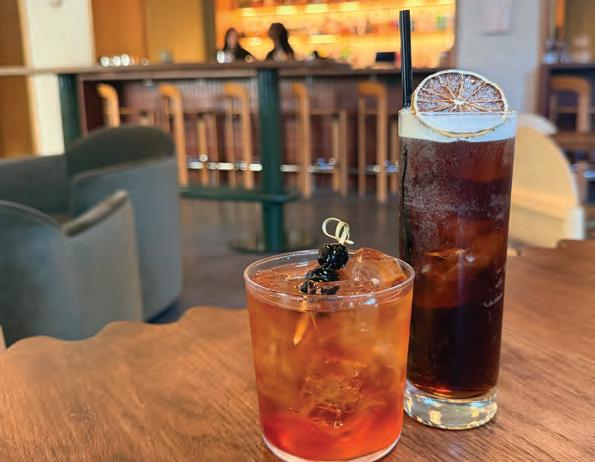
I nside Little James, the hotel’s onsite café and cocktail bar named for General James Oglethorpe, Georgia’s founder, guests can stop in for a quick bite—or linger for hours. Mornings start with espresso and laptops. By afternoon, it becomes a meeting point for those filtering in from out of town. In the evening, it shifts into cocktails and Mediterranean-inspired shared plates. “It really becomes a community feel,” Staden says. “We really want it to feel like a gathering place.”
T he hotel’s proximity to the city’s landmarks changes how you move through the Historic District. Instead of spending time planning transportation or navigating parking, you can experience Savannah at your own pace.
One of the easiest ways to see the city is aboard one of Savannah’s Hop On Hop Off trolley tours. Part ride, part rolling storytelling session, the route loops through the Historic District as guides point
OPPOSITE PAGE: The Ann Savannah, Apartments by Marriott Bonvoy, brings a new kind of stay to the heart of Savannah, transforming a former apartment complex into luxury hotel accommodations with a residential feel.
RIGHT: The hotel features 157 rooms, ranging from one-bedroom lofts to larger layouts suited for families of four. Each space blends modern design with the comforts of home, including full kitchens, dining tables, flat-screen TVs, spacious walk-in showers, and an outdoor pool. Guests can also visit Little James, the hotel’s onsite restaurant, for breakfast, lunch, dinner, and cocktails.

out architecture, Civil War history, ghost stories, film locations, and the city’s long-running fascination with folklore.
Hop on near The Ann Savannah—it’s an easy walk or quick rideshare to your first stop. F rom there, start exploring. Step into Chippewa Square and you’ll inevitably hear Forrest Gump come up. The bench is long gone, but the film connection still shapes how people see the square.
A few stops away, the Mercer Williams House Museum pulls visitors deeper into the world of Midnight in the Garden of Good and Evil, where true crime, legend, and Southern intrigue collide.
B ook an evening tour at the Old Sorrel-Weed House Museum and you’ll move through candlelit rooms as ghost stories unfold in real time. As guide Aubrey Northrop puts it, the stories keep evolving: “There’s about 50 different versions, depending on who’s telling it … we’re constantly trying to find more documentation about the property.”
Near City Market, the American Prohibition Museum brings another layer of history to life through immersive exhibits that explore the rise and fall of Prohibition and the city’s role in rum-running during the 1920s. The tour ends inside a speakeasy-style bar, where the storytelling continues in cocktail form.
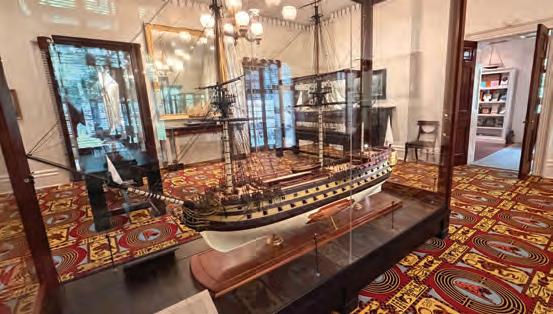
For a quieter pause, walk over to Ships of the Sea Maritime Museum. Housed in the historic Scarbrough House, it traces Savannah’s maritime roots, with gardens that feel secluded from the bustle of downtown.
T hen make your way to Forsyth Park, where locals spread out under live oaks and visitors gather around the fountain. By evening, the surrounding streets fill in with pre-dinner drinks and unhurried walks.
Savannah’s culinary scene blends Southern tradition with a growing wave of contemporary, chef-driven restaurants, where Lowcountry staples like shrimp and grits and fried green tomatoes sit alongside inventive, globally influenced menus. One evening, dinner took us to The Emporium Global Table at the Perry Lane Hotel, a monthly multicourse dining experience on the third Thursday of the month. Like much of Savannah, the experience was elevated but not overly formal. Hospitality first, presentation second.
T hat approach seems to define much of the city right now.
Savannah still embraces the history visitors expect, but a quieter evolution is happening beneath the surface. B outique hotels. Restored spaces. Independent restaurants. Cocktail bars tucked inside historic
buildings. Creative energy is shaped in part by SCAD and by people choosing to experience Savannah beyond the typical tourist checklist.
T he Ann fits naturally into that version of the city.
B y the end of the weekend, it stops feeling like somewhere we stayed and starts feeling like the place we reset—between long walks through historic squares, afternoons on River Street, museum stops, late dinners, cocktails, and ghost stories that ran later than planned. Savannah remains steeped in history, storytelling, and hospitality, but a stay at The Ann Savannah shifts how you move through it.
You’re close to everything without being in the middle of it. A nd that sense of ease and Southern charm lingers long after you leave.
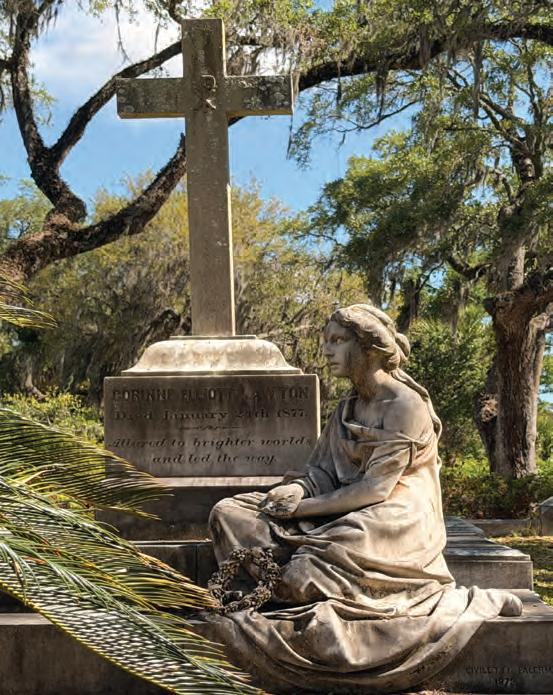
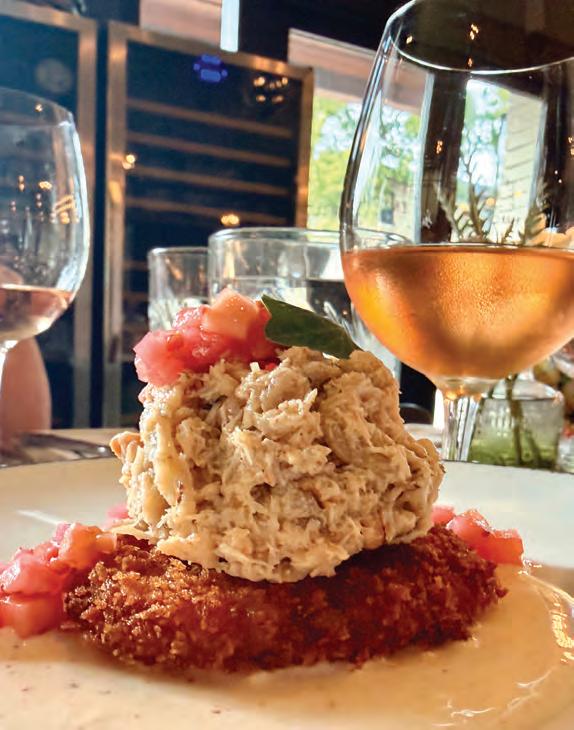
BELOW: Popular destinations near The Ann Savannah include the famed Bonaventure Cemetery and Ships of the Sea Maritime Museum, located just across the street from the hotel. RIGHT: Nearby, the Perry Lane Hotel offers its monthly Global Table dinner series, featuring food and wine experiences inspired by destinations around the world. Photos on this page by Dathan Kazsuk.
S avannah has never been short on dinner options, but The Emporium Kitchen and Wine Market inside the Perry Lane Hotel is giving visitors something more transportive than the usual shrimp and grits shuffle.
T he restaurant’s Global Table is a monthly, multicourse dining experience built around a different region or wine, pairing food and wine in a way that feels less like a hotel dinner and more like a culinary passport with better lighting. Held on the third Thursday of each month, the experience leans into The Emporium’s identity: Southern-rooted hospitality shaped by global influence.
T he Emporium’s concept is inspired by the hotel’s fictional muse, Adelaide Harcourt, a well-traveled Savannah native who brought flavors, stories, and worldly curiosity back home. It’s a smart bit of branding, sure, but also a good excuse to spend an evening eating your way across France, Greece, rosé regions, or wherever the next menu decides to wander.
H osted by the restaurant’s award-winning executive chef, Miguel Bautista, these multicourse meals embrace his childhood memories of watching his father spend an entire afternoon preparing dinner for family and friends.
O n May 21, the theme was Regions of Rosé; on June 18, Summer in Greece. The dinners typically run from 6–8 p.m., and admission is $99 per person. Check the hotel’s website for future pairing dinners.
For food-focused travelers, the concept reframes Savannah as a living, evolving dining town rather than a tourist destination with great restaurants. The ghosts may linger in the squares, but dinner is rooted firmly in the present.
— Dathan Kazsuk
STORY BY RICHARD GANTT
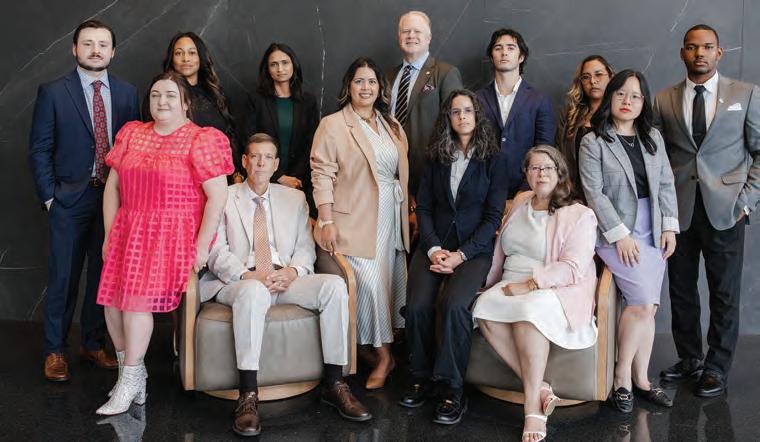
Co-parenting is often the most challenging during life’s biggest milestones. Birthdays, graduations, school performances, holidays, vacations, and family celebrations can become emotionally complicated after separation or divorce, and while parents are focusing on schedules and logistics, children are paying closer attention to something else entirely: how those moments feel.
Major family events already carry emotional weight. They represent change, transition, achievement, and family identity. After separation, these same moments can also bring grief, tension, and uncertainty as parents navigate new dynamics.
G raduations, birthdays, holidays, and school events often spark disagreements over guests, travel plans, seating arrangements, or who participates in the activities. Children frequently sense this tension, even when adults believe they are hiding it well. One of the most important questions co-parents can ask themselves is: “What experience do I want my child to remember from this moment?”
Above all, consistency matters. Even when family structures change, children feel safest when they know both parents remain committed to supporting them.
Today’s families face the added challenge of social media. Milestones naturally lead to online sharing, but disagreements over posting photos of children to social media or publicly discussing family matters can create additional tension between co-parents. Respectful communication online is just as important as it is in person, and protecting a child’s emotional privacy should always remain a priority.

At my office, I often see an increase in family law consultations during the months following graduations and leading into summer. For many families, the season becomes a natural transition period where parenting schedules, vacations, relocations, and future plans are reevaluated. While the emotional decision may have happened months earlier, the legal process often begins only after families feel emotionally or logistically prepared.
Successful co-parenting doesn’t require parents to agree on everything. It requires communication, preparation, and emotional maturity. Many conflicts during major milestones happen because expectations were never discussed in advance. Clear conversations about schedules, attendance, travel, photos, or gift-giving can prevent unnecessary misunderstandings. Children do best when parents communicate directly instead of placing kids in the middle. Asking children to relay messages, take sides, or manage adult emotions creates stress they shouldn’t have to carry.
The goal of co-parenting should never be to “win” against the other parent. It’s to help children move through life’s biggest moments feeling emotionally safe, supported, protected from adult conflict, and free to simply be kids. Sometimes this means setting aside frustration for the sake of a child’s graduation, birthday dinner, or school event. Because in the end, children may not remember every detail of the event itself—but they will remember how their parents made them feel.

Richard Gantt is the founder of Gantt Family Law and an award-winning, board-certified family law specialist. For more information, visit ganttfamilylaw.com
STORY BY TAYLOR BOWLER | PHOTOS BY VITIS HOUSE
Puerto Rico native Doreen Colondres has built a career around making food and wine feel approachable, joyful, and deeply connected to culture. As a celebrity chef, speaker, wine educator, and founder of Vitis House in Raleigh, she’s become a leading voice in conversations around mindful drinking and savoring quality over quantity. We caught up with Colondres to talk about the rise of the “drink less, drink better” movement— and why people are rethinking what’s in their glass.
How has the rise of wellness culture affected the wine industry? People are drinking less, but drinking better. Consumers are asking smarter questions about farming, alcohol levels, ingredients, sustainability, and quality. Wine is becoming less about quantity and more about intention— and that’s actually very aligned with traditional wine culture in places like Spain, Italy, or France, where wine has always been part of the table, not the goal of the night.
With so many younger drinkers embracing moderation and lower-ABV wines, what makes wine feel “worth it” now? If I’m opening a bottle today, I want it to teach me something, transport me somewhere, or elevate a meal and a moment. Younger consumers are more curious than ever—they want authenticity and value. A wine becomes “worth it” when it creates a memory, not just a buzz. Thankfully, wine is becoming more cultural and less intimidating. You see it everywhere now, from shows like Drops of God to pop artists like Taylor Swift and Rosalía casually referencing wine in music. Wine is shifting from a symbol of status to something more personal, social, and experience-driven. We see that shift firsthand in our certifications at Vitis House, where more younger students are joining because they want to learn, connect, and understand what’s in the glass—not just drink it.
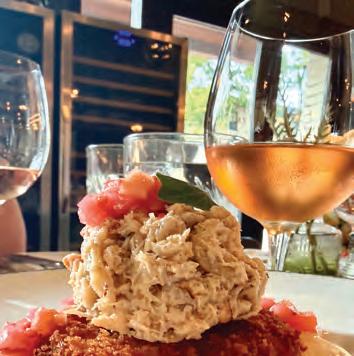
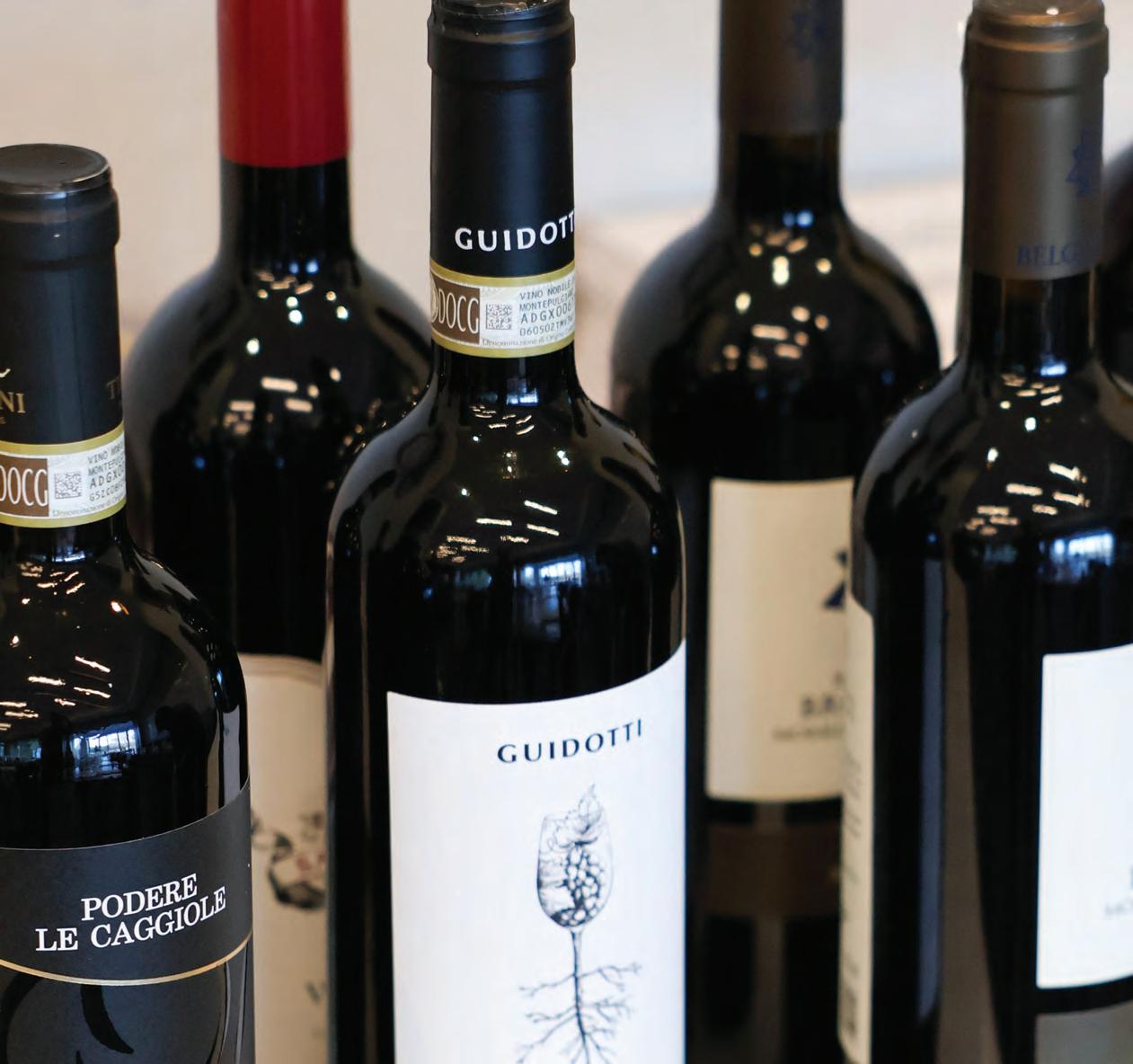
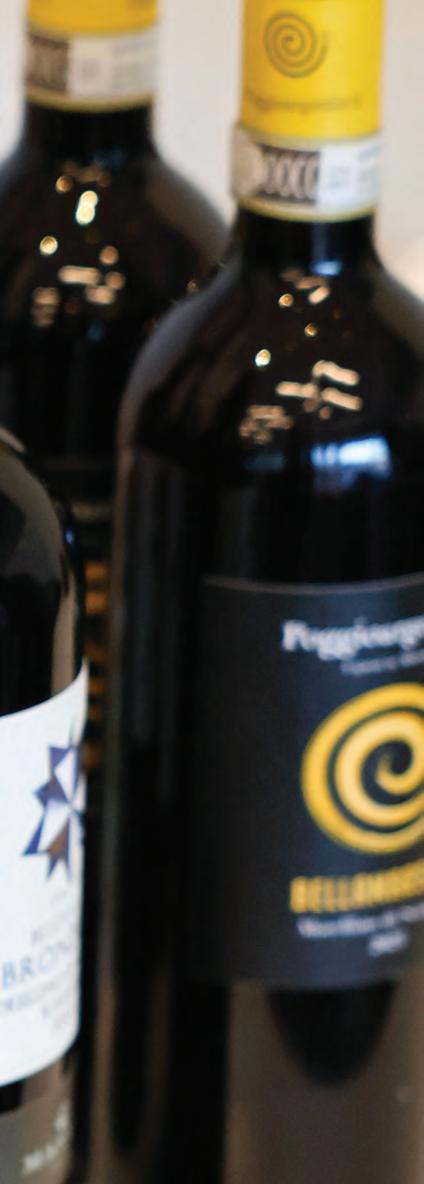
A selection of Italian red wines reflects the “drink less, drink better” mindset, where quality, story, and a sense of place matter as much as what’s poured.
What’s the difference between drinking for consumption and drinking for connection? Consumption is drinking to drink. Connection is slowing down enough to experience what’s in the glass, the food on the table, and the people around you. Wine was never meant to be rushed. In many European cultures, wine is part of the meal, the conversation, the laughter, and the moment—not the main event. Quality matters, but so does balance. Enjoying wine should never mean drinking to the point where you don’t remember the experience. The beauty of wine is how it elevates a meal, brings people together, and creates memories.
What’s a bottle under $30 that delivers every time? When it comes to bubbles that are not so trendy, a great D.O. Cava de guarda superior reserva. Whites I will pour a Lugana DOC (Turbiana grape) from Italy or an albariño from D.O. Rias Baixas—especially from smaller producers. People underestimate how serious and food-friendly these wines can be. I’d also say a beautifully made tempranillo crianza or bolder blends from the Douro Valley or Alentejo in Portugal often punches way above its price point. For those who follow the trend of sauvignon blanc, always from the Loire Valley.
What should people look for in a lower-ABV wine that signals quality? Balance. Lower alcohol alone doesn’t automatically mean quality. Look for freshness, acidity, texture, and a wine that still feels complete and expressive. Cool-climate regions, mountain vineyards, coastal influence, and thoughtful farming often produce naturally balanced wines with lower alcohol and more energy in the glass. So north of Spain, Italy, France, Germany, Austria, just to mention a few.
How do you host a wine-forward gathering that centers on quality sips, not intoxication? Make wine part of the experience, not the entertainment. Serve smaller pours, pair wines thoughtfully with food that is good enough not to be ignored, serve water constantly, have beautiful nonalcoholic options, and create conversation around what people are tasting. A wine flight with great snacks and stories always wins over oversized pours. I personally can’t have wine without food.
Do you think the future of wine culture is becoming more casual? Yes—but in the best way. Wine is becoming less intimidating and more inclusive. People want knowledge without the snobbery. You can care deeply about wine without memorizing every village in Burgundy. The future belongs to a more curious, welcoming wine culture—one rooted in experience, connection, and storytelling. That’s also why traveling to wine regions has become so popular. People don’t just want to drink the wine anymore; they want to understand the place, meet the producers, experience the food, and connect with the culture behind the bottle.
What wine trend feels very “2019” to you now? Drinking wine just because it’s expensive. Consumers today are much more savvy. They care less about impressing people and more about authenticity, farming, sustainability, story, and whether the wine genuinely tastes good to them.
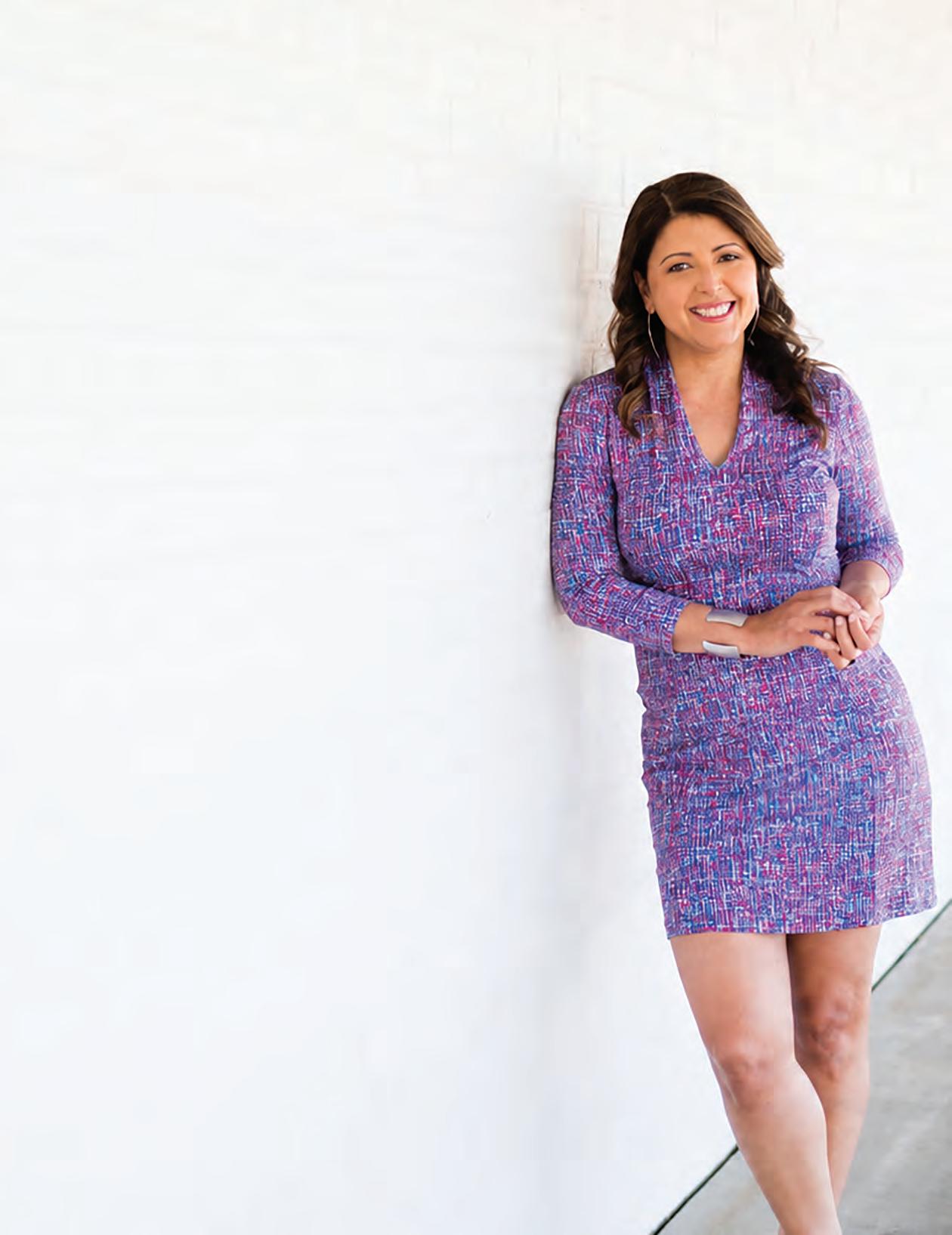
For Doreen Colondres, wine has never just been about what’s in the glass—it’s about culture, connection, and learning to savor with intention.

STORY BY KURT DUSTERBERG
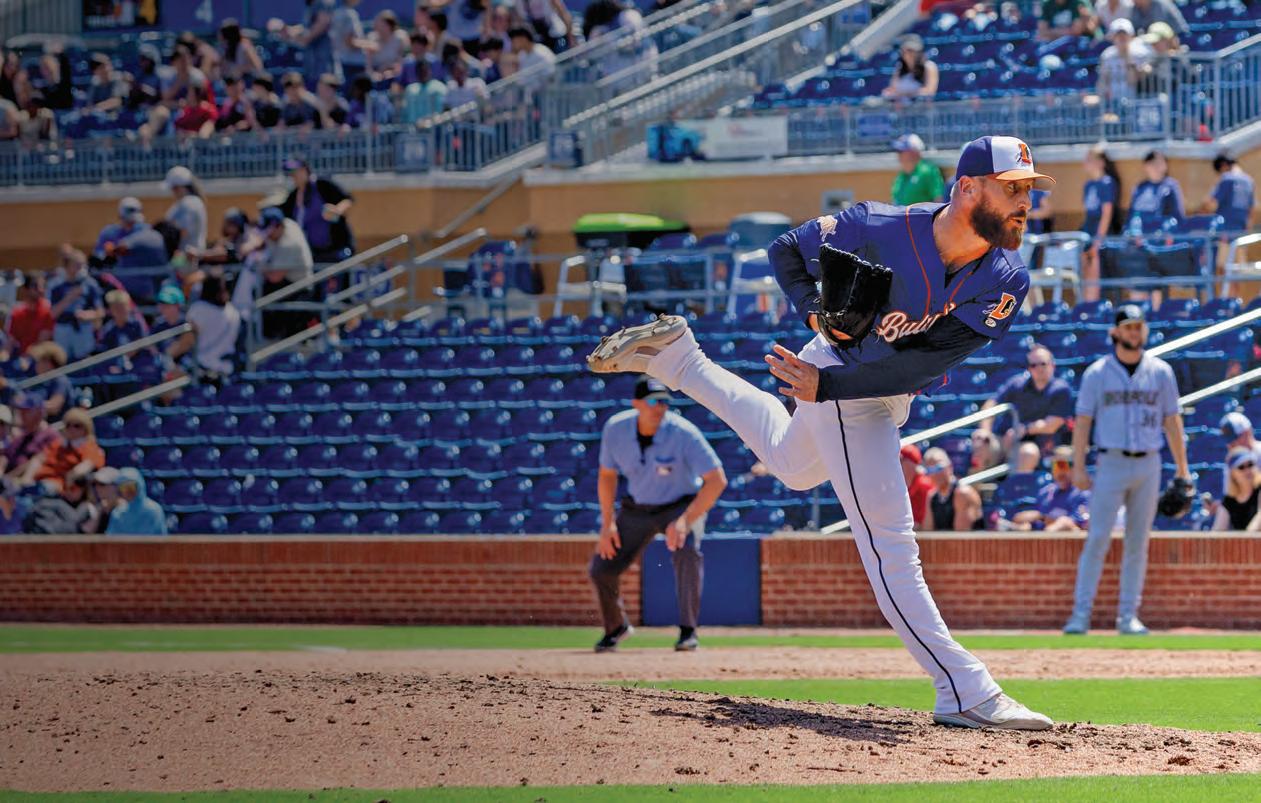
Like every minor leaguer who is assigned to the Durham Bulls each summer, Cam Booser is on the doorstep to Major League Baseball. The path to Triple-A varies, but the 34-year-old pitcher is taking a winding one. So when he strolls into the lobby of the Durham Bulls Athletic Park several hours before a recent game, he settles into a comfortable chair to begin h is explanation.
“ We all have a story, and we all face demons in life,” he says. “Some of us don’t handle it well.”
With that admission as a backdrop, Booser believes he has moved past his most difficult days, ones that were marred by injuries, bad choices, and emotional struggles. For the veteran pitcher, the game of baseball is merely the context for his journey. “I think I’m here to use my platform to talk about how God saved my life,” he says. “That’s where the uplift came from. That’s the only reason I’m here. Not just playing baseball—it’s why I’m alive.”
Booser grew up in Seattle, enduring an injuryplagued high school career. He pitched briefly at Oregon State, but his college career ended when he underwent Tommy John surgery to reconstruct his throwing elbow. Still, the Minnesota Twins gave the hard-throwing
left-hander a spot in the minors. But two years later, he suffered another setback when he was struck by a car.
In 2017, he was suspended after testing positive for marijuana, leading to his retirement at the end of the season. With nothing to fall back on, he headed home to Washington, where his father helped him get a job installing acoustic tiles. The work kept Booser engaged, but little else. “The busy was good, because it was numbing in a sense for a while,” Booser says. “I had depression even before I started that job. A lot of the alcoholism that I had my last couple of years with the Twins led to that depression, so it was a constant battle with that.”
Booser worked long hours in his construction job, spending his 45-minute commute each day secondguessing his life outside of baseball. “I had this overwhelming feeling that I just wasn’t doing what I was supposed to be doing,” he says. Finally one night, he sent a text to his father: “Dad, I love you. I thank you for the opportunity, but I’ve got to go back and try to play ball.”
At the same time, Booser was giving pitching lessons to local kids, slowly rebuilding his enthusiasm for the game. He started throwing into a net at the training facility, and soon his fastball was clocked at 97 miles per hour.
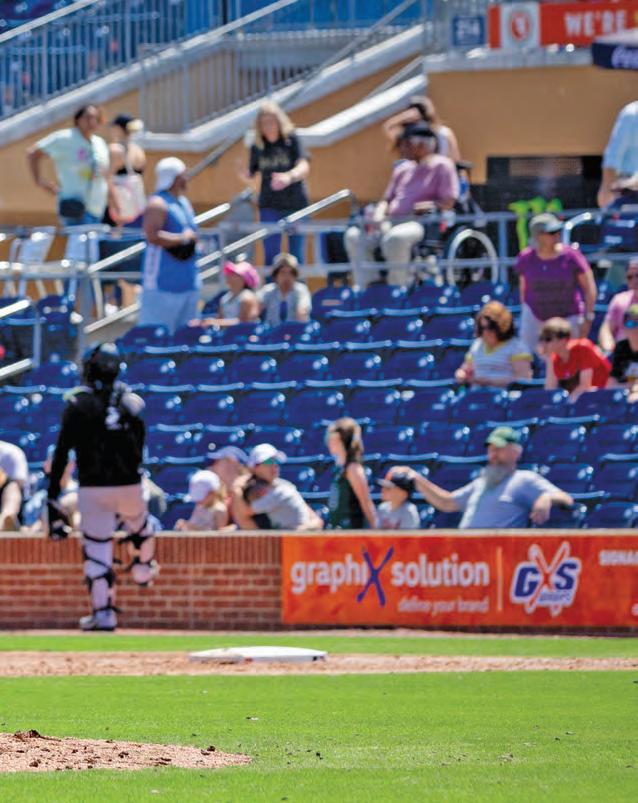
T he road back began in an independent professional league in 2021, which led to a minor league contract with the Arizona Diamondbacks in 2022 and two seasons in the Boston Red Sox organization. He made his major league debut early in the 2024 season, pitching the ninth inning of an 8-1 win against the Pittsburgh Pirates.
“It’s like the culmination of a lifetime of work,” Booser says. “But it’s also kind of a celebration of the moment. It’s a sense of euphoria, and it’s the ultimate battle. You can either be the best version of yourself, or you’re not. It gets very dramatic. You kind of block out 30 or 40 thousand people in the stands and have the singular focus right on that catcher. It’s an ultimate dream come true. It’s awesome.”
Last year, Booser signed with the Chicago White Sox and pitched in 39 major league games, but his performance didn’t match his previous season with Boston. Now in Durham, he is hoping for another call-up to the Tampa Bay Rays—but not at the expense of staying in the moment.
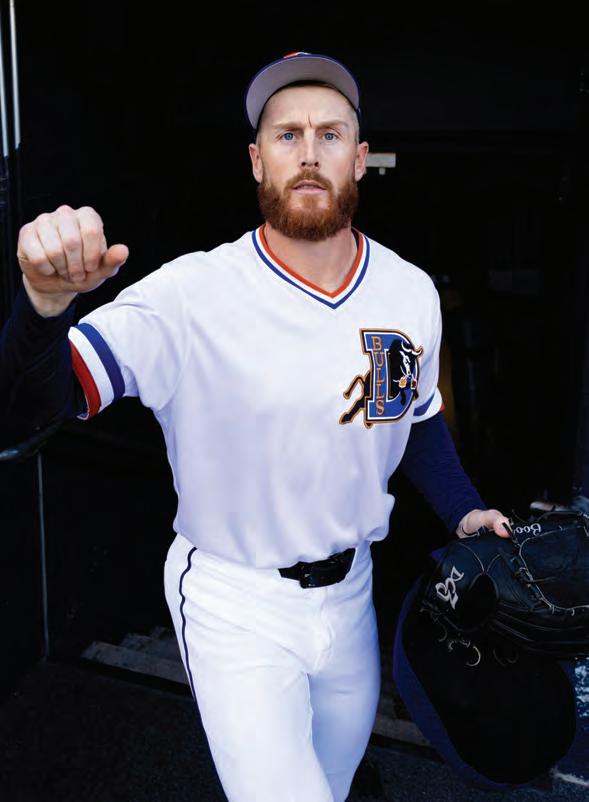
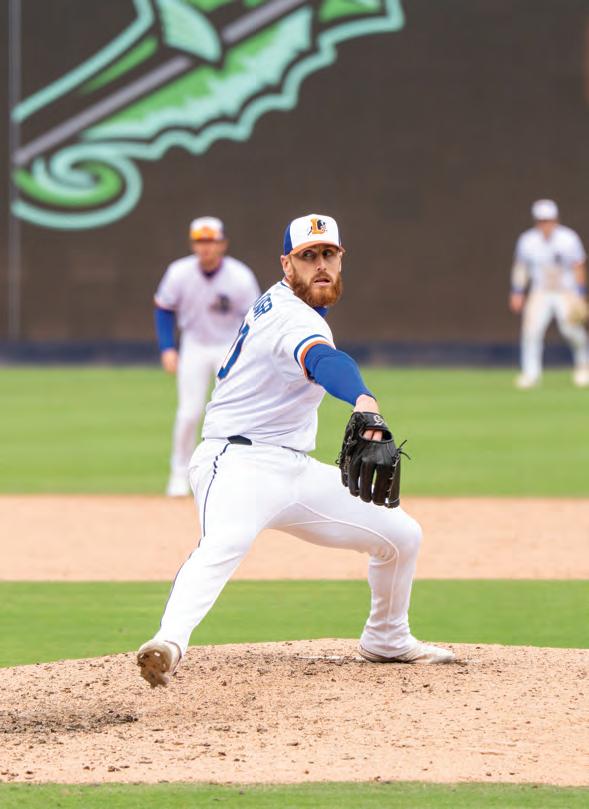
“ Your mind becomes a blender if you try to think, I might be there tomorrow or next week,” he says. “Just be wherever your feet are. I’ve gone out and played golf in Durham, and I’ve tried to see as much of the place as I can. I love it here. Some of the twilight hours, driving through the back roads of Chapel Hill, it’s been beautiful.”
That sort of patience was in short supply in his early days in the minors. No one knows that better than the Bulls’ bullpen coach, Henry Bonilla. He coached Booser in the Twins organization and remembers a player who had a hard time letting go of bad outings. “The ability for him to forget about the negative and not dwell on it, it’s completely different now,” Bonilla says. “Those days were few and far between back then. And his relationship with the Lord has let him understand that failure is not who he is. Now, when he has a bad day, the next day is back to work, smiling.”
A s he chases another call-up, Booser can’t help thinking of the other players who faced their own adversities. “I wish I would have spoken up when I needed help. I never did,” he says. “I think it could help us if more guys talked about stuff while they were playing. I played with so many guys who retired at the age I did, when it gets tough.”
Booser’s story of baseball redemption is not fully written yet, even at an age where most pitchers’ careers are winding down. “I’m aware of it, but physically I feel like I’m 27,” he says. “I don’t see any reason I can’t pitch for another five or six years, especially considering where I was. That would be the ultimate success, to come back at 30 and put 10 years in. That’s my goal now, to provide for my wife and I until I’m 40. But right now, it’s a blessing to be here.”
By Kurt Dusterberg
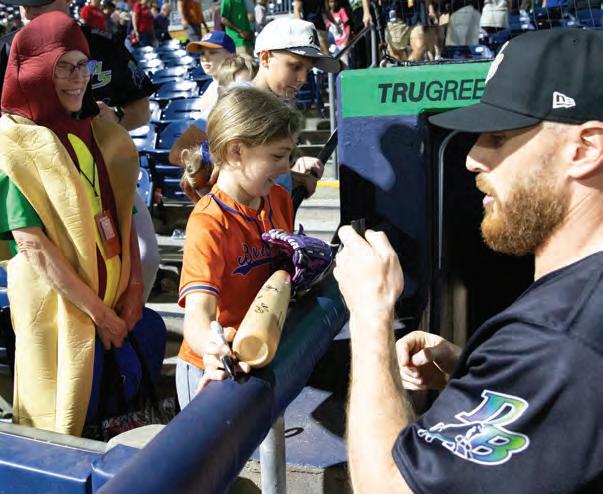
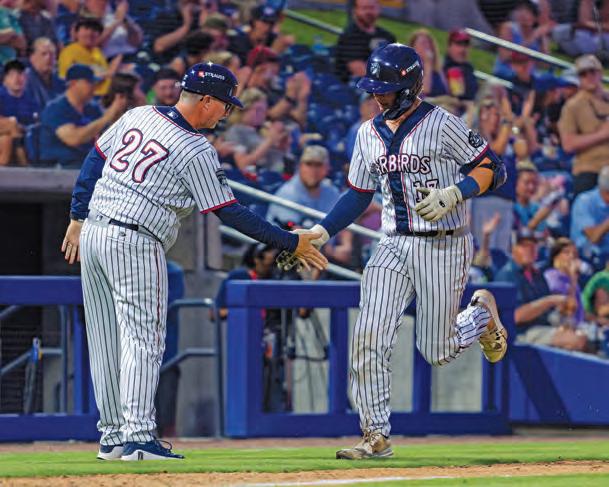
Triangle baseball fans who want to take in a minor league game have a new option this summer.
T he Wilson Warbirds are the Single-A affiliate of the Milwaukee Brewers. The team made its debut this spring after playing at Five County Stadium in Zebulon from 1991–2025.
T he Warbirds play in the brand-new Wilson Ballpark, which seats 3,700 and offers standing-room capacity for 5,000. The concourse, with three separate hospitality areas, rings the entire field. “It doesn’t matter if you’re sitting behind home plate or standing in center field,” says Chris Edwards, the team’s media relations manager and broadcaster. “You can see everything. And you’re right on top of the action no matter where you are.”
T he team’s nickname is a nod to a retired and restored military aircraft. Their mascot, Wilt the Warbird, is a red-tailed hawk dressed as a World War II pilot—but his name is a bit of an inside joke. Wilt is a tongue-in-cheek moniker, acknowledging how locals often add a ‘t’ to their pronunciation of the city’s name.
T he Warbirds’ April arrival made an immediate impact in the spring, with two sellout crowds during the first two homestands. Advance tickets are $16, and parking is free at several dedicated lots near the stadium.
The minor league baseball experience is often about added value for fans and families. The Warbirds have that aspect covered with eight luxury suites, a left-field kids’ playground, and plenty of promotions. Promotional nights are dedicated to military members and first responders, and each game on Fridays and Saturdays is followed by a fireworks display. Thirsty Thursdays—a popular staple of the minor leagues—draw s crowds for $2 beers.
“ To be part of the first professional team in Wilson in more than five decades is pretty special,” Edwards says. “And we want to provide a great experience from the time you park until the time you leave.”



How a café in downtown Raleigh feeds our hunger for human connection
B Y AMANDA LAMB
Ijust want to be the best mother, sister, daughter, friend, and person I can be,” says the woman we’ll call Cassandra, with tears in her eyes. I nodded, feeling a stinging sensation in my own eyes. Cassandra was coming out of addiction and had just seen her children for the first time in weeks the prior day. As a mother myself, I couldn’t imagine the loss she had experienced and what she needed to overcome to get her life back on track.
Several years ago, I never would have imagined having this kind of powerful interaction with a stranger. Now, it’s one of the things I look forward to most when I volunteer each week at A Place at the Table (APATT), the pay-what-you-can café in downtown Raleigh.
When my husband and I first moved from Cary to Raleigh in March 2021, the world was still slowly crawling out of the pandemic. My longtime job as a local television news reporter was still mostly virtual. We worked in our cars and over Zoom. I was craving real human connection. So I decided I would volunteer in my new neighborhood.
APATT fit the bill. It’s nearby, and the organization focuses on helping people who are in dire need of one of the most basic necessities—food. I was immediately drawn to this mission. Our clientele volunteer for one hour in exchange for their meals. Other customers who pay full price for the excellent food (it’s consistently rated
online as one of the best breakfast spots in Raleigh) help pay for someone else’s meal. It’s a simple but beautiful equation that founder Maggie Kane says not only tackles food insecurity, but also helps address what she calls “community insecurity.”
In other words, everyone is hungry for genuine human connection—even those going through some of the darkest moments in their lives.
In between the intensity that has become the hallmark of the modern world, there are moments when we have genuine connections with other people; people in our family, friends, colleagues, strangers. And for most of us, these moments stand out in our day because human connection is something we need as much as we need air to breathe.
Never before in modern history have we been so disconnected. Sure, we text, email, communicate online and on social media. But are these real connections? Are they fulfilling? I would argue that digital communication has replaced inperson communication on a large scale to the point that many people are feeling more isolated than ever. Whether it’s teenagers retreating to their bedrooms to play video games for hours, online daters who never take it offline, or friends who forgo phone calls for a quick text here and there, the real meaning of “face time” is vanishing. I’m afraid that we’re not only disconnected, but that we’re losing our ability to genuinely connect
in person. We’ve created so much space between ourselves and others that sometimes it feels impossible to return to a time when face-to-face interaction was all there was.
In this column, I’ll focus on stories about people that are shrinking the space between us—people who have consciously decided to meaningfully connect in a digital age. It takes effort, but it’s worth it. I promise.
As Cassandra was leaving for the day, I told her she was on the right track and that I would be rooting for her. She surprised me by leaning in for a hug. This time I smiled through the tears stinging my eyes.
Amanda Lamb is an award-winning journalist, author, and podcast host best known for her decades covering crime and courts in North Carolina. A longtime reporter at WRAL-TV, she has written 13 books and now focuses on storytelling through podcasts, public speaking, and her media company, Stage Might Communications. Follow her at facebook.com/ stagemight or visit alambauthor.com